



A pixie cut in your 40s isn’t about trying to look younger—it’s about looking like the best, most confident version of yourself. The right pixie cut works with your face shape, complements your skin tone, and flatters mature features in ways that shoulder-length styles sometimes can’t. A well-executed pixie cut removes the need for styling gymnastics, flatters bone structure beautifully, and gives off an air of effortless sophistication that takes years of styling practice to fake any other way.
The beauty of choosing a pixie cut at 40 and beyond is that you finally have the self-assurance to pull off something bold. You’re not trying to fit into anyone else’s idea of what your hair “should” be. You understand what works for your face, your lifestyle, and your personal style. The trick is finding the specific pixie variation that honors those priorities while keeping things modern and flattering.
This is where the nuance comes in. Not every pixie cut works for every face shape, hair texture, or style preference. A pixie cut that looks stunning on someone with a round face might need tweaking for someone with an angular jaw. Thick hair demands a different approach than fine hair. And if you’re not someone who wants to style your hair every morning, certain pixie variations are going to serve you better than others. The 12 styles below represent the most flattering, most wearable pixie variations for women in their 40s—each with specific guidance on who it suits best, how to ask your stylist for it, and how to make it work with your lifestyle.
1. The Textured Pixie Crop
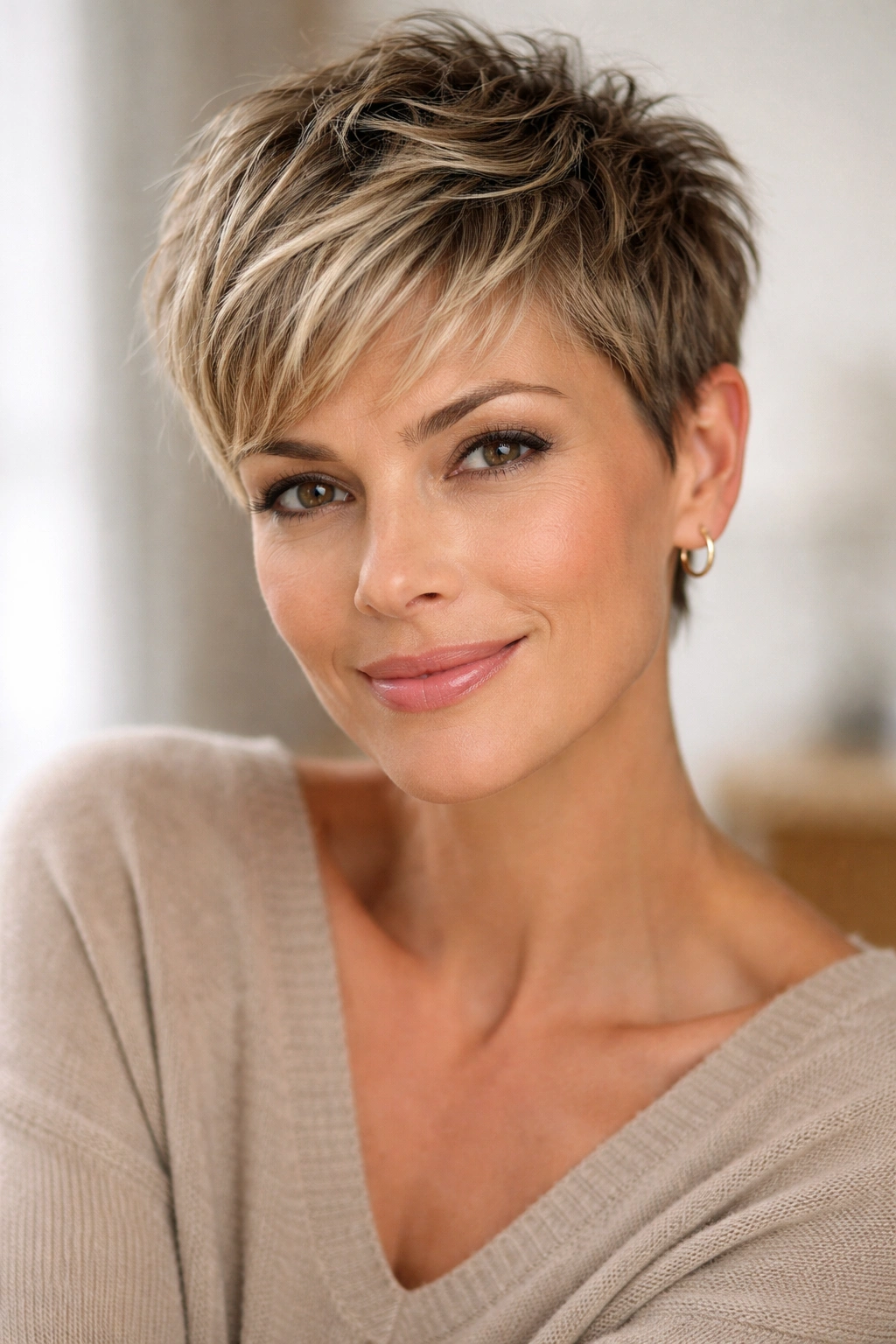
This is the pixie cut that launched a thousand style requests. The textured pixie crop sits short all over—usually about 1 to 2 inches on top—but uses choppy layers and point-cutting technique to create movement and visual texture rather than relying on length. Your stylist creates the texture by cutting the hair at angles and in multiple directions, so even if you just run your fingers through it after a shower, it looks intentional and styled.
Why This Cut Works at 40
The textured pixie crop is forgiving in the best way. It works beautifully with natural texture—whether that’s naturally curly, wavy, or straight hair. The choppy layers mean that if your hair has a bit of gray, the blended texture camouflages regrowth far better than a solid, blunt pixie would. The cut also works with your natural hairline as it changes over time. Because the texture comes from the cut, not from styling product or heat tools, it’s genuinely low-maintenance once you find the right stylist. For women in their 40s who’ve spent years blow-drying hair straight or curling it into submission, this cut is liberation.
Key Features to Request
- Ask your stylist for choppy, textured layers throughout, not a blunt, solid shape
- Request shorter sides (fade or taper to 1/4 inch or less) with slightly more length on top (1.5 to 2 inches)
- Mention you want the texture to work with your natural hair—whether that means leaving waves alone or enhancing natural curl
- Plan for a trim every 4 to 5 weeks to maintain the texture and shape
- Ask about a lightweight texture spray or clay if you want more dimension on styling days, but the cut should look good unstyled too
Pro tip: If you have fine hair, ask your stylist to point-cut rather than use thinning shears—it creates texture without making hair look wispy or see-through.
2. The Grown-Out Pixie
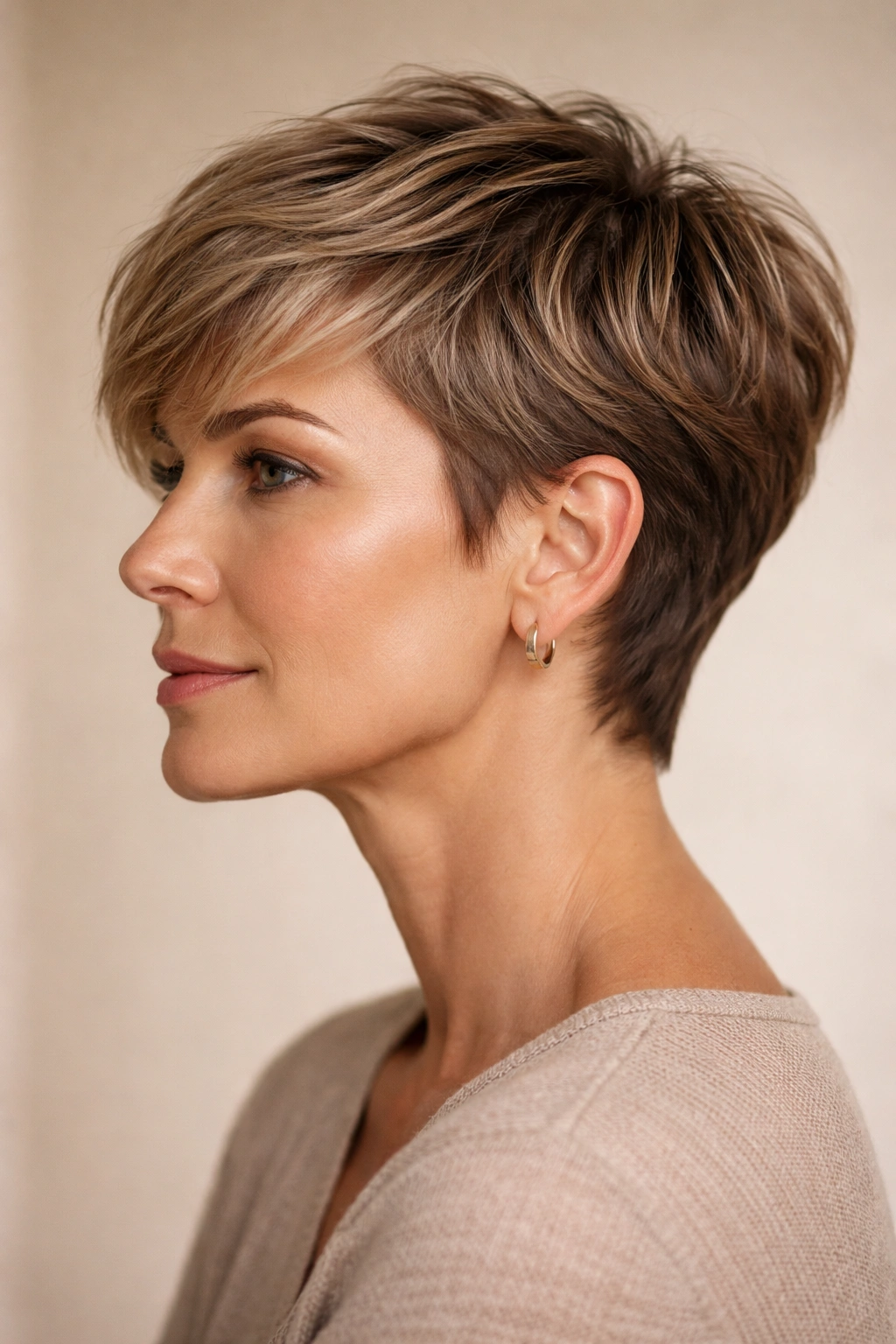
The grown-out pixie is the perfect bridge if you’re nervous about commitment. It’s a pixie cut that’s been left to grow out past the traditional 2-inch-on-top length—usually sitting closer to 3 to 4 inches on top, while the sides remain cropped short. This creates interesting length variation and a softer silhouette than a traditional pixie while still keeping the maintenance and styling ease of short hair.
Why This Cut Works at 40
The grown-out pixie is incredibly flattering for mature faces because it softens the overall look without sacrificing the chic confidence that comes with short hair. The longer top can be styled sleek, textured, or even tucked behind the ears for different looks depending on your mood and the occasion. The contrast between the cropped sides and longer top is also incredibly current and interesting—it reads as intentional, modern style rather than a cut that “just grew out.” For women who worry that a full pixie might be too severe, the grown-out version often feels like the sweet spot.
Key Features to Request
- Request a 3 to 4 inch length on top (longer than a traditional pixie, but not a full undercut bob)
- Keep sides short—faded to 1/2 inch or less for clear definition
- Ask for layers on top so the longer length doesn’t feel heavy or blunt
- Plan to visit your stylist every 5 to 6 weeks to refresh the shape as it grows
- Ask about styling options—can the top be worn sleek? Textured? How does it work with your daily routine?
Worth knowing: This cut works especially well if you like variety. You can style the longer top sleek one day and messy the next. You can tuck it behind your ears, sweep it to one side, or let it flow forward. That versatility is honestly one of the underrated perks at 40+.
3. The Sleek Short Pixie
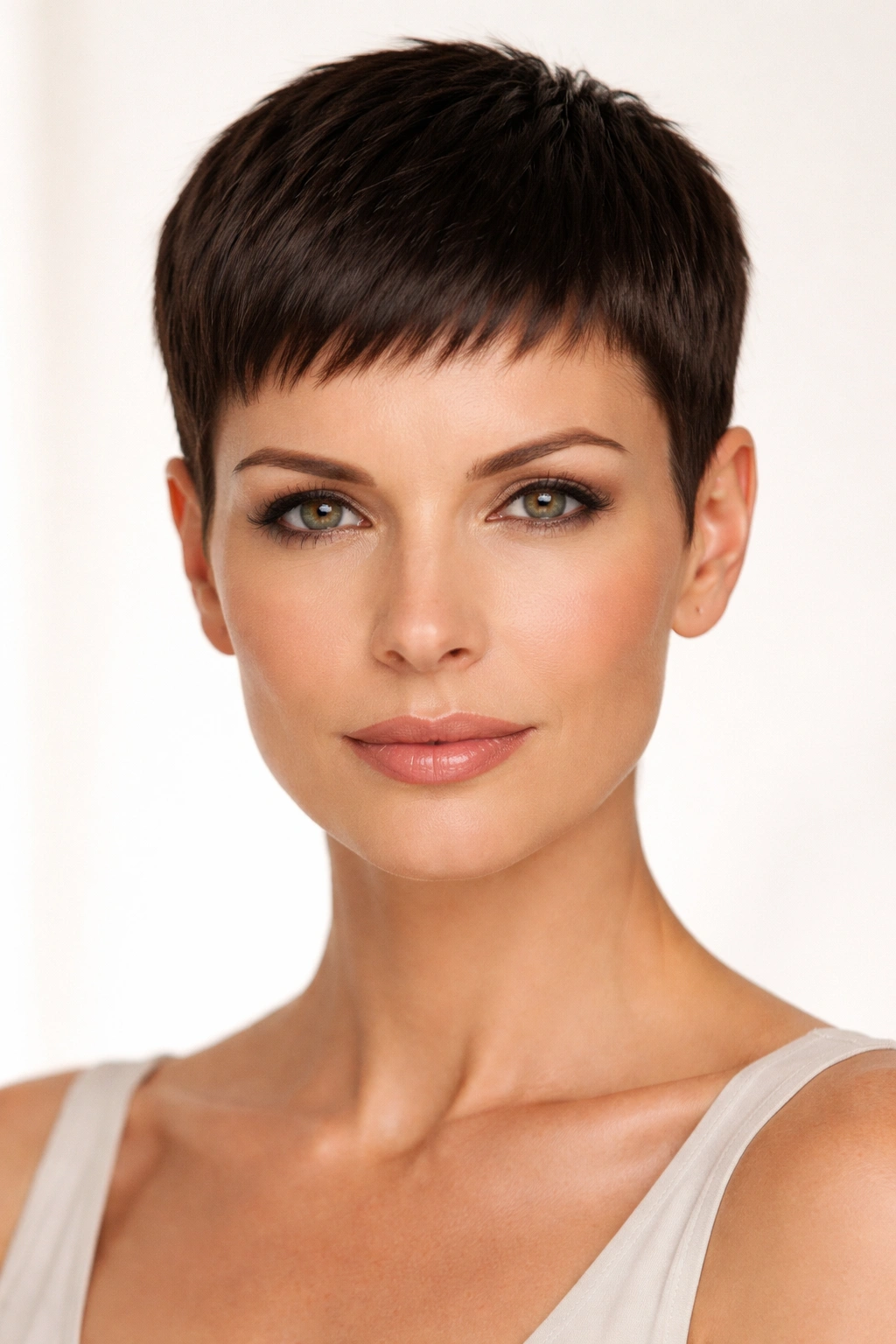
The sleek short pixie is the no-nonsense, ultra-modern classic. This is a clean, geometric cut—short all over (usually around 1 to 1.5 inches), with very little texture or layering. The hair sits smooth and close to the head, creating clean lines from every angle. It’s the pixie cut you see on runways and in fashion magazines, and it photographs beautifully.
Why This Cut Works at 40
The sleek short pixie is the ultimate confidence move. It requires absolutely no styling—you can air-dry it and look polished. It shows off your face, your bone structure, and your skin in a way that longer hair never can. At 40 and beyond, when you’ve hopefully made peace with who you are, this cut can feel incredibly freeing. It’s also the most dramatic, so it’s the right choice if you want a definitive “I’ve changed my hair” moment rather than something gradual or subtle.
Key Features to Request
- Ask for a clean, blunt cut with minimal layering or texture
- Specify a very short length all over—around 1 to 1.5 inches on top and sides
- Request that your stylist use a razor or sharp scissors for a very clean edge
- Ask about the shape around your ears and nape—do you want it blunt, slightly tapered, or shaped to your hairline?
- Plan for maintenance every 3 to 4 weeks, as this cut grows out quickly and the style depends on the precision of the cut
Important: This cut works best if you have naturally straight or slightly wavy hair and a face shape that feels balanced to you. If you have a lot of natural curl or texture, the sleek pixie can be harder to style smoothly without daily heat tools.
4. The Layered Pixie with Bangs
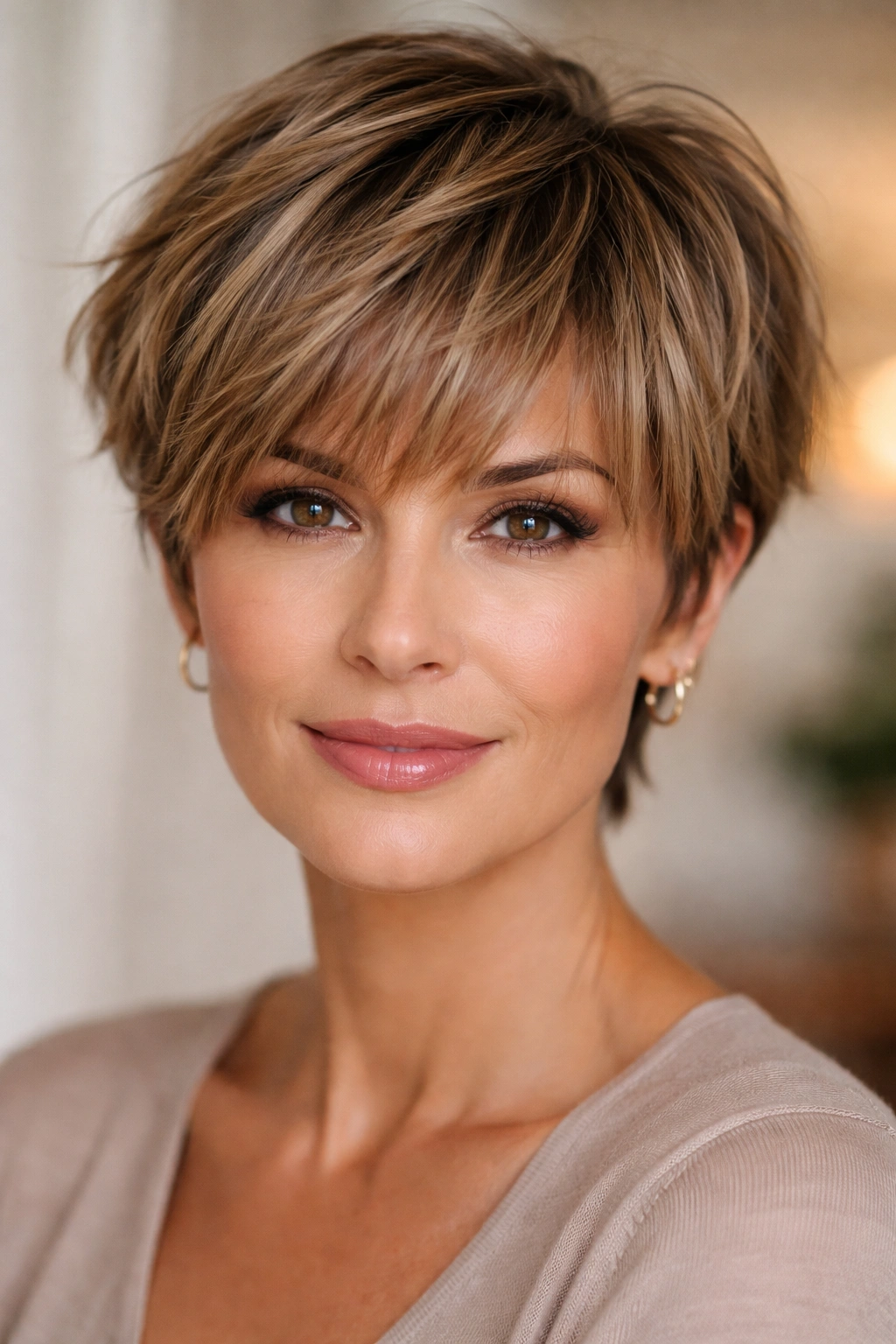
This pixie cut adds a full, slightly longer bang across the forehead, paired with choppy, feathered layers throughout the rest of the cut. The bangs are typically around 2 to 3 inches long and blend into the layers on the sides and back, creating a soft, romantic feel compared to a traditional blunt pixie.
Why This Cut Works at 40
The bangs in this cut are the game-changer. Bangs draw attention to your eyes and add a youthful, playful element without reading as trying-too-hard. The layering throughout softens the overall look and creates movement. If you’ve been curious about bangs but worried they’d be too much, this cut lets you explore that without committing to a full fringe that covers your entire forehead. The feathered layers also work beautifully to frame your face and add dimension around cheekbones—something that matters even more at 40+.
Key Features to Request
- Ask for a full but soft bang that hits around your mid-forehead or just below your eyebrows
- Request that the bangs blend seamlessly into the layers around your temples and sides (not a blunt, separate fringe)
- Ask for feathered, choppy layers throughout to create movement and softness
- Keep sides relatively short (around 1/2 inch) for definition
- Mention that you want the cut to look good even if you don’t style it daily
Pro tip: If you’re nervous about bangs, ask your stylist to cut them slightly longer first—you can always go shorter at your next appointment, but you can’t add length back.
5. The Pixie Bob Hybrid
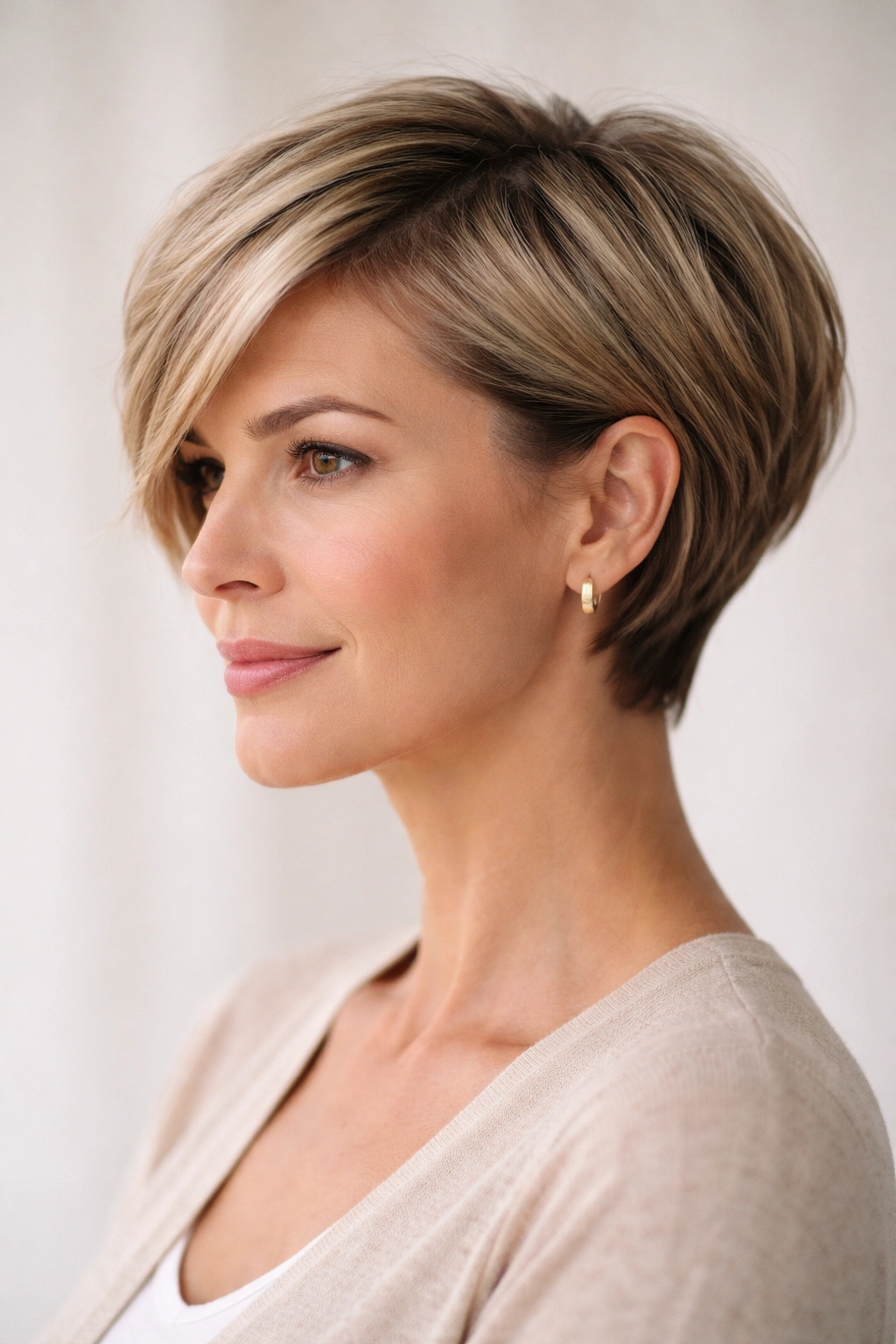
This cut is somewhere between a pixie and a bob—sometimes called a “shag” or a “pixie with length.” It has slightly more length than a traditional pixie (around 2 to 3 inches on top), paired with longer, more tapered sides that can be tucked behind your ears. The back might sit around 2 to 3 inches as well, creating a much softer shape than a standard pixie.
Why This Cut Works at 40
The pixie bob hybrid is perfect if you want short hair but aren’t quite ready to fully commit to the expose-everything feeling of a true pixie cut. It offers the ease and low-maintenance styling of short hair while giving you enough length to have options. You can style it smooth and sleek, textured and tousled, or tuck the longer sides behind your ears for a different silhouette entirely. It’s also incredibly flattering for mature faces because the slightly longer lengths around the face soften and frame features beautifully. If you’ve been wearing your hair shoulder-length or longer for decades, this is often the perfect transition cut.
Key Features to Request
- Ask for around 2 to 3 inches of length on top
- Request that the sides be slightly longer and tapered, not too short
- Ask for the back to have some shape but not be extremely short (aim for a graduated length)
- Request layers or texture so the cut has movement and doesn’t feel blunt or heavy
- Mention that you want to be able to tuck hair behind your ears and have it sit naturally
Worth knowing: This cut bridges the gap beautifully. You get the manageability and chic factor of short hair, but without the severity that some women find intimidating.
6. The Tapered Pixie Fade
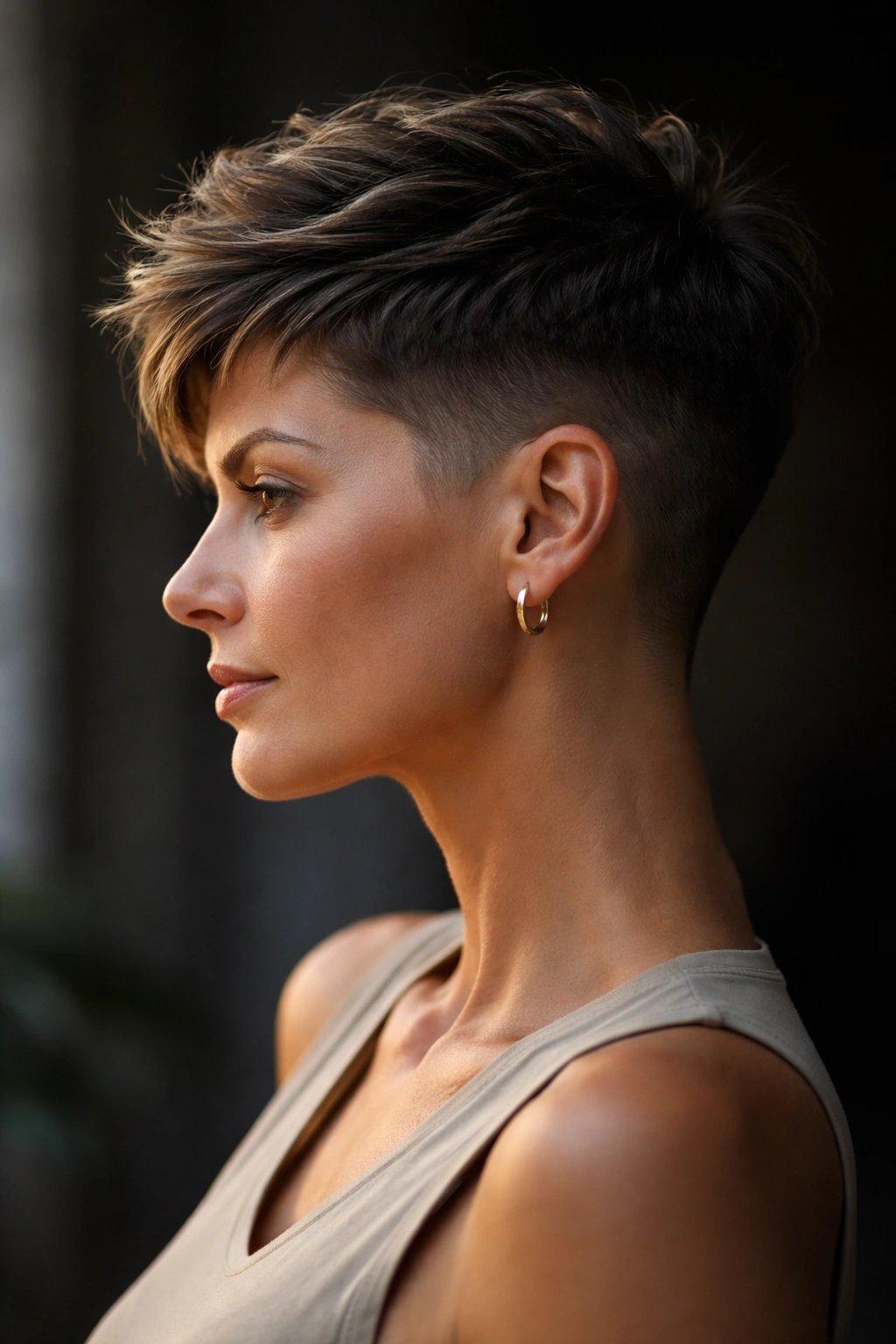
The tapered pixie fade is modern and architectural. The sides and back fade very short—sometimes as short as 1/8 inch—while the top is left longer (around 2 to 3 inches). The fade is gradual and blended, not harsh or severe. The longer top can be styled sleek, textured, or even quiffed slightly for different looks.
Why This Cut Works at 40
This cut works at 40 because it’s intentional and current without reading as young or gimmicky. The fade creates drama and definition, while the longer top keeps things balanced and versatile. If you have any graying at your hairline or temples, the short fade can actually work to your advantage—it creates texture and dimension that can make gray hair look sophisticated rather than showing a harsh line of regrowth. The cut also works beautifully for women who like a bit of androgyny or edge in their style. It reads confident and fashion-forward without trying too hard.
Key Features to Request
- Ask for a fade on the sides and back (gradually getting shorter, not an undercut)
- Request that the fade go down to around 1/8 inch or shorter at the very shortest point
- Ask for around 2 to 2.5 inches of length on top
- Request that the top be blended smoothly into the fade—no harsh line between short and long
- Ask for texture or layers on top so it doesn’t sit too heavy or blunt
Pro tip: This cut requires regular maintenance—a trim every 3 to 4 weeks keeps the fade looking sharp and intentional rather than grown-out.
7. The Tousled Pixie Wave
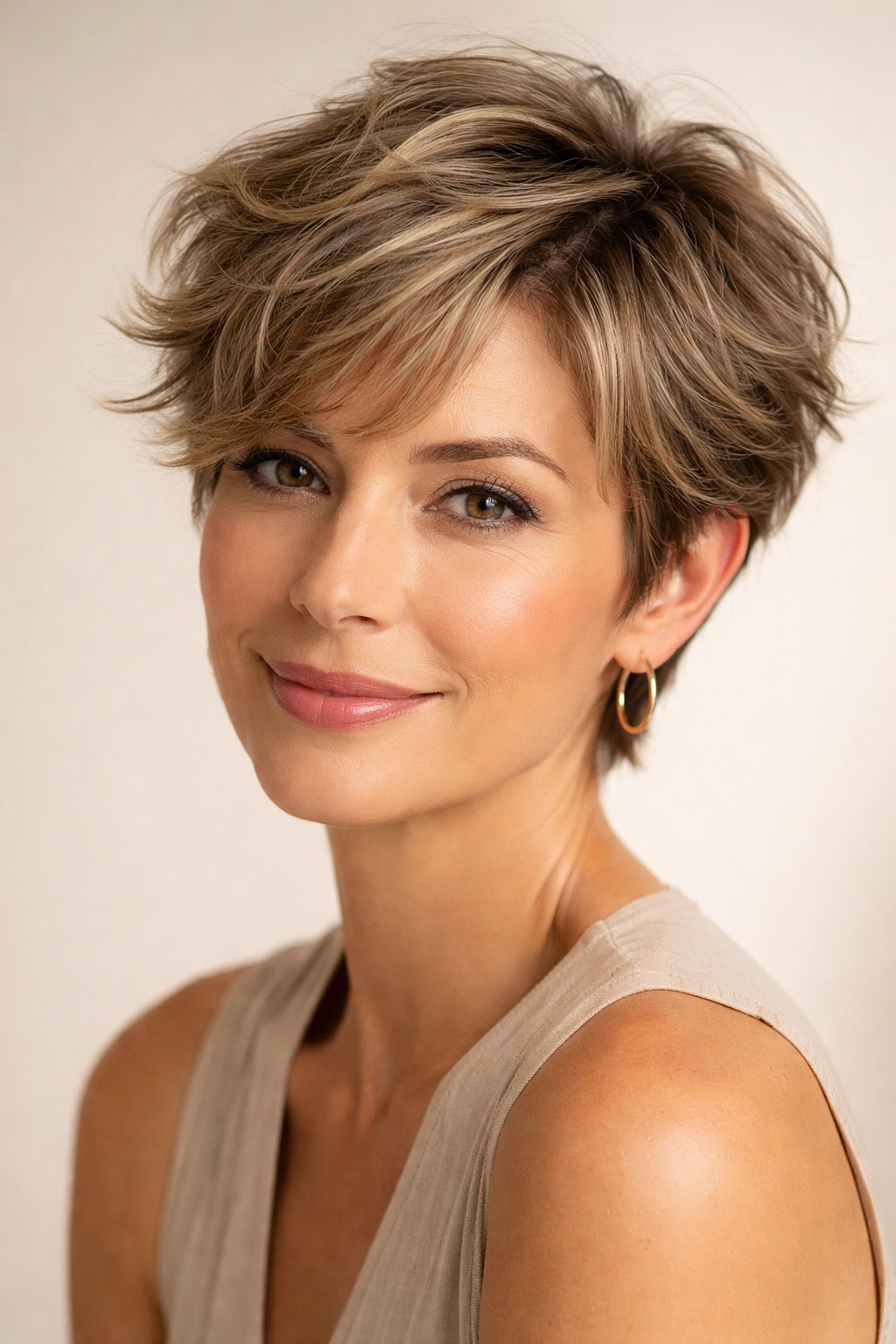
This pixie cut embraces natural wave or curl, creating a soft, romantic, slightly undone feel. The hair is cut short overall (around 1 to 2 inches), but the cut is designed to work with your natural texture rather than against it. Layers throughout encourage the waves or curls to separate and move rather than clump together.
Why This Cut Works at 40
The tousled pixie wave is one of the most forgiving cuts at 40 and beyond. If you have naturally wavy or curly hair, this cut finally lets you stop fighting it. You can air-dry and go—no blow-dry, no flat iron needed. The layers create movement that actually makes hair look fuller and more voluminous than a solid pixie would. The undone, slightly romantic feel is also incredibly flattering for mature faces. It softens features while still being a bold, statement-making cut. And here’s something important: if you’re starting to see more gray in your hair, wave and texture actually camouflage it better than a blunt, sleek pixie would.
Key Features to Request
- Ask your stylist to cut specifically for your natural texture—whether that’s waves or curls
- Request point-cutting or choppy layers, not blunt or thinned-out sections
- Mention that you want to air-dry and go—the cut should look good without styling products or heat tools
- Ask what products might enhance your natural texture without being necessary daily
- Plan for a trim every 5 to 6 weeks to refresh the shape as it grows
Important note: Make sure your stylist is experienced with cutting textured hair. A stylist who primarily works with straight hair might cut this in a way that doesn’t honor your waves or curls.
8. The Pixie with Side-Swept Bangs
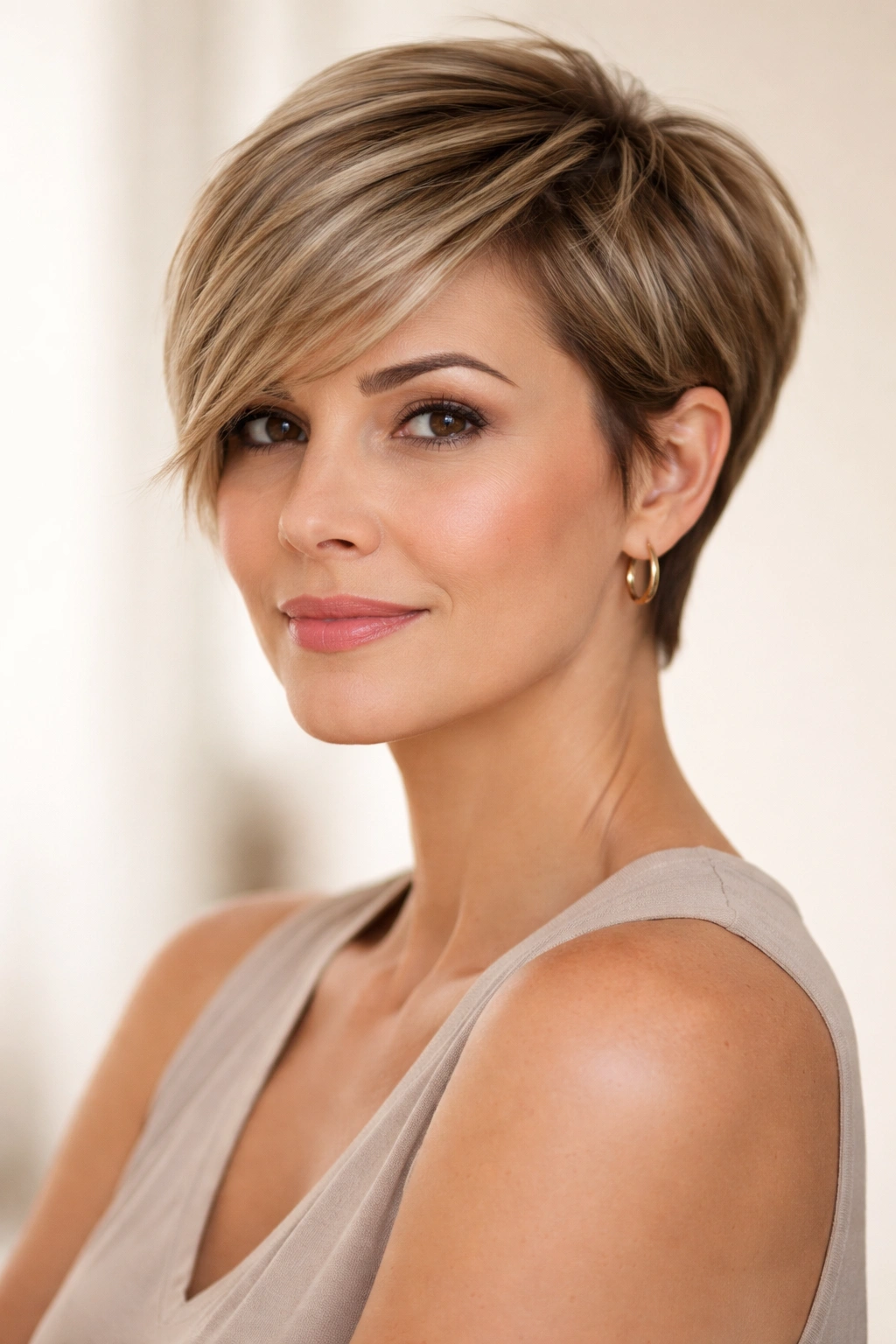
This cut combines a traditional short pixie—short all over, around 1 to 2 inches—with one key element: longer hair on one side that sweeps across the forehead or to the other side, creating a soft bang effect. The hair is longer on one side (maybe 2 to 3 inches) and gradually gets shorter as you move around the head.
Why This Cut Works at 40
The side-swept bangs create a flattering diagonal line across your face, which is incredibly useful if you want to downplay certain features or highlight others. If you have a wider forehead, side-swept bangs draw attention away from it. If you have a very round face, the asymmetry of this cut creates the visual illusion of more angular features. The cut also has a slightly softer, less severe feeling than a traditional pixie because of that longer side, which many women in their 40s prefer. It’s bold without being intimidating.
Key Features to Request
- Ask for longer hair on one side (decide which side appeals to you based on how you usually style your hair)
- Request that the side-swept section be around 2 to 3 inches long
- Ask for the opposite side to be shorter—creating a gradient from long to short as you move around the head
- Request layers so the longer side doesn’t sit too blunt or heavy
- Ask your stylist how to style this on days when you want a different look (you can always pin or tuck the longer side differently)
Worth knowing: If you have a particular side of your face you prefer photographed or more visible, that’s the side you’d typically keep longer.
9. The Sophisticated Pixie Undercut
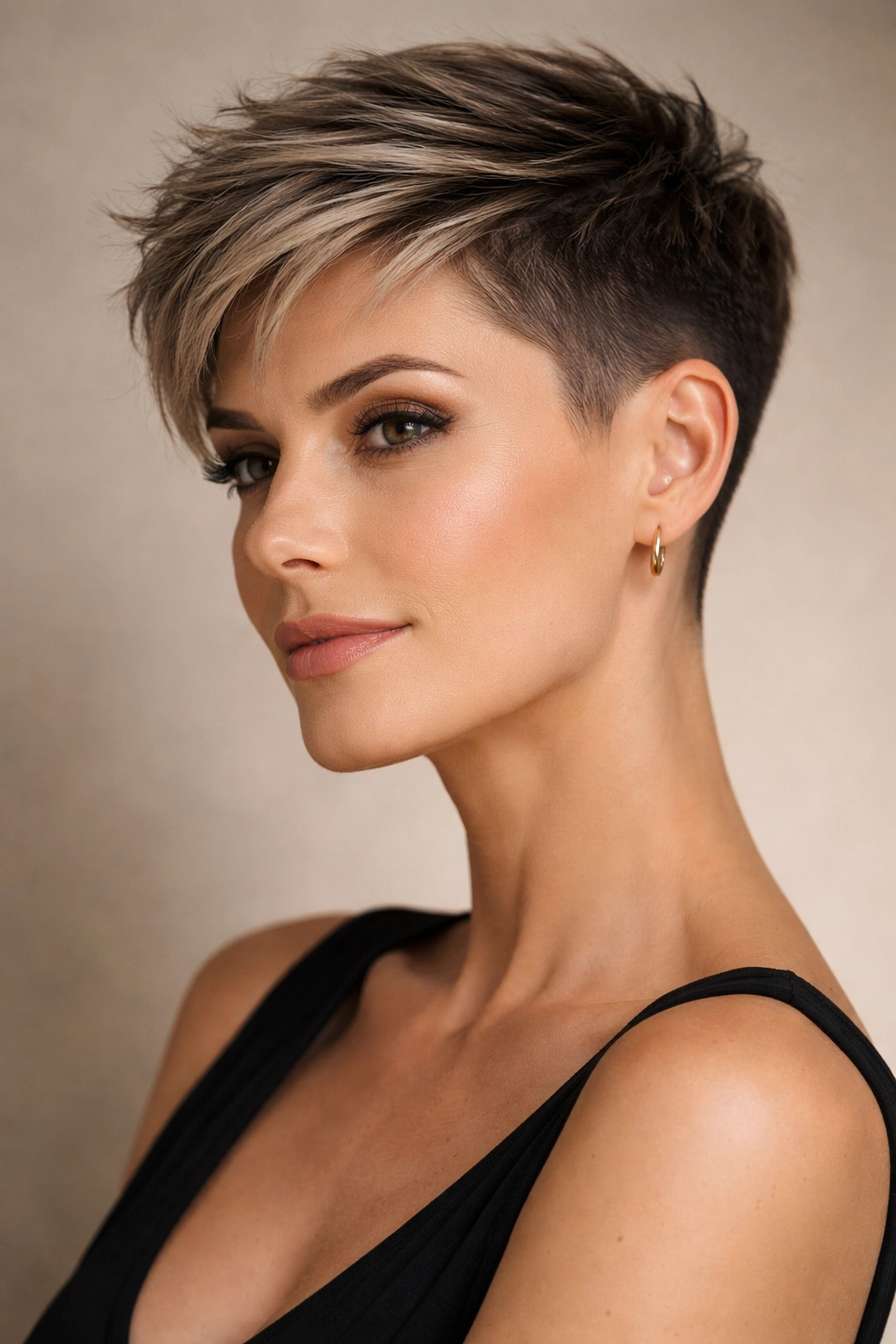
This is a pixie cut with a definitive undercut—the sides and back are cut extremely short (around 1/4 inch or less), creating a stark contrast with slightly longer hair on top (around 2 inches). The undercut is deliberate and clean, not blended into a fade.
Why This Cut Works at 40
The undercut pixie is for women who want serious style impact. It’s modern, architectural, and absolutely makes a statement. Here’s what works at 40: this cut reads as intentional and confident, not trendy or experimental. It’s become established enough that it doesn’t read as fashion-forward in an uncomfortable way—it just reads as bold. If you have excellent bone structure, a well-shaped head, or you’re not worried about showing your ears and neck, this cut is incredibly flattering. It also works beautifully if you’re dealing with thinning hair, because the contrast actually makes hair look denser on top.
Key Features to Request
- Ask for a definitive undercut—short sides and back (around 1/4 inch or shorter), not a gradual fade
- Request a clear line of demarcation between the short sections and the longer top
- Ask for around 2 to 2.5 inches of length on top
- Request that the top have texture or layers so it doesn’t sit too heavy against your head
- Plan for maintenance every 3 to 4 weeks to keep the undercut looking sharp
Pro tip: This cut can be styled multiple ways depending on whether you blow-dry the top sleek or let it sit textured. Ask your stylist for styling suggestions.
10. The Feathered Pixie
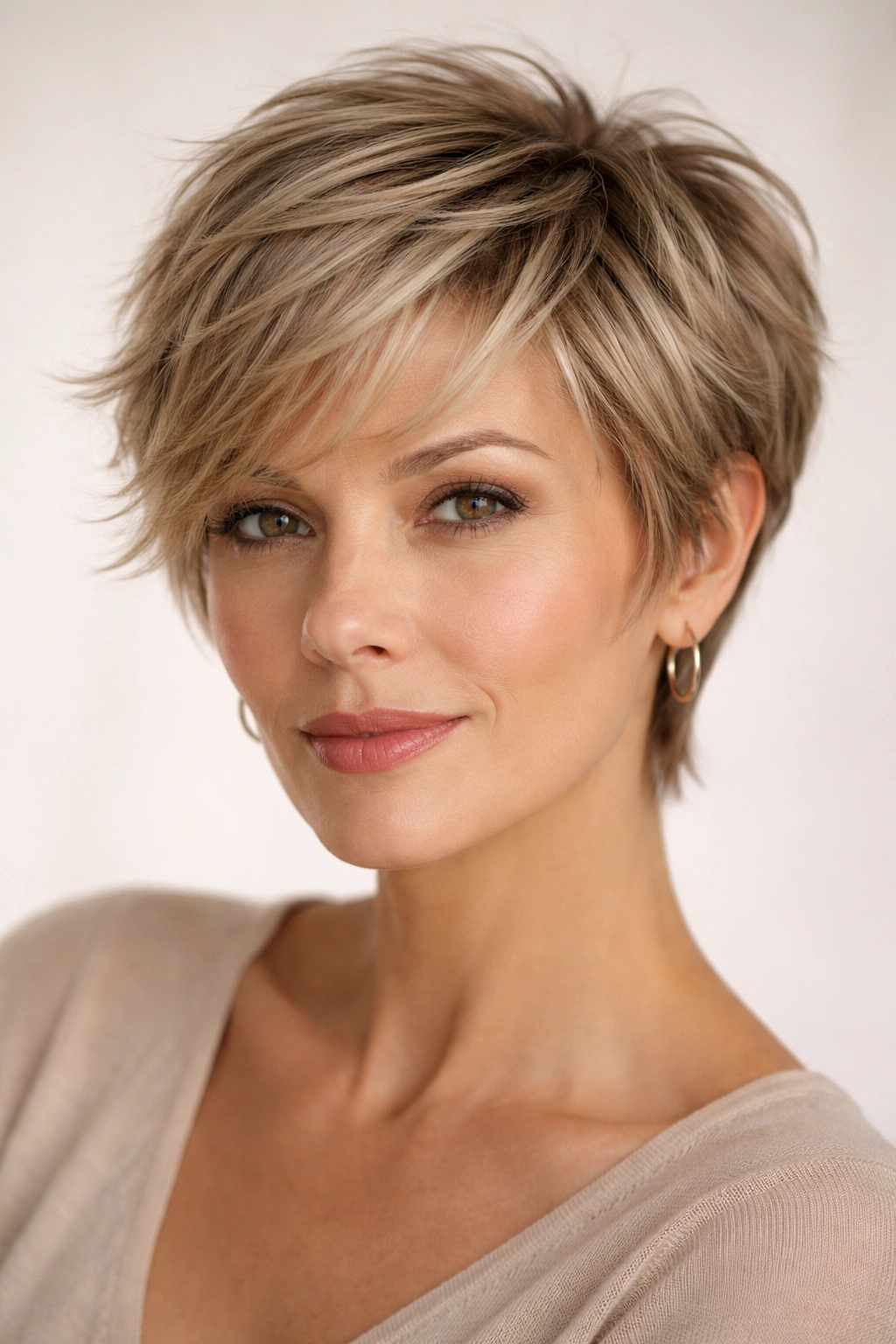
The feathered pixie uses point-cutting and directional cutting techniques to create soft, feathered layers throughout the entire cut. Instead of choppy or textured layers, feathered layers are finer, more subtle, and blend smoothly into each other, creating a softer overall effect.
Why This Cut Works at 40
The feathered pixie is the option if you want short hair with maximum softness and femininity. The feathering creates movement and dimension without being dramatic or choppy. It’s especially flattering around the face—the feathered layers around your temples and cheekbones soften features and create a very flattering frame. If you have fine hair, feathering is actually more flattering than choppy texturing because it doesn’t create gaps or spiky points. The cut also works beautifully for women with mature skin—the softness of the cut and the way it frames your face can actually be more flattering than a harder-edged pixie.
Key Features to Request
- Ask your stylist specifically for feathered layers, not choppy or blunt texture
- Request that layers be created with point-cutting technique for a smooth, feathered effect
- Ask for feathering particularly around your face and temples
- Mention that you want softness and movement, not an edgy or angular feel
- Plan for a trim every 4 to 5 weeks to maintain the feathered shape
Important: Make sure your stylist understands feathering technique. It’s different from choppy layering and requires a specific cutting approach.
11. The Blunt Pixie Cut
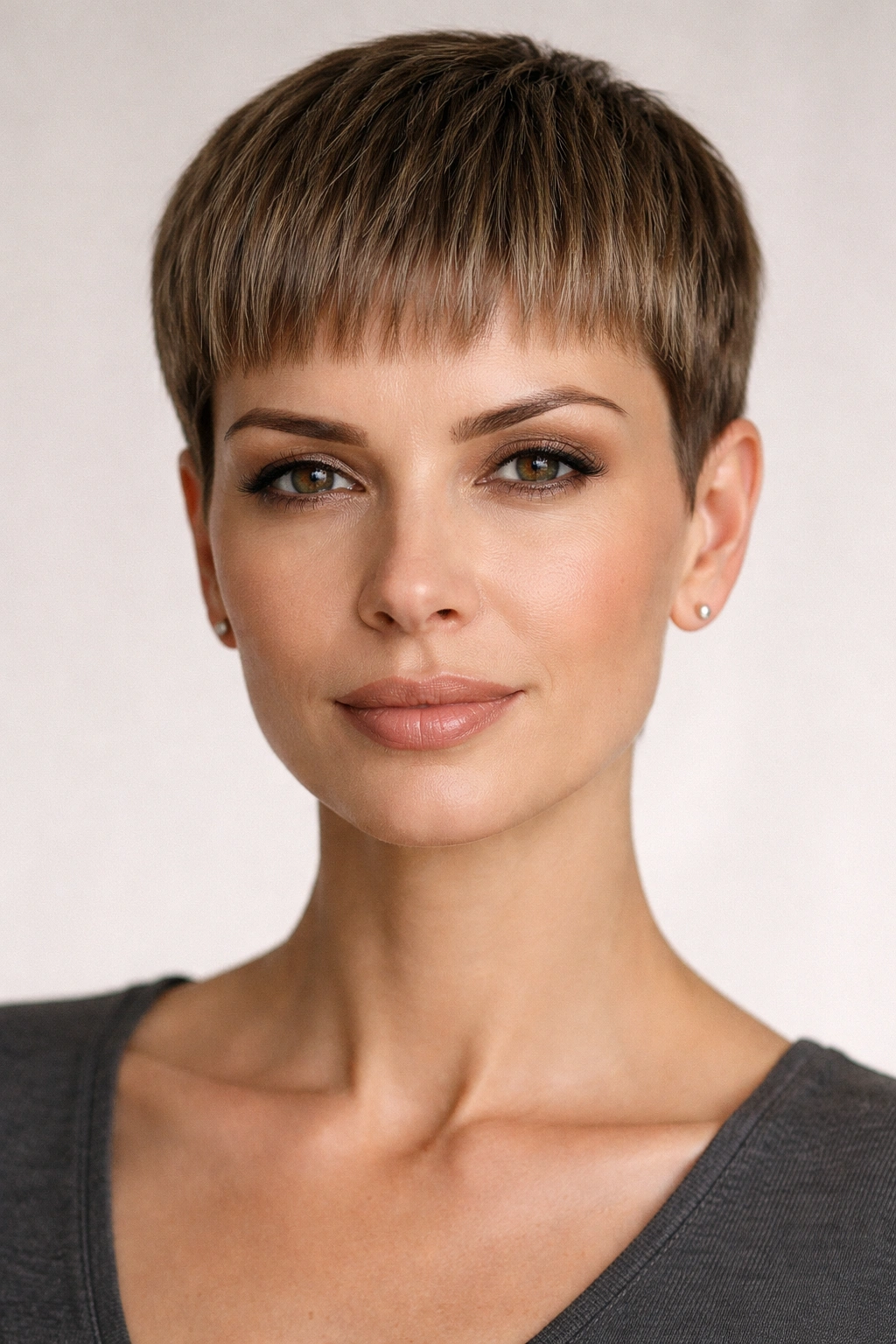
The blunt pixie is the geometric, architectural cousin of the sleek pixie. It’s short all over (around 1 to 1.5 inches) with a very clean, blunt line—no layers, no feathering, no texture. Think of it as a perfectly precise shape, like a sculpture.
Why This Cut Works at 40
The blunt pixie is for women who want maximum style impact with zero styling effort. A truly blunt pixie is surprisingly low-maintenance because once it’s cut, it sits in its shape—you can air-dry it and look polished. It’s also incredibly modern and architectural, which at 40 reads as confident and intentional, not trying-too-hard. The cut is also very flattering if you have strong, angular features because it complements rather than softens them. And here’s something important: if you have some gray in your hair, the blunt cut and the texture variation from your hairline showing slightly as it grows can actually look quite sophisticated and intentional.
Key Features to Request
- Ask for a clean, blunt cut with no layers or texture
- Request a uniform length all over—around 1 to 1.5 inches
- Ask your stylist to use a sharp razor or scissors for a very precise, blunt edge
- Specify how you want the shape around your ears and neck (blunt and close to your head, or slightly shaped)
- Plan for a trim every 3 to 4 weeks to maintain that blunt line as it grows
Worth knowing: This cut grows out pretty quickly, so maintenance is more important than with some other pixie variations.
12. The Textured Pixie with Length on Top
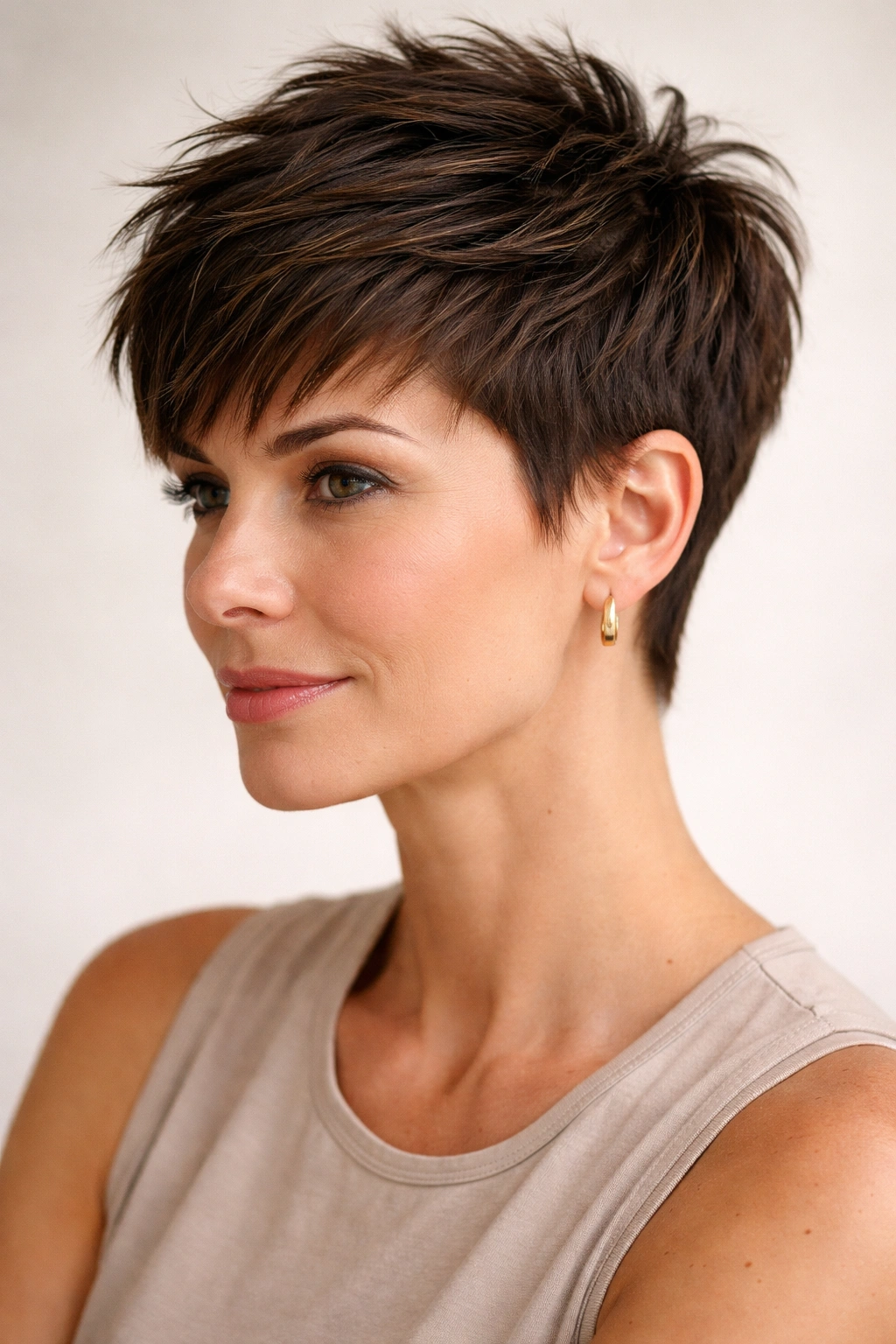
This is a longer pixie variation—sometimes called a “pixie crop” or “textured crop.” The top is left longer (around 3 to 4 inches), while the sides and back are kept short (around 1/2 inch or less). The longer top is heavily textured with layers, creating lots of movement and dimension.
Why This Cut Works at 40
This cut bridges the gap between a true pixie and longer hair. You get the manageable, low-maintenance benefits of short hair, but with enough length on top to have styling versatility. The texture on top creates the illusion of fuller hair—something that matters more at 40 when hair naturally gets finer. The contrast between the textured top and short sides is very current and interesting. The longer top can be styled multiple ways: you can let it sit naturally textured, blow-dry it smooth and sleek, or even pin sections back for a different silhouette. This cut is also extremely forgiving if you’re growing out a pixie—the longer top means you don’t have to cut it as frequently.
Key Features to Request
- Ask for around 3 to 4 inches of length on top
- Request that the top be heavily textured with choppy, feathered layers
- Ask for the sides and back to be cut short—around 1/2 inch or less for definition
- Request that the longer top blend smoothly into the shorter sides
- Ask for styling suggestions since this cut can be worn multiple ways
Pro tip: If you’re nervous about committing to a full pixie but want short hair, this is the perfect starting point. The longer top gives you options while you adjust to the shorter sides.
Final Thoughts

Choosing a pixie cut at 40 is one of those decisions that feels bigger than it probably is—until you actually do it and realize how transformative the right cut can be. The version of yourself you see in the mirror every morning changes. You stop wrestling with your hair and start enjoying it. You show up differently when you feel confident in how you look.
The pixie cut that’s right for you depends on your face shape, your hair texture, your lifestyle, and honestly, how much maintenance you’re willing to do. Some of these cuts are virtually wash-and-go; others require a bit of styling attention. Some are subtle and soft; others make a bold architectural statement. None of them is the “best” pixie—they’re all stunning. The best one is the one that matches who you actually are and how you want to move through the world.
When you do decide to take the leap, find a stylist who specializes in short hair and has examples of pixie cuts they love. Bring this article. Bring references. Be specific about what you want and honest about your lifestyle. And then trust the process. Your stylist has cut hundreds of pixie cuts—they know how to make yours work for you.
