



The right haircut can completely reshape how your face looks — and I’m not talking about actual surgery. Strategic layering, length, and texture work wonders when you want to draw attention upward and away from under your chin. A double chin isn’t just about weight; it’s often about how light and shadow fall across your jawline, and the right hairstyle creates visual lift that makes your entire profile look sharper and more defined.
The trick is understanding which cuts naturally create vertical lines, add volume at the crown, or frame your face in ways that create visual confidence. When your stylist understands face-flattering proportions, they can work with your bone structure instead of against it — and that changes everything. You don’t need to hide; you need the right angle, the right layers, and the right amount of movement.
Short hair actually gives you an advantage here because you have more control over placement and movement. A well-executed short cut can create an instant lift, define your jawline, and draw the eye upward in ways that longer styles sometimes struggle to achieve. Whether you prefer something sleek and modern, textured and layered, or softly curved, there’s a short haircut designed specifically to work with your face and minimize what you want to play down.
1. The Layered Pixie with Crown Volume
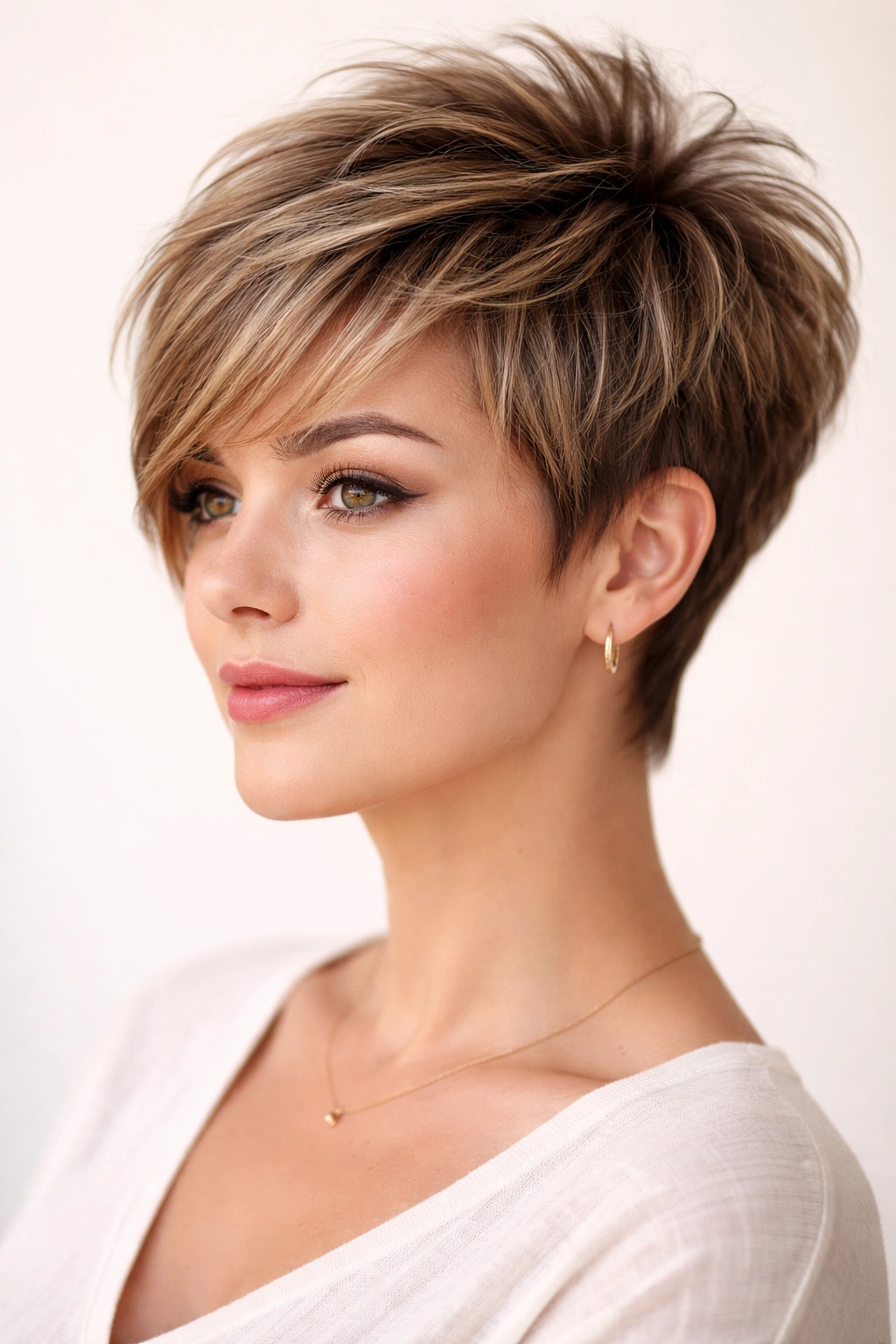
This is the gold standard for jawline definition. A layered pixie keeps hair close to your head at the sides and back, eliminating bulk that can make a double chin more pronounced. The real magic happens at the crown — short, choppy layers create height and draw the eye straight upward the moment someone looks at you.
Why It Works for Your Face Shape
The volume sits exactly where you want it: on top. This proportional shift makes your face appear longer and more balanced. Short sides and back don’t add width under your chin, and the crown height becomes a natural focal point that your eyes go to first. The result is instant face-lifting without any effort on your part.
How to Wear and Maintain It
- Ask your stylist for choppy, textured layers throughout the crown for maximum lift and movement
- Short sides (often around one to two inches) keep the look clean and chin-defining
- Style with a volumizing product at the roots while hair is still damp — this locks in the lift
- Use a lightweight texturizing spray to keep layers separated and visible
- Refresh the cut every 4-5 weeks because pixies show regrowth quickly and lose their shape without regular trims
- Pair with side-swept bangs that angle downward to further elongate your face
Pro tip: Ask for point-cut layers rather than blunt layers — the texture creates more dimension and catches light differently, which enhances the flattering effect around your jawline.
2. The Textured Bob with Angled Layers
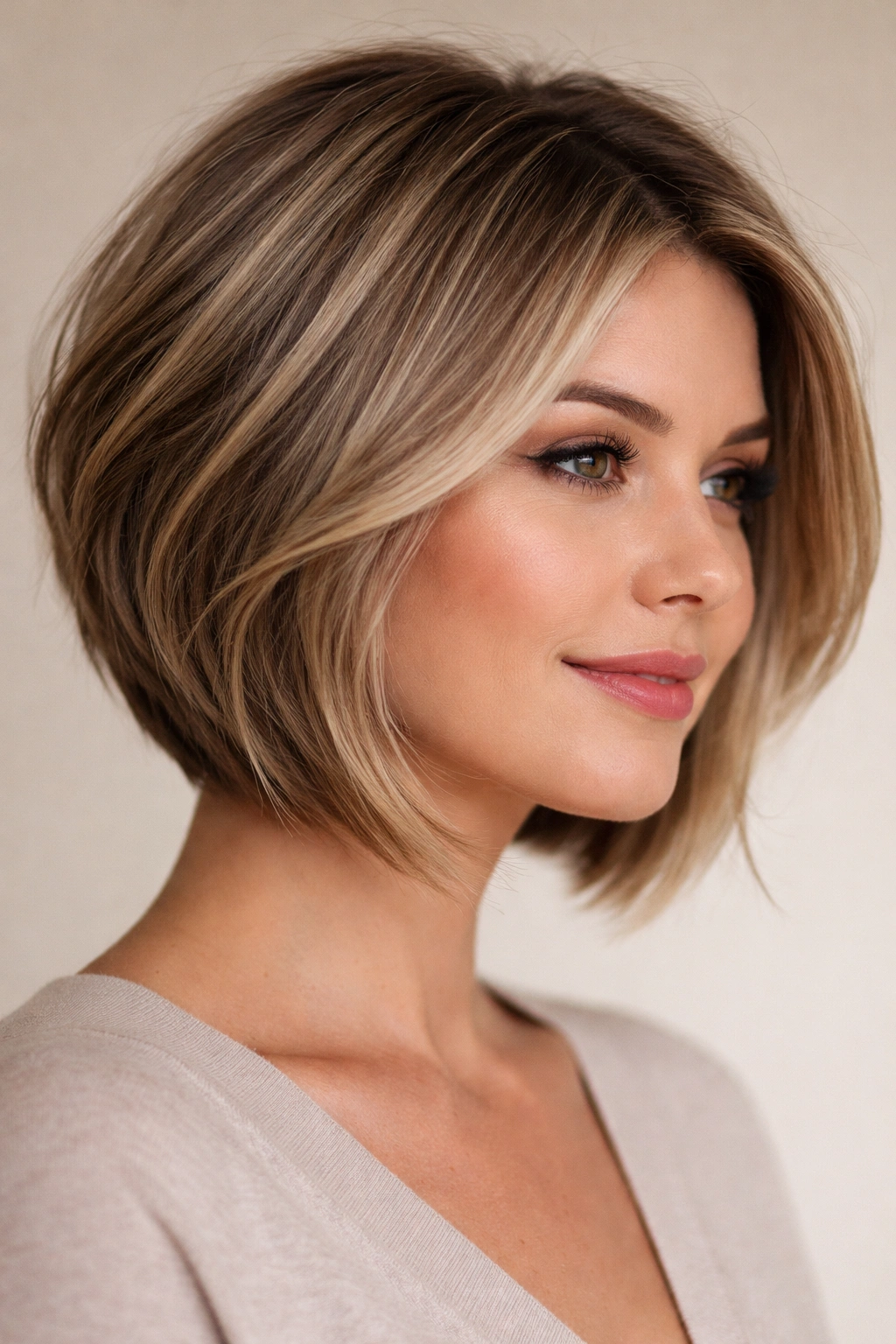
A textured bob that’s slightly longer in front creates an angled line that naturally guides the eye toward your cheekbones and away from your chin. Layering throughout the entire cut adds movement and prevents the dense, heavy look that can emphasize a double chin. This cut sits right at or just below your ears, which is the sweet spot for face-flattering proportions.
The Angle Advantage
The front-longer construction creates an instant lift. Those angled pieces that frame your face become a visual frame for your features — they draw attention to your eyes and cheekbones, not your jawline. The layers also create shadows and light play that naturally contour your face without makeup or highlighting tricks.
How to Achieve Maximum Impact
- Request 1.5- to 2-inch layers throughout, with slightly longer pieces in front (about an inch longer than the back)
- Ask for choppy, textured layers rather than smooth blunt layers — texture adds movement and dimension
- Blow dry with a round brush, curling the layers slightly inward and under at the ends
- Use a texturizing paste or dry shampoo to add grip and prevent the bob from looking too sleek (which can flatten your features)
- Trim every 4-6 weeks to maintain the shape and prevent the layers from growing out and losing their effect
- Style with a deep side part to add asymmetry, which further elongates your face
Worth knowing: This cut works especially well if you have fine or medium hair texture, as the layers create the illusion of more volume without requiring thick hair to start with.
3. The Short Shag with Tousled Texture
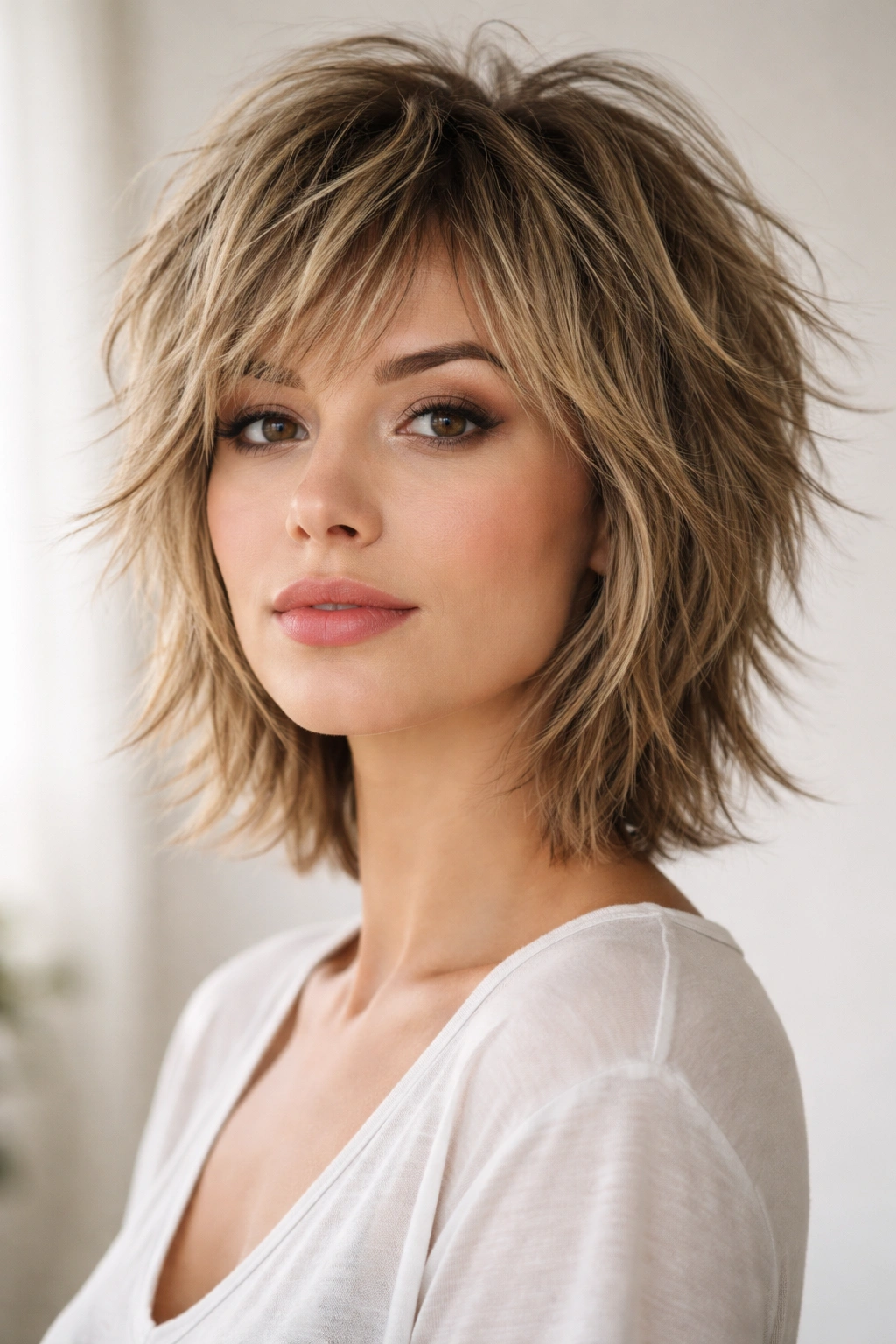
The modern shag is back, and it’s incredibly flattering for anyone wanting to minimize a double chin. This cut features choppy, choppy layers throughout that create movement and texture, plus it’s deliberately tousled and undone — which means styling pressure is off. The jagged layers at the front frame your face while the shorter layers on top create crown height that pulls everything upward.
Why Shags Create Visual Lift
Shags are fundamentally about movement. The layering is aggressive enough that hair naturally separates and creates visual interest everywhere except under your chin. The tousled styling means you’re not smoothing the hair down — you’re deliberately disrupting it, which adds dimension and prevents any heavy concentration around your lower face. The shorter layers mean less weight pulling downward.
Styling Strategy
- Wash and air dry with your head tilted forward to encourage root lift
- If air drying doesn’t work, blow dry with fingers rather than a brush to create separation between layers
- Apply a light texturizing spray or sea salt spray to define the shag and encourage that undone look
- Don’t style it sleek or smooth — the point is tousled, so embrace the texture
- Trim every 5-6 weeks because the shag shape depends entirely on its layering being precise and defined
- Sleep on it with a bit of product in your hair to wake up with texture already in place
Real talk: The shag requires more daily styling effort than a sleek pixie, but the payoff in terms of flattering proportions is worth it. You’re actively creating dimension that works against the appearance of a double chin.
4. The Structured Crop with Defined Angles
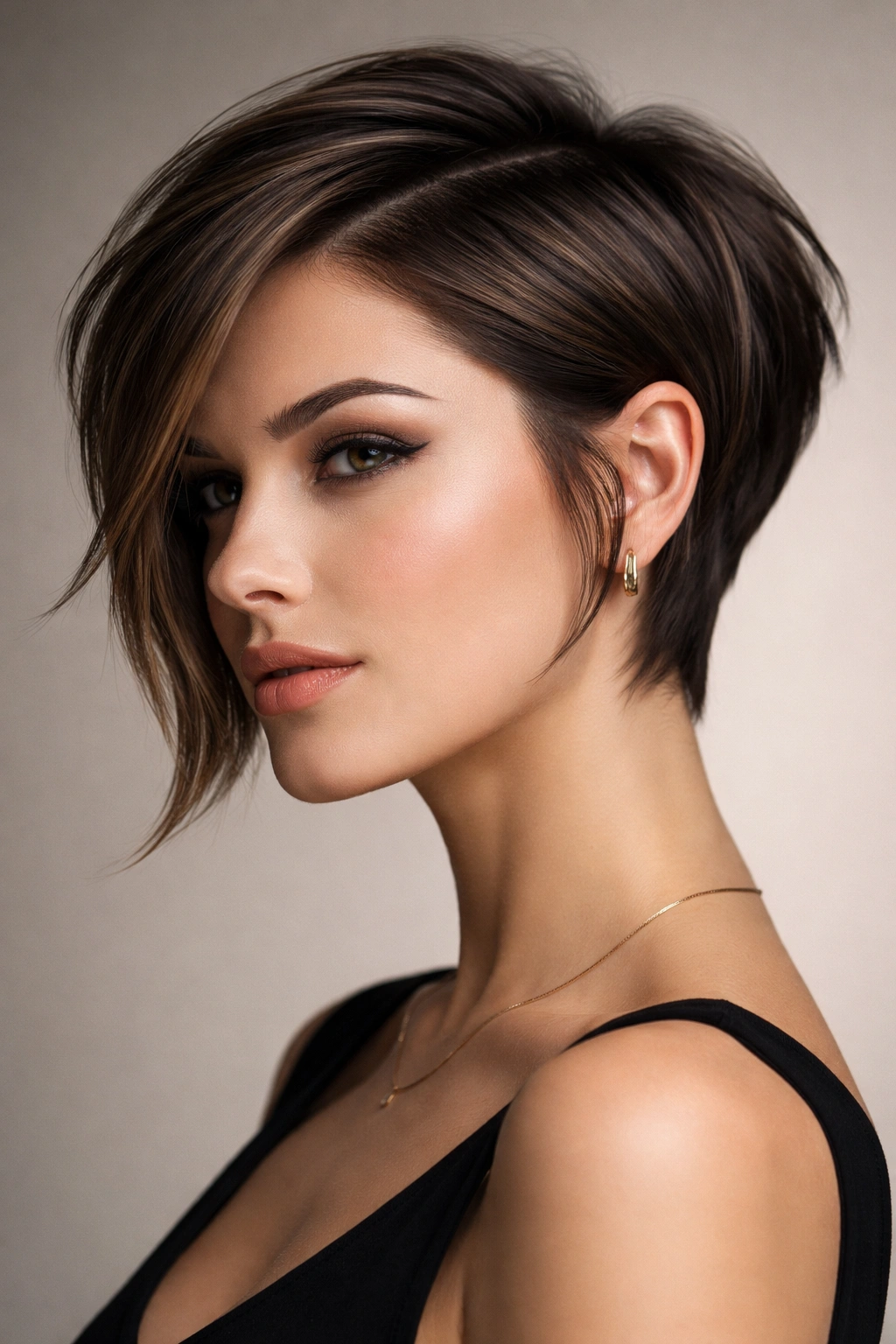
A geometric crop — think sharp, architectural lines rather than soft curves — creates a visual frame for your face that’s incredibly face-flattering. The crisp angles direct the eye toward your cheekbones and jawline in a powerful way. This cut is short everywhere, but the placement of the angles means some pieces are strategically longer around your face, creating a shadow and contour effect that minimizes a double chin.
The Geometry Works
The defined angles aren’t just aesthetic; they’re functional. A line that angles downward from your temple to your jawline creates visual length and draws the eye along that path rather than down toward your chin. Paired with volume on top, the structured crop becomes a face-flattering powerhouse that works especially well with strong, angular bone structure or if you want to project confidence and modernity.
How to Make It Work
- Work with a stylist who has experience with geometric, architectural cuts — precision matters immensely here
- Request angles that complement your specific face shape; these aren’t one-size-fits-all cuts
- Ask for slightly longer pieces around your face (about 1.5 inches) to frame your features
- Keep the top shorter to maintain the structured look and prevent hair from looking matted or flat
- Style with a volumizing product at the roots
- Use a flat iron or blow dryer with a concentrator nozzle to enhance the defined lines
- Trim every 3-4 weeks to maintain the architectural precision
Insider note: This cut is ideal if you’re willing to style it regularly. The structure only works if you’re actively maintaining those defined angles.
5. The Feathered Pixie with Soft Layers
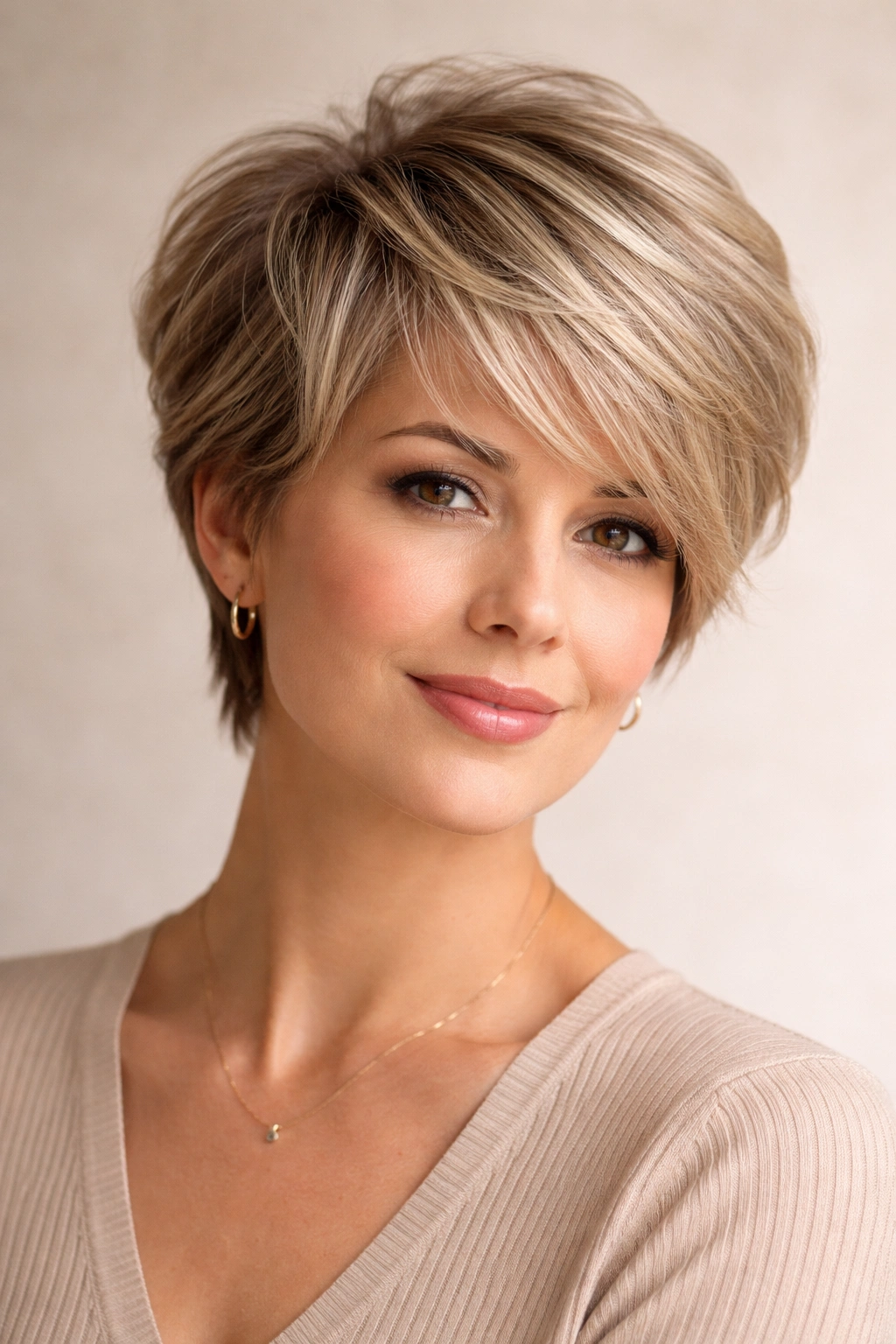
If you like the idea of a pixie but want something softer and less severe, a feathered pixie gives you all the face-flattering benefits with a more approachable vibe. The layers are feathered rather than choppy, creating a softer edge while still building height at the crown and keeping density away from under your chin. This cut reads elegant and sophisticated rather than edgy.
Softness Still Lifts
The feathering creates subtle layers that catch light beautifully. Light and shadow play a huge role in how your face is perceived, and feathered layers create more of both. The softer texture means the cut works with more hair types and styles, and it’s forgiving if you miss a styling day. You still get the upward eye-draw of a pixie, but it feels less severe and more wearable for everyday life.
Styling and Maintenance
- Ask your stylist for soft, feathered layers that blend rather than chop
- Request slightly longer length on top (about 2-3 inches) to maintain softness
- Blow dry with fingers or a round brush to enhance the feathering
- Use a lightweight cream or oil-based product rather than a heavy pomade — you want the softness to show
- Trim every 4-5 weeks to maintain the feathering before it grows out and loses its shape
- Sleep with a silk pillowcase to preserve your styling overnight
Pro tip: The feathered pixie is ideal if you have naturally wavy or textured hair, as the feathering works with your natural texture rather than against it.
6. The Graduated Bob with Stacked Layers
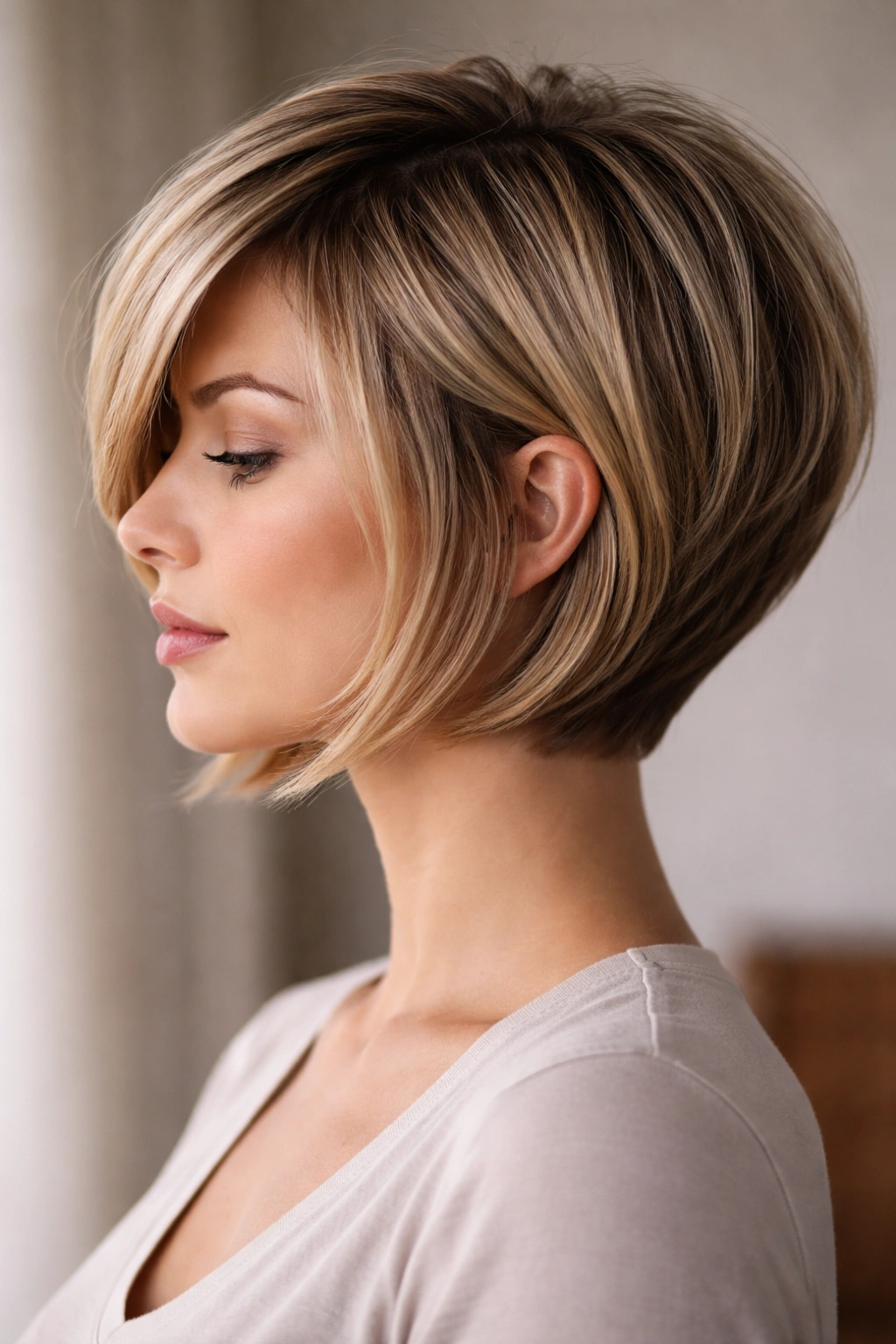
A graduated bob — where the back is noticeably shorter than the front — creates an immediate visual lift while the stacked layers add texture and prevent density. The front pieces can be long enough to frame your face, while the back stays short and clean. This creates an instant silhouette shift that makes your entire face appear more lifted and defined.
The Lift Effect
Graduated bobs create height at the crown automatically because of the stacked construction. Your eye naturally goes to the highest point, which is the back of your head — immediately pulling focus upward and away from your chin. The longer front pieces frame your face and create lines that lead the eye toward your cheekbones, not downward.
How to Wear It
- Ask for a 2- to 3-inch difference between the front and back length
- Request stacked layers in the back for volume and texture
- Keep front pieces long enough to just touch your jaw or slightly longer
- Blow dry the front pieces with a round brush, curling them under slightly
- Use a volumizing product at the crown to enhance the height
- The graduated bob works with straight, wavy, or curly hair, but requires regular trims (every 4-6 weeks) to maintain the graduated shape
- Consider a deep side part to add asymmetry and further elongate your face
Worth knowing: This cut requires your hair to have enough texture or body to hold the shape. If your hair is very fine or limp, work with your stylist on appropriate styling products and techniques to maintain the structure.
7. The Textured Crop Tailored to Your Face Shape
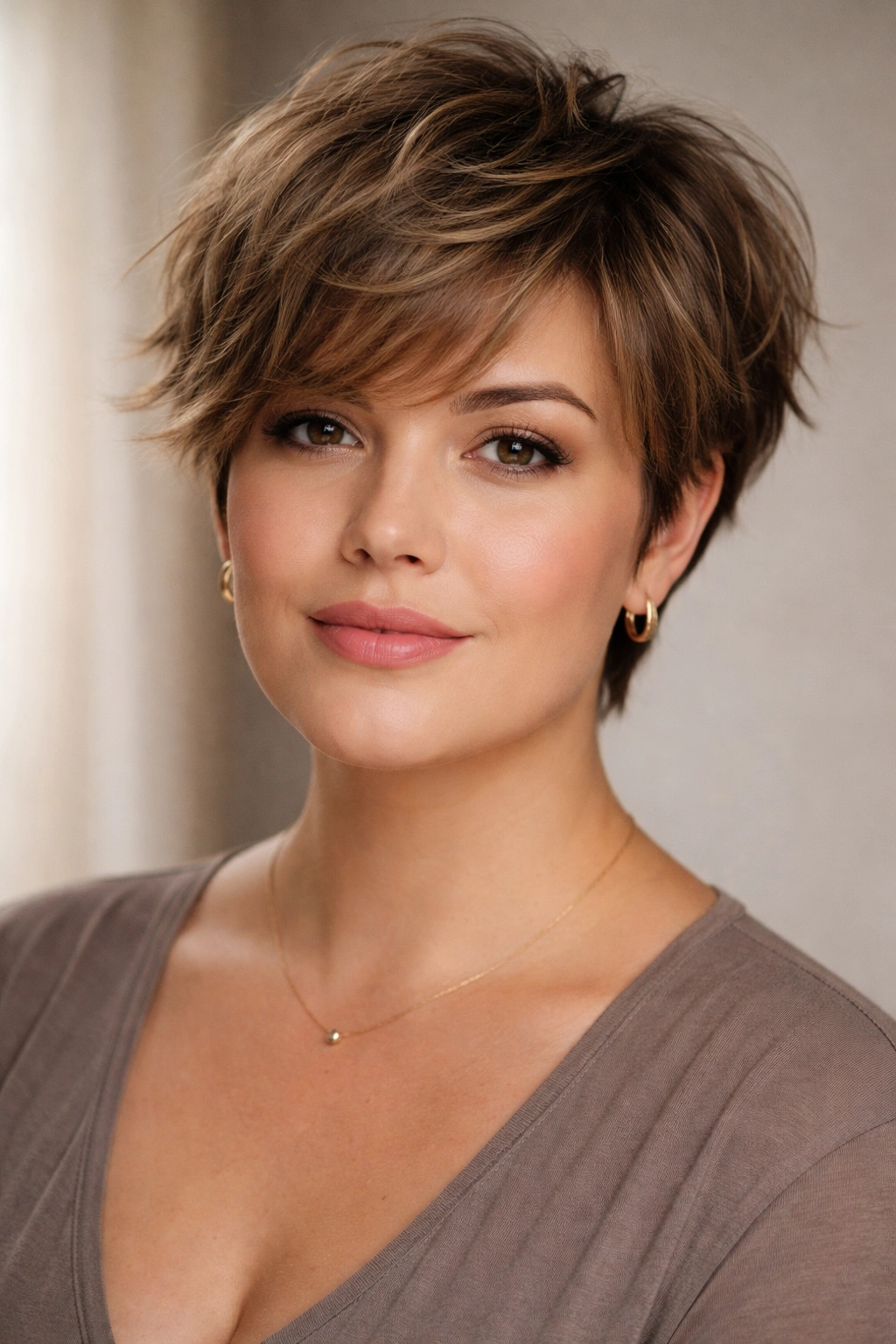
A customized textured crop that’s specifically designed for your unique face shape is one of the most effective ways to minimize a double chin. Rather than following a standard crop template, your stylist assesses your specific features and creates a cut that strategically places texture and volume to flatter you personally. This might mean longer pieces in some areas, shorter in others, or specific angles tailored to your bone structure.
Customization Changes Everything
Generic cuts are fine, but a tailored cut becomes a tool specifically designed to flatter your face. Your stylist might layer more heavily in certain areas to create shadow, keep other areas denser to create structure, or place longer pieces strategically to frame your features in ways that minimize what you want to play down. This personalized approach is incredibly powerful.
What to Discuss with Your Stylist
- Show reference photos of cuts you love, but explain specifically what appeals to you (the layering? the volume? the texture?)
- Be honest about your double chin concerns and ask your stylist what they recommend based on your face shape
- Ask about specific placement of layers and volume — the more detailed your discussion, the better the result
- Request a cut that works with your hair type and lifestyle (if you don’t blow dry every day, don’t get a cut that requires daily styling)
- Schedule a consultation before committing to the cut so you can discuss these details with the stylist
- Plan for regular trims every 4-6 weeks, as a customized cut depends on maintenance
Real talk: A customized cut might cost more than a standard cut, but the investment pays off in how much better it looks on you specifically. You’re paying for the personalized strategy, not just the technical execution.
8. The Asymmetrical Pixie with Longer Side-Swept Bangs
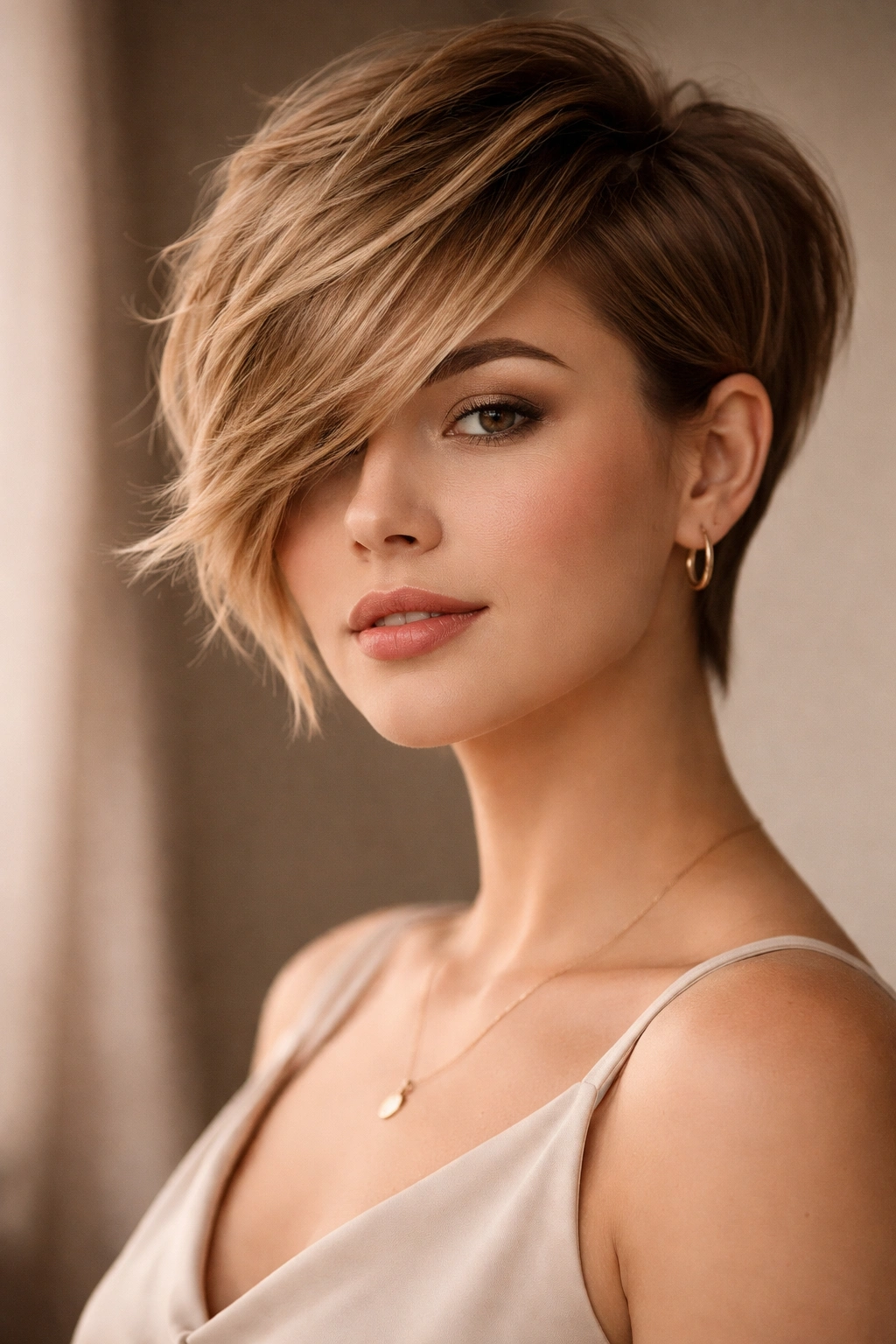
Asymmetry is inherently face-flattering because it breaks visual monotony. An asymmetrical pixie with one side slightly longer than the other, plus longer side-swept bangs, creates an angular, dynamic frame for your face. The asymmetry naturally guides the eye across your face rather than allowing it to rest on your chin. Paired with crown volume, this is an incredibly strategic cut for minimizing a double chin.
How Asymmetry Works
Our brains process faces asymmetrically — we notice the eye path first. When your cut creates an asymmetrical frame, the eye is drawn along that asymmetrical path, which typically leads toward your cheekbones and eyes rather than downward toward your chin. The longer side-swept bangs create a shadow and line that further elongates your face. The result is a cut that literally teaches the eye where to look.
Styling Details
- Request one side approximately one inch longer than the other
- Ask for side-swept bangs that are at least 2-3 inches longer than the rest of the crown
- Blow dry the longer side across and over, creating that sweeping line
- Use a styling product that adds texture — the asymmetry shows better with definition than with sleek styling
- Trim every 4-5 weeks to maintain the asymmetrical shape and prevent the bangs from covering your eyes
- Part on the side opposite the longer pieces to enhance the asymmetrical effect
- Consider having the stylist razor-cut the bangs for a softer, more textured finish rather than blunt
Pro tip: The asymmetrical pixie is perfect if you’re confident and want to make a statement. It’s a bold cut that shows intention, which reads as confidence.
9. The Layered Lob with Volume at the Crown
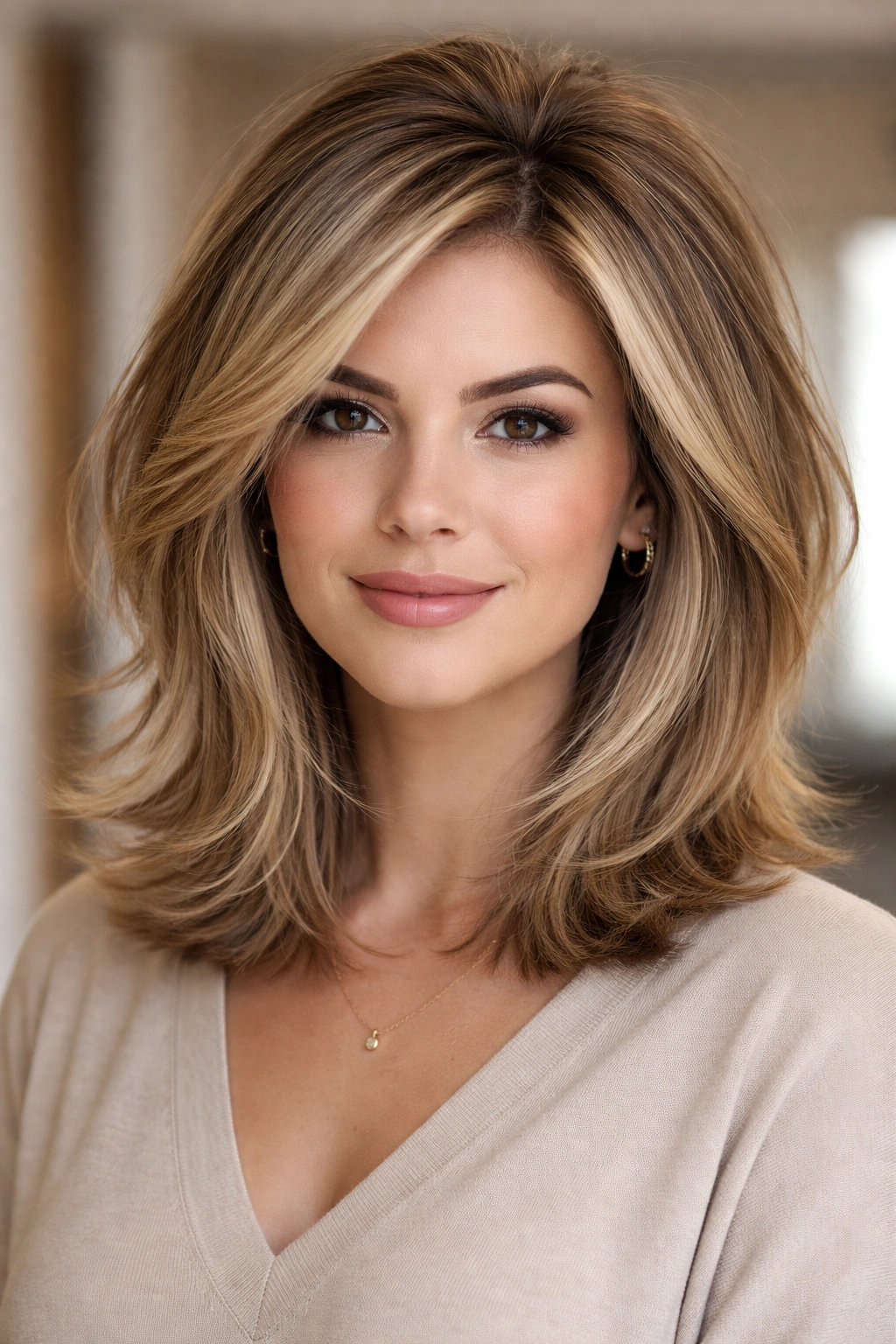
A lob — that in-between length sitting between a short crop and a traditional bob — can be incredibly flattering if it’s layered correctly and has volume at the crown. The key is making sure the lob isn’t heavy at the ends or it will pull your face downward. Multiple layers throughout, plus strategic crown volume, create a shape that lifts your entire face while still giving you the option to style in multiple ways.
Why Length Can Still Work
People assume short is always more flattering, but a well-constructed layered lob can work just as well if the layering is done strategically. The layers prevent density at the ends, and the crown volume creates the lift you need. Paired with the right styling, a layered lob creates as much visual definition as a pixie or crop, while giving you more versatility in styling options.
How to Get It Right
- Request layers throughout, with the shortest layers at the crown (about 1.5-2 inches)
- Ask for longer layers that blend down to your longer length at the ends
- The front pieces should be long enough to frame your face but not so long that they make your face look longer
- Blow dry with a round brush, focusing on creating volume at the crown
- Use a texturizing spray or cream to keep the layers defined and separated
- Trim every 5-7 weeks to maintain the layering and prevent the ends from becoming heavy
- Consider sleeping in loose braids or using a silk pillowcase to preserve waves and texture
Worth knowing: The layered lob requires consistent styling to look its best. If you wear it down, you need to blow dry it regularly. If you prefer to air dry, ask your stylist for layers and texture that work with your natural hair pattern.
10. The Modern Buzzed Fade with Longer Top
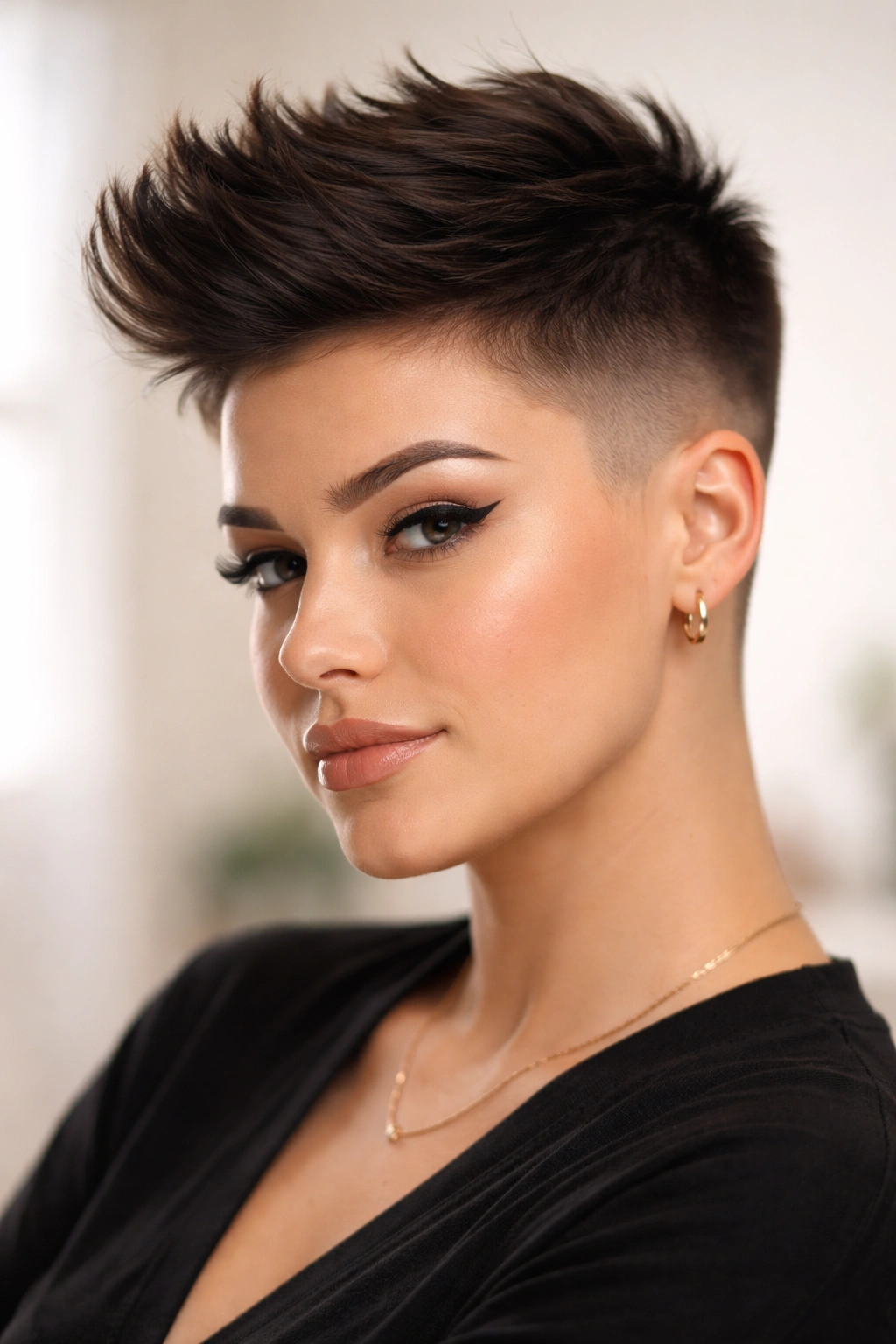
This is bold, but a modern fade — where the sides and back are buzzed short while the top remains longer — creates incredible face-flattering proportions. The ratio of short-to-long is extreme, which creates maximum upward focus. The longer top pieces can be styled up and back or textured and tousled, but the key is that all the visual weight and volume sits on top, pulling your entire face upward and creating a lifted appearance that instantly minimizes a double chin.
The Proportion Shift
A fade is essentially exaggerated proportions, and proportion is everything when you’re trying to minimize a double chin. By removing all visual weight from the sides and back, you’re creating a silhouette that’s widest at the crown — which is exactly where you want focus. The dramatic contrast between the buzzed sides and the longer top creates a visual statement that commands attention at the top of your head, not at your jawline.
How to Make It Work
- Request a fade that blends from buzzed (often 0.5 to 1.5 inches on the sides) up to longer length on top
- Ask for the top to be at least 2-3 inches long so you have styling options
- Request textured or choppy layers on top to add dimension and prevent the longer top from looking like a simple crew cut
- Blow dry the top with a round brush or use a flat iron to style it up and back, or tousle it for a more textured look
- Use a strong-hold styling product (pomade, clay, or wax) to maintain your chosen style throughout the day
- Trim the fade every 2-3 weeks to maintain the clean blended lines
- Don’t skip salon visits — this cut loses its impact quickly if the fade grows out
Real talk: This cut is bold and makes a statement. It requires confidence to pull off and commitment to maintain. But if you’re willing to lean into it, the face-flattering payoff is tremendous.
Final Thoughts
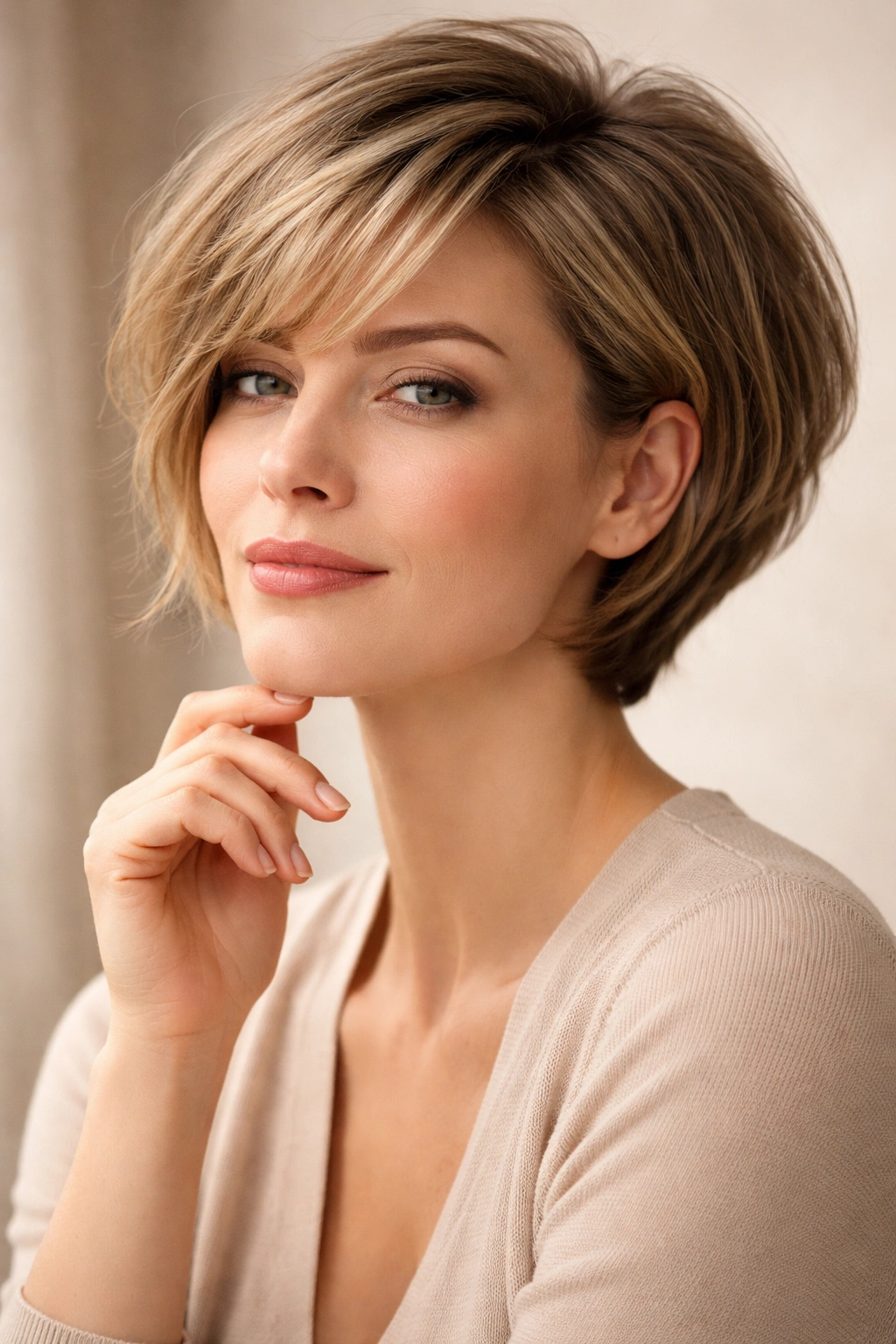
The most flattering short haircut is the one that creates volume where you want focus and eliminates density where you want to minimize. Whether you choose a pixie, a textured crop, an asymmetrical cut, or a modern fade, the underlying principle is the same: use proportion, layering, and strategic styling to guide the eye upward and away from your chin. None of these cuts require you to hide behind your hair. Instead, they teach your hair to work with your face shape and create the most flattering frame possible.
The key is finding a stylist who understands face-flattering proportions and is willing to customize the cut based on your specific features, hair texture, and lifestyle. A good stylist doesn’t just follow a template — they assess your face, understand your concerns, and create a strategic cut that addresses them. Once you have that cut, maintenance becomes simple. Regular trims every 4-6 weeks keep the shape crisp and the volume in exactly the right places, which means you’re consistently getting that flattering, lifted effect without any extra effort.
Start with a consultation. Bring reference photos. Be honest about what you want to minimize and what you want to highlight. Then trust your stylist’s expertise and commit to the cut for at least 4-6 weeks before deciding whether it works. The transformation can be genuinely surprising once you see the full effect with proper styling and maintenance.
