



Shag haircuts have made a major comeback, and for good reason. This effortlessly cool style offers movement, texture, and dimension without demanding hours of styling or professional upkeep every few weeks. A medium-length shag sits at the sweet spot between bold and practical—short enough to feel fresh and modern, long enough to have serious versatility in how you wear it.
The beauty of a shag lies in its built-in texture. Rather than forcing your hair into a sleek, one-dimensional style, a shag works with your natural texture, whether you’re dealing with waves, curls, or straight strands. The layered construction means you get natural volume at the crown and feathered, tapered ends that catch light beautifully. More importantly, this structure means you’re not fighting your hair daily just to keep it looking intentional. A medium shag responds well to air-drying, works with minimal product, and actually looks better the more casually you treat it.
Beyond the practical benefits, there’s something undeniably cool about a shag. It signals confidence and personality—you’re not playing it safe with a cookie-cutter cut. Whether you’re drawn to the vintage rock-and-roll vibes, the modern editorial edge, or something completely unique to your style, there’s a shag variation that speaks to you. The styles that follow prove just how adaptable this cut can be, from beachy and romantic to sharp and contemporary. Each one is designed to minimize fussiness while maximizing impact.
1. Textured Choppy Shag
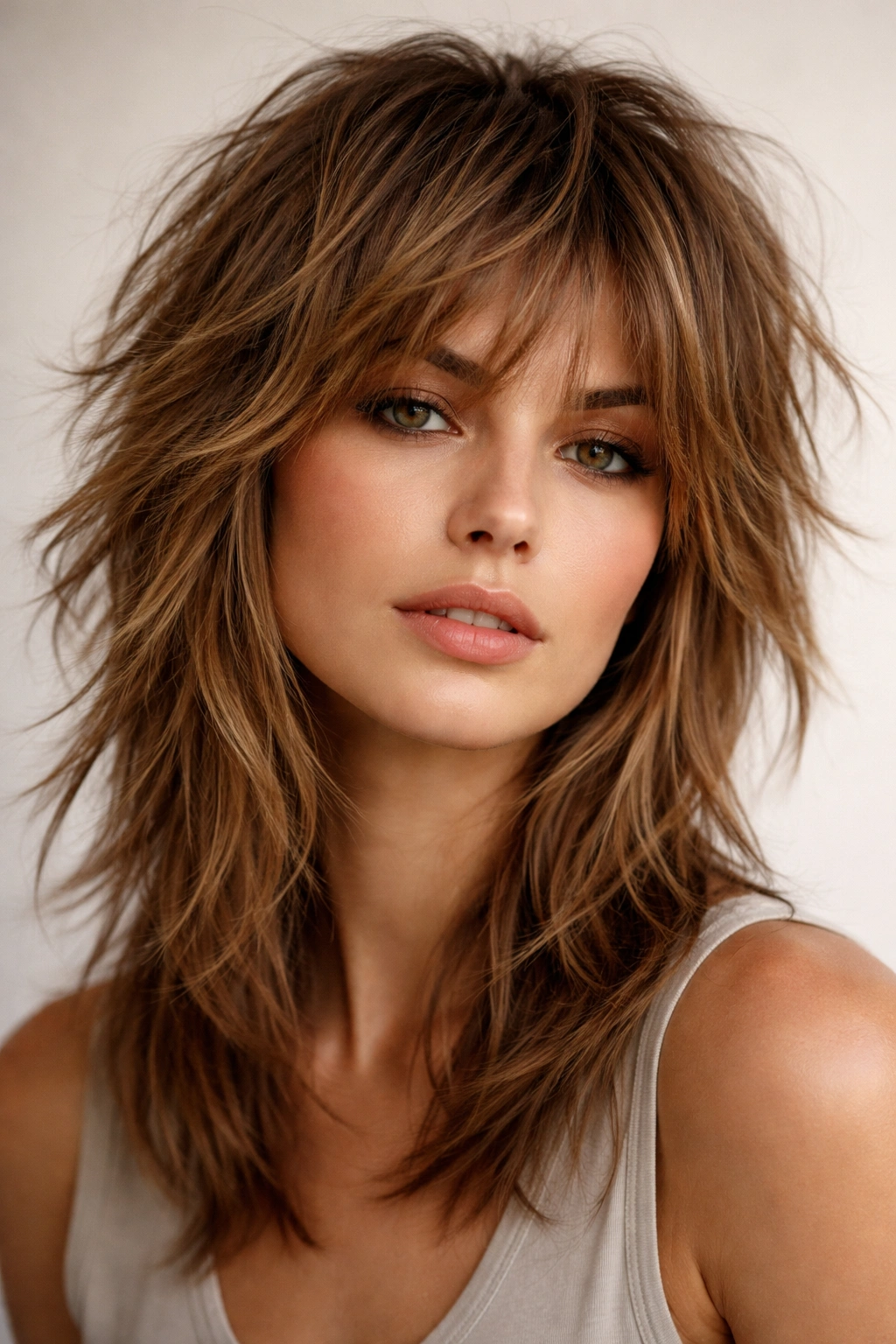
A textured choppy shag embraces an intentionally jagged, piece-y aesthetic. This version features shorter, more dramatically tapered layers throughout, particularly around the face and crown. The choppiness creates immediate movement and prevents the style from ever looking flat or dull, no matter what your hair texture naturally does.
Why This Cut Stands Out
The choppy shag works brilliantly because the texture does the heavy lifting for you. Rather than relying on perfectly blown-out waves or precise styling, this cut looks intentional even when your hair is slightly undone. The shorter, disconnected layers catch light at multiple angles, which makes the haircut itself the focal point rather than depending on color, shine, or perfectly placed waves. This cut is particularly forgiving if you have an active lifestyle or simply don’t want to spend time styling.
Styling and Maintenance Tips
- Air-dry with your head flipped upside down for maximum volume at the roots, then flip back and scrunch with a lightweight texturizing spray
- Use a curling iron to emphasize the shorter layers around your face, focusing on the mid-lengths and ends rather than trying to curl from the root
- Keep the choppy texture defined by getting trims every 4-6 weeks; this style relies on sharp lines to maintain its edge
- A sea salt spray or dry texture product is your best friend for emphasizing the piece-y construction without extra effort
Real talk: This cut requires commitment to regular trims. Without them, the choppy precision softens and the style can start looking shaggy rather than intentionally textured. But once you commit to the maintenance schedule, the styling effort drops significantly.
2. Feathered Bob Shag
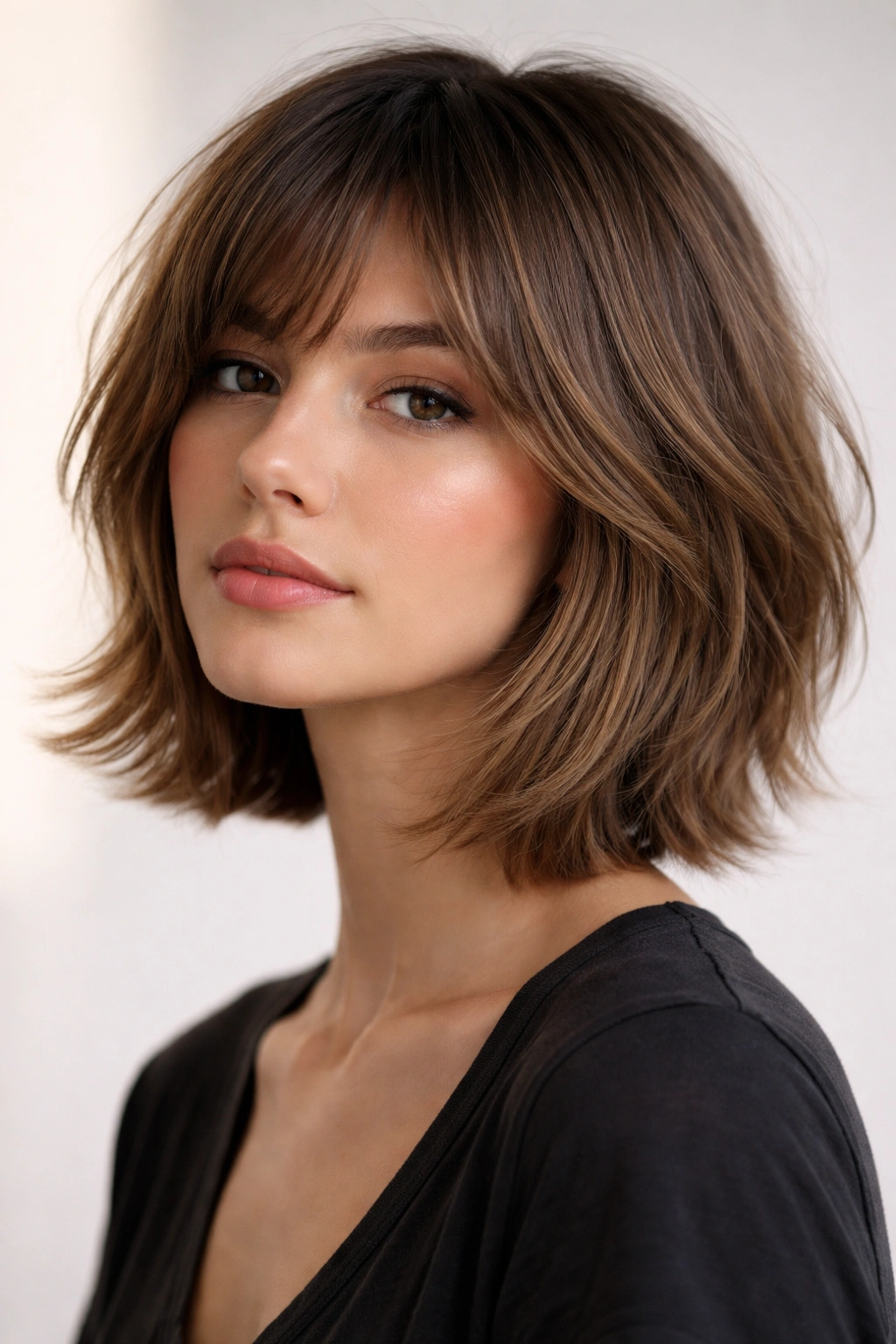
If you love the idea of a shag but want something slightly more polished, a feathered bob shag merges the structured simplicity of a bob with the textured, layered movement of a shag. The result is a medium-length cut that hits around chin level, with subtle layers that create gentle feathering rather than dramatic choppiness.
What Makes This Version Special
The feathered bob shag appeals to people who want the cool factor of a shag without the more extreme styling demands. The feathering softens the blunt edges of a traditional bob, adding dimension and movement that makes the style feel fresher and less severe. Because the layers are less dramatic, this cut works beautifully with a wider range of face shapes and hair textures. It’s sophisticated enough for professional settings while still reading as modern and intentional.
How to Style This Cut
- Blow-dry with a round brush to smooth the feathered layers while maintaining volume at the crown
- Use a medium barrel curling iron to create soft waves that follow the existing layer lines—don’t fight the cut, work with it
- For a more polished daytime look, apply a smoothing serum to damp hair before blow-drying to enhance shine and reduce frizz
- For evening or weekends, enhance the texture with a texturizing spray and finger-comb the waves into a deliberately undone arrangement
- Schedule trims every 5-7 weeks to maintain the feathered shape without losing the polish
Pro tip: This cut photographs beautifully because the feathering creates natural dimension without looking overdone. It’s an excellent choice if you’re thinking about updating your look for professional headshots or social media.
3. Beachy Waves Shag
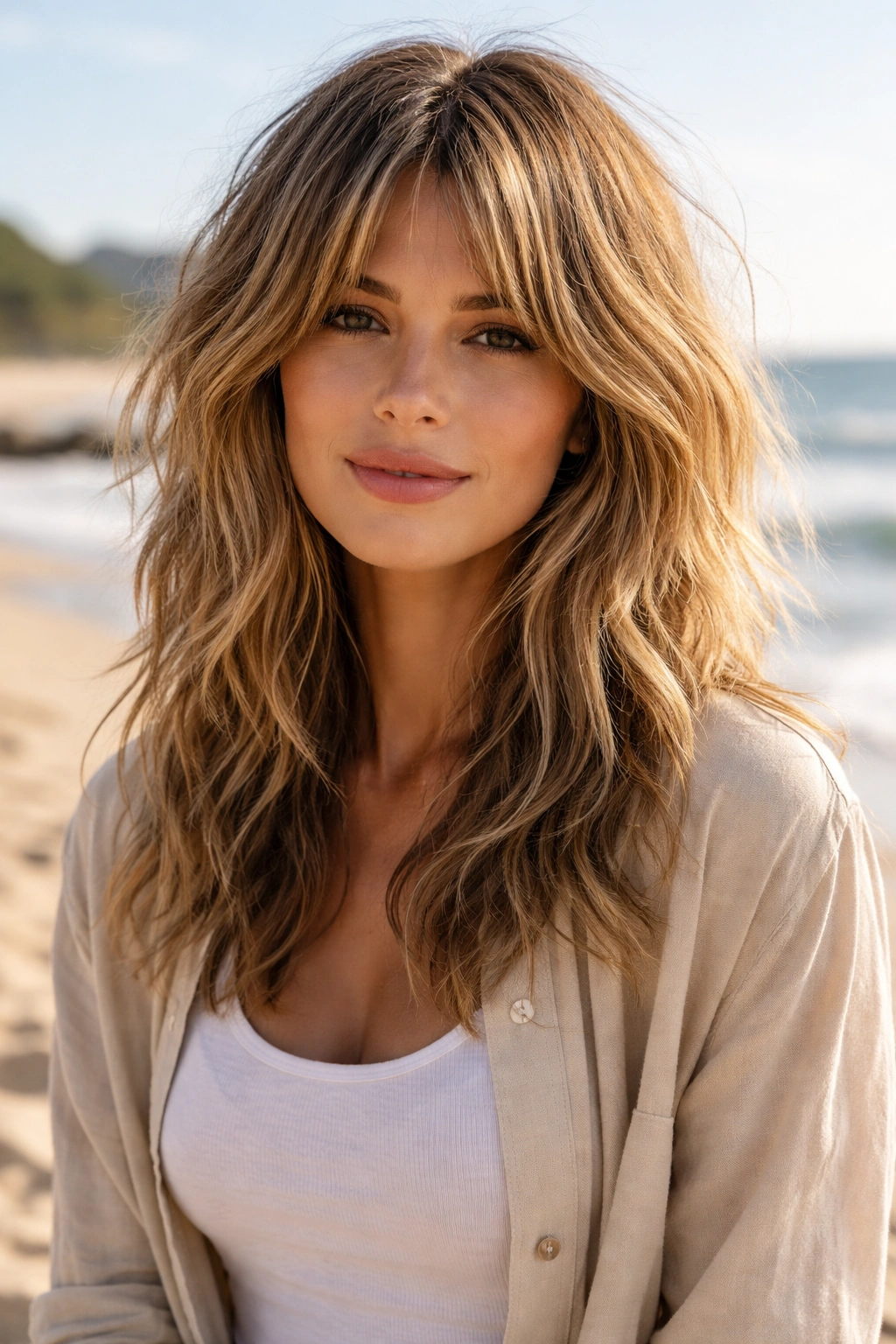
The beachy waves shag is designed specifically to work with loose, flowing movement. This style features longer layers that blend seamlessly rather than creating choppy breaks, resulting in a medium length that looks perpetually wind-tousled. The emphasis is on soft dimension and effortless texture rather than sharp, edgy lines.
Why It Captures That Relaxed Aesthetic
This version of the shag appeals to people who want to look like they just came from the beach without actually needing an ocean nearby. The longer, blended layers create a gentle progression from shorter pieces around the face to longer strands through the ends. Because the transitions are gradual rather than dramatic, this cut works with loose waves, natural waves, or even straight hair styled with waves—it’s adaptable to how your hair naturally wants to fall.
Styling Techniques for Maximum Movement
- Sleep in loose braids or use a wave-enhancing product before bed to wake up with natural texture
- Use a sea salt spray or beach wave spray while hair is damp, then air-dry or diffuse for effortless waves
- For more defined waves, use a 1.5-inch barrel curling iron on sections, curling away from the face and staggering the direction
- Apply a light-hold styling cream or texturizing spray to damp hair to enhance the wave pattern without creating crunch
- Trims every 6-8 weeks maintain the length while keeping the layers blended and purposeful
Worth knowing: This style genuinely does look better the second or third day after washing when natural oils have had time to settle into the waves. Don’t judge it right after shampooing—give it a day to develop its full character.
4. Side-Swept Shag
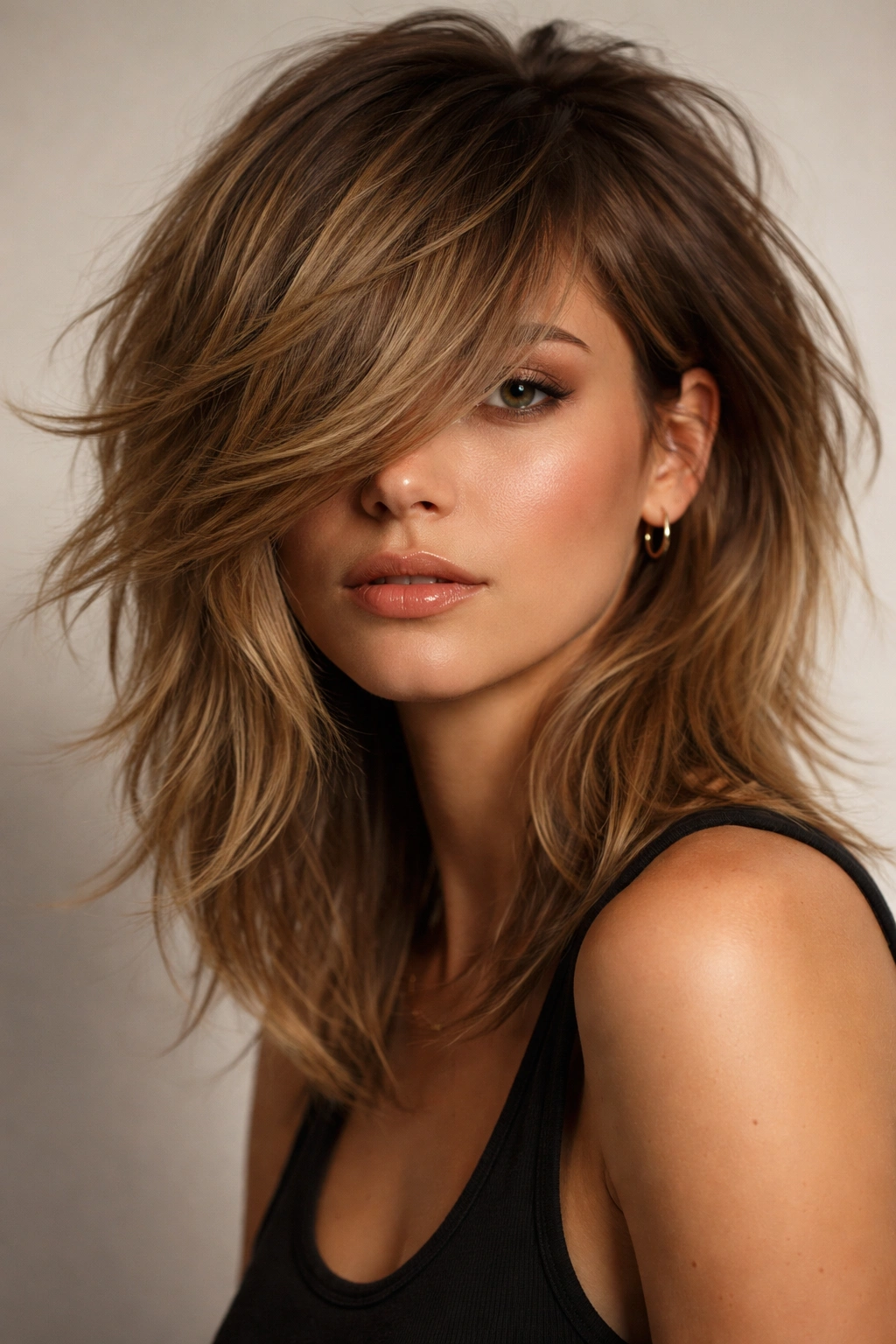
A side-swept shag takes the classic shag silhouette and adds an asymmetrical angle that immediately feels editorial and intentional. The longer side is swept across the face, creating an elegant drape, while the shorter side sits closer to the head, adding volume and movement to the crown.
The Asymmetry Advantage
This cut offers a clever styling solution if you have a hair part that naturally falls to one side or if you want to flatter specific features—longer hair on one side can soften an angular jawline, while the shorter side adds lift if you have finer hair or want more crown volume. The asymmetrical construction means you’re not tied to one way of wearing it; you can sweep it to either side depending on your mood or what you’re wearing. There’s an inherent confidence to asymmetrical hair that reads as intentional and fashion-forward.
Maintaining the Sweep
- Blow-dry the longer side across the face using a brush to guide it into place, hitting with cool air at the end to set the direction
- Use a lightweight pomade or styling cream on the swept side to hold the shape without looking greasy
- The shorter side benefits from being tousled or piece-ed out—don’t try to flatten it; let it add texture
- Every 5-6 weeks, get the asymmetry refreshed because as hair grows, the angle softens and the sweep can become less pronounced
- If you want to change which side is longer, let your stylist know at your trim appointment—growing out the asymmetry takes time but is absolutely possible
Insider note: Asymmetrical cuts can feel intimidating if you’ve never tried them, but this version is forgiving because the shag’s natural texture works with asymmetry rather than against it. Your hair actively wants to fall into that swept position.
5. Layered Blonde Shag
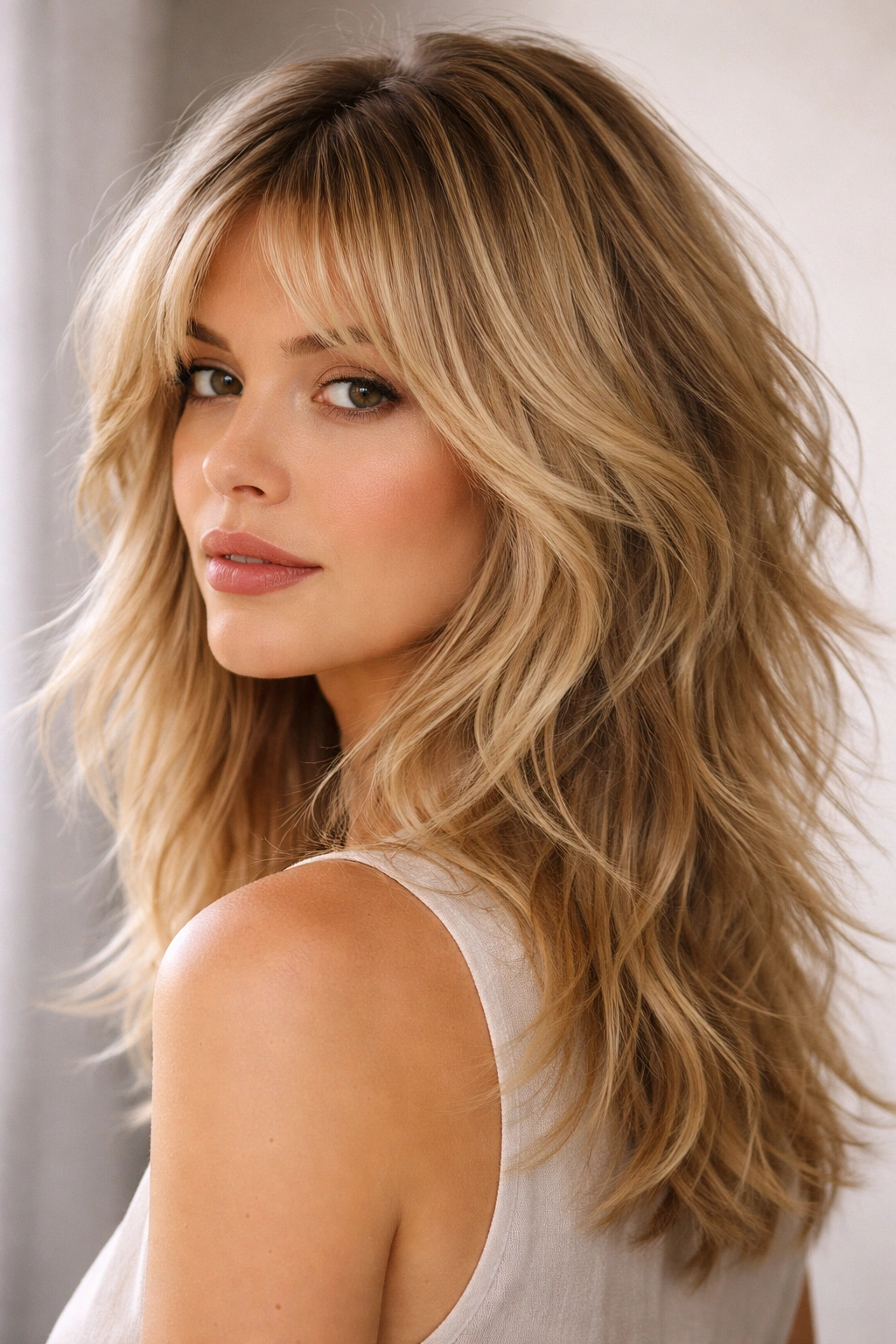
A layered blonde shag combines the textural brilliance of the cut with the dimensional magic of blonde color. The layering creates natural breakage in the color, allowing lighter and slightly darker tones to coexist beautifully. Medium-length blonde shags work particularly well with warm or lived-in blonde tones rather than flat, uniform color.
Why Blonde Amplifies the Shag Effect
Blonde hair naturally reads as lighter and more dimensional, which means the shag’s layers become more visually apparent. Even subtle layering shows more dramatically with blonde because light plays differently across shorter and longer sections. This makes the cut itself become more sculptural and interesting. The color also tends to catch light in a way that emphasizes texture, so a shag that might read as subtly layered in a darker shade becomes unmistakably dimensional in blonde.
Color and Cut Coordination
- Work with your stylist to choose a blonde tone that suits your skin—warm honeys and golds, cool ash blondes, or creamy butter blondes all work beautifully with medium shags
- Request a color technique that involves some tonal variation rather than flat, uniform color—balayage, highlights, or dimensional color all enhance the shag’s movement
- Maintain blonde with purple-toning shampoo and conditioner to keep it from going brassy (especially if you’ve chosen a cooler tone)
- Because blonde often requires lightening, stay on top of deep conditioning treatments every 1-2 weeks to keep the shag feeling soft rather than wiry
- Combine color maintenance with cut maintenance—refresh both every 5-8 weeks to keep the blonde looking intentional and the layers looking sharp
Pro tip: Blonde shags are particularly stunning with darker roots intentionally left visible. This “shadow root” or “rooted blonde” technique requires less frequent color maintenance while adding dimension that makes the texture pop even more.
6. Modern Mullet Shag
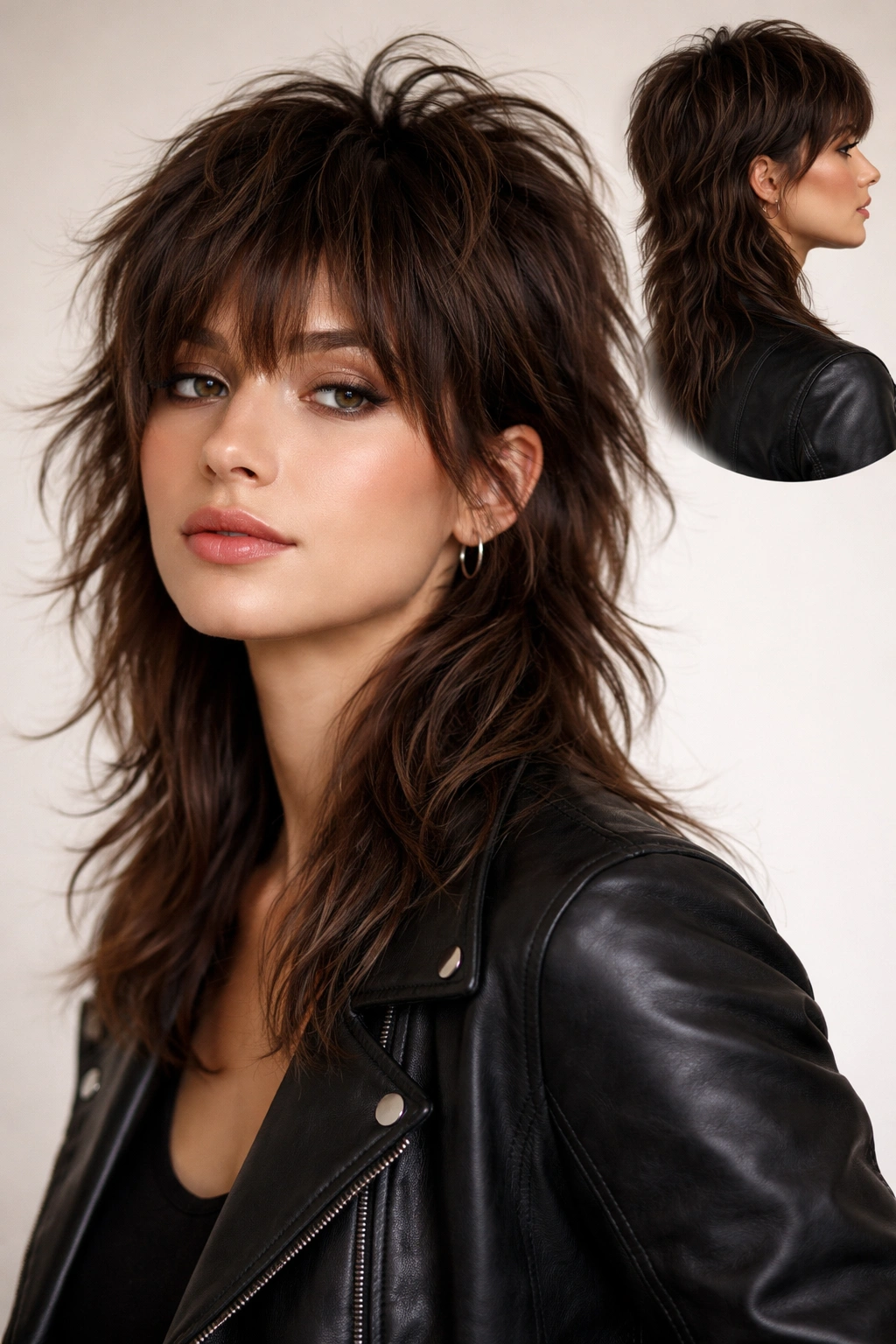
A modern mullet shag reinterprets the controversial ’80s mullet as something contemporary and intentional. This style features shorter, textured layers on top and through the crown, then gradually transitions to longer length in the back. It’s dramatic, it’s bold, and it works beautifully for people who want a shag that reads as truly fashion-forward.
The Contemporary Mullet Appeal
The modern mullet shag ditches the harsh contrast of vintage mullets in favor of a more blended transition. The top is shaped and textured for volume and movement, the sides create a medium length that frames the face, and the back grows longer—but everything connects through layering rather than creating a sharp line. This version works as both an edgy fashion statement and a legitimate, wearable everyday cut if you style it right.
Styling a Modern Mullet Shag
- The front and crown benefit from being styled with texture and movement—use a texturizing spray and finger-comb for a casually cool look
- The longer back sections can be styled in waves, left straight, or even pulled into a small clip or bun depending on your vibe that day
- For a sharper look, blow-dry everything with a brush to define the layers and create movement
- For a softer look, apply sea salt spray to damp hair and air-dry, letting the texture work organically
- Trims every 4-6 weeks keep the shape defined without losing the length potential in the back
- The transition from front to back is what makes this work, so communicate clearly with your stylist about how gradual or dramatic you want that blend
Worth knowing: A modern mullet shag requires confidence to carry off. This isn’t a “blend in” haircut. If you’re drawn to it, you’re probably already the type of person who enjoys standing out, so lean into that energy with styling and fashion choices that match the cut’s boldness.
7. Shaggy Wolf Cut
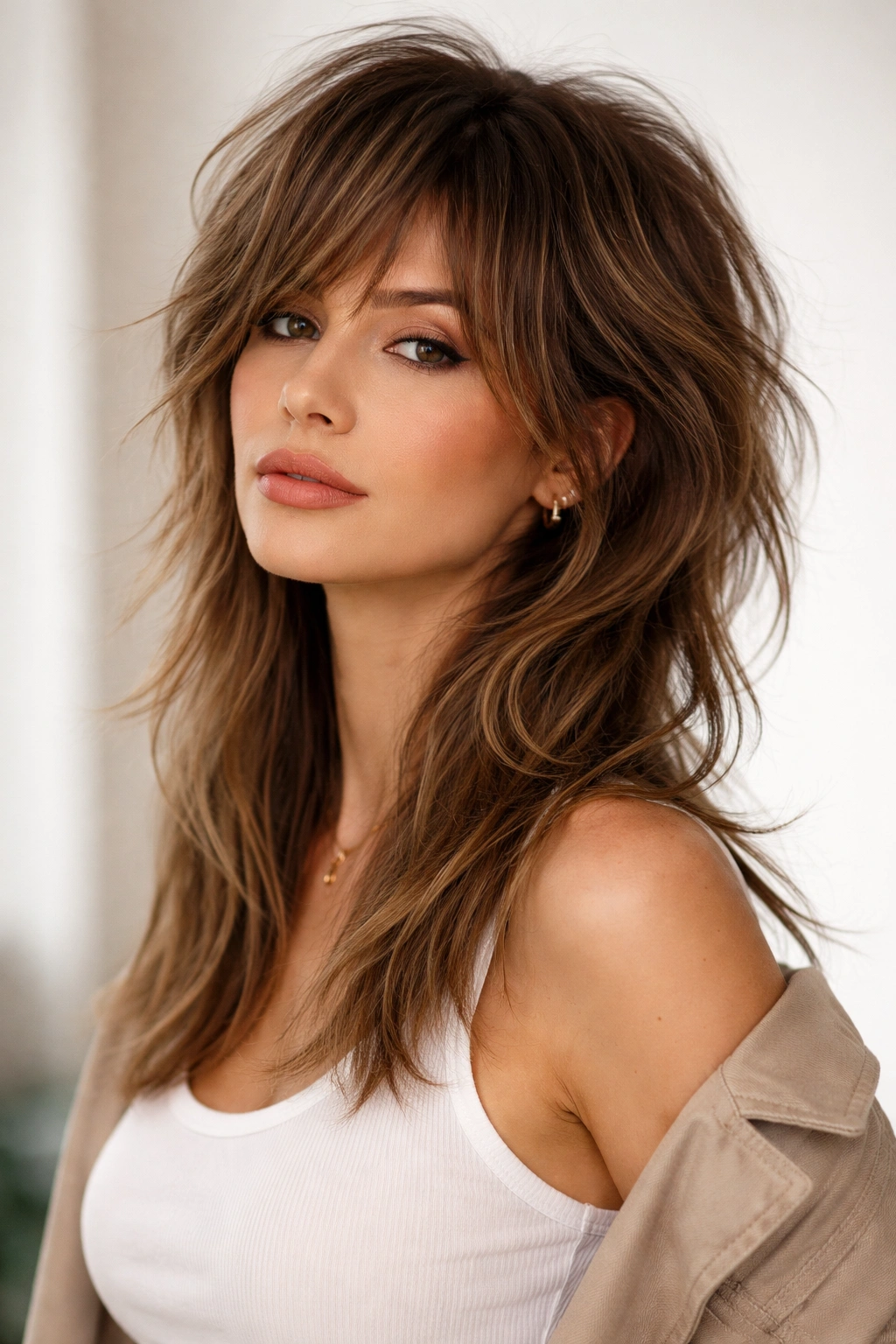
The wolf cut is a specific interpretation of the shag that’s gained significant popularity. It combines a textured, layered top with longer, straighter lengths underneath, creating a shape that’s wilder and more voluminous than a traditional shag. The name comes from the style’s shaggy, slightly untamed aesthetic.
What Defines a Wolf Cut
A wolf cut prioritizes maximum movement and texture. The top is shorter and heavily layered for serious volume at the crown, the middle sections create a “mullet-like” shape, and the bottom layer is left longer and sleeker. This creates a visually striking contrast and a silhouette that reads as bold and intentional. Wolf cuts work particularly well for people with wavy or curly hair because the texture naturally supports the volume, but they can be styled beautifully on straight hair too.
Creating the Wolf Cut Effect
- The crown and top layers need texture and lift—use a texturizing spray or dry shampoo at the roots before styling to boost volume
- Blow-dry the top sections with your head flipped upside down, then flip back and scrunch with a texturizing product
- For the longer, lower layers, create waves or curls using a curling iron, focusing on mid-length and ends rather than the roots
- Alternatively, allow the longer bottom layers to fall straighter while the top stays textured for maximum contrast
- This cut requires regular trims—every 4-6 weeks—because the shape depends on the difference between the shorter top and longer bottom
- Don’t shy away from embracing the slightly wild aesthetic; a wolf cut that’s too polished loses its edge
Pro tip: Wolf cuts photograph beautifully because the volume and movement catch light in dynamic ways. If you love bold, visually interesting hair, this cut delivers.
8. Curly Shag
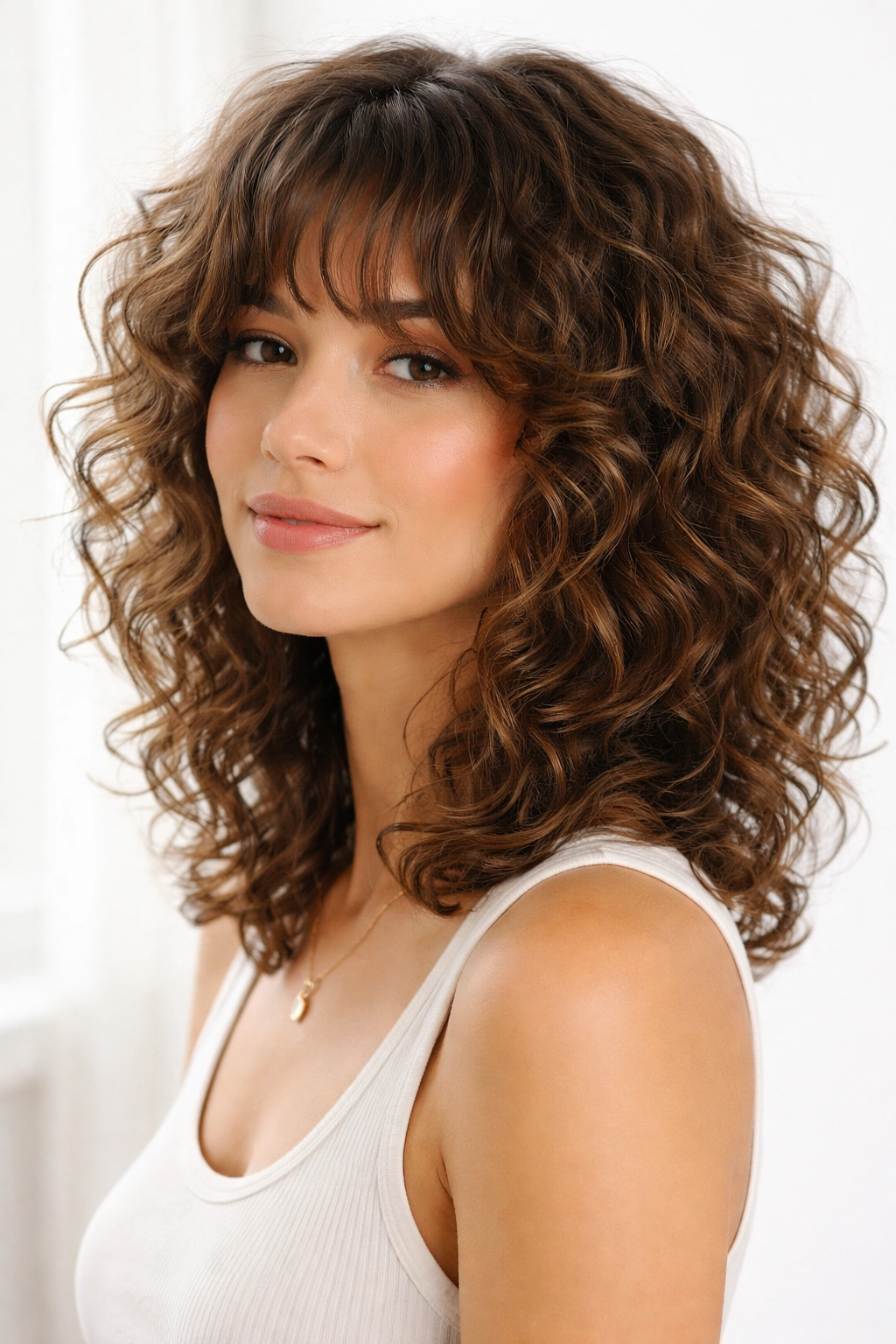
A curly shag is specifically designed to work with natural curl or wave patterns rather than fighting against them. This version features layered construction that reduces bulk while maximizing curl definition and bounce. Medium-length curly shags hit around shoulder length, giving you enough hair to show off your natural curl pattern while remaining manageable.
Why Curls and Shags Are Perfect Together
Curly hair has natural texture built in, so the layering of a shag enhances what’s already there rather than creating artificial texture. The layers reduce the weight that sometimes causes curls to hang straight, allowing your natural pattern to express itself fully. A well-executed curly shag actually requires less styling than trying to force curly hair into a one-length cut—you’re working with your hair’s nature rather than against it.
Styling Curly Shags
- Use the Curly Girl Method or a similar curl-friendly approach: apply styling products to soaking wet hair, then diffuse or air-dry
- A curl-defining cream or gel applied to damp hair helps organize the curl pattern without creating crunch
- Avoid brushing curls when dry; instead, use a wide-tooth comb or your fingers on wet hair to detangle
- Get trims every 6-8 weeks, but ask your stylist to cut curls dry so they can see the actual curl pattern and avoid over-cutting
- Refresh your curl pattern between washes using a curl refresher spray and scrunching with your hands
- Deep condition weekly or bi-weekly because layers increase surface area and can make curls feel drier
Worth knowing: Curly shags take time to grow into their full potential. The first 4-6 weeks might feel shorter than you expected because curls shrink significantly with their natural pattern. Trust the process and let it grow before judging the length.
9. Straight Sleek Shag
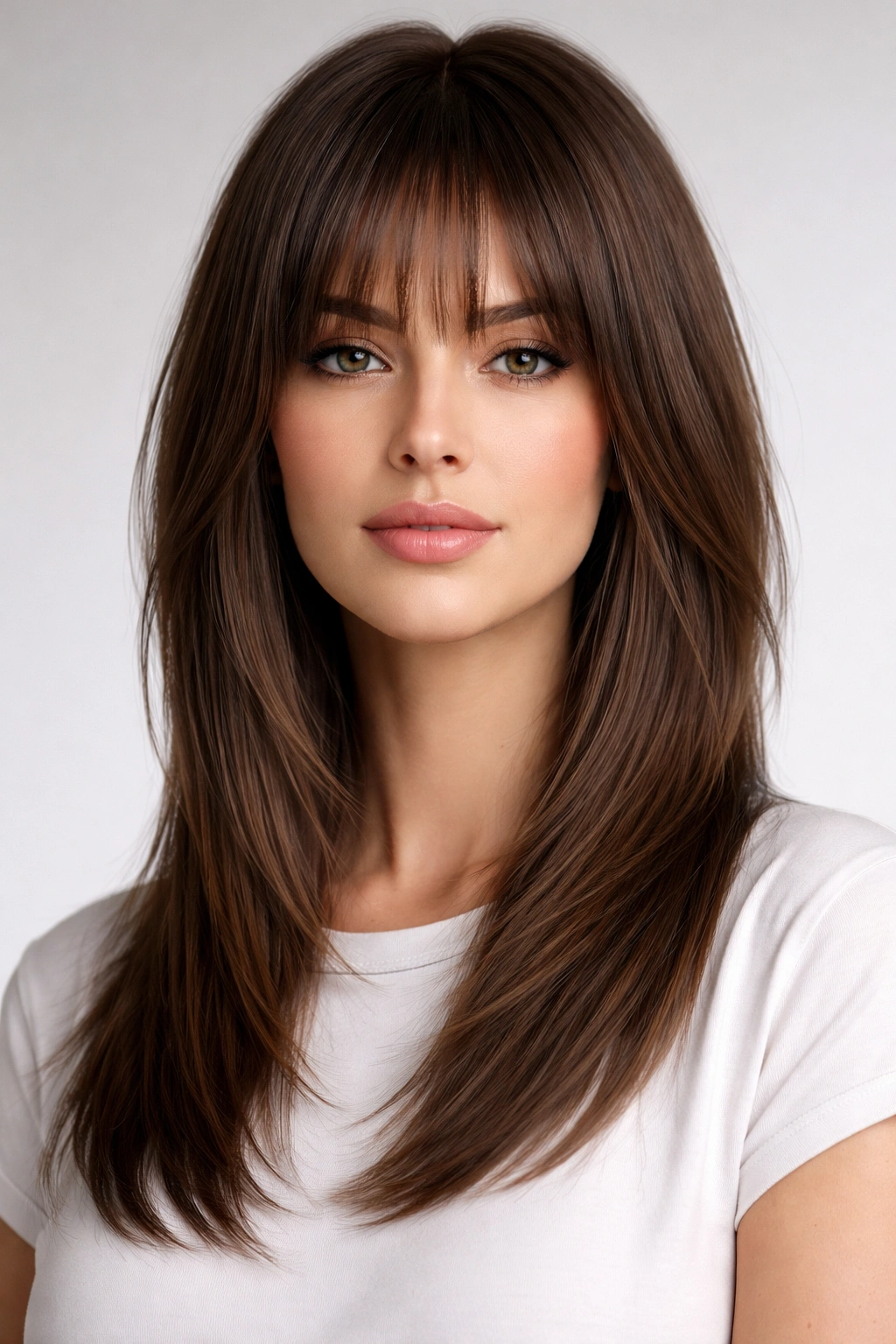
For people with naturally straight hair or those who prefer a more polished aesthetic, a straight sleek shag proves the cut works beautifully without waves or texture. This version relies on the layering itself for dimension and movement rather than depending on styling waves into the hair.
The Minimalist Appeal of a Sleek Shag
A straight sleek shag reads as modern, editorial, and intentional. The layers create visual movement even though the hair is perfectly straight, and the style has a sophisticated edge that works equally well in professional settings and casual environments. This version works beautifully if you have naturally straight hair and want to enhance that quality rather than fighting it with styling techniques.
Styling a Straight Shag
- Blow-dry straight using a paddle brush or flat iron to smooth the cuticle and enhance shine
- Apply a lightweight smoothing serum or shine spray to damp hair before blow-drying for a polished finish
- The layers provide movement, so you don’t need waves to create interest—let the cut do the work
- Use a flat iron to touch up pieces between washes and enhance the sleekness
- For an edgier look, apply a texturizing spray to damp hair and air-dry to create a more deliberately undone vibe, or blow-dry straight for maximum polish
- Trims every 5-7 weeks maintain the clean line and sharp layering that defines this version
Pro tip: A sleek shag is particularly striking with a bold lip color or statement earrings because the clean hair doesn’t compete for attention. Let the cut frame your face and pair it with other elements that feel intentional.
10. Wispy Bangs Shag
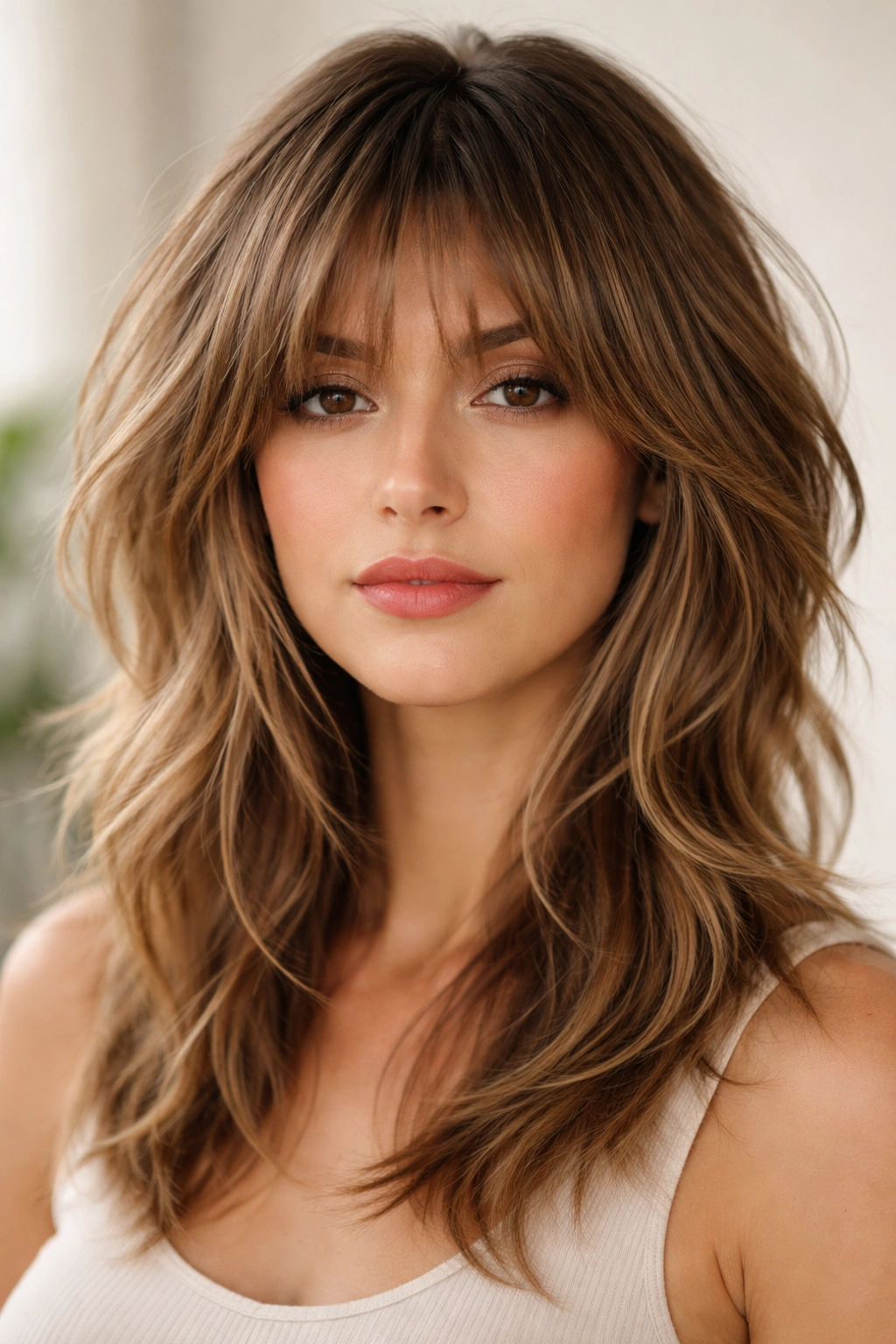
Adding wispy, face-framing bangs to a medium shag elevates the style into something particularly flattering and fashion-forward. Wispy bangs are shorter, textured, and piece-y rather than blunt and heavy—they integrate seamlessly with the layered structure of a shag and create soft framing around the face.
The Face-Framing Magic of Wispy Bangs
Wispy bangs work with the shag’s existing layering to create a cohesive, integrated look. Rather than introducing a stark contrast between a blunt bang line and layered hair, wispy bangs feel like a natural extension of the cut. They soften the forehead, frame the eyes, and add an undeniable element of cool sophistication. This version works beautifully for most face shapes because the layers can be customized to complement your specific features.
Working with Wispy Bangs
- Wispy bangs require touch-ups more frequently than the rest of the cut—plan to trim them every 3-4 weeks to maintain the piece-y shape
- Blow-dry bangs away from your face using a small round brush to create lift and movement
- Use a texturizing spray or dry shampoo at the roots to keep bangs from falling flat as the day goes on
- Wispy bangs can be pinned to the side on days you want a different look—they’re versatile
- Sleep styling matters with wispy bangs; avoid sleeping on them creased because they’ll need extra styling the next morning
- Coordinate with your stylist about how wispy and piece-y the bangs should be relative to your other layers—too similar and they blend in, too different and they feel separate
Worth knowing: If you’ve never worn bangs before, wispy bangs are a gentler entry point than blunt ones. They’re more forgiving and easier to grow out if you decide bangs aren’t for you.
11. Shoulder-Length Shag
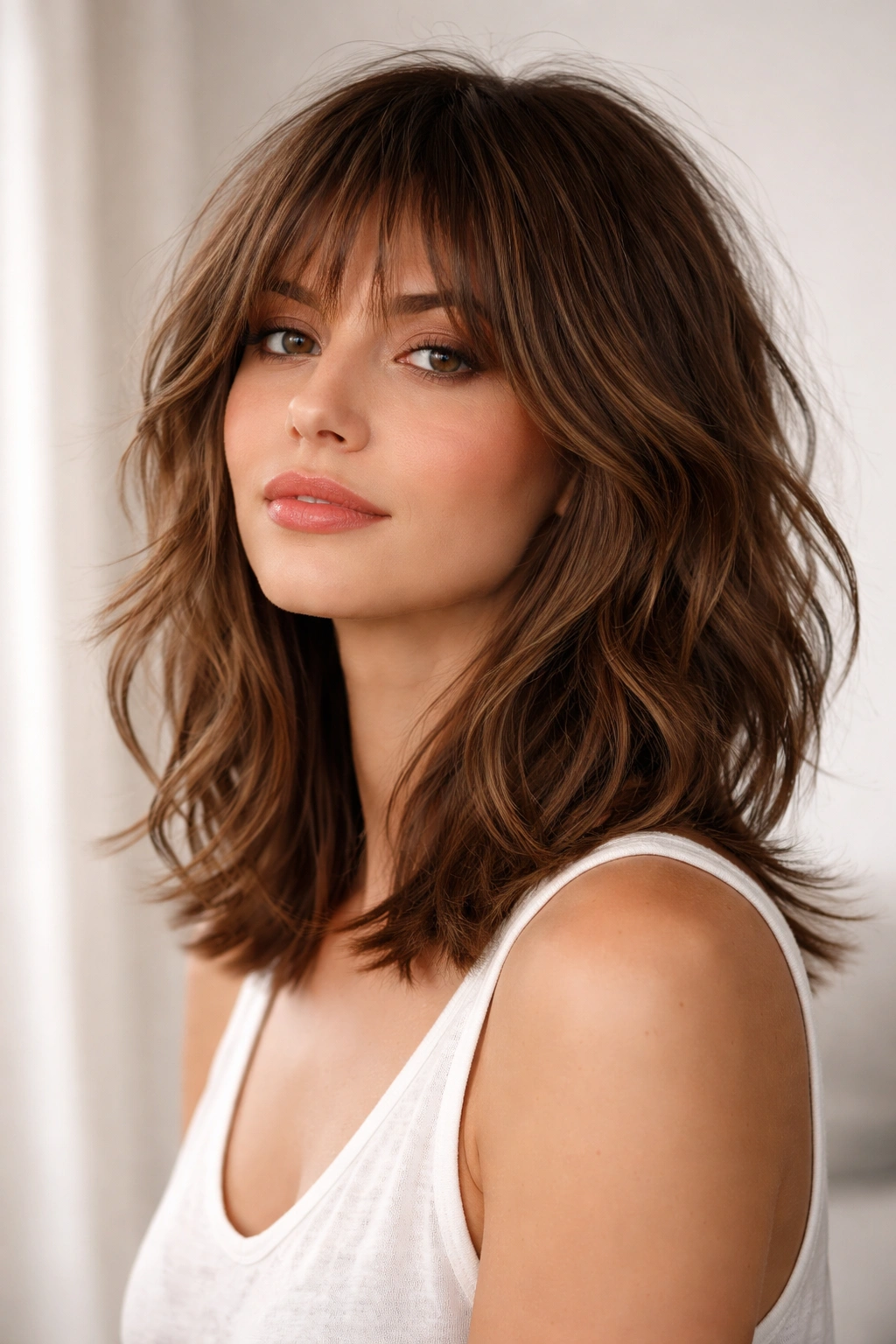
A shoulder-length shag offers maximum versatility because the longer length gives you options for different styling approaches. This version hits right around the shoulders, long enough to pull into a small clip or low ponytail but short enough to feel fresh and modern. It’s the Goldilocks zone of shag lengths.
The Versatility Factor
Shoulder-length shags work beautifully in multiple contexts because you can style them down for evening or special occasions, twist them up for workdays, or leave them loose and textured for casual settings. The length means you have enough hair to create substantial waves or curls, but the layers prevent it from ever feeling heavy or bulk-prone. This length works across more hair types and face shapes than shorter shags because there’s more flexibility in how you style and part it.
Styling Options for Shoulder Length
- Air-dry with texture product for effortless waves, or blow-dry with a brush for more definition
- Create loose waves with a 1.5-inch barrel curling iron, working through the mid-lengths and ends
- Pull into a sleek low ponytail with the face-framing pieces left down for an elevated daytime look
- Flip the part side to side depending on your mood—shoulder-length shags adapt to different parts beautifully
- Create a small clip-up style by taking the top section and clipping it back, leaving the longer layers down
- Trims every 6-8 weeks keep the layers defined while allowing the length to grow as you want
Pro tip: Shoulder-length shags photograph beautifully from all angles because the layers catch light dynamically without feeling over-styled. This is an excellent length if you take a lot of photos for work or social media.
12. Tousled Messy Shag
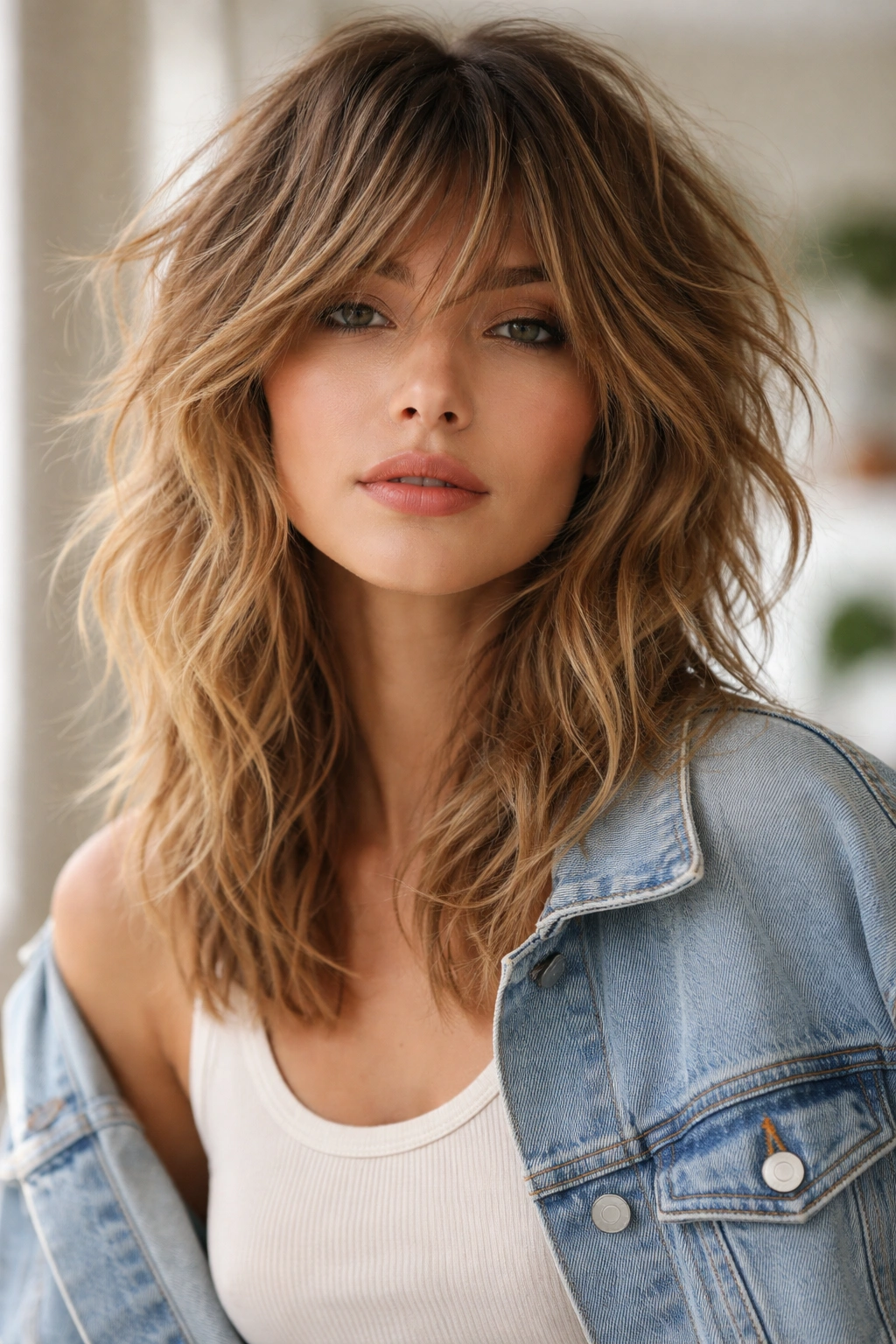
A tousled messy shag embraces intentional undone-ness as a style statement. Rather than aiming for sleek polish, this version celebrates texture, movement, and a deliberately casual aesthetic. The cut is designed so that minimum effort styling—or even no styling—results in a cool, intentional look.
The Anti-Effort Appeal
This shag works best for people who genuinely don’t want to spend much time on hair styling. The beauty is that the cut itself provides all the visual interest; your job is simply to enhance what’s already built in. A tousled messy shag actually looks better when you treat it casually—over-styling it defeats the point. This version appeals to people with naturally textured hair, people with busy lifestyles, and people who value authenticity over polish.
Styling a Tousled Messy Shag
- Air-dry whenever possible, applying a sea salt spray or texturizing spray to damp hair and letting gravity do the work
- If you need to speed up drying, use a diffuser attachment on your blow dryer without combing through the hair
- Use your fingers to scrunch and arrange texture rather than a comb or brush—this preserves the intentionally undone quality
- A dry shampoo or texturizing spray is your primary styling product; avoid anything too heavy or polishing
- For second or third-day hair, this style actually looks better—texture settles and becomes more intentional
- Trims every 5-6 weeks keep the tousled shape from becoming actually unkempt rather than intentionally messy
Worth knowing: The line between “intentionally tousled” and “I just rolled out of bed” can be thin. The difference is usually one texturizing product and 30 seconds of finger-combing. Learn that difference so your hair reads as cool rather than neglected.
13. Colored Highlights Shag
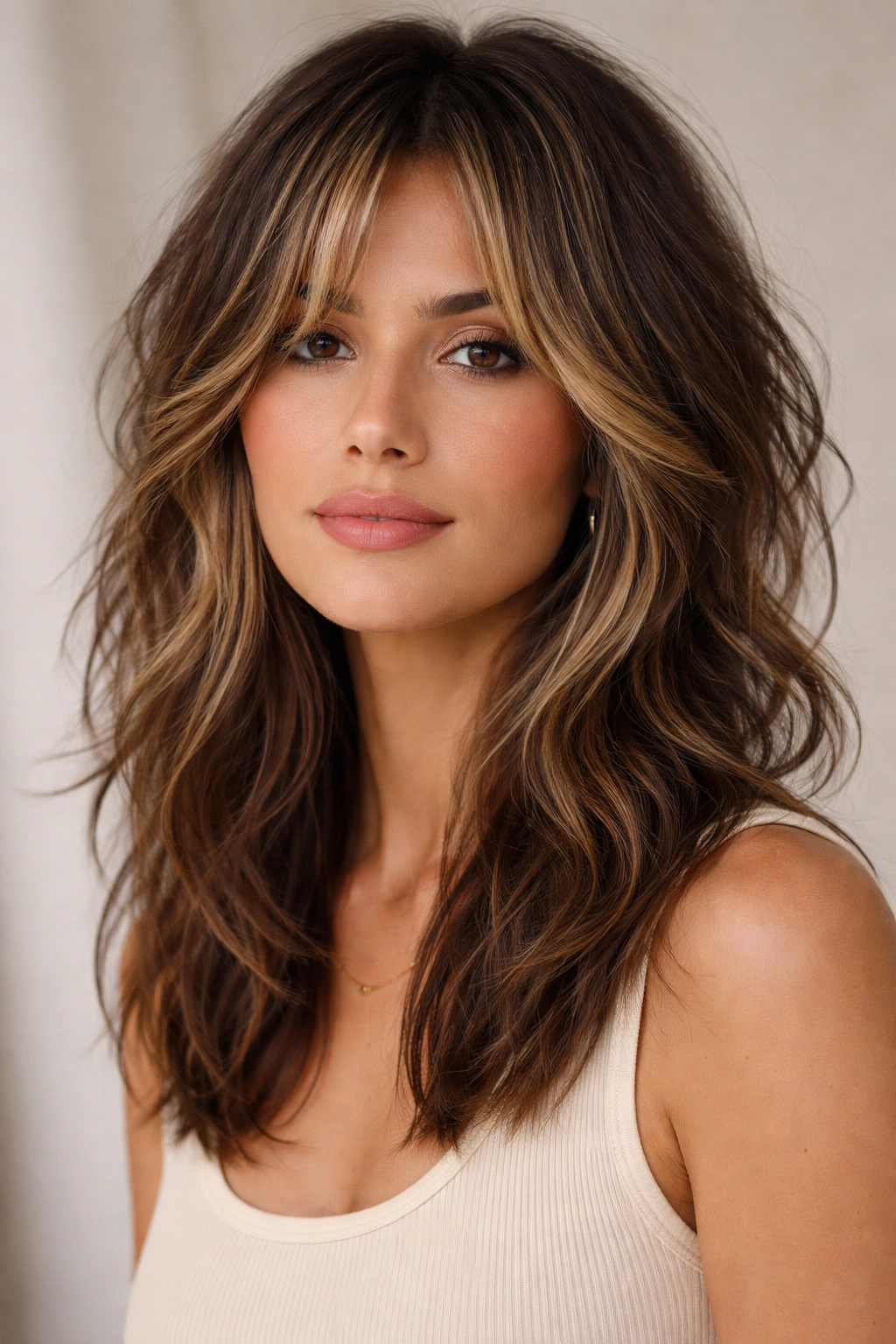
Adding color dimension through highlights or balayage takes a medium shag from nice to visually stunning. Strategic placement of lighter sections through the layers amplifies the movement and texture, making the cut read as more dynamic and intentional. This works beautifully with any base color and highlight combination.
How Color Enhances Texture
Highlights create breakage in color, which means your eye naturally follows the movement and texture of the cut. A shag with subtle color variation reads as more three-dimensional than a shag in one solid tone, even if the cut is identical. Lighter highlights around the face brighten your complexion, while placement throughout the length emphasizes the layering and movement. The combination of cut and color is far more impactful than either alone.
Color Placement for Maximum Impact
- Face-framing highlights lighter than your base color instantly brighten the face and emphasize the layers around your features
- Scattered highlights throughout the length emphasize the shag’s movement and prevent the color from looking flat
- Balay or dimensional color works better with shags than flat, uniform color because it complements the textured nature of the cut
- Ask your colorist for a technique that places lighter tones through the shorter, layered pieces so they catch light and seem more textured
- Maintain color every 6-10 weeks depending on how dark your regrowth is and how much the color has faded
- Invest in color-safe shampoo and conditioner to protect your investment
Pro tip: If you’re new to coloring, ask your stylist for a lived-in color technique rather than trying to achieve perfection. Shags are forgiving with slightly imperfect color placement because the texture draws focus.
14. Vintage-Inspired Shag
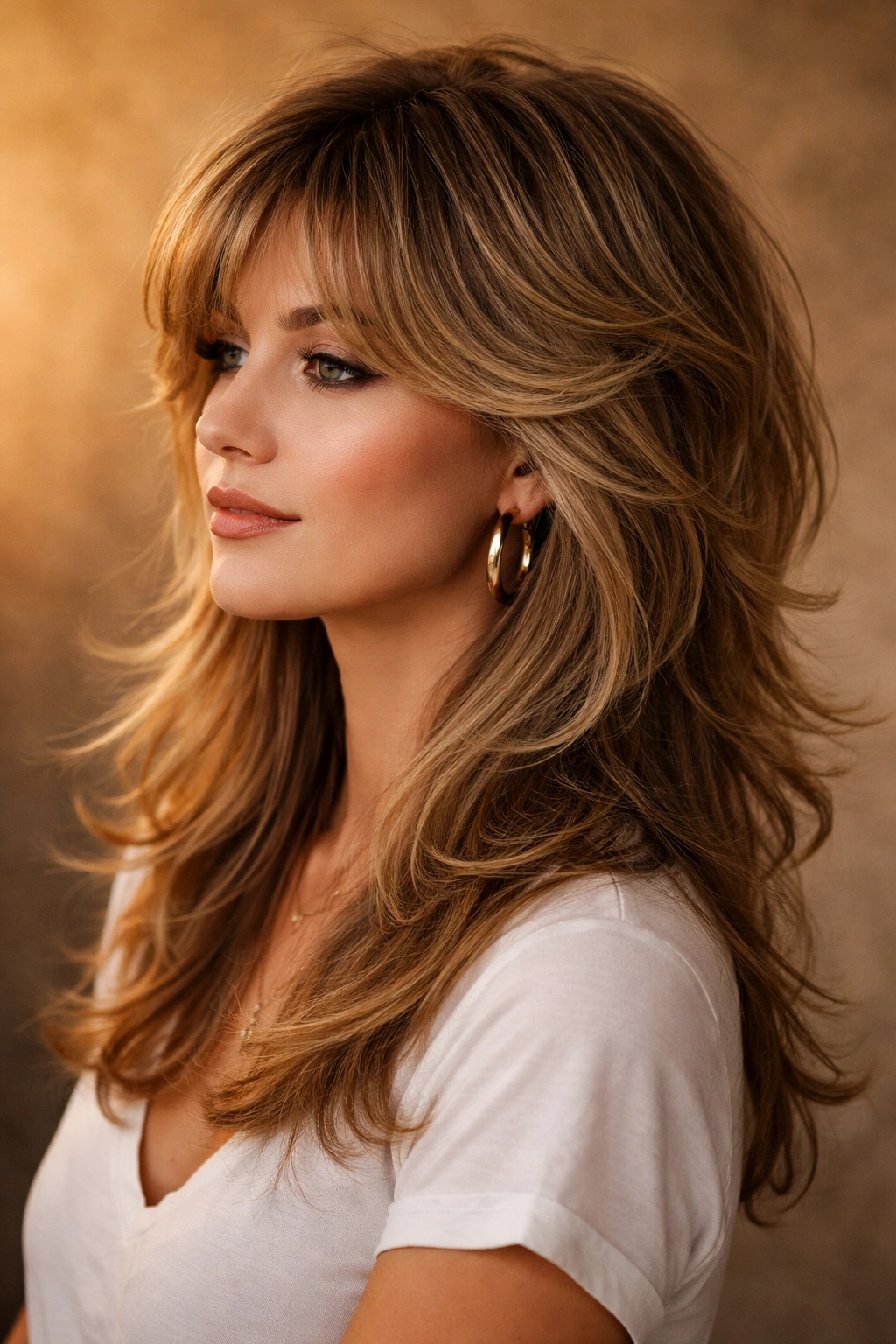
A vintage-inspired shag draws directly from ’70s and ’80s shag aesthetics but interprets them in a modern, wearable way. This version emphasizes the feathering, the movement, and the rock-and-roll attitude of the original shag while updating the execution for current styling techniques and sensibilities.
The Nostalgia with Modern Sensibility
A vintage-inspired shag isn’t about recreating the past exactly—it’s about capturing the spirit of that era while making it feel contemporary. The emphasis on movement, the attitude, and the intentional texture are all there, but the execution is cleaner and more refined. This works beautifully for people who love retro aesthetics, people who want a shag with serious personality, and people who aren’t afraid of a bold statement.
Styling a Vintage Shag
- Blow-dry with a round brush and finish with waves using a curling iron for a more intentional, styled approach than pure air-dry
- Embrace volume at the crown—this isn’t a sleek, flat style; bigger is part of the vintage charm
- Use a texturizing spray and piece the hair out with your fingers to emphasize the shag’s layering
- Consider a slightly warmer, lived-in hair color to complement the vintage vibe
- Add a headband or small accessory to play up the retro angle if you’re feeling the throwback energy
- Trims every 4-6 weeks maintain the clean feathering that defines this version
Worth knowing: Vintage-inspired styles work best when you fully commit to the attitude. Half-hearted styling makes them read as dated rather than intentional. If you love the retro vibe, lean into it with confidence.
15. Everyday Practical Shag
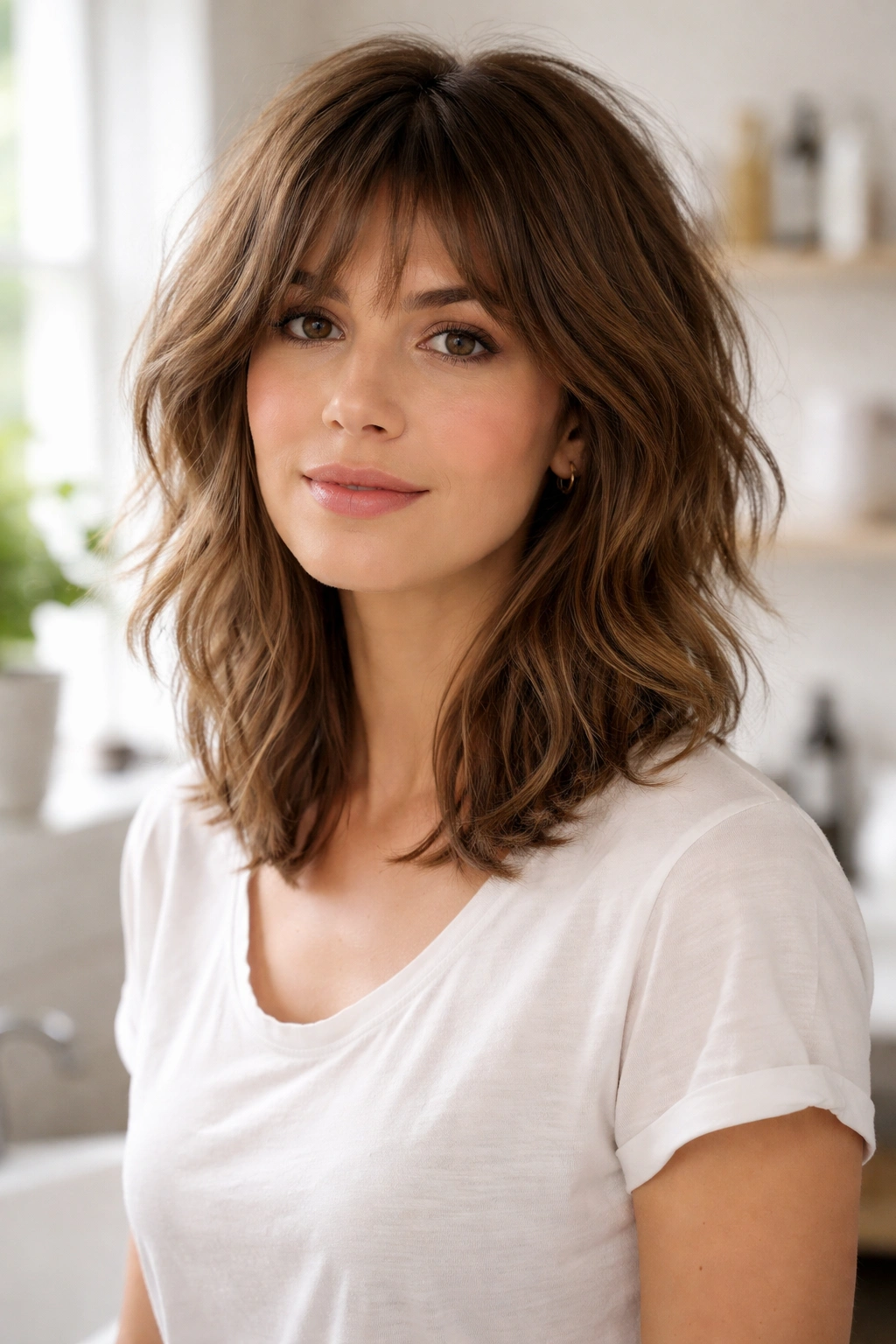
An everyday practical shag is designed with real life in mind. This version prioritizes easy maintenance, minimal styling time, and a look that works whether you’ve spent 10 minutes or no minutes on your hair. It’s neither too choppy nor too long, neither too textured nor too sleek—it’s the Goldilocks of shags.
The Everyday Advantage
This shag works for people with active lifestyles, people who travel frequently, people with unpredictable schedules, and honestly, most people who just don’t want to overthink their hair. The cut is designed to look intentional whether you’ve styled it carefully or simply air-dried it. It works with most hair textures, most face shapes, and most lifestyle circumstances. This is the shag that becomes your go-to because it never lets you down.
Low-Maintenance Styling
- Air-dry with a texturizing spray for effortless waves, or blow-dry with a brush for more control
- The cut works equally well textured or sleek, so style it however matches your day
- Minimal product needed—texture spray and maybe a dry shampoo on second-day hair covers it
- No specific styling time required; even 5 minutes of blow-drying gets you a polished look
- Trims every 6-8 weeks keep the shape intentional without requiring a strict schedule
- The layers work with your hair’s natural texture rather than fighting it
Pro tip: Ask your stylist to cut this version on dry hair (if your hair texture allows it) so they can see exactly how it falls and behaves in real life. This ensures the cut works beautifully with zero effort, not just when it’s freshly styled.
Final Thoughts
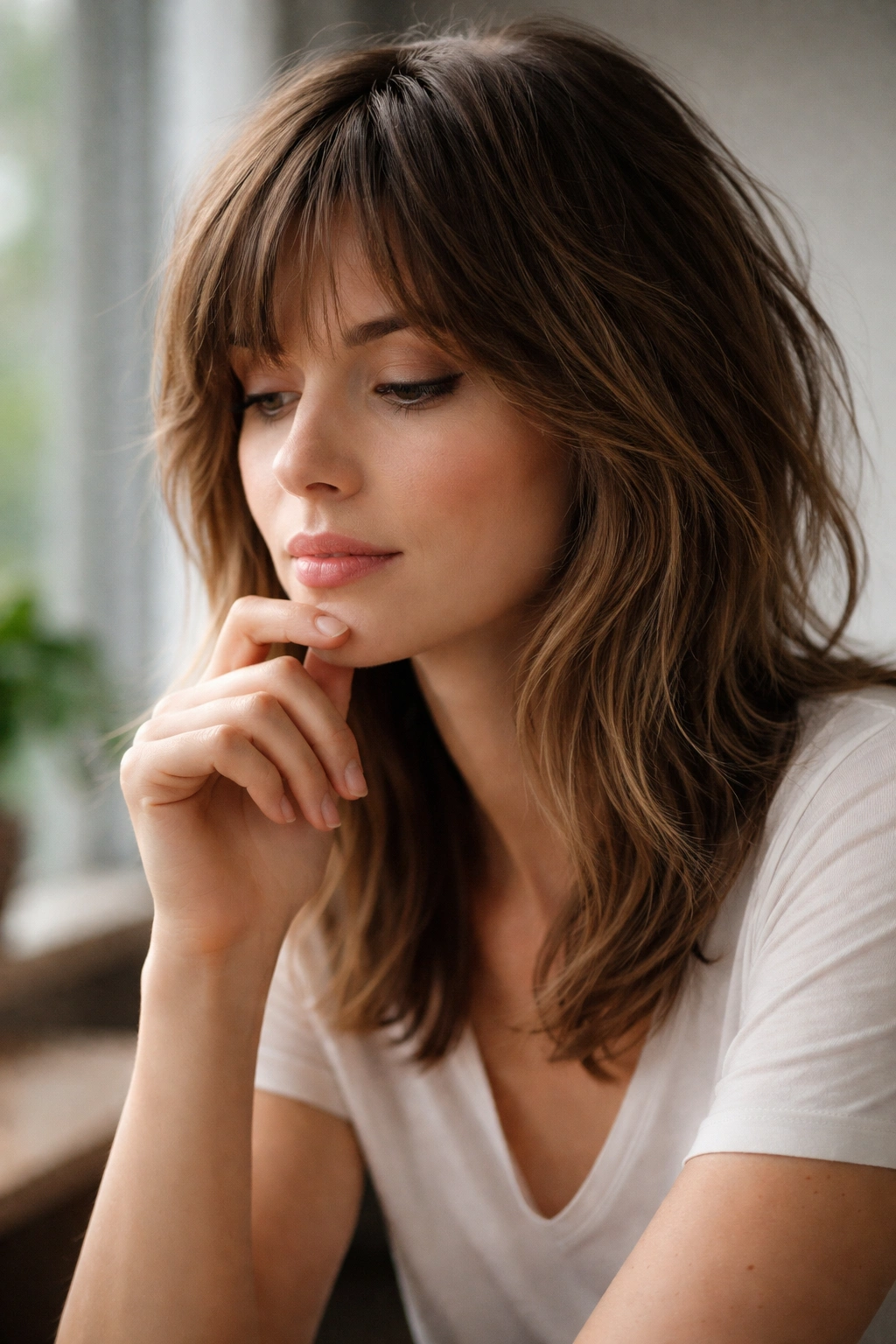
A medium shag is one of the most adaptable, personality-filled haircuts available. Whether you’re drawn to the edgy choppiness of a textured shag, the romantic movement of beachy waves, or the low-maintenance ease of an everyday practical cut, there’s a version that aligns with both your aesthetic and your lifestyle. The key is finding the specific interpretation that speaks to you and committing to regular trims that keep the shape intentional rather than letting it blur into something undefined.
The real magic of a shag isn’t that it requires fancy styling or expensive products. It’s that the cut itself does the work, creating dimension and movement that reads as effortlessly cool. Once you’ve found your shag style, you’ve got a haircut that works harder than you do—it looks good air-dried, it looks good styled up, and it definitely looks good with confidence. That’s the kind of haircut worth the investment.
