



Short layered haircuts paired with bangs create a dynamic, intentional look that works across hair textures and face shapes when styled right. The interplay between choppy layers and framing bangs—whether soft and wispy or bold and blunt—adds movement, texture, and personality that a simple bob can’t achieve alone. Whether you’ve got straight hair that holds sharp lines, wavy hair that loves dimension, or curly hair that thrives on layered texture, there’s a short layered cut with bangs that’ll transform how you feel about your hair.
The beauty of this combination is that it works because bangs anchor a short layered cut. Without bangs, short layers can sometimes feel disconnected or shapeless. But add the right fringe—whether it’s feathered, blunt, curved, or side-swept—and suddenly the whole cut has cohesion and intentionality. The layers lift volume where you need it, the bangs frame your face, and the overall effect feels modern and considered rather than accidental.
What makes these cuts actually work, though, is that they’re not one-size-fits-all. The specific placement of layers, the thickness of your bangs, and the overall shape of the cut should all match your hair texture, face shape, and styling commitment. A cut that looks effortlessly cool on someone with naturally wavy hair might require daily styling work if you’ve got stick-straight strands. That’s what we’re going to dig into—twelve specific short layered cuts with bangs, and exactly what makes each one work for different people.
1. Textured Pixie Bob With Wispy Bangs
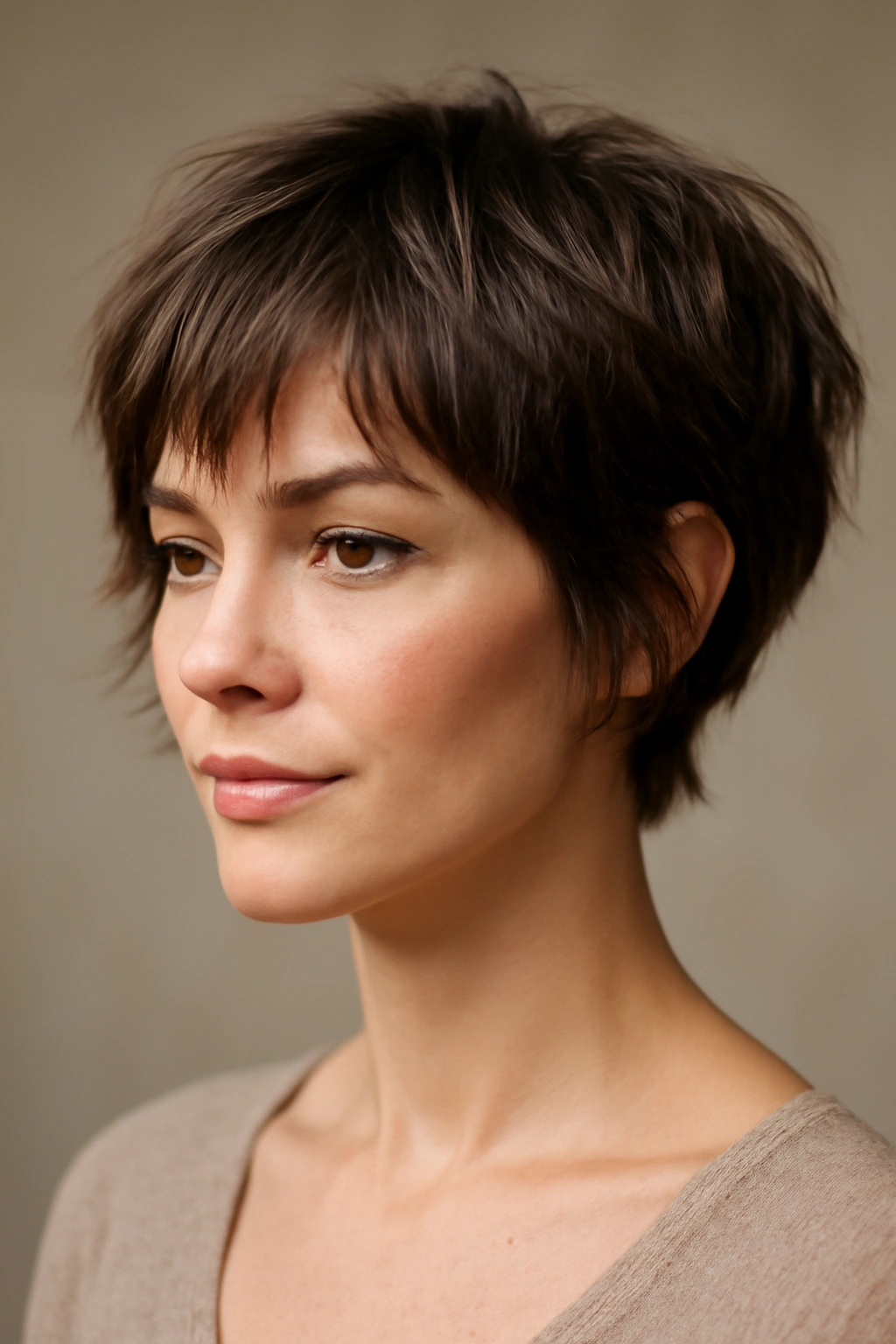
This is the sweet spot between a pixie and a bob—short enough to feel edgy and modern, but long enough at the crown and sides to work if you’re not quite ready for full pixie territory. The key is that choppy layering throughout creates tons of texture and movement, while the wispy bangs (barely grazing your eyebrows) keep the whole look youthful and soft instead of severe.
Why This Cut Works for Fine or Thinning Hair
Fine or thinning hair actually benefits from this cut more than most because the choppy layers create the illusion of density without requiring that density to actually be there. The short length means there’s less weight dragging hair down, and the layering gives every strand a chance to move and show. Wispy bangs that don’t sit too heavily on your forehead prevent that “flat and thin” appearance that can happen with heavier fringe.
How to Maintain and Style This Look
- Invest in a dry shampoo or texturizing spray: Apply it to your roots in the morning, especially at your crown, to enhance the piece-y texture the cut creates. This makes the cut look intentional rather than like you just rolled out of bed.
- Use a lightweight styling cream or wax: Work a small amount through damp hair from roots to ends, emphasizing the choppy texture. Heavy products will weigh this cut down and defeat the purpose.
- Blow-dry with your fingers or a diffuser: Rather than combing through, use your fingers to direct pieces as you dry, maintaining the textured effect. Flat-ironing this cut makes it look limp.
- Plan for a trim every 4-6 weeks: Because the whole effect depends on those clean, choppy layers being sharp, this cut needs more frequent maintenance than a blunt bob. The good news? Quick trims are less expensive than full reworks.
Pro tip: This cut looks best on people who naturally have some texture in their hair (waves, curls, or even that slight waviness some people get from sleeping). If your hair is extremely straight and you want this cut, you’ll need to style it most days to get the effect.
2. Modern Shag Cut With Feathered Fringe
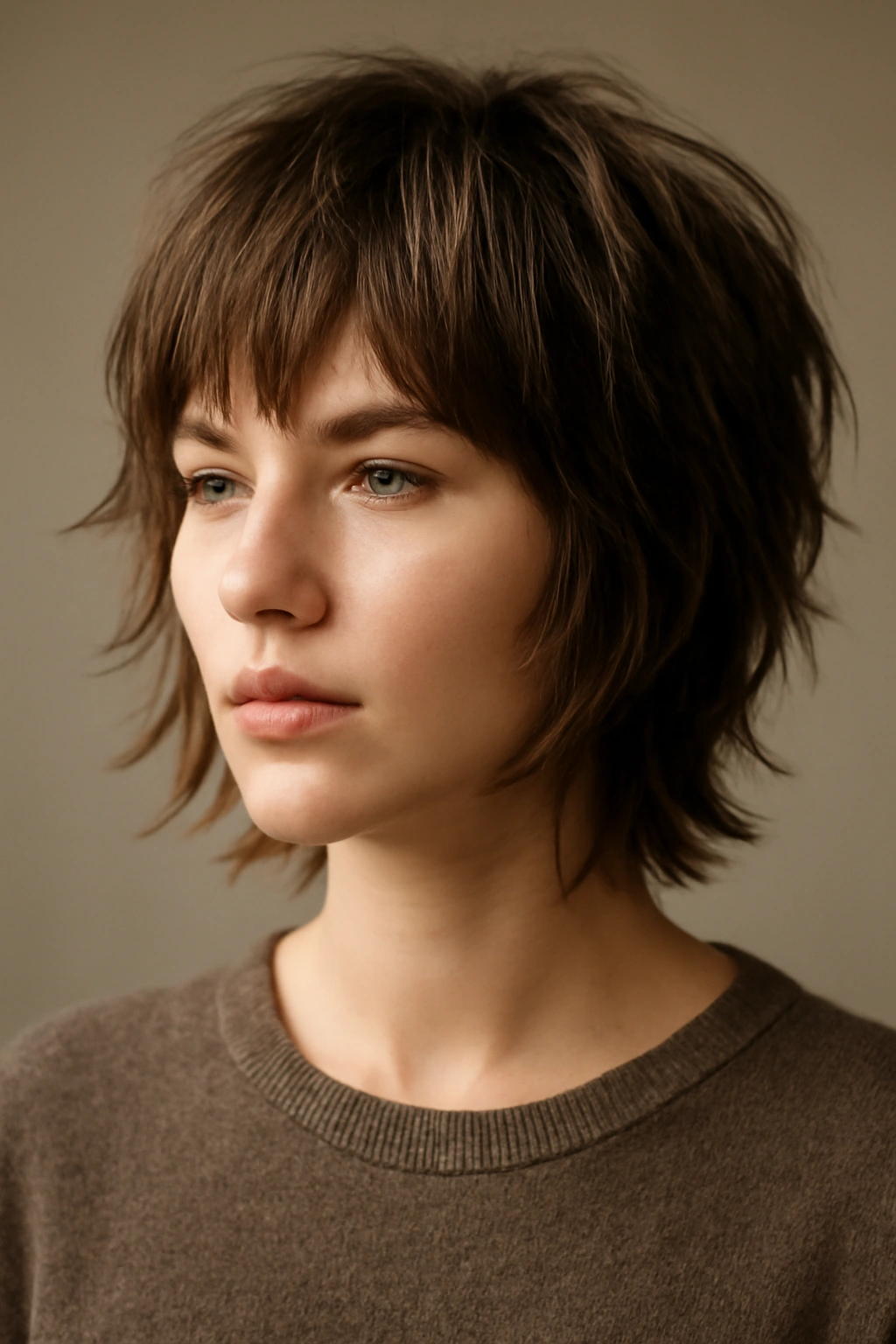
The shag is back, but not in the 70s-throwback way—this is a refined, modern shag with intentional layering throughout and feathered (rather than blunt) bangs that feel contemporary and chic. Short shags work because the layers stack and create natural movement, and the feathered fringe keeps the front face-framing rather than heavy.
What Makes Modern Shags Different From Vintage Versions
The old shag was built on a lot of length and relied on blow-drying to achieve the feathered effect. A modern short shag achieves that feathered, layered look with much less hair and less styling effort because the layers are cut into the shape itself. The fringe is feathered—meaning the ends are choppy and textured—rather than blunt or straight, which creates softness around the face instead of a severe line.
Best Hair Types for This Cut
- Wavy to curly hair: Shags were basically invented for texture. If you’ve got natural waves or curls, this cut lets them do the work and looks amazing with minimal styling.
- Straight hair with some natural bend: If your hair has even a slight natural wave or bend (think: what happens when you air-dry it), a shag will enhance that and give you movement without looking frizzy or unkempt.
- Thick, coarse hair: Shags excel on thick hair because the layers actually reduce bulk while maintaining volume. Your hair has enough substance to hold the shape without looking wispy or thin.
Worth knowing: This cut requires at least some basic styling—you can’t just wash and go. But the styling is usually just texturizing spray or light cream and either air-drying or a quick blow-dry. It’s not complicated, just intentional.
3. Blunt Bobbed Layers With Straight-Across Bangs
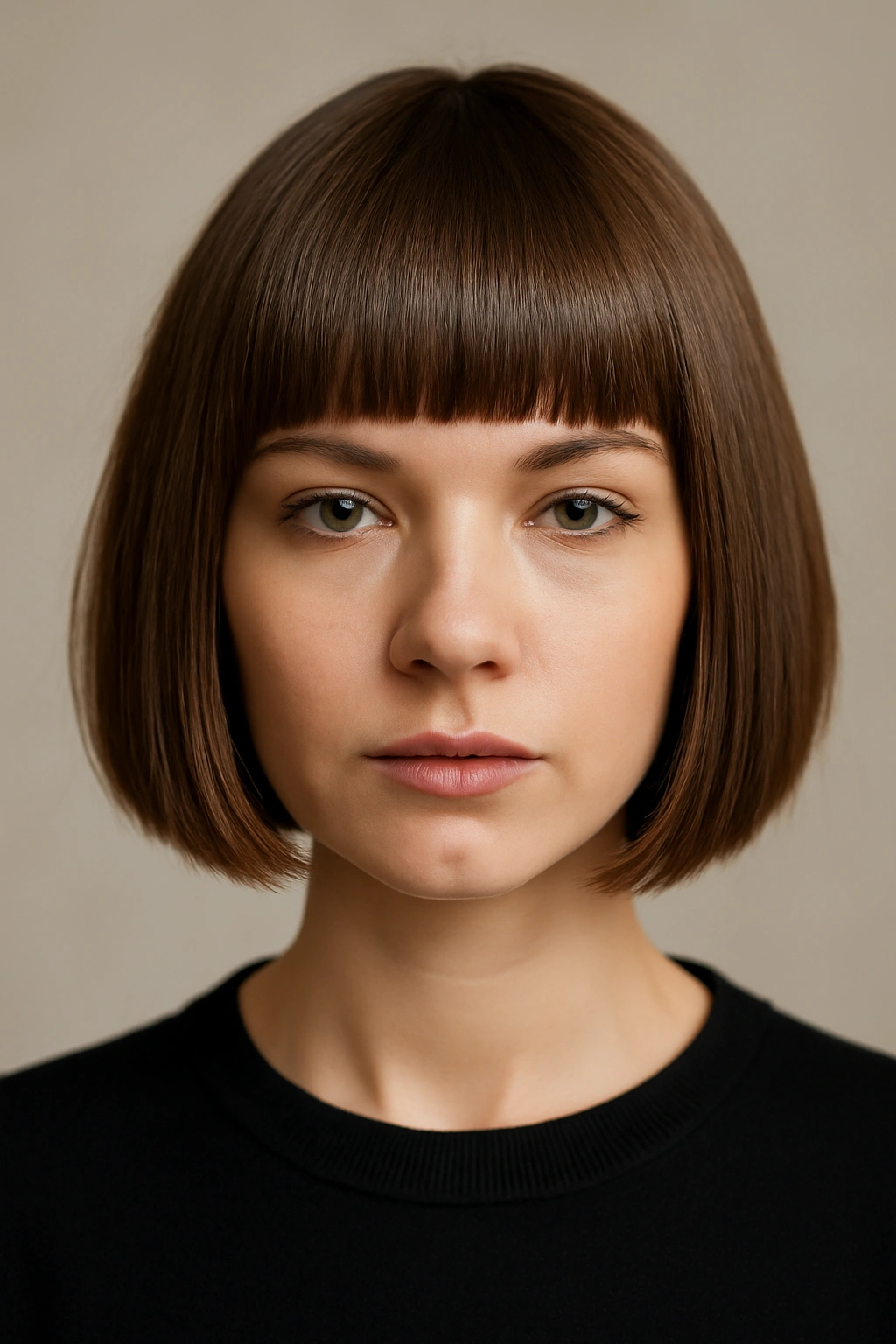
If you like clean lines and a polished, graphic look, this is your cut. The bob sits right around chin length with distinct layers that you can actually see and feel, and the bangs are blunt and straight-across, creating a bold frame. This cut is minimalist and architectural—it works because of precision, not texture or movement.
Why Blunt Bangs With Layered Bobs Create That “Expensive” Look
There’s something inherently chic about blunt lines and geometric shapes in hair. Blunt bangs, especially paired with a layered bob, read as intentional and professional. This is partly because blunt bangs require consistent upkeep—they need to be trimmed every 2-3 weeks to maintain that sharp line—so wearing them signals that you’re maintaining your hair deliberately. The message is: this wasn’t accidental, this is a choice.
Styling and Maintenance Reality Check
- Flat iron or straightener is basically required: This cut depends on clean, blunt lines. Curly or wavy hair will obscure those lines, so you’ll likely need to straighten bangs and/or the whole cut most days.
- Blunt bangs need frequent trims: Plan on getting them trimmed every 2-3 weeks by yourself or your stylist. If they grow out even half an inch, they stop looking sharp and start looking like you forgot about them.
- Layering requires precision: The layers in this cut need to be cut at very specific angles to work with the blunt aesthetic. Find a stylist who’s strong with geometric cuts and precision work.
- This cut shines when blow-dried smooth: Use a paddle brush or round brush to direct the layers and bangs smooth as you dry, then finish with a flat iron for that polished look.
Pro tip: This cut works best if you have straight to slightly wavy hair and you’re willing to style it most mornings. If you prefer minimal styling, this probably isn’t your cut.
4. Choppy Layered Crop With Side-Swept Bangs
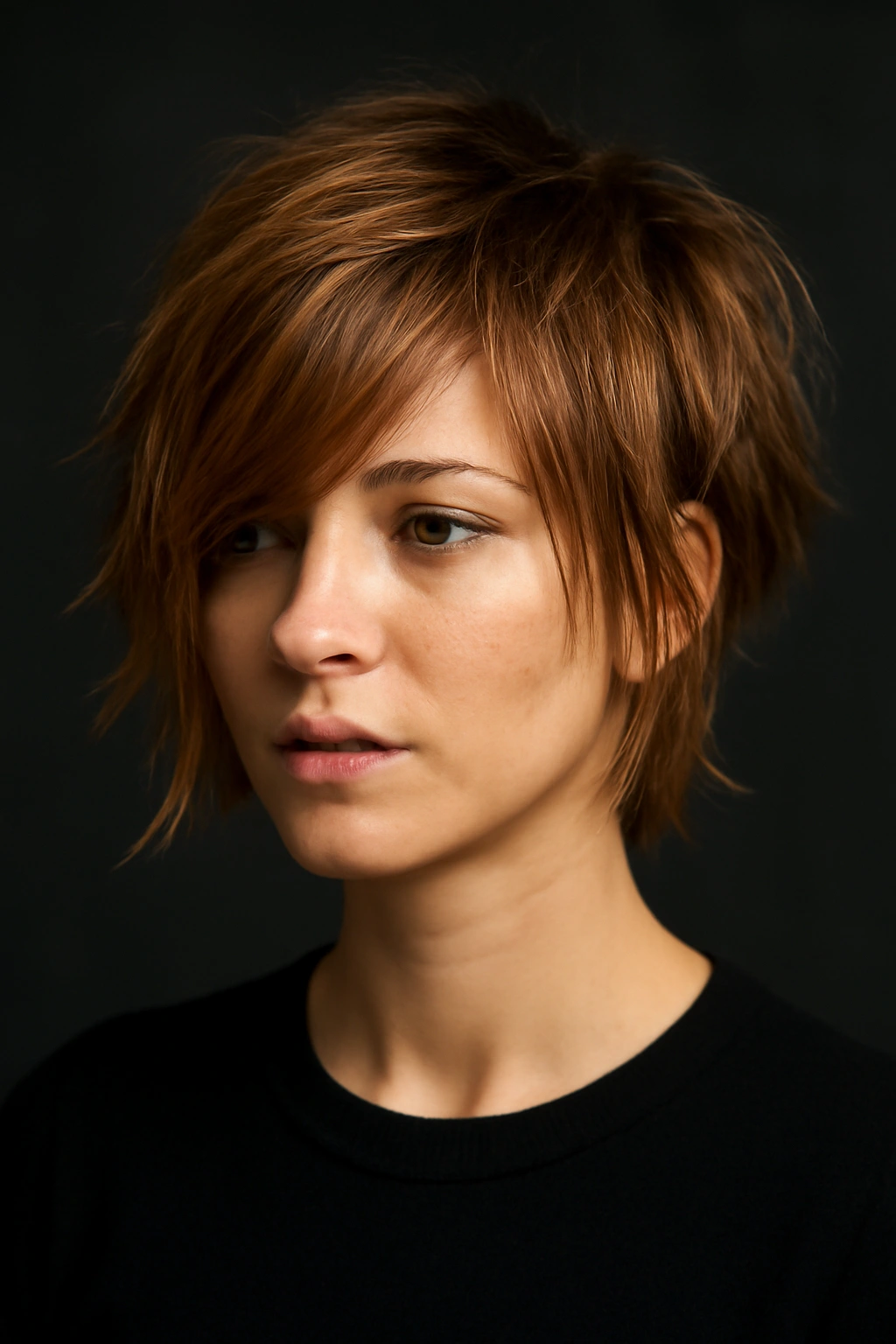
Here’s a cut for people who want something distinctly short and cropped, but with enough dimension that it doesn’t feel like a severe pixie. The layers are choppy and textured throughout, creating tons of movement, while the side-swept bangs (longer on one side, shorter on the other) frame the face in a flattering, asymmetrical way.
How Side-Swept Bangs Balance a Cropped Cut
Side-swept bangs work beautifully with choppy crops because they add an element of softness and asymmetry to an otherwise pretty close cut. Rather than having bangs sit straight down the middle of your forehead, they sweep dramatically to one side, creating a visual line that elongates the face and prevents that “uniform short all over” feeling. You get the edginess of a crop with the face-framing benefit of bangs.
Creating and Maintaining Movement in This Style
- Texture spray is your friend: Apply texturizing spray to damp hair before blow-drying to enhance the choppy layers and create that intentional piece-y look. This spray is essential for making this cut look deliberate.
- Blow-dry with your fingers or a small brush: Avoid combing through (which smooths the texture flat). Instead, use your fingers or a small round brush to direct pieces and enhance the choppy effect.
- Don’t overbrush or over-groom: The beauty of this cut is its roughness. Trying to make it too smooth or polished defeats the point. Let the layers be visible and textured.
- Trims every 4-6 weeks keep the shape: Like most cropped, layered cuts, this one needs more frequent trims than a longer cut. Quick trims are usually shorter appointments and less expensive than major reworks.
Insider note: This cut looks particularly striking on people with very straight hair or people with tight curls, because the visual contrast of the choppy layers against the hair’s natural texture creates automatic dimension.
5. Soft Curtain Layers With Curtain Bangs
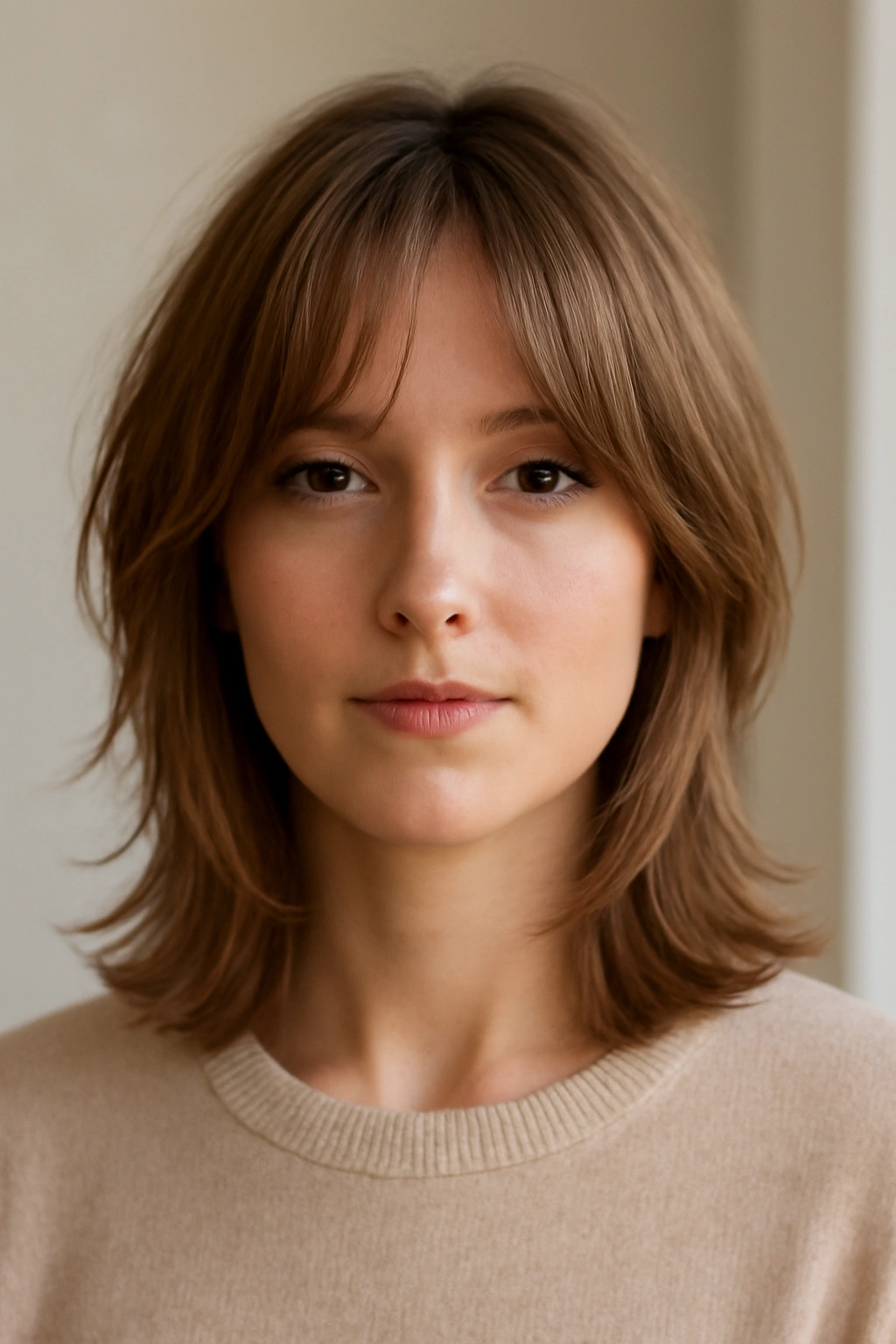
Curtain bangs are the opposite of blunt—they’re soft, feathered on the ends, and they part down the middle and curve toward the sides of your face like a curtain. Pair this with soft, face-framing layers throughout a short cut, and you get something that feels modern, romantic, and flattering without being fussy or high-maintenance.
Why Curtain Bangs Work With Almost Every Face Shape
Curtain bangs are forgiving because they’re not a blunt line—they’re soft, feathered, and they frame the face rather than cut straight across it. This softness works with most face shapes. Long faces get the horizontal line from the curved bangs. Round faces get the definition from the curtain shape. Wide foreheads get coverage without heaviness. There’s a reason curtain bangs have staying power—they’re flattering across the board.
The Layering Strategy That Makes This Soft Look Work
- Layers around the face: Short, choppy layers around your face create dimension and help the curtain bangs blend seamlessly into the rest of the cut. These are your most important layers because they do the face-framing work.
- Graduated layers in the back: Layers get slightly longer as you move toward the back, creating a subtle A-line shape that’s flattering and modern. This isn’t a blunt bob—the back has dimension too.
- Feathering throughout: The layers are feathered (choppy on the ends) rather than blunt, which creates softness and texture. This feathering is what makes the cut feel romantic rather than severe.
Styling This Look
- Air-drying works better than flat-ironing: The whole point of curtain bangs and soft layers is their natural, feathered texture. Fighting that with a flat iron defeats the aesthetic. Let this cut dry naturally or with a diffuser if you have waves.
- Light texturizing cream enhances the feathering: A small amount of texturizing cream or light styling lotion enhances the feathered ends without weighing the cut down. Avoid heavy waxes or pomades.
- Minimal daily styling required: This is one of the easier short layered cuts to maintain day-to-day. A quick tousle as you’re heading out is usually enough.
Worth knowing: This cut works on straight, wavy, and curly hair. The feathered texture looks good whether your hair naturally has texture or you’re creating it with styling.
6. Undercut Pixie With Bold Bangs
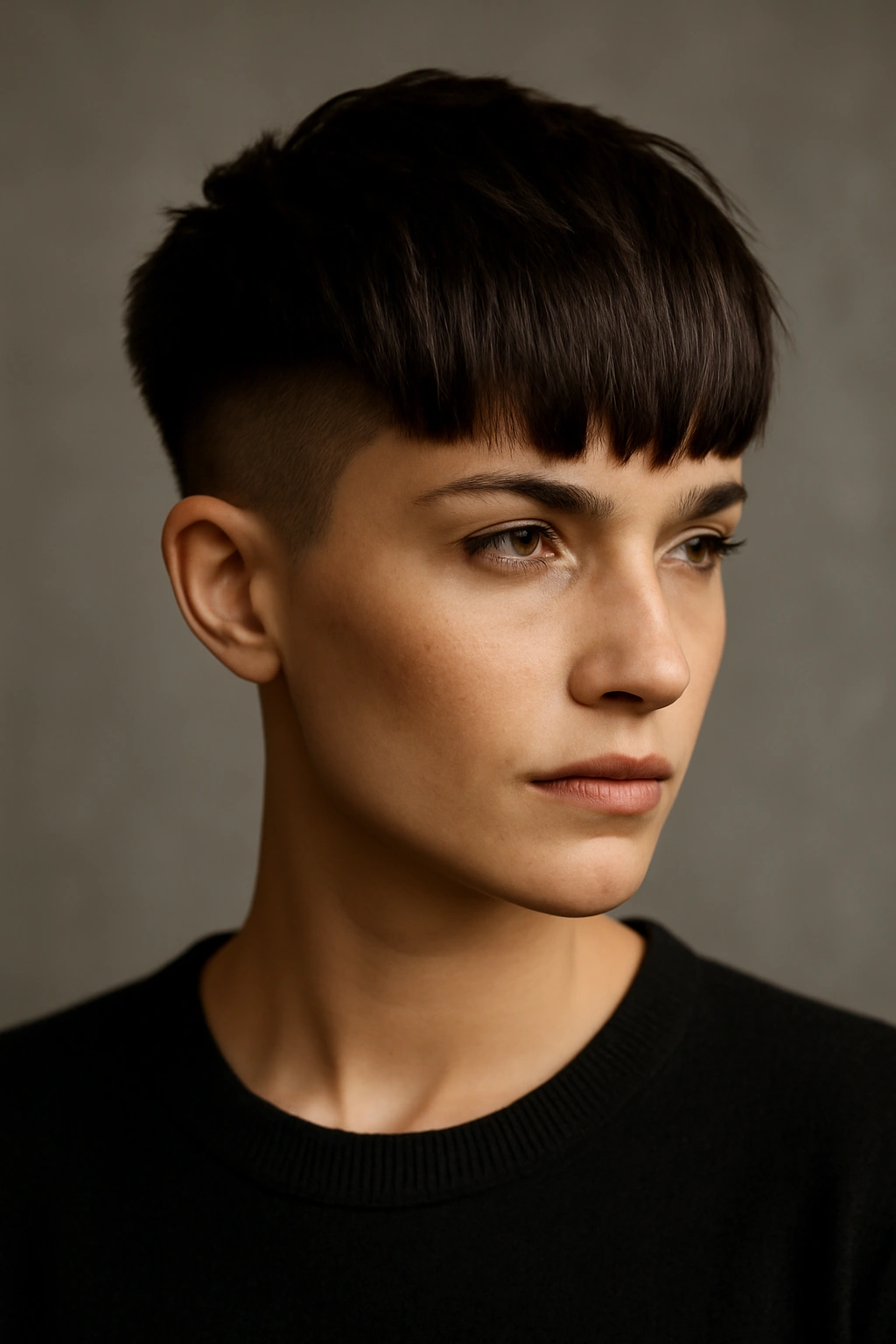
An undercut means the sides and/or back are cut very short (sometimes even clipped down to the skin), while the top is left longer for styling. Pair this with bold bangs and you get a dramatically edgy, high-fashion look that reads as confident and contemporary. This is the cut for someone ready to make a statement.
Understanding the Undercut Structure
The undercut works because of contrast—the short, clean sides make the longer top hair look fuller and more textured by comparison. It’s a clever visual trick. The bold bangs (which can be blunt, feathered, or thick) become the focal point of the face, especially on a cut with such dramatic undercut definition. This creates an intentional, almost architectural look.
Who Pulls This Off Best
- People with good face shape confidence: An undercut shows your face shape clearly, especially around the sides and temples. If you like showing off your bone structure, this is your cut.
- People with textured or thick hair: The longer top has room to show off texture. If you’ve got wavy or curly hair, an undercut lets it shine while the clipped sides keep things controlled.
- People willing to style their hair regularly: That longer top needs direction and texture to look intentional. This isn’t a wash-and-go cut. You’ll be using texturizing products and blow-drying most mornings.
Maintaining the Undercut
- Sides need trimming every 2-3 weeks: The undercut sides are the most visible, fastest-growing part of this cut. Keeping them sharp and clean is what maintains the whole look. Neglect them for a month and the cut falls apart.
- Top layers need trims every 6-8 weeks: The longer top hair needs regular layer maintenance to keep the shape and prevent split ends.
- Styling matters more here than in most cuts: Use texturizing spray, light cream, or wax to direct the longer top hair and enhance its texture. Without styling, the top can look flat or limp against the dramatic undercut sides.
Pro tip: Undercut pixies look especially striking with color work—think a darker or contrasting color on the undercut sides, or a lighter color on the longer top. But the cut looks powerful even in one solid color.
7. Asymmetrical Short Layers With Angled Bangs
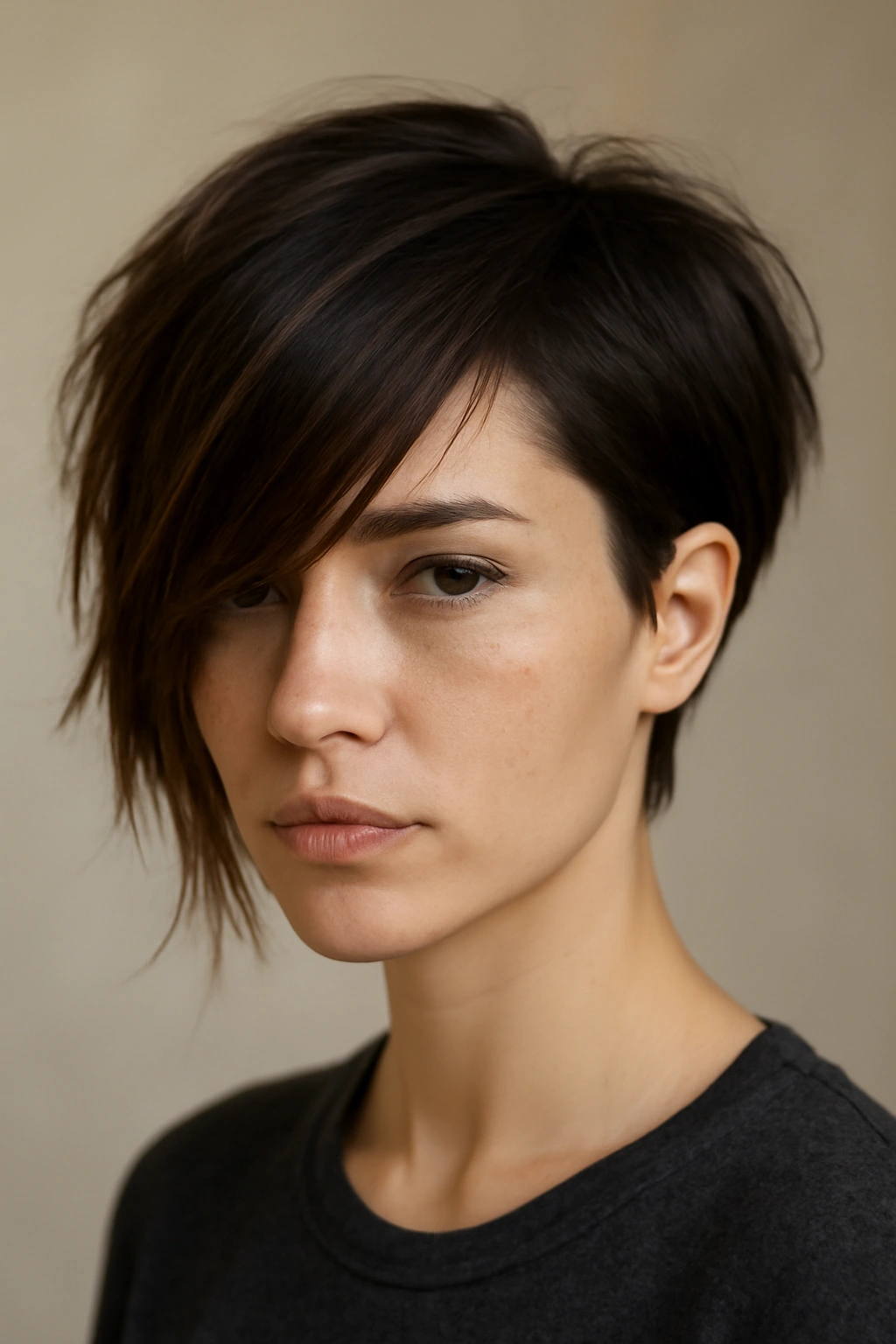
Asymmetrical means one side is shorter or shaped differently than the other, and this asymmetry extends both to the overall layers and to the bangs, which are angled (longer on one side, shorter on the other, at an angle). This creates a dynamic, modern look that feels both edgy and intentional.
The Visual Impact of Asymmetry
Asymmetry feels modern and confident—it’s the opposite of predictable or safe. An asymmetrical short cut with angled bangs catches the eye and conveys that you’re deliberate about your style choices. It’s not subtle, but it’s not costume-y either. It’s fashion-forward without being extreme.
How Asymmetry Affects Face Framing
- Shorter side can show face shape: If you have one side noticeably shorter, it exposes that side of your face and can highlight cheekbones or jaw definition.
- Longer side can balance a wider face: If your face is wider on one side or you have any asymmetry you want to de-emphasize, the longer side can help balance that visually.
- Angled bangs follow the face: Angled bangs that follow the asymmetry of the cut create a cohesive, intentional look rather than feeling random.
Styling an Asymmetrical Cut
- Direction matters: Asymmetrical cuts need to be styled with intention. You’ll want to blow-dry the sides in the direction that emphasizes the asymmetry, not against it.
- Texture enhances the effect: Texturizing spray or cream helps the layers show their asymmetrical shape. Smooth, flat hair can make asymmetry look accidental instead of intentional.
- This is not a wash-and-go cut: Asymmetrical cuts look best when styled deliberately most days. If you prefer minimal styling, opt for a more symmetrical cut.
Worth knowing: This cut works best on straight to wavy hair. Very curly hair can obscure the asymmetry, making the cut look less deliberate. If you have curly hair and want an asymmetrical cut, talk with your stylist about how texture will affect the overall impact.
8. Mullet-Inspired Layers With Bangs
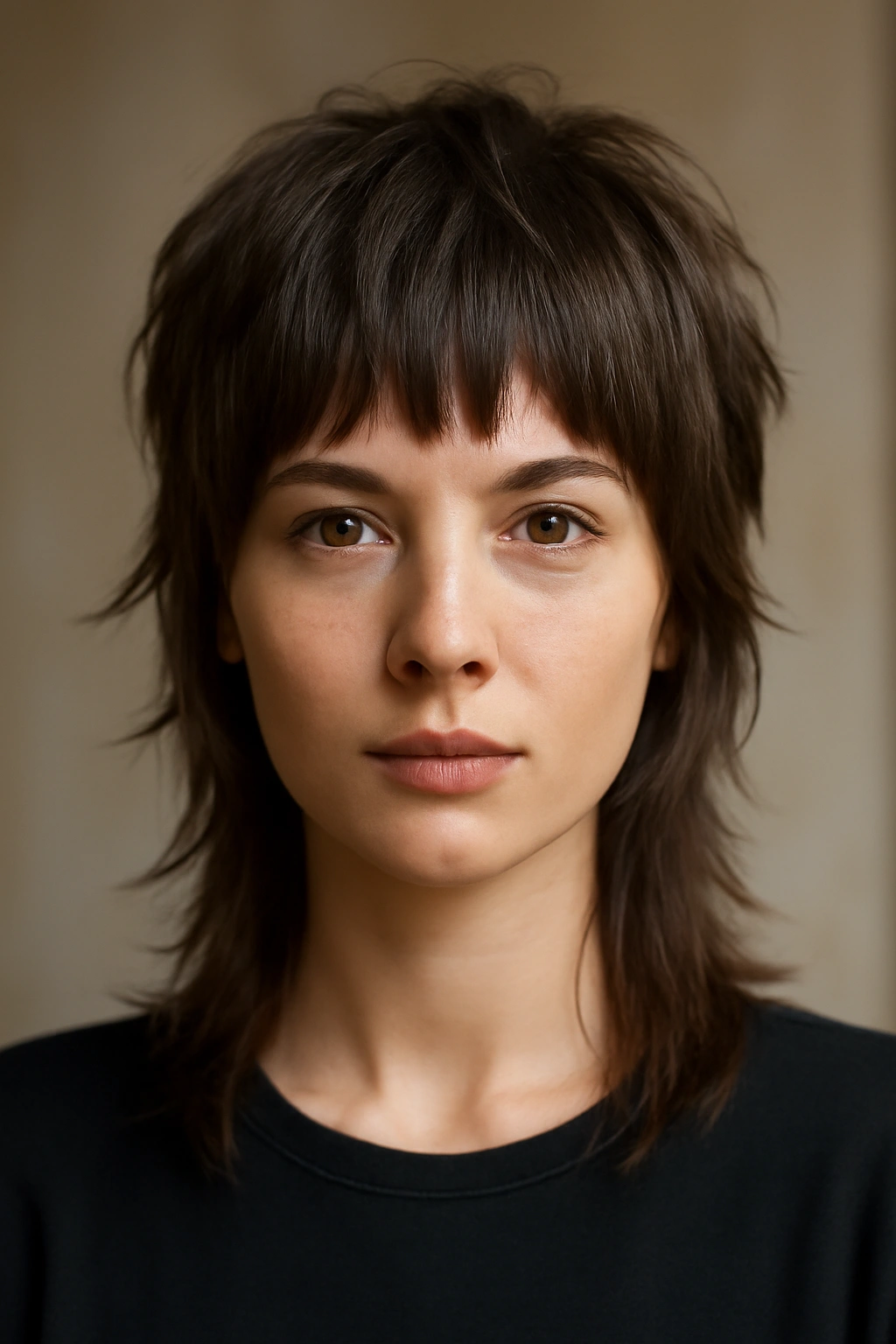
The modern mullet is not the 80s mullet. It’s shorter in the front and sides with a slightly longer back, and it’s cut with intentional layers that create movement rather than a blunt, dramatic length change. Pair this with bangs and you get something that feels contemporary and edgy while still being wearable and flattering.
Why Modern Mullets Actually Work
The mullet has made a comeback because, executed well, it creates interesting texture and dimension. Short in the front means less styling effort and that close, controlled feeling. Slightly longer in the back gives you the option of more styling and more texture. The layers throughout mean the back doesn’t feel like you’re growing out something you need to cut—it’s intentional and styled. Add bangs and you’ve got a cohesive, modern shape.
Face Shape Considerations for Mullet-Inspired Cuts
- Long faces: Slightly longer hair at the back adds width, which balances a longer face. Bangs add horizontal line.
- Round faces: Shorter sides and front keep the face from looking rounder, while the back adds some length for balance.
- Square faces: Layers throughout soften angular features. The bangs frame the forehead, and the back adds softness.
Making a Modern Mullet Look Intentional
- Layers are everything: A mullet without layers looks dated or accidental. The layers are what make it feel modern and intentional. Make sure your stylist is creating choppy, textured layers, not blunt length changes.
- Texturizing products keep it looking styled: Use texturizing spray or cream throughout to enhance the layers and prevent the back from looking flat or heavy.
- Blow-dry with direction: Direct the front and sides the way you want them, then direct the back to enhance its texture and movement. This takes about 10 minutes most mornings.
Pro tip: Mullet-inspired cuts look especially good with subtle color work—maybe slightly lighter or darker roots, or a different shade on the layers. The texture created by layers shows off color variation really well.
9. Cropped Layers With Micro Bangs
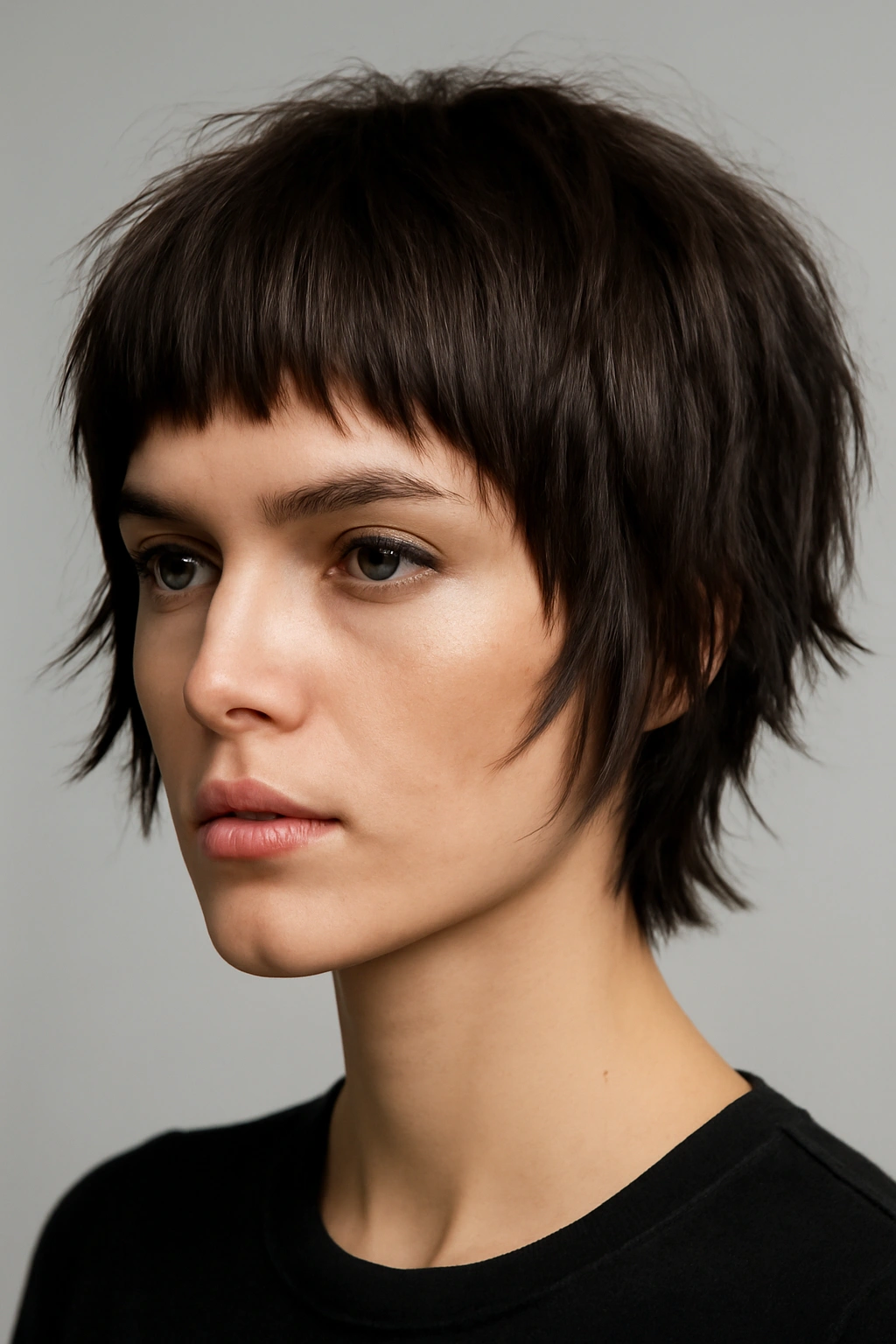
Micro bangs (very short bangs, usually sitting well above your eyebrows or even at your hairline) paired with a closely cropped, layered cut creates an avant-garde, fashion-forward look that reads as supremely confident and editorial. This is not a conservative choice, but it’s striking.
When Micro Bangs Work Best
Micro bangs are bold. They work best on people with:
- Good forehead-to-face proportion: Micro bangs expose your forehead, so you want good proportions there. A high, proportionate forehead looks great. A very low, narrow forehead might feel even more cramped.
- Clear, glowing skin: Bangs this short sit right at the hairline and draw attention to your forehead and skin. If your forehead area is somewhere you’re dealing with texture or breakouts, micro bangs will highlight that.
- Confidence in bold choices: Micro bangs are a look. They’re not for blending in or playing it safe. They work if you’re committed to the editorial, fashion-forward vibe.
Styling and Maintenance
- These need frequent trims: Micro bangs grow out visibly fast. Plan on trimming them every 2-3 weeks.
- They look best when super clean: A micro bang is all about that sharp, intentional line. They need to look pristine, not shaggy or overgrown.
- Minimal styling usually required: The rest of the cut is cropped and layered, so it doesn’t need much—just texturizing spray and maybe a quick blow-dry to enhance the layers.
Insider note: Micro bangs photograph incredibly well and look stunning in the right editorial context, which is why you see them in fashion magazines and on style influencers. In real-world, everyday settings, they’re bolder and more statement-making. Think about your lifestyle and comfort level with a look this intentional before committing.
10. Tousled Shag Layers With Piece-y Bangs
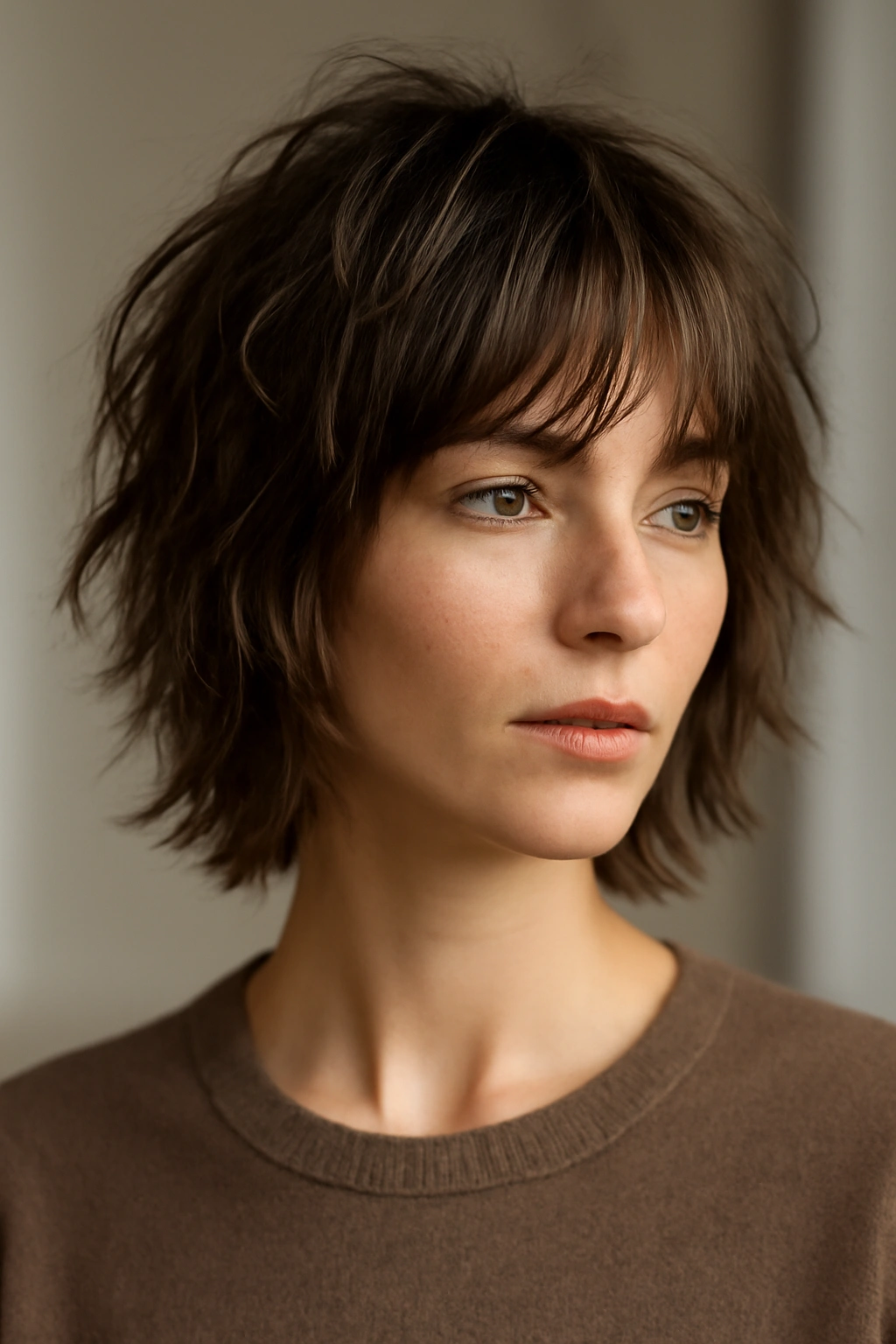
Picture soft, textured layers throughout a short cut, with bangs that are piece-y and textured rather than solid or blunt. This is the effortlessly cool, tousled look that feels like you just came from a beach trip or threw your hair together without thinking—except it actually took a talented stylist to create that “undone” effect intentionally.
The “Effortless” That Actually Requires Effort
Here’s the thing: this cut looks effortless, but achieving that tousled, piece-y aesthetic requires either naturally textured hair or deliberate styling. The layers are cut to fall a certain way and break up into specific pieces. The bangs are piece-y because they’re cut and textured, not because the hair naturally falls that way (usually). The whole effect is designed to look like you didn’t try, which is part of its charm—but there’s actually intentionality baked into the cut.
Best for Textured Hair Types
- Naturally wavy or curly hair: If you’ve got natural texture, this cut lets it do the work. You can often air-dry and let your waves or curls create that tousled effect with minimal effort.
- Straight hair with texture-building styling: If you have straight hair, you’ll need texturizing spray and maybe a curling iron or wand to create the piece-y, textured effect. It’s more work, but absolutely doable.
- Fine or thin hair: The layers create the illusion of texture and density, so this cut actually works well for finer hair that you want to look fuller.
Creating the Tousled Look
- Texturizing spray is essential: Apply it to damp hair to enhance the piece-y texture. This is what creates that intentional, textured look.
- Dry with a diffuser or your fingers: Rather than combing through, use a diffuser (if you have waves or curls) or your fingers (if straight) to direct the layers and enhance the piece-y effect.
- A little wax or cream in the ends: Work a tiny amount of texturizing cream or wax through the ends of your hair to enhance the piece-y separation without weighing it down.
Worth knowing: This cut requires some styling most days, but it’s not complicated styling. It’s more about enhancing the texture that’s already there rather than creating a polished, blow-dried look.
11. Tapered Fade With Longer Top Layers and Bangs
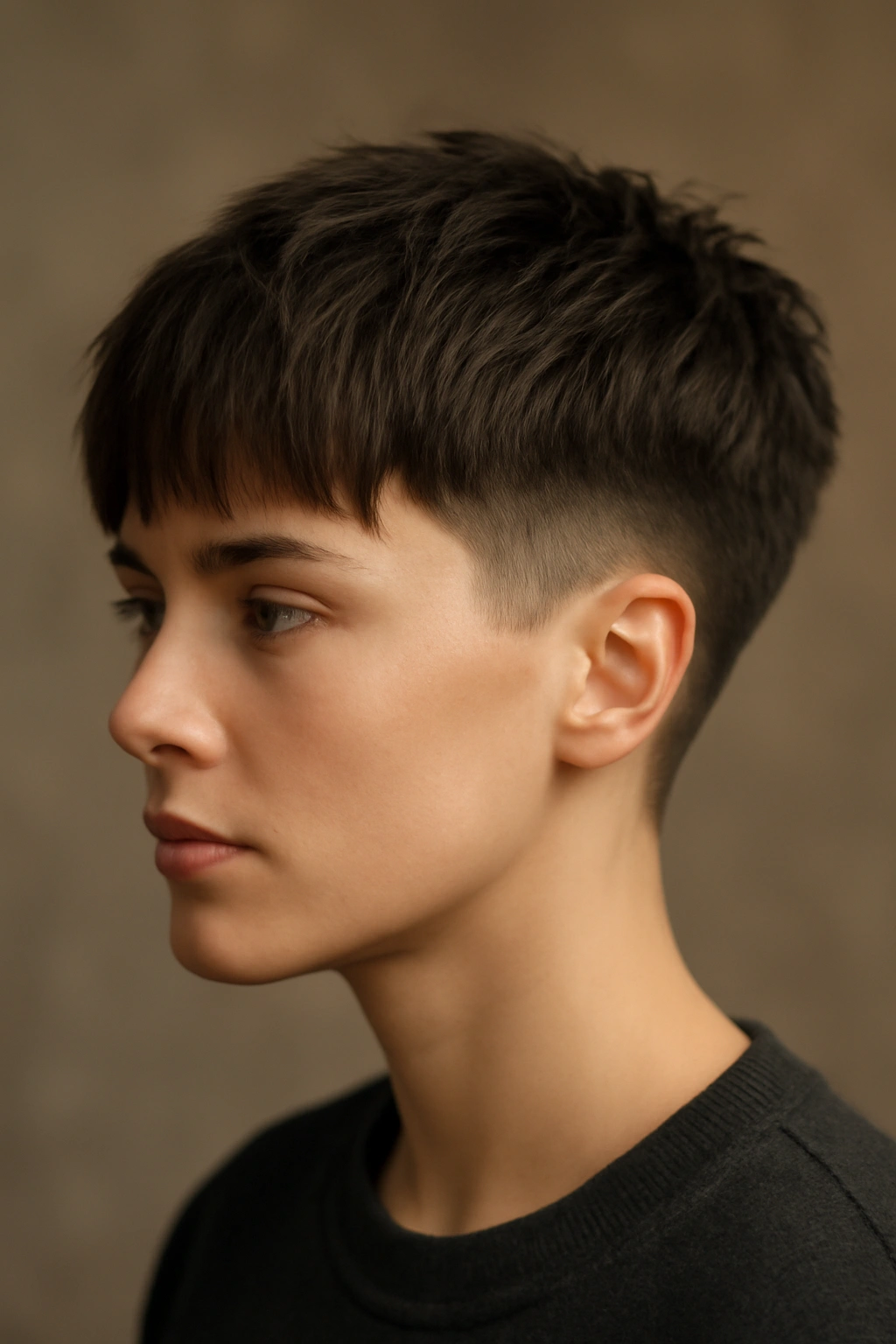
A taper fade means the sides gradually get shorter as they move toward the neck and ears, creating a clean, geometric gradient. The longer top is packed with layers, and the bangs are full and blunt or slightly textured. This creates a silhouette that feels sharp, contemporary, and flattering—the tapered sides keep the face feeling framed and defined.
The Visual Benefits of a Taper Fade
A taper fade is essentially a more refined, gradual version of an undercut. Rather than a dramatic line between long and short, the taper gradually transitions, which feels more modern and less extreme. The longer, layered top becomes the focus, and the tapered sides provide clean definition without the boldness of a full undercut.
Styling the Layered Top
- Texturizing spray enhances the layers: Apply to damp hair to bring out the texture and dimension in those top layers.
- Blow-dry with a round brush or your fingers: Direct the layers upward and outward to show off the cut’s shape and create volume at the crown.
- Light styling products: Use texturizing cream or wax rather than heavy pomades. You want the movement of the layers to show, not get weighed down.
Maintaining the Taper
- Fade sides need regular trims: Every 3-4 weeks, you’ll want to trim the tapered sides to maintain that clean gradient. This keeps the whole cut looking sharp.
- Top layers need trimming every 6-8 weeks: The longer, layered top needs regular maintenance to keep the shape and prevent split ends.
Pro tip: Taper fades look especially good on people with strong face shape and good bone structure, because the clean sides and longer, textured top really showcase your features.
12. Textured Short Layers With Full Bangs
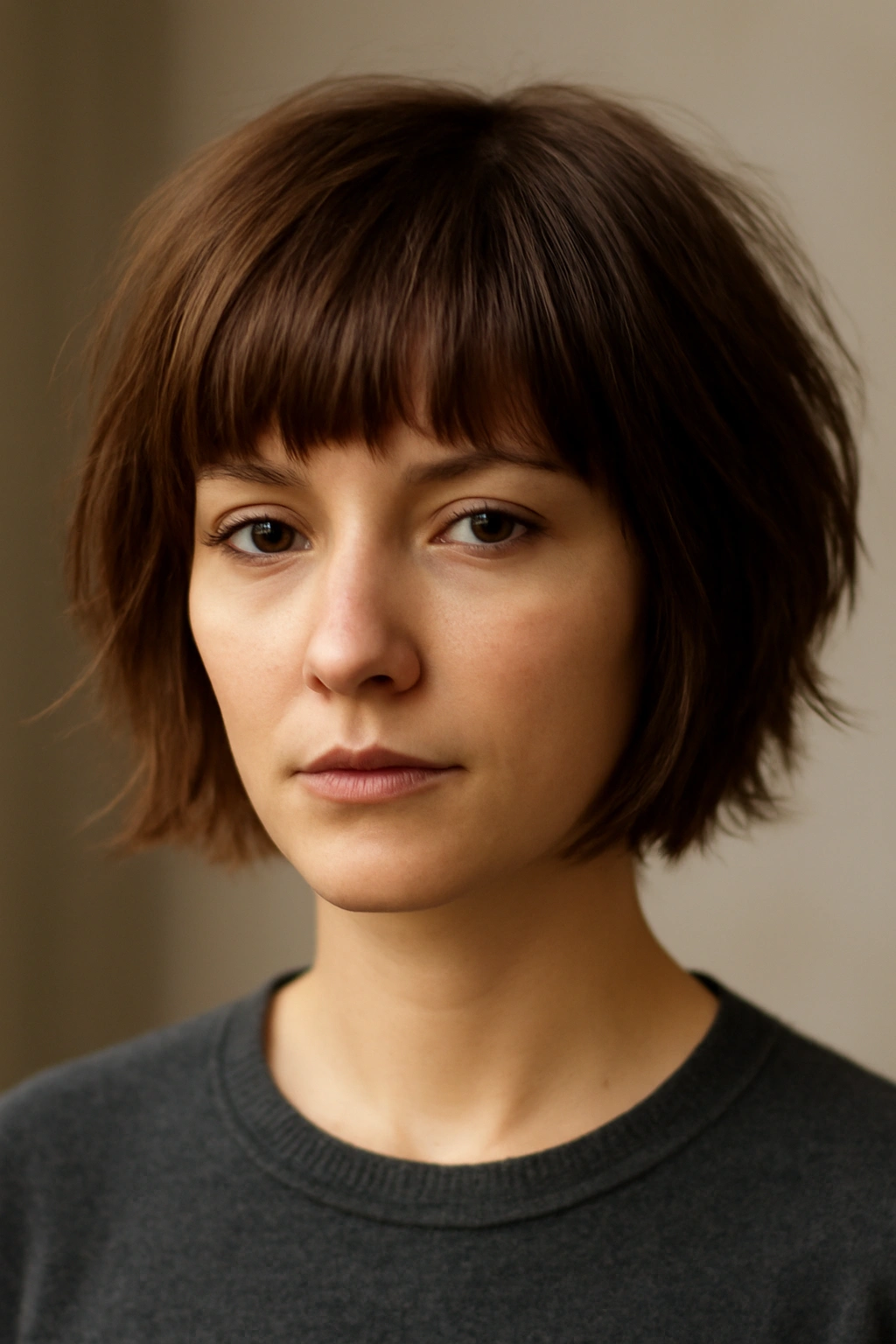
Full bangs (bangs that cover your entire forehead from hairline to eyebrows) paired with textured short layers throughout creates a soft, rounded, face-framing effect. This is classic without being boring—the texture keeps it modern, and the full bangs create a distinct look that feels intentional and polished.
Why Full Bangs Create Such a Different Vibe
Full bangs are a design choice that changes your whole face. They create a rounded shape at the top of your face, add height to your forehead area, and frame the face entirely rather than just the sides. Paired with textured short layers, you get something that feels cohesive and complete rather than like separate elements.
Face Shapes That Really Shine With Full Bangs
- Long or oblong faces: Full bangs create horizontal line across the forehead, which visually shortens and balances a longer face.
- High foreheads: Full bangs that sit right above the eyebrows actually lower the visual perception of forehead height, which is flattering.
- Rectangular faces: The soft, rounded shape of layered texture combined with full bangs softens angular features.
Maintaining Full Bangs and Layers
- Bangs need trimming every 2-3 weeks: Full bangs need to stay at the right length to frame the forehead flatly and clearly. As they grow, they drop down and stop looking intentional.
- Layers stay sharp with trims every 6 weeks: Regular trims keep the textured layers looking intentional and prevent them from growing out and losing their shape.
- Styling keeps texture visible: Use texturizing spray or cream and blow-dry with your fingers or a diffuser to keep the layers looking piece-y and textured rather than flat.
Insider note: Full bangs and short textured layers work really well together because the softness of the textured layers prevents the full bangs from looking too severe or blunt. The combination feels balanced and modern rather than costume-like or retro.
Final Thoughts
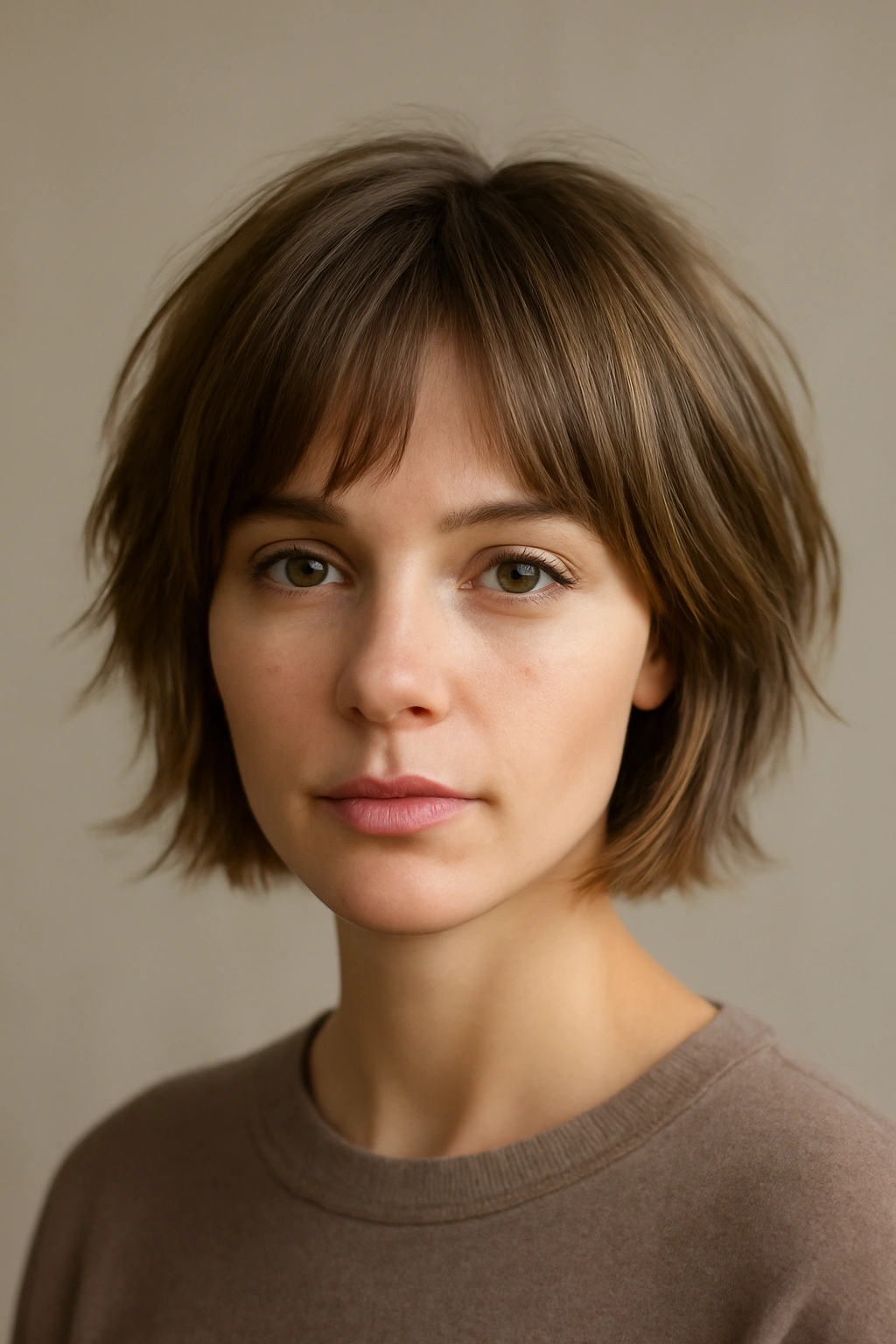
The magic of short layered haircuts with bangs is that they’re not one-size-fits-all—there’s enough variation among these twelve styles that something works for nearly every hair texture, face shape, and personal style preference. The key is matching the specific cut, bang style, and layering placement to your hair’s natural texture and your comfort level with styling and maintenance.
If you’ve got naturally wavy or curly hair and love an effortless vibe, a shag with feathered bangs or a tousled layers look will work with minimal daily effort. If you prefer clean lines and don’t mind styling, a blunt bob with straight-across bangs or an asymmetrical crop with angled bangs delivers that polished, intentional aesthetic. If you’re ready to make a bold statement, an undercut pixie, a tapered fade, or even micro bangs will absolutely deliver.
Before you commit to any of these cuts, spend time looking at photos of people with similar hair texture to yours wearing the cut you’re considering. Hair texture changes everything—a shag looks completely different on straight hair versus curly hair. Ask your stylist honest questions about how much styling the cut requires and whether your hair type will cooperate with the look. A great stylist will steer you toward cuts that work with your hair rather than against it, which is what makes the difference between a cut that feels amazing and one that frustrates you every morning. Go in with photos, be honest about your styling commitment, and trust that the right short layered cut with bangs is out there waiting for you.
