



Asymmetrical haircuts have become a cornerstone of modern short-hair styling, offering women a way to express individuality while maintaining a polished, intentional look. The beauty of an asymmetrical cut lies in its inherent dynamism—one side differs from the other in length, texture, or both, creating visual interest that symmetrical cuts simply can’t achieve. Whether you’re drawn to edgy and bold or subtle and sophisticated, asymmetrical short cuts offer something for every face shape, hair texture, and personal style.
What makes these cuts so compelling is how they work with movement and light. The varied lengths catch light differently on each side, creating dimension that feels deeper and more textured than their symmetrical counterparts. They’re also remarkably practical—many asymmetrical cuts require less frequent trims than traditional bobs because the staggered lengths disguise grow-out beautifully. Plus, there’s something fundamentally empowering about a cut that unapologetically breaks the rules of balance while still looking deliberately crafted.
The key to pulling off any asymmetrical short cut is finding a stylist who understands your hair’s natural growth patterns, texture, and how you typically style your hair. An asymmetrical cut can be as low-maintenance or as high-styling as you want it to be, depending on which cut you choose and how you finish it. Let’s walk through ten standout asymmetrical short styles that can completely transform how you look and feel.
1. Pixie-Textured Undercut
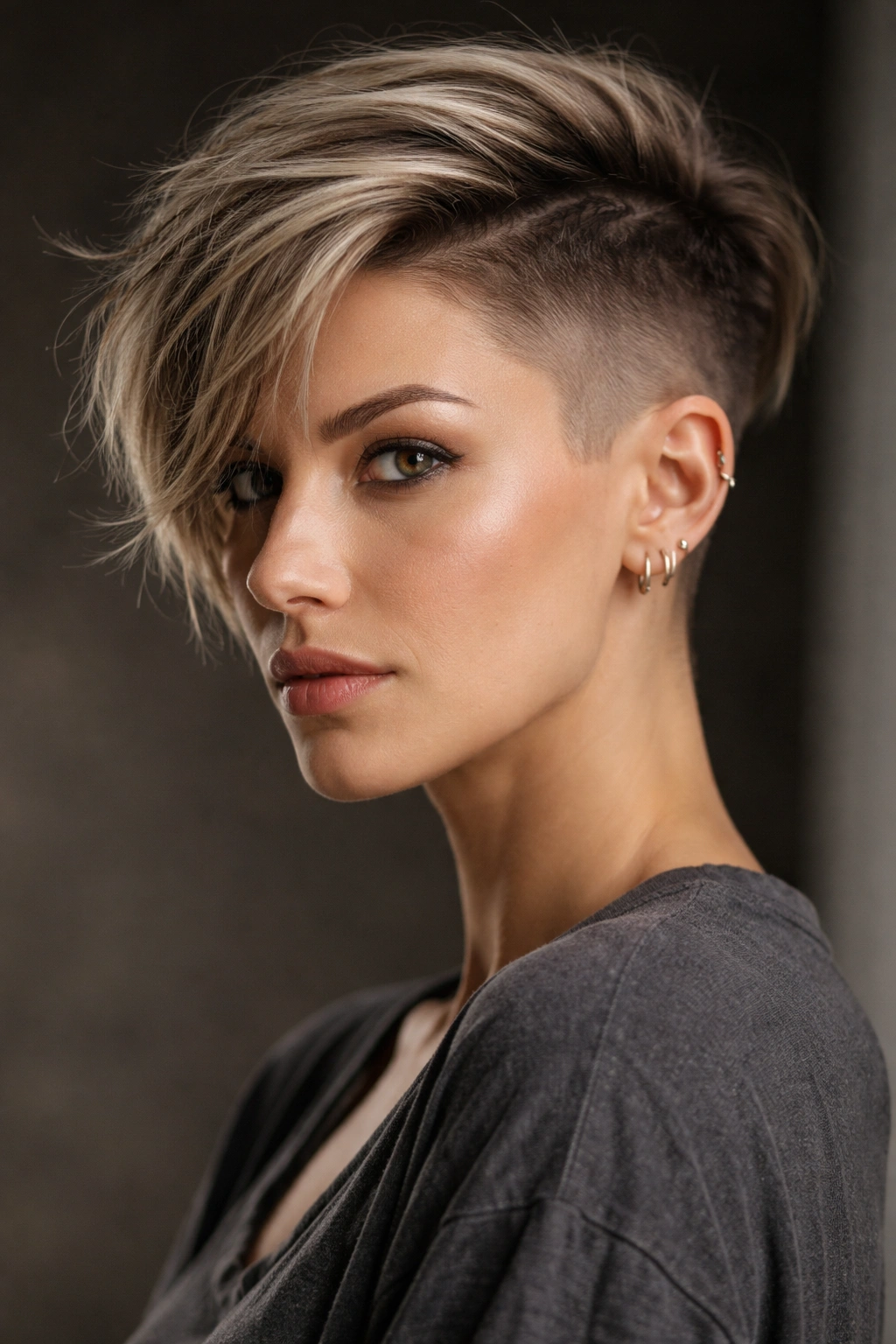
The pixie-textured undercut takes the classic pixie and cranks up the drama by shaving or fading one entire side while keeping the other side longer and textured. This cut works beautifully for women who want to make a bold statement without committing to a full shaved head. The undercut side is typically clippered to bare scalp or a very short stubble, creating maximum contrast.
Why This Cut Commands Attention
The exposed undercut creates an undeniably striking silhouette, especially when you have angular features or high cheekbones. The contrast between the shaved and textured sides draws the eye and makes the cut feel intentional and fashion-forward rather than accidental. Many women who get this cut report feeling instantly more confident—there’s something about that level of visual boldness that changes how you carry yourself. The undercut also makes styling incredibly simple; you can wear the longer side down and textured, or push it back to fully show off the shaved portion underneath.
What to Know Before Getting It
- Requires touchup shaves or clipper trims every 3-4 weeks to keep the undercut crisp and defined
- Works best on women who are comfortable showing significant amounts of neck and ear—not ideal if you prefer your hair to frame your face
- The longer side typically needs product (texturizing spray, pomade, or paste) to keep it from looking flat against the undercut
- Can be softened over time if you want a less extreme look; clipper guards create gradual fades instead of bare skin
Pro tip: If you’re nervous about commitment, ask your stylist for a longer guard (like a #1 or #2) on the undercut side first. You can always go shorter later once you’re comfortable with how it feels.
2. Asymmetrical Shag
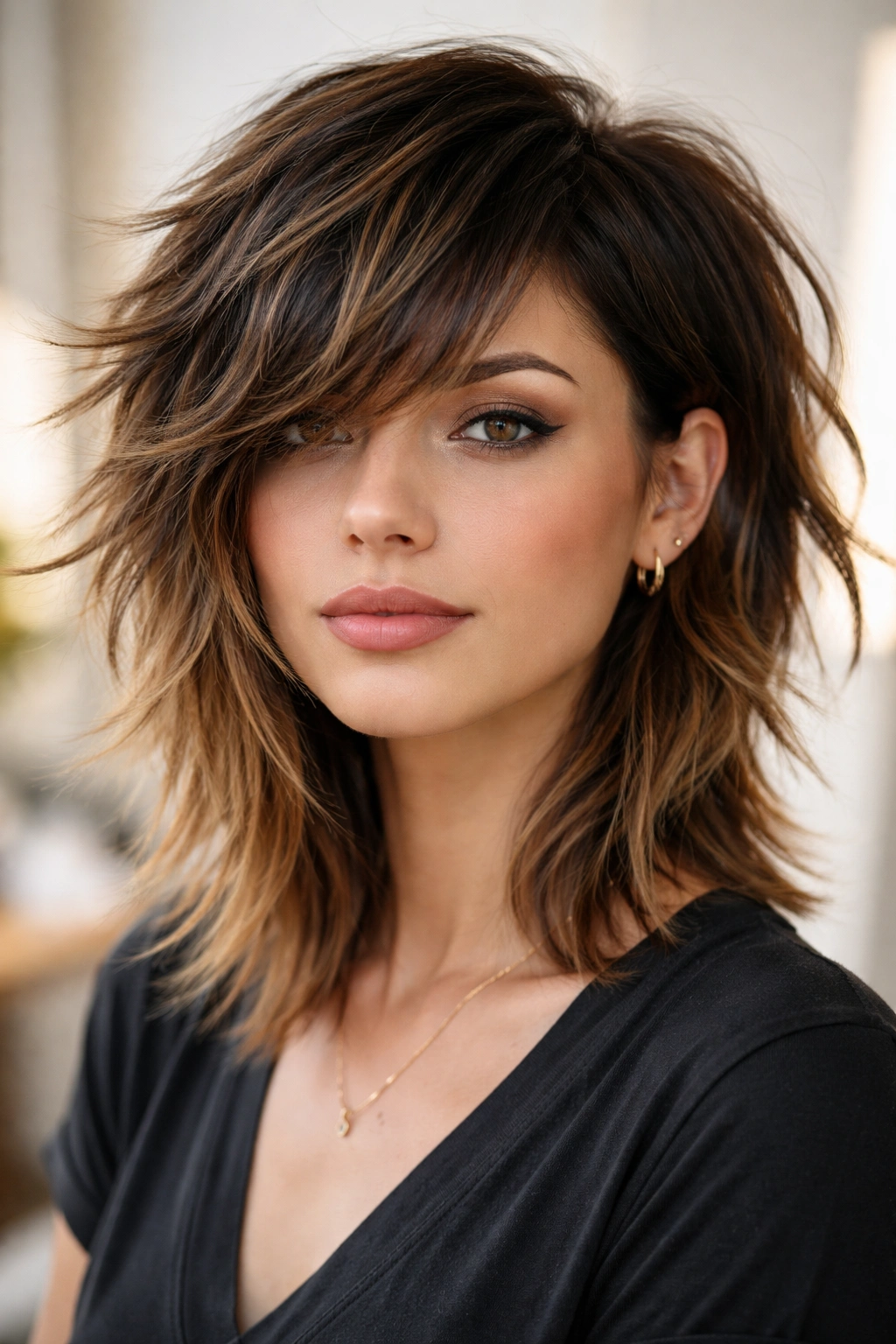
The shag cut has been reimagined for modern sensibilities, and when executed with asymmetry, it becomes a genuinely wearable everyday cut with built-in movement and texture. An asymmetrical shag typically keeps one side noticeably shorter and more compact while the other side flows longer, with both sides featuring choppy, feathered layers throughout. This cut plays beautifully with different hair textures and is surprisingly flattering across face shapes.
The Lived-In Texture That Works in Your Favor
What sets the shag apart is that its choppy, textured nature means it actually looks better when it’s not perfectly styled. The cut creates natural separation between layers, so even if you just shower and air-dry, you’ll get dimension and movement. One side being shorter and one longer gives you the option to style deliberately or just let it fall—both approaches work. The layers encourage your hair to move away from your face rather than laying flat, which many women find more flattering than blunt, heavy cuts.
Key Details for This Cut
- Layers should be cut with choppy, disconnected techniques rather than stacked for a modern look
- Works best on hair that has some natural wave or curl; straighter hair may need more styling effort to get movement
- The shorter side still typically hits somewhere between ear-length and chin-length rather than being drastically different
- Requires a good cut every 5-6 weeks to maintain the layered shape and prevent it from looking scraggly
Worth knowing: If your hair is fine or thin, ask your stylist to be conservative with the number of layers—too many thin layers can make fine hair look wispy rather than textured.
3. Geometric Asymmetrical Bob
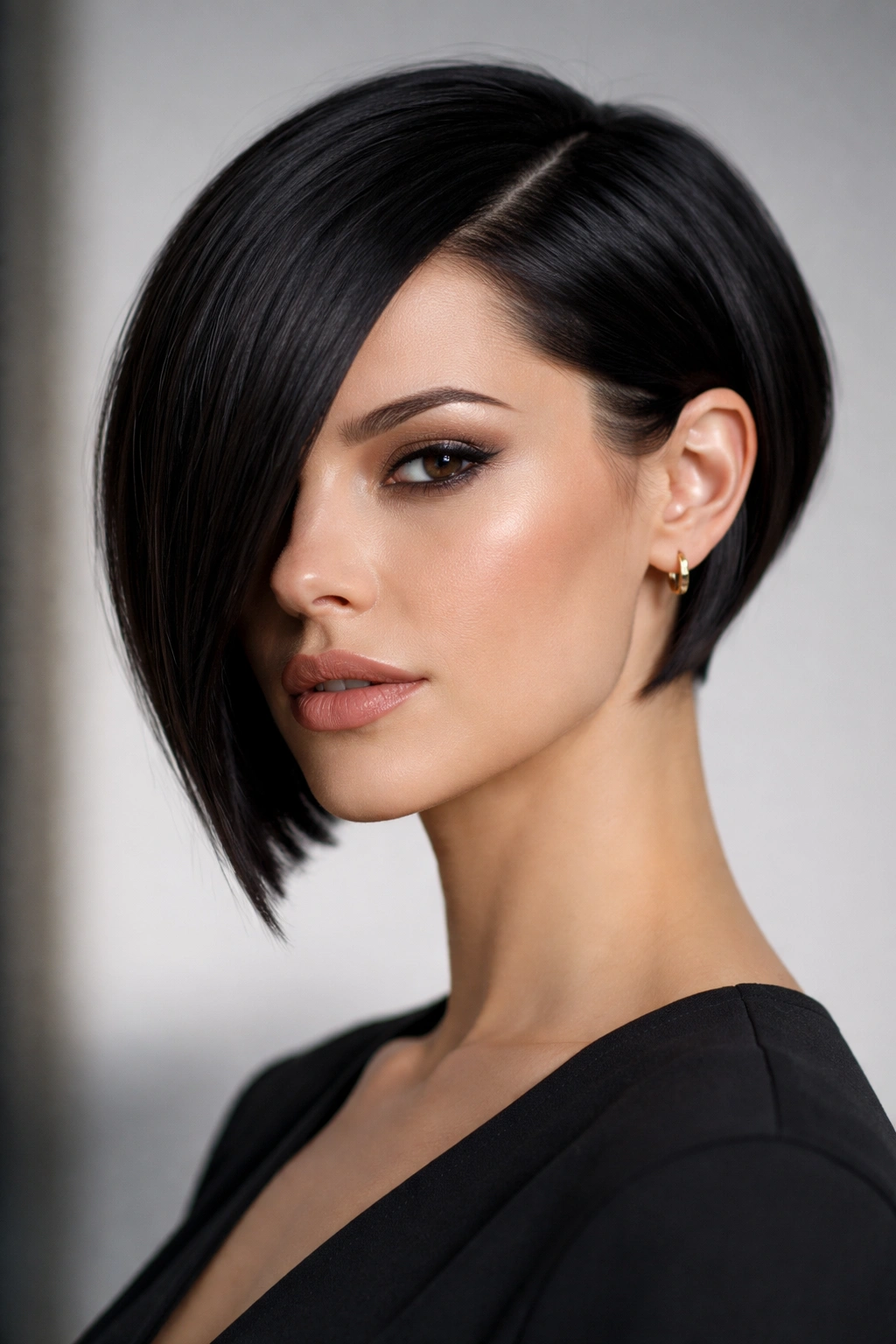
A geometric asymmetrical bob takes the sharp, precise angles of geometric cutting and applies them to an asymmetrical silhouette. One side is typically cut to a clean line at the jaw or chin while the other side is significantly shorter, and the cut uses precise angles rather than soft, choppy layers. This style works for women who love clean, architectural lines and want their haircut to feel intentional and editorial.
Precision as a Design Statement
The geometric cut is fundamentally about control and intentionality. Nothing about it is soft or accidental—every angle has been carefully calculated to create a specific shape. When you combine this precision with asymmetry, you get a cut that photographs beautifully and catches light in dramatic ways. The clean lines also make this cut look more formal and polished than shaggy alternatives, making it perfect if you want something sophisticated enough for professional settings but still distinctly modern and fashionable.
Making It Work Long-Term
- Requires a skilled stylist who understands geometric cutting techniques—this isn’t a cut to book with someone unfamiliar with angular cuts
- Needs regular trims every 4-5 weeks to maintain crisp lines; grow-out can quickly soften the geometric effect
- Works best on naturally straight or wave-textured hair; curly hair can distort the geometric lines
- Benefits from sleek, polished styling—a textured finish can disguise the intentional angles
Insider note: The undercut at the back neckline on the shorter side can be shaved or faded for extra definition, or kept blunt and sharp depending on how extreme you want the look.
4. Side-Swept Undercut with Length
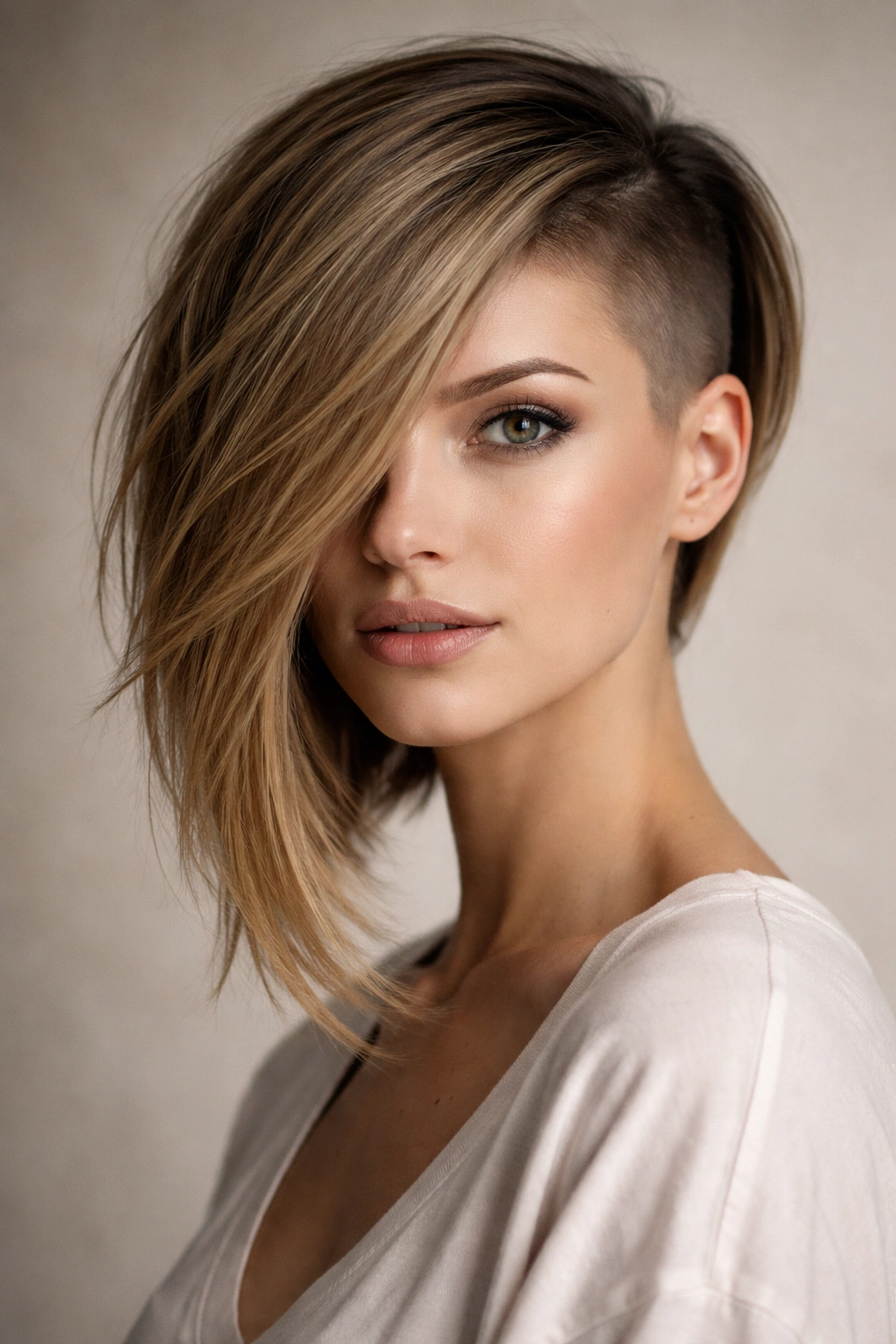
This style keeps one side quite long—sometimes grazing past the chin or even to the shoulder in a more exaggerated version—while the other side is undercut or faded short. The longer side typically sweeps across and down, creating asymmetry that’s less dramatic than a pixie undercut but still distinctly unbalanced. It’s a cut that works beautifully for women who want asymmetry without going full shaved side.
The Styling Versatility You Get
The beauty of this cut is the range of styling options. You can sweep the long side all the way across and pin it behind the ear on the short side for a sleek look, or let it fall forward more messily for something relaxed. The undercut side can be hidden completely if you’re going to a formal event where you want to play down the cut’s edginess. Over the course of a day, the hair naturally shifts and moves, so the cut feels different depending on how you’ve styled it and what you’ve done throughout the day.
Technical Considerations
- The undercut is typically faded rather than shaved for a more wearable version, but can definitely be shaved if you want maximum contrast
- Requires regular fades or clipper work on the short side every 3-4 weeks
- The longer side often benefits from some texturizing or choppy layers so it doesn’t look thin compared to the shaved/faded side
- Needs product and intentional styling to avoid looking matted or one-sided; this isn’t a wash-and-go cut
Real talk: If your hair is very thick, the longer side can look bulky compared to the faded side. Work with your stylist on texturizing or thinning out the longer length to balance the visual weight.
5. Choppy Layered Asymmetrical Cut
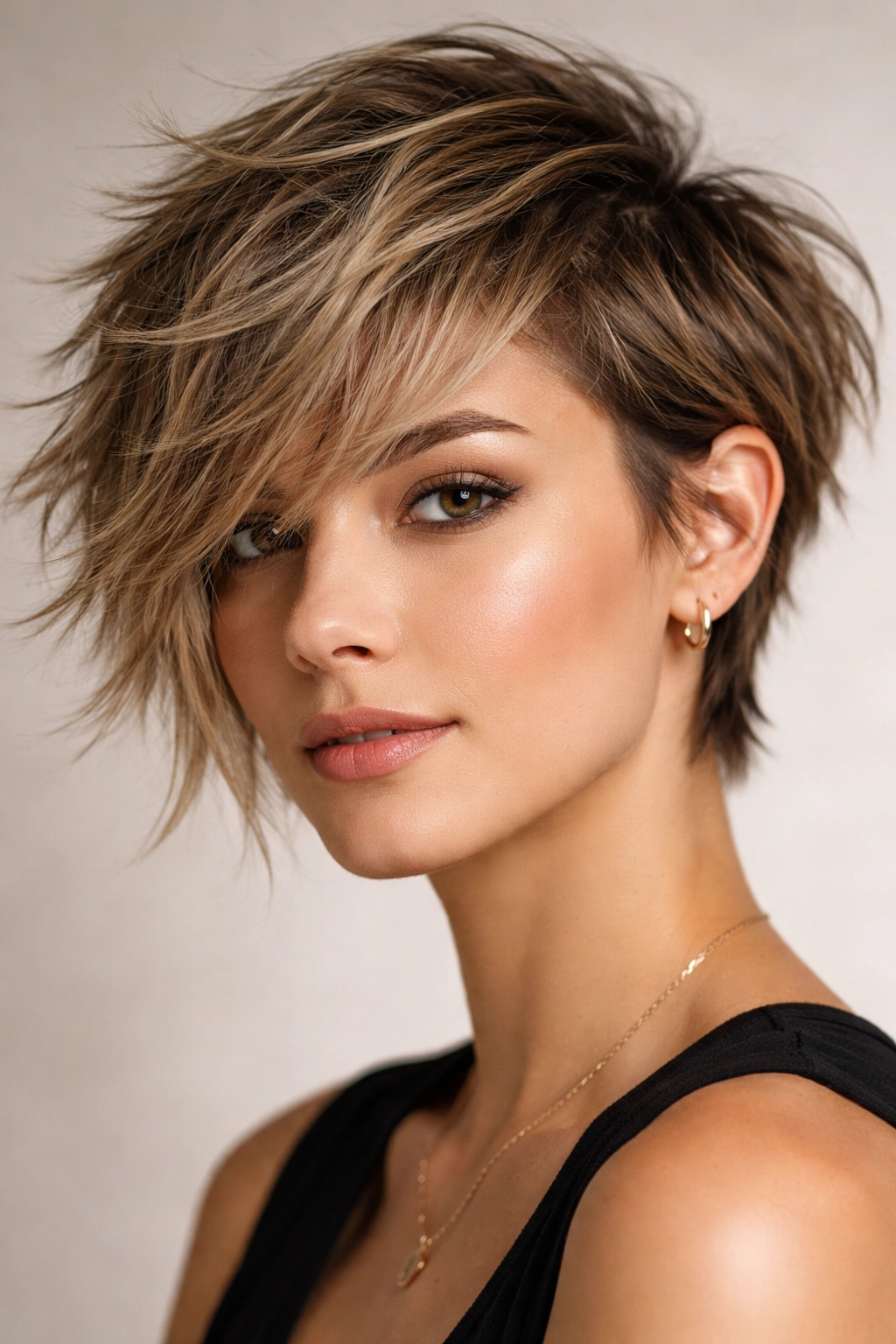
This is a true texture-forward cut where both sides are relatively short, but one is noticeably shorter than the other, and both sides are densely layered with choppy, disconnected cuts throughout. The result is maximum movement and that deliberately undone, lived-in feel that’s popular right now. It’s perfect for women with some natural texture or those willing to style their hair regularly.
Why Layers Create Such Dynamic Movement
Choppy layers work because they break up the silhouette at multiple points, creating visual interest at different depths and angles. When you asymmetrize a heavily layered cut, you amplify that effect—the shorter side reads more compact and piece-y while the longer side has movement and flow. This cut thrives on texture, so it looks best when it’s slightly tousled or styled with texture spray or pomade rather than sleek. Many women actually prefer this cut unstyled because the layers create natural separation.
Maintenance and Styling Reality
- Needs a trim every 4-5 weeks to maintain the layered shape; skipping trims makes this cut look shaggy rather than intentional
- Works best on hair with natural wave, curl, or texture that holds a tousled style
- Requires product for optimal styling—texturizing spray, sea salt spray, or styling paste bring out the layers
- Can look quite different depending on how you style it; same cut can look polished or deliberately messy depending on product and technique
Pro tip: Ask your stylist for shorter choppy layers throughout rather than longer flowing layers. The choppiness is what makes this cut read as intentional asymmetry rather than just one side being longer.
6. Disconnected Asymmetrical Fade
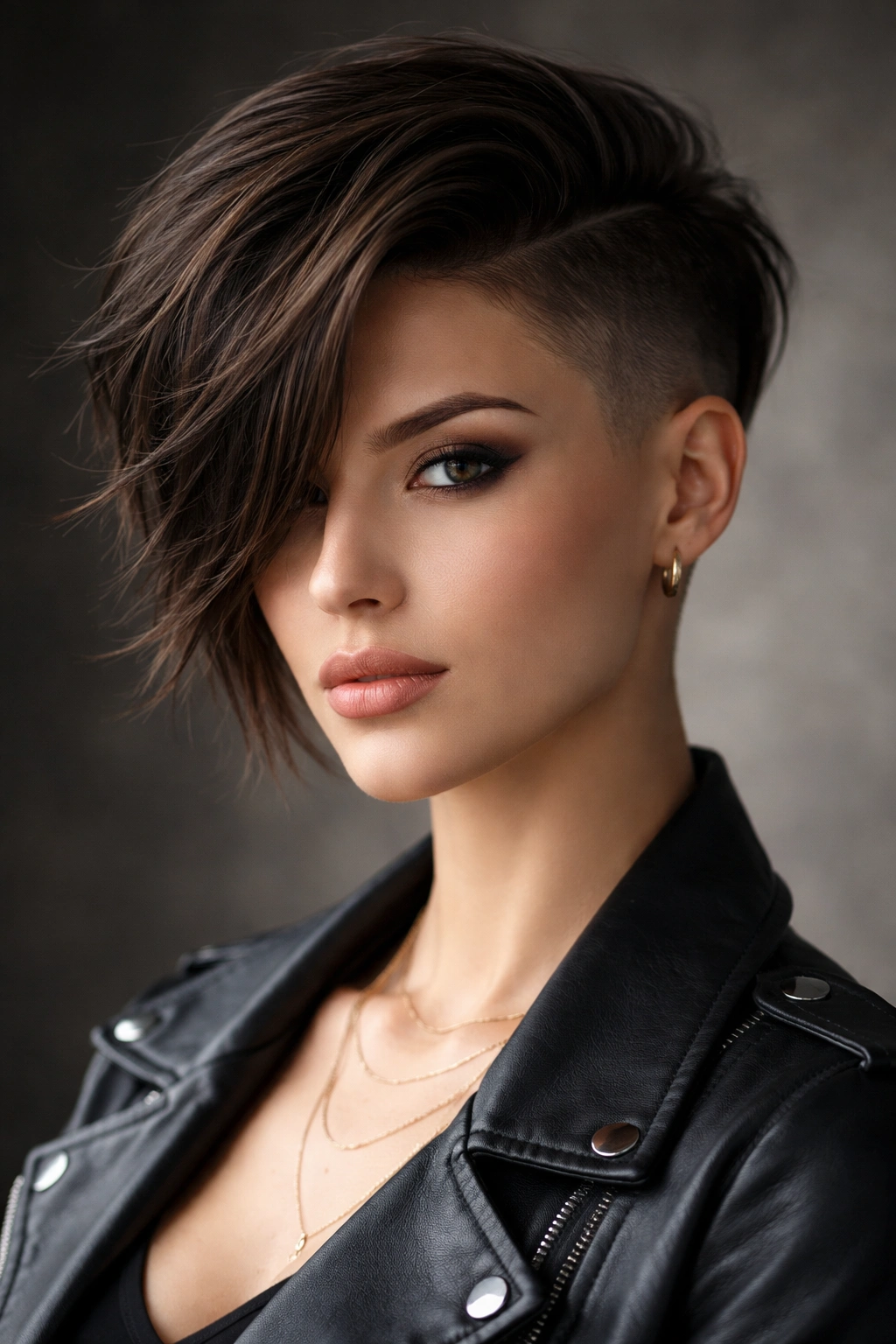
A disconnected fade creates a clear visual separation between the faded undercut and the longer hair on top, rather than blending smoothly from short to long. With asymmetry added, one side features this sharp disconnect while the other side might be longer with either another fade or choppy layers. This cut is graphic and bold, beloved by women who want something that reads as a true modern, fashion-forward haircut.
The Drama of Intentional Disconnection
A disconnected cut deliberately doesn’t blend, which is what makes it feel so intentional and edgy. There’s a clear line where the fade ends and the longer hair begins, creating a graphic quality that a traditional fade-to-length cut doesn’t have. The asymmetry amplifies this effect—pairing a disconnected fade on one side with longer choppy hair on the other creates multiple visual contradictions that feel deliberately crafted. This cut photographs beautifully because the disconnect creates shadow and dimension.
Execution Details That Matter
- The “disconnect” means there’s literally a short gap where the hair transitions from faded to long—not a gradual fade
- Typically the faded side goes quite short (1-2 inches maximum) while the longer side is at least 3-4 inches longer
- Looks most striking when the longer side has visible layers or choppy texture
- Requires clipper work on the faded side every 3-4 weeks to maintain the sharp line
Worth knowing: This cut can look severe on very round faces if both the fade and longer side don’t have softening layers. Ask your stylist to incorporate some choppy movement into the longer side if you have a rounder face shape.
7. Asymmetrical Fringe with Texture
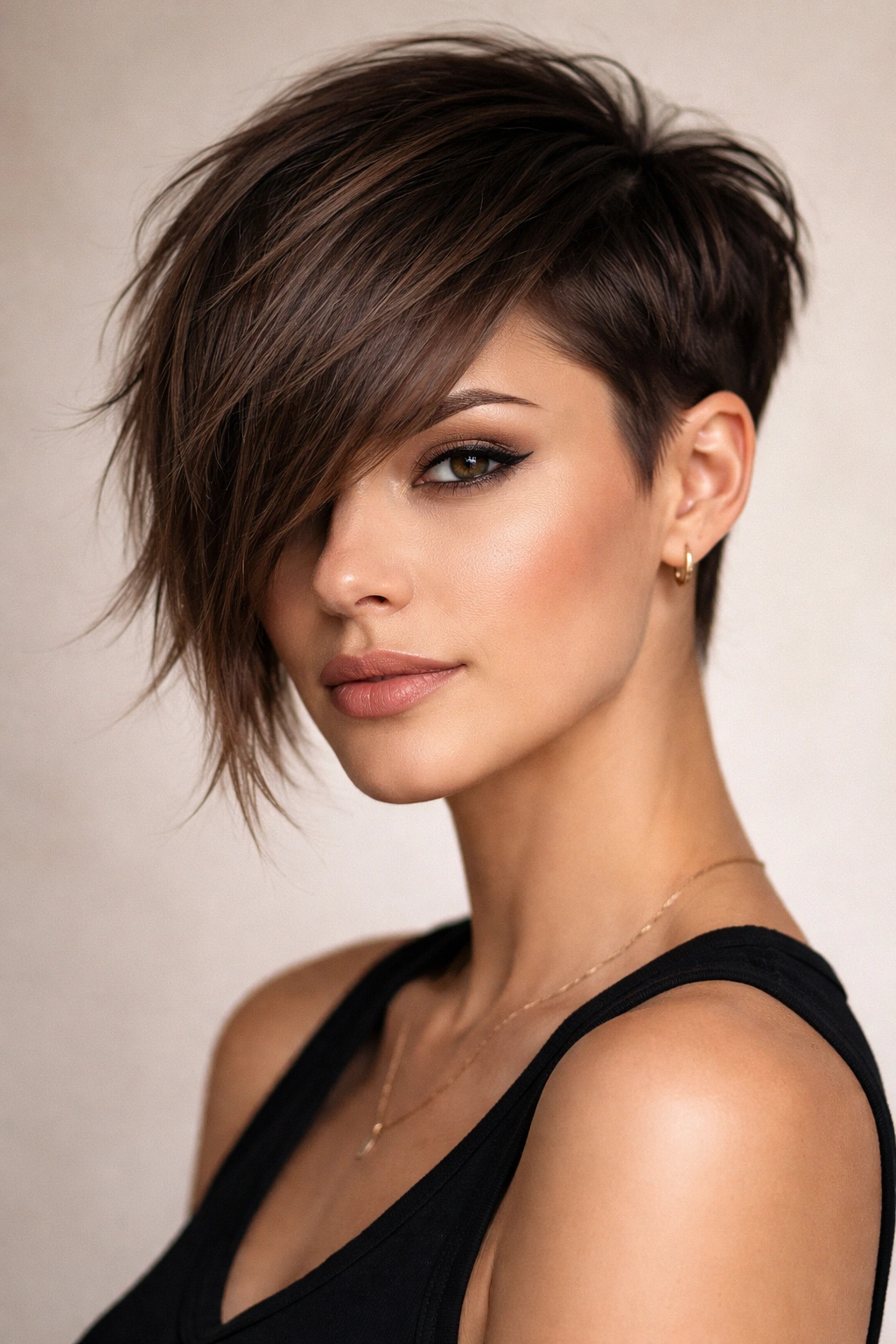
This cut keeps hair relatively short overall but distinguishes the sides through a dramatically asymmetrical fringe—one side has a longer, side-swept fringe while the other side is shorter or has no fringe at all. The back is typically textured and choppy to balance the fringe-forward focus. It’s a cut that’s all about what happens around the face, making it perfect for drawing attention to your eyes and face shape.
The Face-Framing Power of Asymmetrical Bangs
An asymmetrical fringe immediately draws the eye to your face and can be incredibly flattering if chosen correctly for your face shape. A longer side-swept fringe on one side softens that side of your face while a shorter or absent fringe on the other creates lift and openness. The asymmetry means the fringe-forward styling never feels heavy or dated—it feels intentional and modern. You can also style the fringe different ways; sweep it back on days you want to expose your whole face, or let it fall forward and dramatic on other days.
Styling and Maintenance Reality
- The fringe requires regular trims every 3-4 weeks; grow-out is very visible with this cut
- Works best on relatively straight to wavy hair; very curly hair makes fringes difficult to style
- The shorter back should have choppy layers for movement and to keep the overall silhouette from looking too front-heavy
- Requires styling with product (texture spray or paste) to get the fringe to sit the way it’s cut; heat styling or blow-dry is typically needed
Insider note: If you’ve never had a fringe before, start with a longer, side-swept version on the longer side of your face. This is more forgiving than a blunt, heavy fringe and lets you experiment with the fringe-forward look without fully committing.
8. High-Low Asymmetrical Crop
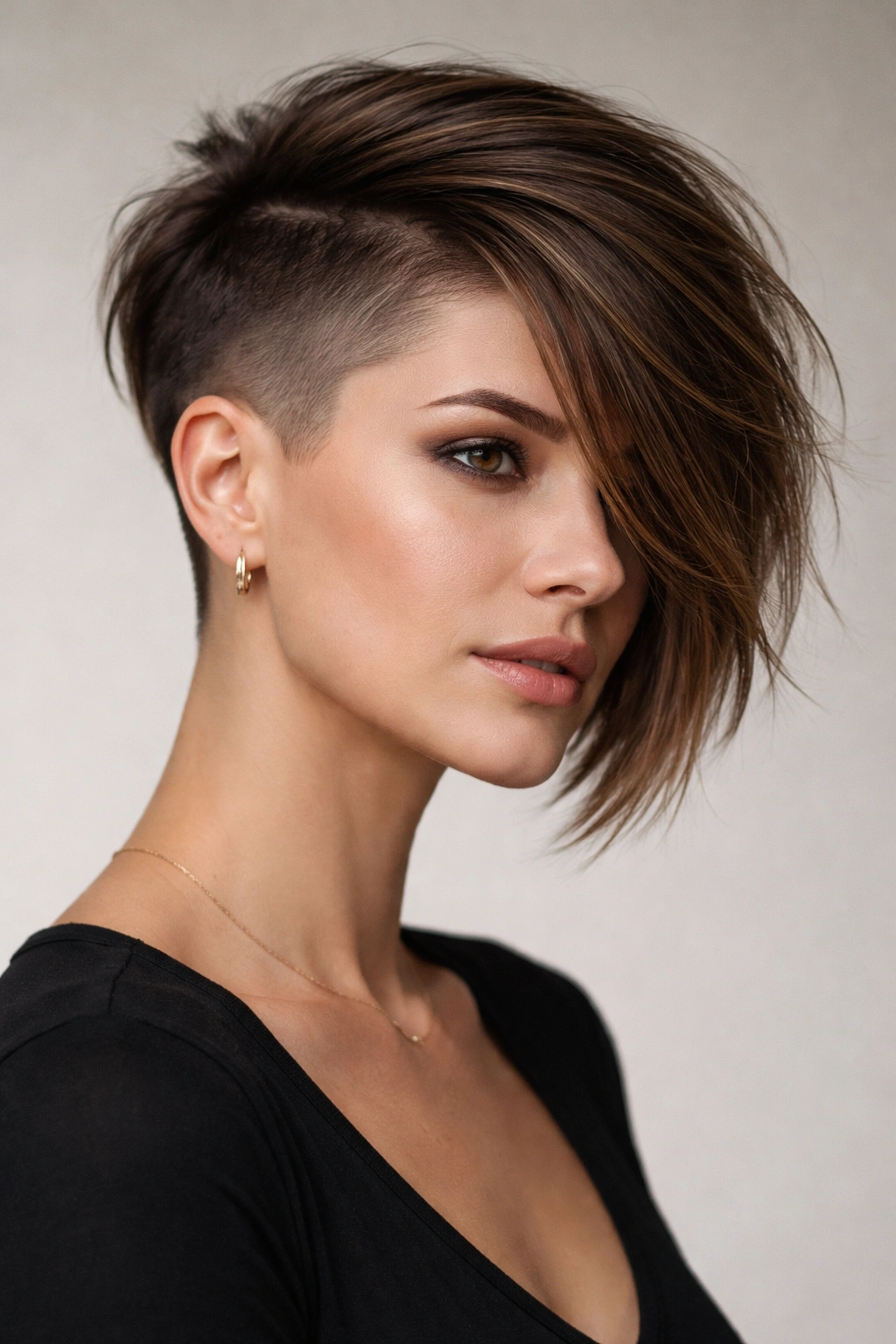
A high-low crop is exactly what it sounds like: clipped or buzzed very short on top while remaining longer on bottom, but executed asymmetrically so one side is significantly higher/shorter than the other. The contrast can be extreme (buzzed on one side, 4+ inches on the other) or more subtle (clipped short on one side, shoulder-length on the other). It’s a cut that demands confidence and works best for women comfortable with bold asymmetry.
Creating Drama Through Extreme Length Contrast
The high-low crop’s power comes from its unapologetic imbalance. There’s no attempt to blend or soften the difference—the contrast is the whole point. When executed well, it looks editorial and fashion-forward rather than awkward. The shorter side often features clipper work, while the longer side typically has layers and texture to balance the volume differential. This cut works for almost any hair texture because the clipped side is texture-proof and the longer side can be styled according to your natural texture.
Bold Styling Considerations
- The clipped/buzzed side needs touchup work every 3-4 weeks to maintain definition
- The longer side can be styled multiple ways—sleek, textured, tousled, tucked—so versatility is actually quite good despite the extreme asymmetry
- This cut makes a definitive statement; it’s not subtle, so it works best if you genuinely want people to notice your hair
- Can actually be quite low-maintenance once you accept that the shorter side needs clipper work and the longer side is its own styling journey
Real talk: This cut works beautifully for women with confidence in their personal style, but if you tend to second-guess your hair choices, this might be too high-commitment. Make sure you genuinely love the aesthetic before booking.
9. Side-Parted Asymmetrical Pixie
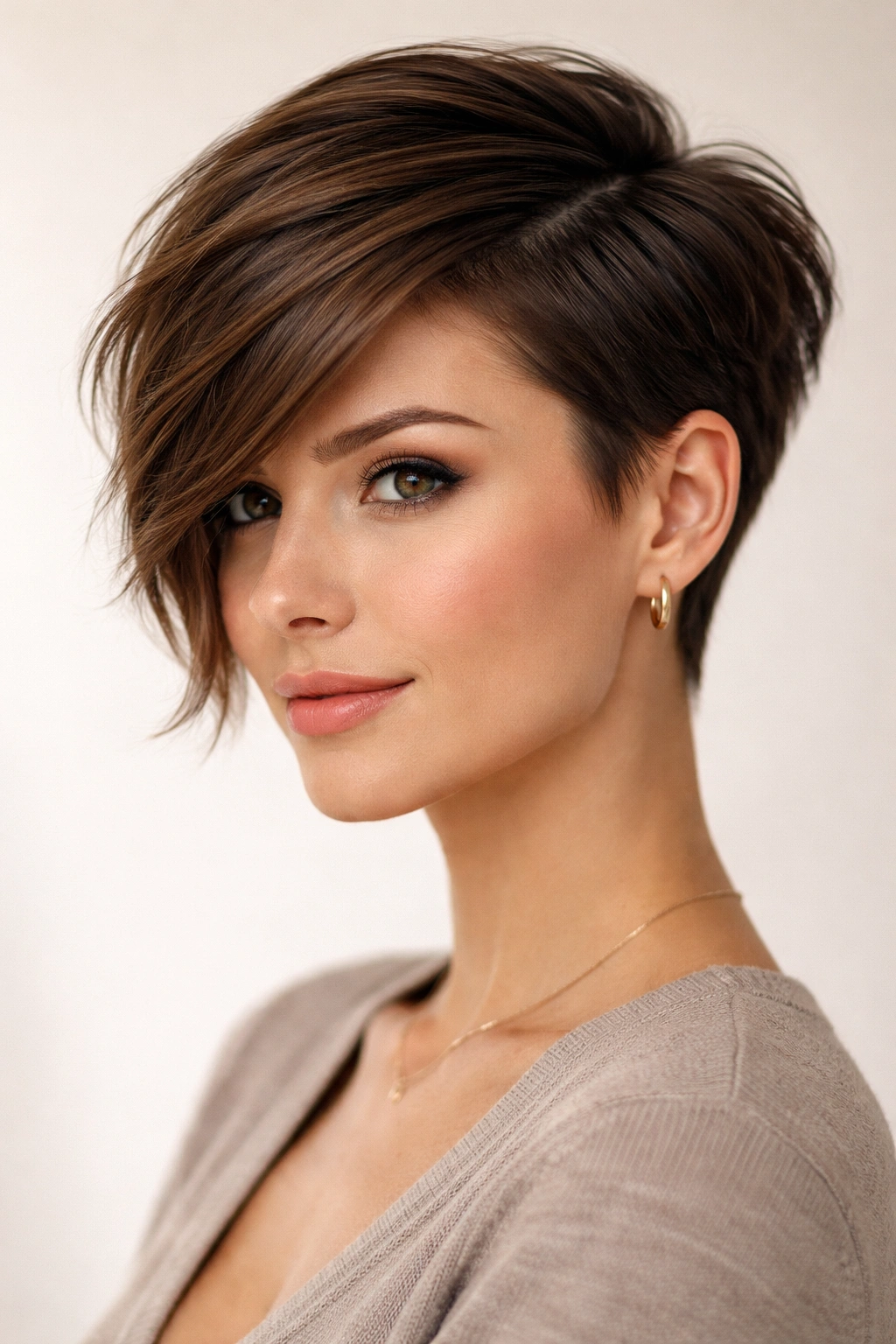
This cut keeps the overall silhouette shorter and more compact than some of the longer alternatives, but the asymmetry comes from how the sides are cut relative to each other and how a deep side part divides the head. One side of the pixie is slightly longer and sweeps to the side through the part, while the other side is shorter and tighter to the head. The back has texture and choppy layers throughout, and the whole cut is designed to work with (not against) how your hair naturally grows.
Working With Your Hair’s Natural Growth Patterns
The side-parted asymmetrical pixie is brilliant because it accommodates the reality of how hair actually grows on your head. Rather than fighting natural cowlicks and growth patterns, this cut uses them. The deeper part creates the illusion of more hair on one side while the shorter other side appears to have less bulk. The longer, swept side naturally wants to part and go to that side anyway (for most people), so styling feels intuitive rather than like fighting your hair daily.
Practical Everyday Styling
- Requires a good cut every 4-6 weeks, but the cut’s asymmetry means grow-out is less noticeable than with symmetrical pixies
- Works on most hair textures; the choppy layers mean even very straight hair gets movement
- Needs minimal styling product, but benefits from a light texturizing spray to separate the layers
- Can be dressed up or down depending on how you finish it; sleek styling reads polished, tousled reads casual
Pro tip: If you have very thick hair, ask your stylist to thin out the back layers significantly so the cut doesn’t become a heavy triangle. The asymmetry works better when the overall shape is relatively compact.
10. Textured Asymmetrical Mullet
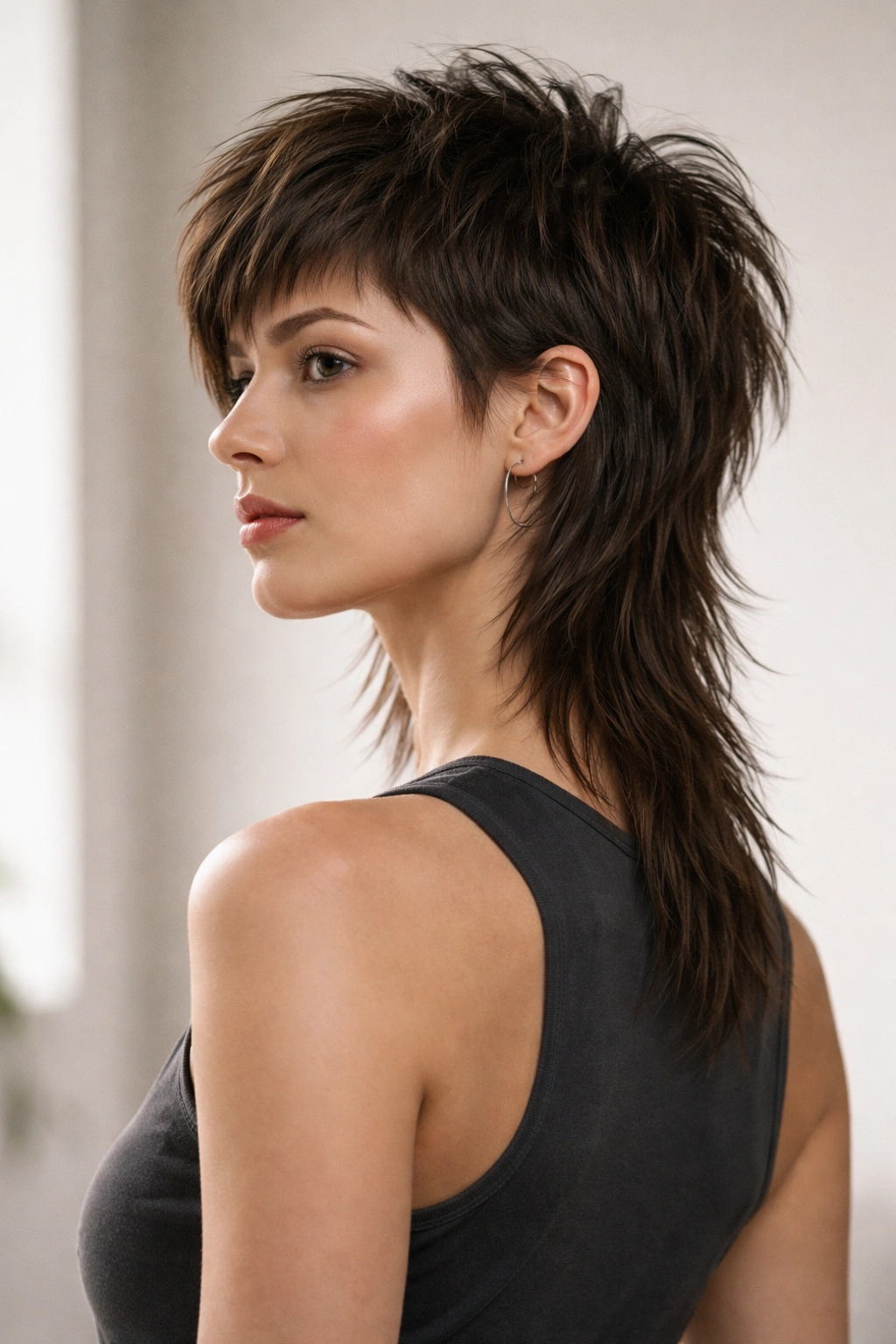
The modern mullet has been completely reimagined from its 1980s reputation, and when executed asymmetrically, it becomes a genuinely wearable, fashion-forward cut. An asymmetrical mullet keeps hair shorter and textured on top and the sides, with one side notably shorter than the other, while the back maintains more length. It’s a cut that requires confidence but delivers an unmistakably current, intentional aesthetic.
The Modern Mullet Evolution
Today’s textured asymmetrical mullet is nothing like the dated versions from decades past. The key differences are the choppy layers throughout (rather than blunt, solid lengths), the asymmetrical sides that prevent it from feeling retro, and the overall compact, textured silhouette that reads as intentional rather than nostalgic. The back length is typically only moderately longer—not dramatically long, but noticeably longer than the sides. Styled right, this cut looks editorial and distinctly current rather than costume-like.
Making It Look Modern Rather Than Dated
- The asymmetry is crucial; symmetrical mullets read dated, but asymmetry makes it feel new and intentional
- Requires dense choppy layers throughout to avoid looking solid or heavy
- The back should have visible texture and movement rather than being one solid length
- Needs regular trims every 4-6 weeks to maintain the layered shape and prevent it from looking shaggy
Worth knowing: This cut works best on people willing to style it slightly—just a bit of texture spray and finger-tousling in the morning makes the difference between “intentional modern cut” and “something isn’t quite right.” It’s not truly wash-and-go, but styling takes less than five minutes.
Final Thoughts
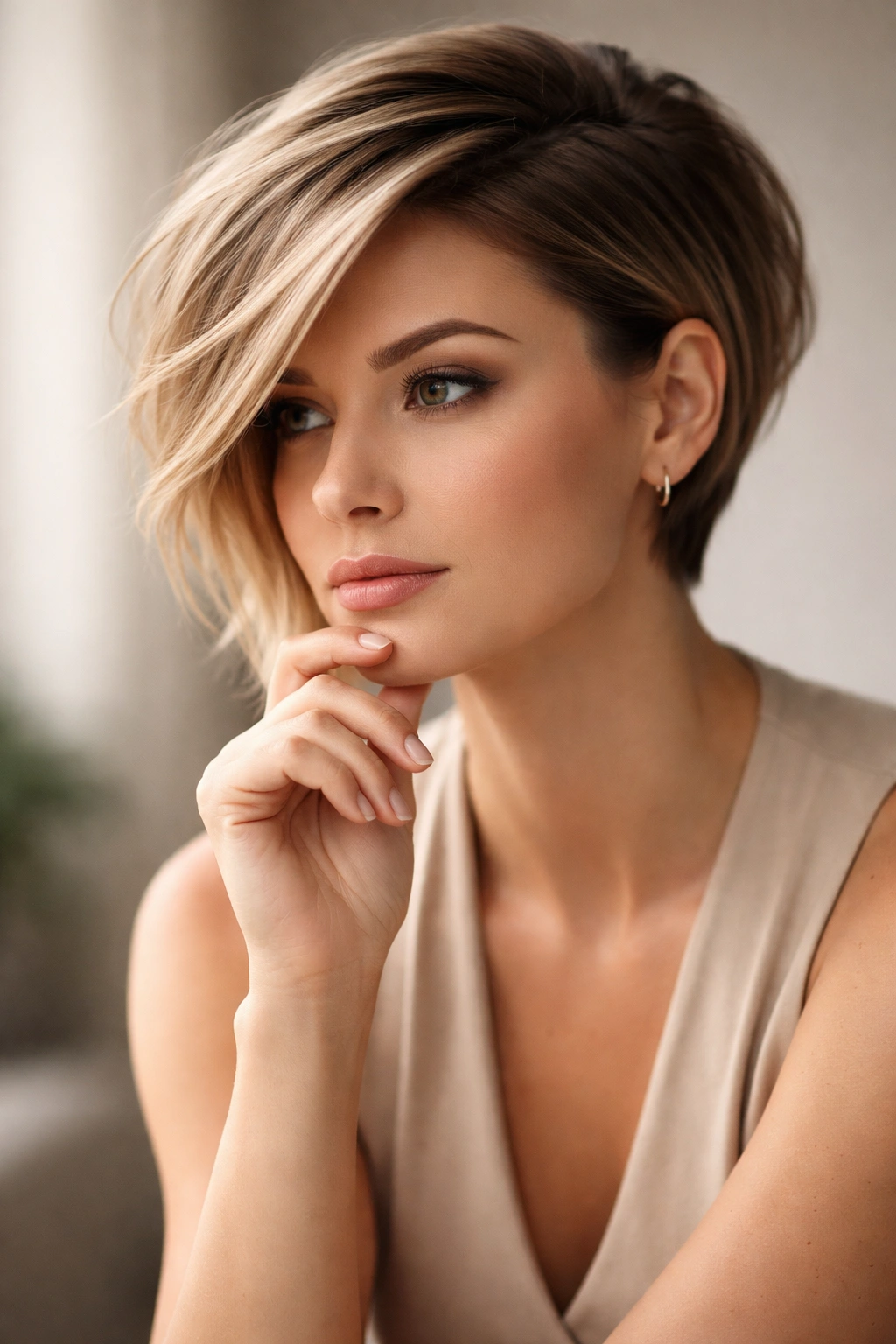
Choosing an asymmetrical short haircut is about more than just picking a style that looks good in photos—it’s about finding a cut that aligns with how much styling you actually want to do, how often you’re willing to maintain it, and whether you genuinely connect with the boldness the cut demands. Some of these cuts are truly low-maintenance once you’ve committed to regular trims, while others require daily styling for their best look.
The magic of asymmetrical short cuts is that they work because they don’t pretend to be balanced. They lean into the imbalance, making it the whole point rather than trying to hide it. That confidence is what reads as fashionable and intentional. Before booking an appointment, spend time looking at how different stylists execute the cut you’re drawn to—execution matters enormously with asymmetrical cuts, and a skilled stylist who understands how to work with your specific hair type and growth patterns can make all the difference between a cut that feels effortless and one that frustrates you daily.
