



Face-framing bangs with a side part create one of the most versatile and flattering combinations in contemporary hairstyling. There’s something about the way this pairing works together that seems to suit nearly everyone—the bangs draw attention to your features while the side-swept component adds movement, dimension, and a modern edge that feels effortlessly put-together. Whether you’re looking to soften angular features, add texture to fine hair, or simply refresh your look, this styling approach offers endless possibilities.
The magic of combining face-framing bangs with a side part comes down to balance and proportion. Instead of heavy, straight-across bangs that can feel formal or dated, the side part introduces asymmetry and flow that’s distinctly contemporary. The bangs work harder in this configuration—they’re not just sitting there; they’re sculpting, highlighting, and creating visual interest that would be impossible with a center part. For anyone considering a bang refresh, understanding the different styles within this category helps you find the exact variation that will work with your hair texture, face shape, and styling commitment.
The side part itself is making a serious comeback across all age groups and hair types, and pairing it with the right bang style amplifies that impact. What makes this combination so successful is that it works equally well styled sleek and polished or tousled and textured. You’re not locked into one look—you can adapt it depending on your mood, the occasion, or how much time you have to style.
1. Curtain Bangs with Side Part
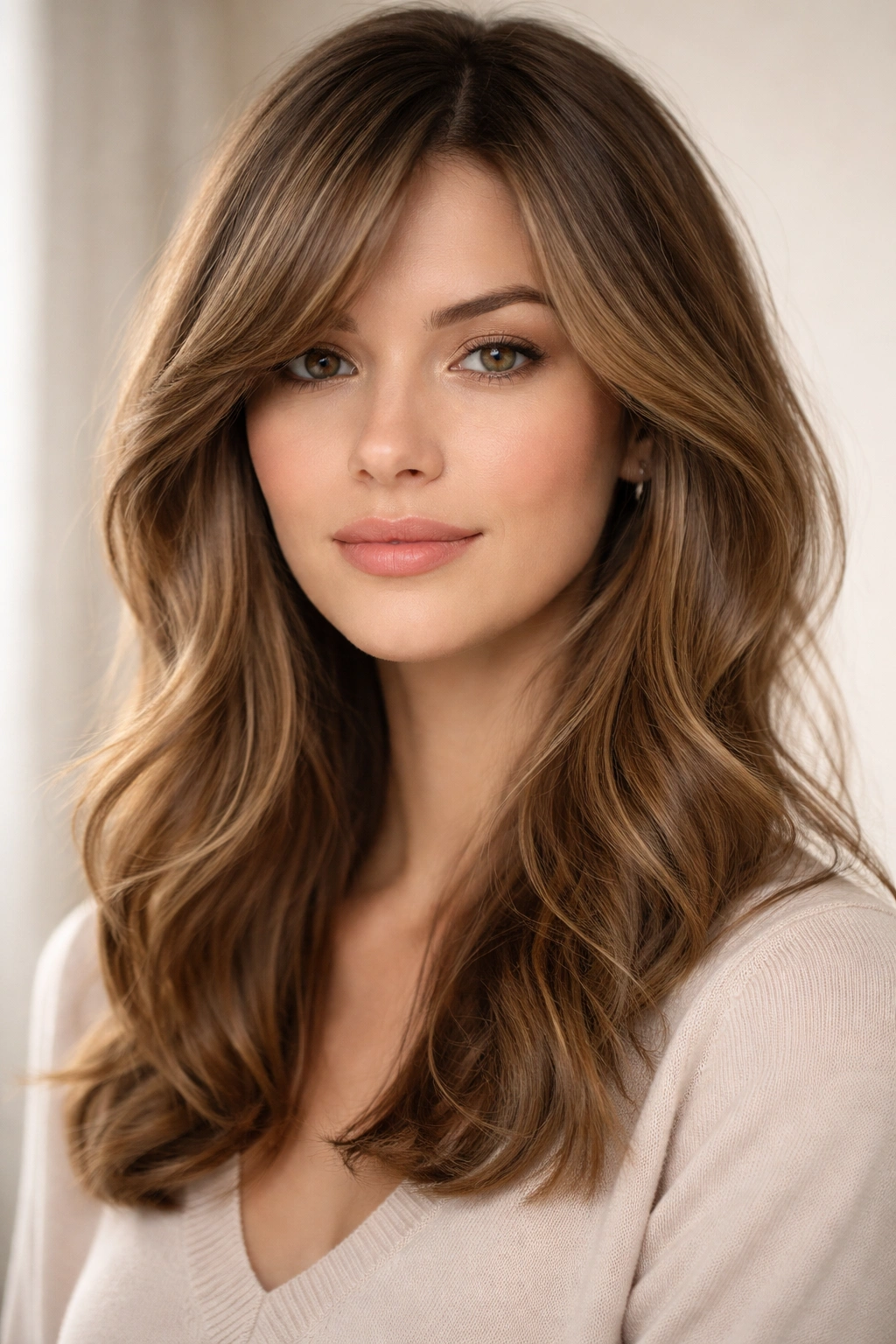
Curtain bangs represent the softest, most universally flattering take on face-framing bangs with a side part. These bangs part naturally down the middle—or fall to either side depending on how you blow-dry them—creating an opening that frames the face while allowing them to blend seamlessly into the longer layers beneath. The effect is sophisticated, undeniably photogenic, and works beautifully with shoulder-length hair, longer lengths, and even shorter bobs.
Why This Style Works for Nearly Everyone
Curtain bangs with a side part are incredibly forgiving because they don’t require perfect precision or constant maintenance. The point where they part in the middle is flexible—it can shift depending on your natural hair flow and how you style that morning. This style flatters round faces by adding length and creating vertical lines, balances angular faces by softening sharp features, and adds dimension to square or oblong faces. The side part intensifies this effect by creating a diagonal line that naturally draws the eye.
Styling and Maintenance Details
- Requires regular trims every 4-6 weeks to maintain the layers and prevent them from growing too heavy
- Works beautifully with all hair textures, though straight hair shows the split more dramatically
- Pairs perfectly with beachy waves, sleek straight styles, or tousled textures
- The bangs typically graze the cheekbone or slightly below for optimal face-framing effect
- Side part should be positioned roughly 40-60% from the center to create that intentional asymmetrical look
Pro tip: Blow-dry curtain bangs with a round brush pointed downward and slightly outward from the face to set the shape and create that coveted curtain effect, even on naturally straight hair.
2. Micro Bangs with Side Part
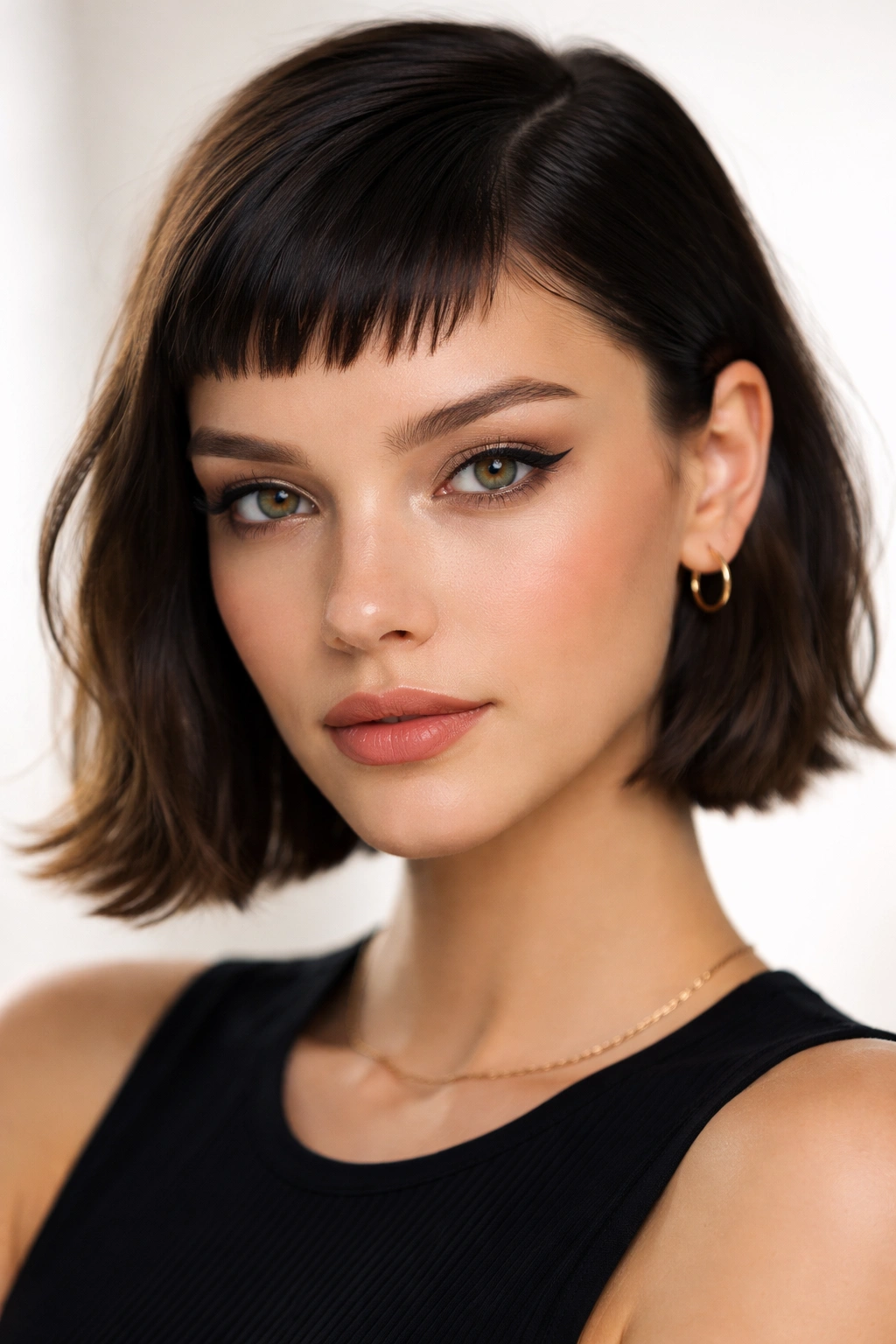
Micro bangs—cut extremely short and sitting just above the eyebrows or even higher—create a bold, fashion-forward statement when paired with a side part. This style demands confidence and works best on those willing to commit to frequent trims (every 3-4 weeks). The contrast between the short, chic bangs and the side part creates an almost architectural quality that photographs beautifully and feels decidedly trendy.
The Bold Appeal and Face Shape Considerations
Micro bangs with a side part work best on faces with good bone structure, as the short length puts all attention on your eyes and cheekbones. This style is particularly stunning on oval and heart-shaped faces where the bangs can highlight cheekbones without overwhelming delicate features. The side part prevents the micro bangs from feeling too severe or schoolgirl-like—it adds sophistication and movement that balances the boldness of the short length. This combination feels fashion-forward rather than costume-y.
Styling and Commitment Level
- Requires professional trims every 3-4 weeks without fail to maintain the precise short length
- Works best with straight or slightly wavy hair; curly hair requires more daily styling effort
- Pairs well with sleek, polished styles or grunge-inspired tousled looks
- The side part should be sharp and intentional to complement the structured nature of micro bangs
- Best suited for those who enjoy styling their hair regularly and don’t mind the maintenance commitment
Worth knowing: Micro bangs photograph exceptionally well and create a youthful, editorial vibe, but they’re not ideal if you’re planning to grow out your bangs in the near future—the regrowth phase can feel awkward for several months.
3. Wispy Choppy Bangs with Side Part
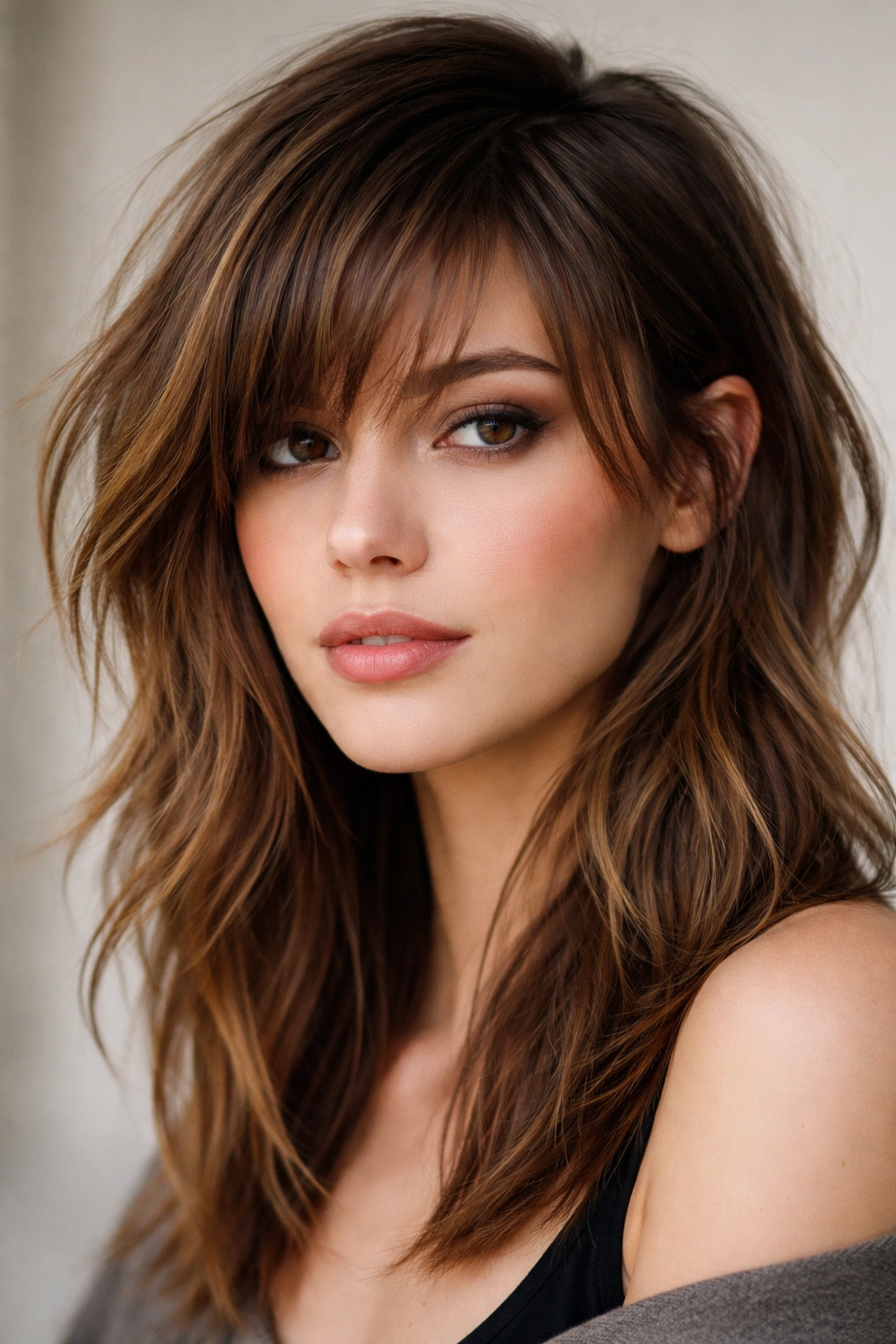
Wispy choppy bangs feature layers of varying lengths that create movement, texture, and a lived-in, undone quality. Rather than sitting uniformly, these bangs have pieces that fall at slightly different lengths—some brushing your lashes, others sitting higher—creating a textured, piecey effect. Combined with a side part, this style feels modern, romantic, and far less severe than uniform bangs.
Creating Movement and Dimension
The choppy layering in these bangs creates visual movement that soften facial features while the side part adds asymmetry and modernity. This style is exceptionally flattering for those with stronger or wider faces, as the choppy texture and side-part asymmetry create breaking lines that prevent a heavy appearance. The uneven lengths also catch light differently, creating dimension that photographs beautifully and adds visual interest at every angle. This style reads as intentional and editorial rather than accidental or poorly cut.
Achieving and Maintaining the Textured Look
- Requires a skilled stylist who understands how to create choppy layers with intention rather than seeming haphazard
- Works best on straight to wavy hair; curly hair can make the layers disappear into texture
- Needs trims every 6-8 weeks to maintain definition as hair grows
- Side part helps control which direction the choppy layers fall
- Styling with texturizing spray or matte pomade enhances the intentional, piecey effect
- Can be worn sleek (for contrast against the choppy texture) or tousled for maximum impact
Pro tip: Apply dry texturizing spray at the roots and through the bang area, tousle with your fingers, and let it air-dry slightly for that effortless choppy effect without looking like you’re trying too hard.
4. Blunt Long Bangs with Side Part
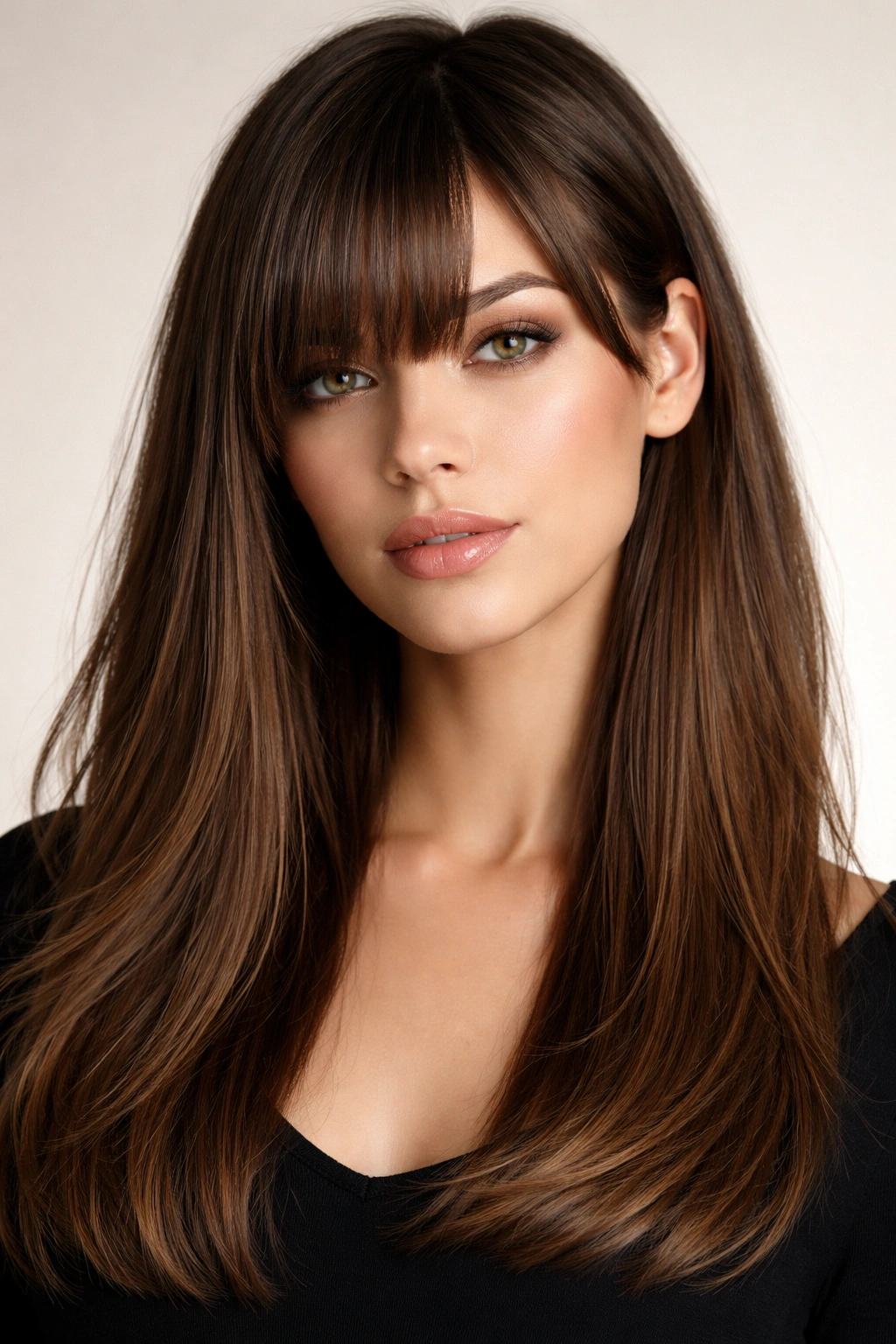
Blunt long bangs create a sophisticated, precise look when paired with a side part. Cut straight across at roughly cheekbone or chin length, these bangs feel purposeful and polished. They sit longer than traditional bangs, which means they blend more naturally into the rest of your hair and feel less like a separate element. The side part adds movement and prevents them from feeling too heavy or severe.
The Power of Precision and Polished Styling
Blunt long bangs demand precision and regular maintenance, but the payoff is a style that feels intentional, high-fashion, and undeniably chic. The clean line of blunt bangs combined with a side part creates a modern, editorial aesthetic that works on virtually every face shape when cut at the right length. The bluntness creates a bold frame around the face, while the side part softens the overall look and adds the asymmetry that keeps it from feeling old-fashioned or overly structured. This combination suggests someone who pays attention to detail and understands contemporary style.
Cutting and Maintenance Specifics
- Should be cut perfectly straight across with sharp, clean lines for optimal effect
- Works best on straight or naturally smooth hair; wavy or curly hair requires daily straightening to show off the blunt line
- Typically cut at cheekbone length or slightly longer, landing around chin height
- Requires trims every 5-6 weeks to maintain the clean line as hair grows
- The side part should create a noticeable diagonal that contrasts with the horizontal blunt line
- Best paired with sleek, polished styling rather than texturized looks (the blunt line deserves to be seen)
Insider note: If you have naturally wavy hair and love the idea of blunt long bangs, consider a relaxing treatment or investing in a quality straightening iron—the blunt line is what makes this style, and texture will diminish that impact.
5. Textured Feathered Bangs with Side Part
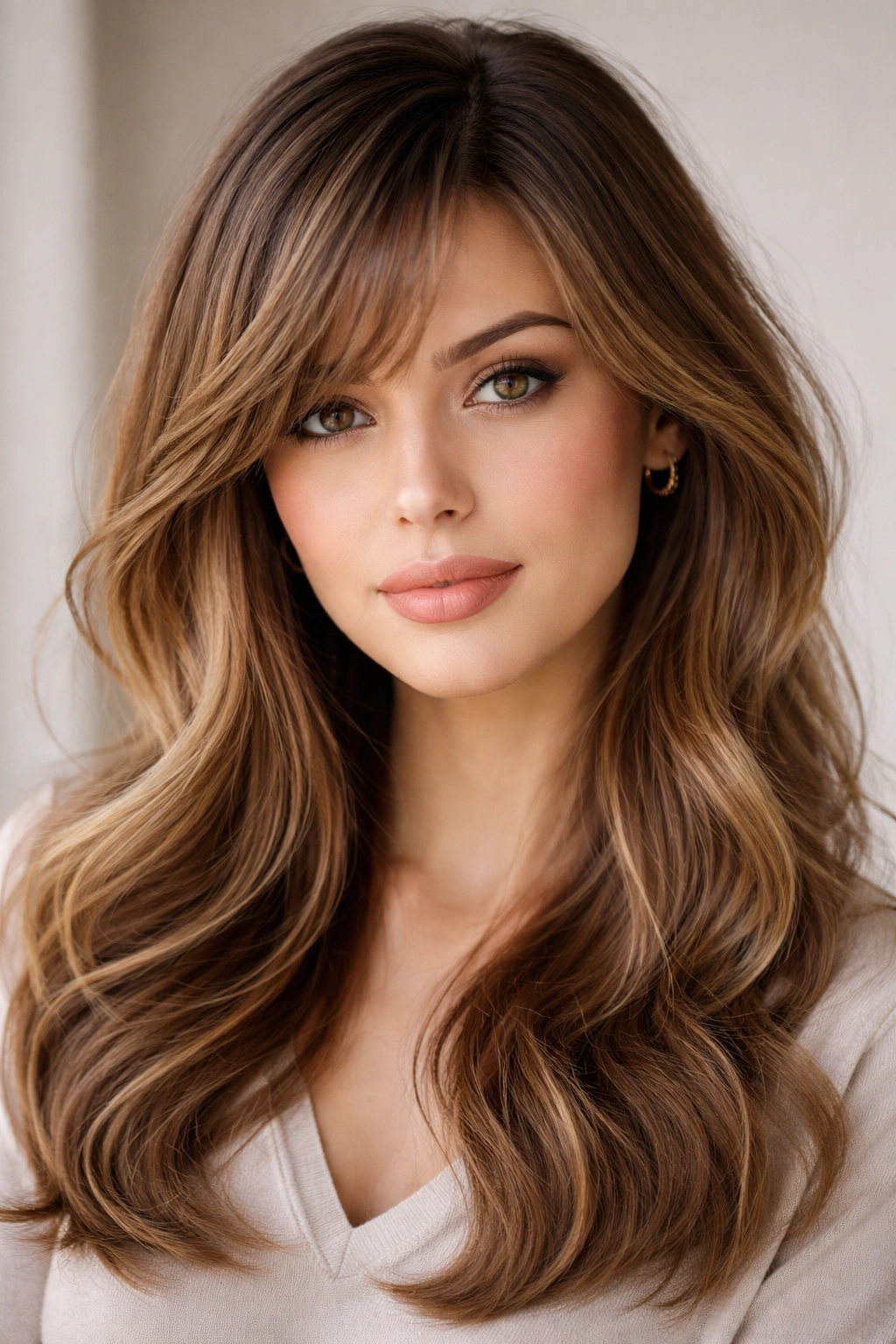
Feathered bangs are created by point-cutting and layering throughout the bang section, resulting in softer edges and a feathery, wispy appearance. This technique creates a style that feels gentle and romantic while still being modern. When paired with a side part, feathered bangs gain movement and sophistication—the feathering technique combined with the asymmetry of the side part creates a style that’s flattering on nearly everyone.
Why Feathering Creates Universal Flattery
Feathered bangs work because they soften and diffuse rather than define with hard lines. The point-cut technique creates gradual texture rather than blunt precision, which means these bangs frame the face beautifully without drawing harsh attention to any one feature. The feathering also makes the bangs blend seamlessly into longer layers, so there’s no visual separation between the bangs and the rest of your hair. A side part adds intentional movement and asymmetry that prevents feathered bangs from feeling too soft or formless.
Creating and Styling Feathered Bangs
- Requires a stylist comfortable with point-cutting and feathering techniques; not all stylists excel at this
- Works beautifully on all hair textures—curly, straight, and wavy hair all look great with feathering
- The side part should be crisp enough to direct the feathering outward and away from the face
- Feathered bangs can be dried smooth or encouraged to wave, offering styling flexibility
- Trims are needed every 6-8 weeks, but feathering is forgiving if timing gets pushed slightly
- Pairs well with nearly any hairstyle—bobs, shoulder-length cuts, longer layers, or even pixie-cut sides
Real talk: Feathered bangs are arguably the most versatile bang style when combined with a side part, making them an excellent choice if you’re not sure how committed you want to be to a specific bang aesthetic.
6. Asymmetrical Angled Bangs with Side Part
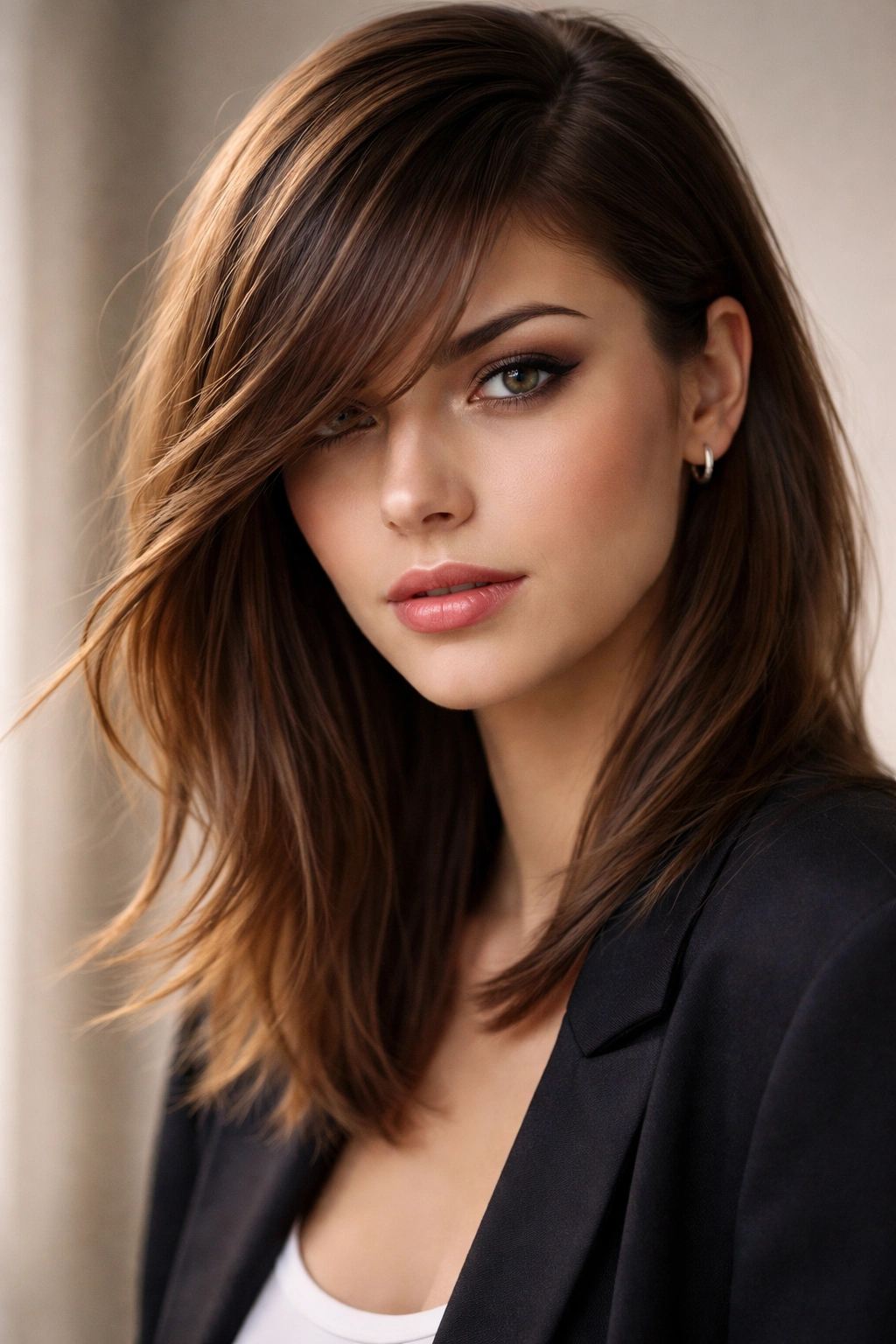
Asymmetrical angled bangs take the side part concept to its logical extreme—the bangs themselves are cut at an angle, longer on one side and progressively shorter as you move toward the opposite side. This style is bold, modern, and undeniably fashion-forward. Combined with an intentional side part, asymmetrical bangs create a statement look that works particularly well for those with strong personal style and a willingness to stand out.
The Statement-Making Power of Asymmetry
Asymmetrical angled bangs paired with a side part create the most modern, editorial look on this entire list. The angle of the bangs mirrors or contrasts with the direction of the side part, creating visual movement and sophistication. This style flatters angular faces beautifully—the diagonal lines echo and complement strong cheekbones and jawlines. It’s also surprisingly flattering on round faces when the longer side of the bangs falls where the face is widest, creating an elongating effect. The asymmetry prevents any impression of heaviness or severity.
Cutting and Styling an Asymmetrical Look
- Requires a stylist who understands geometric cutting and can translate your vision accurately
- Can be cut with the longer side falling toward the center or swept dramatically to the side
- Works best on straight to slightly wavy hair; curly hair makes the angled line harder to see
- Styling options range from sleek and polished to textured and tousled
- The side part should intentionally either mirror or contrast with the bang angle—decide which look you prefer
- Trims every 5-6 weeks maintain the precise angle
- Pairs beautifully with modern, edgy cuts like bobs, shags, or layered styles
Pro tip: If you’re nervous about committing to a fully asymmetrical bang, ask your stylist about an asymmetrical angle that’s subtle rather than dramatic—you get the modern vibe without the extreme commitment.
7. Layered Face-Framing Bangs with Side Part
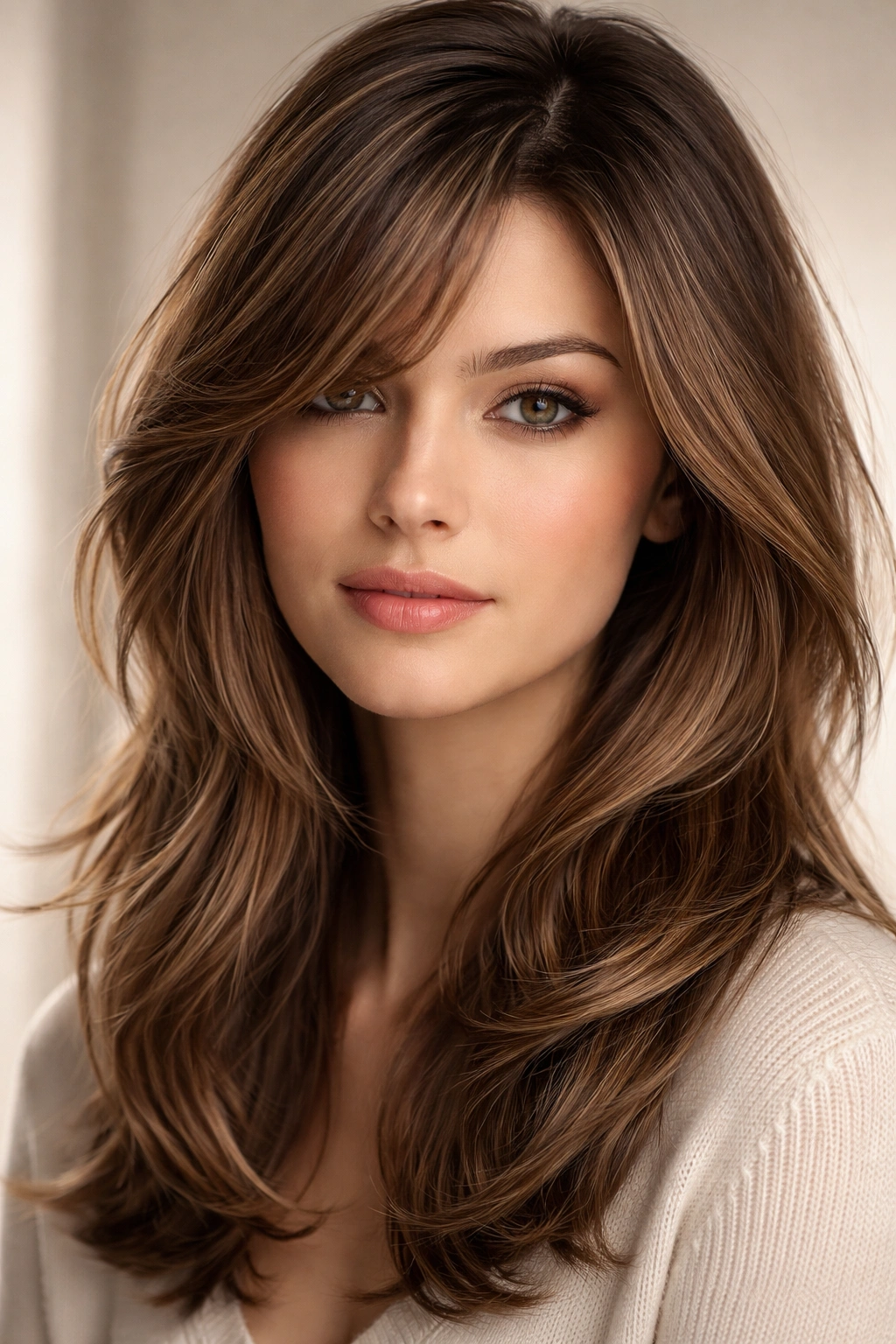
Layered face-framing bangs use multiple lengths throughout the bang section to create pieces that frame the face at different levels. Rather than one uniform bang shape, you get several layers of shorter and longer pieces that work together to create depth and dimension. A side part directs these layers outward and away from the face, maximizing the flattering frame-creating effect.
The Flattering Power of Layered Depth
Layered face-framing bangs are exceptionally flattering because they create a sculptural effect without feeling heavy. The multiple lengths ensure that every face shape finds something flattering—the shorter layers can highlight cheekbones while longer layers frame and lengthen. The side part ensures these layers fall away from the face rather than hanging flat, creating movement and preventing a mask-like effect. This style works on all hair textures because the layering is what creates the effect, not the smoothness of the hair.
Layering Technique and Styling Approach
- Requires a stylist skilled in creating intentional, flattering layers rather than choppy, haphazard layers
- Works beautifully on straight, wavy, and curly hair—each texture will show the layers differently
- The layers should graduate from shorter pieces near the face to longer pieces as you move back
- Typically, the shortest layers hit around eyebrow or cheekbone level while longer layers fall to chin or slightly below
- Pairs well with tousled, textured styling that emphasizes the layering
- Trims needed every 6-8 weeks to maintain definition and prevent layers from blending together
- The side part should be positioned to direct the layers outward and away from the center of the face
Worth knowing: Layered face-framing bangs require less daily styling precision than blunt or micro bangs, making them ideal if you want impact without the maintenance commitment.
8. Soft Rounded Bangs with Side Part
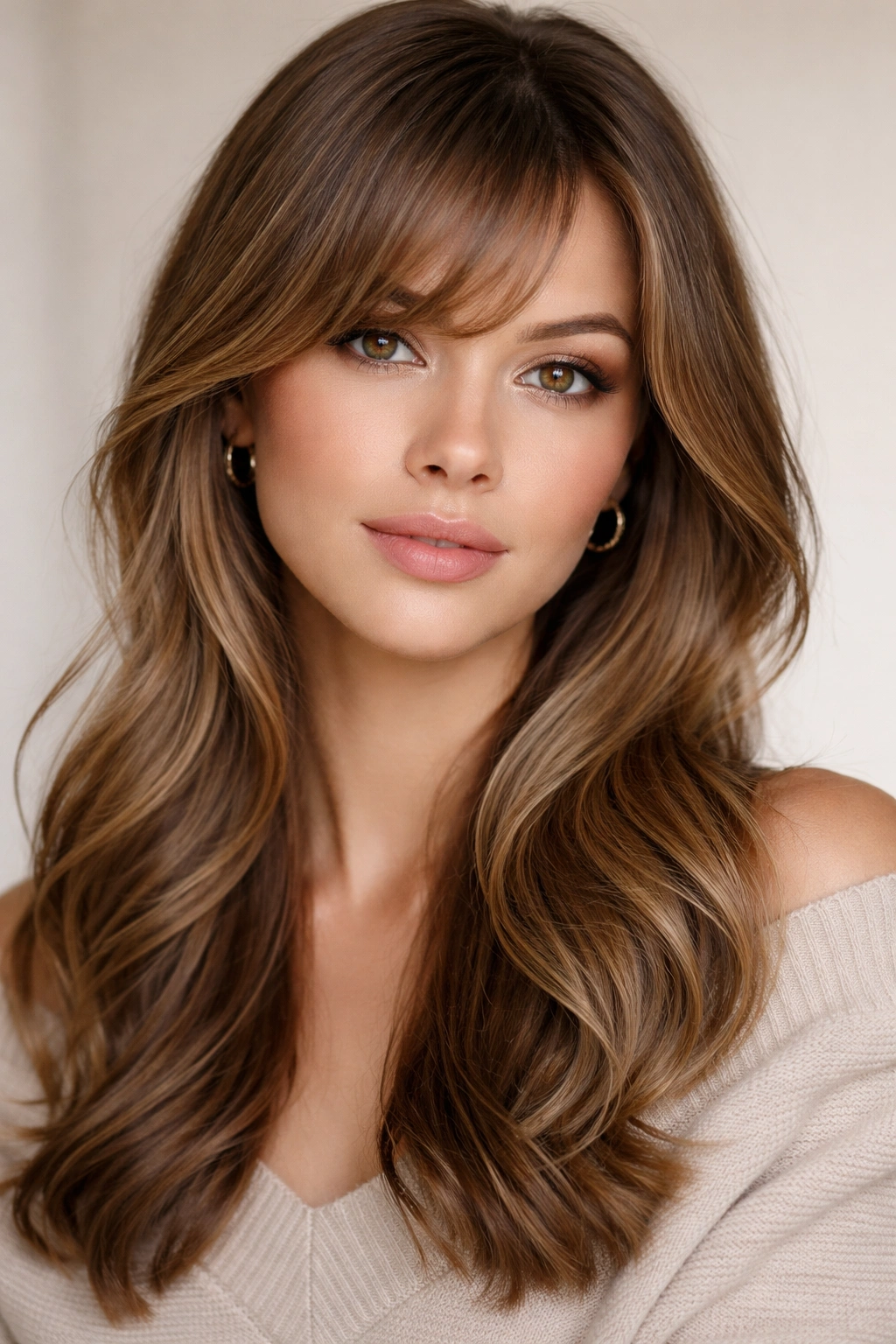
Soft rounded bangs are cut to create a gentle curve rather than a straight line—they’re longer at the sides and progressively shorter as you move toward the center, creating a rounded silhouette. This style is inherently flattering and romantic, offering a softer alternative to blunt bangs while still providing structure. Paired with a side part, rounded bangs create a look that’s both polished and approachable.
Why Rounded Bangs Flatter Nearly Every Face
The geometry of rounded bangs is inherently flattering—the curved line creates softness while still framing the face. Because they’re longer at the sides (where the side part naturally directs them), rounded bangs never look heavy or severe. This style works beautifully on square or angular faces where the curved line softens sharp features. It’s equally flattering on round faces where the curved bangs mirror and harmonize with natural face curves. The side part adds asymmetry that prevents the overall effect from feeling too symmetrical or old-fashioned.
Cutting and Maintaining Rounded Bangs
- Requires a stylist who can cut a smooth, intentional curve rather than an accidental roundness
- Works best on straight or slightly wavy hair where the curve is visible
- The curve should be gentle rather than dramatically rounded to avoid a ’90s or dated appearance
- Typically cut with the longest pieces at the temples and gradually shorter toward the center
- Trims every 5-6 weeks maintain the precise curve as hair grows
- The side part should fall naturally where the bang length is longest
- Pairs beautifully with bobs, layered cuts, or longer styles
Pro tip: When your stylist cuts rounded bangs, ask them to blend where the bangs meet the rest of your hair—this creates a seamless transition that looks intentional rather than separated.
9. Shaggy Layered Bangs with Side Part
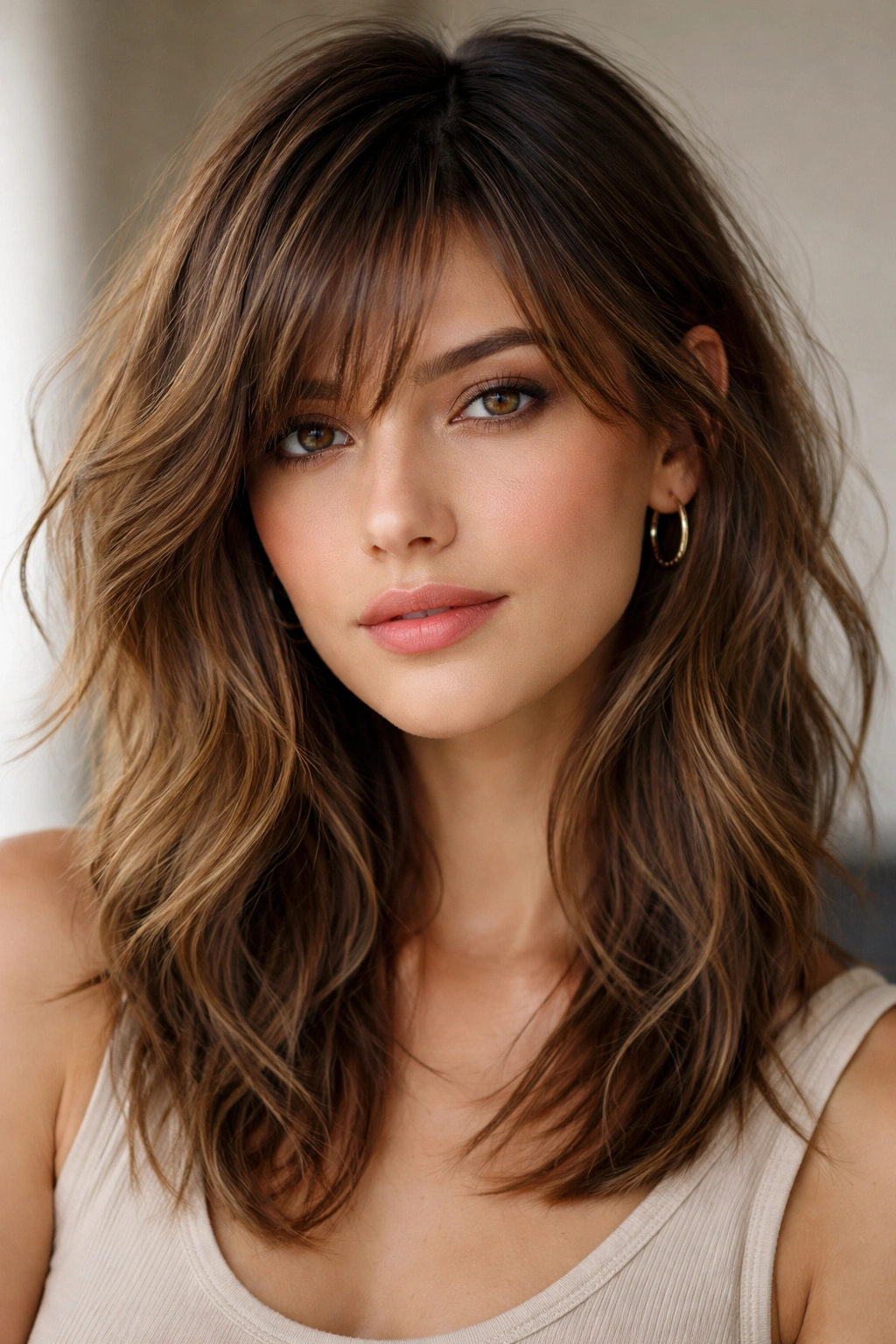
Shaggy layered bangs embrace texture, movement, and that deliberately undone aesthetic that feels current and cool. These bangs feature choppy, textured layers throughout with pieces of varying lengths that create a tousled, piecey effect. Rather than sitting neatly, shaggy layered bangs move and shift with your hair movement. The side part ensures these layers flow away from the face in an intentional direction.
Embracing Texture and Movement
Shaggy layered bangs with a side part create an effortlessly cool vibe that feels modern and fashion-forward. This style is exceptionally flattering on those with thicker or wavy hair where the layers naturally spring into texture. The multiple lengths and choppy layers prevent the shaggy effect from looking overgrown or messy—when cut with intention by a skilled stylist, they look deliberately textured and cool. The side part adds structure that prevents the overall look from feeling too wild or uncontrolled.
Achieving the Shaggy Textured Effect
- Works best on straight to wavy hair; curly hair can make the layers disappear into texture
- Requires a stylist experienced in shag cuts and choppy layering techniques
- The layers should be cut at various lengths to create intentional texture rather than seeming accidental
- Styling with texturizing spray and tousling creates the intended effect
- Can be dried smooth for a more polished look or encouraged to air-dry for maximum texture
- Trims every 6-8 weeks keep the layers defined and prevent the style from looking grown-out
- The side part should have enough direction to keep the shaggy layers from falling flat
Insider note: Shaggy layered bangs with a side part are having a significant moment right now—they tap into the broader shag trend while feeling fresh and updated with the side-part element.
10. Swept Side Bangs with Side Part
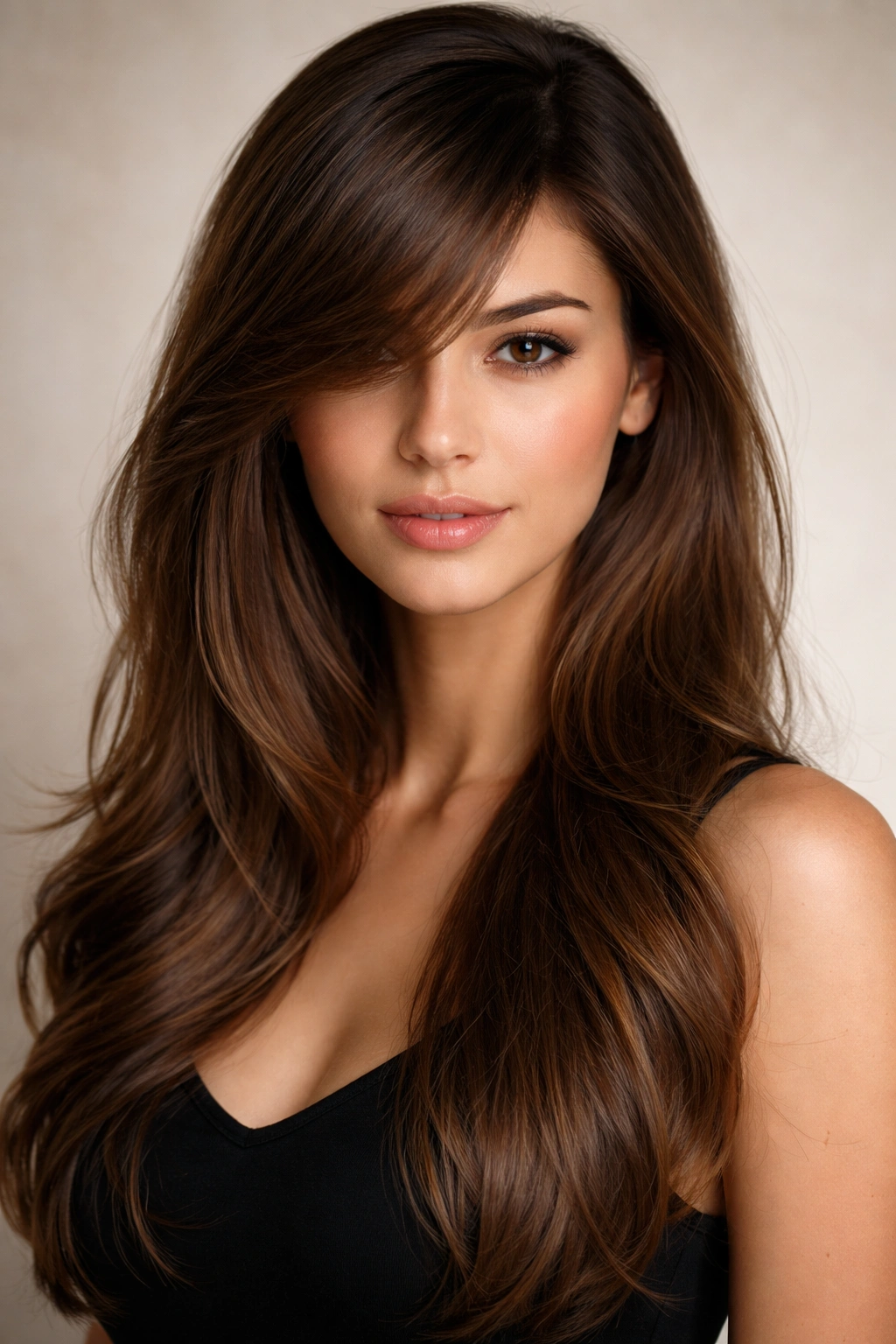
Swept side bangs are longer bangs that sweep dramatically to one side, creating a glamorous, face-framing effect. Rather than sitting across your forehead, these bangs flow toward the side part, creating an elegant, elongated line. This style is wonderfully versatile—it can be styled sleek and red-carpet-ready or tousled and undone depending on your mood and the occasion.
The Versatility and Glamour of Swept Bangs
Swept side bangs work with an intentional side part to create a look that’s simultaneously modern and timeless. The longer length means these bangs blend beautifully into your hair without creating a separate “bang” look. The side-swept direction is inherently flattering because it creates vertical lines that elongate the face. This style works beautifully on all face shapes—angular faces benefit from the softening sweep, round faces benefit from the elongating effect, and everyone benefits from the sculpting frame-creating power of longer bangs.
Styling Options and Maintenance
- Longer bangs (typically cheekbone length or below) mean more styling versatility
- Works on all hair textures because the length prevents weight from being an issue
- Can be styled multiple ways: swept dramatically to one side, loosely waved, sleek and polished, or tousled
- The side part should be positioned to flow naturally into the direction the bangs sweep
- Pairs beautifully with longer hair, shoulder-length cuts, or layered styles
- Trims needed every 6-8 weeks to maintain shape as hair grows
- This style is exceptionally flattering for anyone growing out bangs—you get all the face-framing benefits without the commitment of shorter bangs
Real talk: Swept side bangs are arguably the easiest high-impact bang style to maintain and style, making them perfect for anyone wanting the face-framing benefit without daily styling precision.
Final Thoughts
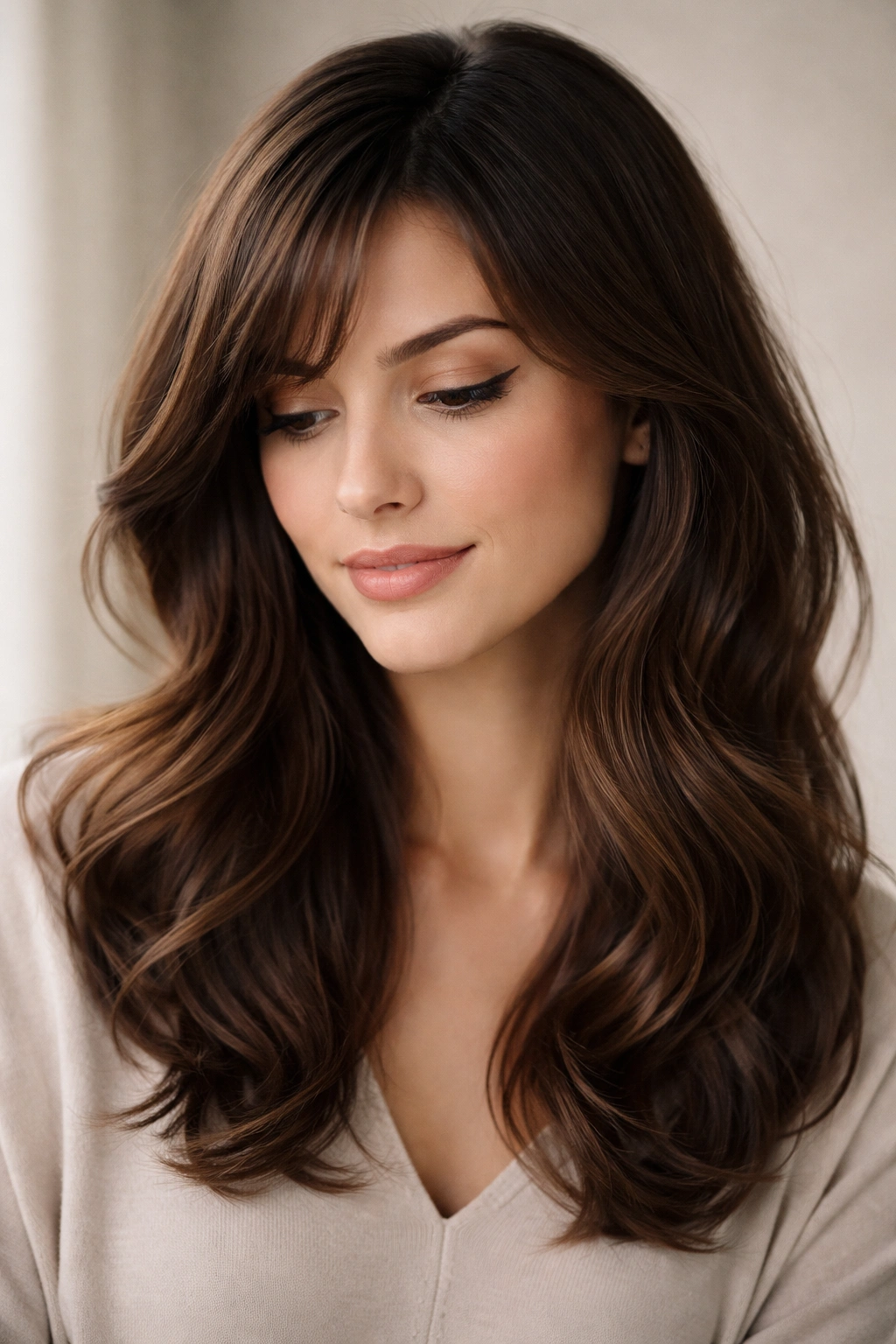
The beauty of combining face-framing bangs with a side part is that you’re not locked into one specific aesthetic or commitment level. Whether you’re drawn to the bold statement of micro bangs, the romantic softness of feathered bangs, the editorial perfection of blunt long bangs, or the effortless versatility of swept side bangs, there’s a version of this combination that matches your hair texture, face shape, lifestyle, and styling commitment.
The side part is what elevates these bang styles beyond simple face-framing—it adds movement, asymmetry, and modernity that prevents any bang style from feeling heavy, dated, or severe. The interaction between the bang style and the side part direction is where the real magic happens. A side part doesn’t just complement face-framing bangs; it fundamentally changes how the style photographs, how it feels to wear, and how it interacts with your other facial features.
If you’re considering making this switch, the best first step is having an honest conversation with your stylist about your hair texture, how much styling time you want to invest daily, and how often you’re willing to get trims. Some of these styles (micro bangs, blunt long bangs) require precision and frequent maintenance. Others (feathered bangs, layered face-framing bangs, swept side bangs) offer more flexibility and forgiveness. There’s no right choice—only the right choice for your specific situation, and that clarity will help you and your stylist create something you’ll love wearing.
