



If you’re tired of spending time styling your hair every morning, a pixie cut might be exactly what you’re looking for. Short, sharp, and surprisingly stylish, pixie cuts have become the go-to choice for people who want to look polished without the hours of maintenance. The best part? Not all pixie cuts are the same. From sleek and sophisticated to textured and tousled, there’s a pixie style that works with your face shape, hair texture, and personal aesthetic.
The beauty of a truly low-maintenance pixie is that it works with your hair’s natural tendencies rather than against them. You’re not fighting frizz for hours or blow-drying into submission every single day. Instead, you’re working with a cut that’s designed to look good with minimal effort. A well-chosen pixie can literally take you from bed to out the door in minutes—sometimes with just a quick finger comb and a dab of styling cream.
What makes a pixie genuinely low-maintenance comes down to cut precision and technique. The right layers, the right taper, and the right balance of length in different areas mean the difference between a cut that requires daily styling and one that looks intentionally cool with barely any effort. The key is finding the specific pixie variation that matches how your hair naturally falls, your daily routine, and how much (or how little) you want to fuss with it.
Whether you have fine, thick, curly, straight, or wavy hair, there’s a pixie cut that’ll work for you. Let’s explore twelve different pixie styles that deliver major style points without demanding your life in return.
1. Classic Pixie Cut
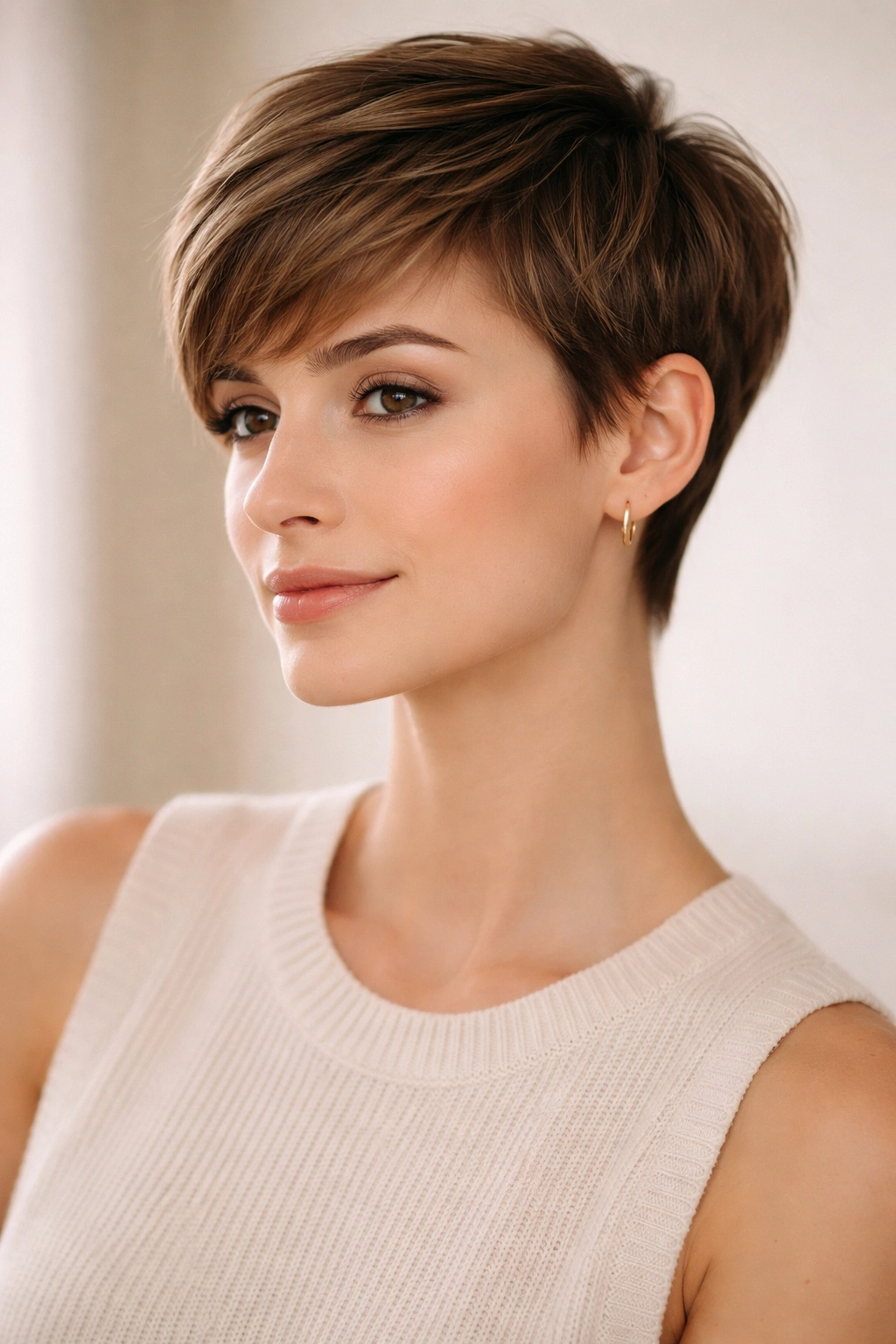
The classic pixie is the foundation that all other pixie variations build from. It’s short on the sides and back, gradually longer toward the front, with the longest point typically reaching your cheekbones. This isn’t a buzz cut—there’s actual styling potential here. The sides are tapered clean and close, while the top has enough length to create subtle texture and movement without requiring constant intervention.
Why It’s the Low-Maintenance Gold Standard
The classic pixie works because it’s forgiving in almost every way. Your natural hair growth pattern actually helps the cut look better over time—as your sides grow out, they blend naturally into the tapered fade rather than looking like you’re due for a trim. You can style this with your fingers while your coffee brews, or just let it fall naturally and look effortlessly put-together. The short length means you’re not fighting gravity, frizz, or humidity the way you would with longer hair.
What to Know Before Cutting
- Best for all hair types, though it shows texture beautifully
- Works well on round, oval, and square face shapes
- Requires a trim every 4-6 weeks to maintain the taper (though the cut still looks decent in between)
- Takes about 10 minutes to style on days you actually want to style it
- Wash and go is completely realistic with the right styling cream
Pro tip: Ask your stylist for a slightly longer top (about 2 inches) rather than super short if you’re nervous about the commitment. You’ll still get all the low-maintenance benefits, but with a tiny bit more versatility.
2. Textured Pixie with Choppy Layers
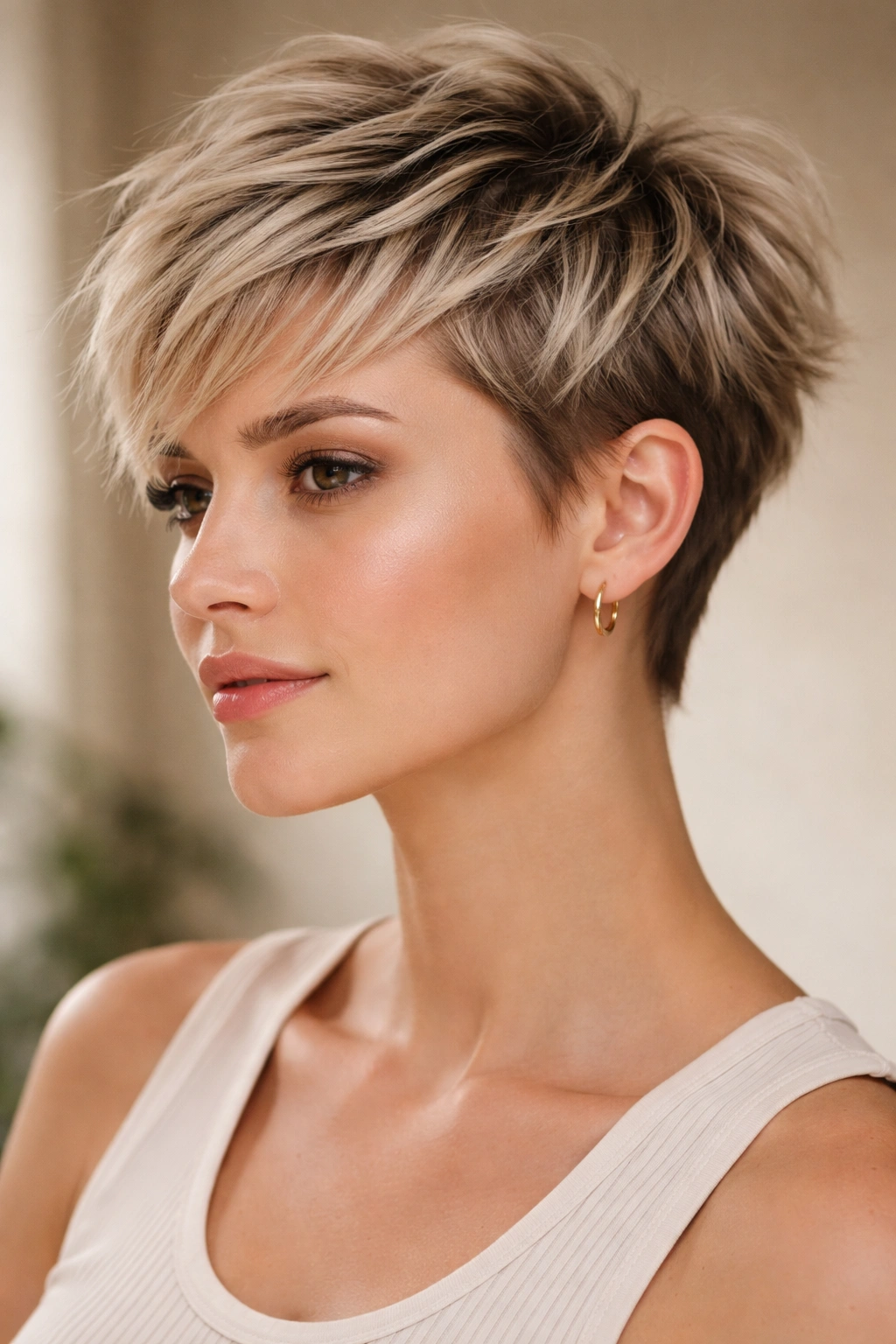
This version adds serious movement and dimension to the classic pixie foundation. Instead of smooth, blended layers, the stylist cuts choppy, piece-y layers throughout the top section. These layers catch light differently and create texture that makes the cut look intentionally undone—which, conveniently, means you don’t have to try hard to make it look good. The sides remain tapered, but the top becomes a short, layered piece.
Why Choppy Layers Actually Reduce Styling Time
Choppy layers are brilliant for low-maintenance styling because they break up the hair into smaller sections that naturally move independently. You’re not trying to create movement or texture from a blunt edge—the cut itself already has that built in. Even if you just run your fingers through it while it’s still slightly damp, the layers fall into a naturally styled-looking shape. The texture hides any bedhead rather than highlighting it.
What to Know Before Cutting
- Creates visible texture that photographs beautifully
- Works especially well on straight or wavy hair that has some natural body
- Fine, thin hair can sometimes look wispy with heavy choppy layers—work with your stylist on the degree of chop
- The textured effect actually improves and becomes more pronounced as your hair grows slightly between trims
- Styling options range from completely hands-off to adding styling cream for a more defined, piecey look
Worth knowing: This cut is particularly forgiving on days when you don’t wash your hair. The natural texture and movement of the layers means you can go longer between wash days without the cut looking messy or shapeless.
3. Undercut Pixie
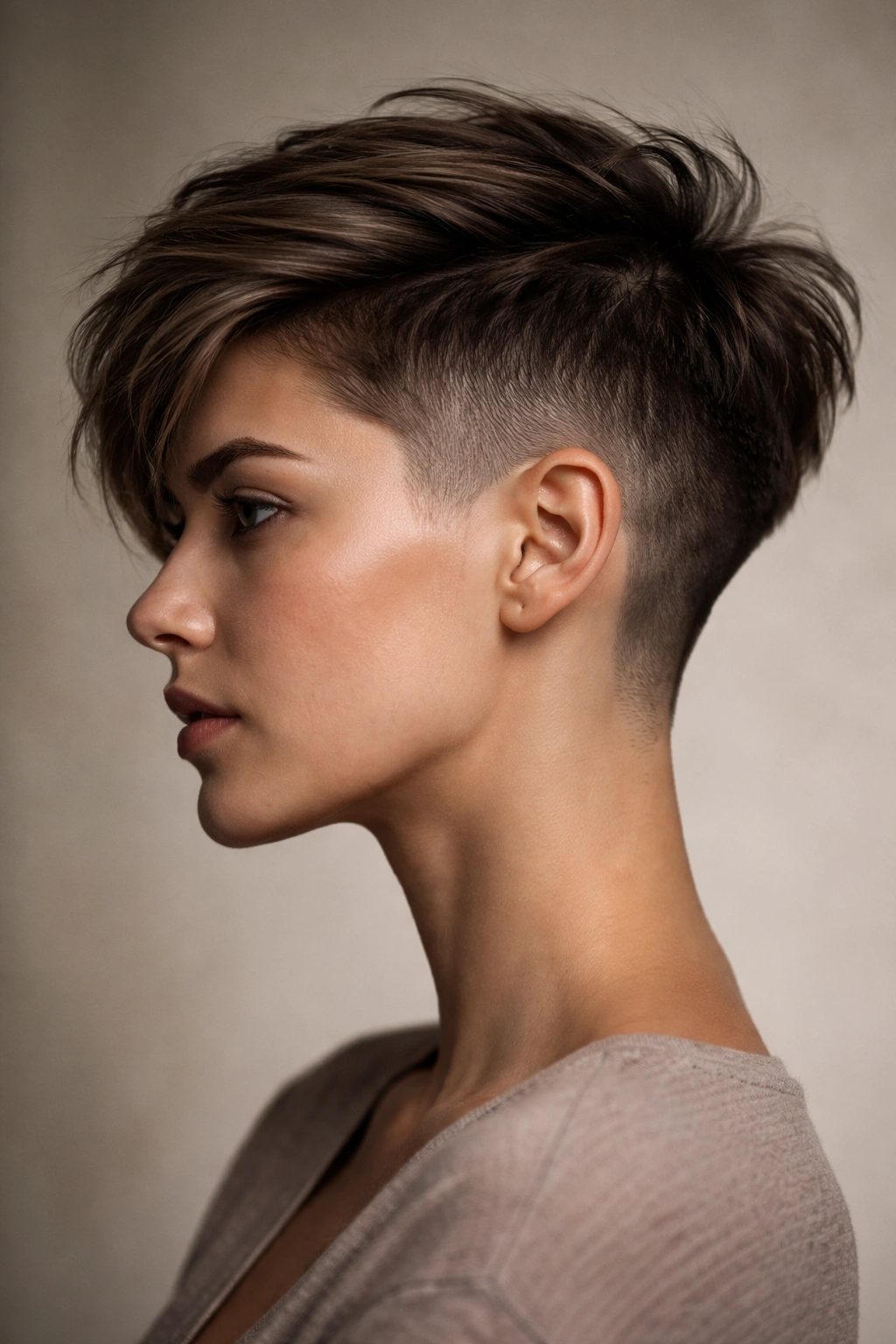
An undercut pixie takes the clean sides of a classic pixie and takes them even further—the sides and back are cut very short and tight, almost to the skin, while the top is left longer and fuller. This creates a dramatic contrast between the cropped undercut and the hair on top. It’s a bolder look that feels modern and intentional. The longer hair on top can be styled smooth and sleek, or textured and tousled, depending on your mood.
What Makes an Undercut Stand Out
The undercut pixie is low-maintenance in a different way than other pixie styles. Yes, you’ll need a trim every 4-6 weeks to keep the undercut clean and sharp, but in between trims, the style actively benefits from some growth. As your undercut grows out slightly, it creates a softer transition that’s actually more flattering than a freshly cut version for many people. The top section is easy to style because there’s no weight from longer sides pulling it down.
What to Know Before Cutting
- Creates a striking, fashion-forward silhouette
- The contrast is most dramatic on darker hair or hair with visible texture
- The longer top requires a bit more intentional styling than some other pixie cuts (though we’re still talking 5 minutes max)
- Works beautifully with short, cropped bangs or longer textured layers on top
- The undercut can emphasize your jawline and cheekbones—this is a feature, not a bug
Real talk: If you’re worried about looking too edgy or severe, ask your stylist to blend the undercut with a slight fade rather than a stark line. This softens the look while keeping the low-maintenance benefits.
4. Long Pixie or Pixie-Bob Hybrid
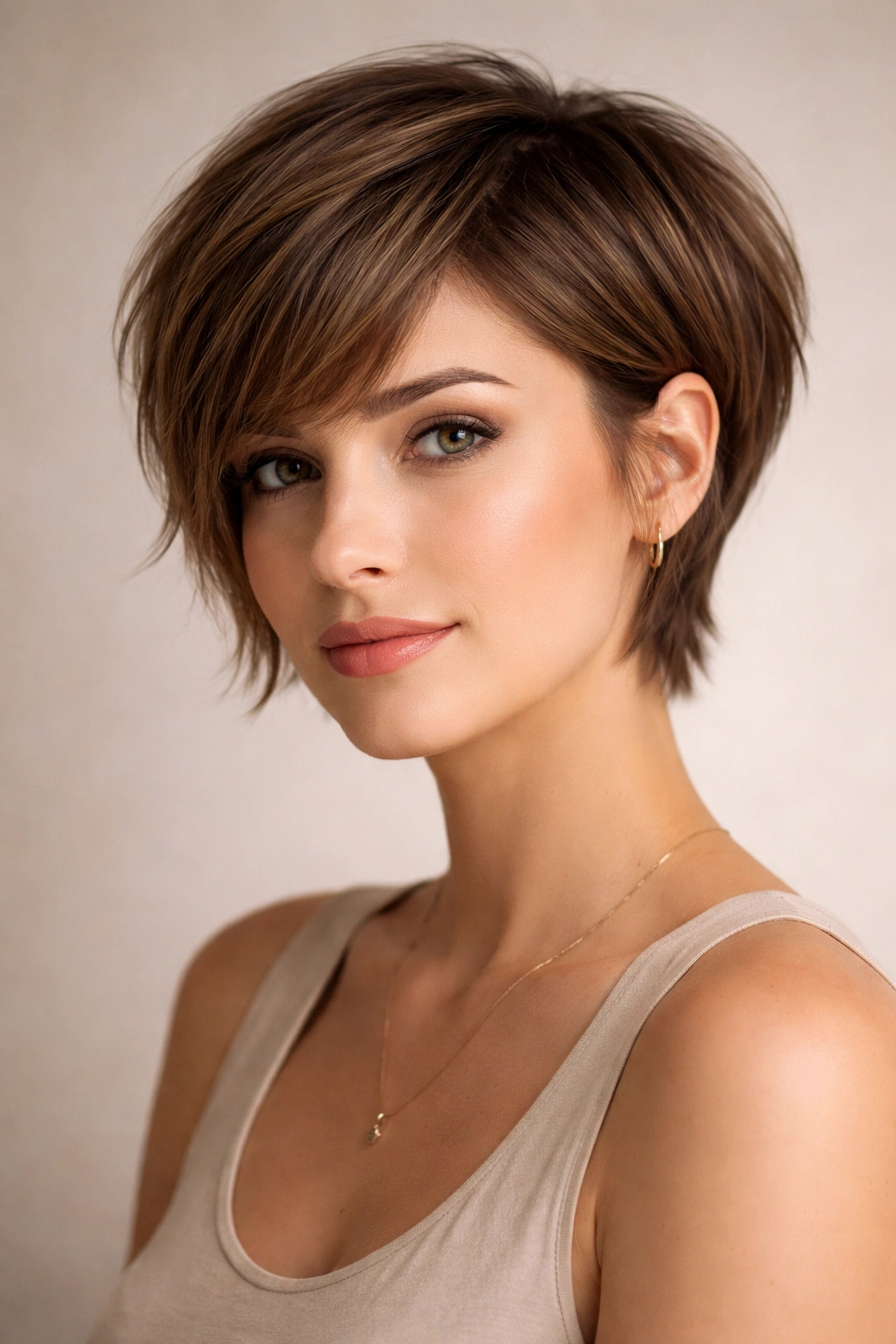
This is the pixie for people who aren’t quite ready to fully commit to super-short hair. The sides are still tapered and short, but the front is left longer—sometimes reaching to your jaw or even a few inches past. The back is slightly longer than the sides, creating a soft, layered shape rather than the blunt, uniform shortness of a classic pixie. It’s got the low-maintenance perks of a pixie with a smidge more length and styling options.
Why the Extra Length Doesn’t Add Maintenance
The hybrid pixie is sneakily low-maintenance because the longer front pieces and slightly longer back actually anchor the style. Unlike longer hair that requires blow-drying and product to look polished, the pixie foundation keeps everything grounded and naturally styled-looking. You can tuck the longer front pieces behind your ear for a different vibe, or let them frame your face. The graduated length from front to back means you’re not fighting hair that wants to flip in or out—the cut does that naturally.
What to Know Before Cutting
- Offers more versatility in how you can style it day-to-day
- The longer front is forgiving if you’re not 100% sure about going super short
- Works on all hair types and face shapes
- The graduated back creates a flattering shape that suits most people
- You can experiment with styling products more here without looking overdone
Pro tip: This is an excellent transition cut if you’re growing out a shorter pixie. You get to enjoy a different silhouette while keeping the wash-and-go ease of short hair.
5. Tapered Pixie
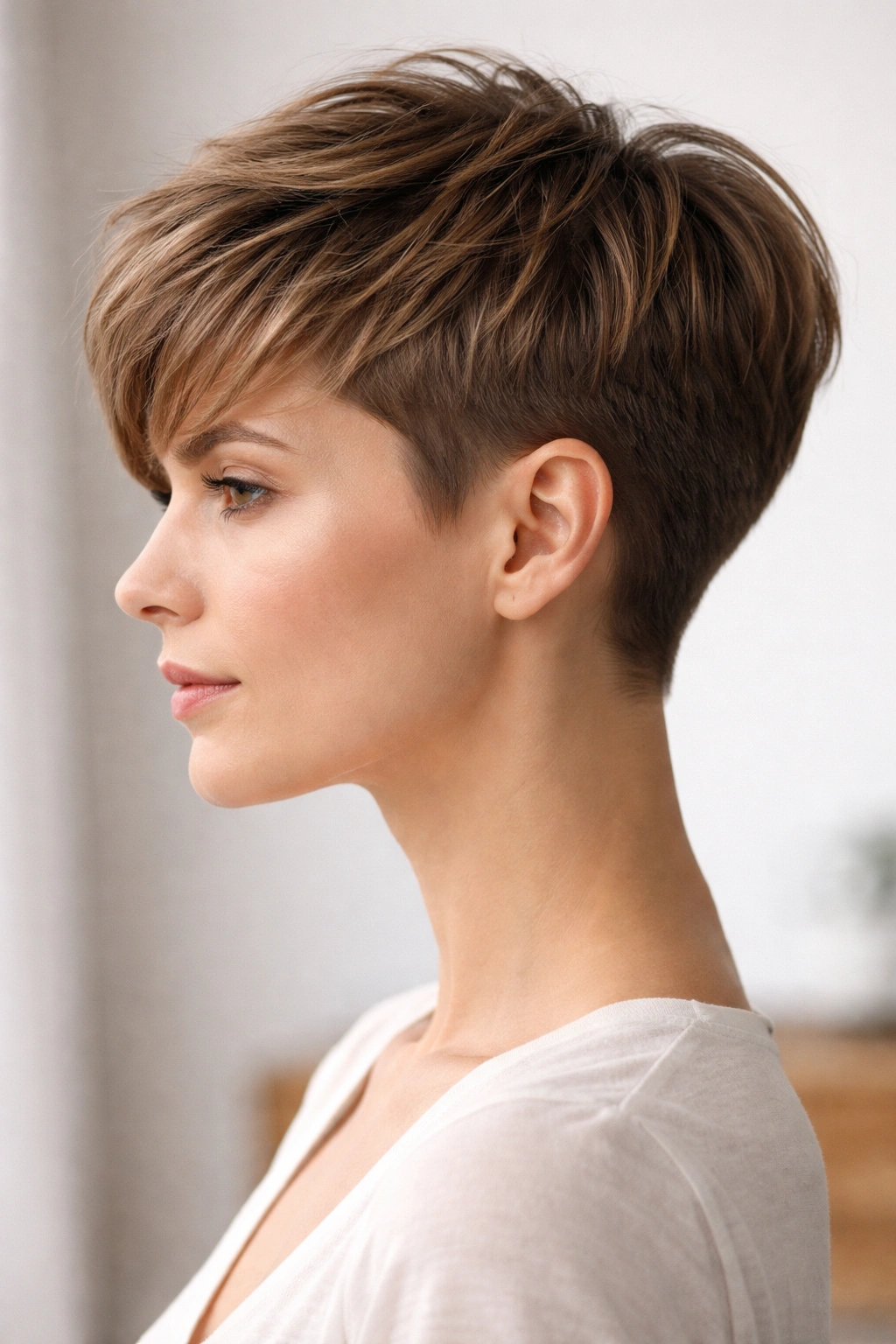
A tapered pixie emphasizes the gradient of length from the shortest point to the longer point. The sides graduate smoothly from super short at the temples to slightly longer at the ears. The back tapers gradually from cropped short to longer at the nape. The top maintains length and texture. It’s clean, architectural, and surprisingly forgiving as it grows out because the taper means every bit of new growth blends seamlessly into the existing cut.
Why Tapered Edges Make Everything Easier
The genius of a tapered pixie is that it’s designed to look good in multiple stages of growth. Right after your cut, it’s sharp and precise. Two weeks in, it’s still looking intentional. A month in, you’ve got a soft, blended growth phase that actually looks good. By six weeks, you’re due for a trim but it still doesn’t look scraggly or unkempt. That gradual transition means you’re not locked into a rigid maintenance schedule—you’ve got flexibility.
What to Know Before Cutting
- Emphasizes clean lines and can highlight or soften your face shape depending on how it’s tapered
- Works beautifully on all hair textures, especially fine or straight hair
- Requires a good stylist who understands taper and fade technique
- The tapered edges are visible, so this cut is a bit more noticeable as it grows between trims
- Pairs well with textured styling cream for definition
Worth knowing: A tapered pixie can be customized based on your face shape. Taper the sides tighter if you want to narrow a wider face, or keep a slightly fuller taper at the temples if you prefer a softer look.
6. Side-Swept Pixie
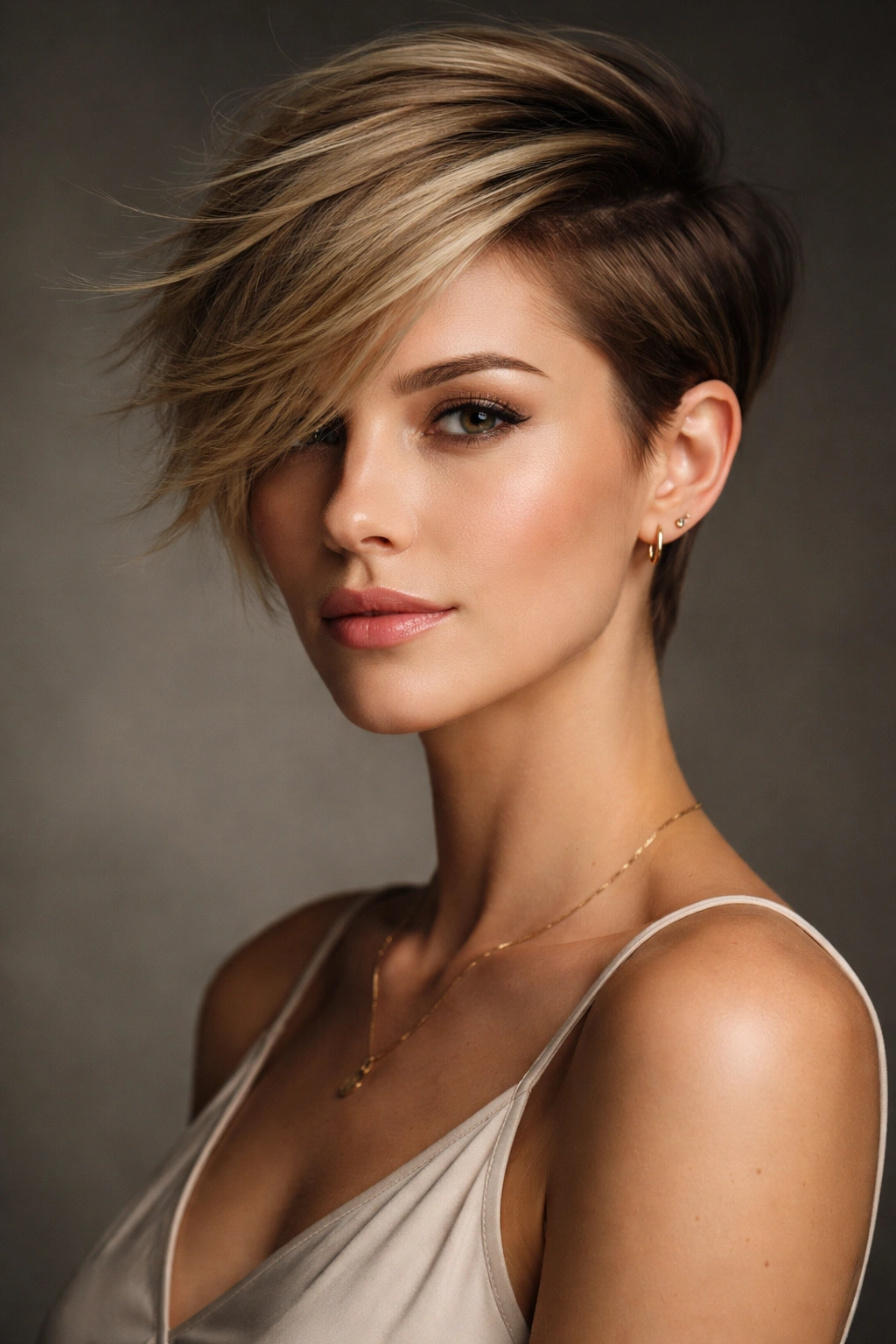
The side-swept pixie takes the classic short pixie and adds direction and movement by combing the hair dramatically to one side. The longer hair on top is swept across and styled away from the face, creating an asymmetrical silhouette. The sides and back are still short and tapered, but the longer top piece gives you a focal point and a flattering frame for your face. This version bridges the gap between a bold short cut and something that feels a bit more traditionally feminine.
Why Asymmetry Creates Effortless-Looking Style
A side sweep creates the illusion of intentional, polished styling with basically zero effort. Because the cut is designed to naturally want to sweep to one side, you can literally wake up and run your fingers in that direction and look like you spent time on your hair. The asymmetry also adds visual interest and movement, so even if you’re just doing the absolute minimum, the style reads as intentionally cool. There’s inherent flattery in an asymmetrical style because it guides the eye where you want it to go.
What to Know Before Cutting
- Particularly flattering on people with a longer face shape or wider forehead
- The swept side can cover or show off your ears depending on how the sides are cut
- Works beautifully with textured layers on top or a smoother, sleeker interpretation
- You can style it with or without product—with product it looks more polished, without it looks more casual
- The swept direction can be flexible day-to-day depending on how you style it
Pro tip: If you have a strong side part naturally or prefer styling your hair to one side anyway, a side-swept pixie feels like the cut was made for you.
7. Tousled Textured Pixie
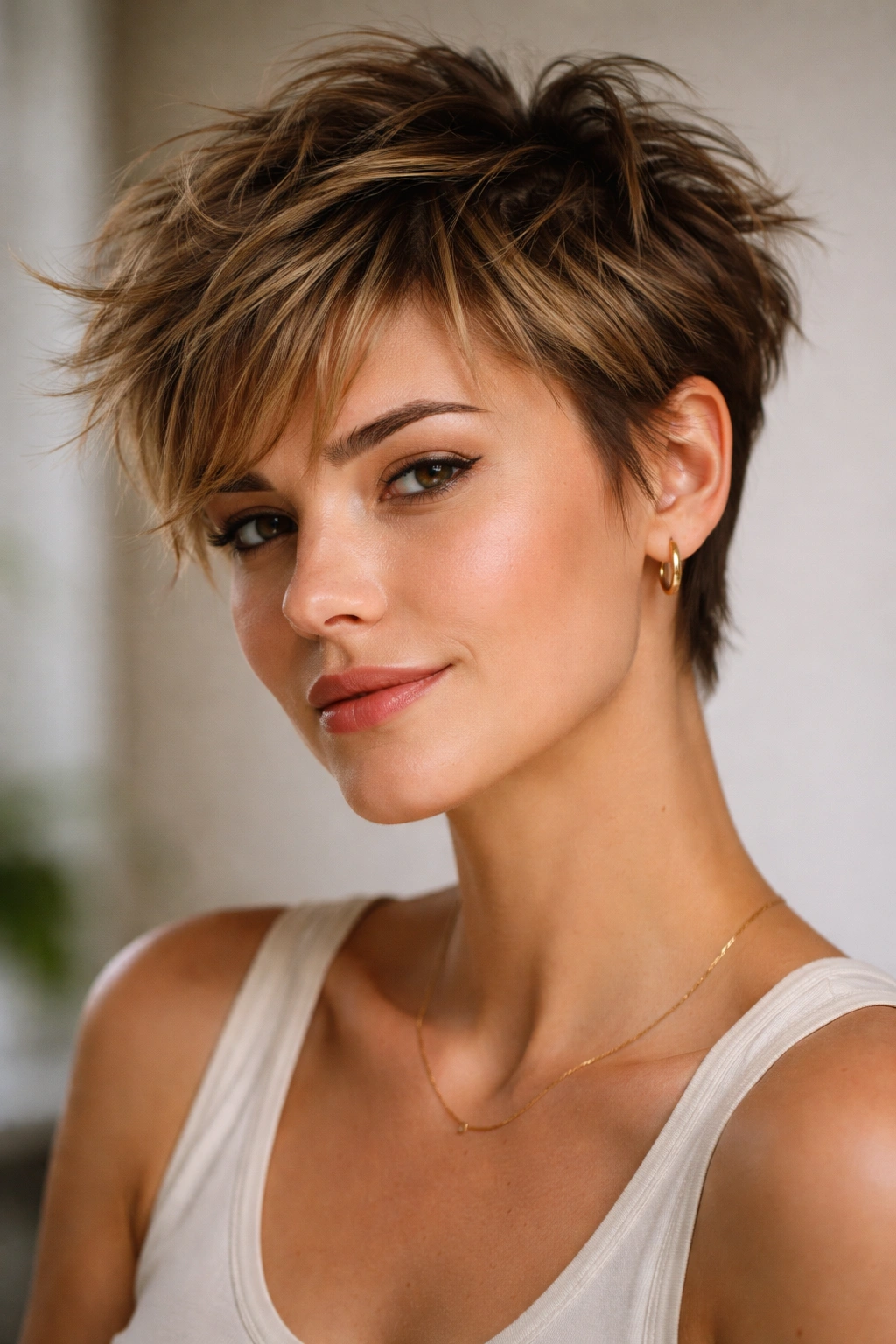
This version is all about embracing texture and movement. The top is cut with choppy, piece-y layers that create maximum texture and dimension. The sides are short and clean, but the overall vibe is intentionally undone and effortlessly cool—like you just woke up and looked that good. If you have naturally wavy or curly hair, this cut is literally designed to work with your natural texture instead of forcing your hair to be something it’s not.
Why Texture Equals True Low-Maintenance
A tousled textured pixie is the ultimate low-maintenance choice because it celebrates imperfection. Bedhead? That’s the style. Hair that’s slightly damp and not quite dry? Perfect. You don’t style it smooth and polished—you style it to look deliberately undone. This is genuinely liberating if you’re tired of fighting your hair’s natural texture. You’re not wasting energy trying to smooth or straighten. You’re enhancing what your hair already wants to do.
What to Know Before Cutting
- Absolutely shines on wavy, curly, or textured hair
- Can work on straight hair too, but you might want styling cream to activate the texture
- The choppy layers require a skilled stylist to cut in a way that actually works with your specific hair pattern
- Air-drying becomes your friend—no blow-dryer needed most days
- The disheveled vibe looks cool on everyone but requires the right kind of disheveled, so finding a stylist who gets it is crucial
Worth knowing: If your hair is naturally curly or coily, a tousled textured pixie is genuinely one of the lowest-maintenance cuts you can get. You’re working with your hair’s natural behavior instead of against it.
8. Cropped Pixie with Maximum Top Volume
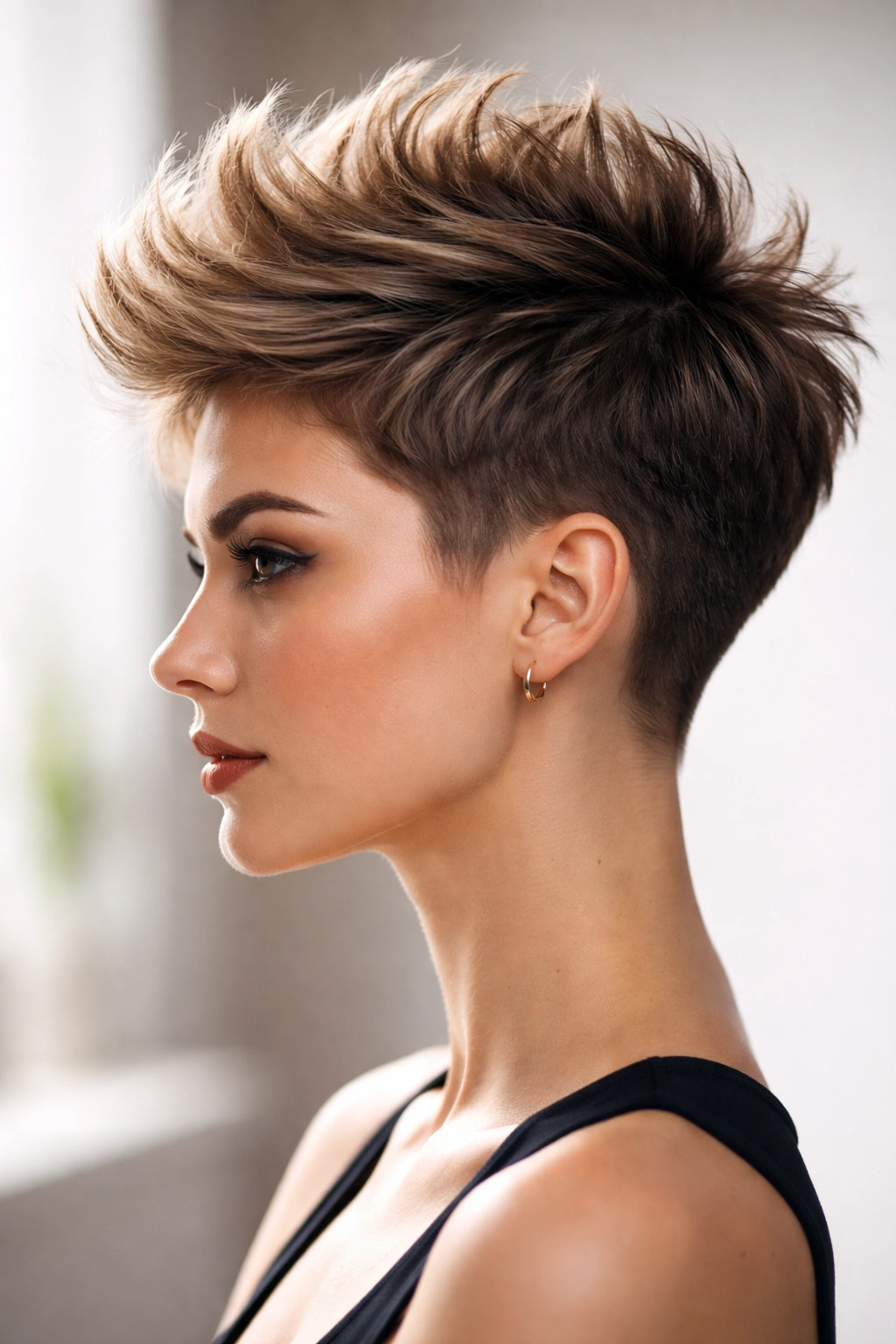
This style keeps the sides and back cropped short, but adds serious volume and height on top. The hair on top is cut to stand up and out rather than laying flat or sweeping to the side. It’s bold, modern, and surprisingly easy to maintain. The volume comes from the cut itself—the way the layers are angled—rather than requiring blow-drying or tons of product. It’s got a punk-rock or fashion-forward vibe without being difficult to style.
Why Volume on Top Works Without Effort
When volume is built into the cut through strategic layering and angling, you don’t have to create it every morning. Your hair naturally wants to do what the cut is designed for. You can add a styling cream or light pomade if you want more definition or to enhance the texture, but it’s completely optional. The height and volume make the cut look intentionally styled even on your laziest mornings. It’s particularly good at making fine hair look fuller because the cut creates texture and dimension.
What to Know Before Cutting
- Creates a striking, statement-making silhouette
- Works on all hair types but shows differently depending on texture
- Requires a stylist who understands how to cut for volume and movement
- You can style it sleek and polished, or tousled and textured, depending on the day
- The height on top can create excellent balance if you have a rounder or wider face shape
Pro tip: Ask your stylist to angle the layers on top in a way that naturally directs your hair upward rather than flat against your head. That’s what makes the volume read as intentional rather than accidental.
9. Shaggy Pixie Cut
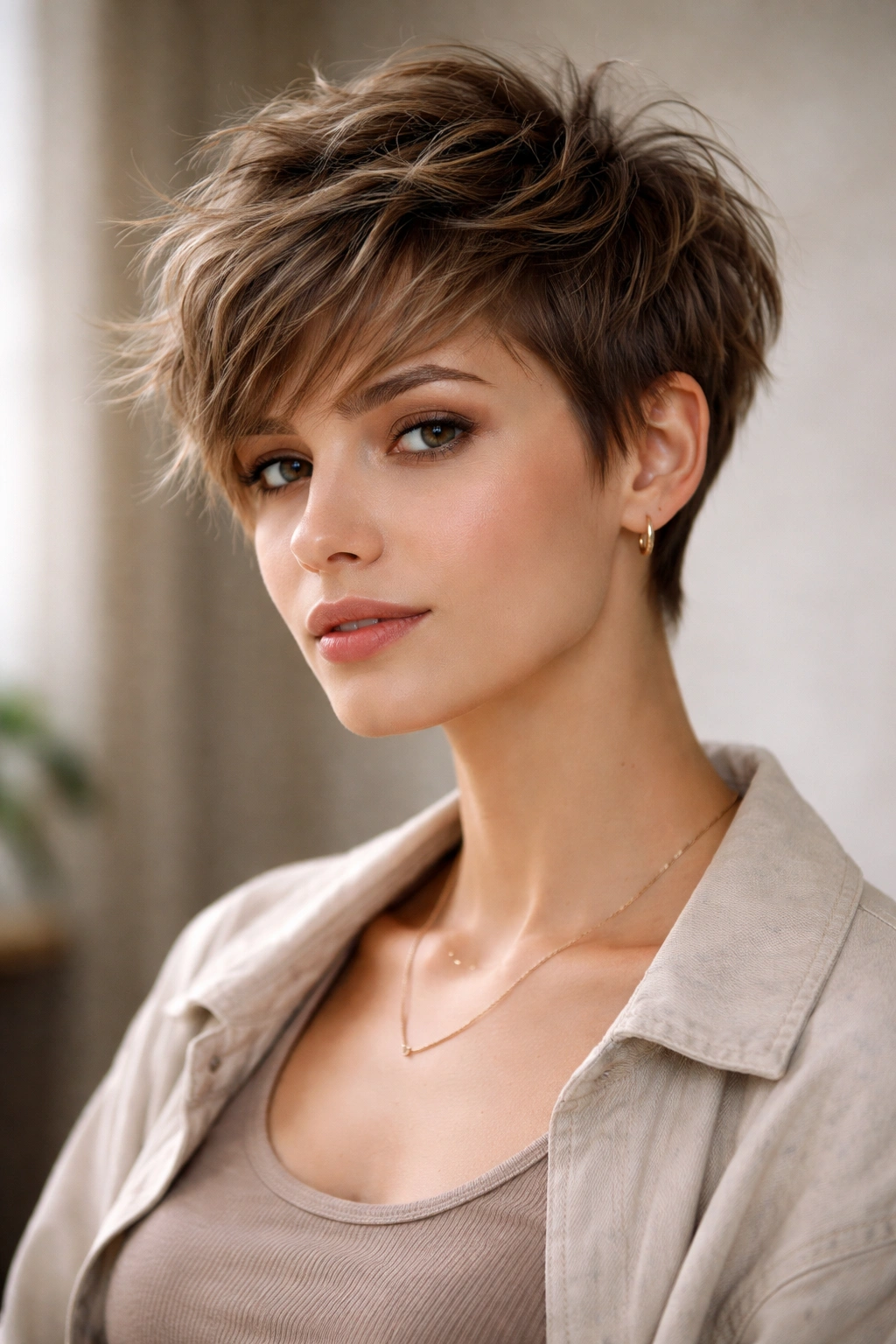
A shaggy pixie combines the short, tapered sides of a pixie with longer, layered, textured hair on top—similar to a modern shag haircut. The layers are choppy and slightly longer than a standard pixie top, creating lots of movement and dimension. The key is that while the top has length, the sides are still kept short and clean, maintaining that pixie silhouette. It’s edgy, fun, and perfect if you want a bit more length without sacrificing the low-maintenance ease.
Why Shag Layers Create Effortless Movement
Shag layers are specifically designed to move and separate naturally. You’re not dealing with one solid shape—you’ve got lots of individual pieces that move independently. This means the cut looks good tousled, textured, and undone without any effort. The choppy nature of the layers also means your hair’s natural texture and movement become a feature rather than something to tame. Even when your hair is slightly too long in between trims, the shaggy layers keep the style looking intentional.
What to Know Before Cutting
- Needs a stylist experienced with shag cuts specifically—the layering technique is different from other pixies
- Works beautifully on straight, wavy, and curly hair, though it shows differently on each
- The longer layers on top give you more styling versatility than a standard pixie
- Textured with styling cream or completely air-dried both look intentionally cool
- Can be cut shorter or longer on top depending on how much volume you want
Real talk: A shaggy pixie is less “true pixie” and more “short shag with pixie proportions,” but if you love the pixie vibe and want a bit more length and movement, it’s absolutely worth exploring.
10. Sleek Pixie Cut
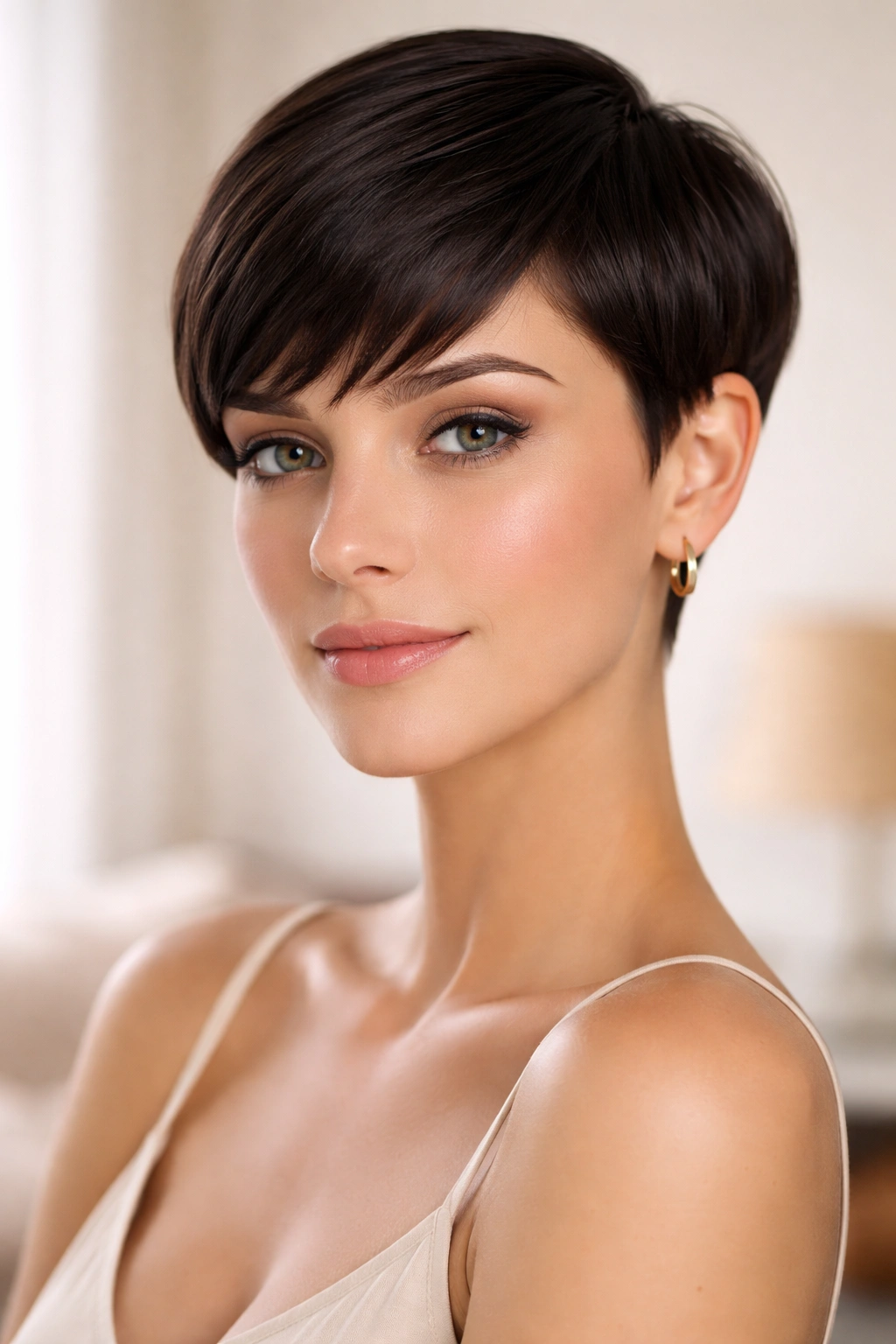
The opposite of textured and tousled, a sleek pixie prioritizes clean lines and smooth surfaces. The hair is cut short and blunt with minimal layering, and the styling is all about polish and precision. It’s worn smooth, almost slicked back, emphasizing the shape of your face and the cut’s geometric lines. This version is for people who love a refined, intentionally minimal aesthetic and don’t mind a tiny bit of daily styling to maintain that polish.
Why Sleek Can Still Be Low-Maintenance
A sleek pixie is low-maintenance in a different way than textured versions. Yes, you’re adding a styling step most mornings—usually a dab of smoothing product or a light blow-dry—but it’s a quick step. Five minutes, maximum. And the payoff is that you look incredibly polished and put-together. If you prefer a clean, refined aesthetic over effortlessly undone, the extra five minutes is worth it. Plus, a sleek pixie is harder to mess up than some other styles. A slightly tousled shaggy pixie might look disheveled. A slightly tousled sleek pixie? Still looks intentional.
What to Know Before Cutting
- The blunt lines emphasize your face shape, so make sure you and your stylist have the same vision
- Works on all hair types but looks most polished on straight or smoothable hair
- Requires minimal layering, so the cut is pretty straightforward to maintain
- You’ll need a smoothing product and potentially a blow-dryer on styling days
- The clean lines show your face more, which is great if that’s what you want
Pro tip: Get a cut with slightly less dramatic lines if you’re worried about the minimalist look feeling too severe. A sleek pixie doesn’t have to be extremely severe to read as polished.
11. Curved Pixie with Soft Fade
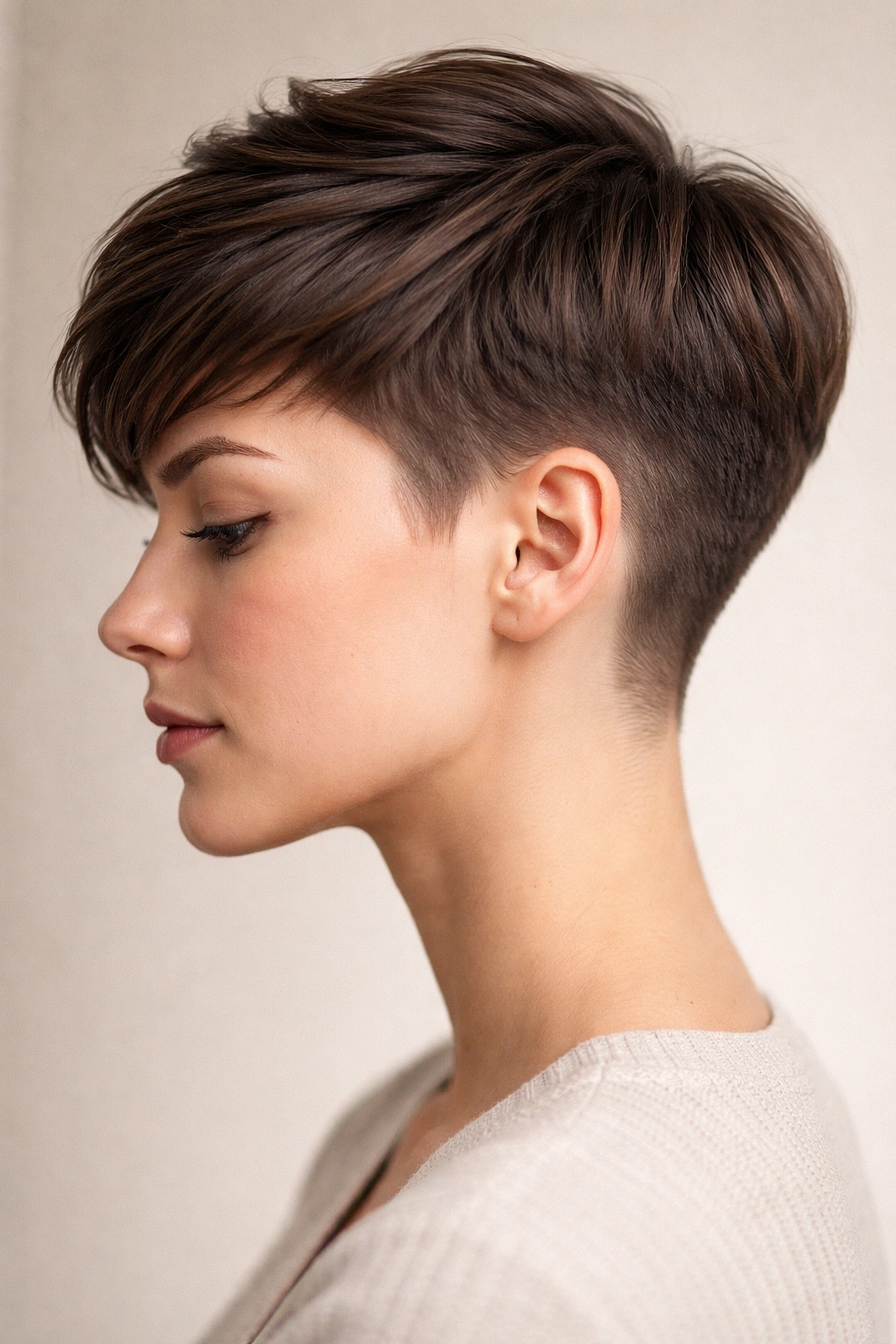
This version softens the usual sharp lines of a pixie by using a gentle curved fade on the sides rather than a blunt taper. The fade is barely-there, creating a soft transition from short to slightly longer hair. The back is also curved rather than tapered, following the natural contours of your head. The overall effect is softer, more romantic, and somehow more flattering than a severe straight-lined pixie. It’s still definitely a pixie, but it’s a gentler, more approachable version.
Why Curved Lines Feel Effortlessly Feminine
Curved lines are naturally flattering because they echo the curves of your face and head. A curved fade softens the look of a pixie without sacrificing any of the low-maintenance benefits. It looks good in multiple stages of growth because the soft fade means new growth blends gradually. The curved back follows your head shape naturally, which means you’re not fighting against your natural head contour with a straight taper. It’s a cut that works with your features rather than creating stark contrast.
What to Know Before Cutting
- Particularly flattering on people who prefer a softer aesthetic or those with very angular face shapes
- Requires a stylist who’s comfortable with curved lines and understands how to fade them softly
- Still completely wash-and-go if you want it to be
- Can be styled sleek and smooth or textured and tousled depending on the day
- The soft fade means the cut grows out gracefully without looking unkempt
Worth knowing: If you love the pixie silhouette but feel like standard pixie cuts are too harsh for your aesthetic, a curved fade version might be exactly what you’re looking for.
12. Messy Pixie with Longer Bangs
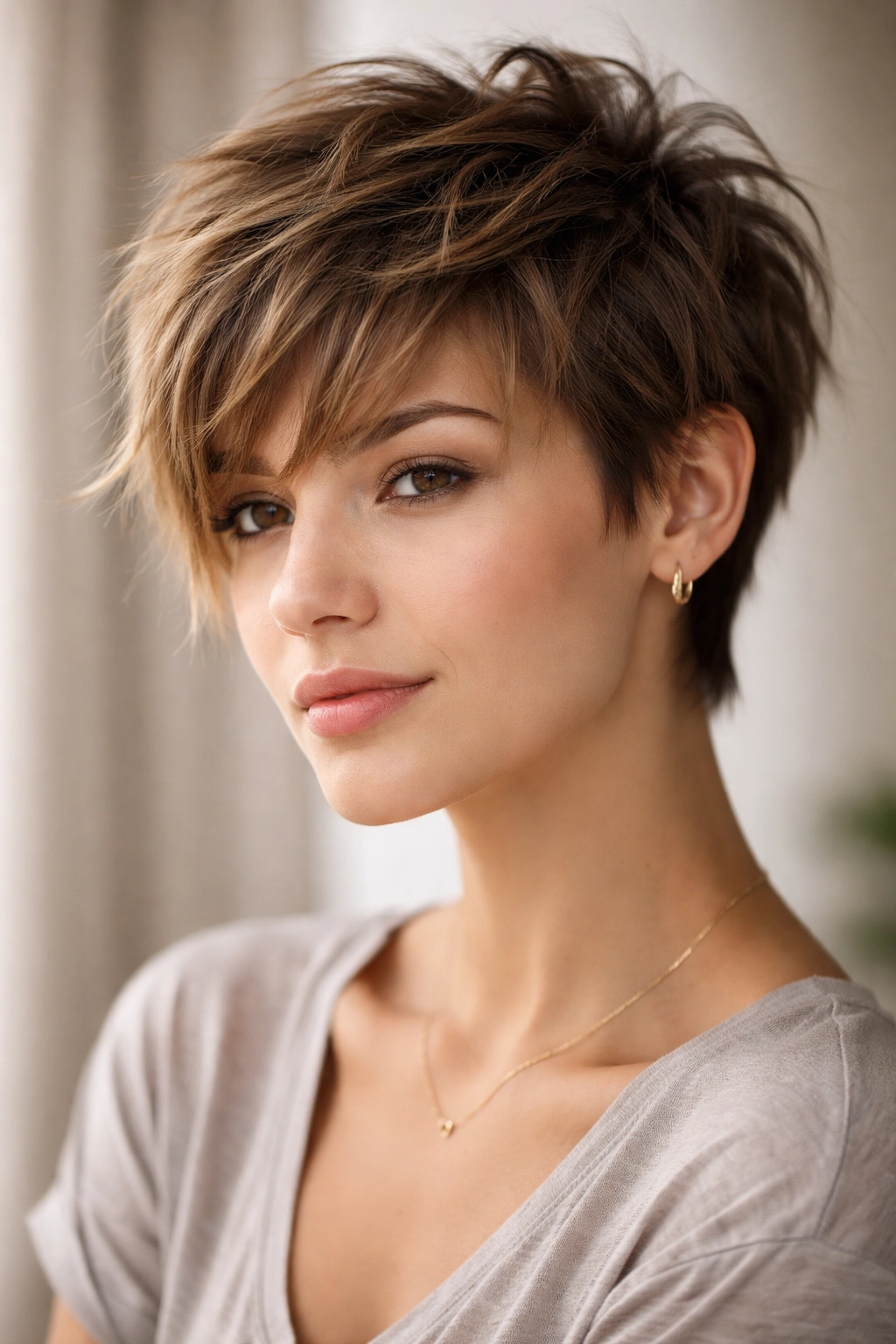
This version takes a classic pixie and adds longer, slightly shaggier bangs that fall across your forehead or to the side. The bangs are the focal point—choppy, textured, and intentionally undone. The sides and back remain short and tapered, creating that pixie base, but the longer bangs give you a different vibe. It’s playful, artistic, and absolutely low-maintenance once you get past the fact that you now have bangs to contend with.
Why Longer Bangs Add Personality Without Adding Work
Longer bangs work with a pixie because they’re still short enough to be easy to manage, but they add a pop of personality and dimension that regular pixie cuts might lack. They also give you styling options—you can wear them across your forehead, sweep them to the side, or even clip them back on days when you want a different look. The textured, choppy nature of the bangs means they look intentionally cool whether you style them or not. They’re messy in a good way.
What to Know Before Cutting
- Creates a cute, young, playful aesthetic
- The bangs require you to wash your hair more frequently than you might with other pixie cuts (they can look greasier faster)
- You’ll probably want to style the bangs with your fingers or a tiny bit of product most days
- Works on all hair types and face shapes, but particularly suits smaller faces or longer face shapes
- Longer bangs can cover your forehead, which some people love and others find limiting
Pro tip: Start with longer bangs initially (maybe to your eyebrows) rather than going super short. If you love them, you can get them shorter next cut. If you realize bangs aren’t for you, you don’t have to wait as long for them to grow out.
Final Thoughts
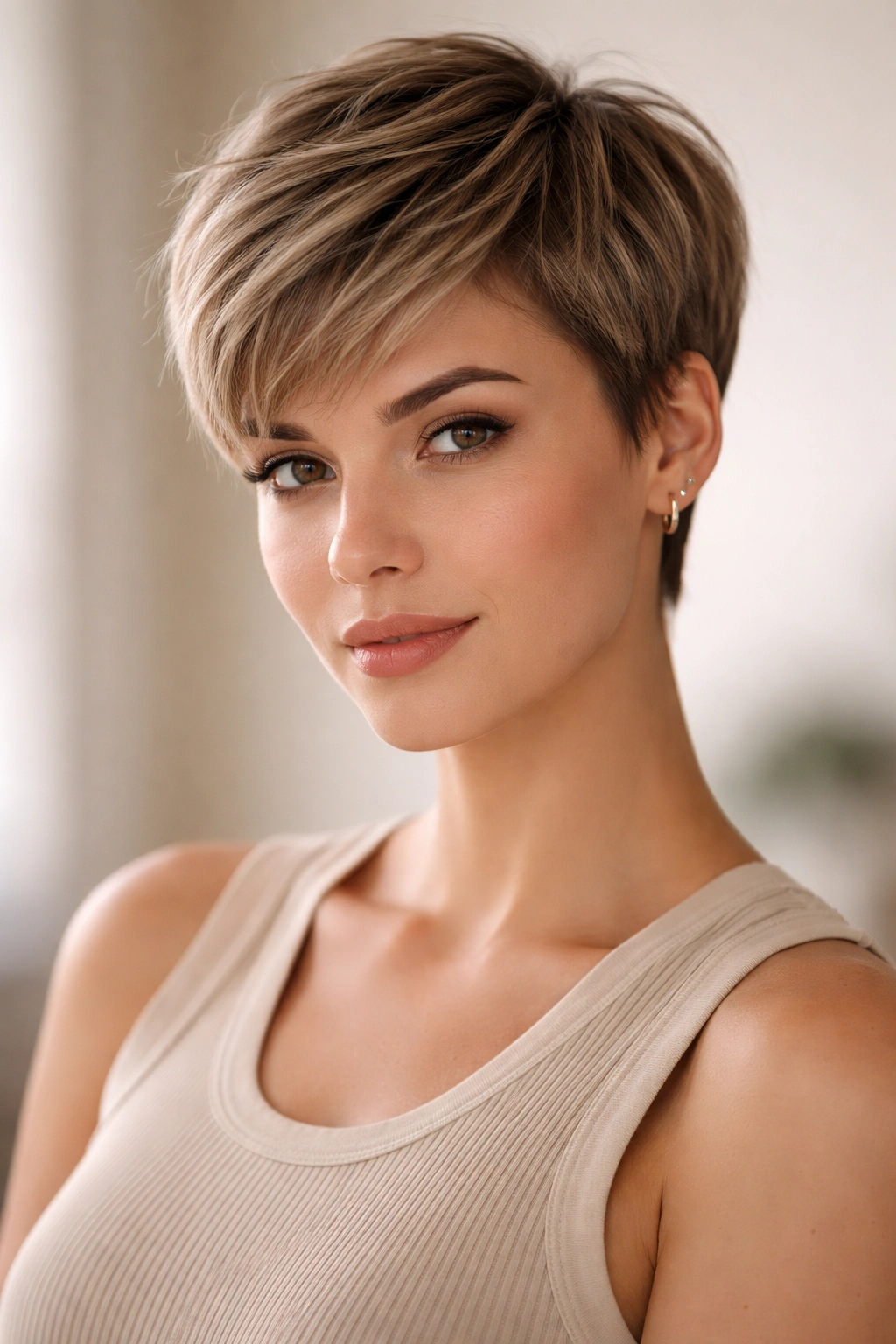
The beauty of a pixie cut isn’t that there’s one right answer—it’s that there are so many variations that you can find the exact version that matches your hair, your face, and your lifestyle. Whether you gravitate toward textured and tousled, sleek and polished, bold and edgy, or soft and curved, there’s a pixie that’ll let you wake up and walk out the door with minimal effort while looking intentionally cool.
The real secret to a truly low-maintenance pixie is getting the right cut from the start. A well-executed pixie looks good as it grows. It works with your hair’s natural texture rather than against it. It doesn’t demand daily styling or product commitment. Once you find the specific pixie style that works for your hair, your face shape, and your daily routine, you’ll understand why so many people become devoted pixie cut loyalists. You’ll save time, save money on styling, and honestly just feel more confident when you look good without trying. That’s the whole point.
