



The right hairstyle can be genuinely transformative, especially when you understand which shapes and styles work with your face structure rather than against it. A wider face shape—characterized by prominent cheekbones and width across the middle of the face—has its own unique set of flattering options that can enhance your natural features and create beautiful proportions.
The key principle behind these styles is creating vertical lines and adding height, which visually lengthens the face and draws attention upward rather than outward. When you have a rounder or wider face shape, you’re working with natural softness and fullness that becomes an asset when styled strategically. The goal isn’t to hide your face shape—it’s to emphasize your best features and create a balanced, harmonious look.
What makes a hairstyle truly flattering for a wider face isn’t just about the cut; it’s about how the style creates movement, dimension, and visual balance. Some styles add texture and shape that enhances width in all the right places, while others use clever layering and positioning to create the illusion of a more defined jawline and narrower overall appearance. Whether you prefer short, medium, or long hair, there’s a flattering option that matches both your face shape and your personal style.
1. Side-Swept Bangs with Layers
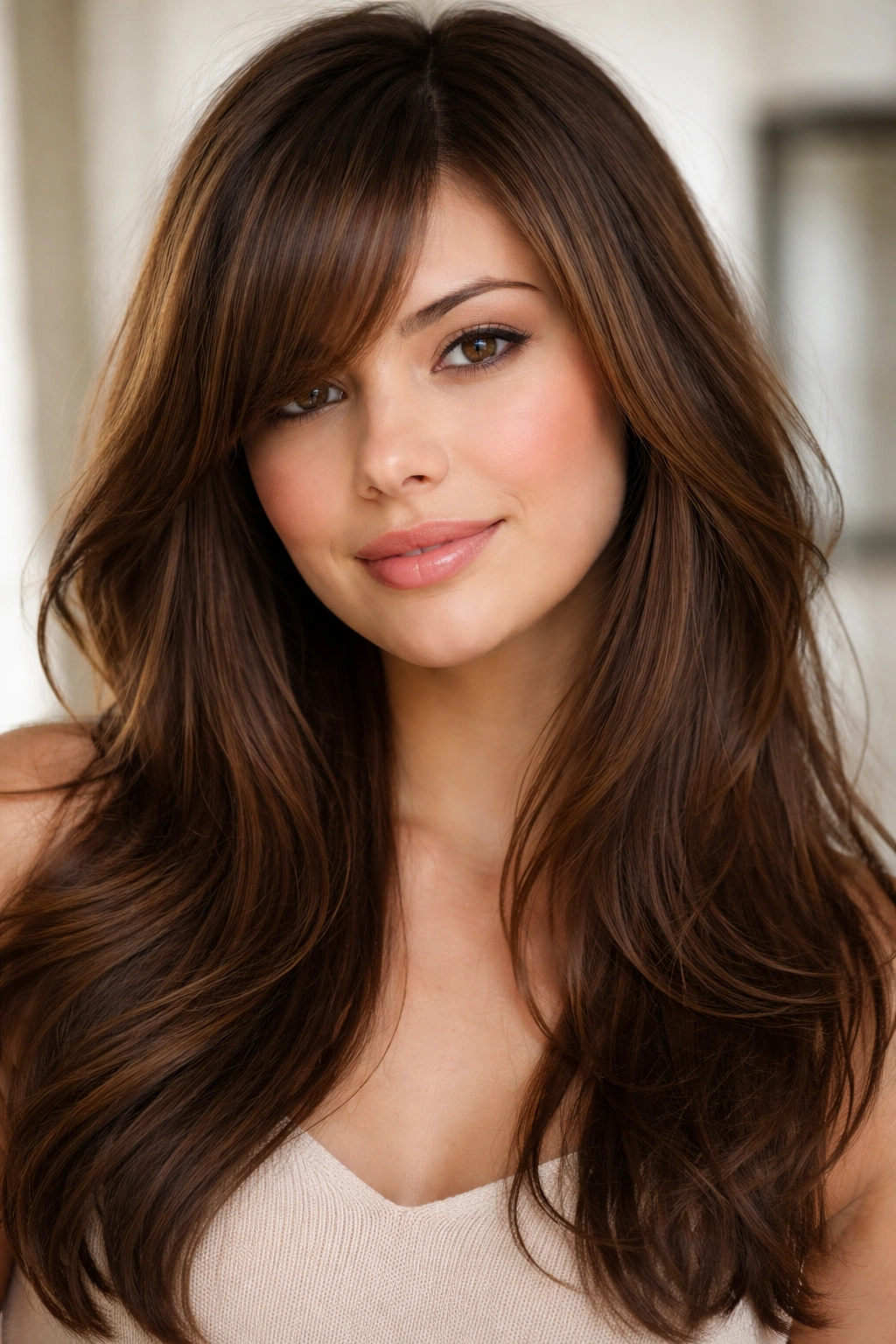
Side-swept bangs are incredibly forgiving and work beautifully on wider face shapes because they instantly create diagonal lines that travel across the forehead toward one side. This asymmetrical approach breaks up the width of the face and draws the eye inward rather than emphasizing the fullest parts of your cheeks. Pair the side-swept bangs with layered cuts throughout the rest of your hair, and you’ve got a style that adds movement and prevents the heaviness that can sometimes come with wider face shapes.
Why This Cut Complements a Wider Face
The magic of side-swept bangs lies in their ability to create visual height and diagonal interest. Rather than a blunt, straight-across bang that would emphasize width, side-swept bangs angle upward and across, creating a slimming effect that most hairstylists recommend for wider faces. The layers throughout the rest of the cut ensure the hair moves rather than clings, which prevents the style from emphasizing the widest parts of your face.
How to Make the Most of This Style
- Ask your stylist for longer side-swept bangs (that hit around your cheekbone or slightly below) rather than super short ones, as length is more flattering
- Request layers throughout the crown and mid-lengths to create movement and texture that adds dimension
- Consider a slight wave or curl rather than completely straight hair, as movement adds visual interest and breaks up horizontal lines
- Plan for regular trims every 4-6 weeks to maintain the side-swept shape and prevent the bangs from becoming heavy
Pro tip: When styling this look at home, blow-dry your side-swept bangs away from your face and slightly under, using a round brush to create a subtle curve rather than letting them fall flat.
2. High Ponytails with Face-Framing Pieces
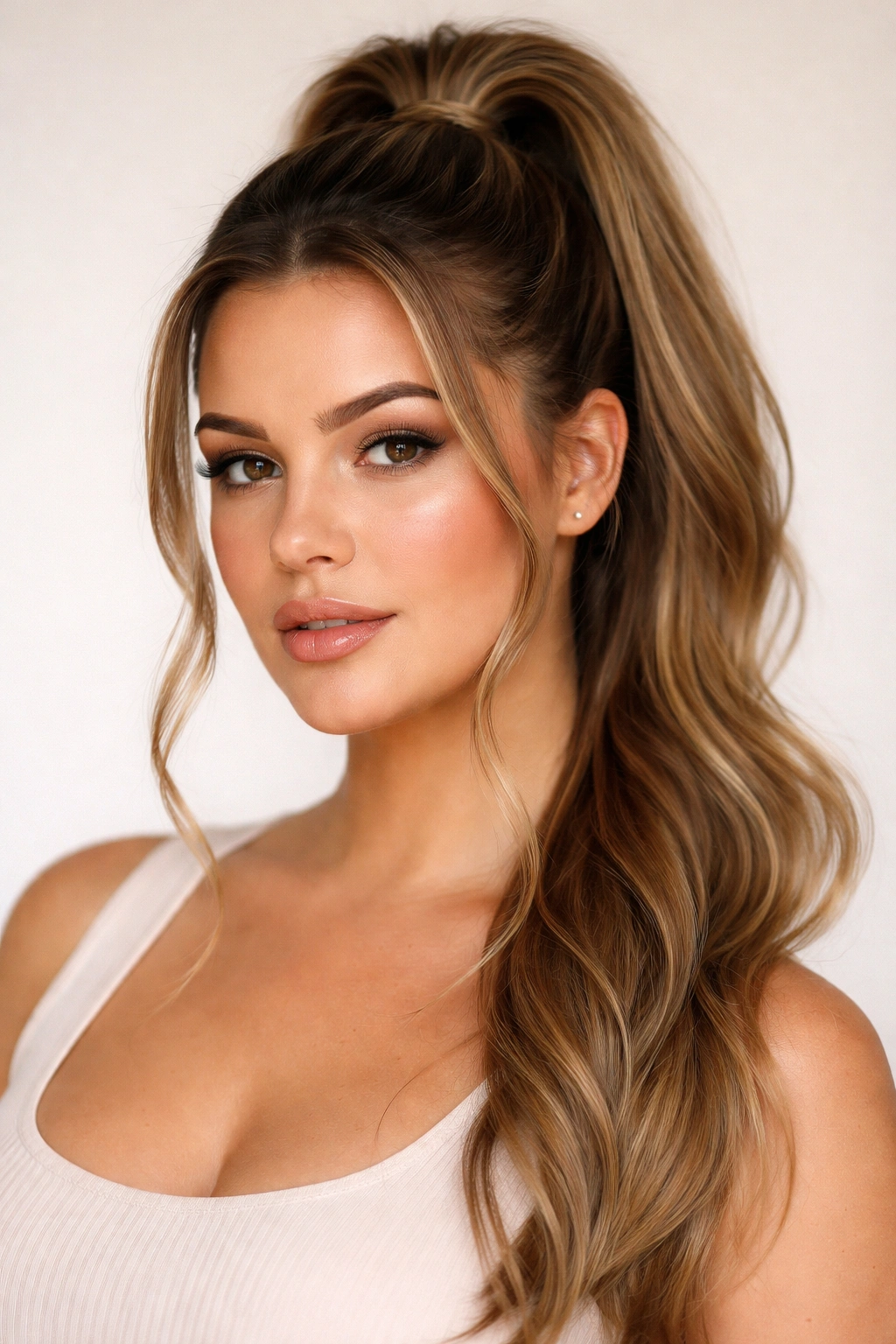
A sleek, clean high ponytail immediately lifts the face and draws attention upward to your hairline and eyes rather than to your cheekbones or jawline. The key to making this style work beautifully on a wider face is leaving strategically placed face-framing pieces around your temples and cheekbones—not a full, tight pull-back. These softening pieces break up the expanse of exposed face and create dimension, while the high placement of the ponytail itself creates vertical lift.
Why This Style Creates Balance
High ponytails work for wider faces because they achieve two things simultaneously: they create vertical lines (through the height of the ponytail itself) and they allow your face to show while keeping the bulk of hair off it, preventing a heavy look around the cheeks. The face-framing pieces are crucial—they soften the overall effect and prevent the style from feeling too severe or pulling too much attention to your face shape.
How to Style This for Maximum Flattery
- Start by pulling your hair back loosely, not tightly, as tension can make a wider face appear rounder
- Leave 1-2 inch-wide sections of hair down on each side of your face, framing from your temples down to your jawline
- Use a curling iron or wand to create gentle waves in both the face-framing pieces and the ponytail itself
- Tease gently at the crown before securing to create height rather than a smooth, pulled look
- Consider a wrapped base (use a small section of hair to wrap around the elastic) for a polished, intentional look
Insider note: If you have finer hair, a high ponytail with face-framing pieces and slight texture looks fuller than a sleek, pulled-back style, which can sometimes emphasize a wider face.
3. Voluminous Curls and Waves
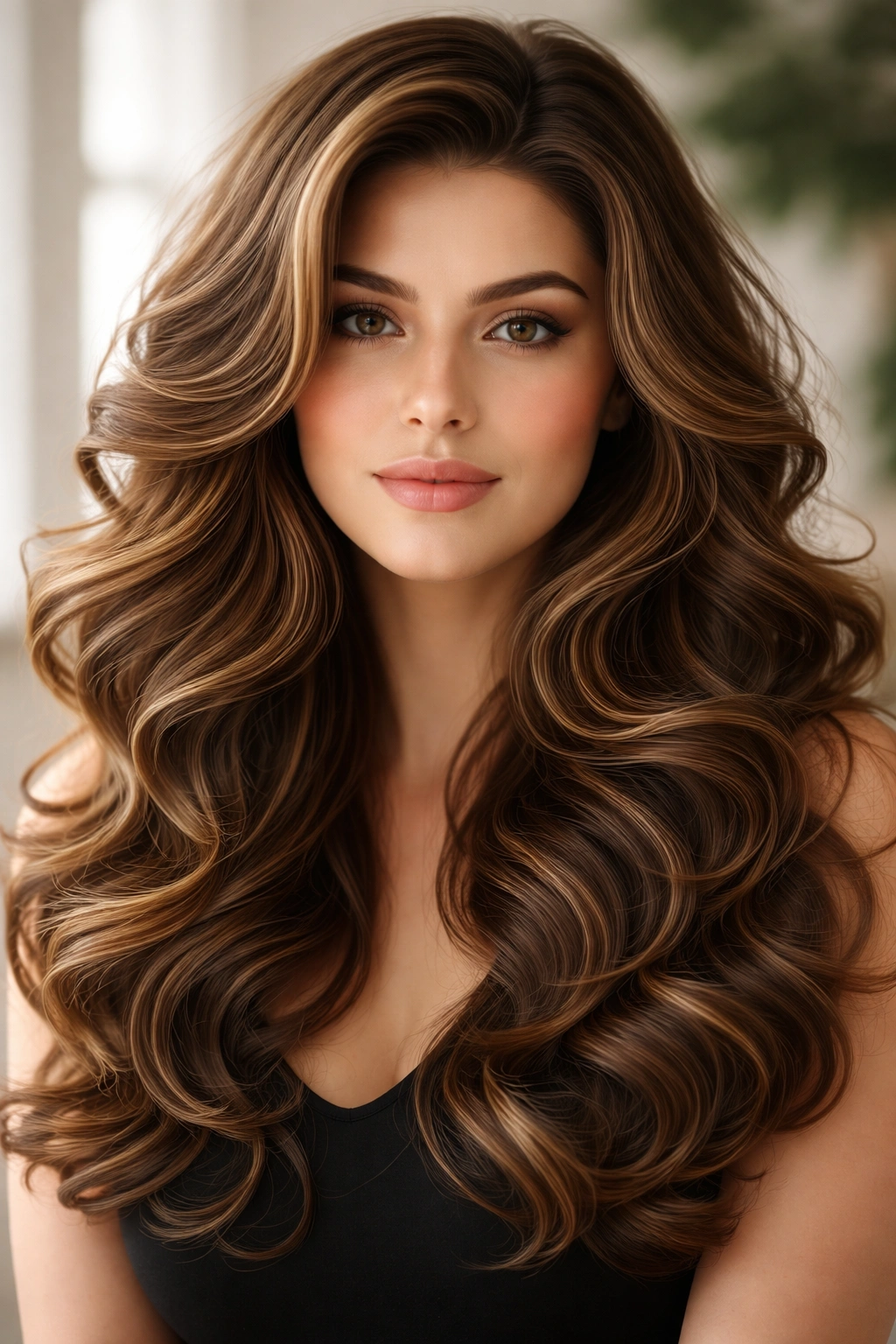
Rich, bouncy curls and waves create visual texture and dimension that works beautifully on wider face shapes because the three-dimensional volume draws the eye upward and outward, rather than allowing the eye to focus on the width of your face. When curls are cut and styled with intention—bouncing away from the face rather than hugging the cheeks—they create a flattering frame that adds personality while maintaining balance.
Why Texture and Movement Matter
Curls and waves break up flat surfaces and create visual interest that prevents a wide face from appearing heavy or one-dimensional. The key is ensuring the curls have movement away from the face rather than sitting flat against your cheeks. This is where the cut matters enormously—you want layers that allow each curl to move independently, creating volume that extends upward and outward.
Creating This Look
- Ask for layers throughout, especially around the crown and mid-lengths, to allow curls to move freely rather than weighing down
- Longer hair (past shoulder length) works particularly well with this style because curls have more surface area to define and show movement
- Use a curling iron or wand to create curls rather than letting your natural curl pattern alone, as you can control direction and placement to frame the face favorably
- Apply curl-defining cream or mousse to damp hair before blow-drying, then curl sections away from the face
- Avoid products that weigh curls down—opt for lightweight, volumizing options instead
Worth knowing: If you naturally have straight hair, this look requires styling effort but is absolutely achievable and worth it for the flattering effect it creates.
4. Long Straight Hair with Side Part
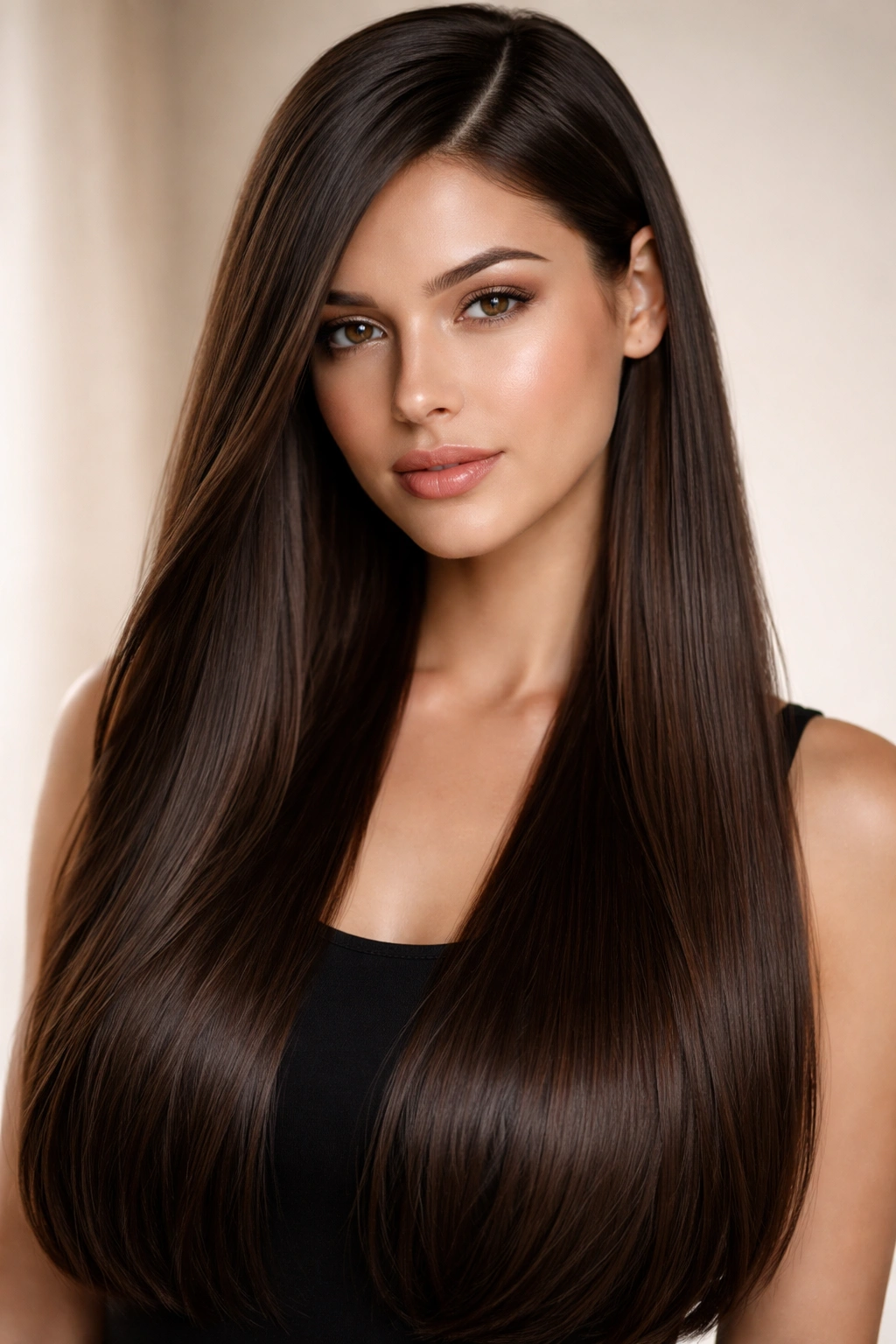
Sometimes the simplest solution is the most effective. Long, straight hair with a deep side part creates a diagonal line across the top of your head that visually lengthens your face and moves attention away from the widest parts. The side part is crucial—a center part can sometimes emphasize width, while a deep side part (starting near one temple) creates immediate visual interest and asymmetry that flatters a wider face shape.
Why This Minimal Approach Works
Long, straight hair with a side part works because it relies on the simplest principle of face-shape flattery: creating diagonal and vertical lines. The side part itself is a diagonal line, and the long length creates an uninterrupted vertical line that draws the eye downward and creates the illusion of a longer, narrower face. There’s no volume clinging to the sides of your face—instead, the hair moves away from it.
Styling Tips for Best Results
- Part your hair deeply on one side, starting roughly at the arch of your eyebrow
- Let the hair fall naturally without flipping it dramatically toward your face
- Add a subtle bend or wave through the lengths using a flat iron, as completely stick-straight hair can sometimes feel too severe
- Use a smoothing serum or lightweight oil to keep hair sleek without weighing it down
- Consider bangs? A long, side-swept bang (longer than a traditional fringe) coordinates beautifully with this look
Pro tip: This style benefits from excellent hair health and shine, since there’s nowhere to hide with a simple, straightforward cut. Invest in a good smoothing treatment and deep conditioning routine.
5. Textured Pixie Cuts
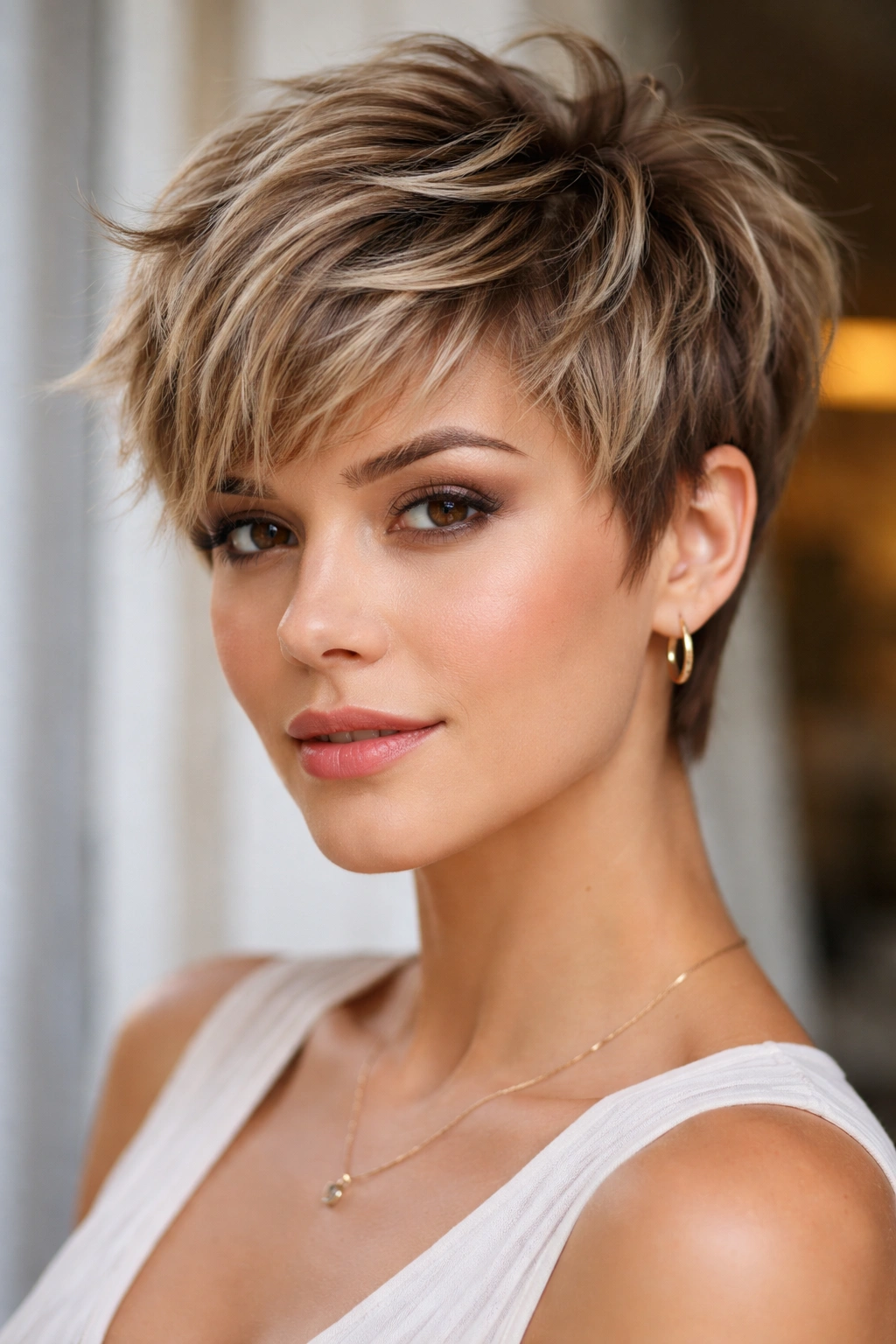
Don’t assume that short hair doesn’t work for wider faces—a well-cut, textured pixie with movement can be incredibly flattering because it puts all focus on your eyes, cheekbones, and bone structure rather than hair volume. The key is texture rather than a smooth, tight crop. Choppy layers and piece-y styling add dimension that prevents a pixie from appearing harsh or emphasizing width.
Why Short Works When It’s Done Right
A textured pixie cut puts emphasis on your face, yes, but if the cut includes layers and movement rather than sitting flat against your head, it creates visual interest that balances proportions. The cut should have height at the crown and texture throughout, so the eye travels upward rather than being drawn to the sides of your face. Short hair also shows off your facial features in their best light—your cheekbones, eyes, and jawline become the focus.
How to Cut and Style a Flattering Pixie
- Ask your stylist for a pixie with choppy layers and texture, not a blunt or smooth crop
- Request extra height and volume at the crown to elongate your face
- Have longer pieces around the temples and ears that can be styled to frame the face softly
- Use a texturizing product or pomade to piece out the layers and create intentional separation
- Style with movement rather than smoothness—the texture is what makes this work
- Consider a slight tousle rather than a neat, controlled look
Worth knowing: Textured pixies require more frequent trims (every 4 weeks) to maintain shape, but they photograph beautifully and require minimal styling time once you’ve mastered the technique.
6. Sleek High Bun
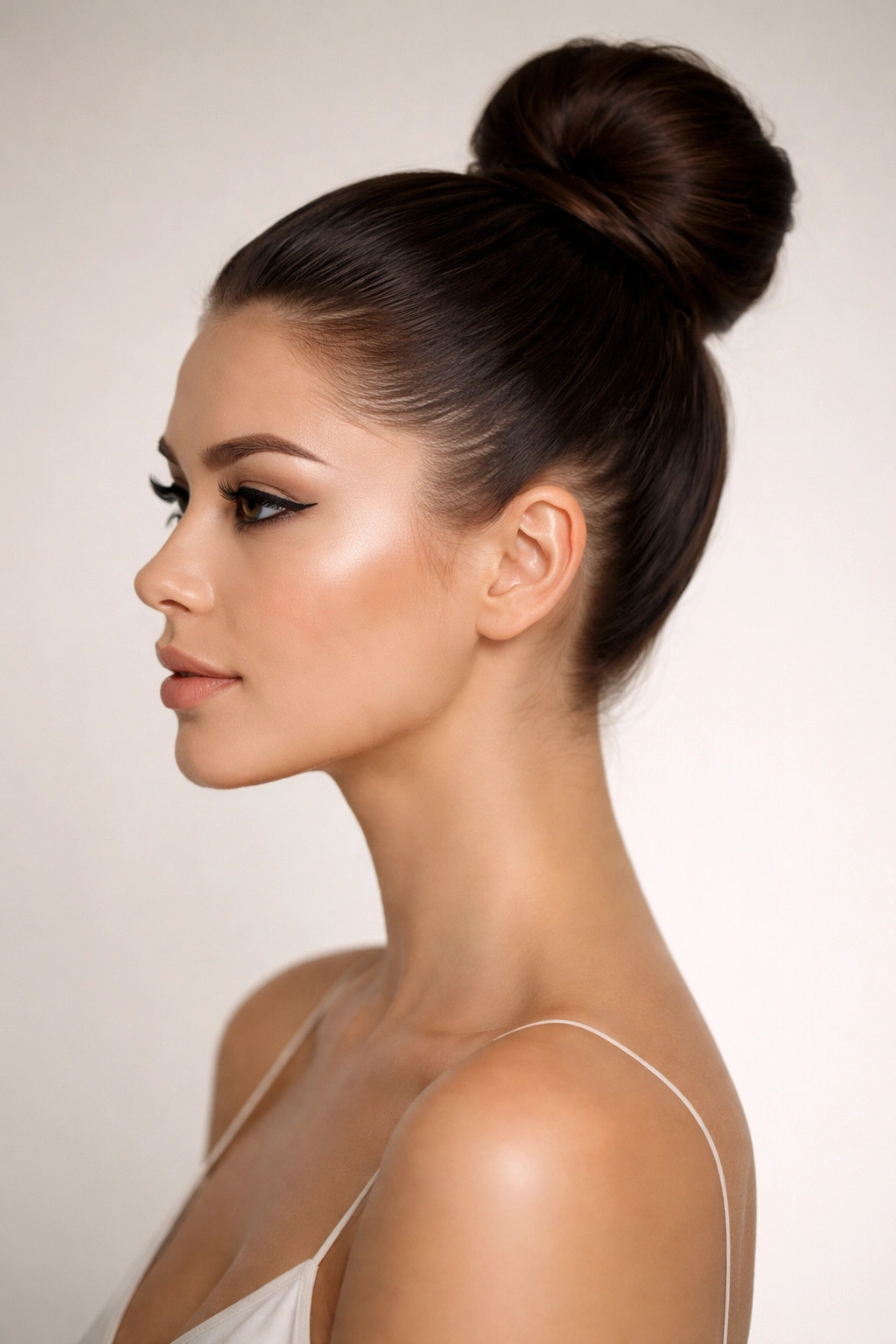
A high bun is one of the most effective styles for a wider face shape because it combines several flattering elements: it creates vertical height, it removes hair from around the face and cheeks, and it creates visual interest through the gathered texture at the crown. The sleekness of the style prevents it from adding width, while the height balances proportions beautifully.
Why Gathered-Up Styles Are Secretly Flattering
When you pull your hair up and away from your face, you immediately change the proportions of what’s visible—and more importantly, you eliminate hair sitting along your cheeks or temples that could emphasize width. A high bun specifically creates height above the head, which visually elongates your entire face and draws attention upward. The texture and volume of the gathered hair adds interest without bulk around your face.
Creating a Polished High Bun
- Brush hair back smoothly, not too tightly, to create a sleek effect without pulling too much
- Gather your hair high on your head, roughly where you’d place a high ponytail
- Twist or braid the gathered hair before wrapping it around the base to create the bun shape
- Secure with bobby pins and smooth flyaways with a light hairspray
- Leave a few delicate, shorter pieces down around your face if desired, or keep it completely sleek for maximum elongation
- Use a smoothing cream or serum to keep everything polished
Pro tip: A high bun looks especially elegant and flattering on a wider face when the hair is shiny and healthy-looking—the sleek surface reflects light beautifully and draws attention to your glowing skin rather than hair texture.
7. Shoulder-Length Bobs with Angled Layers
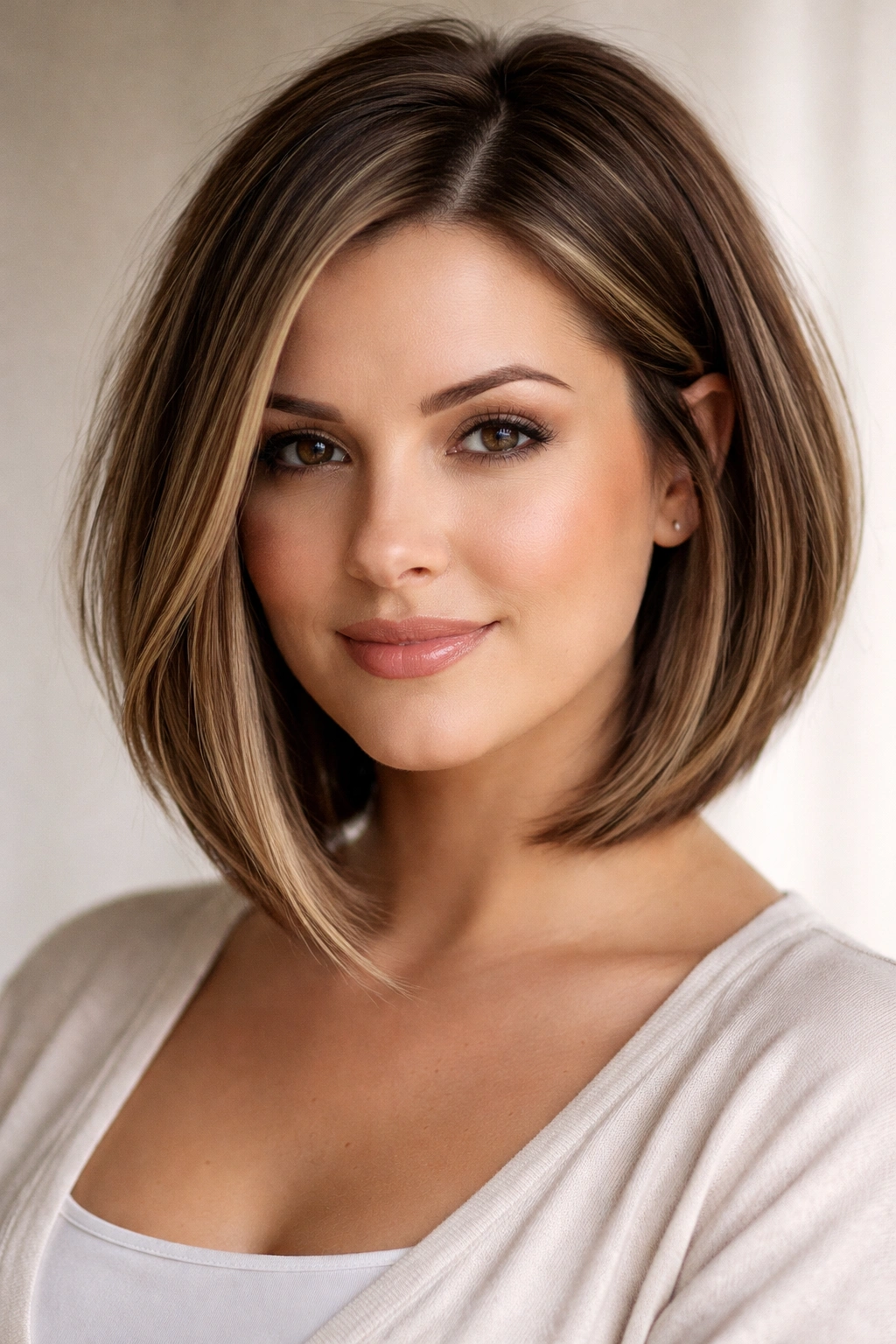
A shoulder-length bob with angled layers—longer in the front, shorter in the back—is beautifully flattering for wider faces because the angle creates diagonal lines and the front-length pieces frame the jawline without adding bulk. The layers prevent the style from being blunt or heavy, which would emphasize width instead of creating balance.
Why This Length and Angle Work
The magic of an angled, layered bob for a wider face is that the longer front sections draw the eye downward and inward toward the jawline, creating the illusion of a narrower face. The angle itself is a diagonal line, which flatters wider face shapes more than horizontal lines would. The layers throughout prevent density that would cling to your cheeks and emphasize width.
Styling This Cut for Maximum Effect
- Ask your stylist for layers that begin around your cheekbones and continue throughout, with shorter pieces on top for movement and volume
- The front pieces should hit around your jawline or slightly below, long enough to frame the face but short enough to feel intentional
- Blow-dry with a round brush, curling the front pieces slightly inward and under for a refined look, or outward for movement
- Add texture with a curling iron or wand—even loose waves prevent the bob from sitting too flat against your face
- Use a volumizing product at the crown to create height rather than allowing the style to sit flat on your head
Insider note: Shoulder-length bobs with this angled structure are one of the most adaptable styles—they work with straight, wavy, or curly hair and transition beautifully from casual to polished depending on how you style them.
8. Braided Styles with Crown Detail
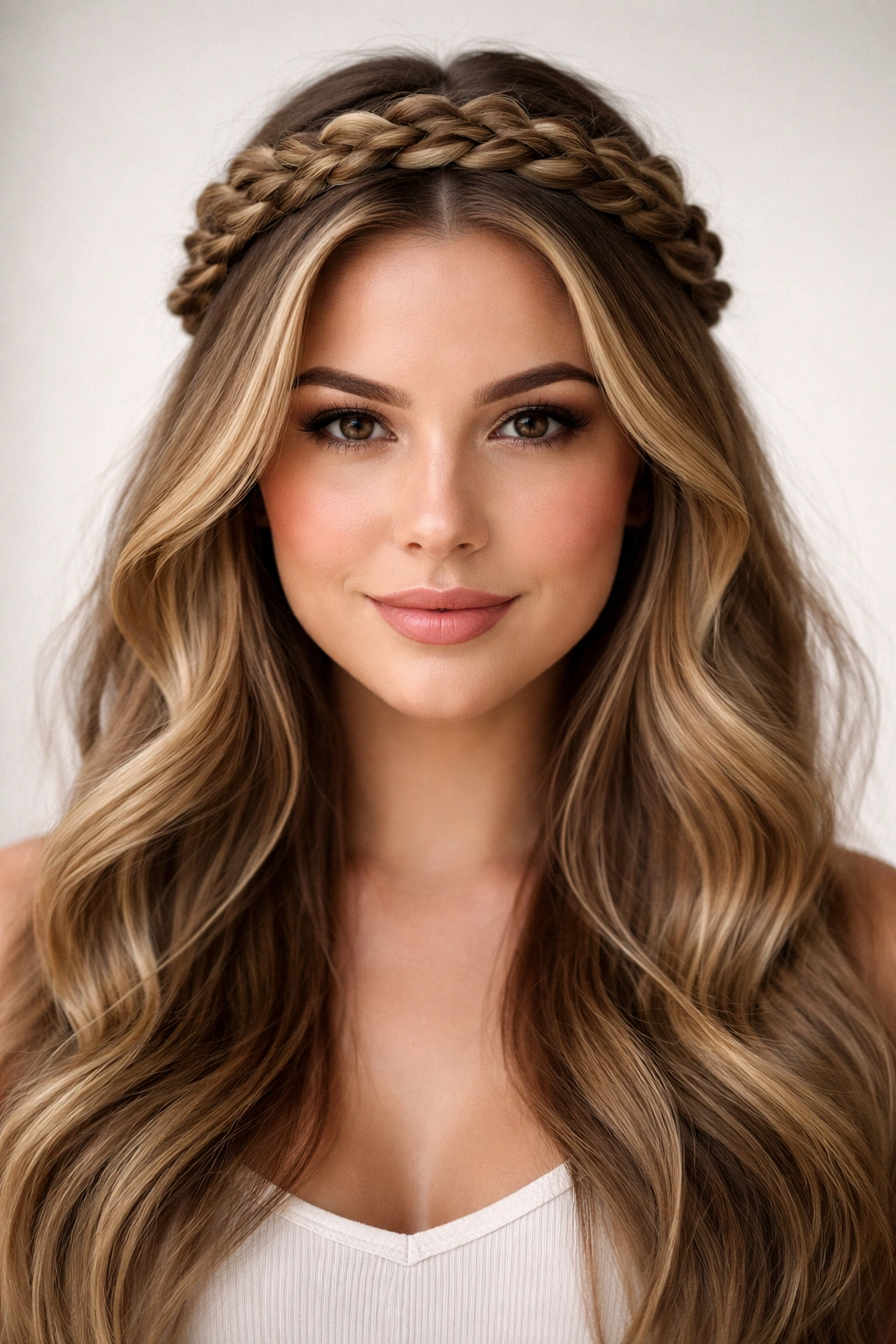
Braids are underestimated as face-shape tools, but a braid or series of braids that wrap around the crown of your head creates horizontal interest at the top of your face while drawing attention upward. When you braid crown sections and leave the rest of your hair down, you’re creating visual height and a frame that’s flattering for wider faces.
Why Crown Braids Create Beautiful Balance
Braids themselves are texture, and when positioned around the crown, they create a visual anchor at the top of your head that elongates your face. Instead of hair sitting flat on your head or emphasizing the width of your face, a crown braid (or multiple braids) creates dimension and draws the eye upward. This is particularly effective when combined with longer hair down below the braids.
How to Create a Flattering Braided Crown Style
- Start with clean, dry or slightly damp hair that’s easier to braid than freshly washed, slippery hair
- Create one Dutch braid along the crown from one ear to the other, or two smaller braids on either side of your head
- Leave the length of your hair down below the braids for a romantic, balanced look
- Gently pull at the braid sections to loosen them slightly and create a softer, fuller appearance
- Combine braids with waves in the down hair for maximum dimension and visual interest
- Use bobby pins to secure braids, and smooth flyaways with a lightweight hairspray
Pro tip: Braids are even more flattering when you add texture to them—ask your stylist for help with a braid style, or watch tutorials that show how to create intentionally “messy” or loosened braids rather than perfectly tight ones.
9. Center-Parted Curtain Bangs
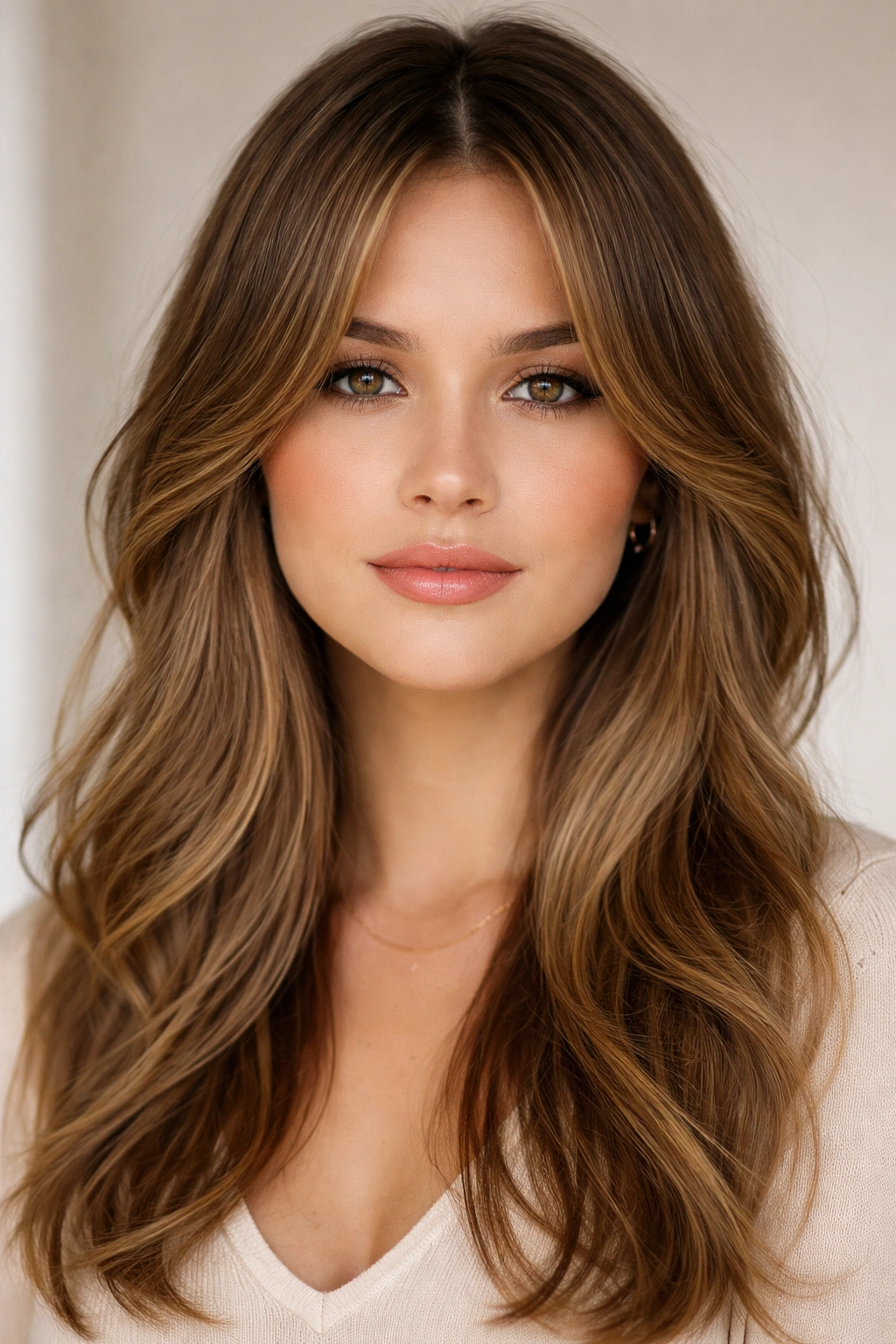
Curtain bangs—longer bangs that part down the middle and sweep away from the face on both sides—create flattering diagonal lines when you have a wider face shape. The center part itself is a vertical line that elongates, while the sweeping motion of the bangs frames the face gently without sitting flat against your cheeks. This is a softer, less severe approach than side-swept bangs, but equally flattering.
Why Center-Parted Bangs Work
Curtain bangs work beautifully because they create two diagonal lines simultaneously—one on each side of your face—that visually narrow your features. Unlike a blunt bang that would sit across the widest part of your face, curtain bangs angle away, drawing the eye inward toward your nose and mouth rather than outward toward the widest parts of your cheeks. The center part adds a vertical element that elongates.
Styling Curtain Bangs Beautifully
- Ask your stylist for bangs that are longer on the outside and gradually shorter as you move toward the center part
- They should hit around your cheekbone or slightly below, long enough to sweep away from your face smoothly
- Blow-dry the bangs away from your face using a round brush, creating a gentle curve rather than a flat surface
- Pair these bangs with longer hair overall—they’re particularly flattering with shoulder-length or longer styles
- Consider adding layers throughout the rest of your hair to create movement that prevents the style from feeling heavy
- Style the bangs with a slight wave or bend for movement rather than completely straight
Worth knowing: Curtain bangs require styling effort to look their best, but the flattering effect is worth it. They need to be trimmed every 3-4 weeks to maintain the right length and angle.
10. Tousled Shags with Movement
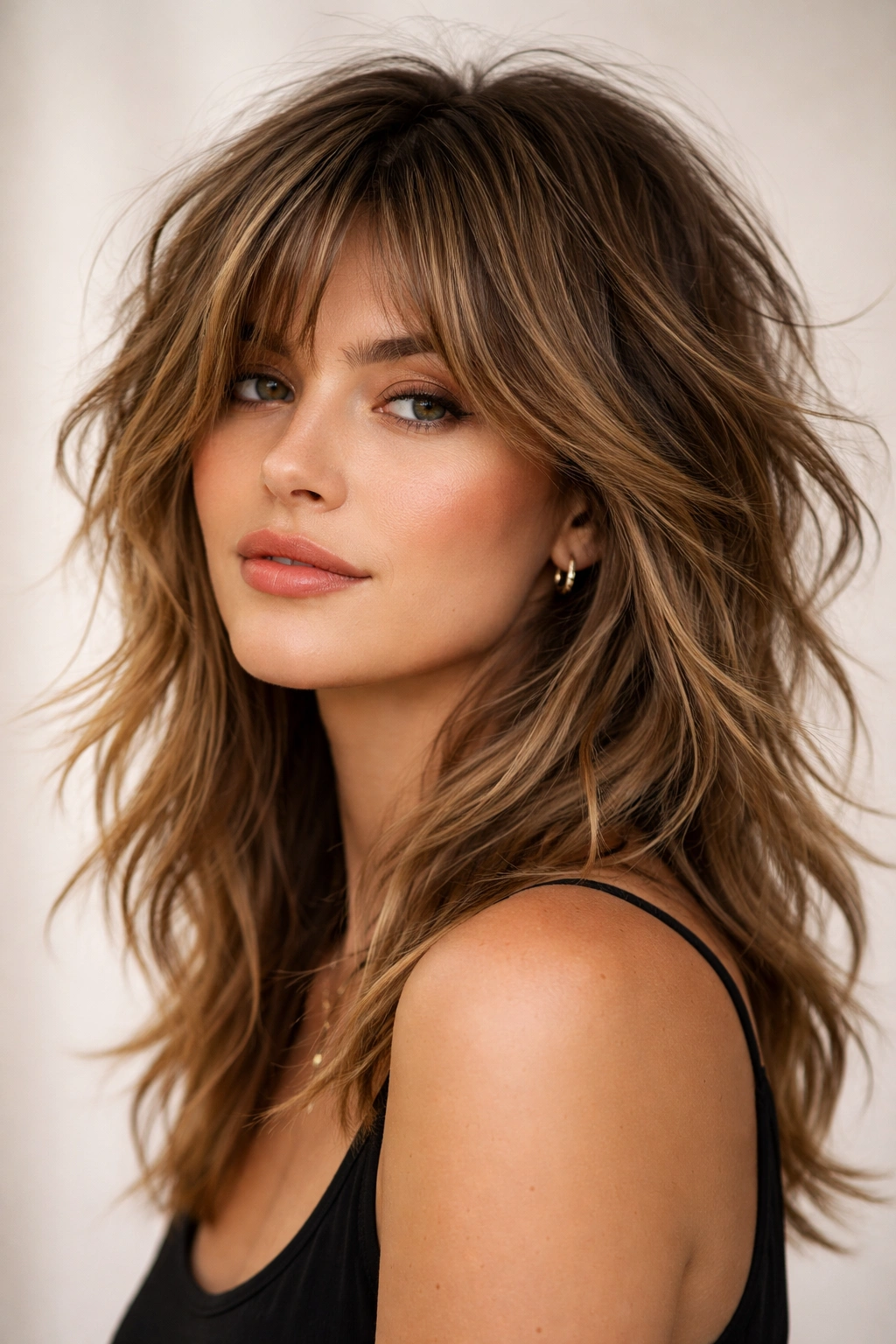
A shag cut—layered throughout with movement and texture—is actually wonderfully flattering for wider face shapes because the choppy layers create visual interest that breaks up flat surfaces and prevents the style from emphasizing width. The key is movement and piece-y styling rather than a sleek, controlled look. This is texture taken to the maximum.
Why Shags Create Visual Complexity
Shags work for wider faces because they’re so textured and move-oriented that the eye travels across the layers and dimension rather than being drawn to the width of your face. The choppy layers prevent any flat surfaces that would emphasize facial width. When a shag is styled with intention—tousled, piece-y, and full of texture—it becomes a style that stands on its own visually rather than simply framing your face.
How to Cut and Style a Flattering Shag
- Ask for layers throughout, with shorter choppy pieces on top for volume and longer pieces below for movement
- The shortest layers should be at the crown for height, gradually extending to longer layers at the ends
- Ask your stylist for longer pieces around the face that can frame gently without sitting too closely against your cheeks
- Use a texturizing product or sea salt spray to enhance the piece-y, intentional look
- Blow-dry with your head upside down first to create volume, then style pieces with a curling iron to create movement
- Consider a face-framing shorter layer that sits around your cheekbone area
- Embrace the texture—a slightly messy shag is more flattering than a perfectly smooth one
Pro tip: Shags look best with some texture in the hair itself, so if you have straight hair, a light perm or regular use of a curling iron to add waves makes this style particularly effective.
11. Half-Up Styles with Volume
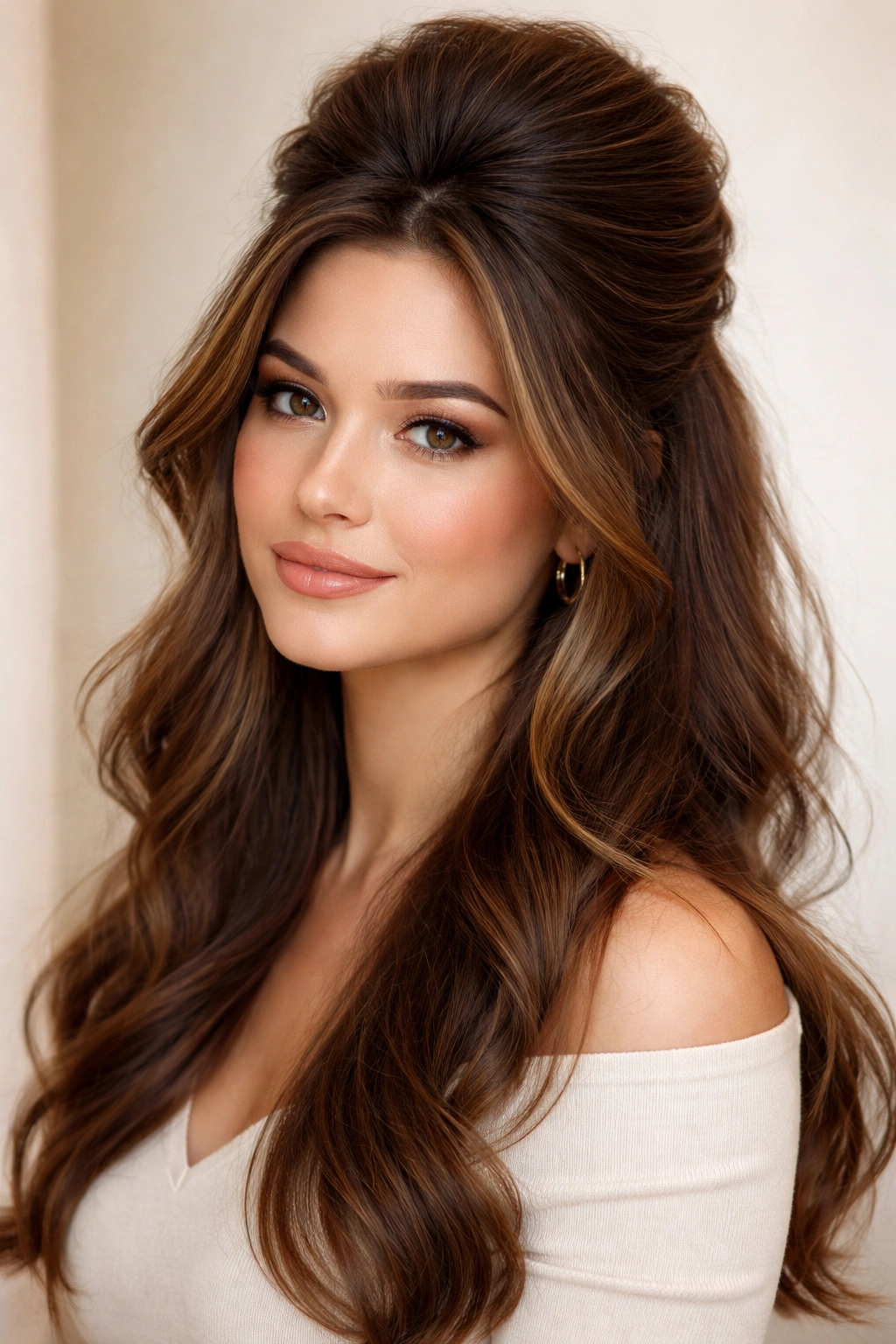
A half-up hairstyle—where you gather the top portion of your hair while leaving the length down—combines the best of both worlds for a wider face shape. The gathered portion creates height and draws attention upward, while the down hair creates length and vertical interest. This style also allows you to show off your face while managing the proportion with strategic gathering.
Why Half-Up Creates Balance
Half-up styles work beautifully for wider faces because they incorporate height (through the gathered crown) with length (through the flowing lengths below), creating a balanced proportion. The gathered section sits on top of your head, drawing the eye upward, while the lengths below create vertical lines. This prevents the style from either emphasizing width or appearing too minimalist.
How to Create a Flattering Half-Up Style
- Gather the top portion of your hair (from roughly ear to ear across the crown) and secure loosely with an elastic
- Tease gently at the crown to create height rather than a smooth, flat pull
- Leave the bottom sections down, and style with waves or curls for maximum movement and visual interest
- Consider adding a face-framing piece on each side by leaving thin sections out of the gather
- Use bobby pins to secure any flyaways and create a polished look
- Add a decorative clip, claw, or wrapped elastic to make the gathered section feel intentional
- Pair with slightly wavy or curled lengths for texture that prevents the style from sitting too flat
Insider note: A half-up style is particularly flattering when you have the gathered section sit slightly higher than you might naturally pull it—this extra height creates more elongation for wider face shapes.
12. Long Wavy Hair with Deep Side Part
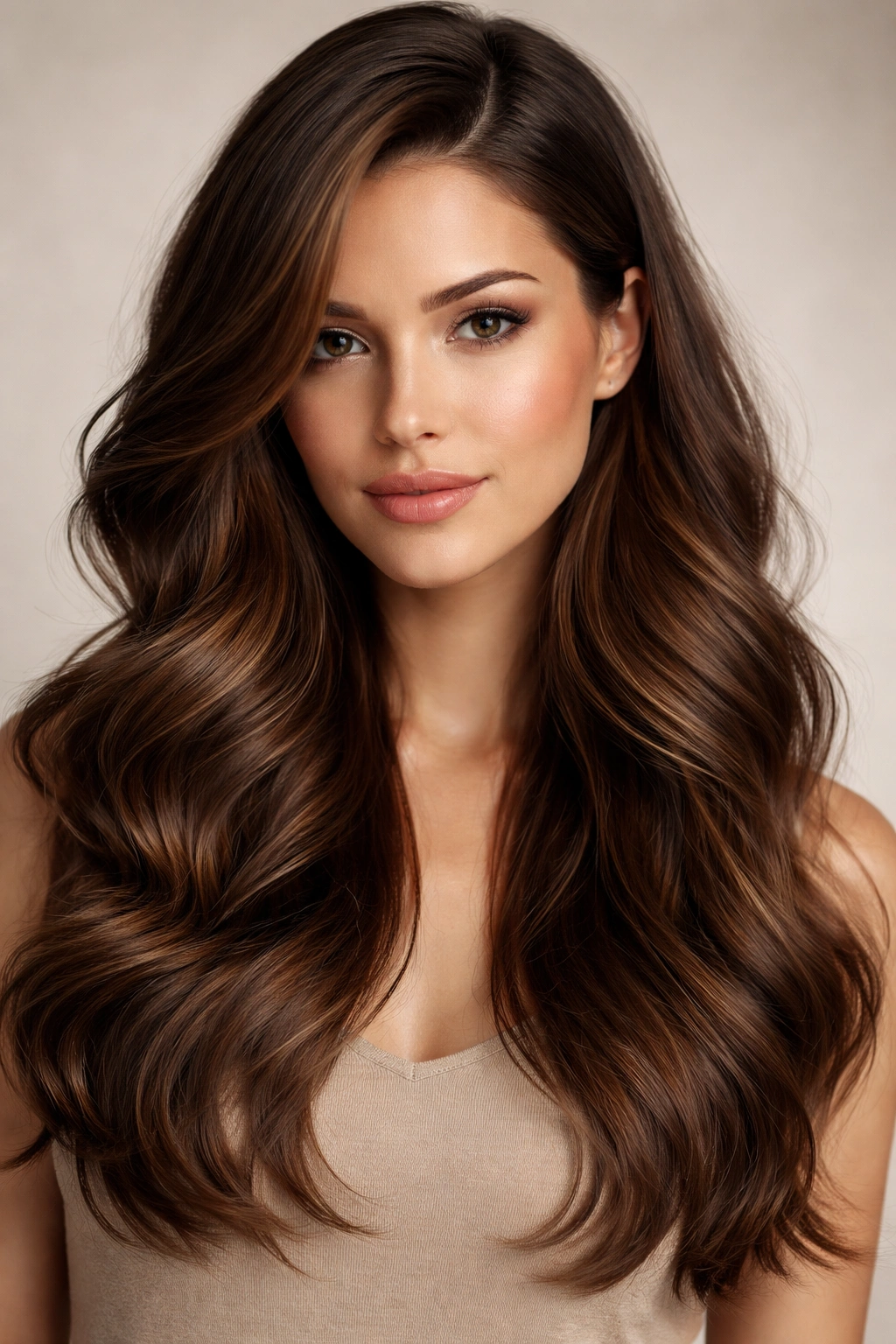
Long, wavy hair with a deep side part is perhaps one of the most universally flattering styles for wider face shapes because it combines length (which creates vertical interest), waves (which add dimension and prevent flatness), and a side part (which creates a diagonal line). The side part specifically directs attention away from the widest parts of your face toward one side.
Why This Timeless Style Endures
This style works because it’s simultaneously romantic and flattering—the waves create movement that prevents hair from sitting flat against your cheeks, the length creates undeniable vertical lines, and the deep side part creates a diagonal that visually narrows your face. There’s visual interest throughout (the waves) without bulk around your face itself.
Creating This Effortlessly Flattering Look
- Start with a deep side part, positioning the partition near your eyebrow on one side
- The hair should fall naturally, without being flipped dramatically toward your face
- Create waves throughout using a curling iron, wand, or by braiding damp hair overnight
- Waves should be loose and flowing rather than tight ringlets—this creates a sophisticated look rather than overly styled
- Use a heat-protectant spray before curling, and a light hairspray after to hold waves without making them stiff
- Consider layers throughout the length if you have very thick hair—layers allow waves to move more freely
- Style with a texturizing spray or sea salt spray for effortless-looking waves
Pro tip: This style looks intentionally undone and effortless when you don’t make the waves too perfect or uniform—slight variation in wave size and placement creates the most flattering, natural appearance.
Final Thoughts
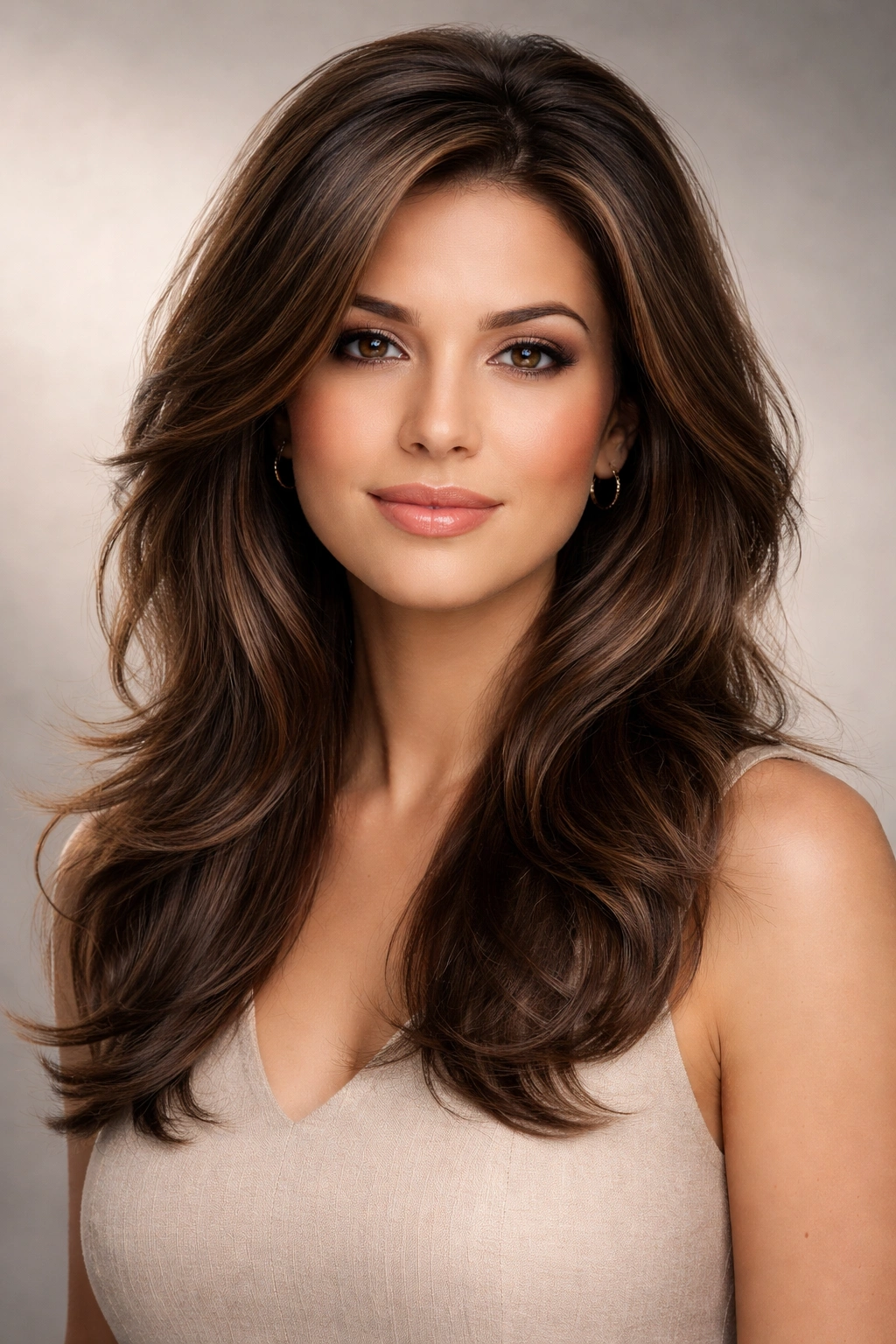
Finding the right hairstyle for your face shape is genuinely transformative because you’re not fighting against your natural features—you’re working with them. A wider face shape isn’t something to minimize or hide; it’s something to balance and frame beautifully with the right cut, length, and styling approach.
The common thread running through all of these styles is that they all create vertical lines, add height, incorporate movement, or frame the face in ways that draw attention to your best features rather than emphasizing width. Whether you prefer short, textured pixies or long, flowing waves, shoulder-length bobs or high ponytails, there’s absolutely a style that flatters your face shape and fits your personal aesthetic.
Remember that the best hairstyle is one you feel confident wearing. Take these recommendations to a skilled stylist who understands face-shape principles and can translate your preferences into a cut that genuinely works for you. Don’t be afraid to try something new—sometimes the style you didn’t expect becomes your absolute favorite, the one that makes you feel like the best version of yourself every time you look in the mirror.
