



Medium length hair sits in that sweet spot where you get maximum versatility without the commitment of long tresses or the maintenance-heavy upkeep of short cuts. But here’s the thing: adding balayage to the equation transforms a decent haircut into something genuinely striking. Balayage—that hand-painted highlighting technique that creates soft, natural-looking dimension—is the secret weapon that takes medium length cuts from basic to jaw-dropping, and the combination of length and color is exactly what catches light the best.
The magic of medium length balayage haircuts isn’t just about the color. It’s about how the cut itself works with the dimensional highlights to create depth, movement, and a sense of effortless sophistication. A good balayage on a poorly chosen cut will still look flat. But pair the right haircut with expertly placed hand-painted highlights, and you’ve got something that looks expensive, polished, and uniquely you. The length allows highlights to travel through multiple layers, the cut determines how much the color shows and moves, and together they create visual texture that seems to add fullness and dimension naturally.
Whether you’re looking for something editorial and polished, beachy and undone, or somewhere in between, there’s a medium length balayage style that hits exactly right. These cuts work across hair types—straight, wavy, curly—and across color palettes from cool blondes to warm caramels to dimensional brunettes. The medium length gives you that perfect balance of styling ease and styling possibility. You’ve got enough length to do something, but not so much that blow-drying takes forever or heat damage becomes a genuine concern.
Let’s walk through twelve distinctly different medium length balayage haircuts that genuinely work, with specific details about what makes each one unique and how to know if it’ll suit your hair type, face shape, and lifestyle.
1. Long Bob with Dimensional Balayage
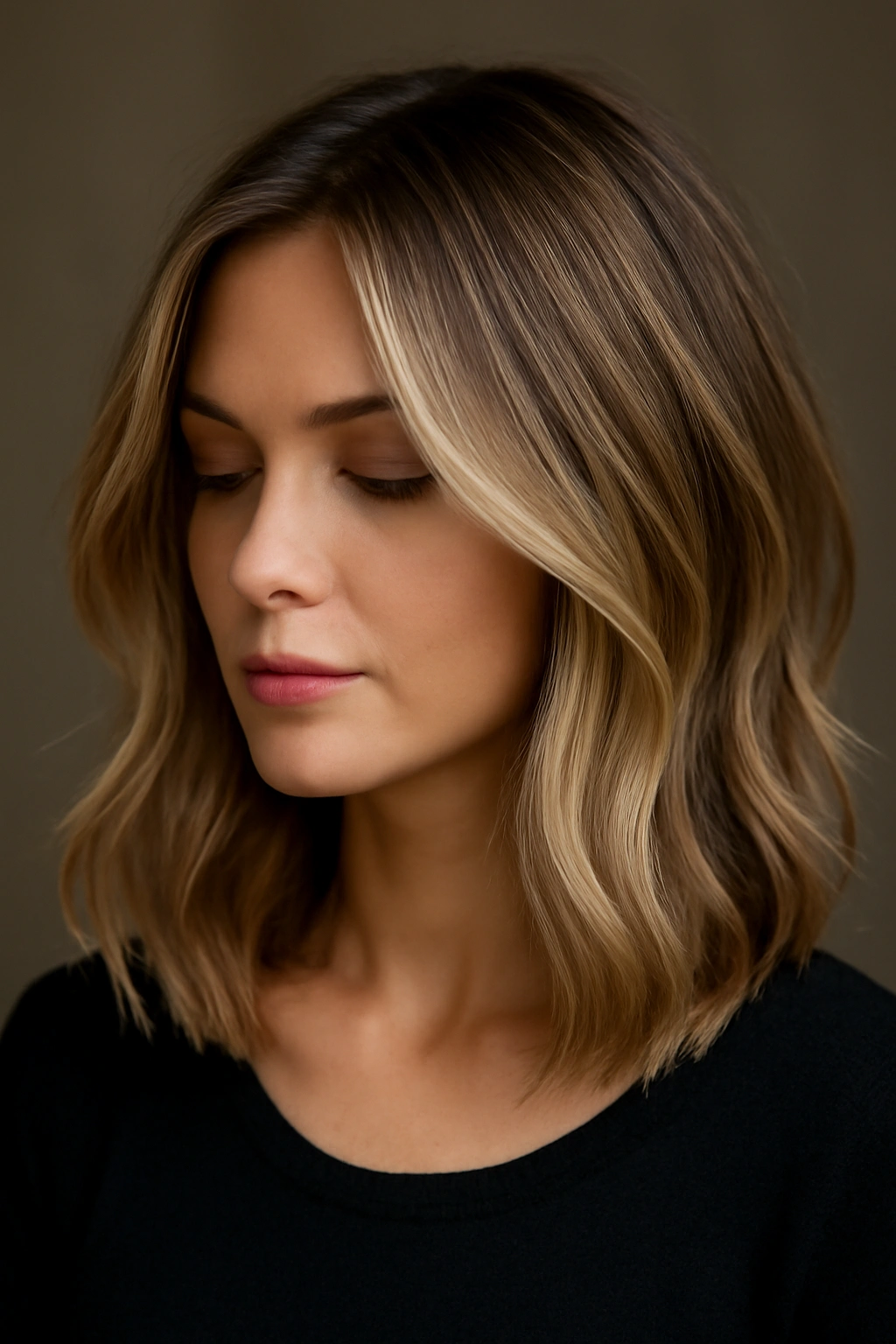
The long bob—sometimes called a lob—might be the single most flattering medium length cut, especially when paired with balayage. This cut typically hits somewhere between the collarbone and mid-shoulder, creating that perfect sweet spot of length. What makes a long bob special is the way it combines structure with movement; it’s not quite shoulder-length, so the weight of the hair creates natural body and swing, and balayage layered through that movement looks dramatically different depending on how the hair falls.
Why This Cut and Color Combination Works So Well
A long bob relies on precise length and subtle layering to create its signature shape—and balayage is the perfect technique to amplify that shape. The highlights travel through the cut’s layers, which means they’ll be most visible when light hits the surface layers and most subtle in the interior. This creates an optical illusion of additional texture and dimension. The soft, grown-out nature of balayage also prevents the cut from feeling too severe or blocky. Even a blunt-ended long bob softens considerably when honey, caramel, or buttery blonde highlights are distributed through it.
How to Style and Maintain It
- Straight hair with a long bob looks absolutely pristine with balayage, especially if the highlights are placed to frame the face—consider asking your colorist for slightly more concentrated color around your face and temples
- Wavy or curly hair in a long bob with balayage gives you maximum dimension because the curl pattern itself shows off the color variation beautifully
- This cut works wonderfully with a center or side part; both will show off face-framing color differently
- Blow-drying with a round brush and a light texturizing spray creates the polished version; scrunching in product while damp creates the undone version
Pro tip: A long bob’s success hinges on the cut being refreshed every 6-8 weeks to maintain the precise length and shape. Balayage touch-ups can stretch to 8-12 weeks since the grown-out effect is intentional, but the cut maintenance is non-negotiable.
2. Textured Medium Shag with Dimensional Balayage
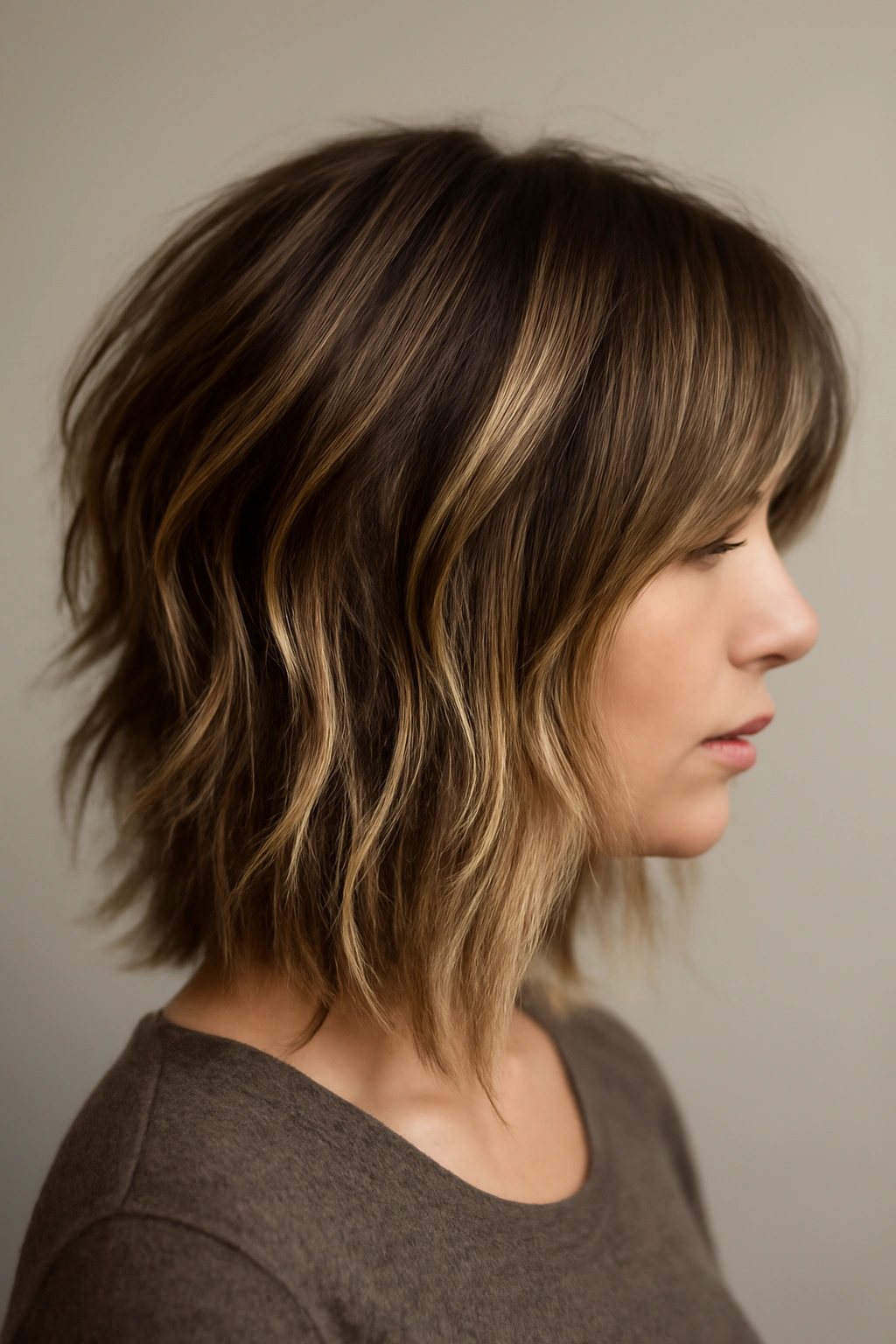
Shags are having a genuine moment, and a textured medium shag isn’t your 1970s throwback—it’s a modern, personalized take on that heritage style. This cut is all about choppy layers starting from the crown and working all the way down, creating a piece-y, deliberately undone texture. Medium length keeps it wearable and not costume-y; it sits somewhere around chin-length to shoulder-length depending on your hair type and how the layers fall.
The Texture-Color Relationship
What makes a shag absolutely sing with balayage is that the cut itself is built on texture. Every choppy layer catches light differently, which means every highlight does too. Balayage on a shag cut creates an almost three-dimensional effect where you see color shifting and changing as the hair moves. The informal, intentionally textured nature of a shag also means that balayage works without needing to be perfectly placed—imperfect, organic color placement actually looks more intentional on a shag than on a blunt or straightforward cut.
What You Need to Know About Styling This Style
- Textured medium shags require product to really shine; a lightweight texturizing spray, sea salt spray, or styling cream is essential for activating that choppy layer effect
- The balayage on a shag works best when highlighted on the shorter, outer layers so the color is visible and not hidden under longer interior layers
- This cut pairs beautifully with both warm and cool tones depending on your skin undertone; caramel and honey work on warmer skin, while platinum and ash blonde suit cooler undertones
- Styling is legitimately easy—you can air dry with product and get a polished, intentional look, or blow dry for more control
Worth knowing: Shags are cut at an angle that requires the right hand. Find a stylist experienced specifically with modern shags—it’s not a cut that generalizes well across techniques.
3. Choppy Layers with Honey Balayage
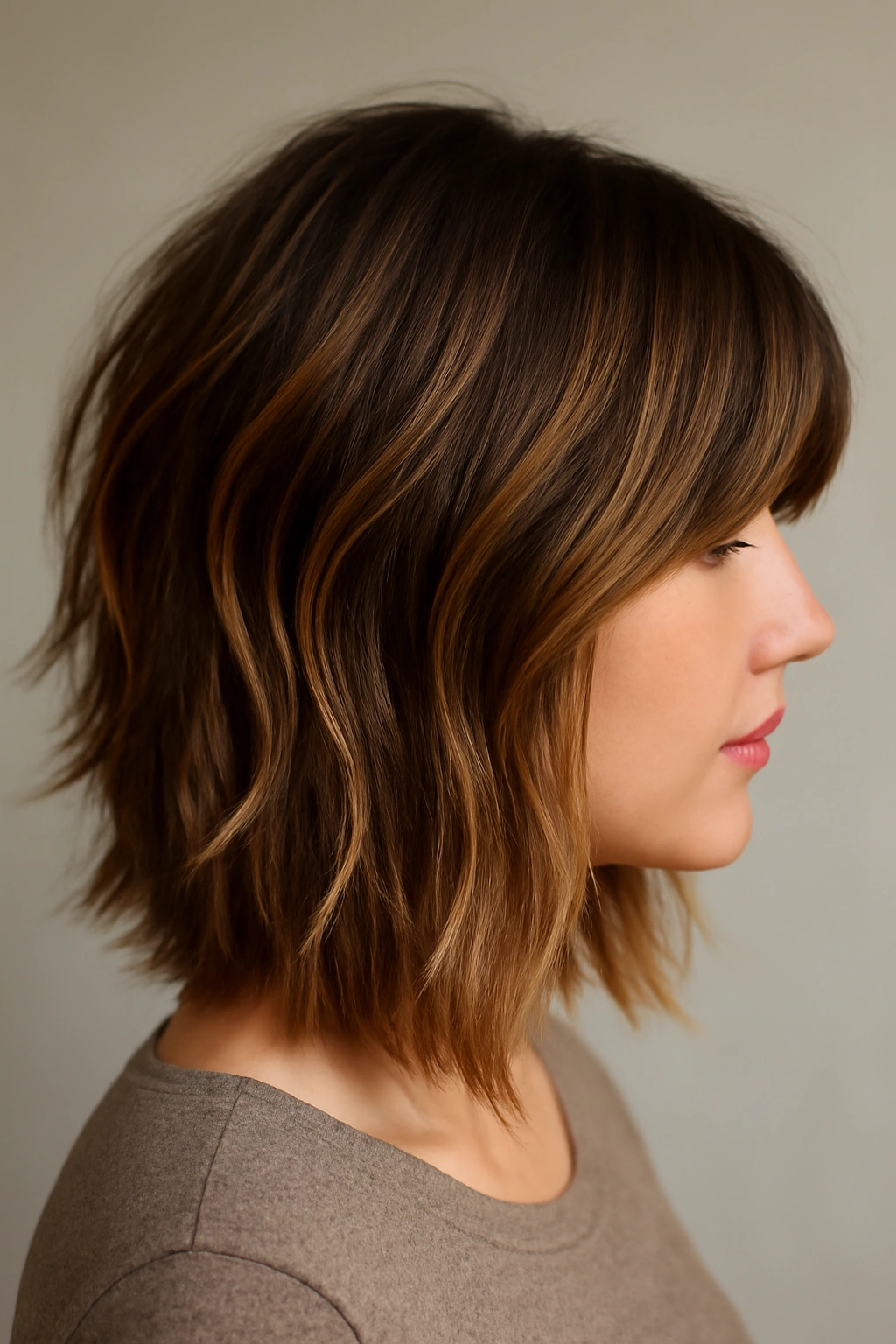
If you love movement and texture but a shag feels too dramatic, choppy layers are your answer. This cut sits slightly longer than a shag—usually hitting right at the shoulders or just below—with shorter choppy layers throughout that create movement without the intentionally undone vibe of a shag. It’s more polished, more structured, yet still incredibly textured and dynamic.
How Honey Balayage Elevates Choppy Layers
Honey tones—warm, golden, slightly dimensional—are absolutely made for choppy layer cuts. The lighter tones catch on the shorter, outer layers, and the deeper honey undertones show in the interior. This creates an effect where the cut’s texture seems amplified; your hair looks thicker and more voluminous than it actually is. Honey balayage also photograph beautifully and flatters a wider range of skin tones than cooler blonde highlights. It reads as warm, approachable, and naturally lit.
Styling Considerations for This Cut and Color
- Choppy layers with honey tones work best when blow-dried to activate the movement; air drying can flatten the layers
- A light texturizing spray or cream applied to damp roots before blow drying helps emphasize each layer
- The honey color shows best in natural and warm lighting, so this combo is perfect if you spend time outdoors
- Face-framing layers should be slightly shorter and highlighted slightly more concentrated to brighten your face and eyes
Insider note: This cut works across hair types, but it’s particularly stunning on naturally wavy hair because the waves emphasize each choppy layer.
4. Straight Medium Length with Sun-Kissed Highlights
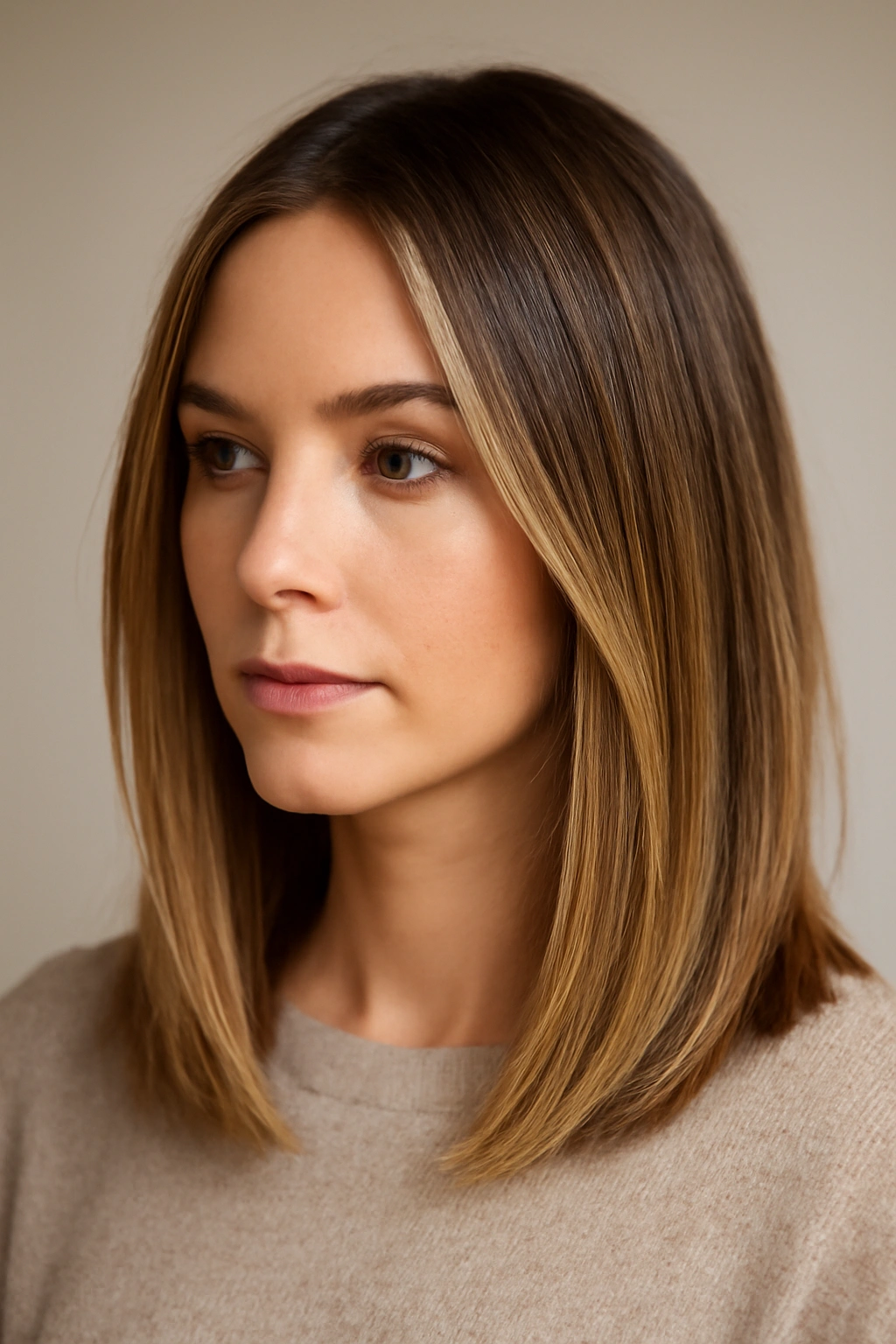
Sometimes the most sophisticated look is simplicity with a twist. A straight, blunt or nearly-blunt medium length cut is timeless and flattering—and when you add sun-kissed balayage (highlights that look genuinely like sun exposure rather than intentional coloring), you get something that feels expensive and effortless simultaneously. This cut typically hits around shoulder length, with minimal layering, allowing the weight and movement of the hair itself to create the shape.
The Sun-Kissed Effect and Why It Works
Sun-kissed highlights are placed to mimic where the sun would naturally lighten your hair—concentrated around the face, along the crown, and through the top layers, with more subtle color on the underneath and interior. On a straight medium cut, this technique creates a halo effect around your face while maintaining the integrity and shape of the cut. It reads as naturally dimensional rather than obviously colored, which is exactly what makes it feel sophisticated.
Making This Look Work for Your Hair Type
- Straight hair shows off sun-kissed balayage beautifully because the light hits it evenly; any texture in the highlights will be visible
- This cut works best with a center or slightly off-center part that lets you wear your hair sleek or slightly textured
- Maintenance is legitimately minimal; a straight cut with sun-kissed color can go 10-12 weeks between touch-ups without looking grown out
- Styling is simple: blow dry straight for polished, use a flat iron for extra sleekness, or add waves with a curling iron for more dimension
Pro tip: Ask your colorist for slightly warmer tones if you have warm undertones, and slightly cooler tones if you’re cool-toned. Sun-kissed works across the board, but the undertone matching makes the difference between “beautiful” and “absolutely glowing.”
5. Shoulder-Length with Strategic Face-Framing Balayage
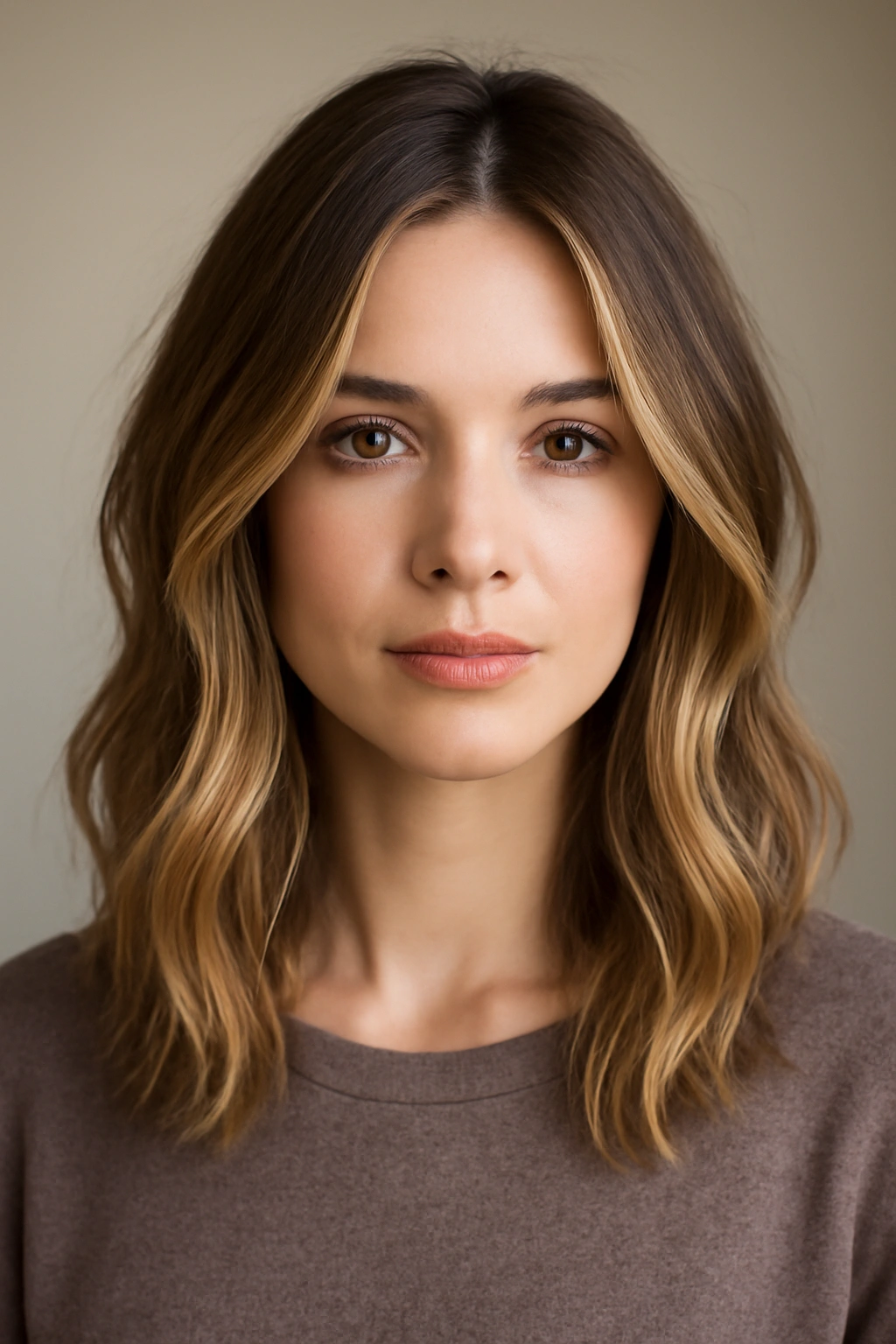
Face-framing is an underrated technique that changes how light hits your face and, more importantly, how your facial features photograph and appear in person. A shoulder-length cut with strategic face-framing balayage places the lighter highlights exactly where they’ll brighten your face and draw attention upward. The rest of the color is more subtle, creating a gradient where your face becomes the focal point.
The Psychology of Face-Framing Color
Face-framing color works because of contrast and light reflection. Lighter tones bounce light forward toward your face, which makes your features appear more open and lit from within. This technique is particularly effective if you have a longer face shape (it makes it appear shorter), or if you want to emphasize your eyes. The balayage technique—hand-painted rather than foiled—means the color is organic and doesn’t create harsh lines, so even dramatic face-framing looks intentional rather than accidental.
Details About Cut and Color Placement
- This works best when the face-framing pieces are actually cut slightly shorter than the rest of the hair, creating a visible shape around your face
- The lighter balayage should follow where the cut is shortest; if your face-framing layers end at your chin, place the highlights in that zone
- A middle part or slightly side part shows off face-framing color the best
- This technique is brilliant if you have a strong jawline or angular features you want to emphasize, or if you want to soften a round face
Worth knowing: Face-framing balayage requires precision placement from your colorist. Don’t do this with just any colorist; you want someone experienced with color placement who can visualize how light will reflect off your specific face shape.
6. Wavy Medium Bob with Caramel Tones
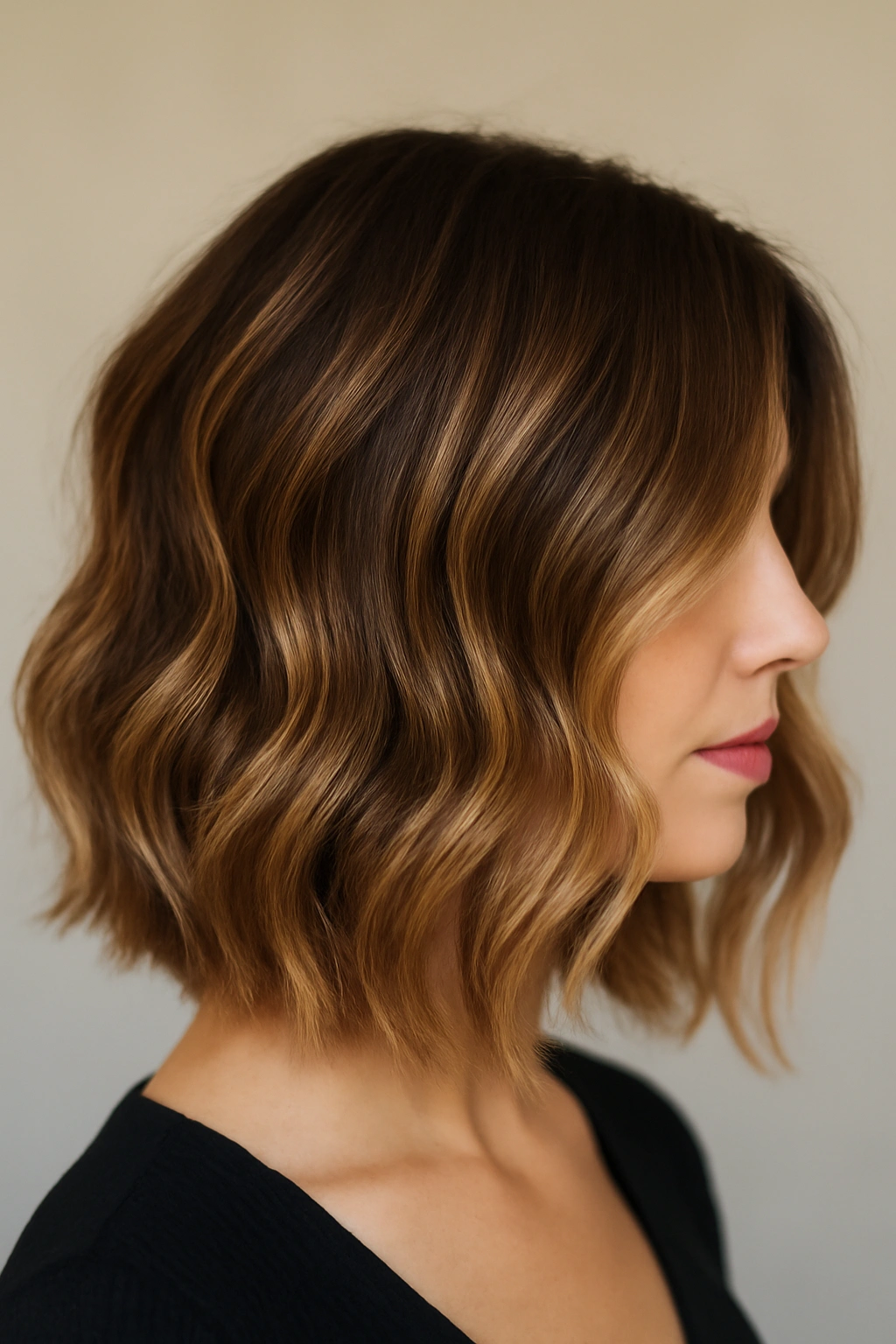
A wavy medium bob is inherently romantic and texture-rich, and caramel tones—warm, multi-dimensional browns with golden and blonde undertones—make that texture feel intentional and luxe. This cut combines the structure of a bob with enough length and texture that it moves and flows rather than sitting stiffly. The waves create constant dimension, and caramel balayage plays beautifully into that texture.
Why Caramel Works on Wavy Hair
Caramel is essentially a dimensional brown—think warm chocolate with golden honey notes throughout. On wavy hair, this color creates depth because the waves create shadow and light naturally, and caramel with its multi-tonal quality amplifies that effect. The color looks different depending on lighting, which keeps the look dynamic and interesting. It also photographs beautifully and flatters a huge range of skin tones, from warm golden undertones to cooler olive undertones.
How to Get and Maintain This Look
- Your natural hair color matters here; if you’re starting very dark, achieving caramel might require lightening (which should be done by a professional)
- Caramel tones with wavy hair look best when the balayage is placed throughout the hair, not just face-framing, so the waves show off the color constantly
- Wavy medium bobs require product to maintain their shape; a lightweight wave-enhancing cream or curl-defining product is essential
- Blow drying with a diffuser attachment or finger-styling will enhance the natural wave pattern
Pro tip: Wavy hair naturally creates caramel-toned dimension as it moves through light, so balayage in this color family looks like an enhancement of your hair’s natural potential rather than something obviously colored.
7. Blunt Medium Cut with Rooted Balayage
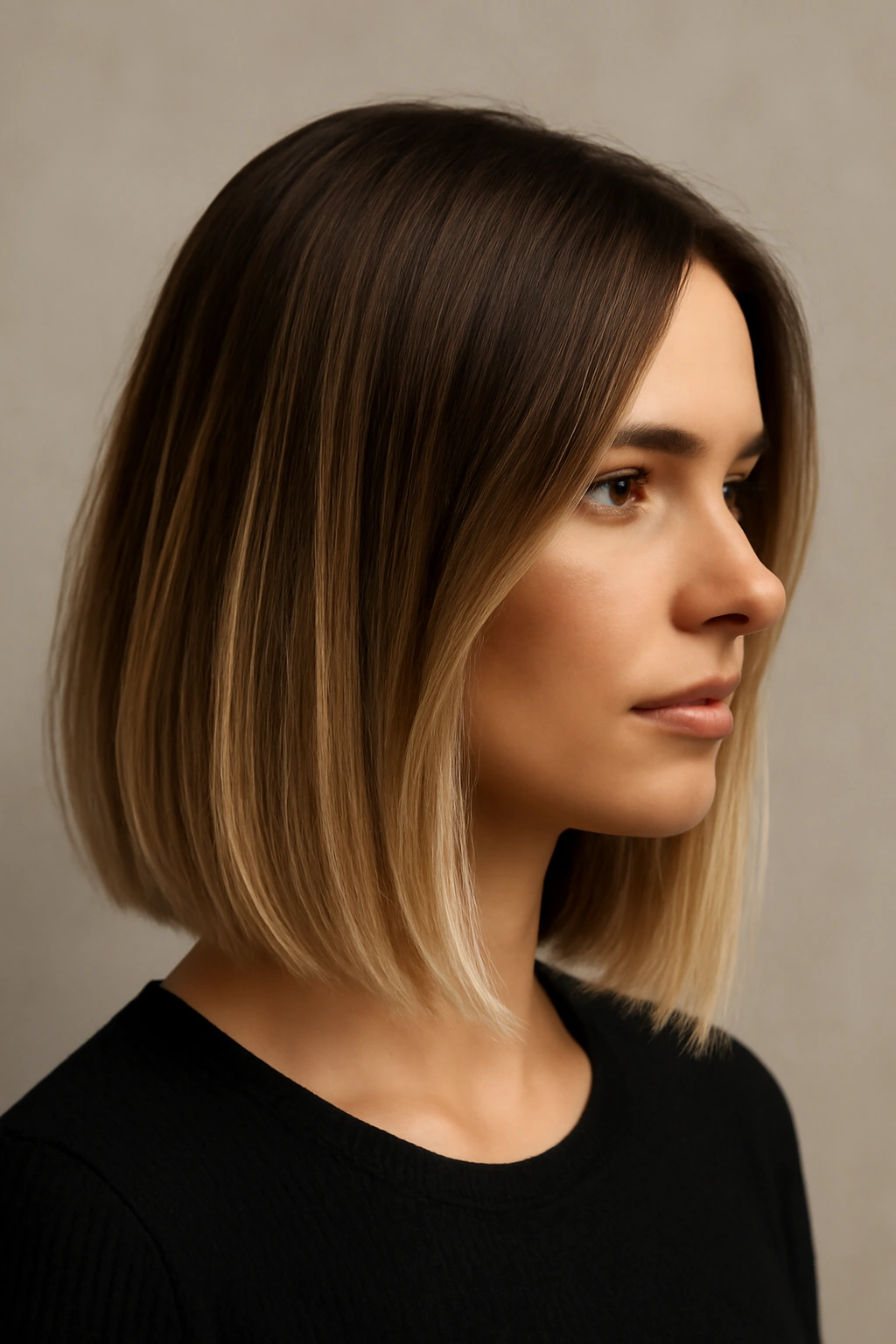
A blunt medium cut—one where the bottom edge is clean and straight across—is maximally polished and intentional-looking. Pairing it with rooted balayage (where the roots remain dark and the lighter color is concentrated on the mid-lengths and ends) creates a sophisticated, on-trend look that reads editorial and expensive. The contrast between the dark roots and lighter ends creates visual movement and prevents the blunt cut from feeling harsh.
The Rooted Balayage Advantage
Rooted balayage serves multiple purposes: it allows you to stretch time between touch-ups (dark roots are intentional, not neglect), it creates a gradient effect that makes hair look thicker and more voluminous, and it prevents the sharp, high-maintenance blonde look that can read costume-y. On a blunt medium cut, rooted balayage softens the precision of the cut while maintaining its sophistication. The darker roots also make the lighter ends seem to float, creating an almost shadow-and-light effect.
Styling This Cut and Color
- A blunt cut works best when you have healthy hair; split ends show instantly on a blunt edge, so maintenance matters
- Rooted balayage looks best when the roots are actually quite dark (think dark brown or black) and the ends are noticeably lighter, creating genuine contrast
- Straight or slightly wavy hair shows off a blunt cut the best
- Styling is simple: blow dry straight or slightly textured, or curl the ends for a more romantic feel
Worth knowing: A blunt cut with rooted balayage can look trendy or timeless depending on execution. Make sure your stylist understands the vibe you’re going for—very blunt with high contrast reads trendy; slightly softer blunt with less dramatic rooting reads more classic.
8. Textured Piece-y Cut with Dimensional Balayage
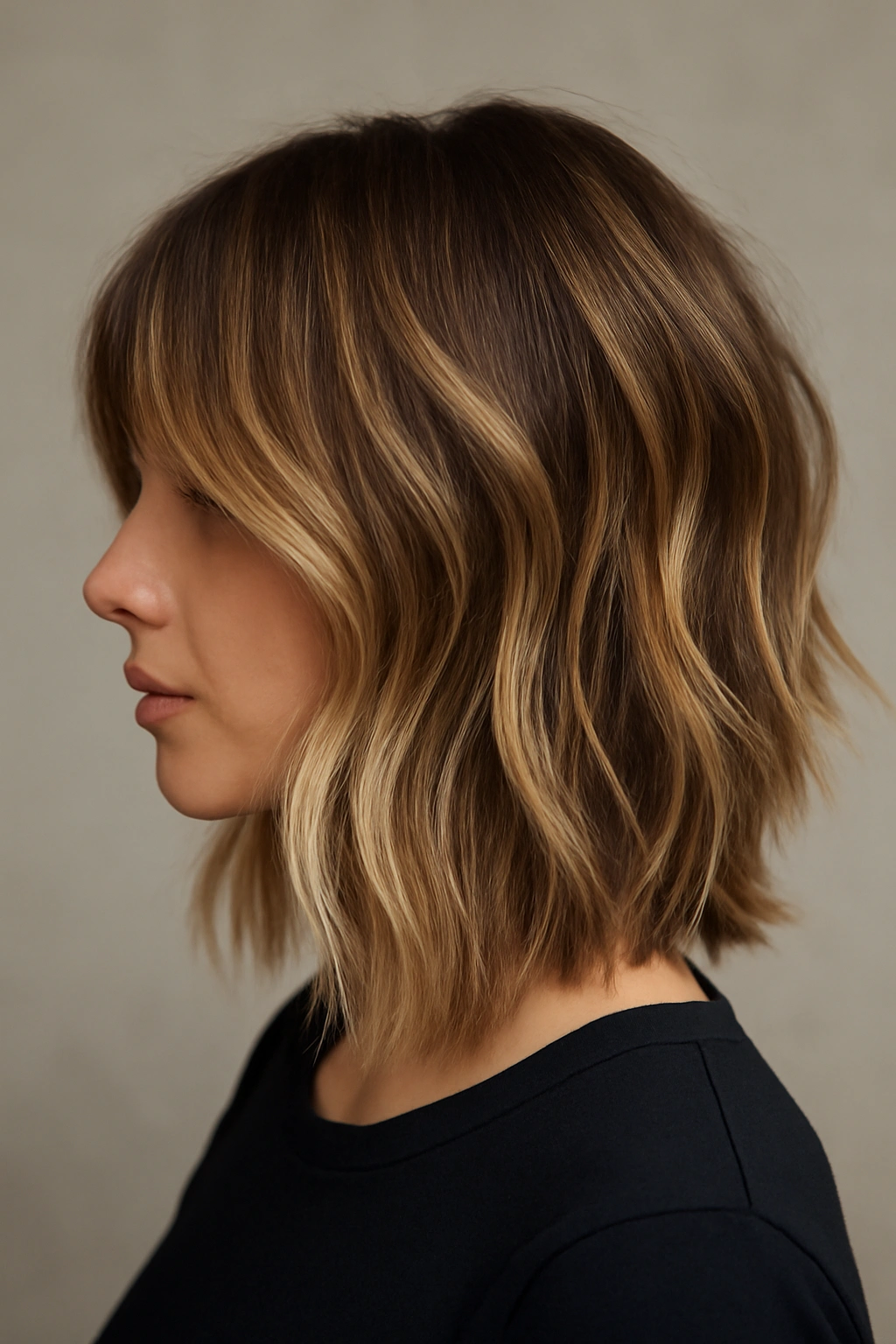
This cut sits somewhere between a shag and choppy layers—it’s textured and piece-y but more controlled and wearable than a full shag. The layers are deliberately choppy and distinct, creating a puzzle-like quality where individual pieces of hair are visible and separate. Medium length keeps this from looking costume-y or overly dramatic. Dimensional balayage (multiple shades of blonde, brunette, or a mix) in a piece-y cut means the color is constantly visible as the hair moves.
The Texture-Dimension Relationship
A piece-y textured cut literally multiplies the surface area where balayage can show. Each individual piece of hair is its own mini-highlight opportunity, so dimensional balayage—using 2-3 shades—creates an effect that’s richer and more complex than a single-tone color. This cut is particularly effective with a mix of bronde (brown-blonde) tones, where you might see dark chocolate, caramel, honey, and blonde all in the same cut, creating a seamless, natural-looking gradient.
Getting the Most From This Cut
- Product is essential; texturizing spray, sea salt spray, or a lightweight cream activates the piece-y nature of the cut
- This cut requires more frequent trims (every 6-8 weeks) to maintain the textured shape
- Air drying with product can work, but blow drying with a diffuser or concentrating on the roots for lift gives better definition
- Dimensional balayage in a piece-y cut looks best when placed throughout, not just face-framing; you want the color visible everywhere
Insider note: This is the cut for people who like to touch their hair constantly—it rewards that texture-activated, piece-y look that comes from running your fingers through it.
9. Medium Lob with Scattered Highlights
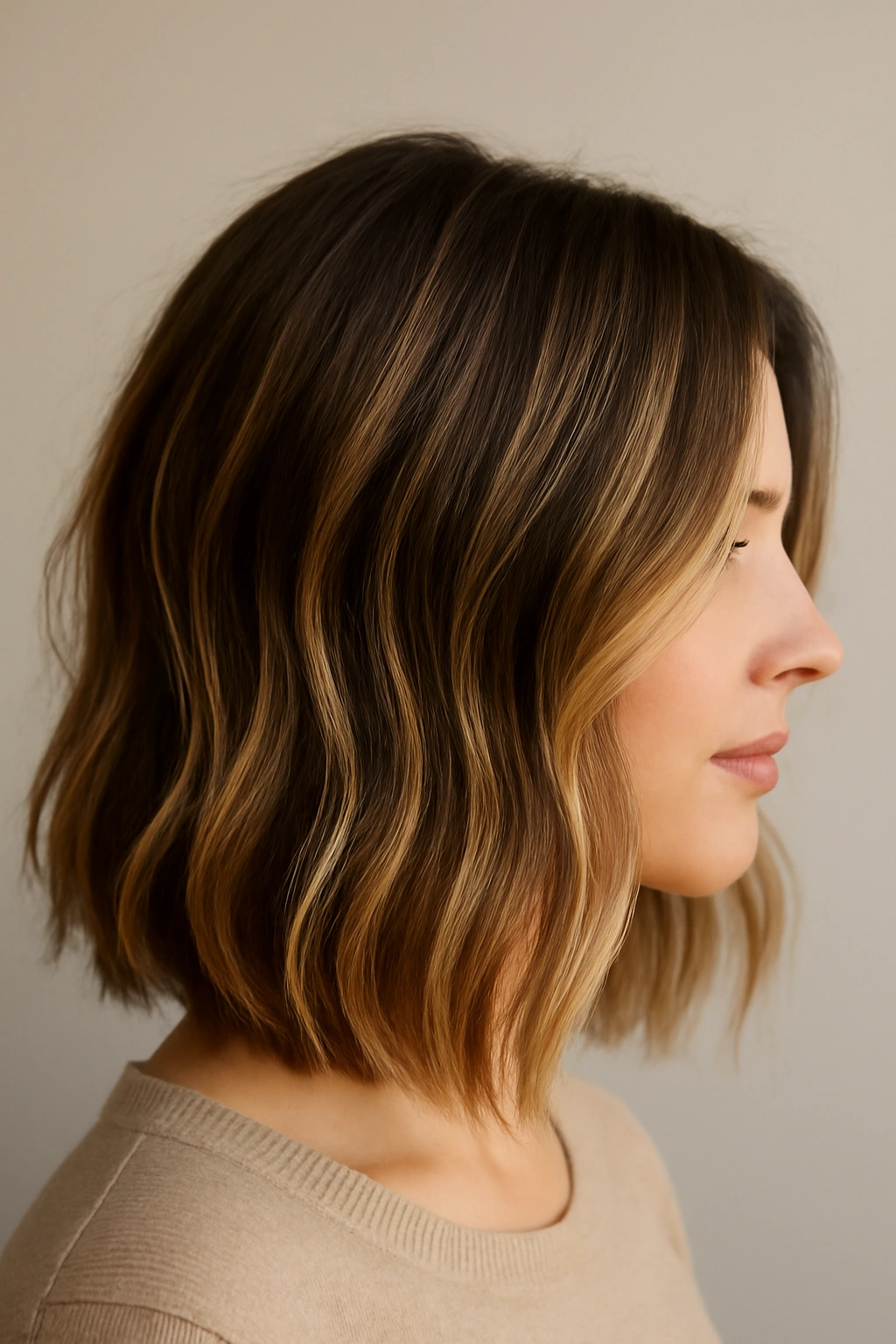
A lob (long bob) that hits mid-shoulder with scattered balayage highlights is the definition of effortless, wearable sophistication. “Scattered” highlights means the color is distributed throughout the hair with no obvious placement pattern—they’re where the light hits and where your colorist’s hand naturally goes. This creates a lived-in, undone look that somehow reads more expensive than very precise, perfect placement.
Why Scattered Balayage Reads So Well on a Lob
Scattered placement on a medium lob allows the color to exist in unexpected places—sometimes showing up on an interior layer, sometimes on the shortest top layer, sometimes traveling down the back. This unpredictability is what makes it look organic and unintentional, which paradoxically makes it read as more intentional and sophisticated. The medium length provides enough surface area for the scattered highlights to create real dimension without overwhelming the cut.
Styling and Maintaining This Look
- A medium lob works on almost every hair type; straight hair shows off the scattered highlights cleanly, while wavy or curly hair amplifies the dimension
- Center or side parts both work beautifully; the scattered highlights will show up differently depending on which way you part
- Styling can be minimal: air dry with product for a casual look, or blow dry for more control and polish
- Scattered highlights stretch beautifully between touch-ups; the imprecise placement means 12-16 weeks can pass before the regrowth becomes noticeable
Pro tip: Scattered balayage also means your colorist doesn’t need to spend time on precise placement, which can make this a more affordable balayage option than highly detailed work.
10. Curly Medium Length with Multitonal Balayage
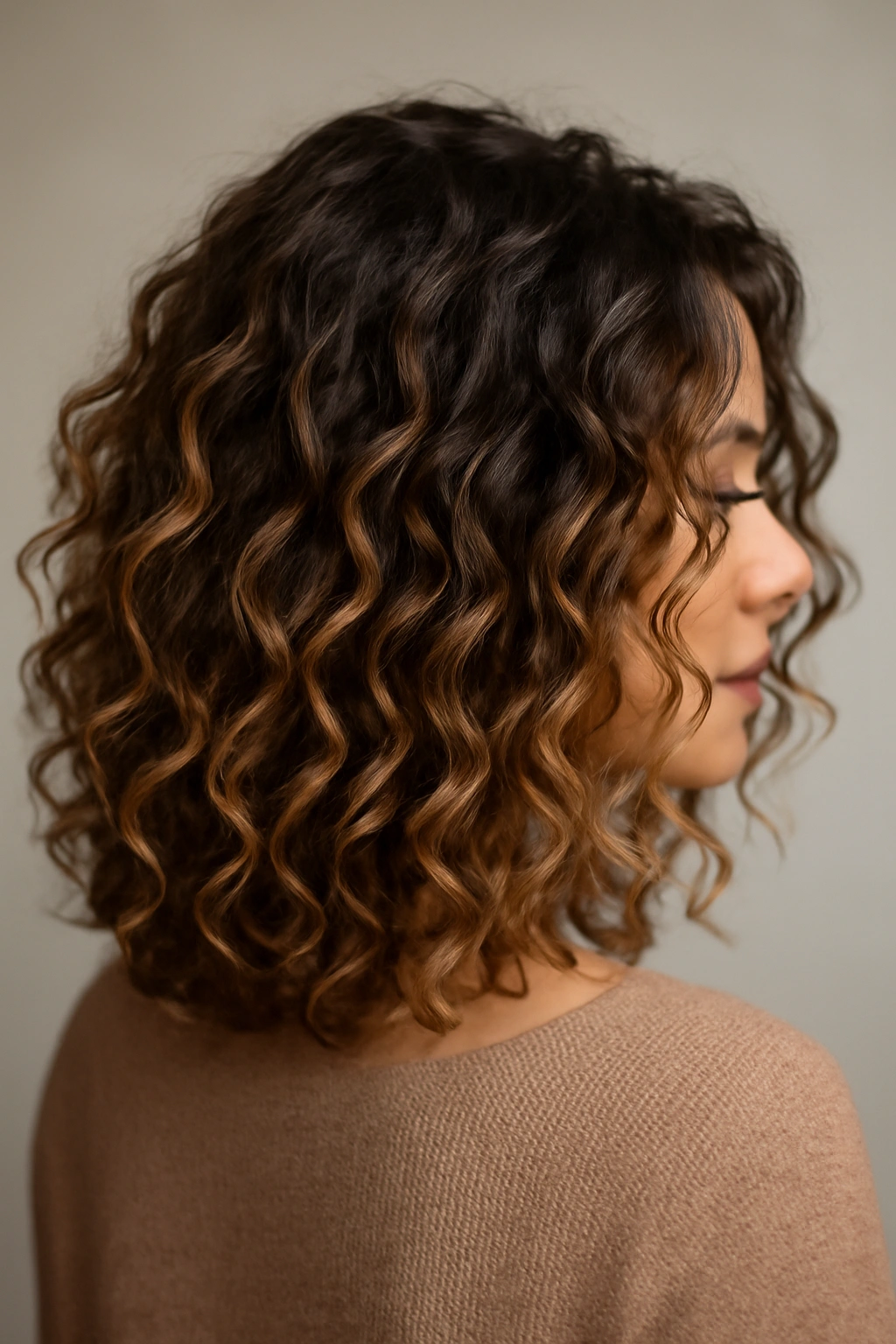
Curly hair is inherently beautiful and textured, and a medium length curly cut—where curls are cut dry to honor their actual pattern and length—with multitonal balayage is genuinely stunning. Curls create shadow and light naturally, and multitonal balayage (3+ shades ranging from dark to light) works with that natural texture to create dimension that seems to be built into the hair itself. Medium length keeps curls manageable while providing enough length that they show off volume and movement.
How Curls and Multitonal Color Work Together
Curls already create visual texture; adding multiple tones amplifies that dramatically. A multitonal approach might include your natural base color, a medium tone, and a lighter tone, creating a gradient within each curl. The way light hits curls at different angles means different tones show up depending on how you’re looking at the hair—it reads as dynamic and rich. This is particularly effective with warm tones (caramel, honey, bronze) on deeper skin tones, or cool tones on lighter skin tones, but the key is that multitonal color and curly texture are genuinely made for each other.
Important Notes About Coloring Curly Hair
- Curly hair tends to be more porous and dry than straight hair; make sure your colorist uses quality color and deep conditioning treatments
- Dry-cutting curly hair is essential so the stylist can see the actual curl pattern and length; never have curly hair cut on wet hair
- Multitonal balayage requires more careful sectioning and placement than balayage on straight hair; find a colorist experienced with curly hair
- Balayage placement should happen on dry hair so the colorist can see where the color sits on your actual curls
Worth knowing: If your curls are prone to frizz, multitonal balayage actually helps because it adds perceived texture and dimension that makes frizz less noticeable (frizz is less visible when you’re already expecting texture and dimension).
11. Side-Parted Medium with Ribbon Balayage
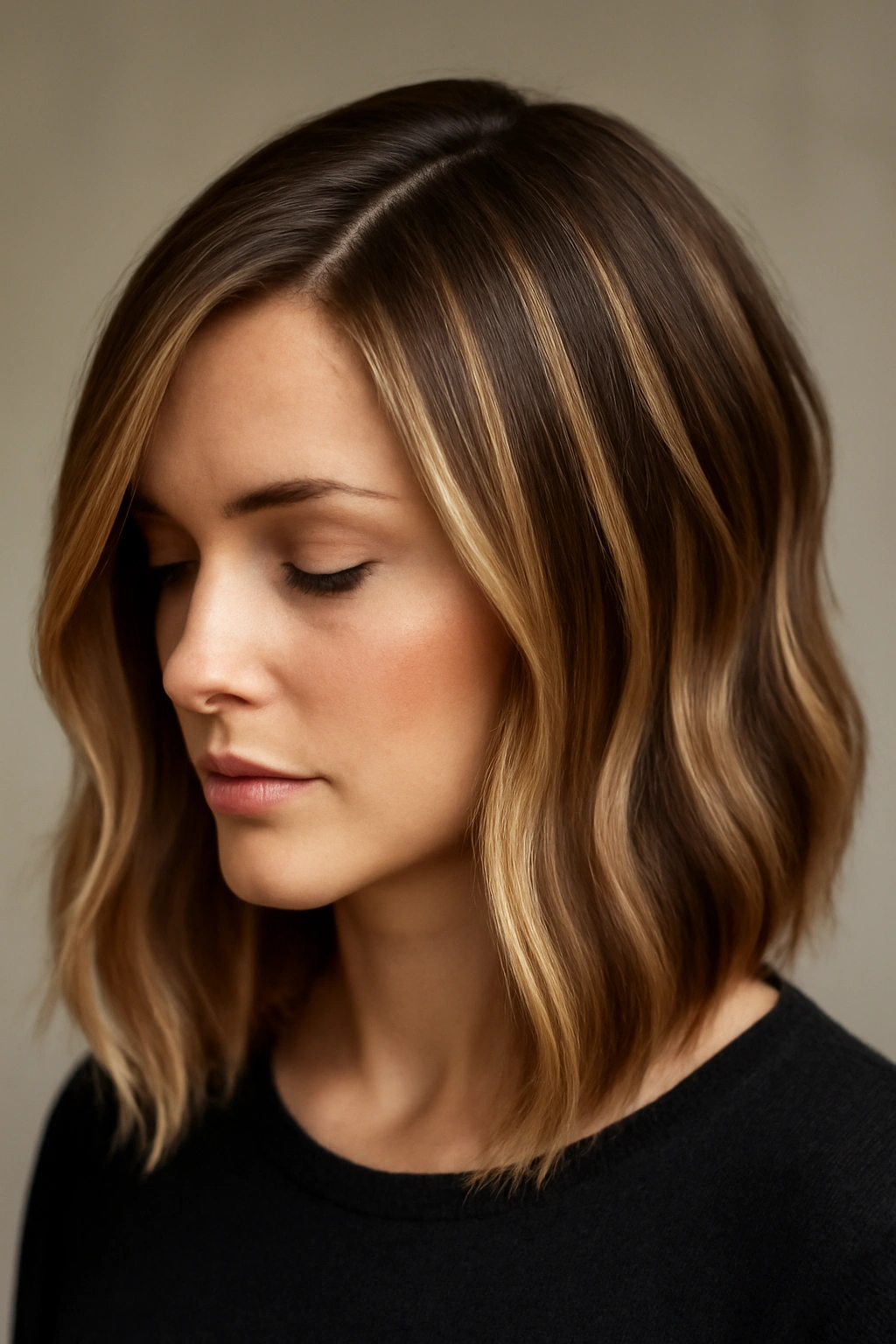
Ribbon balayage is a specific technique where color is placed in vertical “ribbons” throughout the hair, creating a striped effect that’s more precise than traditional scattered balayage but less rigid than full foil highlights. On a side-parted medium length cut, ribbon balayage creates movement and direction that complements the off-center part. The ribbons of color travel down the hair, making the style feel longer and more flowing.
The Direction and Movement That Ribbon Balayage Creates
A side part naturally directs the eye in one direction; ribbon balayage ribbons enhance that directionality by creating vertical lines of color that follow the same flow. This makes the entire style feel more intentional and directional. The ribbons should be placed to enhance the part—slightly more concentrated on the side being pulled back, traveling through the side being pulled forward. On medium length hair, ribbons of color make the hair appear to have more movement and flow than a cut alone would create.
How to Style and Show Off Ribbon Balayage
- A side part is mandatory for this style to work; a center part would break the ribbon effect
- Blow drying with a direction (the direction of your side part) helps activate the ribbon effect
- Wavy or textured hair shows off ribbon balayage beautifully because the waves create additional dimension within the ribbons
- Straight hair worn with a side part and ribbon balayage reads polished and editorial
Pro tip: Ribbon balayage requires precise placement from your colorist; they need to understand the direction of your part and place ribbons accordingly. Bring reference photos showing the part you plan to wear.
12. Shaggy Medium Length with Dimensional Rooted Color
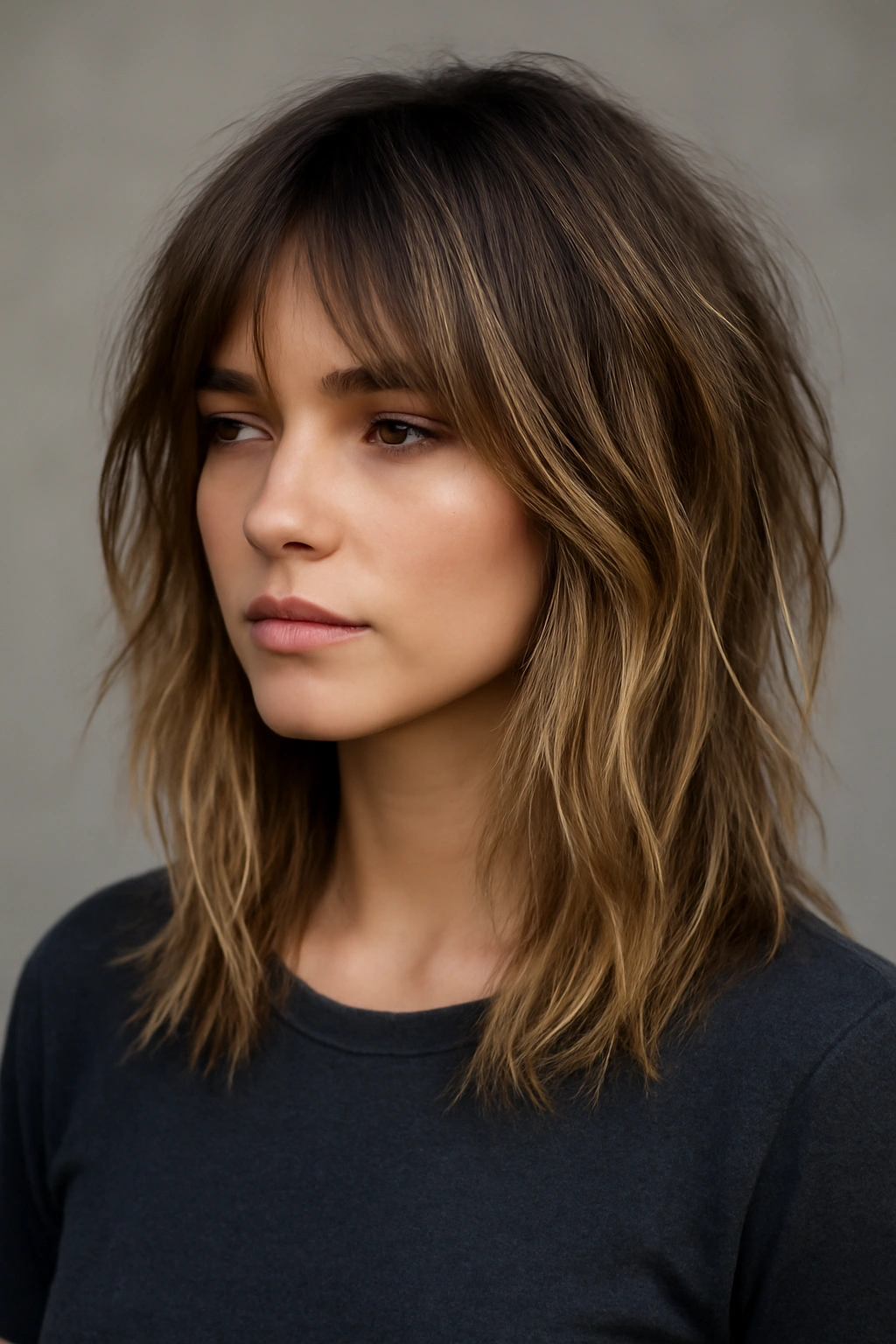
A shaggy medium length cut with dimensional rooted color is the definition of modern, lived-in luxury. This combines the textured, intentionally undone quality of a shag with rooted balayage (dark roots, lighter mid-lengths and ends) that reads trendy and current. Medium length keeps a shag wearable and not overly dramatic; it sits somewhere around shoulder-length with shorter, choppy layers throughout.
Why This Combination Works So Beautifully Together
A shag is already intentionally undone and textured, so it pairs perfectly with rooted color that’s also intentionally not perfect. The dark roots feel like an intentional design choice rather than neglect; the dimensional color throughout shows off all those choppy layers. There’s a cohesive, “I woke up like this” quality that’s genuinely appealing and different from highly polished looks. This combination reads younger, trendier, and genuinely current while remaining wearable and not costume-y.
Creating and Maintaining This Look
- Rooted balayage requires your colorist to place darker color at the roots and lighter color on the mid-lengths and ends; this is easier to achieve on naturally lighter hair or with pre-lightening
- The shag cut itself requires frequent trims (every 6 weeks) to maintain the shape and intentional texture
- Styling with product (texturizing spray, sea salt spray, or a light cream) is essential; this cut relies on that piece-y, textured activated look
- The dimensional rooted color looks best when there’s genuine contrast between roots and ends; subtle rooting defeats the purpose
Worth knowing: This look is at its most effective on people who genuinely like their hair textured and aren’t afraid of a slightly undone aesthetic. If you prefer sleek, polished hair, this cut and color won’t feel right no matter how well executed.
Final Thoughts
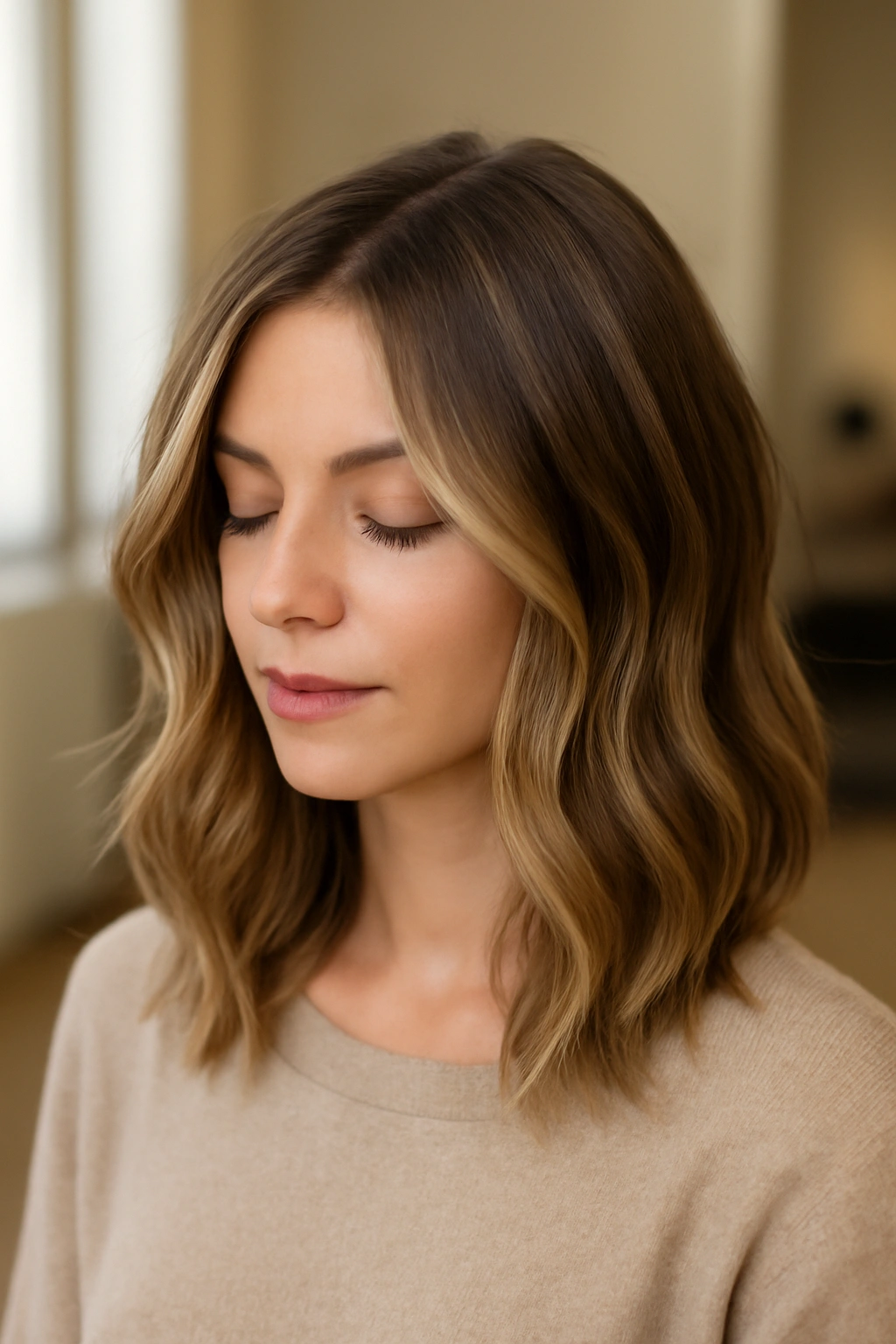
Medium length balayage haircuts offer the ideal intersection of versatility, manageability, and visual impact. The length is long enough to show off dimension and movement, but short enough to style without significant time commitment. Balayage—because of its hand-painted, organic technique—works with any cut from blunt to shaggy, always looking intentional and sophisticated rather than accidental.
The real key to choosing your medium length balayage style isn’t just about what looks beautiful in photos—it’s about what matches your hair type, your styling comfort level, and how much maintenance you’re actually willing to commit to. A choppy layer cut with honey balayage requires product and regular trims. A straight medium length with sun-kissed highlights is genuinely low-maintenance. A textured shag is trendy but demands frequent cuts. Understanding the maintenance reality of your chosen style is what transforms a cut you love in the salon chair into a cut you love in your real life.
When you find your medium length balayage style, the magic happens not just in the salon but in the everyday moments—the way light hits the color when you’re in the sun, how the cut moves when you put your hair in a ponytail, the way it photographs in natural light. That’s when you know you’ve found the one that’s genuinely right for you.
