



When your hair is naturally fine and delicate, choosing the right cut can mean the difference between looking wispy and undefined versus having real shape, volume, and movement. Baby fine hair—thin strands that lack the natural density of thicker hair types—needs a strategic approach that creates the illusion of fullness while working with, not against, your hair’s natural characteristics. The good news? Short haircuts are actually your secret weapon. A well-chosen short style adds dimension through clever layering, removes excess weight that drags thin hair down, and makes even minimal hair look intentional and polished.
The real challenge with fine hair isn’t the length—it’s about what happens when you have too much of it hanging down. Long hair multiplies the visual effect of thinness because all those strands are spread across a longer surface. Short cuts solve this by concentrating volume at the crown and keeping the overall mass closer to your head. This creates a denser appearance, gives your stylist more control over shape, and actually makes styling easier because you’re working with less total hair to manage.
The key to finding your best short haircut for fine hair is understanding that not all short cuts work equally well. Some styles rely on blunt lines that can expose scalp or look sparse. Others use strategic layering that actually adds thickness and dimension. The styles I’m about to walk you through have been chosen specifically because they address the common challenges fine hair faces: how to add perceived volume, how to create shape without looking thin or wispy, and how to make styling realistic for someone who doesn’t have much hair to work with.
1. The Modern Pixie Cut
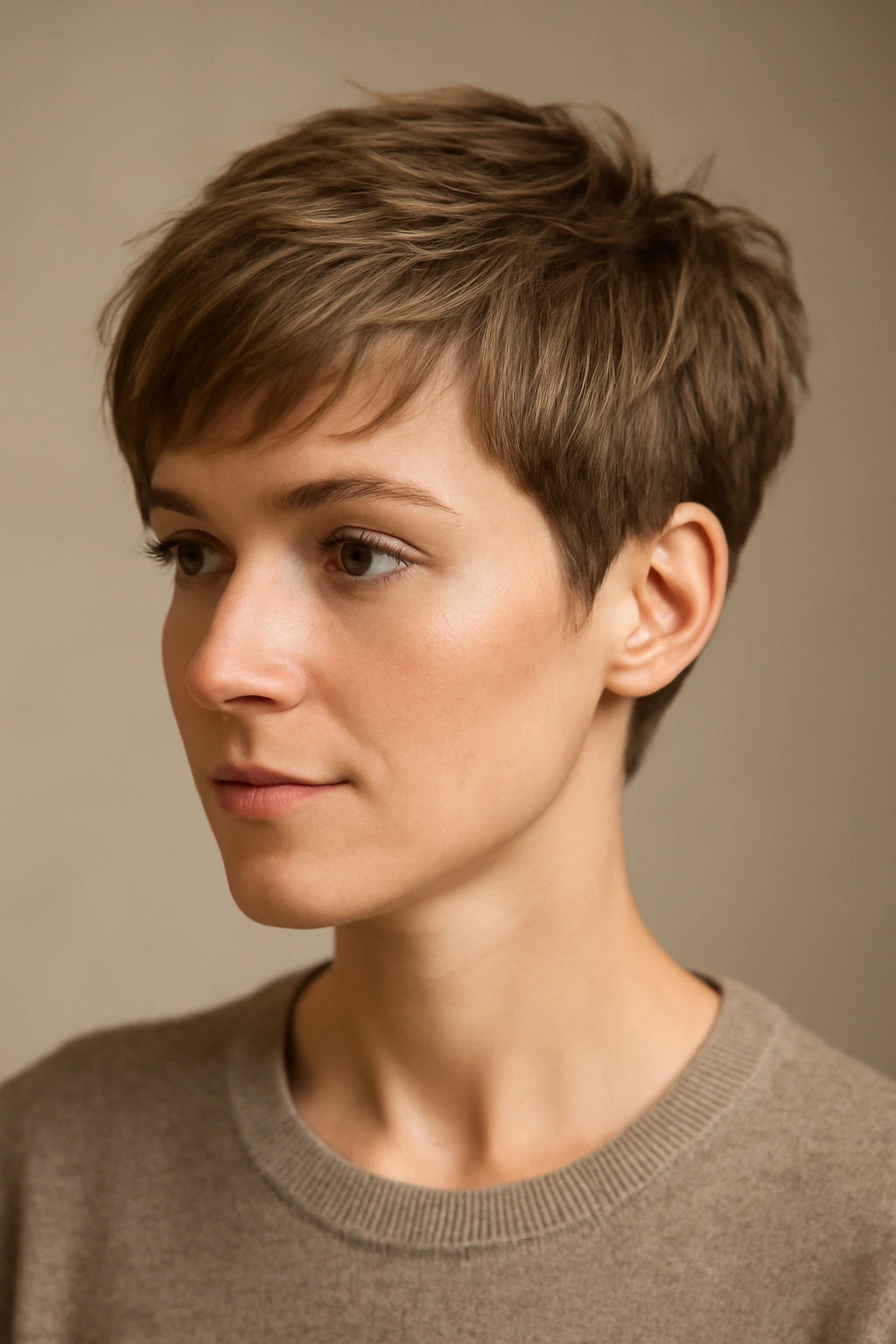
A pixie cut is perhaps the most confidence-boosting short haircut for fine hair because it completely reframes how people perceive your hair. Instead of trying to hide thinness, this style embraces brevity and makes minimalism look intentional. The modern pixie isn’t the severe, super-short styles from decades past—it’s longer on top (usually 2-3 inches) and much shorter on the sides and back, creating a flattering contrast that adds visual interest.
Why This Works for Fine Hair
The pixie’s genius for fine hair is that it removes weight from the ends where thinning becomes most visible, and concentrates fullness at the crown where you need it most. Because the top section is longer, you can use layering and texture to create movement and depth without relying on overall density. Your stylist can point-cut the longer sections on top to create a piecey, textured look that makes individual strands more visible and interesting rather than trying to fake thickness.
How to Make It Work
- Ask your stylist to keep the top section longer and textured with choppy layers rather than blunt, which can expose scalp on fine hair
- Request an undercut on the sides and back for clean, polished edges that highlight your features
- This style requires regular trims every 4-6 weeks to maintain shape as it grows out
- Style with a lightweight texturizing product or pomade that adds grip without weighing down fine strands
- A pixie works best with some texture or wave in your hair—if your hair is completely straight and very fine, discuss this with your stylist about how to add dimension
Pro tip: A pixie actually simplifies your styling routine dramatically. You can wash it, run your fingers through it with a tiny bit of product, and you’re done—no blow dryer required unless you want extra styling texture.
2. The Textured Crop
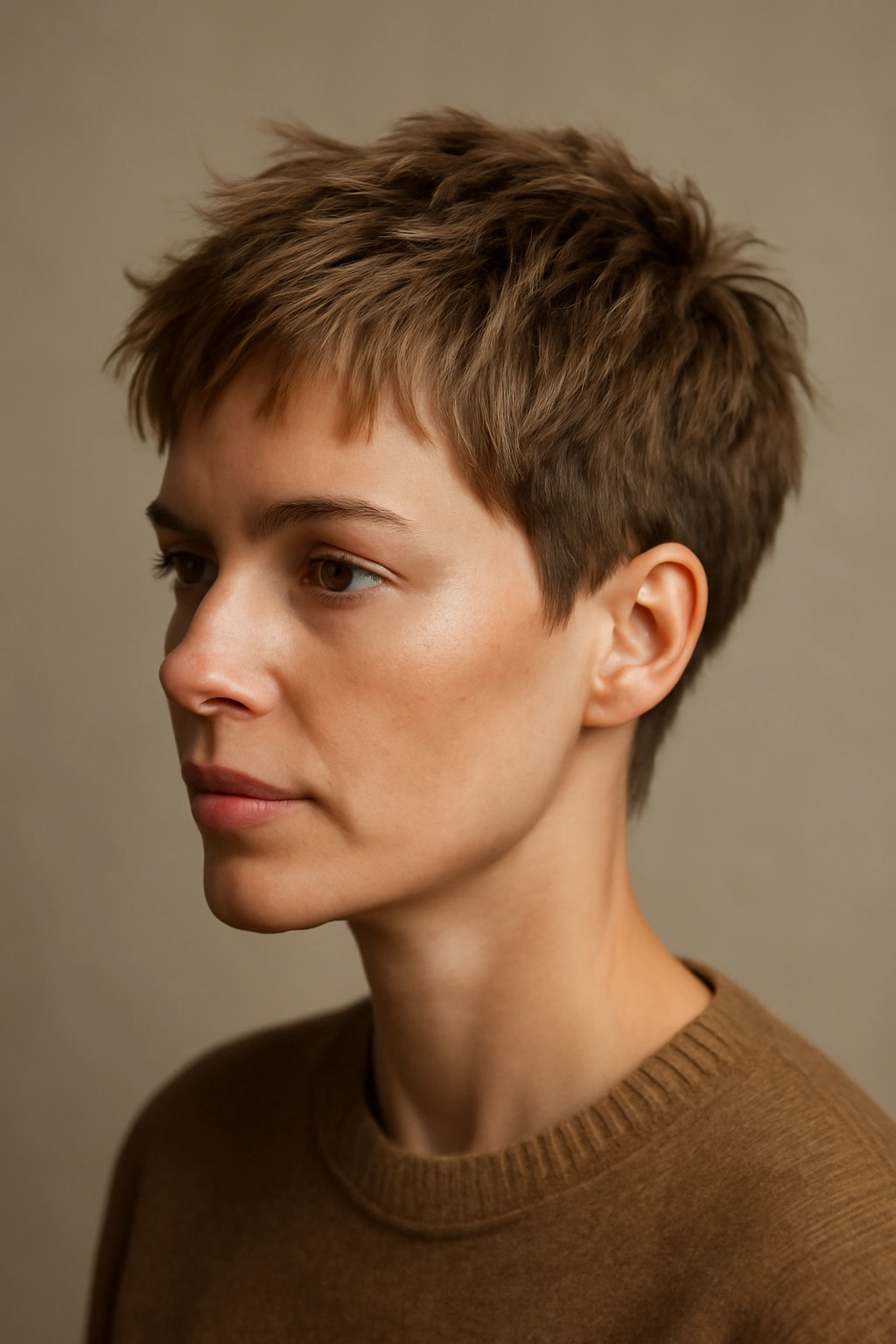
A textured crop sits between a pixie and a standard short cut, offering more coverage than a pixie while still keeping volume concentrated where you need it. This style is about 1-2 inches on top and sides, with choppy, uneven layering that creates texture and movement. It’s masculine-leaning but works beautifully on all face shapes and can be styled in multiple ways depending on your mood.
What Makes It Stand Out
The textured crop is specifically designed to work with natural hair texture rather than fight it. With fine hair, this means your stylist is intentionally creating choppy layers that break up the line of each strand, making hair look thicker and more interesting. The randomness of well-done texture is actually your friend—it prevents the “thin” look that comes from aligned, blunt ends.
Styling and Maintenance
- This cut requires a good texturizing cream or paste to show off the choppy layers—product is essential rather than optional
- You can style it sleek and smooth with a lighter product, or messy and textured with a stronger hold cream
- The crop grows out well and can go 6-8 weeks between cuts before it needs reshaping
- Fine, straight hair might need a little help from a blow dryer and texturizing product to really showcase the layers
- If you have natural waves or curls, this style will emphasize them beautifully
Worth knowing: Ask your stylist to avoid over-layering on fine hair. You want texture and choppy lines, but not so many layers that you end up with wisps—it’s a balance between movement and fullness.
3. The Blunt Bob
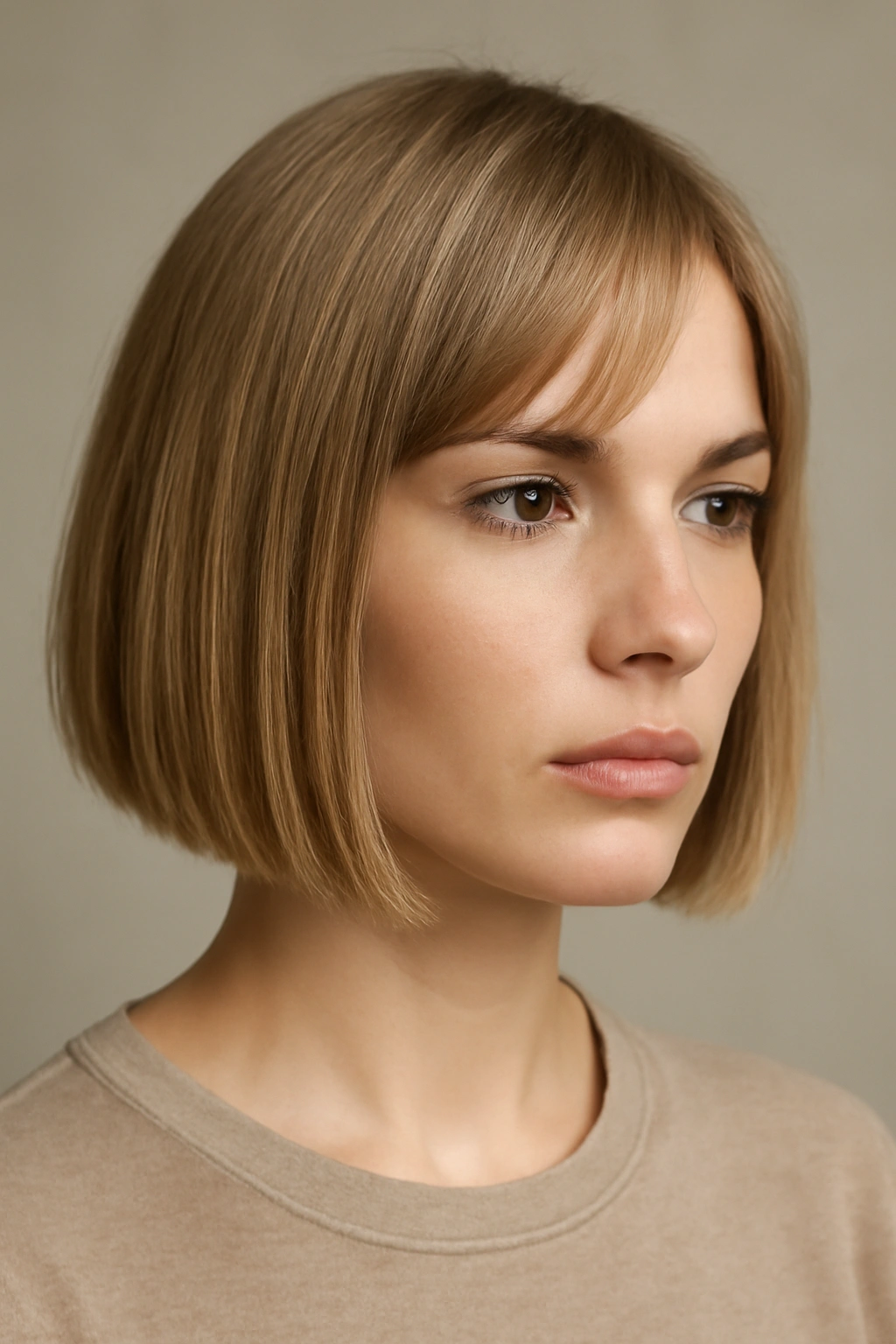
A short, blunt bob (usually chin-length or slightly shorter) is a classic for a reason, and it’s genuinely excellent for fine hair when executed properly. The key is that a blunt line at the ends creates a visual “weight line” that makes hair look fuller and more defined than a longer, tapered cut. The bob’s clean perimeter also flatters fine hair because it draws the eye inward.
How This Cut Adds Dimension
A blunt bob works for fine hair because of pure geometry—the blunt line at the ends creates an optical illusion of density. Where a tapered cut gradually becomes thinner, a blunt cut maintains a full line all the way across. The cheekbone-skimming length also frames the face in a way that draws attention upward, away from hair volume and toward your features.
Best Practices for Styling
- Keep your blunt bob between your chin and jawline—this length is the sweet spot for making fine hair look intentional rather than sparse
- Request slightly angled layers underneath (not on top) to add movement without compromising the fullness-creating blunt line
- A blunt bob requires precise maintenance—aim for a cut every 4-6 weeks to keep the ends sharp and the visual weight line intact
- Fine hair needs gentle handling when wet to avoid breakage, so don’t comb it roughly after shampooing
- Style with a volumizing mousse applied to damp roots, then blow-dry with your head slightly tilted to encourage lift
Insider note: A blunt bob actually photographs better than most short cuts, which is a nice bonus if you love taking selfies or posting pictures.
4. The Shag
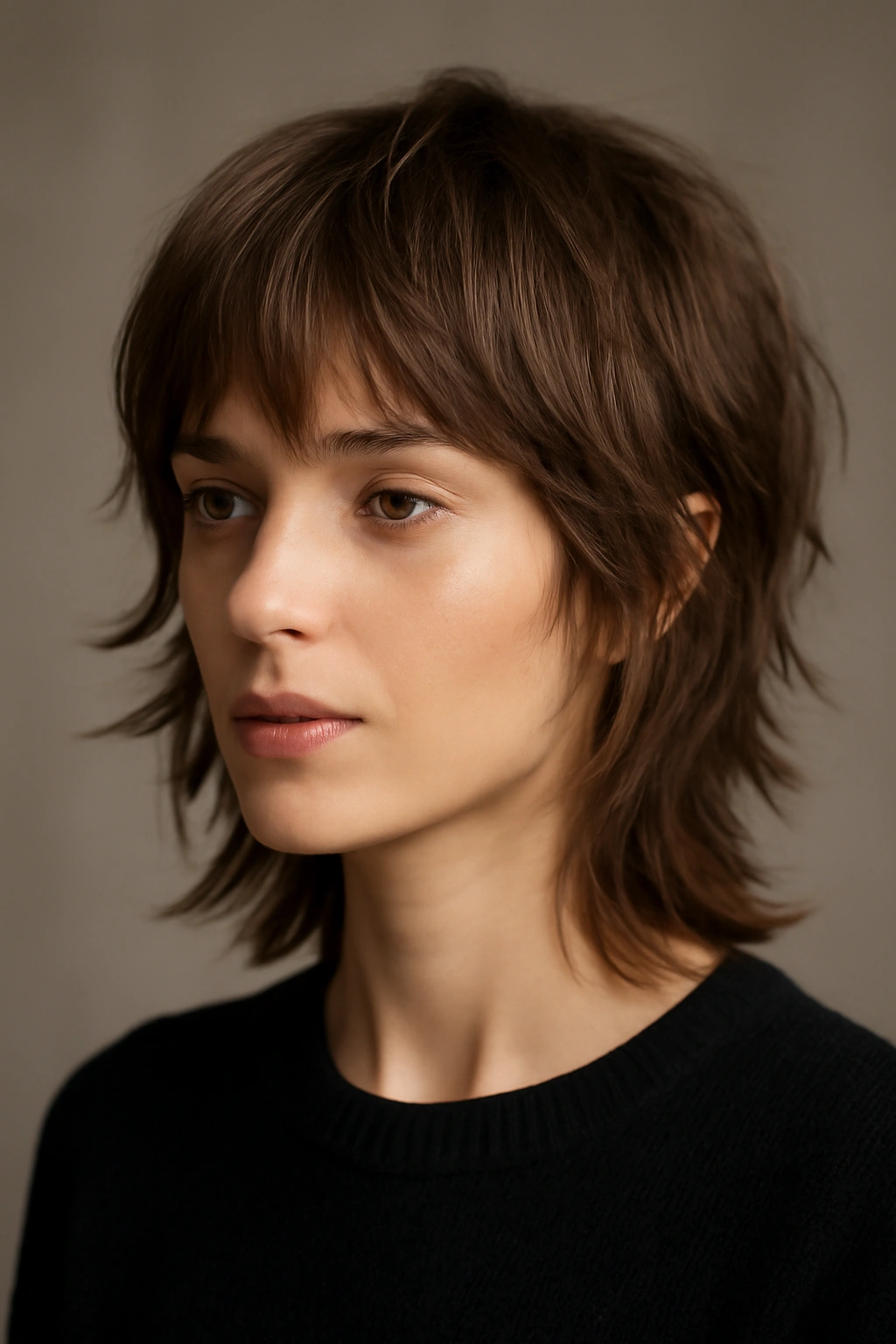
The shag has made a major comeback, and it’s surprisingly wonderful for fine hair because the layering creates movement and texture while the length provides enough coverage to avoid looking thin. A modern shag isn’t the heavy, overgrown-looking style of the 70s—it’s intentional, textured layers at varying lengths that create a lived-in, effortless vibe.
Why Shag Layers Help Fine Hair
The shag’s multiple layers actually solve a core fine-hair problem: because you’re creating texture at multiple lengths, your hair automatically looks fuller and more dimensional. The layers catch light differently, creating visual interest that masks thinness. A well-done shag on fine hair should feel like you have natural texture and movement, not like your hair is falling out in sections.
Getting the Cut Right
- A shag works best when the longest pieces are around ear-length or slightly longer, with progressively shorter layers underneath
- Ask your stylist to focus layers around your face and crown where you want the most movement and fullness
- The back can be slightly longer to create shape, but avoid excessive length that weighs fine hair down
- Blow-drying is somewhat important for a shag to really shine—you want to dry the layers to make them flip and move
- Use a texturizing spray or mousse, applied to damp roots before blow-drying, to enhance the layering and add perceived volume
Real talk: A shag requires more styling effort than a pixie or crop, but less than managing longer fine hair. It’s a middle ground in terms of maintenance.
5. The Textured Fringe
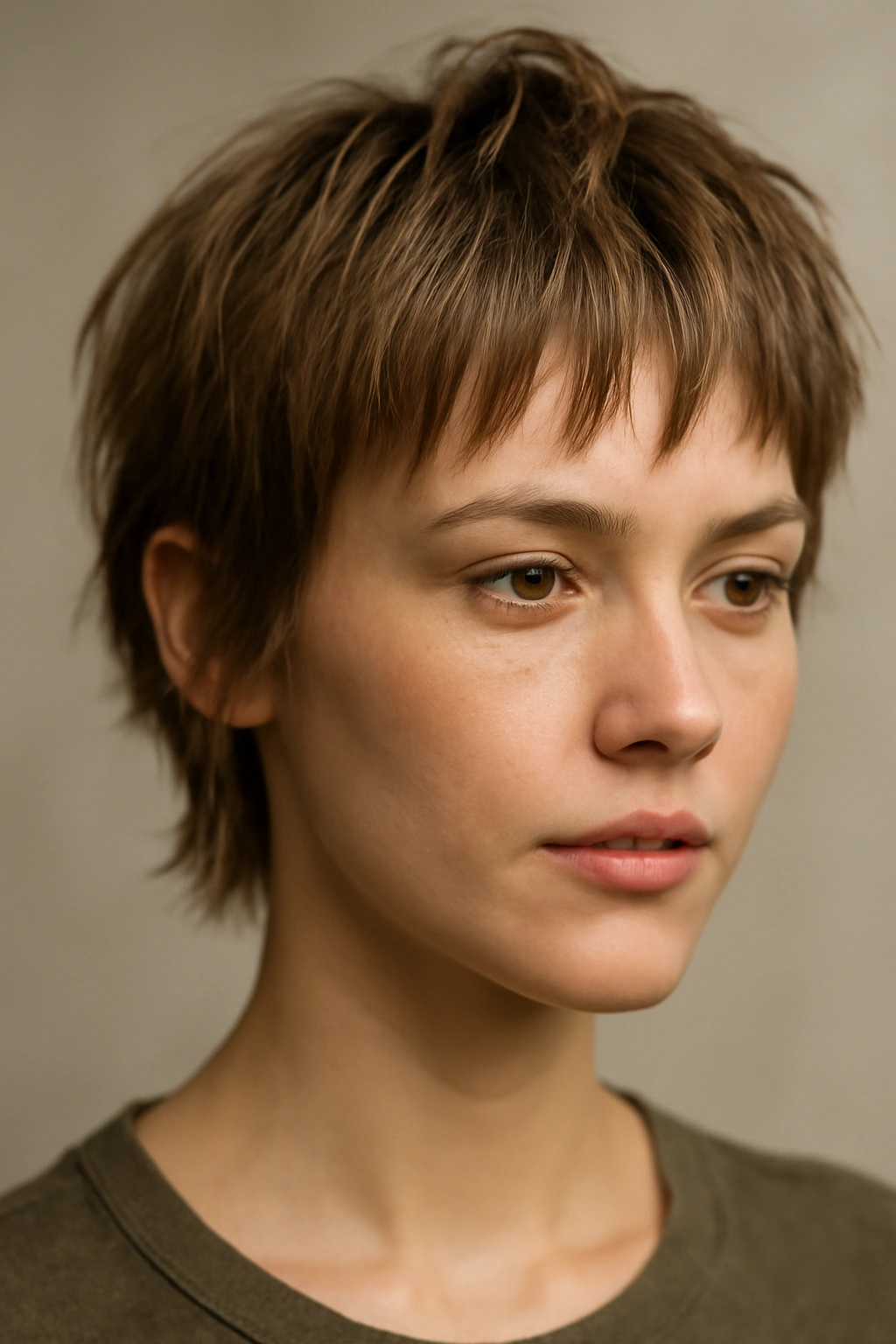
A short cut with a textured fringe adds instant visual interest and dimension to fine hair. The fringe focuses attention upward toward your eyes and forehead, while the textured (choppy, not blunt) fringe prevents that thin, stringy appearance that can happen when bangs aren’t done right on fine hair. The rest of the cut can be a crop, pixie, bob, or shag—the fringe just adds a stylish extra layer.
How Fringe Transforms Fine Hair
A well-executed textured fringe is a game-changer for fine hair because it’s intentionally broken into pieces rather than one solid line. This means even if you don’t have a ton of hair, the fringe looks deliberate and interesting rather than thin or scraggly. The fringe also gives you a styling focal point—people notice the interesting texture on your face rather than overall hair volume.
Maintaining a Fringe
- Textured fringes on fine hair need trimming every 3-4 weeks to maintain the choppy texture—they grow out faster than the rest of your hair and start looking stringy if not maintained
- Blow-dry your fringe daily to keep it textured and piecey; air-drying often makes fine fringe look limp
- Use a very light product on the fringe—a tiny amount of texturizing paste or mousse—so it doesn’t weigh down the delicate layers
- Avoid blunt fringes on fine hair unless your hair is naturally thick or has good texture; blunt fringes expose every strand on fine hair
- A textured fringe works with almost any short cut underneath, so you can pair it with a pixie, crop, bob, or shag
Pro tip: A fringe is a smart way to add visual interest to your face if you’re worried about having too-short hair drawing attention to thin hair texture. The eye goes to the fringe first.
6. The Choppy Layered Cut
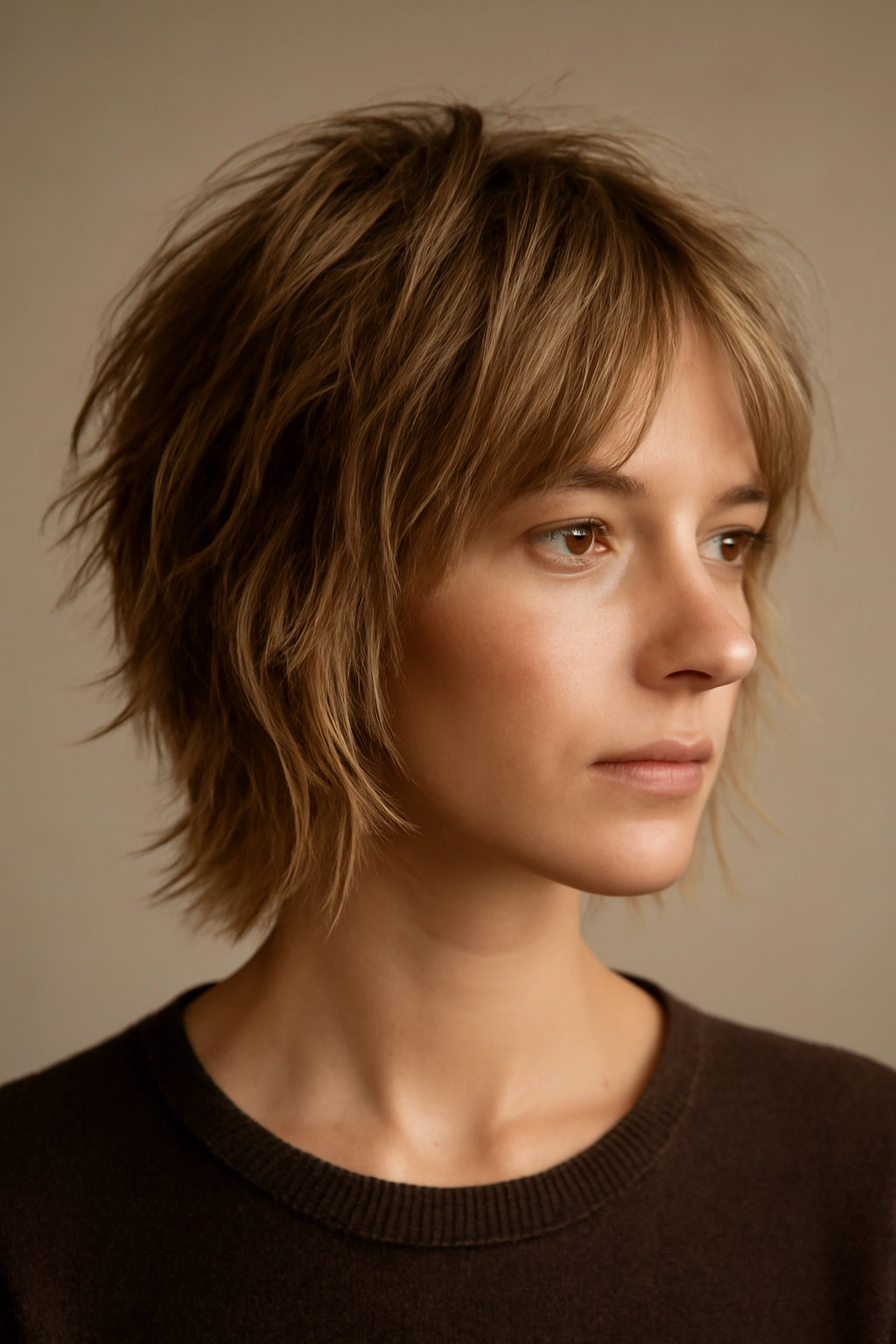
A choppy layered cut is fundamentally different from a blunt cut or a smooth, evenly-layered cut. Instead of uniform layers, this style uses varied-length choppy pieces throughout that create a piecy, broken-up texture. It’s rockstar energy paired with practicality—perfect for fine hair that needs a confidence boost and a style that actually works with your hair’s natural characteristics.
Why Choppy Layers Transform Fine Hair
Choppy layers create the illusion of movement and texture that fine, straight hair sometimes lacks naturally. Because the layers are uneven and intentionally choppy rather than smoothly blended, each layer is visible rather than blending invisibly into the hair beneath it. This visibility is actually what you want with fine hair—it makes the cut look intentional and textured rather than thin.
Styling for Maximum Impact
- A choppy layered cut looks best with some texture, so waves or natural curl are ideal, but you can create texture with product and blow-drying even if your hair is straight
- Apply texturizing mousse to damp hair and blow-dry with a round brush to create volume and separation
- Finish with a dry texturizing spray or pomade to enhance the choppy layers and keep them piecey
- This cut grows out beautifully—you can go 8-10 weeks between trims because the choppy nature means it doesn’t look “grown out” the way a blunt cut does
- Ask your stylist to cut layers throughout your whole head, not just the top, to maximize the textured effect
Worth knowing: Choppy layers can sometimes look a bit rock-and-roll, which some people love and others want to avoid. Show your stylist reference photos of the exact vibe you’re going for.
7. The Grown-Out Pixie
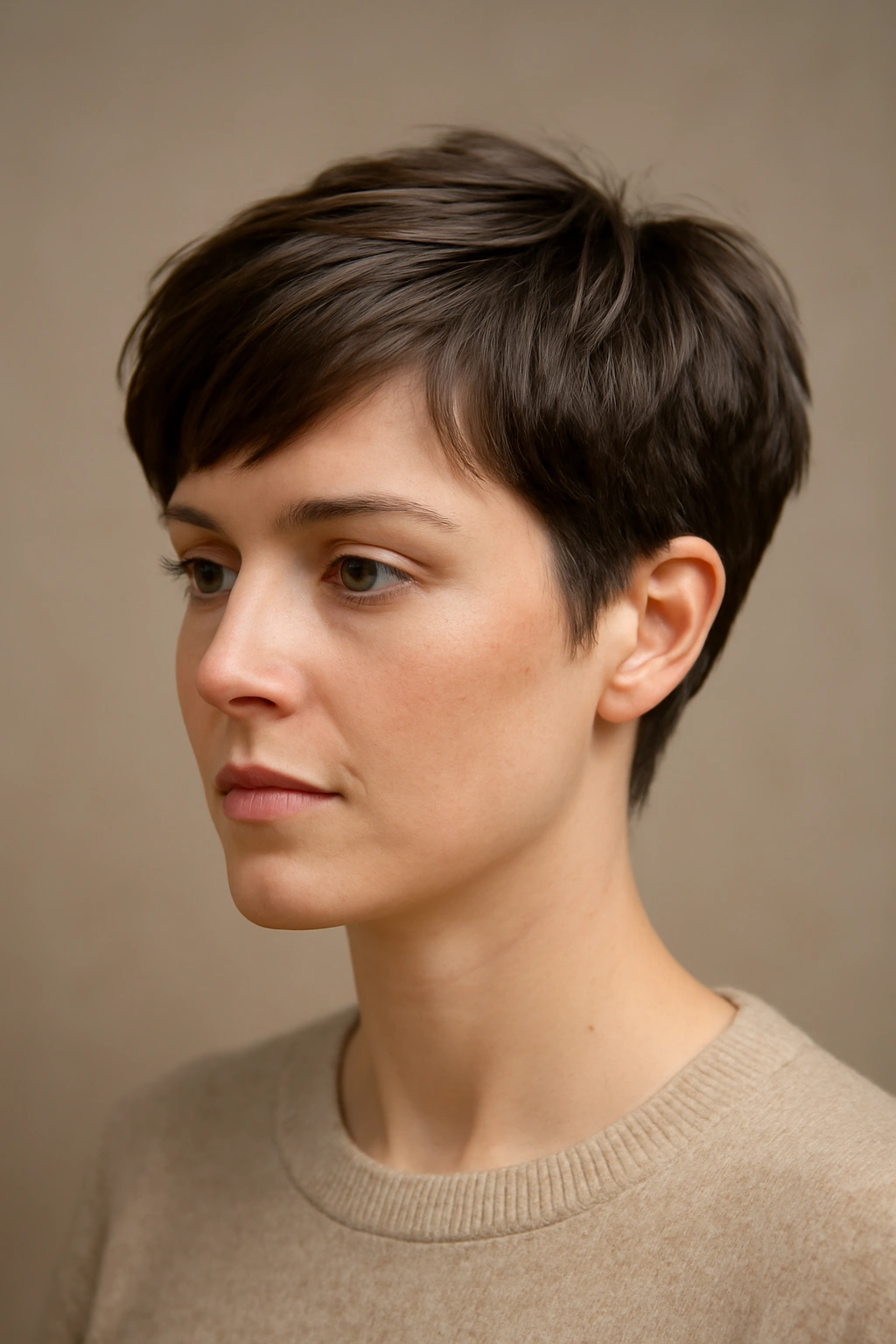
If you love the pixie cut but want slightly more length and coverage than an ultra-short version, a grown-out pixie is the perfect answer. This style sits at that sweet spot where your hair is maybe 3-4 inches on top and gradually tapers to very short on the sides—longer than a typical pixie but still decisively short. It’s an easy, low-maintenance style that still gives you serious presence.
How the Grown-Out Length Benefits Fine Hair
An extra inch or two of length on top gives you flexibility that an ultra-short pixie doesn’t. You can style it sleek and smooth, textured and piecy, or tousled and casual depending on how much effort you want to put in. For fine hair, that extra length also means slightly more coverage without sacrificing the volume-creating benefits of a pixie structure. You get the best of both worlds: shape, style, and enough length to feel confident.
Styling Flexibility
- Style smooth with a lightweight cream for a polished look
- Use texturizing paste for a more casual, piecy appearance
- Air-dry for a natural look, or blow-dry with your fingers for more control
- This style works with straight hair, waves, or curls because the length gives you styling options
- You can experiment with side parts, center parts, or no part at all
- Trims every 6-8 weeks keep it looking intentional rather than shaggy
Insider note: A grown-out pixie is great if you’re not quite ready to commit to an ultra-short style but want something definitively short and low-maintenance.
8. The Slicked-Back Crop
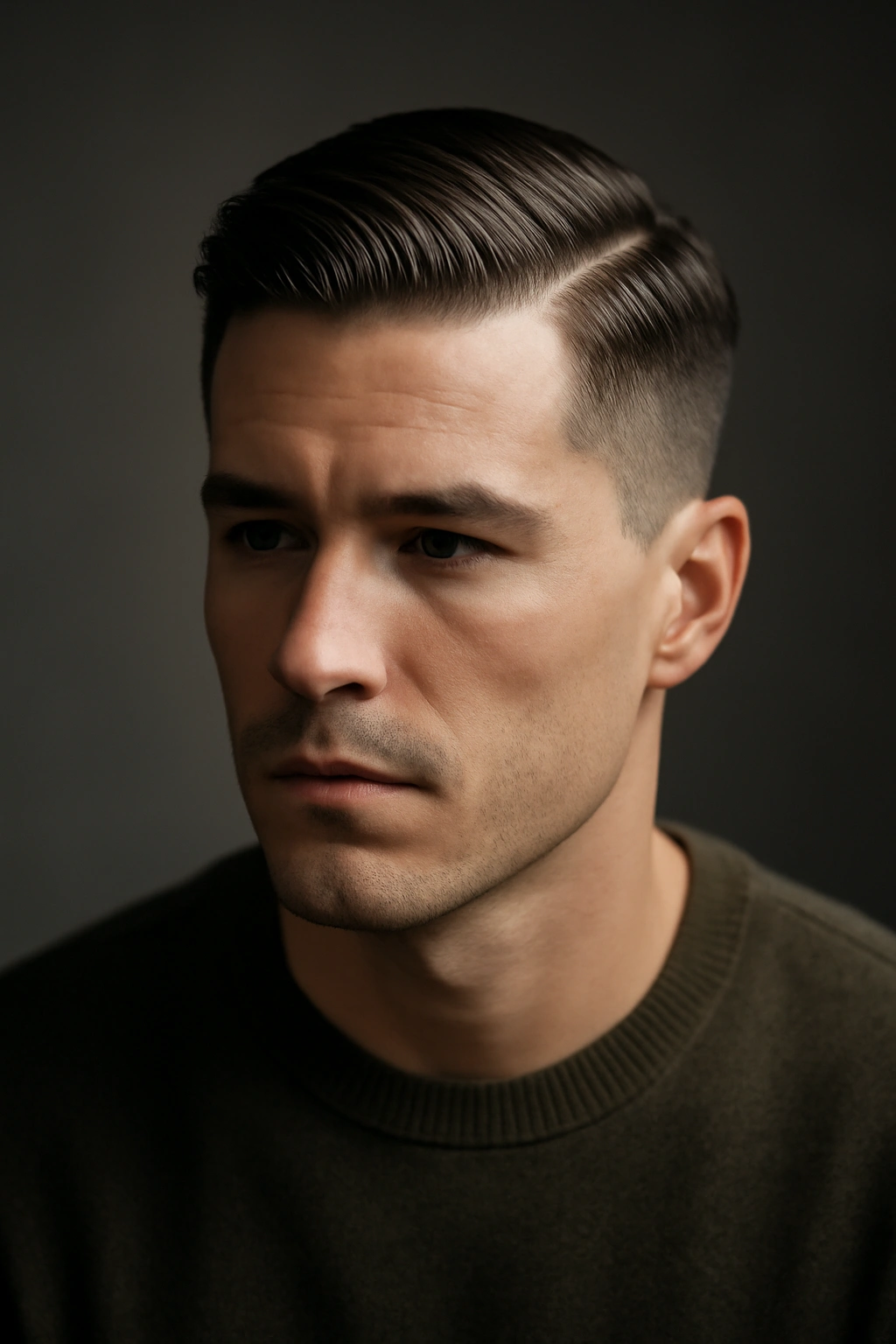
A slicked-back crop is a chic, androgynous style where the hair is cut very short on the sides and slightly longer on top, then styled back away from the face. This style is bold and requires confidence, but it’s genuinely stunning on fine hair because the entire focus is on your face shape and features rather than hair volume.
Why This Style Empowers Fine Hair
When you slick hair back, you’re making a statement that you’re choosing to showcase your hair texture and face rather than trying to hide thinness. For fine hair, this is actually liberating—you stop fighting your hair’s nature and instead embrace it. The style is intentional, polished, and makes thin hair look like a deliberate aesthetic choice rather than a limitation.
Getting the Look Right
- Work with a stylist who understands clipper work and can create clean, precise lines on the sides
- The top section should be textured with choppy layers so that when you slick it back, individual strands are visible and the style looks piecy rather than plastered-down
- Use a strong-hold pomade, gel, or wax to slick the hair back cleanly
- This style requires daily styling with product—it doesn’t work with air-drying or minimal effort
- The sides and back need trimming every 3-4 weeks to maintain sharp definition
- This cut suits people with oval, round, or heart-shaped faces best; angular faces can look even more severe with hair pulled back
Real talk: A slicked-back crop says something—you’re confident, you care about style, and you’re not trying to camouflage anything. Wear that energy.
9. The Tousled Crop
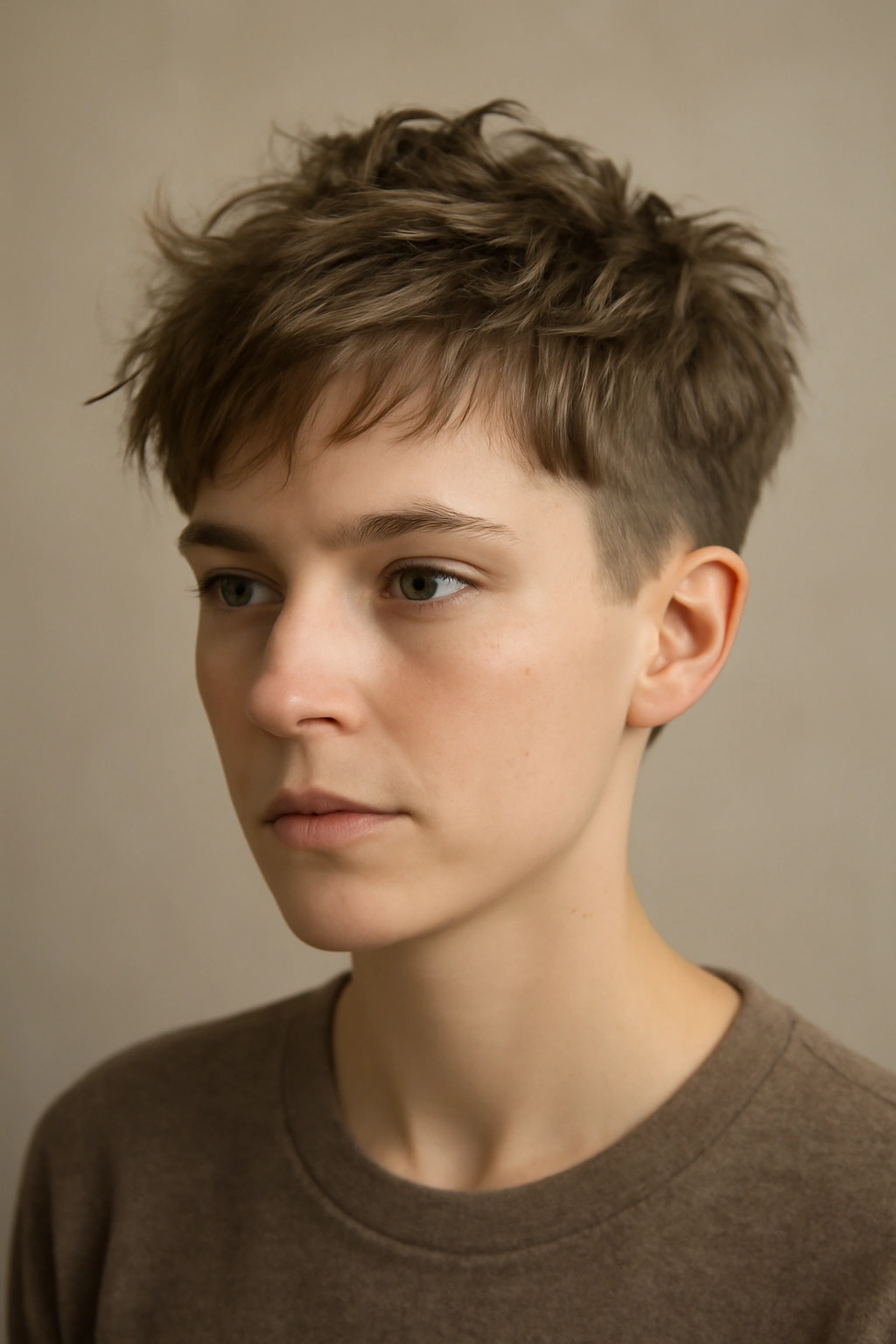
A tousled crop is a softer, more relaxed version of a standard crop, where the top section is left slightly longer and deliberately styled to look undone and casual. It’s perfect if you want a short cut that doesn’t feel overly polished or masculine. The tousled texture creates movement and fullness while maintaining that easy, low-maintenance vibe.
How Tousled Styling Helps Fine Hair
The key to this style is that intentional messiness actually works for fine hair rather than against it. When you’re aiming for a tousled, undone look, slightly wispy or separated strands are exactly what you want—they’re a feature, not a bug. A tousled crop with fine hair looks effortlessly textured rather than thin because the styling intention is already built into the look.
Creating the Tousled Effect
- Ask your stylist to cut choppy layers throughout the top section, maybe 2-3 inches long
- Keep the sides very short for contrast and to lighten the overall weight
- Style damp hair with a lightweight texturizing mousse, then use your fingers to dry and separate the layers
- Alternatively, blow-dry with a round brush and then mess it up with your fingers for that tousled vibe
- A tiny amount of texturizing spray or dry shampoo on the roots adds grip and makes the tousled effect last longer
- This cut grows out well and still looks intentional even at 8-10 weeks
Pro tip: A tousled crop is perfect if you want a short cut that doesn’t scream “I spend a lot of time styling”—it actually looks better when you don’t perfectly groom it.
10. The Face-Framing Layers
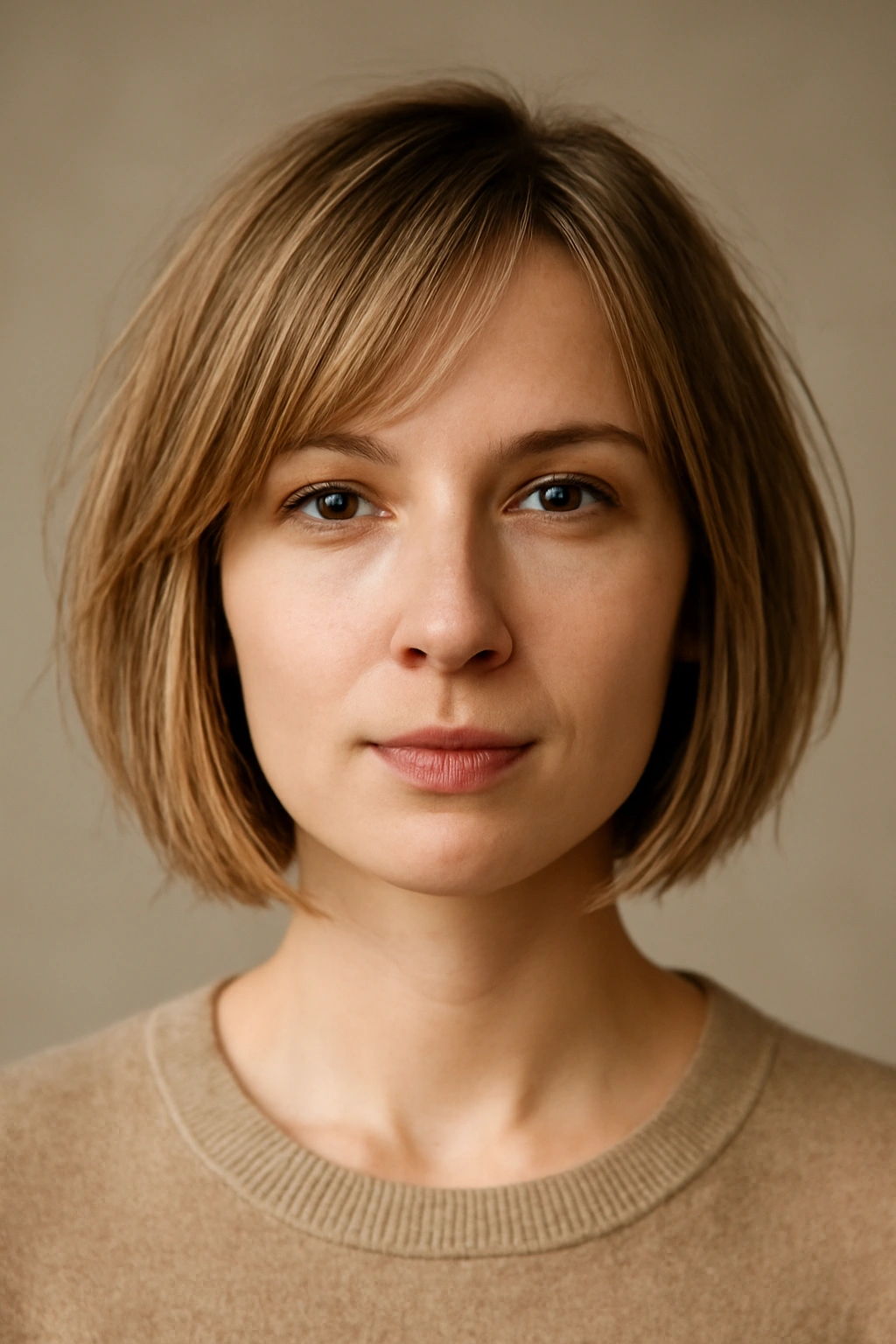
This style is a short cut (usually chin-length or shorter) with longer, choppy layers specifically around the face that frame your features beautifully. The layers start at your cheekbones or chin and create a graduated effect that’s flattering to almost all face shapes. It’s particularly lovely for fine hair because the face-framing layers create dimension right where people are looking anyway.
Why Face-Framing Works for Fine Hair
When layers are concentrated around the face, they draw the eye upward and inward toward your features rather than outward toward hair volume. The graduated length from shorter in the back to longer around the face creates movement that makes fine hair look more dimensional and intentional. It’s a sophisticated, flattering cut that works for women and men alike.
Making It Flattering
- Have your stylist focus the longest, most defined layers right at your cheekbones and jawline
- The back can be shorter and more tapered, creating shape and movement
- Choppy, textured layers look better than smooth, blended layers on fine hair
- This cut works beautifully with waves or curls, but you can style it smoothly if you prefer
- Blow-dry the face-framing layers forward slightly when you dry to maximize the flattering effect
- Trims every 6 weeks keep the face-framing layers sharp and intentional
Worth knowing: If you have a round face, ask for slightly longer face-framing layers to elongate. If you have an angular face, slightly shorter layers around the temples can soften things.
11. The Textured Undercut
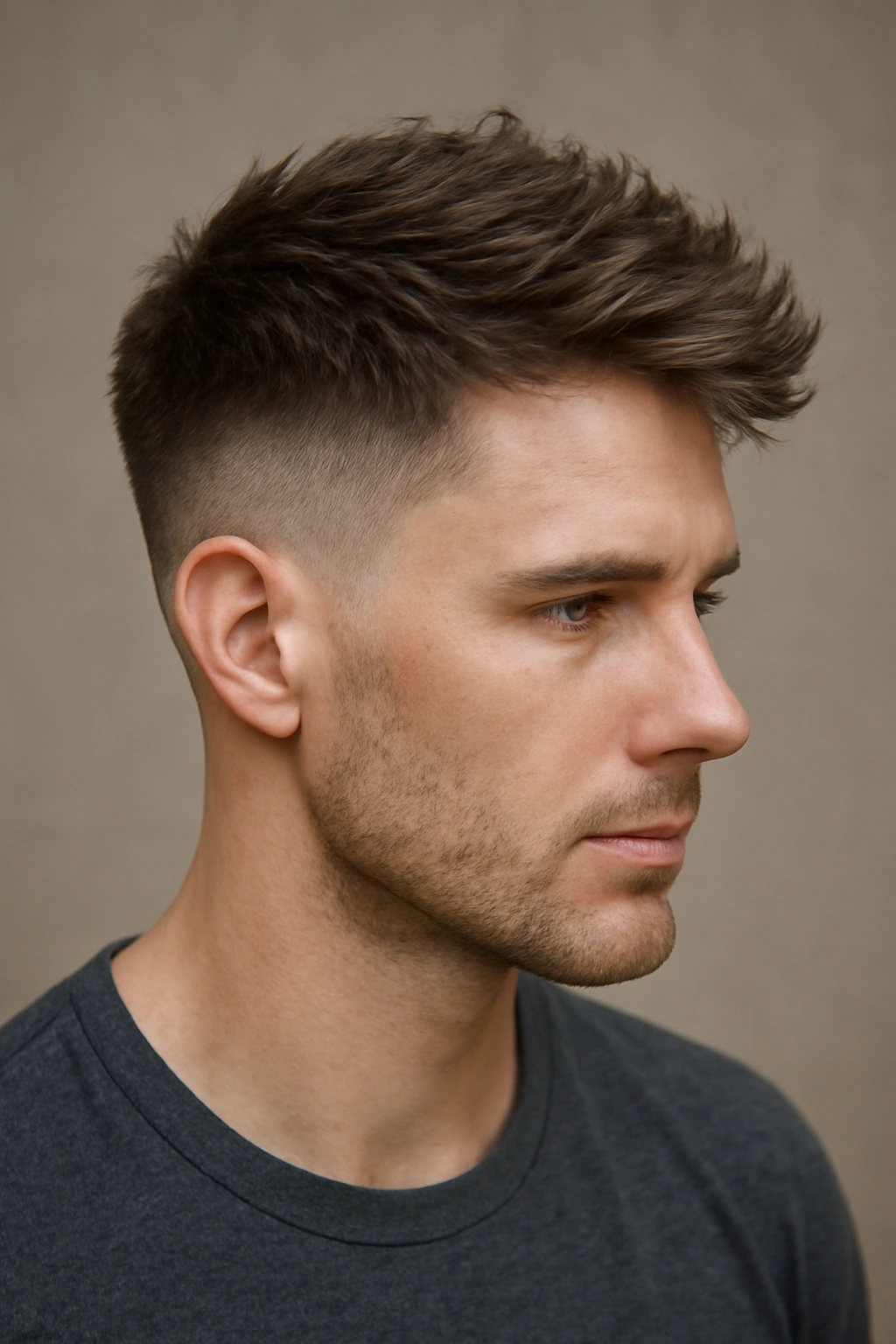
An undercut is a style where the sides and back are cut very short (almost a fade or clipper cut) while the top section remains significantly longer. A textured undercut takes this concept and makes the longer top section choppy and layered rather than blunt, creating a dramatic contrast that’s both stylish and flattering for fine hair.
How Undercuts Solve Fine Hair Challenges
An undercut completely removes weight from the sides and back where fine hair can look wispy, while keeping length and texture on top where you can create volume. The contrast between the short sides and longer top makes your hair look thicker overall because of the visual proportion. For fine hair specifically, this style is genius because you’re essentially concentrating all your hair density where it will make the most visual impact.
Styling the Textured Undercut
- Use texturizing mousse or paste on damp hair and blow-dry with your fingers to create volume and separation on the top section
- You can style the top section sleek and smooth, or tousled and textured, depending on your preference
- The sides and back need trimming every 3-4 weeks to keep the undercut looking sharp and intentional
- This style makes a statement—it’s bold and modern, so wear it with confidence
- It works beautifully for both straight and curly/wavy hair types
- If you have very fine hair, make sure the sides and back aren’t too short (avoid a skin fade) as that can look disproportionate
Insider note: An undercut is probably the most visually transformative short cut for fine hair—the contrast is just that flattering.
12. The Modern Shag with Razored Edges
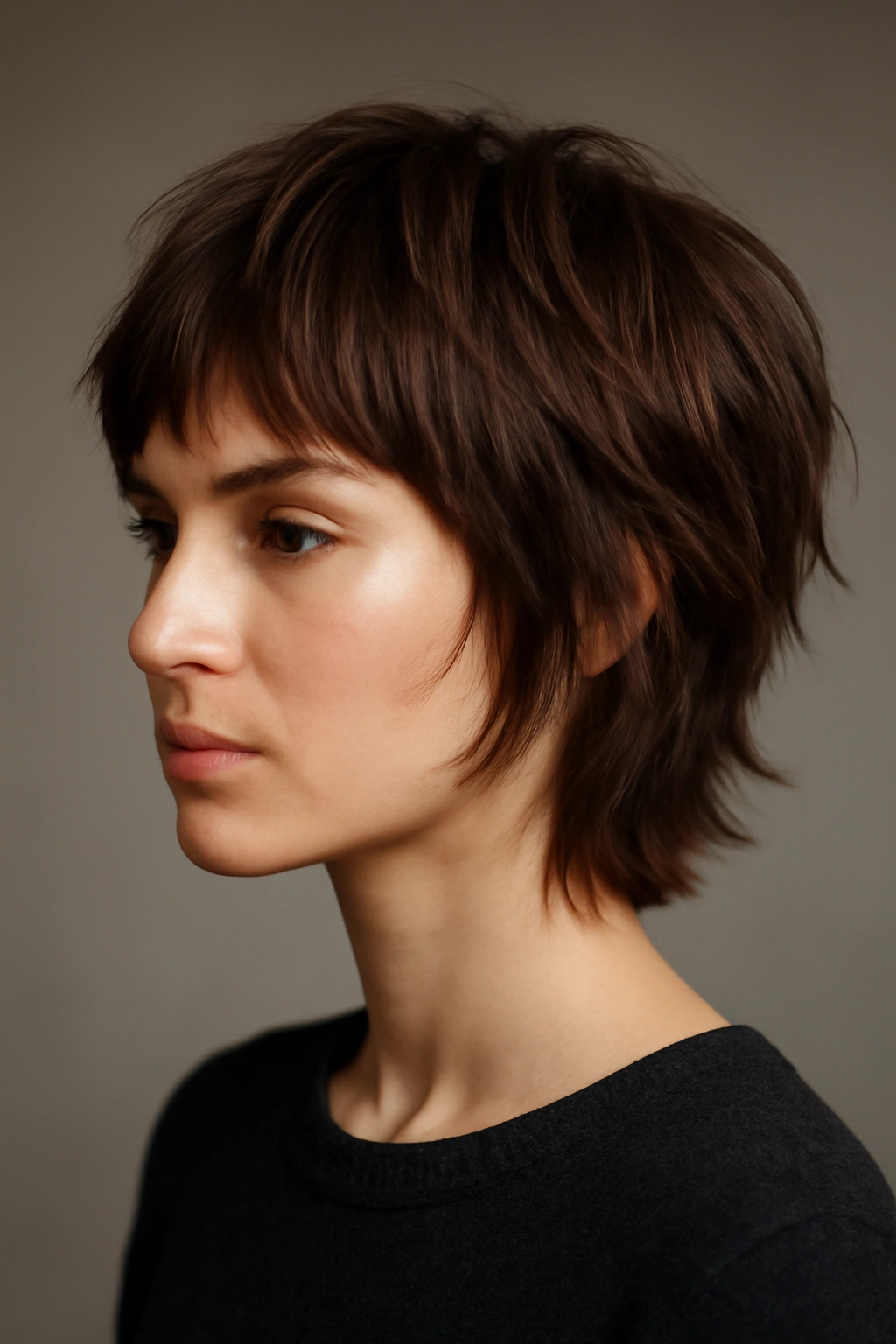
A modern shag taken to the next level with razored edges throughout is a show-stopping cut for fine hair. Razor-cutting (as opposed to scissor-cutting) creates sharper, more piece-y layers with more texture and movement. When done on fine hair, it’s absolutely magical because each strand becomes visible and interesting rather than blending invisibly together.
Why Razoring Works Best for Fine Hair
Razor-cutting creates a finer, more delicate edge than scissors do, which is exactly what fine hair needs. The technique literally cuts each strand thinner at the end, creating layers that separate and move beautifully. On fine hair, a razored shag looks textured, intentional, and dimensional in a way that scissor-cuts sometimes can’t quite achieve. The shag structure (shorter layers throughout for movement) combined with razored edges (sharper, more visible layering) is basically the dream cut for fine hair.
Styling a Razored Modern Shag
- This cut is all about movement and texture, so styling is important—don’t expect to air-dry and have it look its best
- Apply texturizing mousse to damp roots and blow-dry with a round brush to create lift and separate the layers
- Finish with a texturizing spray to enhance the piecey effect
- The shag grows out beautifully, so you can go 8-10 weeks between cuts before it needs reshaping
- This style works wonderfully with natural waves or curls, which will enhance the textured layers
- Even with straight hair, the razored layers create enough visual texture to make the style shine
Real talk: A razored modern shag is probably the most “hairstyle” of any cut on this list—it requires daily styling and products. If you want truly wash-and-go, this isn’t it. But if you’re willing to put in the effort, this is the cut that transforms fine hair into something absolutely stunning.
Final Thoughts
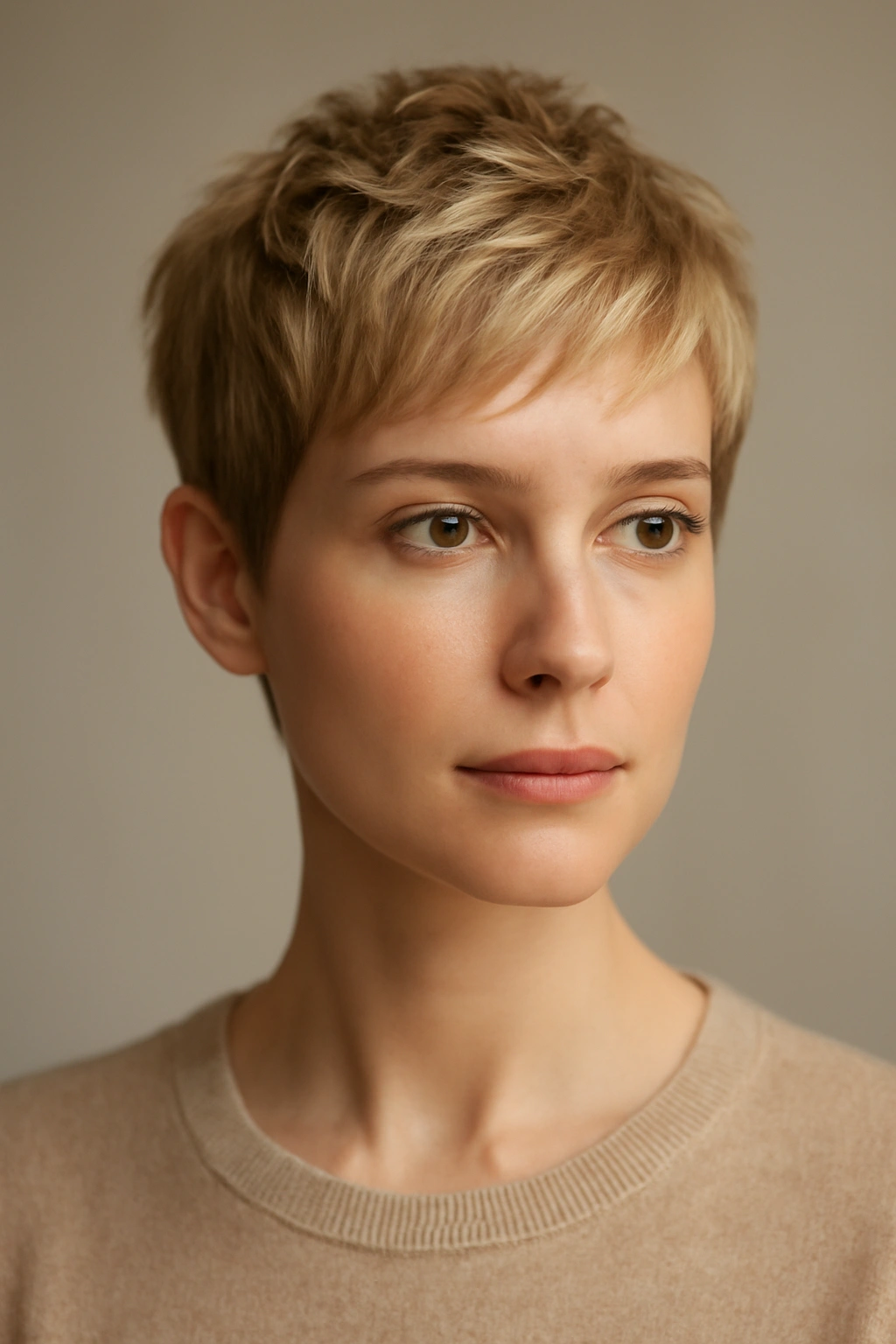
Finding the right short haircut for fine hair comes down to understanding that thin strands aren’t a limitation—they’re just different than thicker hair. The best cuts for fine hair work with your hair’s natural characteristics rather than fighting them. Whether you choose an ultra-short pixie, a textured crop, a choppy layered style, or a razored shag, the common thread is intentional cutting, strategic layering, and styling that creates dimension and movement.
The key takeaway is that shorter is actually your friend when you have fine hair. You get more control over shape, you remove the weight that drags thin hair down, and you create proportions that make fine strands look intentional and interesting. Pair any of these cuts with regular trims (every 4-8 weeks depending on the style), appropriate texturizing products, and a willingness to style your hair rather than let it air-dry, and you’ll have a short cut that makes you feel absolutely confident.
Talk to your stylist specifically about the challenges of fine hair and show reference photos of the exact texture and vibe you want. A good stylist who understands fine hair will know how to cut and layer in ways that maximize what you have, and they’ll give you realistic expectations about maintenance and styling. Your fine hair is not a problem to solve—it’s just a hair type that deserves the right cut, and any of these twelve styles can absolutely be that cut for you.
