



Black women have an incredible array of natural hairstyle options, and each one tells its own story of creativity, heritage, and self-expression. Whether you’re looking to protect your hair while still looking polished, or you want a low-maintenance style that celebrates your natural texture, there are so many beautiful possibilities to explore. The styles in this collection range from intricate, time-intensive braiding to quick wash-and-go routines, meaning there’s genuinely something for every lifestyle, hair type, and aesthetic.
What makes natural hairstyles so special is that they work with your hair’s texture rather than fighting against it. These styles not only look stunning—they’re often healthier for your hair in the long run because they minimize heat damage, reduce breakage, and allow your scalp to breathe. You’ll find that many of these styles can be customized in endless ways: you can add color, beads, jewelry, or accessories; you can mix and match techniques; you can wear them sleek or tousled depending on your mood. The versatility is genuinely part of the appeal.
This guide breaks down 25 natural hairstyles that Black women are wearing right now, with specific details about how each one works, why it’s worth trying, maintenance requirements, and honest tips about what to expect. Whether you’re a natural hair veteran experimenting with something new or you’re just starting your natural hair journey, you’ll find both classic styles that stand the test of time and modern twists that feel fresh and current.
1. Classic Box Braids

Box braids are one of the most iconic protective styles, and for good reason—they’re versatile, long-lasting, and endlessly customizable. The style involves sectioning your hair into square-shaped boxes and braiding synthetic hair (or your own hair) down the length of each section. What makes box braids so appealing is that you can wear them for weeks at a time without needing to redo them, which means less manipulation and stress on your natural hair.
Why Box Braids Work So Well
Box braids are beloved because they genuinely protect your ends, reduce daily manipulation, and give your hair a chance to rest and grow. When installed correctly by a skilled braider, they distribute tension evenly across your scalp rather than concentrating it in one area. They also allow you to style your hair in countless ways without touching your actual hair—you’re just moving the braids around. Plus, you can sleep on them without worrying about frizz or tangling, which is a huge practical advantage.
What to Know Before You Braid
- Installation takes time: Expect to spend 4-8 hours in the braiding chair depending on braid thickness and your hair length. Bring snacks, entertainment, and patience—and tip your braider generously
- Not all synthetic hair is created equal: Kanekalon, Marley hair, and X-pression are popular brands, but quality varies. Cheaper hair can be itchy and may shed more than premium options
- Maintenance matters: Wash weekly or every two weeks using a gentle cleanser and diluted apple cider vinegar. Sleep with a silk or satin scarf or bonnet to prevent frizz
- Removal is as important as installation: Unraveling braids can damage your hair if you rush. Expect this to take 2-4 hours—cut braids out if you’re short on time and patience rather than pulling and tugging
2. Passion Twists

Passion twists are a newer style that’s blown up in popularity because they look incredibly intricate and beautiful while being surprisingly gentle on your hair. They’re similar to box braids but instead of regular braiding, you’re twisting two strands of synthetic hair together along with your natural hair. The result is a bouncy, textured style that has more dimension and movement than traditional box braids.
Why Passion Twists Stand Out
Passion twists create more volume and texture than box braids because of the twisting technique, which means they look fuller and bouncier even when your natural hair is thin or fine. They also tend to last just as long as box braids—typically 4-8 weeks—but they feel lighter and less heavy on your neck. Many people report that passion twists feel less tight on the scalp than box braids, which is a huge comfort advantage if you have scalp sensitivity.
Passion Twist Care and Reality Check
- They require quality synthetic hair: Cheap hair will unravel faster and look less polished. Invest in better quality for longevity
- Frizz is normal and part of the aesthetic: Unlike box braids, passion twists are supposed to look a little undone and textured. You can tighten them with a damp sponge if they get too wild
- Installation is actually faster than box braids: Most appointments run 3-5 hours instead of 6-8 hours, so they’re a good option if you’re tight on time
- They work beautifully in updos: You can twist them into buns, wrap them into knots, or pin them up for a completely different look without redoing them
3. Senegalese Twists

Senegalese twists are timeless protective braids that have been worn across West Africa for generations. The style uses two strands of synthetic hair twisted together throughout the length of each section. Senegalese twists tend to look sleeker and more polished than passion twists because of the tighter twist pattern, giving them an elegant, refined appearance.
What Makes Senegalese Twists Special
Senegalese twists hold their shape beautifully and look crisp and neat for the entire duration you wear them. They have a sophisticated, structured look that works for professional settings, formal events, or just everyday wear when you want something that looks intentional and put-together. Because the twist is tighter than passion twists, they also tend to frizz less over time, which means less maintenance between washes.
Installation and Longevity Details
- Installation takes 3-6 hours: Senegalese twists are typically faster to install than box braids because the twisting motion is quicker than the braiding pattern
- They look polished immediately: Unlike some styles that need a day or two to “settle,” Senegalese twists look finished the moment you leave the salon
- Moisturizing is key: Because the twists are tight, moisture doesn’t penetrate as easily. Use a light oil or hydrating spray on the twists and your scalp at least twice weekly
- They can last 6-8 weeks: With proper care, Senegalese twists are some of the longest-lasting protective styles, which makes them economical over time
4. Crochet Braids

Crochet braids are a game-changer if you want a protective style without the long installation time. With this method, your braider will cornrow your natural hair close to your scalp in braided rows, then use a crochet hook to weave pre-made braids or curly hair through those braids. The result is a full, beautiful style that looks like you spent hours getting it done, but installation typically takes just 1-3 hours.
Why Crochet Braids Are Underrated
Crochet braids are ideal if you want maximum protection with minimal damage to your own hair. Your natural hair is barely manipulated during installation—it’s just braided into cornrows, and everything else is added hair. This means less stress on your hairline and edges, which is especially important if you’re trying to grow them back after damage. The style also allows you to change your look frequently; you can take the crochet braids out after 2-4 weeks without guilt because you didn’t invest 8 hours in installation.
The Honest Truth About Crochet Braids
- Tension matters more with crochet: If the cornrows underneath are too tight, they can damage your hairline. Find a braider who specializes in this technique and knows how to braid loosely
- You get what you pay for with the added hair: Cheap pre-made braids will frizz, shed, and look thin within a week. Budget for quality hair if you want your style to last
- Roots can show quickly: If you have dark roots and light-colored added hair, or vice versa, the demarcation line becomes visible within 2-3 weeks. Plan to refresh or retwist the braids if you want to hide regrowth
- They’re perfect for trying new looks: The low commitment makes crochet braids ideal for testing out a new color, texture, or length before committing to box braids
5. Twist Outs

A twist out is one of the most accessible natural hairstyles because you can do it yourself at home with minimal products and zero additional hair. The process is simple: you section your damp hair and two-strand twist each section, leave the twists in for 24 hours (either while they air-dry or overnight), then unravel the twists to create soft, voluminous curls. The result is beautiful texture and definition that celebrates your natural curl pattern.
The Magic of Twist Outs
Twist outs work because they elongate your curl pattern while still maintaining the natural coils your hair naturally forms. The definition you get from a twist out looks intentional and polished, not like you just walked around with wet hair. They’re also incredibly forgiving—there’s no “wrong” way to do a twist out, and imperfections actually add to the lived-in, beautiful aesthetic. Plus, you can refresh a twist out for several days by sleeping with it pineapple-style and re-moisturizing in the morning.
Making Your Twist Out Last Longer
- Use good product: A lightweight leave-in conditioner plus a defining gel or cream makes the difference between crunchy, defined twists and soft, frizzy ones. Experiment to find what works for your hair
- Twist when your hair is damp, not soaking wet: Soaking wet takes forever to dry, and you want the twists to set so they unravel into beautiful curls. Damp is the sweet spot
- Sleep on a silk or satin pillowcase: This prevents frizz and keeps your twists intact for the next day. A pineapple (high-top knot) works too if you don’t have a silk pillowcase
- Unravel gently in the morning: Take your time unraveling each twist section by section. Rushing this step means less defined curls and more breakage
6. Braid Outs

A braid out is the sister style to a twist out, using the same principle but with three-strand braids instead of two-strand twists. You braid sections of damp hair, leave them in overnight, then unravel them to create soft, wavy texture with beautiful definition. Braid outs typically give you more defined waves and texture than twist outs, with a slightly different aesthetic that some people prefer.
How Braid Outs Create Different Texture
The three-strand braiding pattern creates a different wave pattern than two-strand twists—the result is more of a cascading wave rather than tight coils. This works beautifully if you have loose-to-medium curl patterns and want to enhance them without elongating them too much. Braid outs also tend to last slightly longer than twist outs because the braiding creates a stronger “memory” in your hair, meaning the waves hold their shape for 2-3 days if you take care of them properly.
Pro Tips for Picture-Perfect Braid Outs
- Braid tighter for more defined waves: The tension of your braids directly affects how defined your waves will be. Tighter braids equal more defined waves
- Use edge control on your hairline: Before braiding, apply a light edge control to your edges to keep baby hairs in place throughout the process
- Moisturize before braiding: Hair that’s already hydrated will hold the braid-out pattern better and look shinier when unraveled
- Consider braiding at night and unraveling in the morning: This timing means you get a full night for the braids to set, and the moisture in your hair while sleeping helps create softer waves
7. Bantu Knots

Bantu knots are both a protective style and a cute aesthetic on their own. The technique involves coiling sections of your hair into knots that sit flat against your scalp, creating a sculptural, dimensional look. Bantu knots can be worn as-is for a bold, statement-making style, or you can unravel them after they dry for beautiful curls (similar to a twist out or braid out). They’re named after the Bantu peoples of Africa, where this style has deep cultural roots.
Why Bantu Knots Work as Both Style and Protection
What’s genius about Bantu knots is their versatility. You can wear them as a finished style—they look undeniably cool and can work for casual wear, formal events, or creative self-expression. Or you can treat them as a protective base for curls, similar to twist outs and braid outs. They also work for all hair types and textures, from extremely coily to looser waves. The knots themselves create minimal stress on your hair because they’re coiled, not pulled tightly against your scalp.
Creating Bantu Knots That Actually Hold
- Start with damp hair: Completely dry hair won’t coil as easily or hold the knot shape as well. Damp (not soaking) is ideal
- Use a product with hold: A light gel or moisturizing cream helps the coils stay in place. Without product, the knots may unravel, especially as your hair dries
- Coil outward from your scalp: Start at the root and coil the hair away from your head in a spiral motion. This distributes tension more evenly
- Secure with bobby pins if needed: If your knots keep unraveling, bobby pins can hold them in place during the drying process. Remove them once fully dry
- Leave them in for 24+ hours: The longer you keep bantu knots in, the better the curl or wave pattern will set. Overnight is minimum; 2 days is ideal
8. Cornrows

Cornrows are the OG protective braid style, and they’ve remained iconic for centuries because they’re functional, beautiful, and endlessly customizable. The braiding technique involves sectioning your hair and braiding it close to your scalp in straight lines (though cornrows can also be braided in curves, zigzags, or patterns). Cornrows can be worn as a standalone style or as the foundation for other styles like crochet braids or appended braids.
The Lasting Appeal of Cornrows
Cornrows are timeless because they work beautifully for all occasions and all ages, from babies to grandmothers. They’re one of the most protective styles available because they minimize manipulation and tuck your ends away safely. You can also style cornrows in so many ways—you can wear them down, sweep them into a crown, loop them into a bun, or accessorize them with beads and rings. The versatility makes them practical for everyday wear while still looking intentional and beautiful.
Cornrow Expertise Worth Knowing
- Thickness matters: Thicker cornrows take less time to install (3-4 hours), but thinner cornrows show more detail and intricacy. Choose based on the look you want and how much time you’re willing to spend
- Patterns create different vibes: Straight-back braids feel classic and clean, while curved or zigzag patterns feel more artistic and creative. Discuss pattern options with your braider
- They’re ideal for growing out edges: Since cornrows don’t pull on your hairline as much as other tight styles, they actually let your edges breathe and recover
- Maintenance is minimal: Cornrows need very little daily maintenance beyond keeping them moisturized. Wash every 2 weeks and sleep with a scarf or bonnet
- They can last 4-6 weeks: With good installation and care, cornrows are incredibly durable, which makes them economical long-term
9. Fulani Braids

Fulani braids are a specific type of cornrow style with cultural roots in West Africa, traditionally worn by the Fulani people. This style typically features a defined center part with braids running down the middle of the head, often adorned with beads, rings, or gold cuffs. Fulani braids are slightly finer and more detailed than basic cornrows, creating an elegant, intentional aesthetic that works beautifully for both casual and formal settings.
The Cultural and Aesthetic Significance
Fulani braids are more than just a hairstyle—they’re a connection to heritage and tradition. When you wear Fulani braids, you’re honoring the cultural significance and artistry of a style that’s been worn for generations. Aesthetically, they’re absolutely stunning because of the detailed braiding, the adornment options, and the way they frame the face. The center part creates natural symmetry, and the braids can be layered with gold, beads, or cowrie shells for added dimension.
Getting Fulani Braids Right
- Find a braider who understands the style: Not all braiders are experienced with Fulani braids specifically. Look at portfolios and ask if they’ve done this style before
- Plan for adorning: Fulani braids are meant to be decorated. Budget for gold cuffs, beads, rings, or cowrie shells if you want the authentic look
- The center part is key: A clean, sharp center part is essential to the style. Make sure your braider takes time to get this part exactly where you want it
- They take 3-5 hours: Fulani braids take slightly longer than regular cornrows because of the detail work and center part precision
- They last 4-6 weeks: Like cornrows, Fulani braids are durable and long-lasting with proper care
10. Goddess Braids

Goddess braids are basically larger, thicker cornrows that have a chunky, sculptural appearance. The braids are typically thicker than traditional cornrows (usually ¾ to 1 inch wide) and often incorporate added hair for extra fullness and dimension. Goddess braids have a regal, statement-making quality that makes them perfect when you want something bold and noticeable.
Why Goddess Braids Feel So Luxe
The thickness of goddess braids is what makes them special—they feel substantial and sculptural, creating visual interest and dimension that thinner braids don’t. Because they’re thick, installation goes faster (typically 2-4 hours), which means less time in the chair. They also make a statement; people notice goddess braids in a way they might not notice thinner styles. And practically speaking, thicker braids can last slightly longer than thinner ones because there’s less surface area for frizz to accumulate.
Making Goddess Braids Work for You
- They work better with added hair: While you can do goddess braids with just your natural hair, adding synthetic hair creates the fullness and dimension the style is known for
- Installation speed is a huge advantage: If you don’t want to spend 6+ hours in the salon, goddess braids are your answer. 3 hours max for a full head
- They make a bold statement: Goddess braids aren’t subtle. If you want a style that’s noticed and admired, these deliver
- Styling options are limited but beautiful: You can wear them down, sweep them to one side, or wrap them into a crown, but the thick braids don’t do intricate updos
- They last 4-6 weeks: Durable and long-lasting, making them economical if you factor in installation time
11. Two-Strand Twists

Two-strand twists are the most basic form of twisting your natural hair, and they’re perfect for beginners because they require no special skill. You simply divide your hair into sections and twist two strands together down the length. You can wear two-strand twists as a finished style (they look beautiful and intentional) or you can take them out after they dry for bouncy, textured curls.
The Simplicity and Beauty of Two-Strand Twists
What makes two-strand twists so appealing is that you can literally do them yourself at home with zero additional hair or special products. All you need is damp hair, a leave-in conditioner or light oil, and about an hour of your time. The style is gentle on your hair, maintains your natural curl pattern, and looks purposefully styled rather than neglected. Two-strand twists also come down much faster than box braids or other installed styles, so if you want a protective style that’s lower commitment, this is it.
Making Two-Strand Twists Look Intentional
- Section sizes matter: Larger sections = fewer twists but thicker-looking twists; smaller sections = more twists with finer texture. Choose based on the aesthetic you want
- Keep twists even: Try to twist sections to the same thickness so your style looks balanced and intentional, not random
- Use product for definition: A defining gel or cream helps your twists look sharper and hold their shape longer
- They last 1-2 weeks as a style: Worn as twists (rather than unraveled), they look fresh for about a week before they start to lose definition
- Undo them gently: Taking out two-strand twists is quick and painless if you unroll them gently from the ends up. Pulling them out from above creates unnecessary breakage
12. Flat Twists

Flat twists are cornrows made from two strands instead of three, creating a flatter, more geometric pattern than regular two-strand twists. You can wear them as a protective style on their own, or they serve as a beautiful base for creating patterns (like a crown of flat twists framing your face). Flat twists are less commonly seen than cornrows but absolutely deserve more attention because they’re stunning and versatile.
Why Flat Twists Are Underrated
Flat twists create a graphic, geometric pattern that’s visually interesting and modern. They work beautifully as a protective style on their own, but they’re also perfect for creating shapes and patterns—you can twist them in spirals, crowns, or waves that create an artistic effect. Because they’re flat, they lay close to your head, which means less bulk than regular two-strand twists and a sleeker aesthetic. They’re also relatively quick to do if you’re braiding your own hair.
Styling and Maintaining Flat Twists
- You can do these yourself: Flat twists are easier to do than cornrows if you’re working on your own head. They take 1-2 hours for a full head
- They work with or without added hair: Plain flat twists on natural hair look beautiful and minimalist, but adding color or texture makes them more dramatic
- Pattern options are endless: Straight, curved, spiral, crown, or asymmetrical—you can create whatever pattern appeals to you
- They last 1-2 weeks as a style: The definition and sharpness of flat twists fades after about a week, so they’re best as a shorter-term style
- Perfect for bedhead refresh: If you sleep on flat twists, they maintain their shape beautifully and look fresh the next day
13. Faux Locs

Faux locs are a protective style that mimics the look of dreadlocks without the permanent commitment. You use either crochet hooks or a braiding method to wrap your natural hair with added hair (usually synthetic or wool hair) to create the appearance of locs. The style gives you the aesthetic of locs—edgy, cool, intentional—with the flexibility to remove them in 4-8 weeks without the years-long commitment of actual locs.
The Appeal of Faux Locs for Temporary Texture
Faux locs are perfect if you love the aesthetic of locs but aren’t ready to commit to the actual lifestyle. They let you try out the look, see how you feel wearing locs, and then take them out if it’s not for you. They’re also incredibly protective because your natural hair is completely enclosed and separated into sections, meaning no rubbing together, no tangling, and minimal breakage. Many people use faux locs as a transition style while growing out damaged hair.
What to Expect With Faux Locs
- Installation takes 3-6 hours: Depending on thickness and your braider’s speed, crochet faux locs typically take 4-5 hours
- Maintenance is minimal: Wash every 2 weeks with a clarifying shampoo, and that’s basically it. You can spritz them with water and light oil if they look dry
- They can last 6-8 weeks: Properly cared for, faux locs are some of the longest-lasting protective styles
- Removal can be delicate: If you want to preserve your natural hair underneath, removal takes patience and care. Expect 2-3 hours to take them all out
- Styling is limited: You can wear faux locs down or in an updo, but you can’t manipulate them into different shapes the way you can with braids
14. Goddess Loc Extensions

Goddess loc extensions are thicker, chunked-up faux locs that often include added texture like curls, waves, or braids mixed in. They create a fuller, more statement-making look than regular faux locs. You can also add color, beads, or other adornments to goddess loc extensions for a completely personalized look.
The Versatility of Goddess Loc Extensions
Goddess loc extensions give you the protective benefits of faux locs but with way more visual interest and dimension. Because they’re thicker and often include mixed textures, they photograph beautifully, they look intentional, and they feel like a genuine style statement. You can customize them extensively—add color during installation, weave in different texture combinations, or adorn them with beads and cuffs. This level of customization is one of the best reasons to choose goddess loc extensions over regular faux locs.
Installation and Styling Specifics
- Installation takes 4-6 hours: The thickness and texture mixing means this takes longer than regular faux locs, but you get a fully customized look
- They photograph amazingly: The dimension and texture make goddess loc extensions look incredible in photos and video
- Styling options include updos and accessorizing: You can wrap them into buns, create patterns, or use clips and cuffs to change up the look
- They last 6-8 weeks: With proper care, goddess loc extensions are durable and long-lasting
- Maintenance includes regular moisturizing: The mixed textures mean different parts need different products. Use a lightweight oil that works across all your textures
15. Actual Locs

Actual locs (dreadlocks) are a permanent or semi-permanent commitment to a specific hairstyle in which your hair naturally locks together into long, rope-like sections. You can start locs using various methods: crochet, twisting, braiding, or freeform (letting them form naturally without manipulation). Once your locs are mature (usually 6-12 months in), they become their own distinct entity that requires specific maintenance but basically lasts as long as you want to keep them.
What Locs Actually Require (The Real Deal)
Locs are beautiful and iconic, but they’re a genuine commitment. You need to retwist or maintain them every 4-8 weeks to keep them neat, and many people need professional help with this maintenance. Locs also require specific washing methods (you typically don’t wash your locs the same way you wash regular hair), and they take a long time to mature and look the way they’re “supposed” to look. But if you’re committed to the journey, locs are incredibly low-maintenance long-term—you wash, let them dry, and you’re basically done styling.
Honest Expectations for Starting Locs
- Baby locs need frequent maintenance: The first 3-6 months are crucial. You’ll need to retwist every 4-6 weeks to keep them neat while they’re still forming
- They go through an awkward phase: Locs don’t look “finished” for at least 6 months, often longer. Expect them to look fuzzy and unpolished during the baby loc stage
- Mature locs are low-maintenance: Once locs are mature (usually after a year), they require way less hands-on styling than natural hair. You retwist every 6-8 weeks and you’re done
- Locs can restrict some hairstyles: Once your hair is locked, you can’t style it into twists or braids the way you could with unlocked hair. You’re essentially locked into locs
- Removing locs is damaging: If you ever decide to take out locs and return to unlocked hair, the removal process causes significant hair loss. Go into locs knowing this is potentially permanent
16. Comb Coils

Comb coils are a playful, textured style created by wrapping sections of damp hair around the teeth of a comb. Once you slide the comb out, you’re left with tight, springy coils that look cute and dimensional. It’s a fun, creative style that you can do yourself at home with just a fine-tooth comb and a leave-in conditioner.
The DIY Appeal of Comb Coils
Comb coils are perfect for people who love experimenting with their natural texture and want a fun, temporary style without spending salon money. The coils are bouncy and playful, they look intentional, and they showcase your natural curl pattern in a really cool way. You can create coils all over your head for a full textured look, or just do them in certain sections for an asymmetrical effect. It’s also incredibly budget-friendly—just grab a fine-tooth comb and you’re good to go.
Creating Comb Coils That Hold
- Damp hair is essential: Your hair needs to be wet enough to hold the coil shape but not dripping. Spritz with water if needed
- Section sizes matter: Larger coils look bolder; smaller coils look more intricate. Choose based on the effect you want
- Use a product with hold: A lightweight gel or mousse helps coils maintain their shape as they dry
- Let them air dry completely: Drying time is crucial. The coils need to fully dry while wrapped around the comb to set properly
- They last 3-5 days: Coils stay looking fresh for about a week if you sleep on a silk pillowcase and don’t disturb them too much
17. Wash and Go

A wash and go is the ultimate low-maintenance natural hairstyle. You literally wash your hair, apply product (a leave-in conditioner and a styling cream or gel), and let it air dry or diffuse-dry into your natural curl pattern. No twisting, no braiding, no manipulation—just washing and letting your curls be themselves. It’s called a wash and go because that’s exactly what it is: wash, apply product, go about your day.
Why Wash and Gos Are Life-Changing
For people with naturally curly or coily hair, a wash and go is the most freeing hairstyle possible. It celebrates your natural curl pattern without any manipulation or alteration. It’s healthy for your hair because it minimizes handling. It’s quick—the entire routine takes maybe 20 minutes. And it’s empowering because you’re literally just wearing your hair in its natural state. A good wash and go says “this is how my hair grows and I’m rocking it” with zero apologies.
Making Your Wash and Go Actually Work
- Product quality matters hugely: Using the right leave-in conditioner and curl cream or gel makes the difference between a gorgeous wash and go and a frizzy mess. This might require experimentation
- Hydration is key: Your hair needs to be properly hydrated for curls to look their best. A good leave-in conditioner is non-negotiable
- Drying method affects the outcome: Air drying versus diffuser drying creates different results. Diffuser drying tends to give more definition and hold
- Scrunching technique improves definition: As your hair dries, occasionally scrunch products up into your hair to encourage curl formation and definition
- Refresh on non-wash days: You probably won’t wash your hair daily, so learn how to refresh a wash and go with a spray bottle of water and a light product application
18. Pineapple Updo

A pineapple is a protective sleeping method that also works as a cute daytime style. You take your curls and twist or pull them up and away from your face, securing them in a high ponytail or knot on top of your head (the loose, gathered curls kind of resemble a pineapple from the side, which is where the name comes from). A pineapple preserves your curl pattern while sleeping and prevents frizz and flattening.
More Than Just a Sleep Method
While a pineapple is primarily a sleeping technique, it also works as a casual daytime style if you want a quick, low-effort look. It takes 30 seconds to create, requires zero product or tools beyond a hair tie, and it looks cute and intentional. The style works for all curl types and is especially useful if you have a lot of curls you want to show off without them getting in your face.
Creating the Perfect Pineapple
- Use a loose hair tie or scrunchie: A tight hair tie can crease your hair and damage your edges. A soft scrunchie or even a satin hair tie is much gentler
- Position it high on your head: The higher the ponytail, the less your curls get disturbed while you sleep
- Gather gently: Don’t rake a brush through your curls to gather them. Use your hands to gently gather curls and secure them loosely
- Sleep on a silk or satin pillowcase: Even with a pineapple, a silk pillowcase prevents additional frizz and breakage
- You can refresh for 2-3 days: A pineapple from day one is usually still decent for day two and even day three, so you don’t need to wash as frequently
19. High Top Fade with Natural Curls

A high top fade is a short haircut with closely faded sides and back, paired with natural curls on top that have volume and height. This style is bold, edgy, and intentional. You can wear the top curls out naturally, braid them, twist them, or style them in countless ways while keeping the faded sides and back clean and tight.
The Statement-Making Power of a High Top Fade
A high top fade with natural curls celebrates your texture in the most visible way possible. The contrast between the faded sides and the textured top is visually striking. This style works beautifully for people who want something that reads as confident and intentional, and it photographs incredibly well. You also get options—on days when you want maximum texture, you wear it out; on days when you want something smoother, you can braid or twist the top.
Maintaining a High Top Fade Look
- Fade needs regular maintenance: Plan for a lineup every 3-4 weeks to keep the sides and back crisp
- Natural curls on top can be styled multiple ways: Twist-outs, braid-outs, wash and gos, or just letting them be creates different vibes
- Moisturizing is key: The top curls dry faster because there’s less hair providing moisture, so regular moisturizing is important
- This style ages incredibly well: From your 20s through your 60s, a high top fade with natural curls looks timeless and sharp
- It’s gender-neutral and universally flattering: This style works regardless of how you identify, and it genuinely looks good on multiple face shapes
20. Slicked Back Bun with a Silk Scarf

A slicked-back bun is elegant, polished, and appropriate for professional settings, casual wear, or anything in between. You simply smooth your hair back from your face using a light gel or edge control, gather it into a low or high bun (depending on your preference), and secure it with bobby pins and a silk or satin scarf wrapped around the base. The scarf adds visual interest while also keeping flyaways in place.
Why This Style Endures
A slicked-back bun with a silk scarf is timelessly elegant because it’s simple, clean, and allows the focus to be on your face and features rather than your hair. It’s also practical—your hair is secure, it won’t get in your face, and you can work or exercise without worrying about your hair coming down. The silk scarf adds a pop of color and personality while serving the practical purpose of keeping your bun tight and protecting your hairline.
Executing a Polished Slicked Bun
- Use a light gel or edge control: Heavy products weigh your bun down. A light hold product smooths hair without bulk
- Bun placement matters: A low bun at the nape of your neck reads more professional; a high bun on top of your head reads more casual and fun
- Bobby pins should be the same color as your hair: Hidden bobby pins look more polished than visible ones. Use shades that match your hair
- The silk scarf is part of the aesthetic: Choose colors and patterns that complement your skin tone and personal style. The scarf shouldn’t look accidental
- This works on second, third, or even fifth-day hair: A slicked bun is perfect for days when you haven’t washed your hair. The smoothing and styling makes it look intentional
21. Tapered Natural Haircut

A tapered cut is a short, close cut that’s shaped to follow your head and usually fades down toward the nape of your neck. With natural hair, a tapered cut showcases your texture beautifully because the curls or coils have room to spring up without the weight of longer hair pulling them down. You can wear a taper cut textured and voluminous, or smooth it down with product depending on the occasion.
Why Natural Hair Looks Amazing in a Taper
A tapered cut with natural hair is incredibly liberating because you’re not fighting against your texture—you’re working with it. The cut literally follows your natural curl pattern and lets it expand. Tapered cuts are also low-maintenance; you’re washing, maybe applying a bit of product, and you’re done. No elaborate styling routines required. The style reads as confident and intentional, and most importantly, it feels amazing to rock your natural texture without apology.
Styling a Tapered Cut
- You can go textured or smooth: Some days you might want your curls out and voluminous; other days you might apply gel and smooth them down. Both look intentional with a taper
- Maintenance means regular trims: Plan for a haircut every 6-8 weeks to maintain the shape and taper
- Product application is minimal: A light leave-in and optional gel is usually all you need. You’re not doing elaborate routines on short hair
- This works for all curl patterns: From coily to wavy, a tapered cut celebrates natural texture beautifully
- It’s practical and time-saving: Getting ready in the morning is quick. Wash, maybe apply product, and you’re done. No blow drying or flat ironing required
22. Twisted Crown with Loose Curls

A twisted crown is exactly what it sounds like: you create two-strand twists along your hairline that wrap around the top/crown of your head, while leaving the rest of your hair down as loose curls. It’s romantic, feminine, and incredibly versatile—you can dress it up for formal events or wear it casually. The style also protects the delicate hair around your hairline while showcasing your curls.
Combining Protection and Beauty
A twisted crown gives you the best of both worlds: the protective benefit of twisting your hairline (which reduces tension and stress on that delicate area) plus the free, beautiful aesthetic of loose curls. The twisted crown reads as intentional and styled without being overly complicated. It’s also perfect for days when your curls are looking good but your hairline is a little fuzzy or rough—the twist covers and protects while looking intentional.
Creating a Twisted Crown
- Start with partially dried curls: Your curls should be mostly dry but still have some moisture so they hold their pattern
- Twist sections from your hairline: Take small sections at your hairline and twist them toward the back of your head, creating a frame around your face
- Secure with bobby pins that match your hair: Pin the twisted sections in place as you go around your head
- Let your curls hang loose: The contrast between the structured twists and the free curls is what makes this style special
- It lasts 2-3 days: The twists stay looking fresh for a couple days; the loose curls might need a refresh after day one depending on your hair
23. Braided Sides with Center Part

This style features braids (usually tight cornrows or goddess braids) along the sides of your head with a center part down the middle, while your hair in the center hangs loose in curls or a half-up style. It’s playful, balanced, and works beautifully as a protective style because your edges and sides are protected while your hair is still visible and celebrated.
Balance and Visual Impact
Braided sides with a center part create natural symmetry and balance that’s visually appealing. The center part draws attention to your face while the braids frame your features. This style is great for people who want some protection (the braids protect your edges and sides) while still showing off their natural texture in the center. It’s also perfect for people who like the idea of braids but don’t want a full head of braids.
Executing Braided Sides Perfectly
- Make your center part crisp and clean: A sharp center part is essential to this style looking intentional. Take time to create a clean line
- Keep braids on the sides consistent: Both sides should mirror each other for balance. Either both thick braids or both thin braids; avoid mismatched sides
- Curl or braid the center section: You can leave your center hair in loose curls, braid it into a thick center braid, or even twist it. Pick whatever complements the style
- This works with or without added hair: You can do this entirely on your natural hair, or add synthetic hair to the braided sections for more dimension
- It lasts 2-3 weeks: The braided sections last longer; your natural center hair might need refreshing after a week
24. Appended Braids with Waves

Appended braids (also called braid extensions or individual braids) are synthetic braids that are attached directly to your natural hair sections, as opposed to being braided from root to tip. They look exactly like regular braids but the installation is different—your braider attaches pre-made braids to your natural hair sections. Appended braids can be styled into beautiful waves, curls, or knots for a fully customized look.
Why Appended Braids Are Worth Trying
Appended braids are generally faster to install than box braids from scratch (2-4 hours versus 6-8), which saves serious time. Because the braids aren’t braided from your roots, there’s arguably less tension and stress on your natural hair. And because the added hair is essentially “loose” until you style it, you can manipulate appended braids into waves, curls, bantu knots, or any style you want after installation.
Installing and Styling Appended Braids
- Installation is faster: Expect 2-4 hours depending on thickness and braid length
- You control the final style: After installation, you can wet the braids and style them into waves, pin them into patterns, or leave them straight. The styling is up to you
- They can last 4-6 weeks: Properly installed and maintained, appended braids are durable
- Styling options post-installation: Wet the braids, apply product, and either air dry or use a diffuser to create waves. You can change the style every few days if you want
- Maintenance includes regular moisturizing: Keep the braids hydrated with a light oil so they look fresh and shiny throughout their lifespan
25. Heatless Waves and Curls
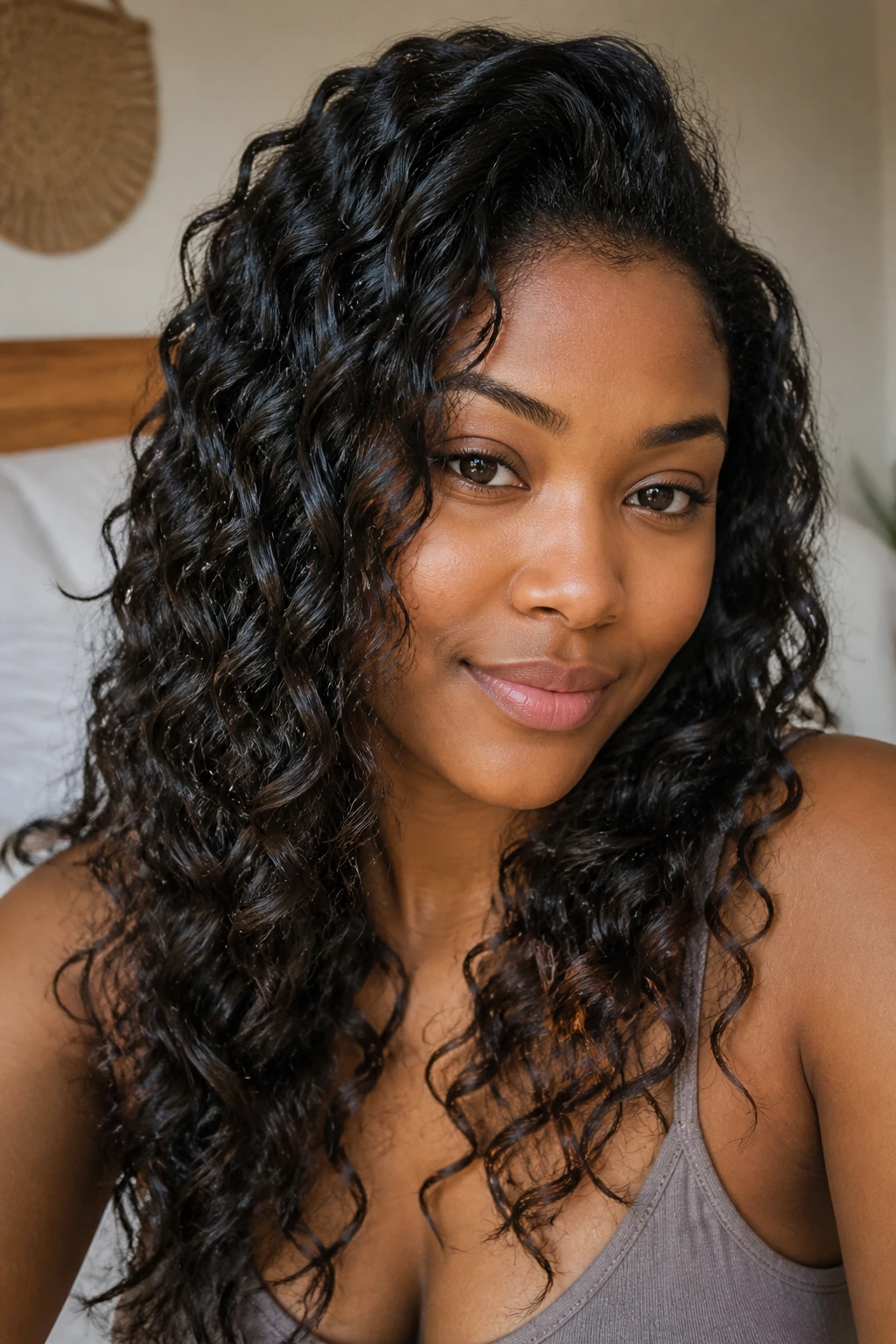
Heatless waves and curls are created using methods like braiding, twisting, or wrapping your hair around rods or curling devices while your hair is damp, then letting it dry completely. You can achieve beautiful waves and curls without any heat damage. Methods include braid waves, flexi-rod curls, pin curls, straw curls, or even using a water bottle or pencils to create curls. It’s creative, budget-friendly, and completely customizable.
The Appeal of Heat-Free Styling
Heatless waves and curls are perfect for anyone who wants to protect their hair from heat damage while still being able to style their curls however they want. You have endless options for what tools you use and how tight or loose your waves are. You can literally use items around your house—straws, pens, socks, or anything cylindrical—to create curls. It’s also incredibly budget-friendly since you’re using items you probably already have at home.
Creating Heatless Waves and Curls
- Damp hair is essential: Your hair needs to be damp (not soaking) when you set your curls or waves. Completely wet takes too long to dry; completely dry won’t hold the pattern
- Product helps: A lightweight gel or curl cream helps your waves and curls hold their shape as they dry
- Tightness of wrapping determines curl size: Tighter wrapping creates tighter, smaller curls; looser wrapping creates bigger, looser waves. Play around to find your preferred curl size
- Overnight drying is ideal: Most people wrap their hair before bed and leave the wrappings in overnight, then remove them in the morning when the hair is fully dry
- They last several days: Heatless curls usually look fresh for 3-5 days depending on your hair texture and how much you manipulate them
Final Thoughts
The beautiful thing about natural hairstyles is that they’re not one-size-fits-all. Whether you’re drawn to intricate protective braids, quick wash-and-gos, or creative styling methods, there’s a style that fits your hair texture, your lifestyle, and your personal aesthetic. What matters most is choosing styles that make you feel confident, that work with your natural texture rather than against it, and that celebrate who you are.
The best natural hairstyle is ultimately the one that you enjoy wearing and that makes you feel like yourself. Some styles are more protective, some are quicker, some are more artistic, and some work better for specific occasions. As you try different styles, you’ll discover which ones make you feel most beautiful and which ones fit practically into your life. Give yourself permission to experiment, to try things that might not work, and to keep coming back to the styles that make you feel like the absolute best version of yourself.
Your natural hair is a genuine strength and a canvas for endless creativity. These 25 styles barely scratch the surface of what’s possible when you embrace your natural texture. Rock whatever style makes your heart happy.
