



The mullet undercut represents one of the most daring hair transformations available to women today—a bold hybrid that merges the rebellious attitude of a shaved undercut with the playful volume and length of a modern mullet. This isn’t your parent’s 1980s mullet; it’s a carefully crafted style that demands confidence, precision, and a hairstylist who understands how to blend edgy and elegant in equal measure. The combination works because it plays with contrast on multiple levels: the stark geometric lines of the undercut against the softer, flowing length at the crown; the sleekness of clipped sides against textured layers; the dramatic transformation when you flip your head and reveal the hidden undercut beneath.
What makes this style so compelling for women isn’t just the shock value, though that’s certainly part of the appeal. It’s the versatility. You can pin up the longer sections and let your undercut show, or wear everything down and look like you’re sporting a fashion-forward mullet. You can style it punk and gritty one day and polished and sophisticated the next. The undercut mullet forces you to be intentional about your look—there’s no hiding with this cut, which is precisely why women who choose it tend to be those ready to claim their space visually and unapologetically.
The following twelve styles represent distinct approaches to the mullet undercut, each with its own personality, styling requirements, and degree of boldness. Whether you’re drawn to sharp geometric precision, textured chaos, or something in between, there’s a version here that can translate your vision into reality.
1. The Sharp Modern Mullet Undercut
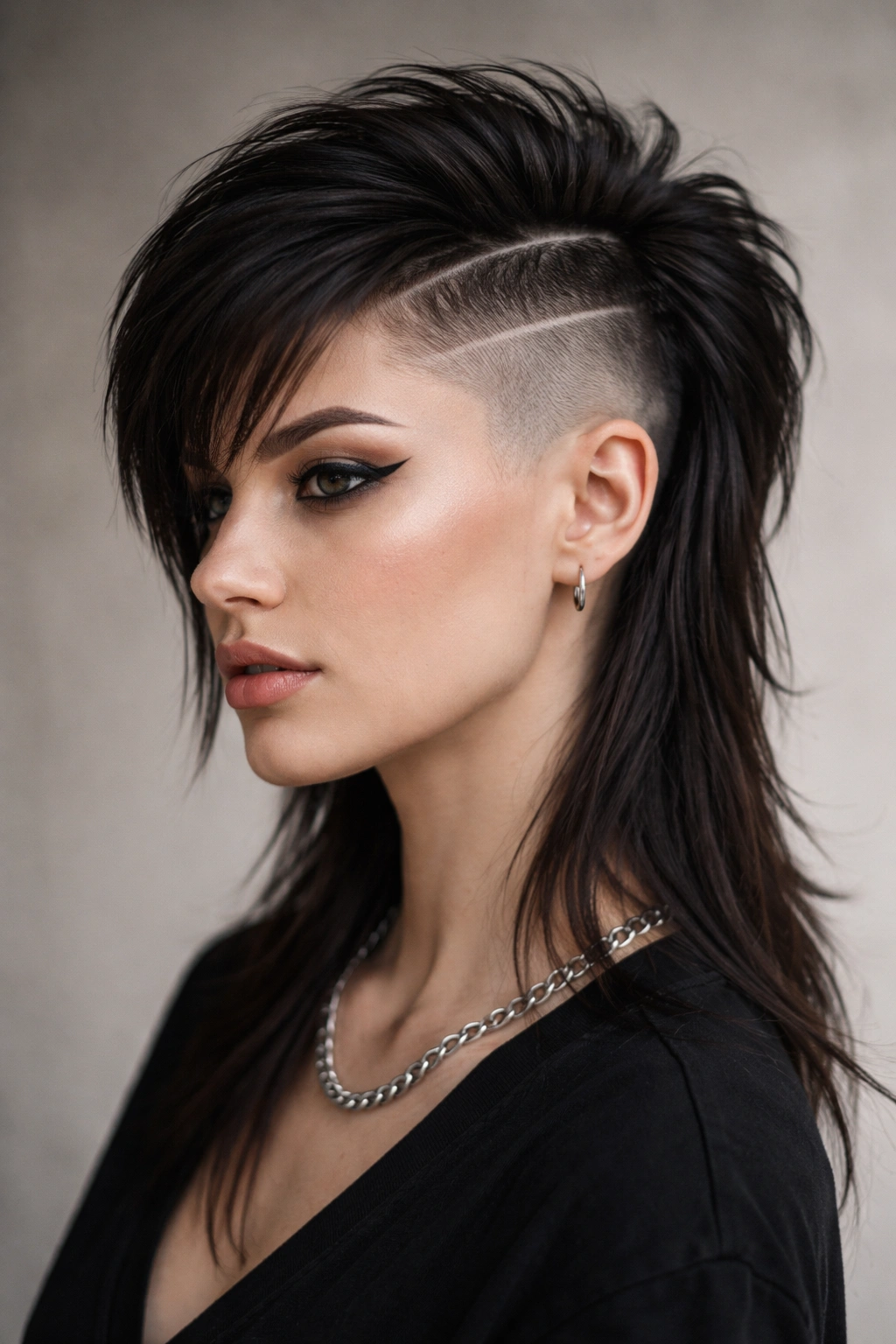
This is the clean, architectural version of the style—the one that walks the line between punk and polished with absolute precision. The undercut features clipped sides and nape (typically faded to skin level), a defined hard part that can be dramatic or subtle depending on your preference, and a crown that maintains length and volume while the back section transitions into longer, strategically layered pieces. The front fringe remains longer and can frame the face softly or angle sharply inward toward the cheekbones.
Why This Style Commands Respect
The sharp modern mullet undercut works because every line has a purpose. There’s no ambiguity—it’s either precise or it doesn’t read as intentional. This version photographs beautifully and photographs often because the geometry translates to clean lines in any lighting. The hard part creates a visual break that makes the style unmistakably deliberate, not accidental.
Styling and Maintenance Tips
- Keep the undercut faded fresh every 3-4 weeks; visible regrowth breaks the clean aesthetic
- Style the crown section with a volumizing mousse or light gel when damp to establish height at the roots
- The longer back section can be blown out smooth or piece-texturized depending on the day’s vibe
- Use a trimmer with a steady hand or trust an experienced barber; this cut demands precision
- The hard part becomes more visible with longer hair on top; shorter crowns make it subtle
Pro tip: This style works best on straight to wavy hair textures; curly hair requires more strategic texturizing to prevent the longer sections from becoming too bulky.
2. The Textured Shag Undercut Hybrid
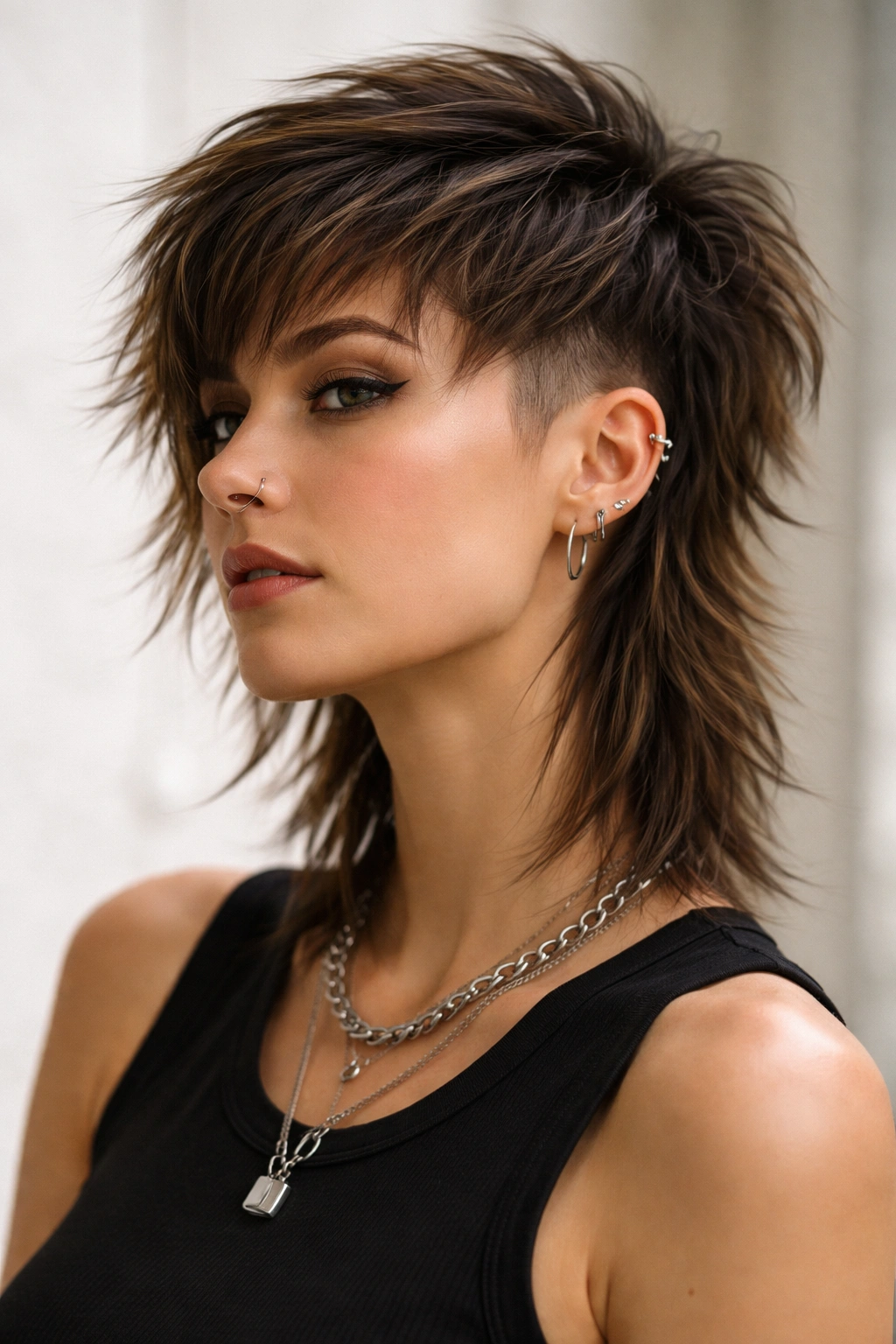
This version combines the choppy, lived-in texture of a 1970s shag with the modern edge of an undercut, resulting in a style that feels effortlessly cool rather than architectural. The sides and nape are clipped shorter, but the transition isn’t a clean fade—it’s slightly grown out and tousled. The crown and back are cut into irregular, choppy layers throughout, creating movement and dimension rather than one solid block of length.
What Makes It Feel Different
A textured shag undercut reads as more approachable than its sharper cousin. The choppy layers catch light at different angles and create visual interest without requiring perfect styling. This style suits people who want edge without the maintenance commitment of perfectly faded sides that need touching up constantly. It’s the version for women who want “I woke up like this” vibes with an undercut.
How to Achieve the Texture
- Ask your stylist for choppy, razor-cut layers throughout the crown and back, not blunt lines
- The undercut should be clipped short but can feature slightly grown-out texture rather than a razor-sharp fade
- Layers should vary in length by 2-4 inches to create genuine movement, not subtle graduation
- Styling with texturizing spray, sea salt spray, or a light mousse enhances the choppy effect without weighing it down
- This style actually improves slightly as it grows out; the layers get more pronounced
Worth knowing: Textured shag undercuts require a stylist comfortable with choppy technique; many modern stylists are trained primarily in blunt cuts and fades. Show references.
3. The Sleek Asymmetrical Mullet
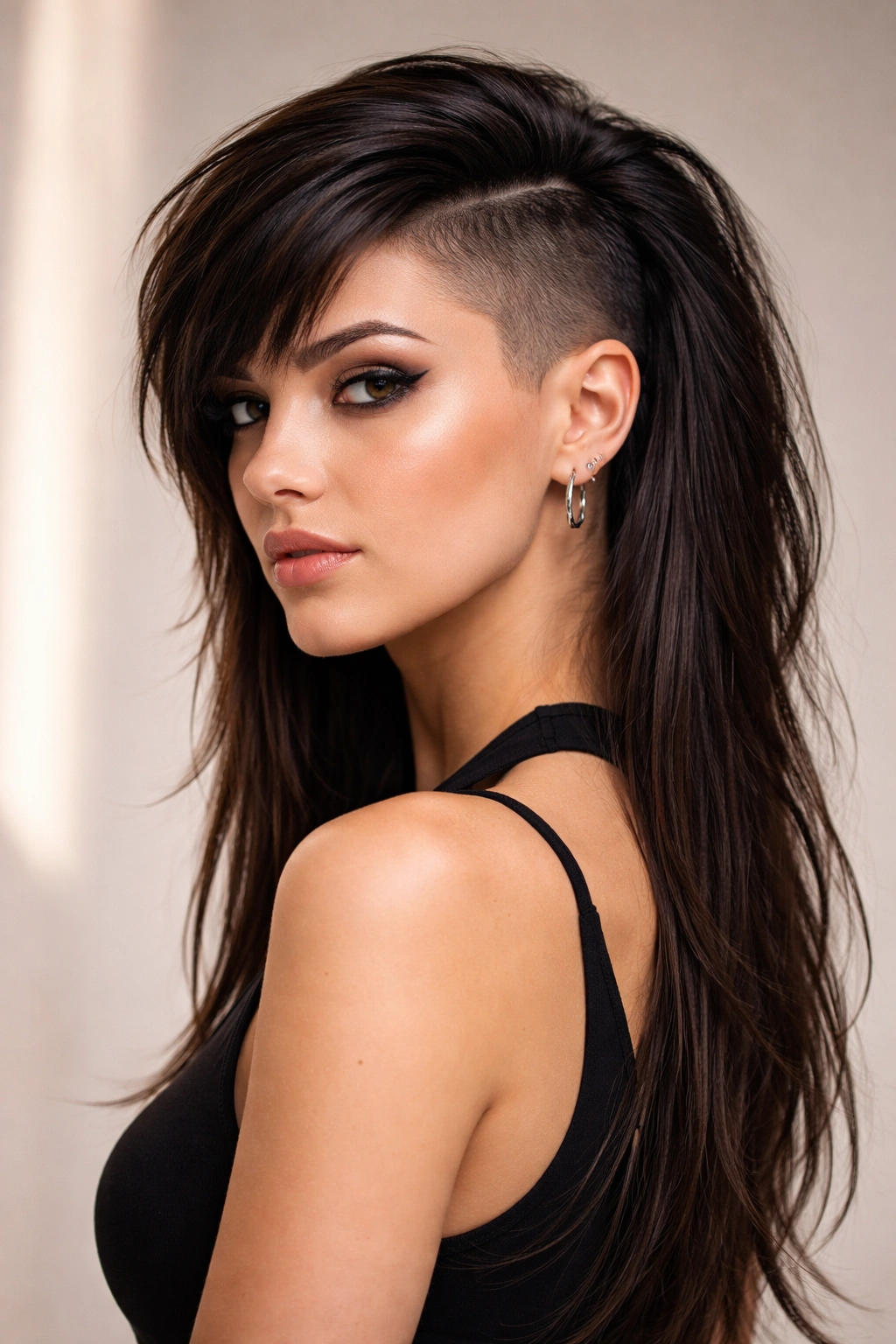
One side is dramatically shorter (sometimes shaved clean, sometimes tapered) while the other side maintains fuller length that extends past the shoulder. The nape is also cut asymmetrically—one side clipped very short while the back-length piece flows longer on the other side. The overall effect is visually striking, almost architectural, with the longer side creating a strong visual weight that balances the shaved or ultra-short side.
Why Asymmetry Changes Everything
An asymmetrical mullet undercut is a statement. It declares that symmetry isn’t required for beauty, that balance comes in unexpected forms. This version reads as artistic and intentional in a way that makes people stop and look twice. It’s not subtle, which means it works best for people genuinely comfortable with attention and ready to own the bold choice.
Making It Work Practically
- The longer side can be tucked behind the ear or swept across to conceal the clipped side when you want less attention
- Styling is easier than it sounds because the asymmetry is cut into the structure; it won’t require constant manipulation
- This style particularly suits angular face shapes where one side can be emphasized
- The shaved or ultra-short side reveals your scalp and bone structure, so be confident in how your head shape reads when exposed
- Consider whether you want to show off the asymmetry or whether you’ll style it covered most days
Insider note: Asymmetrical mullet undercuts photograph extraordinarily well from one angle, so figure out which side is your “good side” and plan your styling accordingly.
4. The Choppy Layers Undercut
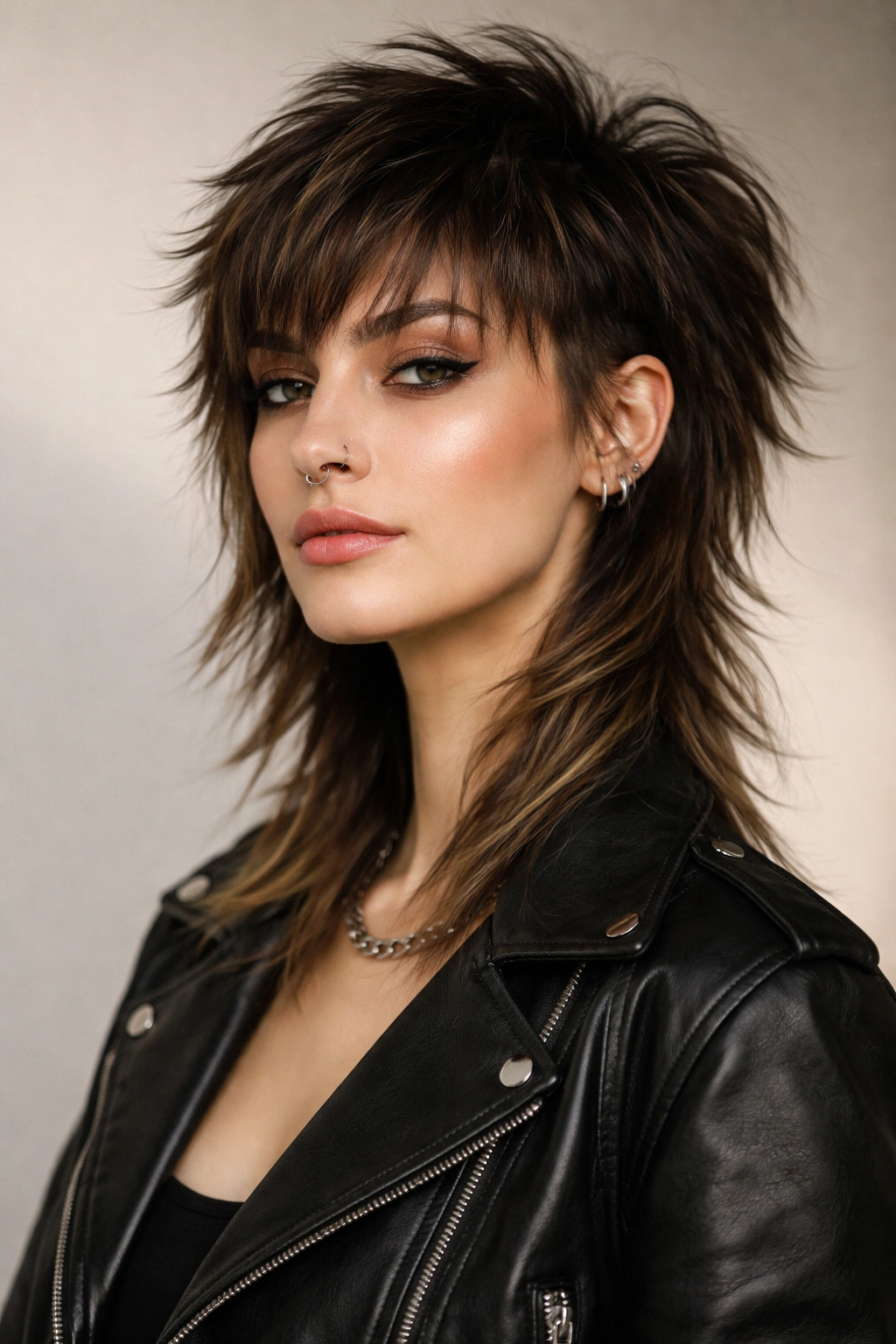
This version prioritizes textured layers throughout the entire head, not just the back. The undercut is present but secondary to the choppy, disruptive layering that happens at every length. You might have short, wispy layers around the face, medium layers at the crown for movement, longer layers in the back, and choppy texture through the sides even where they’re shorter. The result is a style that moves and shifts with every head turn.
What Makes Choppy Layers Work
Choppy layers create visual interest without requiring high styling commitment. They move naturally, catch light beautifully, and actually look better slightly messy. This version of the mullet undercut works for people who want edge and movement but don’t love the architectural precision of a hard-part cut.
Styling Approach for Maximum Impact
- Use a texturizing or sea salt spray to enhance the choppy movement; mousse can make it look greasy
- Blow-dry with your fingers rather than a brush to encourage the layers to separate and move independently
- This style benefits from regular (every 6-8 weeks) touch-ups to keep the choppy effect crisp and not just messy
- Avoid over-conditioning; choppy layers need some grip to hold their shape
- Sleeping on this cut often creates interesting texture, so embrace the bedhead angle
5. The Faded Gradient Undercut Mullet
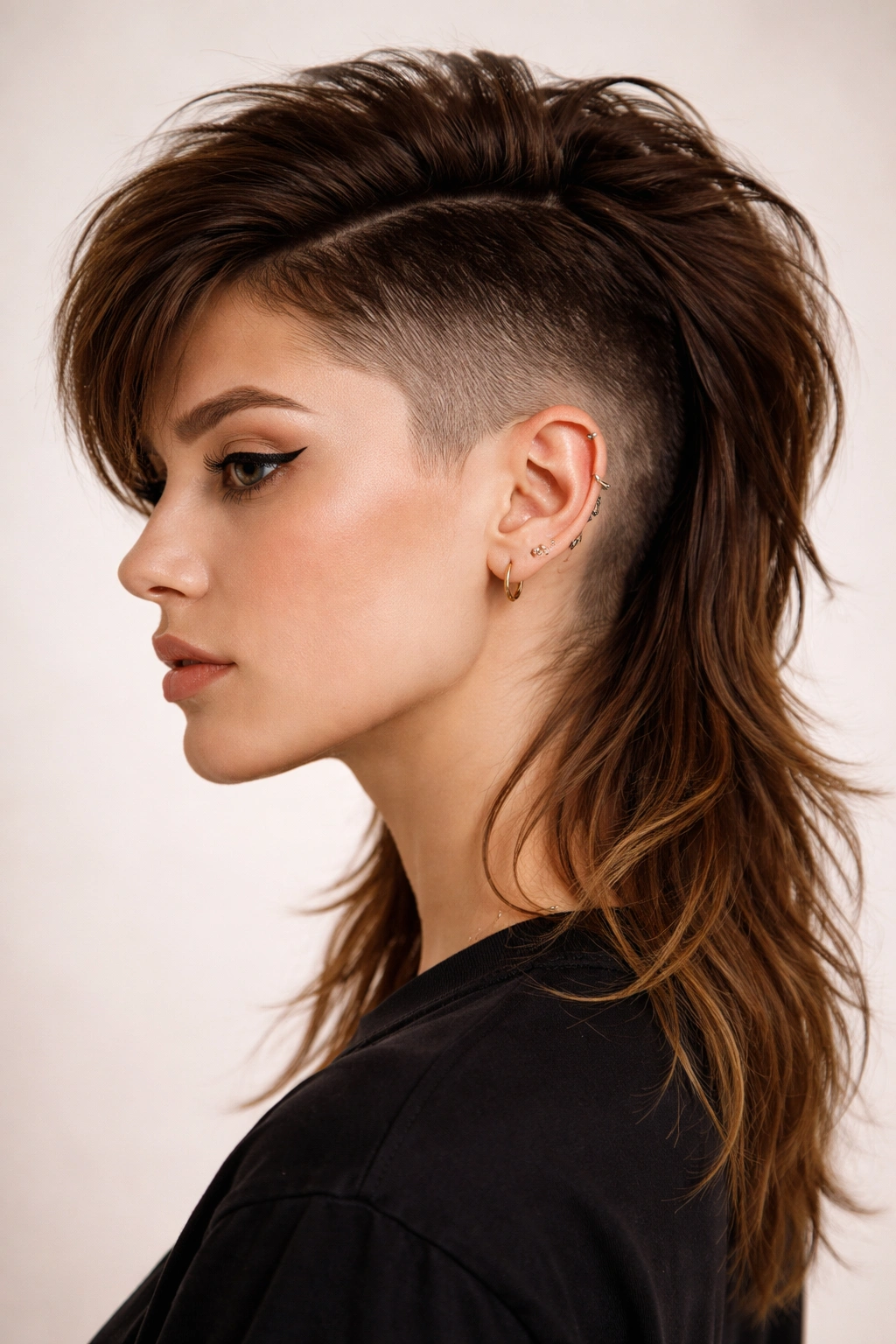
The sides and nape fade gradually from longer hair at the crown to skin-level (or near it) at the edges—a true barber-style fade that sits at the intersection of precision and softness. Rather than a distinct line between undercut and longer hair, there’s a gradient that transitions smoothly. The back length maintains layers or texture, creating contrast between the precise geometry of the fade and the organic movement of the longer pieces.
Where the Gradient Approach Shines
A gradient fade reads as more refined than a hard undercut. It’s still bold—there’s no hiding that the sides are clipped very short—but it’s softer and somehow more wearable. The transition from short to long is less jarring, which makes this version suit a broader range of professional environments. It’s the mullet undercut for women in fields where “too edgy” needs to be a negotiation.
Maintaining the Fade
- Book fade touch-ups every 2-3 weeks to maintain the gradient; visible regrowth muddles the transition
- Ask your barber or stylist to fade with clippers rather than a razor for a softer, more blended result
- The gradient works best when hair is cut wet and styled dry to see the true transition
- Keep the back section longer (at least shoulder-length) to emphasize contrast with the faded sides
- This is the version most forgiving of slight regrowth because the fade is never a sharp line
Key detail: A true fade requires someone with genuine clipper skills and understanding of tension and blade angle. This isn’t something every stylist executes equally well.
6. The Voluminous Crown Mullet
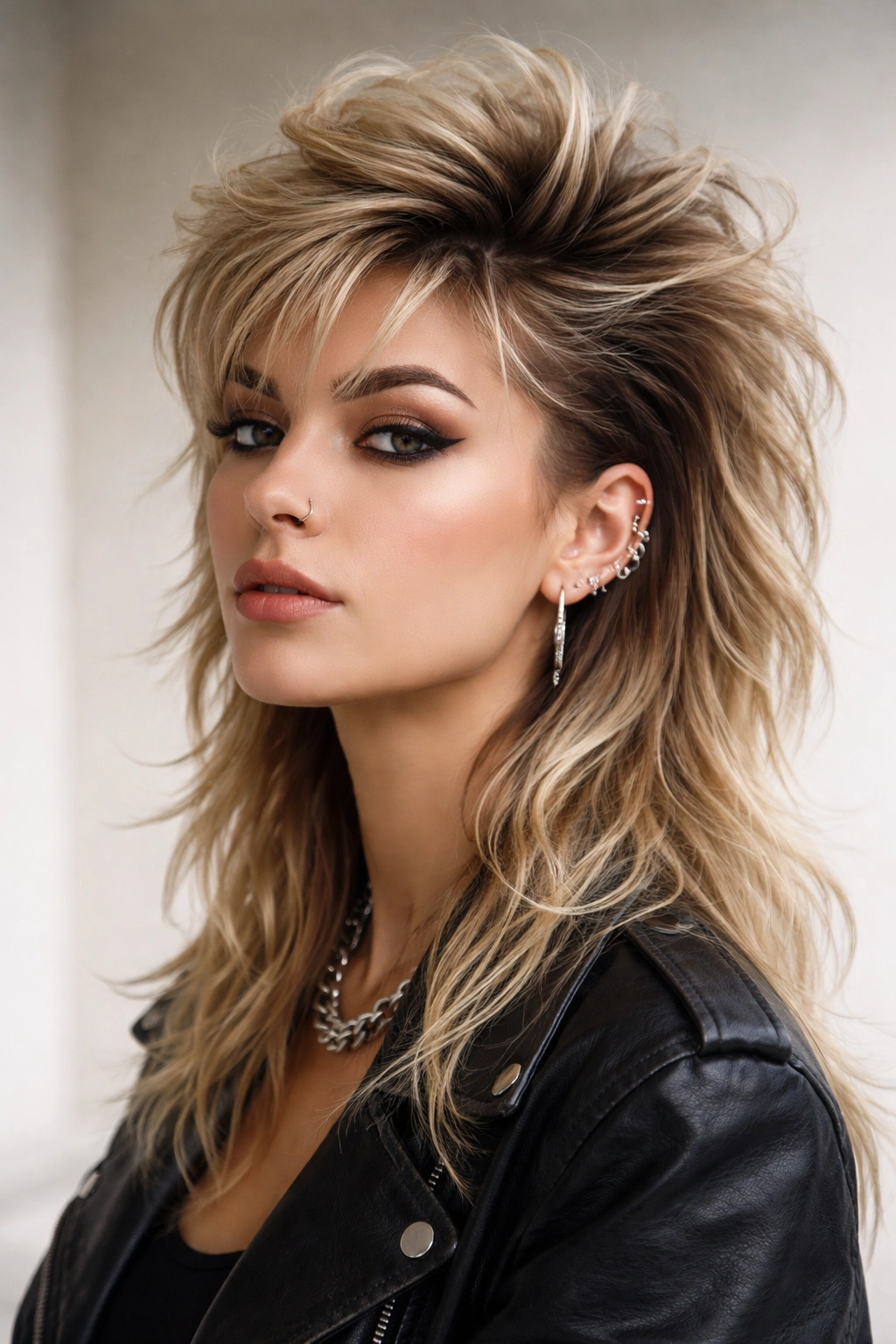
This version prioritizes maximum volume and lift at the crown, creating almost a pompadour effect on top while the sides taper and the back flows into mullet length. The crown is cut shorter (but not extremely short) with choppy texture and possibly even some softly razored layers designed to catch height and volume. The contrast between the voluminous crown and the tapered sides creates a shape that’s dramatic and visually striking.
Why Volume Changes the Silhouette
A voluminous crown mullet reads as retro in the most charming way—less modern punk, more vintage rebellion with current styling. The height and shape create a strong silhouette that flatters many face shapes by drawing the eye upward. This version feels less severe than styles with extreme undercuts because the emphasis is on the volume above rather than the drastic shortness below.
Getting and Keeping the Volume
- Ask your stylist to cut the crown shorter and textured, ideally with choppy layers that encourage height
- Use a volumizing mousse applied to damp roots before blow-drying for lasting lift
- Blow-dry the crown in multiple directions to encourage volume at the roots, not just surface texture
- A light hairspray or volumizing spray (not heavy gel) keeps the height without looking stiff
- This style works best on hair with natural texture or wave; very straight hair sometimes struggles with sustainable volume
7. The Platinum Bleached Undercut Mullet
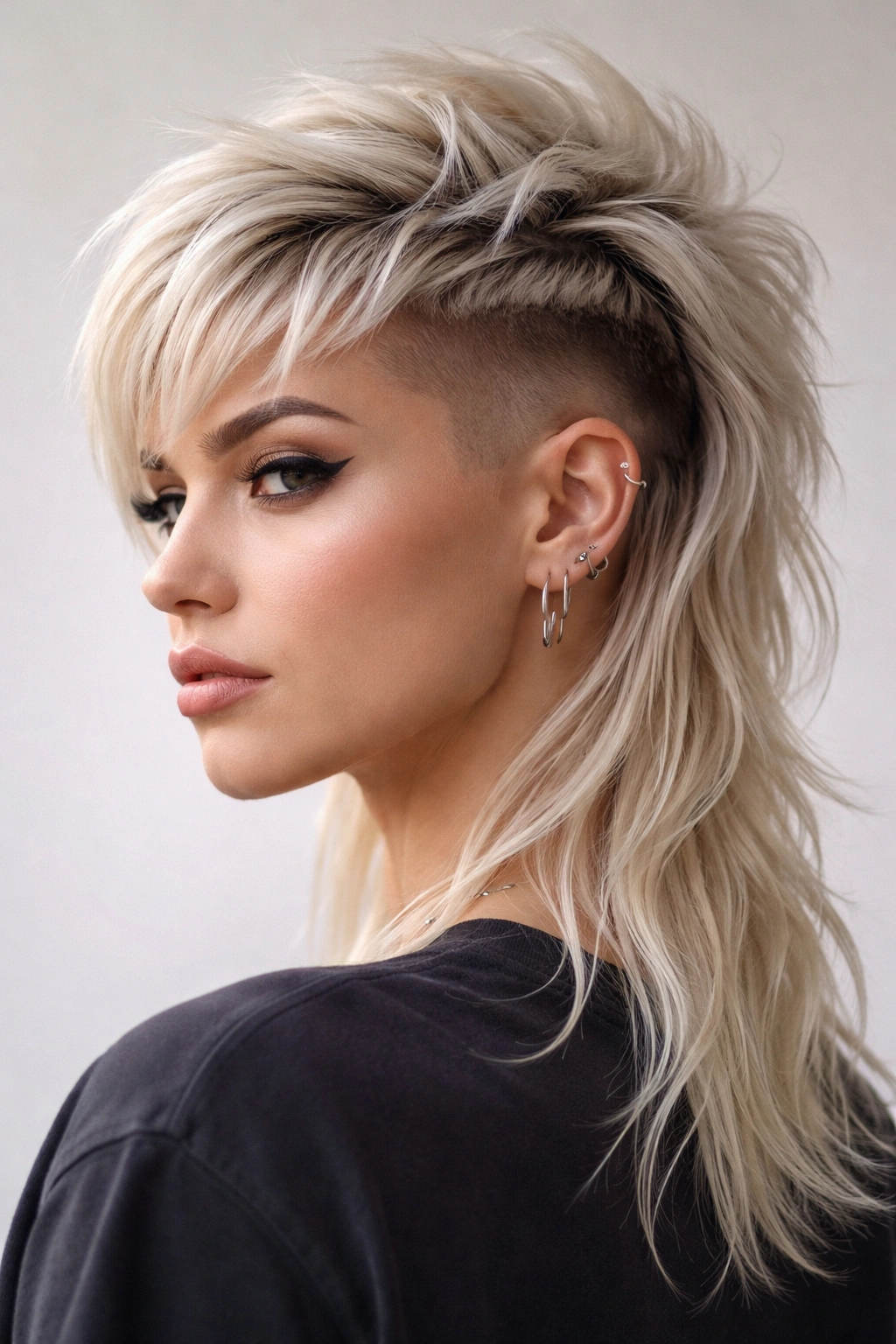
The entire head is lightened to platinum blonde, creating a striking monochromatic canvas where the cut itself—rather than color contrast—becomes the focal point. The bleached hair emphasizes every texture, every layer, every line of the cut with crystalline clarity. The pale color also makes the undercut appear more dramatic; darker skin tones create beautiful contrast against platinum blonde.
Why Color Matters to the Style
A platinum bleached mullet undercut is the ultimate confidence move. Bleaching lightens and softens the hair, which means the cut needs to be more deliberate and the styling more intentional to maintain edge. The pale blonde reads as fashion-forward and artistic rather than just edgy, which can position the cut as a style choice rather than a rebellion.
The Commitment Required
- Bleaching to platinum requires healthy hair or the willingness to rebuild damaged hair afterward
- Maintain the brightness with purple-toning shampoo or blue shampoo every 2-3 washes
- Bleached hair is more fragile; trim every 4-6 weeks to remove damage and keep the style looking intentional
- The pale color shows product buildup more visibly, so clarifying shampoo becomes part of routine maintenance
- Consider root maintenance if you’re not willing to let the color grow out visibly
Real talk: Platinum undercut mullets are striking, but they require genuine commitment to keeping the cut crisp and the color bright. It’s not a wash-and-go style.
8. The Soft Fringe Mullet Undercut
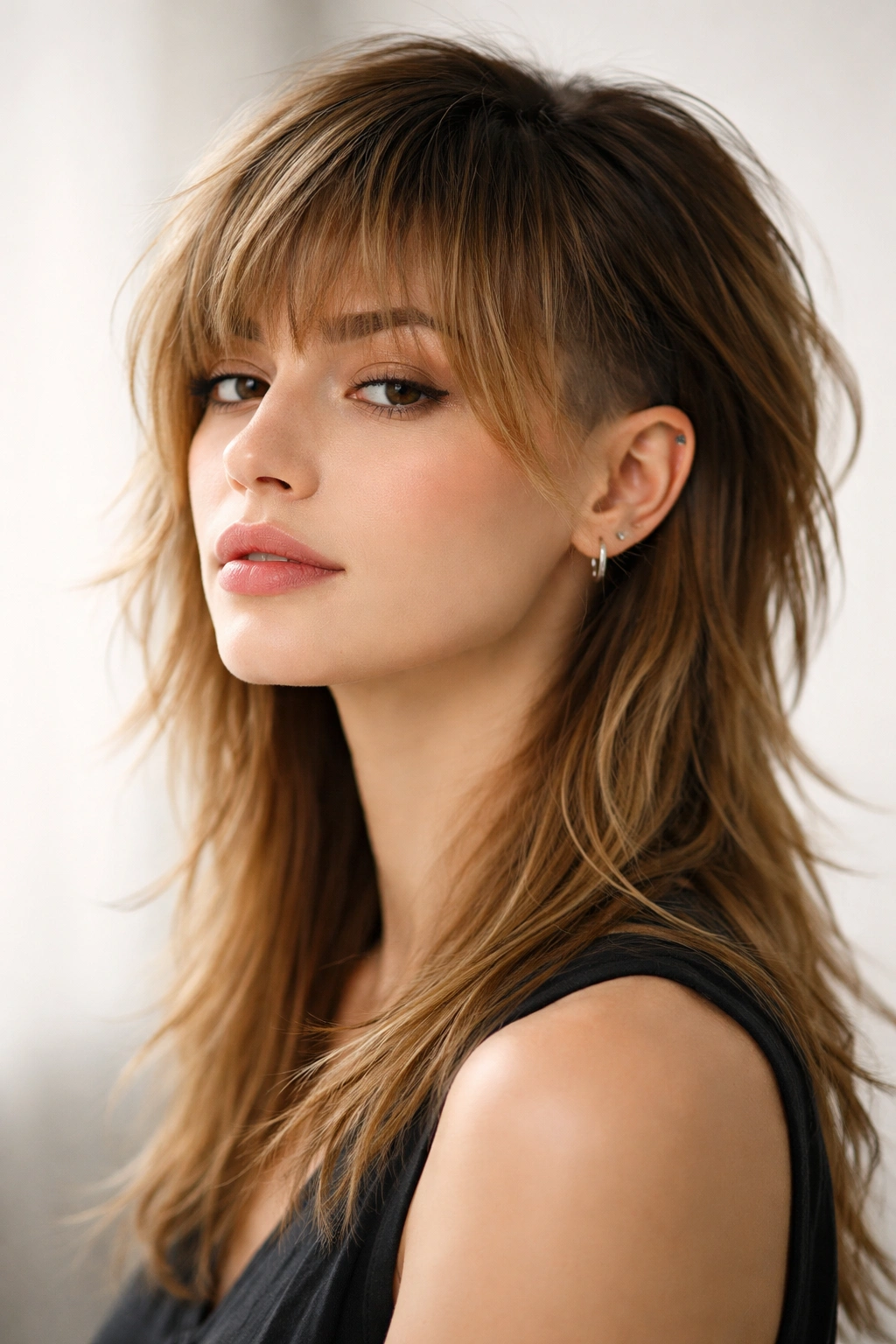
This version softens the front of the style with a subtle fringe—not a blunt bang, but soft, wispy layers that frame the face and blend seamlessly into the longer length. The fringe tapers and moves rather than sitting as a solid block. The undercut at the sides and nape is present but less the focus; the fringe becomes the style’s hero element.
How a Soft Fringe Changes the Aesthetic
Adding a fringe to a mullet undercut makes the style feel more intentionally fashion-forward and less punk. The fringe can be romantic, playful, or modern depending on how it’s textured and styled. This version bridges the gap for people who want the coolness of an undercut but also want something softer to frame their face.
Styling the Soft Fringe
- Blow-dry the fringe in multiple directions with your fingers to keep it piece-textured rather than solid
- A light texturizing spray helps the fringe separate and move rather than clumping together
- The fringe requires more frequent trims than the rest of the cut because it grows quickly and can become heavy and blunt
- This style works best when the rest of the hair is textured and choppy rather than blunt and uniform
- The fringe can move across the forehead or sweep to one side depending on the day’s styling
9. The Disconnected Hard Part Mullet
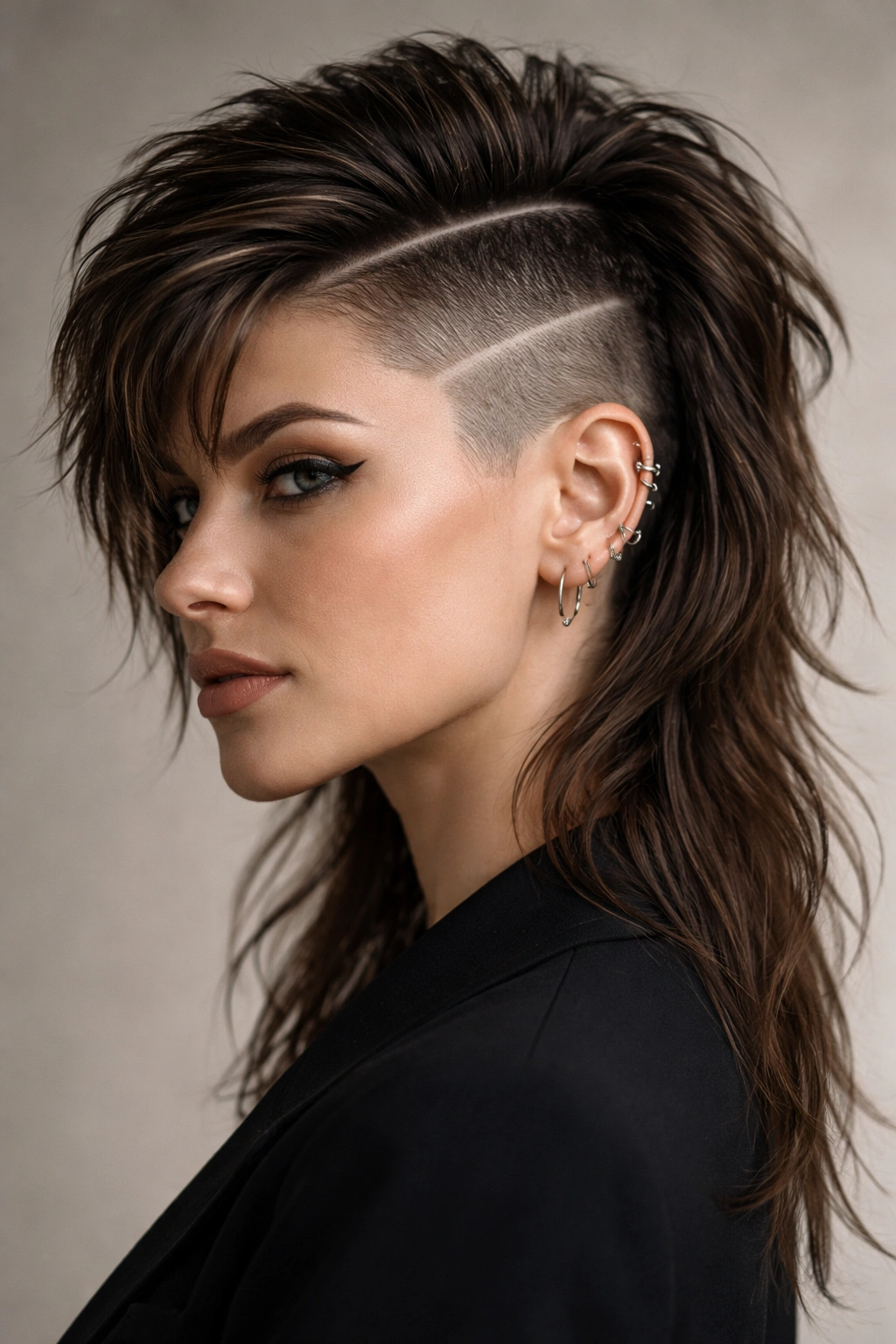
This style features a dramatic, clearly visible hard part that literally disconnects the side section from the crown, creating an almost sculptural separation. The undercut sits very short and clean on one side while the other side steps up slightly in length. The hard part isn’t a subtle line; it’s a statement division that you can see from multiple angles.
What “Disconnected” Actually Means
A disconnected hard part creates visible separation between two distinct sections of hair rather than a gradual transition. It’s dramatic, it’s architectural, and it reads as intentionally rebellious. This version demands a stylist who understands how to cut a hard part that’s actually visible and doesn’t require constant redefinition.
Maintaining the Disconnect
- The hard part requires regular shaving or razor work to stay visible and clean
- Hair on both sides of the hard part needs to be sculpted to make the separation obvious
- The undercut side should be faded or clippered fresh every 3-4 weeks to maintain the dramatic contrast
- Styling with a brush and part-defining product helps emphasize the hard part throughout the day
- This version reads best when the hard part is razor-sharp; any fuzziness diminishes the impact
Worth noting: A hard part can be a temporary addition (you can grow it out and let it blend) or a permanent design element. Make sure you’re ready for the commitment before asking your stylist to cut one.
10. The Curly-Textured Mullet Undercut
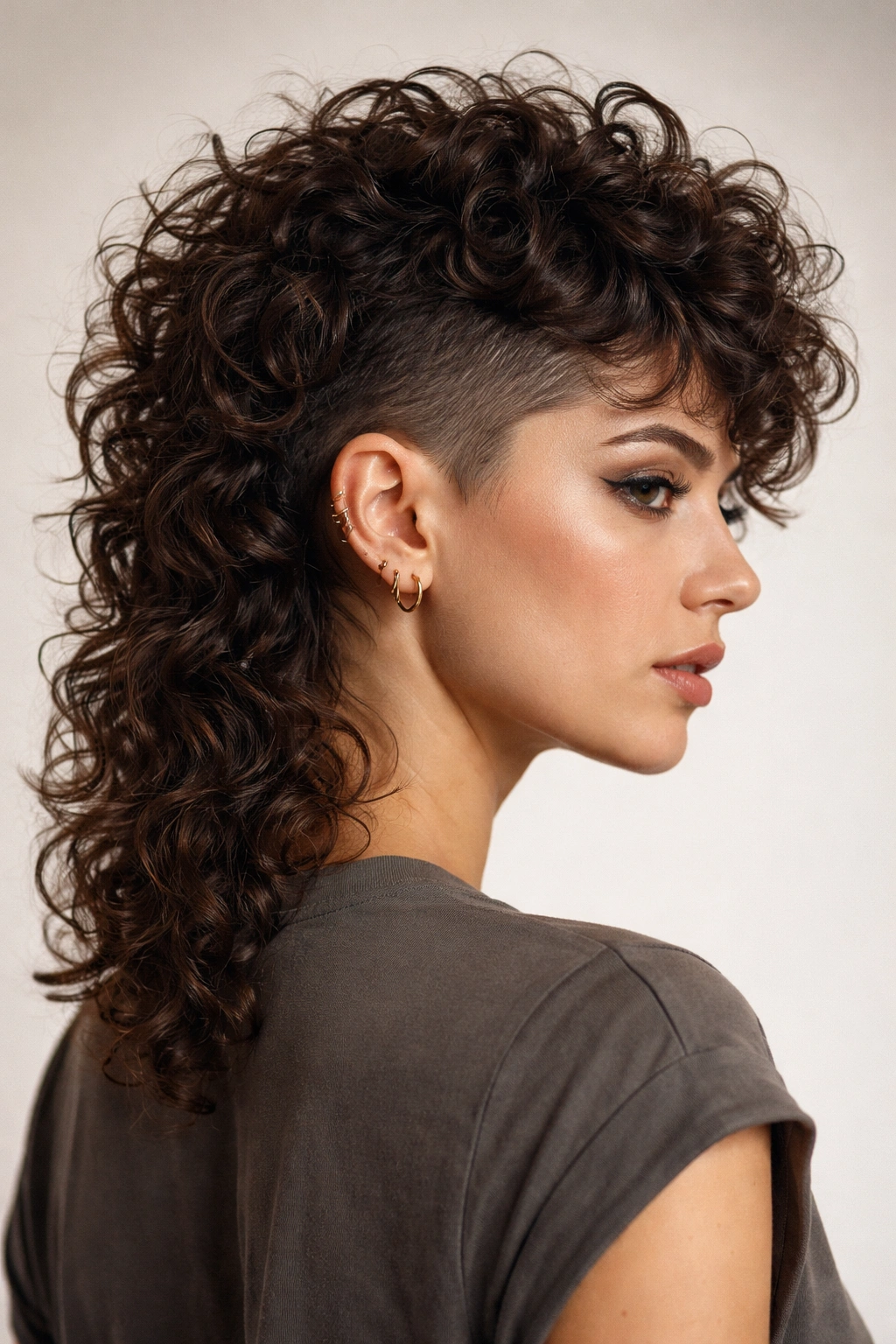
For women with naturally curly or coily hair, a mullet undercut works beautifully when the cut respects the curl pattern rather than fighting it. The undercut is clipped shorter on the sides and nape, but rather than shaving to skin level (which can look too harsh on textured hair), it’s tapered to a short, defined curl. The back and crown maintain longer curls with strategic layers that encourage curl definition and movement without creating bulk.
How Texture Changes the Game
Curly-haired mullet undercuts are stunning because the natural texture provides built-in volume and movement. The contrast between the shorter, tighter coils at the undercut and the longer, bouncier curls in the back creates visual interest without requiring choppy, disconnected cuts. This version works for women ready to embrace their natural texture rather than fighting it.
Styling Curly Mullet Undercuts
- Use curl-specific products (creams, gels, leave-in conditioners) rather than styling spray designed for straight hair
- Diffuse-dry or air-dry to encourage curl definition; blow-drying with a regular dryer can create frizz
- The undercut needs regular maintenance (every 3-4 weeks) to keep the taper clean and defined
- Layers should follow the curl pattern, not cut against it, so work with a stylist experienced in curly cutting
- This style actually improves as it grows slightly because longer curls have more weight and definition
11. The Buzzed Nape Geometric Mullet
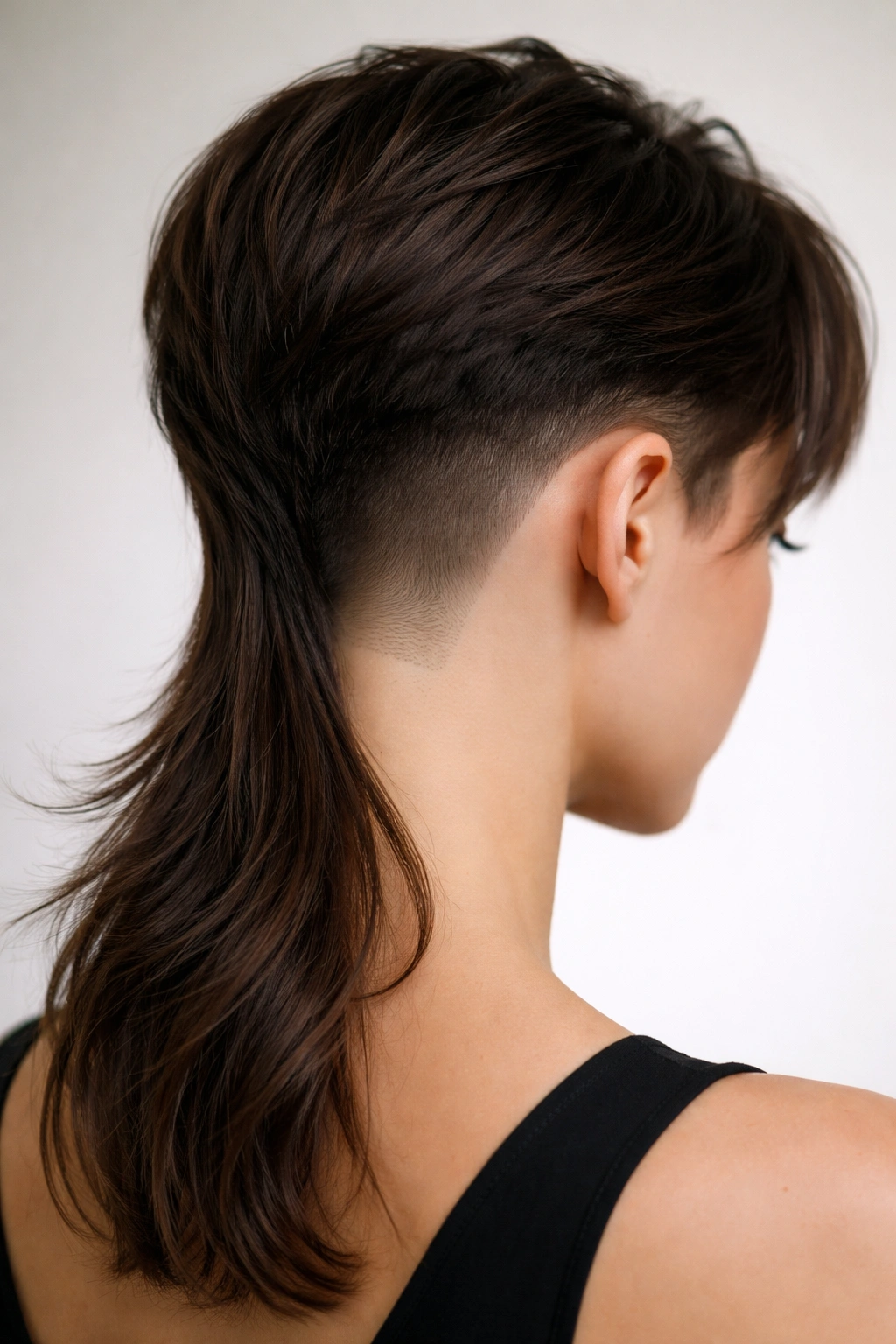
The nape is buzzed extremely short (often to quarter-inch or shorter) creating a stark geometric shape against the longer back section that begins just below the occipital bone. The sides taper but aren’t necessarily faded; they step up in length as they move away from the nape. The overall effect is a sharply defined back edge, almost like a shelf where length begins.
Why the Geometric Approach Works
A buzzed nape creates visual clarity and a clean, defined line. You can actually see where the undercut ends and the mullet length begins—there’s no ambiguity. This version reads as more sculptural and intentional than a standard fade. The geometric quality makes it particularly striking on women with visible nape areas (shorter hair at the back of the neck naturally).
Creating and Maintaining the Shape
- The buzzed area needs touch-ups every 2-3 weeks as it grows in visibly
- The line where the buzz meets the longer length should be clean and defined, not blended; this is what makes it geometric
- Use a no-guard or very short guard clipper for the nape; anything longer muddies the geometric impact
- The longer back section can be any length, but the contrast is more striking when it’s significantly longer than the buzz
- This works best on people comfortable with visible nape exposure and who like strong geometric lines
12. The Grown-Out Undercut Mullet
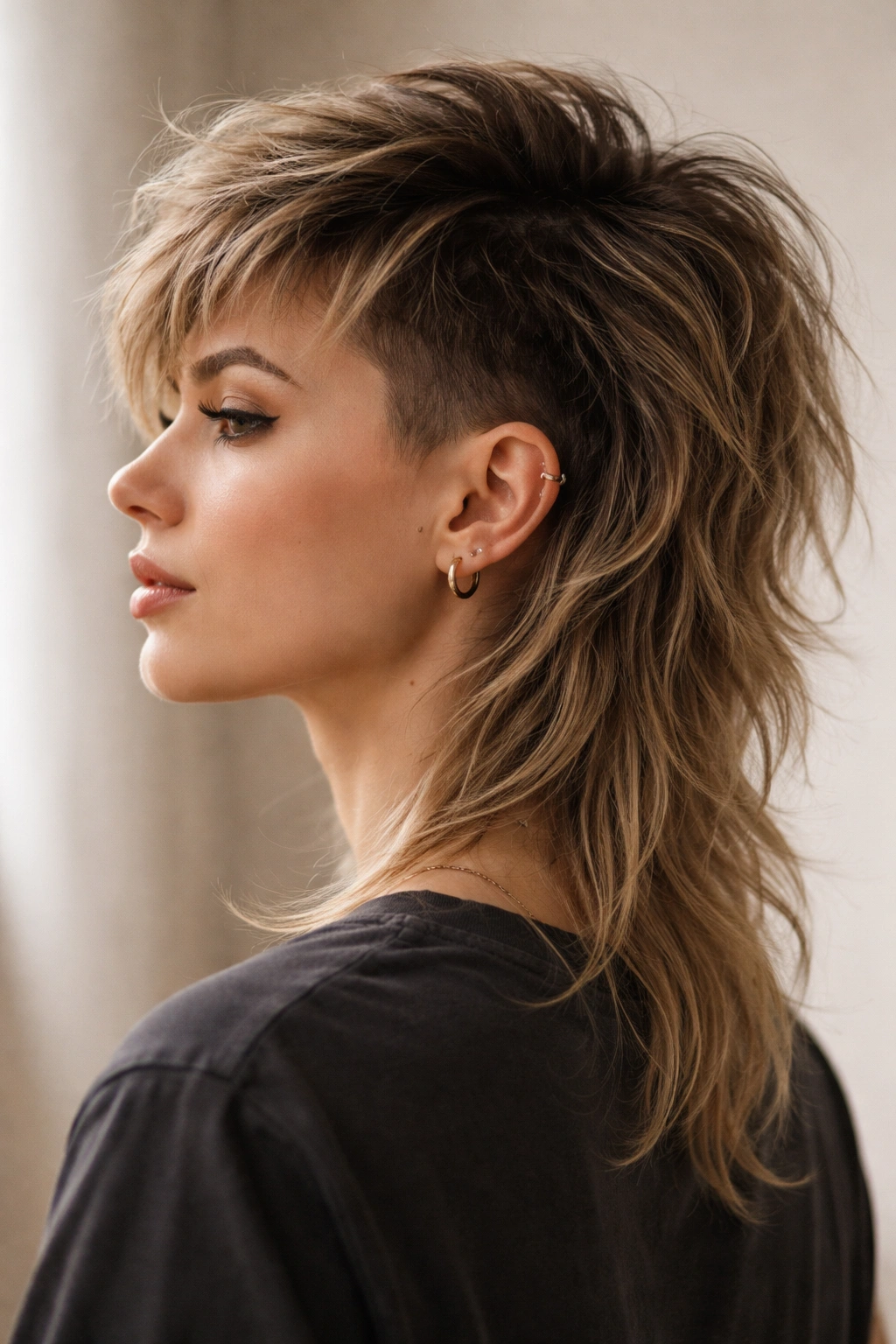
This version intentionally embraces the grown-out phase of an undercut mullet, where the sides have several weeks of regrowth creating a soft, tousled texture instead of crisp shortness. The undercut is present but blurred—you can see it’s there, but it’s softened by regrowth. The longer sections are deliberately textured and choppy, creating an overall effect that’s intentionally disheveled and cool.
Why Growing It Out Can Be Strategic
Some of the coolest mullet undercut styling happens in the 4-6 week window after a cut, when regrowth has softened the undercut but the cut’s structure is still visible. This version is for women who like the vibe of the cut without the maintenance intensity. It reads as grunge-influenced and artistic rather than precisely architectural.
Styling the Grown-Out Mullet
- Embrace texture spray and mousse; this version looks better textured and piece-y than sleek
- The regrowth in the sides creates a natural fade effect without requiring clipper maintenance
- Styling with a tousled, undone approach enhances the grown-out aesthetic rather than fighting it
- You can buzz the undercut clean again whenever you want more definition, or just let it continue growing
- This version actually reads best with slightly dirtier, textured styling rather than polished looks
Real talk: A grown-out undercut mullet is a bridge to growing out the undercut completely. It’s not a permanent style, but it’s a genuinely cool phase that lasts several weeks.
Final Thoughts
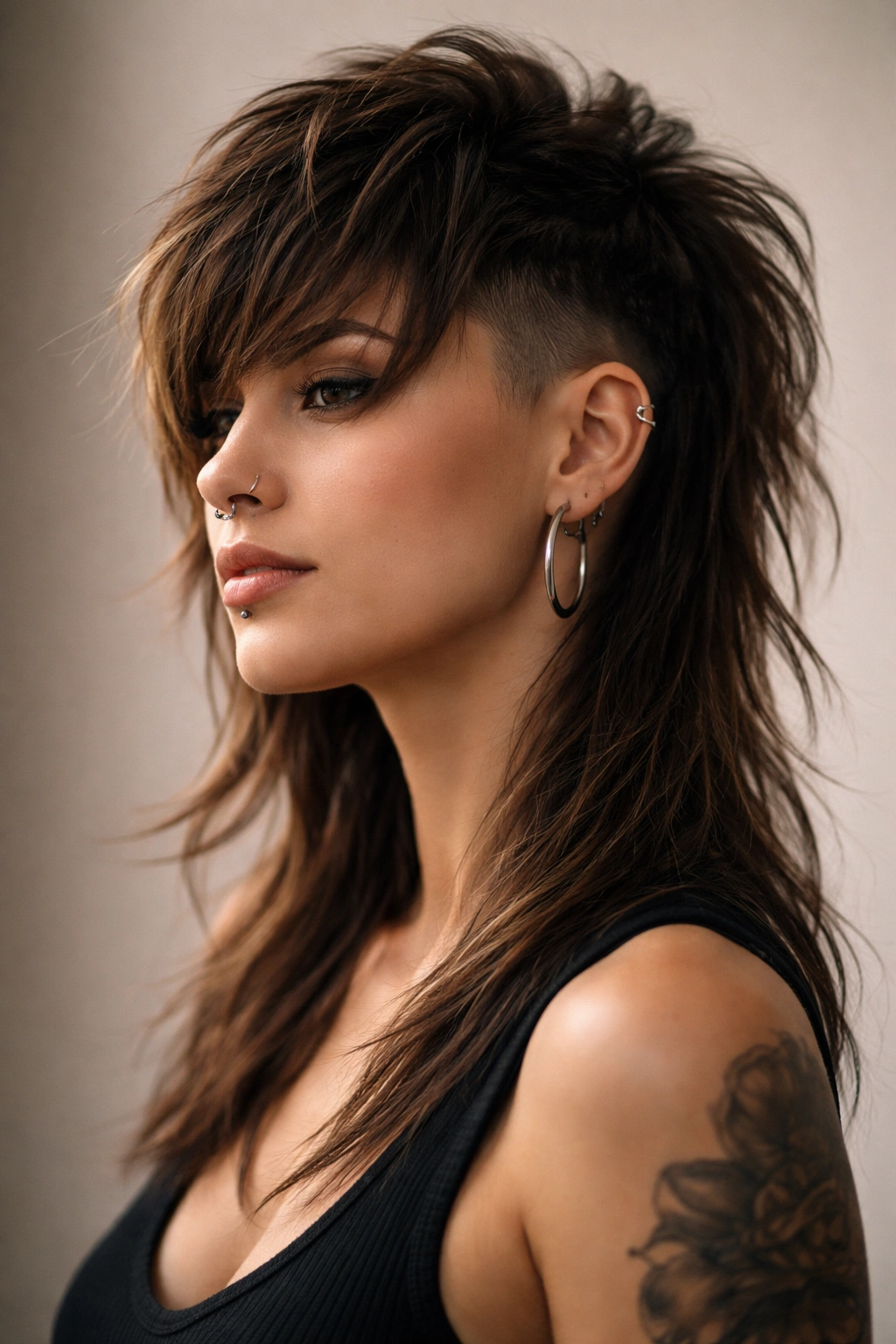
The mullet undercut works because it’s unapologetically bold while remaining surprisingly versatile. Whether you choose the razor-sharp precision of a hard part cut, the textured movement of a choppy hybrid, the softness of a fringe version, or the grown-out dishevelment of regrowth, you’re making a statement about who you are and how you want to move through the world. This isn’t a hairstyle for people who want to blend in or play it safe.
Before committing to any of these versions, find a stylist who genuinely understands mullet undercuts and doesn’t try to talk you out of boldness. Browse photos, bring multiple references, and have a conversation about what “your” version of the style looks like specifically. The best mullet undercut is the one that aligns with your lifestyle—whether that’s high-maintenance precision or low-maintenance texture—and reflects how you actually want to present yourself.
The mullet undercut has moved beyond novelty into legitimate fashion territory, which means you’re not being edgy for edge’s sake. You’re claiming a style that works, that flatters, that photographs beautifully, and that makes you feel powerful every single time you catch your reflection. That’s the real magic of this cut.
