



A round face shape is a beautiful canvas for creativity, but the right hairstyle can elevate your features even further. The key to flattering a round face is understanding which cuts, styling techniques, and placements draw the eye upward and create the illusion of length and definition. For Black women with round faces, textured hair offers incredible versatility—from sleek geometric braids to voluminous natural styles—and strategic styling choices can dramatically transform how your face shape reads.
The goal isn’t to hide your face or fight against its natural shape. Instead, it’s about working with your features to enhance what’s already there. Hairstyles that add height at the crown, create angles through parting and placement, or draw attention upward and outward tend to work beautifully for round faces. Length matters too—styles that graze the shoulders or extend beyond tend to elongate the face, while strategic volume in certain areas can create subtle contouring effects.
Round faces have a wonderful softness and youthful quality, and the best hairstyles celebrate that while adding dimension and structure. Whether you’re drawn to protective styles, natural textures, or sleek, sophisticated looks, there’s a hairstyle designed specifically to make you feel confident and beautiful. Let’s explore twelve stunning options that work with your face shape rather than against it.
1. Textured Locs With Strategic Placement
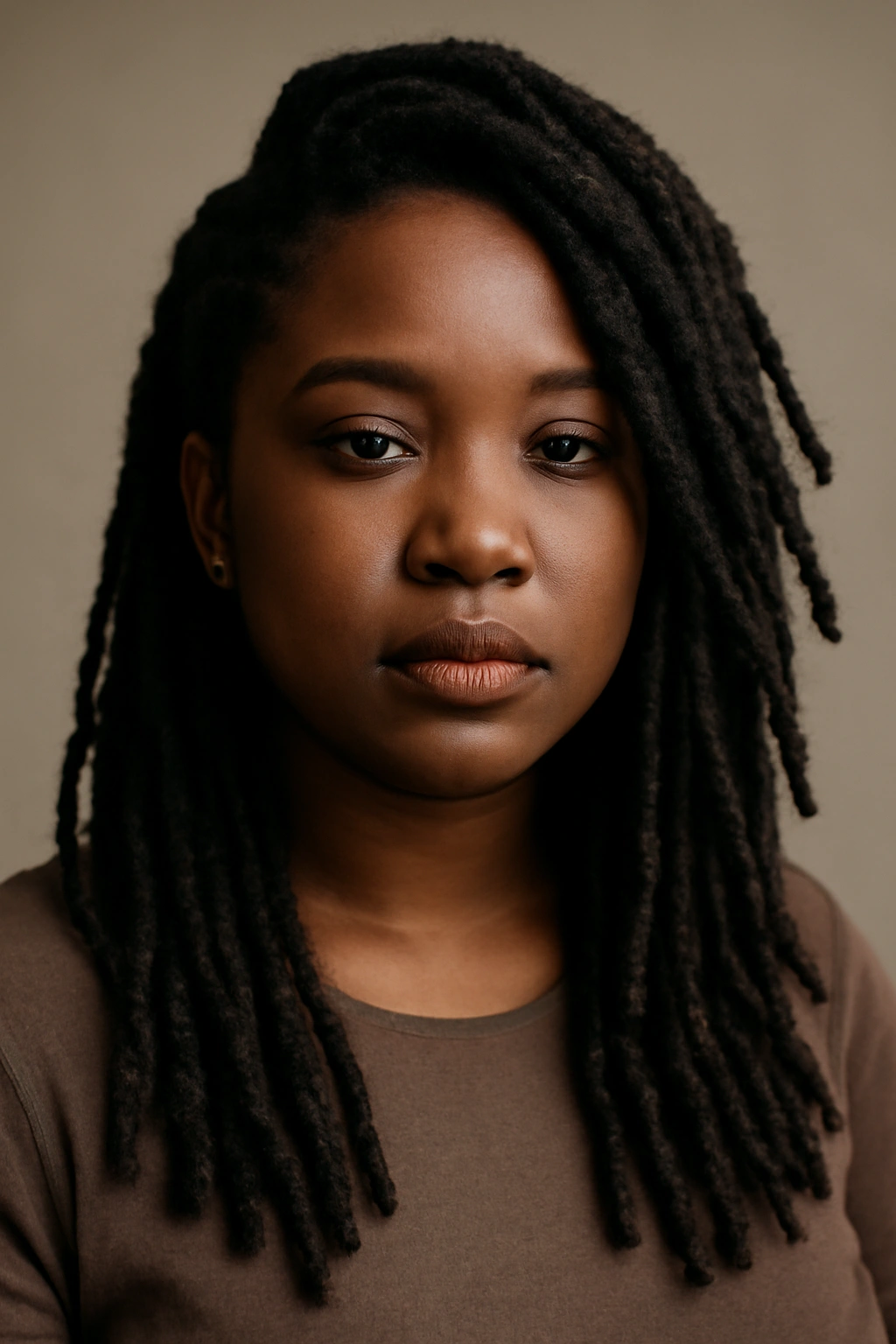
Locs are far more than a protective style—they’re a powerful statement that can completely transform how your face shape appears. The texture and weight of locs create natural movement and dimension that can visually narrow a rounder face. What makes this style work for round faces is how you style and place the locs themselves. Rather than pulling them all smoothly away from your face, alternating which locs you pin back or emphasizing side parts creates an asymmetrical effect that breaks up the roundness.
Why This Works for Round Faces
Locs have inherent texture and weight that creates vertical lines, which naturally elongate the face. Unlike smooth styles that follow the contours of your face shape, the dimensional quality of locs adds complexity and draws the eye along the length rather than across the width. When you vary how you style them—sometimes creating a higher crown, sometimes emphasizing one side more than the other—you prevent the style from emphasizing the roundness.
Styling Tips for Maximum Impact
- Vary your parting pattern weekly; alternating between center parts, deep side parts, and zigzag parts prevents your style from becoming too predictable and highlights different face angles
- Consider positioning locs higher at the crown using pins or ties to add lift where you need it most
- Experiment with partial updos that keep some locs down while pulling others back—this creates visual interest and breaks up horizontal lines
- Add accessories like metallic cuffs or beads to draw attention to the length and texture rather than the overall face shape
Pro tip: If you’re new to locs, ask your stylist to create them with slight variations in thickness or starting points. This natural irregularity creates more dynamic movement than perfectly uniform locs and translates to better face-framing.
2. High Slicked Ponytails
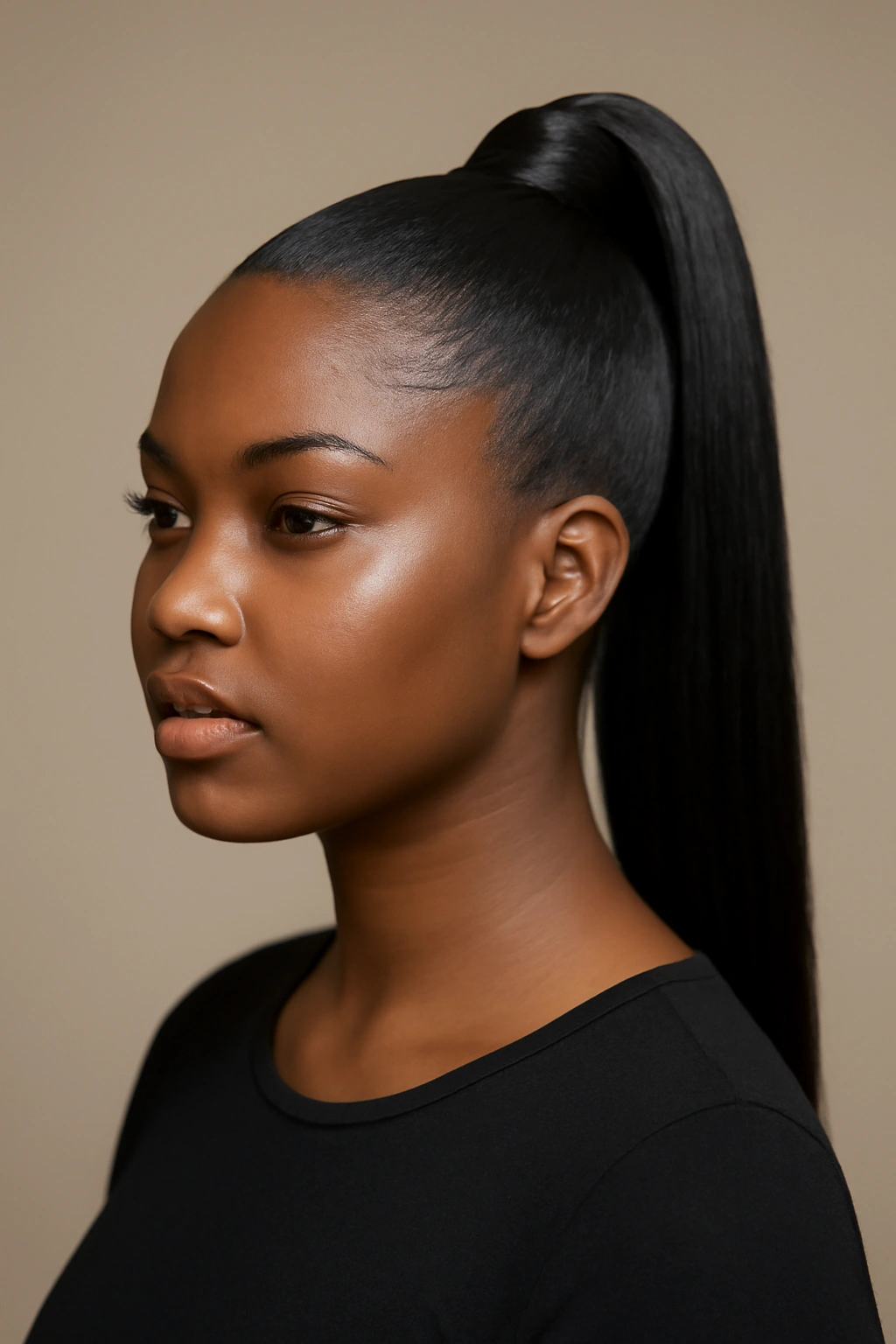
There’s something about a sleek, pulled-back ponytail that instantly elongates the face and creates a clean, sophisticated silhouette. A high ponytail works beautifully for round faces because the vertical line created by the placement of the ponytail tail itself draws the eye upward. The higher you position the ponytail, the more you emphasize the upper portion of your face and create the illusion of length from the crown down.
Why This Works for Round Faces
A high ponytail creates immediate vertical emphasis by pulling hair away from the sides of your face and directing visual attention straight up. This counteracts the width that can feel prominent in round faces. The sleekness of the style—achieved through gel, edge control, and careful smoothing—removes any bulk around the cheeks and jawline, creating a refined, elongated appearance.
Achieving the Perfect High Ponytail
- Use a satin or silk scarf to wrap around the base of your ponytail; this creates visual definition and makes the placement feel intentional and polished
- Apply edge control to smooth any flyaways and create a clean hairline—this finishing touch makes the entire look feel more deliberate and face-flattering
- Experiment with texturizing the ponytail tail itself through braiding, twisting, or adding extensions; this adds visual interest without compromising the slimming effect of the high placement
- Consider a slight swoop or curve in how you direct the ponytail back; a perfectly straight pull can feel harsh, while a gentle curve feels more dynamic
Worth knowing: A high ponytail looks best when your hair has some moisture and shine. If your hair feels dry, apply a leave-in conditioner or light oil before styling to enhance the polished appearance and prevent frizz that could add unwanted volume.
3. Voluminous Twist Outs With Defined Texture
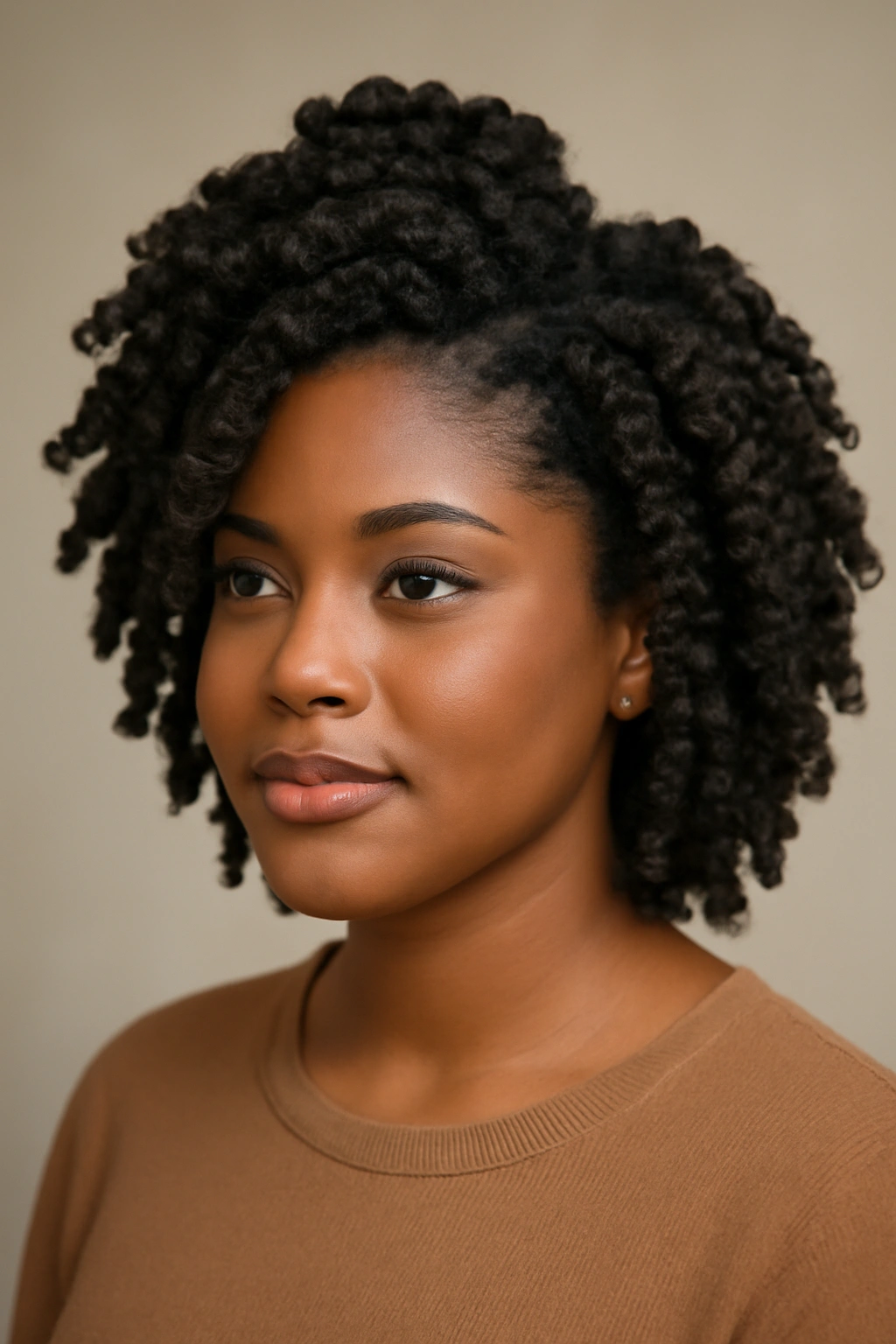
Twist outs are a beloved natural-hair staple, and when done with intention and proper styling, they create a textured, bouncy style that works beautifully for round faces. The key is creating volume upward rather than outward. A twist out that’s bulky and rounded around the face will emphasize roundness, but one that’s styled with height at the crown and definition throughout elongates the overall silhouette. The individual twists create lines and angles that break up the smooth roundness of the face.
Why This Works for Round Faces
Each twist in a twist-out style creates a distinct vertical line. When you have multiple twists framing your face and extending downward, those lines work together to create visual length. The texture itself prevents the style from sitting flush against your face the way smoother styles might. Additionally, when you encourage volume at the crown and define each twist with product, you’re essentially creating geometric structure that counterbalances facial roundness.
Styling Your Twist Out for Maximum Effect
- After unraveling your twists, use a pick to gently separate and fluff the roots, especially at the crown and sides, creating height rather than allowing the style to sit close to your head
- Apply a light curl cream or defining gel to each section as you style to emphasize individual twists and prevent them from blending into one bulky mass
- Consider creating a slight side part rather than centering your part; this adds asymmetry that’s flattering for round faces
- Style the twists so they fall slightly past your shoulders; this length creates vertical emphasis that elongates the face
Insider note: The timing of when you unravel your twists matters. Unravel them while your hair is still slightly damp rather than completely dry—this gives you more control and allows you to shape and separate each twist intentionally before it fully sets.
4. Side-Parted Cornrows With Extensions
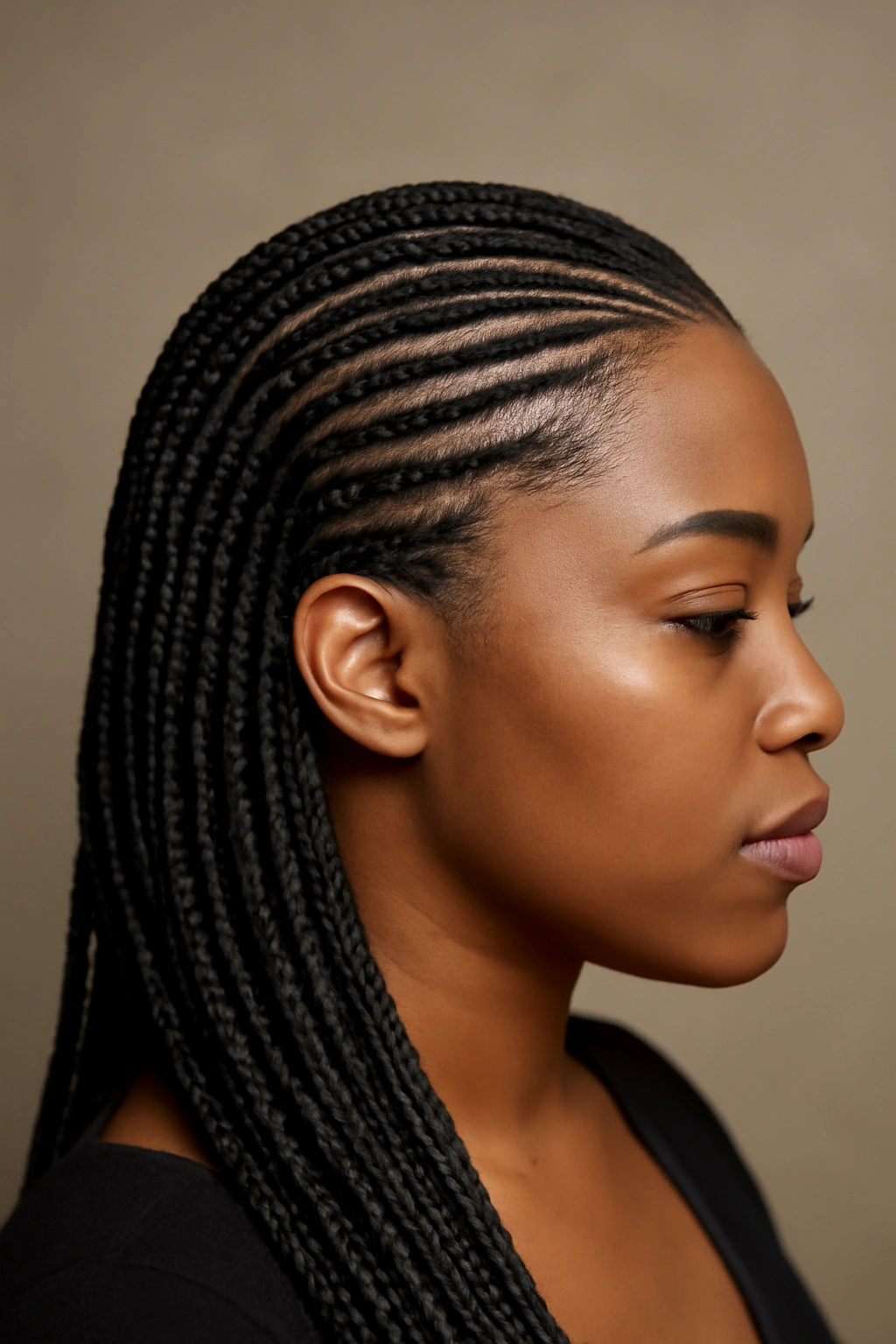
Cornrows are a classic protective style with incredible versatility, and when parted to the side and extended downward, they create a flattering effect for round faces. A deep side part is one of the most face-flattering moves you can make, as it immediately creates asymmetry and draws the eye diagonally across the face rather than straight across. When cornrows follow this diagonal line, they emphasize length and create visual structure.
Why This Works for Round Faces
A side part naturally creates an imbalance that’s visually slimming. More hair on one side of the face creates a shadow effect that adds dimension. Cornrows that follow this parted direction extend that diagonal line downward, creating continued visual elongation. The braids themselves are structured and geometric, which counteracts the softness of round facial features.
Creating a Flattering Side-Parted Cornrow Style
- Part your hair deeply from one temple toward the back of your head, rather than a subtle off-center part
- Create larger, fewer cornrows rather than many thin ones; this creates bolder lines that are more visually striking and face-flattering
- Consider adding length through extensions; cornrows that extend past your shoulders create more dramatic vertical emphasis than shorter ones
- Curve the direction of your cornrows slightly outward at the nape rather than pulling everything straight back; this creates subtle dimension
Pro tip: When your cornrows are fresh, use a soft toothbrush or edge brush to gently brush and shape your baby hairs along the parted side. A neat, defined hairline makes the entire parted effect feel intentional and polished, maximizing the face-framing benefit.
5. Soft Waves With Volume on Top
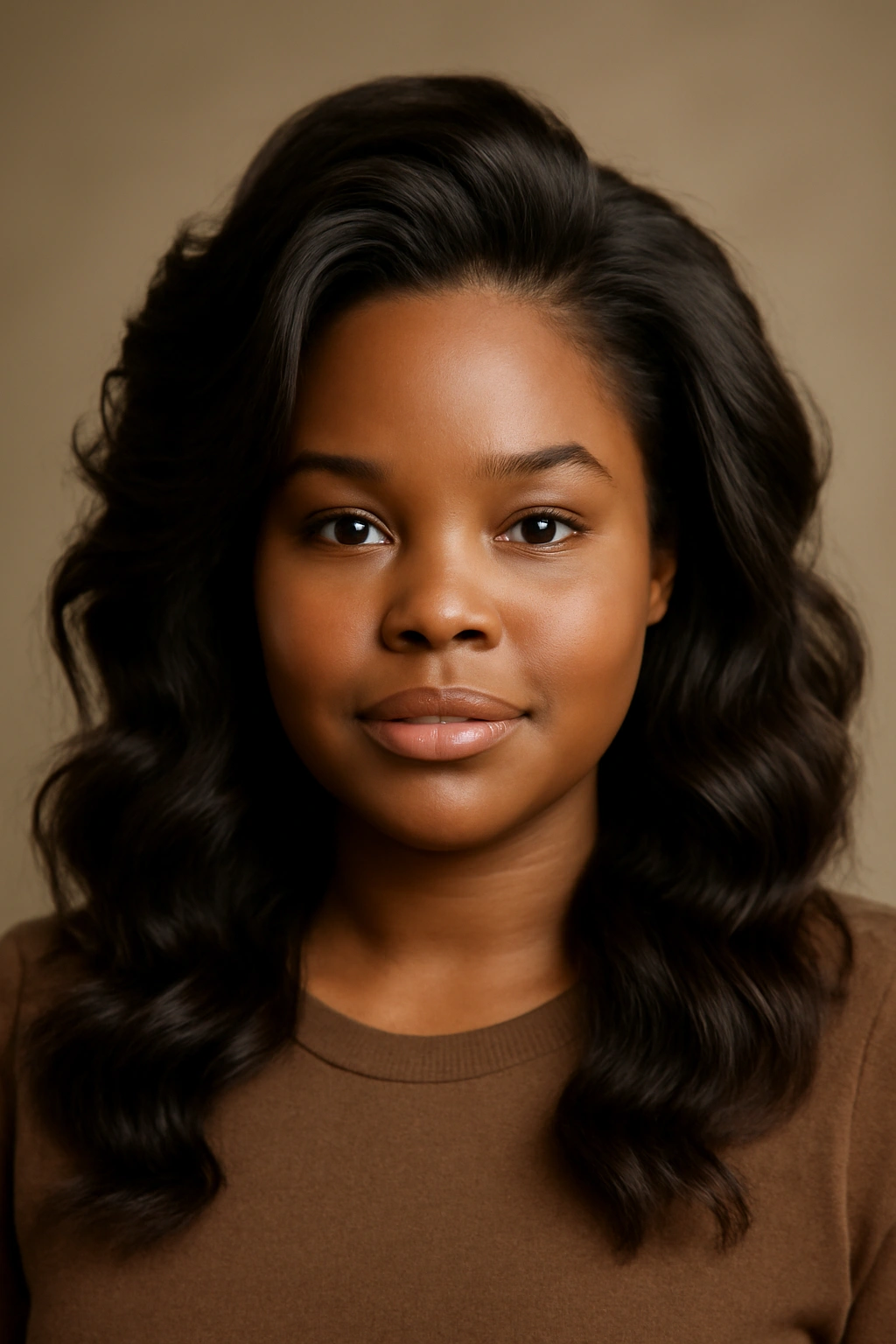
Sometimes the most flattering style for a round face isn’t about severe structure—it’s about softer waves with strategic volume placement. This approach embraces texture and movement while ensuring that the bulk of the style sits higher on your head rather than spreading out around your face. Waves create flowing lines that prevent the eye from settling on the width of your face, and when the volume is concentrated at the crown, you get natural elongation.
Why This Works for Round Faces
Soft waves are forgiving and romantic, yet they still create dimension and movement that prevents a flat, round appearance. When the volume sits at the crown and the waves flow downward and outward, the eye naturally follows that downward direction, creating the illusion of a longer face. The softness of waves feels flattering rather than severe, making this a style that works for any occasion and any age.
Achieving Soft, Face-Flattering Waves
- Create volume at the crown by blow-drying your hair with your head slightly tilted forward, directing heat upward; this sets the wave pattern with height built in
- Use a medium barrel curling iron or wand to create loose waves; smaller, tighter curls can look denser and less elongating, while larger waves feel more relaxed and face-framing
- Apply waves to damp hair and allow them to cool and set; this creates longer-lasting waves with better definition
- Brush through your waves gently once they’re completely cool to create a softer, more natural wave pattern rather than defined ringlets
Worth knowing: The products you use matter tremendously. A lightweight curl cream or wave-defining mousse will enhance your waves without weighing them down. Heavy oils or dense creams can compress waves and reduce the volume you’ve worked to create.
6. Tapered Fades With Designs
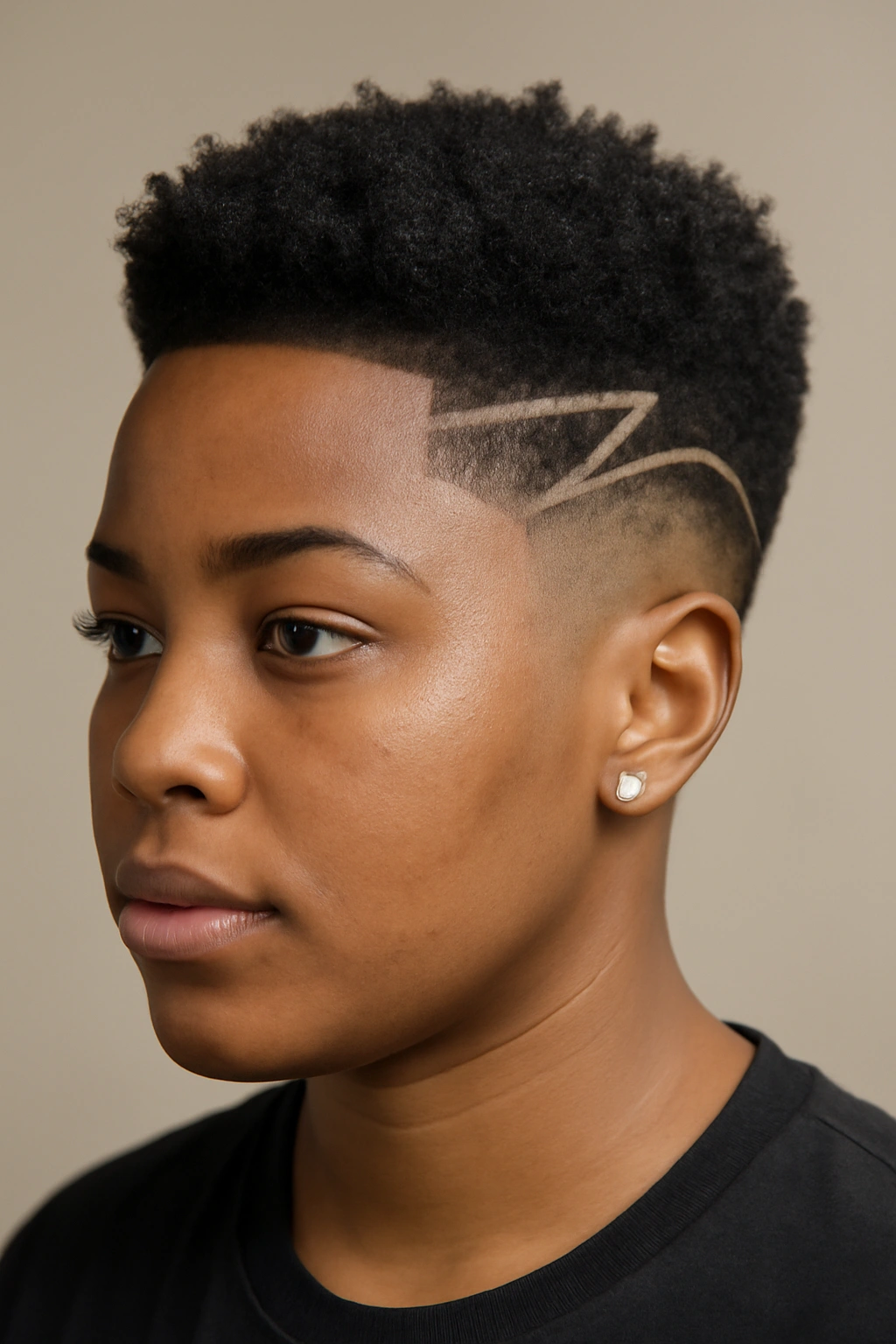
For those who love shorter hair or want a low-maintenance style that still manages to be incredibly flattering, a tapered fade is a powerful choice. Tapered fades on Black women are experiencing a renaissance, and when cut strategically, they work beautifully for round faces. The key is maintaining enough length on top to create height and volume, while fading the sides closely. This creates immediate visual definition and makes the face appear less round through contrast and structure.
Why This Works for Round Faces
A tapered fade removes bulk from the sides of your head, which instantly makes a rounder face appear more defined. The closeness of the fade on the sides creates shadow and definition that’s visually slimming. When you maintain length and volume on top, you’re creating a longer silhouette that counteracts the roundness. The structured, geometric nature of a fade is inherently flattering for any face shape, but especially for round faces that benefit from clean lines.
Styling Your Tapered Fade for Maximum Impact
- Ask your barber or stylist to create custom designs in the fade—geometric lines, curves, or even representational designs add visual interest and draw attention to the architectural quality of your cut rather than the face shape itself
- Maintain enough length on top (at least 2-3 inches) to style with some volume or texture; a fade that’s too short all over can feel stark rather than flattering
- Style the longer top section with a light pomade or edge control, directing hair slightly forward and upward rather than slicking it back flat
- Refresh your fade every 2-3 weeks to maintain the clean, defined edges; a fade that’s grown out loses its face-flattering impact
Pro tip: When you’re getting a fade designed, bring reference photos and discuss the exact proportions with your barber. A fade that’s slightly longer at the crown and temples while fading down toward the neck creates the most flattering proportion for a round face.
7. Fulani Braids With Extended Length
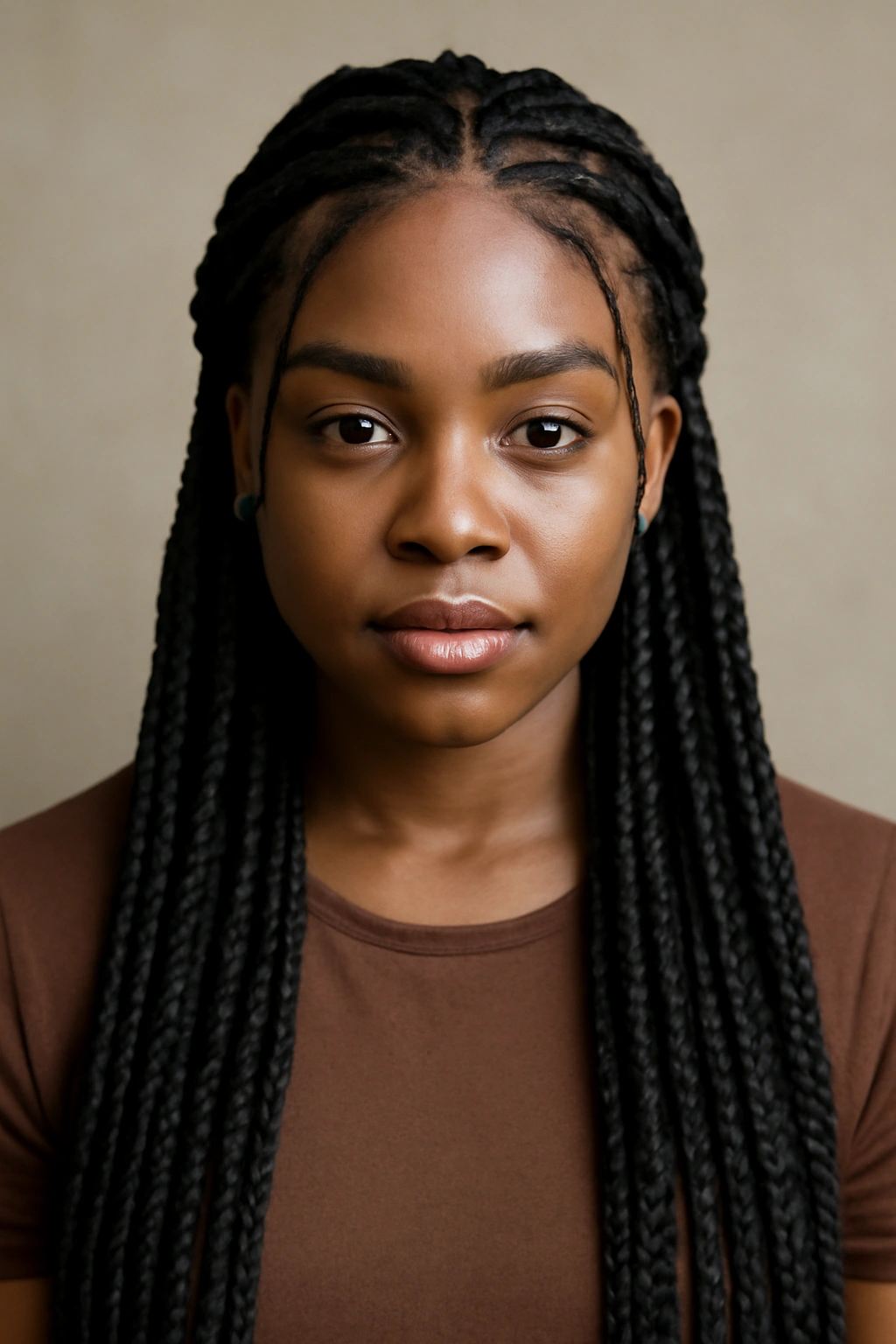
Fulani braids are named after the Fulani people of West Africa and have become a beloved protective style across the diaspora. What makes this style specifically flattering for round faces is the combination of long, flowing braids (which create length) and the distinctive face-framing elements that characterize the style. Traditional Fulani braids often feature smaller braids around the hairline and larger braids down the center and sides, creating layers of visual interest.
Why This Works for Round Faces
The length of Fulani braids creates automatic vertical emphasis. When your braids extend past your shoulders, they draw the eye downward and elongate the appearance of your entire head and face. The face-framing smaller braids, when styled with intention, can be positioned to create subtle angles that work with rather than against your face shape. The mix of braid sizes and the way Fulani braids naturally flow creates dimension that prevents the eye from seeing your face as simply round.
Creating Beautiful Fulani Braids
- Request a mix of braid sizes from your stylist—smaller braids around your hairline, slightly larger ones toward the crown, and larger ones down the sides creates visual hierarchy
- Add beads, cowrie shells, or gold cuffs to certain braids to draw attention to the details and artistry rather than the overall face shape
- Consider adding a center part or slightly off-center part; this creates asymmetry that’s face-flattering
- Ensure your braids extend at least to your mid-back for maximum elongating effect; shorter Fulani braids lose some of the length-creating benefit
Worth knowing: Fulani braids look best when they’re not too tightly braided, especially around the hairline. Overly tight braids can be uncomfortable and can actually emphasize the roundness of your face by pulling it too taut. A skilled braider will create braids that are secure enough to last but loose enough to be comfortable and flattering.
8. Layered Cuts With Movement
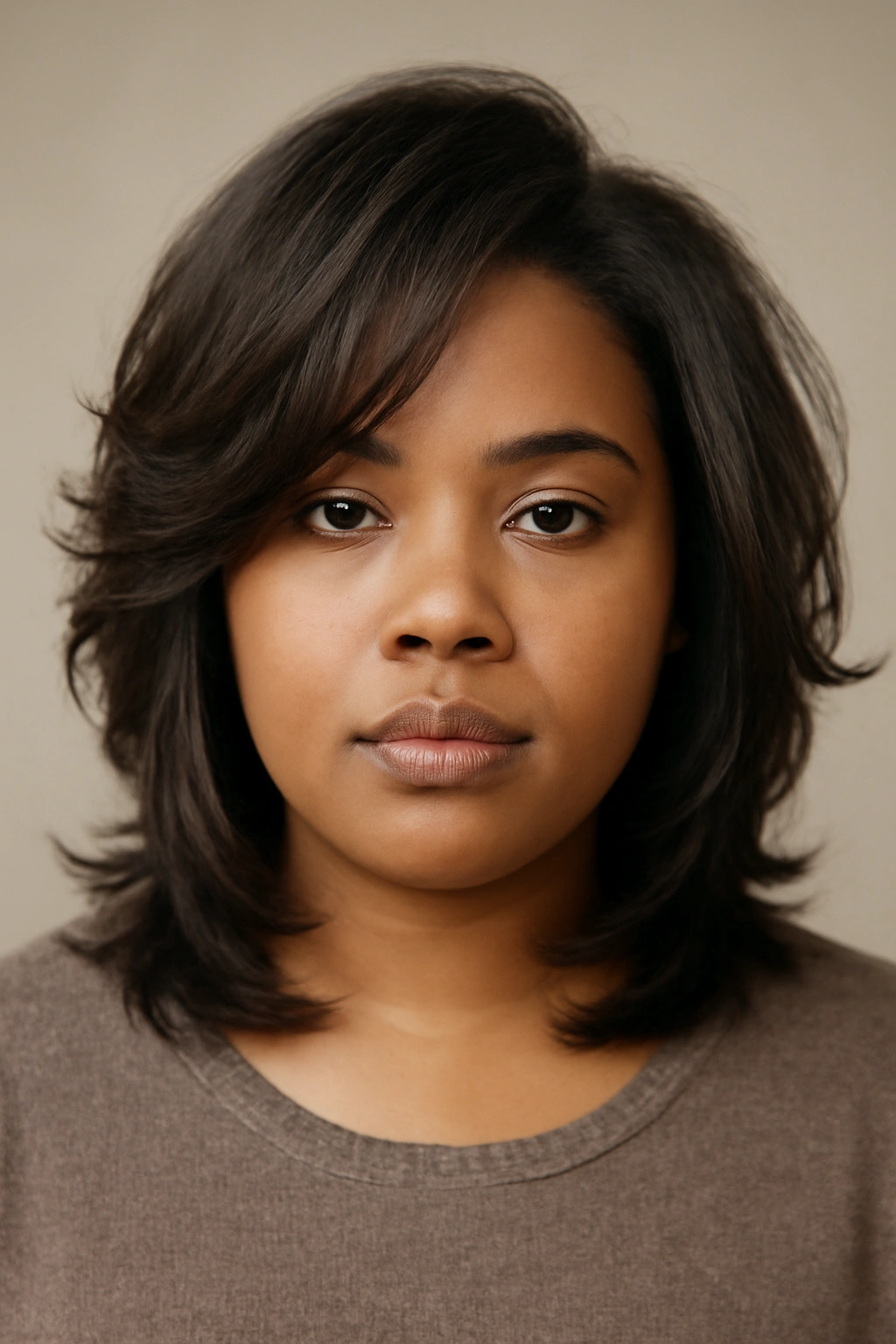
A layered cut is a transformative option for Black women with round faces who want to embrace their natural texture or work with looser wave patterns. Layers create movement and prevent the hair from sitting flat against your head, which is crucial for elongating a round face. Strategically placed layers direct hair away from the face and create dimension. A good layered cut isn’t just about removing length—it’s about creating a structure that works with your face shape.
Why This Works for Round Faces
Layers interrupt the horizontal lines that can emphasize a round face. Instead of one length sitting evenly around your head, layers create staggered lengths that create visual complexity and movement. When layers are longer toward the face and slightly shorter toward the back, you get a shape that elongates rather than rounds. The movement created by layers prevents the style from appearing flat or overly voluminous in ways that could emphasize width.
Getting a Flattering Layered Cut
- Work with a stylist experienced in cutting textured hair; they understand how your hair behaves when wet versus dry and can cut accordingly
- Ask for layers that are longer around your face and gradually shorter toward the back; this creates an elongating effect
- Request layers that begin around your chin or jawline rather than higher up; shorter, choppy layers around the crown can sometimes emphasize facial width
- Ensure layers are blended smoothly into one another rather than chunky and disconnected; this creates refined movement rather than a choppy appearance
Pro tip: After getting a layered cut, invest in a good leave-in conditioner and styling product that enhances your natural texture. The magic of a layered cut is how it moves, and the right products will make that movement obvious rather than allowing it to collapse.
9. Goddess Braids With Height
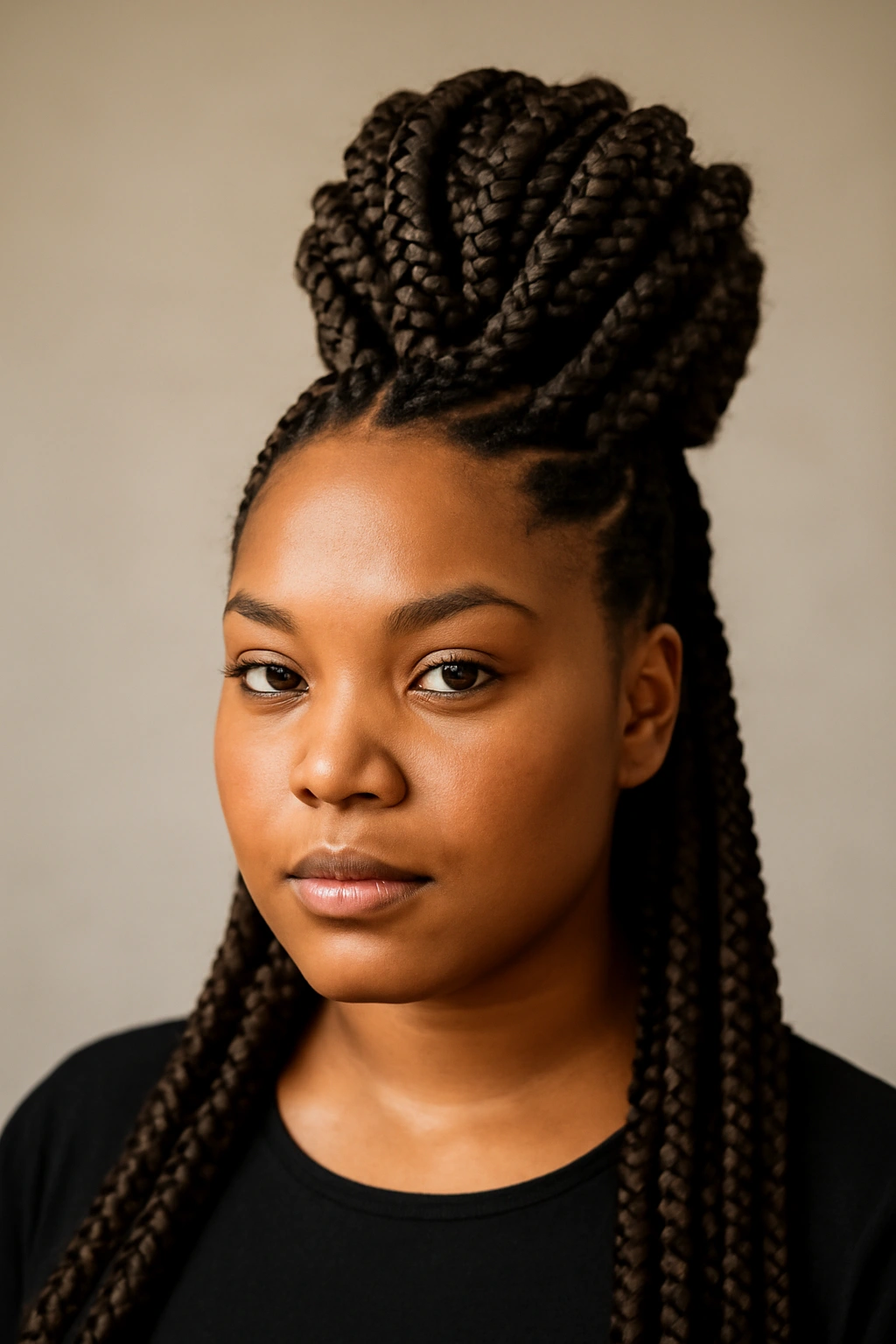
Goddess braids are thicker, more dramatic cousins of cornrows, and when styled with height at the crown and careful positioning, they create a regal look that’s incredibly flattering for round faces. The thickness of goddess braids creates bold, visible lines. When these lines are directed upward and outward, they create structure and definition that counteracts the softness of a round face. The braids themselves are sculptural and beautiful, drawing attention to the style rather than the face shape.
Why This Works for Round Faces
The thickness and visibility of goddess braids create bold lines that immediately add structure and definition to your face. When braids are positioned to create height at the crown, you’re building vertical emphasis. The way goddess braids can be styled—sometimes swept to the side, sometimes pulled up into an updo, sometimes left flowing—gives you flexibility to emphasize different angles of your face. The sculptural quality of the braids themselves is a focal point, shifting attention from face shape to artistry.
Styling Goddess Braids Strategically
- Create height at the crown by asking your stylist to braid slightly upward and lift the braids away from your scalp in that area
- Consider a deep side part and position your braids to follow that diagonal line; this asymmetry is face-flattering
- Style some goddess braids into a partial updo or crown braid while leaving others flowing; this creates dimension and prevents the style from feeling one-note
- Add gold cuffs, beads, or shells to certain braids to draw attention to the details and craftsmanship
- Let some smaller braids frame your face gently; this is different from tight face-framing and feels softer and more intentional
Insider note: Goddess braids look stunning when they’re slightly undone or tousled. Gently separate and fluff your braids after a few days of wearing them. This creates a softer, more romantic look while maintaining the structural benefits of the style.
10. Puff With Strategic Height and Volume
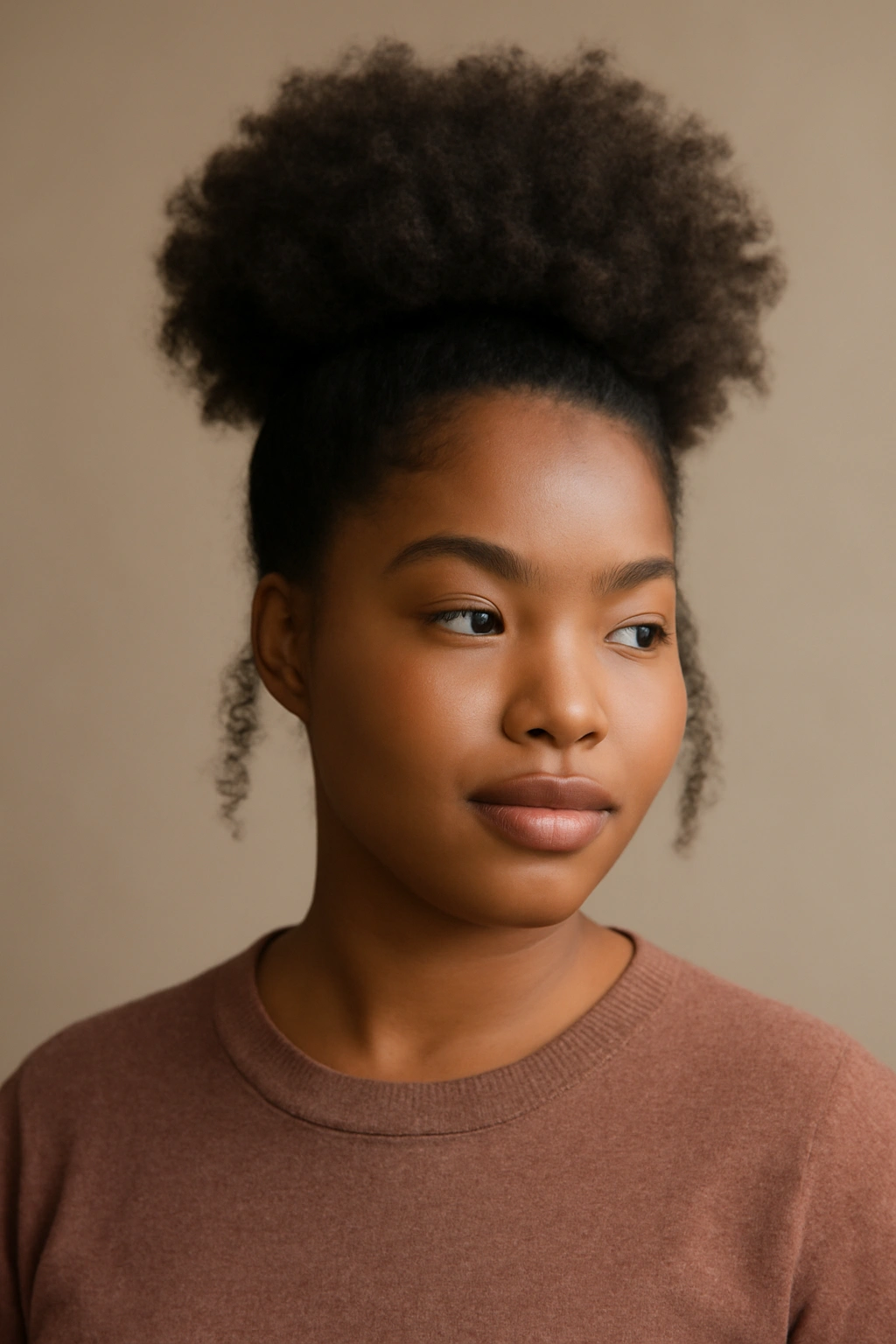
A high puff is a beloved protective and everyday style for many Black women, and when styled with intention, it can be remarkably flattering for round faces. The key is ensuring that your puff sits high and maintains volume throughout, rather than becoming a flat, dense ball at the back of your head. A well-styled puff creates height at the crown, leaves some hair down to frame the face gently, and uses strategic sectioning to create dimension.
Why This Works for Round Faces
A high puff immediately draws the eye upward through its placement. The volume sits at the crown rather than spreading horizontally around your face. When you leave some hair down (either straight, textured, or wavy), it frames your face and creates softness without bulk. The contrast between the gathered puff and the framing hair creates visual interest and breaks up the roundness.
Creating a Face-Flattering High Puff
- Section your hair starting from the crown and moving backward, creating a high ponytail with the crown section; this places volume where you need it
- Backcomb or tease your puff gently to create volume without creating density; a puffy, textured puff looks better than a slicked, tight one
- Leave some hair down around your face—whether that’s a few face-framing pieces or slightly longer layers—to create softness and dimension
- Use a silk or satin scrunchie rather than a rubber band; this prevents breakage and allows you to adjust the tightness without damaging your hair
- Add a decorative clip, cuff, or hair jewelry to draw attention to the artistry of the style
Worth knowing: A puff looks best when you’ve moisturized your hair well beforehand. Apply a leave-in conditioner to damp hair before styling. This adds shine and prevents frizz, making the puff look intentionally voluminous rather than unkempt.
11. Sleek Buns Positioned High
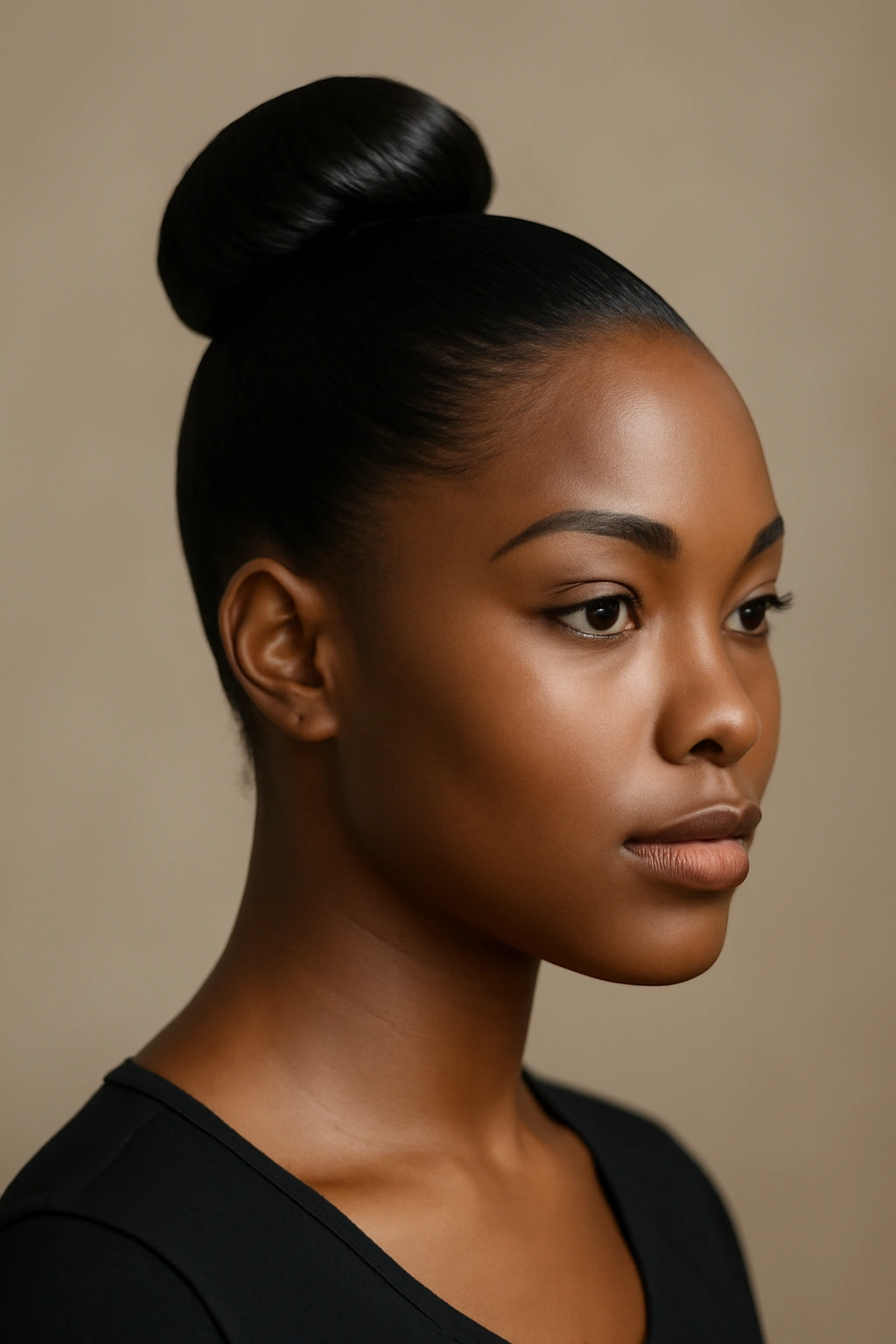
A bun is a timeless, sophisticated style that works for virtually any occasion, and when positioned high on your head and styled sleekly, it’s wonderfully flattering for round faces. A high bun creates immediate vertical emphasis and removes hair from around your face entirely, which allows your features to take center stage without the distraction of framing hair. The key is placement—a bun positioned at the crown is far more flattering than one at the nape.
Why This Works for Round Faces
A high bun creates a visual anchor at the top of your head, drawing the eye upward and extending the perceived length of your face. Because all hair is pulled away from your face and neck, there’s no volume or bulk that could emphasize the width of your face. The sleekness of a well-executed bun creates definition and sophistication. The higher the placement, the more elongating the effect.
Styling Your High Bun Perfectly
- Create a high ponytail at your crown, not at the back of your head; this is the most flattering placement for a round face
- Smooth your hair with edge control or gel before gathering it into the ponytail; this creates a polished appearance
- Wrap your ponytail around itself to create the bun, or use a bun pad to create volume; both methods work, depending on your preference and hair density
- Secure with bobby pins and finish with a light hairspray to keep flyaways in place
- Consider adding a cuff, wrap, or decorative hairpin; this draws attention to the artistry and sophistication of the style
Pro tip: A sleek bun looks best when your hairline is neat and defined. Use edge control to create a smooth, polished hairline. If baby hairs are visible, brush them neatly into the style or apply a tiny amount of gel to smooth them down. This finishing touch makes the entire look feel intentional and elevated.
12. Curly Bangs With Defined Curls
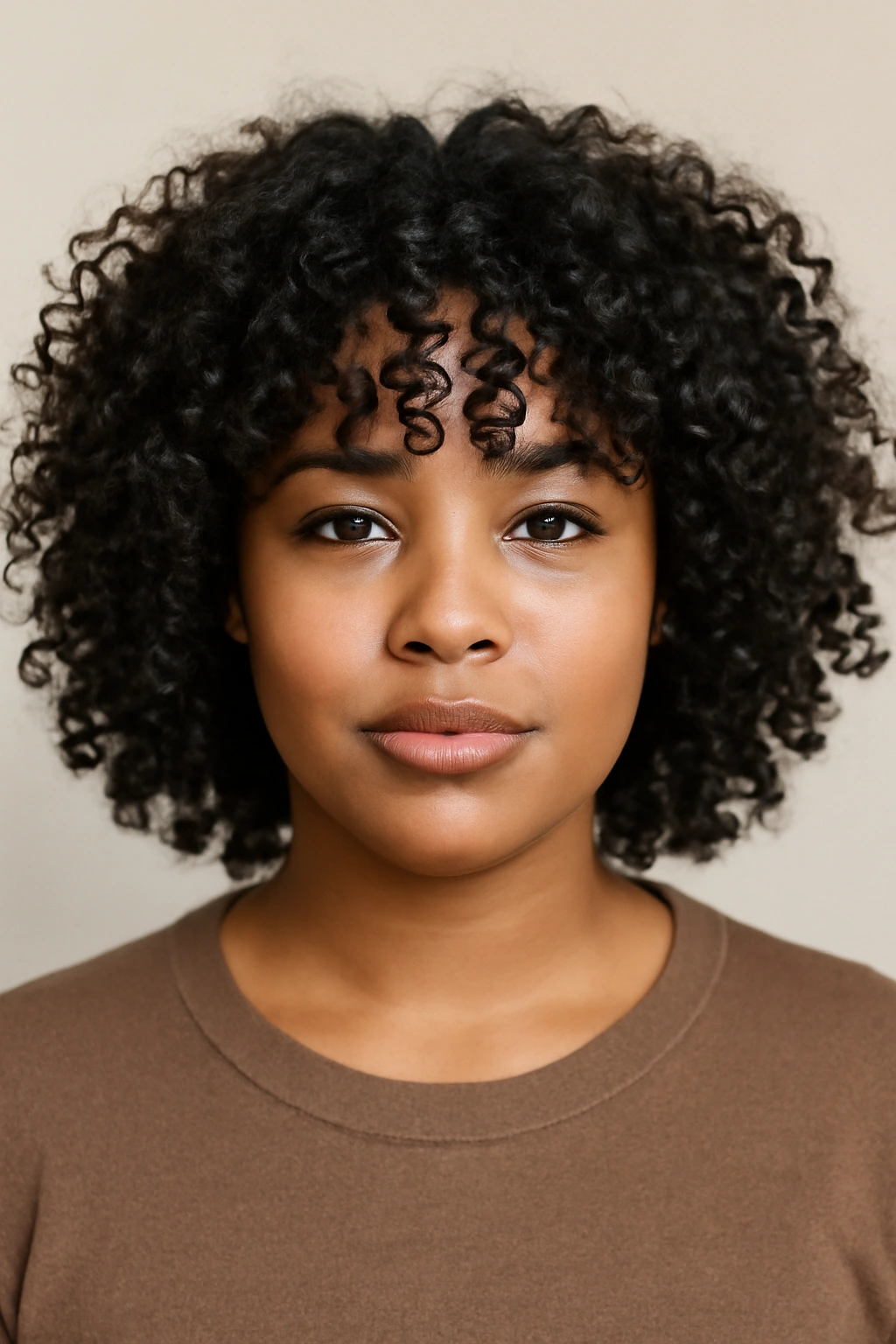
Bangs might seem like an unusual choice for a round face, but curly bangs are actually incredibly flattering and trendy. Rather than the straight bangs that might emphasize a round face, curly bangs add texture, movement, and visual interest to your forehead and upper face. When paired with defined curls throughout, this style creates layers of texture and dimension that prevent the eye from reading your face as simply round. The bangs draw attention upward and create a youthful, fashion-forward look.
Why This Works for Round Faces
Curly bangs sit on your forehead and draw attention to the upper portion of your face, which helps elongate the overall appearance. The texture and movement of curly bangs create visual interest rather than a flat, solid line. When bangs are paired with defined curls throughout, the overall effect is dynamic and multidimensional. The layering of texture creates complexity that moves away from the simplicity of a round face shape.
Creating Beautiful Curly Bangs
- Have your stylist cut bangs that start at your hairline and fall to approximately your eyebrows; this length is flattering and manageable
- Ensure your bangs are curly and defined rather than straight or loosely waved; the texture is what creates the flattering effect
- Pair your bangs with well-defined curls throughout your hair; the consistency of texture creates a cohesive, intentional look
- Style your curls with a curl-defining cream or gel that enhances definition and prevents frizz
- Consider the width of your bangs; bangs that cover your entire forehead can feel heavy, while slightly narrower bangs feel lighter and more modern
Worth knowing: Curly bangs require regular maintenance. As your hair grows, your bangs will grow and change shape. Plan for trims every 4-6 weeks to maintain the flattering length and shape. Your stylist can help you refresh your curl pattern during these trims, ensuring your bangs always look their best.
Final Thoughts
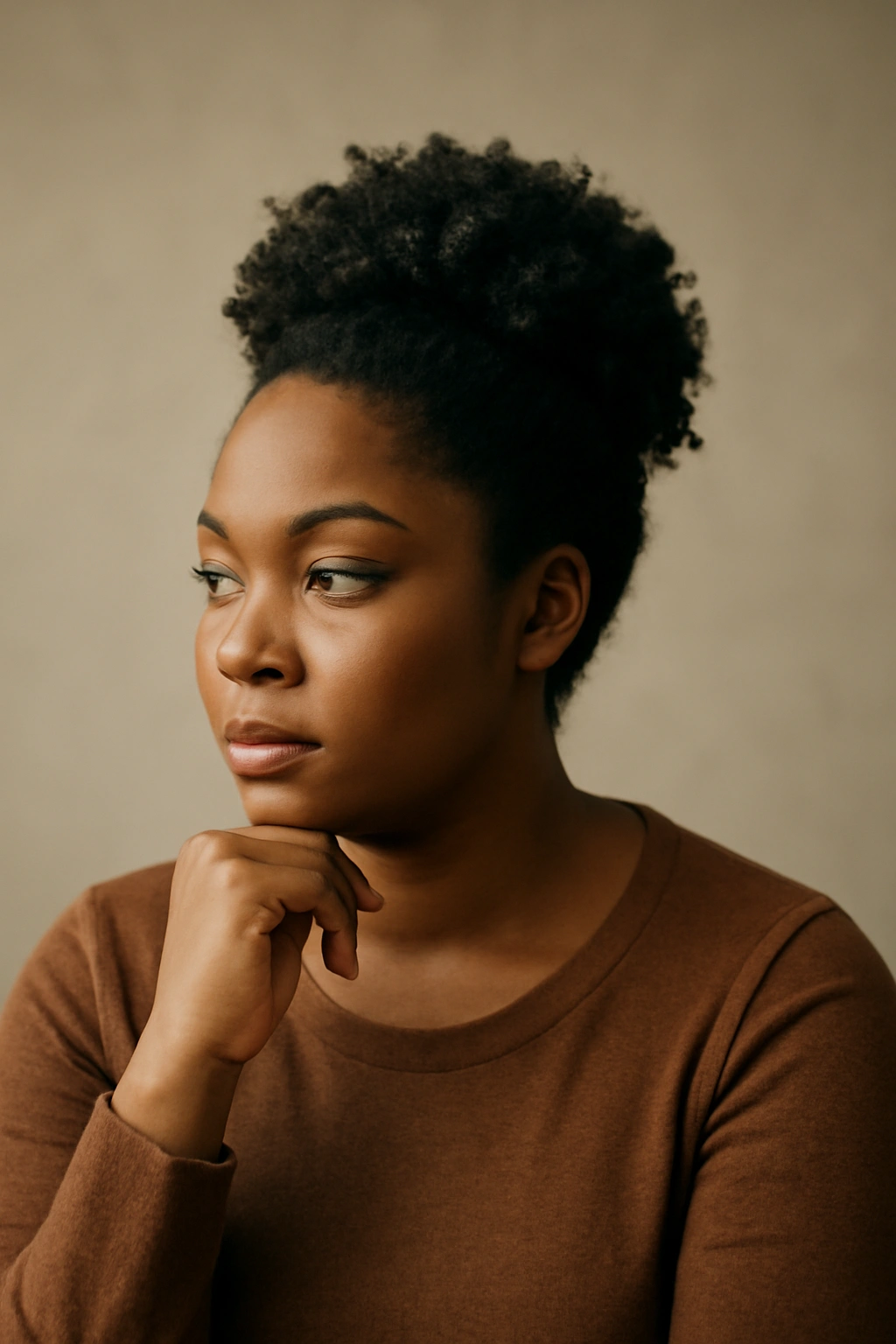
Finding the hairstyle that makes you feel most confident starts with understanding what works with your face shape and your personal style. Round faces are incredibly versatile canvases for beauty and creativity. Whether you’re drawn to protective styles like braids and locs, natural textures like twist-outs and wave patterns, or sleek, sculpted looks like fades and buns, there’s a hairstyle that will make you feel absolutely stunning.
The common thread across all these styles is strategic placement of volume, the use of texture and movement to create visual interest, and styling choices that emphasize length and definition. Remember that the best hairstyle is ultimately the one that makes you feel confident and beautiful. These guidelines help you make informed choices, but your comfort and happiness should always come first.
Work with a stylist who understands your hair texture, respects your vision, and has experience creating styles for Black women. A skilled stylist can adapt any of these styles to your specific hair type, density, and lifestyle needs. Don’t hesitate to bring reference photos, ask questions, and communicate clearly about what you want. Your hair is an expression of your identity and creativity—wear it in a way that makes you feel like the absolute best version of yourself.
