



There’s something undeniably magnetic about an asymmetrical haircut. Maybe it’s the way one side catches the light differently, or how the unexpected asymmetry commands attention without trying. Whatever it is, this cut has transcended being a fleeting trend and become a cornerstone of modern, boundary-pushing hair design. If you’ve ever felt like a perfectly balanced, symmetrical haircut didn’t quite capture who you are, or if you’re looking to refresh your style with something that feels intentional and current, an asymmetrical cut offers exactly that kind of edge.
The beauty of asymmetrical haircuts lies in their versatility. They work whether you’re drawn to bold, dramatic contrasts or subtle, barely-there differences. They flatter a range of face shapes when tailored properly, work with straight hair and curls alike, and—this is crucial—they don’t require you to conform to any single aesthetic. An asymmetrical cut can look minimalist and architectural, playful and textured, professional and polished, or avant-garde and experimental depending on which specific style you choose and how you style it.
The following twelve cuts represent the range of what’s possible when you embrace asymmetry. Each one brings its own character to the table, its own story about what makes an asymmetrical haircut powerful. Whether you’re ready to go short or you want to keep length while adding asymmetry, there’s something here that will speak to you.
1. The Sharp Disconnected Undercut
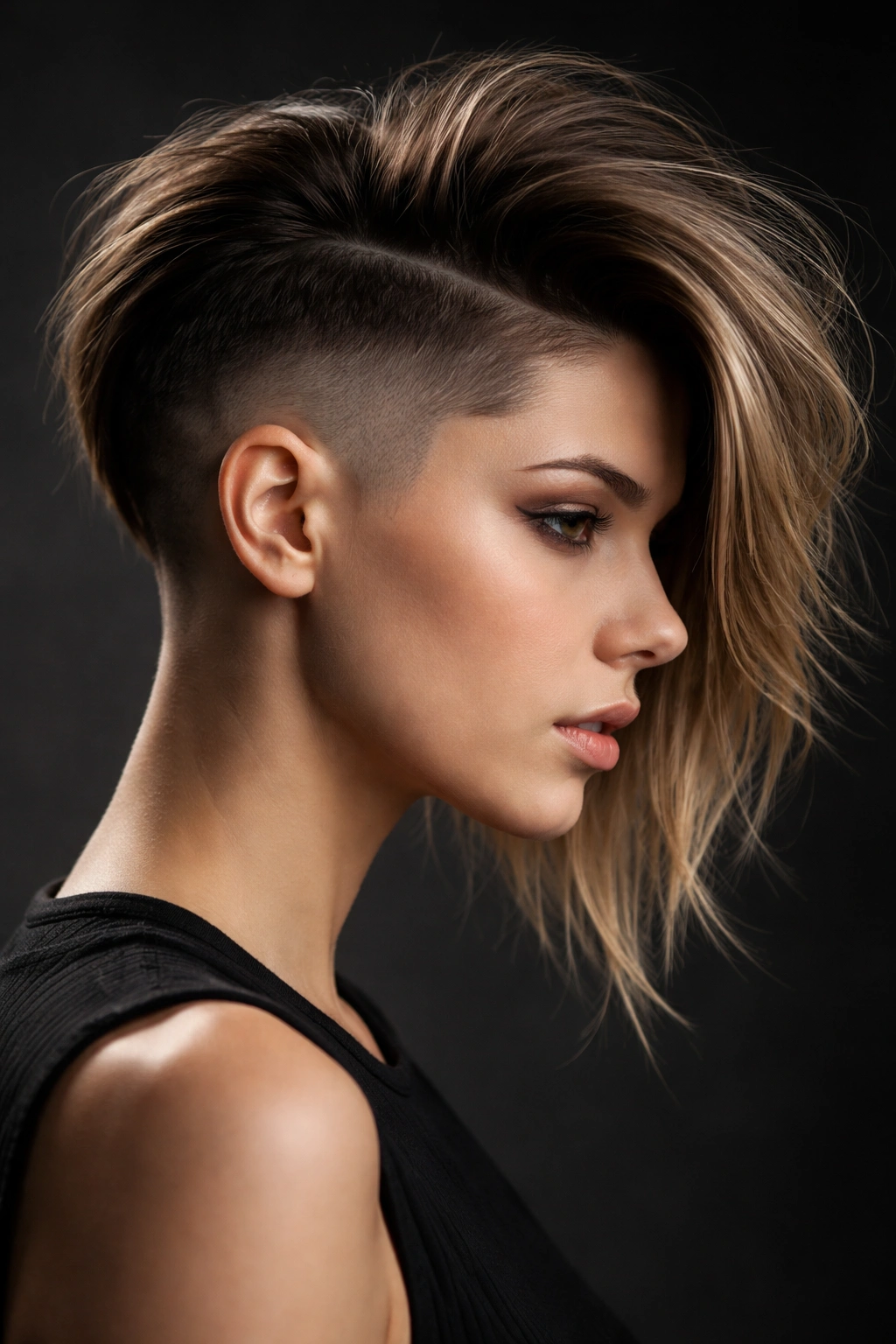
This cut plays with extreme contrast by keeping one side dramatically shorter—often faded close to the scalp—while the other side tumbles down with full length and volume. The disconnection between the two sides is intentional and unapologetic, creating a geometric quality that feels both modern and slightly rebellious. What makes this version distinctly contemporary is how cleanly the transition sits; it’s not blended into a gradual fade but rather a clear demarcation line that emphasizes the asymmetry.
Why This Cut Commands Attention
The sharp disconnected undercut draws its power from boldness. You’re not being subtle here—the visual impact is immediate. This cut works beautifully on people who want their hair to make a clear statement and have the confidence to carry it. The architectural quality of the cut means it photographs well, photographs really well, and it gives you an instant focal point for styling decisions.
How to Rock It Year-Round
The shorter side requires touch-ups every 2-3 weeks if you want that clean fade to stay crisp, so consider this a cut that demands maintenance. The longer side, depending on whether you’re working with 4 inches or 12 inches, needs regular trims to keep its shape. Style it by pushing the longer side back dramatically to really showcase the undercut, or sweep it forward to soften the contrast when you want a less intense vibe. This cut’s attitude shifts depending on whether you go wet-look gel, matte texture, or soft waves.
2. The Textured Shag Asymmetry
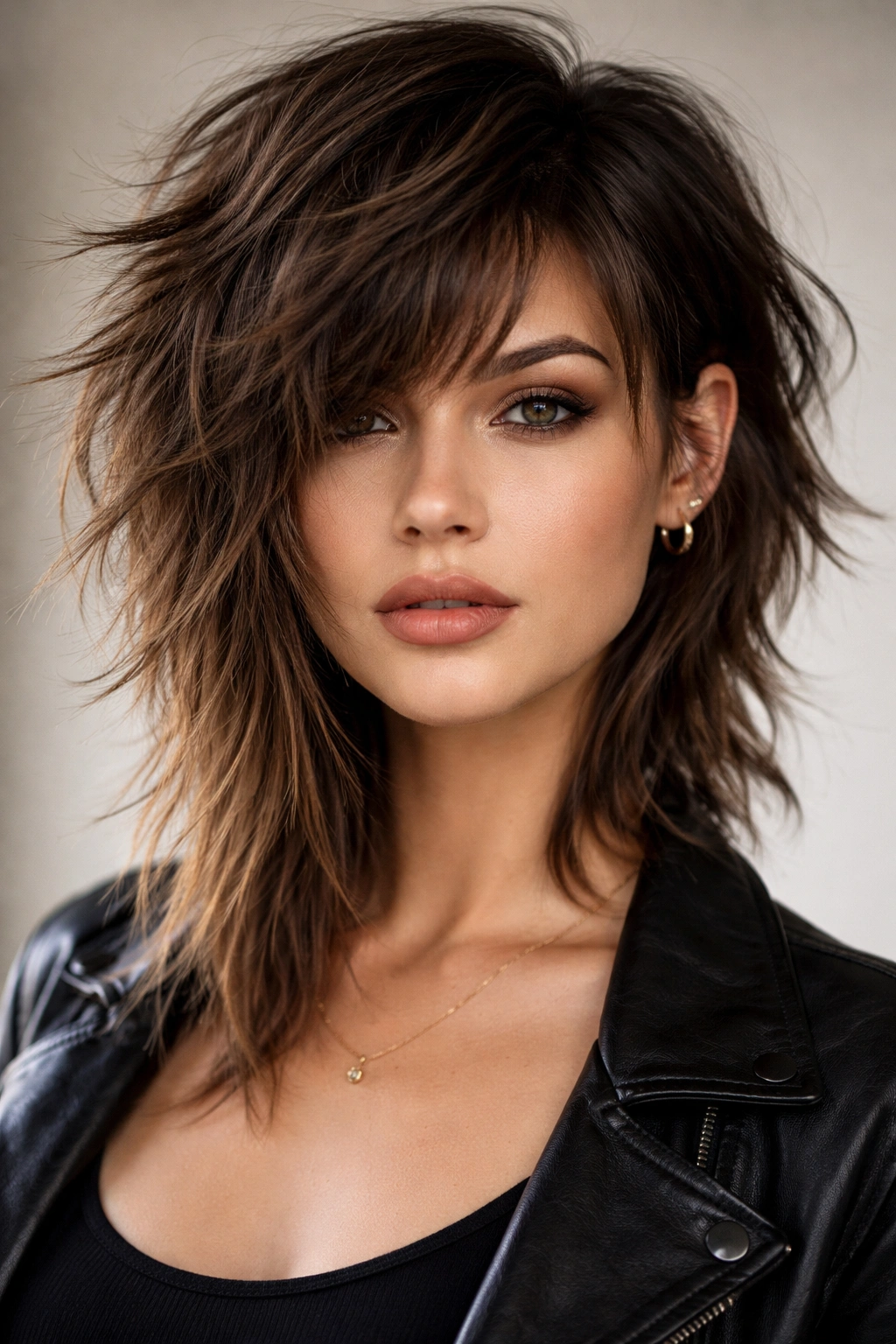
This approach takes the beloved shag silhouette—that effortless, lived-in texture with choppy layers—and throws asymmetry into the mix. One side sits noticeably shorter or more heavily layered than the other, creating movement and dimension that reads as intentional rather than accidental. The choppy layers throughout give this cut a ’70s-inflected vibe, but the asymmetrical construction pushes it firmly into contemporary territory.
The Appeal of Intentional Texture
What makes the textured shag asymmetrical work so well is that it doesn’t require precision styling. The layers and choppy nature of the cut mean that imperfection is actually the point. This is the asymmetrical cut for people who want edge without spending thirty minutes styling every morning. The texture naturally creates dimension, so the asymmetry doesn’t need to shout—it’s woven into the fabric of the cut itself.
Building the Shag That Works for You
The key to making a textured shag asymmetrical truly sing is understanding your hair’s natural texture and movement. If you have straight hair, the layers will need slightly more deliberate styling to show off their choppy nature—a texturizing spray or light styling cream helps. If you have naturally wavy or curly hair, this cut is almost built for you; the asymmetry and layers play with your natural movement patterns beautifully. Maintenance means getting trims every 6-8 weeks to keep the choppy texture from looking shaggy in an unintentional way.
3. The Blunt Long-Short Contrast
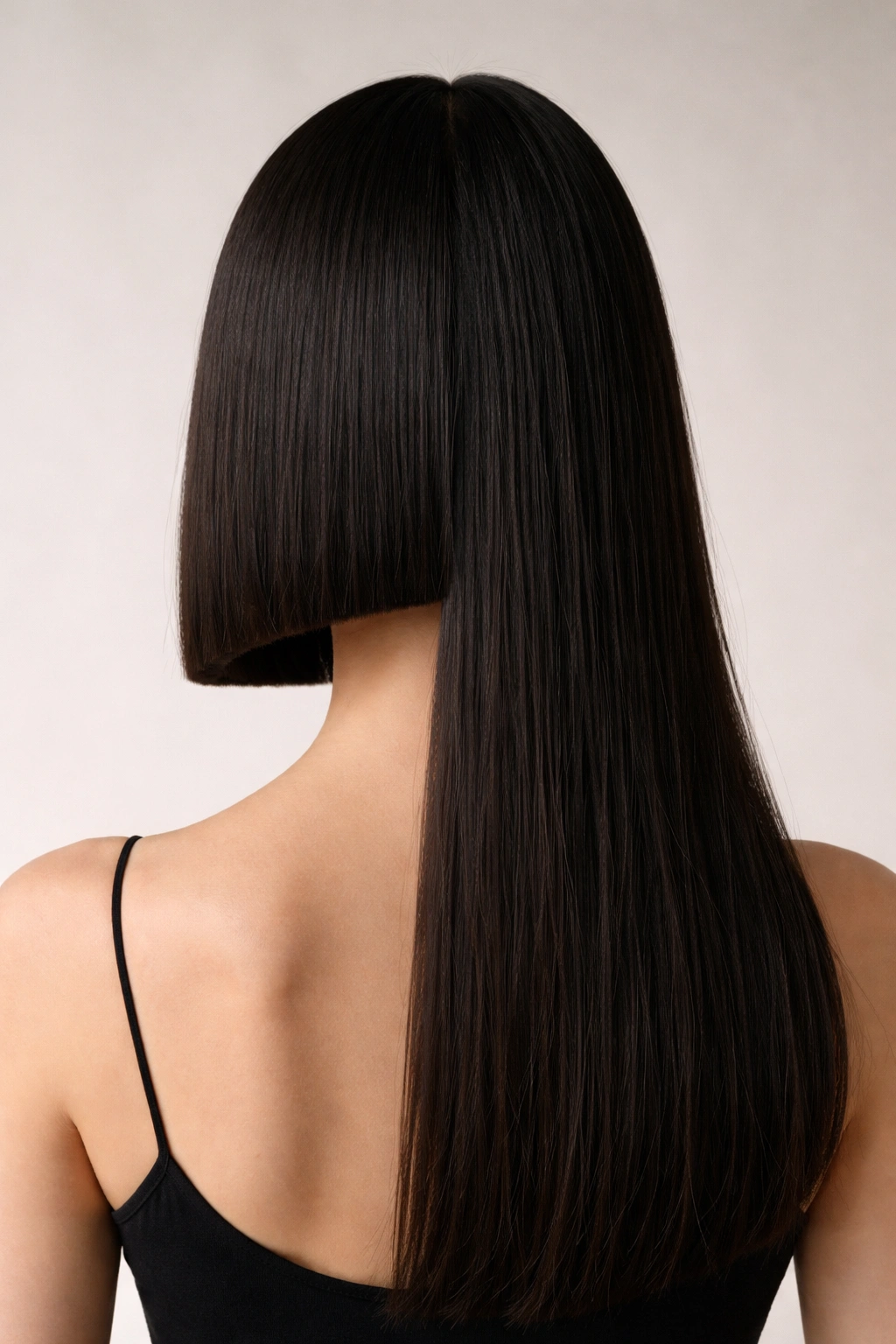
Imagine one side of your head cut to a precise, blunt bob length around chin-level, while the other side extends several inches longer. This isn’t a subtle fade—it’s a statement about clean lines and intentional proportion. The blunt lines give this cut a minimalist, almost sculptural quality, and the length difference between the two sides creates visual intrigue without being overly complicated.
Precision as a Design Element
This cut requires a stylist who truly understands proportion and line. The blunt edges need to be actually blunt—not softly textured, but decisively sharp. This precision is what makes the cut work; it’s the clean lines that elevate the asymmetry from random to intentional and modern. The cut reads as sophisticated and architectural, almost like wearable art.
Styling This Clean Aesthetic
The blunt long-short contrast looks stunning worn sleek and straight, which means you’ll want to invest in quality straightening tools if that’s not your hair’s natural texture. You can also wear it with gentle waves or a soft bend—the key is that the blunt edges stay defined. The longer side can be tucked behind your ear, swept across your face, or left to fall naturally depending on your mood. This cut genuinely doesn’t require much product; it’s built to look good with minimal styling effort.
4. The Tousled Pixie-to-Length Transition
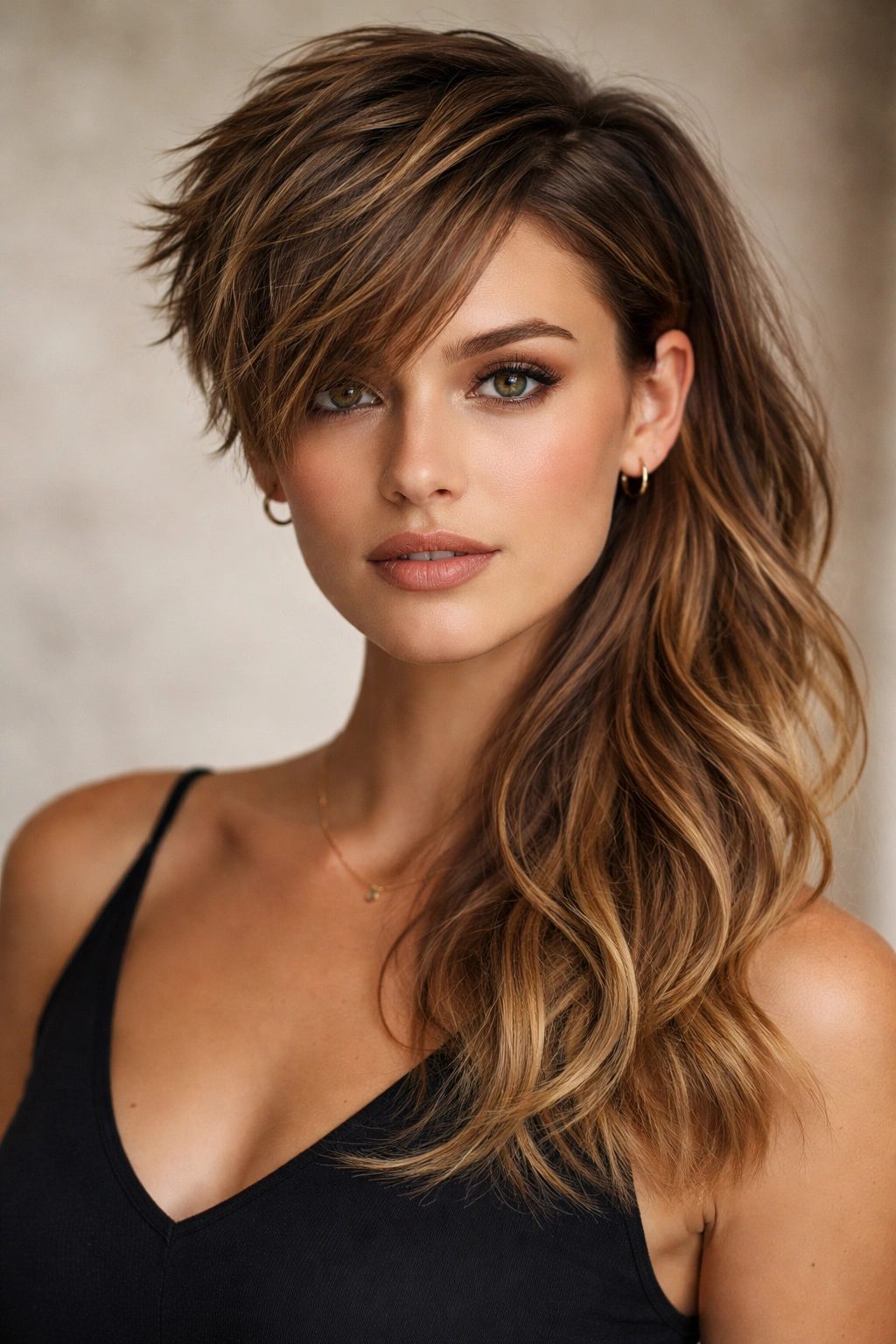
This cut takes a pixie on one side—short, playful, textured—and transitions into grown-out length on the other, typically hitting shoulder-length or longer. The two sides feel like they belong to completely different haircuts, which is exactly why it works. The textured pixie side has movement and sass, while the longer side provides a sense of femininity and flow, and the asymmetry holds them together as one cohesive statement.
The Personality Factor
This cut is for people who contain multitudes. Maybe you love the convenience and edginess of short hair, but you also love the versatility and romantic quality of length. This haircut says you don’t have to choose. The textured pixie side typically features choppy layers that catch the light, while the longer side can be styled smooth or with texture depending on the day. The contrast is what makes it remarkable—each side makes the other look even better.
Making the Transition Work
The magic of this cut lives in how the two sides connect. A good stylist will blend the longer side into the shorter side using strategic layering, so it doesn’t look like you got two different haircuts. The shorter side benefits from styling products that enhance texture—sea salt spray, dry shampoo, or a light pomade work beautifully. The longer side can be pinned back to showcase the pixie, or allowed to frame the face for a more balanced look. This cut requires trims every 6-8 weeks to keep both sides looking intentional.
5. The Graduated Asymmetrical Bob
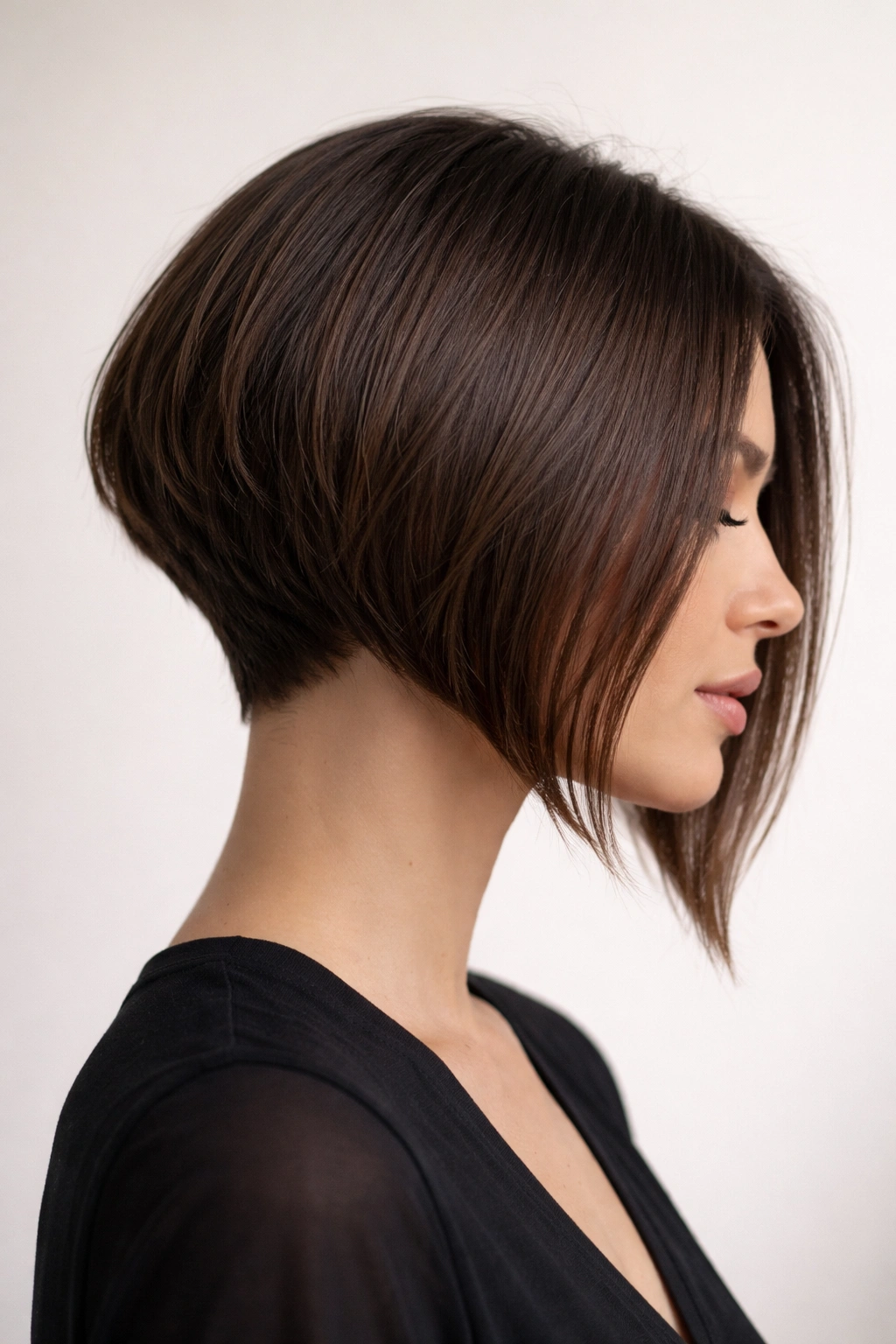
This is a bob that subtly shifts in length from one side to the other, typically shorter in the back and longer in the front on one side, creating a graduated effect that’s asymmetrical rather than the typical symmetrical graduated bob. It’s elegant, refined, and works beautifully on straight or slightly textured hair. The asymmetry here is less about shocking contrast and more about sophisticated proportion and movement.
Subtle Sophistication
The beauty of the graduated asymmetrical bob is that it looks intentional and modern without being loud about it. This is the asymmetrical cut for professionals, for people who want their style to read as thoughtfully designed rather than rebellious. The asymmetry often goes nearly unnoticed until someone looks at you from the side and realizes one side is slightly longer—then the intentionality clicks into place.
Perfecting the Proportion
This cut looks best on people with straight to slightly wavy hair, as the clean lines are essential to its aesthetic. Styling is refreshingly simple: blow-dry with a round brush for smoothness, and let the cut’s built-in movement do the work. The longer side can be tucked behind your ear or left to fall, and the graduated shape means the hair naturally bends and moves in flattering ways. Maintenance requires trims every 6-8 weeks to keep the graduation clean and the asymmetry visible.
6. The Color-Blocked Asymmetrical Mullet
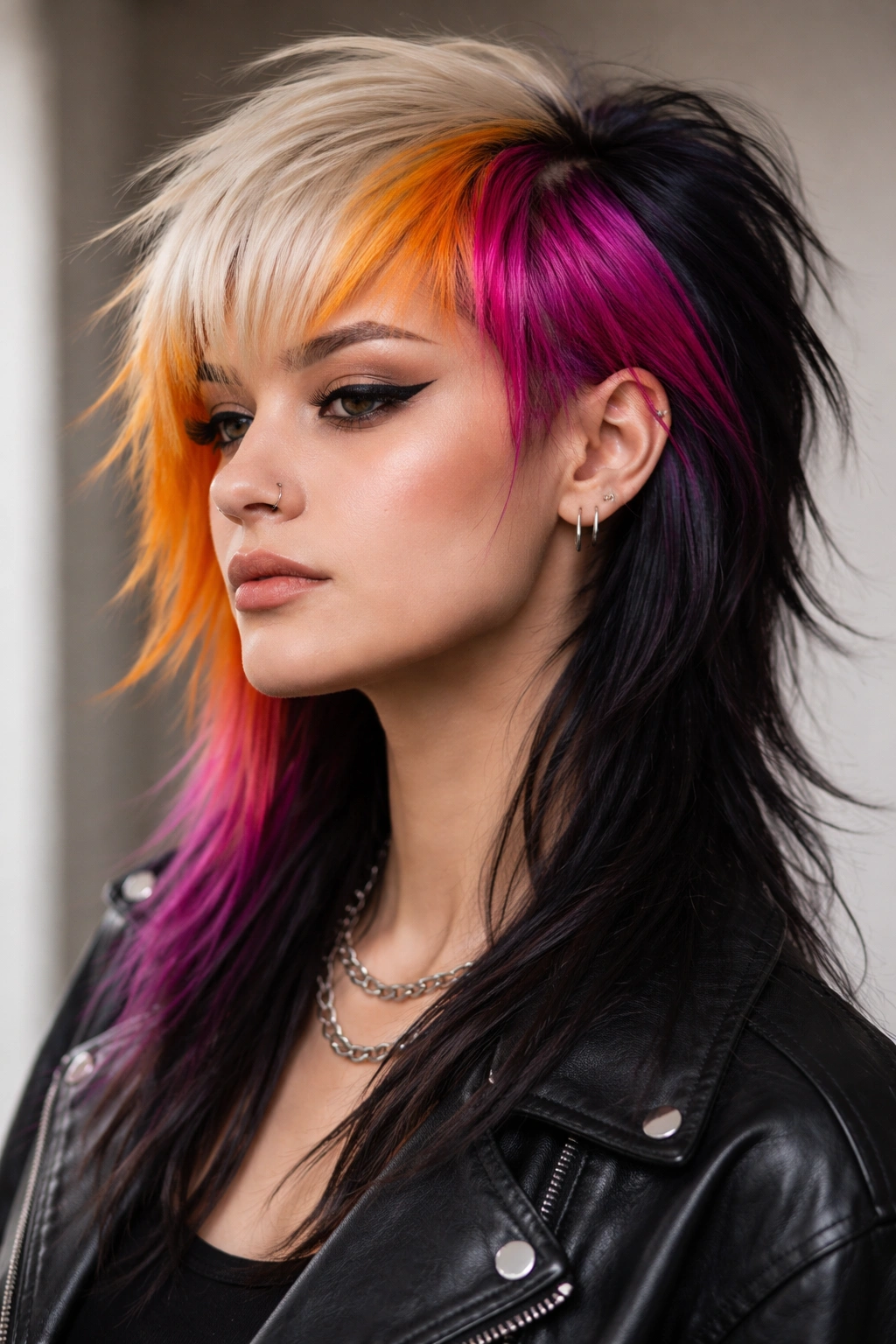
This cut takes the mullet silhouette—short and shaped on top, longer in the back—and makes it asymmetrical by varying the length or shape from one side to the other. Often paired with color blocking (different colors on each side or section), this cut is unapologetically bold and modern. It’s playful without being cutesy, edgy without being unsafe, and genuinely fun to wear.
Attitude and Expression
The color-blocked asymmetrical mullet is a cut that says something about who’s wearing it. This isn’t a cut you choose if you want to blend in. It’s a cut for creative people, for people who see their hair as a canvas for self-expression. The asymmetry makes it feel current and intentional, while the color-blocking adds another layer of visual interest. It’s the kind of cut that stops people mid-conversation because it’s simply so present.
Styling and Maintenance
This cut typically requires some styling intention. The top might be textured and piece-y, styled upward for volume, while the back is longer and can be worn wavy or straight. The color-blocking keeps things looking fresh-looking between salon visits—the asymmetry and color variations mean regrowth reads as intentional rather than unkempt. Maintenance is moderate: touch-ups on the cut every 6-8 weeks, and if you’re doing color, follow your colorist’s schedule for root touch-ups.
7. The Slicked-Back Asymmetrical Fade
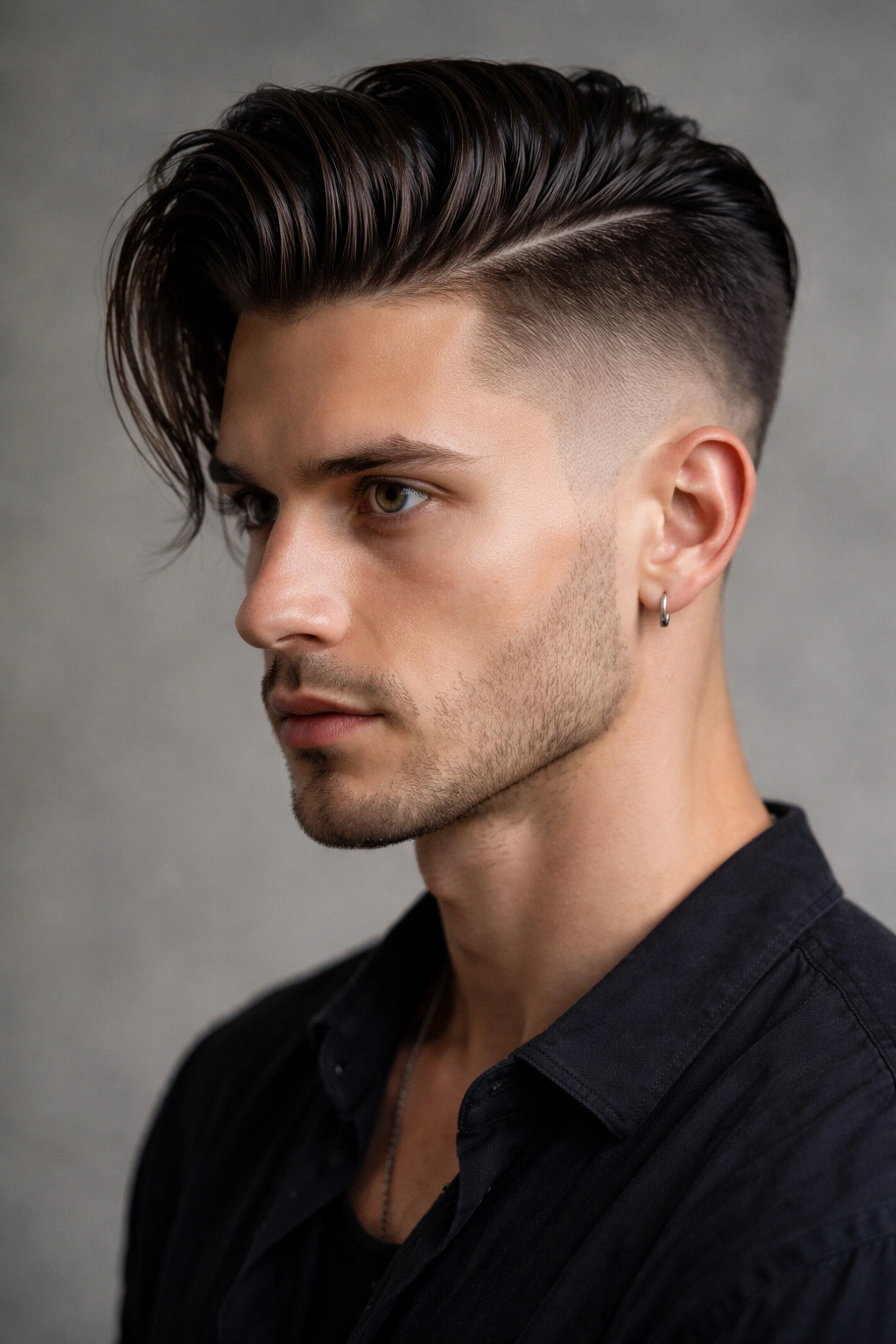
One side fades dramatically from a longer top section down to skin-level, while the other side maintains more length and fullness. The longer side is typically slicked back or styled upward, creating a sharp contrast between the sculptural fade side and the voluminous, sleek other side. This cut is undeniably modern and reads as intentionally designed rather than accidental.
Geometric Precision Meets Softness
What makes this cut work is the interplay between two completely different aesthetics. The fade side is all geometric precision—clean lines, mathematical ratios—while the longer side is about volume and movement. Together, they create a cut that’s simultaneously sculptural and touchable. This cut works beautifully on people with straight to wavy hair and reads particularly sharp with a well-maintained side part or clean blowout.
The Styling Commitment
This cut requires styling intention if you want it to look its absolute best. The longer side benefits from blow-drying with a round brush for volume and sleekness, followed by a styling product (pomade, gel, or cream) to create that polished slicked-back effect. The fade side is essentially maintenance-free—it’s sculptural enough to look good on its own. Touch-ups every 3 weeks keep the fade crisp and the contrast sharp. This is a cut that rewards daily attention but doesn’t require it.
8. The Choppy Curtain Asymmetry
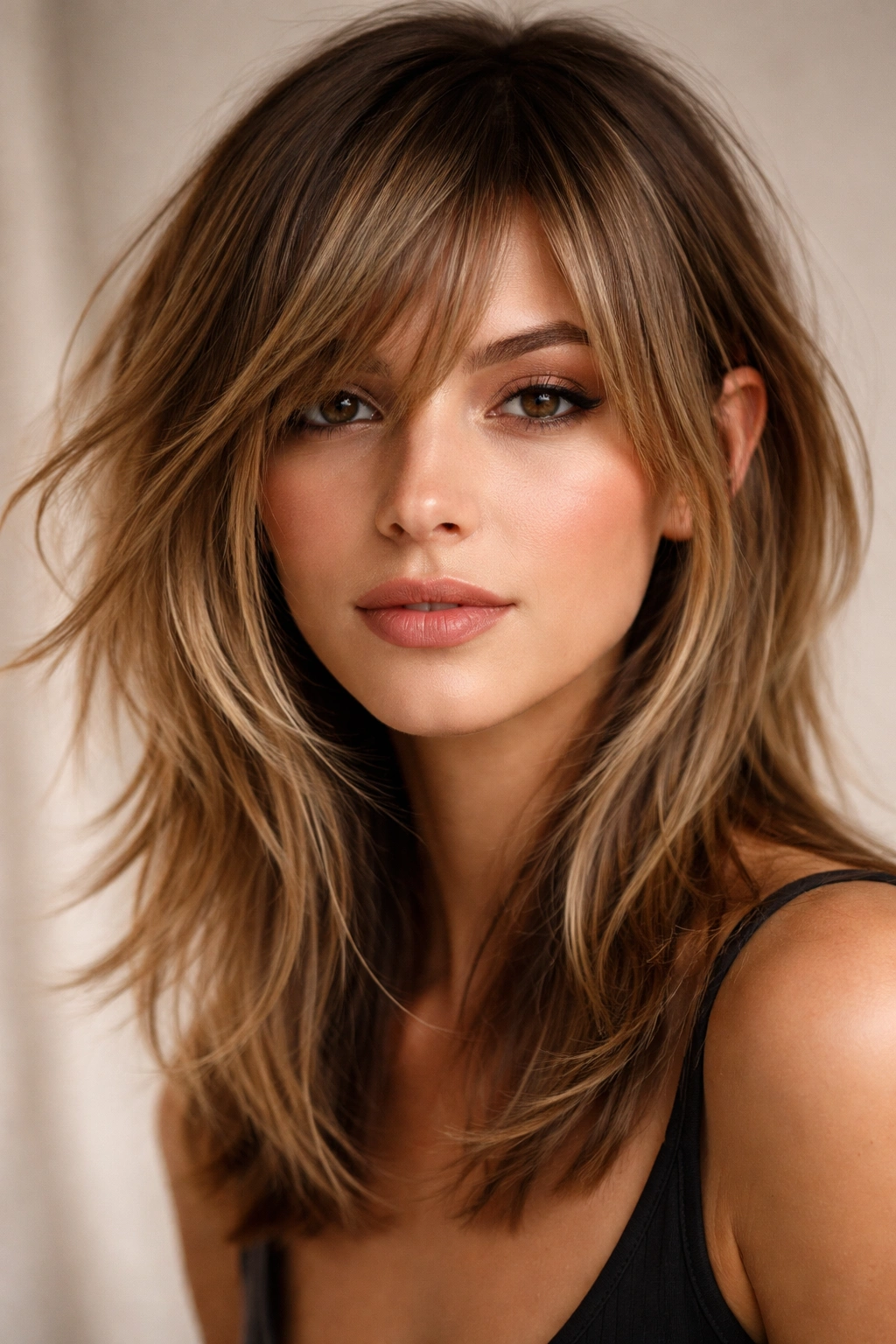
Curtain bangs asymmetrically placed and choppy layers that fall unevenly around the face—this cut creates a playful, textured look that’s simultaneously vintage-inspired and contemporary. The asymmetry isn’t about one side being dramatically shorter; it’s about the way the layers and bangs frame the face differently from one side to the other, creating movement and visual interest.
Textured Movement as the Star
This cut works because it embraces texture and imperfection as features rather than flaws. The choppy layers catch the light differently depending on how your hair falls, the asymmetrical curtains create a soft but intentional frame around the face, and the overall effect is effortlessly modern. This is the asymmetrical cut for people who love movement, layers, and a bit of that ’90s-inflected textured aesthetic.
Embracing Your Hair’s Natural Texture
The choppy curtain asymmetry works beautifully on textured hair—wavy, curly, or naturally textured hair looks stunning with this cut because the natural texture enhances the choppy quality. If you have straight hair, the cut still works; you’ll just have slightly more styling involved. Use a texturizing spray or sea salt spray to enhance the choppy nature, or use a curling iron to piece the curtains and layers. Trims every 6-8 weeks keep the choppy quality looking intentional rather than grown-out.
9. The Shaved-Pattern Asymmetry
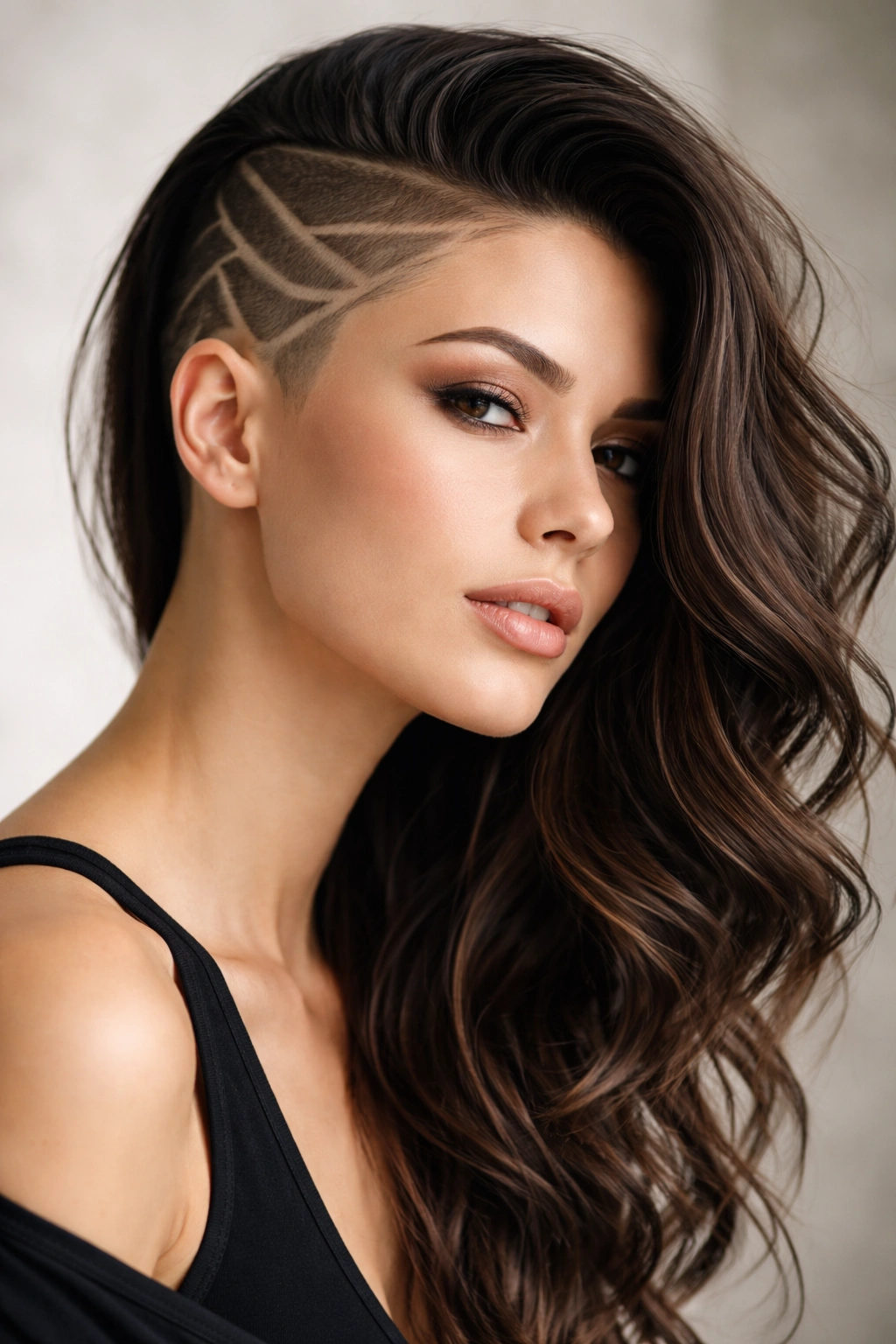
This is an asymmetrical cut that incorporates shaved sections or patterns on one or both sides, creating a striking visual statement. The shaved pattern might be geometric, detailed, or abstract, while the remaining hair on the other side maintains length and volume. It’s bold, it’s creative, and it’s absolutely a statement-making cut.
Art Meets Hair
The shaved-pattern asymmetry appeals to people who see their hair as a blank canvas for artistic expression. The pattern can be simple (a clean line, a geometric shape) or complex (something with real detail), and the contrast between the shaved area and the remaining hair creates instant visual impact. This cut screams individuality and creative confidence.
Maintenance and Versatility
The shaved side needs touch-ups every 2-3 weeks to keep the pattern clean and defined. If you’re worried about the commitment or need flexibility with professional settings, know that the longer side can be styled to cover the shaved section—pin it over, sweep it across, or wear it down for a different look. As the pattern grows out, it naturally softens, offering a gradient effect before you’re ready for your next touch-up. This cut works on all hair types and can be styled in dramatically different ways depending on your mood or what the occasion calls for.
10. The Layered Lob Asymmetry
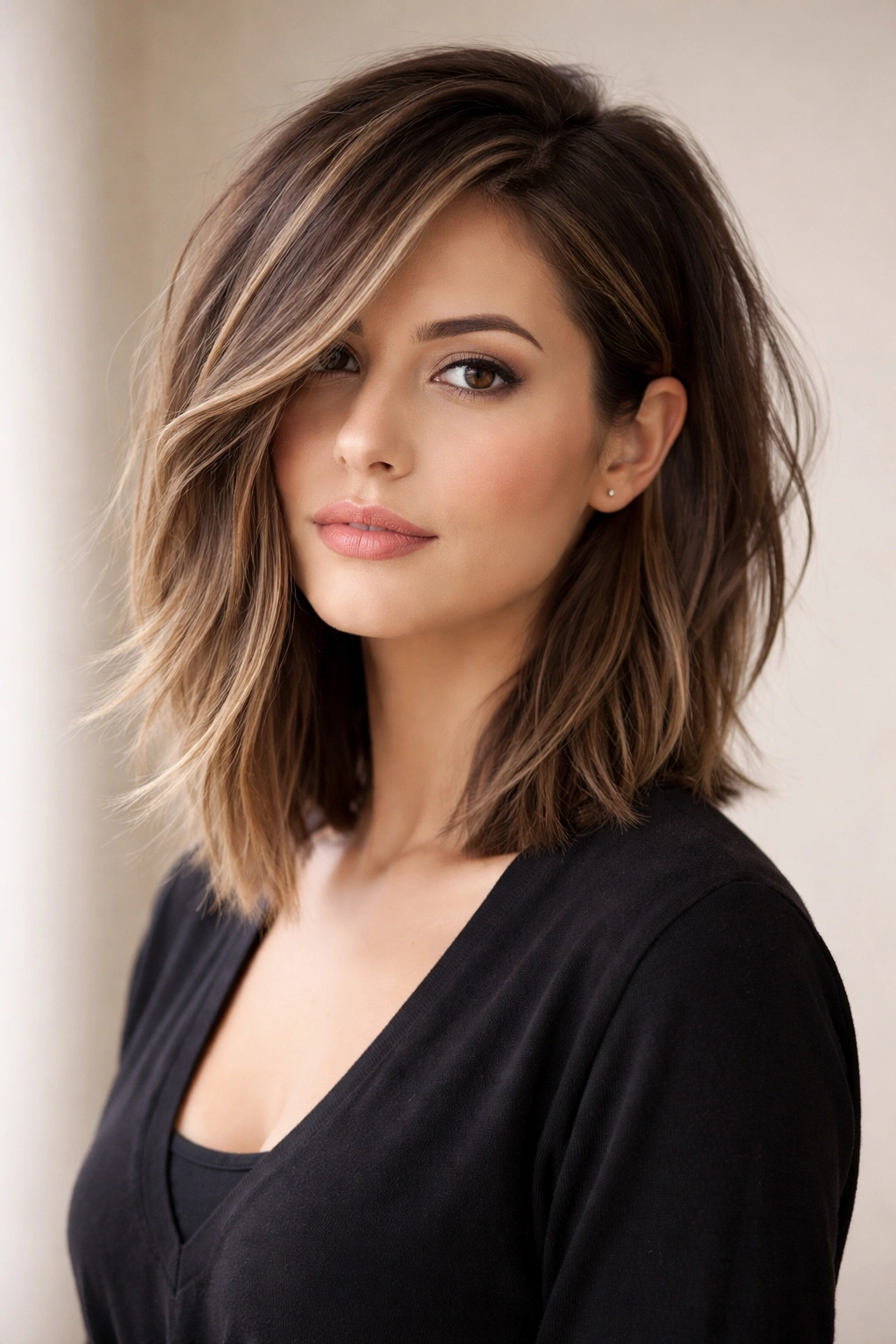
A lob (long bob) that’s asymmetrically layered, shorter on one side and longer on the other, with choppy layers throughout creating movement and texture. This cut bridges the gap between a bob and longer hair, and the asymmetry plus layers give it a distinctly modern, lived-in quality. It’s polished enough for professional settings but textured enough to feel current.
The Sweet Spot Between Lengths
The layered lob asymmetry is often the cut people land on when they’re torn between wanting length and wanting something edgier and shorter. The asymmetry and layers answer that internal conflict by offering both. The longer side provides a sense of femininity and flow, while the shorter side and choppy layers add movement and visual interest. It’s a cut that works across multiple style sensibilities.
Styling for Maximum Impact
This cut looks beautiful with a tousled, wavy texture that’s often easier to achieve than you’d think. Blow-dry with a round brush or straightener, then use a texturizing spray or curl iron to add soft waves and enhance the layered quality. The asymmetry means the cut looks good whether hair is tucked behind one ear, swept to one side, or left to fall naturally. Maintenance every 6-8 weeks keeps the layers from becoming too wispy and maintains the asymmetry.
11. The Side-Shave Asymmetrical Style
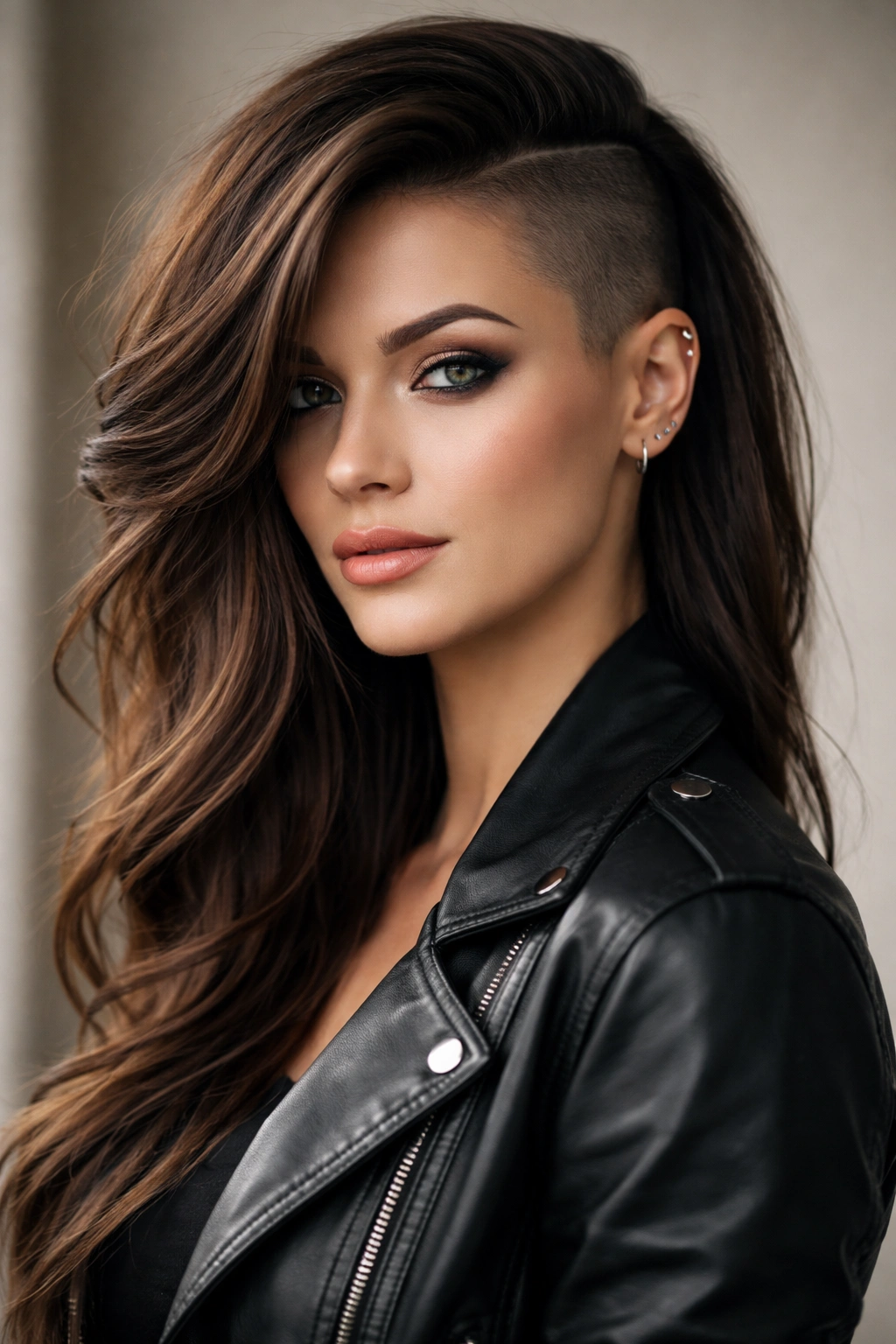
One side of the head is shaved or faded very close to the scalp, while the other side maintains full length—sometimes passed shoulders. The contrast is dramatic and intentional, creating an instantly recognizable asymmetrical statement. Depending on styling, the longer side can be swept across to partially cover the shaved side, or worn fully to the side to fully showcase the contrast.
Maximum Impact with Minimal Complexity
This cut is straightforward in concept but bold in execution. There’s no blending, no subtlety—it’s a clear visual statement about rejecting symmetry. The longer side can be styled smooth and sleek for a polished look, or textured and piece-y for something more edgy. The shaved side is essentially no-fuss; it looks good on its own and requires only occasional touch-ups every 3-4 weeks.
Versatility in How You Wear It
The real versatility of this cut lies in styling options. Want to look more conservative? Sweep the longer side fully over to cover most of the shaved side. Want to showcase the full asymmetry? Pin the longer side back or sweep it dramatically to one side. This flexibility means the cut can adapt to different situations while still maintaining its core modern edge. The shaved side grows out relatively gracefully, so if you ever want to transition away from the cut, you can let it grow without looking messy.
12. The Textured Asymmetrical Crop
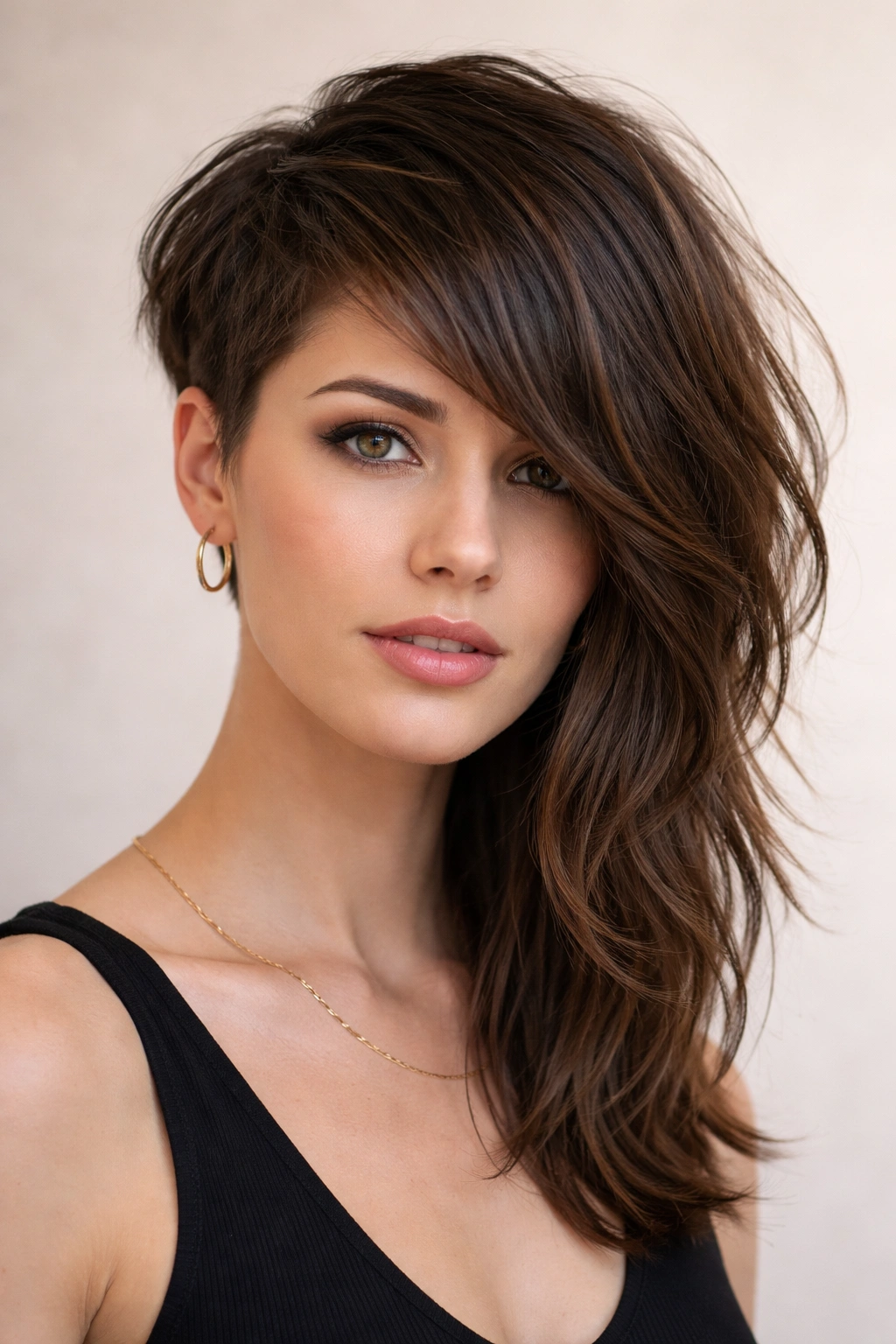
A short, cropped cut on one side that’s textured and piece-y, while the other side extends to shoulder-length or longer with softer layers. The contrast is both a length difference and a texture difference—choppy and sharp on one side, flowing and gentle on the other. This cut uniquely manages to feel both androgynous and feminine depending on how it’s styled.
Bridging Contrasts
What makes the textured asymmetrical crop remarkable is how it holds together two seemingly opposite aesthetics. The cropped, textured side has an almost masculine edge, while the longer, softer side has gentle femininity. Worn together, they create something entirely new—a cut that defies easy categorization, which is exactly where modern style lives. This cut appeals to people who don’t want their hair to communicate a single thing about them.
Styling Flexibility and Real-Life Wear
The cropped side works beautifully with dry shampoo or sea salt spray to enhance its textured quality and keep it looking intentionally piece-y. The longer side can be worn wavy, straight, or textured depending on the day and your mood. The asymmetry means the cut looks intentional whether you’re styling it dramatically or just running your fingers through it. Touch-ups every 6-8 weeks keep both sides looking sharp and intentional. This is a cut that grows gracefully, as the two sides maintain their character even as they lengthen slightly.
Final Thoughts
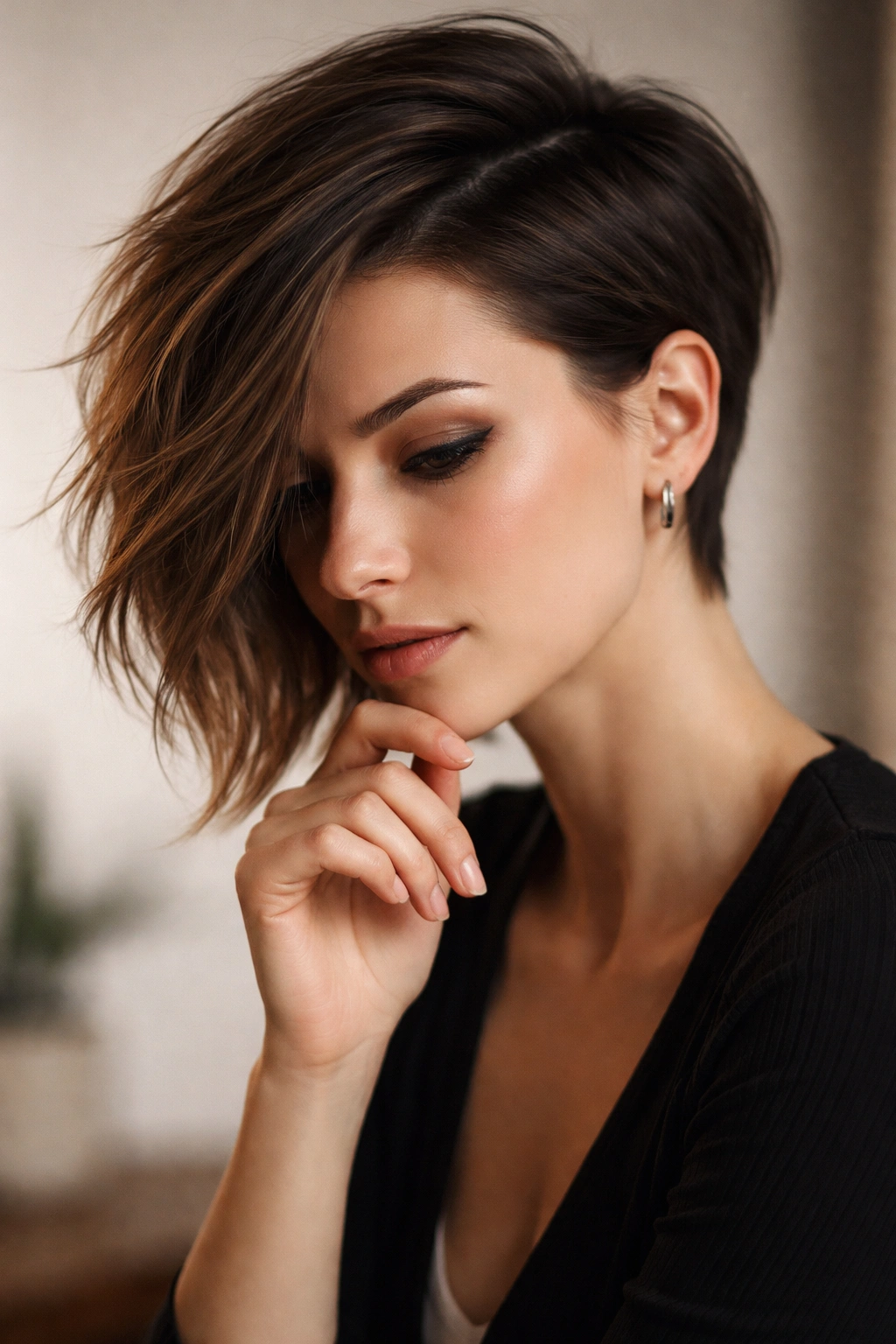
Choosing an asymmetrical haircut is about more than just embracing a trend—it’s about deciding that your hair can be a form of self-expression that doesn’t apologize for breaking with symmetry. Whether you’re drawn to subtle variations in length and texture or bold, dramatic contrasts, asymmetry offers a way to make your hair uniquely yours.
The cut you choose should resonate with how you want to move through the world. Do you want to make an immediate visual impact? Consider the sharp disconnected undercut or the shaved-pattern asymmetry. Are you looking for something that feels modern and polished without screaming for attention? The graduated asymmetrical bob or the textured asymmetrical crop might speak to you. Do you love the idea of versatility—being able to rock completely different looks depending on how you style it? The side-shave asymmetrical style gives you that flexibility.
Whatever asymmetrical cut calls to you, bring reference photos to your consultation and work with a stylist who gets it. An asymmetrical cut is only as good as the execution, and finding someone who understands proportion, precision, and your personal style is essential. The right cut, combined with the right styling routine, can genuinely transform how you feel about your hair and yourself.
