



The pixie cut is experiencing a remarkable resurgence among people of all ages and face shapes. What makes this cut so enduringly appealing isn’t just its effortless coolness—it’s the fact that pixies are incredibly versatile. You can customize length, texture, layers, and styling to suit virtually any face shape and any stage of life. Whether you’re navigating fine hair at sixty, discovering your personal style at twenty-five, or looking for a low-maintenance cut at forty, there’s a pixie variation designed specifically for you.
The challenge most people face isn’t finding a pixie cut—it’s finding the right pixie cut. A short crop that looks stunning on a square jawline can feel overwhelming on a longer face. A layered, textured pixie that works beautifully for thicker hair can look thin and wispy on finer textures. Age matters too. A pixie suited to the confidence and bone structure of a teenager looks completely different when adapted for mature skin and changing face proportions.
This guide breaks down twenty distinct pixie cut styles, each explained through the lens of the face shapes and age groups where they shine most. Some work beautifully across multiple categories—and we’ll point that out. Others are specifically tailored to solve particular styling challenges or enhance specific features. By the time you finish reading, you’ll know exactly which pixie cut style to show your stylist, why it suits you, and how to style it to look your absolute best.
1. The Classic Tapered Pixie for Oval Faces
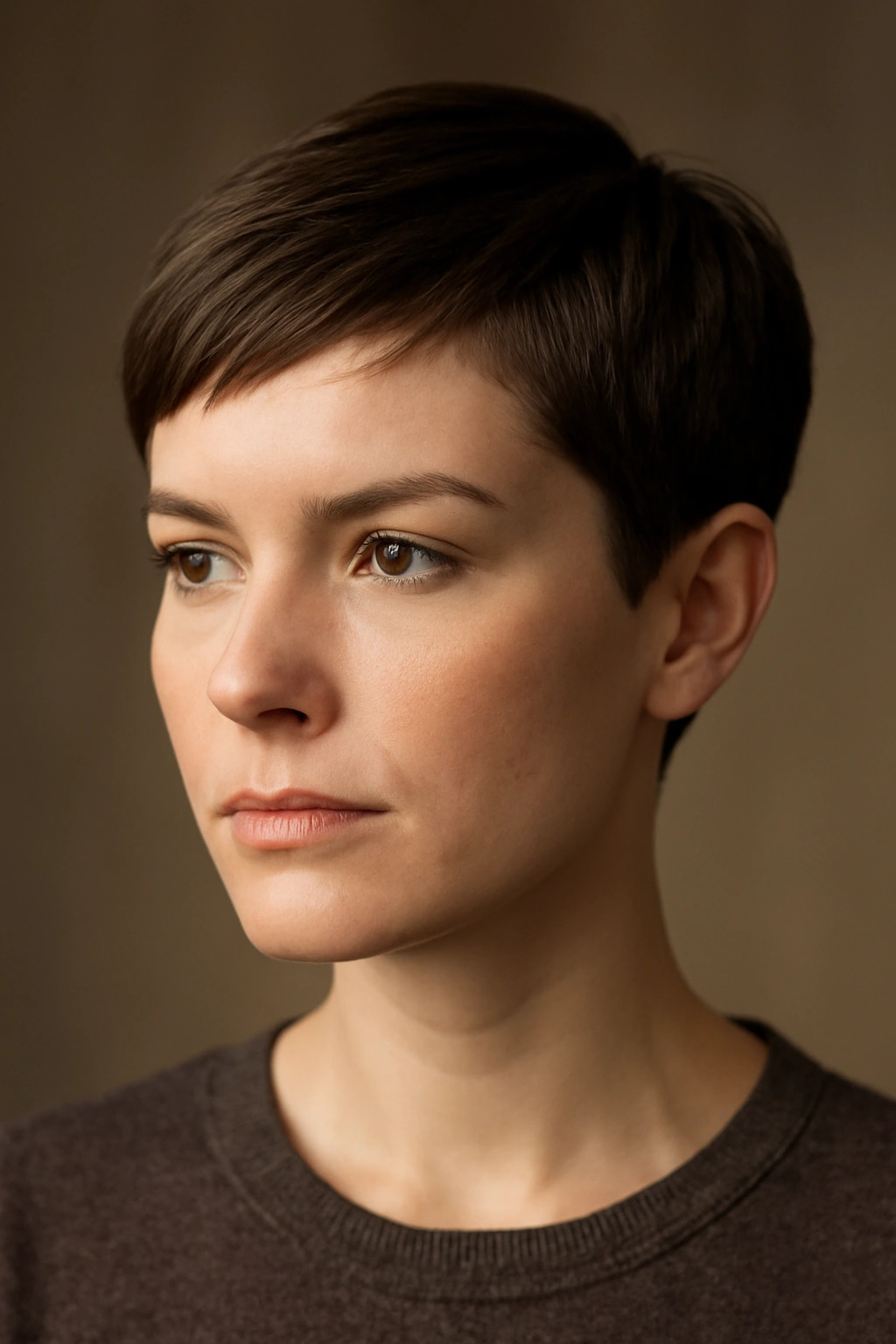
The classic tapered pixie is the foundation of all pixie cuts—short on the sides and back, slightly longer on top. This is the cut you’re thinking of when you imagine the quintessential pixie. It works brilliantly on oval faces because oval face shapes are naturally proportional; they’re wide enough at the cheekbones to carry shorter sides, and long enough to balance slightly longer hair on top.
Why Oval Faces Own This Cut
Oval faces have balanced proportions across forehead, cheekbones, and jaw. This means you can take real risks with a pixie without worrying about emphasizing one feature disproportionately. The tapered pixie, which gradually gets shorter as it moves from crown to ear to nape, looks clean and intentional on oval faces rather than exposing any perceived flaws.
How to Style It for Maximum Impact
- Part it slightly off-center for a lived-in, modern feel rather than a blunt center part
- Use a light texturizing cream or pomade on damp hair to add shape and separation
- Style it sleek and smooth for polished occasions, or tousle it for everyday casualness
- The versatility is genuinely one of this cut’s biggest strengths—same cut, completely different vibe depending on how you approach it
Styling note: This cut thrives when you restyle it every other day. Fresh texture and direction keep it looking intentional, not flat or lifeless. If you have finer hair, ask your stylist for point-cut or razor-cut ends rather than blunt ends—this creates the illusion of more texture and movement.
2. The Cropped Pixie for Round Faces and Younger Wearers
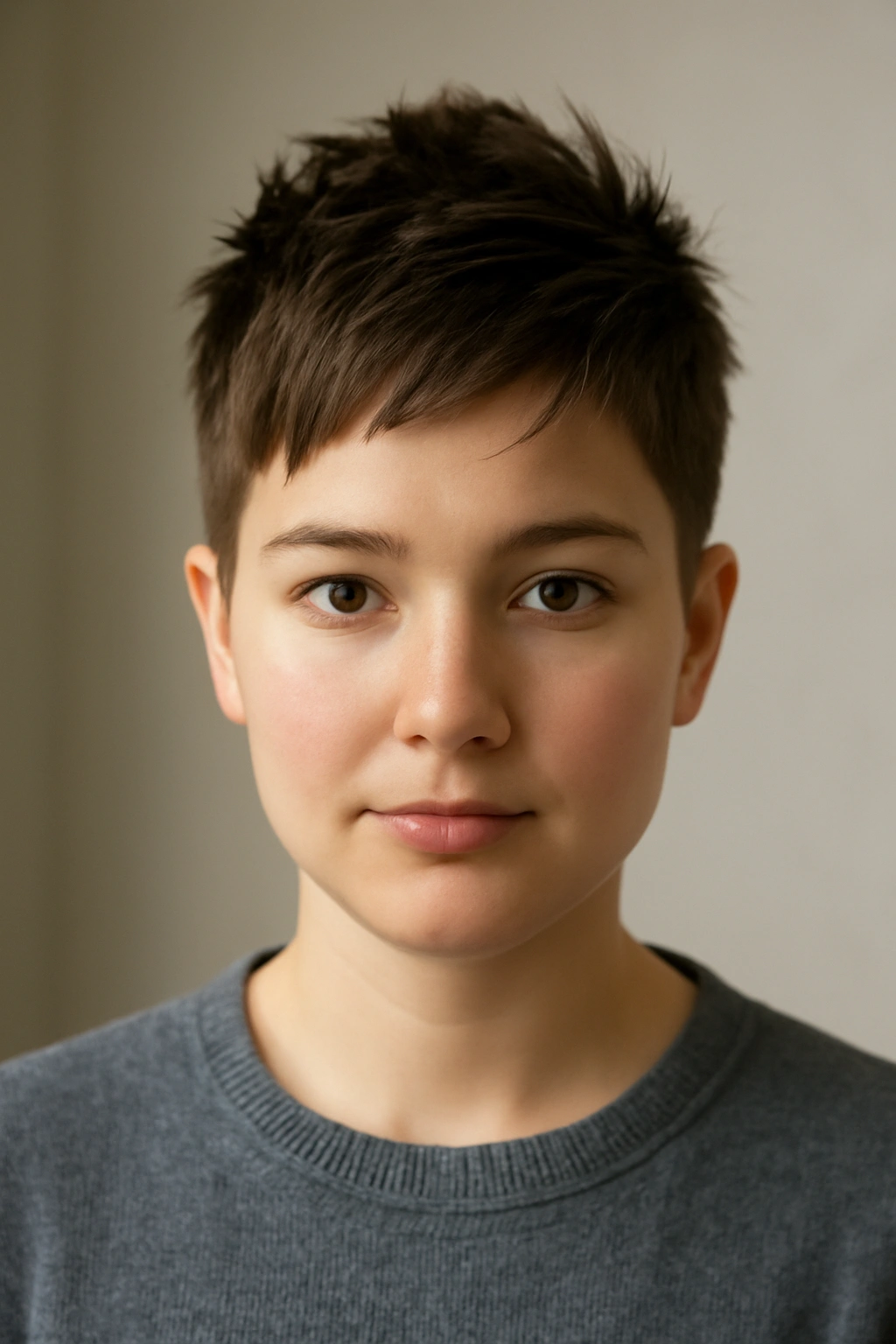
Round faces benefit from cuts that create vertical lines and height at the crown. The cropped pixie accomplishes this by being very short on the sides and building significant length and volume at the top and crown. This creates the visual effect of lengthening the face while the close-cropped sides minimize the width.
Why This Works for Round Faces Specifically
Round faces are often characterized by width at the cheekbones and a softer jawline. The cropped pixie solves this by drawing the eye upward through height and forward-facing layers on top. The close sides also create a slimming effect by not adding bulk where the face is already full.
Styling Techniques That Maximize the Effect
- Style the crown hair upward and slightly back to emphasize height
- Keep product light on the sides to maintain the sleek, close quality
- Use a blow dryer with a concentrator nozzle to direct hair up and away from the face
- Avoid heavy pomades that weigh down the crown and defeat the purpose of the height you’ve created
- The sides can be refreshed with clippers every three to four weeks as they grow out
Pro tip: If you have naturally curly or wavy hair and a round face, this cut is a game-changer. The cropped sides prevent curl bulk on the sides of your face, while the textured top adds dimension and height naturally. Just ask your stylist to cut it dry if your hair is curly so they can see how the texture actually sits when styled.
3. The Wispy Textured Pixie for Fine or Thin Hair
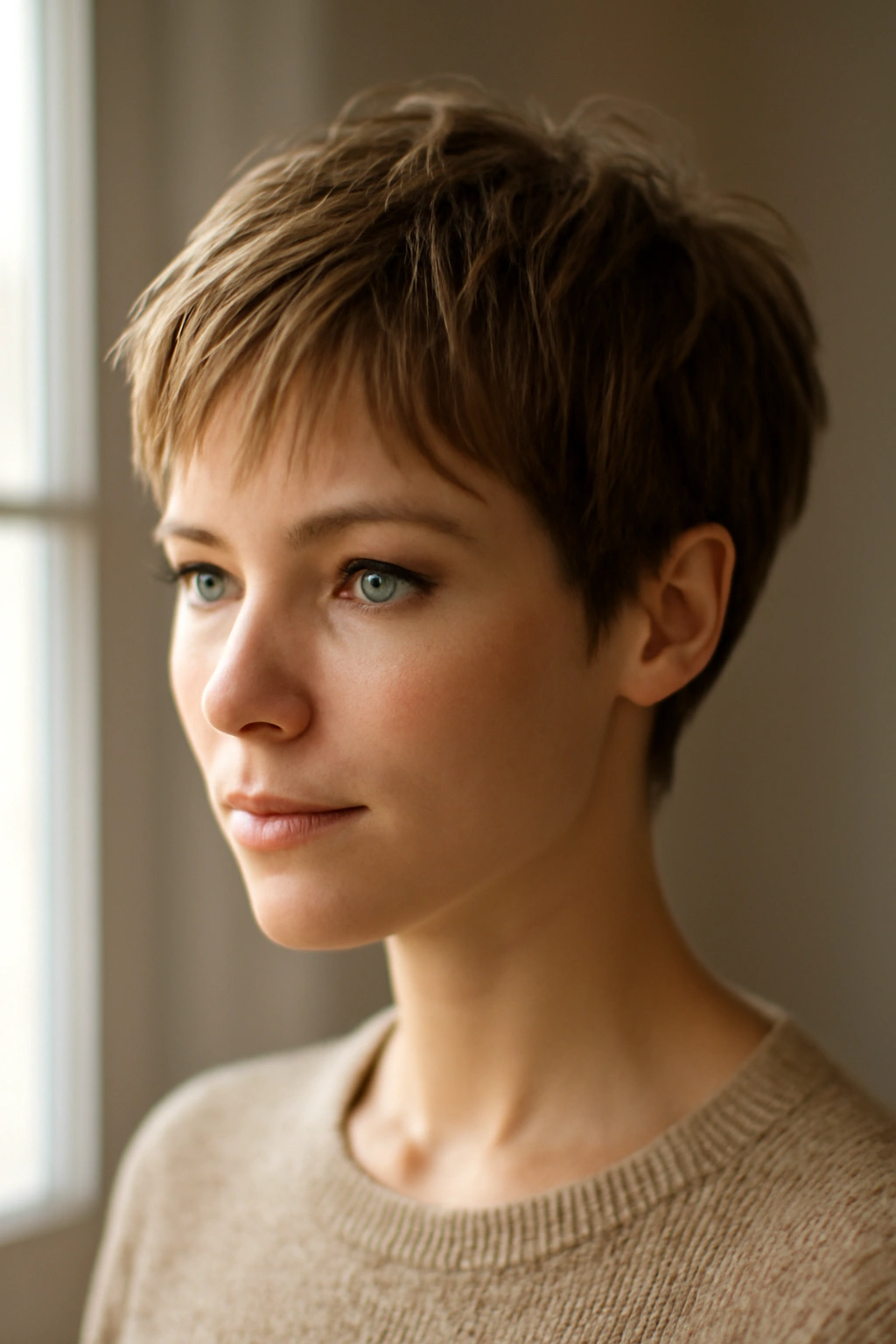
If your hair is fine, thin, or prone to looking limp, a blunt, heavy pixie cut can work against you—it emphasizes the lack of density by clumping fine strands together. The wispy textured pixie combats this through strategic layering and point-cutting that creates the illusion of more texture and volume, even with minimal density.
How Layering Creates the Illusion of Fullness
Layers of varying lengths throughout the cut catch light differently and create movement that fine hair can’t achieve on its own. Point-cut ends (rather than blunt-razor cut ends) separate individual strands, making thin hair look thicker and more textured. A skilled stylist uses these techniques strategically, especially at the crown and around the face.
Maintenance and Styling for Fine Hair
- Don’t blow dry aggressively; let your hair air-dry most of the way, then use a diffuser for texture
- Avoid heavy products; instead use volumizing mousse or a lightweight sea salt spray on damp hair
- This cut works wonderfully with very short hair lengths because density matters less when there’s minimal hair to begin with
- Refresh the cut every four to five weeks to maintain the layered structure
Important note: Fine hair and a pixie cut are actually an excellent pairing, contrary to what many people assume. The shorter the hair, the less weight pulling it down. Many people with fine hair report that a pixie is the first cut that finally makes their hair look like it has body and texture.
4. The Textured Pixie Crop for Curly and Coily Hair
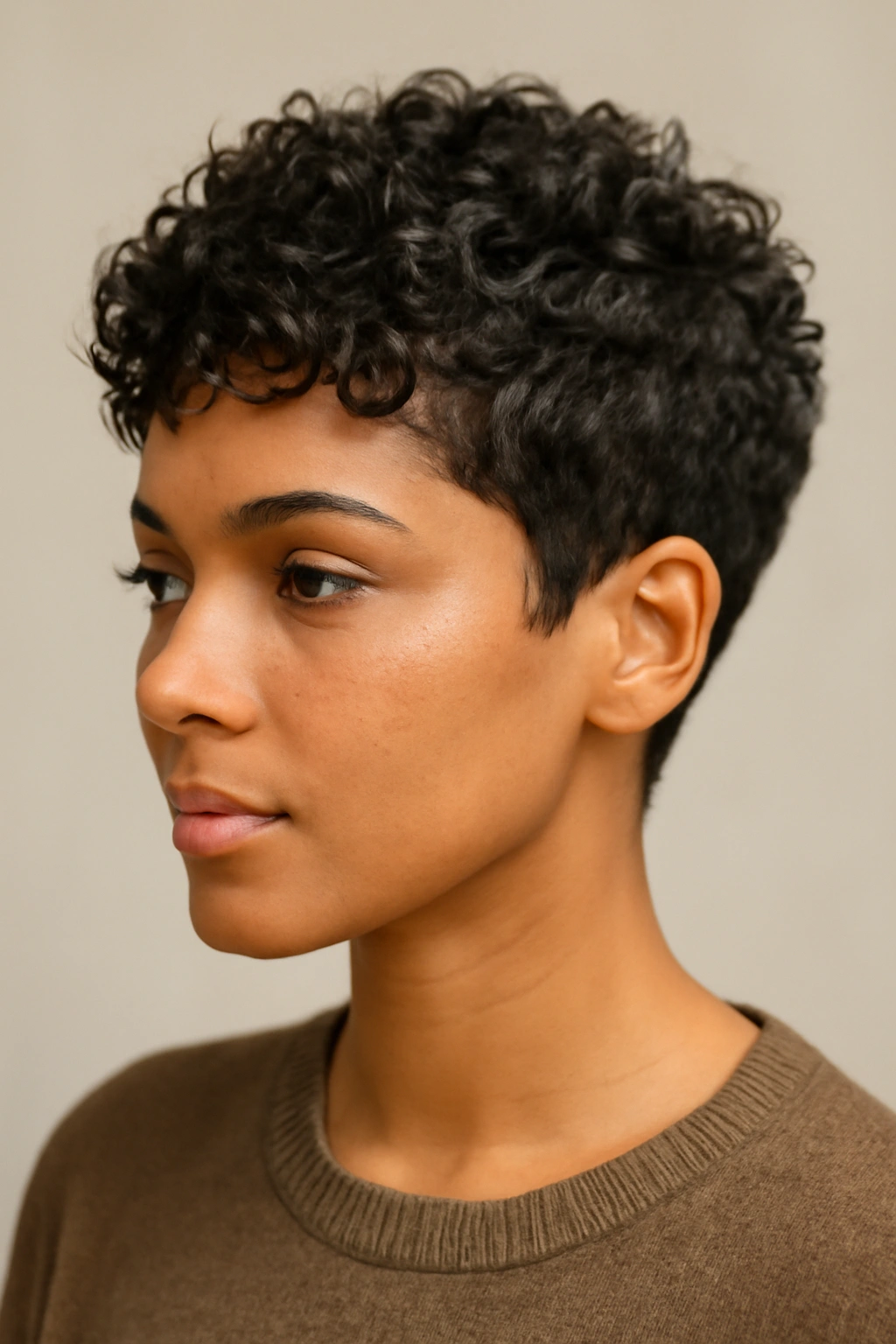
Curly and coily hair has its own logic when it comes to pixie cuts. A traditional blunt pixie can look bulky on curly hair, while overly layered pixies can look too wispy and lose their shape. The textured pixie crop for curly hair is cut to work with natural texture rather than against it, creating definition and shape through strategic layering that respects curl patterns.
Working With Your Natural Curl Pattern
The key is having your stylist cut your hair dry (when it’s in its natural state) so they can see exactly how your curls sit, cluster, and behave. Wet cutting leads to surprises once your hair dries and shrinks. This cut often involves cutting vertically into curls rather than across them, which maintains curl integrity while creating shape.
Styling Curly Pixies
- Use a leave-in conditioner or curl-defining cream on soaking wet hair
- Apply to sections and scrunch upward to encourage curl formation
- Let air-dry completely or use a diffuser on low heat
- This cut typically looks best when styling products are applied to soaking wet hair and then allowed to dry
- You can refresh curl definition on non-wash days with a spray bottle of water and a light reapplication of product
Real talk: Curly pixies require more intentional styling than straight-haired pixies. But many people with curly hair find that a pixie, once you dial in your routine, actually requires less daily manipulation than longer curly hair. You’re not detangling, you’re not managing length, and you’re not fighting frizz across twelve inches of hair—you’re just enhancing what’s already there.
5. The Elegant Pixie for Mature Women Over 50
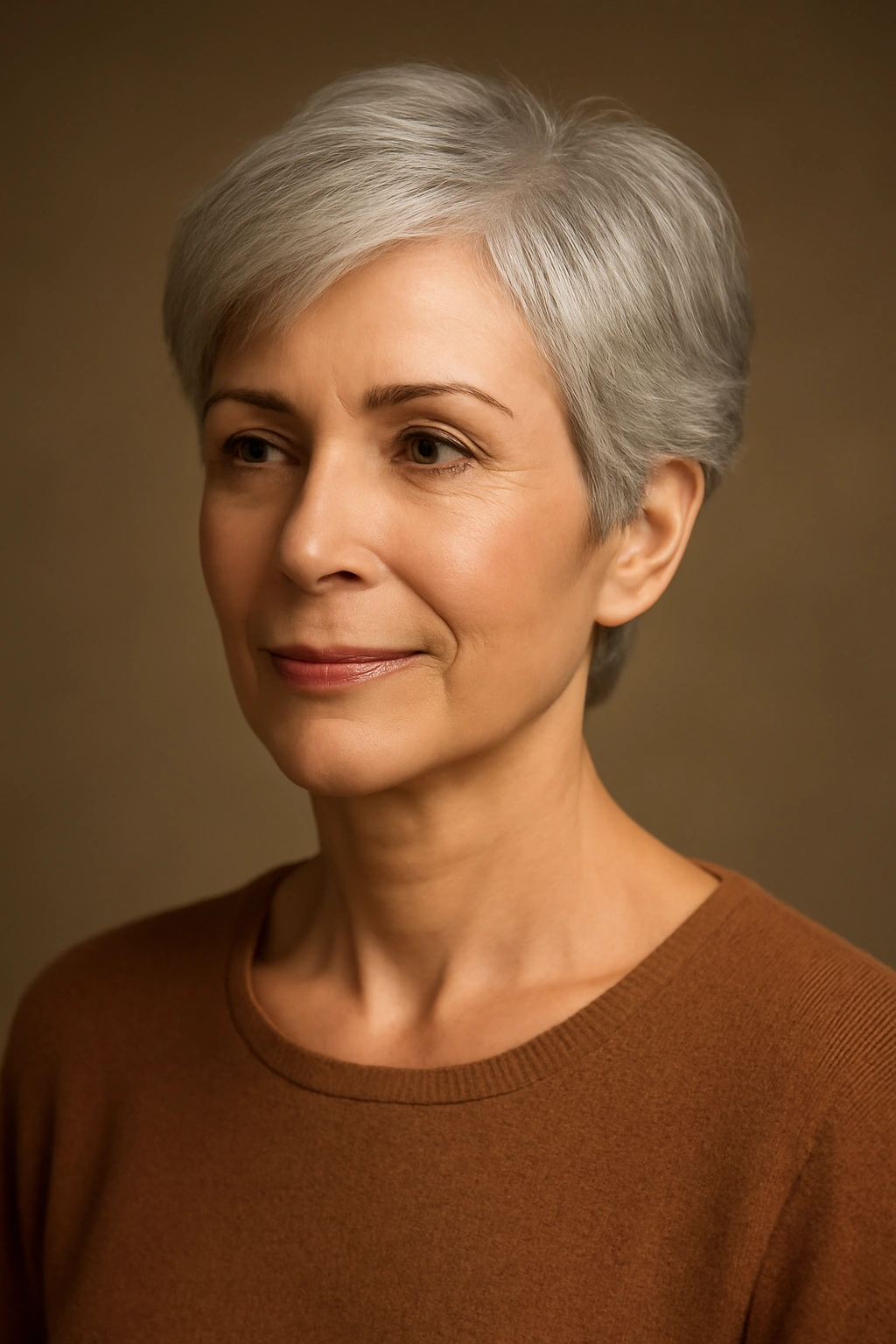
Pixie cuts can be absolutely stunning on mature faces when styled with intention. The elegant pixie for women over fifty is slightly longer than a cropped pixie, with soft layers and more width through the sides to accommodate changing face structure. It’s sophisticated without looking severe, and it works beautifully with gray hair and mature skin.
Why Pixies Work at Any Age
As we age, face structure changes—cheekbones can become more prominent, skin texture shifts, and the quality of light hitting the face changes. A well-cut pixie that’s thoughtfully styled can actually enhance these changes rather than fight them. The open face you get with a pixie also showcases any skincare investment, mature style choices, and confidence.
Styling for Mature Hair and Skin
- Incorporate soft layers rather than a blunt crop; this looks more refined and less harsh on mature features
- Style with a slight wave or texture using a curling iron or salt spray for softness
- Avoid plastered-down styling; some movement and lift looks younger and more intentional
- Gray hair looks absolutely stunning in a pixie—the shorter length means grays catch light beautifully
- A light pomade or hair oil applied sparingly adds shine without looking greasy
Styling note: The length of a pixie matters enormously at fifty plus. Aim for slightly longer than the shortest cropped options—usually about an inch on top rather than a half-inch. This provides enough length for textured styling while still maintaining the low-maintenance benefits of a pixie.
6. The Blunt Pixie for Square Faces
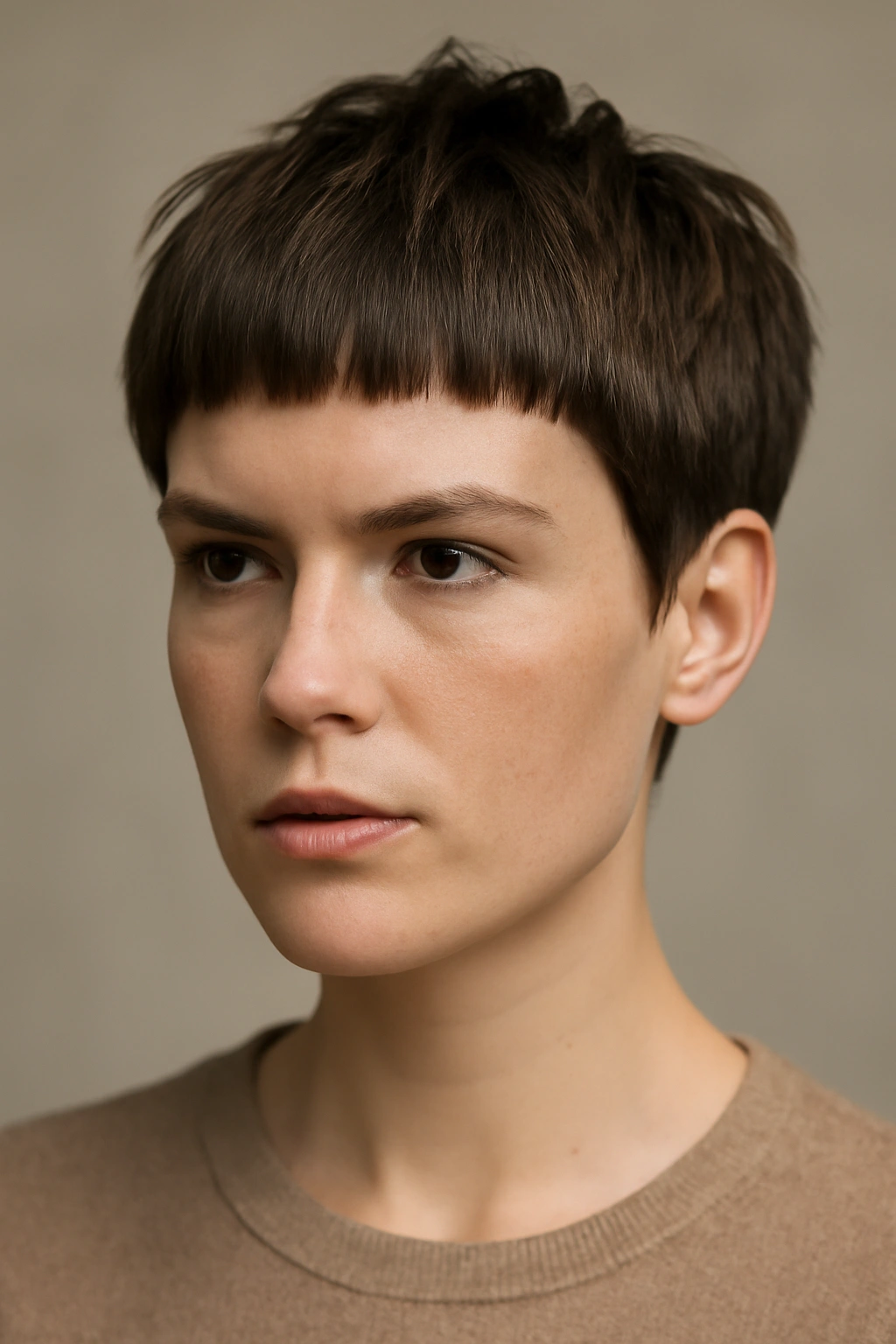
Square faces have strong jawlines and wider foreheads. The blunt pixie, with its clean lines and minimal layering, actually works wonderfully on square faces when styled correctly. The key is preventing the blunt edges from emphasizing the angularity further.
Why Blunt Works on Angular Faces
You might expect that square faces need softness, but actually, square faces can own a blunt cut beautifully. The trick is styling it with texture and movement rather than combing it back severely. A blunt pixie styled with separation and slight tousle softens the angles without losing the cut’s inherent sharpness.
Styling Techniques for Square Jawlines
- Style with texture and separation; avoid a severe, slicked-back look
- Use a texturizing product or pomade to create subtle separation between sections
- Tousle the top slightly rather than smoothing it completely
- You can style this cut sleek for formal occasions and textured for everyday—the versatility is one of its strengths
- Consider side-swept styling sometimes to create asymmetry that breaks up the squareness
Styling edge: If your square face is paired with a strong jawline you want to emphasize, lean into the blunt cut’s graphic quality. If you’d prefer to soften your jawline, add more texture and movement through styling. Same cut, completely different effect based on how you approach it.
7. The Layered Textured Pixie for Heart-Shaped Faces
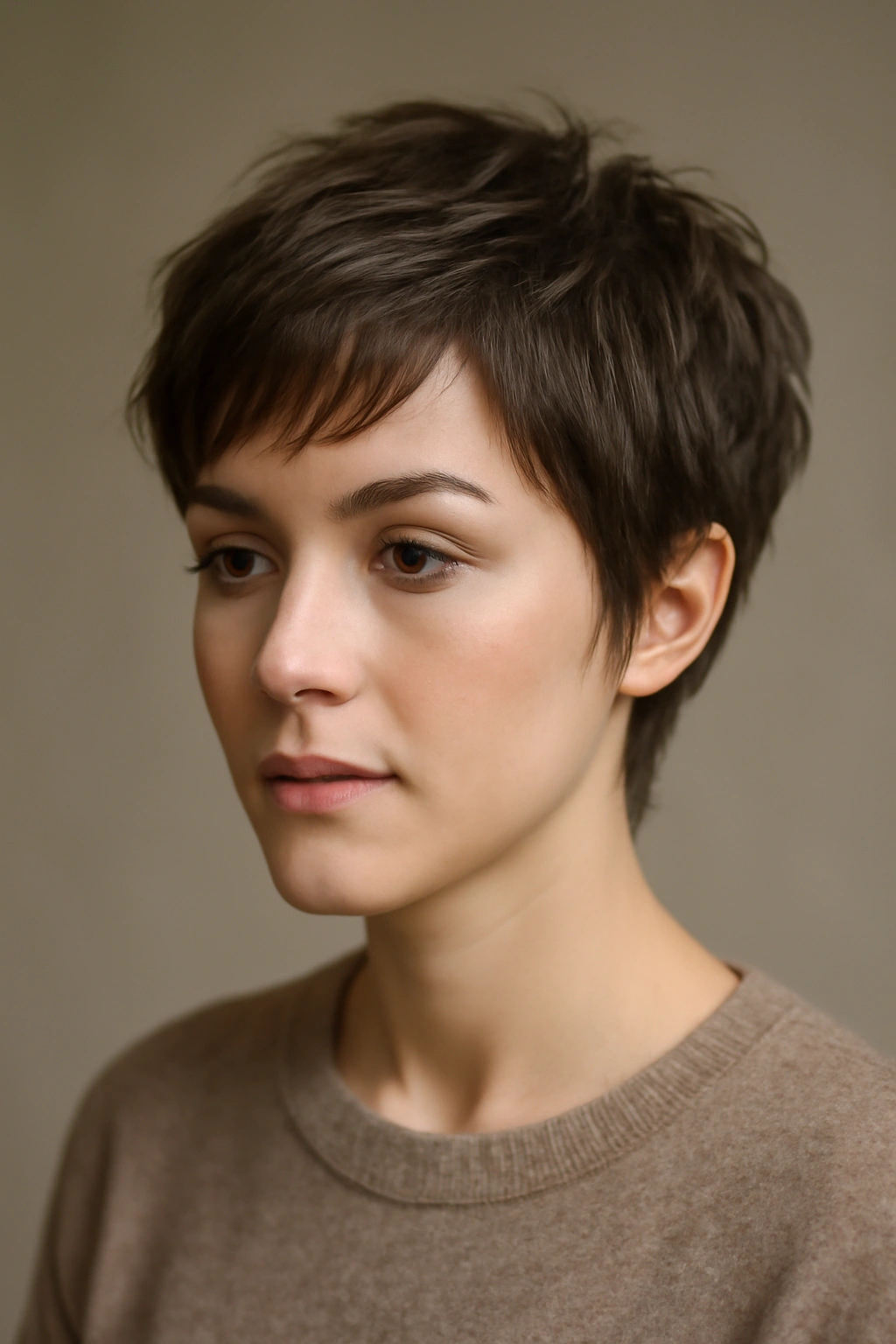
Heart-shaped faces are wider at the forehead and narrower at the chin. A pixie cut that adds volume around the jawline and chin helps balance the proportions. The layered textured pixie accomplishes this through strategic layering that’s longer at the front and gradually shorter toward the back.
How Front-Length Balances Heart Shapes
Longer front pieces and layers that frame the face add visual width at the jawline, counterbalancing the wider forehead. This cut is sometimes called a “pixie bob” because the front can be styled long enough to graze the jawline while the back remains a true pixie length.
Styling for Front-Forward Length
- The front layers can be tucked behind the ear or worn forward depending on your mood
- Styling them forward and slightly curved adds softness around a narrower chin
- This cut gives you real styling options—wear it cute and open-faced, or frame your face with the longer front pieces
- Use a light pomade or styling cream to encourage the front pieces to flip slightly outward, away from your face
- This cut requires more frequent trims (every four to five weeks) because the longer front pieces show growth sooner than the back
Pro tip: This cut works exceptionally well if you’re not quite ready for an all-over short cut. You get the pixie benefits (low maintenance, fresh look, open face) but with enough length in front to tie back or style if you want coverage.
8. The Slicked-Back Pixie for Professional Settings
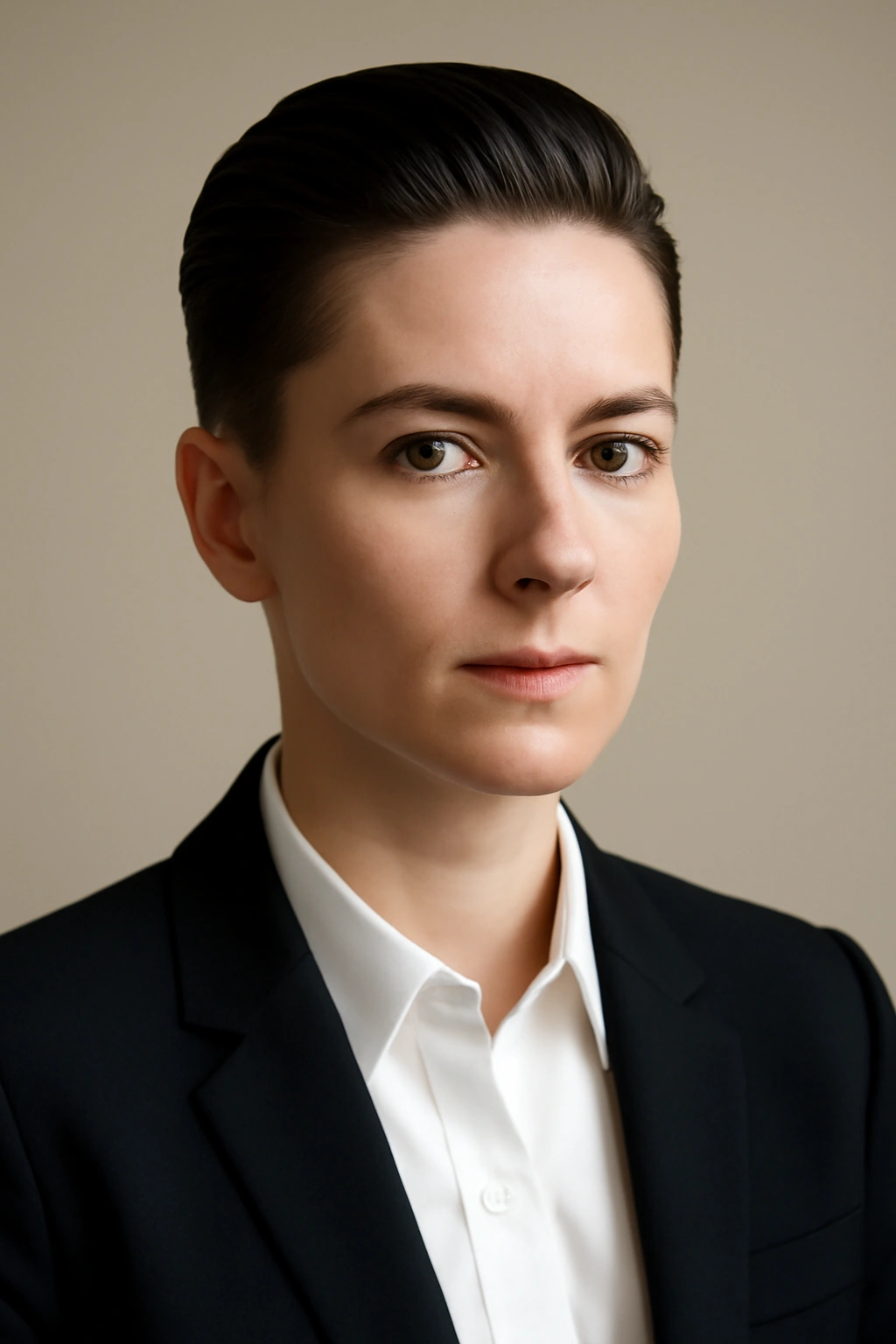
The slicked-back pixie is a refined, graphic take on the classic pixie. It’s cut very short all over—usually under half an inch on the sides and back, with just slightly more length on top. It’s then styled back and away from the face with a high-hold pomade or gel, creating a clean, intentional, sophisticated look.
Why This Works in Corporate and Professional Environments
A slicked-back pixie reads as intentional and polished. It’s not hiding anything; it’s fully embracing the cut and presenting yourself with confidence. This styling approach works well for people with strong features, clear skin, and the confidence to carry off a very short cut.
Styling and Maintenance
- Use a firm-hold pomade, clay, or gel applied to damp hair and combed back
- This style needs refreshing daily; it won’t hold overnight
- The cut needs trimming every three to four weeks to maintain the very short length
- This is not a wash-and-go pixie; it requires intentional styling every morning
- For those who enjoy grooming routines and don’t mind daily styling, this can feel very satisfying
Real consideration: This pixie requires confidence and clear skin, since your entire face is completely exposed. If you’re not ready for that vulnerability, a slightly longer pixie with more texture is probably a better entry point.
9. The Pixie-Fade for Younger Wearers and Athletic Types
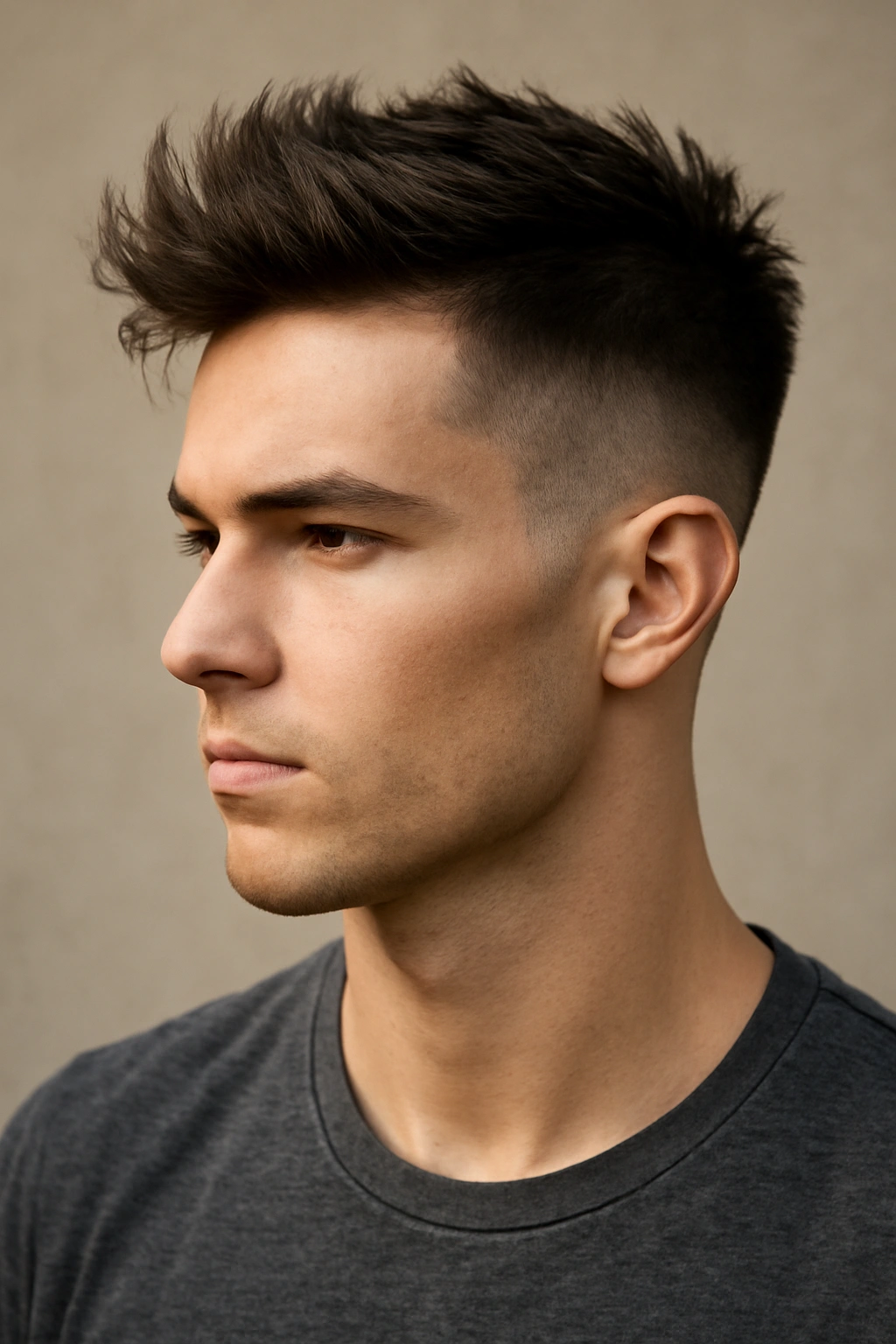
The pixie-fade is a modern hybrid between a pixie and an undercut. It features very close-cropped or faded sides (often using clippers) with longer hair on top that can be styled up and away. It’s edgy, contemporary, and works beautifully on younger faces and athletic builds.
Why Fades Appeal to Younger Demographics
A pixie-fade feels modern and fashion-forward in a way a classic pixie sometimes doesn’t. It’s also incredibly low-maintenance—the sides practically style themselves, and the top can be worked with gel or pomade into various shapes. For younger people who want a bold statement cut with minimal daily effort, this is ideal.
Styling the Fade for Maximum Impact
- Ask your stylist for a fade (gradual shortening from longer to shorter) rather than an undercut (abrupt line between lengths)
- The top can be styled up and back, textured and separated, or even slicked back
- Use a matte pomade or hair putty on dry or damp hair for a natural-looking finish
- The sides fade so cleanly that you can refresh them with clippers at home or visit your barber every two to three weeks
- This cut pairs beautifully with textured or wavy hair, where the variation in length creates natural movement
Styling note: If you’re considering a fade, make sure you’re seeing a stylist who specializes in them—or a barber who does fades regularly. The quality of the fade makes or breaks this cut. A sloppy fade looks unfinished; a clean, well-executed fade looks intentional and polished.
10. The Soft-Fringe Pixie for Long-Face Shapes
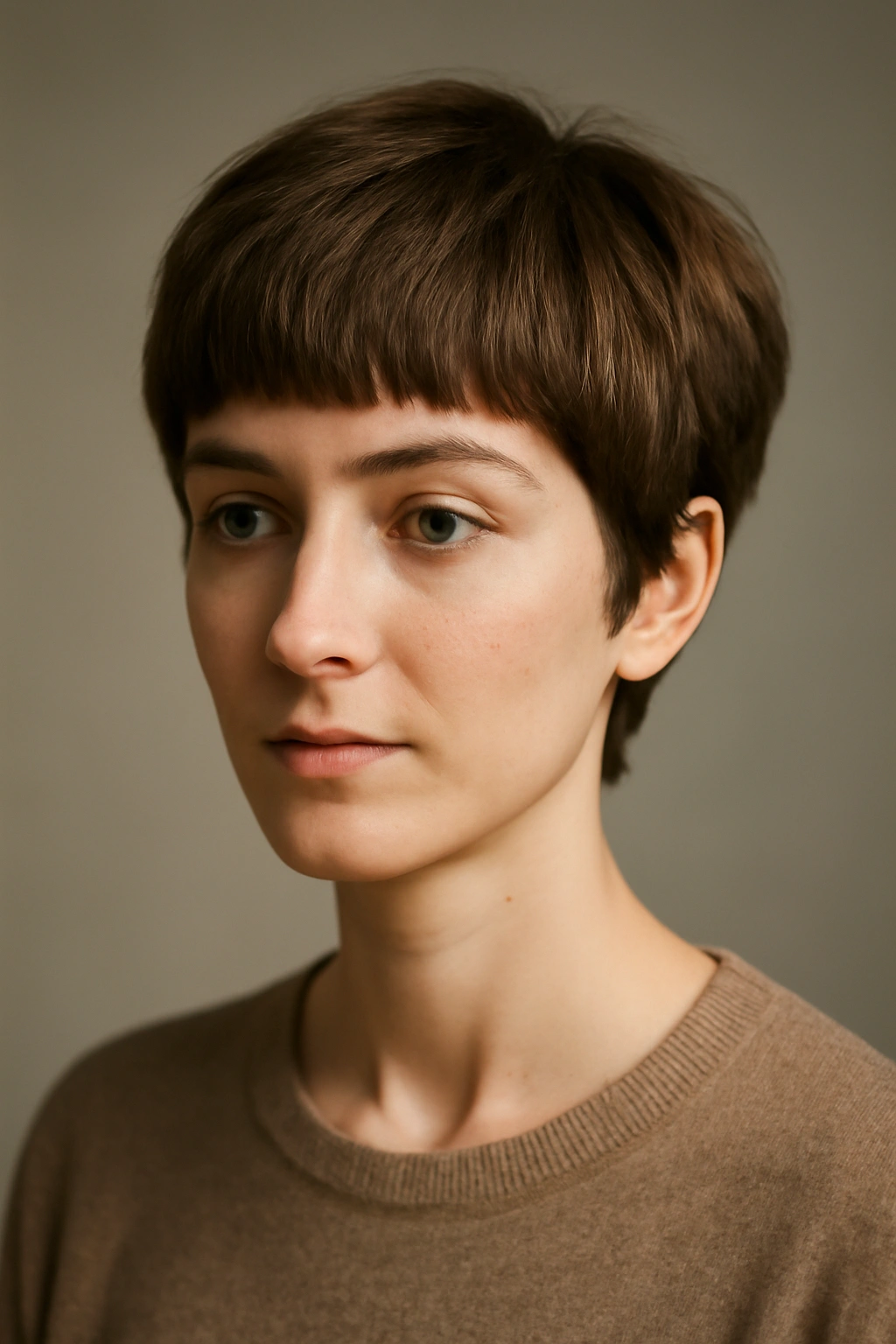
Long faces are longer than they are wide, often with a longer chin and forehead. A pixie that adds width through the sides and creates a soft fringe across the forehead helps balance the length. The soft-fringe pixie accomplishes this with longer top layers that can brush across the forehead and soften the face’s vertical lines.
Why Fringe Matters on Long Faces
A fringe (bangs) across the forehead creates a horizontal line that breaks up vertical length. A soft, piece-y fringe is more flattering than a blunt, heavy one—it adds interest without looking severe. This fringe works well on long faces paired with slightly more width through the sides.
Styling the Soft Fringe
- The fringe can be brushed straight across or styled slightly to the side
- Use a light texturizing product on the fringe to prevent it from looking too heavy or severe
- The fringe needs trimming every three to four weeks as it grows out
- Pair the fringe with slightly more volume at the sides to balance the length
- This cut looks stunning on people with longer, narrower face shapes and works across all age groups
Pro tip: If you’ve never worn bangs before, a soft-fringe pixie is a forgiving way to try them. If you hate how they look, they grow out in about six weeks—or can be styled to the side and blended with the rest of the cut. It’s not a permanent commitment.
11. The Statement Pixie with Undercut Design
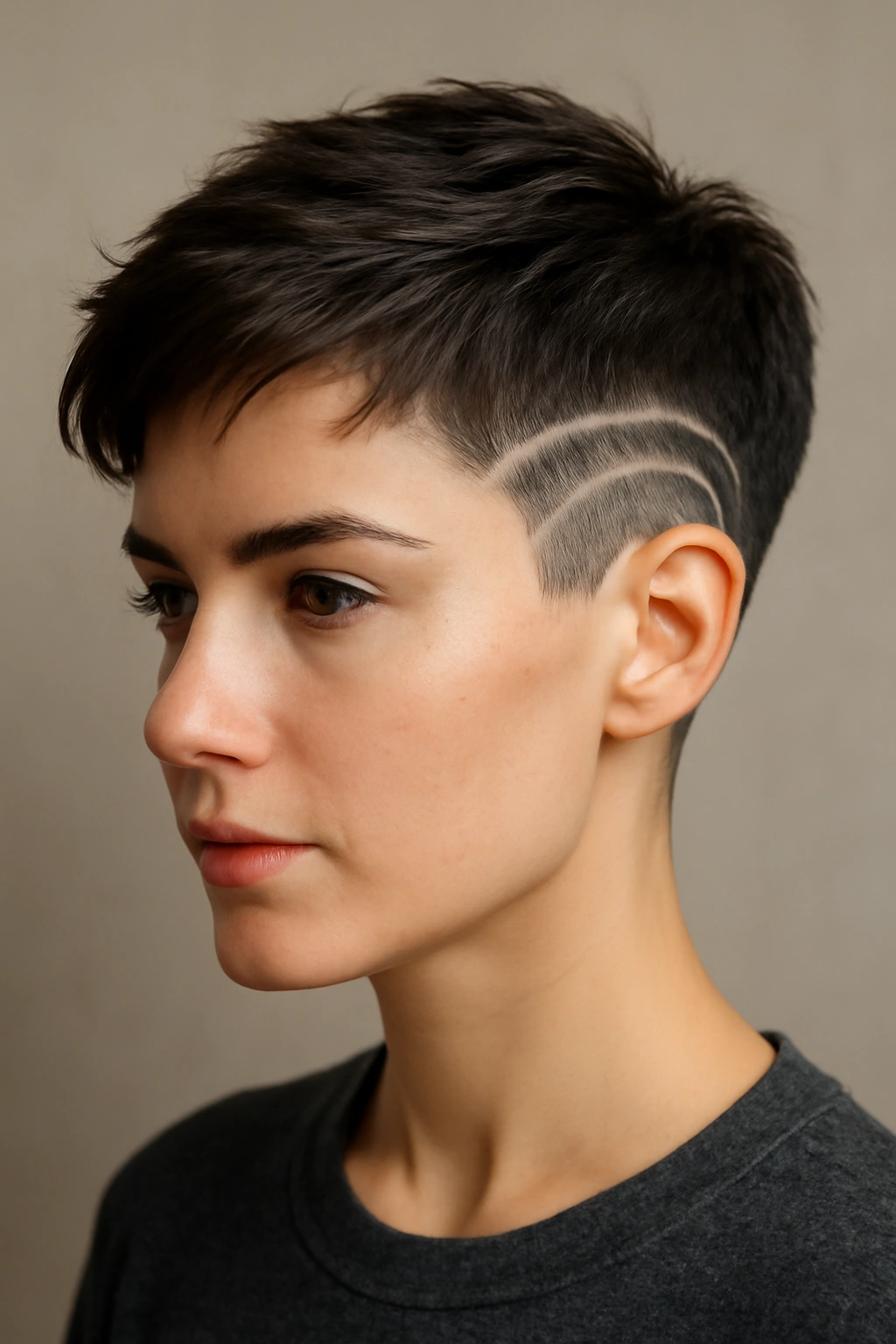
The statement pixie with undercut design takes the pixie-fade concept further by incorporating deliberate design elements shaved into the sides or back. These might be geometric patterns, lines, or artistic designs that show up when you wear your hair up or to the side.
Who Wears This Cut and Why
This is for people who want their haircut to be a real style statement—not just a practical choice, but an artistic one. It appeals to younger people, creative professionals, and anyone who views their hair as a form of self-expression rather than just a practical solution.
Designing and Maintaining the Undercut Art
- Work closely with your stylist to design something that genuinely speaks to you
- Designs need refreshing every four to six weeks as hair grows in
- The design is only visible when you style your hair a certain way or when your hair is wet, which means you control whether it’s visible
- This cut works beautifully on people with thicker hair or coily hair, where the shaved sections are really distinct
- On very fine hair, the design can be less visible since fine hair lies very close to the scalp
Real talk: This cut is genuinely artistic and incredible when executed well. Just make sure you’re working with a stylist who has a portfolio of undercut designs and listens carefully to what you want. A mediocre design or execution can look unfinished rather than intentional.
12. The Voluminous Pixie for Fine or Limp Hair
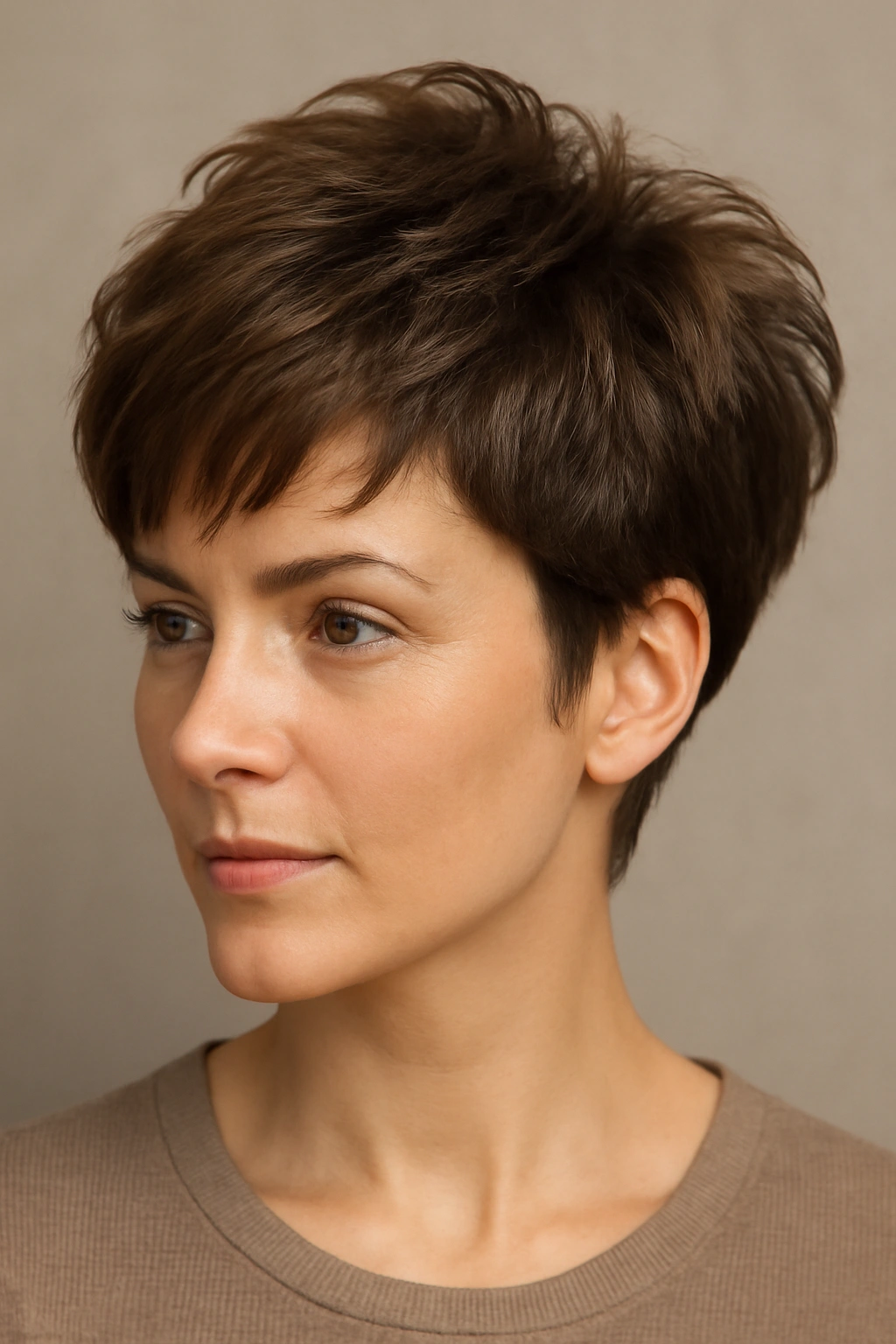
While we mentioned the wispy textured pixie earlier, the voluminous pixie takes a different approach specifically designed for people whose hair desperately needs the appearance of volume. This cut uses strategic layering, slightly longer lengths on top, and texturizing techniques to create the maximum possible illusion of density.
How This Cut Creates Volume
Rather than cropping extremely short (which would show every empty spot), this cut keeps slightly more length on top—usually about an inch and a half—to create layers that catch light and create the appearance of fuller, thicker hair. The sides are still close but not cropped bare.
Styling for Maximum Volume
- Blow-dry with a volumizing mousse applied to towel-dried roots
- Use a round brush to lift hair at the crown while blow-drying
- Let your stylist know your hair texture when you’re getting cut; they’ll adjust the layering accordingly
- This cut absolutely requires a blow-dry to look its best; air-drying won’t create the volume
- Refresh the cut every five to six weeks to maintain the layered structure
Styling reality: This is not a wash-and-go pixie. It requires intentional styling. If you’re looking for truly zero-effort styling, a shorter, simpler pixie cut paired with acceptance of your hair’s natural texture might be better. But if you’re willing to spend ten minutes with a blow dryer and volumizing products, this cut can genuinely transform how your hair looks and feels.
13. The Androgynous Pixie for Gender-Nonconforming Wearers
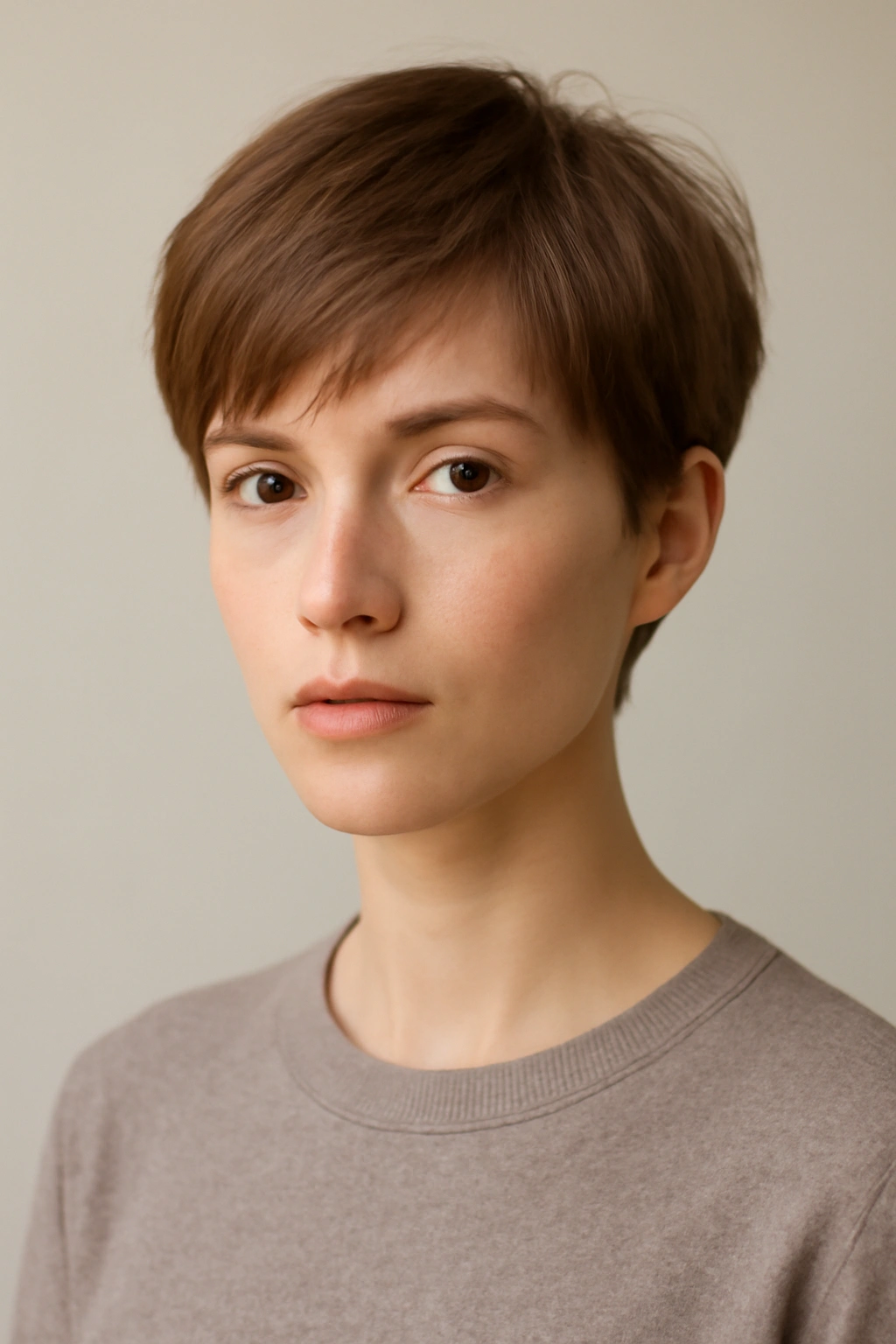
The androgynous pixie is cut specifically to avoid reading as inherently masculine or feminine. It’s usually slightly longer than a cropped pixie, with soft layers and a balanced silhouette that works on any face shape or gender presentation. It’s styled with intention but without coding as traditionally masculine or feminine.
Why Pixies Work for Androgynous Styling
A pixie’s strength is that it’s truly neutral—there’s nothing about short hair that’s inherently gendered. By cutting it with soft layers and styling it with intention (rather than extreme severity), you get a cut that’s bold without being read through a gendered lens.
Styling for an Androgynous Look
- Pair the pixie with styling that feels authentic to you rather than trying to lean masculine or feminine
- Use products that match the level of polish you prefer—high-shine pomade for a polished look, or matte products for something more casual
- The androgynous pixie works beautifully with any hair texture and on any face shape
- Style it however feels right to you; there’s no “correct” way to wear it
Important note: If you’re exploring gender expression through your appearance, a pixie cut can be incredibly empowering. Just make sure you’re working with a stylist who listens to what you want and creates a cut that feels authentically you, not one that fits someone else’s idea of what androgynous should look like.
14. The Pompadour Pixie for Maximum Styling Versatility
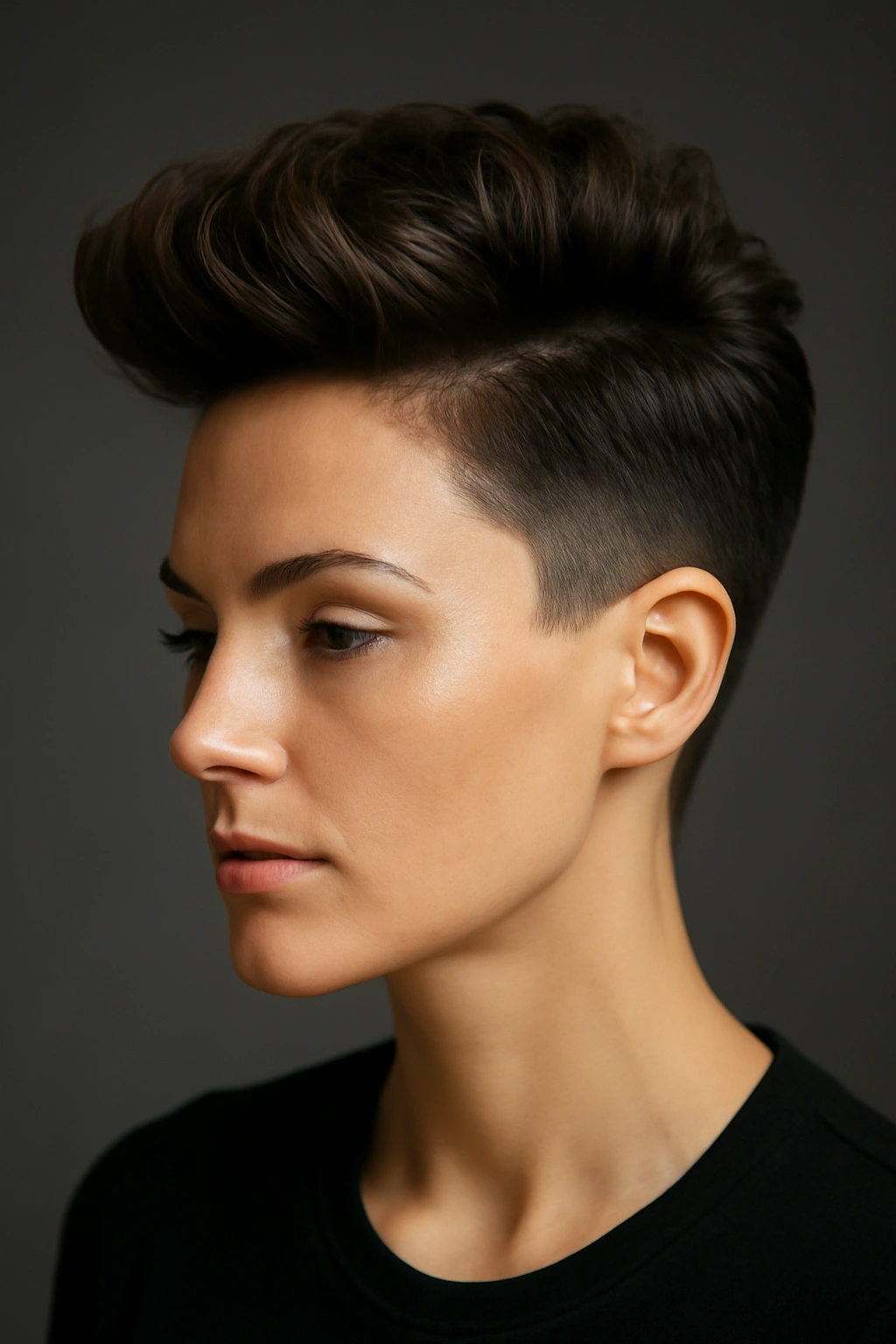
The pompadour pixie is cut with significant length and volume on top (usually two to three inches) while keeping the sides and back very close. The longer top can be styled up and back into a pompadour shape, textured and separated, slicked back, or even partially combed forward.
Why This Works for Styling Enthusiasts
If you love the idea of a pixie but want more styling options than a traditional short pixie provides, the pompadour pixie offers the best of both worlds. You get the low-maintenance sides and the open face of a pixie, but with the styling versatility of longer hair on top.
Styling Options for the Pompadour Pixie
- Blow-dry with an upward and backward motion to create volume and shape
- Use a matte pomade or putty for a textured, separated look
- Slick it back with a firm-hold pomade for a polished take
- Style it forward and tousle it for something more casual
- The sides can be faded or cropped short, giving you styling control there as well
Styling reality: This cut requires a blow dryer and styling products to look its best. If you’re prepared to style it most days, you have remarkable versatility. If you prefer wash-and-go, this might require more daily effort than you want.
15. The Contoured Pixie for Specific Face Features
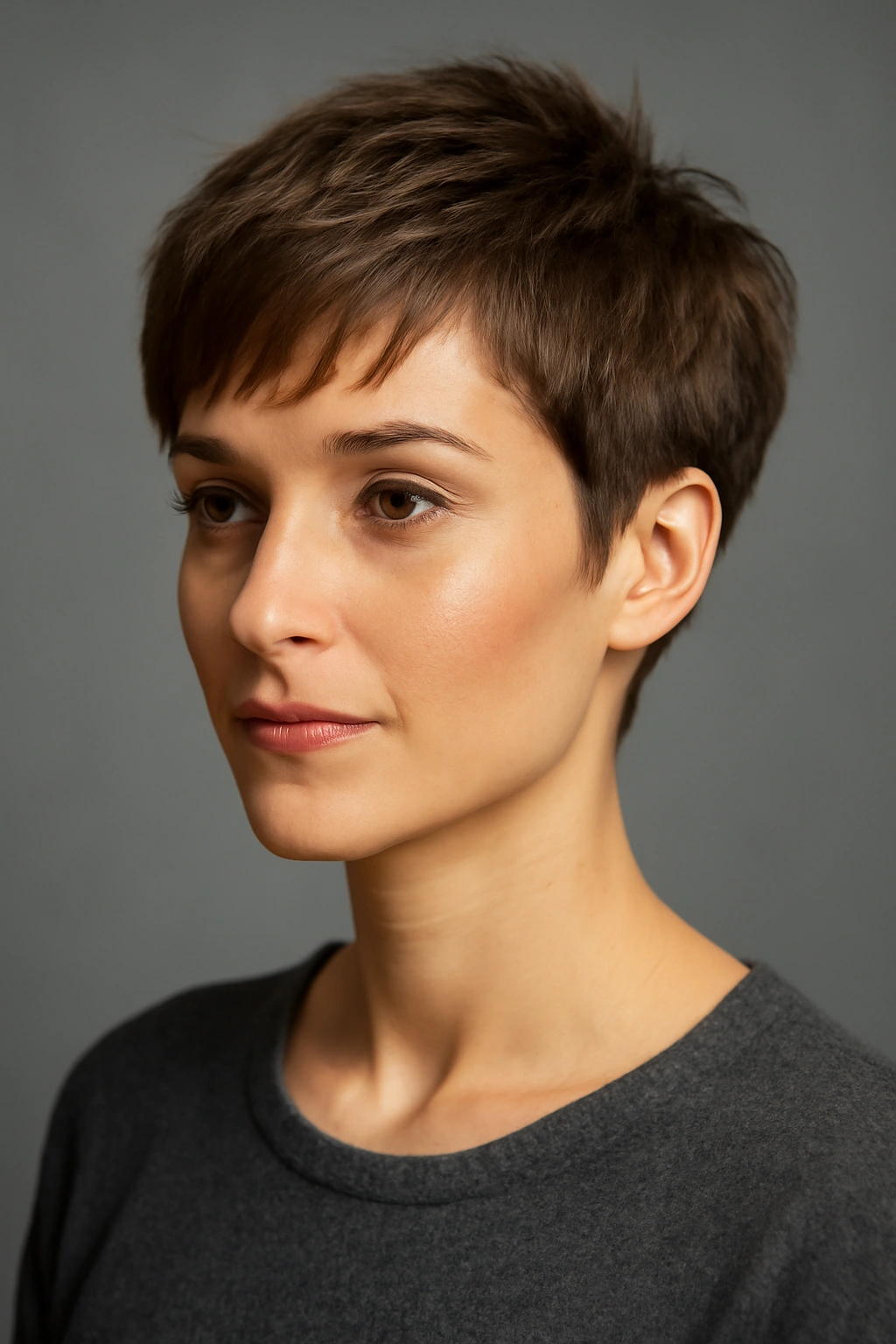
The contoured pixie is cut specifically to draw attention to or away from particular facial features. For example, longer, choppier layers around the face can emphasize cheekbones, while close-cropped sides and a longer front can balance a prominent nose or emphasize beautiful eyes.
How Contouring Works in Pixie Cuts
Just like makeup contouring, hair contouring uses length and shadow to enhance or minimize features. Longer pieces positioned strategically can create visual interest where you want it, while close-cropped sections can minimize areas you’d prefer to downplay.
Working With Your Stylist on Contouring
- Come prepared with specific features you want to enhance or minimize
- A skilled stylist can create a cut that feels customized to your face rather than a one-size-fits-all pixie
- This requires a stylist who really understands face shapes and how hair placement affects perception
- The contouring needs to work with how you typically style your hair; a contoured cut looks different when tousled versus slicked back
Professional tip: If you’ve been unhappy with how your face looks in previous cuts, contouring might be exactly what you need. This is where a stylist’s expertise really matters—they’re essentially creating a custom haircut that plays to your specific features.
16. The Pixie-Mullet Hybrid for Bold Fashion Statements
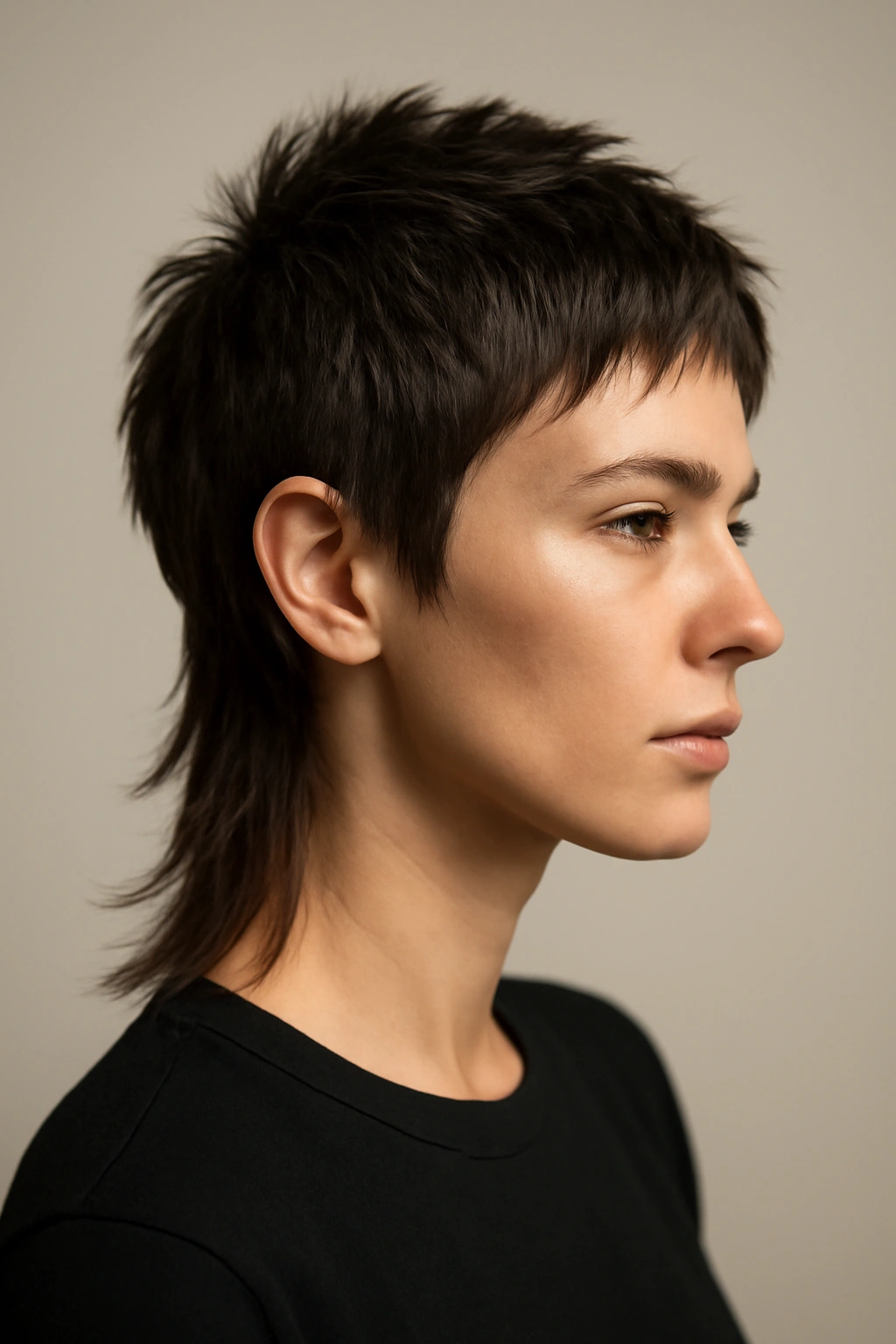
The pixie-mullet hybrid (sometimes called a “wolf cut” in its longer iterations) features a short, textured pixie on top and sides with noticeably longer hair in the back—usually four to six inches. It’s unconventional, bold, and incredibly fashion-forward.
Why This Cut Appeals to Adventurous Wearers
This is for people who genuinely want a conversation-starting haircut. It’s not conservative, and it doesn’t read as classic. It’s edgy, artistic, and appeals to people who want their appearance to reflect their personality boldly.
Styling the Pixie-Mullet Hybrid
- The top and sides are styled like a regular pixie—textured, separated, potentially pomaded
- The back can be styled straight and sleek, wavy and romantic, or anything in between
- This cut gives you real range—professional in front, playful in back
- You can tie the back up or tuck it if you want a more traditional look
- This cut absolutely requires regular trims to maintain the contrast between the short and long sections
Real consideration: This is genuinely a bold statement. You’ll get reactions. If you love attention and embrace standing out, this is exhilarating. If you prefer to blend in, this probably isn’t the cut for you. There’s no judgment either way—it’s just a real consideration.
17. The Sophisticated Pixie Crop with Silver/Gray Hair
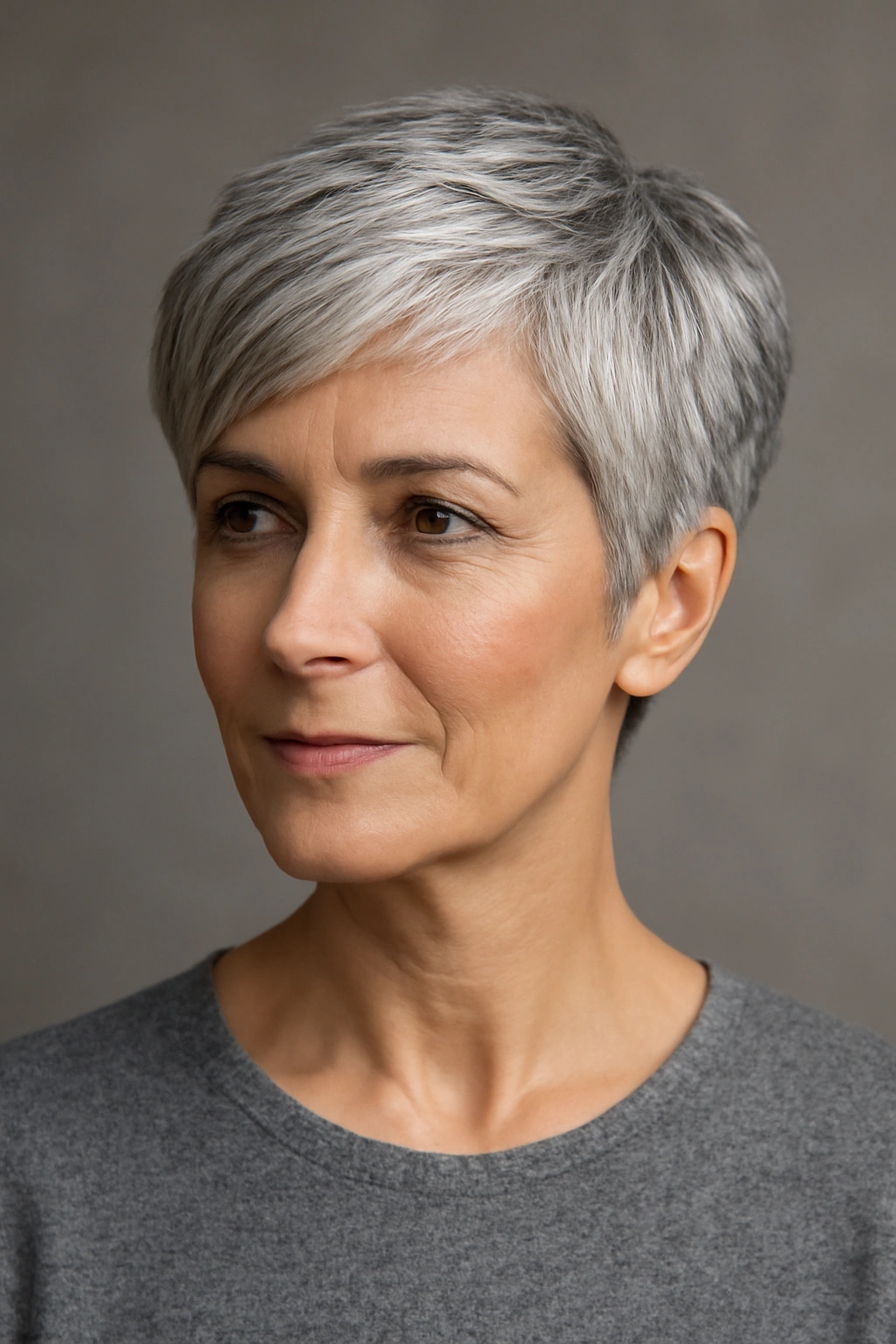
Gray or silver hair changes how a pixie cut reads. Gray hair catches light differently than colored hair, and the texture often shifts with age. The sophisticated pixie crop for gray hair is cut to work beautifully with these changes rather than fighting them.
Why Gray Hair and Pixies Are a Perfect Pairing
Gray and silver hair looks absolutely stunning in a pixie cut because there’s so much exposed face and scalp. The light reflecting off gray hair creates dimension and shine that can actually look more youthful and striking than colored hair in the same cut. This is the rare case where letting your hair be its natural color can look more fashion-forward than any dye job.
Styling Gray Pixies
- Use a lightweight shine serum or hair oil to enhance the natural shine of gray hair
- Avoid heavy products that dull the shine and make gray hair look dull rather than luminous
- Style with movement and texture rather than slicking it back severely
- Consider warm makeup tones to complement gray hair—grays often look best with warmer undertones
- Gray hair can be coarser and drier than pigmented hair; use a hydrating shampoo and deep conditioner regularly
Styling note: If you’re transitioning to gray or growing out your color, a pixie cut can be your secret weapon. It makes the transition faster and looks completely intentional rather than like you’re growing out roots.
18. The Classic Eton Crop Pixie for Retro Appeal
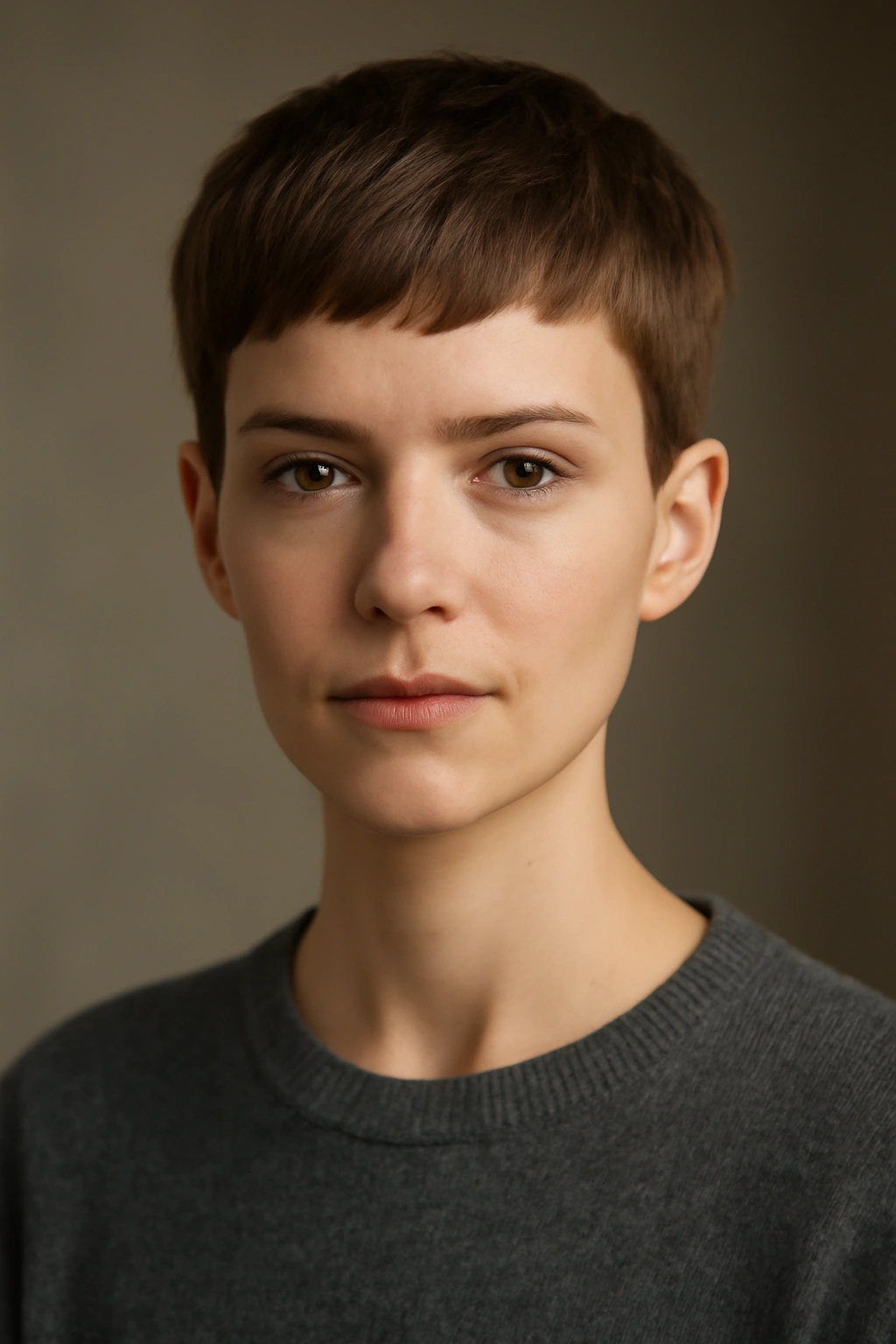
The Eton crop is a classic haircut that originated in the 1920s and has experienced many revivals since. It’s essentially an ultra-short, close-cropped pixie that’s been refined over decades. It’s cut exceptionally short on the sides and back with a tiny bit more length on top—usually less than half an inch.
Why Retro Pixies Appeal Across Generations
There’s something timeless and confident about the Eton crop. It reads as deliberate and sophisticated rather than trendy. It appeals to people who love fashion history, vintage aesthetics, or simply want a cut that’s been proven to work for a century.
Styling and Maintaining the Eton Crop
- This cut requires minimal styling; you can almost wash and go
- Refresh with clippers every three to four weeks to maintain the ultra-short length
- This cut works beautifully on people with clear skin and strong features since absolutely nothing is hidden
- It pairs beautifully with statement jewelry, bold lipstick, or interesting clothing
- The cut is so short that texture in your hair (waves, slight curl) actually becomes a feature
Real talk: This is not a cut for everyone, but for the people it clicks with, it’s transformative. If you’ve been thinking about going really short but weren’t sure, the Eton crop is the ultimate commitment.
19. The Textured Shag Pixie for Movement and Dimension
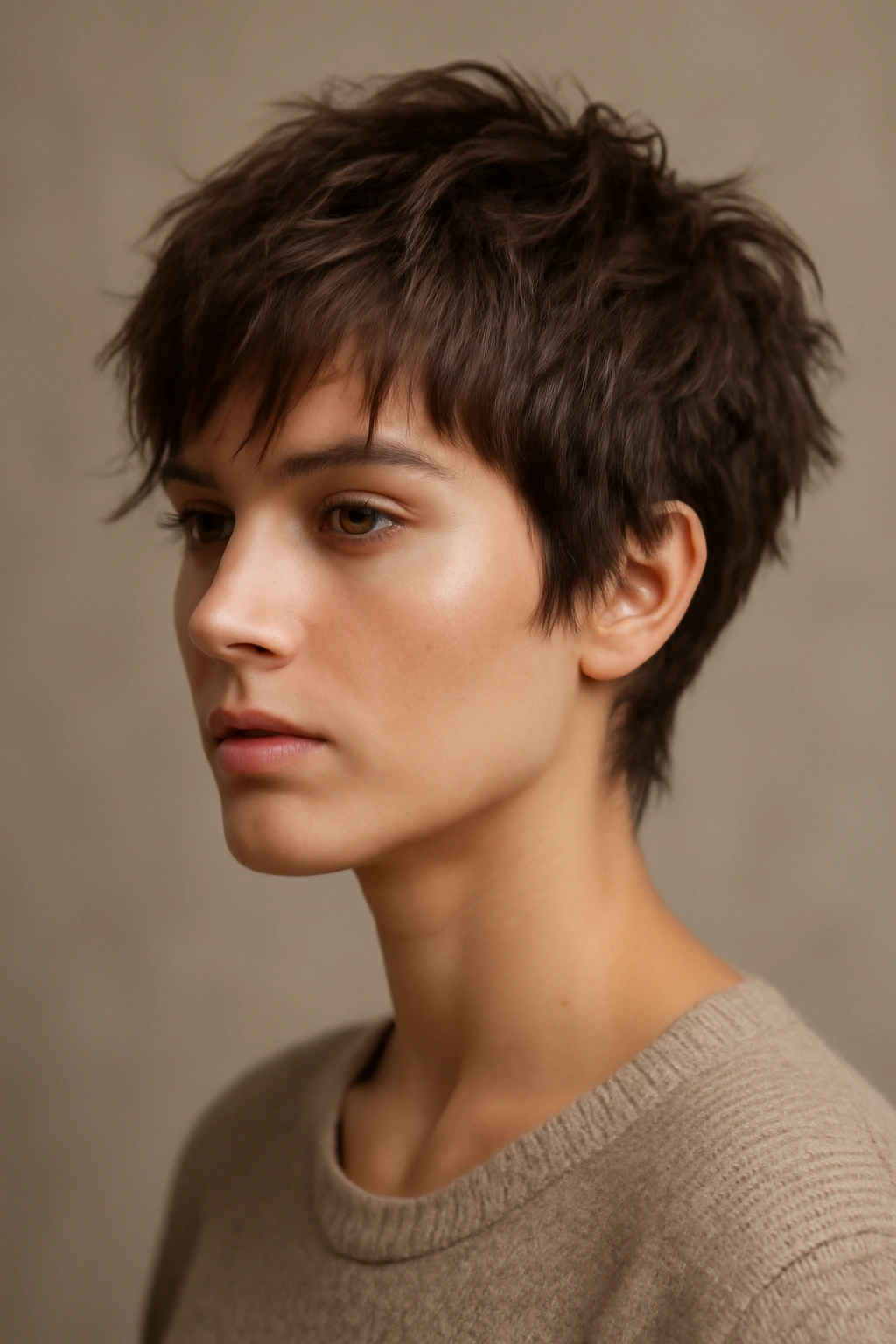
The shag-influenced pixie combines the short, practical structure of a pixie with the layered, texturized movement of a shag. It’s cut with choppy, uneven layers throughout that create texture and movement. It works beautifully on people with wavy or naturally textured hair.
How Shag Layers Create Movement
Rather than a smooth progression from longer to shorter, shag-influenced pixies have choppy layers of varying lengths throughout. This creates dimension, movement, and a tousled, lived-in appearance.
Styling the Textured Shag Pixie
- This cut looks best with some natural texture; if you have straight hair, you’ll need to style it with texture-building products or a curling iron
- Apply a texturizing spray or sea salt spray to damp hair for effortless texture
- Tousle and separate the layers rather than smoothing the cut down
- This cut works wonderfully on people with curly, wavy, or naturally textured hair
- Air-drying usually works beautifully; you don’t necessarily need to blow-dry
Pro tip: If you have naturally wavy or curly hair and you’ve been thinking about going short, the shag pixie is absolutely worth exploring. It works with your hair’s natural tendencies rather than fighting them.
20. The Custom-Blended Pixie: Working With Your Stylist
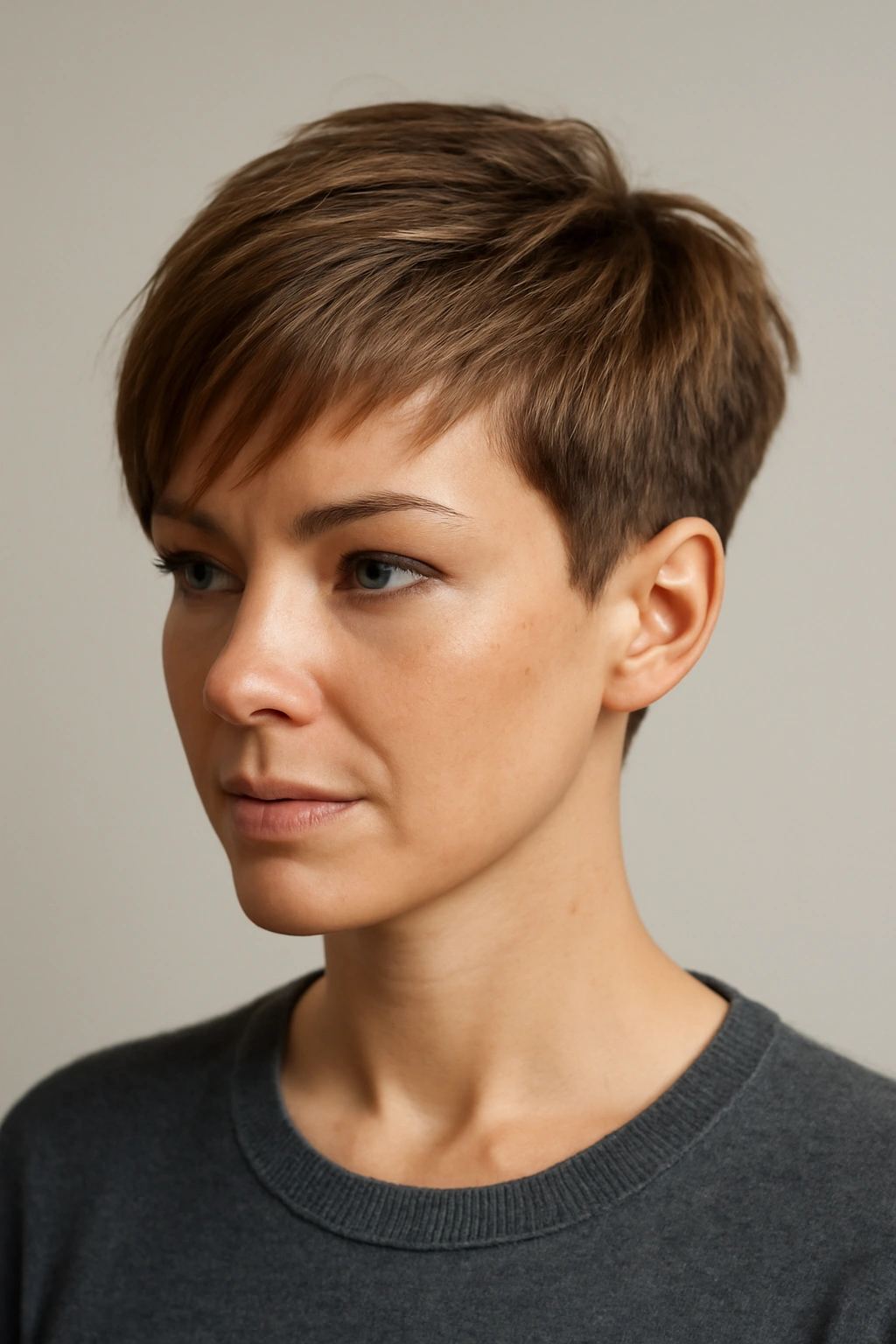
The final “pixie cut” is really the concept that every great pixie is actually a custom creation. No two people are exactly the same—different face shapes, hair textures, age, lifestyle, and styling preferences all play a role in what pixie cut will look best on you specifically.
How to Work With Your Stylist on a Custom Pixie
- Come with photos of pixie cuts you love, but understand that they might need adaptation for your face and hair
- Be clear about your lifestyle: do you want to style it daily, or are you looking for wash-and-go? Do you have time for regular trims?
- Discuss your hair texture honestly: is it fine, thick, curly, wavy, straight? Does it have natural movement or lie very flat?
- Talk about your face shape and any features you want to emphasize or minimize
- Be open to your stylist’s suggestions—they see faces and hair every day and can offer insights you might not have considered
The Importance of Revisiting Your Cut Regularly
- Pixie cuts show growth faster than longer hair, so plan for trims every four to six weeks
- Regular trims with the same stylist allow them to fine-tune the cut based on how your hair grows and how you style it
- Your stylist can make small adjustments that dramatically change how the cut looks and works
- Consistency with a stylist you trust is one of the best investments in a pixie cut
Real talk: The perfect pixie cut is a collaboration between you and your stylist. A skilled stylist takes your preferences and adapts them to your specific face, hair, and lifestyle. If your first pixie isn’t perfect, give your stylist feedback—most stylists genuinely want to create something you love and will adjust accordingly.
Final Thoughts
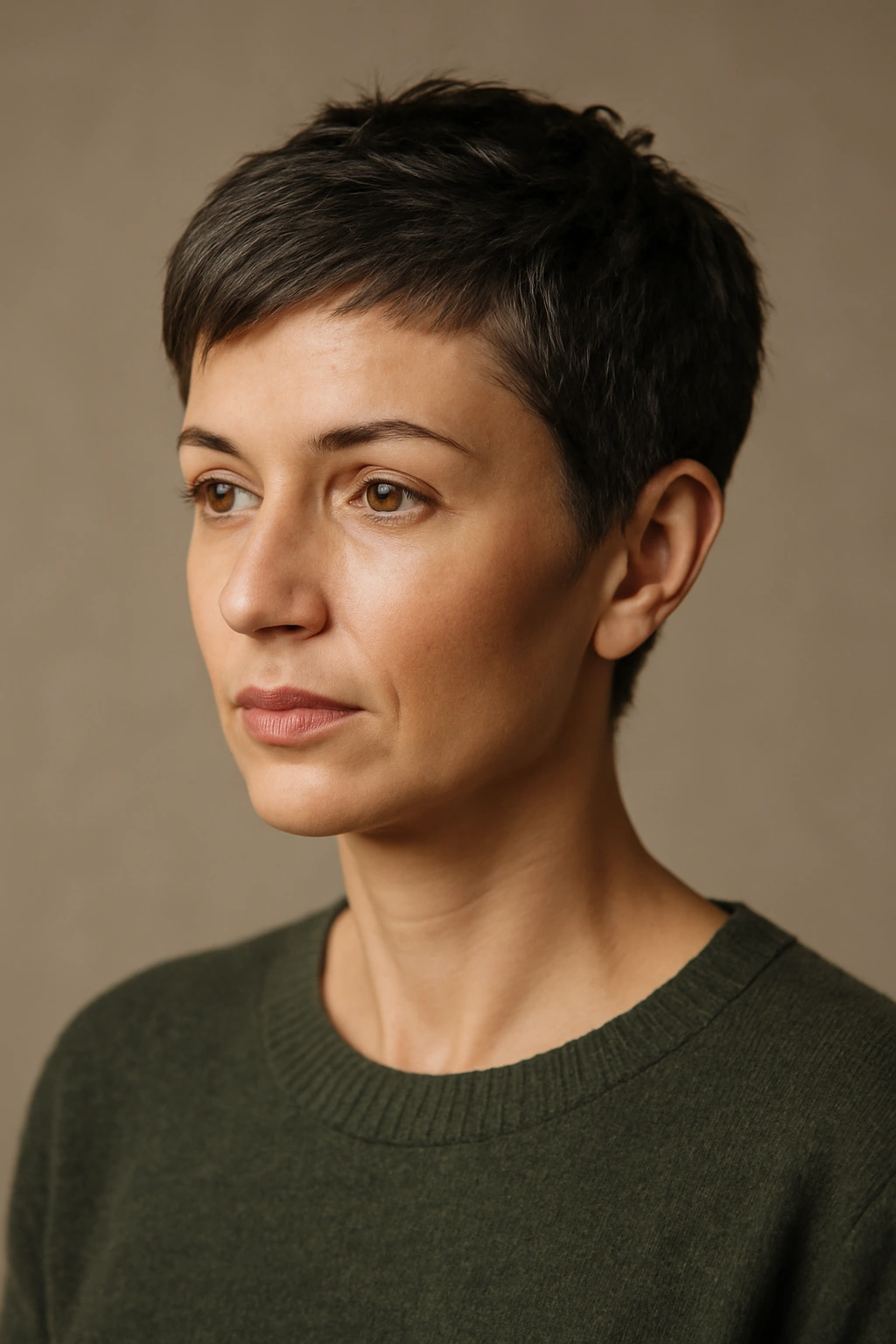
A pixie cut is far more than a practical, low-maintenance haircut—it’s a powerful way to explore your personal style, embrace your features, and present yourself with confidence. Whether you’re drawn to the classic elegance of a tapered pixie, the bold statement of an undercut design, the softness of a textured shag, or something entirely custom to your face and lifestyle, there’s a pixie variation that will work beautifully for you.
The key is finding a skilled stylist who understands not just pixie cuts in general, but how to adapt a pixie specifically to your face shape, hair texture, age, and personal style. A pixie cut that works for someone else might not work for you—and that’s completely okay. The goal is finding the version that makes you feel like yourself, just with more confidence and less time spent on hair maintenance.
Start with the pixie variation that resonates most with you. Show your stylist photos. Be clear about your expectations. And then commit to regular maintenance—this is where pixie cuts really shine. With consistent trims and a styling routine you actually enjoy, a pixie can look incredible for years.
