



Short hair paired with strategic highlights is a powerhouse combination that instantly elevates your entire look. Whether you’re seeking a dramatic transformation or a subtle refresh, the interplay between a clean cut and dimensional color creates visual interest that even the most expensive haircut alone can’t achieve. Highlights break up the solid color of short hair, add depth that makes fine hair look fuller, catch the light as you move, and give you flexibility to refresh your look without committing to a full color change. The beauty of this approach is that it works for virtually every hair texture, skin tone, and personal style—from sleek and professional to bold and artistic.
The challenge, of course, is knowing which short cut-and-color combination will actually work for your face shape, hair texture, and lifestyle. Not every trend looks good on every person, and not every highlight placement works with every haircut. You need real examples of combinations that have proven staying power, along with honest guidance about what makes each one special and how to know if it suits you. That’s exactly what you’ll find here.
I’ve pulled together twelve short haircuts paired with highlights that genuinely stand out—not because they’re trendy for a few months, but because they work beautifully, age well, and look distinctly intentional rather than accidental. Each one includes the exact details you need to communicate your vision to your stylist, plus the realistic maintenance expectations so you’re not caught off guard by how much upkeep the color actually requires.
1. The Textured Pixie With Face-Framing Honeys
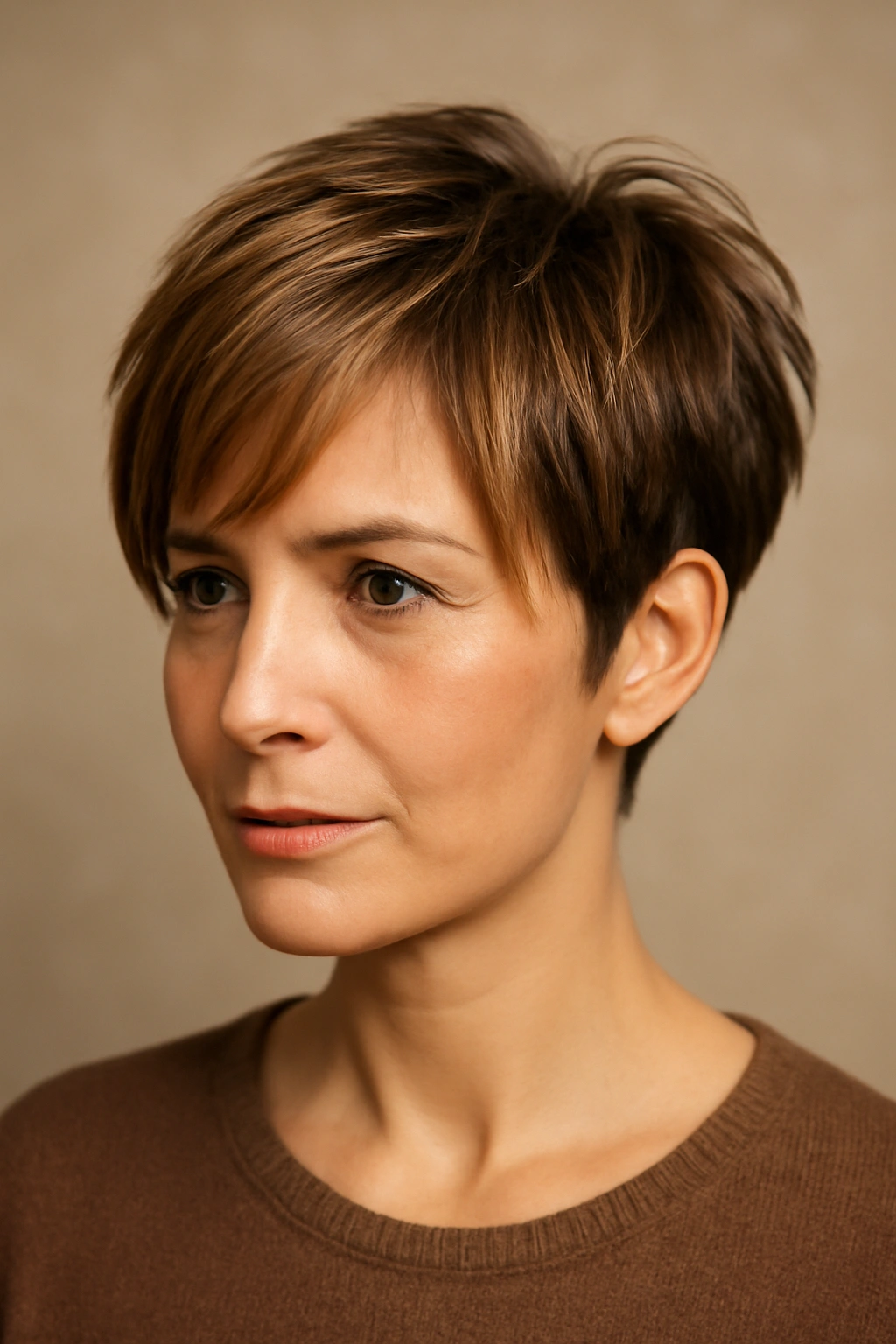
A textured pixie cut creates movement and dimension on its own, but adding warm honey highlights to the face-framing pieces takes the whole effect from cute to genuinely sophisticated. This cut uses slightly longer pieces around the face—typically one to two inches at the cheekbones—while keeping the back and sides cropped short, usually around half an inch to three-quarters of an inch. The texture comes from point-cutting or razor-texturizing throughout, which creates natural-looking separation and movement rather than a blunt, severe line.
Why This Style Really Works
The honey highlights specifically target those face-framing pieces and blend into a slightly deeper base color through the crown and back. This creates a lifted, brightened effect that draws attention to your eyes and cheekbones while the textured cut prevents the style from looking too polished or rigid. The combination makes the haircut appear intentional and editorial rather than simply short, and it works on most face shapes because the highlighting naturally elongates the face while the longer front pieces soften angles.
What to Know Before Booking
- Color maintenance: Honey tones fade gradually but noticeably, requiring touch-ups every 6-8 weeks if you want that brightness to stay true. If you prefer lower maintenance, ask your stylist about a balayage application rather than foil highlights—the less-precise placement means regrowth blends more naturally.
- Styling requirement: This cut needs a blow dryer and some texture product to show off the cut’s movement. Air-drying tends to make it look flatter and less intentional.
- Best for: Fine to medium hair texture; thick hair can look bulky with this much texture unless your stylist is skilled at controlled point-cutting.
- Face shape consideration: Works beautifully on round and square faces because the longer pieces at cheekbone height elongate the face.
Pro tip: Ask your colorist to place the brightest highlights through the front and sides, then gradually deepen the tone as you move toward the back—this gradient effect makes touch-ups less noticeable and the style appear more expensive.
2. The Sharp Undercut With Contrasting Highlights
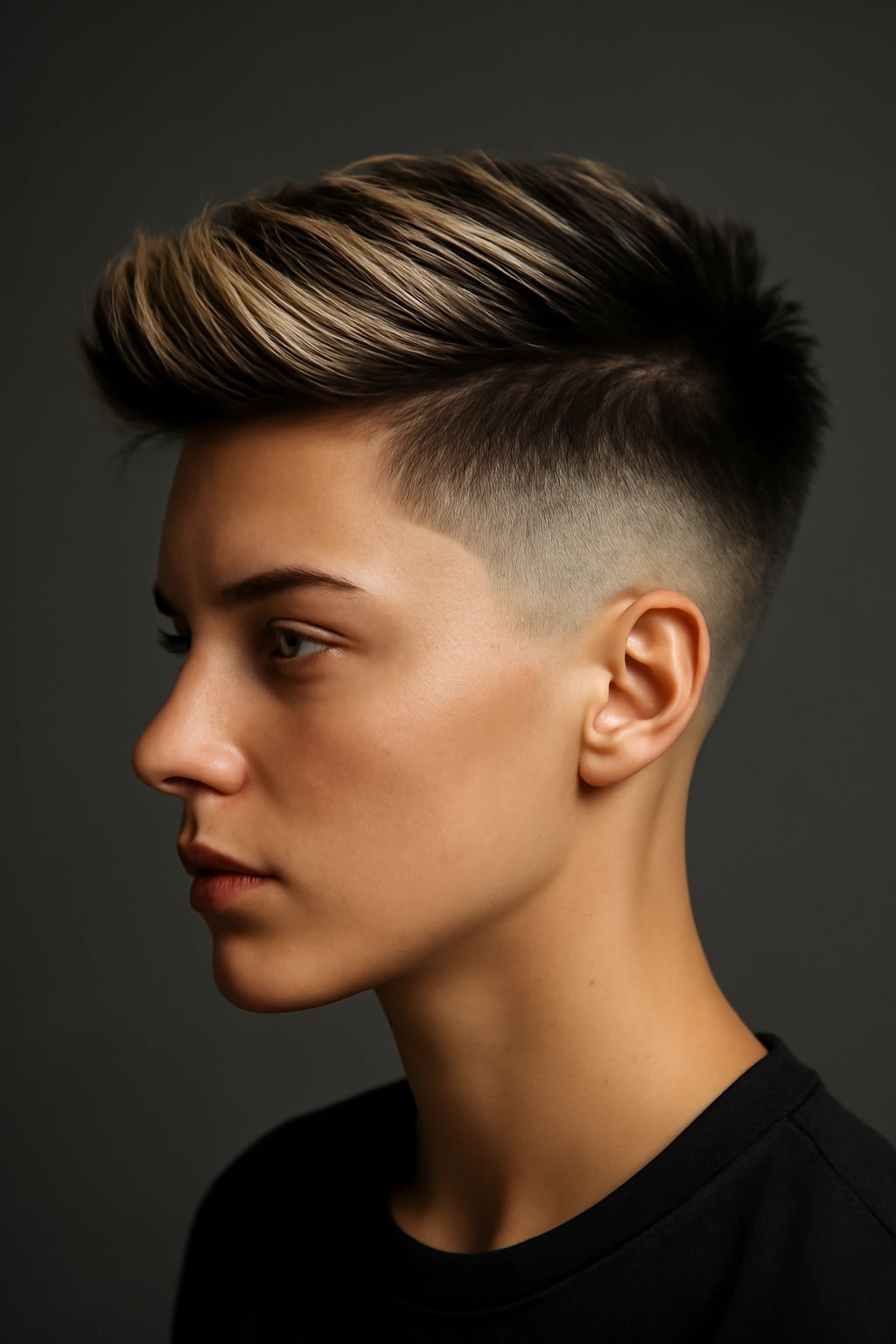
This is the bold option for people who want their haircut to make a statement. An undercut means the sides and back are clipped very short—often faded to skin level or nearly so—while the top is left significantly longer, usually three to four inches or more. Contrasting highlights, in this case, means pairing your natural base color with a distinctly lighter or even completely different shade strategically placed through the longer top section.
Why It’s Such a Showstopper
The undercut creates an almost sculptural silhouette, and the highlights amplify that effect by adding another visual layer. The stark contrast between the short sides and longer top is already dramatic, but highlights make that contrast pop even more. You get the practical benefit of having enough length on top to style in multiple ways (swept back, textured and tousled, slicked down) while keeping the sides and nape super clean and low-maintenance.
Key Details to Discuss With Your Stylist
- The fade: Ask for a skin or near-skin fade on the sides that blends into the longer top. A well-executed fade is what separates a polished undercut from a choppy home-cut look.
- Highlight placement: Placement matters enormously here. Some people do a full-head highlight of the top section for maximum impact, while others prefer placement that’s concentrated around the front and crown. Discuss whether you want subtlety or drama.
- Styling versatility: This cut can be blow-dried for texture, pomaded for a slicked look, or left tousled. Choose highlight shades that work with multiple styling options.
- Maintenance reality: The sides will need a trim every 3-4 weeks to keep that fade crisp, and color touch-ups are typically needed every 6-8 weeks depending on the contrast level.
Worth knowing: This style reads very deliberately fashionable—it’s not a “wash and go” look, and it requires some styling product and effort. That’s part of its appeal, but only choose this if you actually enjoy styling your hair.
3. The Choppy Bob With Caramel Ribbons
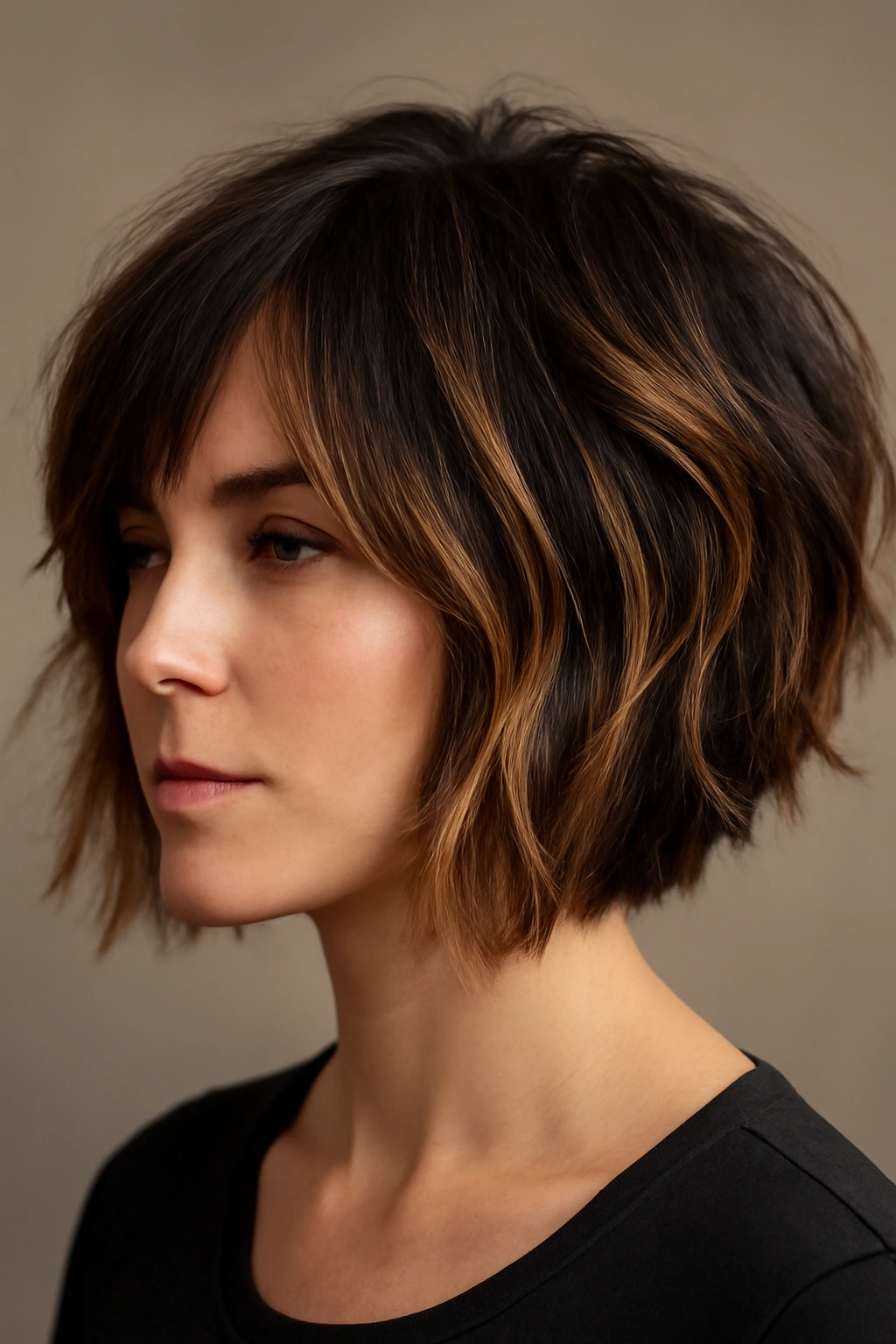
Sometimes called a “shaggy short bob” or “choppy bob,” this cut sits somewhere between a traditional bob and a pixie in terms of length. It’s typically one to two inches at the shortest points and around three inches at the longest, with choppy, uneven layers that create texture and movement throughout. Caramel-colored highlights woven through give the cut depth and prevent it from feeling too matchy or flat.
What Makes This Cut So Appealing
The choppy texture creates the illusion of volume and movement even on straight hair, and the short length is genuinely low-maintenance compared to longer bobs. The caramel highlights add warmth and dimension that makes the cut appear more expensive and intentional. This is one of the few short styles that actually looks better with some texture in your hair—it gives you something to work with and makes the cut really shine.
Details That Matter
- The layers: Choppy layers should have some rhyme and reason rather than looking randomly hacked. Your stylist should be thinking about where the longest and shortest pieces sit, how they frame your face, and how they stack throughout the back.
- The highlight pattern: Caramel looks best when it’s threaded throughout rather than applied in thick chunks. Ask for placement that includes the face-framing pieces plus scattered pieces through the crown and back for a lived-in look.
- Styling approach: A texture cream or light pomade enhances the choppy texture. You can air-dry this cut and it’ll still look intentional, which is one of its big advantages.
- Hair texture: This cut works beautifully on wavy or curly hair because the texture naturally enhances the choppy effect. On very straight hair, you may need a blow dryer and styling product to make the layers show up.
Pro tip: This is a great cut if you like change, because as your hair grows out over 4-6 weeks, it actually looks good during that in-between phase. The choppy nature means regrowth isn’t as obvious as it would be with a blunt cut.
4. The Sleek Asymmetrical Crop With Blonde Highlights
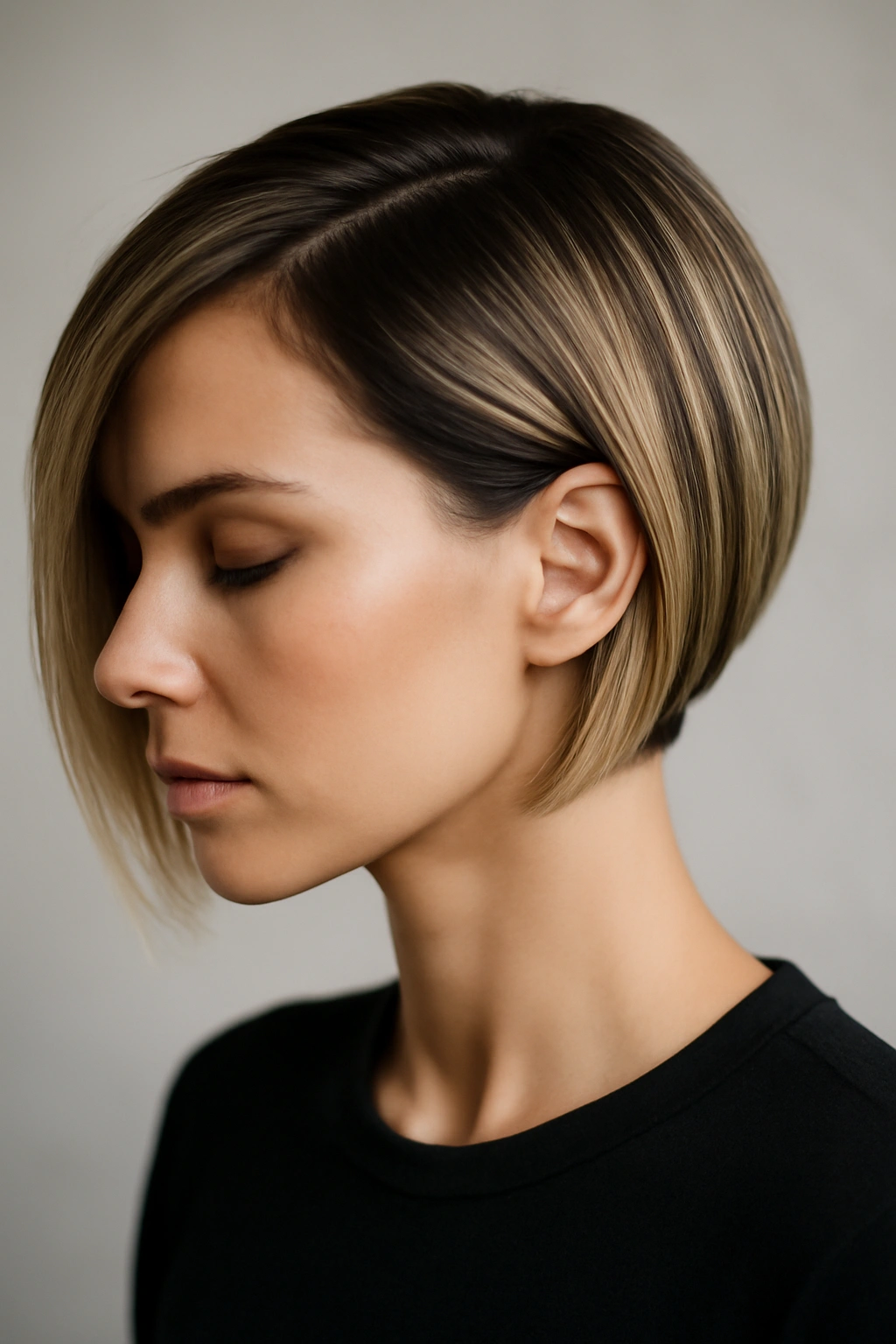
An asymmetrical crop means one side is shorter than the other, creating an intentionally unbalanced silhouette that reads modern and editorial. The overall length typically ranges from half an inch on the shorter side to one and a half to two inches on the longer side. Paired with blonde highlights—either throughout or concentrated on the longer side—this creates a geometric, fashion-forward look that photographs beautifully.
Why Asymmetry Works
Asymmetrical cuts are inherently more interesting than perfectly symmetrical ones, and highlights amplify that interest. The asymmetry breaks up the space around your face in an unexpected way, making even a very short cut feel less severe. If you’ve always worried that going short would be too masculine or too harsh, an asymmetrical cut with blonde highlights provides visual softness through the color even though the cut itself is edgy.
Essential Styling and Maintenance Information
- Styling: This cut requires some styling product and intentional direction. You’ll typically blow-dry it to one side or style it with a bit of texture and movement. It doesn’t read the same when air-dried flat.
- The asymmetry: Make sure you and your stylist are on the same page about how asymmetrical you want it. Some people prefer a subtle difference of half an inch, while others want a more dramatic difference.
- Blonde maintenance: Blonde highlights on darker bases need touch-ups every 4-6 weeks, and you’ll want purple shampoo to prevent brassiness. This is higher-maintenance color than subtle caramel or honey tones.
- Best on: This cut is particularly striking on people with strong facial features. The asymmetry and highlights draw attention to your face, so you’ll want a face shape and features you’re comfortable highlighting.
Insider note: The longer side of an asymmetrical cut should be longer on the side that’s less prominent in your face or that you naturally turn away from. This balances your proportions visually.
5. The Textured Crop With Money Pieces
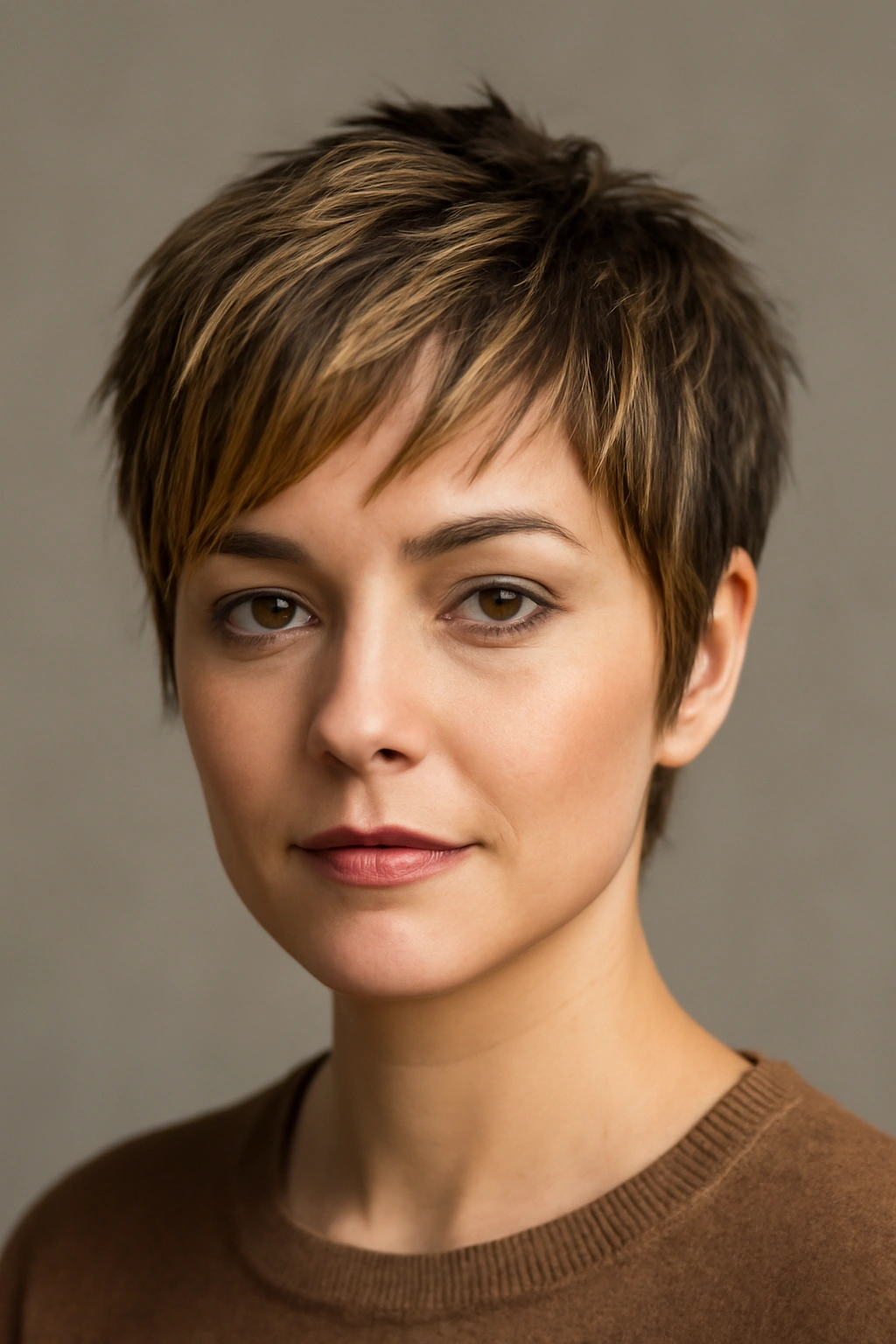
The money pieces are the face-framing highlights that sit closest to your face—typically starting from the temples and running along the front. When paired with a textured crop (a short, textured cut roughly one to three inches throughout), the brighter highlights in those money pieces create a lifting effect that makes your entire face appear brighter. The base can be your natural color or a slightly warmed-up shade, with the money pieces several shades lighter for clear contrast.
Why This Combination Is So Effective
Money pieces are strategically placed highlights that serve a purpose: they brighten the face and draw light to your eyes and cheekbones. A textured crop gives you enough length to see the highlights moving and catching light, but keeps maintenance manageable. This is the perfect balance of interesting and practical—you get visible dimension without the high maintenance of a full-head highlight.
What You Need to Know
- Color fading: Money pieces fade faster than highlights in less-visible areas simply because they’re exposed to more sun and washing. Plan for touch-ups every 4-6 weeks if you want to maintain brightness.
- The texture: A good textured crop should have varied lengths throughout, not uniform shortness. Ask your stylist to point-cut or razor-cut for movement rather than creating blunt, choppy lines.
- Styling versatility: This works with a blow dryer and product, but also air-dries reasonably well if your hair has some natural texture. Money pieces are flattering enough to show off even with minimal styling.
- Works best on: All face shapes benefit from money pieces, but this combination is especially gorgeous on oval, heart-shaped, and rectangular faces.
Worth knowing: Money pieces continue to grow out and eventually blend into your base color, but because they’re shorter, they actually shed out faster than longer highlights. You don’t necessarily need a full touch-up every time—sometimes a colorist can just refresh the shortest pieces.
6. The Modern Shag With Dimensional Highlights
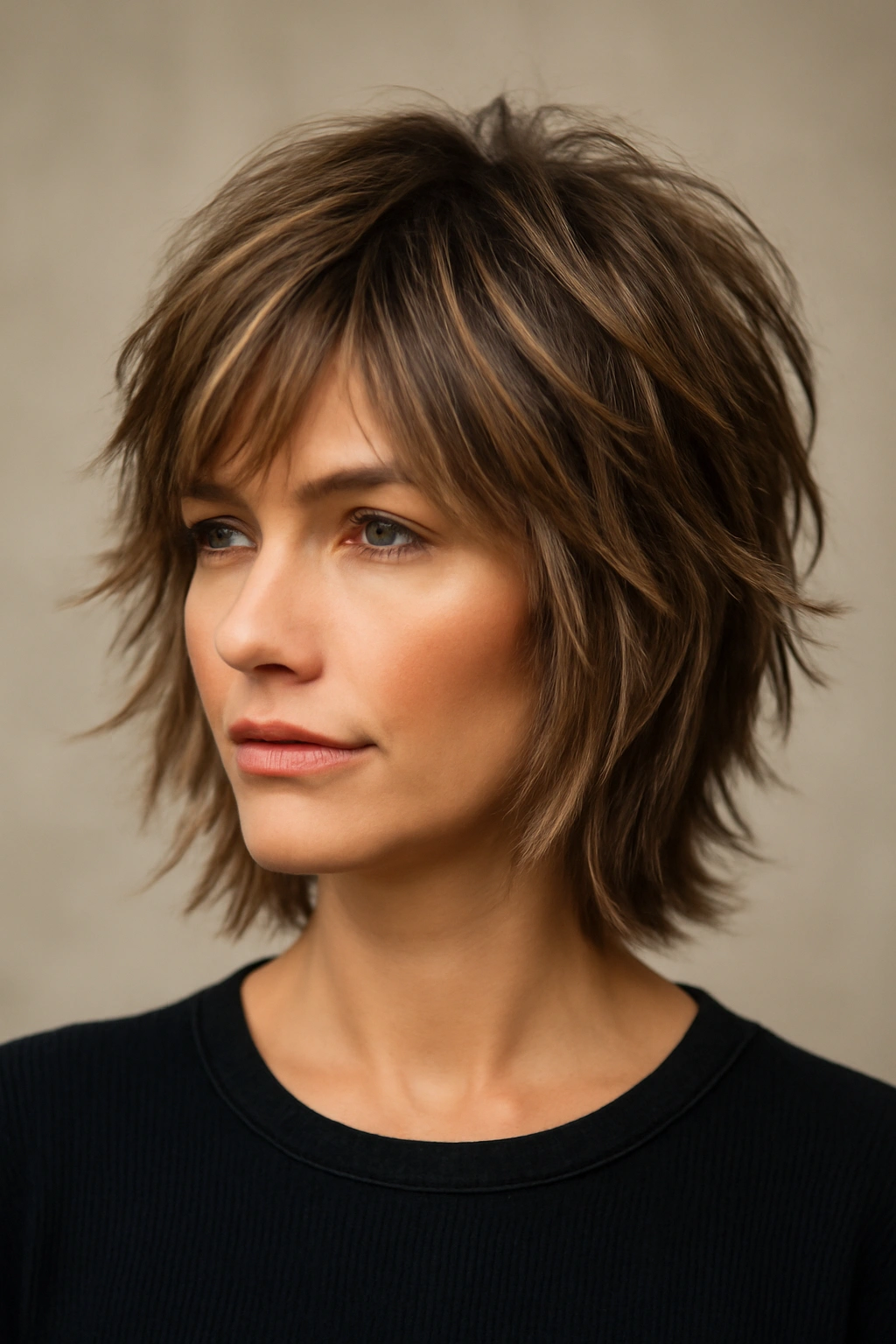
A modern shag is the reinvented version of the 1970s classic. It features multiple layers of varying lengths—short around the crown for lift, progressively longer toward the face and back. The cut has texture built in through the layering and point-cutting, giving it movement even without blow-drying. Dimensional highlights using two to three tones create depth and enhance the shag’s natural texture.
What Makes the Modern Shag Special
The shag’s built-in texture is its secret weapon—the layers create movement and prevent short hair from looking flat or helmet-like. Dimensional highlights amplify this movement by creating subtle color shifts as your hair moves. The cut works on nearly every hair type because the layering is designed to work with texture rather than against it. People with fine hair get volume, people with thick hair get manageability, and people with curly hair get enhanced definition.
Important Styling and Maintenance Considerations
- Dimensional highlights explained: Rather than one bright highlight shade, dimensional color uses 2-3 tones that are closer to each other in value. Think a medium blonde base with honey and caramel pieces rather than medium blonde with platinum pieces. This is lower maintenance than high-contrast highlights because regrowth blends more seamlessly.
- The layers: A shag isn’t just choppy—it’s structured choppy. The longest pieces should frame your face at cheekbone or jaw length, while the crown is noticeably shorter for lift.
- Styling requirement: This cut looks best with a bit of texture product and some movement. It’s very forgiving though—it doesn’t require precision blow-drying.
- Best for: Fine, wavy, curly, or textured hair. Thick, straight hair can look a bit stringy with too much layering, so discuss proportions with your stylist.
Pro tip: Dimensional coloring photographs beautifully because the multiple tones create depth and interest that read well in photos, even if the color shifts seem subtle in person.
7. The Blunt Pixie With Rooted Blonde
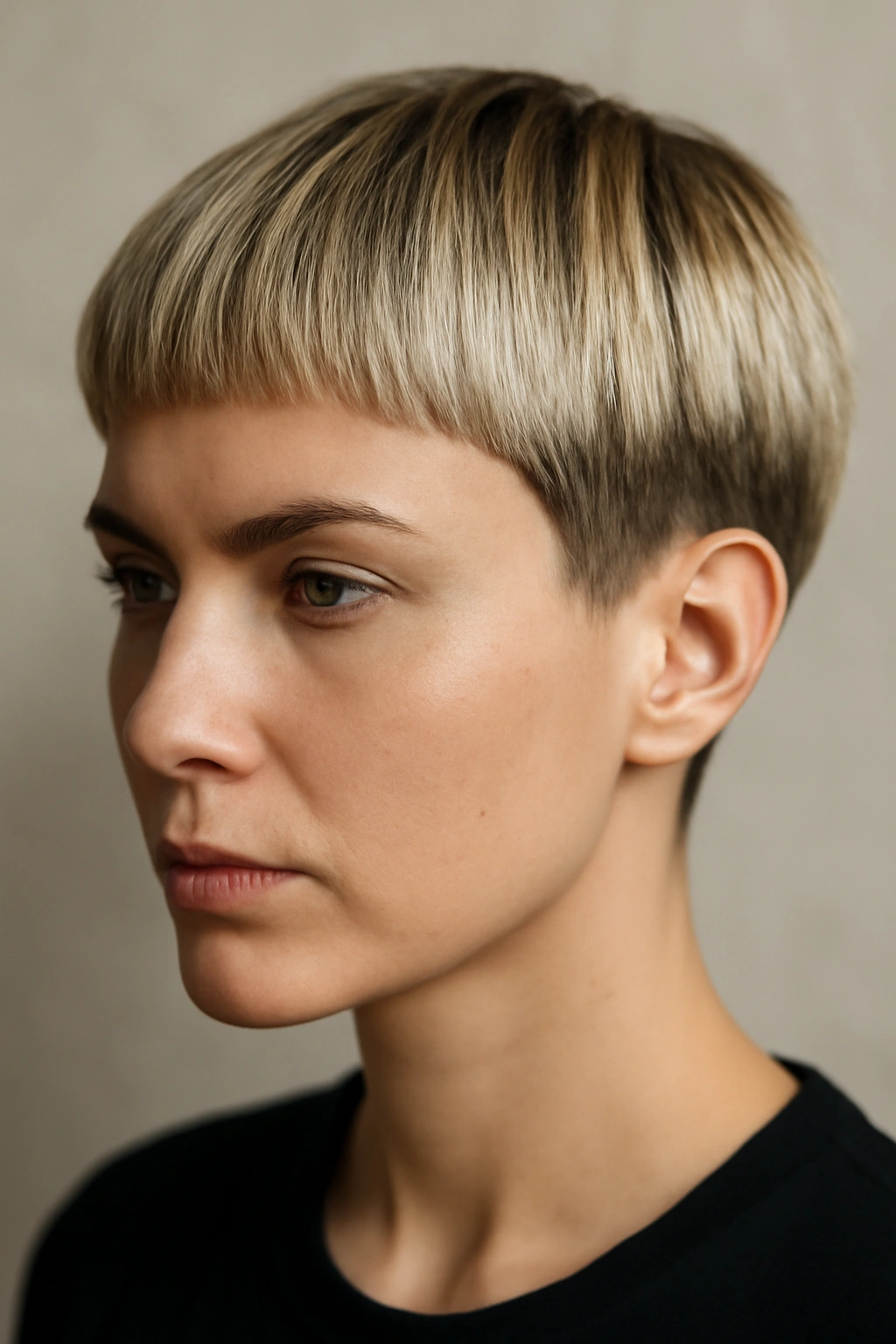
A blunt pixie keeps clean, precise lines throughout—no choppy texture, no layers, just sharp edges that emphasize the cut’s geometry. The hair is kept very short, typically three-quarters of an inch throughout, making it one of the lowest-maintenance cuts you can get. Rooted blonde means keeping your natural root color showing (usually 1-2 inches of root) while the rest of the hair is blonde. This creates a shadow-root effect that’s both lower maintenance and visually interesting.
Why Blunt + Rooted Works
A perfectly blunt cut on its own reads severe and takes courage to pull off. Adding rooted blonde softens that severity because the darker roots create a frame around the face while the blonde provides brightness and dimension. The root shadow also means you don’t need touch-ups as frequently as you would with a full blonde head or a blunt cut with highlights that need regular refreshing. It’s sophisticated, intentional, and practical.
Essential Information Before Committing
- Root maintenance: Plan for touch-ups every 8-10 weeks to keep the root line intentional rather than letting it fade into an accidental grown-out look. The key is keeping that root line visible and deliberate.
- Styling: A blunt pixie is one of the few cuts that can genuinely be washed and air-dried with zero styling products. It’s extraordinarily low-maintenance in this regard.
- The bluntness: A truly blunt pixie requires a skilled stylist. Blunt lines are unforgiving—they look either sharp and intentional or rough and choppy depending on execution.
- Face shape consideration: Blunt cuts work best on oval, square, and oblong face shapes. If you have a very round face, the bluntness will emphasize roundness unless your stylist adds subtle texture or layering to soften the edges.
Worth knowing: As a blunt pixie grows out, it actually looks quite good for several weeks because the sharp lines stay relatively intact. You’re not trying to hide regrowth the way you would with a fade or undercut.
8. The Textured Wolf Cut With Babylights
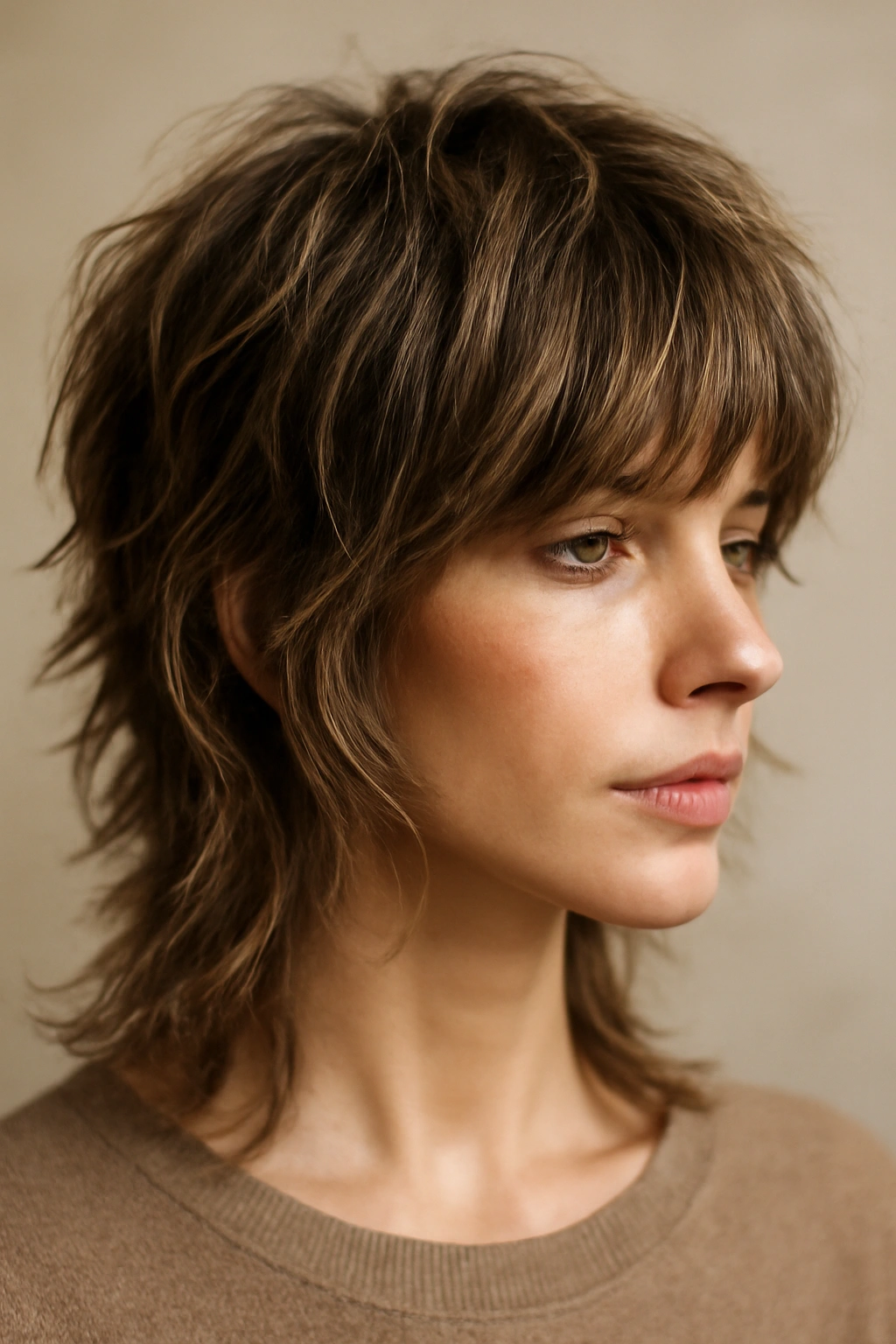
A wolf cut is essentially a cross between a mullet and a shag—it’s short and voluminous on top with more length in the back and face-framing pieces. The “wolf” aspect comes from the texture and the slightly wild, tousled aesthetic. It’s longer than a true pixie or crop, giving you more styling flexibility. Babylights are very fine, delicate highlights that mimic the way natural sunlight hits hair, creating an effect that looks almost like you’ve just come back from the beach.
Why This Pairing Is So Contemporary
The wolf cut’s length and texture give highlight colors room to shine and move. Babylights create a soft, natural-looking dimension that feels effortless even though the coloring is technically complex. Together, they create a style that reads young, fashion-forward, and intentionally undone. This is a great option if you want a short cut that doesn’t require aggressive styling—it looks good when it’s a bit messy.
Details to Understand
- Babylights defined: These are very fine, typically hand-painted highlights that create a subtle, sun-kissed effect. They require a skilled colorist and take longer than traditional foil highlights, but the result is incredibly dimensional and natural-looking.
- The wolf silhouette: The back should be noticeably longer than the front and top, creating a recognizable wolf shape. The face-framing pieces should be long enough to sit at your jaw or cheekbones.
- Styling versatility: You can blow-dry this smooth and slicked, or messy and textured. Both look intentional. It’s forgiving enough for a beach-wave texture or tousled styling.
- Best for: All hair types and textures work with a wolf cut, but it’s particularly striking on wavy, curly, or textured hair where the layers create natural movement.
Pro tip: Babylights require touch-ups only every 8-12 weeks because the fine, hand-painted application means regrowth blends more naturally than with traditional highlight lines.
9. The Layered Pixie With Platinum and Rose Gold Contrasts
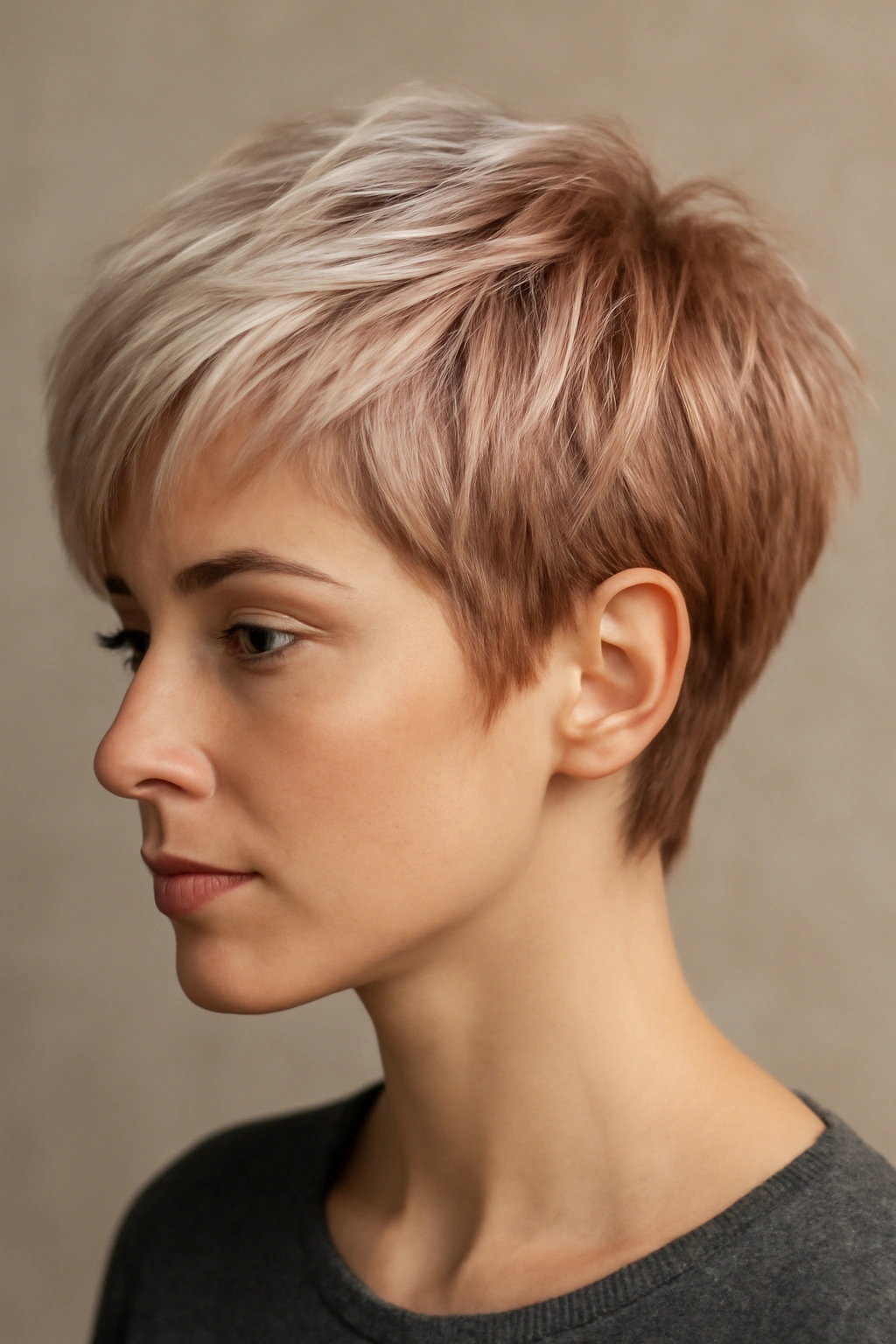
This is a bold color choice paired with a textured pixie. The base is typically kept shorter—around three-quarters to one inch—with layers creating movement and texture throughout. Platinum and rose gold tones are applied in distinct sections, creating color-blocking that’s fashion-forward and artistic rather than traditional dimensional highlights.
Why This Style Commands Attention
The combination of textured layers with contrasting blonde and rose tones creates an undeniably striking look. The texture shows off the color shifts as your hair moves, while the contrasting tones mean the style reads intentionally fashionable rather than subtly dimensional. This is for people who want their hair to be a genuine statement and who enjoy the artistic element of fashion.
Important Practical Considerations
- Color commitment: Platinum and rose gold tones require regular maintenance—touch-ups every 4-6 weeks to keep the colors true and prevent brassiness. This is high-maintenance color that demands a skilled colorist.
- Texture placement: The layering should be visible and defined, not choppy and random. Ask your stylist to create distinct sections where you’ll see the texture, particularly around the face and crown.
- Styling reality: This cut and color combination looks best with intentional styling—a blow dryer, texture cream, and possibly some edge definition. It’s not a wash-and-go style.
- Hair health: Platinum and contrasting colors require healthy-looking hair to read as intentional rather than damaged. Regular conditioning and possibly a deep-treatment routine keeps this looking expensive rather than brassy.
Worth knowing: This level of color-play is genuinely artistic and works best if you have an established relationship with a skilled colorist who understands your vision. Pinterest boards are great for reference, but this is a style where your colorist’s expertise matters enormously.
10. The Cropped Shag With Sun-Kissed Highlights
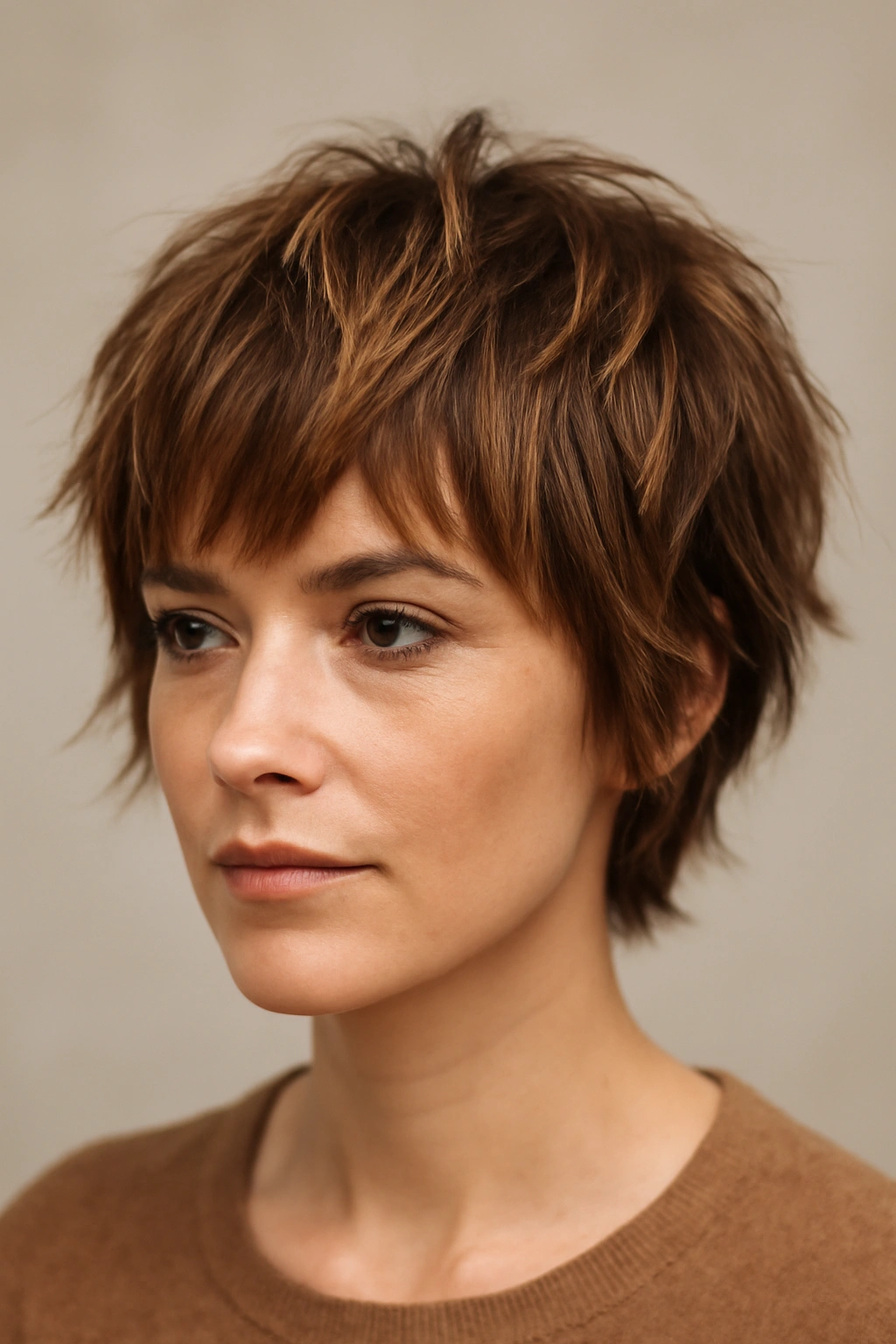
A cropped shag is shorter and tighter than a traditional modern shag—all the textured layering, but kept to roughly one to two and a half inches throughout. Sun-kissed highlights use warm tones (honey, caramel, sandy blonde) applied throughout in a way that mimics natural sun exposure. The placement is lighter and more dispersed than money pieces but more concentrated than true dimensional coloring.
What Makes This Combination Work
The cropped shag’s texture becomes the vehicle for showing off warm-toned highlights. Every movement reveals different facets of color, making the style look dynamic and lived-in. Sun-kissed tones are inherently flattering because they complement most skin tones and feel naturally warm and welcoming rather than harsh or cool.
Key Styling and Maintenance Points
- The highlight application: Sun-kissed highlights should be feathered throughout rather than blocked into sections. Ask your colorist for a balayage or hand-painted application that creates movement and dimension without harsh lines.
- Color maintenance: These warm tones typically need touch-ups every 6-8 weeks, but because they’re hand-painted and dispersed throughout, the regrowth blends more naturally than with traditional foil highlights.
- Texture product: A light texturizing cream or sea salt spray enhances the cropped shag’s natural movement. You don’t need heavy products, just something that adds definition to the layers.
- Styling time: This cut looks good air-dried or blow-dried. If you air-dry, expect a slightly softer, more textured look. With a blow dryer and some product, you can create more defined waves or a more polished effect.
Insider note: Sun-kissed highlights work beautifully with naturally textured or wavy hair because the underlying texture enhances the color variation. If your hair is straight, the layers and texture from the cut become even more important.
11. The Undercut with Peekaboo Highlights
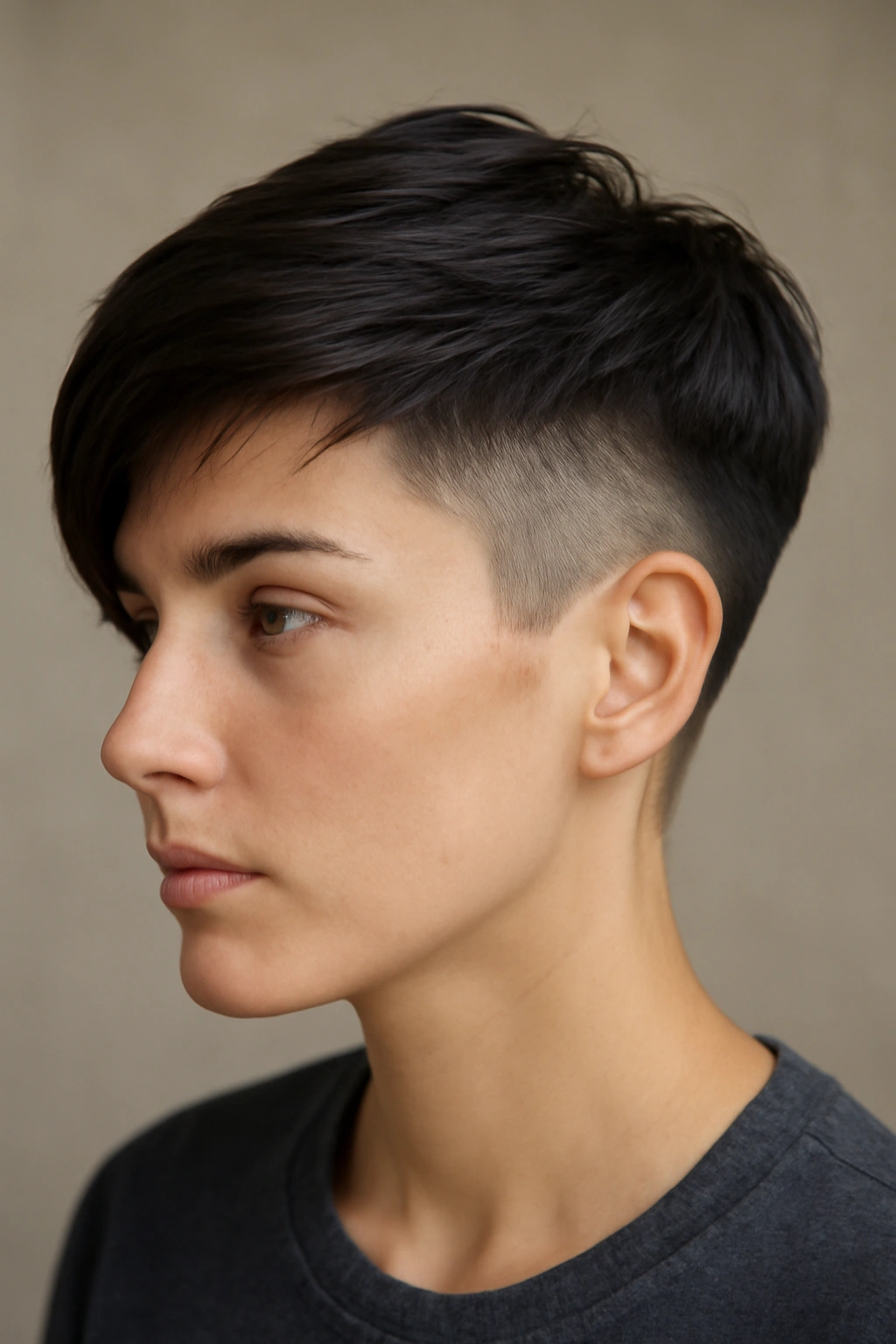
This variation on the classic undercut uses peekaboo highlights—bright color placed on the undercut sections (sides and back) that’s hidden when your hair is down and revealed when you move or style it differently. The top is kept longer and typically in a darker or natural shade. This gives you the visual impact of an undercut with the option to hide the bright color if you need a more conservative look for professional settings.
Why This Hybrid Approach Appeals to So Many People
Peekaboo highlights offer the best of both worlds: you get the bold fashion statement of colored undercuts without being locked into showing it constantly. You can style your hair down over the sides for a more minimal look, or sweep it back to reveal the color. This flexibility is particularly valuable if your workplace or lifestyle doesn’t support very bold hair color, but you still want that fashionable edge.
Essential Details
- Placement strategy: Peekaboo highlights work best on the sides and back of the undercut, plus possibly a small amount inside the longer top section that only shows when you move your hair certain ways.
- Color choice: Bright colors (vibrant blues, purples, pinks, reds) work better for peekaboo placement than subtle tones because they need contrast to be visible. Pastels can disappear entirely against lighter bases.
- Styling flexibility: You can wear this several ways: side-swept to cover the color, swept back to show it, or tousled and textured to let it peek through naturally.
- Maintenance: The undercut will need fading trims every 3-4 weeks, and the color touch-ups depend on the specific shade—vibrant tones every 4-6 weeks, pastels possibly more frequently.
Worth knowing: Peekaboo colors fade faster than all-over highlights because they’re typically applied at maximum saturation and are often exposed to sun and styling heat. Plan for more frequent touch-ups than you would with subtle highlights.
12. The Textured Crop With Rooted Bronde
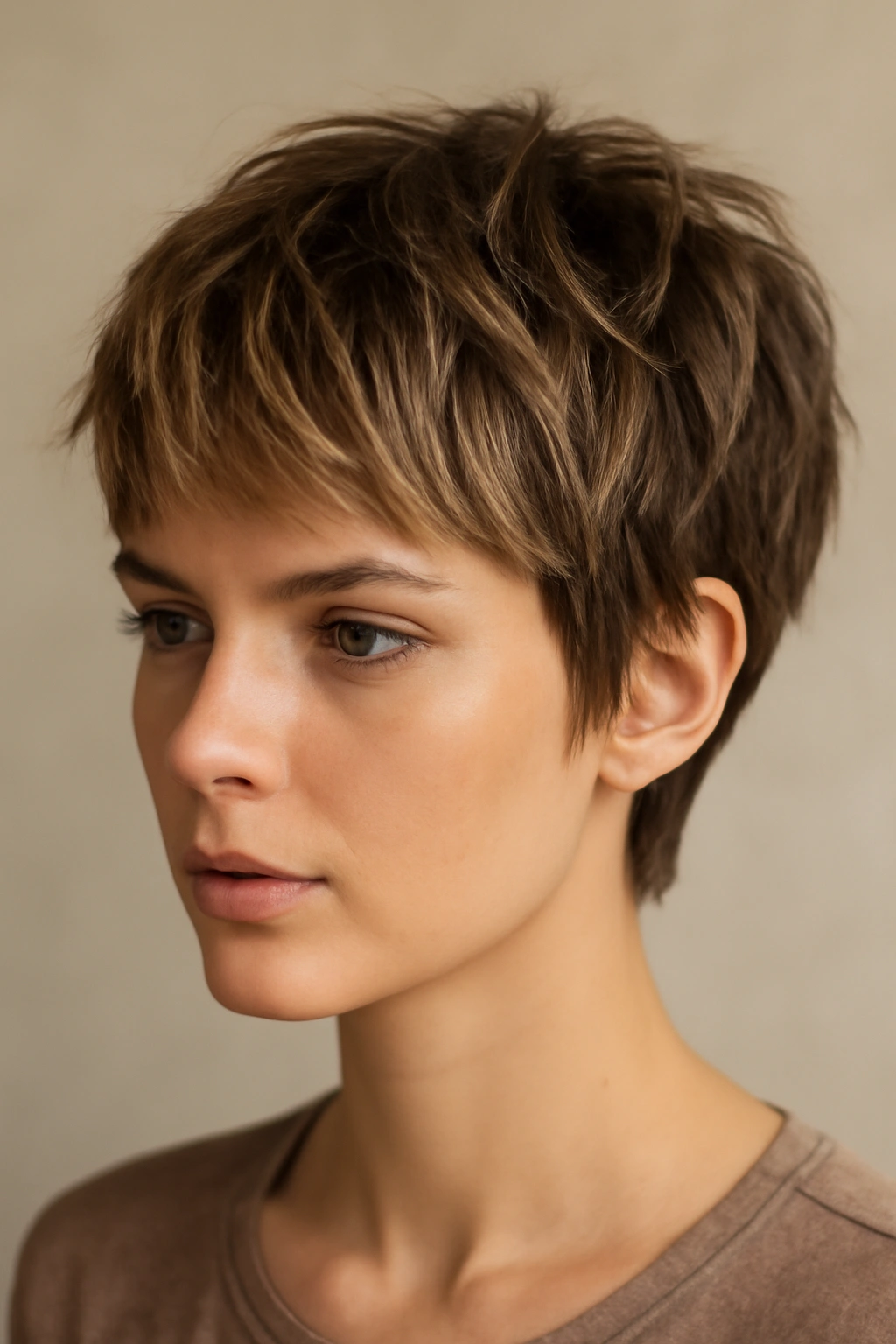
Bronde is the on-trend middle ground between blonde and brunette—typically a medium to dark blonde base with brown undertones, or a light brown base with blonde highlights. When you add roots (intentionally grown-out darker roots showing 1-2 inches), you create a rooted bronde effect that’s currently having a major moment. Paired with a textured crop, this creates a sophisticated, effortless-looking style that’s surprisingly low-maintenance.
Why Rooted Bronde Has Staying Power
The rooted bronde effect is inherently more forgiving than rooted blonde because the color is closer to your natural base, meaning regrowth blends more seamlessly. The bronde coloring itself is flattering on almost every skin tone—it’s warm, dimensional, and naturally harmonious. A textured crop shows off the color variation beautifully, and the texture prevents the style from reading as too polished or requiring high styling effort.
Important Information to Know
- Root maintenance: Plan for touch-ups every 10-12 weeks to refresh the bronde tones while maintaining visible, intentional roots. You’re not trying to hide regrowth here—you’re maintaining the rooted aesthetic.
- The texture: The crop should have visible layers and point-cuts that create movement and show off the color variation. It shouldn’t be blunt or uniform.
- Styling approach: This style works beautifully with just a texture cream and your fingers, or with a blow dryer for more definition. It’s genuinely forgiving and doesn’t require precision styling.
- Color depth: Bronde works best when there’s actual dimension—not just one flat shade. Ask your colorist to place deeper tones closer to the roots and through the back, with lighter tones through the face-framing pieces.
Pro tip: Bronde color is more affordable to maintain than high-contrast blonde because the dimensional coloring requires less frequent full-head coverage. Many stylists can refresh rooted bronde with a combination of gloss and spot-placing highlights.
Final Thoughts
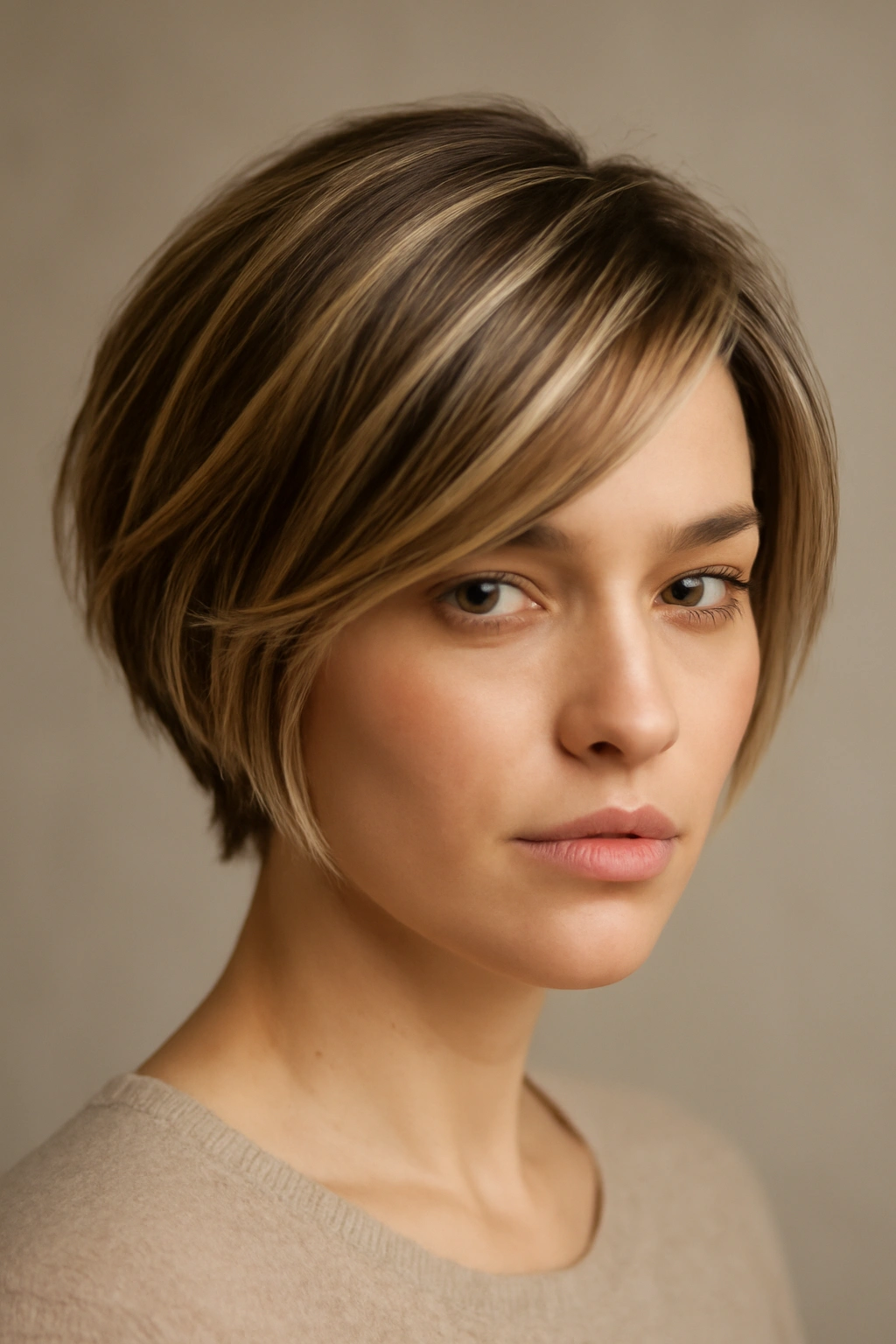
A short haircut becomes truly exceptional when the color strategy matches the cut’s structure and your lifestyle. The best style for you isn’t the one you see most frequently on Instagram—it’s the one that balances your face shape, your hair texture, your maintenance tolerance, and your personal style preferences. Every style in this list works beautifully when executed well, but execution depends on finding a skilled stylist who understands both cutting and coloring at a high level.
When you book your appointment, bring reference photos of the exact cut you want, the exact highlight placement and colors, and be specific about what your daily styling routine actually looks like. Honesty about how much time you’ll realistically spend styling matters enormously. A textured pixie with honeys is stunning, but only if you actually have a blow dryer and texture cream in your daily routine. Similarly, rooted bronde is low-maintenance color, but only if you’re genuinely comfortable with visible roots rather than trying to hide regrowth.
The final thing to remember is that short hair is genuinely transformative, and strategic highlights amplify that transformation. You’re not just cutting hair off—you’re committing to a new silhouette, a new daily styling routine, possibly a new makeup and clothing approach. Go into it with intention, choose your stylist carefully, and commit to the maintenance those beautiful highlights require. The result will be worth it.
