



Choppy layers are one of the fastest, most effective ways to transform flat, lifeless hair into textured, voluminous styles that look fuller and move with natural bounce. The beauty of choppy layers is that they work across hair types, lengths, and textures — whether your hair is fine and delicate, thick and coarse, wavy, curly, or straight, strategically placed choppy layers can create dimension, movement, and that coveted full-bodied appearance that many people spend money on volumizing products trying to fake.
The trick to getting real, lasting volume isn’t about teasing your roots into submission or piling on dry shampoo; it’s about the actual cut itself. Choppy layers interrupt the weight of your hair, encourage natural texture to show through, and break up heavy sections that would otherwise press down on your scalp. When layers are cut with intentional choppy techniques — where the stylist uses point-cutting, texturizing shears, or razor techniques to create purposeful, visible separation between strands — the effect is immediate and dramatically different from softer, blended layers.
The right choppy layer haircut doesn’t just add volume; it also gives you styling flexibility. You can wear it sleek and piece-y for an intentional, modern vibe, or tousle it with texturizing products for a relaxed, effortless look. The layers catch light differently throughout the day, which creates visual interest and makes hair appear thicker than it actually is. Most importantly, unlike heavy, blunt cuts that can look stringy on fine hair or demand constant blowouts on any hair type, choppy layers actually grow out beautifully — as your hair extends past the chop line, the layers blend naturally, keeping volume alive longer between haircuts.
1. Modern Shag
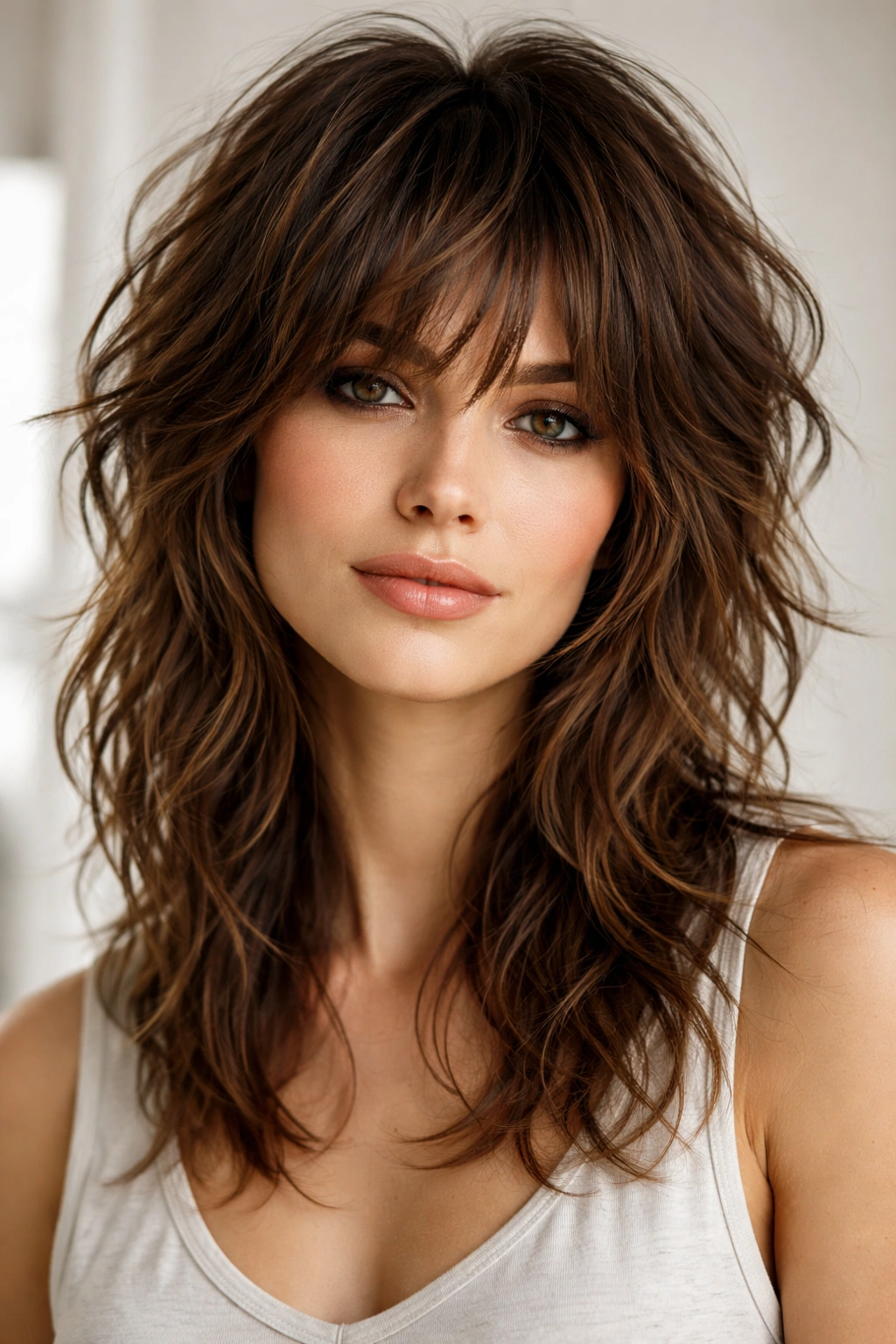
The modern shag is choppy, textured, and unapologetically cool — it’s the evolution of the 1970s shag that removes the “costume” feel and replaces it with strategic, intentional texture. A true modern shag features shorter, choppier layers throughout the crown and sides, longer length in the middle, and that signature wispy, piece-y texture that naturally separates into distinct strands rather than blending together.
Why It Works for Volume
A modern shag creates volume in two ways simultaneously. First, the choppy layers throughout the crown and top section literally lift your hair away from your scalp — there’s no weight pressing down because the longest pieces are strategically placed where they work with gravity instead of against it. Second, the choppy texture makes each individual strand more visible, so even if your hair is medium-density, it reads as significantly fuller because you can see distinct pieces and movement rather than one solid mass.
Who It Suits Best
Modern shags work brilliantly on people with naturally wavy or curly hair because the choppy layers work with your natural texture rather than fighting it — your curls naturally separate into the piece-y effect the cut is designed to create. That said, straight-haired people can absolutely rock a modern shag too; you’ll just need to add texture either with a curling iron or texturizing products to make the choppy separation visible.
How to Style It
Blow-dry with your head tipped forward to encourage lift at the roots, then use your fingers or a large round brush to separate the layers as they dry. Once dry, apply a texturizing spray or light pomade to individual sections, scrunching upward to emphasize the choppy separation. The goal is deliberately piece-y and intentionally undone — resist the urge to smooth everything down.
2. Textured Pixie with Choppy Crown
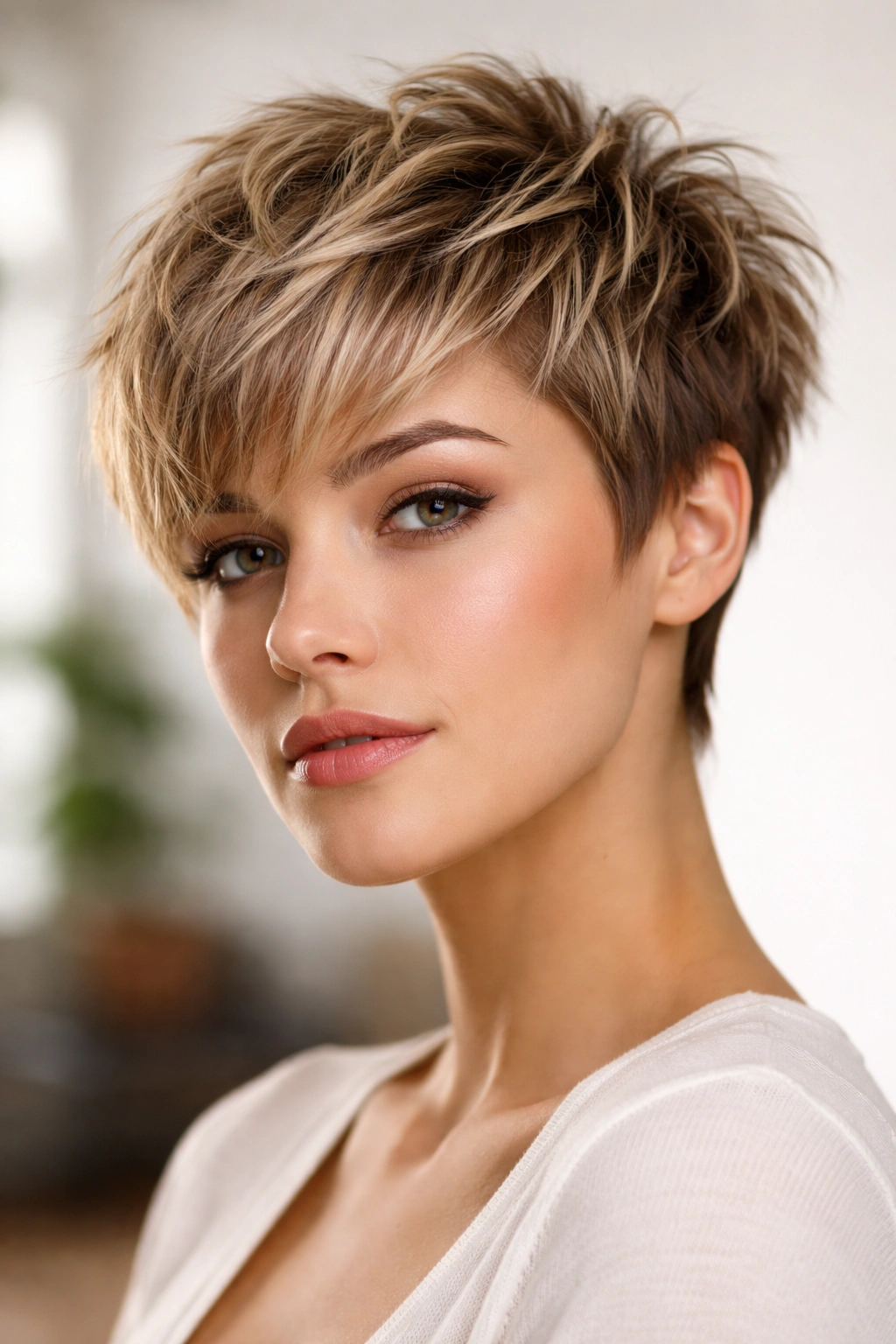
A textured pixie takes the classic short cut and adds choppy, layered texture throughout the crown and top, creating dimension and movement in a style that sits very close to the head. Unlike a blunt pixie that can look flat or helmet-like, a textured pixie with choppy layers has real personality and visual interest from every angle.
Why It Works for Volume
Even though pixies are short, choppy layers in the crown create an illusion of volume by breaking up the hair and allowing light to play through the texture. The shorter length means every strand contributes to the overall shape and fullness — there’s no dead weight dragging anything down. Texture also creates dimension, making the head appear rounder and fuller rather than sleek and flat.
Who It Suits Best
Textured pixies are ideal for people with naturally wavy or curly hair, as well as those with fine hair that needs lightweight styling. The short length removes excess weight, and the choppy layers encourage your natural texture to express itself fully. If you have a longer, narrower face shape, a textured pixie with slightly longer pieces around the face creates helpful width and balance.
How to Style It
A textured pixie needs minimal styling — in fact, that’s one of its biggest advantages. Wash and let air-dry, or blow-dry with fingers to encourage texture and movement. Apply a texturizing cream or matte pomade to damp hair, working through the crown and longer pieces to emphasize the choppy separation. The beauty of this cut is that bedhead is actually the goal.
3. Layered Bob with Choppy, Textured Ends
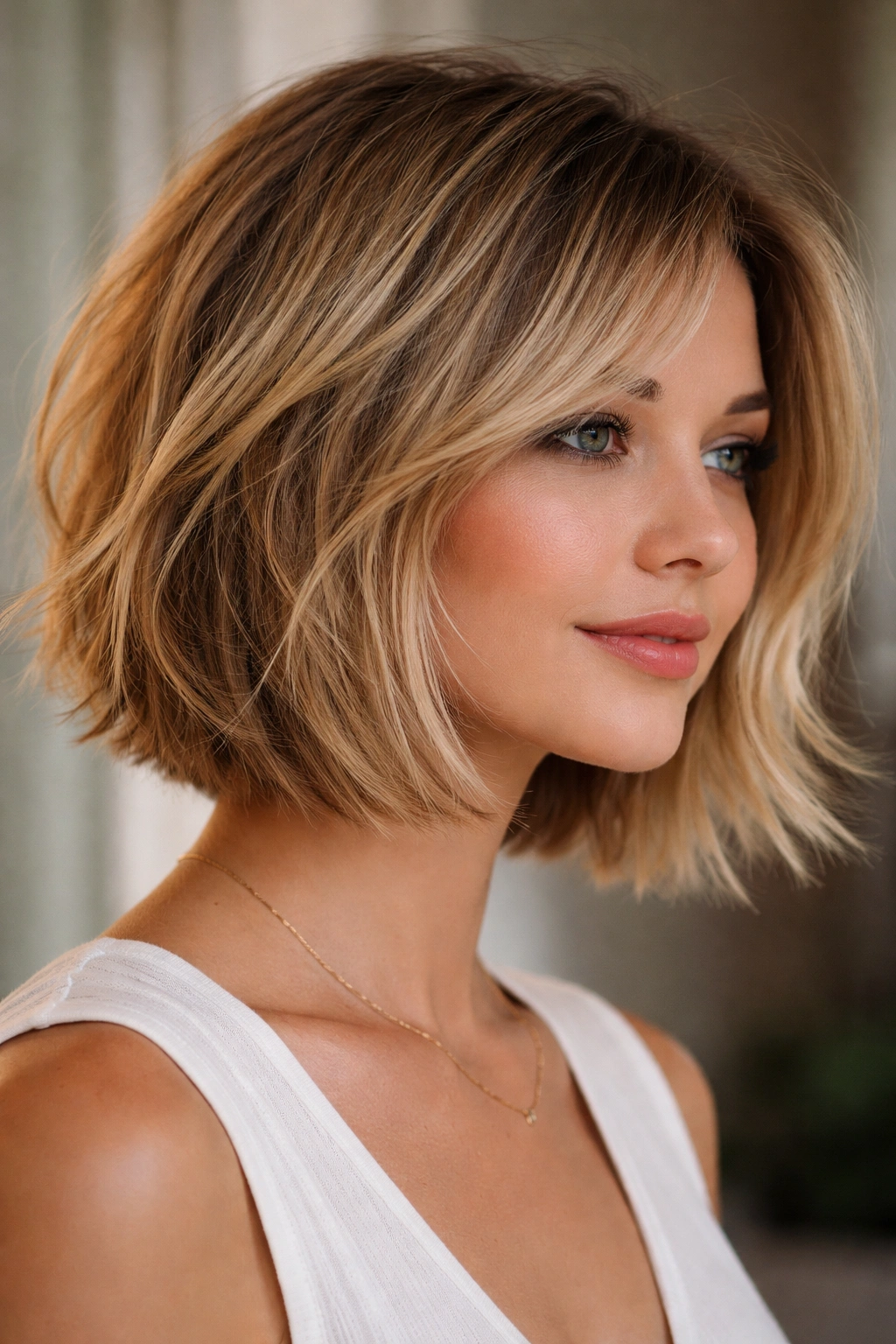
A traditional bob gets a major volume boost when the ends are cut choppy rather than blunt, and layers are added throughout rather than reserved for just the back. This style sits roughly chin-length, with the front potentially slightly longer, and features choppy, piece-y layers that create movement and texture rather than a sleek, solid line.
Why It Works for Volume
Choppy layers throughout a bob prevent the style from sitting as one heavy, dense shape against your head. The texture breaks up the visual mass and creates the optical illusion of fuller hair because you’re seeing individual layers and movement rather than one solid block. The choppy ends also catch light differently than blunt ends, which creates visual depth and makes thin or medium-density hair read as much fuller.
Who It Suits Best
Layered, choppy bobs work on almost every hair type and face shape. People with straight hair get clean definition and an intentional, modern look; people with wavy hair get that naturally separated, effortless texture; people with curly hair can style it sleek or embraced-curl. Round faces benefit from keeping slightly longer front pieces; square faces are softened by choppy layers that break up the jaw line; oval faces can wear any variation.
How to Style It
Blow-dry with a round brush for control, or tousle with your fingers for a more relaxed vibe. Apply a light texturizing spray to damp hair before blow-drying to encourage separation of the choppy layers, or use a texturizing product on dry hair to emphasize individual strands. You can also use a flat iron to create sleek lines within the layers for a more intentional, edited look.
4. Choppy Lob (Long Bob)
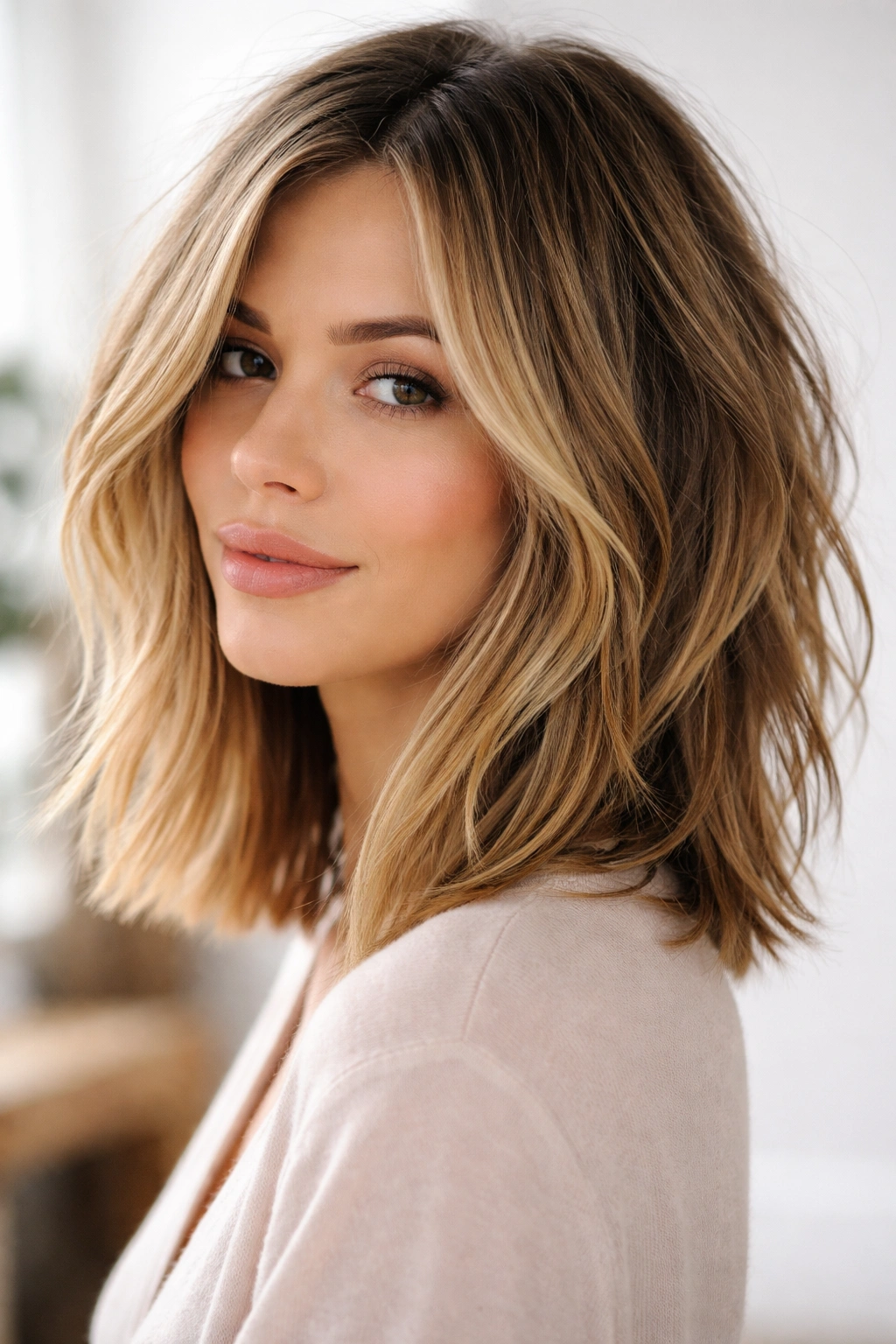
A choppy lob sits somewhere between your shoulders and mid-length, combining the versatility of longer hair with the volume-boosting power of choppy layers. The key difference between a choppy lob and a standard lob is that the layers are visibly textured and separated, not blended smoothly — you should see distinct pieces that move independently rather than one cohesive shape.
Why It Works for Volume
A choppy lob adds volume without requiring you to cut away the length you might want. The layers throughout the crown and body of the hair lift away from your scalp, and the choppy texture creates movement that makes the hair appear fuller and more voluminous than a blunt lob of the same length. The longer length also gives you more styling versatility — you can wear it down for fullness or in a half-up style that shows off the textured layers.
Who It Suits Best
Choppy lobs work beautifully on people who want length but also need the volume boost. They’re especially flattering on people with fine or thin hair because the layers remove weight while the length provides the ability to style around any thin spots. If you have a longer face, keeping some longer pieces around the face softens proportions; if you have a rounder face, choppy layers on top create useful height and balance.
How to Style It
Blow-dry with a large round brush to smooth and shape, or tousle with your fingers for texture. Use a texturizing spray or sea salt spray on damp hair before styling to encourage the layers to separate and move independently. You can also create waves with a curling iron to emphasize the choppy separation, or use a flat iron for a sleeker look that still shows off the textured layers.
5. Face-Framing Choppy Layers
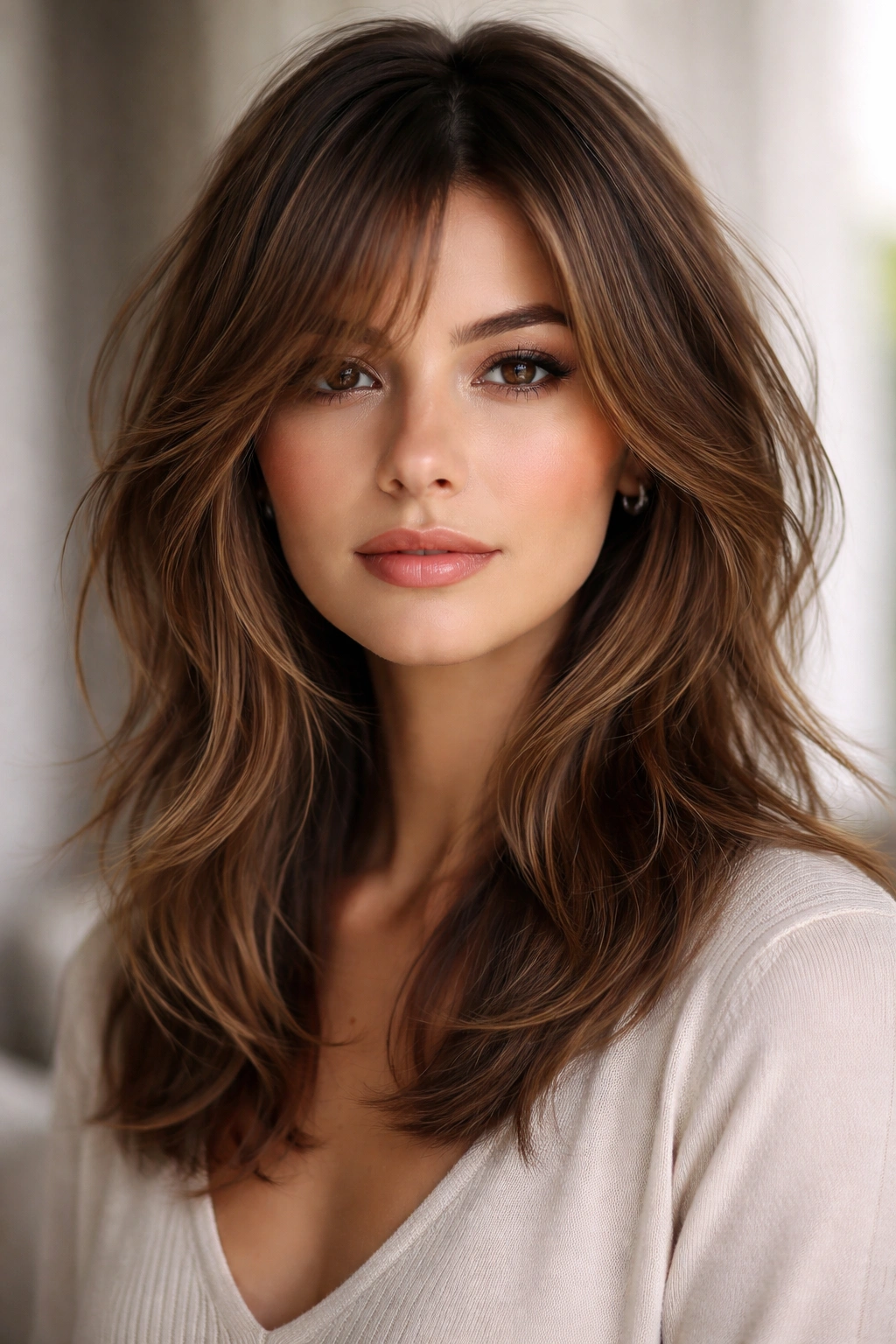
Face-framing layers are strategically shorter pieces positioned around your face — usually starting somewhere around cheekbone length — that create movement and softness while drawing attention to your features. When these face-framing pieces are cut choppy rather than smoothly blended, they create texture and dimension that enhances your face shape while adding volume where you need it most.
Why It Works for Volume
Face-framing choppy layers create volume specifically in the area closest to your face, which is visually the most important. The shorter, textured pieces catch light and create movement that draws eyes to your face itself rather than to any flat spots in your hair. The choppy separation also prevents the frame from looking like one heavy weight alongside your face — instead, you see individual pieces and texture that feel lighter and airier.
Who It Suits Best
Face-framing choppy layers work on virtually any hair length and texture, and they’re incredibly flattering across all face shapes. They soften angular features, add width to narrow faces, and create balance on round faces. If you have fine or thin hair, face-framing layers in the front create an illusion of fuller hair around your face. If you have thick, coarse hair, choppy face-framing layers help remove bulk while maintaining length.
How to Style It
Blow-dry your face-framing layers away from your face using a round brush and your blow dryer on a medium-high setting, or tousle them with your fingers while air-drying for a more relaxed texture. Apply a light volumizing mousse or texturizing spray to damp hair before styling, which helps the choppy layers stay separated and visible. You can also use a curling iron to wave just the face-framing layers, which emphasizes their movement and creates soft, flattering dimension.
6. Wolf Cut
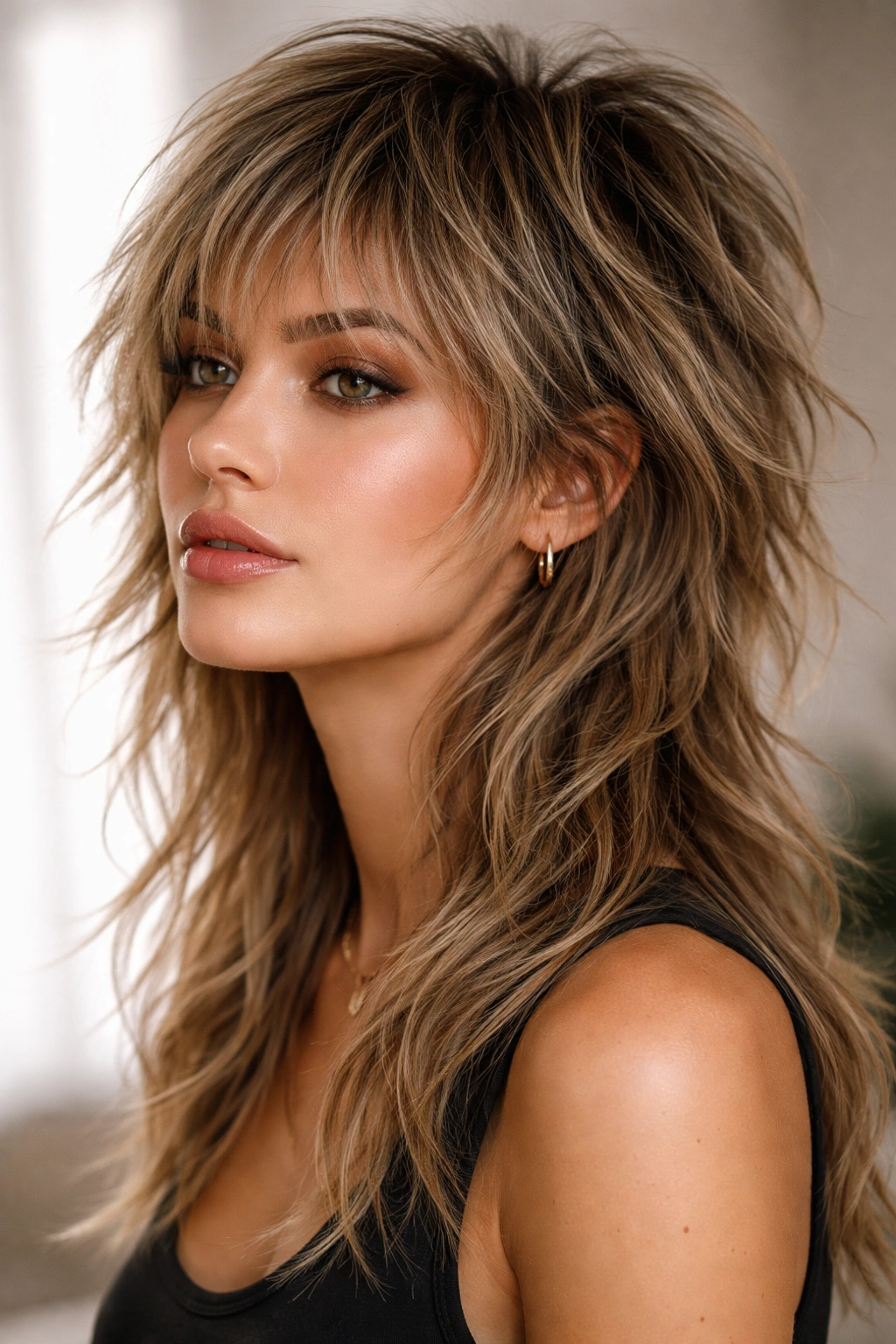
A wolf cut is a deliberately hybrid style that blends the shaggy, choppy texture of a mullet with the shorter, textured crown of a pixie or shag — creating a style that’s undeniably dramatic and fashion-forward. It features very short, choppy layers on top and longer, textured length underneath, with intentional contrast between the two sections rather than a smooth blend.
Why It Works for Volume
A wolf cut creates extreme volume through contrast — the short, choppy crown lifts massively away from your scalp, and the longer underneath sections provide visual fullness and movement. The choppy layers throughout both sections ensure that no single part of your hair sits as one heavy, flat mass. Light plays through the textured layers in multiple directions, making the overall effect significantly more voluminous than the actual density of your hair.
Who It Suits Best
Wolf cuts work best on people with naturally wavy or curly hair, because the natural texture emphasizes the choppy separation and intentional piece-y effect. Straight-haired people can wear a wolf cut too, but you’ll need to actively style it with texturizing products and possibly heat tools to make the choppy layers visible and separated. This is a statement cut — it works on confident people who want their hair to be noticed.
How to Style It
Blow-dry the crown with your head tipped forward to create maximum lift, then use your fingers to separate the choppy layers as they dry. Once the crown is mostly dry, flip your head back up and continue drying the longer underneath sections, encouraging them to move and separate. Apply a texturizing spray or matte pomade to damp hair before blow-drying to enhance the choppy, piece-y effect, and scrunch upward as everything dries.
7. Short Choppy Layers Throughout
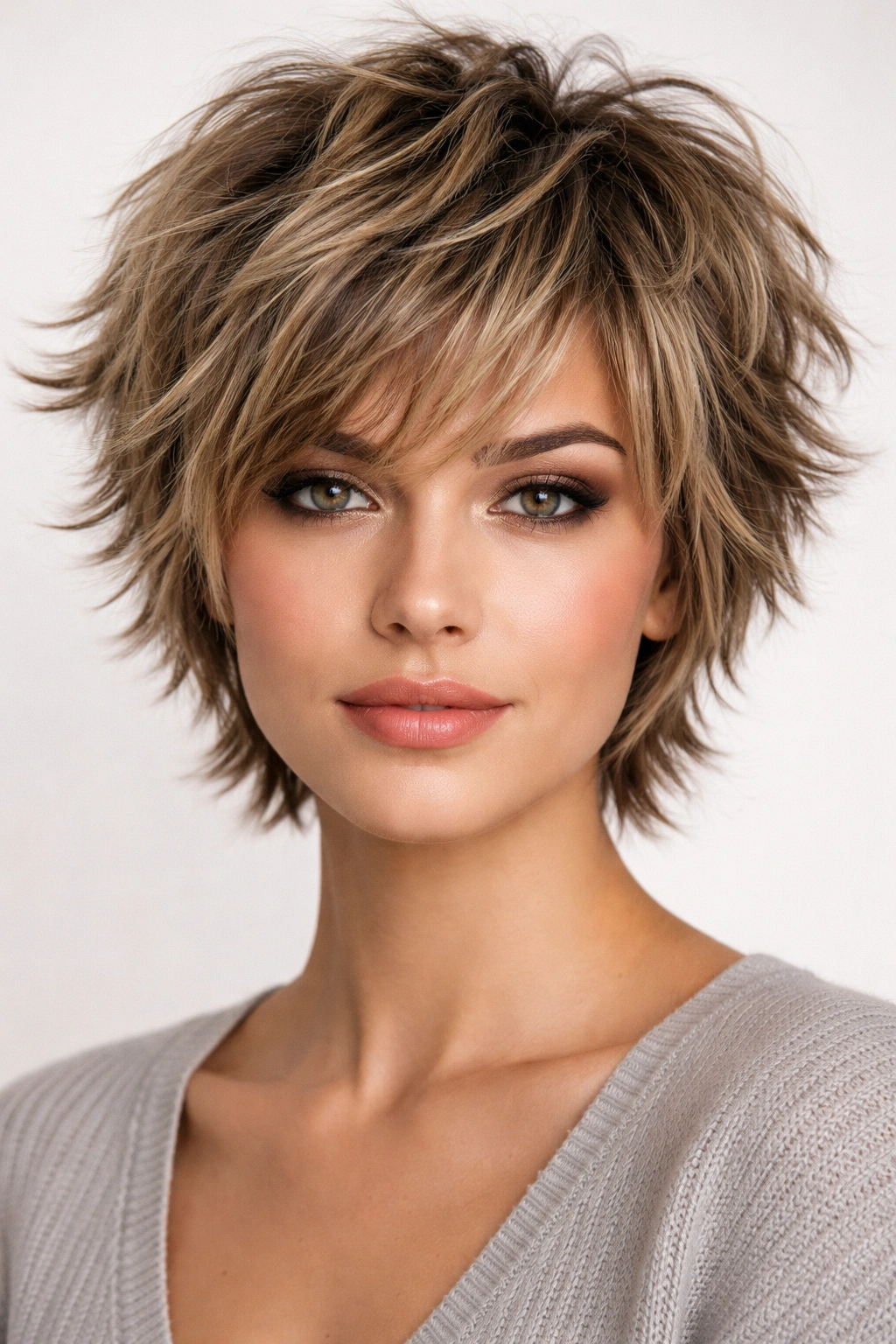
Short, choppy layers throughout the entire head — no longer underneath sections, no blended areas — create a uniform texture that’s textured, youthful, and dramatic. Think of it as a more aggressively textured version of a modern shag, where the choppy layers are more visible and intentional throughout every section.
Why It Works for Volume
Choppy layers throughout the entire head prevent any one section from sitting flat or heavy against your scalp. Every single strand is part of the layered structure, so you get maximum volume from the roots through the ends. The uniform choppy texture creates visual interest and movement from every angle, making even medium-density or fine hair appear significantly fuller because you’re seeing distinct pieces and separation throughout.
Who It Suits Best
Short, choppy layers throughout work beautifully on people with naturally wavy or curly hair, as well as those with fine hair that benefits from a lightweight cut. If you have a longer or narrower face, slightly longer pieces in the front create balance. If you have a rounder face, keeping the crown slightly shorter and fuller creates flattering proportion. This cut requires confidence in styling — it’s not a wash-and-go style for most people.
How to Style It
Blow-dry with your fingers, encouraging all the choppy layers to separate and move in different directions. Use a texturizing spray, sea salt spray, or volumizing mousse on damp hair before blow-drying to help the layers stay separated and visible. You can also use a diffuser attachment on your blow dryer if you have wavy or curly hair, which encourages your natural texture to express itself and emphasizes the choppy layers.
8. Textured Shoulder-Length Choppy Cut
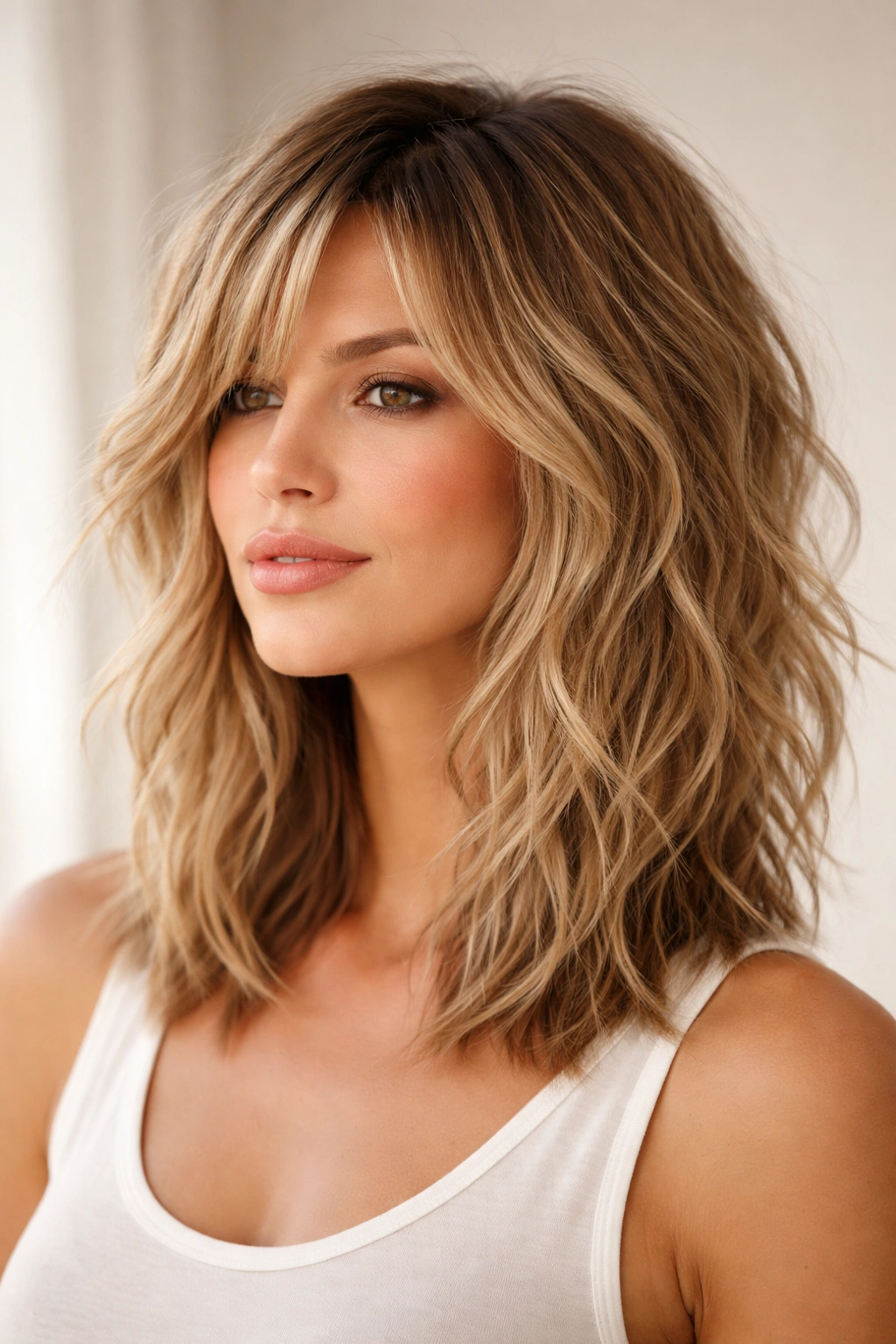
A choppy, textured cut that hits right around shoulder-length offers the perfect balance between length and volume-boosting texture. The layers are visible and choppy throughout — not subtle or blended — creating obvious texture and movement while still providing enough length to style multiple ways.
Why It Works for Volume
Shoulder-length choppy layers create volume through texture and strategic weight distribution. The layers throughout the crown and mid-lengths lift hair away from your scalp, and the visible choppy separation ensures that light plays through multiple layers rather than bouncing off one solid surface. The length also allows for the illusion of volume created by movement — longer pieces can swing and separate, amplifying the visual effect of the choppy layers.
Who It Suits Best
Shoulder-length choppy cuts work across hair types and face shapes. People with straight hair get clean, intentional definition; people with wavy or curly hair get that effortlessly textured, separated look that aligns with their natural pattern. If you have a longer face, shoulder-length keeps proportions balanced; if you have a rounder face, choppy layers on top create needed height. This length is also incredibly practical — it’s long enough to style in multiple ways but short enough to require less maintenance than very long hair.
How to Style It
Blow-dry with a round brush for a polished look, or tousle with your fingers for texture. Apply a volumizing mousse or texturizing spray to damp hair before blow-drying to encourage the choppy layers to stay separated and move independently. You can straighten with a flat iron for a sleeker effect, wave with a curling iron for soft texture, or embrace your natural texture and use products to enhance the choppy separation.
9. Choppy Bangs with Layered Texture
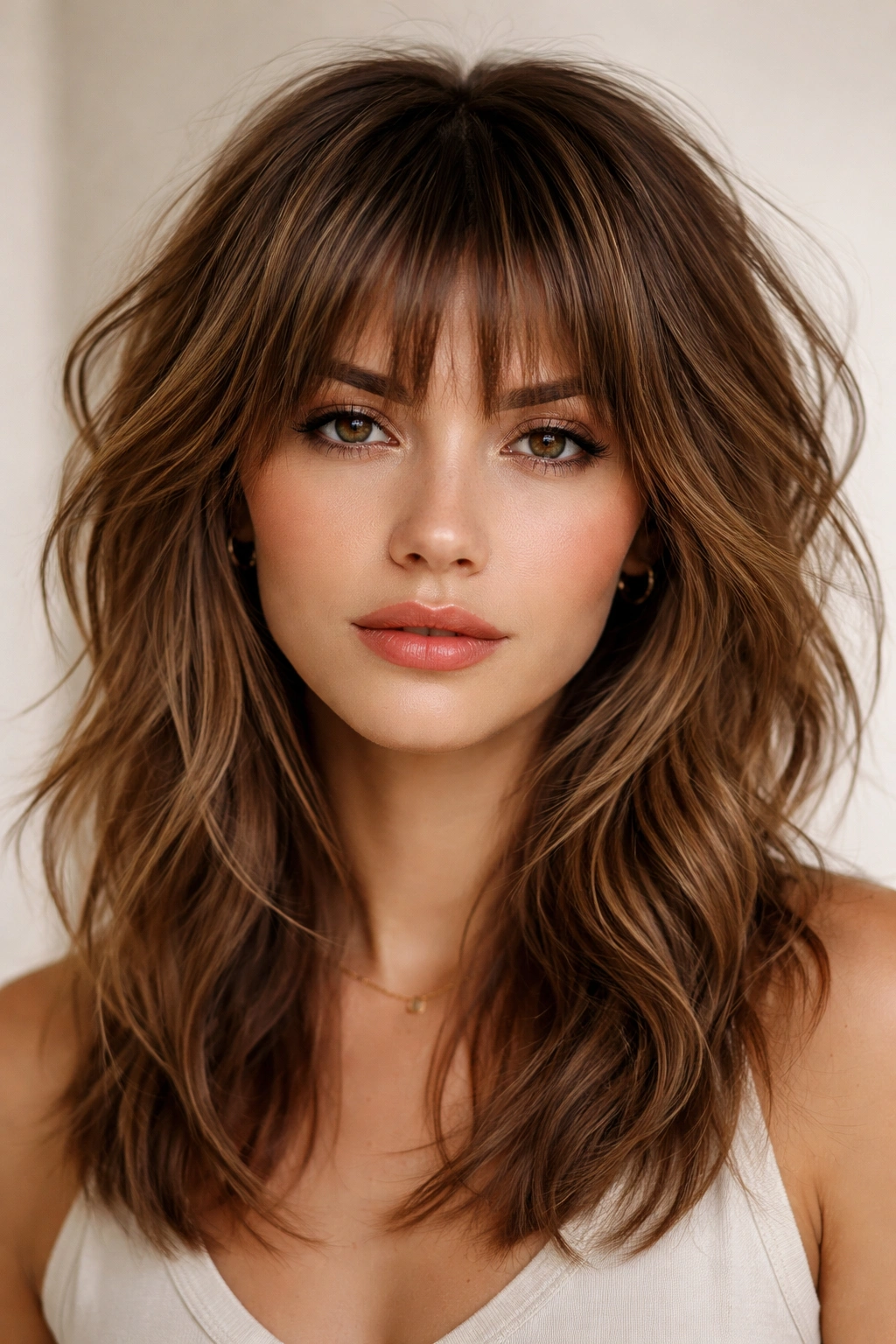
Choppy bangs — short, textured, piece-y fringe that sits above the eyebrow — combined with choppy layers throughout the rest of your hair, creates an ultra-modern, high-impact look. The choppy bangs instantly add volume to your forehead and face area while the layered texture throughout the rest of the hair creates overall fullness.
Why It Works for Volume
Choppy bangs add immediate volume to your face area, which is the first place people look. The textured, piece-y bangs create visual interest and width, making your face appear fuller and your hair appear denser right at eye level. Combined with choppy layers throughout the rest of your hair, you get maximum texture and separation, creating the optical illusion of significantly fuller hair than you might actually have.
Who It Suits Best
Choppy bangs work best on people with face shapes that benefit from width at the forehead — narrower or longer faces get particularly good proportion from choppy bangs. They also work beautifully if you have naturally wavy, curly, or textured hair, because the choppy bangs align with your natural texture pattern and don’t require you to fight your hair’s natural behavior to maintain them. If you have very straight hair, choppy bangs will require some daily styling to keep the piece-y effect visible.
How to Style It
Blow-dry your bangs with a small round brush or your fingers, directing them slightly off to the side or tousled upward to show off the choppy texture. Apply a texturizing product to damp bangs before blow-drying to enhance separation, and consider using a light hairspray to keep the piece-y effect intact throughout the day. Style the rest of your hair to complement the drama of the choppy bangs — either matching the choppy, textured energy or creating contrast with sleeker sections.
10. Disconnected Choppy Layers
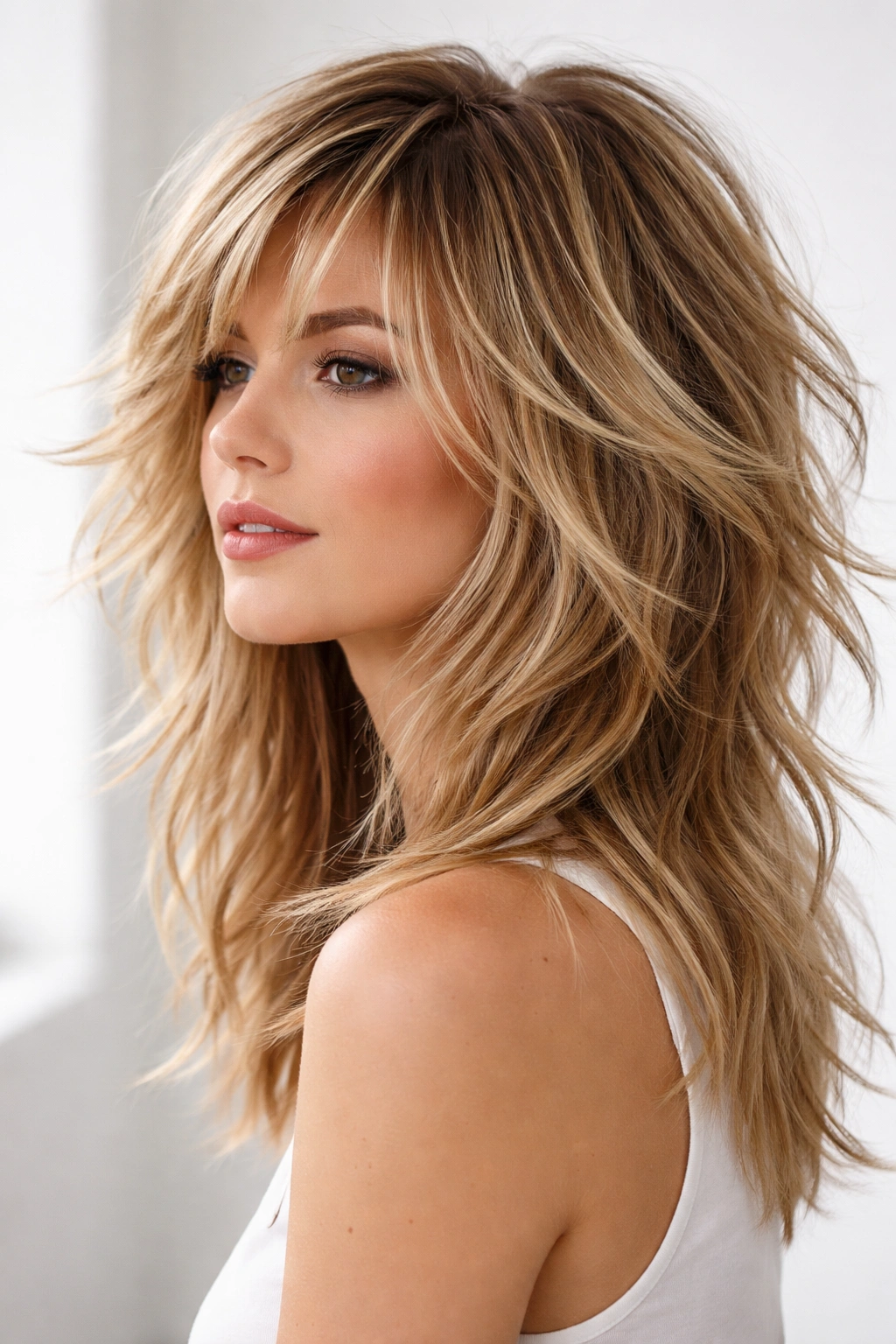
Disconnected layers are intentionally not blended together — instead, each layer sits distinctly separate from the layers above and below, creating obvious, visible texture and movement. This is an ultra-modern, fashion-forward style that requires a skilled stylist but creates remarkable volume and visual interest.
Why It Works for Volume
Disconnected choppy layers create volume through pure visual separation — because each layer doesn’t blend smoothly into the next, you see distinct sections of hair at different lengths, all moving independently. This visual multiplicity makes the hair appear far fuller than a blended layer cut of the same overall length and density. Light passes through multiple layers at different angles, creating dimension and the illusion of significant volume.
Who It Suits Best
Disconnected choppy layers work best on people with naturally wavy, curly, or textured hair, where the natural pattern of your hair naturally separates the layers and makes the disconnected effect visible and intentional-looking. Straight-haired people can wear this cut, but you’ll need to actively style it with texturizing products and heat tools to make the disconnection visible — without that effort, disconnected layers can read as choppy without the intentional, editorial quality.
How to Style It
This cut requires deliberate styling to look its best. Blow-dry with your fingers, working through each section to encourage the disconnected layers to separate and move independently. Use a texturizing spray, sea salt spray, or volumizing mousse on damp hair, and apply additional texturizing product to dry hair to emphasize the layered separation. Consider using a curling iron or wand to wave individual sections, which emphasizes the disconnected effect and creates maximum movement.
11. Feathered Long Layers
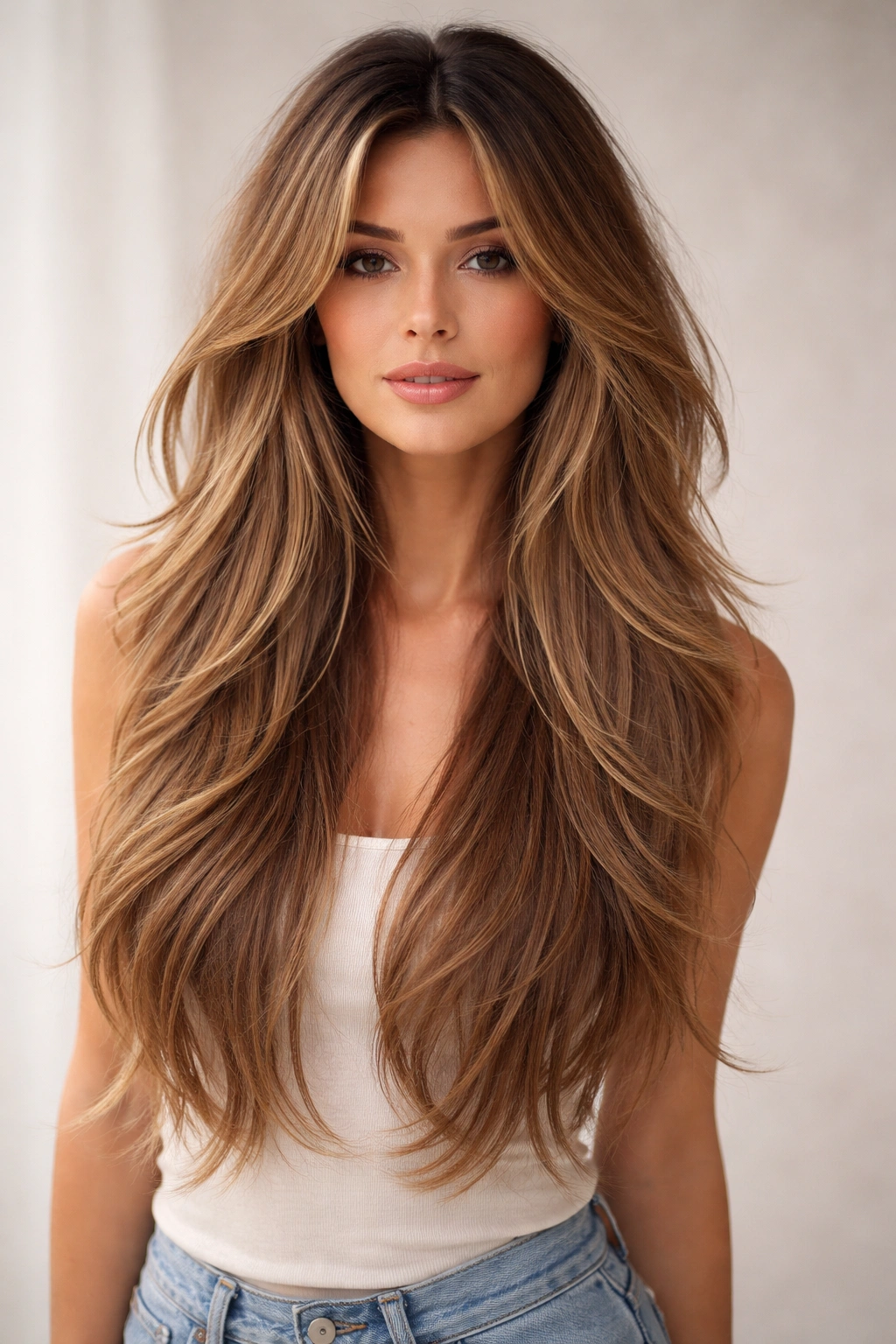
Feathered layers are choppy layers where the choppy quality creates a soft, wispy effect rather than a blunt, sharp one. Picture layers that gradually taper to points rather than ending in visible chunks — creating feathery, piece-y texture that’s romantic and soft while still adding significant volume. These layers can extend all the way down long hair, creating movement throughout.
Why It Works for Volume
Feathered, choppy layers create volume through soft texture rather than blunt, sharp separation. The tapered, feathery quality means that light bounces off multiple layers and angles, creating visual fullness and movement. Because the layers taper gradually rather than ending bluntly, they read as effortless and intentional — the hair appears to naturally separate into pieces rather than being deliberately cut into chunks. This works beautifully for people who want volume but also want their hair to feel soft and wearable rather than edgy or extreme.
Who It Suits Best
Feathered, choppy layers work across virtually all hair types and face shapes. They’re especially flattering if you have long hair and want to add volume without cutting away significant length. People with fine or thin hair benefit from the lightweight, tapered quality of feathered layers — they remove bulk while maintaining length. Feathered layers also work beautifully if you have naturally wavy or curly hair, as the soft texture aligns perfectly with your natural pattern.
How to Style It
Blow-dry with a large round brush, directing the feathered layers outward and away from your face for maximum volume and movement. You can also let feathered layers air-dry, especially if you have wavy or curly hair — the natural texture will encourage the soft, separated quality. Use a light texturizing spray or sea salt spray on damp hair to enhance the feathery separation, or apply a light pomade or cream to dry hair to emphasize individual pieces.
12. Choppy Asymmetrical Cut
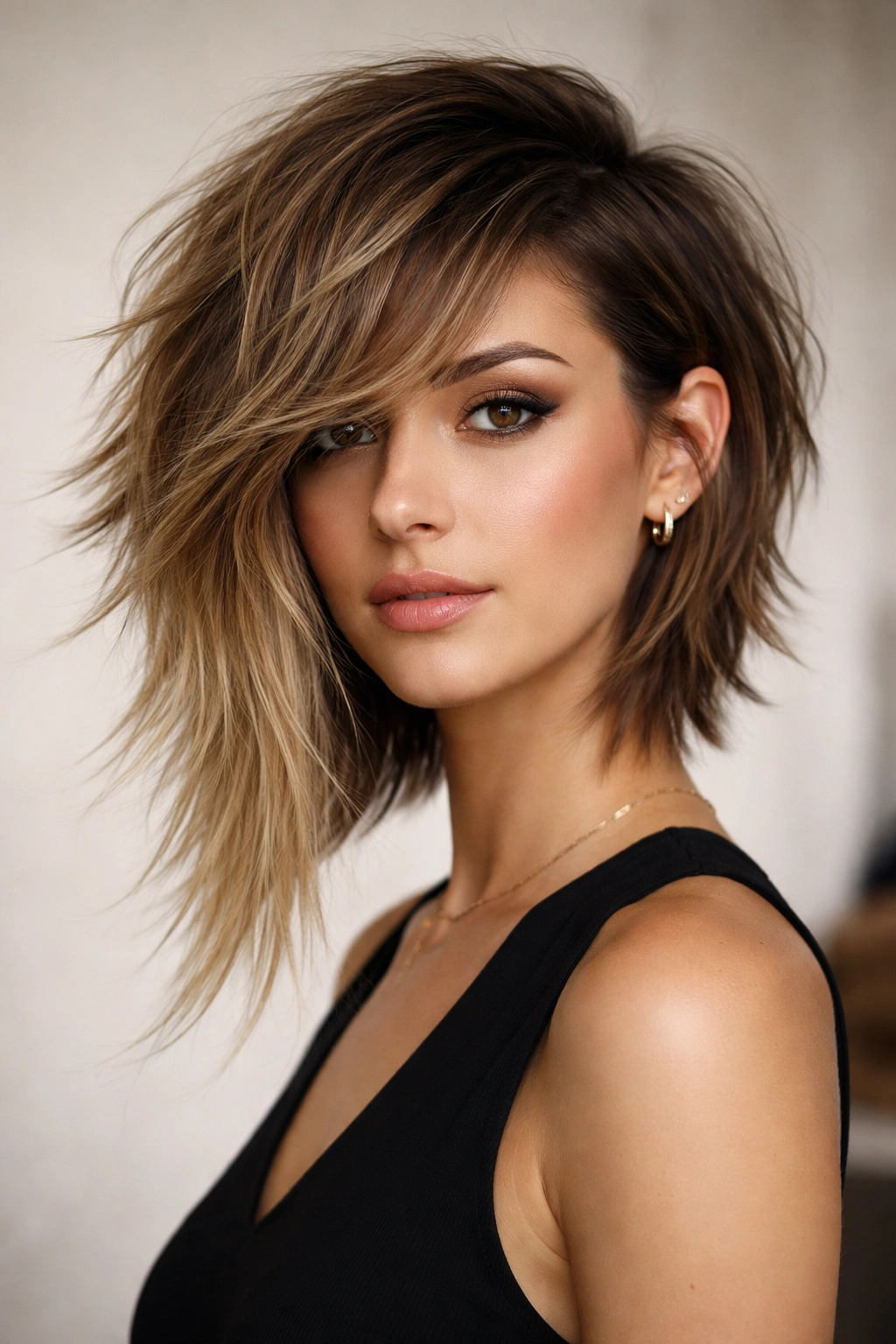
An asymmetrical choppy cut features noticeably different lengths on each side — one side significantly shorter or longer than the other — combined with choppy, textured layers throughout. This creates a bold, fashion-forward look with dramatic movement and visual interest.
Why It Works for Volume
An asymmetrical choppy cut creates volume through both the textured, choppy layers and the dramatic length difference between sides. The shorter side appears fuller because of the choppy texture, while the longer side provides movement and the illusion of volume through that movement. The asymmetry also creates visual interest that makes the hair read as more substantial and intentional than a symmetrical cut of the same overall density.
Who It Suits Best
Asymmetrical choppy cuts work best on people with confident personal style and naturally wavy, curly, or textured hair. The asymmetry and choppy texture should align with and enhance your natural hair behavior rather than fighting it. This cut requires skill to cut properly and intention to style well, so it’s ideal for people willing to invest in both. If you have a longer or narrower face, an asymmetrical cut can create flattering width; if you have a rounder face, keeping the longer side slightly longer softens proportions.
How to Style It
Blow-dry with intention, emphasizing the choppy layers and the asymmetrical movement. Use a texturizing spray on damp hair before blow-drying, then blow-dry with your fingers or a round brush, encouraging each side to move and separate according to its length. You can tousle the shorter side upward for maximum texture, and wave or straighten the longer side depending on the vibe you want. This cut should feel intentional and edited — it’s not a wash-and-go style.
Final Thoughts

Choppy layers are one of the most effective, fastest ways to transform your hair from flat and listless into textured, voluminous, and full of movement. The beauty of choosing a choppy layer haircut is that the volume boost is built into the cut itself — you’re not relying on products, styling tricks, or heat tools to create fullness. The right choppy layer style works with your natural hair texture rather than against it, which means better results and less daily styling effort.
The key to getting the results you want is finding a stylist who understands choppy layers specifically — someone who recognizes the difference between choppy and just regular layers, and who knows how to cut texture into your hair in a way that supports your face shape and hair type. When you sit down for your consultation, bring photos of styles you love and be specific about what you’re looking for. Are you drawn to the sharp, piece-y quality of a modern shag? Or the soft, feathery texture of feathered layers? Do you want short, dramatic choppy texture or longer, textured layers? The more specific you can be, the better your stylist can deliver exactly what you’re imagining.
Remember that choppy layers do require a bit more styling intention than some other haircuts — most choppy layer styles will look their absolute best with a texturizing product and a blow-dryer rather than completely air-dried. But the payoff is worth it: textured, voluminous hair that looks fuller, moves better, and photographs beautifully. You’ll get compliments on your hair, and you’ll feel the confidence that comes with a great cut that works for you.
