



If you’re tired of flat, one-dimensional haircuts that fall limply by the end of the day, textured shag layered cuts might be exactly what your hair’s been craving. These cuts have made a serious comeback over the past several years, and for good reason—they deliver movement, volume, and an effortless coolness that feels both modern and timeless. The beauty of a well-executed shag is how it works with your hair’s natural texture instead of fighting it. Those choppy, uneven layers create natural breakup points that make even finer hair look fuller and thicker, while textured ends catch the light beautifully as you move.
What separates a truly great shag from a mediocre one is how the layers are cut and texturized. It’s not just about choppy bangs and random layers—it’s about strategic placement, angle, and the kind of textured finishing that gives you that coveted “just got out of bed but somehow still look amazing” vibe. The right shag works because it’s low-maintenance without looking neglected. You’re not fighting your hair’s natural wave pattern or texture; you’re enhancing it. Whether your hair is thick and straight, fine and wavy, or somewhere in between, there’s a shag variation that’ll make you feel genuinely confident.
The movement in these cuts comes from how the layers are structured and how the ends are texturized through techniques like point-cutting, razor-cutting, or dry-cutting methods that create piece-y, separated ends rather than blunt, dense layers. A shag that moves is a shag that works—it catches light, it swings when you turn your head, and it frames your face in the most flattering way possible. Let’s explore eighteen distinct approaches to this cut that’ll help you find the exact shag that speaks to your hair type, face shape, and personal style.
1. The Feathered Classic Shag
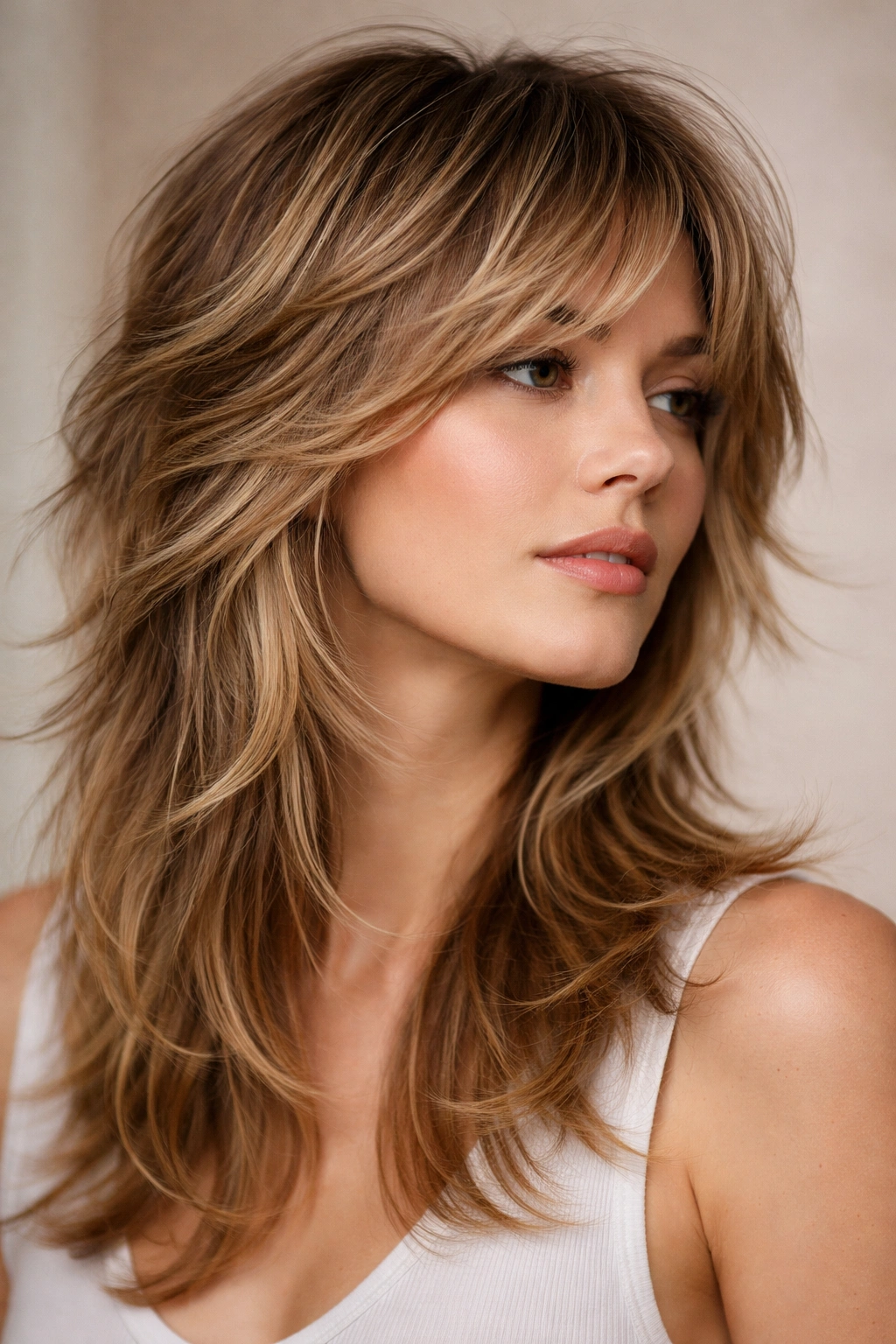
The feathered shag is where many people start, and it’s timeless for a reason. This cut features shorter layers around the crown and face that gradually lengthen toward the back, creating what looks like feathers cascading down your head. The key to getting movement here is in the texturizing technique—point-cutting the ends creates those separated, feathery strands rather than a blunt line. Your stylist will layer the crown heavily to create lift at the root, which means your hair gets natural volume even without styling.
Why This Cut Delivers Movement
The feathering technique literally separates individual sections of hair at the ends, so when you move, each piece has freedom to shift independently. This creates visible swinging and flow that you genuinely feel. Fine hair suddenly looks thicker because those feathered ends catch light from multiple angles, and even if your hair doesn’t have much natural wave, the layers themselves create movement just by how they’re structured.
Best For & How to Style It
- Works beautifully on straight, wavy, and slightly curly hair textures
- Face shapes: Oval, heart, or rectangular faces benefit most
- Styling: Air-dry and run your fingers through, or blow-dry with a round brush for bounce
- Requires: Light texturizing product and maybe a light hairspray to hold the movement
2. The Modern Mullet Shag
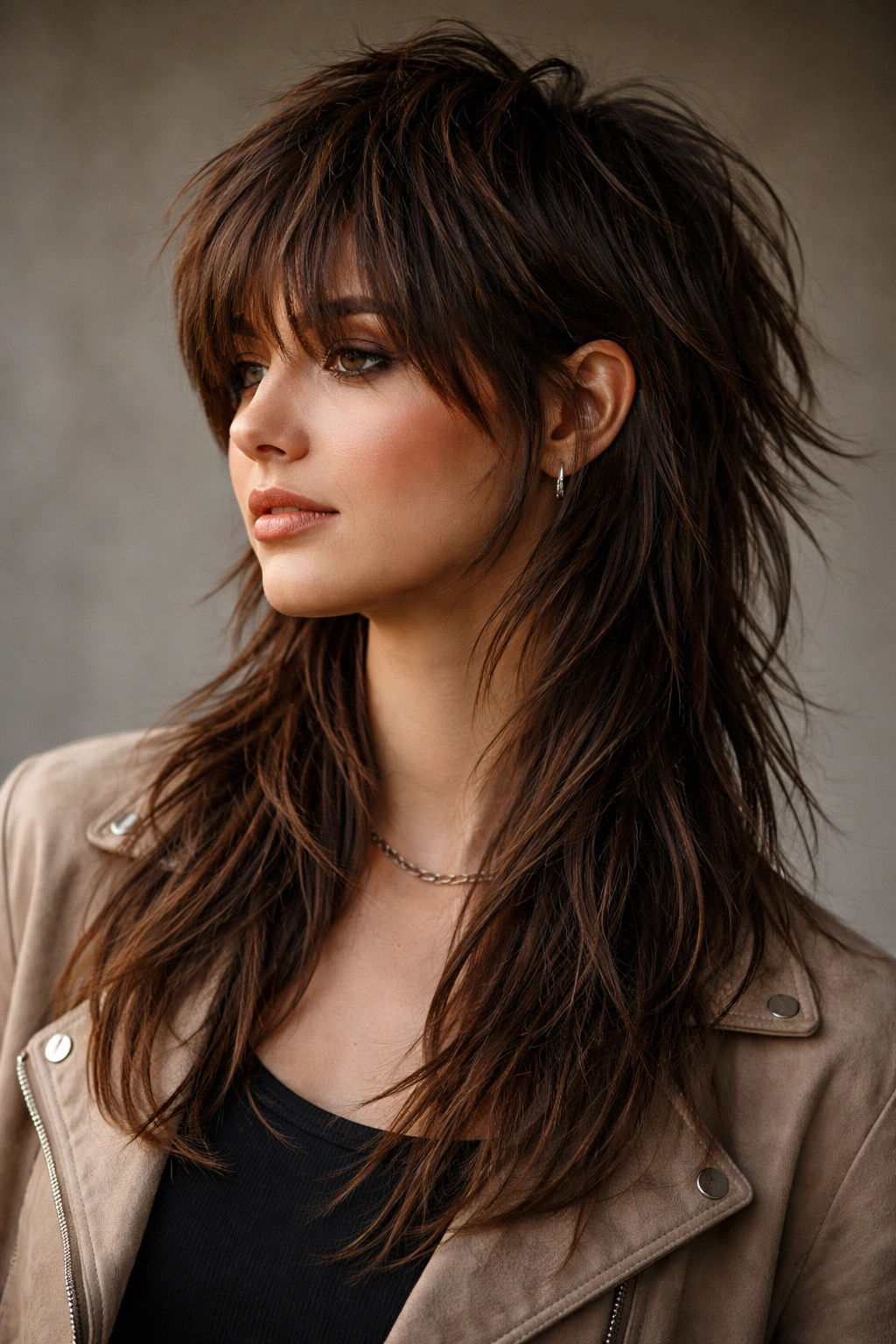
Don’t dismiss the mullet shag just yet—the modern version is nothing like the ’80s iterations. This cut keeps length and fullness at the back while the front and sides are significantly shorter and heavily layered for immediate movement and texture. It’s bold, it photographs beautifully, and it absolutely delivers on the movement front because the contrast between the short textured layers and longer back creates visual drama and actual motion when you move.
What Makes It Modern
The softness is what transforms a retro mullet into something current. Instead of harsh, blunt lines, the stylist uses texturizing techniques to blend the short and long sections seamlessly. The front layers are choppy but intentional, point-cut to create those separated strands rather than harsh choppy lines. The back stays long but gets internal layers so it moves as one cohesive piece rather than looking heavy.
Best For & Styling Tips
- Most flattering on people with thick or medium-density hair
- Face shapes: Works especially well on oblong or long faces
- Requires commitment: You’ll need trims every 4-6 weeks to keep the short sections sharp
- Styling: Front can be styled with texture paste for piece-y separation; back can be wavy or straight
3. The Butterfly Shag
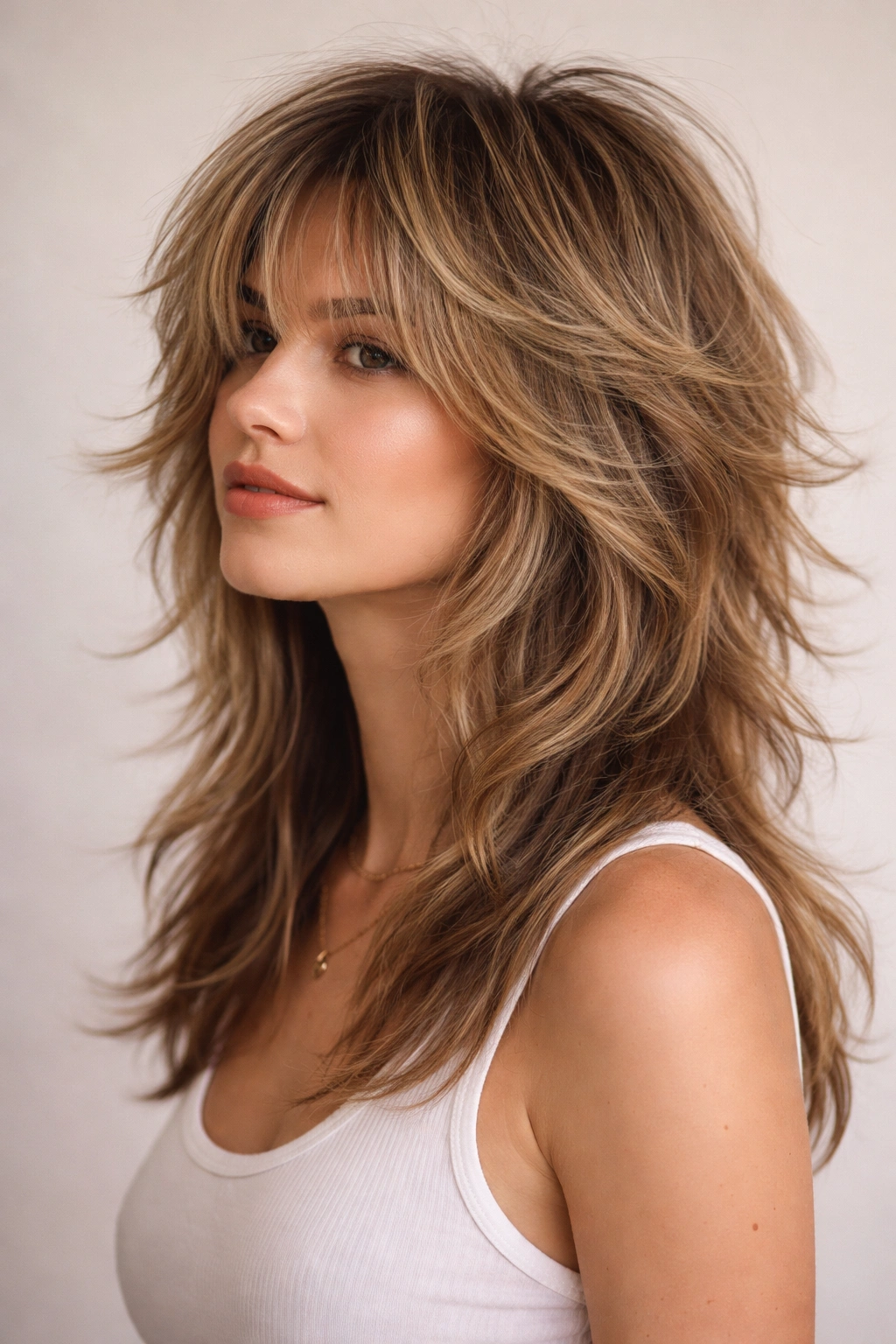
Named for how the layers flutter around your head like butterfly wings, this cut is all about maximum texture and movement. The layers start very short at the crown and progressively lengthen, but they’re cut at angles that make them fan outward slightly rather than falling straight down. This creates that light, airy, almost weightless feeling where every piece of your hair seems to move independently. It’s especially gorgeous if you have any natural wave or curl to work with.
The Texturizing Magic
Butterfly shags rely heavily on dry-cutting techniques where your stylist cuts your hair while it’s in its natural state rather than wet. This allows them to see exactly how the texture and wave will fall, and they can cut accordingly. The angled layers mean that even blow-dried straight, you get subtle movement, but if you embrace your natural texture, this cut absolutely sings.
Best For & Care Requirements
- Ideal for wavy and curly hair types, but works on straight hair too with proper styling
- Face shapes: Especially flattering on round or square faces
- Styling: Minimal effort—air-dry and scrunch with a curl cream, or blow-dry with fingers for texture
- Maintenance: Every 6-8 weeks to keep the layers looking intentional
4. The Long Textured Shag
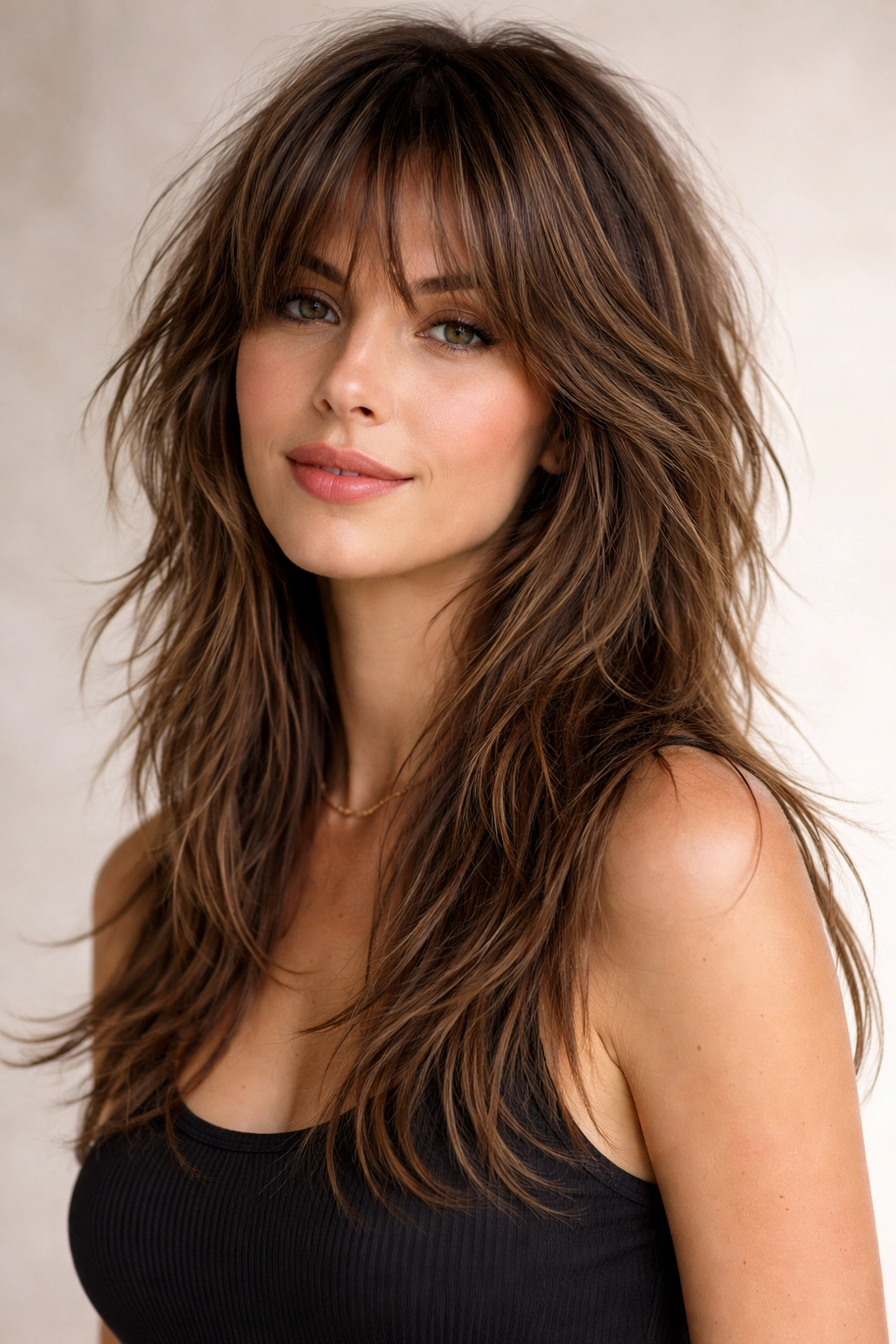
If you’re not ready to go short but want serious movement and texture, the long shag keeps you closer to shoulder length or longer while still delivering all that choppy, layered goodness. The layers are more subtle than shorter shags, with the most dramatic texture concentrated around the face and crown, while the back gradually grows out with internal layers that prevent it from becoming heavy. This works beautifully if you’re transitioning from a blunt cut or if you just prefer having length to work with.
Movement Through Strategic Layering
The longer the shag, the more important it is that layers are cut at varying angles. Otherwise, all that length can look flat and one-dimensional. A skilled stylist will cut some layers to fall straight, some at a slight angle, and some more dramatically angled so that when your hair dries or moves, you get natural separation throughout the entire length. The back gets subtle internal layers that keep it from becoming a dense, heavy rectangle.
Best For & Styling Approach
- Works on most hair types, especially wavy and textured hair
- Face shapes: All face shapes work; customize the front layers to frame your specific face
- Styling: Blow-dry with a round brush for a polished look, or air-dry for a relaxed, more textured appearance
- Timeline: Can go 8-10 weeks between trims since the length is less dramatic
5. The Choppy Bangs Shag
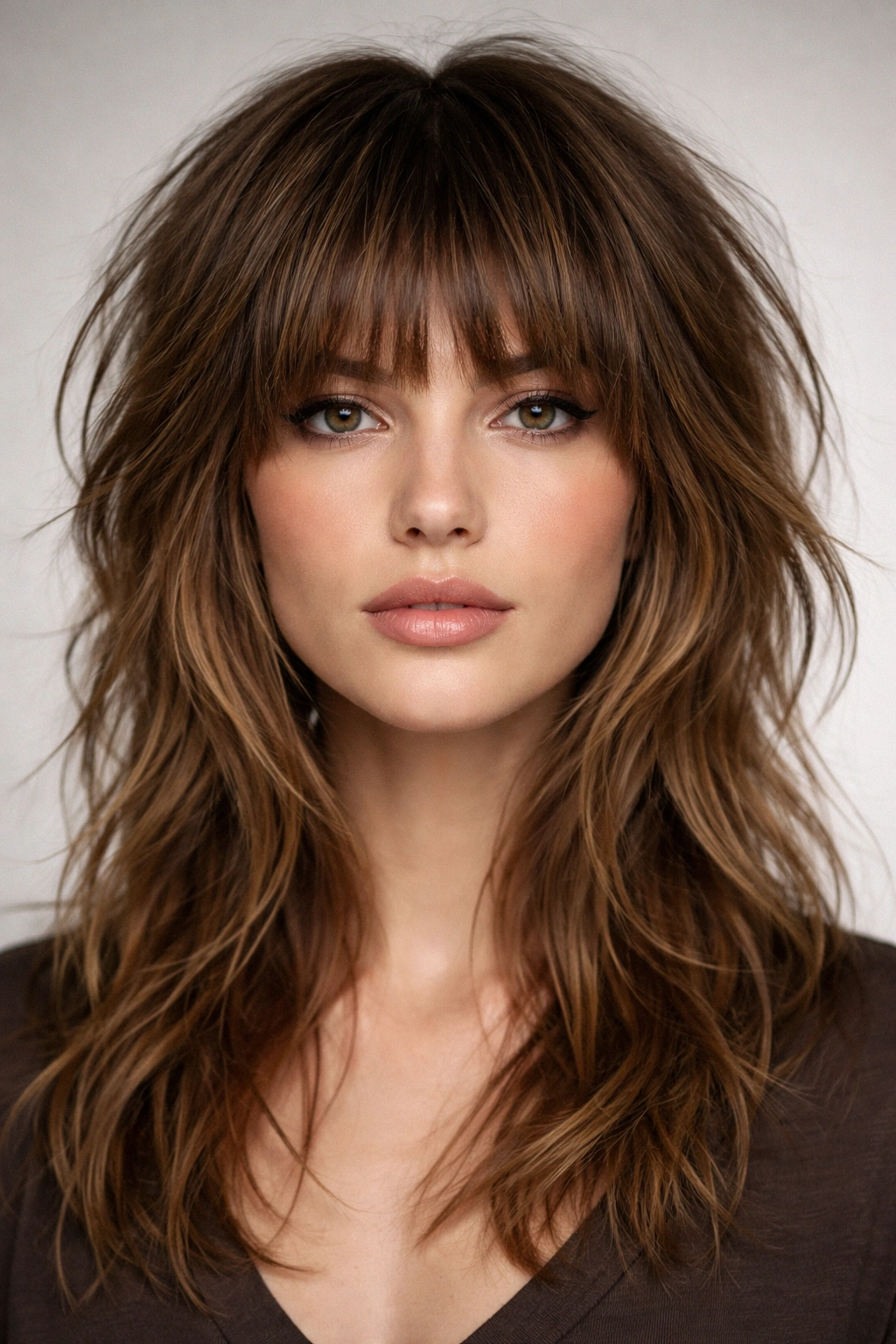
This version leads with statement-making choppy bangs that sit right around your eyebrows or slightly above, cut with extreme texture and separation so they move independently. The rest of the head gets layered in that classic shag structure, but the emphasis is entirely on those bangs. This cut has a built-in edgy, modern feel because the bangs are so textured and piece-y. It works whether you’re going for grunge-inspired or just want that subtle “I’m slightly undone but make it look intentional” vibe.
Bangs as the Statement Maker
Choppy textured bangs create immediate movement and draw attention to your eyes. They’re cut short enough that they’re visible from the front but not so short that they’re impractical. The texturizing means they don’t sit as one heavy line—instead, you get individual strands that move separately. This creates the illusion of more texture and dimension even if your hair is naturally straight and fine.
Best For & Daily Management
- Works on most hair types; wavy hair makes these bangs even more forgiving
- Face shapes: Rectangular, oblong, and heart shapes benefit most from the framing
- Styling: Bangs might need a light daily style with a straightener or round brush
- Maintenance: Bangs grow quickly and get texture-less after 3-4 weeks, so plan for frequent trims
6. The Textured Crown Shag
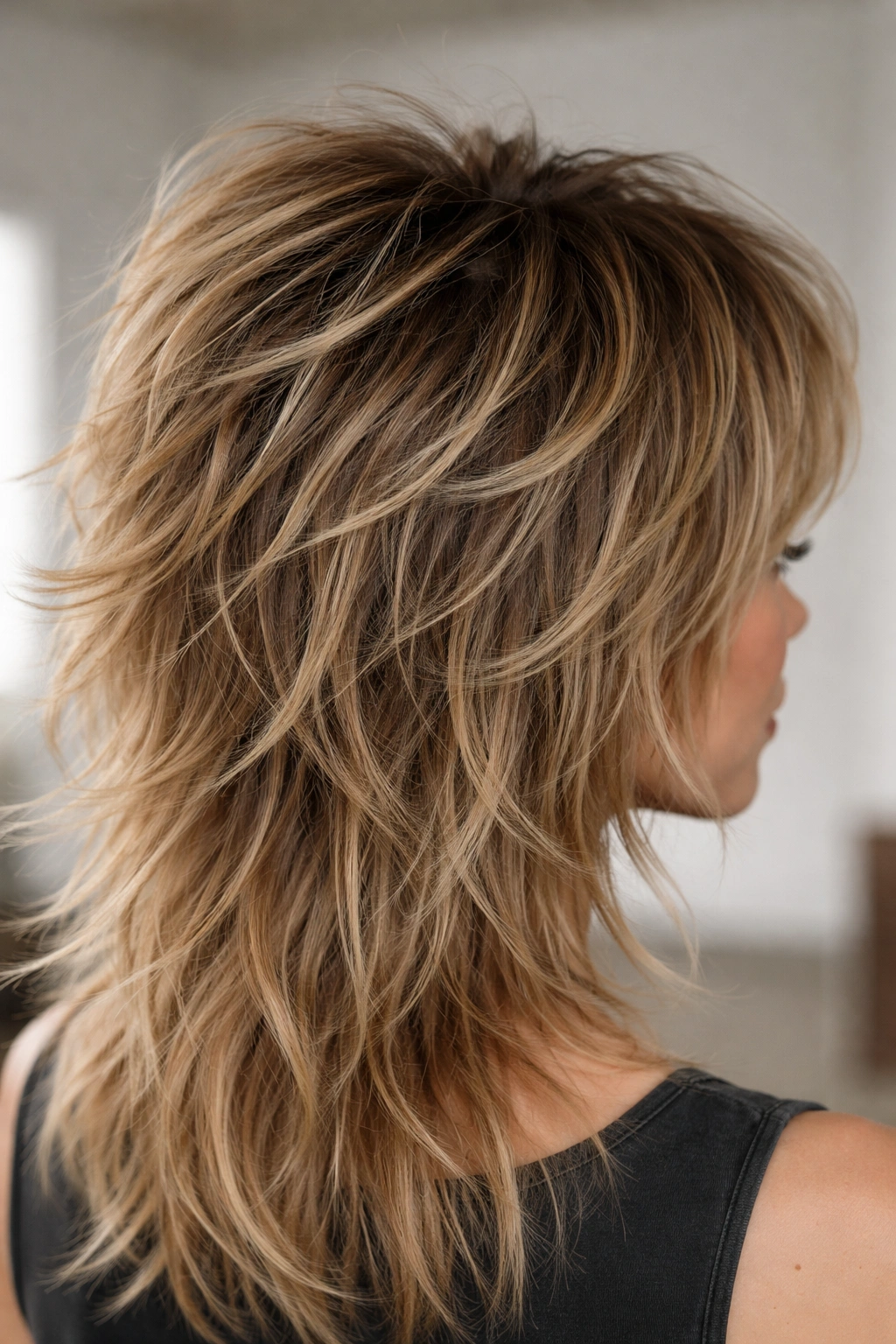
This cut concentrates most of the dramatic layering and texture right at the crown and through the top section of your hair, while the underneath is left longer and less layered. What this does is create incredible lift and volume at the root without making the cut look obvious or extreme. The texture gradually softens as you move down, so by the time you reach the back and lower lengths, the layers are more subtle. It’s an excellent choice if you want movement and texture but aren’t ready for a super choppy all-over shag.
Crown Volume Without Apparent Effort
Layering heavily at the crown makes fine or thin hair appear substantially fuller because you’ve removed weight from the top and created multiple contact points where light hits your hair. The texture means these layers don’t sit flat or merge together—they stay separated and visible. You get that “my hair just has this much volume naturally” effect without actually needing thick hair.
Best For & Maintenance
- Perfect for fine or thin hair types that need volume without heaviness
- Face shapes: All shapes work; the crown texture frames your face beautifully
- Styling: Blow-dry with fingers or a round brush to activate the texture at the crown
- Growth pattern: The softer layering at the back means you can go 8-10 weeks between trims
7. The Wavy Shag with Shorter Face Layers
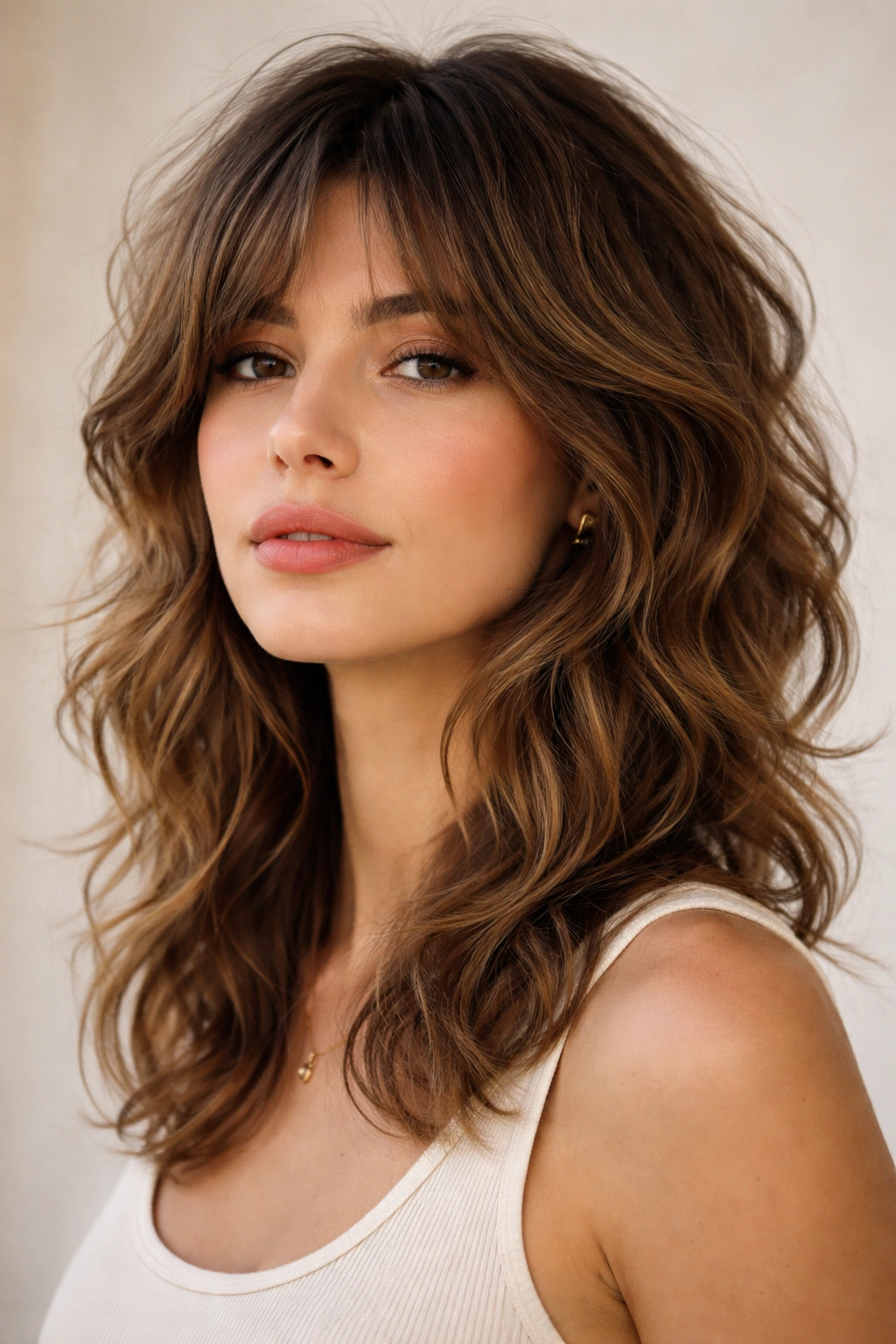
This variation pairs shorter, face-framing layers with a more relaxed, wavy body throughout the rest of the hair. The face layers are where the dramatic texture lives—point-cut and choppy so they move independently and frame your features. The rest of the shag is less intensely layered, relying more on your hair’s natural wave to create movement. This approach is perfect if you have wavy or curly hair and want texture without looking like you just got attacked with a razor.
Embracing Your Natural Wave
When your stylist cuts this shag, they’re working with your natural texture rather than against it. The face layers are short enough that they catch your natural wave perfectly, and they’re textured in a way that enhances rather than fights your curl pattern. The longer sections get gentle layers and texturizing but aren’t chopped so aggressively that they look frizzy or separated.
Best For & Styling Method
- Ideal for naturally wavy and curly hair textures
- Face shapes: Round and square faces especially benefit from shorter face layers
- Styling: Scrunch with a curl cream while damp, air-dry or diffuse-dry for natural texture
- Product needs: Minimal—mostly curl cream and maybe a light styling cream for definition
8. The Razor-Sharp Textured Shag
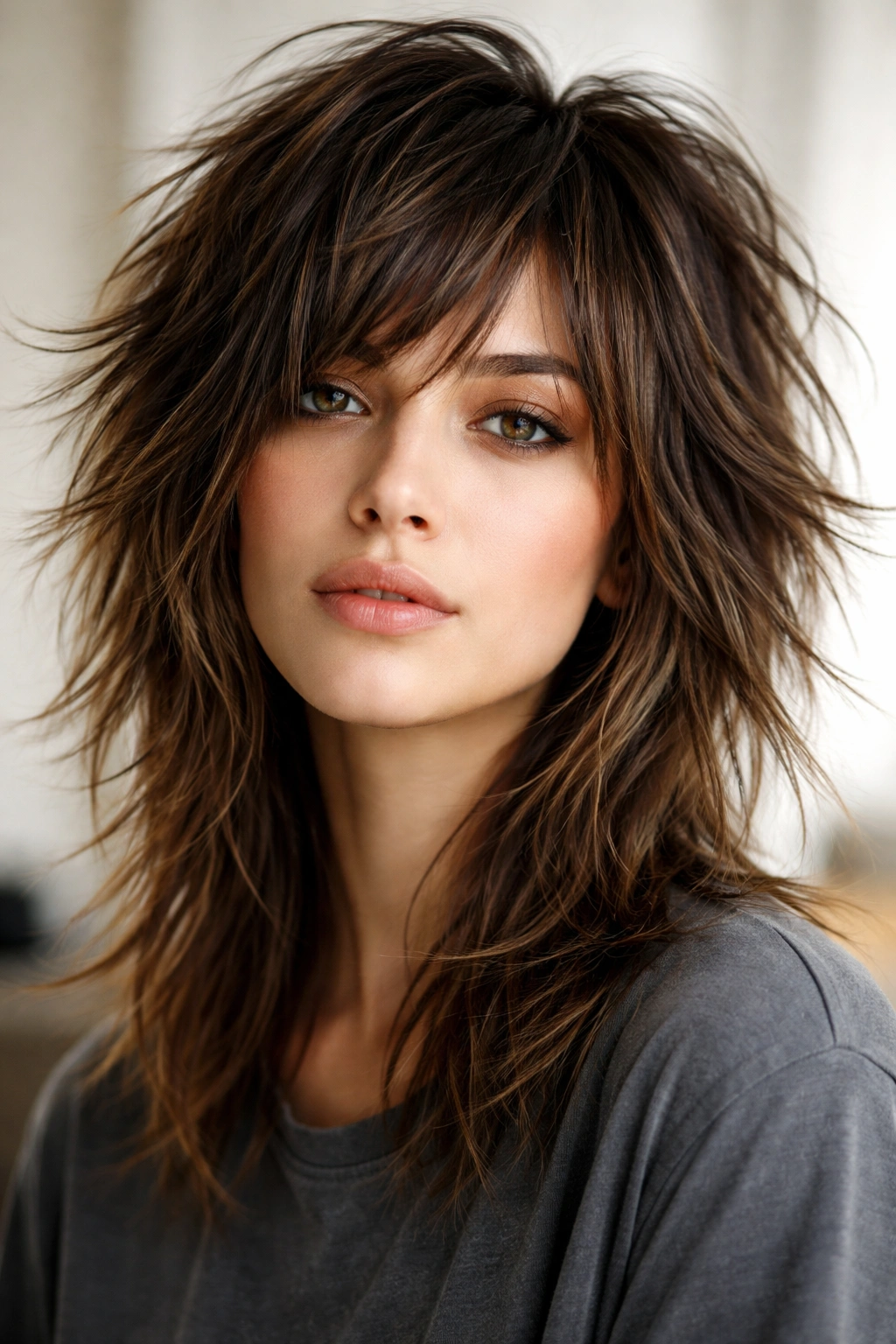
This shag uses razor-cutting exclusively to create the most dramatic, piece-y texture possible. Every layer is cut at a precise angle with a sharp razor that leaves the ends separated and distinct. The effect is intentionally choppy and textured—not blended or soft. This works beautifully for people who want that undeniable movement and don’t mind a cut that looks edgy and intentional. The razor-sharp texture means even a simple air-dry gives you visible separation and movement throughout.
The Precision of Razor-Cutting
Razor-cutting creates a different texture than scissors or point-cutting because the blade is at an angle rather than perpendicular to the hair strand. This angle literally separates the hair at the ends rather than sealing it, so you get that piece-y, separated look without having to style it to death. Straight hair suddenly has texture, and wavy hair gets amplified texture that’s really dramatic and visible.
Best For & Care Considerations
- Works on all hair types but is especially striking on straight, fine, or thin hair
- Face shapes: All shapes; the dramatic texture is flattering on everyone
- Styling: Minimal required; air-dry and use fingers to separate the pieces
- Fair warning: Razor-cut hair can be more prone to frizz with humidity, so styling products matter more here
9. The Textured Pixie Shag Hybrid
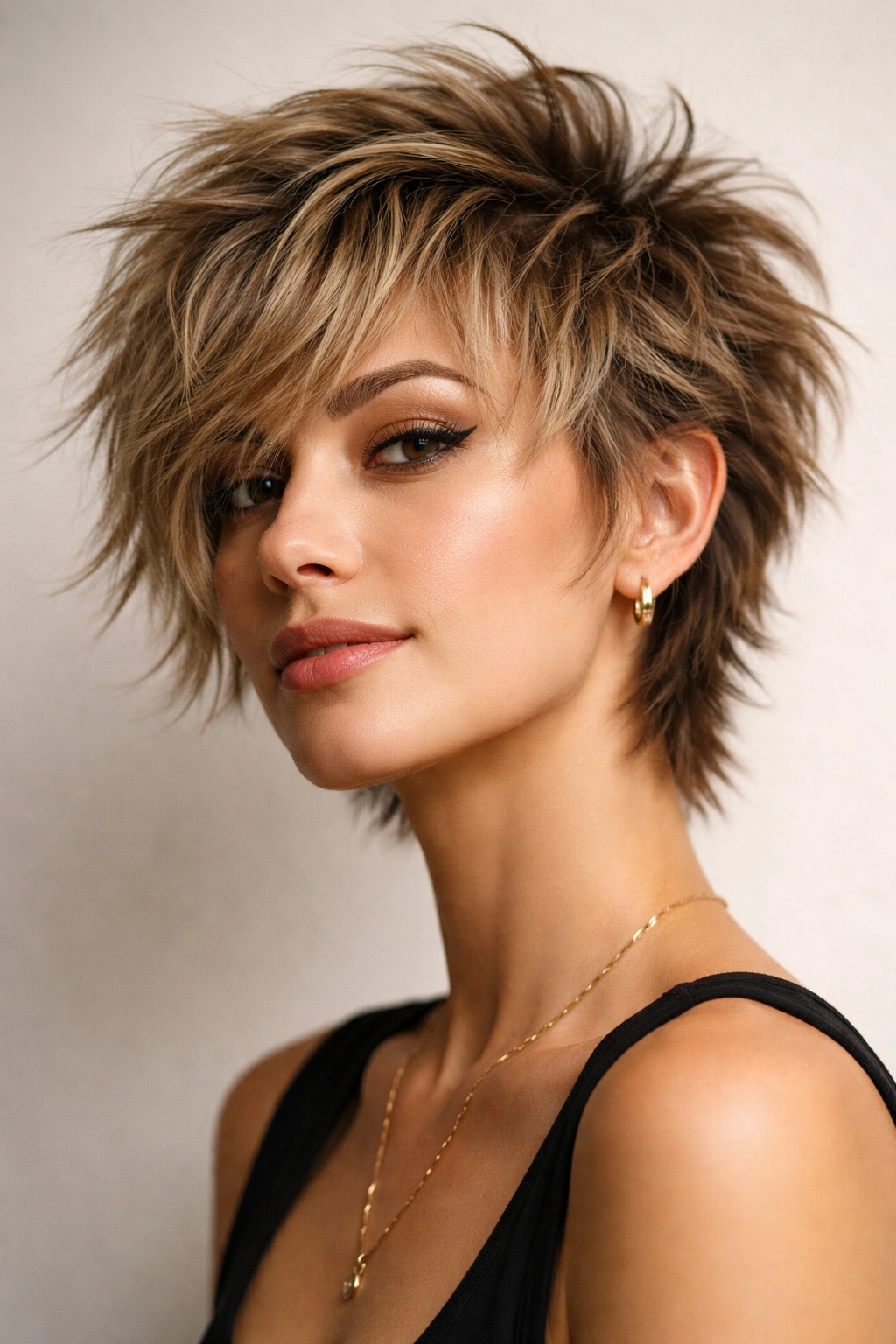
For those who want short hair but don’t want to go full pixie, this hybrid takes pixie cut elements—like the short crown and close-fitting sides—and adds shag-style texture and layering throughout. The crown might be just 2-3 inches, but it’s heavily textured so it stands up and has movement. The sides stay relatively short and close to the head, but they’re layered and textured rather than blunt. It’s a sophisticated, low-maintenance option that delivers serious movement because short textured hair moves with every shift of your head.
Short Length, Maximum Movement
With shorter hair, every bit of texture is visible and dramatic. A textured pixie shag moves when you turn your head, when you walk, when you talk—you’re constantly aware of the texture and movement because it’s so visible. The cut requires less daily styling than longer shags but demands more frequent trims (every 4-6 weeks) to keep the shape clean and the texture intentional.
Best For & Styling Reality
- Works on all hair types but especially striking on straight and wavy hair
- Face shapes: Oval and rectangular faces; can balance round faces with careful styling
- Styling: Blow-dry with fingers or a round brush for texture and lift
- Commitment: More frequent salon visits to maintain the shape and texture
10. The Tousled Layers Shag
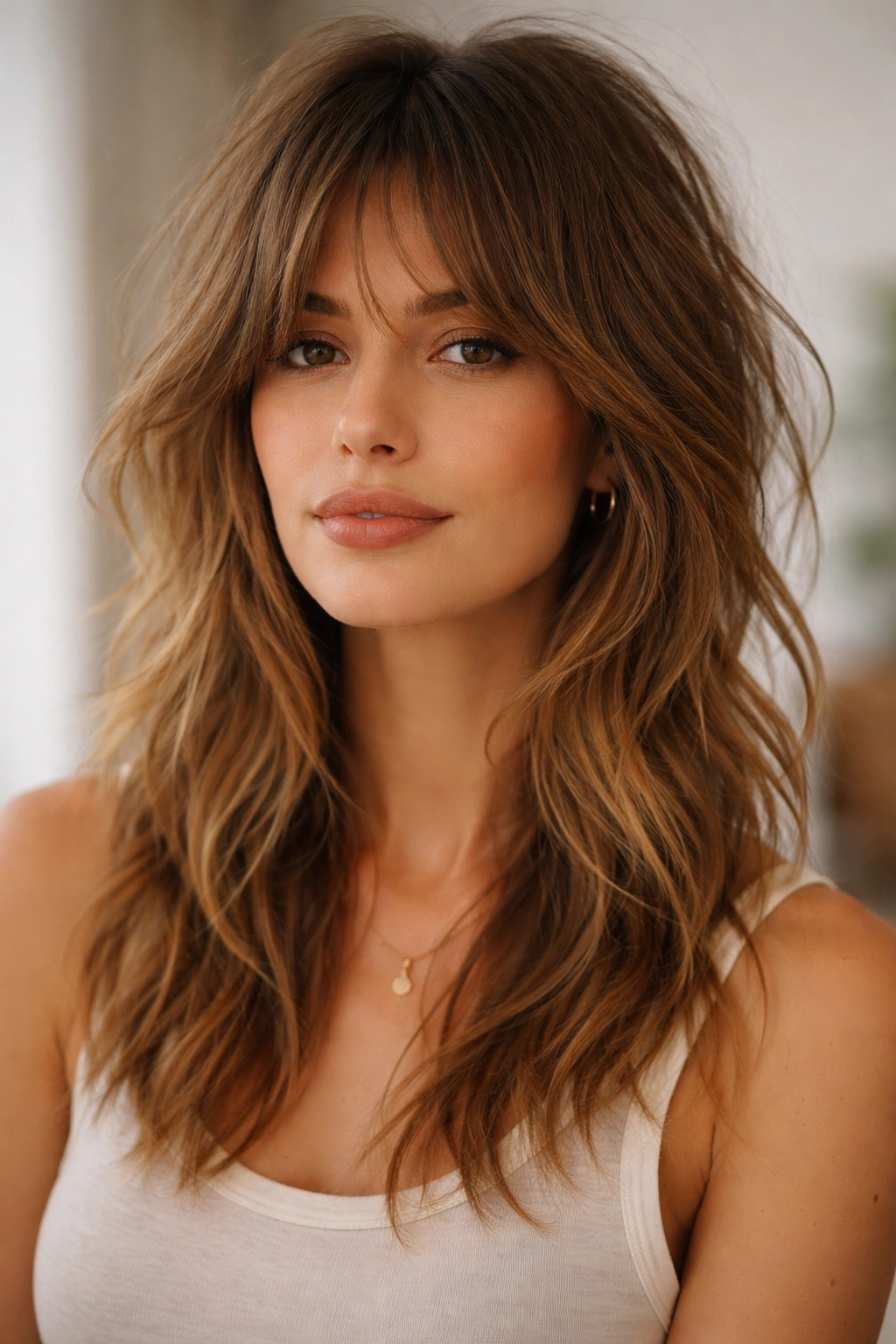
This shag emphasizes slightly longer, softer layers that create a genuinely tousled, undone appearance. Rather than razor-sharp texture, the layers are cut to create movement through structure rather than extreme choppiness. The ends are textured but in a way that looks like you just got lucky with natural texture rather than carefully cut. It’s the “I don’t try very hard but somehow my hair always looks effortlessly cool” vibe. Styling-wise, it’s extremely forgiving—air-dry and run your fingers through, and you’re done.
Softness Meets Movement
The tousled shag relies on longer, gently angled layers rather than very short, dramatically choppy ones. This means the cut works beautifully if you prefer a softer, more romantic aesthetic rather than an edgy one. The movement comes from how the layers create natural breakup points rather than from extreme texture. It’s a more subtle approach to the shag that works for people who want movement without looking like they’ve committed to a bold, statement-making cut.
Best For & Effortless Styling
- Ideal for people who prioritize low-maintenance styling
- Face shapes: All shapes; the softness is universally flattering
- Styling: Air-dry and touch up with fingers; that’s genuinely it
- Maintenance: Can go 8-10 weeks between trims since the subtler layers don’t show growth as dramatically
11. The Straight Texture Shag for Fine Hair
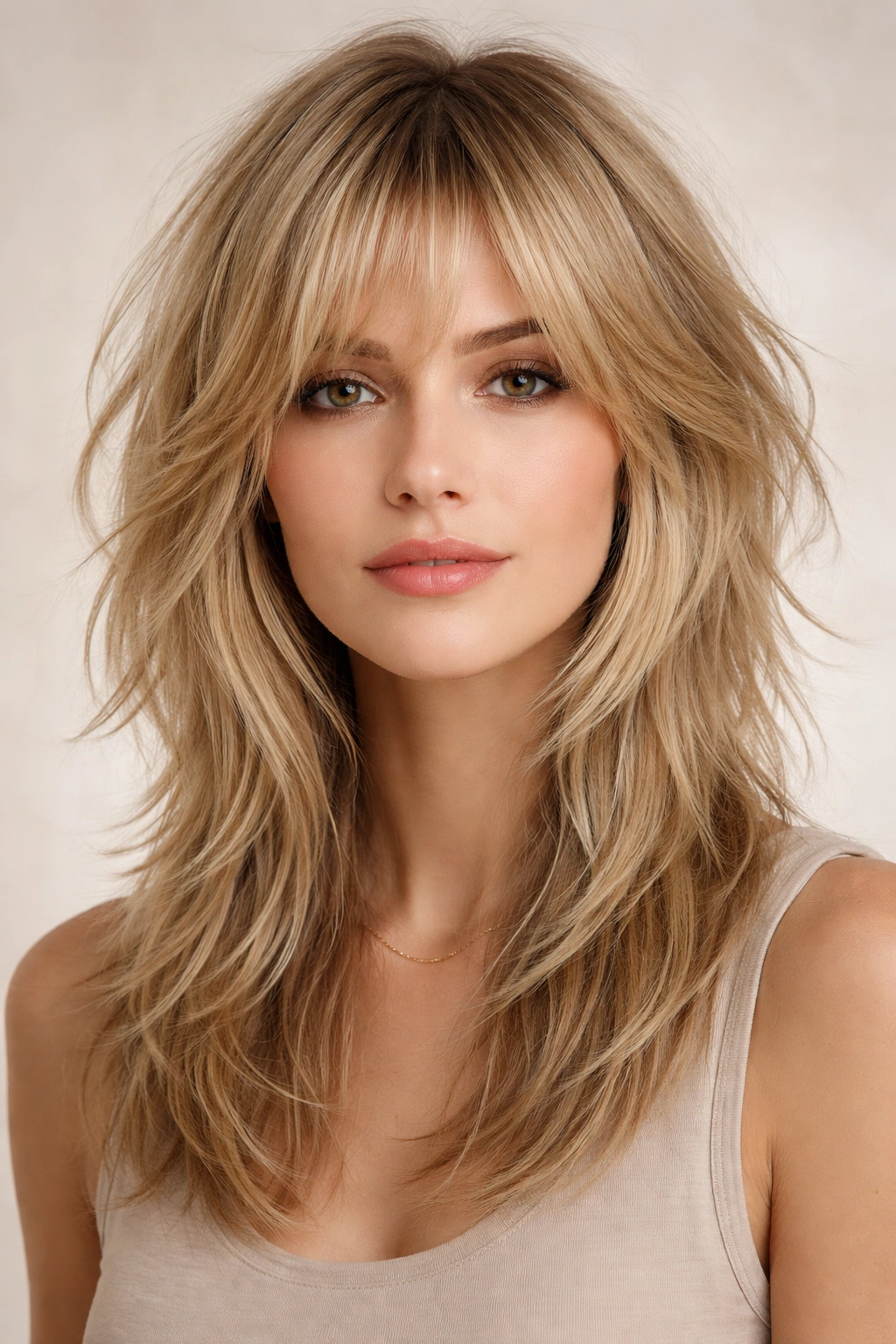
Fine hair owners often worry that a shag will look thin and stringy, but when it’s cut specifically for fine hair, it’s transformative. This version uses extremely textured layers at the crown and throughout, combined with strategic removal of weight at the ends. The layers are closer together than in other shags, so you’re never left with see-through spots. The texture prevents the hair from merging into one flat mass, and the overall effect is fuller, bouncier hair with visible movement and dimension.
Fine Hair, Maximum Impact
Textured layers work better on fine hair in some ways because each separated strand is visible. Where a blunt cut on fine hair looks thin and flat, a textured shag on fine hair looks intentionally piece-y and dimensional. The key is making sure the layering is strategic and not creating too much removal—you want separated pieces, not thin, wispy sections. A skilled stylist cutting for fine hair will cut layers that sit close enough together to give coverage while still maintaining separation and texture.
Best For & Styling Strategy
- Essential for fine and thin hair textures; can be transformative
- Face shapes: All shapes benefit from the texture and perceived fullness
- Styling: Blow-dry with a round brush or your fingers to activate texture and lift
- Product choice: Light-weight texturizing spray or dry shampoo can enhance the separation
12. The Thick Textured Shag
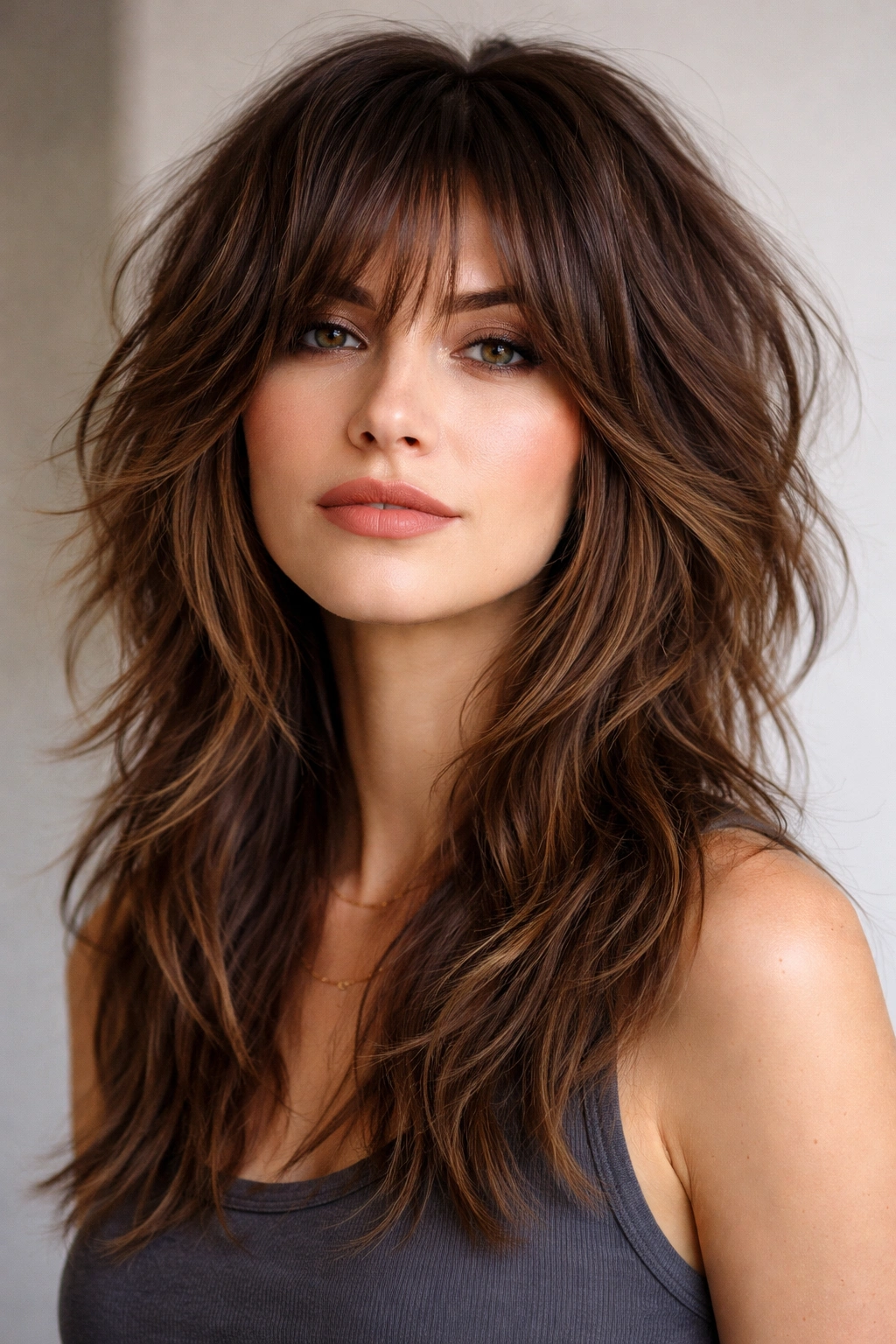
On the opposite end, thick hair can feel heavy and unmovable unless it’s textured strategically. This shag uses aggressive layering and texturizing specifically to remove weight and create movement that thick hair naturally wants to resist. The layers are cut at different angles throughout to prevent the hair from becoming one dense, immovable block. Every section gets texturizing so the ends feel separated and light. The result is thick hair that actually moves and swings instead of just sitting there like a helmet.
Heavy Hair, Lighter Feel
Thick hair has natural movement potential that often gets buried under the weight of all that density. By aggressively layering and texturizing, you’re giving that movement permission to actually happen. The layers need to be shorter and more numerous than they might be on finer hair, and the texturizing needs to be deliberate and thorough. Done correctly, you end up with a cut that makes thick hair feel lighter, more manageable, and genuinely movable.
Best For & Practical Maintenance
- Absolutely ideal for thick and coarse hair types
- Face shapes: Works on all shapes; especially balancing on very wide faces
- Styling: Can be styled sleek or textured; both look great because the cut supports movement either way
- Note: Requires more frequent trims (every 6-8 weeks) to keep the layering looking intentional as it grows
13. The Curly Girl Method Shag
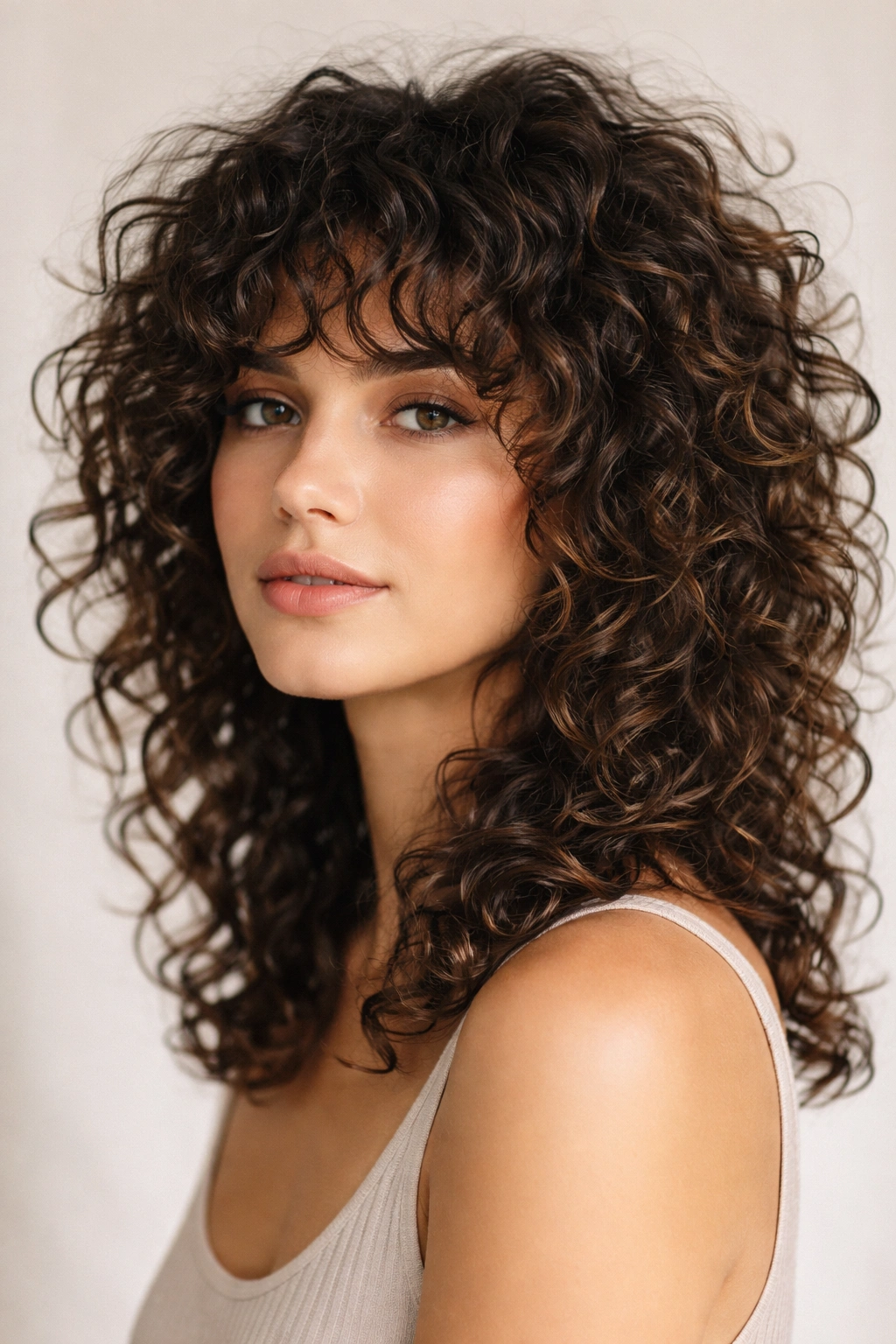
Designed specifically for people following the Curly Girl Method or those with naturally curly hair who want to enhance their curl pattern, this shag uses dry-cutting techniques and minimal texturizing to work with your curl pattern rather than against it. The layers are cut while your hair is in its natural curly state so the stylist can see exactly how the curl will fall. Texturizing is kept minimal because curly hair already has tons of texture—what you need is strategic layering that allows each curl to move independently.
Curls Meeting Layers
When your curls are layered correctly, each one has room to spring and bounce without getting weighed down by the curl below it. The shag structure—more layers at the crown, gradually longer toward the back—works beautifully with curls because it creates lift and volume at the root while keeping enough length in the back. The cut is usually finished with minimal texturizing, keeping the curl pattern intact and gorgeous.
Best For & Styling Approach
- Essential for naturally curly hair; game-changing for people with wavy-to-curly texture
- Face shapes: The layering frames all face shapes beautifully
- Styling: Defined curl cream or gel applied to soaking-wet hair; air-dry or diffuse-dry
- Maintenance: Every 8-12 weeks; curly hair can go longer between cuts because the curl disguises growth
14. The Asymmetrical Textured Shag
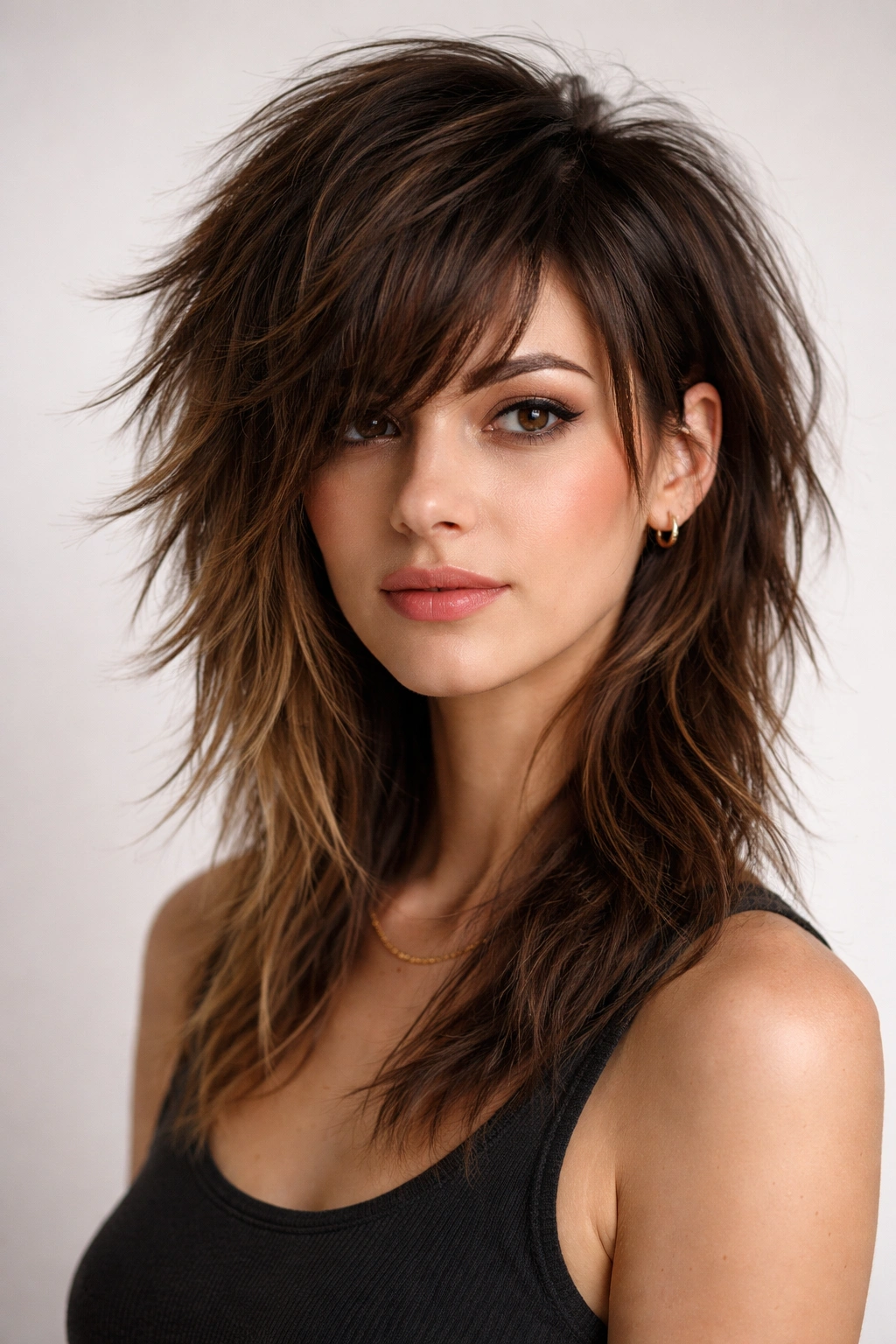
This bold option plays with asymmetry—one side of the face is shorter and more heavily layered while the other side is longer. Both sides are textured for movement, but the contrast between the two creates drama and edge. This cut is for people who want a statement piece, who aren’t afraid of asymmetry, and who want guaranteed movement because different lengths will hit differently as you move your head. The asymmetry makes even a static pose look dynamic.
Playing With Contrast
Asymmetrical cuts work because our eyes are drawn to the contrast and movement. Where a symmetrical shag distributes layers evenly, an asymmetrical version creates a focal point. The shorter side requires more frequent trims to maintain the shape, but the visual payoff is striking. This cut photographs beautifully because the asymmetry creates depth and interest even in a flat 2D image.
Best For & Styling Reality
- Suits people with confident style and willingness to make a statement
- Face shapes: Works especially well on oval and rectangular faces
- Styling: The asymmetry means you need to style intentionally to maintain the shape
- Maintenance: More frequent trims (every 4-6 weeks) to keep both sides looking sharp and intentional
15. The Textured Shag with Long Underneath
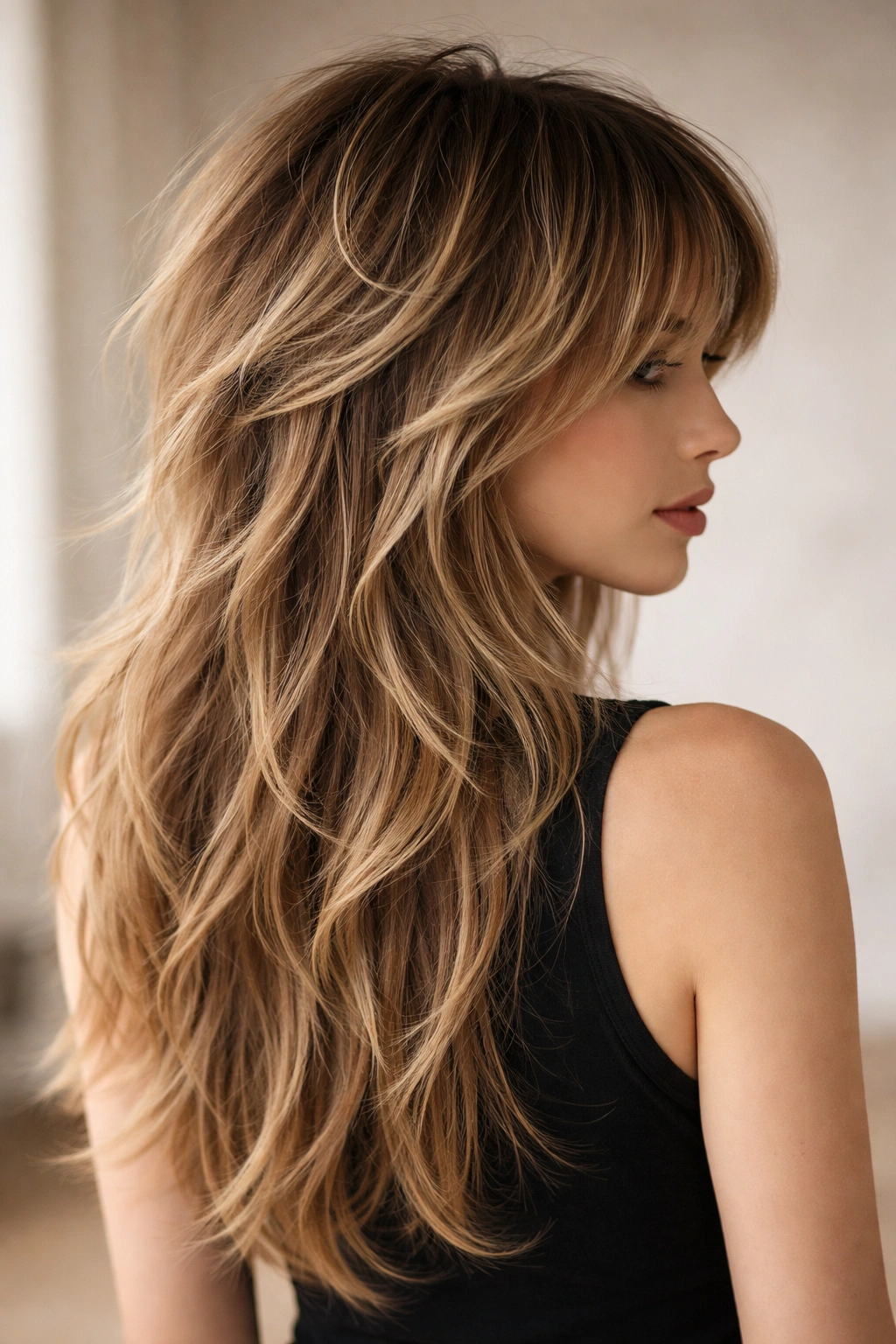
This version keeps a surprising amount of length in the underneath layers while the top and face layers are shorter and heavily textured. From above, it looks like a standard short-to-medium shag, but when you move or flip your hair, you reveal longer underneath layers that create an unexpected reveal of movement and texture. It’s a fun way to have two different hair experiences—professional and contained from the front, wild and textured from the back or when your hair moves.
Hidden Depth and Movement
The surprise element of longer underneath layers means you get movement and texture visibility that’s not immediately obvious when your hair is still. Run your hands through your hair or flip it back, and suddenly there’s a whole extra dimension of texture and length that was hiding. This works beautifully for people who want versatility—can look relatively traditional and shaped on a normal day, but reveal more edge and texture when the mood strikes.
Best For & Practical Advantages
- Works on all hair types; especially forgiving because the underneath sections don’t show growth immediately
- Face shapes: All shapes work beautifully
- Styling: Can be styled multiple ways depending on whether you want to emphasize or hide the underneath layers
- Maintenance: The shorter, textured top sections need trims every 6-8 weeks, but underneath can go longer
16. The Textured Lob Shag
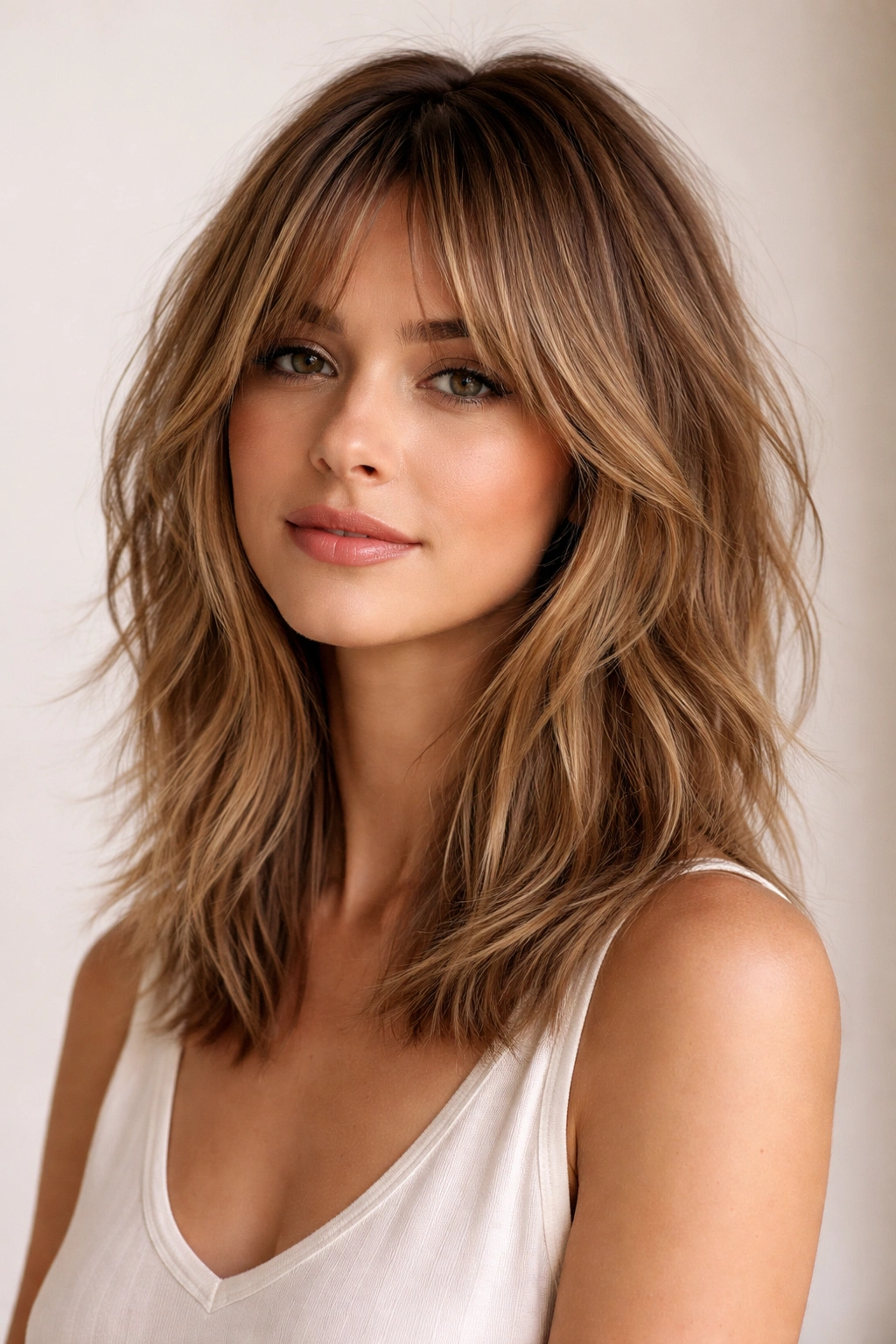
For people who want a longer, more wearable cut than a traditional short shag but still want serious layering and texture, the lob shag (long bob shag) keeps you around shoulder length or just past while delivering all the texture and movement benefits. The layers are less dramatic than a shorter shag but still strategically placed to create movement throughout. The emphasis is on texture at the ends rather than super-short, choppy layers. This works beautifully if you’re not ready to go short but want to shake up your hair with texture and movement.
Shoulder-Length with Maximum Personality
The lob length is a sweet spot—long enough to feel like you still have length and versatility for styling, but short enough that the layers create visible texture and movement rather than just sitting there. The texturizing at the ends is crucial here; it’s what gives you that movement and dimension. A blunt lob just hangs. A textured lob moves. The layers are subtle enough that you can style it sleek and polished, or tousled and textured depending on your mood.
Best For & Styling Flexibility
- Works on all hair types and face shapes
- Ideal if you like the idea of a shag but prefer longer length
- Styling: Can go from polished blow-dry to textured air-dry depending on the day
- Maintenance: Every 8-10 weeks to keep the layering looking intentional and the ends textured
17. The Graphic Textured Shag
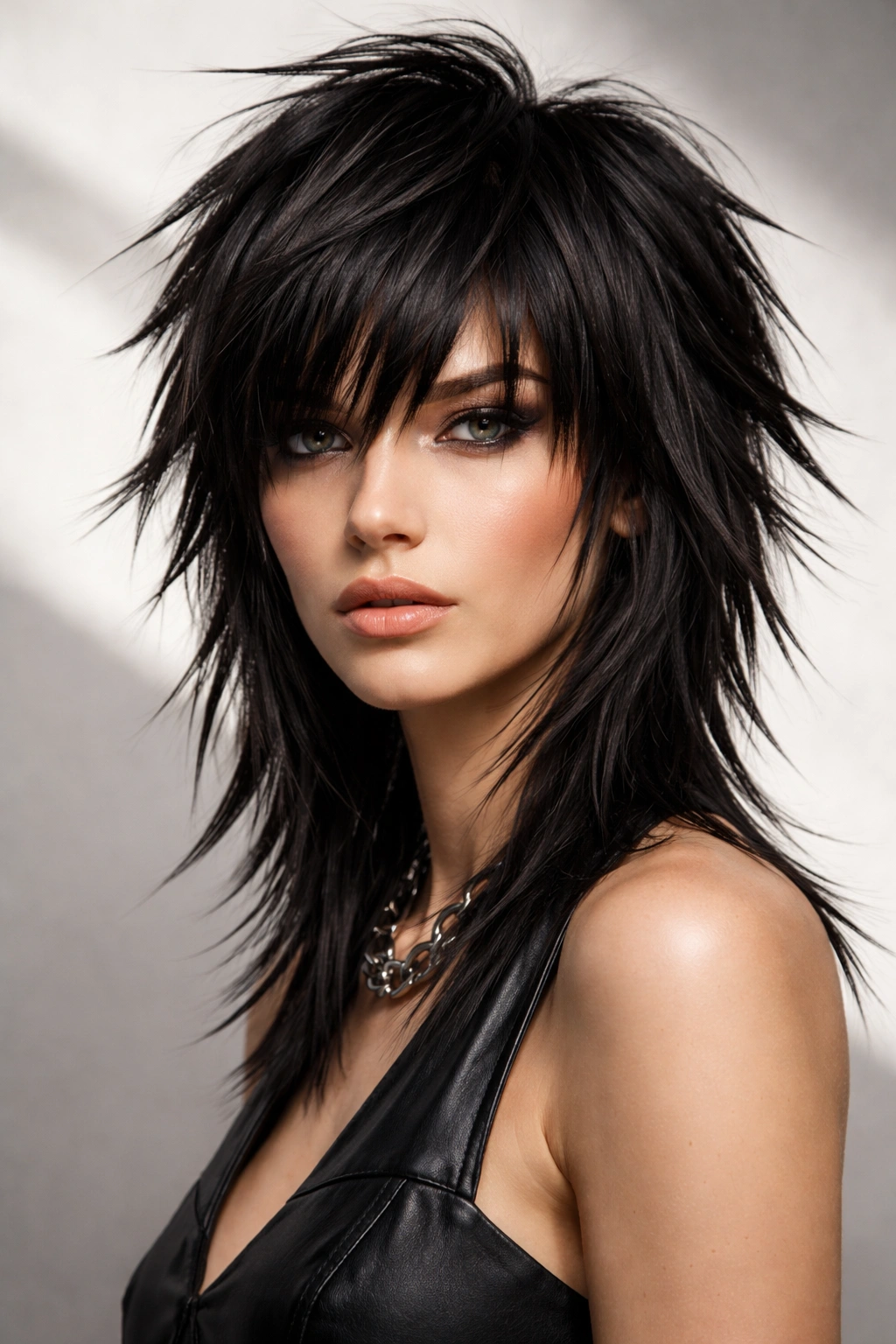
This version takes the shag and makes it architectural. Layers are cut with geometric precision, each at a specific angle to create sharp, defined lines rather than soft blending. The texture is extreme and intentional. The overall effect looks designed and sculpted rather than tousled or natural. It’s a shag for people who want to make a statement, who appreciate precision and structure, and who want movement that’s obviously designed rather than accidentally achieved. This cut photographs like art and works beautifully for editorial or avant-garde styling.
Precision Meets Movement
Graphic shags require serious technical skill because every angle and layer needs to be deliberately executed. The movement comes from the geometric angles and extreme texture, not from soft blending. This is a cut that demands respect for the stylist’s skill and commitment to the bold aesthetic. It’s not for everyone, but for the right person, it’s absolutely stunning.
Best For & Styling Approach
- Suits people with strong personal style and willingness to lean into a graphic aesthetic
- Face shapes: Oval and rectangular faces especially; can be adapted for others with careful styling
- Styling: Blow-dry with intention and precision to emphasize the graphic lines
- Maintenance: Every 4-6 weeks to keep the angles sharp and the texture looking intentional
18. The Lived-In Textured Shag
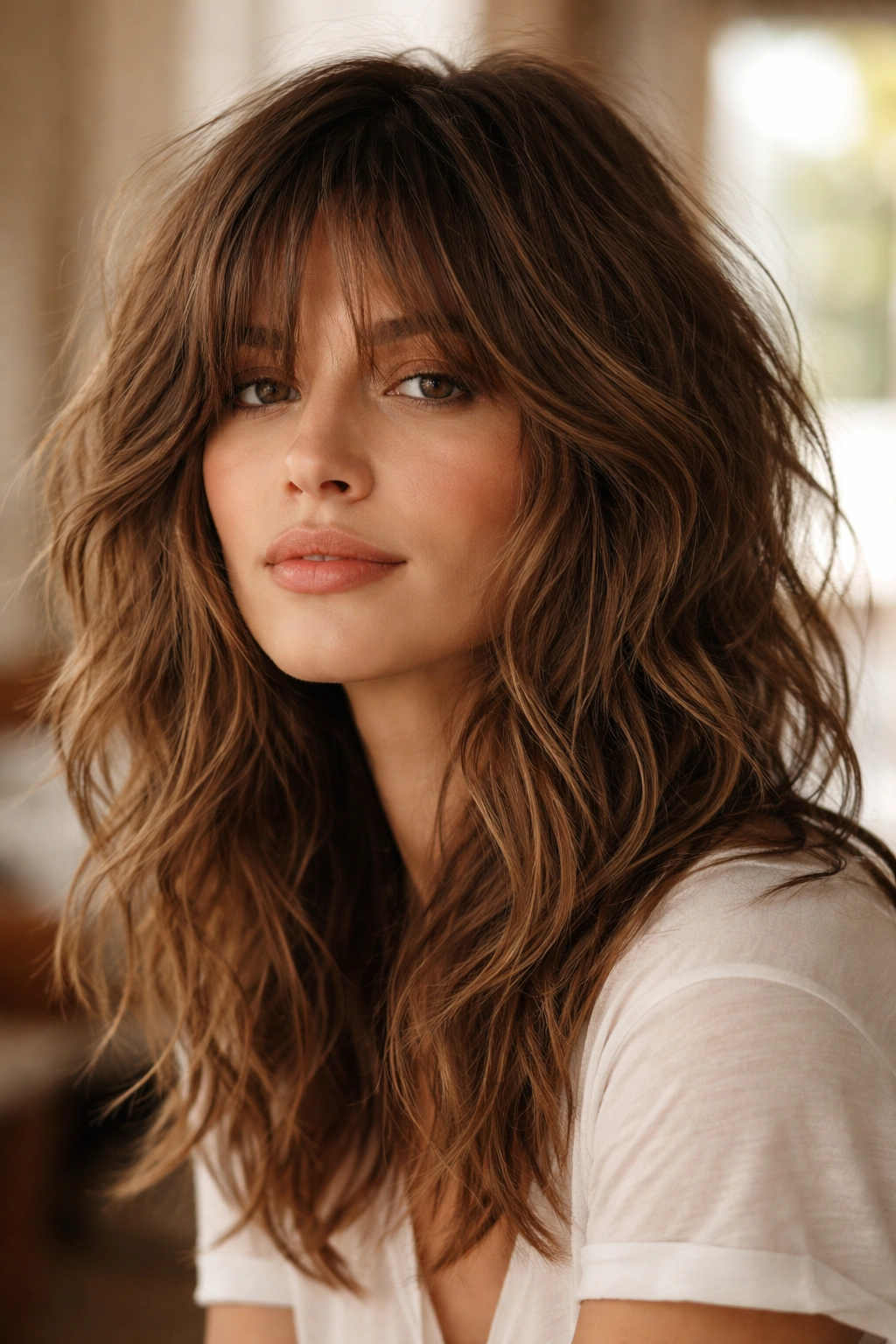
This is the shag that looks like you’ve been living in it for months—effortlessly cool, slightly undone, genuinely movable. The layers are less rigidly structured than some of the other variations; instead, they’re cut to look natural and organic, like they developed over time rather than all in one appointment. The texture is present but not extreme. It’s the most forgiving shag in terms of styling because you actually want it to look slightly undone. Air-dry it, shake it out, run your fingers through it—that’s the point.
Intentional Informality
The lived-in shag is deceptively hard to pull off because it requires enough skill to look effortless while still being deliberately cut. It’s not a “just hack at it” situation—it’s precise layering and texturizing that’s meant to look unprecise. The movement comes from all those layers working together in a unified, cohesive way. You’ll genuinely feel like your hair is moving every time you turn your head, not because of dramatic choppy pieces but because the entire structure supports flow and swinging.
Best For & Genuinely Low-Maintenance Styling
- Works beautifully on all hair types but especially forgiving on wavy and textured hair
- Face shapes: Universally flattering because the softness works on every face shape
- Styling: Air-dry, blow-dry with fingers, add a texturizing product if you want—all approaches work
- Maintenance: Can go 8-10 weeks between trims because the lived-in aesthetic actually improves as it grows slightly
Final Thoughts
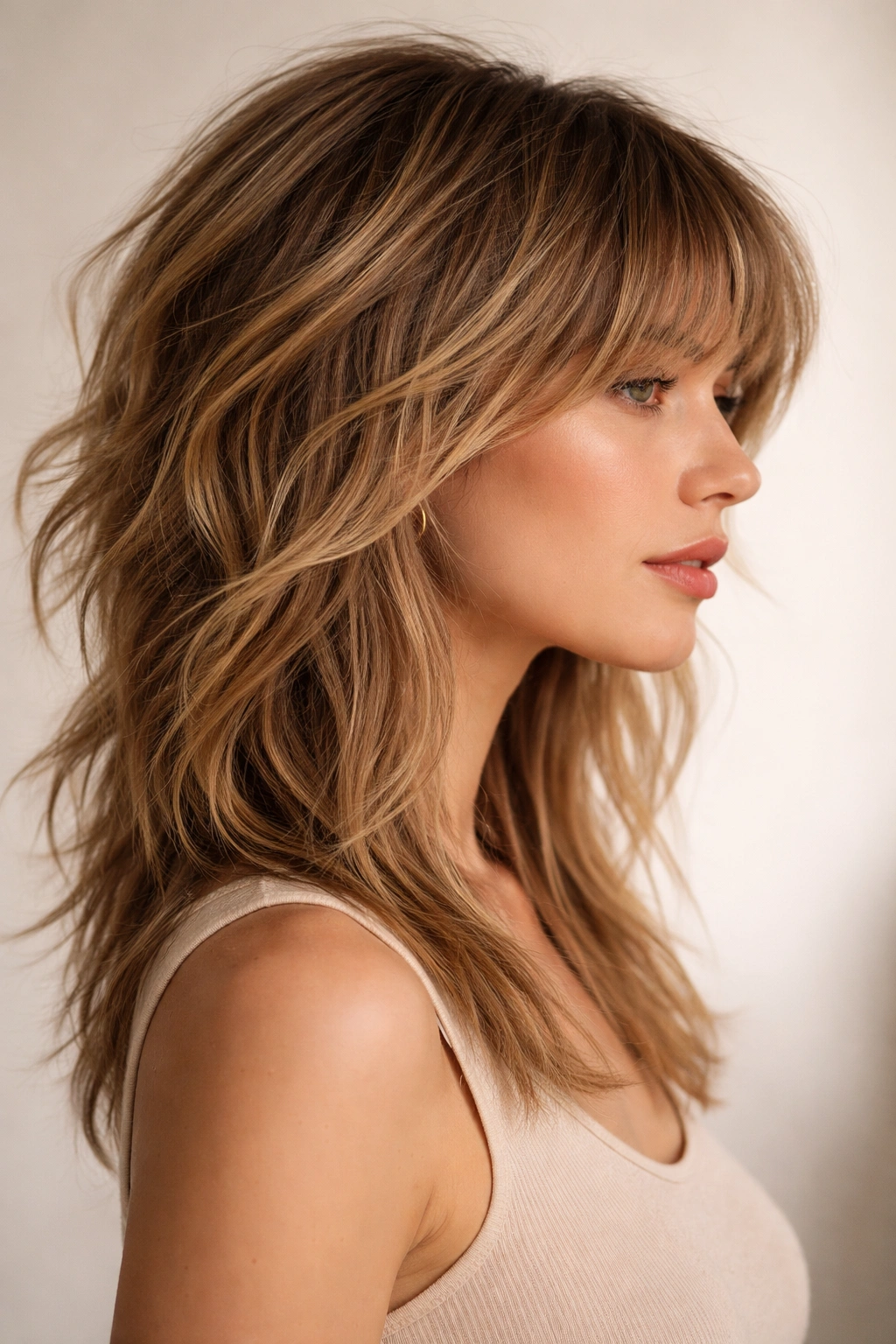
The right textured shag layered cut is genuinely transformative because it works with your hair rather than against it. Whether you’ve got thick hair that needs weight removed, fine hair that needs texture and dimension, or wavy hair that’s been waiting for a cut that celebrates your natural texture, there’s a shag variation here that’ll make you feel confident and move beautifully. The movement you get isn’t just about how the cut is shaped—it’s about texture, angle, and strategic layering that gives your hair permission to actually move when you do.
Finding the right stylist matters enormously because a shag isn’t a haircut you can really phone in. Your stylist needs to understand your hair type, your face shape, your styling commitment level, and what “movement” actually looks like on your specific hair. Come to your appointment with photos of the specific version that speaks to you, talk through what your typical styling routine looks like, and trust that a skilled stylist can adapt any of these approaches to work perfectly for you. A textured shag done right isn’t a trend—it’s a genuine shift in how your hair feels and moves every single day.
