



Finding the right haircut isn’t just about what’s trending on social media or what your celebrity crush is wearing. It’s about discovering what actually works with your unique face shape. When a haircut aligns with your face’s natural proportions, it becomes your secret weapon—suddenly your features look more balanced, your face appears slimmer or fuller where you want it, and you actually enjoy looking in the mirror. The truth is, the “perfect” haircut exists, but it’s different for everyone, and understanding your face shape is the first step to finding it.
Here’s what most people miss: your face shape isn’t about whether you think you look good or bad. It’s a roadmap. A round face needs different lines and movement than an angular square face. A long oblong face benefits from width at the sides in ways that an oval face doesn’t. Once you understand this, choosing a haircut becomes less about following trends and more about working with your features instead of against them. The haircuts below are matched specifically to six major face shapes, so you can find the ones that will genuinely transform how your face looks and feels.
Let’s break down the face shapes first: oval (slightly longer than wide, with balanced proportions), round (equally wide and long, with soft angles), square (equally wide and long, with sharp jawline definition), oblong or rectangular (noticeably longer than wide), heart-shaped (wider forehead and cheekbones, narrower jawline), and diamond (narrow forehead and jawline, widest at the cheekbones). Ready to find your perfect match?
1. The Classic Bob for Square Faces
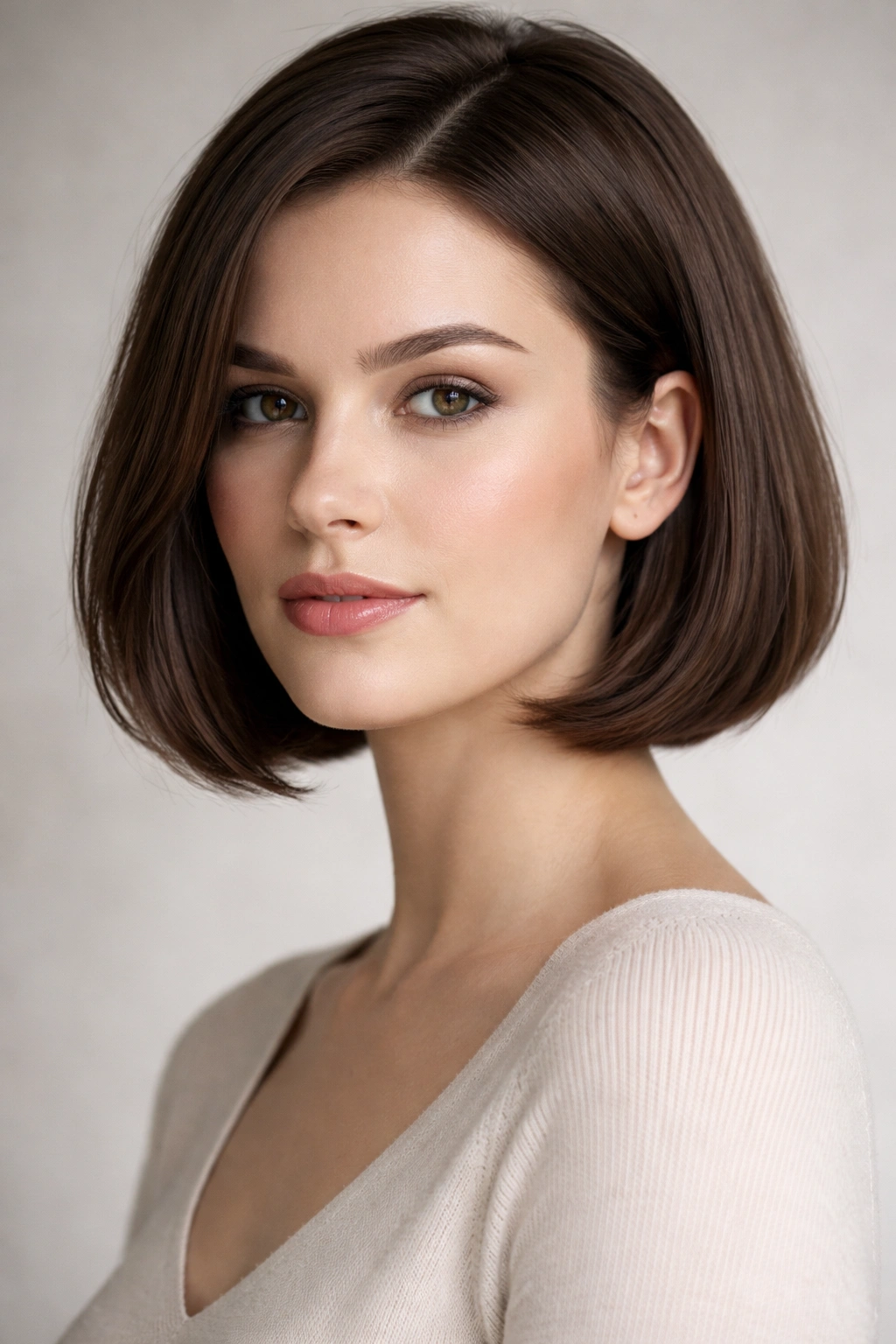
The classic chin-length bob is one of the most forgiving haircuts for square-shaped faces, and there’s a reason it’s stayed in rotation for decades. The structured simplicity of a bob actually works with your face’s natural geometry instead of competing against it. For square faces with defined jawlines, you want a cut that softens that angular jaw without adding weight on top of your head—and the bob does exactly that.
Why It’s Perfect for Square Faces
Square faces have strong, defined jawlines that are genuinely an asset—the goal isn’t to hide them but to balance them. A straight-across bob hits at your jawline, which draws attention to that feature while keeping proportions balanced. The length is short enough that it doesn’t add bulk to the sides of your face, which is crucial for square-shaped faces. The cut creates a clean frame around your face without emphasizing your width.
How to Style It for Maximum Impact
- Ask your stylist for slightly rounded ends rather than perfectly blunt edges to soften the overall look
- Blow-dry with a round brush, curling the ends slightly inward toward your face for a feminine touch
- Part it down the middle or to the side depending on your forehead shape
- Use a smoothing serum on the ends to keep them looking polished and intentional
Pro tip: Ask your stylist to leave just a touch more length at the back (a fraction of an inch) so it sits slightly longer than the front layers—this creates a subtle angle that’s incredibly flattering.
2. Long Waves for Heart-Shaped Faces
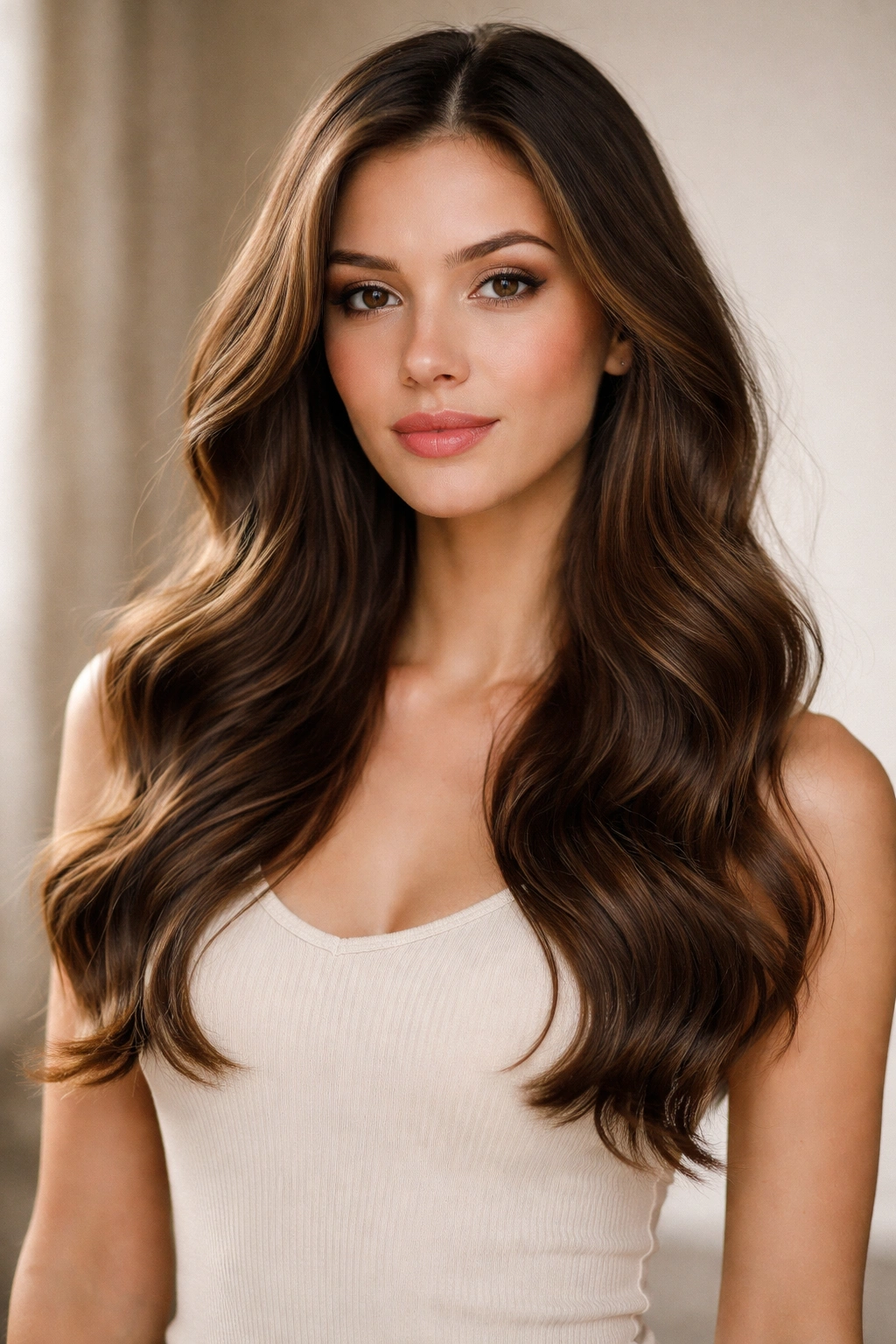
Heart-shaped faces are wider at the forehead and cheekbones but taper down to a narrower jawline. Long waves work beautifully because they add fullness and movement at the jawline and lower face, creating visual balance. The waves soften the angles at your temples while the length pulls attention downward, away from a broader forehead.
Why Long Waves Work for Your Face Shape
Your face shape is all about creating width at the bottom where you need it. Long hair that hits somewhere between your mid-chest and bra-strap length gives you room to add movement and body. Waves aren’t just decorative—they create visual texture that widens your lower face and balances your broader forehead. The movement also softens the overall look, which complements heart-shaped faces beautifully.
Styling Techniques That Matter
- Use a large-barrel curling iron (1.25 inches or bigger) to create loose, undone waves rather than tight curls
- Apply heat protectant before styling and use a texturizing spray to enhance the wave pattern
- Sleep on waves by braiding damp hair before bed, then releasing them in the morning for effortless texture
- Keep the front sections slightly looser and wavier than the back for a face-framing effect
Worth knowing: Heart-shaped faces should generally avoid blunt, heavy bangs since they emphasize your forehead width. If you want bangs, go for side-swept or wispy layers instead.
3. Pixie Cuts for Round Faces
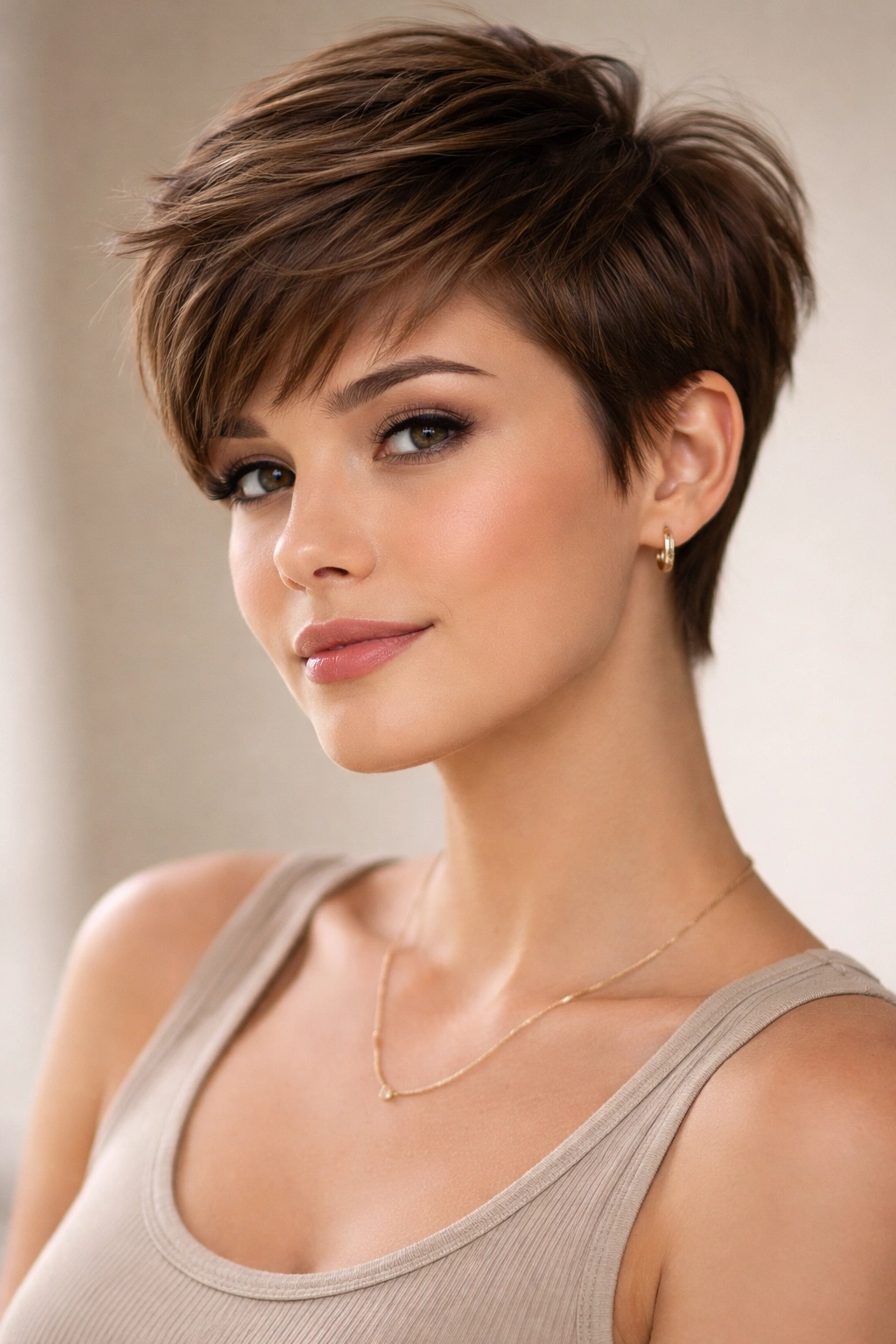
Round faces are soft and youthful, with equal width and length—but that softness sometimes needs definition to feel polished. A pixie cut creates height and angles that your face shape naturally lacks. The short length exposes your cheekbones and jawline, giving your face more dimension and preventing the “baby-face” effect that can happen with very soft, rounded features.
The Strategic Angles of a Pixie
Pixies work for round faces specifically because of how the cut creates line and shape. Short layers on top create height at the crown, making your face appear longer and less round. The undercut sides show your jaw and neck, adding definition. Keeping the top slightly longer than the sides creates an angular silhouette that balances the natural curves of a round face.
Making a Pixie Work for You
- Commit to regular trims every 4-6 weeks to maintain the shape and prevent it from getting too fluffy
- Style with texture cream or wax to add definition and emphasize the layers
- Blow-dry with your hair tousled upward to maximize that crown height
- Ask your stylist for longer bangs that can be swept to the side for extra face-framing
Real talk: Pixies require styling maintenance. If you’re not willing to use a blow-dryer and some product most mornings, this cut might not be for you. But if you commit to it, the payoff is serious dimension and definition.
4. Curtain Bangs for Oval Faces
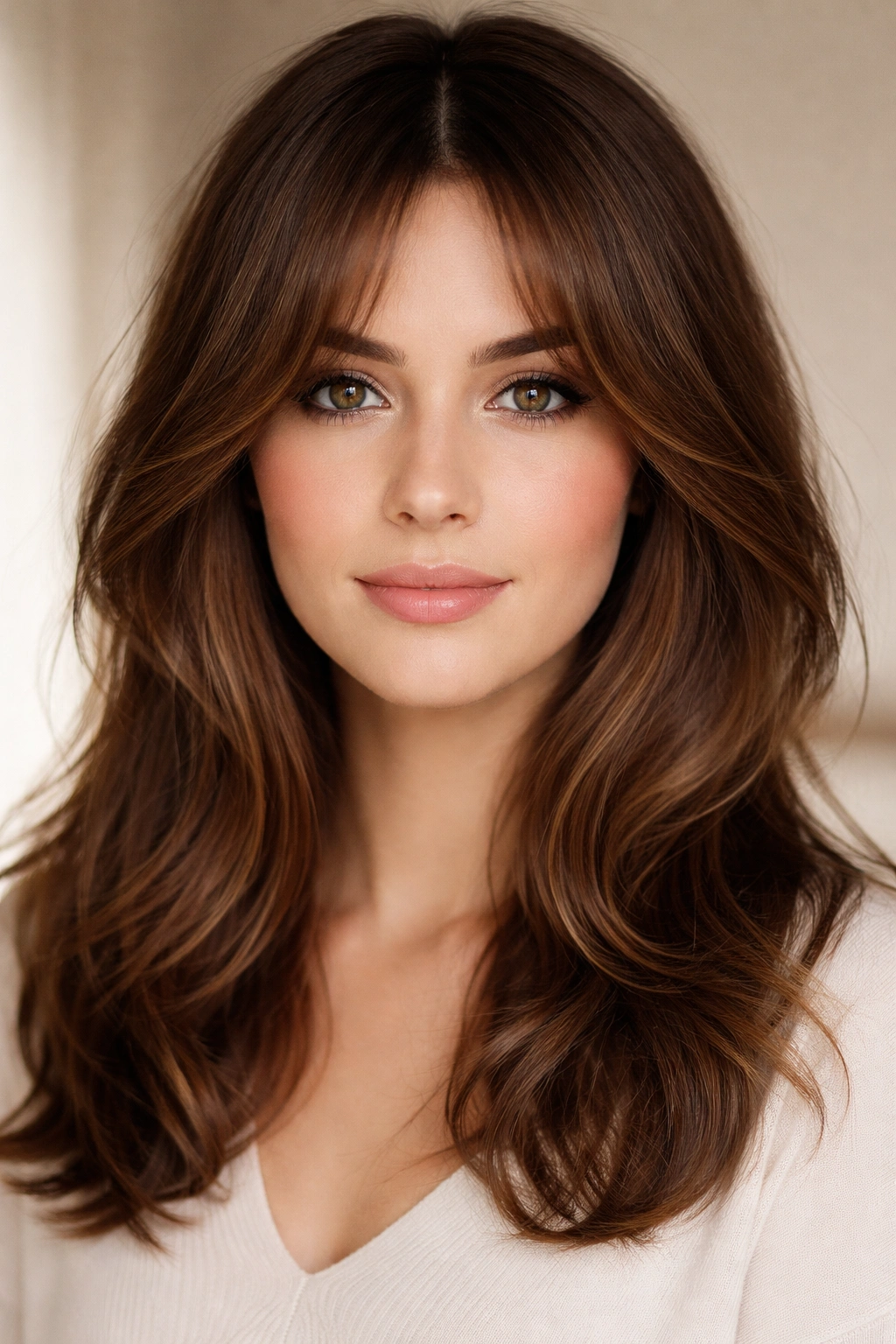
Oval faces are the most versatile face shape—you can pull off almost any haircut because your proportions are naturally balanced. Curtain bangs paired with medium-length hair (shoulder length or slightly longer) is the sweet spot because it maintains that balance while adding trendy, textured movement. Curtain bangs work especially well because they frame your face without covering it.
Why Oval Faces Win With Curtain Bangs
Your face shape is your advantage—it’s balanced enough that you can take risks without worrying they’ll throw your proportions off. Curtain bangs frame your eyes and cheekbones beautifully, adding a focal point without weight or heaviness. The parted-down-the-middle design of curtain bangs complements oval faces because it maintains the symmetry your face shape already has.
Styling Your Curtain Bangs
- Blow-dry with a round brush, curling the bangs away from your face on each side
- Use a flat iron to create subtle waves through the bangs and the length for a modern, polished look
- Apply volumizing spray at the roots before styling to ensure your bangs sit with movement, not flatly
- Trim your bangs every 4-6 weeks to maintain that sharp, intentional parted look
Insider note: Curtain bangs look best on medium-to-thick hair textures. If your hair is very fine, work with your stylist to create longer bangs that won’t look too wispy.
5. Blunt Bangs for Oblong Faces
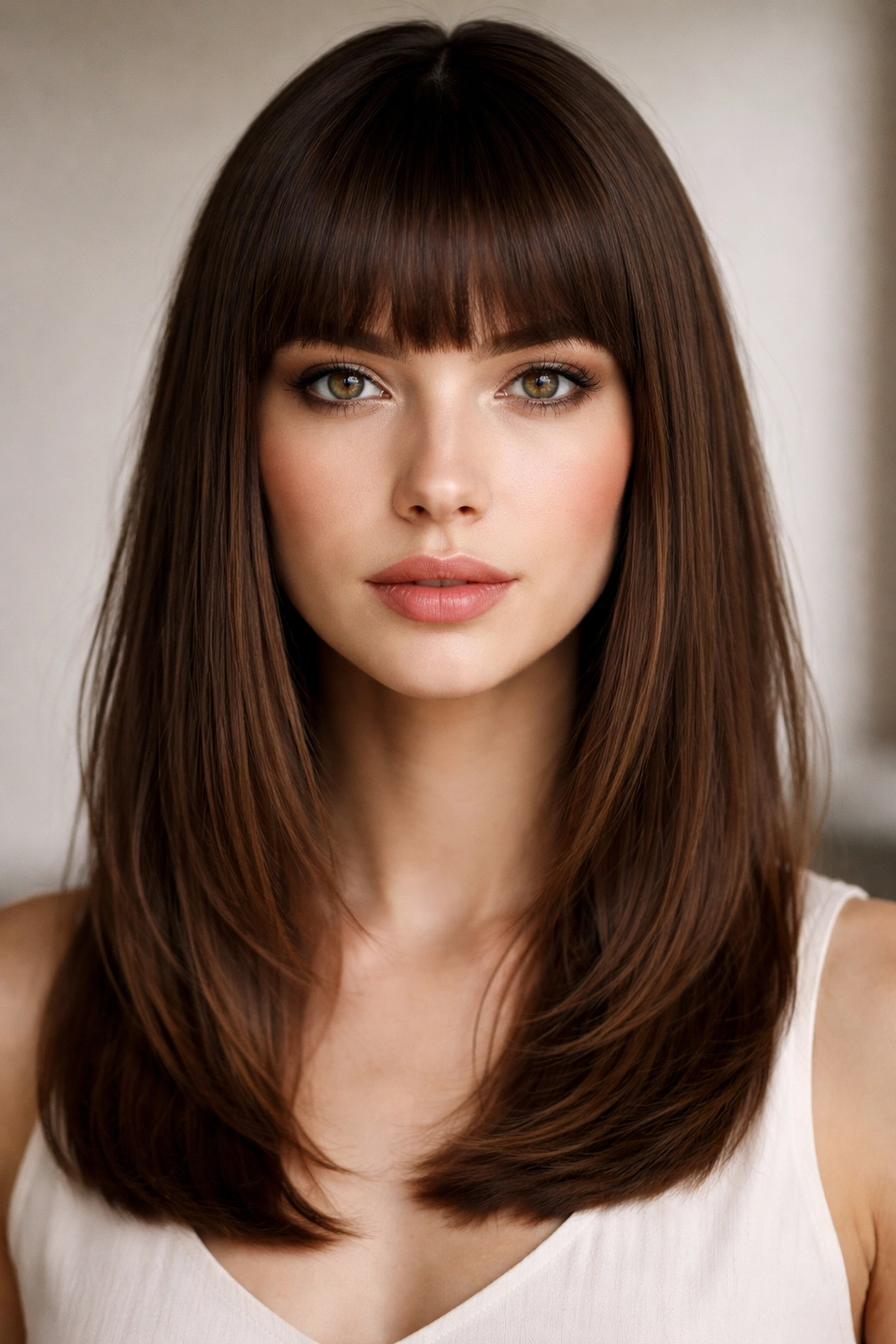
Oblong faces are noticeably longer than they are wide—and that length needs visual interruption. Blunt bangs work by creating a horizontal line across your forehead, which breaks up the length of your face and makes your proportions feel more balanced. The key is choosing bangs that hit at or just below your eyebrows.
How Blunt Bangs Balance Length
Your face shape is all about too much vertical space, so you need horizontal elements. Blunt, straight bangs create a hard horizontal line that your eye naturally stops at, making your face appear shorter. This is especially effective when paired with mid-length hair that doesn’t extend too far below your shoulders. The combination creates a shape that feels more proportional.
Getting Blunt Bangs Right
- Keep them blunt straight—not feathered or textured—for maximum horizontal impact
- Ask your stylist to cut them slightly longer than you think you want them; they’ll feel shorter once you start styling
- Blow-dry them straight down and forward using a paddle brush and a blow-dryer on medium heat
- Trim them every 3-4 weeks because blunt bangs show every millimeter of growth
Pro tip: If you’re nervous about committing to blunt bangs, try clip-in bang extensions first to test whether the style actually works with your face before getting them cut.
6. Side-Swept Layers for Diamond Faces
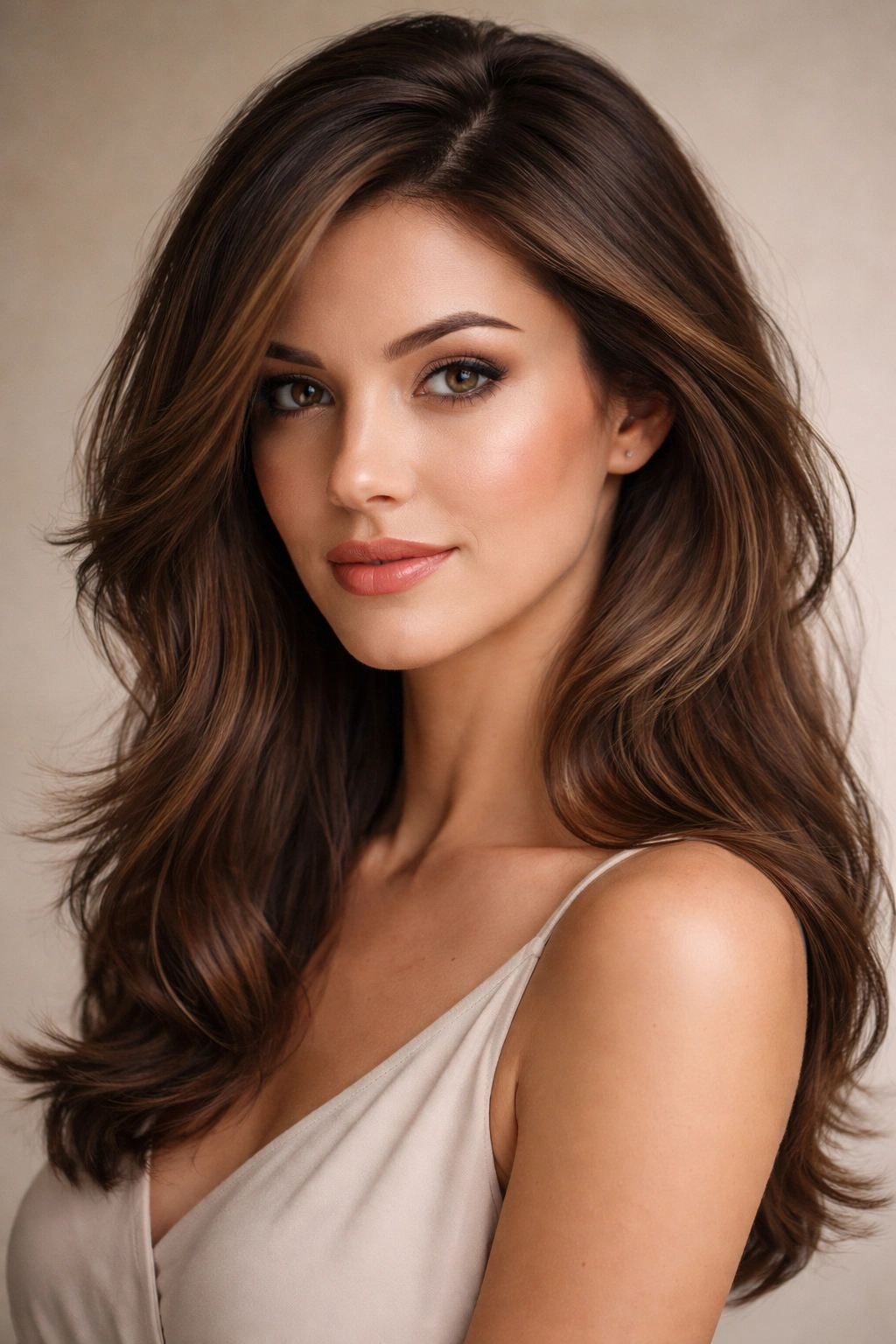
Diamond-shaped faces are widest at the cheekbones with narrower foreheads and jawlines. You need width and movement at the top and bottom, which side-swept layers deliver beautifully. By sweeping the hair to one side and layering throughout, you create fullness at your temples (which balances a narrow forehead) and movement at your jawline (which balances a narrow chin).
The Strategic Placement of Diamond-Face Layers
Side-swept styling adds volume on one side of your face, creating visual width at the temples. Layers throughout the length prevent heaviness at your cheekbones (your widest point) by creating texture and movement. The overall effect is a face that appears more balanced—your widest point doesn’t look as pronounced because the eye is drawn to the frame created by the layers.
How to Maintain Side-Swept Layers
- Blow-dry by sweeping all hair to one side, using a round brush to add volume at the roots
- Use a texturizing spray on damp hair before blow-drying to enhance the layered texture
- Consider a side part that aligns with your natural hair growth pattern for easy styling
- Get trims every 6-8 weeks to keep the layers defined and prevent them from growing into one heavy mass
Worth knowing: Diamond faces should avoid center parts (which emphasize your cheekbones) and blunt, heavy cuts (which make your narrow forehead look even narrower).
7. Layered Lob for Square Faces
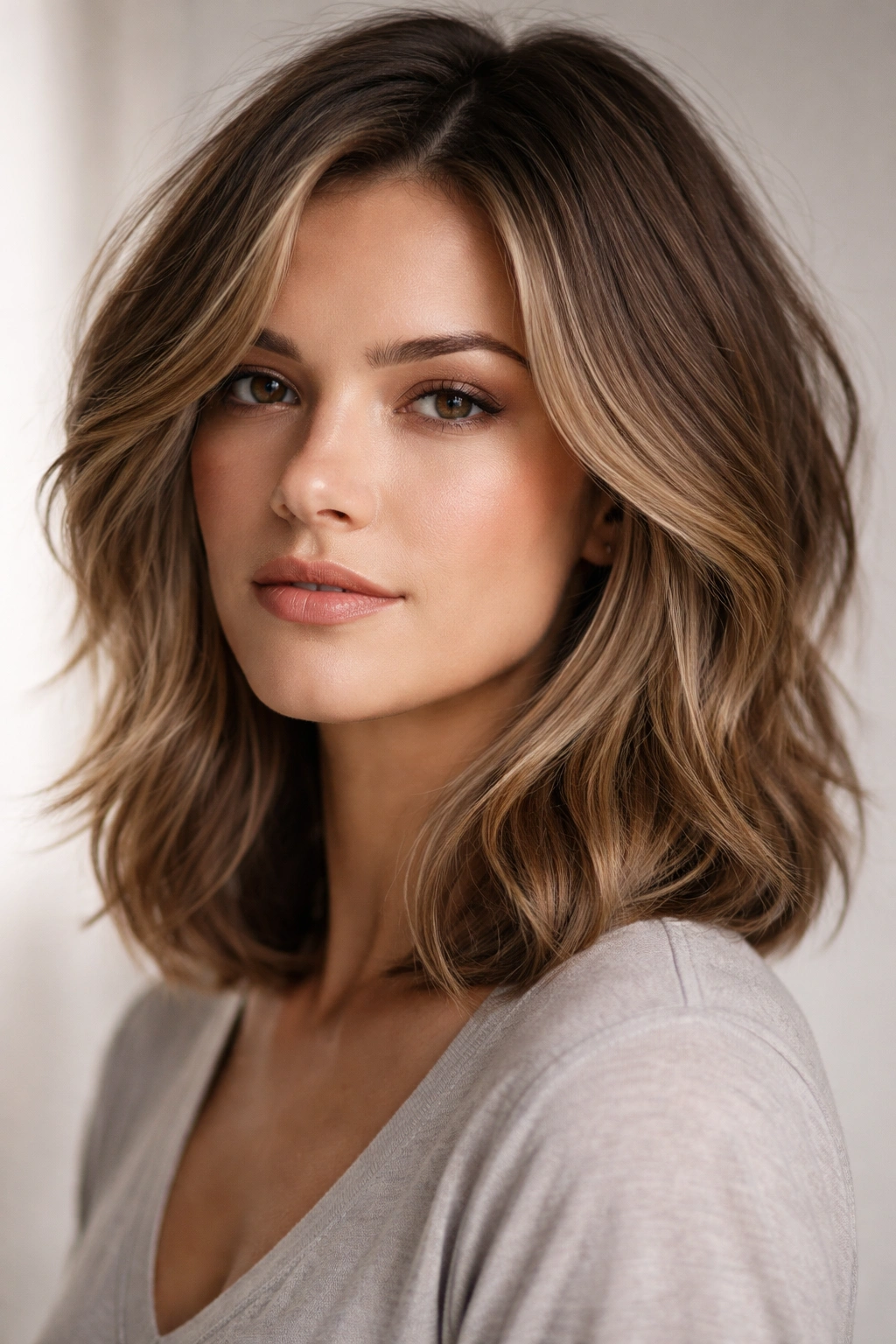
A lob (long bob) is longer than a classic bob but shorter than truly long hair, hitting somewhere around shoulder length. For square faces, a layered lob is magic because the length softens your angular jawline while the layers prevent the bulk that can make square faces appear even wider. Layers create movement and texture instead of one heavy line.
Why Layers Matter for Square Jawlines
Your challenge is balancing a strong, defined jawline without adding width. A solid, blunt lob can actually emphasize your jawline and make your face appear wider. But layers break that up—they create movement that draws the eye downward and outward rather than along your jawline. This subtle difference makes a significant impact on how balanced your face appears.
Styling a Layered Lob
- Ask your stylist for longer layers at the front that frame your face and shorter, choppy layers on top for texture
- Blow-dry with a round brush, curling the ends under slightly to create a polished look
- Use a sea salt spray to enhance waves and texture, especially through the layers
- Style with movement—straight hair makes a square face appear more angular, but waves and texture soften it
Real talk: Layered lobs require regular maintenance. You’ll need a trim every 6-8 weeks to keep the layers from growing out and becoming heavy and shapeless.
8. Voluminous Curls for Rectangular Faces
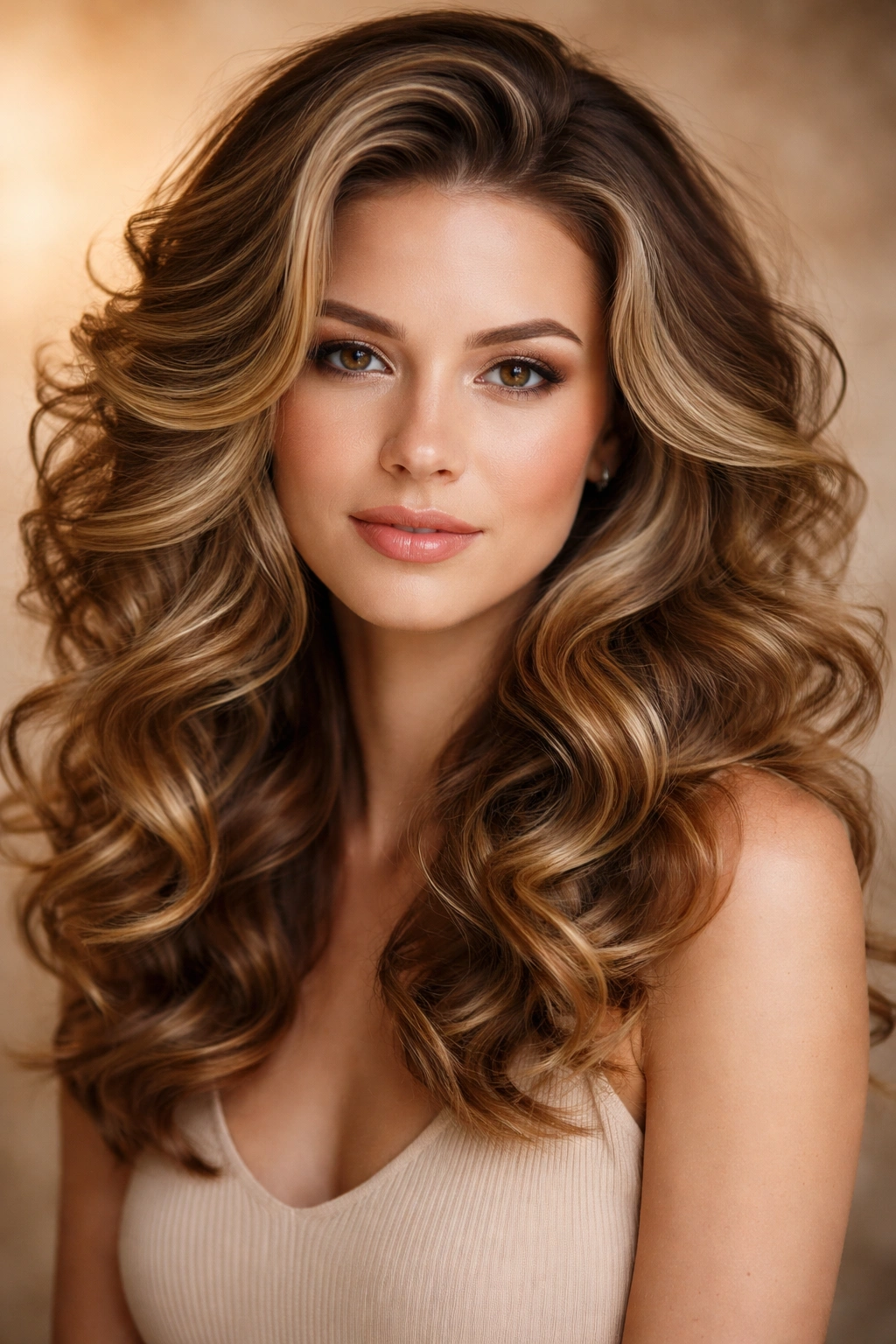
Rectangular faces are essentially oblong faces with a bit more definition—they’re longer than they are wide, with a fairly balanced forehead and jawline. Voluminous curls add width and texture, which breaks up the vertical length of your face. The key is creating curls that are bouncy and full, not tight or close to the scalp.
How Volume and Curls Transform Your Face
Curls naturally take up more space than straight hair, which means they add width to your face shape. For rectangular faces, that width is exactly what you need. Voluminous curls also disrupt the long vertical lines of your face shape by creating horizontal movement and texture. The effect is a face that appears more balanced and proportional.
Creating and Maintaining Voluminous Curls
- Use a large-barrel curling iron (1.5 inches or larger) or a curling wand to create loose, romantic curls
- Apply a volumizing mousse or curl cream to damp roots before styling for maximum lift
- Blow-dry your hair upside-down to create root lift, then style your curls
- Sleep on your curls using a pineapple method (gathering hair loosely on top of your head) to maintain volume overnight
Pro tip: Rectangular faces benefit from height at the crown, so ask your stylist to cut longer layers on top to create that dimension.
9. Shaggy Layers for Round Faces
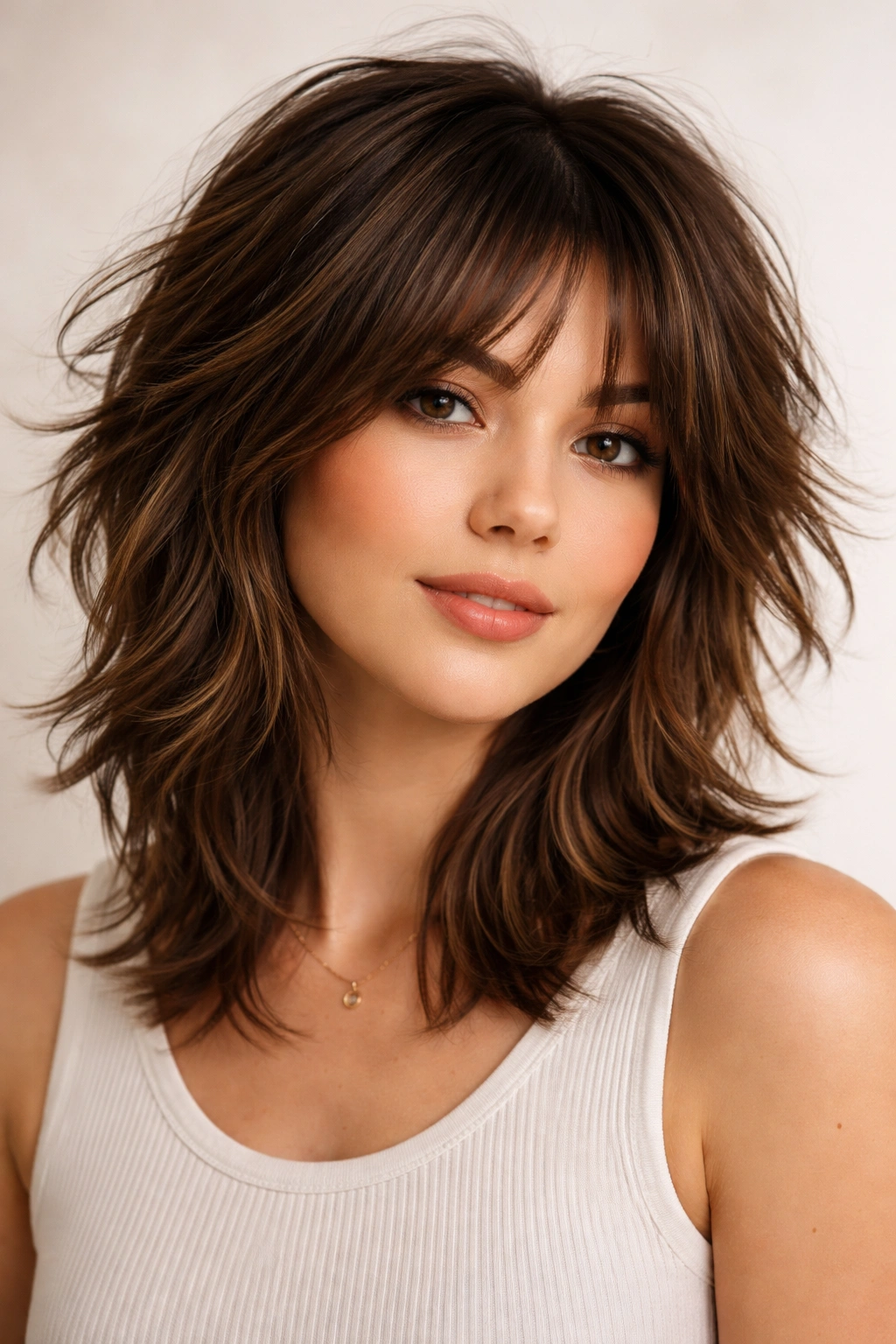
We covered pixies for round faces, but shaggy layers offer a longer alternative if you’re not ready to go short. Shaggy layers create the same angular effect as a pixie but with more length. The choppy, disconnected layers create movement and definition rather than the soft, rounded effect that can happen with one-length hair on round faces.
Why Shaggy Layers Add Dimension
Shaggy cuts work because they’re inherently textured and angular—the opposite of what your face shape naturally is. The disconnected layers prevent one-length hair from clinging to your face and emphasizing its roundness. Instead, the layers create multiple focal points and lines that draw the eye around your face rather than letting it settle on the overall round shape.
Styling Shaggy Layers for Maximum Impact
- Blow-dry with texture cream or sea salt spray to emphasize the choppy layers
- Use a medium-sized curling iron to add subtle waves through the layers
- Style with volume at the crown to create height and make your face appear less round
- Ask your stylist for shorter layers on top and longer, more blended layers at the bottom for a modern shag
Worth knowing: Shaggy layers look best when styled with texture and movement. Wearing them completely straight can actually flatten your face and minimize the benefits of the cut.
10. Sleek Straight Hair for Heart-Shaped Faces
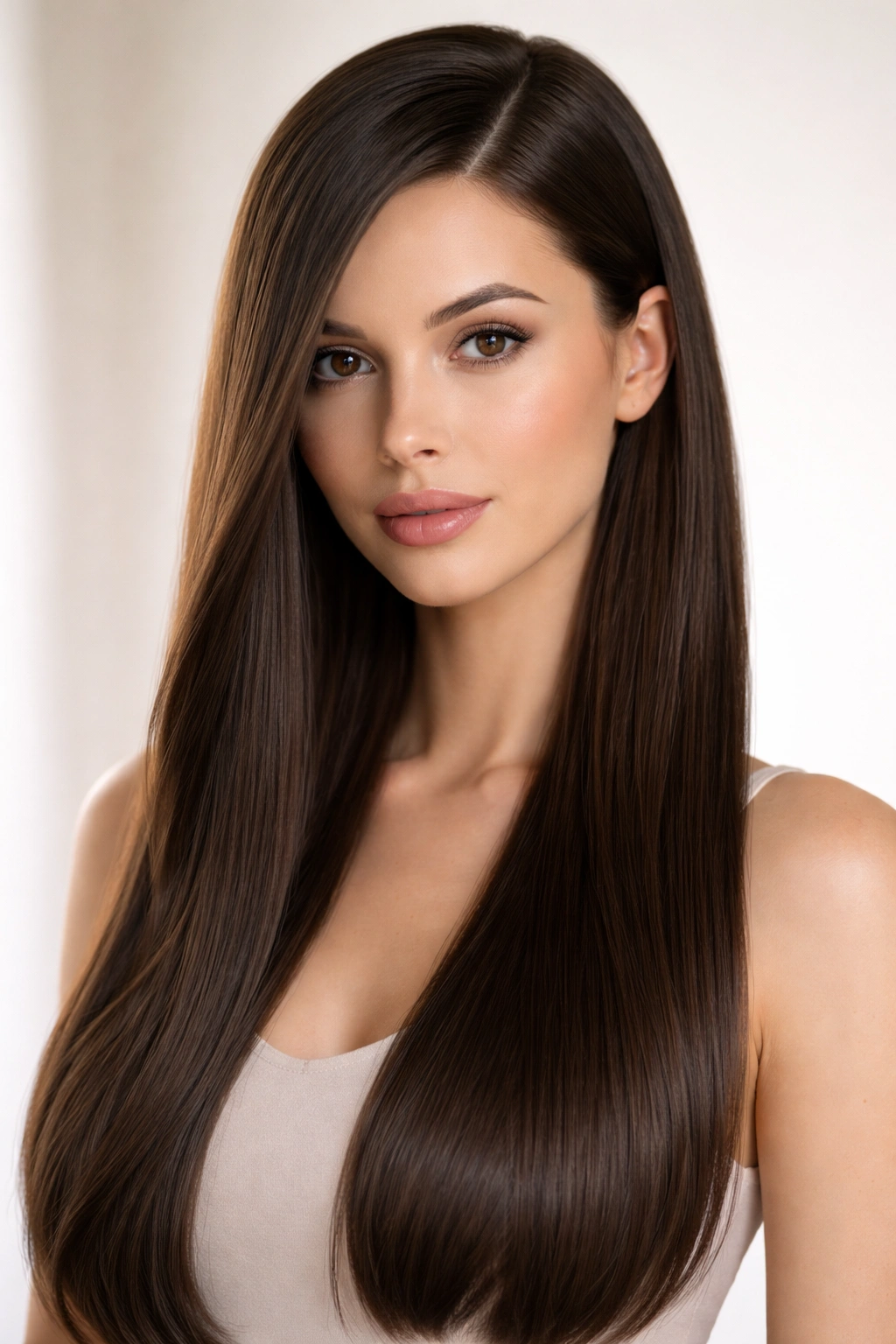
If you want a longer alternative to long waves for a heart-shaped face, sleek straight hair can work beautifully—but with intention. The key is keeping the hair long (mid-chest length or longer) and wearing it with a deep side part to avoid emphasizing your broader forehead. Straight hair is sleeker and less romantic than waves, but it’s equally effective when styled strategically.
Why Straight Hair Works With the Right Styling
Heart-shaped faces need width at the jawline to balance a broader forehead. Long, straight hair provides that length, and a side part prevents a center part from framing your forehead and making it appear even wider. The straight texture is sharp and modern, giving your face a polished, intentional look.
Maintaining Sleek Straight Hair
- Blow-dry with a flat brush and flat iron for a truly sleek finish
- Use a smoothing serum or anti-frizz product to keep hair looking polished
- Part deeply to one side, well away from the center of your forehead
- Use a lightweight hairspray to hold the style without weighing down your hair
Real talk: Sleek straight hair shows every texture and bump in your hair. If your natural texture is curly or wavy, you’ll need to use heat tools regularly to maintain this look. Consider whether that’s sustainable for your lifestyle.
11. Face-Framing Highlights With Bob for Oval Faces
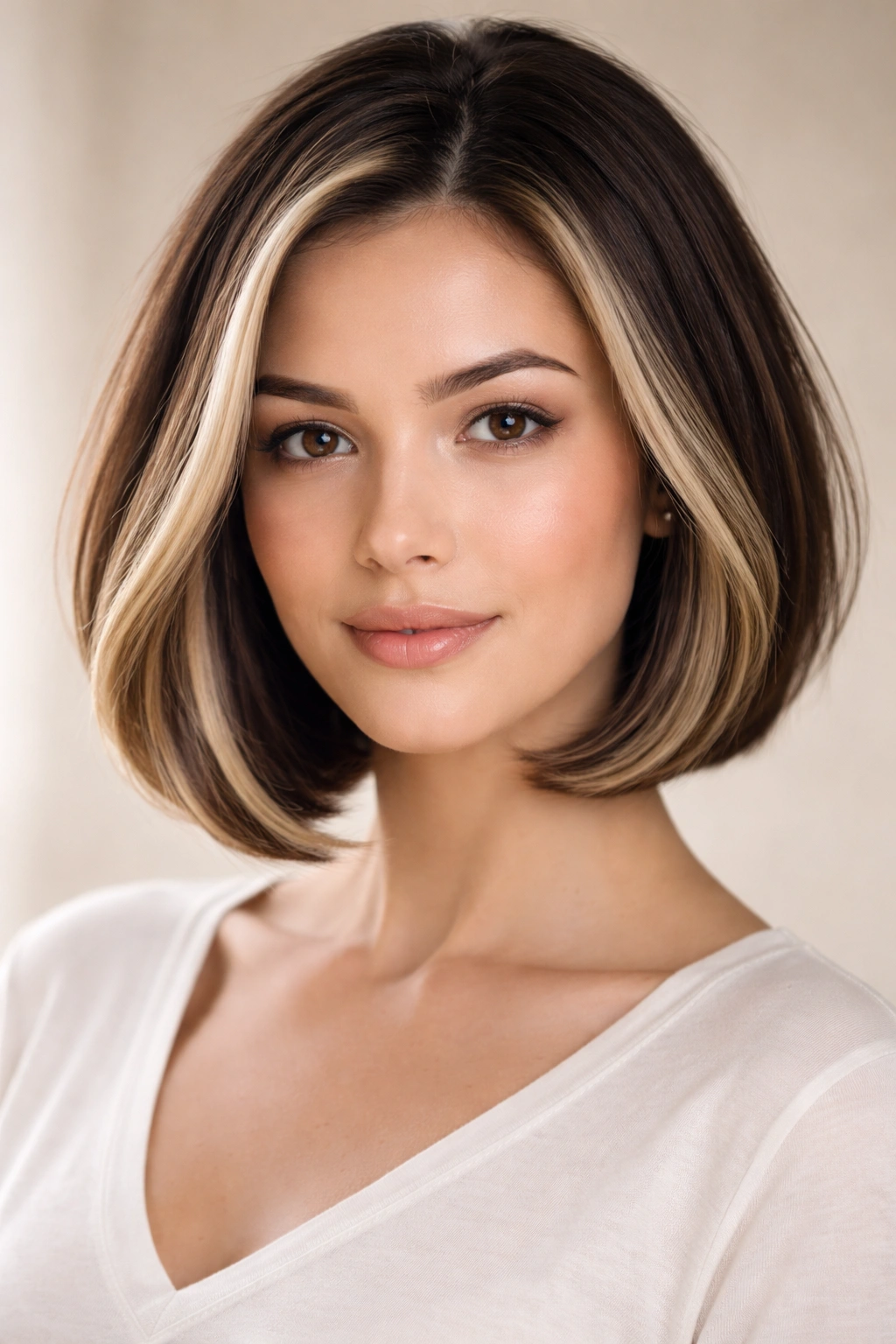
Oval faces can absolutely pull off another variation: a classic bob with strategically placed face-framing highlights. The color adds dimension that a solid-colored bob might lack, and face-framing pieces in a lighter shade draw attention to your features. This is a subtle way to add depth and interest to an already-balanced face shape.
How Color Creates Dimension
Lighter pieces around your face (even just 2-3 pieces on each side) draw light and attention to your features. On an oval face, this creates a focal point that makes your face appear more interesting and dimensional. It’s not about changing your face shape but enhancing it with strategic color placement.
Styling and Maintaining Face-Framing Pieces
- Blow-dry with a round brush, curling the highlighted pieces slightly forward for a face-framing effect
- Use a smoothing serum to keep the pieces sleek and separated from the rest of your hair
- Schedule touch-ups every 6-8 weeks to keep the face-framing pieces looking fresh and intentional
- Consider balayage or money-piece highlights for a more low-maintenance, blended look
Pro tip: Ask your colorist for highlights that are 1-2 shades lighter than your base color for a subtle, natural-looking effect rather than stark contrast.
12. Textured Pixie for Oblong Faces
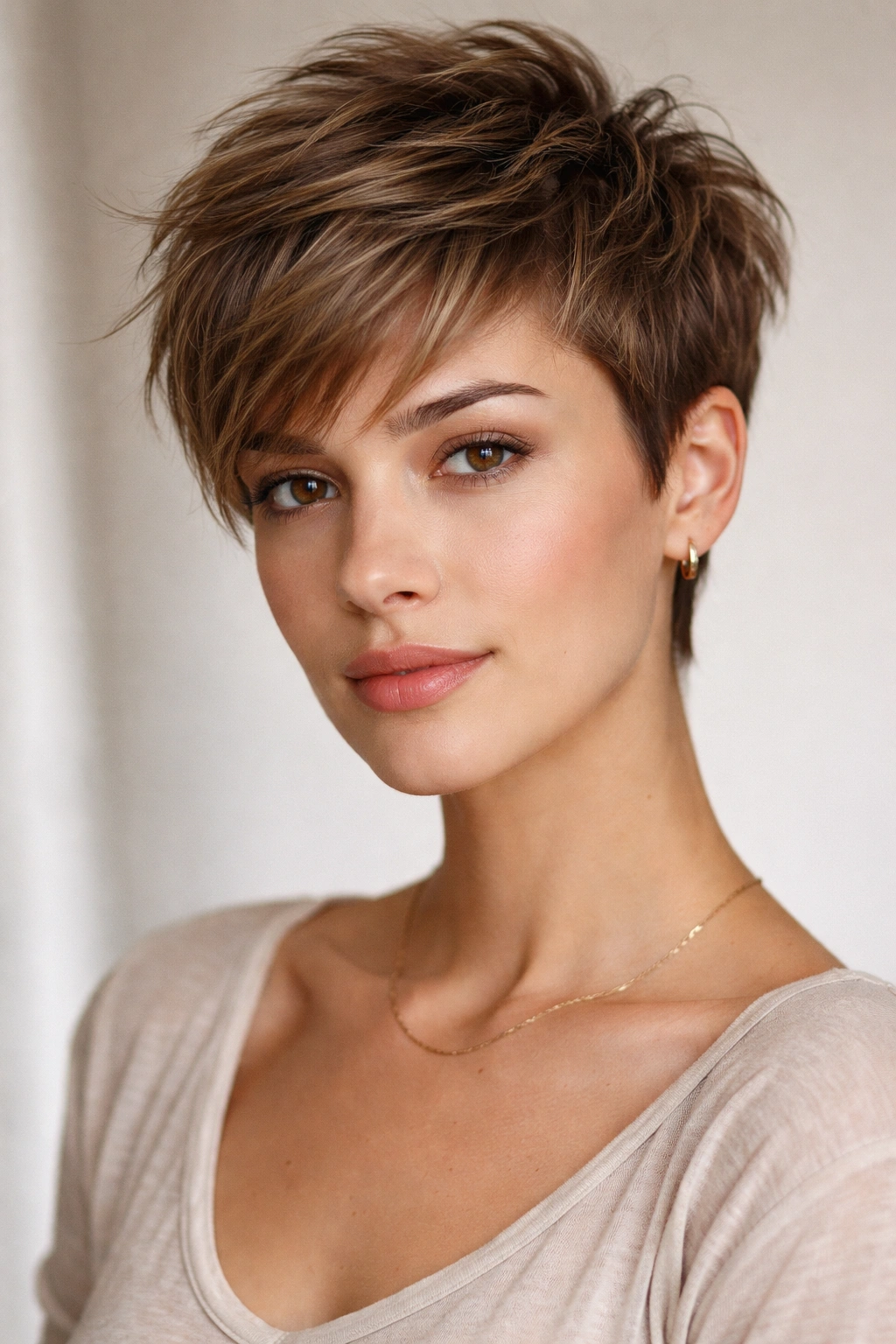
For oblong faces that want the dimension of a pixie but with a bit more texture and softness, a textured pixie is the answer. Instead of the sleek, super-short pixie some people picture, ask for a pixie with intentional texture—longer layers on top, slightly longer on the sides, with choppy, piece-y texture throughout.
How Texture Changes the Pixie Game
A textured pixie is softer and less severe than a classic pixie, which works beautifully for oblong faces that want definition without harshness. The texture creates movement and breaks up the length of your face, while the overall cut still provides the height and angles your face shape needs.
Styling Your Textured Pixie
- Use a texture cream or wax to enhance and define the choppy layers
- Blow-dry by tousling your hair upward and to the sides to maximize texture and height
- Avoid slicking your hair back, which would emphasize your face’s length
- Style with intentional texture rather than trying to smooth it down
Worth knowing: Textured pixies still require regular trims (every 4-6 weeks) but feel less harsh and severe than classic pixies, making them a good middle ground for people hesitant about going very short.
13. Rounded Bob for Diamond Faces
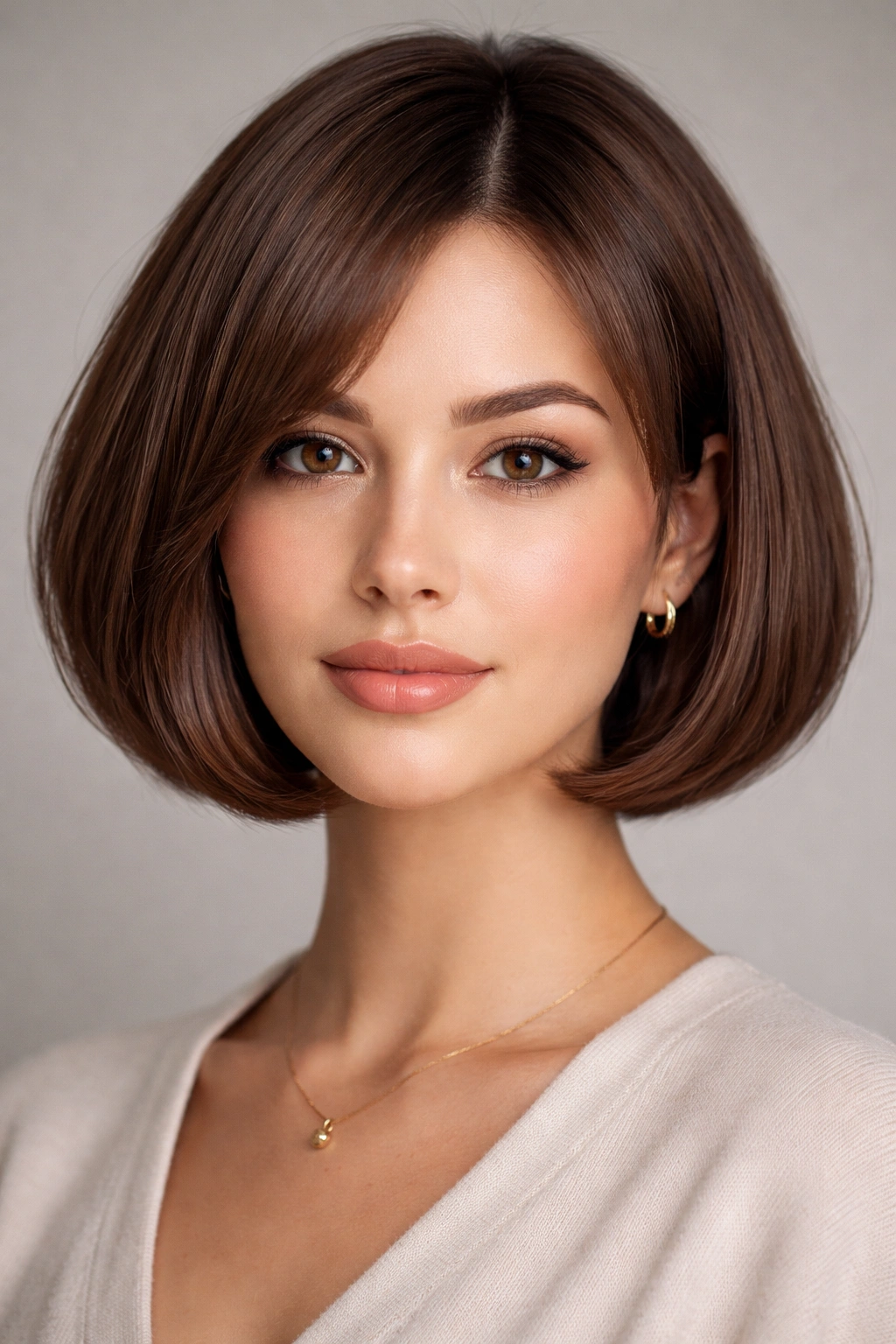
Diamond faces have a specific challenge: you’re widest at the cheekbones and narrower everywhere else. A rounded bob (where the back is slightly longer and rounded, creating a subtle bubble effect) adds fullness where you need it—at your jawline and lower face—while the rounded shape prevents any heaviness at your cheekbones.
Why Rounded Shape Matters for Diamond Faces
A rounded bob follows the contour of your face, emphasizing your jawline (your narrower point) with fullness and movement. This draws attention away from your cheekbones (your widest point) and creates visual balance. The rounded shape is more flattering than a blunt bob because it doesn’t emphasize the width at your cheekbones.
Styling a Rounded Bob
- Blow-dry with a round brush, curling the back pieces under slightly to create that rounded effect
- Use a smoothing product to keep the shape polished and intentional
- Part down the middle or slightly to the side—avoid extreme side parts that would emphasize your cheekbones
- Trim every 6-8 weeks to maintain the rounded shape as your hair grows out
Real talk: Rounded bobs require some daily styling to maintain. If you prefer a wash-and-go cut, this might not be your best option.
14. Long Straight Hair With Center Part for Square Faces
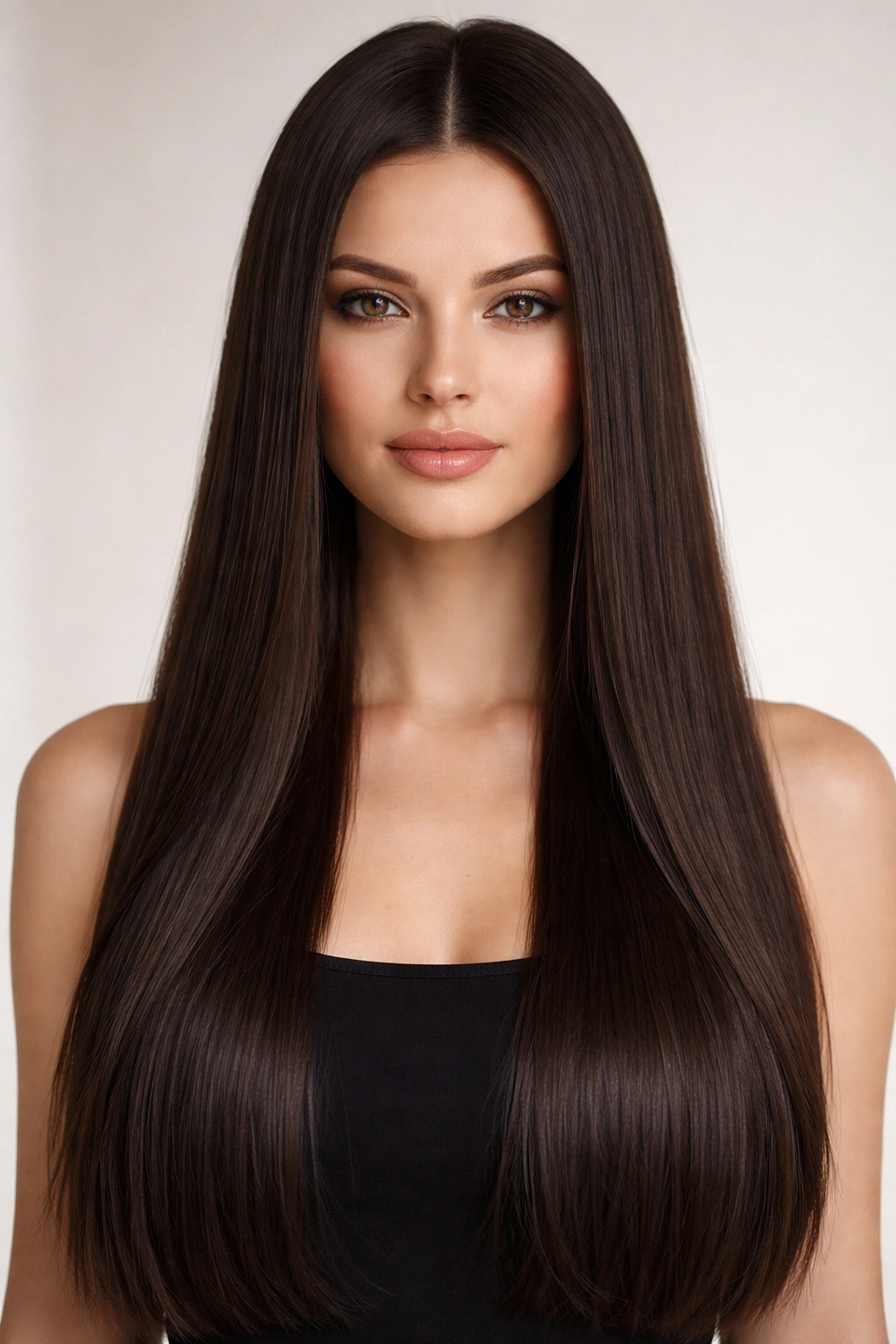
Square faces with stronger, more angular features can absolutely rock very long hair—but there’s a strategy. A center part actually works because it creates a vertical line down the center of your face that balances horizontal width. Long, straight hair elongates your face and prevents the short, blunt cuts from emphasizing your jawline.
Why Length and Center Part Work Together
Very long hair creates vertical lines that counterbalance the horizontal width of a square face. A center part emphasizes that vertical line and draws the eye straight down your face rather than letting it settle on your jawline. The combination creates an overall look that’s more elongated and balanced.
Maintaining Long Hair With a Center Part
- Blow-dry with a paddle brush or flat iron to keep hair smooth and shiny
- Use a smoothing serum or anti-frizz spray to prevent your hair from looking dull or damaged
- Get regular trims (every 8-12 weeks) to prevent split ends that make long hair look unhealthy
- Deep condition regularly since long hair is more prone to dryness at the ends
Pro tip: If you have naturally wavy hair, consider subtle waves through your long hair rather than keeping it poker-straight. Waves add texture without the severe look of a center part on straight hair.
15. Asymmetrical Bob for Round Faces
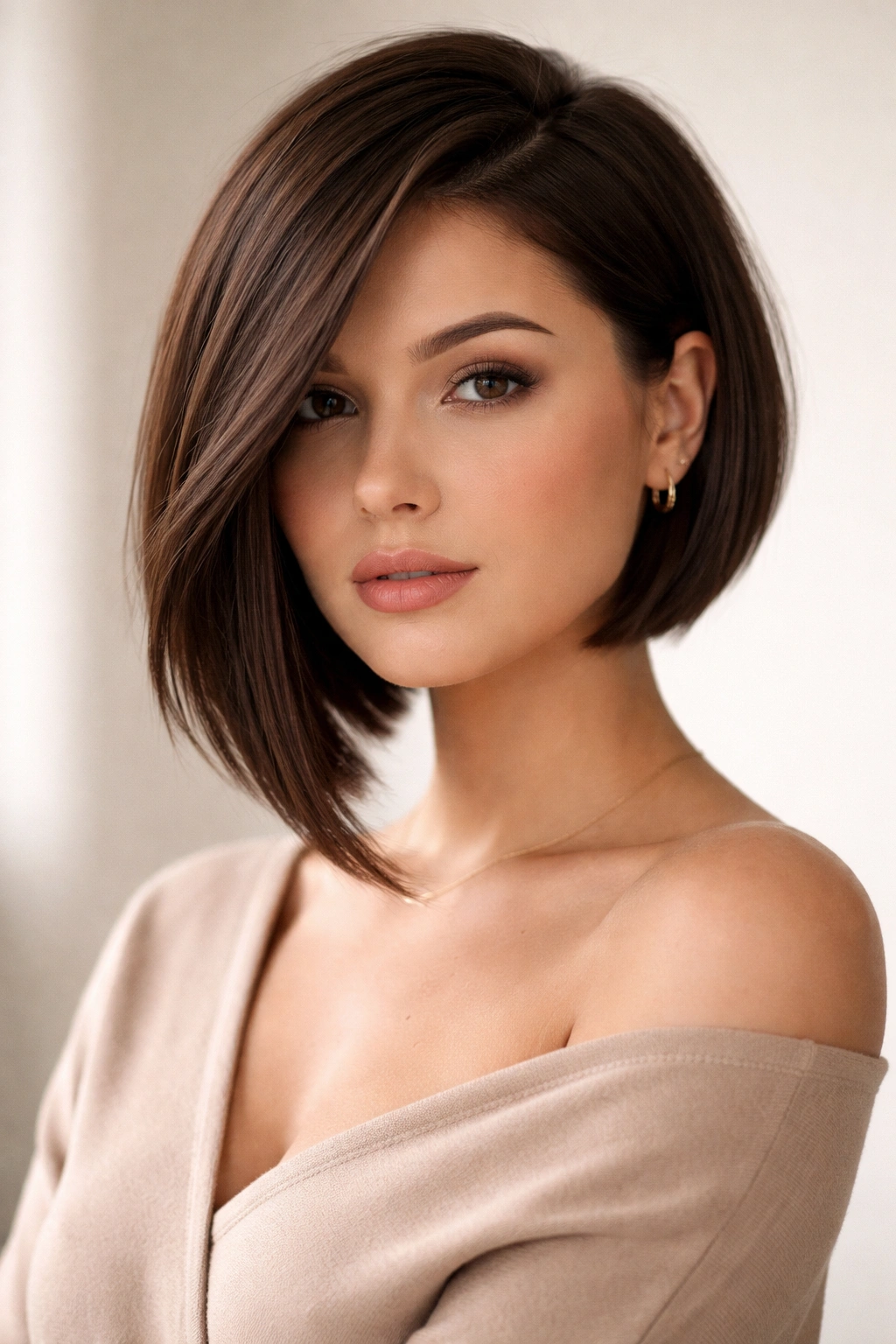
Asymmetrical bobs are bold and modern, and they’re fantastic for round faces because they break symmetry. Round faces are naturally symmetrical, so an asymmetrical cut disrupts that roundness and creates angles. One side longer than the other creates an unexpected visual line that makes your face appear less round and more dimensional.
How Asymmetry Creates Angles
Your round face’s superpower is its softness, but sometimes you want to dial up the drama and edge. An asymmetrical bob does exactly that by creating an asymmetrical line that your eye naturally follows. This breaks the circular appearance of a round face and creates the illusion of a more angular face shape.
Styling an Asymmetrical Bob
- Blow-dry the longer side forward and the shorter side away from your face
- Use a flat iron to create subtle waves or angles in the longer side
- Wear the longer side down across your face sometimes for a different look
- Consider a deep side part that aligns with the asymmetry of your cut
Worth knowing: Asymmetrical bobs can look choppy or unfinished if they’re not precisely cut. Make sure you find a stylist experienced with asymmetrical cuts and willing to refine the shape.
16. Feathered Layers for Rectangular Faces
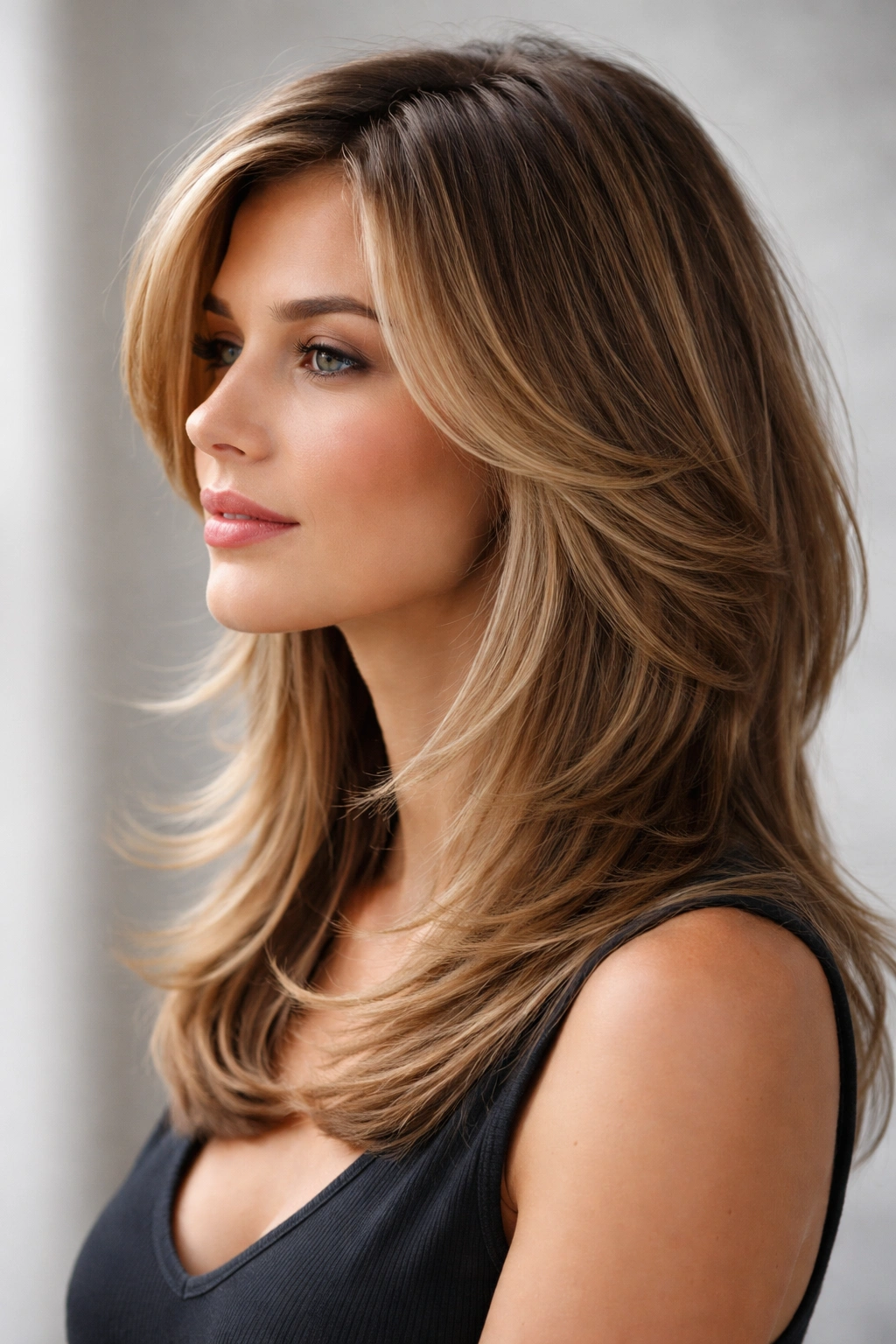
Feathered layers—where each layer is slightly longer than the one below it, creating a soft, flowing effect—work beautifully for rectangular faces. The feathering creates movement and texture that breaks up the length of your face, while the flowing effect prevents any heaviness that would emphasize your vertical length.
Why Feathering Prevents Heaviness
Feathered layers are specifically designed to create movement and prevent bulk. For rectangular faces that need width and texture but can’t afford heaviness, feathered layers are perfect. The graduated lengths create multiple focal points that draw the eye around your face rather than down its length.
Styling Feathered Layers
- Blow-dry with a round brush, flipping sections upward to create height and movement
- Use a medium-sized curling iron to add soft waves through the feathered sections
- Apply a texture spray or sea salt spray to enhance the layered, feathered effect
- Avoid flat-ironing feathered layers straight, as this removes the intended movement
Pro tip: Feathered layers look best on medium-to-thick hair. If your hair is fine, feathering can make it look thin and wispy.
17. Soft Waves for Oblong Faces
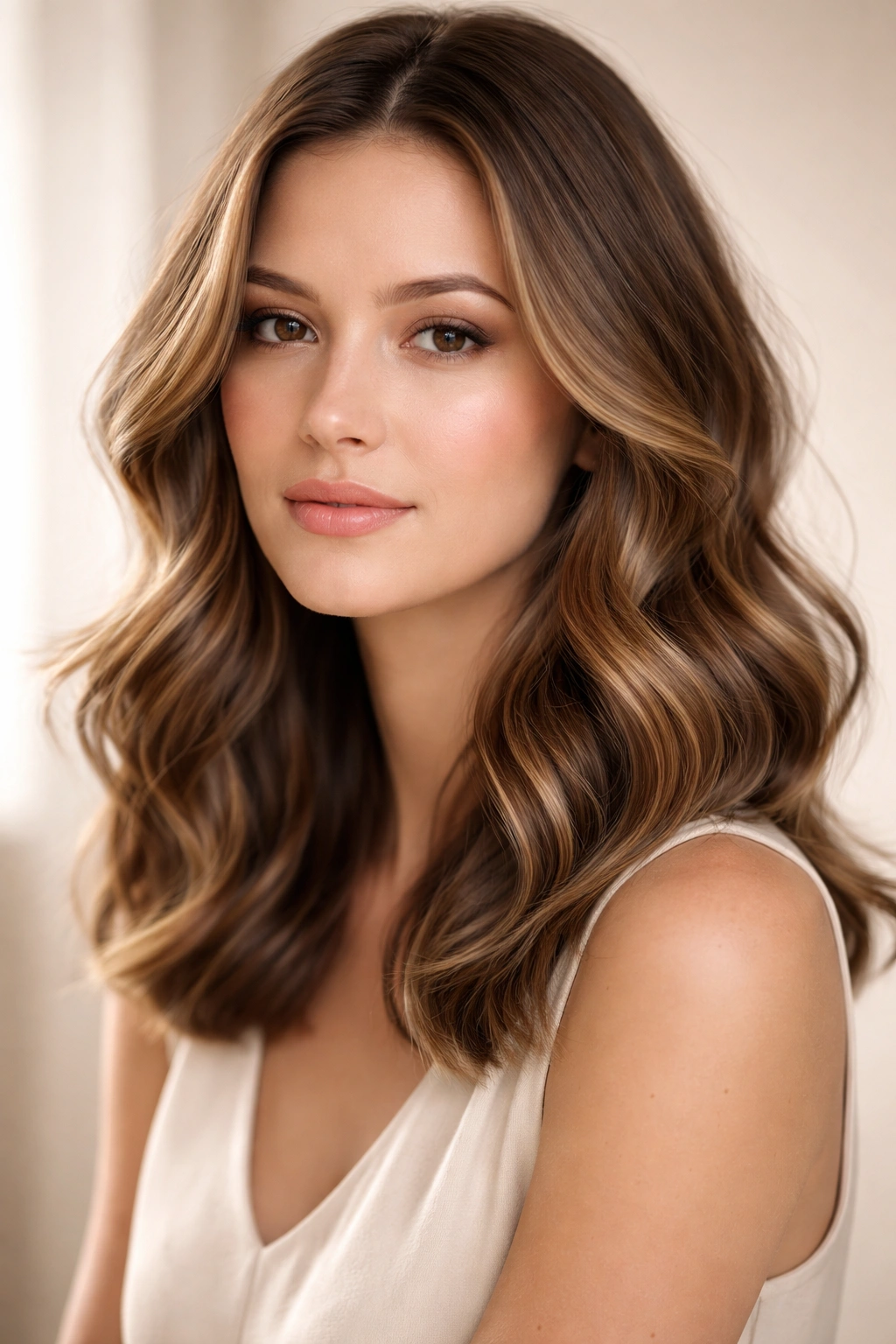
While we covered other options for oblong faces, soft waves are another solid choice—specifically when paired with medium-length hair (shoulder length). Soft waves are gentler than voluminous curls but still add width and movement to break up facial length. The softness prevents your face from looking too severe or angular.
How Soft Waves Balance Vertical Length
Soft waves create horizontal movement across your face without adding as much volume as full curls. They disrupt the vertical length of your face shape with gentle texture and movement. The effect is a face that appears more balanced and less noticeably long.
Creating Soft Waves
- Use a 1-1.25 inch curling iron to create loose, soft waves rather than tight curls
- Apply a wave-enhancing spray to damp hair before blow-drying
- Blow-dry with your head flipped upside-down for root lift, then style your waves
- Sleep on your waves using a silk pillowcase to maintain them overnight
Worth knowing: Soft waves work best on naturally straight or wavy hair. If your hair is very curly, you’ll need to use a flat iron to smooth it out first before creating waves, which requires more styling time.
18. Choppy Layers for Heart-Shaped Faces
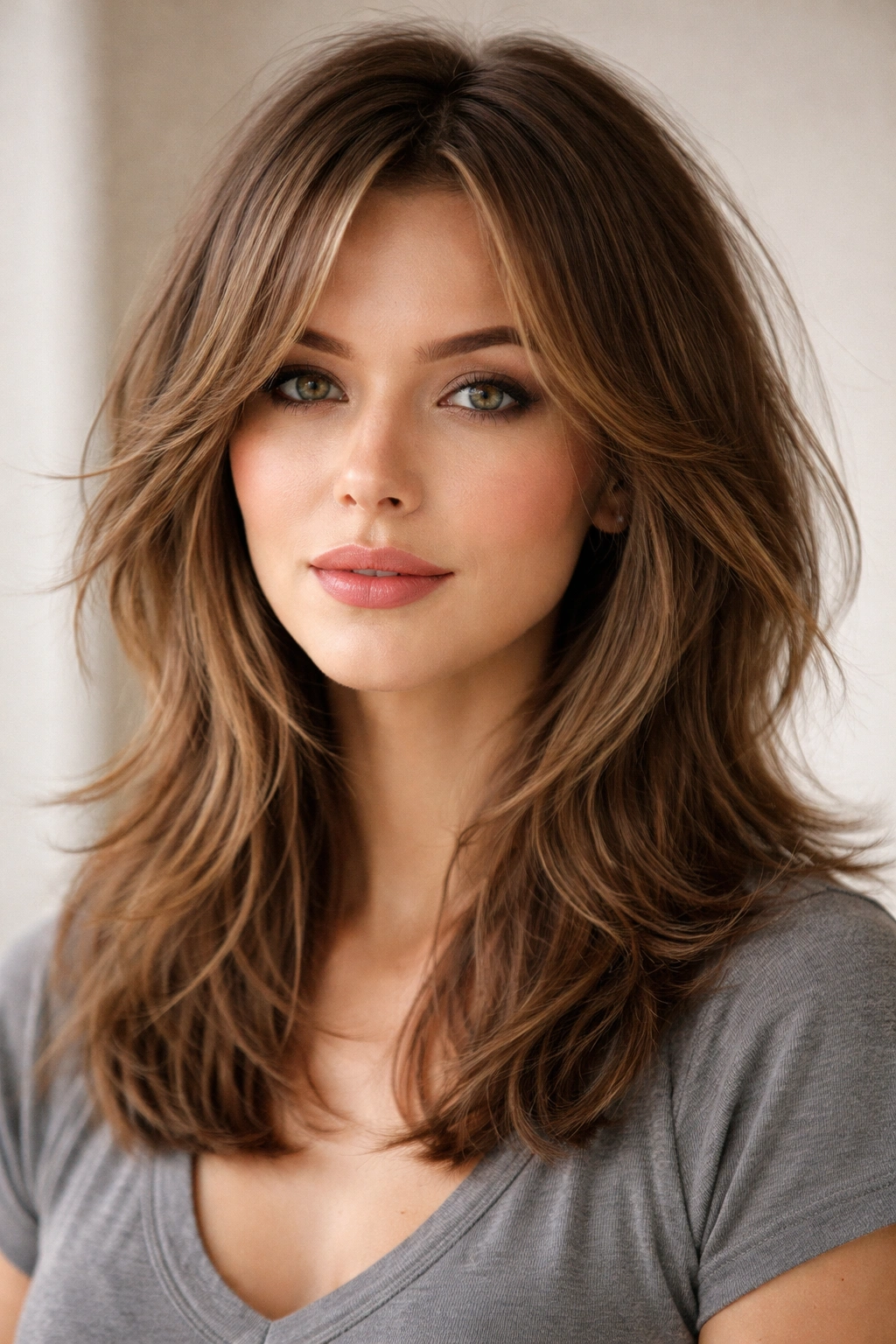
Heart-shaped faces can also rock choppy layers, especially when they’re paired with mid-length hair and styled with texture. Choppy layers create movement at the sides of your face and jawline, which balances a broader forehead. The texture and movement prevent your forehead from appearing as wide while creating fullness where you need it.
Why Choppy Texture Matters
Choppy layers are inherently more angular and textured than smooth, blended layers. For heart-shaped faces, that texture and movement is an asset—it draws attention away from your broader forehead and cheekbones and toward the movement and texture of the cut itself.
Styling Choppy Layers
- Use a texture cream or wax to define and emphasize the choppy layers
- Blow-dry with your head flipped upside-down to create height and prevent your forehead from appearing heavy
- Style with intentional texture rather than trying to smooth the layers down
- Consider a slight side part to avoid a center part that would emphasize your forehead
Pro tip: Choppy layers can look messy if you’re not actively styling them. This cut works best if you’re willing to use product and a blow-dryer most mornings.
19. Shoulder-Length Hair With Highlights for Diamond Faces
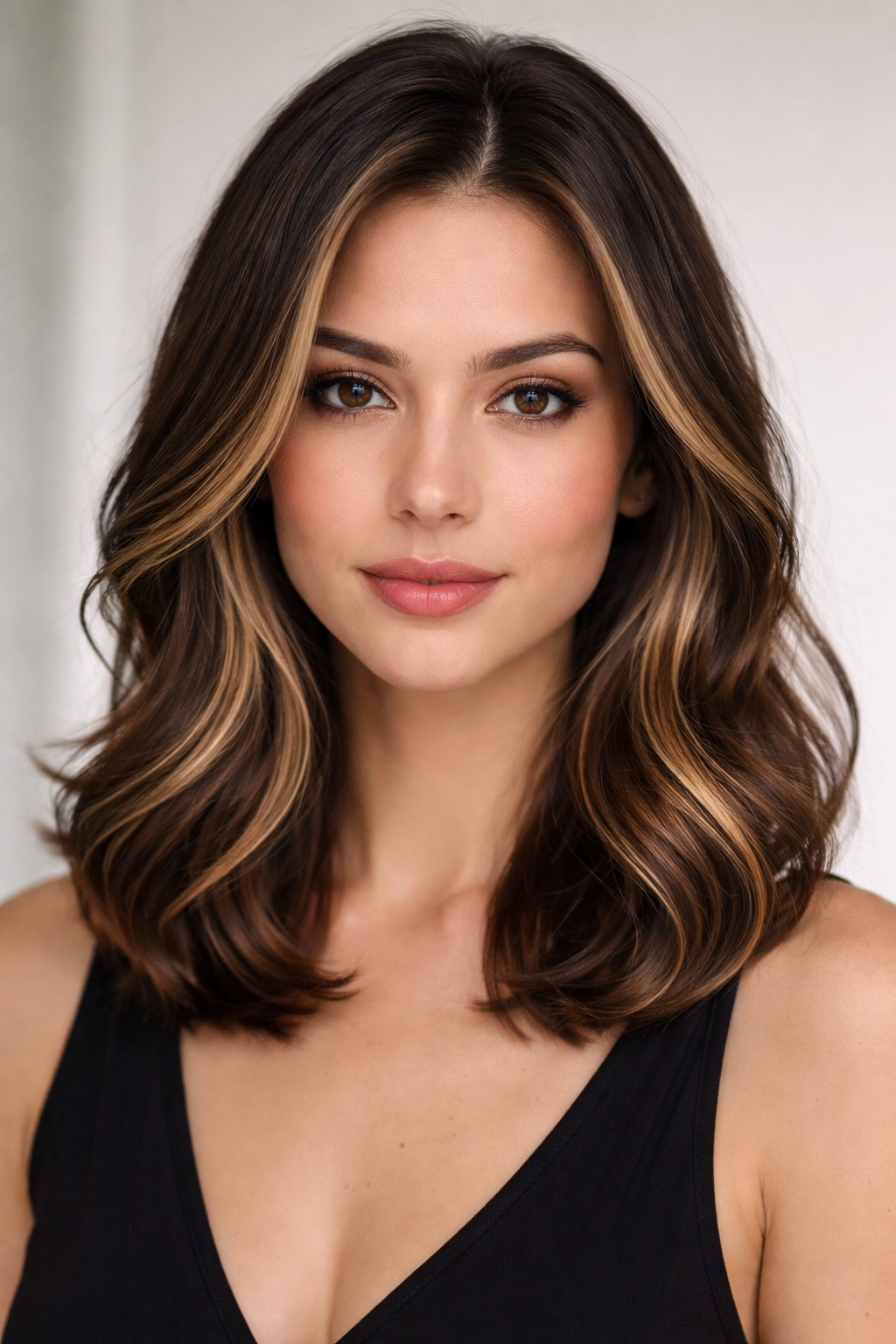
Diamond faces can also work with shoulder-length hair paired with strategically placed highlights. This is similar to the face-framing highlights we discussed for oval faces, but on a diamond face, the goal is slightly different: you want highlights that emphasize your jawline (your narrower point) rather than your cheekbones (your widest point).
Strategic Highlight Placement for Diamond Faces
Highlights placed around your jawline draw attention downward and away from your cheekbones. Shoulder-length hair hits right at your widest point, so the highlights at the jaw help draw the eye lower. The combination creates visual interest at your narrower jawline rather than your wider cheekbones.
Maintaining Shoulder-Length Hair With Highlights
- Blow-dry with a round brush, creating subtle waves through the length
- Use a smoothing serum on your highlighted pieces to keep them looking glossy and intentional
- Schedule touch-ups every 6-8 weeks to keep the highlights looking fresh
- Consider placing highlights around your jawline specifically, with lighter pieces on the underneath layers
Worth knowing: Highlights require regular maintenance to keep them looking intentional. If you’re not willing to do that, consider a more permanent color service or skip highlights altogether.
20. Modern Shag for Oval Faces
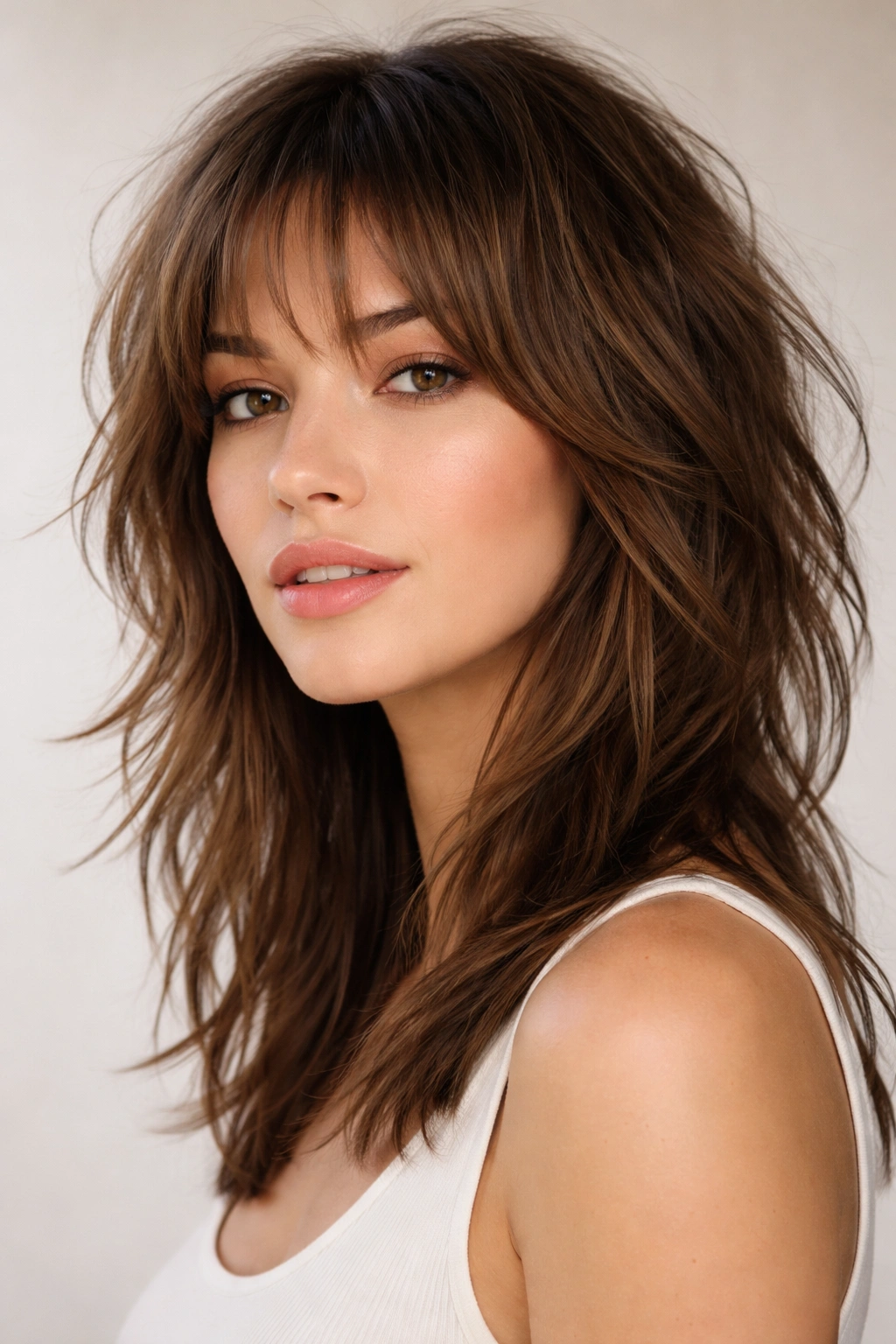
Finally, oval faces can pull off a trendy modern shag—a cut that’s having a serious moment. A modern shag is similar to the shaggy layers we discussed for round faces, but with more intentionality and polish. For oval faces, a modern shag maintains your natural balance while adding contemporary edge and texture.
Why Modern Shags Work for Oval Faces
Oval faces are versatile enough to wear almost any cut, including trendy, fashion-forward options like shags. A modern shag adds texture and movement without throwing off your naturally balanced proportions. The choppy layers and piece-y texture give you an on-trend look that still feels balanced and intentional.
Styling a Modern Shag
- Use a texture cream or salt spray to define the choppy layers and create movement
- Blow-dry with your head flipped upside-down to create root lift and texture
- Style with intentional piece-y texture rather than trying to blend the layers smoothly
- Get regular trims (every 6-8 weeks) to maintain the shape and prevent it from looking overgrown
Real talk: Modern shags are labor-intensive when it comes to styling. They require texture product and blow-drying to look intentional rather than messy. If you prefer wash-and-go styles, this probably isn’t your cut.
Final Thoughts
The right haircut doesn’t just look good—it actually changes how you see yourself. When a cut aligns with your face shape, everything clicks into place. Your features appear more balanced, your jawline looks sharper, your forehead feels less heavy, and you walk around with actual confidence because you know the cut is working with you instead of against you.
The reality is that face shape is your blueprint, not your limitation. You’re not restricted to one single cut—each face shape has multiple options depending on the vibe you’re going for. You can go short or long, straight or textured, classic or trendy. The key is understanding the why behind each choice so you can make informed decisions with your stylist.
Before your next appointment, identify your face shape using the descriptions above, then bring this article with you. Show your stylist the specific cuts that match your face and discuss which one resonates with you and your lifestyle. A good stylist will help you understand why each cut works and how to style it to maximize the benefits. And remember—the best haircut is the one you’ll actually maintain and style. So choose something that fits not just your face shape, but your life too.
