



The bob is one of those timeless cuts that works for almost everyone — but only when it’s tailored to your specific features. A shoulder-length bob on a round face reads completely different than the same cut on an oval face. Your hair texture matters just as much as your face shape. Someone with thick, coarse hair and a square jawline needs a different approach than a person with fine, straight hair and delicate features.
The magic of finding your perfect bob isn’t about following a single trend or copying a celebrity style. It’s about understanding how proportions, layers, texture, and movement interact with your unique face shape and hair characteristics. The right bob can make your face feel more sculpted, elongate a round face, soften angular features, or add volume exactly where you need it. The wrong bob will fight against your natural features instead of working with them.
This guide breaks down 25 different bob variations, each matched to specific face shapes and hair types. Whether you have thick wavy hair and a heart-shaped face, fine straight hair and a square jaw, or curly hair and an oblong face, you’ll find a detailed breakdown of a bob cut designed specifically for your combination of features. Each variation explains exactly why that particular cut works, how to style it, and what to ask your stylist for to get the look right.
1. The Classic Blunt Bob for Oval Faces with Straight Hair
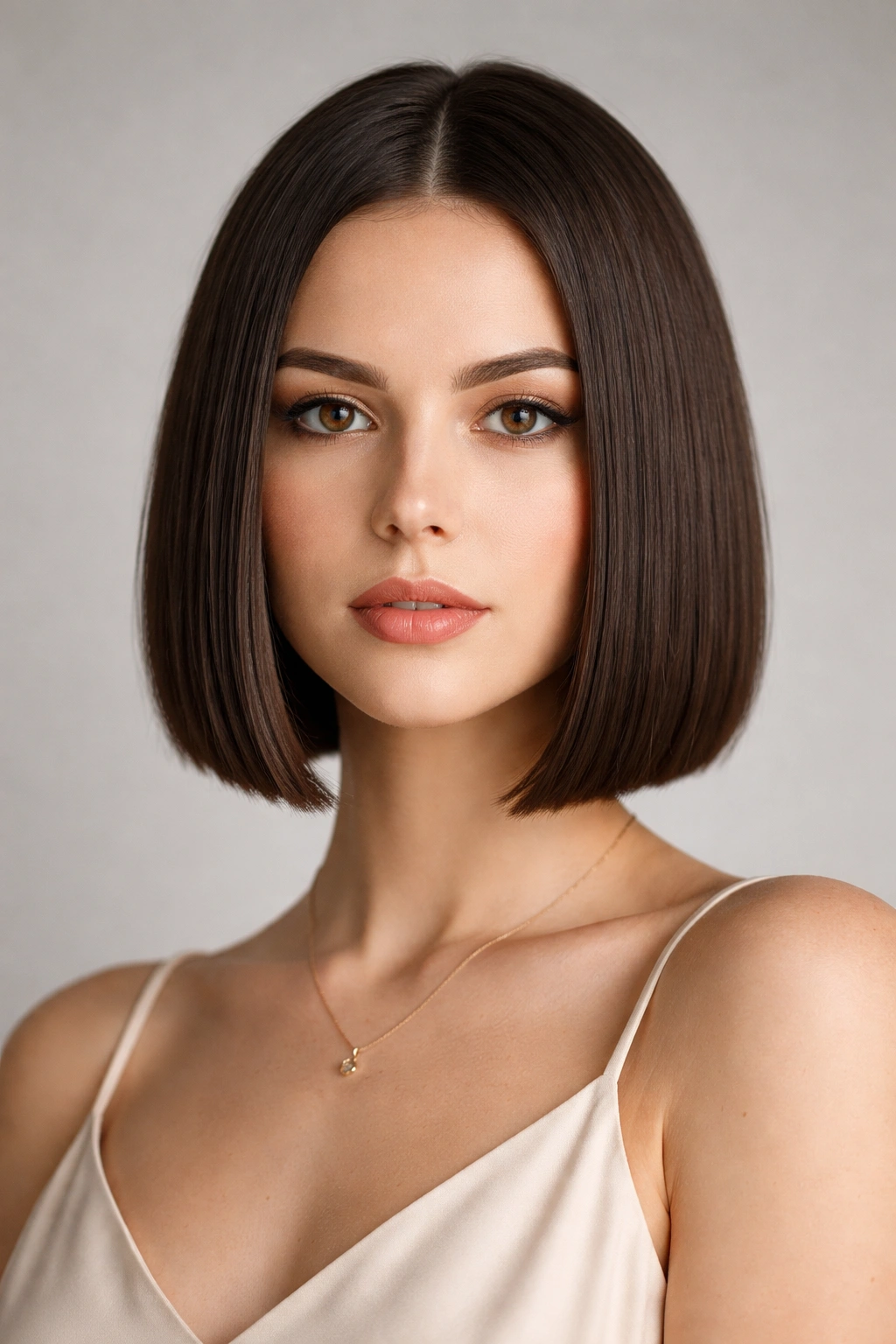
Oval faces are the most versatile when it comes to bob cuts, and if you have naturally straight hair, the classic blunt bob is a no-brainer. This cut sits at the jawline with zero layers, creating a clean, sharp line that frames your face beautifully without emphasizing any particular feature — because oval faces don’t really have features that need softening or sharpening. The bluntness of the cut gives it architectural precision that suits professional settings and everyday wear equally.
Why It Works For You
Oval faces have balanced proportions, so a simple, geometric cut complements rather than competes with your natural face shape. The straight lines of a blunt bob create a polished silhouette that doesn’t fight with anything. If your hair is naturally straight, this cut requires minimal styling effort — it falls into place on its own. You’re getting elegance without daily heat-styling or product layering.
Styling and Maintenance
- Blow-dry straight for maximum shine and clean lines, or let air-dry for a more relaxed vibe
- A light smoothing serum keeps the ends from fraying or looking wispy
- Trim every 4 to 6 weeks to maintain the blunt line, as even slight growth makes the cut feel less intentional
- Add a deep side part for subtle variation, or wear it down the middle for symmetry
Pro tip: This cut looks especially striking with a bold lip color or statement earrings because nothing distracts from your face.
2. The Layered Textured Bob for Round Faces with Thick Hair
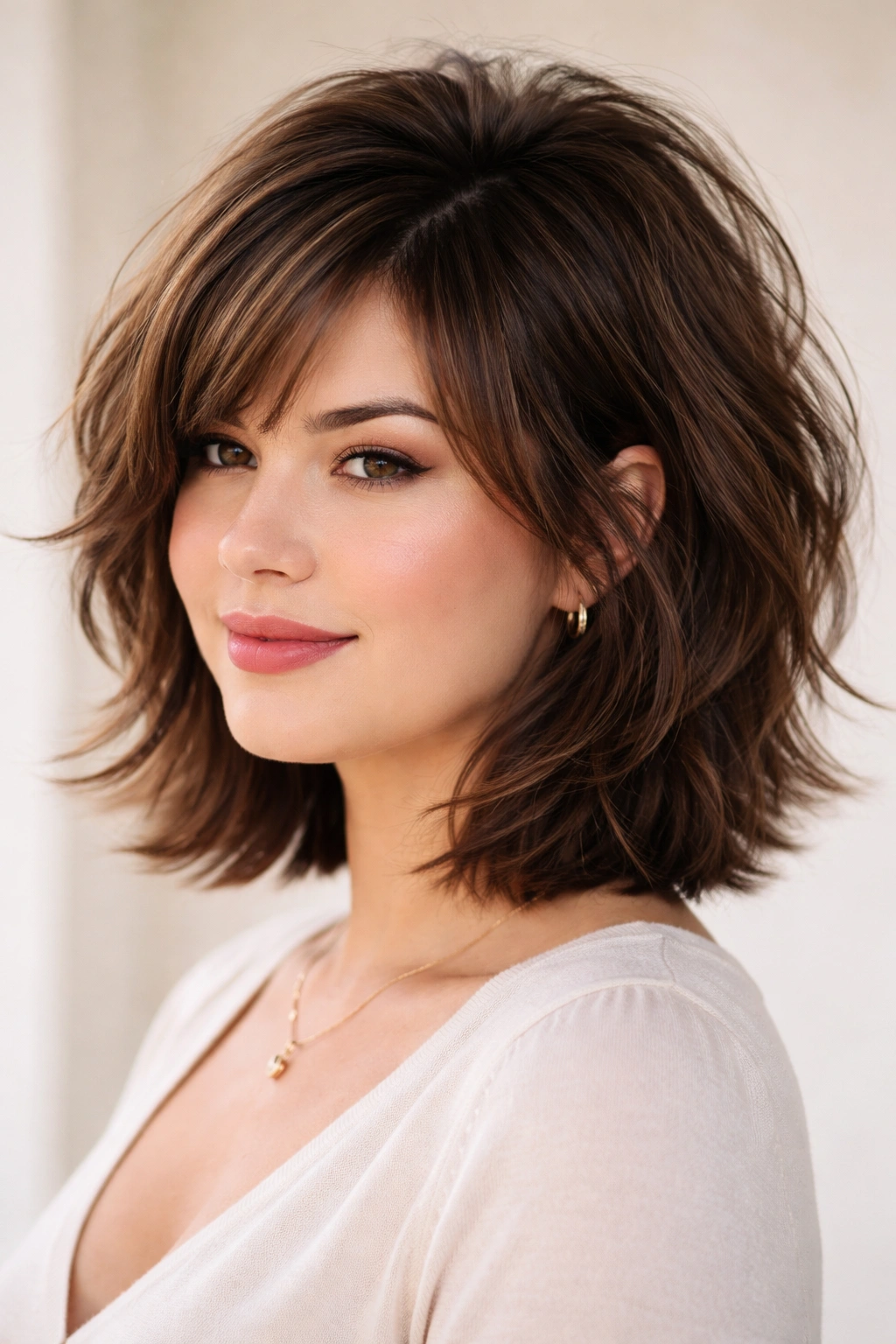
If you have a round face and thick hair, you need layers and texture to create the illusion of length and avoid the “bubble” effect that a blunt bob can create. A layered textured bob cuts away bulk strategically, with shorter layers at the crown to add height and movement throughout. The texture breaks up the weight of thick hair, making the cut feel lighter and bouncier. The overall effect elongates your face while working with your hair’s natural density.
Why It Works For You
Round faces benefit from vertical lines and height at the crown. Layers create those vertical lines naturally. With thick hair, layers are essential because a blunt cut just sits heavy and emphasizes the width of your face. Texture and movement in thick hair can be styled in multiple directions, giving you versatility that a blunt cut doesn’t offer.
How to Style and Maintain
- Use a round brush and blow dryer to direct movement away from the face and upward at the crown
- Apply a texturizing spray or sea salt spray to enhance the layers and create piecey, lived-in texture
- Trim every 5 to 6 weeks to maintain shape and prevent the layers from looking straggly
- Embrace a tousled, slightly undone aesthetic rather than trying to force the layers into a polished line
Worth knowing: Thick hair + layers = a cut that actually gets better as it grows, because the layers become more pronounced.
3. The Soft Wave Bob for Heart-Shaped Faces with Medium Hair
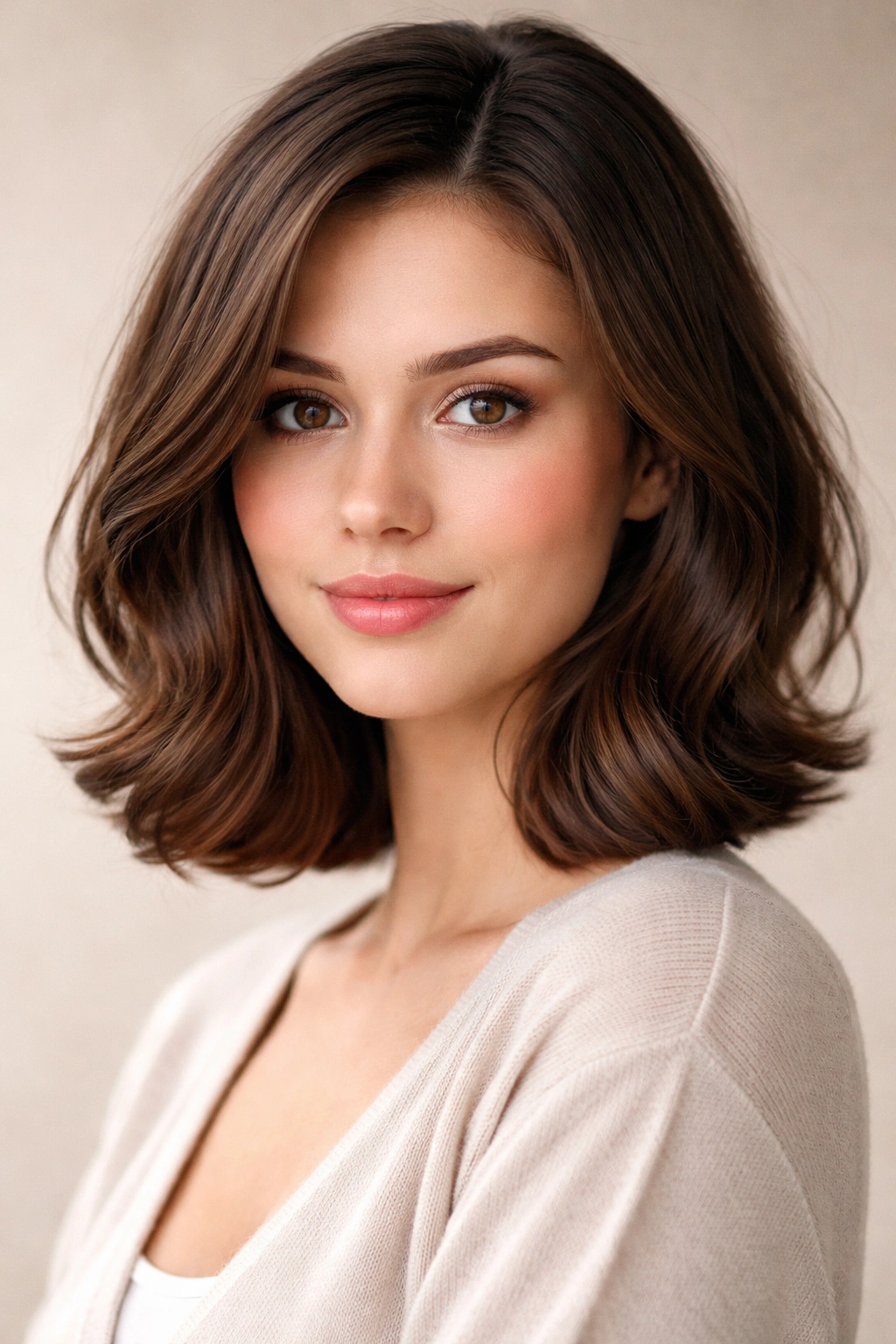
Heart-shaped faces are wider at the forehead and narrower at the chin, which means you need a bob that adds volume at the jawline to balance that top-heavy proportion. A soft wave bob does exactly that. The waves create fullness at the ends and around the jawline, counteracting the width of your forehead. Medium hair holds waves beautifully without requiring heavy styling products, and the softness of waves complements heart-shaped faces much better than sharp, blunt lines.
Why It Flatters Your Face Shape
Heart faces need fullness at the bottom, and waves create that illusion naturally. The softer lines of waves also counteract the angular quality many heart-shaped faces have. You’re essentially using texture to create balance rather than relying on cut alone.
Styling Tips and Maintenance
- Blow-dry with a large barrel brush to create soft waves that fall past the jawline
- Use a texture spray or light salt spray for grip that holds the waves without stiffness
- Curl the ends away from the face to elongate and draw attention downward
- Deep conditioning treatments keep medium hair from getting dry or frizzy, which would ruin the soft wave effect
- Trim every 6 weeks to keep the ends fresh and bouncy
Real talk: If you’re not a morning styler, this cut is more work than a straight bob — but the way it balances your face shape makes it worth the effort.
4. The Choppy Layered Bob for Square Faces with Wavy Hair
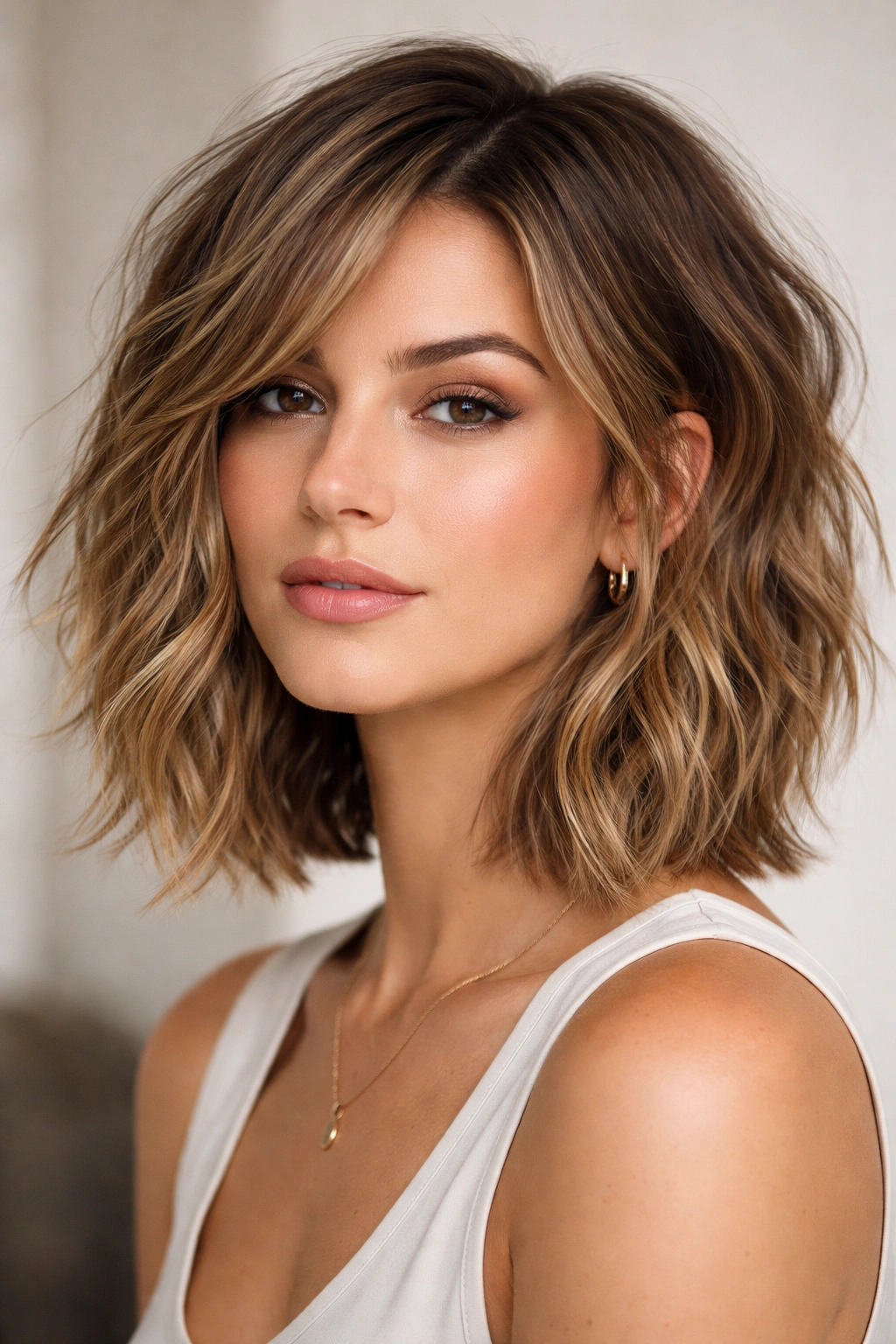
A square face has a strong jawline and balanced width across the forehead and jaw, which means you want to soften that geometry. Choppy layers do exactly that — they create movement and texture that breaks up the squareness of your face. If your hair is naturally wavy, this cut embraces that texture instead of fighting it. The choppy layers actually enhance your wave pattern, making your hair look effortlessly tousled and minimizing the need for styling.
Why This Cut Softens Your Features
Square jawlines can read harsh in a blunt cut, but choppy layers redirect the eye and create movement that softens. Wavy hair naturally breaks apart choppy layers in a flattering way, so the cut looks intentional but never severe. You’re essentially using your hair’s natural texture to your advantage.
How to Maintain and Style
- Let your waves air-dry when possible, scrunching in a curl-defining product
- Use a diffuser attachment on your blow dryer if you want more control over the wave pattern
- Choppy layers need trimming every 4 to 5 weeks, or they’ll start to look shaggy instead of intentional
- A light sea salt spray enhances the choppy texture and keeps waves from looking limp
Insider note: This is the bob that actually improves with slightly undone styling — the messier and more relaxed, the better it looks.
5. The Curved Shag Bob for Long Faces with Fine Hair
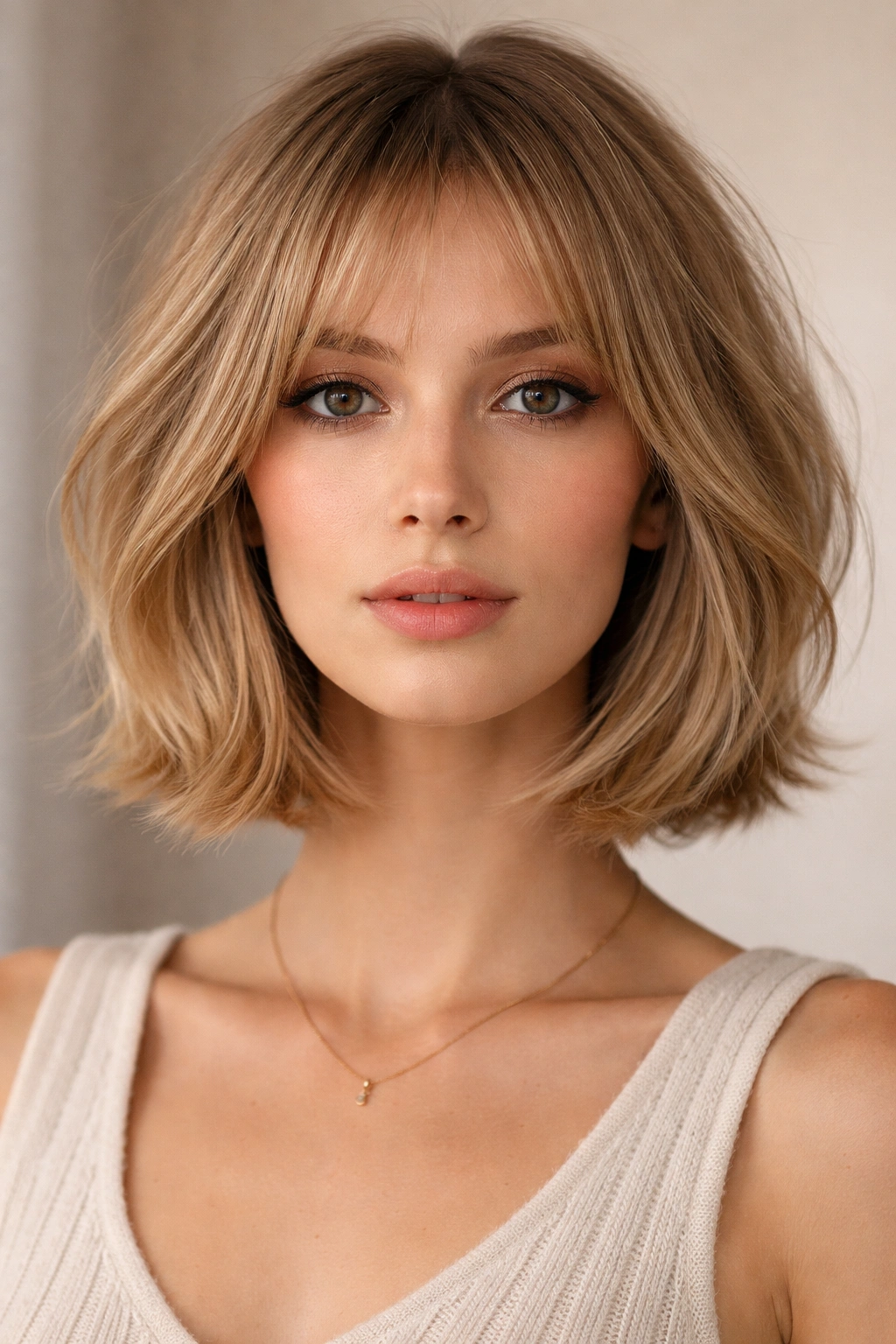
If you have a long, narrow face, a bob that’s too straight will actually emphasize the length. You need horizontal lines and volume to visually widen your face. A curved shag bob has layers that curve inward toward the face at the jawline, creating horizontal emphasis exactly where you need it. Fine hair can look thin and limp in heavy blunt cuts, so the layers in a shag actually add the illusion of fullness without requiring thick hair.
Why It Works For Your Face and Hair Type
Curved lines counteract the vertical length of an oblong face. The inward curve at the jawline creates width. Layers in fine hair prevent the style from looking thin or stringy — they add texture and movement that make fine hair look fuller and more substantial.
Styling and Maintenance
- Blow-dry with movement to make the layers bounce and the fine hair appear thicker
- Use volumizing mousse at the roots to add lift without weighing hair down
- Layer a light texturizing spray over your blow-dry for extra grip and body
- Trim every 4 to 6 weeks to keep layers sharp and prevent the shag from looking overgrown
- Avoid heavy oils or serums that will make fine hair look limp; use lightweight serums instead
Pro tip: This cut is one of the few where “undried” hair (dried with fingers instead of a brush) actually looks intentional and flattering.
6. The Asymmetrical Bob for Diamond-Shaped Faces with Curly Hair
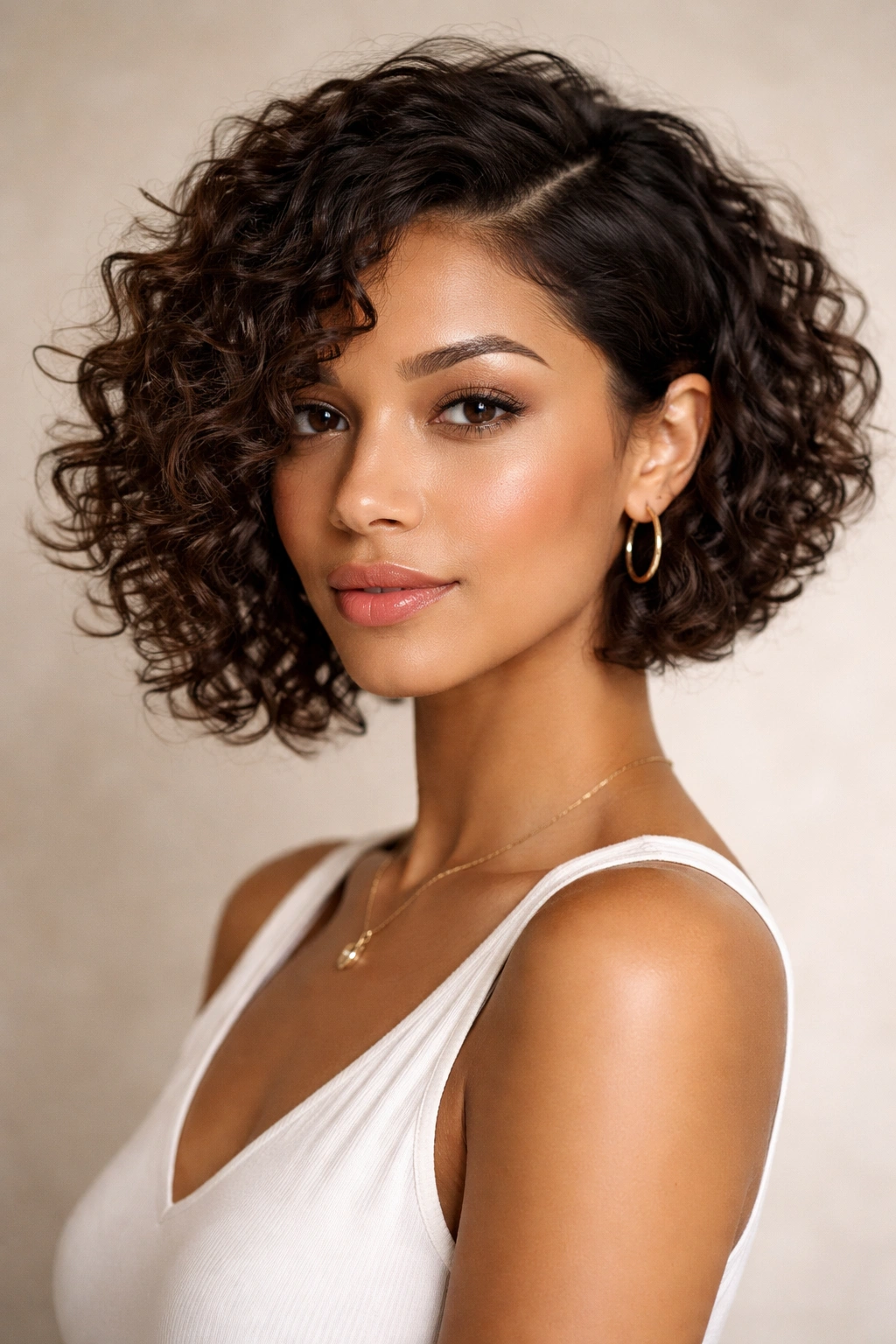
Diamond-shaped faces are narrower at the forehead and chin but widest at the cheekbones, which means you want an asymmetrical cut that draws attention away from the widest part. One side shorter than the other creates an off-balance visual that redirects focus upward and downward. If you have curly hair, an asymmetrical bob works with your natural curl pattern to create movement that’s already built in. Curls actually enhance the asymmetrical effect, making it look more intentional and fashion-forward.
Why Asymmetry Flatters Your Face
An asymmetrical cut breaks the line of your widest point by making one side visually dominant. This draws the eye away from your cheekbones. Curly hair curls in all directions anyway, so an asymmetrical cut that honors that randomness actually looks more balanced than a symmetrical one would.
Caring for Curly Hair with This Cut
- Get a cut specifically designed for curly hair, preferably using the “Deva Cut” or similar curl-aware method where the stylist cuts your hair dry, following your natural curl pattern
- Enhance your curls with a curl cream or gel applied to soaking wet hair, then scrunch and plop or diffuse dry
- A deep conditioning mask every week keeps curls hydrated and bouncy
- Trim every 6 to 8 weeks, as curly hair requires more frequent maintenance to prevent frizz and maintain shape
- Avoid layering too much, or curly hair can look stringy
Worth knowing: An asymmetrical bob looks most striking when you embrace your natural curl pattern instead of trying to smooth or straighten it.
7. The Micro Bob for Oval Faces with Thick Coarse Hair
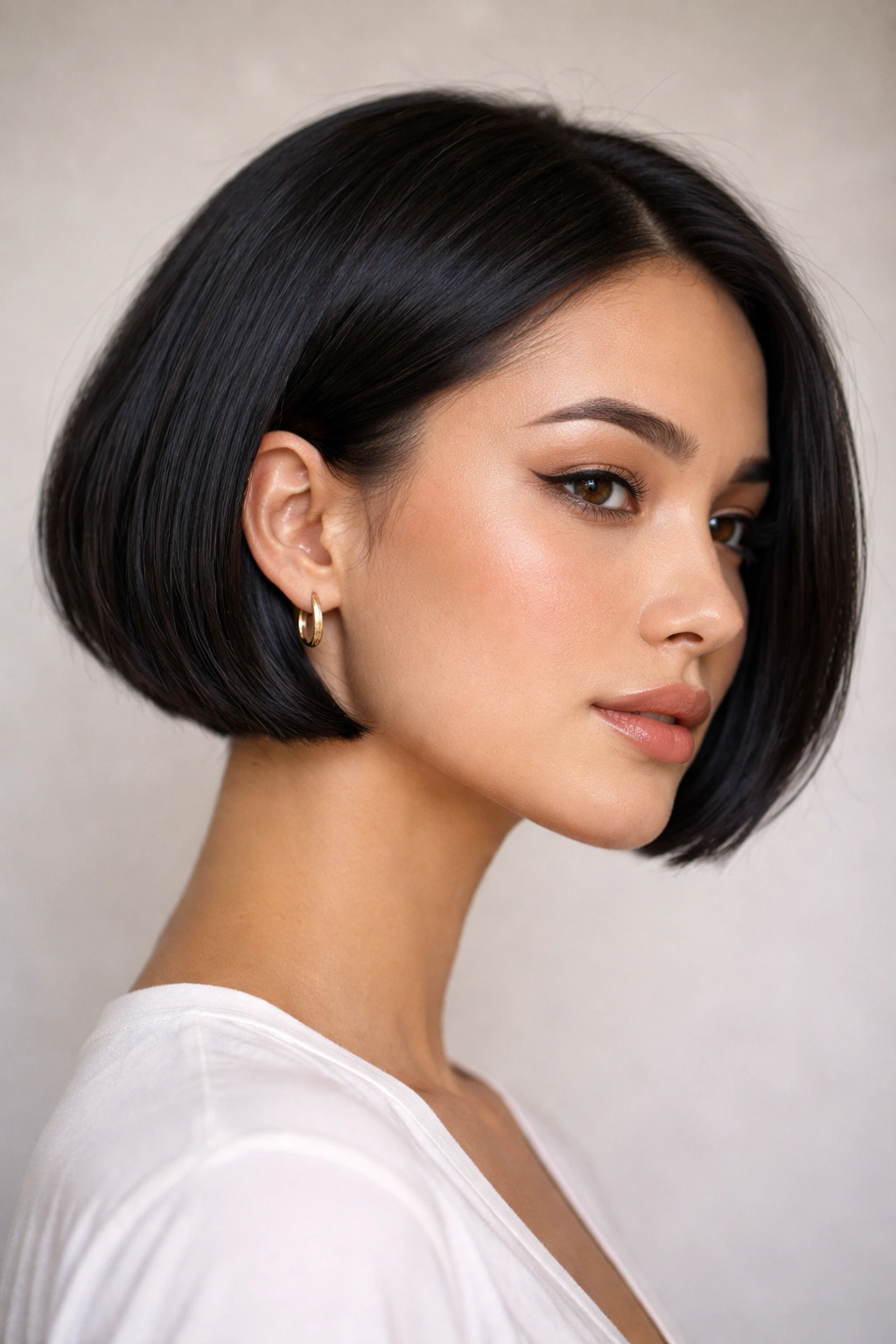
A micro bob sits above the jawline, often just grazing the ears — it’s a bold, statement-making cut that works beautifully on oval faces because those faces can pull off short styles without any proportional concerns. If you have thick, coarse hair, a micro bob is actually liberating. Thick hair in a longer bob can look heavy and hard to manage, but in a micro cut, that thickness becomes sleekness and structure. This is a low-maintenance, high-impact cut.
Why This Works For Your Hair Type
Thick, coarse hair is hard to style in longer bobs — it sits heavy and requires constant blow-drying and product to look polished. A micro bob eliminates that struggle because the short length makes thick hair naturally bouncy and easy to manage. You’re trading styling time for a more sculptural, fashion-forward silhouette.
Maintenance and Styling
- Trim every 3 to 4 weeks to maintain the precise short length
- Thick hair needs a skilled stylist who understands how to cut coarse texture — ask for a cut that works with your hair’s natural weight rather than against it
- A light pomade or smoothing cream keeps thick hair from looking frizzy
- This cut air-dries beautifully and requires minimal blow-drying
- Pair it with confidence — a micro bob is a statement, not a conservative choice
Real talk: This cut is not for everyone, but if you’re ready to commit to short hair and regular trims, it’s transformative.
8. The Textured Chin-Length Bob for Rectangle Faces with Wavy Hair
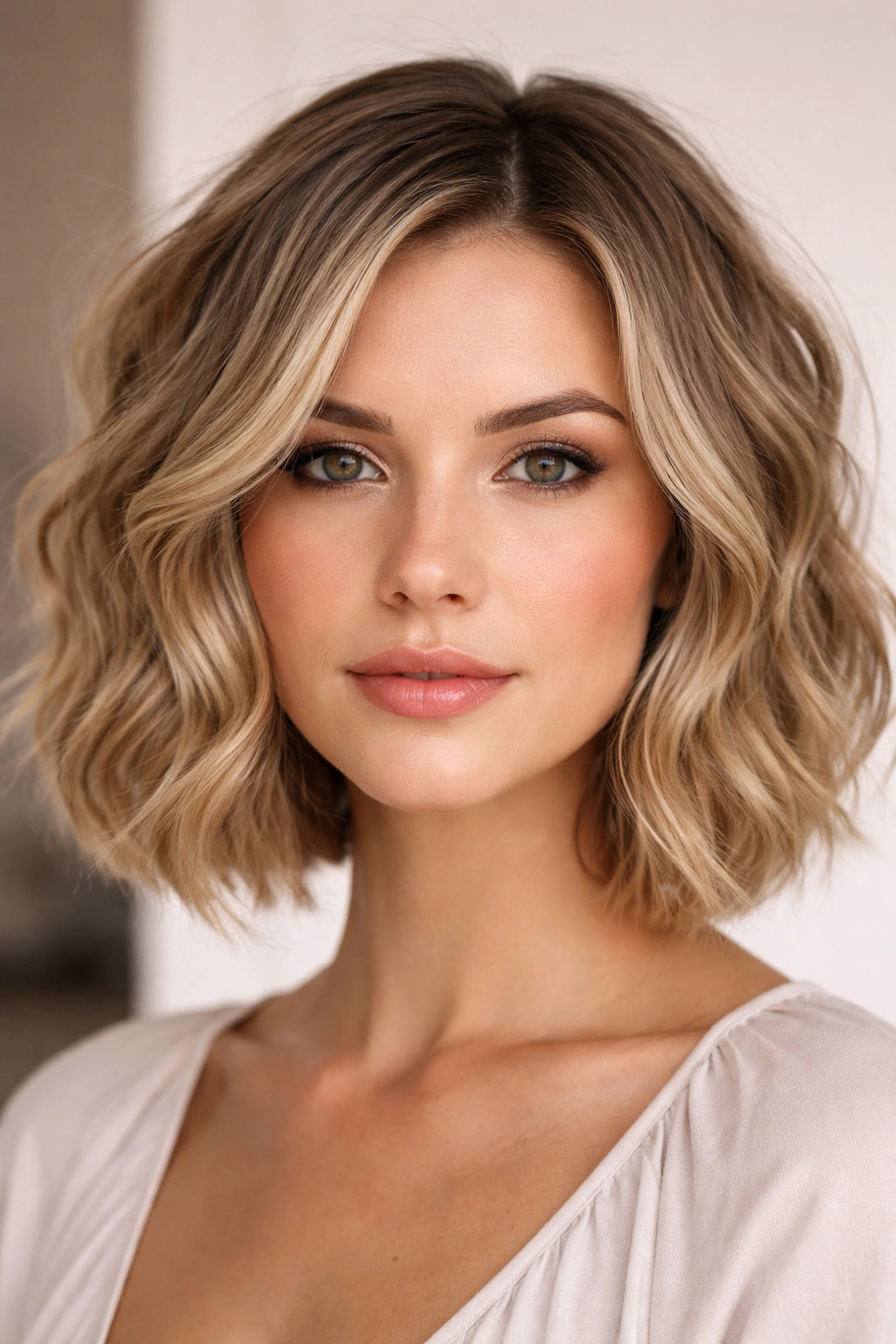
Rectangle faces are longer than they are wide, similar to oval faces, but with a more angular quality and a squared-off jawline. A chin-length bob with texture adds fullness at the sides and breaks up the length. Wavy hair in this cut naturally falls to the sides, creating width at the cheekbones and softening the square jaw. The texture prevents the style from looking severe or overly geometric.
Why Texture Matters For Your Face Shape
A blunt chin-length bob on a rectangular face can feel harsh because it emphasizes the squared jaw and length. Texture softens that effect. Wavy hair adds volume at the sides, which visually widens a narrow face. You’re using your hair’s natural pattern to create balance.
How to Style and Maintain
- Blow-dry with a round brush to direct waves to the sides and create volume at the cheekbones
- Use a texturizing spray or mousse before blow-drying to enhance wave pattern
- Side-part this cut for maximum width and to soften the jawline
- Trim every 5 to 6 weeks to keep the waves looking fresh and intentional
- A curl cream or wave serum enhances your natural texture without requiring a curling iron
Pro tip: Wear your hair down and slightly tousled rather than slicked back — the loose waves do the heavy lifting in balancing your face shape.
9. The Blunt Bangs Bob for Oblong Faces with Straight Hair
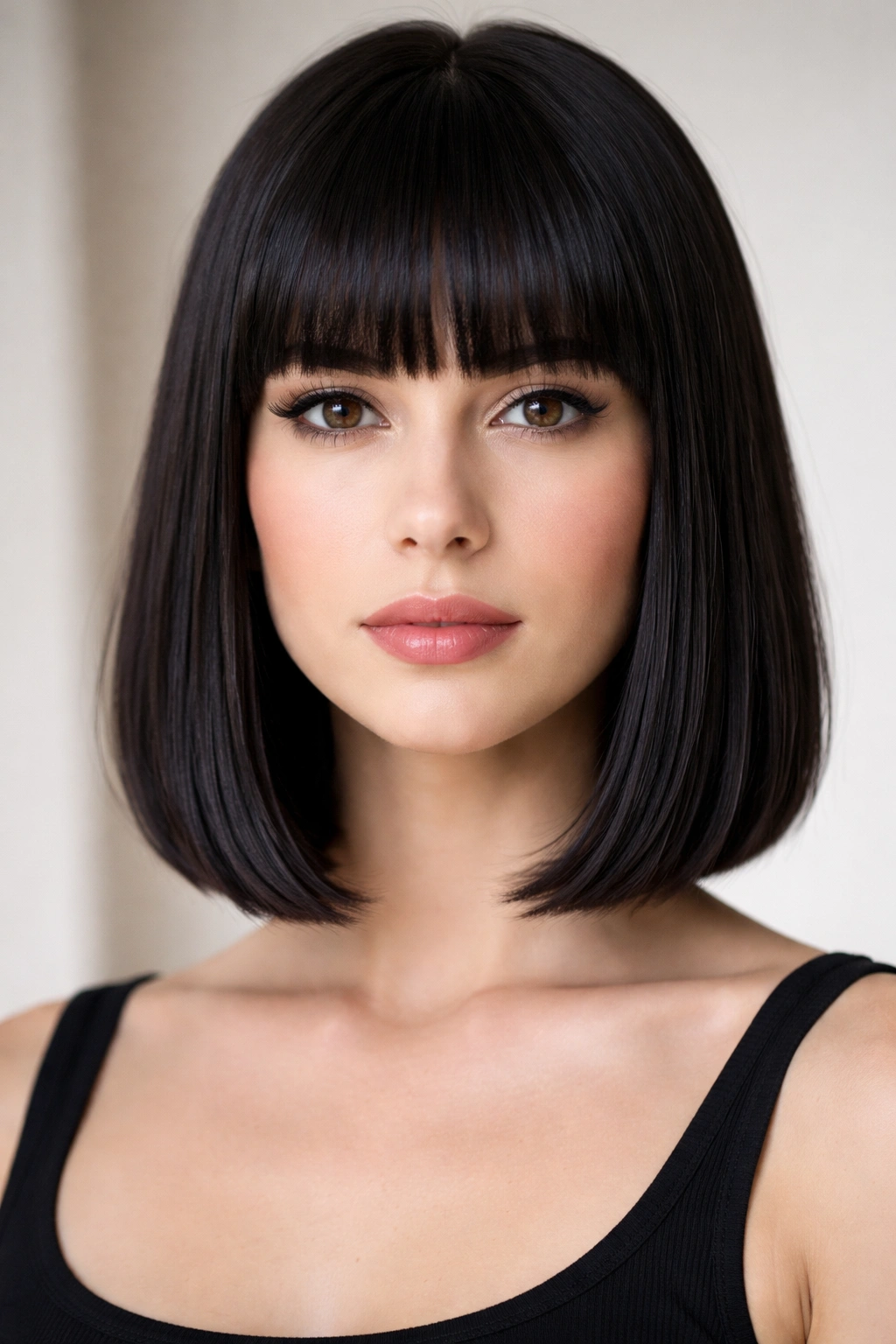
If you have an oblong face and straight hair, a blunt bob with a full fringe is a game-changer. The horizontal line of blunt bangs immediately shortens the visual length of your face. Paired with a straight bob, the entire silhouette becomes more balanced. This cut is bold and somewhat retro, but it’s incredibly flattering for long face shapes. Straight hair lets the bangs sit perfectly and the bob line fall cleanly without any fussiness.
Why Bangs Transform An Oblong Face
Blunt bangs create a strong horizontal line across the forehead that visually cuts your face in half, making it appear shorter and wider. The longer your face, the more dramatically bangs help. On an oblong face, this is exactly what you need.
Styling and Maintenance
- Trim your bangs every 2 to 3 weeks to keep them blunt and at the right length — they grow quickly and even half an inch of growth changes the effect
- Blow-dry bangs straight down, then slightly inward, using a flat brush
- Your bob can air-dry if you prefer a more relaxed look, but bangs need more intentional styling
- Use a smoothing serum or light hairspray to keep bangs looking sleek
- This cut requires commitment to regular bang trims — if you’re not willing to do that, choose a different style
Worth knowing: Blunt bangs have a very specific vibe that’s not for everyone, but if you commit to the look, it’s transformative.
10. The Layered Pixie-Bob Hybrid for Round Faces with Fine Hair
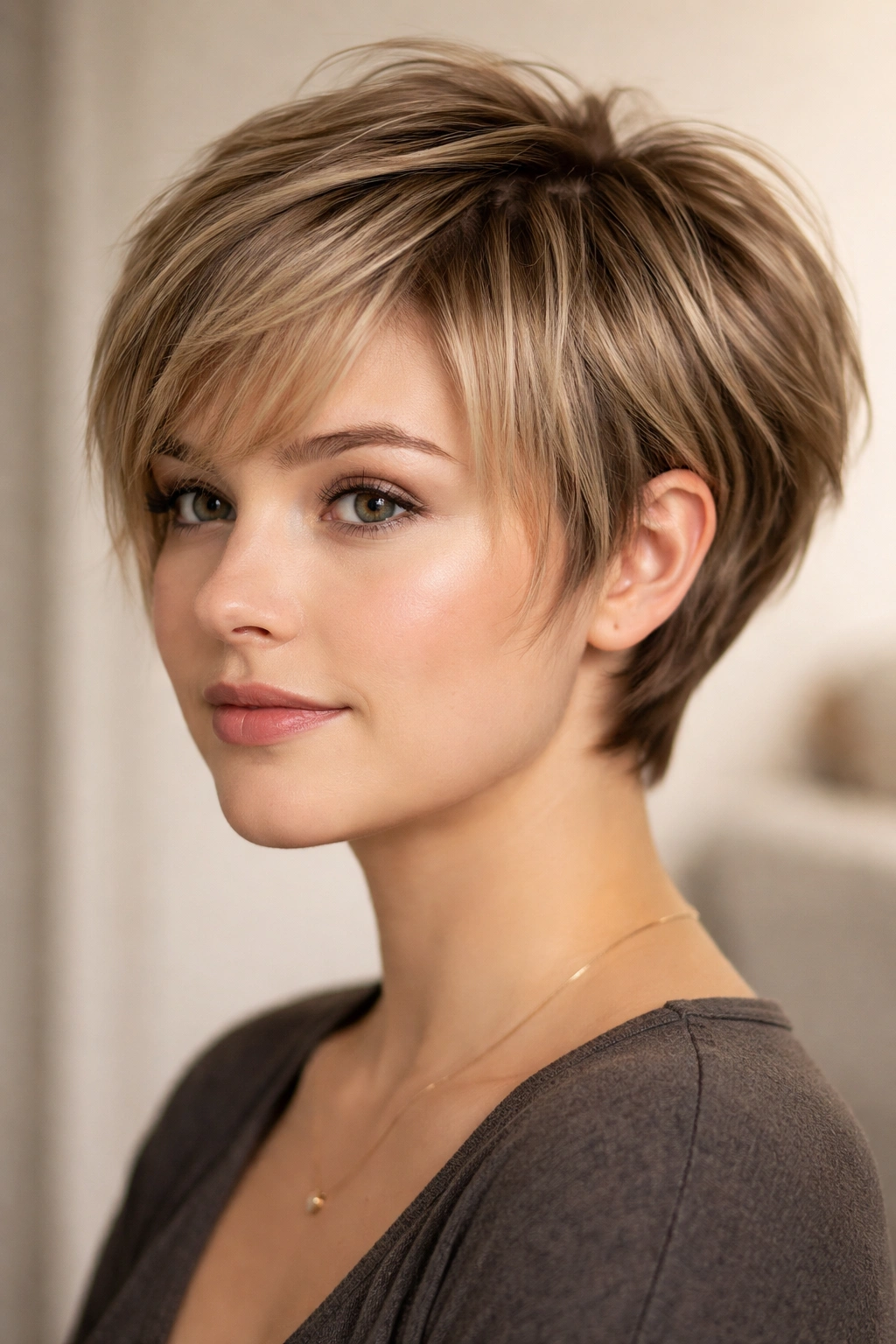
A pixie-bob hybrid is shorter than a traditional bob but longer than a pixie cut — it’s often choppy and heavily layered. For round faces with fine hair, this cut is perfect. The short length and choppy layers create height at the crown, which elongates a round face. Fine hair actually looks thicker with lots of short layers because layers create the illusion of more hair. This is a daring cut, but it’s incredibly modern and low-maintenance.
Why This Hybrid Works For You
Short, choppy layers add height where you need it (at the crown) and remove bulk where you don’t (around the round face). Fine hair looks fuller with lots of texture and movement. You’re getting a cut that actually works with fine hair rather than requiring you to style it into something it’s not.
Maintenance and Styling
- This cut requires a very skilled stylist who understands how to layer short hair for maximum dimension
- Trim every 3 to 4 weeks to maintain the choppy, textured shape
- Blow-dry with your fingers or a round brush to add movement and height at the crown
- A volumizing mousse at the roots and a texturizing spray throughout creates the illusion of thickness
- This is not a style you can go long between trims — the shorter the cut, the more visible growth becomes
Real talk: This is a short, fashion-forward cut that requires confidence and regular maintenance, but it’s one of the most striking bob variations.
11. The Graduated Bob for Triangle Faces with Wavy Hair
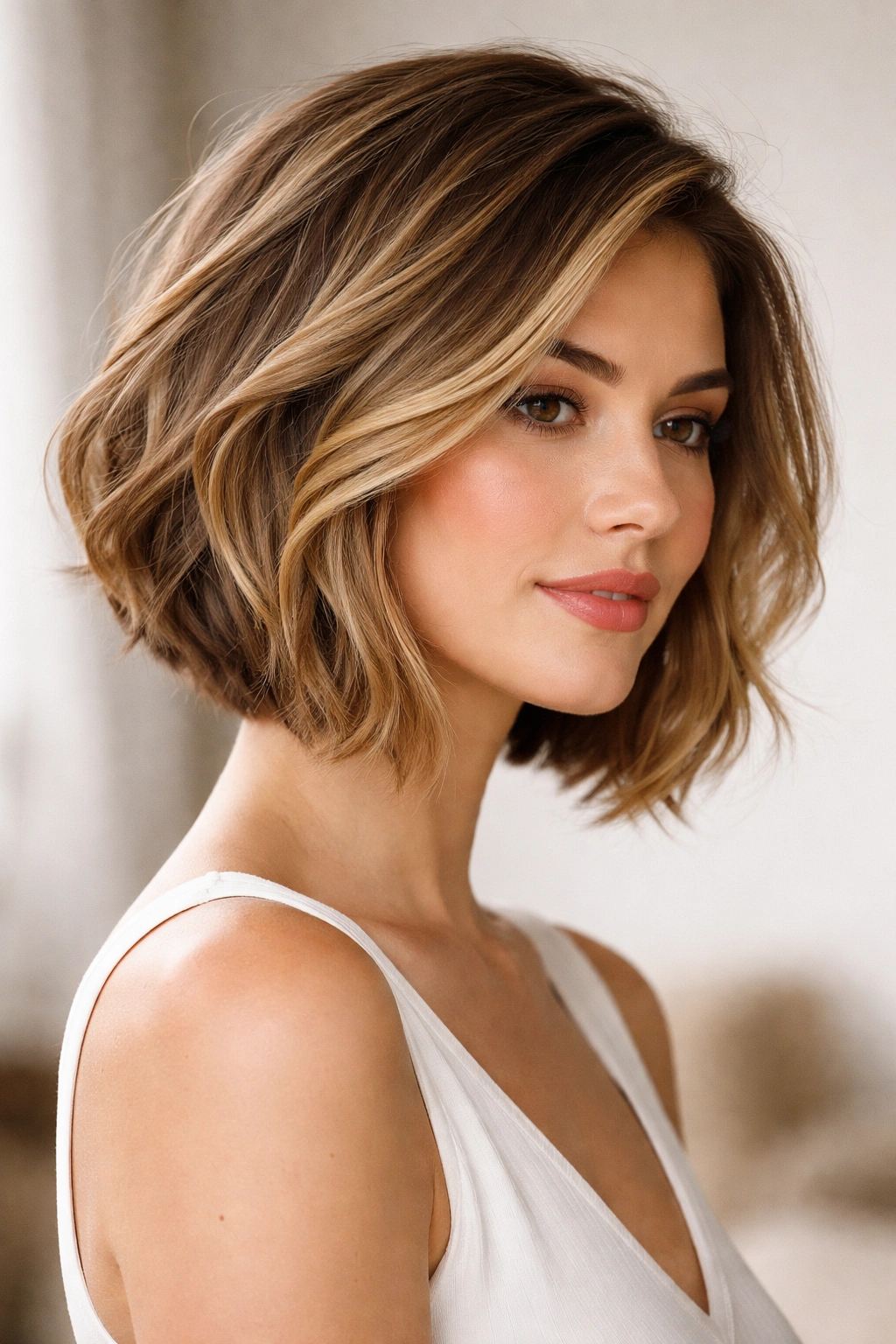
Triangle faces (wider at the bottom, narrower at the forehead) need exactly the opposite of what heart faces need. You want to add volume at the forehead and minimize bulk at the jawline. A graduated bob accomplishes this by being shorter in the back and gradually longer toward the front, creating an overall A-line shape. Wavy hair in a graduated bob is stunning because the natural wave pattern adds volume at the crown and becomes more relaxed and curved toward the front.
Why Graduation Balances Your Face
The graduated length adds visual width and volume where you need it (at the forehead and crown) and tapers down toward the jawline, which visually narrows that wider bottom half. Wavy hair amplifies this effect because waves add fullness naturally.
Styling and Maintenance
- Side-part this cut to add extra width at the forehead
- Blow-dry your waves to the side, using a round brush to add volume at the crown
- Use a wave serum or curl cream on damp hair, then diffuse-dry or air-dry with scrunching
- Trim every 5 to 6 weeks to maintain the graduated shape and prevent the longer front pieces from looking stringy
- Embrace the natural movement of your waves rather than trying to smooth them out
Pro tip: This cut is especially flattering when you wear your hair off your face on one side, emphasizing the forehead width.
12. The Deep-Parted Bob for Square Faces with Coarse Hair
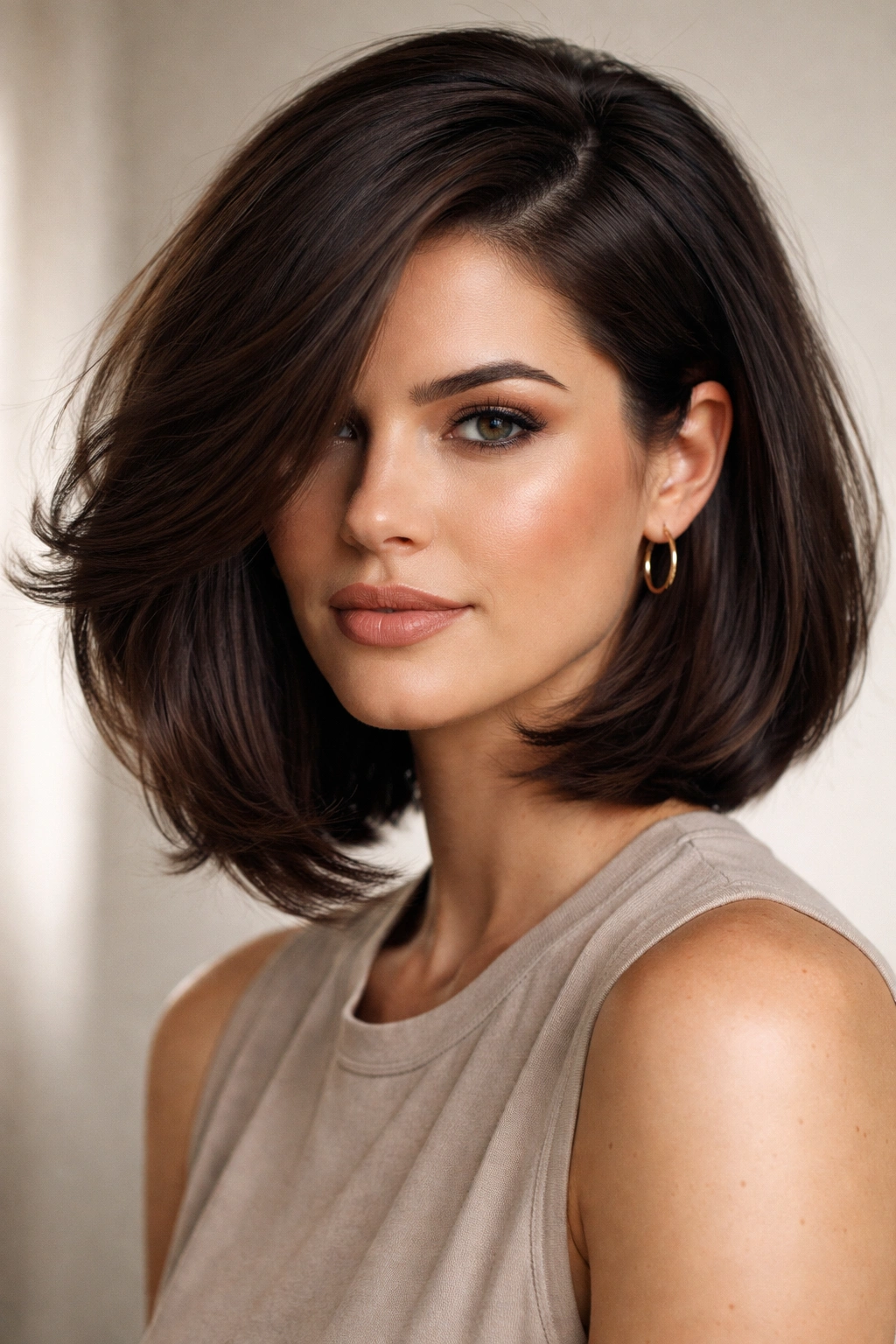
A square face with a strong jawline benefits from a deep side part, which creates an asymmetrical visual that softens the symmetry of a square jaw. A bob with a deep side part is instantly more flattering than a center-parted bob on a square face. If your hair is coarse, coarse hair holds a part really well and has natural texture that enhances this asymmetrical effect. The deep part redirects attention upward and away from the squared jawline.
Why Deep Parts Work For Square Faces
A deep side part creates height on one side and visually narrows that side, while the longer side creates asymmetry that breaks up the geometric squareness of your face. Coarse hair naturally falls to the side and holds the part, so you’re not fighting against your hair to maintain the effect.
How to Style and Maintain
- Create a deep part that starts at least an inch to the side of your natural center point — the deeper, the more flattering
- Blow-dry your hair to the side, using the part as your guide
- A volumizing mousse at the roots on the larger side adds lift and asymmetry
- Coarse hair looks its best when slightly undone, so avoid over-styling or too much product
- Trim every 5 to 6 weeks to maintain the bob length and keep your part looking intentional
Insider note: You can change which side you part on day to day if you want variety, but committing to one side part creates a signature look.
13. The Choppy Textured Bob for Heart Faces with Curly Hair
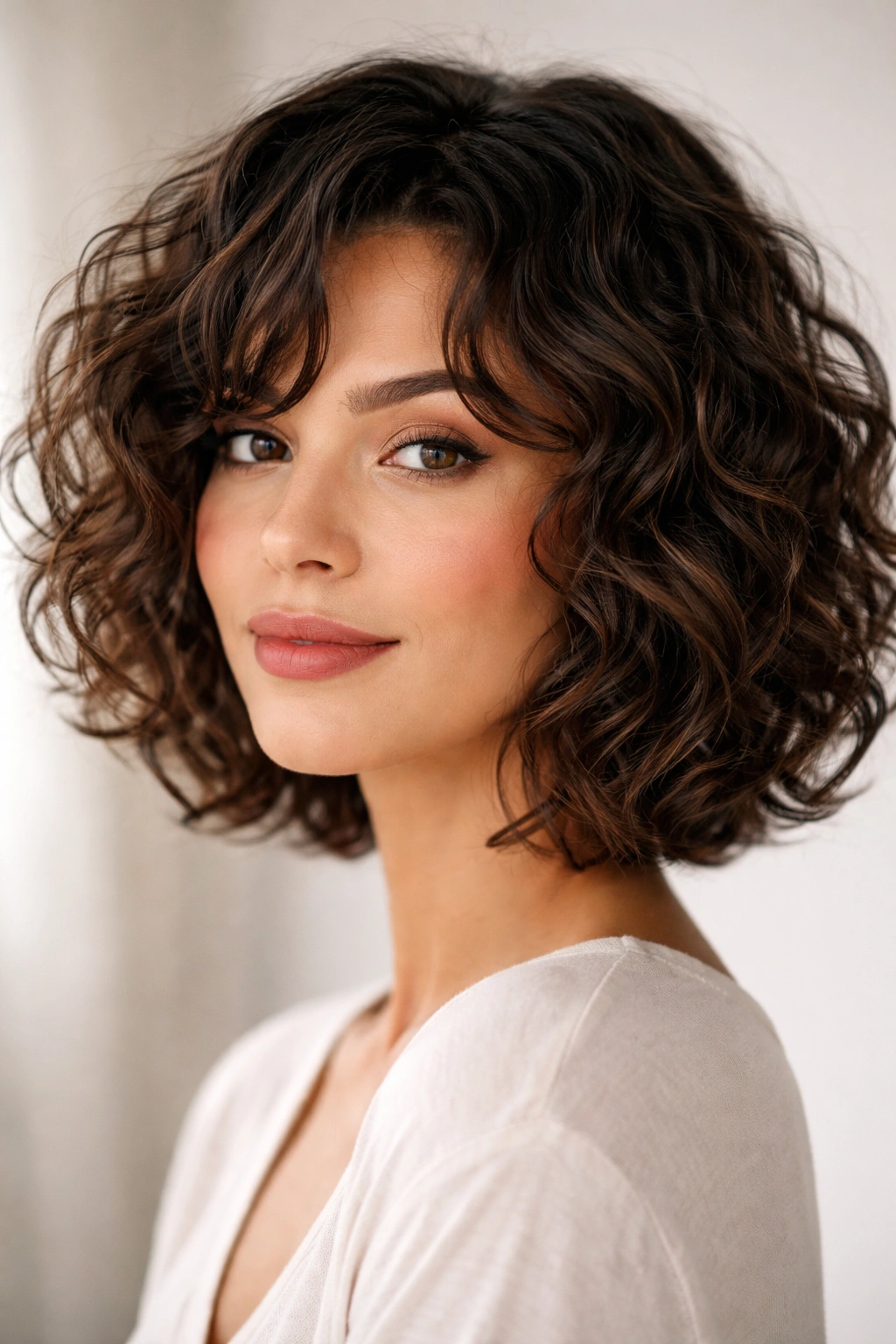
Heart-shaped faces need volume at the jawline, and curly hair is your secret weapon here. A choppy textured bob with lots of shorter layers creates movement and texture throughout, with emphasis at the ends. Curly hair amplifies this effect because each curl has its own bounce. Choppy layers in curly hair look intentional and fashion-forward, especially when you embrace your curl pattern instead of trying to straighten it.
Why This Cut Enhances Your Curls
Curly hair in a blunt or even gently layered bob can look bulky and overwhelming. Choppy layers break that up and allow each curl to move independently. The layers add visual volume and texture exactly where a heart face needs it — around the jawline and cheeks. You’re working with your curl pattern, not against it.
Curl-Specific Maintenance
- Get a cut designed for curly hair, ideally with the stylist cutting your hair dry so they can see exactly how your curls fall
- Apply curl cream or gel to soaking wet hair and diffuse dry or plop dry
- Deep condition weekly to keep curls hydrated and bouncy
- Trim every 6 to 8 weeks to maintain the choppy shape and prevent frizz at the ends
- Avoid brushing or combing your curls — use your fingers to separate and style them
Worth knowing: This is one of the rare cuts where having curly hair is actually an advantage, not something you need to work around.
14. The Precision Blunt Bob for Oval Faces with Coarse Hair
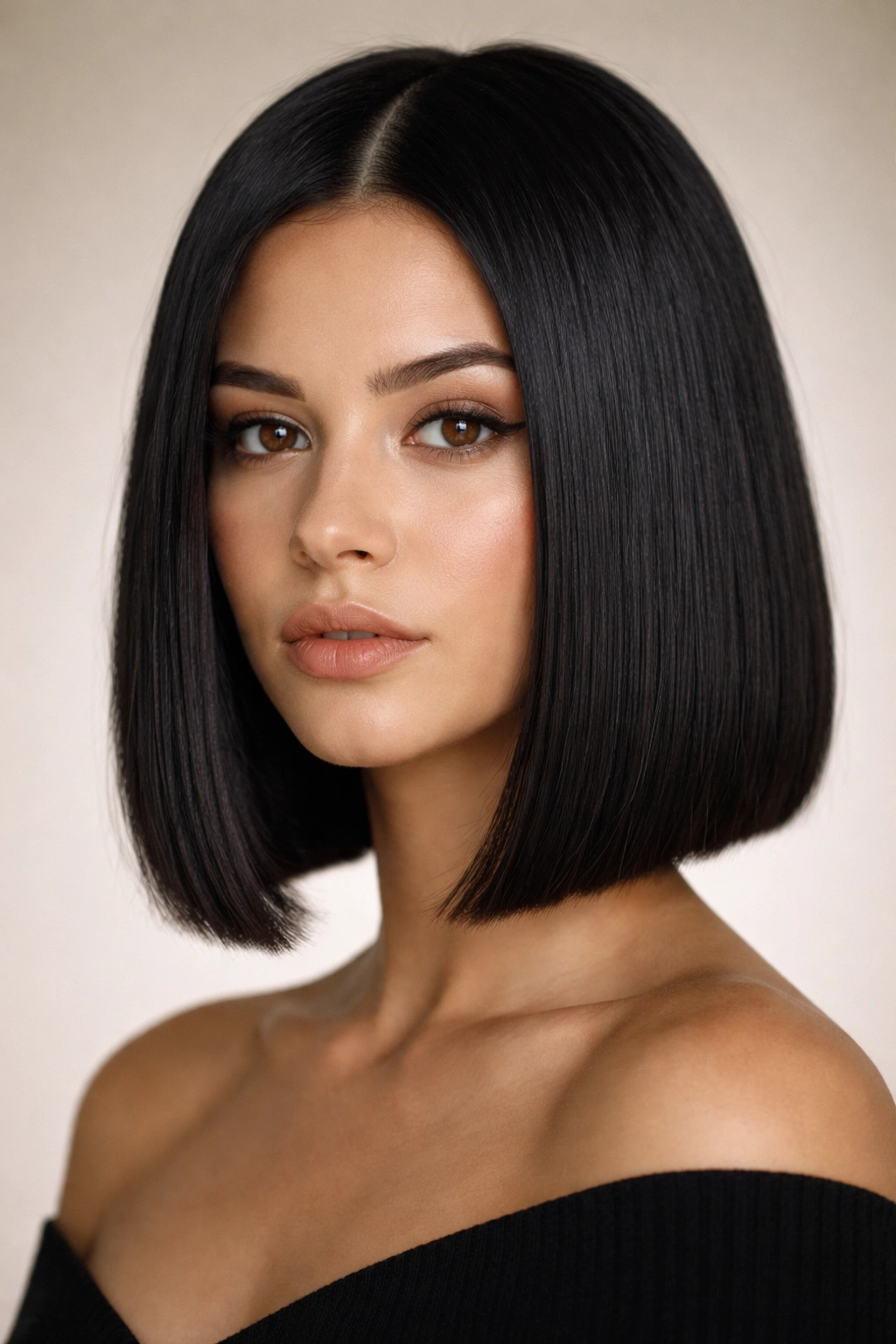
Oval faces can wear almost any bob, but if you have coarse hair, a precision blunt bob is especially striking. Coarse hair has natural weight and substance that makes a blunt line look intentional and polished. The bluntness of the cut contrasts beautifully with the texture of coarse hair. This isn’t a delicate, refined cut — it’s bold and sculptural, which matches the inherent boldness of coarse hair texture.
Why Coarse Hair Makes Blunt Bobs Better
Coarse hair can be hard to manage in very textured cuts because the thickness becomes overwhelming. A blunt bob gives coarse hair a clear boundary and structure, which actually makes it easier to style. The weight of coarse hair holds a blunt line beautifully.
Styling and Maintenance
- A smoothing serum or light oil keeps coarse hair from looking frizzy or overly textured
- Blow-dry straight, using a paddle brush to smooth the cuticle as you dry
- Trim every 4 to 6 weeks to maintain the blunt line — coarse hair grows visibly, and the cut will start to look messy if you wait too long
- Coarse hair responds well to deep conditioning treatments that add shine and smoothness
- Consider a smoothing treatment if your coarse hair is frizz-prone in humid weather
Pro tip: A precision blunt bob on coarse hair looks especially polished when paired with a sleek blow-dry and a bold lip color.
15. The Softly Layered Bob for Round Faces with Medium Wavy Hair
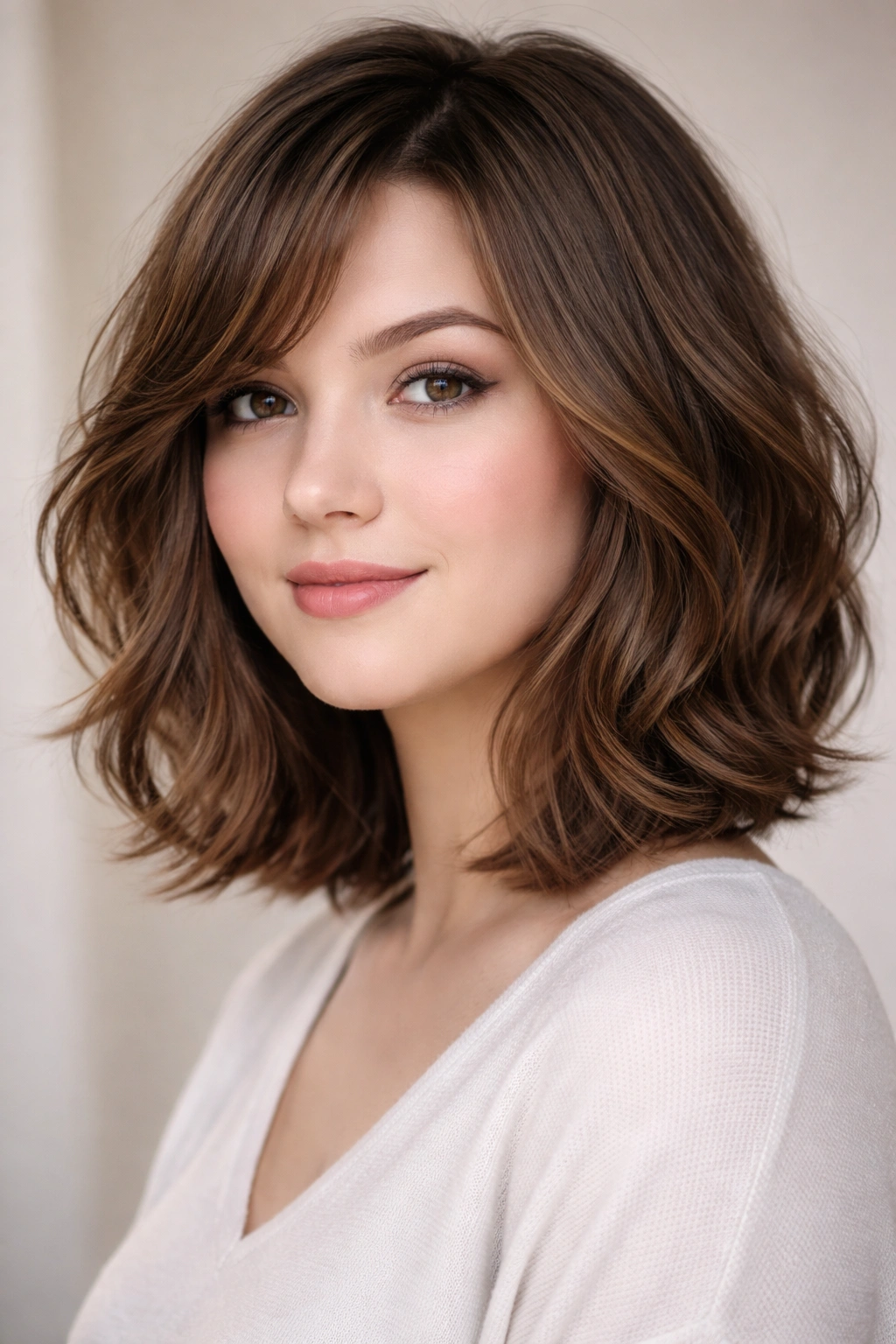
Round faces need some length and layers to create the illusion of a more elongated face, and medium wavy hair is the perfect canvas for a softly layered bob. This cut has gentle layers throughout that add movement without being choppy or severe. The softness of the layers complements a round face better than heavy texture does. Medium wavy hair holds layers beautifully and creates natural movement that makes this cut look effortlessly styled.
Why Soft Layers Elongate Round Faces
Choppy layers can look too trendy and edgy on round faces; soft layers are more flattering because they add vertical lines and movement without that sharp, youthful edge. Medium wavy hair already has natural texture, so additional layers enhance rather than overwhelm.
Styling and Maintenance
- Blow-dry with a round brush to create softness and direction in your layers
- Use a curl cream or wave serum on damp hair before blow-drying for enhanced wave pattern
- Trim every 5 to 6 weeks to keep the layers looking intentional and fresh
- A texturizing spray adds grip to your waves and helps them hold throughout the day
- This cut works beautifully with both fully dried and slightly damp, tousled styling
Real talk: This is a versatile, middle-ground cut that works for most people — it’s not trendy, but it’s flattering and easy to wear.
16. The Jaw-Length Curved Bob for Square Faces with Fine Hair
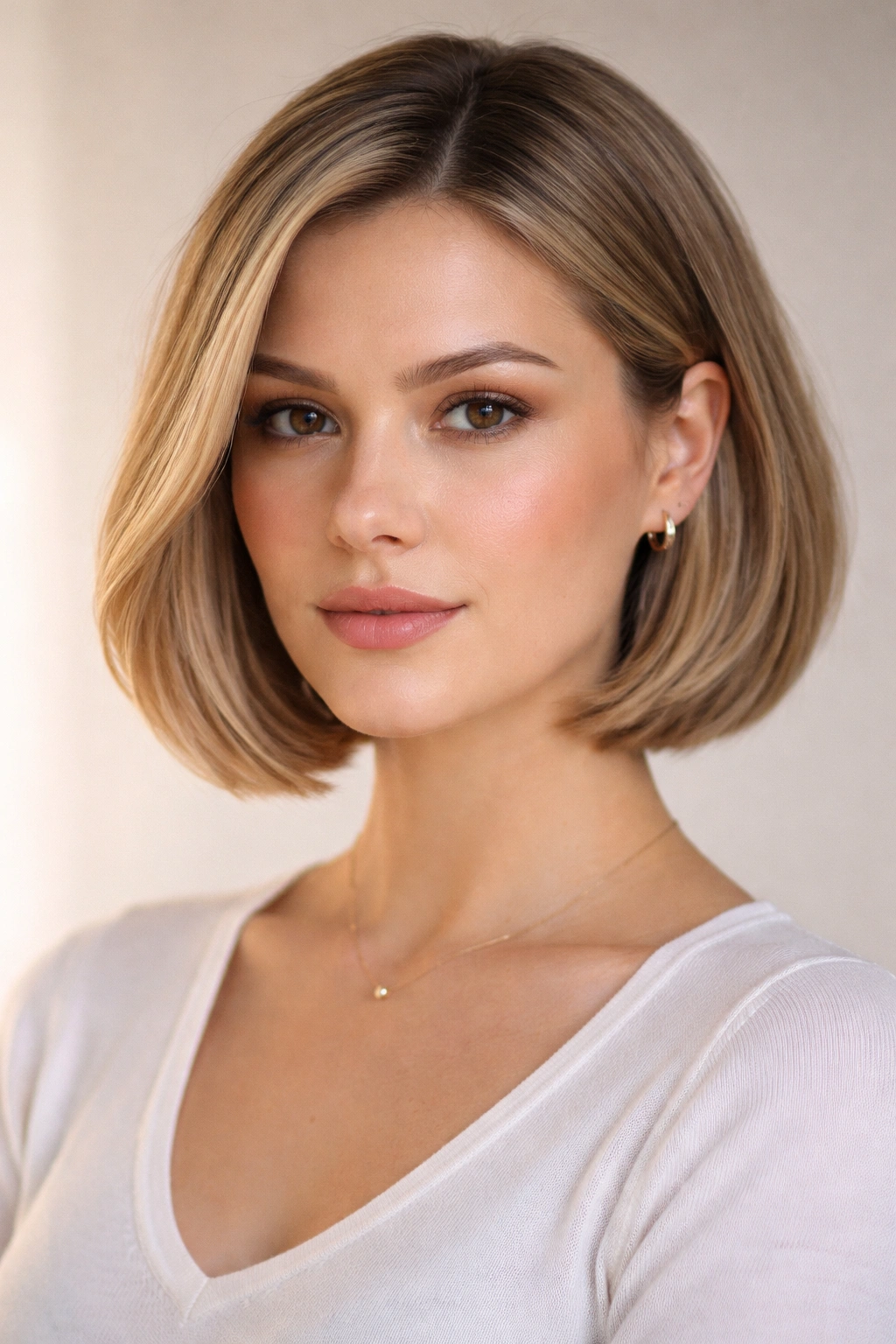
A jaw-length curved bob has a gentle inward curve that softens the square jawline of a square face. The curve happens naturally in the cut itself, not through styling, so even when you wash it and let it air-dry, it has that softening effect built in. Fine hair benefits because the jaw-length doesn’t require the thickness that longer bobs might need. The shorter length makes fine hair look fuller, and the curve adds femininity that balances the angularity of a square face.
Why Curves Soften Square Features
A square jawline is angular and geometric. A curved bob redirects that line into something softer and more flowing. Fine hair in a jaw-length cut looks proportionate and balanced instead of thin or wispy.
Maintenance and Styling
- This cut can air-dry with minimal styling — the curve is built into the cut itself
- A light texturizing spray on damp hair helps fine hair hold its shape as it dries
- Blow-dry with a round brush if you want to enhance the curve and add volume
- Trim every 4 to 6 weeks to maintain the curved line — as hair grows, the curve becomes less pronounced
- Lightweight serums or dry shampoo add texture and grip to fine hair without weighing it down
Pro tip: This cut works beautifully with or without styling, making it ideal for low-maintenance mornings.
17. The Textured Shag Bob for Long Faces with Coarse Hair
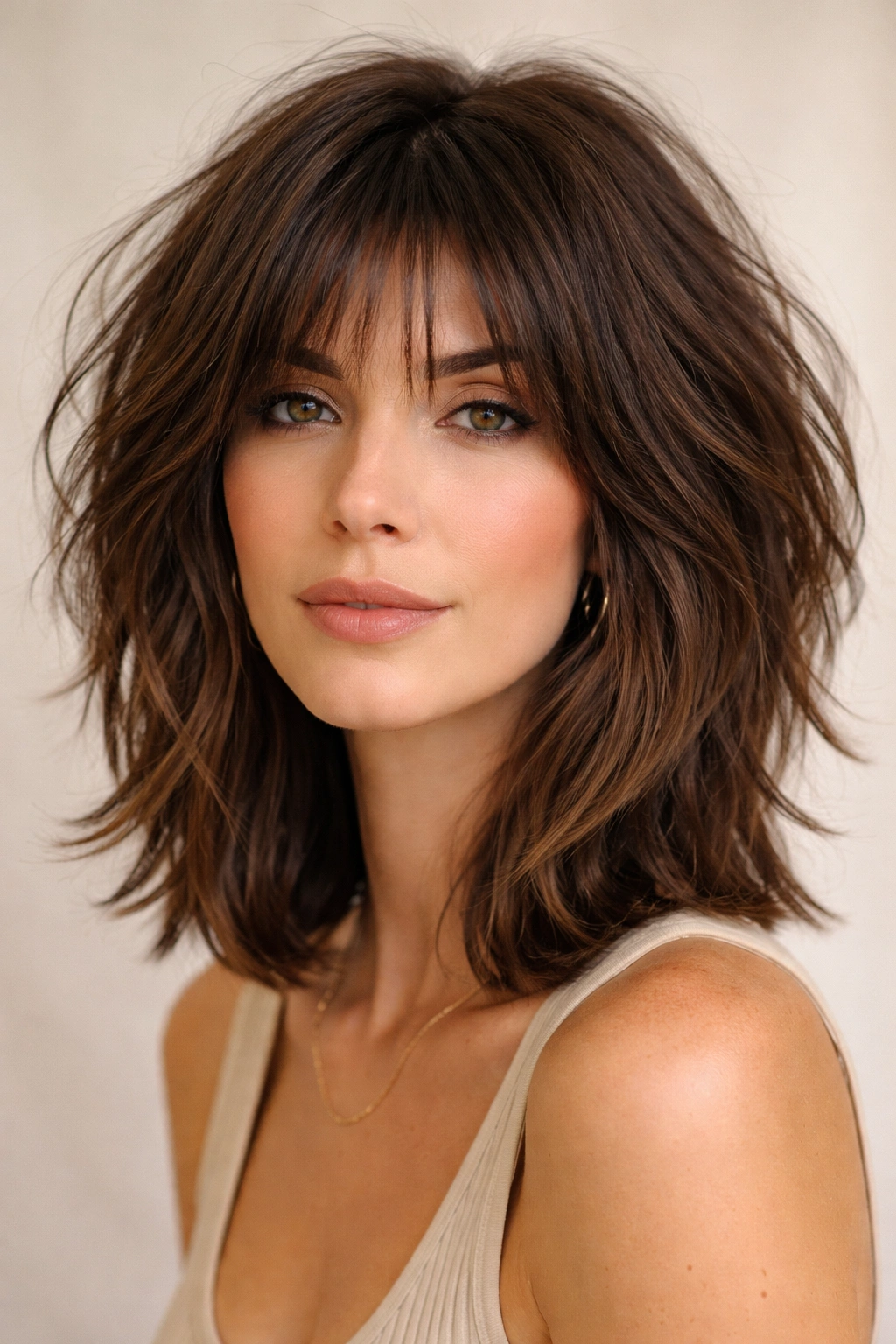
A long face and coarse hair might seem like a challenging combination, but a textured shag bob is perfect. Shag cuts are inherently shorter at the crown and longer underneath, with lots of choppy layers throughout. This creates horizontal emphasis at the crown and movement throughout that breaks up the vertical length of a long face. Coarse hair in a shag is stunning because the texture and layering enhance the natural boldness of coarse hair.
Why Shag Cuts Work For Oblong Faces
The horizontal emphasis at the crown created by a shag immediately shortens the visual perception of face length. Coarse hair’s natural texture becomes a feature rather than something to manage, and the choppy layers work with that texture.
How to Style and Maintain
- A smoothing serum keeps coarse hair from looking overly frizzy or wild
- Blow-dry with your fingers or a brush for a relaxed, slightly undone look
- This cut actually improves the less polished it looks — intentional messiness is the goal
- Trim every 4 to 6 weeks to maintain the shag shape and choppy layers
- Coarse hair in a shag benefits from texture and slight dishevelment — don’t try to make it look too neat
Worth knowing: This cut requires a stylist who understands how to cut shag layers for coarse hair — not all stylists specialize in this technique.
18. The Sleek Lob for Triangle Faces with Straight Hair
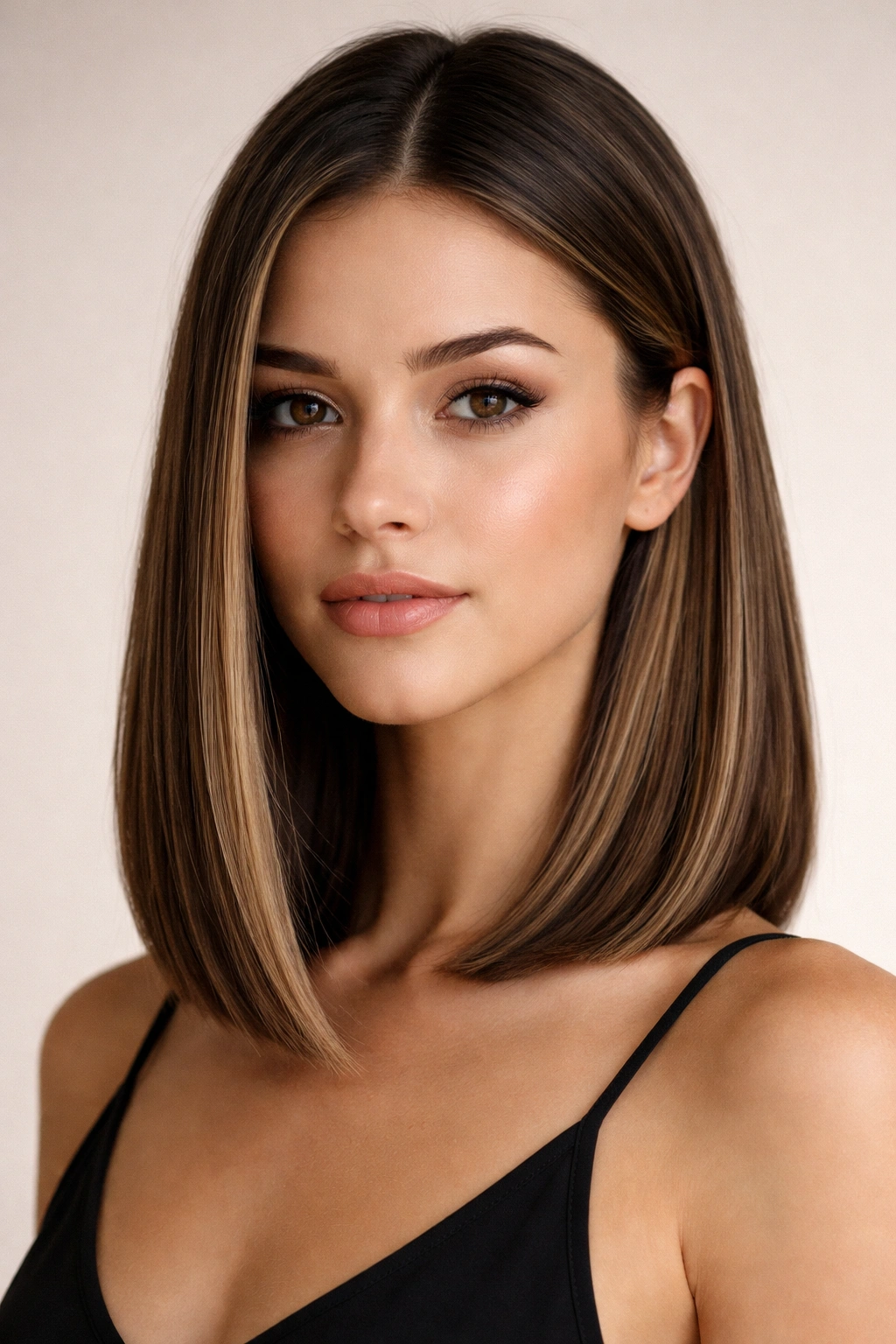
A lob (long bob) that sits between the chin and shoulders is incredibly versatile, and for triangle faces with straight hair, a sleek lob is ideal. The length balances the width of the lower face without being so short that it emphasizes the narrower forehead. Straight hair allows a sleek lob to look polished and intentional. The length also gives you flexibility in styling — you can wear it down, half-up, in a low ponytail, or off to the side depending on your mood.
Why Sleekness Suits Triangle Faces
A triangle face needs length to balance the bottom-heavy proportion. A sleek lob without too much texture or layers honors that length while still feeling current and styled. Straight hair in a sleek lob looks effortlessly elegant.
Styling and Maintenance
- Blow-dry straight for maximum sleekness, using a paddle brush and smoothing serum
- A flat iron creates razor-sharp ends if you want ultra-polished styling
- Wear it down or style it up — the length gives you options
- Trim every 6 to 8 weeks to maintain the blunt ends
- Sleek hair requires more maintenance than textured hair — you’ll need regular blow-drying and possibly smoothing treatments
Pro tip: A sleek lob is your best friend if you like variety in how you style your hair, because the length allows for multiple styling options.
19. The Voluminous Layered Bob for Fine Hair Across All Face Shapes
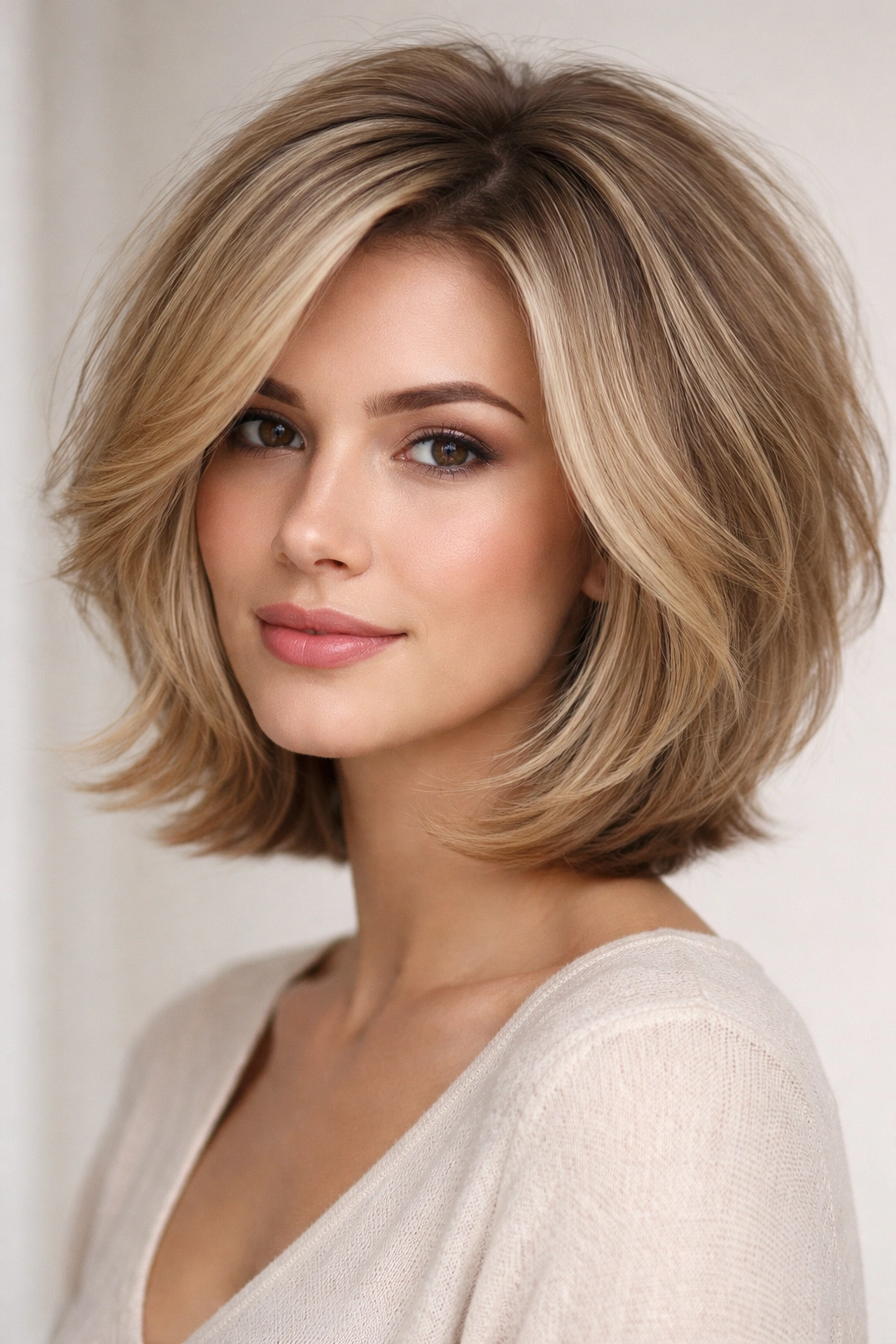
If you have fine hair, your primary concern is making your hair look thicker and fuller — the specific face shape is secondary. A voluminous layered bob achieves this by using strategic layers throughout that create movement and the illusion of density. Layers also allow fine hair to be styled with volume at the crown without looking flat or limp. This cut works on any face shape because the goal is adding fullness, which benefits everyone with fine hair.
Why Layers Create Volume For Fine Hair
Layers in fine hair break up the weight and allow each section to move independently, creating the illusion of more hair. A blunt cut with fine hair can look thin and stringy, but a well-layered cut looks intentional and full.
Styling to Maximize Volume
- Blow-dry with a volumizing mousse applied to damp roots and a round brush to lift hair at the crown
- Use a texturizing spray throughout to add grip and the illusion of texture
- Tease gently at the crown before smoothing the top layer for a voluminous style that lasts
- Avoid heavy oils or serums that will weigh fine hair down
- Lightweight dry shampoo adds texture and volume between washes
Real talk: With fine hair, styling effort is part of getting a voluminous look — you can’t just wash and go, but the effort pays off in a fuller appearance.
20. The Choppy Pixie-Bob for Curly Hair Across All Face Shapes
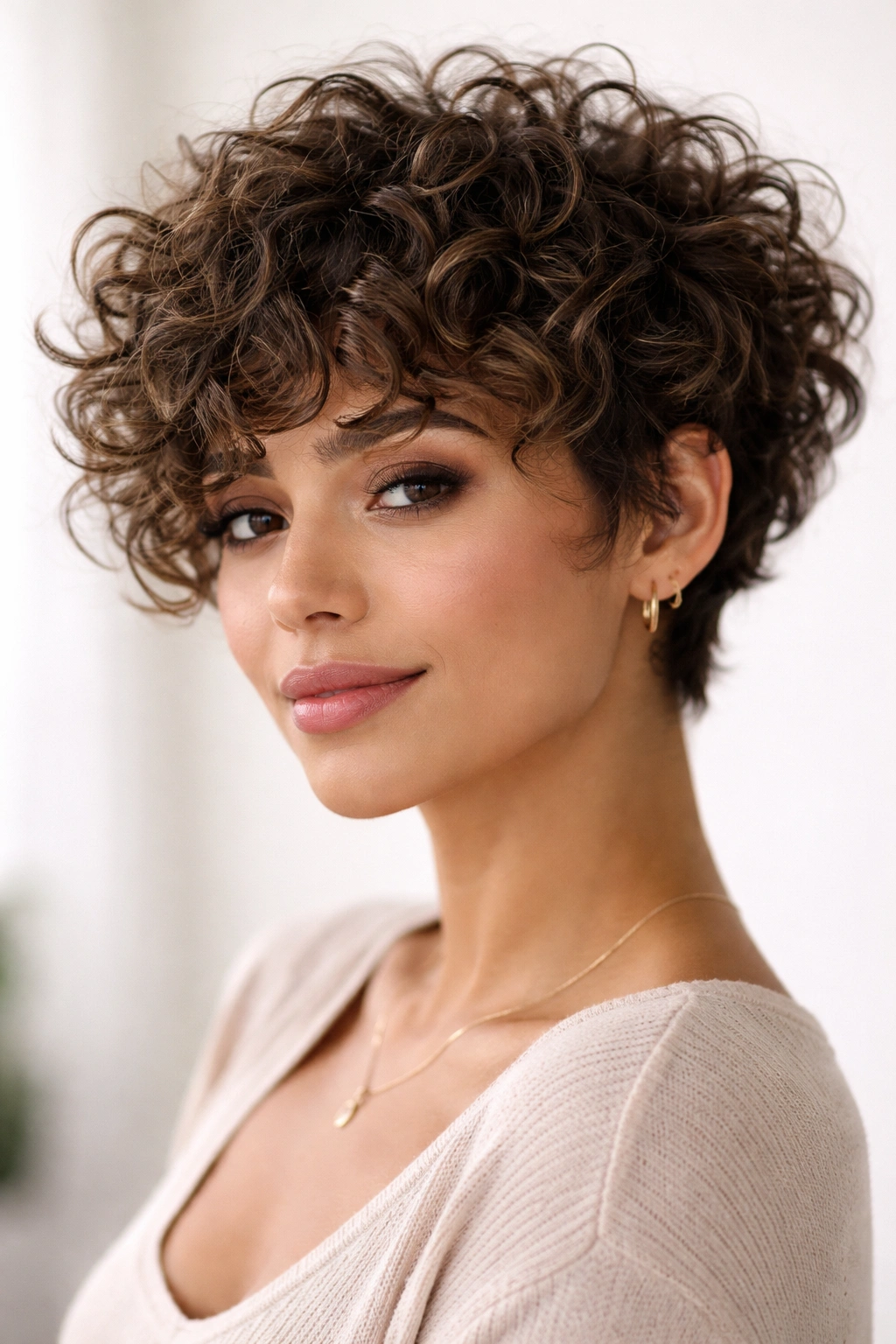
If you have curly hair and you’re tired of fighting your curl pattern, a choppy pixie-bob is liberating. This cut is short, heavily layered, and choppy throughout, which works beautifully with curly hair. The short length prevents curly hair from getting weighed down or frizzy, and the choppy layers allow each curl to spring independently. This cut works on most face shapes because curly hair naturally has so much movement and texture that it balances most face proportions.
Why Curly Hair Thrives in Short, Choppy Cuts
Curly hair in longer bobs often looks heavy and frizzy. Short, choppy cuts eliminate that problem. The natural bounce and texture of curls become a feature, not a problem to manage. You’re embracing your curl pattern entirely.
Curl Care for Short Hair
- Get a cut from a stylist who specializes in curly hair, ideally using the Deva Cut method or similar
- Apply curl cream or gel to soaking wet hair and diffuse dry or plop dry
- Deep condition weekly to prevent dryness and frizz
- Trim every 4 to 6 weeks to maintain the choppy shape and prevent frizz buildup
- Embrace your curls — the more you work with them instead of against them, the better they look
Pro tip: Short curly hair requires less daily styling than longer curly hair because the natural curl is so bouncy.
21. The Side-Swept Bob for Heart-Shaped Faces with Medium Straight Hair
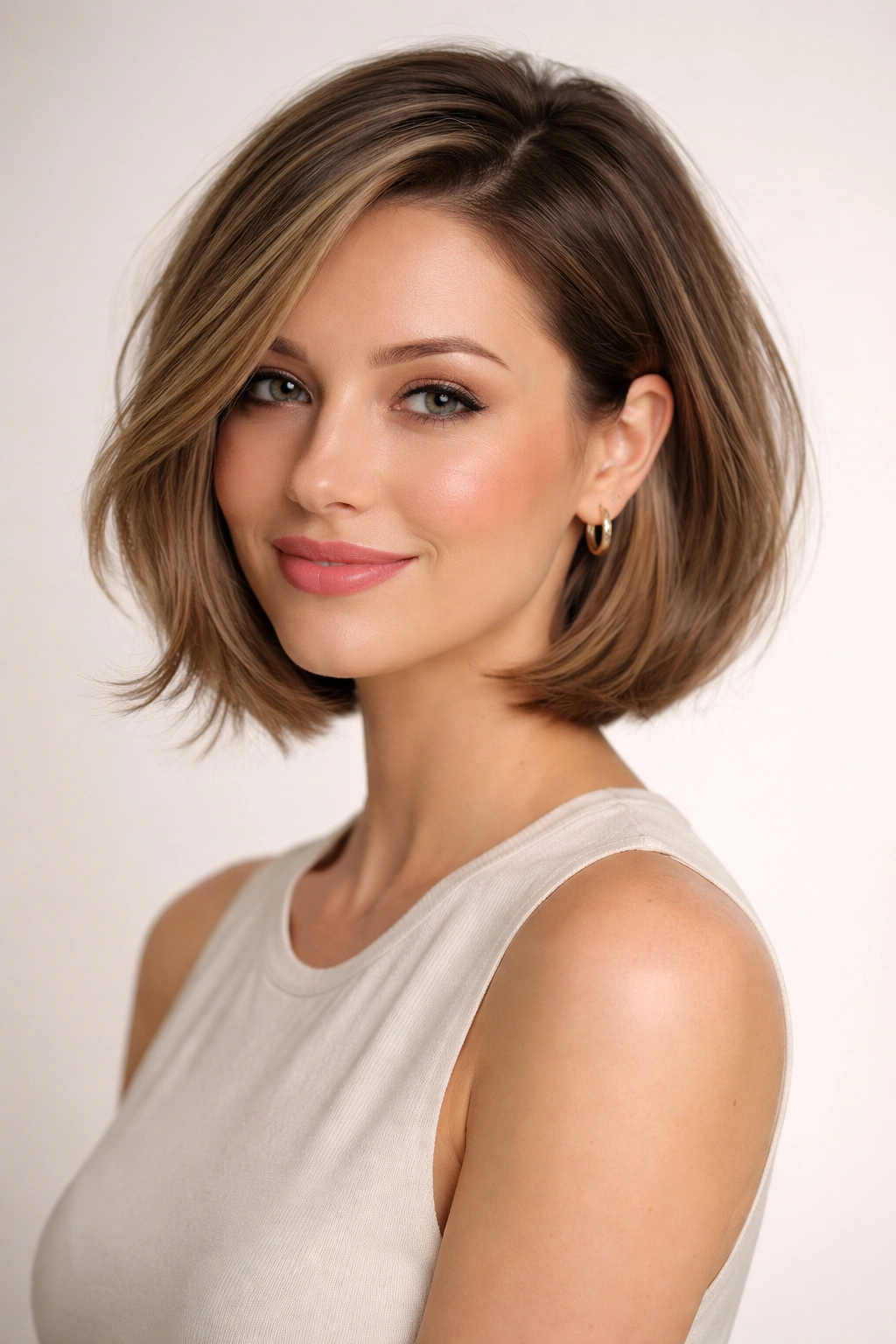
A heart-shaped face needs volume at the jawline, and a side-swept bob accomplishes this by directing hair to one side and creating fullness at the chin. The side-swept effect is created through both the cut and the styling — the cut is slightly longer on one side, and you wear it swept to that longer side. Medium straight hair holds this style beautifully and can be styled with a slight wave to enhance the swept effect without looking overly done.
Why Side-Sweeping Balances Heart Faces
A heart face is wider at the forehead and narrower at the chin. Sweeping hair to one side and creating volume at the jawline visually brings those narrow lower features into balance. The asymmetry also softens the angular quality of many heart faces.
How to Style and Maintain
- Blow-dry your hair to one side, using a round brush to create direction and slight wave
- Use a texturizing spray to help the swept side hold its shape
- A side part starting toward the shorter side of your head creates the swept effect naturally
- Trim every 5 to 6 weeks to maintain the slight length difference between sides
- You can wear this swept to one side always, or switch sides on different days if you want variety
Worth knowing: This cut requires more intentional styling than a blunt bob, but the result is more interesting and flattering for heart faces.
22. The Layered Textured Bob for Rectangle Faces with Curly Hair
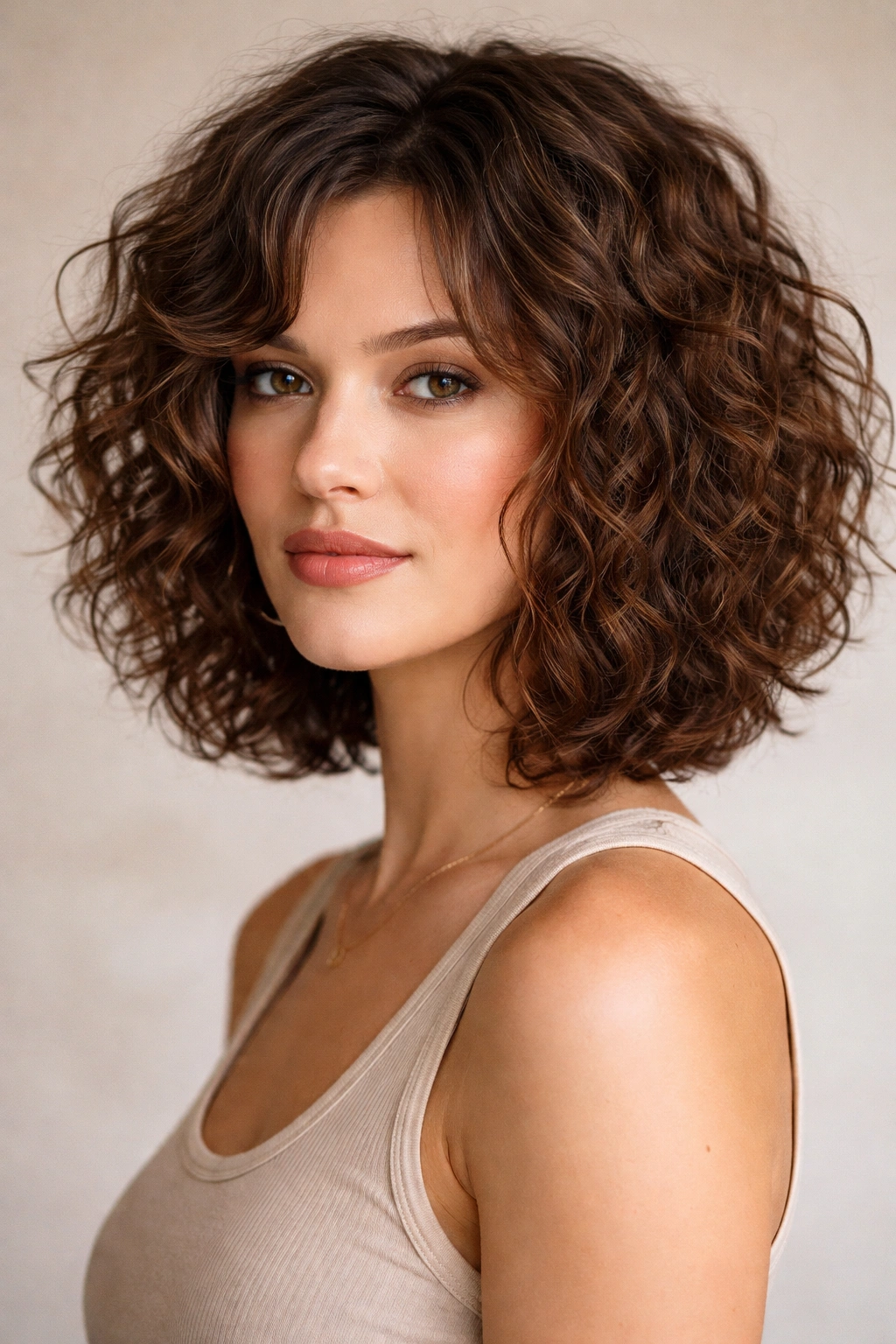
A rectangle face is long and somewhat narrow, and curly hair can add the width and volume needed to balance that proportion. A layered textured bob with lots of choppy layers creates movement and fullness throughout, which adds visual width to a narrow face. Curly hair’s natural volume is enhanced by layers, making this combination incredibly effective. The texture breaks up the length of a rectangle face in a way that a smoother bob wouldn’t.
Why Texture Adds Width To Long Faces
Choppy layers and curly hair create movement in all directions, which breaks up the vertical length of a rectangle face. The natural volume of curls adds width at the cheeks and jawline, which is exactly what long faces need.
Caring for This Style
- Get a cut designed for curly hair, with the stylist understanding how layers work with your specific curl pattern
- Apply curl cream or gel to soaking wet hair and diffuse or plop dry
- Deep condition regularly to keep curls hydrated and bouncy
- Trim every 6 to 8 weeks to maintain the textured, layered shape
- Embrace your curl pattern — this cut is designed to work with curls, not against them
Real talk: This is a high-maintenance cut in terms of frequency of trims and curl care, but the payoff in a flattering, textured style is worth it.
23. The Precision-Cut Angled Bob for Diamond Faces with Fine Hair
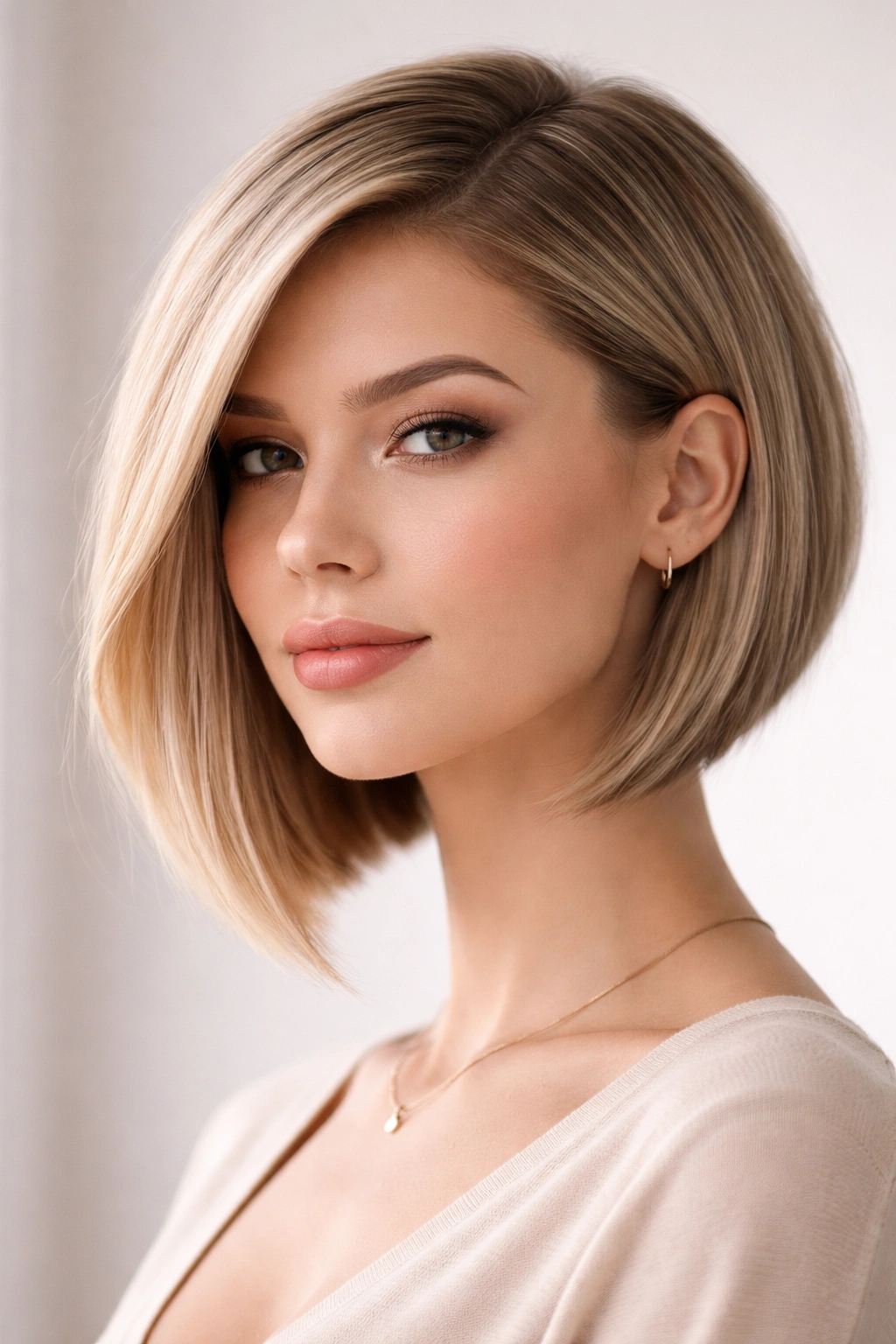
A diamond-shaped face is widest at the cheekbones, and an angled bob (longer in the front, shorter in the back) draws attention away from that widest point and toward the face’s narrower areas. Fine hair benefits from an angled cut because the length variation creates the illusion of movement and dimension that fine hair often lacks. A precision-cut angled bob is sleek and modern while being incredibly flattering for diamond face shapes.
Why Angles Redirect Focus
An angled cut creates a visual line that moves downward and forward, drawing the eye away from the wide cheekbone area and toward the jawline and chin. Fine hair looks fuller when it has variation in length and texture, which an angled cut provides.
Styling and Maintenance
- Blow-dry with a round brush to create movement in the angles
- A lightweight texturizing spray helps fine hair hold the angled shape
- Wear this cut down or style it with a half-up, half-down look
- Trim every 4 to 6 weeks to maintain the angled shape — as hair grows, the angle becomes less pronounced
- Side-parting this cut emphasizes the angle and makes it even more flattering
Pro tip: An angled bob is especially striking when you wear it sleek and polished rather than tousled.
24. The Textured Lob for Oblong Faces with Wavy Hair
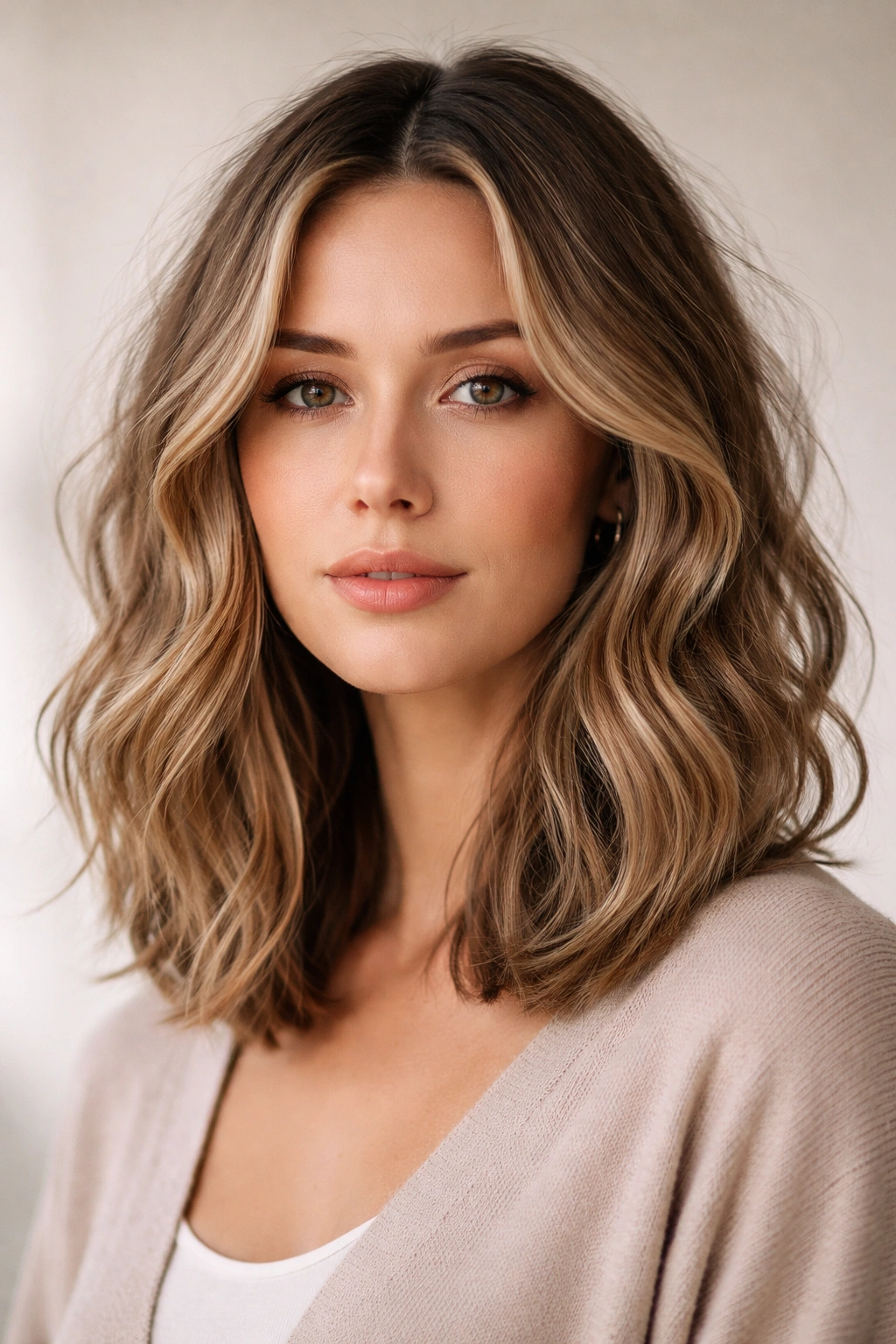
A lob (long bob sitting between chin and shoulders) for an oblong face should have texture to break up the length. When paired with wavy hair, a textured lob is perfect. Wavy hair naturally creates that texture and movement, and the length of a lob provides balance while the texture prevents it from looking too severe or emphasizing the face’s length. This is a versatile cut that works for most hair types but is especially flattering for wavy hair and oblong faces.
Why Texture + Length Balances Oblong Faces
An oblong face is long, and length in the hair can emphasize that. But texture and movement in the hair break up that vertical emphasis. Wavy hair provides that movement naturally without requiring heavy styling.
How to Style and Maintain
- Blow-dry your waves to the side or down, using a round brush to enhance the natural texture
- Use a wave serum or curl cream on damp hair before blow-drying
- Trim every 6 to 8 weeks to keep the textured ends looking fresh
- Wear this cut down, half-up, or off to the side — the length gives you styling options
- Texturizing spray helps your waves hold throughout the day
Worth knowing: A textured lob is one of the most versatile bobs because it works with multiple face shapes and hair types.
25. The Customized Hybrid Bob for Your Unique Features
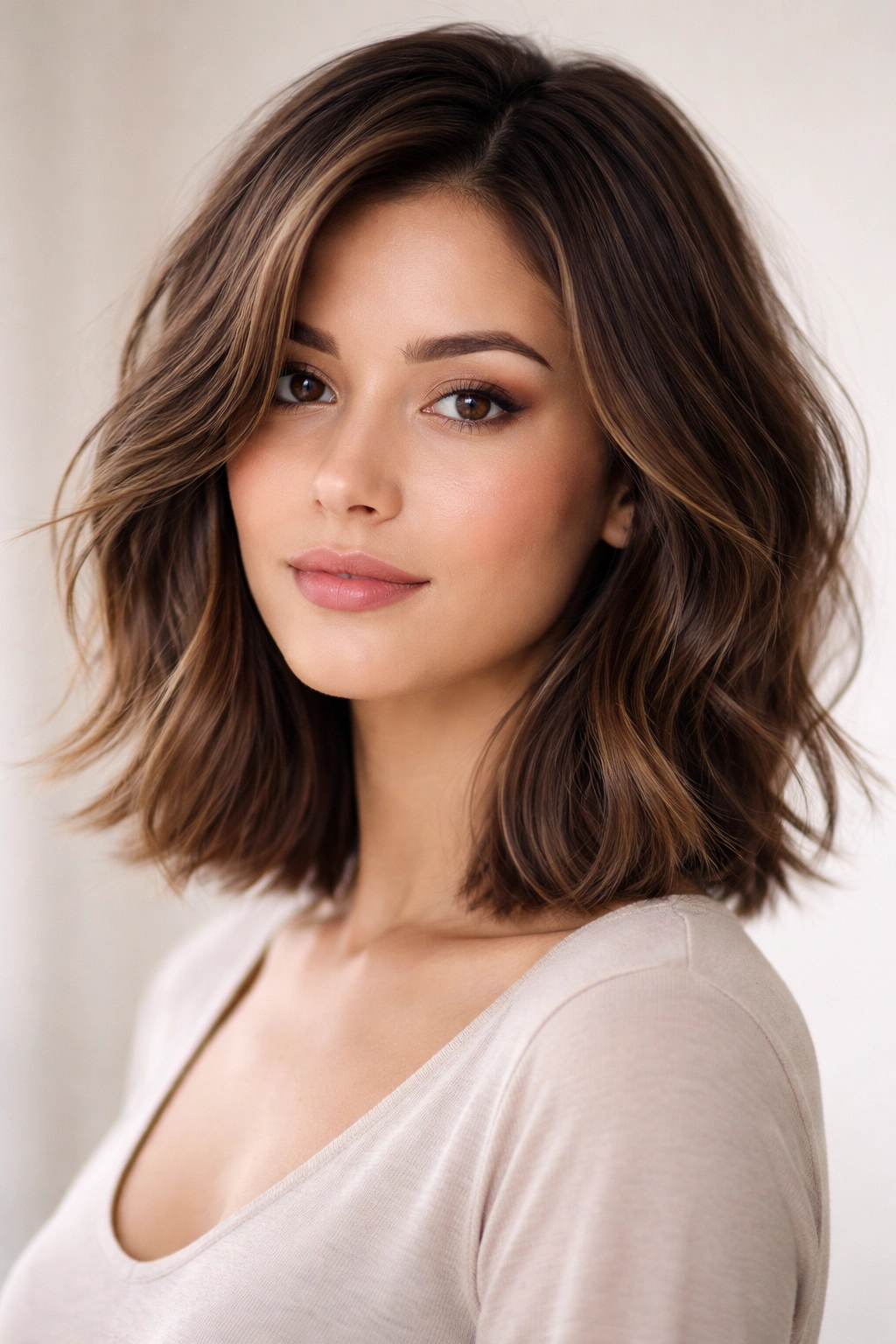
The truth is, the perfect bob might not fit neatly into one category. Maybe you have a heart-shaped face but your hair is a mix of wavy and coarse texture. Or you have an oval face but very fine hair that requires a specific approach. The best bob is one customized to your unique combination of features, and that’s where a skilled stylist comes in.
Working With A Stylist For Your Custom Bob
Come to your consultation with photos of bobs you love and a clear description of what you like about them. Tell your stylist about your face shape, your hair texture, how much time you’re willing to spend styling daily, and any specific concerns (frizz, flatness, weight, etc.). The best stylists view each head of hair as unique and will customize a bob to your features rather than giving everyone the same cut. Ask your stylist what will and won’t work for your combination of features, and trust their expertise.
The Customization Conversation
- Bring multiple reference photos showing bobs at different lengths, levels of texture, and styling
- Be honest about your styling commitment — if you won’t blow-dry daily, don’t ask for a cut that requires it
- Discuss how your hair behaves in humid weather, after swimming, or on lazy mornings
- Ask your stylist to explain exactly what they’re cutting and why that specific approach suits your face shape
- Schedule a follow-up cut in 3 to 4 weeks to make adjustments if needed — sometimes a cut needs tweaking once you’ve lived with it
Real talk: The perfect bob often takes a consultation with a skilled stylist who understands both face shapes and hair texture. Don’t expect to find your perfect cut from a photo alone — work collaboratively with a professional who can assess your unique features and customize accordingly.
Finding Your Perfect Bob

The versatility of the bob is its greatest strength. Whether you have a round face or an oblong one, fine hair or coarse hair, straight hair or curls, there’s a bob that’s specifically designed to complement your features and work with your hair type. The key is understanding how your face shape and hair texture interact, and then finding a cut that enhances both rather than fighting against either.
The most flattering bob isn’t necessarily the trendiest one — it’s the one that makes you feel like the best version of yourself. A bob that suits your features will need less styling effort, require less product, and feel more natural to wear daily. You’ll reach for it because it looks good with minimal effort, not because you’re trying to maintain a style that doesn’t quite work for you.
Go into your cut with clear communication, reference photos, and honest conversation with your stylist about what you want and what will realistically work for your lifestyle. A great stylist is your partner in finding the perfect bob — they’ll listen to what you want but also guide you toward what will actually flatter you. Trust that expertise, be willing to try something slightly different from what you imagined, and give the cut a few weeks to grow into its final shape. Your perfect bob is out there, waiting to become your signature style.
