



Short hair without bangs offers a clean, versatile aesthetic that works for countless face shapes, hair textures, and personal styles. The appeal lies partly in simplicity—no daily fringe styling required—and partly in the sophisticated, intentional look that emerges when you focus on cut and shape rather than relying on hair falling across the forehead. Whether you’re considering a dramatic chop or gradually working toward shorter lengths, understanding the range of bang-free options available helps you find the cut that genuinely complements your features and fits your lifestyle.
The best short haircuts without bangs share one essential quality: they’re shaped strategically around the face and crown so the absence of bangs becomes a style feature, not a limitation. A well-executed pixie, a textured shag, a blunt bob, or a modern asymmetrical cut draws attention to bone structure, eye shape, and neckline in ways that longer hair often obscures. The cut itself carries all the visual weight, which means precision matters. When you remove the option of hiding behind bangs, every layer, angle, and length decision becomes more visible—and more impactful.
What follows are fifteen distinctive short haircuts, each offering a different visual impact and maintenance level. Some require minimal styling and suit busy schedules; others work best on specific hair textures; many flatters particular face shapes more readily than others. The common thread is that none rely on bangs to create their effect. Instead, they demonstrate how thoughtful layering, strategic tapering, texture, and length distribution can create shape, movement, and flattering dimension without a single strand crossing the forehead.
1. The Classic Pixie
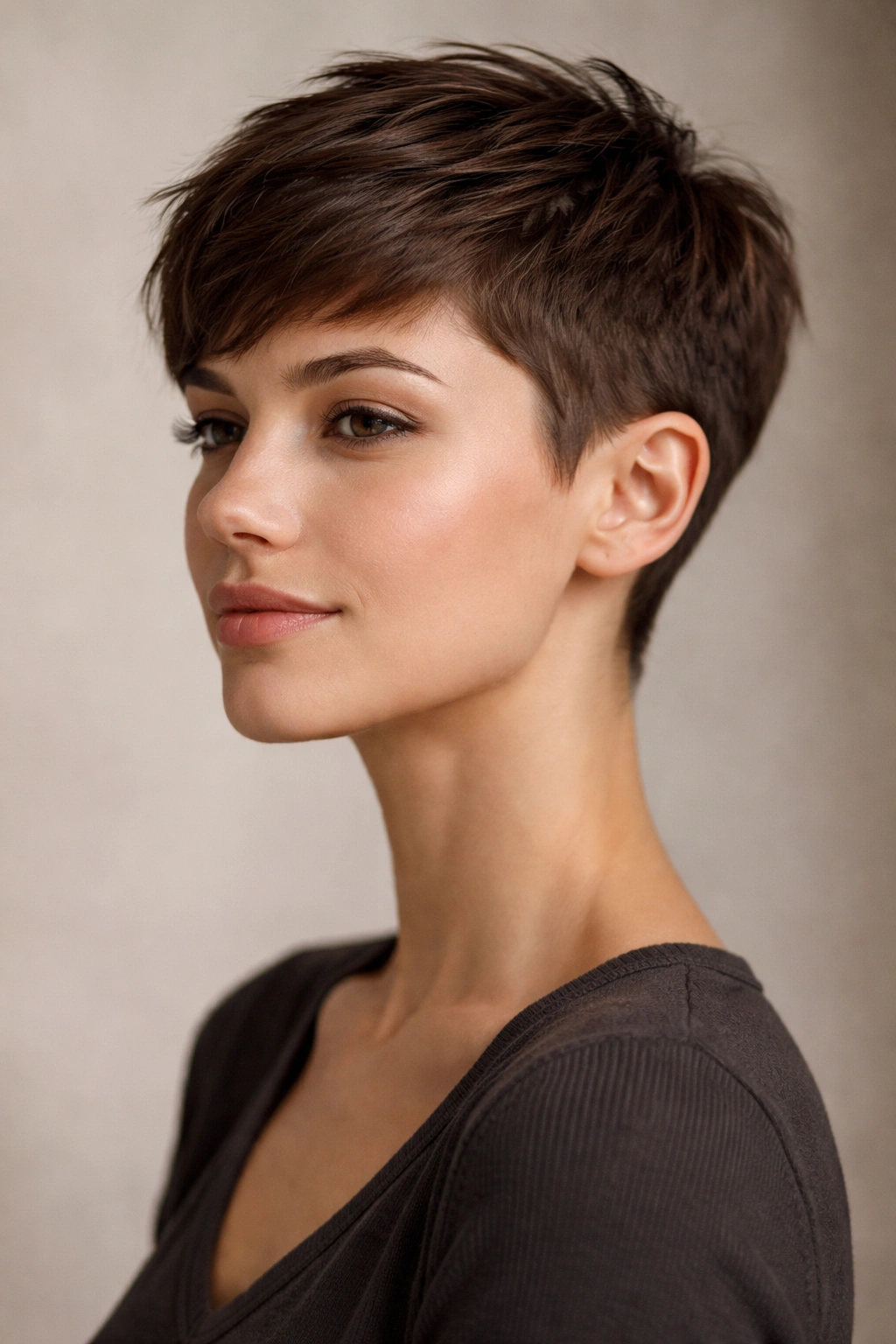
A true pixie keeps hair very short on the sides and back—typically a quarter inch to half inch—while leaving slightly more length on top, usually an inch to two inches. The simplicity of this cut is deceptive; the real magic happens in how a skilled stylist tapers the sides and texturizes the crown to create the illusion of volume and movement rather than a simple buzz cut. The result is androgynous, modern, and undeniably chic.
Why This Cut Works Without Bangs
The pixie’s short, tapered sides actually benefit from the absence of bangs. When hair is this short overall, adding a fringe would feel disconnected from the rest of the cut and would require frequent trimming to maintain the proper length. Instead, the focus naturally shifts to the texture and movement on top, where a good stylist creates subtle layers that catch light and add dimension. The exposure of the entire forehead and face makes bone structure the star, which is precisely why this cut has remained iconic for decades.
Styling and Maintenance
- Pixies look best with a textured, piece-y finish rather than a polished, slicked-back appearance
- Use a lightweight pomade, texturizing paste, or dry shampoo to enhance the natural texture and create definition between layers
- This cut requires a trim every 3 to 4 weeks to maintain shape; the frequent visits are non-negotiable if you want it to look intentional rather than growing out awkwardly
- Morning styling takes roughly 2 to 3 minutes: apply product to damp hair, run your fingers through to separate, and air-dry or blow-dry with a light touch
Who it suits best: Pixies work beautifully on people with oval, heart-shaped, or square faces. If you have fine or thinning hair, the strategic layering creates an illusion of density. People with curly or wavy hair can lean into that texture for an effortless, organic look. Straight hair works too—just expect a more polished, deliberate aesthetic.
2. The Blunt Bob
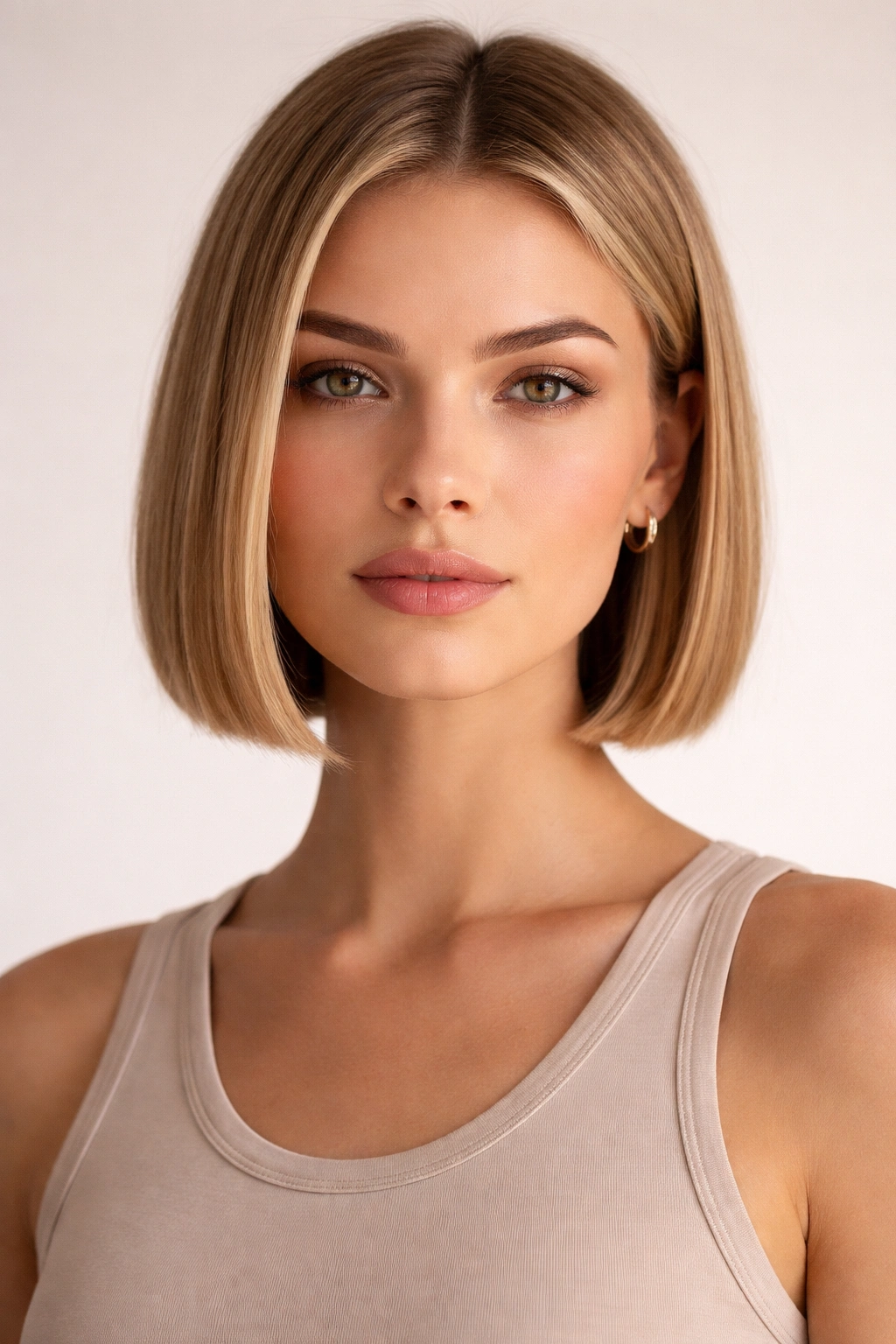
A blunt bob sits at or just below the jawline with a clean, straight line across the back and sides. No layers, no taper—just precision and geometric sharpness. This cut gained renewed popularity because it photographs beautifully, feels intentional, and offers a modern take on a classic silhouette. Without bangs, the full width of the face reads clearly, making the blunt line that much more striking.
How the Cut Achieves Its Impact
The blunt bob works specifically because it refuses to soften with movement or layers. Every strand contributes to a single clean line, which creates visual interest through pure geometry rather than texture. This cut demands a very straight hemline and a perfectly vertical hang; any waviness or unevenness becomes immediately visible, which is why finding a stylist who specializes in blunt cuts matters enormously. The absence of bangs keeps the face open and lets the jaw-grazing length become the focal point.
Maintenance and Styling Reality
- This cut requires trims every 4 to 6 weeks to maintain the sharp hemline; drift beyond that timeline and the effect softens into something less intentional
- Hair straightening or smoothing products work beautifully, but they’re not required—a good blow-dry with a paddle brush and round brush can create a polished finish
- Wave and texture will read as slightly messy rather than effortless, so styling approach depends on whether you embrace that or prefer a sleeker finish
- Blunt bobs look particularly striking on straight or wavy hair; very curly hair requires either significant styling effort or acceptance of a much softer, less defined line
Best for: Heart-shaped, oval, and oblong faces typically carry a blunt bob beautifully. If you have a round face, a blunt bob at chin length can emphasize width—consider a slightly longer length or a slightly asymmetrical cut instead. Straight to wavy hair shows this cut at its best; curly-haired folks can absolutely wear a blunt bob, but expect the style to shift toward something looser and more relaxed.
3. The Textured Shag
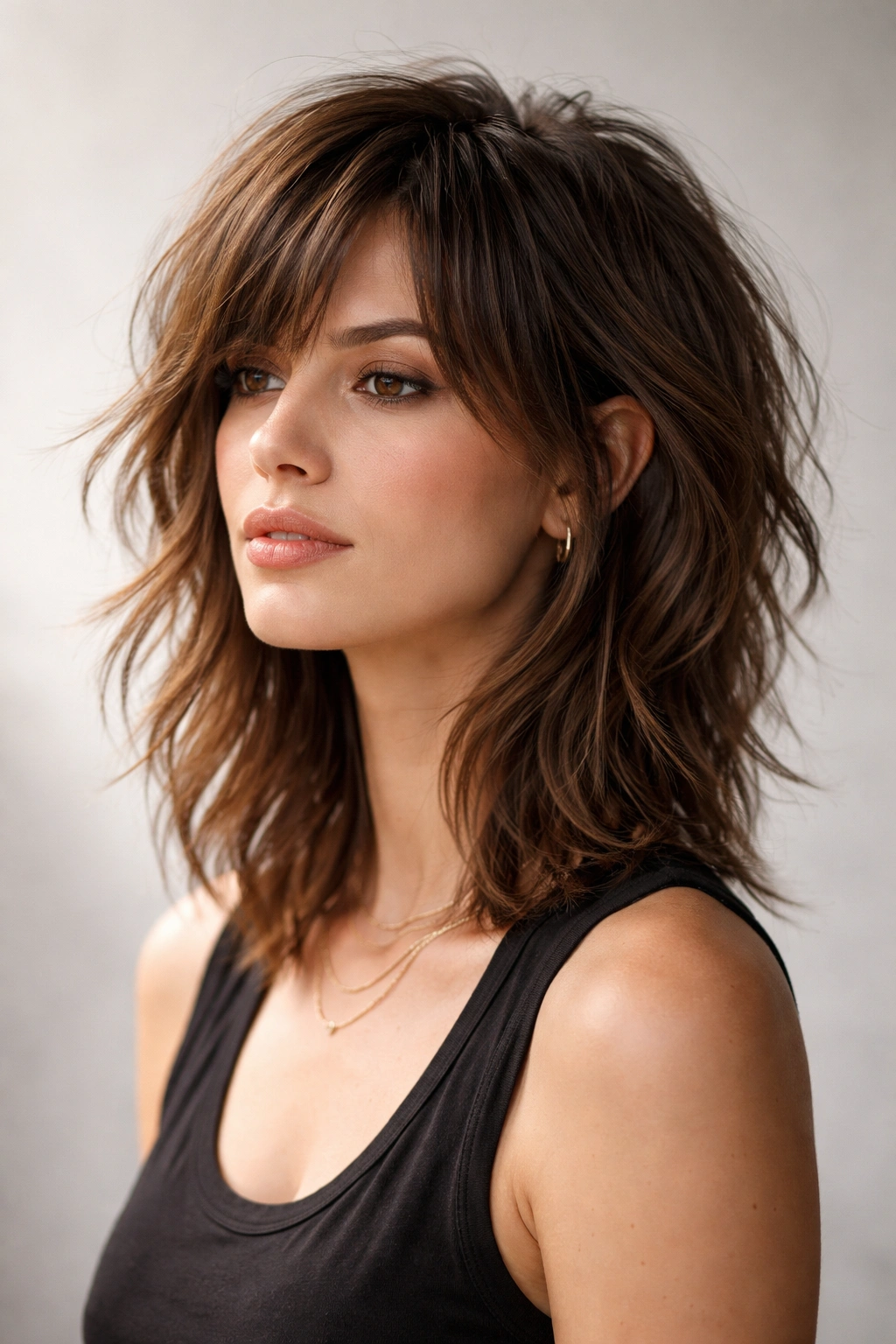
A modern shag combines shorter layers throughout with longer pieces in front, creating deliberate movement and an undone, rock-and-roll energy. Unlike shags from decades past, contemporary versions sit higher on the head, offer more control through strategic layering, and avoid the “grown-out and unkempt” appearance that sometimes plagued older interpretations. The lack of bangs allows the longer front pieces to frame the face without competing with a separate fringe.
What Makes a Modern Shag Different
The key distinction between a trendy modern shag and an outdated one lies in precision. A good shag isn’t haphazard; it’s constructed through deliberate layering at specific angles. Shorter layers at the crown create volume and lift; mid-length layers add movement; and the longer front sections give dimension and frame the face. The absence of bangs actually strengthens the shag’s silhouette because attention goes to how those front pieces fall and create movement around the cheekbones and jawline.
How to Style and Maintain Texture
- Shags benefit enormously from texturizing products: sea salt spray, dry texturizing spray, or pomade applied to damp or dry hair
- Blow-dry with your fingers or a diffuser rather than a round brush to emphasize the layered texture; brushing it smooth will flatten the effect
- This cut tolerates 6 to 8 weeks between trims reasonably well because the layers blend as they grow, though regular trims keep the shape intentional
- Wavy or curly hair amplifies the shag’s natural movement; straight hair requires slightly more styling effort to achieve the piece-y effect
Who should choose it: Shags work across most face shapes and hair types. They’re particularly flattering on people with oval, oblong, or rectangular faces because the layered texture creates horizontal dimension. If you have curly or wavy hair, a shag feels natural and easy; if you have straight hair, you’re signing up for more active styling. This cut suits anyone who wants movement and texture without the commitment level of a pixie’s frequent trims.
4. The Sleek Angular Bob
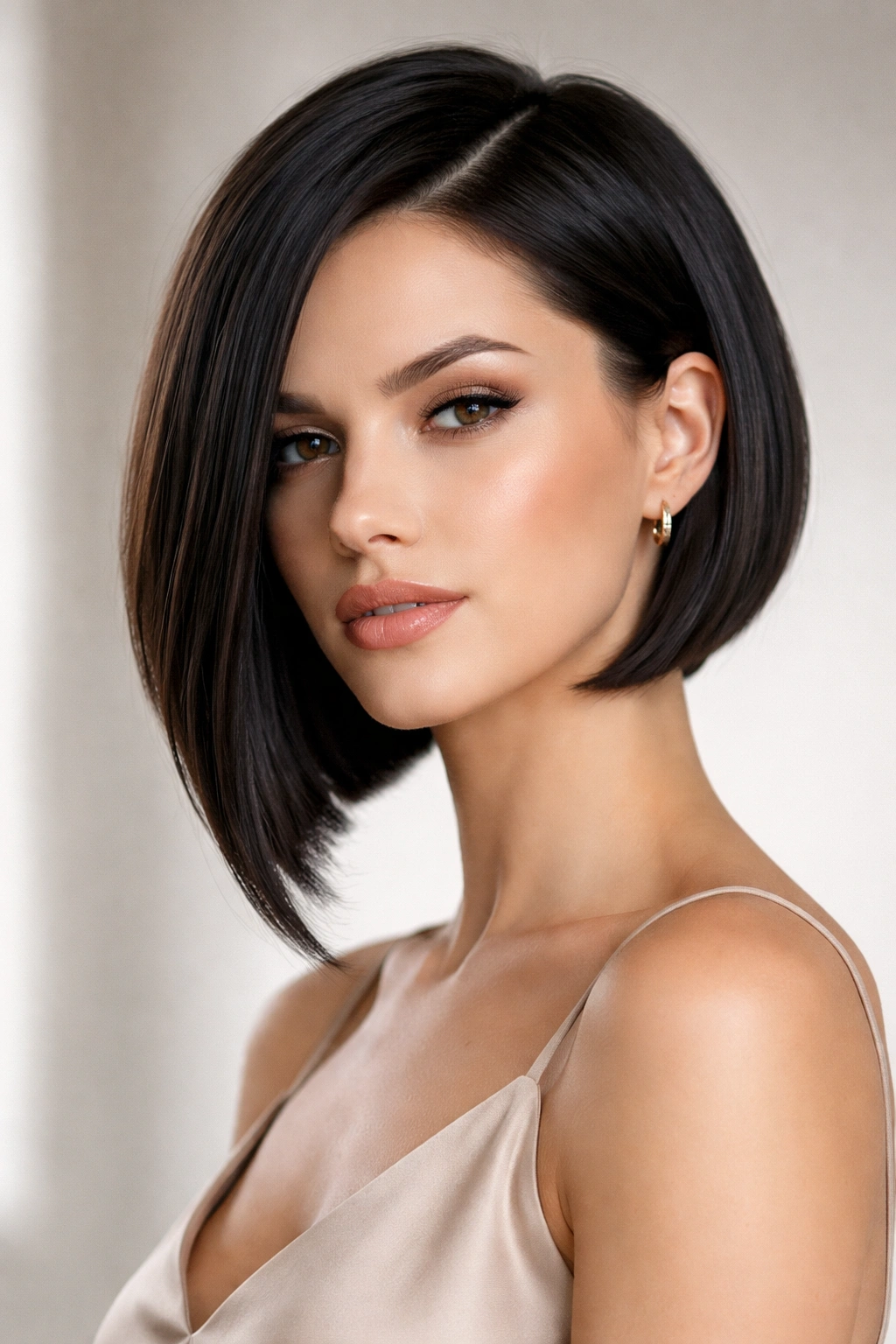
This cut combines the precision of a bob with asymmetrical, angular lines—typically longer on one side and shorter on the other. The sides may be tapered or steeply angled, and the overall effect reads modern, intentional, and slightly edgy. Without bangs, the asymmetry becomes the focal point, creating visual interest through line and shape rather than fringe.
Why Angles Work Without Bangs
An asymmetrical bob naturally draws the eye along those angled lines, making the cut itself the styling statement. Add bangs to an already-angular cut, and you risk visual confusion or an overly busy design. By leaving the forehead clear, the asymmetry reads cleanly and the face feels balanced despite the unequal side lengths. The longer side often falls across the shoulder or chest, while the shorter side (sometimes cropped quite close) exposes more of the head and neck.
Styling an Angular Cut
- This cut typically requires some styling to look intentional; air-drying rarely produces the sharp lines the cut is designed to showcase
- Blow-dry with a round brush or paddle brush to smooth and direct hair; if you want extra polish, a flat iron works beautifully on either straight or slightly wavy hair
- Texturizing products can add movement if you prefer a slightly undone feel; the angle alone provides enough visual interest that it doesn’t need additional texture
- Trims every 5 to 7 weeks maintain the sharpness; let it grow beyond that and the angles become less defined
- This cut typically suits straighter hair types best, though wavy hair can carry it with slightly more styling attention
Ideal for: Angular bobs particularly flatter long, rectangular, or oblong faces, where the horizontal lines created by asymmetry add needed width. Heart-shaped faces also work well. If you have a very round face, an asymmetrical bob can emphasize roundness—opt for a different style or ask your stylist about subtle asymmetry rather than a dramatic side-to-side difference.
5. The Cropped Undercut
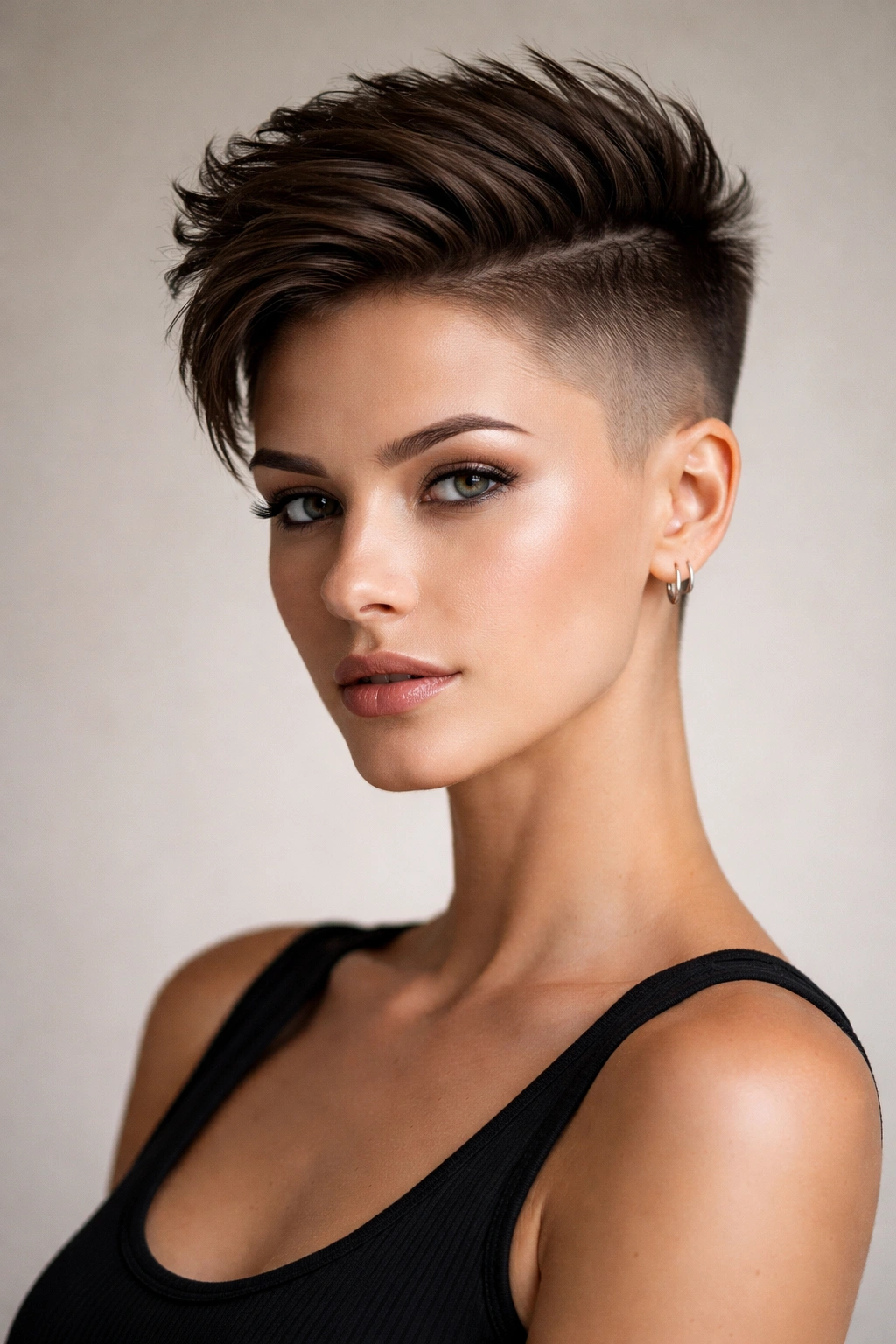
An undercut keeps hair significantly shorter on the sides and back—sometimes clipped very close, sometimes left slightly longer—while maintaining more substantial length on top. The visual contrast between short sides and longer crown creates drama, movement, and a boldly modern silhouette. This cut makes a clear style statement and works beautifully without bangs because the focus is on that dramatic length variation.
The Visual Power of Contrast
What makes an undercut striking is precisely the juxtaposition of closely cropped sides against fuller length on top. When you add bangs to an undercut, you’re essentially adding another styling element to an already-complex cut, which can feel visually heavy. Without bangs, the clean exposure of the sides, ears, and forehead balances the volume on top and creates a harmonious proportion. The undercut becomes a confident, intentional choice rather than a decorative addition.
Styling and Growth Considerations
- The sides require trimming every 3 to 4 weeks to maintain that sharp contrast as hair grows
- Top length can typically go 8 to 12 weeks between cuts, depending on how you want it to sit
- Styling options range from sleek and polished (blow-dry smooth with lightweight product) to textured and piece-y (use texturizing spray and separate with fingers)
- This cut works on most hair types; curly hair will create a different silhouette than straight hair, but both can look striking
Who wears it best: Undercuts suit people who are confident with bold style statements. Face-shape-wise, they work well on oval, square, and heart-shaped faces. If you have a very round face, the volume on top can emphasize that roundness unless you style it with specific intention. This cut requires genuine commitment to regular trims and typically works best for people willing to devote 5 to 10 minutes to morning styling.
6. The Soft Pixie
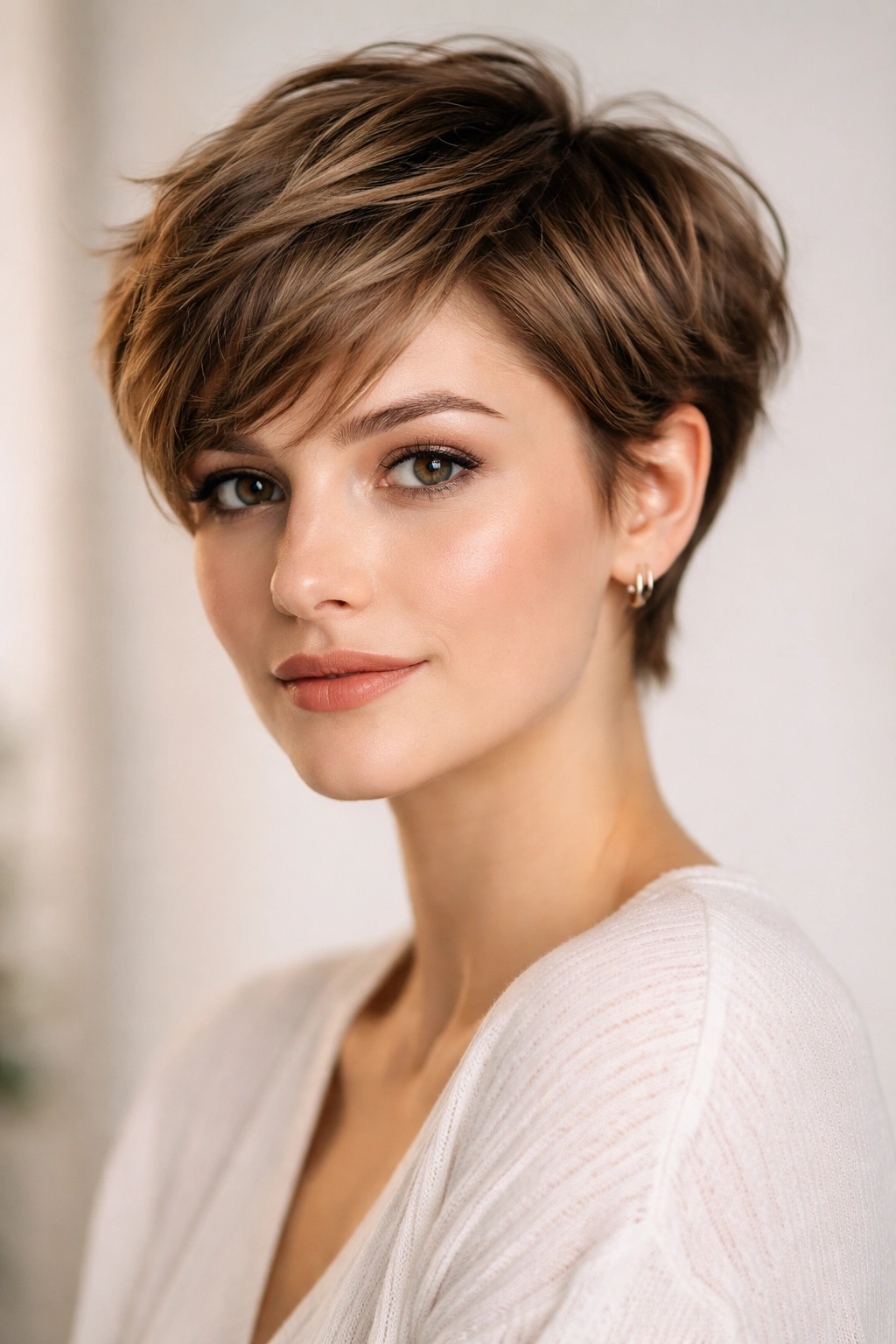
A soft pixie maintains the shortness principle of a traditional pixie but adds more texture, longer top layers, and slightly less severe tapering on the sides. The result feels less geometric and more organic, with softness rather than sharp lines. This version works beautifully for people who want the ease of short hair without the severity that sometimes feels limiting.
How Texture Changes the Pixie Equation
Where a classic pixie uses precision and clean lines to create impact, a soft pixie relies on layered texture and subtle movement. The sides might be an inch long rather than a quarter inch; the crown might have 2 to 3 inches of length rather than one. Those extra layers catch light differently, creating dimension without requiring daily styling. Without bangs, the soft pixie’s texture becomes the focal point—every layer is visible and contributes to the overall silhouette.
Care and Styling Reality
- A soft pixie still requires trims every 4 to 5 weeks, but the slightly longer length means a missed trim is slightly more forgiving than with a classic pixie
- Styling is genuinely minimal: apply a texturizing product to damp hair, run your fingers through, and air-dry or blow-dry briefly
- The key to making it look intentional rather than grown-out is maintaining those layers through regular trims
- This cut works beautifully on curly and wavy hair because the texture naturally creates the piece-y effect; straight hair shows the layers clearly and requires slightly more product
Best for: People with all face shapes can wear a soft pixie. It’s more approachable than a classic pixie because the slightly longer length and softer edges feel less extreme. If you have curly or wavy hair, a soft pixie can be transformative—the shorter length reduces bulk while the texture creates volume and shape naturally.
7. The Side-Swept Short Cut
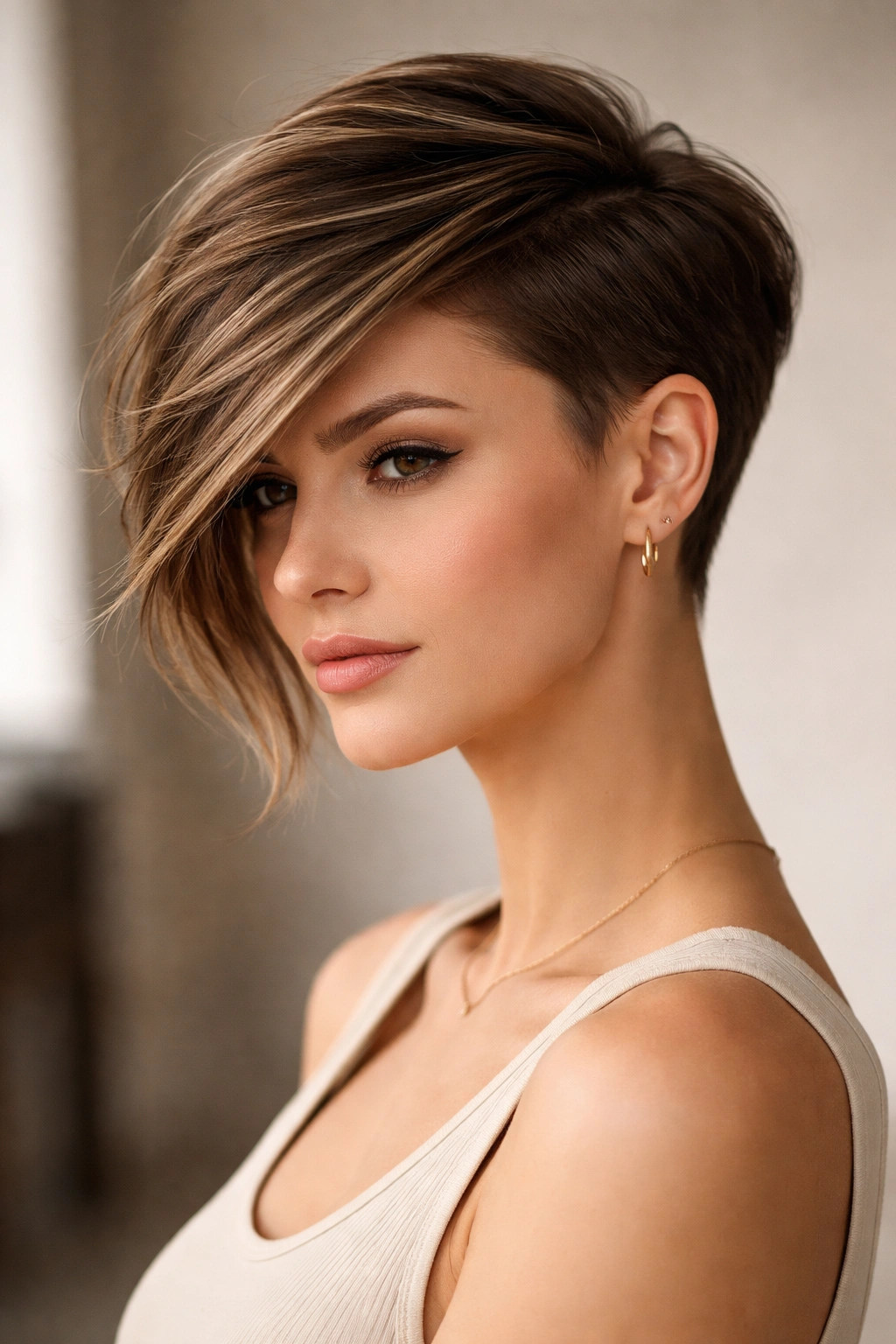
This cut keeps hair short overall but grows slightly longer toward the front and sweeps dramatically to one side, creating movement and dimension even with very short lengths. The longer side might reach to the chin or jaw, while the shorter side might be 2 to 3 inches. Without bangs, the side-swept direction becomes the defining feature, pulling attention across the face rather than down.
Why This Cut Works Across Different Faces
The side-swept direction is inherently flattering because diagonal lines make faces appear slimmer and more angular, regardless of actual bone structure. By sweeping longer length toward the opposite side from where hair is cropped short, you create visual interest and movement without the maintenance of a true asymmetrical bob or undercut. The cut reads as deliberately styled rather than accidental.
Maintenance and Styling Needs
- This cut benefits from regular styling to maintain the sweep; air-drying will flatten the direction you’ve worked to create
- Blow-dry the longer side across the head, using your fingers or a round brush to direct; you can smooth with a flat iron if you want polish
- Texturizing products can add movement and make the sweep feel more organic and less blown-out
- Trims every 4 to 6 weeks maintain the length gradation and keep the swept direction intentional
- This style suits straighter to wavy hair best; very curly hair can carry it but the curl pattern will soften the sweep
Ideal for: Side-swept cuts work beautifully on round, square, and oblong faces because the diagonal direction adds length and angularity. Heart-shaped faces look lovely in this style. If you have a very narrow, rectangular face, the horizontal width created by sweeping can be flattering. This cut suits people who enjoy a polished, intentional look and don’t mind spending 5 minutes styling each morning.
8. The Choppy Crop
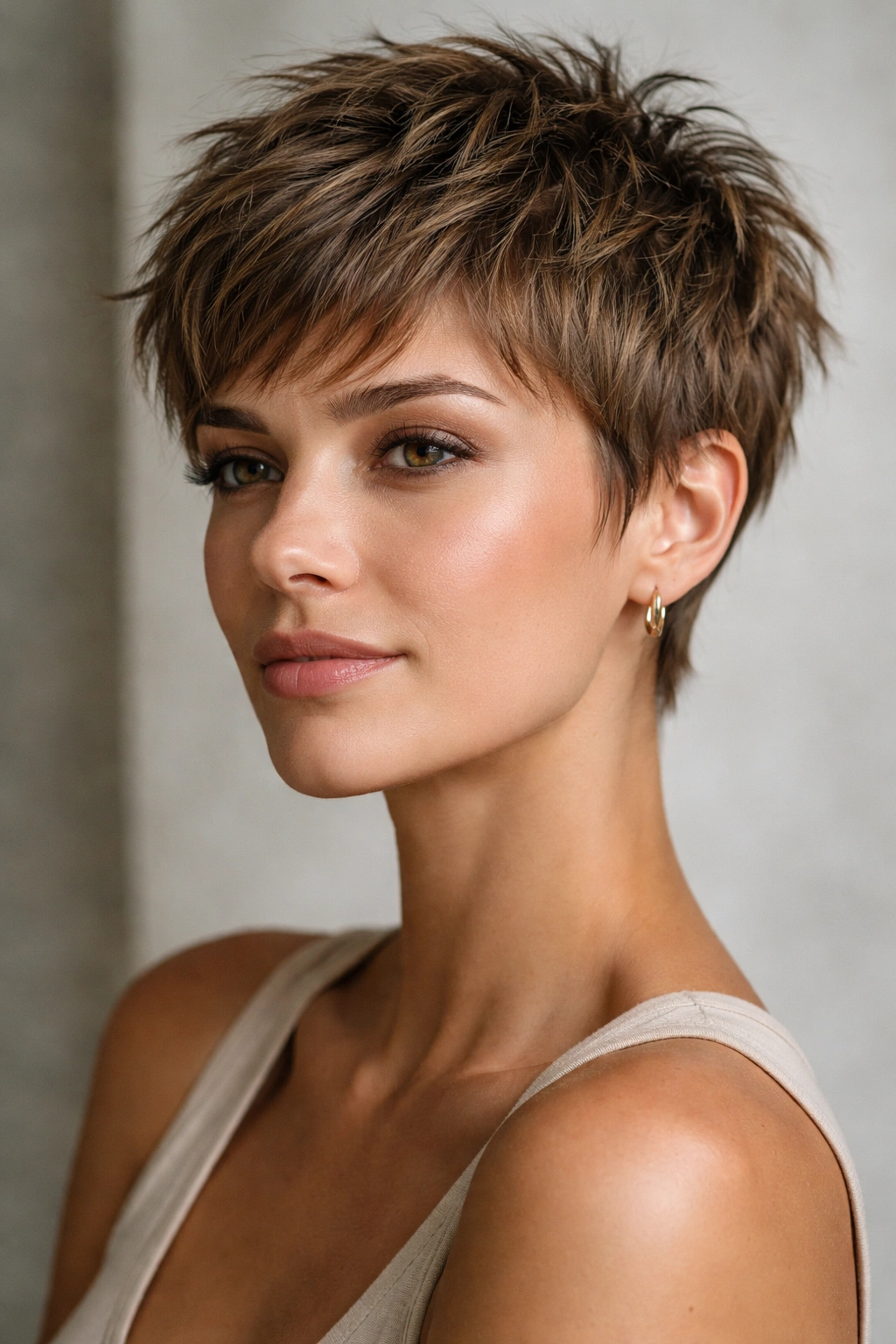
A choppy crop combines very short overall length with deliberately uneven, choppy layers throughout. Rather than aiming for a clean line or deliberate taper, this cut embraces textural variation, with some pieces slightly longer or shorter than others. The effect is energetic, youthful, and distinctly rock-and-roll without requiring extreme precision. Bangs would only add another element to an already-textured cut.
The Intentionality Behind Choppiness
Choppy doesn’t mean messy or poorly executed. A professional choppy crop is constructed through specific layering choices; each shorter or longer piece contributes to the overall texture and movement. The absence of bangs keeps the focus on how all those choppy layers create shape and dimension across the entire head. You’re not dealing with a separate element in front; instead, the whole cut works together.
Styling a Choppy Cut
- A choppy crop genuinely works with minimal styling; that’s part of the appeal
- Apply texturizing product to damp or dry hair and use your fingers to separate and emphasize the choppiness; blow-dry on low heat or air-dry
- This cut embraces a slightly undone aesthetic, so perfection isn’t the goal—texture and movement are
- Trims every 5 to 6 weeks prevent it from looking genuinely grown-out rather than intentionally textured
- Choppy crops work beautifully on curly, wavy, and straight hair; the effect just reads differently on each texture
Who suits this style: Choppy crops work across most face shapes because the overall texture creates visual interest that balances various proportions. This style is particularly friendly for people who don’t love dramatic daily styling; it actually looks better slightly undone. If you want an energetic, youthful look without the precision demands of some other cuts, a choppy crop delivers that energy.
9. The Grown-Out Pixie
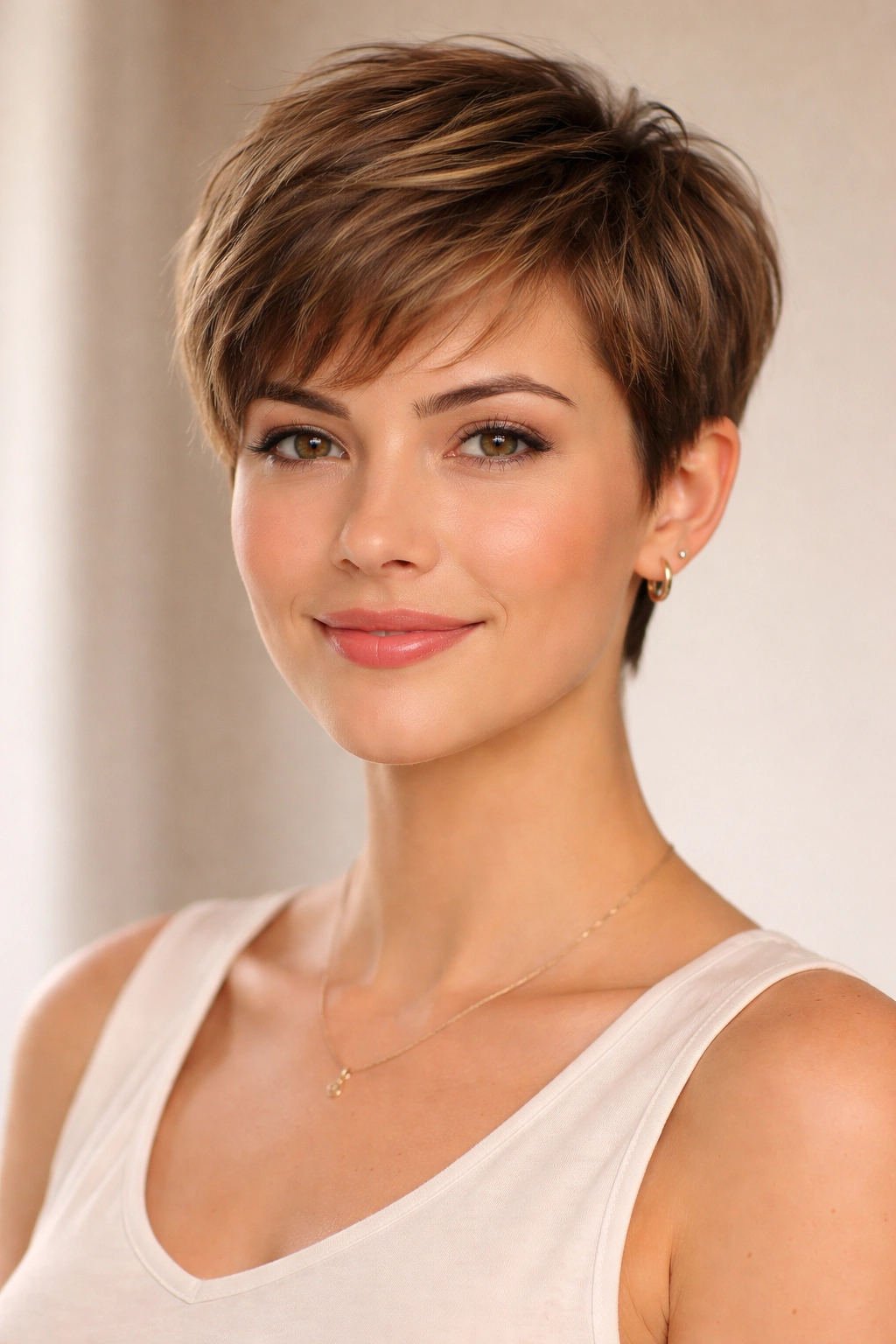
This is the phase between a traditional pixie and a longer pixie—hair has grown past the initial super-short stage, creating slightly more length on top (maybe 1.5 to 2.5 inches) while sides have grown as well. Rather than restyling into a different cut, you’re working with the natural growth of a pixie, which can look intentional and flattering during this transition phase. This works beautifully without bangs because the full face is still visible and the proportions read as deliberate.
Embracing the In-Between
Many people consider a grown-out pixie an awkward stage to get through before moving to a different cut. But with intention and the right styling approach, this length is actually a distinct and appealing style option. The extra length on top allows for slightly more styling versatility—you can create texture, movement, or a smoother look depending on product and styling choices.
Styling During Transition
- A grown-out pixie benefits from texturizing products that emphasize the length variation between sides and top
- Blow-dry to create volume on top; you can direct hair forward for a piece-y effect or back for something sleeker
- This phase typically requires a trim every 5 to 6 weeks if you’re trying to maintain the intentional grown-out-pixie look rather than letting it grow into a completely different style
- It works beautifully on all hair types, though curly hair in this phase requires slightly less styling effort
Best for: A grown-out pixie suits anyone with an oval or square face shape. Heart-shaped and oblong faces also carry this length well. If you have curly or wavy hair, this length is genuinely easy to wear and style. This phase works best for people who enjoy touching up their cut regularly but don’t want to commit to an ultra-short pixie indefinitely.
10. The Sculpted Nape Short
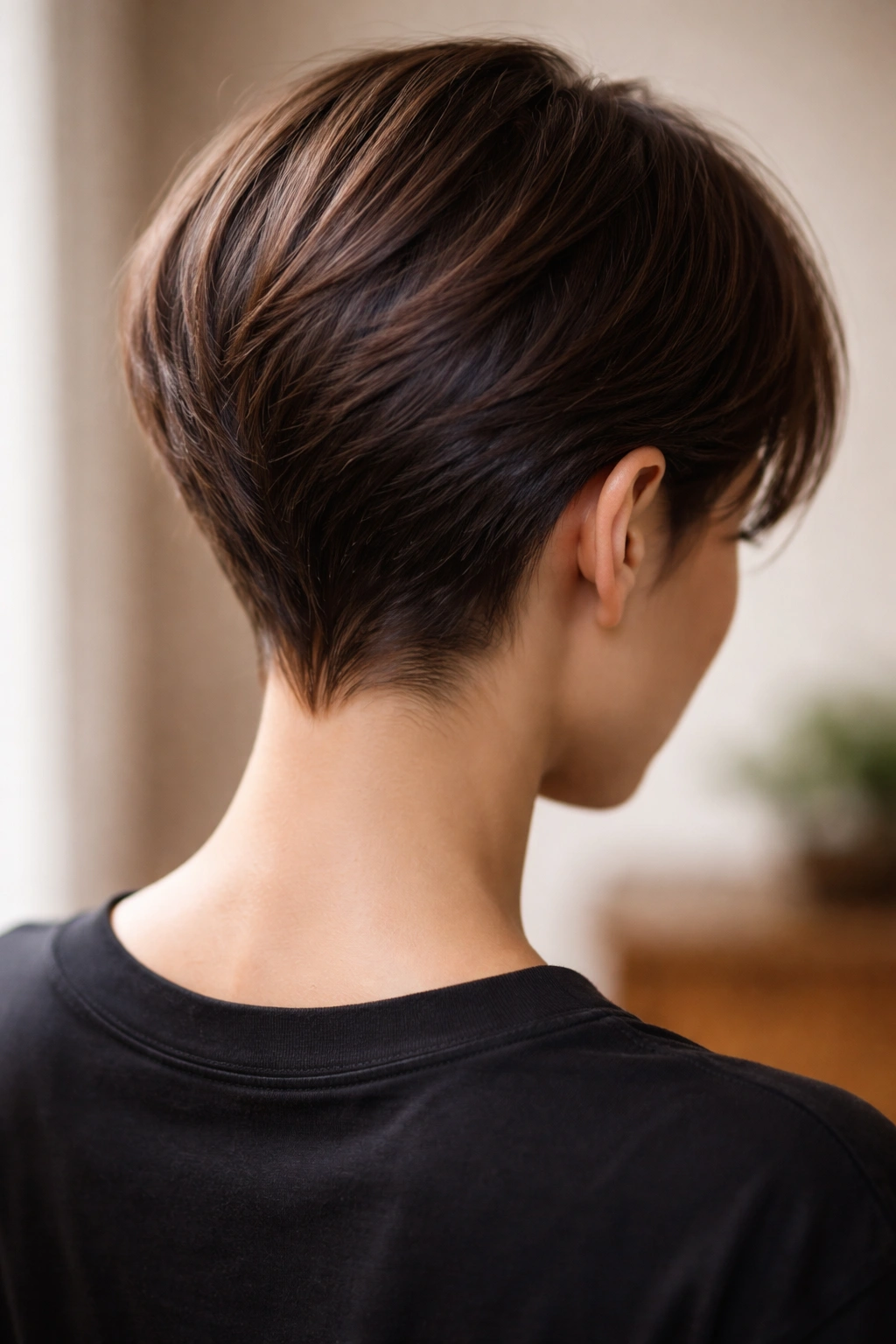
This cut keeps hair short and close to the head overall, but pays special attention to how the nape (the hair at the very back of the neck) is sculpted. Rather than a simple taper, the back might feature subtle geometric lines, curves, or sculptural detail that’s visible when hair is pulled up or when you turn around. Without bangs, this back detail becomes an interesting design element that people notice as a distinctive feature.
Design Details in Unexpected Places
When hair is short and lacks bangs to draw attention, designers can be creative about where visual interest lives. A sculptured nape with subtle lines, curves, or detailed tapering becomes a signature detail—something that makes the cut uniquely you. Some versions feature a slightly longer central section with shorter, tapered sides; others have chevron shapes or subtle curves cut into the nape.
Styling Considerations
- This cut requires a stylist who has the skill and vision to create these details effectively
- Once cut, the design typically holds without much styling; it becomes more visible as hair grows slightly and needs reshaping
- Trims every 4 to 6 weeks maintain the sculptural details
- This style works well on straight or wavy hair; very curly hair will soften the sculptural lines
- You’ll want your hair short enough that the nape detail is visible—typically no longer than 2 inches on top
Ideal for: Sculpted nape cuts suit people who want something distinctive and personal without an extreme overall shape change. This works beautifully on most face shapes because the detail is at the back of the head rather than framing the face. This is a great choice if you want something that reads as thoughtfully designed rather than following a standard template.
11. The Layered Crop
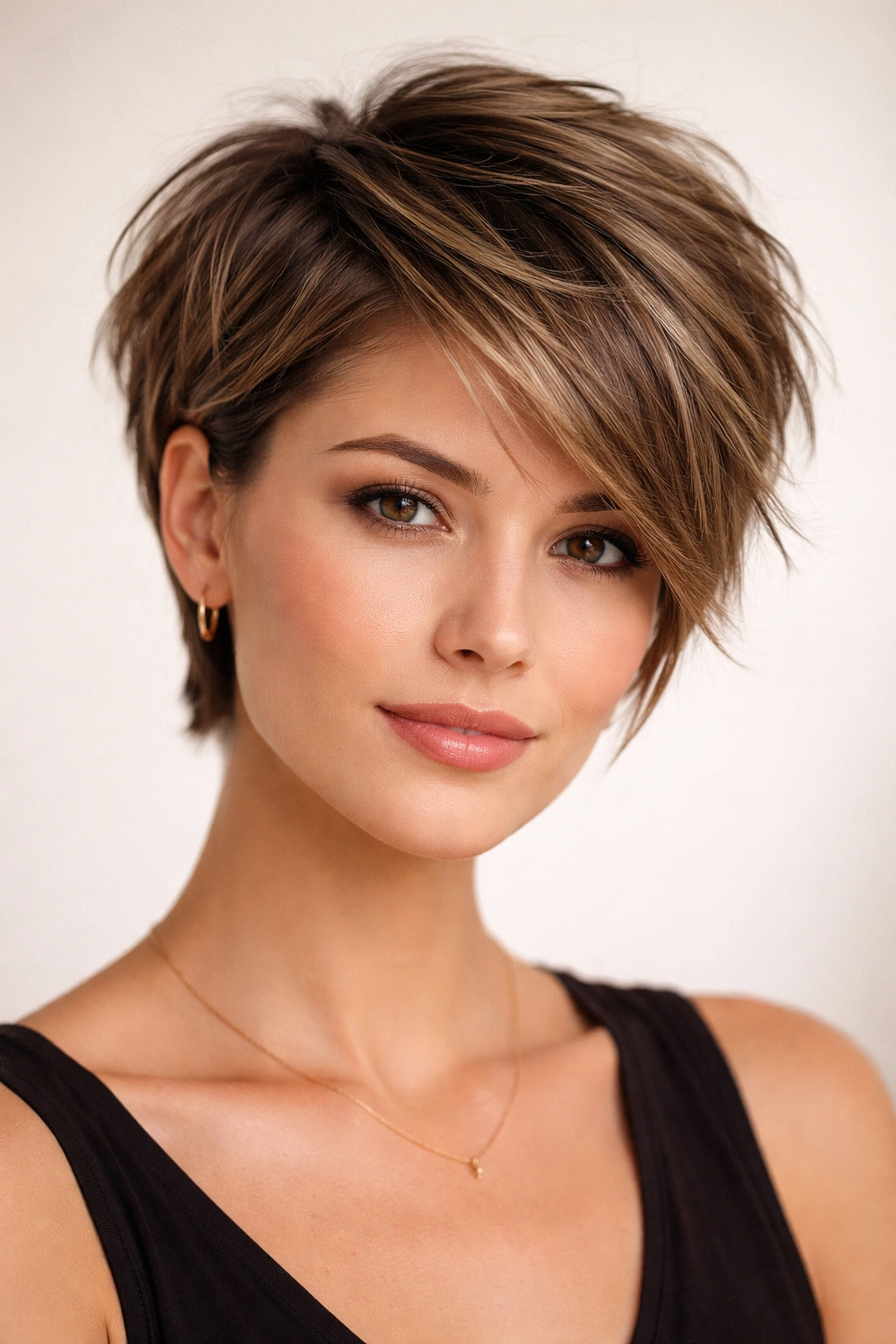
A layered crop has short overall length with strategic layers throughout that create movement and texture without making the cut feel choppy or uncontrolled. Each layer is purposeful; they work together to create shape and dimension rather than existing independently. This version sits somewhere between a soft pixie’s subtlety and a shag’s pronounced movement.
How Layers Create Structure
Professional layering isn’t just about texture; it’s about directing how hair moves and sits. In a quality layered crop, longer layers underneath support shorter layers on top, creating volume and movement that appears effortless. Each layer is cut at a specific angle to support the overall shape. Without bangs, the entire face benefits from the light, textured feeling that layering creates.
Maintenance and Styling
- A layered crop typically requires trims every 4 to 6 weeks to maintain the layer structure
- Styling options range from completely air-dried and piece-y to blow-dried smooth with product
- Texturizing products enhance the movement; lighter pomades or sprays are preferable to heavy gels
- This cut works beautifully on curly, wavy, and straight hair; each texture type reads differently but all look intentional
- The ease of styling makes this a popular option for people who want short hair without the frequent trims a pixie demands
Perfect for: Layered crops work across face shapes and hair types. They’re especially flattering on people with oval or heart-shaped faces because the layers add dimension that balances features. If you have curly or wavy hair, this cut is incredibly easy to wear. Even with straight hair, styling is pretty minimal—just apply product and let the layers do the work.
12. The Blunt Pixie Crop
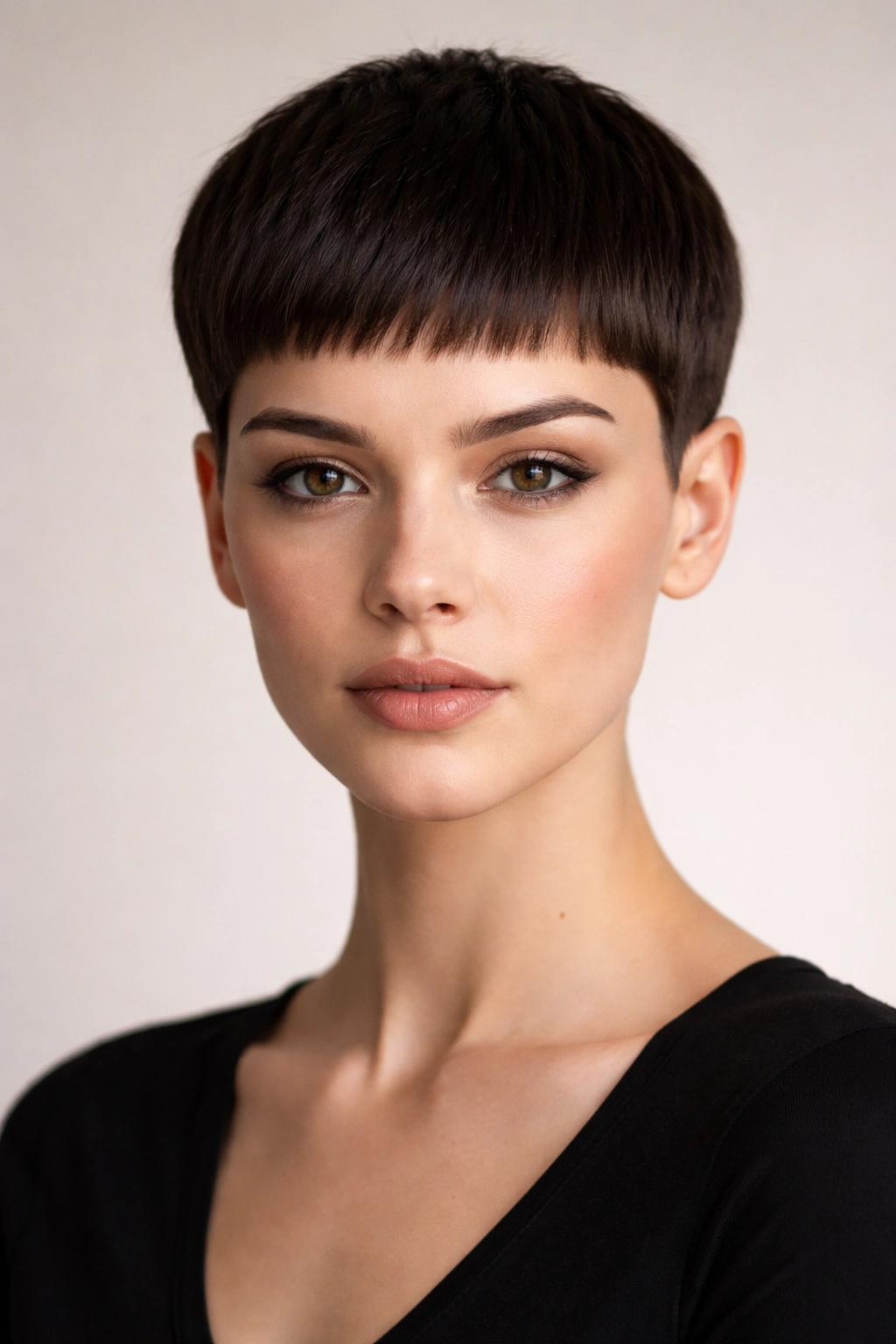
This cut sits between a traditional pixie and a slightly longer style, keeping the overall length quite short (typically no longer than 1.5 inches throughout) but using blunt lines rather than textured layers. The sides and back might be clipped very close, while the top is left with slight length but no layers. The effect is sleek, geometric, and distinctly modern. Bangs would interrupt the clean lines this cut prioritizes.
Clean Lines Over Texture
Where many short cuts embrace texture and movement, a blunt pixie crop commits to geometry and precision. This isn’t a textured, undone style; it’s a deliberately shaped, almost sculptural cut. The lack of layers means every strand contributes to the overall form rather than creating secondary interest. Without bangs, the full expanse of the face is visible, making bone structure and the geometry of the cut the primary visual focus.
Styling Reality
- A blunt pixie crop requires very minimal styling; blow-dry on medium heat with your fingers and you’re done
- Product isn’t necessary, though a light texturizing spray can add subtle dimension if desired
- This cut demands regular trims every 3 to 4 weeks to maintain the blunt lines and clean geometry
- It works beautifully on straight hair; wavy or curly hair softens the blunt edges, which changes the effect significantly
Best for: Blunt pixie crops suit people who have strong facial features and confidence in pulling off a bold, minimal aesthetic. They’re particularly flattering on people with square or oval faces. If you have straight hair, this cut is relatively low-maintenance. People with curly or wavy hair might find the bluntness less achievable without significant styling effort, or they might embrace the softer effect that their curl pattern creates.
13. The Tapered Fade
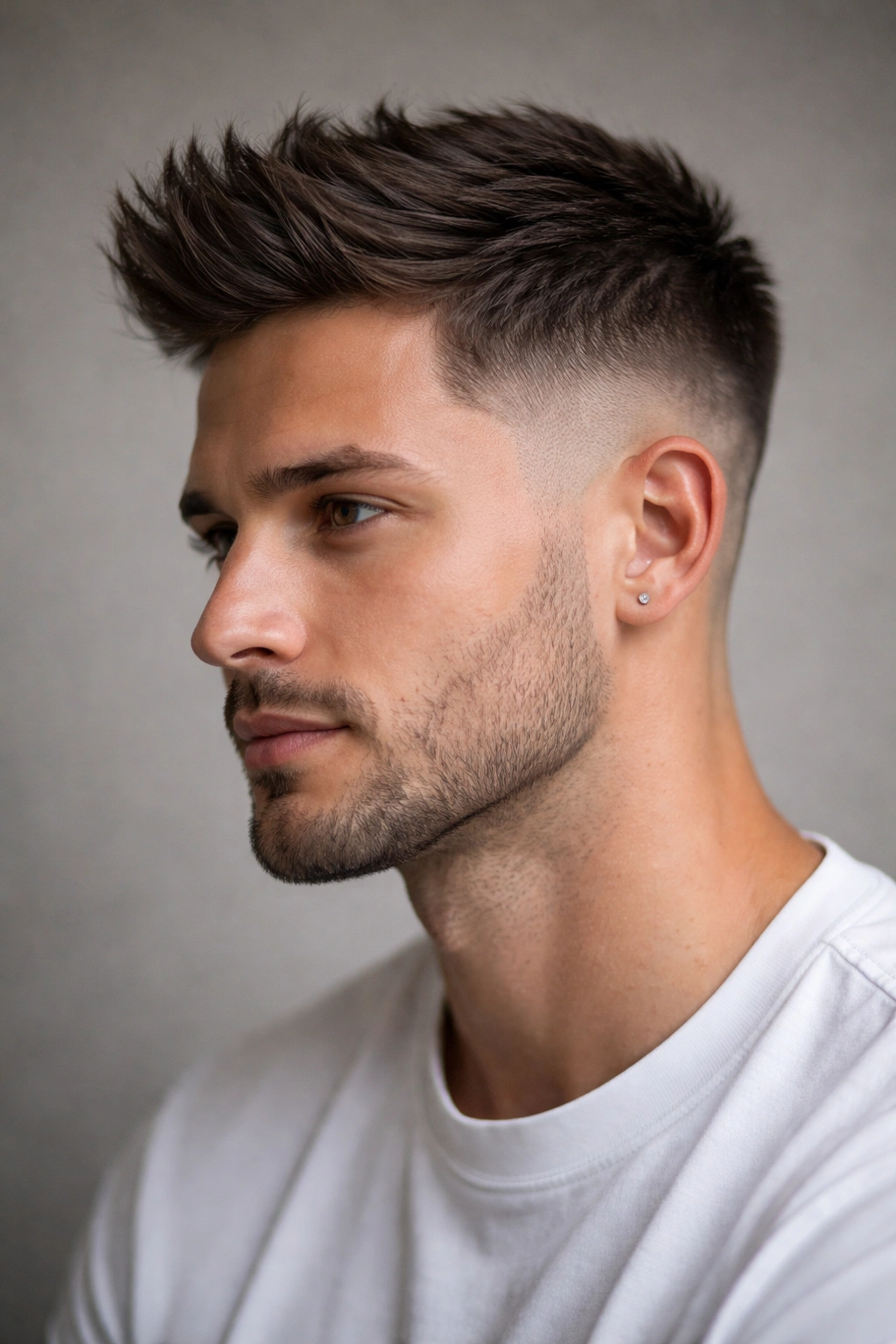
This cut features dramatically tapered sides that fade very close to the scalp, particularly around the temples and ears, while maintaining more length on top and crown. Unlike an undercut, which is a sharp contrast, a fade is gradual—the sides progress smoothly from very short near the skin to longer length on top. The overall effect is sharp, modern, and androgynous. Without bangs, the focus is entirely on that fade and the volume on top.
Gradient vs. Sharp Contrast
A fade differs from an undercut in that the transition is gradual rather than a defined line. This gradual transition can actually be easier to maintain during growth—as hair grows, it blends rather than creating a suddenly-obvious regrowth line. Without bangs, the face is fully exposed and the fade becomes a major design element, creating visual interest through that sophisticated gradient.
Maintenance and Styling
- The fade typically requires a trim every 2 to 3 weeks to maintain the gradient and prevent obvious regrowth lines
- Top length can usually stretch to 6 to 8 weeks between cuts
- Styling the top works similarly to styling an undercut—you can go sleek with gel or texturized with a texturizing product
- This cut suits all hair types, though the fade shows most crisply on straight hair
Ideal for: Tapered fades work beautifully on most face shapes, particularly oval and square faces. The gradual transition is flattering because it doesn’t create a harsh line but still creates dimensional interest. This is a great choice for people who love a polished, modern aesthetic and are willing to commit to frequent trims to maintain the gradient.
14. The Textured Undercut
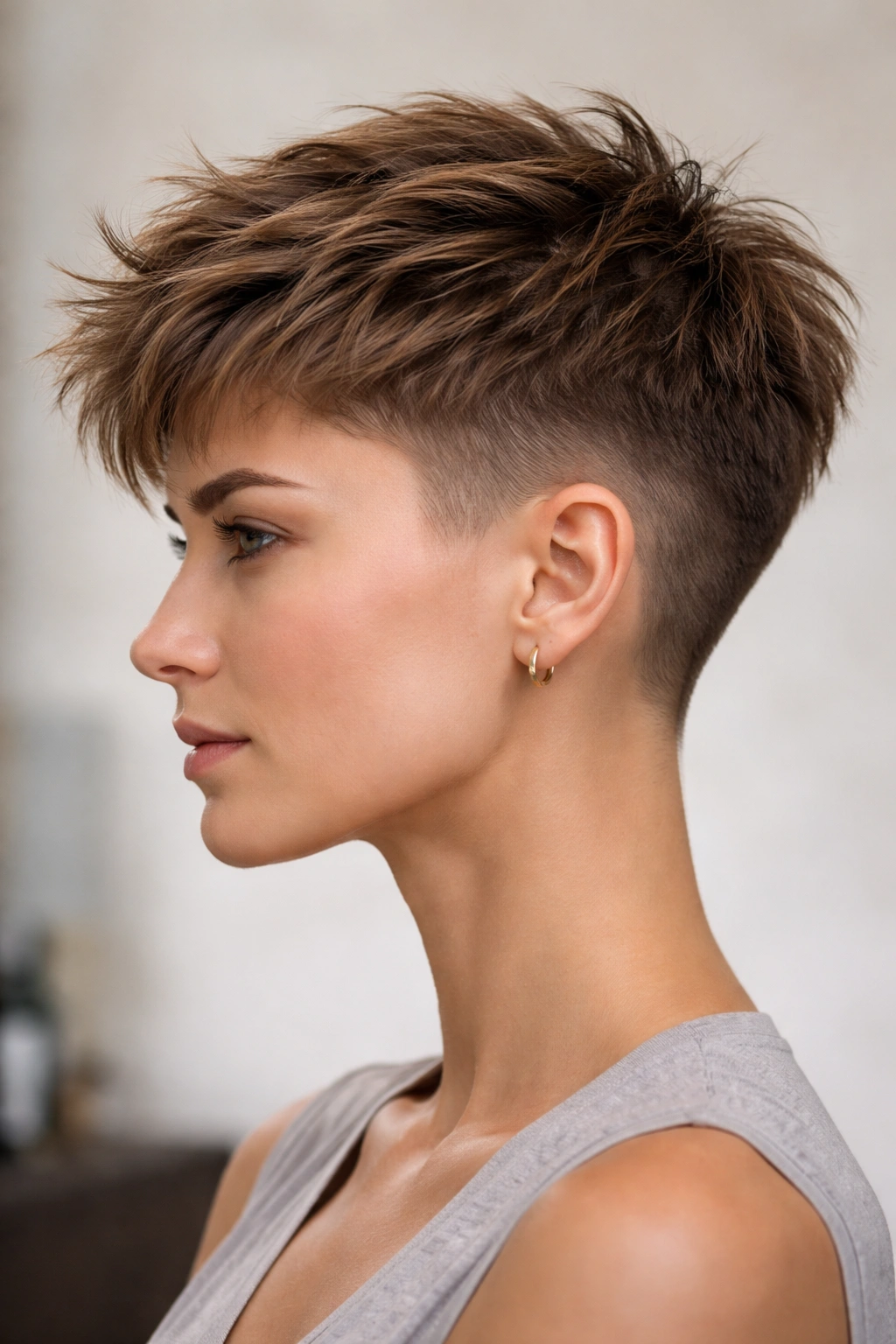
This combines the dramatic contrast of an undercut with intentional texture on top rather than just longer length. The sides are clipped close while the top features layers, choppy texture, or deliberate piece-iness. The contrast between smooth sides and textured crown creates visual interest from multiple angles. Without bangs, the texture is visible from the front while the fade is visible from the sides—multiple design elements working together.
Layering on Top of the Undercut Foundation
What distinguishes a textured undercut from a standard undercut is the approach to the top length. Rather than simply leaving it long and styling it smooth or slicked back, the stylist creates layers and texture that move, catch light, and create dynamism. This adds visual interest without requiring the longer lengths that some people find harder to maintain.
Styling and Upkeep
- The sides require trims every 3 to 4 weeks to maintain that clean fade
- Top length can stretch to 6 to 8 weeks between cuts, depending on how the texture sits
- Styling the top with texturizing products creates piece-iness; you can also smooth it for a more polished look
- This cut works beautifully on curly, wavy, and straight hair; each texture reads differently but all can look striking
Perfect for: Textured undercuts suit people who want bold style presence but also want some of the ease that texture provides. Face-shape-wise, they work well on oval, square, and heart-shaped faces. This cut requires genuine commitment to frequent trims and is ideal for people who enjoy active styling.
15. The Sleek Side Part
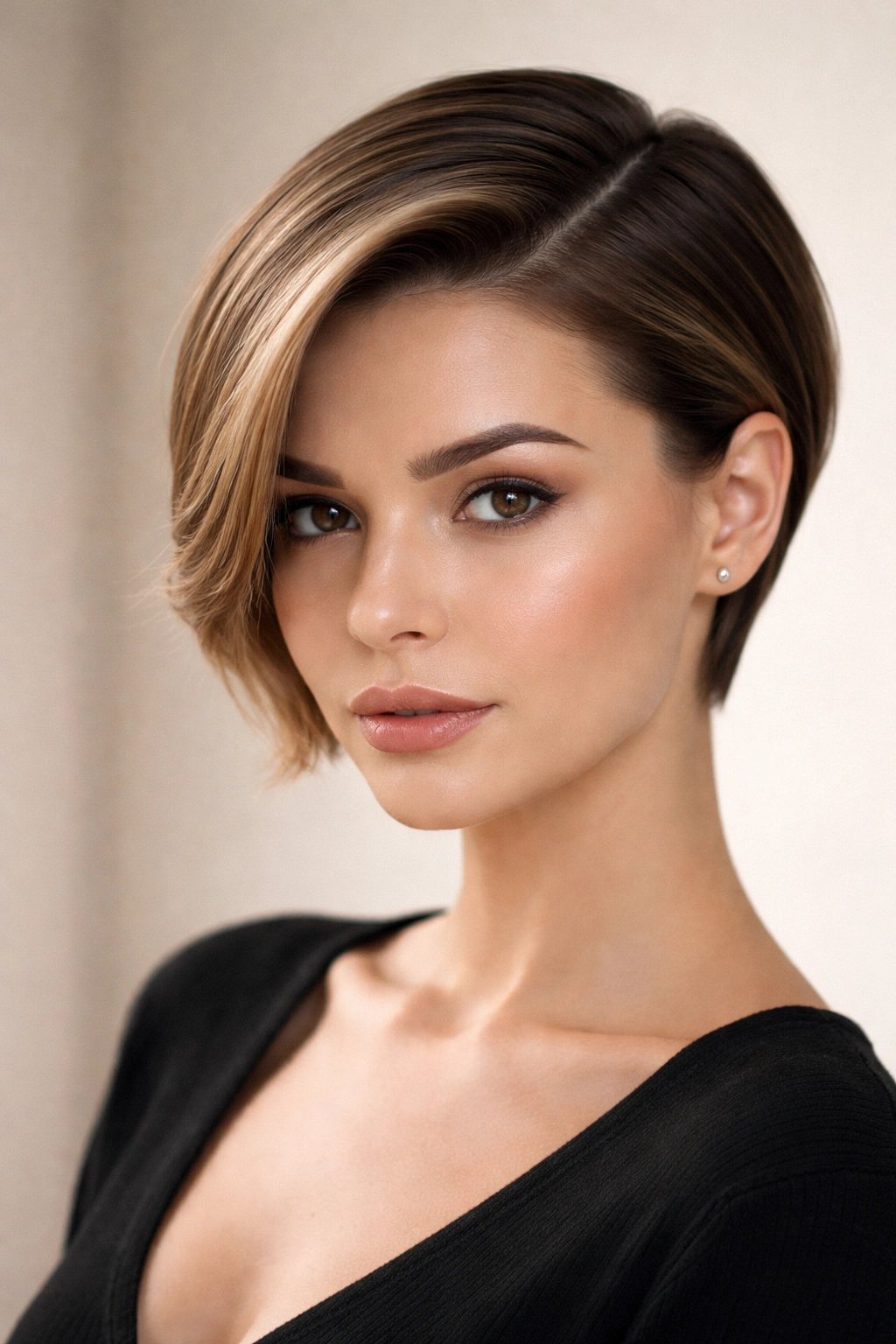
This cut keeps hair relatively short and close to the head overall, styled with a definitive side part that skims close to the head on one side and gives fuller volume on the other. Without bangs, the full forehead is visible and the side part becomes the defining styling feature. This works beautifully on both very short lengths and slightly longer short styles (up to 3 inches). The effect is polished, sophisticated, and timeless.
The Power of a Deliberate Part
A sharp side part transforms even a simple, short cut into something intentional and styled. The part line becomes a visual element, guiding the eye and creating an asymmetrical balance. Without bangs competing for attention, the part is the styling statement. This works particularly well on people who prefer a polished, groomed aesthetic to the texture-and-movement approach other cuts embrace.
Achieving the Look
- A sharp side part requires blow-drying; air-drying will soften or obscure it
- Use a paddle brush or round brush to smooth hair and direct it according to where your part sits
- A light pomade or smoothing cream helps maintain the part throughout the day
- Trims every 4 to 6 weeks maintain the overall shape; how frequently you trim depends on how much length you prefer
- This style works beautifully on straight or slightly wavy hair; very curly hair will soften the sharpness of the part
Who wears it best: Sleek side-part cuts work across face shapes and create a particularly polished look. They’re especially flattering on oblong or rectangular faces because the side part adds some horizontal interest. If you enjoy a groomed, intentional aesthetic and don’t mind spending a few minutes on morning styling, this cut delivers that polish without being overly complex.
Final Thoughts
Choosing a short haircut without bangs means committing to a cut that stands entirely on its own merits—shape, layers, texture, taper, and line work to create interest rather than relying on a fringe to add dimension or frame the face. The payoff is a versatile, often low-maintenance style that works across multiple face shapes and hair textures when cut with skill and intention.
The real trick is finding a stylist who understands not just how to create length variation and layers, but why those specific decisions suit your particular face shape, hair texture, and lifestyle. Bring reference photos of cuts that appeal to you, have an honest conversation about your styling willingness and skill level, and trust that investment in a good cut pays back in how easy your hair is to style and how confident it makes you feel.
Short hair can feel like a big commitment, but it’s often the most liberating choice—no long styling processes, no hair in your face, and a cut that evolves beautifully as it grows. Start with realistic expectations about maintenance (most short cuts need trims more frequently than longer styles), invest in a quality stylist you trust, and give yourself time to learn how to style whatever cut you choose. The result is a silhouette that’s entirely yours.
