



A long face shape can feel like a styling challenge, but the truth is that certain haircuts work beautifully with this face geometry—they actually emphasize your features in the most flattering way possible. The key isn’t fighting your face shape; it’s working strategically with proportions, adding width where it matters most, and creating visual breaks that balance vertical length. Women with longer, narrower faces often have gorgeous bone structure and elegant proportions, and the right cut will celebrate those qualities while creating the illusion of width across the cheekbones and jaw.
The most flattering haircuts for long faces share common principles: they add horizontal volume, incorporate textural movement, and break up the vertical line of the face with strategic layers or bangs. What works for one person might need tweaking for another, but understanding these foundational concepts helps you communicate clearly with your stylist and make confident choices about what will genuinely flatter your face shape. We’re not talking about complicated cuts that require constant maintenance—many of these styles are surprisingly easy to style at home and look better the more casually you wear them.
In this guide, you’ll discover fifteen proven haircut styles that balance long face proportions beautifully. Each one approaches the challenge from a slightly different angle, so whether you’re drawn to bold bangs, flowing waves, or sleek sophistication, there’s something here that matches your aesthetic and will make you feel genuinely confident. The best part? These cuts work across different hair textures, lengths, and styling preferences—you can adapt any of them to suit your lifestyle and personal style.
1. The Blunt Bob

A blunt bob hits right at the chin or just below, creating a strong horizontal line that visually breaks up the length of your face. The key is keeping the ends perfectly straight and dense with no taper—this density and bluntness create the illusion of width. The fuller the ends, the more this cut enhances the appearance of a rounder, more proportioned face. Many women with long faces find that the blunt density at chin level draws the eye horizontally rather than downward, which is exactly what flatters this face shape.
Why This Works for Your Face Shape
The blunt bob’s structural weight sits exactly where you need it—at the widest point of the lower face. This creates balance by adding visual width at the jawline and cheeks, counteracting the narrowness that can make a long face appear elongated. The horizontal line of the blunt edge is a powerful design tool that psychologically tells the eye to move sideways rather than down.
How to Make It Work Best
- The cut needs to be precise and blunt—ask your stylist for clean, straight edges with no feathering or layering
- Pair it with a deep side part for added face-framing dimension
- Use a straightening iron if you have natural texture to maximize that horizontal line
- Consider adding subtle bronde or balayage to create depth within the cut
- Style with texture spray and a blow dryer for maximum fullness at the ends
Pro tip: A blunt bob looks stunning with a bold lip color—the horizontal line of the cut and the horizontal emphasis of a bold lip create a cohesive, intentional look that feels modern and chic.
2. Textured Lob with Horizontal Layers
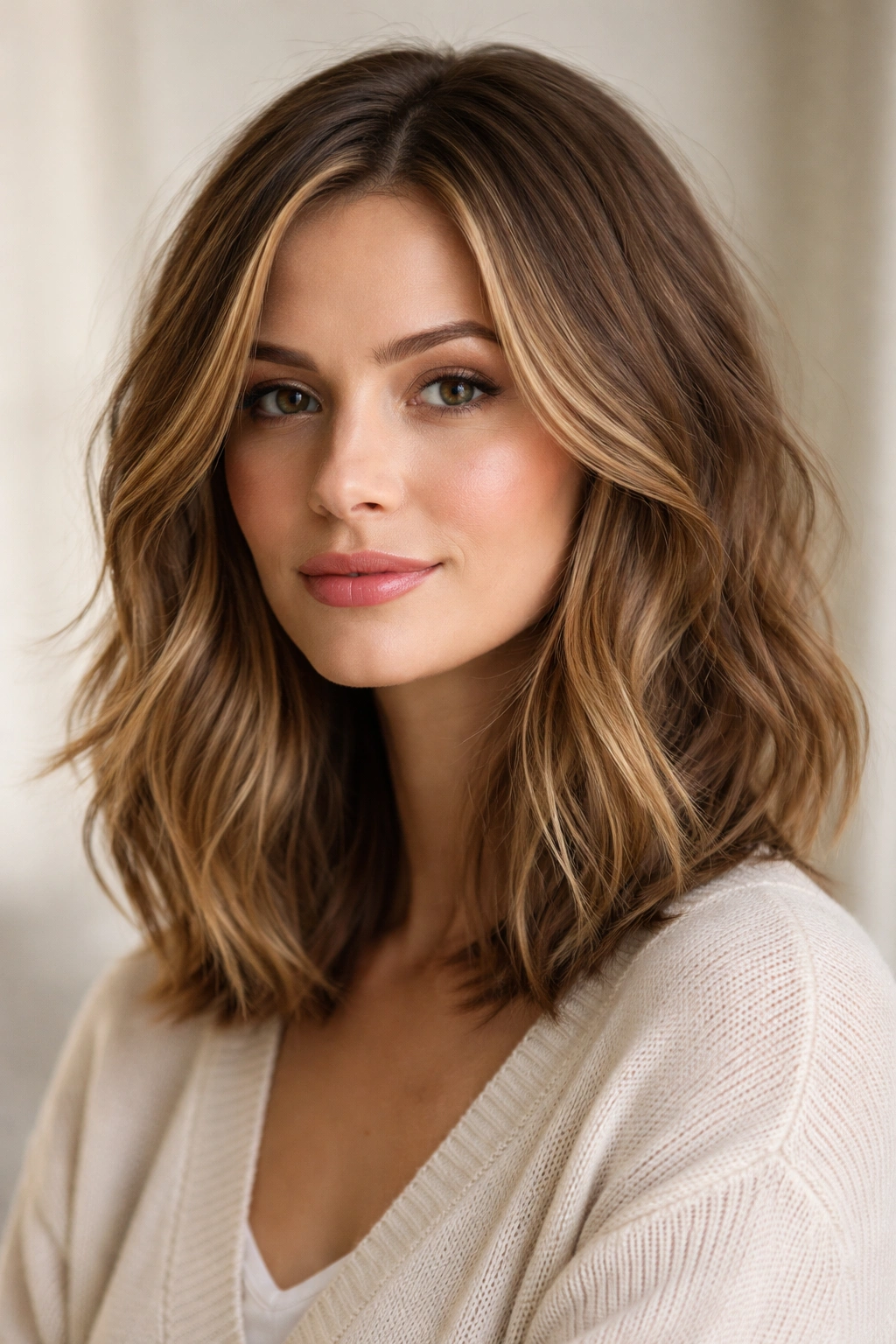
A lob (long bob) sits between the chin and shoulders, giving you more length than a traditional bob while still maintaining that crucial horizontal emphasis. The difference here is layering throughout to create movement and prevent the cut from dragging the face down. Textured layers positioned at cheekbone height and throughout the length create breaking points that interrupt the vertical line. This cut works beautifully because it combines length—which you might prefer—with strategic horizontal elements that balance your face.
Why This Works for Your Face Shape
The horizontal layers at cheekbone height create width exactly where long faces need it most. These layers catch light and create dimension that makes the face appear wider. The texture itself creates visual interest that moves the eye around rather than allowing it to trace the full vertical line of your face. The result feels sophisticated and effortlessly dimensional.
How to Make It Work Best
- Ask your stylist for layers that start around cheekbone height and progress longer toward the back
- Specify that you want horizontal texture, not razor-thin wispy layers that emphasize thinness
- Sleep on damp hair with a texture spray for bedroom waves that enhance the horizontal dimension
- Consider a subtle face-framing layer that sits just in front of your ears
- This cut pairs beautifully with warm tones or dimensional color that creates depth
Worth knowing: This cut actually improves with slightly tousled waves—the more polished and flat you style it, the more it can emphasize length, so embrace some movement.
3. Layered Pixie with Textured Bangs
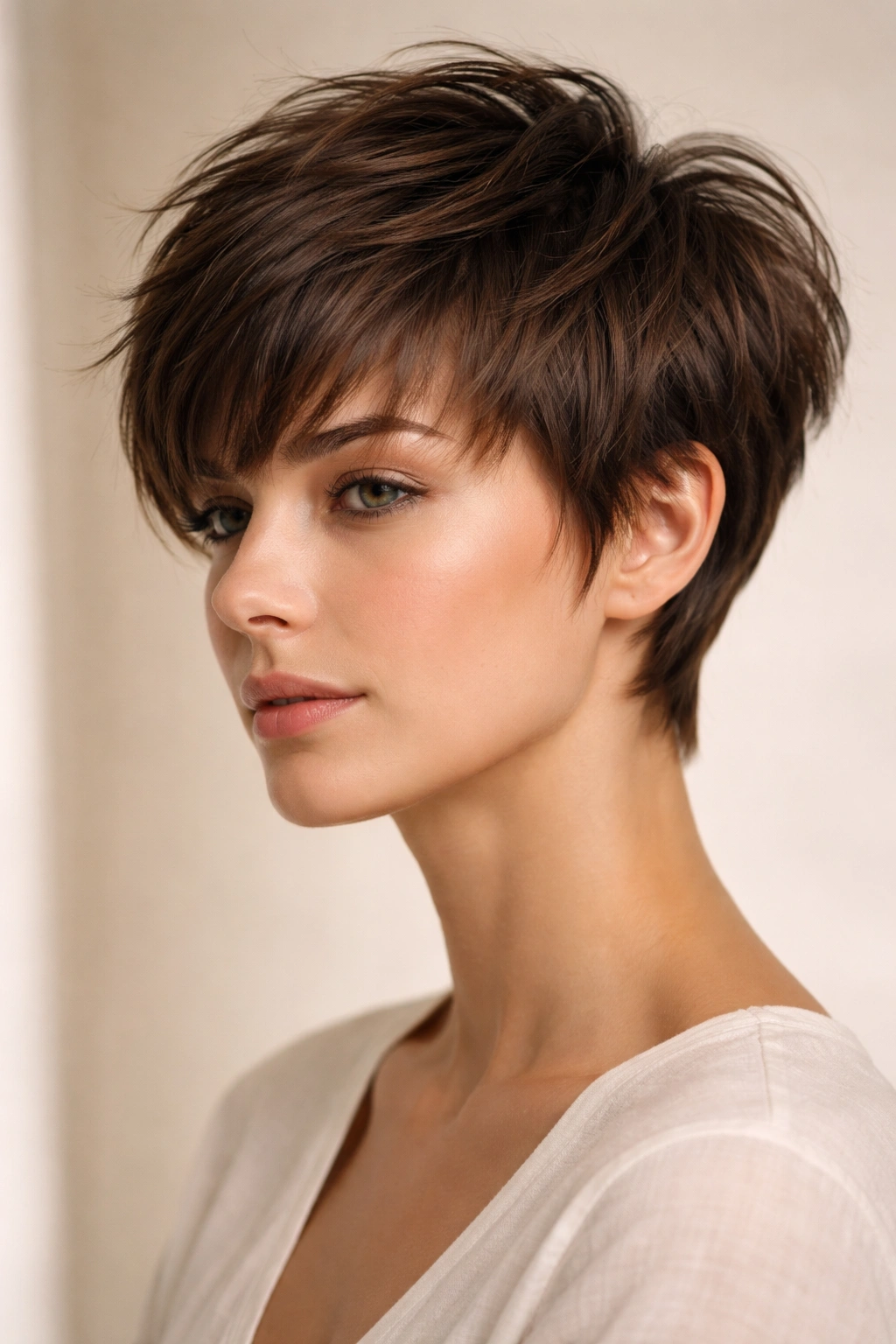
Don’t assume short hair can’t flatter a long face—a layered pixie with textured bangs is unexpectedly balanced and chic. The bangs are crucial here; they create an immediate horizontal break at the forehead that makes the face appear shorter. Layers throughout the pixie add texture and movement that prevents the short cut from looking severe or emphasizing thinness. The combination of textured layers on top with the horizontal break from bangs creates visual width and breaks up vertical proportions.
Why This Works for Your Face Shape
Bangs act as an instant face-shortening tool, making the lower portion of the face appear proportionally wider. The layering prevents the short cut from emphasizing a narrow face structure. The texture and movement created by choppy layers add visual interest and dimension that makes the face appear fuller. This is a bold choice, but it’s remarkably effective for long face shapes.
How to Make It Work Best
- Work with a stylist experienced in pixie cuts—the layers need to be placed strategically, not choppy everywhere
- Keep bangs textured and slightly choppy rather than blunt, so they feel modern and soft
- Style with a texturizing paste or cream for maximum movement and separation
- Part your hair slightly to the side rather than down the center for added dimension
- Consider a darker color or subtle highlights that add depth to the shorter layers
Pro tip: This cut photographs beautifully and requires minimal styling—the texture holds without a lot of effort, making it perfect for low-maintenance styling.
4. Shoulder-Length Layers with Face-Framing
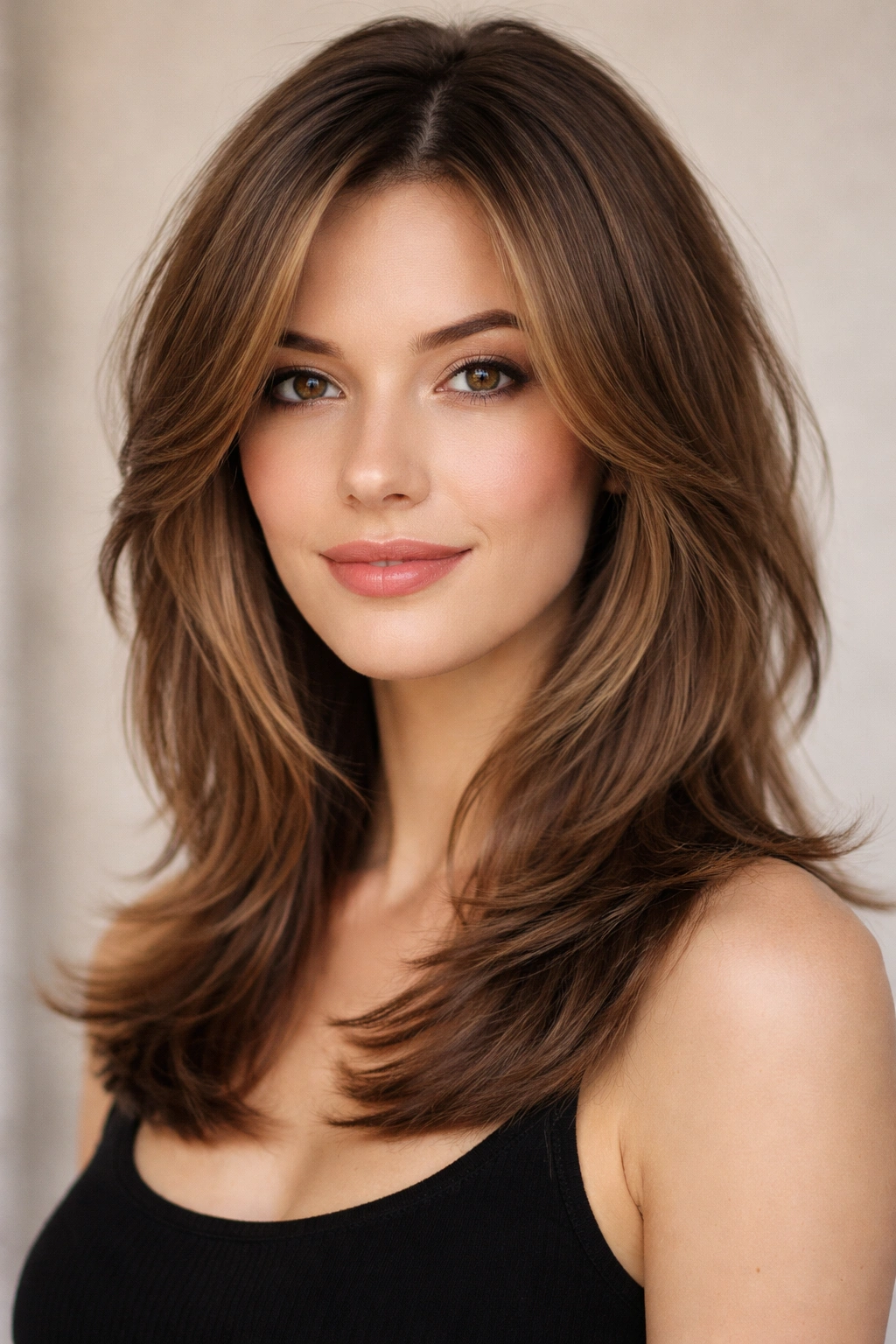
Shoulder-length hair with strategically placed face-framing layers combines length with proportional balance. The layers near the face create movement and softness at cheekbone and jaw level, adding width exactly where you need it. The overall shoulder-length allows you to style versatility—you can wear it sleek, wavy, or textured—while the face-framing layers ensure the cut always complements your proportions. This cut appeals to women who want length without sacrificing flattery for their face shape.
Why This Works for Your Face Shape
Face-framing layers positioned at cheekbone height and slightly shorter break up the vertical line of the face with strategic horizontal and angled lines. The layers create movement that makes the face appear fuller and softer. Shoulder-length proportions mean the bulk of your hair adds width at a strategic point rather than emphasizing the vertical line. This creates instant balance without feeling like a compromise on length.
How to Make It Work Best
- Request layers that begin at cheekbone height and work toward longer lengths in the back
- Ask for subtle face-framing pieces that you can tuck behind your ears or let fall forward depending on your mood
- Style with a side part to create asymmetry that flatters longer faces
- Add subtle waves or curls to maximize the horizontal dimension of the cut
- This cut pairs beautifully with balayage or lived-in color that creates depth
Worth knowing: This is one of the most versatile cuts—you can wear it slicked back on busy days or with soft waves when you want something more polished.
5. The Modern Wavy Midi Cut
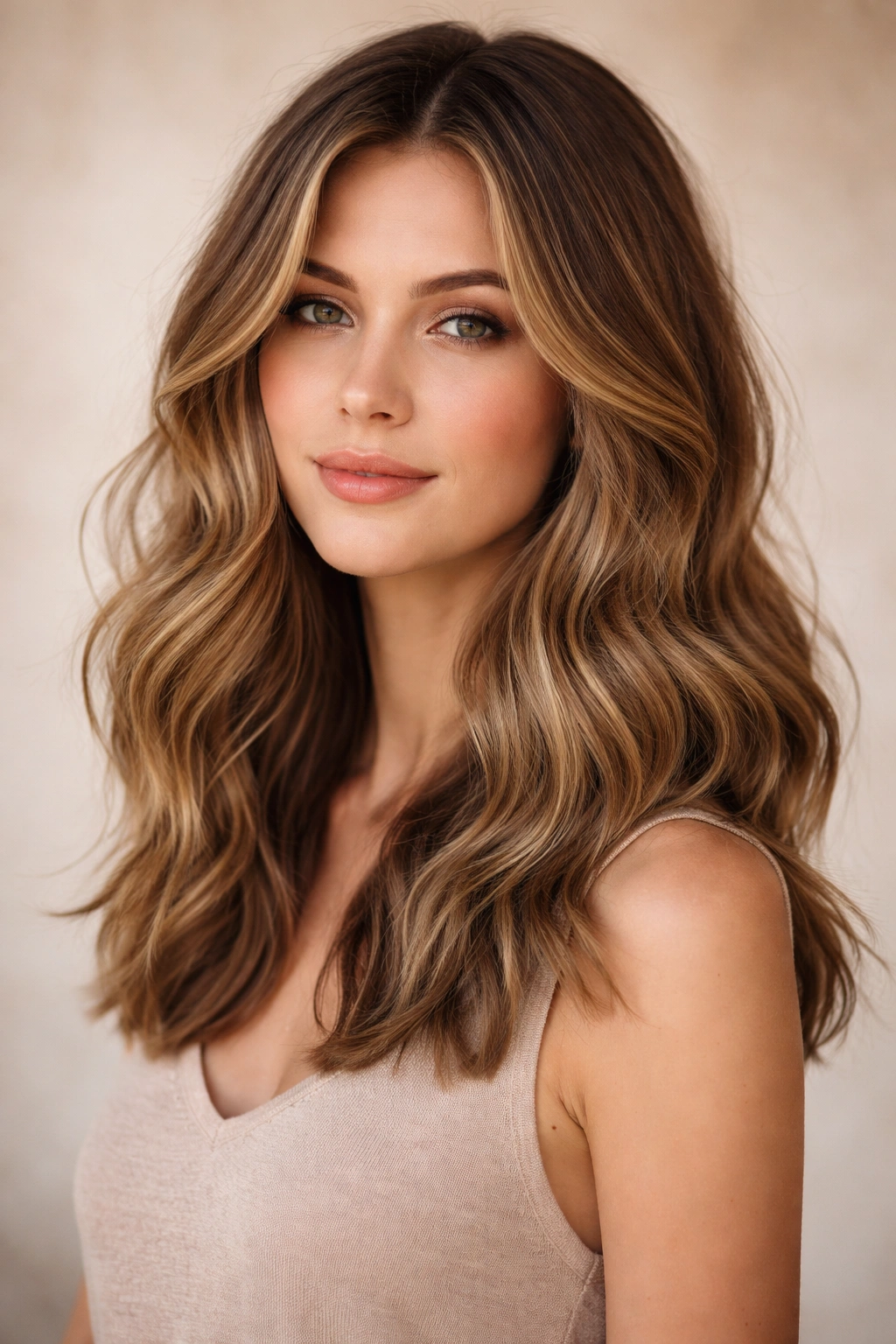
A midi cut hits somewhere between the shoulder and mid-back, and when styled with waves, it creates visual softness and width that flatters long faces beautifully. The key is that waves create a zigzag pattern rather than a straight line, and that visual complexity interrupts the vertical line of your face. Layers throughout encourage wave formation and prevent the length from feeling heavy or dragging the face down. This is an elegant, sophisticated choice that feels current without being trendy in a way that dates quickly.
Why This Works for Your Face Shape
Waves inherently create horizontal visual interest—each wave peak and valley moves the eye sideways rather than down the face. The texture adds fullness and dimension that makes the face appear wider. Midi length is long enough to feel elegant and feminine but not so long that it emphasizes vertical length. Layers positioned throughout help the waves form naturally and prevent the hair from lying flat, which would emphasize a narrow face.
How to Make It Work Best
- Ask your stylist for layers throughout—every two to three inches—rather than subtle choppy layers only at the ends
- Specify that you want the layers to encourage wave formation, not create thin, wispy ends
- Use a curling iron or wave iron to create soft, romantic waves rather than tight curls
- Sleep in loose braids or use a silk pillowcase to maintain waves through the next day
- Add a texturizing spray to enhance the wave pattern and add volume
Pro tip: This cut actually looks better when waves are slightly undone—perfectly polished waves can sometimes emphasize a long face, but tousled, imperfect waves create the ideal balance of softness and dimension.
6. Thick Bangs with Blunt Ends

Thick, full bangs are a game-changer for long faces because they create an immediate horizontal line right at the eyebrow. Unlike thin wispy bangs, thick bangs provide real visual weight and width at the forehead and upper face. Paired with blunt-ended longer length, this creates a striking look that feels intentional and balanced. The bangs stop the eye from traveling the full vertical line of your face, making it appear shorter and more proportional. This is a bold choice, but it’s remarkably effective if you’re willing to commit to the styling.
Why This Works for Your Face Shape
Thick bangs act as a visual stopper that interrupts vertical length at the forehead. They create width and fullness at the upper face, which visually balances a narrower lower face. The weight and density of thick bangs prevent them from emphasizing thinness or delicacy. They actually add a cool, fashion-forward element that makes a long face appear stylish and intentional rather than just proportionally different.
How to Make It Work Best
- Ensure bangs are dense and full—if they’re too thin, they’ll emphasize rather than balance your face shape
- Keep the ends blunt and straight for maximum impact and horizontal emphasis
- Have bangs shaped every 3-4 weeks so they maintain their thickness and blunt edge
- Style with a round brush and blow dryer to create a slight curve that flatters the face
- Pair with either sleek, straight longer hair or soft waves—both work beautifully with thick bangs
- Consider side-swept thick bangs if center-parted feels too severe
Worth knowing: Thick bangs require commitment—they need regular trims and daily styling to look their best, so make sure this is a look you genuinely love before committing.
7. The Shag Haircut

A shag brings back a sophisticated, elevated version of the ’70s cut that’s perfect for long faces. Shags are characterized by lots of layers throughout, creating choppy texture and movement that prevents any one line from dominating. The beauty of a shag for long faces is that the layers, movement, and texture create visual complexity and breaks in the line of the face. The result is effortlessly chic and actually looks better the more casually you wear it—perfection is the enemy of a great shag.
Why This Works for Your Face Shape
A shag’s multiple layers at different lengths create numerous horizontal and angled lines that interrupt vertical proportions. The texture and movement prevent the hair from lying flat and emphasizing thinness. Layers positioned at the crown add fullness where it matters. Shorter layers around the face create face-framing that adds dimension and softness. The overall effect is sophisticated yet casual, which is the sweet spot for flattering a long face shape.
How to Make It Work Best
- Work with a stylist who specializes in shags—the layer placement is crucial and requires expertise
- Ask for shorter layers around the face and throughout the crown for volume and frame
- Use texturizing cream or salt spray to enhance the choppy texture the shag creates
- Blow dry with fingers or a diffuser to encourage movement rather than smoothing the layers flat
- Embrace the tousled, slightly undone aesthetic—this is where shags shine
- Consider pairing with a darker, slightly rocker aesthetic or keep it soft and feminine depending on your style
Pro tip: A shag is incredibly low-maintenance for how much dimension and movement it creates—you can literally air dry it or throw in some texture spray and go.
8. Curtain Bangs with Long Layers

Curtain bangs frame the face from both sides, creating a soft, dimensional look that’s incredibly flattering for long faces. Unlike blunt bangs that create a single horizontal line, curtain bangs frame with two angled lines that add softness and dimension. Pair this with long layers that start around chin length and progress longer, and you’ve got a romantic, balanced cut. The face-framing quality of curtain bangs combined with cascading layers creates width where you need it and movement that breaks up vertical length.
Why This Works for Your Face Shape
Curtain bangs create two angled lines that draw attention to the cheekbones and eyes rather than emphasizing the full vertical line of the face. The layers that fall from the bangs and throughout the length add horizontal dimension and movement. Long layers create numerous breaking points that interrupt vertical proportions. The overall effect feels soft, romantic, and balanced—curtain bangs make long faces appear more proportional and facially soft.
How to Make It Work Best
- Request curtain bangs that fall just below cheekbone height when dry
- Specify that you want long layers that begin around chin length and progress longer toward the back
- Use a round brush when blow drying to create a gentle curve in the bangs that flatters the face
- On non-wash days, lightly mist the curtain bang section and use your fingers to create the part down the center
- Style waves or curls throughout the length to maximize the horizontal dimension
- Consider side-swept curtain bangs if you prefer asymmetry over a center part
Worth knowing: Curtain bangs require a bit of styling to look their best—you’ll need to blow dry them or mist and finger-style them to create that flattering frame.
9. Choppy Asymmetrical Bob

An asymmetrical bob—shorter on one side, longer on the other—is a bold, fashion-forward choice that creates inherent balance for a long face. The length discrepancy creates visual interest and movement that prevents the face from appearing as vertical. Choppy layers throughout prevent the cut from being severe and add dimension. The asymmetry forces the eye to see the face as having different proportions rather than focusing on vertical length. This is an artistic, intentional choice that works beautifully for women who embrace fashion-forward styling.
Why This Works for Your Face Shape
Asymmetry creates visual complexity that breaks up vertical proportion. The shorter side creates width at the upper face while the longer side adds dimension and movement. Choppy layers throughout the cut prevent any single line from dominating. The inherent imbalance of an asymmetrical cut tricks the eye into perceiving the face as more balanced than it would appear with a symmetrical cut. This requires confidence to pull off, but it’s remarkably effective.
How to Make It Work Best
- Work with a stylist who’s experienced with asymmetrical cuts—they’re more technical than they appear
- Specify how much length difference you want between sides—some people prefer subtle, others prefer dramatic
- Add choppy layers throughout both sides for maximum movement and texture
- Decide whether you want the longer side to have more layers (lighter, more wispy) or fewer layers (heavier, more dramatic)
- Style with texture spray or a texturizing cream to enhance the choppy layers
- Consider adding color depth to the shorter side to create additional visual interest
Pro tip: An asymmetrical bob makes an excellent case for hair color—adding subtle dimension or even a contrast color on one side amplifies the visual impact.
10. Straight Shoulder-Length Bob with Subtle Layers
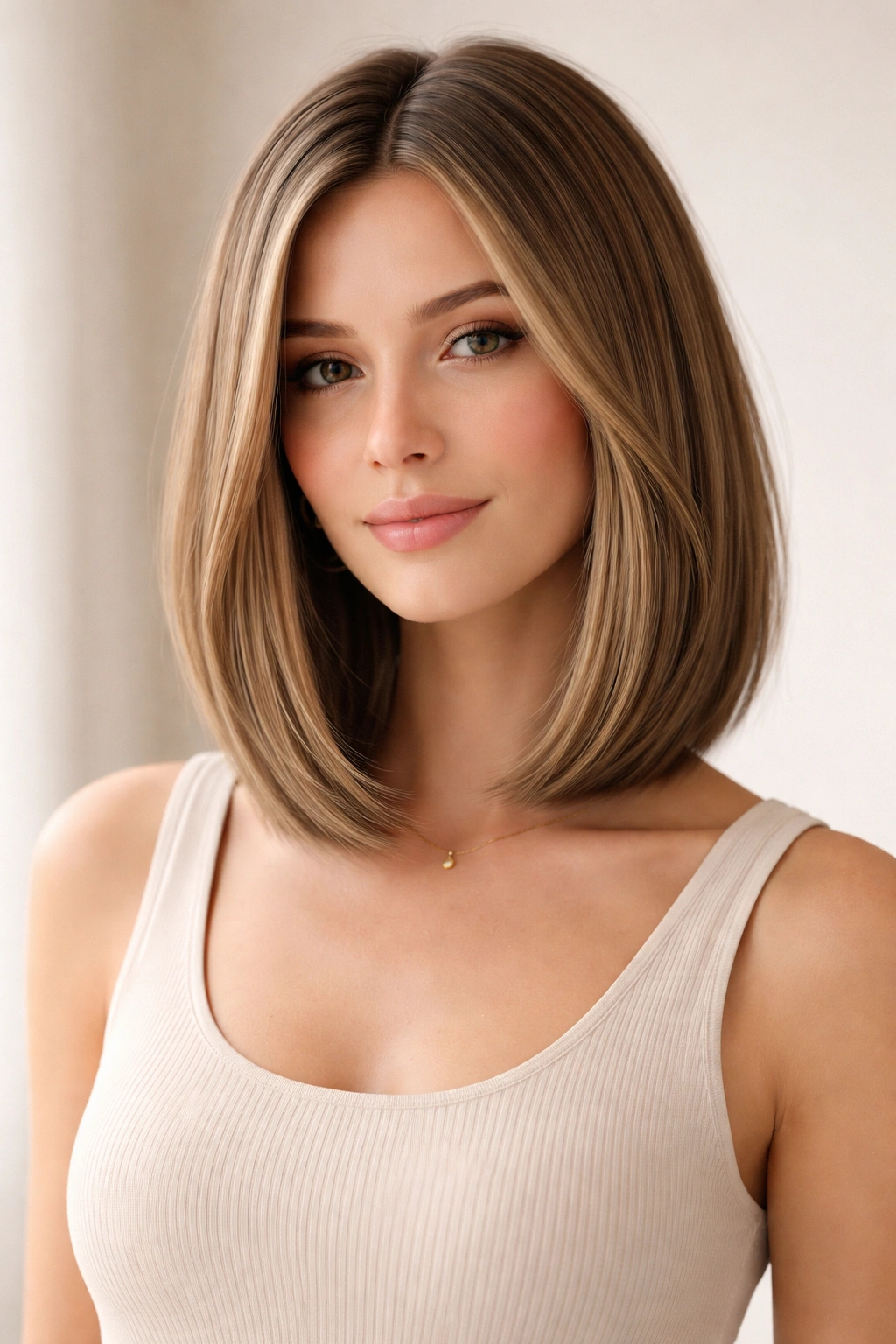
Sometimes the most flattering choice is the simplest: a straight, shoulder-length bob with just enough layers to add subtle movement and prevent heaviness. This cut works because shoulder-length hits at a proportional point—not too short (which might emphasize narrowness) and not too long (which might emphasize length). Subtle layers throughout add dimension without creating the choppy texture of a shag. The result is clean, balanced, and effortlessly elegant.
Why This Works for Your Face Shape
Shoulder length is a naturally balanced proportion for long faces—it’s long enough to feel elegant but not so long that it emphasizes vertical length. Subtle layers add just enough movement and texture to prevent the cut from appearing severe. The weight distributed across the shoulders creates visual width. This is a less dramatic approach to flattering a long face, but sometimes subtlety is most effective.
How to Make It Work Best
- Ask your stylist for layers every inch or so throughout—enough to add movement without making it choppy
- Request a deep side part for added face-framing and dimension
- Style straight or with soft waves depending on the occasion
- Use a straightening iron if you have texture and want to maximize the horizontal line of the cut
- This cut pairs beautifully with dimensional color—balayage or subtle highlights add depth
- Keep the ends dense and slightly blunt rather than super tapered to maintain the horizontal emphasis
Worth knowing: This is one of the easiest cuts to maintain—you can go longer between trims, and it looks good whether you style it or just let it air dry.
11. Feathered Long Layers with Volume at the Crown

Feathered layers—where each layer gradually gets longer rather than choppy layers of similar length—create a flowing, elegant line that works beautifully for long faces when combined with volume at the crown. The feathered progression creates subtle horizontal breaks throughout the length. Volume at the crown prevents the cut from pulling the face down and adds proportion. This romantic, feminine cut has timeless appeal and works across a wide range of styling preferences.
Why This Works for Your Face Shape
Feathered layers create subtle horizontal breaks throughout the length that interrupt vertical proportions. Volume at the crown lifts the face and adds fullness where long faces often need it. The flowing, graduated progression of feathered layers creates movement and softness. The overall effect is elegant and feminine without being fussy—feathered layers feel sophisticated and flattering for long face shapes.
How to Make It Work Best
- Ask your stylist for feathered layers that progress gradually rather than choppy layers all the same length
- Request extra volume at the crown to lift the face and add proportion
- Use a blow dryer and round brush to create volume and enhance the feathered progression
- Consider adding waves or curls to maximize the horizontal dimension created by the feathered layers
- Pair with dimensional color that creates depth throughout the layers
- On non-wash days, add texture spray at the crown to maintain volume
Pro tip: Feathered layers look stunning with a slight tousled texture—the more perfectly smooth you style them, the less effective they are at breaking up vertical length.
12. Face-Framing Curls with Voluminous Mid-Length

If you have naturally curly or textured hair—or are willing to create curls—face-framing curls are incredibly flattering for long faces. The curl pattern itself creates horizontal and circular visual elements that break up vertical proportions. Curls positioned around the face add width and dimension exactly where long faces need it. The overall volume of curls makes the face appear fuller and softer. This works especially well if your natural texture is wavy or curly; you’re simply enhancing what’s already there.
Why This Works for Your Face Shape
Curls inherently create horizontal visual interest—each curl moves the eye sideways and around rather than down the face. Curls positioned around the face frame it with softness and dimension. The overall fullness of curled hair makes a narrow face appear wider and more proportional. Curls create the illusion of more fullness and texture than straight hair, which is exactly what long faces benefit from.
How to Make It Work Best
- If you have natural curl, ask your stylist for a cut that enhances your curl pattern and creates face-framing
- Request layers that start around cheekbone height to maximize face-framing
- Use a curl cream or gel to define your curls and prevent frizz
- Dry with a diffuser attachment to enhance your natural curl pattern
- If you’re creating curls with heat tools, use a curling iron or wand to create spiral curls rather than tight ringlets
- Embrace your curls—the more voluminous and textured they are, the more they flatter your face shape
Worth knowing: Curly and textured hair is actually naturally more flattering for long faces—if you’ve been fighting your curl pattern, this might be the push to embrace it.
13. Volume-Building Cut with Layers at Multiple Heights

A cut specifically designed for volume—with layers at multiple different heights rather than a simple progression—creates maximum visual interest and breaks up vertical proportions. This requires expertise from your stylist, but the result is a cut that looks fuller and more dimensional than most. Layers at the crown add lift; layers at cheekbone height add width; layers throughout the length add movement. The result is a multi-dimensional cut that’s incredibly flattering for long faces.
Why This Works for Your Face Shape
Multiple layers at different heights create numerous horizontal breaks in the vertical line of your face. This layering approach adds volume where needed most—crown and cheekbones—and creates movement throughout. The visual complexity of multiple-height layering prevents any single line from dominating the face. The result is a fuller-looking face with inherent balance.
How to Make It Work Best
- Work with an experienced stylist—this cut is technical and requires skill to execute well
- Communicate the specific areas where you want volume: crown, cheekbones, or throughout
- Use texturizing products and a blow dryer to maximize the volume the cut creates
- Style with layers facing different directions for maximum dimension
- Consider this cut with dimensional color that adds depth to the layers
- On non-wash days, use dry shampoo at the crown to maintain volume
Pro tip: This is the cut that looks best with some styling effort—the volume and dimension really shine when you blow dry rather than air dry.
14. Modern Wolf Cut with Strategic Layers

A wolf cut combines the best of a shag and a mullet—shorter, choppy layers at the crown and face for volume and movement, with longer length in the back. For long faces, the short layers at the crown and around the face create crucial width and break up vertical proportions. The longer back length appeals to women who want some length but need the face-framing quality of a shorter cut. The strategic layering creates visual interest that prevents the face from appearing as long or narrow.
Why This Works for Your Face Shape
The short layers at the crown and face create width and dimension exactly where long faces need it. The contrast between short and longer length creates visual interest that breaks up vertical proportions. Layers throughout create movement and texture. The overall effect is modern, slightly edgy, and incredibly flattering—the wolf cut appeals to women who want something current and fashion-forward.
How to Make It Work Best
- Work with a stylist experienced in wolf cuts—the layer placement is crucial
- Ask for shorter layers throughout the crown and around the face for maximum volume and framing
- Specify how much length you want in the back—some people prefer a subtle difference, others want dramatic
- Use texturizing cream or salt spray to enhance the choppy layers
- Style with texture and movement rather than smooth polish
- This cut pairs beautifully with dimensional color or even fashion colors on the shorter layers
Worth knowing: Wolf cuts require styling to look their best—they’re not low-maintenance, but they’re incredibly stylish if you enjoy blow drying and styling your hair.
15. Sleek Blunt Long Bob with Deep Side Part

A sleek, blunt-ended long bob—hitting somewhere between chin and shoulder—with a deep side part creates polish and balance. The key is the bluntness of the ends (which creates horizontal emphasis) and the deep side part (which creates asymmetry and added dimension). This is a sophisticated, elegant choice that works across professional and casual settings. The density at the ends and the asymmetry of the deep part combine to create flattery for long faces in a understated, timeless way.
Why This Works for Your Face Shape
The blunt ends create horizontal visual emphasis that counters vertical proportions. The deep side part creates asymmetry and added dimension that breaks up the vertical line of the face. The length is balanced—long enough to feel elegant and feminine, but not so long that it emphasizes length. This is the most subtle approach to flattering a long face, but sometimes subtlety is most effective.
How to Make It Work Best
- Request a perfectly blunt edge—ask your stylist to cut the ends straight across with no taper
- Specify that you want a deep side part, ideally from slightly behind one eye
- Style sleek and straight to maximize the horizontal emphasis of the blunt ends
- Use a straightening iron and a smoothing serum for a polished finish
- This cut pairs beautifully with cool-toned dimensional color or warm balayage
- Refresh the blunt ends every 4-6 weeks to maintain the sharp horizontal line
Pro tip: This is an excellent cut for professional settings—it looks polished and intentional without being trendy or requiring much styling.
Final Thoughts

The most flattering haircut for your long face shape combines multiple elements: strategic horizontal and angled lines that interrupt vertical proportions, layers or movement that add dimension and softness, and volume placed where it balances your face widest points. Whether you choose a bold statement like thick bangs and a shag or opt for something more subtle like a deep-parted blunt bob, the key is working with your stylist to customize any of these cuts to your hair texture, lifestyle, and personal style.
Long faces are actually ideal for a wider range of styles than some other face shapes—you’re not limited to one or two options. Experiment with different approaches and notice what makes you feel most confident. The cut that makes you feel genuinely beautiful is the right cut, regardless of face shape theory. Bring photos of styles you love to your stylist, communicate clearly about the balance you’re seeking, and trust their expertise in adapting these ideas to your unique features.
Remember that styling matters just as much as the cut itself. A cut designed to add width and dimension will only deliver those results if you style it intentionally—waves for horizontal movement, volume at the crown for proportion, or straight sleek ends for horizontal emphasis. The cut is the foundation, but your styling choices bring the flattery to life. Invest in a good blow dryer and some texturizing products, and you’ll maximize whatever cut you choose.
