



Finding the right short haircut can transform your entire look—especially when you’re working with a style that creates volume naturally. If you’ve spent years fighting with flat, limp hair or relying on constant blow-drying to achieve fullness, textured cuts are genuinely game-changing. These cuts work with your hair’s natural texture rather than against it, using strategic layers, choppy lengths, and intentional undercuts to create the illusion of density and movement that make your hair look thicker the moment you step out of the salon chair.
The beauty of textured short cuts is that they work for virtually every hair type. Whether you’ve got naturally curly or wavy hair that you’re ready to embrace, stick-straight strands that need extra help with dimension, or fine hair that benefits from the illusion of bulk, there’s a textured cut designed specifically to maximize what you’re working with. The key is understanding how layering, angles, and point-cutting create visual thickness and movement that makes your hair appear fuller without requiring hours of styling time.
What makes these cuts so effective is the science behind them. When hair sits in one length, it can look flat and heavy—especially at the roots. Textured cuts strategically remove weight at key points, allowing hair to stand away from the scalp. Layers create multiple lengths that catch light differently, making fine hair appear denser. Choppy edges and point-cut techniques add movement and prevent that blunt, solid look that can actually make hair appear thinner. The best part? Most textured short cuts actually require less styling than longer styles, even though they look intentionally styled.
Ready to explore the specific textured cuts that deliver serious volume? Here are 15 cuts that actually work—whether you’re making the leap to short hair for the first time or switching up a style you’ve outgrown.
1. Textured Pixie Cut
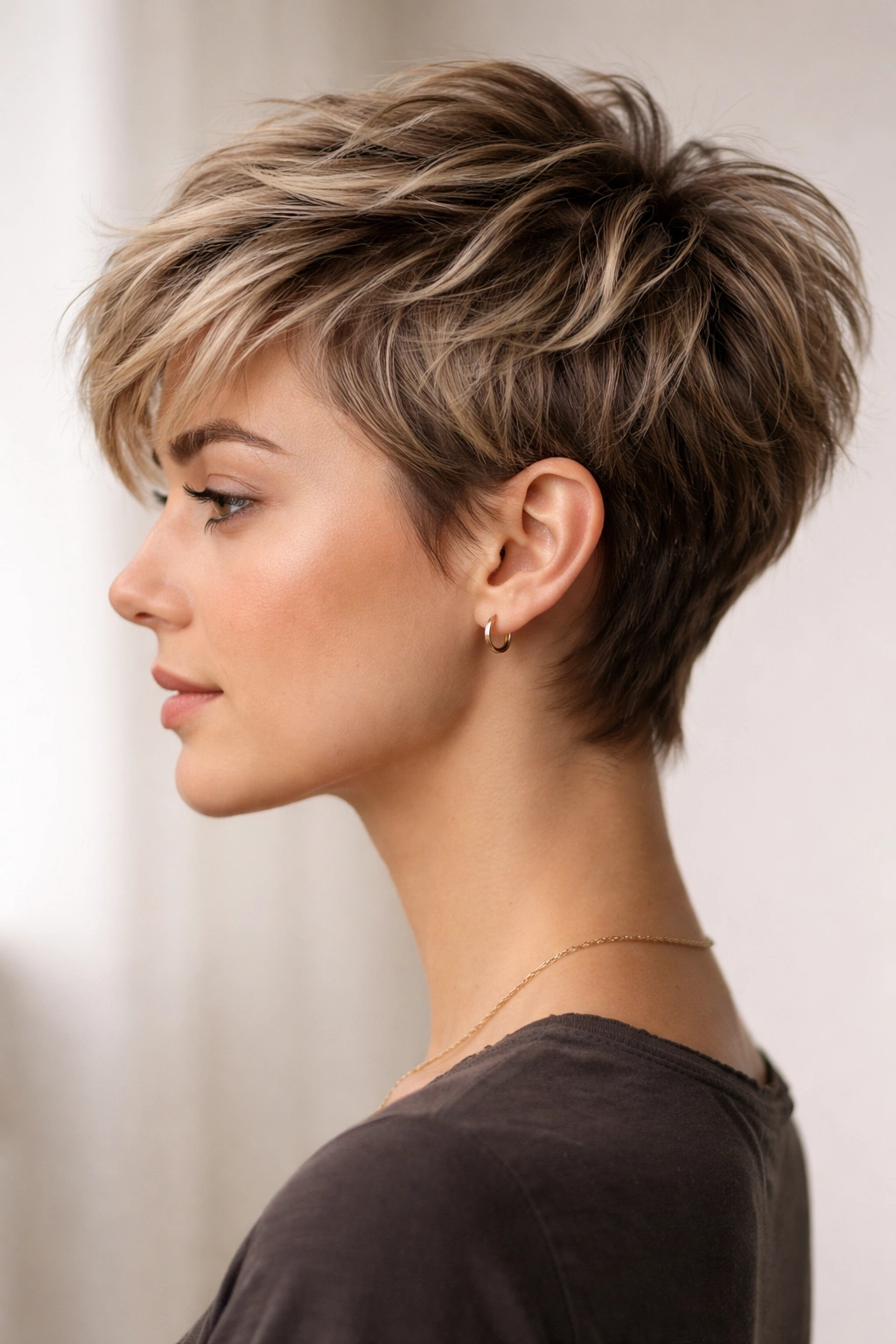
The modern textured pixie is nothing like the severe, slicked-back styles of the past. This version embraces movement and deliberately choppy layers that create volume at the crown while keeping the sides short enough to frame your face beautifully. The cut works by removing weight strategically—longer pieces on top layer into progressively shorter pieces, creating a tousled effect that looks intentional rather than messy.
Why This Cut Creates Visible Volume
A traditional pixie can look flat because hair grows straight up from the scalp with no layers to interrupt it. The textured version solves this by using point-cutting and choppy layers that create air pockets throughout the crown. These gaps between layers catch light and make your hair appear thicker, even if you’re working with naturally fine strands. The technique essentially creates visual density where you might not have actual density.
What You Need to Know
- Styling flexibility: You can wear this tousled and undone for a casual vibe, or use a small amount of pomade or texturizing spray to define the choppy pieces for more intentional styling
- Maintenance commitment: Pixies grow quickly and need trims every 4-6 weeks to maintain the shape and texture
- Face shape considerations: Works beautifully on round, square, and oval faces; requires slightly longer pieces on top if you have a longer face shape
- Hair type note: Fine, straight hair gets maximum benefit from the texture because it doesn’t naturally clump together; wavy and curly hair also looks stunning with deeper, more pronounced layers
Pro tip: Ask your stylist to cut the layers at different angles rather than straight across—this creates more movement and prevents the style from looking too uniform or helmet-like.
2. Choppy Bob with Layers
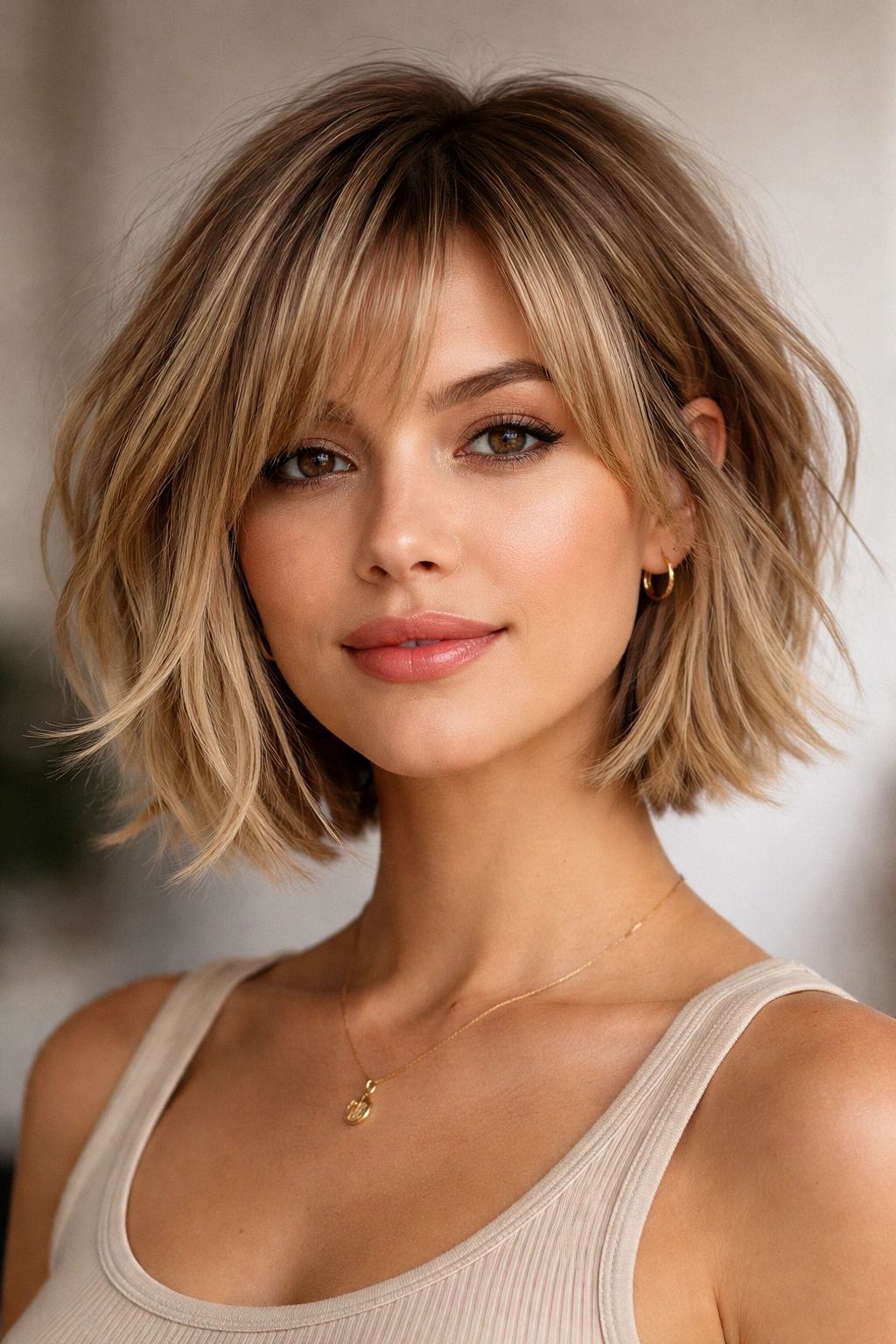
This cut takes the timeless bob formula and interrupts it with deliberate choppy layers that destroy the uniform heaviness a blunt bob can have. Instead of one solid shape, you get multiple lengths that create movement and the appearance of volume throughout. The layers are cut closer together than in some other styles, giving you that “piece-y” texture that makes even thin hair look full.
How the Layers Work
The secret to this cut’s volume is that the layers are graduated—progressively longer as you move down, then choppy at the ends. This means you get natural movement at the ends of your hair while the layers underneath provide lift at the crown. Each layer catches light independently, multiplying the visual impact of your hair density. It’s especially effective for straight hair, where the defined edges of each layer become a design feature rather than a flaw.
Getting It Right
- Length: Typically sits at chin-length or slightly shorter, allowing the chop to show without disappearing
- Texture technique: Point-cutting and razor-cutting are essential here—blunt scissors would defeat the whole purpose
- Styling products: A light texturizing paste or sea salt spray enhances the piece-y texture without making it look wet or heavy
- Styling time: Takes about 5 minutes with a blow dryer and your fingers; no complicated technique required
- Growth pattern: This style actually grows gracefully; you can go 8-10 weeks between cuts if you’re comfortable with slightly softer edges
Worth knowing: The choppier you go with the layers, the more maintenance your hair needs—but it also means better built-in volume because there’s more texture for light to play off.
3. Tapered Undercut with Texture
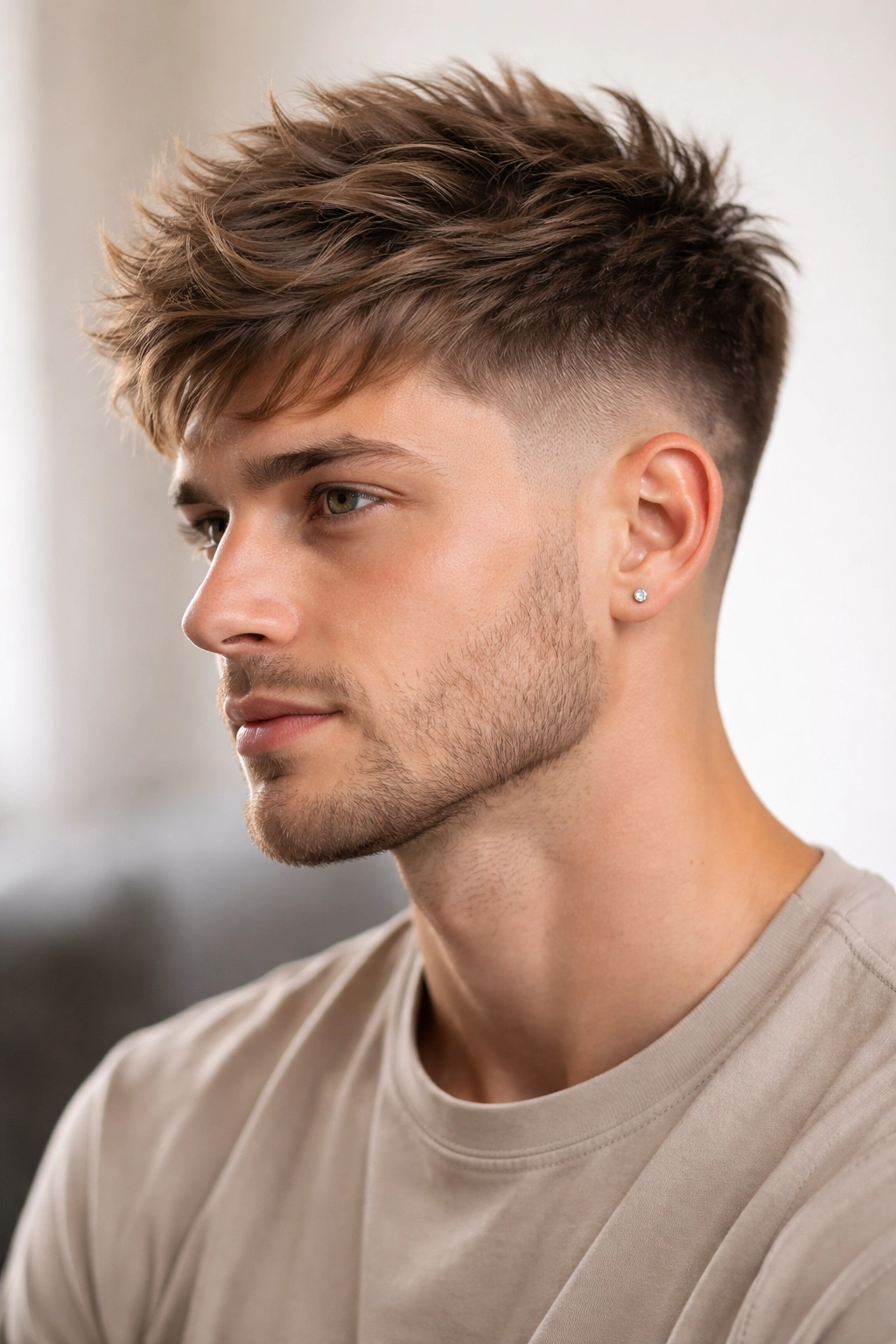
An undercut removes weight from the sides and back, creating contrast with longer textured pieces on top. The taper (a gradual fade rather than a sharp line) keeps it wearable and soft, while the textured top section gets all the volume-building benefits of choppy layers and point-cutting. This cut is bold enough to make a statement but textured enough to feel approachable.
The Volume Physics
By removing length from the sides, you’re eliminating weight that could pull the style down. That means the textured pieces on top have room to expand and move. The contrast also creates visual interest—your eye is drawn to the texture on top, which appears fuller because of the clean, minimal undercut providing a neutral backdrop. The longer the top section, the more dramatic the texture can be.
What to Expect
- Versatility: Can be worn messy and textured for a casual look, or groomed and defined with product for something more polished
- Maintenance: The undercut needs touch-ups every 3-4 weeks because clipper lines grow out visibly; the textured top needs trims every 6-8 weeks
- Styling options: Works with or without product—looks great tousled, looks equally good slicked back or side-parted
- Hair texture compatibility: Especially effective on straight or wavy hair; works on curly hair if you’re comfortable with the contrast being very pronounced
- Undercut severity: You can choose anything from a subtle fade to a dramatic shaved line—the more dramatic, the higher-maintenance
Insider note: This cut works brilliantly for people with thick hair who’ve always wanted short style but felt their hair was too heavy—the undercut solves that problem immediately.
4. Shaggy Crop
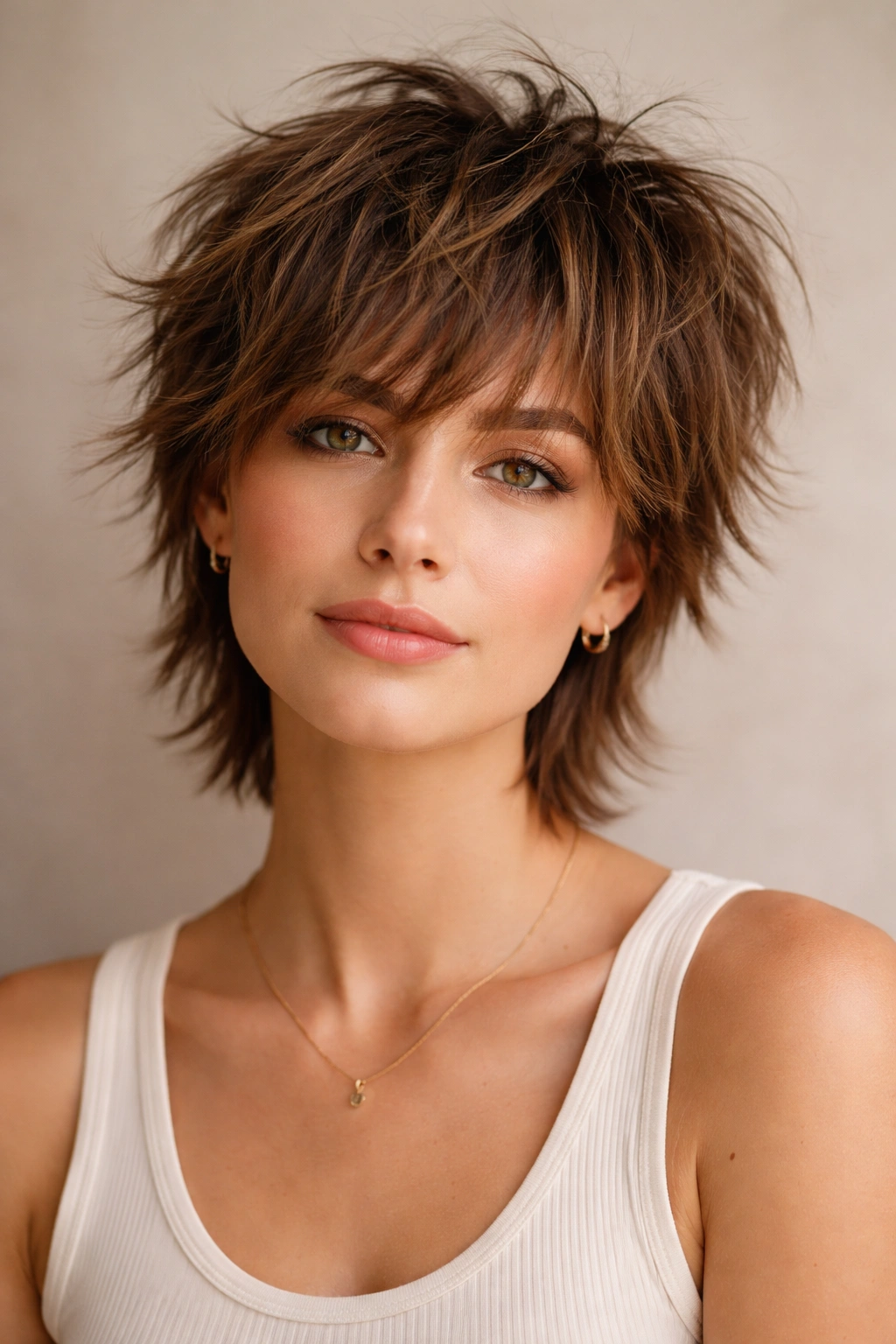
The shaggy crop combines the volume illusion of layers with the low-maintenance ease of a crop. Instead of a uniform shape, you get intentional length variation that creates movement and texture throughout. The top stays long enough for real layering, while the sides and back are kept short—creating that effortless, lived-in look that’s impossible to achieve with a blunt cut.
Building Movement Into the Cut
Shag cuts work because no two pieces of hair are the same length, which creates natural movement and prevents hair from looking flat or helmet-like. The strategically longer pieces in the crown create lift, while the choppy layers throughout allow air to move through your hair. This is especially valuable for fine or thin hair, where every bit of movement helps create the illusion of density.
Making It Work
- Styling approach: Embraces the tousled aesthetic—finger-styling with a light texturizing product is all most people need
- Best on: Naturally wavy or curly hair that cooperates with the layered texture; straight hair needs a bit more intentional styling
- Maintenance: Trims every 6-8 weeks keep the shape from getting too grown-out and heavy
- Product recommendation: A light cream or liquid texturizer works better than heavy pomade, which can weigh down the intentional movement
- Face-framing: Pieces that fall at cheekbone level or slightly longer offer beautiful face-framing without being so long they look disconnected from the rest of the cut
Pro tip: If you have fine or wavy hair, ask your stylist to cut the layers at very slight angles—this creates even more movement than layers cut straight across.
5. Curly Wolf Cut
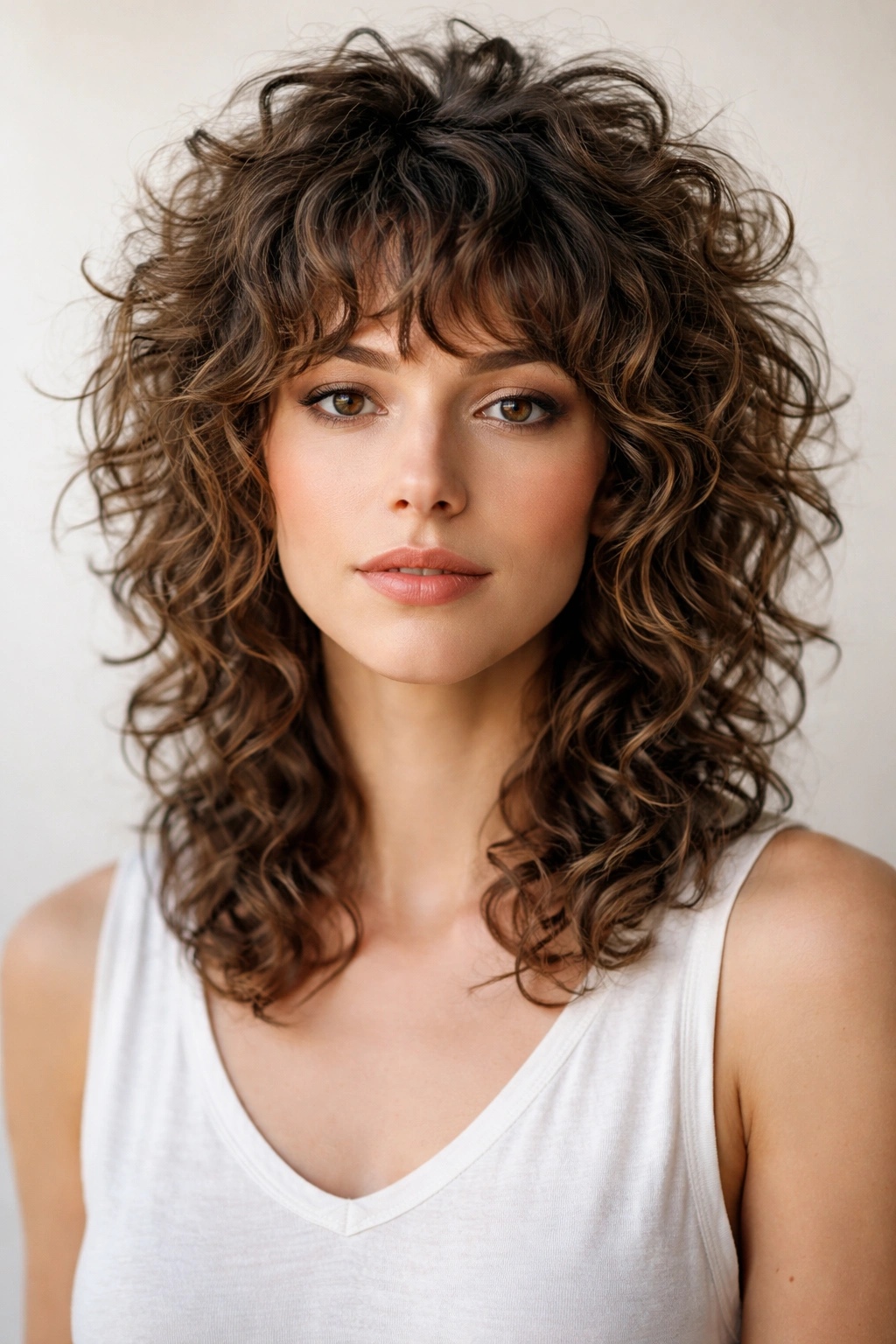
A wolf cut combines the shape of a mullet (shorter in front, longer in back) with textured layers throughout for a cut that builds volume beautifully on curly hair. For curly-haired people, volume is often the goal, and this cut delivers it—the shorter front creates lift at the crown, while the longer back layers give you dimension and movement. The “shag meets mullet” vibe is incredibly modern and works with your curl pattern rather than against it.
Why Curls Love This Cut
Curly hair naturally has volume, but uniform length can make that volume look bulky rather than intentional. The wolf cut’s layering gives curls definition and shape without requiring you to fight your hair type. The shorter front pieces create height at the crown, while the longer back layers allow curls to express their natural movement. Point-cutting (rather than blunt-cutting) is essential here—it prevents triangle-shaped, overly voluminous curls and creates definition between layers.
Curly-Specific Considerations
- Cutting technique: MUST be done on dry hair with your curls in their natural state—wet-cutting curly hair is a common mistake that results in a too-short cut when the curls dry
- Layering philosophy: Less is more; too many layers can create frizz and make curls look separated rather than cohesive
- Styling routine: Most curly wolf cuts thrive with a damp curl-cream or leave-in conditioner and finger-styling
- Maintenance: Trims every 8-12 weeks (curly hair grows more visibly when grown out)
- Front length: Front pieces typically fall at cheekbone or chin level, creating that wolf-cut face-framing while the back is longer
Real talk: This cut requires a stylist who specializes in curly hair and understands how curls change length and shape as they dry—finding the right person is worth the search.
6. Textured French Crop
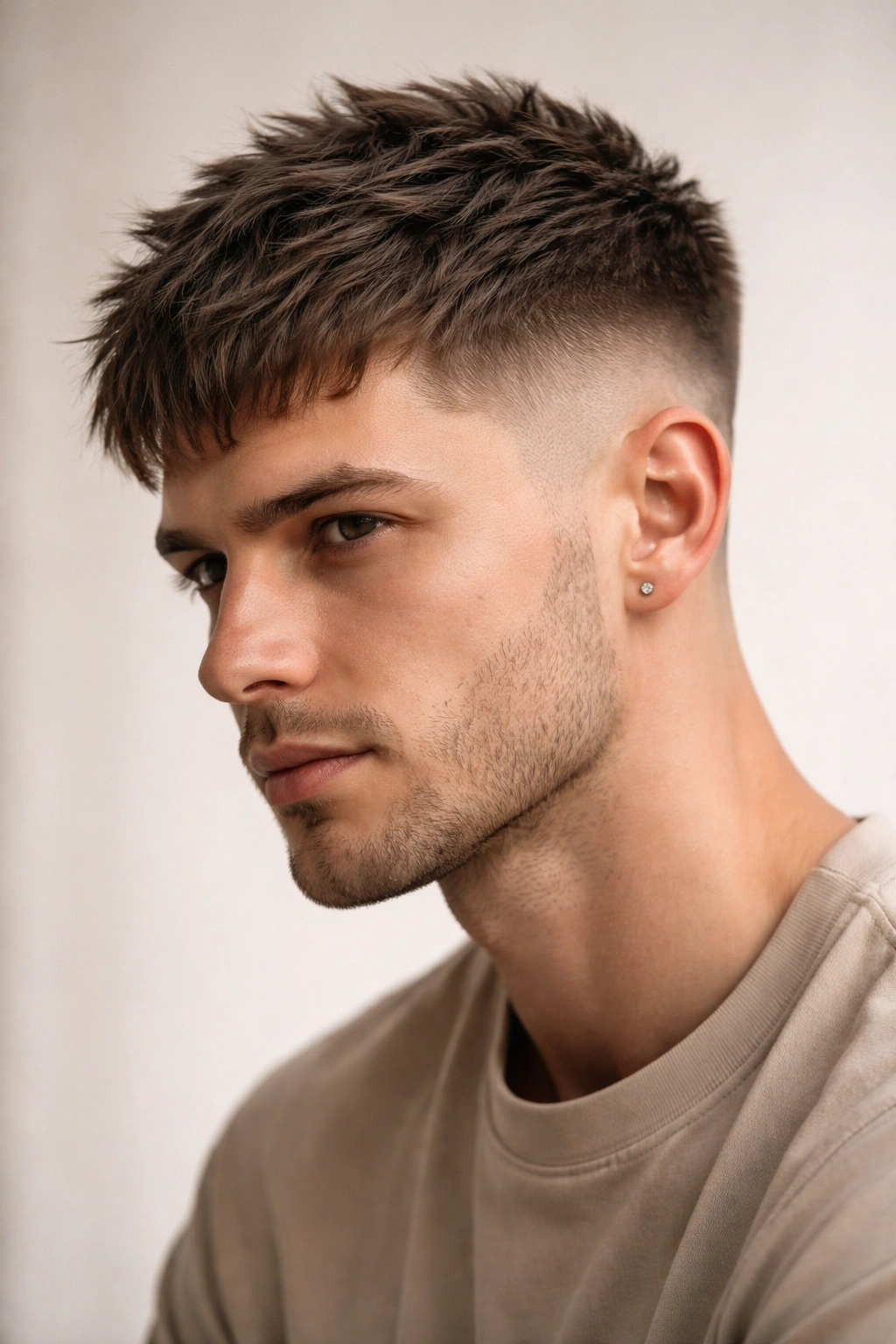
The French crop is a clean, modern take on a short cut that uses texture to create subtle volume without looking shaggy or unkempt. The signature piece is the longer hair across the front that falls forward slightly, with the rest of the head kept short and faded. Texture comes from choppy, point-cut layers in the front section and a slightly textured (rather than perfectly blended) fade on the sides.
The Texture Element
What distinguishes a textured French crop from a standard one is that precise, careful point-cutting in the front that creates individual strands rather than a solid block of hair. This gives the appearance of fuller coverage while actually removing some weight. The fade on the sides uses slightly longer clipper lengths or texturizing techniques rather than blending perfectly—this maintains some visual interest and prevents the stark, shaved look.
Making This Work for You
- Hair type: Works especially well on straight, fine, or straight-wavy hair; requires more maintenance on curly hair
- Styling: Can be worn tousled and textured for casual days, or brushed forward and groomed with a light product for more polished occasions
- Maintenance: The fade needs touch-ups every 3-4 weeks; the textured front section can go 6-8 weeks
- Front length: Falls approximately 2-3 inches longer than the sides, creating the distinctive forward-falling piece
- Product use: Minimal—a small amount of matte product to define texture, or none at all for a more natural look
- Face shape compatibility: Flatters nearly every face shape; the forward-falling front creates a narrowing effect on wider faces
Worth knowing: The quality of your fade makes or breaks this cut—find a barber or stylist who specializes in clipper work and understands how to create texture within a fade.
7. Asymmetrical Pixie Bob
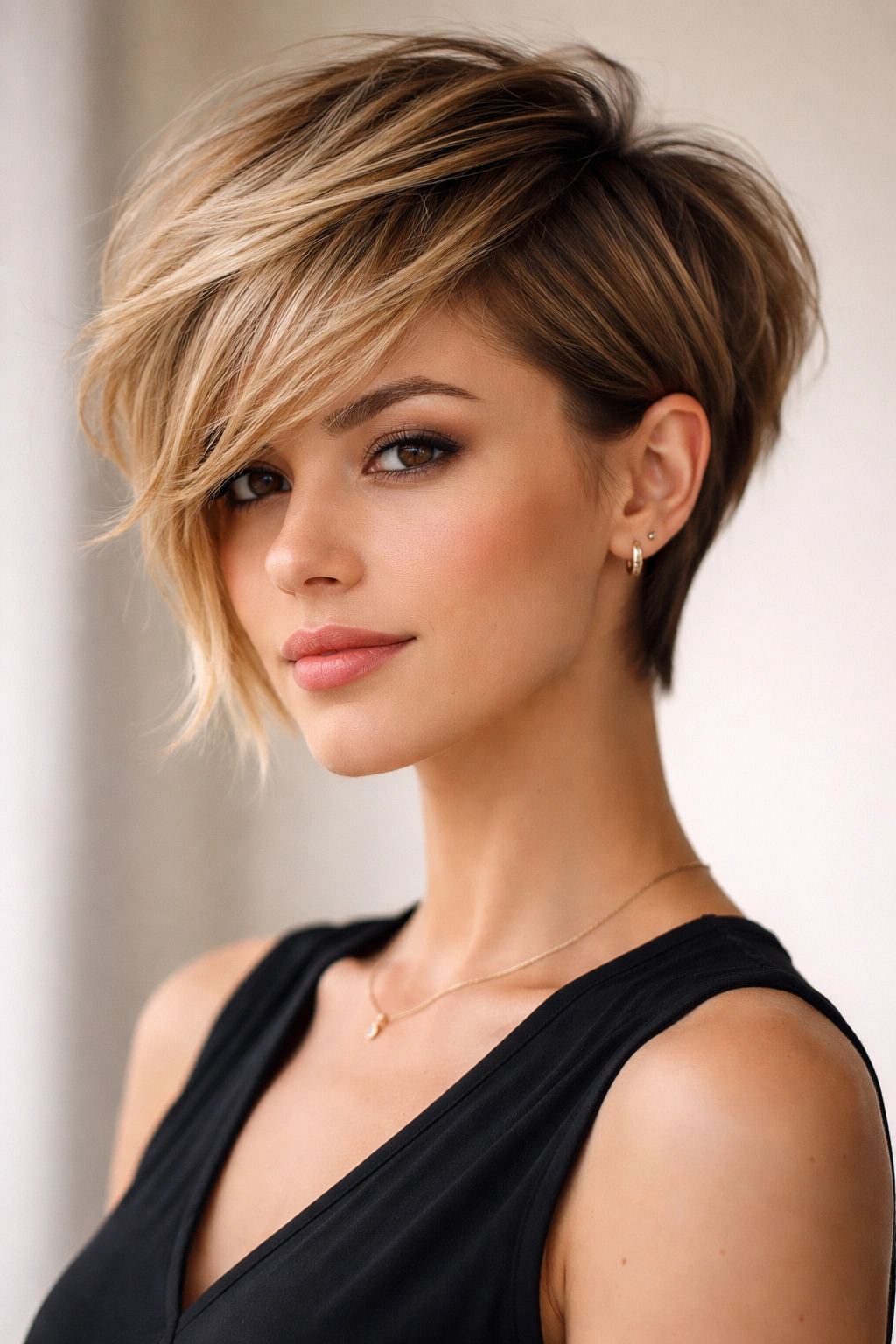
This cut combines the short, voluminous crown of a pixie with one longer side that falls to chin-length or slightly below, creating an asymmetrical silhouette. The textured element comes from layering both the short side and the longer side, plus point-cutting throughout to create movement. It’s bold, modern, and creates excellent volume through the contrast and the intentional unevenness.
How Asymmetry Creates Volume
An asymmetrical cut automatically looks more dynamic and visually interesting than a symmetrical one. The longer side creates line and movement, while the shorter side provides lift and shows off the texture on top. Together, they create visual interest that makes your hair appear fuller—your eye travels across the cut, seeing multiple lengths and textures rather than settling on any one flat plane. It’s especially effective for fine hair because the variation prevents that “flat on both sides” appearance.
Styling and Maintenance
- Directional styling: The longer side typically falls forward slightly; you can wear it over one ear for dramatic effect or behind it for a softer look
- Texture maintenance: Requires styling product (a light pomade or texturizing paste) on most days to keep the intentional choppy texture visible
- Trim schedule: Every 4-6 weeks to maintain the asymmetrical shape and keep layers fresh
- Versatility: Can be styled multiple ways depending on your mood—swept to one side, tucked behind ears, tousled and messy, or sleek
- Hair type note: Works beautifully on straight, wavy, and curly hair; the longer side can be curled for added movement
- Confidence factor: This is a statement cut—wear it if you’re ready to be noticed
Pro tip: If you’re nervous about committing to asymmetry, start with a smaller difference in length (maybe 1-2 inches rather than 4-5 inches) and go bolder once you’ve lived with it.
8. Layered Crop with Movement
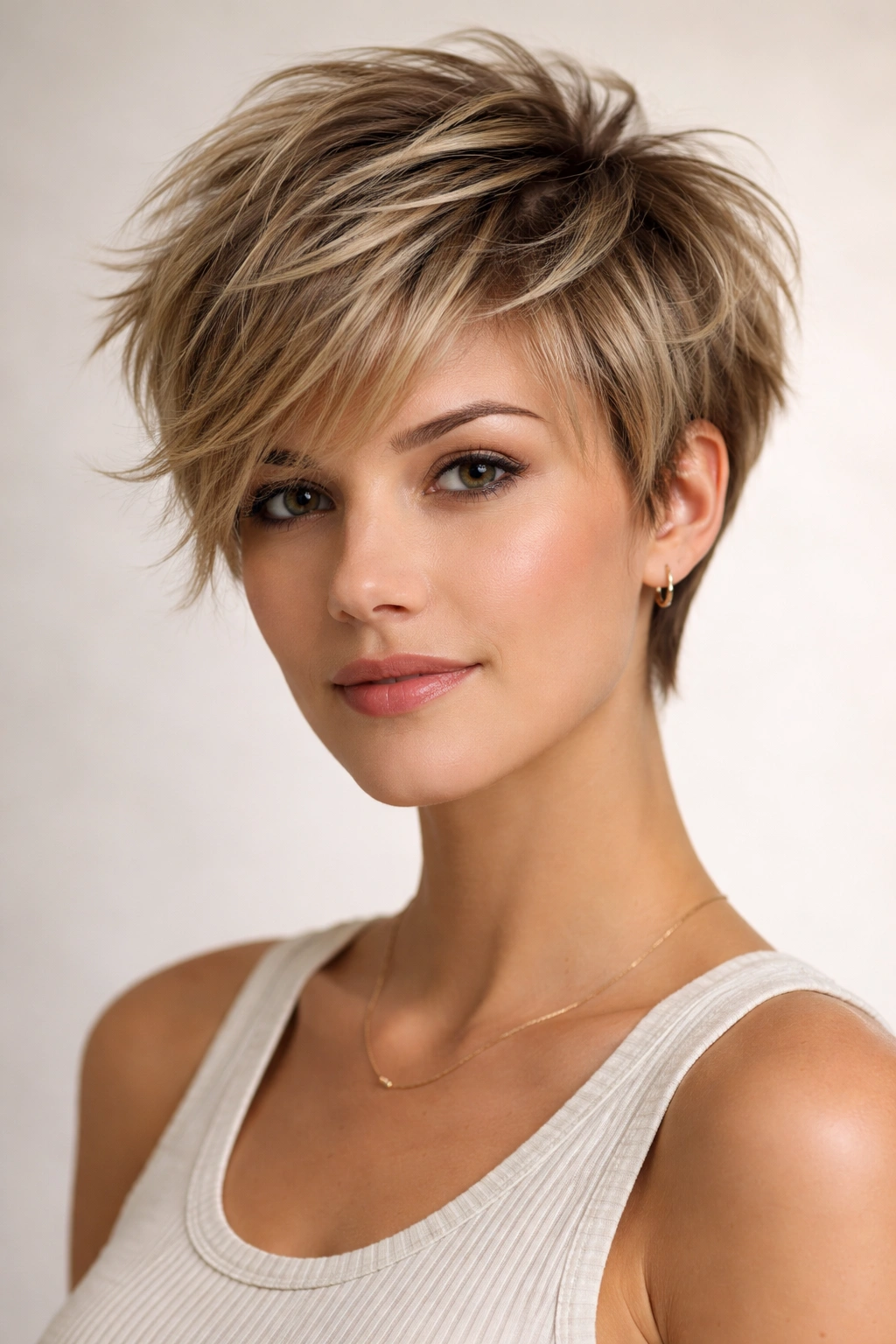
A layered crop keeps hair short enough to look intentionally modern and low-maintenance while using strategic layering to build volume throughout. Unlike a standard crop where all hair is relatively uniform length, the layered version uses choppy layers at different lengths to create movement and texture. The result is a cut that looks effortlessly tousled even when you’ve just stepped out of the shower.
The Layering Strategy
Layers work for volume by creating air pockets throughout your hair structure. Rather than hair sitting flat against your scalp, layers allow it to separate and stand away. In a crop, these layers are subtle enough that the overall shape reads as “short and neat” but obvious enough to create real movement and texture. The key is that layers are graduated—progressively longer—so you don’t end up with wispy, disconnected pieces.
Practical Details
- Length range: Typically 1-3 inches on top, fading shorter on the sides
- Layer placement: Concentrated heavily in the crown area where you want volume, lighter toward the sides
- Texture technique: Point-cutting creates soft, choppy edges; blunt scissors would eliminate the texture
- Styling time: About 5 minutes with a blow dryer and your fingers; no complicated process
- Product need: Optional—works with or without product, though a light texturizing spray enhances the intentional choppy quality
- Maintenance: Trims every 6-8 weeks to keep layers from getting too grown out and heavy
Insider note: Ask your stylist to cut the layers slightly shorter on one side and slightly longer on the other (subtle, not dramatic)—this creates more natural movement than perfectly symmetrical layers.
9. Textured Buzz Cut/Fade
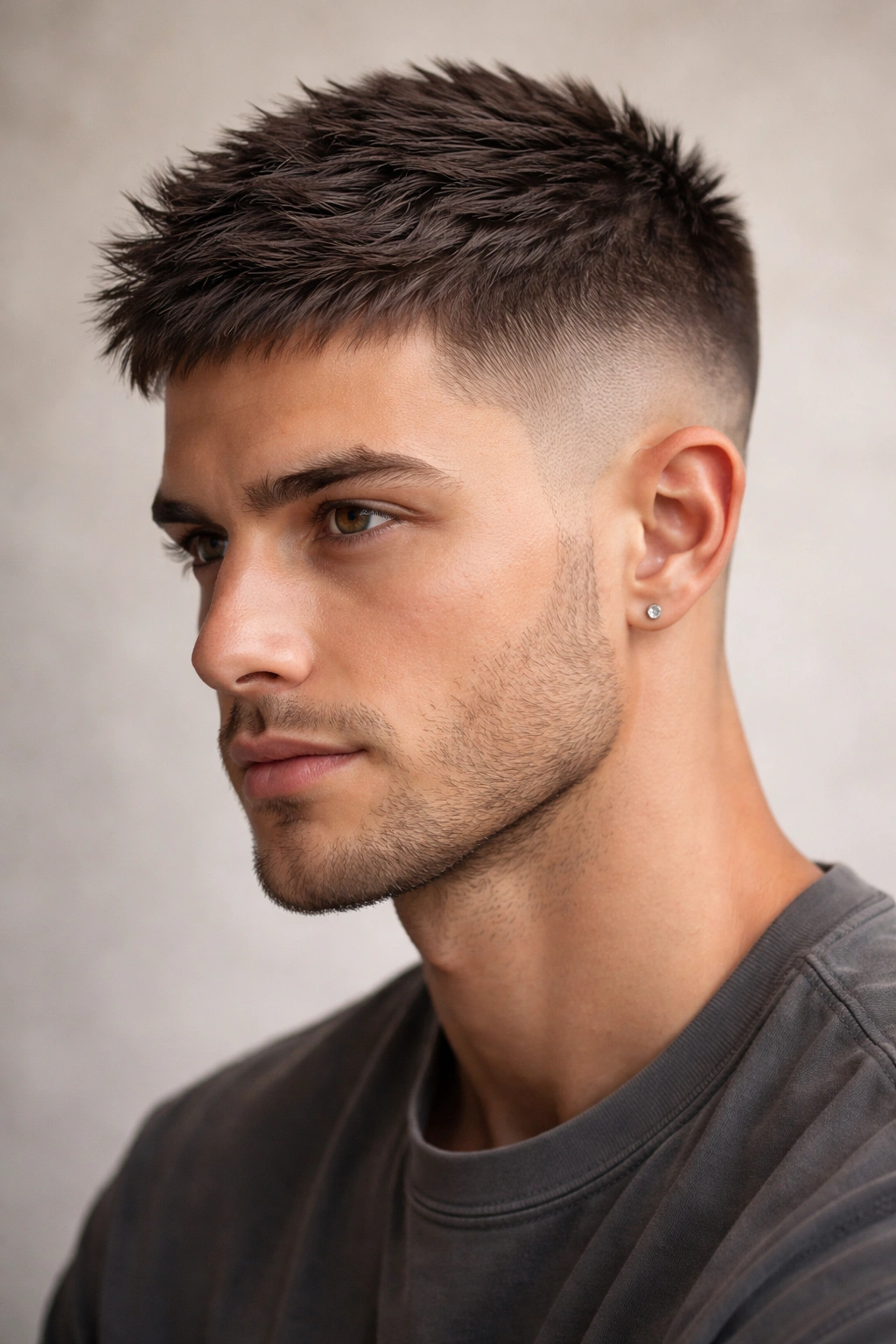
A textured buzz cut uses varying clipper lengths and point-cutting to create visual interest and subtle volume throughout a very short style. Rather than using one clipper length all over, a textured buzz uses multiple lengths—longer on top, gradually fading shorter on the sides—and incorporates point-cutting techniques to create texture that prevents that uniform, helmet-like appearance. It’s minimalist and bold while still creating the illusion of volume.
Creating Volume at Ultra-Short Lengths
With hair this short, texture becomes the entire design. Point-cutting with clippers or scissors creates individual strands that catch light, making the hair appear fuller than it actually is. The fade (gradually shorter lengths moving down the sides) creates visual interest and prevents the blunt, bulky look a single clipper length can have. The result is a cut that looks intentionally designed rather than simply short.
What to Know
- Clipper lengths: Typically 1-2 inches on top, fading to 0.5-1 inch on sides and back
- Styling: Requires virtually no styling—some people use a matte pomade to define texture, others wear it completely natural
- Growth pattern: Grows visibly quickly; most people touch up every 3-4 weeks to maintain the fade and shape
- Hair type: Works on all hair types; texture is more visible on straight and wavy hair, but creates excellent volume on curly hair too
- Maintenance: Minimal beyond regular trims; no product required unless you want it
- Face shape flexibility: Works on virtually every face shape; adjusting the length on top and the fade angle on sides can be customized for your features
Real talk: The quality of your barber matters enormously with this cut—a skilled fade and precise point-cutting look intentionally designed; a poor fade looks unintentional.
10. Choppy Lob with Bangs
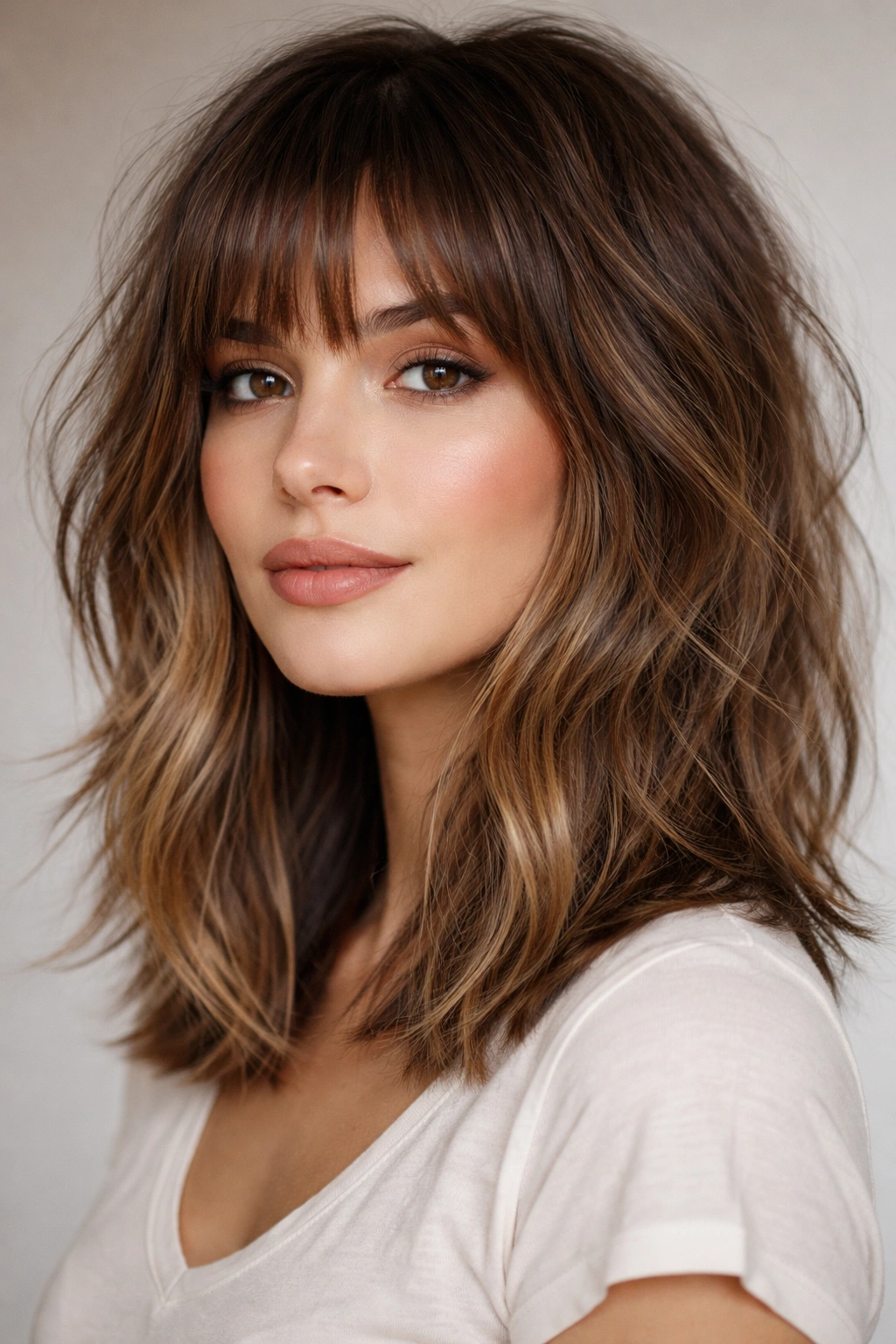
A lob (long bob) sits somewhere between a bob and shoulder-length hair—typically chin-length or slightly longer. The choppy version uses textured layers throughout to create movement and volume, and the addition of choppy bangs creates a face-framing effect that immediately adds dimension. Together, they create a cut that looks voluminous and modern without requiring frequent maintenance.
The Choppy Lob Formula
A lob’s slightly longer length gives you more room for visible layering than a shorter bob. Choppy layers can be deeper and more pronounced without creating that wispy, disconnected appearance. The bangs—whether blunt, textured, or side-swept—add another design element and another opportunity to create texture. The combination of layered lob plus layered bangs creates multiple lengths and angles that build visual volume throughout.
Making This Style Work
- Texture placement: Heaviest layering in the crown for volume; lighter layering toward the ends to keep it from looking thin
- Bang style: Textured (choppy) bangs typically work best with a textured lob; they echo the same aesthetic throughout
- Length range: Usually 12-16 inches, giving you versatility to wear it curled, braided, or textured
- Styling options: Can be worn tousled with product, blow-dried smooth with light texture, or even curled for more movement
- Maintenance: Trims every 8-12 weeks to keep layers fresh and bangs from growing into your eyes
- Styling time: About 10 minutes with a blow dryer; you have flexibility depending on your mood
Pro tip: If you’re not ready to commit to bangs, ask for a side-swept textured fringe instead—you get the face-framing benefit with more styling flexibility.
11. Textured Mullet
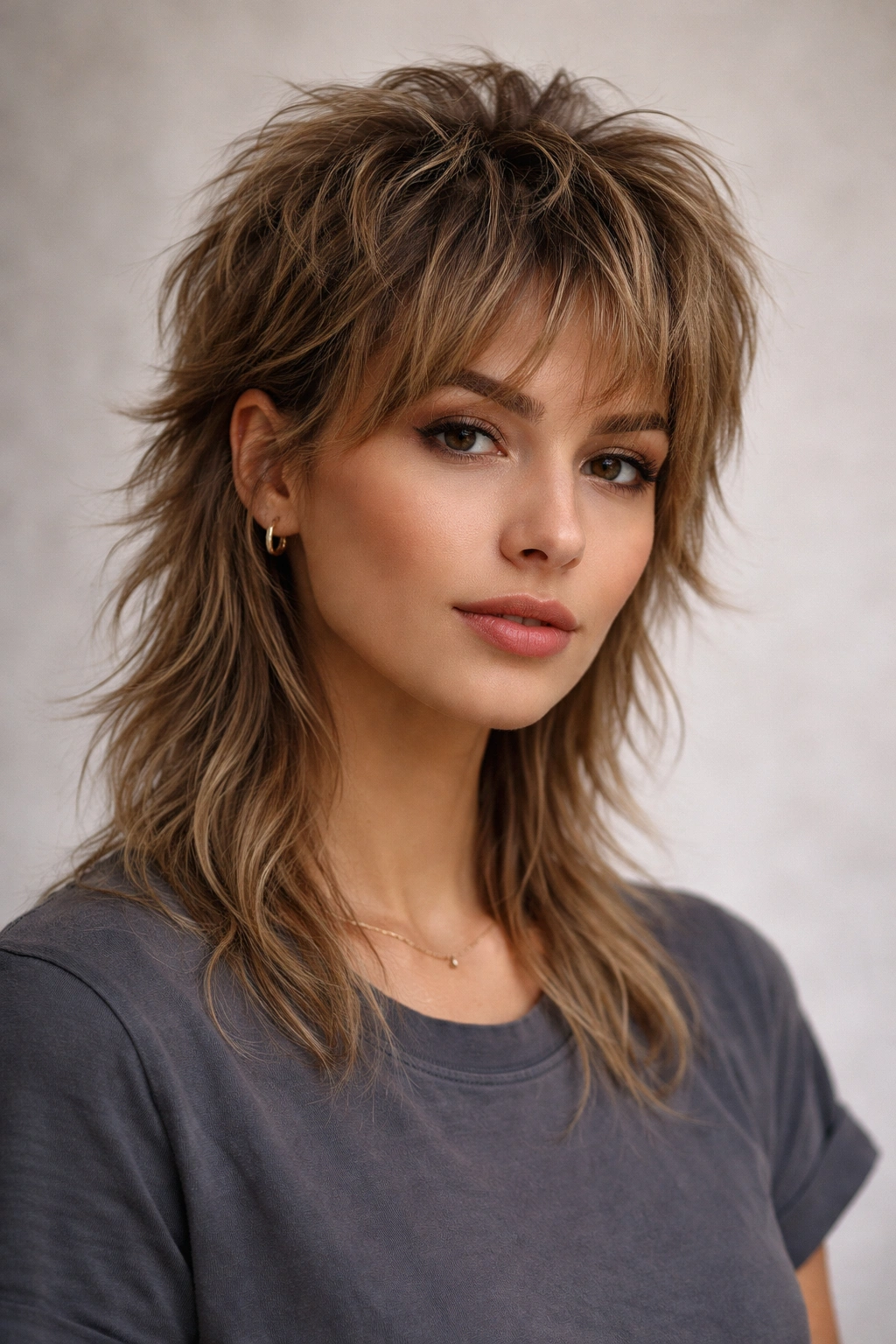
The modern mullet has almost nothing in common with the 1980s version—it’s actually a sophisticated, wearable cut that uses texture brilliantly to create volume. The signature is shorter, layered hair on top and around the face, with longer hair in the back. The textured element comes from choppy, point-cut layers throughout, especially in the crown and on the sides, which create movement and prevent that “flat and heavy” look.
Why Texture Matters Here
A mullet without texture can read as gimmicky or dated. The textured version transforms it into something modern and intentionally designed. Point-cutting in the crown creates lift, choppy layers on the sides create face-framing movement, and the longer back gets point-cut layers too (rather than being one solid length). The result is a cut that looks deliberately chosen rather than ironic.
The Modern Mullet Breakdown
- Crown: Short and textured, typically 2-3 inches, with choppy layers creating volume
- Sides: Gradually longer as you move toward the face, with point-cut layers creating movement
- Back: Longer (typically 4-6 inches or longer) with textured, choppy layers creating movement rather than weight
- Maintenance: Crown needs touch-ups every 4-6 weeks; the back can go longer between cuts
- Styling: Works with minimal product; texture is the design element, not slickness
- Hair type: Especially effective on straight and wavy hair where choppy edges show; works on curly hair if you embrace the texture
- Face shape: Works beautifully on oval and rectangular faces; can require slightly shorter sides on wider faces
Worth knowing: This is a statement cut—it gets attention and isn’t for the faint of heart, but if you love it, you’ll love how it makes your hair look.
12. Curly Fade
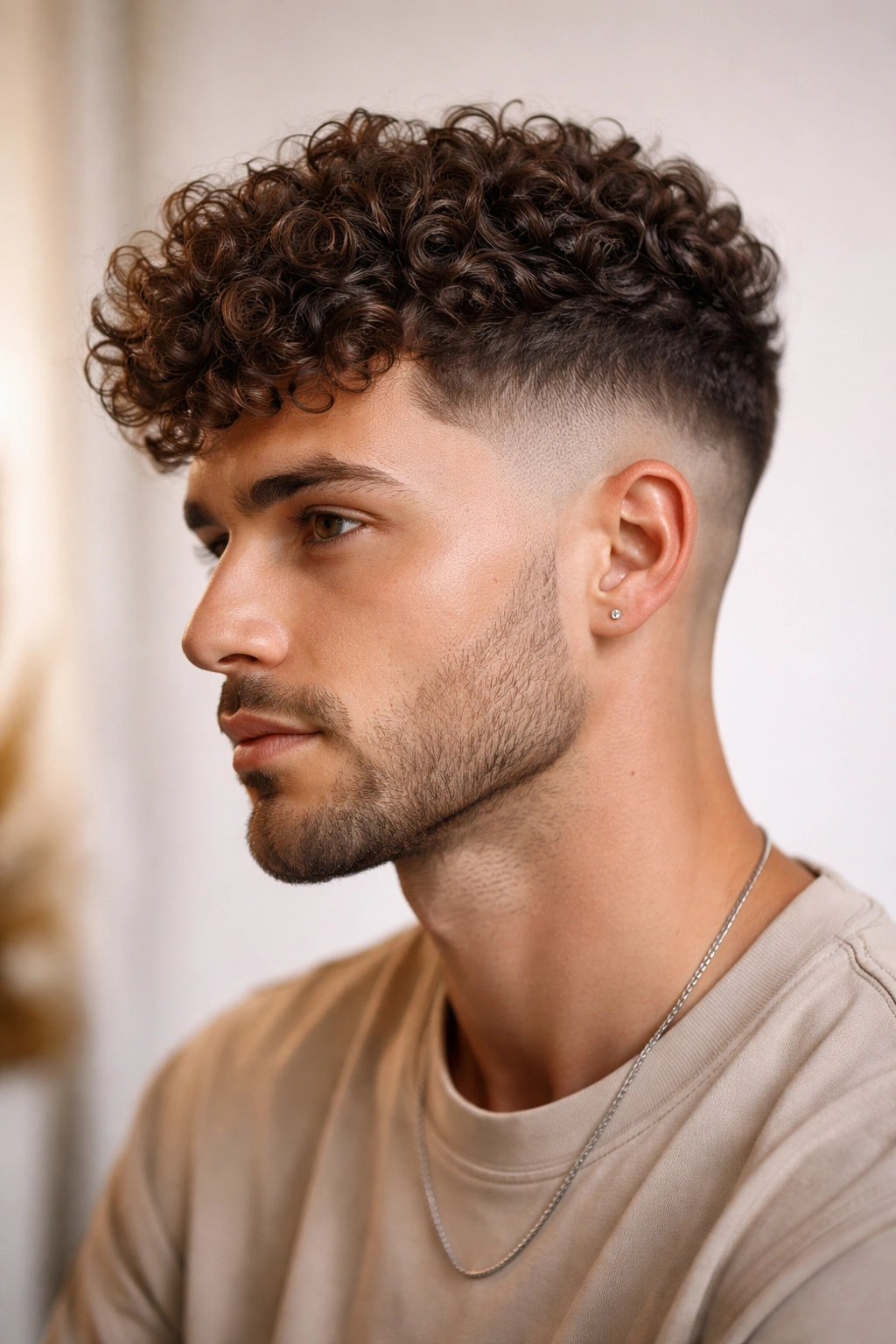
A curly fade uses clippers to create a fade on the sides and back while keeping curls full and textured on top and around the face. The texture isn’t achieved through point-cutting flat hair (since you’re working with naturally textured hair) but through strategic layering and the way curls naturally separate. The fade removes weight from the sides, allowing the curls on top to expand and appear fuller.
How Fades Work With Curls
On straight hair, a fade creates a clean, defined line. On curly hair, the fade still creates definition but with softer, less dramatic lines because curls obscure crisp edges. The benefit is that removing length and weight from the sides allows curls on top to have room to expand. The longer curls on top sit above shorter, faded sides, creating height and volume throughout the crown. It’s especially effective for people with dense, coily hair that tends to look bulky without strategic weight removal.
Curly Fade Details
- Fade length: Typically fades from 1-2 inches on top to 0.5-1 inch on sides
- Top texture: Longer curls left mostly intact, with minimal layering since curls naturally separate
- Cutting technique: MUST be cut dry on natural curls; wet-cutting creates length miscalculation
- Maintenance: Fade needs touch-ups every 3-4 weeks; top curls need maintenance trims every 8-12 weeks
- Styling: Usually just a leave-in conditioner and finger-styling; curls define themselves
- Styling time: Minimal—maybe 5 minutes to apply product and shape curls with your hands
- Curl pattern compatibility: Works best on curls that are loose enough to show definition; very tight curls might need more precision layering
Pro tip: Find a barber or stylist who specializes in curly hair and cuts on dry curls—this makes all the difference in getting a fade that actually works with your curl pattern.
13. Messy Textured Bangs Style
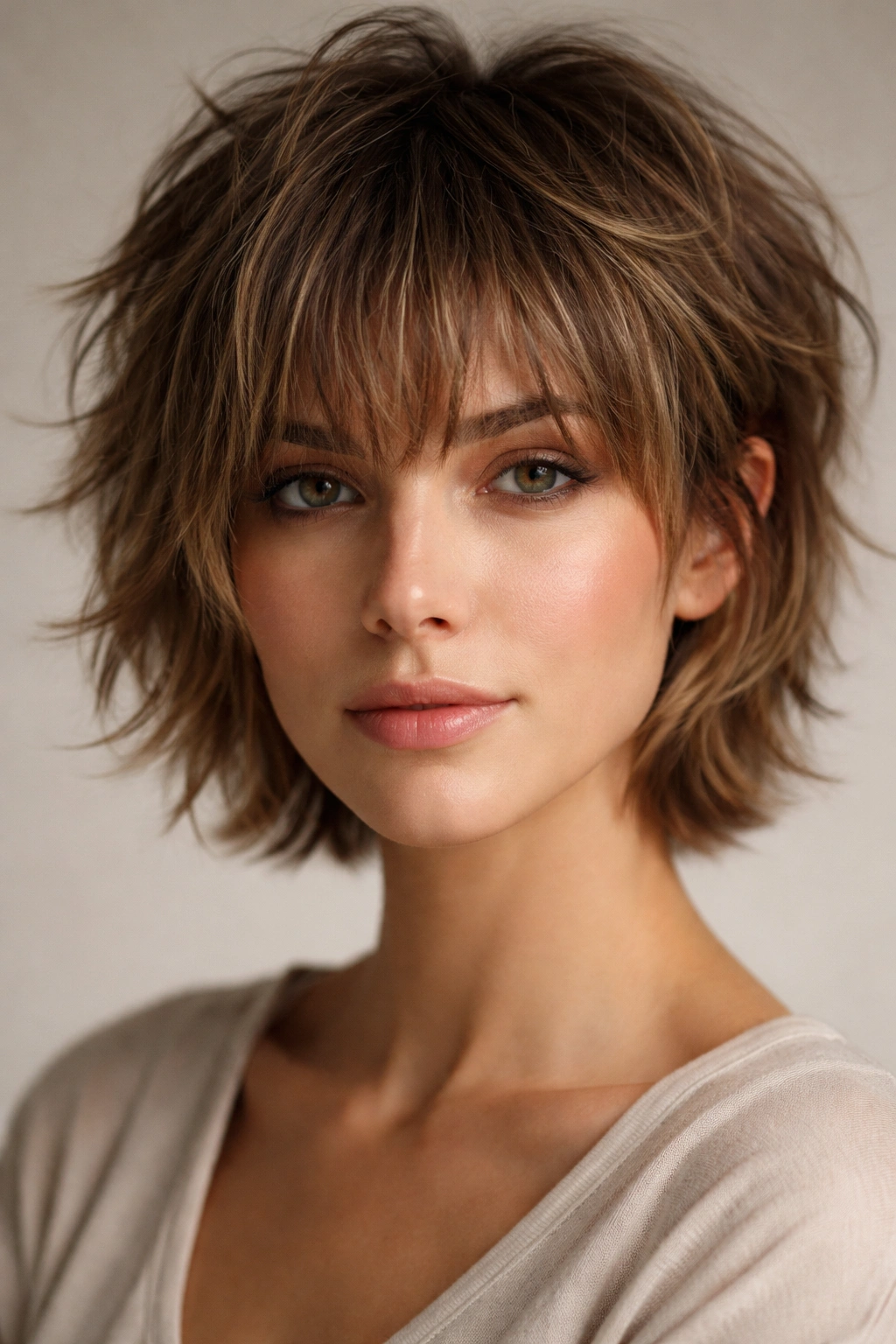
This cut prioritizes choppy, textured bangs that fall across the forehead and frame the face, paired with a short, tousled crown. The entire cut embraces texture and intentional messiness—point-cut layers throughout, no blunt lines, and a design that celebrates the natural movement of your hair. The bangs are the star, but the short back and sides ensure the whole style reads as cohesive and intentional.
The Bangs-Forward Approach
By making textured bangs the focal point, you’re immediately drawing attention to the face and creating dimension. Choppy, layered bangs catch light and create visual interest that makes your entire head of hair appear fuller. They’re cut at varying lengths (longer in the middle, shorter on the sides) to frame the face without feeling heavy or obscuring your eyes. The rest of the cut is intentionally less dominant—clean and short—so the textured bangs become the design feature.
Details to Discuss With Your Stylist
- Bang length: Typically falls just above the eyebrows or slightly below, depending on your preference
- Bang texture: Point-cut at varying lengths rather than blunt-cut; think choppy and piece-y rather than solid
- Crown length: Usually 2-3 inches, kept intentionally tousled-looking
- Side and back: Short and faded, typically 0.5-1.5 inches, emphasizing that the bangs are the statement
- Styling: The bangs require daily styling (tousling with product) to maintain their intentionally choppy appearance
- Growth management: Bangs need trims every 4 weeks since they grow into your eyes and change shape quickly
- Face shape: Best on oval and square faces; can work on rectangular faces with slightly longer side pieces
Insider note: This style requires confidence and daily styling—if you’re looking for ultra-low-maintenance, this isn’t the cut for you, but if you love playing with texture, it’s amazing.
14. Razor-Cut Short Shag
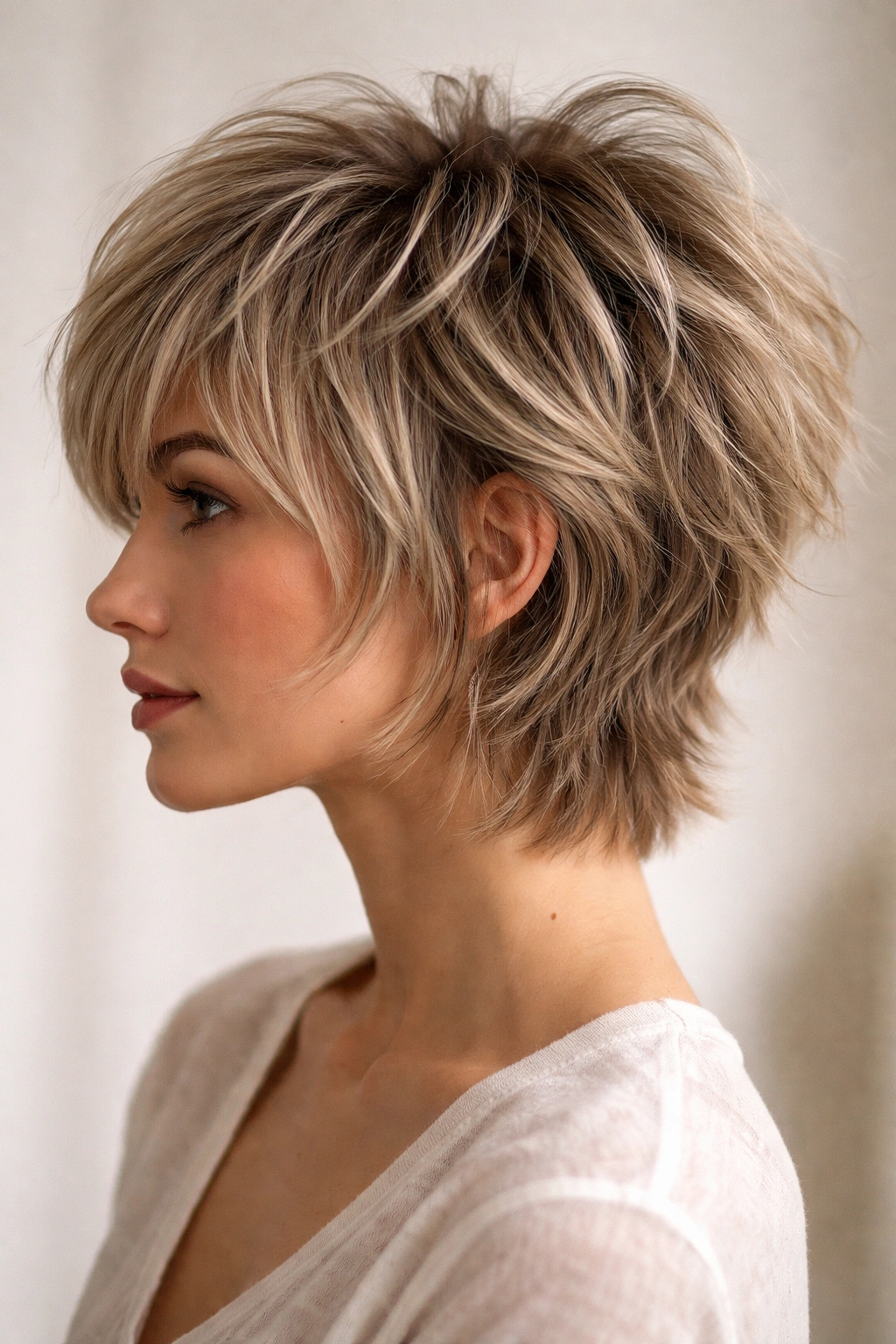
A razor-cut shag uses razor (as opposed to scissor) cutting techniques to create intentional texture, choppy layers, and movement throughout a short style. Razors create a different texture than scissors—softer, more feathered edges rather than blunt chop—which is especially effective for creating the illusion of volume on fine or thin hair. The result is a short, shaggy cut that looks lived-in and textured without being unkempt.
Why Razors Create Different Texture
Scissors (especially when point-cut) create defined, choppy edges. Razors create softer, more feathered edges that blend slightly. For fine or thin hair that needs to appear fuller, these feathered edges catch light beautifully and don’t emphasize sparseness the way too-choppy edges might. The layering in a razor-cut shag is obvious enough to create movement but subtle enough to feel elegant rather than overly textured.
The Razor Shag Formula
- Layer placement: Heavy layering throughout the crown and top, creating lift and movement
- Texture technique: Razor-cutting throughout to create soft, feathered edges rather than blunt chop
- Crown length: Typically 2-3 inches with progressive layers creating an almost tousled appearance
- Side and back length: Gradually longer as you move down, creating movement and dimension
- Styling approach: Embraces the tousled aesthetic; finger-styling with a light product is ideal
- Maintenance: Trims every 6-8 weeks to keep the shape from getting too grown out; the feathered edges need maintenance to prevent looking ratty
- Hair type suitability: Especially beautiful on fine, straight, or wavy hair; works on curly hair but requires more precise layering
Real talk: The difference between a shag that looks intentionally textured versus one that looks like you just woke up comes down to regular maintenance and the quality of your stylist’s razor-cutting technique.
15. Tousled Textured Pixie
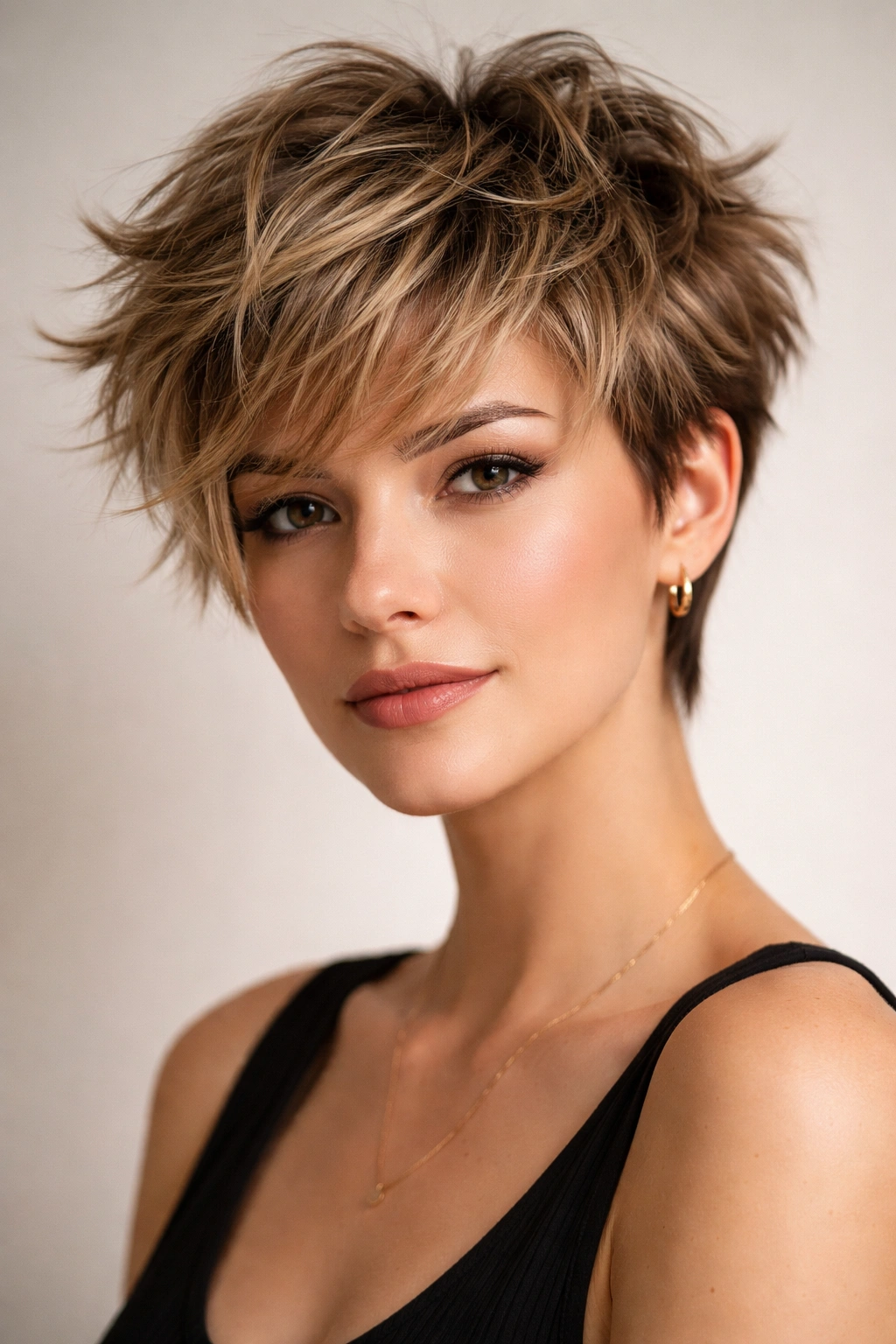
This is a pixie cut that leans heavily into the textured, tousled aesthetic—the entire design celebrates layering and movement rather than clean lines or neat precision. It’s cut with deep, choppy layers throughout, point-cut edges, and an overall approach that makes it look intentionally undone. It’s perfect for people who love the idea of a pixie but want something that reads as more modern and less severe.
The Tousled Pixie Philosophy
Traditional pixies often look neat and precise, which appeals to some people but reads as too formal for others. A tousled pixie maintains the short, low-maintenance length while adding enough texture that it reads as deliberately styled rather than simply short. The layering creates volume without adding length, and the choppy edges prevent that smooth, uniform appearance that some people find unflattering.
Making This Style Work
- Layer density: Much heavier layering than a traditional pixie—choppy layers throughout rather than just subtle graduation
- Texture technique: Point-cutting is essential; blunt scissors would destroy the tousled aesthetic
- Length range: Typically 1-2 inches on top, fading shorter on sides, but with so many choppy layers that length is almost secondary to texture
- Styling approach: Works best with a light texturizing product—sea salt spray, dry shampoo, or a light pomade—to enhance and separate the layers
- Styling time: About 5 minutes; you’re encouraging texture rather than smoothing it down
- Maintenance: Trims every 4-6 weeks to keep layers fresh and the tousled appearance intentional rather than grown-out
- Personality fit: For someone who likes having a project, enjoys styling, and wants a cut with clear personality
Pro tip: Once you find a stylist who nails this cut, stick with them—the tousled pixie is one of those cuts where your stylist’s skill with texture and layering makes an enormous difference in how good it looks.
Final Thoughts
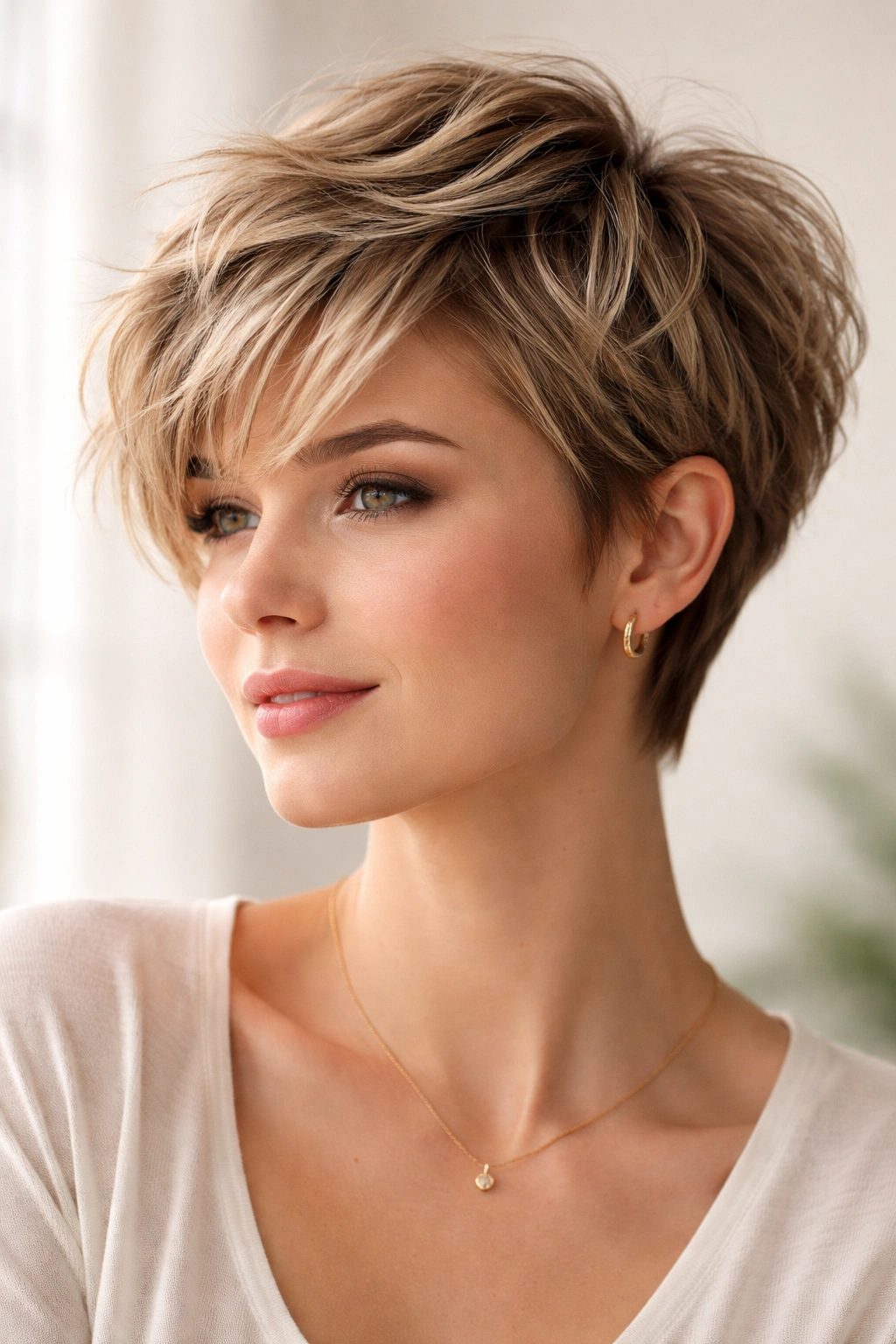
Choosing a short textured cut that delivers volume is one of the smartest decisions you can make if you’re tired of fighting with flat hair or spending hours styling to achieve fullness. These cuts work because they leverage strategic layering, point-cutting, and intentional weight removal to create visual density and movement that make your hair appear fuller the moment you step out of the salon.
The key takeaway is that texture is the magic ingredient—it’s what transforms a simple short cut into something that actually builds volume rather than just being short. Whether you choose a textured pixie, a layered crop, a choppy bob, or any of the other styles here, you’re working with a cut designed to maximize movement and light-play rather than working against your hair’s natural tendencies.
Start with an honest conversation with your stylist about your hair type, texture, and how much styling you’re willing to commit to daily. Some of these cuts (like the textured pixie or curly fade) require regular trims to maintain their shape, while others (like the razor-cut shag or choppy lob) are a bit more forgiving about growth timing. All of them will give you noticeably fuller-looking hair than longer, one-length styles, and most require significantly less daily styling time than you might expect. That’s the real gift of choosing a cut designed around texture rather than fighting against it.
