



A long face shape — typically defined by a forehead, cheekbones, and jawline that are all roughly equal in length, with the overall face being taller than it is wide — can feel even longer without the right haircut strategy. The wrong style can emphasize vertical lines and make your face appear stretched. But here’s the secret that most hairstylists will tell you: medium-length hair is your best friend if you want to add strategic width and visual balance to a long face shape. Medium cuts land right at that sweet spot between short and long—they’re easier to style than longer hair, they carry more movement and texture than bobs, and they give you plenty of room to work with horizontal layers and volume that literally widens the perception of your face.
The real magic happens when your haircut incorporates intentional width at the sides, texture that creates dimension rather than sleek flatness, and strategic layering that breaks up vertical lines while adding fullness. A well-chosen medium haircut can add volume exactly where you need it—at the cheekbones and around the face—while the length itself works with your natural proportions rather than against them. The styles that work best for long faces are those that embrace movement, add texture, and create the illusion of width through smart styling and cutting technique.
What makes a medium haircut truly effective for a long face isn’t just the length—it’s the architecture of the cut itself. We’re talking about specific layering patterns, the way your stylist texturizes the ends, where they place volume-building sections, and how they approach your frame. The right cut will actually make your face feel more balanced and proportionate, which sounds like magic but is really just hairstyle geometry working in your favor. Let’s explore the ten medium haircuts that deliver the most convincing volume and width for long face shapes, along with exactly why each one works.
1. Shoulder-Length Textured Layers
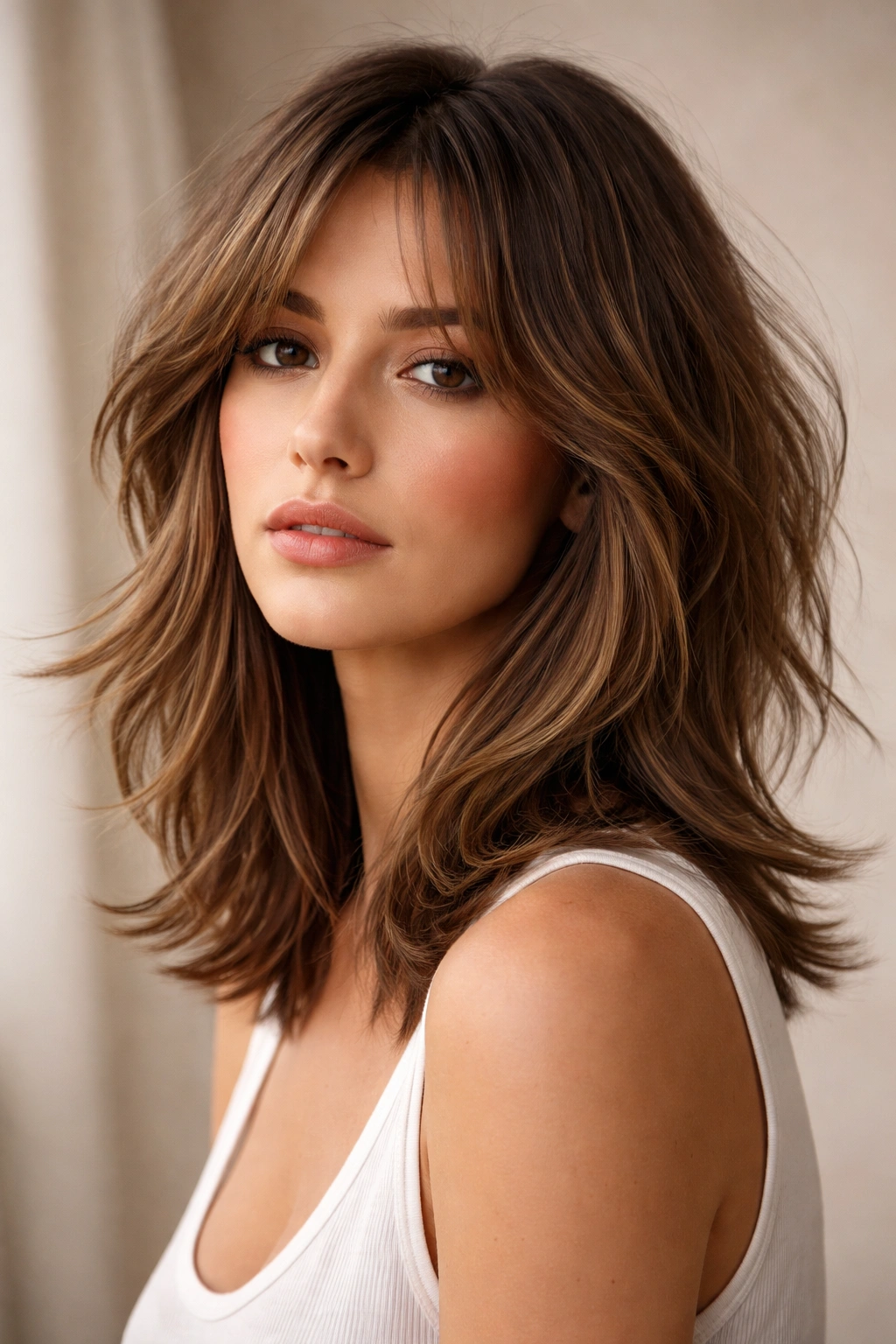
This is the workhorse of medium haircuts for long faces—it’s versatile, flattering, and genuinely easy to style once you understand the technique. The cut features shorter layers throughout the hair, starting around the cheekbone area and working deeper into the layers beneath. These layers create natural separation and texture that catch light differently, which visually breaks up the vertical line of your face and adds perceived width right where you need it most.
Why It Adds Width and Movement
The textured layers in this cut are specifically designed to flip outward and away from your face, creating a fuller silhouette around your cheekbones and jawline. Your stylist will use point-cutting or razor techniques to create choppy, separable pieces rather than blunt, heavy layers. This isn’t about cutting your hair short—it’s about creating strategic gaps and texture that allow air to move through your hair, making each section appear fuller and bouncier. The cheekbone-length layers are crucial because they sit right at the widest part of a long face, adding visual width at your best feature.
Key Features and Styling Tips
- Works beautifully with both straight and wavy hair textures; if your hair is straight, blow-drying with a round brush pointed outward at your cheekbones amplifies the width-adding effect
- Requires a trim every 6-8 weeks to maintain the layer definition and prevent the choppy texture from looking unkempt
- Pair with texturizing products like sea salt spray, texture paste, or a lightweight mousse to enhance the separable quality of the layers
- The underneath layers should have more depth than the top layer to create dimension and prevent flatness
- This cut looks especially striking on hair with some natural wave or on hair you’re willing to add texture to with styling tools
Pro tip: Ask your stylist to point-cut the very ends rather than blunt-cut them—this creates feathered, textured tips that won’t look blunt or heavy.
2. Modern Shag Haircut
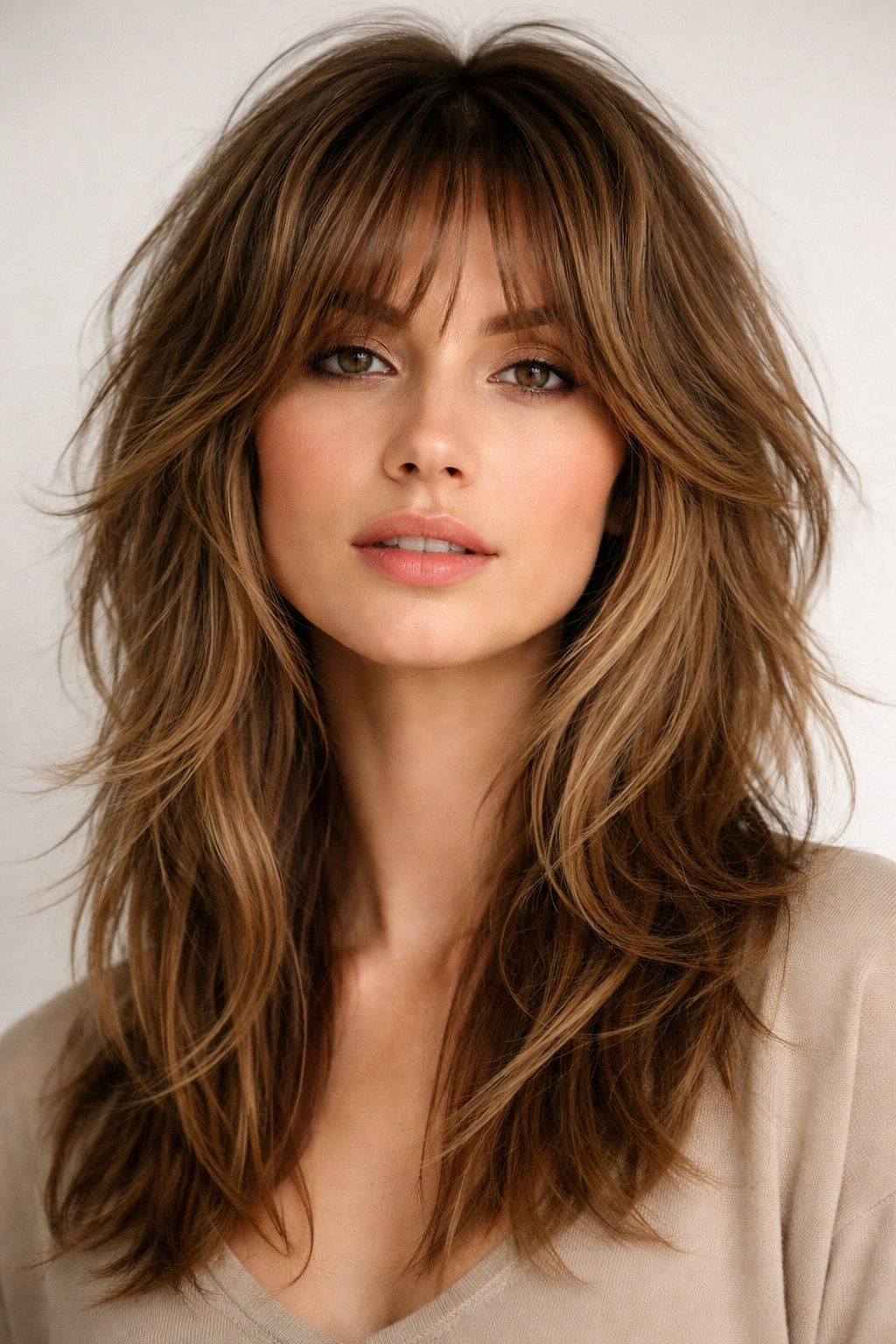
The shag is back, but it’s not the 1970s version you might be picturing—it’s refined, intentional, and absolutely stellar for long faces. A modern shag features layers of varying lengths throughout, with shorter, piecy layers on top that create lift and longer layers underneath that maintain your hair’s length and movement. The result is a cut that looks effortlessly undone, moves beautifully when you walk, and adds volume exactly where it counts: around your face and through the crown.
The Science of Shag Proportions
What makes a shag work so well for long faces is the way it breaks up vertical lines through strategic layering. The shorter pieces on top create crown volume that lifts your hair away from your head, while the face-framing layers sit right at cheekbone length, adding horizontal width. The underneath layers are longer, so you maintain the medium length you want without sacrificing the volume-building architecture. The messier, more textured quality of a shag also works in your favor—all those separated pieces create visual complexity that makes your face appear more balanced and less vertically elongated.
Shag Styling and Maintenance
- Best on hair with at least some natural texture or wave; if you have very straight hair, you’ll need to curl or wave it regularly to achieve the proper shag effect
- Requires styling with texture products—think mousse, sea salt spray, or a texturizing dry shampoo—to activate the layers and create that intentional piece-y look
- Trim every 6-8 weeks to keep the layers defined; a shag can look overgrown quickly if you let too much time pass between cuts
- Works wonderfully when blow-dried with your head flipped over to build maximum crown volume
- The shag photograph beautifully in both tousled, lived-in styling and more refined, smoothed versions
Worth knowing: A modern shag is more refined and intentional than vintage shags—there’s a real structure to where the layers sit, even if the final styling looks relaxed.
3. Choppy Lob With Bangs
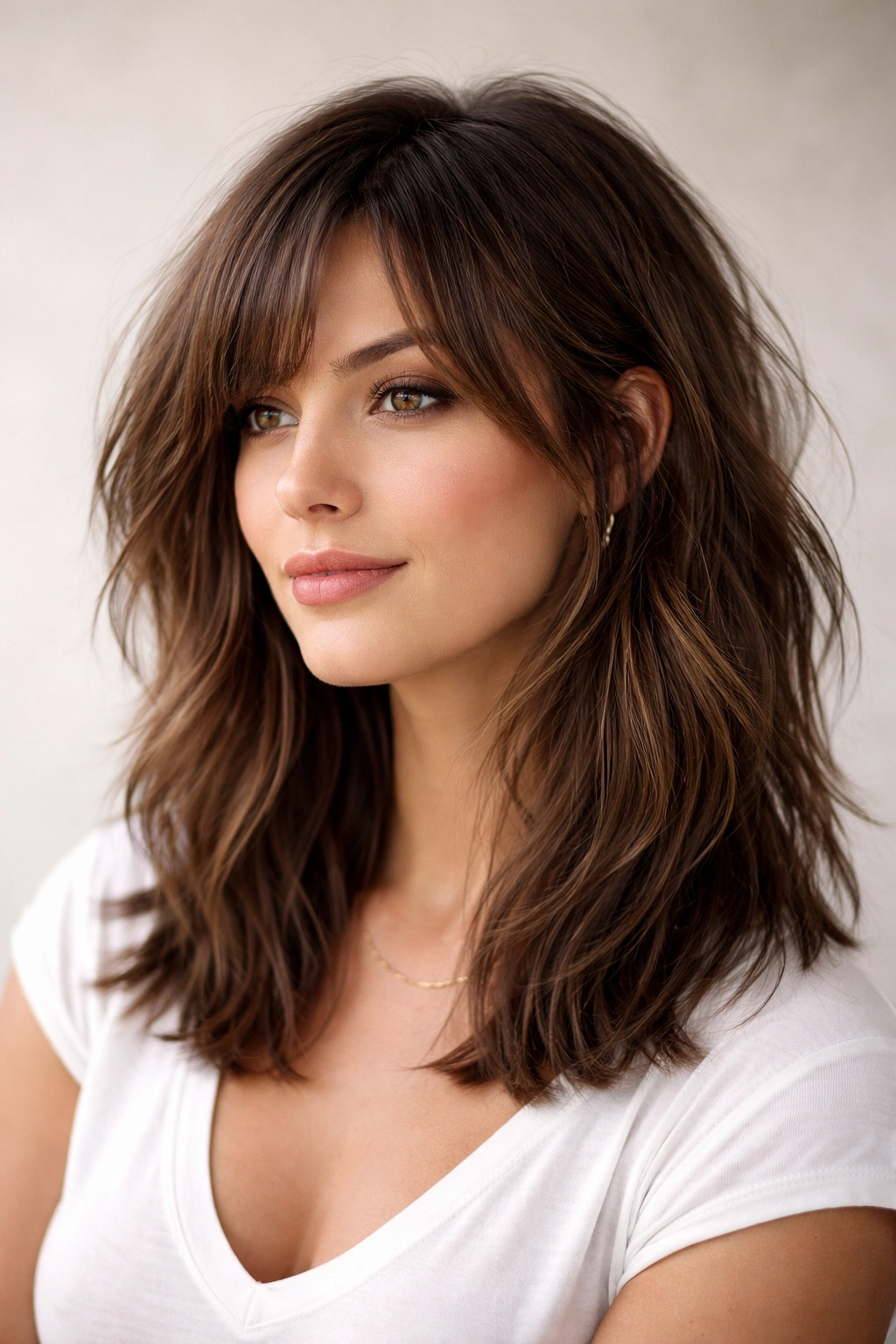
A lob that lands just past your shoulders, cut with choppy, textured layers and framed with side-swept bangs, is a powerhouse for long faces. The choppiness creates dimension throughout, while the bangs break up the vertical expanse of your forehead and draw the eye horizontally. The shorter, piecy layers around your face add width right at cheekbone level, while the longer underneath layers maintain the medium length you want. Bangs also serve the psychological effect of making your face appear shorter and wider in proportion.
How Choppy Texture and Bangs Create Balance
The choppy texture works the same way as the textured layers we discussed earlier—it creates visual breaks in the vertical line of your face through separated, dimensional pieces. The bangs are the secret weapon here: they interrupt the straight vertical line from your hairline to your chin, making your face visually wider in proportion. Side-swept bangs are ideal because they add some length to your forehead while still creating horizontal line (the line of the bang itself). Together, these elements combine to create a genuinely shorter, wider-looking face shape.
Styling and Care for This Cut
- The bangs require regular trims (every 3-4 weeks) to maintain their shape and prevent them from getting too long and hiding your eyes
- Choppy texture looks best when styled with movement—blow-dry with a round brush to create bend and separation in your layers
- This cut suits wavy or slightly textured hair beautifully; if you have straight hair, you may want to add waves with a curling iron to maximize the dimensional effect
- The bangs will need to be styled daily to sit correctly; make sure you’re willing to incorporate that into your routine
- Pair with texture product to enhance the choppy, separated quality of the layers throughout
Insider note: Ask your stylist to angle the bangs slightly longer at the outer corners—this creates a flattering face-frame that lifts your features.
4. Blunt Shoulder-Length Bob With Volume at the Crown
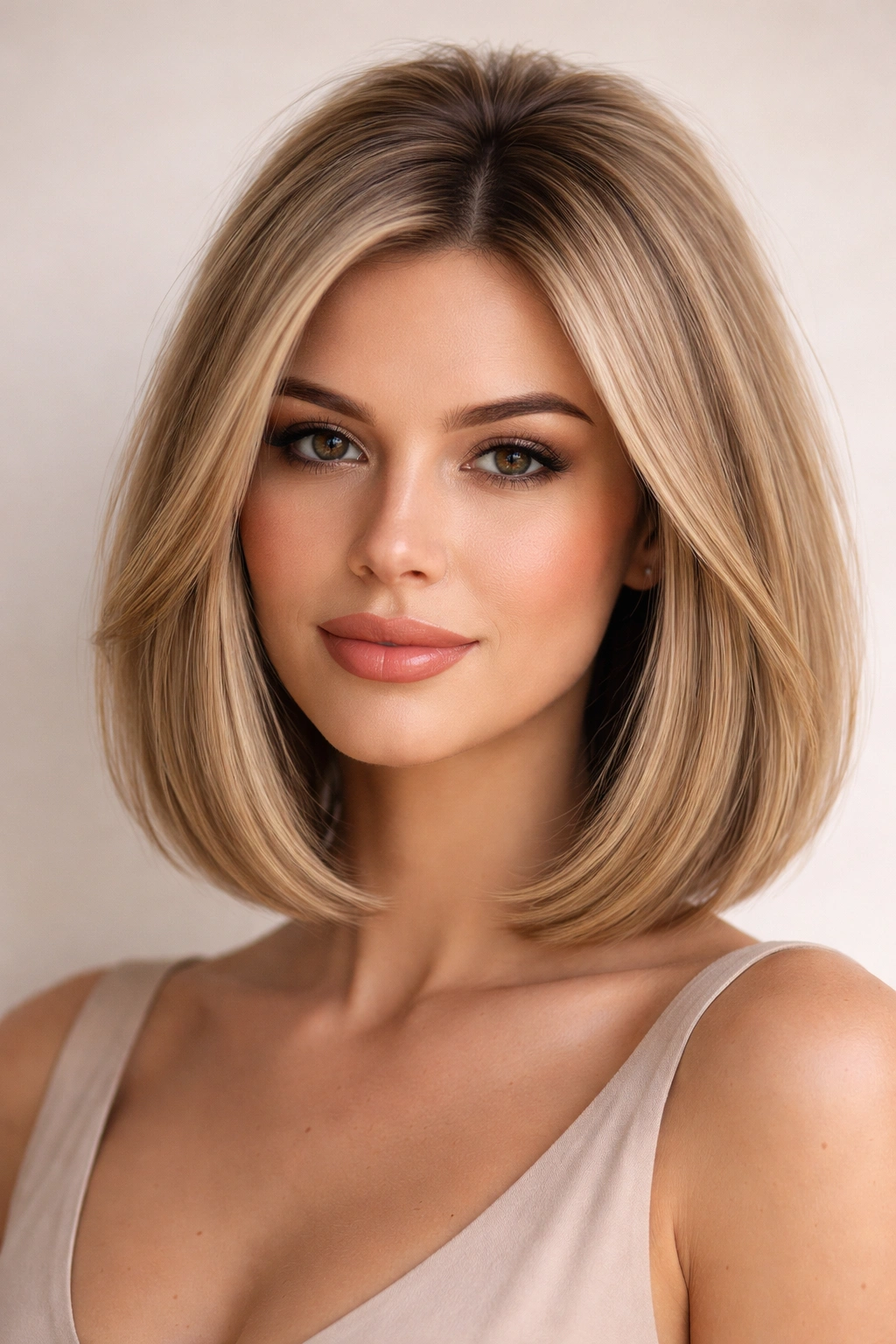
This is the polished option for anyone who prefers a cleaner, more refined aesthetic. The cut features a blunt or near-blunt line at shoulder length, but the crown is built with layers that create lift and volume. The blunt line gives the illusion of width at the shoulders and jawline, while the crown layers prevent the style from looking flat or heavy. A few face-framing pieces around your cheekbones complete the width-adding architecture.
Why Blunt + Layers = Long Face Perfection
The blunt line at shoulder length creates a visual horizontal endpoint—it tells your eye “the face width extends here,” which widens the overall perception of your face. Meanwhile, the layered crown prevents the weight of the blunt line from pulling your hair down and emphasizing vertical lines. The face-framing pieces (which may be slightly shorter than the blunt line) add subtle width at cheekbone level. The combination is sophisticated and intentional while still delivering serious long-face-friendly geometry.
Maintenance and Styling Reality
- This cut requires precision trims every 4-6 weeks to maintain the clean blunt line and prevent it from looking choppy or uneven
- Works beautifully on straight, wavy, and textured hair; the blunt line looks sharp regardless of your hair texture
- Styling is straightforward: blow-dry with a round brush for a polished finish, or let air-dry for a more relaxed look (if your hair has natural wave)
- The face-framing pieces should fall just past your cheekbones; they shouldn’t be so short that they disappear into the blunt line
- Consider this cut if you enjoy a more finished, put-together aesthetic and have the time to maintain regular trims
Worth knowing: Ask your stylist to cut the blunt line with a very slight curve rather than perfectly straight—the subtle curve flatters face shape and prevents a too-severe look.
5. Wolf Cut (Modern Textured Hybrid)
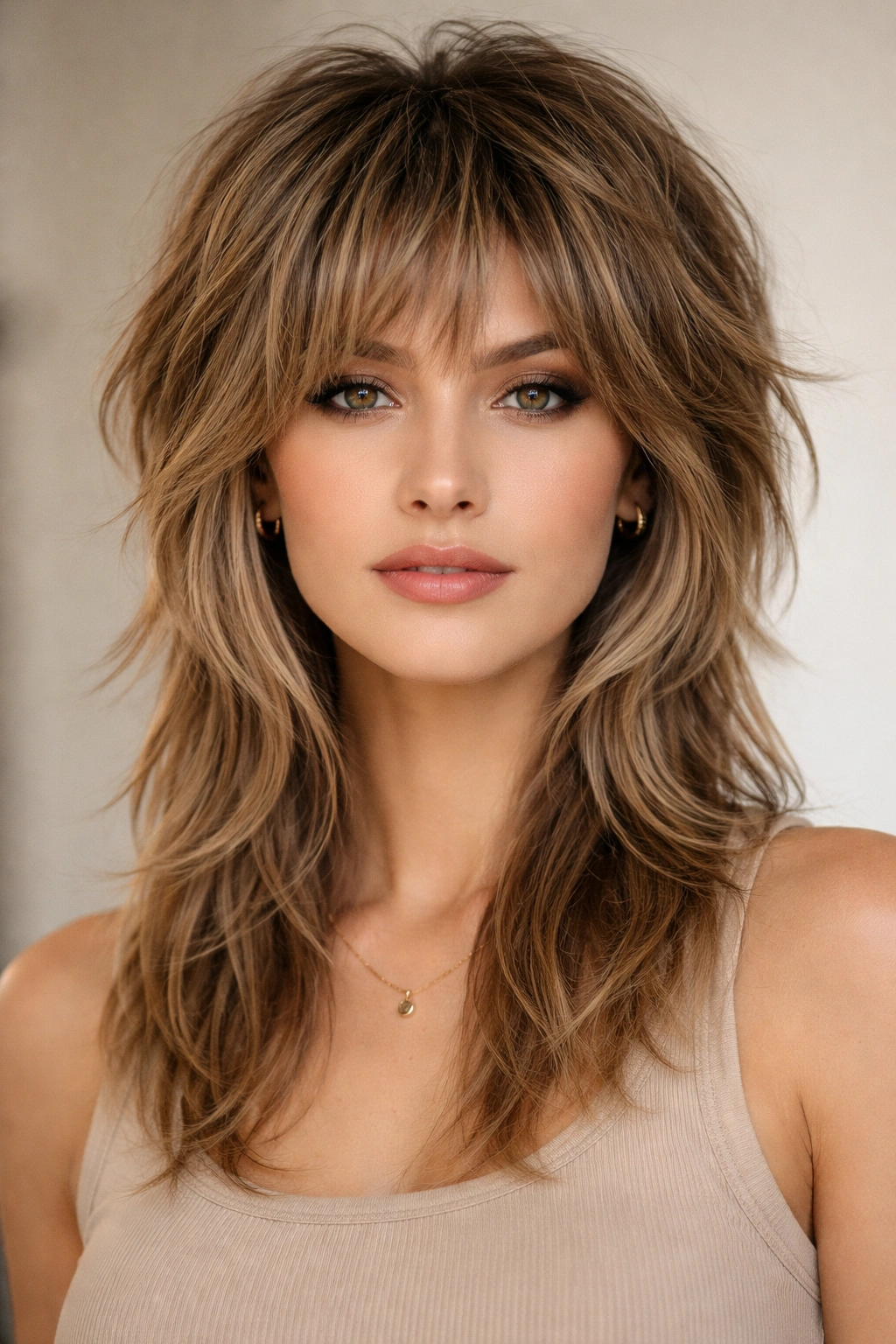
A wolf cut is essentially a hybrid between a shag and a pixie—it features shorter, textured layers on top for crown volume and movement, but longer, fuller underneath sections that maintain medium length. The face-framing pieces are intentionally choppy and piece-y, creating dimension that adds width right at cheekbone level. The cut has a modern, fashion-forward vibe while still being genuinely wearable for everyday life. It’s playful, textured, and absolutely excellent at adding perceived width to long faces.
The Wolf Cut’s Layering Architecture
What sets a wolf cut apart is the intentional contrast between the shorter, choppy top layers and the longer underneath layers. This creates a visual “lifted” effect that adds crown volume while the face-framing layers provide width. The piece-y nature of the cut means every section moves independently, creating light-catching texture throughout. For long faces, this textured approach breaks up vertical lines beautifully while the overall shape sits right at that medium length sweet spot.
Styling This Modern Cut
- Absolutely requires texturizing products—mousse, sea salt spray, texture paste—to activate the pieces and create the intentional tousled effect
- Works best on hair with natural texture or wave; if you have straight hair, you’ll need to curl or wave it regularly for the proper wolf cut effect
- Requires trims every 6-8 weeks to maintain layer definition and prevent the cut from looking overgrown or shaggy
- Blow-dry with your head flipped for maximum crown volume, then use your fingers or a texture product to separate and enhance the pieces
- This cut has a confident, trendy aesthetic—it suits people who enjoy a more modern, editorial vibe
Pro tip: Use a lightweight texture spray rather than a heavy cream product—it enhances the pieces without weighing your hair down.
6. Face-Framing Layers With Longer Length
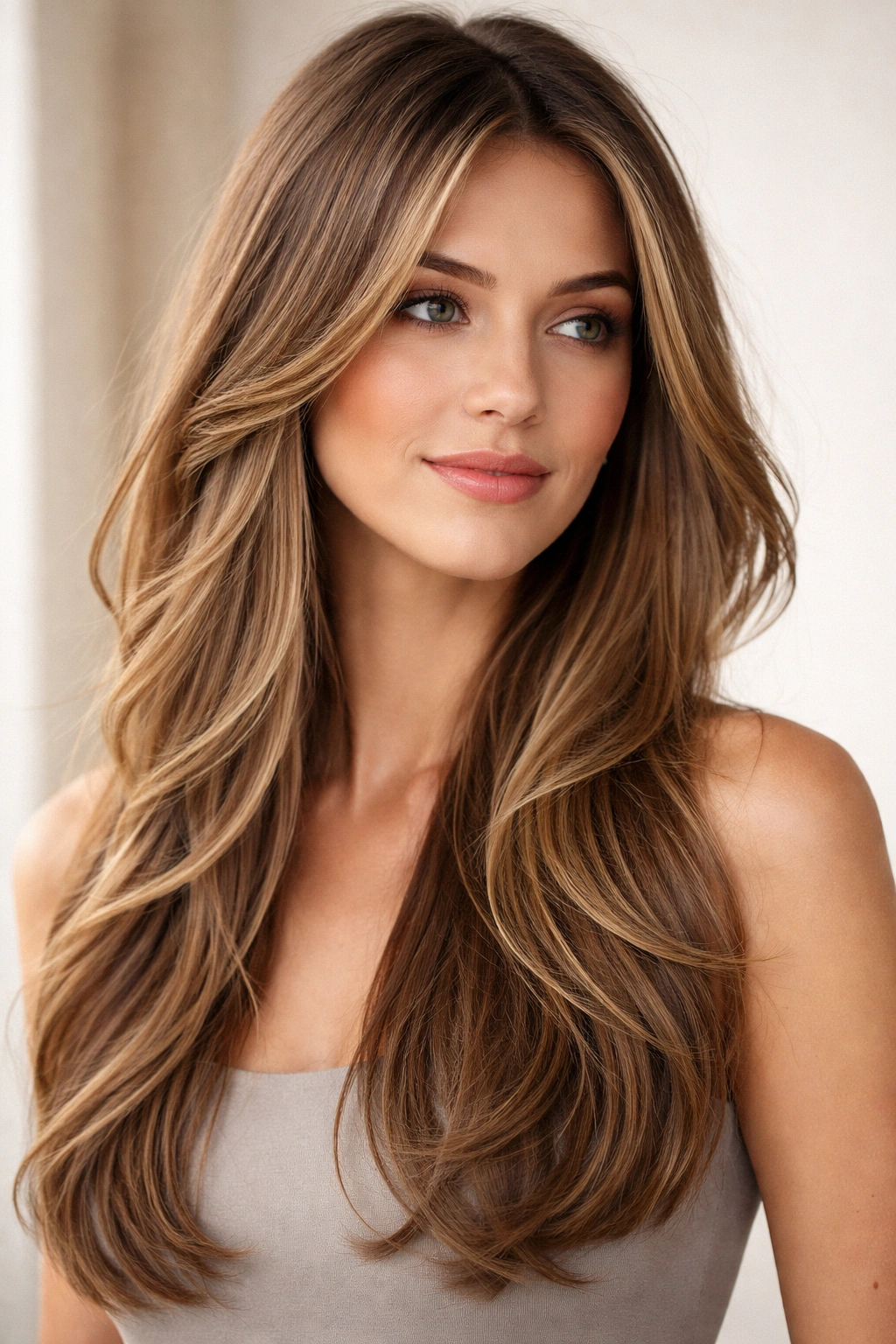
Sometimes the most effective approach is strategic face-framing combined with longer, fuller underneath layers. This cut features face-framing pieces that are shorter (usually hitting around cheekbone or chin length) while the bulk of your hair remains at shoulder length or slightly longer. The face-framing pieces add horizontal dimension right where you need it, while the longer underneath sections maintain length and create a fuller, rounder silhouette overall.
How Selective Layering Creates Width
You don’t need to layer your entire head to add width to a long face—sometimes the most sophisticated approach is surgical precision with face-framing pieces only. These shorter pieces interrupt the vertical line of your face while the longer underneath layers maintain the fuller effect you want. The face-framing pieces catch light and movement, creating visual interest that widthens perception. This technique is especially flattering if you have naturally thick hair, because you’re not chopping layers throughout—you’re being intentional about where you add volume and dimension.
Styling and Long-Term Care
- This cut suits all hair textures beautifully; the face-framing pieces work equally well on straight, wavy, or curly hair
- Requires fewer trims than heavily layered styles (every 8-10 weeks is typically sufficient) because you’re maintaining face-framing length rather than keeping multiple layer levels sharp
- Styling is flexible: you can wear your hair straight, wavy, or curly depending on your preference and the occasion
- The face-framing pieces should be shorter than your longest layers by at least 2-3 inches to create visible dimension without looking choppy
- Consider this cut if you want the benefits of layering without committing to high-maintenance frequent trims
Worth knowing: Ask your stylist to check that the face-framing pieces aren’t so short they create a “window” effect around your face—they should blend with the longer layers while still creating dimension.
7. Textured Pixie-to-Bob Transition
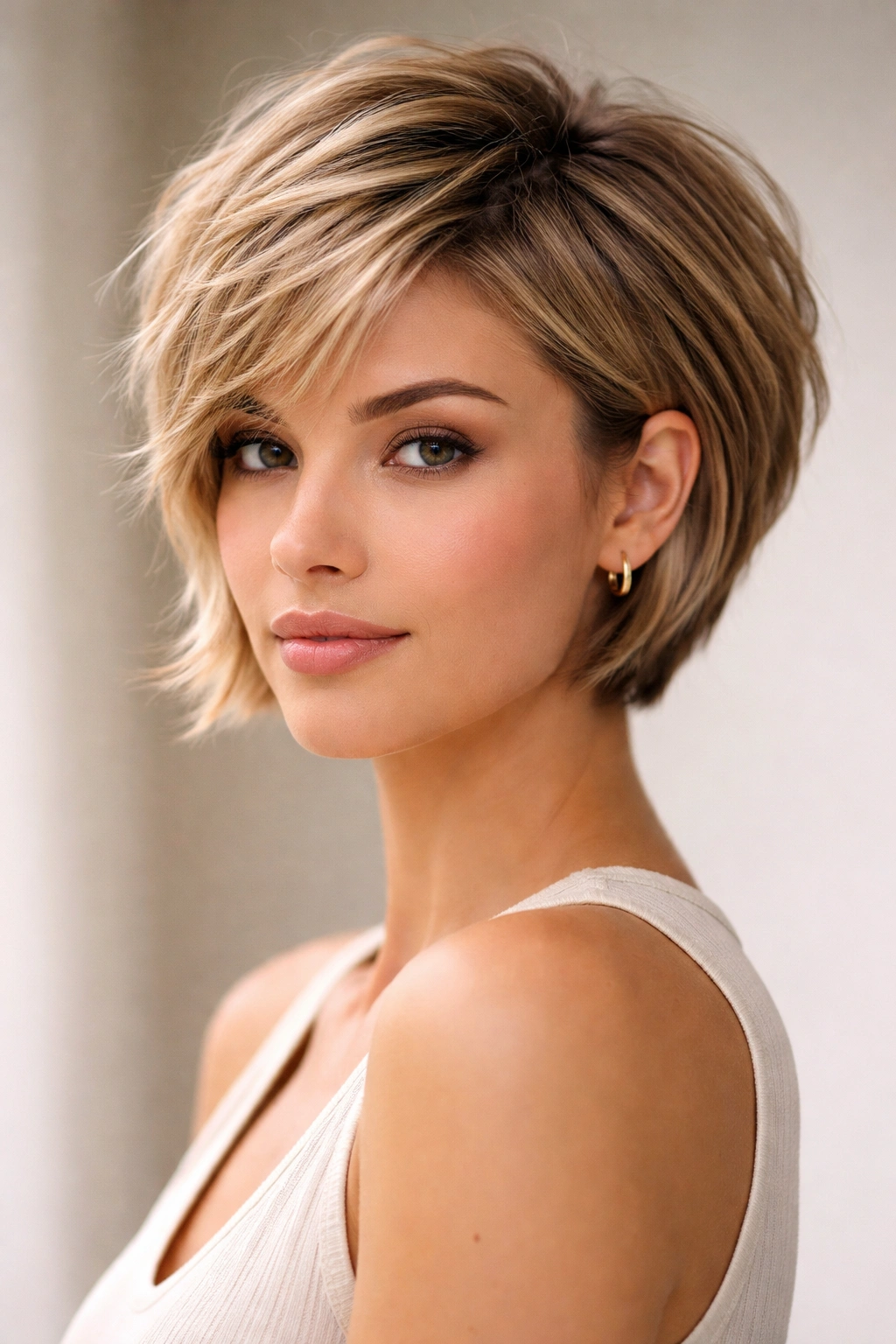
This is the adventurous option that still delivers medium length—it’s a graduated cut that features shorter, textured layers that transition gradually into longer pieces. The result is a cut that’s fuller and has more volume than a traditional bob, with textured movement throughout. The graduated structure creates width at cheekbone level while building crown volume. It’s a bolder choice than some of the other options, but for someone with a long face who wants to make a statement with their hair, this cut absolutely works.
Why Graduation Creates Visual Width
A graduated cut forces your hair to stand away from your head naturally—the shorter layers on top have nowhere to go but outward and upward, while the longer layers beneath blend seamlessly. This creates automatic volume and width without requiring much styling effort. The textured nature of the cut means the graduated sections blend together seamlessly rather than looking like distinct, choppy layers. For long faces, this means you get all the width-adding benefits of layers with a more polished, intentional appearance.
Styling Requirements and Versatility
- This cut requires intentional styling to look its best; blow-drying with a round brush is essential to direct the graduated pieces in the right direction
- Works beautifully on hair with natural wave or texture; if you have very straight hair, you may want to add waves with styling tools for the proper effect
- Requires trims every 6-8 weeks to maintain the graduated structure and prevent the cut from looking overgrown
- The graduated nature of this cut means it photographs beautifully and creates movement when you walk
- This is the choice for someone who wants a more editorial, fashion-forward haircut that still falls into the medium-length category
Insider note: The crown should have the most texture and shortest layers to maximize volume where you need it; the longer underneath pieces should be relatively smooth to create a sleek finish.
8. Tousled Medium Waves With Strategic Layers
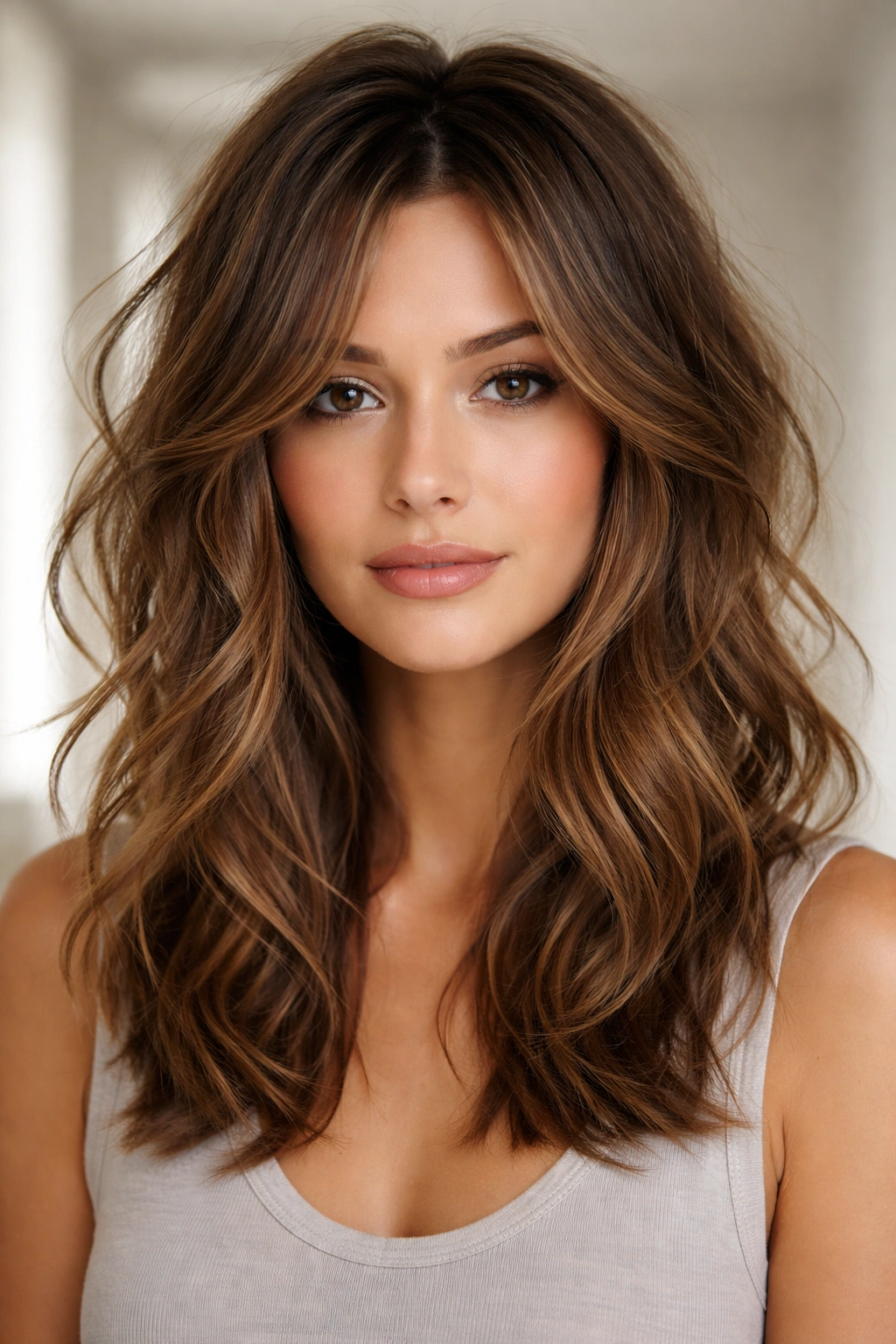
Sometimes the simplest approach is the most effective. This cut is medium-length with subtle layers placed strategically around the face and throughout the crown, designed to work beautifully with tousled waves or your hair’s natural texture. The layers aren’t dramatic or choppy—they’re refined and purposeful, creating movement and dimension without looking overly textured or piece-y. When styled with waves, this cut adds width through the dimensional movement of the waves themselves while the layers prevent heaviness.
The Psychology of Waves and Width
Waves are inherently widening—they create horizontal lines of movement rather than the straight vertical lines that emphasize a long face. By combining subtle layers with wave styling, you get the width-adding benefit of both the cut structure and the wave pattern. The subtle layers allow the waves to sit naturally and move beautifully around your face and shoulders. This approach is less dramatic than choppy or shaggy textures but still genuinely effective at adding dimension and width.
Making This Style Work Daily
- This cut suits slightly wavy or textured hair best; if you have very straight hair, you’ll need to curl it regularly to achieve the tousled wave effect
- Styling is relatively simple: apply a lightweight wave cream or mousse to damp hair, scrunch gently, and air-dry or diffuse-dry for a natural wave pattern
- Alternatively, blow-dry straight and use a curling iron or wand to create waves on top of the blow-dried base for a more controlled look
- Requires trims every 8-10 weeks to maintain the layer structure, though this style hides grow-out better than blunt cuts
- The waves should be loose and natural-looking rather than tight, uniform curls—the goal is dimension and movement, not definition
Pro tip: Use a lightweight product rather than heavy cream—waves can look dull and lank if weighted down with product.
9. Bixie Cut (Chic Bob-Pixie Hybrid)
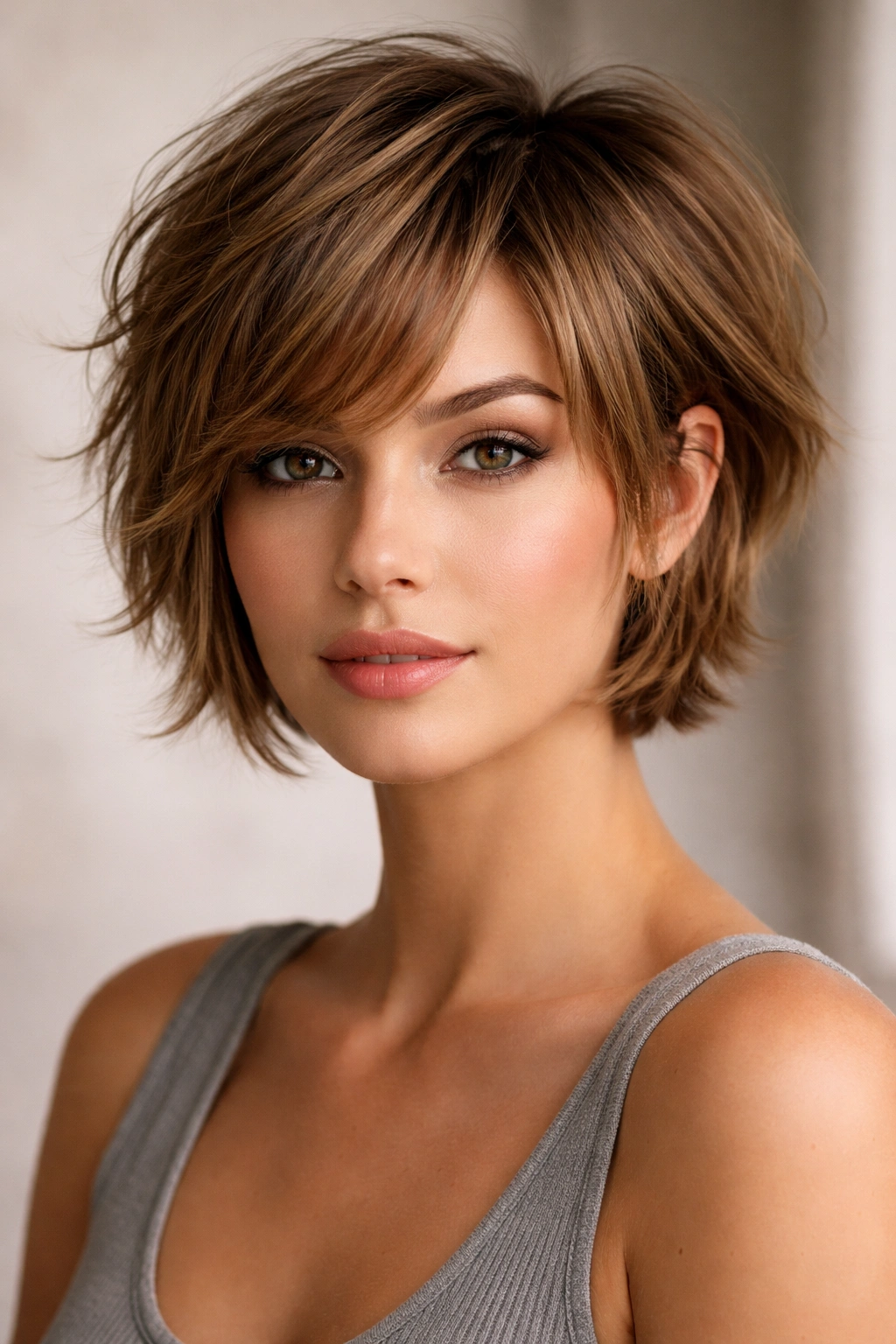
A bixie cut is the sophisticated middle ground between a bob and a pixie—it features a longer bob length with shorter, textured layers that create a pixie-like vibe on top. The result is a cut that’s genuinely medium length, has serious crown volume, and features textured, face-framing pieces that add width. It’s an unexpected hybrid that works beautifully for long faces because it combines the refined proportions of a bob with the volume-building crown architecture of a pixie. The cut requires confidence and a good stylist, but the results are striking.
Hybrid Structure and Face-Widening Strategy
The bixie cut deliberately creates contrast between the shorter, piece-y top layers and the longer bob-length underneath. This contrast forces volume into the crown and cheekbones while maintaining a medium overall length. The textured pieces around your face add horizontal dimension while the structured underneath length creates a polished silhouette. For long faces, this hybrid approach delivers serious geometric advantage—you get width at multiple levels (crown, cheekbones, and the bob-length line itself) while the textured quality breaks up vertical lines.
Daily Styling and Maintenance
- This cut requires styling to look its best; blow-drying with a round brush to create separation and volume is ideal
- Works on various hair textures but looks especially striking on straight or wavy hair where the texture contrast is visible
- Requires trims every 5-7 weeks to maintain the bixie structure; this is a high-maintenance cut in terms of trim frequency
- Texture product is essential—use mousse, sea salt spray, or texture paste to activate the piece-y quality of the top layers
- This is the choice for someone who wants a bold, fashion-forward statement and is willing to commit to regular maintenance
Worth knowing: The underneath layers should be relatively smooth and blunt to create contrast with the textured top—this contrast is what makes the bixie structure work.
10. Medium Length With Side-Swept Bangs and Layers
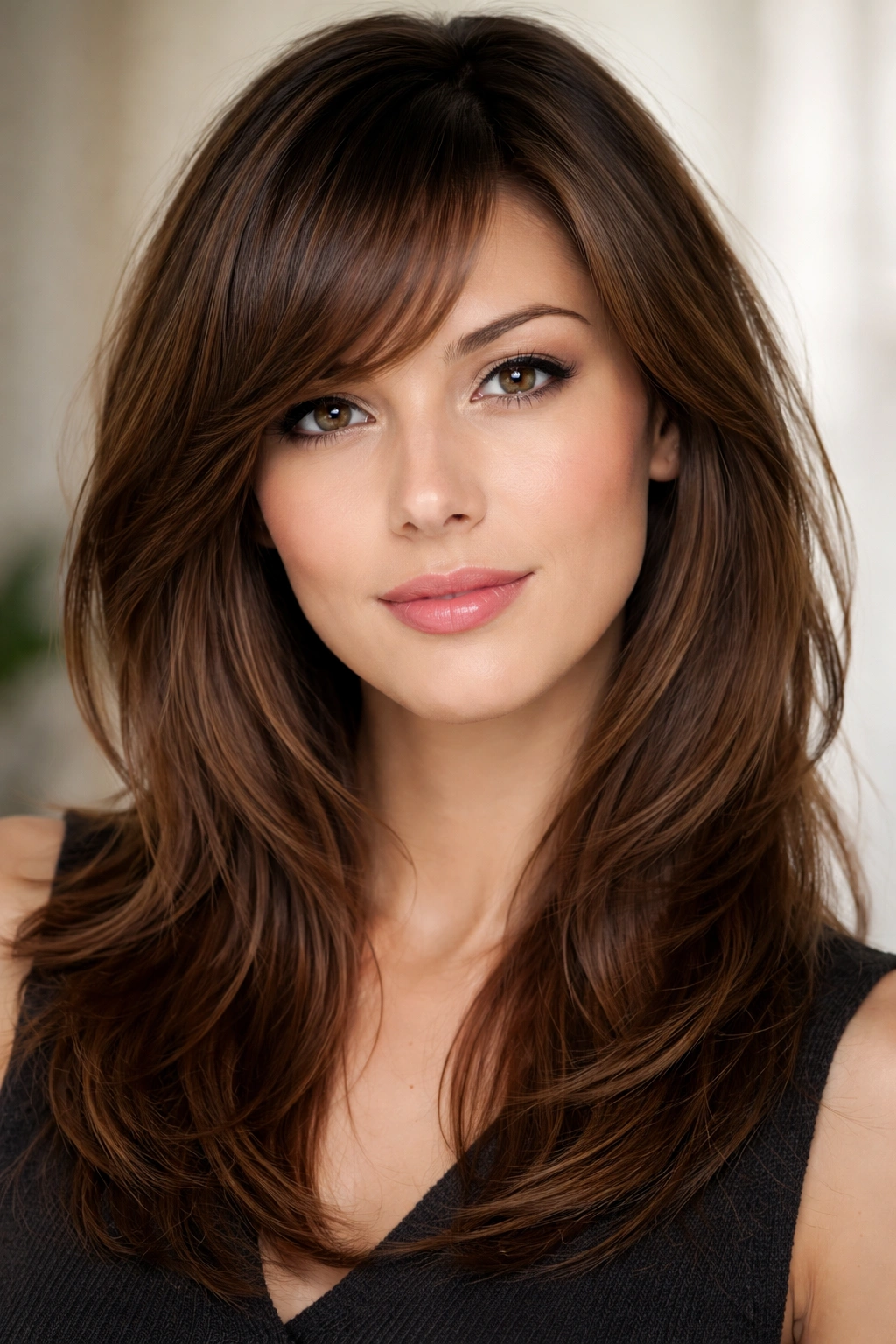
This final option is the classic solution: medium-length hair with carefully placed layers and side-swept bangs that frame your face beautifully. The side-swept bangs interrupt the vertical line of your forehead while adding a softness and femininity to your overall look. The layers throughout add texture and dimension without being dramatically choppy, while the medium length maintains the proportions that work best for long faces. This is a timeless, endlessly versatile option that works for virtually every hair type and lifestyle.
Why Bangs + Layers = Long Face Solution
Side-swept bangs are inherently widening—they create a diagonal line across your forehead that visually shortens your face and adds width to your upper face. Combined with subtle layers that add texture and movement, you get a cut that genuinely improves face proportion. The bangs should be longer at the outer corners (creating that swept quality) and slightly shorter at the center, so they frame your face and cheekbones perfectly. The layers beneath complement the bangs by adding movement that draws the eye horizontally rather than vertically.
Versatility and Styling Options
- This cut works beautifully on all hair textures and is one of the most versatile options on this list
- Bangs require regular trims (every 3-4 weeks) to maintain their length and shape; they can quickly become too long and heavy
- Layers can be subtle (just a few face-framing pieces) or more pronounced depending on your preference and maintenance commitment
- Styling options are endless: wear your hair straight, wavy, curly, or tousled depending on your mood and the occasion
- This is the choice for someone who values versatility and wants a flattering cut that works with their lifestyle
Pro tip: Ask your stylist to cut the bangs slightly longer than you think you want—bangs often feel too short once styled, and it’s easier to trim them shorter than to wait for them to grow out.
Final Thoughts

The right medium haircut can genuinely transform how you feel about your long face shape. Rather than fighting your natural proportions, these cuts work with your face geometry through strategic layering, texture, and width-building techniques. The key is choosing a cut that fits your lifestyle, your hair texture, and your styling commitment level. Some of these cuts require regular styling with tools and products, while others work beautifully with minimal effort. Some need frequent trims to maintain their structure, while others are more forgiving as they grow out.
The most important step is finding a stylist who understands face shape and can explain exactly why they’re recommending a particular cut for your specific long face. A great stylist will customize these cuts based on your hair texture, your lifestyle, and your personal style preferences. They’ll also help you understand the styling and maintenance requirements before you commit. When you find the right medium haircut, you’ll notice immediately how much more balanced your face feels—not because your face has actually changed, but because the cut works with your natural proportions instead of against them.
