



Walking into a salon without a clear vision of what you want is stressful. You scroll through your phone, show your stylist three different photos that don’t quite match your face shape or lifestyle, and end up with something that looked perfect on someone else but feels off when you actually wear it. Short blonde haircuts are particularly tricky because the style is so visible — there’s nowhere for a mediocre cut to hide — and the color demands that the shape actually works with your features and daily routine.
The good news? Short blonde cuts are everywhere right now, and there’s genuinely something for every hair texture, face shape, and personality. Whether you want something edgy and modern, soft and romantic, or effortlessly undone, you have real options. Better yet, short blonde haircuts actually tend to be easier to maintain than longer styles once you get past the initial styling learning curve. You’ll spend less time blow-drying, less money on products, and less effort on daily maintenance. For many people, the confidence boost alone makes it worth the change.
The real challenge isn’t finding short blonde haircut inspiration — it’s finding styles that will actually translate to your hair, suit your lifestyle, and stand up to what your stylist can realistically execute. That’s exactly why bringing reference photos to your appointment matters so much. The right photo communicates not just the vibe you want, but the technical details your stylist needs to nail the shape, texture, and movement. This guide gives you fifteen distinct short blonde haircuts, each with enough detail that you’ll actually be able to show your stylist exactly what you’re after — the length, the layers, the texture, and how the color should sit with the cut.
1. The Classic Pixie Cut
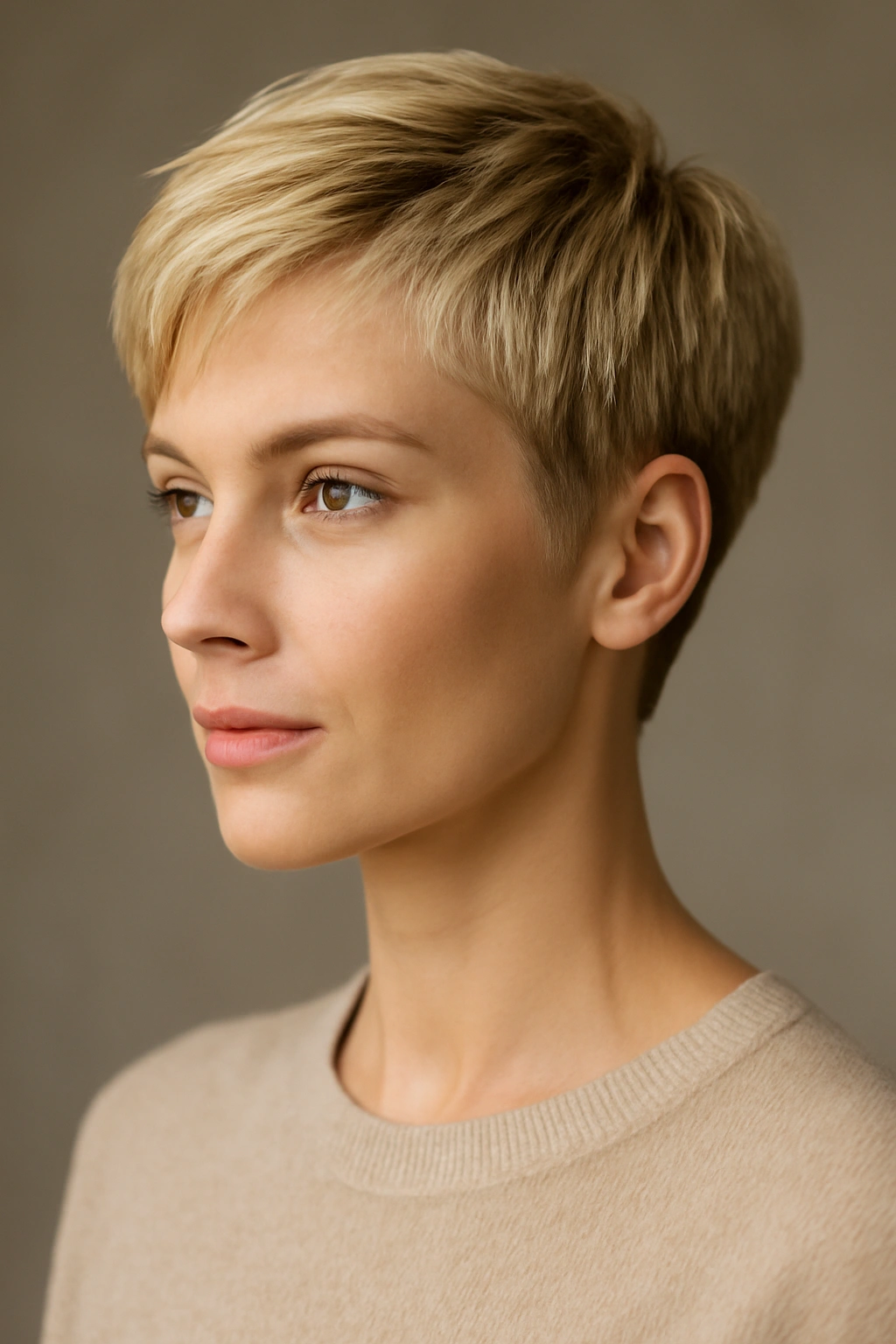
The pixie cut is the most timeless short blonde haircut for a reason. It’s bold, it’s flattering on surprisingly many face shapes, and it instantly reads as intentional and sophisticated. A true pixie keeps hair short on the sides and back — usually tapered close to the head — while leaving slightly more length on top for texture and movement. When done in blonde, the cut looks even more striking because the color reflects light across the sculpted shape.
Why This Cut Works With Blonde
Blonde naturally makes the pixie cut feel brighter and more playful than darker versions. The color actually helps define the shape because it creates subtle dimension across the closely cropped sides and back. The top layer has enough room for texture, so your stylist can create depth through strategic layers rather than just relying on length. This is what makes a great pixie feel alive rather than severe.
What to Tell Your Stylist
- Ask for a taper on the sides and back — not shaved, but gradually shorter as it moves down the neck
- Request texture and layers on top to prevent a helmet-like appearance
- Bring reference photos showing the angle of the sideburn area and how short the back nape sits
- Discuss styling preference: some pixies work slicked back for a more polished vibe, others with texture pointing upward for a modern edge
- Ask about the fade pattern — some stylists prefer a hard line where short meets slightly longer, others blend it gradually
Pro tip: A pixie cut requires trims every 4-6 weeks to maintain the shape, so commit to regular appointments before booking. If you travel frequently or have an unpredictable schedule, this might not be the cut for you.
2. The Textured Pixie Crop
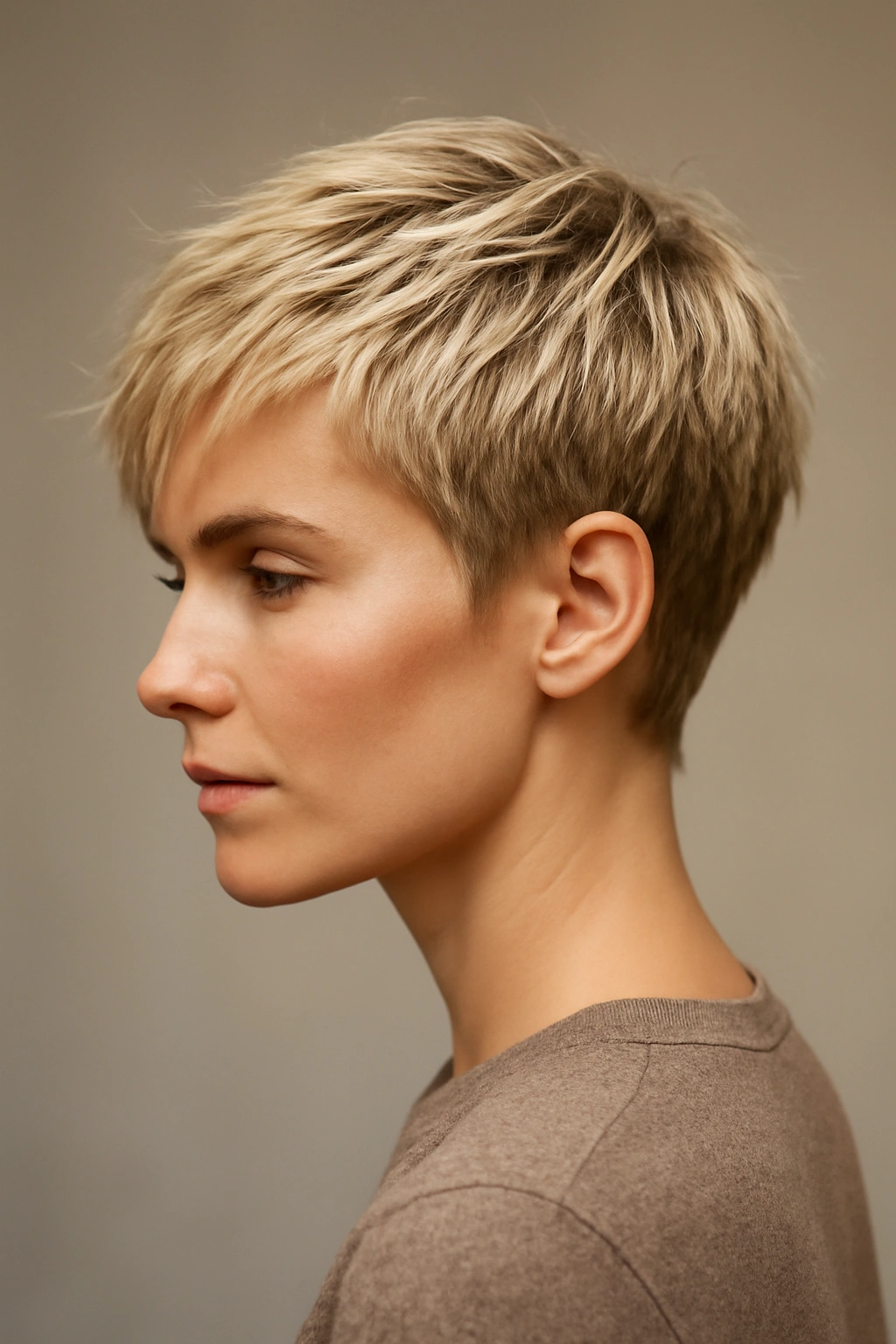
This is the pixie cut’s slightly longer, messier cousin. Where a classic pixie is precise and controlled, a textured pixie crop embraces movement and a lived-in feeling. The sides and back are still short, but there’s more volume on top — typically 2-3 inches — with choppy, uneven layers that create a deliberately tousled effect. In blonde, this cut reads as approachable and cool rather than severe.
How the Texture Changes Everything
The texture is what gives this cut personality. Instead of a clean, sharp silhouette, the choppy layers create visual interest and movement. Your stylist will point-cut or razor-cut the layers so they sit at slightly different angles, which breaks up the overall shape and makes it feel more organic. Blonde hair shows off this texture beautifully because the layers catch light at different depths, creating dimension.
Styling and Maintenance Details
- This cut works best with some texture in your hair — either natural waves or a texturizing product
- Requires a styling cream or texturing paste to show off the choppy layers; styling it smooth defeats the whole point
- Suits people who like a more undone, editorial aesthetic over sleek polish
- Needs trims every 4-8 weeks, though it’s slightly more forgiving than a classic pixie about growing out
- Works equally well on straight hair (you’ll need product to create movement) or naturally wavy hair
Worth knowing: If you have very fine hair, ask your stylist about keeping the density thicker on top since short, choppy layers can sometimes look sparse on thin hair.
3. The Shaggy Short Bob
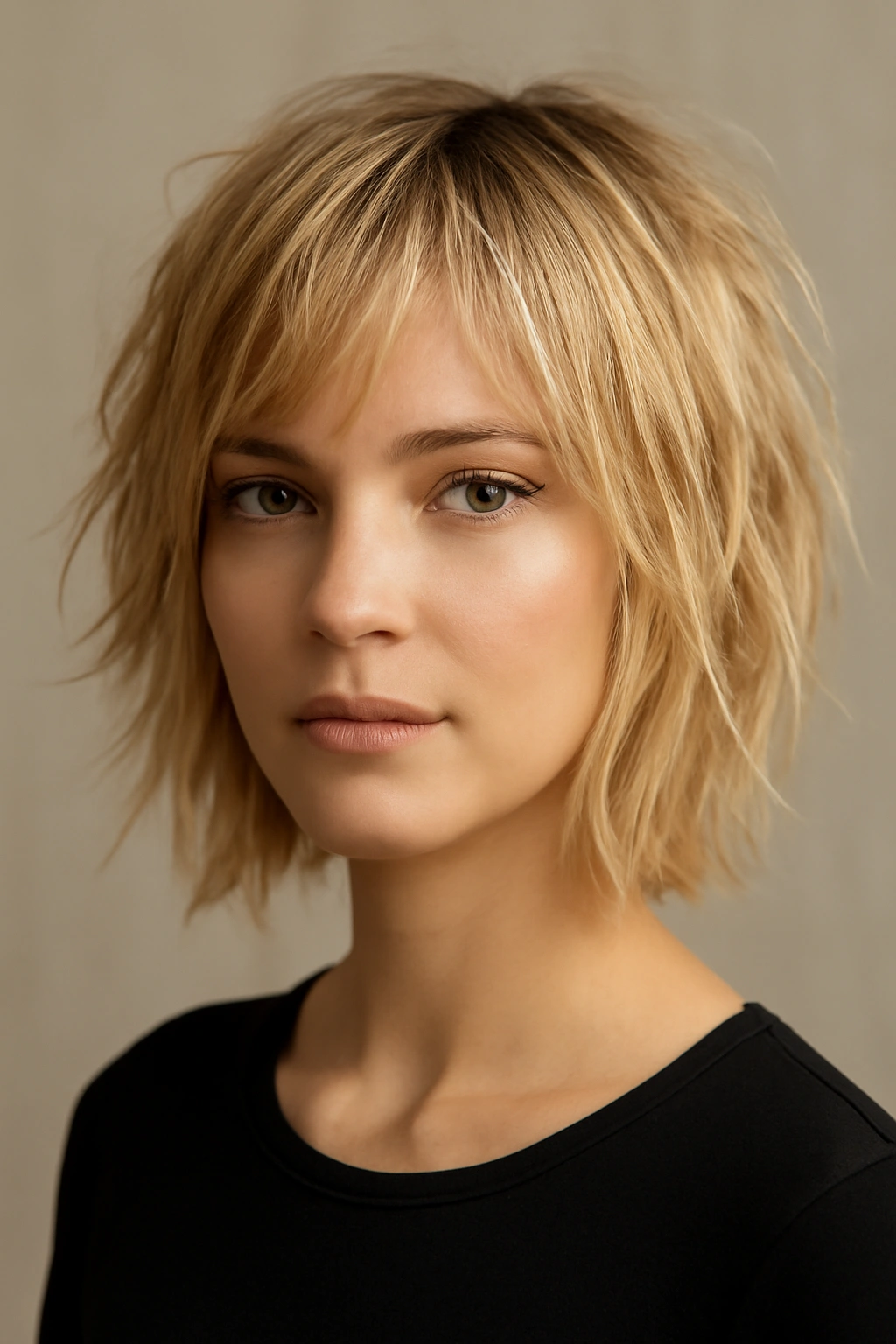
The shaggy short bob splits the difference between a pixie and a traditional bob. Hair sits around chin length or slightly shorter, with lots of choppy, uneven layers throughout — including long pieces around the face that create movement and frame your features. It’s edgy and textured but longer than a pixie, giving you more styling versatility. Blonde makes the shaggy texture pop, especially when there’s subtle variation in the shade.
The Technique Behind the Shag
A true shag relies on strategic layering, not just choppy random cutting. Your stylist should create shorter layers at the crown for volume, longer layers in the mid-lengths for movement, and longer pieces around the face for framing. The key is that all these layers work together to create one cohesive, flowing shape — not separate choppy sections that look disconnected. In blonde, you want variation in tone (think highlights mixed with the base) to emphasize the texture and movement of the layers.
What Your Stylist Needs to Know
- Specify the shortest length (usually around the crown) and the longest (usually chin-length or slightly longer)
- Bring photos showing exactly how much texture you want and whether you prefer longer or shorter face-framing pieces
- Discuss how the layers should taper from short to long — this affects the overall silhouette significantly
- Ask about styling requirements: does this version need product daily, or can it work with just blow-drying?
- Clarify whether you want uniform color or dimension through highlights
Pro tip: The shaggy short bob is incredibly versatile for styling. You can blow-dry it smooth for polish, scrunch product in for texture, or wear it piecey and undone. This flexibility makes it a great choice if you can’t commit to daily styling effort.
4. The Sleek Modern Lob
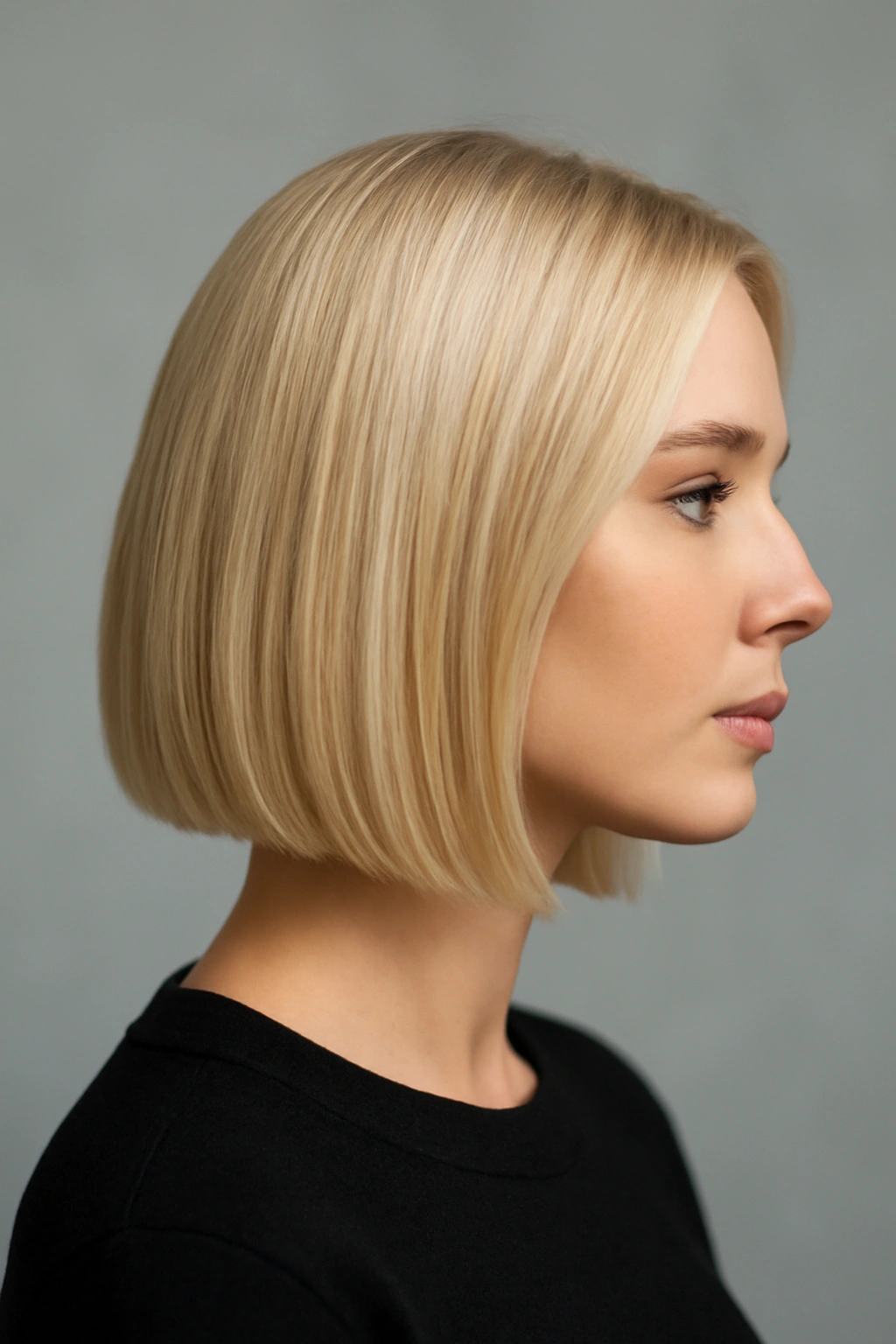
If you want short blonde hair but aren’t quite ready to go very short, a modern lob sits right in that sweet spot. Think chin-length or slightly longer, with a relatively straight silhouette and minimal layers (if any). The “modern” part means clean lines and intentional simplicity rather than the longer, layered lobs of previous years. In blonde, a sleek lob reads as polished, sophisticated, and effortlessly chic.
Why Less Texture Works Here
The whole appeal of a sleek lob is restraint. Instead of relying on choppy layers for visual interest, the shape itself does the work. The length and the cut line create the impact. This means your stylist needs to be precise with the blunt or slightly textured bottom line — it can’t look accidental. Blonde color, if it’s clean and even or features subtle dimensional highlights, complements this streamlined approach beautifully.
Key Specifications to Discuss
- Exact length: chin-length, just below chin, or slightly longer — bring a reference photo showing the precise endpoint
- Texture at the bottom: completely blunt, slightly textured for movement, or a subtle internal layers for hold
- Face-framing: some modern lobs have none (one-length straight across), others have delicate shorter pieces to frame the face
- Color approach: are you going for a solid blonde, rooted look, or dimensional highlights that play off the shape?
- Styling: does this version blow-dry smooth naturally, or do you need a straightener?
Worth knowing: A sleek lob depends entirely on precision cutting and good hair health (no split ends). This isn’t the cut to choose if your hair is damaged or if your stylist doesn’t have a great eye for blunt lines.
5. The Choppy Layered Cut
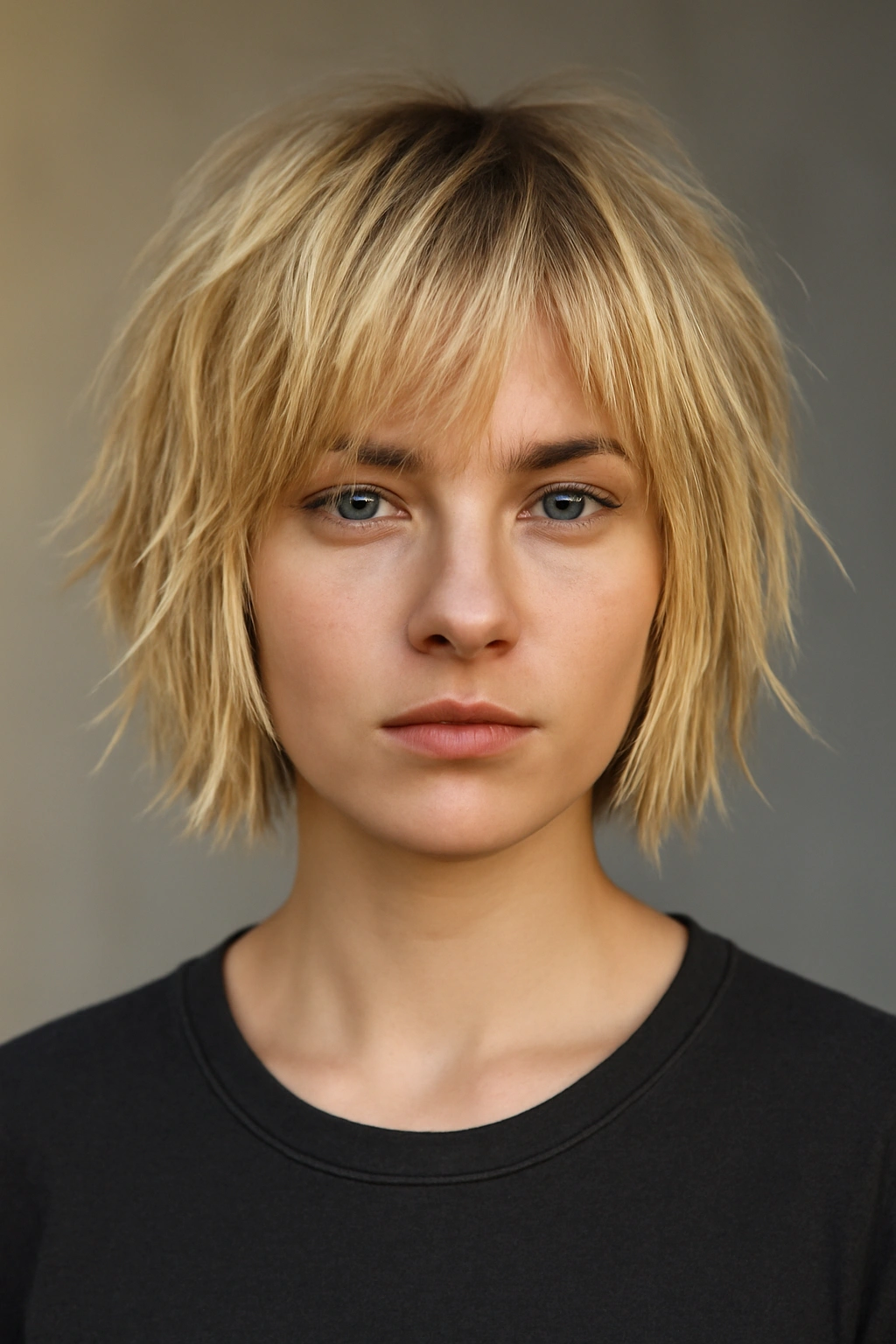
This is a short cut that sits somewhere between a shag and a pixie — typically chin-length or just above, with choppy, piece-y layers throughout that create tons of texture and movement. Every angle of the cut is slightly different, giving it that deliberately undone, editorial quality. In blonde, especially with some tonal variation, this cut looks super modern and interesting because every layer catches light differently.
The Art of Strategic Choppy Layers
A good choppy cut is actually quite technical. Your stylist needs to create shorter layers at strategic points to lift the crown, longer pieces around the face for framing, and varying lengths throughout the mid-sections to create movement without losing overall shape. The cut should flow — not just be random short pieces everywhere. In blonde, you want the color to work with the layers, either through a solid shade that emphasizes the texture, or through highlights that sit in different layers.
Details That Matter
- Ask your stylist about the shortest and longest points in the cut, and bring photos showing the range you like
- Discuss whether you want the choppiness to be subtle (more of a soft shag) or very pronounced and graphic
- Consider how much face-framing you want — some choppy cuts have longer pieces in front, others are more uniform
- Talk about density: do you want the layers to create lots of movement, or do you prefer a fuller, less airy effect?
- Ask about styling: how much product and blow-dry effort is required to make this look right?
Pro tip: Choppy layers can sometimes show damage or color buildup more obviously than straight cuts. Make sure your hair is in great condition before committing to this style, and plan for regular glossing appointments if you’re coloring your hair at home.
6. The Undercut Fade
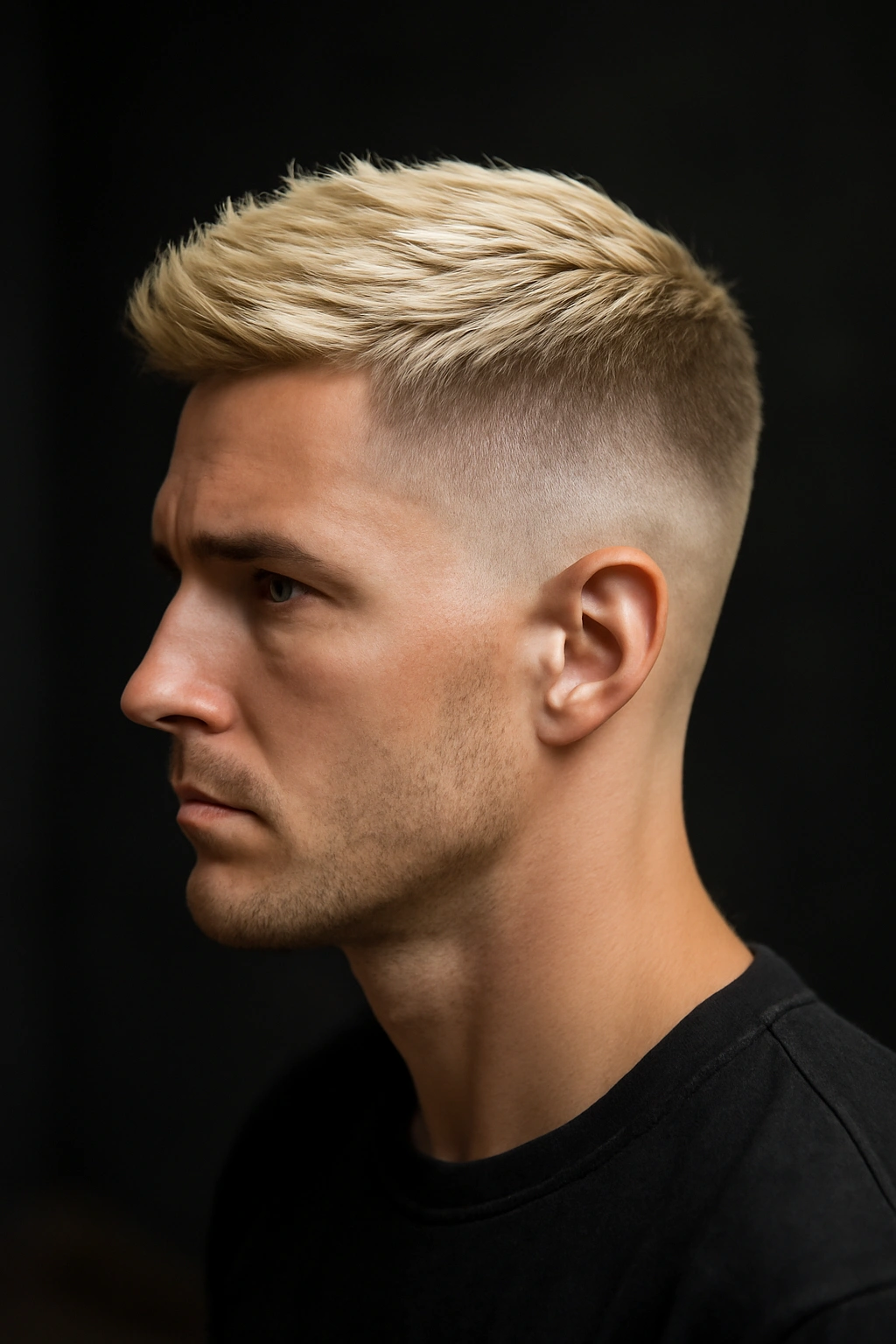
This is a more fashion-forward, architectural short blonde haircut. The sides and back are faded very short (sometimes just a few millimeters), while the top is left significantly longer and can be textured, quiffed, or styled in various directions. The contrast between the cropped sides and longer top creates a bold, modern silhouette. In blonde, this style is particularly striking because the color emphasizes the clean lines and the geometric contrast.
How the Fade Creates the Impact
The magic of an undercut fade is in how deliberately it plays with proportion. Your stylist uses clippers to create a gradient that gets progressively shorter as it moves down the sides and back. The exact fade depth matters — some start the fade at the temple and extend it down to the neck, others keep it more concentrated on the lower sides. The transition between the short sides and longer top should be clean and defined. Blonde highlights this architectural quality beautifully.
Technical Specifications
- Specify how short the fade should be: skin-fade (very short, almost shaved), low fade (longer on top of the fade), or mid-fade
- Decide where the fade should start and end — does it extend across the full back, or stay more concentrated on the lower sides?
- Ask about length on top: how much volume do you want? Is this a quiff, a pompadour, or just longer textured pieces?
- Discuss styling: do you want product texture on top every day, or something you can wear more casual?
- Clarify how sharp the line should be between faded and longer — is this a defined harsh line or a blended transition?
Worth knowing: Undercut fades require trims every 3-4 weeks to maintain that sharp, clean look. As soon as the sides start growing in, the whole vibe changes. Consider whether you can commit to frequent appointments.
7. The Tousled Platinum Crop
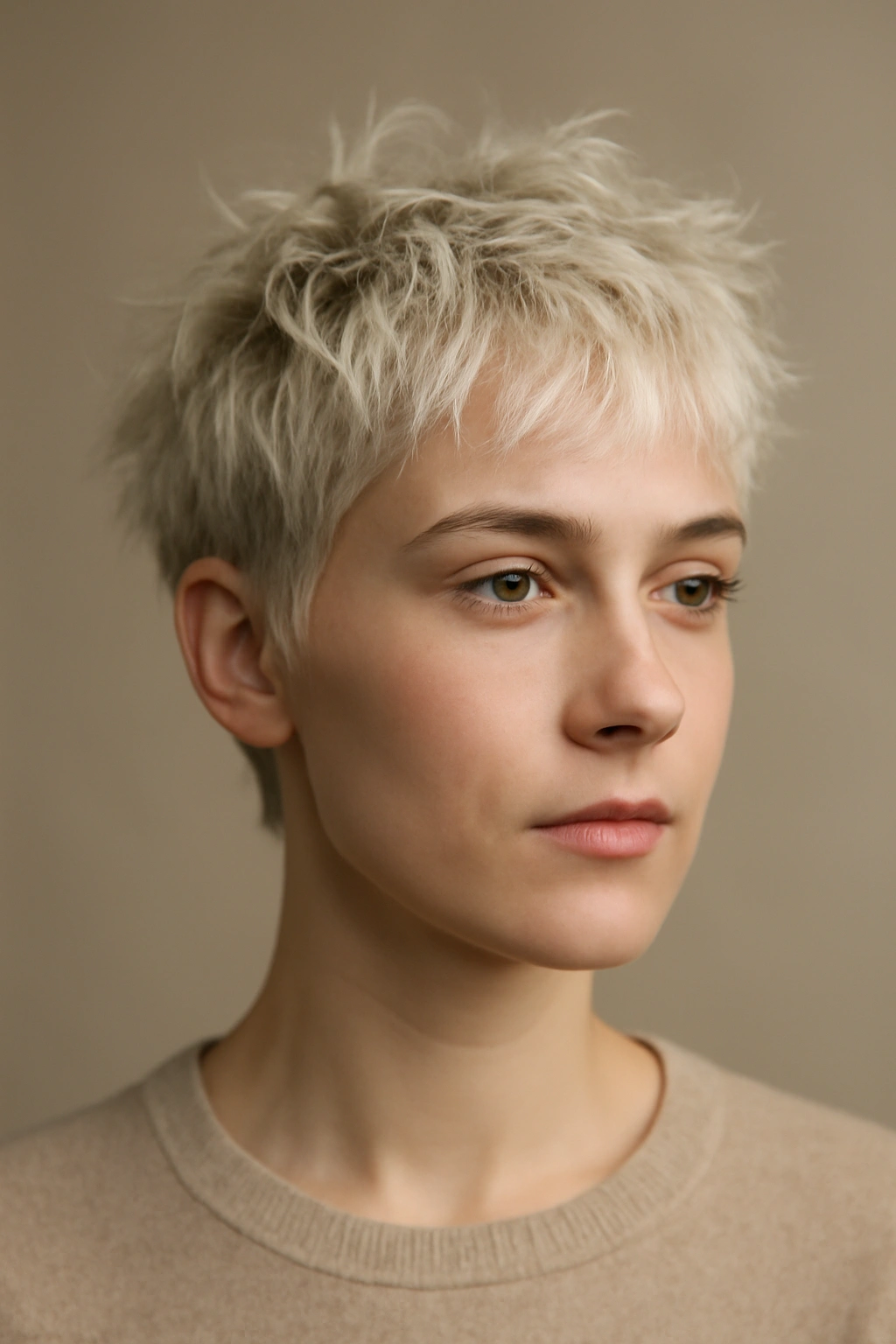
This is a very short cut — like, barely-there short — that works specifically in platinum or very light blonde. Think 1-2 inches of length all over, with just enough texture and point-cutting to create movement and visual interest. The whole thing should look tousled and lived-in, like you just woke up with perfect hair. The very light blonde color is essential here because it prevents the short length from looking severe or mannish.
Why Platinum Blonde Matters for This Cut
A darker short crop can read as harsh or utilitarian. But platinum or very pale blonde softens the effect instantly. The lightness makes it feel more delicate and intentional rather than just very short. The color also means that even though the cut is minimal, it reads as editorial and cool rather than just a buzz cut. Texture is everything here — your stylist needs to create variation in the length so it’s not completely uniform.
Making It Work for Your Face
- This cut needs to be customized to your face shape; it’s too short to hide any awkwardness
- Ask your stylist whether it will work with your head shape and face proportions
- Discuss styling: do you want something you can wear completely unstyled, or are you okay with using a texturizing product?
- Talk about color maintenance — platinum blonde needs toning and glossing regularly to stay fresh
- Ask about the styling method your stylist recommends: finger-tousling, specific product application, or blow-dry technique?
Pro tip: This cut works best on people with naturally textured hair or thick hair that holds style well. If you have very fine or very straight hair, it might fall flat no matter how your stylist cuts it.
8. The Blunt Bangs Short Bob
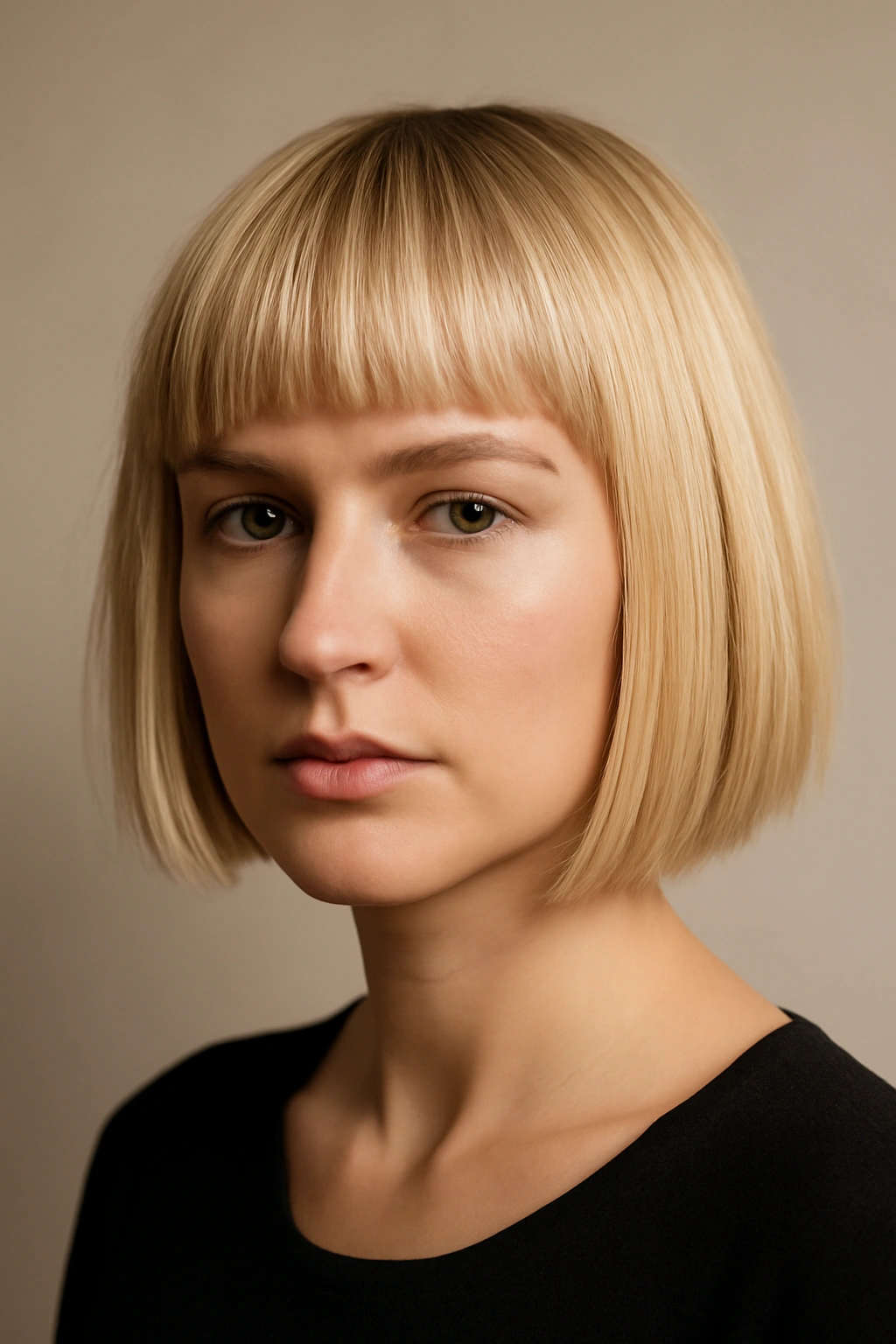
A short bob with blunt bangs is a bold, graphic choice that immediately reads as intentional and stylish. The bob itself sits around chin-length or slightly shorter, usually with minimal layers and a clean silhouette. The blunt bangs sit around eyebrow-level or slightly shorter and are cut straight across with no texture — they’re the graphic statement piece of the whole look. In blonde, this creates a striking, almost doll-like effect that’s very on-trend.
The Technical Challenge of Blunt Bangs
Blunt bangs are unforgiving because there’s nowhere for imperfection to hide. They need to be cut precisely, sit at exactly the right length, and frame your face perfectly or they feel off. Your stylist needs significant skill and confidence to execute this well. The good news is that once they’re cut right, they’re relatively easy to maintain at home (you can trim them yourself between appointments if needed). The bob underneath the bangs should be equally clean and precise.
Must-Discuss Details
- Exact bang length: eyebrow-level, just above, or halfway down the forehead — bring a reference photo showing the exact placement
- Whether you want the bangs completely blunt or with a tiny bit of texture at the ends for softness
- How the bangs blend with the sides of the hair: do they transition straight into the rest of the cut, or is there a defined section?
- Your hair texture: blunt bangs work on straight or wavy hair, but very curly hair might be challenging
- Styling reality: blunt bangs usually require a blow-dryer and straightener to look crisp and perfect every day
Worth knowing: Blunt bangs require trims every 4-6 weeks as they grow out (hair grows faster in the front). If frequent salon visits aren’t realistic for you, this might not be the right choice.
9. The Side-Swept Pixie
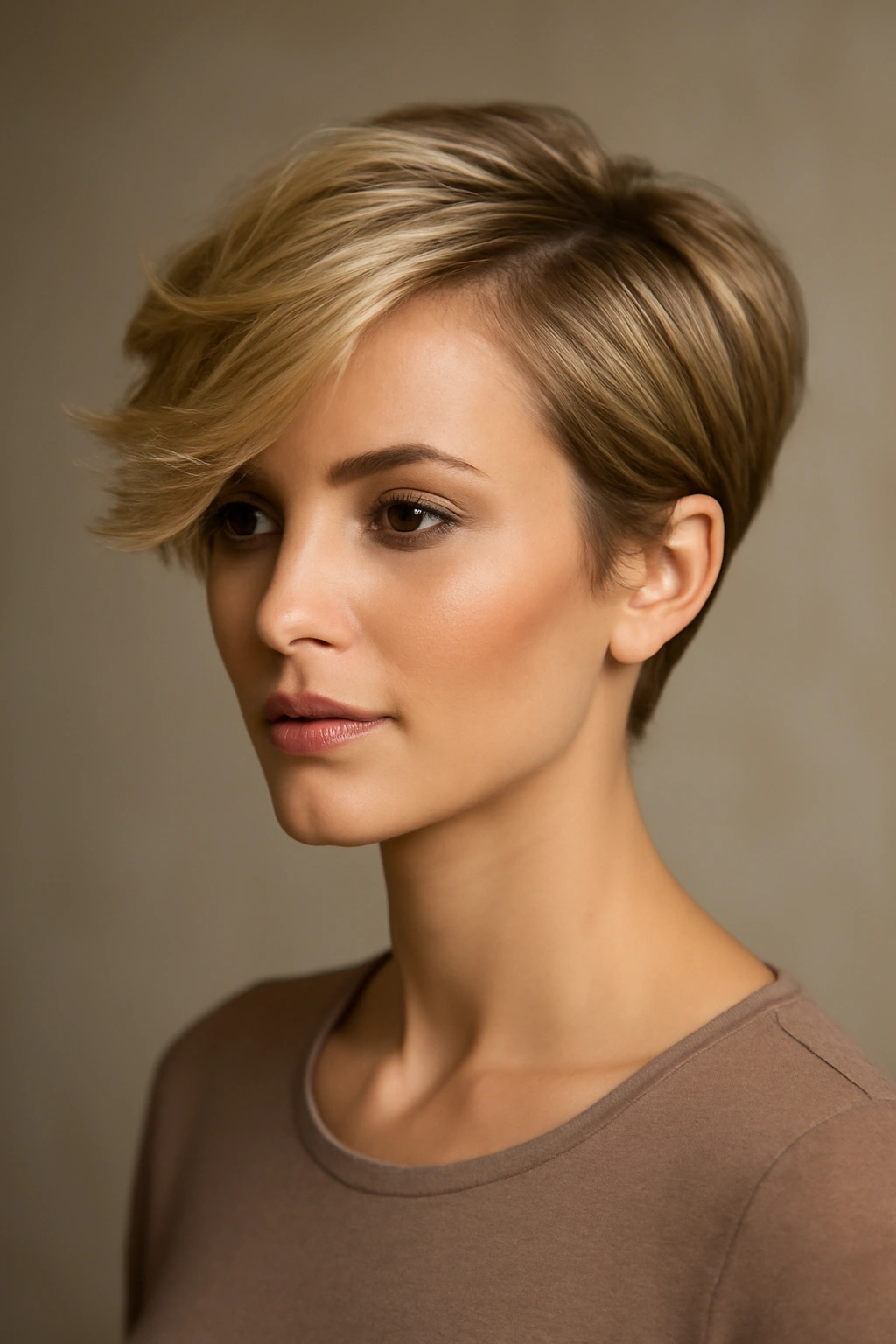
This is a softer, more romantic version of a pixie cut. The sides and back are still tapered short, but the top is longer — maybe 2-3 inches — and swept dramatically to one side, creating movement and flow. It’s less severe than a traditional pixie but still very short. In blonde, especially with soft waves or some dimension in the color, this style looks feminine and fashion-forward without being cutesy.
How the Sweep Changes the Vibe
The side-sweep is what makes this pixie feel less architectural and more romantic. Instead of standing at attention on top, the longer pieces flow across the head, creating a line that flatters many face shapes. Your stylist should layer the top so that the longer pieces fall naturally into that swept position, not look like you’re just styling them that way. The blonde color helps sell the movement because light plays off the longer strands.
What Your Stylist Needs to Know
- Specify which direction you want the sweep — some people prefer it sweeping one way consistently, others like the flexibility to change it
- Ask about the length on top: is this a subtle 2-inch piece, or a more dramatic 3+ inch sweep?
- Discuss layers on top: how many, and whether they should encourage the sweep or create a more textured effect?
- Talk about the sides and back: do you want them totally tapered, or do you prefer them slightly less short?
- Ask whether this version requires styling product or blow-dry daily, or if it naturally settles into the sweep
Pro tip: A side-swept pixie is great if you want short hair but worry that very short styles won’t flatter you. The sweep creates balance and softness that can work on more face shapes than a traditional pixie.
10. The Feathered Short Layers
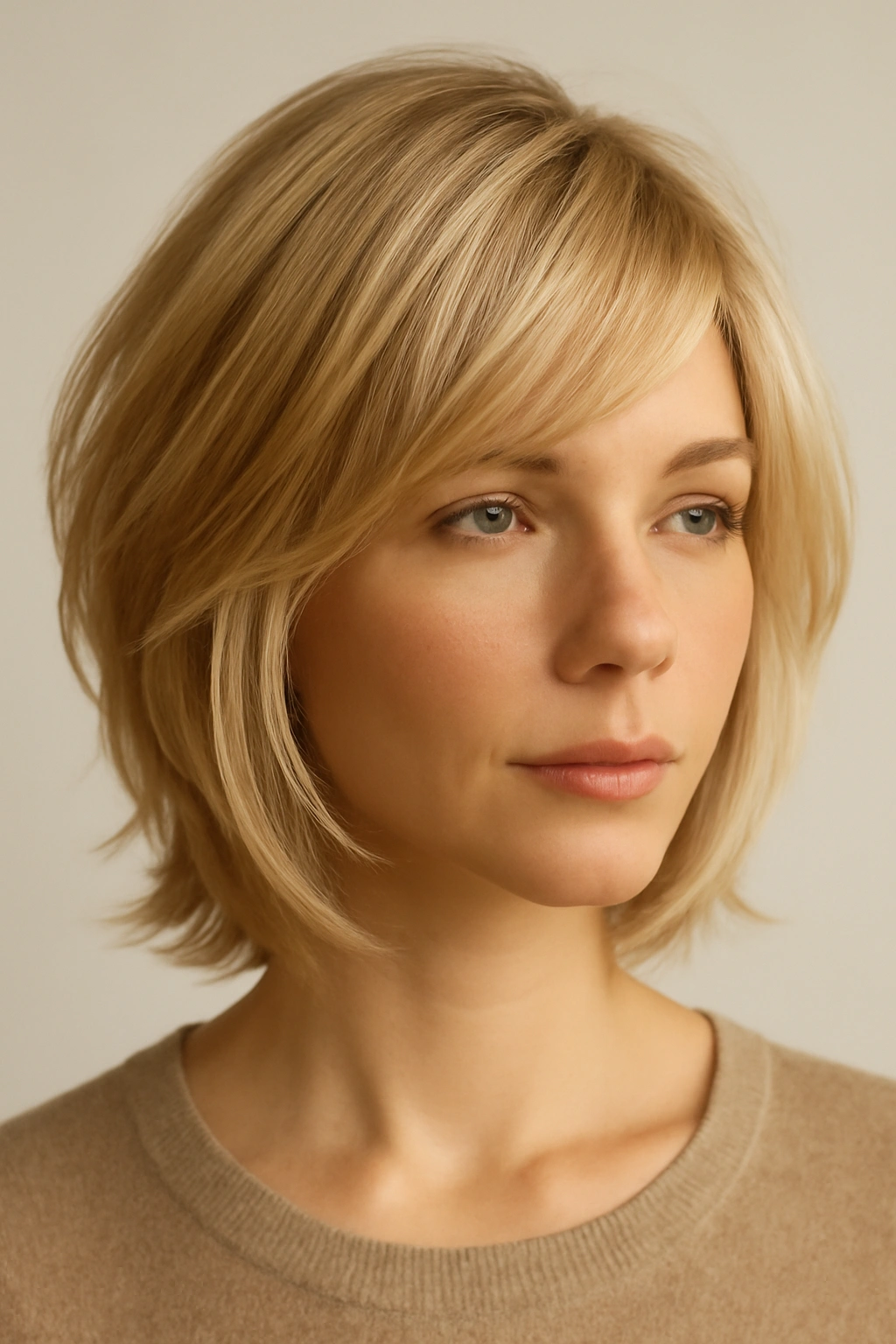
This is a delicate, ethereal short cut featuring lots of feathered layers throughout. Hair sits around chin-length or slightly shorter, with layers that are cut in a way that creates movement rather than choppiness — the pieces are soft and blended, not sharp and piece-y. When you move, the layers flutter slightly, creating this weightless, romantic effect. In blonde, especially with some lighter tones woven through, this looks incredibly soft and feminine.
The Difference Between Feathered and Choppy
Feathered layers are about soft, blended movement. Choppy layers are about texture and definition. Feathered cutting uses scissors (sometimes curved scissors) to taper and blend layers so they sit smoothly together but still move. Choppy cutting uses techniques that create visible separation between pieces. Both can be textured, but the feathered approach feels more polished and less editorial. In blonde, the softness of feathered layers really shines through.
Key Styling Considerations
- Ask your stylist about the feathering technique: do they use curved scissors, point-cutting, or a specific method?
- Discuss length variation: how much range between shortest and longest pieces?
- Talk about blow-dry requirements: does this style need heat styling to look right, or does it work air-dried?
- Ask whether the feathering is subtle (you can barely see the layers) or more pronounced and visible
- Clarify the overall shape: is it rounder, shorter at the crown, or more uniform all over?
Worth knowing: Feathered layers require regular trims (every 6-8 weeks) because the feathering can start to look choppy or undefined as it grows out. You’re committing to maintenance with this style.
11. The Asymmetrical Cut
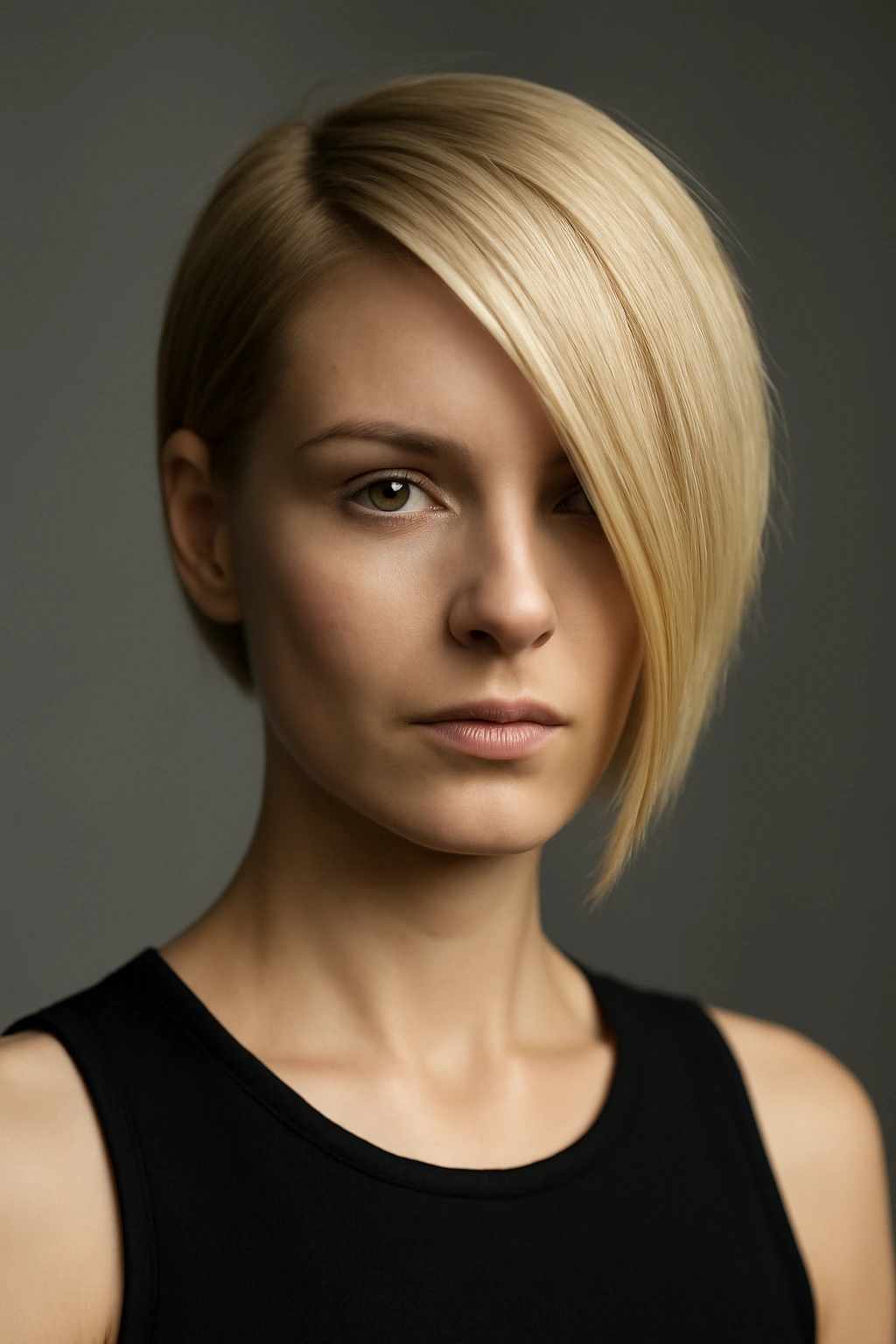
An asymmetrical short cut is bold and modern. One side is shorter than the other — dramatically so, not just subtly. The shorter side might be tapered and tight, while the longer side sits around chin-length or longer, creating an intentional imbalance that reads as very cool and fashion-forward. In blonde, this geometric contrast is particularly striking and makes a statement.
Making an Asymmetrical Cut Work
This is not a beginner’s cut. It requires a skilled stylist with a strong artistic eye and the confidence to execute something that’s deliberately unbalanced. The cut only works if both sides are cut precisely and look intentional — any hesitation or imprecision and it just looks like a mistake. The blonde color should be even or feature dimension that plays with the geometric shape you’ve created. You need to be someone who’s genuinely willing to be a bit bold with your hair.
Important Conversations with Your Stylist
- Show reference photos from multiple angles so your stylist sees exactly how extreme the asymmetry should be
- Discuss which side will be shorter and which longer based on your face shape and styling preference
- Ask about the short side: how short, and should it be tapered, textured, or styled in a specific way?
- Talk about the longer side: should it sit behind the ear, frame your face, or fall forward?
- Clarify whether you want a hard line where short meets long, or a more blended transition
- Ask about styling: can you wear this asymmetrical naturally, or does it need daily styling to sit right?
Pro tip: An asymmetrical cut can actually work really well if you tend to wear your hair in one direction naturally. Your stylist might be able to work with your natural hair-falling pattern to make the cut look effortless.
12. The Curly Blonde Crop
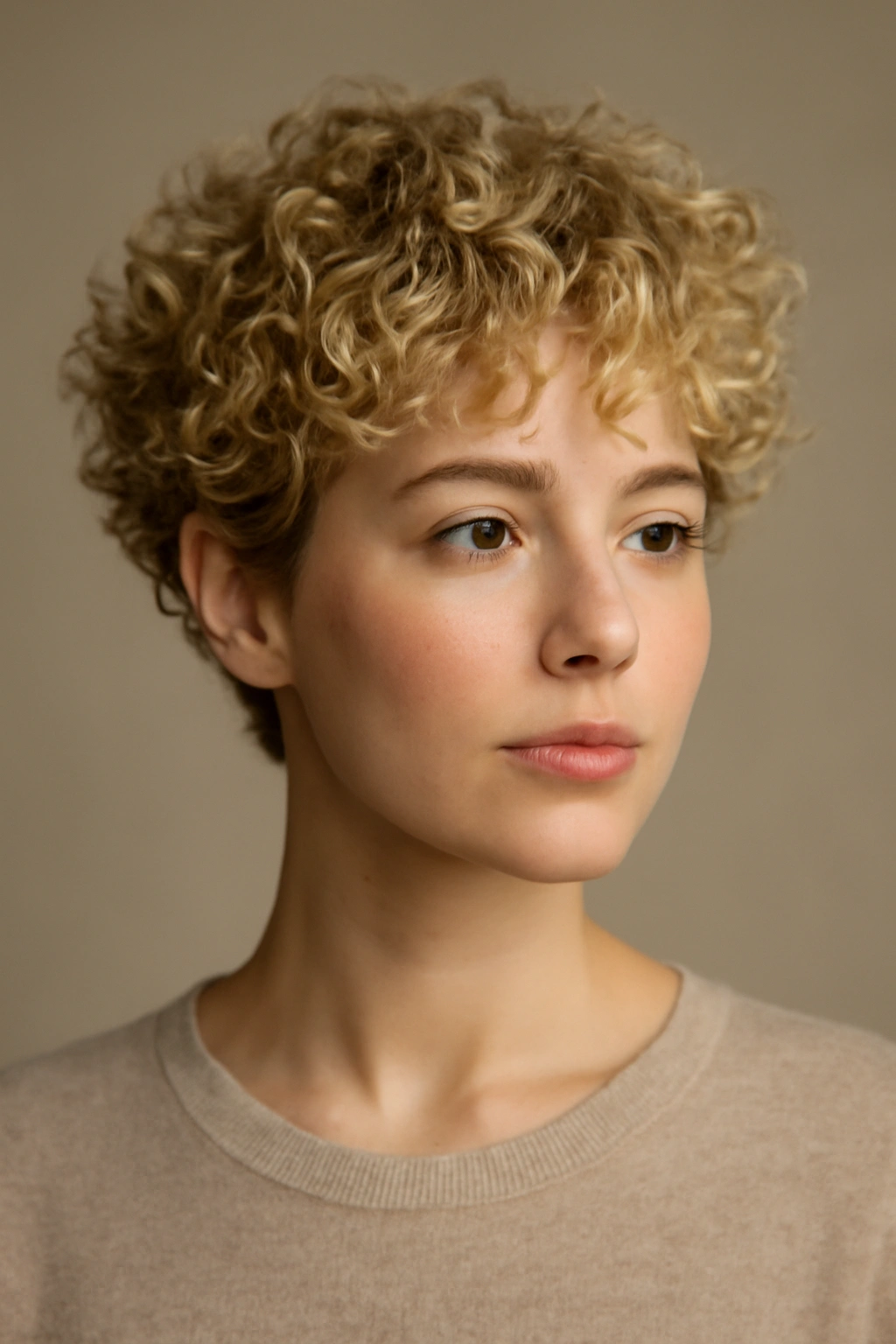
If you have naturally curly or wavy hair, a short crop cut specifically for texture is a game-changer. Instead of fighting your hair’s natural pattern, this cut works with it. Hair sits quite short — maybe 2-4 inches — all over, with layers that are cut specifically for curls so each curl has room to form and bounce without the whole look becoming a poofy, undefined mass. In blonde, the texture of curls catches light beautifully and creates tons of dimension.
How Curly Hair Changes the Cut
A curly crop needs to be cut differently than a straight short cut. Your stylist should cut your hair while it’s curly or wet (not straight) so they can see how the curl pattern actually sits. Layers need to be strategic — you want enough texture to prevent weight that flattens curls, but not so much that you get frizz and undefined shape. The cut should work with your curl pattern, not against it. Blonde highlights the dimension of curls even more.
Curl-Specific Details to Discuss
- What’s your curl pattern? Is it loose waves, defined curls, or tight coils? Show photos of your natural texture
- Does your stylist have experience cutting curly hair? This is crucial — not all stylists are skilled with texture
- Ask about the cutting method: should your stylist cut curly or dry, and how will they assess curl shape?
- Discuss length and layer strategy: how short, and where should the layers sit for maximum definition?
- Talk about products: what curl-specific products does your stylist recommend for styling and definition?
- Ask whether you need a diffuser blow-dry or whether you can air-dry, and what method works best for your curl type
Worth knowing: Curly cuts require experienced stylists. A regular stylist who doesn’t specialize in curly hair will likely cut it too short, create too many layers, or underestimate how much the curl will shrink when it dries.
13. The Slicked-Back Short Cut
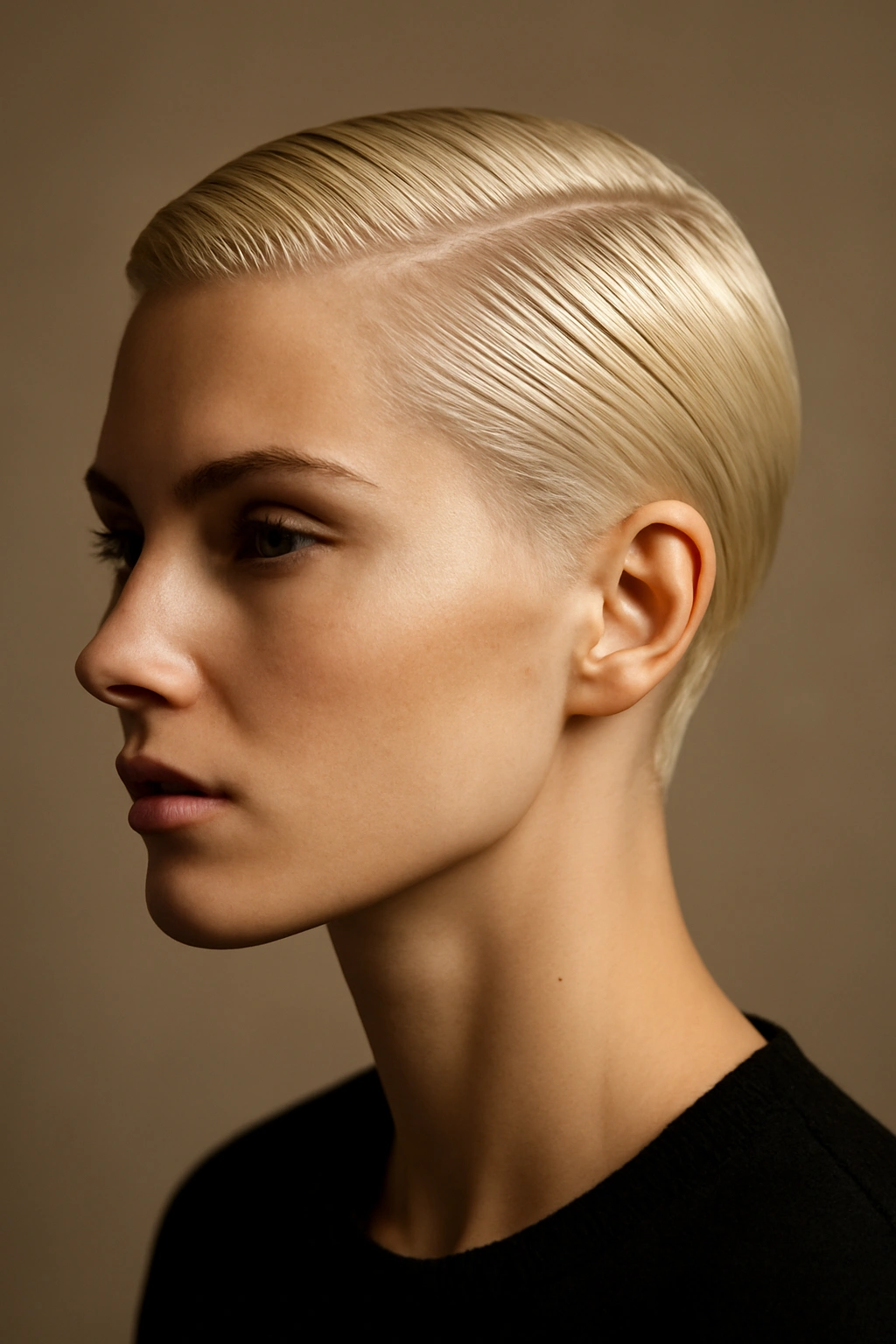
This is a super edgy, high-fashion style. Hair is cut quite short all over — maybe 1-2 inches or even shorter — and styled completely slicked back against the head with a strong-hold product or gel. There’s no volume, no texture showing, just a sleek, sculpted shape. In blonde, especially platinum or very light blonde, this reads as avant-garde and bold. It’s definitely not for everyone, but for the right person, it’s incredibly striking.
The Styling Component Is Essential
With this cut, styling is half the look. The cut itself is quite simple and minimal, but slicking it back with the right product creates the whole statement. You need a strong-hold pomade, gel, or wax that will keep everything in place without looking greasy or heavy. Different products give different finishes — some are shiny, others matte. The blonde color needs to be in great condition because there’s nowhere for it to hide.
Making This Work Long-Term
- Ask your stylist what product they recommend and where to buy it
- Discuss how often you’d need to style it this way — can you handle daily slicking back, or do you want some flexibility?
- Talk about the cut: should it be completely uniform length, or should there be some subtle variation for interest?
- Ask about color: does this style work better with a solid blonde, or does dimension help?
- Clarify whether the back of the head is tapered short or kept uniform with the top
Pro tip: This cut requires your hair to be in beautiful condition and your blonde color to be perfectly toned. Any brassiness, damage, or dullness will be very obvious when everything is slicked back with nothing to hide behind.
14. The Baby Blonde Waves
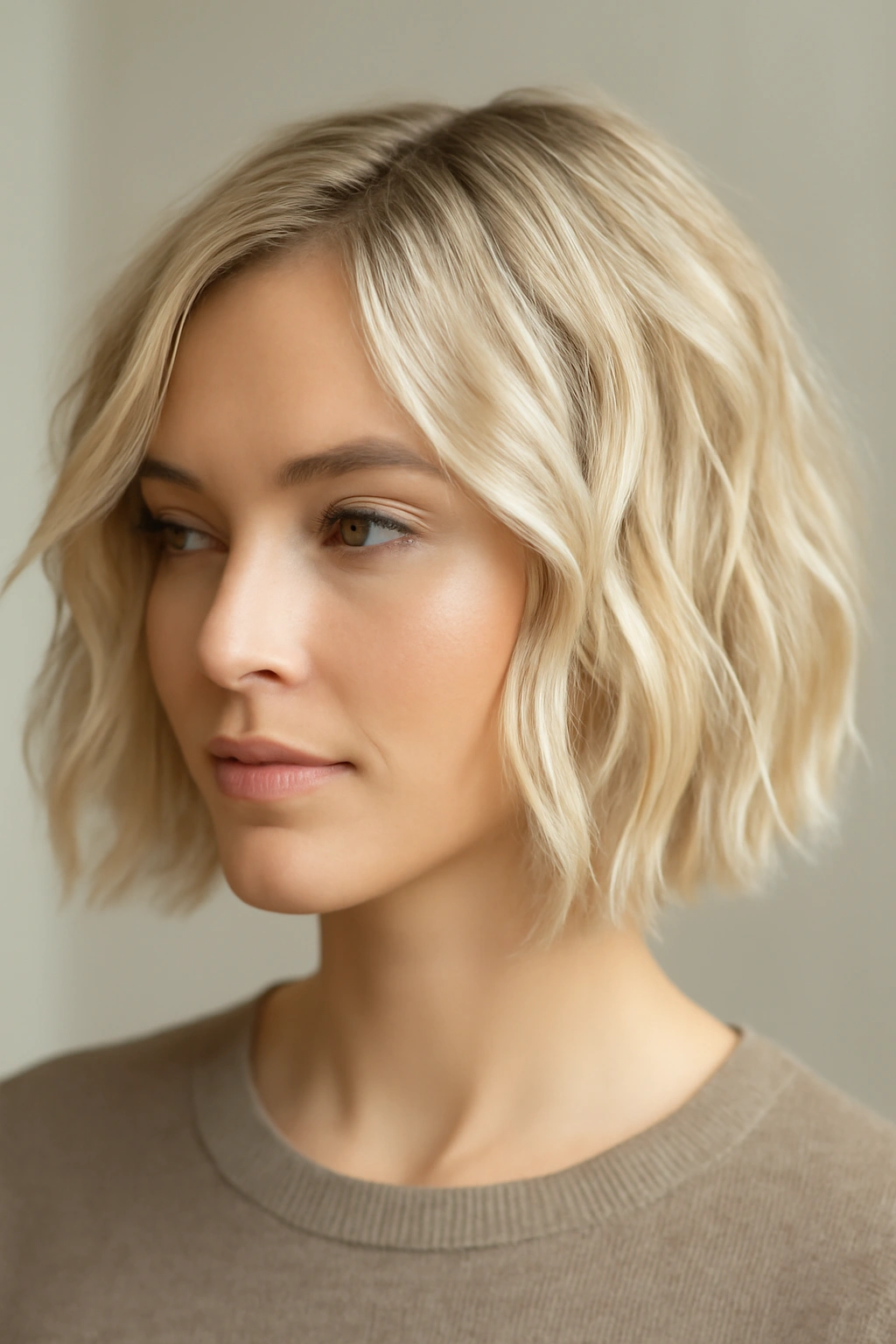
This is a softer, more romantic short cut that combines short length with intentional waves. Hair sits around chin-length or slightly shorter, with a relaxed, wavy texture that looks like you’ve just walked in from the beach. The waves should look effortless, not heavily styled or crimped. In blonde — especially pale blonde or blonde with some lighter pieces — this reads as dreamy and feminine. It’s a style that looks casual but actually requires some intentional styling or natural wave pattern to pull off.
Creating Effortless-Looking Waves
The key to this look is that the waves appear undone while actually being somewhat intentional. Your stylist should cut the hair with layers and texture that encourage waves naturally, or you’ll need to style them in with a curling iron or salt spray. The cut itself might be relatively simple — maybe a classic bob or short layered cut — and then the styling and wave pattern create the vibe. The blonde color should have some softness to it to enhance the romantic feel.
What to Discuss with Your Stylist
- Bring reference photos showing the exact wave pattern and looseness you want
- Ask about the cut beneath the waves: is this a bob, layered cut, choppy style, or something else?
- Discuss styling requirements: can you achieve these waves naturally with your hair texture, or do you need tools?
- Ask what product recommendations your stylist has for creating and holding the waves
- Talk about whether you want uniform waves all over, or more waves in some sections and straight in others
- Clarify the color: should it be solid blonde, or do some lighter pieces help enhance the waves?
Worth knowing: If you don’t have naturally wavy hair, this style requires daily styling with a curling iron or hot tool, plus styling product to hold the waves. Make sure you’re willing to commit to that before choosing this cut.
15. The French Girl Pixie
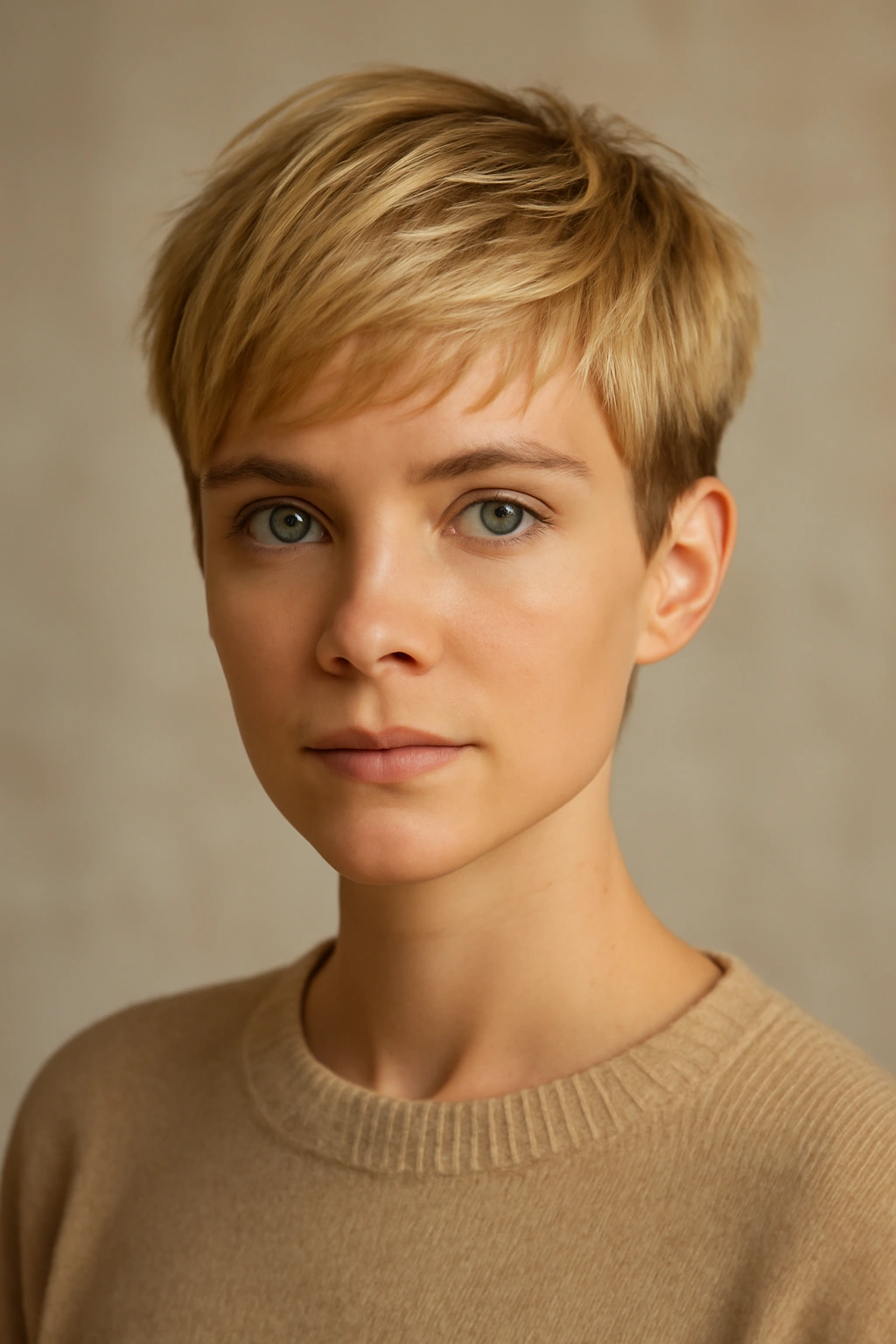
This is the most romantic, feminine version of a pixie cut. It combines the short, tapered sides and back of a pixie with longer pieces on top that are tousled and romantic rather than stiff or perfectly styled. Think less “chic architectural cut” and more “I just woke up with perfect hair.” In blonde, especially soft, tousled blonde with some warmth or dimension, this reads as effortlessly Parisian and cool.
The Styling Philosophy
The French Girl Pixie is all about looking undone while actually being somewhat intentional. Your stylist should create layers on top that naturally fall into a slightly tousled position, with longer pieces around the face that frame your features softly. You might use a texturizing product or sea salt spray to enhance the tousled effect, but it shouldn’t look heavily styled or crispy. The whole vibe is “I didn’t try but somehow look great.”
How to Request This Cut
- Bring reference photos showing the exact amount of length on top and the level of tousled texture you want
- Ask about face-framing: do you want longer pieces around the face, or is it shorter all over?
- Discuss the sides and back: should they be tapered close, or left slightly longer for softness?
- Talk about styling: what product (if any) do you need to achieve the tousled look?
- Ask whether this cut works with your hair texture or if you’ll need daily styling effort
- Clarify the color approach: should it be solid blonde, or would some dimension enhance the romantic vibe?
Pro tip: This cut works best if you’re willing to embrace a slightly undone aesthetic and use a light texturizing product. If you prefer everything perfectly polished or prefer styling that’s completely product-free, this might feel too casual for your taste.
Final Thoughts
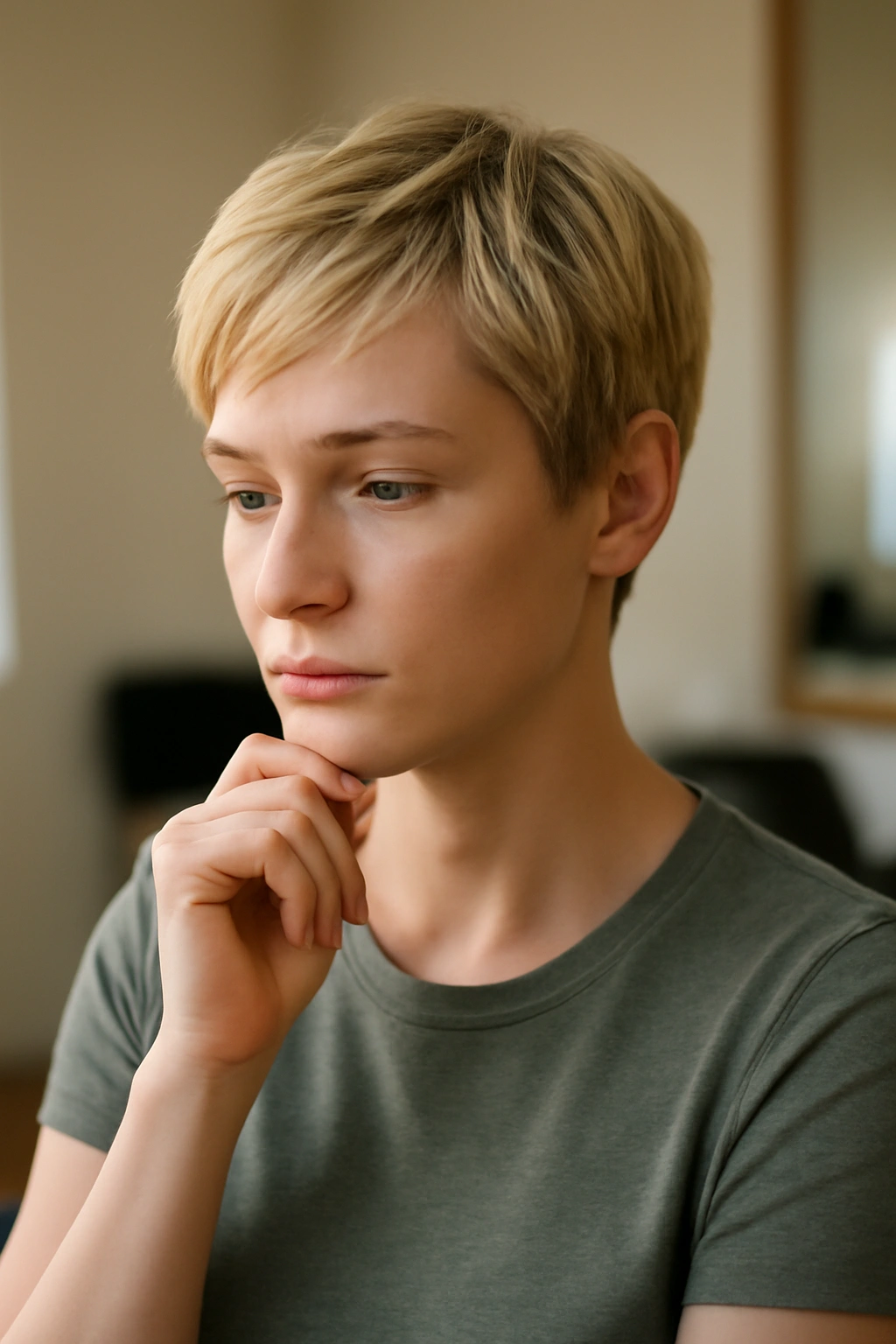
Choosing a short blonde haircut is exciting and a little scary. You’re making a visible change, and you want it to feel right. The best thing you can do is show your stylist the reference photos that genuinely speak to you — not just one photo, but multiple angles showing the length, the texture, the movement, and how the cut works with the blonde color. Talk through how much styling you’re actually willing to do daily, what your hair texture naturally does, and what your lifestyle realistically allows. A cut that’s beautiful in a photo but requires forty-five minutes of styling every morning is going to frustrate you quickly.
Your stylist’s experience with blonde hair and short cuts matters too. This is worth asking about directly. Have they done this specific cut before? Do they have photos of their work? Are they confident it will suit your face shape and hair type? A skilled stylist will also be honest if they think a particular cut won’t work for you, rather than just cutting whatever you ask for. That honesty and expertise is what turns a reference photo into a cut that actually transforms how you look and feel.
Once you have your new short blonde cut, give yourself a grace period to figure out styling. Most short cuts feel awkward for the first week or two while you’re learning how to style them and while your hair is adjusting to the new shape. Ask your stylist for specific styling instructions before you leave the salon, and don’t panic if it doesn’t look exactly like their blow-dry on day one. With a little practice and the right product, you’ll find the rhythm that works for you. Short blonde hair can be genuinely transformative — confident, easy to manage, and incredibly stylish when you choose the right cut for your life.
