



Japanese beauty and fashion have profoundly shaped global trends, and nowhere is this more visible than in hairstyling. Japanese hair aesthetics—rooted in both traditional culture and cutting-edge contemporary design—offer something distinct from Western approaches: an emphasis on movement, texture, and intentional styling that works with hair’s natural qualities rather than against them. The styles emerging from Japan’s salons combine precision cutting techniques with an understanding of how hair behaves, creating looks that feel effortlessly chic yet meticulously crafted.
What makes Japanese hairstyles so compelling is their versatility. Whether you have thick, fine, straight, or wavy hair, there’s a Japanese cut or style engineered specifically for your hair type. These aren’t one-size-fits-all trends—they’re frameworks that stylists adapt to individual face shapes, hair density, and personal style. Many of these cuts have gained enormous popularity beyond Japan because they deliver genuine results: they photograph beautifully, they hold their shape between salon visits, and they look polished without requiring complicated daily styling routines.
The Japanese approach to hairstyling also prioritizes layering and movement in ways that create visual interest and dimension. Rather than relying solely on color or radical length changes, Japanese stylists use strategic cutting to build texture and flow into the hair structure itself. This philosophy means these styles age gracefully as your hair grows out, maintain their appeal across multiple hair textures, and work across different fashion aesthetics—whether you’re dressing maximalist or minimalist, casual or formal.
1. Hime Cut
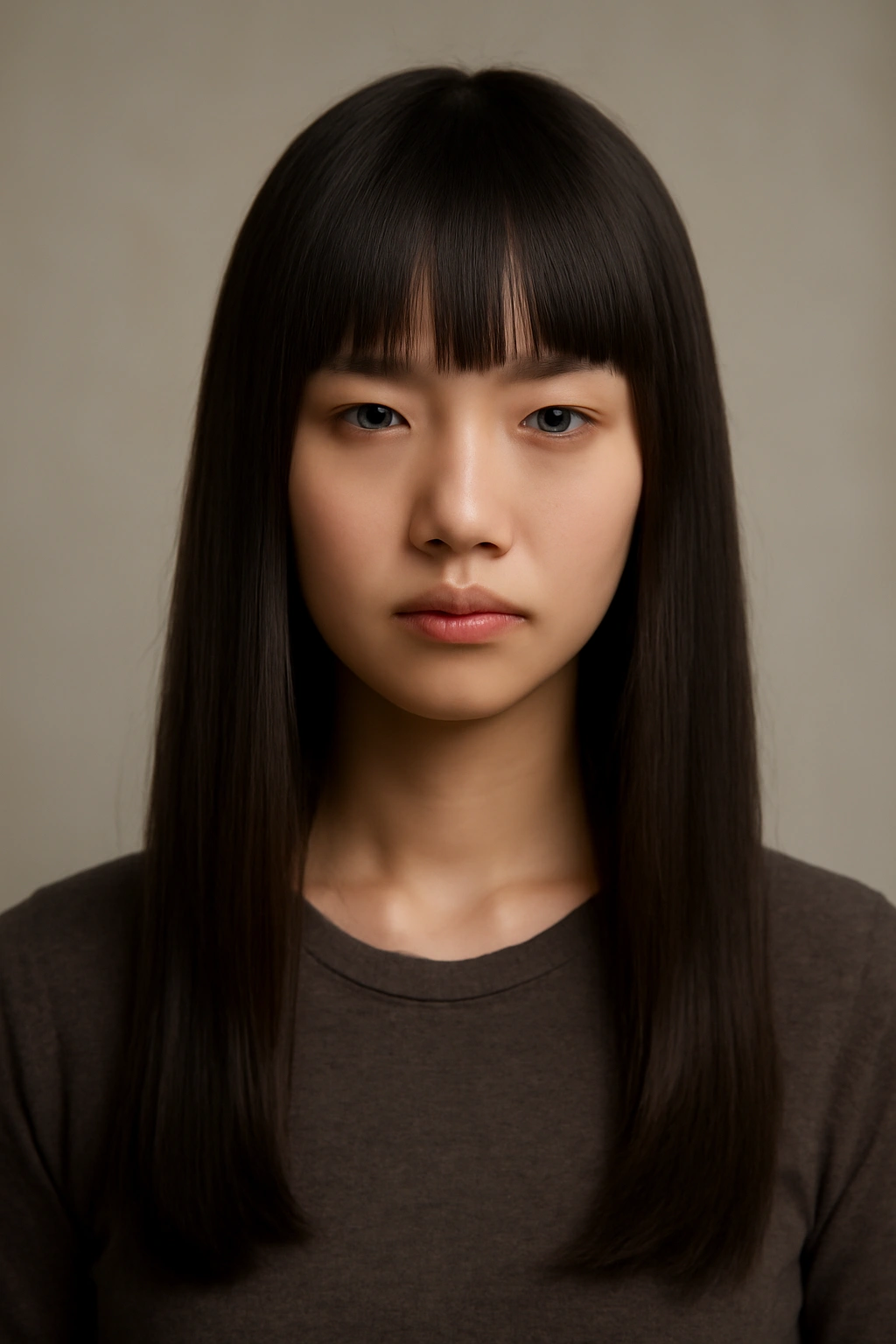
The hime cut is one of Japan’s most iconic hairstyles, instantly recognizable by its distinctive split bangs that frame the face while the back hair remains long and flowing. The name comes from “hime,” meaning princess in Japanese, and the style does carry an elegant, almost aristocratic quality. Long, blunt bangs split down the middle create two perfectly symmetrical curtains on either side of the face, while the back typically remains uncut at length, creating a dramatic contrast between the short front and long back sections.
Why This Timeless Style Stands Out
The hime cut works because it creates frame and definition around the face without requiring you to cut away length overall. The split bangs draw attention upward and emphasize the eyes and cheekbones, making it particularly flattering for people with longer or oval face shapes. What makes this cut genius is its flexibility—the long back hair can be worn down, braided, styled into buns, or curled, while the structured front bangs remain the signature element. It’s a cut that adapts to different moods and occasions while maintaining its distinctive identity.
How to Get and Wear the Hime Cut
- The front sections typically fall between cheekbone and chin length, depending on your face shape and preference
- Ask your stylist for blunt edges on the bangs rather than wispy or textured edges—the clean line is essential to the hime cut’s appeal
- The back length is entirely your choice; many people wear this cut with hair down to the mid-back or waist
- Style by keeping the front sections smooth and glossy, using a blow dryer and round brush to create a subtle inward curve at the ends
- The hime cut photographs beautifully and works especially well paired with traditional or avant-garde fashion aesthetics
Pro tip: If you love the hime cut concept but aren’t ready for actual bangs, ask your stylist for a modified version where the split sections are longer and blend more gradually into the rest of your hair.
2. Wolf Cut
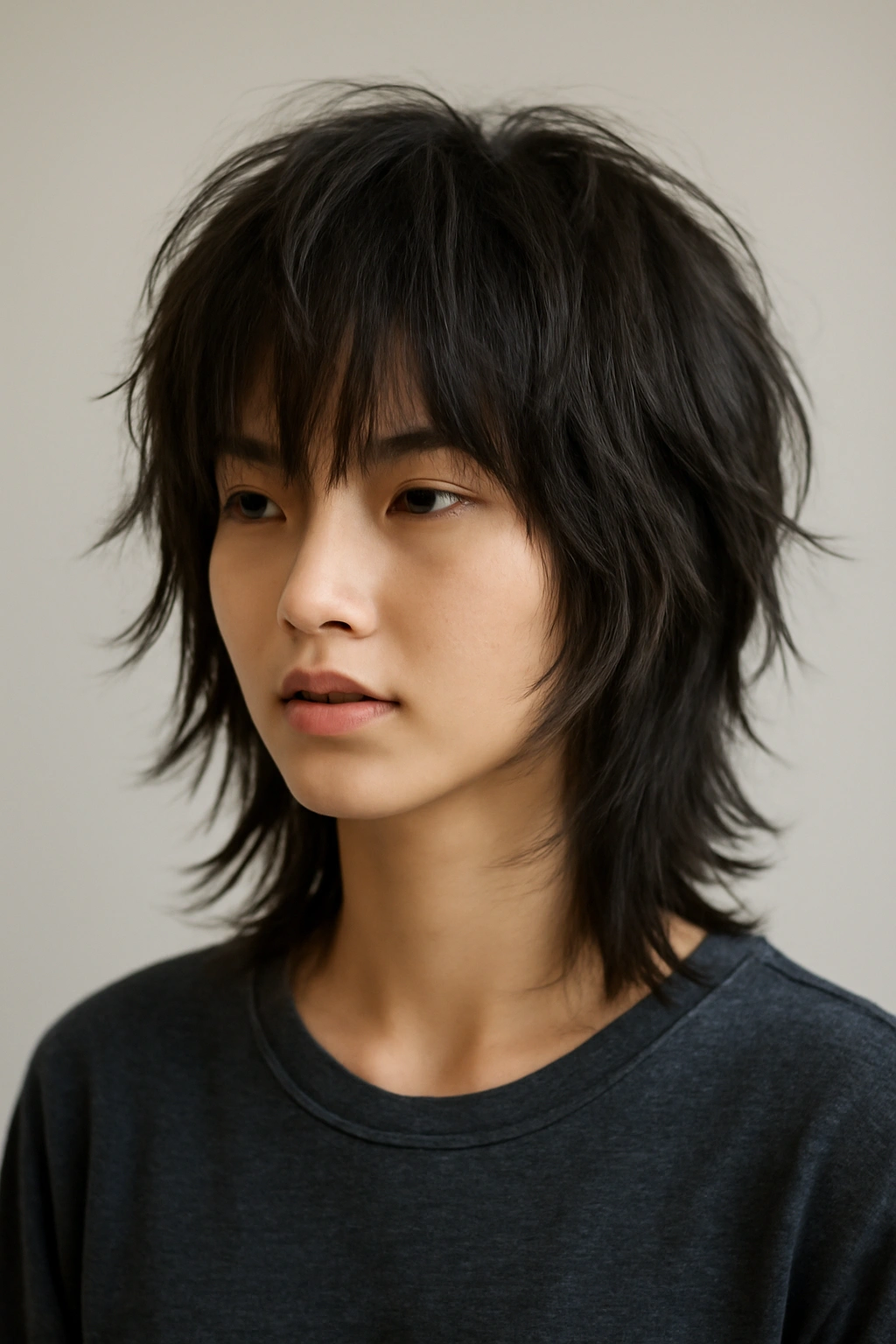
The wolf cut combines the best elements of a shag and a modern bob, creating a hybrid style with choppy layers throughout, textured ends, and a tousled, deliberately undone aesthetic. The name references the wild, slightly unkempt look—like a wolf’s fur—that results from the strategic placement of shorter and longer layers. Unlike a traditional shag which can feel heavy, the wolf cut distributes layers more intentionally, creating movement and dimension while keeping enough length that it doesn’t feel too short.
What Makes the Wolf Cut So Appealing
The wolf cut works across an incredible range of hair types because it’s specifically designed to create texture and movement rather than rely on your hair’s natural texture. If you have fine or straight hair, the layers create the illusion of density. If you have thick or wavy hair, the layers prevent bulk while enhancing your natural movement. The undone styling attitude means this cut actually looks better when it’s slightly messy—no taming required. This is a cut that rewards a quicker morning routine and looks fresher with every wash, not worse.
Styling and Maintenance Details
- Typically shoulder-length or slightly longer, with the shortest layers around mid-cheek and longer pieces extending to collarbone or beyond
- Works beautifully with both bangs and without; many wolf cuts feature shorter, feathered front sections that frame the face
- Requires a good blow-dry with a diffuser or finger-drying method to activate the texture and layers
- Pairs perfectly with texture sprays, sea salt sprays, or light styling creams that enhance the lived-in movement
- Looks intentionally tousled, never polished or overly groomed—this is the whole point
Worth knowing: The wolf cut needs trimming every 6-8 weeks to maintain the layer definition. Letting it grow too long makes the cut lose its shape and start looking shaggy rather than intentionally textured.
3. Kitsune (Fox) Cut
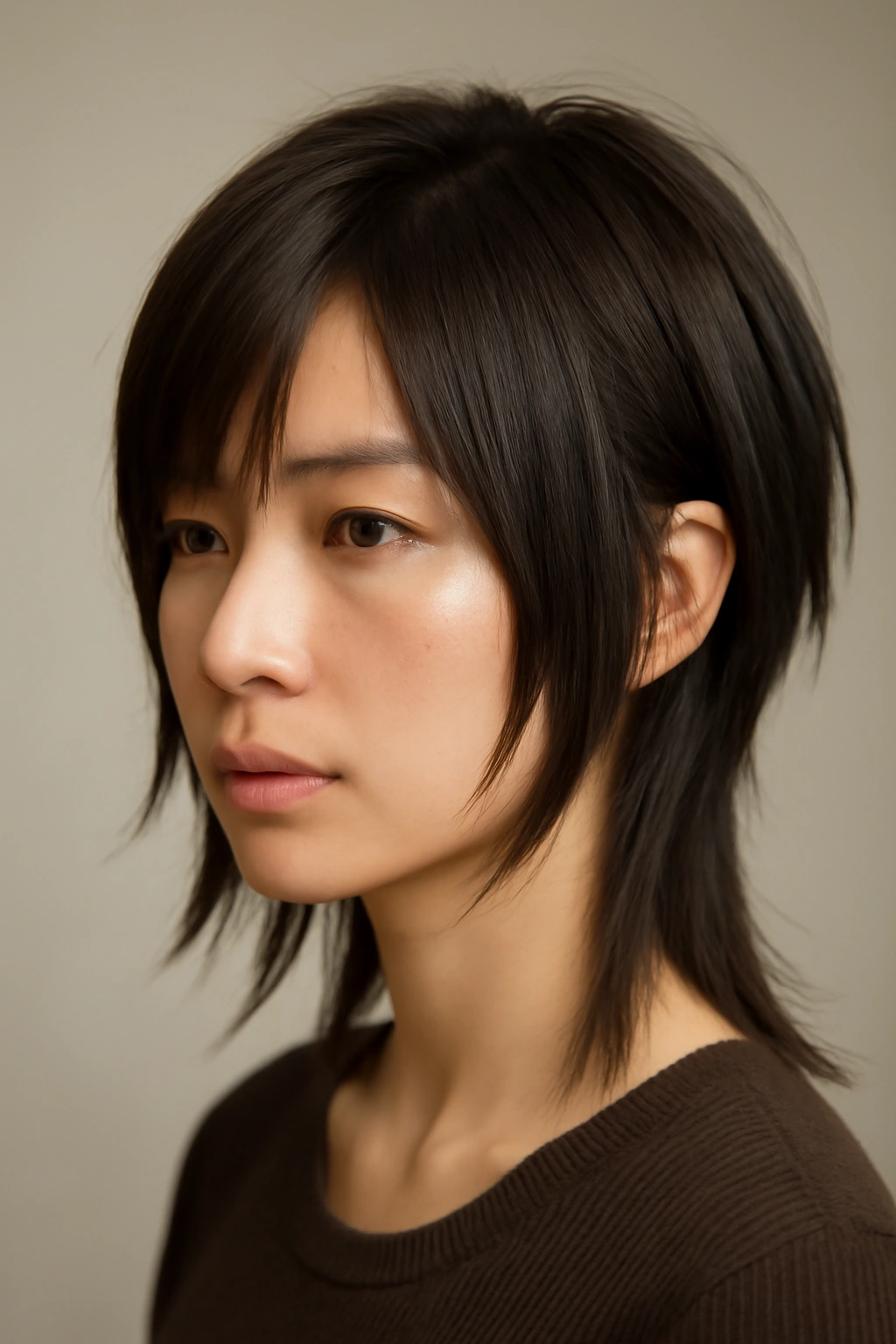
The kitsune cut, named after the Japanese fox spirit, is a shorter, more modern interpretation of the hime cut with a distinctly mischievous edge. This style features shorter face-framing layers, often with a sharper or more angled quality than the classic hime cut, and frequently includes pointed or slightly spiky elements that reference the fox’s ears. The kitsune cut celebrates asymmetry and sharp lines in ways the hime cut—which is perfectly symmetrical—does not.
The Appeal of the Playful Kitsune Aesthetic
The kitsune cut suits people who want a statement-making style with personality and edge. The shorter face-framing sections create definition and movement while keeping the overall cut more modern and less formal than the hime cut. Many versions incorporate side-swept bangs or asymmetrical elements that give a more contemporary, fashion-forward feeling. This is a cut for people who want to be noticed, who enjoy changing how they present themselves, and who appreciate a bit of theatrical flair in their appearance.
Getting the Details Right
- Typically chin-length or slightly shorter in the front, with longer pieces in the back
- Often features sharp, textured layers rather than blunt ones, giving that pointed “fox ear” quality
- Side-swept bangs are common, though some versions feature the split front sections like the hime cut
- Works beautifully with bold hair color, especially with dimensional coloring that highlights the layered structure
- Requires regular styling and some product to achieve the deliberately spiky, textured appearance
Pro tip: The kitsune cut is dramatically enhanced by playing with color—consider asking your colorist about adding highlights or lowlights that catch the light differently in the textured sections.
4. Curtain Bangs with Layers
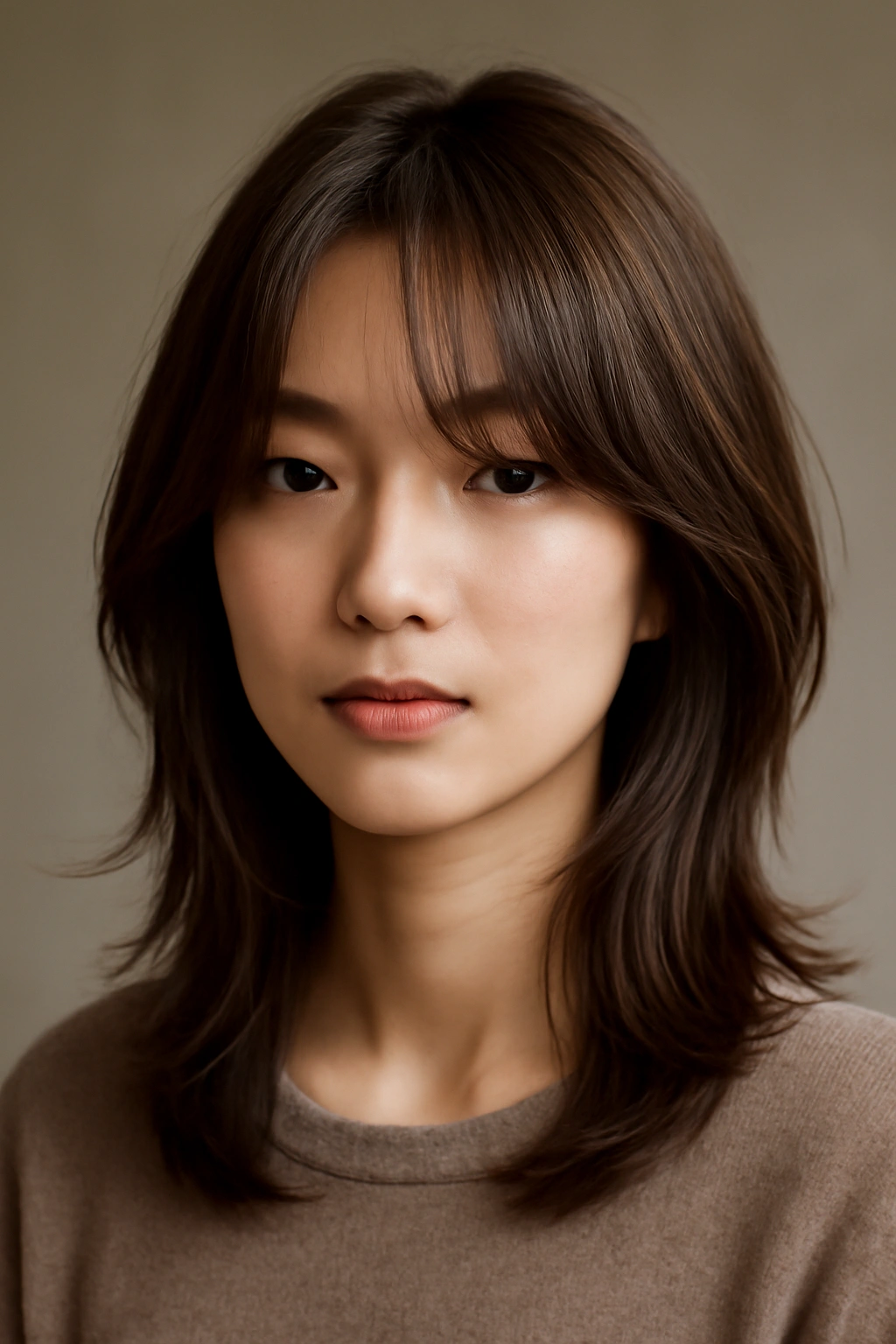
Curtain bangs have become a mainstay of contemporary Japanese hairstyling, offering a softer, more romantic alternative to blunt styles. These are bangs that part down the middle and sweep away from the face, creating a lightweight frame that flatters nearly every face shape. When combined with strategically placed layers throughout the hair, curtain bangs create a style that feels effortlessly beautiful—what Japanese stylists call “natsukashii,” meaning nostalgic or wistfully attractive.
Why Curtain Bangs Work for Nearly Everyone
Curtain bangs are exceptionally flattering because they don’t hide the face—instead, they frame it. The gentle movement away from the face creates an opening effect that actually makes faces appear more open and eyes more visible. Combined with layered lengths, curtain bangs create movement and flow that makes any hair type look fuller and more textured. This is a cut that works at every phase—as it grows out, it doesn’t require constant maintenance, and it blends smoothly back into longer hair rather than creating awkward phases.
Building the Perfect Curtain Bang Look
- Curtain bangs typically start at mid-forehead and extend to cheekbone length or slightly longer
- Pair with layers throughout; the first major layer should fall at approximately cheekbone length to echo and complement the bang length
- Additional layers can be added throughout to create movement and texture without making hair look thin or wispy
- Style by blow-drying the bangs away from the face with a round brush, creating a gentle curve rather than a sharp separation
- Curtain bangs look best when slightly undone—a bit of texture spray or dry shampoo enhances the movement rather than harming it
Worth knowing: Curtain bangs have a bit of a growth period where they’ll be a bit awkward, lasting roughly 4-6 weeks. Many people find this period annoying, so consider asking your stylist about styling methods to push through it.
5. Bubble Braids with Integrated Layers
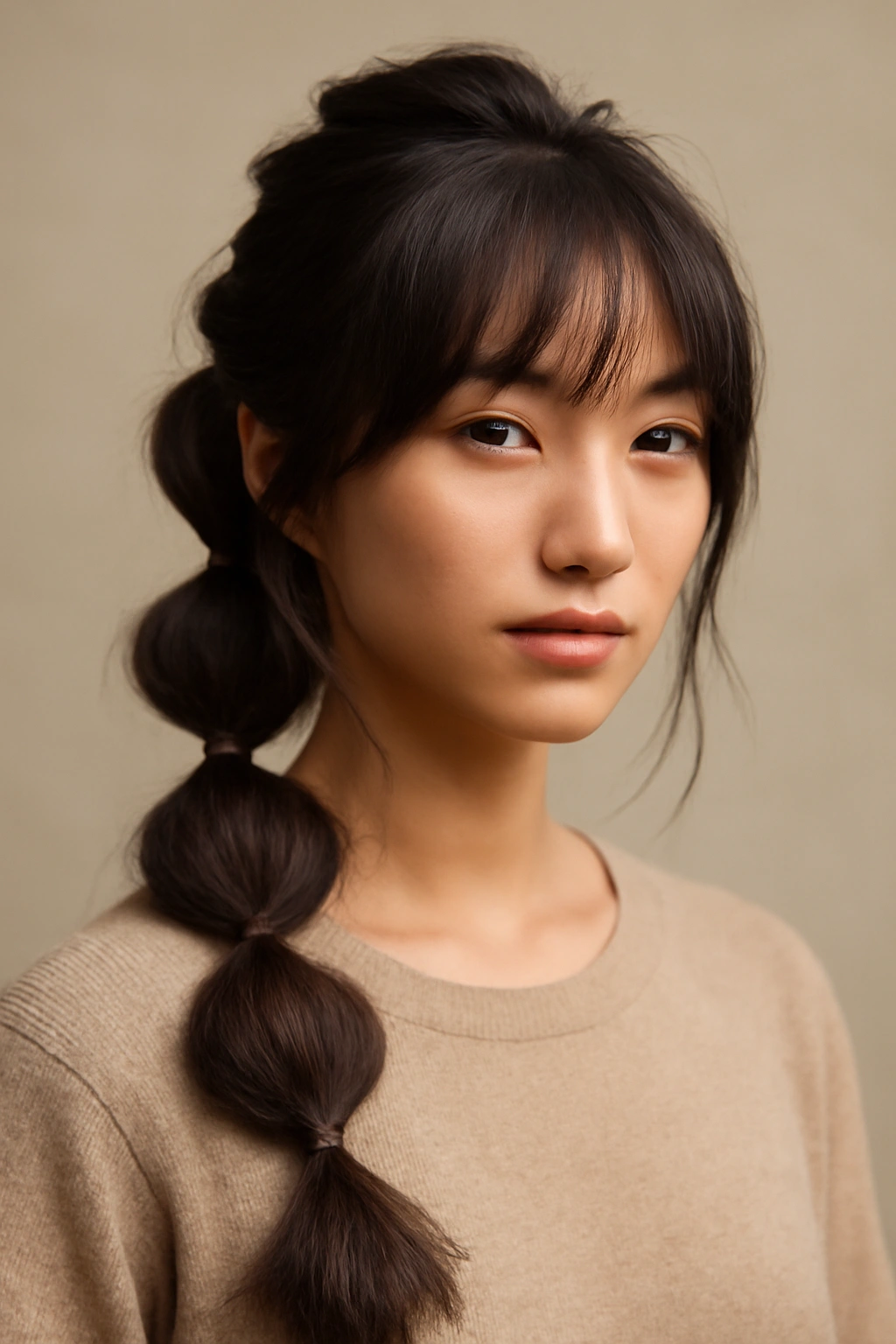
Bubble braids represent the intersection of Japanese styling artistry and creative braiding, featuring a ponytail divided into sections (bubbles) that create a dimensional, sculptural quality. This isn’t just a simple ponytail with elastic bands—the sections are carefully proportioned and styled to create visual interest and movement. When integrated with layers cut into the hair, bubble braids become a style that’s equally striking worn down as it is styled up.
The Visual Appeal of Bubble Braid Styling
Bubble braids are visually striking and photograph beautifully, making them popular for special occasions and styled shoots. The segmented quality creates a playful, dimensional look that catches light differently in each bubble section. When done with curved, wavy hair or hair with movement, bubble braids look even more dramatic. The genius of this style is that it works as both an everyday casual look and a more elaborate dressed-up version—it scales beautifully from casual to formal.
Creating and Wearing Bubble Braids
- Start with hair that has light waves or texture; straight hair requires more product and styling effort to maintain the bubble shape
- Create a high or mid-height ponytail as your base, depending on the look you want to achieve
- Divide the ponytail into 4-6 sections using small elastic bands, spacing them evenly down the length
- Gently tease and fan out each bubble section to create dimension—this creates the sculptural quality
- Works beautifully with accessories like small clips, pearl bands, or ribbons threaded through the elastic sections
- Pairs well with any hairstyle, but looks especially striking when the hair has visible layers that create movement
Pro tip: Pearl or metallic elastic bands transform a casual bubble braid into something elegant; the right accessory choice completely changes the vibe.
6. Space Buns with Textured Styling
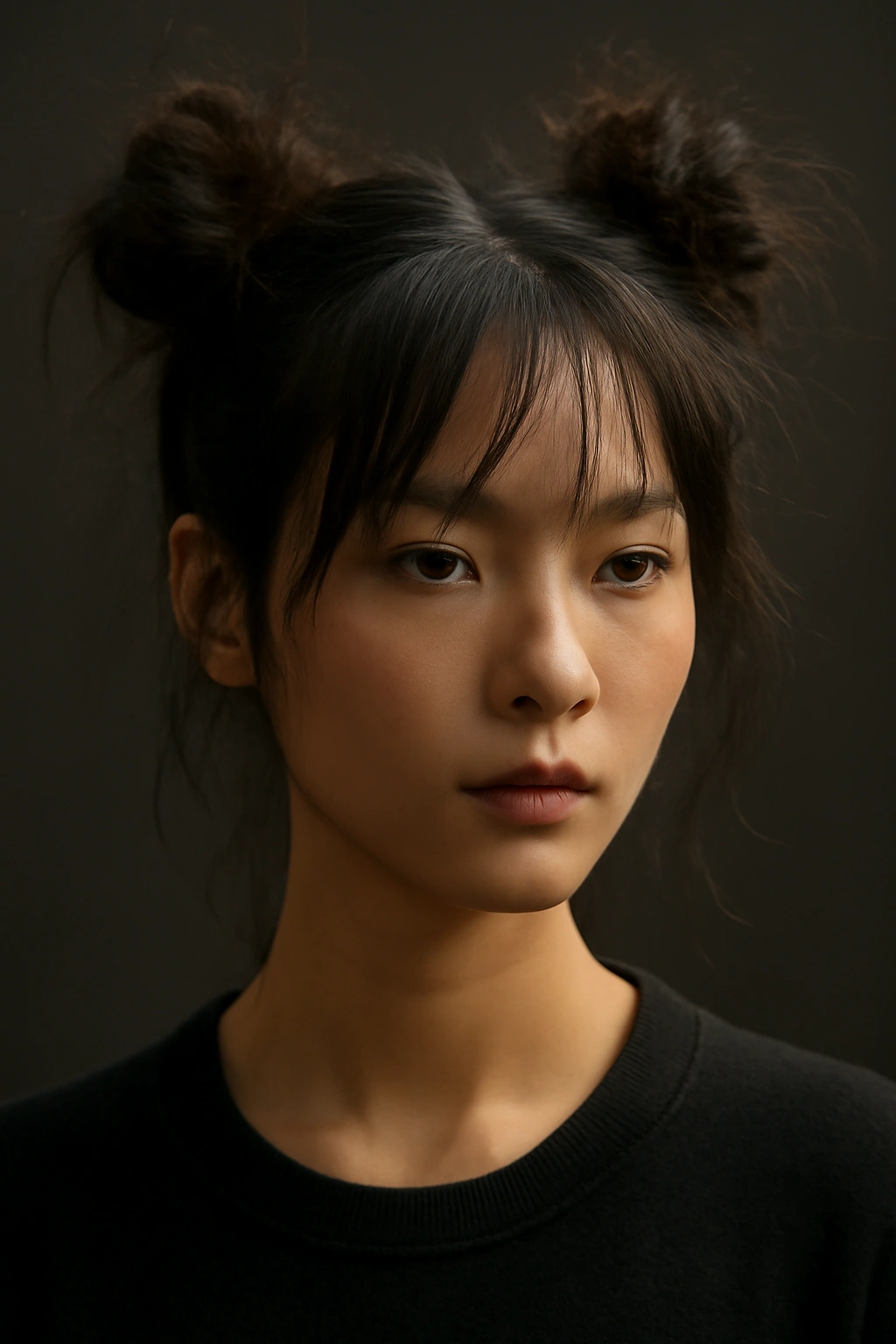
Space buns are a beloved Japanese styling technique where two buns are positioned high on the crown, creating a playful, youthful aesthetic. The term comes from the visual similarity to space or futuristic imagery. What distinguishes the Japanese approach is the emphasis on texture and the sophisticated way these buns are often styled—not always perfectly rounded, but deliberately textured, with wisps and dimension that make them feel more editorial than childish.
Why Space Buns Feel Contemporary Rather Than Juvenile
The key difference between space buns that feel playful-but-adult and those that read as purely childish is the texture and styling approach. Rather than slicking hair back into tight, perfect buns, Japanese stylists create looser, more deliberately imperfect buns with intentional wisps and textured sections. This approach—paired with the right makeup, clothing, and overall styling—reads as cool and editorial rather than costume-like. It’s the same principle as the wolf cut’s “intentionally undone” aesthetic applied to bun styling.
Executing Space Buns That Feel Elevated
- Create two sections by making a horizontal part across the crown; clip the bottom section out of the way
- Gather the top section into two separate high ponytails at the temples, positioned where you’d imagine ears on the space bun concept
- Twist each ponytail loosely and wrap it around its base to form the bun
- Rather than securing tightly, leave some wisps and texture visible around the bun
- Use bobby pins in a color that matches your hair to secure, and strategically pull small sections out for movement
- Add decorative elements like small clips, hair gems, or delicate chains for a more sophisticated, editorial feel
Worth knowing: The spacing of your two buns matters significantly for how the overall look reads. Position them at the very crown of your head (where they’re equidistant from the center) for a balanced, intentional look rather than at the sides of your head.
7. Butterfly Cut
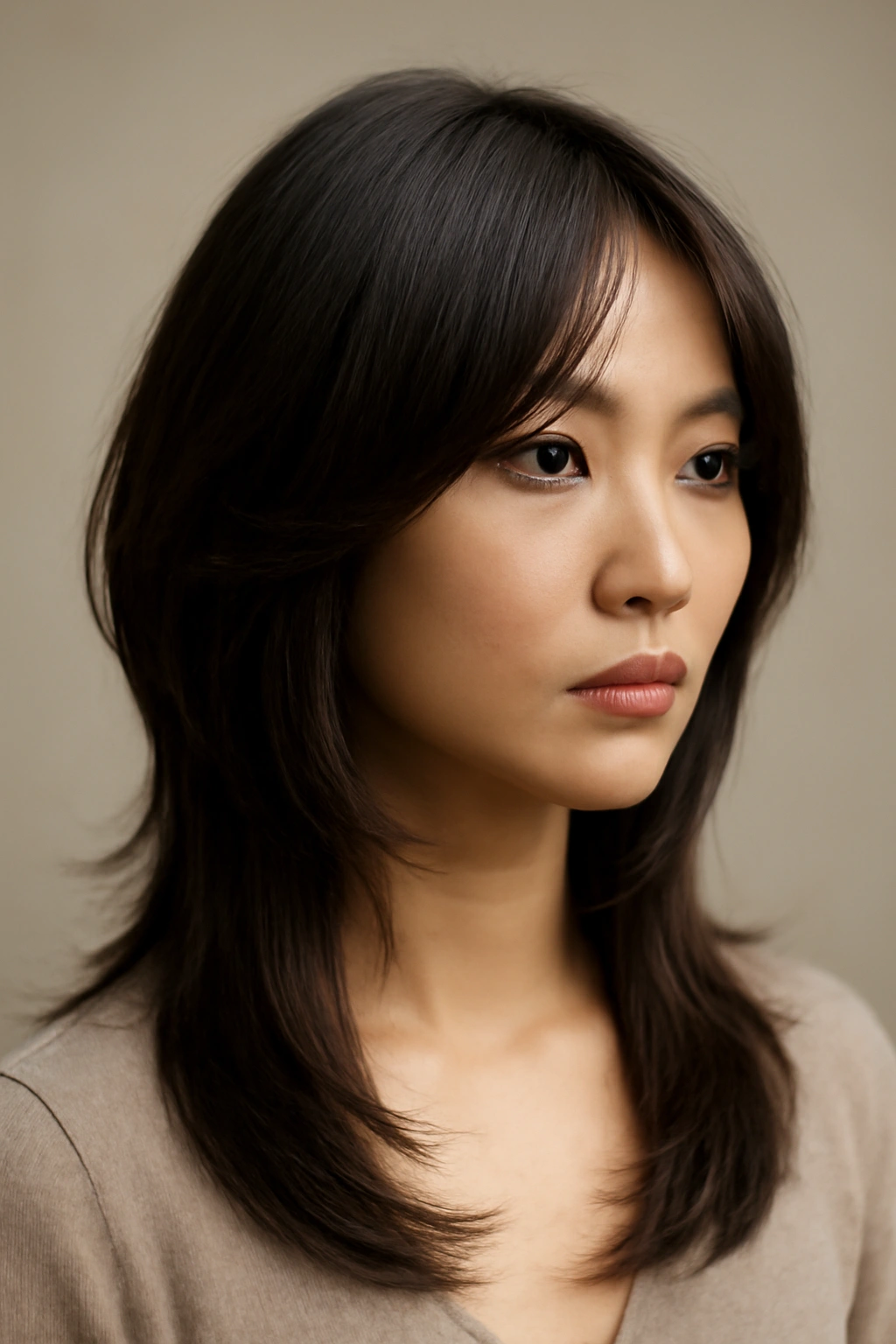
The butterfly cut is a modern, face-framing technique where shorter layers are concentrated around the face, creating what looks like butterfly wings, while the back length is preserved. This cut marries the movement and dimension of a heavily layered cut with the practicality of keeping significant length. The result is a style that feels contemporary and dimensional without the commitment of a complete short cut.
Why the Butterfly Cut Is So Versatile
The butterfly cut works beautifully across different hair types because the shorter face-framing layers do the heavy lifting—they create texture and movement even if your hair is naturally straight or fine. The longer back sections preserve length for styling options and create an interesting contrast with the shorter front sections. This cut ages gracefully too; as your hair grows out, the overall shape becomes softer and more blended rather than awkward or broken up.
Getting the Butterfly Cut Right
- Face-framing layers should be significantly shorter than the back length, creating a noticeable contrast
- Shorter layers typically fall between cheekbone and chin length, depending on face shape
- The back length can be anywhere from shoulder-length to waist-length—entirely your preference
- Works well with or without bangs; some versions incorporate curtain bangs or side-swept styles
- Styling involves blow-drying the face-framing sections forward and slightly outward to emphasize the butterfly-wing effect
- The longer back sections can be worn straight, wavy, or curled depending on your style preference and hair type
Pro tip: If you have fine hair and worry about the face-framing layers looking too thin, ask your stylist about point-cutting or texturizing techniques that create the appearance of density without thinning the hair further.
8. Layered Lob with Textured Ends
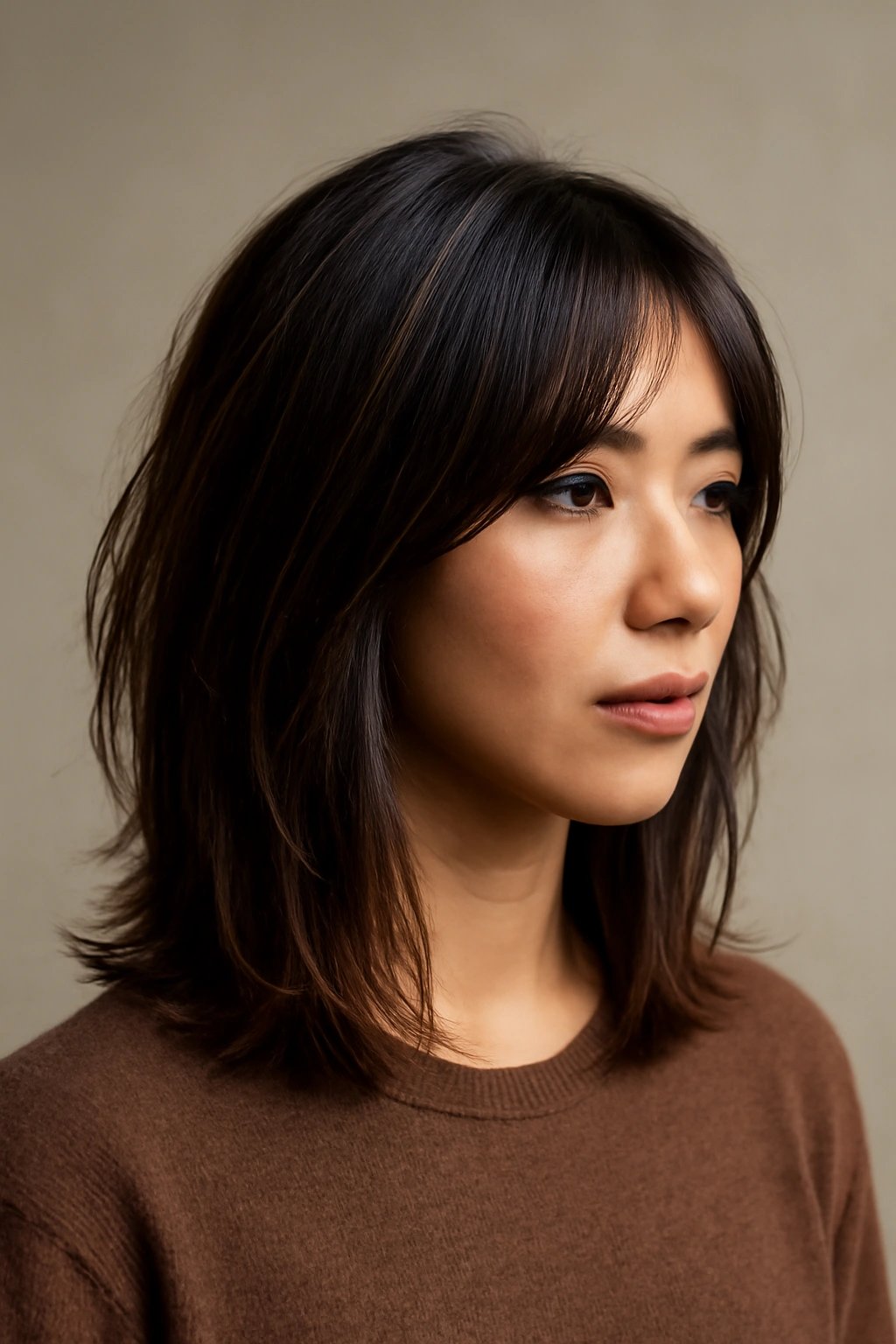
A lob (long bob) styled the Japanese way features thoughtful layering and textured ends that create movement and flow throughout. Rather than a blunt, one-length cut, the Japanese approach to the lob incorporates strategic layers that make the cut feel dynamic and contemporary. This version sits somewhere between a traditional bob and shoulder-length hair, offering the sophistication of a structured cut with the practicality of easier styling.
The Sophistication of a Well-Cut Lob
A properly cut lob feels effortlessly chic in a way that many other cuts struggle to achieve. The layering prevents the bluntness and weight of a one-length cut while the overall length preserves the sleekness and polish of a bob silhouette. Japanese stylists often incorporate subtle texture into the ends—not choppy or jagged, but slightly undone—that makes the lob look intentional and current. This is a cut that works in professional settings and casual situations equally well.
Styling Your Textured Lob
- Typically falls between shoulder and collarbone length, though this can be adjusted based on your preference
- Layers are distributed throughout for movement, with shorter sections around the face and longer layers in the back
- Ends are often textured or point-cut rather than blunt, creating a softer, less severe line
- Style with a blow dryer and round brush for a smooth, polished base, or finger-dry for a more textured, undone appearance
- Works beautifully with waves, curls, or straight styles depending on your hair type and mood
- Pairs well with both bold and minimal aesthetic choices
Worth knowing: A textured lob needs trims every 8-10 weeks to maintain its shape and prevent the layers from becoming too separated and choppy-looking.
9. Sleek Straight Hair with Bold Bangs
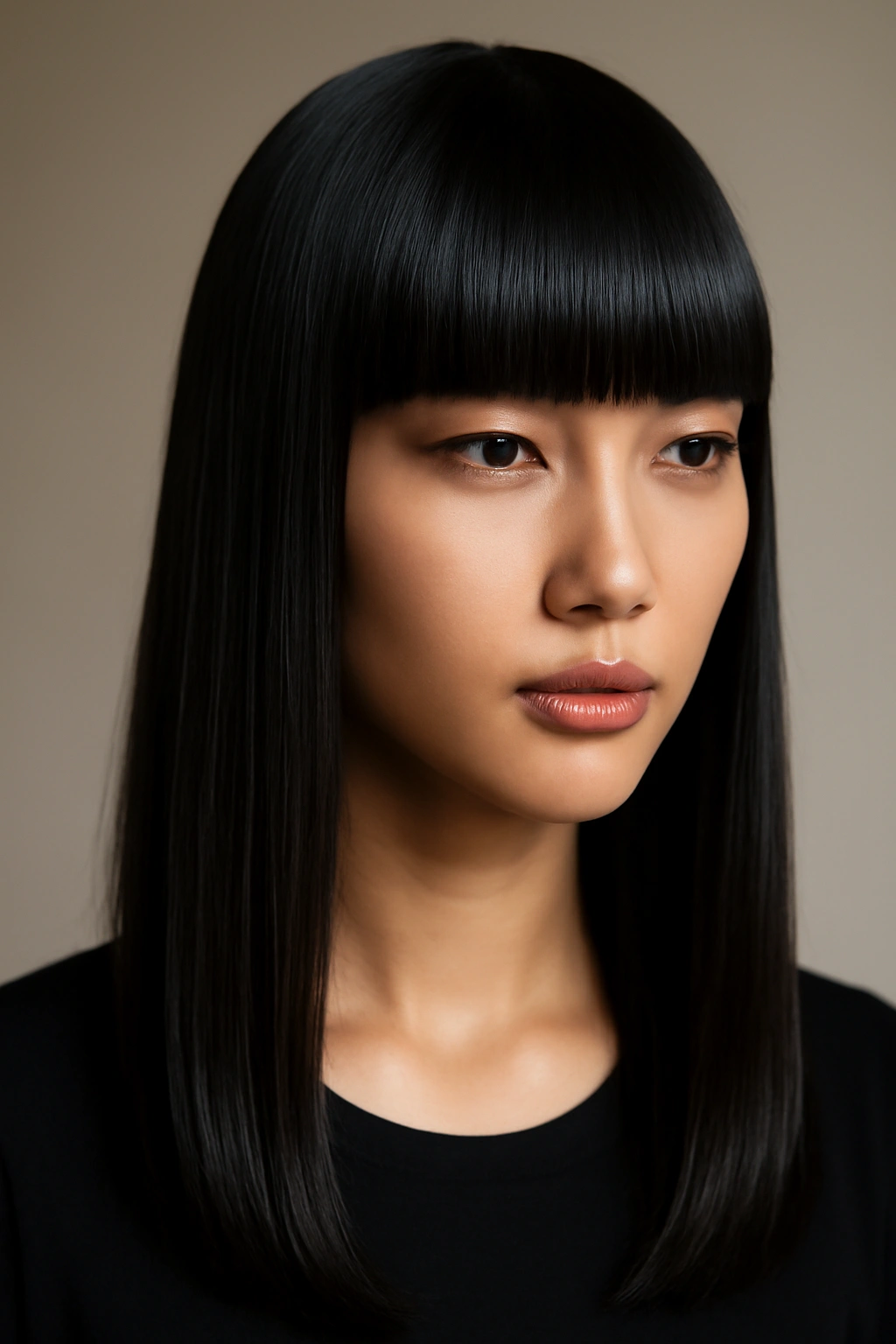
Sometimes the most striking style is the simplest: silky-straight hair with bold, blunt bangs creating a sharp contrast between smoothness and definition. This look emphasizes the beauty of straight, healthy-looking hair and relies on a specific kind of shine and smoothness that Japanese hair care is famous for achieving. The bold bangs serve as the statement-making element, creating drama and focus without additional texture or layering.
The Power of Simplicity and Shine
This look is striking precisely because it’s understated in some ways and bold in others. The straight hair is pure, uncomplicated elegance—it requires a good blowout and quality products, but the styling itself is straightforward. The blunt bangs, by contrast, are maximalist and attention-getting. The combination creates a balanced aesthetic that feels both modern and timeless. This style lets your face, bone structure, and complexion shine rather than relying on texture or complexity to create interest.
Achieving the Sleek Straight Look
- Blunt bangs typically fall at eyebrow level or just slightly below; they should be perfectly straight and precise
- Hair is blown out completely straight using a flat iron and smoothing products
- Requires quality shampoo and conditioner designed for smoothness and shine; Japanese brands excel here
- Use a smoothing serum or oil after blow-drying to add gloss and eliminate frizz
- The key to this look is healthy, shiny hair—it’s less forgiving than textured styles, so hair health is non-negotiable
- Works best for people with naturally straight or very manageable hair; if your hair tends toward wave or curl, expect to use styling tools regularly
Pro tip: Invest in a quality blow dryer with ionic technology; it makes a significant difference in achieving the smooth, glossy finish this style requires.
10. Zigzag Part with Dimensional Layers
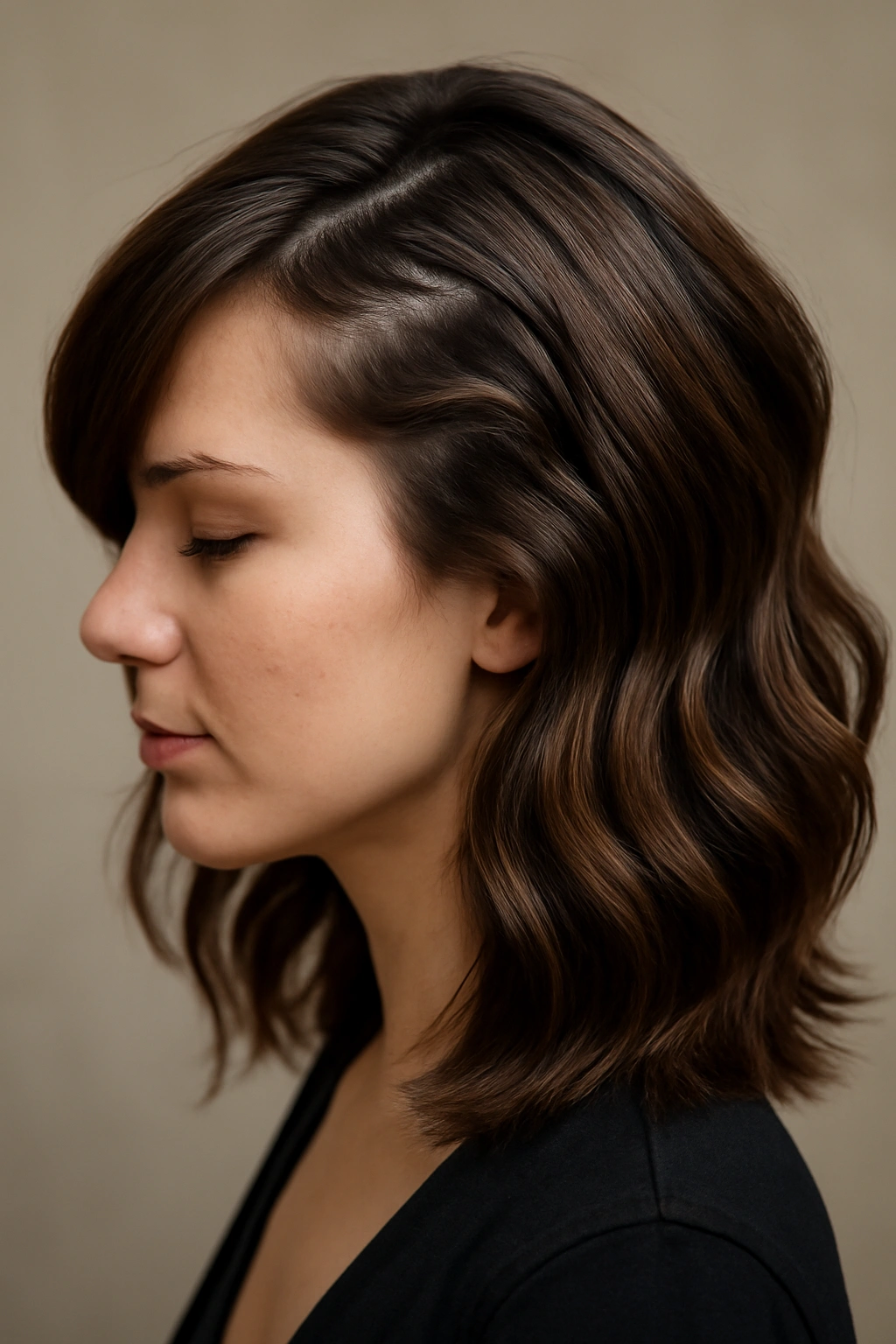
A zigzag or zig-zag parting pattern combined with strategically placed dimensional layers creates an interesting visual effect that’s both sophisticated and eye-catching. Rather than a simple center or side part, the zigzag creates movement and texture in how light hits the hair. This technique, combined with careful layering that emphasizes the parting pattern, creates a style that’s visually dynamic without being overly complicated.
Why Creative Partings Create Visual Interest
The part is often overlooked as a styling element, but it actually significantly impacts how a hairstyle reads. A zigzag part creates visual interest and movement simply by changing how the hair naturally falls and how light reflects off it. Combined with layers that emphasize different sections, the zigzag part becomes a design element rather than simply a functional division of hair. This approach is particularly effective for people with finer hair, as the zigzag pattern creates the visual illusion of more dimension and movement.
Creating and Maintaining a Zigzag Part Style
- Start with a section of hair at the roots; create a zigzag pattern using a comb or rat-tail comb by dividing the parting into small triangular sections
- The depth of the zigzag can vary; deeper zigzags create more dramatic visual interest, while shallower ones are more subtle
- Pair with layers that are positioned to follow or emphasize the parting pattern
- Works particularly well with balayage or dimensional color that catches light differently in each section
- Style by blow-drying the hair away from the parting to emphasize the pattern
- This look benefits from a light texture spray or dry shampoo applied before parting
Worth knowing: Zigzag parts are easier to maintain if you apply them after blow-drying rather than trying to create them on wet hair.
11. Textured Waves with Soft Side Part
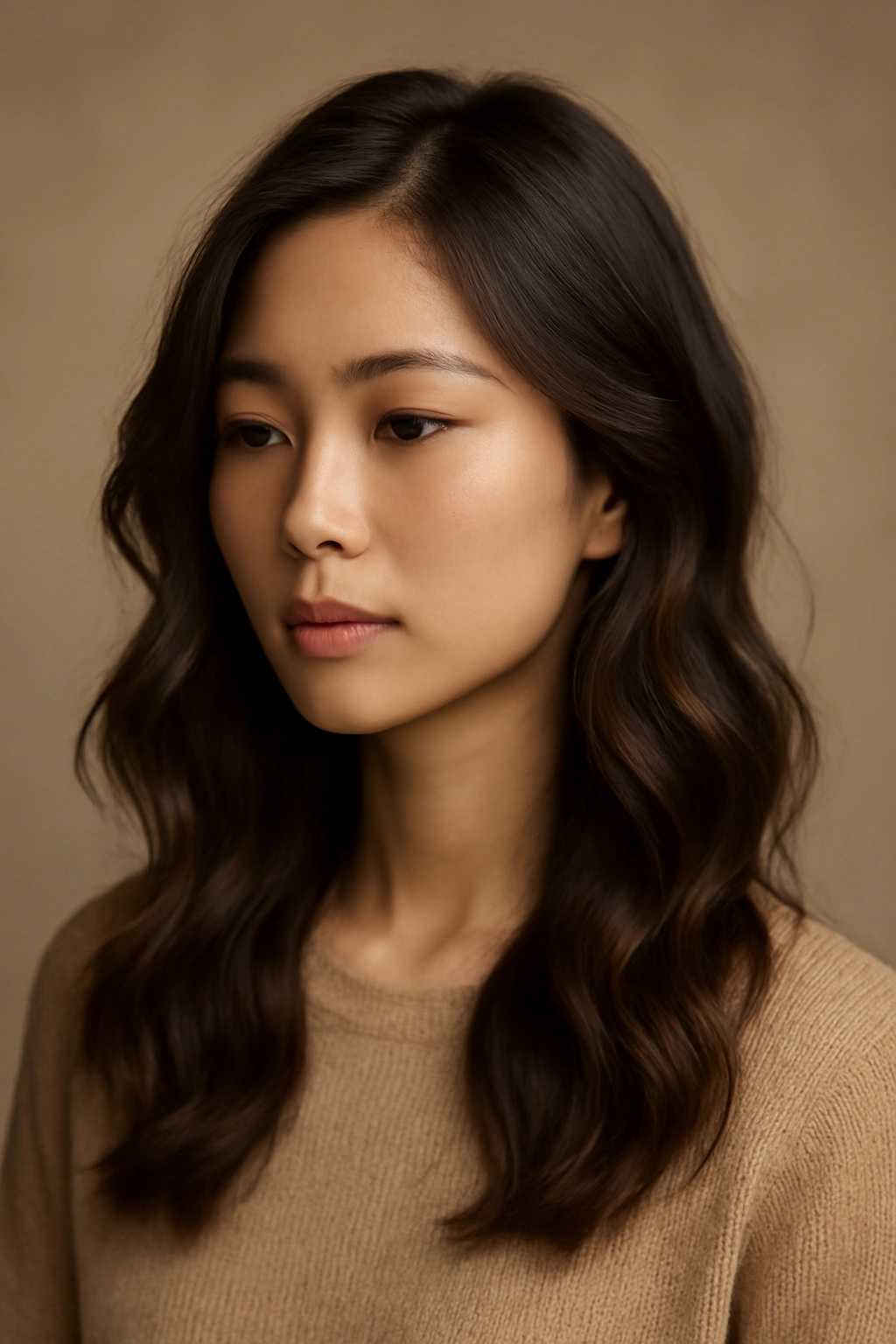
Textured, gentle waves combined with a soft side part create a romantic, effortlessly feminine aesthetic that’s been popular in Japanese fashion for years. This isn’t the heavily crimped or tightly curled look of previous decades—instead, the waves are loose and flowing, created through styling rather than cut structure, and designed to look naturally achieved rather than obviously styled. The side part adds asymmetry and elegance without requiring sharp lines.
The Romance of Intentional Waves
Waves created with intention—whether through heat styling, braiding methods, or curl-friendly products—create an entirely different aesthetic than random texture. The waves in this style are positioned to create movement and flow, flattering the face through the direction and size of the wave pattern. Combined with a soft side part, this creates a style that feels both polished and natural. It photographs beautifully and works across different hair types and lengths.
Achieving Textured Waves and Side Parts
- Works best on hair of any length; very short hair requires more precision to style waves, while longer hair holds waves more easily
- Create waves using a curling wand, braiding while damp and leaving overnight, or using a wet-to-dry styling product designed to enhance natural wave pattern
- Wave size can be varied; larger waves feel more romantic and soft, while tighter waves feel more intentional and styled
- The side part should fall slightly off-center; part too far to one side reads as costume-like, while a very subtle side part is easy to overlook
- Use texturizing spray or dry shampoo before creating waves to give the product something to grip
- Waves look best when slightly undone, with some flyaways and wisps visible
Pro tip: If you’re braiding damp hair to create waves, braid loosely rather than tightly; tight braids create kinky texture rather than smooth waves.
12. Half-Up Styles with Japanese Hair Accessories
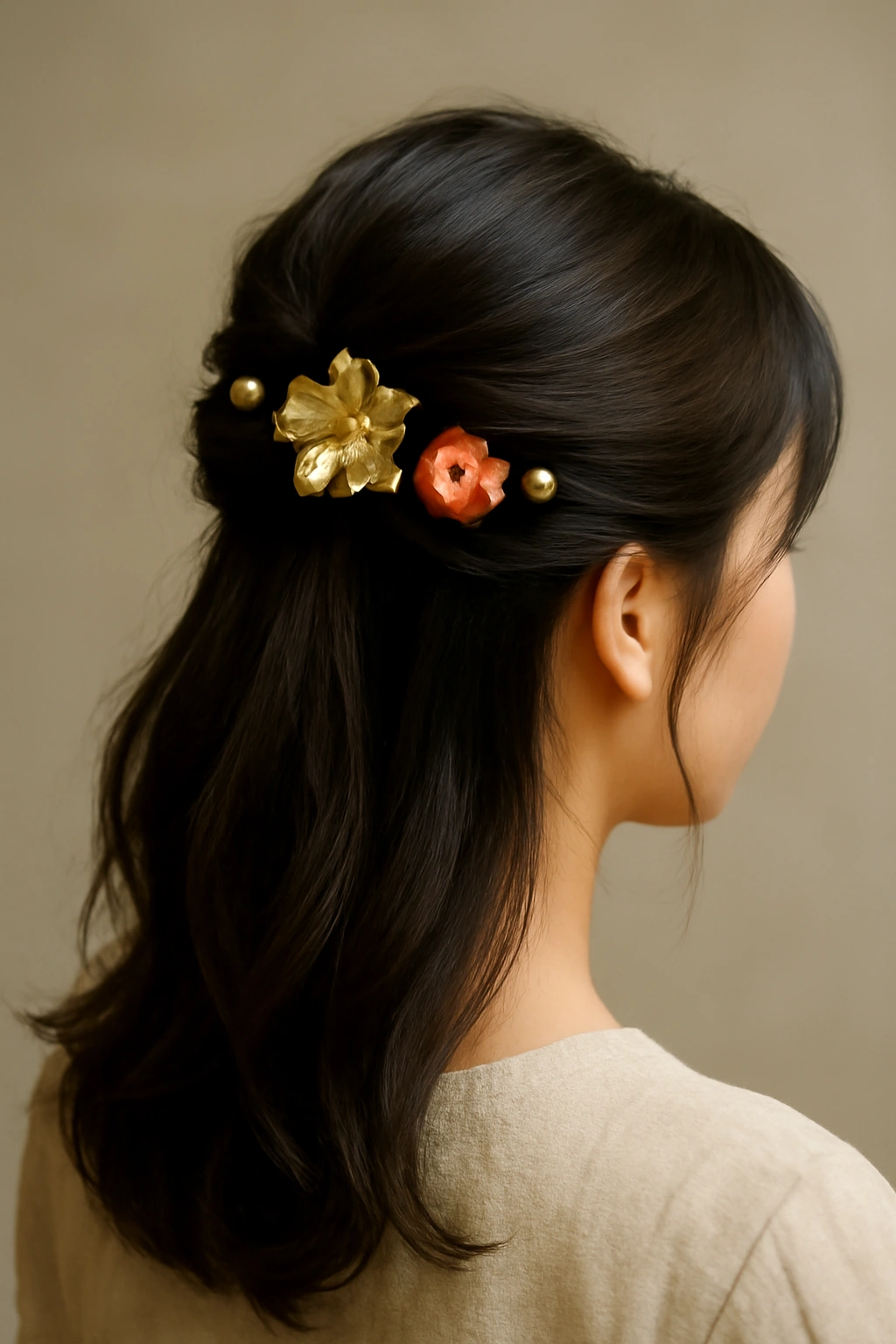
Half-up hairstyles, where the top section of hair is gathered up while the rest flows down, have been elevated in Japanese styling through the use of beautiful, often ornate hair accessories. Rather than a simple elastic band, Japanese half-up styles often feature decorative clips, hairpins (kanzashi), ribbons, or chains that transform a basic style into something special. This approach works across different hair textures and lengths, making it endlessly adaptable.
The Elegance of Strategic Accessories
A half-up style is practical—it keeps hair partially off your face while preserving length and allowing for different styling options. What makes the Japanese approach special is the recognition that the right accessory can completely transform the vibe. A pearl clip makes it elegant; a delicate chain makes it edgy; a silk ribbon makes it romantic. The accessory isn’t an afterthought but a central design element. This approach means you can create completely different looks using the same half-up structure by simply changing the accessory.
Styling Half-Up Looks with Impact
- Gather the top section of hair (typically starting from temple to temple across the crown) and secure with a small elastic band or hair clip
- The gathered section can be twisted, braided, or left smooth depending on the overall aesthetic
- Accessorize thoughtfully; the right piece elevates the entire look
- Works beautifully with any hair length; very long hair can be gathered high on the crown, while shorter hair might feature a lower gathering
- Combine with texture spray or waves in the bottom section for a more dimensional, interesting look
- Can be worn as a casual everyday style or dressed up depending on the accessory choice and overall styling
Worth knowing: If you’re using delicate hair accessories like kanzashi or decorative pins, position them strategically where they’ll show in a profile view—this is where they create the most visual impact.
Final Thoughts
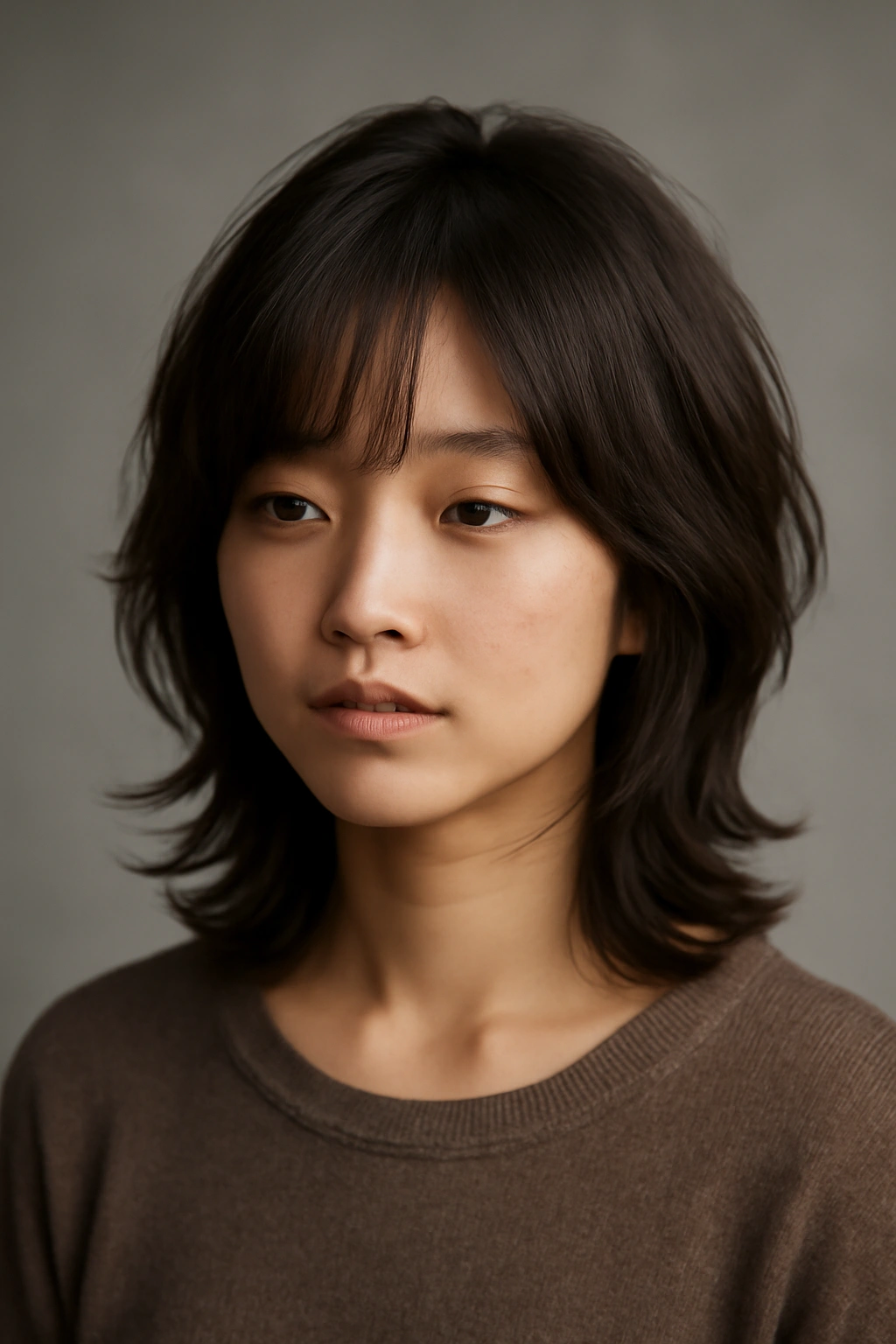
Japanese hairstyling philosophy offers something genuinely different from Western approaches: an emphasis on how a cut works with your hair’s natural properties, how layers create movement and dimension, and how thoughtful details—whether a strategic part, a carefully chosen accessory, or a specific styling technique—transform a basic haircut into something special. The hairstyles explored here range from bold and statement-making to soft and romantic, from minimalist to maximalist, but they share a common thread: they’re all engineered to look intentional and considered, never accidental or underthought.
The beauty of exploring Japanese hairstyling is that these cuts and styles are remarkably adaptable. Whether you have fine, straight hair or thick, textured hair; whether you prefer bold looks or subtle ones; whether you want something practical for everyday wear or something more fashion-forward, there’s a Japanese-inspired style that will work for you. The key is finding a stylist who understands the specific cut you’re interested in—these styles require precision and understanding of how layers and angles work together, so finding someone familiar with Japanese cutting techniques makes a meaningful difference.
Starting with a consultation where you bring images and can discuss your hair type, lifestyle, and styling preferences is crucial. A great stylist will adapt these styles to suit you rather than trying to impose a one-size-fits-all version. They’ll also be able to advise on styling methods and products that work specifically for your hair and the cut you’ve chosen. The investment in the right cut and the right stylist pays dividends in how the style looks and performs over time.
