



Choppy haircuts have become the go-to solution for anyone looking to add movement, texture, and personality to their hair without sacrificing practicality. The beauty of choppy layers is that they’re surprisingly versatile—they work whether your hair is thick and coarse, thin and delicate, curly, straight, or somewhere in between. The key is finding the right choppy cut for your specific hair type and face shape, which is exactly what this guide breaks down.
A choppy haircut uses shorter, disconnected layers that create texture and volume at different points throughout your hair. Rather than blending layers smoothly together like traditional layering, choppy cuts leave visible separation and variation in length, which gives hair movement even when you’re not styling it. This texture-first approach means choppy cuts actually work with your hair’s natural texture instead of fighting against it. Whether your hair wants to be wavy, curly, or stick straight, a good choppy cut enhances what you already have.
What makes choppy haircuts so brilliant across different hair types is that the uneven layers naturally distribute weight differently depending on your hair’s density and texture. Fine hair gets an instant boost of lift and appears fuller because the choppy layers prevent it from lying flat. Thick hair gets tamed and shaped because strategic choppy layers remove bulk without requiring constant heat styling. Curly hair thrives because choppy cuts work with curl patterns rather than against them, creating definition and bounce. Even straight hair gets personality and movement that would take serious styling effort to achieve with a traditional cut.
1. Short Choppy Pixie
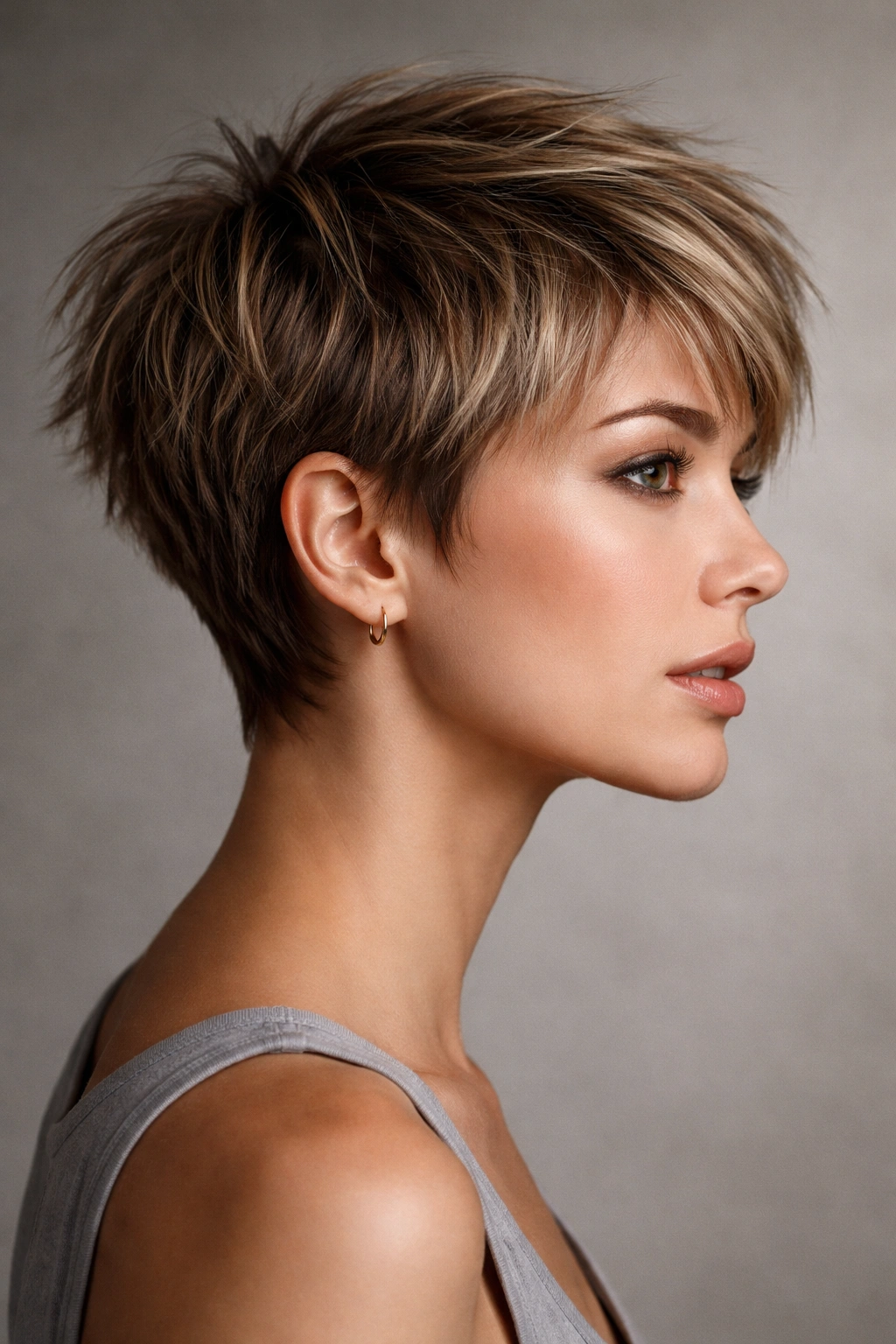
A choppy pixie takes the classic short cut and infuses it with texture and intentional unevenness that feels modern and edgy. Instead of a uniform, neat pixie, this version uses varying lengths across the crown and sides to create visual interest and dimension. The sides might be clipped shorter while the crown has extra length and texture, or the front can be slightly longer than the back for an unexpected asymmetrical feel.
Why This Works Across All Hair Types
The choppy pixie actually improves with different hair textures. On fine or thin hair, the short length means volume isn’t a struggle—your hair naturally shows off more of your scalp and face, and any subtle texture or wave reads more dramatically. On thicker hair, short choppy layers prevent the bulk that would make a traditional pixie feel heavy, and the varying lengths help you skip the frequent trims that blunt cuts require.
- Fine hair benefit: Creates the illusion of density and fullness through texture variation rather than length
- Thick hair benefit: Removes weight strategically so your pixie stays shaped between salon visits
- Curly hair benefit: Short choppy layers work beautifully with natural curl texture and reduce frizz dramatically
- Straight hair benefit: Choppy texture adds movement and visual interest that wouldn’t otherwise exist
Styling and Maintenance
A choppy pixie requires almost zero styling time. On fine or wavy hair, you can literally air dry it and the choppy texture does the work for you. On curly hair, apply your curl cream or gel to damp hair and let it dry naturally. For thicker straight hair, you might want to add a tiny bit of texture spray or mousse to emphasize the choppy layers, but it’s completely optional. The cut itself does the heavy lifting, which is why this style has exploded in popularity.
Pro tip: Ask your stylist for choppy texture throughout rather than just length variation—this means they’re using point-cutting or razor techniques to create actual texture, not just cutting some sections shorter than others.
2. Choppy Layers with Feathered Texture
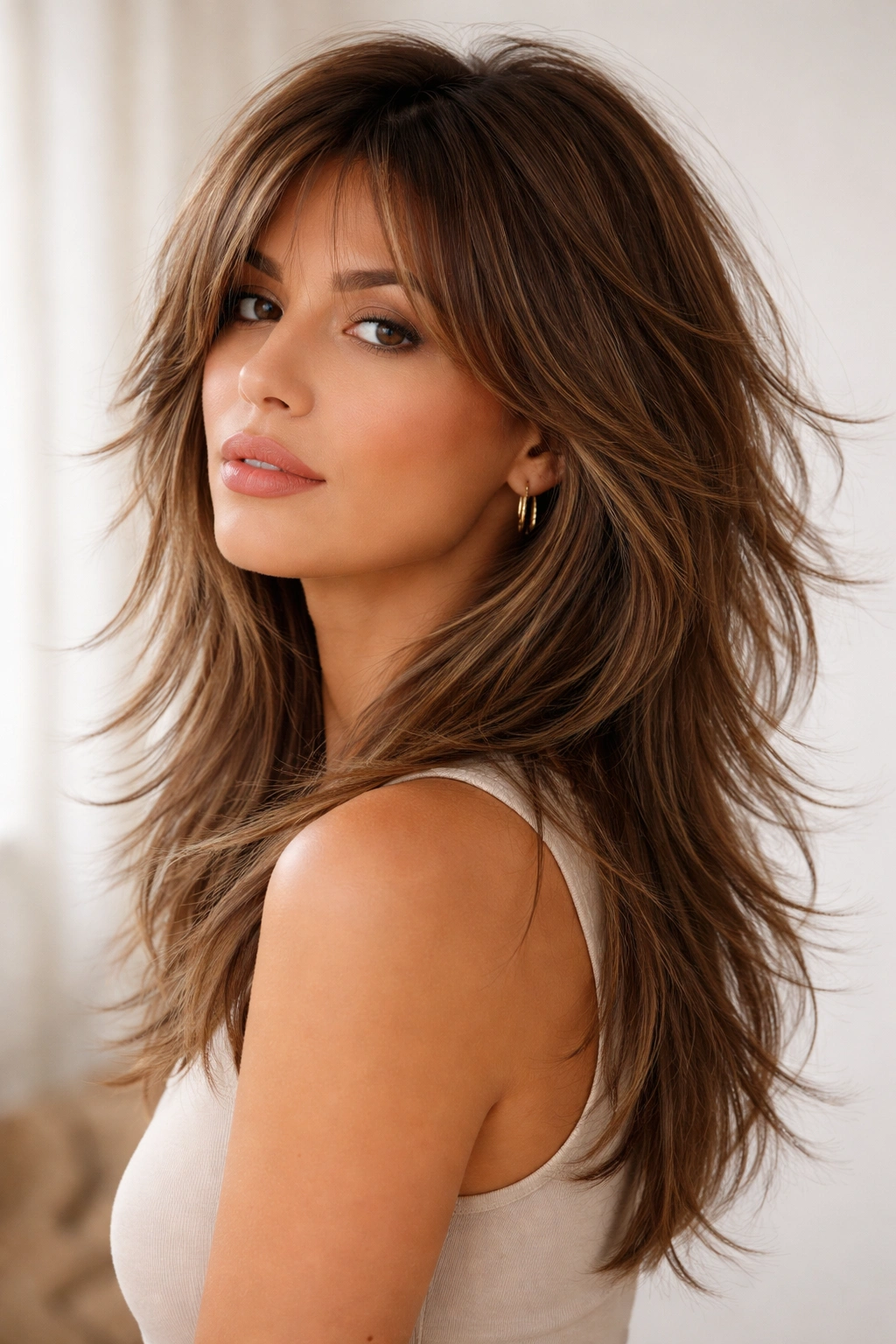
This style keeps medium-to-longer length while incorporating choppy, feathered layers throughout that create movement from root to tip. The layers are closer together than traditional choppy cuts but still maintain clear separation and texture rather than a smooth blend. This approach gives you the best of both worlds: enough length to wear in different styles, but with built-in texture that makes hair look fuller and move more naturally.
How Different Hair Types Wear This Cut
Feathered choppy layers adapt beautifully to your hair’s natural characteristics. Straight hair gets gentle movement and doesn’t look blunt or heavy. Wavy hair gets enhanced wave pattern and definition. Thick hair gets shaped and tamed. Fine hair gets lift and volume appearance without requiring constant styling.
- The feathering technique: Your stylist uses point-cutting or razor techniques to create soft, feathery ends rather than blunt edges
- Layer density: More layers means more texture and movement, but also more styling time—find your balance
- Tapering effect: Layers are shorter around the face and gradually increase in length toward the back, creating a tapered shape
Styling for Your Hair Type
On wavy or curly hair, this cut becomes a gift—apply your leave-in conditioner and scrunch gently as hair dries, and the choppy layers amplify your wave pattern. On straight hair, use a texturizing spray or sea salt spray after blow-drying to emphasize the choppy texture. On fine hair, blow-dry with fingers or a diffuser to get volume into the roots, and the choppy layers do the rest.
3. The Modern Shag
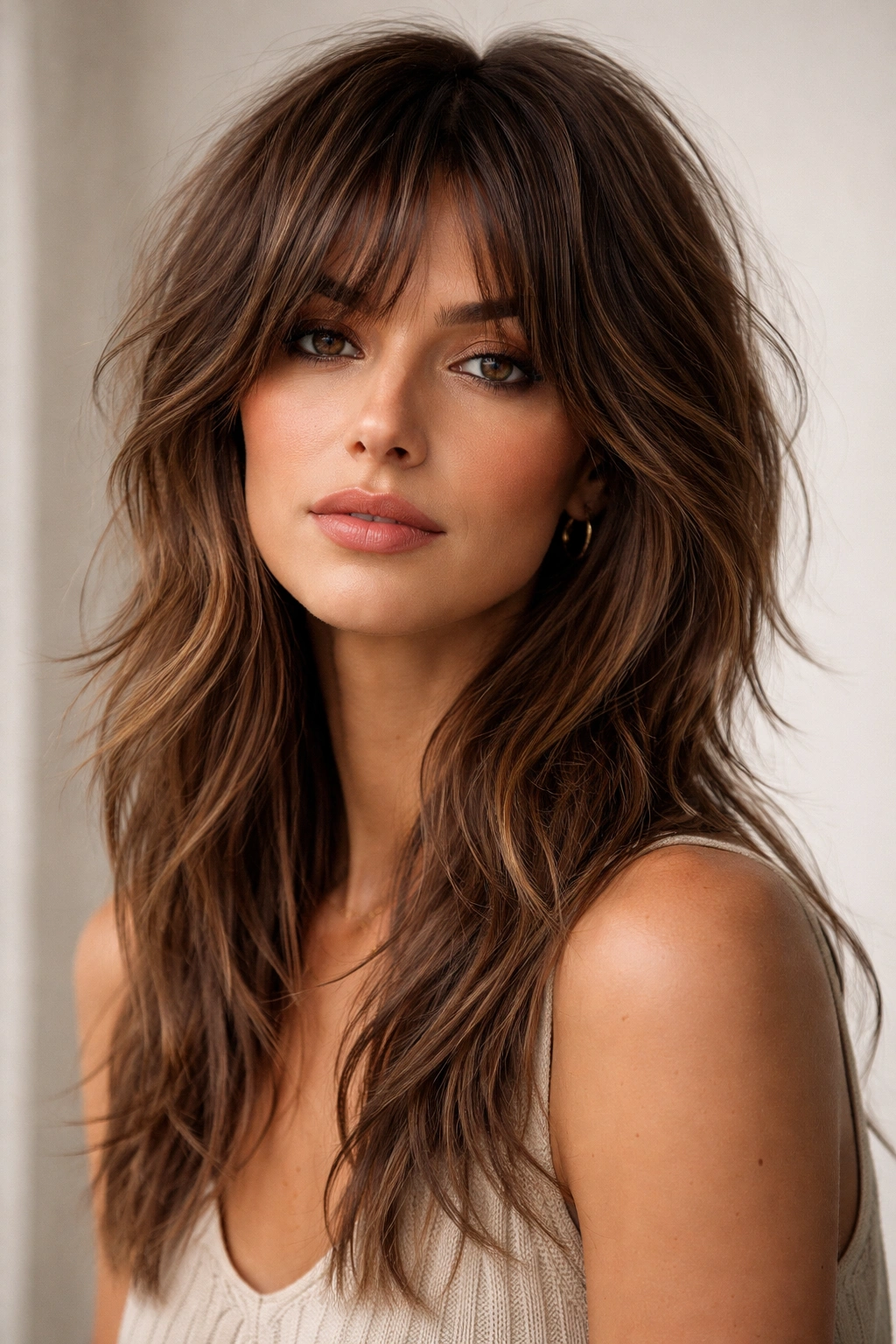
The choppy shag is the descendant of the ’70s classic, but with a sharper, more intentional edge. This cut features longer choppy layers throughout, with more dramatic length variation that creates a shaggy, textured shape. The crown has significant layers that taper down, while longer pieces frame the face, and there’s often choppy texture throughout rather than smooth blending.
Why Shags Work on Literally Every Hair Type
A well-executed choppy shag is actually one of the most forgiving cuts because it’s designed to look textured and undone. On fine hair, the multiple layers prevent it from looking thin because there’s so much movement and shape. On thick hair, the choppy layers remove weight and prevent the bulk that would come from one-length hair. On curly or wavy hair, a shag becomes absolutely stunning—the choppy layers work with curl patterns and create definition.
- Texture is the point: Unlike some cuts that require perfect styling, shags look intentionally choppy and textured
- Face-framing layers: Longer choppy pieces around the face create dimension regardless of your face shape
- Volume without effort: Choppy layers mean your hair naturally has volume even when air-dried
Getting the Right Shag for You
Work with a stylist experienced in shag cuts specifically—this is where skill really shows. The placement of layers, how choppy they are, and how they relate to your hair type and face shape makes or breaks the cut. On curly hair, ask for choppy layers that enhance your curl pattern. On straight hair, ask for enough texture that the choppiness shows even when hair is sleek.
4. Choppy Pixie Bob
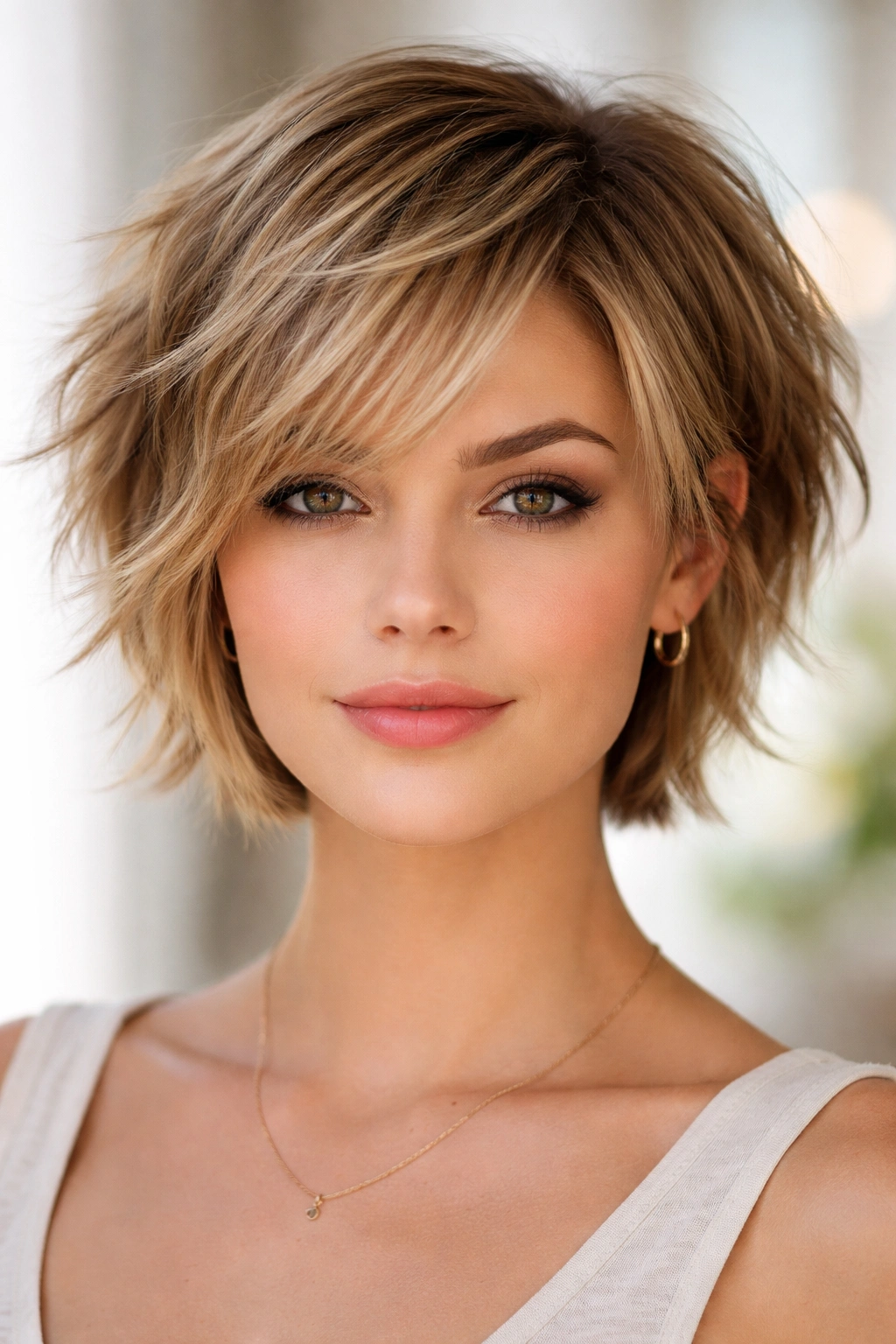
This hybrid cut combines the length of a bob with the textured, choppy quality of a pixie. You’re getting a short, manageable style that sits around ear-length or slightly shorter, but with choppy, feathered layers that prevent it from ever looking neat or uniform. The result is a fun, youthful cut that sits somewhere between tomboy-chic and textured elegance.
Which Hair Types Shine With This Cut
A choppy pixie bob is almost impossibly versatile. Straight hair gets movement and personality. Wavy hair gets definition and bounce. Curly hair gets definition and a cool, piecy texture. Fine hair appears fuller. Thick hair gets tamed and shaped without looking severe.
- Length advantage: Short enough to style quickly, long enough to wear multiple ways
- Choppy texture: Prevents the bluntness that can make short bobs look severe or matronly
- Layering throughout: Creates movement at the crown, sides, and ends
Styling Options
On fine or straight hair, you can wear this cut slicked back for a sleek vibe, or textured with some sea salt spray for movement. On wavy or curly hair, scrunch in your product and air dry for natural texture, or blow-dry smooth if you want a different look. On thick hair, you have the freedom to style it several ways depending on your mood.
Worth knowing: This cut requires regular trims—every 4 to 6 weeks—because the choppy texture is the point, and it gets lost when ends grow out and blend together.
5. Choppy Long Layers (Lob Style)
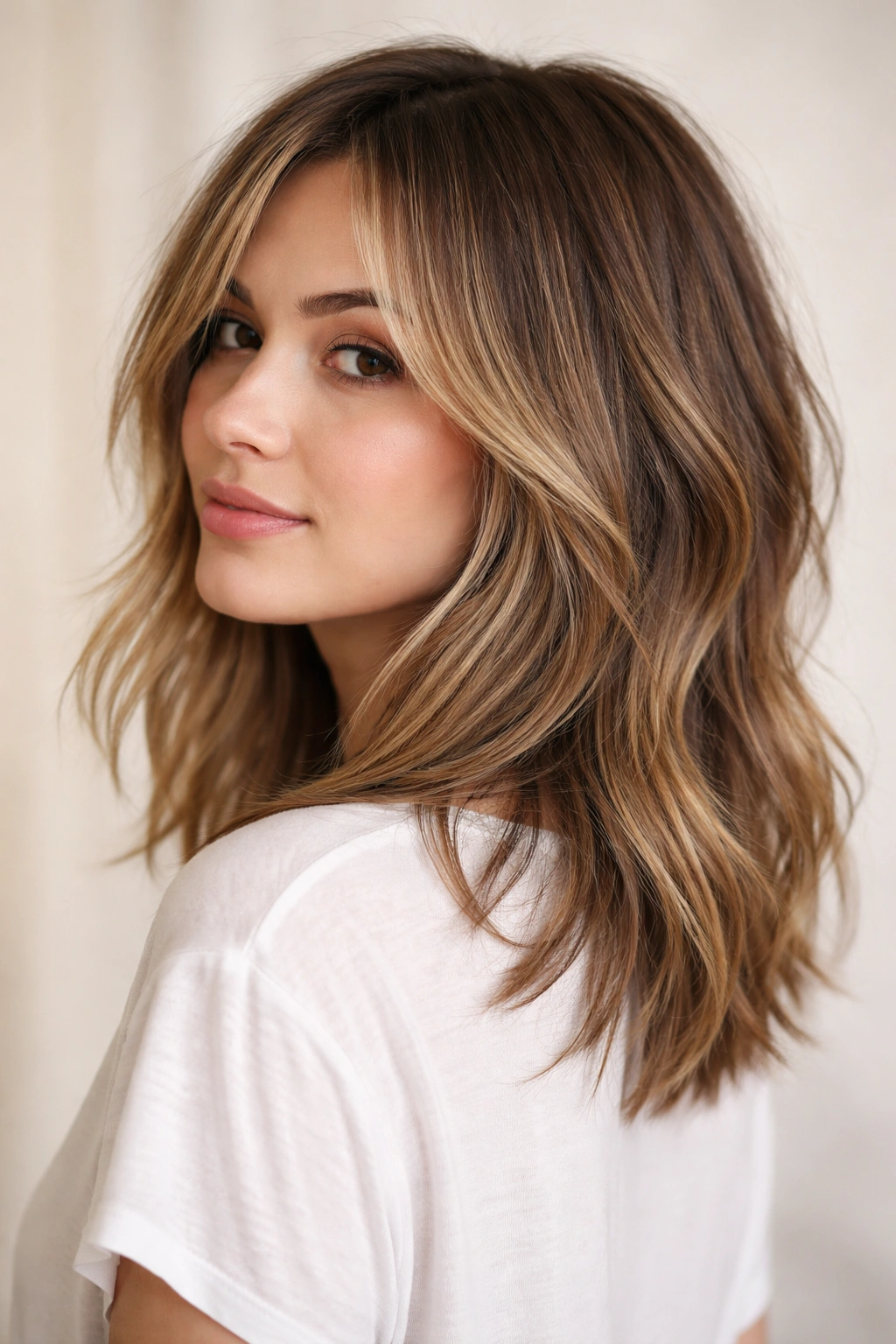
A choppy long-layered cut (often called a lob when it sits around collarbone length) features choppy, textured layers from about mid-length down, while potentially keeping more length at the back. This gives you the versatility of longer hair with the movement and texture of choppy layers. You can wear it down and wavy, throw it in a ponytail, or style it sleek and smooth.
Why Long Choppy Layers Adapt to Every Hair Type
The magic of this cut is the balance between length and texture. Long hair that’s choppy layered won’t drag down with weight the way one-length hair might, while still giving you length options. Fine hair gets volume appearance through texture variation. Thick hair gets shaped and movement. Curly and wavy hair gets definition and bounce.
- Versatility: Enough length to pull back or layer in different ways, but layered for texture
- Easy transitions: Works well whether you’re transitioning from longer hair down to shorter, or building length back out
- Styling flexibility: Can go anywhere from super textured and choppy to sleek and smooth depending on how you style
Maintaining Long Choppy Layers
Trim every 6 to 8 weeks to keep the choppy texture defined—when ends grow out, layers blend and lose their texture. Use a hydrating conditioner and leave-in product on curly or wavy hair to enhance the wave pattern. On straight hair, texturizing spray or curl cream can enhance the choppy texture, though air-drying often provides enough movement.
6. Choppy Bangs
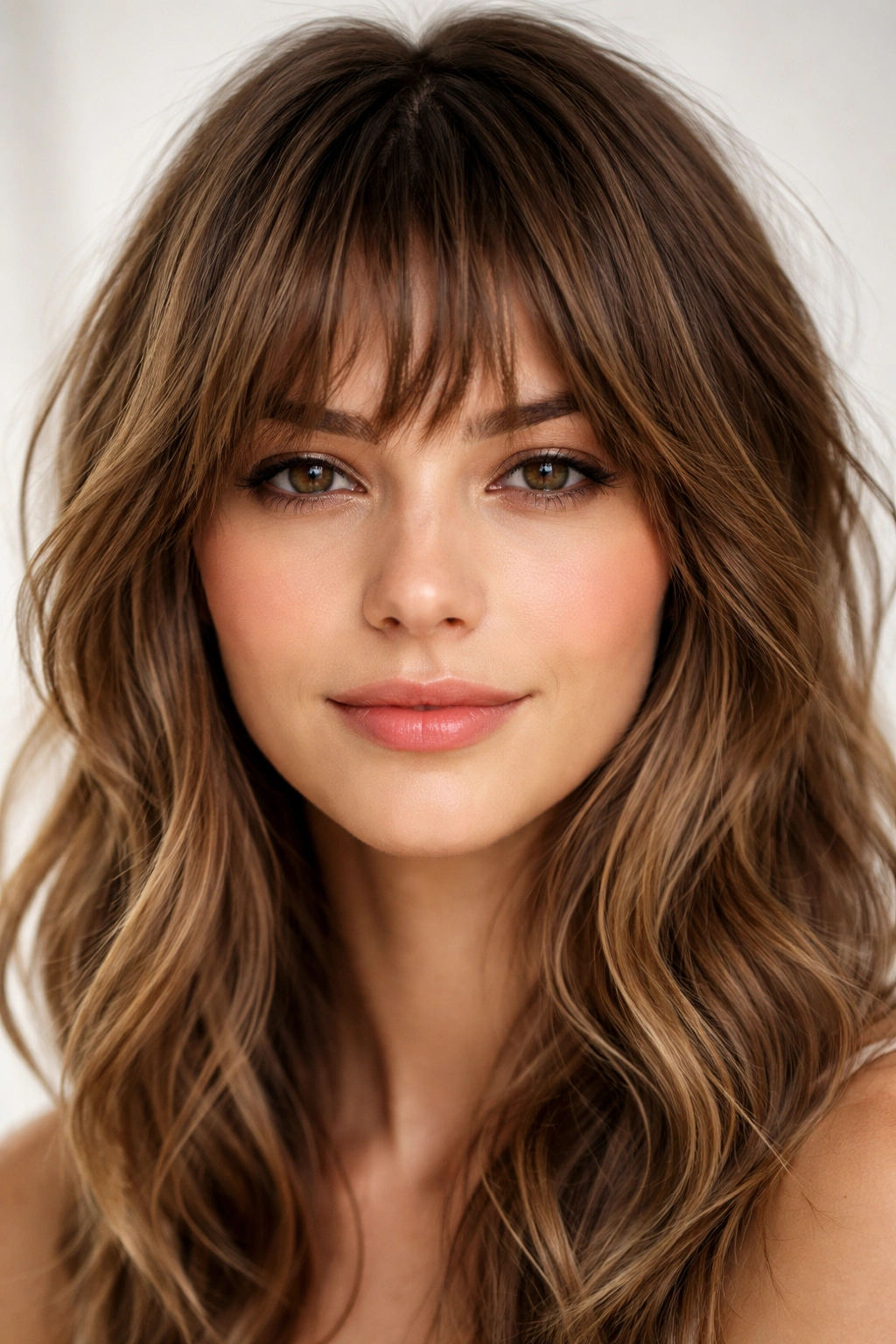
Choppy bangs are a game-changer for adding frame and personality to any haircut. Rather than blunt, even bangs, choppy bangs use shorter and longer pieces that create texture and movement across the forehead. They can be wispy and feathered, or more dramatically choppy with clear separation—whatever works for your hair type and face shape.
How Choppy Bangs Work on Every Hair Type
Choppy bangs are actually more forgiving than blunt bangs across different hair types. On fine hair, choppy bangs appear fuller because the texture creates visual density. On thick hair, choppy texture prevents the bulk that can come with heavy bangs. On curly or wavy hair, choppy bangs can work with your texture instead of fighting it.
- Feathered choppy bangs: Softer, work beautifully on wavy or curly hair
- Textured choppy bangs: More dramatic texture separation, gives personality to straight hair
- Length variation: Longer on the sides, shorter in the center creates face-framing and lift
- Movement: Choppy texture means bangs move naturally even without blow-drying
Styling and Growing Out Choppy Bangs
On wavy or curly hair, apply your leave-in conditioner to damp bangs and scrunch gently—the texture does the work. On straight hair, blow-dry with a round brush or let them air dry and use texturizing spray if you want to emphasize the choppiness. When growing out choppy bangs, get a trim every 3 to 4 weeks so they don’t become a fringe nightmare—the choppy texture actually makes growing them out easier than blunt bangs because the varying lengths blend more naturally.
7. Choppy Mullet
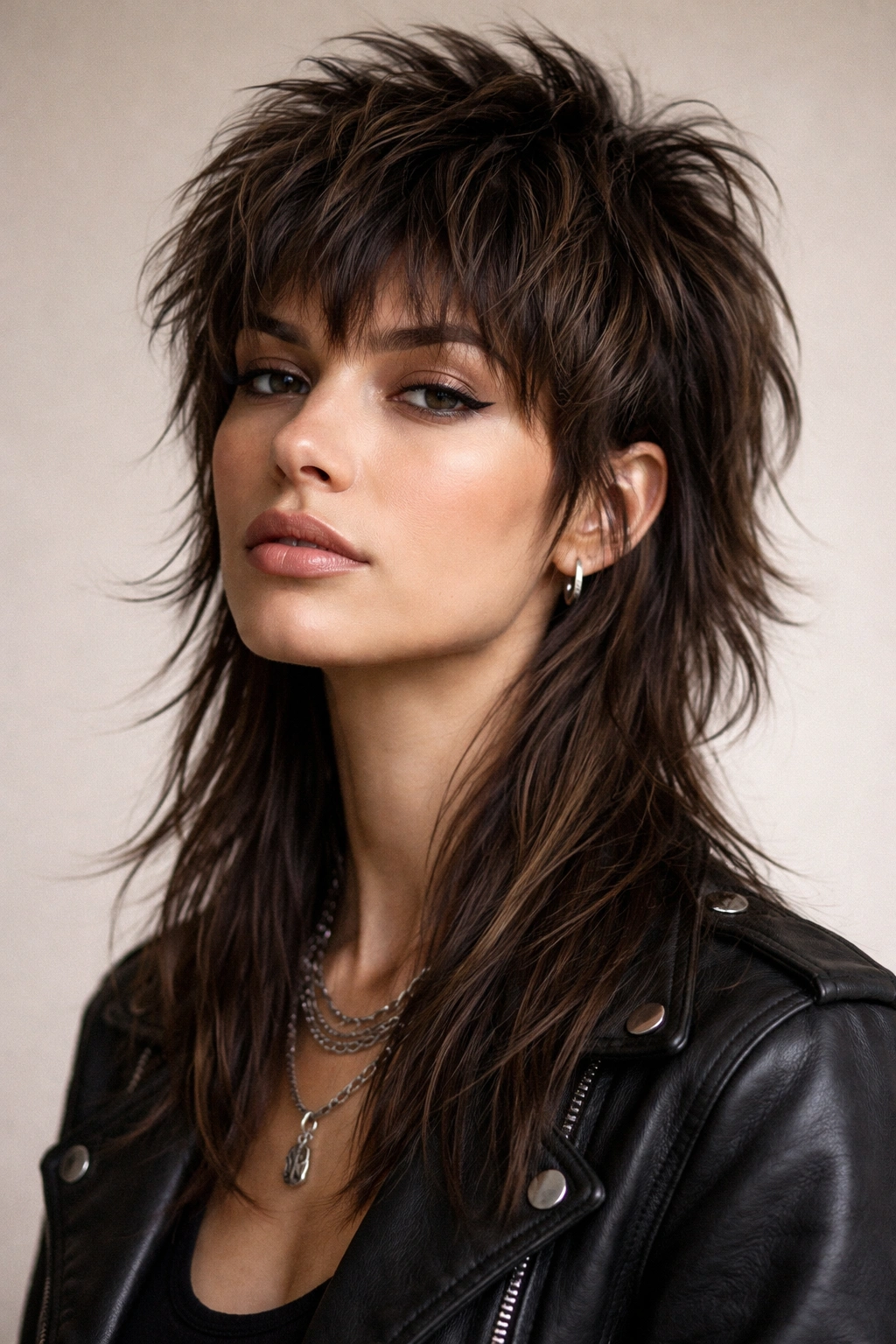
The choppy mullet is the edgy, modern take on the ’80s classic—shorter and choppy on top with longer layers underneath. This cut gives you serious personality and movement. The crown and sides have textured choppy layers that create shape and volume, while longer pieces underneath add drama and length. It’s undeniably bold, but on the right person with the right hair type, it’s absolutely striking.
Hair Types That Own a Choppy Mullet
Straight or wavy hair shows off the contrast between short and long beautifully. Thick hair benefits because the choppy texture on top prevents the bulk that would make a regular mullet look heavy. Curly hair can work too, especially with more texture on the short side. This cut is a statement, so you need to love it—it’s not a shy haircut.
- Top section: Choppy, textured, shorter layers that sit around ear-length or above
- Underneath: Longer pieces that can be 2 to 4 inches longer than the top section
- Contrast: The point is the visible difference between the choppy short layers and the longer underneath
- Attitude: This cut is fun and unconventional—it works best if you embrace the boldness
Styling a Choppy Mullet
Blow-dry the shorter top section with texture spray or mousse to emphasize the choppy layers. Style the longer underneath pieces to flip, wave, or layer however you like. You can go full edgy and messy, or sleek and intentional—both work. The beauty is flexibility, though the cut itself demands some styling attention to look intentional.
8. Choppy Wolf Cut
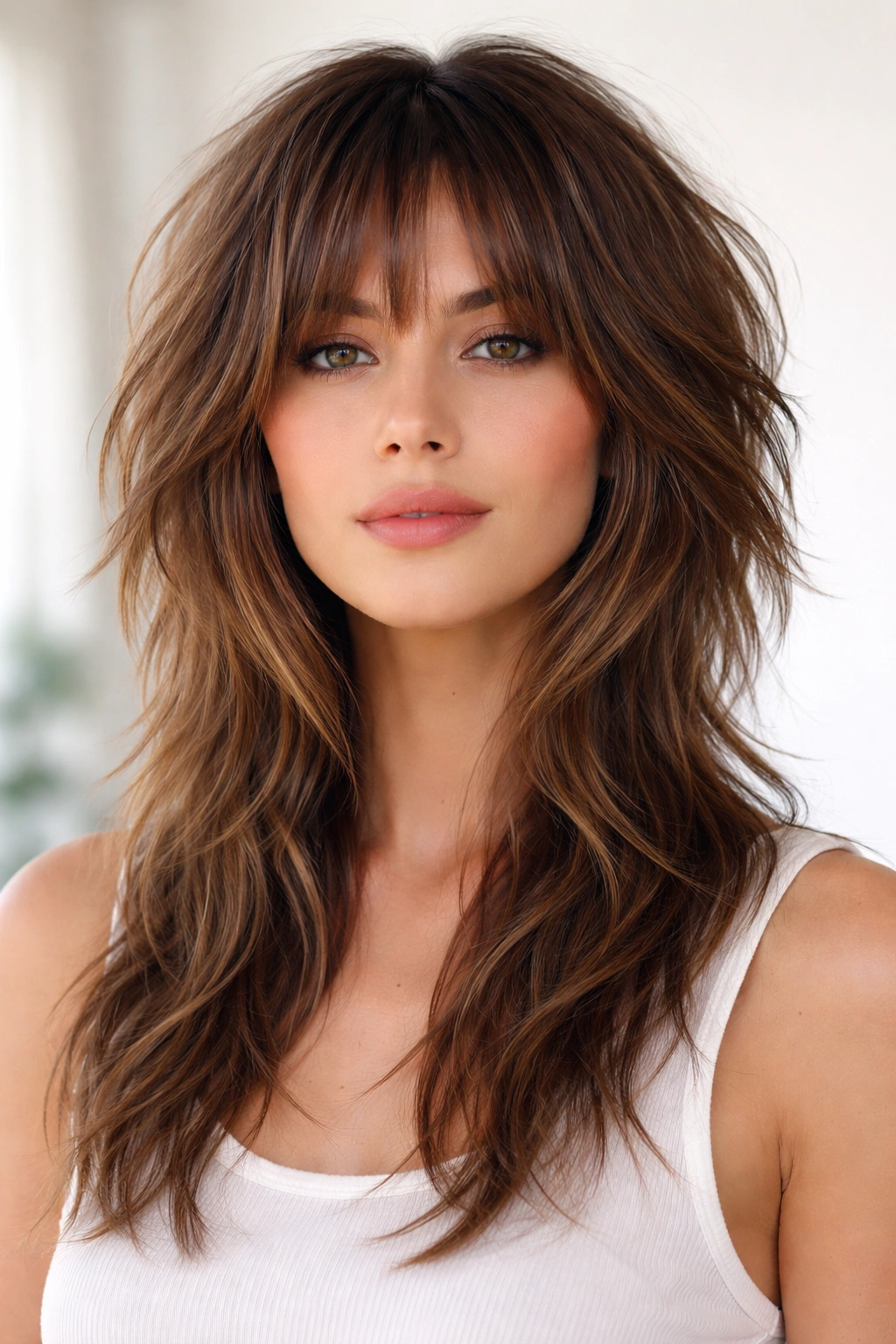
A wolf cut blends elements of a mullet and a shag into something distinctly modern. It features choppy, shaggy layers throughout, with shorter, more textured layers at the crown that gradually get longer toward the bottom. Unlike a mullet’s clear separation, a wolf cut has choppiness and texture throughout, creating a balanced, sophisticated shape that somehow manages to look both edgy and intentional.
Why Wolf Cuts Work Across Hair Types
Wolf cuts are incredibly popular for a reason—they’re flattering on almost everyone. On fine hair, the multiple choppy layers create the appearance of density and movement. On thick hair, the layered texture removes weight and prevents bulk. On curly or wavy hair, choppy layers enhance your natural texture. On straight hair, the cut creates inherent movement.
- Choppy throughout: Not just one section, but layers and texture across the entire cut
- Crown emphasis: Shorter, more textured layers at the crown that taper to longer layers below
- Face-framing: Longer pieces around the face regardless of where the shorter choppy layers sit
- Sophisticated shag: Think shag cut but more refined and intentionally modern
Getting and Maintaining a Wolf Cut
Work with a stylist experienced in wolf cuts—this is a newer trend and not all stylists have the technique down. Ask for choppy, textured layers throughout rather than smooth blending. Trim every 6 weeks to keep the choppy texture defined. On straight hair, blow-dry with texture spray. On wavy or curly hair, apply products to damp hair and air dry to let your natural texture show through the choppy layers.
9. Choppy Layers for Thick Hair Specifically
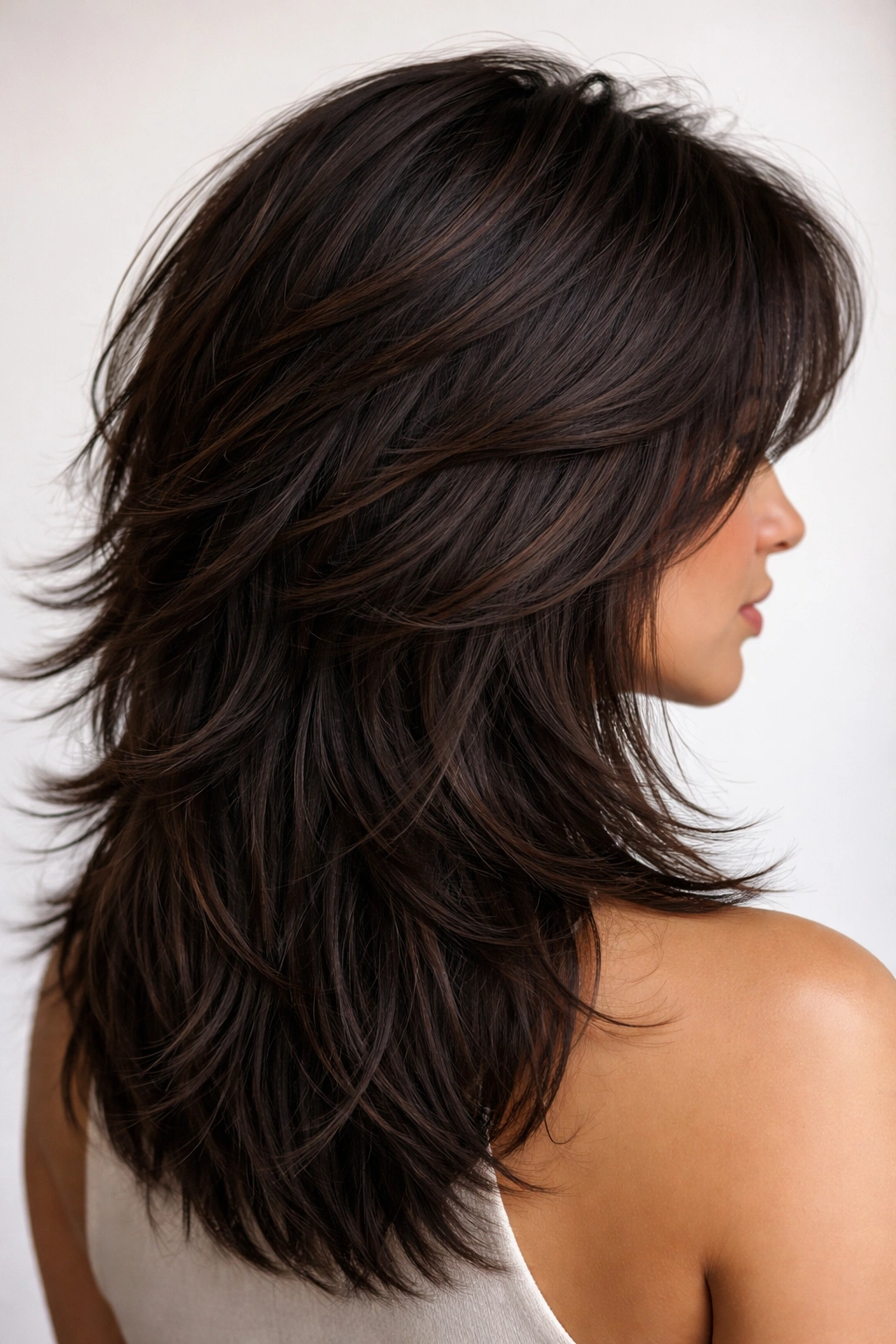
If you have thick hair, choppy layers are genuinely a game-changer. A cut specifically designed for thick hair uses strategic choppy layers that remove bulk while maintaining shape and dimension. The layers are more generous and strategic than they might be on finer hair, placed to taper the hair and prevent weight and flatness that thick, one-length hair can create.
Why Choppy Layers Transform Thick Hair
Thick hair often looks heavy and blunt when it’s one length. Choppy layers remove bulk intelligently so your hair sits lighter, moves more easily, and looks less like a solid block. The key is not just having layers, but having strategically-placed choppy layers that work with your hair’s natural weight and volume.
- Bulk removal: Choppy layers are designed to remove unnecessary weight strategically, not uniformly
- Taper and shape: Layers shorter at the crown and longer toward the ends create a tapered shape
- Movement: Choppy texture lets thick hair move and flow instead of sitting heavy
- Low maintenance: You’re working with your hair’s natural volume rather than fighting it
Styling Thick Choppy Layers
Blow-dry with a blow dryer and round brush, focusing on getting lift at the roots. The layers do most of the work—your hair naturally has movement. On textured or wavy thick hair, use a diffuser and let your natural texture do the work. Trim every 6 to 8 weeks to maintain the choppy shape and prevent the layers from blending together and looking blunt.
10. Choppy Layers for Thin Hair Specifically
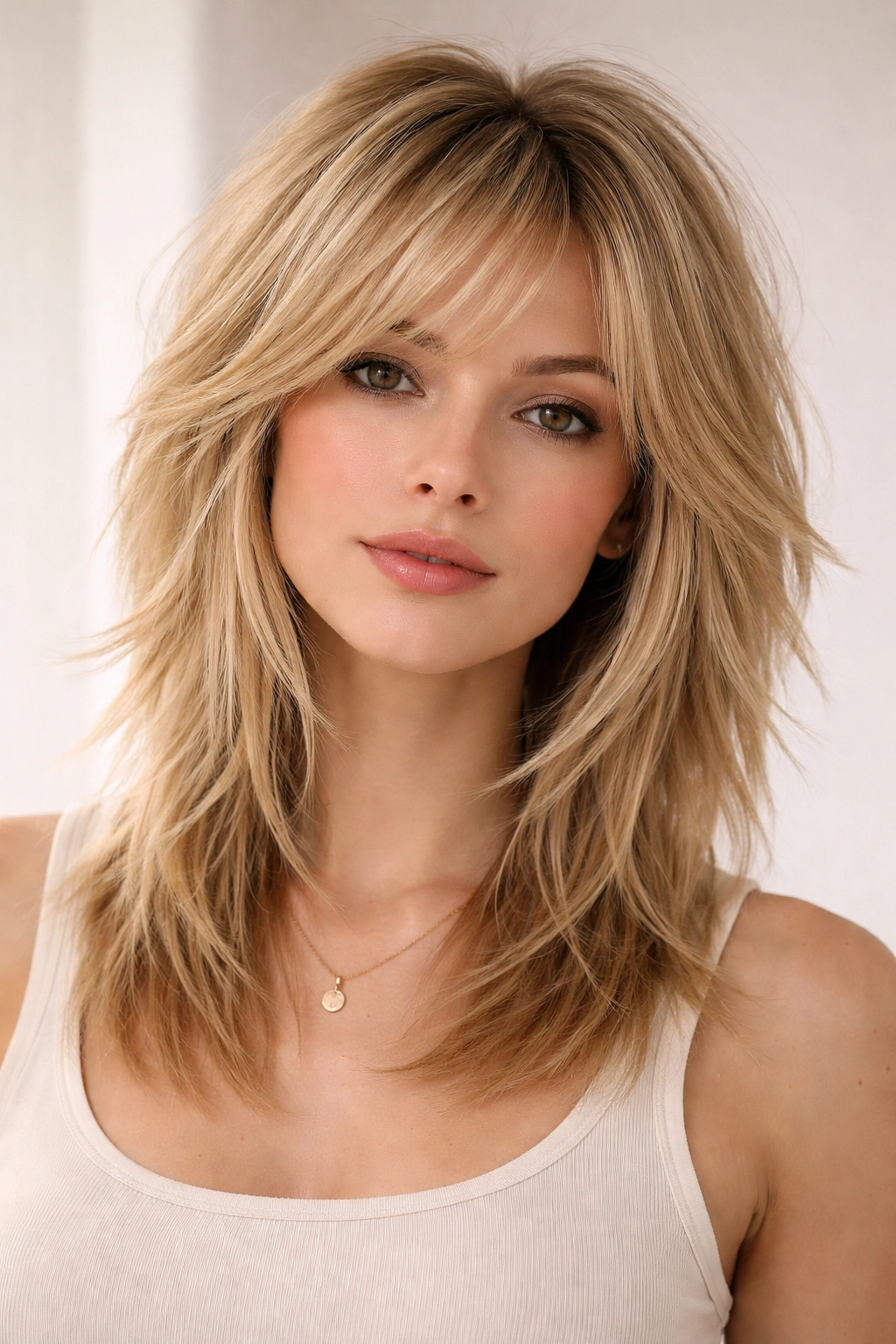
If you have fine or thin hair, choppy layers are essential because they create the appearance of volume and density that longer, one-length hair cannot. A cut designed for thin hair uses multiple choppy layers to create visual fullness and prevent hair from lying flat. The choppiness is the point—it creates texture and movement that makes hair appear thicker than it is.
Why Choppy Layers Create Volume on Fine Hair
Fine hair looks thicker when it has texture and movement. Choppy layers create that texture by their nature. Multiple shorter layers at the crown prevent root flatness. Choppy texture throughout prevents the transparent look that can happen with thinner blunt-cut hair. The visual effect is density, even though the hair is fine.
- Layer density: More layers, more texture, more appearance of fullness
- Crown focus: Shorter, textured choppy layers at the crown create lift and prevent flatness
- Visual thickness: Choppy texture creates the illusion of denser hair even if your hair is actually fine
- No blunt ends: Choppy, feathered ends prevent the thin, see-through look of blunt-cut fine hair
Styling Fine Choppy Layers
Blow-dry at the roots to create lift—this is where most of your styling effort should go, not the ends. Use a volumizing mousse or texturizing spray to enhance the choppy texture. Avoid heavy products that will weigh fine hair down. Air-dry if possible; your choppy layers will do the work for you. Trim every 4 to 6 weeks to maintain the choppy texture—when it grows out, the layers blend together and you lose the fullness effect.
11. Choppy Asymmetrical Cut
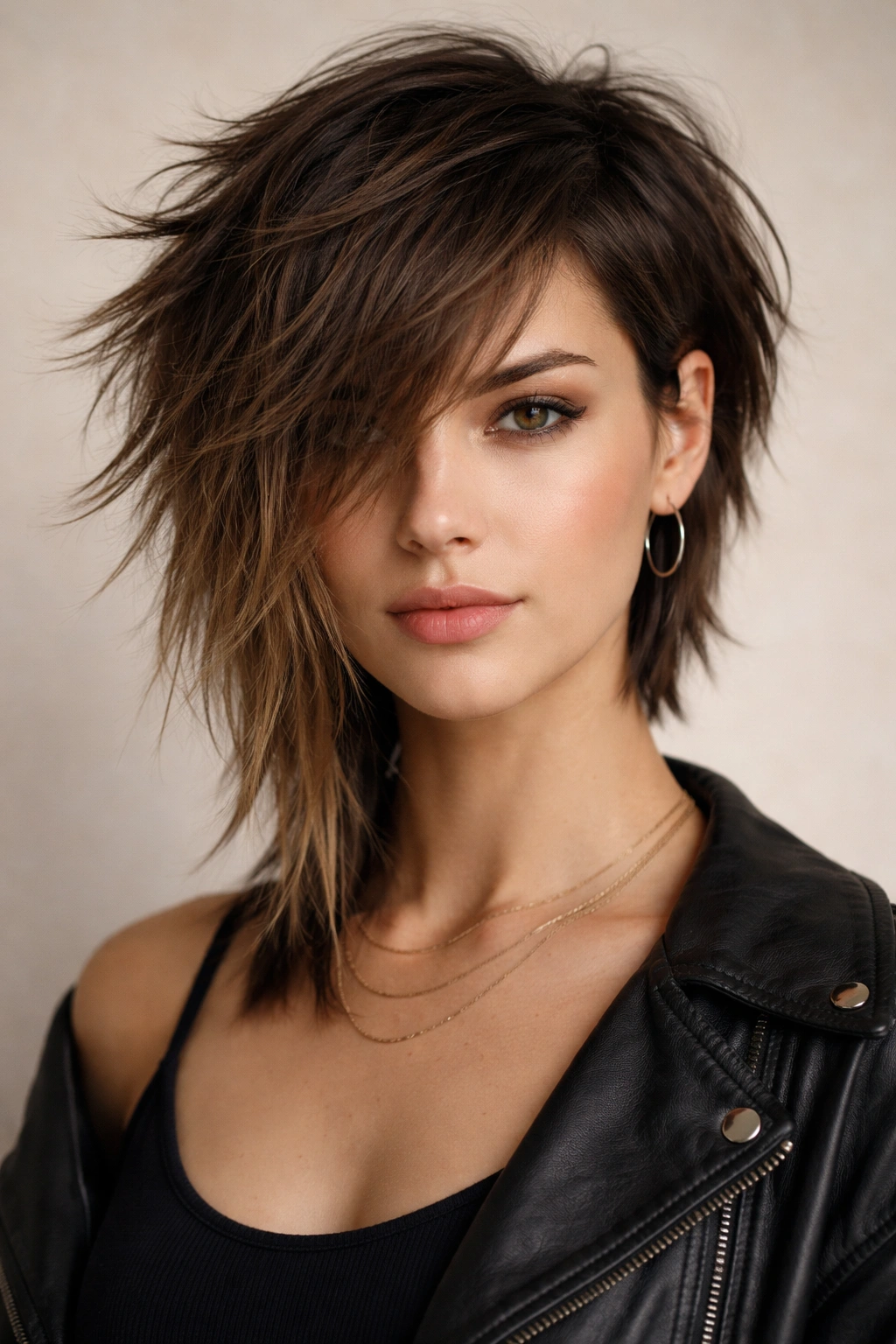
An asymmetrical choppy cut takes the choppiness and adds uneven length, with one side noticeably shorter than the other. This creates serious visual interest and attitude. One side might be a choppy pixie length while the other is choppy shoulder-length, or the difference could be more subtle—the point is intentional unevenness that creates drama and personality.
How Asymmetrical Choppy Cuts Work Across Hair Types
Asymmetrical cuts work beautifully on straight hair because the uneven lengths are obvious and striking. On wavy or curly hair, you can use the asymmetry to your advantage by styling one side differently than the other. On thick hair, asymmetrical choppy cuts remove bulk unevenly, which actually prevents the flatness that even choppy layers sometimes create. On fine hair, the visual interest of asymmetry makes hair appear fuller.
- Drama and personality: This is an intentional, bold statement cut
- Visual interest: The uneven lengths create movement and prevent the eye from reading flat hair
- Styling versatility: You can wear both sides down, tuck one side back, or style them differently
- Face-framing: Usually the choppy asymmetrical layers are longer on one side of the face, creating intentional framing
Rocking an Asymmetrical Choppy Cut
This cut requires confidence because it’s not subtle. Commit to it and embrace the asymmetry. Style both sides, or let one side be sleeker while the other is more textured. Blow-dry or air-dry depending on your hair type. Trim regularly every 4 to 6 weeks to maintain the intentional asymmetrical shape—if both sides grow out evenly, you lose the effect.
12. Choppy Cropped Layers at the Crown
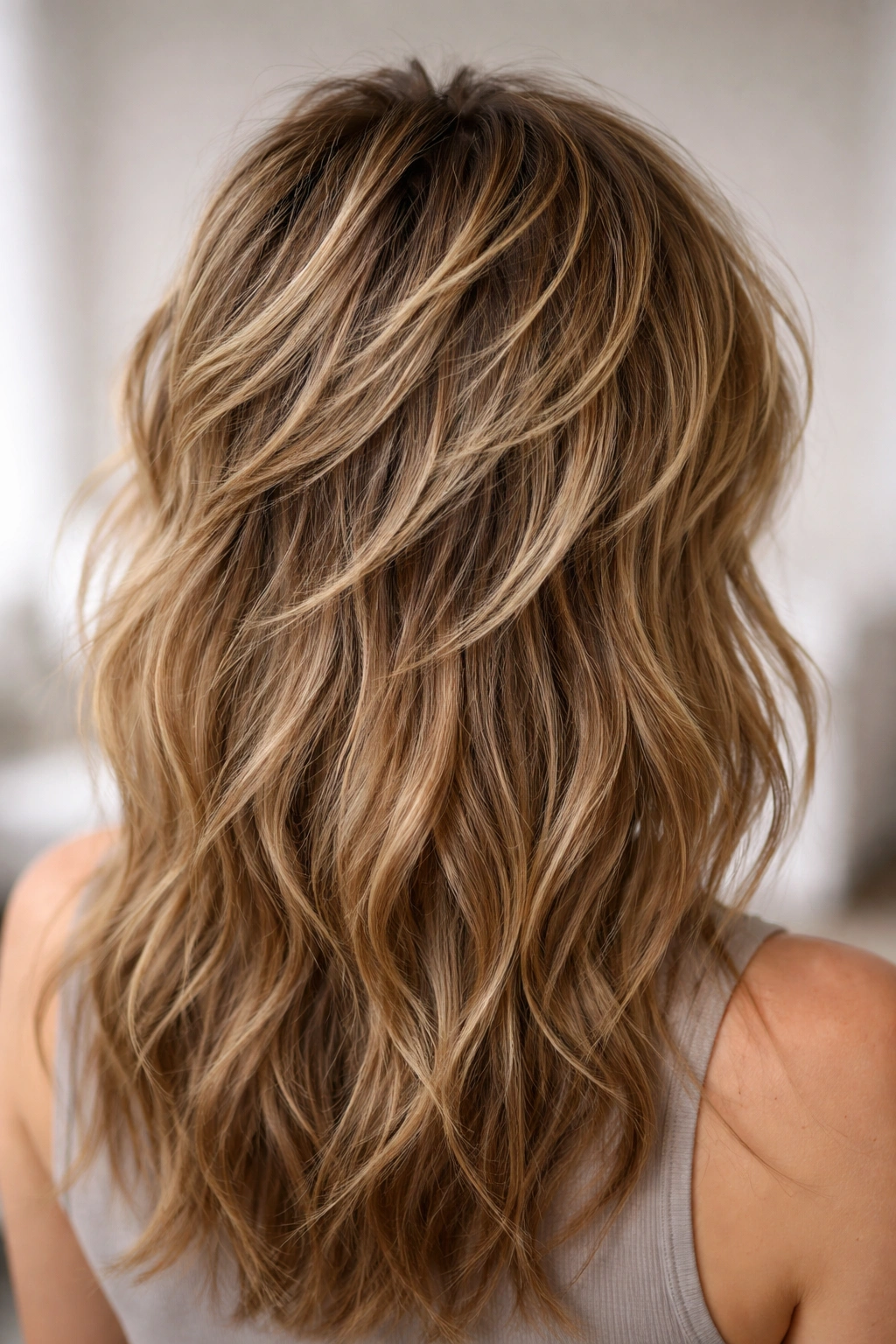
This style keeps length overall but adds significantly cropped, choppy layers specifically at the crown to create lift and texture where it matters most. The rest of the hair gradually gets longer, but the crown has real texture and choppiness that prevents flatness and creates shape. This is perfect if you want length but also want to avoid the flat, heavy look that longer one-length hair can create.
Why Crown-Focused Choppy Layers Work for Everyone
Fine hair gets lift and volume appearance right at the roots. Thick hair gets shape and prevents bulk at the top. Curly or wavy hair gets definition at the crown. Straight hair gets lift and movement. The strategic placement means you’re solving a real problem rather than layering just to layer.
- Targeted texture: Choppiness where it’s most useful—the crown and around the face
- Graduated length: Longer underneath, shorter and choppier at the top
- Prevents flatness: Works against gravity’s tendency to make longer hair look flat
- Maintains length: You keep overall length while gaining shape and movement
Styling Cropped Crown Layers
Blow-dry the crown section upward and backward to get lift into the choppy layers. The rest of the hair can be blown dry smooth or wavy depending on your preference. Use mousse or texturizing spray at the crown to enhance the choppy texture. This cut genuinely requires minimal styling on most hair types.
13. Choppy Beachy Waves
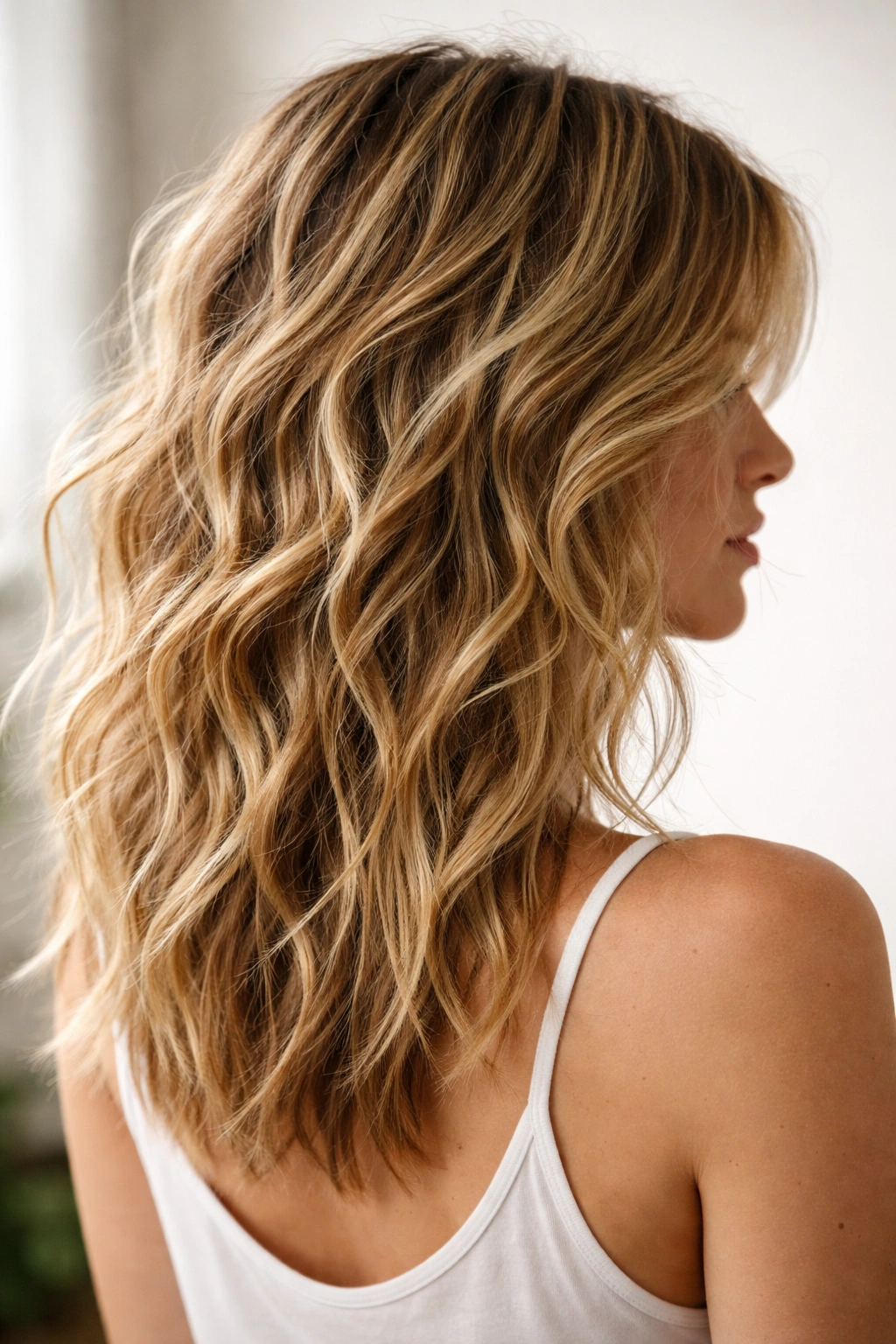
A choppy beachy wave cut combines choppy, textured layers with an intention toward creating natural-looking waves and movement. This style uses choppy layers throughout designed to work with your hair’s natural wave pattern or to create the appearance of waves even on straighter hair. The result is effortlessly textured, perfect for anyone wanting a relaxed, beachy vibe.
How Choppy Beachy Waves Work on Different Hair Types
On naturally wavy or curly hair, this cut is a dream—the choppy layers enhance your natural texture and you can literally apply your leave-in product and air dry. On straight hair, choppy beachy wave cuts rely on styling to create movement, usually with a curling iron or sea salt spray. On thick wavy hair, the choppy texture removes weight while enhancing your waves. On fine hair, choppy layers create the appearance of density and movement.
- Layer placement: Choppy layers are placed to enhance or create wave patterns
- Length variation: Shorter at the crown, longer at the bottom, with choppy texture throughout
- Lived-in texture: The point is intentionally undone, textured, effortless-looking waves
- Styling versatility: Can be worn wavy, textured, slicked back, or even straightened out
Getting That Beachy Choppy Wave Look
Ask your stylist for choppy layers specifically designed to enhance waves and movement. On wavy or curly hair, apply your leave-in conditioner to damp hair, scrunch gently, and air dry. On straight hair, use a sea salt spray, texturizing spray, or blow dry and use a curling iron on larger sections to create the beachy wave pattern. Trim every 6 to 8 weeks.
14. Choppy Blunt Layers
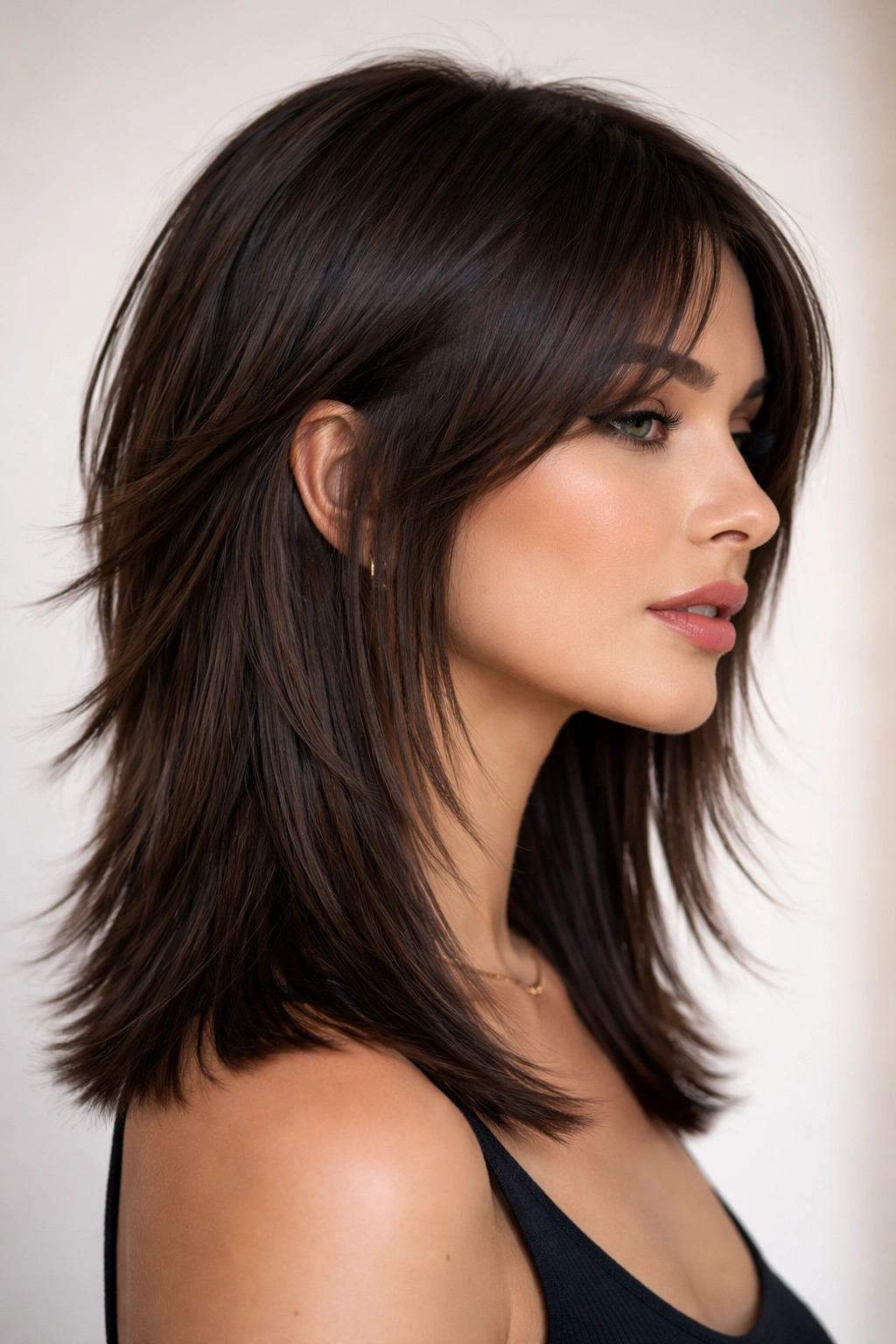
This style uses choppy, disconnected layers combined with slightly blunt ends rather than feathered ones. Where feathered choppy layers are soft and tapered, choppy blunt layers have more texture and separation because the ends are less feathered. This creates a more modern, intentional look with clear texture and shape.
Hair Types and Choppy Blunt Layers
Straight hair looks especially striking with choppy blunt layers because the texture and separation are obvious. Thick hair benefits from the bulk removal. Wavy or curly hair can work if the cut is designed properly—the layers work with your pattern rather than against it. Fine hair benefits from the visual texture, though blunt ends need to be softened slightly to prevent looking stringy.
- Texture that reads: Less feathering means the choppiness is more visible and intentional
- Separation: Layers don’t blend together; you see clear separation between choppy sections
- Modern edge: This approach feels more current and sharp than heavily feathered layers
- Maintenance: The blunt quality means trims every 6 weeks keep it looking fresh
Styling Choppy Blunt Layers
Blow-dry to emphasize the texture and separation. On fine hair, add texture spray. On thick or wavy hair, let your natural texture show through. The choppy blunt layers create movement even with minimal styling. Trim regularly to maintain the blunt quality of the ends—when they grow out, the bluntness softens and you lose some of the textural impact.
15. Choppy Textured Crown with Long Underneath
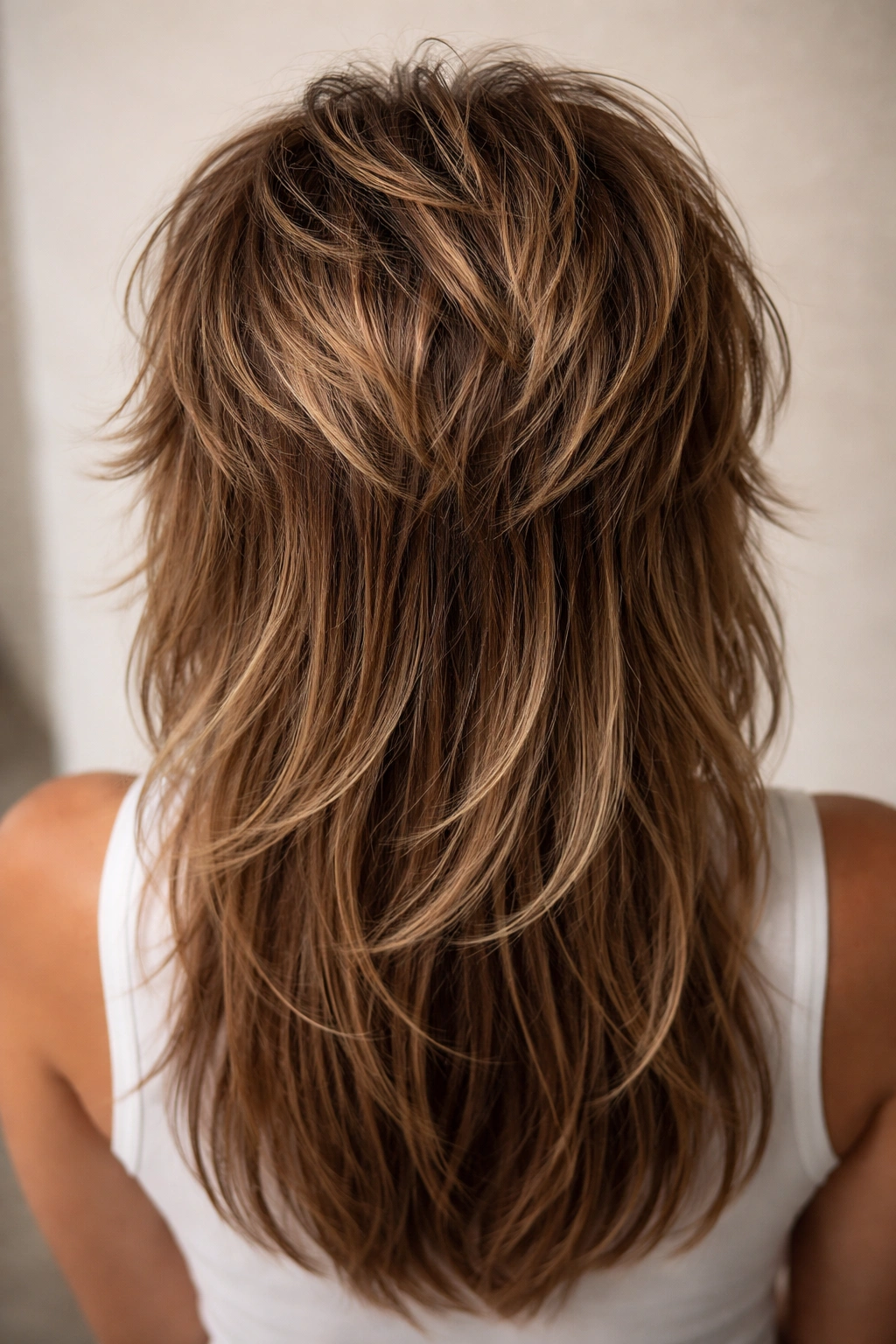
This final style creates maximum volume and lift by combining short, heavily textured choppy layers at the crown with significantly longer pieces underneath. The contrast is less dramatic than a mullet but still noticeable, and the point is creating shape and lift where people usually struggle with flatness.
Why This Cut Works on All Hair Types
Thick hair benefits from the bulk removal at the crown while maintaining length elsewhere. Fine hair gets visual fullness from the textured crown plus the movement of longer pieces underneath. Wavy or curly hair gets definition and shape at the crown. Straight hair gets lift and movement.
- Maximum lift: Choppy texture at the crown creates as much lift as possible
- Balance: The longer underneath pieces balance the shorter crown so it doesn’t feel too short overall
- Movement: Both the textured crown and longer pieces move, creating the appearance of fuller, thicker hair
- Face-framing: Works around your face to create flattering dimension
Styling the Textured Crown Look
Focus blow-drying effort on the crown section—get lift and texture there. Let the longer underneath pieces be smooth or wavy depending on your preference and hair type. Use mousse or texturizing spray at the crown. This cut genuinely works hard for you even with minimal styling effort.
Final Thoughts
Choppy haircuts have rightfully become a go-to option because they solve real problems across every hair type. Fine hair gets an instant fullness boost. Thick hair gets shape and manageability. Curly and wavy hair gets definition and enhanced natural texture. Straight hair gets movement and personality. The key to finding the perfect choppy cut for you is being specific about your hair type, face shape, and lifestyle when consulting with your stylist.
The most important thing is working with a stylist who understands your specific hair type and can execute choppy layers properly. Ask to see their portfolio of choppy cuts on hair similar to yours. Be clear about whether you’re willing to commit to regular trims—choppy cuts look best when the choppiness is defined, which requires trims every 4 to 8 weeks depending on the cut. And remember that choppy layers are a technique, not a look, which means they can be adapted endlessly to suit your personal style and hair characteristics.
Whether you go for a bold statement like an asymmetrical cut or a wolf cut, or something more subtle like choppy beachy waves or layers specifically designed for your hair type, you’re choosing a cut that works with your hair instead of against it. That’s what makes choppy haircuts so appealing across the board—they’re the easy button for adding texture, movement, and personality without requiring professional-level styling skills every single morning.
