



Curly bangs are having a moment—and with good reason. They add instant texture, movement, and personality to any curl pattern while framing the face in a way that straight bangs simply can’t match. The trick isn’t just getting bangs; it’s getting the right bangs for your specific curl type, hair density, and face shape. What works for somebody with loose waves might completely overwhelm someone with tight coils. Understanding your curl pattern and choosing a bang style that complements it—rather than fights against it—makes all the difference between a hairstyle that shines and one that frustrates you every morning.
The beauty of curly bangs is that they work with your natural texture instead of requiring you to constantly straighten, blow-dry, or fight your hair into submission. When you choose a bang style matched to your curl pattern, you’re actually reducing daily styling time and enhancing the curls you already have. Whether your curls are loose waves, defined ringlets, or tight coils, there’s a bang style that will frame your face beautifully and make you feel like yourself.
This guide walks you through 12 distinct curly bang styles—each tailored to a different curl type, density level, and styling preference. You’ll learn not just what each style looks like, but why it works for specific curl patterns, how to style it, and what maintenance looks like in the real world. By the end, you’ll know exactly which bang style suits your curls and how to ask your stylist for it with confidence.
1. The Soft Fringe for Loose Waves
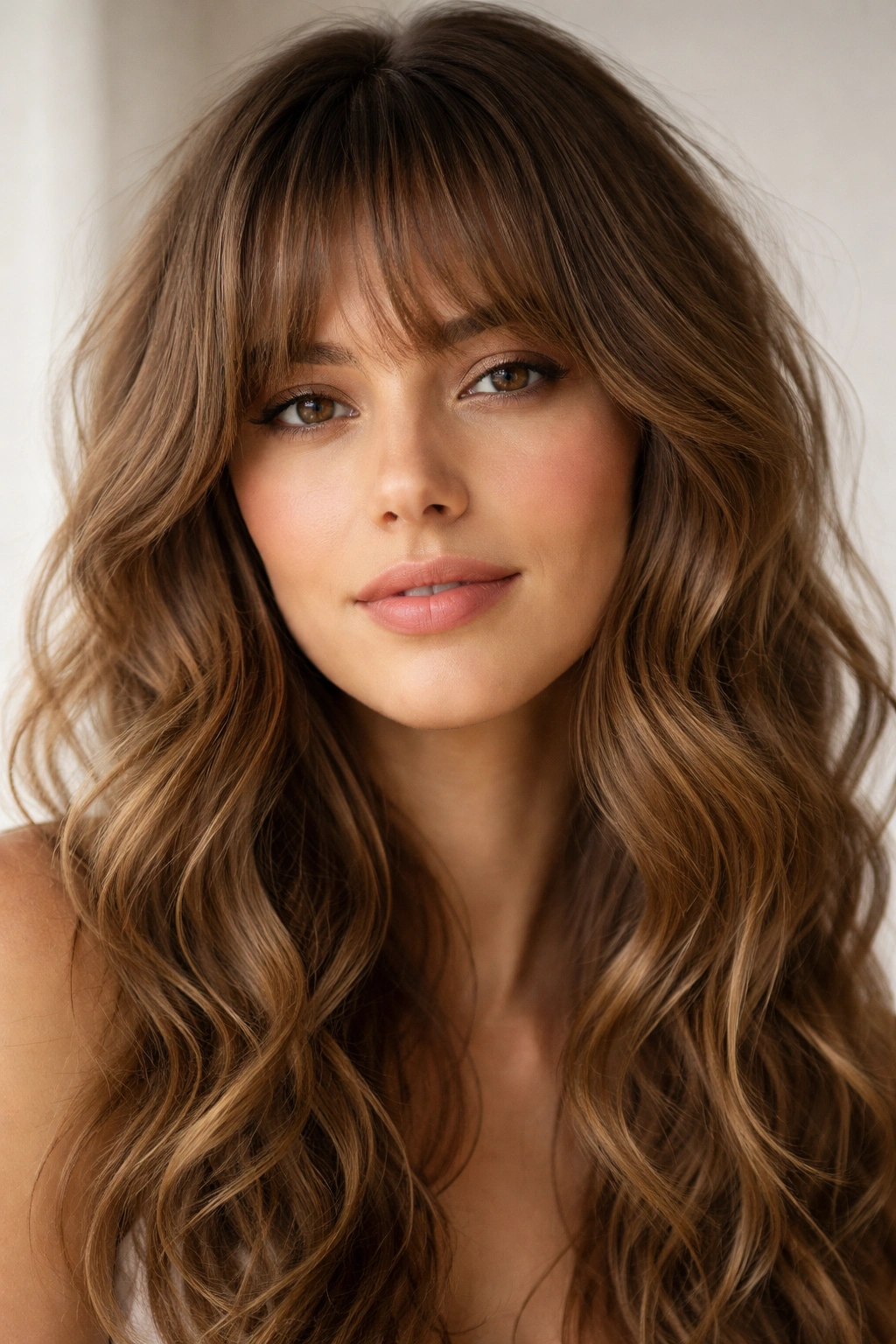
Soft, feathered bangs are perfect for anybody with loose, S-shaped waves that sit somewhere between straight hair and defined curls. These bangs blend seamlessly into the rest of your hair because they follow the same gentle wave pattern. The softness of the fringe means there’s no harsh line across your forehead—instead, the bangs fade into individual pieces that move with your curls.
Why This Works for Loose Waves
Loose waves have natural movement and flexibility, which means soft, textured bangs won’t feel weighted down or make your curls frizz. The bangs work with your wave pattern rather than fighting it. Because loose waves don’t require intensive styling products or techniques, soft bangs fit naturally into a minimal-effort routine.
How to Style and Maintain It
- Soft waves typically style themselves with just a leave-in conditioner and air drying, and your bangs will too
- You can enhance the wave texture with a light curling cream or gel applied to damp hair
- A diffuser on your blow dryer adds subtle texture without disrupting the softness
- Trim every 4-6 weeks to prevent the ends from looking scraggly
The softness here is key—asking your stylist for “choppy, textured ends” rather than a blunt line ensures your bangs won’t look heavy or disconnected from the rest of your hair. This is also a forgiving style that doesn’t require precision styling, making it ideal if you prefer a wash-and-go approach most days.
Pro tip: Sleep on a silk or satin pillowcase to preserve your wave pattern overnight, which keeps your bangs looking intentional rather than bed-creased the next morning.
2. The Textured Micro-Bang for Wavy Hair
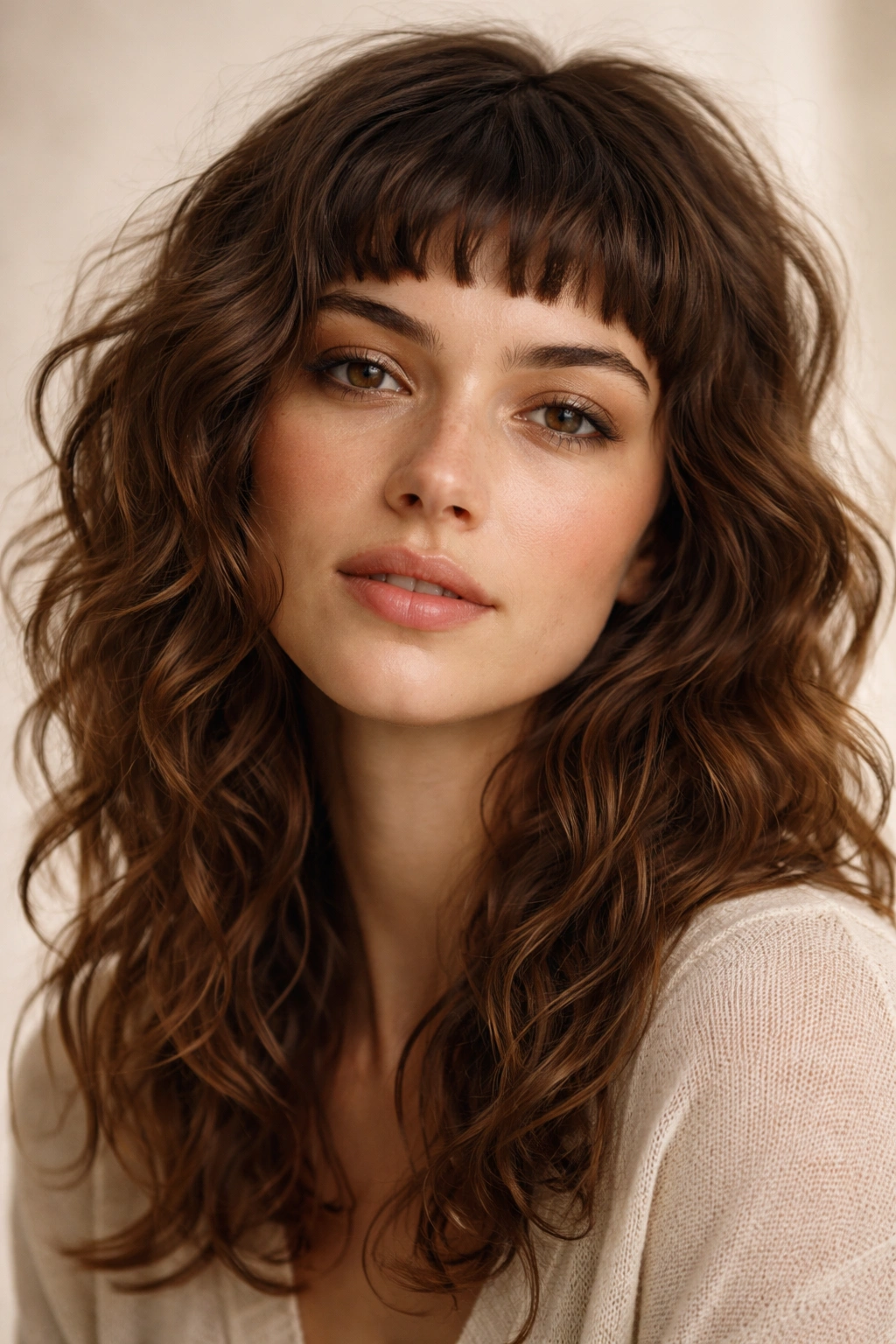
Micro-bangs are short, usually hitting just above the eyebrows, and when cut with choppy, textured layers, they create a playful, modern look that works beautifully with wavy hair. Unlike blunt micro-bangs that can look severe on curly textures, textured micro-bangs break up the line and distribute the weight across multiple pieces.
What Makes Textured Micro-Bangs Stand Out
The magic of textured micros is that they draw attention to the eyes without requiring your waves to be perfectly shaped every single day. Because the bangs are chopped and layered rather than blunt, they look intentionally tousled even on second-day hair. This style works especially well for people with finer or medium-density waves that might feel flattened by heavier bang styles.
Styling Tips for Success
- Use a lightweight mousse applied to damp bangs before air drying
- Avoid heavy oils or butters that can weigh the texture down
- A small round brush can gently shape the bangs while blow-drying, but keep it light
- Finger-comb the bangs while they’re damp for a more natural, lived-in texture
The textured micro-bang is also a great option if you’re nervous about committing to bangs. Because they’re short and choppy, they blend back into the rest of your hair quickly if you decide they’re not for you. You’ll also notice that this style requires less frequent trimming than blunt bangs because the uneven texture hides regrowth better.
A real upside here: textured micros work on curved foreheads, round faces, and oblong faces without looking out of place. The irregular line is flattering across different face shapes.
3. The Curly Shoulder-Length Wisp for Coily Curls
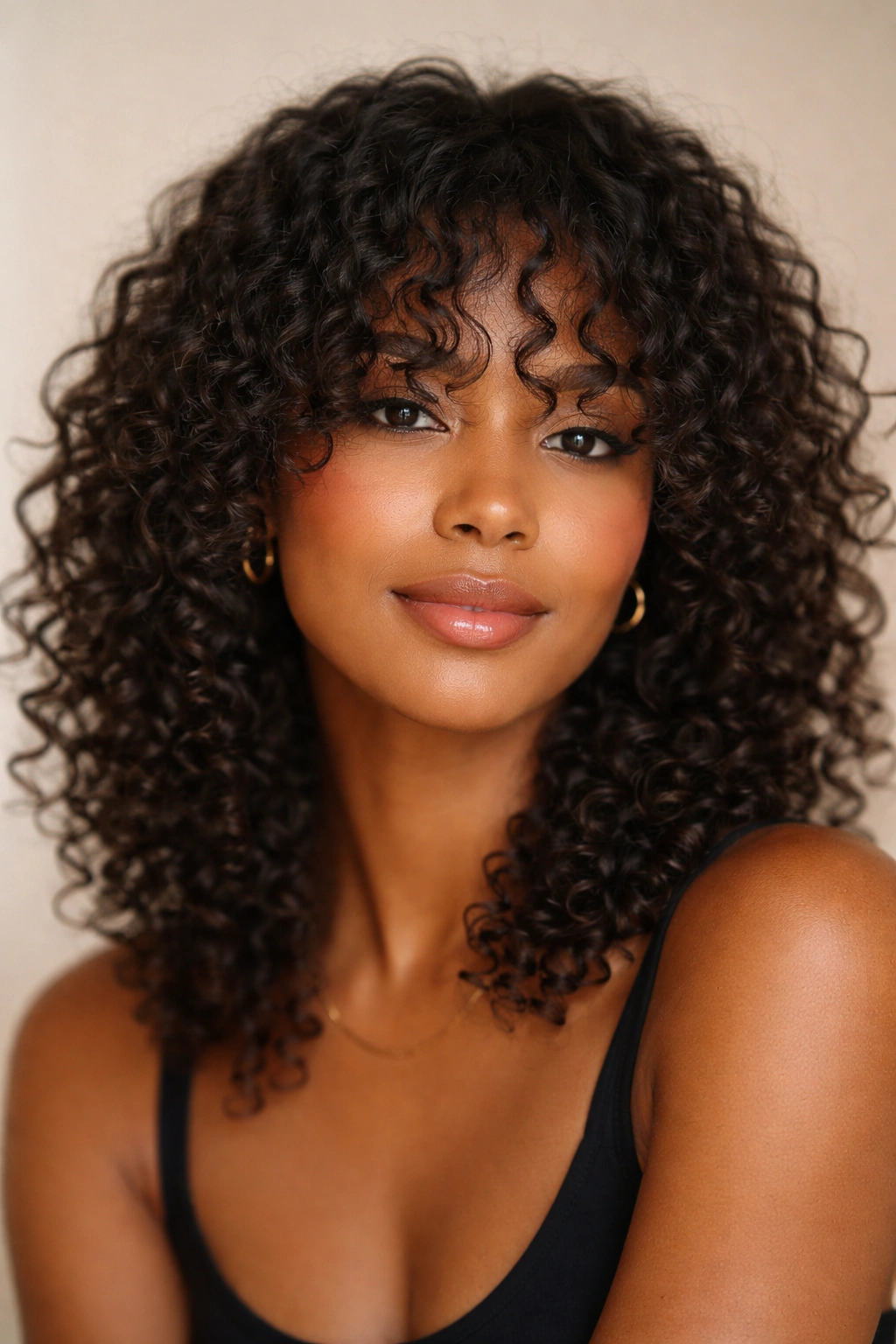
For people with tighter, more defined coils—think 3C to 4B curl patterns—shoulder-length wisps offer a sophisticated alternative to traditional bangs. These are longer, reaching to around eye level or slightly below, and they’re intentionally sparse so they don’t add too much bulk or weight to the front of your hair.
Why Wisps Work for Coily Textures
Coily curls need breathing room. Dense, heavy bangs can create a bulky pocket of hair at the front that’s hard to manage and can actually enhance frizz. Wisps, by contrast, let air flow through and give your coils room to spring up naturally. The length also means they can blend more easily into your curl pattern without requiring extra styling.
Care and Styling for Coily Hair
- Apply your curl cream or gel from root to tip, including your wisps
- Use a praying hands method or raking method to distribute product evenly
- Let wisps air dry as part of your regular curl routine—no extra styling needed
- Deep condition your bangs along with the rest of your hair (they’re getting the same curl treatment)
One thing to know about coily curls: your wisps will shrink as they dry, sometimes quite dramatically. A 4-inch wisp might spring up to 2 inches once fully dry. Talk to your stylist about this so they cut them long enough to still frame your face once they’ve shrunk.
Wisps also age beautifully on coily hair. As they grow out, they blend seamlessly into your longer curls rather than creating an obvious line. Many people find they can wear wisps for 6-8 months before needing a refresh, which is longer than most bang styles.
4. The Pencil-Thin Fringe Bangs for Ultra-Tight Curls
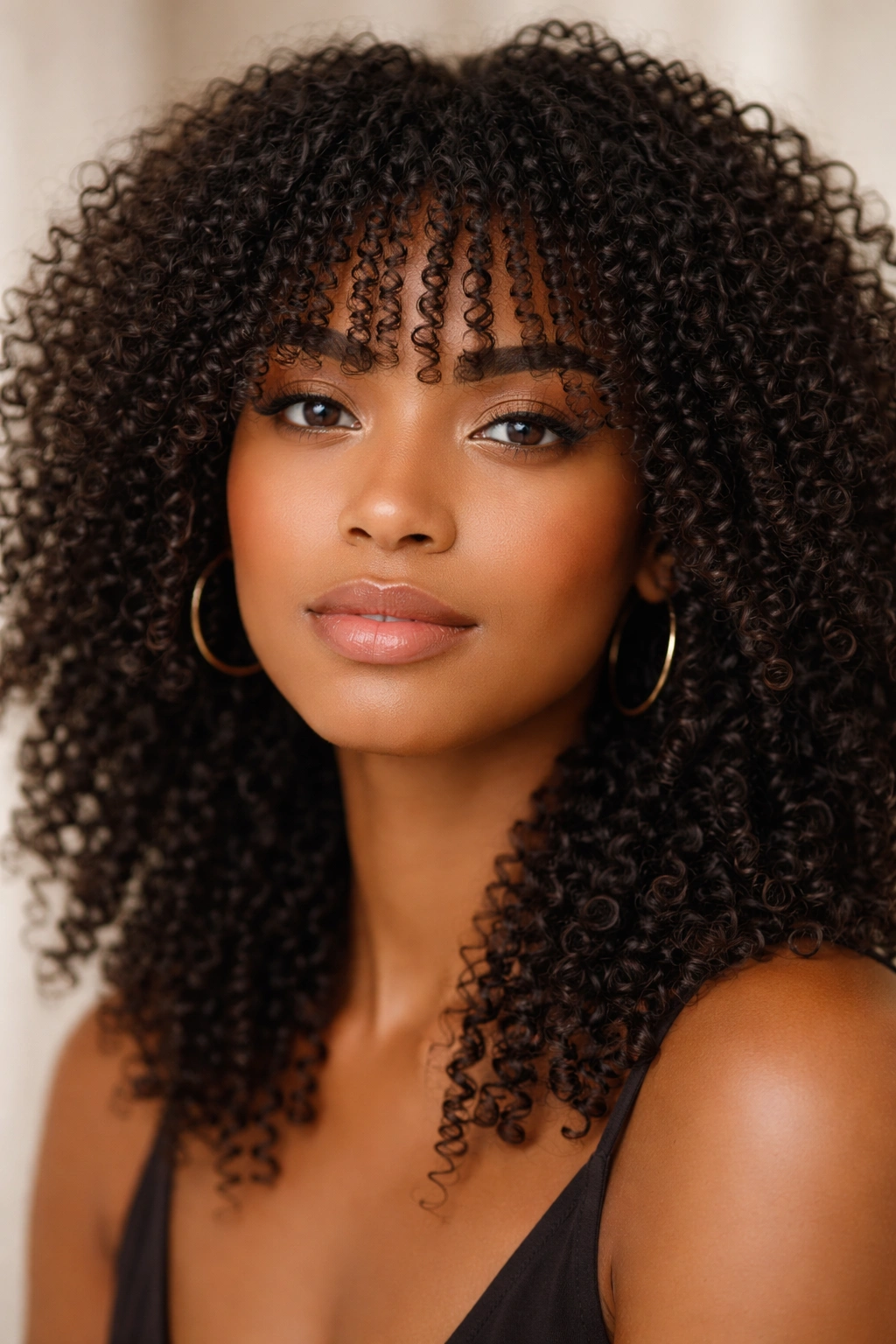
Pencil-thin bangs are exactly what they sound like: individual, skinny pieces that frame the face. For people with ultra-tight, dense curls (4C textures), this style celebrates curl definition by creating fine lines of curls rather than one solid bang unit. Each tiny curl shows, and that’s the whole point.
The Visual Impact of Pencil Fringe
Pencil bangs draw attention to defined curl texture and make a bold style statement. This isn’t a subtle, blended look—it’s intentional and eye-catching. The style works best on people who love their curl pattern and want to celebrate it rather than smooth it down or soften it.
How to Maintain This Style
- Pencil bangs need daily or every-other-day moisture—apply leave-in conditioner and seal with a light oil
- Redefine curls using the same method you use for the rest of your hair (finger coiling, raking, or praying hands)
- Trim every 3-4 weeks to keep individual curl pieces sharp and defined
- Sleep in a pineapple or bonnet to preserve your curl shape
The commitment here is real—pencil bangs require more active styling and maintenance than other bang styles. But if you’re already deep into a curl routine and love your natural texture, maintaining pencil bangs feels like a natural extension of what you’re already doing.
This style also looks incredible with color or highlights because the individual curl pieces show off dimension in a way that blended bangs can’t.
5. The Side-Swept Bang for Mixed Textures
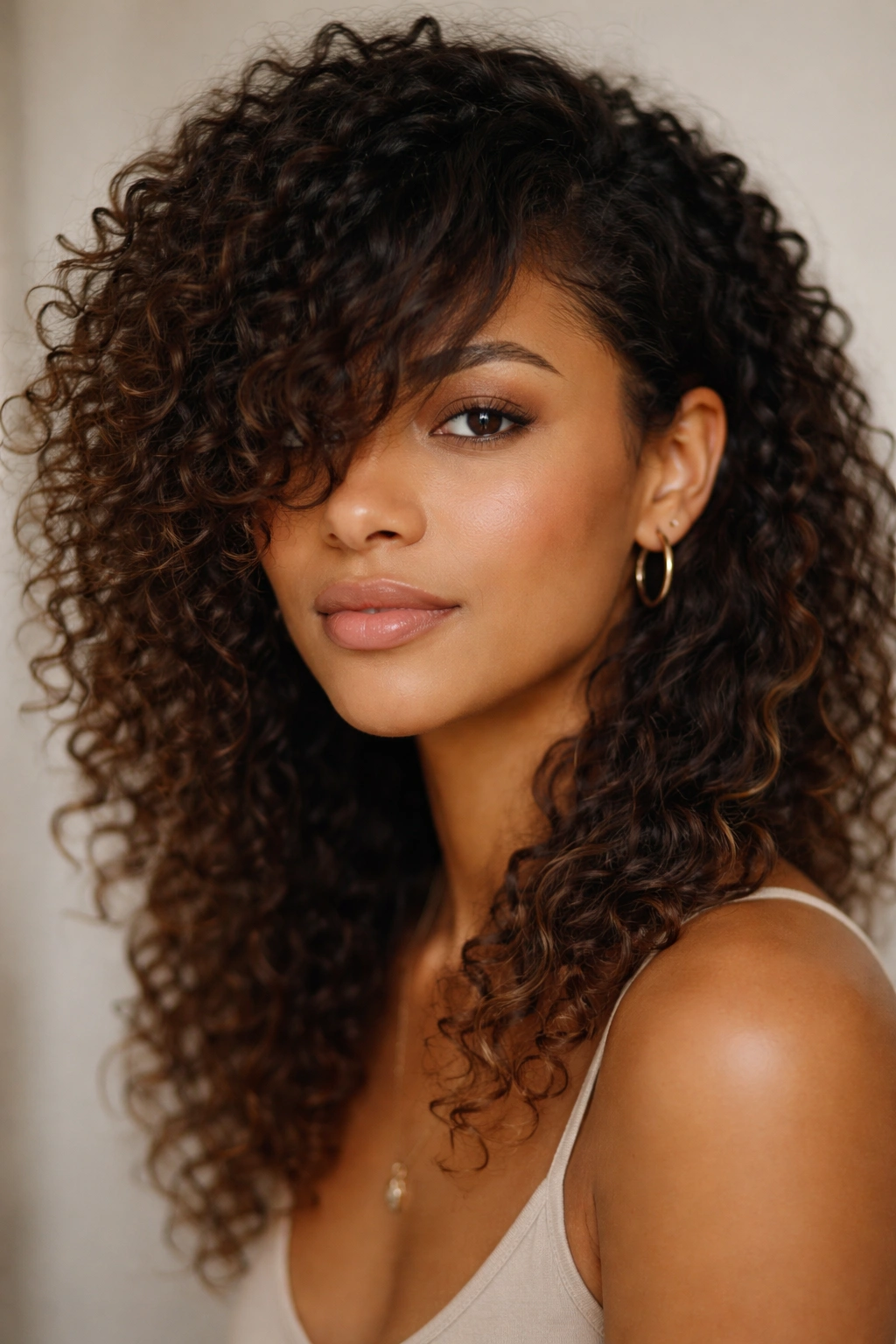
If your hair isn’t one uniform curl pattern—maybe you have tighter curls on top and wavier underneath, or curly underneath and wavy on top—side-swept bangs are your answer. By sweeping the bangs to one side, you work with the natural grain of your hair and accommodate multiple curl patterns at once.
Adapting to Multiple Curl Patterns
Side-swept bangs have built-in flexibility because one side is longer than the other. This means you can accommodate both tighter and looser curls without either side looking too short or too long. The style also has a natural asymmetry that hides the places where your curl pattern changes, blending the transition smoothly.
Styling the Asymmetrical Sweep
- Part your hair on the side where you want the bangs to sweep
- Apply product to the shorter bang side, directing it across your forehead
- Dry on the same side you styled it on to set the direction
- The longer side will blend into your hair naturally without extra effort
One huge benefit of side-swept bangs: if you’re not feeling them one day, you can push them to the side and clip them back. They won’t look obviously regrown or styled wrong—it just looks like a hair-tie situation. This gives you flexibility on days when you want bangs and days when you don’t.
Side-swept bangs also work on more face shapes than center-parted bangs because of the asymmetry. If you’ve ever worried that center bangs might not suit your face, a side sweep might be exactly what you’ve been looking for.
6. The Layered Curtain Bang for Springy, Medium Curls
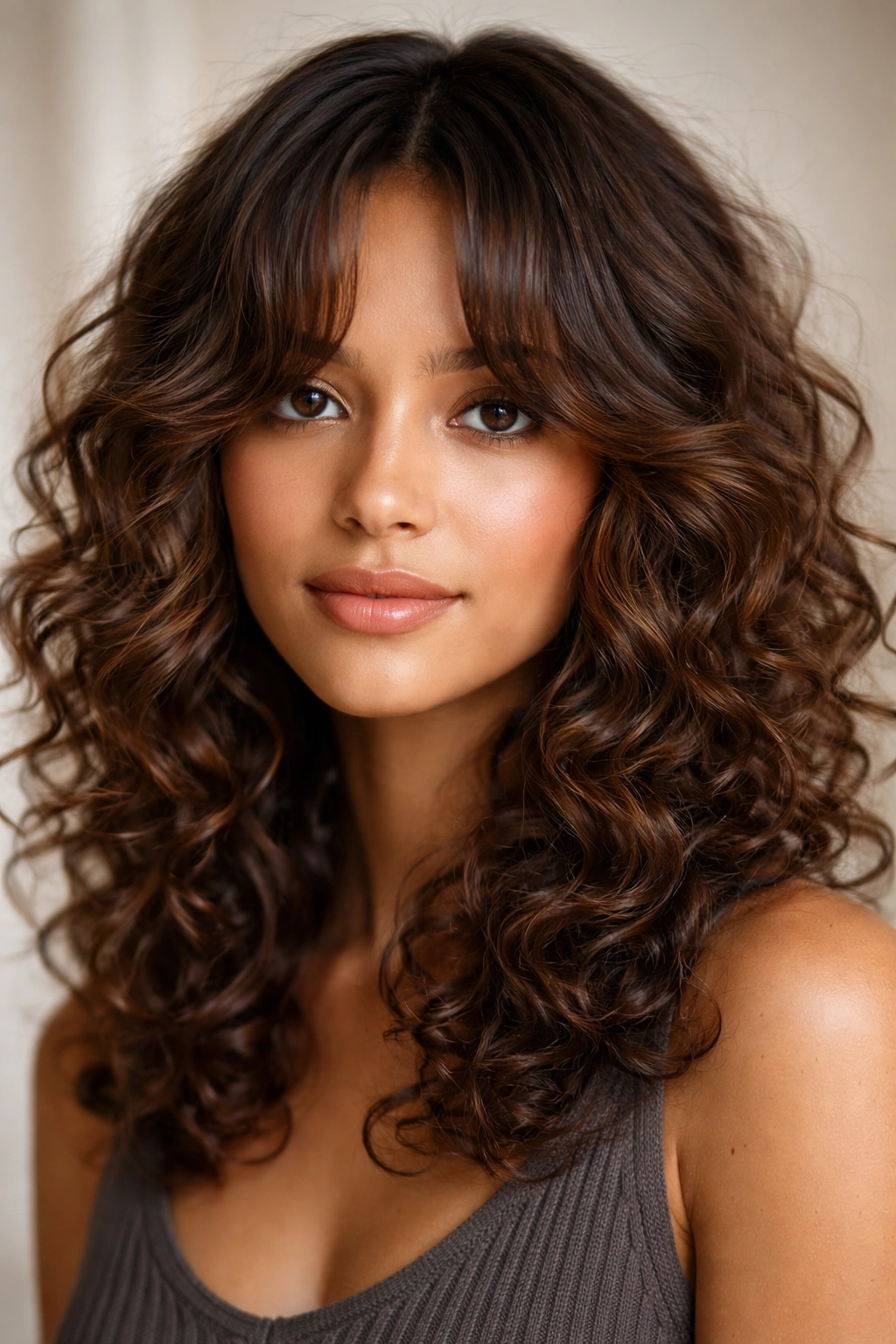
Curtain bangs that are cut with multiple layers work beautifully for springy, medium-density curls (roughly 2C to 3B range). Instead of a solid fringe, you get two sections of bangs that frame either side of your face with a gap down the middle. The layers ensure that your natural curl spring shows rather than getting weighed down.
Why Layers Matter for Medium Curls
Medium curls have enough density to support layers without falling flat, but they also need room to move. Layered curtain bangs distribute the hair weight so that each layer can bounce and spring independently. The result is a sophisticated style that looks polished without feeling stiff or controlled.
Achieving the Curtain Effect
- Ask your stylist to cut curtain bangs with at least 3-4 layers
- Dry with a round brush or diffuser, brushing each layer back and out
- Use a medium-hold curl cream to maintain shape without crunchiness
- Style from damp, not soaking wet, so you maintain better control
The beauty of curtain bangs is that they work whether your curls are styled or not. Defined, bouncy curls look intentional and polished. Second-day, less-defined curls look romantic and effortless. Both versions work with this style.
Curtain bangs also make a great styling tool if you’re dealing with a larger forehead or want to create the illusion of width on a narrower face. The two separate sections can be positioned to flatter your specific face shape.
7. The Blunt, Defined Bang for 3A to 3C Curls
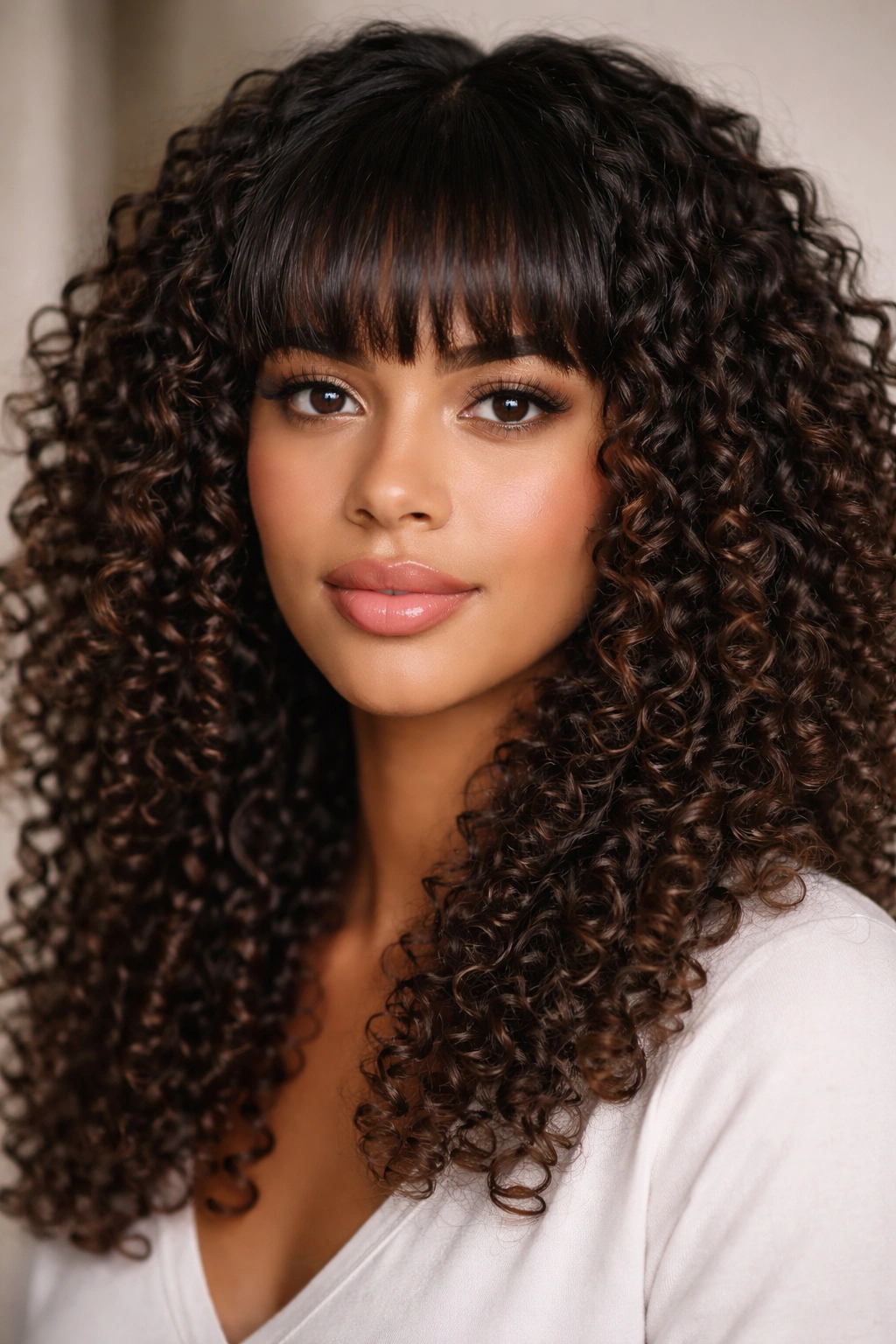
Blunt bangs feel counterintuitive for curly hair, but when cut for people with well-defined, medium-textured curls (3A to 3C), they create a striking, intentional look. The key is that your stylist needs to understand your curl pattern and cut the bangs longer than they would for straight hair—because curls shrink when dry.
The Blunt Bang Approach for Curls
Blunt bangs work best when your curls are tight enough to hold shape but not so tight that they shrink dramatically. The stylist should cut them wet and let you see the finished shape before you leave. This ensures the dry length lands exactly where you want it—usually just at or slightly above the eyebrow.
Daily Styling for Blunt Bangs
- Apply curl-defining product to damp bangs using the praying hands method
- Dry with a diffuser to create an even, defined shape
- On second day, mist with water and reapply product to refresh
- Trim every 4-5 weeks to maintain the blunt line
Blunt bangs on 3A to 3C curls have a very specific aesthetic—they look modern, confident, and intentional. There’s no hidden hair here; the curls are on display. If you love your curl definition and want a bold statement, blunt bangs deliver.
One consideration: blunt bangs show regrowth more obviously than textured or wispy styles. If you prefer minimal trims, this might not be the style for you. But if you enjoy frequent salon visits and appreciate a crisp, defined look, blunt bangs are excellent.
8. The Integrated Curl-Out Bang for Fine, Curly Hair
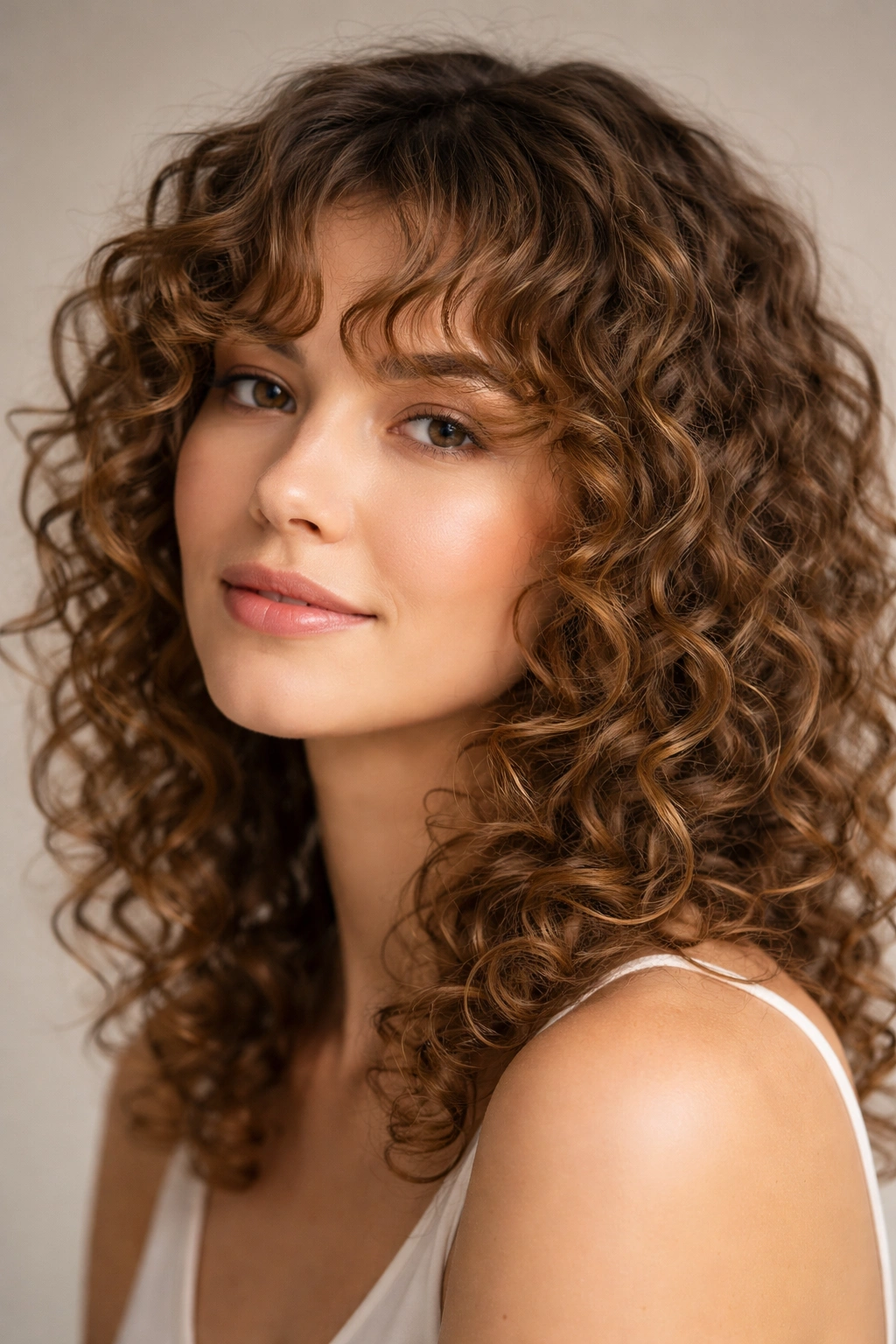
If you have fine, curly hair with lower density, heavy bangs can look overwhelming. Integrated curl-out bangs are longer and blend seamlessly into your regular curls so that the bangs are barely distinguishable as a separate element. They’re curled the same way as the rest of your hair and flow into it naturally.
Why Integration Works for Fine Curls
Fine curls don’t have the density to support traditional bangs without looking thin or sparse at the front. By integrating bangs into your overall curl pattern, you’re distributing the hair volume across your entire head rather than concentrating it in one band at the front. This looks fuller and more balanced.
Styling Fine, Curly Bangs
- Use lightweight products—heavier gels and creams will weigh fine curls down
- A light mousse or curl cream works best
- Air dry whenever possible; a diffuser can help, but keep the heat low
- Finger-comb or rake through damp hair to define curls gently
The integrated approach also means less frequent trims. Because the bangs aren’t a distinct unit with a defined line, you don’t need to trim them separately every month. You trim your entire head every 6-8 weeks, and the bangs come along naturally.
This style is also extremely forgiving if you’re new to having bangs. Because they’re not obviously “bangs,” they don’t feel like a risky decision. You can experiment without feeling locked into a specific look.
9. The Wispy Bangs with Hidden Texture for Wavey Hair
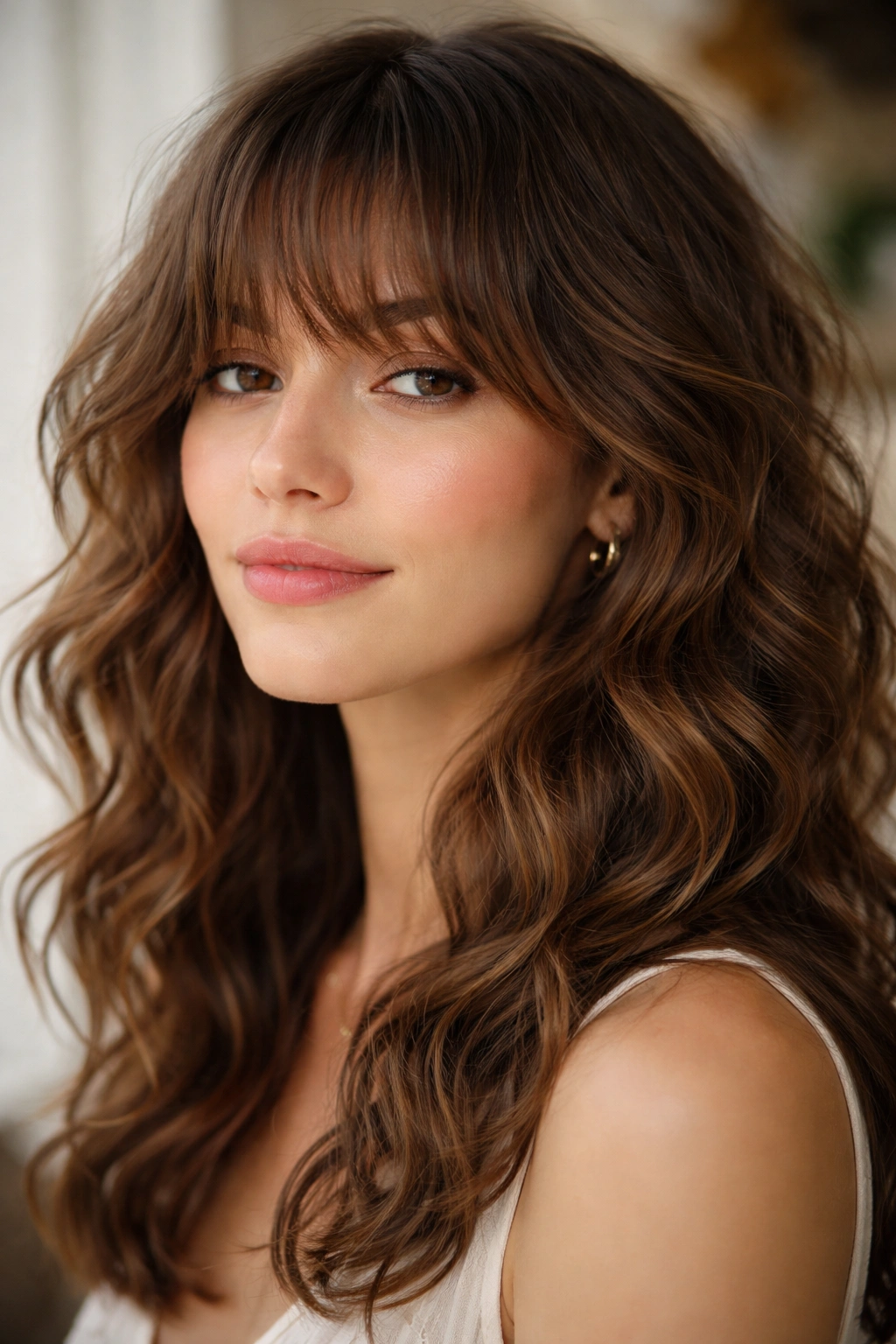
Wispy bangs look delicate and soft while actually containing hidden layers underneath that create surprising texture and volume. This works beautifully for wavy hair because the bottom layer appears light and airy while the underneath pieces add density and shape. It’s a smart cut that delivers more than it appears to.
The Hidden Architecture of Wispy Layers
The top layer is longer and feathered to create softness, while the underneath layers are shorter and choppy. When your waves move and shift, these layers peek through, creating depth and texture. The effect is sophisticated and intentional without being obvious from a distance.
Styling Wispy, Layered Bangs
- Apply wave-enhancing products to damp bangs before air drying
- A round brush can help shape the longer top layer while the underneath does its own thing
- Use a light hold product so the layers have freedom to move
- Mist with water on second day and shake out for texture
The genius of wispy bangs with hidden layers is that they look good at every stage. Freshly styled, they’re polished and pretty. Second day, they look tousled and romantic. By day three, they look intentionally textured and bohemian. Every version works.
Wispy bangs also photograph well, which is a bonus if that matters to you. The soft edges and feathering look beautiful in pictures while still looking natural in person.
10. The Bold Coil Bangs for 4A to 4C Curls
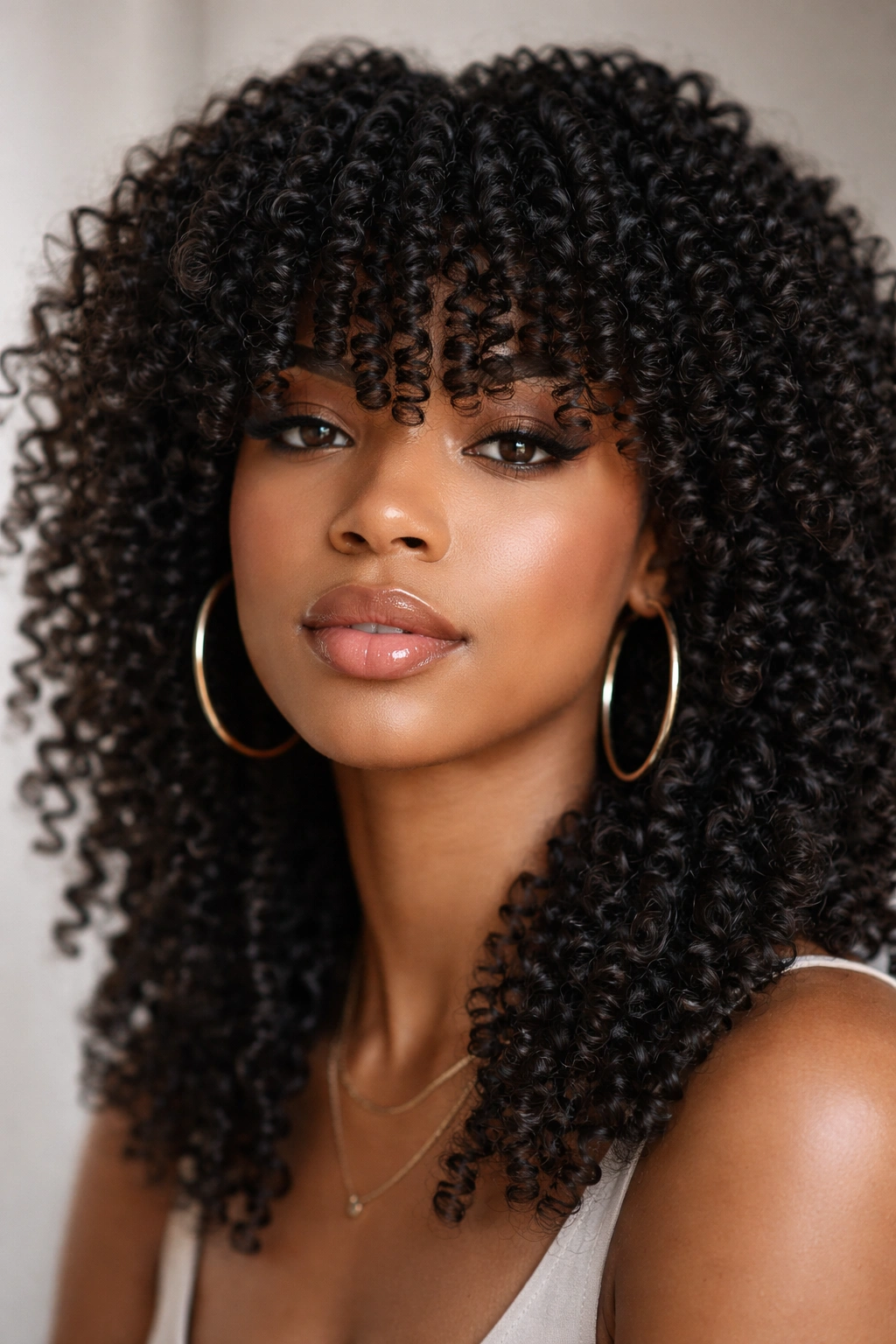
Bold coil bangs are thick, chunky sections of tightly coiled curls that make a statement. Rather than trying to make coils look softer or more blended, this style celebrates tight curl texture. The bangs are cut dense and deliberately, showing off individual curl definition.
Embracing Coil Texture in Bangs
This is a style for people who love their coil pattern and want it to be visible and admired. The bangs won’t look soft or feathered—they’ll look defined, structured, and powerful. This style works best on people with a confident aesthetic and a willingness to show their hair exactly as it is.
Maintaining Bold Coil Bangs
- Deep condition regularly—coils have less natural oil distribution, so they need moisture
- Apply leave-in conditioner and seal with a light oil every time you style
- Redefine curls daily or use a pineapple/bonnet method for second-day hair
- Trim every 3-4 weeks to keep coil definition sharp
Bold coil bangs demand a real commitment to care and styling. This isn’t a wash-and-go situation. But if you’re already invested in your curl routine and want bangs that match your dedication to your natural texture, bold coil bangs are incredible.
This style also looks stunning with protective styling like braids, twists, or buns. The coil bangs add a finished, intentional detail to any protective style.
11. The Feathered Long Bang for Combination Textures
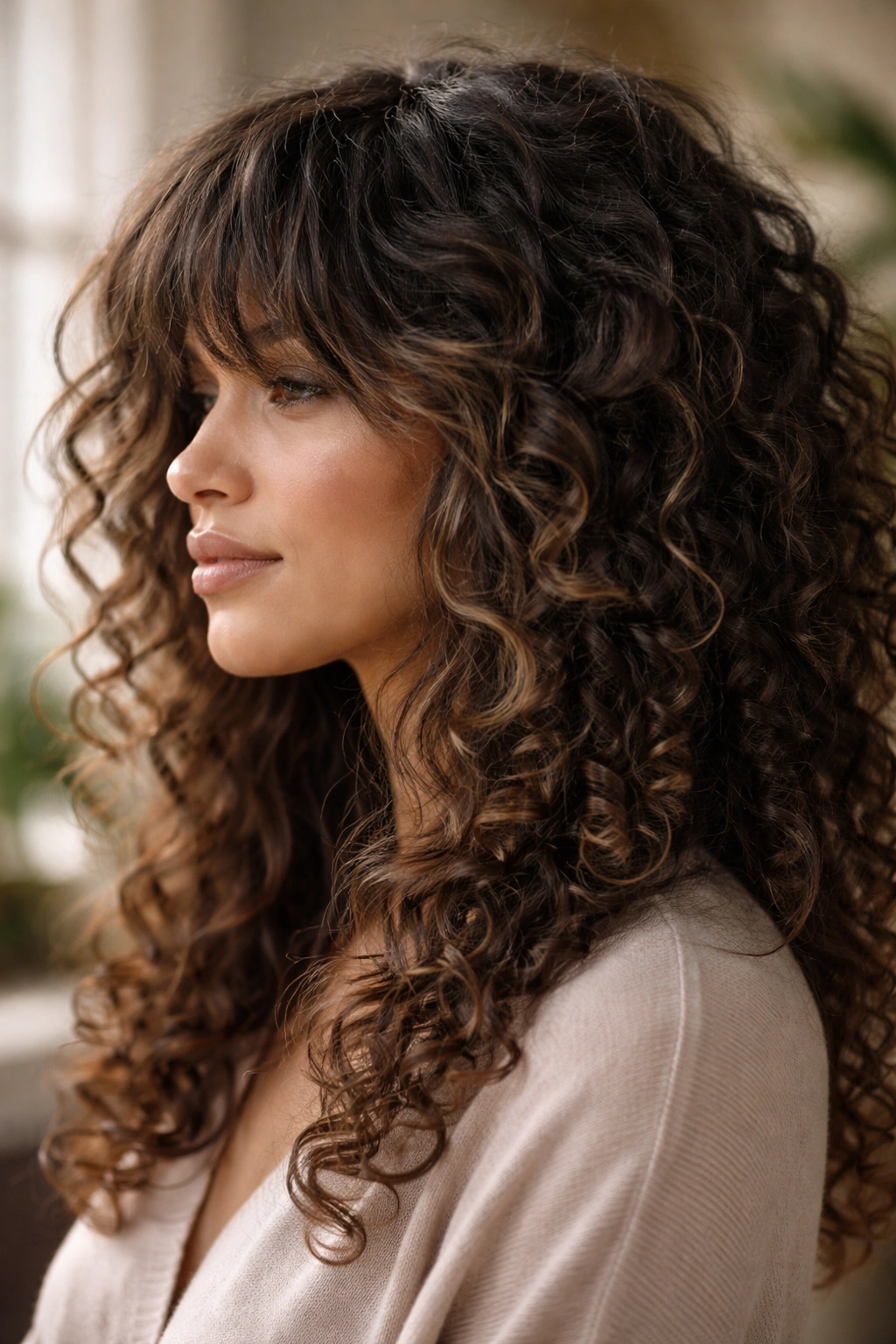
Feathered long bangs extend down to cheekbone length or slightly below, with choppy layers throughout that create movement and texture. This works beautifully for people with combination curl types—maybe ringlets mixed with waves, or looser curls with tighter underlayers.
Feathering Accommodates Multiple Curl Patterns
By feathering the bangs into multiple layers of different lengths, you can accommodate curls that don’t all behave the same way. Tighter curls sit shorter after drying, so they might land at one length, while looser waves land longer. The feathering disguises this variation and makes it look intentional rather than uneven.
Creating and Maintaining Feathered Texture
- Ask your stylist for choppy, piece-y layers throughout the bangs
- Enhance texture with a texturizing spray or light gel
- Dry with a diffuser or air dry for a more natural feathered appearance
- Trim every 5-6 weeks to refresh the choppy texture
The length of feathered bangs gives you versatility. You can pull them back with a clip or hair tie, or wear them down. They frame the face beautifully without being too short or too dramatic. The feathering also means they won’t look too severe if you skip a few weeks between trims—the choppy texture hides regrowth naturally.
Feathered long bangs are also a great middle ground if you’re not sure whether you want classic bangs or no bangs at all. The length means they’re less commitment than shorter bangs, and they blend into your hair more easily.
12. The Spiral Curl Bang for Highly Defined Ringlets
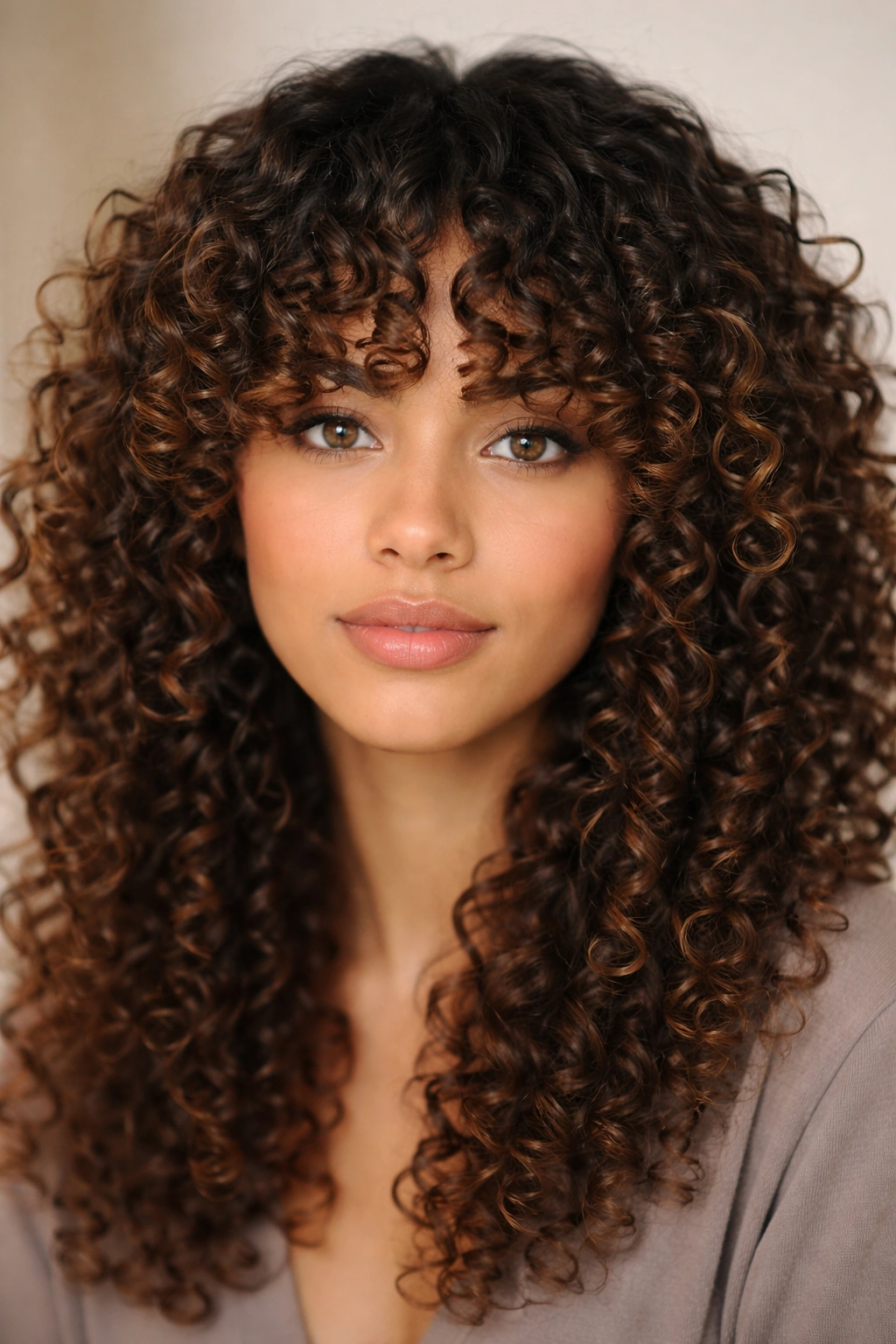
Spiral curl bangs are cut specifically for people with defined, springy ringlets (usually 3B to 4A curl types). The bangs are cut as individual spiral sections, each capturing a distinct curl. When you dry them, each spiral springs into its own defined ringlet rather than blending into one mass of hair.
Celebrating Ringlet Definition
This style is all about showing off your curl pattern’s precision and spring. Each ringlet is a separate unit, and the bangs showcase this definition beautifully. It’s a playful, youthful style that celebrates texture rather than minimizing it.
Styling Spiral Curls Bangs
- Apply curl-defining cream or gel to individual curl spirals
- Use a finger-coiling method to shape spirals if needed
- Air dry or use a diffuser on low heat
- Refresh second-day curls by misting with water and finger-coiling any loose spirals
Spiral curl bangs require an understanding of your curl pattern and a willingness to work with it actively. This isn’t a minimalist style. But if you love the personality and movement of defined ringlets, spiral bangs amplify everything you already love about your hair.
This style also looks incredible with dimensional color or highlights because the individual spirals show off color variation beautifully.
Final Thoughts
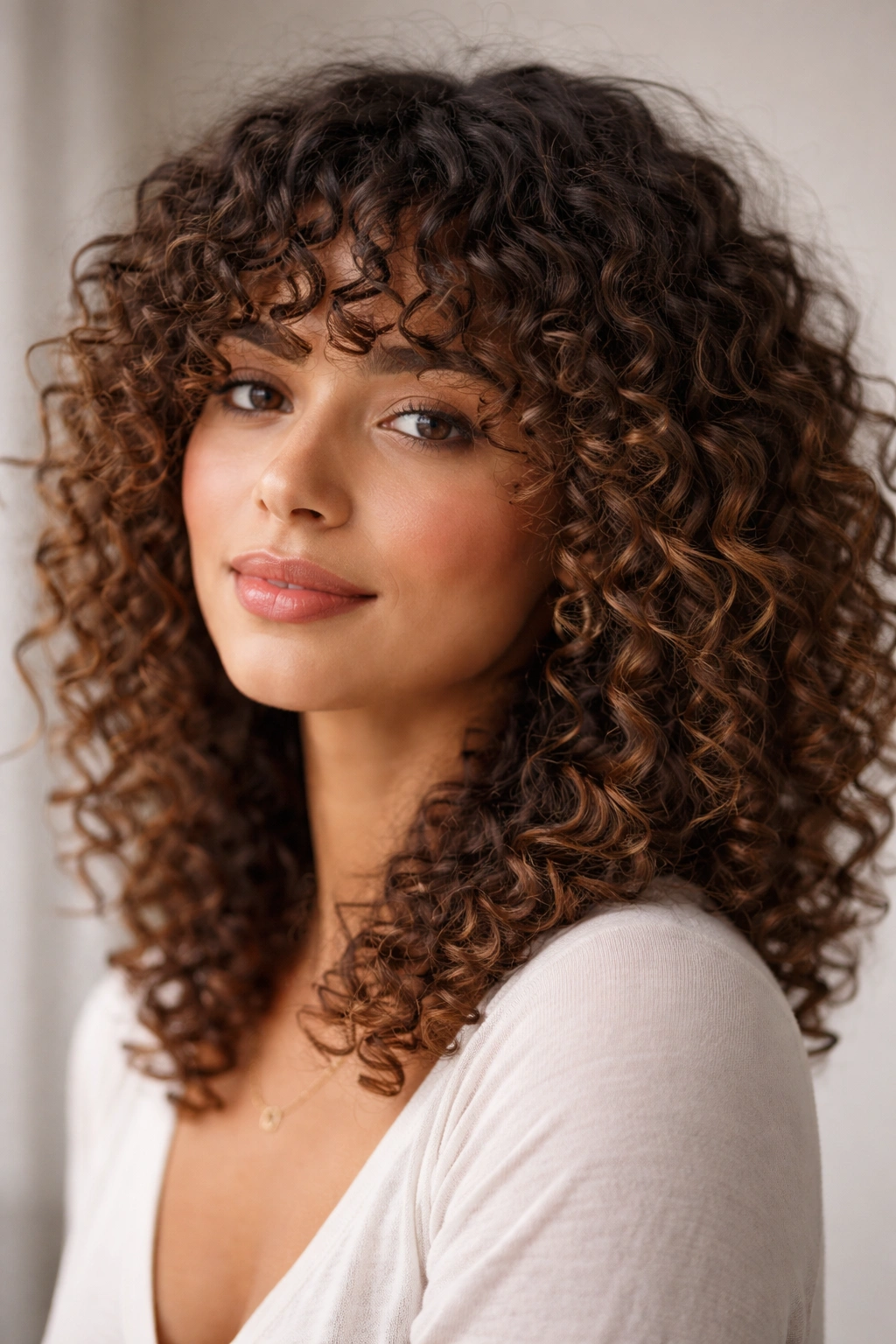
The right curly bang style depends entirely on your curl pattern, hair density, and how much daily styling you’re willing to do. A style that’s perfect for 3A ringlets might overwhelm 4C coils, just as a soft fringe that suits loose waves might not work for tight curls. The key is matching your bang style to your actual hair, not to an image you found online that might have a completely different curl type than yours.
When you go to your stylist, bring pictures of bangs styles on people with your specific curl type if you can find them. Have an honest conversation about how much styling time you’re willing to invest and what your daily routine looks like. A stylist who understands curly hair will cut your bangs longer than they would for straight hair to account for curl shrinkage, and they’ll show you exactly how to style them to look their best.
Remember that most curly bang styles take one to three wash cycles to really settle into their final shape. Your curls need time to adjust to the new cut and for you to figure out the styling technique that works best. Give yourself grace during that adjustment period, and don’t judge the cut too harshly in those first few days.
Curly bangs, when they’re the right style for your hair, are genuinely transformative. They frame your face beautifully, they draw attention to your eyes, and they make a statement about embracing your natural texture rather than fighting it. Whether you go soft and wispy, textured and playful, or bold and defined, there’s a curly bang style that will make you feel more like yourself.
