



A curly lob is the Goldilocks of modern haircuts—not quite a full-length style, not a traditional bob, but rather that perfect sweet spot where texture thrives and styling possibilities multiply. If you’ve been scrolling through endless inspiration boards wondering what a curly lob actually looks like, or whether this cut could work with your specific curl pattern and face shape, you’re about to get the definitive breakdown.
The lob has evolved tremendously since its peak popularity. What once felt like a single, monolithic haircut has fractured into dozens of interpretations, each suited to different curl types, densities, and lifestyle preferences. A curly lob isn’t just shorter hair on a curly-haired person—it’s a strategic cut that works with your natural texture, enhances curl definition, reduces bulk, and honestly, makes styling feel effortless on most days.
The beauty of exploring curly lob options is that length becomes less important than understanding how different cuts interact with your curl pattern. Some lobs rely on choppy, piecey layers that celebrate movement. Others embrace bluntness to enhance curl formation. Still others add face-framing depth or incorporate undercuts for volume control. The “perfect length” isn’t fixed—it’s the length where your specific curls perform best, where styling feels manageable, and where you feel genuinely confident.
Let’s walk through fifteen distinct curly lob interpretations, each offering a different aesthetic, difficulty level, and suitability for various curl types and lifestyles.
1. Classic Shoulder-Length Curly Lob
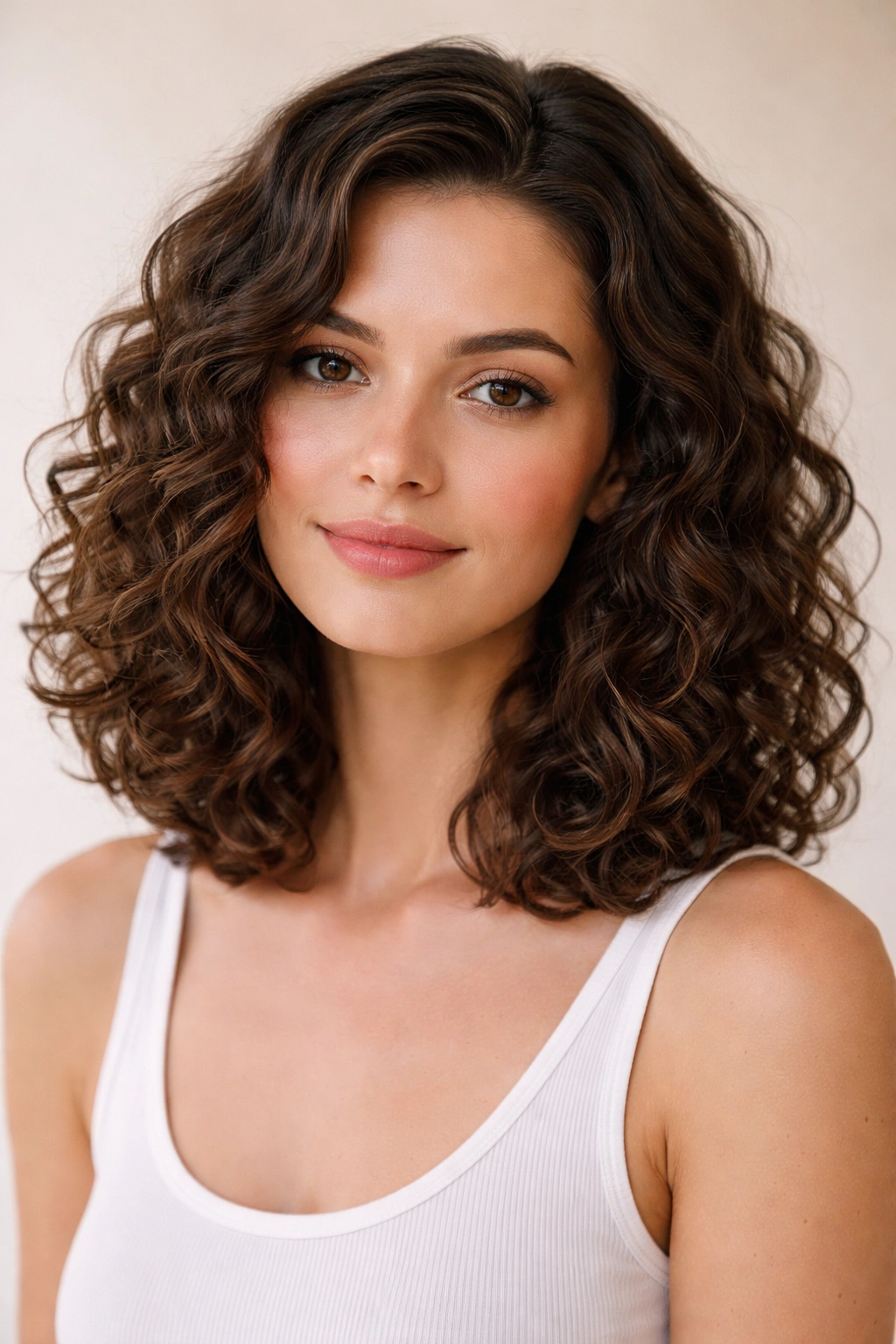
This is the foundational curly lob—the cut that most people picture when they hear the term. It lands right at or just below the shoulder, creating that balance between length and manageability that makes a lob so appealing. The hair is cut with minimal layers, allowing curls to form naturally without excessive choppy texture.
Why This Cut Works Universally
A classic shoulder-length curly lob works beautifully on most curl patterns because the weight of the hair itself helps define and stretch curls slightly, while the length gives you enough hair to work with. The cut isn’t overly trendy—it reads as intentional, polished, and timeless whether you’re wearing it curly or textured. You can air-dry this cut and walk out the door feeling put-together, or you can style it with intention for occasions where you want drama and polish.
Best for These Situations
- Curls that need a break from maintaining very long hair but want more volume than a short bob
- Someone transitioning to a shorter cut for the first time
- Any face shape, though it’s particularly flattering on oval and heart-shaped faces
- Curl patterns from 2c (waves) through 4c (tight coils)
- People who want a cut that requires minimal specialist styling between trims
Pro tip: Have your stylist check the curls at their true length before cutting—what looks like shoulder-length stretched might sit noticeably shorter once the curls spring up fully.
2. Textured Shag Curly Lob
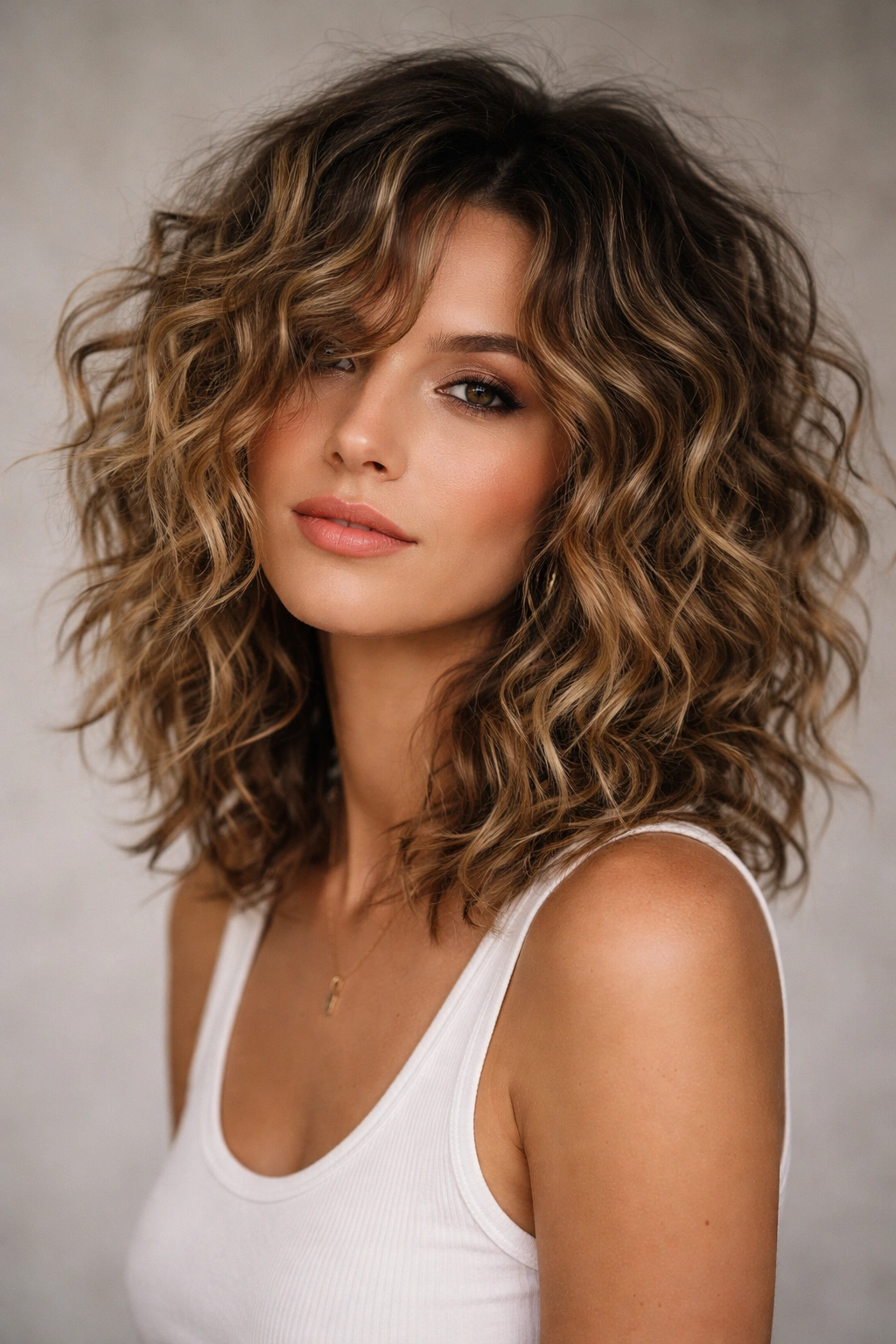
A shag introduces shorter, choppy layers throughout the entire cut, creating maximum movement and a lived-in, textured appearance. Instead of blunt weight, a shag curly lob celebrates individual strands and curl definition. Layers are cut at varying lengths, with shorter pieces near the face and crown creating instant volume and bounce.
The Shag’s Appeal for Curly Hair
Shags and curly hair are genuinely a match made in heaven. The choppy layers don’t fight your curl pattern—they enhance it by removing weight while maintaining enough length for fuller curls. This cut broadcasts confidence and attitude. It’s the opposite of trying to make curls look “sleek”—instead, it celebrates them as texture and movement. The shag naturally looks better the messier it gets, which means less pressure to achieve perfect styling results.
Who Should Consider This Cut
- Anyone with medium to coarse curl texture that benefits from strategic layer removal
- People who want an edgy, fashion-forward vibe rather than classic polish
- Those comfortable with a cut that requires more frequent trims (layers grow out fairly quickly)
- Curl patterns 2c and curlier that can handle choppy layers without appearing frizzy
- Anyone who loves the volume of a full, textured crown
Worth knowing: Shags require a stylist who genuinely understands how layers interact with curls—a poorly executed shag becomes wispy and shapeless rather than intentionally textured.
3. Face-Framing Curly Lob
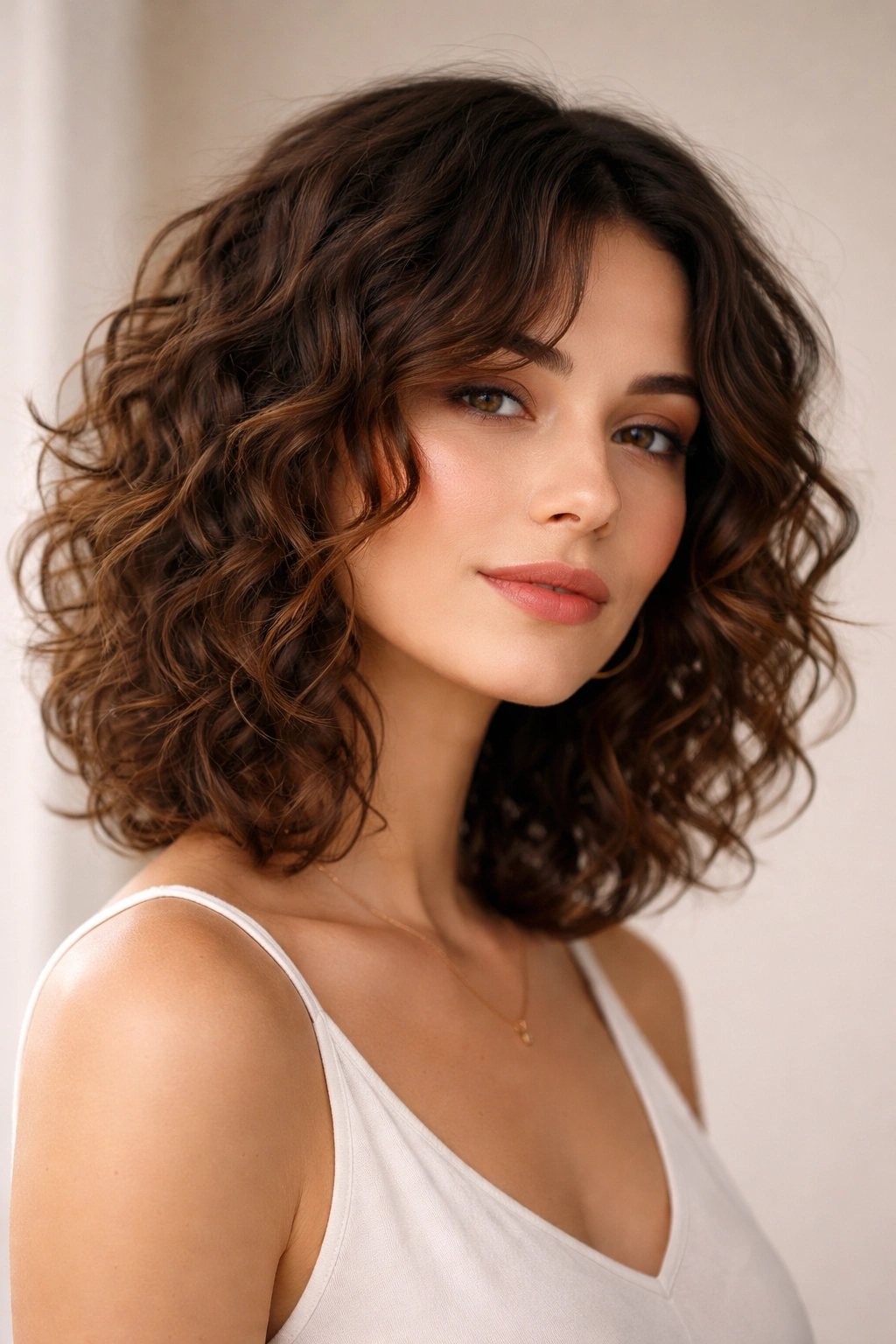
This variation keeps most of the length intact but introduces strategic shorter layers specifically around the face, chest, and cheekbones. The shorter pieces frame facial features while the longer back sections maintain length and weight. It’s a compromise between a full lob and textured cuts—you get definition exactly where it matters most for your face shape.
Why Face-Framing Layers Matter
Face-framing is one of the most universally flattering techniques in haircutting because it literally works with facial proportions and bone structure. Shorter curls at the face catch light differently, create dimension, and make cheekbones and eyes feel more prominent. The contrast between shorter face-framing pieces and longer back pieces creates visual interest without sacrificing overall length. This cut takes about fifteen minutes longer in consultation but pays dividends in how flattering the finished style feels.
How to Know If This Works for You
- You want noticeable dimension but aren’t ready for a full shag
- Your curl pattern is somewhat inconsistent—this cut works even if different curls coil differently
- Face-framing pieces will emphasize your best features, so think about where you want focus
- Works on all face shapes, though particularly enhances rectangular and oblong faces
- Ideal for anyone wanting a cut that looks intentional when styled but still manageable on lazy mornings
Insider note: Ask your stylist to cut face-framing pieces when your hair is slightly damp and defined, not soaking wet, so they can see exactly how the curls will land and adjust the length accordingly.
4. Tousled Beachy Curly Lob
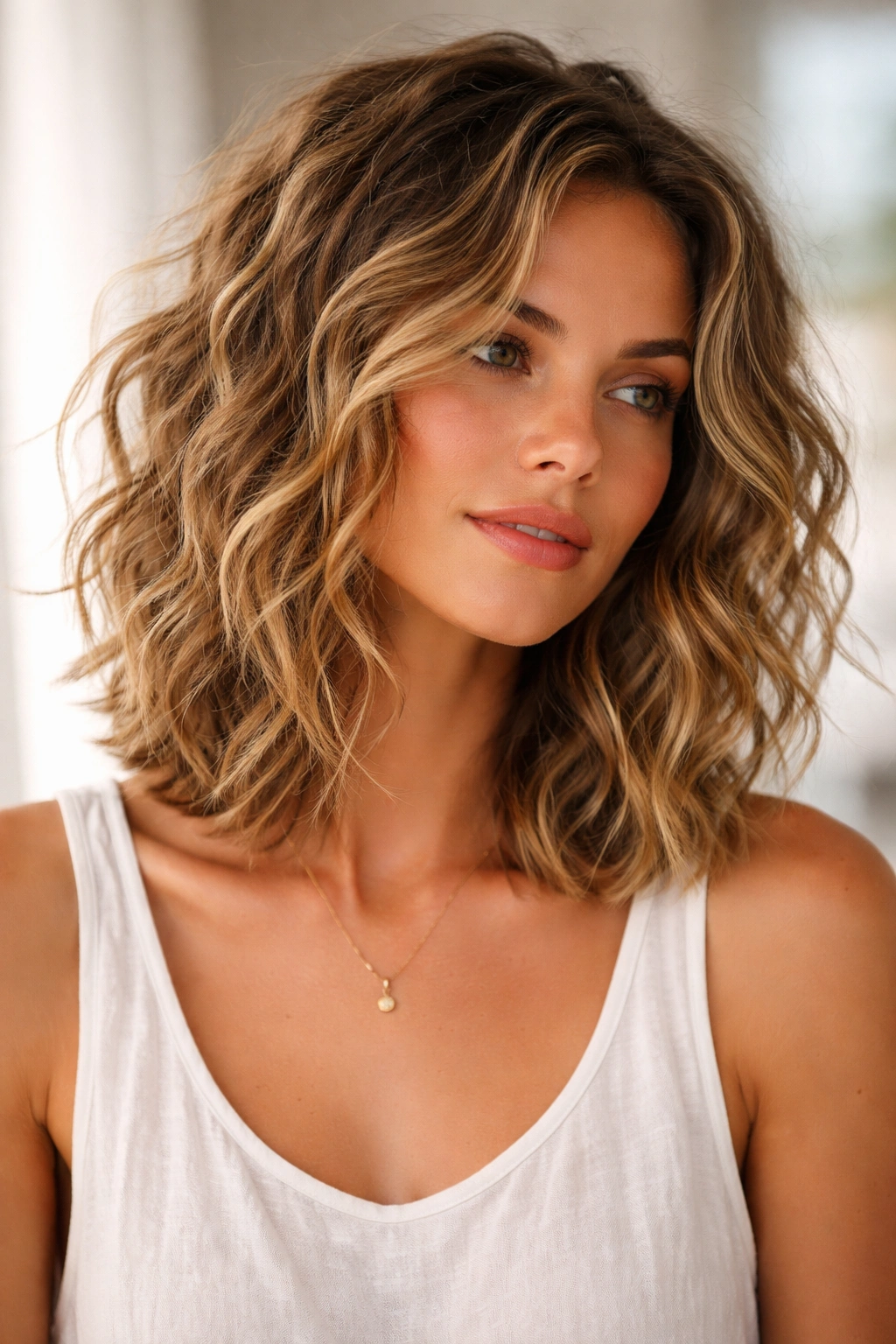
This cut celebrates a relaxed, effortless aesthetic—think less “I spent two hours styling” and more “I woke up like this.” The cut itself is fairly blunt, but layers are placed subtly to enhance natural curl bounce and create that undone, tousled texture. The emphasis is on movement rather than definition, and the styling approach leans into texture products and air-drying rather than precision curling.
The Beachy Approach to Curly Hair
Not every curly-haired person wants their curls to look defined and polished. Some prefer that softer, more relaxed, wave-like texture that reads as beachy and approachable. This cut achieves that by working with air-dried curls and products that enhance texture without creating rigid curl clumps. It’s genuinely low-pressure styling—your curls do most of the work, and products amplify what’s already there rather than forcing a specific shape.
Perfect For
- Naturally wave-textured or loose-curl patterns (2c through 3c) that benefit from texture enhancement
- People who genuinely prefer minimal styling time and maximum wash-and-go potential
- Those with finer curl patterns that can look overwhelming when heavily defined
- Warm-weather lifestyles where embracing natural texture feels more appropriate than structured styling
- Anyone wanting to wear their hair curly without the visual weight of tighter, more defined curls
Pro tip: Beachy curly lobs benefit from sea salt spray applied to damp hair before air-drying—it enhances texture, separates waves, and creates that effortless dimension.
5. Sleek Defined Curly Lob
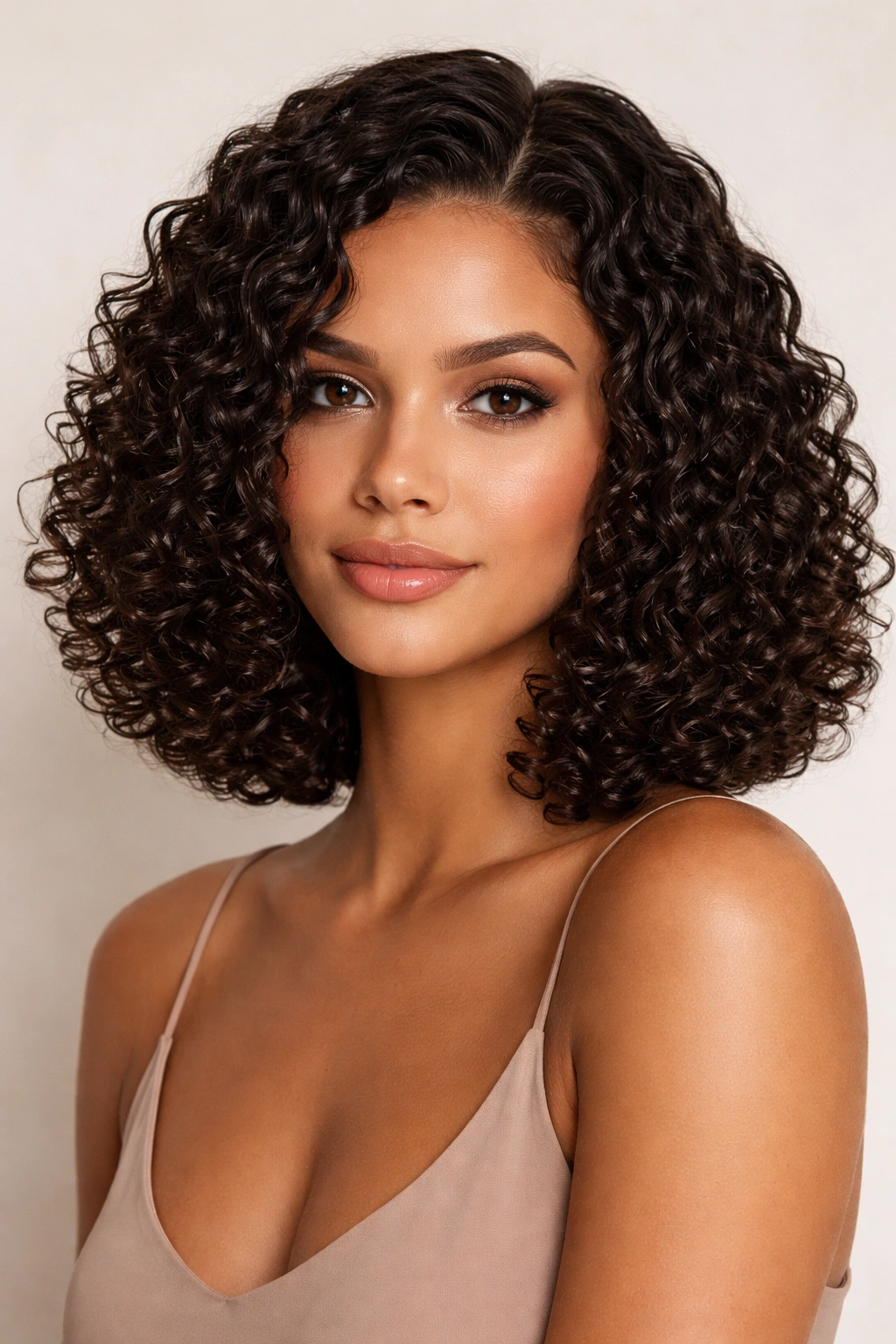
On the opposite end of the spectrum from beachy texture sits the sleek, highly defined curly lob. This cut is precise and intentional, with curls that are clear, structured, and visually distinct from one another. Layers are minimal or strategically placed, and styling involves products that enhance definition, separate curls, and create polish. This aesthetic appeals to people who want their curls to look deliberate and beautifully controlled.
The Art of Defined Curls
A sleek, defined curly lob requires both the right cut and the right styling approach. The cut itself should have minimal choppy texture—instead, layers are subtle and placed where they add shape without fragmenting the overall structure. Styling involves techniques like praying hands application, finger coiling, or denman brush smoothing to enhance each individual curl. The payoff is curls that look absolutely intentional and beautiful, though they do require more active styling than beachy approaches.
Ideal for These Situations
- Tighter curl patterns (3b through 4c) where defined curls look their absolute best
- Formal occasions, professional environments, or personal preference for polished styling
- People who enjoy the styling process and view it as part of their routine rather than a chore
- Curl patterns with good definition that respond well to structure-enhancing products
- Anyone wanting to showcase curl beauty as a deliberate aesthetic choice rather than texture
Worth knowing: Sleek defined curls require slightly more frequent trims because the defined structure can show split ends more visibly than relaxed texture does.
6. Choppy Layered Curly Lob
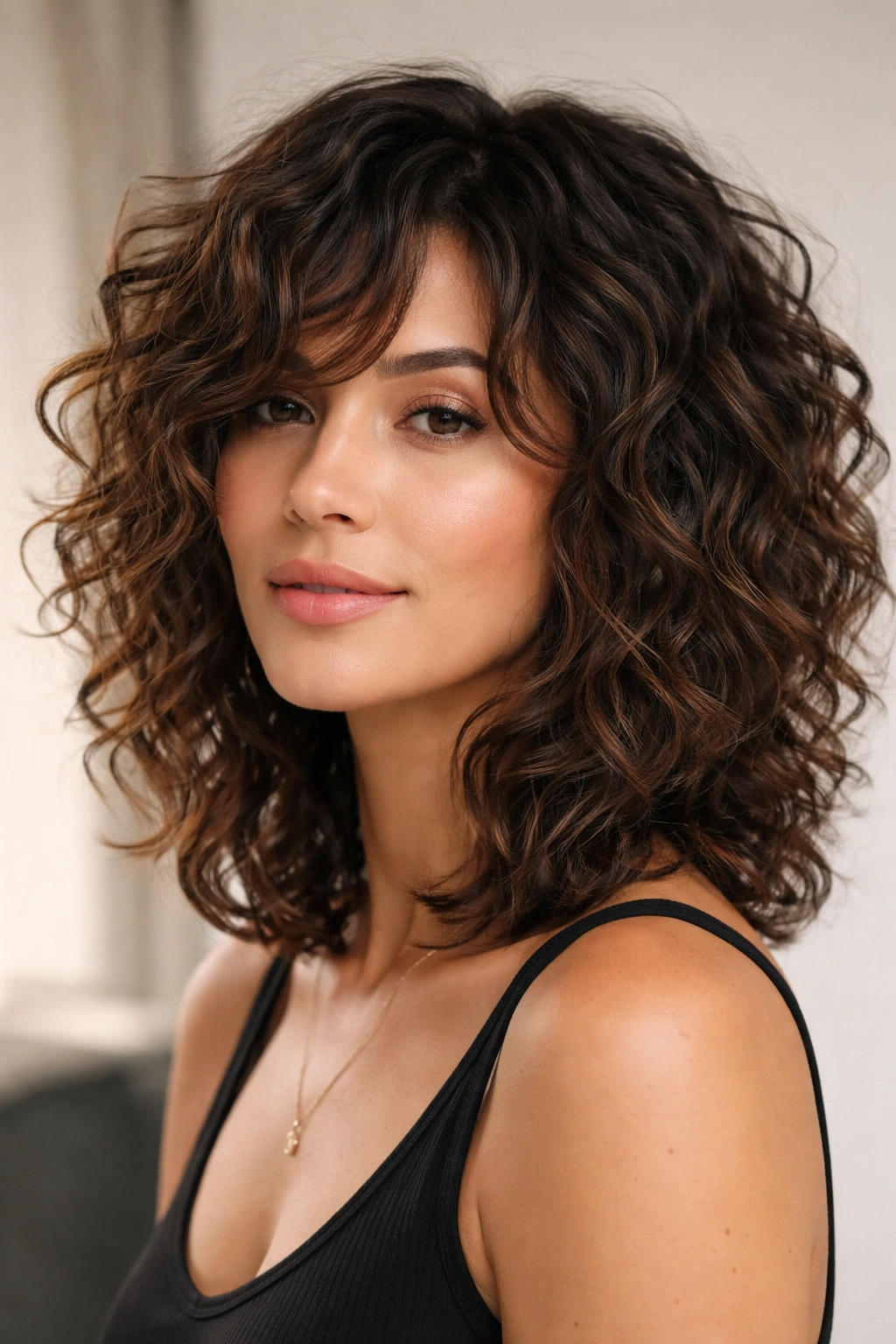
This cut takes the opposite approach from sleek definition—instead of minimal layers, it embraces choppy, piecey layers throughout the entire cut. Layers vary in length and angle, creating movement, volume, and textural interest at multiple points. The result is a cut that reads as edgy and modern, with the ability to show off individual strand texture and curl personality.
How Choppy Layers Transform Curly Hair
Choppy layers are genuinely transformative for curly hair because they remove weight strategically while celebrating texture. Each layer can sit at a slightly different angle, creating that prized “movement” without relying on length. The cut works beautifully for people with denser, coarser curl patterns that can handle shorter, texturized pieces without appearing thin or wispy. The styling is forgiving—longer air-drying time is the main requirement, not necessarily precision styling.
Who Thrives With This Cut
- Dense, coarser curl patterns that benefit from strategic weight removal
- Anyone wanting an undeniably fashionable, statement-making haircut
- People comfortable with a cut that requires revisiting every 4-6 weeks (layers grow out relatively quickly)
- Younger-leaning aesthetic or personal style that embraces edgier looks
- Those who enjoy the natural volume that choppy layers provide
Pro tip: When getting a choppy cut, ask your stylist to show you how to style the layers with a styling cream or curl-defining gel—the difference between poorly styled choppy layers and beautifully enhanced ones is significant.
7. Blunt-Cut Curly Lob
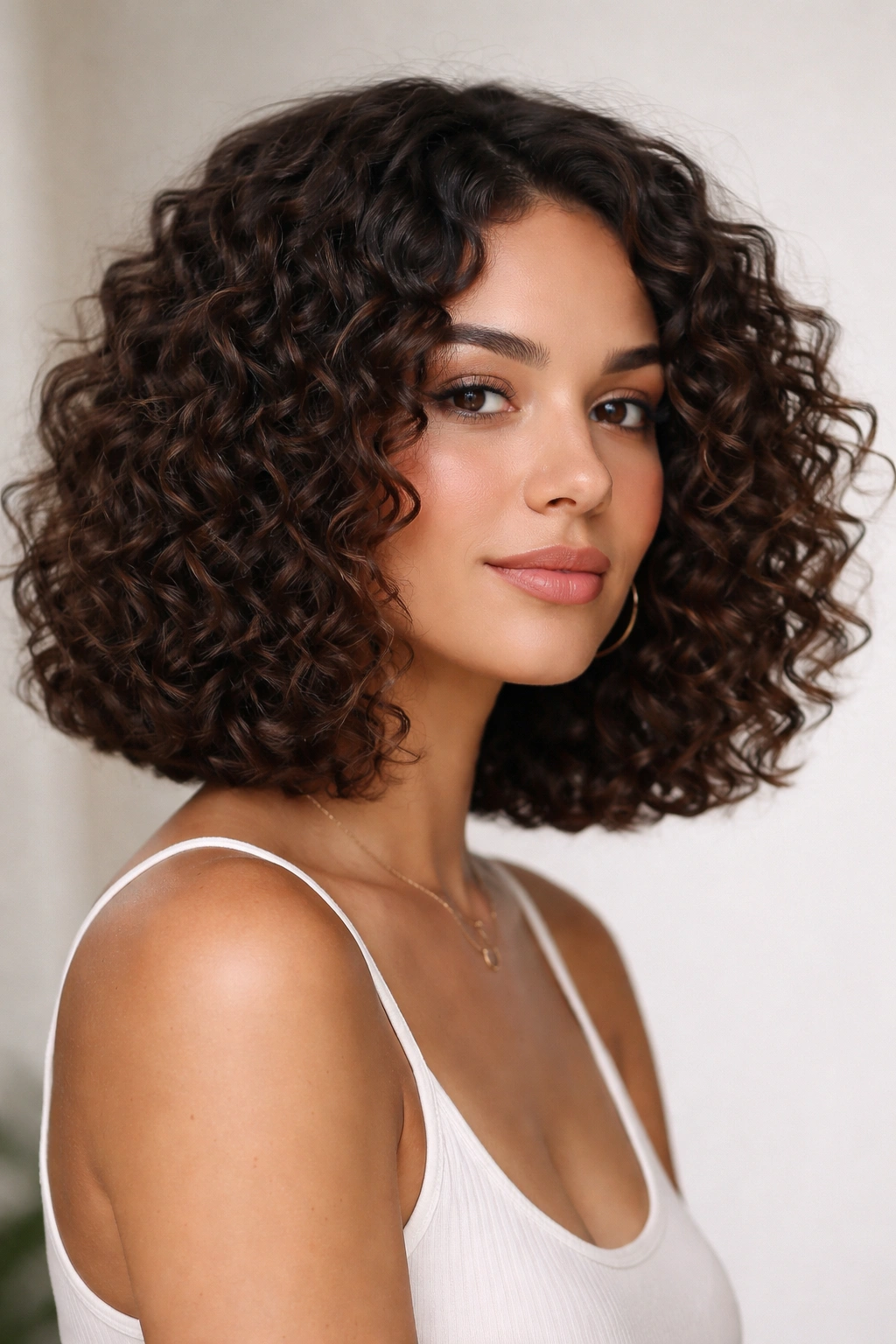
A blunt cut removes all layers and instead relies on a single, clean line at the bottom of the hair. This approach might sound counterintuitive for curly hair, but it actually works beautifully by allowing curls to form naturally from a clean baseline. The blunt edge creates visual weight and makes the cut look intentional and modern. When curls compress upward, they create natural texture without relying on choppy layers.
Why Blunt Works With Curls
A blunt curly lob is genuinely striking because of the contrast between the clean, sharp line at the bottom and the natural movement of the curls above it. The cut reads as confident and modern, never accidental. The clean line also means fewer split ends show visually (since there’s no layering creating lots of endpoints), making the cut last longer between trims. For curls that spring up significantly when dry, the visual difference between stretched length and dry length is a feature, not a bug.
Perfect For These Hair Types and Preferences
- Medium to coarse curl patterns that can support a blunt line visually
- Anyone wanting a cut that lasts longer between trims (no layers to grow out unevenly)
- People who prefer the visual simplicity and intentionality of a single-length cut
- Those with curls that spring up noticeably (meaning the visual length difference between wet and dry isn’t a concern)
- Anyone wanting a very modern, deliberate-looking aesthetic
Worth knowing: A blunt curly lob requires excellent curl routine execution to look its best—the clean line only works when curls are well-defined and bouncy, not undefined or frizzy.
8. Side-Swept Curly Lob
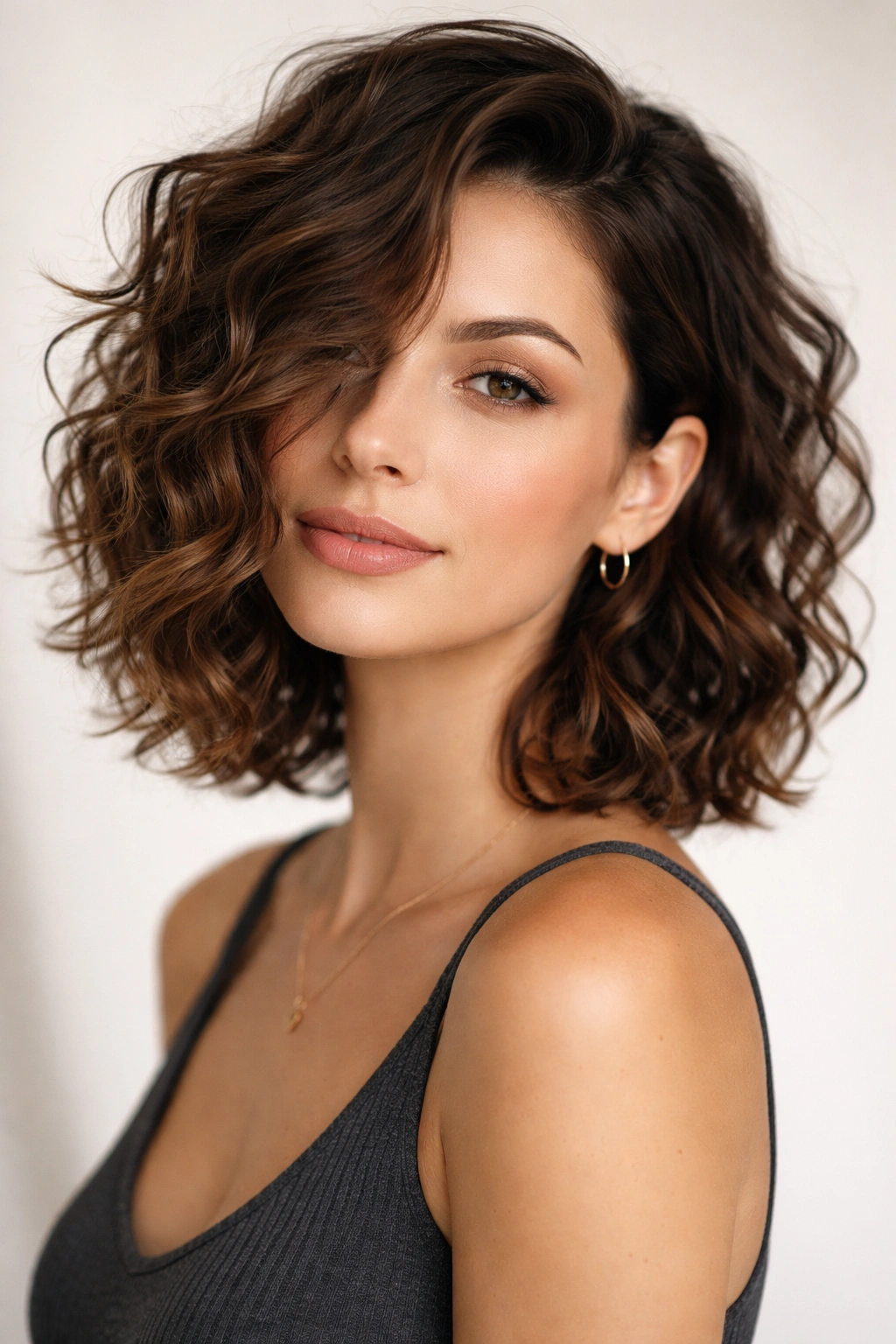
This cut angles the layers more heavily on one side, creating an asymmetrical silhouette where one side is noticeably shorter than the other. The longer side sweeps across, while the shorter side frames the face more dramatically. It’s a playful, fashion-forward take on the lob that appeals to people wanting something slightly more unique than a traditional center-parted cut.
The Visual Impact of Asymmetry
Asymmetrical cuts feel modern, a little edgy, and distinctly intentional. For curly hair, the asymmetrical approach is even more interesting because the different lengths interact with curl patterns in visually intriguing ways. The sweeping motion of the longer side over the shorter side creates movement and dimension. It’s not necessarily high-maintenance once the cut grows out slightly—asymmetrical shapes look intentionally tousled, not sloppy.
Consider This Cut If
- You want something noticeably different from every other curly lob out there
- Your personal style leans fashion-forward or creative
- You’re comfortable with a cut that’s more challenging to style if you want symmetry (it’s naturally asymmetrical, so embrace that)
- Any face shape, though it’s particularly striking on square and angular faces
- You enjoy the element of surprise or conversation that a more unusual cut brings
Pro tip: Asymmetrical cuts benefit from side-swept styling, which means deep side parts and strategic product placement create the intended silhouette—symmetrical styling negates the whole point of the cut.
9. Spiral Curl Curly Lob
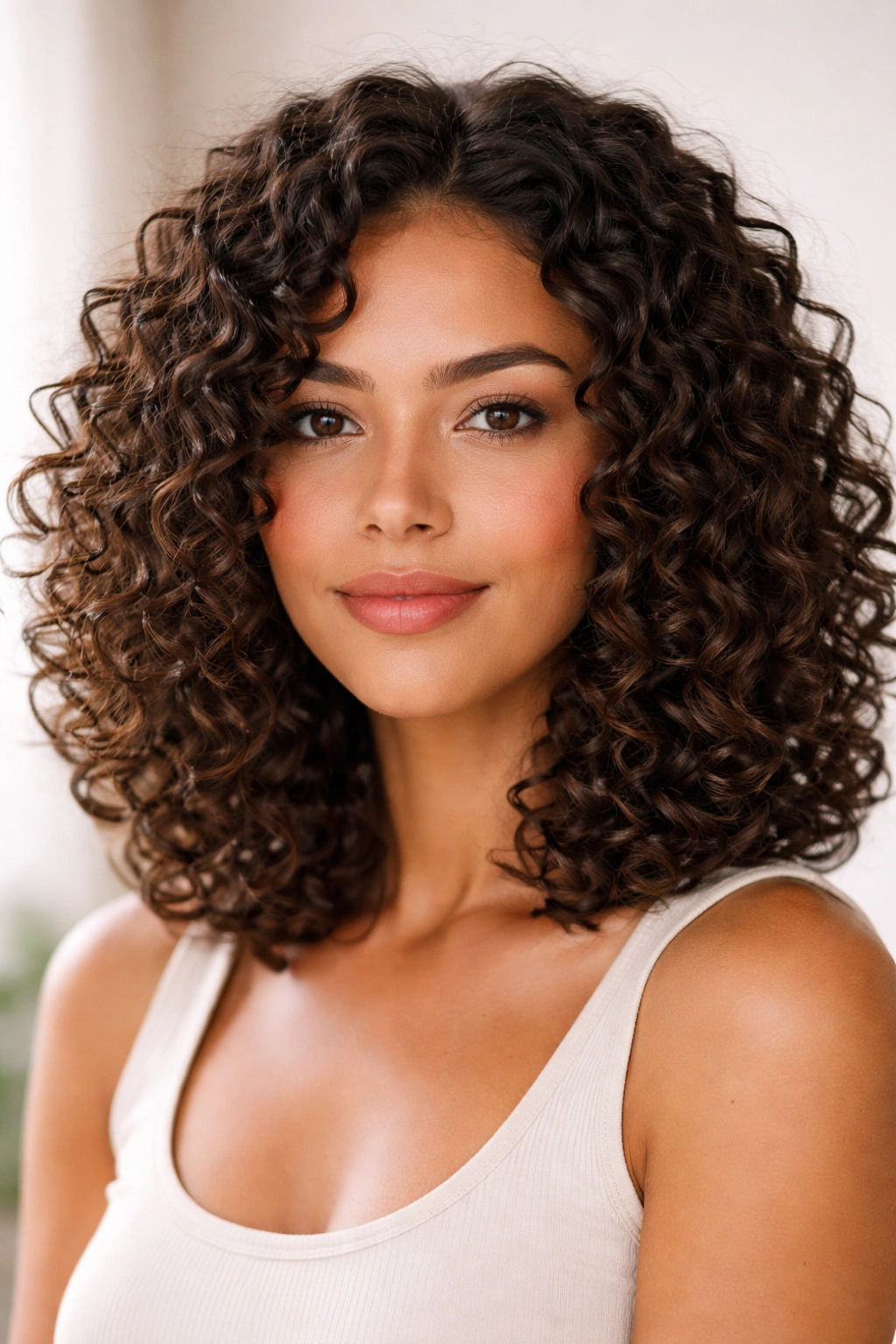
For those with naturally coily or tightly coiled curl patterns, a spiral curl lob is specifically designed to showcase and enhance that tight, springy texture. The cut works with natural curl clumps, enhancing them rather than fighting them. Layers are minimal and placed strategically to add shape without fragmenting curl patterns. The styling emphasis is on separating and defining existing curl clumps rather than creating new ones.
Why Spiral Curls Deserve Dedicated Cuts
Tight, spiral curls have a distinct personality—they corkscrew and coil dramatically. A cut designed specifically for this texture celebrates that personality rather than trying to flatten, define, or separate it into something more “controllable.” Spiral curl lobs tend to look absolutely stunning because they showcase the full natural beauty and bounce of tight curls. The cut itself is relatively straightforward, but the understanding of how to work with tight curl patterns is what makes it special.
Ideal for These Curl Patterns and Situations
- Coily to tightly coiled curl patterns (3c through 4c and beyond)
- Anyone with natural curls that you want to celebrate in their most authentic form
- People seeking a cut that makes styling easier by working with existing curl clumps
- Those wanting the visual drama and volume that tight curls create
- Any face shape, as the curls themselves provide plenty of dimension
Worth knowing: Spiral curl lobs require a stylist with genuine experience working with tight curl patterns—someone who understands how these curls behave, how to cut without disrupting curl clumps, and how to maintain definition without over-texturizing.
10. Short Curly Lob (Longer Bob Length)
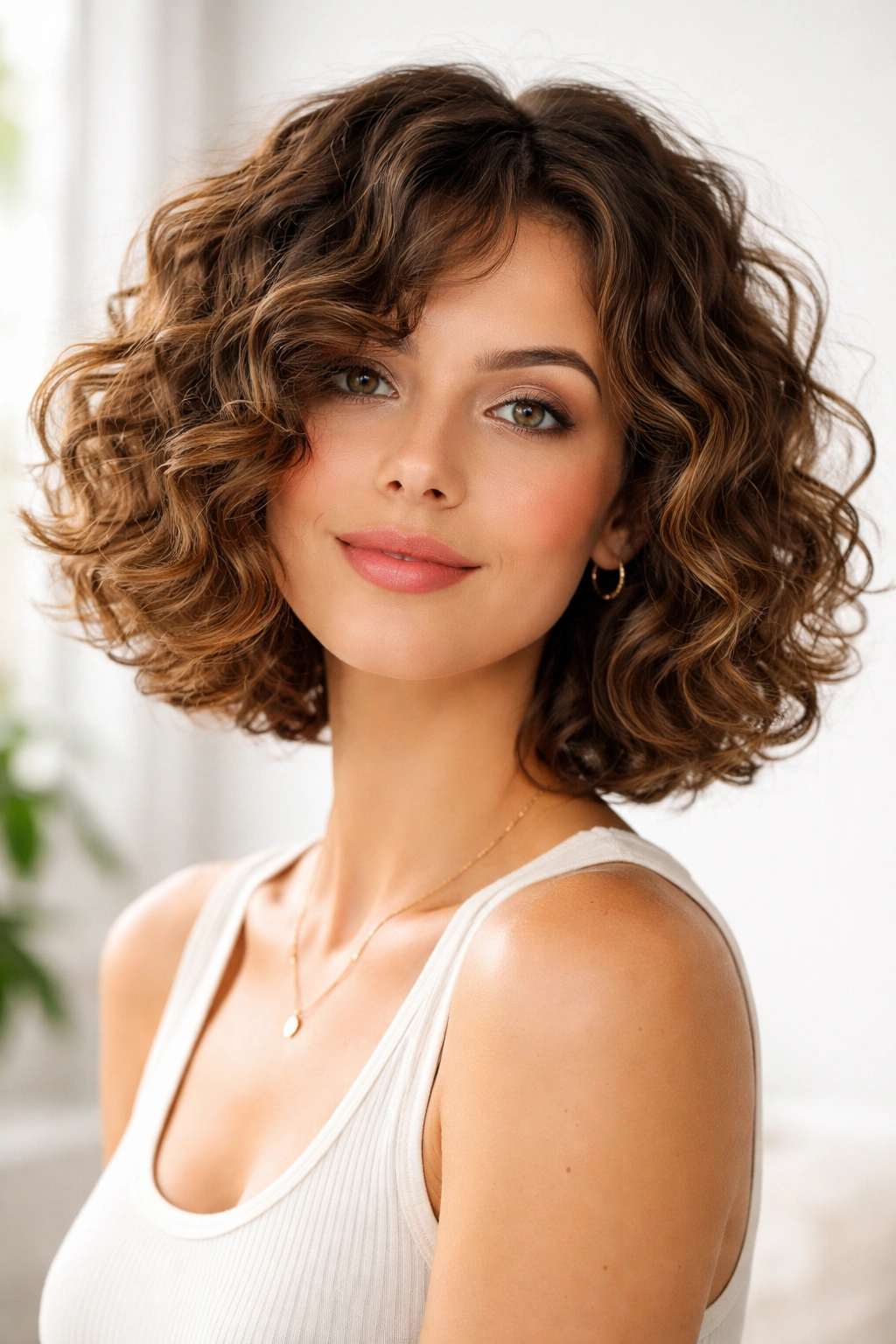
Sometimes “lob” is relative. A short curly lob sits somewhere between a true lob and a longer bob—typically in the 10-12 inch range from the bottom of the ear. It’s noticeably shorter than a traditional shoulder-length lob but longer than a close-to-head short cut. This length is genuinely transformative for people wanting something much shorter but not quite ready for dramatic change.
Why Shorter Lob Length Works
Shorter lob lengths offer some of the highest styling versatility. They’re short enough that they dry incredibly quickly, require minimal product, and feel light on the head. They’re long enough to create texture and movement without looking too corporate or severe. For curly hair, this length is genuinely freeing—the curls spring up naturally, creating volume that longer lengths sometimes flatten. Many people find this length is the sweet spot where they feel most comfortable and confident.
Perfect For These Situations
- Anyone transitioning from longer hair who wants noticeable change without extreme shortness
- People with very dense curl patterns where shorter lengths make styling significantly easier
- Those wanting minimal styling time and product usage
- Warm-weather climates where shorter hair feels more comfortable
- Anyone who discovered they look great in shorter lengths and wants to stick with that
Pro tip: Shorter lobs are incredibly forgiving on wash days—you can scrunch in product, air-dry for 20 minutes, and have a completed style without additional work.
11. Mid-Length Curly Lob With Undercut
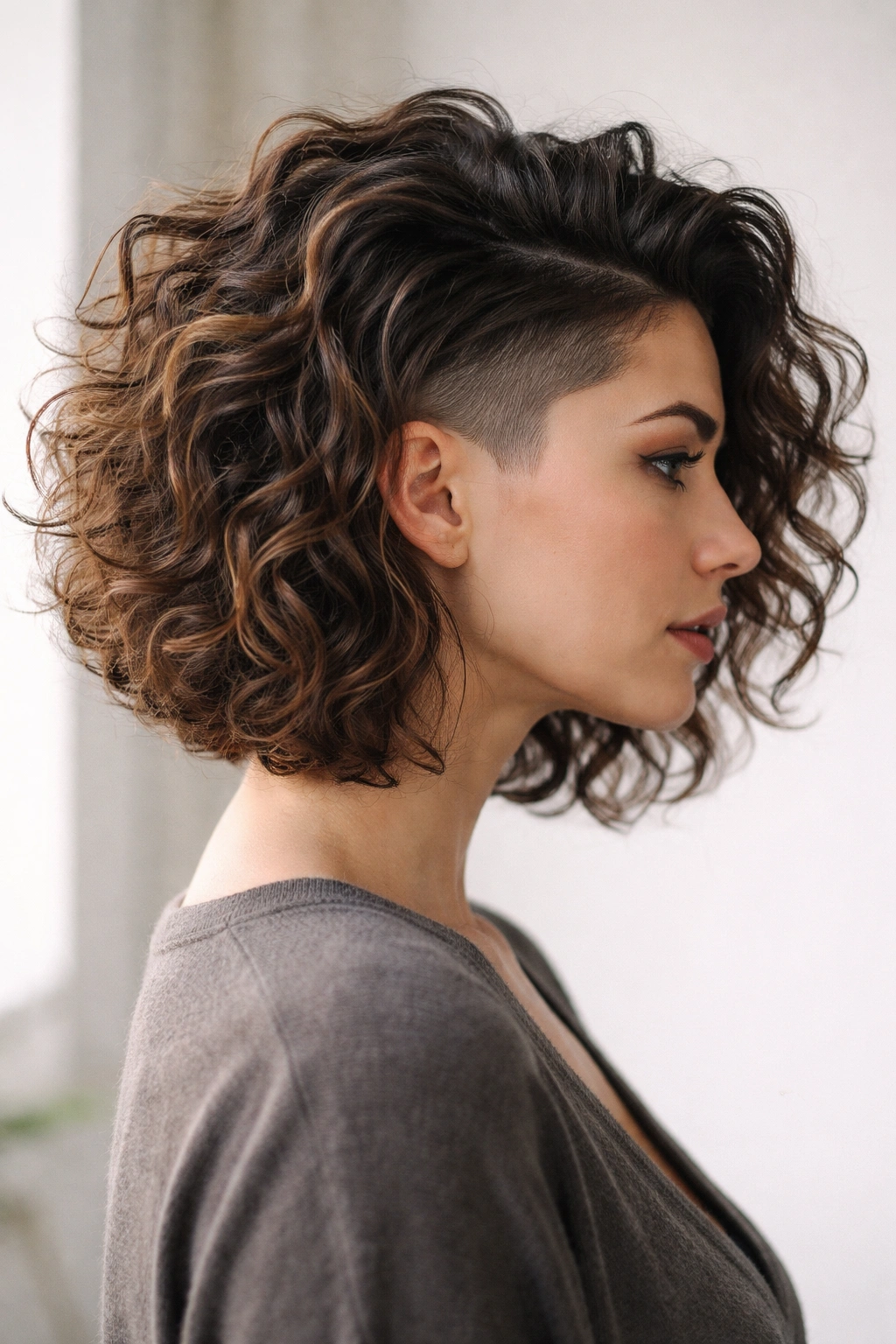
An undercut removes length and sometimes density from underneath the hair, creating visual separation and movement while keeping the top length intact. For curly hair, undercuts are interesting because they allow the undercut section to be very short or even shaved while maintaining visible length on top. It’s an edgy, modern approach that appeals to people wanting visual drama.
How Undercuts Transform Movement and Volume
Undercuts work particularly well with curly hair because curls from the top layer cascade over the shorter undercut, creating visual depth and movement. The undercut itself doesn’t have to be visible if you don’t want it to be—you can wear your hair down and no one would know. But when you style the top into a half-up style, ponytail, or updo, the undercut becomes visible and adds an element of surprise and edginess.
Consider This Cut If
- You want visual interest and movement but are nervous about cutting much length
- Your personal style is creative, artistic, or deliberately edgy
- You enjoy being able to hide a bold cut choice when appropriate (professional settings) while showing it off other times
- You have dense curl patterns where removing some underlayer density actually improves styling
- Any face shape works, though undercuts are particularly striking on longer face shapes
Worth knowing: Undercuts require maintenance—the underlayer grows out fairly quickly and needs touching up every 4-6 weeks to maintain the intentional look.
12. Curly Lob With Dimensional Highlights
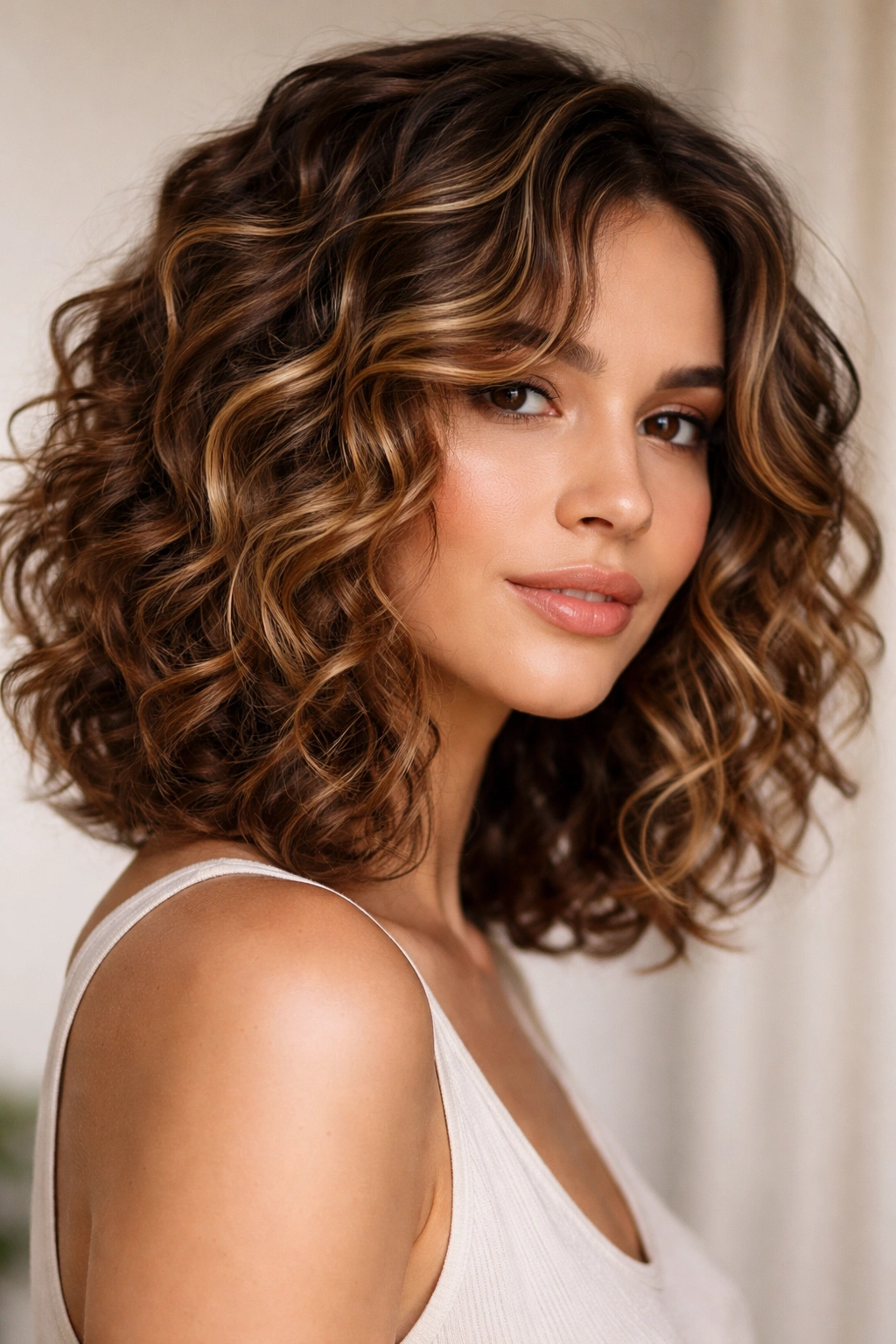
While not strictly a cut detail, the right highlights can genuinely transform how a curly lob is perceived and how dimensional it appears. Dimensional coloring uses lighter and darker tones to add depth, warmth, or dimension to the cut itself. Highlights placed strategically can enhance curl patterns, make certain sections appear longer or shorter, and add visual interest.
How Color Amplifies Cut Design
A good curly lob is beautiful on its own, but the right coloring can elevate it dramatically. Highlights placed in face-framing sections draw attention to the face. Darker roots with lighter ends (the reverse of blonde highlights) can make curls appear bouncier. Dimension throughout the cut makes individual curl formations more visually apparent. The interplay between cut and color becomes part of the overall design rather than color being an afterthought.
Types of Highlights That Work Best
- Face-framing highlights in shades one to three levels lighter than your base, placed around the cheeks and temples
- Babylights (very fine, thin highlights) that create subtle, natural-looking dimension without stark contrast
- Warm, rich tones that complement your skin undertone rather than fighting it
- Darker root smudging (balayage technique) that makes grow-out less noticeable and adds depth
- Highlights placed through the mid-lengths and ends where they catch light most when curls move
Pro tip: The best highlights for curly hair are placed by someone who understands how curls move and where light actually hits when hair is textured and patterned, not someone just applying color to straight hair.
13. Voluminous Curly Lob
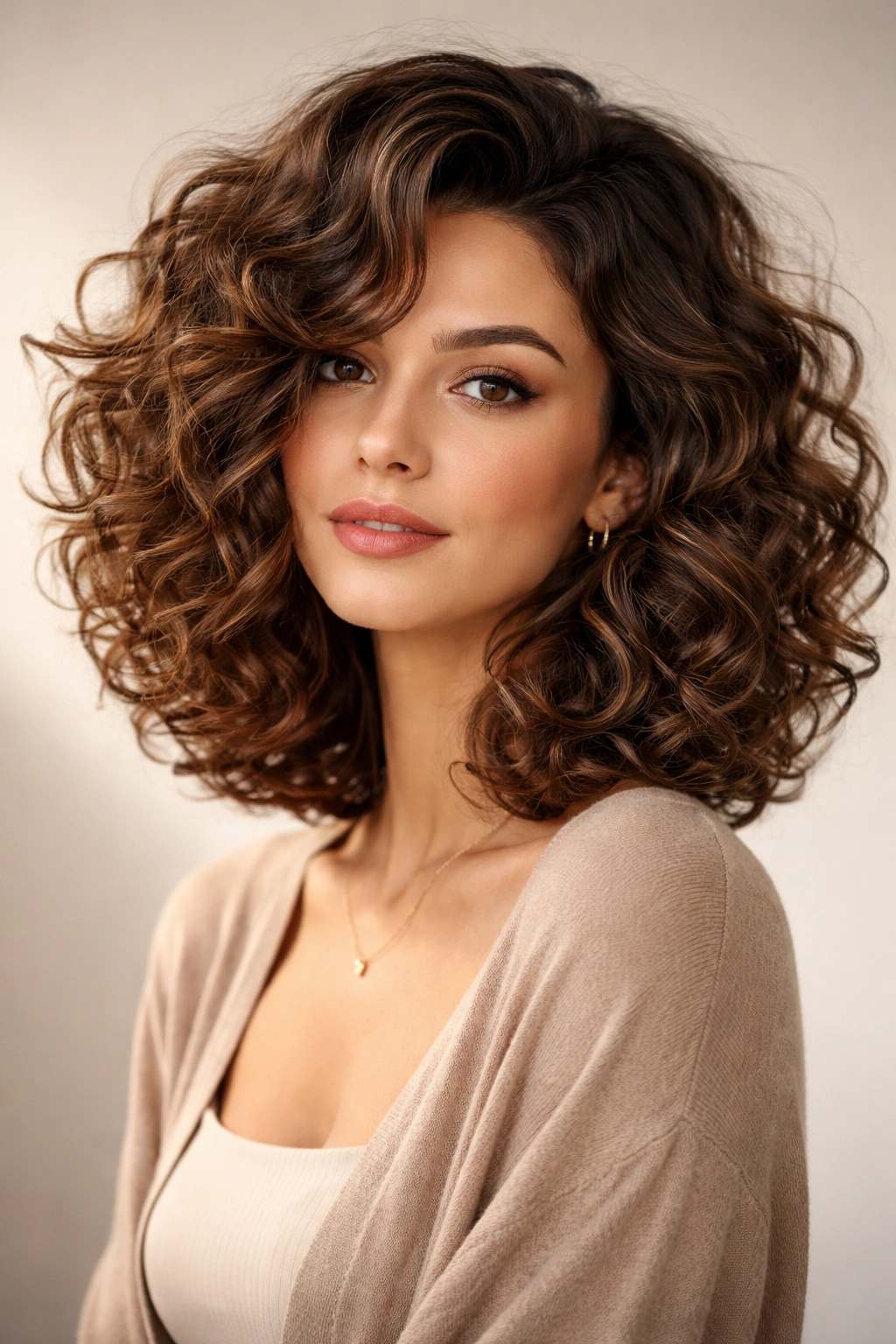
A voluminous curly lob is specifically designed to maximize fullness and impact. It uses strategic layering to create lift at the crown, width through the middle sections, and structured shape overall. This cut is for people who want their curly lob to be absolutely statement-making—a cut where presence and volume are features, not accidental side effects.
Creating Maximum Volume Intentionally
Volume isn’t just about having lots of hair—it’s about how you cut and style hair to maximize the space it takes up. Shorter layers at the crown create lift. Longer layers underneath create weight and support. Textured layers throughout enhance movement. The stylist works with your curl pattern to determine where to cut so that each section supports and enhances the others, creating a voluminous whole that’s greater than the sum of its parts.
Who Should Pursue Voluminous Lobs
- Anyone with medium to dense curl patterns that can support maximum volume
- People wanting a cut that makes a bold statement and attracts attention
- Those comfortable with a cut requiring consistent styling (volume looks best with intention)
- Anyone who feels more confident and beautiful when their hair is big and voluminous
- Particular face shapes like round or shorter faces where volume balances proportions
Worth knowing: Voluminous lobs require products and techniques that enhance and hold volume—diffuser drying, volumizing creams, and light hold products are essential for this cut to shine.
14. Wet-Look Curly Lob
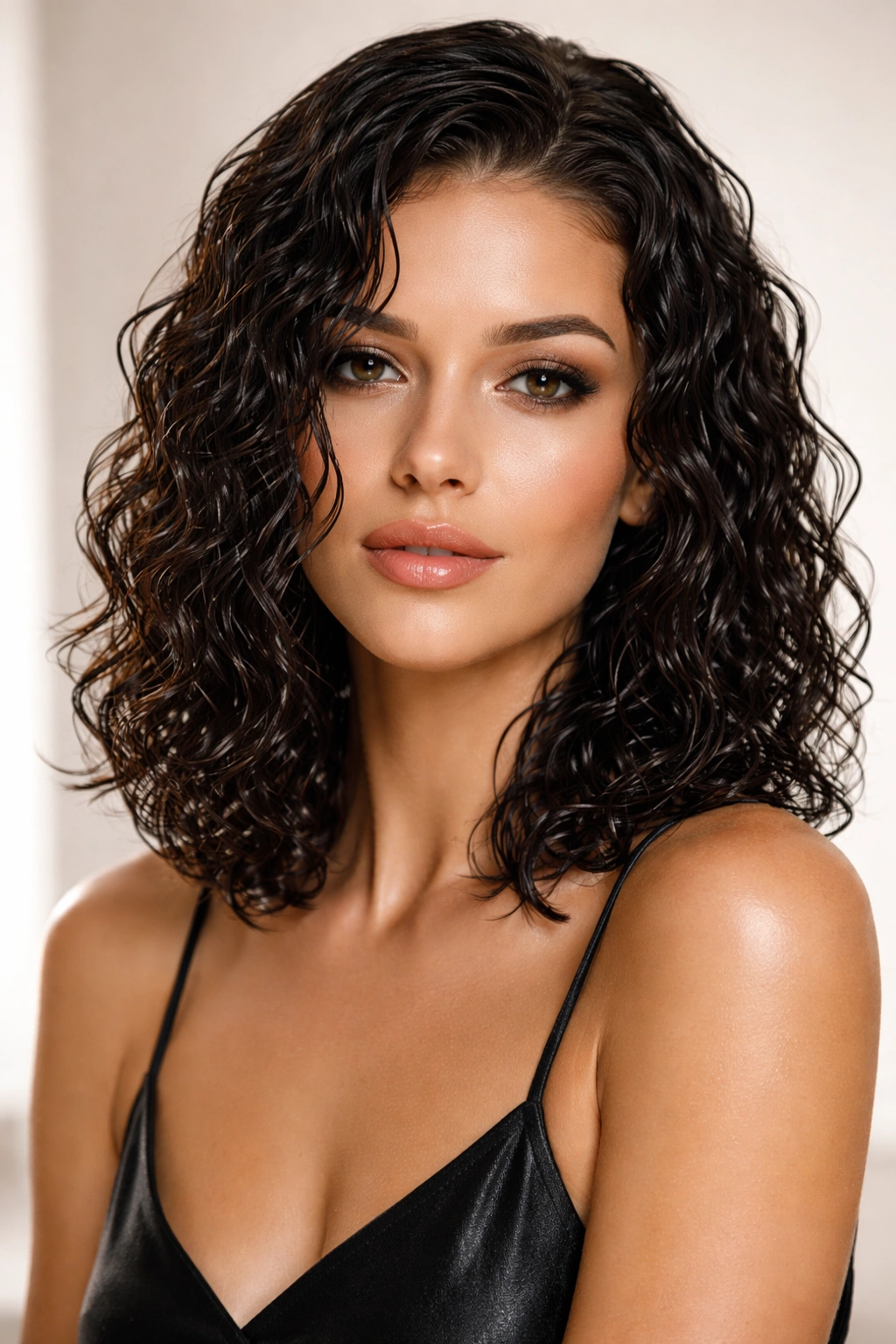
Sometimes the “look” you’re going for is sleek and wet, even when your hair is technically dry. Wet-look styling uses products and techniques to create shine and definition that makes curls appear more compact and structured, as if freshly showered. It’s a specific aesthetic that appeals to people wanting polished, intentional styling.
The Wet-Look Aesthetic
Wet-look doesn’t mean your hair is wet—it means styling products that create shine, definition, and that just-wet appearance even on dry hair. For curly lobs, this approach creates cleaner curl lines and more defined separation between individual curls. It’s a polished, fashion-forward look that photographs beautifully and feels intentionally styled rather than casual.
Ideal For
- Anyone wanting a very polished, styling-forward aesthetic where effort and intention are visible
- Tighter curl patterns where wet-look products enhance definition rather than flatten texture
- Professional or formal settings where polished appearance matters
- Photography, events, or occasions where you want intentionally beautiful styling
- Those who enjoy the styling process and view it as creative self-expression
Pro tip: Wet-look products work best on second or third-day hair that has established curl definition—freshly washed wet-look curls sometimes look less defined because the curls are still finding their shape.
15. Curly Lob With Bangs
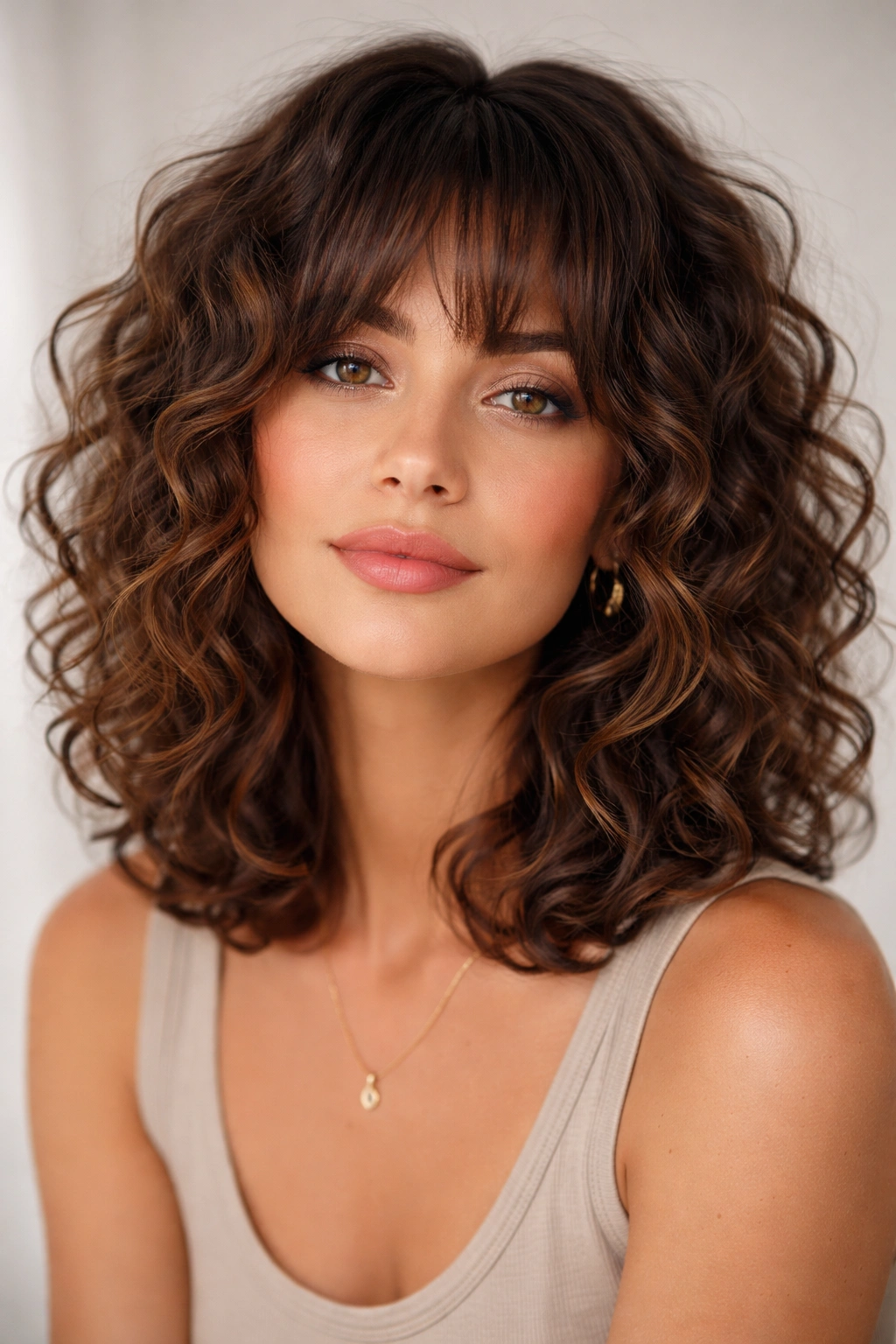
Bangs completely change the energy of any haircut, and curly lobs are no exception. Curly bangs require specific consideration—they need enough length to work with curl patterns, need to be cut for your specific curl pattern rather than cut straight and expected to curl naturally, and need consistent care. But when executed thoughtfully, bangs on a curly lob create instant personality and frame the face in flattering ways.
Bangs on Curly Hair: The Reality
Curly bangs are genuinely challenging because curls don’t fall the way straight hair does. They coil, spring up, and behave unpredictably. A stylist who understands curly bangs will cut them longer than you might initially want because they’ll account for shrinkage. They’ll also likely recommend face-framing pieces that blend into the bangs rather than a blunt bang line. The styling can require more daily attention than a bangless cut, but the payoff in terms of personality and face-framing flattery is significant.
Who Should Consider Curly Bangs
- Anyone wanting to completely transform their haircut’s energy and visual impact
- Those with curls tight enough to support bangs (generally 2c and curlier)
- People comfortable with slightly higher styling maintenance and frequent trims
- Anyone wanting to emphasize eyes, cheekbones, or create more defined face framing
- Those who style their curly hair with intention anyway—bangs aren’t adding much additional work
Worth knowing: Curly bangs need trims every 4-6 weeks because they grow quickly and shift significantly as they grow. The daily styling requirement is higher, but the visual payoff is genuinely worth it for the right person.
Final Thoughts
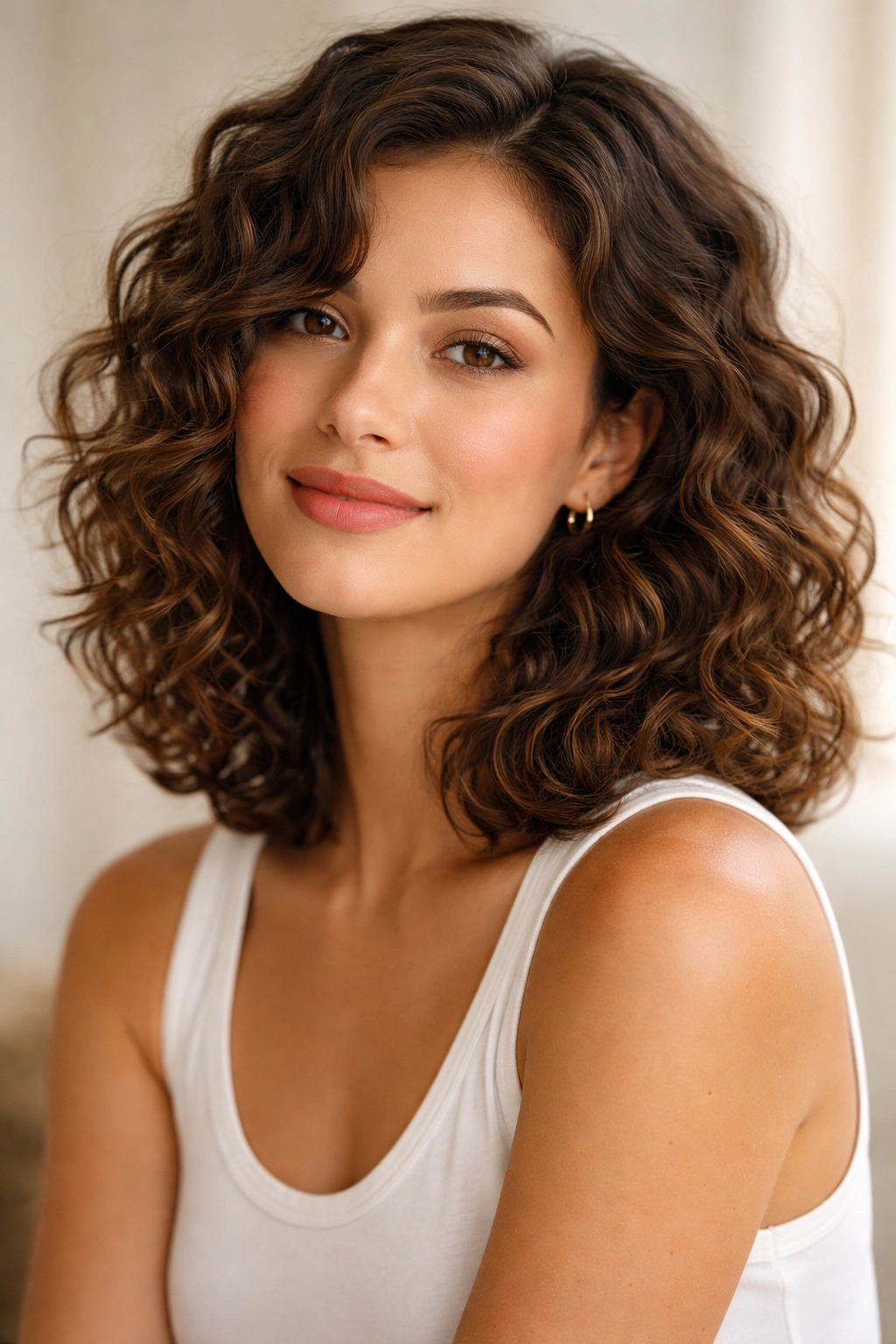
The perfect curly lob exists at the intersection of your curl pattern, face shape, lifestyle, and personal aesthetic preference. Some of these cuts will immediately resonate as “that’s the one,” while others might inspire variations unique to your specific situation. The most important thing is finding a stylist who truly understands curly hair—someone who cuts while hair is curly (not straight), considers your curl pattern and density, and can articulate exactly how the cut will work with your specific texture.
Your curly lob should feel like it was designed specifically for you, not like you’re forcing your curls into a predetermined shape. Whether you lean toward choppy texture, sleek definition, maximum volume, or effortless tousled movement, there’s a curly lob length and style that will make you feel genuinely confident and beautiful. The key is being specific with your stylist about what you actually want the cut to accomplish—easier mornings, more intentional styling, less weight, more definition, or simply feeling like your best self when you look in the mirror.
