



Dark chocolate hair color sits in that perfect sweet spot where luxury meets wearability. Whether you’re drawn to rich, dimensional brunettes or deep, glossy espresso tones, dark chocolate shades offer a versatile canvas that flatters an incredible range of skin tones while looking intentional, high-maintenance, and expensive. The beauty of this color family is that it works as a sophisticated standalone shade or as the base for complex, multi-tonal techniques that catch the light beautifully.
The magic of dark chocolate hair lies in its depth and complexity. Unlike flat black or generic brown, true dark chocolate tones carry warm undertones, subtle warm highlights, or cool undertones depending on your specific shade and technique. This dimensional quality is what elevates the look from basic to genuinely luxurious—and it’s exactly why dermatologists, colorists, and hair specialists consistently recommend it for nearly every skin tone. From fair porcelain to deep ebony skin, the right chocolate shade becomes a frame that enhances natural beauty rather than competing with it.
What you’re about to discover isn’t just a list of hair color names—it’s a roadmap to finding the exact dark chocolate shade that aligns with your skin tone, lifestyle, and personal style. Some of these ideas lean warm and buttery. Others embrace cool, ashy undertones. A few blend multiple techniques to create movement and depth that photographs beautifully in any lighting. The key is understanding which undertones and techniques will make your complexion luminous, not washed out.
1. Espresso Bean Brunette
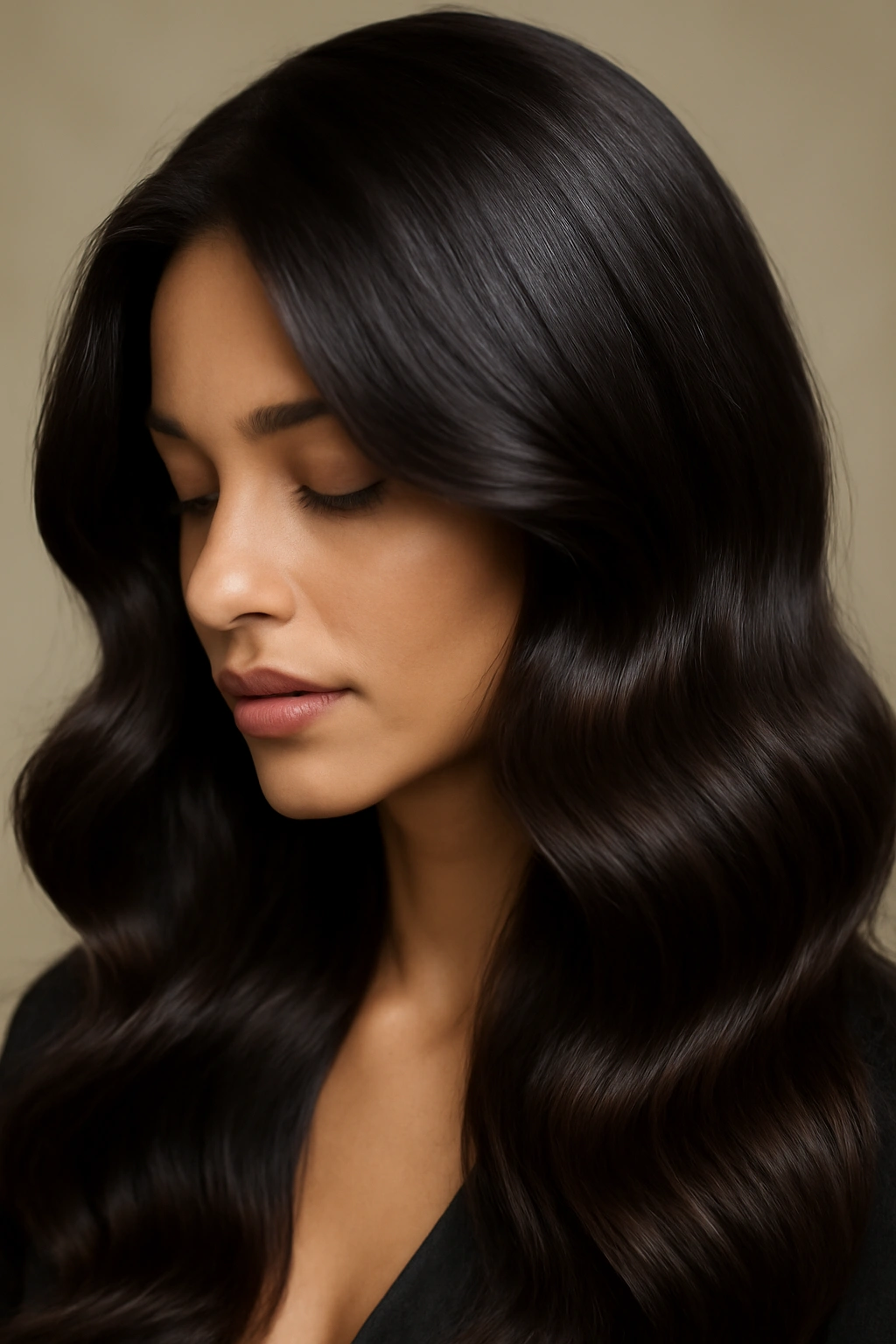
Espresso bean brunette is the darkest expression of the dark chocolate family—a deep, nearly black-brown that has just enough dimension to prove it’s not pure black. This shade sits so close to the void that it almost absorbs light, then releases it as a warm, rich reflection. It’s the color you see in a freshly pulled shot of espresso, complete with that almost-liquid-looking depth.
Why It Works for Every Complexion
This shade works because it creates such profound contrast against most skin tones. On fair skin, it makes complexion appear porcelain and luminous by comparison. On medium skin tones, it adds drama and definition without appearing too harsh. On deep skin tones, it emphasizes the richness of the skin itself, creating a monochromatic luxury effect that’s absolutely stunning.
How to Maintain and Enhance It
- Use sulfate-free, color-safe shampoo and conditioner to prevent fading and brassiness
- Apply a purple or ash-toned gloss every 4-6 weeks to neutralize any red or warm undertones that emerge
- Sleep on silk pillowcases to reduce friction and maintain shine
- Schedule deep conditioning treatments every 7-10 days—dark colors fade faster without moisture support
2. Chocolate Cherry Merlot
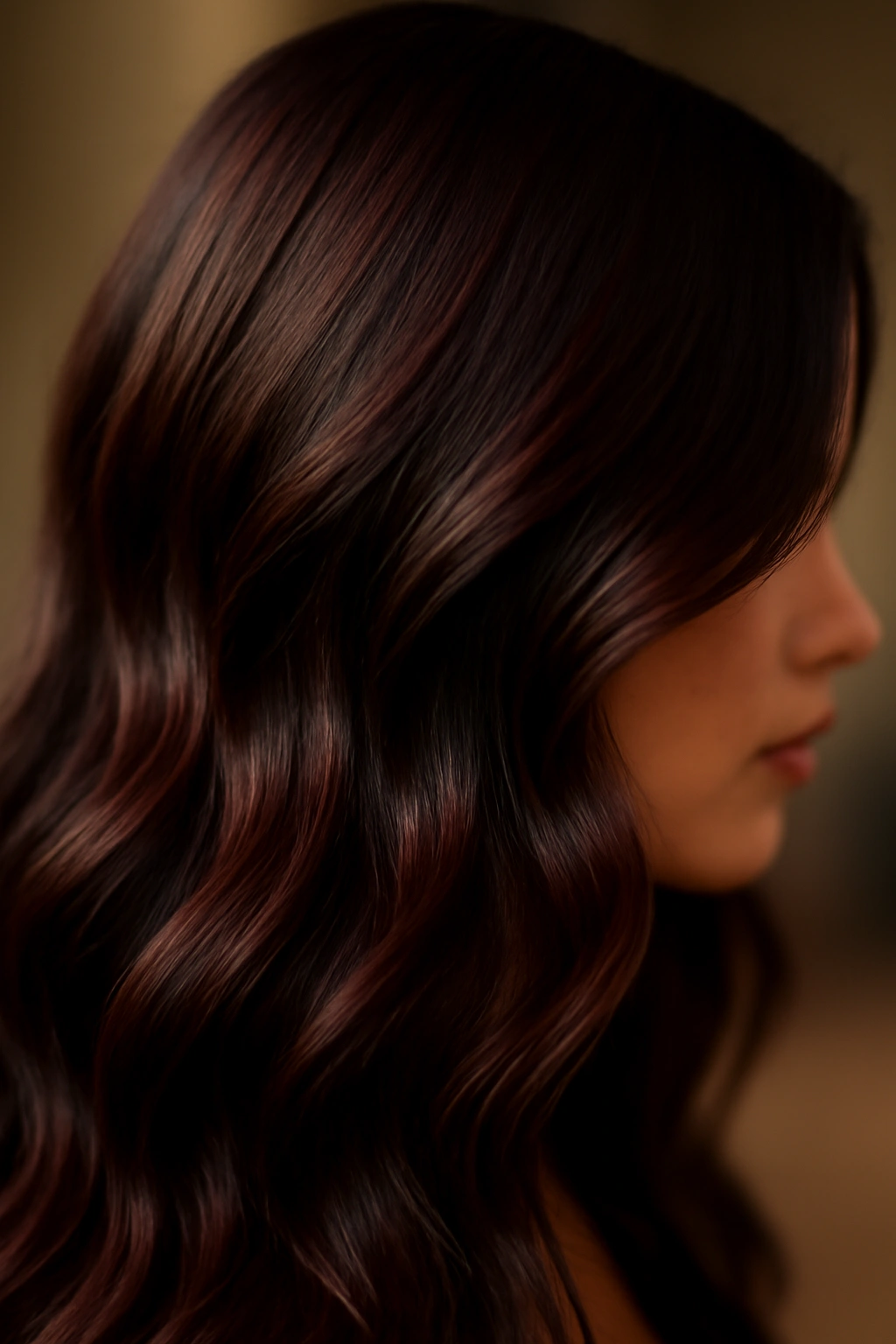
Chocolate cherry merlot introduces a subtle red undertone to dark chocolate base, creating a shade that shifts between deep brown and wine-tinted burgundy depending on lighting. In daylight, it reads as dark chocolate brown. Under warm interior lighting or candlelight, the red notes emerge like a wine reflection. This is the shade for someone who wants dark chocolate richness with hidden complexity.
The Appeal Across Skin Tones
Fair and light skin tones absolutely glow with this shade—the wine undertones bring warmth to cool complexions and create a striking contrast. Medium skin tones gain dimensional depth and an almost jewel-like quality. Deep skin tones see the wine notes intensify beautifully, creating a sophisticated, mysterious finish that photographs exceptionally well.
The Maintenance Reality
- Wine undertones fade faster than pure brown, requiring glossing every 3-4 weeks
- Avoid chlorine and saltwater, which strip red pigment quickly
- Use color-depositing conditioner with red or burgundy tones to refresh between salon visits
- Consider a gloss appointment before important events to intensify the wine shift
3. Melted Caramel Swirl
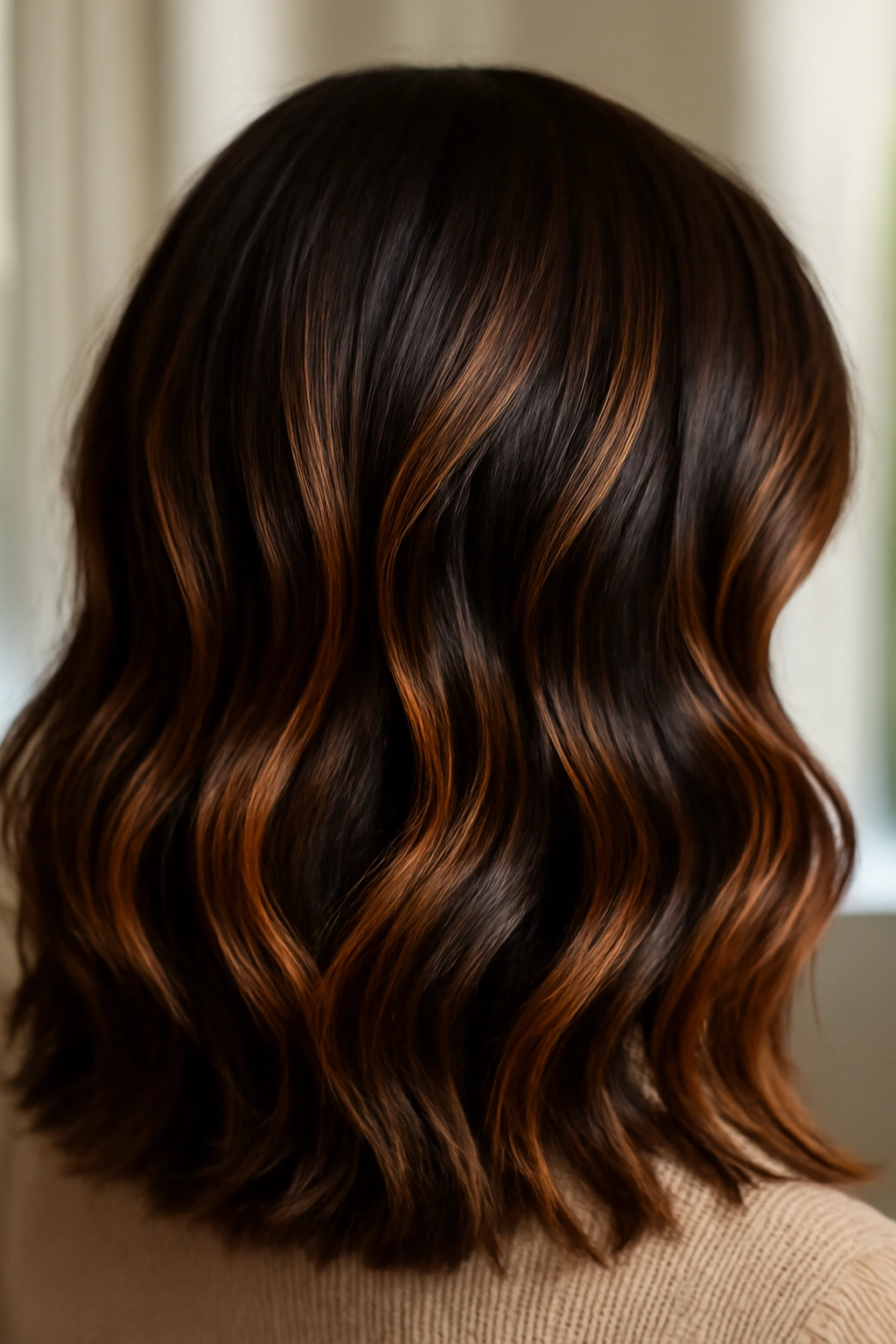
Melted caramel swirl takes a dark chocolate base and weaves in strategic ribbons of warm caramel and honey-toned highlights throughout the mid-lengths and ends. Unlike full balayage or highlights, these ribbons are intentionally placed to create a liquid, melted appearance—like caramel drizzled through chocolate. The dark base remains the dominant color while the lighter ribbons add movement and subtle dimension.
Why This Technique Feels Luxurious
The dimensional effect creates instant shine and movement, making hair appear thicker and healthier even if it’s fine-textured. Fair skin tones gain warmth and approachability; medium tones get sophisticated contrast and depth; deep skin tones see the caramel as jewel-like accents. The technique works on straight, wavy, and curly textures—curls actually enhance the swirl effect beautifully.
How to Style It for Maximum Impact
- Blow-dry with a round brush to smooth the hair and make the ribbon effect more visible
- Use a lightweight shine serum on mid-lengths and ends to make the caramel ribbons catch light
- Wear hair down or in loose waves to show off the dimension—slicked-back styles hide the technique
- The color actually improves over the first 2-3 weeks as the caramel settles and blends
4. Cold Espresso with Ash
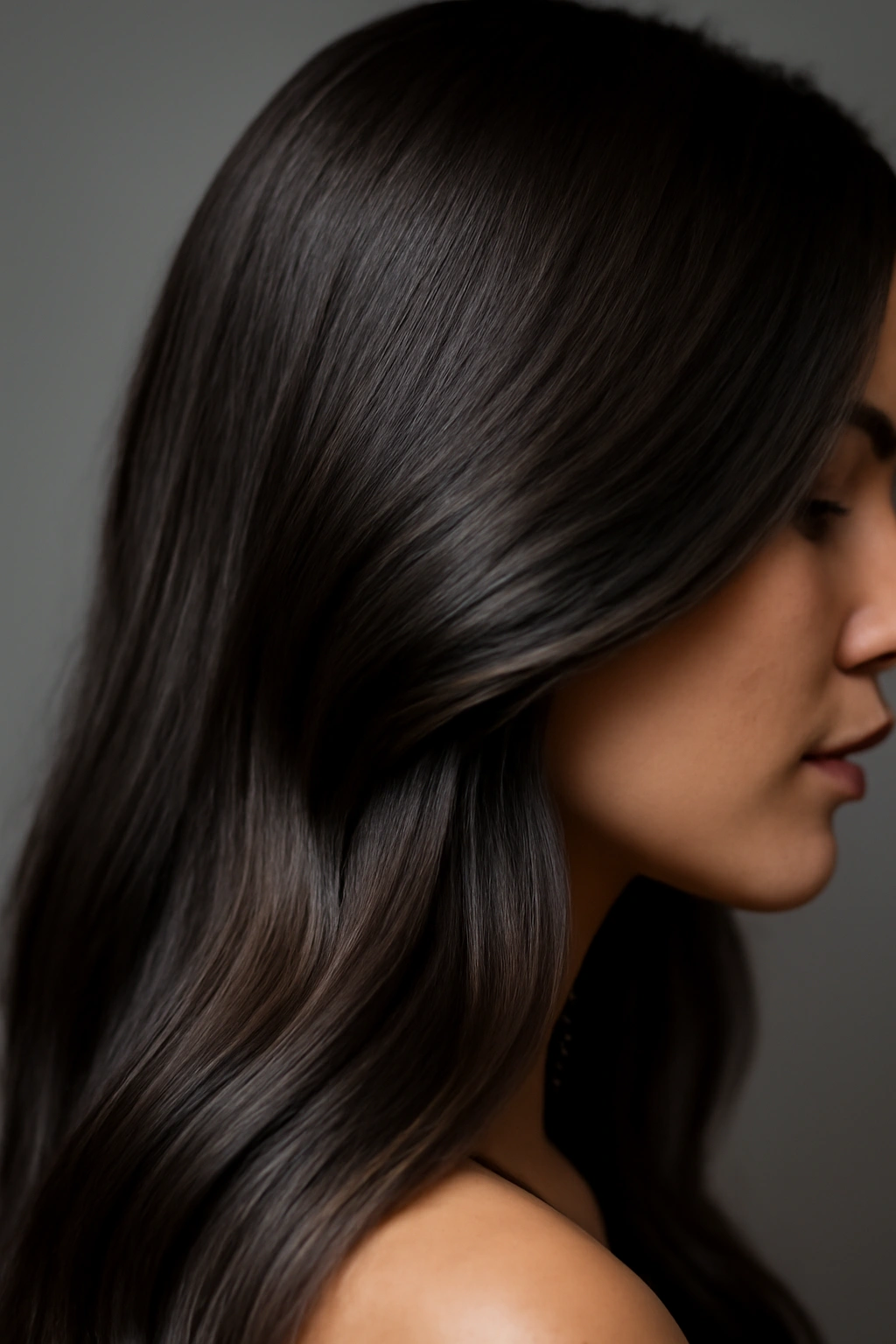
Cold espresso with ash takes that nearly-black espresso depth and infuses it with cool, ashy undertones rather than warm ones. This shade is perfect for anyone with cool undertones in their skin—those who look better in silver jewelry, cool-toned clothing, and avoid warm-toned environments. The ash component keeps the color from reading as flat black, adding a sophisticated gray-brown complexity.
Best for Cool Skin Tones
Fair skin with cool undertones becomes porcelain perfection against this shade. Medium cool complexions gain dimensional contrast without warmth. Deep cool skin tones see the ashy component create an almost silvery-brown effect that’s deeply luxurious. Cool olive skin tones find their perfect match—the ashy brown complements green undertones beautifully.
Preventing the Green Cast
- Purple-toning shampoo and conditioner are essential every other wash to prevent greenish fade
- Avoid clarifying shampoos, which strip protective oils and accelerate green undertone development
- If greenish tones emerge, a quick professional toner appointment corrects it immediately
- Root touch-ups should happen every 4-6 weeks to prevent brassy regrowth
5. Roasted Cocoa with Copper Flecks
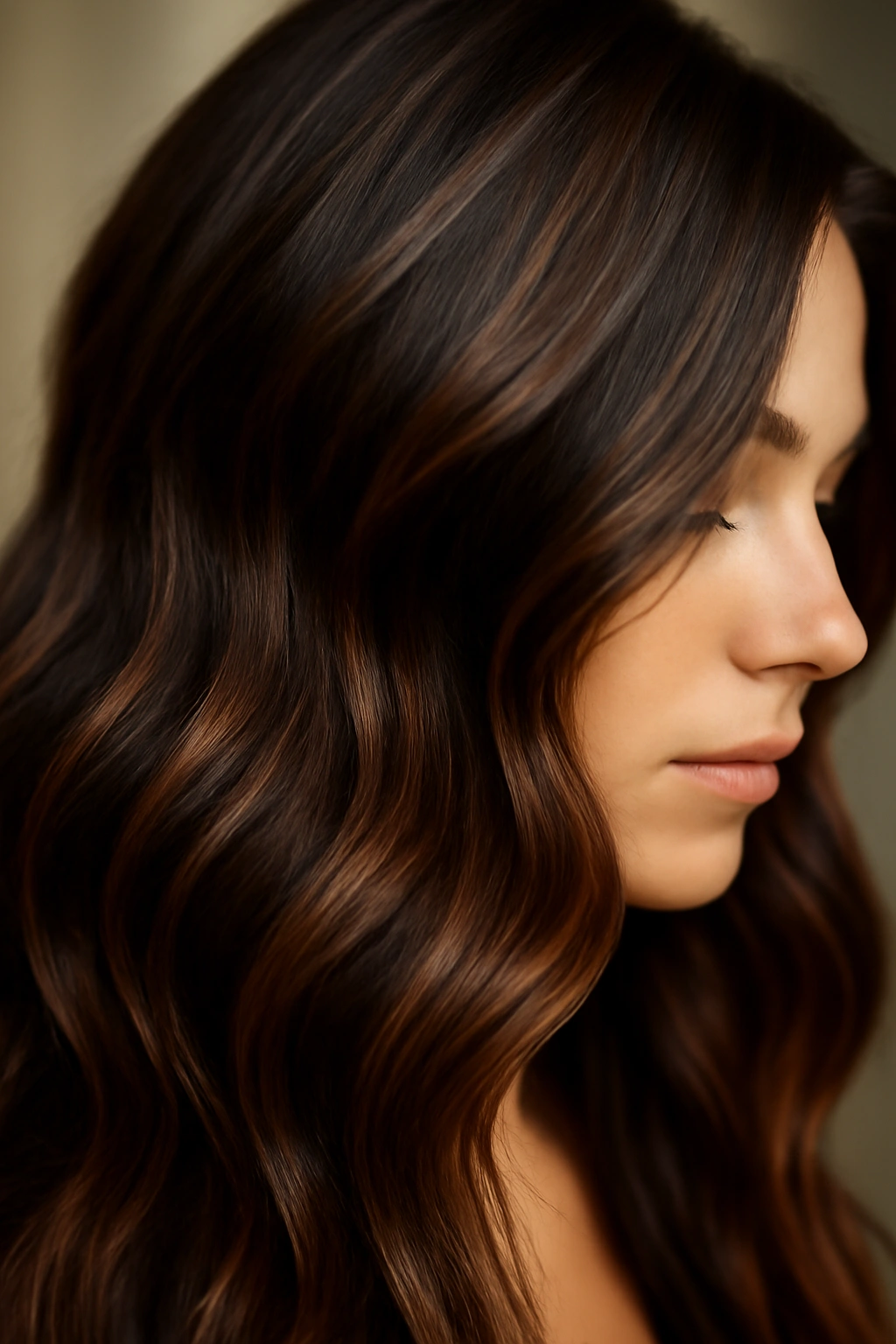
Roasted cocoa with copper flecks is a medium-dark chocolate base shot through with warm, subtle copper highlights that appear throughout the hair. These aren’t thick streaks or obvious highlights—they’re fine, delicate flecks that catch light and create a sun-kissed effect, as if the chocolate has been warmed by the sun. This shade reads as warm and approachable while maintaining dark chocolate depth.
Who Glows With This Shade
Warm fair skin tones absolutely radiate with this color—the copper echoes natural warm undertones and makes skin appear luminous. Warm medium skin tones gain incredible dimension and an almost golden quality. Warm deep skin tones see the copper create a rich, sophisticated effect that’s highly flattering. Even neutral skin tones benefit from the warm copper component.
Styling and Maintenance Tips
- Copper fades faster than brown, so glossing every 4-6 weeks keeps it vibrant
- Use warm-toned styling products and serums to enhance the copper flecks
- Blow-dry with a concentrator nozzle to direct shine where copper highlights sit
- This shade photographs beautifully in natural light—perfect for outdoor portraits
6. Shadow-Rooted Dark Chocolate
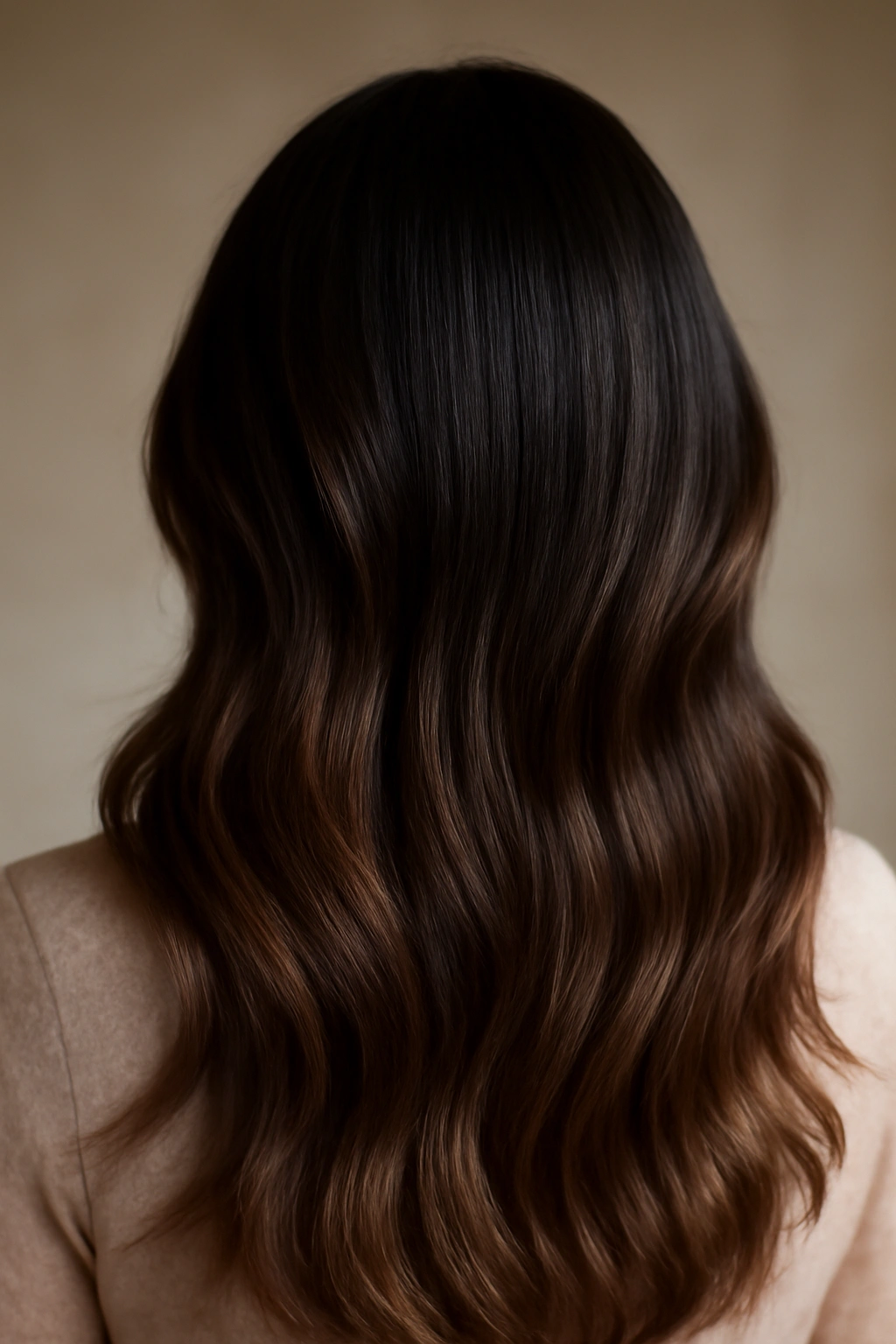
Shadow-rooted dark chocolate uses a rooted effect where darker tones sit at the roots and gradually transition to lighter chocolate brown through the mid-lengths and ends. The dark chocolate root mimics natural hair growth, making the color appear low-maintenance while actually requiring strategic rooting maintenance. This technique creates depth, dimension, and an intentional, expensive-looking finish.
The Low-Maintenance Illusion
This technique is genius because it looks like you’ve let your roots grow out, when actually you’ve created a sophisticated color placement. Fair skin tones gain definition and depth. Medium skin tones get both contrast and dimension without the high-maintenance commitment of full coverage. Deep skin tones see beautiful tonal separation and a modern, intentional aesthetic.
Maintenance Schedule Reality
- Root touch-ups needed every 8-12 weeks (longer than full coverage because rooting is deliberate)
- The lighter ends fade faster than the roots, so glossing mid-shaft stretches time between appointments
- Ends need regular trims every 6 weeks to prevent brassy fade
- Shadow roots actually photograph better as they age slightly—the gradation becomes more pronounced
7. Mocha Mousse Balayage
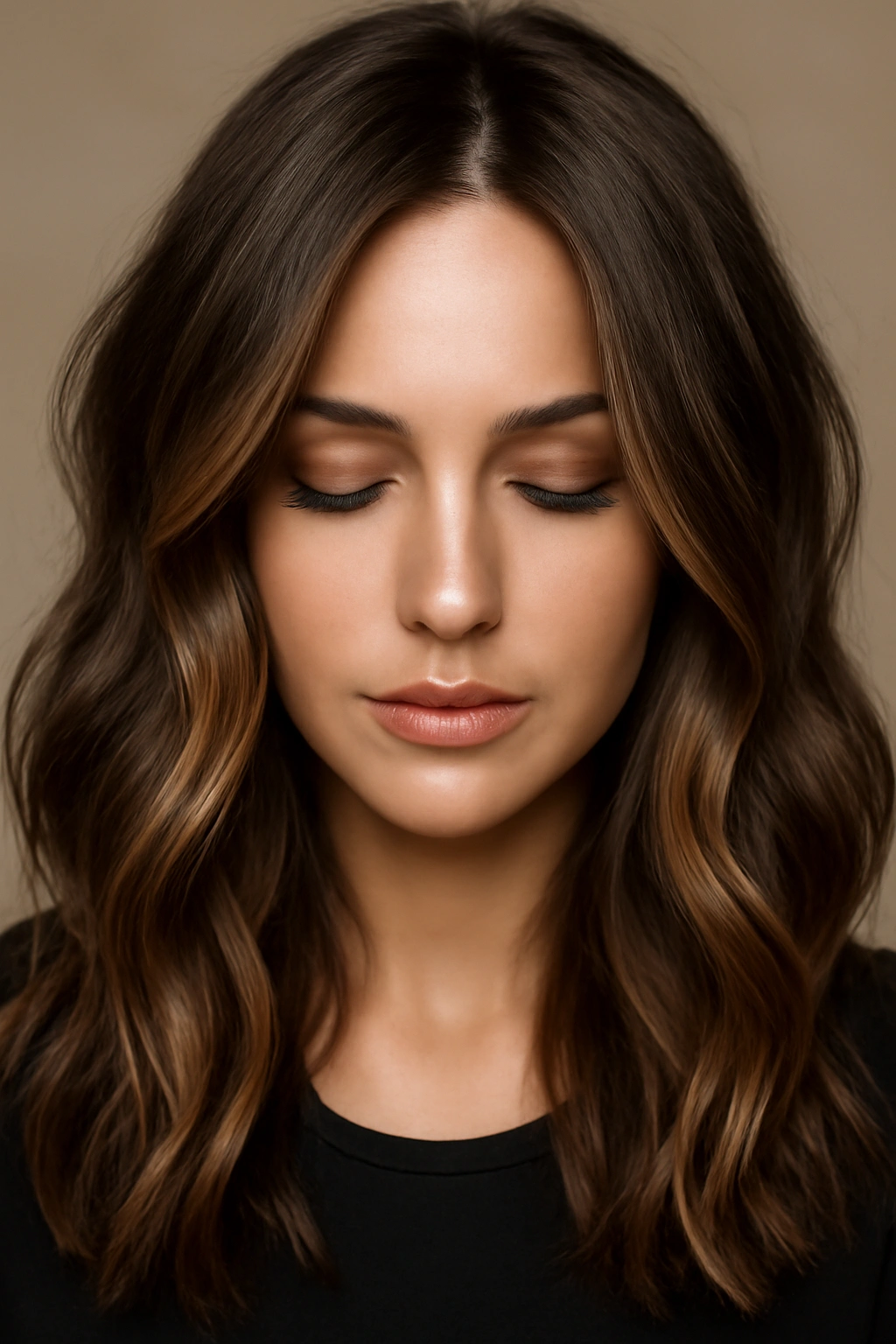
Mocha mousse balayage combines a medium-dark chocolate base with hand-painted balayage highlights in creamy mocha and milk chocolate tones. Unlike traditional balayage that aims for obvious dimension, mocha mousse keeps the placement subtle and blended, creating a shimmering mousse-like finish. The result is soft, dimensional, and distinctly more expensive-looking than a flat color.
Why Hand-Painted Technique Matters
Balayage placement means the lighter tones sit where sun naturally hits—around the face, throughout the crown, and on top layers. This creates a face-framing effect that’s instantly flattering. Fair skin gains warmth and glow. Medium skin tones see sophistication and subtle contrast. Deep skin tones benefit from the strategic placement that creates depth without appearing washed out.
Maintaining Balayage Dimension
- Balayage is lower-maintenance than full highlights because regrowth blends naturally
- Glossing every 6-8 weeks keeps the mocha component from turning brassy
- Tone-correcting shampoo twice weekly prevents the blonde from yellowing
- Balayage looks fresher longer because intentional placement doesn’t require perfect blending
8. Midnight Truffle with Gold Undertones
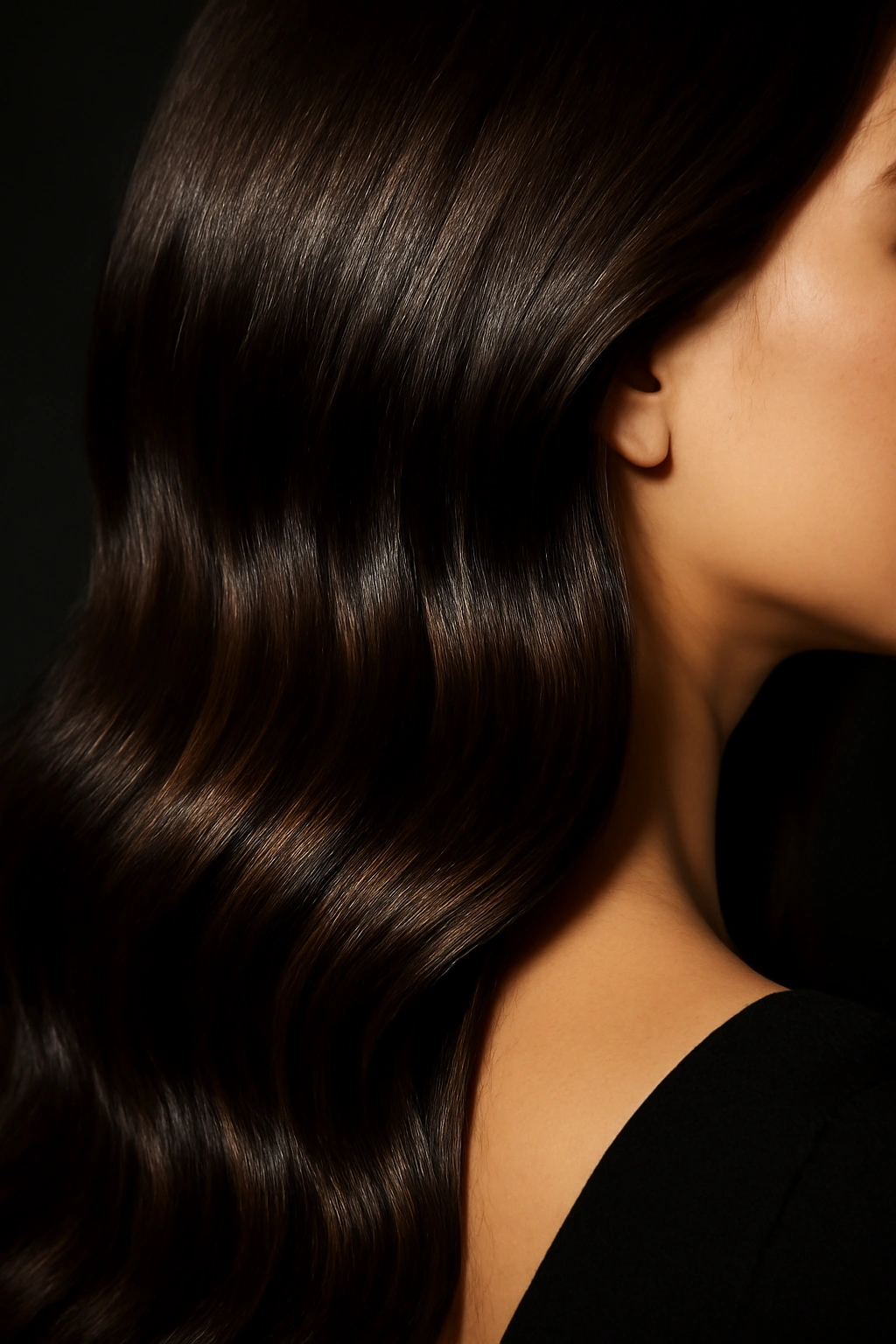
Midnight truffle with gold undertones is a deep, near-black chocolate shade infused with warm golden undertones that shimmer subtly in direct light. This shade has an almost luxurious, jewel-box quality—it’s so dark it’s nearly black, but the gold component prevents it from reading as flat or harsh. It’s mysterious, expensive, and completely wearable.
Best Skin Tones for This Shade
Warm and neutral fair skin tones see the gold undertones create a glowing effect. Warm medium skin tones gain depth and sophistication. Warm deep skin tones see the gold as luminous accents against the dark base. Olive skin tones find their perfect match—gold harmonizes beautifully with green undertones.
Keeping Gold Undertones Alive
- Gold fades to brassy yellow faster than pure brown, requiring every-4-week glossing
- Use color-depositing conditioner with gold or warm tones to maintain between appointments
- Avoid purple or ash-toned glosses, which neutralize gold undertones
- Direct blow-dry heat along the hair shaft to make gold undertones catch light
9. Caramel-Swirled Brunette with Face-Framing Layers
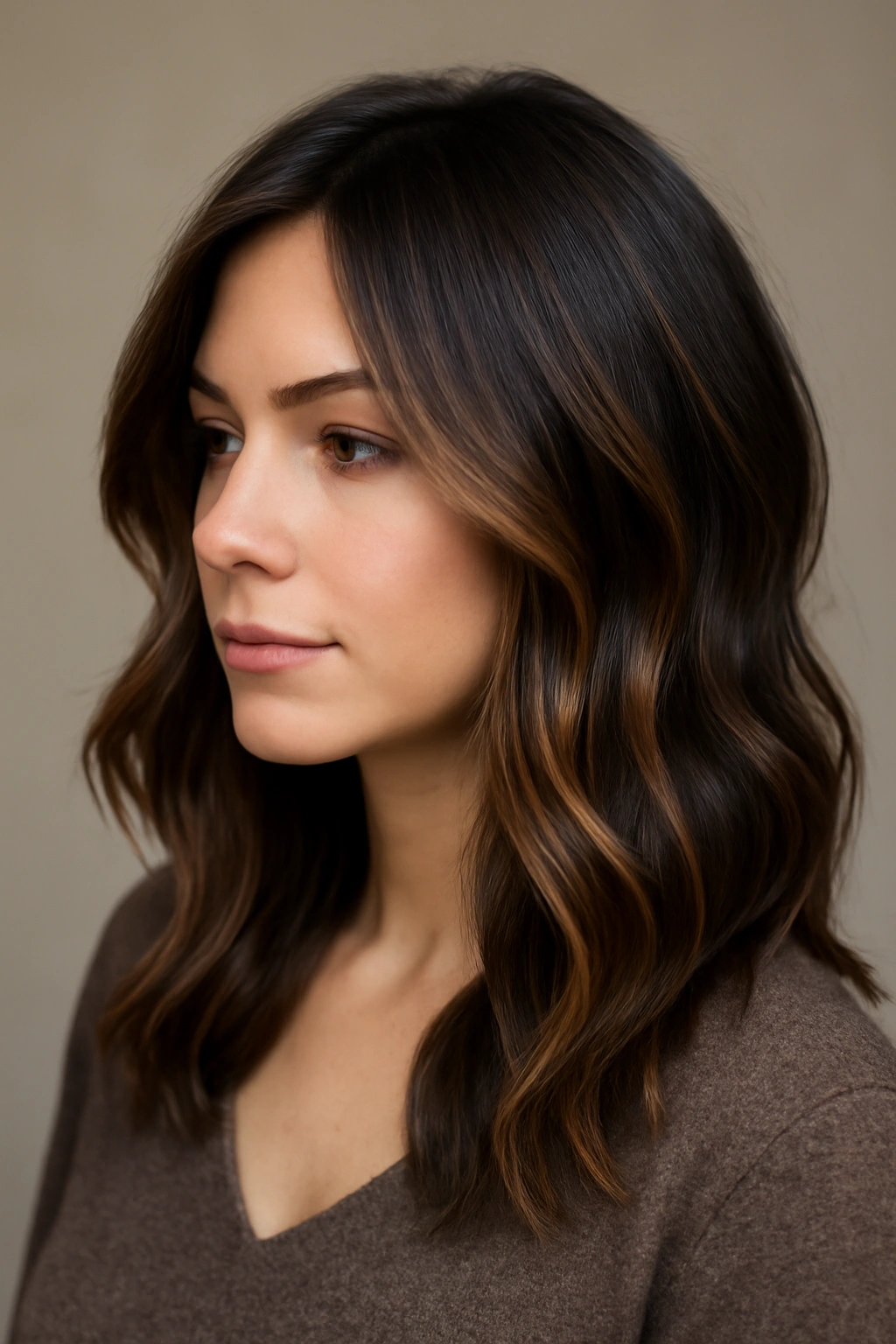
Caramel-swirled brunette with intentional face-framing layers uses cut and color together. A medium-dark chocolate base receives warm caramel ribbons, then strategic layers around the face (typically 1-2 inches shorter than the rest) are cut to showcase the lighter tones. The cut itself becomes part of the color design, making movement visible and the dimension impossible to miss.
How the Cut Amplifies the Color
The layers catch light differently than longer hair, making the caramel component dance and shimmer. Fair skin tones gain an instantly lifted, youthful appearance. Medium skin tones see face-framing warmth that brings out natural glow. Deep skin tones benefit from the strategic placement that creates contrast without appearing washed out. This approach works beautifully on all hair textures, especially wavy and curly hair where layers create natural movement.
Maintenance of Layered Color
- Layers require trims every 4-6 weeks to maintain the cut-and-color design
- The face-framing pieces fade faster because they’re shorter and more exposed; they may need monthly gloss appointments
- Styling with texture (waves, curls, or loose texture) maximizes the dimension
- This design ages beautifully as it grows—the layers blend and the effect becomes more subtle over time
10. Rich Walnut Brown with Subtle Ash Blend
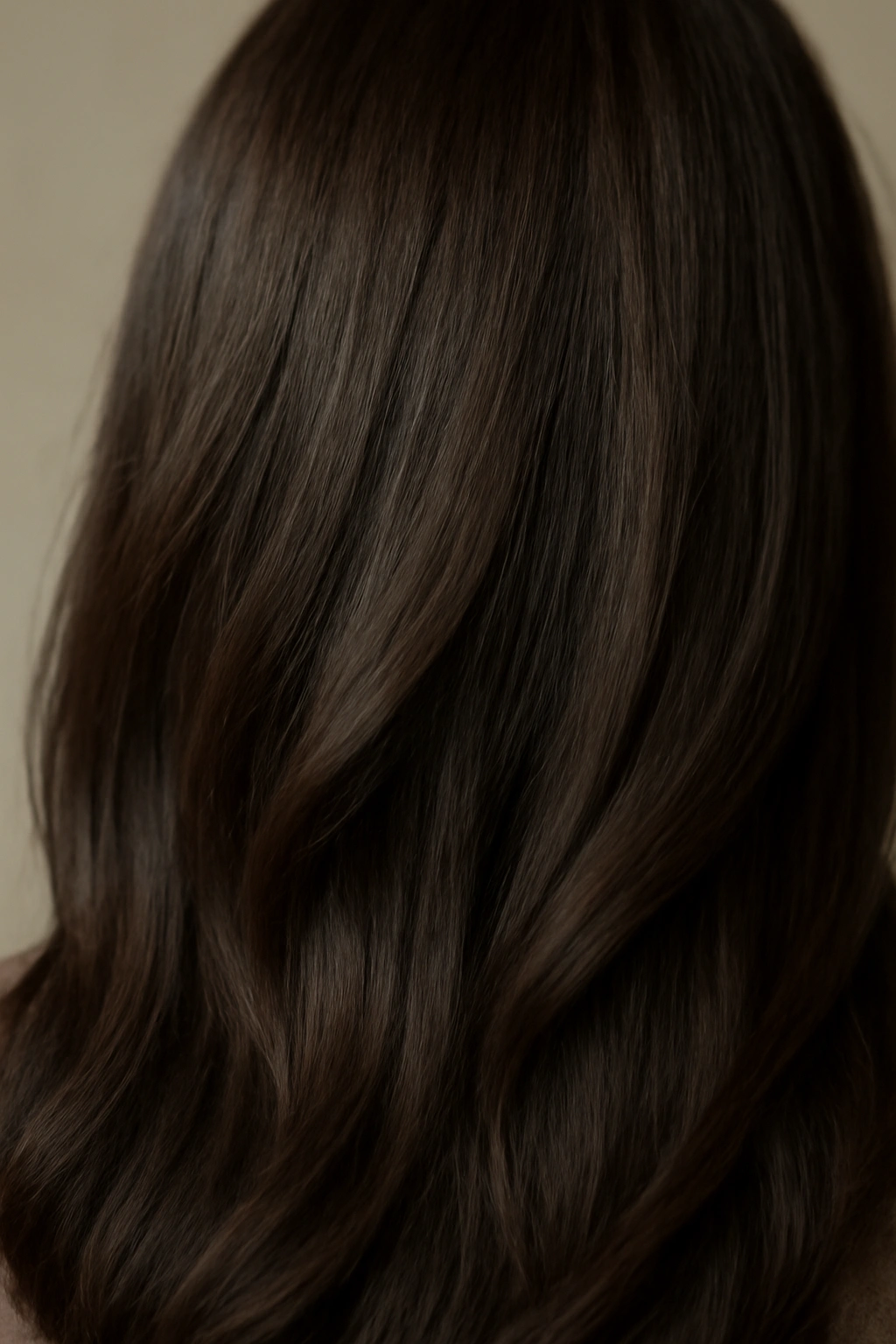
Rich walnut brown with subtle ash blend sits at the intersection of warm and cool—a medium-dark chocolate with brown undertones and just enough ash to prevent it from reading as too warm or flat. The ash component is minimal enough that it doesn’t cool the overall tone, but substantial enough to add complexity and prevent brassiness. This shade is incredibly flattering across skin tones because it balances warm and cool elements.
Universal Flattery Across Every Complexion
Fair skin tones gain dimensional depth and sophistication. Medium skin tones see a shade that’s neither too warm nor too cool—perfectly balanced. Deep skin tones benefit from the walnut richness that respects their natural undertones. Cool, warm, and neutral skin tones all find something to love in this balanced approach. This is genuinely one of the most universally flattering dark chocolate shades.
The Stability Advantage
- Balanced warm-cool tones fade more evenly than heavily weighted undertones
- Brassy yellow and green tones emerge slowly, extending time between gloss appointments to 6-8 weeks
- Root touch-ups every 8 weeks are sufficient because the fade is gradual
- This shade actually improves slightly as it fades—it becomes warmer and richer
11. Chocolate Silk with Pearlescent Shine
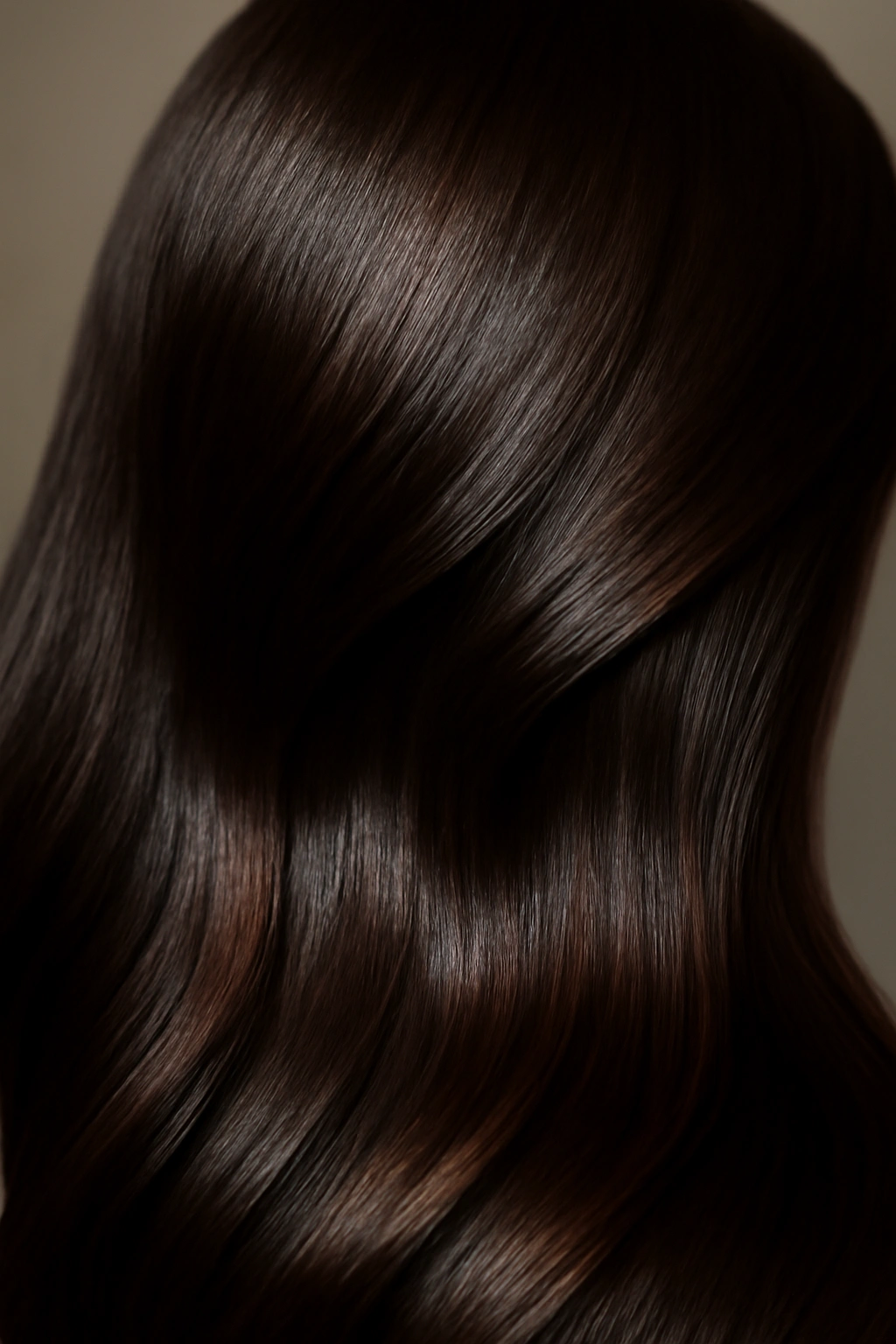
Chocolate silk with pearlescent shine uses a specialized glossing technique that deposits a translucent pearlescent toner over dark chocolate base. The result is a shade that appears to have an almost silk-like sheen and a subtle iridescent quality—it catches light differently depending on angle and lighting conditions. Under fluorescent light it may read as cooler; under warm light it shifts warmer.
The Luxury Quotient of This Technique
Pearlescent shine is what elevates color from “I dyed my hair” to “I had this professionally done by someone who knows what they’re doing.” Fair skin tones gain an ethereal, luminous quality. Medium skin tones see depth and movement even in static light. Deep skin tones benefit from the subtle shine that adds dimension without appearing reflective or artificial.
Maintaining Pearlescent Shine
- This effect requires professional gloss appointments every 3-4 weeks to maintain
- At-home color-depositing conditioner with pearlescent or shimmer components helps between appointments
- Avoid hot showers, which open the cuticle and release pearlescent pigment
- Silk pillowcases and minimal friction help maintain the delicate pearlescent coating
12. Deep Chocolate Balayage with Honey Money Pieces
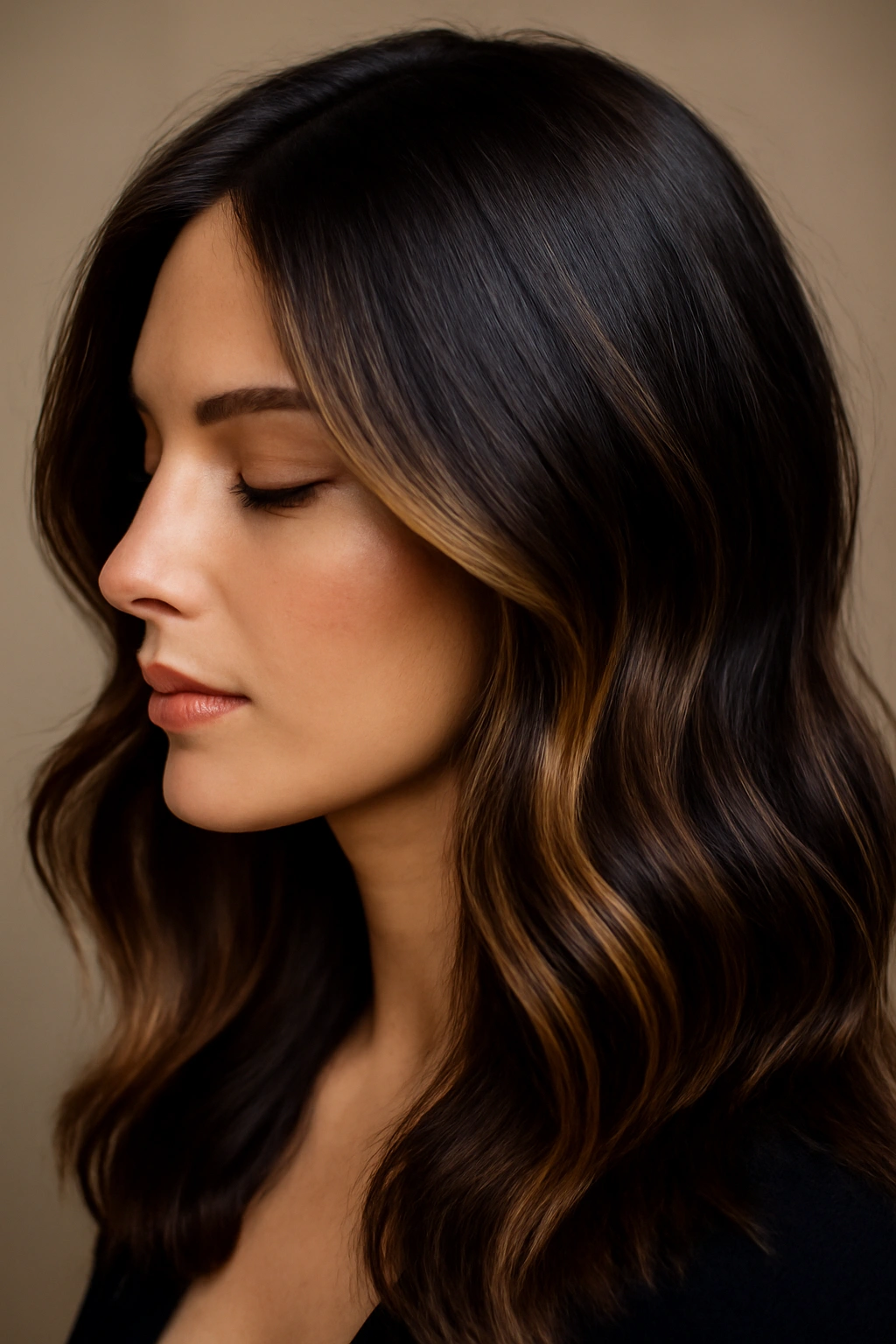
Deep chocolate balayage with honey money pieces combines a dark chocolate base with strategic balayage highlights throughout, plus intentional honey-toned money pieces (face-framing highlights) that frame the face and brighten the complexion. This technique layers multiple color strategies—the base, the dimensional balayage, and the strategic honey pieces create serious visual impact and luxury appearance.
Strategic Placement for Maximum Face-Brightening
Money pieces are positioned right at the temples, cheekbones, and lower face where they catch light and reflect onto the face itself. This creates the illusion of brighter skin and higher cheekbones. Fair skin tones gain warmth and glow directly on the face. Medium skin tones see brightening without harshness because the honey is strategically placed, not full coverage. Deep skin tones benefit from the contrast that honey pieces create, making the dark base even richer by comparison.
The High-Maintenance Reality
- Money pieces fade faster than base color because they’re shorter, thinner, and more exposed
- Glossing every 4-6 weeks keeps honey tones vibrant and prevents brassiness
- Refresh money pieces before important events—this keeps the face-brightening effect powerful
- This is a sophisticated look that requires commitment, but the payoff is genuine luxury appearance
13. Black Truffle with Burgundy Undertones
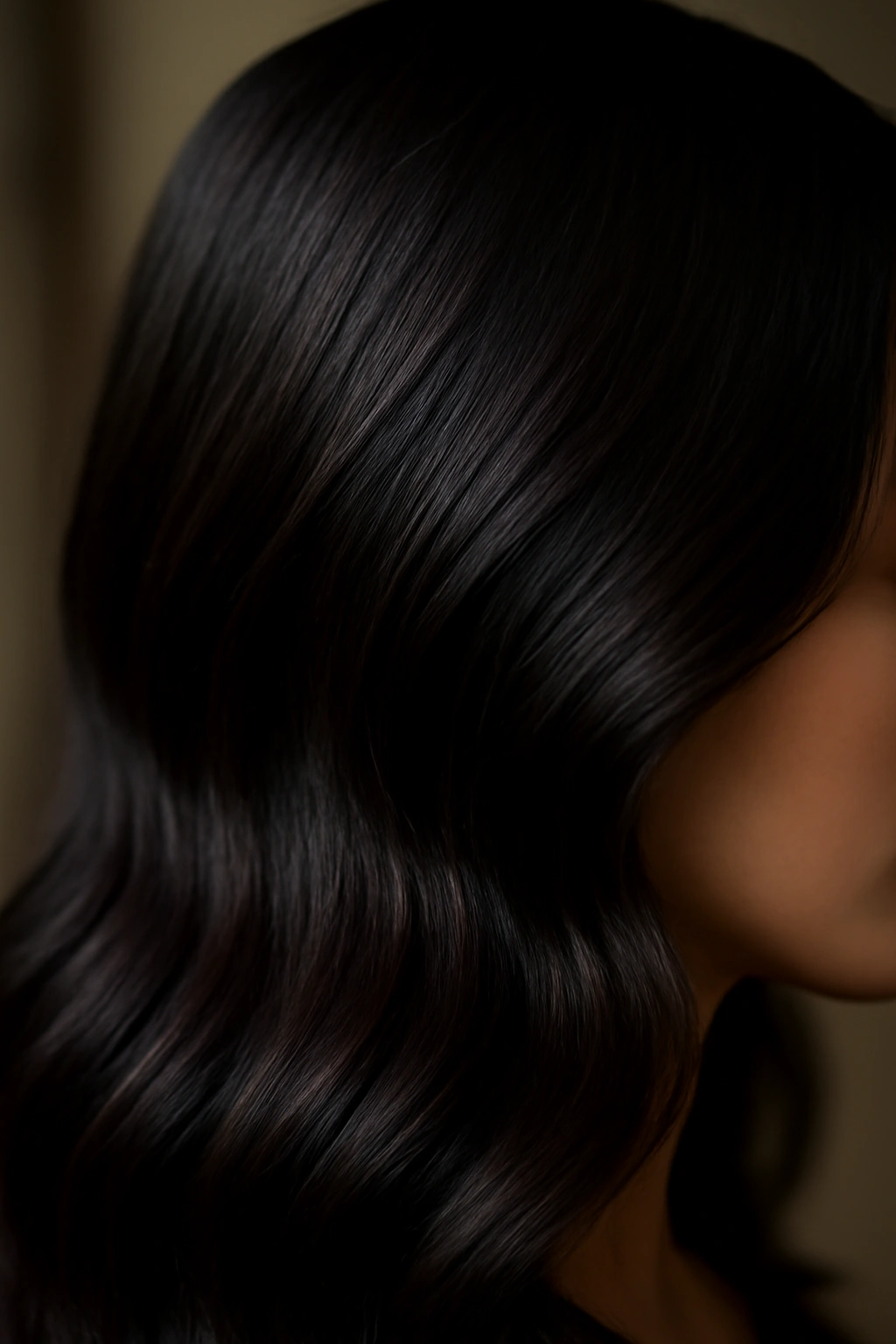
Black truffle with burgundy undertones is nearly black—nearly the darkest possible shade—with deep burgundy undertones that emerge in bright light or when hair is moved. This is the shade for someone who wants dark chocolate drama with hidden complexity. In most lighting, it reads as sophisticated black-brown. In the right light, burgundy wine tones become visible, creating an almost secret-knowledge quality.
The Versatility of Hidden Undertones
This shade works across all skin tones because the base is dark enough that it doesn’t overwhelm any complexion, while the burgundy undertones add personality and prevent flatness. Fair skin tones gain contrast and sophistication. Medium skin tones see depth and richness. Deep skin tones benefit from the burgundy as jewel-like accents that enhance skin radiance. Cool, warm, and neutral tones all find something in this complex shade.
Keeping Burgundy Visible Without Overwhelming
- Burgundy is a color that fades relatively quickly, requiring gloss every 3-4 weeks
- Use red or burgundy color-depositing conditioner between salon visits
- Expose burgundy in indirect light—this makes the undertones visible without making the shade look artificially red
- Avoid glosses that are too heavy with burgundy pigment, which can make the shade read as too red instead of dark chocolate with undertones
14. Chocolate with Golden Root Shadow
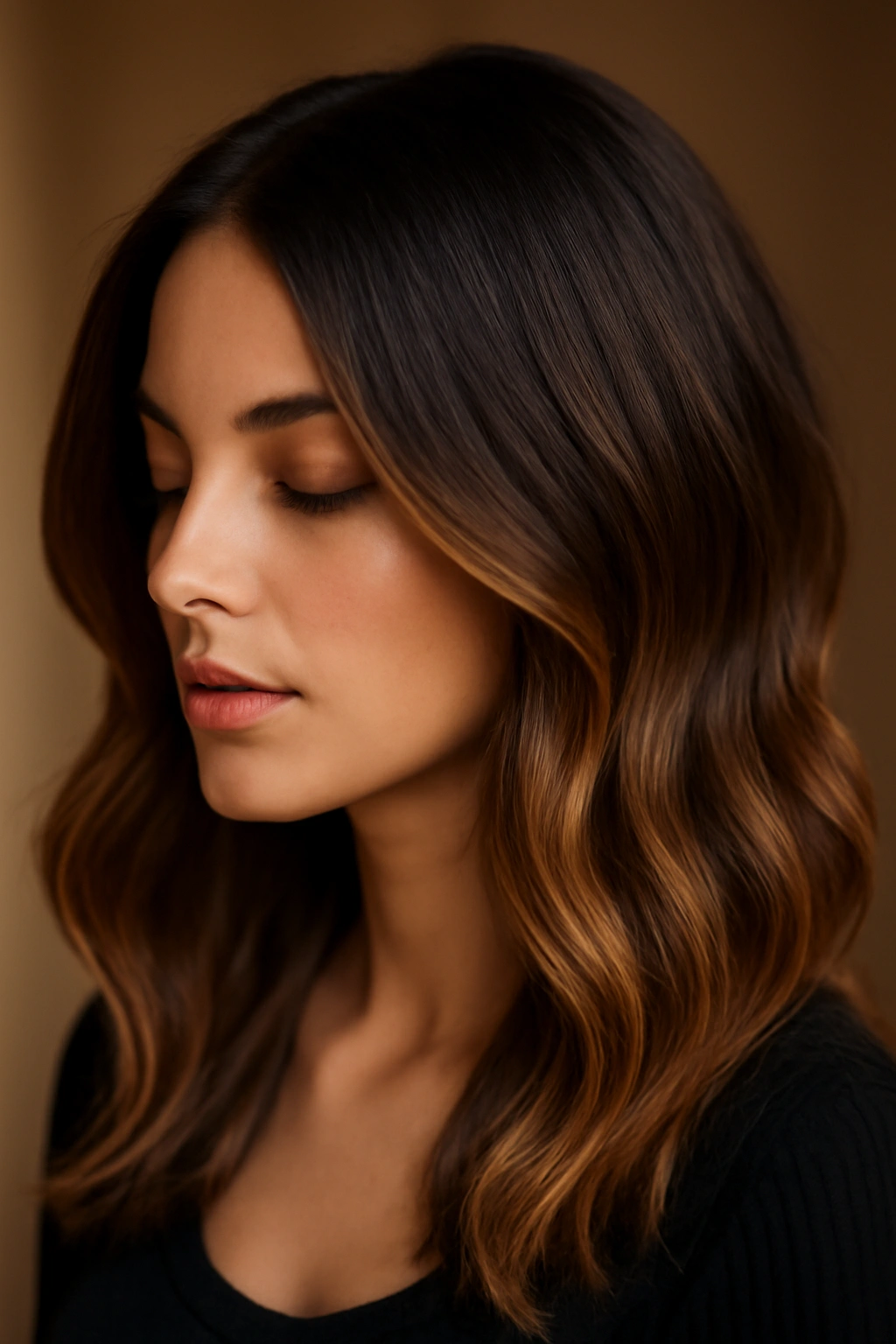
Chocolate with golden root shadow uses a rooted technique where darker chocolate sits at the roots and gradually transitions to a lighter, golden-chocolate brown through the lengths. Unlike typical shadow rooting that transitions to the same base color, golden rooting uses actual golden-brown tones, creating warmth and movement. The dark roots keep it sophisticated; the golden midlengths add luxury dimension.
Why Golden Rooting Works
- Creates a naturally-lit effect that suggests sun-kissed natural hair
- Strategically places lighter tones where light naturally hits (face, crown, ends)
- Works beautifully on all hair textures and especially enhances curly and coily hair
- Fair and warm skin tones gain significant luminosity from golden tones near the face
- Medium and deep skin tones see the golden tones as warm, luxurious accents
Maintenance Approach
- Root touch-ups needed every 10-12 weeks since roots are intentionally darker
- Golden midlengths benefit from glossing every 6-8 weeks to prevent turning brassy
- The blonde-ish ends need regular trims to prevent excessive fade
- This style actually ages beautifully—as it grows, the gradient becomes softer and more natural-looking
15. Luxe Sable with Dimensional Lowlights
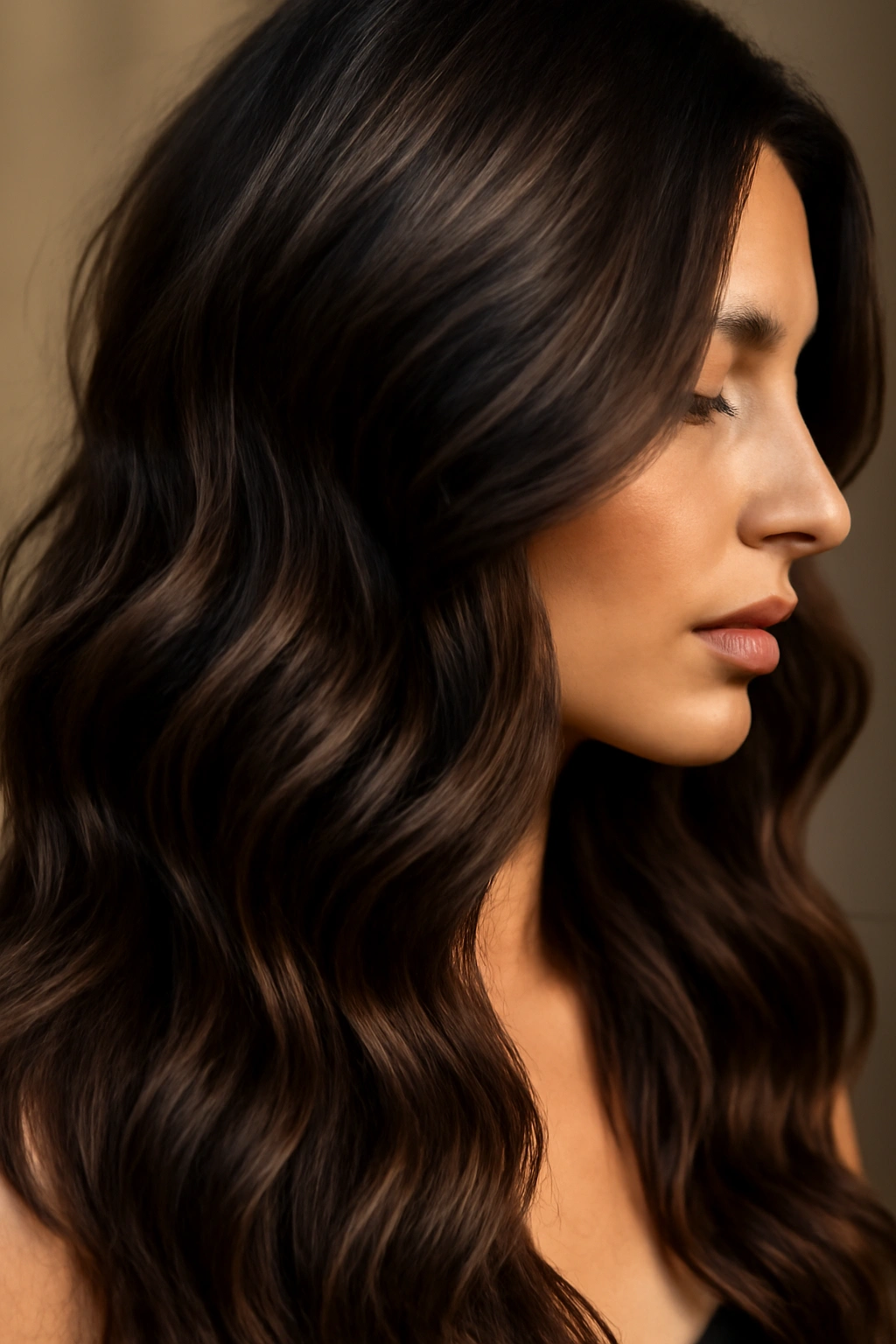
Luxe sable with dimensional lowlights uses a medium-dark chocolate base with carefully placed lowlights in deeper, nearly-black brown. Unlike balayage that places highlights on top, lowlighting places darker tones within and underneath lighter base, creating depth that reads as professional and intentional. This technique adds serious dimension and luxury without being as high-maintenance as full balayage.
Creating Luxury Depth Through Strategic Lowlighting
Lowlights sit in the interior layers of hair, becoming visible as hair moves and light hits underneath sections. This creates movement and depth that photograph beautifully and look expensive in person. Fair skin tones gain definition and sophistication. Medium skin tones see rich, complex dimension. Deep skin tones benefit from the strategic placement of darker tones that creates depth without overwhelming natural skin tone.
Why Lowlights Are Lower-Maintenance
- Lowlights blend naturally as they grow out, extending time between touch-ups to 12-14 weeks
- The base color remains dominant, so slight fade of either base or lowlights doesn’t look noticeably grown-out
- Glossing is less frequent than balayage—every 8-12 weeks maintains vibrancy
- This technique actually looks better as it ages slightly—the lines between colors blur and soften naturally
Final Thoughts
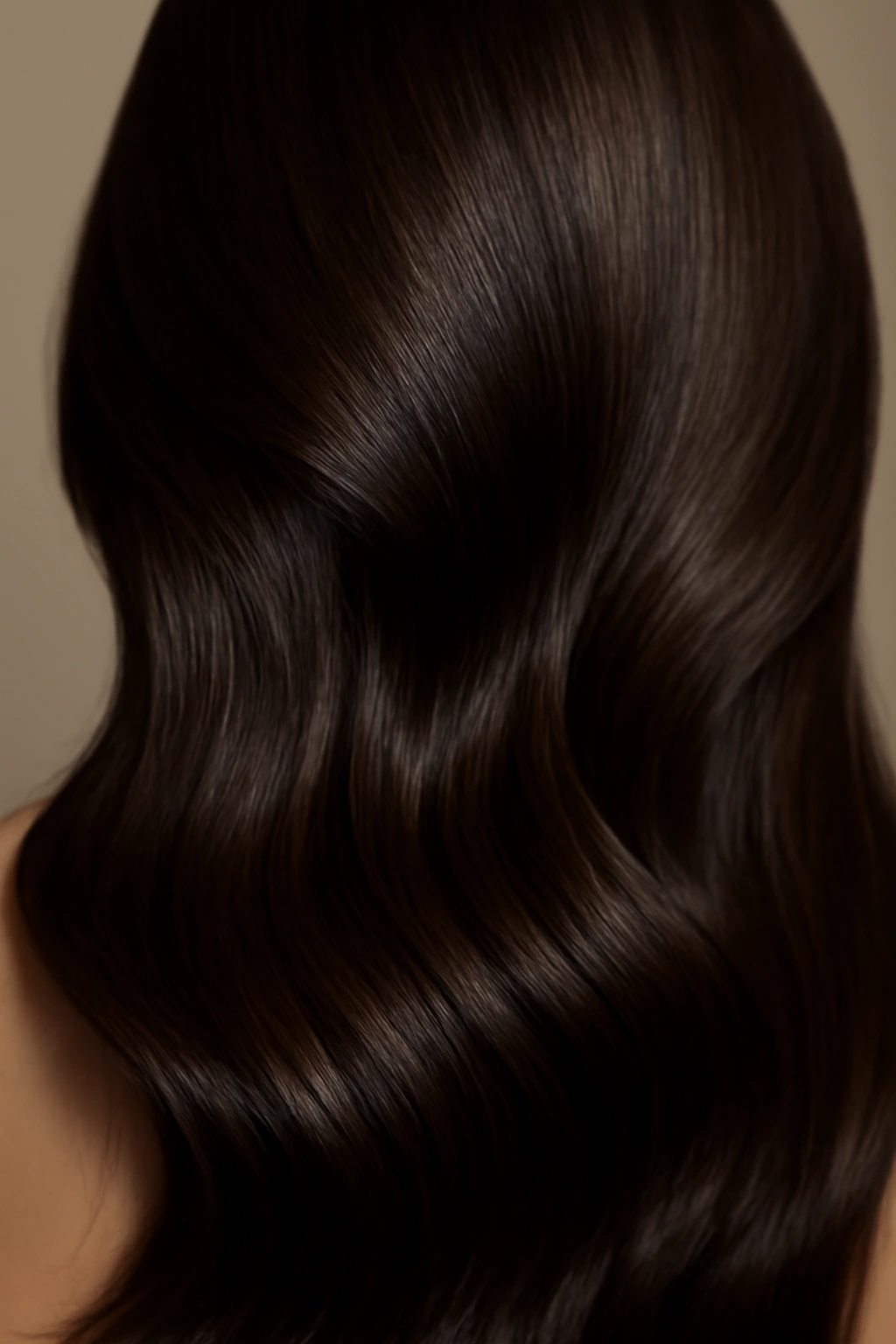
Dark chocolate hair color isn’t just a trend—it’s a timeless, flattering approach to color that works because it respects the relationship between tone, undertone, and skin tone. The 15 shades and techniques above represent the full spectrum of dark chocolate possibilities, from nearly-black espresso to medium-toned caramel-swirled designs, from balanced walnut browns to dramatic wine-infused tones.
The key to finding your perfect dark chocolate shade comes down to understanding whether your skin has warm, cool, or neutral undertones, and then choosing a color that either complements or intentionally contrasts with those undertones. Someone with cool undertones glows with ash-infused espresso. Someone with warm undertones comes alive under caramel swirls and golden rooting. Neutral skin tones have the luxury of pulling off nearly every shade beautifully.
Consider consulting with a professional colorist who can assess your specific skin tone and recommend the exact shade and technique that will make you feel luxurious and confident. Share these ideas as inspiration, but trust the expertise of someone who can see you in person and understand your hair’s starting point, texture, and health. The most luxurious dark chocolate hair color is the one that’s been customized specifically for you—not a generic shade name pulled from Pinterest, but a color created with your unique complexion and style in mind.
