



Wavy pixie cuts have become the ultimate shortcut for people who want serious style without spending an hour every morning getting ready. There’s something magical about how a well-cut pixie works with natural waves — instead of fighting your hair texture, you’re partnering with it. The right cut can mean you literally shake your head dry and look intentionally tousled, no blow dryer required.
The key is finding a pixie cut that embraces movement rather than demanding precision. Not all pixies are created equal, and some designs work way better with wavy hair than others. The difference between a pixie that needs constant styling and one that practically arranges itself comes down to how your stylist cuts the layers, where they position the length, and how they work with your natural wave pattern instead of against it.
If you’ve ever looked at someone with an effortlessly cool short cut and wondered if you could pull off something similar, the answer is almost certainly yes — especially if you have wavy hair. The waves actually become your secret weapon. This guide walks through ten specific wavy pixie styles that genuinely do most of the work for you, plus exactly what to ask your stylist for when you’re ready to take the leap.
1. Tousled Choppy Layers
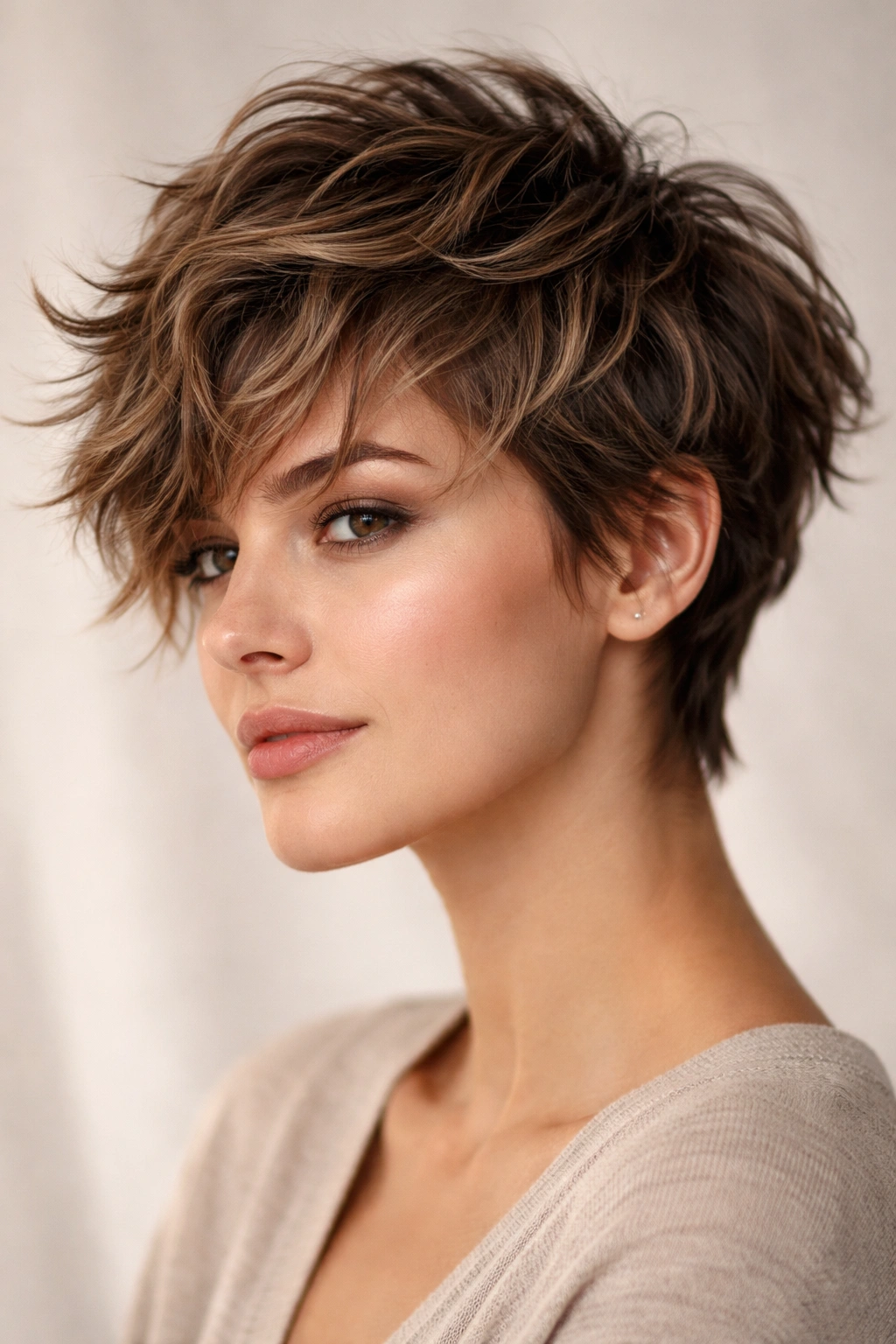
The tousled choppy pixie is the definition of a wash-and-go cut. This style features longer strands on top with deliberately choppy, disconnected layers throughout, creating tons of movement and texture. The choppiness breaks up the overall shape and gives your waves room to do their thing without looking flat or matted down.
Why This Works for Wavy Hair
Choppy layers amplify waves instead of fighting them. When layers are cut at different lengths and angles, your natural wave pattern gets multiple anchor points to work with. The result is a cut that looks intentional and stylish whether your waves are pronounced or subtle. You’re not trying to create waves — you’re just letting the ones you have shine.
How to Style and Maintain
- Apply a wave-enhancing cream or sea salt spray to damp hair
- Scrunch gently while air-drying or use a diffuser attachment if you’re in a hurry
- Run your fingers through the layers once it’s dry to separate and define the choppiness
- This cut needs a trim every 4-6 weeks to keep the layers from growing out too bluntly
Pro tip: Ask your stylist to cut the layers while your hair is damp (or ask how they’d style it before they cut) so they can see exactly how your waves fall naturally and cut accordingly.
2. Textured Piece-y Pixie
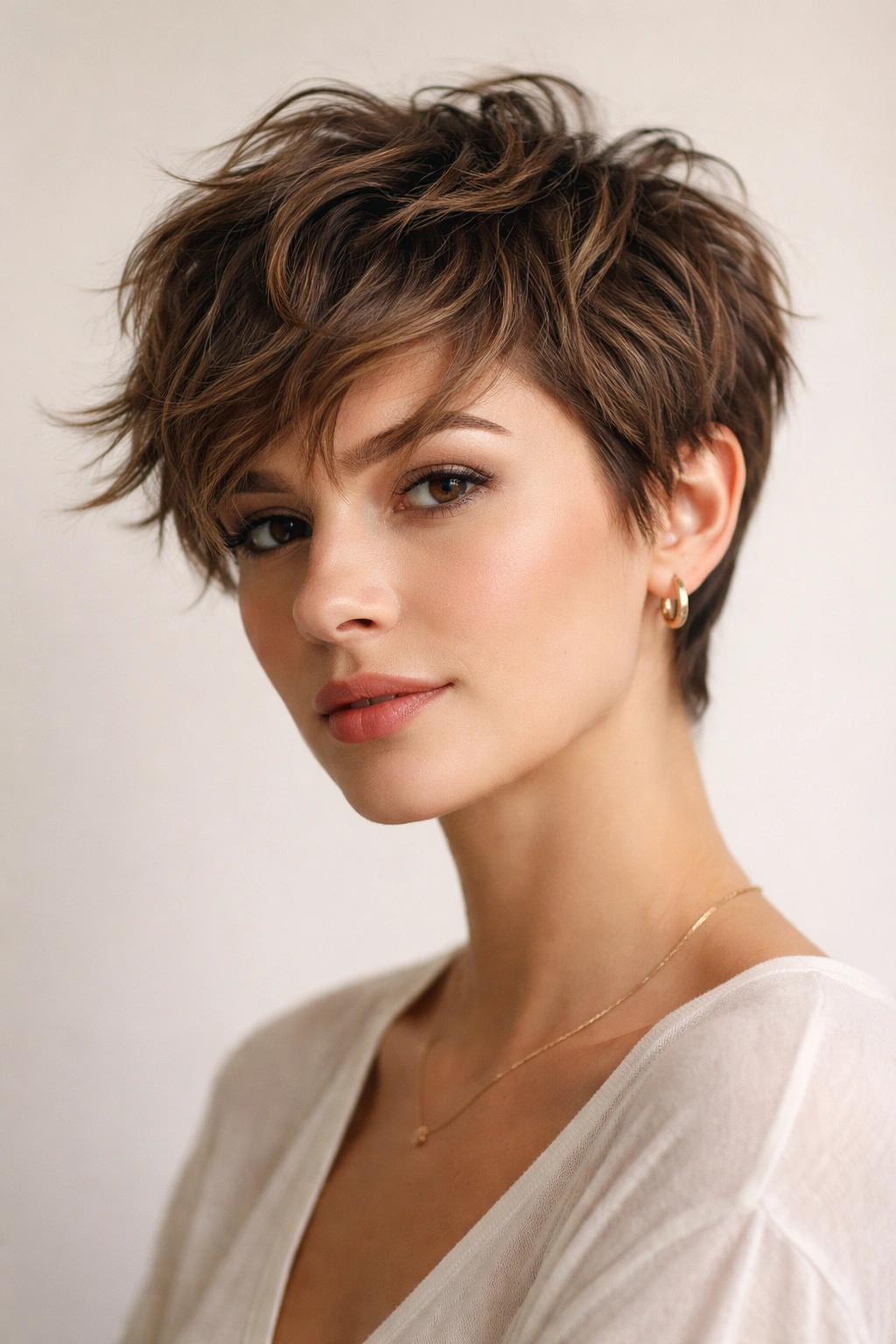
A piece-y pixie emphasizes individual strands and texture rather than a cohesive overall shape. Stylists cut this using point-cutting or texturizing techniques that create separations and movement throughout. It’s less about a polished silhouette and more about celebrating the natural variation in your wave pattern.
What Makes It Feel Effortless
The piece-y texture does the heavy lifting for you. Because the cut is designed to highlight individual strands, you don’t need perfect uniformity or symmetry — slight imperfections actually add to the appeal. Your waves naturally create the piece-y effect without any special styling tricks.
Styling Tips and Tricks
- Use a texturizing spray or matte clay before styling to enhance the separated, piecey look
- Tousle with your fingers or a comb to activate the texture
- Let it air-dry whenever possible — this cut looks better the less processed it is
- Refresh texture between washes by spraying with a bit of dry shampoo and finger-combing
This is genuinely a five-minute-max styling situation, and often much faster than that.
3. Soft Side-Swept Pixie
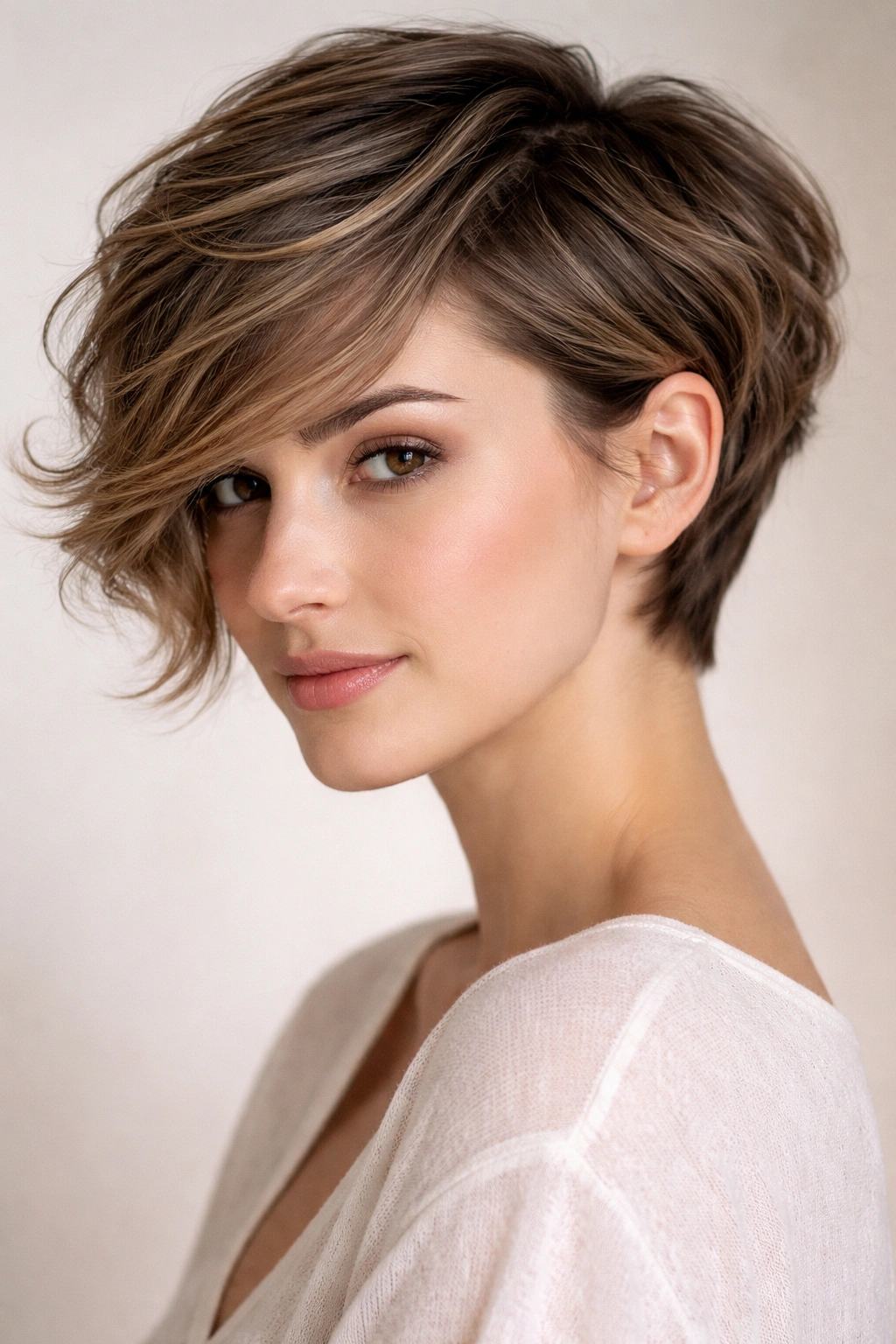
The soft side-swept pixie keeps most of the length concentrated on one side, brushed across the forehead and cheekbone. It’s a gentler take on the traditional pixie because the side-sweep adds femininity and softness without requiring longer overall length. Your waves get to curve naturally across your face.
Why Waves Work in This Style
When you have natural waves, a side-sweep looks romantic and intentional rather than slicked-over. The waves catch light and create movement that a straight side-swept pixie couldn’t achieve. You get the benefit of longer hair on one side while keeping the back and other side short and clean.
Maintenance and Styling Approach
- Damp-style by pushing the longer side across with your fingers while the cut is still wet
- You can let it air-dry and shake it out, or you can blow-dry it if you want more control
- The longer side will naturally want to fall in waves — work with that instead of fighting it
- Trim every 5-6 weeks to keep the shape from looking grown-out
Quick fact: This cut is especially flattering if you have a longer face shape because the side-sweep adds width and softness without looking choppy.
4. Messy Textured Fringe
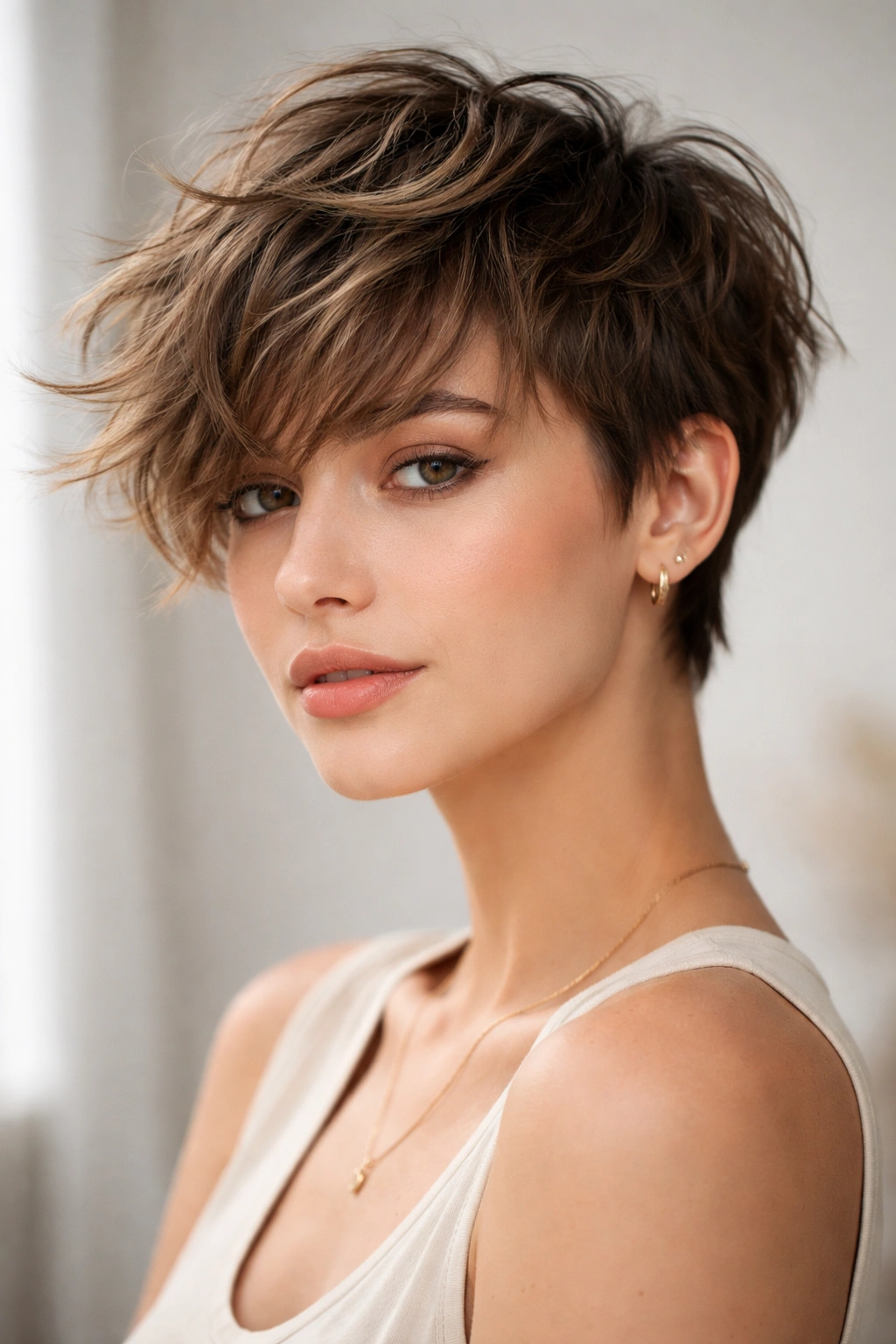
A messy textured fringe pixie has a longer, intentionally undone front with lots of choppy, wispy layers. The fringe itself is broken up and piece-y rather than blunt, which means it works beautifully with waves. The back and sides stay short and clean, but the front does all the styling work for you.
The Wave Advantage
Waves naturally create the messy, effortless vibe this cut is going for. Instead of needing to deliberately style a fringe to look “messy” and cool, your wave pattern is the messiness — and it looks intentional rather than unkempt. This cut actually asks you to embrace your texture rather than tame it.
How to Get the Look
- Style with a curling cream or texture spray applied to damp hair
- Use your fingers to separate and tousle the fringe while damp
- Air-dry or diffuse — the more natural the drying method, the better
- This cut benefits from a very light touch with styling products
This is the perfect cut if you’ve been frustrated by pixies that feel too severe or masculine — the messy fringe adds personality and softness instantly.
5. Longer Textured Pixie Crop
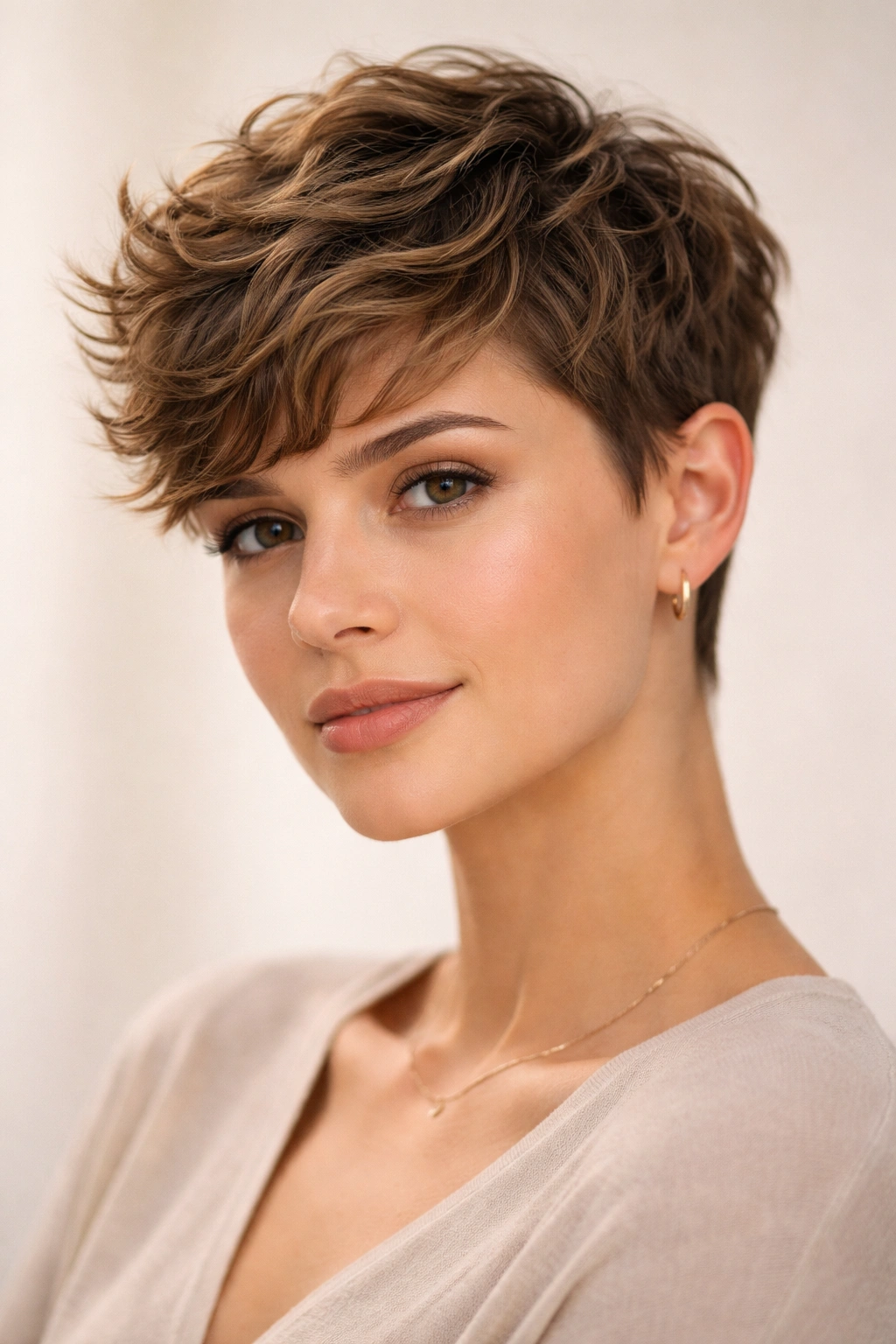
A longer pixie crop sits somewhere between a traditional pixie and a short bob. You get more length on top (2-3 inches) while keeping the sides and back closely cropped. This extra length gives waves more room to show themselves and creates a less severe silhouette than an ultra-short pixie.
Why This Works for Textured Hair
The extra top length is crucial for people with natural waves. It gives the wave pattern enough distance to develop and move before the hair gets too short to hold a bend. You still get the ease of a pixie, but with softer lines that feel less dramatic and easier to live with long-term.
Styling and Upkeep
- Tousle damp hair with your fingers or a comb to activate waves
- Add a wave cream or light mousse for definition if desired
- Air-dry for the most natural texture, or diffuse on low heat
- Trim every 4-5 weeks to keep layers fresh and texture crisp
You have more styling flexibility with this cut than you would with a super-short pixie, but it still requires minimal effort on most days.
6. Feathered Pixie with Soft Texture
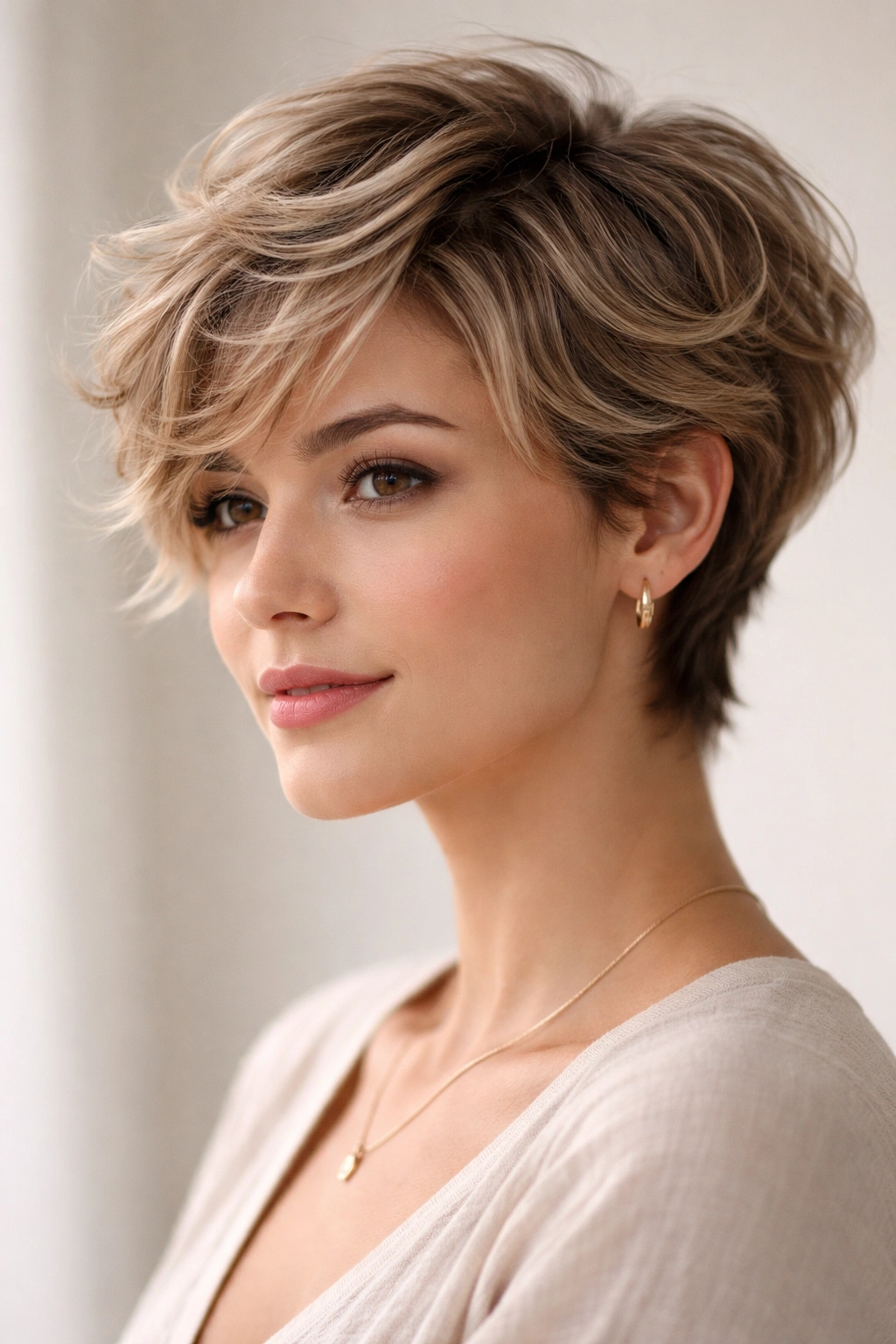
Feathered layers create movement that flows away from the face and head, as opposed to choppy layers that stick out in multiple directions. A feathered pixie has that soft, swept quality but with enough texture to enhance wave pattern. The result is sophisticated yet relaxed.
How Feathering Complements Waves
Feathered cuts work with the direction of your natural wave pattern rather than creating layers that fight it. Your waves can flow in their natural direction while the feathering ensures there’s enough separation and movement. It’s a more refined look than choppy but still requires minimal styling.
Styling Approach for Best Results
- Apply a lightweight wave cream or sea salt spray to damp hair
- Rough-dry with your fingers to encourage the feathered direction
- You can air-dry and let the waves dry naturally, or diffuse for more volume
- The feathering means you don’t need to do much else — your texture does the work
Worth knowing: This cut is especially good if you want to look polished enough for professional settings while still being genuinely low-maintenance. It reads as intentional rather than lazy.
7. Disconnected Undercut Pixie
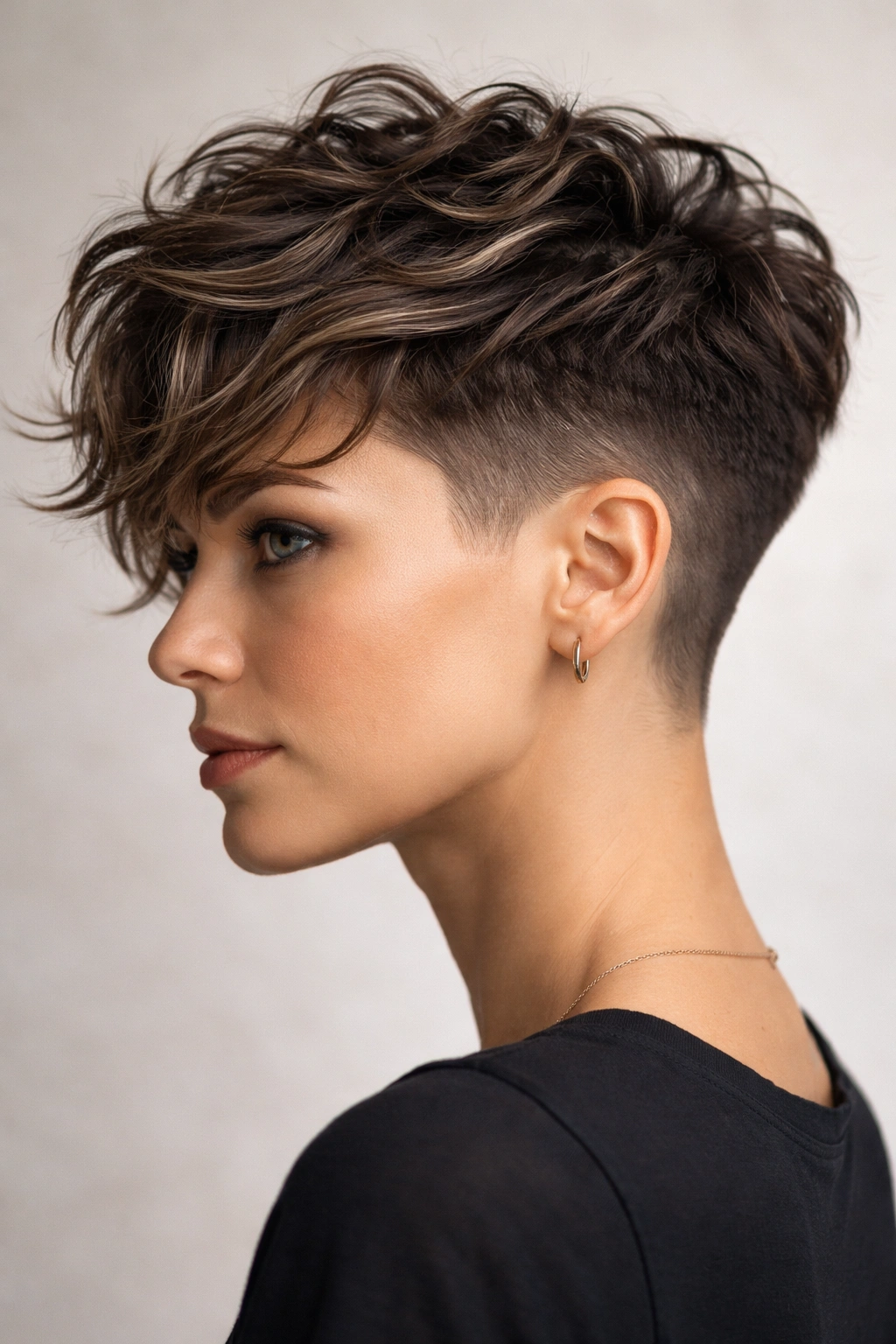
A disconnected undercut pixie has noticeably shorter sides and back with significantly longer hair on top — creating clear visual separation rather than a gradual fade. The longer top section features textured layers that work with your waves, while the undercut keeps everything crisp and defined.
The Wave Styling Advantage
The disconnect creates stark contrast that makes textured, wavy hair on top look even more voluminous and intentional. Your waves get to be the star while the clean undercut keeps the overall look from feeling too floppy or undefined. It’s high-contrast and high-style without being high-maintenance.
Maintenance and Styling Tips
- Style the top with a texturizing product and finger-tousle while damp
- Diffuse-dry for volume or let it air-dry depending on your wave strength
- The undercut needs trimming every 3-4 weeks to stay crisp
- The longer top needs attention every 5-6 weeks
This is a bolder pixie that definitely makes a statement, but the waves make it feel accessible rather than extreme.
8. Soft Layered Pixie with Length
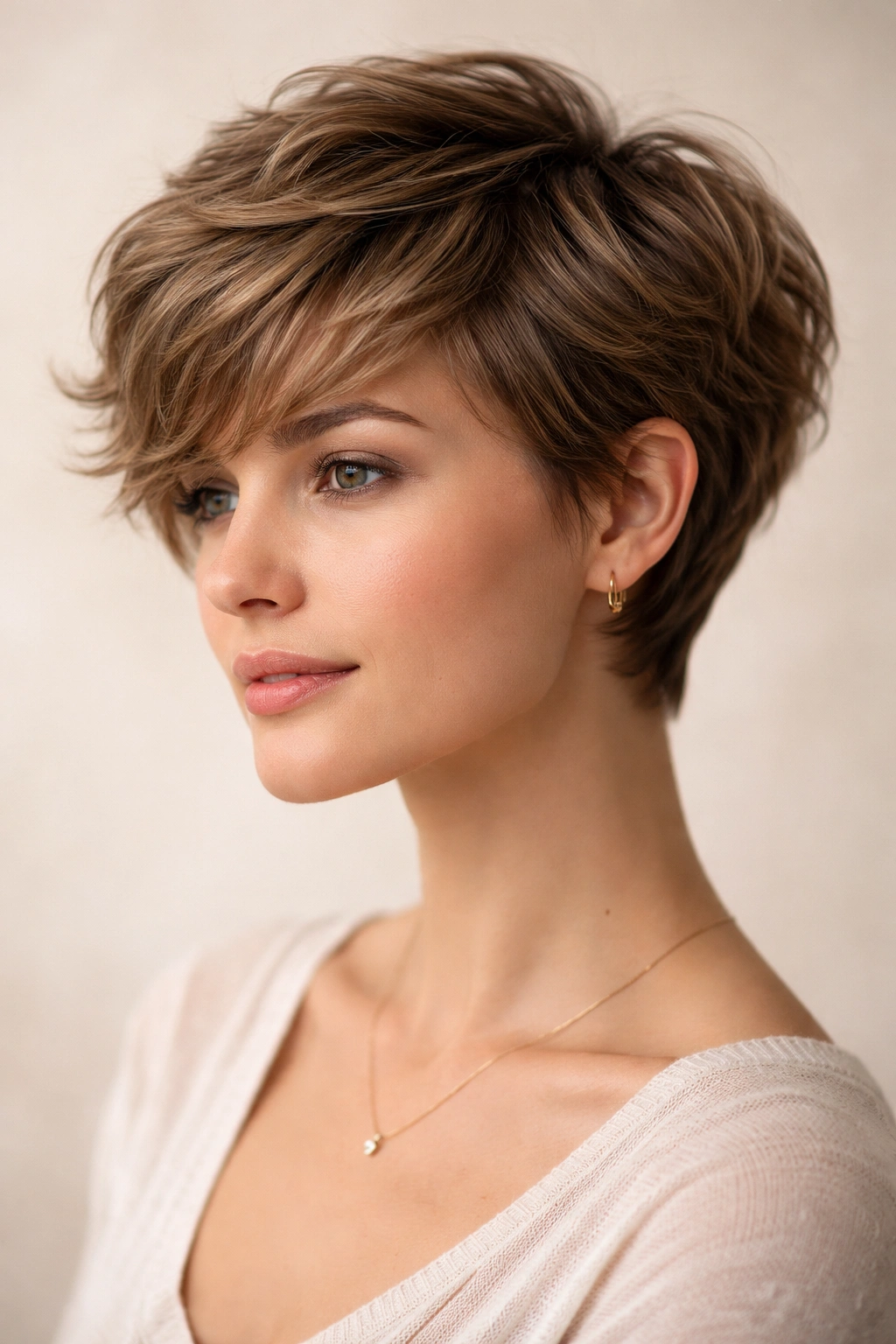
A soft layered pixie keeps slightly more length throughout compared to choppy styles — maybe 1.5-2 inches all around with gentle, blended layers rather than choppy, disconnected ones. The layers are still there to break up the shape and enhance texture, but they’re softer and more subtle.
Why Soft Layering Works
If choppy layers feel too severe or too textured for your preferences, soft layering gives you the advantages of movement and ease without the obvious choppiness. Your waves still get that multi-point anchor system for texture, but the overall shape feels more cohesive and less edgy.
Easy Styling Routine
- Damp-style by scrunching or finger-combing to activate waves
- Apply a lightweight mousse or wave cream if desired
- Air-dry whenever you can — this cut really shines with natural drying
- Maintain with trims every 5-6 weeks
This is an ideal middle-ground pixie if you want short hair but aren’t ready to commit to a dramatic, edgy aesthetic.
9. Curved Pixie with Textured Crown
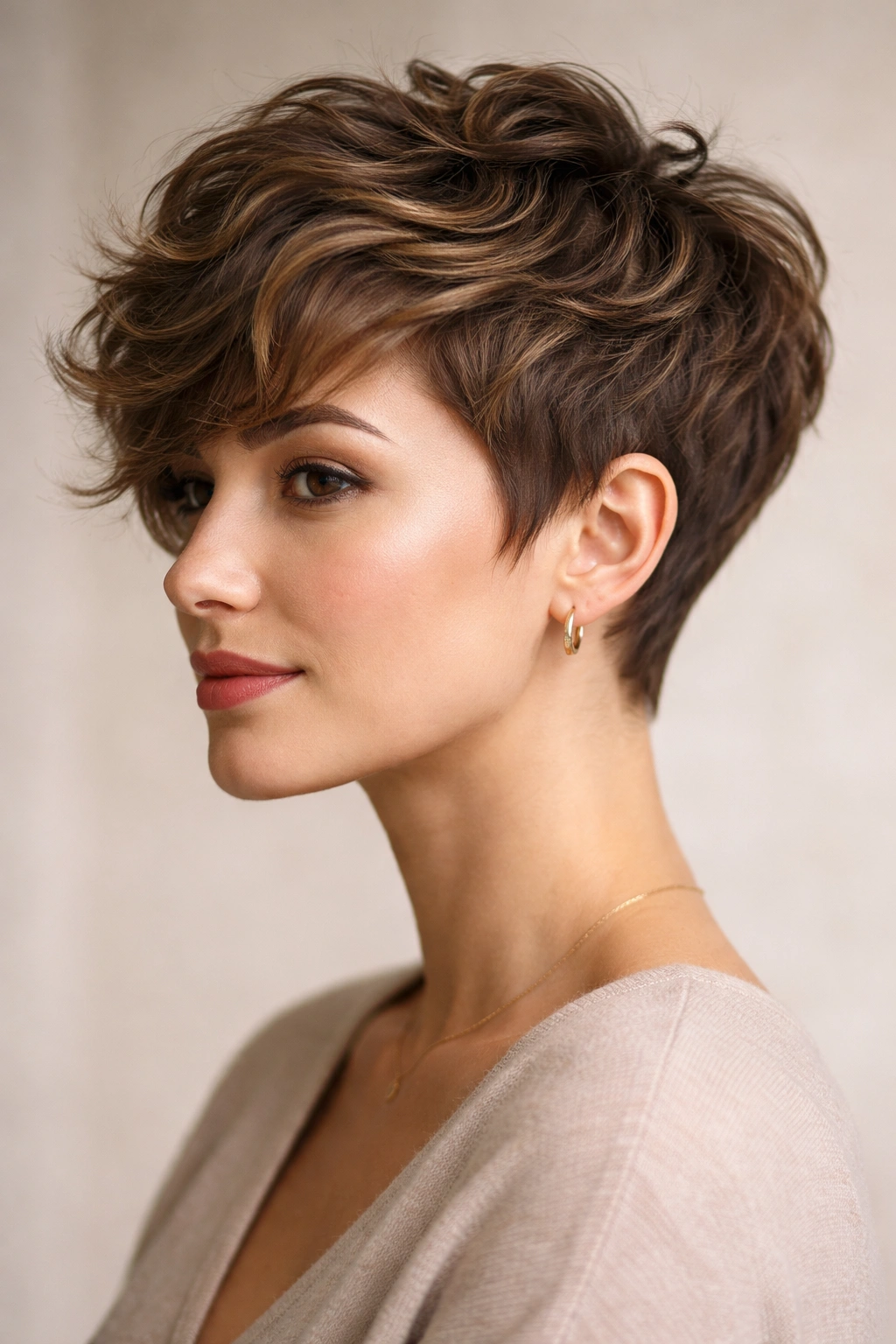
This style is cut to sit closer to the head at the sides and back while creating volume and texture right at the crown. The curves create a softer silhouette while the crown texture works beautifully with wave patterns. It’s a pixie that frames the face gently rather than sharply.
How This Cut Flatters Waves
By directing the cut to create natural volume at the crown, you’re working directly with how waves want to fall. The curves mean hair isn’t cut so short it flattens, and the crown length gives your wave pattern optimal space to move. The result is flattering from every angle.
Styling and Maintenance
- Apply wave cream or texture spray to damp roots and lengths
- Scrunch upward to encourage volume at the crown
- Diffuse or air-dry, focusing on lifting the crown as it dries
- Trim every 4-6 weeks depending on how quickly your hair grows
Pro tip: Ask your stylist to texturize the crown area specifically so the waves have movement and don’t just sit flat.
10. Shaggy Pixie with Layered Bangs
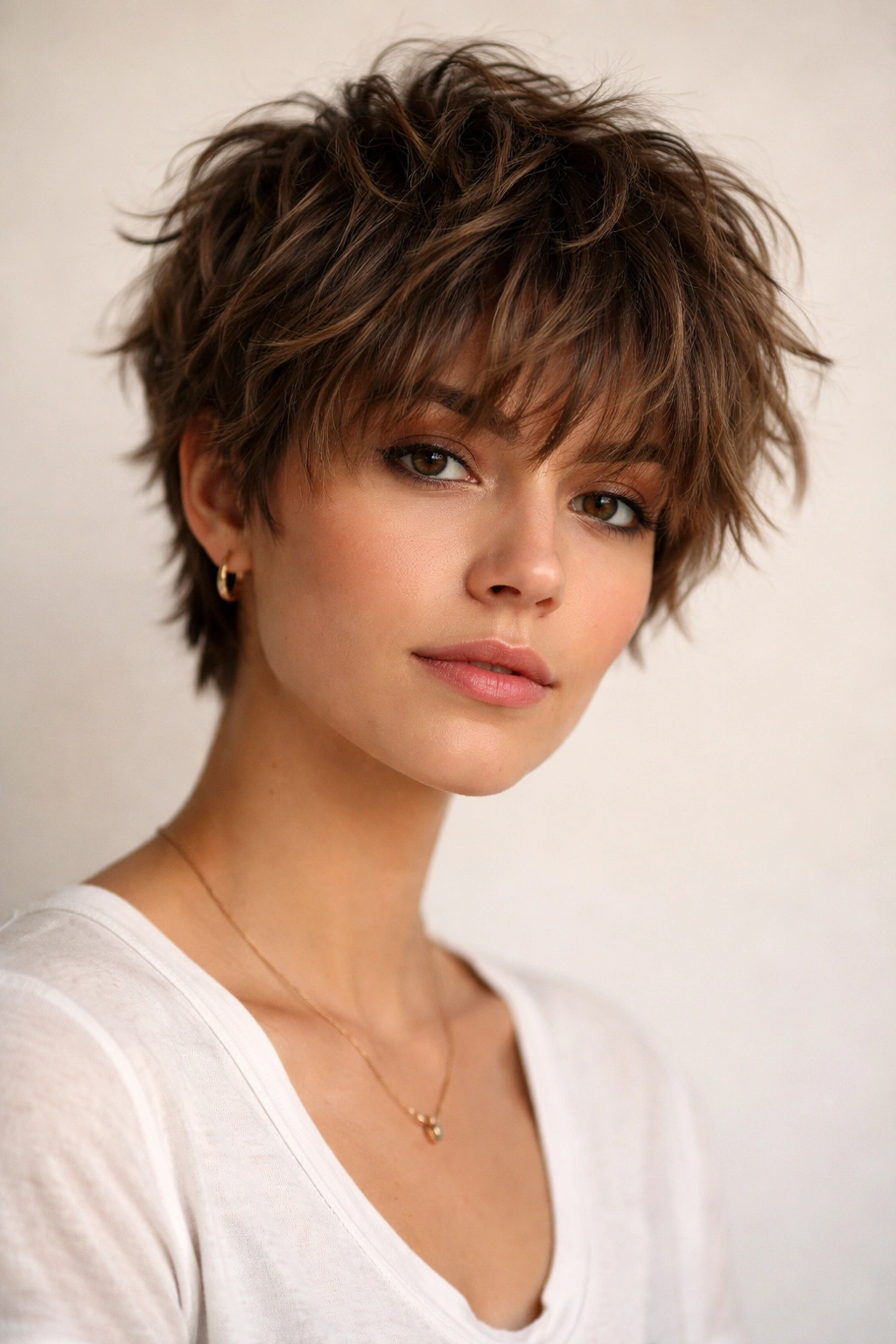
A shaggy pixie takes inspiration from ’70s shag cuts but streamlined for modern short hair. Lots of choppy layers throughout, including deliberate textured bangs that graze the eyebrows. The shag vibe is inherently wavy and undone, making it perfect for natural texture.
Why This Works So Well for Waves
Shag cuts were literally designed around the premise that hair has texture and movement. Waves are exactly what these cuts are meant to work with. The multiple choppy layers throughout mean there’s no single “correct” way for the hair to sit — it just naturally settles into its best shape.
Styling and Upkeep
- Apply sea salt spray or texturizing cream to damp hair
- Tousle with fingers or a comb to activate the shag layers
- Air-dry for the most authentic shag vibe, or diffuse for more control
- Trim every 4-5 weeks to keep the shag looking intentional and not just grown-out
This is for people who want to embrace texture and movement rather than minimize it. If you’ve spent years fighting your waves, a shaggy pixie is the cut that finally stops fighting back.
Final Thoughts
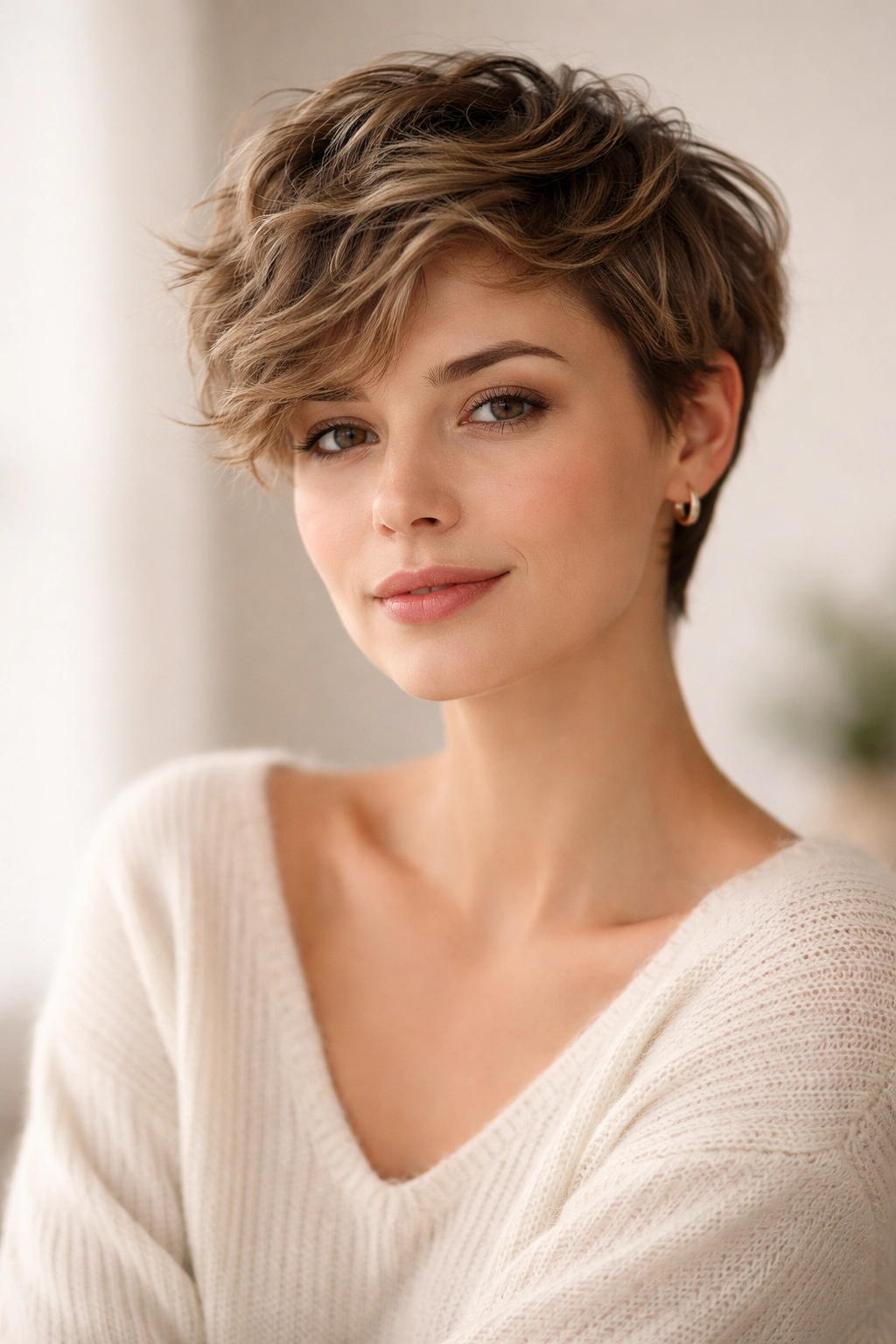
The common thread across all of these wavy pixie cuts is that they work with your natural texture instead of demanding you fight it every morning. The specific cut you choose depends on how much length you want, how textured you like your hair to look, and what vibe resonates with your personal style.
The magic of a great pixie cut for wavy hair is that it removes the pressure to style perfectly. Instead, you’re partnering with your texture and letting it do what it naturally wants to do. That’s not laziness — it’s actually smart styling. You’re choosing a cut that plays to your hair’s strengths, which means you spend less time in front of the mirror and more time actually living your life.
When you go in for your cut, bring photos of a few styles that speak to you and have a real conversation with your stylist about your wave pattern, your styling preferences, and how much daily effort you’re willing to invest. The best pixie cut is one that makes you feel confident, looks good on your specific hair type, and genuinely does make itself most days.
