



Fine wavy hair walks a tricky line. You’ve got the texture for movement and dimension, but not the density for impact—which means flat, limp hair happens way too often. The frustration is real: you want a style that shows off those waves without making your hair look thin or wimpy. Flat-ironing it straight defeats the purpose, but cutting it wrong can actually make the problem worse, not better.
The good news is that the right cut can transform fine wavy hair into something that looks noticeably fuller, thicker, and way more intentional. It’s not magic; it’s strategy. The key is understanding that fine hair needs elevation, texture, and strategic layering to create the illusion of volume. Choppy layers work differently than blunt ones. Face-framing pieces behave differently than uniform length. How you use texture and movement matters more than how much hair you actually have.
If you’ve been struggling to find a style that honors your wave pattern while giving you that fuller, more confident look, you’re in the right place. These aren’t styles that just work on fine wavy hair—they’re styles specifically designed to maximize what you’ve already got. Each one uses a different approach to create fullness: some through aggressive layering, some through strategic length placement, some through texture enhancement. Some work best if you’re up for styling daily; others practically style themselves.
Let’s walk through ten hairstyles that nail this balance, with honest details about what each one requires, which face shapes they suit best, and exactly how to make them work.
1. Layered Shag Cut
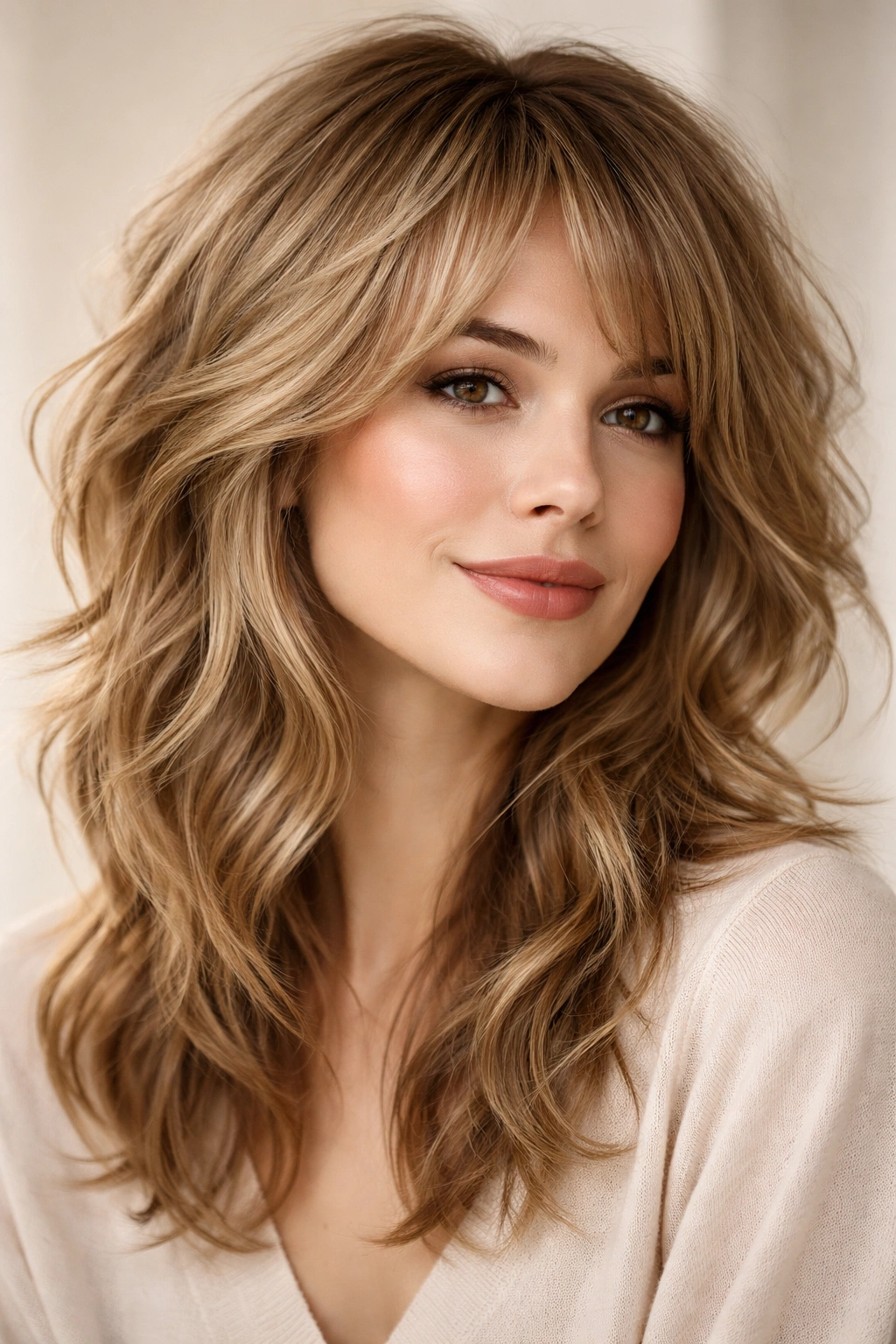
The shag is having a moment, and for fine wavy hair specifically, it’s a legitimate game-changer. This isn’t your grandmother’s feathered shag—modern versions are sleeker and more intentional. A proper shag for fine hair uses multiple short layers throughout the crown and longer pieces in the front, creating the effect of movement without sacrificing length where you need it. The layers start short near the roots to build immediate elevation and volume, while the longer pieces in front frame the face and give you styling options.
Why This Cut Works for Fine, Wavy Hair
A shag works because it plays to your hair’s natural strength: texture. The multiple layers catch and separate your waves, making individual strands more visible and preventing that “thin clump” look. The short layers at the crown don’t add weight where you don’t need it, which is crucial for fine hair. Instead of one uniform thickness dragging everything down, you get a graduated structure that holds shape longer and looks fuller from every angle. The front pieces give you control—you can style them loose and wavy for movement or tuck them behind your ears on low-energy days.
What to Know Before You Commit
- Requires styling 3-4 times weekly to look intentional rather than messy; air-drying this cut can read as undone if your waves aren’t cooperating
- Needs a stylist experienced with fine hair and shag cuts specifically—poorly executed layers will look thin and choppy rather than chic
- Looks best with some texture work; blow-drying with a diffuser or using a light mousse throughout is part of the maintenance
- The cut works on most face shapes, but feels especially flattering on round and oval faces where the front layers add definition
Pro tip: Ask your stylist for layers that are closer together than you’d think—this creates more visual density and helps fine hair hold shape longer between cuts.
2. Textured Pixie With Waves
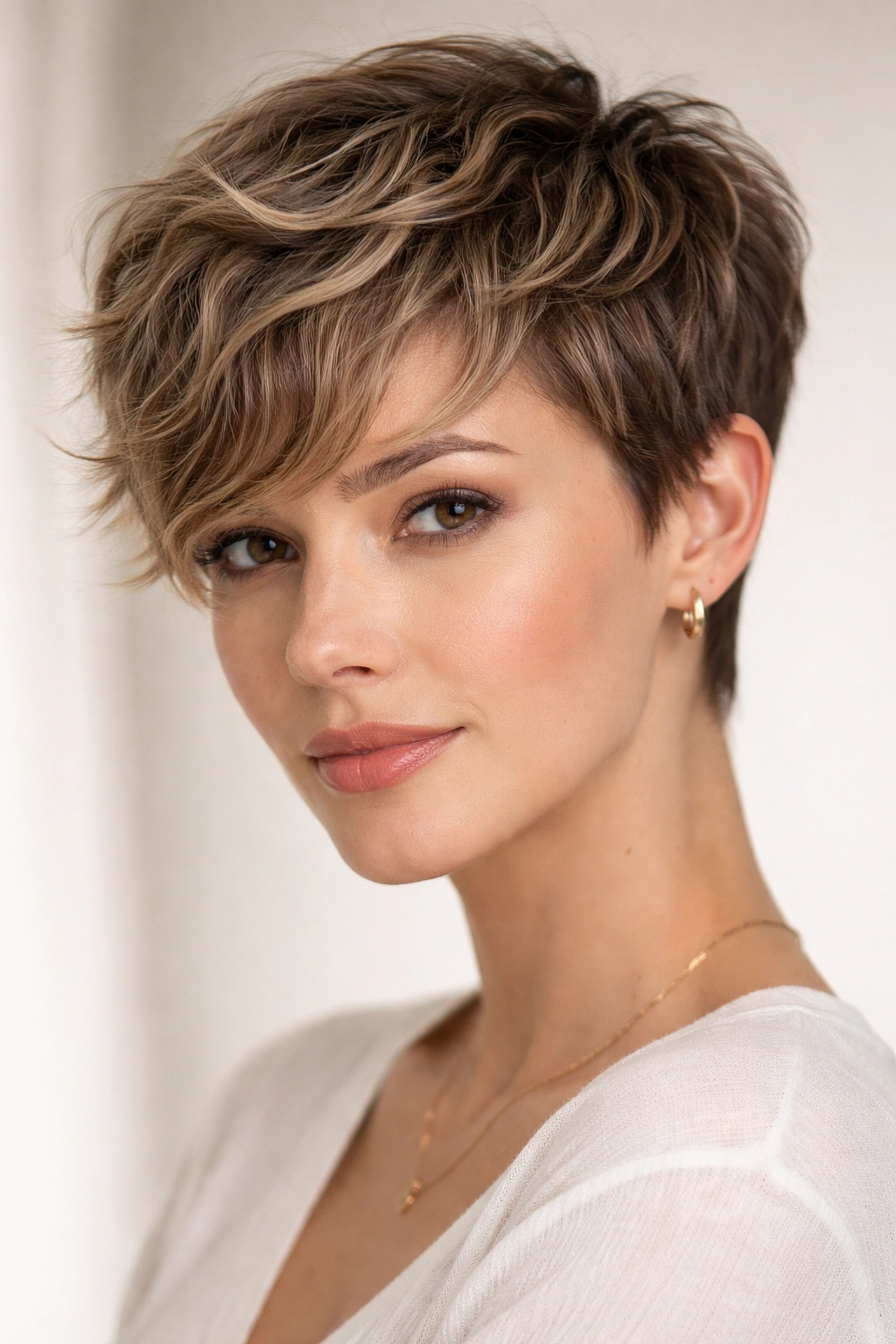
Don’t assume a pixie cuts you out of the styling game. A short, heavily textured pixie is one of the most flattering moves for fine wavy hair because short length means zero weight pulling your waves flat, while texture work makes every strand count visually. The key is the cut—longer on top (usually 2-3 inches), shorter on the sides and back (around 1 inch), with lots of point-cutting and choppy layers throughout. This creates the illusion of thickness and gives you wave-friendly length where it matters most.
How Pixies Suit Fine, Wavy Hair Differently
Short hair removes the weight that usually flattens fine waves. What’s more, a textured pixie plays up your wave pattern as a design feature rather than trying to fight it. The choppy layers are practically mandatory for this cut to work, and that choppiness is what makes the hair look full and intentional rather than thin and short. You’re working with what you have and amplifying it, not disguising it. Many people with fine wavy hair find that a pixie is actually easier to style than longer hair—you need product and maybe a few minutes with a blow dryer, but you don’t need the constant upkeep that flat, limp longer hair demands.
What Makes This Cut Realistic for Daily Wear
- Requires blow-drying with a diffuser or your fingers to look best; air-drying often results in chaotic waves rather than intentional texture
- Needs a cut every 4-5 weeks to maintain shape since short hair shows growth immediately
- Works beautifully on people with oval, diamond, and heart-shaped faces; requires more consideration for round or square faces
- Demands product commitment—a texturizing spray or light wax keeps the choppy layers separated and full-looking
Worth knowing: Many people with fine wavy hair report this is the first cut that actually made them feel confident about their hair texture rather than apologetic about it.
3. Shoulder-Length Lob With Movement
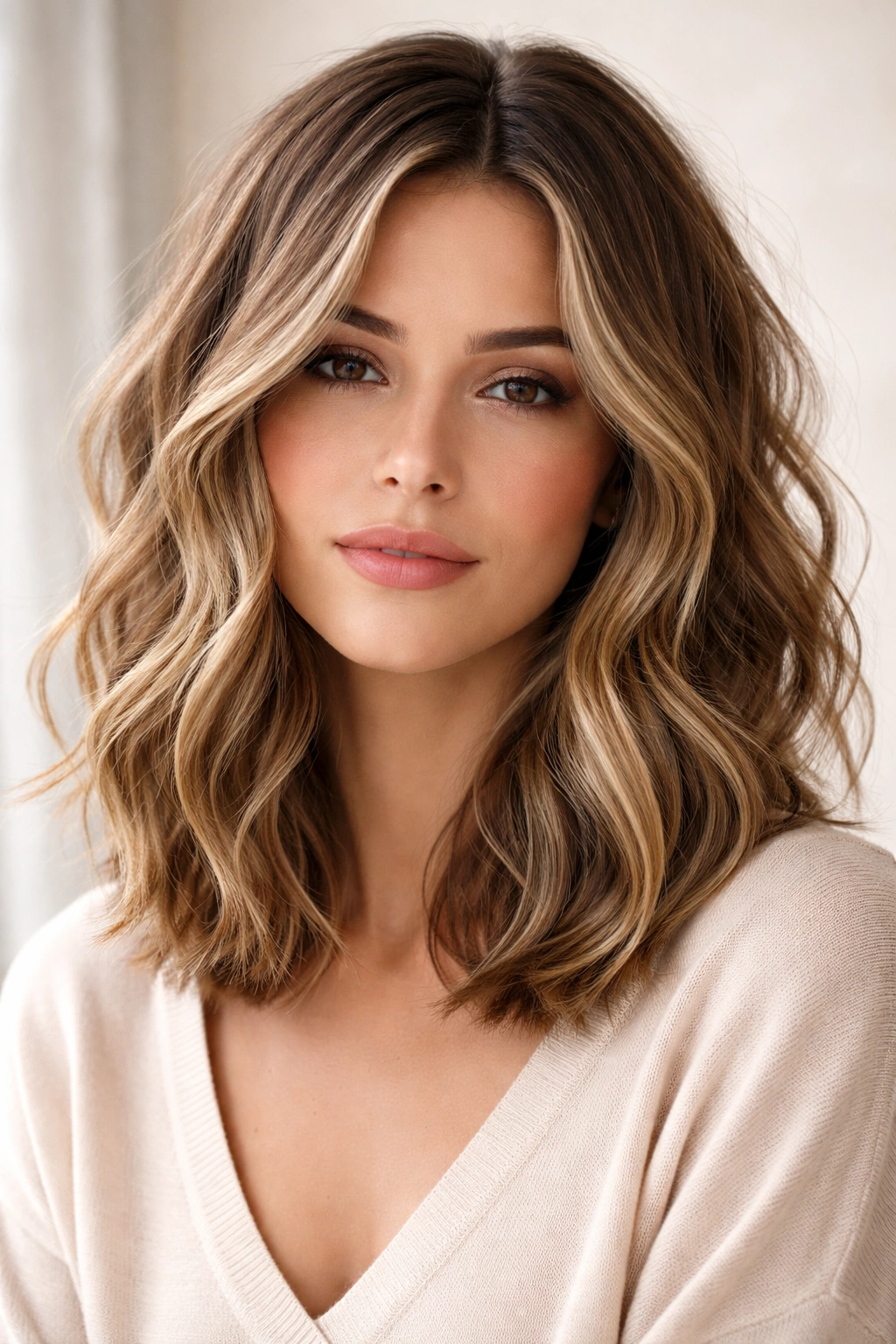
A lob—that sweet spot between a bob and longer length—is the Goldilocks zone for fine wavy hair. Hit it right, and you get enough length to feel substantial while keeping weight positioned where it doesn’t flatten your roots. The magic happens when your stylist cuts it with plenty of movement: longer pieces framing the face, shorter pieces at the crown, and choppy layers throughout that encourage your natural waves to show. This length (usually hitting around the collar bone) is long enough to style multiple ways but short enough that gravity isn’t constantly working against your volume.
The Fullness Strategy Behind This Length
The reason a lob works so well for fine wavy hair is proportion. Long hair on fine hair can look sparse—every inch of length adds weight that pulls down on individual strands. A lob shortens your hair just enough to remove that excess weight, but keeps enough length that you don’t lose styling versatility. The layering is what makes the fullness happen; blunt lobs look thin on fine hair, but choppy, textured lobs create separation and movement that reads as thickness. The layers allow your natural waves to express themselves without fighting against excess length.
Making This Cut Work in Real Life
- Looks intentional with minimal styling; air-drying is realistic for most people with fine wavy hair
- Works on nearly every face shape, but feels most flattering on long, oval, and heart-shaped faces
- Requires a cut every 6-8 weeks to keep the shape and layers looking fresh rather than grown-out and flat
- Pairs well with subtle, face-framing highlights or balayage that add dimension and the appearance of thickness
Insider note: Ask your stylist to angle the front pieces slightly longer and texturize heavily—this is what transforms a basic lob into something that actually looks full.
4. Choppy Layers Throughout
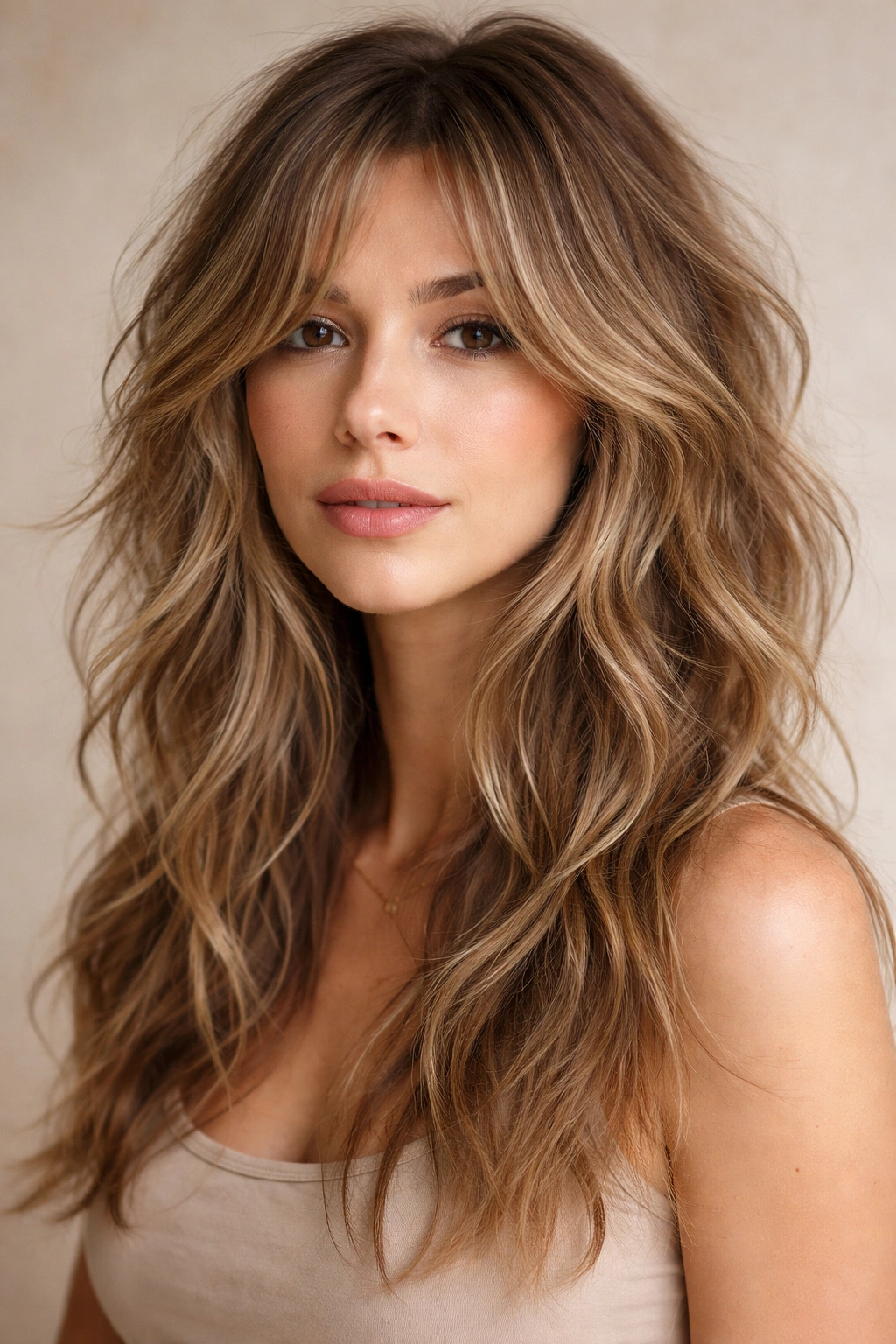
Sometimes the most straightforward approach is the best one. A cut that’s choppy layers from root to tip—no blunt edges, no one uniform length—is purpose-built for fine wavy hair. Every layer is cut at a slightly different length and angle, creating a shaggy, textured look that’s supposed to have movement. The cumulative effect is visual fullness; even if individual strands are fine, the layering creates so many edges and dimensions that the hair reads as thick. This cut works at any length, from chin-length to waist-length, as long as the layering is aggressive enough.
Why Choppy Layers Solve the Fine Hair Problem
Choppy layers work because they increase surface area. Instead of a solid block of hair that sits flat, you get dozens of separated, overlapping sections that catch light and create shadow and dimension. The texture becomes the design element. Your natural waves are actually an asset here—the layers enhance the waves instead of fighting them. Each layer landing at a different point means there’s no single line of demarcation, which is what makes flat, thin hair look even flatter. The choppiness disguises density issues and makes movement a feature rather than a problem to hide.
What You’re Signing Up For
- Requires regular styling with heat and product; this isn’t an air-dry cut for most people
- Needs a skilled stylist who understands how to layer fine hair—poor technique results in a wispy, overly choppy look that reads as damage rather than intentional style
- Looks great on people who commit to styling frequency 3-4 times weekly; less frequent styling shows the shag nature in a less controlled way
- Works on all face shapes and hair colors; actually looks particularly striking with warmer, lighter tones that show dimension
Pro tip: Combine choppy layers with a light sea salt spray—this amplifies the texture and makes the layering look intentional rather than thin.
5. Face-Framing Waves With Extra Volume at Crown
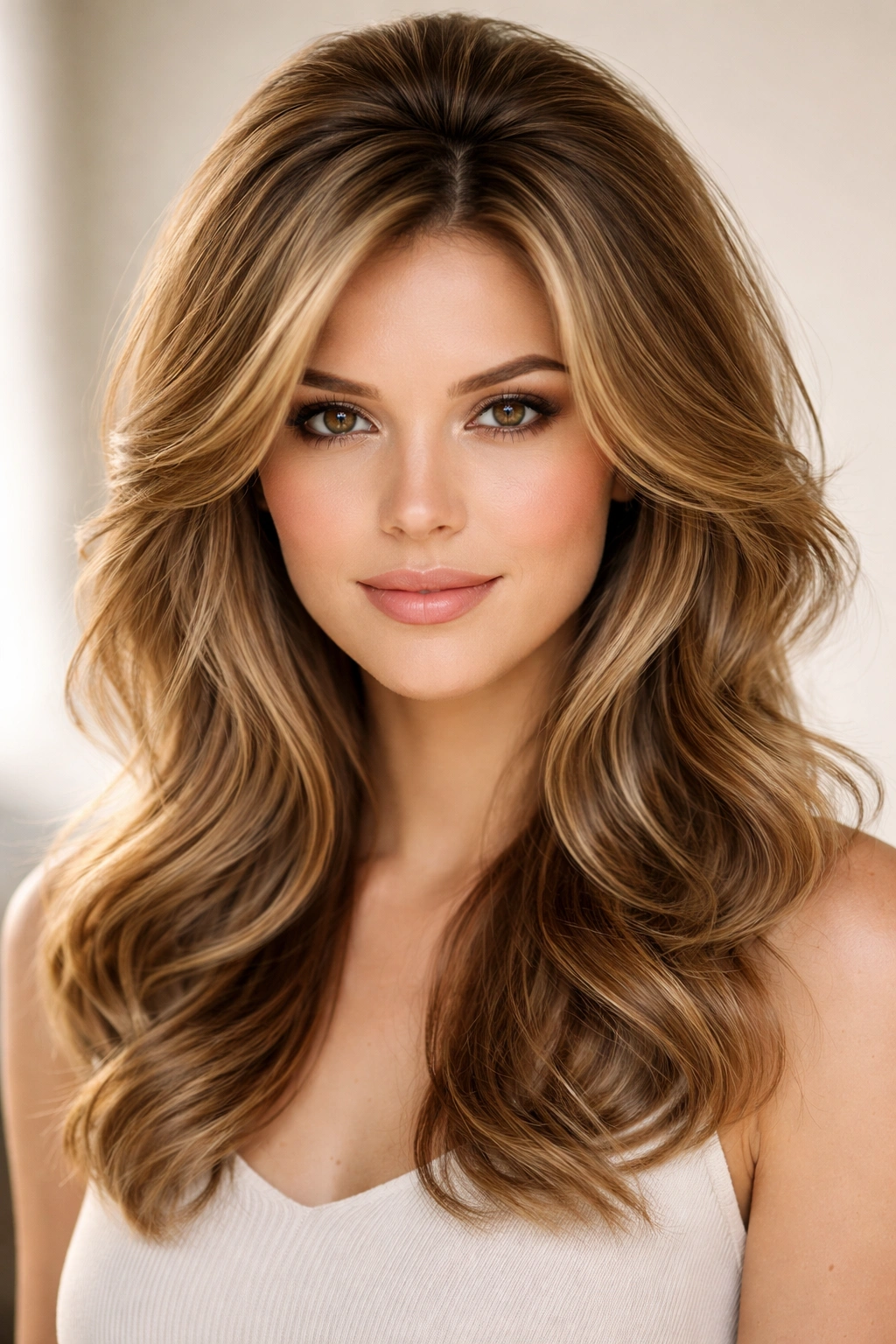
This is a subtler approach than some of the others, but it’s devastatingly effective. Keep your length mostly intact, but add strategic shorter layers that frame your face and lots of volume-building texture at the crown. The front layers are longer and choppy, grazing your cheekbones or collarbone, while the crown and back have shorter pieces that build elevation. The crown area gets special attention—this is where you’re building the optical illusion of fullness. From the front, people see movement and dimension; from the side, they see that your hair has actual height and isn’t plastered flat against your head.
How Face-Framing Layers Build Apparent Fullness
Face-framing layers work on two levels. First, they’re shorter than the rest of your hair, so they naturally hold more volume and aren’t weighed down by length. Second, they frame your face, drawing the eye to movement and dimension rather than to the overall volume of your hair. When someone looks at you, they’re seeing texture and shape rather than evaluating how thick your hair is. The extra texture at the crown does the heavy lifting for fullness—short layers in this area catch product and blow-drying, creating actual lift that lasts longer than it would on unsculpted hair.
Styling Reality for This Cut
- Works beautifully with air-drying if you have naturally cooperative waves; requires minimal heat for people with wavier texture
- The crown area benefits from a light volumizer or texturizing spray applied to damp roots before blow-drying
- Needs touch-ups every 6-8 weeks to keep the face-framing pieces intentional and the crown volume looking fresh
- Flatters most face shapes, but especially works on people with longer faces where the width created by face-framing layers is visually balancing
Worth knowing: This cut is where you start seeing the real magic of fine wavy hair—the waves plus the layers plus the crown texture create fullness that feels almost impossible when you started.
6. Textured Medium Bob
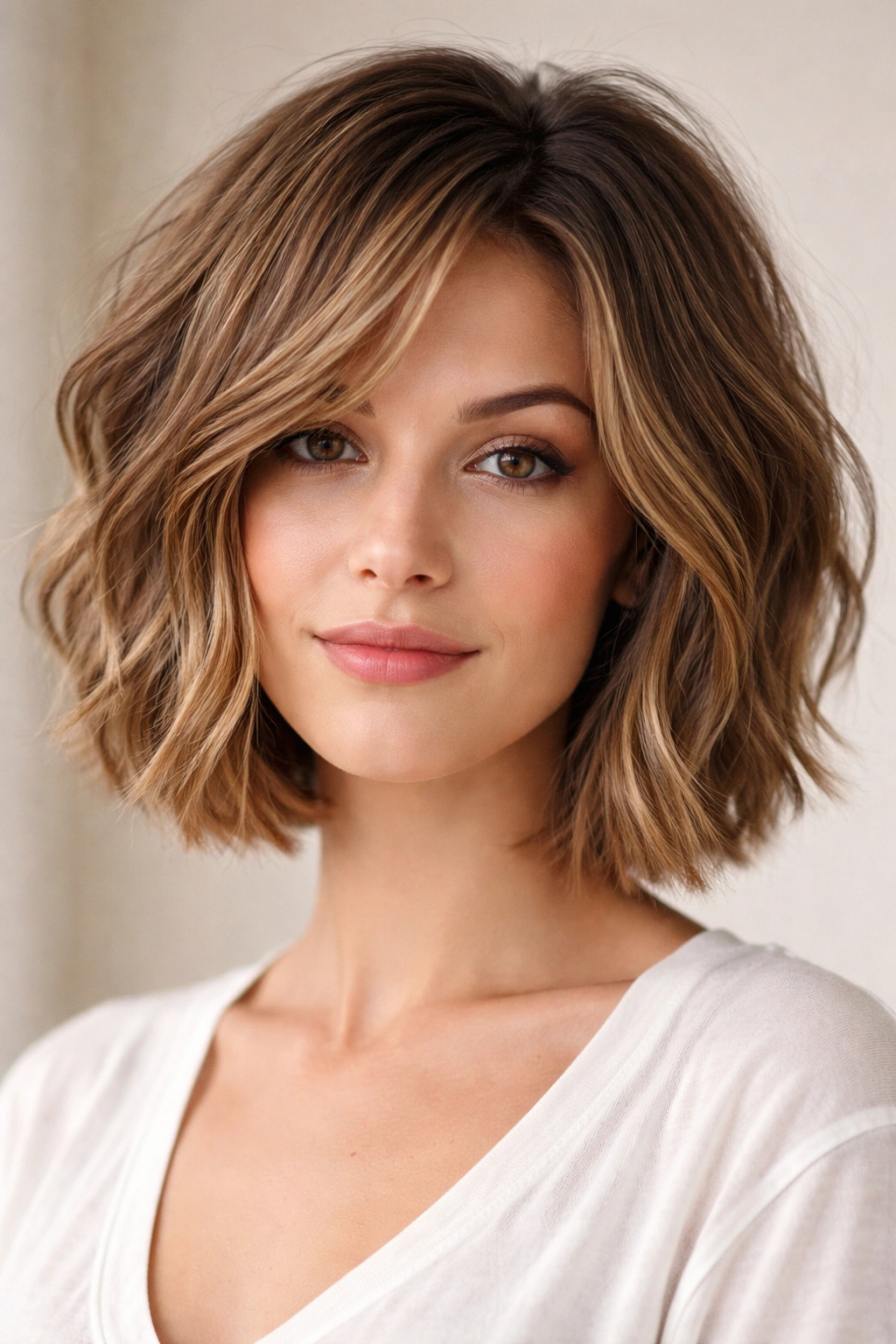
A classic bob tends to look thin on fine wavy hair because blunt lines emphasize density you don’t have. But a textured, choppy medium bob—hitting around your chin—is a completely different animal. This version has plenty of layers throughout, shorter pieces at the crown for lift, and longer front pieces that can swing forward or tuck back depending on your mood. The texture work is non-negotiable; point-cutting and chopping are what make this work rather than just looking like you got a bad blunt cut that needs to grow out.
The Anatomy of a Bob That Actually Looks Full
A textured bob adds fullness in the same way choppy layers do, but with more structure. The layers give you movement and separation; the choppy edges prevent the solid, blunt line that emphasizes thinness. The shorter crown creates elevation where you need it; the slightly longer front pieces balance your face and give you movement options. The texture work is what prevents this from reading as a severe, thin-looking style. Instead of a solid block of hair, you get a shape that’s intentionally textured, which makes the individual strands matter less visually.
Making the Medium Bob Work Daily
- Requires regular styling with a blow dryer and preferably a round brush or diffuser; this isn’t typically an air-dry cut
- Works best with some textural product like a texturizing spray, mousse, or light wax to keep layers separated
- Needs a cut every 5-6 weeks to maintain shape and prevent that awkward grown-out phase where bobs lose their structure
- Flatters oval, long, and diamond-shaped faces most; works with round faces if the layers are positioned to add height at the crown
Pro tip: Ask your stylist to cut slightly heavier layers in the back and lighter, more tapered layers in the front—this creates movement and prevents the style from looking too choppy.
7. Curled Bangs With Layered Length
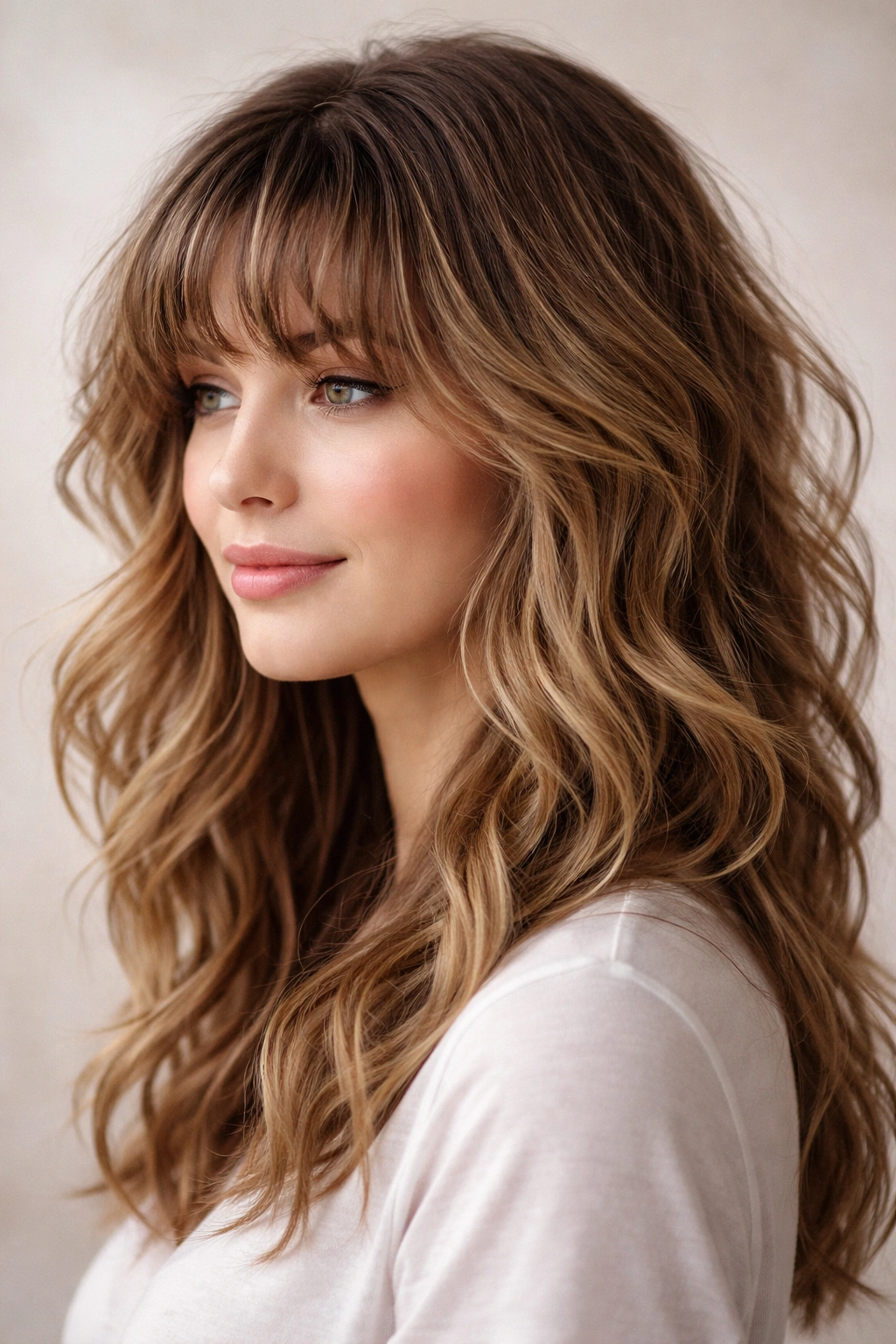
Bangs are having a real moment, and for fine wavy hair, they’re a styling game-changer. Curled or textured bangs—not blunt, straight bangs—add dimension to your face and create the illusion of fullness at your hairline. Pair them with layered length throughout and you’ve got a style that looks intentional and full. The bangs don’t need to be heavy or blunt; textured, choppy bangs that fall just above your eyebrows work beautifully. They catch light, create movement, and make your hair read as thicker because there’s more texture happening around your face.
Why Bangs Create the Fullness Illusion
Bangs, especially textured ones, add visual weight and dimension to your face and hairline. They create a focal point that draws the eye, and texture work makes them appear fuller than they actually are. When combined with layered length, bangs create a sense of overall movement and liveliness that makes the hair look less flat. The movement created by textured bangs actually makes your entire style feel fuller, not just the bang area. People notice the texture and shape rather than evaluating overall hair density.
The Commitment Level for Bangs
- Require daily styling; bangs on fine wavy hair rarely air-dry exactly how you want them
- Textured bangs work better than blunt ones for fine hair; they’re more forgiving and look intentional rather than skimpy
- Pair best with equally textured length throughout; clean, blunt length below choppy bangs looks unbalanced
- Work on most face shapes, but especially flatter round, square, and heart-shaped faces by adding height and visual interest
Insider note: Textured bangs that fall just above your eyebrows (rather than right at them) tend to look fuller and are easier to style.
8. Wavy Mullet for Fine Hair
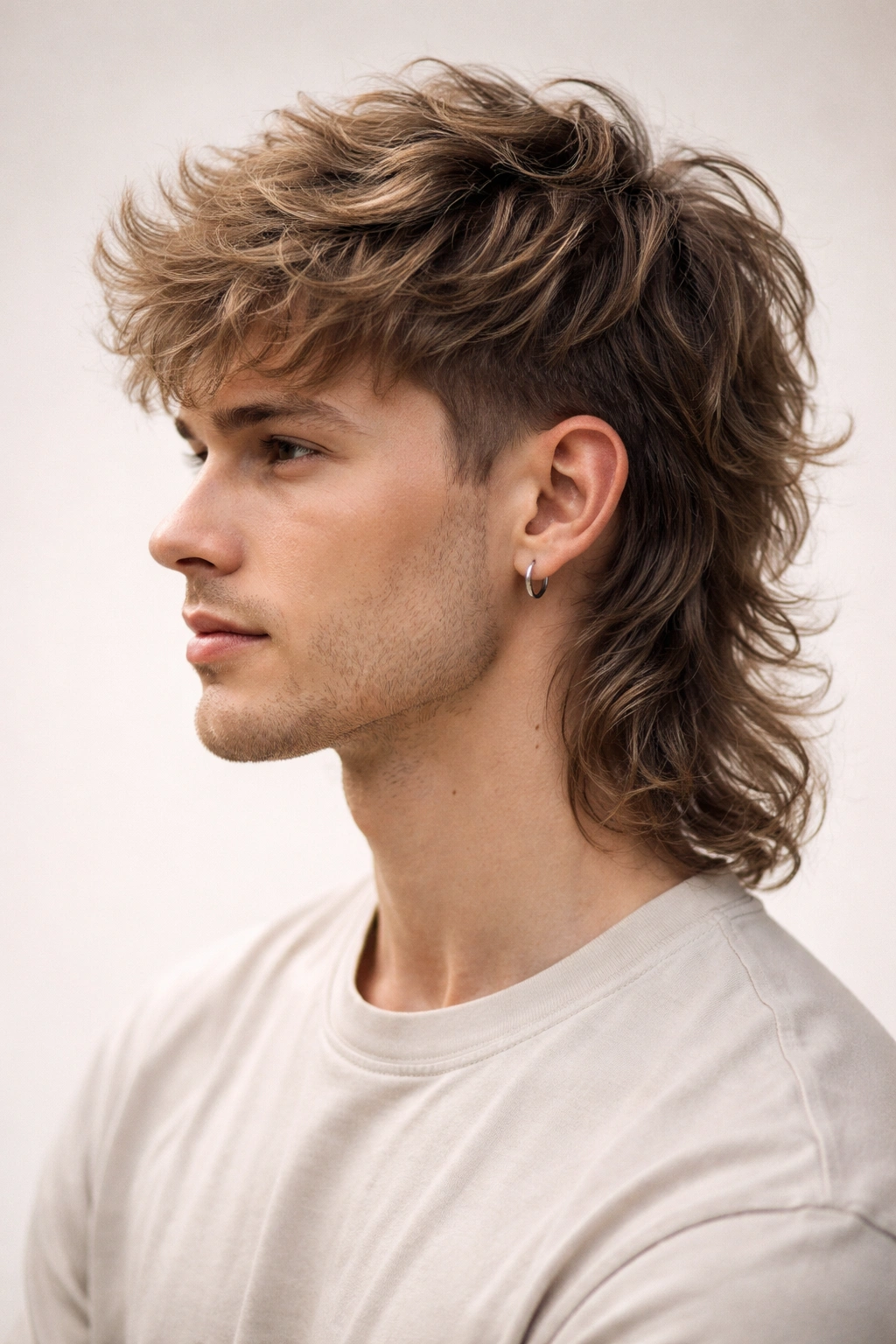
The modern mullet is having a genuine moment, and a version designed for fine wavy hair is surprisingly flattering. This isn’t the ’80s disaster—it’s a cut that’s shorter and textured on top and sides (building volume where you need it), with longer length in the back (giving you styling options and visual interest). The beauty for fine hair is that you get the fullness benefits of a shorter cut on top with the versatility of length. The longer back pieces create movement and dimension, while the textured top ensures your hair doesn’t look flat.
How a Mullet Maximizes Fine Hair
A mullet for fine wavy hair is strategic. The short, textured top means zero weight dragging down your roots, so you get maximum lift and volume right where you see it. The longer back creates visual interest and gives you options—you can style it loose and wavy for movement or sleek if you want contrast. The textured layers throughout prevent any single section from looking thin; the overall effect is one of intentional, playful movement. It’s a cut that makes fine hair feel like a design choice rather than a limitation.
Real Talk About the Mullet Commitment
- Requires styling and product; this is a high-maintenance cut that demands blow-drying and texture work to look intentional
- Needs a stylist who understands modern mullets and fine hair; traditional mullet cutting techniques don’t work here
- Works best on people with oval, long, and diamond-shaped faces; requires careful consideration on rounder face shapes
- Actually looks striking with subtle color work—highlights in the longer back pieces add dimension and depth
Worth knowing: The modern mullet on fine wavy hair is way more wearable than it sounds—it reads as chic, intentional, and fashion-forward rather than retro.
9. Tousled Long Layers
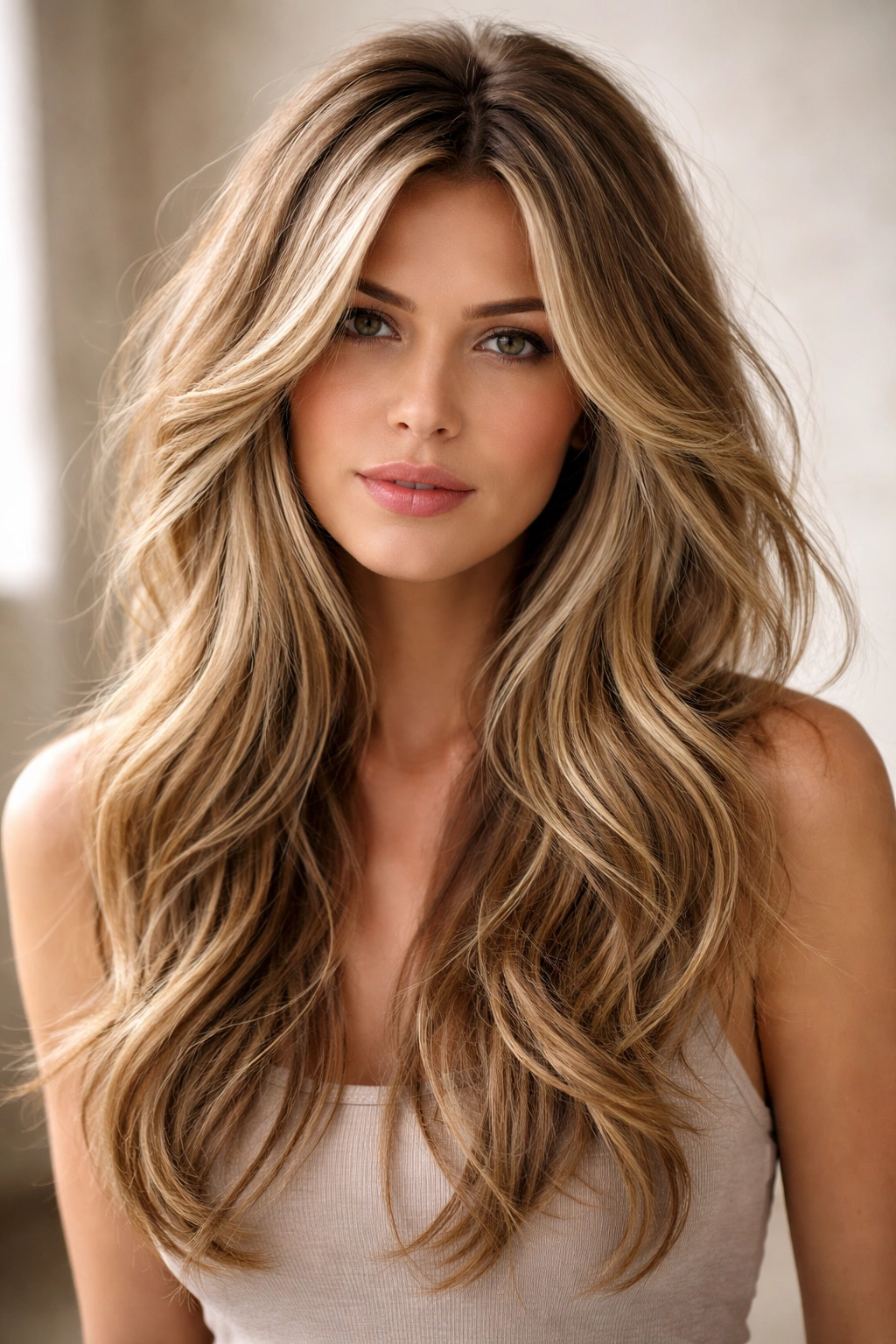
If you want to keep your length, long layers are your friend. This cut maintains substantial length throughout while building in plenty of textured, choppy layers that create movement and the illusion of fullness. The key is the layering pattern—it needs to be aggressive enough to matter, with shorter pieces near the crown building volume and longer pieces in front creating flow. The overall effect is effortlessly tousled; this is the “I-just-have-naturally-textured-waves” look that actually takes some intentional cutting to achieve.
Why Long Layers Work for Fine Wavy Hair
Long hair on fine hair can look thin, but long hair with aggressive layering transforms into something fuller and more intentional. The layers prevent the solid column of hair that emphasizes density; instead, you get separated, textured sections throughout. The shorter pieces at the crown build the crucial lift and volume; the longer pieces create movement and visual interest. The cumulative effect is hair that looks full and textured rather than thin and stringy. You’re keeping the length you want while solving the fullness problem through smart layering.
Making Long Layers Work Practically
- Works beautifully with air-drying for people with naturally wavy hair; minimal heat requirement
- Needs regular product use—a texturizing spray or sea salt spray amplifies the texture and prevents the style from looking limp
- Requires a cut every 8-10 weeks to keep the layers looking sharp rather than grown-out and shapeless
- Flatters all face shapes, but especially works on people with longer faces where length is balancing
Pro tip: Ask your stylist for layers that start quite high at the crown—this is what builds the volume that lasts all day.
10. Curved Undercut Bob
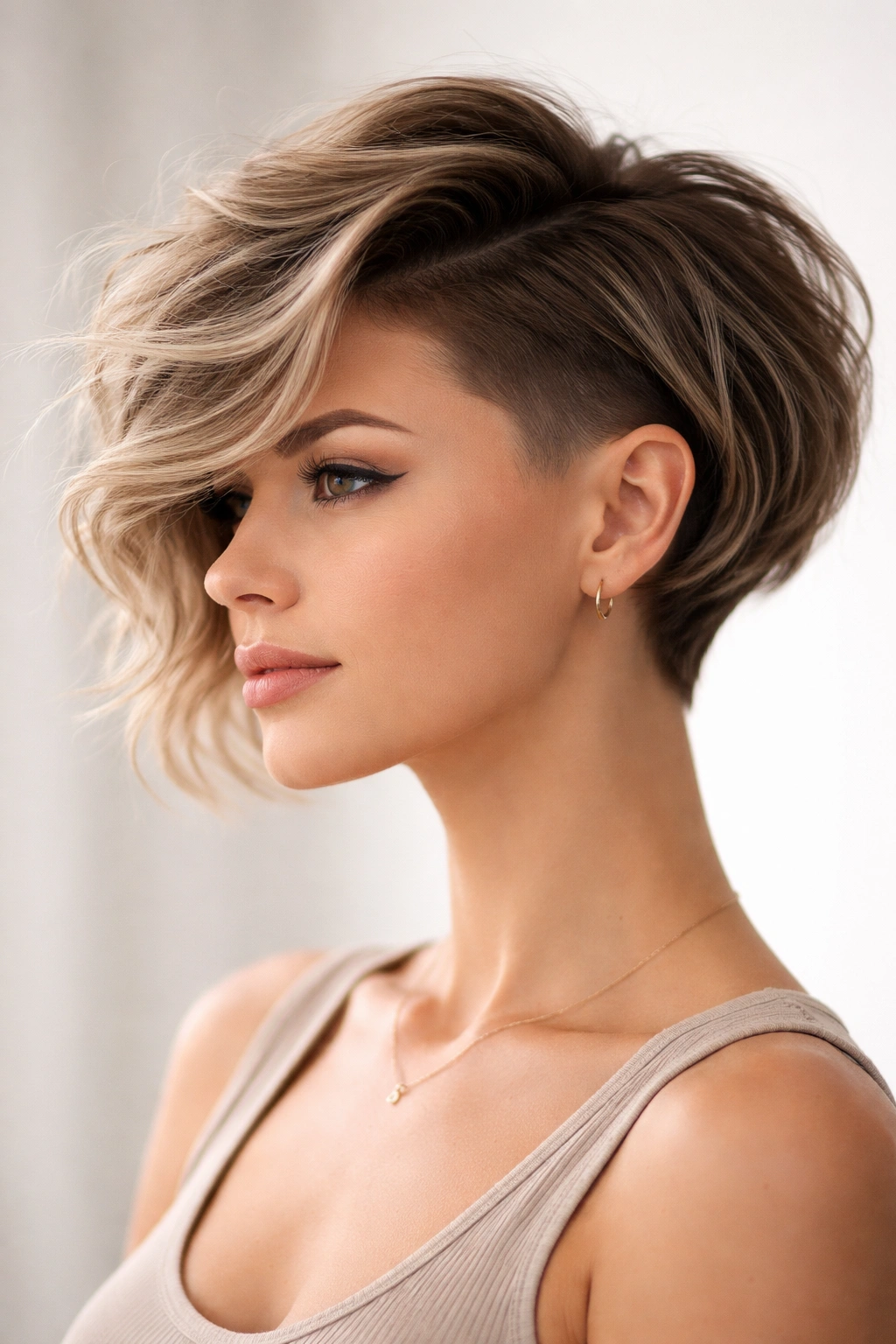
An undercut adds edge and actually solves the fine hair problem through sheer strategy. While the top stays longer and textured, the sides and back are cut very short (or even undercut, though that’s more extreme). This removes weight from the back and sides, concentrating fullness at the crown and top where you see it and where styling can create maximum impact. The contrast between the longer textured top and the shorter sides creates visual interest and makes the fuller areas look even more voluminous.
Why Undercuts Actually Work for Fine Hair
An undercut removes weight strategically. You’re not cutting everything short and sacrificing style options; you’re removing weight from the areas that would drag down fine hair most aggressively. The shorter sides and back mean that area can’t sag or look limp; the longer, textured top means you get fullness and styling versatility. The contrast itself is visually interesting and draws the eye to the fuller areas. It’s essentially doubling down on the areas where you have volume while removing the areas where fine hair struggles most.
The Styling Reality of Undercuts
- Requires regular styling—the textured top needs blow-drying and product; the shorter sides are low-maintenance but look intentional when clean
- Needs a cut every 4-5 weeks on the sides and back; the shorter sections show growth quickly
- Works best on people with oval, long, and angular face shapes; can overwhelm rounder faces
- Actually looks incredibly striking with color—a subtle line between the textured top and shorter sides adds depth
Insider note: If you love the undercut concept but want something less dramatic, ask your stylist for a “heavy undercut” or “subtle undercut” instead—this gives you the fullness benefits with less extreme contrast.
Final Thoughts
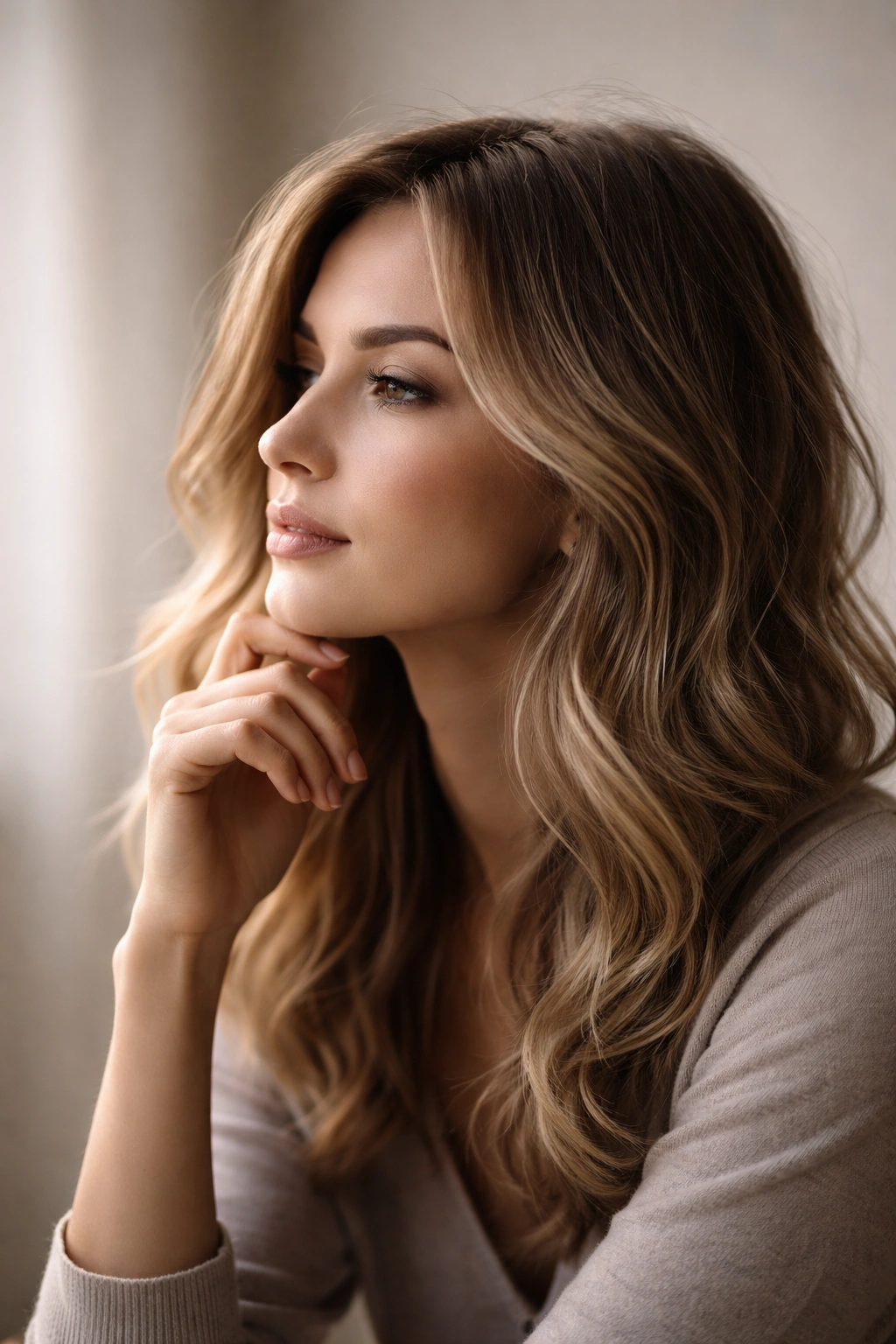
Fine wavy hair is legitimately an advantage when you understand how to work with it rather than fight it. The waves are texture; the fineness just means you need to be strategic about where you build fullness and how you use layers. Every style here solves the fullness problem differently, but they all share a fundamental approach: aggressive layering, strategic crown placement, and texture work that makes individual strands matter more visually.
The honest truth is that the best style for your hair depends on your willingness to style and your face shape, but all of these cuts are specifically designed to make fine wavy hair look fuller and more intentional. Start by choosing based on your styling energy level—if you love blow-drying and products, go for the shorter, heavily textured cuts. If you prefer air-drying, lean toward longer styles with lots of layers that your natural waves can enhance.
Whatever you choose, find a stylist who has genuine experience working with fine hair. They’ll understand that you need layers that matter, placement that builds volume where you see it, and texture work that’s non-negotiable. Show them photos of the cut you love, talk about your styling reality, and trust their expertise on how to adapt it to your specific wave pattern. The right cut is transformative.
