



If you’ve got curls, you already know that not every hairstyle works the same way for every curl pattern. A style that looks gorgeous on loose waves might disappear completely into a head of tight coils—and vice versa. The good news? Short curly hairstyles are having a major moment, and the variety available means there’s genuinely something for every texture, from those with 2B waves all the way to 4C coils.
The challenge isn’t finding a short curly look—it’s finding one that actually suits your specific curl pattern, hair density, and personal style. That’s where the real work comes in. Different curl types have different needs: some thrive with lots of layers, while others need density to show off their natural texture. Some short cuts are designed to emphasize curl definition, while others celebrate volume and movement. Getting it right means understanding what your curls actually need, not just what looks beautiful in an Instagram photo.
The following 12 short curly hairstyles represent the range of options available, each tailored to work with different curl patterns and textures. Whether you’ve got loose, bouncy waves or dense, tightly coiled hair, you’ll find looks here that are built to enhance your natural curls rather than fight against them. Each style comes with the context you need to know—what curl types it works best for, why the cut matters, and what maintenance looks like so you can make an informed choice before sitting down in the salon chair.
1. The Taper Fade with Textured Crown
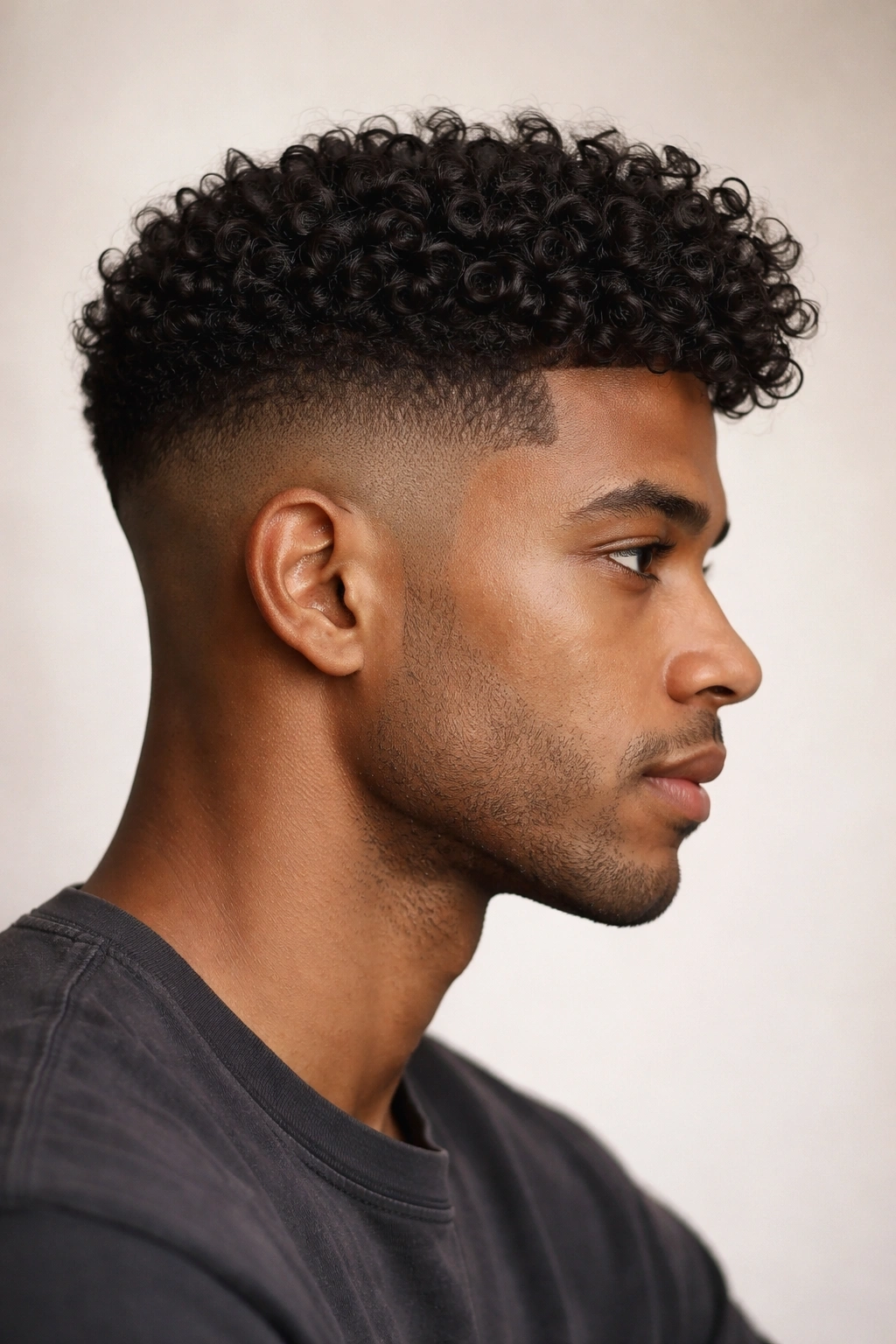
This cut has become a staple because it works beautifully across multiple curl types while giving you serious styling flexibility. The fade on the sides creates clean definition, while the textured crown on top retains length and volume where your curls can really shine. The contrast between the sculpted fade and the natural fullness above makes it visually striking without requiring much effort to maintain.
Why This Works for Multiple Curl Types
The genius of this cut is that the fade adapts to your curl pattern. For looser waves, the fade is crisp and clean, creating definition. For tighter curls, that same fade actually helps the crown curls pop even more because there’s nothing competing for attention. The length retained on top—typically 2 to 3 inches—gives curls enough space to show their actual pattern without looking flat or shapeless.
What to Expect at the Salon
- Works beautifully for curl types 2C through 4B
- Requires a barber or stylist experienced with curly hair—straight razor fades can damage curl patterns if done incorrectly
- Fade height can be customized (high, mid, or low) depending on personal preference and head shape
- The cut typically costs more than a basic trim because of the precision required
- Touch-ups are needed every 2-3 weeks to maintain the fade’s sharpness
Real talk: This cut needs a skilled hand. A mediocre fade will look sloppy; a great fade elevates the entire style. Don’t cheap out on this one.
2. The Pixie Curl
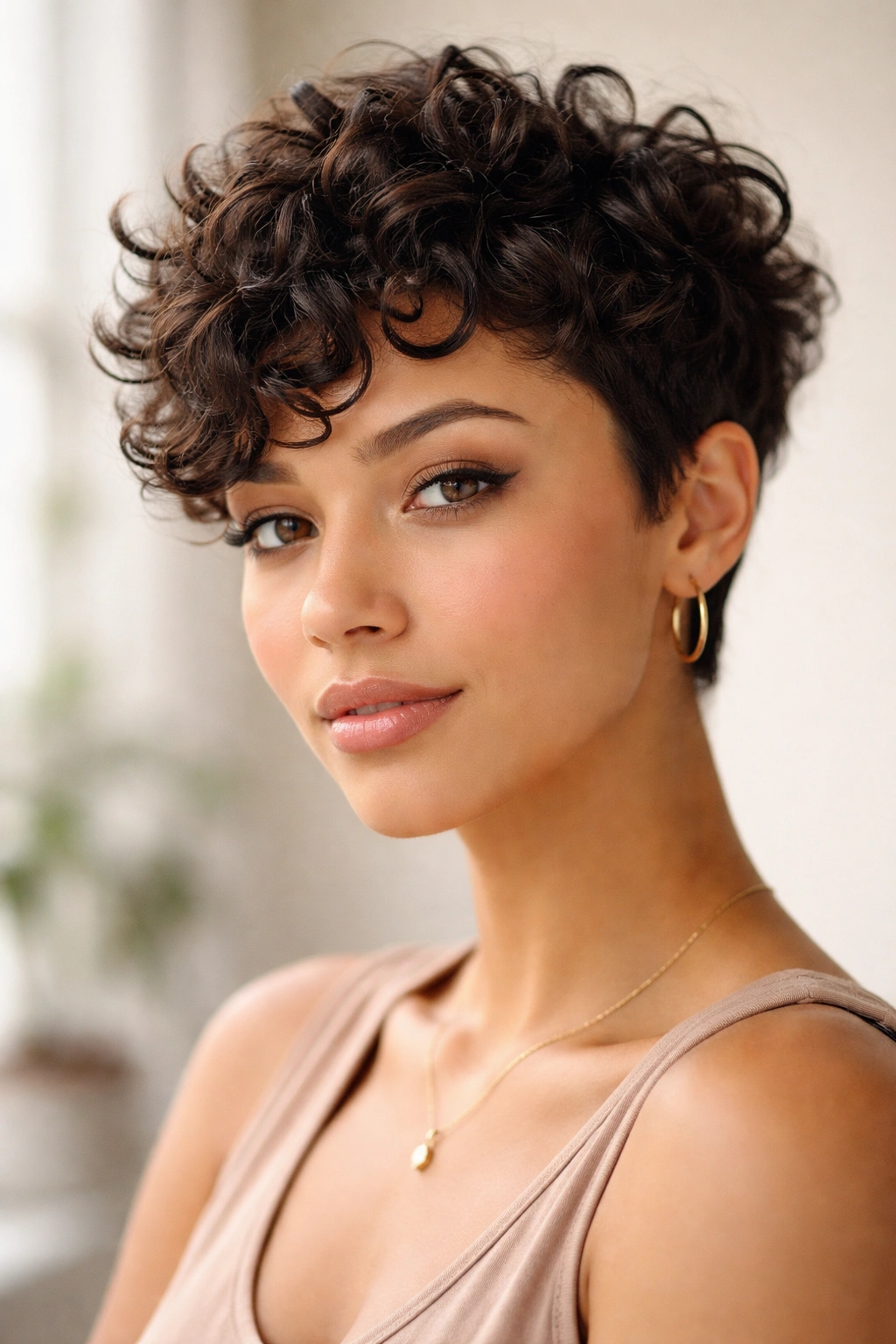
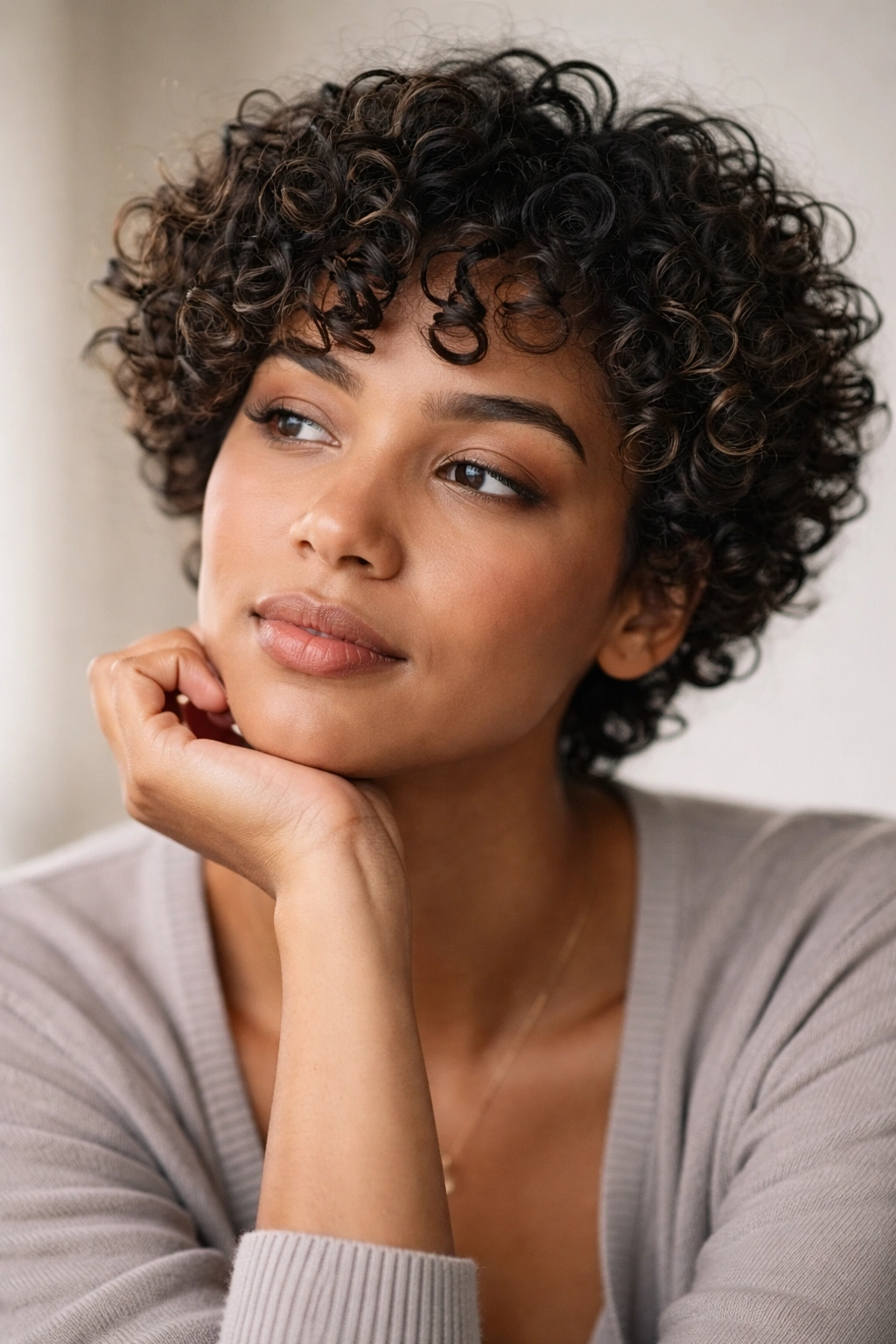
The pixie cut has evolved dramatically for curly hair. Modern pixie curls are all about embracing natural texture rather than fighting it—the cut is shorter, fuller, and designed to let your curls do the work. This is not your grandmother’s pixie (flat, neat, and overly sculpted). This is playful, textured, and unapologetically curly.
How This Cut Adapts to Texture
The pixie curl works because the shorter length means less weight pulling curls down. For people with looser waves, this cut adds definition and bounce. For those with tighter curls, it reduces bulk while keeping maximum texture visible. The cut typically includes choppy layers throughout to prevent it from looking like a helmet and to encourage curl separation.
Styling and Maintenance Reality
- Best for curl types 2C through 4A; can work for 4B with the right technique
- Requires styling every day—this isn’t a wash-and-go situation unless you’re okay with bedhead texture
- Works best with products that define curls without weighing them down (lightweight creams, gels, or foams)
- Grow-out is noticeable, so trims every 4-6 weeks keep it looking intentional rather than overgrown
- The cut can be gender-neutral or more feminine depending on your stylist’s approach to layers and shape
Pro tip: Ask your stylist to cut the layers when your hair is dry and in its natural curl state. Cutting wet curly hair often leads to shorter results once the curl springs back.
3. The Shag with Layers
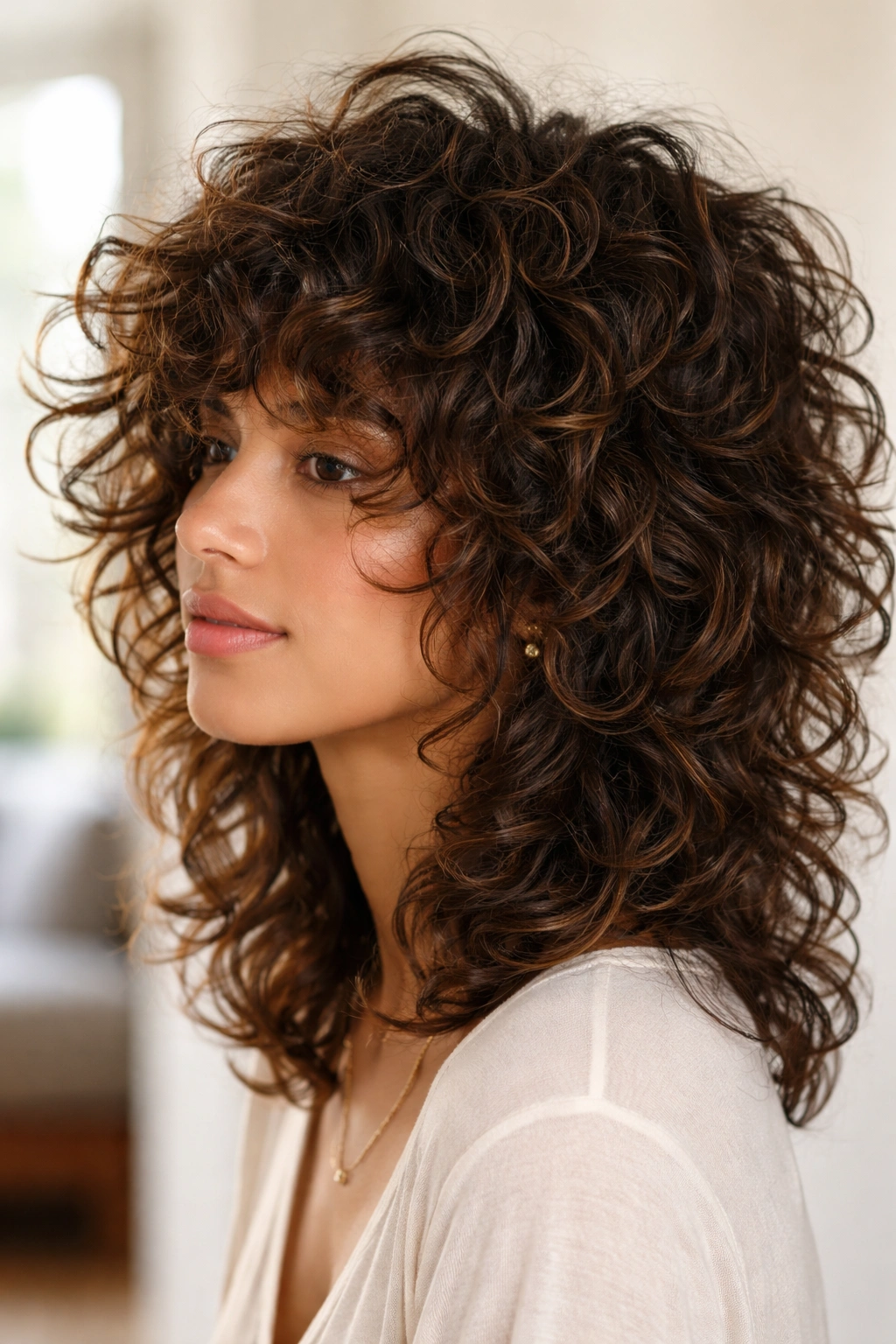
The shag is back—and it’s perfect for curly hair. This cut thrives on texture and movement, making it ideal for people whose curls have good natural volume. The multiple layers create airflow through the hair, preventing the dense, heavy look that can happen with single-length short cuts. It’s edgy, effortless-looking, and genuinely easier to style than it appears.
Why Layers and Curls Are Natural Partners
Layers automatically reduce bulk, which means your individual curl pattern can actually be seen instead of disappearing into a wall of frizz. The different lengths also create movement and bounce—each layer catches light differently, making the whole head appear more dynamic. For curly-haired people, layers are often the secret to that coveted “lived-in” texture that takes everyone else forever to achieve.
The Practical Breakdown
- Ideal for curl types 2B through 4B
- Requires at least some texture manipulation—this is where products and technique matter
- Layers mean more surface area for frizz in humid conditions, so you’ll need good styling products and possibly a diffuser
- The shag style stays interesting as it grows out, making the 6-8 week window between trims more forgiving
- Can range from rock-and-roll grungy to soft and romantic depending on how the layers are cut
Worth knowing: The shag that works best on curly hair has choppy, uneven layers rather than uniform, precise ones. Precision layers can look odd on curls; intentional texture variation looks intentional on purpose.
4. The Coily Afro
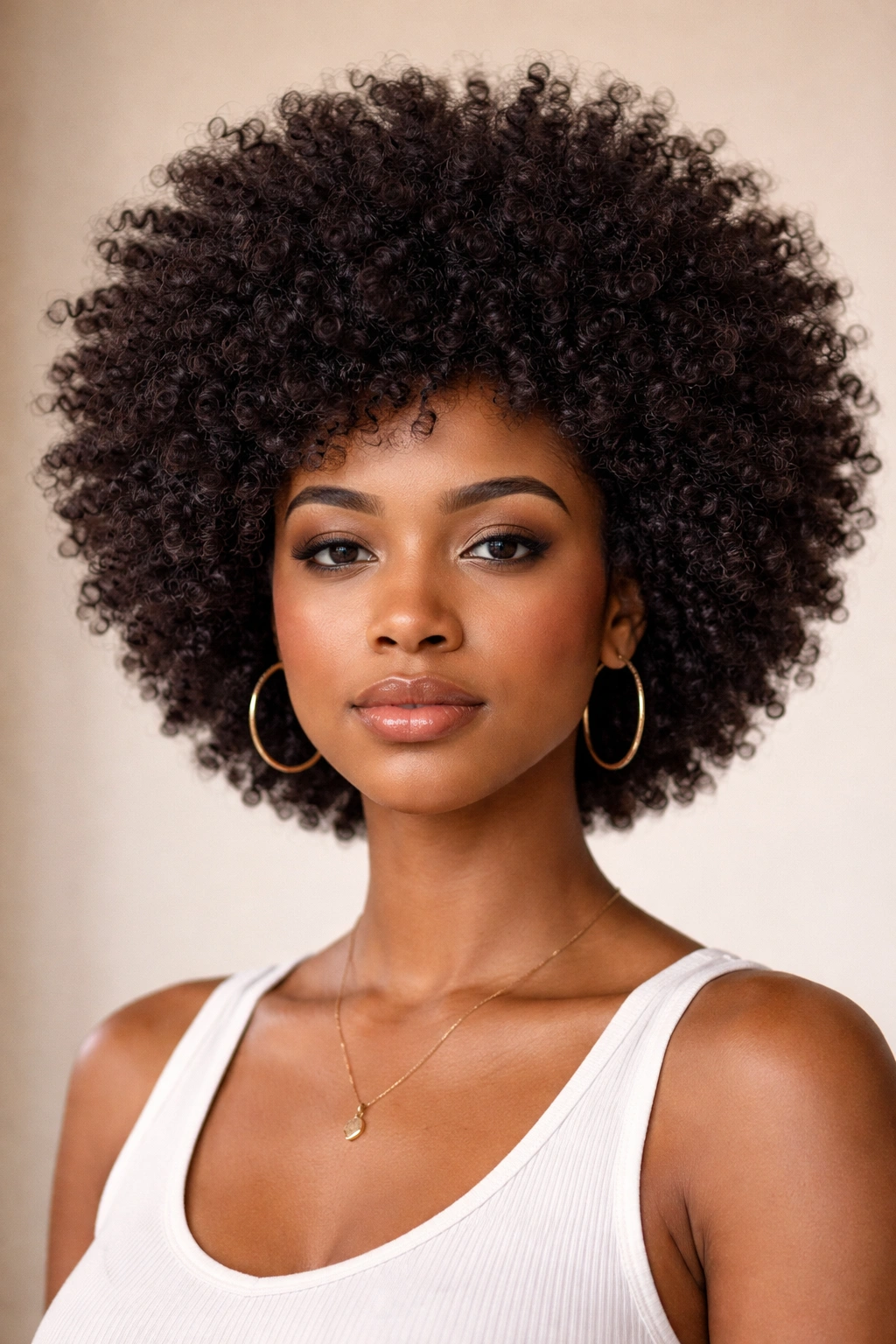
The coily afro celebrates natural curl pattern without cutting it into a specific shape. This is a cut about health, bounce, and embracing what your hair naturally does. The outline is clean (usually lined up close to the head), but the length and texture inside is left to spring and flourish. It’s bold, beautiful, and increasingly common as more people reject the pressure to manipulate their curls.
The Cut Philosophy
There’s actually less cutting involved than you might think. The stylist is cleaning up the perimeter and possibly removing any damaged ends, but the bulk of the hair is left intact. The goal is maximum volume and texture definition. For people with 3C-4C curls, this cut lets every individual curl pattern shine without fighting against gravity or density.
What Maintenance Actually Looks Like
- Ideal for curl types 3C through 4C
- Styling often involves simple twist-outs, coil-outs, or just separating curls with fingers for more definition
- Wash day typically takes longer (2-3 hours) because of the density and detail work involved in styling
- Regular trims (every 8-12 weeks) keep the perimeter clean without trimming away your actual curl length
- This cut works best with curl-defining products and moisture-rich shampoos formulated for coily hair
Real talk: This cut requires confidence in your natural texture. It’s bold and unapologetic—that’s the whole point. If you’re used to blow-drying or straightening, this might be a significant shift in how you relate to your hair.
5. The Wavy Lob
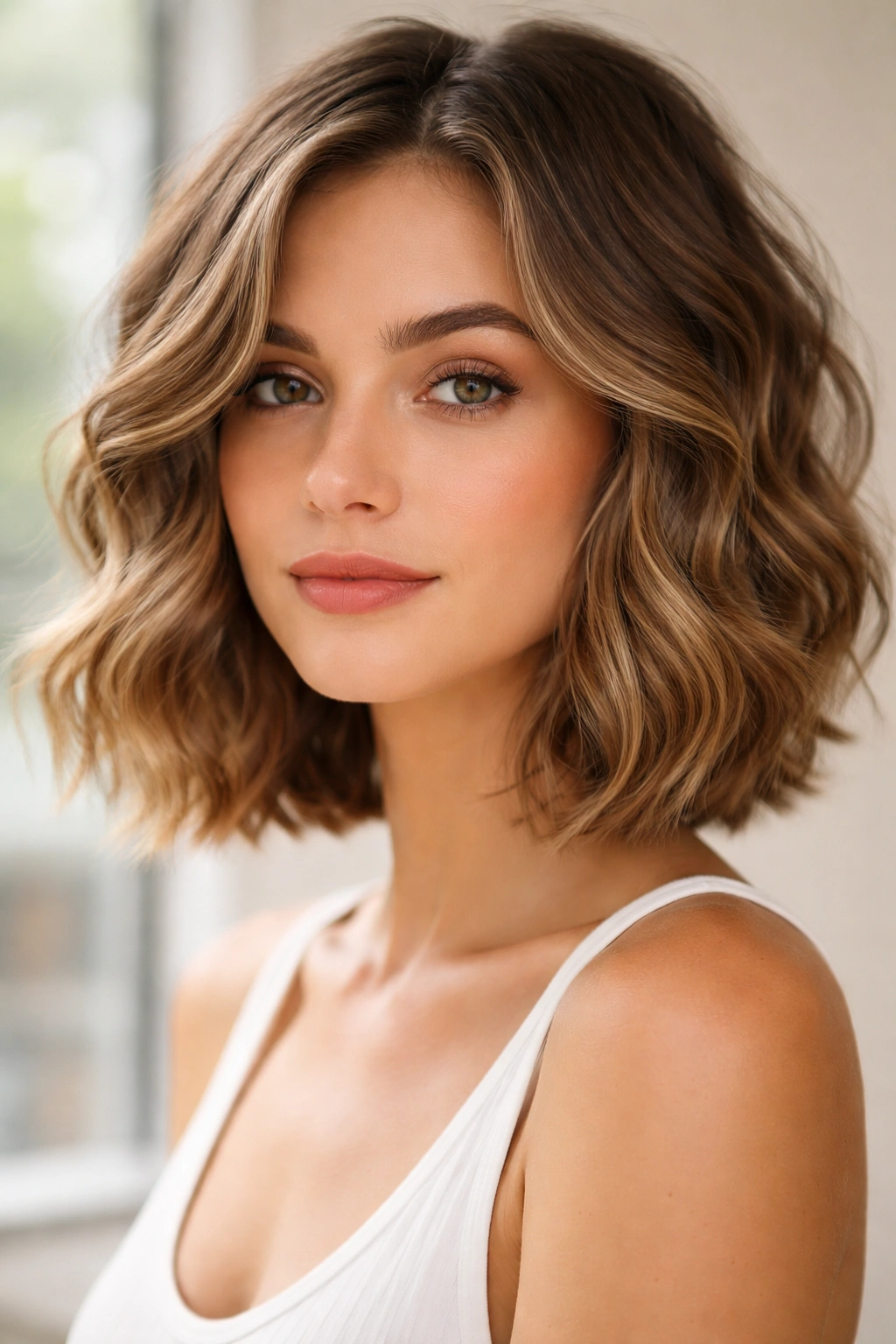
If you’re not ready to go full-short, the wavy lob (long bob with waves) splits the difference beautifully. It sits right at the jawline, giving the appearance of more length while still being short enough to reduce weight and show off wave definition. This is the cut for people who want a noticeable change without committing to pixie-length curls.
Why the Jawline Length Matters for Waves
Waves need some length to actually look like waves rather than frizz. The jawline-length sweet spot—typically 2 to 4 inches longer than your chin—gives waves just enough space to show their pattern while still being short enough to feel and look like a deliberate short style. The layers built into a good wavy lob prevent the blunt, heavy look that can overwhelm looser curl patterns.
Who This Cut Suits Best
- Perfect for curl types 2A through 3A
- Works well with minimal styling—many people with looser waves can air-dry this length successfully
- Layers keep it from looking like a blunt, shapeless bob
- Great in-between cut for people transitioning from long hair to something shorter
- Pairs well with a texturizing product that enhances wave definition without adding crunch
Insider note: Ask your stylist for subtle internal layers rather than choppy visible ones. This cut looks best when the layering isn’t obvious until you run your fingers through it.
6. The Textured Undercut
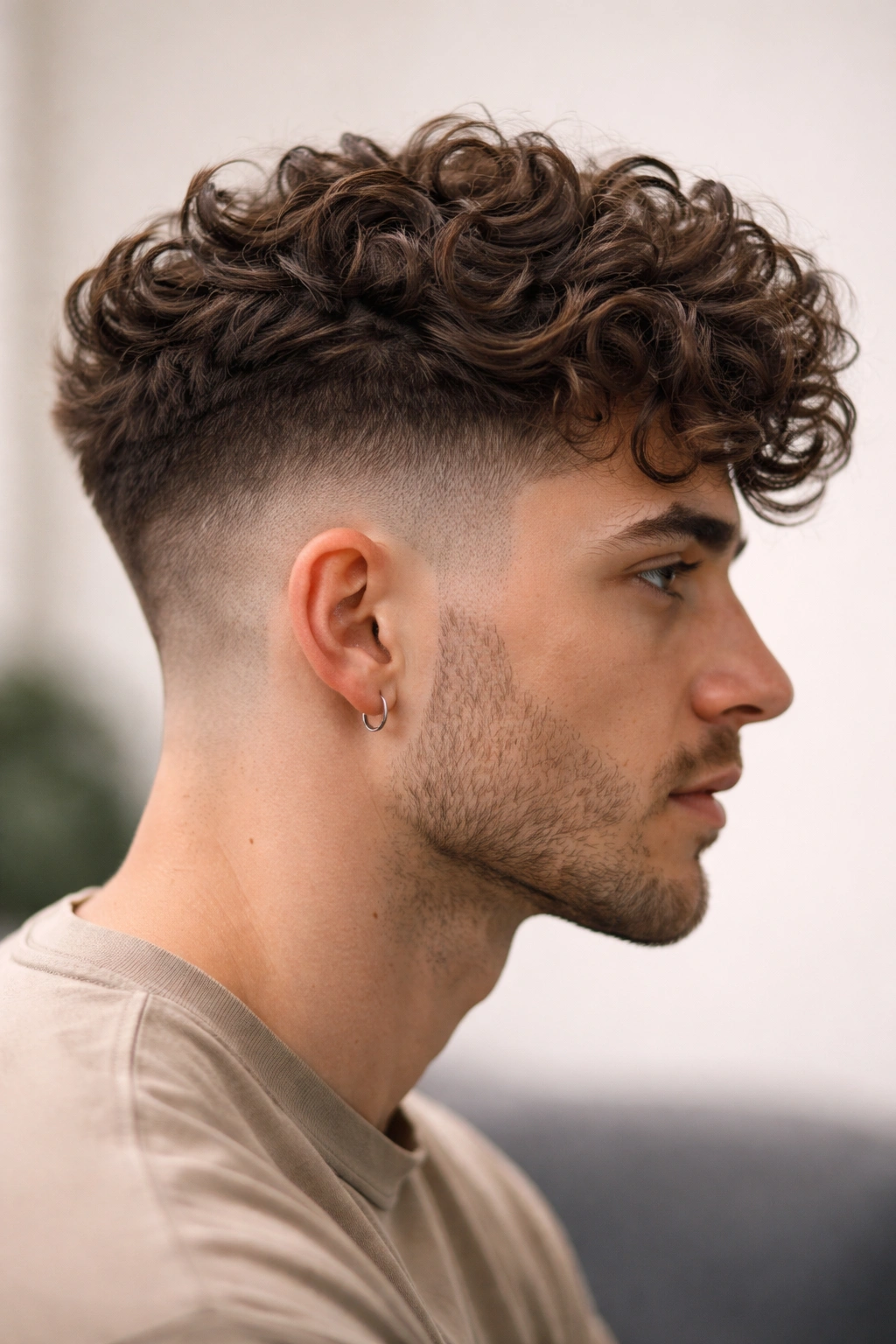
An undercut—where the sides and back are cut noticeably shorter than the top—creates dramatic contrast and is surprisingly versatile for different curl types. The volume sits where you want it (on top and in the crown), while the cut sides keep everything from looking overly bulky. It’s modern, edgy, and works across a wider range of curl patterns than you might expect.
The Versatility Factor
On straighter hair, an undercut reads as sharp and geometric. On curly hair, it reads as textured and intentional. The shortened sides mean your crown curls get all the attention without fighting for space, and you get genuine styling options—you can pull the top back or let it loose depending on your mood. The undercut also works whether your curls are uniform or you have multiple curl patterns happening simultaneously.
The Technical Details
- Works well for curl types 2C through 4A
- The sides can be anywhere from a skin fade to a length of ½ inch, depending on how dramatic you want it
- Requires regular maintenance on the short sides (every 2-3 weeks) but the longer top doesn’t need trimming as frequently
- Styling options range from sleek and polished to textured and undone
- Looks best on people with decent crown volume—if your curls sit flat on top naturally, the undercut can emphasize that
Pro tip: The undercut works especially well if you have both coils and looser waves. The clean sides let the variation in curl pattern feel intentional rather than messy.
7. The Curly Mullet
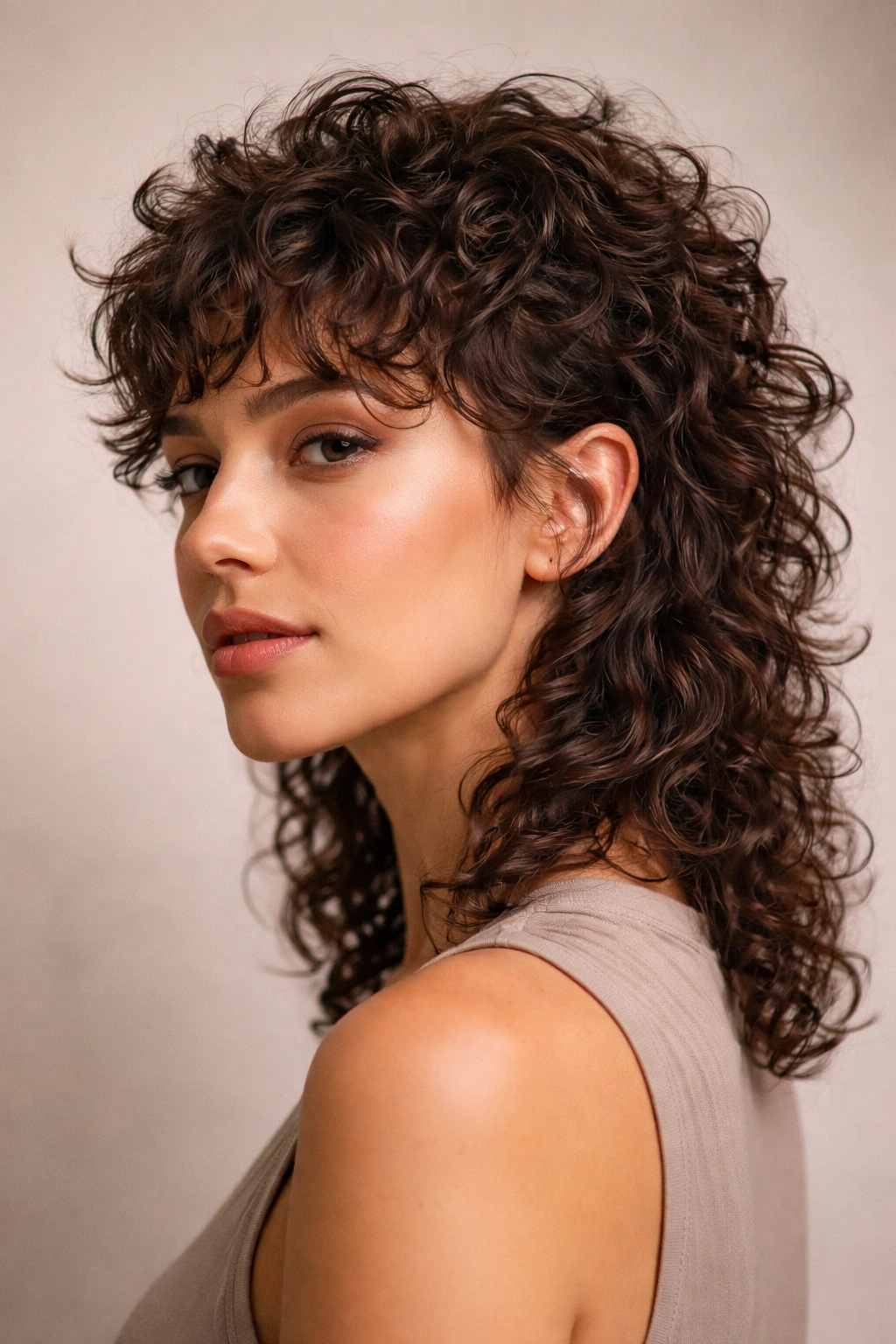
Yes, curly mullets are happening—and they’re nothing like the 1980s version. The modern curly mullet keeps length in the back (usually 2 to 4 inches longer than the front and sides) while the front is shorter and textured. It’s playful, retro-inspired, and honestly, it’s fun. If you want a short cut but aren’t ready to lose all your length, this bridges that gap.
Why Curls Make the Mullet Work
Straight-haired mullets can look unbalanced because the weight contrast is too obvious. Curly mullets work because the texture and volume in the back blend more naturally with the shorter front—it doesn’t read as obviously mullet-shaped unless you’re looking for it. The layers and texture throughout prevent it from being costume-like.
The Styling and Commitment Reality
- Best for curl types 2B through 4A
- Styling usually involves defining curls throughout and letting the back length show off more dramatic curl patterns
- The back section requires more maintenance to keep healthy because it’s longer and often more exposed
- This cut ages gracefully—it looks intentional for quite a while as it grows out
- Works best on people comfortable with a bold, statement-making haircut
Worth knowing: The curly mullet works best with good curl definition products. The contrast between the short textured front and longer back is what makes it interesting, so you want both sections looking intentionally styled, not accidentally messy.
8. The Short Coil-Out
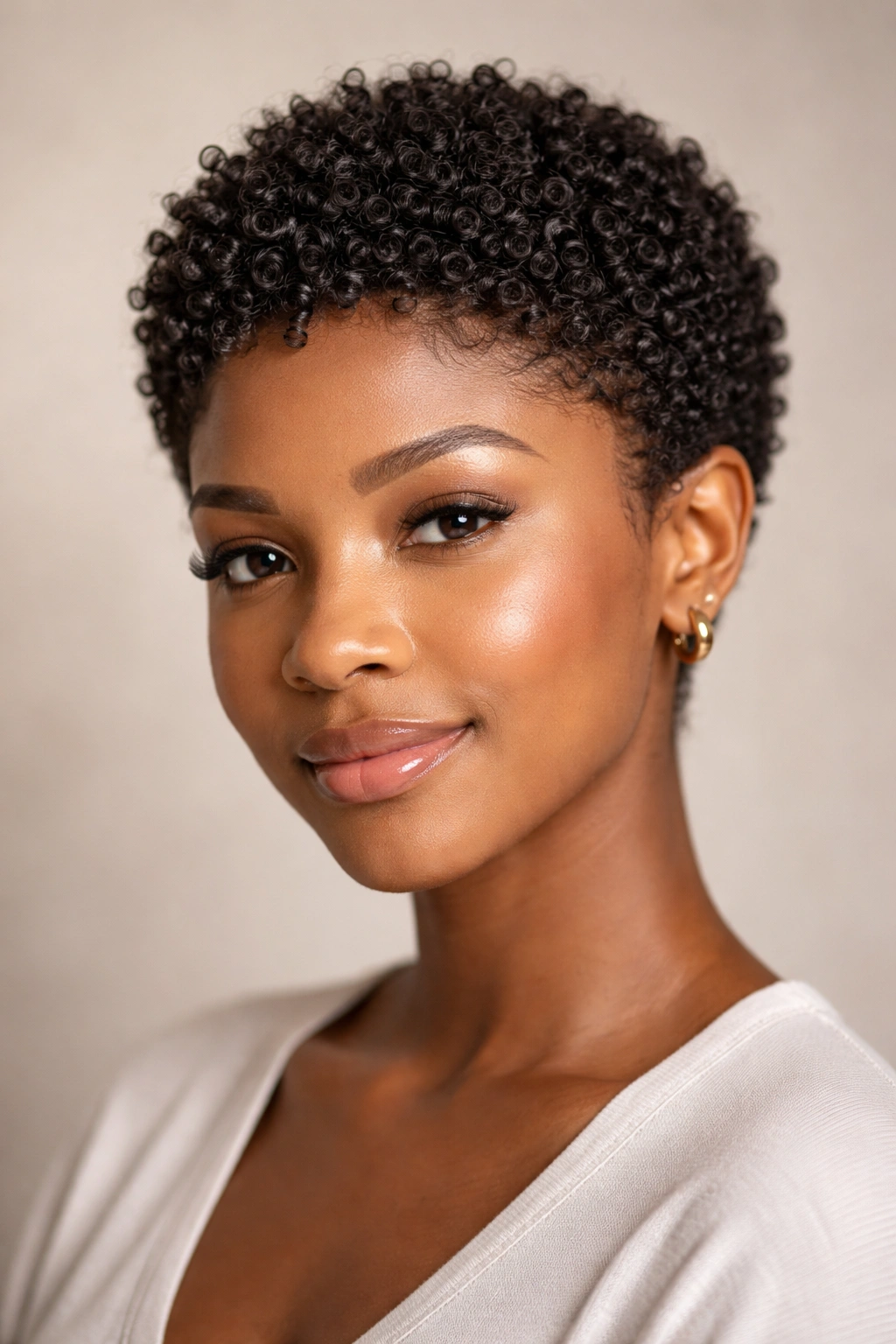
For people with tight, dense curls, a short coil-out is built-in texture definition. The cut is simple—usually a uniform short length, often under 2 inches—but the magic is in how your natural curl pattern creates definition once it’s styled. This is a wash-and-wear situation once you nail your styling routine.
The Science of Coil Definition
When coils are short, they naturally separate and stand away from the scalp, creating that enviable defined texture without any styling tricks. You’re not fighting weight or length—you’re just embracing what happens naturally when you have tight curls at a short length. Different curl patterns coil differently, so this look changes based on your individual hair.
Realistic Maintenance Expectations
- Ideal for curl types 3C through 4C
- Styling typically involves a moisturizing product and possibly some finger-coiling or twist-setting for extra definition
- Wash day is significantly faster than with longer coils—usually 30 minutes to an hour
- Hair growth is visible, so some people enjoy the frequent change and trim every 4-6 weeks, while others prefer longer in between
- This cut looks great on round or oval face shapes and can help balance broader faces
Real talk: This cut requires comfort with your natural texture. If you’re used to relaxed or straight hair, the dramatic difference in texture might feel shocking at first, even though it’s beautiful.
9. The Feathered Crop
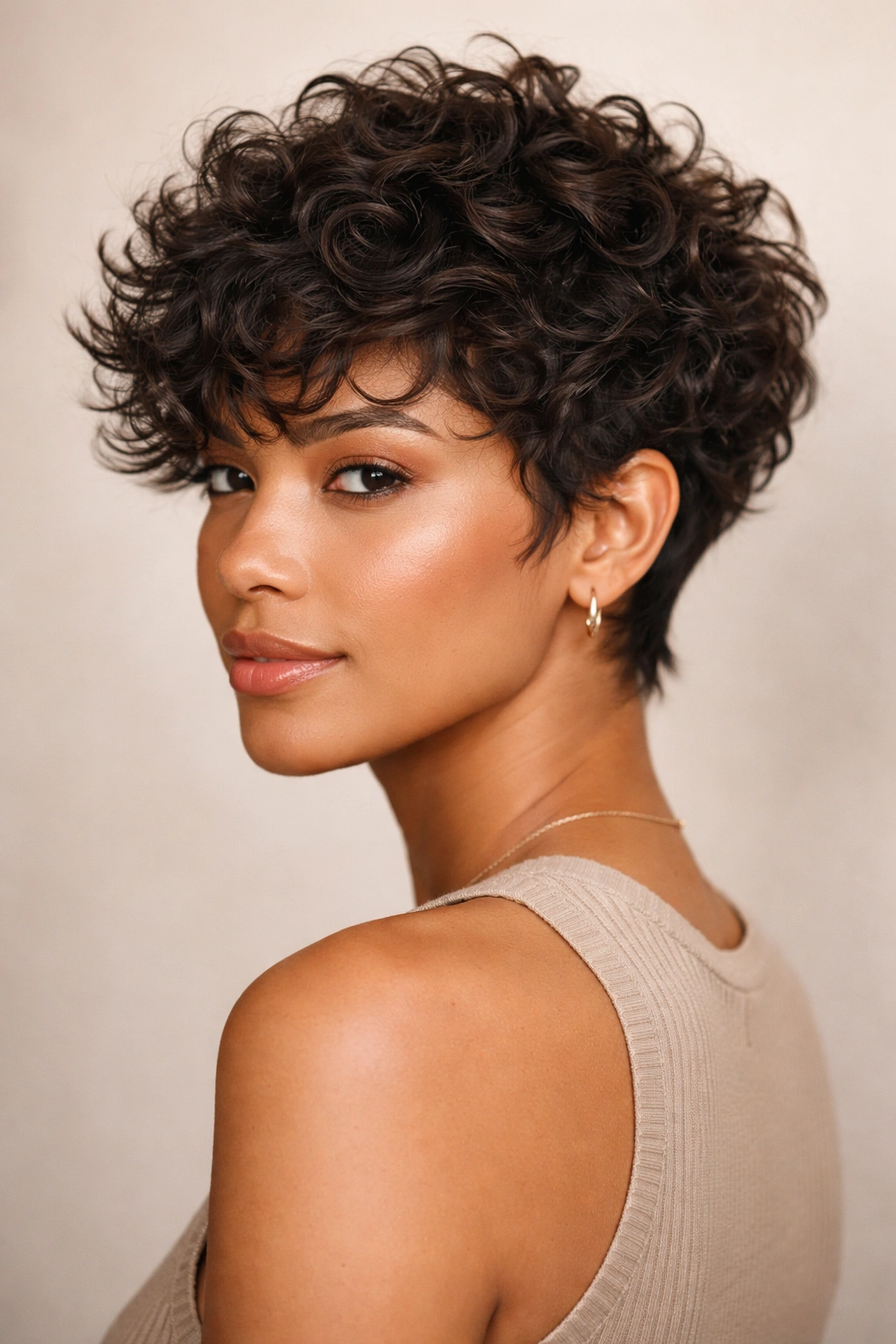
The feathered crop is shorter and more sculptural than a shag, with precise, controlled layers that create movement without looking chaotic. Each layer is intentional, creating a cascading effect that’s modern and polished. For curly hair, feathering removes weight while maintaining shape and bounce.
How Feathering Changes Curly Hair
Feathering means each section of hair tapers gradually toward the ends rather than being cut bluntly. For curly hair, this technique is brilliant because it removes weight progressively, allowing curls to spring up without looking stringy or unkempt. The shorter length of a crop combined with feathering creates an almost geometric appearance while still looking organic and textured.
The Styling Details
- Works beautifully for curl types 2C through 3C
- Requires a stylist skilled with precision cutting—bad feathering looks scraggly, good feathering looks intentional
- Products that add texture without weight work best (creams, foams, light gels)
- The cut maintains shape well as it grows out, making 8-week trim intervals manageable
- Looks especially great on people with refined features or smaller face shapes
Pro tip: Feathering works best when cut on dry curls. Wet cutting can result in shorter results once everything dries and curls bounce back, so a good stylist will either dry-cut or account for shrinkage.
10. The Textured Bob
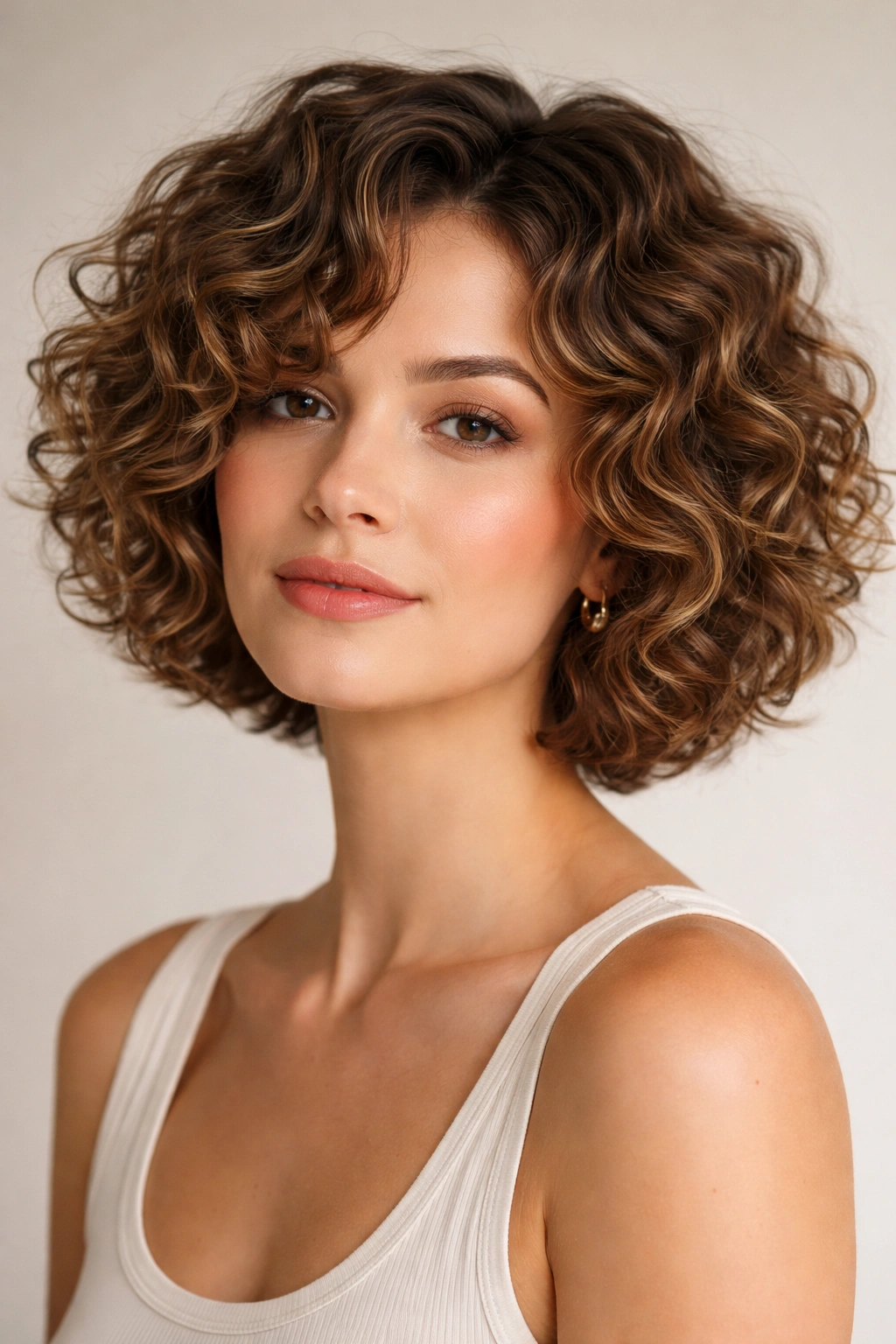
The textured bob—sometimes called a curly bob—is a short, structured cut that sits around chin length with layered texture throughout. It’s feminine, polished, and versatile enough to style sleek and smooth or messy and textured depending on the day. For people who want shape and definition, this is the answer.
Why Curls Need Specific Bob Architecture
A blunt, one-length bob can look heavy and shapeless on curly hair. The textured version builds in layers from the root, removing weight at strategic points. This architecture lets curls lift naturally instead of dragging the style down. The shape reads as intentional—you’re getting an actual haircut, not just shorter hair.
The Versatility Range
- Works well for curl types 2B through 3B
- Can be styled sleek with a flat iron for a different vibe, or textured naturally for casual days
- Requires regular trims (every 6-8 weeks) to maintain the layered shape
- Works on most face shapes, though the length can be adjusted to flatter your specific features
- Pairs well with waves created with a curling iron if you want more dramatic definition
Worth knowing: The textured bob works best if you have decent curl definition naturally. If your curls are more of a wave pattern that disappears when your hair is short, you might need more styling effort to make this cut shine.
11. The Side-Swept Curls
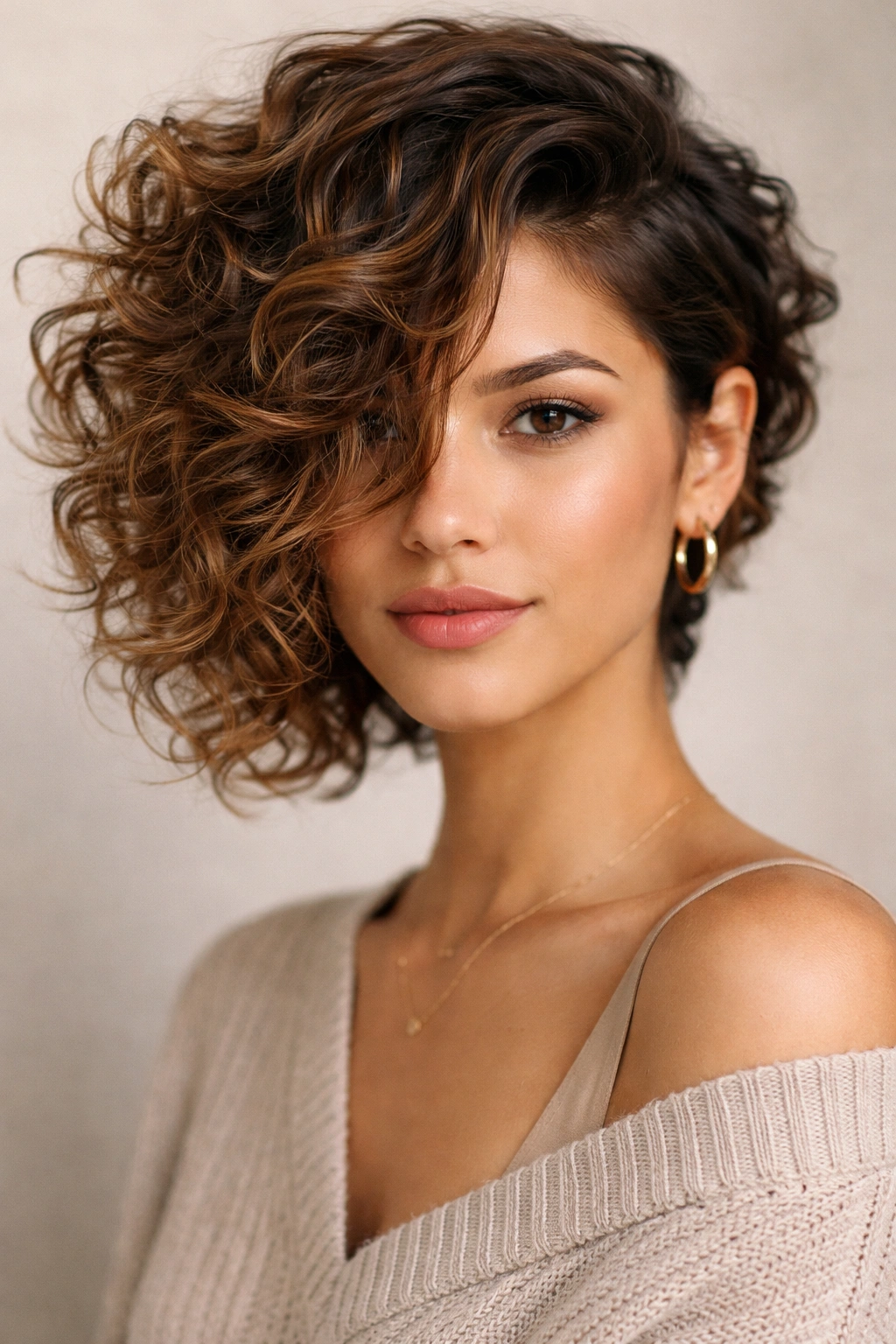
The side-swept style involves longer length on one side that sweeps across, with shorter, textured layers on the other side. It’s asymmetrical, modern, and offers the styling flexibility of wearing your hair multiple ways—swept to one side, tucked behind one ear, or even blown out for different texture altogether. This cut is for people who like options.
The Visual Impact of Asymmetry
Asymmetrical cuts are flattering because they can minimize or emphasize features depending on how you style them. The longer side can be swept away from the face or left to frame it; the shorter side keeps everything from looking too heavy. On curly hair, the different lengths create visual interest and movement that reads as intentional texture rather than bad hair day.
Styling and Face Shape Considerations
- Best for curl types 2A through 3A
- Creates length illusion—people often think this cut is longer than it actually is
- Flatters angular or square faces because the asymmetry softens lines
- Requires intentional styling to look polished, though it can also be worn deliberately undone
- The longer side works best if you wear your hair off your face regularly; if you’re a hair-down person constantly, the asymmetry might feel frustrating
Real talk: This cut requires more styling than a symmetrical short cut. If you want wash-and-go convenience, the side-sweep might not be your best option.
12. The Twist-Out Short Cut
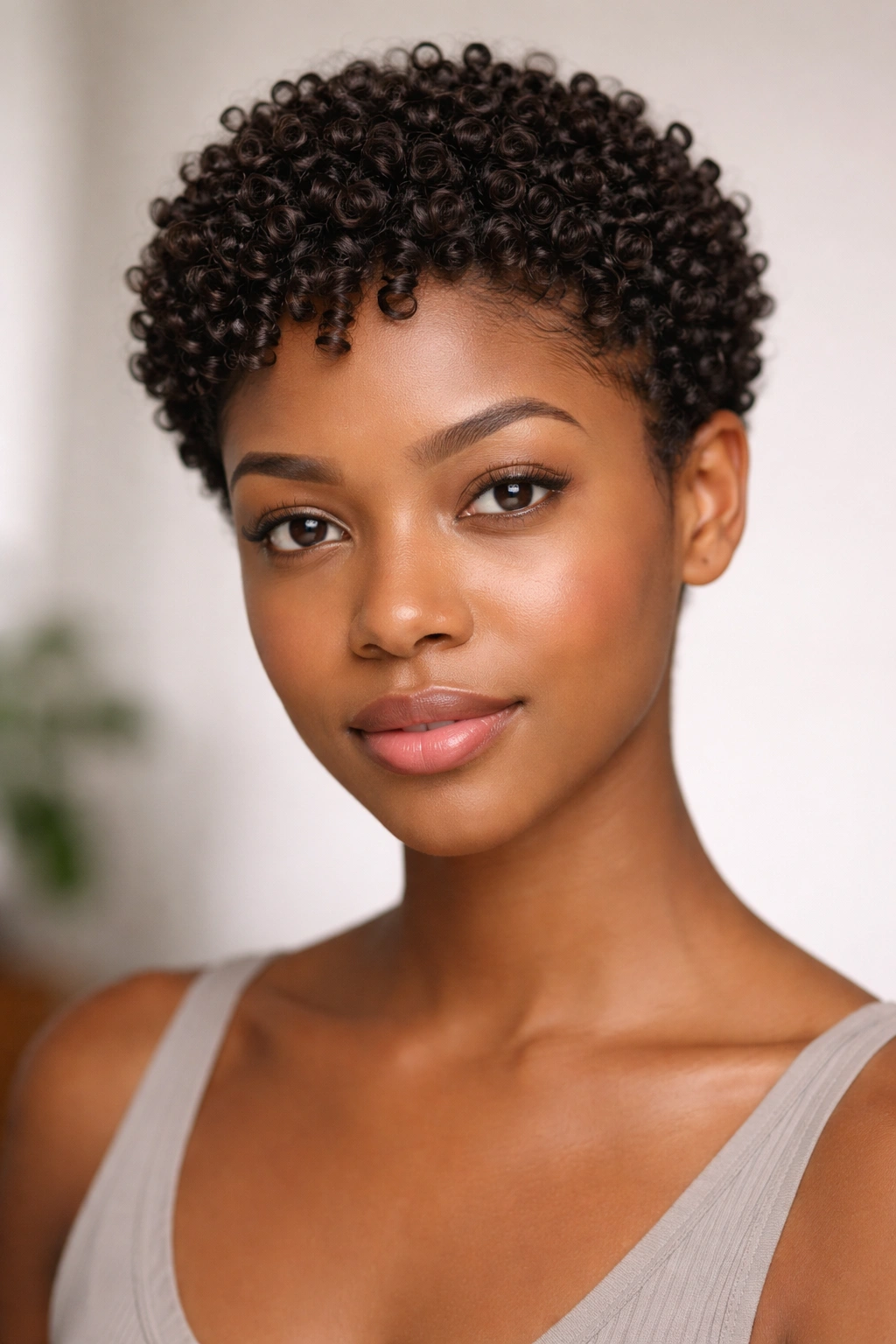
For people with textured, coily hair, the twist-out cut is built for a specific styling technique. The hair is sectioned and twisted, then unraveled to create perfectly defined waves and coils. The cut itself is usually uniform and short (1 to 2 inches), but the styling creates dramatic definition. This is an active styling choice—you’re creating the look, not just letting your hair air-dry.
The Twist-Out Technique and Cut
The cut supports the twist-out method by being short enough that twists are manageable but long enough to hold the definition once unraveled. Different section sizes create different wave patterns, so you actually have control over how defined your texture looks. It’s artistic, customizable, and genuinely fun if you enjoy the styling process.
The Time and Product Reality
- Ideal for curl types 3C through 4C
- Twist-outs typically take 1-2 hours on wash day, depending on how many sections you create and how thick your hair is
- Usually set overnight (either while twisting or after unraveling) to lock in the curl pattern
- Requires moisture-rich products and often benefits from edge control on smaller sections
- The style lasts until your next wash, giving you definition that’s actually sharper than natural unmanipulated curls
Worth knowing: Twist-outs work best on hair that’s healthy and moisturized. If your curls are dry or brittle, the twists won’t hold and the definition falls flat quickly.
Final Thoughts
The right short curly hairstyle isn’t just about what looks beautiful in photos—it’s about what works with your specific curl pattern, your hair density, your lifestyle, and honestly, how much styling effort you’re willing to invest. Some of these cuts are genuinely wash-and-go situations, while others require intentional styling and product. Neither is better; they’re just different.
Before booking an appointment, think clearly about what you actually want from a short cut. Do you want more definition in curls that already have a clear pattern? Do you need to reduce weight and bulk? Are you looking for a dramatic change or a subtle shift? Does your lifestyle allow for daily styling, or do you need something that looks good with minimal effort? These questions matter more than which cut is currently popular.
Find a stylist who actually works with curly hair regularly—this is not the time to see someone who specializes in straight hair. A stylist experienced with your specific curl type will understand how your hair actually behaves, what length shows off your texture best, and how different layers and techniques will perform once your hair is dry and in its natural state. That expertise is what transforms a good idea into a genuinely great haircut that makes you feel confident every time you catch your reflection.
