



Thick hair comes with a unique set of challenges that most people don’t talk about until they’re standing in front of a mirror with a cut that just won’t cooperate. The weight alone can flatten even the most carefully styled waves, and what looks effortlessly chic on someone with fine hair often turns into a frizzy, unmanageable situation when you’re working with density and texture. The truth that stylists know but don’t always emphasize upfront: the right short cut doesn’t just suit your face shape — it completely changes how much time you spend wrestling with your hair every morning.
A well-chosen short cut for thick hair doesn’t fight against your hair’s natural weight and texture. Instead, it works with it, removing enough length and strategically thinning the right sections so your hair actually moves and looks intentional rather than flat or overwhelming. The best cuts for thick hair use techniques like point cutting, texturizing, and strategic layering that would actually harm fine hair but that make thick hair fall into place with minimal styling effort. You’ll get a cut that genuinely requires less maintenance than you’ve had in years, not a cut that demands you blow-dry, flat iron, or style-product your way to the finish line every single day.
This isn’t about short cuts that look good only if you’re good with a curling iron. This is about cuts that look better the less you do to them — the kind that earn the compliment “your hair looks so healthy” because it’s finally sitting the way it’s meant to. Let’s walk through the specific cuts that actually work for thick hair, exactly why they work, and what you need to know before you book that appointment.
1. The Textured Pixie
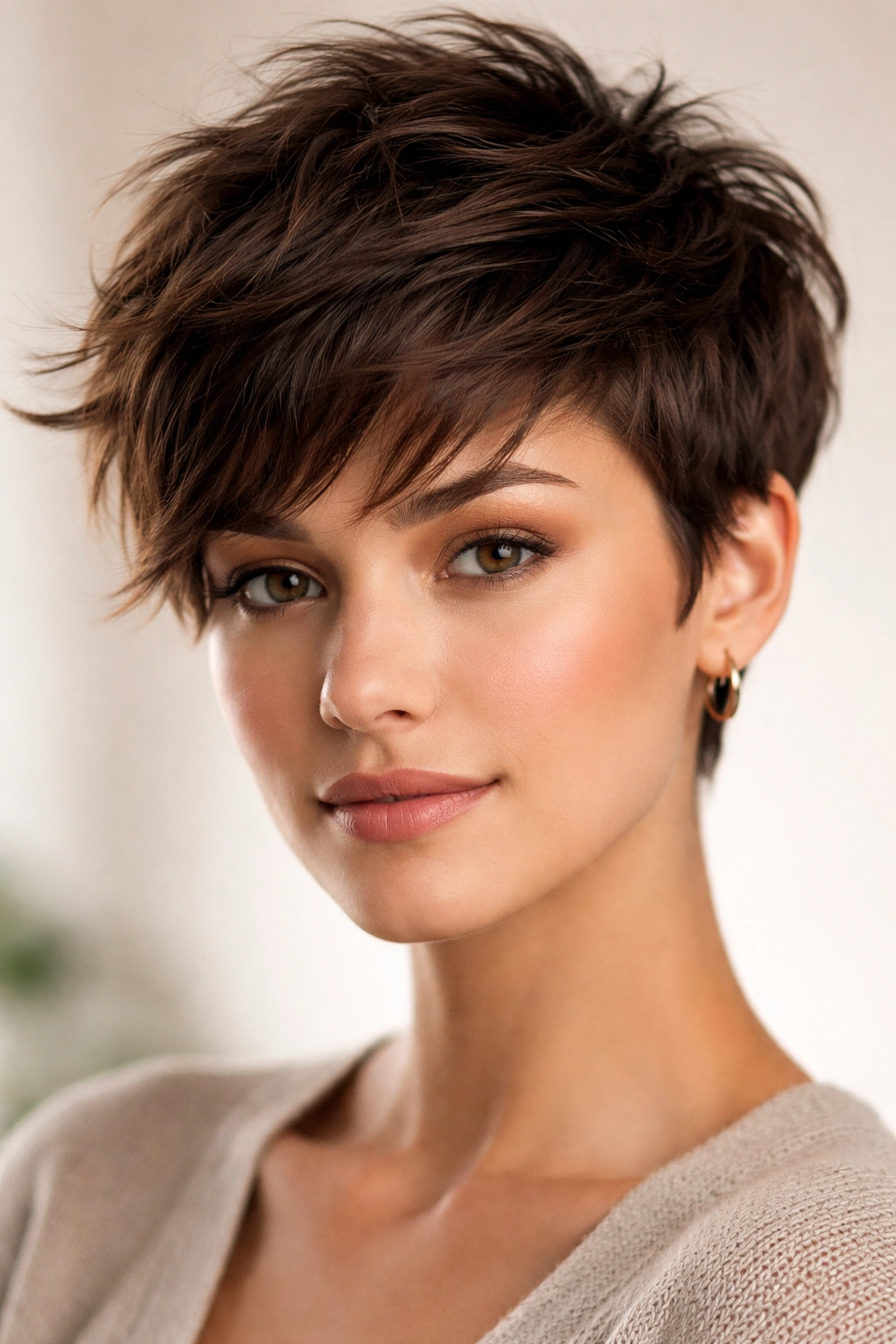
A textured pixie is basically the anti-flat-hair cut for thick locks. Instead of the smooth, close-cropped pixie that can make thick hair look bulky and helmet-like, the textured version uses point cutting and choppy layers to break up the density and create movement right from the scalp. The length varies across the head — longer through the crown, graduated sides, textured layers throughout — so your hair has somewhere to go instead of pressing down against your head with all that weight.
Why This Cut Commands Attention Without High Maintenance
The secret is that thick hair actually needs the texture and choppy layers to avoid looking heavy. A blunt pixie on thick hair sits flat and dense; a textured pixie looks deliberately piecy and modern. Your stylist will use scissors to carve out the movement rather than razor over everything evenly, which means the texture sticks around between cuts instead of growing out blunt and flat. You’re working with your hair’s natural tendency to separate and texture rather than fighting it.
What Makes This Work Specifically for Thick Hair
- The point-cut layers throughout the crown and sides prevent the weight from creating a helmet effect and instead create the illusion of movement and shape
- Longer length on top (usually 1-2 inches) gives you just enough texture to style if you want to, but it looks intentional and messy-chic without any styling at all
- Tapered sides and back remove the bulk that makes thick hair look imposing while keeping enough length to feel feminine and current
- Minimal styling required: Wash, maybe a quick finger-ruffle while it’s damp, and you’re done — your hair dries into that textured shape naturally
- Touch-ups every 4-6 weeks keep the layers crisp, but between cuts it grows out soft and shapey rather than losing definition
Pro tip: Ask your stylist specifically for point-cutting through the crown rather than razor-cutting all over — point cutting leaves the ends choppy and textured, while razoring can make thick hair seem wispy and thin in spots.
2. The Choppy Lob
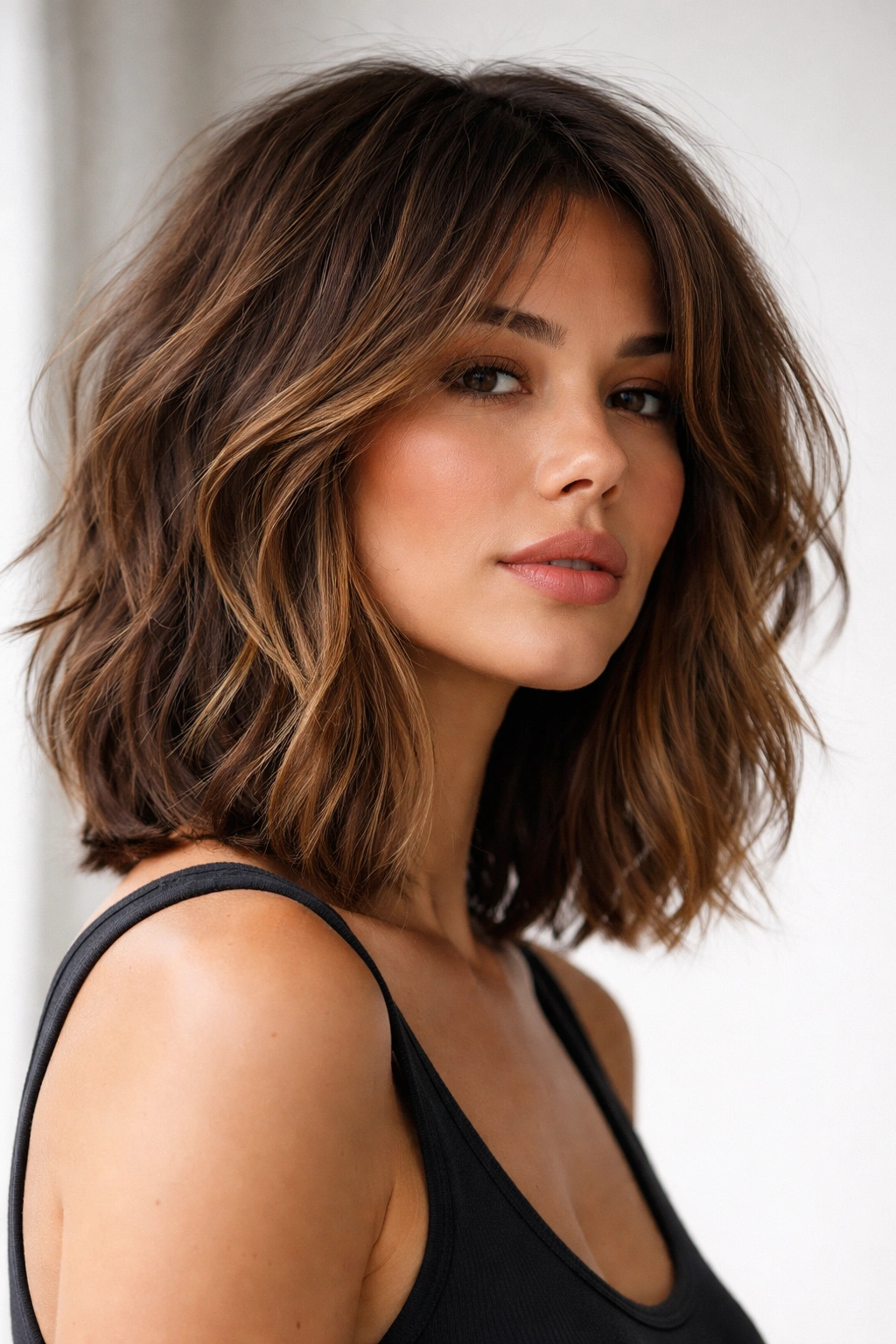
A lob (long bob, for the uninitiated) gets a completely different personality when your hair is thick. Where a blunt lob on fine hair can look sleek and polished, a choppy lob on thick hair becomes this effortlessly undone, lived-in style that actually gets compliments for looking “effortless” — which is code for “I didn’t have to do much to make this work.” The choppy texture breaks up the density in a way that a straight-across cut simply cannot.
The Mechanism Behind Why Choppy Texture Changes Everything
Thick hair has built-in weight and density that actually works against you if you’re fighting it. A choppy lob embraces that density by creating separation and texture throughout, so instead of one solid block of thick hair, you get layers and movement that make the cut look intentional and modern. The choppy layers mean that the hair moves independently rather than swinging as one heavy unit, and that movement is what makes it look polished rather than bulky.
How to Make a Choppy Lob Work for Thick Hair Specifically
- Strategically placed layers — longer in front, shorter in back, with choppy texture throughout means your hair doesn’t look like a brick of density from the side
- Texture through the ends prevents that blunt, heavy look and adds movement without requiring a curling iron or waves
- Face-framing layers that hit at cheekbone or jawline create definition and draw attention to your face rather than to the sheer volume of your hair
- Works with natural wave or texture — if you have any natural wave or curl, a choppy lob maximizes it and makes styling nearly effortless
- Grows out beautifully — the choppy texture means you don’t get that awkward in-between phase where a blunt lob looks overgrown and flat
Worth knowing: A choppy lob needs a trim every 6-8 weeks to maintain that intentional choppy texture. Without regular trims, it loses definition and starts to look more like you just haven’t cut it in a while.
3. The Shag
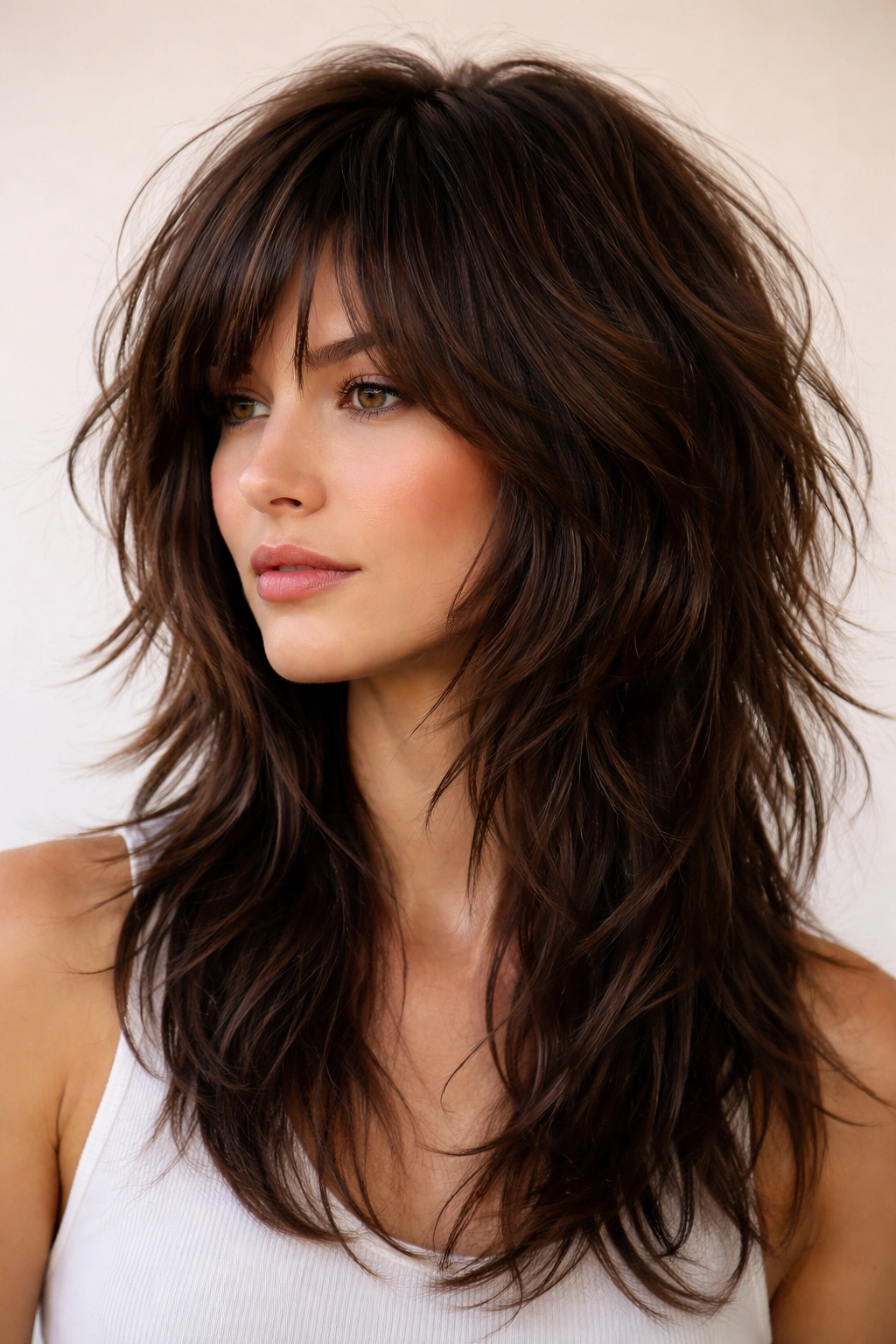
The shag is experiencing a genuine renaissance, and for thick hair specifically, it might be the most flattering cut available right now. A modern shag for thick hair isn’t the 1970s mullet situation — it’s a smart use of lots of layers at different lengths that create volume at the crown and texture throughout without ever looking intentionally retro or costume-y. The key difference from other layered cuts is that shag layers are more dramatic and varied, which is exactly what thick hair needs to avoid looking like one big blob of density.
Why Shag Layers Work Brilliantly for Weight Management
A shag’s entire purpose is to break up bulk through strategic layering. Because thick hair naturally wants to sit as one heavy mass, the shag cuts in shorter layers throughout that create separation and movement. Your thick hair becomes a feature rather than a liability — those layers catch light differently, create texture, and make your hair look fuller and more intentional at every angle. The layers also mean that styling is completely optional; your hair literally dries into that textured, lived-in shape.
The Specific Advantages for Thick Hair Types
- Multiple layer lengths create visual texture and break up bulk without making your hair look thin or wispy anywhere
- Shorter layers at crown and through the mid-lengths prevent that flat, heavy top that thick hair often suffers from
- Longer layers underneath mean the cut isn’t extreme or choppy-looking — it’s sophisticated and modern
- Movement without styling — your hair naturally separates into those layers as it dries, so you get texture and dimension without effort
- Works beautifully with naturally wavy or curly thick hair — the layers give curls somewhere to go and prevent the dense, frizzy look that happens without them
- Grows out gracefully — because there are layers throughout, the grow-out phase isn’t awkward; the cut just gets longer and softer rather than losing its shape
Insider note: The difference between a shag that looks modern and one that looks dated is all in the execution. Your stylist needs to create layers with intention and texture, not just choppy randomness. Ask to see examples of shags they’ve done recently on thick hair before you book.
4. The Textured Crop
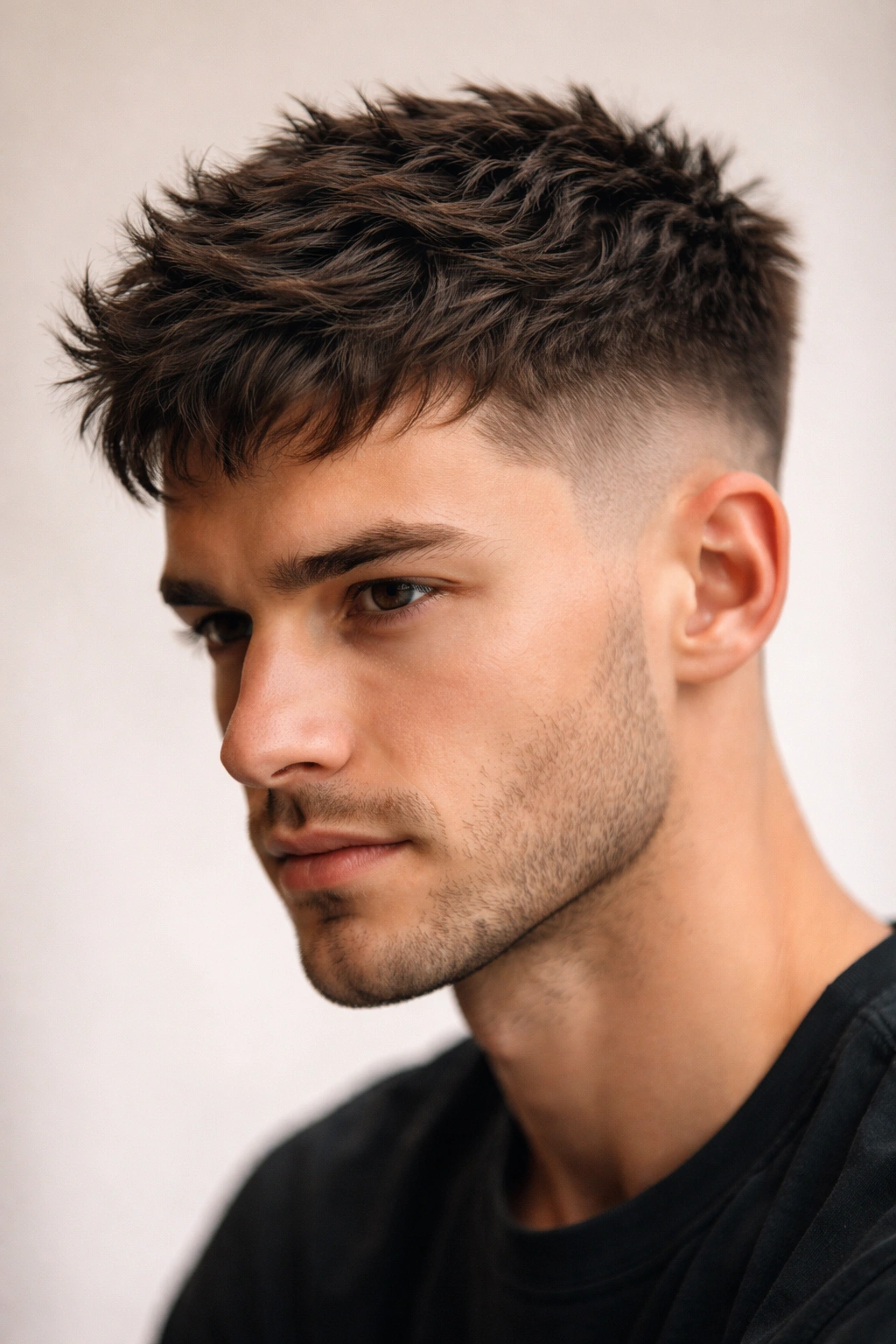
A textured crop is essentially a very short, all-over cut with intentional texture throughout — similar to a pixie in concept but usually slightly longer overall and with more flexibility in how you can style it. For thick hair, a crop removes the weight that makes longer cuts challenging while keeping enough length that you can style it multiple ways if you want to. It’s a genuinely low-maintenance cut because the texture is baked into the haircut itself, not something you have to create with styling products or tools.
How a Crop Harnesses Thick Hair’s Natural Properties
Thick hair’s density is actually an advantage in a crop. The texture and weight that make longer styles challenging work in your favor here — your hair naturally separates into that choppy, textured look that stylists spend hours trying to achieve on fine hair. A crop on thick hair looks intentionally piecy and modern without requiring anything beyond a wash and maybe a quick finger-comb through damp hair.
What You Need to Know About Crop Maintenance and Styling
- Ultra-short length (usually ½ to 1 inch on top, faded or tapered on sides) removes bulk without making you look severe or masculine — thick hair fills in the shape naturally
- Point-cut texture throughout means your hair dries with movement and separation rather than lying flat
- Fade or taper on sides keeps the overall silhouette clean and modern while the texture on top provides softness
- Requires the most frequent trims — every 3-4 weeks to maintain that crisp, intentional look as it grows out
- Very low daily maintenance — literally wash and go; your hair dries into the right shape naturally
- Incredibly versatile — works with any face shape and any hair color, and looks equally good on anyone from age 20 to 80
Pro tip: If you’re considering a crop but worried it might be too short or too edgy, ask your stylist for a “longer crop” — this keeps the textured crop concept but gives you ½ to 1½ inches on top instead of super-short, giving you just a tiny bit more flexibility without sacrificing the low-maintenance vibe.
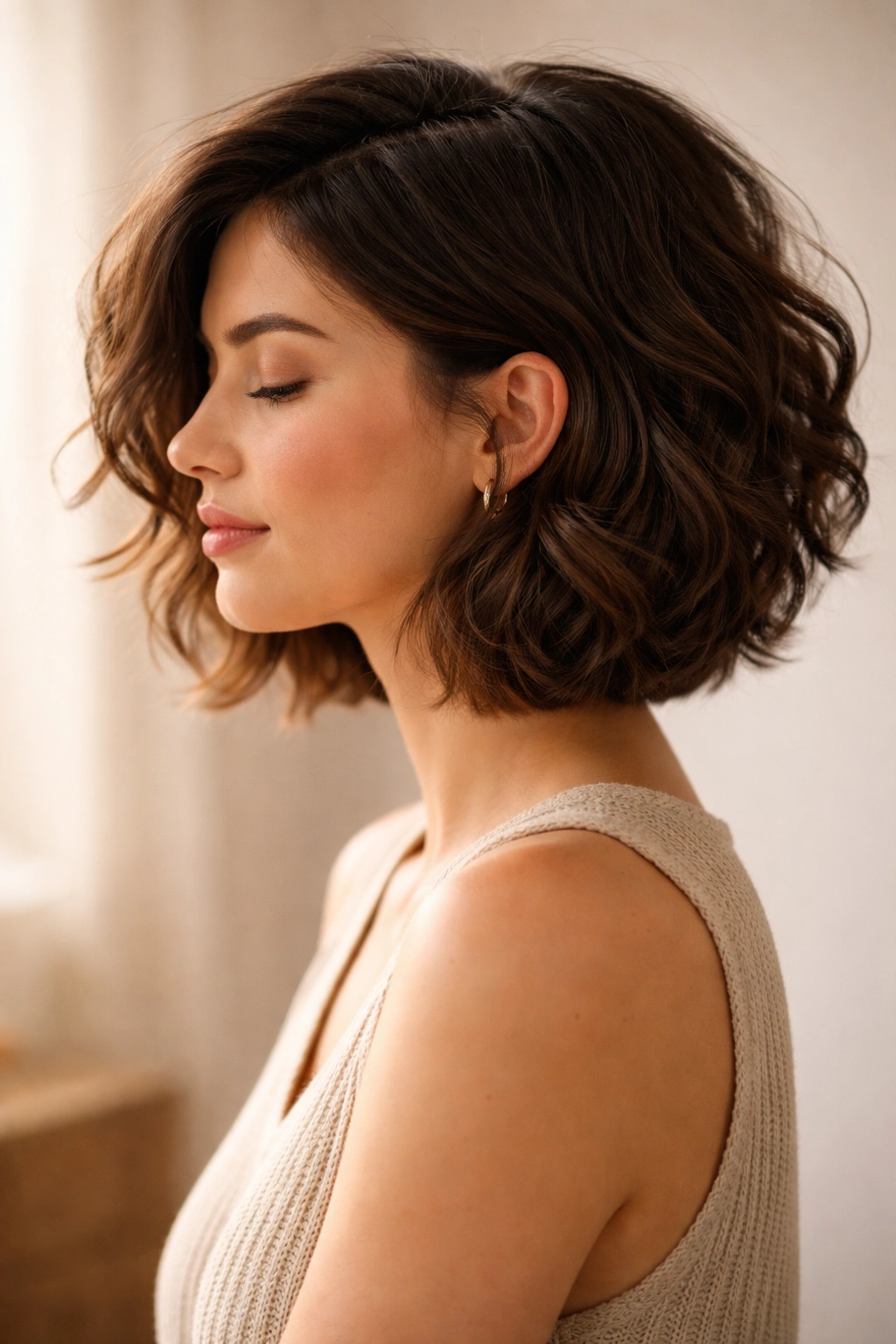
5. The Textured Bob
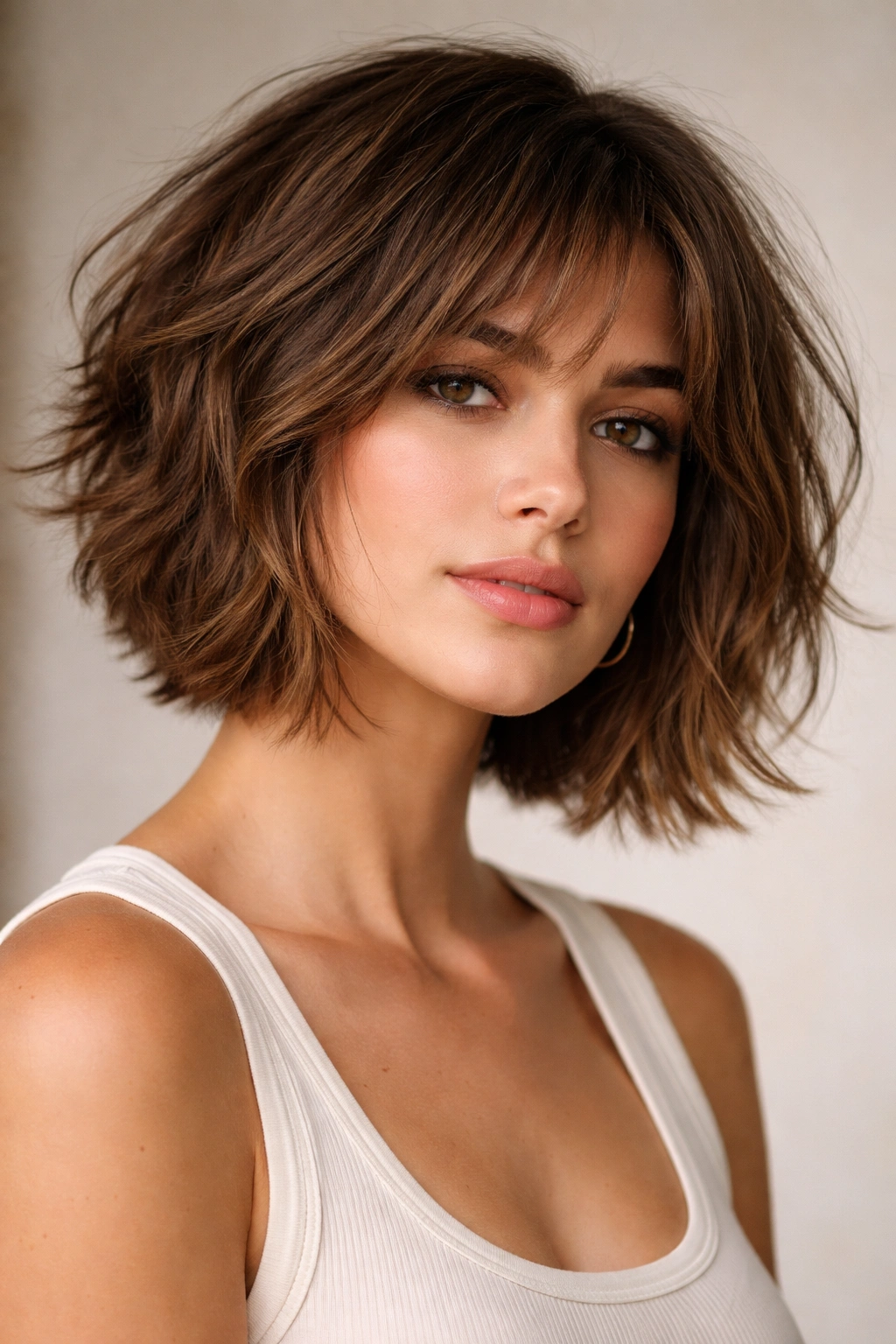
A textured bob is exactly what it sounds like — a classic bob silhouette but with choppy, layered texture throughout instead of a smooth, blunt line. For thick hair, this is often the sweet spot between “I want short hair” and “I don’t want to look like I’m trying too hard.” The texture prevents the bob from looking severe or overly formal, and it breaks up the density in a way that a blunt bob simply cannot achieve without looking heavy or dated.
Why Texture Transforms a Bob From Formal to Effortless
A blunt bob on thick hair can look austere and helmet-like — all that density sitting in a solid line against your face and neck. Add choppy layers and texture, and suddenly it’s modern, soft, and effortlessly styled. The layers mean your hair moves independently, creating visual lightness and preventing that “I have a lot of thick hair and I’m aware of it” appearance that can happen with blunt cuts.
The Strategic Details That Make a Textured Bob Work
- Choppy, textured layers throughout, not just at the ends — this breaks up bulk throughout the entire cut, not just around the perimeter
- Longer front-facing layers (usually hitting at cheekbone or slightly shorter) that frame your face and create movement
- Shorter layers in back that prevent the density from looking too heavy at the nape of your neck
- Texture through the crown prevents flatness and creates the illusion of lighter, bouncier hair
- Minimal styling requirement — your hair can air-dry into the shape or you can finger-comb through it damp and let it dry naturally
- Looks great wavy or straight — the texture works with both, so you have flexibility depending on your mood or effort level
Worth knowing: A textured bob looks best when it’s well-maintained. Every 4-6 weeks, you want a trim to refresh the layers and choppy texture; as it grows out, the layers soften and the cut starts to lose definition.
6. The Undercut Pixie
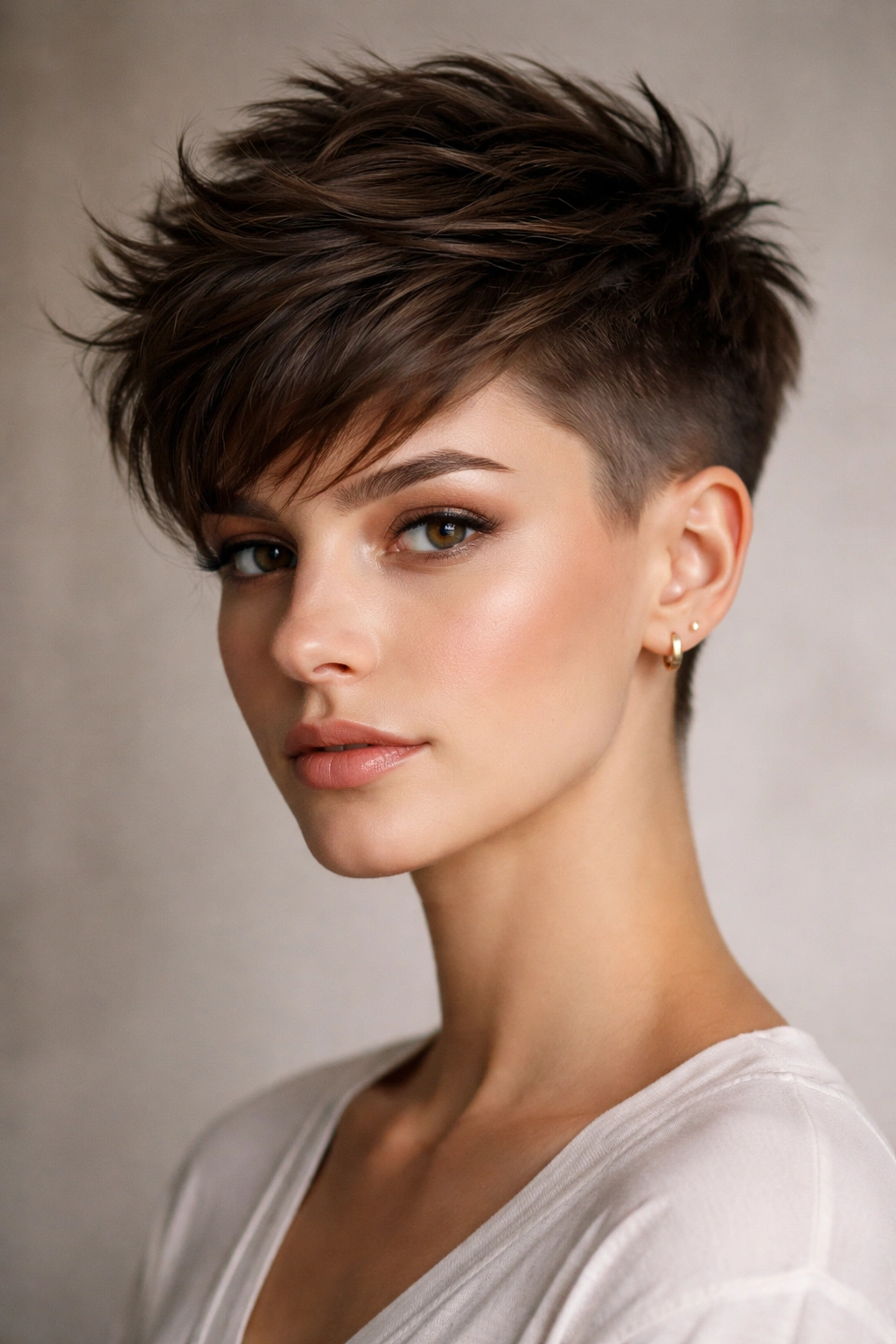
An undercut pixie takes the textured pixie concept and adds very short, faded sides and back (usually #1 or #2 clipper guard) while keeping more length on top — typically 1½ to 2 inches. For thick hair, this creates dramatic contrast that makes the hair on top look lighter and more textured by comparison. It’s bold without being extreme, and it’s one of the most striking short cuts available for thick hair that’s also genuinely low-maintenance.
Why the Contrast Works Specifically for Thick Hair
When you have extremely short sides, the slightly longer textured top looks even more voluminous and interesting by contrast. You’re removing weight from the sides and back where it would flatten you down, and keeping the texture and movement on top where it frames your face. The result is a cut that looks intentional, modern, and surprisingly soft despite the dramatic clippered sides.
The Practical Advantages for Thick Hair Specifically
- Removes weight from sides and back where thick hair often looks bulky or wide
- Creates facial definition through the contrast between very short sides and longer textured top
- Extremely low daily maintenance — wash your hair and you’re done; nothing requires styling
- Works with any face shape — the short sides actually tend to make wider faces look balanced, and the textured top adds softness to angular faces
- Requires regular clipper trims — every 2-3 weeks to maintain the faded sides and keep them crisp
- Surprisingly feminine — despite the boldness, the texture on top and the soft styling options make this work beautifully on anyone
- Makes thick hair look intentional and modern rather than heavy or unmanageable
Pro tip: When you get your sides faded, specify how often you’re willing to get trims. If you want to stretch it to every 4 weeks, ask your stylist for a less extreme fade (like a #2 guard rather than #1) that blends more gradually as it grows out.
7. The Modern Shag with Bangs
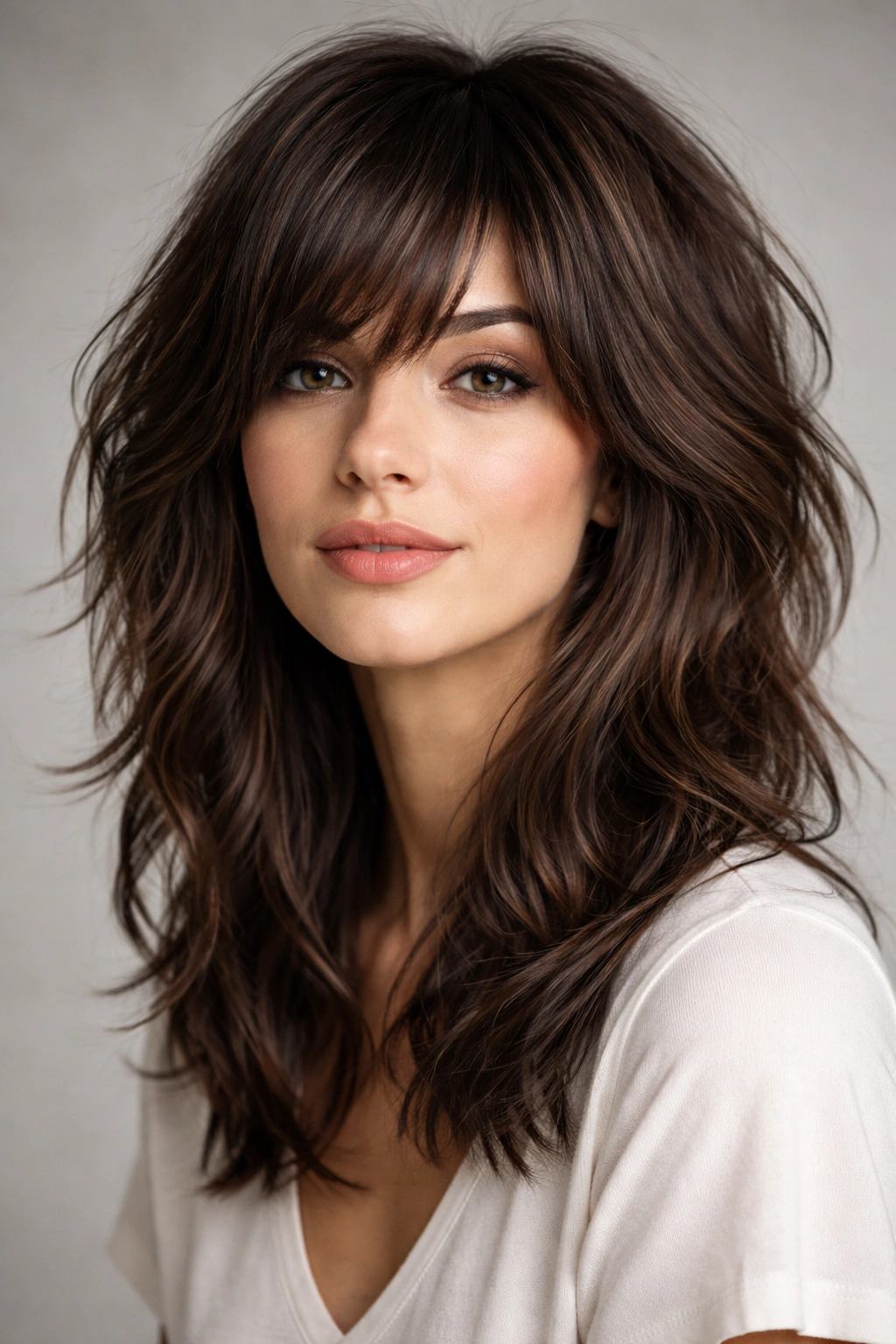
A shag with bangs is a specific style choice that deserves its own mention because bangs completely change how a shag interacts with your face and hair overall. For thick hair, face-framing bangs (usually longer, side-swept bangs rather than blunt ones) add another element of texture and break up the density even more. The bangs become part of the overall layered texture rather than a separate element, which is why this specific combination works so well for thick hair.
How Bangs Elevate a Shag Specifically for Thick Hair
Bangs on thick hair are usually a gamble — thick, blunt bangs can look heavy and intense, and short bangs on thick hair can look overly styled. But side-swept, textured bangs as part of a shag system work differently. They become part of the overall layer pattern, adding movement and framing without looking like a bold design choice. They soften the face while also managing some of the bulk that sits around the forehead and temples in thick hair.
What Makes Bangs Work With a Shag on Thick Hair
- Side-swept, textured bangs (never blunt on thick hair) that blend into the layers rather than sitting as a separate element
- Bangs hit around eyebrow or slightly longer — long enough that they’re flexible and can be styled multiple ways
- The textured shag layers work with the bangs to create overall movement and prevent the heavy, flat look that bangs can create on thick hair
- Require slightly more frequent trims (every 4-5 weeks) to keep the bangs from getting in your eyes as they grow
- Add dimension to your face and break up the visual weight of thick hair around your forehead and temples
- Work beautifully with face-framing because the bangs are literally doing the framing work for you
- Can be styled down for a softer look or swept to the side for something edgier — the length and texture give you flexibility
Insider note: If you’re nervous about committing to bangs on thick hair, ask your stylist for longer, side-swept bangs initially. These are more forgiving than shorter ones and you can always go shorter at the next trim if you want more impact.
8. The Layered Blunt Lob
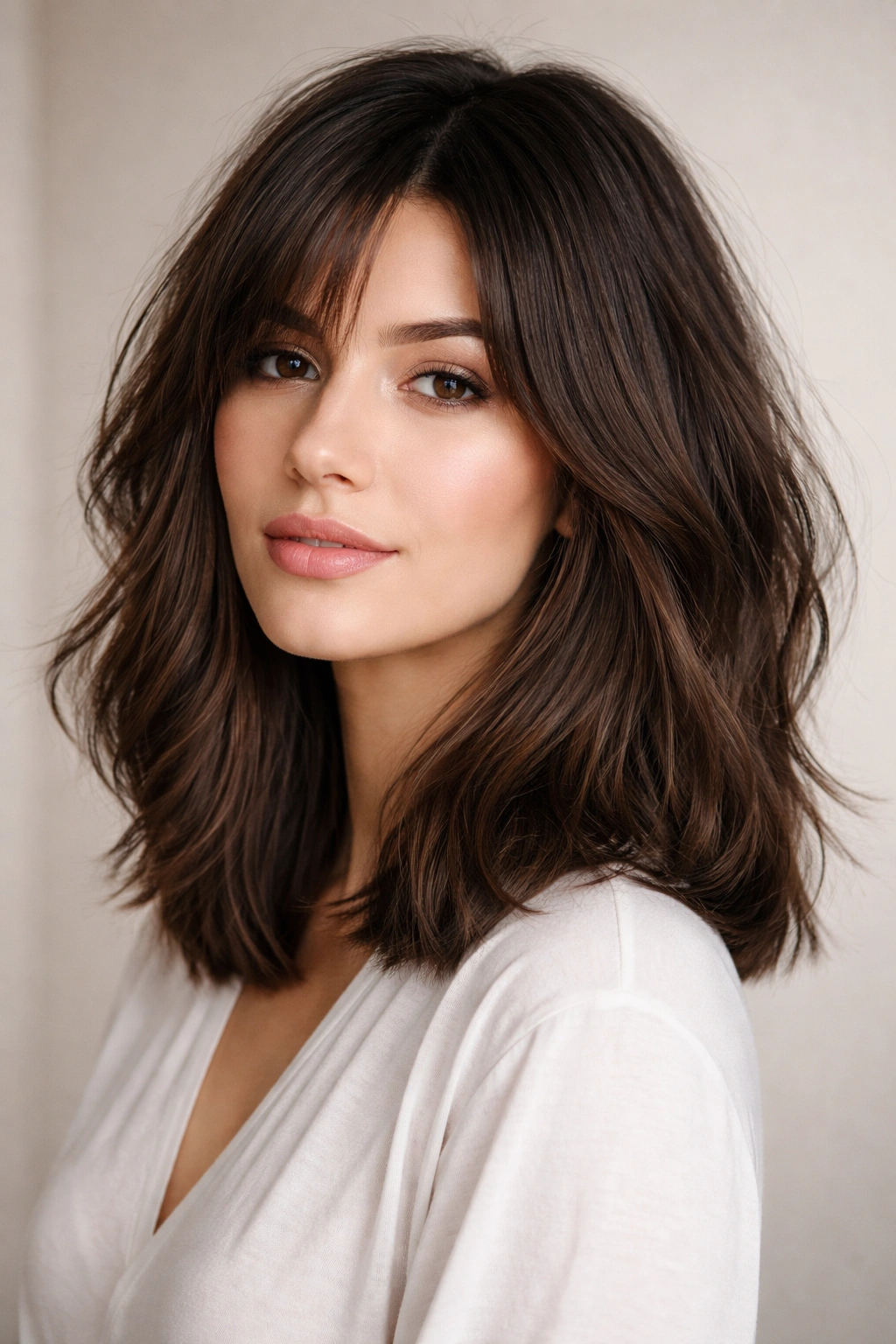
A layered blunt lob is a bit of a paradox — it has a blunt line at the bottom for structure, but strategically placed layers throughout prevent it from looking heavy or severe on thick hair. This is the style that gives you the polished, intentional look of a blunt cut while still getting the texture and movement benefits that thick hair needs. It’s the sophisticate’s choice — definitely short, but with enough polish and edge that it reads as intentional and editorial rather than just “I got a haircut.”
Why Blunt Lines With Layers Work Better Than Blunt Alone
A completely blunt lob on thick hair can look heavy, dense, and a bit severe. But add strategic layers throughout — especially around the face and through the crown — and suddenly you get the clean-edged look of a blunt cut with the movement and texture that makes thick hair manageable and interesting. The blunt bottom line gives it structure and edge, while the layers prevent weight and density from overwhelming your face.
The Specific Structure That Makes This Work
- Blunt, intentional line at the bottom (usually hitting at jaw or slightly shorter) for a polished, defined look
- Choppy, textured layers throughout the crown and sides that prevent flatness and create movement
- Longer face-framing layers that hit around cheekbone and create softness around your face
- Strategically textured ends — the blunt line has texture and choppy edges rather than being perfectly smooth
- Creates the illusion of lighter hair through the layers while maintaining the clean-edged look of a blunt cut
- Looks professional and polished while still being low-maintenance and easy to style
- Works beautifully with any hair texture — straight, wavy, or curly thick hair all benefit from this structure
Worth knowing: This cut requires a skilled stylist who understands how to use layers strategically without losing the blunt-line impact. Ask your stylist about their experience with layered blunt lobs on thick hair before booking.
9. The Textured Wolf Cut
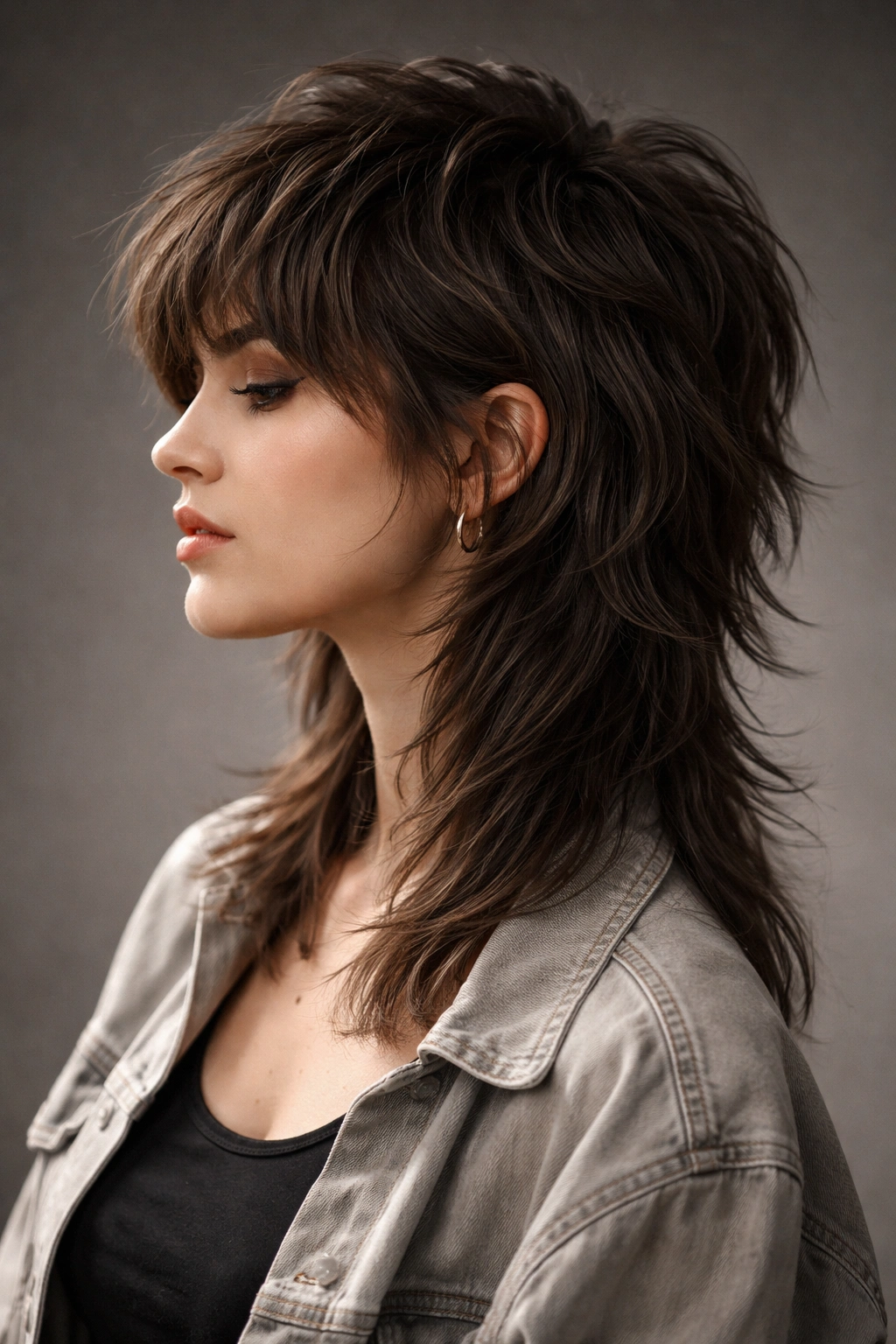
A wolf cut is the hybrid of a shag and a mullet — shorter, textured layers on top and longer length in back, but executed in a modern, intentional way rather than looking like an actual 80s mullet. For thick hair, a wolf cut removes bulk from the top and sides while keeping length in back, creating a really interesting silhouette that looks deliberately current and fashion-forward. It’s a bolder choice than some of the other cuts on this list, but if you want something that feels special and intentional, this delivers.
Why Wolf Cuts Work for Thick Hair Specifically
The wolf cut’s appeal is that it manages bulk through layers and texture on top while maintaining length in back for drama and movement. For thick hair, this means you get the manageability of a short cut up top where thickness tends to flatten you, while maintaining the length in back where it can actually move and look intentional. It’s sculptural and interesting without requiring high-maintenance styling.
The Design Elements That Make a Wolf Cut Succeed
- Textured, layered crown (usually shorter, 1½ to 2 inches) that prevents flatness and bulk on top
- Longer, textured back sections (often 3-4 inches or longer, depending on your preference) that create drama and movement
- The contrast between short and long is intentional and modern, not a styling mishap
- Sides are usually textured and shorter — not faded like an undercut, but definitely shorter than the back
- Works best with some natural wave or texture — the layers enhance natural movement rather than fighting against your hair type
- Requires some styling effort if you want to wear it in a way that emphasizes the wolf cut shape, but it also looks good just washed and air-dried
- Grows out in an interesting way — as it grows, it becomes more shag-like, which is still a beautiful look
Pro tip: A wolf cut is a bold choice, so make sure you love it in photos before you book. Ask your stylist to show you recent wolf cuts they’ve done, especially on thick hair, so you have a clear picture of how it will look.
10. The Cropped Mullet
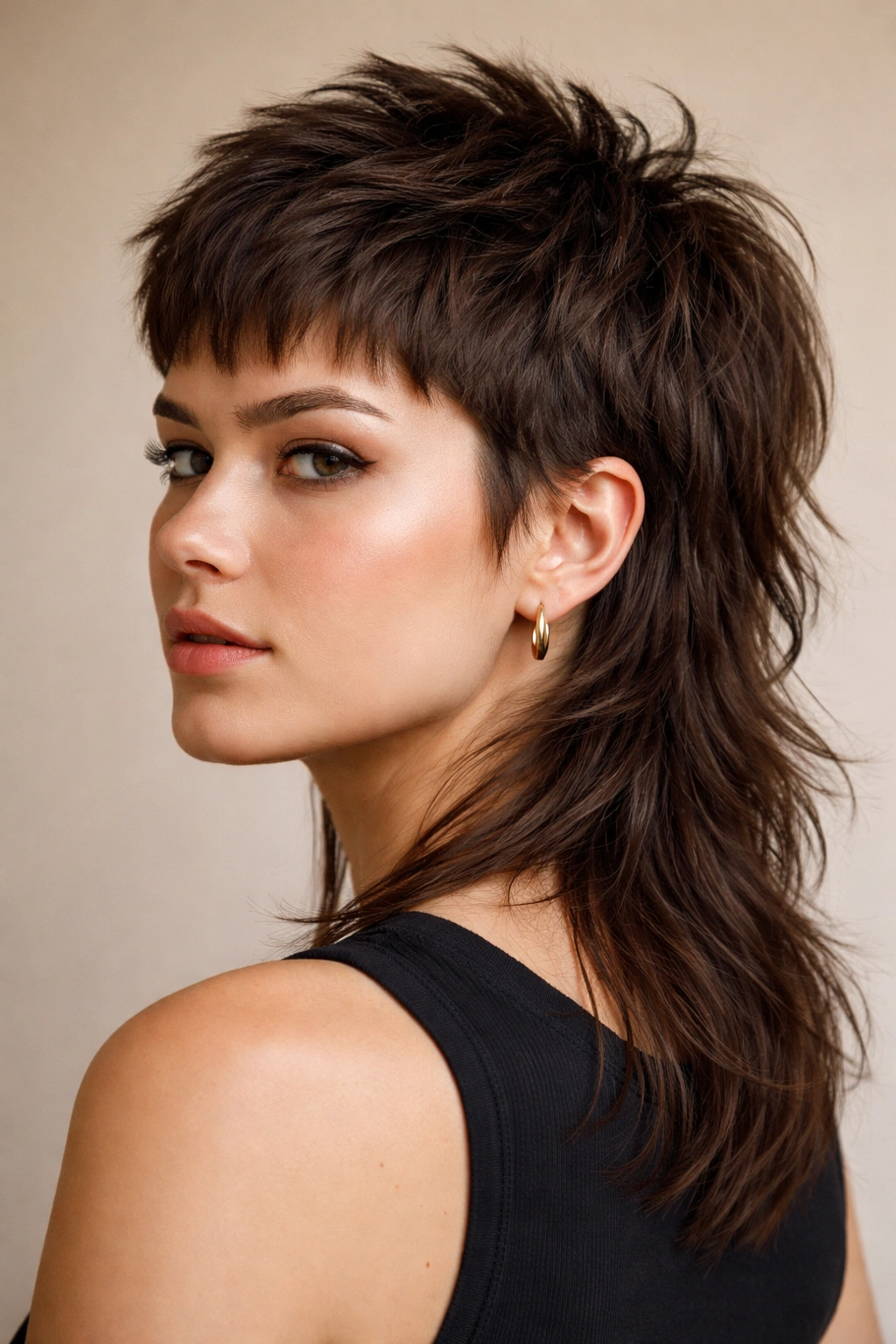
A cropped mullet (yes, mullets are back, but executed in a completely modern way) is a short front and textured sides with notably longer back sections that create a dramatic, fashion-forward silhouette. For thick hair, the cropped front removes weight where it would flatten you, while the textured longer back showcases the movement and texture that thick hair can actually achieve. This is the bold, statement-making choice on this list — it’s definitely short, definitely intentional, and definitely not for the faint of heart.
Why Cropped Mullets Work for Thick Hair When Executed Right
A cropped mullet isn’t a 1980s joke when it’s done with intention and modern styling sensibility. For thick hair, it solves the problem of bulk on top while celebrating the movement and texture that thick hair can achieve in length. The drama of the long back is balanced by the clean, textured front, and the overall effect is surprisingly modern and editorial — assuming it’s done by someone who knows how to execute this cut thoughtfully.
The Key Details That Make This Work
- Very short, textured front (usually ½ to 1 inch) that removes bulk without looking extreme
- Textured, slightly longer sides (usually 1 to 1½ inches) that blend between front and back
- Dramatically longer back sections (sometimes 3-6 inches or longer) that showcase texture and movement
- The back can be worn down for drama or styled up (in a bun, ponytail, or braid) for something different
- Requires the most confidence — this is a statement cut, not a safe choice
- Looks incredible with color — a subtle undercut color or a different shade on the longer back can amplify the modern vibe
- Genuinely low daily maintenance once you’re past the initial “getting used to it” phase
- Works best on people with some natural texture or wave that enhances the longer back sections
Insider note: Before you commit to a cropped mullet, live with the idea for a few weeks. Look at photos constantly. Follow people who wear this cut. Make sure you’re genuinely in love with the silhouette and not just intrigued by the boldness. This cut requires commitment and confidence to pull off.
Final Thoughts
The absolute game-changer for thick hair isn’t finding a cut that magically reduces density — it’s finding a cut that works with your density instead of fighting it. Every cut on this list embraces the weight and texture of thick hair, using strategic layering, texturizing, and sometimes dramatic contrasts to turn what feels like a burden into something that actually looks modern, intentional, and frankly easier to manage than the long hair you’ve been struggling with.
The maintenance commitment for any of these cuts is dramatically lower than you probably expect. Most of these styles genuinely require nothing more than a wash and a finger-comb through damp hair. Some need a trim every 4-6 weeks rather than every 8-10, but that’s a small price for hair that actually cooperates with you instead of fighting you every morning. The key is choosing a cut that matches both your face and your lifestyle — there’s no point in getting a gorgeous undercut pixie if you’re not willing to get it trimmed every 3 weeks, just like there’s no point in choosing a layered bob if you hate sitting still for styling.
Before you book your cut, find a stylist who has demonstrable experience with thick hair. Short cuts on thick hair require different techniques than short cuts on fine hair, and a stylist who doesn’t understand those differences will give you a cut that leaves you frustrated and frizzy. Ask to see their portfolio of short cuts specifically on thick hair. Ask them about their philosophy on texturizing and thinning. Ask them exactly how they approach managing weight in short cuts.
Once you find that stylist and get the right cut, you’ll finally understand what everyone’s been talking about when they rave about their “wash-and-go” hair. You’ll spend less time styling and more time actually enjoying how good your hair looks. That’s the real low-maintenance promise of these cuts — not that you never have to think about your hair again, but that your hair finally works for you instead of against you.
