



Layered bobs have become one of the most versatile and flattering haircuts available, and the best part? They work beautifully on virtually every hair type and texture. Whether you have fine, delicate hair that needs strategic layering to create the illusion of fullness, or thick, voluminous hair that benefits from texture and movement, there’s a layered bob out there designed specifically for you.
The magic of a well-executed layered bob lies in how the layers work with your natural hair density and growth patterns. For thin hair, strategically placed layers can add movement and the appearance of more volume without requiring heavy styling products or hours at the salon. For thick hair, layers prevent that heavy, blunt appearance and introduce airiness and shape that’s far easier to style and manage day-to-day.
What makes layered bobs so powerful right now is that they’re no longer one-size-fits-all. Your stylist can customize the depth of the layers, the angle of the cut, and the placement of shorter pieces to complement your face shape, hair texture, and lifestyle. This means you’re not just getting a trendy haircut—you’re getting a personalized style that actually works for you.
The following fifteen layered bob styles represent the most flattering, versatile, and practical options for both thin and thick hair types. Each one offers something different in terms of texture, movement, and maintenance, so you can find the perfect match for your hair goals.
1. The Classic Short Layered Bob with Soft Texture
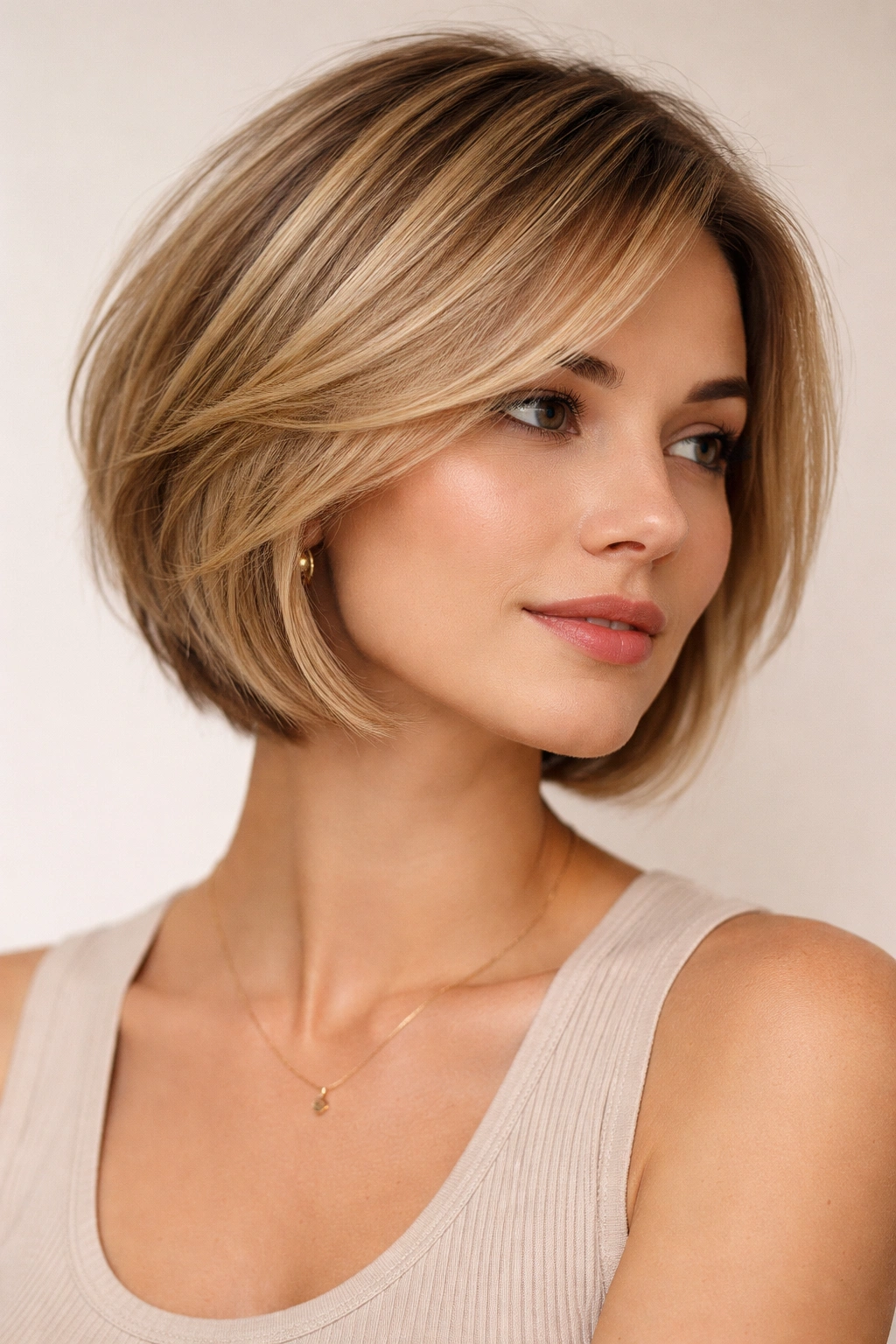
This timeless cut sits right at the chin, featuring subtle layers throughout that create soft, moveable texture without looking choppy or over-styled. The beauty of this style is its simplicity—it’s not trying to do too much, which actually makes it one of the smartest choices for thin hair that needs strategic volume rather than aggressive layers.
Why This Works for Multiple Hair Types
For thin hair, the layers in this cut are placed strategically to create a frame around the face without removing too much density from the crown where you need fullness. The soft texture creates visual interest and movement without depending on thick chunks of hair. For thick hair, this same style prevents the “helmet head” effect because those layers break up the weight while maintaining enough density to keep the overall shape intact.
What to Expect
- Sits at or slightly below the jawline for a universally flattering length
- Layers are subtle, typically 2-3 inches shorter than the bottom layer
- Works beautifully with or without styling products or heat tools
- Requires regular trims every 6-8 weeks to maintain the soft texture and prevent it from looking stringy
- Pairs well with side-swept bangs or a soft fringe for added dimension
Pro tip: Ask your stylist to create barely-there layers at the crown for thin hair—these give the illusion of volume without thinning out that critical area. For thick hair, request deeper layers throughout to create more movement and reduce overall density.
2. The Textured Pixie-Bob Hybrid for Fine Hair
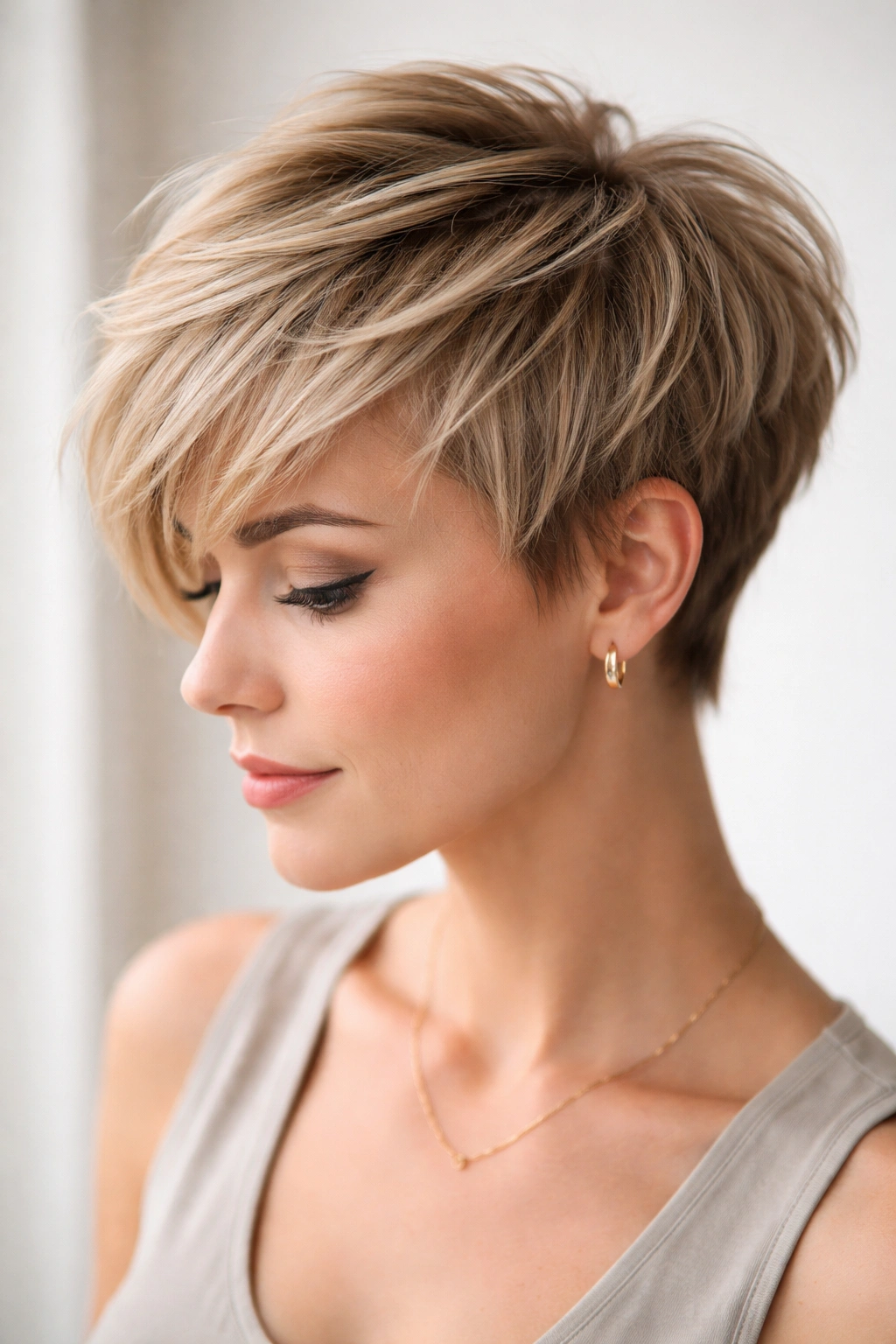
This cut bridges the gap between a bob and a pixie, featuring short, choppy layers throughout that create incredible texture and the appearance of density. It’s bold and modern while being exceptionally practical for those with fine or thinning hair who want a low-maintenance, high-impact style.
The Textured Layer Approach
This isn’t a traditional smooth bob—it’s all about creating dimension through texture. The layers are choppy and deliberate, meant to be styled with a bit of texture paste or sea salt spray to enhance their separateness. For thin hair, this approach is genius because it makes less hair appear like more through strategic texture and movement rather than bulk.
Key Styling Considerations
- Works best with a round or oval face shape due to the close-cropped sides and back
- Requires finger-styling or using a texturizing product to look intentional rather than messy
- The texture hides damage and imperfections better than a smooth bob
- Maintenance includes trims every 4-6 weeks to keep the layers sharp and defined
- Creates a modern, fashion-forward appearance without requiring thick, voluminous hair
Worth knowing: This cut works best on straight to wavy hair. If your hair is naturally curly or coily, the choppy layers may not read the way you want them to. Discuss texture expectations with your stylist before committing.
3. The Long Layered Bob with Blunt Ends
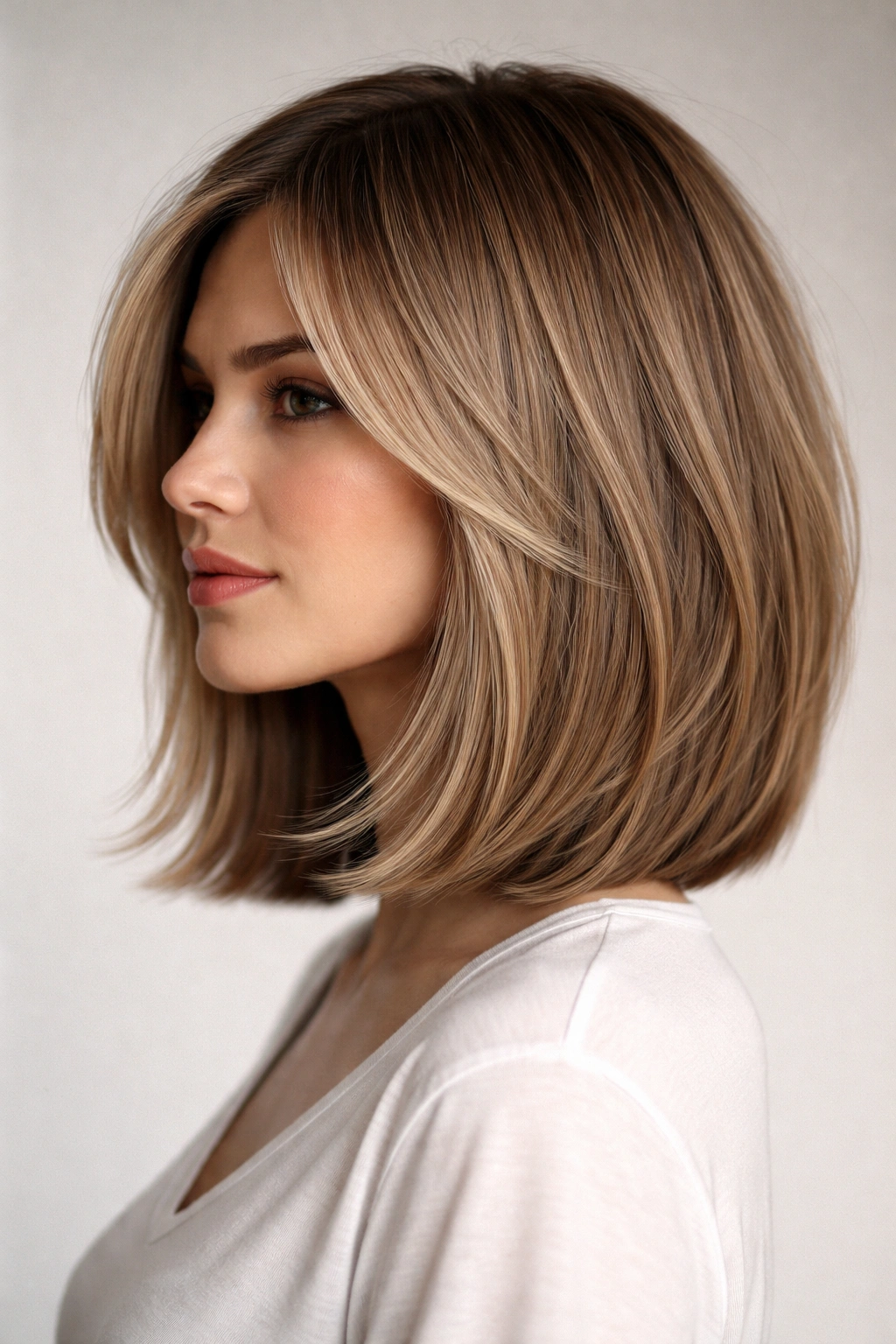
Sometimes called a “lob” when it extends to mid-shoulder, this style features more length while maintaining strategic layers throughout the mid-lengths and ends. The blunt ends create a chic, intentional finish while the internal layers provide movement and prevent the style from feeling heavy.
Why Blunt Ends Matter
The blunt endpoints create a clean, graphic line that reads as polished and intentional. This is especially important for thick hair, where rounded or tapered ends can sometimes look fuzzy or unkempt. For thin hair, the blunt ends help the overall shape appear more defined and deliberate, creating a frame that draws the eye to your face rather than revealing thin spots.
Maintenance and Styling
- Requires regular trims every 8-10 weeks to maintain the blunt line at the ends
- Layers should be placed in the mid-lengths rather than throughout, preventing over-texturing
- Blow-drying with tension enhances the movement created by the layers
- Works on both straight and wavy hair textures, though waves create a more relaxed appearance
- The combination of length and layers makes this flattering on most face shapes
Pro tip: Thick-haired friends, ask your stylist to angle the layers slightly (longer in front, shorter in back) to prevent the back from looking bulky while maintaining that chic length in the front.
4. The Face-Framing Layered Bob for Thin Hair
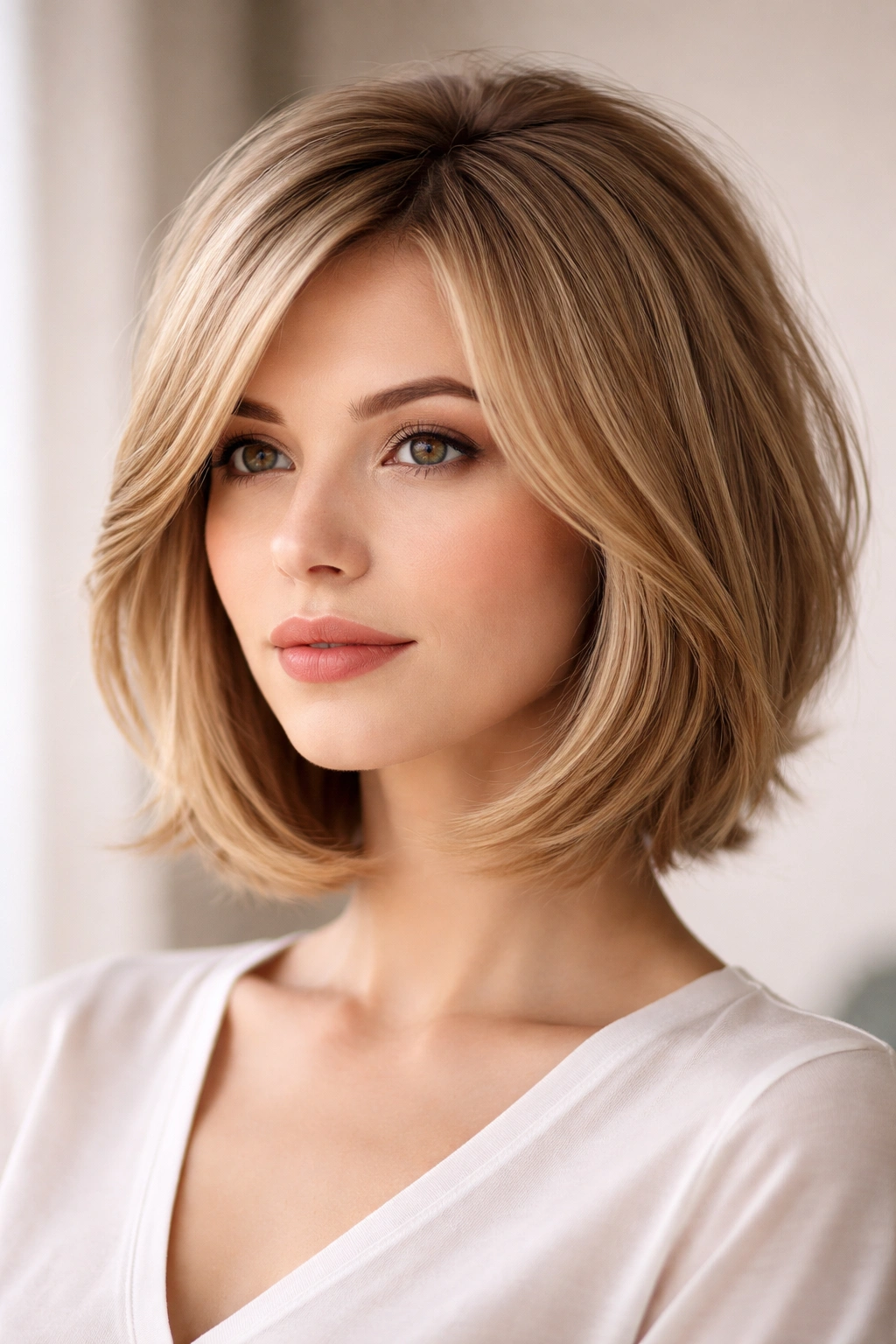
This cut prioritizes where the layers are placed rather than how many layers exist. Short, face-framing pieces surround your face to draw attention upward and create the illusion of dimension, while the back maintains more density at the crown.
Strategic Layer Placement
The genius of this approach is that all the layering happens in the front two-thirds of the cut, while the back stays relatively intact. This strategy is especially smart for thin hair because it doesn’t compromise the crown area, which is crucial for overall fullness. The layers in front create movement and texture that catches light, drawing attention to your face rather than potential thin spots at the back.
How It Works
- Front layers typically extend from cheekbone length to chin level
- Back remains fuller and shorter, creating height at the crown
- Works beautifully with side-swept styling for added dimension
- The front pieces should be cut at an angle, hitting the face at different lengths
- Combines the best of a statement bob with the volume-building strategy of smart layering
Real talk: If you’re dealing with significant thinning at the crown or along your hairline, this cut is your friend. It puts the visual emphasis exactly where you want it—on your face—while giving your stylist flexibility to work with your hair density.
5. The Messy Textured Layered Bob for Thick Hair
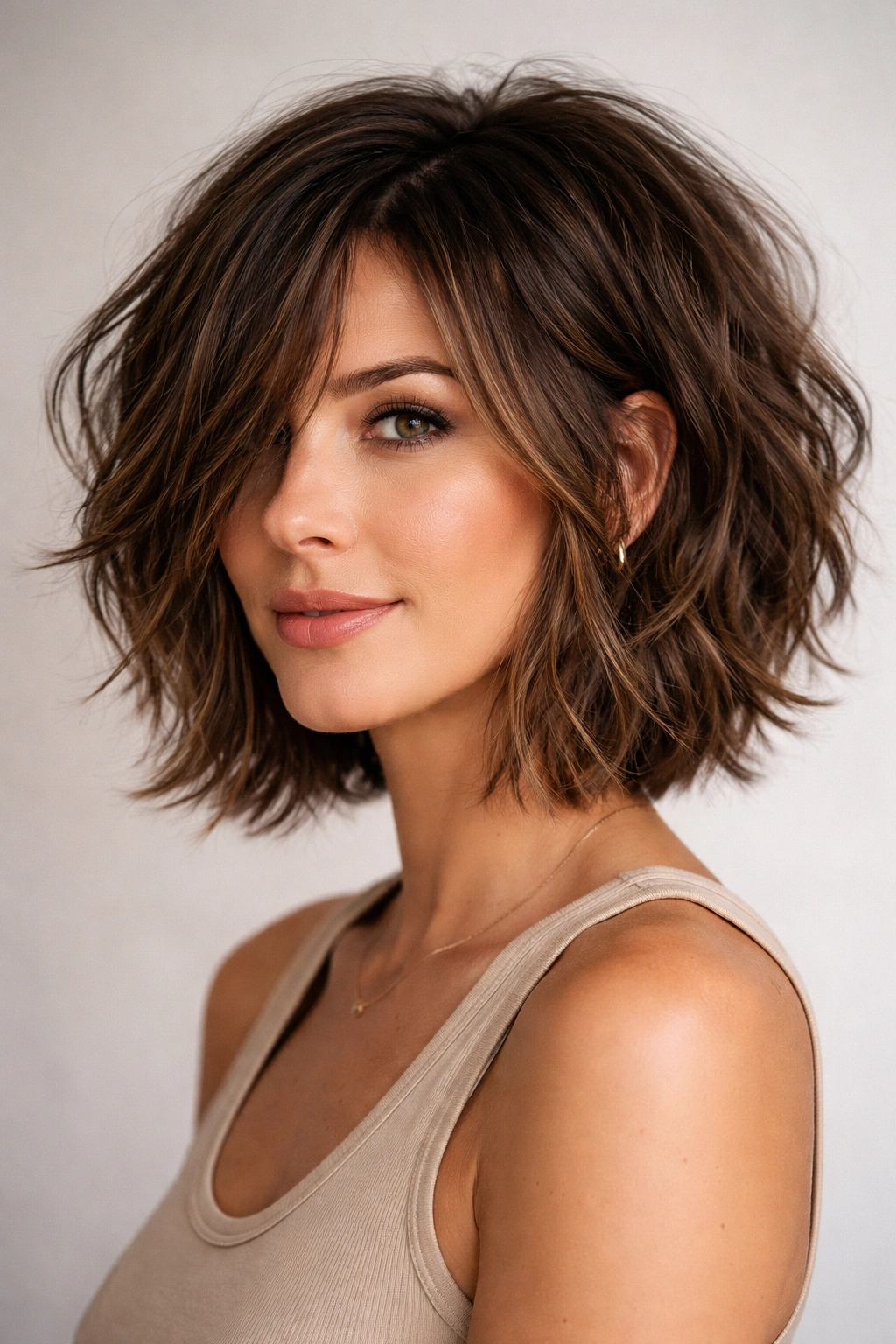
Designed specifically to embrace and enhance thick hair’s natural texture, this cut features deep, movement-driven layers that work with your hair’s density rather than against it. It’s meant to look lived-in and undone—which, paradoxically, requires more intention in the cut itself.
Creating Intentional Texture
Deep layers throughout, combined with careful texturizing or point-cutting techniques, break up the weight of thick hair while creating movement. The goal isn’t smoothness here—it’s recognizable texture and separation that makes the hair feel lighter and easier to style without requiring a flatiron or blow dryer.
Styling the Look
- Best styled with a light texturizing spray or cream rather than heavy products
- Looks better with your hair’s natural texture (waves, slight curl) emphasized rather than blown straight
- Layers should be cut at various depths, not uniformly, to create that undone appearance
- Works especially well on medium to longer bobs where the weight isn’t concentrated at one point
- The messiness is intentional—this style rejects the polished, perfect bob in favor of movement
Worth knowing: This cut requires that you actually like your hair’s natural texture. If your thick hair is straight and you want to keep it that way, choose a different style. This one shines when you embrace your waves or slight curl pattern.
6. The Textured Shag-Bob with Modern Vibes
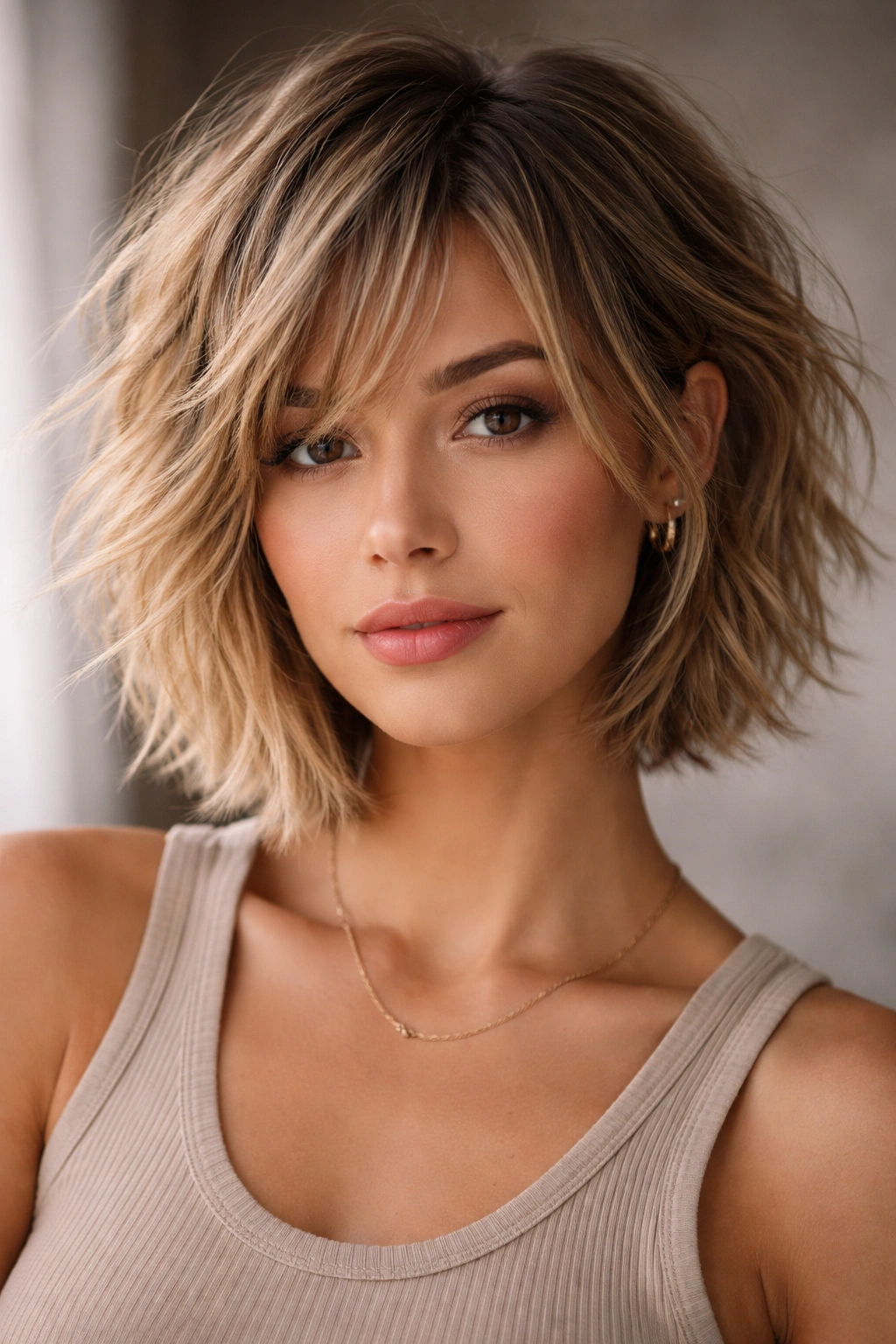
Part shag, part modern bob—this style features lots of choppy, overlapping layers throughout that create incredible movement and a contemporary edge. It’s younger and bolder than a traditional bob while still being surprisingly wearable for most face shapes and hair types.
The Shag-Bob Difference
Unlike a classic shag haircut, which can be difficult to style, this version maintains enough structure from the bob framework to look intentional without excessive styling effort. The layers are choppy and textured, meant to be finger-styled or lightly brushed rather than blown out perfectly. For thick hair, this creates fantastic movement and dimension. For thin hair, the choppy layers can create the illusion of more density if styled correctly.
Making It Work for You
- Requires regular styling with product (texturizing cream or salt spray) to look intentional
- Pairs beautifully with feathered bangs or a shag-style fringe
- The modern shag-bob works on straight, wavy, and curly hair textures
- Trim every 6-8 weeks to keep layers sharp and prevent a mullet-like appearance
- Best on people who enjoy styling their hair and don’t mind a bit of product use
Pro tip: Ask your stylist to focus the deepest, choppiest layers around the face and crown area. This creates visual interest right where it matters while maintaining slightly more density in the back.
7. The Graduated Layered Bob (Shorter Back, Longer Front)
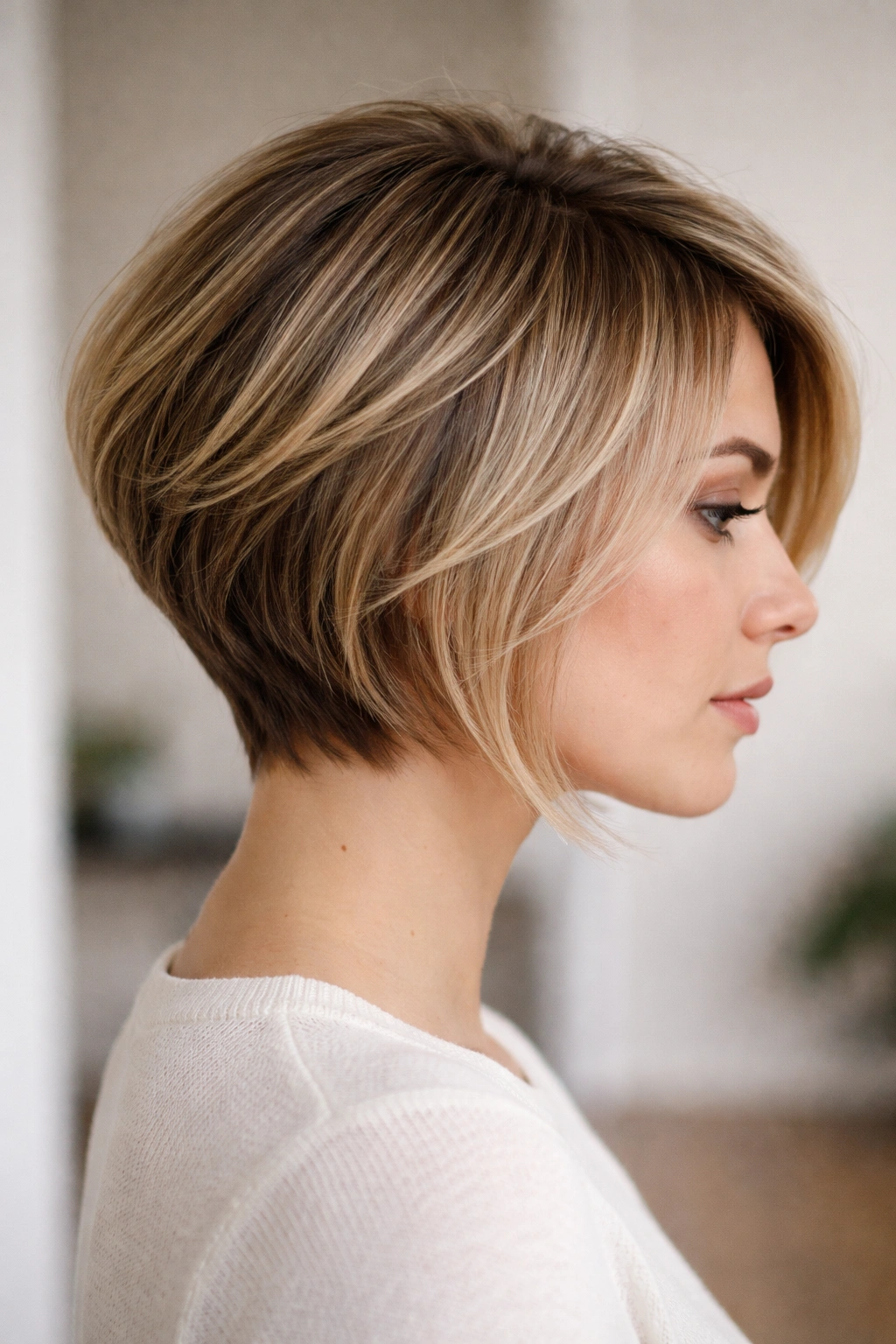
This architectural cut features short, textured layers in the back that gradually lengthen toward the front, creating a flowing, angled shape. It’s extremely flattering on most face shapes and offers strategic styling advantages for both thin and thick hair.
The Graduated Strategy
The graduated angle means less weight and density in the back (great for thick hair that needs lightening) while maintaining more length in the front (flattering for most faces and helpful for thin hair that needs every strand working toward fullness). The layers are distributed across this angle, creating dimension at every level.
Visual and Practical Benefits
- Creates the illusion of more volume at the crown due to the shorter back layers
- The longer front pieces frame the face beautifully, especially with side-swept styling
- Works exceptionally well on people with larger foreheads or wider face shapes
- Requires slightly more styling attention than a blunt bob but less than a shag style
- The angle naturally creates movement without requiring heavy texturizing
Worth noting: If you have a round face, ask your stylist to angle the front layers so they’re longer and slightly angled outward, which elongates the face. For square faces, the shorter back and longer front actually complements your proportions beautifully.
8. The Choppy Layered Bob with Razor Texture
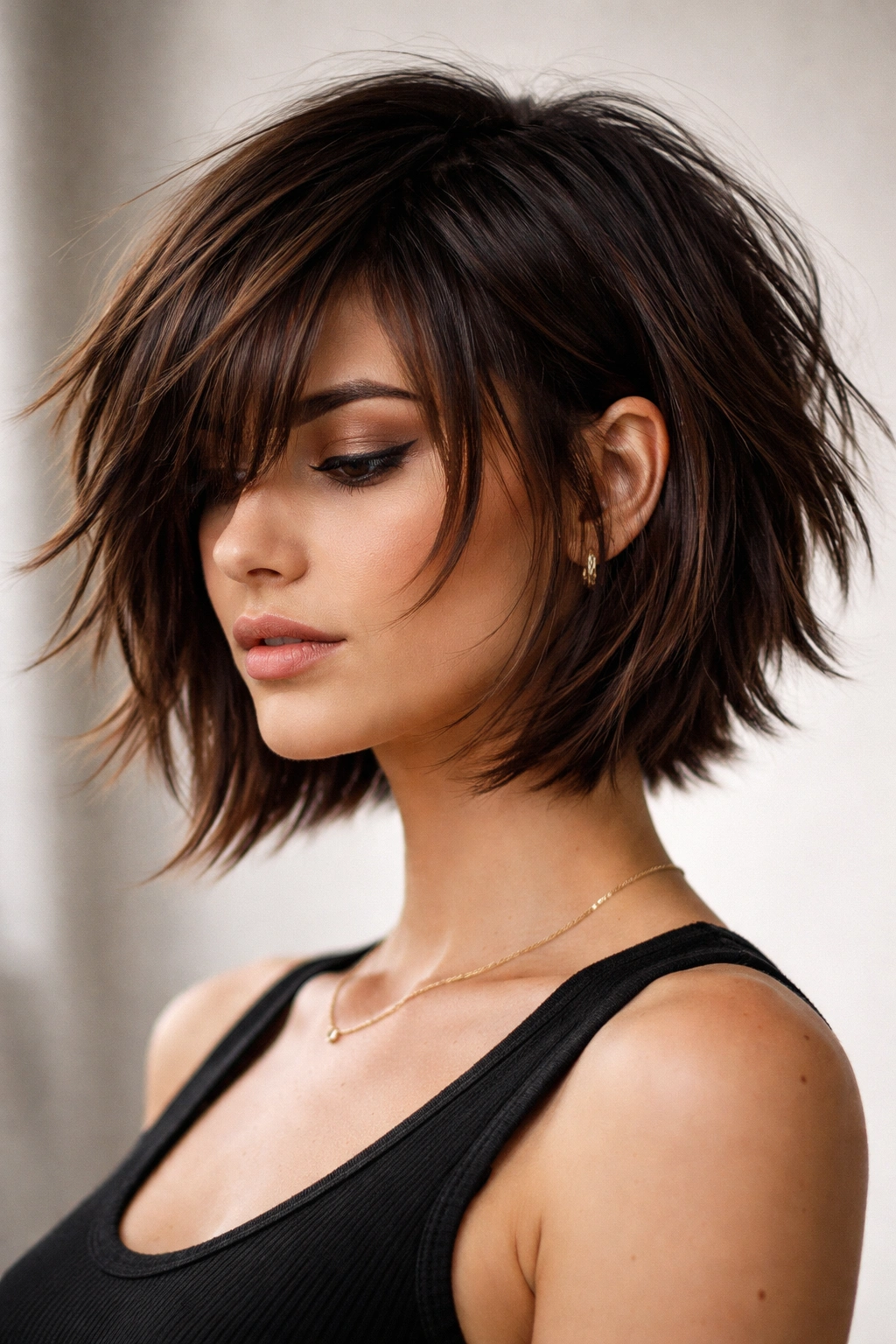
Achieved with razor-cut layers rather than scissor-cut ones, this style has an intentionally edgy, modern appearance. Razor cutting creates sharper lines and more visible texture separation, making it an excellent choice for thick hair that needs serious lightening and movement.
Razor vs. Scissors: The Difference It Makes
Razor-cut layers create sharper, more defined texture because the razor blade cuts at an angle rather than straight across like scissors do. This technique works beautifully on thick hair because it removes weight more effectively and creates visible separation between layers. For thin hair, razor cutting can sometimes make ends look wispy or damaged, so discuss this carefully with your stylist.
The Modern Choppy Aesthetic
- Very textured, modern appearance—not smooth or polished
- Requires regular trims (every 5-7 weeks) because razor-cut ends can look stringy as they grow out
- Best on thick hair or hair with natural texture (waves or curl)
- Styling-wise, works best with product and some texturizing effort
- Creates a fashion-forward, high-style appearance that photographs beautifully
Real talk: If you have fine or thin hair, razor cutting isn’t your friend. The technique works by removing hair to create texture, which is the opposite of what you need. Stick with scissor-cutting and blunt or subtle layering instead.
9. The Rounded Layered Bob for Delicate Features
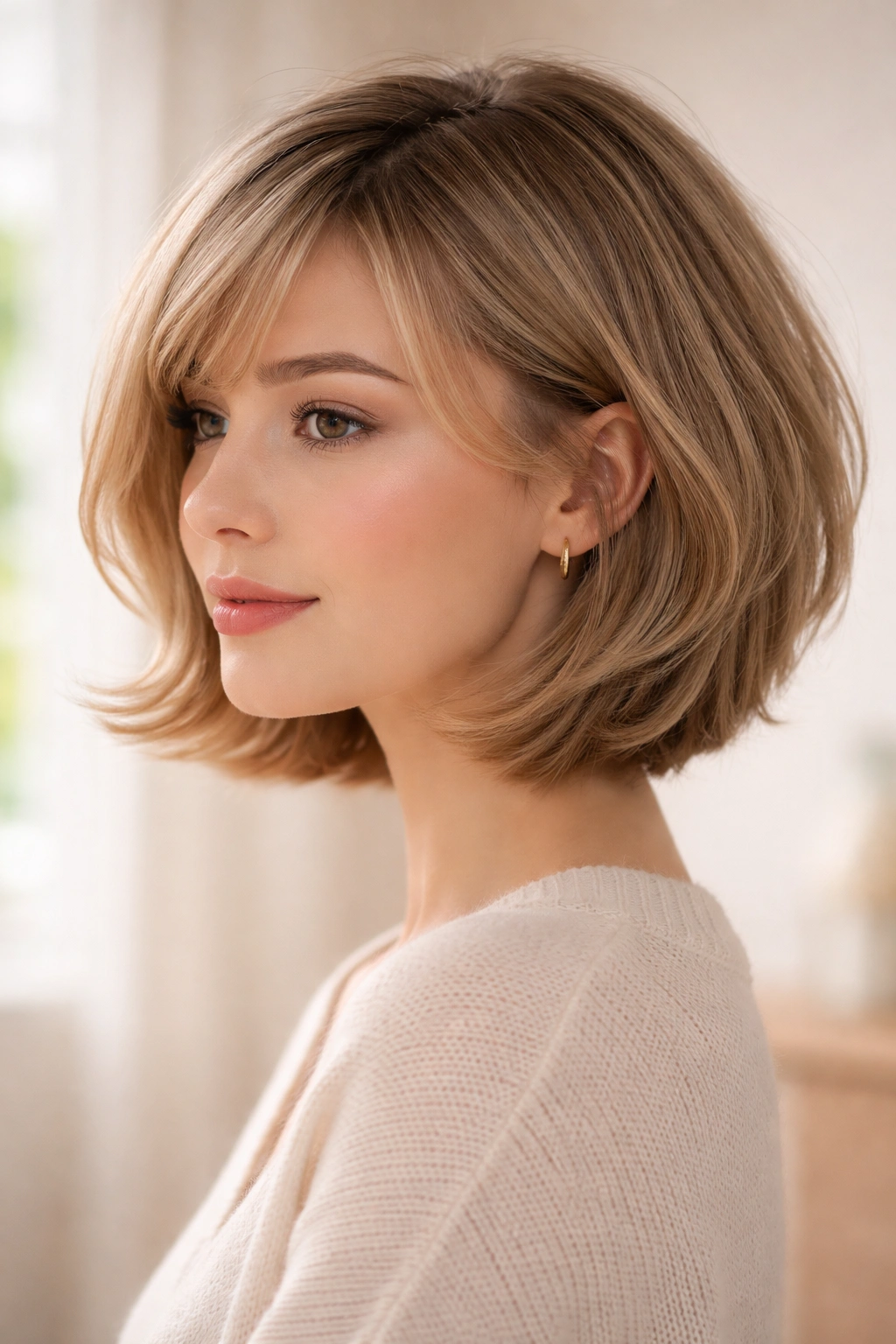
This softer take on the layered bob features rounded, curved layers rather than choppy or blunt ones. It’s exceptionally flattering on people with delicate facial features, smaller faces, or those who prefer a softer, more romantic aesthetic.
Soft Curves and Strategic Layering
Instead of choppy layers or blunt lines, this cut uses layers that are rounded and curved to create movement while maintaining softness. The layers blend into each other rather than appearing as distinct, separate pieces. This approach works beautifully for thin hair because it creates dimension without looking choppy or fragile.
Who This Suits Best
- Exceptionally flattering on oval, heart-shaped, or smaller face shapes
- Works on both straight and wavy hair, though waves enhance the soft, romantic quality
- The rounded layers prevent a sharp or harsh appearance
- Requires less aggressive styling—looks good with just blow-drying and maybe a round brush
- Feels more classic and timeless than choppy or heavily textured alternatives
Pro tip: The key to this look is asking your stylist to round the layer lines using point-cutting or slide-cutting rather than blunt cuts. This creates curves that soften your features rather than defining them sharply.
10. The Disconnected Layered Bob for Thick Hair
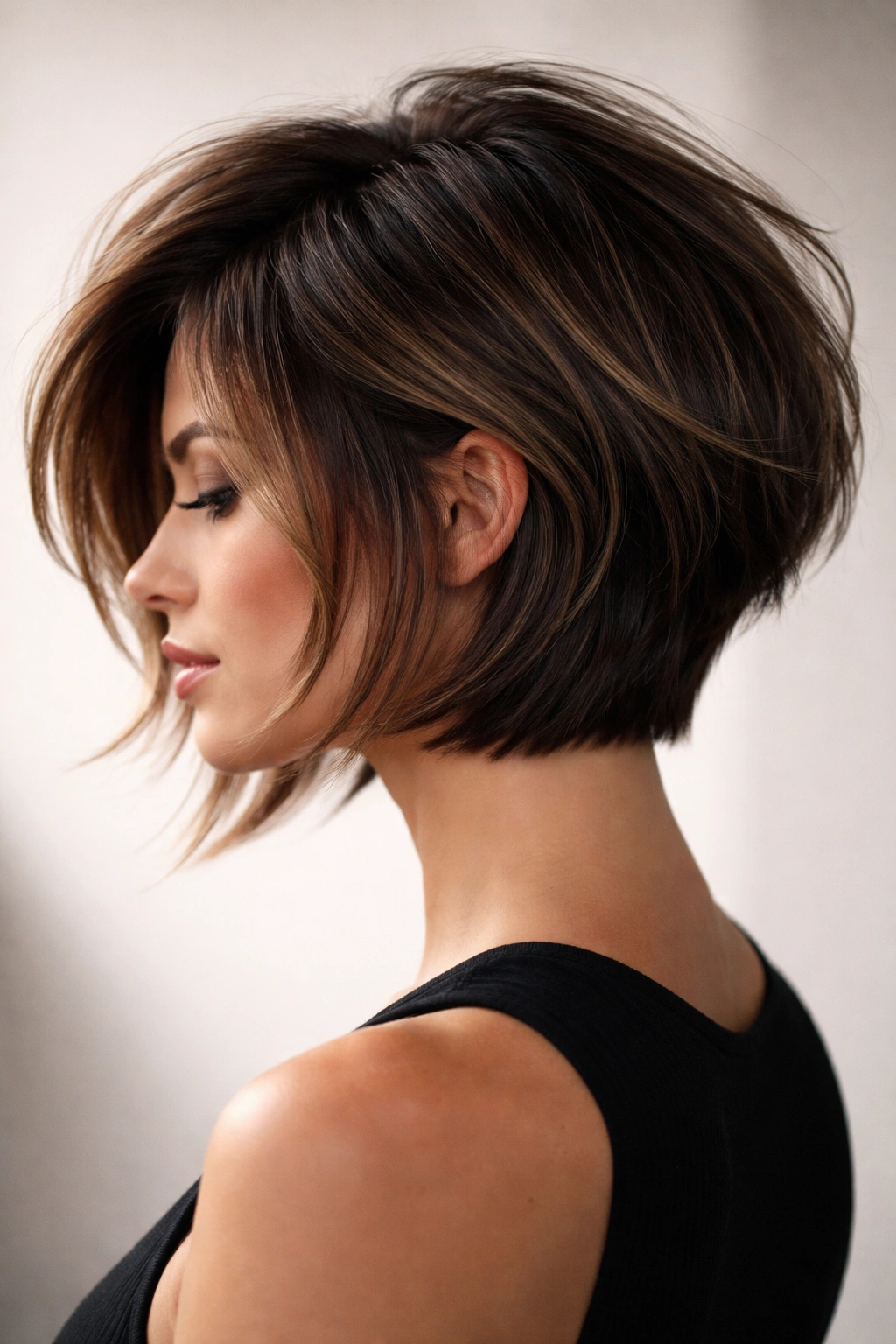
This bold cut features obvious disconnection between layers—shorter pieces on top and longer pieces underneath that don’t blend seamlessly together. It’s modern, architectural, and brilliantly suited for thick hair that needs serious weight removal.
What “Disconnected” Means
In cutting terminology, disconnected layers mean that the shorter layers on top don’t gradually transition into the longer layers below—instead, there’s obvious visual separation. This creates a sculptural, high-fashion appearance. For thick hair, this technique is genius because it removes maximum weight while creating incredible dimension and movement.
The Bold Statement
- Creates a very modern, fashion-forward appearance
- Works best on people with confidence—this isn’t a subtle haircut
- Requires regular trims every 6-8 weeks to maintain the disconnected lines
- Best on straight to wavy hair; heavily curly hair can blur the disconnected lines
- Styling-wise, works well with light product and finger-styling or with a blow dryer for more polish
Worth knowing: This cut isn’t for everyone. It’s bold and modern, and it reads young and fashion-forward. If you’re looking for something classic or conservative, a disconnected layered bob might feel too trendy for your comfort level.
11. The Piece-y Layered Bob with Textured Ends
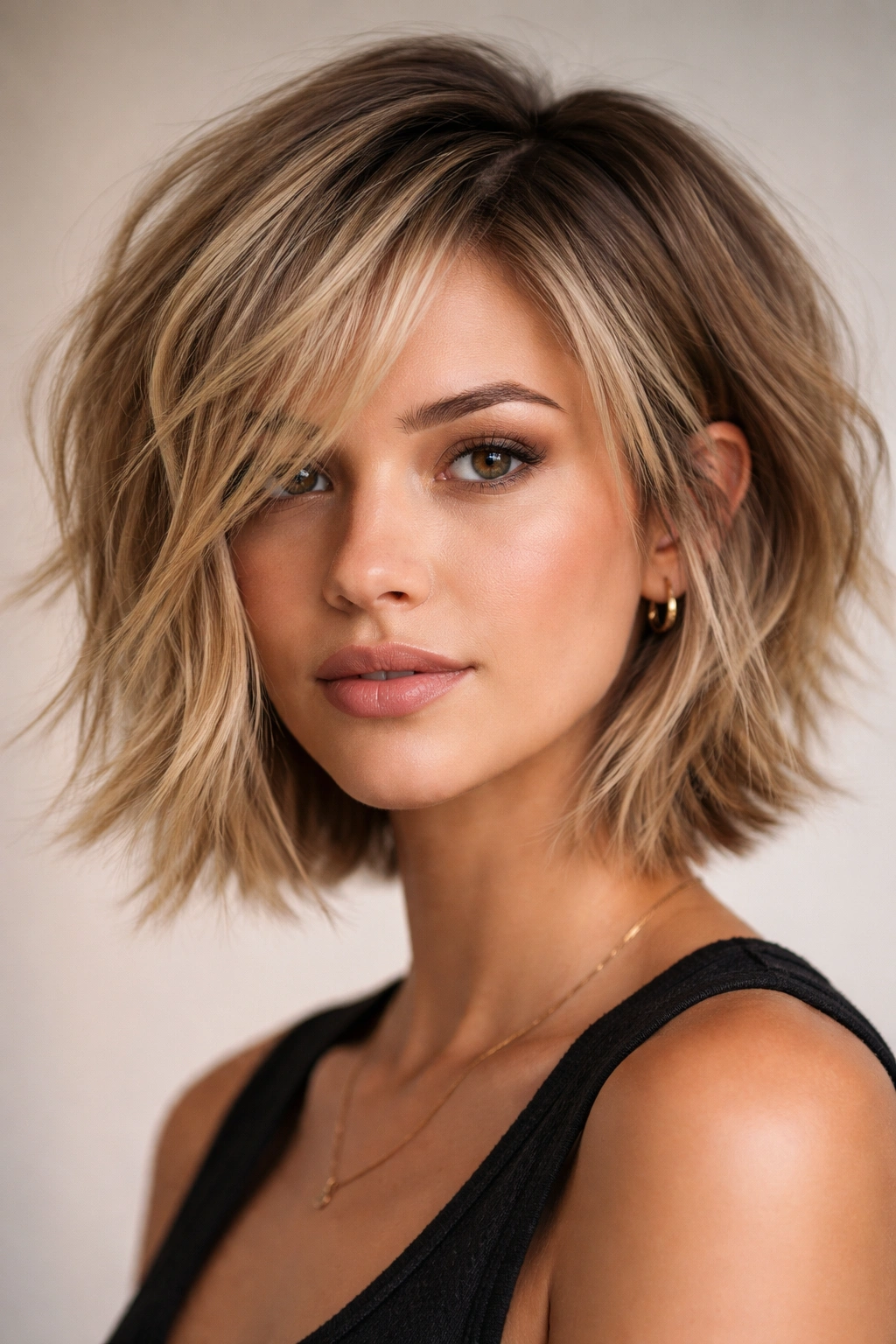
This style emphasizes individual pieces and strands by using point-cutting or texturizing techniques throughout. The ends feel separated and defined rather than blended and smooth, creating a contemporary, almost undone aesthetic.
Creating Visible Piece-Work
The stylist uses point-cutting techniques (cutting at an angle into the hair rather than straight across) to create texture and separation in every layer. This makes individual pieces and strands visible, especially when styled with product or when light hits the hair. For thick hair, this removes weight effectively. For thin hair, this can make the hair look fuller because the piece-work creates visual texture.
Styling and Texture
- Works beautifully with sea salt spray or texturizing cream to emphasize the piece-work
- Looks good with tousled or undone styling rather than polished blow-outs
- The piece-y texture works on most hair types and textures
- Requires trims every 6-8 weeks to keep the texture definition crisp
- Reads very contemporary and editorial without being as bold as a full shag or disconnected cut
Pro tip: Ask your stylist to focus the heaviest texturizing on the layers around your face and crown. This creates visual interest and movement exactly where it matters most.
12. The Side-Swept Layered Bob with Dramatic Asymmetry
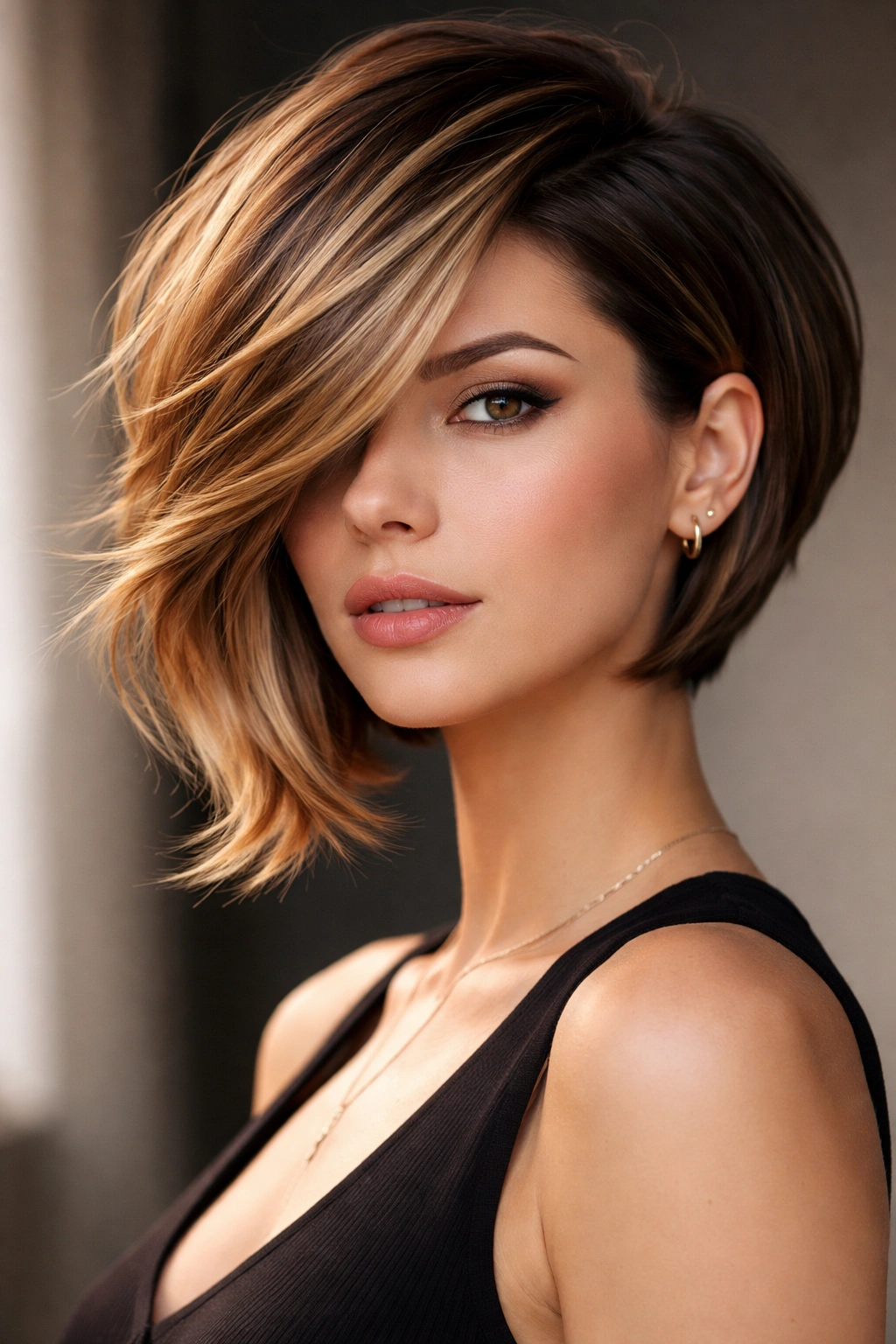
This style goes beyond the traditional side-swept bob by incorporating longer layers on one side and shorter layers on the other, creating an asymmetrical, eye-catching appearance. It’s bold, modern, and exceptionally flattering for certain face shapes.
The Asymmetrical Approach
One side features longer hair (often chin-length or longer) while the other side is considerably shorter (sometimes ear-length or even shorter). Layers are distributed throughout, but the asymmetry is the defining feature. This is not a subtle haircut—it makes a statement.
Face Shape Considerations
- Exceptionally flattering on oblong or rectangular face shapes, as the asymmetry adds width
- Can overwhelm petite or round faces, though it can work if styled carefully
- The longer side should frame the face to your advantage
- For thick hair, this removes weight asymmetrically, which is sometimes exactly what you need
- For thin hair, the longer side should be your better-haired side if density is uneven
Worth knowing: Asymmetrical bobs require more styling attention. You’ll need to style the longer side differently than the shorter side, and this style works best if you’re willing to use product and styling tools somewhat regularly.
13. The Textured Layered Bob with Wispy Bangs
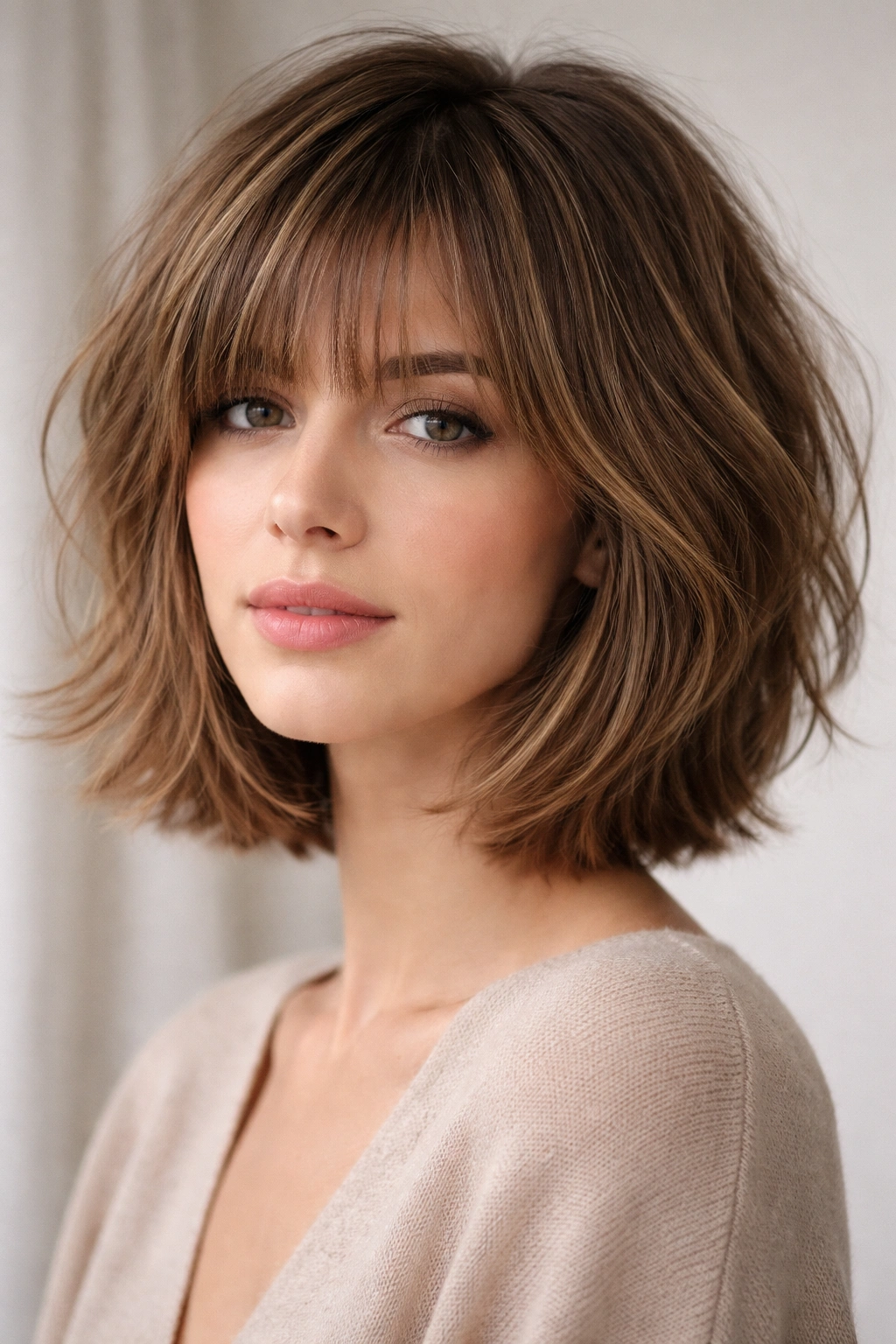
This approachable, contemporary cut pairs a layered bob with soft, wispy bangs that graze the eyebrows. The bangs add a youthful, modern element while the layered bob provides dimension and movement.
The Wispy Bang Addition
Wispy bangs (also called feathered bangs) are longer and thinner than blunt bangs, creating a soft, face-framing effect. They work beautifully with a layered bob because they extend the layering strategy into the front, creating even more movement and texture around the face. For thin hair, wispy bangs avoid that heavy, dense look that blunt bangs can create.
Integration and Styling
- Wispy bangs require regular trims (every 3-4 weeks) to maintain their shape
- The bangs blend with the layers of the bob, creating a cohesive, integrated look
- Works on straight, wavy, and slightly curly hair
- Requires some styling—wispy bangs look best when slightly tousled or textured
- The bangs add a youthful quality while the layered bob keeps it contemporary
Pro tip: If you’re considering wispy bangs, discuss your face shape and hair texture with your stylist. Bangs aren’t universally flattering, and wispy ones especially suit certain proportions and styling habits.
14. The Dense Layered Bob for Maximum Texture (Thick Hair Specialist)
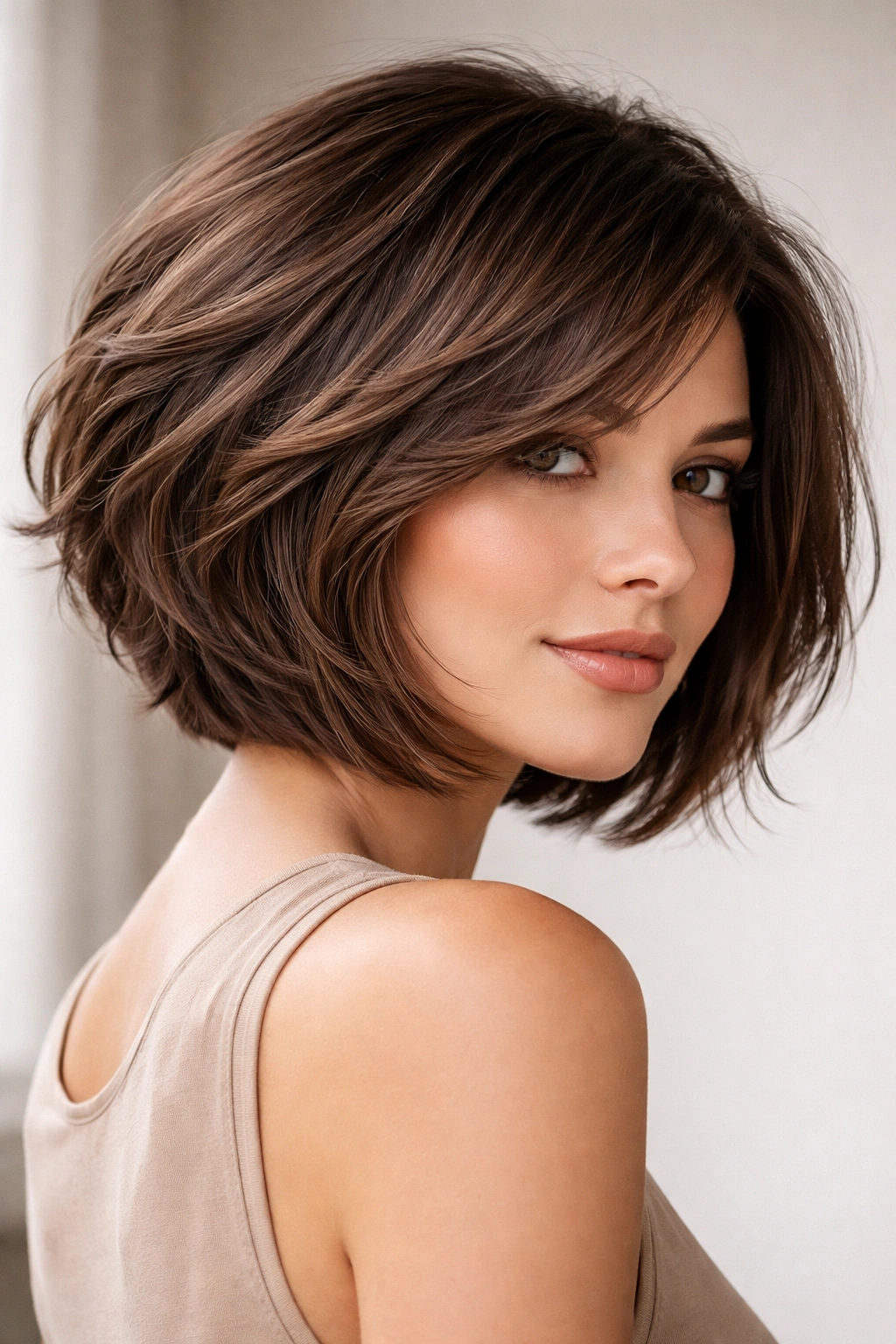
This cut is engineered specifically for thick hair that needs serious lightening and movement. It features layers at multiple depths throughout, creating tons of texture and movement rather than just a few strategic layers.
Strategic Density Reduction
Unlike bobs that feature just a few layers, this style uses many layers at varying depths to remove significant weight while maintaining the bob’s essential shape. Each layer is purposefully placed to maximize movement and prevent the hair from feeling heavy or difficult to style. This is not a subtle approach—it’s aggressive texturizing designed to transform how thick hair looks and feels.
The Transformation
- Reduces styling time dramatically compared to a blunt or minimally layered bob
- Creates incredible movement and dimension that thick hair sometimes lacks with fewer layers
- Works beautifully on wavy or curly hair, where multiple layers enhance natural texture
- Requires regular trims every 6-8 weeks to maintain texture definition
- Best styled with product that enhances texture (creams, gels, or sea salt sprays)
Worth noting: This cut is all about texture and movement. If you love the sleek, polished look of a perfectly blow-dried bob, this isn’t your style. This is for people who embrace their hair’s natural texture or who enjoy styling with product.
15. The Customizable Layered Bob (The Chameleon)
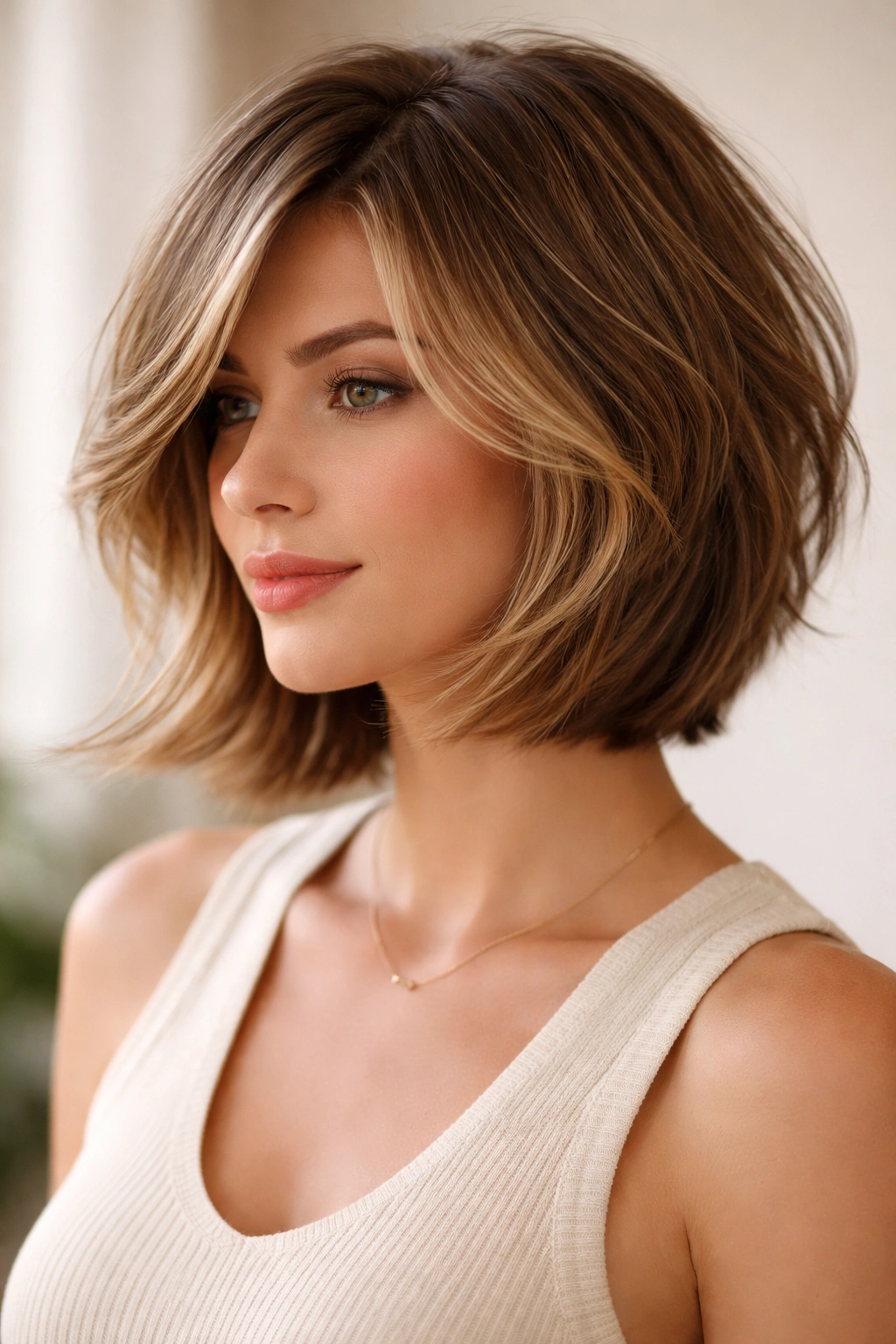
The final style is less about a specific cut and more about a philosophy: the importance of working with your stylist to customize a layered bob specifically for your hair type, face shape, lifestyle, and aesthetic preferences. This cut exists in different forms depending on your needs.
Making It Your Own
The most successful layered bobs are customized. Your stylist should consider:
- Your hair’s natural texture and density
- How much time you’re willing to spend styling daily
- Your face shape and what proportions you want to emphasize
- Whether you prefer soft and romantic or modern and edgy
- How often you’re willing to come in for maintenance trims
What to Discuss With Your Stylist
- Your styling commitment: Are you blow-drying daily, or do you prefer wash-and-go texture?
- Your hair’s personality: Does it have natural waves, or is it stick-straight?
- Your density concerns: Do you need illusion of volume, or do you need weight removed?
- Your face shape: What do you want to emphasize or de-emphasize?
- Your aesthetic goals: Do you want timeless and classic, or trendy and modern?
Real talk: The best layered bob isn’t the one you see on someone else—it’s the one your stylist customizes for you. Bring inspiration photos, but also have an honest conversation about your hair and lifestyle. That conversation is what transforms a generic haircut into something that actually works for you.
Final Thoughts
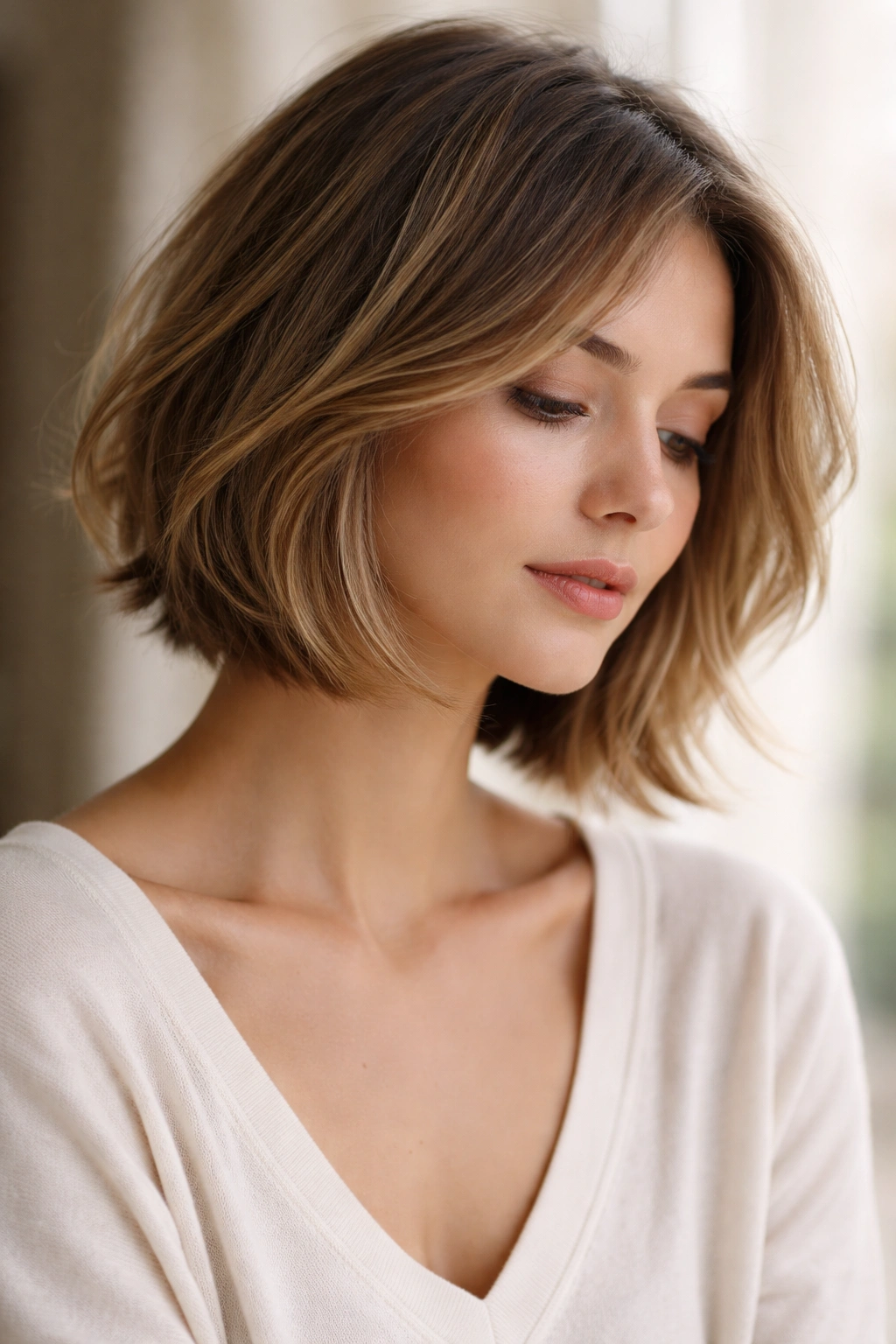
Layered bobs have earned their reputation as one of the most versatile, flattering, and practical haircuts available. Whether your hair is thin and fine, thick and voluminous, or somewhere in between, there’s a layered bob approach that will work beautifully for you.
The key to choosing the right style isn’t just finding the one you like best in a photo—it’s understanding why that cut works and whether it aligns with your hair type, styling habits, and lifestyle. A cut that requires daily blow-drying and styling product won’t serve you well if you prefer low-maintenance mornings. Similarly, a cut designed to create illusion of volume in thin hair won’t work if your hair is thick and heavy.
When you sit down with your stylist, come prepared with specific conversation points: how you want the cut to work with your hair’s natural texture, how much maintenance you’re willing to commit to, and what you hope to achieve with this new style. The most successful haircuts are collaborative—your stylist brings technical expertise, but you bring knowledge of your own hair and the honest assessment of what will actually work in your life.
