



Natural hair has become a powerful form of self-expression, cultural pride, and creative artistry—and the possibilities are truly endless. Black women are celebrating their hair’s natural texture with styles that range from beautifully simple to intricately detailed, each one reflecting individual personality and heritage. Whether you’re looking for an everyday protective style, something bold for a special occasion, or a low-maintenance look that still turns heads, the world of natural hairstyling has evolved into an art form that’s both deeply personal and visually stunning.
What makes natural hairstyles so compelling right now is the perfect balance between embracing authenticity and embracing creativity. You’re no longer limited to choosing between “natural” and “styled”—these hairstyles ARE the styling. They celebrate the unique texture and beauty of coily, curly, and kinky hair while allowing for infinite customization through color, braiding patterns, accessories, and structural techniques. From sleek and polished to textured and free-flowing, there’s a natural hairstyle for every mood, lifestyle, and occasion.
The diversity of these styles also means there’s something for everyone, regardless of hair length, texture type, or maintenance preferences. Some protect your hair while you sleep, others keep it off your face during busy days, and some are pure creative expression that makes a statement the moment you walk into a room. Let’s explore 25 of the most beautiful, practical, and inspiring natural hairstyles that Black women are confidently wearing right now.
1. Sleek High Ponytail
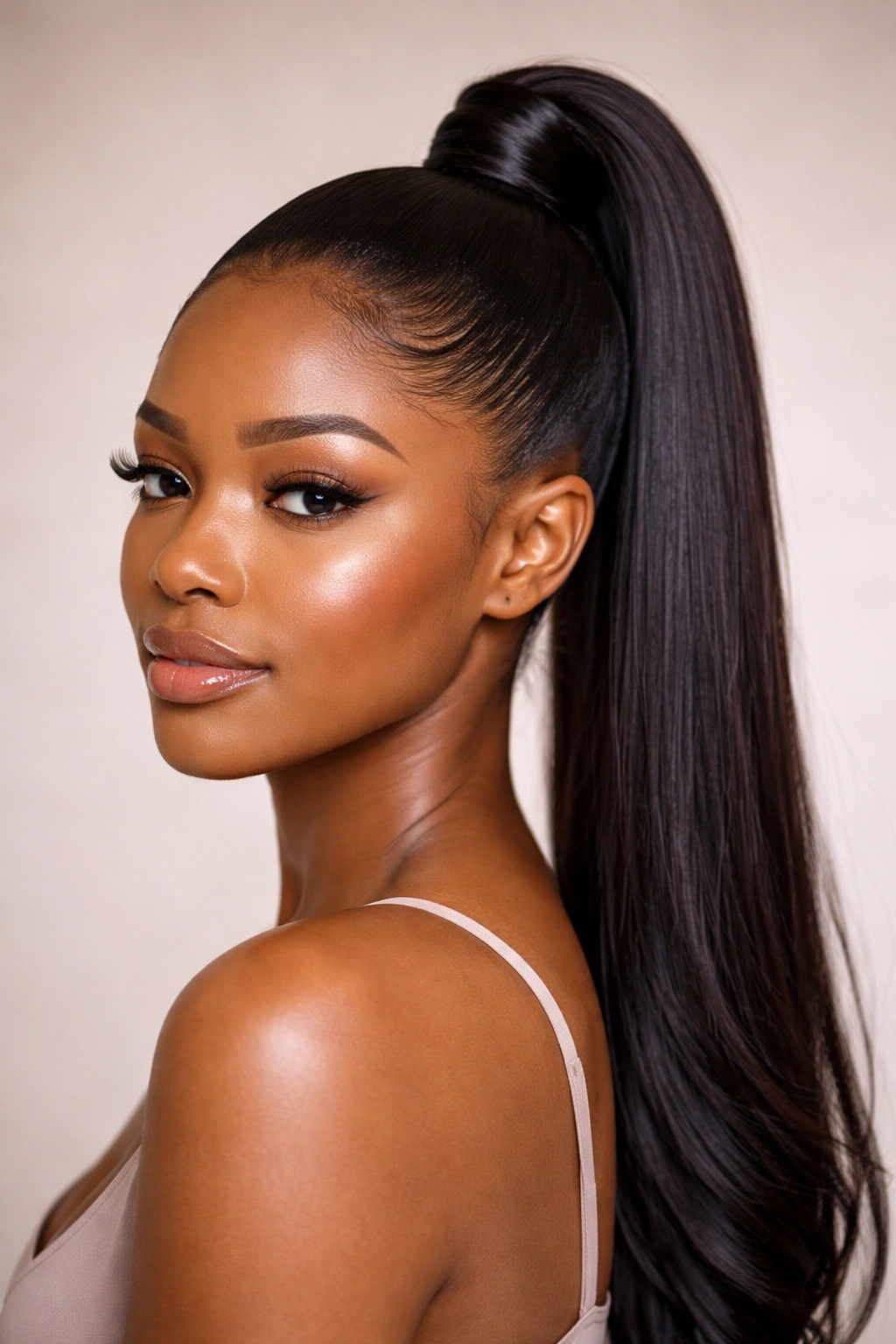
A sleek high ponytail is the perfect balance between polished and effortless, pulling your natural hair straight back into a clean, elevated look that works for everything from the boardroom to brunch. This style relies on smooth edges and a tight, secure base, so using a good edge control product and a fine-tooth comb is non-negotiable. The key is getting those edges laying flat without breaking your hair—use light pressure and a product with a firm but flexible hold.
Why This Works for So Many People
The high ponytail flatters almost every face shape and is equally stunning on coily, curly, or textured hair. It keeps your hair off your neck during warm weather, removes hair from your face without requiring heat or straightening, and takes just minutes to execute once you get the technique down. Whether your hair is shoulder-length or waist-length, this style adapts beautifully.
How to Nail the Look
- Use a smoothing cream or gel on a damp hair section before gathering the ponytail
- Brush the hair at the crown back firmly (but gently) to create a sleek base
- Secure the ponytail with an elastic band, then smooth any flyaways with edge control
- For extra polish, wrap a small section of hair around the elastic to hide it completely
- Apply a light hairspray to keep everything in place without a crunchy feel
2. Passion Twists
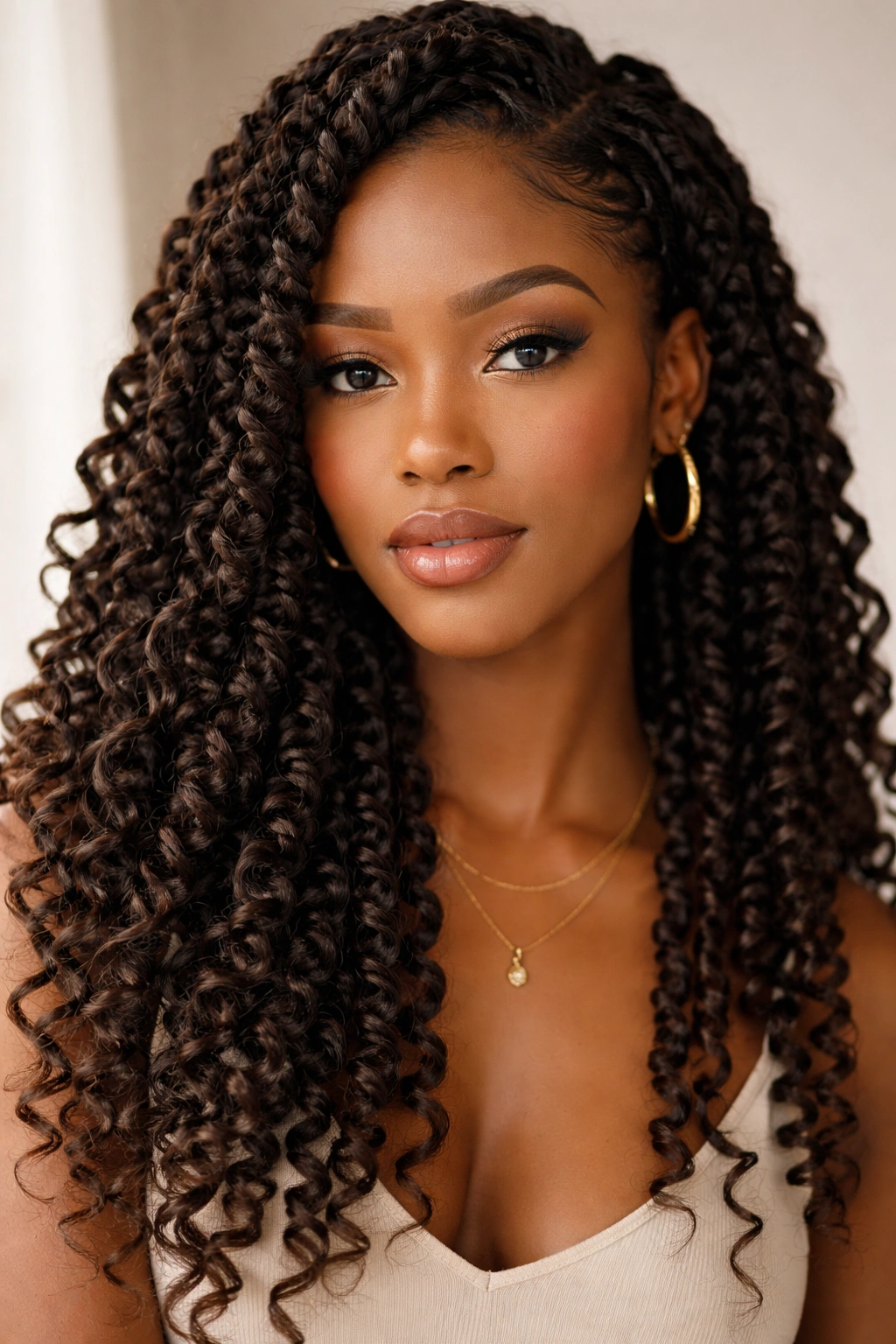
Passion twists are a softer, more delicate-looking alternative to box braids, created by wrapping your natural hair around an extension fiber in a gentle spiral. They fall loosely around your face and shoulders, creating an almost romantic, flowing aesthetic that’s equal parts protective styling and pure glamour. These twists are lighter than traditional braids, making them easier on your edges and more comfortable for extended wear.
The Appeal of This Low-Key Style
Unlike thick box braids, passion twists have a wispy, lived-in quality that feels modern and artistic. They’re protective enough to shield your hair during sleeping and daily wear, yet still celebrate the movement and flow of your natural texture. They also photograph beautifully, with all those soft curves catching light in a way that feels intentional and carefully styled.
Installation and Care Tips
- Each twist should be twisted loosely and consistently to avoid tension on the scalp
- Use pre-twisted extension hair or strand twisting hair for faster installation
- Sleep on a satin pillowcase or bonnet to reduce frizz and maintain definition
- Lightly mist with water and apply light oil to maintain softness throughout the week
- These typically last 4-6 weeks depending on how well you maintain them
- Gently unravel when ready to remove—don’t cut or pull forcefully
3. Two-Strand Twists
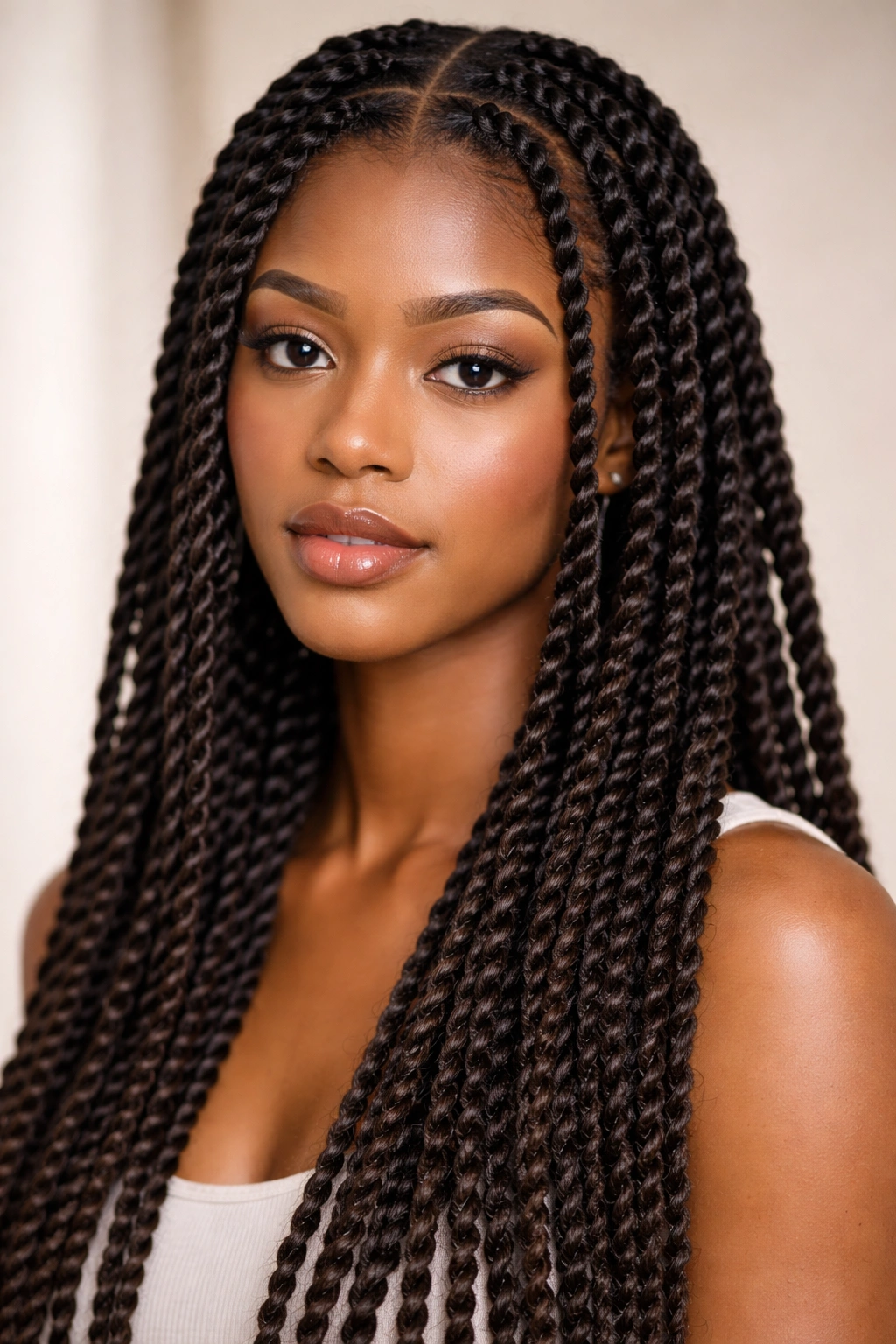
Two-strand twists are one of the most versatile protective styles, created by sectioning your hair and twisting two strands around each other from root to tip. They work on virtually every hair type and texture, look polished in any length, and can be styled in countless ways—buns, half-ups, side ponytails, or simply left down. The best part is they’re surprisingly quick to install compared to braids, especially if you’re working with your own natural hair without extensions.
Why Two-Strand Twists Are Having a Moment
They hit that sweet spot of being protective (keeping your ends tucked and safe) while still allowing texture and movement to shine through. Twists also create a defined curl pattern that looks intentional and artistic, and they work beautifully with color, whether that’s your natural shade or something bold and creative. They’re also one of the easiest styles to refresh between wash days with a light spray and some gentle manipulation.
Styling Variations to Try
- Leave them down and loose for a romantic, flowing look
- Gather all twists into a high or low bun for a chic, pulled-back aesthetic
- Create a side part and pin half the twists to the side for an asymmetrical vibe
- Wrap twists around your head in a crown pattern for a regal, bohemian feel
- Do a half-up style with twists gathered at the back for off-duty cool
4. Knotless Box Braids
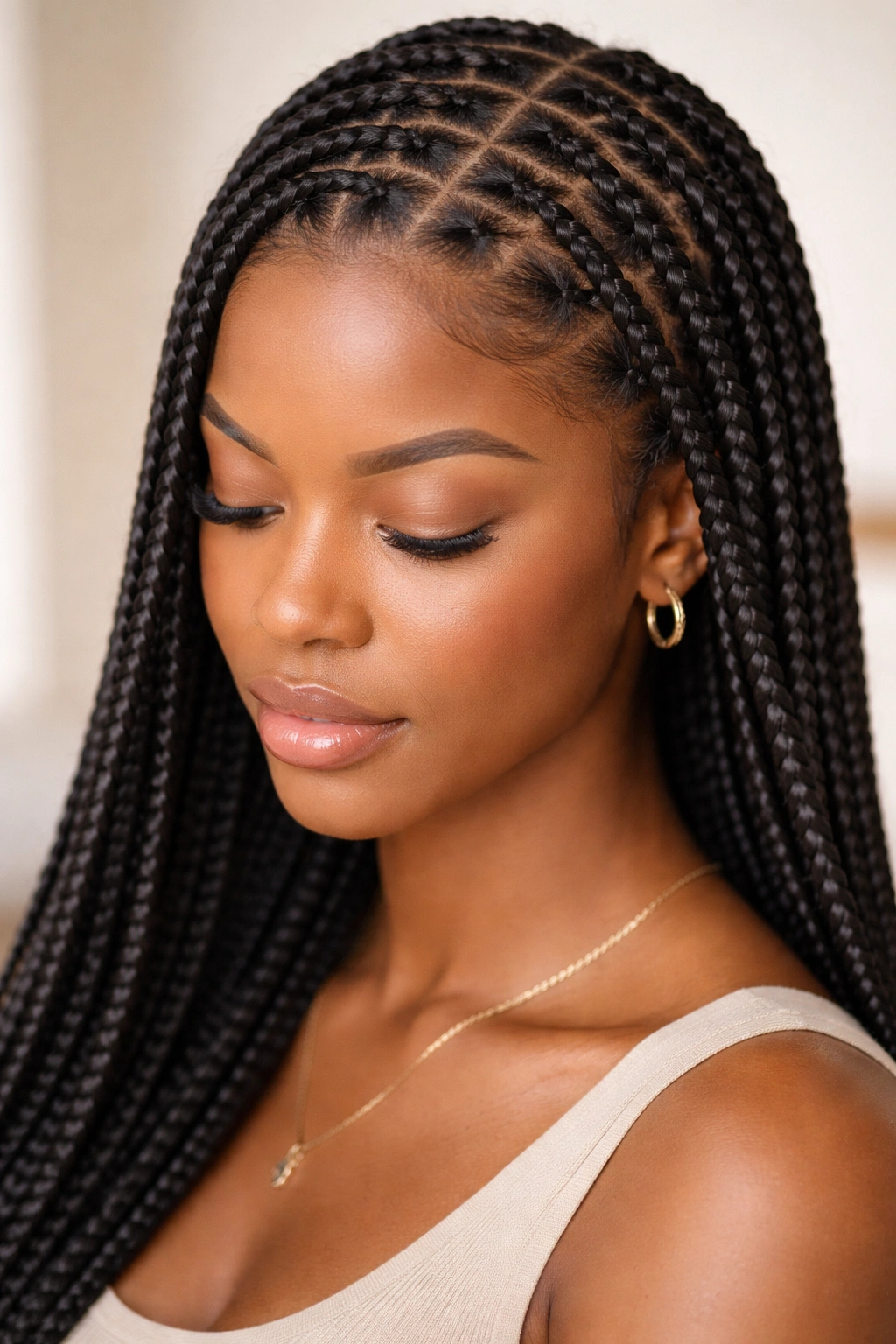
Knotless box braids have become increasingly popular because they look more natural, feel lighter on the scalp, and are gentler on your edges than traditional box braids. Instead of starting with a knot at the base, the extension hair is fed into your natural hair gradually as you braid, creating a seamless blend that looks like your hair is simply braided—not layered. This technique distributes tension more evenly and creates a softer, more organic appearance.
The Science Behind Why Knotless Feels Better
Because there’s no concentrated point of tension at the root, your scalp experiences less stress and pulling over time. The style also looks less “done,” which appeals to women who want a protective style that feels like a natural extension of their hair rather than a dramatic transformation. The gradual fade from natural hair to braid is genuinely beautiful and modern-looking.
Getting the Most from Knotless Braids
- Ensure your stylist uses a proper feeding technique—not every braider has mastered this
- Avoid installing them too tightly; you should be able to slide a finger comfortably along your scalp
- Use a moisturizing spray on the braids and apply light oils to your edges to keep everything nourished
- Sleep on a satin bonnet or pillowcase to reduce frizz
- These typically last 6-8 weeks, longer than traditional box braids due to less stress on your hair
- Unravel carefully from the ends upward to prevent unnecessary breakage
5. Senegalese Twists
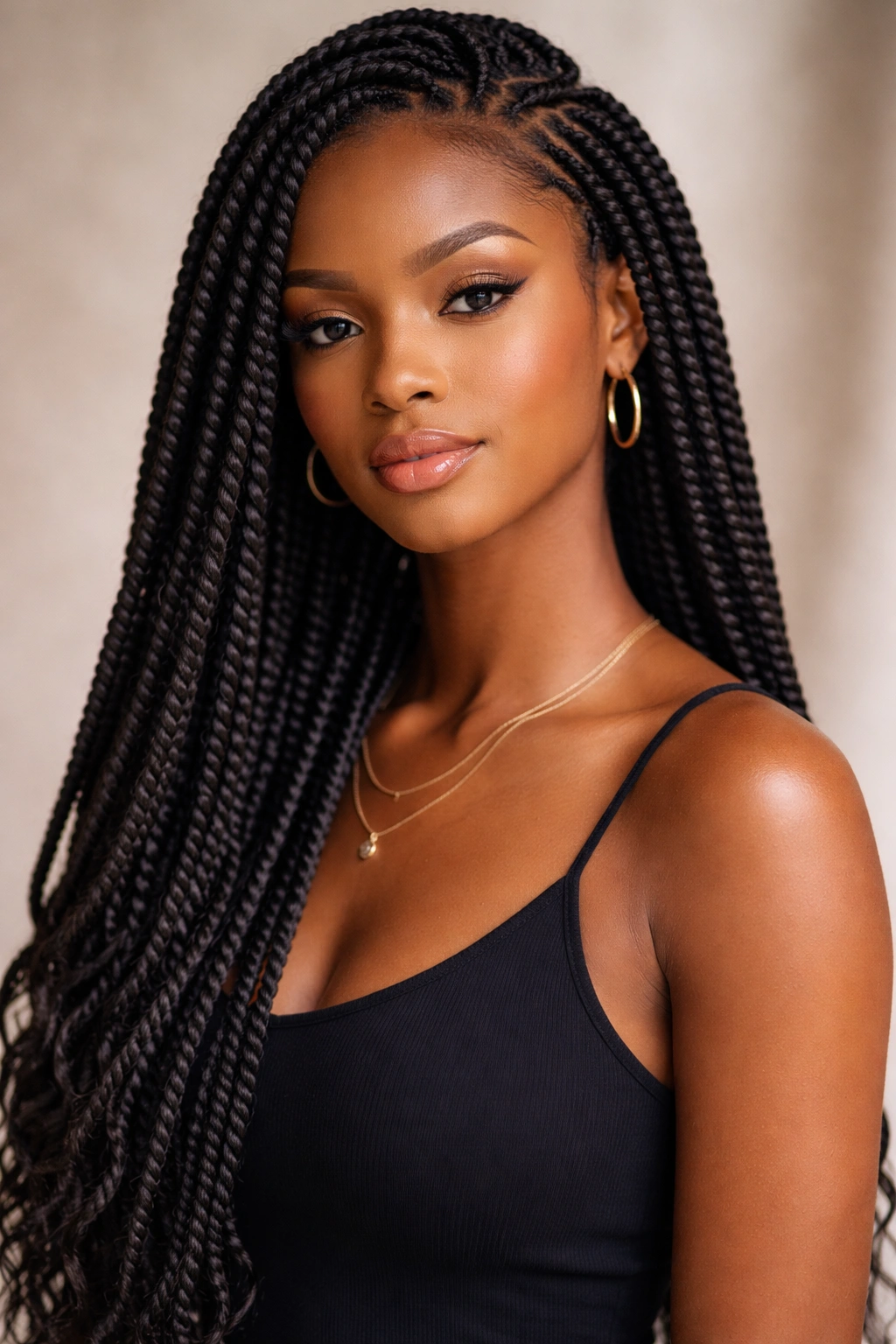
Senegalese twists are created by twisting the extension fiber with your natural hair in the opposite direction of two-strand twists, resulting in a tighter, more defined spiral that feels sophisticated and refined. They’re thinner and longer-lasting than two-strand twists, often holding their shape beautifully for 6-8 weeks. This style has a distinctly elegant aesthetic that translates well to both casual and formal settings.
Why Senegalese Twists Demand Attention
There’s something about the tight, spiral pattern that looks intentional and polished. The twists create natural-looking dimension, and they work beautifully in various lengths and thicknesses. They’re also incredibly versatile for styling—you can wear them loose, in braided patterns, in buns, or any configuration you can imagine.
Maintenance and Styling Ideas
- Apply a lightweight oil or moisturizing spray weekly to keep the twists supple
- Sleep in a satin bonnet to prevent frizz and maintain the spiral definition
- Refresh the twists by lightly palm-rolling them between your hands if they lose definition
- Create twists of varying thicknesses for a textured, layered effect
- Dye the extension fiber for an ombre or color-blocked look before installation
- These handle humidity well, making them ideal for warm, humid climates
6. Cornrows
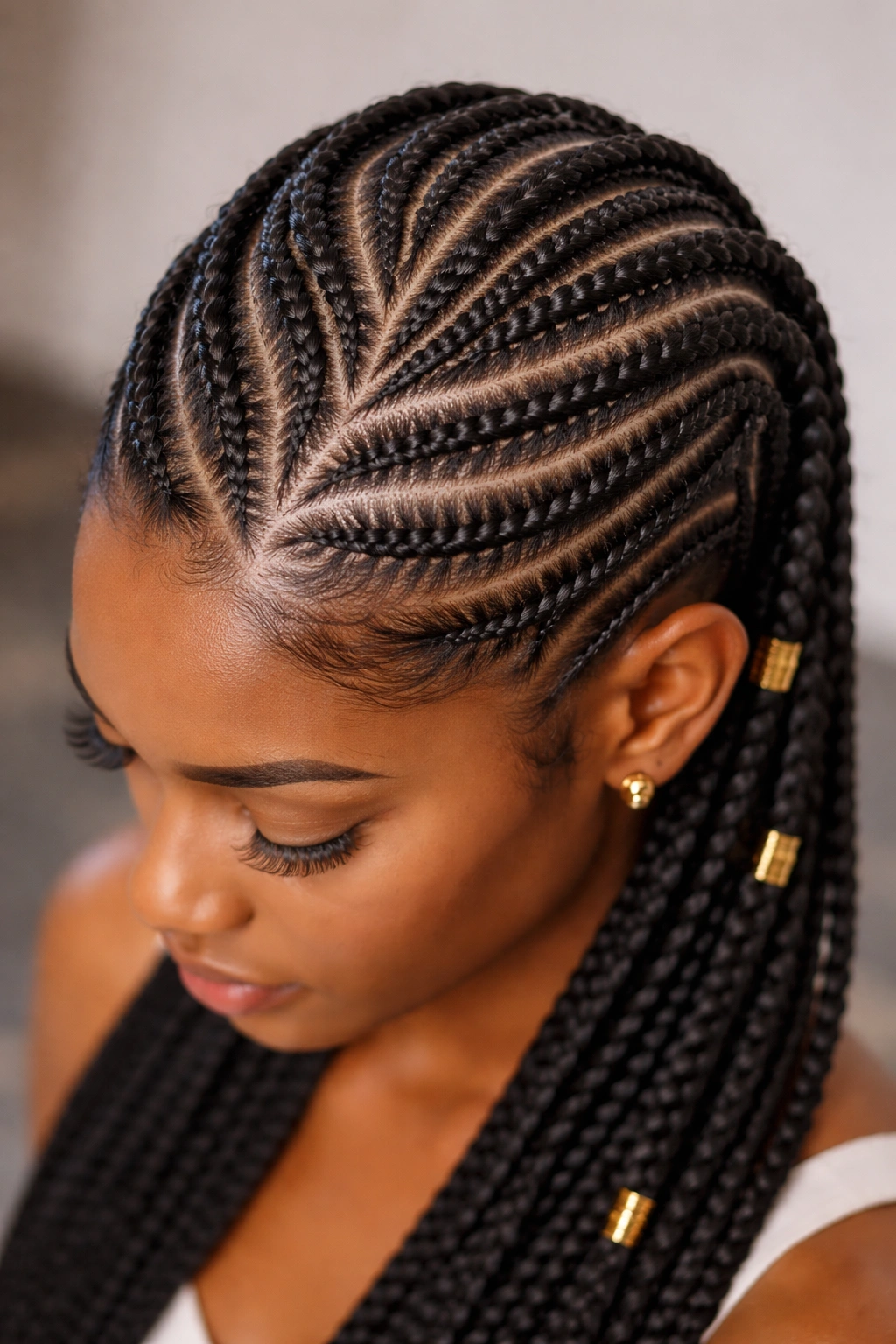
Cornrows are a timeless, incredibly versatile style where your natural hair is braided close to the scalp in raised rows. They can be worn loose in the back, gathered into a ponytail or bun, styled in geometric patterns, or incorporated into more complex protective styles. Cornrows have deep cultural significance and are experiencing renewed appreciation as a celebrated art form and protective styling choice.
The Artistry and Practicality Combined
What makes cornrows so appealing right now is the creative dimension—they’re no longer just a functional style but a canvas for intricate patterns, designs, and artistic expression. From simple three-row cornrows to elaborate geometric maps that cover the entire head, this style showcases the skill of the braider and the personality of the wearer. They’re also genuinely protective, keeping your hair tucked and safe while allowing you to maintain length and moisture.
Popular Cornrow Patterns and Tips
- Single middle part with two thick cornrows on either side (classic and universally flattering)
- Multiple thin cornrows in a geometric pattern (modern and detailed)
- Stacked or curved cornrows that follow the natural contours of your head
- Cornrows with decorative elements like beads, gold thread, or shells woven in
- Half-up cornrows with loose curls or twists in the back (softer, more romantic)
- Ensure your stylist maintains consistent tension and doesn’t pull too tightly
7. Protective Puff
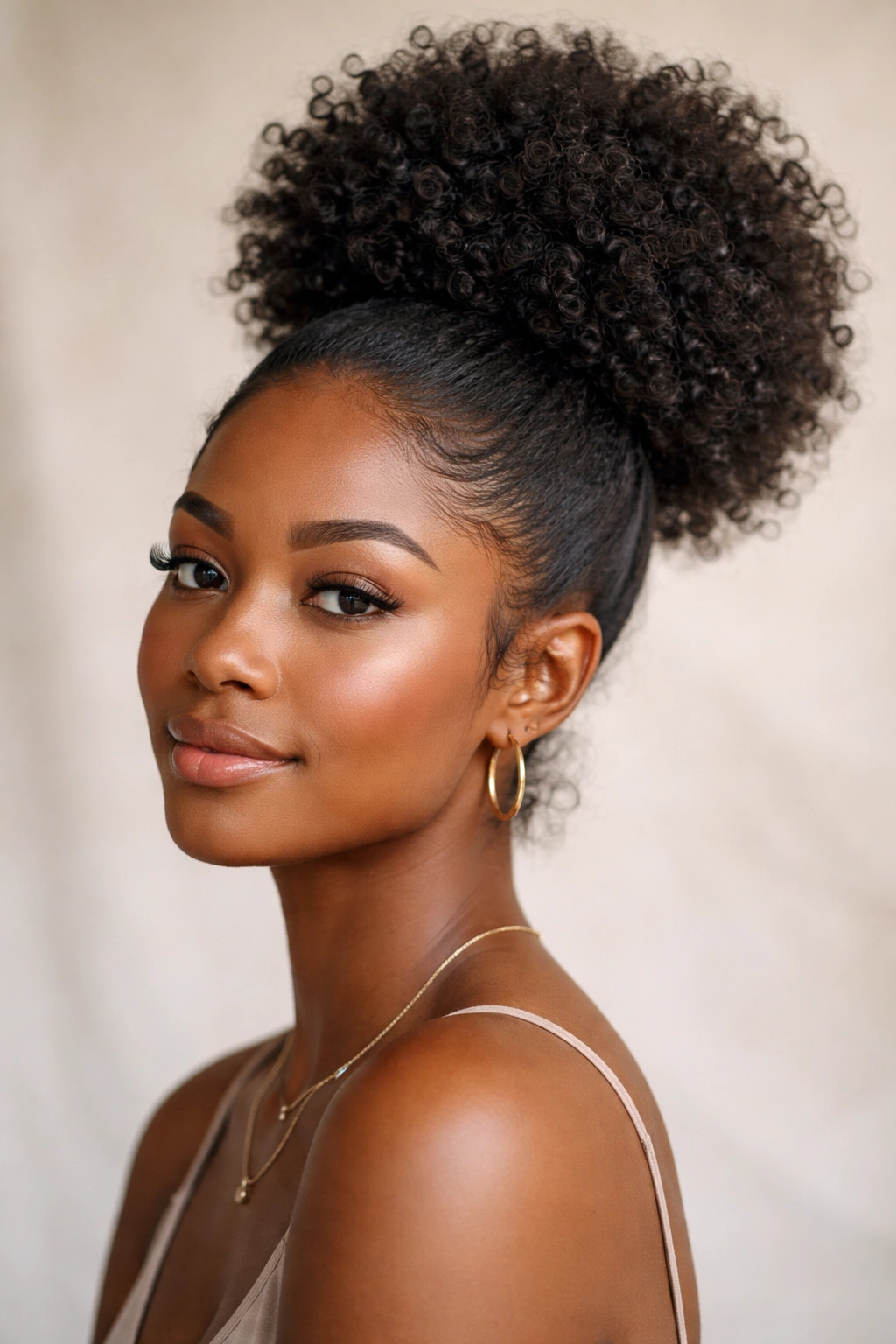
A high or side protective puff gathers your natural hair into a secure ponytail at the crown or the side of your head, showcasing your curl or coil pattern while keeping your hair protected and off your shoulders. This style is incredibly quick to achieve, requires minimal products, and is genuinely one of the most comfortable hairstyles for sleeping and daily wear. A protective puff celebrates your texture exactly as it naturally occurs—no smoothing, no extensions, just pure, unapologetic curl.
Why the Protective Puff Is Having a Major Moment
It’s the ultimate “I woke up like this” aesthetic without requiring any heat styling or complex techniques. The protective puff is also deeply rooted in Black beauty culture and has become a powerful symbol of natural hair acceptance and celebration. It works on every curl pattern from loose waves to tight coils, and it’s genuinely protective because your ends are tucked away and your hair isn’t being manipulated.
Styling Your Protective Puff for Different Occasions
- Secure with a silk or satin hair tie (never elastic) to avoid breakage and frizz
- Apply a light leave-in conditioner before gathering to define curls and reduce frizz
- Wrap a scarf around the base of the puff for added style and hold
- Create a high puff for a sporty, youthful vibe or a low side puff for understated cool
- Add decorative elements like hair clips, cuffs, or gold thread if you want to elevate it
- Sleep in a puff for the ultimate low-maintenance nighttime and wake-up hairstyle
8. Locs (Sisterlocks or Traditional)
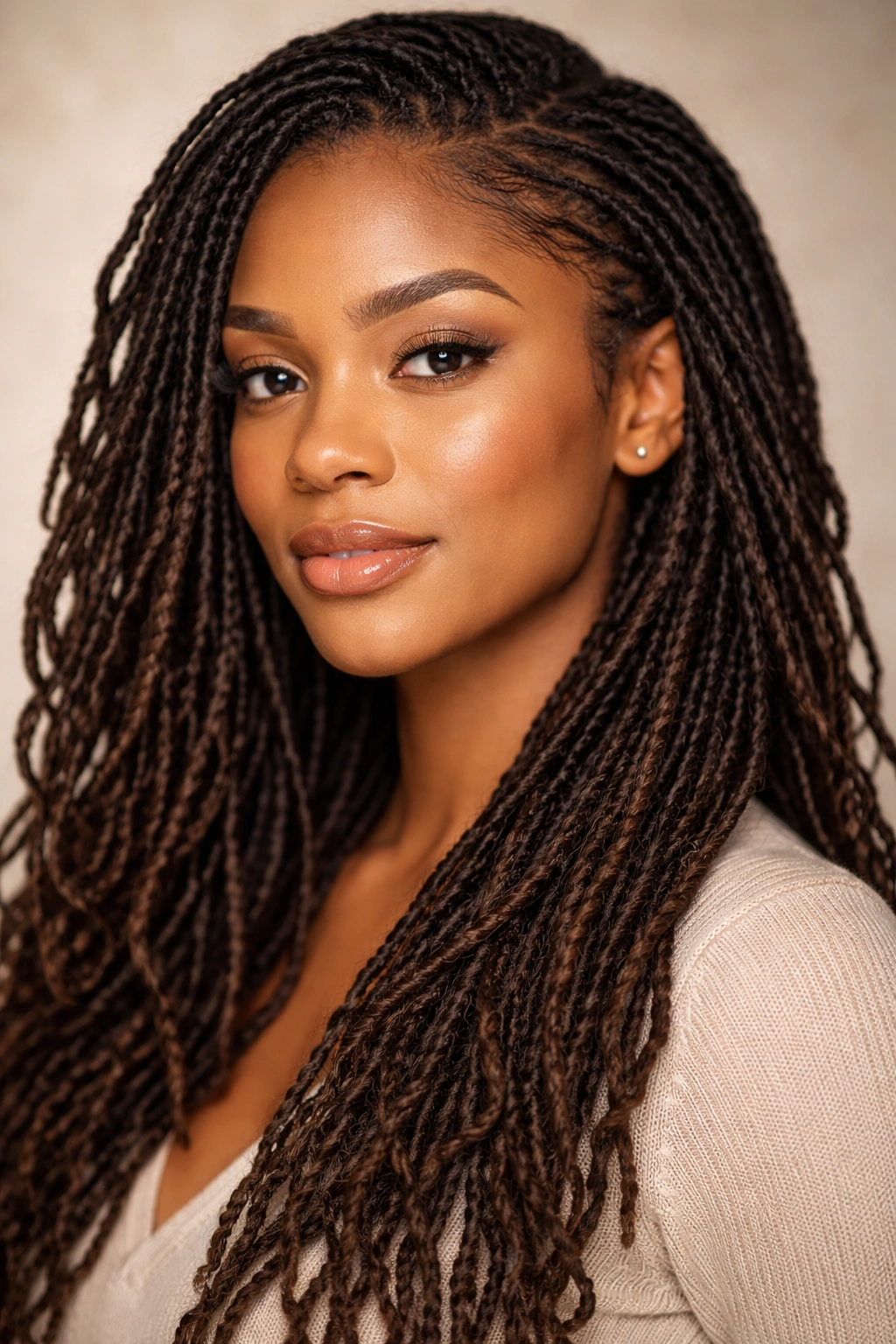
Locs are a powerful, transformative commitment to protective styling, where your hair naturally or intentionally locks into rope-like sections over time. Whether you choose traditional locs (thicker sections) or sisterlocks (much thinner, interlocking sections), this style is simultaneously a protective choice and a lifestyle. Locs have rich cultural significance and represent a deep commitment to embracing your hair’s natural growth and texture.
The Journey and Commitment of Locs
Locs require patience through the initial messy phase when your hair is still figuring out how to lock, dedication to maintenance and retwisting, and genuine self-assurance because this style makes a statement. But for many women, locs represent liberation—the freedom from heat styling, weekly styling sessions, and pressure to conform to straighter hair ideals. Once established, locs require surprisingly low daily maintenance, though regular retwisting or interlocking is necessary depending on the type you choose.
Long-Term Care and Styling Flexibility
- Sisterlocks require professional installation and monthly maintenance sessions with a certified specialist
- Traditional locs can be started through various methods (twisting, braiding, freeform) and are more flexible in maintenance
- Use loc-specific shampoo and washing techniques that don’t unravel your sections
- Retwist or interlock every 4-6 weeks to maintain neat, intentional appearance
- Locs can be styled in buns, ponytails, updos, or worn loose and flowing
- Color, beads, and other decorative elements add personality to your loc journey
9. Bantu Knots
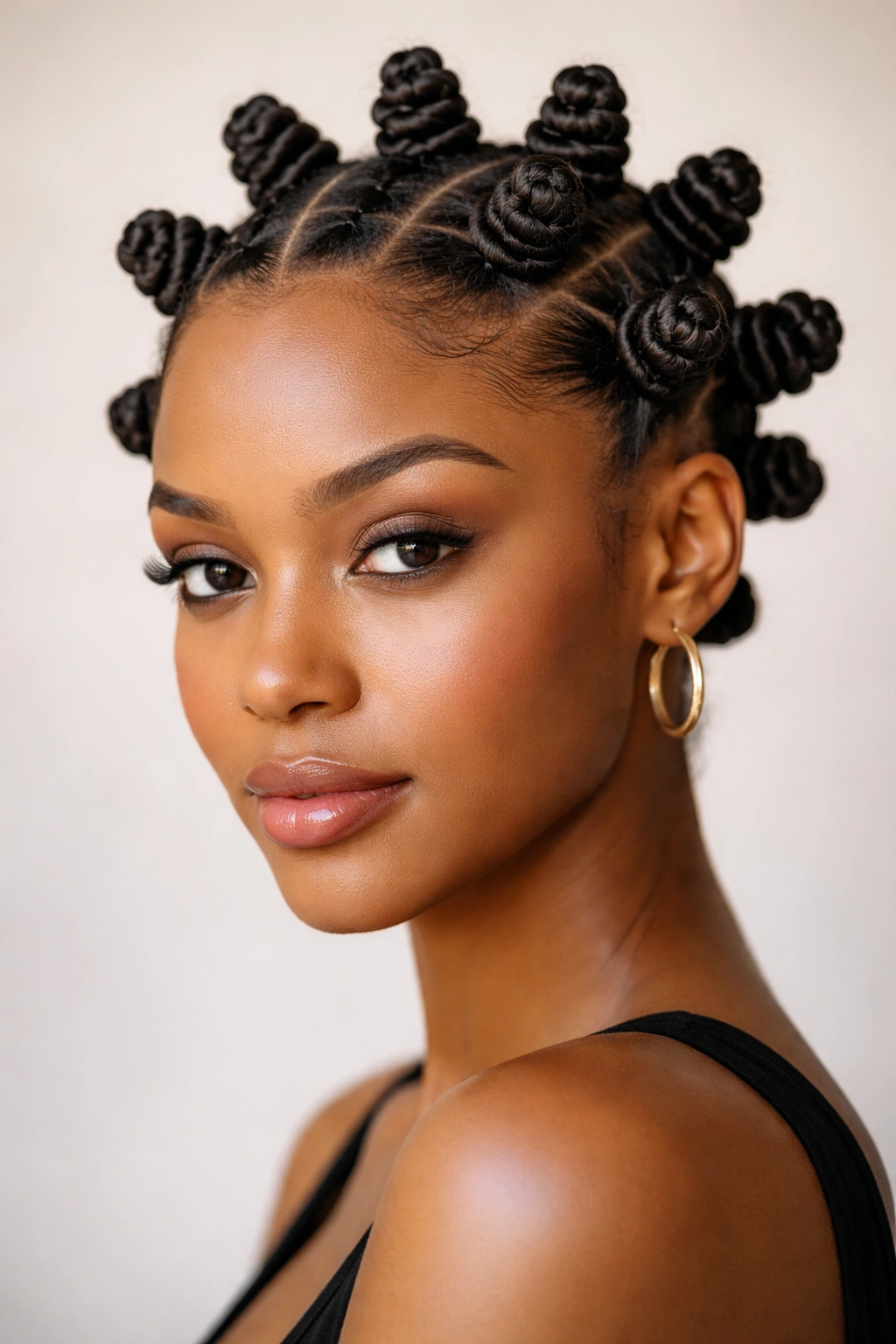
Bantu knots are a fun, playful protective style where sections of hair are twisted and coiled into knots close to the scalp, creating a textured, sculptural look that’s both functional and artistically bold. The knots can be left in as a finished style or used to create gorgeous curl patterns when undone. This style celebrates your hair’s natural texture and has deep roots in Zulu culture, making it both beautiful and culturally significant.
The Dual-Purpose Appeal of Bantu Knots
You get an immediately stunning finished look that keeps your hair protected and off your neck, while also having the option to unravel the knots after a few days to reveal gorgeous, spiral curls. This makes Bantu knots an incredibly practical choice if you want texture, dimension, and visual interest without heat styling. They also work beautifully as a pre-styling technique before special events.
Creating Stunning Bantu Knots
- Section your hair into roughly equal quadrants for even, balanced knots
- Start each knot at the root and twist the entire section around itself, coiling upward
- Tuck the end of each section into the base to secure without needing elastic
- Leave knots in for 2-3 days (moisturize the scalp regularly with a spray or oil)
- For bouncy, spiral curls, gently unravel after a couple days and enjoy the texture
- Sleep on a satin pillowcase to reduce frizz while wearing the knots
10. Crocheted Faux Locs
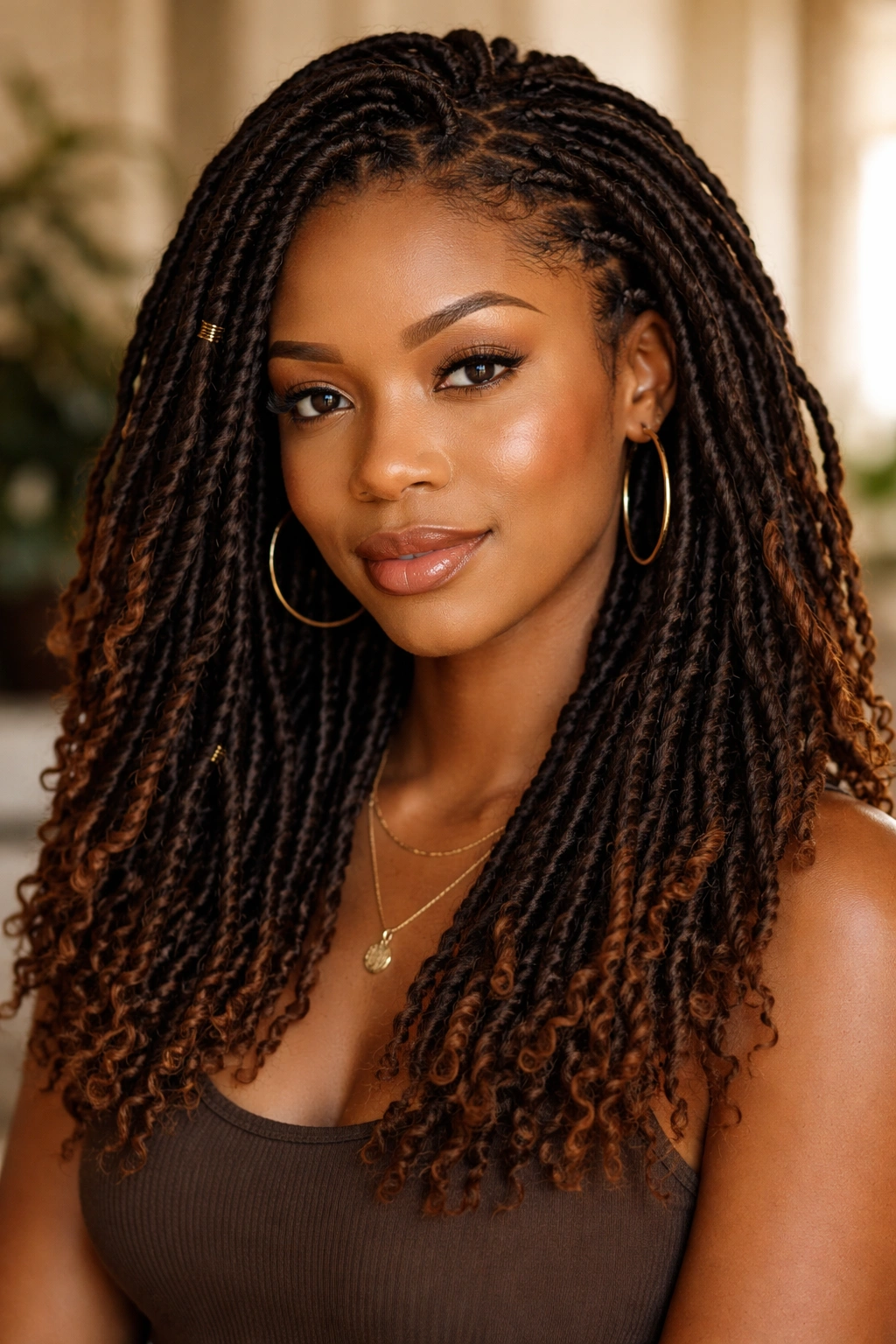
Crocheted faux locs give you all the visual impact and protective benefits of real locs without the commitment. Your natural hair is braided into sections, then pre-made synthetic locs are crocheted into each braid, creating an intentional, sculptural look that can be worn for 2-3 months. This style is perfect if you love the aesthetic of locs but want versatility and the ability to switch it up more frequently.
Why Faux Locs Are a Game-Changer
They’re protective, they look stunning, they last longer than most braided styles, and they allow you to experiment with loc life without committing to years of locked hair. The texture and movement feel authentic, and you can choose the thickness, length, and color of your locs to match your exact vision. The installation takes time, but the payoff is a gorgeous style that requires minimal daily maintenance.
Installation and Care Essentials
- Installation typically takes 6-8 hours depending on hair length and desired thickness
- Each braid is created first, then locs are crocheted in using a crochet hook and synthetic hair
- Wash gently using the low-poo or co-wash method, being careful not to disturb the crocheted sections
- Sleep in a satin bonnet to protect both your hair and the faux locs
- These typically last 6-8 weeks before needing to be removed and your natural hair reconditioned
- Remove by carefully uncrocheting the synthetic hair—don’t cut through your natural hair
11. Goddess Locs
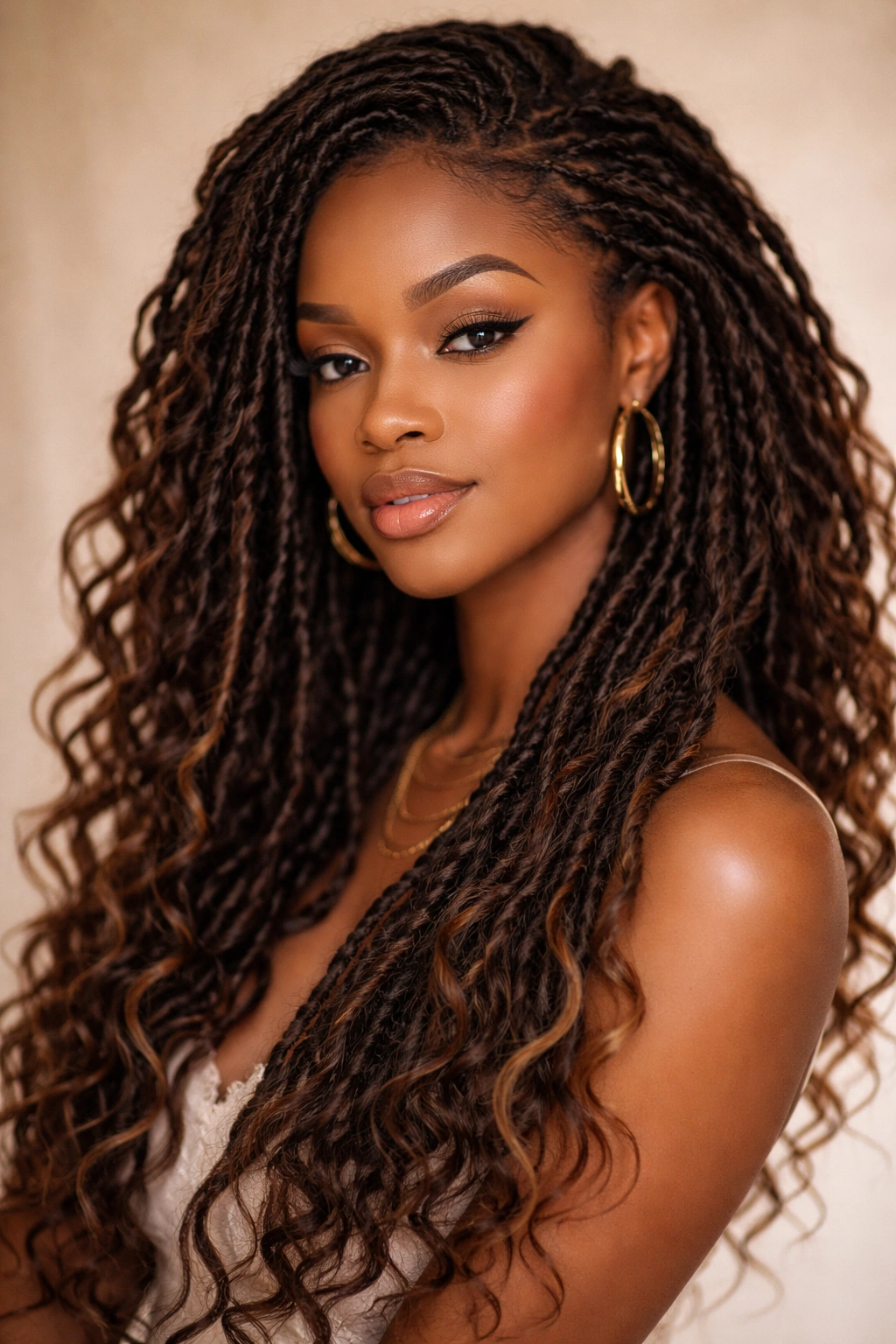
Goddess locs blend the elegance of locs with the softness and femininity of loose waves, creating a romantic, bohemian aesthetic that’s both protective and undeniably gorgeous. Thicker than faux locs but with a softer, more textured finish, goddess locs are crocheted into braided sections and typically have slightly thicker yarn or fiber woven through them for added volume and a looser, more fluid appearance. This style offers protection while maintaining a more romantic, flowing energy.
The Aesthetic Appeal of Goddess Locs
They have a softness that traditional locs don’t quite capture, with more movement and a boho-chic vibe that’s both romantic and editorial. Goddess locs photograph beautifully, work for essentially any occasion, and allow you to experiment with bold colors and textures while keeping your hair protected. They’re also slightly lighter in feel than traditional crocheted faux locs, making them more comfortable for extended wear.
Styling Goddess Locs for Maximum Impact
- Create various thicknesses (thick, medium, thin) throughout your head for textured dimension
- Experiment with color blocking or ombre with different yarn colors
- Curl the ends by wrapping them around a hot tool for added movement and softness
- Style in half-up, high ponytails, or loose waves around your shoulders
- Add decorative elements like gold cuffs, beads, or hair jewels
- Maintain the boho aesthetic by keeping the style slightly undone and organic-looking
12. Triangle Part Braids
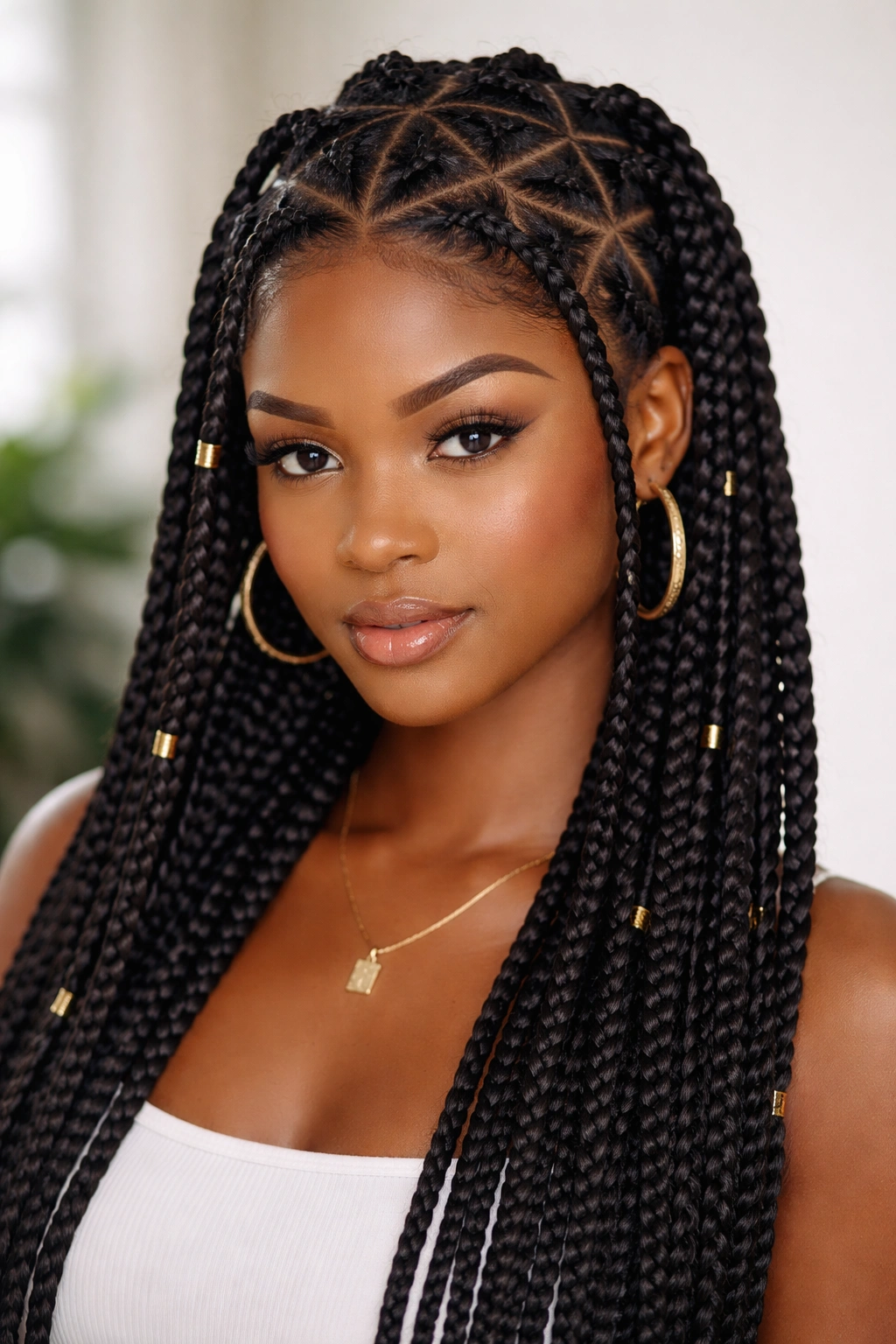
Triangle part braids are a creative, visually interesting way to style cornrows or box braids by parting your hair into triangle sections rather than the traditional straight lines. This creates a geometric pattern across your head that looks modern, intentional, and surprisingly easy to achieve once you understand the basic concept. Triangle parting gives a fresh take on braided styles while maintaining all the protective benefits.
The Modern Appeal of Geometric Parting
There’s something inherently chic about geometric patterns—they feel contemporary, artistic, and thoughtfully designed. Triangle parts create visual interest without requiring extra time or complex techniques; it’s simply a different way to section your hair before braiding. This style works beautifully in any braiding technique, from cornrows to box braids to locks.
Executing Perfect Triangle Parts
- Use a rattail comb to create clear, clean lines
- Start at your hairline and create triangles pointing backward or in alternating directions
- Size your triangles based on how thick you want each braided section to be
- Take your time with the sectioning—clean lines make the finished style look intentional and polished
- Braid tightly enough that the pattern remains defined but not so tight that you’re putting stress on your edges
- This technique works beautifully with color—consider doing different colors in alternating triangles
13. Feeding Braids
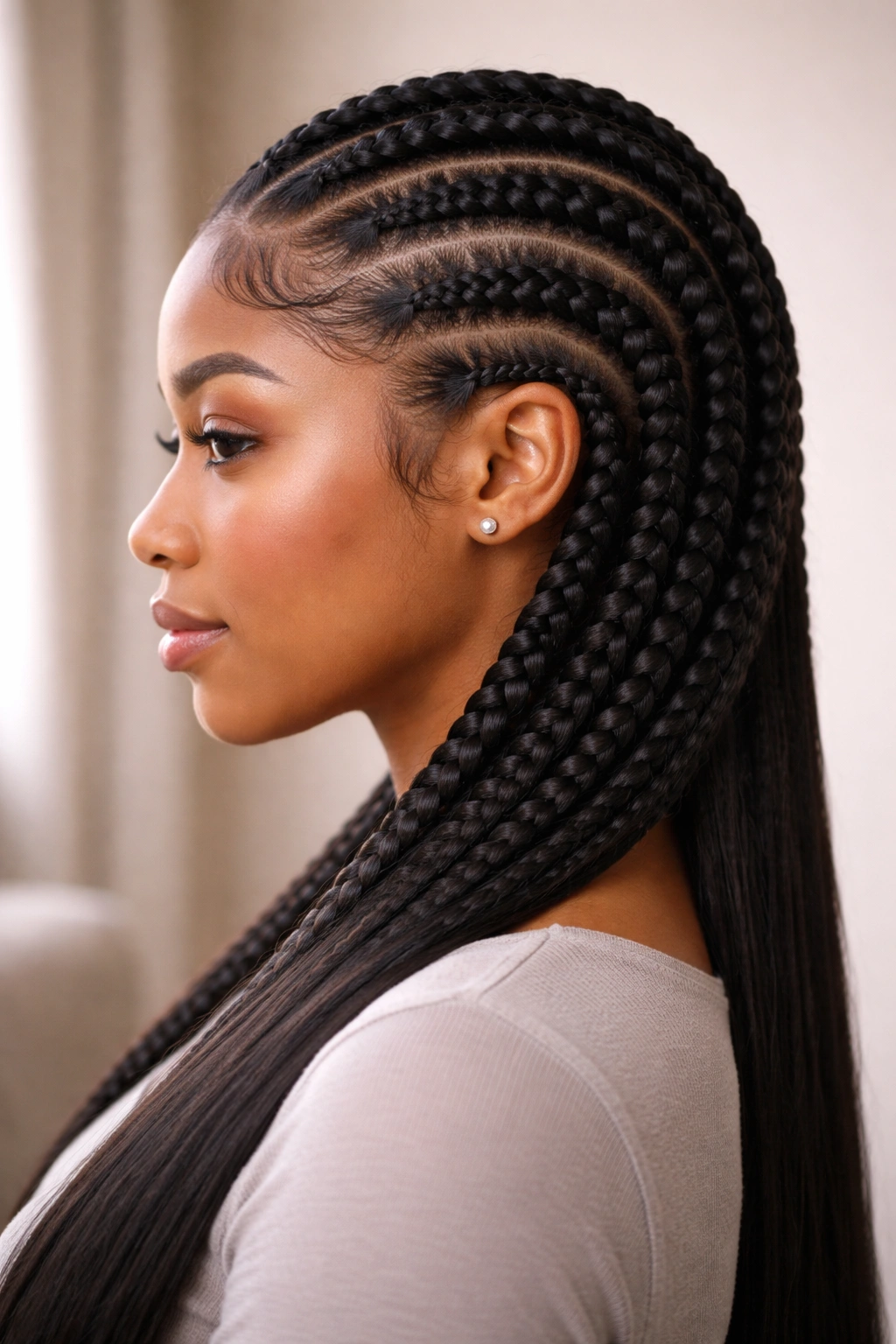
Feeding braids are a protective style where your natural hair is braided with extension hair that’s gradually “fed” or added into each braid as you go down the length of your hair, rather than starting with a large amount of hair bundled at the root. This technique creates a more seamless, natural-looking blend and is gentler on your edges because there’s no heavy knot pulling at the base. The result is a style that looks more like your hair has simply been braided, rather than decorated with added hair.
Why the Feeding Technique Matters
It distributes tension evenly throughout the length of the braid rather than concentrating it at the root, which means your edges stay healthier and your braids can last longer. The visual effect is also more subtle and sophisticated—there’s no obvious demarcation between your hair and the extension. This technique requires a skilled braider who understands the proper feeding method, but it’s worth seeking out for the health of your hair.
Getting Beautiful Results with Feeding Braids
- Ensure your braider is experienced with the feeding technique specifically
- Start with hair that’s clean and moisturized for the best foundation
- Let the braids set for a day before washing to ensure they’re secure
- Wash every 2-3 weeks to keep your scalp and edges healthy
- Sleep on a satin pillowcase and wrap your braids in a satin scarf for protection
- These braids can last 8-10 weeks if installed and maintained properly
14. Twisted Crown with Loose Ends
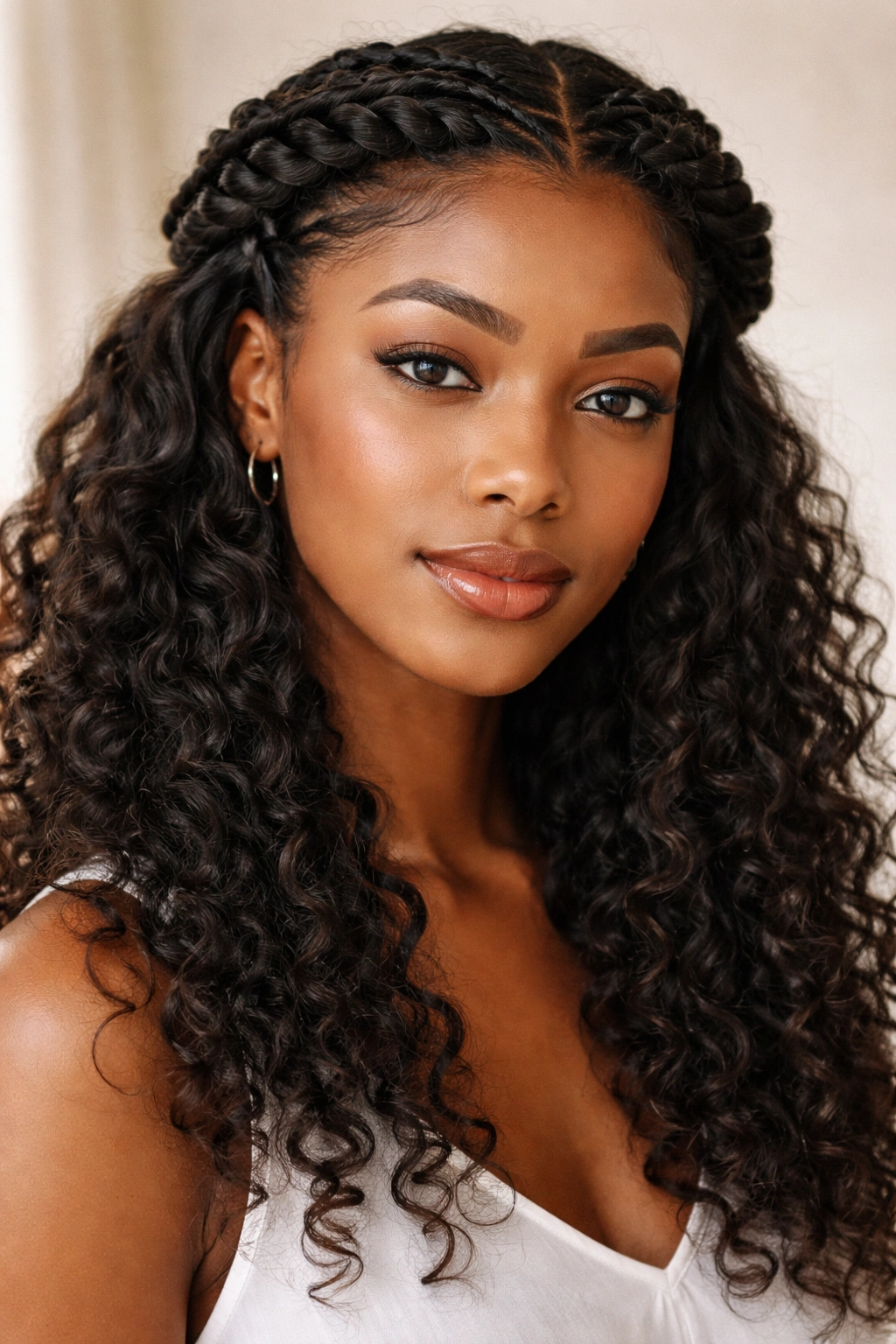
A twisted crown combines the polish of defined twisted sections with the softness of loose hair at the bottom, creating a style that’s both put-together and romantic. Your hair is twisted around the crown or sides of your head, with the remaining length left loose and free, allowing your natural texture and curl pattern to be the star. This style works beautifully for events, everyday wear, or any situation where you want something elevated but not overly formal.
The Perfect Balance of Structure and Freedom
A twisted crown gives you the satisfaction of styled, intentional hair while still celebrating your natural texture and length. It’s the ideal option if you want your hair up and off your face but not slicked back or tightly secured. The loose ends frame your face beautifully and create movement and softness that feels effortless.
Creating a Picture-Perfect Twisted Crown
- Start with hair that’s been lightly moisturized and defined with a leave-in conditioner
- Twist sections around your head, securing each with bobby pins as you go
- Leave the length below the twist loose and unmanipulated to highlight your natural curl or coil
- You can do a full crown or just frame one side, depending on your preference
- Set with a light hairspray to keep the twisted sections in place without crunchiness
- This style works beautifully for date nights, family gatherings, or elevated casual occasions
15. Clip-in Extensions with Curl Pattern
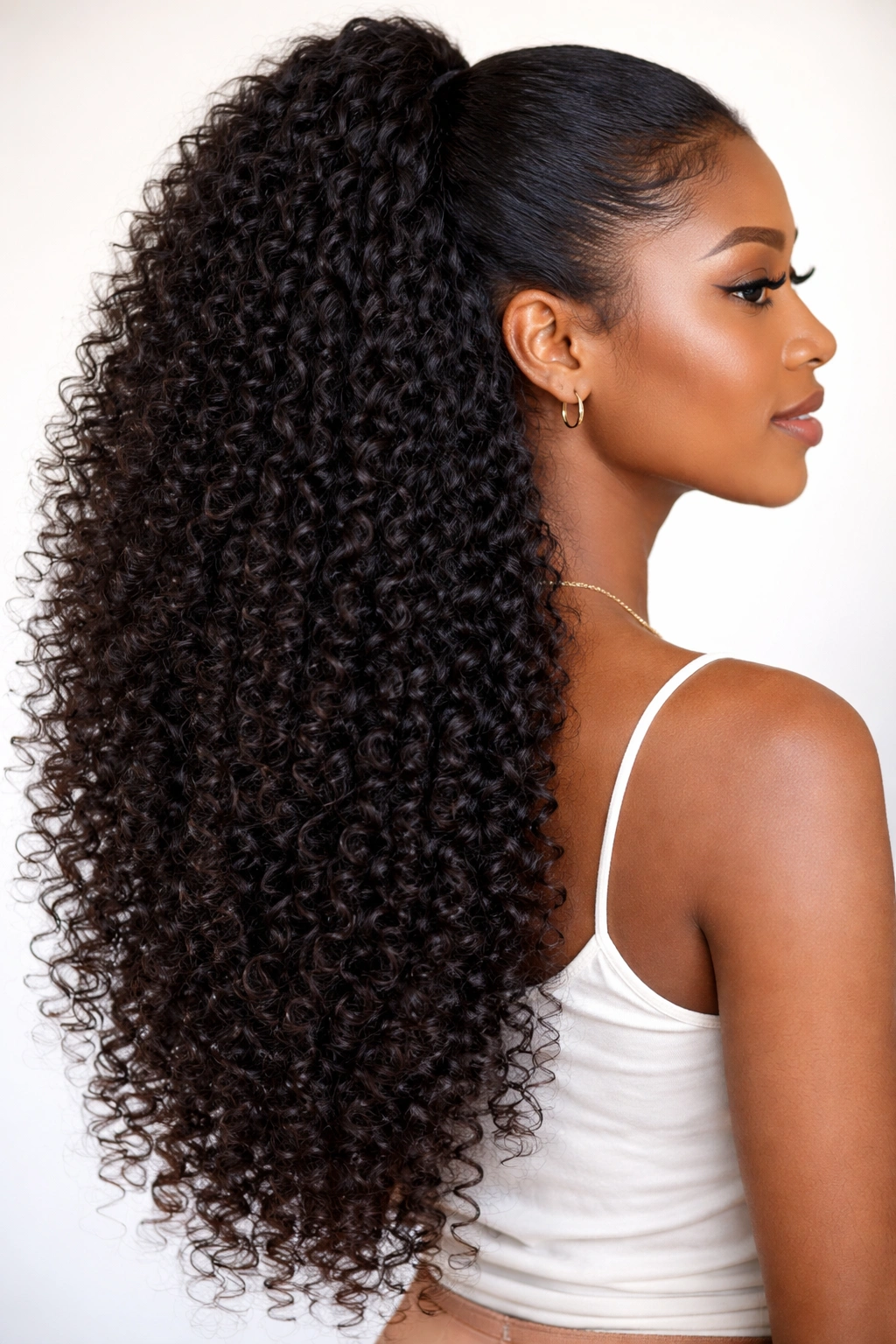
Clip-in extensions that match or complement your natural curl pattern allow you to add volume, length, and dimension without commitment or potential damage. Unlike permanent extensions, clip-ins are completely reversible and give you the flexibility to experiment with different lengths, thicknesses, and even colors. When your natural hair is styled with matching textured clip-ins, the result is seamless, voluminous, and undeniably gorgeous.
The Versatility and Low-Commitment Appeal
Clip-in extensions mean you can have longer, fuller hair for special occasions and then remove them for your regular styling routine. They’re also an excellent option while your natural hair is growing out or if you simply love the look of extra volume. High-quality, textured clip-ins blend beautifully with natural hair and don’t require the chemical treatments or scalp stress of permanent extensions.
Getting the Most from Clip-in Extensions
- Invest in high-quality extensions that genuinely match your curl pattern and hair texture
- Secure them using double-sided tape or clip mechanisms designed specifically for natural hair
- Keep extensions moisturized and conditioned separately from your hair
- Remove and store them properly to extend their lifespan (which can be several years)
- Style your natural hair into a protective base before adding clip-ins
- Wash and condition extensions gently, following the manufacturer’s instructions
- These are perfect for adding fullness to a protective puff, bun, or ponytail
16. Heatless Curls with Twist or Braid
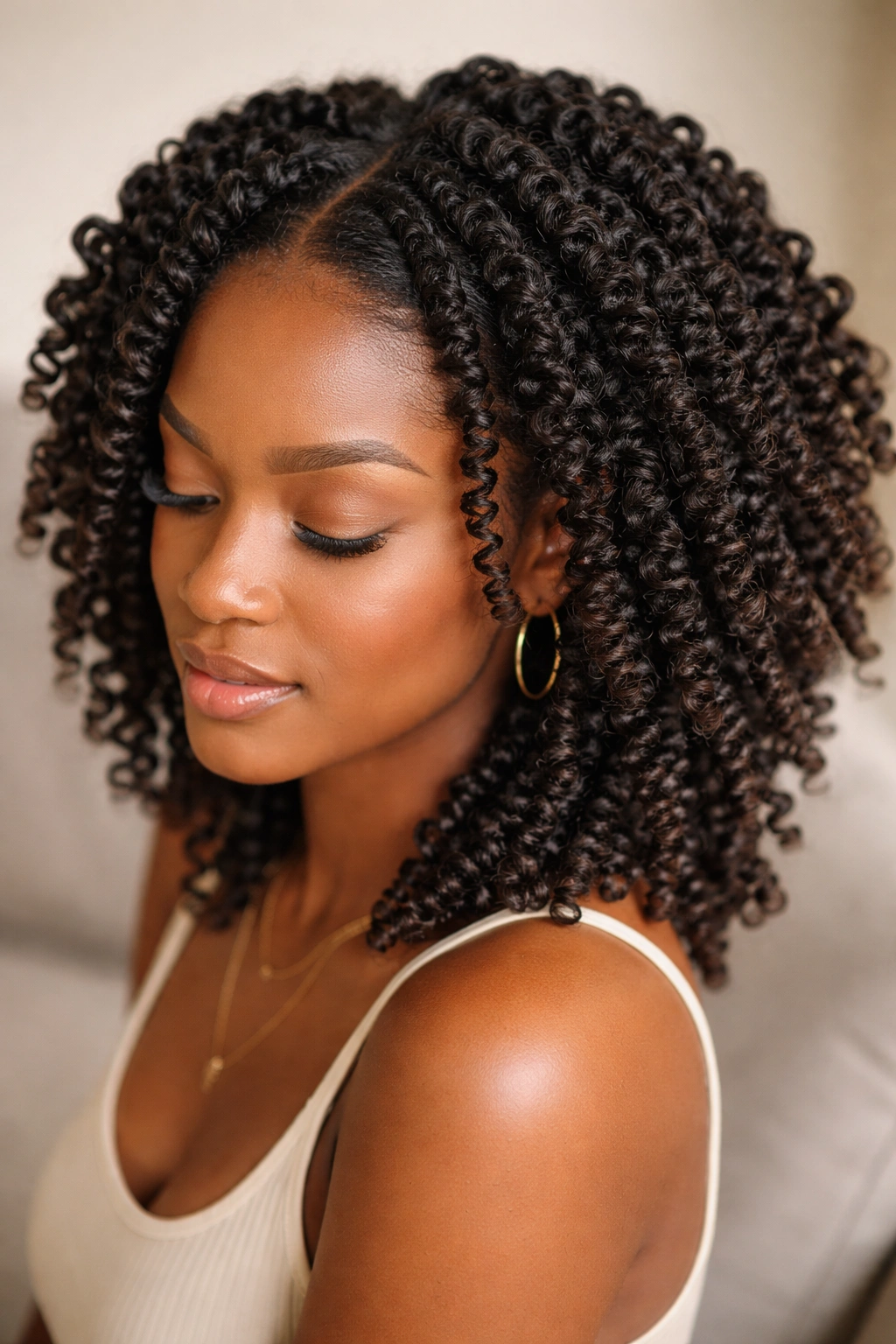
Heatless curling methods using twists, braids, or braiding cream create gorgeous, defined curls without any heat damage—just section your damp hair, braid or twist each section, and let it dry overnight or longer. This technique celebrates your hair’s natural curl pattern while creating intentional, sculpted curls that last for days. It’s one of the gentlest ways to achieve defined curls while sleeping, working, or simply living your life.
The Chemistry of Heatless Curls
When you braid or twist damp hair and allow it to dry completely, the hair dries into the shape of the braid or twist, creating curl definition without any heat stress. This method works beautifully with any curl pattern and actually improves the health of your hair by avoiding heat damage. The curls last much longer than heat-styled curls because they’re created by structural manipulation rather than temporary heat setting.
Techniques for Perfect Heatless Curls
- Start with freshly washed, damp hair and apply a curl-defining cream or leave-in conditioner
- Braid or twist sections while the hair is still damp (not soaking wet)
- The smaller the braid or twist, the tighter the eventual curl; larger braids create looser waves
- Leave braids in overnight or for 24 hours for full curl definition
- Gently unravel the braids and separate curls with your fingers for a natural, voluminous look
- Refresh curls daily with a curl reviver spray or light misting with water
17. Scarf Styling and Wrap Aesthetics
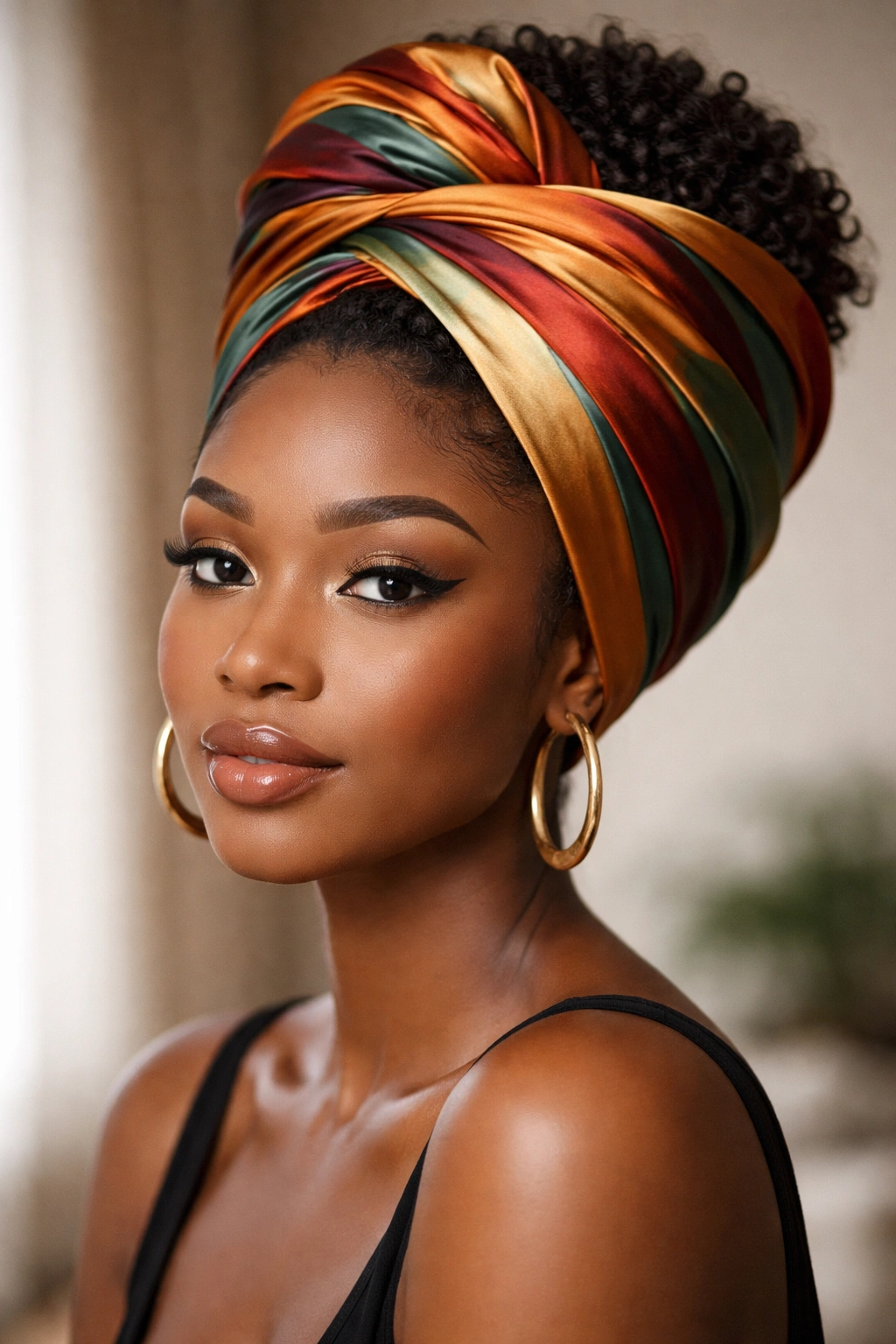
A well-styled scarf or wrap transforms your natural hair into a sophisticated, intentional look while simultaneously protecting your edges and keeping your hair moisturized. From elegant head wraps that showcase artistic fabric to casual scarf styles that work with any outfit, scarf styling is both a practical protective method and a fashion statement. The artistry of scarf styling has become increasingly celebrated as a form of cultural expression and creative accessorizing.
The Protective and Aesthetic Benefits
Wearing a scarf protects your edges, keeps your hair moisturized, and eliminates the need for constant styling throughout the day. It also creates an instantly polished, put-together appearance, whether you’re wearing your hair in a puff underneath or flowing loose. The fabric choice, color coordination, and wrapping technique all contribute to a finished look that feels intentional and styled.
Scarf Styling Techniques That Work
- Wrap your hair in a scarf while damp to set a protective puff or bun underneath
- Use a satin or silk scarf to reduce frizz and maintain moisture (cotton absorbs moisture and causes frizz)
- Create a turban-style wrap by twisting the scarf around your head for a bold, fashion-forward look
- Pair a scarf with defined curls or twists for a romantic, bohemian aesthetic
- Experiment with patterns, colors, and textures to complement your complexion and personal style
- Scarf styling works beautifully for everyday wear and special occasions alike
18. Crochet Braids with Textured Yarn
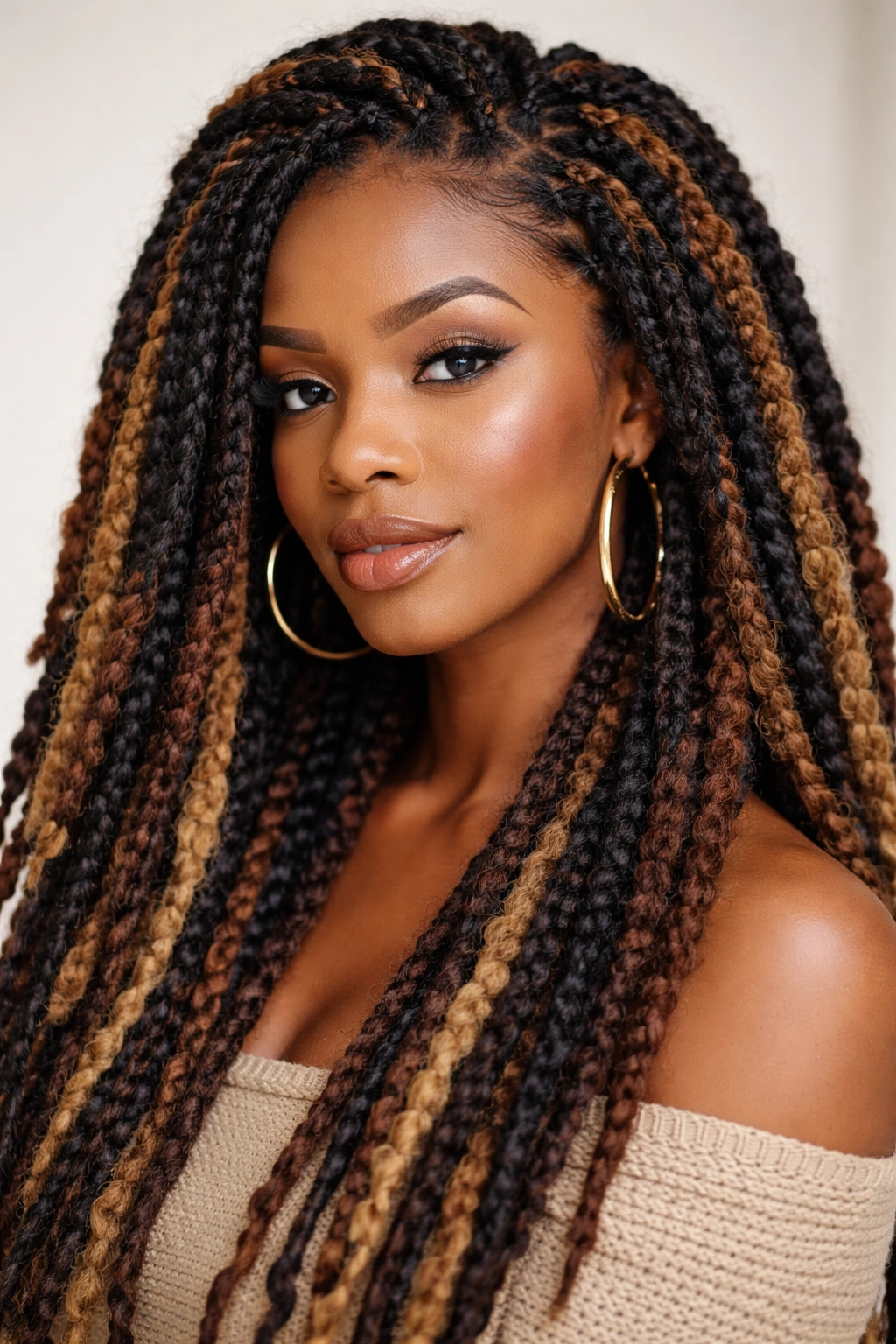
Crochet braids offer incredible versatility in texture, color, and thickness—you can choose smooth synthetic hair for sleekness, textured yarn for a coily aesthetic, or even mix textures within the same style. Your natural hair is braided into sections, and pre-made hair or yarn is crocheted into each braid, giving you full control over how your protective style looks. This method allows for creative expression while providing genuine protection for your natural hair.
The Creative Freedom of Crochet Braids
Unlike braids where you’re limited by the texture of synthetic hair available, crochet allows you to use various textures, thicknesses, and even mix media (combining different textures in one install). You can achieve anything from a sleek, straight look to a voluminous, textured aesthetic—all without putting stress on your natural hair. The installation time is comparable to other protective styles, but the final look is entirely customizable.
Installation and Styling Ideas
- Have your natural hair braided into neat sections as a base
- Choose crocheting yarn or pre-made hair that matches your desired aesthetic
- Work with a stylist experienced in crochet techniques for the best results
- Create ombre or color-blocked effects by using different colored fibers
- Style with various textures: some sections smooth, others textured and voluminous
- Crochet braids typically last 4-6 weeks depending on how well you maintain them
19. Half-Up Protective Style
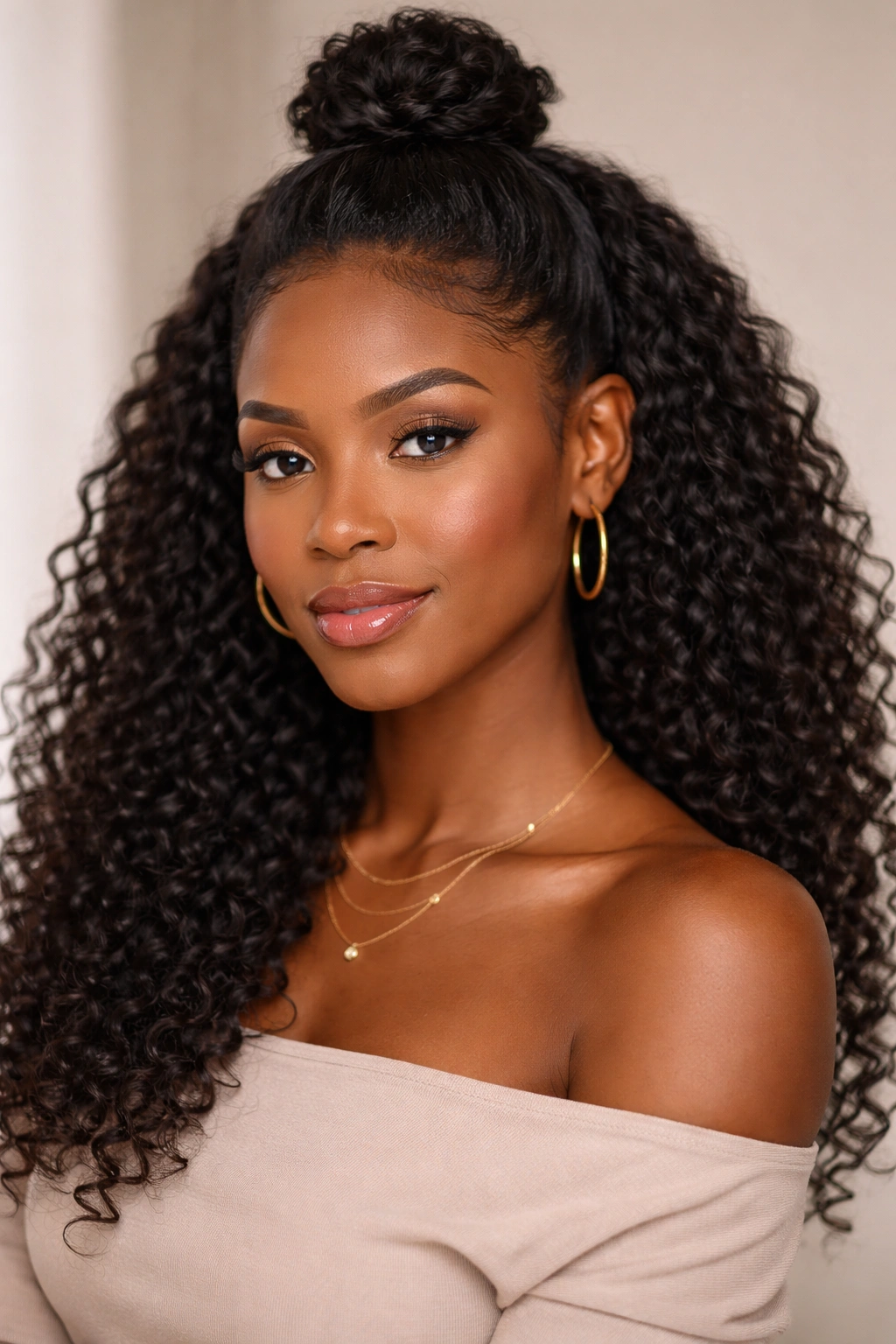
A half-up protective style gathers the top portion of your hair into a bun, twist, or braid while leaving the bottom loose, striking a balance between keeping your hair off your face and showcasing your length and natural texture. This style works beautifully for people who want the practical benefits of protective styling without committing their entire head of hair to a particular look. The versatility makes it perfect for transitioning between seasons or switching up your aesthetic frequently.
Why Half-Up Styles Offer the Best of Both Worlds
You get all the protective benefits of having your hair secured and away from your face, while still celebrating your length and your natural curl or coil pattern in the loose section. This style is also quick to achieve, works with various hair lengths, and can be styled up or down depending on your mood or activity. It’s genuinely one of the most flexible protective styling options available.
Half-Up Styling Variations
- Half-up bun with the remaining hair left in a natural puff or twist-out
- Half-up braided crown with loose curls cascading underneath
- High half-up ponytail with textured curls or twists in the loose section
- Half-up space buns (two buns gathered at the crown) for a playful vibe
- Half-up twisted style with golden thread or decorative elements woven through
- Refresh with a curl reviver spray on the loose section each morning
20. Cornrow Updo
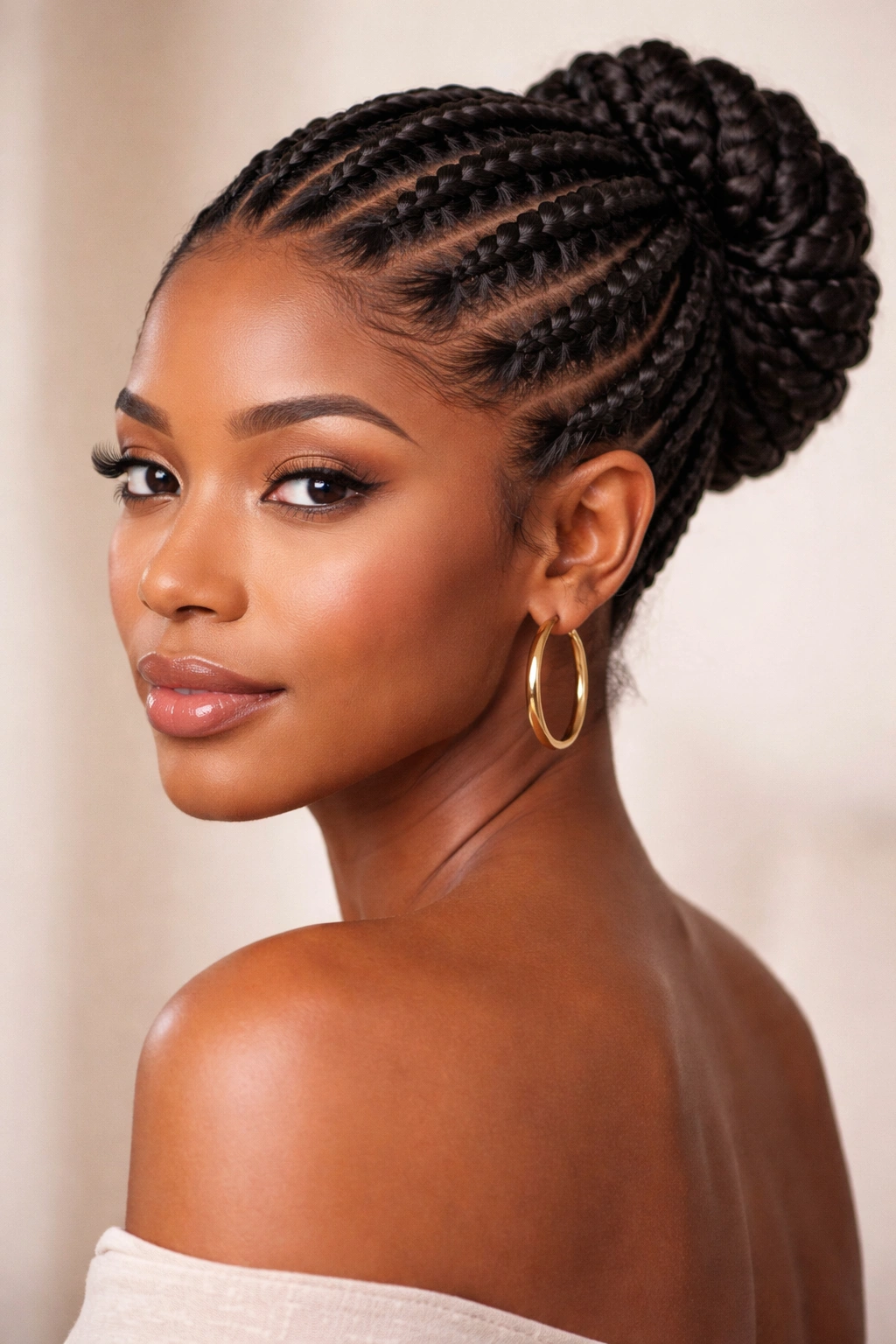
A cornrow updo gathers cornrows into a secured bun, coil, or wrapped style at the back or crown of your head, creating an elegant, romantic look that’s simultaneously protective and utterly gorgeous. The cornrows can be thick or thin, straight or curved, and they lead beautifully into an updo that showcases the artistry of the cornrowing work. This style is perfect for weddings, formal events, or any occasion where you want to look polished and intentional.
The Elegance of Cornrow-Based Updos
There’s something inherently sophisticated about the way cornrows lead into an updo—it creates lines and dimension that a loose bun simply doesn’t have. The style shows off both the skillful braiding work and the overall sophistication of your look. Cornrow updos work beautifully with jewelry, makeup, and formal attire, making them an excellent choice for significant life events.
Creating a Stunning Cornrow Updo
- Start with cornrows that feed from your hairline backward toward the crown or nape
- Gather the ends of the cornrows into a high or low bun, coil, or twisted knot
- Secure using bobby pins and finish with a light hairspray
- You can leave the bun smooth and sleek or slightly textured and romantic
- Add decorative elements like gold cuffs, beads, or hair jewels for extra elegance
- This style lasts beautifully for 6-8 weeks before needing to be taken down and redone
21. Highlighted or Dyed Twists
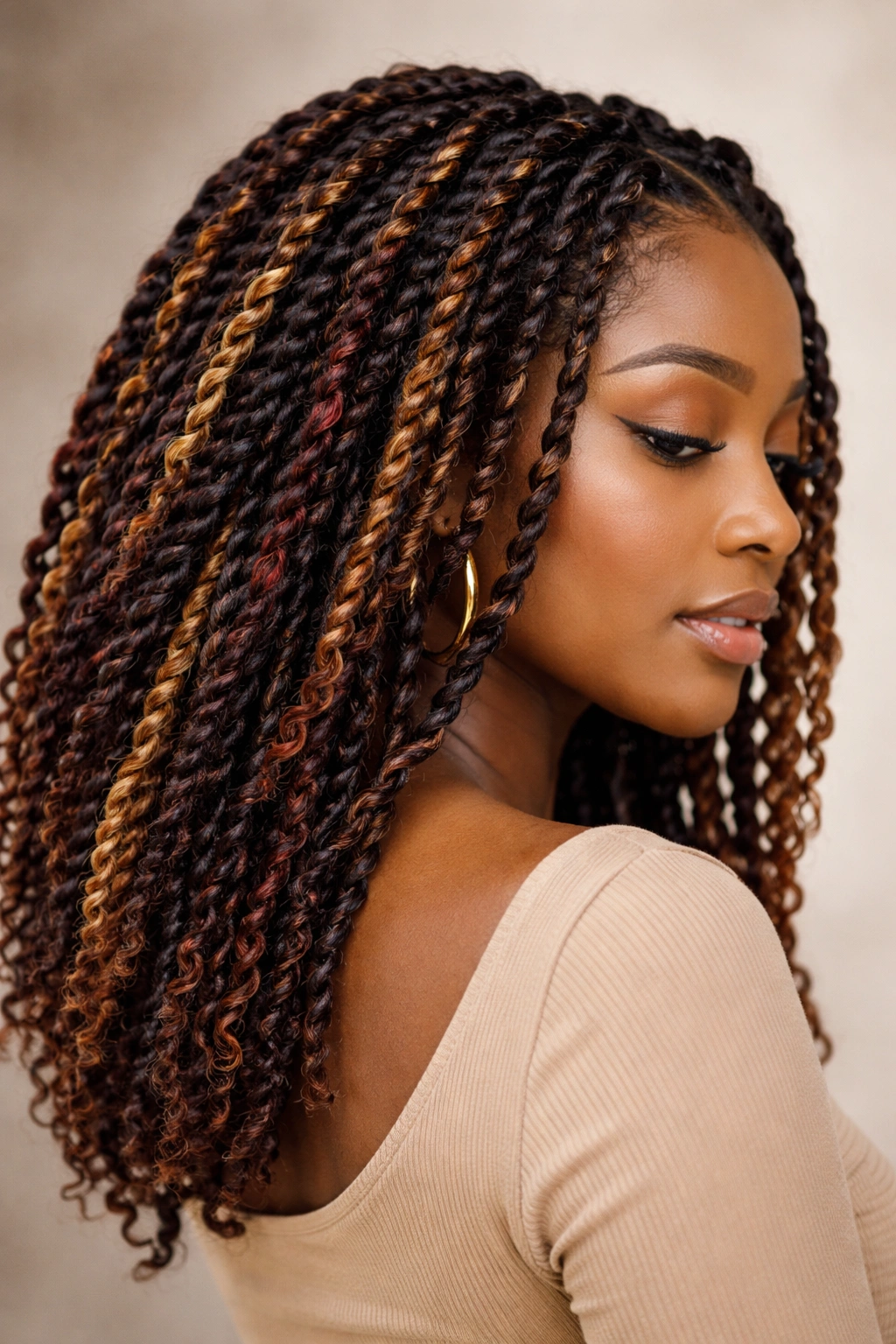
Adding color to two-strand twists through highlights, full dye, or even temporary color sprays elevates the style into editorial territory, creating dimension and visual interest that makes the style feel elevated and intentional. Whether you’re going for a subtle sun-kissed dimension, bold color-blocking, or vibrant statement tones, colored twists are a stunning way to express your personality. The twist structure actually showcases color beautifully, showing off highlights and dimension with every movement.
Why Color Works So Well with Twists
The twisted structure creates peaks and valleys that catch light differently, showing off dimension and color variation naturally. Unlike straight hair where color highlights might go unnoticed, twists frame and spotlight every bit of color detail. This makes twists an ideal style for anyone wanting to experiment with color or showcase a professional color service.
Color Ideas and Techniques
- Balayage or highlight twists for a sun-kissed, expensive-looking dimension
- Bold contrasting colors between your natural hair and the twists for maximum impact
- Dip-dye the ends of your twists for an ombre effect with full control
- Use temporary color sprays for a no-commitment way to experiment with bold tones
- Rooted color (darker roots with lighter ends) for a trendy, dimensional look
- Pair colored twists with statement jewelry and makeup for a coordinated editorial look
22. Loc Jewelry and Adorned Styles
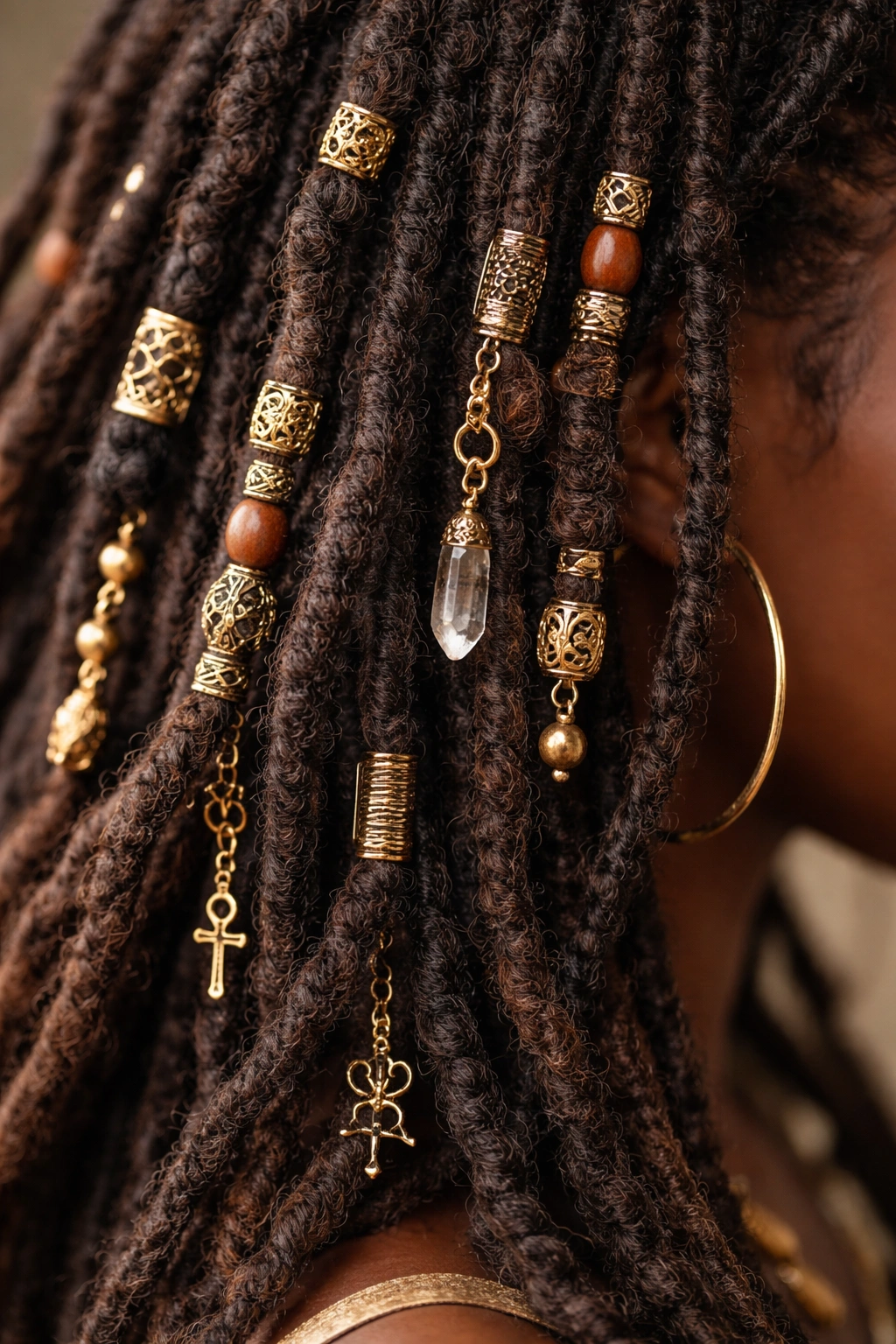
Loc jewelry—including cuffs, rings, clasps, beads, and wraps—transforms locks from protected style into personal art installation, allowing you to express your personality, cultural affiliation, or aesthetic vision. These pieces can be temporary (slipped onto individual locs) or semi-permanent (sewn or woven in), and they run the gamut from delicate gold rings to chunky carved wooden beads to intricate shell and wire work. Adorning locs is both a beautiful form of self-expression and a way to connect with cultural traditions.
The Artistry of Loc Adornment
Adding jewelry to locs is similar to jewelry-making itself—you’re selecting pieces that work with your aesthetic, coordinating them thoughtfully, and creating a look that feels deeply personal. The jewelry catches light, moves with you, and tells a story about your identity and style. Whether you choose minimalist metals or maximalist bohemian pieces, adorned locs feel like wearable art.
Popular Loc Jewelry Options
- Gold, silver, or copper cuffs slipped onto individual locs
- Hair rings (metal or beaded) placed at various points along your locs
- Beads of all sizes, from tiny seed beads to chunky sculptural pieces
- Wrapping individual locs with thin wire, thread, or string for intricate detail
- Combining multiple jewelry types on one loc for a personalized look
- Temporary jewelry that’s simple to change out versus permanent pieces sewn in
23. Twist-Out on Natural Hair
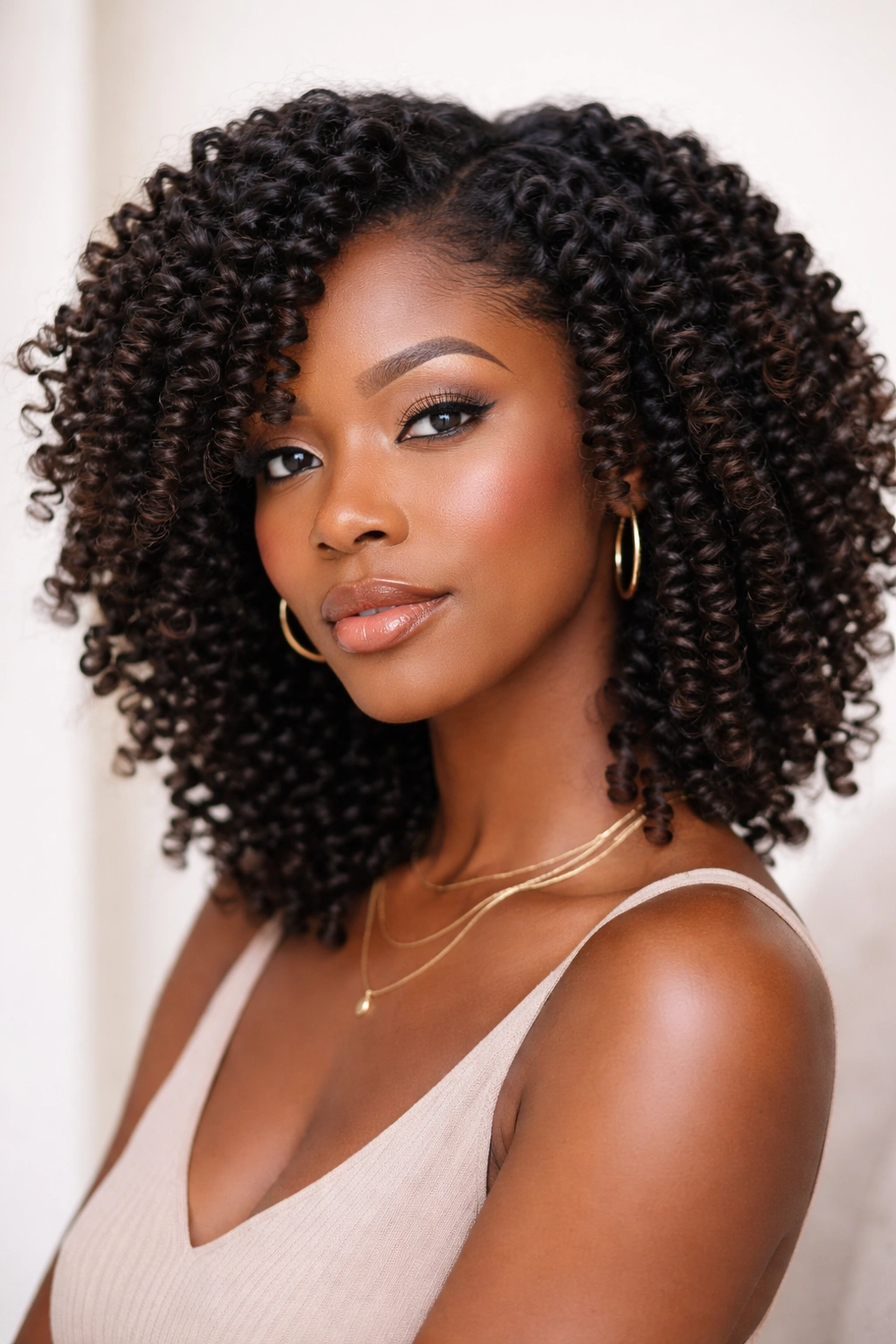
A twist-out involves twisting your damp hair and allowing it to dry overnight, then gently unraveling each twist to reveal beautiful, defined curls with incredible volume and texture. This style is one of the gentlest ways to create curl definition while your hair is resting and protected, and the results last for days with proper maintenance. A twist-out celebrates your hair’s natural texture while creating an intentional, sculpted look that feels both effortless and expertly styled.
The Low-Manipulation Appeal of Twist-Outs
You’re working with your hair’s natural curl pattern rather than forcing it into something it isn’t, making twist-outs genuinely protective and healthy. The results are consistent, beautiful, and achievable at home without professional help or expensive products. A well-done twist-out turns heads precisely because it looks intentional and carefully styled while celebrating authenticity.
Achieving a Picture-Perfect Twist-Out
- Start with freshly washed, damp hair and apply your curl-defining product of choice
- Divide hair into 4-6 large sections or 8-10 medium sections depending on how defined you want the curls
- Twist each section firmly and consistently from root to end
- Allow hair to dry completely overnight or longer before unraveling
- Gently unravel twists by sliding them apart rather than pulling them apart
- Use your fingers to separate and shape curls, then set with a light hairspray
- Refresh daily with a curl reviver spray or light water misting to maintain definition
24. Edge-Control Sleekness with Textured Crown
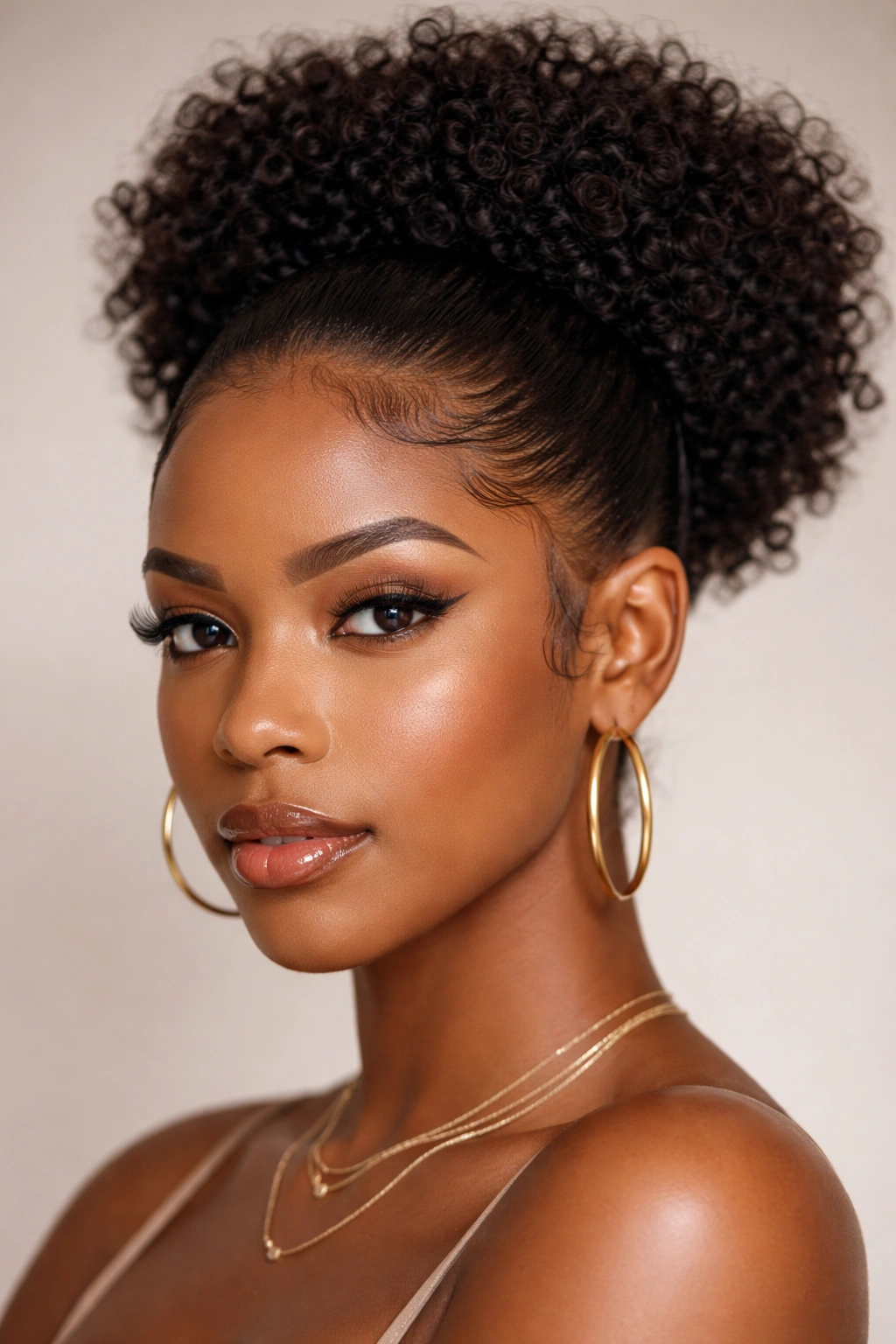
This style combines sleek, controlled hair at the hairline and back with a textured, voluminous crown or puff, creating a hybrid aesthetic that’s polished and put-together while still celebrating your natural texture. The edge control keeps everything neat and intentional looking while the textured crown allows for movement, length, and curl definition. It’s an ideal style for people who want sophistication without sacrificing the celebration of their natural hair.
The Best of Both Styling Worlds
You get the neat, finished look of edge control and smooth styling combined with the organic, authentic beauty of your natural curl pattern. This hybrid approach appeals to people who want versatility—they can wear this style to professional settings while still maintaining an authentic, natural aesthetic. The contrast between the sleek and textured sections is visually striking and intentional-looking.
Achieving Perfect Edge Control with Textured Definition
- Use a lightweight edge control product that provides hold without flaking or crunchiness
- Smooth your edges using a fine-tooth comb and light pressure
- Gather the crown into a high puff, coil, or set of twists that showcase your texture
- The puff or textured element should be voluminous and unrestricted
- Pair sleek edges with statement jewelry to emphasize the intentional styling
- This works beautifully for professional settings, casual hangouts, and special occasions
25. Braided Ponytail with Cascading Length
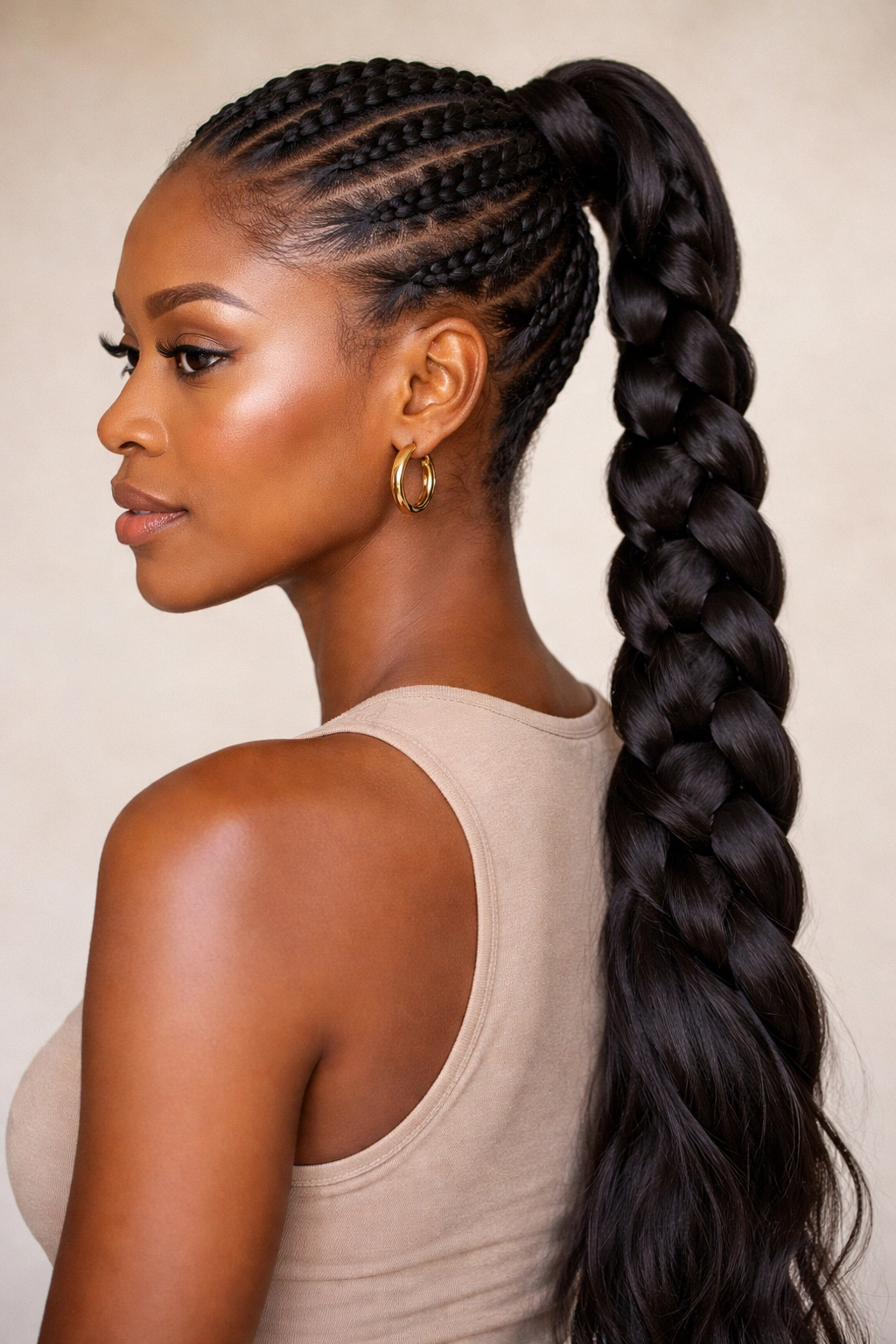
A braided ponytail gathers your hair into a secure braided base—whether that’s cornrows feeding into a ponytail, a single large braid, or multiple braids secured together—then allows the length to cascade freely, creating a statement of length while maintaining a neat, purposeful base. This style showcases the artistry of braiding work while celebrating the beauty and length of your natural hair. It’s powerful, elongating, and works beautifully at any length.
The Impact of Braided Ponytail Styling
There’s something inherently striking about seeing the careful detail of braided work flowing into long, free-flowing length. It commands attention in the best way, showing confidence and celebrating your hair without apology. This style works for everyday wear and special occasions alike, and it lasts beautifully because the braided base keeps everything secure and protected.
Creating a Braided Ponytail That Turns Heads
- Create cornrows or thick braids that feed backward toward where your ponytail will be gathered
- Secure all braids together into one ponytail at the base of your neck or crown
- Allow the remaining length to flow freely and naturally
- Wrap a small section of hair around the elastic to hide it completely
- You can leave the ponytail length loose and curly or slightly textured and wavy
- Add decorative elements like gold cuffs, beads, or hair jewelry to the braided base
- This style lasts 2-3 weeks before needing to be refreshed or redone
Final Thoughts
Natural hairstyling has evolved into an art form that celebrates authenticity, creativity, and cultural pride all at once. These 25 styles represent just a fraction of the endless possibilities available when you’re working with your hair’s natural texture—and the beauty is that you’re not limited to choosing just one. Many of these styles can be layered together, modified to suit your specific hair length and texture, or combined with colors, jewelry, and other creative elements to make them entirely your own.
The most important thing to remember is that there’s no single “right” way to wear your natural hair. What matters is that your chosen style makes you feel confident, beautiful, and authentically yourself. Whether you’re rocking a sleek high ponytail, intricate cornrows, flowing passion twists, or a simple protective puff, you’re celebrating something genuinely powerful—the natural beauty of your hair exactly as it grows from your scalp. That’s what makes natural hairstyling so compelling right now.
Your natural hair journey is uniquely yours, and the styles you choose to wear are personal expressions of identity, culture, creativity, and self-love. Keep experimenting, keep celebrating, and keep rocking the hairstyle that makes you feel most like yourself.
