



A long face shape—typically characterized by a length that’s noticeably greater than its width—can feel like you’re stuck with only a handful of flattering options. But here’s what most people miss: the right haircut doesn’t just look good on you; it actually shifts how your face appears in the mirror. The magic isn’t in your hair texture or color; it’s in the placement of horizontal lines, volume distribution, and proportions created by your cut. When you understand how certain styles work against the natural elongation of your face, you unlock dozens of genuinely flattering choices instead of just settling for what feels “safe.”
Face-shortening hairstyles work by creating visual width and breaking up vertical lines. They add volume where you need it most—typically at the sides of your face around the cheekbones and jaw—while avoiding styles that extend downward in long, uninterrupted lines. The best cuts for longer face shapes introduce horizontal movement through layering, bangs, waves, or strategic fullness that makes your face look more balanced and proportional. It’s not about fighting your face shape; it’s about working with the proportion and creating visual illusions that feel authentic to who you are.
The hairstyles that follow aren’t just random suggestions. Each one works through a specific mechanism: some use bangs to shorten the vertical space above your cheekbones, others add width at the jawline, and still others use texture and movement to break up the length visually. Whether you prefer short, medium, or long hair, you’ll find a style that genuinely suits your face shape and lifestyle. The key is understanding why each cut works so you can adapt it to your hair texture, personal style, and the maintenance level you’re comfortable with.
Understanding How Hairstyles Reshape Your Face
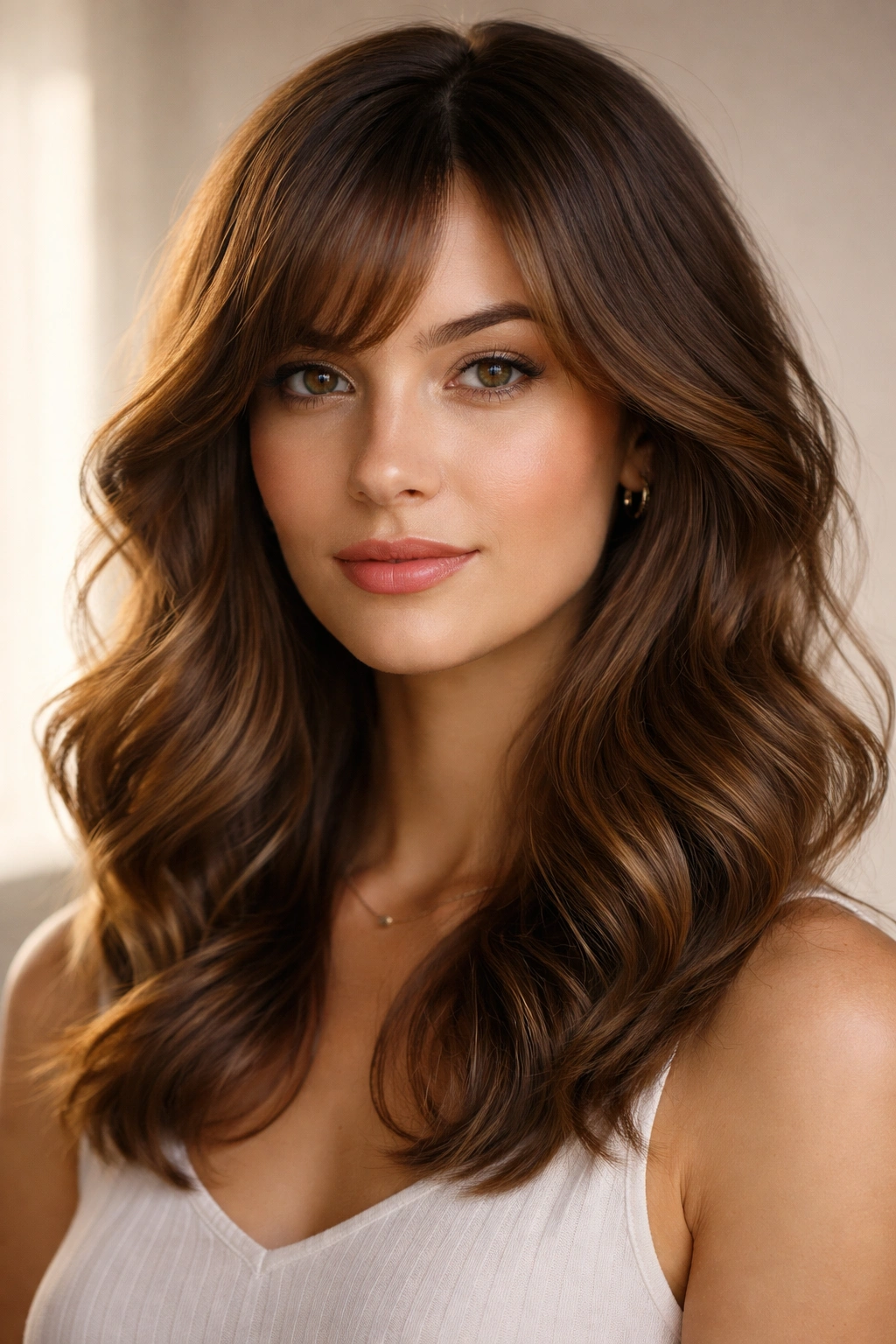
Before diving into specific cuts, it helps to understand the mechanics of what makes a hairstyle visually shorten a longer face. Your goal isn’t to change your actual face—it’s to create visual proportions that feel more balanced and harmonious.
Horizontal lines and width are your best friends. When your hair has horizontal movement—whether through layers, waves, or fullness—it draws the eye across rather than down. This sideways visual movement counteracts the downward elongation of a longer face shape. A style that’s flat and sleek from top to bottom actually emphasizes length; the same hair when textured or curved breaks that vertical line.
Bangs and bang placement alter how much vertical space appears above your cheekbones. Longer bangs that hit closer to your eyebrows create an optical effect that makes your face feel shorter by taking up space that would otherwise emphasize the distance from your forehead to your chin. The lower your bangs sit, the less this effect works—thin, wispy bangs far above your brows won’t create enough visual interruption.
Volume at the sides creates width at your widest points, which makes your overall face proportion feel less elongated. Strategic fullness around your cheekbones, jaw, and temples shifts your face’s visual balance from a vertical emphasis to a more compact appearance.
1. Blunt Chin-Length Bob
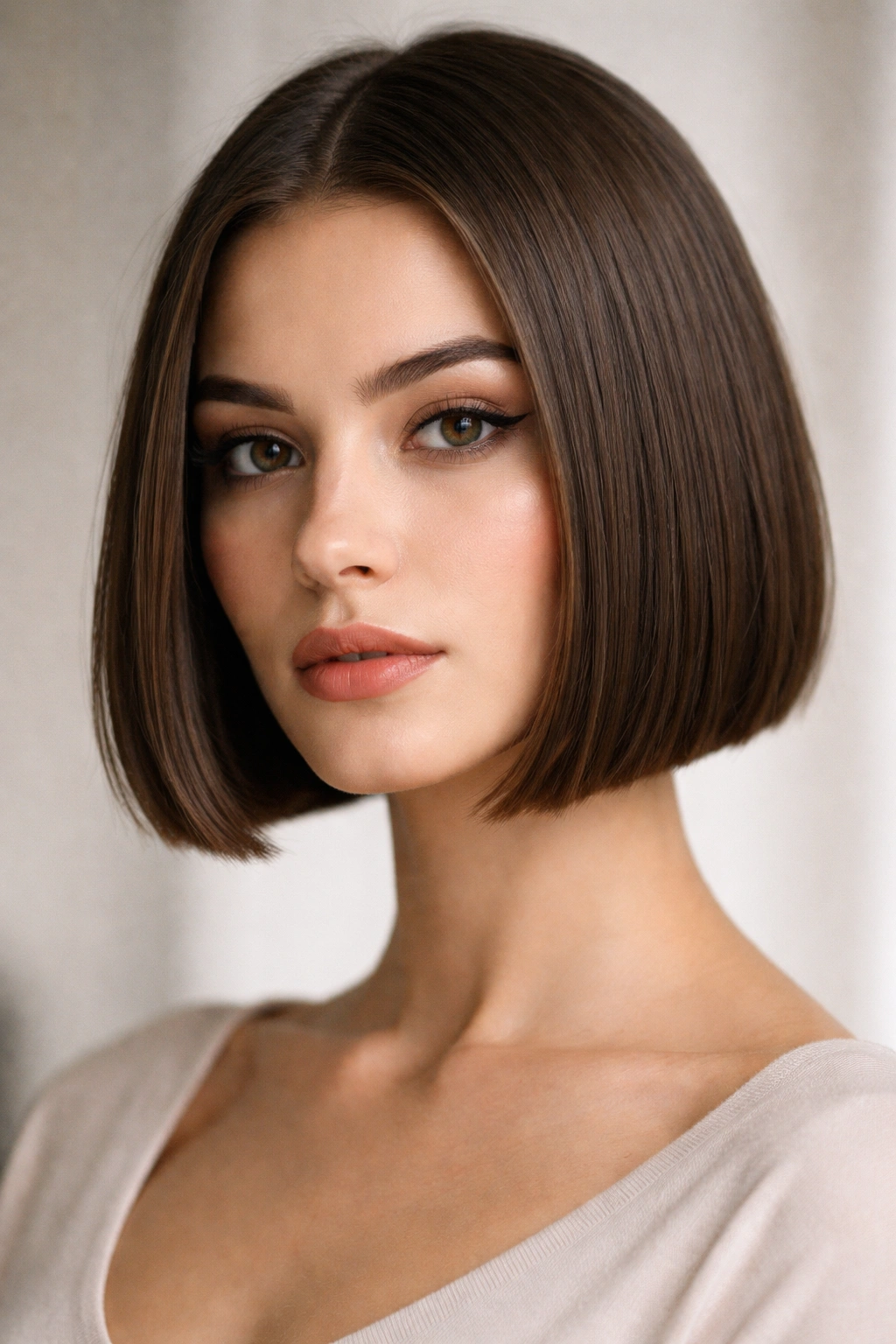
A blunt bob cut precisely at your jawline is one of the most powerful style choices for visually shortening a longer face. The key isn’t just the length—it’s the bluntness. A clean, sharp line at the chin creates a strong horizontal boundary that grounds your face and prevents any visual extension downward.
Why It Works So Well
The blunt edge creates an unmistakable horizontal line right at your jawline. This line interrupts the downward flow of your face shape and creates a visual “stop point” that makes your face feel more compact. The weight at the ends also adds fullness around your jaw and cheeks, creating width where you need it most. When you pair this with a center or slightly off-center part, the cut frames your face while emphasizing its width rather than its length.
Styling Tips for Maximum Impact
- Blow dry with a round brush to add subtle curve and prevent the style from looking too severe or flat
- Use a smoothing serum on damp hair before styling for a polished finish without frizz
- Keep the line razor-sharp with trims every 4-6 weeks; a blunt bob loses its impact quickly as the ends grow out and soften
- Consider adding slight waves or a gentle curve inward at the ends for a softer, more modern take on the classic blunt bob
Pro tip: A blunt bob looks best when your hair has some natural movement or when you’re willing to style it regularly. If your hair is very straight and you prefer wash-and-go styles, this cut may require more daily effort than you’re comfortable with.
2. Textured Layers Throughout
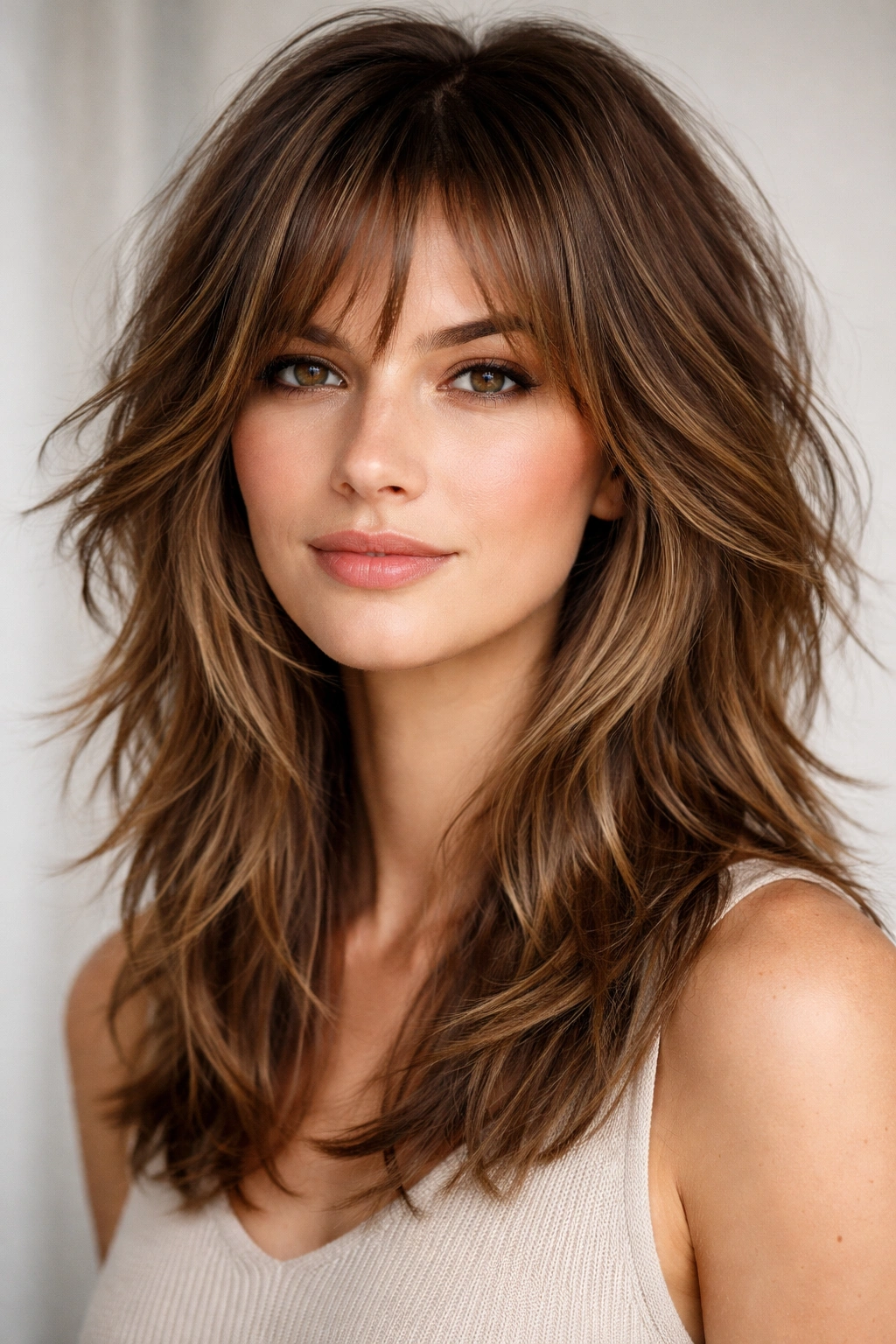
Layered cuts with consistent texture throughout create visual movement that breaks up vertical lines. Rather than one clean outline, layered hair has multiple lengths and points of movement, which interrupts how the eye travels down your face and neck.
How Layers Create Visual Shortening
Texture and layers work by fragmenting the visual line of your hair. Your eye doesn’t travel in one straight path downward; instead, it bounces across the different lengths and movement points. This constant visual interruption makes your face feel less elongated. Layers also distribute volume throughout rather than creating one heavy line, which softens the severity of a longer face shape.
Best Layer Placement
- Start layers closer to your chin (around jaw-length or slightly below) rather than above
- Layer shorter pieces around your face to create framing that draws attention horizontally
- Keep longer layers in the back for movement without sacrificing length if that’s your preference
- Ask your stylist for choppy, piece-y layers rather than subtle ones—the more obvious the texture variation, the stronger the effect
Consider pairing textured layers with a side part to add asymmetrical volume that balances your face’s proportions.
3. Long Bob with Side-Swept Bangs
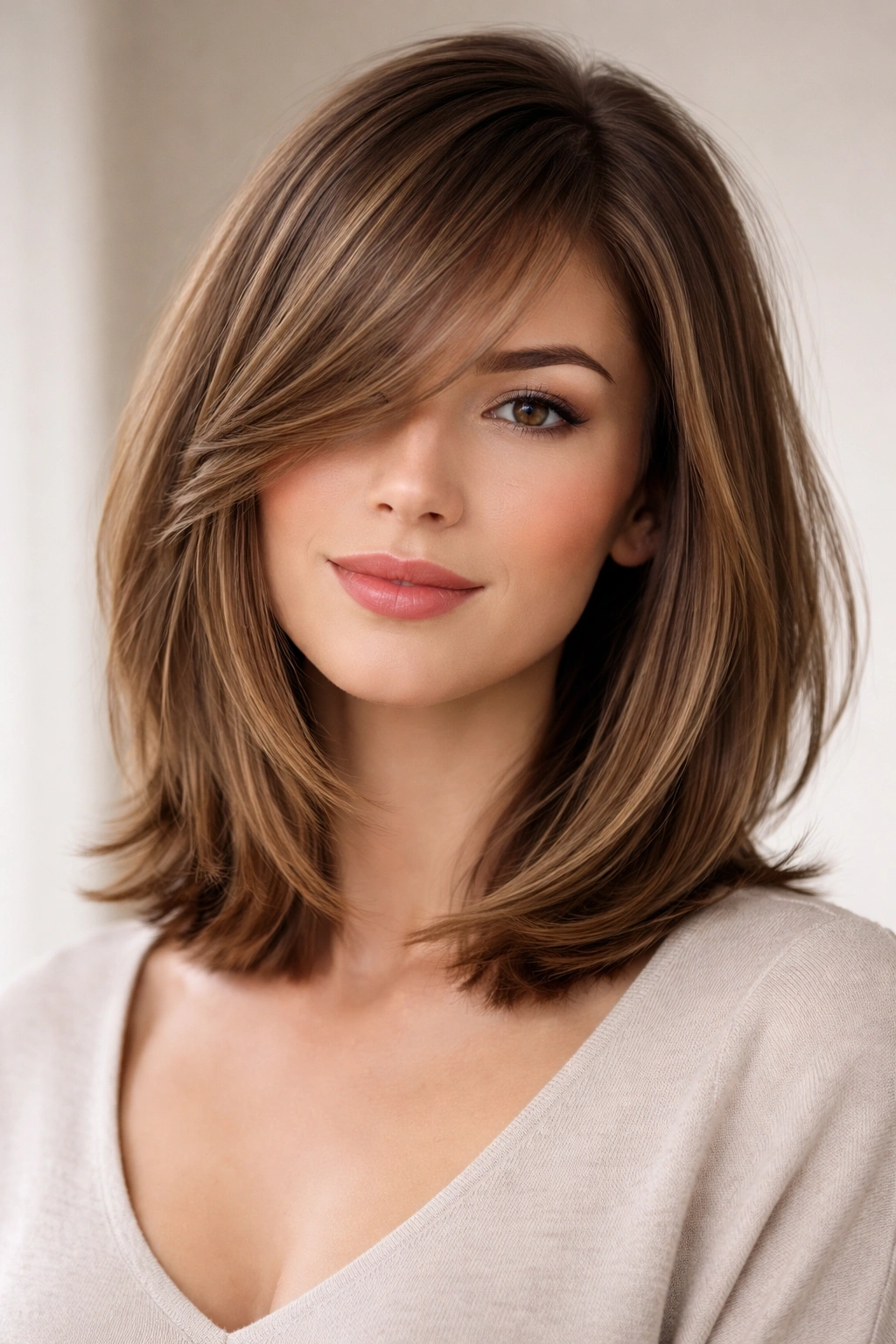
A lob—that in-between length that typically hits around collarbone or slightly below—becomes a face-shortening powerhouse when paired with side-swept bangs. The bangs create a diagonal line across your face, while the lob’s longer length provides the versatility you might want.
The Magic of Diagonal Lines
Side-swept bangs create a diagonal trajectory across your face rather than a vertical one. This diagonal angle is incredibly flattering for longer face shapes because it introduces movement and width asymmetrically. Combined with a lob’s weight and movement, this style creates the illusion of a shorter, wider face without requiring you to cut significantly shorter.
Styling and Maintenance
- Side-swept bangs need regular trims (every 3-4 weeks) to maintain their shape and prevent them from growing into your eyes
- Blow dry bangs away from your face with a round brush to keep them separated and textured
- Use texturizing spray or a sea salt spray to enhance movement and prevent the style from looking too blunt or heavy
- Pair with loose waves or curls for maximum visual effect—straight hair in this style can look too severe
This style works beautifully if you enjoy styling your hair regularly. If you prefer minimal maintenance, the constant bang-trimming and daily styling might feel like too much work.
4. Full Blunt Bangs
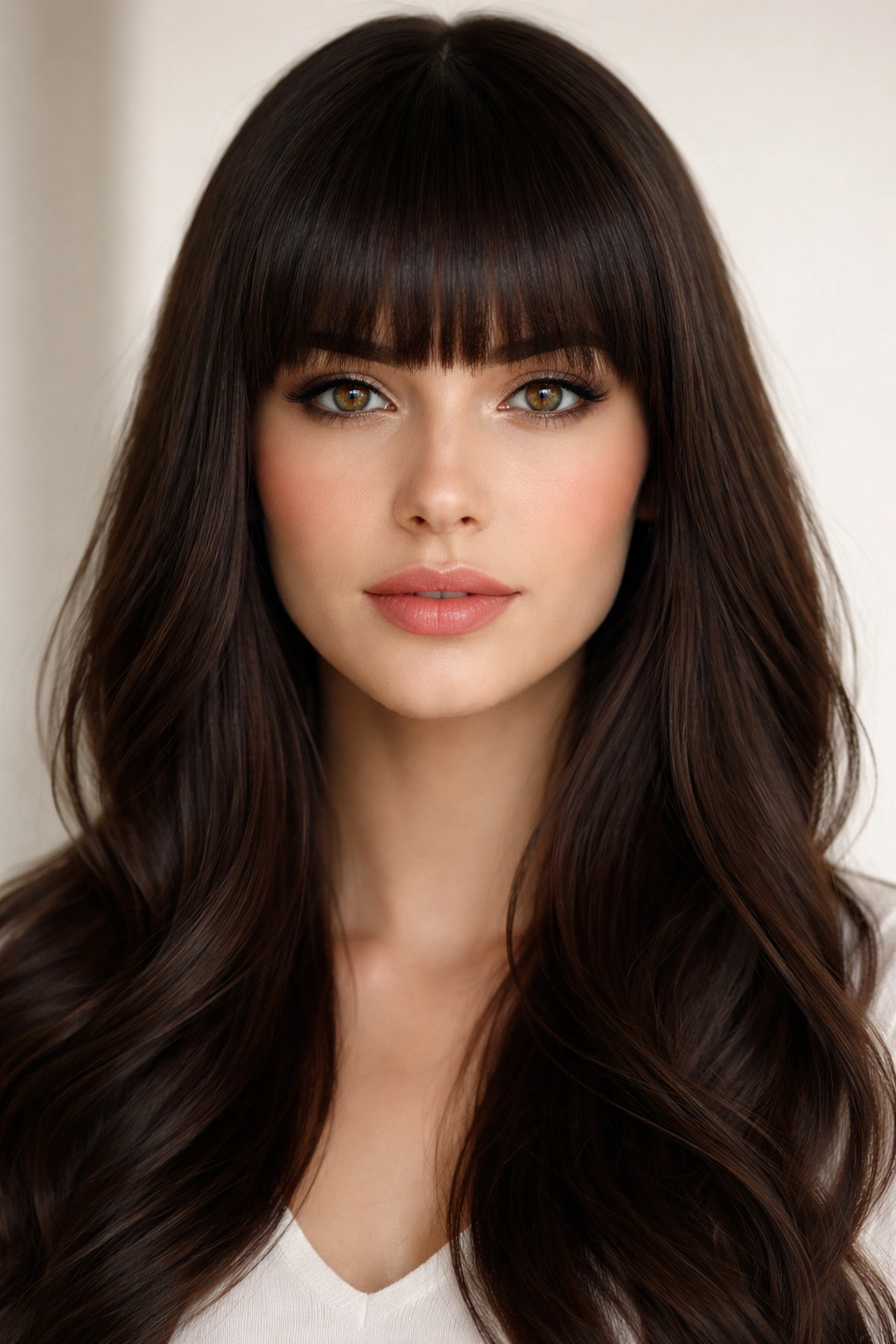
Blunt, full bangs that hit right at your eyebrows are a bold choice that immediately visually shortens your face. These bangs take up a significant amount of vertical space, directly reducing how much of your face appears below your brow line.
Why Blunt Bangs Are So Effective
Full bangs create a strong horizontal line at your eyebrows, which dramatically shortens the visual distance from your hairline to your cheekbones. They also draw attention upward, to your eyes and forehead, rather than letting the eye travel down the length of your face. The weight and fullness of blunt bangs frame your face while creating width, especially if your bangs have slightly textured or choppy ends.
Making Blunt Bangs Work With Your Hair
- Blunt bangs require commitment; you’ll need trims every 2-3 weeks to maintain their shape
- They work best with hair that’s relatively straight or naturally textured (not very curly)
- Pair with a medium-length cut (chin-length to collarbone) for the most balanced effect
- Use a strong-hold styling product to keep bangs in place and prevent them from separating or frizzing
Worth knowing: Blunt bangs photograph differently than they appear in person—they look more dramatic and shorter in photos, so adjust your expectations if you’re looking at references online.
5. Shaggy Textured Pixie or Short Cut
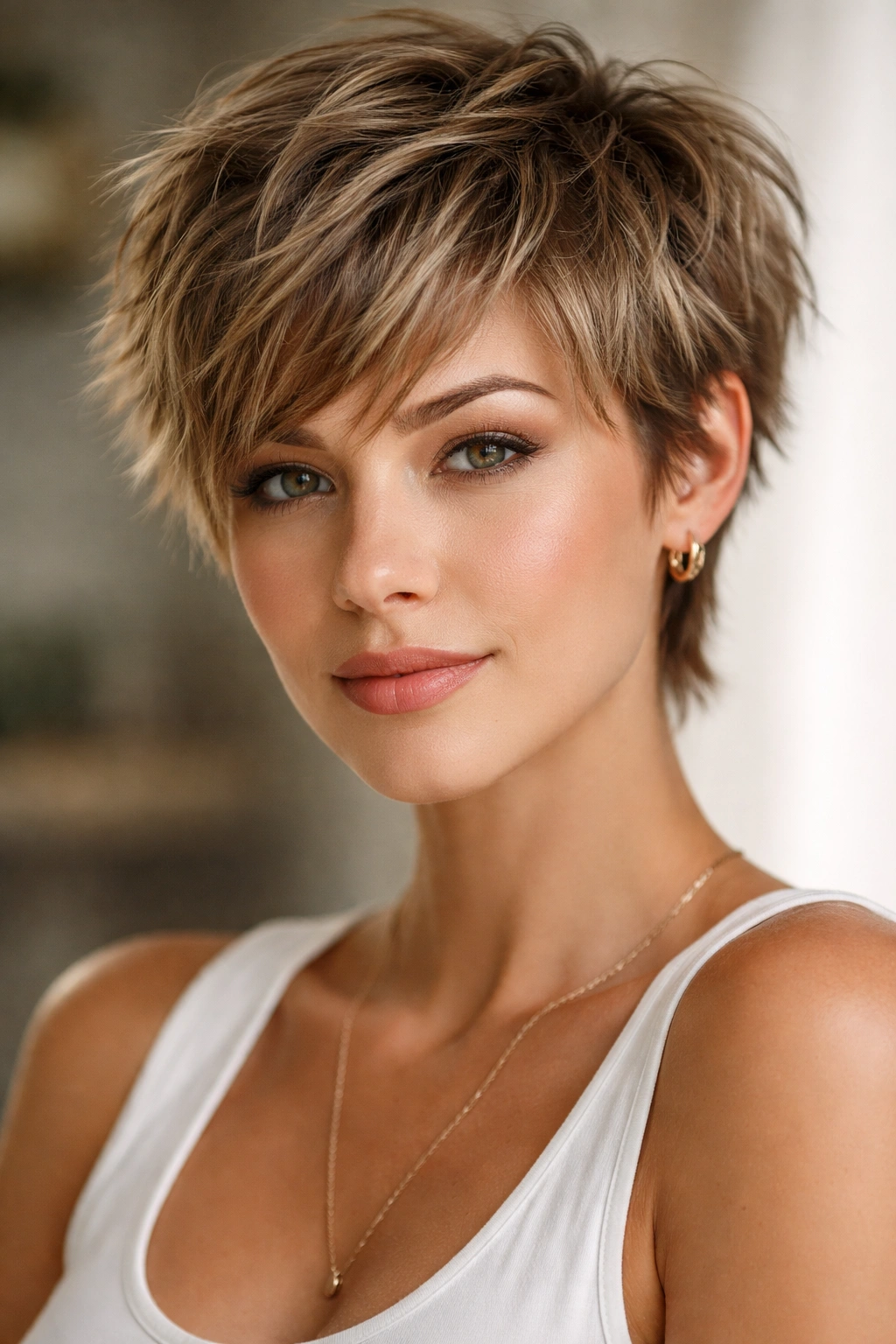
A short, shaggy pixie cut with significant texture creates visual width and movement that makes even the longest face shape feel more balanced. The key is the textured, piecey styling rather than a smooth, sleek short cut.
How Short Textured Cuts Work the Proportions
Short cuts bring visual weight closer to your face, immediately making your face appear more compact relative to your body. When the short cut has texture and layers throughout, it creates horizontal movement and volume at the sides, which widens your face visually. This style is incredibly effective at breaking up vertical lines because every inch of hair has intentional texture.
Styling a Textured Pixie
- Use a texturizing product or pomade to emphasize the choppy layers and create intentional separation
- Blow dry with your fingers or a brush to encourage movement rather than smoothing it flat
- This style needs regular trims (every 4-6 weeks) to maintain its shape and texture
- Consider adding subtle highlights or a two-tone color to enhance the textured effect
This option is ideal if you’re willing to commit to frequent trims and daily styling with products. However, it’s not the choice if you prefer longer hair or wash-and-go convenience.
6. Shoulder-Length With Voluminous Waves
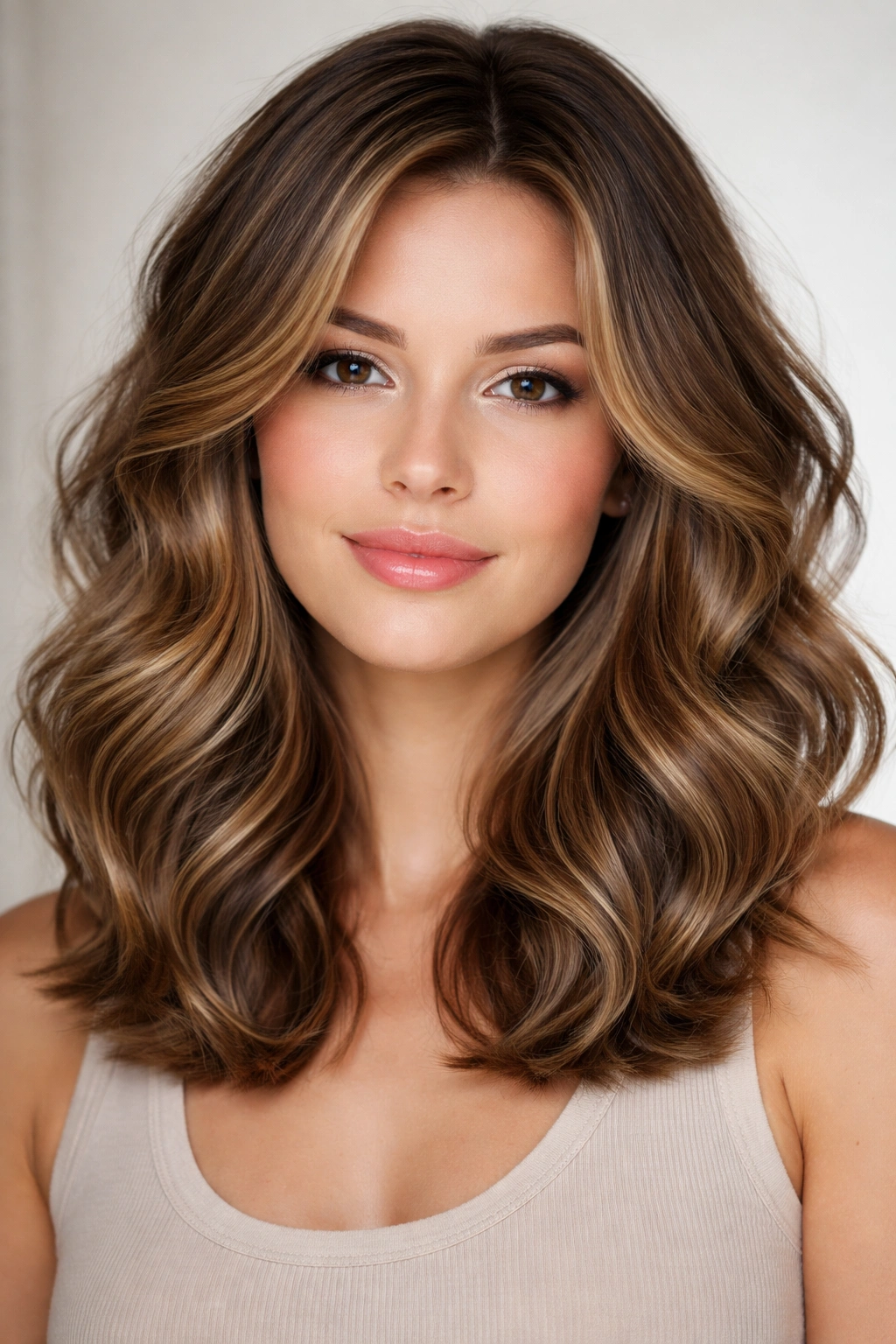
Medium-length hair with big, bouncy waves creates the illusion of width and horizontal movement that visually counteracts a longer face shape. The key is consistent volume throughout—not just at the ends, but from roots to tips.
Volume as a Face-Shortening Tool
Voluminous waves distribute width across your hair and face, making your overall silhouette feel wider and therefore shorter in proportion. The wave pattern itself creates multiple horizontal curves rather than a straight vertical line, which is exactly what a longer face shape needs. When you add volume at the roots, you also create lift at your crown, which makes your face feel less elongated.
Creating and Maintaining Waves
- Use a curling iron or wand to create waves that are consistent throughout, not just at the ends
- Apply a heat protectant spray before curling to prevent damage and help waves last longer
- Use a texturizing spray or dry shampoo at the roots the day after styling to maintain volume without re-curling
- Sleep on silk pillowcases to help waves last longer and reduce frizz
Pair this style with a deeper side part to add asymmetrical volume that further balances your face shape. This is a great option if you enjoy daily or every-other-day styling and want the flexibility to wear your hair up or down.
7. Deep Side Part With Face-Framing Layers
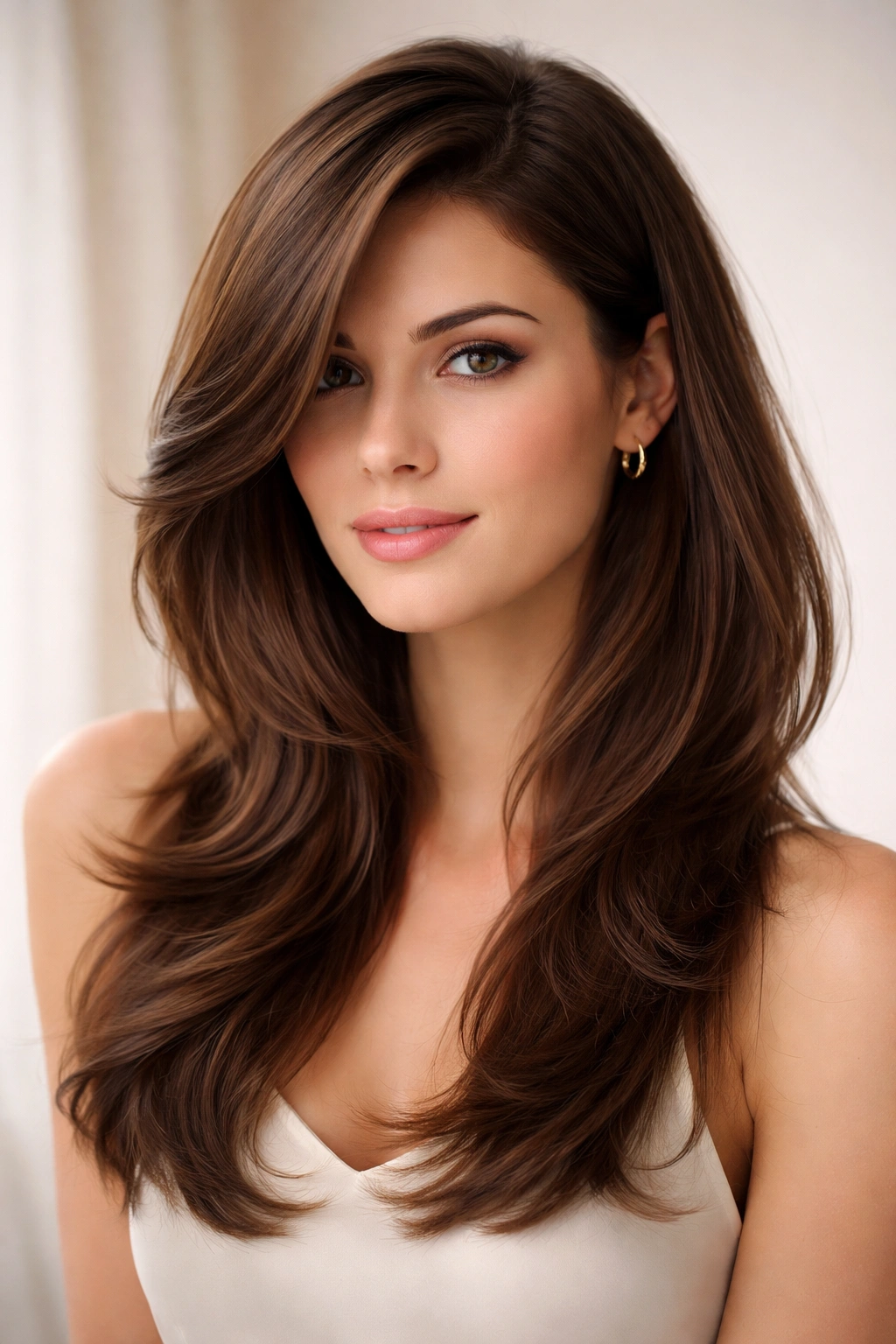
A deep side part shifts the visual weight of your hair to one side, creating asymmetry that balances a longer face shape. Combine this with face-framing layers, and you get a style that’s both flattering and versatile.
The Power of Asymmetrical Styling
Deep side parts create diagonal lines across your scalp and face, which introduces visual interest and prevents the symmetrical elongation that a center part can emphasize. When you add face-framing layers that curve inward slightly, you create horizontal movement at your cheekbones, which is where you need width most.
Implementing This Look
- Ask your stylist for layers that start around your cheekbones and curve slightly inward toward your face
- Blow dry with your part set deep on one side, using a round brush to curve the layers toward your face
- Use a smoothing serum or anti-frizz cream to keep layers in place without looking stiff
- This works beautifully with straight hair, wavy hair, or curly hair—the asymmetry is what matters
This style is incredibly low-maintenance compared to bangs or short cuts. You get the face-shortening benefits of layers and asymmetry without needing frequent trims or daily styling commitment.
8. Curtain Bangs With Shoulder-Length Hair
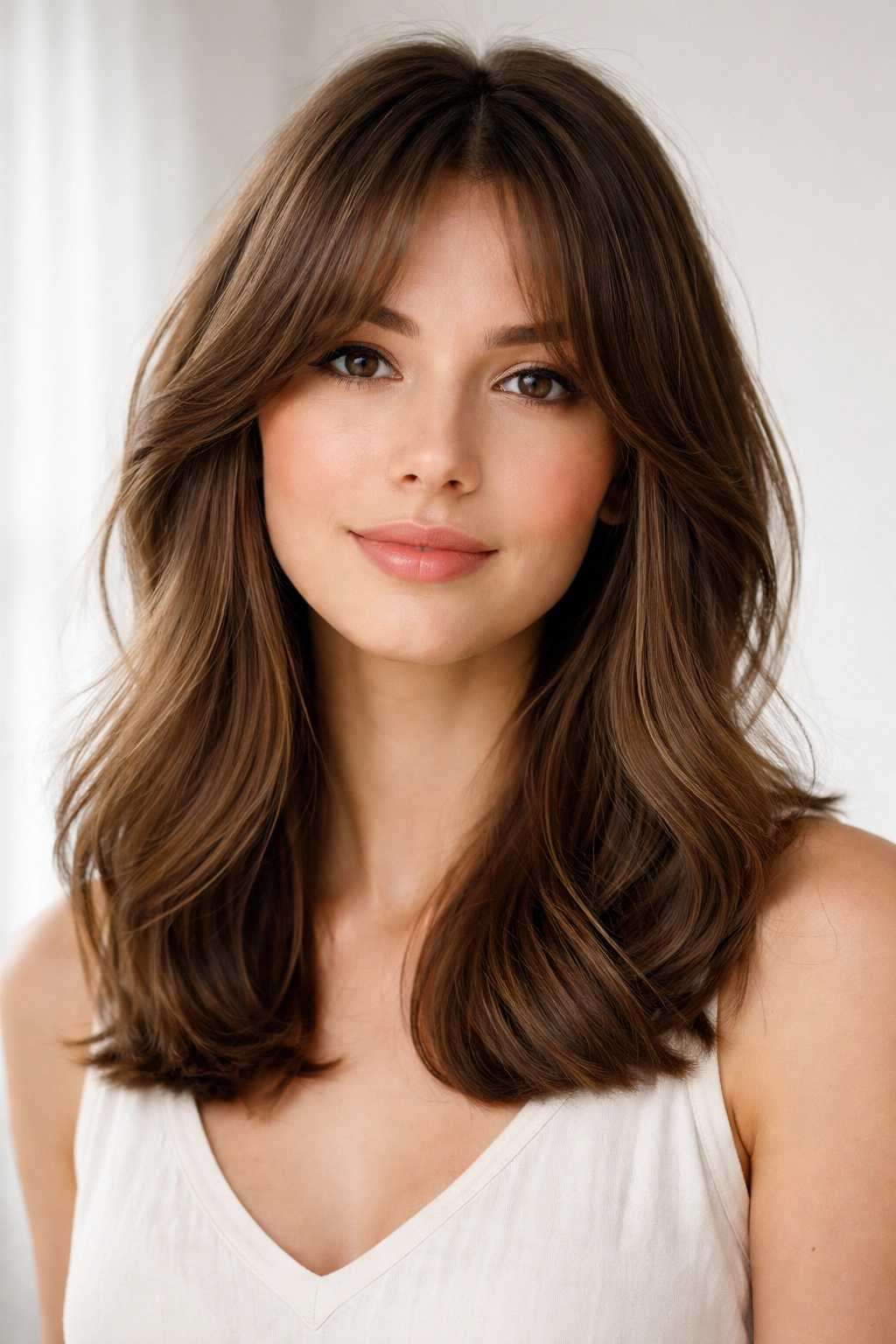
Curtain bangs—longer bangs that frame your face by sweeping away from the center—create a flattering, soft option for longer faces without requiring the commitment of full blunt bangs. They introduce horizontal movement right at your face while maintaining length and versatility.
Why Curtain Bangs Suit Longer Faces
Curtain bangs create a frame around your face while adding volume and width at your cheekbones through the density of the bang area. The inward sweep on both sides creates visual curves that counteract the linear elongation of a longer face. They’re also incredibly versatile—you can style them smooth, wavy, or textured depending on your preference and mood.
Maintaining Curtain Bangs
- Trim every 4-6 weeks to maintain the shape and prevent them from growing too long
- Blow dry with a round brush, curving both sides inward slightly to enhance the framing effect
- You can pin them back on days you want a different look—they’re more flexible than full blunt bangs
- Pair with shoulder-length or longer hair for the best proportional effect
Insider note: Curtain bangs work particularly well if you have naturally wavy or curly hair—the texture naturally enhances the inward sweep and creates the framing effect without daily styling.
9. Sleek Bob With Strategic Undercut Texture
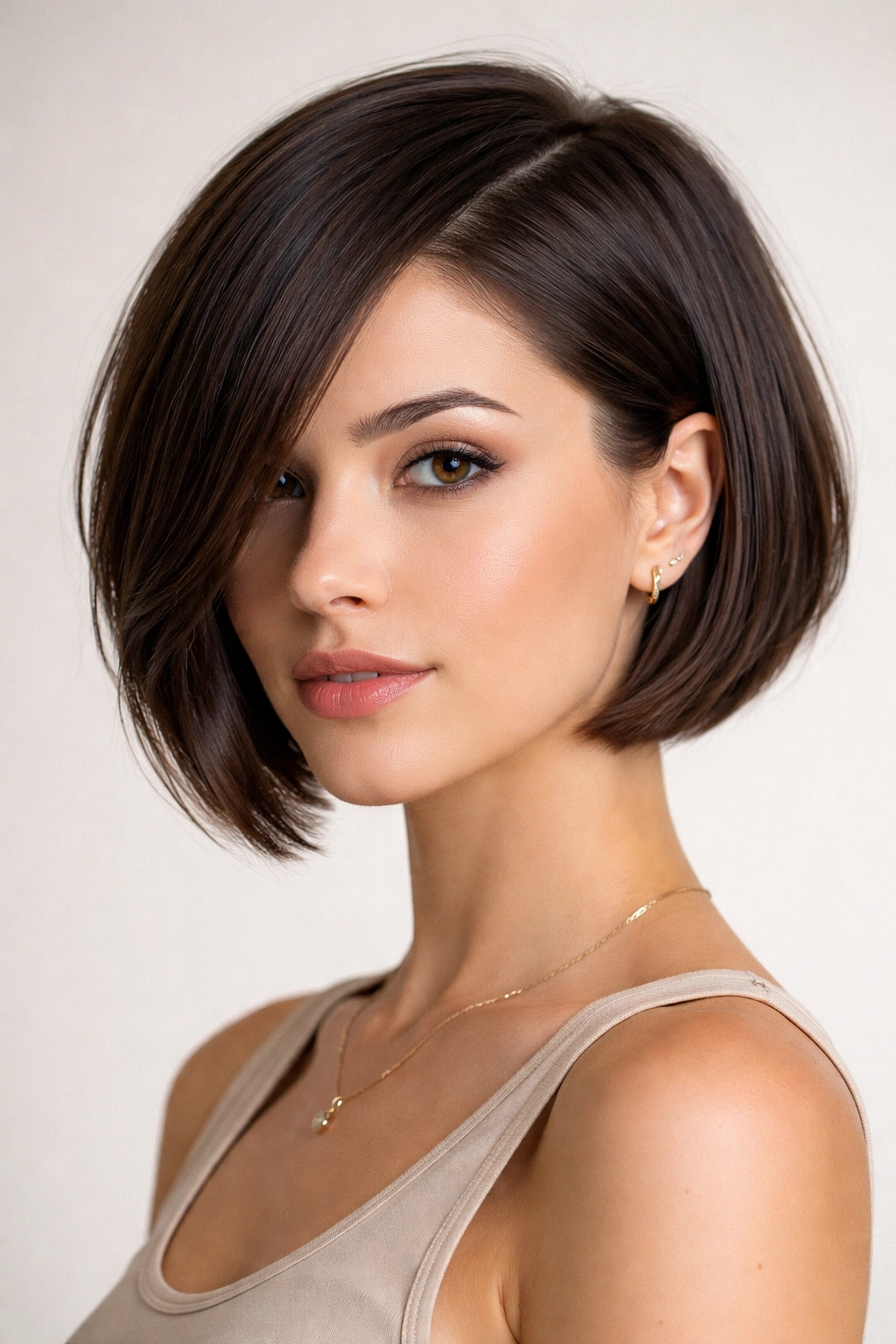
A sleek, smooth bob becomes even more effective at shortening a longer face when you add subtle texture or layering underneath. The smooth top creates a clean line, while the undercut texture adds dimension and visual interest that breaks up the sleekness.
Combining Smoothness With Texture
A smooth, polished surface with hidden texture underneath creates sophistication while still achieving the face-shortening benefits. The smooth top line keeps the style clean and intentional, while the textured layers underneath create movement and prevent the style from feeling flat or one-dimensional. This approach gives you the impact of a layered cut with the option to style it sleek for professional settings.
Styling This Hybrid Approach
- Blow dry smooth on top using a paddle brush and a concentrator nozzle on your blow dryer
- Allow the underneath layers to dry naturally or diffuse them for subtle texture
- Use a smoothing serum on top to maintain the polished appearance
- You can also pin the top smooth for extra elegance, or shake the underneath layers loose for a more textured look
This is perfect if you want versatility—sleek for work or events, textured for casual days.
10. Pixie Bob Combination
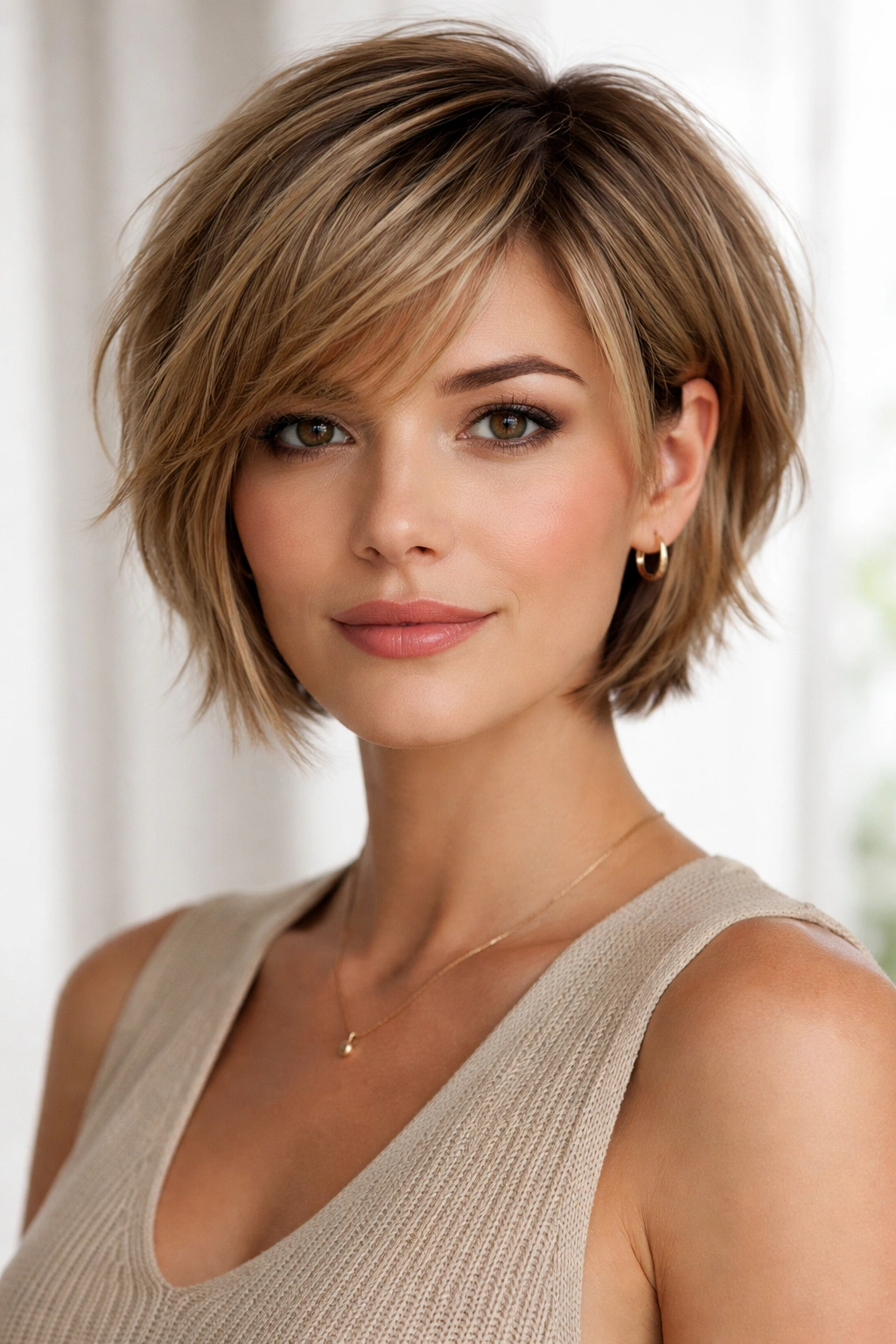
A pixie bob—essentially a longer pixie cut that reaches your chin or just below—combines the face-shortening power of a short cut with the versatility of slightly longer length. It’s a modern, fashion-forward option that works beautifully for longer face shapes.
The Best of Both Worlds
A pixie bob has the width-creating, face-shortening properties of a short cut because the length stays close to your face and head, immediately making your face feel more compact. The longer length compared to a true pixie also provides more styling options—you can wear it slicked back, textured and piece-y, or with subtle waves. The cut typically includes significant layering and texture throughout, which breaks up vertical lines.
Styling and Customization
- Texturize with a pomade or styling cream to emphasize the layered, piecey effect
- Blow dry with your fingers for a more casual, textured look, or use a brush for a smoother finish
- This cut requires trims every 4-6 weeks to maintain its shape and prevent it from growing into an awkward length
- Consider color blocking or highlights to enhance the texture and movement
This style works wonderfully if you’re open to embracing a modern, sometimes-bold aesthetic and you’re willing to trim every month.
Final Thoughts

Choosing a hairstyle for a longer face shape isn’t about limitation—it’s about understanding which visual mechanisms actually work to create balance and proportion. Every style in this list achieves face-shortening through one or more specific techniques: introducing horizontal lines through bangs or structure, creating width through volume or texture, or using asymmetry and movement to interrupt vertical elongation.
Your best choice depends on three things: your hair texture and how willing you are to style it daily, your lifestyle and maintenance tolerance, and which aesthetic genuinely appeals to you. A blunt bob might be mathematically perfect for your face, but if you prefer longer hair and minimal styling, a shoulder-length cut with layers and waves might bring you more genuine satisfaction.
Start with whichever style resonates most with you, and approach your first consultation with your stylist by explaining specifically why that style appeals to you—is it the length, the texture, the bangs, the asymmetry? This helps your stylist adapt the cut to your unique hair type and face shape rather than just copying a photo. Remember that your hair texture, hair density, and personal style nuances all affect how a cut translates on you specifically. A great stylist will customize these foundational ideas to work with your hair, not against it.
