



Finding the right haircut for textured hair isn’t just about picking something that looks good in a photo—it’s about finding a style that works with your hair’s natural texture rather than against it. The difference between a mediocre haircut and a stunning one often comes down to understanding your specific curl pattern and choosing a cut designed to enhance it rather than fight it. A cut that’s perfect for loose waves will look completely different and behave differently when applied to tight coils, and attempting to force the wrong technique on the wrong texture inevitably leads to frizz, shapelessness, and frustration.
The real secret that stylists know but don’t always communicate is that textured hair thrives when the cut respects the hair’s natural movement and density. When you match a cutting technique to your curl pattern—understanding how each type of texture responds to layers, choppy sections, or blunt edges—you unlock styling that looks effortless and maintains its shape between salon visits. This is why someone with wavy hair might love a shag while someone with tight coils might find the same cut creates an undefined mess.
Throughout this guide, you’ll discover haircuts specifically designed for different curl patterns, from loose waves through tight coils. Each cut is explained with the technical details that matter: how it’s cut, why it works for that specific texture, and what daily styling looks like. Whether you’re making a dramatic change or refining your current look, you’ll find options organized by curl type so you can find cuts actually designed for your hair.
Textured Haircuts for Wavy Hair (Type 2 Waves)
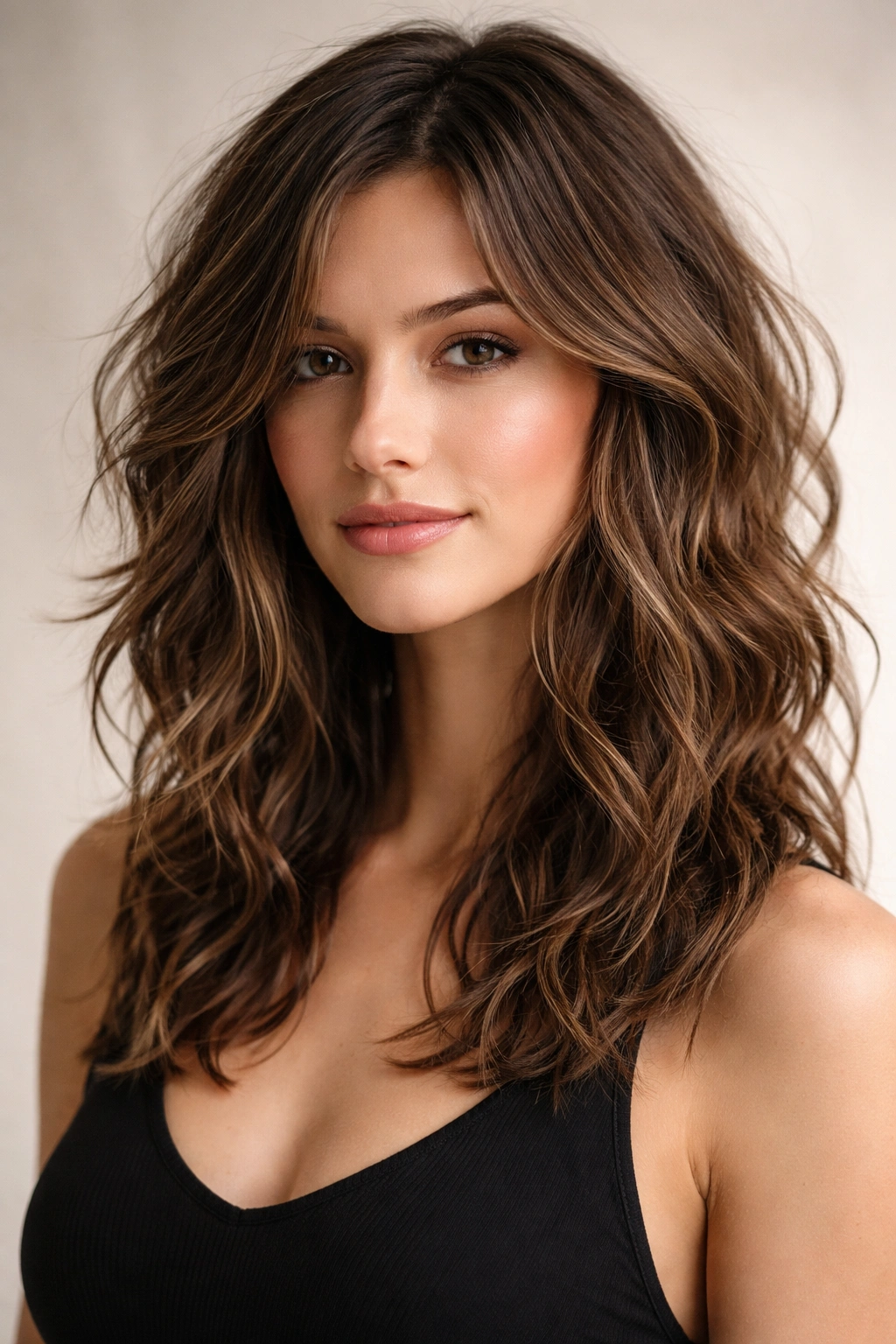
Wavy hair occupies a fascinating middle ground—it has enough structure to hold a shape but enough movement to respond beautifully to layering and texture work. The key with waves is that cuts work best when they create movement without fighting the hair’s natural fall direction. Heavy, blunt cuts often look too solid on waves and can actually weigh them down, while overly choppy textures can make waves look wispy and undefined. The sweet spot involves creating strategic layers that encourage wave formation while maintaining enough density to avoid a stringy appearance.
1. The Modern Shag
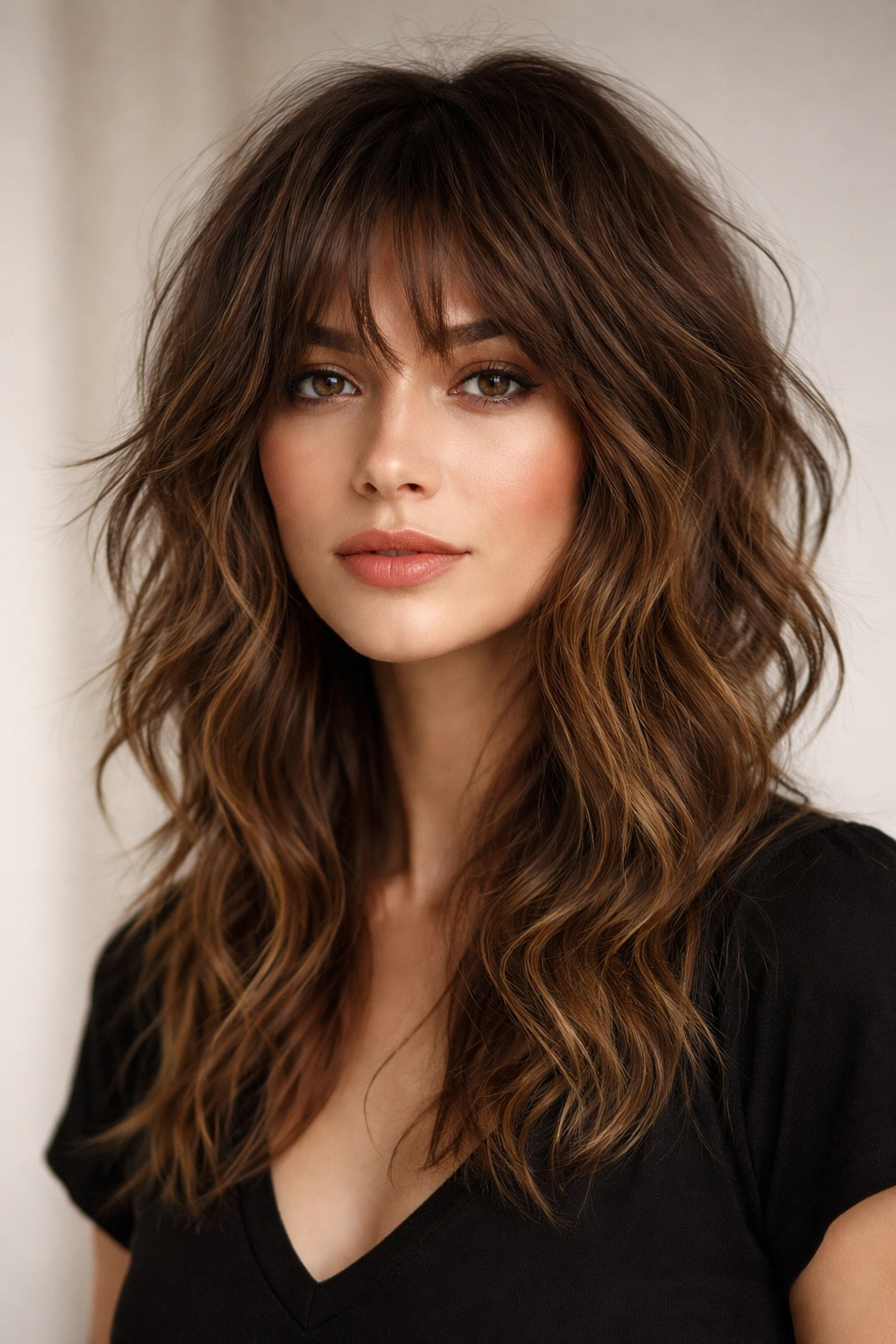
The shag’s resurgence has been driven almost entirely by wavy hair—and for good reason. A modern shag on waves creates that effortlessly tousled texture that looks intentionally undone rather than accidental. The cut works by creating shorter, layered sections throughout, with longer pieces around the perimeter that encourage the wave to flow downward and create shape. The underneath layers are cut shorter to remove bulk while the top layers remain longer, creating dimension without sacrificing density.
Why It Works for Waves
Waves respond beautifully to a shag because the movement pattern already exists in the hair—the cut simply amplifies it. The layers follow the wave’s natural direction rather than forcing curl or flattening it. You get volume at the crown and through the mid-lengths, with the wave carrying through and creating that textured, lived-in appearance that looks professional yet relaxed.
What to Know About Styling
A modern shag on waves typically requires just a quick diffuser dry and maybe some texturizing spray or cream. Unlike straight hair that might need significant styling effort to maintain a shag shape, wavy hair does most of the work automatically. The layers dry in naturally, and the wave pattern creates texture automatically—your main job is encouraging definition and avoiding frizz rather than building texture from scratch.
Maintenance note: Shags need trims every 6-8 weeks to maintain the layered shape and prevent scraggly ends. The layers are what make the cut work, so as they grow out, the structure diminishes.
2. The Textured Lob with Choppy Layers
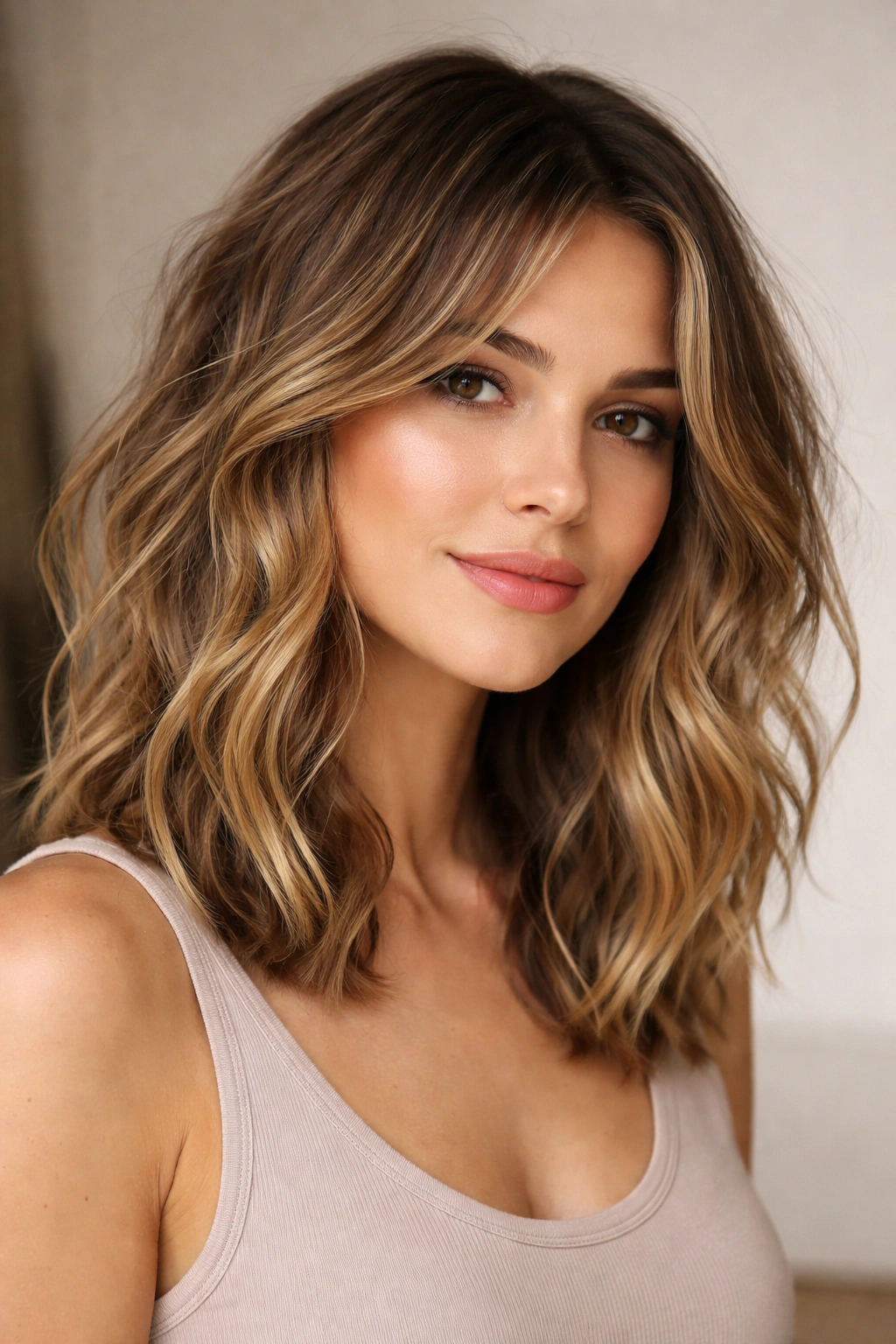
A lob (long bob) on wavy hair becomes exponentially more interesting when cut with choppy, textured layers rather than blunt or subtle layering. The choppy approach creates movement and prevents the length from looking flat or heavy. This cut works particularly well for waves because it emphasizes the texture without requiring intensive styling—the choppy sections work with the wave pattern to create dimension and visual interest.
The Cutting Technique
A textured lob sits somewhere between chin and shoulder length, with choppy pieces cut throughout rather than subtle, invisible layers. The cut typically includes shorter pieces around the face that frame and create movement, and the choppy sections throughout encourage each wave to separate and show individual texture. The underneath remains slightly longer than the top layers, creating a sculpted effect.
Daily Styling Reality
On wavy hair, this cut requires minimal effort to look great. Wash and air dry with a texture spray, or use a diffuser for 80 percent of the drying process and let air dry the rest. The choppy layers dry in with natural shape and movement. Waves already want to separate and create texture, so the layers direct that tendency rather than fighting against it. Many people with this cut find they can skip a day of styling entirely and still look intentional.
Pro tip: This cut works especially well for waves that fall somewhere between 2a and 2c (from loose beachy waves to more defined spirals). The choppiness works with tighter waves beautifully but might look too choppy on very loose, straight-adjacent waves.
3. The Choppy Textured Layers Throughout
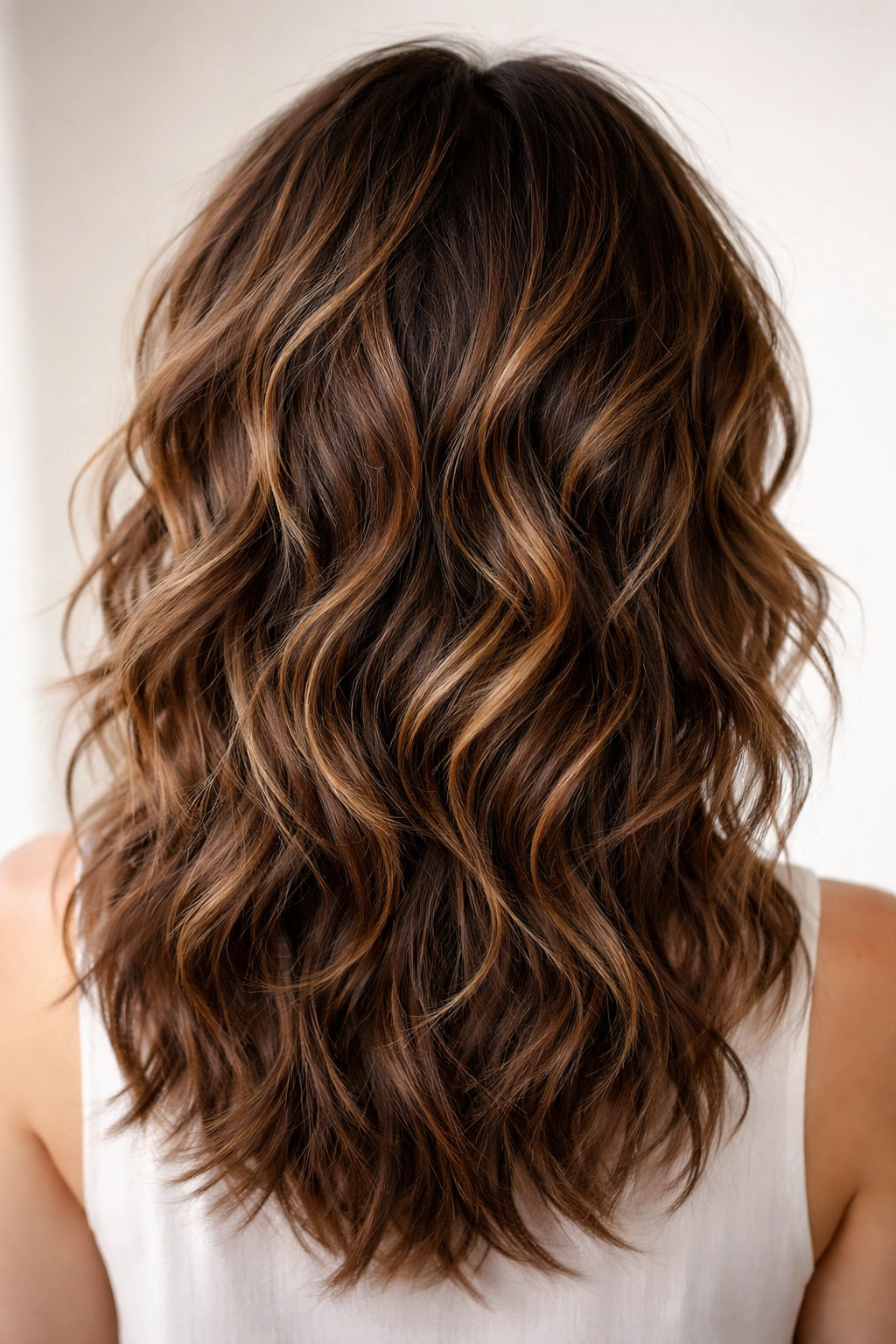
This isn’t a specific named cut so much as a technical approach—choppy, textured layers throughout the entire head rather than a shaped cut like a shag or lob. The difference is that layers are integrated throughout rather than concentrated in specific zones. This approach works beautifully for wavy hair that wants a lot of movement and texture without a strong geometric shape.
How Choppy Layers Enhance Waves
Waves need layers to separate and show definition, and choppy sections are more effective at creating separation than subtle layering. Each layer works as a separate piece rather than blending, so your waves don’t stick together in a clumpy mass. The choppy approach also removes weight without looking intentionally short anywhere, which is why it flatters waves that want movement and volume.
Styling Approach
Choppy layers on wavy hair respond well to texturizing products—sea salt spray, texturizing creams, or lightweight mousses. The layers create the structure, and the products enhance definition and create that piece-y, separated look. Many people with this cut style it by scrunching product into damp hair and either air drying or diffuser drying, letting the waves and layers do most of the work.
Versatility note: One major advantage of choppy layers throughout is that they work for multiple wave patterns—from loose, gentle waves to denser, more defined textures—because the layers work with whatever wave pattern exists rather than requiring a specific curl type.
Textured Haircuts for Curly Hair (Type 3 Curls)
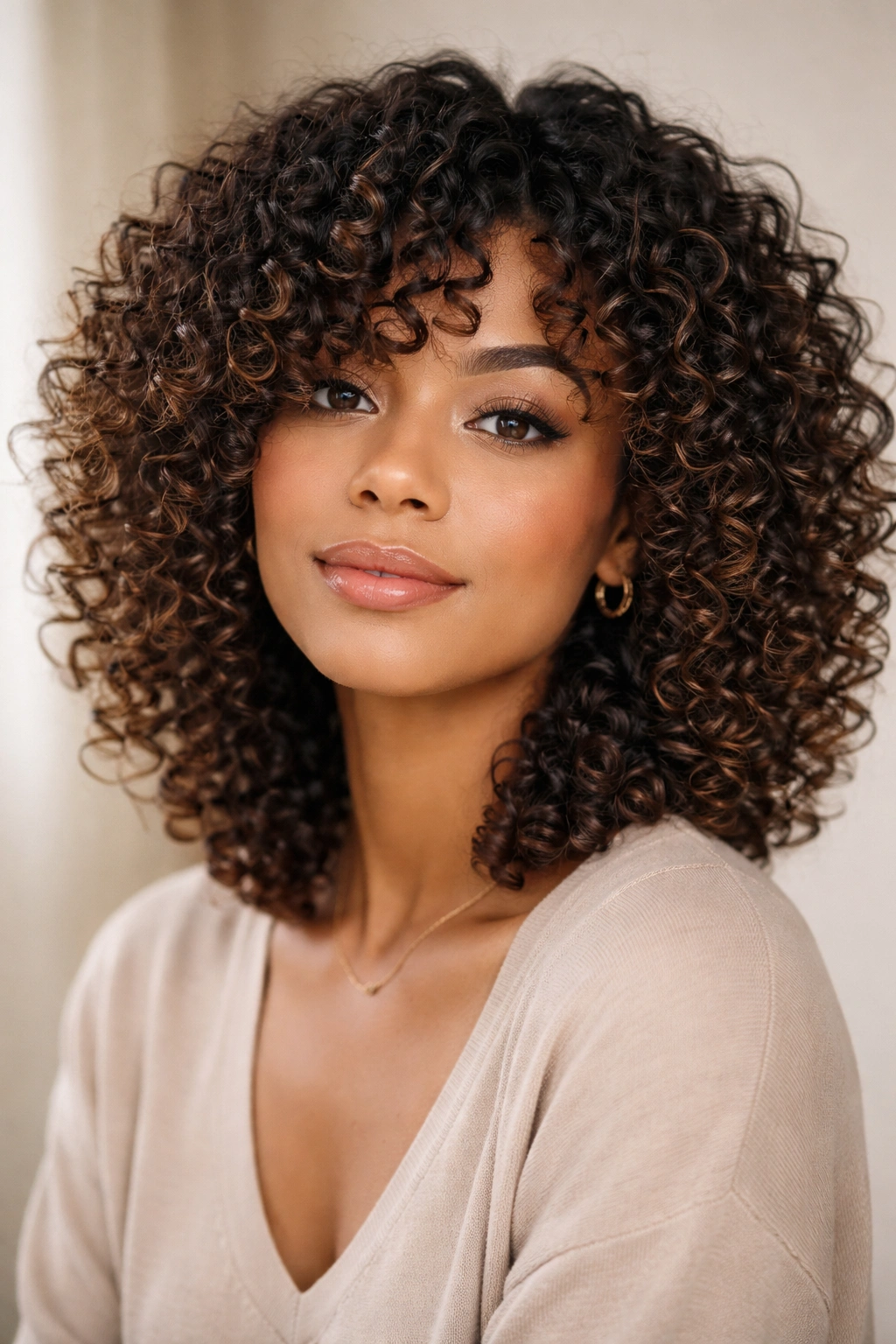
Curly hair—true curls with defined spiral or S-bend formation—requires an entirely different cutting approach than waves. Curls need shorter layers that encourage each individual curl to form cleanly without blending with neighbors. Too much length often causes curls to clump and lose definition, and blunt cutting creates bulk that weighs curls down. The most successful curly cuts use what’s called “curl-aware” or “DevaCut” techniques, where the stylist cuts each curl independently while wet and curling to accommodate the hair’s natural spiral and ensure the cut shape works when dry and curled.
4. The Curly Shag with Face-Framing
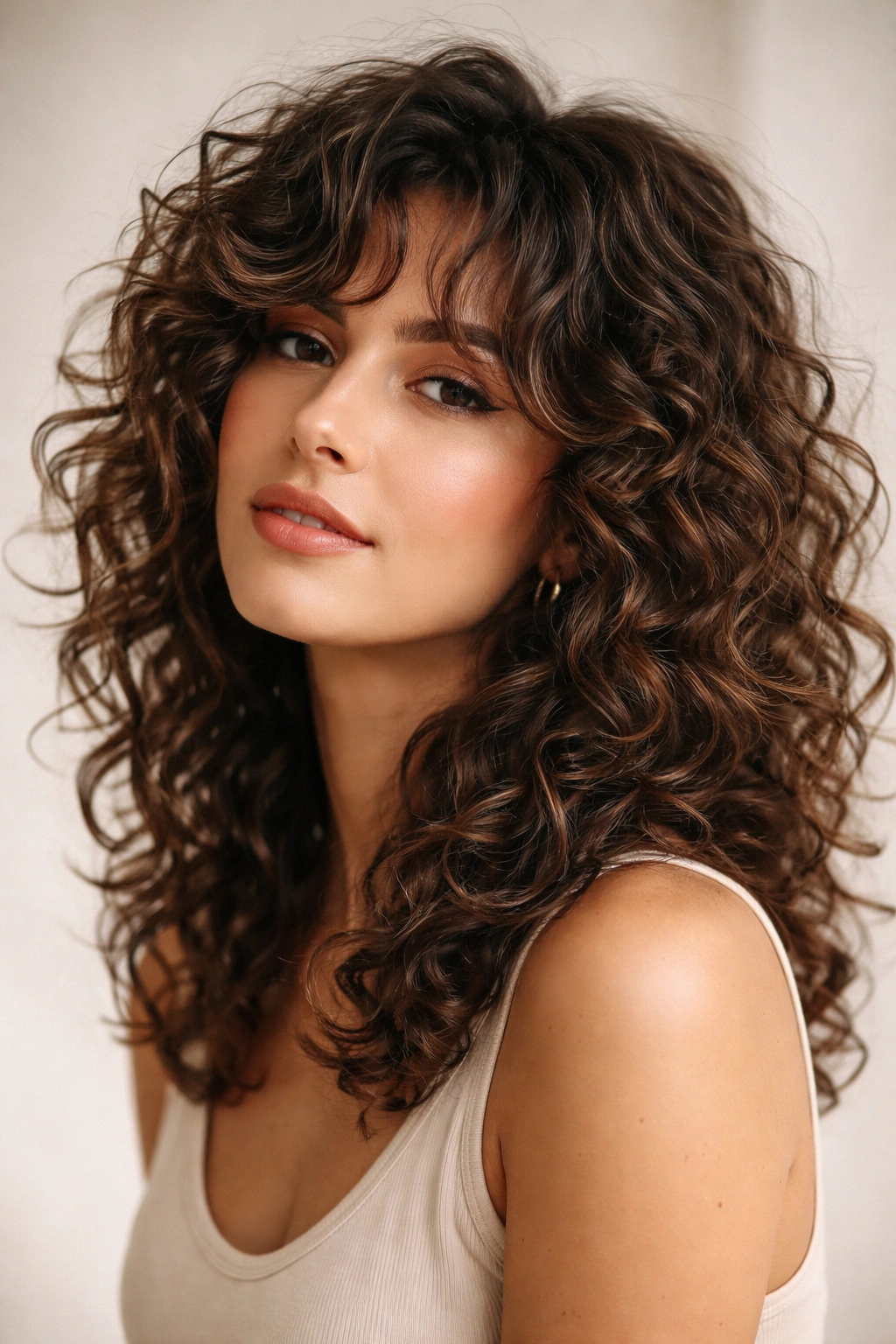
A shag on curly hair looks dramatically different than on waves—it becomes an explosion of spiral texture with multiple dimension levels. Rather than the effortlessly tousled wave-shag, a curly shag creates visible curl separation and showcases individual curl spirals throughout. Shorter layers on top create volume and movement at the crown, while longer sections underneath allow deeper curls to show their full spiral length.
The Curl-Specific Technique
A curly shag works best when cut using the curly hair method—the stylist cuts while your hair is wet and curling naturally, not straightened or blow-dried. This ensures the cut shape matches your actual curl pattern rather than a speculative version of it. The stylist cuts shorter sections at the crown to encourage lift and volume, strategically places layers to encourage definition without creating holes or thin spots, and leaves longer pieces to show the full spiral length of deeper curls.
What Curls Look Like When Styled
A curly shag dries into multiple texture levels that look bouncy and alive. Top layers create lift and volume at the crown, mid-length curls show beautiful spiral definition with their individual formation visible, and longer underneath pieces add weight and depth. When styled with curl cream or gel and diffuser dried, the effect is voluminous, defined, and textured throughout.
Critical note: This cut requires a stylist experienced with curly hair and ideally trained in curly-specific cutting techniques. Cutting curly hair while straightened or dry often results in a cut that looks great for one day and then disappears into a formless mess when curls return.
5. The Defined Coils Pixie Cut
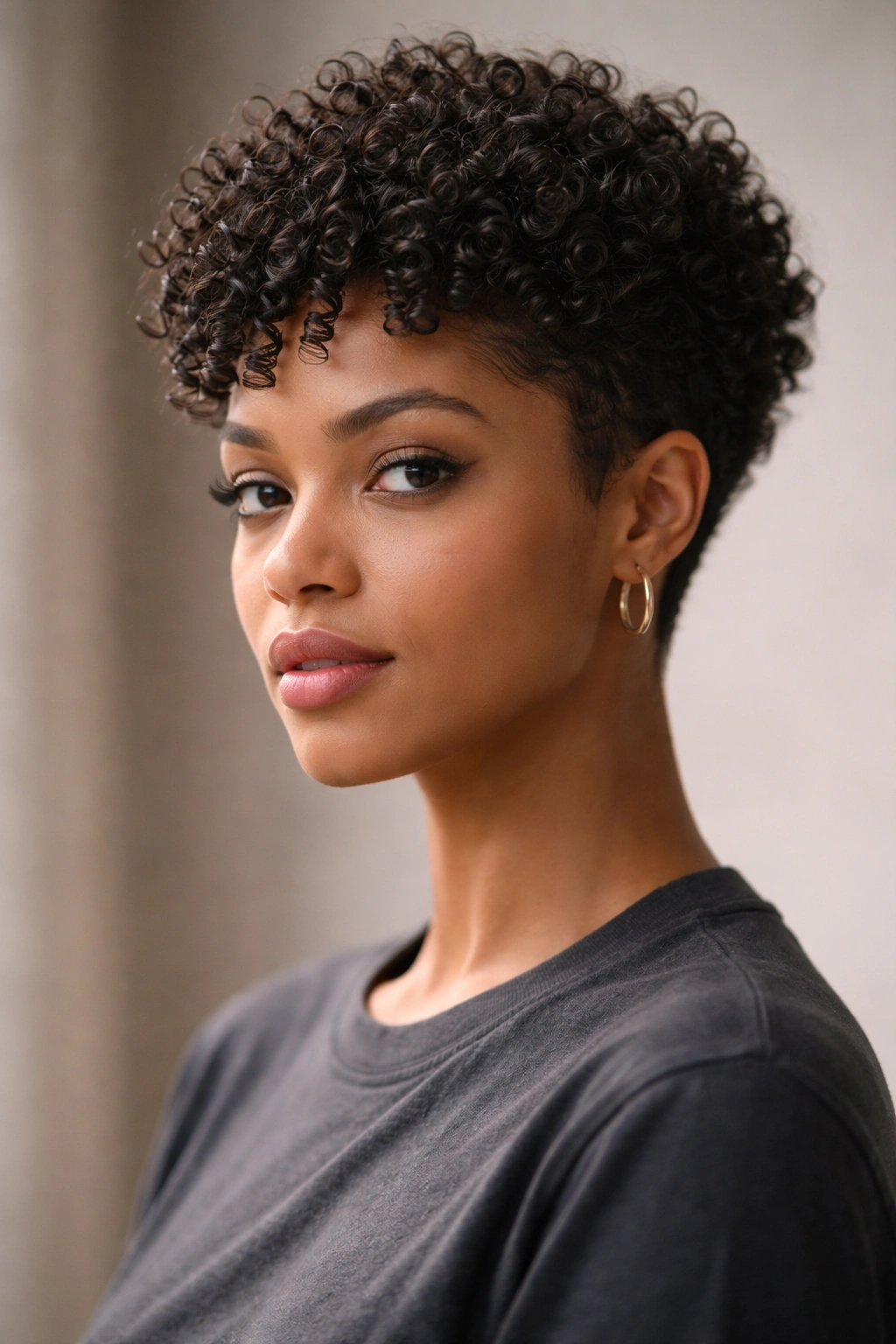
A pixie cut on curly hair becomes a completely different animal—it showcases individual curl definition beautifully and requires minimal daily styling. The key is keeping enough length for curls to form properly (usually at least ½ inch minimum, often closer to an inch) while creating a short, sculpted shape. Curly pixies work best with some length variation—not a blunt cut across the entire head, but textured layers that create shape while allowing each curl to express itself independently.
Technical Details for Curly Pixies
A curly pixie typically leaves the crown and top longer (sometimes 1 to 1.5 inches) for volume and curl definition, with sides and back slightly shorter but not shaved or extremely faded. The cut includes choppy layers throughout to break up density and allow curl separation. Unlike straight-hair pixies that emphasize a clean silhouette, curly pixies prioritize texture and definition over geometric precision.
Styling and Maintenance
Many people with curly pixies find them remarkably low-maintenance—wash, apply curl cream or gel to damp hair, diffuse or air dry, and you’re done. The short length means no tangles, no matting, and faster drying time. Maintenance trims happen every 4-6 weeks to maintain the shape, but daily styling is genuinely minimal. This cut works particularly well for people who want short hair but thought their curls wouldn’t allow it.
Who this suits: This cut works best for people with defined, springy curls (type 3b through 4a)—looser waves often need more length to show they’re not straight, and tighter, denser coils sometimes need strategic layering to avoid a too-tight appearance.
6. The Long Layers with Curl-Specific Face-Framing
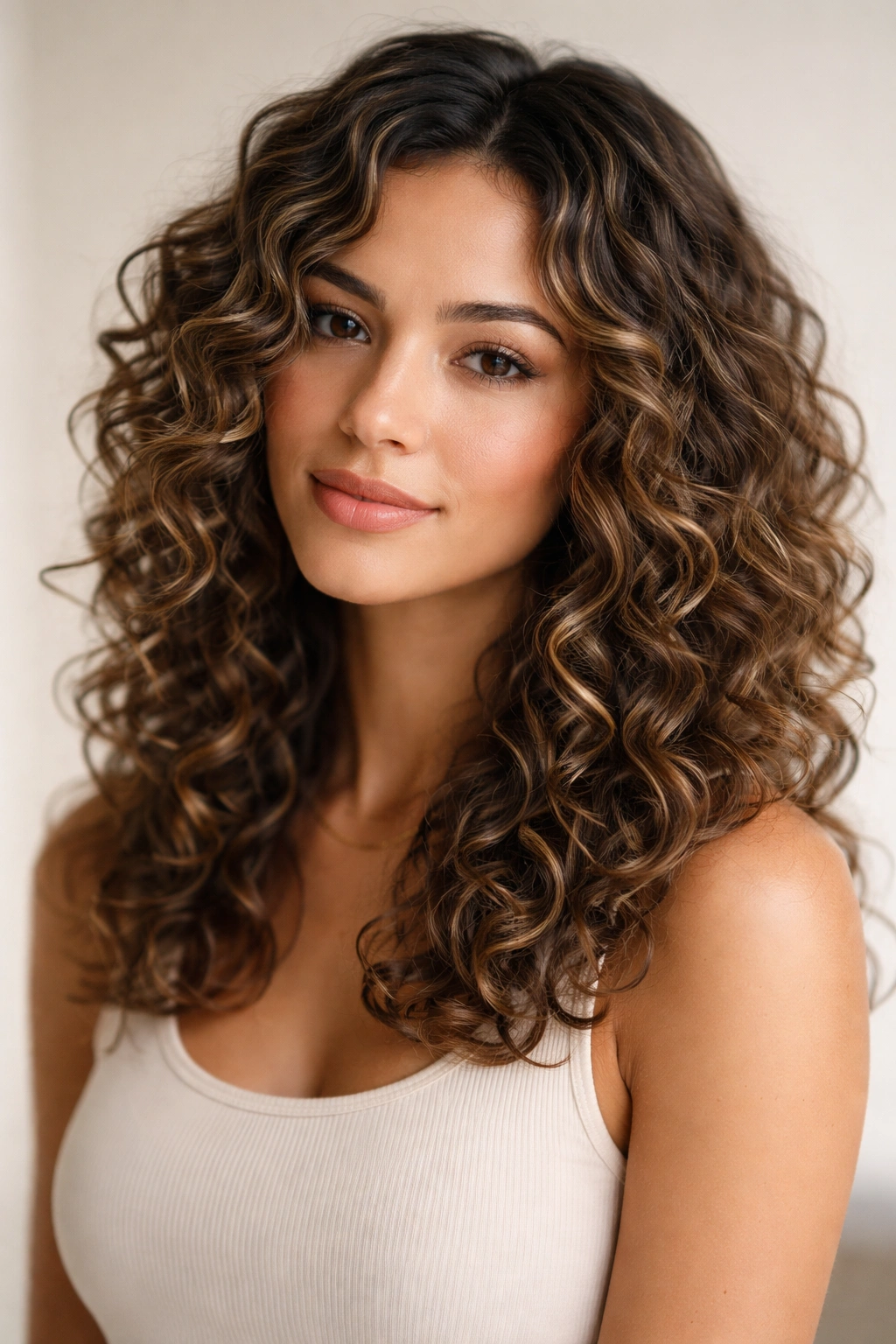
This cut keeps length while strategically adding layers to enhance curl definition and encourage face-framing curl formations. Rather than a specific named cut, it’s a technical approach—maintaining enough length to preserve curl pattern length while removing density through layers positioned specifically to frame the face and encourage movement. This approach works beautifully for people who want to keep shoulder-length or longer curly hair but want more definition and less bulk.
Why Layers Transform Curly Length
Long, un-layered curly hair often looks flat and undefined—all the curls clump together under their own weight, and you see a solid mass of texture rather than individual curl definition. Strategic layers remove exactly enough bulk to allow curls to separate and define while maintaining the overall length. Face-framing layers encourage curls closest to the face to move and separate, creating a flattering frame rather than curls clumping close to the head.
Styling for Definition
Longer layered curls respond beautifully to layering products—starting with a leave-in conditioner, then a curl cream, then possibly a gel for hold and definition. The layers dry in defined and separated, rather than clumpy and matted. Diffuser drying or plopping works well to enhance the curl pattern, but many people with this cut find they can air dry successfully too, especially if they use the right products.
Maintenance reality: Longer curly hair needs regular trims (every 8-12 weeks ideally) to maintain the layers and prevent single-strand knots and breakage. The longer your curls, the more important it is to keep up with maintenance trims.
Textured Haircuts for Coily and Kinky Hair (Type 4 Curls)
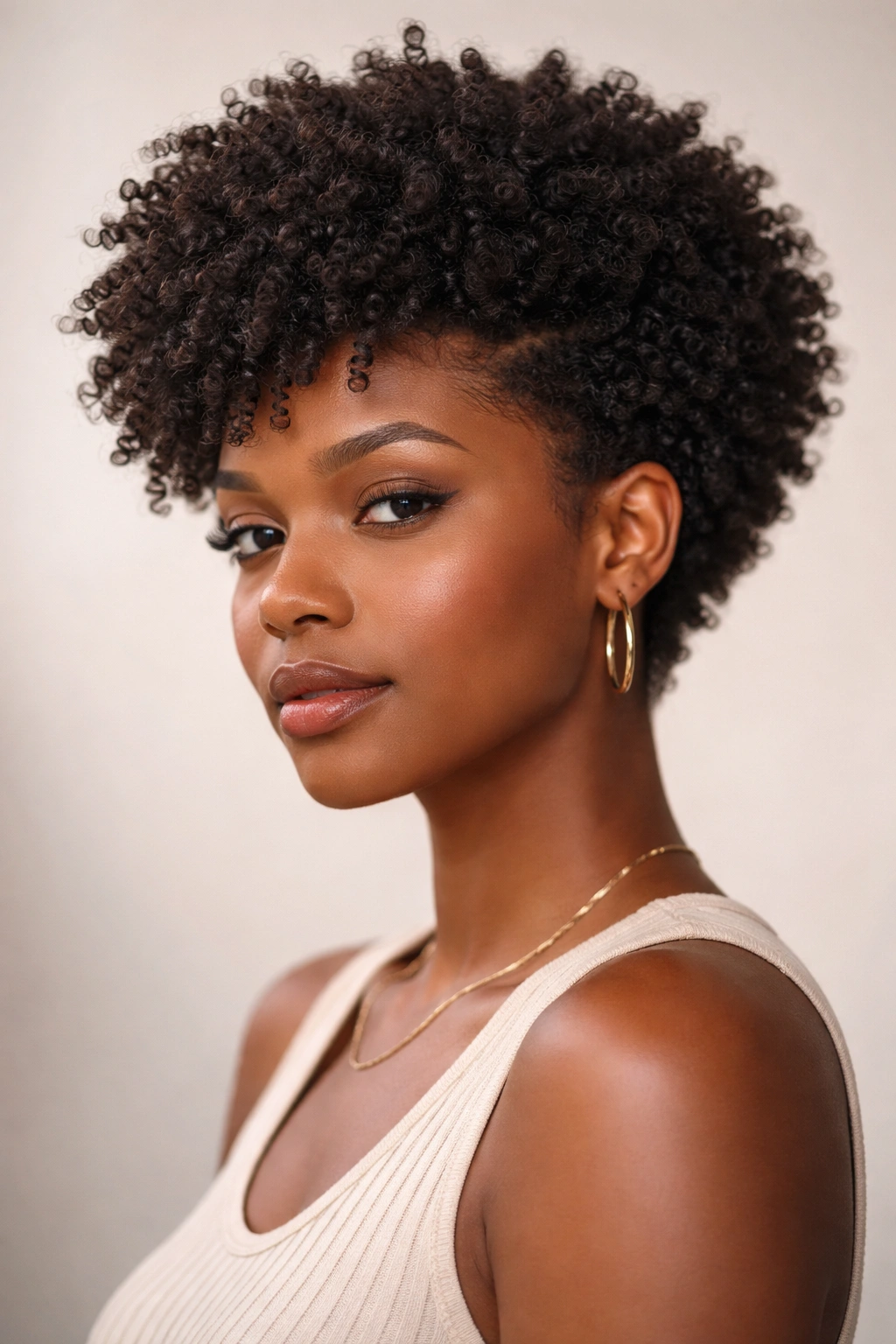
Coily and kinky hair textures—tight, dense curls or coils that form close to the scalp—require cutting techniques and approaches entirely different from looser curl patterns. The density, shrinkage rate, and growth pattern all work differently, which means cuts designed for type 3 curls often don’t work on type 4 hair. Successful coily-hair cuts prioritize density distribution, work with the hair’s natural directional growth, and often incorporate geometric shapes or strategic fading that complements the texture rather than fighting it.
7. The Tapered Coil Cut
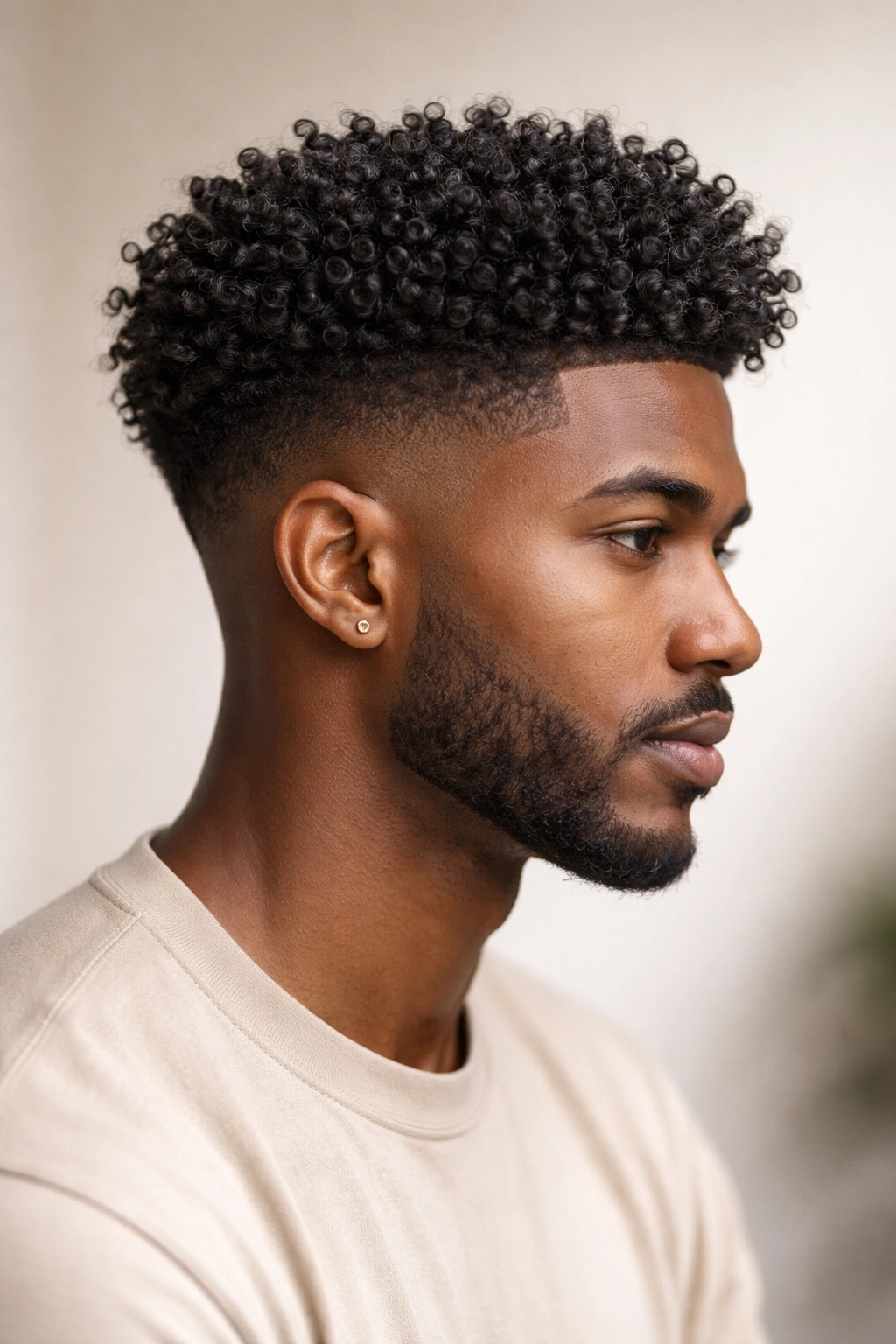
A tapered cut leaves length on top with gradually shorter sides, creating a sculpted silhouette that showcases coil definition. This cut works beautifully because it removes weight and bulk from the sides while maintaining length on top for styling versatility. The taper creates a flattering face shape while the top length allows coils to coil fully and express their natural pattern.
The Taper Technique for Coils
A coil-appropriate taper doesn’t use clippers the way a taper on straight hair might—instead, it relies on precise scissor work to create the gradual length graduation. The top maintains length (often 1.5 to 3 inches depending on the person’s preference), sides gradually reduce in length, and the back might be longer or shorter depending on personal style. The key is that the graduation is deliberate and sculpted rather than blended, which complements coil texture better than a soft fade.
Styling and Definition
Tapered coils respond beautifully to cream or gel-based styling products that encourage coil formation and definition. The top length allows coils to form fully and create visible definition, while the tapered sides create a clean aesthetic without fighting the texture. Many people with this cut enjoy the low-maintenance aspect—wash, apply product to damp hair, and let air dry or use a diffuser, and the coils dry in defined and shaped.
Advantage: This cut works for multiple coil patterns and textures, from looser type 4a through tighter 4b and 4c coils. The versatility makes it a solid choice for people uncertain about finding a stylist experienced with their specific texture.
8. The Two-Strand Twist-Ready Cut
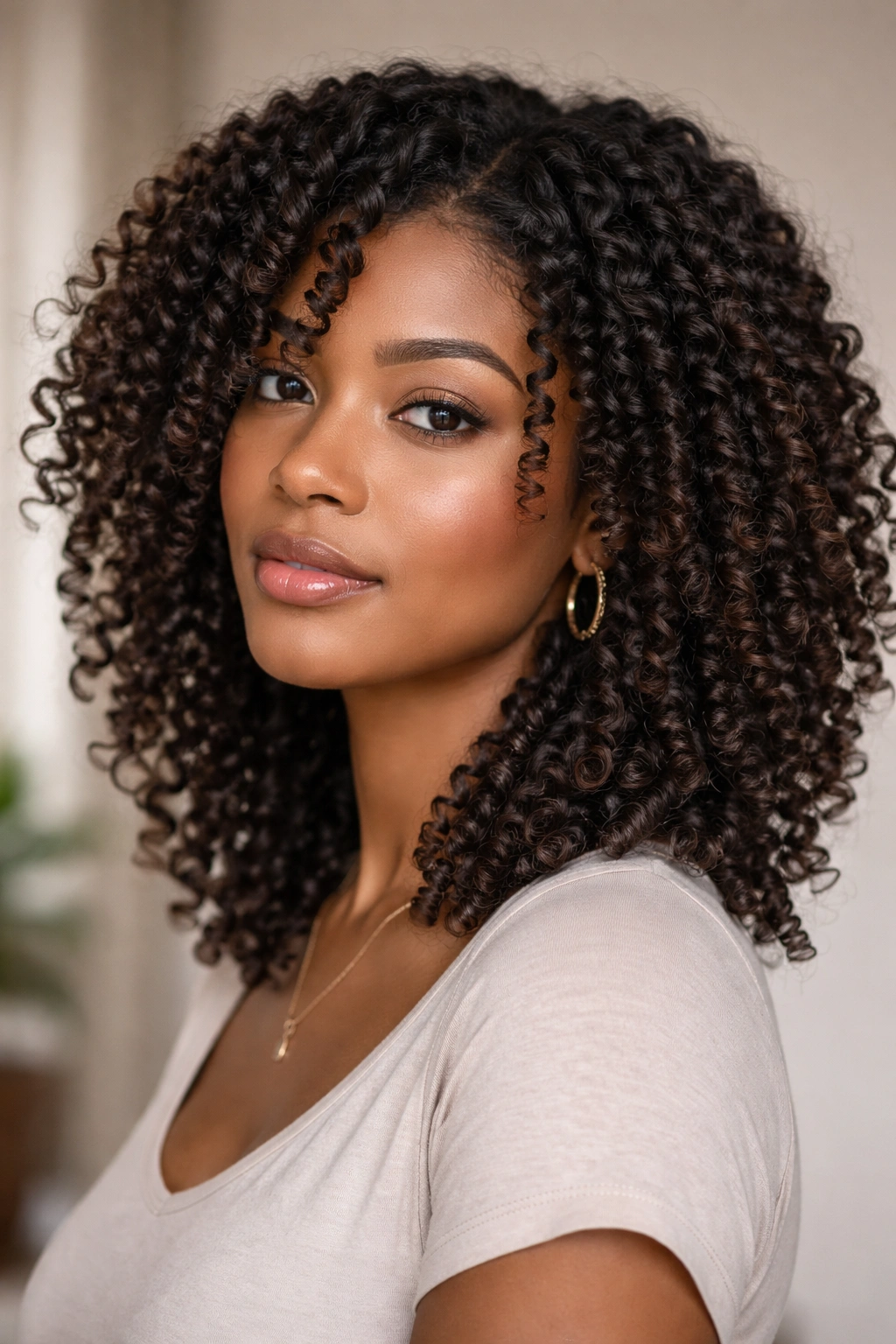
This cut is designed specifically to work beautifully with two-strand twists and twist-out styling—it maintains enough length and removes density in strategic places to allow twists to form cleanly and twist-outs to show dimensional texture. The cut typically includes longer length overall (at least shoulder-length or longer) with some face-framing layers to encourage twist formation around the face.
How This Cut Facilitates Twist Styling
The cut works by removing just enough density to allow two-strand twists to form cleanly without clumping, while maintaining enough length to show the full twist length and allow the twist-out pattern to display. Face-framing is crucial—strategically placed shorter sections around the hairline encourage face-framing twists to stay in place and frame the face beautifully. The cut removes bulk without creating obvious layers or a shaped silhouette; it’s designed to be invisible when in twists but transformative when the twists come down into twist-outs.
Twist-Out Results and Maintenance
When you twist this cut while hair is freshly washed and leave the twists in for several days, the resulting twist-out shows incredible dimension and texture—the cut removes exactly the density that would make twist-outs clumpy, while the length shows the full pattern. Many people maintain this cut specifically for twist styling, keeping the twists in for a week and getting a completely different look each day of the week.
Planning consideration: This cut works best for people who have established a twist styling routine and know they love this look. For people new to twists, working with your stylist to experiment before committing to a cut designed specifically for twists makes sense.
9. The High-Top Coil Fade
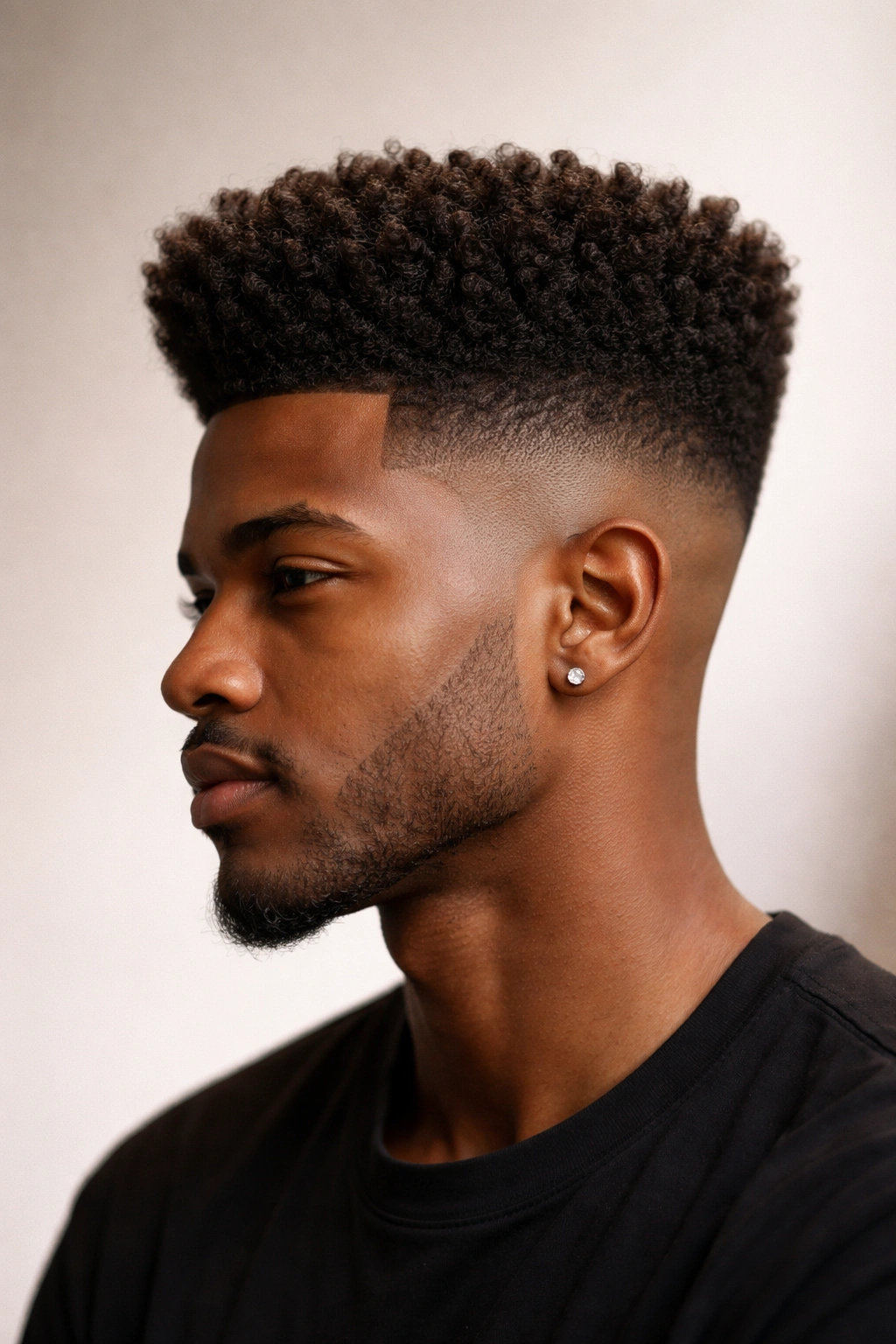
A high-top fade on coily hair creates a striking, architectural silhouette—the top is left fuller with longer coils that coil up and away from the scalp, while the sides fade shorter, creating clear definition. This cut works beautifully on coily textures where the natural shrinkage creates height and volume automatically. Unlike a high-top on straight hair that requires aggressive styling to maintain the shape, a coily high-top takes advantage of the hair’s natural tendency to shrink and coil upward.
The Architectural Cut
A coil-appropriate high-top fade starts with longer coils on top (usually 2 to 4 inches depending on the person’s preference and the coil pattern’s tendency to shrink), with the length positioned to allow coils to coil directly upward rather than falling downward. The sides are faded shorter, creating a clear distinction between the top length and the sides. The back might be faded similarly or left slightly longer depending on the personal style.
Styling Frequency and Maintenance
A high-top fade on coily hair typically requires a cleanup trim every 3-4 weeks to maintain the fade and keep the line sharp between the faded sides and the fuller top. Daily styling involves refreshing the coils with a water spray and cream or gel to maintain definition, or doing a full retwist every few weeks depending on your styling preference. The top coils naturally coil upward, so the cut shape maintains itself fairly well between trims as long as the coils are kept twisted or braided while sleeping.
Profile note: This cut photographs beautifully and makes a strong visual statement—it’s a great option for people who want a distinctive, geometric cut that showcases coil texture and creates a bold silhouette.
Textured Haircuts for Mixed Curl Patterns and Multi-Textured Hair
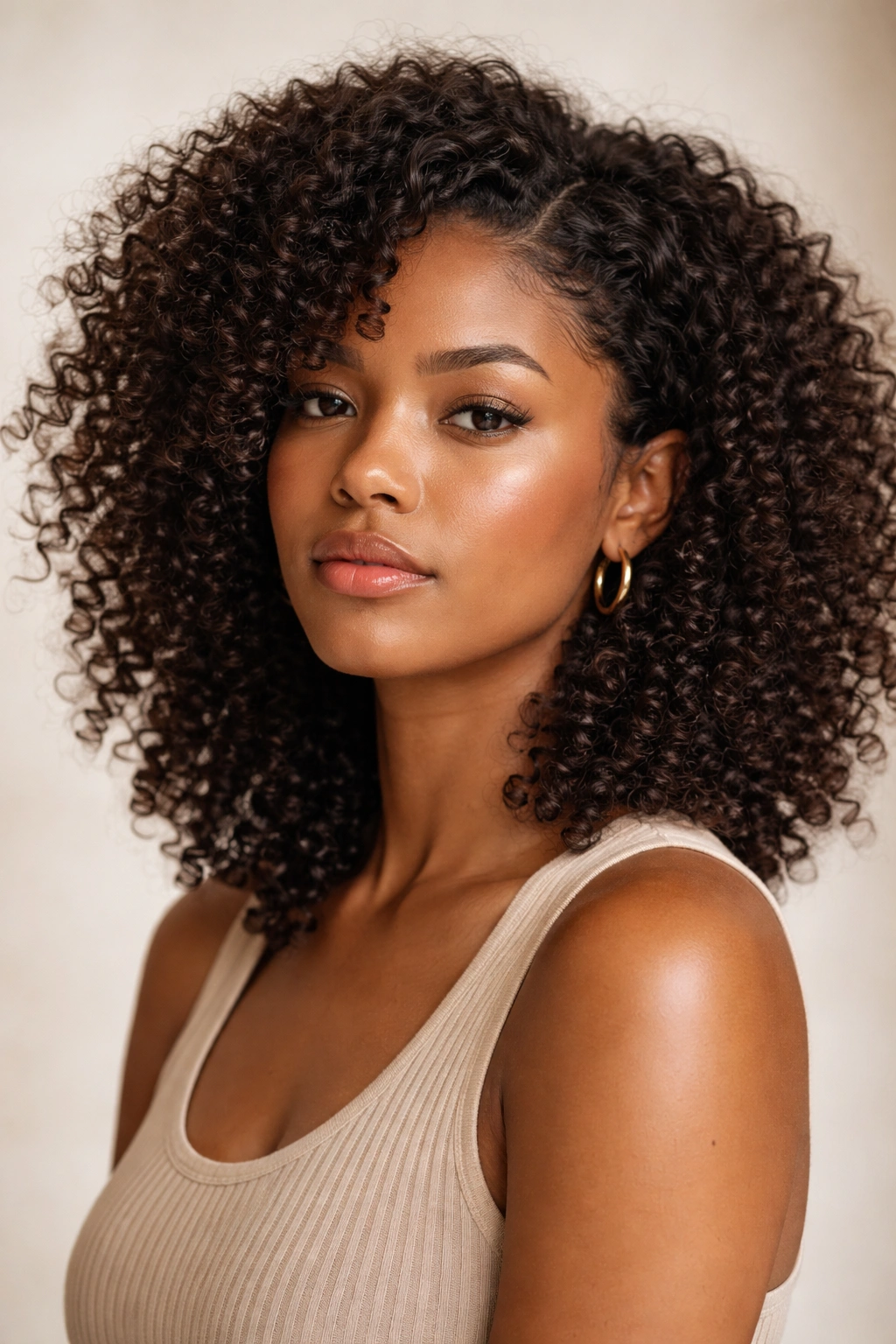
Some people have multiple texture types across their scalp—looser waves in some areas and tighter coils in others, or a mix of curl patterns that doesn’t fit neatly into one category. Cutting mixed-texture hair requires a stylist who understands how to work with multiple patterns simultaneously, creating a cut that enhances overall dimension rather than trying to force uniformity where it doesn’t exist naturally.
10. The Textured Crop with Varied Length Placement
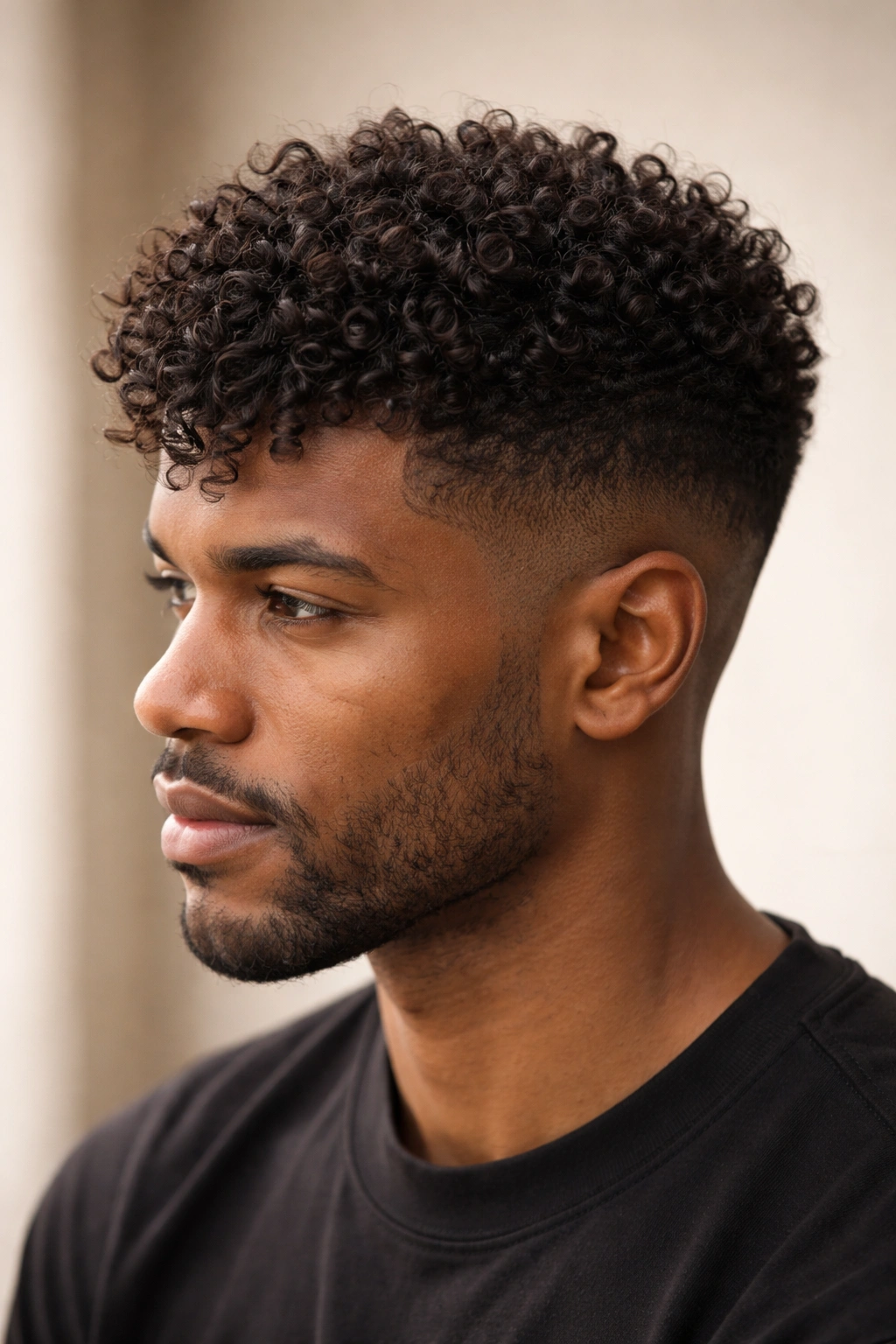
A textured crop on mixed-pattern hair works by strategically placing longer and shorter sections to create dimension while working with the different textures you have. Rather than a uniform crop length, this approach uses subtle length variation to ensure the tighter textures have enough length to show definition while looser textures don’t look too short or wispy. The result is a short, sculpted cut that showcases natural dimension.
Technical Approach for Mixed Texture
The cut begins with an assessment of where your different textures live on your scalp—noting where you have tighter coils, where you have looser waves, and where transitional textures exist. Sections with tighter textures often need slightly more length to show definition, while sections with looser waves might be slightly shorter without looking stringy. Choppy, textured layers throughout break up density while respecting the different textures’ needs.
Styling Mixed-Texture Crops
Mixed-texture crops respond well to products that enhance definition across all texture types—a hydrating cream or gel that enhances coils without weighing down waves. Many people with this cut style by applying product to soaking wet hair, doing some light finger coiling of the tighter sections, and then diffusing or air drying. The crop length means faster drying time and lower maintenance than longer mixed-texture cuts.
Consideration: This cut works best when your stylist has experience with mixed-texture hair specifically. Taking reference photos and clearly communicating the different textures present helps the stylist create a plan that works for all of them.
11. The Choppy Curtain Cut
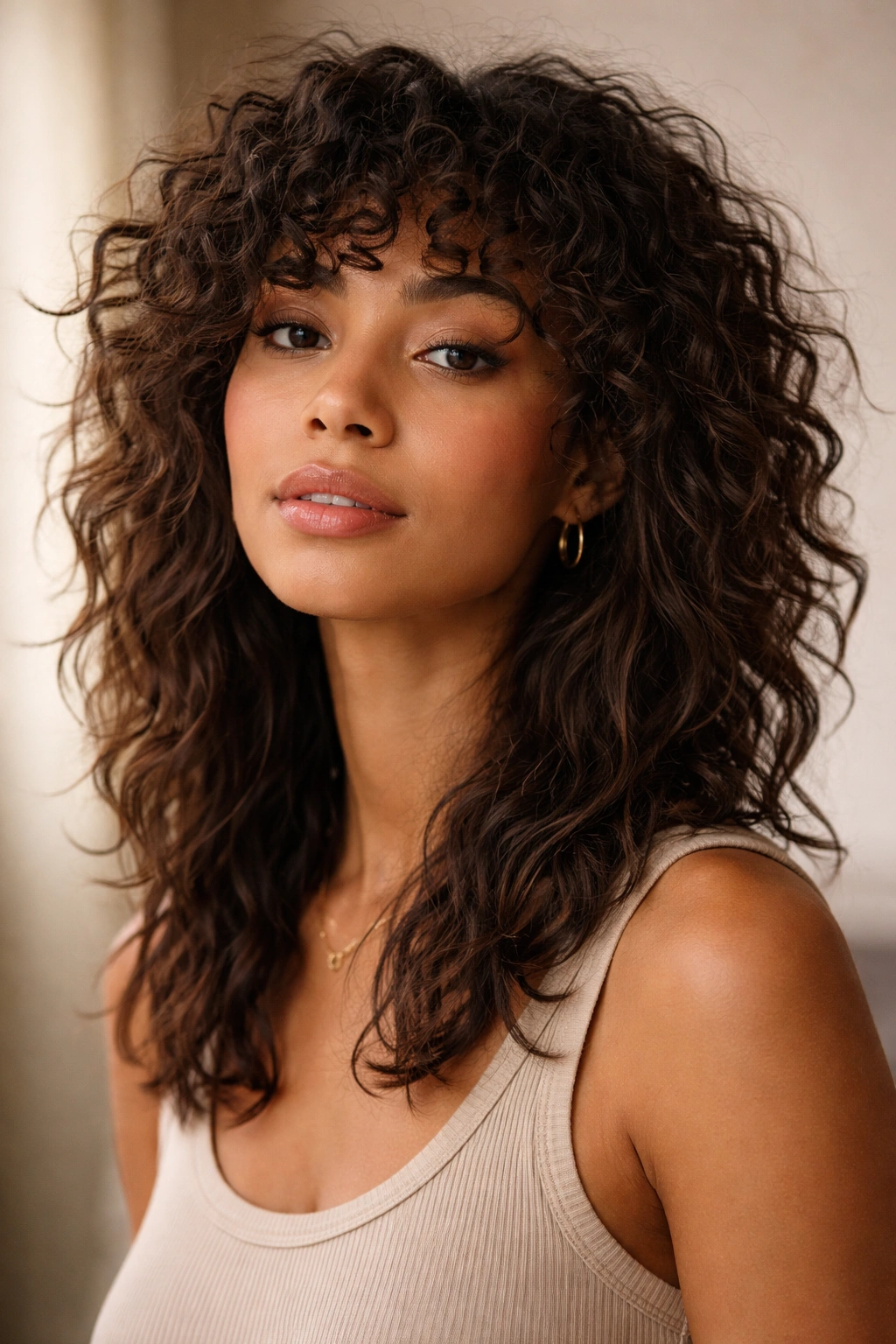
Curtain cuts on textured hair create a softly parted, separated silhouette with longer pieces framing the face and shorter pieces on top. On mixed-texture hair, this cut works beautifully because it allows different textures to move independently—tighter coils can coil fully in the shorter top sections, while longer face-framing pieces can show wave or looser curl patterns. The face-framing creates dimension and interest without requiring all your textures to conform to the same shape.
Why Curtains Work for Multiple Textures
The curtain’s defining feature is the gentle center part with face-framing pieces that fall on either side, paired with shorter hair on top. This structure accommodates different texture types because each section can be cut to suit the texture in that area. Shorter top sections work for tighter textures while longer sides accommodate looser patterns. The soft parting creates a gentle, flattering frame regardless of your texture mix.
Styling and Daily Maintenance
Curtain cuts on textured hair typically style by part, encouraging the longer face-framing pieces to flip gently away from the face while the top sections coil or curl upward. Using a curl cream or gel and either diffusing or air drying works well. The longer sides might take slightly longer to dry than the shorter top, so some people find blow-drying just the top section with a diffuser and letting the sides air dry keeps the cut moving smoothly.
Styling versatility: A major advantage of curtain cuts is that they work well styled up in a bun or updo too—the face-framing creates a flattering silhouette even when the bulk of hair is secured.
12. The Textured Spiky Cut with Strategic Layering
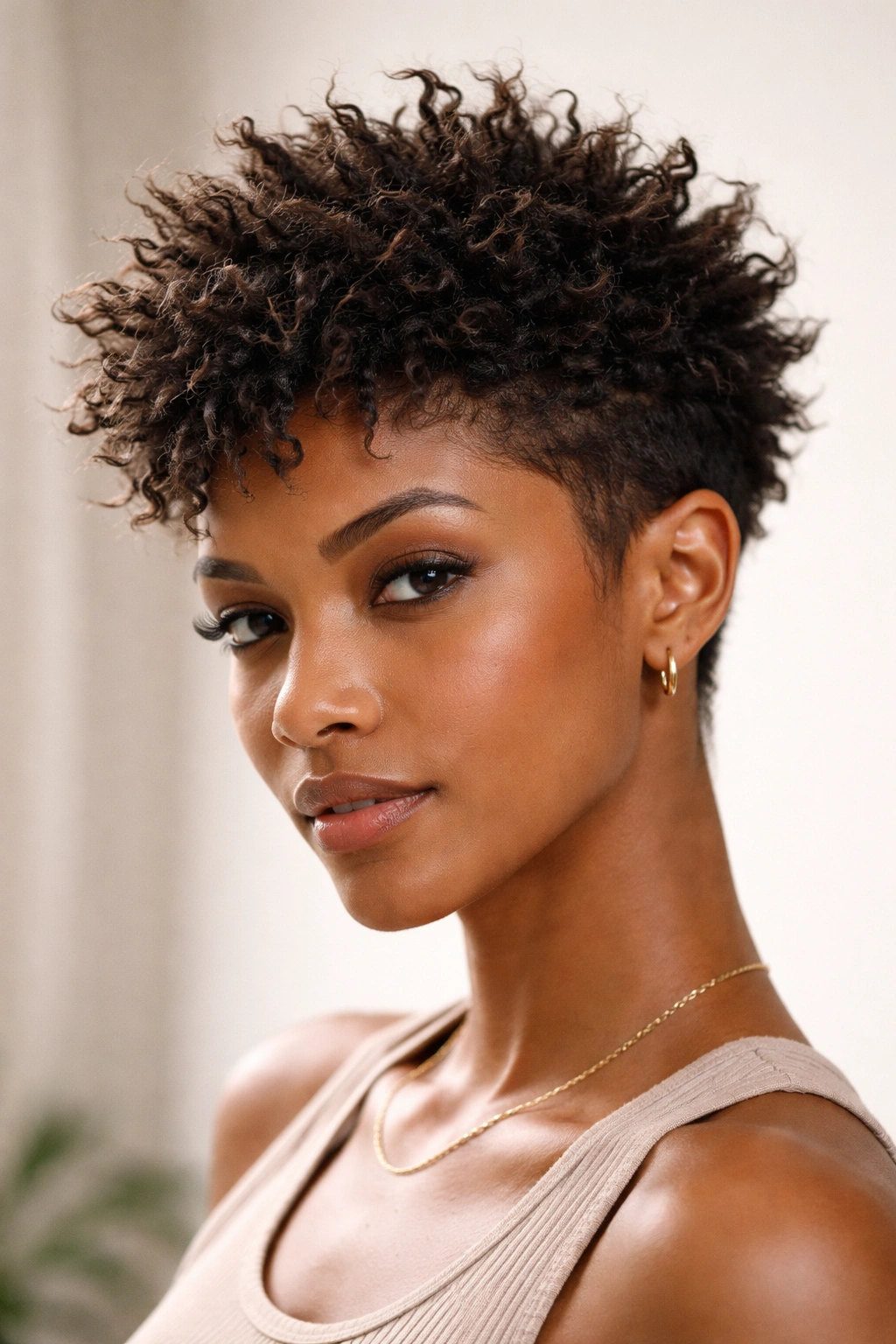
A spiky cut on textured hair works by using very short layers throughout to create separation and definition, resulting in a piece-y, pointed silhouette. This isn’t a buzz cut or a severe geometric shape, but rather a short, textured cut where the hair naturally coils and waves into a spiky, three-dimensional appearance. The result is a strikingly dimensional short cut that looks intentional and styled without requiring actual styling effort.
How Layering Creates Spikiness
The spiky effect comes from cutting short, choppy layers throughout—each layer is positioned independently rather than blending smoothly with neighboring sections. On textured hair, these layers naturally coil or wave upward and away from the scalp, creating that piece-y, spiky appearance. The cut is usually around 1 to 2 inches throughout with the variation coming from the layering rather than length differences between sections.
Minimal Styling Reality
One major advantage of a textured spiky cut is that it requires virtually no styling—wash your hair, maybe run some texture spray or curl cream through it while damp, and let it air dry into its naturally spiky shape. The layers do the work, and your hair’s natural texture creates the dimension automatically. Many people with this cut find they can wash and go even on days when they have no time for styling.
Growth pattern note: This cut looks great fresh from the salon, maintains well for 6-8 weeks, and then gradually softens as it grows out. Some people love the evolving look, while others prefer scheduling maintenance trims every 6 weeks to keep the cut looking sharp.
Final Thoughts
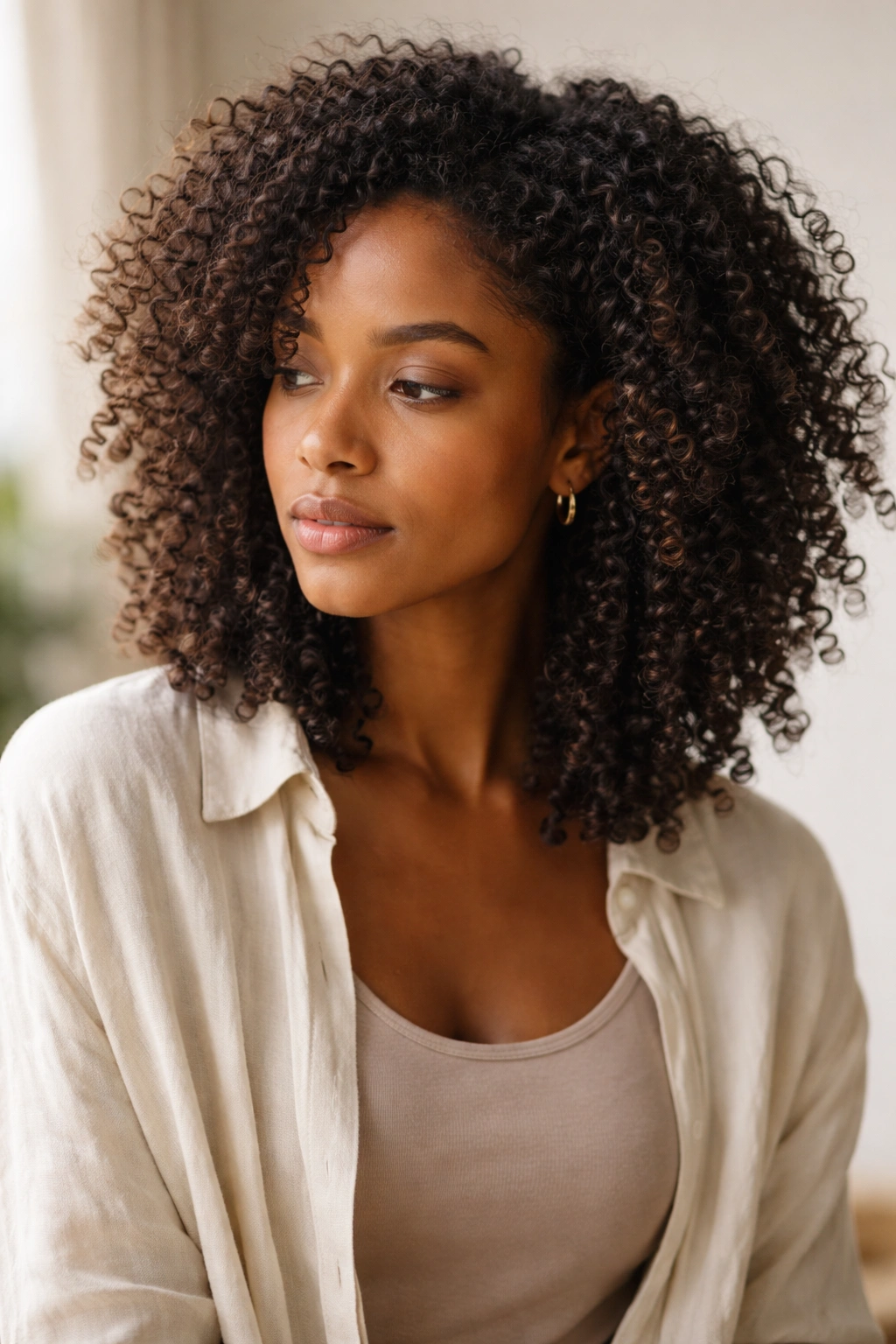
The single most important thing when choosing a textured haircut is finding a stylist who genuinely understands your specific curl pattern and has experience cutting hair like yours. A cut that’s perfect on someone with type 2 waves will look completely different and perform completely differently when applied to type 4 coils—and a stylist who cuts mostly straight hair won’t have the specific knowledge needed to bring out the best in textured hair.
Beyond finding the right stylist, remember that textured cuts work best when they embrace your hair’s natural texture rather than fighting it. The best cuts for waves enhance wave movement, cuts for curls showcase curl definition, and cuts for coils work with the hair’s natural directional growth and density. When you find a cut specifically designed for your texture and work with a stylist who understands that texture, you get a haircut that looks better the more you work with your natural hair rather than against it.
The cuts covered here represent a range of lengths, styles, and approaches—some require minimal styling while others shine when paired with specific styling techniques. Some are geometric and bold while others are soft and romantic. The common thread throughout is that each one works with texture rather than against it, which is what separates a truly great textured haircut from one that fights your hair every single day.
