



There’s something undeniably appealing about a short, layered haircut that moves with intention. Whether you’re waking up with texture that looks effortlessly tousled or running your fingers through ends that catch the light at different lengths, movement in a short cut changes everything. It’s the difference between hair that sits flat against your head and hair that actually has a pulse—and it all comes down to strategic layering.
The magic of layered cuts lies in how each section of hair operates independently. Instead of one uniform length that grows straight down, layers create points of graduation where shorter strands sit above longer ones. This naturally encourages movement, reduces bulk at the scalp for people with thick hair, and creates texture even on naturally straight strands. A skilled stylist doesn’t just randomly chop away at shorter lengths—they map out where layers will fall, how they’ll interact with your hair’s natural texture, and what kind of movement your specific hair type can achieve.
What makes a short layered cut work is understanding that movement requires intentionality. You need enough length variance that hair can actually move and flow rather than stick up or flatten down. The styling texture matters too—product choice, how you dry your hair, and even the direction you brush it all influence how those layers perform. The cuts below each work with different hair textures, face shapes, and styling preferences, but they all share that coveted quality of movement that makes people stop and ask what you did differently.
1. The Modern Shag
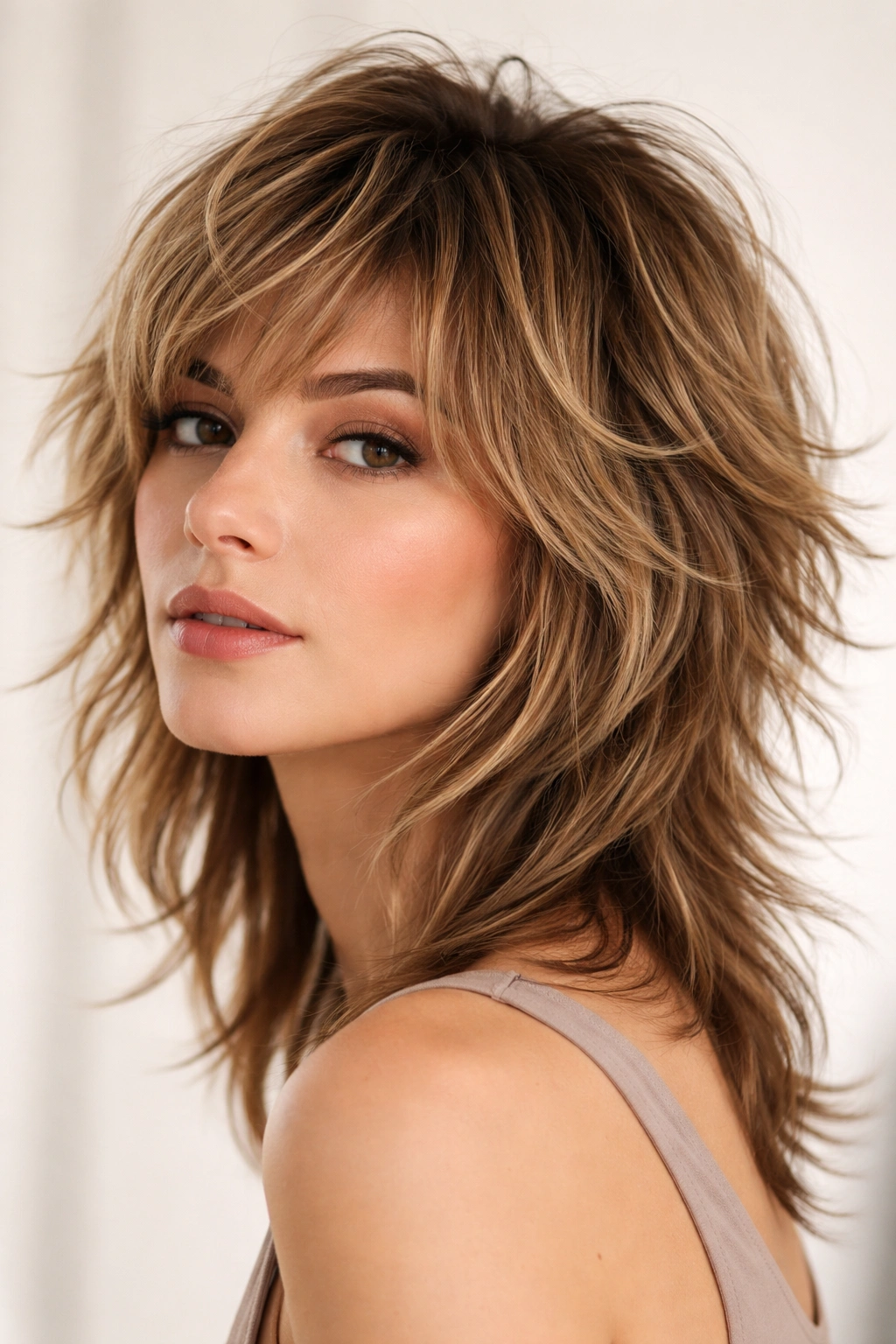
The modern shag is the anti-blunt cut—it’s all about choppy layers that create instant texture and movement without trying too hard. This style takes the ’70s shag concept but refines it for contemporary sensibilities with cleaner lines and more intentional length variation. The cut typically features shorter layers on top for lift and volume, with longer pieces underneath that create that signature shag movement when you move your head.
Why This Cut Creates Effortless Movement
The magic of a modern shag is that movement happens naturally through the cut’s architecture rather than relying on heavy styling products. Each layer is cut at a slightly different angle and length, so when you run your fingers through or tousle your hair, each section moves independently. The shorter crown sections lift away from your scalp, while longer underneath layers swing and catch when you turn your head.
How to Style a Shag for Maximum Movement
- Work a texturizing spray or sea salt spray through damp hair to enhance the natural texture
- Use your fingers—not a brush—to work product through and separate the layers
- Blow dry with your head down for lift at the roots, then flip upright to direct longer layers outward
- Keep a lightweight pomade or wax on hand to define individual pieces without weighing layers down
- Embrace second or third-day hair; shags actually look better as natural oils build texture
The modern shag works beautifully on wavy and textured hair, but it also looks sharp on straight hair when styled with intention. You’ll want to commit to either embracing the tousled look or being willing to style it regularly if you prefer a more polished appearance.
2. Pixie Bob Hybrid
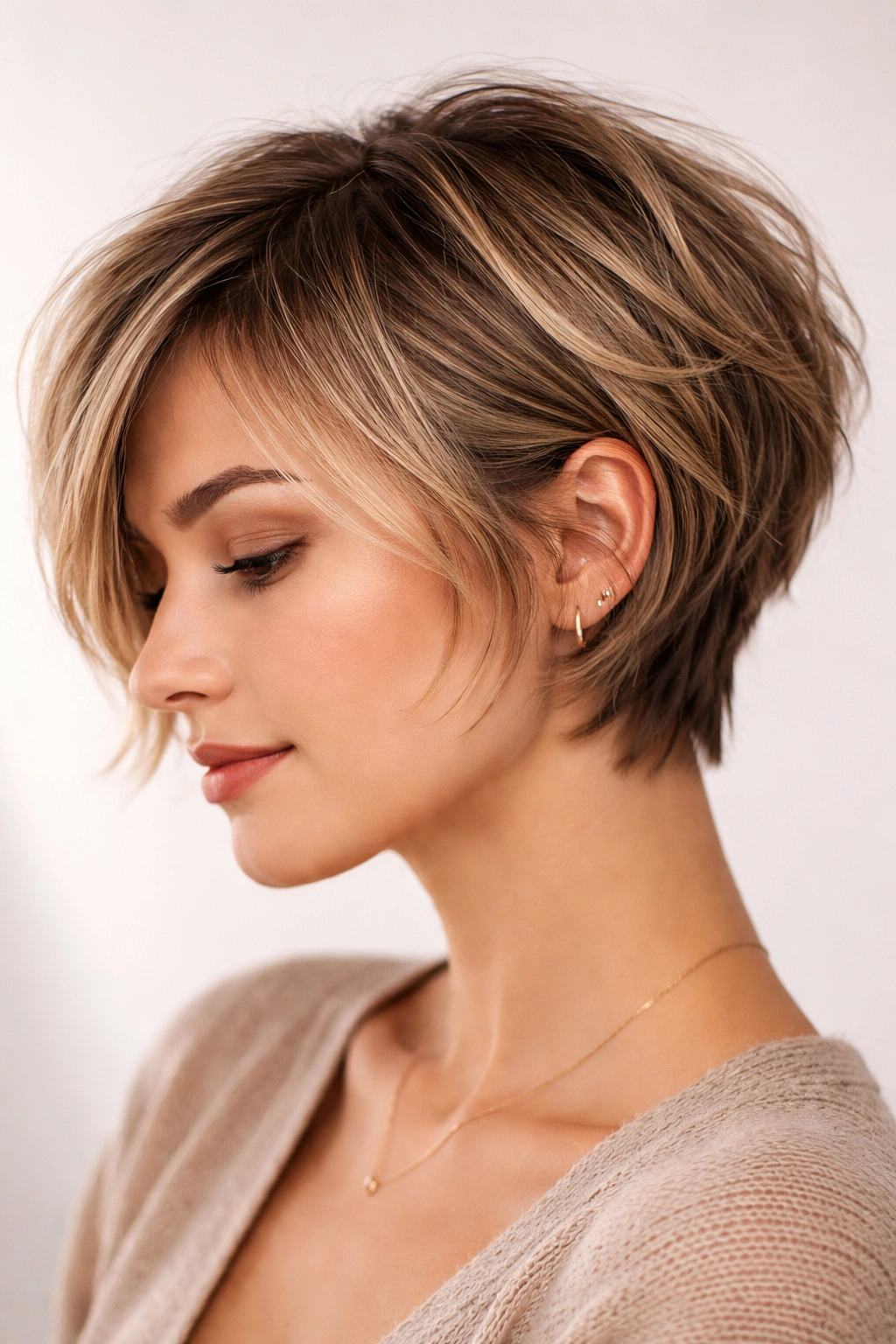
The pixie bob takes the boyish polish of a pixie cut and merges it with enough length and layering to give you actual styling options. It’s shorter overall than a traditional bob, hitting around ear length or just below, but it has strategic layers that prevent it from becoming too blunt or heavy. This cut splits the difference between the ease of a pixie and the versatility of a bob.
What Makes the Movement Work
The pixie bob’s movement comes from a combination of shorter choppy layers on top and slightly longer underneath sections. The cut is textured rather than geometric, so instead of sharp lines, you get softer edges where layers meet. This means your hair can flip, wave, and bend without looking stringy or broken up—it reads as intentional movement rather than disheveled.
Styling Approach for Texture and Flow
- Use a volumizing mousse or texture cream on damp roots for foundation
- Blow dry with a round brush to smooth the underneath layers while letting top layers fall naturally
- Add a sea salt spray to living, damp hair to enhance wave and separation
- Consider a light pomade through the ends to define layers and prevent flyaways
- This cut looks especially dimensional when you add subtle face-framing pieces slightly longer than the rest
The pixie bob is ideal if you’re ready for a significant change but not quite ready to commit to the severe shortness of a true pixie. It gives you the low-maintenance benefit of shorter hair with the flexibility to style it multiple ways.
3. Choppy Crop
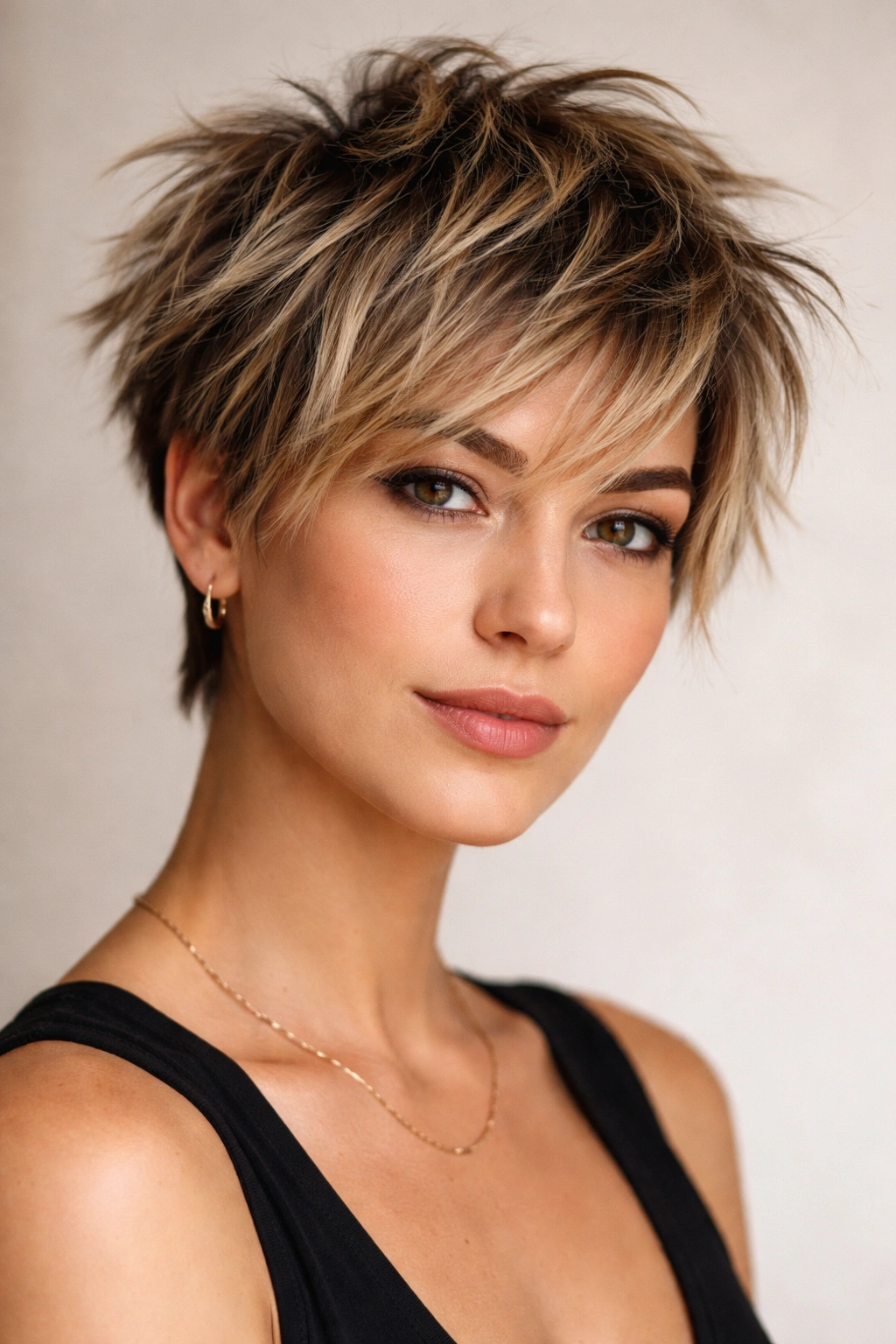
A choppy crop is intentionally jagged and textured, rejecting the smooth bluntness of traditional crops. This cut sits short around the head—usually 1 to 3 inches on the sides and slightly longer on top—but uses choppy, irregular layers to create movement throughout. The lack of uniformity is precisely what makes it move so beautifully; each section of hair can respond independently to styling and natural movement.
The Architecture Behind Choppy Movement
Choppy crops work through deliberately varied lengths created by using point-cutting or razor techniques rather than blunt shears. Instead of creating clean lines, your stylist creates jagged edges where individual strands end at different points. This means when you move or style your hair, those disparate lengths create visual texture and depth. The choppiness prevents the cut from ever looking flat or helmet-like.
Styling Tips for a Choppy Crop
- Embrace texture products—a matte pomade, wax, or even a texturizing spray becomes your friend here
- Work product through with your fingertips, lifting and separating the choppy sections
- Air dry for a more undone vibe, or blow dry with a little friction for more controlled movement
- Avoid over-brushing; let the natural chop and length variation create the visual interest
- This cut works especially well on wavy or textured hair where natural movement amplifies the chop
A choppy crop requires confidence because the style is inherently edgy and unconventional. If you’re someone who loves a sharp, modern aesthetic, this cut delivers undeniable movement and personality.
4. Textured Bangs Bob
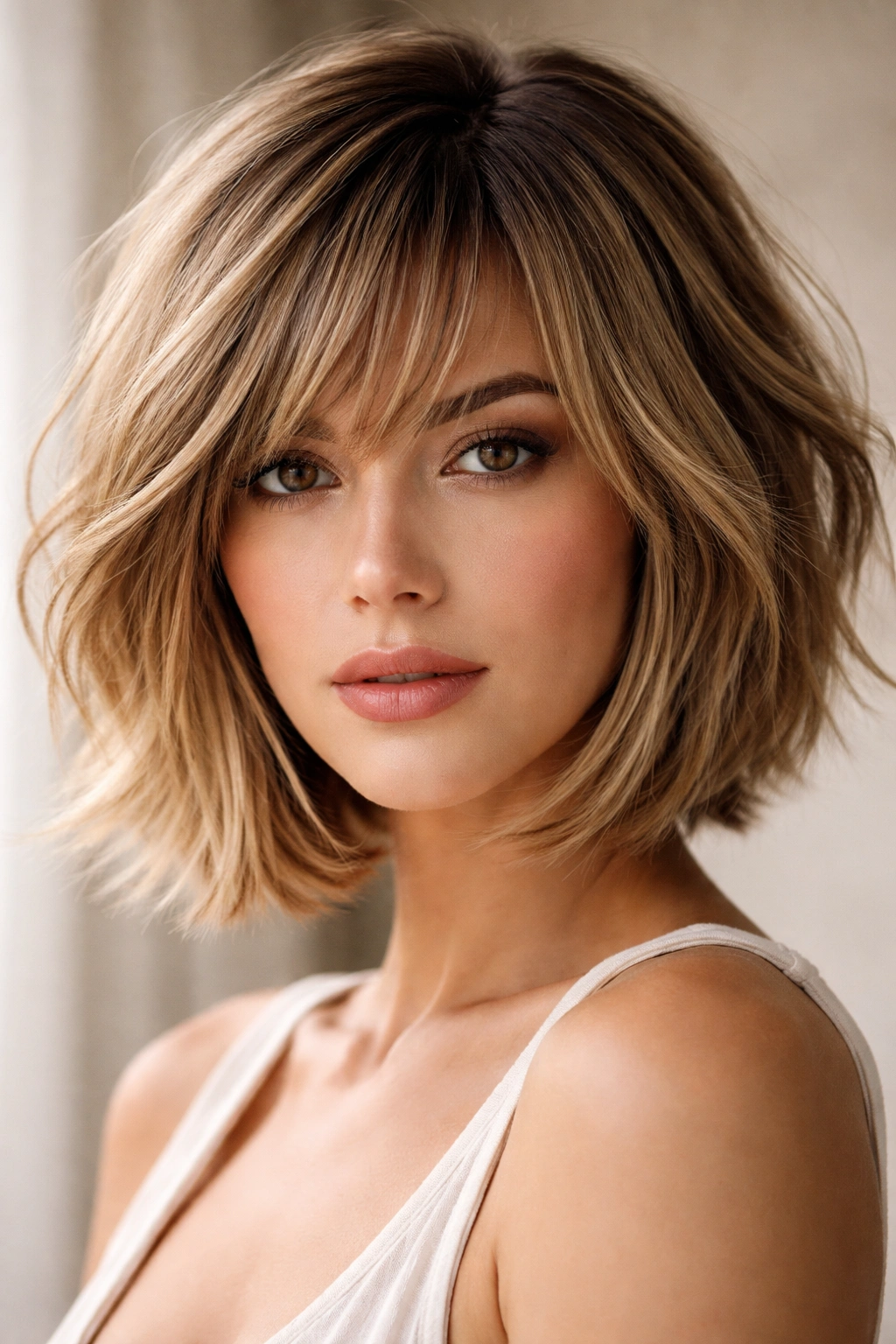
A textured bangs bob combines the classic bob silhouette with modern textured layers throughout, plus textured bangs that add movement to your face. Instead of a blunt, uniform bob, this version uses choppy layering to create texture and dimension while keeping the overall shape recognizable as a bob. The textured bangs provide an extra point of movement right at face level.
Why Layers and Textured Bangs Transform a Bob
Traditional bobs can sometimes feel structured and even slightly stiff, especially on straight hair. Adding choppy layers throughout the cut and creating textured bangs instead of a blunt bang line immediately opens up the style. The layers reduce weight, create separation, and allow the whole cut to move when you move. Textured bangs—usually cut at slightly varied lengths—frame your face while moving independently from the rest of the cut.
How to Achieve the Best Movement
- Style textured bangs by blow drying them to the side or roughing them up with texture spray for movement
- Use point-cutting or razor techniques to ensure bangs are choppy, not blunt
- Add layers throughout the bob to prevent it from becoming a weight at your neck and jaw
- Incorporate an appropriate texture product—sea salt spray for beach vibes, matte pomade for definition, or lightweight cream for control
- Consider asking your stylist for longer face-framing pieces that can be styled away from your face if you want versatility
This cut is flattering on most face shapes because the movement and texture naturally soften angular features while creating interesting dimension around your face.
5. Asymmetrical Layers
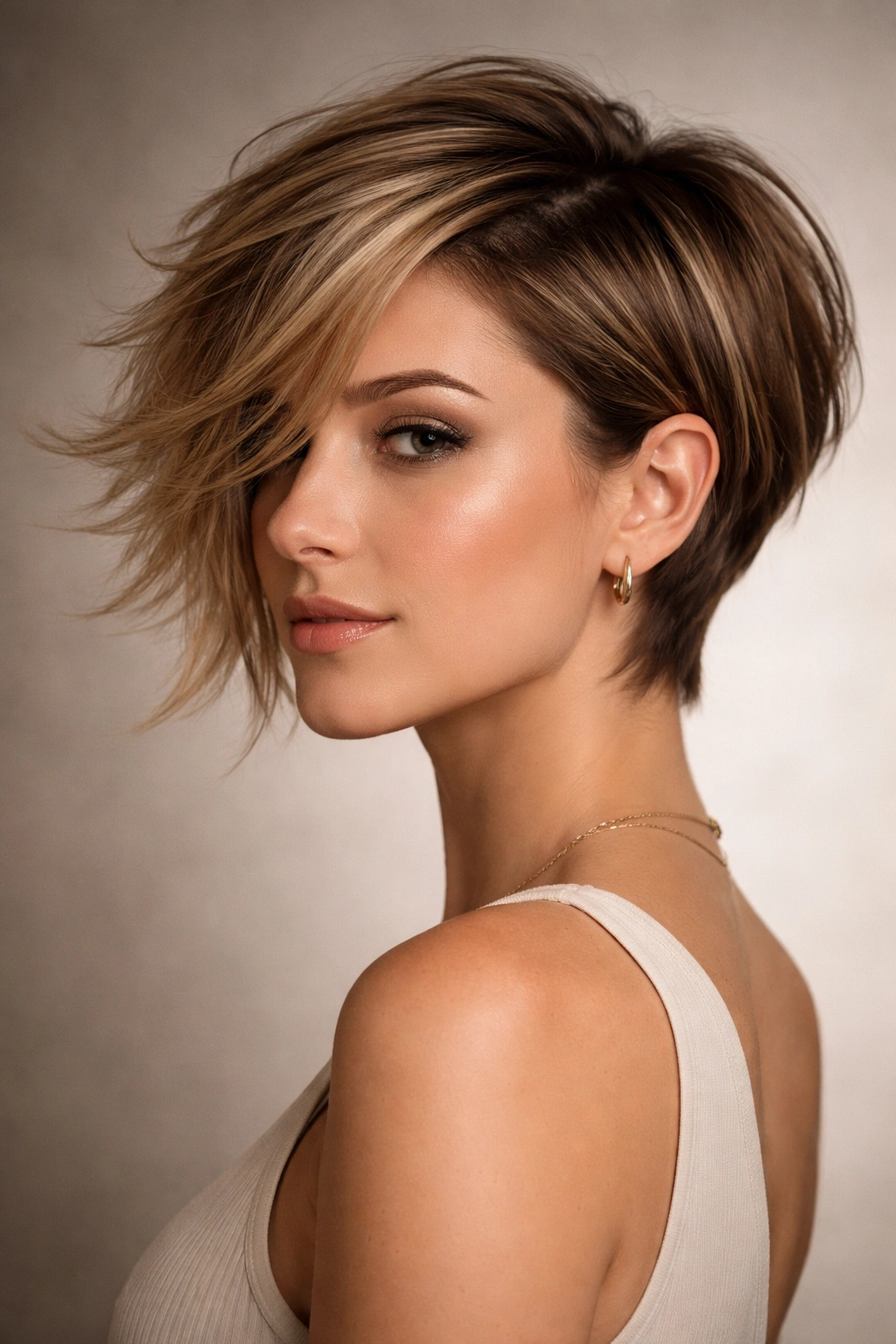
An asymmetrical layered cut plays with the concept of having deliberately mismatched sides to create movement and visual interest. One side is typically shorter—sometimes significantly so—while the other side is longer, often reaching past the ear or toward the jaw. Throughout the cut, layers of varying lengths create the movement, but the asymmetry prevents the cut from feeling balanced or formal.
How Asymmetry Creates Visual Movement
Asymmetrical cuts create movement in two ways: first, the obvious imbalance between sides draws the eye across your head and makes any movement more visually apparent, and second, the uneven lengths allow hair to fall and move at different speeds on each side. When you move your head, turn, or flip your hair, the longer side has more length to sweep and move, while the shorter side bounces and catches light differently. This contrast emphasizes movement that might be subtle in a more symmetrical cut.
Styling an Asymmetrical Layered Cut
- You can style the longer side sleekly and the shorter side more textured for maximum contrast
- Tousle and texturize the longer side to make the asymmetry feel intentional and modern
- Use directional blow drying to emphasize the longer side moving outward and the shorter side having lift
- Add texture product to define individual layers and emphasize the movement
- This cut gives you room for regular styling variation; you can wear it different ways depending on your mood
Asymmetrical cuts work best if you’re naturally drawn to edgier, less conventional styles. They make a bold statement and demand some styling intention to look intentional rather than like a haircut mistake.
6. Feathered Undercut
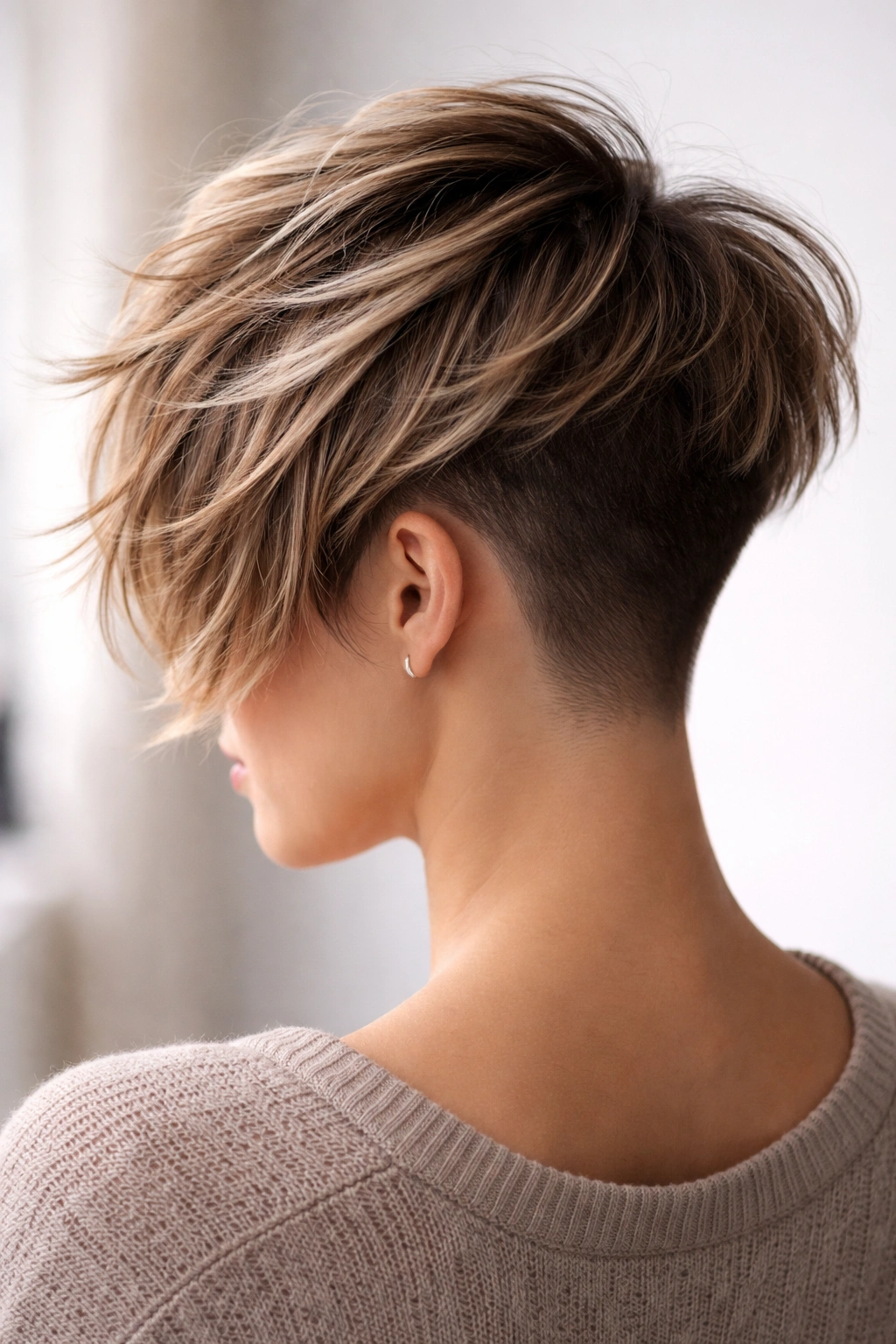
A feathered undercut combines a standard layered cut on top with an undercut (very short or tapered sides and back) that provides contrast and visual movement. The undercut—usually faded very short or even buzzed—sits underneath longer layers on top, creating dramatic movement when those longer pieces move and swing away from the undercut. The feathering (textured layers on top) ensures the longer section isn’t a heavy block but instead has internal movement.
Why Undercuts Create Dynamic Movement
The contrast between long and very short creates the most dramatic movement possible. When your longer top layers move, they swing away from and back onto your closely cut undercut, creating a visible pendulum effect that’s far more pronounced than on a standard all-over-layered cut. The undercut also reduces weight and bulk, so the longer layers literally have more freedom to move and swing. Feathering throughout the longer section means there’s texture and movement even when your hair is still.
Styling Strategies for an Undercut
- The undercut requires regular maintenance—typically every 3 to 4 weeks—to maintain the clean contrast
- Style the longer top section with texture and movement to maximize the visual drama of the contrast
- Try sweeping the longer pieces to one side or back to emphasize how they move away from the undercut
- Use a lightweight pomade or styling cream rather than heavy products that weigh down the movement
- The undercut works on straight hair and curly hair, though the movement effect reads differently on each
An undercut is commitment-intensive because you need regular trims to maintain the style, but the payoff is genuine drama and movement that few other cuts achieve.
7. Wolf Cut (Short Version)
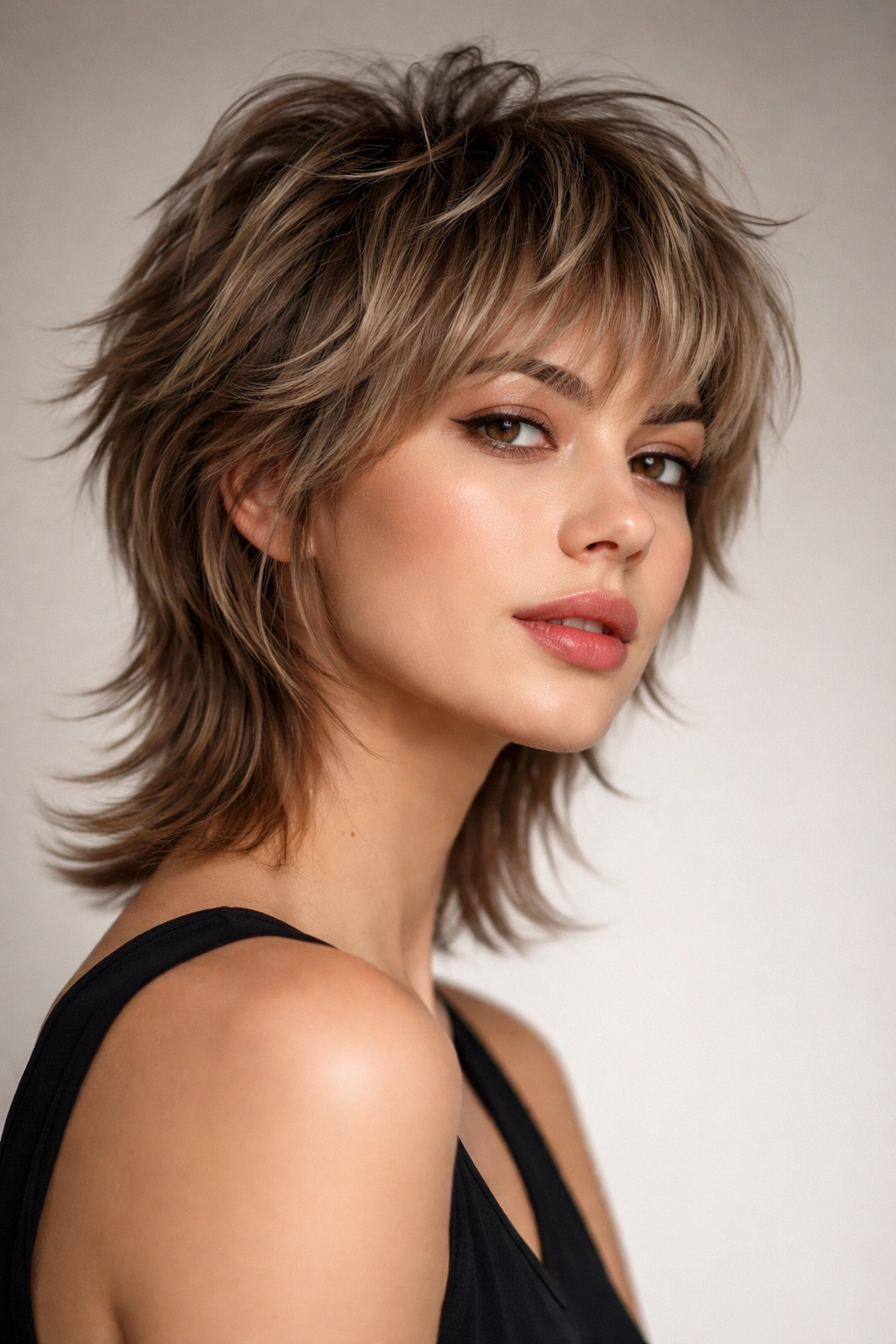
The wolf cut combines elements of the shag (layers throughout) with elements of the mullet (longer underneath, shorter on top) to create a cut that’s part wild animal, part structured shape. A shorter version of the wolf cut typically measures 2 to 3 inches on top and maybe 4 to 5 inches underneath—not the dramatic contrast of a full mullet, but enough to create clear movement and flow. The result looks edgy, textured, and undeniably cool.
The Movement Architecture of a Wolf Cut
A short wolf cut moves because it has layers throughout but also intentional length graduation from top to bottom. The shorter crown lifts off your scalp, creating movement and volume at the top, while the longer underneath layers swing and sweep. The layers prevent the longer underneath section from becoming a heavy, solid block—instead, they separate and move independently. The overall effect is a cut that has life in all directions.
How to Style a Wolf Cut for Best Results
- Texture products are essential; lean into sea salt spray, matte pomade, or a texturizing cream
- Use a blow dryer to create lift at the crown while directing longer underneath layers outward and back
- Don’t be afraid of the undone, slightly wild aesthetic; that’s the whole point of a wolf cut
- Use a round brush on top for volume and your fingers on underneath sections to separate and encourage movement
- This cut actually looks better slightly textured and piece-y than sleek; embrace that aesthetic
The short wolf cut appeals to people who want to look modern and unconventional without quite committing to the extremes of a full mullet. It’s bold without being impractical.
8. Choppy Layered Lob
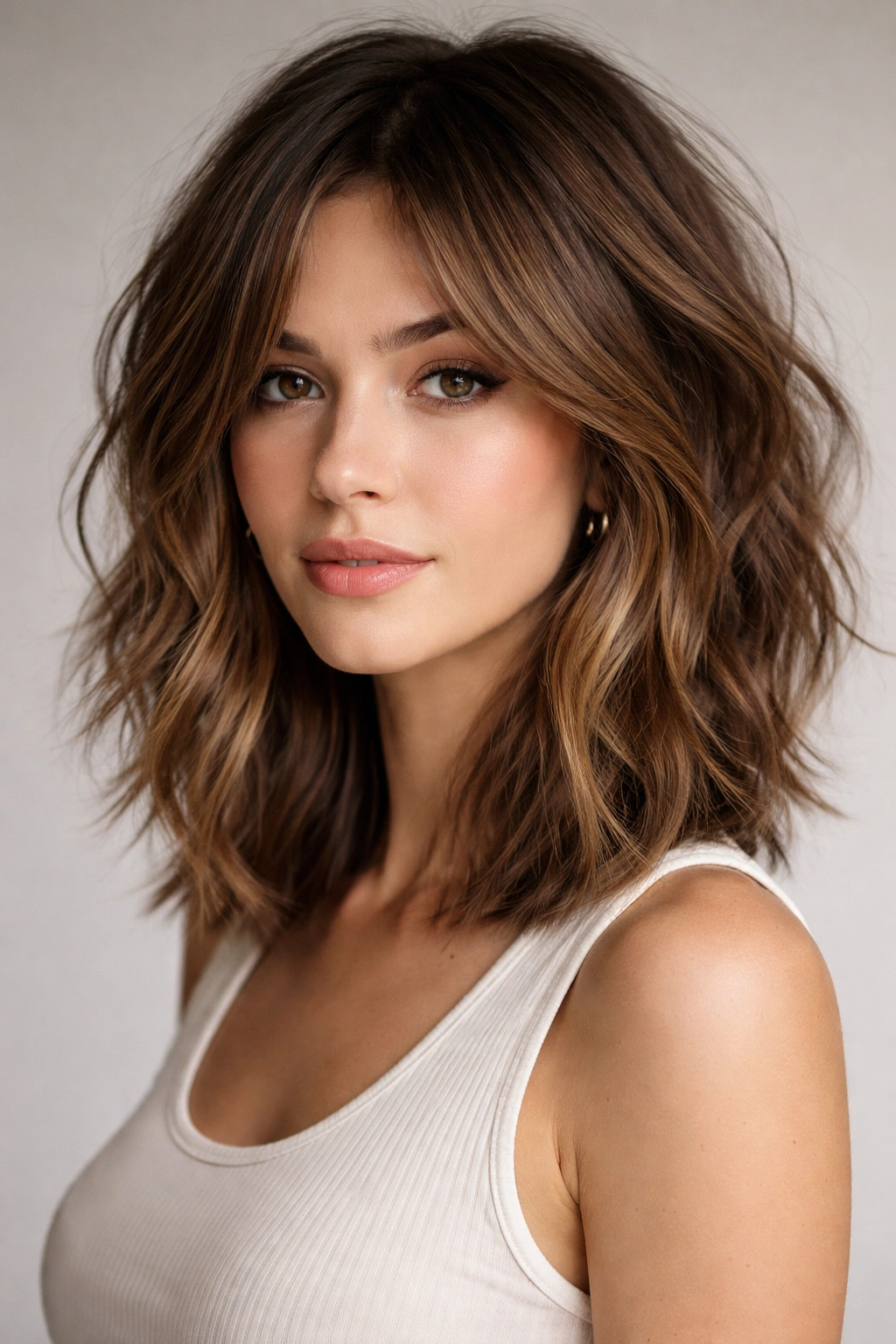
A choppy layered lob (long bob) sits somewhere between a bob and shoulder-length hair—usually landing between the chin and shoulders. The choppy, layered approach prevents it from being heavy or blunt; instead, it’s textured throughout with varied lengths that create movement at every angle. This is the lob for people who want movement and texture without going particularly short.
Why Length Plus Choppy Layers Equals Movement
A lob has enough length that gravity naturally pulls it down slightly, but choppy layers prevent that length from becoming a flat, heavy wall of hair. Instead, the different lengths create points and edges where light hits, and when you move, each layer can swing and catch independently. The longer overall length means there’s more actual hair moving, which makes the movement more visually obvious than in a shorter cut. The choppiness ensures it never looks overly thick or blunt.
Styling a Choppy Layered Lob
- This length benefits from both natural texture and styled texture; you have options depending on your mood
- A round brush and blow dryer can create a smooth, wavy lob, or you can embrace a tousled, choppy vibe with texture spray
- Add layers with the most contrast at face-framing pieces to enhance movement where it’s most visible
- Consider asking for shorter, choppier pieces on top and slightly longer choppy layers underneath for maximum dimension
- This cut works on curly, wavy, and straight hair; the movement reads differently but is achievable on all textures
A choppy lob is perfect if you want the movement and dimension of a shorter cut but aren’t ready to commit to the ease and boldness of truly short hair. It’s a middle ground that offers genuine styling versatility.
9. Tapered Layered Fade
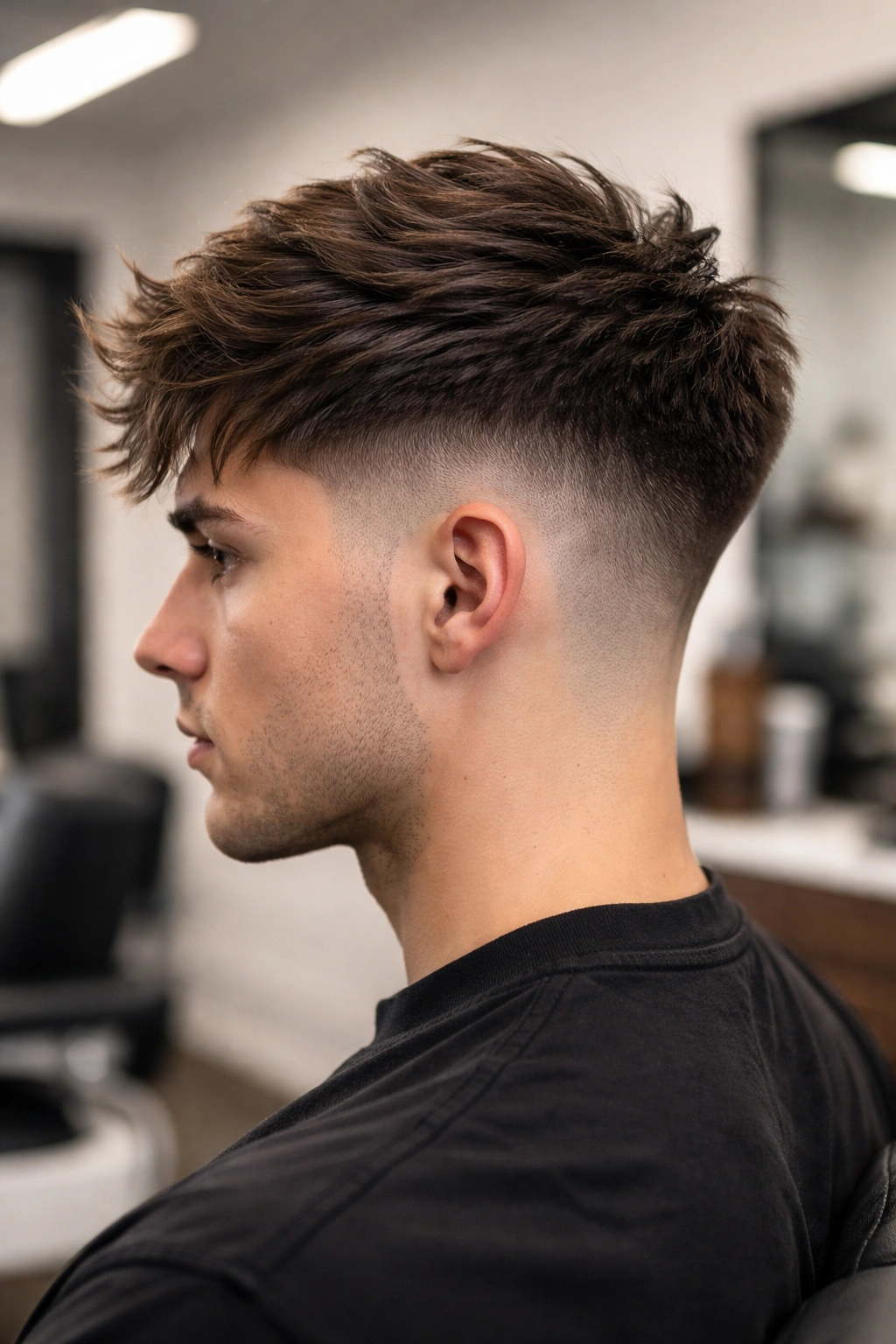
A tapered layered fade uses clipper work to create a gradual fade on the sides and back (similar to a men’s fade) while keeping the top longer and heavily layered. The fade tapers from very short near the nape and temples to gradually longer as it approaches the crown, then transitions into choppy, textured layers on top. This creates a clean, modern silhouette with serious movement potential.
Movement Through Contrast and Internal Texture
A tapered fade creates movement through two mechanisms: the dramatic length contrast between sides and top makes any movement of the top section immediately visible, and the choppy layers on top mean there’s texture and internal movement even when your hair is still. The fade also removes weight from the sides, so the longer top layers aren’t being pulled down by bulk. The result is a cut that looks sharp and moves beautifully.
Styling a Tapered Layered Fade
- Invest in a good clipper for the fade since you’ll want to refresh it every 2 to 3 weeks
- Style the longer top section with texture and movement; try pointing it up and back or to the side
- Use a matte pomade, texture cream, or sea salt spray to define the choppy layers on top
- The fade itself requires no styling; the sharp contrast works with the longer, more textured top section
- This cut is bold and requires styling intention to look sharp, but the payoff is dramatic
A tapered fade with choppy layers is ideal if you love a modern, edgy aesthetic and are willing to maintain regular clipper work. It’s not low-maintenance, but it’s undeniably striking.
10. Messy Textured Crop
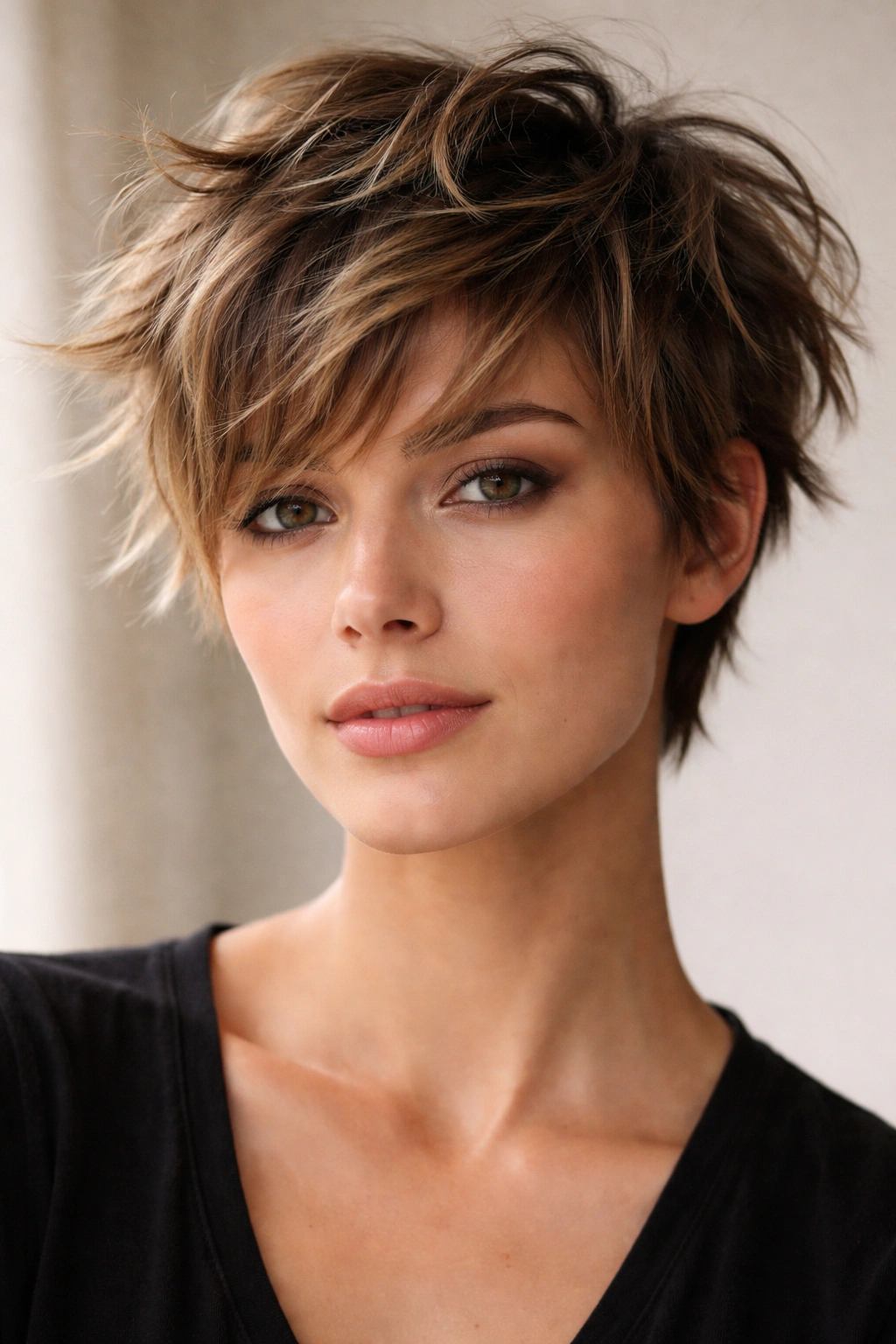
A messy textured crop takes the crop concept and deliberately makes it look undone, tousled, and piece-y rather than polished. The cut typically uses choppy, uneven layers throughout, creating different lengths that fall in slightly different directions. The “messy” isn’t accidental; it’s achieved through specific point-cutting techniques that create intentional texture and variation in length.
How Intentional Messiness Creates Movement
The key to this cut is understanding that “messy” doesn’t mean unskilled; it means deliberately creating texture and variation so that hair moves in multiple directions. Each section of a textured crop is cut to fall and move slightly differently, so the overall effect is movement and visual interest in all directions. The lack of uniformity prevents the cut from ever appearing flat or helmet-like. Styling messy texture actually requires intention and product knowledge, even though the end goal looks undone.
Achieving the Right Messy Texture
- Use a texturizing spray or sea salt spray as your foundation product
- Work product through with your fingertips, separating and lifting individual pieces
- Avoid heavy pomades that will make the texture look greasy rather than intentionally messy
- Consider a very light cream product that separates hair without adding visible shine
- Blow dry with a diffuser or by hand-tousling for an undone appearance
- This cut looks best when it’s slightly lived-in; perfectly styled defeats the purpose
A messy textured crop is perfect for people with naturally wavy or textured hair who want their cut to enhance rather than fight their hair’s natural tendencies. It’s also ideal if you want a short cut that looks less formal and more approachable.
11. Layered Wispy Bob
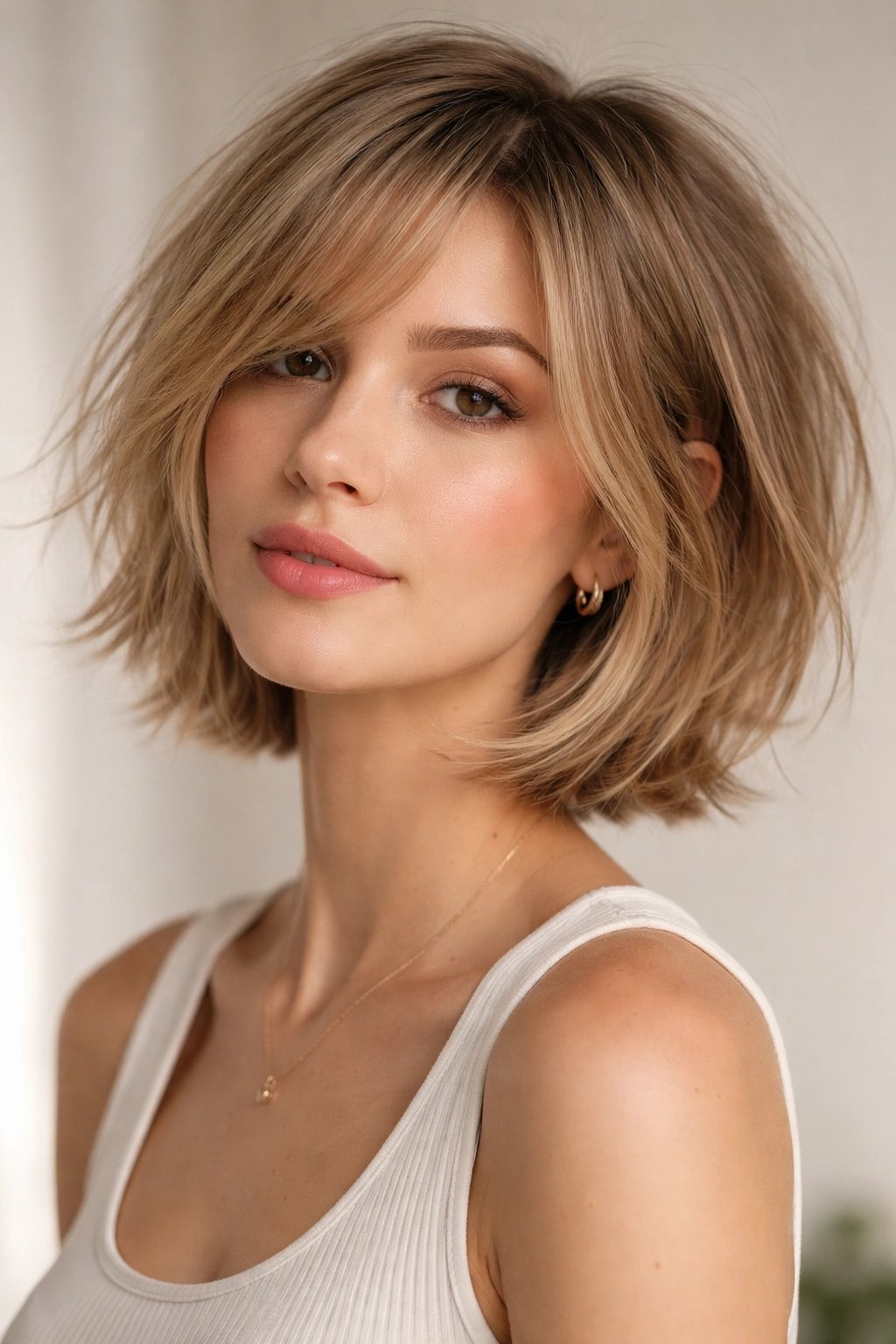
A layered wispy bob maintains the classic bob silhouette—that chin-length, chin-framing shape—but uses choppy, wispy layers throughout to create movement and reduce weight. The word “wispy” signals that this is a light, airy interpretation of a bob rather than a heavy, blunt one. The layers are created through texturizing and point-cutting rather than blunt sections, so hair separates naturally.
Why Wispy Layers Transform a Bob
The appeal of a traditional bob is its clean, structured shape, but that structure can sometimes feel heavy or stiff. Adding wispy layers transforms the bob into something that has internal movement while maintaining the recognizable silhouette. The layers lighten the overall impact and create texture that makes the cut look more modern. Wispy layers also prevent the bob from looking severe on angular face shapes.
Styling a Layered Wispy Bob
- Blow dry with a round brush for a smoother, more polished wispy bob
- Or use a texturizing spray on damp hair and rough-dry with a blow dryer for a more tousled interpretation
- Shorter, wispy pieces around your face can be styled behind your ears or left to frame your face depending on your preference
- Use a lightweight styling cream rather than a heavy pomade to maintain the airy, wispy quality
- This cut works on most hair types; straight hair shows the movement clearly, while wavy or curly hair naturally enhances the wispy effect
A layered wispy bob is ideal if you love the classic bob shape but want something that feels more contemporary and has more movement than a traditional blunt bob.
12. Disconnected Layers
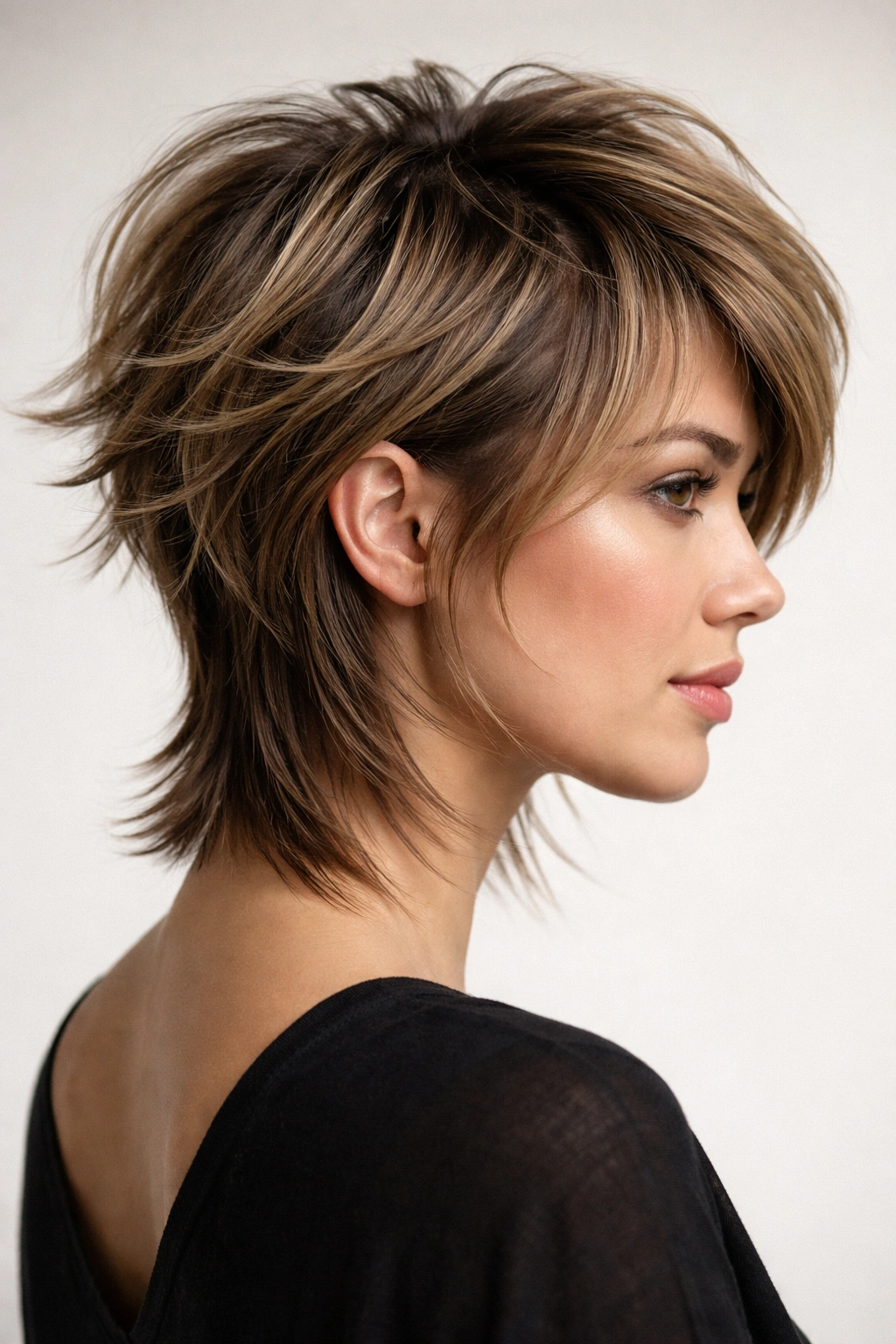
A disconnected layered cut intentionally separates shorter layers from longer layers, creating a visible gap between different lengths rather than a smooth graduation. Some sections might be cut quite short while others are noticeably longer, and there’s a deliberate lack of transition between those lengths. The “disconnection” creates visual drama and movement that’s immediately apparent.
The Movement Created by Deliberate Disconnection
When layers are disconnected, the movement is more pronounced because there’s a visible gap and contrast between different length sections. As hair moves, you see the short, choppy layers shifting independently from longer underneath sections. The contrast makes the movement more noticeable than in a cut where layers gradually grade from short to long. Disconnected layers prevent the cut from ever blending into a uniform shape; it always reads as distinct, modern, and textured.
Styling Disconnected Layers
- Emphasize the disconnection by styling shorter layers in one direction and longer layers in another
- Use texture products to make the individual sections read as separate and distinct
- Try blow drying with one section lifted and another smoothed down to maximize the visual contrast
- Matte pomade or texture cream works better than glossy products that blur the distinction between layers
- This cut is best appreciated when you style it intentionally rather than attempting to blend it into uniformity
Disconnected layers appeal to people who love modern, architectural haircuts and aren’t intimidated by a cut that’s deliberately unconventional and obviously textured.
13. Choppy Shoulder-Length Cut
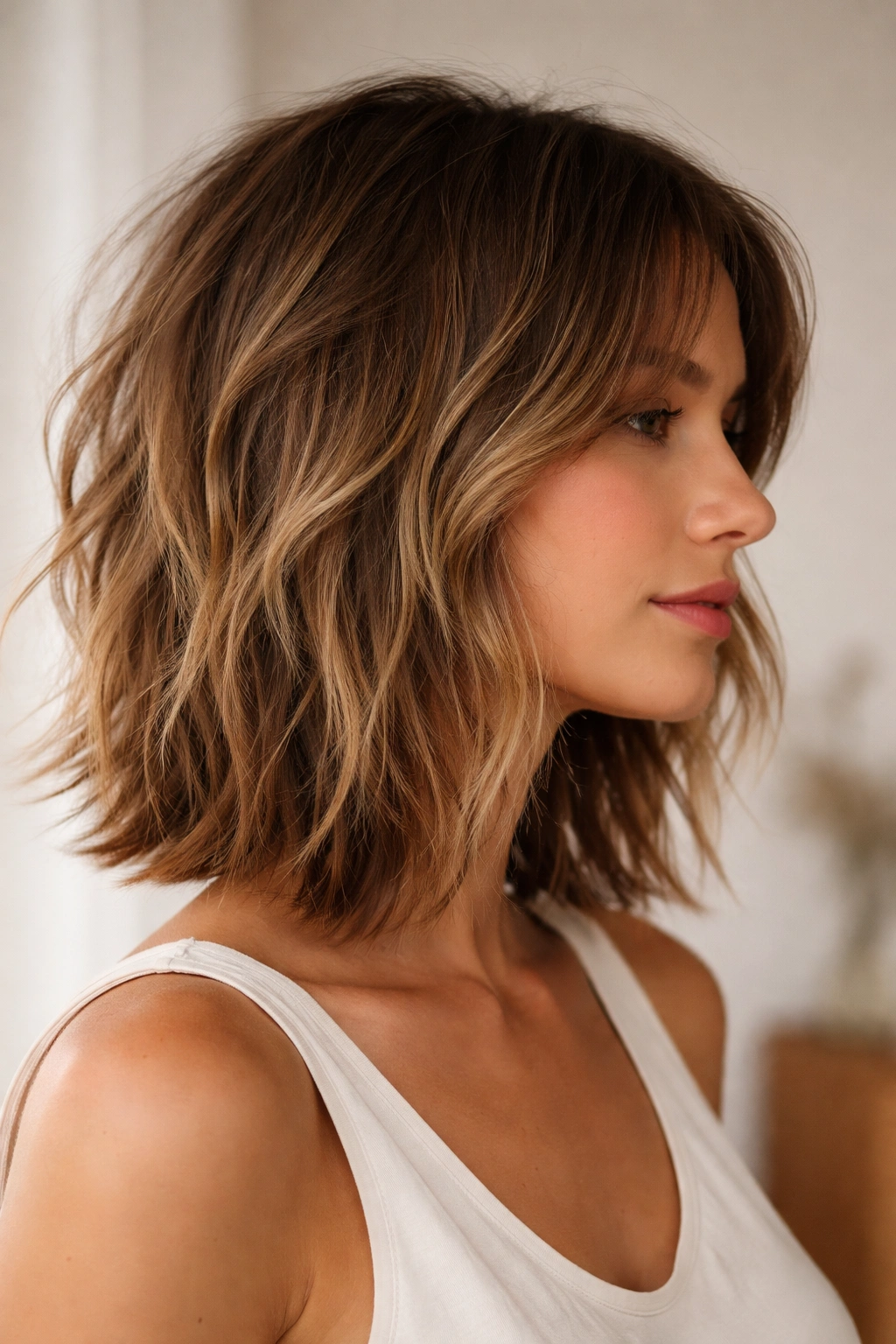
A choppy shoulder-length cut sits right at or just below shoulder length but uses choppy, layered techniques throughout to prevent it from being heavy or blunt. This length gives you more versatility than truly short hair—you can pull it back if you want—while still maintaining the movement and texture of a choppy, modern cut. The choppiness prevents the shoulder-length from reading as conservative or traditional.
Why Shoulder-Length Choppy Works
Shoulder-length hair is long enough to have genuine swinging movement when you move your head, and choppy layers ensure that movement is textured and interesting rather than flat. The layers also prevent the shoulder-length from becoming a heavy block that pulls your features down; instead, the varied lengths create lift and the perception of fullness without actual bulk. This length works on most face shapes and allows styling versatility.
Styling Options for Choppy Shoulder-Length Hair
- Blow dry with a round brush and point your choppy layers outward for a textured, dimensional look
- Use a sea salt spray or texture cream to enhance the chop and create natural-looking separation
- Try styling it sleek and straight for a more polished look, or embrace the textured, tousled vibe
- This length can be pulled back into a ponytail or bun if you want a change from wearing it down
- Lighter layers around your face can be styled to frame or swept behind your ears
Choppy shoulder-length hair is ideal if you want movement and modern texture without committing to very short hair. It gives you the best of both worlds: ease and styling versatility.
14. Tousled Curl Crop
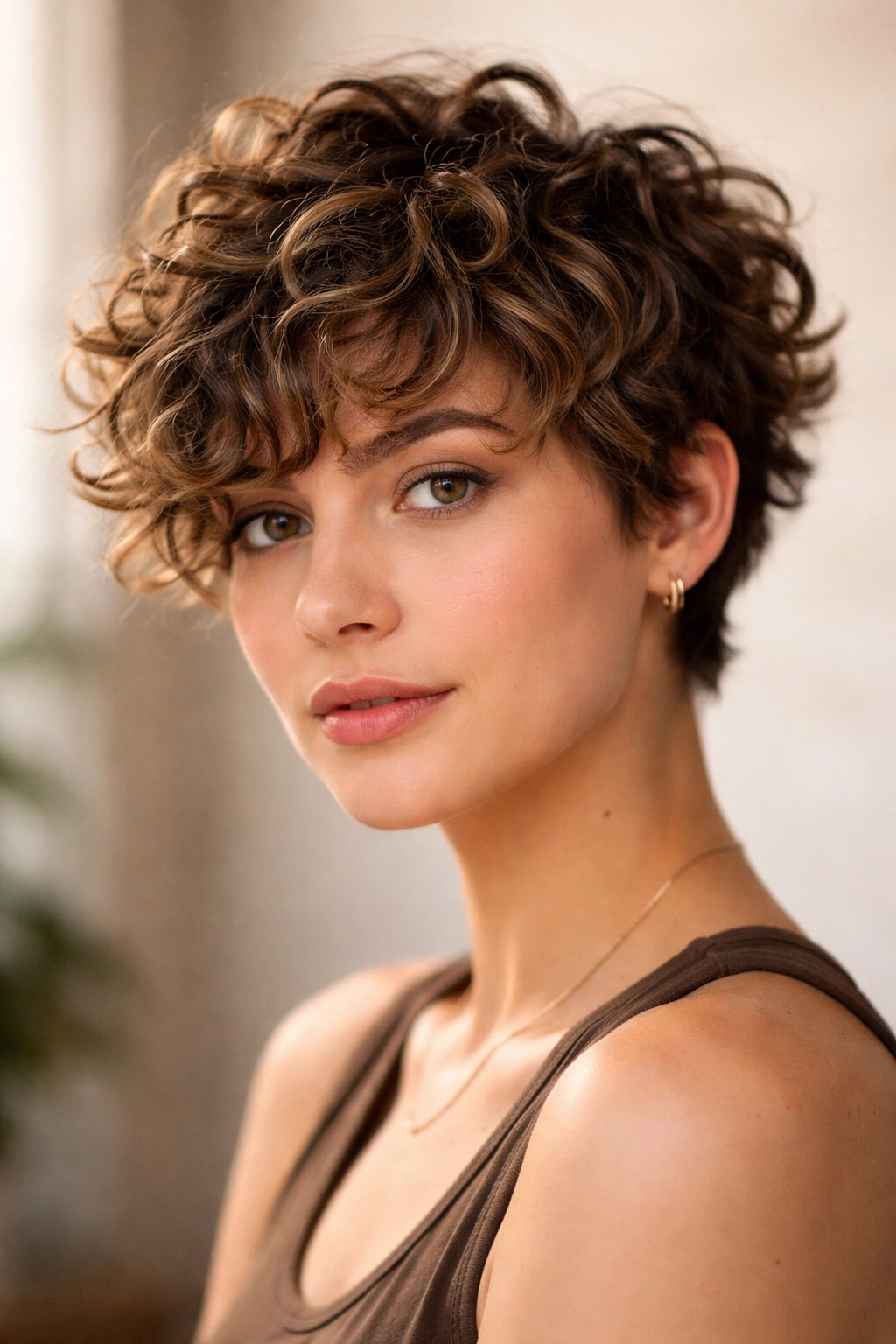
A tousled curl crop is designed specifically for people with naturally curly or coily hair. The cut uses layers to remove weight and prevent the curl pattern from feeling compressed or defined into a shape. Instead, the layers allow curls to spring up and out, creating maximum texture and movement. The crop length—usually 1 to 3 inches—makes styling quick while the layers ensure visual interest and dimension.
How Layers Work With Curl Patterns
Curly hair naturally wants to spring up and out, and heavy, blunt cuts work against that natural texture. Layering allows curls to move independently, creating volume and visual movement that’s organic to your hair’s pattern. The varied lengths mean curls can extend and spring at different distances from your scalp, creating dimension that feels full and textured without being heavy. A tousled curl crop celebrates your curl pattern rather than fighting it.
Styling a Tousled Curl Crop
- Use a leave-in conditioner or curl cream on damp hair to enhance and define curl patterns
- Plop (wrap your hair in a towel to encourage curl definition) rather than blow dry if possible
- Use a diffuser on a low heat setting if you do blow dry to encourage curl formation
- Scrunch products upward into your curls rather than smoothing down
- Avoid brushing or combing curly crops; use your fingers to separate curls once they’re dry
- Refresh curls between washes with water and product, scrunching to reactivate the curl pattern
A tousled curl crop is transformative if you’ve been flattening or fighting your natural curl pattern. It’s a celebration of texture that requires less styling effort than you might expect—you’re working with your hair’s natural instincts rather than against them.
15. Sleek Geometric Layers
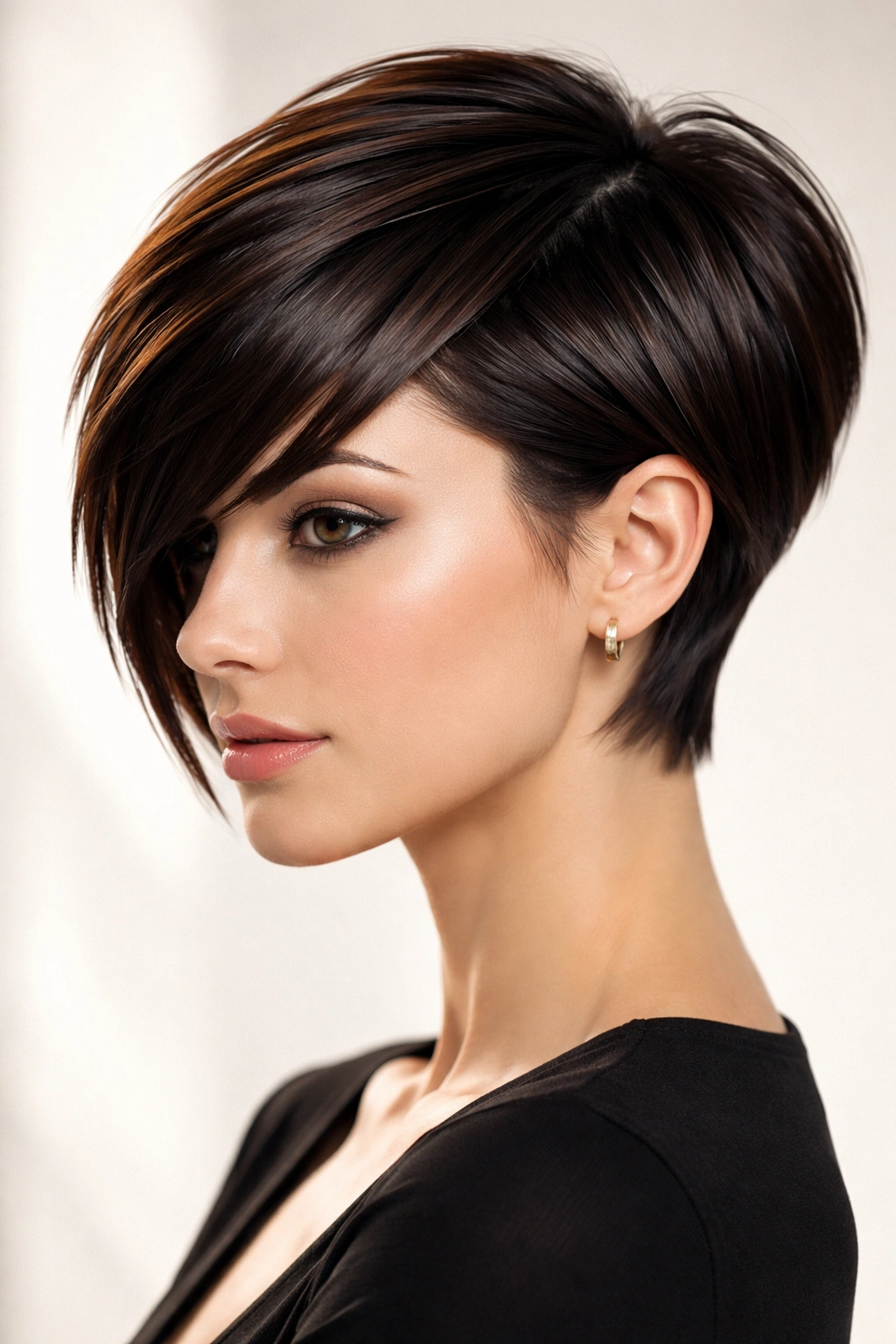
A sleek geometric layered cut is the precise, intentional opposite of a choppy or messy cut. This style uses sharp, angular layers to create defined geometric shapes and lines throughout the cut. Rather than soft, wispy, or undone, the layers are clean and structured, often at a precise angle. The movement comes from the lines and angles themselves rather than from texture or choppiness.
Movement Through Precise Angular Design
Geometric layers create movement through sharp, intentional lines rather than texture. Each layer is cut at a specific angle—often graduated angles that create a sense of forward motion or flow. When hair moves, those defined lines and angles catch light and emphasize the movement. The precision of geometric layers means the cut looks sleek and modern even without much styling; the lines do the work. This is movement that reads as polished and controlled rather than wild or undone.
Styling a Sleek Geometric Cut
- Blow dry with a paddle brush or blow dryer nozzle to smooth and define the geometric lines
- Use a lightweight, serum-based product to add shine and emphasize the precise lines of the cut
- Avoid overly textured products that blur the clean geometry of the cut
- Style hair with intention, pointing layers in the direction the cut creates naturally
- This cut rewards precision styling; a sleek, smooth blowout shows off the geometry better than a tousled vibe
- Consider a high-gloss or glossy product rather than matte to catch light and emphasize the defined layers
A sleek geometric cut appeals to people who love modern design, precision, and polish. It’s high-maintenance in terms of styling and blowouts, but the payoff is a cut that looks sharp and intentional with minimal effort once you’ve mastered the styling.
Final Thoughts
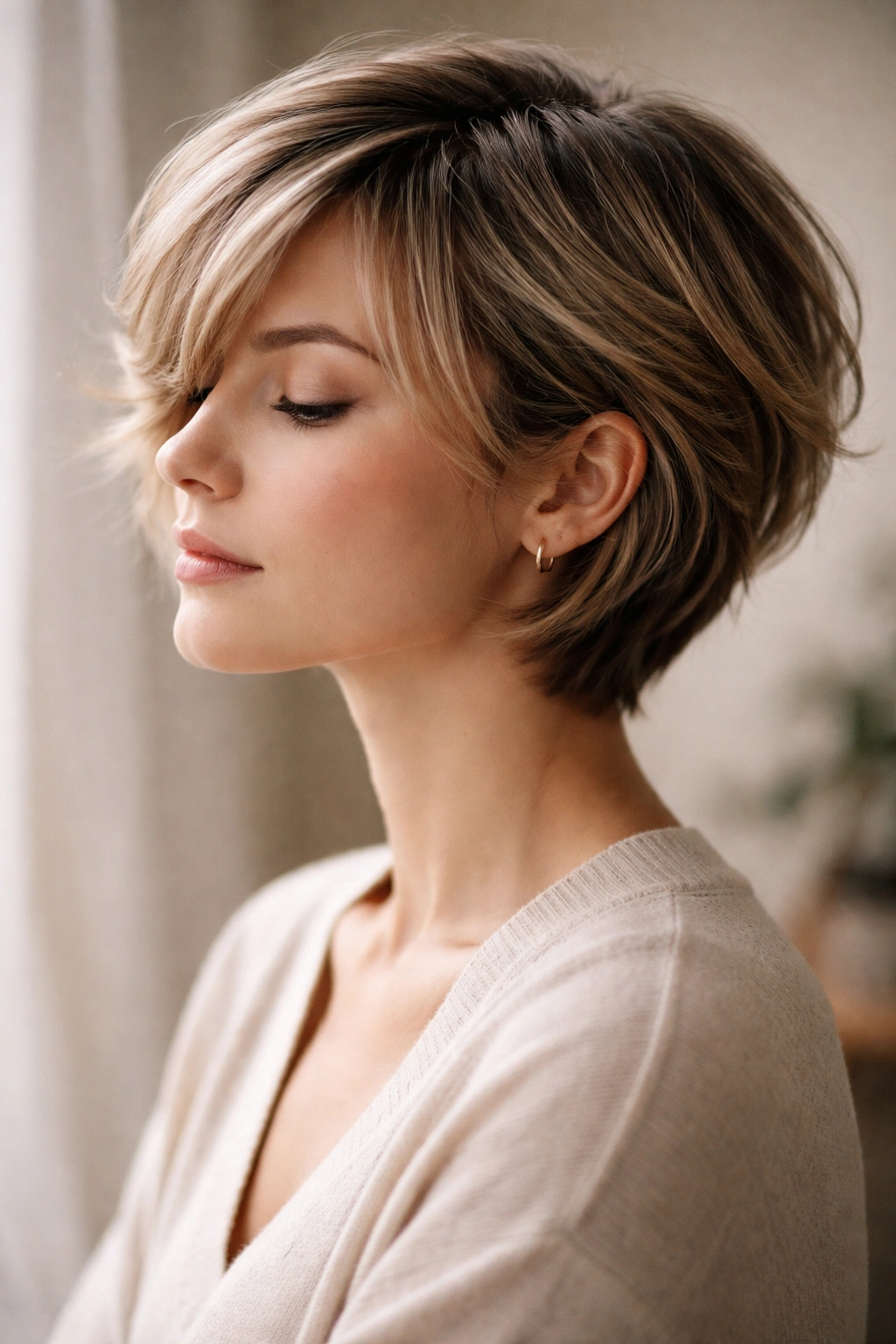
Short, layered haircuts with genuine movement share a common principle: they reject uniformity in favor of texture, varied lengths, and intentional choppy elements. Whether you’re drawn to the messy, undone aesthetic of a modern shag, the clean precision of geometric layers, the dramatic contrast of an undercut, or the bouncy energy of a curl crop, the movement in these cuts comes from thoughtful layering that allows hair to move in multiple directions simultaneously.
The best choice for you depends on your hair texture, your willingness to style regularly, and the vibe you want to project. Some cuts like the tousled curl crop work with your hair’s natural instincts, while others like the tapered fade demand regular maintenance and styling intention. Take the time to discuss with your stylist not just what you want the cut to look like, but how you actually want to style it day to day. A cut that’s beautiful in a salon but requires 20 minutes of blow-drying to look right might not be the best fit if you prefer wash-and-go ease. The right short, layered cut makes you feel like the best version of yourself—whether that’s edgy and modern, textured and wild, or sleek and polished.
