



Your hair has been telling you something for a while now—those slicked-back, perfectly smooth styles feel exhausting to maintain and honestly, they don’t feel like you. What actually feels like you is texture, movement, and that intentionally undone vibe where your hair looks effortlessly gorgeous without requiring a flat iron, blow dryer, and thirty minutes of styling every single morning.
Messy textured haircuts have become the antidote to high-maintenance styling. These aren’t neglected cuts—they’re strategically layered, precisely textured, and designed so that your natural hair movement (whether you have waves, curls, or straight strands) actually works for you instead of against you. The magic is in the cut itself. When your stylist removes bulk, adds choppy layers, and textures the ends with intention, you get a haircut that looks deliberately tousled whether you spent five minutes or thirty minutes styling it.
The best part? Volume comes built-in. Those choppy layers catch light differently, create dimension throughout your cut, and make even fine or thin hair look fuller and more textured. You’re not fighting against gravity or flatness—the cut is engineered to give you natural lift at the crown and movement throughout the length. Let’s walk through ten of the most wearable, photogenic messy textured cuts that deliver real volume without the daily styling stress.
1. Textured Shag With Layered Fringe
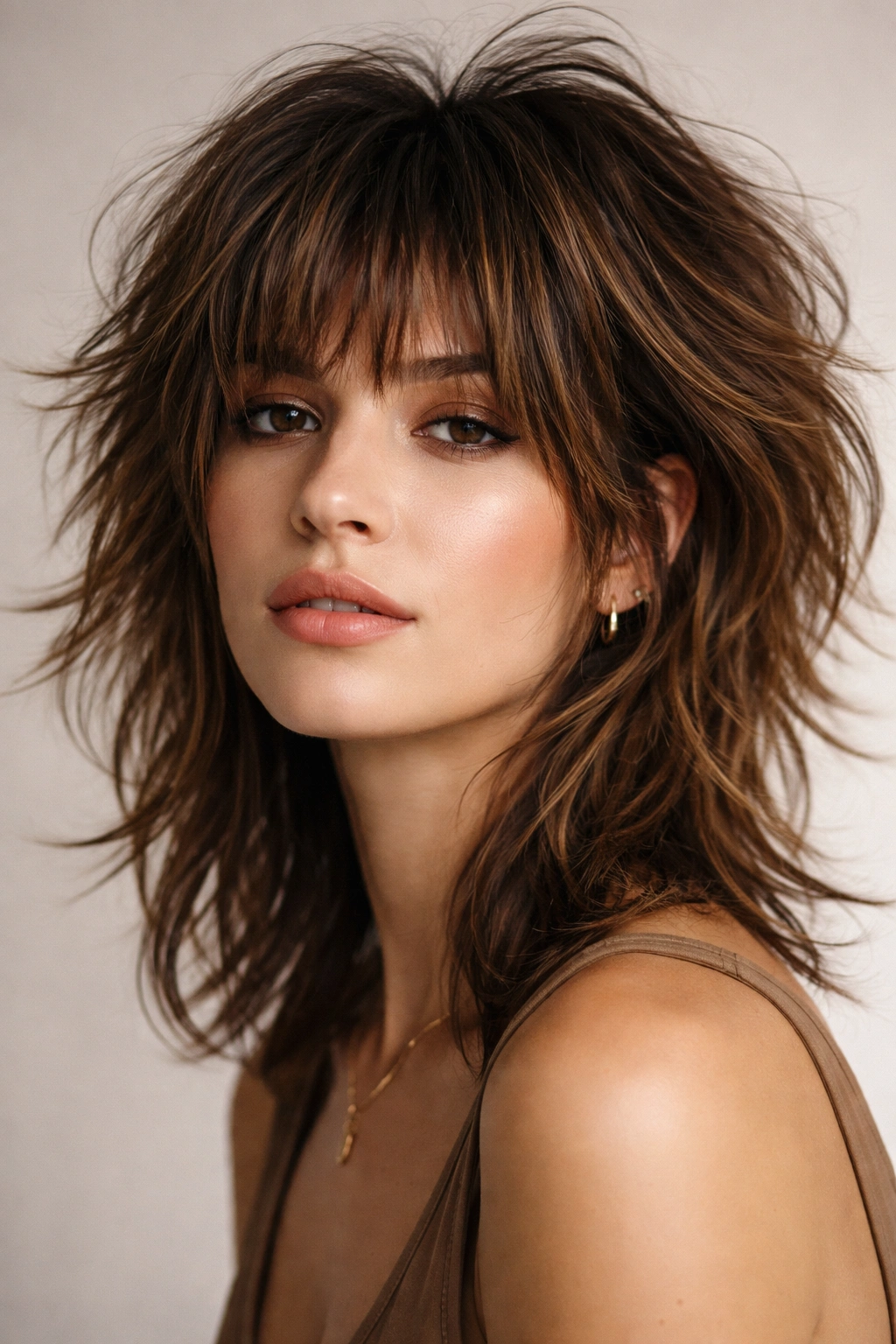
The modern shag is nothing like the ’70s version your mom might remember—it’s cleaner, more intentional, and works on every face shape when cut correctly. This cut features short choppy layers throughout that create maximum texture and movement, with a layered fringe that sits right at your eyebrows and adds a face-framing element that feels both casual and cool.
Why It Works for Volume
The whole foundation of a shag is built on creating texture where hair naturally wants to move. Your stylist will cut shortest at the crown and gradually lengthen toward the bottom, which immediately gives you lift without requiring you to tease or blow-dry at the roots. The choppy layers throughout the cut mean every strand has its own direction and movement—you literally cannot create a flat, plastered-down look even if you tried.
How to Style It
- Apply a texturizing spray or sea salt spray to damp roots for grip and lift
- Scrunch in a lightweight mousse or cream product while hair air-dries or use a diffuser on low speed
- Flip your head upside down for three to five seconds to redirect the crown layers upward
- Once dry, use your fingers to separate and textured individual sections rather than combing through
- A small amount of dry shampoo at the roots extends the texture and adds grit to the ends
Pro tip: Refresh this cut every six to eight weeks to maintain crisp, choppy layers. As hair grows out, the texture softens and the cut loses its signature piece-y definition—regular trims are what keep this style looking intentional rather than unkempt.
2. Tousled Wolf Cut With Soft Waves
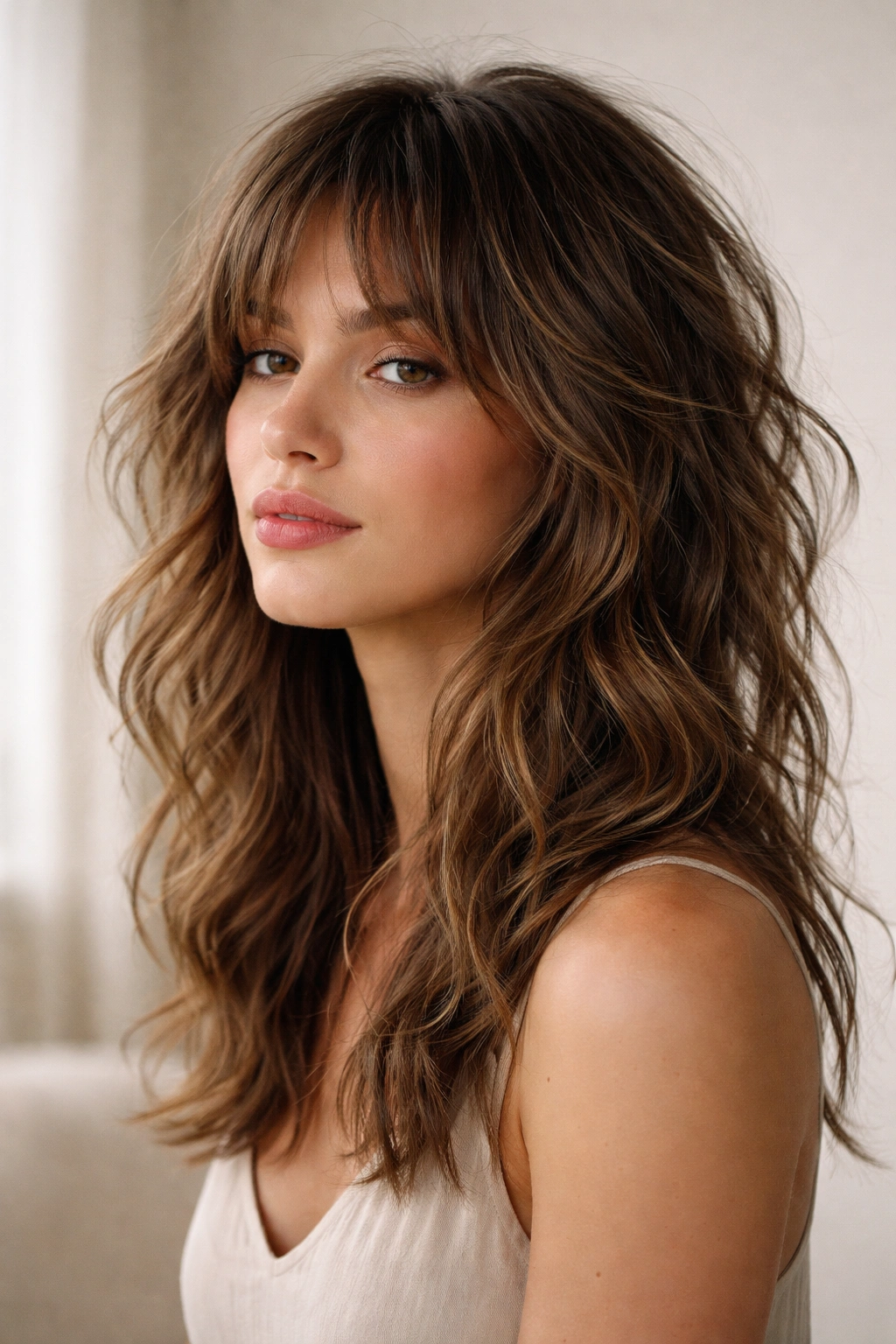
The wolf cut is essentially a shag’s cooler, more editorial sibling—it combines the short, textured layers at the crown (for that shag volume) with longer, wavy lengths that flow past the shoulders. The result is a cut that feels wild and romantic at the same time, with textured waves that catch light and create fullness throughout.
What Makes This Cut Different
While a shag is choppy throughout, a wolf cut has a more defined separation between the shorter textured crown and the longer lengths. Your stylist will texturize the mid-lengths and ends with a razor or texturizing shears, which creates those soft, piece-y waves rather than blunt, solid lines. The longer lengths also mean you get more dimension—the shorter layers peek through and create shadow and depth that read as serious volume.
Building the Tousled Texture
- Blow-dry with your head flipped upside down for maximum root lift, scrunching sections with your hands as you go
- Once mostly dry, flip your head back up and arrange pieces around your face
- Create waves by wrapping sections loosely around a curling iron set to medium heat, holding for just two seconds
- Don’t curl all the way through—curl from mid-length to end, leaving some movement undone
- Finish with a light texture spray and separate waves with your fingers for that effortless, just-woke-up vibe
Styling Products That Deliver
- Lightweight mousse applied to damp roots (not wet, or your hair gets too heavy to hold texture)
- Sea salt spray throughout the lengths for grip and separation
- Dry texturizing spray once fully dry to enhance the piece-y, undone quality
- A tiny dab of lightweight oil on the ends prevents frizz without flattening your volume
Pro tip: This cut suits wavy or curly hair naturally, but if you have straight hair, you’ll need to curl before styling every time—or consider a different cut that works with your natural texture rather than against it.
3. Choppy Pixie With Volume
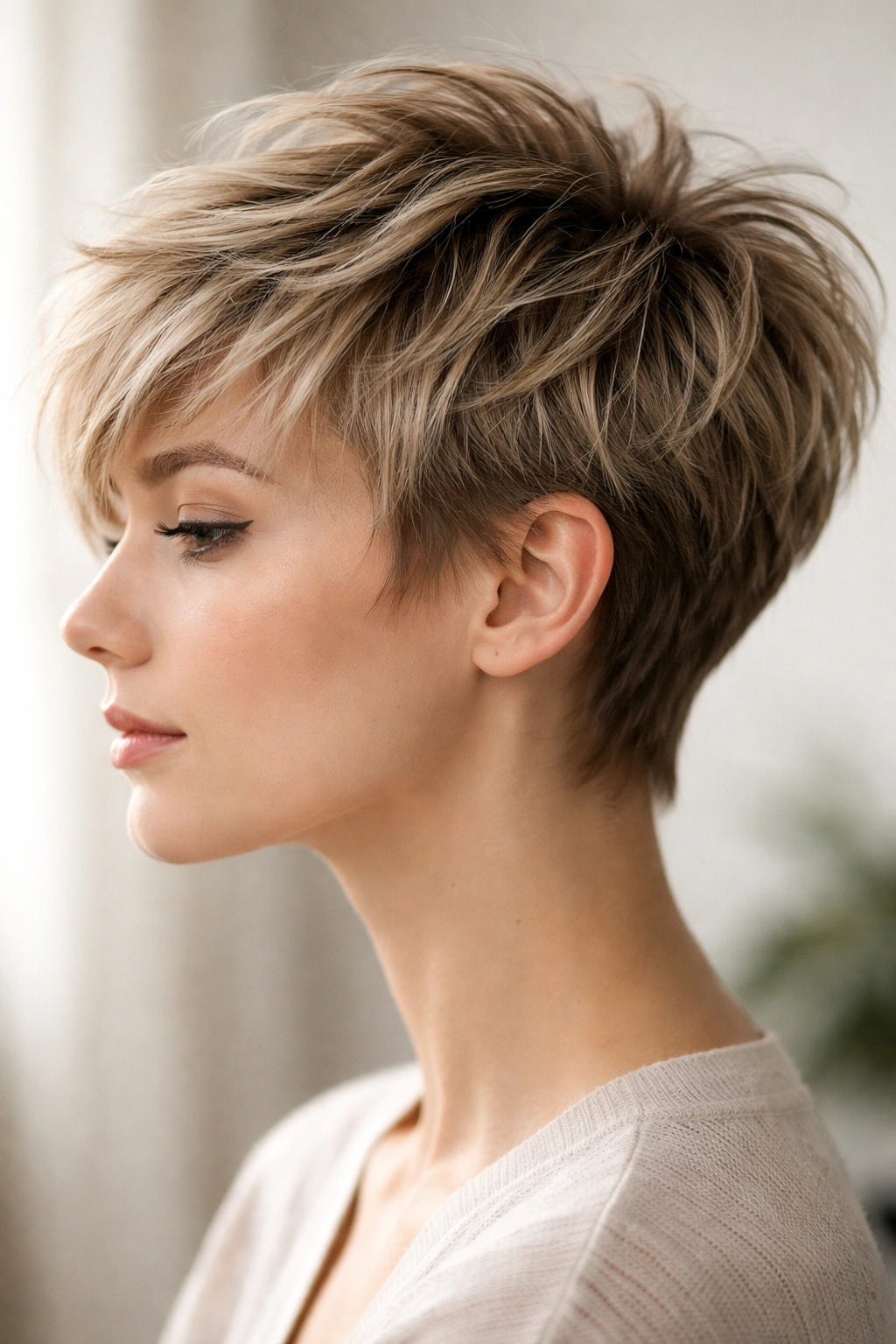
Don’t assume a pixie has to be sleek or minimal. A choppy pixie loaded with texture gives you a short, confident cut that still reads as effortlessly undone, with strategic layers that direct movement upward and outward from the scalp.
The Structure Behind the Look
Your stylist cuts this pixie shorter at the nape and sides, then gradually lengthens toward the crown where choppy layers create lift. Rather than a smooth, blended pixie, they’ll use a razor to create piece-y, defined sections throughout. The longer layers on top catch light and create dimension, while the shorter sides taper cleanly without being too severe.
Creating Volume on Short Hair
- Blow-dry against your natural hair direction—if your hair grows forward, blow-dry backward
- Use a round brush or your fingers to direct the crown layers upward while blow-drying
- Apply texturizing spray to damp hair before blow-drying for grip
- Once dry, spike individual sections upward using a small amount of matte pomade or texture clay
- Matte products work better than shiny gels for this cut—they hold without drawing attention to the shortness
Who This Works Best For
- People with naturally thick or textured hair who want dramatic texture without length
- Oval or longer face shapes benefit most from shorter pixies
- Those willing to commit to a cut every four to six weeks to maintain the choppy definition
- Anyone ready to embrace a signature style that turns heads rather than blends in
Pro tip: If you have a round face, ask your stylist to keep more length on top and texturize the crown heavily—the vertical lift balances a rounder face shape better than a very short, compact pixie.
4. Messy Lob With Choppy Layers
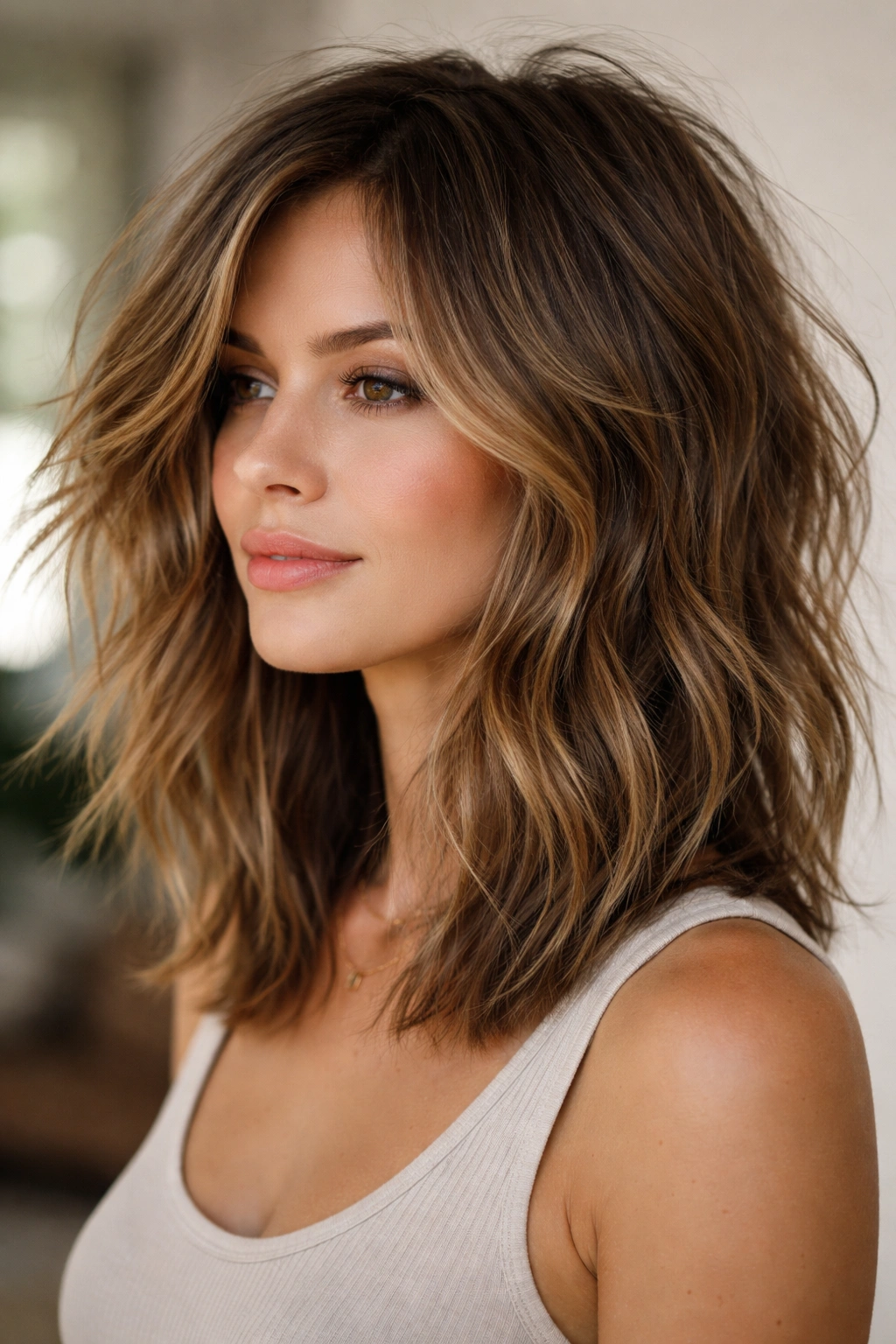
A lob (long bob) works at shoulder length or just below, and when it’s cut with choppy layers and texturized ends, you get a cut that’s long enough to feel versatile but short enough to maintain that effortless, piece-y texture throughout.
Why Length Plus Choppy Layers Creates Volume
The genius of this cut is that the length allows gravity to pull hair down slightly, which actually creates more noticeable movement in the choppy layers. When you have choppy layers on very short hair, they might look tight or overly textured. On a lob, those same choppy layers create soft, deliberate waves and dimension that read as fuller and more romantic. Your stylist will focus the choppiest layers around the face and mid-lengths, with slightly longer, less choppy ends that give weight and dimension.
Styling for Maximum Texture
- Blow-dry with a round brush, directing each section away from the face
- Once mostly dry, flip your head upside down and blow-dry the crown area for lift
- Separate and define choppy sections with your fingers while hair is still slightly warm
- Apply dry texturizing spray once fully dry to enhance dimension and lock in the tousled look
- For waves, wrap sections loosely around a barrel brush while blow-drying, or use a curling iron on low heat
Making It Work Every Day
- This cut tolerates air-drying better than very short cuts because the length keeps texture from looking too severe
- Even on non-blow-dry days, apply a texturizing spray to damp hair, shake it out with your fingers, and let it air-dry into soft, undone waves
- Refresh the cut every six to eight weeks to keep the choppy layers sharp and prevent the lob from looking like a shapeless, grown-out bob
Pro tip: If you’re between color appointments, the multiple texture and layers in a messy lob actually hide root regrowth beautifully—this cut buys you extra time between color services compared to sleeker styles.
5. Textured French Crop
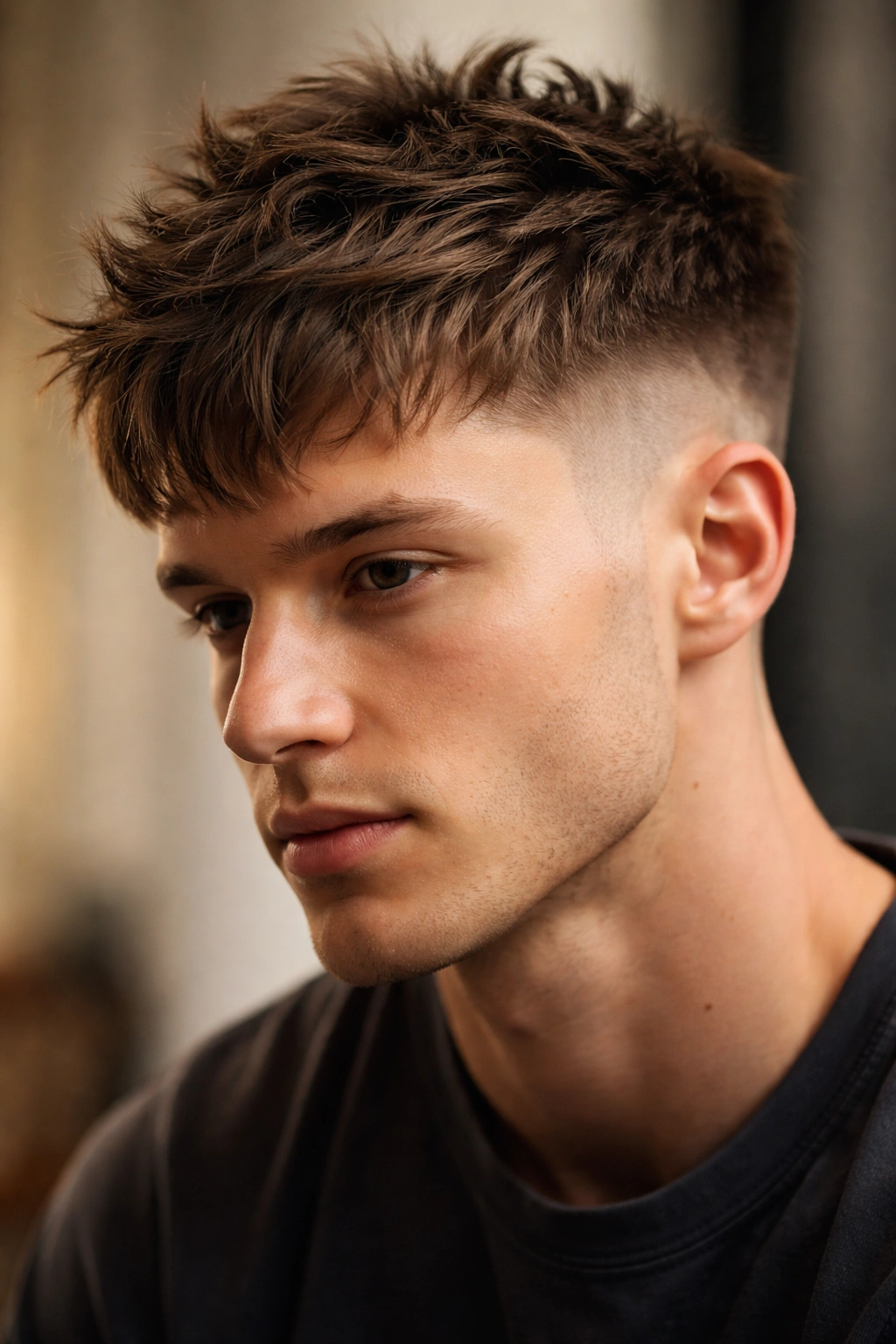
The French crop is a short, clean men’s-inspired cut that’s been adapted for anyone who wants short hair with serious texture and volume at the crown. Think of it as a pixie’s more polished cousin—still short and low-maintenance, but with a specific structure and piece-y texture.
The Defining Features
Your stylist cuts this crop short and clean on the sides, with gradual length increase toward the crown. Rather than a smooth, blended transition, they use a razor to create choppy, individual pieces on top that stand away from the scalp. The result is a cut that looks shaggy and textured on top but clean and intentional on the sides—not random or overgrown.
Styling a Textured Crop
- Blow-dry with your head upside down to direct the crown layers upward
- Once dry, spike the top pieces upward using matte pomade, wax, or texture clay
- The sides should stay relatively smooth—use a light touch with product here
- For a messier version, piece out individual sections on top using your fingers and a small amount of dry texturizing spray
- The contrast between neat sides and textured, piece-y crown is what makes this cut work
Maintenance and Upkeep
- This cut needs a trim every four to five weeks to maintain the textured crown definition
- As hair grows, the texture softens and you lose that sharp, intentional piece-y look
- Regular trims also keep the sides clean and prevent the entire cut from starting to look overgrown
Pro tip: This cut works best with naturally textured or wavy hair. If you have very straight hair, you’ll need to blow-dry and style every single day to get the textured, piece-y crown effect—if that sounds like too much work, a different cut might suit your lifestyle better.
6. Undone Bob With Face-Framing Layers
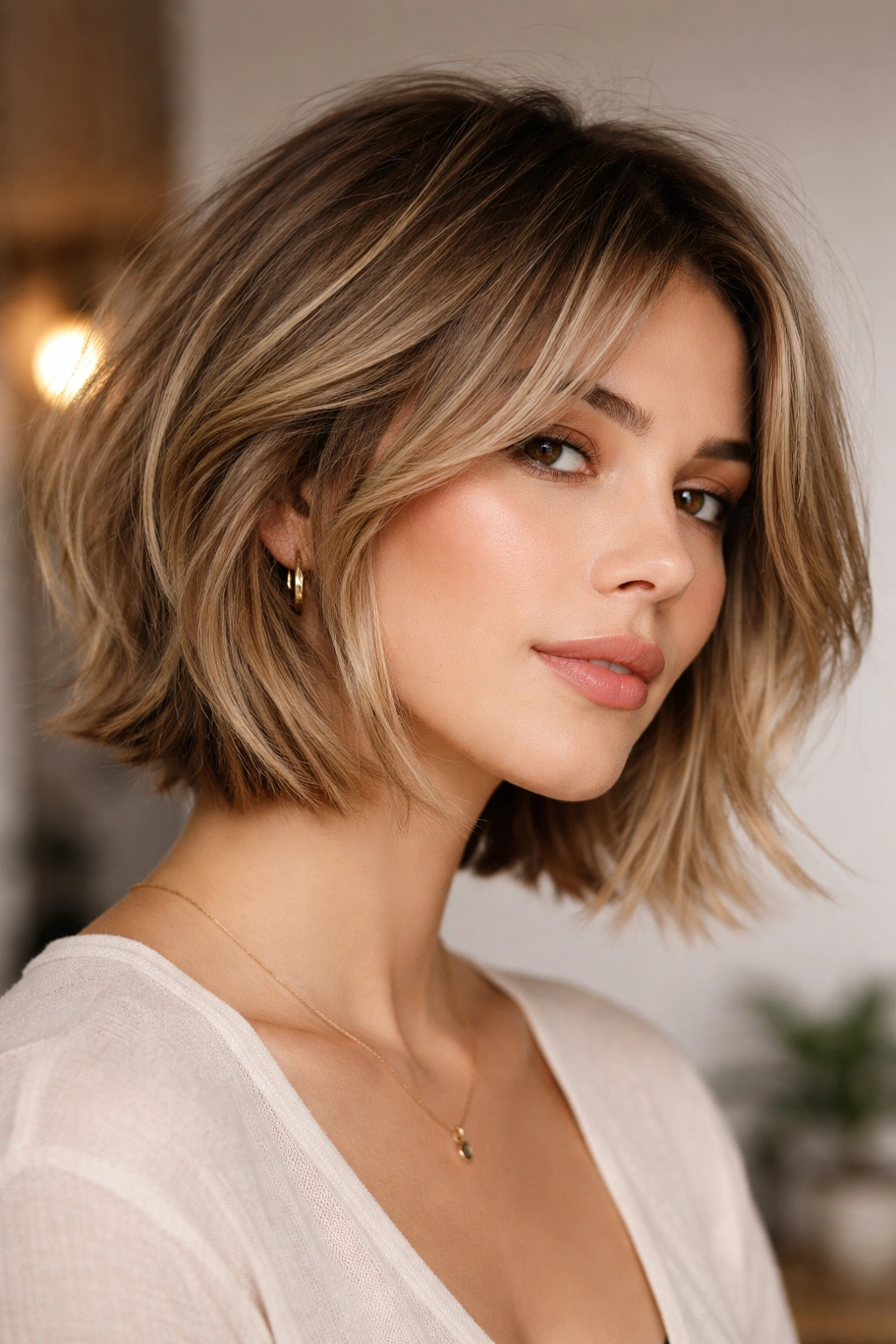
A chin-length bob with choppy, face-framing layers gives you classic bob structure while adding modern texture and movement. This cut feels current and intentional rather than dated or severe, because the choppy layers prevent it from looking like a blunt, solid line.
The Strategic Layer Placement
Your stylist cuts this bob to sit right at your chin or just slightly shorter, then adds choppy layers that are shortest around the face and gradually longer toward the back. These shorter, face-framing pieces create dimension and movement, while the longer layers in back provide weight and shape. The back stays slightly longer than the front, giving the cut a subtle, modern A-line structure.
Styling for Effortless Texture
- Blow-dry with a round brush, twisting the front pieces away from your face
- For a sleeker version, smooth the layers down with the brush while blow-drying
- For a messier version, scrunch the crown while blow-drying and rough-dry the ends with your hands
- Once dry, apply dry texturizing spray to separate and define the choppy layers
- The face-framing pieces can be tucked behind your ears, curled slightly outward, or left to fall forward—this cut is versatile enough for multiple styling options
Who Benefits Most From This Cut
- People with medium to thick hair who want texture without looking unkempt
- Face shapes that benefit from softness around the jawline (square or angular faces especially)
- Anyone ready for a cut that requires minimal daily styling but looks intentional and well-maintained
- Those who like the idea of a bob but want it to feel modern and edgy rather than traditional
Pro tip: Ask your stylist to texturize the ends with a razor rather than cutting a blunt line. Razor-texturized ends look softer, more intentional, and create the piece-y, undone quality that makes this cut feel effortlessly current.
7. Tousled Mullet With Modern Edge
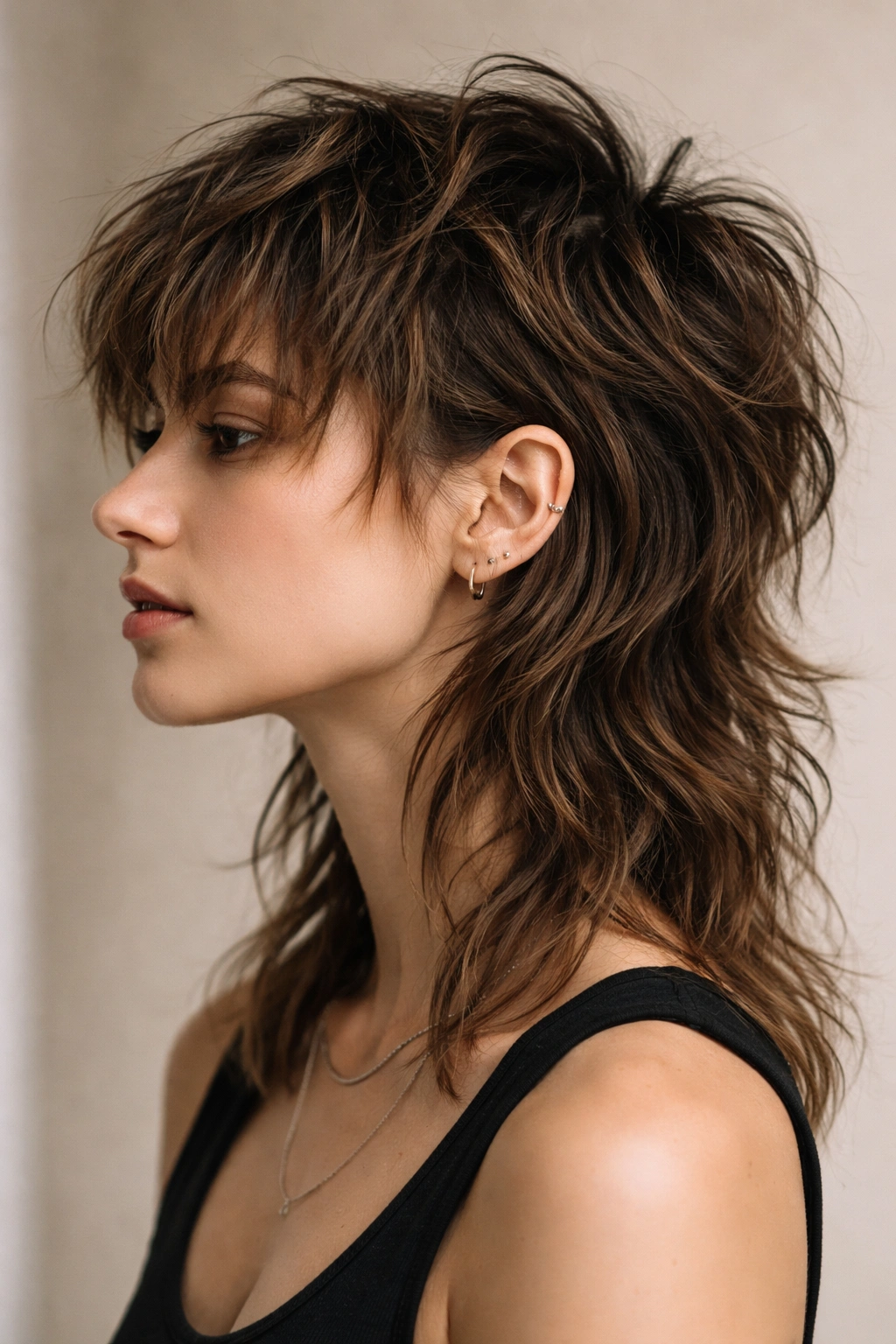
The modern mullet—”business in the front, party in the back”—is having a major moment, especially in textured, undone versions. The front is kept short and choppy for that contemporary edge, while the back features longer, textured layers that create movement and volume.
How the Textured Mullet Differs From 1980s Versions
Today’s textured mullet isn’t extreme or harsh. Your stylist will keep the front shorter and textured with choppy layers, while the back gradually lengthens with subtle, textured layers that create soft waves rather than a severe separation. The contrast is clear but not jarring—it reads as intentional and editorial rather than costume-y.
Styling Both Sides
- The front needs regular blow-drying or styling to maintain the piece-y, textured look
- Apply texturizing spray to damp roots and rough-dry with your hands for maximum texture
- The back can be styled more casually—blow-dry with your head upside down for lift, then scrunch with texturizing spray
- For waves in the back, use a curling iron on low heat, curling sections away from the face
- Once fully styled, separate pieces with your fingers and lock everything in with a light texture spray
Who Wears This Cut Best
- People confident enough to wear a bold, statement-making cut
- Those with naturally wavy or textured hair (straight hair requires daily styling commitment)
- Anyone who appreciates editorial, fashion-forward hairstyles
- People with longer face shapes who benefit from the width and texture the back creates
Pro tip: The textured mullet requires commitment to maintenance—you’ll need a trim every five to six weeks to keep the front textured and piece-y. If you’re not prepared for regular salon visits, this cut will quickly start looking overgrown rather than intentional.
8. Wispy Long Layers With Textured Ends
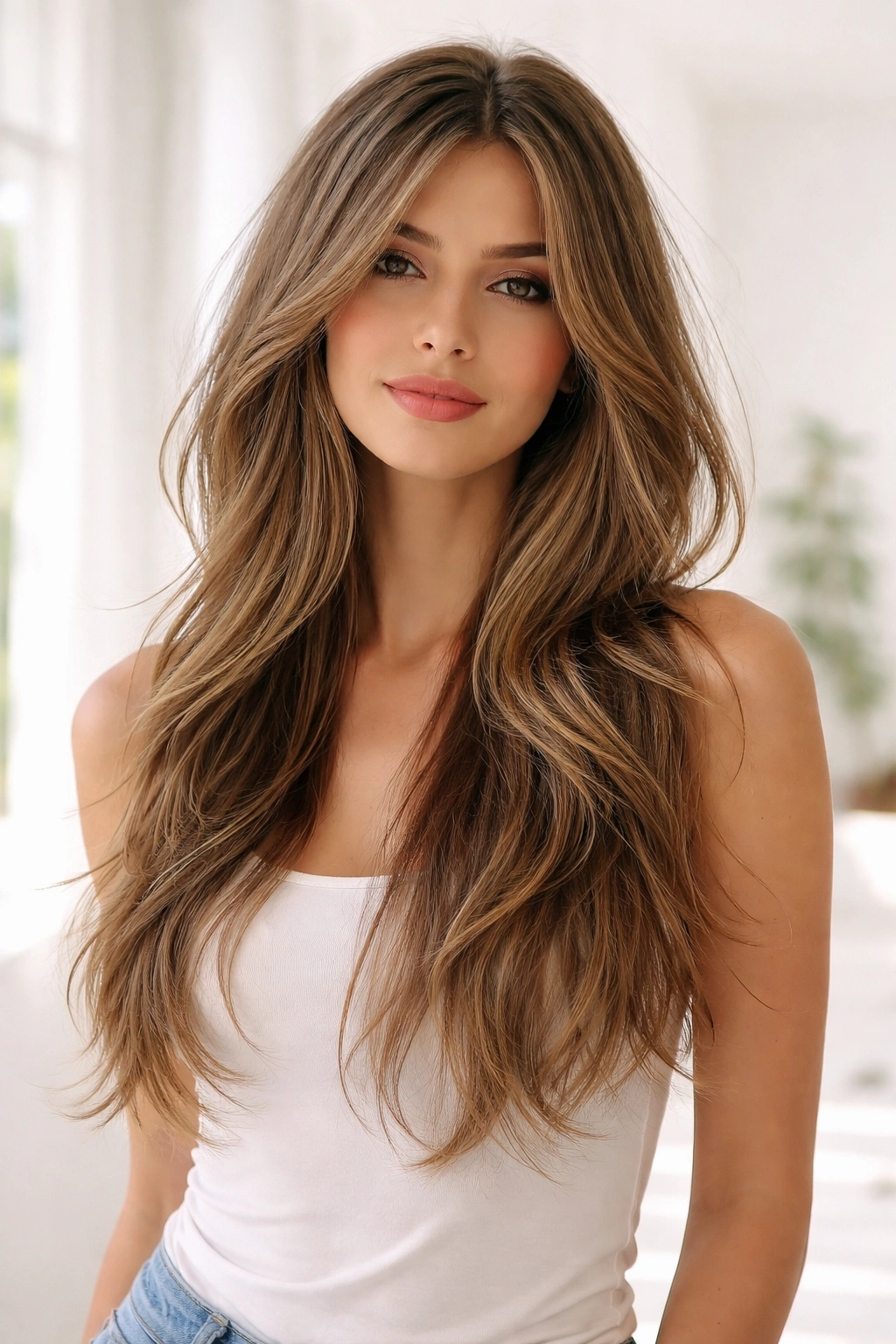
If you want length but don’t want to lose texture and volume, wispy long layers are your answer. This cut features layers throughout that range from the face-framing length to the longest ends, creating movement and dimension without removing significant length.
The Difference Between Wispy Layers and Choppy Layers
Wispy layers are softer and more subtle than choppy layers—your stylist uses a razor to create fine, delicate texture throughout rather than dramatic, obvious chunks. The result is a cut that looks softer and more romantic while still maintaining serious volume and movement. This works beautifully on people who want long hair but don’t want it to look flat or heavy.
Styling Long Layered Hair
- Blow-dry with a round brush section by section, curling each piece slightly as you dry
- Once completely dry, use a curling iron to add gentle waves throughout the length
- Don’t aim for tight, structured waves—the goal is soft, undone texture
- Apply dry texturizing spray to separate the layers and enhance the piece-y quality
- For air-dry texture, apply mousse to damp roots and sea salt spray throughout the lengths, then let hair dry naturally
Maintaining Long Layers
- Trim every eight to ten weeks to keep the wispy layers sharp and prevent the ends from looking scraggly
- Use a hydrating mask once weekly to keep long hair healthy and prevent frizz that can overwhelm the layers
- Dry shampoo applied at the roots extends the texture and adds grit to the overall look
Pro tip: This cut works beautifully with balayage or highlights—the layers and texture create natural-looking dimension, and the way light moves through wispy layers makes dimensional color absolutely glow.
9. Choppy Curtains With Central Part
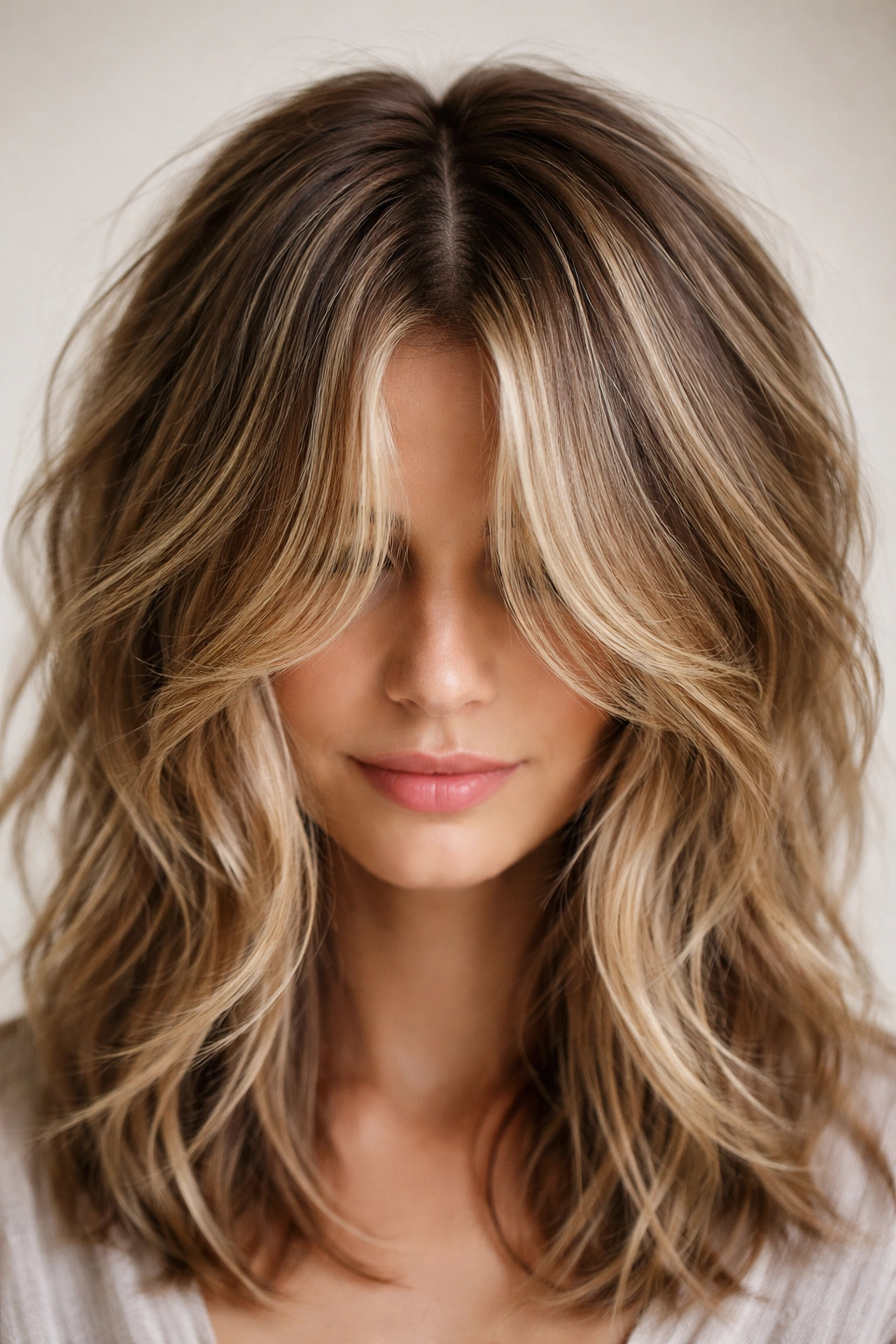
Curtains are a classic that never quite disappears, and when executed with choppy layers and a central part, they deliver serious volume and movement. This cut features shorter layers throughout the crown that peak away from the face on both sides, creating that iconic “curtain” effect with plenty of texture and dimension.
Why Choppy Curtains Create Volume
The choppy texture means that each individual layer has its own movement and direction—they’re not blending into a smooth, singular curtain but rather creating multiple pieces that catch light and create fullness. Your stylist will focus the shortest, choppiest layers around the face and crown, then gradually lengthen toward the back and bottom for shape and weight.
Styling for That Iconic Movement
- Blow-dry with your head flipped upside down to direct the crown layers upward
- Once mostly dry, flip your head back up and use a round brush to curl each side away from the center part
- The central pieces should fall naturally back and to each side—don’t force them; work with your hair’s natural growth pattern
- Use a curling iron on low heat to add gentle waves throughout, emphasizing the pieces closest to your face
- Dry texturizing spray locks in the texture and adds grip so the cut doesn’t fall flat as the day goes on
Face Shapes That Benefit
- A central-part curtain cut works beautifully on oval and longer face shapes
- Round faces can wear this cut with more volume at the crown and length at the sides to create more vertical dimension
- The choppy, textured quality softens any angular features, making this cut flattering for most face shapes
Pro tip: The central part in a choppy curtain creates a youthful, romantic vibe—this is one of the rare short-to-medium length cuts that photographs beautifully and reads as editorial without looking overly styled.
10. Textured Tapered Bob With Piece-y Texture
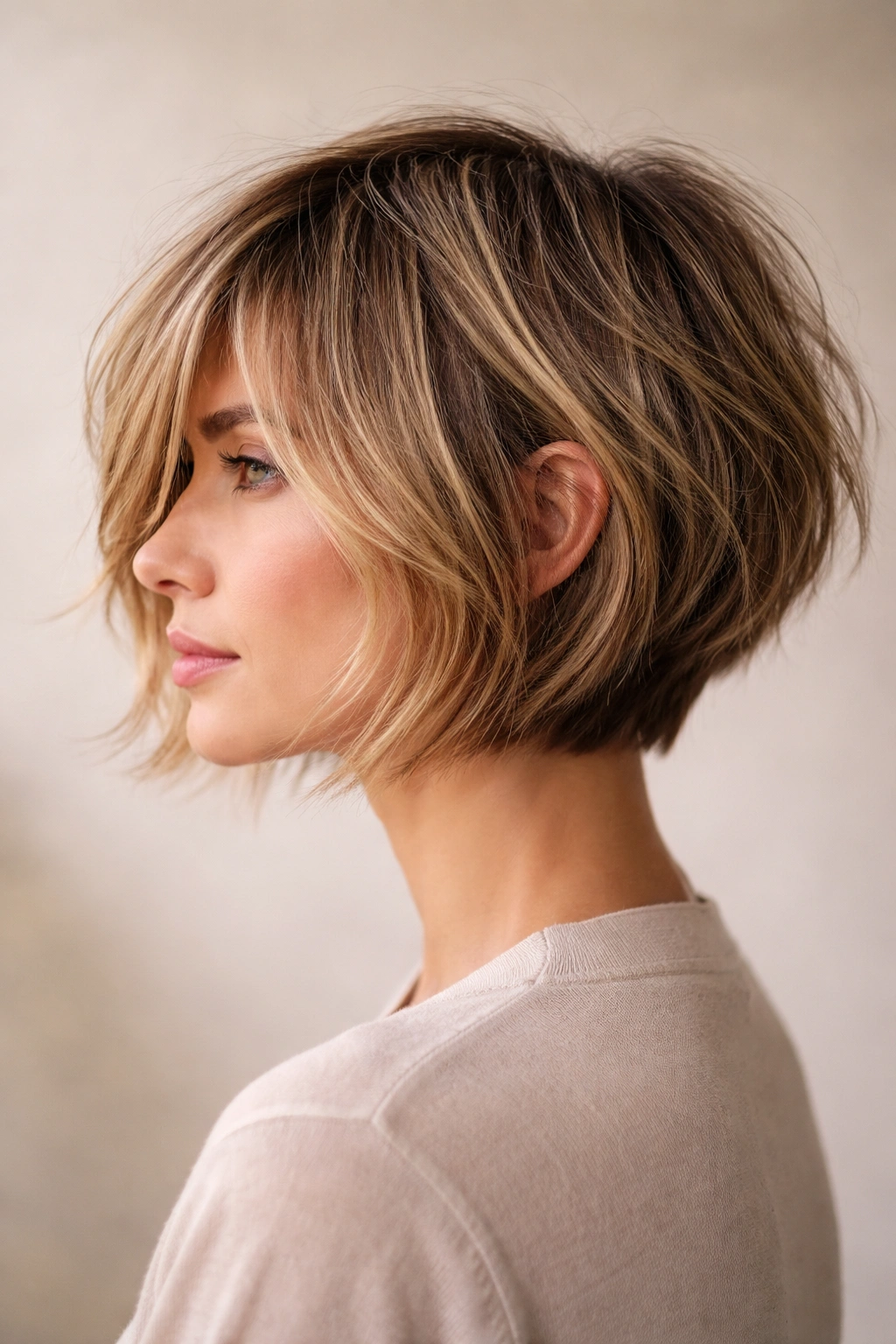
A tapered bob sits shorter in the back and gradually lengthens toward the front, creating a modern silhouette. When this cut is textured throughout with choppy, piece-y layers, you get a sophisticated, undone look that works for any setting—casual, professional, or evening.
The Structure and Taper
Your stylist cuts the back significantly shorter (often no more than an inch or two) and gradually lengthens toward the front, where the longest pieces might sit at chin length or below. Rather than a smooth, blended taper, the choppy layers create texture throughout, preventing the cut from looking too severe or austere. The piece-y texture gives this tapered structure a modern, relaxed quality.
Styling the Tapered Texture
- Blow-dry the back section by section with a round brush, directing each piece upward and outward
- The front pieces should be blown dry away from the face, curling slightly with the brush
- Once fully dry, use a flat iron on the lowest heat setting to smooth any remaining texture, or skip this step to keep the undone quality
- Apply dry texturizing spray to enhance the piece-y layers and add grip throughout
- For a sleeker version, blow-dry smooth and use a lightweight smoothing cream to seal the cuticle
Who This Works Best For
- People with medium to thick hair who want a sophisticated, modern cut
- Those comfortable with shorter lengths in the back but wanting some length in the front
- Anyone with an active lifestyle who wants a cut that maintains its shape without daily blow-drying
- People ready for regular trims every five to six weeks to keep the taper clean and the texture defined
Pro tip: The tapered bob is one of the easiest cuts to transition into if you’re not ready to go completely short. You get the drama and modernity of a short style while maintaining enough length in the front to experiment with different styling options.
Final Thoughts

Every single cut on this list works on the same core principle: texture and choppy layers create the illusion of volume, and that intentional texture means your hair looks effortlessly beautiful whether you spent thirty minutes styling or five. You’re not fighting against your hair’s natural movement—you’re working with it, using choppy layers to enhance and direct that movement.
The truth about “effortless” texture is that it does require some intentional styling when you first get the cut, at least until you figure out what works for your specific hair and lifestyle. Blow-drying with texturizing spray, using a curling iron strategically, or applying dry shampoo at the roots—these aren’t complicated techniques, but they do take a few minutes and some practice to feel natural.
What matters is that once you get the cut right, you’re not fighting against a style that works against your hair’s natural texture. You’re working with a cut that’s literally engineered to give you volume and movement. That’s the real difference between a high-maintenance style and one that feels effortless—it’s in the cut itself, not in daily styling heroics.
