



If you’ve spent years fighting your natural waves instead of working with them, you’re about to discover why that’s been your biggest styling mistake. Wavy hair has a rhythm and texture all its own—it’s not straight, it’s not curly, it lives in its own beautifully complex zone—and trying to force it into cuts designed for poker-straight or spiraling ringlets only creates frustration. The secret that changes everything? The right haircut doesn’t just accommodate your waves; it actually enhances them, making your hair look fuller, shinier, and more intentional without requiring an hour of styling every morning.
The problem most people face is that standard haircuts ignore texture entirely. A blunt bob that would be chic on straight hair becomes a frizzy, shapeless mess when you have waves. Layers that would give dimension to curly hair might actually make your waves fall flat. But when you find a cut that’s designed to work with your natural texture—one that understands how waves move, where they’ll separate, and how they’ll frame your face—everything shifts. Your styling time drops dramatically, your hair looks thicker and more voluminous naturally, and you can actually wake up and feel confident in your waves instead of immediately reaching for the straightener.
The key is understanding that your waves aren’t a problem to solve; they’re a feature to celebrate. The cuts in this guide are specifically chosen because they thrive on wavy texture, they minimize frizz and damage from heat styling, and they look intentional whether you’re styling them smooth or letting those beautiful undulations shine. Each one works with the natural movement of your hair rather than against it, which means less manipulation, less heat, and more confidence in what you’ve got.
1. Shoulder-Length Shag
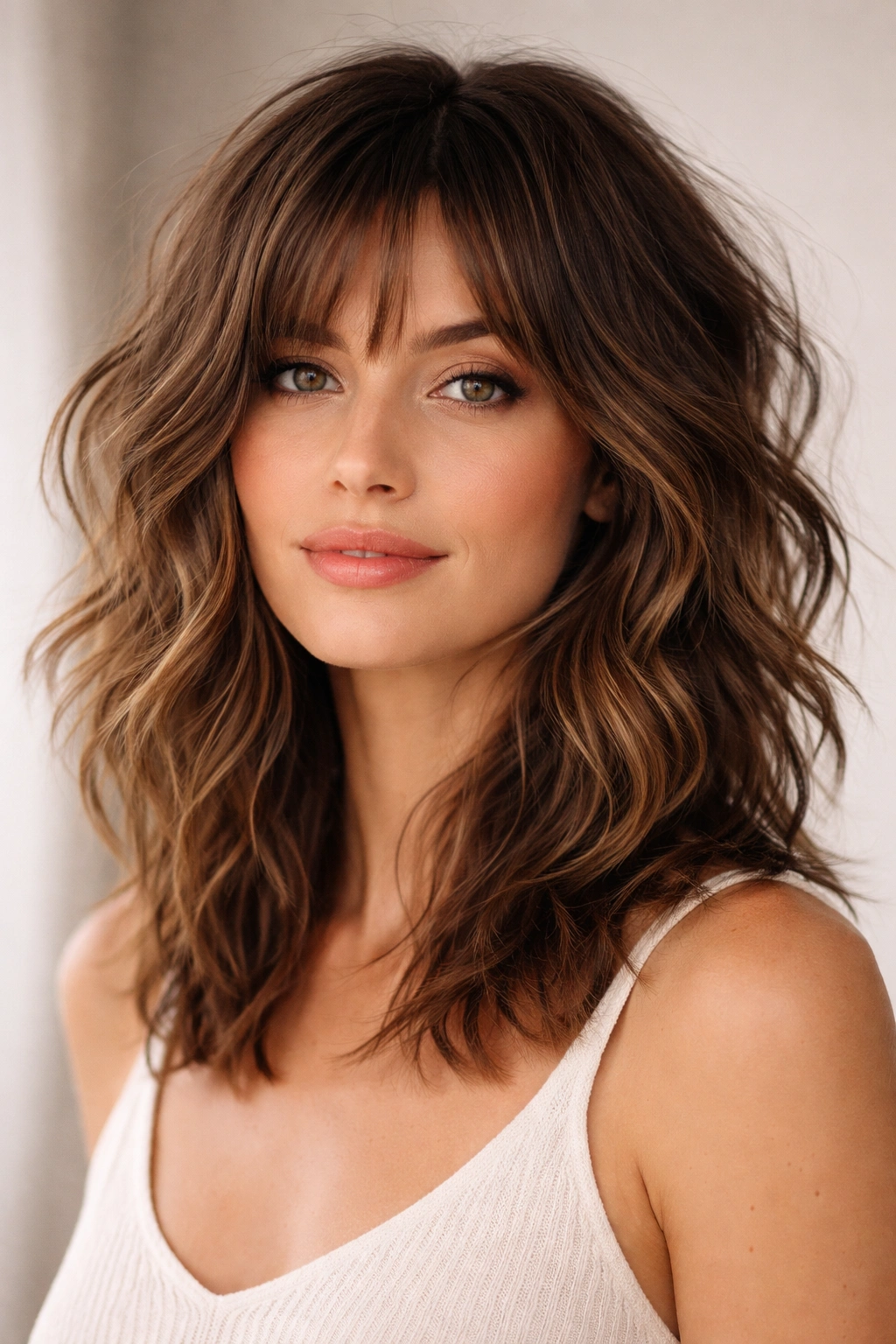
A shag isn’t just for the ’70s anymore—it’s the ultimate wavy hair hero because those choppy, separated layers actually celebrate the texture instead of fighting it. Think of it as the opposite of a heavy cut; the disconnected layers mean your waves won’t weigh each other down into a lifeless blob. Instead, each layer can move independently, creating that piecey, deliberately undone texture that looks effortless and modern.
Why This Cut Transforms Wavy Hair
The shag works because waves naturally want to separate and create dimension, and a shag cut gives them permission to do exactly that. Those shorter, choppy layers throughout create movement at every level rather than relying on one long line of hair that might fall flat. You get texture without curl commitment—it’s not asking you to define individual ringlets, just to let your waves do their thing across a shorter canvas.
What to Tell Your Stylist
- Ask for choppy, disconnected layers throughout (not feathered layers that blend too smoothly)
- Shorter layers on top for volume and movement, longer underneath for shape
- Longer face-framing pieces that land around the cheekbones or slightly shorter
- A tousled, textured end rather than blunt cuts that emphasize frizz
- Consider asking for texture shears or point-cutting to enhance the separated, piecey feel
Pro tip: This cut actually looks better the more lived-in it is—a couple weeks of growth and everyday wear makes it look more intentional and cool, not overgrown.
2. Long Layers With Lots of Movement
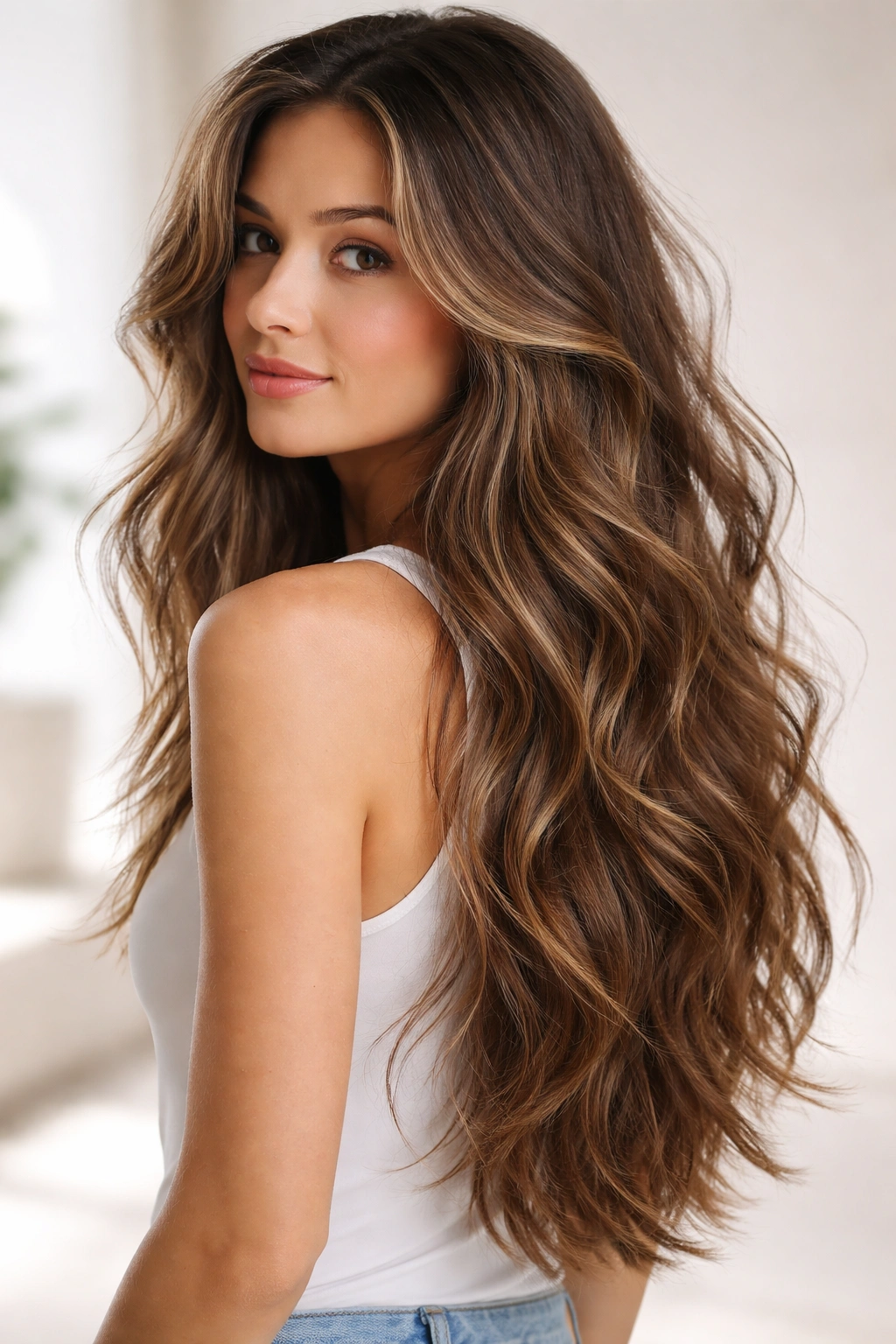
If you’re not ready to commit to shoulder-length, long layers are the compromise that actually delivers results. The key difference between layers that work and layers that don’t comes down to spacing and angle—you need enough layers that your waves have room to move at multiple levels, starting closer to the crown where it matters most for volume.
How Long Layers Actually Create Volume
Waves naturally compress under their own weight when the hair is all one length or has just minimal layering. Long layers—starting around mid-back or tailbone—give those waves a chance to express themselves without losing the length you want. The layers create pockets of air and movement, so even on your flattest hair days, you’ve got texture and shape instead of a thick, heavy cord of hair.
Key Styling Details
- Layers should start noticeably earlier than you might think—closer to shoulder-length rather than just the very ends
- The gap between layers matters; too many thin layers blend together, but the right spacing creates distinct movement
- Longer face-framing layers that you can wear back, forward, or side-swept depending on your mood
- Point-cut or texturized ends rather than blunt to minimize frizz and maximize that piece-y, intentional look
- Ask your stylist to cut while your hair is wet and wavy, not blown out straight—this is crucial for accuracy
Worth knowing: You’ll need trims every 6-8 weeks to keep the layers from becoming too subtle as hair grows. This cut requires more maintenance than you might initially think.
3. Modern Textured Bob
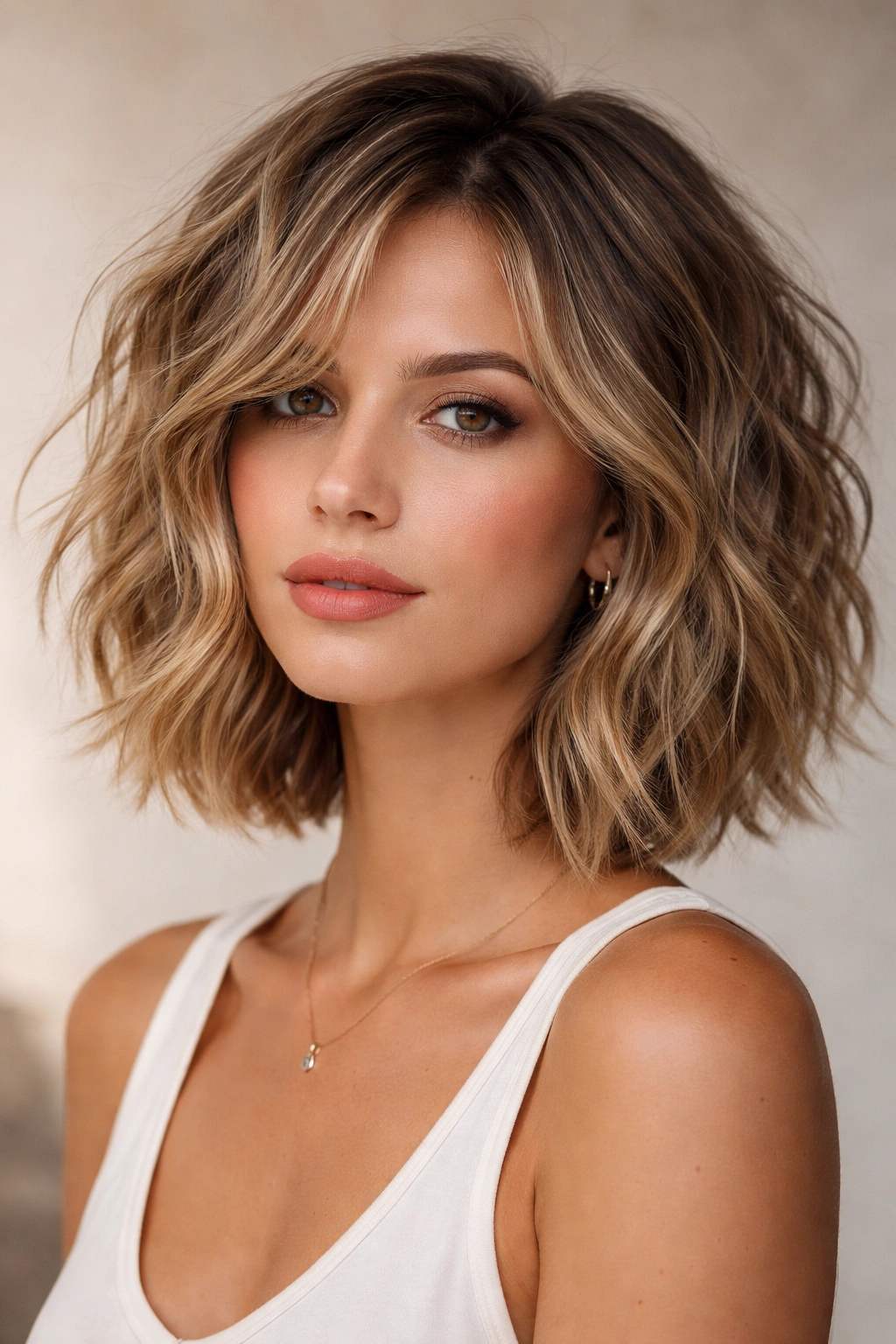
The bob is having a moment, and the reason it’s become a wavy-hair darling is because texture is now built in rather than fighting against it. A modern textured bob embraces the irregular, piecey quality of your waves instead of chasing that perfect, blunt line that never quite works on natural texture anyway.
Why Bobs Work Better Than You’d Think
A traditional, straight-across bob is a nightmare for waves—the weight and bluntness actually emphasize any unevenness in how your hair naturally falls. But a textured bob with choppy layers and intentional point-cutting? It takes those same waves that made a blunt bob look messy and transforms them into intentional texture. Your waves become the design rather than a flaw in the cut.
How to Get the Look Right
- Aim for collarbone length or slightly shorter (shorter bobs show off texture better)
- Heavily textured layers throughout, especially around the face and crown
- Shorter, choppy pieces at the nape rather than one blunt line
- Plenty of movement and disconnection between layers so it reads as textured, not fluffy
- Consider a slightly longer front if you want face-framing pieces that can move freely
Insider note: This cut photographs beautifully on slightly tousled waves, which means it looks amazing in real life but might look undone in very polished formal settings—great if that’s your vibe, something to know if you need maximum polish.
4. Midi Length With Strategic Underlayers
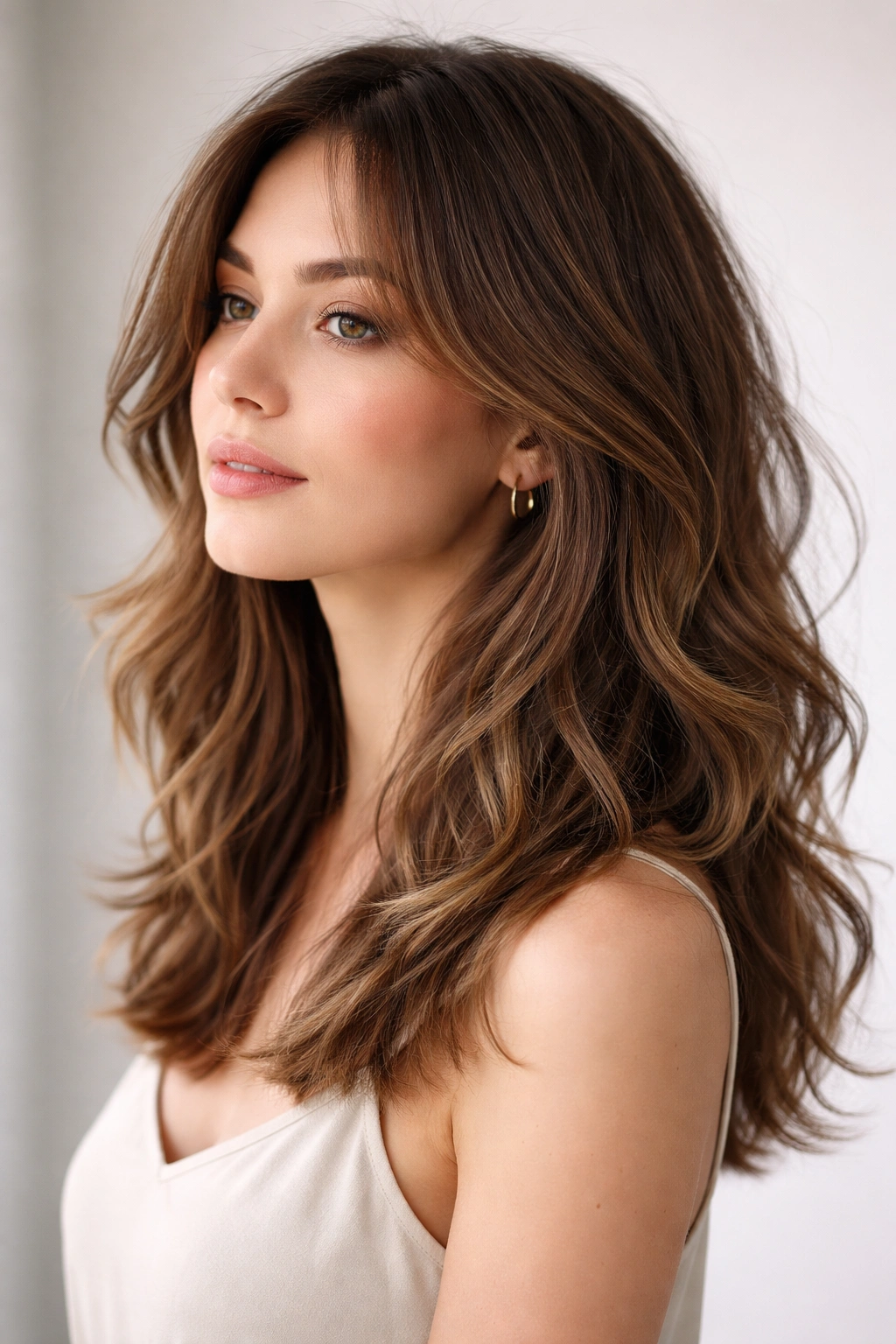
The midi length—hitting somewhere between your collarbone and mid-back—is having a major moment because it’s the perfect compromise between versatility and manageability. For wavy hair specifically, the magic comes from strategic underlayers that create movement without making everything look thin or see-through.
The Underlayer Technique for Wavy Hair
Underlayers are shorter pieces hidden underneath the top layer, creating dimension and movement that only shows when your hair moves. For waves, this is genius because you get that separation and texture without exposing shorter hair everywhere or making it look intentionally choppy. It’s sophisticated movement rather than obvious layering.
Styling Strategy for This Length
- Top layer hits your desired length (collarbone, mid-back, whatever feels right)
- Underneath layers are 2-4 inches shorter, creating pockets of movement throughout
- Face-framing pieces that work independently so they can move with your waves
- Enough density in the underlayers to create shape, but not so much that it looks thin or wispy
- Point-cutting or texturizing the ends to enhance that wavy, piece-y feel
Real talk: You’ll want to embrace some tousled styling with this cut to really see what the layers are doing. On a completely smooth blow-out, the magic isn’t quite as visible, but your natural waves? Perfect.
5. Choppy, Disconnected Pixie or Short Bob
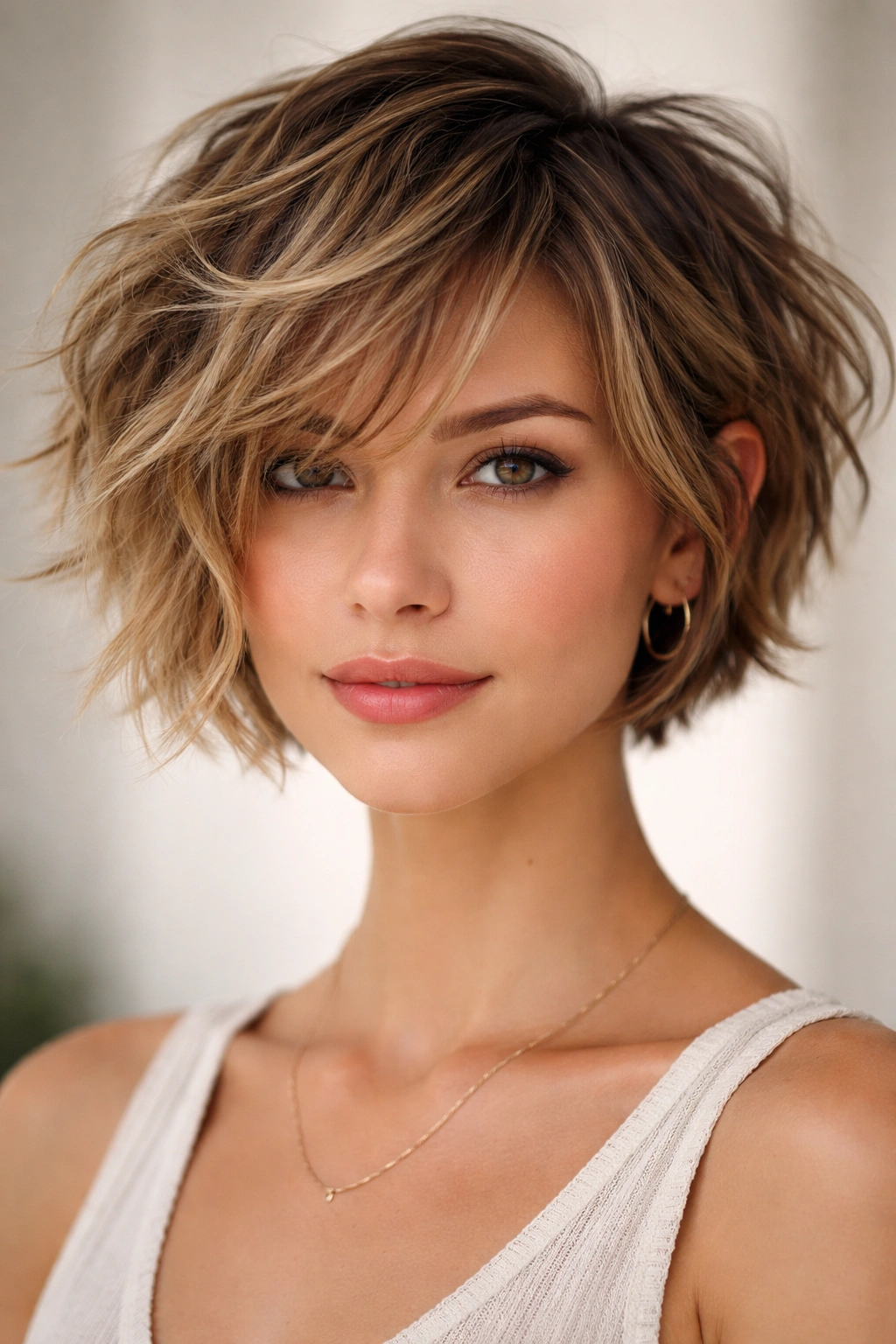
If you’ve been thinking about going short, wavy hair is actually more forgiving for this than you might expect. The key is choppy disconnection rather than sleek precision—short hair on waves creates immediate texture and movement instead of looking manicured or severe.
Why Short Works With Your Texture
Short haircuts usually demand perfect blowouts and styling precision to look intentional rather than messy. But wavy hair gives you texture automatically, which means a choppy pixie or short textured bob can look intentionally cool without any effort. Your waves do the heavy lifting that styling would usually require.
Making Short Hair Work Long-Term
- Go for length on top (at least 2-3 inches) where your waves can create movement and volume
- Shorter, choppy sides and back rather than a neat, blended fade
- Ask for point-cut or texturized ends throughout, no blunt lines
- Longer pieces in front that can grow out and change your styling options as they get longer
- A cut that looks good grown out a few weeks, not one that demands fresh trims constantly
Pro tip: This is the only cut on this list where going to a stylist who specializes in short hair is non-negotiable. Precision matters here, and it’s worth finding someone experienced with short, textured cuts specifically.
6. The Wolf Cut (Shag + Mullet Energy)
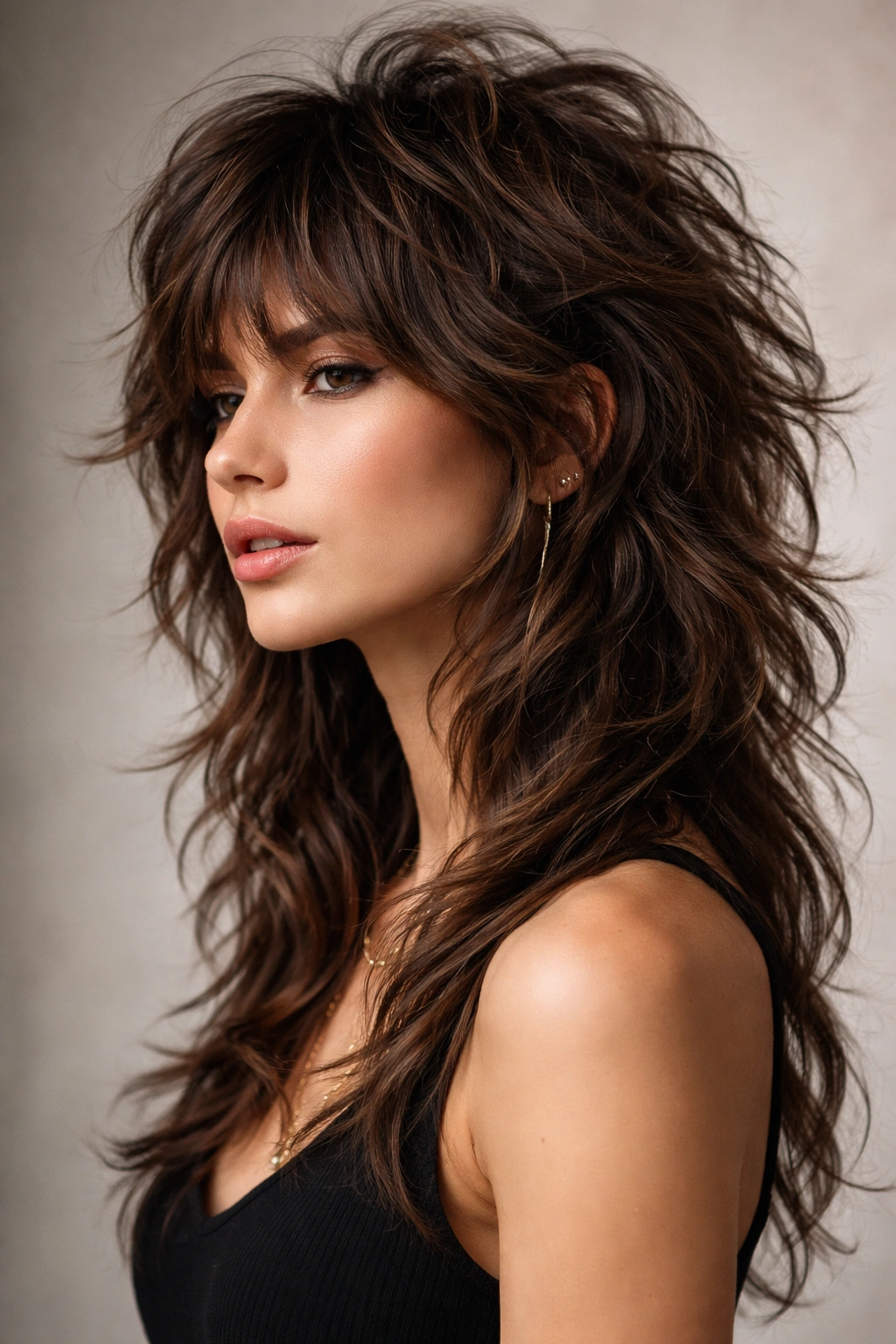
The wolf cut is basically what happens when a shag and a mullet have a cool, modern baby—and it’s surprisingly perfect for waves. You get the separated, choppy layers on top that create volume and movement, combined with length underneath that you can play with and style different ways depending on your mood.
How Waves Elevate a Wolf Cut
A wolf cut could look gimmicky on straight hair, but on waves it just looks textured and cool. The short, choppy layers on top blend seamlessly with the longer length underneath because of your natural texture—there’s no harsh line, just a gradual transition of movement. It’s editorial, it’s fun, and it actually works.
Styling Flexibility
- Lots of choppy texture on top for volume and movement
- Longer length underneath (shoulder-length to mid-back) for versatility
- Face-framing pieces that can move independently and create shape
- Point-cut throughout so layers feel deliberately textured, not haphazard
- Shorter, choppy nape area rather than one solid line
Worth knowing: This cut is very trendy, which is fine if you love trends and want to stay current. If you prefer timeless cuts, this might feel dated in 5 years. It’s a fun fashion statement rather than a forever cut.
7. Waist-Length Layers With a Drapey Shape
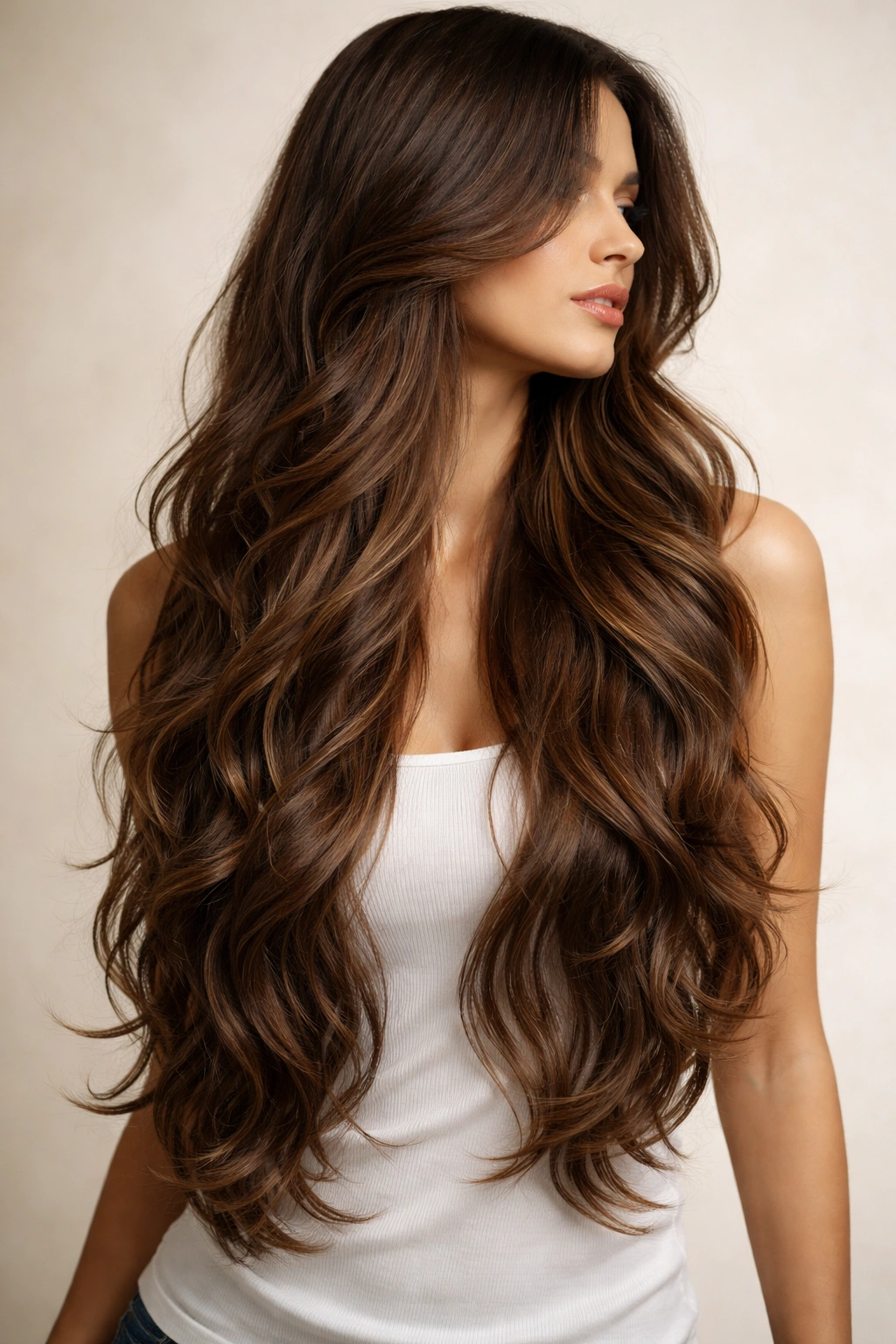
Long hair doesn’t have to mean heavy and lifeless—if you love the length, strategic layers can give you movement and dimension while keeping everything connected and shapely. The key is layers that are spaced generously enough to create flow rather than choppiness.
How to Layer Long Hair for Wavy Texture
Long layers work best on waves when they’re genuinely long—we’re talking 3-4 inches between layers sometimes, rather than dense, frequent layering. This keeps the overall shape connected and drapey while still giving your waves room to move and create dimension. You’re not going for choppy; you’re going for flowing movement.
Styling and Maintenance
- Layers start higher up (around bra-strap or mid-back) so your waves have room to move at every level
- Longer face-framing pieces that can swing forward or be swept back
- Point-cutting or texturing at the ends to minimize weight and frizz
- A shape that looks intentional whether your hair is fully smooth or wearing its natural waves
- Trims every 8-10 weeks to keep the shape from becoming too subtle
Real talk: Long hair requires commitment. You’ll want a good silk pillowcase, regular deep conditioning, and realistic expectations about how much time washing and detangling takes. But if you love long hair, a good layered cut makes it way more manageable than one-length would be.
8. Collarbone-Length With Face-Framing Pieces
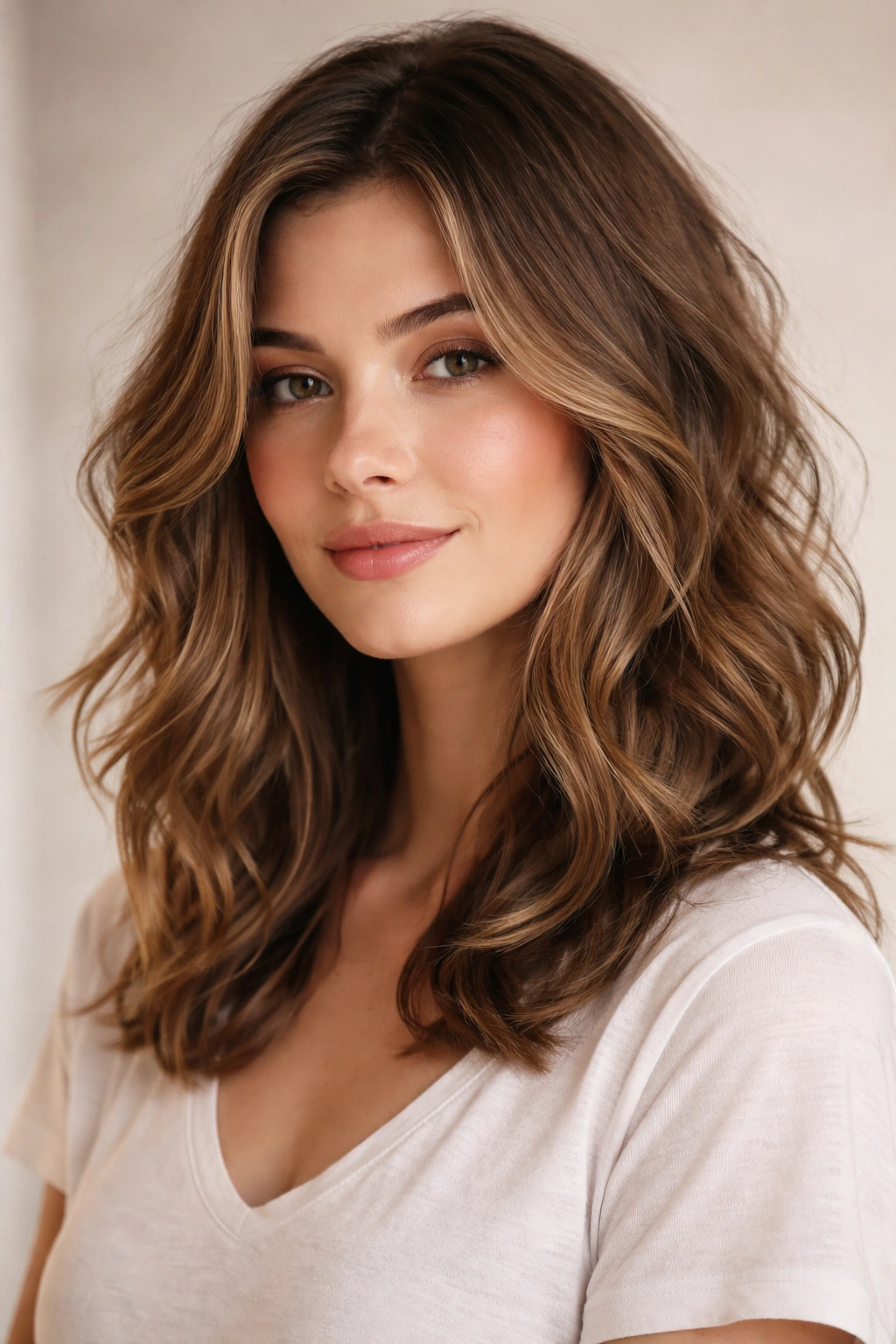
This is the Goldilocks length for most people—not too short, not too long, and the perfect canvas for face-framing that actually works with waves instead of against them. At collarbone length, your waves will naturally create soft movement and shape around your face without requiring a ton of styling.
Why This Length Maximizes Natural Wave Texture
Collarbone hits right where most waves naturally want to move and curve. This length means your waves aren’t fighting gravity with too much weight, but you’ve still got enough length that the cut feels feminine and intentional rather than choppy or severe. It’s the length where waves genuinely shine.
Face-Framing Details That Matter
- Longer face-framing pieces (cheekbone-length or slightly longer) that can move freely
- Layers throughout that start at the crown and extend to the ends
- Shortest pieces around the face (creating that frame), longest in the back for shape
- Texturized ends so pieces feel piece-y rather than blunt and heavy
- Ask your stylist to cut with your hair dry or damp and wavy, not blown straight
Pro tip: If you have a prominent jawline or rounder face, ask for longer face-framing pieces that extend past your jaw—this creates the most flattering silhouette for most face shapes.
9. Blunt Bangs With Layered Length
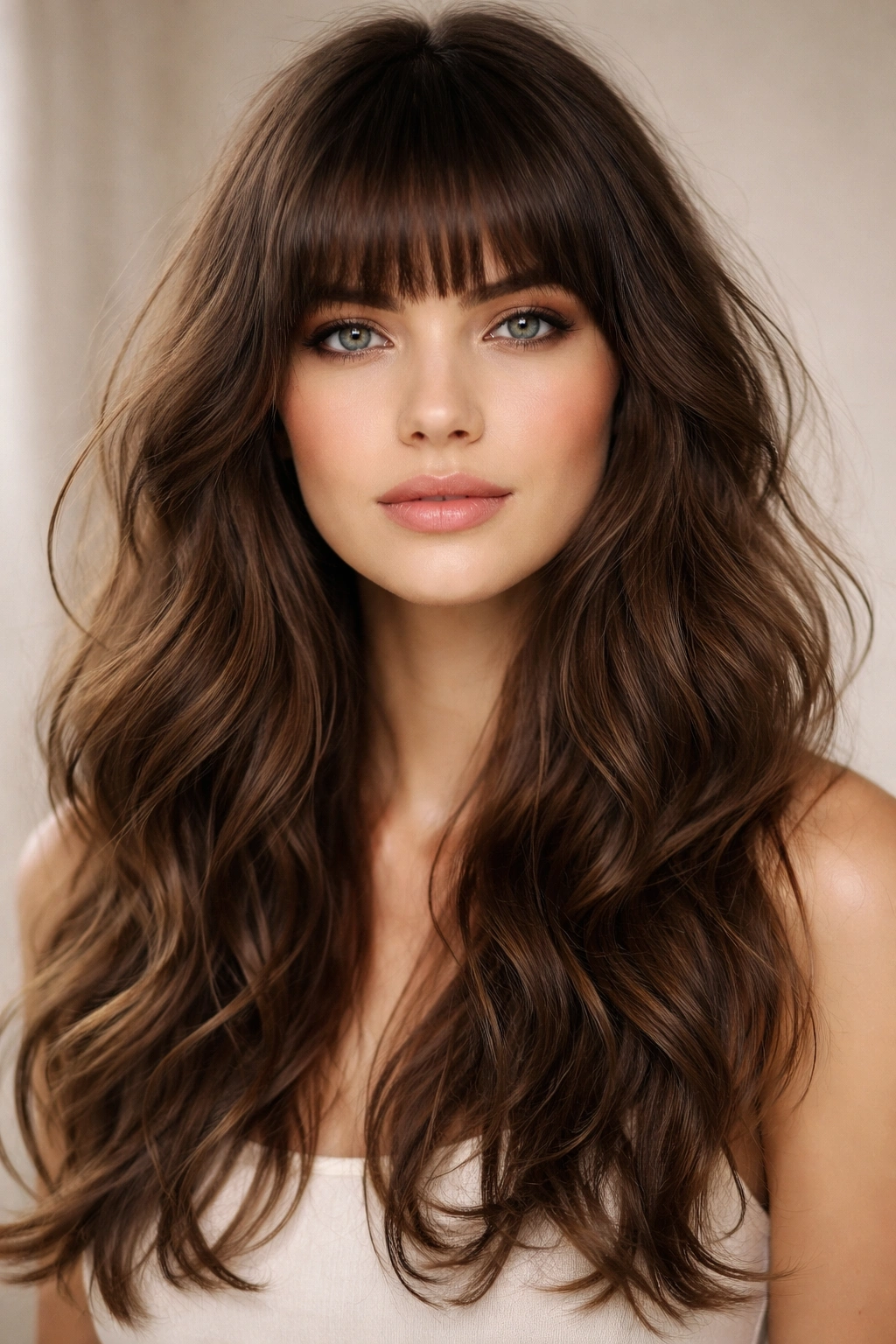
Bangs are a bold choice, but blunt bangs against layered, wavy length create a fun contrast that’s surprisingly wearable. The key is making sure the rest of your hair is textured and moved enough that the bluntness of the bangs feels intentional rather than severe.
Making Bangs Work With Waves
Blunt, straight bangs against soft, wavy hair creates visual interest and texture play. It’s not trying to make your hair all straight or all wavy; it’s combining both for something more interesting. The bangs need to actually be blunt to create that contrast—wispy, feathered bangs would get lost against your waves and just look messy.
Practical Bangs Considerations
- Bangs should hit right around your eyebrows or slightly shorter for the most flattering look
- Rest of your hair should have enough layers and texture to balance the bluntness of the bangs
- You’ll need to trim bangs every 3-4 weeks as they grow out (this is non-negotiable)
- Bangs work best if you’re willing to do a quick style routine; they’re not wash-and-go friendly
- Consider how your waves might curl or change the bang line—blunt bangs on waves that flip up will hit different than you expect
Worth knowing: Bangs are a commitment and a style choice. They change your whole face and require regular maintenance. Make sure you genuinely love the idea before committing.
10. Asymmetrical Layers for Movement and Edge
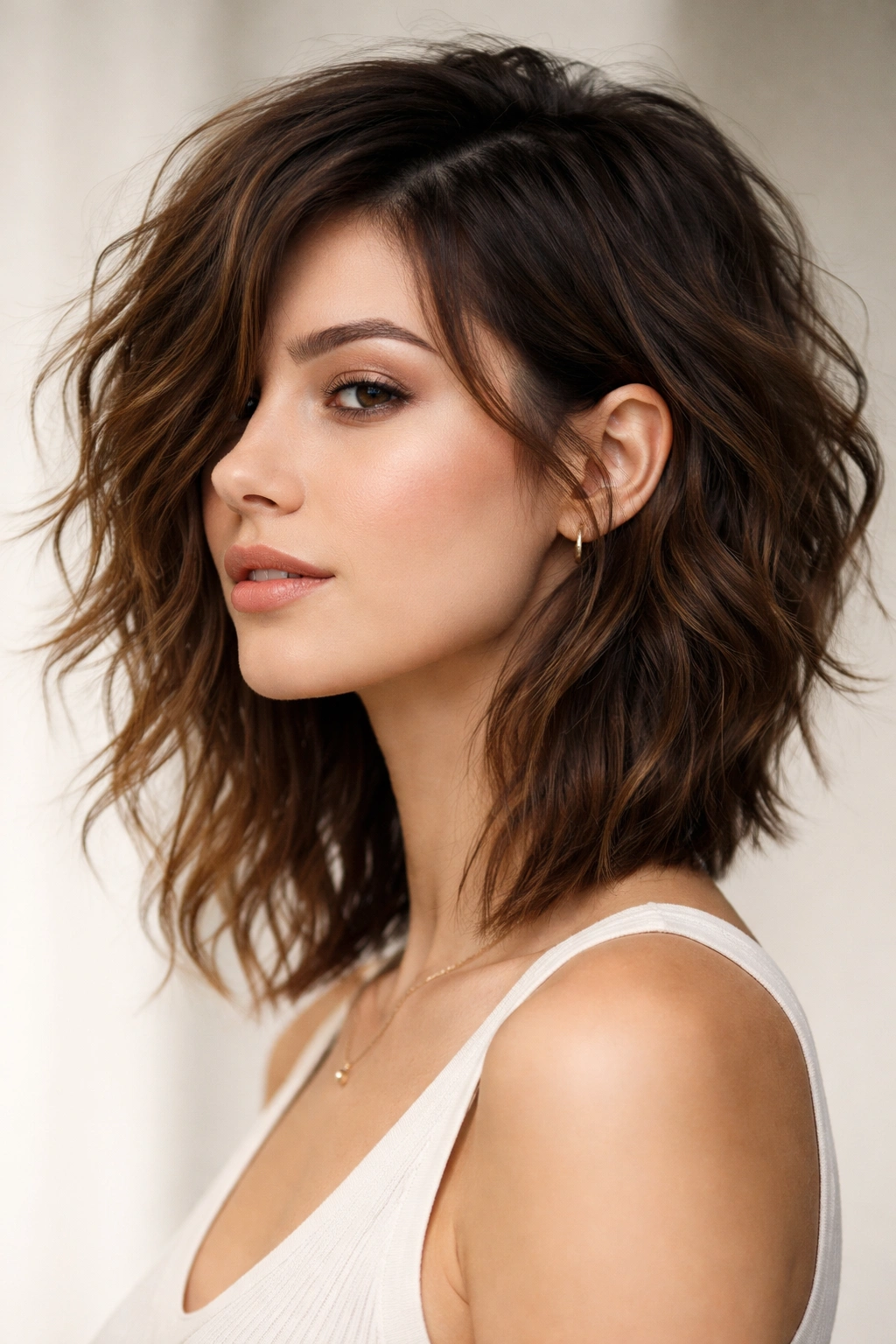
An asymmetrical cut—where one side is noticeably shorter than the other—sounds extreme, but on waves it actually creates really cool movement. The asymmetry makes your wave pattern visible and interesting rather than just creating general texture, and it’s a way to look current and intentional without going full edgy pixie.
How Asymmetry Creates Movement
When you have one short side and longer length on the other, your waves naturally fall and move differently on each side. This creates visual interest and movement that reads as intentional and cool, not choppy or messy. It’s especially striking on wavy hair because the texture makes the asymmetry look like a style choice rather than a mistake.
Getting the Asymmetry Right
- Significant enough difference to create real visual impact (at least 2-3 inches of difference)
- Both sides should still have layers so neither side looks flat or heavy
- Point-cutting or texturing throughout so it reads as intentional texture, not just different lengths
- Works best with longer hair on the longer side (collarbone or longer) so the asymmetry is dramatic
- Face-framing pieces on both sides that can move and create shape
Insider note: This cut is very trend-forward and fashion-focused. If you’re someone who likes to follow trends and aren’t bothered by a cut looking dated in a few years, go for it. If you prefer timeless, maybe skip this one.
11. Textured Medium Length With Angled Layers
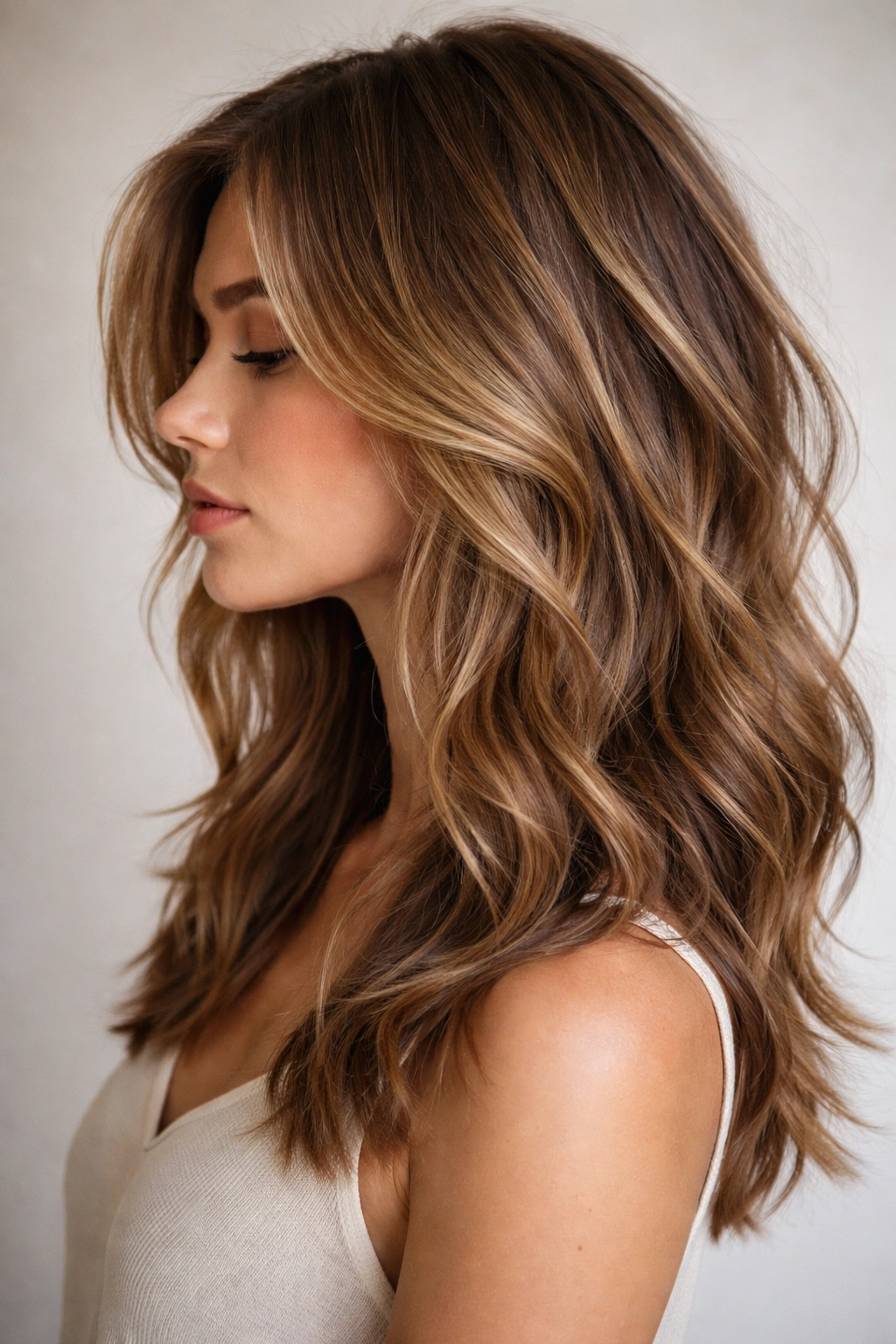
Medium-length hair with angled layers is a sweet spot—it’s long enough that you get real length and styling flexibility, but short enough that you don’t have the maintenance burden of very long hair. Angled layers create movement and flow while still reading as one cohesive shape.
The Angle That Makes Waves Work
When layers are cut at an angle (longer in back, shorter in front) rather than blunt across, they create a natural flow that works beautifully with waves. The angle guides your natural wave pattern rather than fighting it, so your hair actually looks more intentional and styled with minimal effort. It’s one of the most flattering structures for naturally wavy hair.
Creating the Perfect Angle
- Back should be longer (mid-back or collarbone, depending on your preference)
- Front should be noticeably shorter (cheekbones or jaw-length) to create that angle
- Layers throughout that follow the same angled pattern, not blunt across
- Point-cutting or texturing to enhance the movement and piece-y feel
- Face-framing pieces that work with your waves to create soft, flattering movement
Real talk: This cut is incredibly flattering for most face shapes and hair types, which is partly why it’s been a perennial favorite. There’s a reason certain cuts stick around—they just work.
12. The Mullet (Unexpected Wavy Hair Magic)
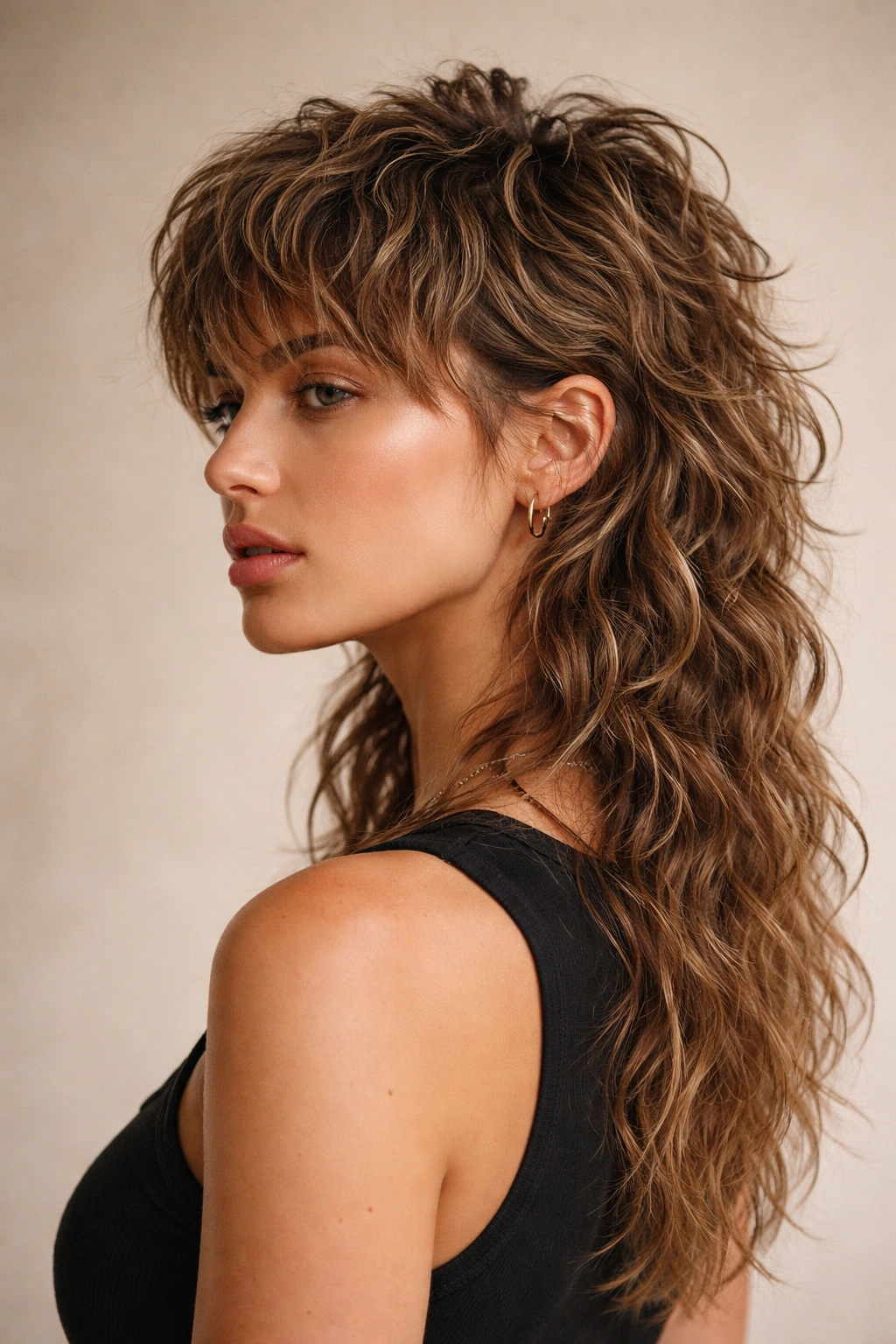
A modern mullet on waves? Actually stunning. Not the ’80s version, but the current interpretation—shorter, choppy layers on top with longer length in back—creates a cool contrast that wavy hair handles beautifully. The texture makes it look intentional and editorial rather than costume-y.
Why Waves Make a Mullet Work
A mullet on straight hair requires serious styling and commitment to look cool rather than dated. But on waves, the texture automatically makes it look intentional and interesting. Your waves create the movement and attitude that makes the style work, rather than relying entirely on styling products and technique.
Styling a Modern Mullet
- Choppy, textured layers on top (similar to a shag) for volume and movement
- Longer length in back (shoulder to mid-back) that you can wear down or style up
- Clear separation between the short and long, not a gradual fade
- Point-cut throughout so it feels textured and cool, not severe or blunt
- Shorter, choppy nape area rather than one solid line
Pro tip: This cut is bold and trend-forward. It’s a statement piece that says you’re interested in fashion and not afraid to take risks. Make sure that’s actually your vibe before committing.
13. Shoulder-Length With Minimal Layers (Strategic Simplicity)
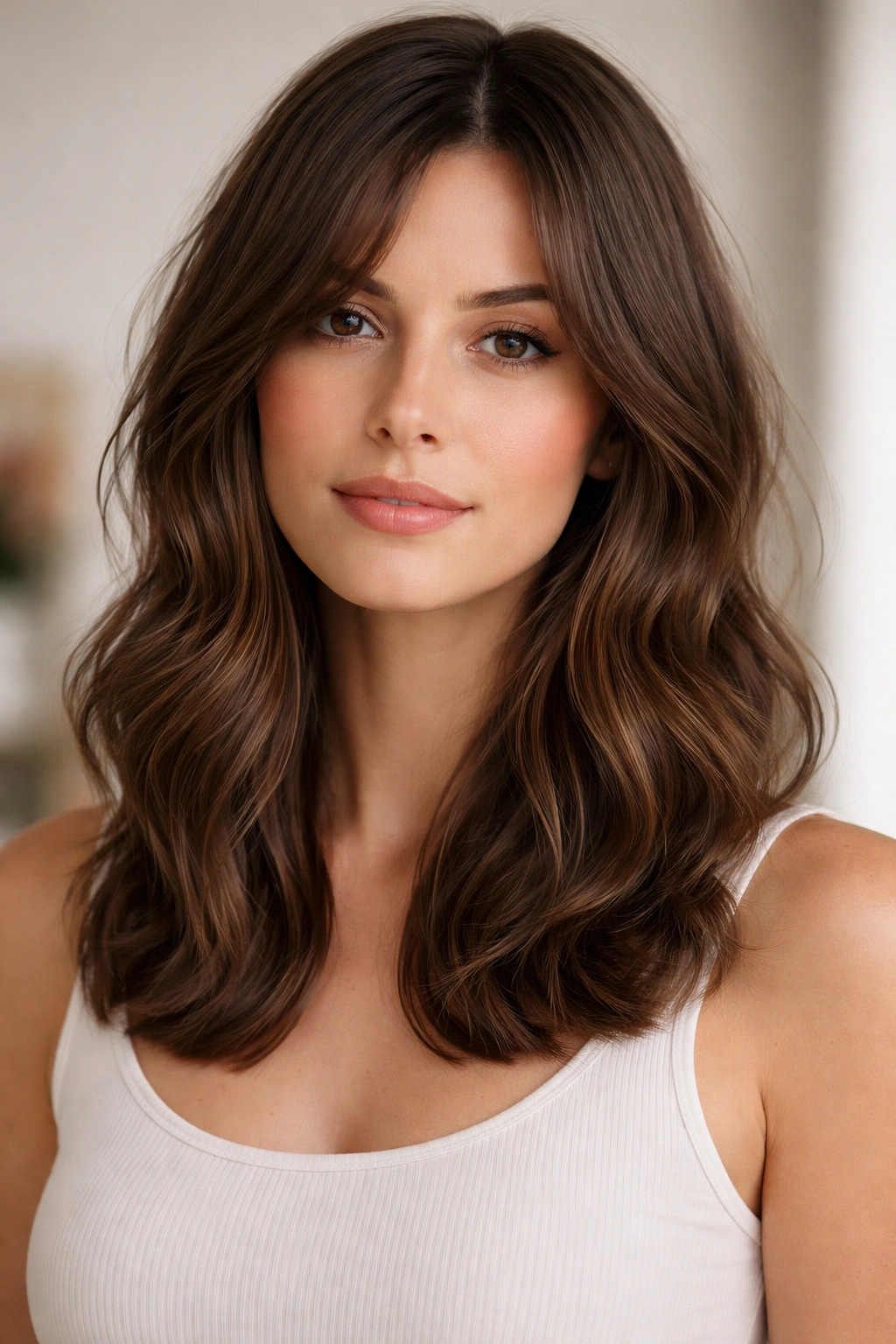
Sometimes the best cut for waves is actually simpler than you’d expect—a clean shoulder-length shape with minimal but strategic layering. This works because it respects the weight and movement of your waves rather than trying to fragment them into submission with tons of layers.
Why Less Can Be More for Waves
If your waves are strong and well-defined, you might not actually need tons of layers. Instead, you need the right length and a couple of strategic cuts that let your waves express themselves naturally. This approach takes confidence and trust in your wave pattern, but it’s incredibly streamlined and wearable.
The Minimal Layer Strategy
- One length or very subtle layering that creates shape without disrupting the overall silhouette
- A couple of face-framing pieces that are noticeably shorter but not a full shag
- Blunt or slightly textured ends rather than heavily point-cut
- Let your natural wave pattern do the work instead of cutting a lot of texture in
- Works best if your waves are consistent and well-formed throughout
Worth knowing: This approach is most successful if your wave pattern is already beautiful and consistent. If your waves are frizzy or inconsistent, you’ll probably need more layering to make it work.
14. The Curtain Cut With Parted Waves
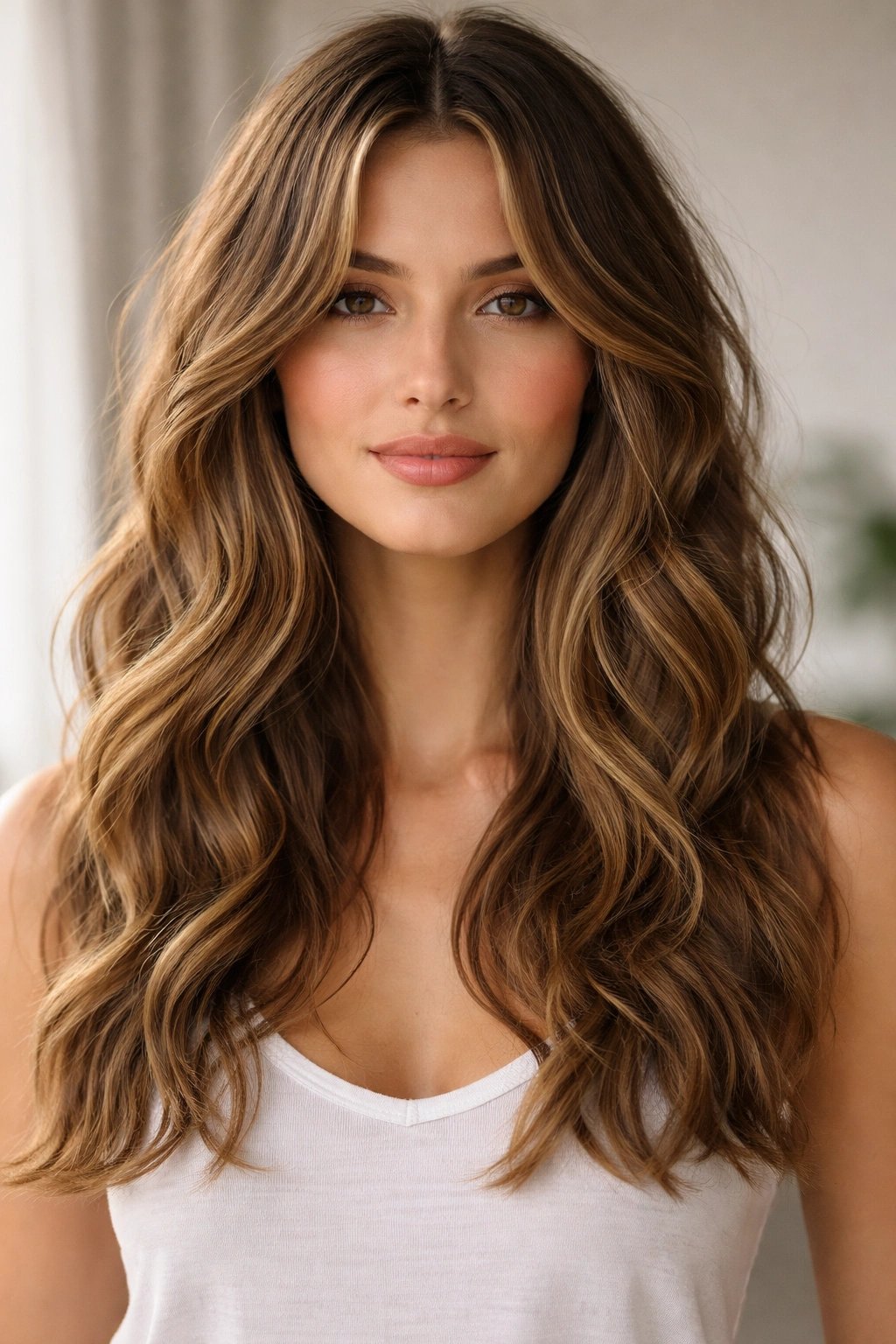
The curtain cut—those longer, separated pieces in the center front that part dramatically—is having a major moment, and it’s absolutely gorgeous on waves. The way the pieces frame your face and move independently creates the perfect canvas for showing off your natural texture.
Why Curtains Flatter Wavy Hair
Curtain pieces are meant to move and flow independently, which is exactly how your waves want to behave anyway. Instead of fighting that movement, a curtain cut celebrates it. Your waves naturally create that separation and movement that makes a curtain cut look intentional rather than just like you didn’t brush your hair.
Creating the Perfect Curtain
- Longer center-parting pieces that extend past your chin (cheekbone-length or longer)
- Shorter pieces on the sides that frame your face
- Layers throughout the rest of your hair for movement and dimension
- Point-cut or texturized throughout so pieces feel deliberately separated
- Works beautifully with side-swept waves or a deep center part
Real talk: You’ll want to embrace some styling with this cut to really show it off. It looks beautiful on natural waves, but it comes alive when you put in just a little bit of intentional shaping.
15. Classic Lob (Long Bob) With Subtle Texture
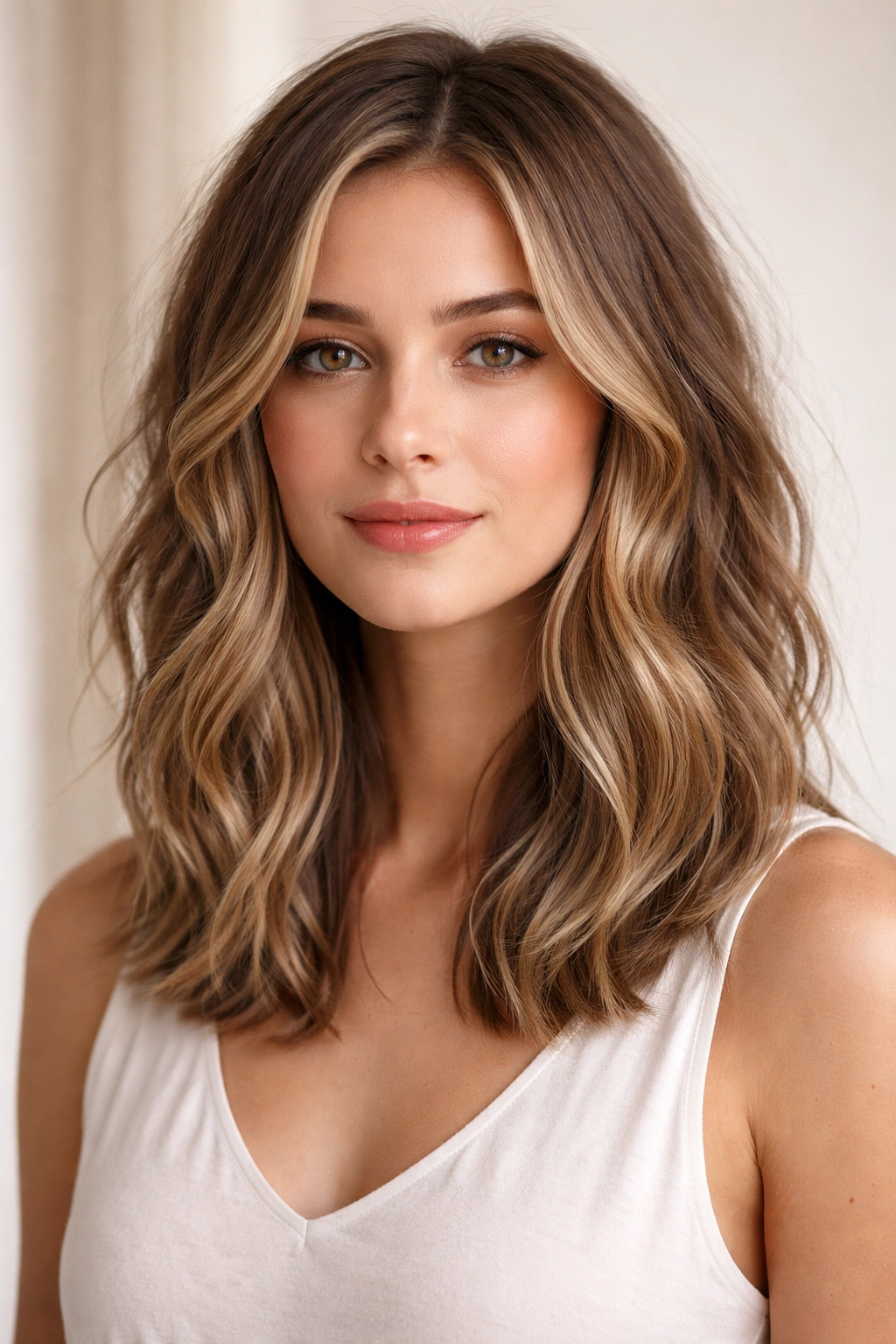
A lob—that in-between length hitting around your mid-back or longer—is the perennial favorite for a reason. On waves, a textured lob is basically the perfect length: long enough to feel substantial and feminine, short enough that you don’t have the maintenance burden of very long hair.
Why a Lob Is a Safe Bet for Waves
A lob is long enough that your waves have room to move and create real dimension, but short enough that you’re not fighting with tons of weight and damage concerns. It’s the Goldilocks length that works for basically everyone, and on waves it’s genuinely beautiful. You get length, you get movement, you get manageability.
Lob Details for Maximum Movement
- Hits around mid-back or slightly longer for maximum wave expression
- Subtle layers throughout rather than heavy, choppy layering (you want dimension, not fragmentation)
- Slightly textured or point-cut ends to minimize weight and frizz
- Face-framing pieces that are noticeably shorter so they create shape around your face
- Works beautifully with a center part or side-swept waves
Pro tip: A lob is the ultimate “safe” choice that works for most face shapes and lifestyles. If you’re not sure what cut you want, a textured lob is a perfect place to start.
16. The Butterfly Cut (Layered Crown For Maximum Volume)
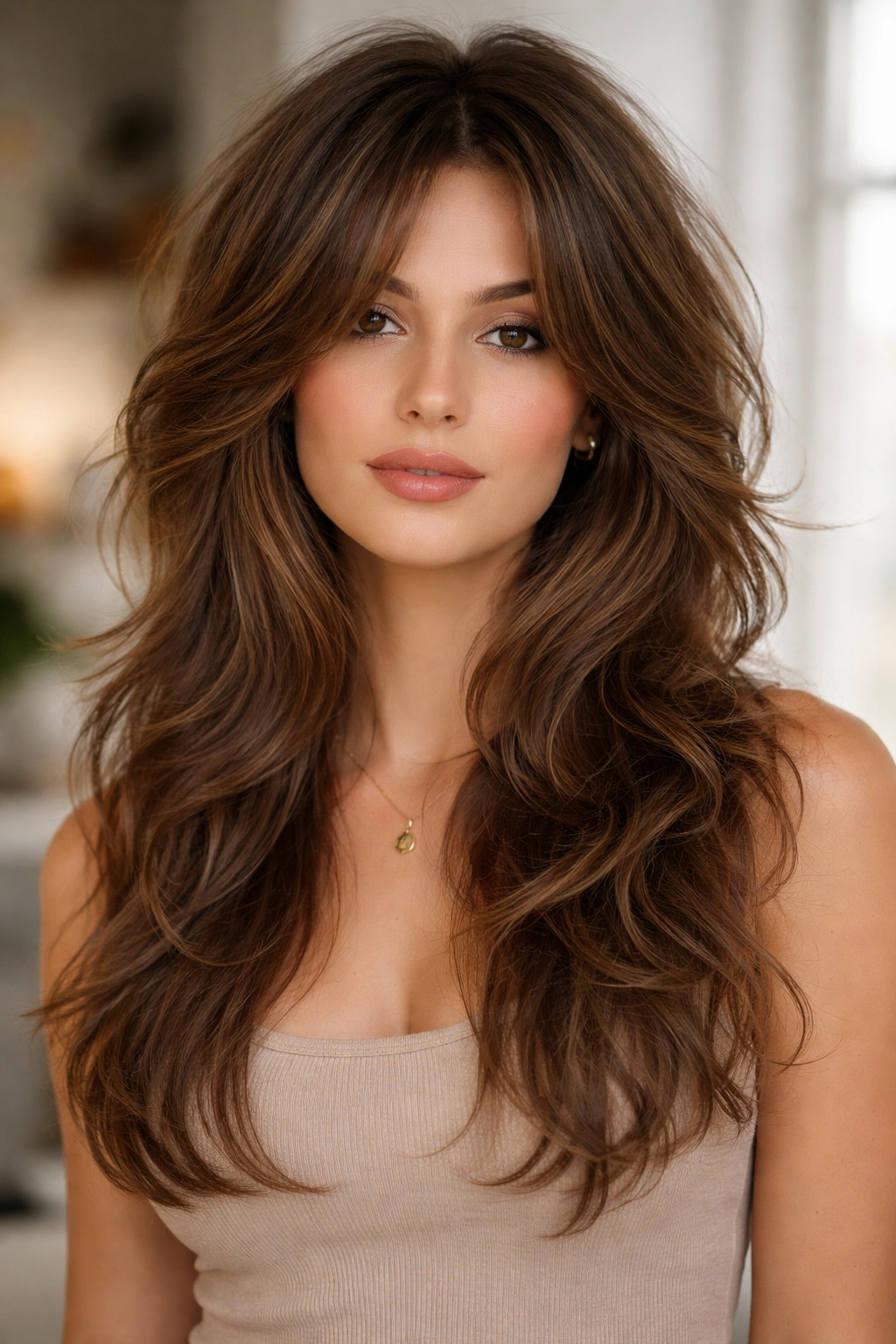
A butterfly cut is all about creating volume and movement at the crown, with layers that gradually get longer toward the ends. It looks like butterfly wings when you flip your head, which is where it gets its name—and on wavy hair, it’s an absolute volume game-changer.
How Layers Create Butterfly Magic
The butterfly cut concentrates shorter layers where you need volume (crown and top layers) and keeps length in back for shape and movement. This structure works beautifully with waves because it gives your wave pattern room to move at the crown—where you need movement most—while maintaining the longer length you probably want overall.
Styling the Butterfly Cut
- Shortest layers at the crown (2-3 inches) for maximum volume and movement
- Gradually longer layers as you move down and back
- Longest length in the very back (whatever length you’re keeping)
- Choppy, textured layering throughout—not blended and smooth
- Face-framing pieces that are noticeably shorter than your desired length
Worth knowing: This cut depends heavily on how you style it. On completely smooth, straight hair, it might look thin. On waves worn naturally or with some texture enhancement, it looks gorgeous and volumized.
17. Choppy Shoulder-Length With Textured Ends
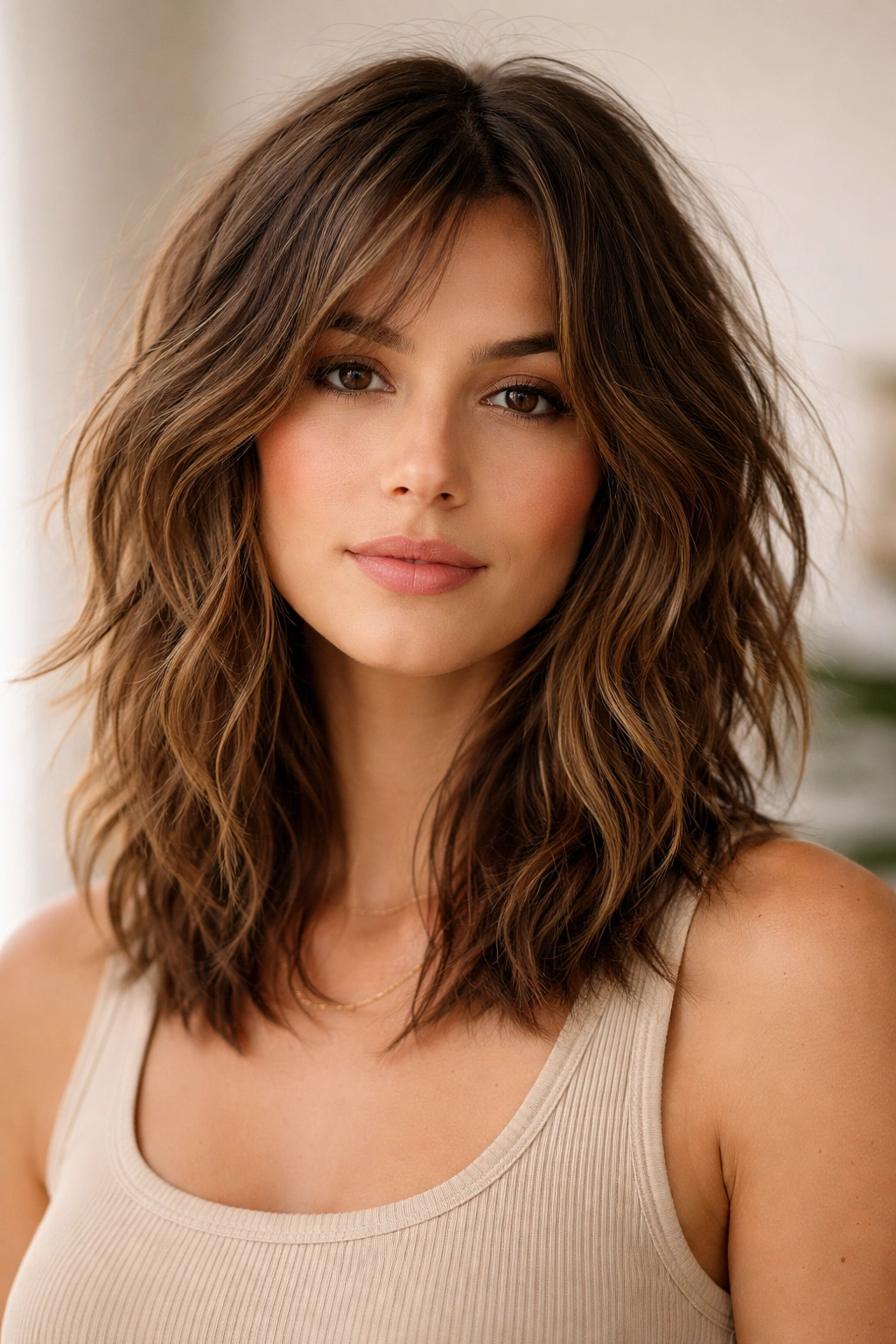
A straightforward choppy cut at shoulder length might sound basic, but shoulder length is genuinely where most waves look their absolute best. Combined with choppy layers and textured ends, you get a cut that’s simple, manageable, and effortlessly stylish.
Why Shoulder Length Is Wave’s Best Friend
Your waves are at the perfect length to show off their texture and movement without too much weight pulling them down or too much shortness fighting against your natural pattern. Shoulder length is comfortable to wear, easy to style, and genuinely flattering for most face shapes. Add chopped layers and texture, and you’ve got something really beautiful.
Simple, Effective Details
- Land around your shoulders or collarbone, depending on your shoulder width and face shape
- Choppy, textured layers throughout that create separation and movement
- Heavily point-cut or texturized ends to minimize frizz and maximize movement
- Face-framing pieces that are noticeably shorter than the bulk of your hair
- A shape that’s obviously intentional, not accidentally choppy
Real talk: This is a dependable, wearable cut that doesn’t require any particular styling to look good. Your waves do the heavy lifting, which is exactly how you want it to be.
18. Micro-Bangs With Longer, Layered Length
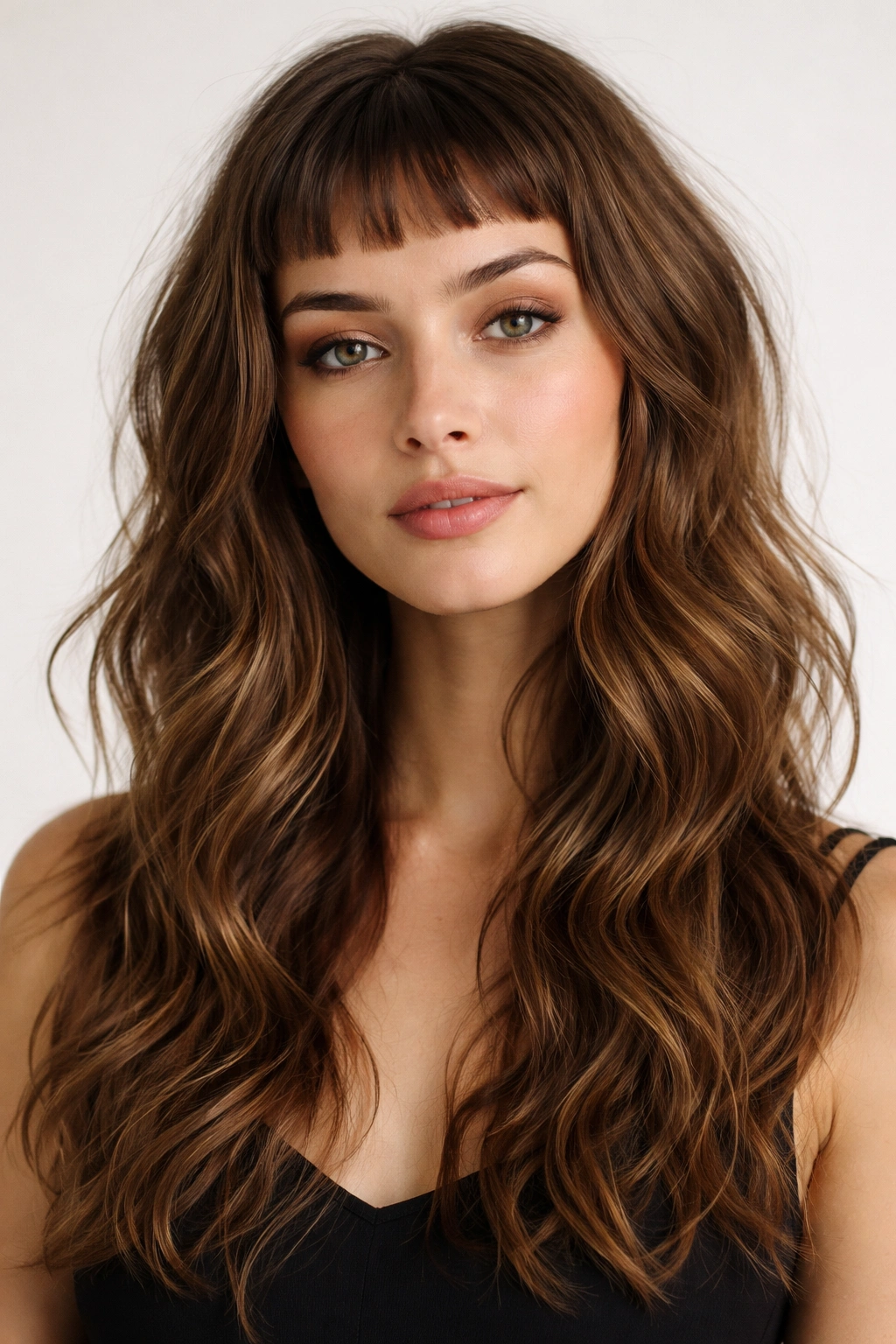
If you love the idea of bangs but want to be less committed, micro-bangs (super short bangs that sit above your eyebrows) are a bold, cool alternative. Paired with longer, layered length underneath, they create an editorial, fashion-forward look that’s surprisingly wearable.
The Boldness of Micro-Bangs on Waves
Micro-bangs are statement bangs—they’re not subtle, they’re a clear style choice. On waves, they create an interesting contrast and look very now and very intentional. You’re not trying to go full straight-hair-blunt-bangs chic; you’re creating an interesting texture play that’s more interesting and modern.
Making Micro-Bangs Work
- Bangs should hit well above your eyebrows, creating that mini-bang effect
- Rest of your hair should be longer (collarbone or longer) with plenty of layers for movement
- Point-cut or texturized throughout so the whole cut reads as textured and cool
- You’ll need bang trims every 2-3 weeks, so think about whether you’re actually willing to do that
- Styling helps—you’ll want to enhance your waves somewhat to make the look fully come together
Insider note: Micro-bangs are very trendy and very bold. They’re a commitment to a specific aesthetic. If you love fashion and don’t mind a cut looking dated in a few years, this is amazing. If you prefer timeless, probably skip it.
Final Thoughts
The right haircut is genuinely life-changing when you stop fighting your natural waves and start working with them. Every cut on this list does something different—some maximize volume, some create movement, some embrace the texture fully—but they all have one thing in common: they respect your waves instead of trying to force them into a mold they were never meant for.
The most important thing you can do is find a stylist who actually understands wavy hair and isn’t just trying to make you into the straight-haired version of whatever they usually cut. Talk to them about your specific wave pattern, how much styling you’re actually willing to do, how much length you need, and whether you prefer minimal upkeep or you’re happy to use styling tools and products. The best cut in the world won’t work if it doesn’t match your actual lifestyle and willingness to style.
Once you find a cut that works, the second game-changer is actually letting your hair be wavy. That means investing in good products that enhance texture rather than fight it, learning how to style waves (which is genuinely easier than constant straightening), and accepting that your waves are a feature, not a flaw. Your hair’s natural texture is beautiful—these cuts are just the framework that lets it shine.
