



The mullet is back—but not the 1980s version your parents might cringe about. Today’s mullet has evolved into something genuinely stylish, sophisticated, and deeply versatile. What makes the modern short mullet so compelling is that it’s short enough to feel current and low-maintenance, but it retains that signature party-in-the-back personality that makes it visually interesting. Whether you’ve been considering the big chop or you’re looking for your next reinvention, there’s a short mullet variation out there that’ll make you feel confident and look effortlessly cool.
The beauty of a short mullet is that it works across hair types, face shapes, and personal styles. You can rock a structured, professional take that reads polished in a boardroom, or go textured and tousled for something deliberately undone. The cut flatters different hair textures too—straight hair makes the lines pop, wavy hair adds natural movement, and curly hair creates volume that’s genuinely hard to achieve with other cuts. The transition from the shorter, blended sides to the layered, longer back creates dimension that photographs beautifully and catches light in interesting ways.
What really sells a short mullet is commitment to the styling. This isn’t a cut you can ignore—it demands product, intentional texture, and the kind of confidence that comes from knowing you’re doing something a bit daring. But here’s the thing: once you find your mullet version, maintenance is surprisingly simple, and you’ll get compliments constantly. Let’s explore the short mullet styles that are genuinely worth trying.
1. The Textured Fade Mullet

This is the mullet for people who love precision barbering meets modern edge. The sides fade cleanly—often a skin fade or a low, tight fade—creating sharp contrast that makes the length at the back feel even more pronounced. The top stays textured and piecey, with layers that catch light and add movement even when the hair is short.
Why It Works So Well
The textured fade mullet appeals to anyone who appreciates clean lines and subtle sophistication. The fade does the heavy lifting visually, giving the cut an intentional, groomed feel that prevents it from reading as accidental or messy. The texture on top layers the hair in a way that creates depth without length, and the back flows naturally into the longer section without a harsh line. This version feels equal parts edgy and put-together.
How to Rock This Style
- Ask your barber for a 0.5 or 1 fade on the sides, with a sharp line distinguishing the fade from the longer hair
- Request disconnected layers on top to create that piecey, textured finish
- Keep the back length around 3-4 inches—long enough to flip but short enough to feel contemporary
- Style with a matte clay or texture paste for definition without heavy shine
Pro tip: Get the fade every 2-3 weeks to keep the contrast crisp—this style looks polished only when the lines are razor-sharp.
2. The Spiky Top Short Mullet

For anyone who loved their high-fade undercut but wanted something with more personality, the spiky top mullet delivers. The top is intentionally voluminous and sharp, styled upward and textured to stand. This version transforms the mullet from edgy to genuinely fierce.
Why It Stands Out
The spiky top creates instant visual drama. It commands attention without feeling costume-y—instead, it reads as confident and fashion-forward. The height at the crown elongates the face and adds presence, while the faded sides keep everything grounded and proportional. This cut works particularly well for people with oval or rectangular face shapes who want to emphasize their bone structure.
Key Facts About Styling
- Requires styling product every day—a strong-hold matte clay, wax, or pomade is essential
- Best on straight to wavy hair; curly hair might diffuse the spiky definition
- The top needs regular trims (every 3-4 weeks) to maintain the sharp shape
- Pairs perfectly with facial hair—a clean shave or a carefully groomed beard both work beautifully
Pro tip: Apply product to damp (not wet) hair and work it through from the roots upward for maximum lift without the product sitting on top.
3. The Undercut Mullet with Defined Lines

This is the mullet for minimalists who want edge with precision. Clean lines separate the short, almost shaved sides from the longer back and textured top. There’s no fade here—just a sharp delineation that creates a bold, graphic quality. It’s modern, intentional, and impossible to miss.
What Makes It Different
The defined-line undercut mullet looks more architectural than romantic. It appeals to people who appreciate sharp angles, geometric shapes, and bold contrast. The line itself becomes a design element—it’s not just a cut, it’s a statement. This version photos exceptionally well because the contrast creates visual punch, and the line creates a flattering frame for the face.
Quick Style Details
- The line is typically a half-inch or three-quarter-inch gap between the undercut and the longer top
- Sides are clippered to 1-2mm for maximum definition
- The back is typically 3-5 inches, creating obvious length contrast
- Works beautifully with designs clipped into the line—geometric patterns, initials, or subtle artwork
Worth knowing: This cut shows every hair when you move, so commitment to regular barber visits (every 2 weeks) is non-negotiable for keeping the line clean.
4. The Textured Quiff Mullet

This is the mullet that marries vintage quiff energy with modern short-hair sensibility. The top has significant volume and is combed back, creating a wave-like shape, while the sides are shorter and the back is noticeably longer. It’s masculine without trying too hard, and it photographs like a dream.
Why It Works
The textured quiff mullet reads as sophisticated and intentional without being pretentious. The volume up top adds presence and elongates the face, while the quiff styling keeps everything looking polished and deliberate. It’s the kind of cut that works in creative industries, at a dinner, or in casual settings—it adapts to context because the styling can be refined or relaxed depending on product and technique.
How to Style It Properly
- Blow dry hair away from the face, directing the front section back and slightly to the side
- Use a light to medium-hold pomade or clay that allows texture to show through
- The back should have visible layers that move separately, not one solid block of length
- Style the wave intentionally—this isn’t tousled, it’s shaped
Pro tip: Applying styling product to damp (not dry) hair gives you control and prevents the pomade from looking greasy or solid-looking.
5. The Choppy Layers Short Mullet

For texture lovers, the choppy layers short mullet is where it’s at. Every section of hair—top, sides, back—is cut into distinct layers of varying lengths. The result is a cut that has tons of movement, even when you’re standing still. This version works especially well for people with naturally wavy or curly hair who want their texture celebrated rather than flattened.
What Makes It Stand Out
Choppy layers create visual interest in a way that simple length can’t achieve. Each layer catches light differently, the overall shape has dimension, and movement is baked into the cut rather than entirely dependent on styling. This version feels more relaxed and natural than some mullet variations, though it still maintains that signature shape. It photographs beautifully because the layers create texture and shadow.
Quick Facts About This Cut
- Works best on wavy to curly hair; on straight hair, it can look wispy
- Requires regular trims (every 4-6 weeks) because choppy layers grow out quickly
- Styling can be as simple as damp hair and a light styling cream, or more involved with blow drying
- Pairs well with tousled, slightly undone styling rather than super-polished looks
Pro tip: Let your hair air dry sometimes to see how the layers naturally fall—you might discover shapes and movement you didn’t know were there.
6. The Slicked-Back Mullet

This is the mullet for people who appreciate a little retro-futuristic energy. Hair on top and sides is slicked back smoothly, often with a strong-hold pomade or gel that gives it a wet, polished look. The back stays longer and can either be equally slicked or allowed to have slightly more texture and movement.
Why It Works
The slicked-back mullet is pure style confidence. It reads as bold and deliberately retro, which appeals to people who aren’t afraid to be noticed. The smoothness up top creates an elegant line that flatters most face shapes, while the contrast with the longer back prevents the whole look from feeling buttoned-up. There’s something inherently charismatic about this cut—it photographs like a rock star, and it definitely commands presence.
Styling Essentials
- Requires a strong-hold pomade, clay, or gel (not water-based products that dry stiff)
- Apply to damp hair and work through from front to back
- Use a fine-tooth comb to smooth everything back without creating harsh lines
- The look is intentionally polished, so hair should look deliberately groomed, not naturally slicked
- Works particularly well for people with thicker hair that holds styling
Worth knowing: Strong-hold products require proper washing—just rinsing with water won’t get them out, so a real shampoo is necessary daily.
7. The Fringe Front Mullet
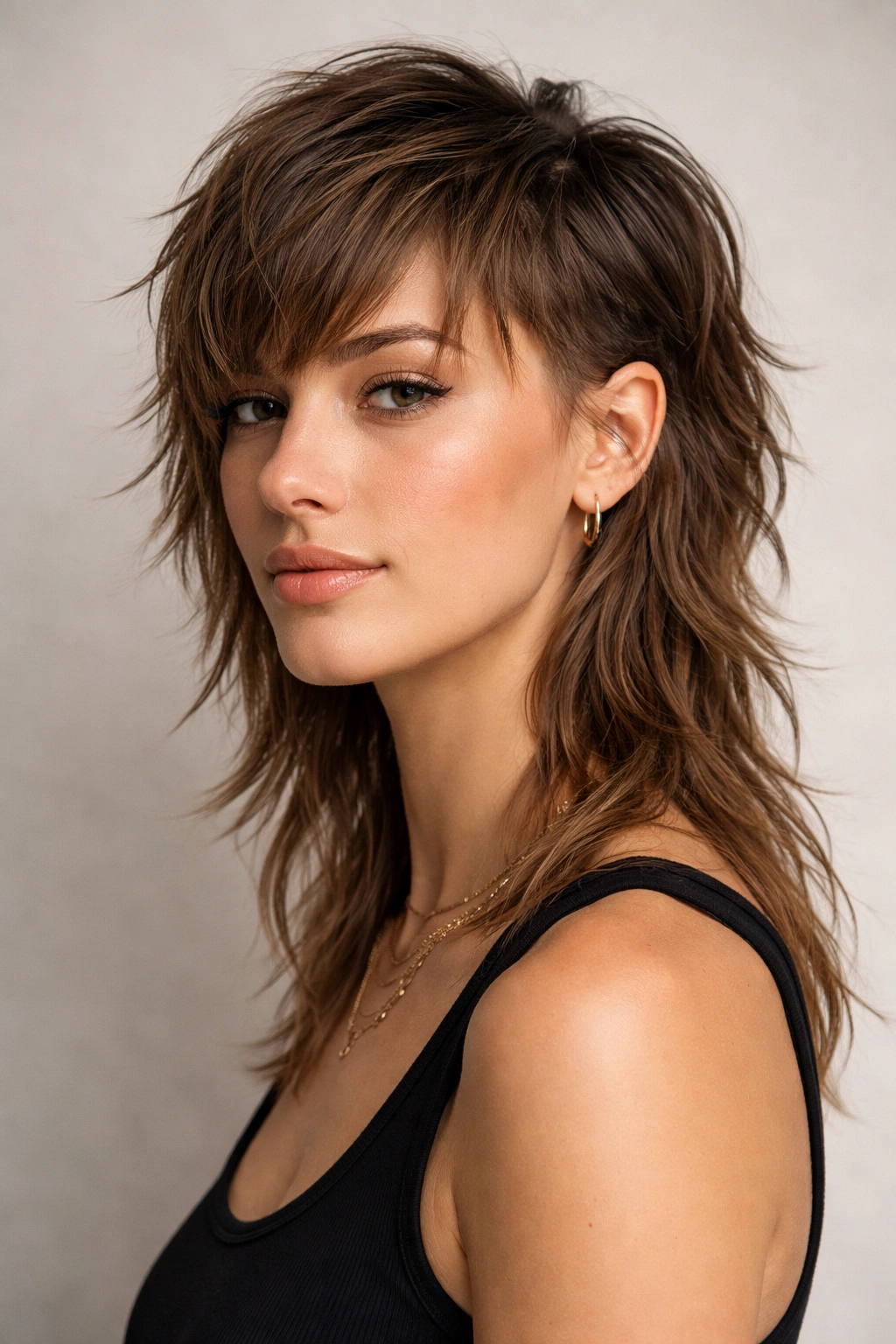
This version keeps intentional length in the front—a fringe or longer top section that can be swept to the side or worn down—while the sides are faded and the back is significantly longer. It’s playful and fashion-forward, with an androgynous edge that appeals to people who love contemporary styling.
What Makes It Different
The fringe-front mullet balances visual interest between front and back instead of creating the typical top-to-bottom contrast. This appeals to people who want the mullet shape but also want a bit of hair movement in front. The fringe adds an element of mystery and style—it can be styled multiple ways depending on your mood or the occasion, which makes the cut feel more versatile than a traditional short mullet.
Key Style Details
- The fringe is typically 2-3 inches long, giving plenty of styling options
- Sides are faded short, usually a 1 or 2 fade
- The back is 4-5 inches, creating visible length variation
- Works beautifully on straight to wavy hair; curly hair can make the fringe less refined
Pro tip: Invest in a texturizing spray or dry shampoo—these products add grip and make the fringe easier to control and style in different directions.
8. The Blended Mullet
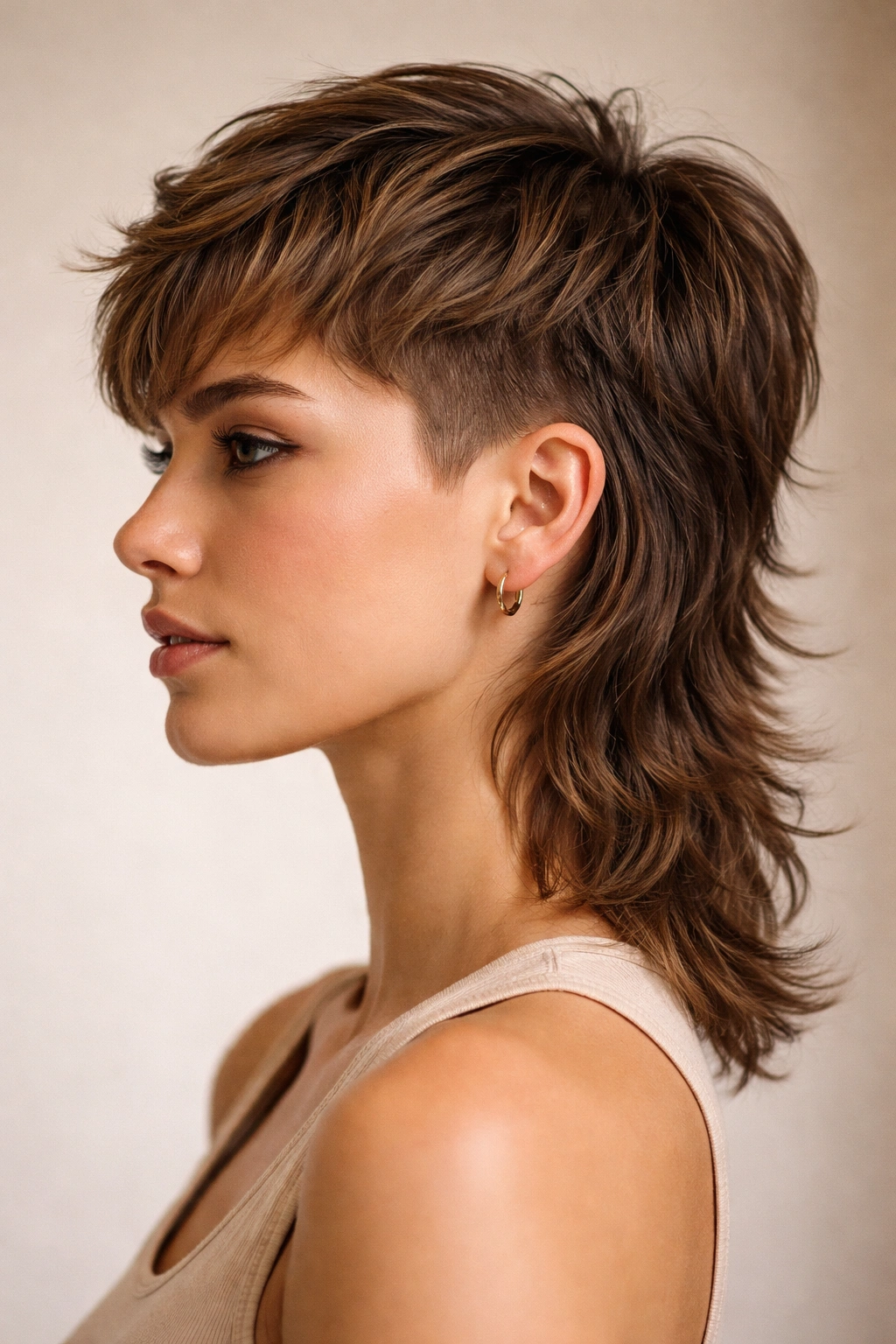
For people who want the mullet shape but prefer subtlety, the blended mullet is the answer. Instead of sharp contrast between short and long, a blended mullet uses layers to create a gradual transition from short sides to longer back. Everything flows together harmoniously without obvious delineation.
Why It Works
The blended mullet appeals to conservative style lovers and anyone hesitant about a drastic cut. Because the transition is gradual rather than dramatic, it reads as less extreme and more wearable in traditional settings. The cut still has personality and shape, but it’s approachable. It’s the perfect gateway mullet—the version that helps people gain confidence before they move to something more defined.
How to Rock It
- Ask your barber for a mid-fade (2 or 3) that gradually blends into longer hair
- Layers throughout blend the sides into the back without a hard line
- The back should be noticeably longer (3-4 inches) but not dramatically so
- Style is flexible—can look polished with product or more casual and natural
Pro tip: This cut works beautifully with natural texture, so if you have wavy hair, consider styling with just a light cream to let the layers and natural wave do the work.
9. The Asymmetrical Mullet
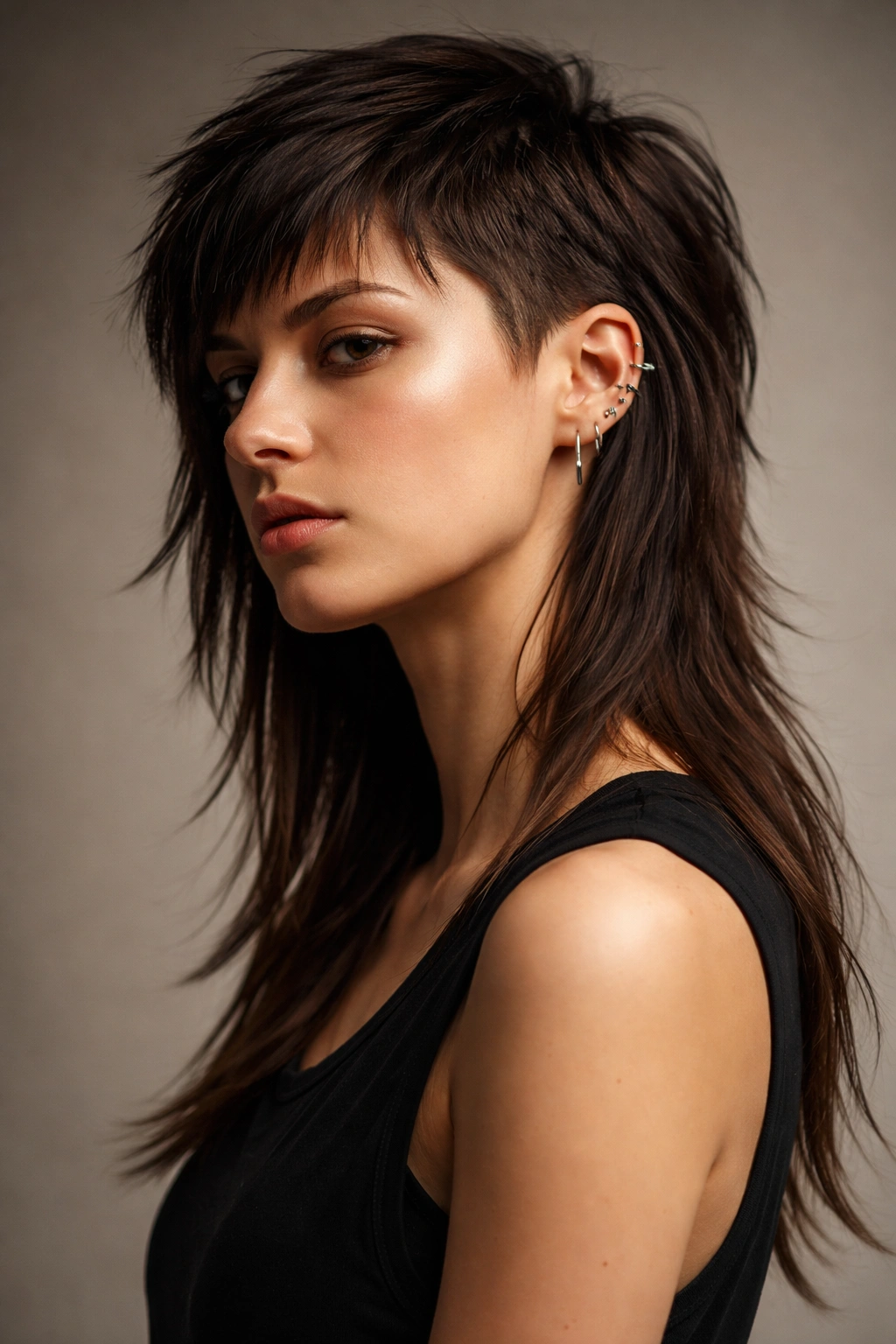
For the truly bold, the asymmetrical mullet takes the shape and skews it deliberately off-center. One side might be shorter or angled differently than the other, or the length at the back might be longer on one side. It’s unexpected, artistic, and genuinely conversation-starting.
What Makes It Stand Out
The asymmetrical mullet appeals to people who see their haircut as art rather than just a practical grooming choice. It reads as creative, confident, and completely original. This version works particularly well for people in creative fields or anyone who loves standing out. It’s not for everyone, but for the right person, it’s absolutely perfect. The asymmetry creates visual interest from every angle because there’s no “default” way the cut looks.
Styling Essentials
- Requires a skilled barber who understands how to create intentional asymmetry
- Each side might style differently based on its length and angle
- Generally requires styling product to look intentional rather than accidental
- Works on most hair types, but particularly striking on straight or wavy hair
Worth knowing: This cut will catch people’s attention. If you’re uncomfortable with being noticed or asking questions about your hair, this probably isn’t the version for you.
10. The Curly Mullet
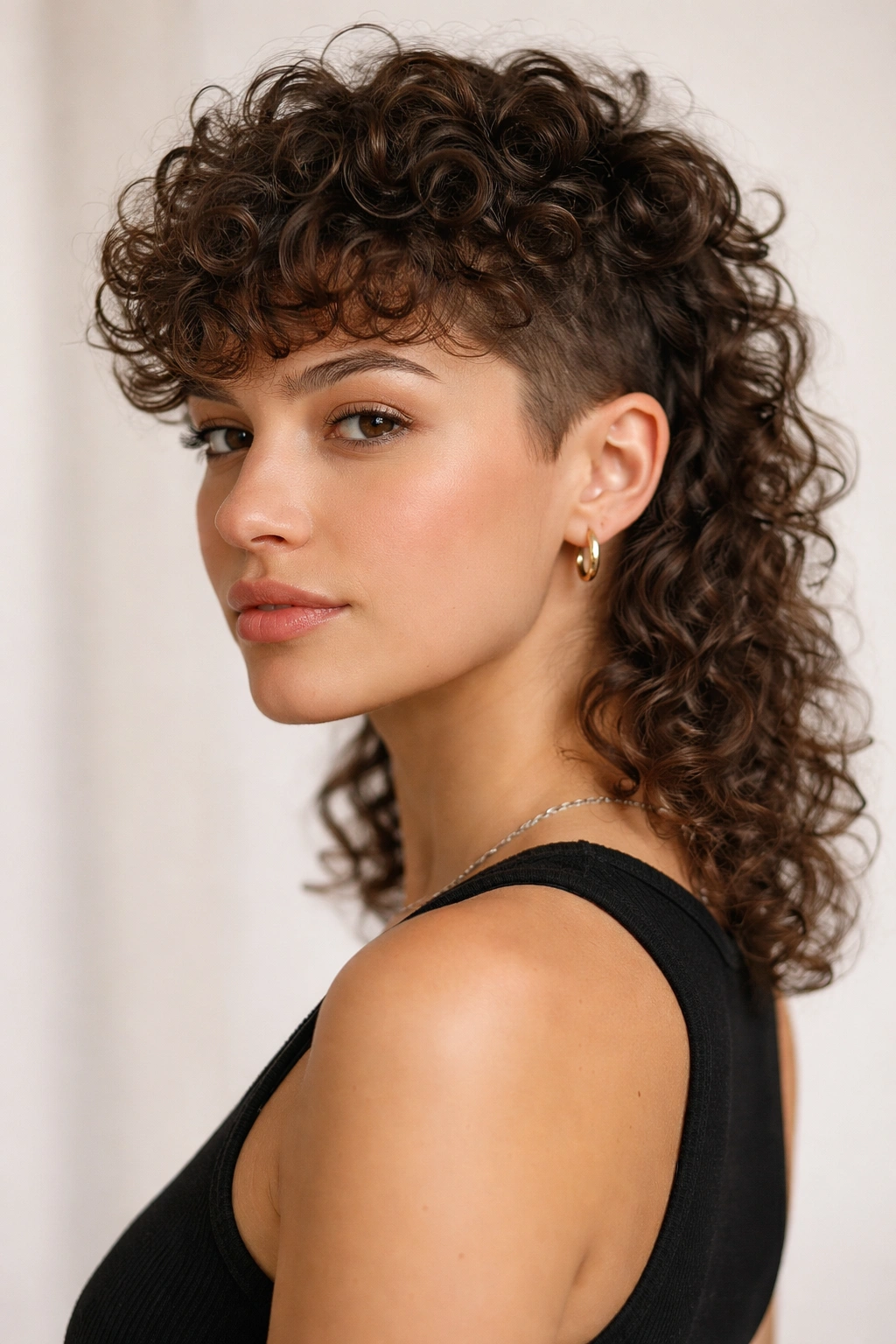
For people with natural curls or coils, the curly mullet is pure liberation. Short, tightly curled sides provide definition and visual lightness, while longer curls at the back have space to spiral and bounce. The texture itself becomes the style statement—this isn’t about slicking or controlling hair, it’s about celebrating its natural movement.
Why It Works
The curly mullet respects and highlights natural texture instead of fighting it. It’s unapologetically textured, which creates visual richness that straight-haired mullets have to achieve through layering or styling products. The contrast between tighter curls at the sides and longer, bouncier curls at the back is visually stunning. This version works beautifully for all curl patterns, from loose waves to tight coils.
Quick Facts About Curly Mullets
- Works best with a curl-specific cut (typically done using techniques like the Deva Cut or similar curl-respecting methods)
- Styling usually involves curl cream, gel, or mousse applied to soaking wet hair
- Dries to shape without needing blow-drying, which reduces heat damage
- Regular trims (every 6-8 weeks) keep the curl pattern bouncy and prevent tangles
- Curls provide natural texture, so styling can be as simple as product and air drying
Pro tip: Get your curl cut when your hair is clean and wet, so your barber can see your true curl pattern and cut accordingly—not all curl specialists cut curly mullets, so look specifically for someone with that experience.
11. The Pompadour Mullet
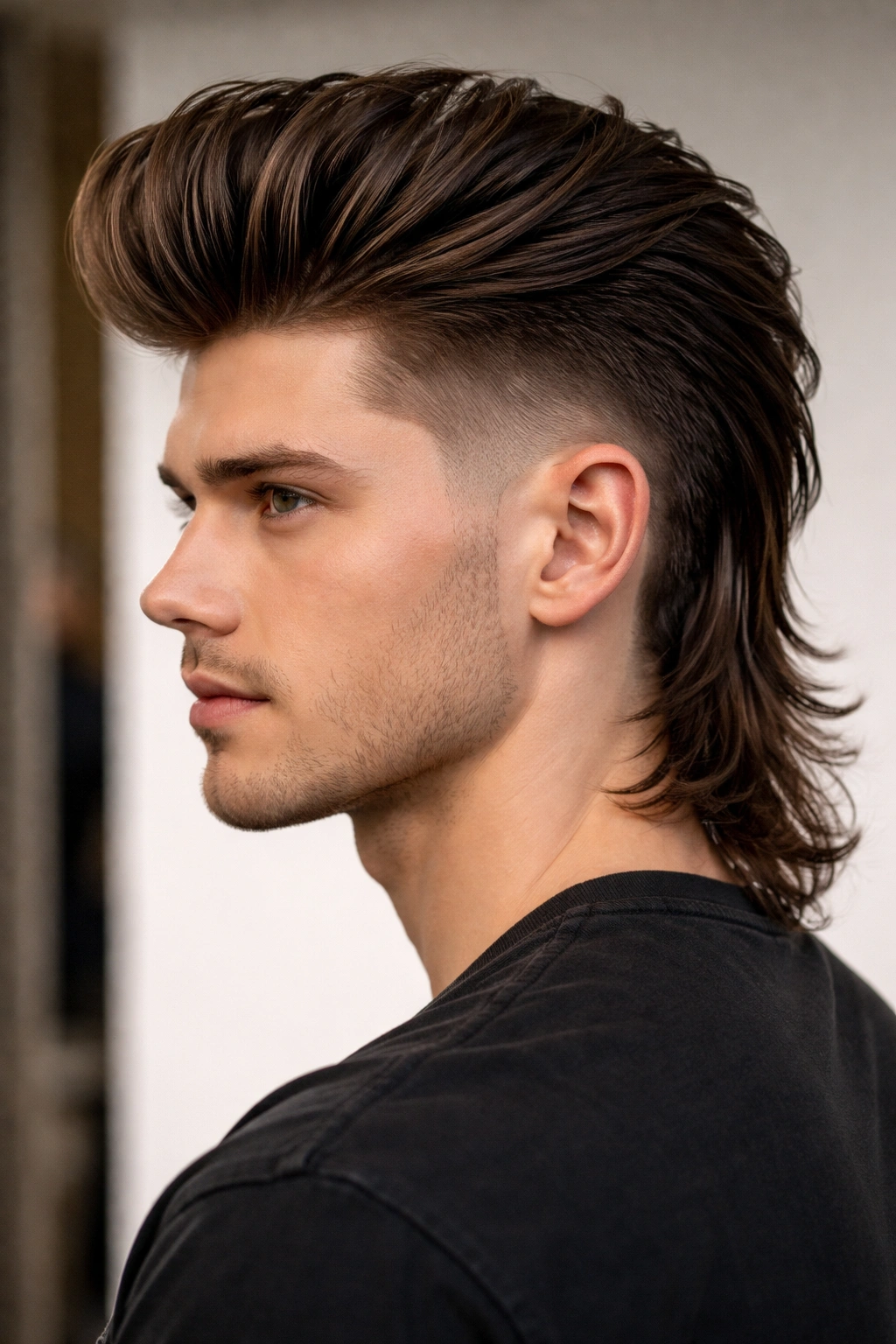
This is the mullet for people who love volume, height, and rockabilly energy. The top is significantly voluminous and styled upward and back, creating dramatic height at the crown. The sides are faded short for contrast, and the back is longer and can be slicked, textured, or tousled depending on preference.
What Makes It Different
The pompadour mullet blends classic barbershop technique with modern edge. It reads as confident and styled without feeling costume-y—this is the kind of cut that looks good at a formal event, a concert, or a casual day out. The height is flattering, especially for people with longer face shapes, and the styling is intentional and polished. It’s high-maintenance in the best possible way—this is a cut that demands you show up looking put-together.
How to Style It Properly
- Blow dry hair while directing it backward and upward from the crown
- Apply strong-hold pomade, paste, or clay while hair is still warm
- Use a fine-tooth comb to shape and smooth the top into the desired height
- The sides should be clean and tight (faded weekly or every 10 days)
- The back can either match the sleekness of the top or have contrasting texture
Pro tip: The key to a tall pompadour is blow-drying with hot air while lifting the hair straight up—product applied to already-dry hair won’t achieve the same height.
12. The Messy Textured Mullet
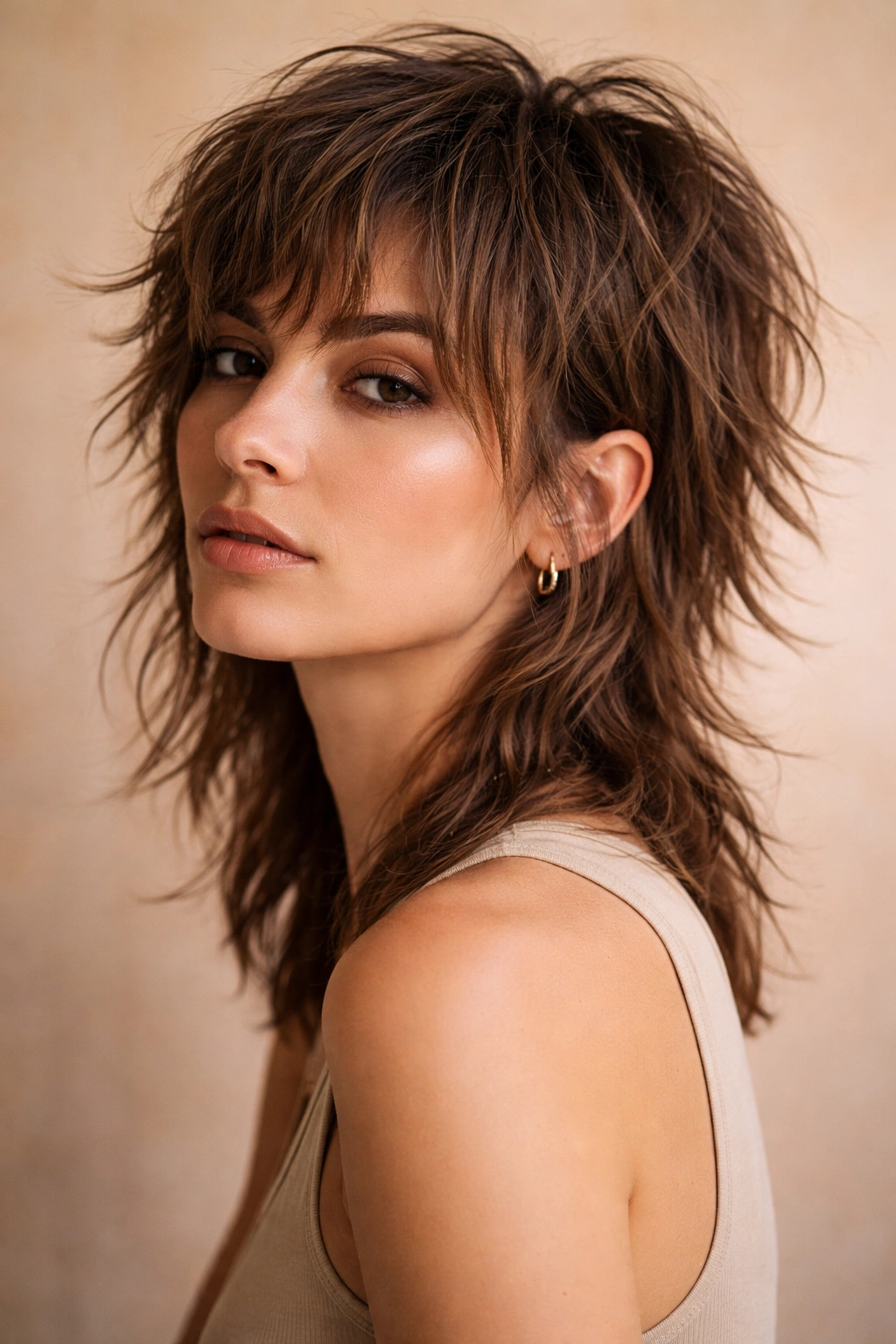
For anyone who hates the feeling of being overdone, the messy textured mullet feels naturally cool. Hair is cut into choppy, uneven layers throughout, styled with a texturizing cream or spray that keeps everything intentionally undone. It’s the kind of cut that looks like you didn’t try, even though you definitely did.
Why It Works
The messy textured mullet appeals to people who love the relaxed-cool aesthetic. There’s something effortlessly charismatic about it—it reads as confident enough to not care, which is inherently attractive. The cut works across most face shapes because the tousled styling is forgiving, and it photographs beautifully with that lived-in texture. It’s lower-maintenance than some mullet versions because intentional messiness doesn’t require perfect styling—slightly imperfect is actually the goal.
Quick Style Details
- Layers throughout create movement and texture
- Styling product is texturizing spray, dry shampoo, or a light styling cream (not heavy pomade)
- Best on straight to wavy hair; curly hair is naturally textured and might look too undone
- Dries well with finger-drying or tousling rather than formal blow-drying
- The back can be shaggy rather than neat, which suits this overall vibe
Worth knowing: This style looks best when it’s actually intentional about being undone—completely neglected hair looks sloppy, but deliberately textured and tousled hair reads as effortlessly cool.
13. The Clean-Cut Corporate Mullet
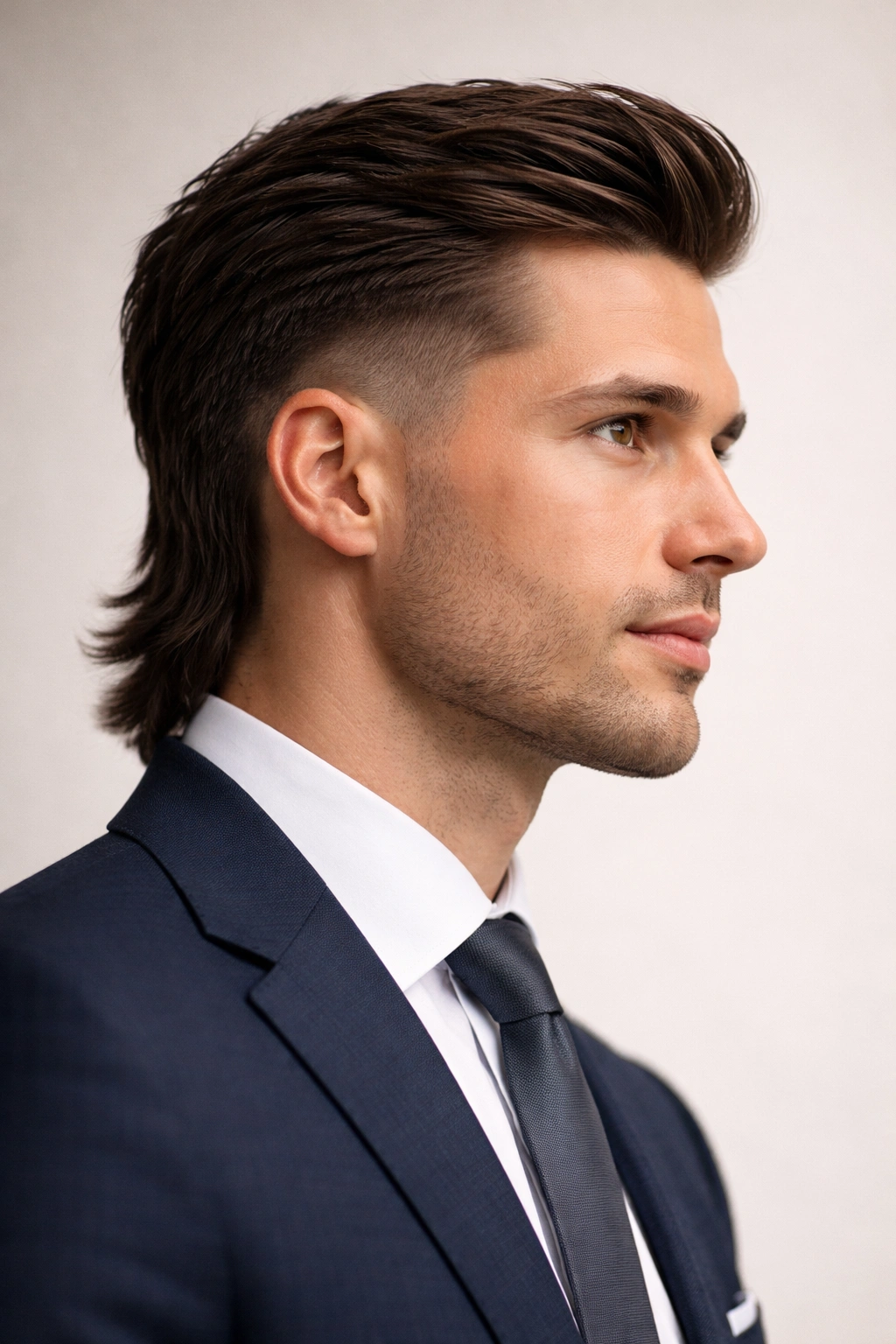
For people in professional environments who still want mullet energy, the clean-cut version delivers polish without drama. Everything is neat, refined, and subtly shaped. The fade is clean and precise, the layers are blended rather than choppy, and styling is polished but not theatrical.
What Makes It Stand Out
The clean-cut mullet proves that this shape works in boardrooms, conferences, and formal settings—you don’t need to sacrifice professionalism for edge. The cut relies on precision barber work and subtle layering rather than dramatic contrast or bold styling. It reads as confident and contemporary while maintaining an air of sophistication. This version appeals to people who want to signal that they’re forward-thinking without being obviously edgy.
Styling Essentials
- Fade is tight and clean (typically a low 1 or 2 fade)
- Minimal styling—a subtle product that adds definition without visible shine
- The back stays neat and doesn’t become shaggy
- Hair is parted or styled in a neat way, never tousled
- Overall impression is polished, not rebellious
Pro tip: Regular maintenance is essential—aim for a barber visit every 2-3 weeks to keep the fade sharp and the overall shape refined.
14. The Dyed Mullet
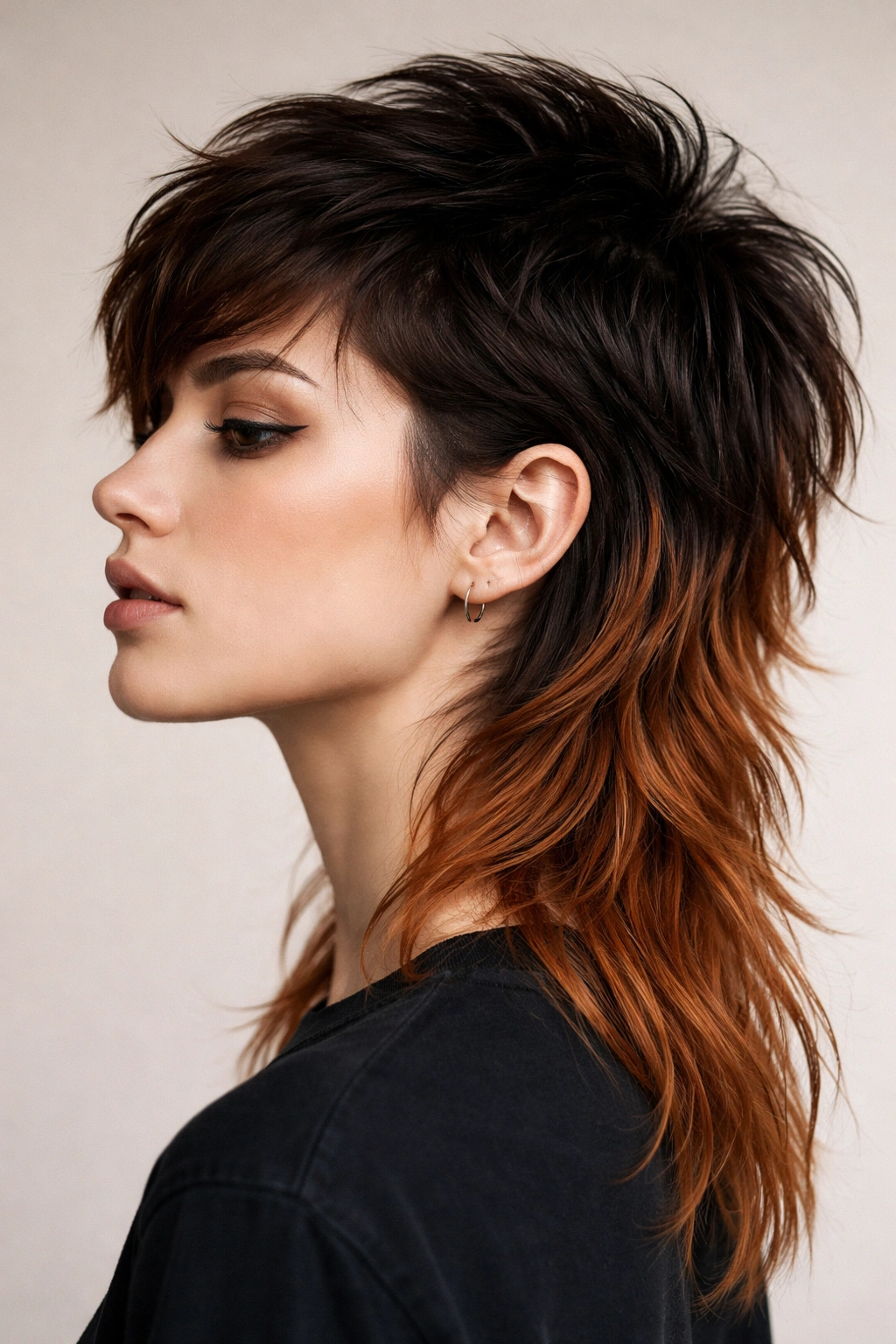
For maximum impact, a short mullet with color is genuinely striking. Whether you’re doing a subtle balayage, darker roots with lighter lengths, or a bold contrasting color (think copper back, dark top), color adds another dimension to the shape. The longer back especially shows off color beautifully because more hair length means more color saturation.
Why It Works
Color transforms a mullet from interesting to show-stopping. The shape already creates dimension, and color amplifies that effect. A subtle color approach feels sophisticated—darker roots with honey or copper tones at the longer back looks expensive and intentional. A bolder approach (platinum, pink, or jewel tones) reads as creative and artistic. Either way, color makes people look twice.
Key Considerations for Colored Mullets
- Maintenance is significant—color fades, so root touch-ups or refresh appointments are necessary every 4-6 weeks
- The longer back shows color better than short sections, so be generous with color placement on the longer length
- Quality hair care products formulated for color-treated hair are essential—they preserve vibrancy and prevent fading
- Subtle color often looks more expensive and intentional than competing, contrasting colors
- Blue, purple, and burgundy tones fade fastest; warmer tones like copper and golden brown hold longer
Worth knowing: Color-treated hair requires more maintenance between cuts (deep conditioning, sulfate-free shampoo, less frequent washing)—be prepared for this commitment before you commit to a dyed mullet.
15. The Straight-Razor Finished Mullet
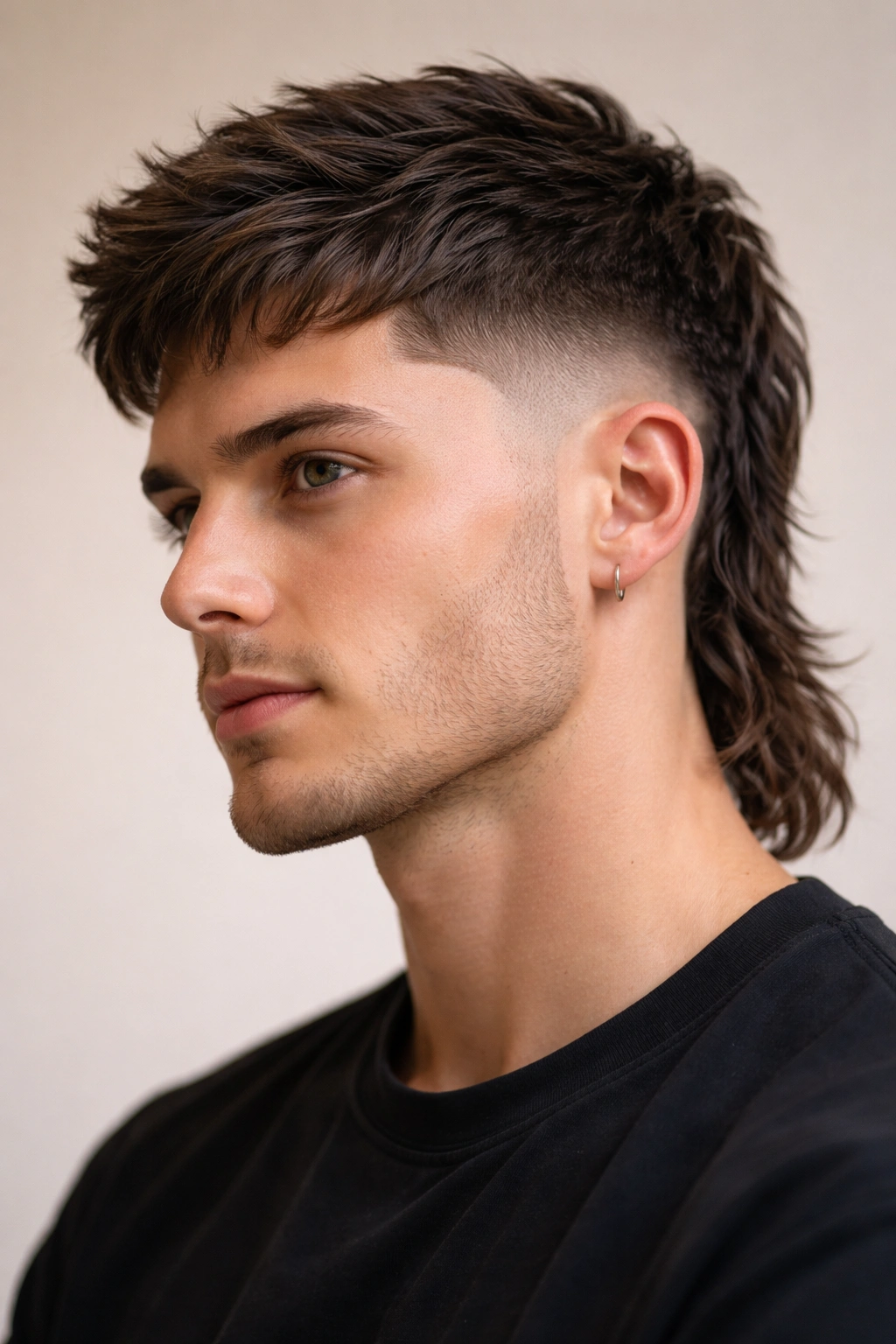
This is the ultimate in barber artistry: a mullet cut and finished entirely with a straight razor rather than clippers. The result is a cut with razor-sharp lines and a refined, expensive-looking finish that’s distinctive. Every edge is clean, every line intentional, and the overall effect is deeply polished.
What Makes It Different
The straight-razor finish is the hallmark of elite barbershop work. It creates cleaner lines than clippers alone, allows for more precise blending, and produces an almost sculptural quality to the cut. The straight-razor finish signals that someone has invested in genuine craftsmanship—this isn’t a quick clip job, it’s an art form. This version appeals to people who appreciate technique and quality.
Styling and Maintenance
- The razor finish creates clean lines that showcase any styling product beautifully
- Works with any styling approach—slicked, textured, tousled
- Requires a highly skilled barber (not every barber offers straight-razor finishing)
- The precision means the cut loses its definition faster as it grows, so regular maintenance is important
- Initial cost is higher than clipper-only cutting, but the quality is worth it
Pro tip: Book your barber’s first appointment of the day if possible—straight-razor work requires a sharp blade and focused attention, and barbers are fresher early in the day.
Final Thoughts
A short mullet is more than just a hairstyle—it’s a statement of intentionality about how you want to show up in the world. Whether you go for subtle and blended or bold and asymmetrical, textured and casual or slicked and polished, there’s a short mullet version that aligns with your personality and lifestyle. The cut works because it combines confidence with approachability, edge with sophistication, and clear shape with room for personal styling interpretation.
The investment in finding a skilled barber who truly understands mullet proportions and can execute your specific vision is non-negotiable. This isn’t a cut where technical skill doesn’t matter—precision barbering is exactly what elevates a mullet from gimmicky to genuinely excellent. Once you find your person, the cut becomes maintenance you actually look forward to.
Go for it. The mullet moment is real, it’s staying, and your version is waiting.
