



There’s a common misconception that round faces and pixie cuts don’t mix. People assume shorter hairstyles will emphasize width or make a rounder face appear fuller — but that’s not true when you understand how angles, layering, and strategic volume placement actually work. The right pixie cut can be incredibly flattering on a rounder face shape, creating definition, sharpening features, and drawing the eye upward in exactly the ways that make a softer face shape look more sculpted and intentional.
What makes a pixie work on a round face is the interplay between structure and movement. You’re not trying to hide your face — you’re strategically directing attention. By playing with length variations, angling, asymmetry, and texture, you can create visual lines that elongate the face, add cheekbone definition, and interrupt the horizontal fullness that can feel overwhelming in a round face. A choppy, textured pixie with height on top pulls the eye upward. A side-swept version adds directional flow. An asymmetrical cut creates the illusion of dimension. These aren’t subtle tricks — they’re measurable changes in how your face photographs and how you feel wearing the cut.
The beauty of pixie cuts is their versatility. They work with different hair textures, can be styled multiple ways throughout the week, and offer an almost shocking amount of styling flexibility once you understand your specific cut. Whether you want something edgy and sharp or soft and romantic, there’s a pixie variation that honors your face shape while delivering the confident, low-maintenance style that makes people choose pixies in the first place.
1. Textured Pixie with Long Layers
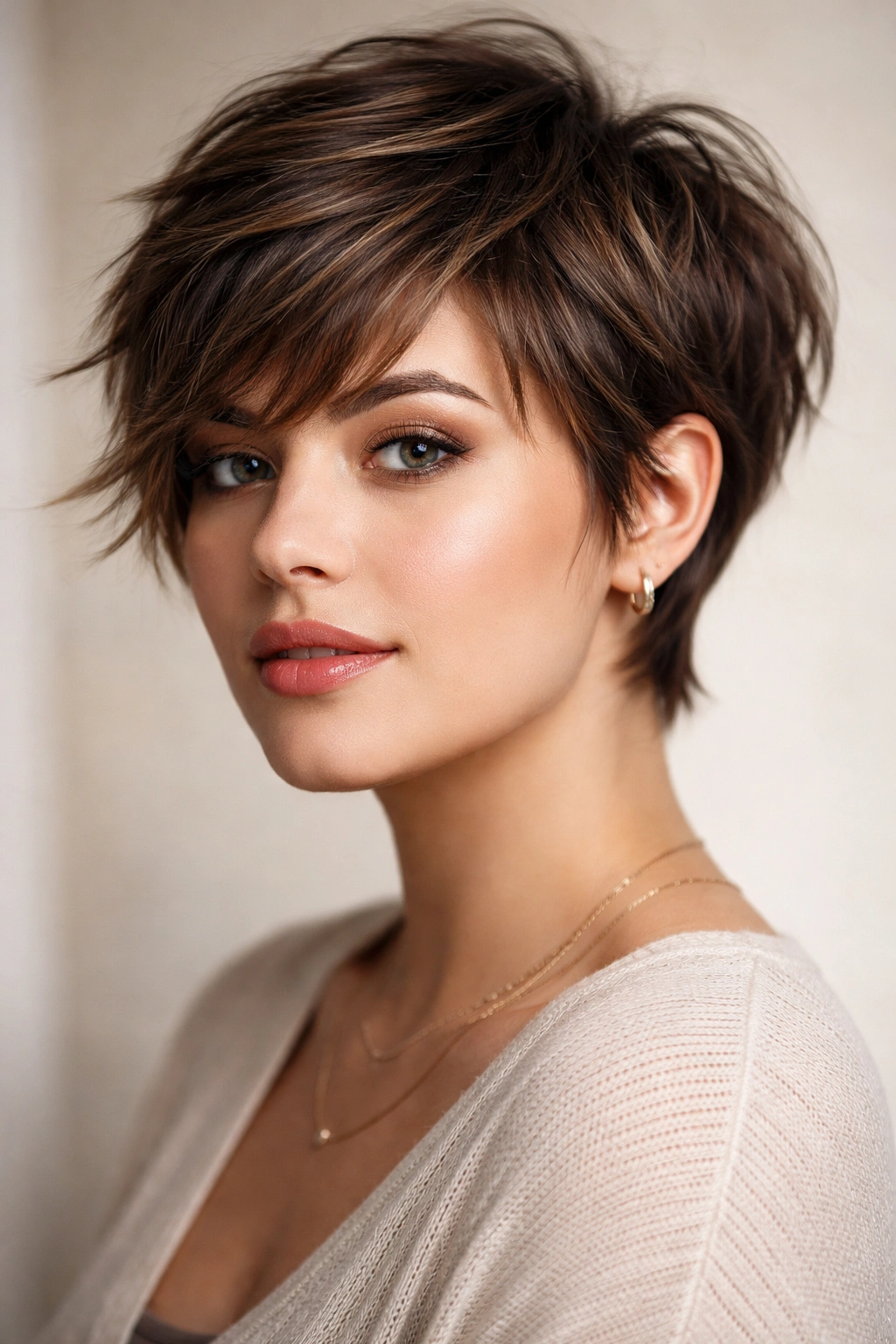
A textured pixie with generous layering throughout is one of the most forgiving styles for round faces because the choppy, piece-y structure breaks up the overall shape. Instead of creating one solid silhouette, the layers create visual interruption that prevents the eye from reading a continuous rounded line. The layers catch light differently depending on how you move your head, adding dimension and movement that feels dynamic rather than static.
Why It Works for Rounder Faces
The magic of this cut is that the short, choppy layers create vertical lines and visual texture that counters horizontal fullness. When every section of the pixie sits at a slightly different length and angle, you’re creating micro-variations that make the overall shape read as more intentional and defined. The layers also allow you to style the cut with movement and direction — tousling product through the pieces emphasizes the deliberate choppiness rather than the face shape beneath it.
How to Style It
Work a texturizing cream or lightweight pomade through damp hair using your fingers rather than a brush. This keeps the choppy texture visible and prevents the hair from smoothing down into a rounder shape. Blow-dry while scrunching and lifting at the crown to encourage height and movement. The goal is piecey, broken-up texture rather than sleek or polished — this specific styling approach is what makes the cut work.
Maintenance tip: This cut requires regular trims every 4 to 5 weeks because the layered texture loses its definition as it grows out and the ends become blunt rather than choppy.
2. Side-Swept Pixie with Volume on Top
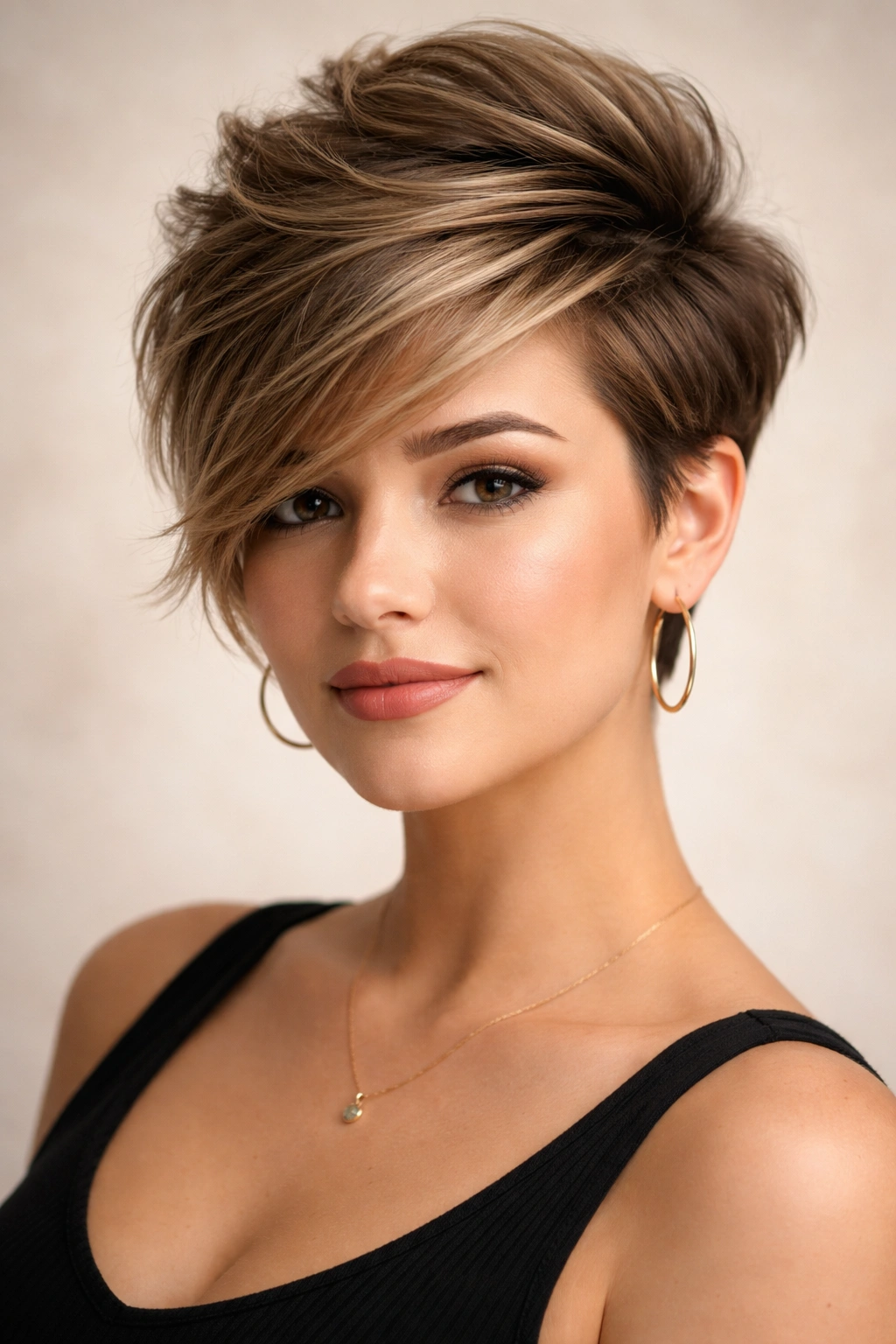
A pixie cut that’s longer on one side and swept across the face adds directional movement that elongates a round face. By pulling the eye across horizontally first and then upward, you’re creating a visual path that makes the face appear less centered and less obviously round. The volume sitting high at the crown also draws attention upward, away from the jaw and cheek width.
What Creates the Face-Flattering Effect
The side-swept element is the critical detail here. You’re not creating symmetry — symmetry emphasizes face shape. Instead, asymmetry disrupts it. When longer hair sweeps across, it creates an angle that breaks up facial width. Combined with carefully sculpted height on top, the eye follows the line of the hair rather than the contours of the face itself.
Styling for Maximum Impact
Blow-dry the longer side while directing it across your face. Use your fingers to create movement and separation in the strands rather than one sleek swoosh. Let the shorter side have some texture and lift as well — the contrast between short and longer sides is what makes this work. For extra dimension, use a volumizing powder at the crown before blow-drying to encourage height exactly where you need it.
Key detail: Ask your stylist to keep the side length just long enough to graze your cheekbone or jawline, never shorter — you want enough hair to actually create that sweeping line across the face.
3. Undercut Pixie with Longer Top
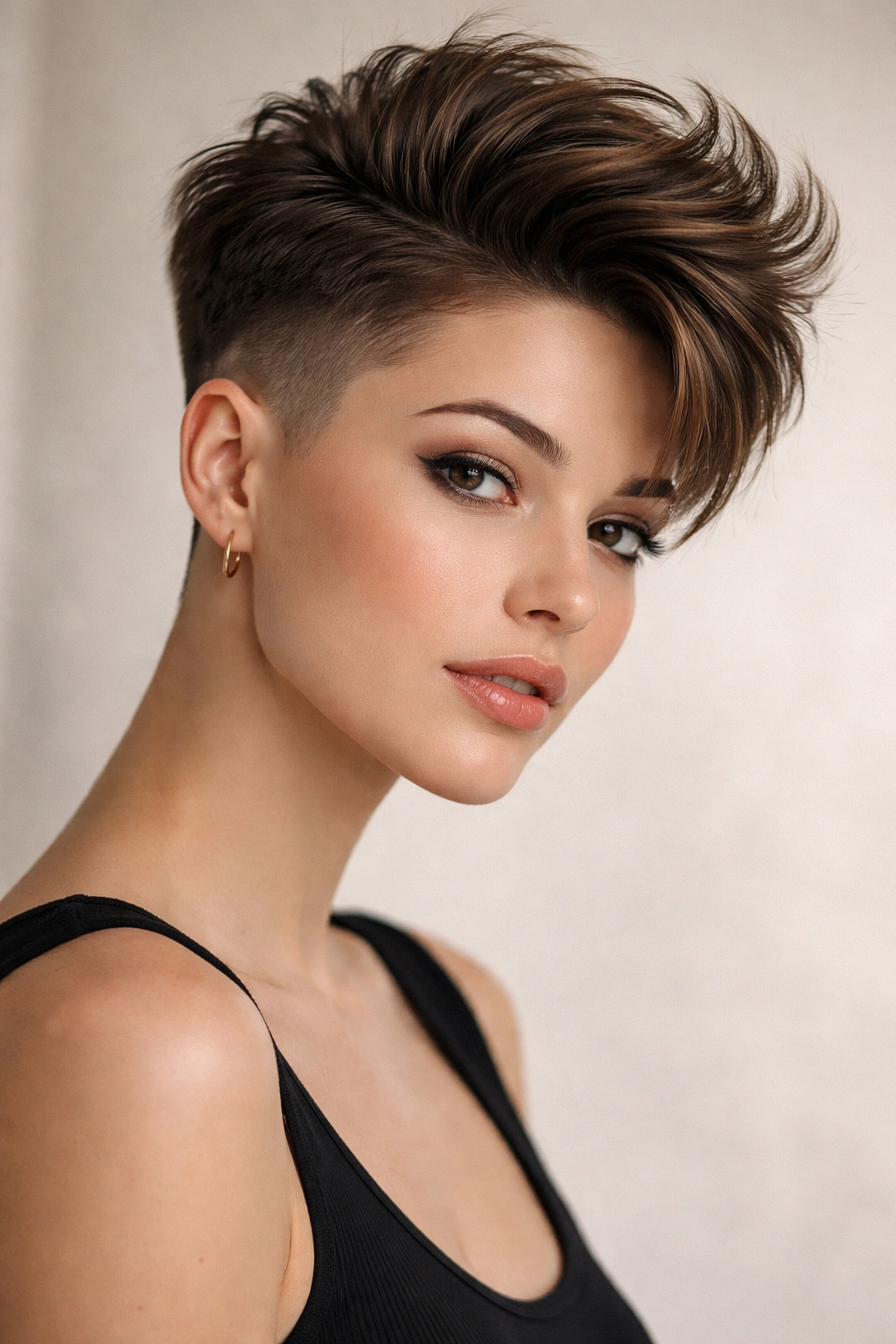
An undercut pixie features dramatically shorter, sometimes nearly shaved sides with noticeably longer hair on top. This extreme contrast creates a bold visual statement that completely resets how someone perceives your face shape. The severe taper at the sides actually makes the face look more defined because of the stark juxtaposition — the shorter sides read as sculpting, making the face appear narrower by comparison.
The Visual Logic Behind the Undercut
This works on round faces specifically because extreme contrast draws the eye to height and structure rather than width. You’re not trying to hide anything — you’re creating such a dramatic architectural statement that the face shape becomes secondary to the cut itself. The longer top creates verticality that elongates the face while the clean sides add precision and definition.
How to Ask for This Cut
Tell your stylist you want a fade or undercut on the sides and back — typically clipped to a quarter-inch or shorter — with at least 2 to 3 inches of length remaining on top. The longer section should be heavily layered for texture and movement. Some people ask for designs, lines, or patterns in the undercut, which adds another layer of visual interest that pulls focus away from face shape.
Styling consideration: This cut shows off your face and facial features more directly than other pixie variations. It’s best suited to people who are comfortable with minimal hair coverage and confident in their features — it’s an intentionally bold, statement-making cut.
4. Choppy Pixie-Bob Hybrid
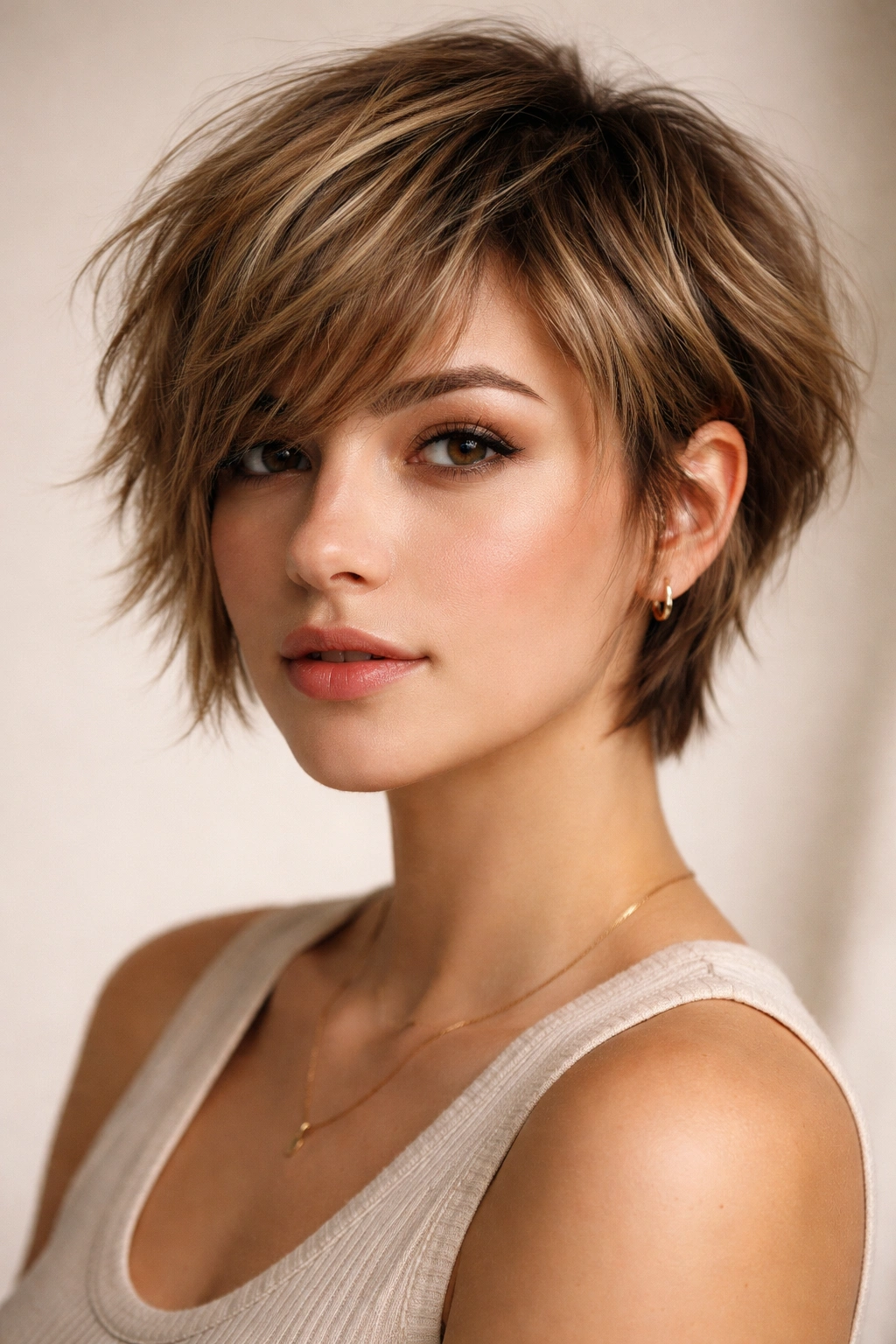
This is technically a longer pixie or very short bob that sits somewhere between the two categories. The length is short enough to feel like a pixie but long enough to have texture and movement throughout, often reaching the earlobe or slightly longer. The overall shape is choppy and undone rather than neat and precise, with layers creating breaks in the silhouette everywhere.
Why the Length Matters for Round Faces
The extra length gives you more hair to work with for creating shape and direction. You can style some pieces forward to frame the face, encourage others to sweep to the side, or tousle everything for pure texture. This flexibility means you can adapt the styling to how your face feels on any given day — some days you want to emphasize movement and texture, other days you want strategically-placed longer pieces to create angles.
Styling and Customization
Use texturizing products and your fingers to style this cut. Brush-blow-drying it smooth actually works against you — the choppy texture is what creates visual interest and breaks up face shape. Embrace the undone, textured aesthetic. You can style it different ways throughout the week depending on your mood: all textured and tousled, side-swept, pulled to one side, or with specific longer pieces brought forward to frame your face.
Product suggestion: A texture spray or dry shampoo is your best friend with this cut — it enhances the choppy quality and gives the hair grip and separation that makes the cut look intentional rather than messy.
5. Sleek and Angled Pixie
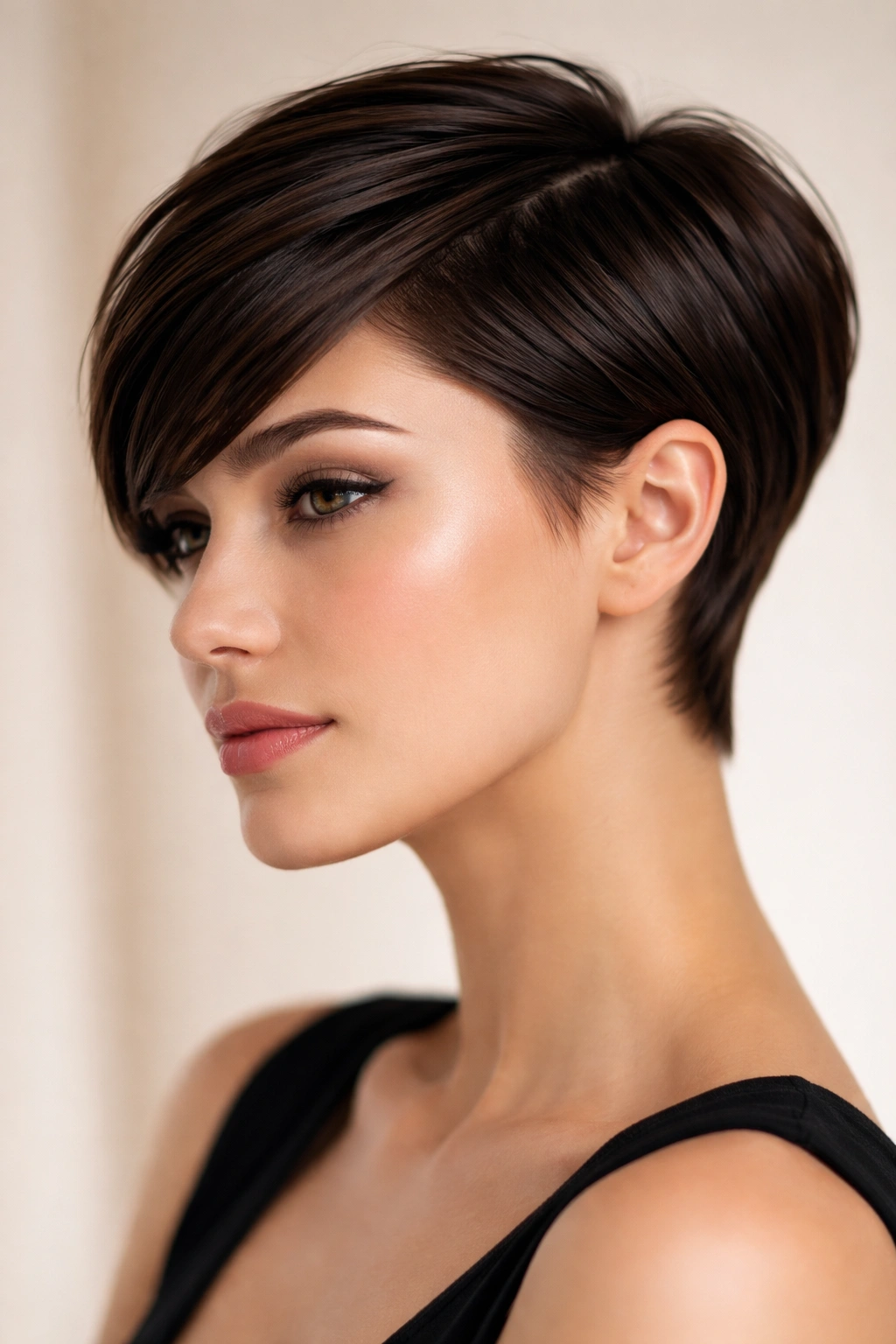
For people who prefer a more polished, structured aesthetic, a sleek pixie with intentional angles offers flattery through clean lines rather than texture. This cut features precise lengths and angles rather than choppy layers, with hair blown smooth and styled with definitive direction. The angles typically sweep backward and upward, creating visual lines that lift and elongate.
The Geometry of Flattering Structure
A sleek pixie relies on angle more than texture to create definition. The hair is cut at deliberate angles that direct the eye away from facial width. Typically, longer lengths sit toward the back of the crown or swept backward, while the front and sides are shorter. This arrangement naturally pulls the eye upward and backward, making the face appear longer and narrower.
How to Maintain the Look
This cut needs styling with blow-dryer and product every single day — it doesn’t work as an air-dry or tousled style. Use a smoothing serum or cream and blow-dry while directing hair backward and slightly upward. The sleek quality is essential to the flattering effect. Without daily styling, the cut loses its defining structure. This is a higher-maintenance option than textured pixies, but if you enjoy grooming and styling, it’s absolutely worth it.
Best for: Straight or wavy hair that can be smoothed with heat. Very curly or coily hair works better with a textured pixie approach unless you’re comfortable using heat styling tools regularly.
6. Pixie with Longer Front Fringe
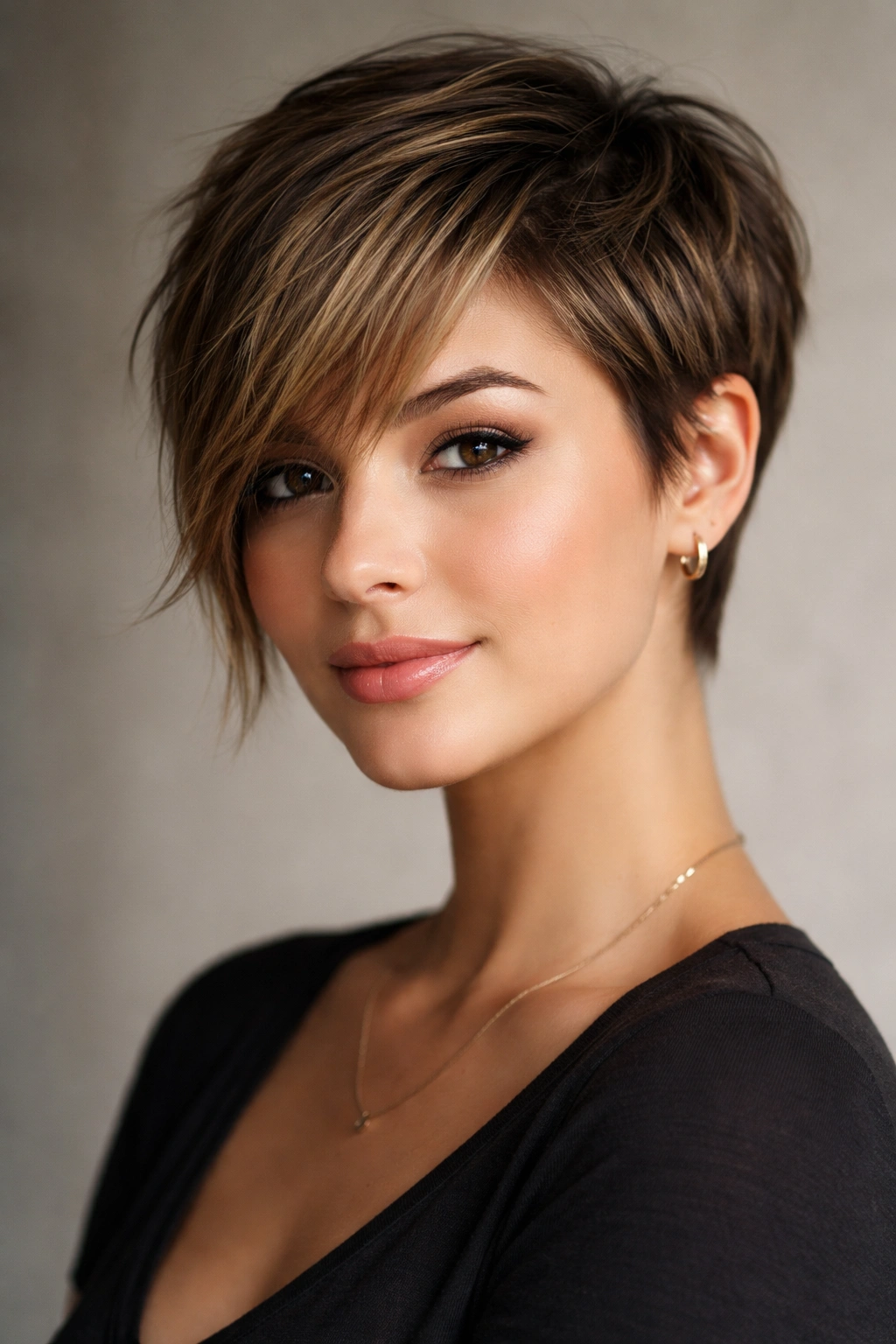
Some people feel more confident with a bit of hair framing their face, and a pixie with a longer front fringe delivers all the benefits of a short cut while allowing slightly more coverage. The rest of the cut remains pixie-short, but the front sections — typically from the temples forward — are left longer, sometimes reaching the cheekbones or jawline. These longer pieces can be styled to frame the face or swept to the side.
How Face-Framing Pieces Reshape Perception
Longer front pieces create visual boundaries that can make a round face appear more angular. By drawing the eye down and inward with the fringe rather than reading the full width of the face, you’re creating a narrowing effect. The longer pieces also give you options for styling direction and movement that a uniform pixie doesn’t offer. On days you want to hide more, you can lean into the fringe; on days you feel confident, you can sweep it back.
Styling Flexibility
Blow-dry the longer front pieces while directing them where you want them — across the face, to one side, swept backward with product. These pieces should look intentional and styled, not accidental or limp. Use a light texturizing spray and your fingers to create movement and separation. The rest of the pixie can be textured or sleek depending on your preference, but those front pieces are the star of this particular cut.
Maintenance note: The longer front sections will need more frequent trimming than the rest of the cut because they grow faster and lose their flattering length quickly if neglected.
7. Tousled Textured Pixie
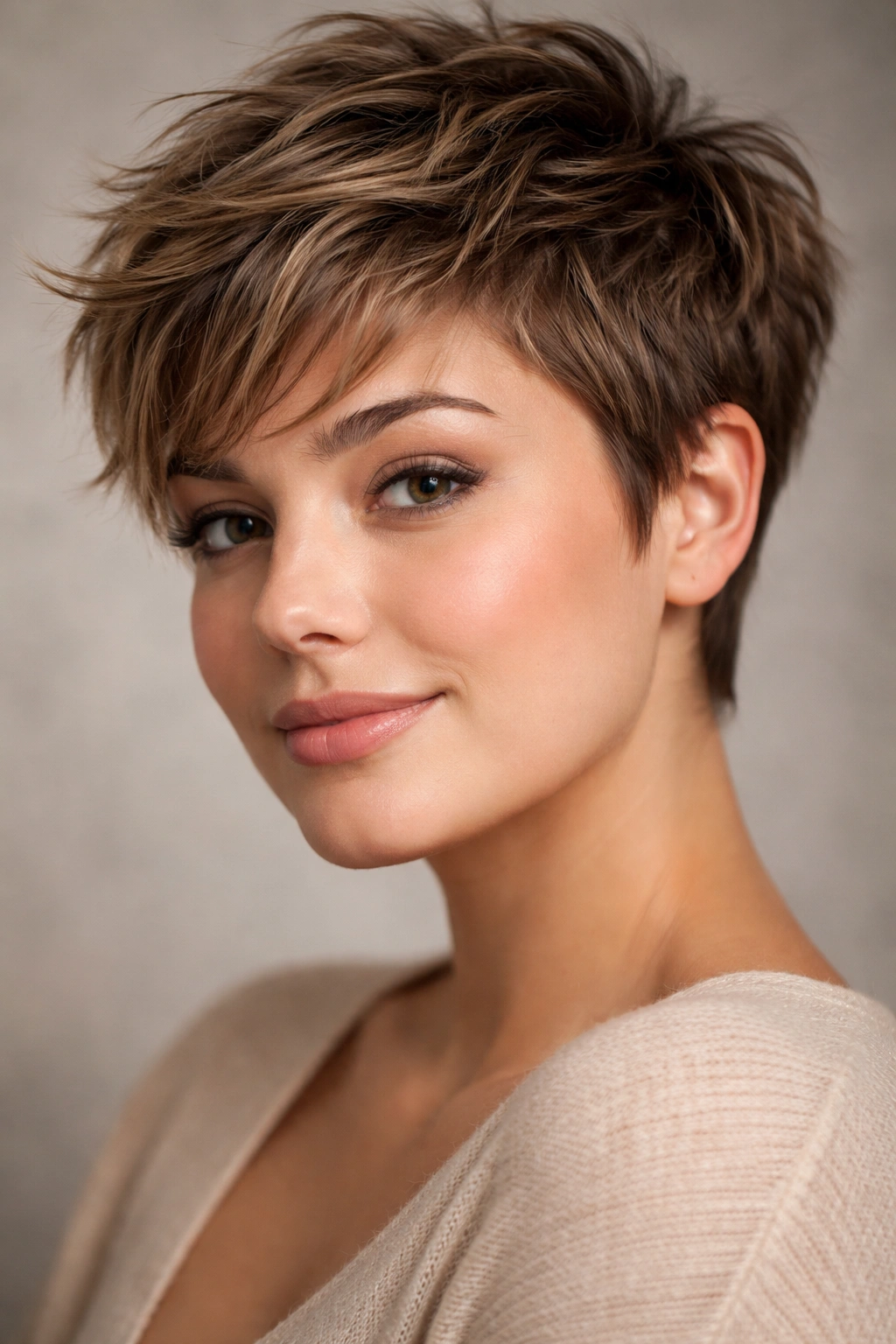
This is the most romantic, undone interpretation of a pixie cut — very short, textured throughout, with an emphasis on piecey, finger-combed styling rather than structured precision. The cut is highly layered so that every section has dimension and movement, and the styling is deliberately disheveled and effortless-looking rather than groomed or sleek.
Why Softness Can Still Flatter Round Faces
You might assume that a soft, tousled look would emphasize softness in the face, but the opposite is true when you’re using texture strategically. The piecey, broken-up silhouette prevents the eye from reading a smooth, rounded outline. Instead, you’re seeing texture, dimension, and movement — visual interest that pulls focus away from face shape and toward the style itself. The softness reads as intentional and romantic rather than shapeless.
The Styling Approach
Work texturizing cream or sea salt spray through damp hair using your fingers exclusively — no brush. Blow-dry while scrunching to encourage separation and pieciness. The goal is for every section to sit at a slightly different angle and length. This styling method actually becomes easier and faster than sleek alternatives once you get the hang of it, and you can re-tousle throughout the day by misting with spray and scrunching with your fingers.
Best for: People who actually like having texture and a bit of undone-ness in their hair, not those who feel compelled to have everything perfectly groomed and smooth.
8. High-Fade Pixie with Tapered Sides
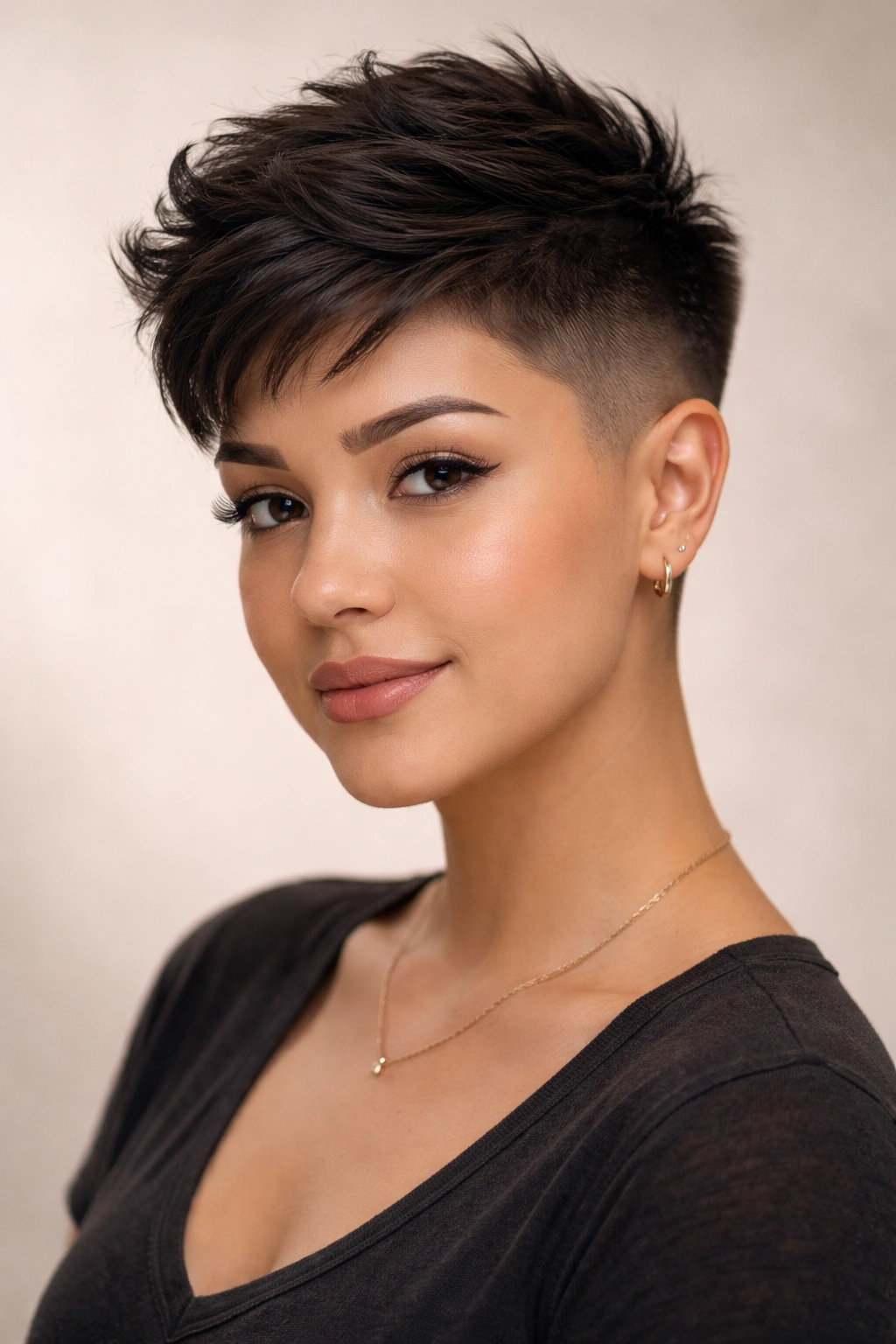
This cut combines the architectural drama of an undercut with slightly more length and subtlety. Instead of shaved sides, the sides fade gradually from longer hair at the top to very short at the nape and ears — creating a sculpted, tapered effect rather than a stark contrast. The top remains longer with layering and texture, creating nice proportions overall.
The Balanced Approach to Face-Flattering Structure
A high fade gives you the defining structure of an undercut without the extreme boldness. The tapered sides create clean lines that frame the face and make it appear more sculpted. Because there’s more hair overall than in a full undercut, this version feels less severe and works for people who want definition without the statement-making intensity of completely shaved sides.
Styling Options
You can wear this cut with texture and movement on top for a relaxed vibe, or blow-dry it smooth and slicked back for a more polished look. The fade allows flexibility in styling top while maintaining the clean, defined side profile. Most people with this cut style the top with texture and let the faded sides speak for themselves without additional product or styling.
Upkeep requirement: The fade needs a touch-up trim every 3 to 4 weeks to maintain the tapered effect. The undercut grows out surprisingly quickly and loses its visual impact if neglected.
9. Grown-Out Pixie with Asymmetrical Layers
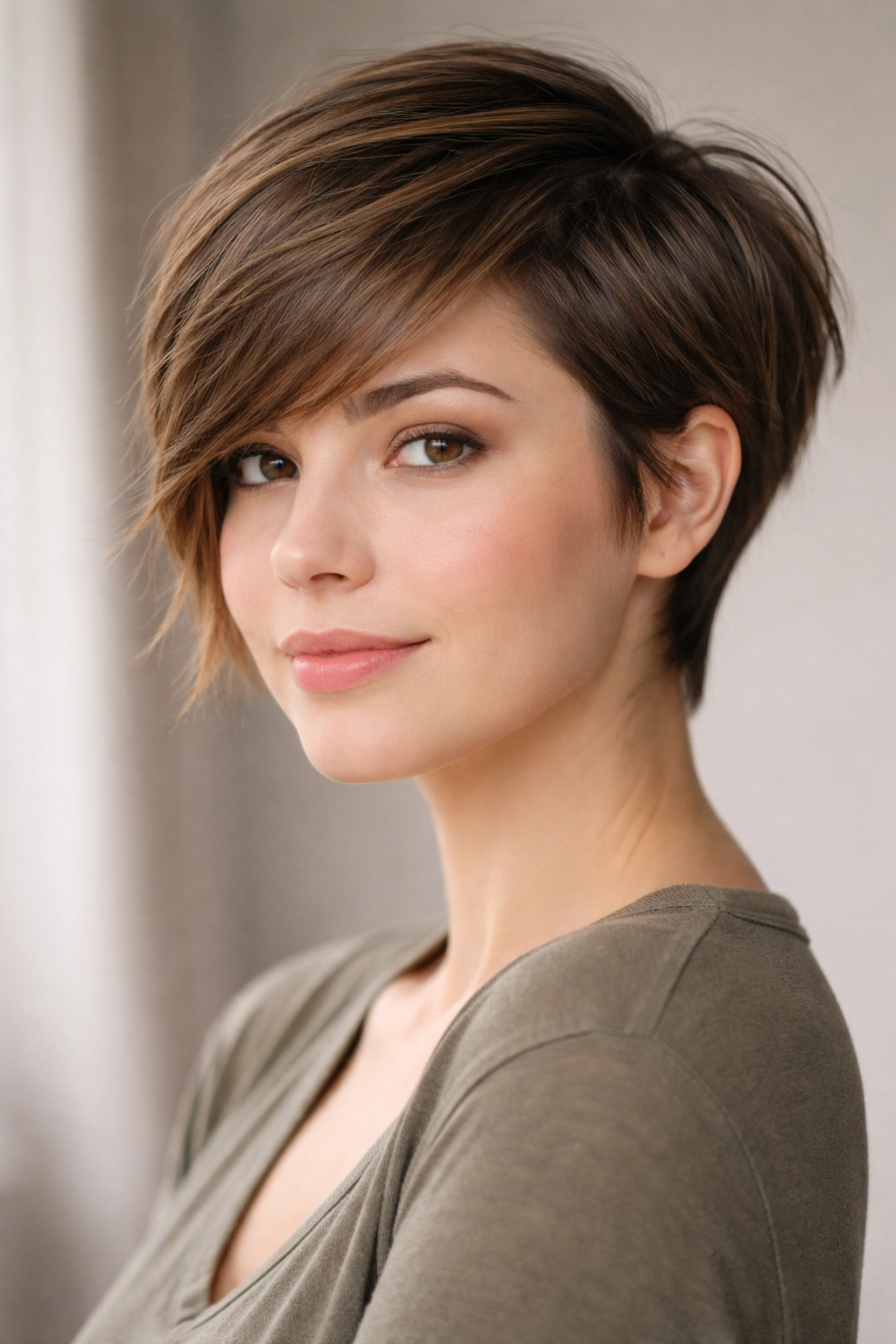
Sometimes the most flattering pixie is one that’s been growing out for 4 to 6 weeks, falling somewhere between pixie and short bob, with intentionally asymmetrical layering. The front is noticeably longer than the back, creating directional movement and angles that naturally elongate a round face. The layers throughout prevent the growing-out phase from looking shaggy — instead, it looks intentional.
Why Asymmetry Reshapes Perception
Asymmetry is one of the most powerful tools for reshaping how someone perceives a face. When you move away from centered, symmetrical styling and introduce angles and directional flow, you’re disrupting the viewer’s ability to read the face as simply round. The eye follows the asymmetrical line instead of settling on the overall shape. A grown-out pixie with intentional asymmetry leverages this trick beautifully.
Transitioning Into This Longer Length
Ask your stylist to cut asymmetrical layers before the growing-out phase begins. This ensures that as the cut grows, it grows into flattering shape rather than just becoming longer and shapeless. The longer front pieces should be cut at angles that fall toward the face slightly, creating that framing effect. Every layer should graduate to a different length so there’s visual movement and break-up throughout.
Styling advantage: This length actually looks better with a bit of texture and movement — blow-drying smooth can make you feel like you need a styling update when the cut simply wants texture and direction.
10. Soft Pixie with Wispy Pieces
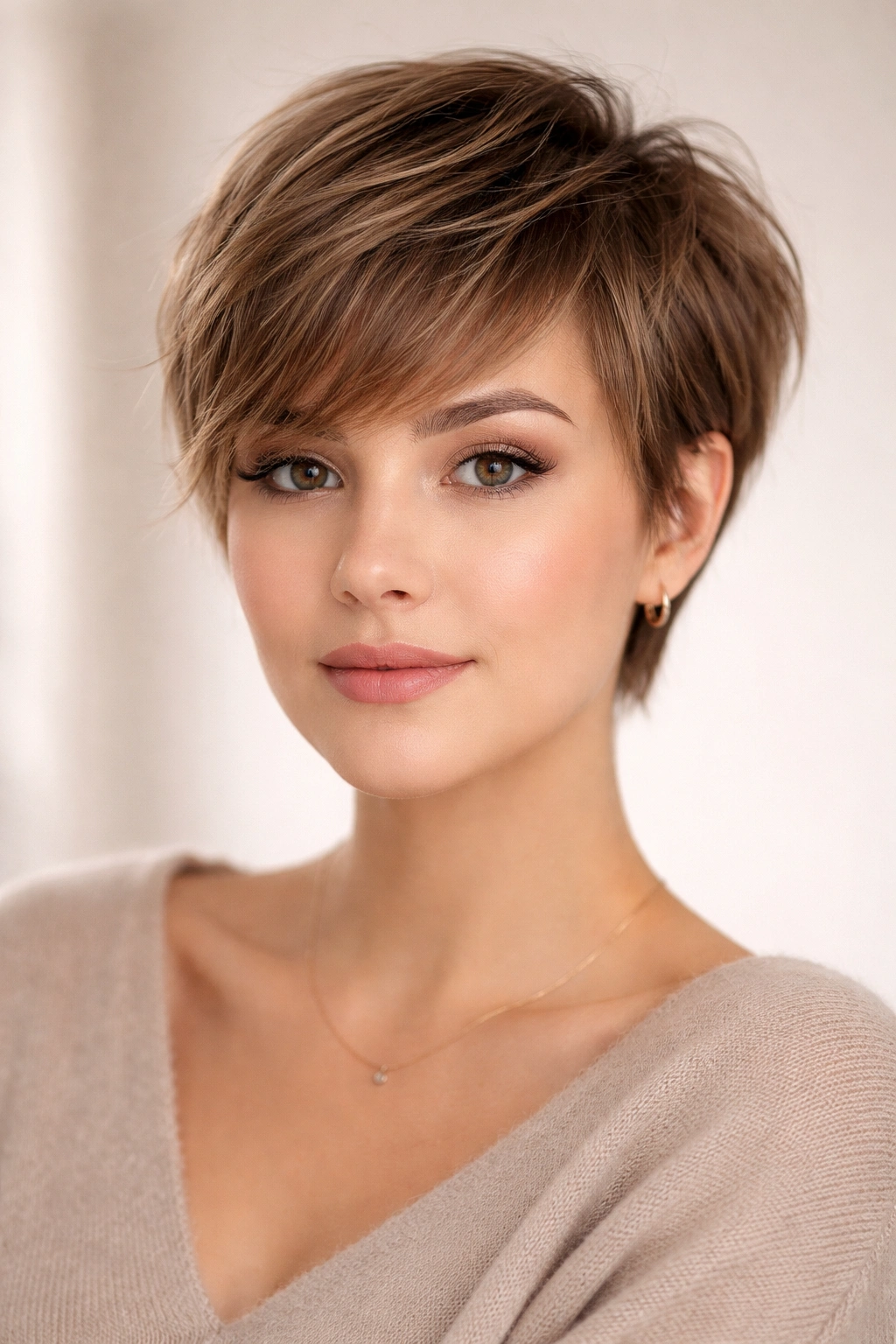
A soft pixie maintains the short, manageable length of the style while emphasizing gentle, wispy pieces rather than choppy choppiness. The overall shape is rounded and soft rather than sharp and angular, but the wispy elements create visual lightness and movement that prevents the style from reading as heavy or face-widening. This version works beautifully for people who want short hair but prefer a gentler aesthetic.
The Texture That Works Without Choppiness
Wispy pieces are created by point-cutting into the hair rather than chopping bluntly across — this creates delicate, feathery ends rather than chunky layers. When tousled and separated, wispy pieces create a cloud-like texture that reads as intentional and styled despite being soft. The softness is in the technique, not in the absence of styling or structure.
How to Style for Maximum Flattery
Use a light texturizing product and your fingers to separate and lift the wispy pieces. Blow-dry while encouraging height at the crown and directional movement throughout. Don’t smooth the pieces down — let them sit separated and feathery. The combination of height on top and soft, wispy texture throughout creates visual interest that keeps the eye moving rather than settling on face shape.
Hair texture consideration: This works beautifully on fine or thin hair where choppy layers might look sparse, and it also suits wavy or slightly curly hair that naturally separates into pieces.
11. Sculpted Geometric Pixie
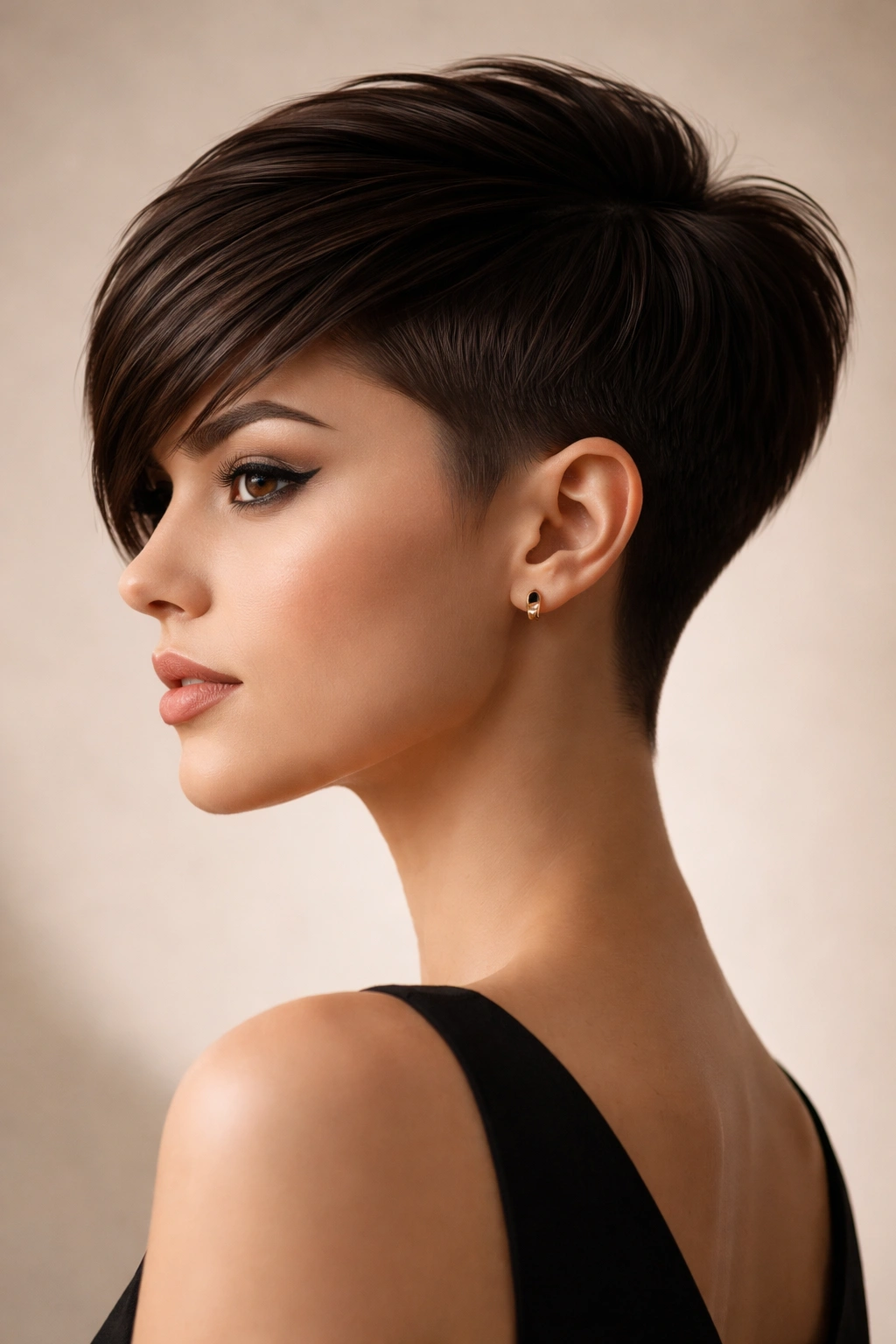
For those drawn to bold, architectural styling, a sculpted geometric pixie features precise lines, strategic angles, and a very deliberate shape. Unlike choppy and textured versions, every line in this cut is intentional and visible. The back might be longer and fuller while the sides taper, or there might be specific angles that create graphic lines on the scalp. It’s cut and worn as an art piece.
The Impact of Architectural Precision
A geometric pixie draws so much focus to the cut itself that face shape becomes secondary. The precision of the lines, the clarity of the angles, and the bold statement of the style redirect attention completely. This works for round faces because you’re creating such a visually compelling haircut that facial shape is irrelevant — people notice the hair, not the face beneath it. It’s styling as transformation.
Maintenance and Styling
This cut works best when blow-dried smoothly and precisely — the geometric lines need to be visible and clean. Use a light styling cream and your hands to direct hair exactly where the cut intends it to go. Regular trims every 3 to 4 weeks are essential because any growth disrupts the geometric precision. This is a high-maintenance cut that rewards careful styling and frequent trims.
Best for: People with straight or wavy hair, comfortable with daily styling, and attracted to bold, statement-making aesthetics. If you prefer low-maintenance or prefer not to blow-dry, this isn’t your cut.
12. Pixie with Face-Framing Layers
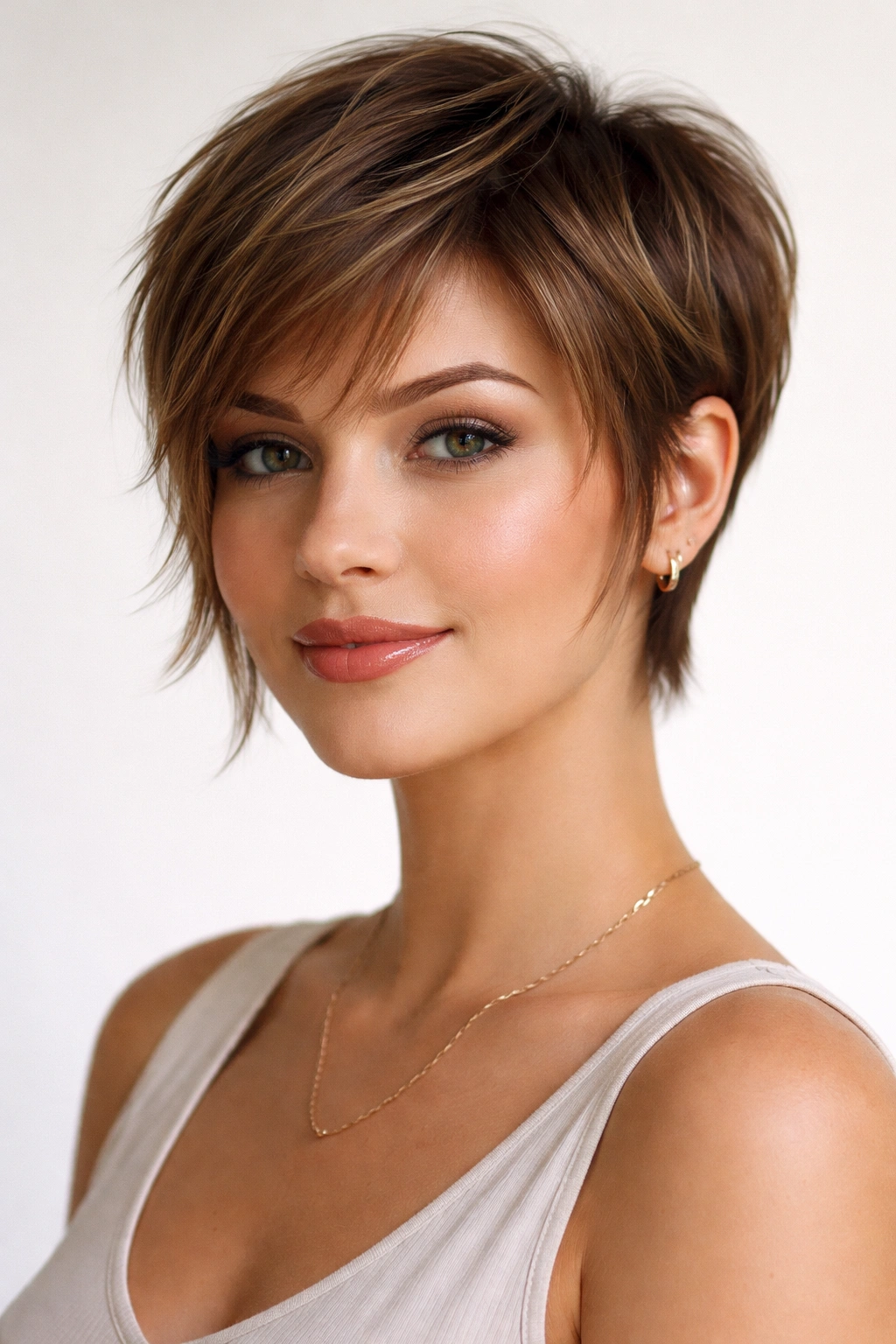
The final pixie variation is short overall but features strategically longer layers that frame the face — specifically, pieces around the temples, cheekbones, and jawline are left noticeably longer than the rest of the pixie, creating a flattering frame. The overall silhouette is still short and easy to manage, but the longer frame pieces provide movement, styling options, and visual softness around the face.
Why Face-Framing Works
Longer pieces around the face create boundaries that prevent the eye from reading the full width of the face. They also add movement and texture specifically where you want visual interest. The longer pieces can be styled multiple ways — swept to one side, pulled back, curled under, or allowed to graze your cheekbones. This versatility means you can adjust the look depending on how you feel on any particular day or what occasion you’re styling for.
Styling Possibilities
Use a light texturizing spray and your fingers to style the framing layers with movement and direction. These pieces should feel separated and intentional, not stuck flat to your face. You might blow-dry them with some curl or wave, blow them straight but textured, or even use a small curling iron to create soft bends. The rest of the pixie can be tousled and textured or smoothed for a polished look — your frame pieces are flexible enough to pair with either aesthetic.
Versatility highlight: This cut gives you the manageability of a short pixie with more styling versatility than a uniform crop. You get choices about how to wear it day to day, which many people appreciate.
Final Thoughts
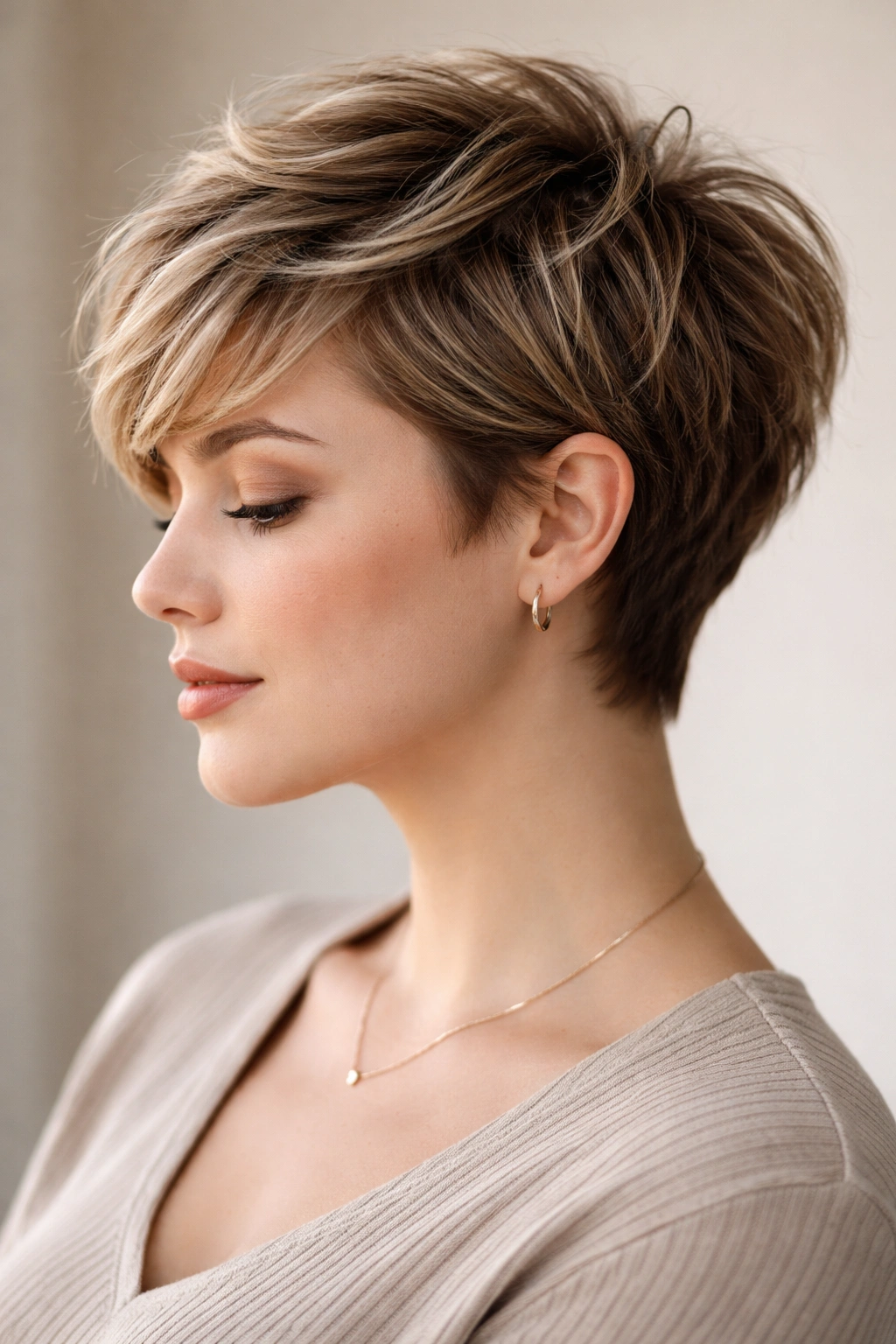
Choosing the right pixie cut for a rounder face comes down to understanding what creates visual flattery: layering and texture that interrupt smooth lines, strategic height that elongates, asymmetry that disrupts centered roundness, and movement that keeps the eye traveling rather than settling on overall shape. Every pixie variation here works with these principles differently — some emphasize texture and disruption, others rely on angles and direction, and still others use length and framing strategically.
The best pixie cut for you specifically depends on your hair texture, how much time you want to spend styling, and what aesthetic appeals to you. If you love texture and undone softness, lean toward choppy or tousled versions. If you prefer sleek precision, explore angled or geometric options. If you want flexibility, a pixie with longer framing pieces gives you styling options that feel both short and capable of adaptation. All of these cuts work — the key is picking the one that matches your lifestyle and the way you actually want to feel wearing short hair.
Schedule a consultation with a stylist who has experience cutting pixies, bring photos of specific variations that appeal to you, and be honest about how much styling you’re willing to do daily. The best haircut is one you’ll actually style and maintain, not one that theoretically looks good but requires more commitment than you’re willing to give. With the right pixie and the right attitude about styling it, you’ll get compliments on how good short hair looks on you — because when the cut is chosen intentionally with your face shape in mind, it absolutely does.
