



Professional appearance matters in the workplace, and hairstyle plays a crucial role in how you’re perceived by colleagues, clients, and leadership. The right hairstyle can project confidence, competence, and polish while still reflecting your personal style. Many women struggle to find the balance between looking polished and feeling authentic at work—styles that are interesting enough to feel like you, but structured enough to maintain a professional impression throughout a busy day.
The truth is, professional doesn’t have to mean boring or restrictive. Modern workplace culture recognizes that women can look polished and powerful in countless ways, from sleek and minimal to textured and dimensional. What matters most is choosing styles that keep hair neatly arranged, appear intentional and controlled, and won’t distract from your work or require constant adjustment. Whether you prefer low-maintenance styles or are willing to spend time styling, there’s a professional hairstyle that fits your hair type, face shape, lifestyle, and personal aesthetic.
The hairstyles below represent some of the most versatile, universally flattering, and workplace-appropriate options available. Each can be adapted to suit different hair textures, lengths, and styling preferences. You’ll find styles that work for daily wear, styles that suit special meetings or presentations, and styles that bridge the gap between professional and personal. The key is knowing how to execute each one properly and understanding why it works in a professional context.
1. Classic Low Bun
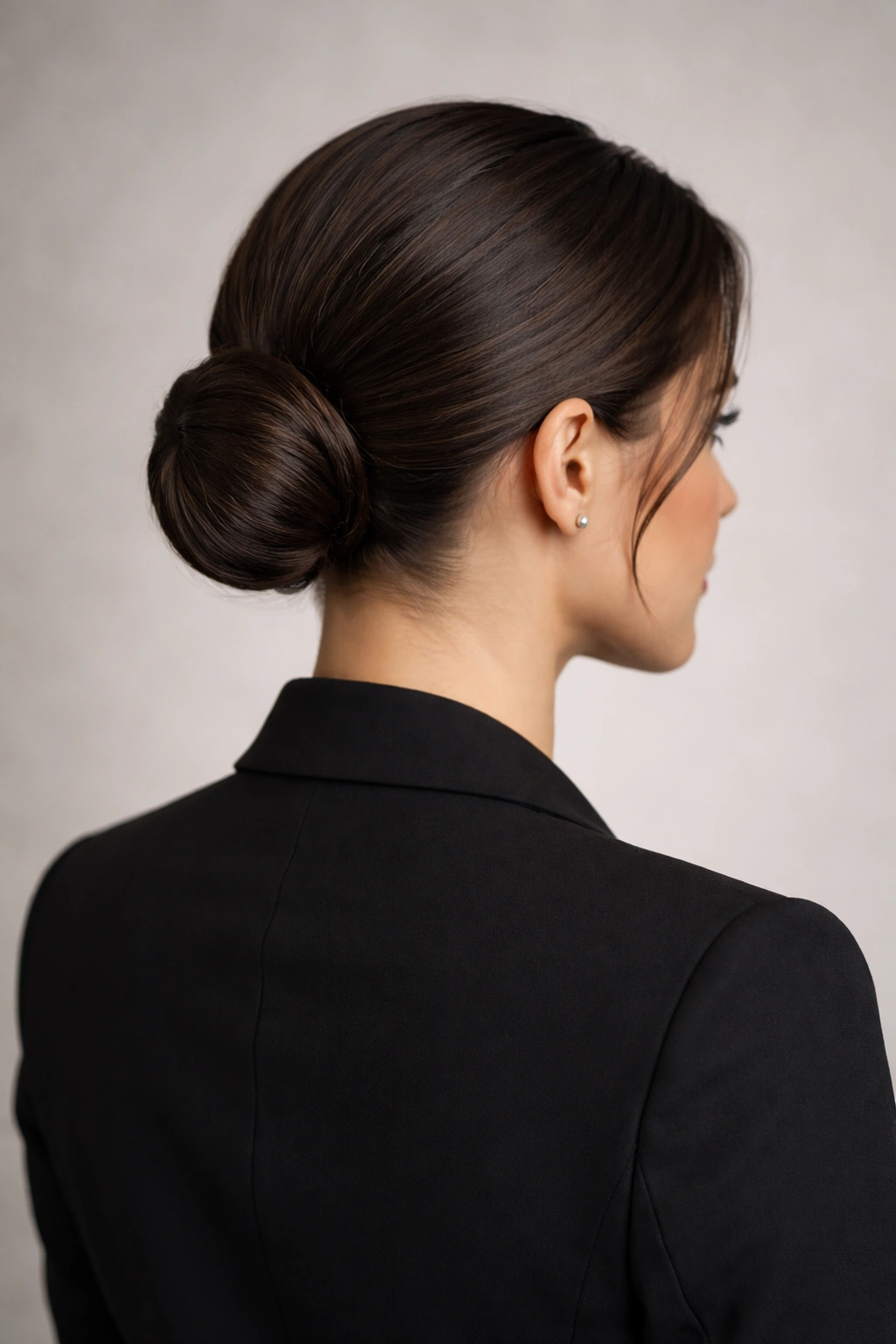
The low bun remains the gold standard for professional polish, and for good reason—it’s timelessly elegant, universally flattering, and works across virtually every hair type and length. A well-executed low bun sits at the nape of the neck, appears neat and intentional, and immediately conveys competence and focus. The style keeps hair completely off your face and shoulders, eliminating distractions and allowing your features and clothing to take center stage.
Why It’s Perfect for Professional Settings
The low bun works in boardrooms, client meetings, formal presentations, and everyday office work because it signals polish without appearing overly styled or trendy. It’s the hairstyle many women instinctively reach for when they want to feel in control and look put-together—and for good reason. The style has remained professional standard across industries and generations because it simply works. Hair pulled back and secured neatly conveys that you’re serious, focused, and ready for business. There’s no hair falling into your face during important conversations, no need to constantly push strands back, and no appearance of trying too hard.
How to Create and Perfect It
The secret to a professional-looking low bun is texture and a secure finish. If your hair is freshly washed and slippery, it won’t hold well throughout the day. Work with second- or third-day hair, or apply a texturizing spray or dry shampoo to damp hair before styling. Create a clean, sleek base by brushing hair into a low ponytail at the nape of your neck using a small-toothed comb and smoothing products like gel or cream. Twist the ponytail loosely and wrap it around its base to form the bun, securing with bobby pins inserted directly into the wrapped section. Finish with a flexible hold hairspray that keeps everything in place without looking stiff or crunchy.
Pro tip: A velvet hair tie or scrunchie instead of a regular elastic gives a more intentional, polished appearance while being gentler on hair.
2. Sleek Ponytail
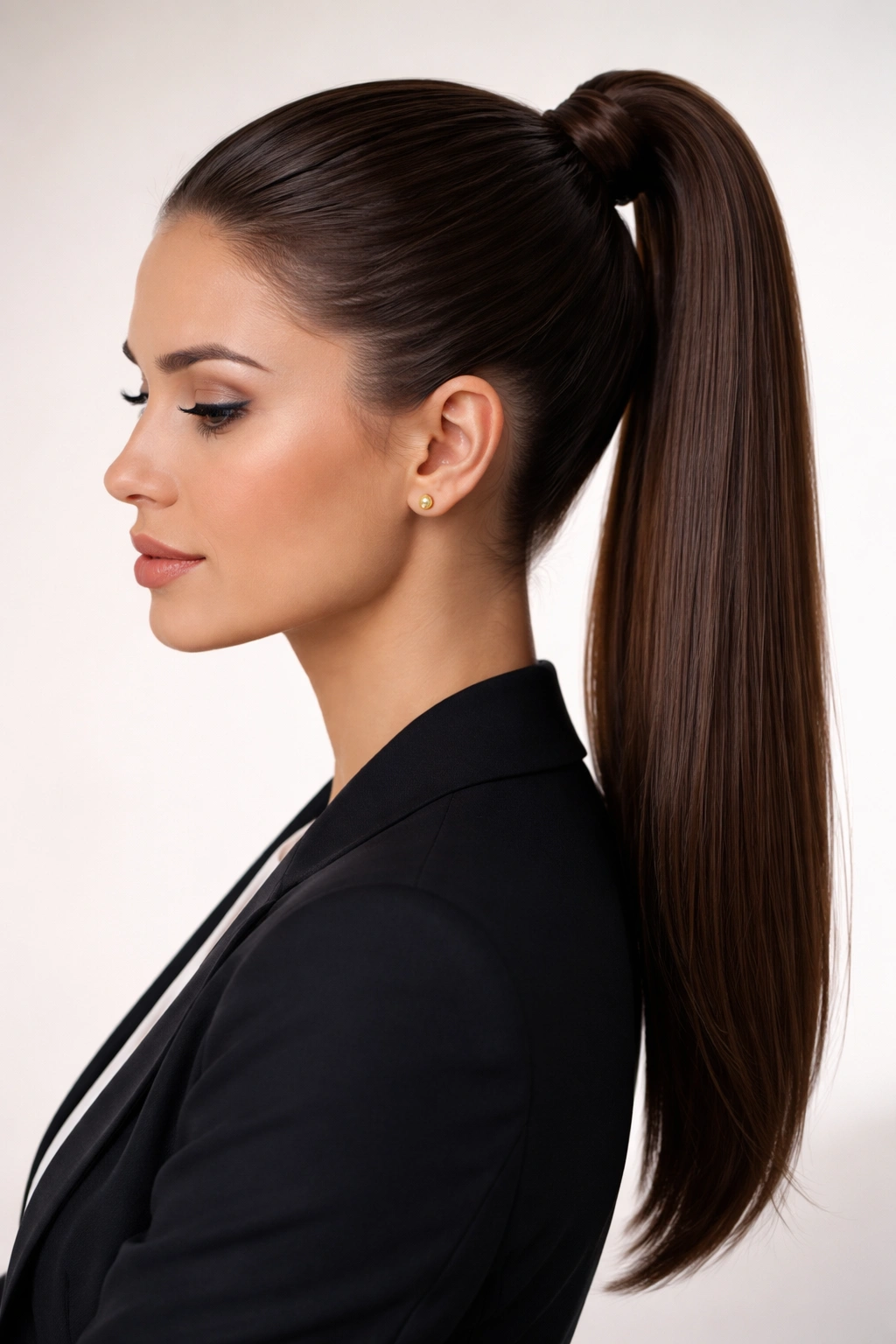
A sleek, high-set ponytail is the workhorse of professional hairstyling—modern, efficient, and infinitely adaptable. Unlike a casual ponytail, a sleek version features smooth, flyaway-free hair and a precise, controlled appearance. This style works especially well for women with thick or long hair and suits professional environments where you want to look pulled-together without appearing fussy. The ponytail can be positioned mid-back, at the crown, or even at the nape, depending on your preference and the occasion.
The Professional Edge It Delivers
A sleek ponytail projects efficiency and confidence without sacrificing femininity. The style is practical—hair is completely contained and won’t fall forward or require adjusting—while remaining visibly intentional and well-groomed. A sleek ponytail works in conservative corporate environments, creative industries, and nearly everywhere in between. The key is execution; a messy, casual ponytail reads differently than a polished, smoothly executed one. When every hair is in place and the line from roots to tail is clean and controlled, the style elevates instantly from casual to professional.
Achieving the Sleek, Polished Look
Smoothness is everything here. Start with damp hair and apply a smoothing serum or lightweight anti-frizz product from mid-length to ends. Blow-dry with a paddle brush, working in small sections and ensuring each section is completely smooth and straight before moving on. Once hair is fully dry, use a fine-toothed comb and a smoothing cream or gel to brush hair tightly into your ponytail. The tighter the initial ponytail, the sleeker and more polished it will appear. Secure with a small, tight elastic, then wrap a small section of hair around the base to conceal the elastic—this gives a significantly more finished appearance than leaving the elastic visible.
Worth knowing: Hair that’s slightly moisturized holds a smooth style better than completely dry hair, which tends to frizz. A light mist of smoothing spray as you brush into the ponytail helps tremendously.
3. Deep Side Part with Waves
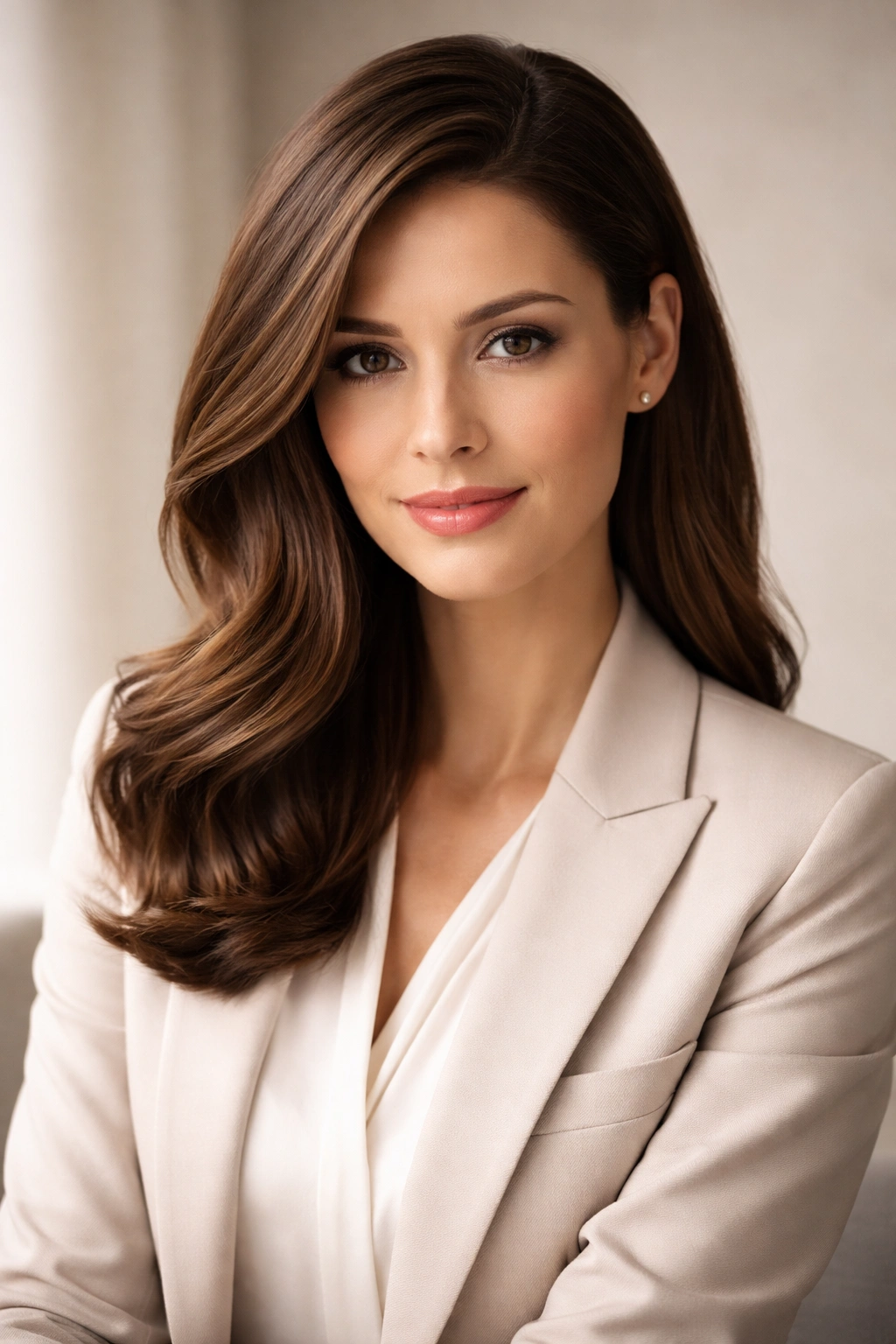
A deep side part paired with soft, controlled waves strikes an elegant balance between professional polish and accessible femininity. This style works beautifully for client-facing roles, leadership positions, and situations where you want to look both competent and approachable. The deep part—positioned about one-third of the way across the head rather than down the center—creates dimension and visual interest while waves add movement without appearing casual. Hair stays off one side of the face entirely, creating an asymmetrical, intentional look.
Why This Works in Professional Environments
The side part with waves projects sophistication and confidence. It’s polished enough for important meetings and presentations, yet approachable enough for everyday office work. The waves add visual richness without appearing to require constant styling, and the deep part creates strong asymmetry that’s both modern and flattering. This style works across hair lengths and textures, from shoulder-length to waist-length, and suits nearly every face shape. The asymmetry also helps elongate the face, creating a subtle but noticeable lifting effect.
Creating Waves That Last All Day
The key to maintaining waves throughout the day is proper technique and appropriate product. Blow-dry hair completely straight first, then create waves using a 1.25-inch curling iron. Take small sections and wrap hair around the barrel away from the face, holding for two to three seconds before gently releasing. The secret that professionals use is alternating the direction—curl one section away from the face, then the next section toward the face—this creates a more natural, dimensional wave pattern than curling every section the same direction.
Once waves are set, apply a medium-hold hairspray while hair is still warm. This locks the shape in place. A light texturizing spray applied to waves once they’ve completely cooled helps prevent them from relaxing as the day progresses. For longevity, avoid running your fingers through the waves repeatedly—instead, tousle gently if needed. The deep side part should be created with a fine-toothed comb and secured with a small amount of edge control or gel to keep it crisp throughout the day.
Insider note: Waves created when hair is 90% dry (not completely dry, not damp) hold significantly better than waves created on fully dry hair.
4. Structured Braids
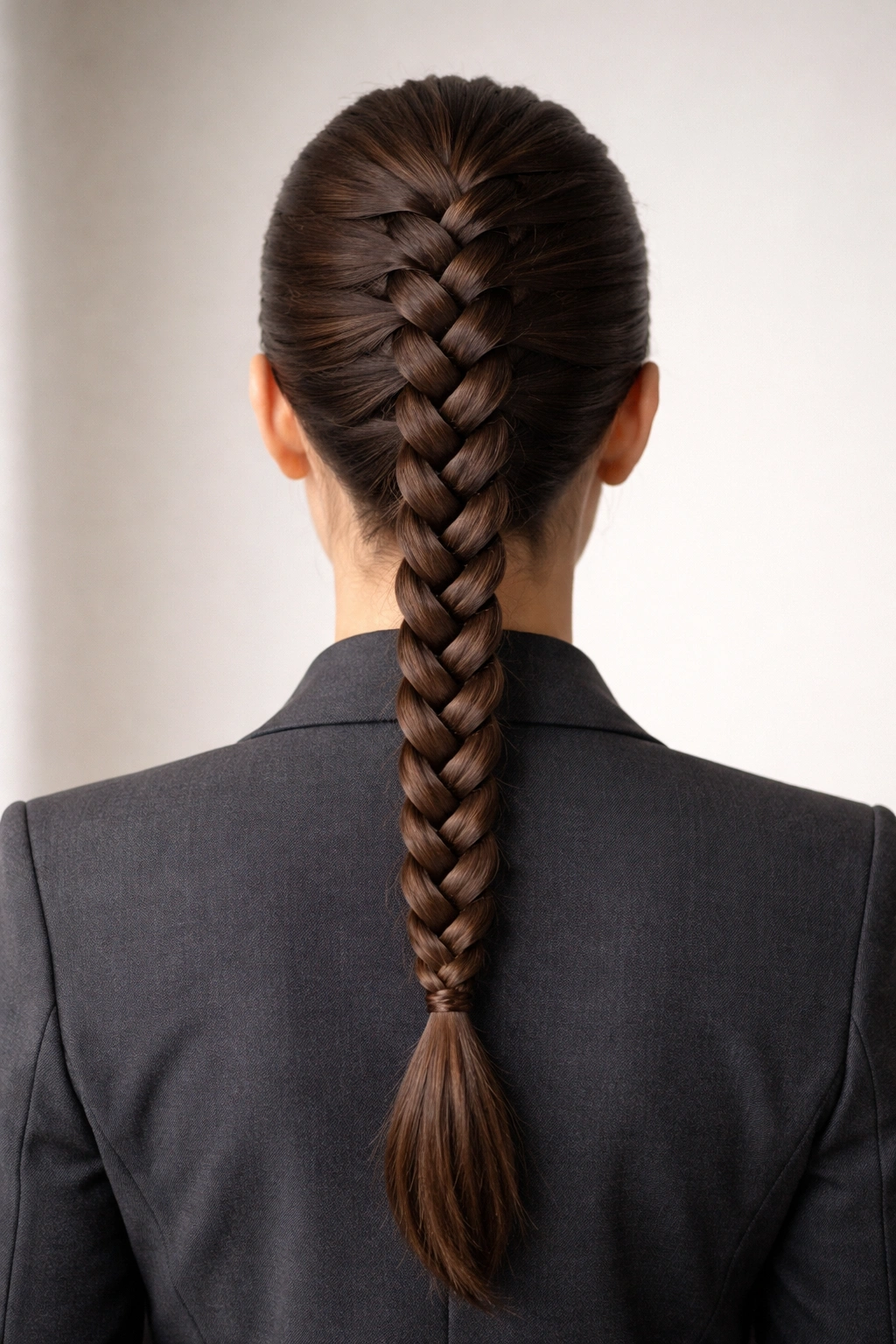
Braids—whether French, Dutch, or traditional three-strand—represent a sophisticated approach to contained, professional hair. When executed neatly and kept close to the scalp, braids read as intentional and polished rather than casual or playful. A single braid down the center back, twin braids, or braids that wrap around the crown all work in professional settings. The key is neatness: loose, undone braids look casual, while tight, precise braids project control and attention to detail.
The Professional Appeal of Braided Styles
Braids offer a significant advantage in professional environments: they keep hair completely secure for entire workdays without needing adjustment. Once braided, your hair simply won’t come loose or require touching up. This makes braids ideal for days with extensive client meetings, presentations, or situations where you need to feel confident your hair will look as polished at 5 PM as it did at 8 AM. Braids also work beautifully across all hair types, including textured and curly hair, and they suit every face shape when positioned correctly.
Braiding Techniques for Workplace Wear
The difference between a casual braid and a professional one lies in tightness and finish. Professional braids are braided close to the scalp with consistent, snug tension throughout. Start with hair pulled back in a low ponytail, then create a Dutch braid (braiding under rather than over) from the crown down to the elastic, keeping tension consistent and tight. Anchor the end with a small elastic, then wrap a thin section of hair around the base to hide the elastic completely.
For twin braids, create a clean part down the center, then braid each side French-style from the temple back, keeping each braid close to the scalp and tight throughout. Both braids should end at approximately the same length for a polished, symmetrical appearance. Secure each with a small, discrete elastic. Once finished, gently tug each braid slightly to add subtle texture and dimension—this softens the look just enough to avoid appearing too severe while maintaining the controlled, intentional appearance.
Pro tip: Apply a smoothing serum or light gel to damp hair before braiding; this prevents flyaways and keeps the braid looking neat and polished throughout the day.
5. Layered Bob
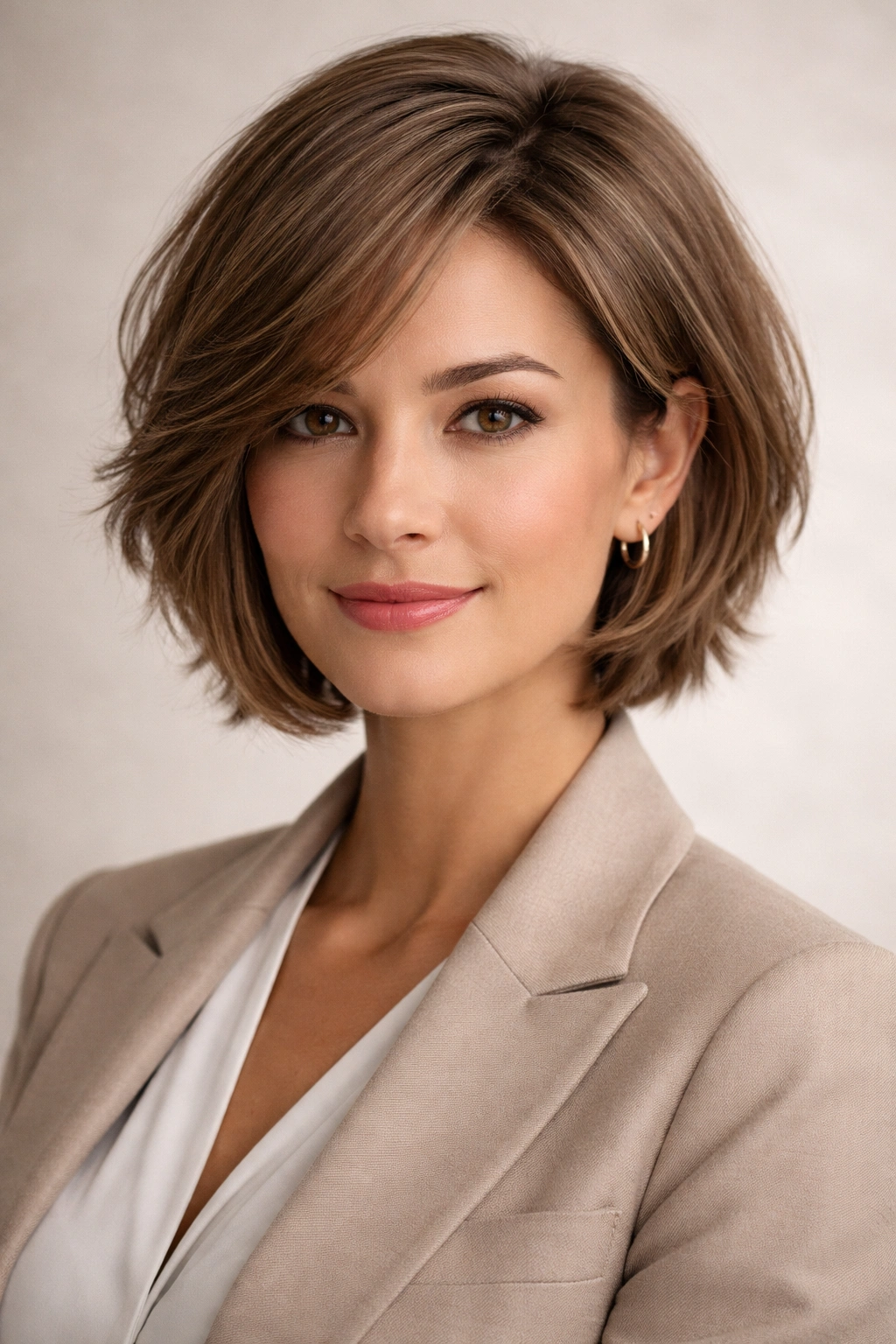
A well-cut layered bob—typically chin-length or slightly shorter—represents modern professional polish and practical efficiency. Unlike blunt, one-length bobs, layered bobs feature movement and texture while remaining contained and neat. The layers prevent the style from looking heavy or dated, and they make styling significantly easier. A layered bob works beautifully with a center or side part and flatters most face shapes, particularly those with fuller cheeks or wider jawlines.
Why Bobs Command Professional Respect
The bob has evolved from corporate standard to genuinely modern and chic, particularly when cut with contemporary layers and movement. A quality layered bob immediately signals that you care about your appearance and take yourself seriously. The style is practical—it’s short enough to style quickly but long enough to offer flexibility in how you wear it. A layered bob can look polished and sophisticated for important meetings, or slightly more relaxed and modern for everyday work. This versatility makes it one of the most professionally adaptable hairstyles available.
Styling Your Bob for Maximum Polish
A layered bob requires a good haircut from a skilled stylist who understands modern techniques and face shape; this investment pays off significantly in how easy the style is to wear professionally. Blow-dry with a paddle brush, working in small sections and angling the brush to create movement away from the face. The layering means you don’t need to achieve perfect straightness—subtle texture actually enhances a modern bob.
For additional polish, flip your head forward while blow-drying and finish with a cool shot of air while upright; this creates lift at the roots. A light texturizing spray or sea salt spray applied to dry hair adds dimension and prevents the style from looking flat. If your bob tends to flip outward at the ends rather than tucking under, a smoothing cream or light gel applied to just the ends will help them flip inward as you blow-dry. The goal is a piece-y, textured look that appears effortlessly put-together rather than rigidly styled.
Worth knowing: A layered bob requires a trim every 4-6 weeks to maintain its shape and prevent the ends from looking scraggly or unkempt—this is important for maintaining a professional appearance.
6. Half-Up, Half-Down Style
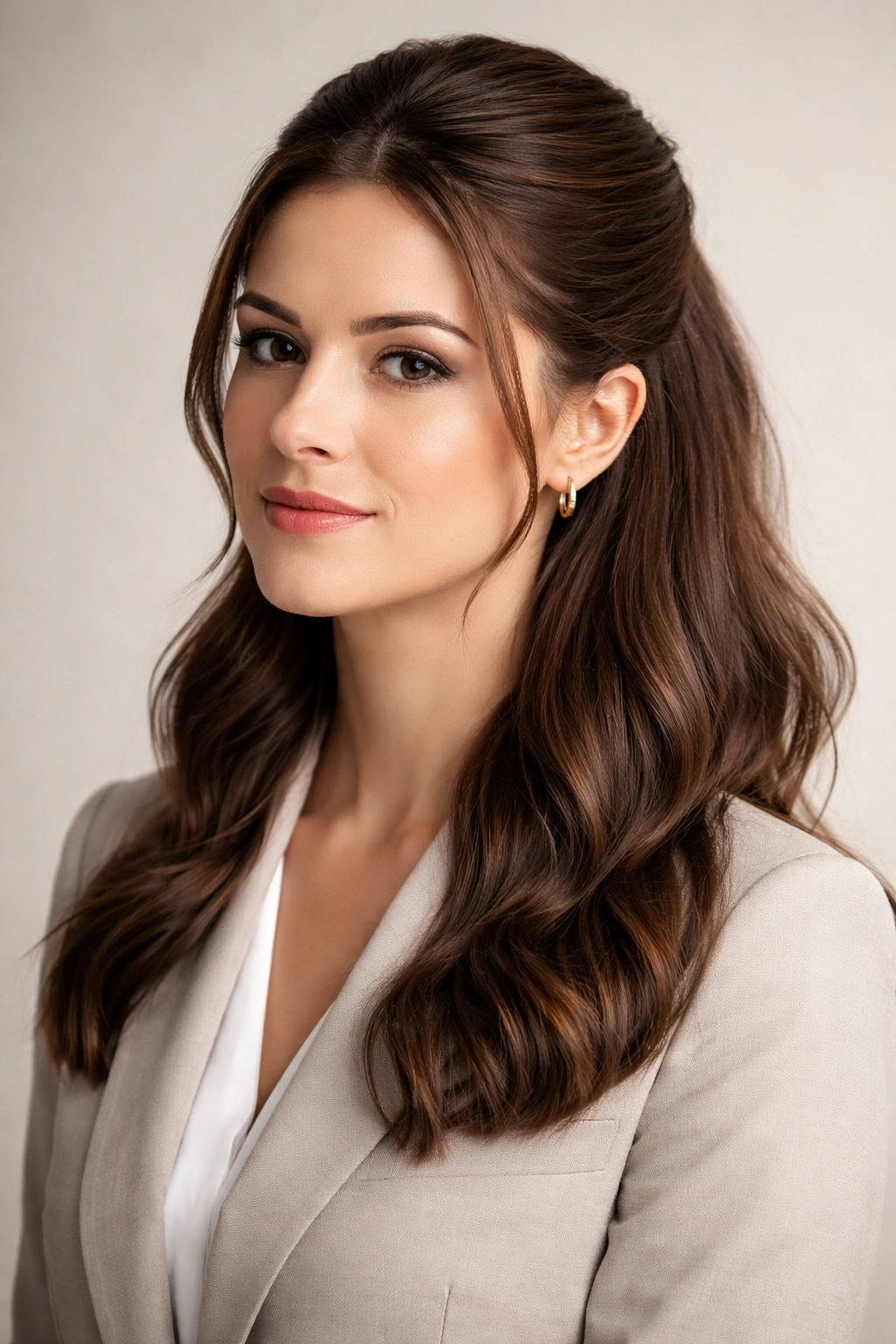
The half-up, half-down style offers a middle ground between down hair and fully pulled-back styles—perfect for professionals who want movement and softness but also need hair off their face. This style features the top section of hair gathered and secured (usually with a small elastic, barrette, or decorative clip), while the remaining length flows down the back and over the shoulders. When executed neatly, it’s polished and intentional; when loose and casual, it reads as relaxed and approachable.
Professional Versatility of Half-Up Styles
The half-up, half-down approach works in creative industries, client-facing roles, and even more conservative environments when styled with enough polish and intention. The style is forgiving—it accommodates most hair lengths, textures, and densities—and it’s genuinely flattering on nearly every face shape. The key to professional appearance is ensuring the gathered section looks intentional and secure, not like your hair simply got caught up accidentally. This style also works well for longer hair types that might otherwise feel too heavy or would require frequent adjustment if worn completely down.
Creating a Polished Half-Up Arrangement
Start by determining where you want the division—typically about halfway back from the front hairline, though this can vary based on preference and face shape. Take the upper section and brush it smoothly back, creating a clean line across the back of your head where the gathered section meets the loose section below. Secure with a small elastic, barrette, or clip positioned close to the scalp so it’s not visible from the front.
For additional polish, take a small section of hair from the gathered section and wrap it around the elastic to conceal it completely. This finishing touch elevates the style significantly. If you want the gathered section to have subtle volume, gently tease the crown area before gathering and smoothing the top layer; this adds lift without appearing fussy. The loose section below the gather can be completely straight, gently waved, or softly curled depending on your preference and the occasion—all look appropriately professional when the upper section is neat and intentional.
Pro tip: A tortoiseshell, pearl, or metallic clip instead of a basic elastic adds visual interest and signals intentionality while remaining professional and polished.
7. Twisted Crown
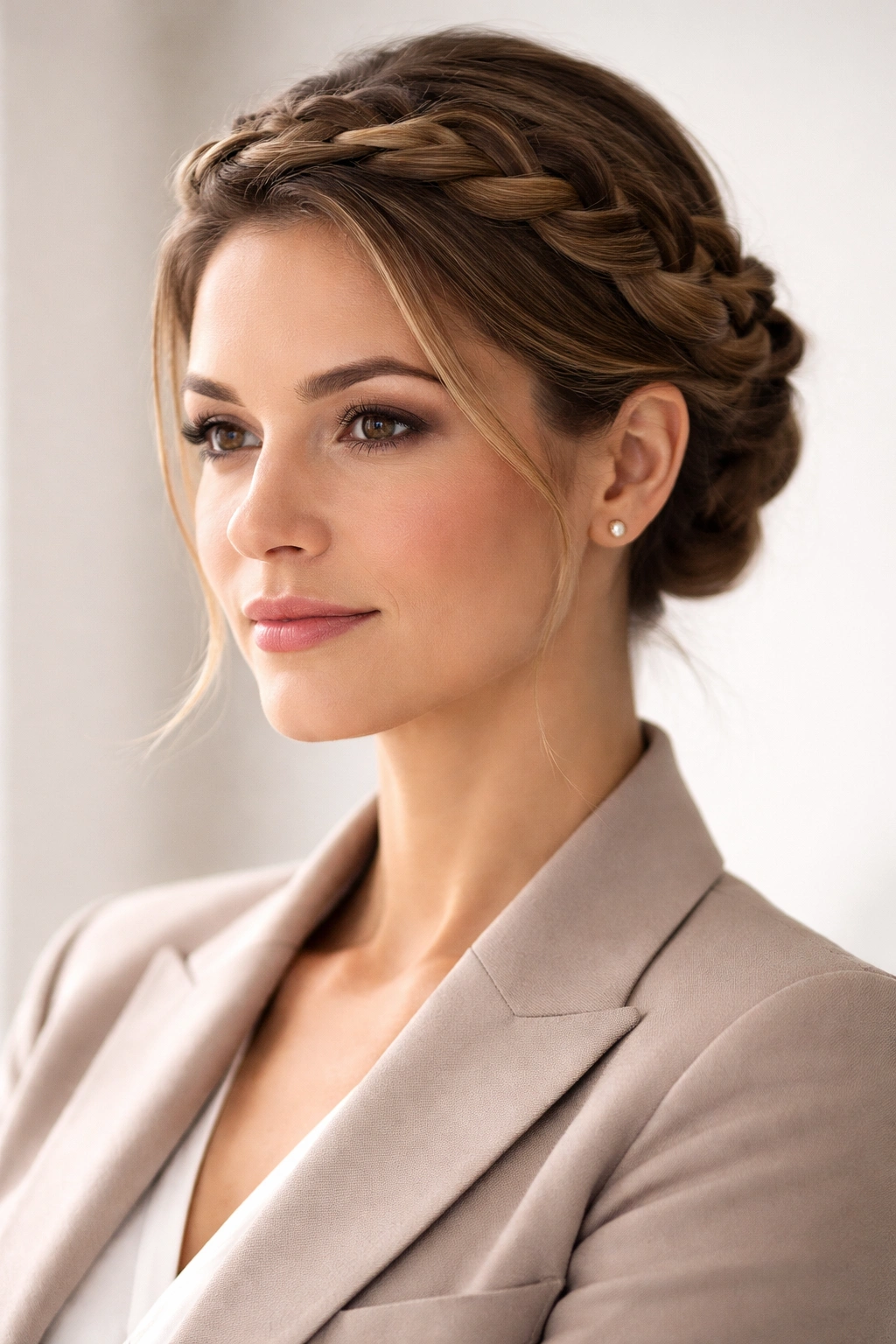
A twisted crown style—where sections of hair are twisted and wrapped around the head like a crown or halo—represents an elevated approach to pulled-back hair. This style looks intricate and sophisticated but is surprisingly achievable for anyone willing to spend ten minutes styling. The twists can be tight and precise or slightly relaxed and textured, depending on the occasion and your personal preference. This style works beautifully for special presentations, important meetings, or anytime you want to look particularly polished.
Why Twisted Styles Project Confidence
A twisted crown immediately signals effort and intention. It’s a style that clearly took thought and skill to execute, which communicates that you care about your appearance and take important occasions seriously. The style is romantic and sophisticated without being casual or trendy, making it appropriate even in conservative professional environments. It’s also secure—once twists are pinned, they won’t come loose or require adjustment throughout the day, even during long meetings or presentations.
Executing Twisted Crown Styling
Begin with slightly textured hair (day-two hair is ideal) and part your hair to one side. Take a section from near the part and twist it loosely, bringing the twist around toward the back of your head. Secure the end with a bobby pin inserted into the twisted section so it’s not visible. Take a section from the opposite side and create another twist, bringing it around to meet the first twist. Secure this second twist with pins as well.
Continue taking sections from around the hairline and twisting them around the head until you’ve incorporated all the hair you want in the crown. The remaining hair can flow down the back or be gathered into a low ponytail depending on your preference and hair length. Once all twists are in place and pinned securely, gently tug each twist slightly to add subtle texture and soften the overall appearance. This prevents the style from looking too tight or severe. Finish with a light, flexible-hold hairspray to secure everything without making the twists feel stiff or crunchy.
Worth knowing: A twisted crown shows off textured or curly hair beautifully and works wonderfully on second- or third-day hair when there’s enough natural texture to grip. Trying to execute this style on freshly washed, slippery hair is significantly more difficult.
8. Smooth High Ponytail
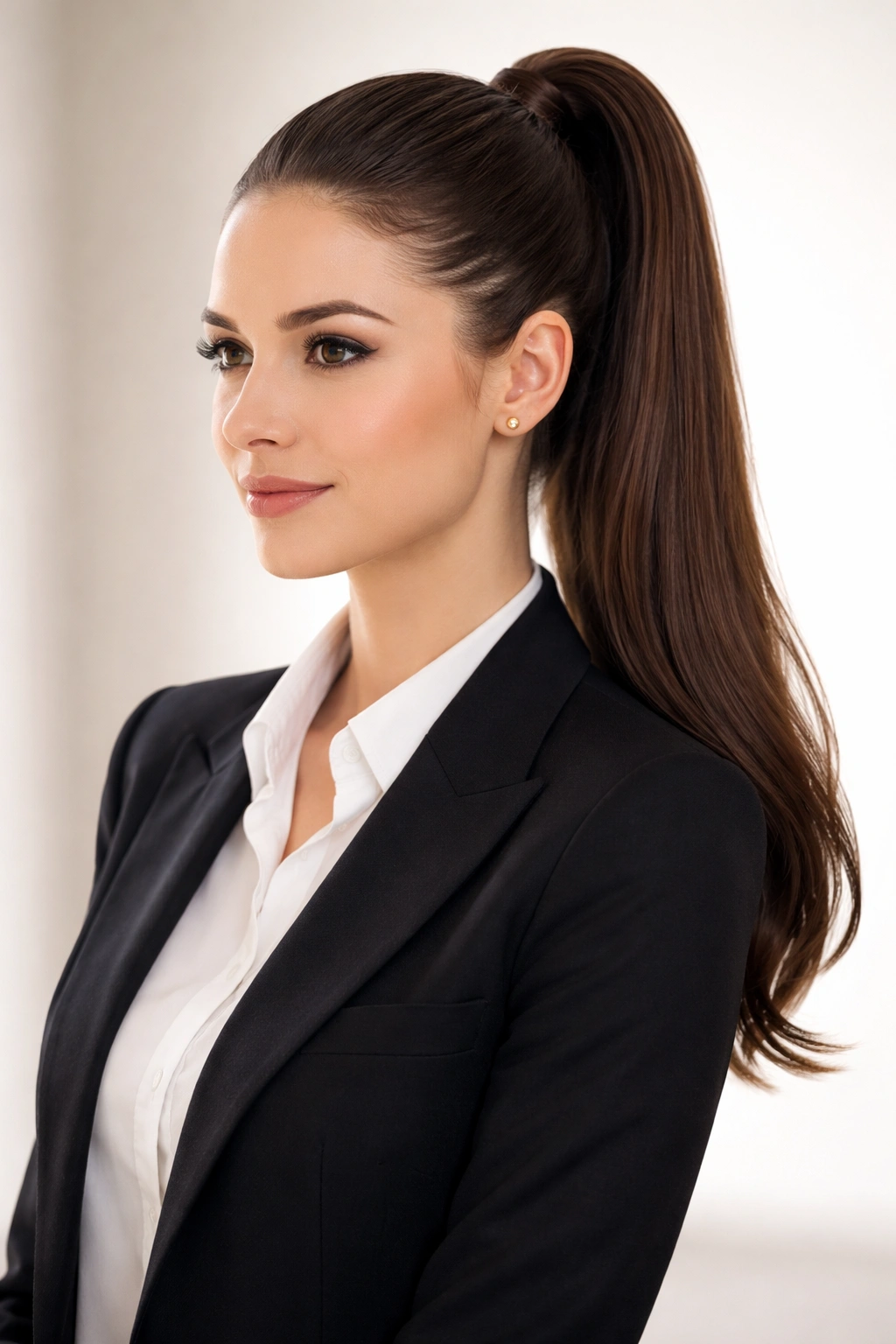
A high ponytail positioned at the crown—rather than the nape of the neck like a low ponytail—offers a modern, energetic look that’s still completely professional when executed smoothly and intentionally. This style works especially well for younger professionals and in creative or tech industries. The high position creates lift and appears modern and current without looking casual or undone. Hair must be smooth and shiny for this style to read as polished rather than simple.
The Modern Professional Appeal
A high ponytail modernizes instantly compared to a low bun or low ponytail, while still keeping hair completely contained and off the face. The style projects confidence and clarity—there’s nothing tentative about a high ponytail; it’s a deliberate choice. For women in leadership, client-facing roles, or creative fields, a high ponytail says you’re sharp, current, and take yourself seriously. The style also works across various hair lengths, from shoulder-length to waist-length, and suits most face shapes.
Achieving Smoothness and Precision
The critical difference between a casual high ponytail and a professional one is smoothness and finish. Use a fine-toothed comb to smooth every hair into the ponytail, using a small amount of smoothing cream or gel to tame flyaways and prevent any strays. Position the elastic as high as you prefer—usually somewhere between the crown and the very top of the head—and ensure it’s tight enough that the ponytail won’t slip or shift throughout the day.
For maximum polish, wrap a small section of hair from the base of the ponytail around the elastic to conceal it completely. Alternatively, choose a decorative elastic or hair cuff that coordinates with your outfit; this transforms the practical element into a stylistic choice. Apply a light smoothing spray to the finished ponytail to enhance shine and prevent flyaways. If you prefer, you can lightly tease the crown area before gathering the ponytail to create subtle lift, then smooth the outer layer—this adds dimension while maintaining polish.
Insider note: A high ponytail is one of the few hairstyles that actually looks better with completely smooth, shiny hair; any texture or waves will read as less intentional than with other styles.
9. Deep-Parted Blowout
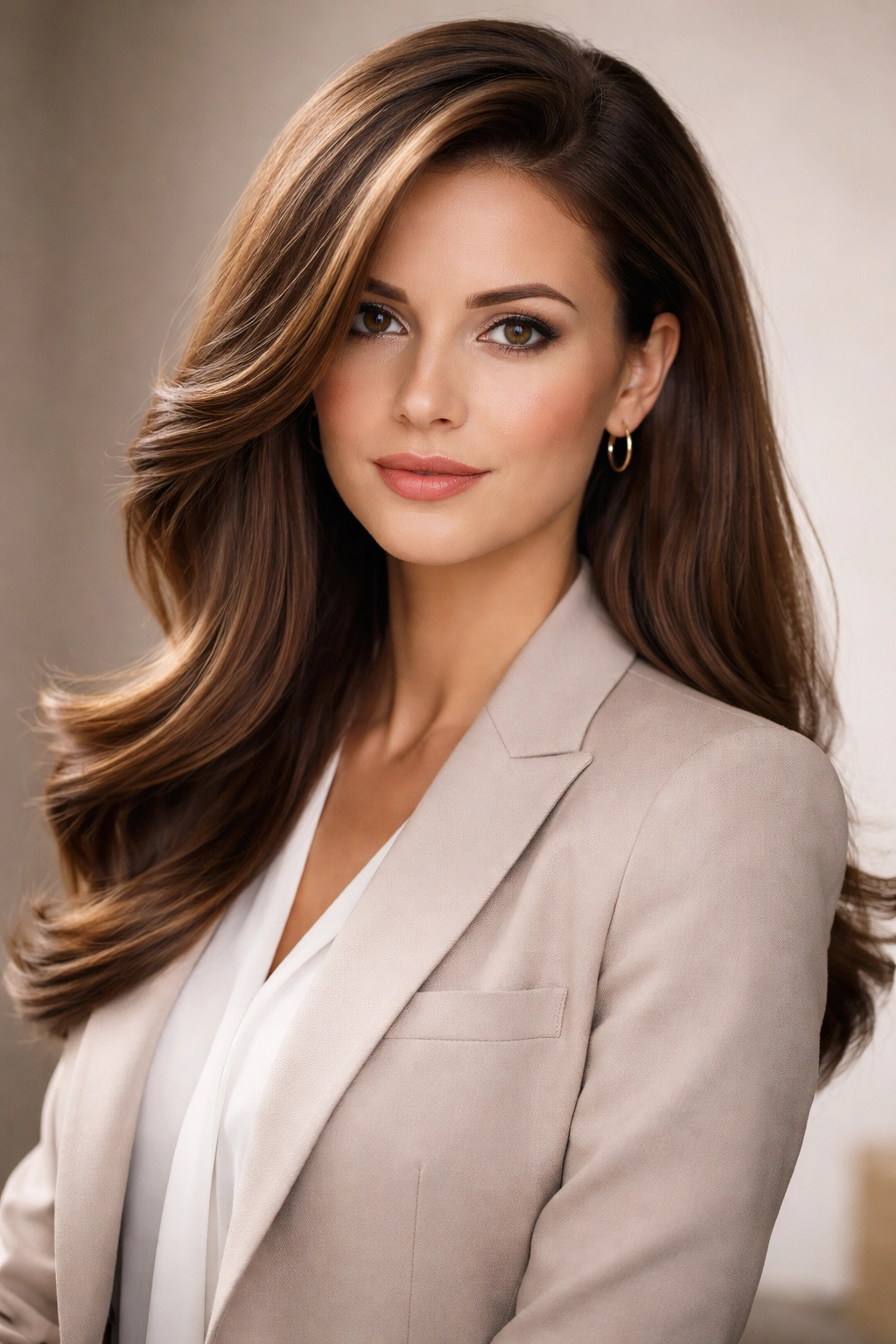
A deep-parted blowout—smooth, voluminous hair with dramatic side-swept styling—represents classic, timeless professionalism. This style features hair blown straight and smooth with subtle volume at the crown, and the deep part creates asymmetry that’s both flattering and intentional. For women in conservative industries, leadership positions, or client-facing roles where projecting polish and confidence is essential, a blowout remains unmatched. The style works beautifully for important presentations, client meetings, and formal workplace events.
The Confidence Factor of a Great Blowout
There’s a reason blowouts remain a go-to style for women preparing for important moments—they deliver noticeable polish and visual impact. A well-executed blowout says you’ve invested time and care into your appearance, which subtly communicates respect for the occasion and the people you’re meeting. The voluminous yet controlled texture appears effortlessly put-together, and the deep part creates sophisticated asymmetry. This style works across all hair lengths, though it’s particularly striking on shoulder-length or longer hair.
Creating a Blowout That Lasts All Day
Professional-quality blowouts require proper technique and appropriate products. Start with damp hair and apply a volumizing mousse to the roots, working it through with your fingers. Blow-dry in sections, using a round brush to create volume and smooth the hair simultaneously. Work from the roots down, keeping the brush moving to avoid heat damage and ensure even drying. The secret professionals use is directing the brush downward at the ends, which creates a subtle inward flip rather than a blunt, flat finish.
Create your deep side part while hair is still slightly warm (not bone-dry), using a fine-toothed comb and a small amount of edge control or smoothing gel to keep the part precise and crisp. Once hair is completely cool, brush through lightly to soften the style slightly, then apply a flexible-hold hairspray. For longevity, avoid touching or running your fingers through the hair frequently; each touch disturbs the smooth texture and disrupts the blowout’s shape. A texturizing spray or dry shampoo applied the following day can extend the life of a blowout significantly.
Pro tip: The key to volume that lasts is blow-drying with the head tilted forward slightly, which directs airflow upward through the roots. Finish with a cool shot of air while upright to set the volume.
10. Polished Textured Waves
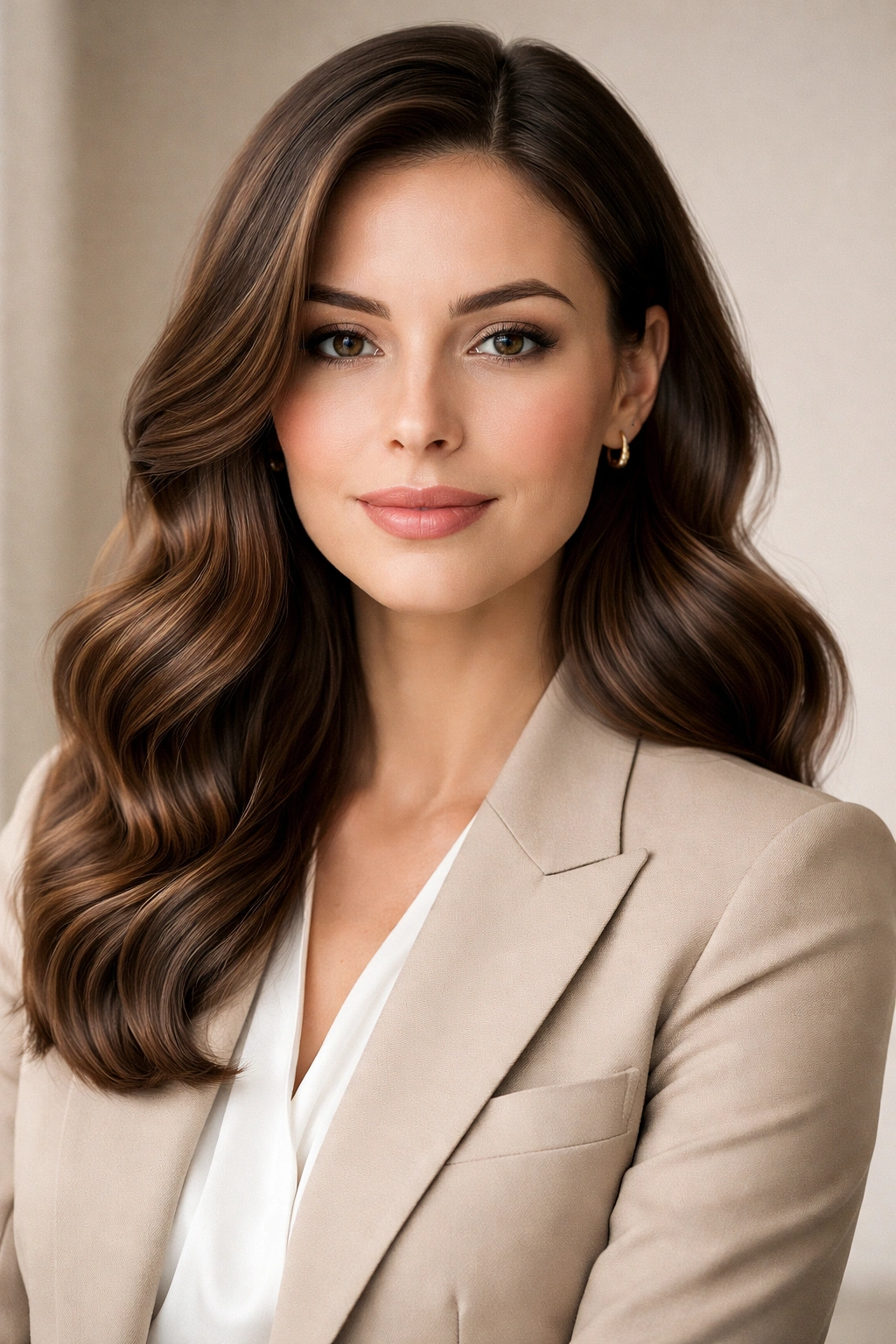
For women with naturally textured, curly, or wavy hair, polished textured waves represent embracing your natural hair in a professional context while ensuring it looks intentional and controlled. Rather than fighting natural texture, this style works with it, enhancing waves or curls and styling them in a deliberately arranged, neat pattern. When executed properly, textured waves read as sophisticated and modern, not casual or undone—and they have the significant advantage of being infinitely easier to maintain than styles requiring you to fight your natural hair texture.
The Professional Strength of Textured Styles
The workplace is increasingly recognizing that polished doesn’t mean straight. Natural textured hair styled intentionally and neatly is completely appropriate and professional in nearly all industries today. Textured waves have visual interest and dimension built in, which means they often read as more intentional and sophisticated than simple straight hair. The style also offers significant practical advantages: textured waves require less daily styling and hold their shape longer than straight styles, meaning your hair will look polished throughout the entire day with minimal adjustment.
Styling Natural Texture for Professional Polish
The key is ensuring your waves or curls are neatly arranged rather than appearing random or undone. Start by clarifying your hair thoroughly, then apply curl-defining cream or gel to damp hair, working it through systematically to ensure even distribution. Use a diffuser attachment on your blow-dryer or allow hair to air-dry, depending on your preference—both methods work well for textured hair.
Once hair is dry, check that curls or waves are evenly distributed around your head and don’t have flat sections where hair didn’t set properly. If needed, gently spritz sections with water and re-curl with your fingers or a curling iron to ensure consistency. Define your part clearly using a fine-toothed comb and edge control applied to the hairline, which creates the intentional, polished appearance that transforms textured hair from casual to professional. Apply a flexible-hold hairspray or finishing spray to lock everything in place without making texture appear crunchy or stiff.
Worth knowing: Textured hair often looks more polished and defined when slightly moisturized rather than completely dry; a light curl refresher spray applied midday can revive waves and restore dimension without requiring re-styling.
Final Thoughts

The right professional hairstyle depends on your hair type, face shape, daily routine, and personal aesthetic—but the common thread across all polished workplace hairstyles is intentionality. Whether you choose sleek and minimal or textured and dimensional, smooth or voluminous, the key is ensuring your hair appears deliberate, controlled, and well-maintained throughout the day.
Invest in quality tools and products that work with your specific hair type, and don’t underestimate the impact of a good haircut. Professional hairstyles require a foundation—whether that’s layers that create movement, a precise shape that holds its form, or a technique that enhances your natural texture. A skilled stylist who understands your hair and your professional goals is invaluable.
Remember that professional polish comes in many forms, and what matters most is that you feel confident and authentic in your chosen style. When you feel good about how you look, that confidence comes through in how you carry yourself and how you’re perceived by colleagues and clients. The hairstyle that makes you feel most like yourself while still meeting your workplace’s expectations is the right one—and chances are strong that one of these ten options will resonate with who you are and how you want to show up professionally.
