



Short hair has always held a special place in queer identity and self-expression. There’s something powerful about stepping into a salon chair, asking for the clippers, and walking out with a cut that says you without apology—a visual declaration of independence, identity, and refusal to conform to expectations that don’t fit. For many people in the LGBTQ+ community, a bold short haircut becomes more than just a hairstyle; it becomes a statement, a daily affirmation, a way of moving through the world with authenticity.
The beauty of queer short haircuts is that they’re unapologetically versatile. Whether you’re drawn to clean, architectural lines or textured, lived-in vibes, there’s a short cut that speaks to your personality and identity. These styles work with virtually any hair type, face shape, and personal aesthetic—from maximalist and daring to understated and elegant. The key is finding the specific cut that aligns with how you want to present yourself and how you want to feel in your own skin.
What makes these haircuts distinctly queer isn’t necessarily the cut itself, but the way they’ve been claimed, celebrated, and reimagined within queer communities. They’re statements of visibility, gender fluidity, boundary-pushing, and fearless self-determination. They work because they refuse to apologize for taking up space and demanding to be noticed. If you’re considering a short haircut and want something that carries meaning, depth, and undeniable style, these ten cuts offer starting points for conversations with your barber or stylist.
1. The Undercut with Shaded Sides
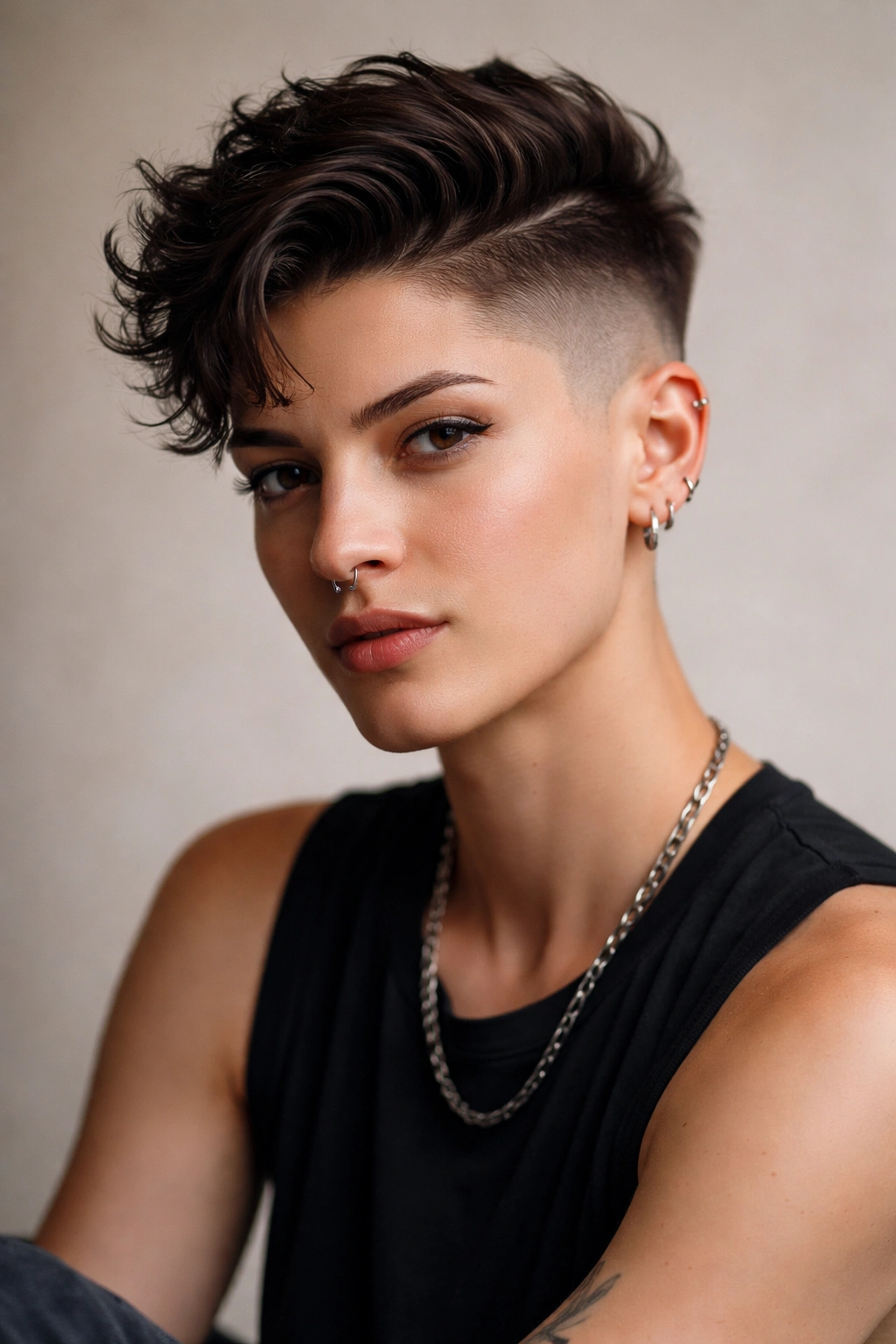
The undercut is the classic queer statement cut for good reason. This style features longer hair on top—usually 2-3 inches—with dramatically shorter sides and back, creating a sharp visual contrast that immediately reads as intentional and bold. The “shaded” version uses a fade rather than a blunt line, allowing the sides to graduate from clipper-short near the skin to slightly longer at the top, creating a seamless blend that still packs visual impact.
Why This Cut Stands Out
The undercut’s power lies in its architectural precision. It’s a cut that demands attention and care—your stylist needs real skill to execute it properly, which means you’ll likely develop a relationship with someone who understands your vision. The style offers incredible versatility for styling: you can slick the top back for a polished, angular look; sweep it to one side for a softer presentation; or leave it messy and textured for attitude. The contrast between short and long creates movement and visual interest that a uniform short cut can’t quite achieve.
Key Details to Know
- The fade options: A skin fade goes extremely short on the sides; a shadow fade leaves slightly more length, usually about a half-inch. A temp fade only undercuts the back and sides, leaving more coverage around the ears and nape. Choose based on how bold you want to go.
- Maintenance reality: You’ll need a trim every 3-4 weeks as the undercut grows out and loses its definition. If you want to maintain the sharp look, this is non-negotiable. Many people eventually shave their own sides between appointments.
- Styling products: A medium-hold pomade or matte styling cream works best for keeping the top looking intentional without looking shellacked. Apply to damp hair and work through with your fingers for a natural finish.
- Works best with: Straight to wavy hair on top; works with curly hair too, though textured hair behaves differently when styled and may require product adjustments.
Pro tip: Ask your barber to fade the line slowly—a gradual transition from short to long reads as more intentional than a sharp, obvious contrast, giving you flexibility to grow it out without it looking awkward in the interim.
2. The Androgynous Pixie Cut
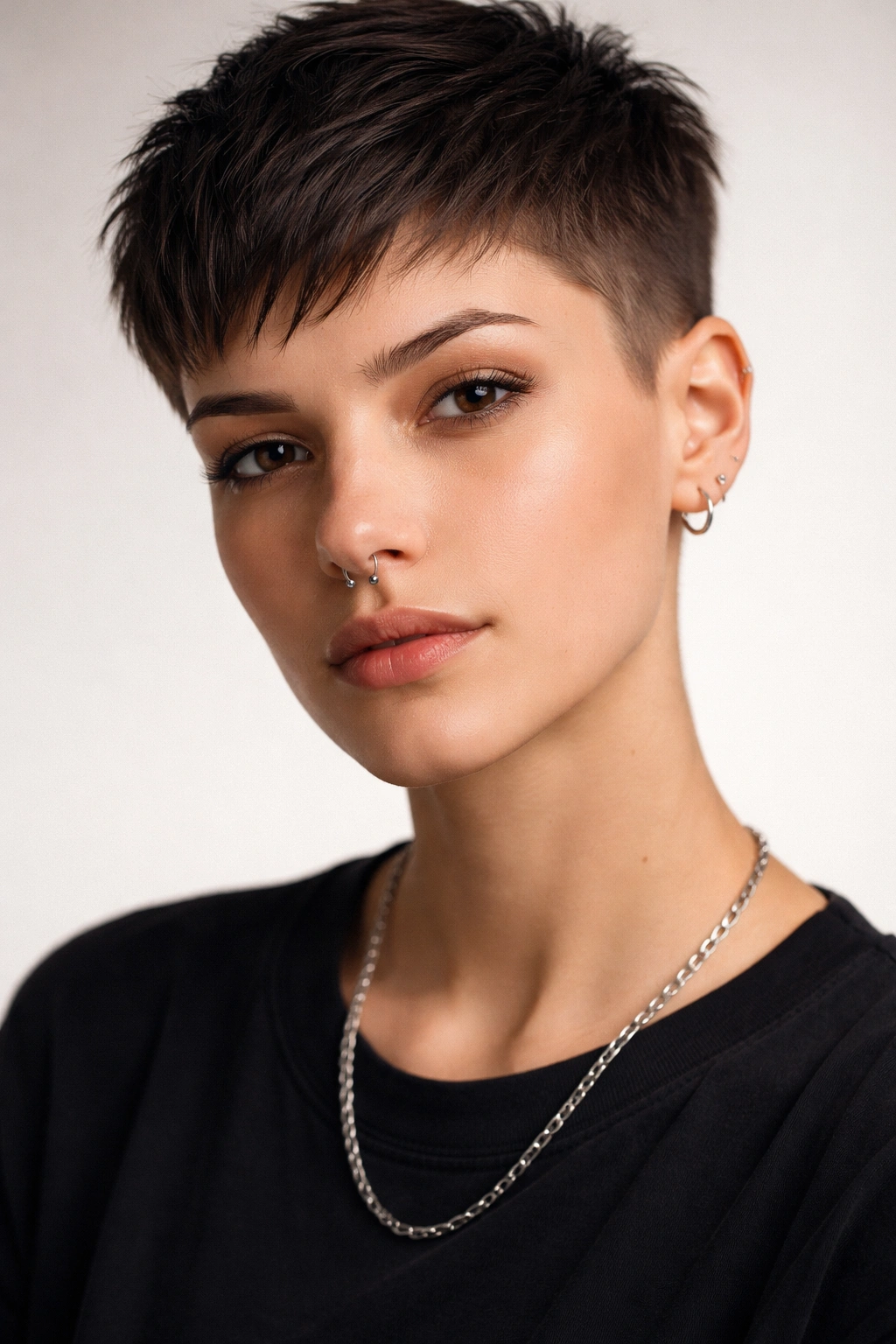
The pixie cut is deceptively simple—short all over, usually 1-2 inches on top with slightly shorter sides and back, creating a close-cropped silhouette that’s equal parts vulnerable and defiant. The androgynous pixie walks the line between traditionally masculine and feminine presentations, making it a powerful statement for people exploring gender expression or those who reject gendered styling conventions entirely.
Why This Cut Stands Out
A well-executed pixie cut is a masterclass in simplicity and confidence. It removes the ability to hide behind length, which means your face, your features, and your presence become the focal point. For many people, this is liberating—it forces a kind of authenticity where you can’t rely on hair to soften angles or create softness. The pixie flatters a huge range of face shapes when cut correctly; the key is working with a stylist who understands proportions and can adjust the length on top and the shape of the sides to complement your specific features.
Key Details to Know
- Styling versatility: A pixie can be sleek and sculpted with product, tousled and textured for bedhead energy, or grown out slightly for a shaggy, lived-in vibe. The same cut can read very differently depending on how you style it.
- Hair type considerations: Fine, straight hair shows off the cut’s clean lines beautifully. Thick hair needs to be texturized or point-cut to avoid looking heavy. Curly hair needs specialist handling; look for a stylist experienced with cutting natural texture.
- Texture matters: Ask your stylist to add texture through point-cutting or texturizing shears. A perfectly blunt pixie can look harsh; texture adds movement and softness, making the cut feel intentional rather than severe.
- Brow and ear exposure: This cut means your eyebrows and ears are completely visible. If this feels vulnerable, that might be part of why the cut appeals to you. If it doesn’t, work with your stylist on a slightly longer version that offers a tiny bit more coverage.
Pro tip: If you’re nervous about going this short, ask your stylist to cut it gradually—start with a slightly longer pixie and trim it shorter over the next two appointments. This gives you time to adjust emotionally and lets you see how you like the look before committing fully.
3. The Textured Crop Top
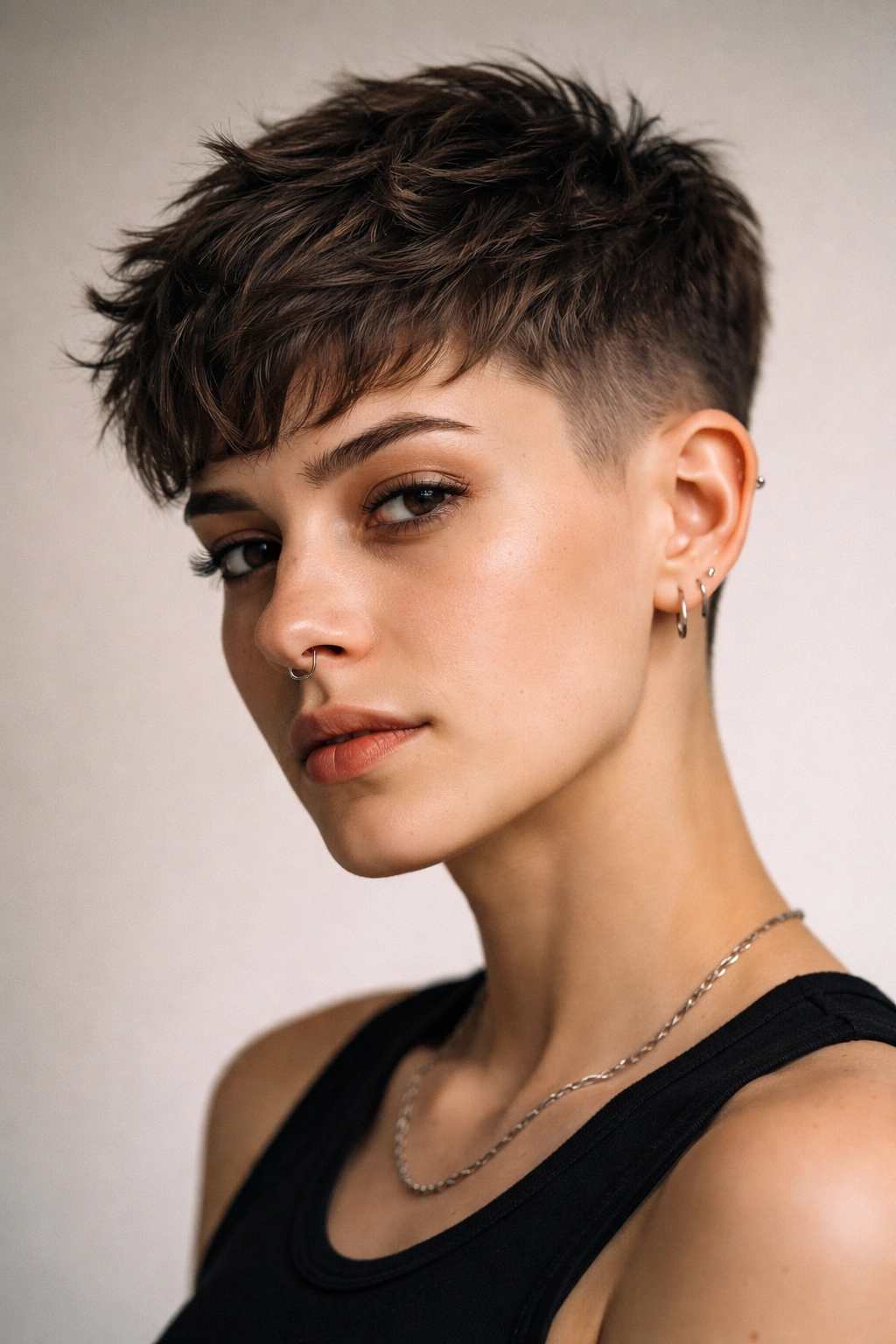
This is a short cut with intentional texture and movement, usually 1.5-2.5 inches all over with extra texture created through point-cutting, texturizing shears, or a razor technique. It’s shorter and more uniform than an undercut but more dynamic than a basic buzz, creating a three-dimensional, lived-in look that works with natural hair movement rather than against it.
Why This Cut Stands Out
The textured crop reads as effortlessly cool because it doesn’t require heavy styling products or precision grooming to look intentional. It plays well with natural texture, movement, and that “I just ran my hands through this” energy. The cut celebrates your hair’s actual behavior instead of fighting it, which feels honest and grounded. It’s bold enough to be a statement but approachable enough that it works as an everyday, low-maintenance style—you can wake up, shower, and feel put-together without much effort.
Key Details to Know
- Texture techniques: Point-cutting creates choppy, piece-y texture; texturizing shears create a more subtle, feathered texture; razor-cutting creates sharp, precise texture lines. Each technique produces a different visual effect. Discuss with your stylist which matches your aesthetic.
- Natural hair compatibility: This cut absolutely shines with wavy, curly, or coily hair because the texture of the cut enhances your hair’s natural pattern. Straight hair can work too, but you may need to create texture with product or styling techniques.
- Maintenance: Trim every 4-6 weeks to keep the texture looking intentional rather than shaggy. The cut actually looks better as it grows slightly and softens, so you have flexibility in timing.
- Product options: Light styling cream, texture spray, or even just a damp hand running through it is often enough. Some people use nothing and let their hair’s natural pattern do the work.
Pro tip: If your hair is curly or coily, ask for a “dry cut” where the stylist cuts your hair in its natural state rather than when it’s wet and stretched. This ensures the cut works with your actual texture, not against it.
4. The Disconnected Undercut Fade
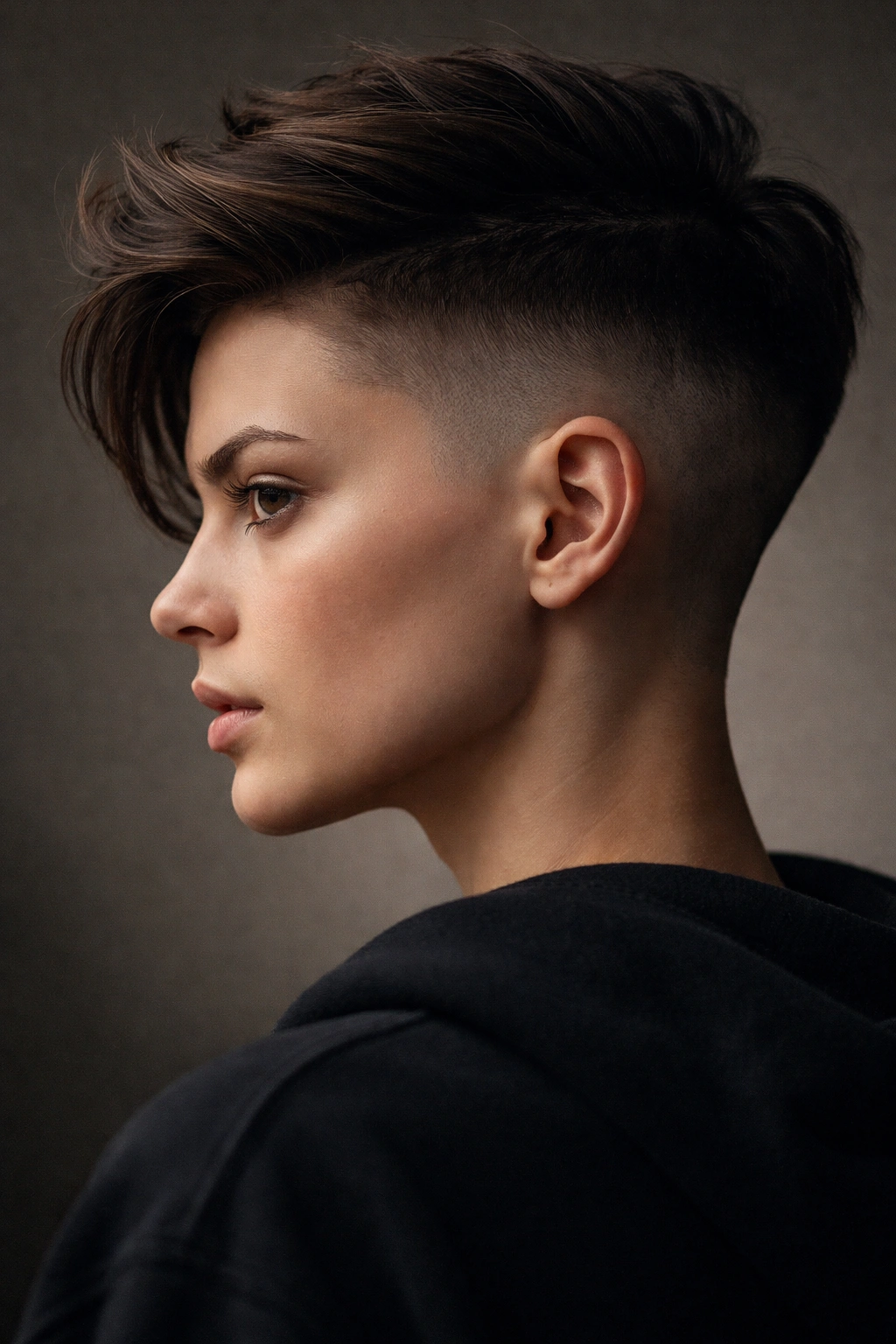
This is the sophisticated cousin of the standard undercut—rather than a fade or shaded transition between lengths, the hair on top is completely disconnected from the sides, creating an even more dramatic contrast. The sides are cut very short while the top maintains significant length (2-3+ inches), and there’s intentionally minimal blending, making the separation stark and architectural.
Why This Cut Stands Out
The disconnected undercut’s power is in its drama. It’s a cut that commits fully to a concept: maximum contrast, maximum visual interest, maximum statement-making energy. When executed well, it reads as polished and intentional rather than harsh. It photographs beautifully, which matters if you’re someone who uses your appearance as a form of creative expression. The disconnection means the cut remains visually interesting and dynamic as it grows slightly; the contrast stays pronounced even between salon visits.
Key Details to Know
- Styling is essential: Unlike other short cuts, the disconnected undercut needs something to keep the top looking intentional. Pomade, cream, or wax creates shape and definition. Without product, the longer top can look unkempt rather than styled.
- Hair length flexibility on top: You can vary how long you keep the top—from 2 inches for a sleek, close look to 4+ inches for something with more weight and movement. Longer tops work best with wavy or curly hair; straight hair over 3 inches can look droopy without texture.
- The “shaved head” option: Some people take this further with actual shaved designs on the sides—geometric patterns, lines, symbols, or detailed artwork. This requires a skilled barber and regular touch-ups as hair grows out.
- Face shape flexibility: The height and angle of the top can be adjusted based on your face shape. A squared-off top suits round faces; an angular top suits longer faces. Work with your stylist on customization.
Pro tip: If you want the disconnected look but aren’t ready for ultra-short sides, ask for a “mid fade undercut”—sides cut to about a quarter-inch rather than a skin fade. You get the disconnection and drama with slightly more room to grow before you need a trim.
5. The Faux Hawk
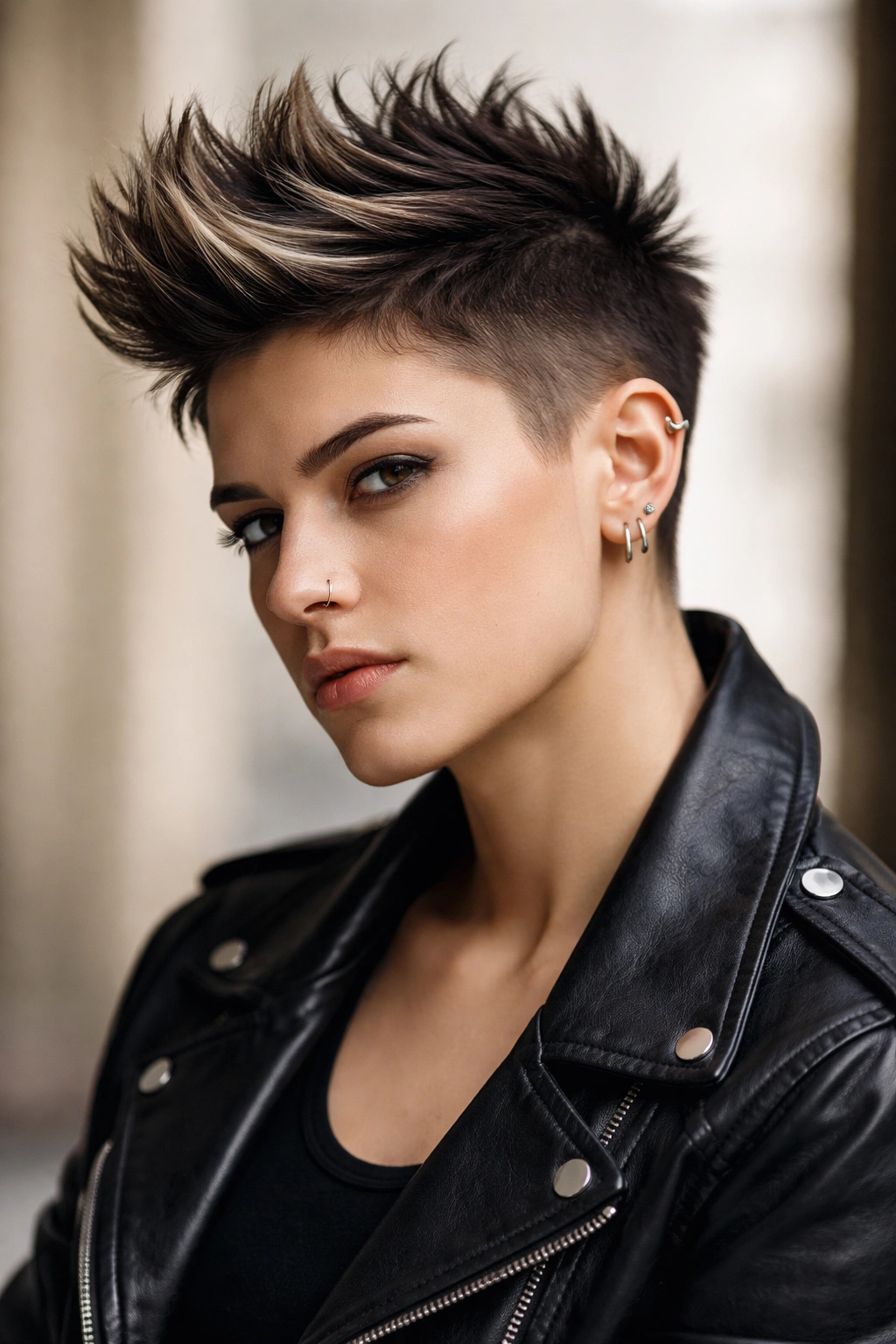
The faux hawk (or “fauxhawk”) takes the visual punch of a mohawk without committing to the full shaved-sides look. The sides and back are cut short, while a strip of hair down the center of the head is left longer, creating the illusion of a mohawk when left unstyled and the actual shape of a mohawk when styled up with product. It’s a cut that offers both the statement and the flexibility.
Why This Cut Stands Out
A faux hawk lets you embody punk and queer aesthetic without the maintenance intensity of a full mohawk. You can wear it styled up for nights out, events, or whenever you want maximum impact, and wear it down on days when you want something more understated. It’s an incredibly fun, playful cut that reads as confident and creative. For many people, it’s the perfect balance between self-expression and practicality—you get the rebellion without making it impossible to function in mainstream spaces if that matters to you.
Key Details to Know
- Styling the hawk: Use a strong-hold pomade, gel, or wax combined with a blow dryer to push the hair up and back, creating the center strip stand vertically or at an angle. Some people use fabric glue or specialized hawk wax for extreme hold. The effect is temporary—you can reshape it whenever you want.
- Wearing it down: When you don’t style it up, the faux hawk reads more like a textured crop with slightly longer hair in the center, which is a completely wearable everyday style.
- Length variables: The center strip can be anywhere from 2 inches to 6+ inches depending on your preference. Longer gives more dramatic height; shorter reads more subtle.
- Side length options: Sides can be cut very short (quarter-inch) or longer (half-inch to an inch) depending on how dramatic you want the contrast and how much work you want to do maintaining it.
Pro tip: Ask your stylist to texturize the center strip rather than cutting it blunt. This creates more natural movement and texture when you style it, making the hawk look like intentional bed-head rather than a stiff sculpture.
6. The Mullet (Modern Queer Twist)
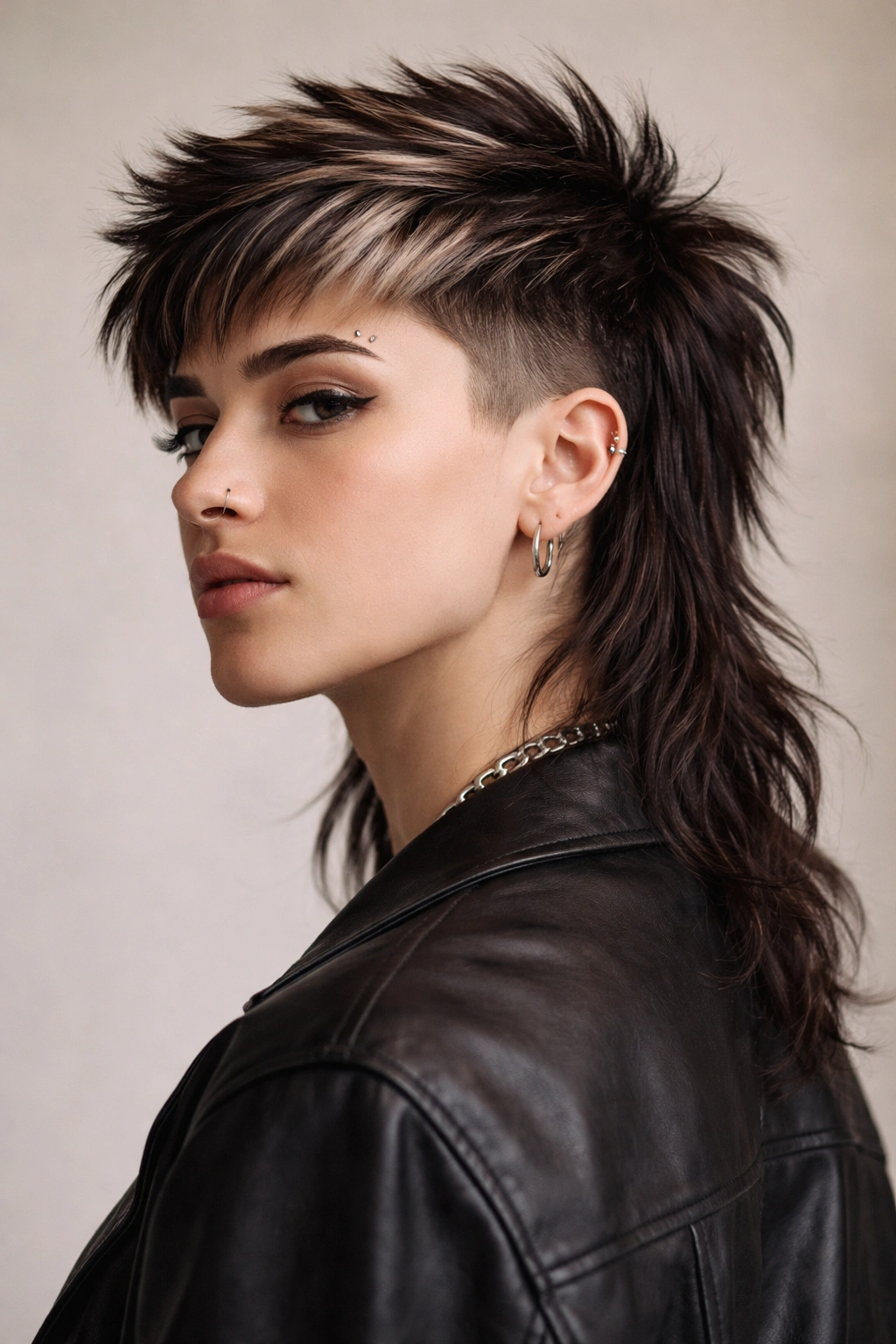
The mullet is back, and the modern queer version bears almost no resemblance to the 1980s originator. Instead of “business in the front, party in the back,” the contemporary mullet might be “sharp angles on top, textured movement in the back” or “undercut on the sides, length that varies as it goes down the back.” It’s a cut that’s playful, subversive, and unafraid to reference historical style while making it completely its own.
Why This Cut Stands Out
The modern mullet reclaims a reviled hairstyle and makes it genuinely cool through intention and execution. It reads as ironic, clever, and confident—you’re signaling that you don’t care about conventional style rules and that you have the vision to pull off something deliberately unconventional. For queer people especially, the mullet carries a kind of campy playfulness mixed with genuine style authority. It says “I know this is wild and I’m doing it anyway” in the best possible way.
Key Details to Know
- Varied mullet approaches: You might have an undercut fade on the sides with longer, textured hair in the back. Or you could have slightly longer hair all over the top but dramatically longer in the back. Or an asymmetrical approach where one side is longer than the other. Work with your stylist to design a version that fits your specific vision.
- Back length flexibility: The back can be 3-4 inches (subtle) to chin-length or longer (dramatic). Longer backs require more styling and can look different depending on whether you’re wearing your hair down, in a ponytail, or slicked back.
- Texture and movement: The best modern mullets use texture deliberately—point-cutting, layering, or natural texture in the back creates movement rather than a blunt weight of hair. This makes it feel playful rather than dated.
- Styling options: You can style the back sleek and controlled or messy and textured. You can wear it half-up. You can let it do whatever. The flexibility is part of the appeal.
Pro tip: If you’re nervous about committing to a full mullet, ask your stylist for a “subtle mullet”—very slightly longer in the back than the front—and see how you feel about it before growing the back out further.
7. The Side-Swept Asymmetrical Cut
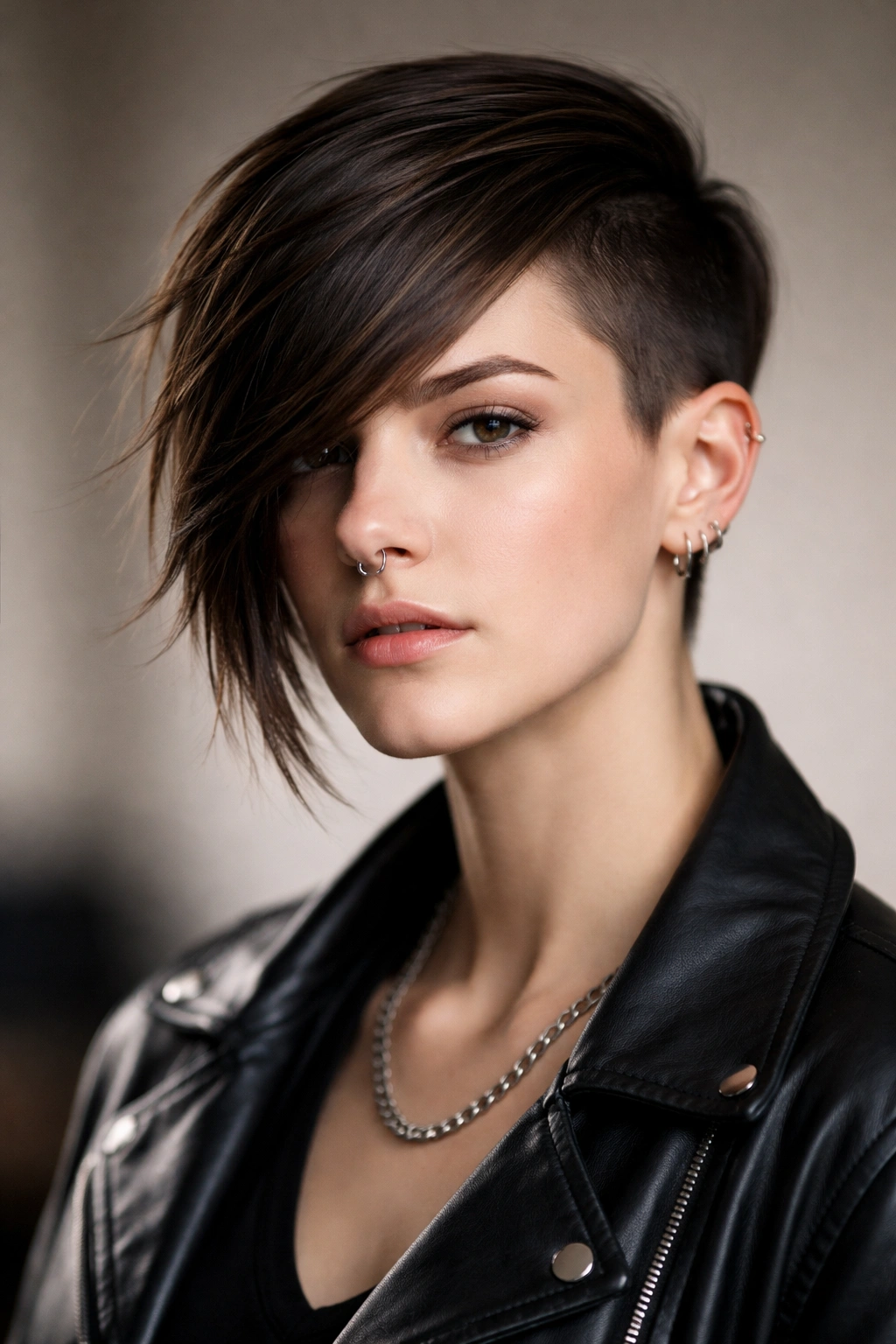
An asymmetrical cut features noticeably different lengths on each side of the head, with one side longer (usually ear-length or longer) and the other side shorter, sometimes with an undercut or fade. The longer side can be swept across the head or worn to cover one eye, creating a dramatic, fashion-forward look. This is a cut that leans into the visual language of gender-nonconforming and queer style.
Why This Cut Stands Out
An asymmetrical cut makes an uncompromising statement about rejecting binary presentation. One side long, one side short—it refuses the symmetry that’s coded as “proper” or “neat,” instead embracing imbalance as a form of beauty and self-determination. The cut is inherently directional and dynamic; it changes how it looks depending on how you position your head, which direction you move, how you style it. There’s something about asymmetry that reads as actively defiant rather than passively alternative.
Key Details to Know
- Length ratios: The difference between sides can be subtle (quarter-inch vs half-inch difference) or extreme (buzzed on one side, ear-length on the other). Choose based on how bold you want to go.
- Styling the longer side: You can sweep it across your head, tuck it behind an ear, let it fall naturally, or pin it back. You have flexibility in how you present the cut depending on your mood or the context.
- Maintenance: You’ll need trims every 4-6 weeks to keep the asymmetry sharp. As hair grows, both sides get longer and the proportion changes.
- Face shape consideration: Longer hair on one side can help balance a rounder face or elongate a very square face, depending on which side is longer and how the hair frames your features.
Pro tip: If you’ve never done an asymmetrical cut before, start with a smaller difference between sides. You can always go more extreme the next time if you love it, but growing out a very short side takes months.
8. The Bleached Blonde Buzz Cut
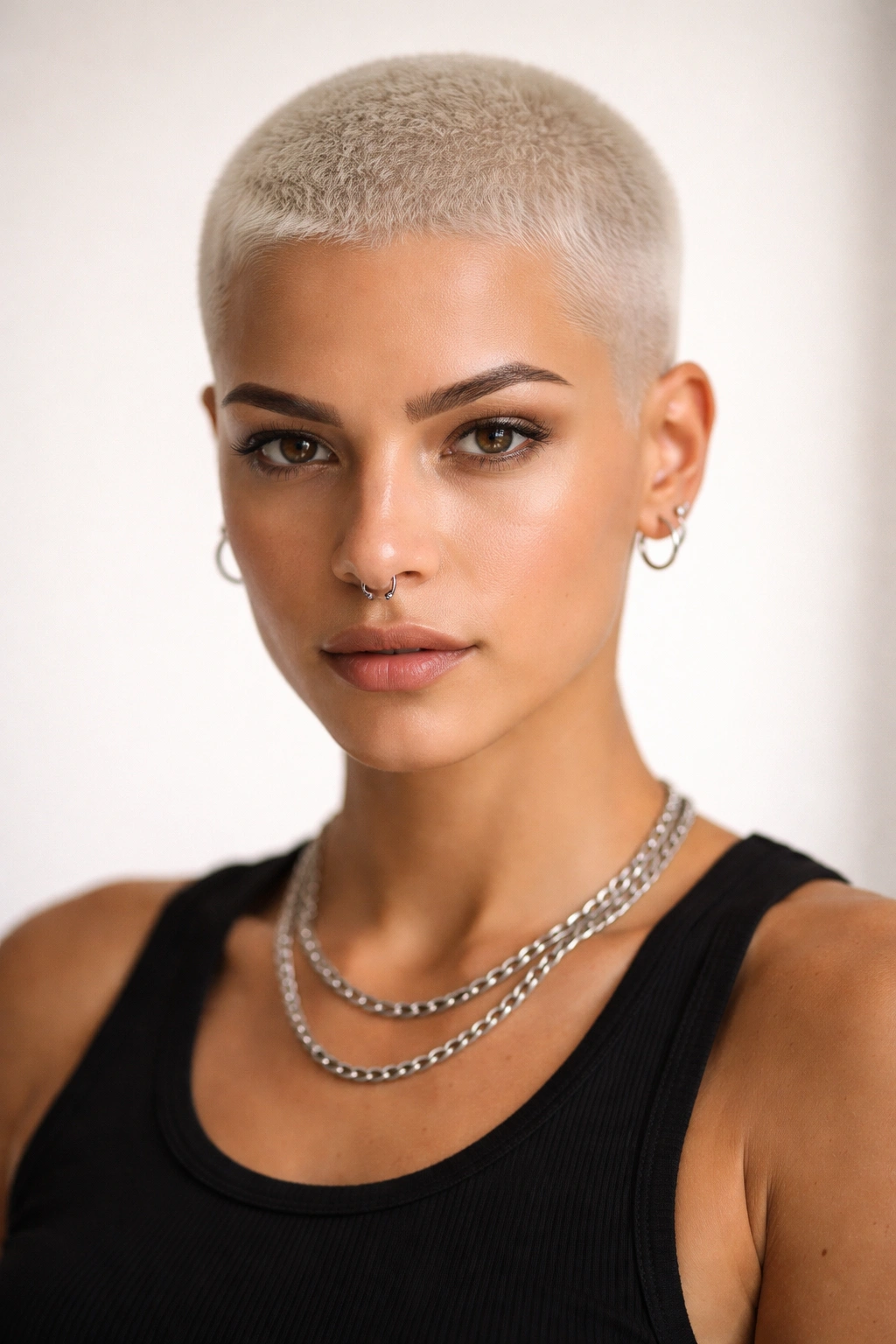
This is the ultimate power move: keep all your hair extremely short—a buzz cut in any of several lengths (quarter-inch to half-inch)—and bleach it platinum blonde. The platinum is key; it’s visually striking, demands maintenance, and reads as a deliberate aesthetic choice rather than an accident of nature. The combination of the crop-short texture and the high-contrast blonde color creates an undeniably bold, statement-making look.
Why This Cut Stands Out
Short bleached blonde hair reads as fearless. It’s visible, it’s high-maintenance, and it says that you’ve made an intentional choice about how to present yourself. The buzz cut paired with platinum creates a kind of clean, architectural beauty—your features are fully visible, your skull shape is evident, your presence takes up space unapologetically. For many people in queer communities, this combination reads as authentically themselves—comfortable enough in their skin to let it be fully seen.
Key Details to Know
- Maintenance reality: Platinum blonde requires commitment. You’ll need toning shampoo and conditioner to keep it from going yellow or brassy. You’ll need to rebleach every 4-6 weeks as your roots grow out. Some people lean into the rooted look as part of the aesthetic; others maintain platinum all over.
- Buzz cut lengths: A #1 or #2 clipper guard creates ultra-short buzz (quarter to half-inch); a #3 or #4 is slightly longer (three-quarters to one inch). Longer buzz cuts give slightly more texture and interest.
- Scalp health: Bleaching blonde and keeping it that short means your scalp gets sun exposure and less protective cover. Use sunscreen on your scalp if you’re going to be in the sun, and be gentle with washing and styling.
- Texture: Blonde shows every variation in texture and growth pattern more dramatically than darker hair. This can be beautiful (showing off the natural movement of your hair) or something to be aware of if you’re particular about looking polished.
Pro tip: Find a colorist experienced with maintaining platinum blonde rather than trying to do it at home. The difference in tone, health, and longevity is worth the investment. A good colorist can customize the blonde shade (cooler ash-blonde, warmer champagne blonde, pure platinum) to match your skin tone beautifully.
9. The Mohawk Variants
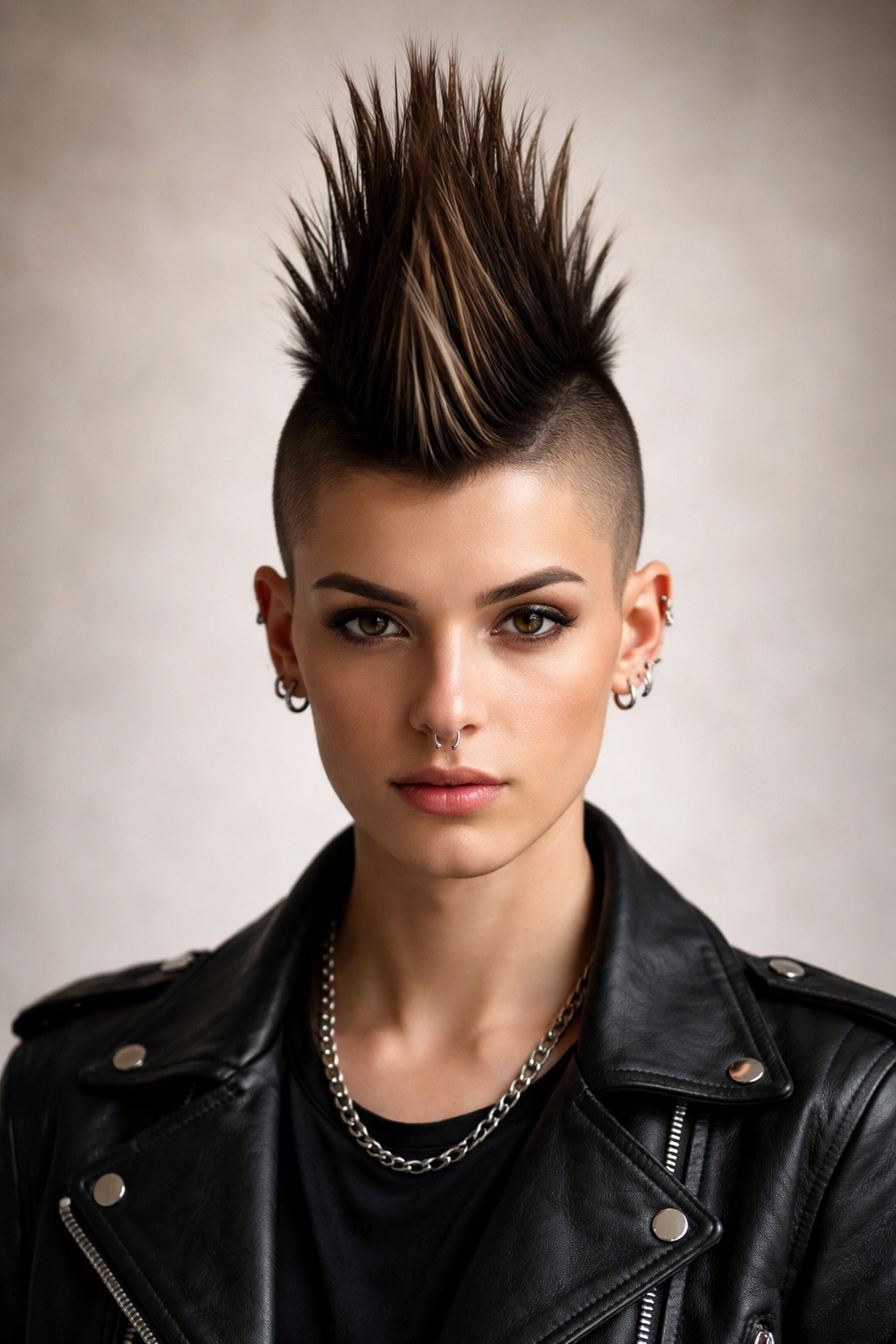
The full mohawk—sides shaved or buzzed very short, a strip of longer hair down the center of the head—is as queer and punk as it gets. But modern versions offer variations: the one-sided hawk (long on one side, short on the other, creating a hawk silhouette when viewed from certain angles), the reverse hawk (shaved center, long sides), or the liberty spikes version where the center strip is styled up with products into dramatic, sharp points.
Why This Cut Stands Out
A mohawk is an unambiguous statement. You’re not asking for approval; you’re announcing who you are. It’s a cut tied to punk, queer, and counterculture histories, which means it carries weight and meaning beyond just hair. A well-maintained mohawk demonstrates commitment—you’re maintaining those shaved sides regularly, you’re styling the center strip intentionally, you’re choosing this look repeatedly. It reads as confident, artistic, fearless, and fundamentally unwilling to blend in. For many people, living in a mohawk is living as their truest self.
Key Details to Know
- Center strip styling: You’ll need strong-hold product—pomade, gel, wax, or fabric glue—to make the hawk stand up. A blow dryer helps set it. Some people apply product nightly and let it dry, maintaining the shape throughout the day. Others restyle from scratch.
- Side maintenance: Shaved or very short sides need to be trimmed or re-shaved every 2-3 weeks as they grow out. Many people learn to maintain them at home with clippers.
- Design opportunities: Some people shave designs, lines, or patterns into the shaved sides. This requires steady hands or a skilled barber and adds another layer of artistic expression.
- Hair type: The hawk works best with straight to wavy hair that will stand up with product. Very curly or coily hair can be challenging to keep styled upright, though it’s absolutely possible with the right product.
Pro tip: Start with a Mohawk-adjacent cut like a faux hawk if you’re unsure about commitment. You can always progress to the full shaved-sides look later.
10. The Textured Wolf Cut Short Version

The wolf cut traditionally combines a shaggy mullet with a heavily textured, choppy face-framing layers—it’s an intentionally wild, untamed aesthetic. The short version takes those principles (dramatic texture, choppy layers, face-framing dimension) and applies them to a shorter overall length (2-3 inches all over), creating something that reads as intentionally messy, textured, and cool without requiring the commitment of longer hair.
Why This Cut Stands Out
The textured wolf cut is about embracing messiness as intentionality. It reads as creative, confident, and comfortable with hair that’s clearly stylized but not controlling every strand into perfection. The choppy layers create visual interest and movement; the texture makes the cut visible from every angle. It’s a cut that works beautifully with natural texture, especially wavy, curly, or coily hair, because it plays with your hair’s actual behavior rather than fighting it. There’s something liberating about a cut that says “your hair can do its thing and this is still intentional style.”
Key Details to Know
- Layering is essential: This cut requires a stylist who’s skilled with cutting layers and texture. You want choppy, deliberate layers that create movement, not random chop that reads as a bad haircut.
- Face-framing: Shorter layers around the face create dimension and draw attention to your features. Longer layers in the back or crown area add volume and interest.
- Hair type magic: This cut is absolutely transformational with curly or coily hair; the texture of the cut amplifies your hair’s natural pattern. It also works beautifully with wavy or straight hair that has some natural texture or movement.
- Styling and products: Many people love this cut because it requires minimal styling—you can air dry it and it looks intentional, or apply a light product for more definition. It’s not a “must style” cut.
- Growth pattern: As the cut grows out, it actually develops more texture and volume, which means it can look better at 6-8 weeks than it does at the two-week mark. You have more time between trims if you like a slightly shaggy version.
Pro tip: Bring reference photos showing the specific texture and choppiness you want—this helps your stylist understand your vision. Ask them to point-cut or use texturizing shears rather than razor-cutting if you want a softer texture; razor-cutting creates sharper, more dramatic texture lines.
Final Thoughts
Choosing a short haircut is choosing visibility. It’s choosing to take up space, to be noticed, to declare something about who you are and how you want to move through the world. There’s real power in that choice, and it’s worth taking seriously—but also worth making joyfully.
The haircuts in this list are statement-makers because they refuse apology. They refuse to soften themselves or blend into background expectation. They say “this is me” with the kind of clarity that comes from intention and choice. Whether you go for the architectural precision of an undercut, the playful defiance of a mullet, the fearless boldness of a bleached buzz, or anything in between, you’re engaging in a form of self-expression that has deep roots in queer culture and aesthetics.
Find a stylist who gets what you’re trying to communicate—someone who listens to your vision, asks good questions, and has the technical skills to execute it well. Your haircut is too important to leave to someone who’s just going through the motions. A good stylist relationship means you’ll feel supported, seen, and celebrated in your choices, which is exactly what you deserve.
