



Curly hair and short cuts used to feel like an impossible combination. For decades, bobs were the domain of straight-haired women, while curly-haired people were told to grow their hair long for manageability and definition. But that narrative has completely shifted, and the modern curly bob is having a major moment for good reason — it’s versatile, lower-maintenance than shoulder-length curls, and offers more styling flexibility than most people realize.
Whether your curls are naturally coily or you’ve permanently waved them, a well-cut bob can be a transformative choice. The key is finding the right style for your specific curl pattern, hair density, and lifestyle. Some curly bobs rely on tight, defined coils; others embrace loose waves and movement. Some are blunt and geometric; others are layered and tousled. The range is genuinely exciting, and there’s a version that works for nearly every texture and aesthetic.
This guide walks you through 20 distinct curly bob styles, each explained in practical detail so you can have a real conversation with your stylist about what will actually work for your hair. We’ll cover everything from how the cut supports your curls, what products tend to work best with each style, and honest insight into the upkeep required. By the time you finish reading, you’ll have a clear picture of which style matches your curl pattern, maintenance comfort level, and personal style.
1. Textured Shag Bob
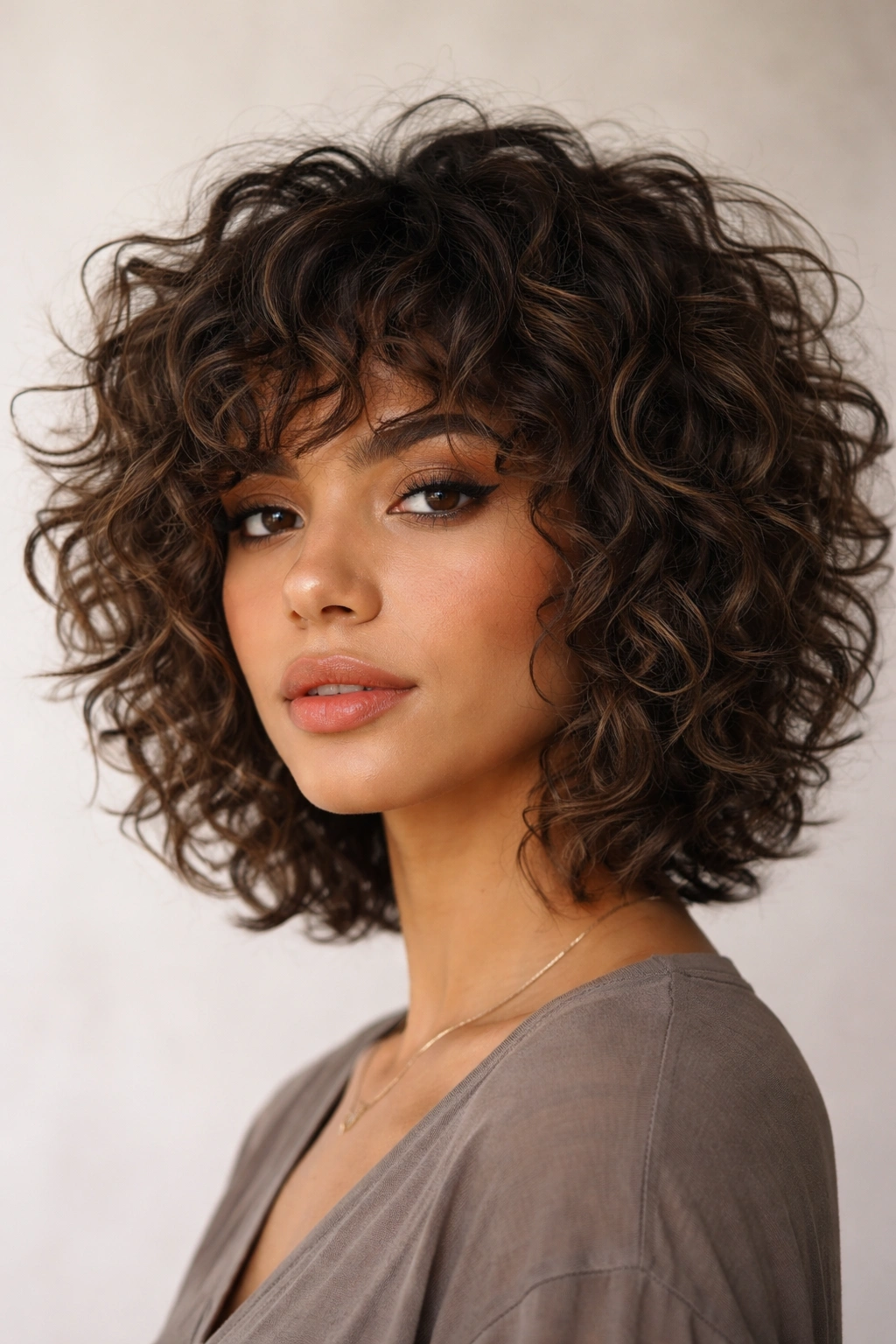
The shag bob takes the ’70s nostalgia trend and reimagines it specifically for curly hair. This style features choppy, uneven layers throughout, with shorter pieces at the crown that create volume and movement, and longer pieces underneath that allow the curls to have space to breathe. The shag is all about texture and dimension rather than a clean geometric shape.
Why It Works for Curls
The layering in a shag actually works with your curl pattern rather than against it. Short layers around the crown prevent the style from flattening under the weight of longer curls, while the varied lengths throughout create a natural, lived-in appearance that’s forgiving of imperfect drying. This style celebrates the inherent texture of curly hair rather than trying to smooth it into submission.
What to Expect with This Cut
- Requires more frequent trims (every 6-8 weeks) because the layers can look scraggly as they grow
- Works beautifully on both natural and permed curls with medium to tight textures
- Best suited for people who enjoy a piece-y, undone aesthetic rather than polished definition
- Dries faster than longer bobs because the choppy layers allow air circulation
Pro tip: A light texturizing cream applied to damp curls before air-drying enhances the shag’s natural piece-y effect without creating frizz.
2. Shoulder-Length Layered Curl
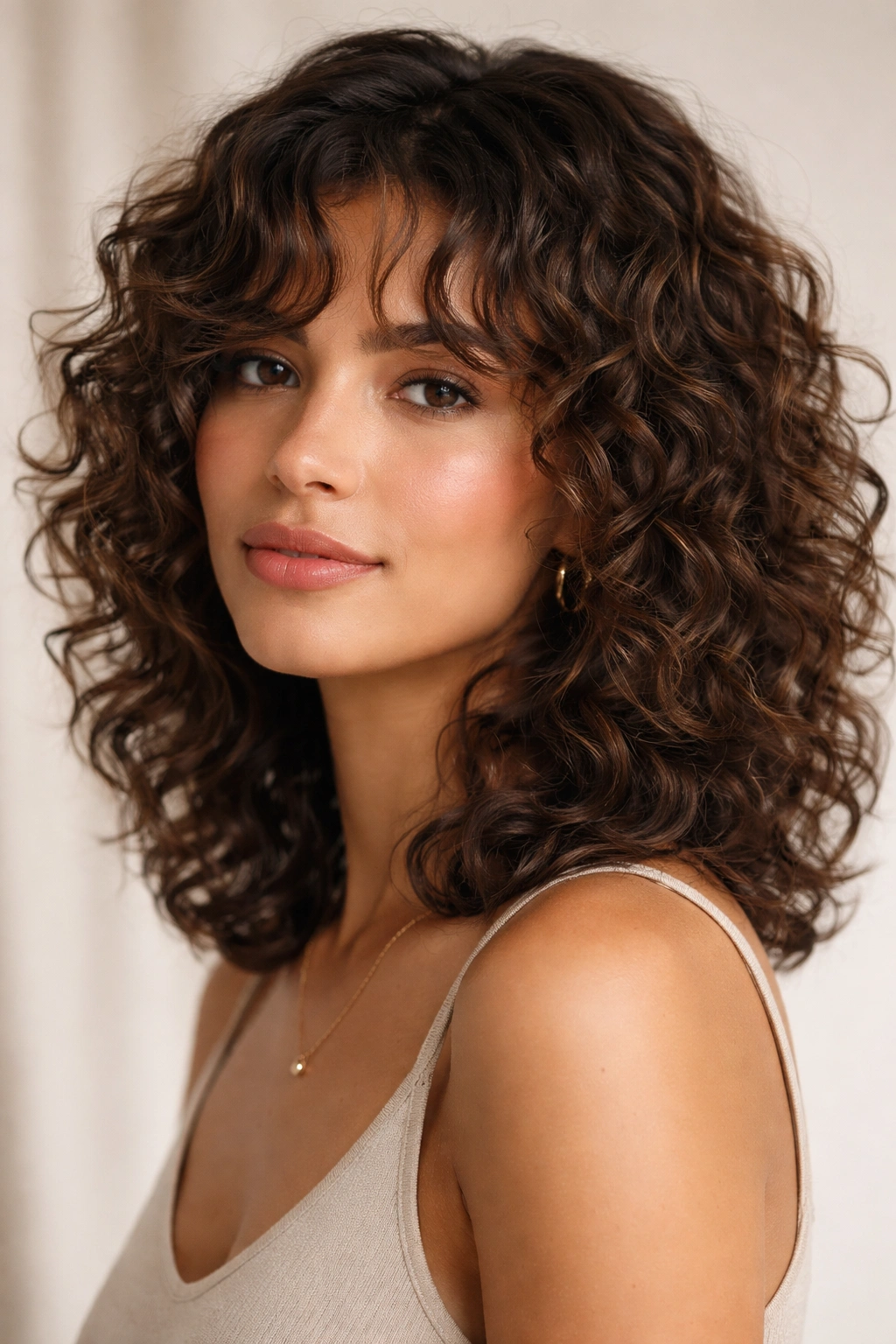
This is the longer end of the bob spectrum—hitting right at the shoulders with subtle, strategic layering woven throughout. The cut isn’t drastically choppy; instead, the layers are meant to sit beneath the surface, releasing some of the weight while maintaining a cohesive shape that frames the face softly.
The Science Behind the Length
Shoulder-length gives your curls enough weight to define themselves while the layering prevents the bottom from becoming overly dense and heavy. This length sits in that sweet spot where curls can maintain decent bounce, but you’re not dealing with the tangles and matting that come with significantly longer hair.
Key Characteristics
- Works especially well for looser waves and medium curls that need some weight to avoid puffing up
- The layers should be feathered rather than blunt-cut so the curls stack naturally
- Best with a routine that includes regular moisture treatments, since the longer length exposes older hair to more wear
- Requires styling product but not necessarily blow-drying for a polished look
Worth knowing: The shoulder length can fall right into your natural curl pattern’s “tangle zone,” so daily detangling with a leave-in conditioner is essential.
3. Tight Curl Blunt Bob
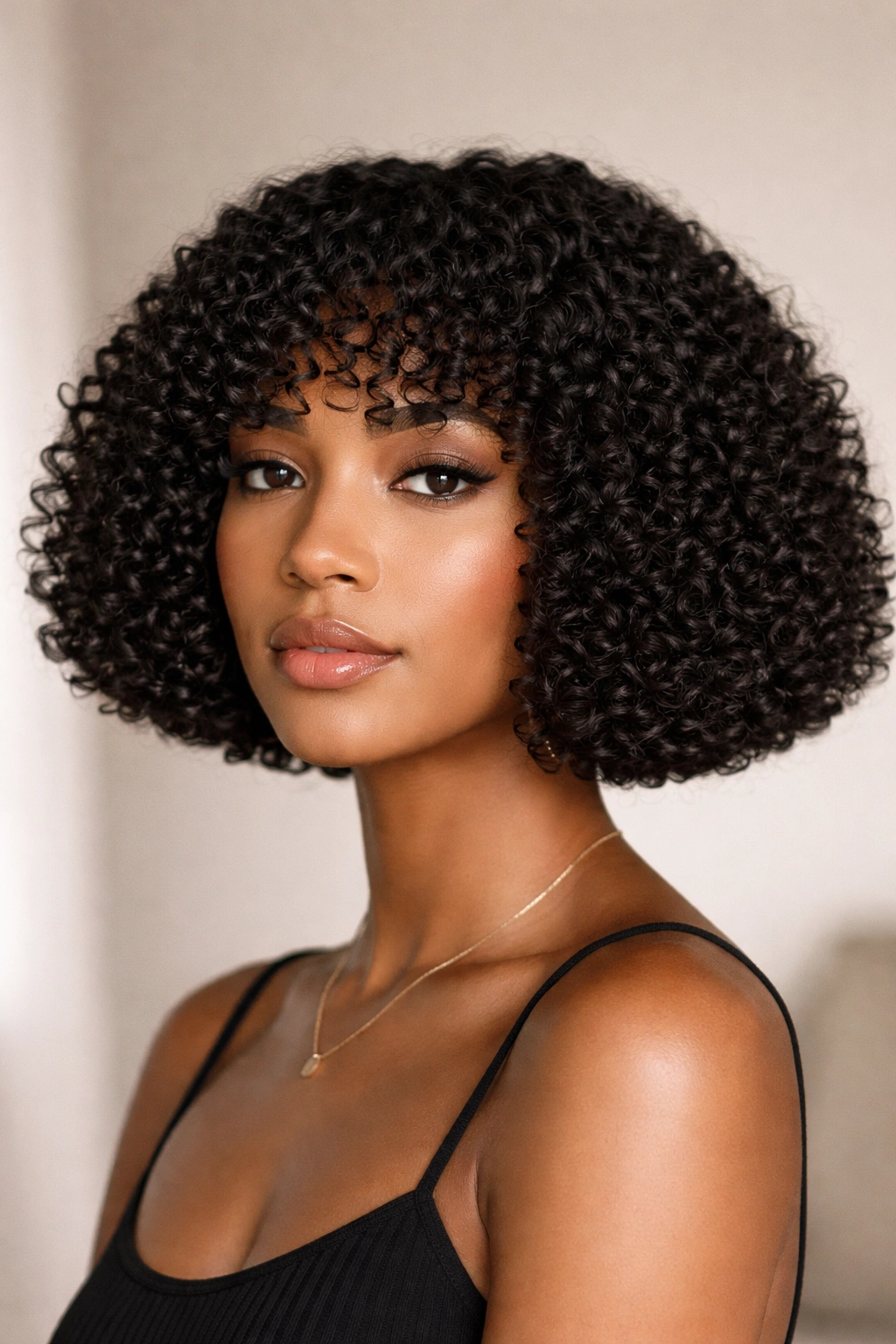
For women with naturally coily or tightly permed curls, the blunt bob—cut straight across with minimal to no layers—creates a striking, geometric silhouette. When your curls are tight enough, the bluntness of the cut actually softens visually because the curl pattern itself adds movement and dimension.
Why Blunt Works for Tight Curls
A blunt line appears much softer on very curly hair than it does on straight hair because the curls refract light differently and add visual texture. The cut looks intentional and modern without requiring the constant layering that would be necessary with looser curls. Tight curls also hold their shape naturally, so a blunt cut stays defined between salon visits.
Essential Details
- Best suited for curl patterns that are naturally coily (3C-4C range) or tightly permed
- The shorter the cut, the more the bluntness reads as intentional rather than choppy
- Works exceptionally well for textured, cropped bobs in the 2-4 inch range
- Minimal daily styling needed—curls define themselves naturally
Real talk: With this style, your stylist’s skill level matters enormously. A blunt cut on tight curls has zero margin for error; uneven cutting is immediately visible.
4. Longer Curly Lob
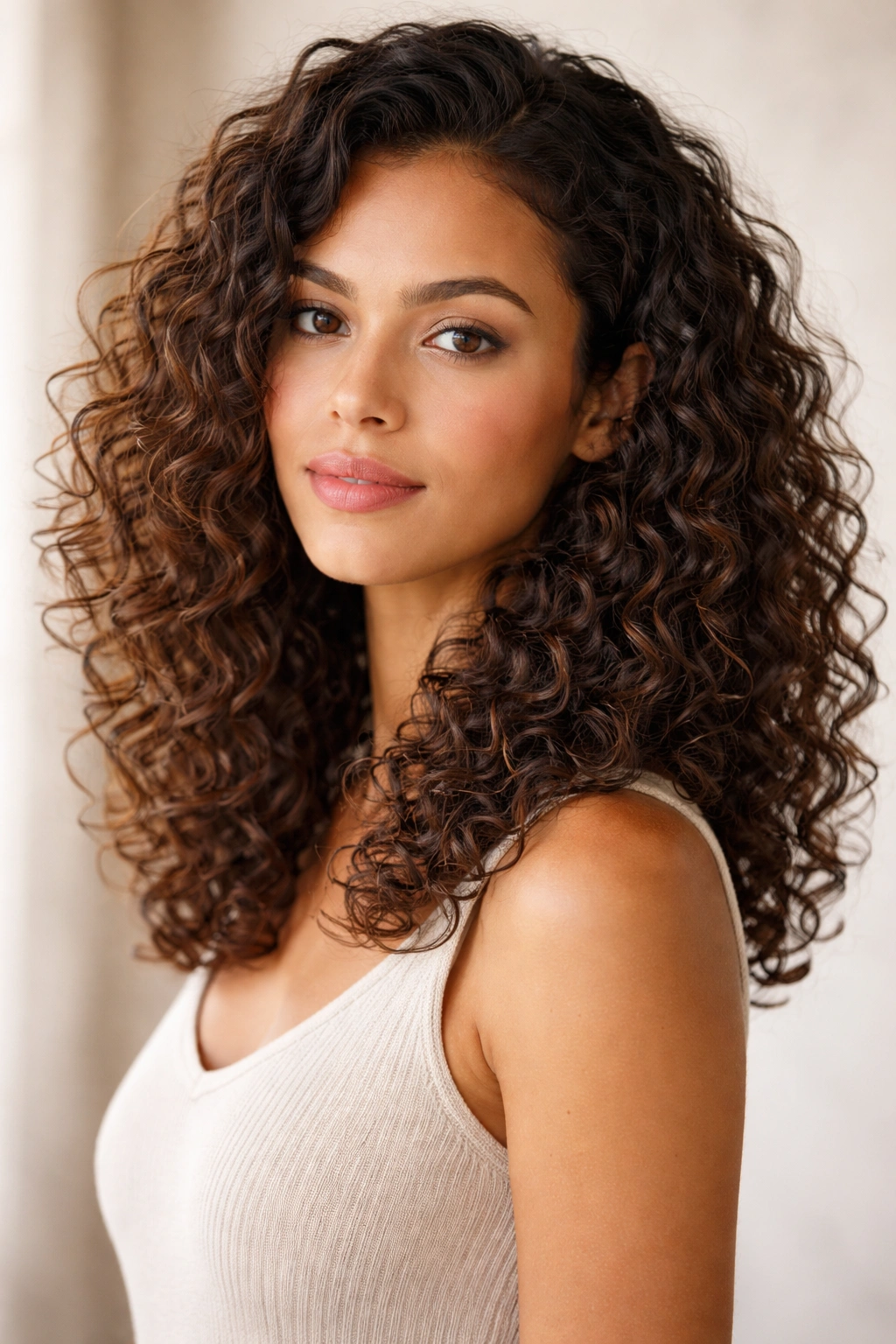
The lob—a hybrid between a bob and longer hair—extends past the shoulders, usually landing 2-3 inches below. For curly hair, a longer lob offers the best of both worlds: enough length for curls to fully express themselves, but short enough to avoid the tangles and bulk that come with truly long curly hair.
Volume Without Overwhelming Weight
A curly lob maintains shape through subtle layering and texturizing without being aggressively choppy. The goal is to remove just enough weight to let curls bounce, while keeping enough length that the cut feels intentional rather than simply “growing out.”
Managing the Longer Length
- Requires consistent deep conditioning and protein treatments to keep ends healthy
- Daily detangling is essential, best done on dry or damp hair with a wide-tooth comb
- Styling cream or curl-defining cream helps the longer length stay cohesive rather than frizzy
- Works for all curl patterns, but especially flattering on medium to loose curls
Pro tip: Schedule your trims every 8-10 weeks to maintain shape and remove damaged ends before they split further up the hair shaft.
5. Asymmetrical Choppy Bob
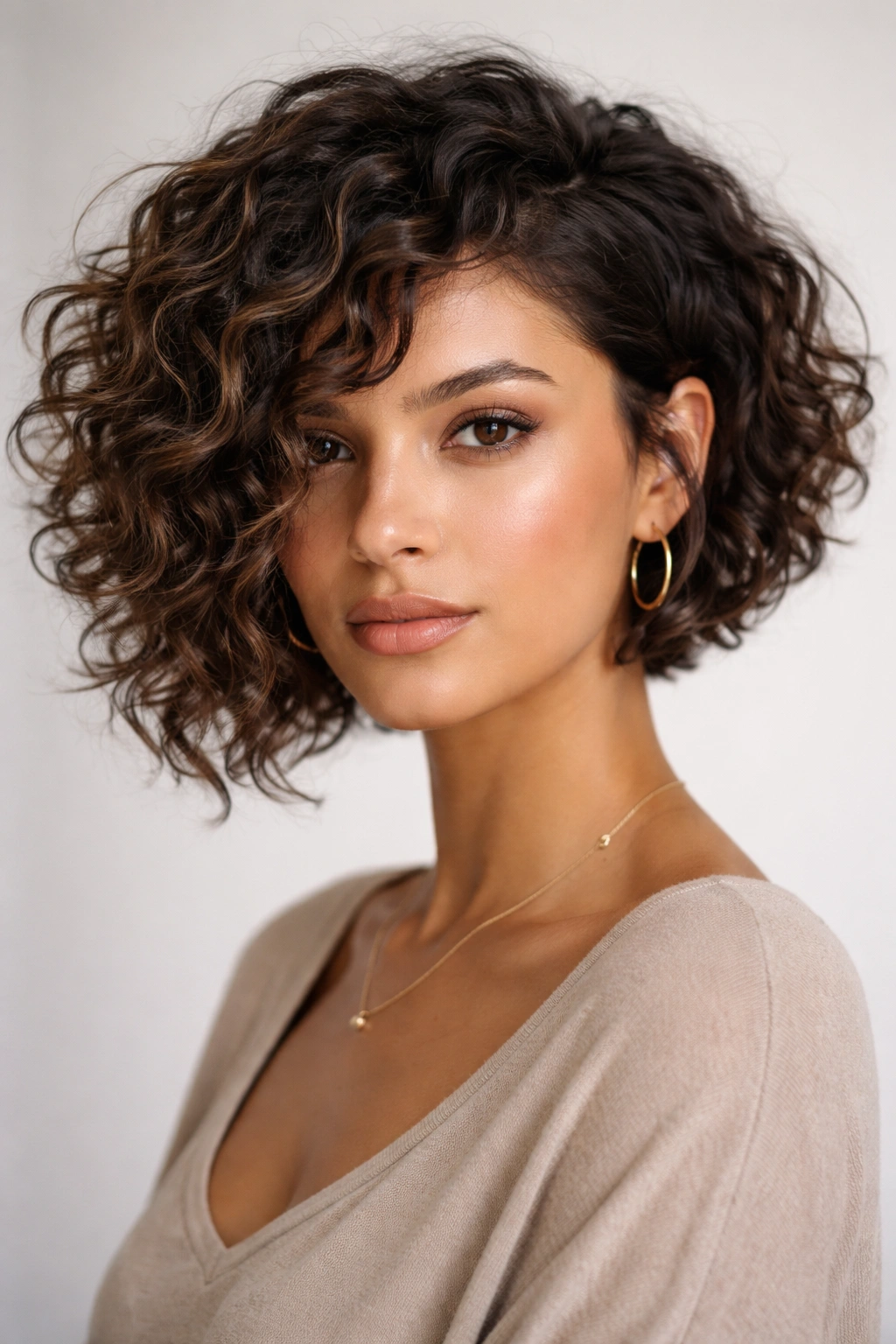
One side is cut shorter, the other longer—sometimes drastically so—creating a bold, fashion-forward asymmetry. This style thrives on texture and choppy layering throughout, which works beautifully with curly hair because the irregularity feels intentional and modern rather than sloppy.
Making Asymmetry Work with Curls
The choppy texture disguises any unevenness in curl patterns (some people’s curls behave differently on each side of their head), while the asymmetrical length adds movement and visual interest. This is genuinely a style that looks better on curly hair than it would on straight hair—the texture does half the work for you.
Styling Considerations
- Requires more frequent trims to maintain the shape as layers grow out
- Works best with confident, modern styling—this isn’t a “blend into the background” cut
- Asymmetrical styles photograph beautifully and often look more interesting from one angle
- Best on women comfortable with a bit of styling; air-drying alone may not maintain the intended shape
Worth knowing: Bring a clear photo of exactly which side is shorter and by how much, since asymmetrical bobs can be misinterpreted during conversation with your stylist.
6. Coily Pixie-Bob Hybrid
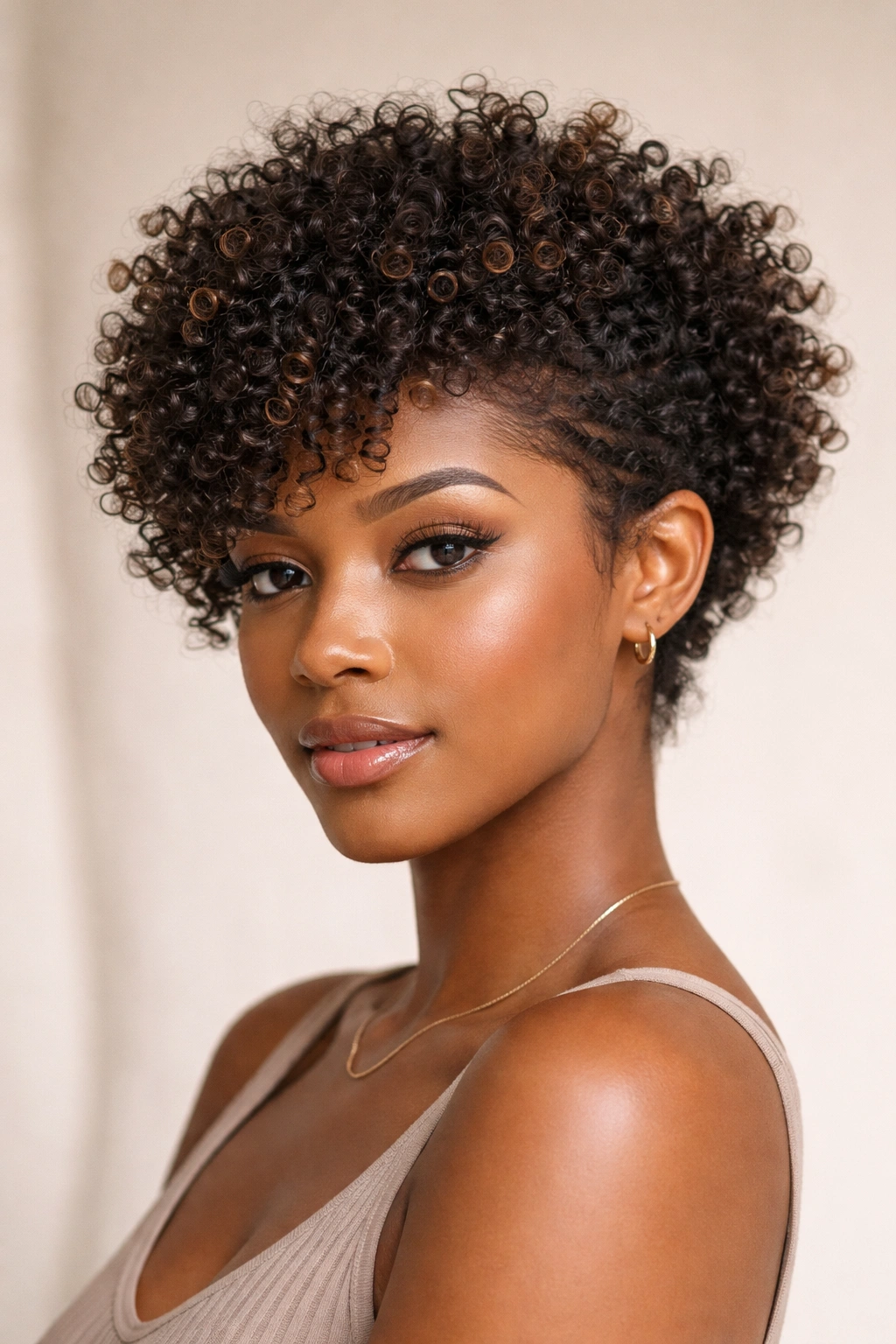
This style splits the difference between a pixie (very short all over) and a bob, typically keeping the crown and sides short for volume and shape, while maintaining slightly more length in the front or a subtle back section. It’s edgy, low-maintenance, and works beautifully on tightly coiled hair.
Why the Hybrid Approach
A pure pixie on curly hair can sometimes flatten or cling to the scalp, depending on hair density. The hybrid keeps the crown short enough for volume while allowing slightly more length elsewhere to give the style more personality and versatility in styling options.
The Practical Side
- Requires a trim every 4-6 weeks to maintain the shape as it grows
- Minimal styling product needed—coils define themselves
- Dramatic and attention-getting; not a subtle style choice
- Works best on people with confidence about shorter hair and strong facial features
Pro tip: A light curl cream or gel on wet coils helps define them in this short length without creating crunchiness or weighing down the delicate curls.
7. Spiral Ringlet Bob
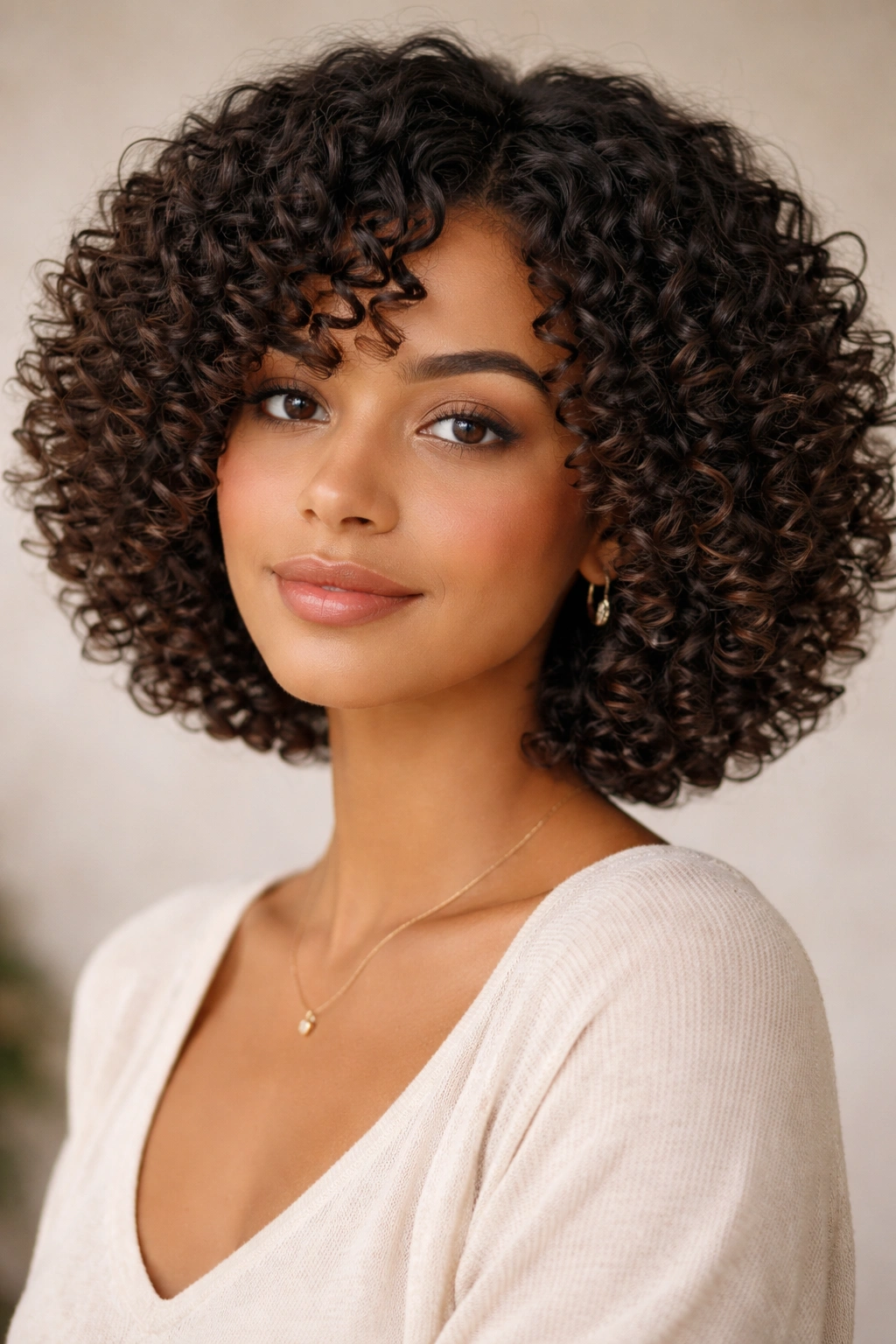
For those with natural, tightly defined spiral curls or who’ve had a permanent wave specifically designed to create ringlets, this style celebrates the curl pattern by cutting the bob to a length and shape that lets ringlets hang and move independently.
Emphasizing Natural Spirals
The cut is typically blunt to slightly layered, with the focus on removing minimal weight so spirals can form their natural ringlet shape. Spiral curls are typically high-maintenance in terms of styling, but once defined, they hold their shape beautifully, making a ringlet bob surprisingly low-effort in daily styling.
Key Details
- Best on naturally very curly hair or fresh perms specifically designed for ringlets
- Length typically ranges from chin-length to just below the shoulders
- Minimal to no layers—the ringlets themselves provide texture and dimension
- Humidity is the main enemy; a frizz cream or anti-humidity serum becomes essential
Real talk: True spiral curls require skill to cut well. Uneven cutting or the wrong angle on the blade can disrupt the natural spiral formation, so find a stylist experienced with tight curls specifically.
8. Voluminous Bouncy Bob
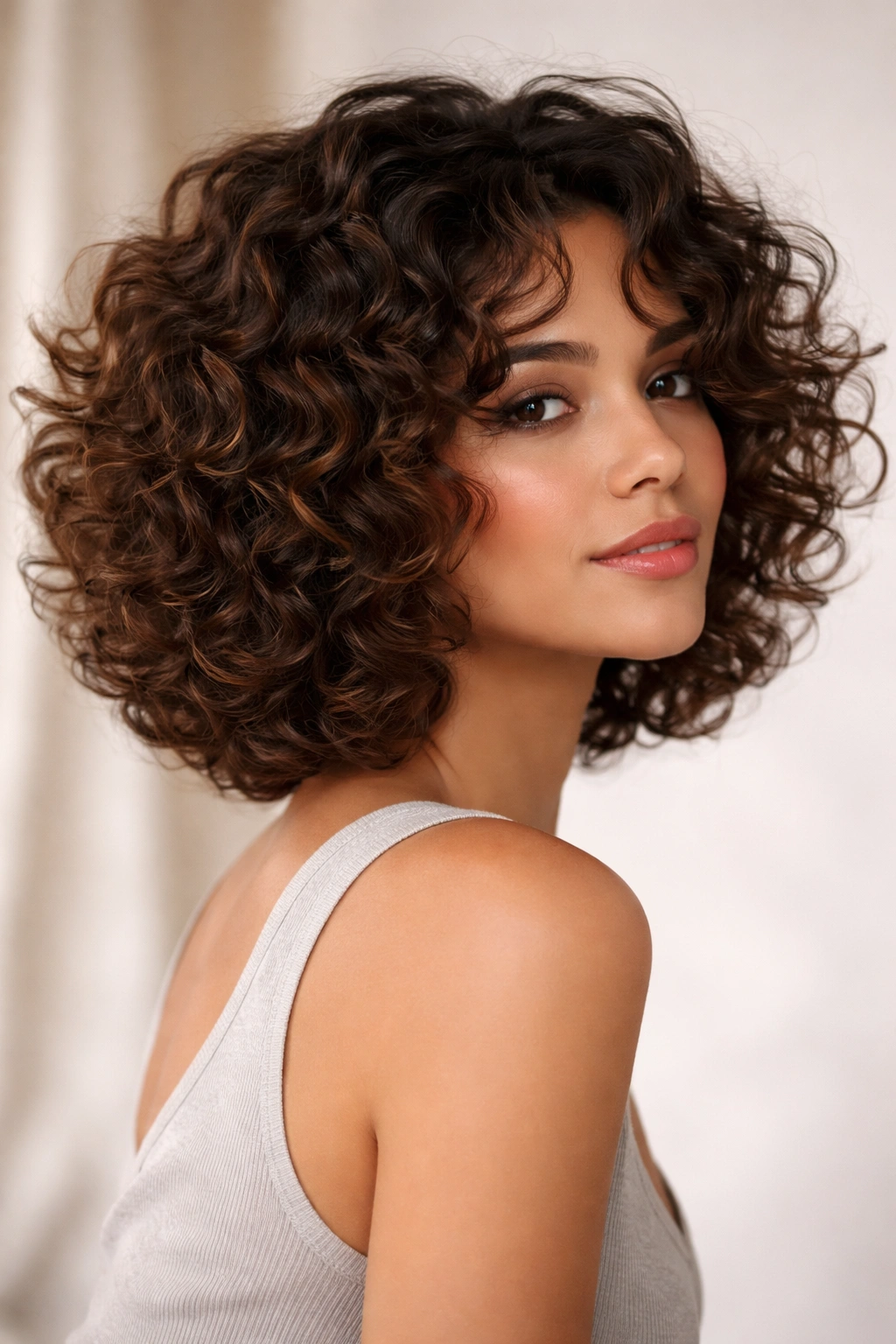
This style prioritizes bounce and fullness through strategic layering that’s more aggressive than a basic bob, creating lift at the crown and fluff throughout. The layers are cut at angles that encourage the curls to separate and move rather than cling together.
Building Volume into the Cut
The shortest layers sit at the crown, with progressively longer layers moving down and around, creating a tapered shape that’s full at the bottom. This graduated approach is different from a choppy shag because the layers are more intentional and directional rather than random texture.
Maintenance and Styling
- Works beautifully on medium to looser curls that need encouragement to bounce
- Requires styling with a curl cream or mousse to achieve the full bouncy effect
- Drying method matters—scrunching with a microfiber towel or diffuser enhances the bounce
- Trims every 6-8 weeks keep the layers visible and the shape intentional
Worth knowing: This style can look a bit puffy if not styled with the right products; it’s not ideal if you prefer a more compact, sleek appearance.
9. Tousled Wavy Bob
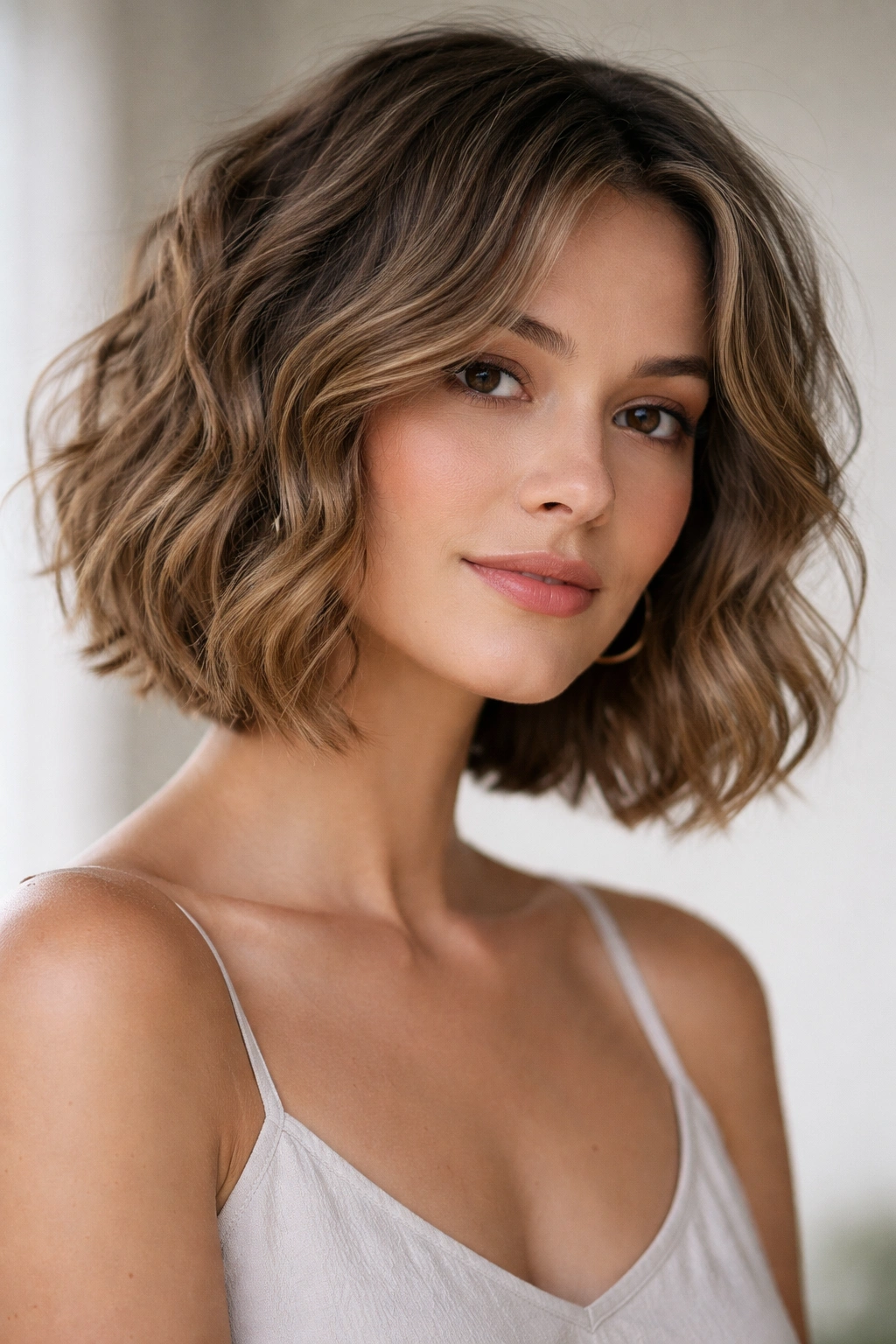
Softer than a true curly bob, this style plays to loose waves and works beautifully on people with naturally wavy hair or those who prefer a gentler wave pattern from a perm. The cut is subtle, with minimal layers and a somewhat blunt edge that softens through the natural wave pattern.
Waves vs. Curls: The Styling Difference
This bob suits wavy hair because it doesn’t fight the pattern—it works with it. Waves need less aggressive layering than tighter curls, and a simple bob often looks cleaner and more intentional than a heavily layered one. The tousled effect comes from styling technique and product choice rather than the cut itself.
Daily Styling Reality
- Air-drying often works fine, with minimal additional styling
- A light sea salt spray or wave cream enhances the tousled texture
- Works for all face shapes and is universally flattering
- Requires less frequent trims than heavily layered styles (every 8-10 weeks)
Pro tip: This is one of the few bob styles that genuinely looks good slicked back in a ponytail or styled straight when you want a change of pace.
10. Tapered Undercut Curly Bob
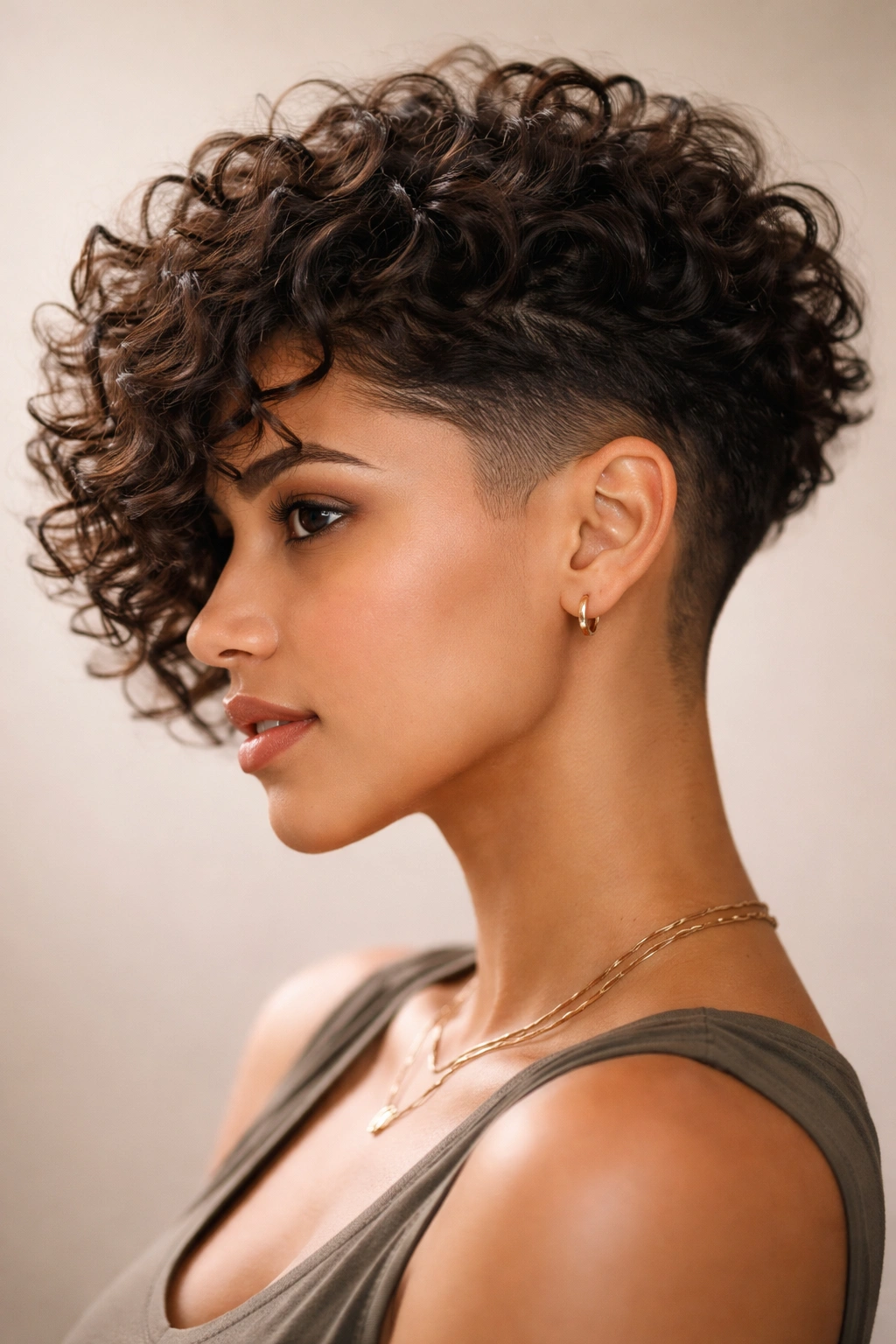
This modern style keeps hair longer on top with curly texture and layers, while the sides and back are cut very short—sometimes faded, sometimes blunt. The contrast between the length and the undercut creates visual interest and reduces overall bulk while maintaining curly volume where it matters most.
Why the Undercut Works
An undercut removes weight from the sides and back, preventing the bulky, heavy appearance that can happen when curly hair gets too thick on the lower layers. The contrast is especially striking on people with denser curl patterns or thicker hair.
Technical Considerations
- Requires a skilled stylist comfortable with both curly hair and undercut technique
- Styling is minimal—the longer curly section is the focal point, the undercut handles itself
- Offers flexibility in how much to fade the sides (subtle vs. dramatic)
- Works on all curl patterns but especially striking on tighter, denser curls
Worth knowing: As the undercut grows out, you’ll need trims every 4-6 weeks to maintain the clean contrast. Grow-out phase can look a bit awkward.
11. Soft-Wave Bob with Texture
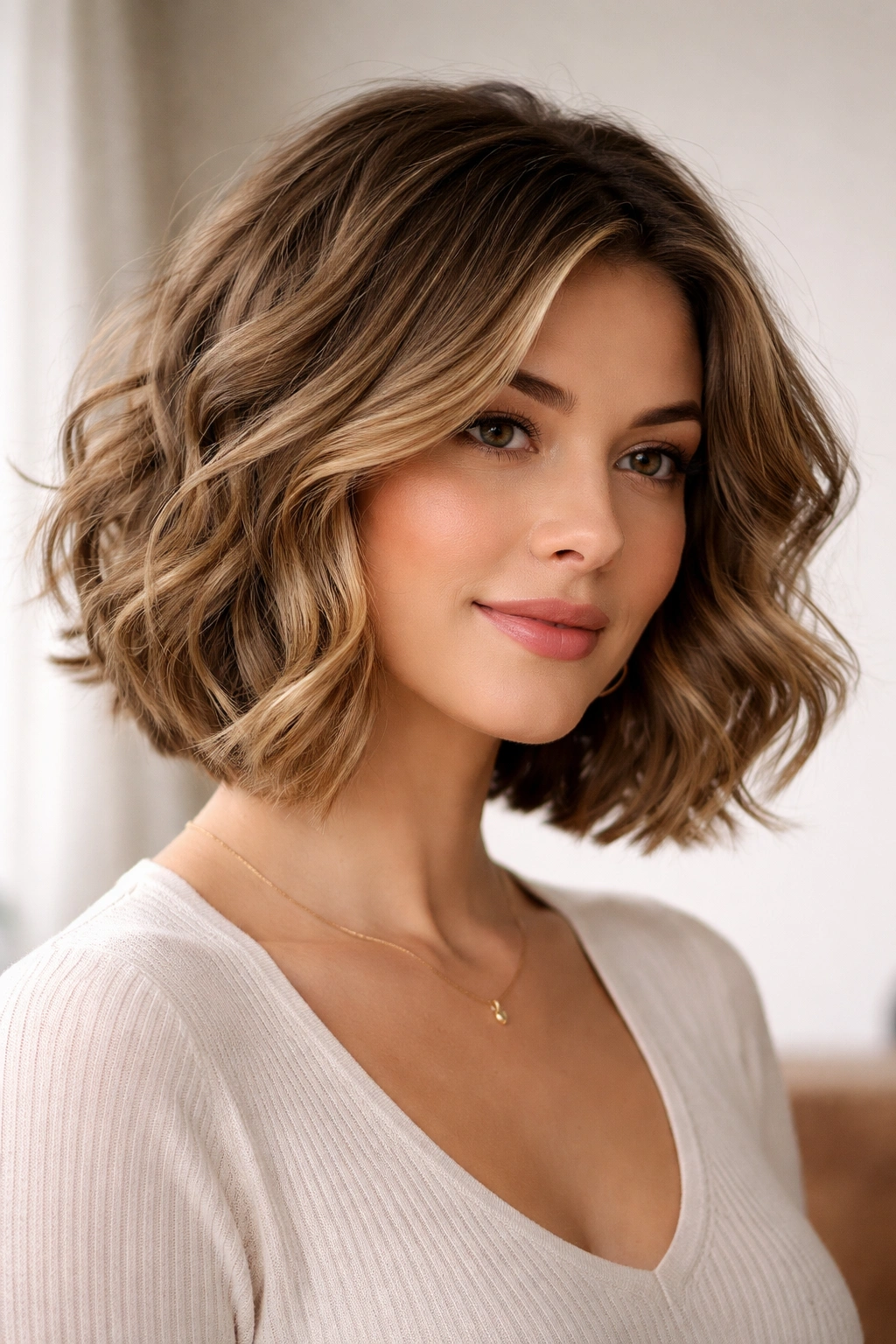
This style sits between the tousled waves and defined curls, featuring a bob cut to work with natural waves that have been enhanced with perm or styling. The cut includes subtle layering that encourages movement without being choppy, creating a polished but relaxed appearance.
Achieving Defined Softness
The layers in this cut are feathered and blended rather than dramatic, creating movement without choppiness. The goal is a bob that looks intentional and styled without being high-maintenance or requiring significant daily effort.
Styling Approach
- Works beautifully with a curl cream and diffuser blow-dry, or air-dry with light product
- Layers should be subtle enough that the style still looks cohesive when styled straight
- Best on looser to medium curl patterns
- Trims every 7-9 weeks maintain the feathered layers
Real talk: This style walks a fine line—if the layers are too short, it gets choppy and loses its soft aesthetic; if they’re too long, it doesn’t move the way it should.
12. Tightly Coiled Geometric Bob
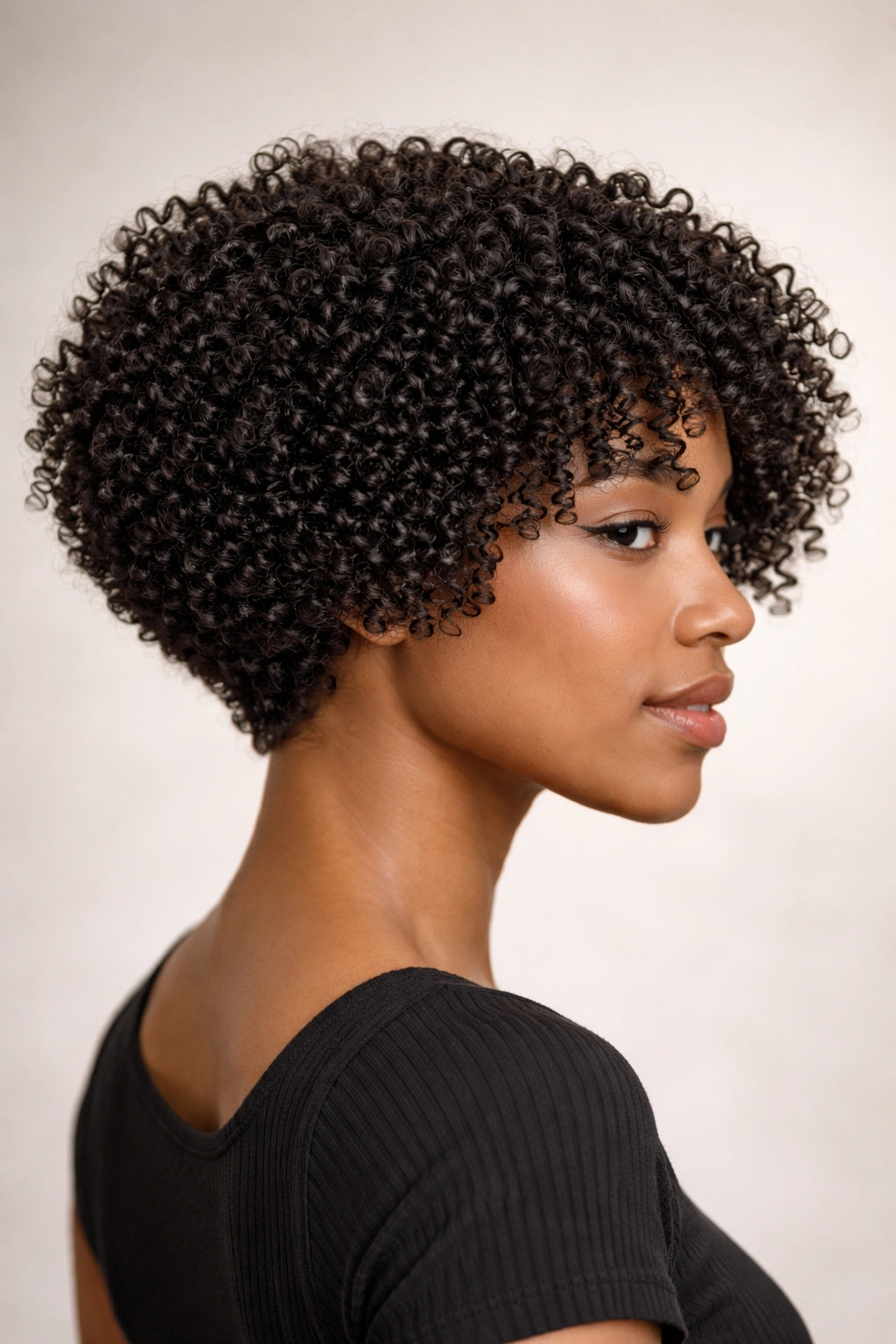
For very tightly coiled hair, a geometric bob with a clean line creates a striking, intentional appearance. The shape is typically a tapered bob that’s shorter in the back and gradually longer toward the front, or a straight-across blunt cut that appears almost architectural in its precision.
Geometry and Texture Working Together
The geometric shape provides visual structure, while the tight coil pattern provides texture. Together, they create a striking look that’s modern and strong without requiring extensive styling.
Cut and Maintenance
- Works on very tight curl patterns (4A-4C) where curls naturally hold shape
- Minimal daily styling—coils define themselves
- Trims every 6-8 weeks maintain the geometric precision as curls grow
- Best with a stylist highly experienced in cutting textured hair precisely
Pro tip: Coily hair often shrinks significantly when wet, so your stylist should dry-cut or factor in the shrinkage when wet-cutting. Know your hair’s shrinkage percentage before the appointment.
13. Piecey Textured Bob
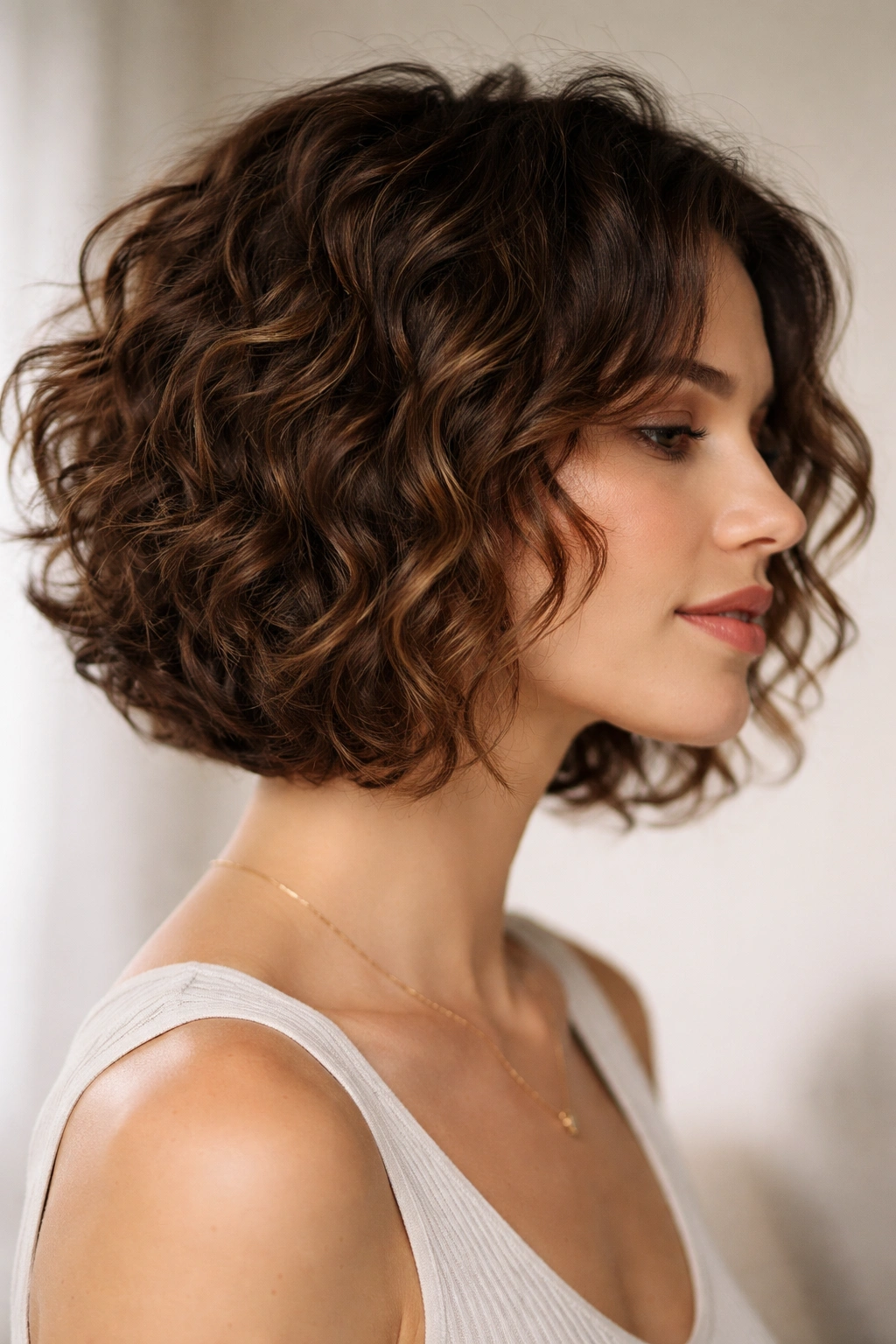
This style embraces texture and choppiness, cutting the hair in a way that creates irregular, separated pieces throughout rather than a cohesive blunt shape. The pieces are cut at different angles and lengths, creating a deliberately undone, modern aesthetic.
When Choppy Looks Intentional
The key is that the choppy texture feels like a style choice rather than a mistake. This works beautifully on curly hair because curls naturally separate and move, making the piece-y layers look intentional and cool rather than poorly cut.
Styling and Upkeep
- Requires frequent trims (every 6-8 weeks) to maintain the intentional piece-y effect
- Works on all curl patterns but especially striking on medium to tight curls
- Styling with a texturizing cream or light gel enhances the piece-y separation
- This is a bold, fashion-forward look that doesn’t suit everyone’s style preferences
Worth knowing: This style is unforgiving of bad haircuts—the choppy texture means any unevenness shows immediately, so find a skilled stylist you trust completely.
14. Curly Bob with Bangs
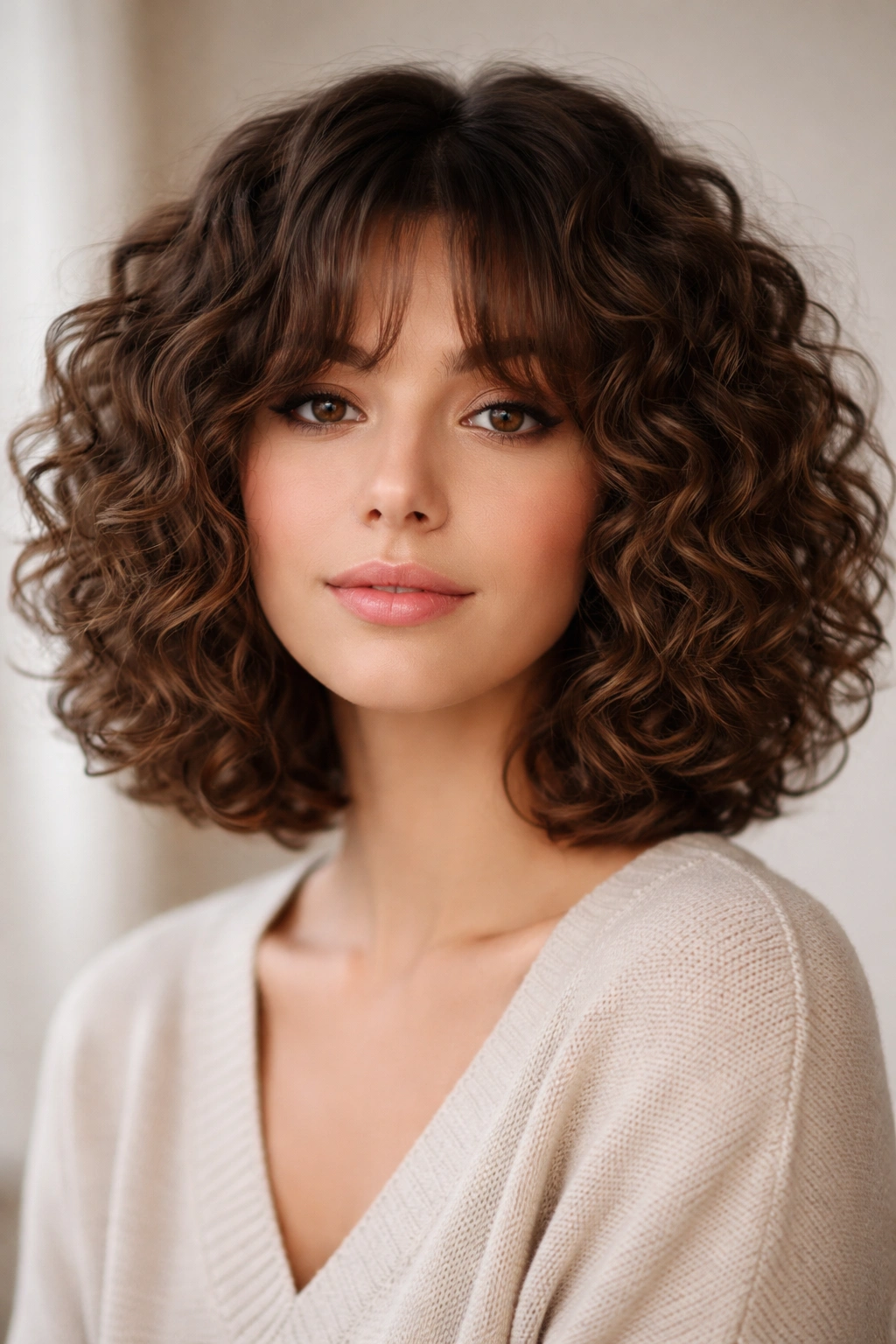
Adding bangs to a curly bob completely changes the style, framing the face in a way that can be flattering or challenging depending on the bang style and face shape. The most common options are curtain bangs (longer, side-parted), micro bangs (very short, blunt), or full bangs (classic blunt fringe).
Choosing the Right Bang Style
Curtain bangs work on most curl patterns and face shapes, softly framing the face without creating maintenance issues. Micro or blunt bangs are bold and work best on tighter curl patterns where the bangs will hold their blunt shape. Full bangs require very consistent styling and work best on straighter or wavy hair rather than tightly curly.
The Bang Reality
- Bangs require styling every day; they don’t air-dry as reliably as the rest of the bob
- Trims every 3-4 weeks keep bangs at the right length and prevent overgrowth
- Works best on people with medium to tight curls that hold a blunt line
- Very personal style choice; bangs completely change how a face reads
Pro tip: Ask your stylist to leave bangs slightly longer than you think you want—it’s easier to adjust shorter than to regrow them if they’re too short.
15. Face-Framing Curl Bob
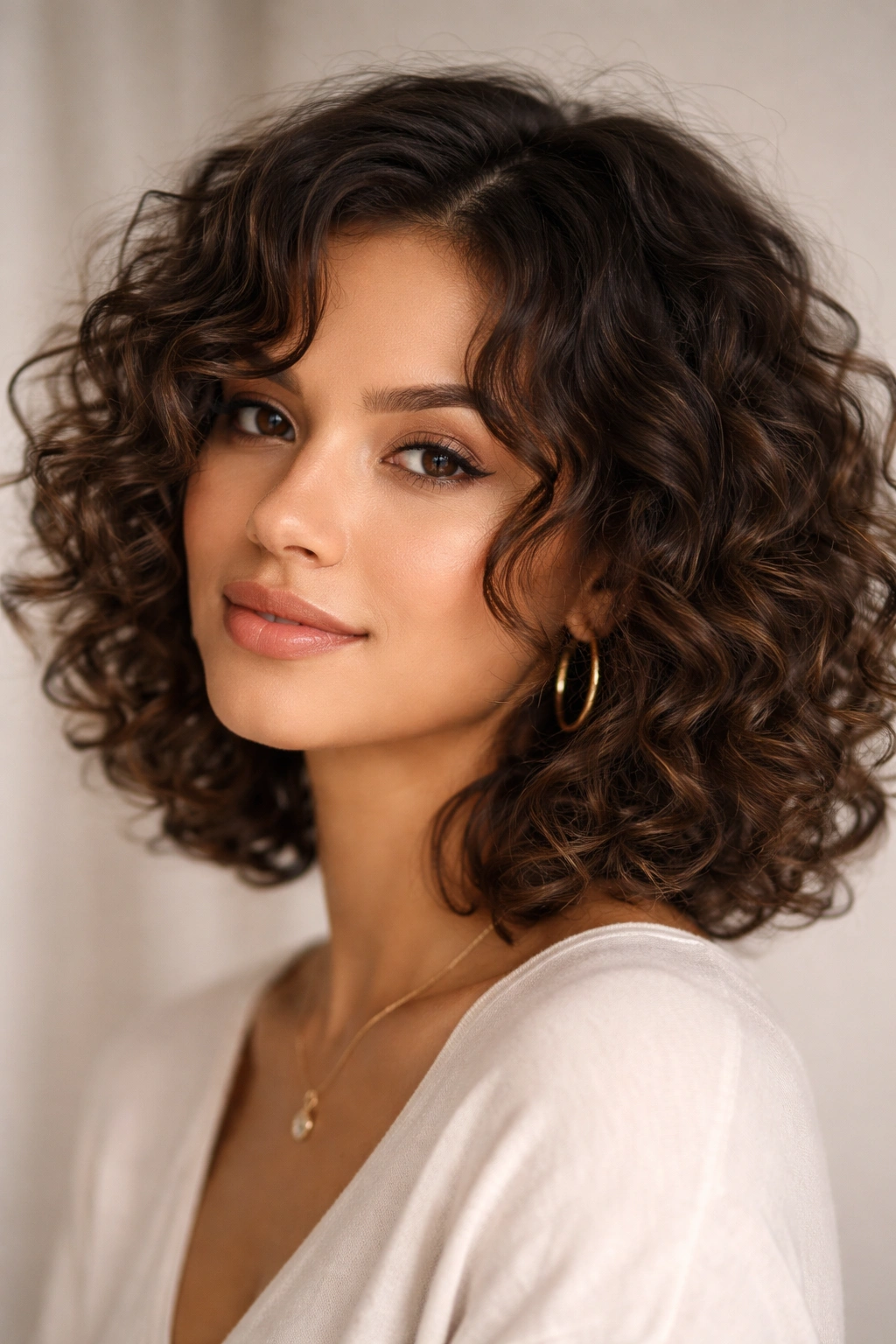
Rather than cutting straight layers, this style uses longer pieces specifically positioned to frame and flatter the face. These face-framing pieces typically start around ear length and can extend longer, creating a focal point that draws attention to the eyes and cheekbones.
Why Face-Framing Matters
Even subtle longer pieces create movement toward the face and can balance face shapes in ways that a uniform bob can’t. Curly hair is particularly good for face-framing because the curl pattern adds softness and movement around the face.
Versatility in Styling
- Works on all face shapes when the frame pieces are positioned thoughtfully
- Longer face-framing pieces can be tucked behind the ears for a different look
- Requires a stylist who thinks in terms of individual pieces rather than just overall shape
- Works on all curl patterns but especially flattering on medium to looser curls
Real talk: Face-framing pieces are the first thing to show growth and can look a bit awkward in the grow-out phase between trims.
16. Defined Curl Stacked Bob
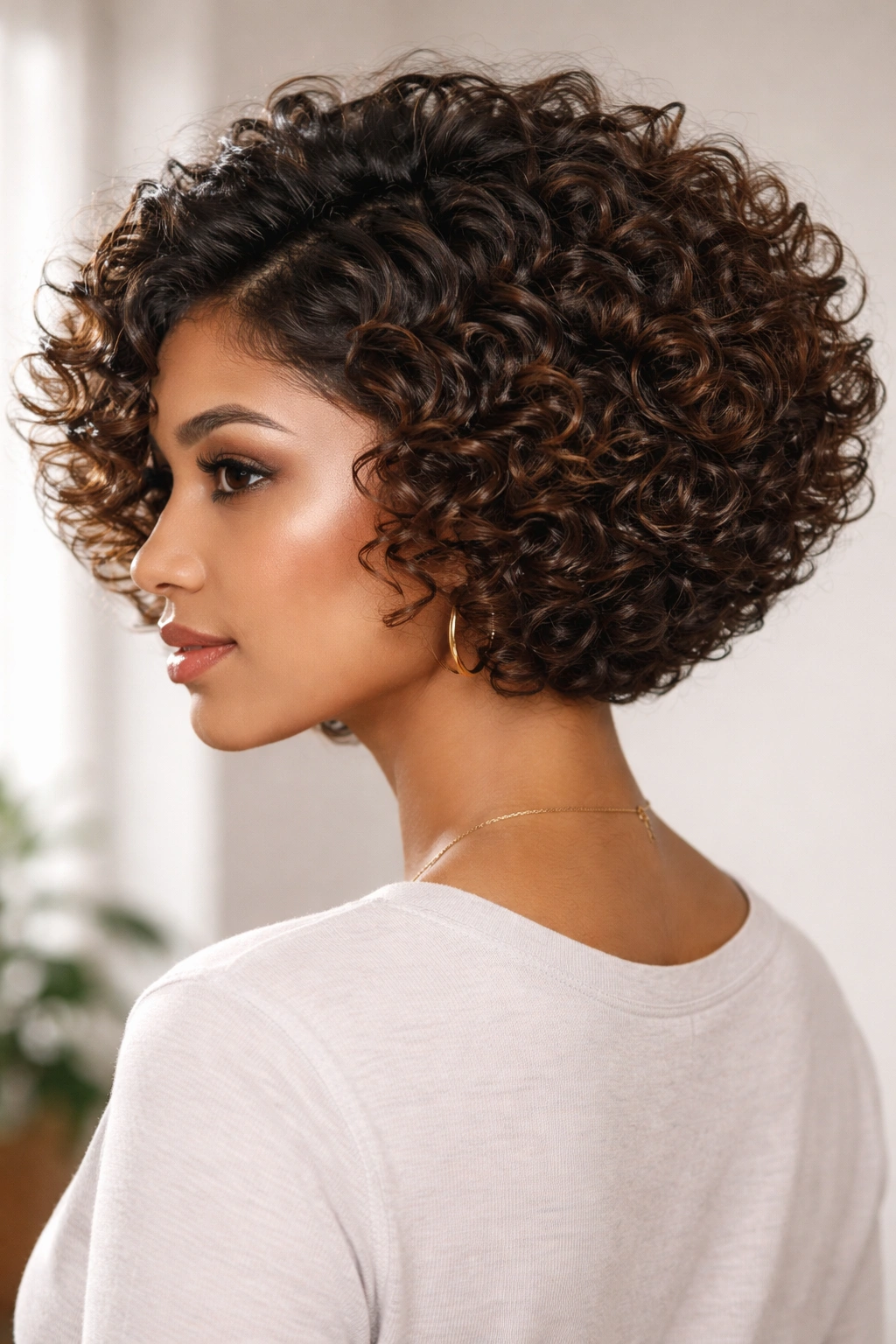
This is an intentionally voluminous style that’s shorter in the back with progressively longer layers moving forward, creating height and stack at the crown and sides. The layers are cut to encourage curls to sit on top of each other, building visual volume.
Stack, Shape, and Volume
The stacked layers are cut at specific angles that encourage curls to grip each other and sit forward, preventing flatness at the crown. This is especially useful for people whose curls naturally lean backward or whose hair lacks natural volume.
Cutting and Styling
- Requires a highly skilled stylist who understands how curls stack and move
- Best on medium to very tight curls where the stacking effect is visible
- Styling with a volumizing mousse or curl cream enhances the intended stacked effect
- Trims every 6-8 weeks maintain the stacked shape as the hair grows
Worth knowing: If your curls are very loose or wavy, stacking might not be as visible or effective, so discuss this with your stylist before committing to the cut.
17. Messy Textured Crop Bob
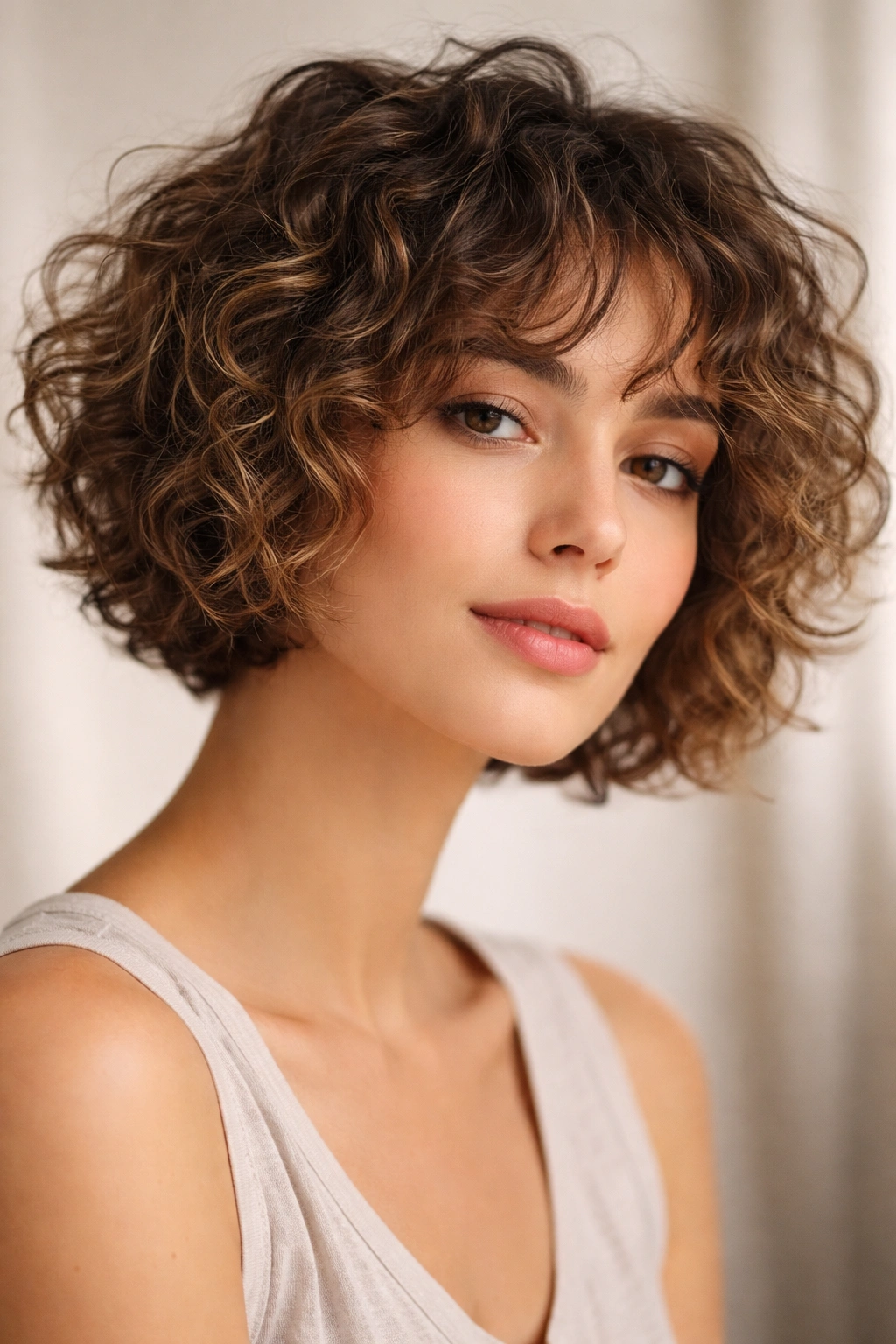
A cropped curly bob sits shorter overall—usually 1-3 inches long—with texture and layers throughout that create a playful, undone aesthetic. This is genuinely short hair, but because of the texture, it reads as intentionally cropped rather than just “short.”
Short and Textured
The texture is essential to making a crop work; if your hair is too straight or fine, a crop can look stringy rather than cute. Curly or wavy hair has the texture to pull off a crop beautifully, with the curls adding visual interest and dimension.
Practical Reality
- Absolute minimum styling—sometimes just running your fingers through damp curls is enough
- Fastest drying of any bob style
- Trims every 4-6 weeks maintain the intentional crop shape
- Bold style choice that works best on people confident with very short hair
Pro tip: A light curl cream applied to wet hair before air-drying gives definition without being necessary for the style to work.
18. Elongated Curl Bob
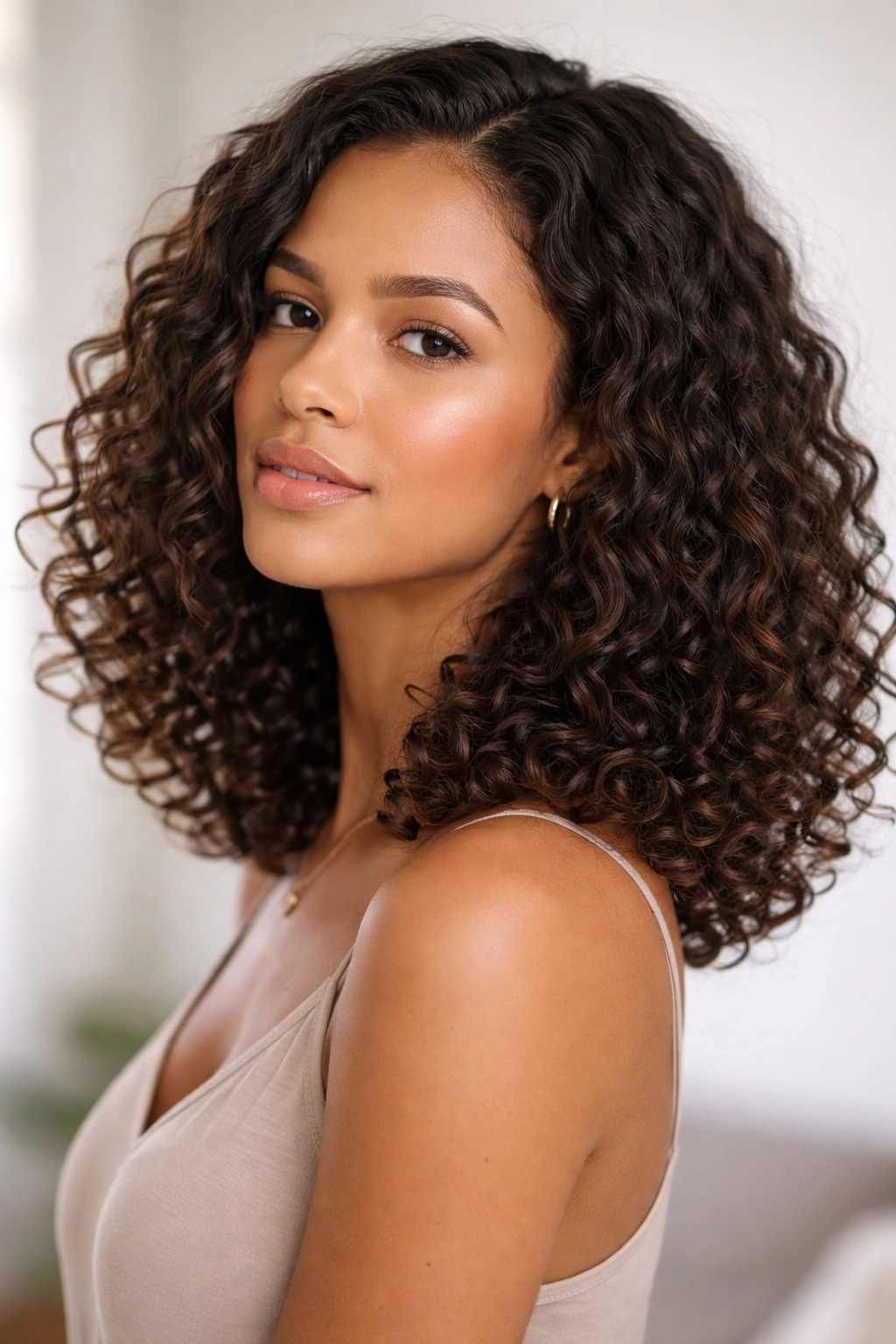
This style prioritizes length, sitting at or past the shoulders while still technically reading as a bob rather than longer hair. The elongation comes from minimal layering and a focus on removing only the weight that actually prevents curls from functioning.
When More Length Works Better
Some curl patterns genuinely need more length to define and move properly. Very tight curls especially often look better longer because the coils have space to fully form and hang. An elongated bob gives this benefit while still being more manageable than truly long curly hair.
Maintenance Perspective
- Requires consistent deep conditioning and protein treatments for length health
- Trims every 8-10 weeks maintain shape without removing necessary length
- Works on all curl patterns but especially beneficial for very tight curls
- Styling technique matters more with this length—air-drying alone might not achieve desired results
Real talk: The longer you go, the more prone the ends become to damage and splitting. Budget for regular trims and weekly deep conditioning.
19. Curly Mullet Bob
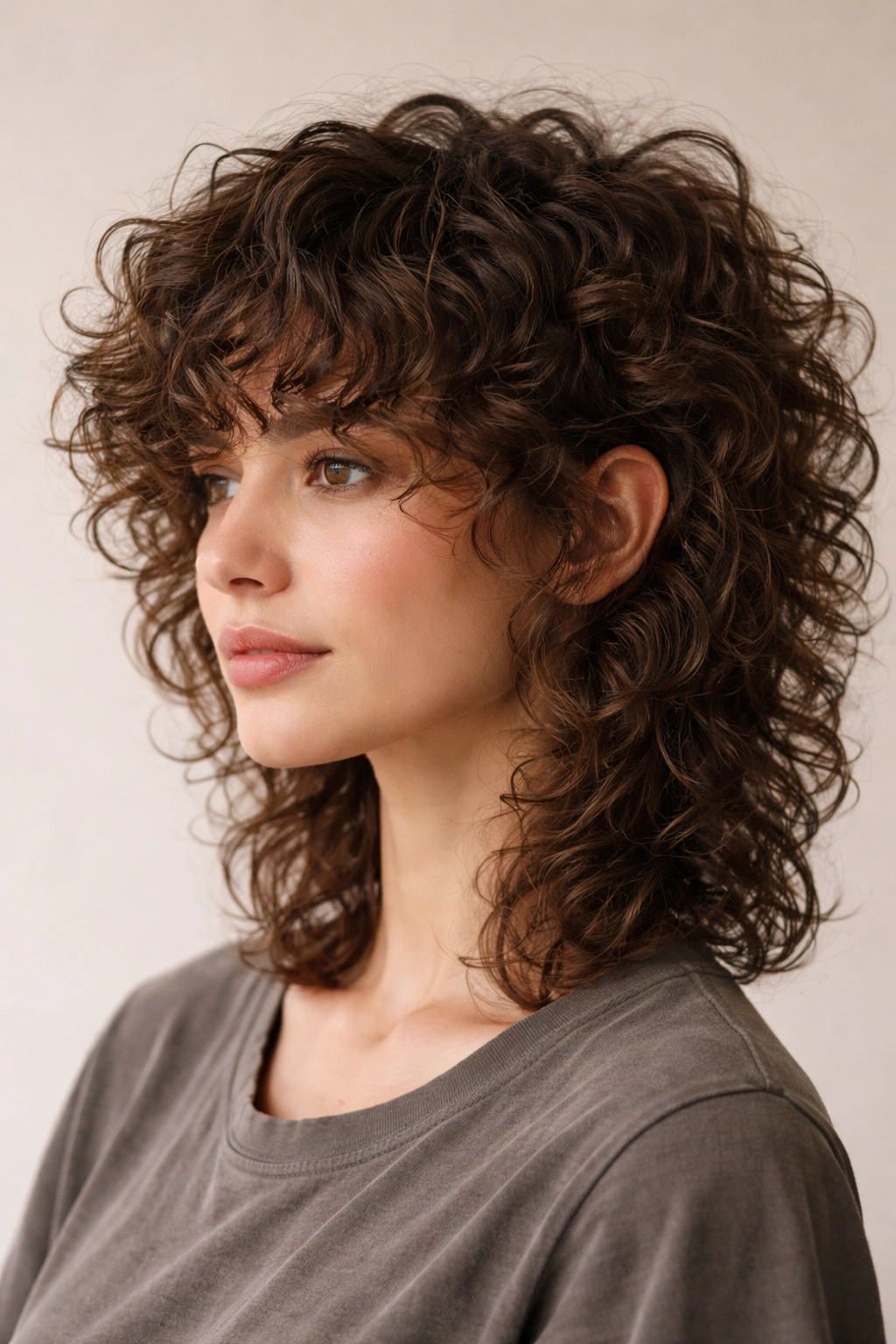
A contemporary take on the ’80s mullet, this style keeps the front shorter and layers it more heavily while leaving the back longer and less layered. It’s bold, fashion-forward, and works beautifully on curly hair where the textural contrast between the layered front and longer back is striking.
Modern Mullet Aesthetics
This isn’t your mother’s mullet—the modern version is refined and intentional, not wild and unruly. The shorter front sections are layered for movement, while the back sections are strategically longer to create visual interest and movement.
Styling and Upkeep
- Requires a stylist comfortable with modern silhouettes and willing to take risks
- Works on all curl patterns but most striking on medium to tight curls
- Offers flexibility in how extreme the difference is between front and back
- Trims every 6-8 weeks maintain the intentional shape differential
Worth knowing: This is a statement style. It photographs well and gets attention. It’s best for people who love standing out and aren’t bothered by people asking “why is your hair like that?”
20. Bouncy Medium Curly Bob
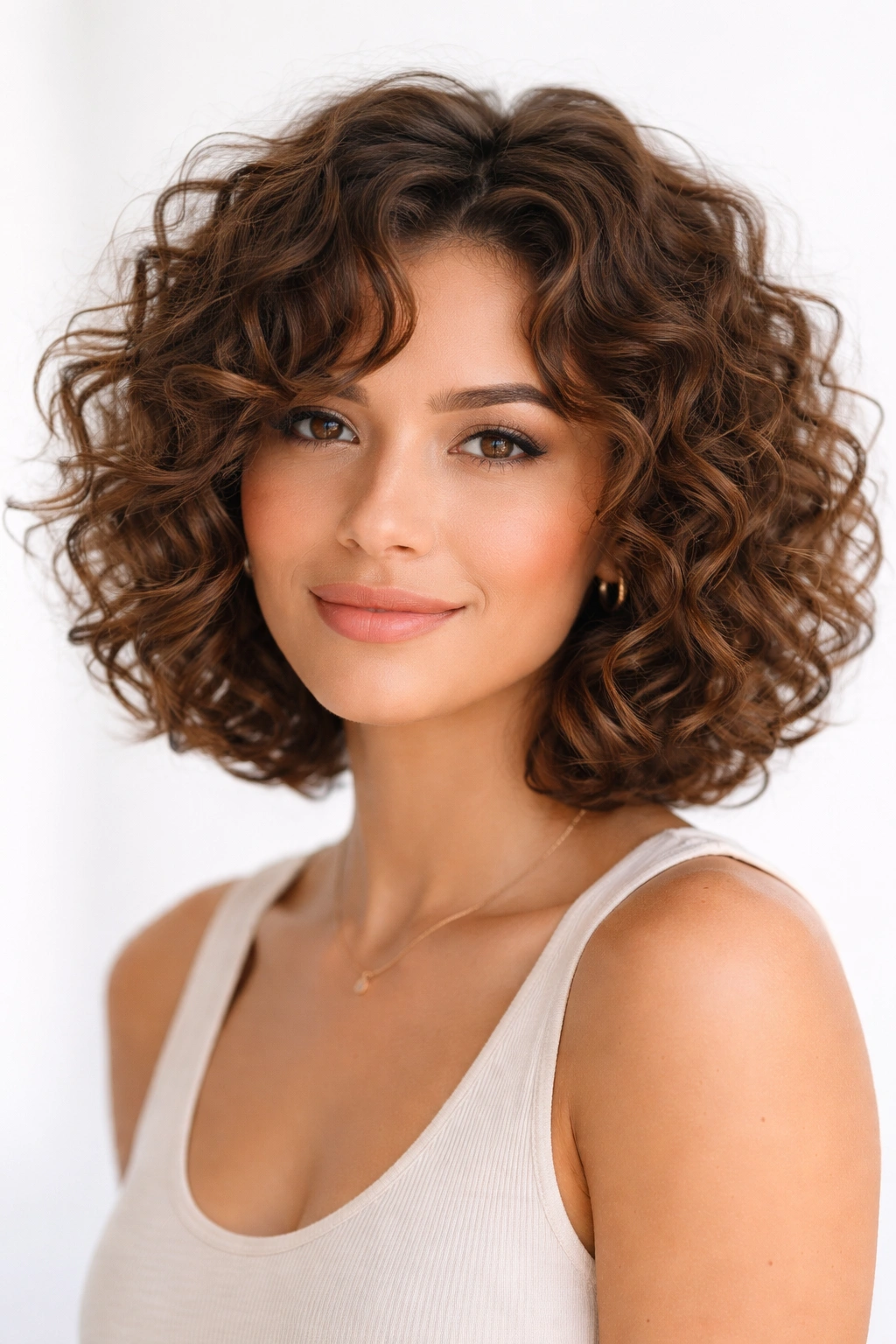
A classic, universally flattering option, the bouncy medium bob sits around chin-length with enough layering to encourage movement and bounce throughout. It’s slightly longer than a cropped bob but shorter than the shoulder-length options, hitting that sweet spot for manageability and visual impact.
The Goldilocks of Curly Bobs
This length and style work on nearly all face shapes and curl patterns. It’s versatile enough to style multiple ways, professional enough for most work environments, and fun enough to feel like a real style choice rather than just “short hair.”
Everyday Practicality
- Works on all curl patterns from loose waves to very tight coils
- Styling with a curl cream or mousse enhances the bounce, but air-drying can work too
- Trims every 7-9 weeks maintain shape and remove damaged ends
- Flattering for most people and a genuinely safe choice if you’re nervous about shorter hair
Pro tip: This length is forgiving during the grow-out phase between cuts, so if you decide it’s not for you, growing it out isn’t a years-long process.
Final Thoughts
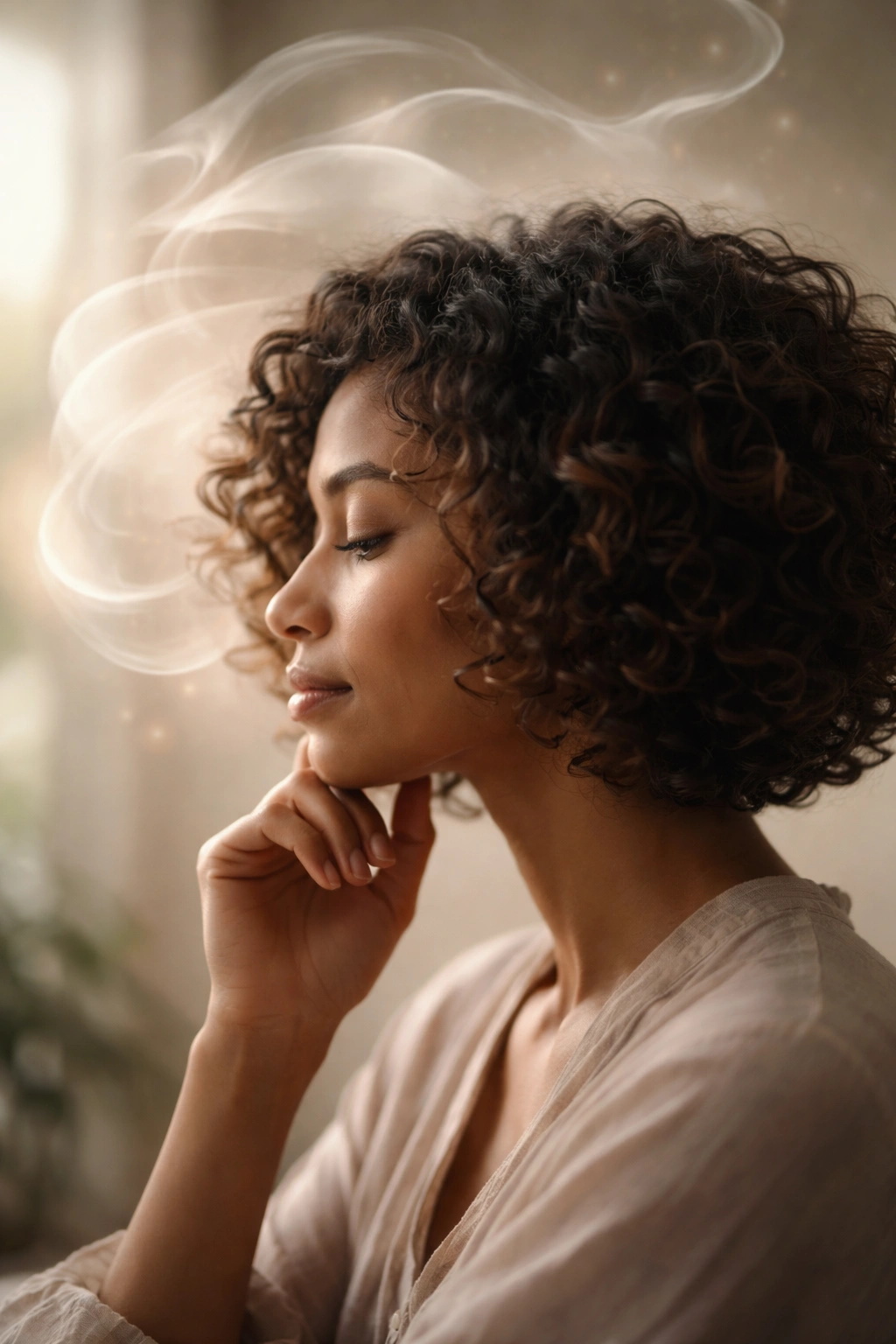
The curly bob has evolved from a niche option into a legitimate, exciting category with enough variety that nearly everyone with curly hair can find a version that works for their texture, lifestyle, and personal style. The key is being honest with your stylist about your hair’s actual behavior—how it curls, how much shrinkage occurs, how much time you’re willing to spend styling—rather than asking for a photo of a style that might require a completely different curl pattern or maintenance commitment.
Your stylist should be someone who genuinely understands curly hair, not just someone who can cut straight hair well. The difference between a mediocre curly bob and a stunning one often comes down to whether your stylist cut it dry or wet, whether they understood your specific curl pattern’s needs, and whether they cut in a way that works with your curls rather than against them. Don’t hesitate to ask questions about their experience with curly cuts specifically, and bring reference photos that show your curl pattern as clearly as possible, not just the shape you want.
The most important thing about any of these styles is that you feel confident and comfortable. A bob that requires styling you hate is a bad bob, no matter how trendy it is. A style that forces you to spend 20 minutes blow-drying every morning when you want something quick probably won’t last long in your rotation. Think honestly about your lifestyle, your patience level with styling, and your curl pattern’s specific needs, then work with your stylist to pick a style that checks all those boxes—not just the aesthetic ones.
