



Frizzy hair and long locks are basically sworn enemies. The longer your hair, the more surface area moisture has to attack, and the more that humidity can turn your carefully styled mane into an unpredictable frizz cloud. Short haircuts, on the other hand, give you a built-in advantage—less hair to fight, less distance for frizz to travel, and naturally more control over your overall texture and appearance.
But not all short cuts are created equal when it comes to taming frizz. The real secret isn’t just about going short; it’s about choosing a cut that works with your hair’s natural texture rather than against it. The right short haircut uses layers strategically, removes dead weight that drags hair down and creates frizz, and creates movement that makes minor frizz nearly invisible. It’s the difference between a short cut that looks polished and one that looks like you gave up.
The good news is that you have real options. Whether your hair is naturally curly, wavy, or frustratingly straight-but-prone-to-frizz, there’s a short cut designed specifically to manage your texture and keep you looking intentional and put-together. The cuts I’m about to share aren’t just trending because they look good—they’re practical choices that actually reduce the daily effort required to keep frizz under control.
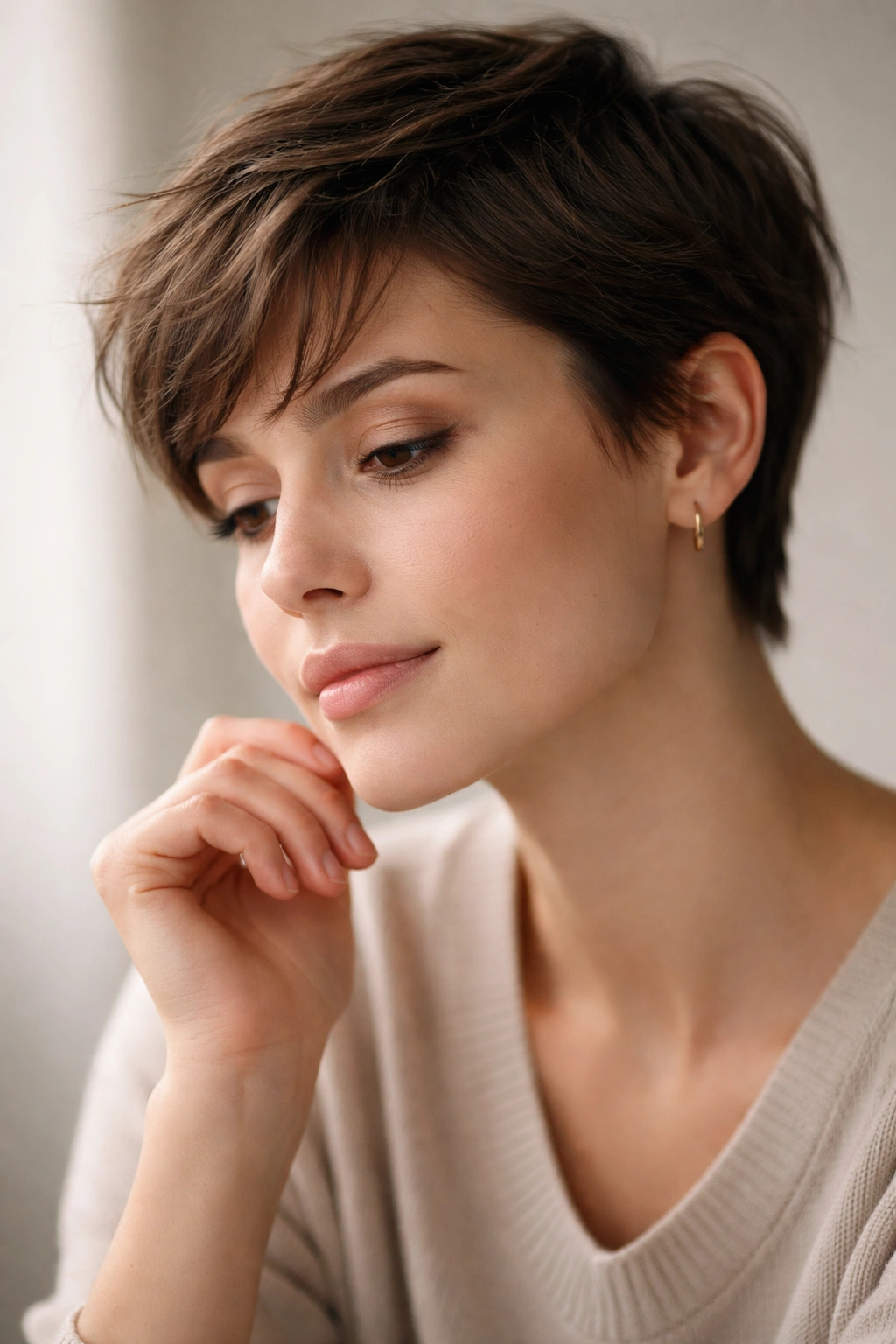
1. The Textured Pixie Cut for Layered Control
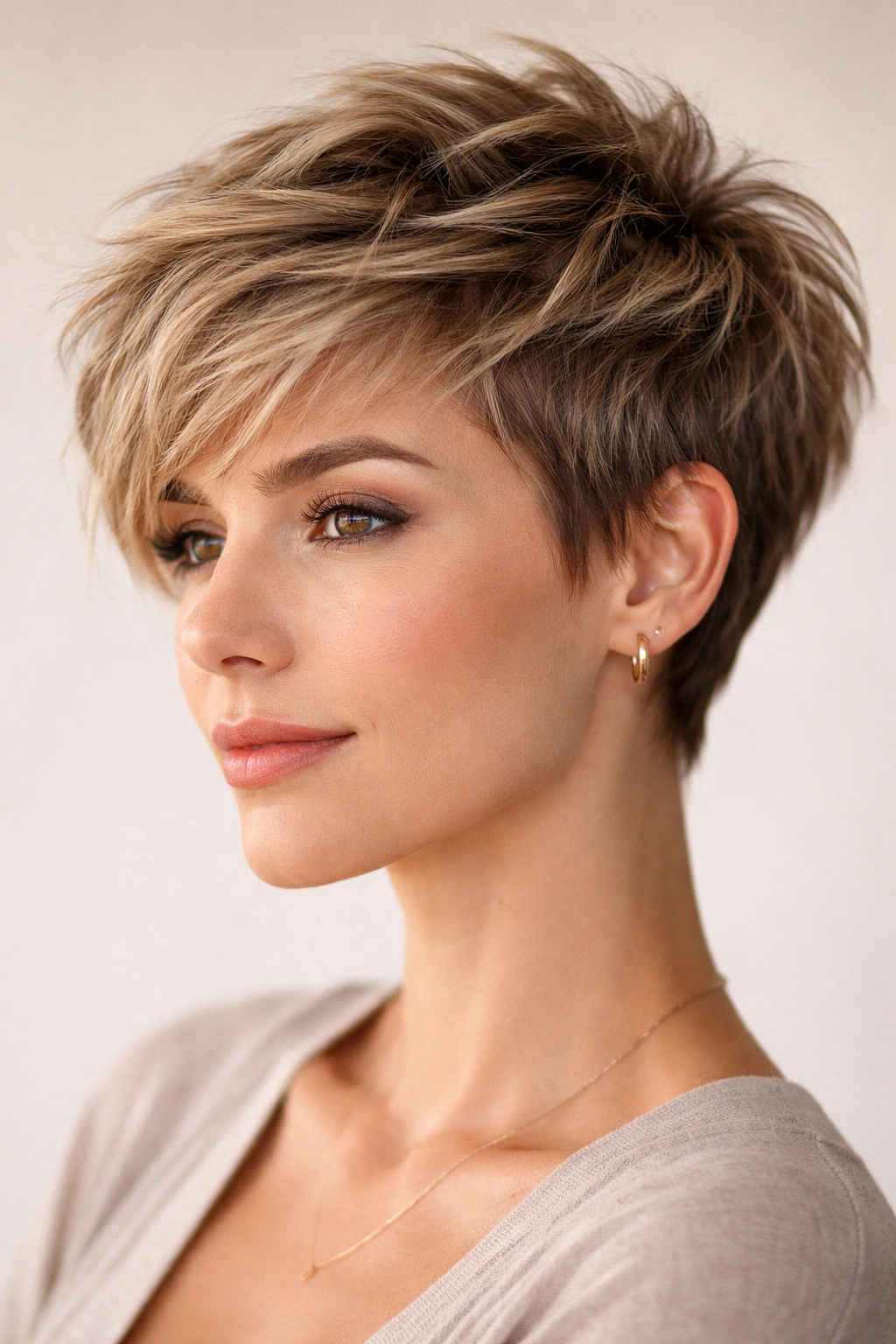
A textured pixie sits at the intersection of edgy and elegant, and it’s a genuine game-changer if you’re willing to lean into short hair. This cut uses multiple layers throughout to create texture and movement, which means frizz gets broken up visually rather than clinging to your head in one flat mass. The layers are cut at varying lengths, typically shortest at the crown and gradually longer as you move toward the face and sides.
What makes this cut so effective against frizz is physics: shorter individual pieces of hair have less weight and less surface area for humidity to affect. A single strand at two inches long will frizz less noticeably than the same strand at eight inches. The textured pixie multiplies this advantage across your entire head.
Why This Cut Controls Frizz So Well
The layered structure means that even if some pieces frizz slightly, they’re shorter and less noticeable. The cut also works beautifully with styling products—a small amount of texturizing spray or matte pomade applied to damp hair can enhance the cut’s natural texture and provide light hold without the stiffness that comes from trying to plaster longer hair down. The pixie also dries remarkably quickly, which means less time for frizz to develop as your hair transitions from damp to dry.
Styling and Maintenance Tips
- Use a blow dryer on low to medium heat, directing air in the direction you want the layers to fall
- Apply lightweight texturizing cream or wax to damp roots while hair is still somewhat wet—the moisture helps distribute product evenly
- You’ll need trims every 4-6 weeks to maintain the shape and prevent the layers from growing out and losing their frizz-fighting edge
- Sleep on silk or satin pillowcases to prevent friction that creates frizz overnight
Best for: People who appreciate a bold, fashion-forward look and don’t mind regular maintenance. This cut requires commitment to consistent trims.
2. The Sleek Bob with Micro-Bangs for Shine
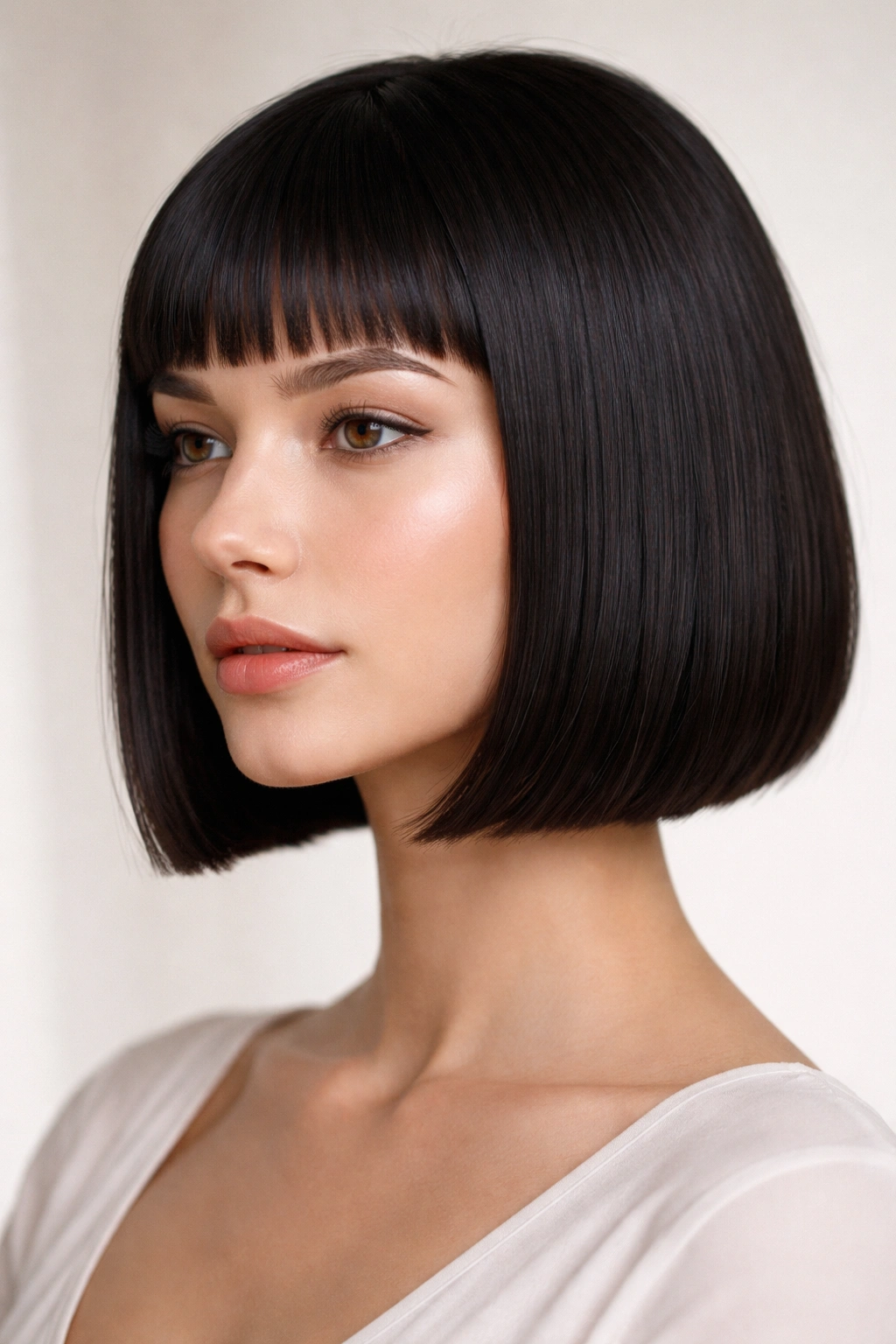
A blunt, chin-length bob with micro-bangs is the opposite of the pixie in aesthetic, but equally effective at controlling frizz through a completely different mechanism. This cut relies on precision and weight distribution. Because the bob is cut blunt with minimal layering, the hair’s ends all land at roughly the same length, which creates a clean line that reads as intentional and polished even if a few pieces frizz slightly.
The micro-bangs—short, textured bangs that sit just above the eyebrows—add an element of modern edge while also creating a visual break that distracts from any frizz happening lower on the head. The cut’s structure naturally encourages hair to fall in one direction, which keeps pieces aligned rather than dispersing into a chaotic frizz pattern.
The Science of Blunt Ends and Frizz Control
Hair with blunt-cut ends actually resists frizz better than hair with razor-cut, tapered ends. This is because blunt edges create a smoother surface when the hair cuticle sits flat, whereas tapered ends can catch and amplify the appearance of individual raised cuticles. The bob’s weight and length also matter—hair that reaches just past the chin has enough weight to pull itself relatively straight without being so long that gravity creates the bend-and-frizz dynamic of longer hair.
Styling and Maintenance Tips
- Blow-dry with a round brush or paddle brush to smooth the cuticle layer
- Use a smoothing serum or anti-frizz cream before styling, focusing on mid-lengths and ends
- The micro-bangs will frizz differently than the rest of your hair and may need a touch of lightweight hairspray to stay smooth
- You’ll need trims every 6-8 weeks to maintain the blunt line
Best for: People who want a sophisticated, timeless look that still feels current. This cut suits rounder and oval face shapes particularly well.
3. The Cropped Shag for Movement and Texture
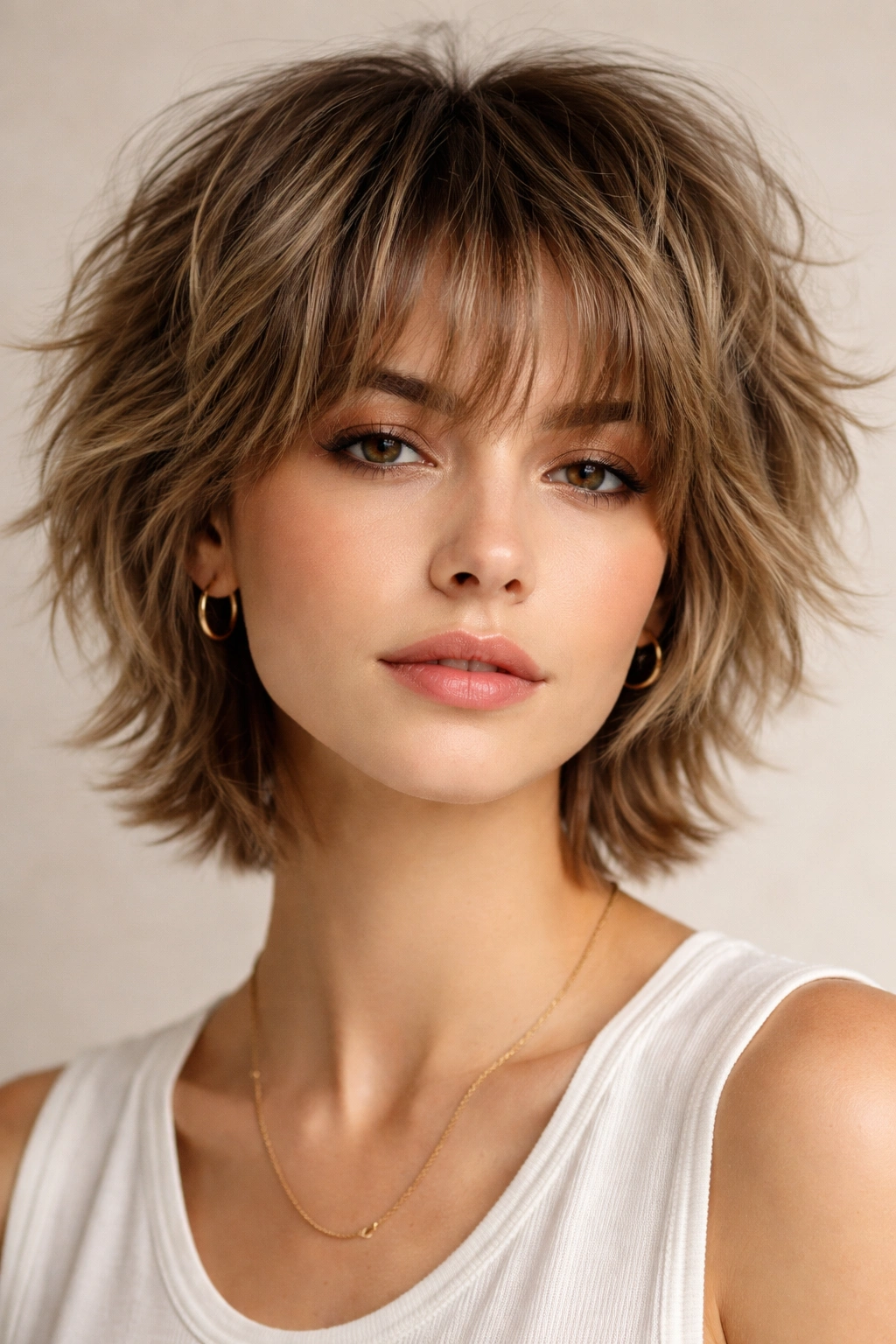
The modern shag—a cropped version of the ’70s classic—combines layering, texture, and movement in a way that makes frizz work for you rather than against you. This cut sits somewhere between a pixie and a bob, typically hitting around ear-length with heavily layered, feathered pieces throughout. The whole point is visible texture, which means a little bit of frizz actually looks like you planned it.
A cropped shag uses lots of texture and movement to distribute frizz across multiple dimensions rather than letting it settle into one uniform poof. The layers are cut to encourage hair to flip and move in different directions, which breaks up the cohesive frizz pattern that happens with longer, straighter cuts.
Why Shags Excel at Disguising Frizz
Because shags are supposed to look piece-y and textured, a certain amount of frizz is indistinguishable from the cut’s intended aesthetic. You’re not fighting frizz; you’re leaning into a style where texture is the point. The feathered layers create movement that makes your hair look intentional and fashionable even on days when humidity is doing its worst. A lot of people discover they can actually wear shags with significantly less styling effort than more structured cuts.
Styling and Maintenance Tips
- Use a texturizing spray or sea salt spray on damp hair to enhance the cut’s natural piece-y texture
- Blow-dry with your fingers through the layers, or use a diffuser attachment to encourage natural texture without controlling each piece
- This cut can look great tousled and undone, which saves you styling time
- Trims every 6-8 weeks prevent the layers from growing out too long and losing their movement
Best for: People who like a relaxed, effortless aesthetic and appreciate that texture is a feature, not a bug. Great for wavy and curly hair types.
4. The Blunt Lob for Structured Definition
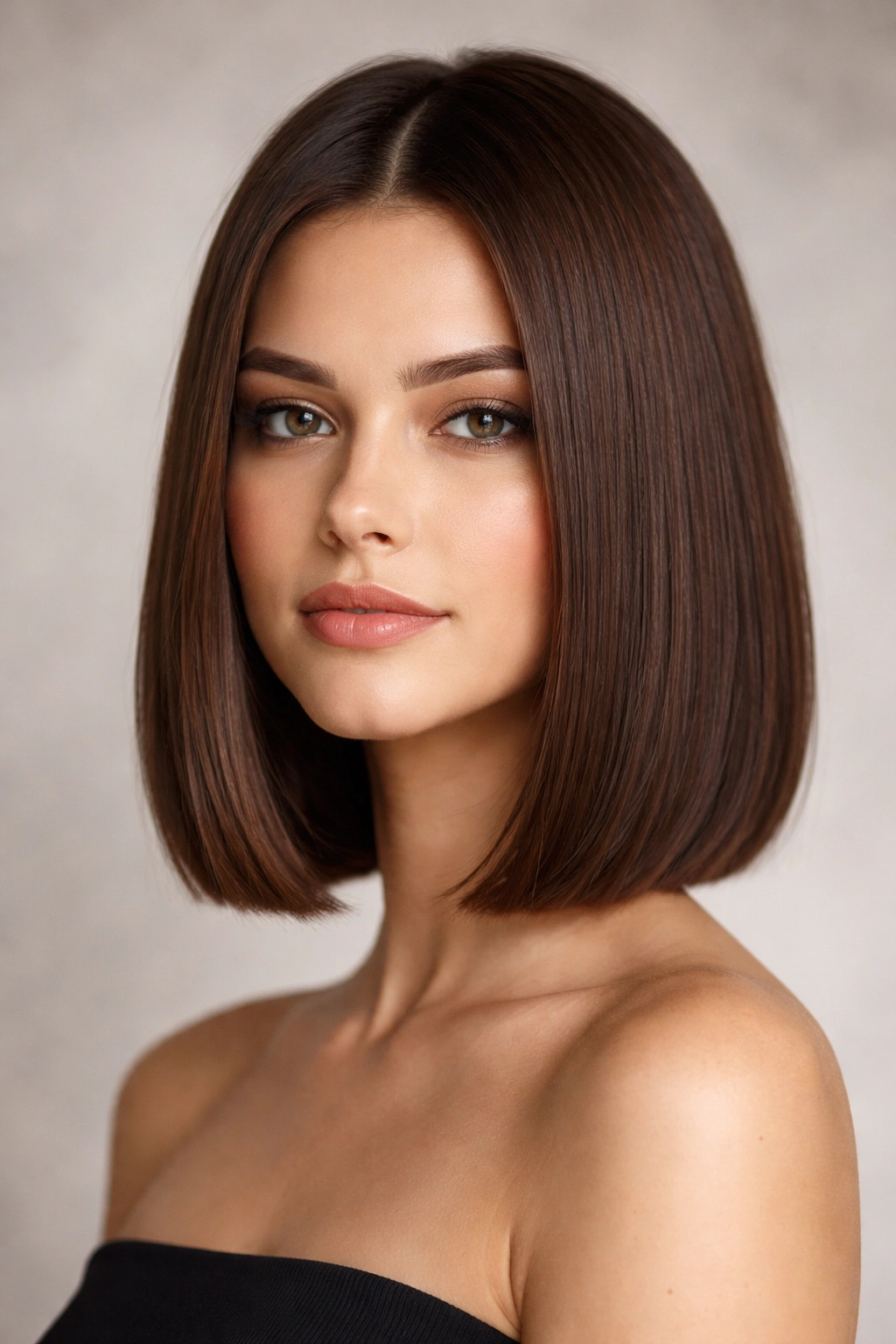
A lob (long bob, typically hitting mid-neck) is longer than most cuts on this list, but a blunt-cut lob deserves inclusion because the weight and precision of the cut makes it genuinely effective at controlling frizz compared to longer styles. The key is the blunt cut—a straight line across the back without layers or taper—which creates a visual “frame” that frizz can’t escape.
The lob sits at that magic length where the weight is substantial enough to keep hair relatively straight and aligned without being so long that frizz multiplies exponentially. It’s a cut that works well for people who aren’t quite ready to go short but absolutely need frizz management.
How Blunt Cuts Create the Illusion of Control
A blunt line creates visual authority. Even if a few individual hairs are frizzing, the overall line of the cut reads as clean and intentional. The longer length also means you have more reach for styling—you can tuck hair behind your ears, pin it, or create a half-up style if frizz is being particularly aggressive on a humid day. You get versatility you lose with pixies and very short bobs.
Styling and Maintenance Tips
- Blow-dry with a paddle brush, working in sections from underneath to encourage hair to fall in one direction
- Apply anti-frizz serum from mid-length to ends, focusing on the underneath layers that are most prone to frizz
- You can create texture with a straightener if you want more definition, or leave it smooth for a sleek look
- Trims every 8-10 weeks maintain the blunt line
Best for: People who love short hair styling but want a bit more length for flexibility and styling options.
5. The Tapered Undercut for Modern Edge
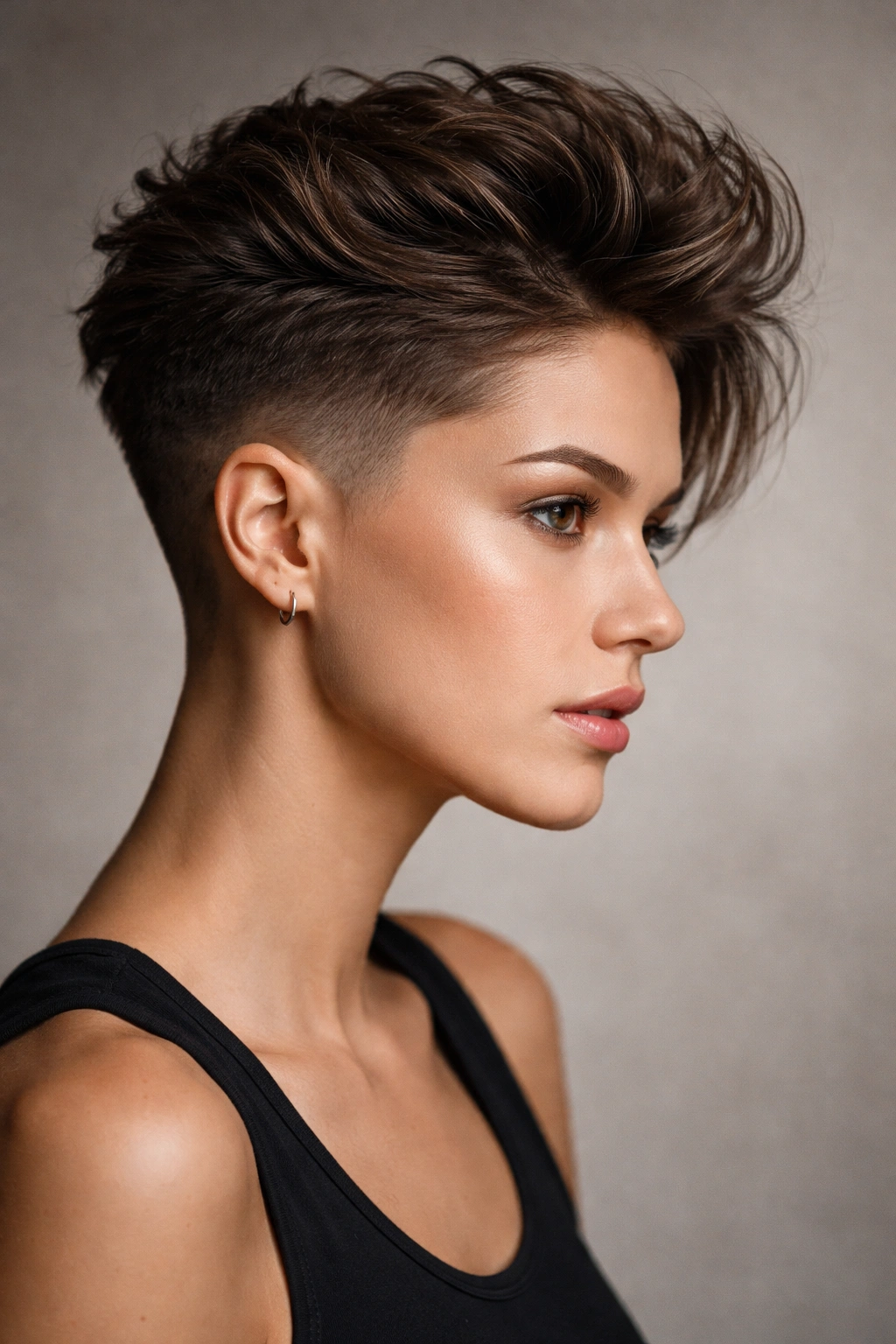
An undercut—short, nearly shaved sides with longer hair on top that gets tapered and layered—is less about traditional frizz control and more about minimizing the total surface area affected by frizz. By shaving or cutting the sides very short, you’re removing the hair that’s most prone to frizz from environmental humidity. The longer hair on top has room to move and texture, while the shaved sides stay completely controlled.
This cut has become increasingly popular for all hair types because the contrast is striking, it’s low-maintenance on the sides, and the longer top allows for versatility. The undercut also suits people who want to manage frizz while maintaining some length for styling.
Strategic Frizz Reduction Through Contrast
The beauty of an undercut is that you’re trading frizz-prone longer pieces for frizz-free shorter ones. The shaved or very short sides stay smooth regardless of humidity. The layered top piece can have a bit of texture or movement, but because it’s not as long as a traditional longer cut, it’s more manageable. You’re essentially choosing your battles—let the top have some character while keeping the vulnerable sides controlled.
Styling and Maintenance Tips
- Sides will need touch-ups every 2-4 weeks to maintain the clean undercut look
- The longer top can be styled various ways—slicked back for a sharp look, tousled for texture, or side-swept for softness
- Use pomade or texturizing spray on top to enhance movement without creating frizz
- Sides stay smooth with minimal effort—just regular haircuts
- This cut looks great with a bit of length on top (2-3 inches minimum) to have something to style
Best for: People who want a statement-making cut that’s genuinely low-maintenance. Works well with straight to wavy hair types.
6. The Curly Pixie for Natural Texture
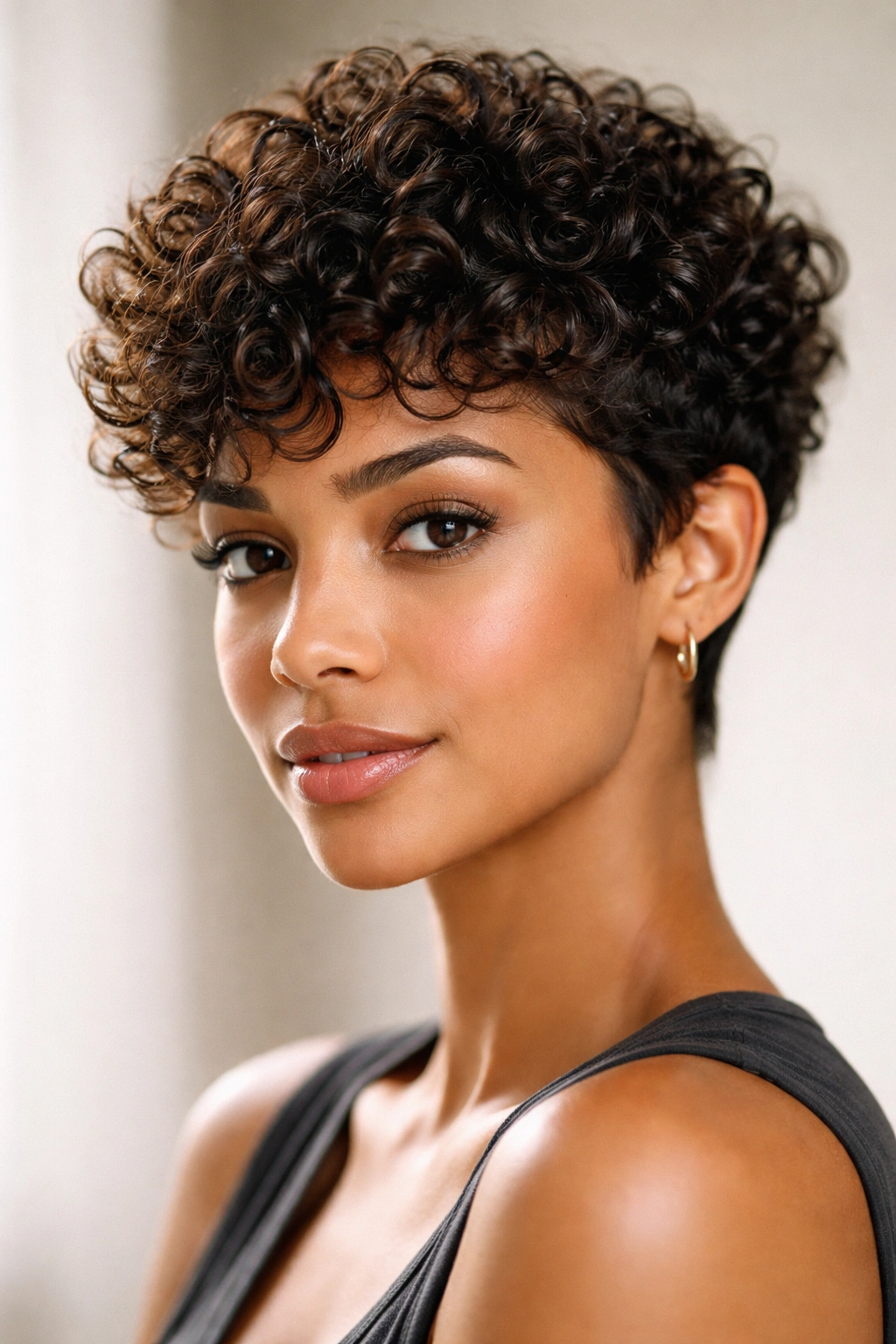
If you have naturally curly or coily hair, your curl pattern is actually your greatest asset in fighting frizz—but only if you’re working with a cut that respects your natural texture rather than fighting it. A curly pixie cut keeps hair short enough that curls stay relatively bouncy and defined, and short enough that gravity isn’t constantly pulling your curls loose and creating the fuzzy texture that looks like frizz.
The secret with curly hair is that frizz is often just loose, undefined curl. By using a cut that works with your curl pattern and keeping it short, you emphasize the defined curl and minimize the undefined frizz. A curly pixie also dries faster than longer curly hair, which reduces the window for humidity damage.
How Short Curls Beat Frizz Through Definition
Curls held in a tight, defined pattern don’t frizz the way loose or broken curls do. A pixie cut on curly hair encourages curls to stay spring-loaded and compact. The shorter length also means there’s less weight pulling curls out of shape. Many people with curly hair find that their frizz issues almost disappear once they commit to a short cut because they’re not fighting their hair’s natural inclination anymore.
Styling and Maintenance Tips
- Cut curly hair when it’s dry, not wet—stylists need to see how your curls actually sit to cut them properly
- Use curl-defining creams or gels on damp hair, applying products through curls in an upward motion
- Diffuse-dry or air-dry rather than using intense heat that can disrupt curl definition
- Trims every 6-8 weeks keep curls from getting too long and losing their definition
- Consider a curl-specific routine (the “Curly Girl Method”) to maximize definition and minimize frizz
Best for: People with naturally curly or coily hair who are ready to embrace their texture and work with it rather than against it.
7. The Short Layers with Side-Swept Styling
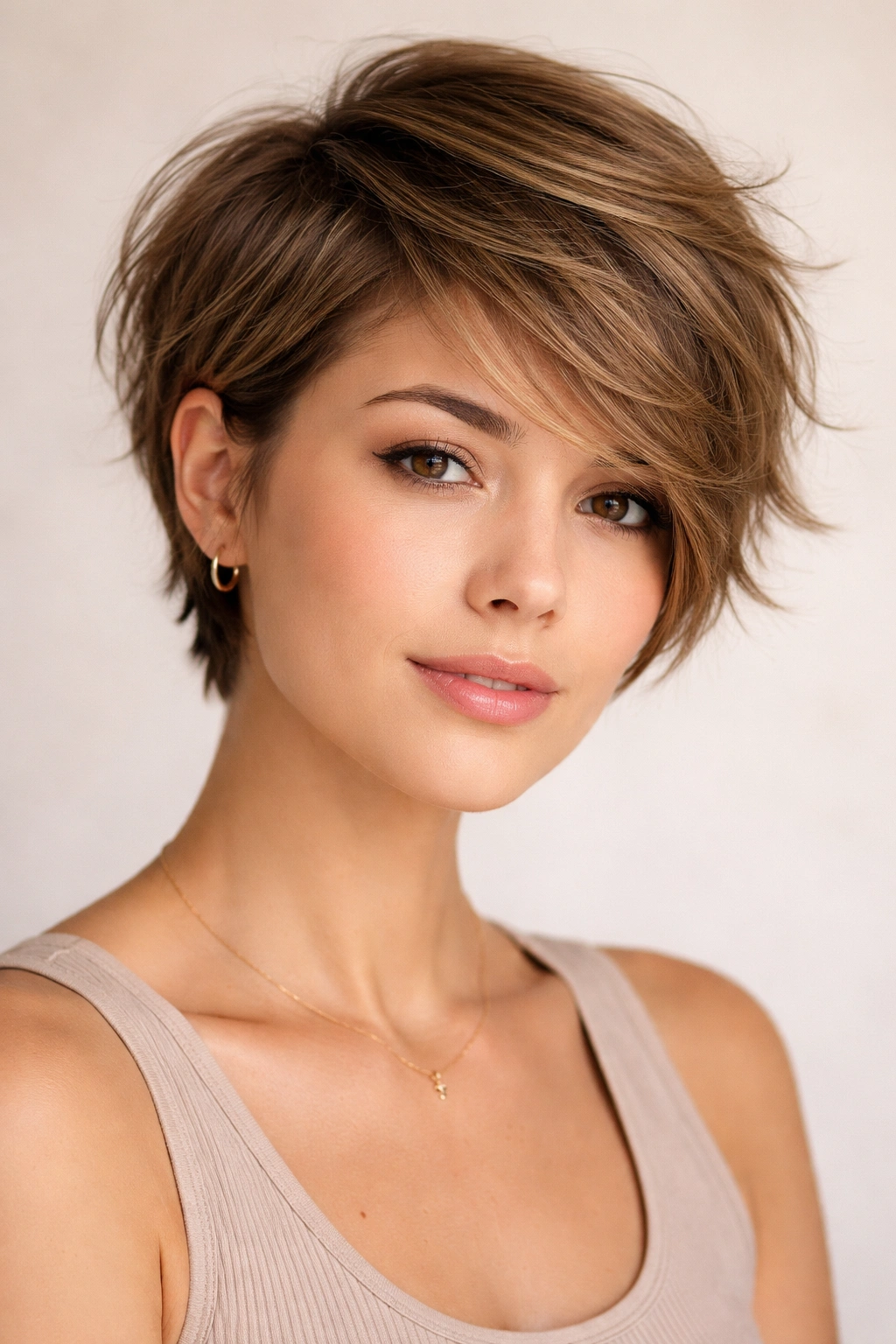
Short layers with a side-swept direction create movement and visual interest that naturally hides frizz. This cut is similar to the pixie but usually a bit longer overall, sitting somewhere between a pixie and ear-length. The layers throughout are cut to encourage hair to move in one primary direction—typically swept to one side—which gives the cut both structure and softness.
The side-swept element is key. By directing all your layers toward one side, you’re creating a visual narrative that feels intentional. Even if some frizz happens, it reads as part of the textured, side-swept aesthetic rather than as chaos. The layers also prevent the weight that creates the bend-and-frizz dynamic at the back of the neck that happens with blunt bobs.
Movement as a Frizz-Disguising Tool
The physics of layering means that shorter pieces can move more independently than one long section of hair. When hair moves in different directions, frizz gets broken up visually. A side-swept layer cut encourages movement toward one side, which creates flow and sophistication. You’re using your hair’s natural tendency to move (or frizz) and directing it purposefully.
Styling and Maintenance Tips
- Blow-dry with the direction of the layers using a brush or your fingers
- Use a light texturizing product that adds definition without weight
- The side-swept part is important—a deep side part creates the intentional look that makes the cut work
- You can refresh the direction with a light blow-dry even if you just wash your hair and let it air-dry somewhat
- Trims every 4-6 weeks maintain the layer shape
Best for: People who like the idea of short hair but want something with slightly more length and a softer aesthetic than a pixie.
8. The Chin-Length Angled Bob for Face-Framing
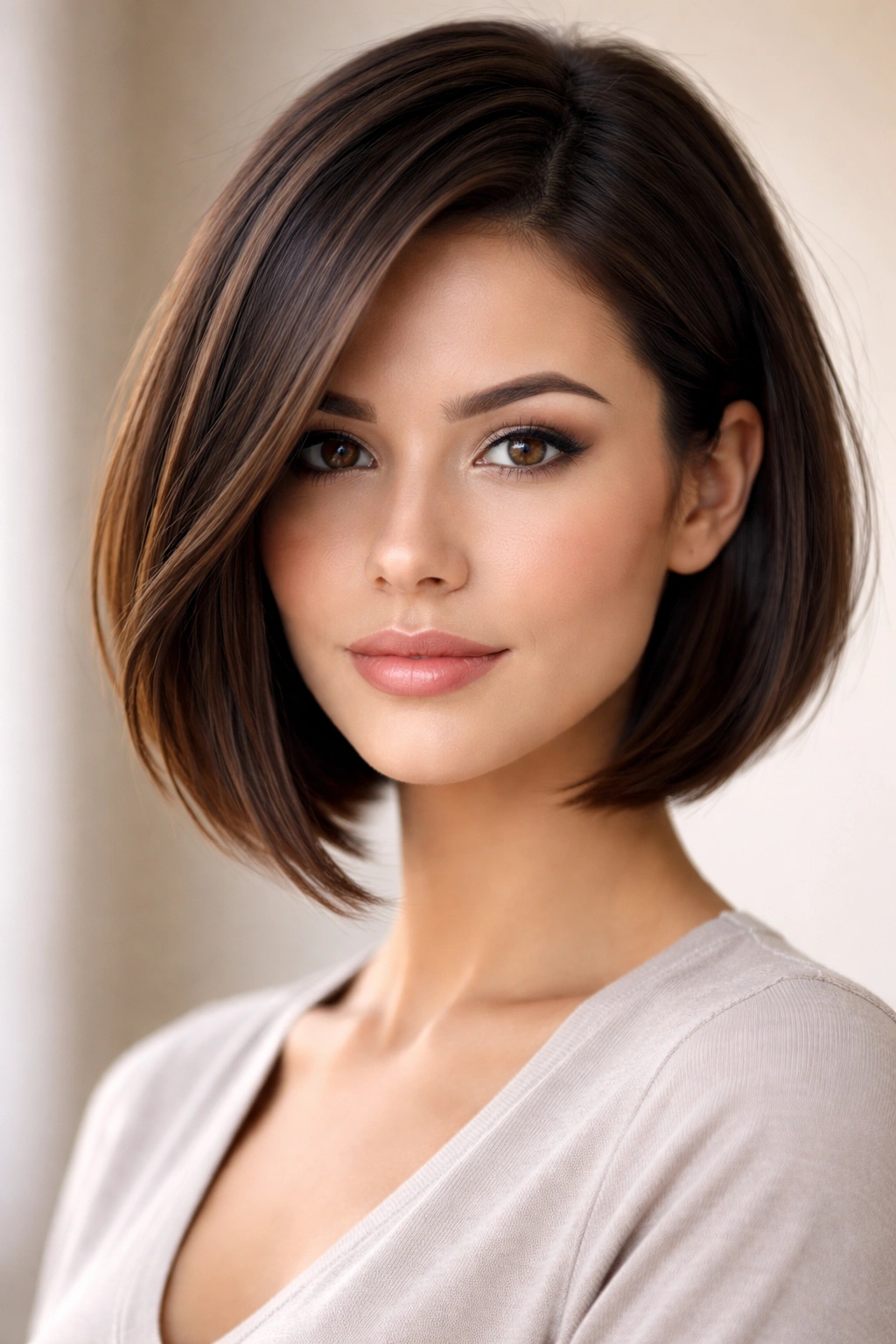
An angled bob (longer in front, shorter in back) is deceptively effective at managing frizz because the front pieces frame the face and provide an easy “place” for hair to sit. Rather than hair frizzing away from your head in all directions, the angled structure naturally encourages the front pieces to fall forward, which keeps them contained and defined.
The angle also means you have visual variety in the cut itself. The transition from short back to longer front is a design element that gives the cut sophistication. Even if some frizz develops, the overall intention and structure of the cut is so clear that frizz reads as a minor detail rather than a major issue.
Angles as Invisible Frizz Control
An angled cut uses geometry to your advantage. The longer front pieces give you something to do with hair—tuck it behind your ears, style it to one side, or let it frame your face. This containment naturally reduces frizz visibility. The shorter back sits against your head where it’s less prone to frizz anyway. You’re using the cut’s structure to guide hair into positions where frizz is either minimized or expected.
Styling and Maintenance Tips
- Blow-dry the front pieces forward or to the side, depending on your preference
- The back can be blow-dried smooth or left slightly textured—the angle provides structure either way
- Use anti-frizz serum on the front pieces, which are most visible and important for the cut’s overall appearance
- You can curl the front pieces slightly for added dimension, or keep them straight for a sleek look
- Trims every 6-8 weeks maintain the angle and keep the shorter back from growing out too long
Best for: People who want more control over styling options than a blunt bob provides, but still want the face-framing and softness that longer front pieces create.
9. The Buzz Cut with Faded Sides
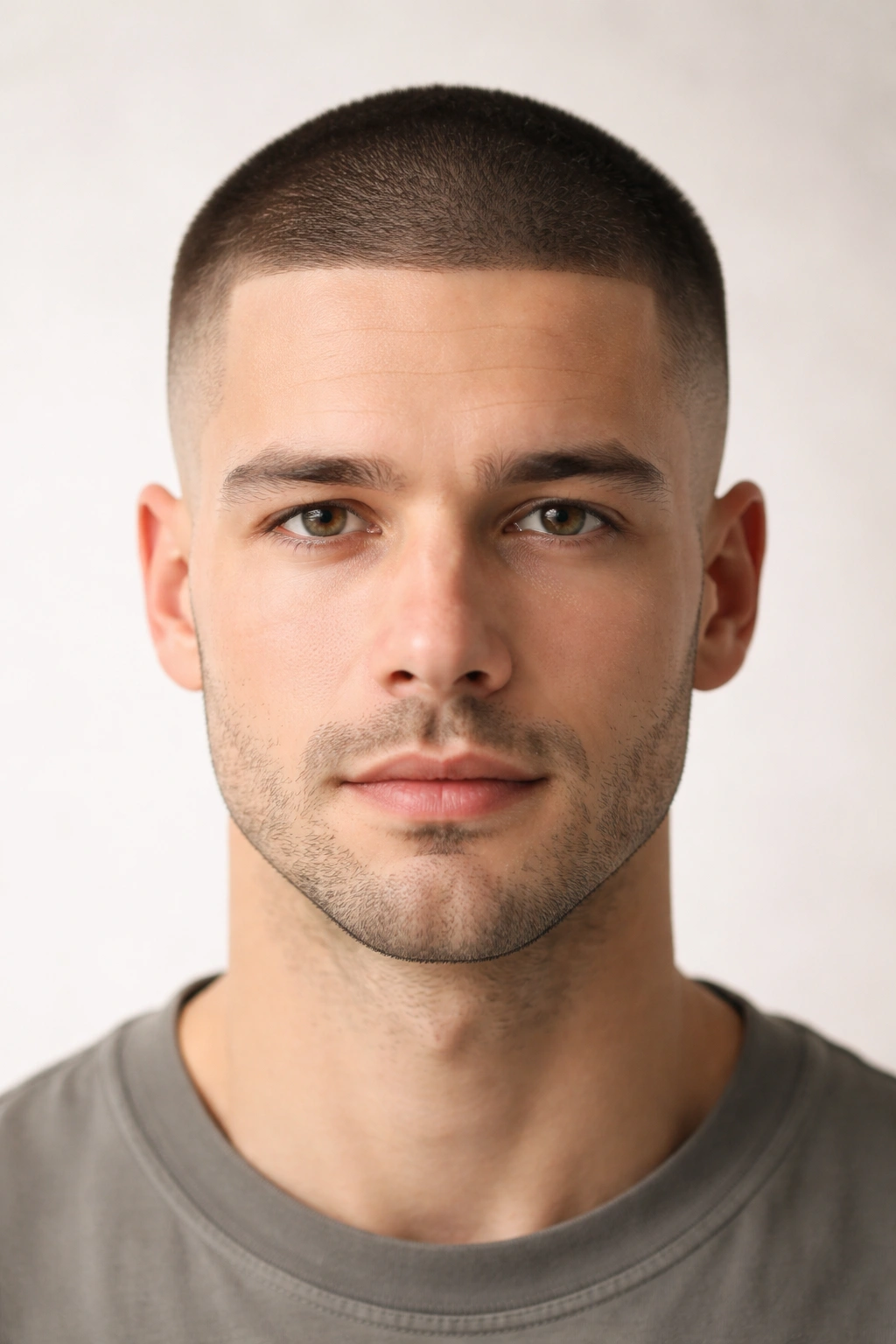
At the extreme end of frizz control is the buzz cut—so short that frizz is practically impossible. A clean buzz cut or a buzz with slightly longer faded sides (usually cut with a #1 or #2 guard) is the ultimate frizz solution. There’s simply not enough hair for frizz to develop. The entire head is kept so short that humidity has minimal impact.
This cut is less about hair styling and more about embracing the simplicity of having virtually no hair to manage. It’s also making a bold statement, which means confidence is part of the aesthetic. People who go this short often find they never want to grow their hair out again because the ease is genuinely life-changing.
The Simplicity Advantage
A buzz cut removes the entire frizz problem because there’s no length for frizz to develop. You wash your hair, maybe towel-dry it, and you’re done. There are no products, no styling tools, no humidity anxiety. For people who are absolutely done managing frizz, this is the answer. The cut also works well with all hair types and textures because the super-short length equalizes everything.
Styling and Maintenance Tips
- Touch-ups every 2-4 weeks keep the cut looking clean and intentional
- A small amount of lightweight pomade can add subtle shine or texture if desired
- Sunscreen on your scalp becomes important with such short hair
- This cut is truly low-maintenance—wash, and you’re ready to go
- Confidence and attitude become your “styling”
Best for: People ready to embrace radical simplicity and aren’t attached to long hair. Great if you want zero frizz stress and minimal daily routine.
10. The Choppy Crop for Dimension and Disguise
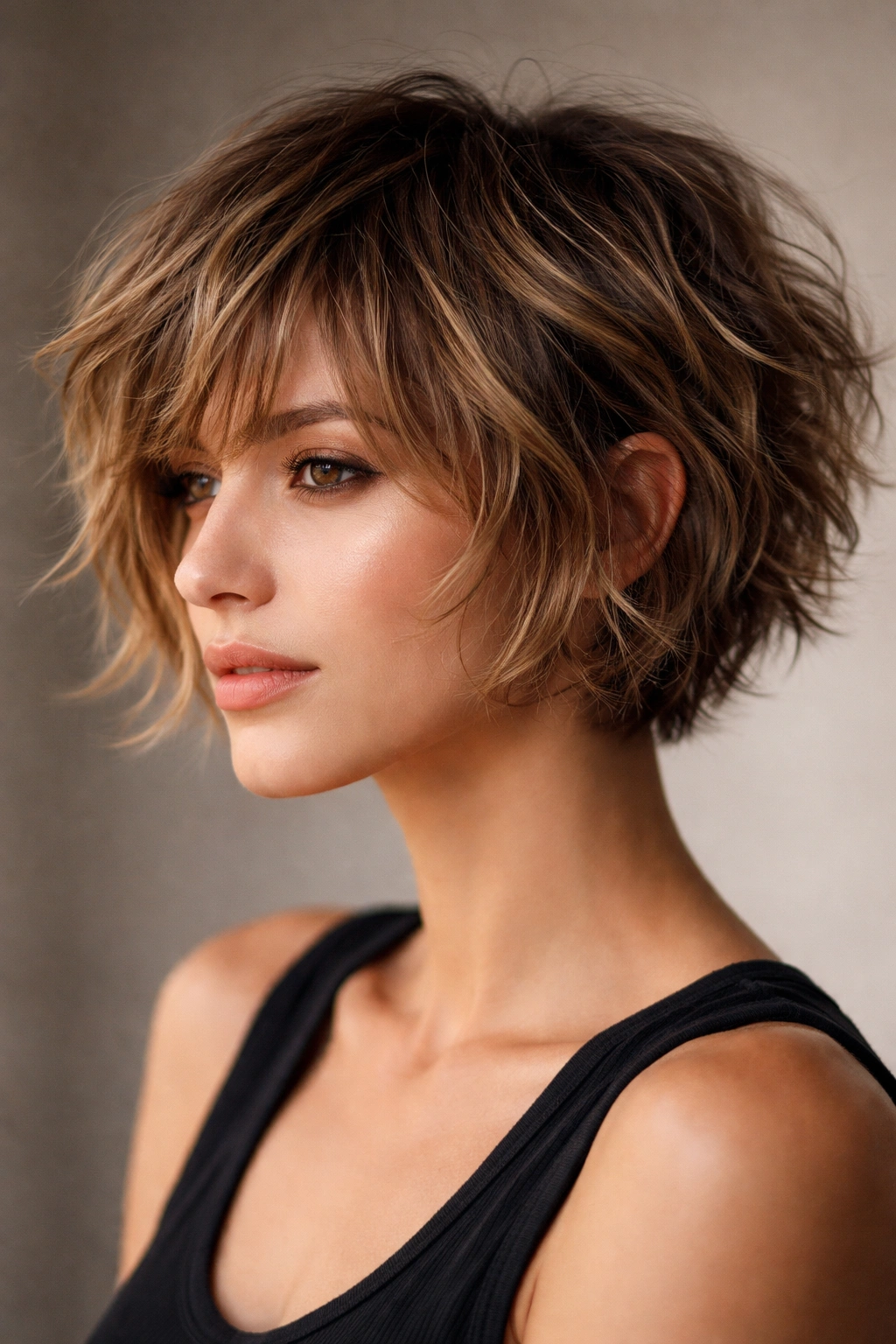
A choppy crop uses intentionally uneven layers and texture to create a deliberately piece-y look where frizz is essentially built into the design. This cut sits at ear-length or slightly shorter, with choppy layers throughout that create dimension and movement. The whole aesthetic is about texture and visual interest, which means frizz that might look chaotic in another cut looks intentional here.
The choppy crop works because it leans into texture rather than fighting it. Humidity makes your hair textured? Great—the cut already embraces that. The multiple layers also mean that even significant frizz gets distributed across the head rather than concentrating in one area. You’re working with your hair’s natural inclination instead of against it.
Texture as the Cut’s Strength
The genius of a choppy crop is that it removes the pressure to keep your hair looking perfectly smooth. The cut is designed to look textured. This means you can use texturizing sprays, sea salt spray, and other products that would look wrong in a sleek bob but look exactly right here. Humidity and frizz are features, not bugs. You’re freed from fighting your hair and instead invited to embrace movement.
Styling and Maintenance Tips
- Use sea salt spray or texturizing spray on damp hair to enhance the choppy texture
- Blow-dry with your fingers through the layers for a natural, undone look
- You can also use a diffuser attachment if you have some natural wave or curl to enhance
- This cut can work great with a tousled, barely-styled appearance
- Trims every 6-8 weeks maintain the choppy shape and prevent the layers from growing too long
Best for: People who appreciate texture and movement, don’t want to look overly polished, and want a modern, slightly edgy vibe. Great for those who embrace their natural hair texture rather than fighting it.
Final Thoughts
Short hair is your secret weapon against frizz, but the specific cut you choose matters enormously. The right short haircut doesn’t just look good—it makes frizz management genuinely easier. Whether you’re drawn to the edge of an undercut, the texture of a shag, the precision of a blunt bob, or the simplicity of a buzz cut, there’s a short style that fits your aesthetic while reducing the daily battle with humidity.
The thing most people don’t realize is that picking the right short cut isn’t about denying your hair’s natural texture. It’s about choosing a cut that works with your texture instead of against it. A pixie on curly hair works. A buzz cut on frizz-prone hair works. A choppy crop on wavy hair works. Each of these cuts gives your hair less distance to frizz, less weight to pull it down and create bend-and-frizz dynamics, and often a built-in aesthetic where texture is expected and even celebrated.
Go short with intention, commit to regular trims to maintain the cut’s shape, and use products and styling techniques that enhance rather than fight your natural texture. The confidence boost from having genuinely manageable hair? That’s the real payoff.
