



The sound of an alarm, the snooze button temptation, and then the realization: I have twenty minutes to look presentable. If your mornings feel like a losing battle against time, your haircut might be working against you instead of for you. The right wash and go haircut transforms your entire morning routine—no blow dryer required, no styling products needed, just rinse, maybe shake your head, and go. These cuts work with your hair’s natural texture instead of against it, which is why they’ve become the secret weapon of anyone serious about reclaiming morning minutes.
The beauty of a true wash and go cut is that it’s engineered for maintenance-free styling. Unlike styles that demand blow dryers, flat irons, or careful product application, these cuts rely on strategic layering, length, and shape to frame your face and look intentional whether your hair air-dries naturally or gets a quick finger-comb. Some work best on straight hair, others celebrate curls, and many adapt beautifully across different hair types. The key is understanding which cut matches your hair’s texture, face shape, and the specific energy you want your look to project.
This isn’t just about saving time—though that’s the honest perk. A wash and go haircut also means less daily damage from heat styling, lower maintenance costs, and the freedom to actually enjoy your hair instead of fighting it. Whether you’re managing thick waves, fine straight strands, tight coils, or anything in between, there’s a low-maintenance cut designed exactly for how your hair naturally wants to behave.
1. Textured Pixie Cut
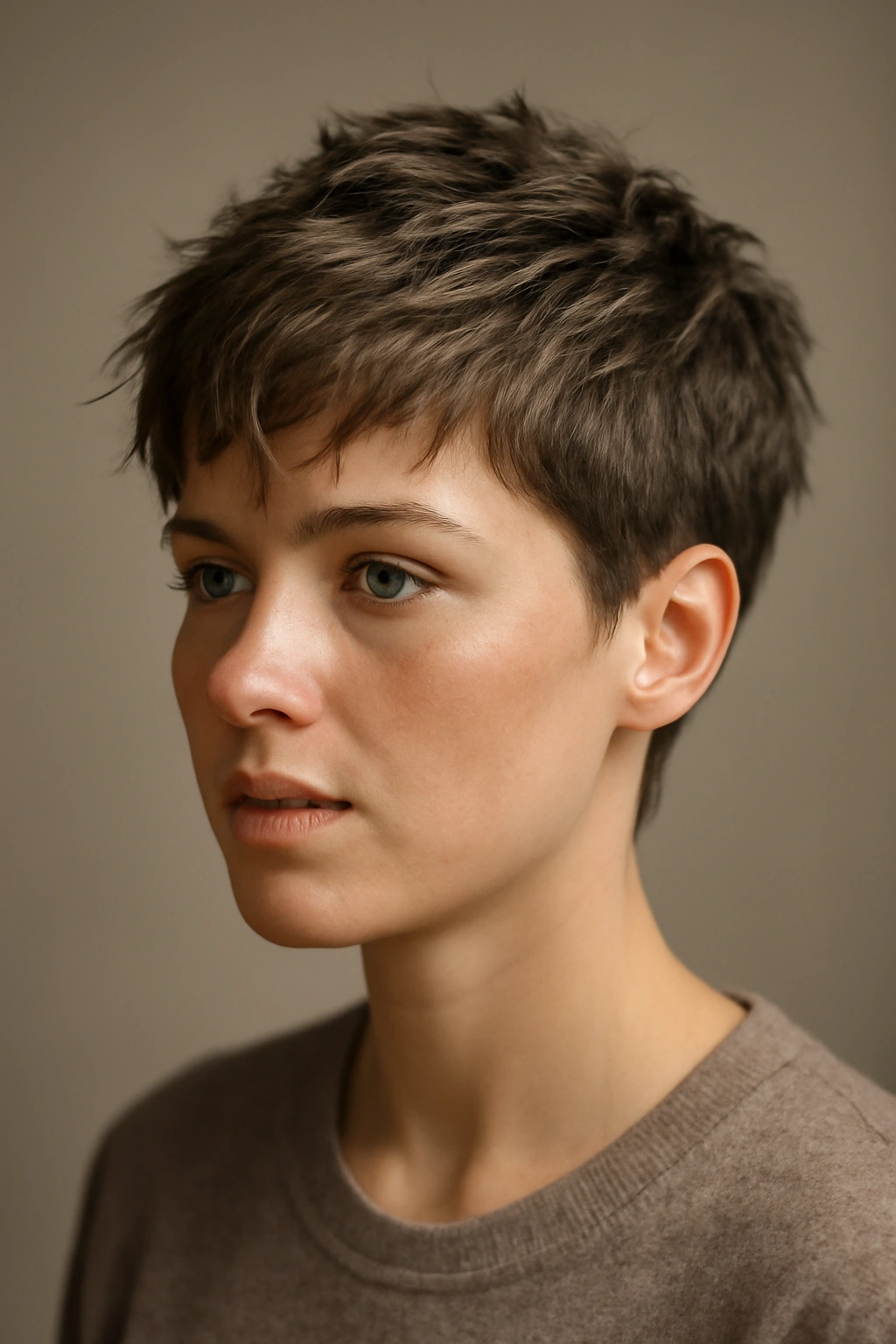
A textured pixie is the ultimate wash and go statement piece—short on the sides and back, longer on top with choppy, uneven layers that create movement without requiring any styling tools. The genius of this cut is that those deliberate texture lines actually look better when your hair air-dries naturally, because the layers fall at slightly different angles and catch light in unexpected ways. This is precision barbering that works with your hair’s natural growth patterns rather than fighting them.
Why It Works for Busy Mornings
Texture is your secret weapon here. By cutting in actual choppy layers instead of blunt lines, your barber or stylist creates built-in movement that your hair maintains on its own. Even if your hair wants to stick up or part in random directions, it looks intentional because the cut expects that. You can shower, shake your head, and walk out looking like you spent thirty minutes styling, when really you spent thirty seconds.
What to Know Before You Commit
- Hair type compatibility: Works beautifully on straight, wavy, and fine-textured hair; can work on curls but requires a stylist experienced with textured cuts
- Maintenance schedule: Every 3-4 weeks to keep layers crisp and shape defined, though it looks acceptable a week or two longer than that
- Styling freedom: Truly requires nothing—wash, air dry, done. Some people like a tiny drop of texture spray on their palms just for intentional control, but it’s entirely optional
- Face shape consideration: Works well on oval, round, and square faces; elongates round faces with the longer top length
Pro tip: Ask your stylist to cut the layers at varying depths rather than uniform layers—this creates a more organic, less “styled” vibe that looks effortlessly cool even when totally undone.
2. Classic Crew Cut

The crew cut is the straightforward, no-nonsense wash and go champion—short all over with slightly longer hair on top that can be worn slicked back, tousled, or left completely alone. It’s been the go-to low-maintenance cut for decades because the formula simply works: it’s flattering on almost every face shape, it looks intentional at every stage of growth, and it requires literally nothing beyond rinsing your hair in the shower.
Why It Works for Busy Mornings
Simplicity is the superpower. With minimal length variation, your hair doesn’t have time to develop problem spots or awkward angles. Everything’s short enough that even a rough air dry looks neat, and if you have slight waves or a natural part, those features actually enhance the cut rather than sabotage it. There’s no length that falls in your face, no pieces that need tucking, nothing that can go wrong.
What to Know Before You Commit
- Hair type compatibility: Works on virtually all straight and wavy hair types; less ideal for tight curls unless paired with a specific curl-cutting technique
- Maintenance schedule: Every 3 weeks for a sharp-looking crew; acceptable for 4-5 weeks before it starts looking noticeably shaggy
- Styling options: Can be worn completely untouched, or if you want a tiny bit of intentionality, a light cream or matte paste takes it from casual to deliberately polished
- Face shape consideration: Suits angular faces beautifully; also excellent for round faces because the short length doesn’t bulk up the sides
Worth knowing: The transition from haircut to needing a trim is so gradual that you can push your maintenance schedule further than with longer styles. Miss an appointment? You’ll still look fine for another week.
3. Disconnected Fade with Textured Top
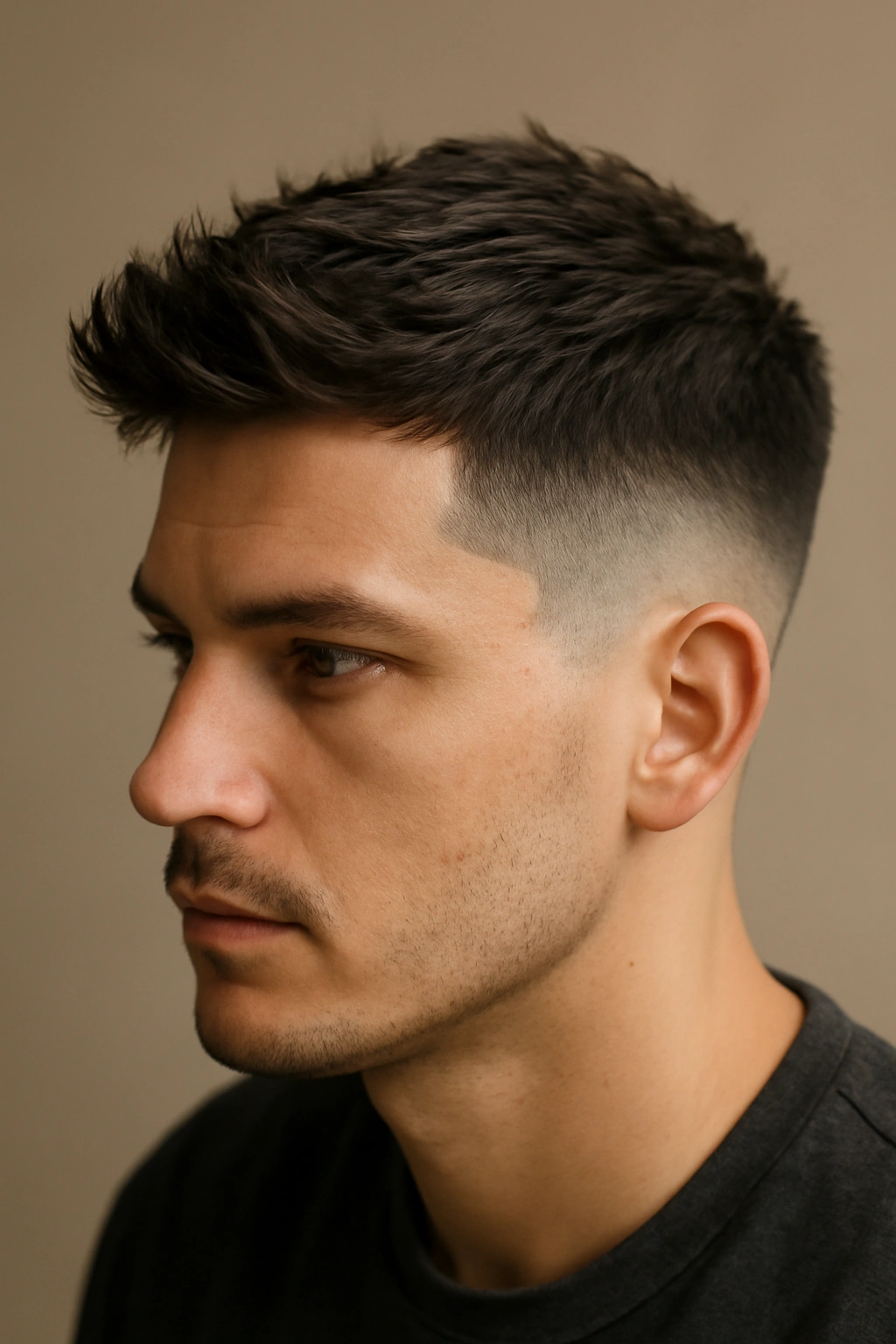
This is the modern cousin of the crew cut—very short, faded sides with a distinct line separating the sides from longer, textured hair on top. The “disconnected” part means there’s a clear visual break rather than a gradual blend, which gives it more personality and visual interest. It’s become incredibly popular because it looks sharp while requiring absolutely zero styling commitment.
Why It Works for Busy Mornings
The fade handles itself. Short sides dry instantly and always look neat, while the textured top can literally be left exactly as your hair naturally falls and look intentional. Some mornings you might run your fingers through the top, other mornings you don’t touch it—both versions look equally good. The textured layers on top ensure it doesn’t look flat or slicked-down even when completely dry and untouched.
What to Know Before You Commit
- Hair type compatibility: Works beautifully on straight, wavy, and coarse hair; the textured top approach also works on some curl types
- Maintenance schedule: Every 2-3 weeks to keep the fade clean and the line sharp, though the textured top holds its shape longer than you’d expect
- Styling options: Completely wearable with zero effort; can be enhanced with a tiny bit of texture cream if you want intentional piece-y separation
- Face shape consideration: Flatters most face shapes, especially suited to longer or oblong faces because the height on top provides proportion
Insider note: The fade height really changes the vibe—a high fade with plenty of disconnection looks edgier and younger, while a mid-fade gives you sophistication. Talk to your barber about which suits your face and lifestyle.
4. Layered Shag

The shag is not your grandmother’s shag—modern versions are carefully constructed with strategic layering that looks effortlessly undone while being incredibly intentional. Shorter layers on top create movement and texture, while slightly longer underneath layers add shape and dimension. It sits somewhere between a pixie and a shoulder-length style, making it versatile for different occasions.
Why It Works for Busy Mornings
Layers are the MVP of wash and go cuts, and the shag weaponizes layering across different lengths. Your hair air-dries into natural separation and movement whether you want it to or not—there’s no flat or matted outcome possible because every layer moves independently. Even if you completely neglect your hair after showering, it lands in a specific, intentional shape.
What to Know Before You Commit
- Hair type compatibility: Ideal for wavy and straight hair; works beautifully on textured and curly hair when cut by someone experienced with those textures
- Maintenance schedule: Every 4-6 weeks to keep layering distinct and prevent a shaggy, unkempt appearance
- Styling options: Requires absolutely nothing; some people add a light sea salt spray for piece-y emphasis, but it’s purely optional enhancement
- Face shape consideration: Excellent for round and square faces because the layers add length without bulk; also flatters oblong faces
Real talk: The shag looks messier than a crew or pixie when undone, but that messiness is the entire point and it actually looks better that way than over-styled. If you love the undone aesthetic, this is your cut.
5. French Crop
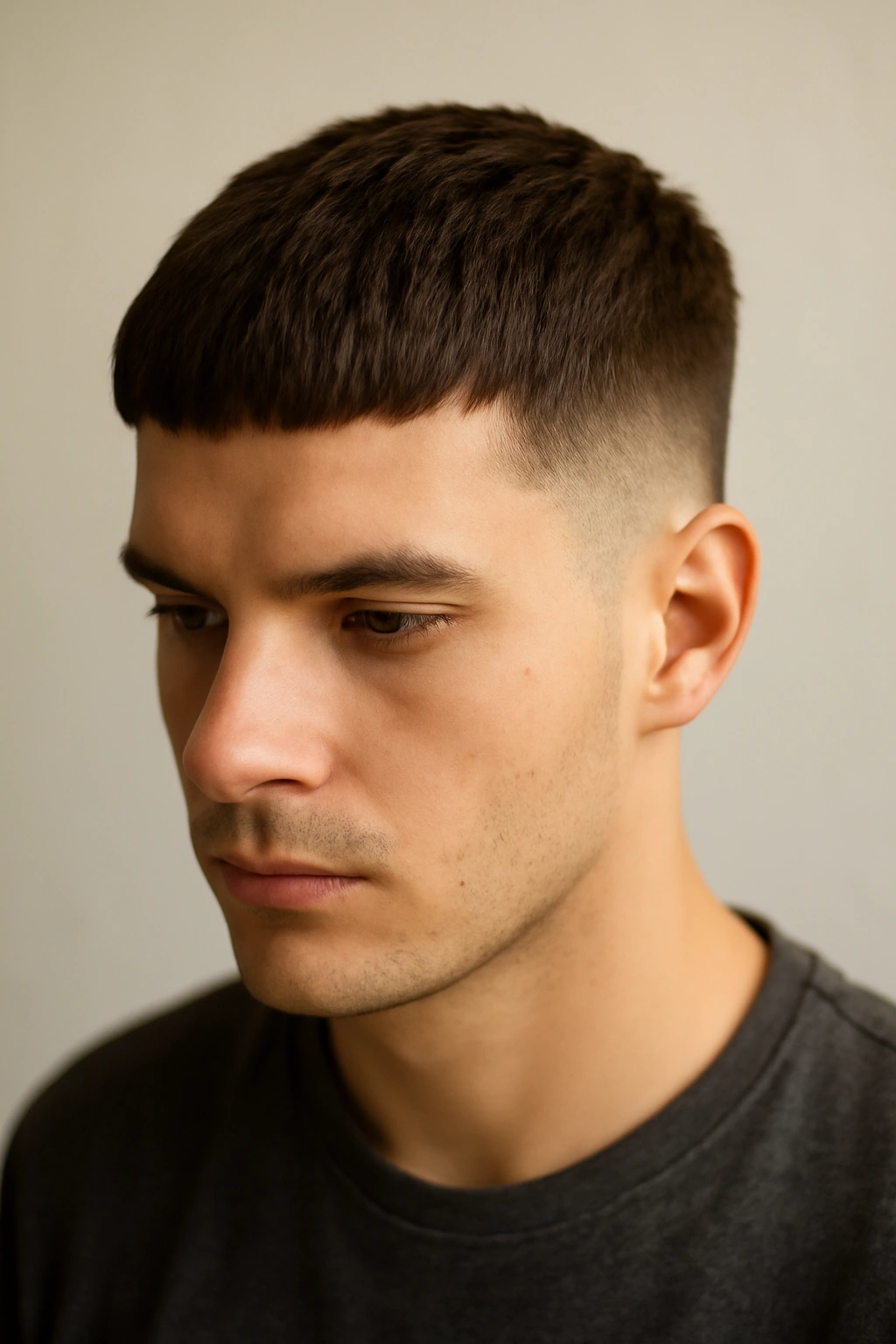
The French crop is European chic meets wash and go practicality—short and close on the sides with a flat, fuller top that extends slightly forward to create a fringe-like area without being a full bangs cut. It’s essentially a more modern, European version of the crew cut with an extra layer of visual interest.
Why It Works for Busy Mornings
The longer hair on top has enough length to move naturally without looking messy, and the specific forward-oriented shape means your hair naturally falls into flattering lines. You shower, your hair dries, and it settles into that intended shape without any effort or styling. It looks intentional and polished while being completely hands-off.
What to Know Before You Commit
- Hair type compatibility: Works well on straight, wavy, and fine hair; less ideal for very tight curls that would obscure the shape
- Maintenance schedule: Every 4 weeks to keep the front line sharp and the fade crisp
- Styling options: Can be worn completely untouched; a light texture cream creates subtle control if you want it, but it’s not necessary
- Face shape consideration: Excellent for oblong and rectangular faces because the fuller top provides width; also flatters angular faces
Worth knowing: The placement of that front line is crucial—it should sit where your natural hairline would part or where your hair naturally wants to separate. Work with a stylist who pays attention to your specific hair growth patterns.
6. Textured Crop with Longer Fringe
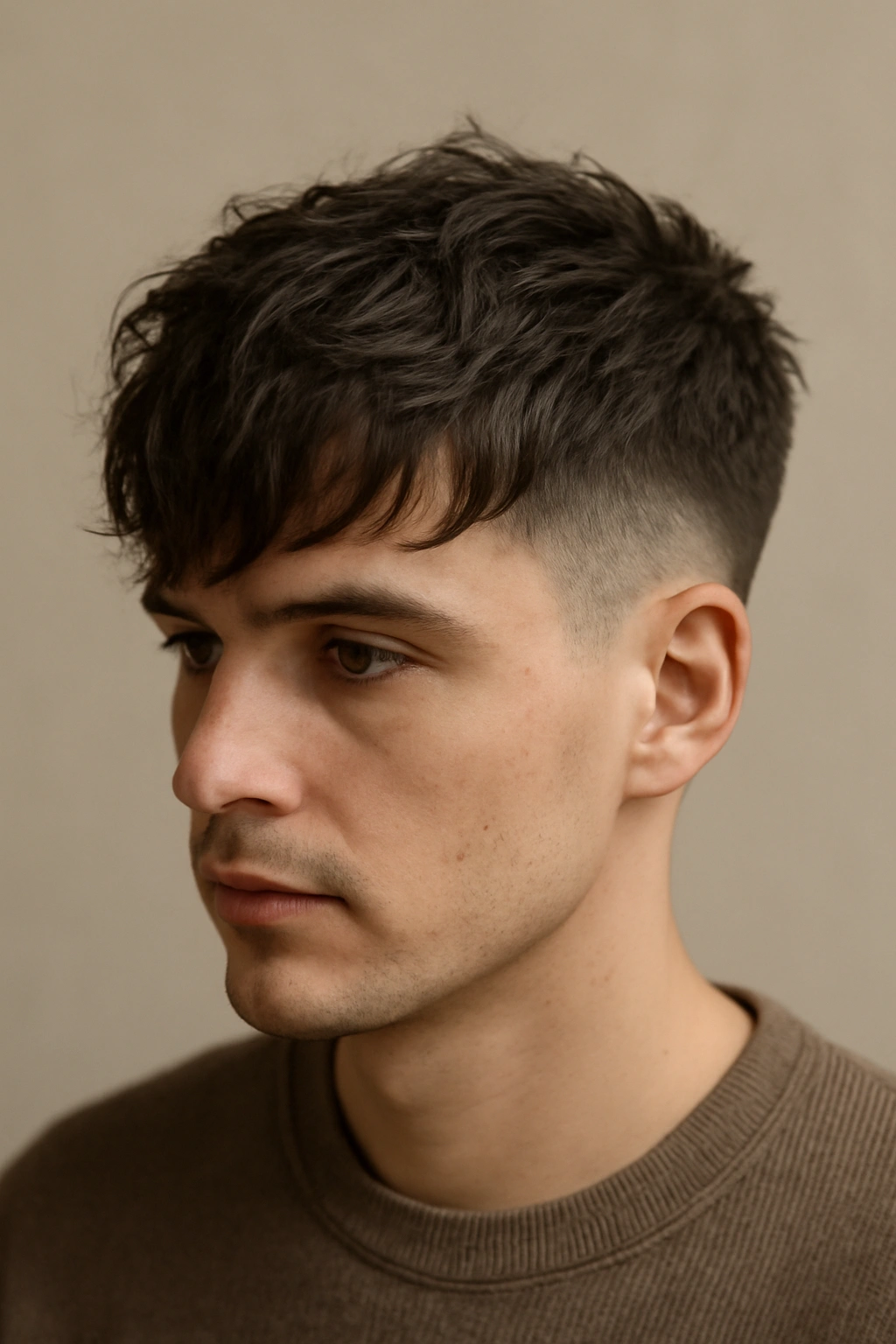
This cut combines short sides with a crop top, but keeps the fringe area notably longer—long enough to fall across your forehead or tuck behind your ear depending on your mood. It’s a wash and go cut that still offers some versatility in how you can wear it depending on the day or your energy level.
Why It Works for Busy Mornings
The beauty is in the flexibility disguised as a single cut. Most mornings you can shake your head and leave the longer fringe falling however it lands, which looks appropriately casual. On days when you want slightly more polish, you can sweep it to one side or tuck it behind your ear in five seconds flat. The textured layers throughout mean no styling products are required—air dry and you’re done.
What to Know Before You Commit
- Hair type compatibility: Ideal for straight and wavy hair; can work beautifully on some curl types when cut with textured technique
- Maintenance schedule: Every 3-4 weeks to maintain the crop shape and keep layering sharp
- Styling options: Requires zero styling; fringe can be worn down, swept, or tucked based on your mood
- Face shape consideration: The longer fringe softens angular faces; works well on oval and oblong faces too
Pro tip: Ask your stylist to texturize the fringe area specifically so it doesn’t fall like one heavy piece—thin, choppy layers in the fringe area mean it naturally separates into piece-y movement.
7. Curly Coil Cut
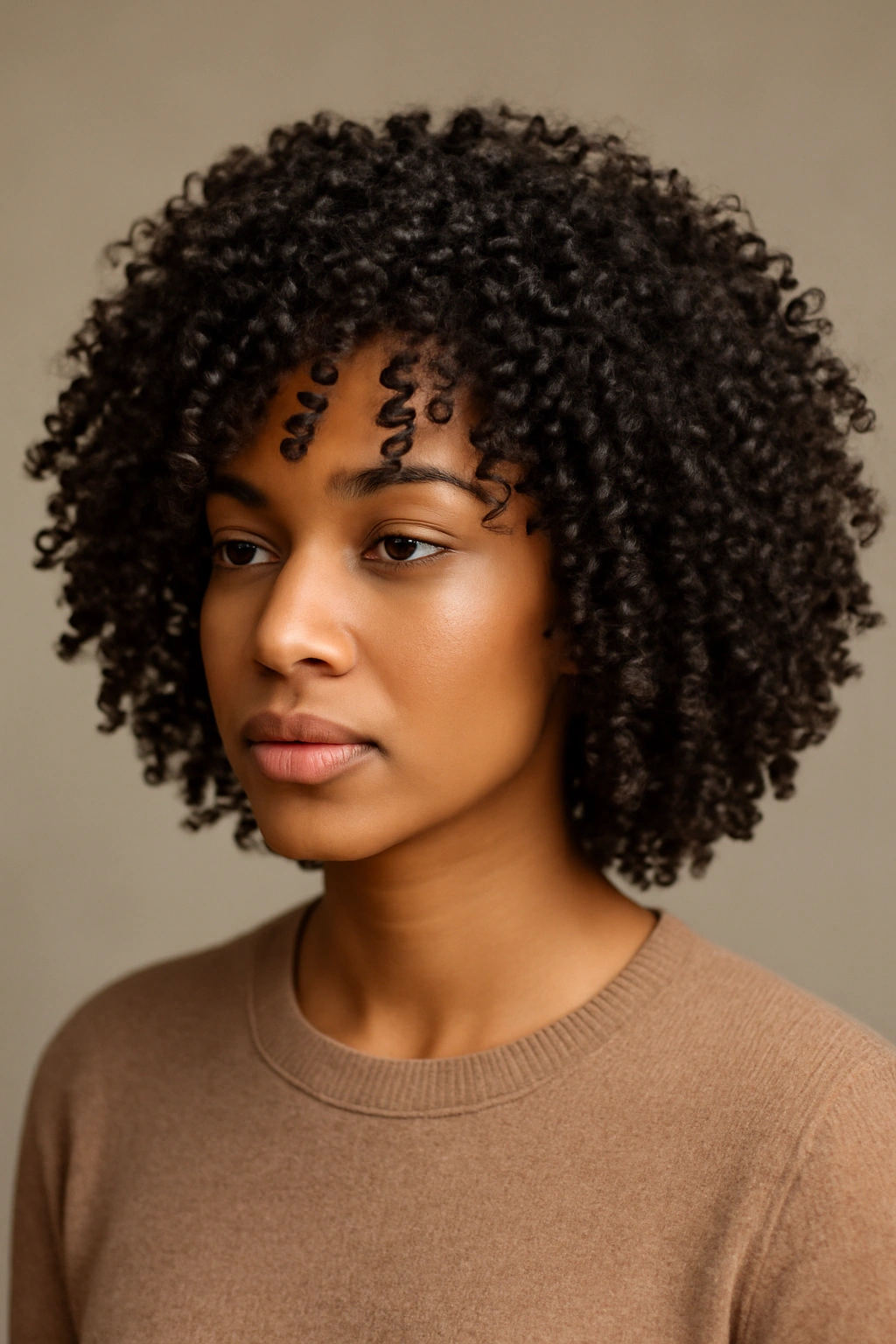
For people with natural curls, waves, or coils, a curly-specific wash and go cut is completely different from a straight-hair cut—not just shorter, but strategically shaped to work with your curl pattern. A good curly cut uses dry cutting techniques on already-curly hair to create shape that emerges when your curls bounce back to their full texture.
Why It Works for Busy Mornings
This is the ultimate wash and go cut for curly hair because it’s designed around what your hair actually wants to do rather than fighting against it. You shower, apply your regular curl product if you use one, maybe scrunch lightly, and your hair falls into a pre-designed shape that’s been engineered specifically for your curl type. No diffuser, no specific drying method, no second-guessing.
What to Know Before You Commit
- Hair type compatibility: Specifically for curly and coily hair; must be cut by someone trained in curl-cutting technique, not just regular barbering
- Maintenance schedule: Every 8-12 weeks because curls are forgiving and hold shape beautifully; you can stretch time between cuts longer than straight hair allows
- Styling options: Works with or without styling products; some curl specialists recommend specific product types that enhance your curl pattern
- Face shape consideration: Depends on the specific cut shape, but a good stylist will create layers and length that flatter your face while respecting your curl pattern
Critical note: Finding a stylist trained in cut-on-dry curly technique is essential. Cutting curls wet and letting them dry differently can result in unintended shapes—bad curly cuts are particularly unforgiving.
8. Caesar Cut

The Caesar cut is an ultra-short style where hair is cut straight across the front, slightly longer than crew-length, with short, even length throughout. It’s called Caesar because, well, historical accuracy—and it’s become trendy again because it’s utterly practical for wash and go mornings while looking intentional and put-together.
Why It Works for Busy Mornings
There’s nowhere for this cut to hide—every bit of styling is about how your hair grows, not how you force it. That honesty is actually freeing. Your hair air-dries into exactly one shape, and that shape is the whole point of the cut. No styling products needed, no special technique required, just shower and go.
What to Know Before You Commit
- Hair type compatibility: Works best on straight and wavy hair; the blunt front line is less forgiving on very curly hair
- Maintenance schedule: Every 2-3 weeks to keep the front line sharp and prevent the style from blending into a regular crew cut
- Styling options: Completely hands-off—this is the lowest-maintenance cut available, period
- Face shape consideration: Best for oblong and rectangular faces; less ideal for round faces unless paired with a textured top
Worth knowing: This cut requires more frequent maintenance than many wash and go alternatives, but what you gain is absolute zero styling time. Trade-off: slightly more frequent salon visits for zero morning effort.
9. Disconnected Taper Fade
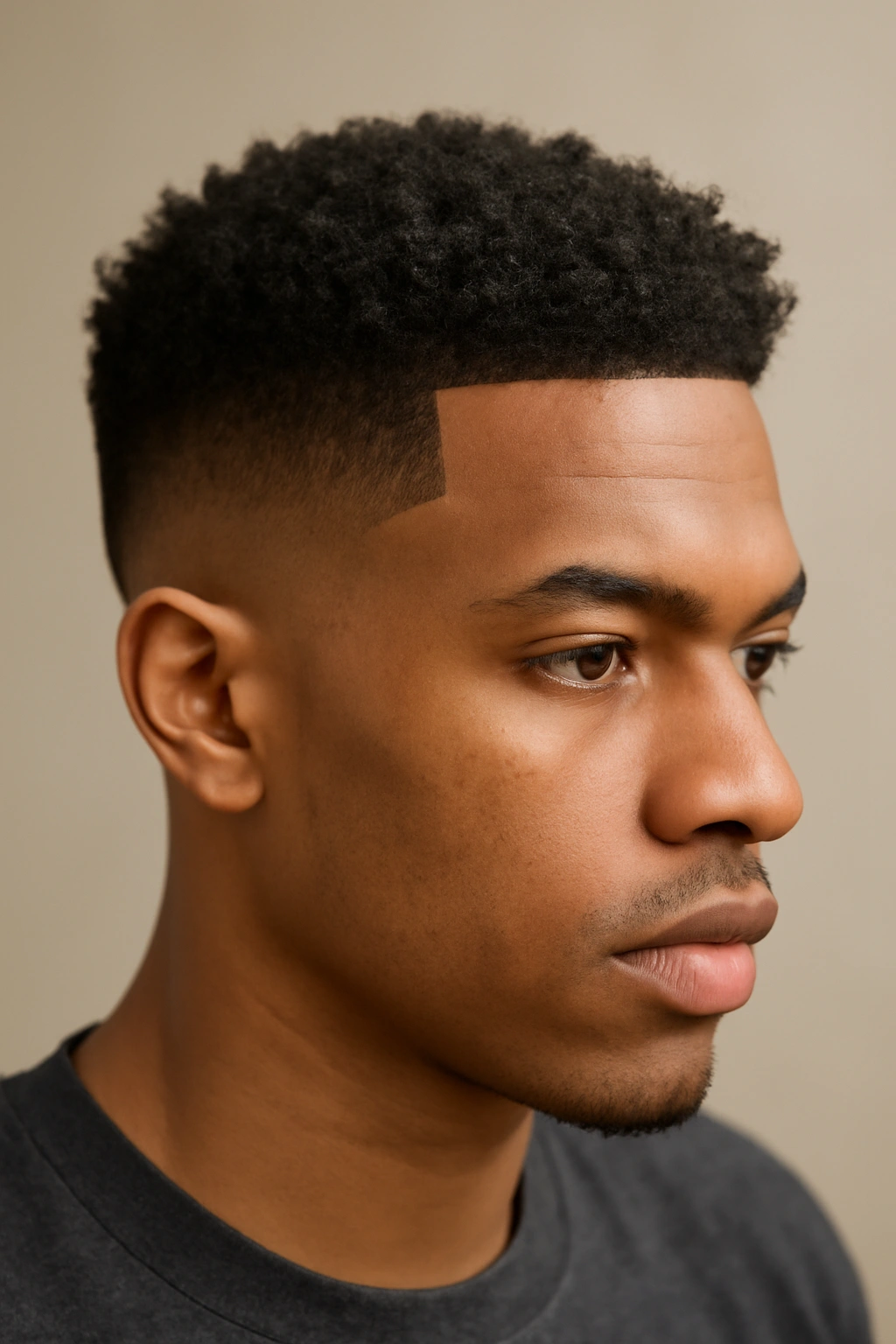
A disconnected taper fade features a defined line separating very short faded sides from longer, slightly textured hair on top—similar to a disconnected fade but with more gradual tapering and a bit more length maintained throughout the top. It’s slightly less extreme than a high fade while maintaining that clean, sharp aesthetic.
Why It Works for Busy Mornings
The moderate length on top means your hair can express its natural texture without looking out of control, and the faded sides require zero maintenance—they’re too short to have any styling options. You’ve essentially split your hair into two wash-and-go zones: sides that are permanently neat, top that falls naturally into its own shape.
What to Know Before You Commit
- Hair type compatibility: Works beautifully on straight, wavy, and coarse hair; very versatile across most hair types
- Maintenance schedule: Every 3-4 weeks to keep the fade sharp and lines clean
- Styling options: Can be worn completely untouched, or if desired, a light texture product adds intentional piece-y movement
- Face shape consideration: Flatters most faces; works especially well on longer or oblong faces
Pro tip: The fade and taper are defined by technique more than strict rules—communicate whether you want a high, mid, or low fade, and whether you want crisp lines or a blend. Different looks create very different vibes from the same fundamental cut.
10. Choppy Layers Throughout

Choppy layers aren’t confined to one area—this approach uses strategic layer cutting throughout the entire head to create movement, texture, and visual interest at every length. Compared to the shag, which emphasizes contrast between lengths, choppy layers create a more unified look while maintaining that effortlessly undone aesthetic.
Why It Works for Busy Mornings
Choppy layering is basically built-in texture that your hair naturally expresses. Pieces fall at different angles, light hits different levels, and the whole effect looks intentional whether you’ve styled it or not. It’s almost impossible to have a “bad hair” result because randomness is the entire design principle.
What to Know Before You Commit
- Hair type compatibility: Works across most hair types; particularly stunning on wavy and curly hair
- Maintenance schedule: Every 6-8 weeks depending on how much you like the choppy, piece-y look—it softens over time and still looks good, just less extreme
- Styling options: Requires zero styling; some people add a light texture spray for piece-y emphasis, but it’s optional
- Face shape consideration: Excellent for softening angular faces; also works beautifully for most other face shapes
Real talk: Choppy layers require a stylist who understands texture and movement—this isn’t a cut to get at a chain salon from someone who doesn’t specialize in texture work.
11. Textured Undercut
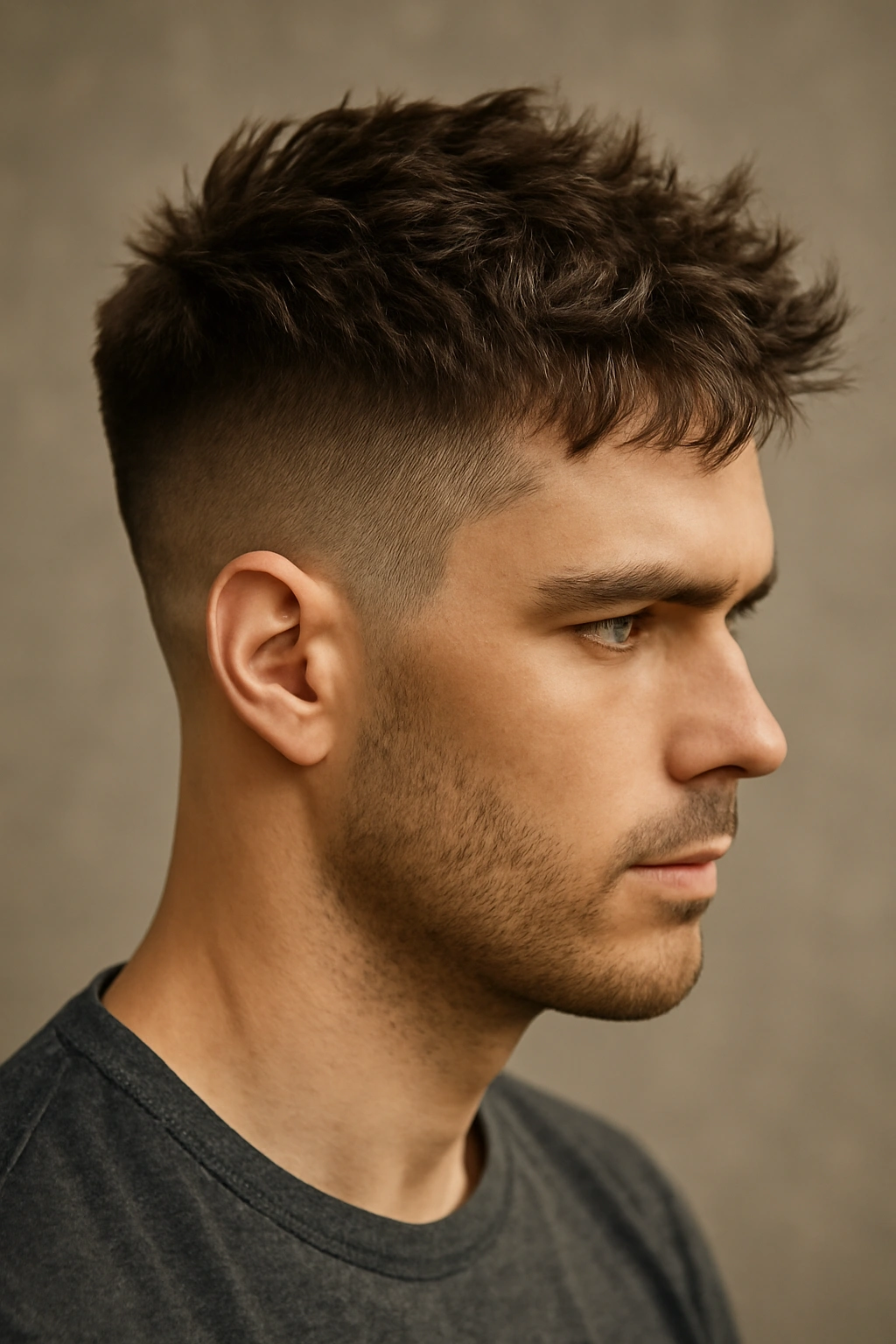
An undercut features very short sides and back with significantly longer hair on top, creating a stark contrast between the two lengths. The “textured” version means the longer top has choppy, uneven layers rather than being blunt, which means it looks intentional even when completely unstyled.
Why It Works for Busy Mornings
You get the best of both worlds: totally maintenance-free short sides that never need attention, plus longer textured hair on top that settles into its own intentional shape. The contrast itself is the entire point of the style, so how it lands is always part of the design. You can wear it slicked back one day, completely undone the next, and both look equally valid.
What to Know Before You Commit
- Hair type compatibility: Works beautifully on straight and wavy hair; can work on curls but requires expertise in cutting texture on longer curl lengths
- Maintenance schedule: Every 4-5 weeks to keep the undercut sharp and the textured top layers defined
- Styling options: Styled or unstyled both look right; you have genuine flexibility depending on your mood
- Face shape consideration: The height on top is flattering for round and oblong faces; shorter, wider faces might prefer a less extreme contrast
Worth knowing: The undercut is probably the most adaptable cut on this list in terms of styling versatility while maintaining zero-requirement wash and go status. It genuinely looks good multiple ways.
12. Short Textured Fade with Curved Edges
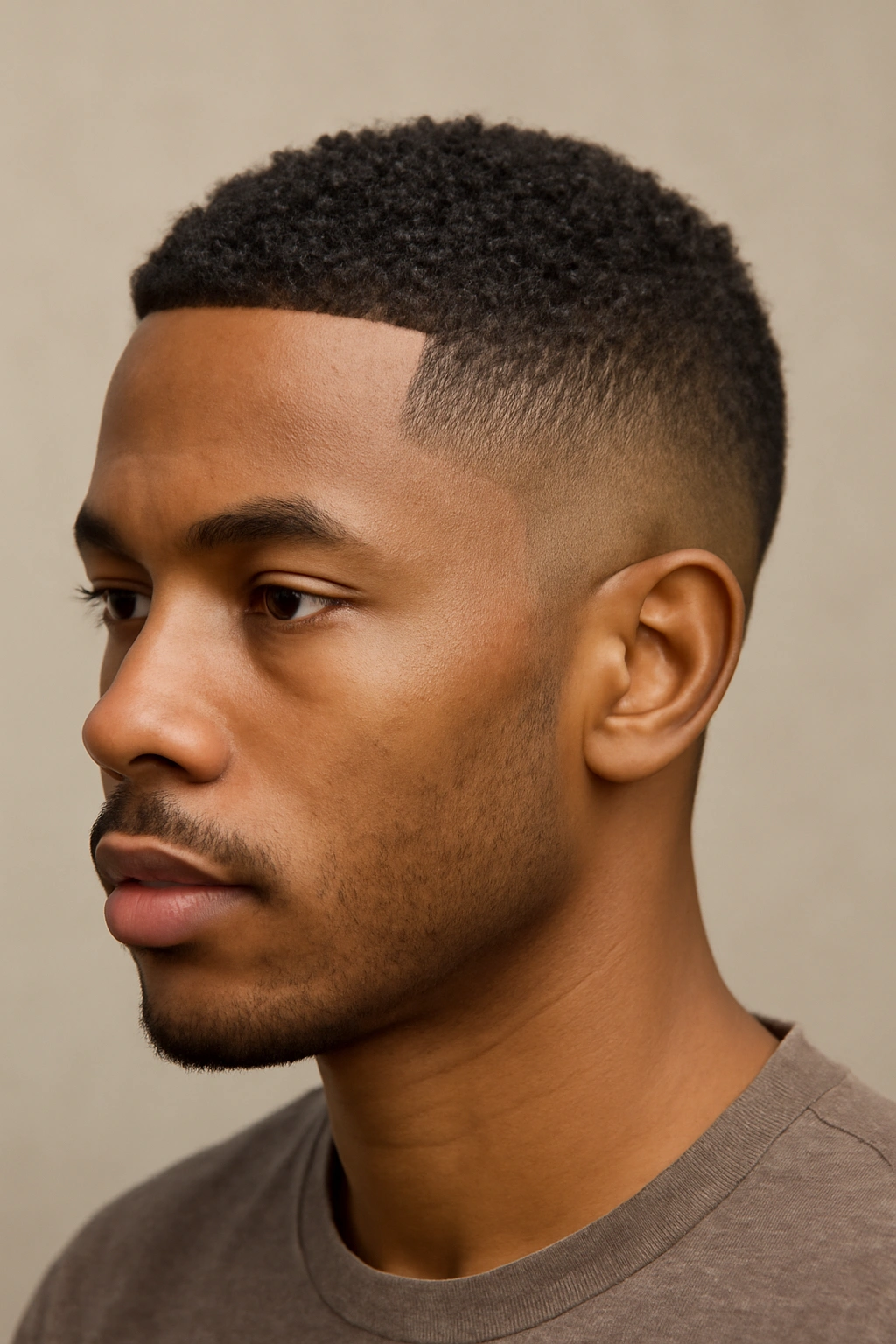
This final cut is similar to some earlier options but with specific attention to curved, softer edge lines rather than sharp, disconnected lines. The curved approach creates a more organic, less harsh look while maintaining that faded minimalism. Very short throughout with textured layering on top that creates natural separation and movement.
Why It Works for Busy Mornings
Soft, curved edges mean there’s no visual “hardness” demanding perfection—your hair air-dries into a shape that feels complete while looking approachable rather than severe. The textured top ensures you never have flat spots, and the faded sides require zero attention. It’s a wash and go cut that looks friendly and effortlessly styled simultaneously.
What to Know Before You Commit
- Hair type compatibility: Works well on most hair types; particularly flattering on straight and wavy hair
- Maintenance schedule: Every 3-4 weeks to keep the fade fresh and the curved edges defined
- Styling options: Completely hands-off in terms of requirement; capable of being enhanced with product if desired
- Face shape consideration: The curved lines soften angular faces beautifully; also works well for most other face shapes
Pro tip: Curved edges require a barber or stylist with artistic sensibility—this isn’t a cut that works with blunt lines or harsh angles. Communication about your preference for soft, organic edges rather than sharp disconnection is important here.
Making Your Choice
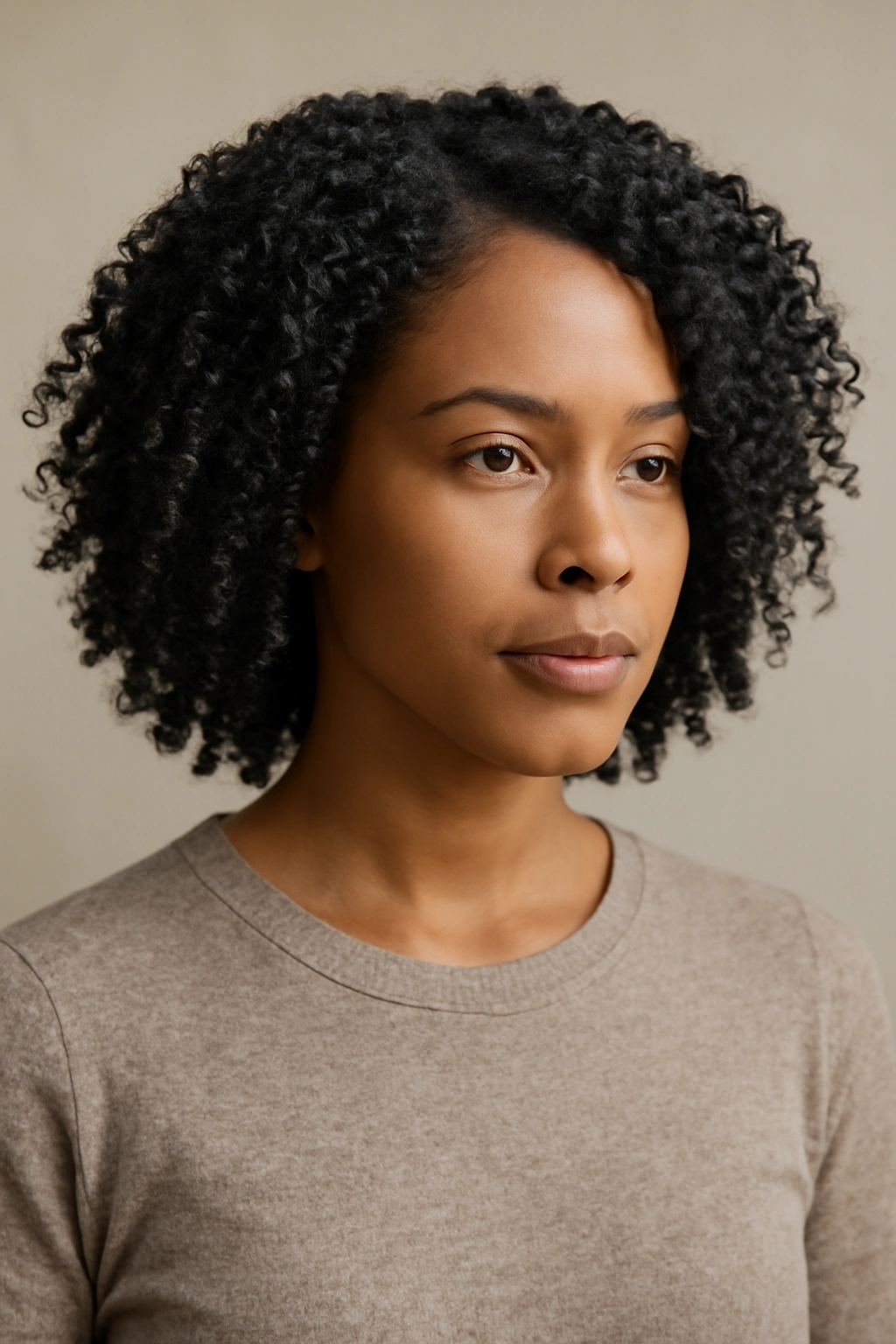
Picking the right wash and go cut depends on three things: your actual hair type and texture, the amount of maintenance you’re truly willing to do, and your aesthetic preference. A pixie is genuinely wash and go, but a crew cut is wash-and-go-ier. A textured crop is versatile, but a Caesar is more extreme. A curly-specific cut requires finding the right specialist, but it’s completely transformative if you have natural texture.
The common thread running through all these cuts is intentional design around your hair’s natural behavior rather than fighting it. Once you have the right cut, those busy mornings become dramatically simpler. You shower, you leave—no second-guessing, no styling frustration, no time lost to morning preparation.
Final Thoughts

A wash and go haircut isn’t just about saving time, though that’s the most obvious benefit. It’s about ending the daily battle with your hair and replacing it with a genuine partnership where your hair cooperates because the cut actually lets it. Whether you’re drawn to the boldness of an undercut, the simplicity of a crew, the texture of a shag, or the intentional messiness of choppy layers, the option that works for you is out there.
The real secret to success is finding a stylist who understands wash and go principles—someone who thinks in terms of your hair’s natural patterns and growth direction rather than just shorter versus longer. A great wash and go cut changes everything about your morning routine. Bad hair days become impossible because the cut is engineered to look intentional no matter what happens. And those five or ten minutes you reclaim every morning? They compound into real time, real peace of mind, and the genuine confidence that comes from looking put-together without actually trying.
