



Shaggy haircuts have made a powerful comeback, and for good reason. There’s something undeniably magnetic about the movement, texture, and confidence that comes with a well-executed shag. Unlike the rigid, geometric cuts that dominated for years, shaggy styles celebrate volume, dimension, and an effortless-looking edge that photographs beautifully and feels incredible to wear. Whether you’re drawn to the ’70s nostalgia, the modern wolf cut aesthetic, or something entirely new, shaggy haircuts offer endless personalization possibilities—they work on nearly every hair type, suit multiple face shapes, and require less daily styling effort than you’d expect.
What makes shaggy cuts so compelling right now is that they’ve evolved far beyond their original incarnation. Today’s shag isn’t bulky or dated—it’s intentional, precision-cut, and surprisingly flattering. The layers create natural movement that works with your hair texture rather than against it, whether you have straight strands, waves, or curls. A great shag gives you volume without bulk, softness without frizziness, and a finished look that feels both polished and undone. The cut itself does most of the work, which means less time blow-drying and more time actually living your life.
Let’s explore fifteen standout shaggy haircut styles that have earned their place at the top of inspiration boards everywhere.
1. The Modern Choppy Shag
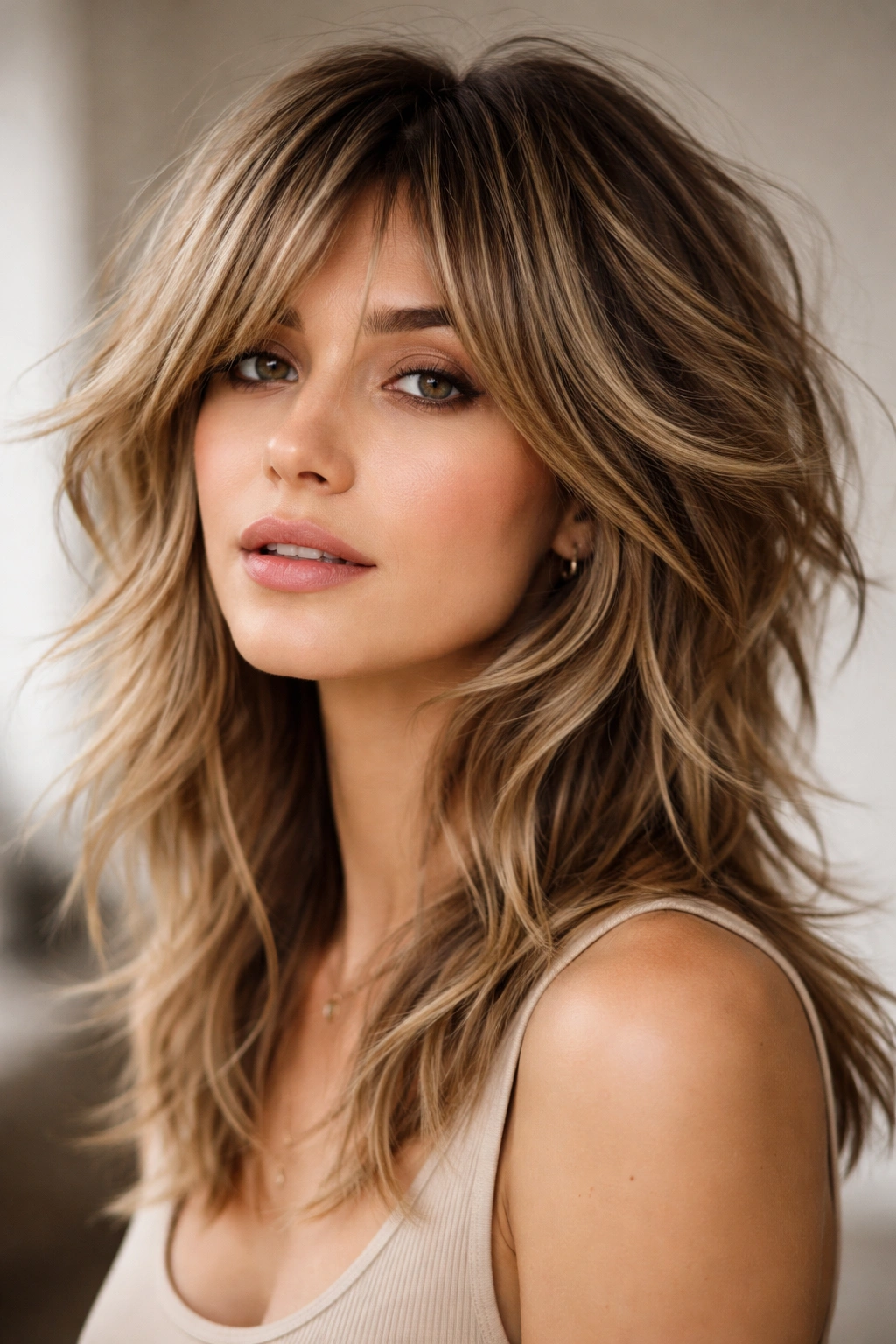
The modern choppy shag takes the classic structure and refines it with precise, intentional layers that create movement and texture throughout. This cut features shorter layers concentrated around the crown and face, progressively longer toward the back, with choppy ends that refuse to blend seamlessly—they’re meant to stand apart and create visual interest. The key difference between a choppy shag and a traditional feathered shag is the deliberate choppiness; instead of soft, blended edges, you get defined separation between layers that catches the light and adds dimensionality.
Why This Cut Commands Attention
The choppy structure creates immediate volume and movement, even on fine hair, because the layers work independently rather than lying flat. The shorter face-framing pieces draw attention to your cheekbones and eyes, while the overall texture moves dynamically with your natural hair movement. This cut photographs exceptionally well because the dimensionality reads beautifully in every light, and the movement creates a sense of energy that stiff, blunt cuts simply can’t achieve.
Best For and How to Wear It
- Works beautifully on straight, wavy, and curly hair types
- Face-framing pieces suit oval, round, and square face shapes particularly well
- Requires a stylist experienced in choppy texturing—this is not the cut to trust to someone still learning layer work
- Enhance the movement with a texturizing spray or sea salt spray; this cut actually looks better slightly undone
- Best length: chin-length to shoulder-length for maximum movement impact
Pro tip: Ask your stylist for choppy layers that are shorter in the front and gradually longer toward the back—this creates movement that moves down your face rather than outward, which flatters most face shapes.
2. The Shaggy Mullet
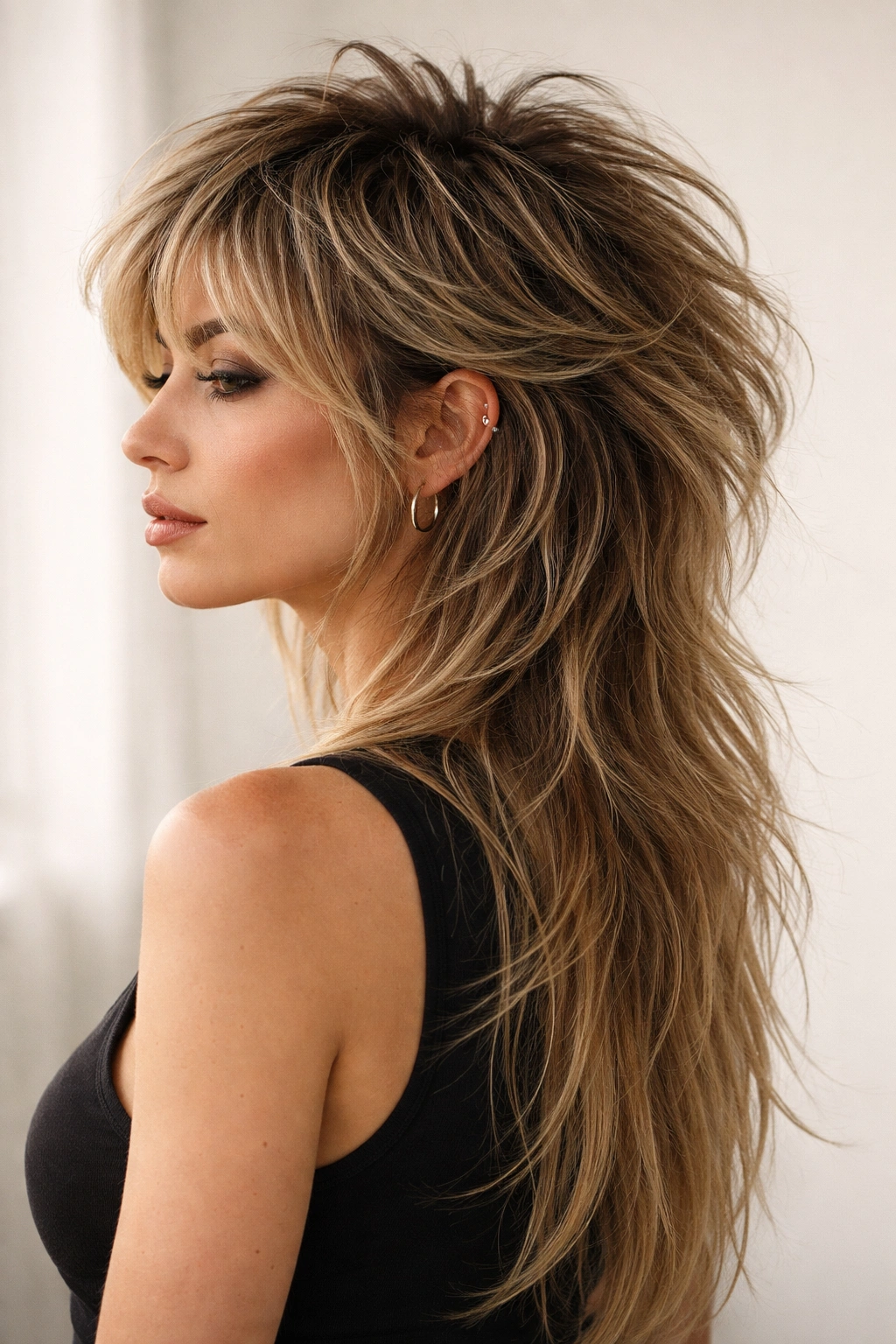
The shaggy mullet reimagines the controversial ’80s style through a contemporary lens—it’s shorter and voluminous on top with significantly longer pieces in the back, but executed with such finesse and movement that it feels modern rather than retro. The top section features textured, choppy layers that create height and dimension, while the back section flows longer, sometimes reaching the mid-back, creating a striking contrast that makes a bold style statement without looking costume-like.
Why It’s Having a Serious Moment
The shaggy mullet appeals to people who want a statement cut that’s still undeniably fashionable. It breaks the “rules” of traditional flattery but does so in a way that feels intentional and cool rather than accidental. The cut allows you to experiment with styling—you can wear the top curled up for volume, straighten the back for sleekness, or lean into the textured movement throughout. It’s the haircut equivalent of a fashion risk that actually pays off.
Styling and Maintenance Insights
- Requires blow-drying for the top section to achieve full volume and movement
- The back section can be straightened, left to its natural texture, or styled with waves
- Works best on shoulder-width or narrower faces; this cut can visually widen broader face shapes
- Needs trimming every 4-6 weeks to maintain the distinction between short and long sections
- Pairs perfectly with edgy styling, fashion-forward makeup, and confident attitude
Worth knowing: This cut requires genuine styling commitment. If you prefer a wash-and-go look, the shaggy mullet isn’t your best choice. But if you love playing with your hair and creating different looks, it’s incredibly rewarding.
3. The Textured Shag with Bangs
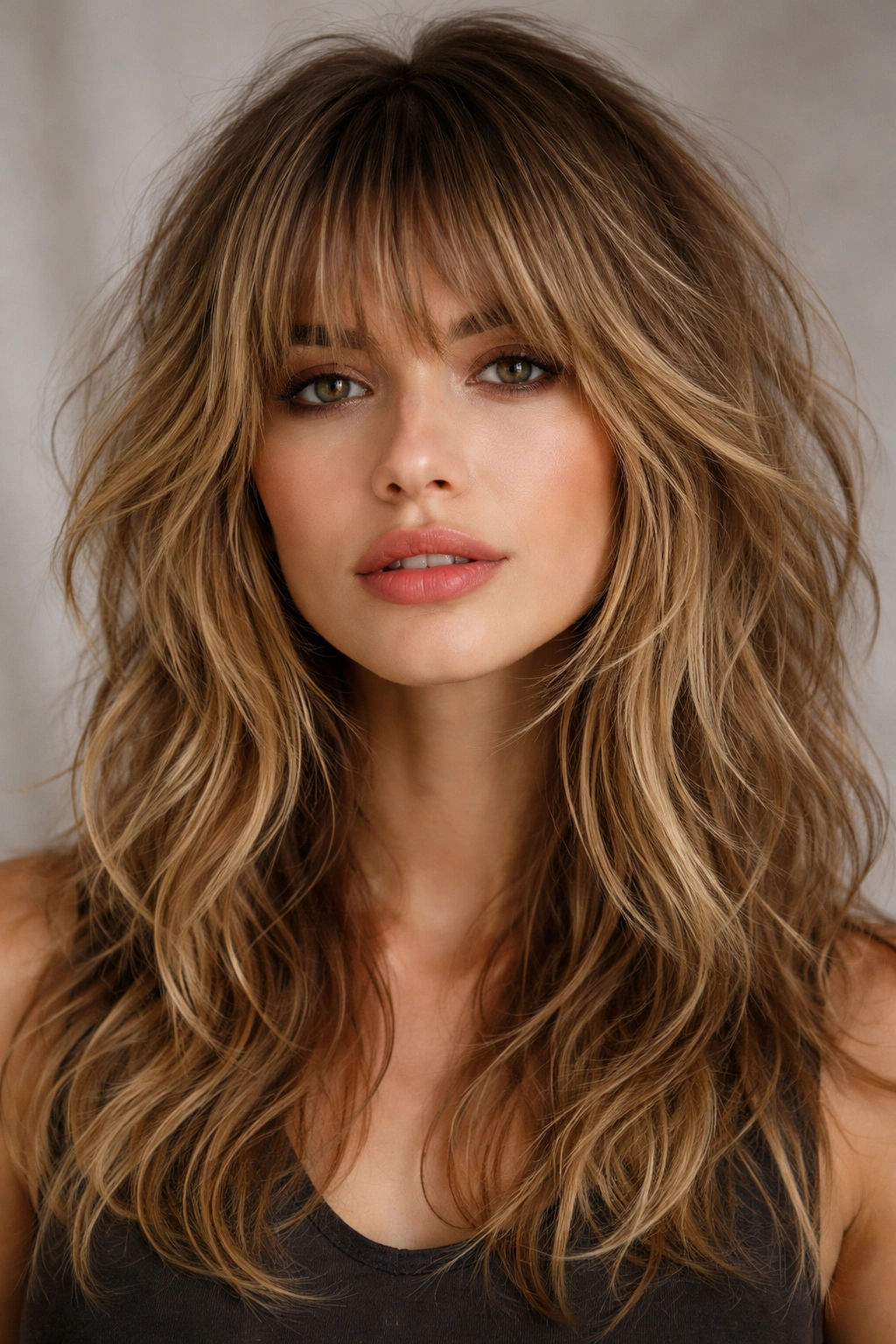
This style combines a full shaggy cut with intentional bangs—whether wispy, choppy, or blunt—to create a complete look with serious personality. The bangs work as a focal point that draws the eye upward, while the layered cut below moves and textured freely. The interplay between the definition of the bangs and the softer movement of the layered sections creates visual balance and a cohesive, finished appearance that’s harder to achieve without the bangs anchoring the design.
The Bangs Make All the Difference
Bangs fundamentally change how a shag looks and feels. They create a frame within the frame, directing attention to your eyes and forehead, and they make the overall cut feel more intentional and designed. Wispy bangs soften the look; choppy, textured bangs add edge; straight-across bangs create a bold, modern aesthetic. The bangs are often the first thing that catches light and attention, so they’re worth taking time to get exactly right.
Style Options and Face Shape Considerations
- Wispy or feathered bangs suit round and long face shapes beautifully
- Choppy, textured bangs complement square and angular faces
- Straight-across bangs work on most face shapes if they’re pitched to fall just at your natural brow
- Bangs require more frequent maintenance—every 2-3 weeks—to keep them looking fresh and intentional
- Styling bangs during humid weather requires a lightweight texturizing product or styling cream
Insider note: The longer your face, the more you want to avoid super-short, blunt bangs (unless you’re going for drama). Face-framing wispy options tend to be more flattering on longer face shapes.
4. The Blonde Shag with Balayage
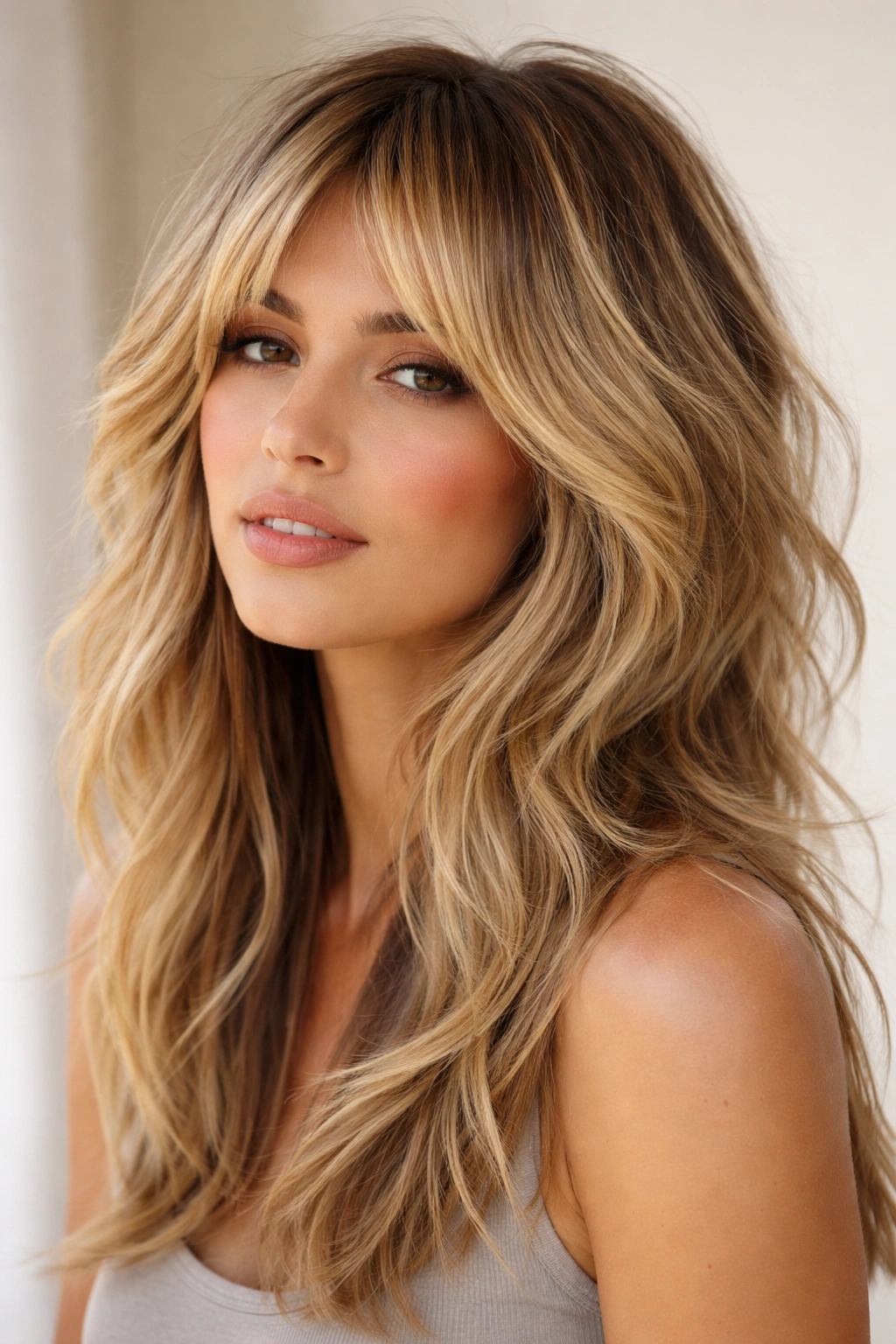
This style pairs a well-executed shag cut with strategic multi-dimensional blonde balayage or highlights, creating movement that reads as both textural (from the cut) and chromatic (from the color). Lighter pieces throughout the cut catch the light independently, amplifying the sense of movement and dimension that the layers already create. The contrast between darker roots and lighter ends adds depth, making the cut appear more textured and dimensional than a solid color would.
Why Color Amplifies the Cut
A shag cut absolutely shines when paired with strategic color placement. Highlights painted onto the top layers and around the face create light-catching points that emphasize dimension. The way light plays through multi-toned hair makes movement more visually apparent—even if the cut itself hasn’t changed, the color creates the illusion of more texture and movement. This is why so many shag styles include some element of multi-dimensional color.
Color Maintenance and Cut Longevity
- Balayage requires root touch-ups every 6-8 weeks to maintain seamlessness
- The cut should be trimmed every 5-6 weeks to preserve layer definition
- Lighter color can show damage more visibly, so deep conditioning treatments are essential
- Blue or purple-toning shampoo prevents brassy overtones in blonde shags
- The style works on medium to darker skin tones where there’s contrast; lighter skin tones can wear the style but the contrast may be less striking
Real talk: The most beautiful shag-with-balayage styles require genuine commitment to maintenance. If you’re not willing to get trims regularly and manage color upkeep, a simpler solid-color shag might serve you better.
5. The Curly Girl Shag
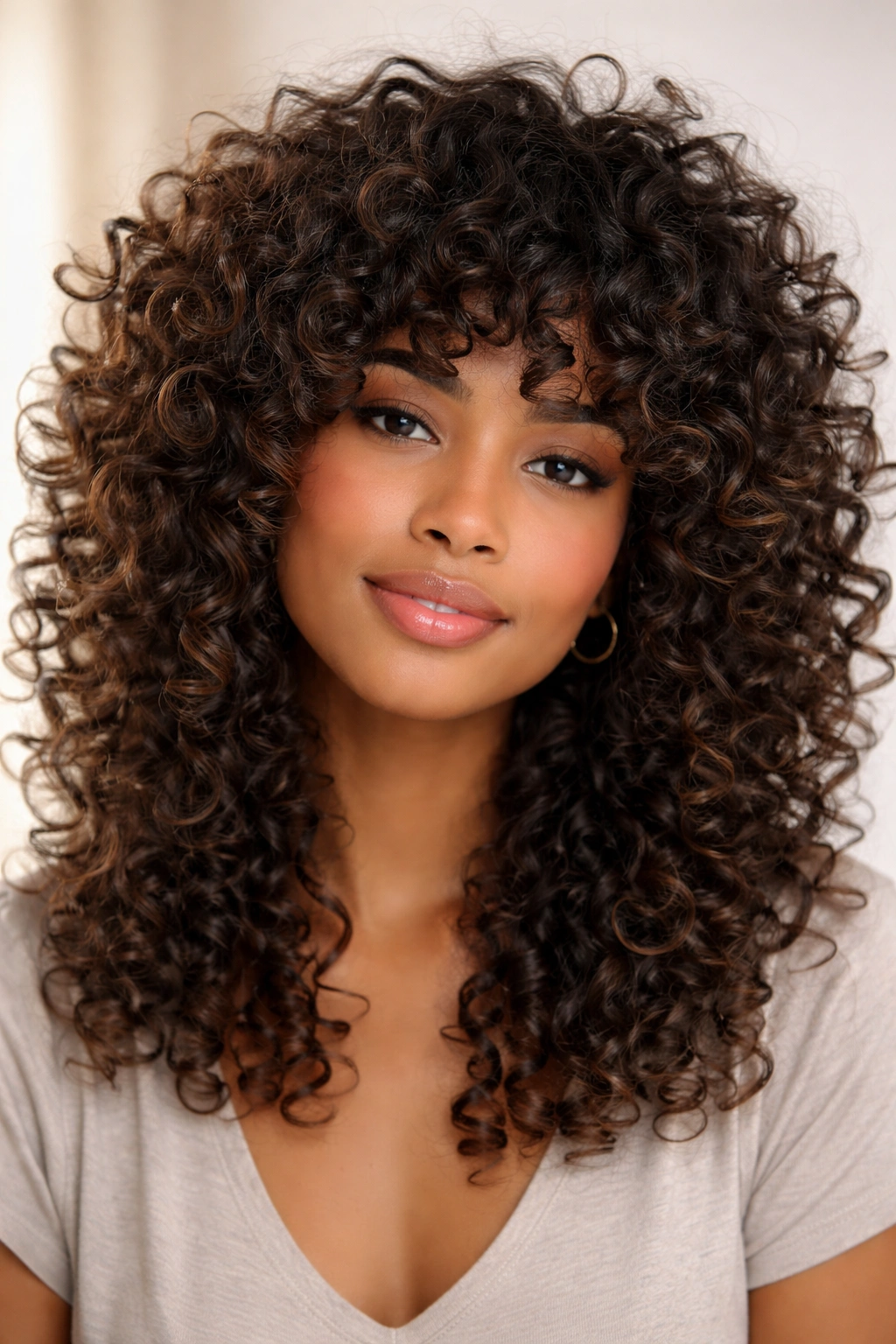
Designed specifically for naturally curly or coily hair, the curly girl shag respects your texture’s natural movement while creating defined layers that enhance curl pattern definition and reduce bulk. Rather than fighting your curls’ tendency to shrink vertically, this cut embraces it—layers are cut into the curl pattern at strategic points so that when your curls dry, they form beautiful, distinct spirals rather than a dense ball of hair. The key is cutting into the texture rather than across it, which preserves curl integrity while creating movement.
Cut Technique for Curls
A proper curly shag should be cut on dry, curly hair (or at minimum on wet hair with the curl pattern activated) so the stylist can see how the layers will actually fall when your hair dries. Cutting curly hair while it’s straight leads to disappointing results—the layers look too short when curls shrink. The cut should have longer layers in back, progressively shorter toward the face, with choppy texture throughout that celebrates individual curls rather than trying to blend them.
Styling and Care Specifics
- Avoid brush and comb use; use fingers or a wide-tooth comb to detangle in the shower
- Apply products to soaking wet hair for best definition and hold
- Refresh curls between washes using a spray bottle of water and lightweight curl cream
- Diffuse-dry for defined curls or air-dry for a softer, more textured look
- Expect some trial-and-error finding the right product combination for your curl pattern
- Trim every 6-8 weeks to maintain layer definition as curls grow
What to know: Working with a curly hair specialist is non-negotiable for this cut. A stylist experienced only with straight hair will give you results that disappoint—find someone who specializes in curly hair and understand texture.
6. The Shag with Side-Swept Layers
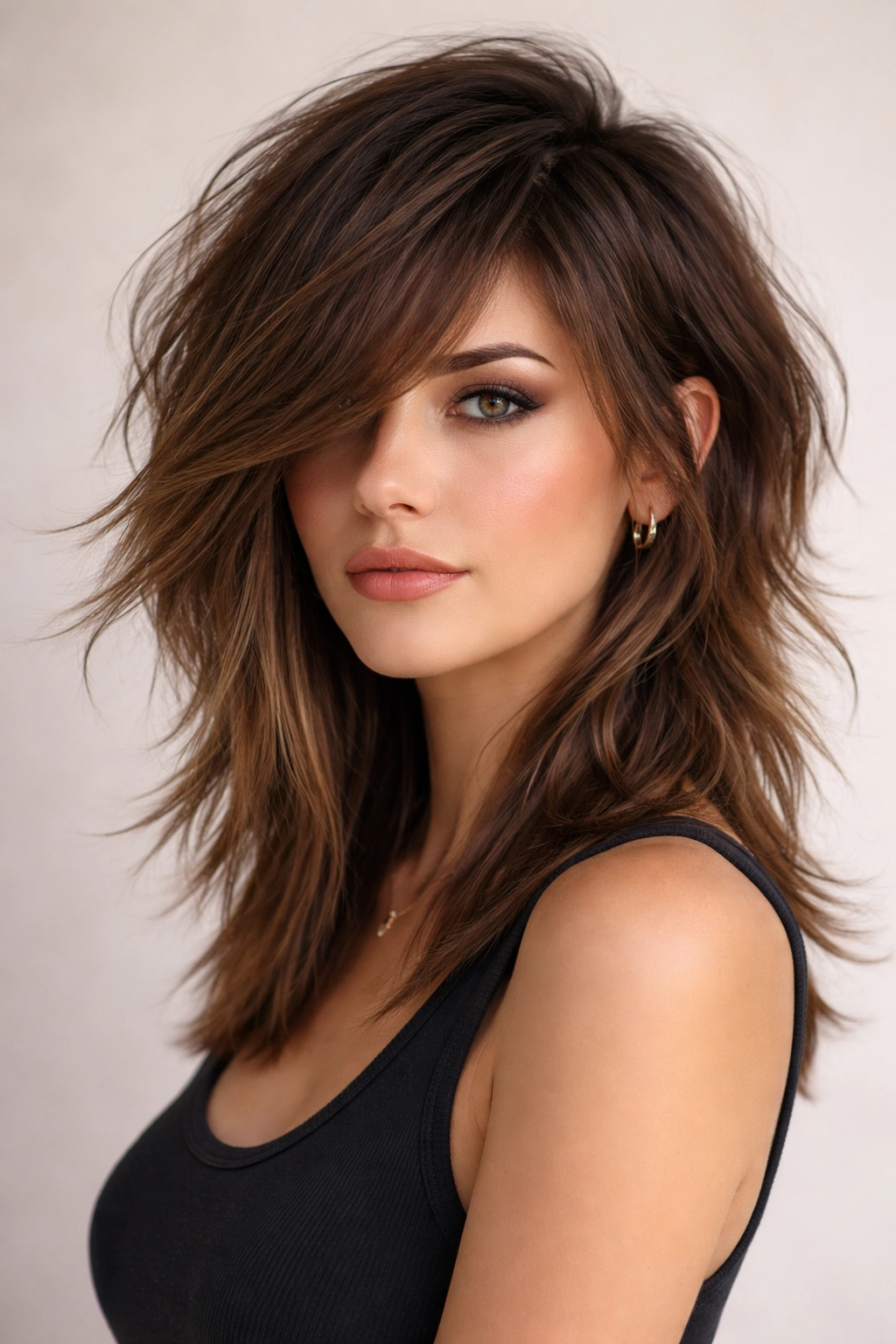
This variation emphasizes one side of the face with longer, side-swept layers that create an asymmetrical silhouette while maintaining the choppy, textured shag structure throughout. One side features significantly longer face-framing pieces that sweep across or behind the ear, while the other side is shorter and more textured. The asymmetry creates visual interest and dynamic movement that works beautifully on cameras and in person.
The Power of Asymmetry
Asymmetrical shags create the illusion of more movement than symmetrical cuts because your eye traces the longer line, following the flow and direction. This asymmetry can actually be flattering on round or square face shapes because it breaks up the horizontal line and adds visual length. The side-swept pieces also allow you to style your hair in multiple ways—fully side-swept for drama, tucked behind one ear for a cleaner look, or half-up for a relaxed vibe.
Styling Versatility and Maintenance
- Blow-dry the longer side away from your face to emphasize the asymmetry and create movement
- The shorter side can be tousled for texture or smoothed for contrast
- Works beautifully on all hair types but especially stunning on wavy or curly hair
- Requires precision cutting every 4-5 weeks to maintain the asymmetrical balance
- Pair with textured styling products that emphasize individual pieces rather than smoothing
- Best suited for people comfortable with directional hair—this isn’t a wash-and-wear cut
Pro tip: Ask your stylist to cut the longer side slightly longer than you think you want it—hair shrinks when you don’t blow-dry, and you want enough length for the asymmetry to read clearly.
7. The Tousled Shag with Texture Paste
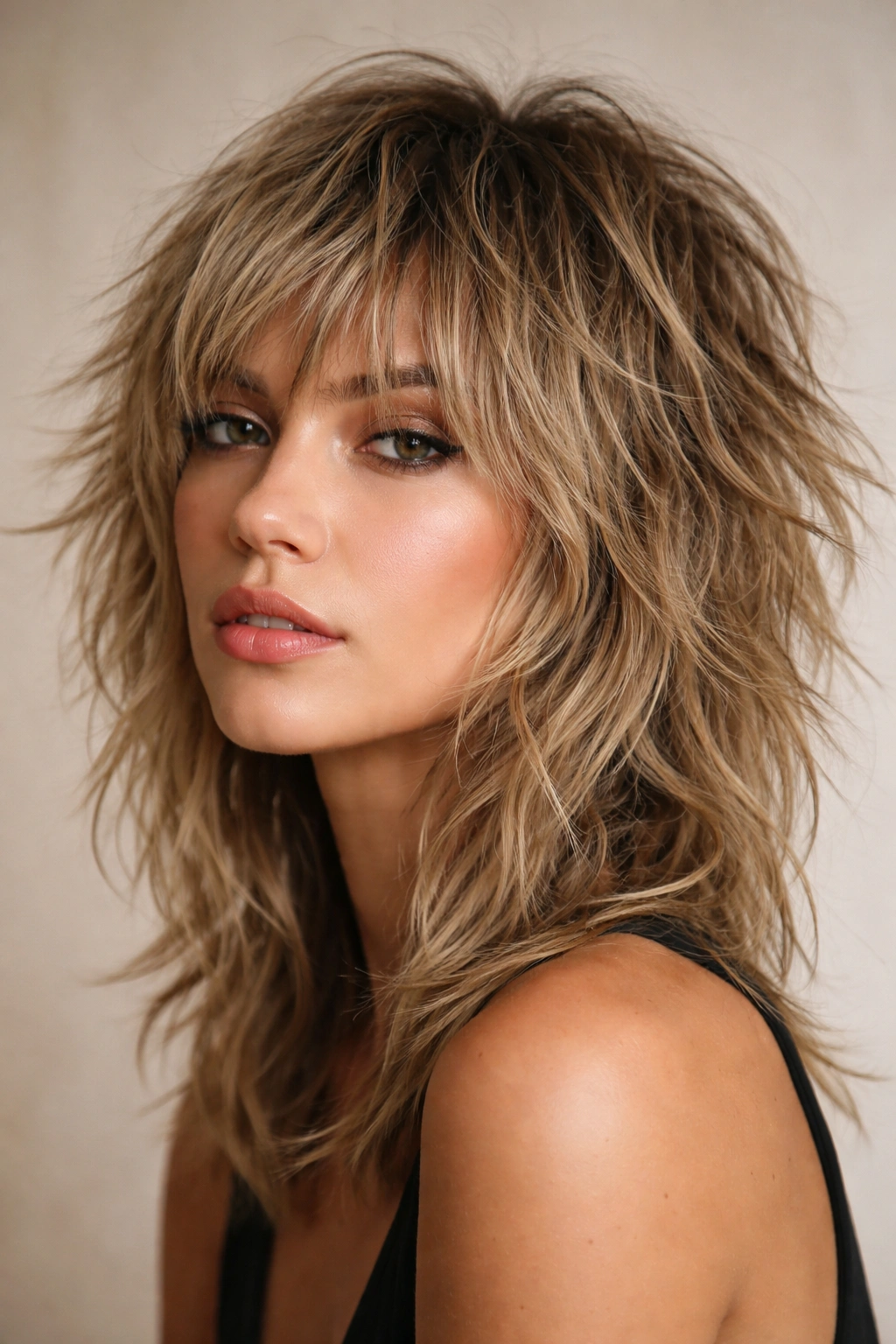
This is a shag specifically designed and styled to look intentionally messed up—textured, piecey, and slightly undone, achieved through strategic layering combined with texture-enhancing products and styling techniques. The cut features choppy layers throughout and shorter pieces at the crown to create the foundation for maximum texture. The styling magic happens when you apply a matte texture paste or sea salt spray to damp hair and scrunch it through, piece by piece, creating separation and movement that looks effortless but is actually quite deliberate.
The Art of Looking Effortlessly Textured
This style walks the line between looking undone and looking polished—it’s the “I just rolled out of bed looking this good” aesthetic that actually requires some styling skill and the right products. The cut creates the potential for this look, but the styling execution determines whether it reads as cool and intentional or simply unwashed. The key is working product through small sections, layering texture paste into pieces, and encouraging separation rather than smoothness.
Daily Styling and Product Essentials
- A matte texture paste or clay is essential—glossy products defeat the purpose
- Sea salt spray works beautifully on wavy or curly hair for enhanced natural texture
- Blow-dry on low heat with fingers to create piece separation, or air-dry and finger-style with product
- Refresh texture between washes with dry texture spray applied to pieces
- This look requires 5-10 minutes of hands-on styling, even if it looks like you skipped the effort
- Works best on hair with at least some natural texture or wave; very straight hair needs more styling effort
Honest take: If you’re going to commit to this look, commit fully to the daily styling. Half-effort styling makes it read as messy rather than intentional, and the whole vibe collapses.
8. The Long Choppy Shag
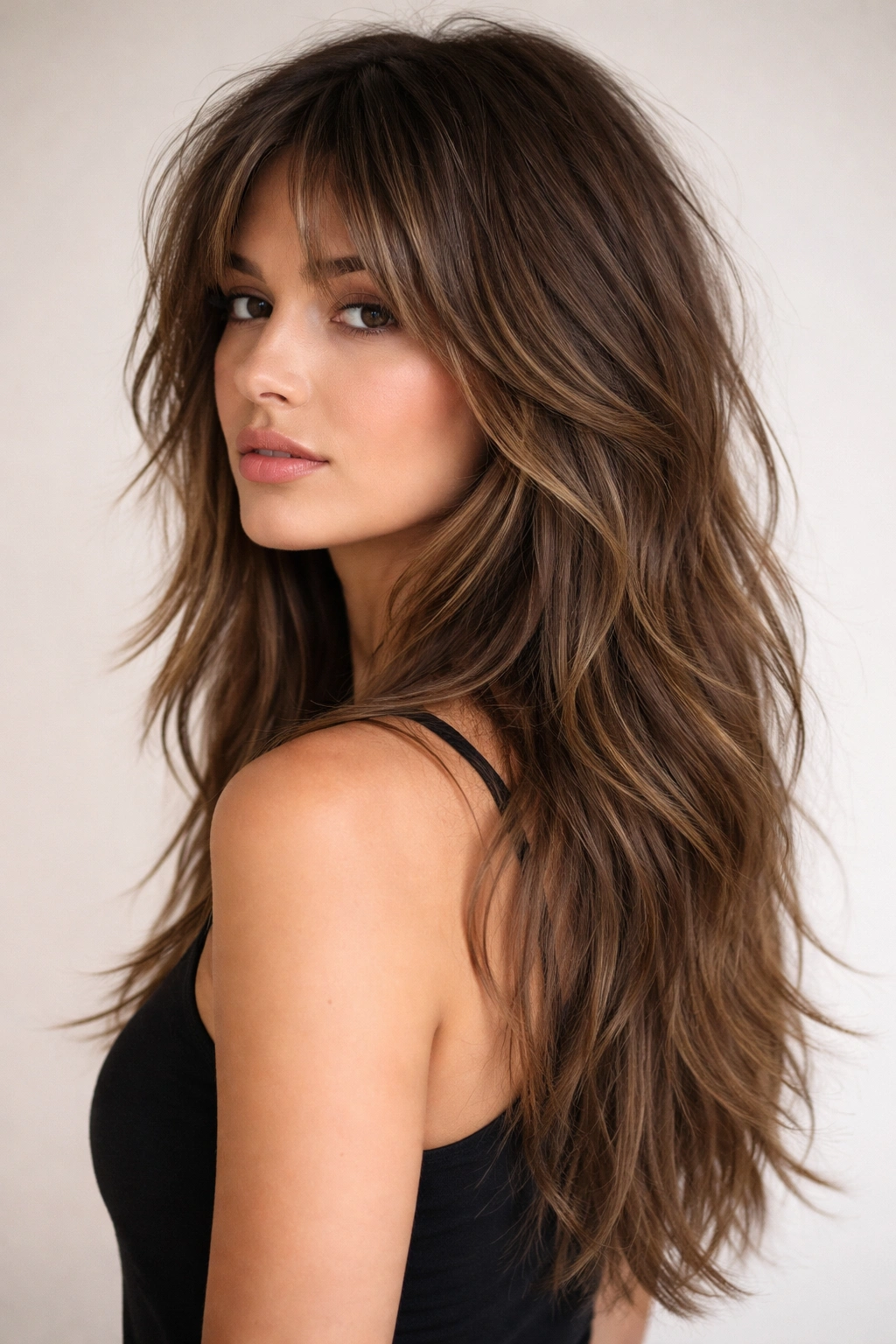
Perfect for those who want serious length but don’t want heavy, straight, blunt-edged hair, the long choppy shag extends past the shoulders with strategically placed choppy layers that create movement and prevent the weight from appearing bulk. Rather than one solid length, the back features layers at varying depths that create dynamic movement and encourage your hair to move rather than hang flatly. The face-framing pieces are significantly shorter, drawing attention upward while the length extends dramatically in back.
Length Without the Weight
Long hair can look either romantic and flowing or heavy and flat—the choppy shag splits the difference. The layers allow movement and lightness even at length, while the longer pieces still provide that feeling of security and femininity that many people love about long hair. The choppiness also prevents the “I haven’t cut my hair in two years” appearance that can happen when you keep length without layers.
Styling and Maintenance for Length
- Requires a quality blow-dry for the cut to look its best; air-drying reads as less intentional
- Layers should be trimmed every 6-8 weeks to prevent them from blending back together as hair grows
- Long choppy shags require heat styling to fully achieve the textured movement the cut is designed for
- Dry shampoo is your friend for maintaining volume at the roots between washes
- Deep conditioning treatments are essential to keep long layers healthy and shiny
- Sleeping in a loose braid or bun prevents tangles and preserves styling
Worth considering: Long choppy shags require genuine maintenance commitment. If you prefer minimal-effort styling, a shorter shag might be more satisfying long-term.
9. The Blunt-Banged Shag
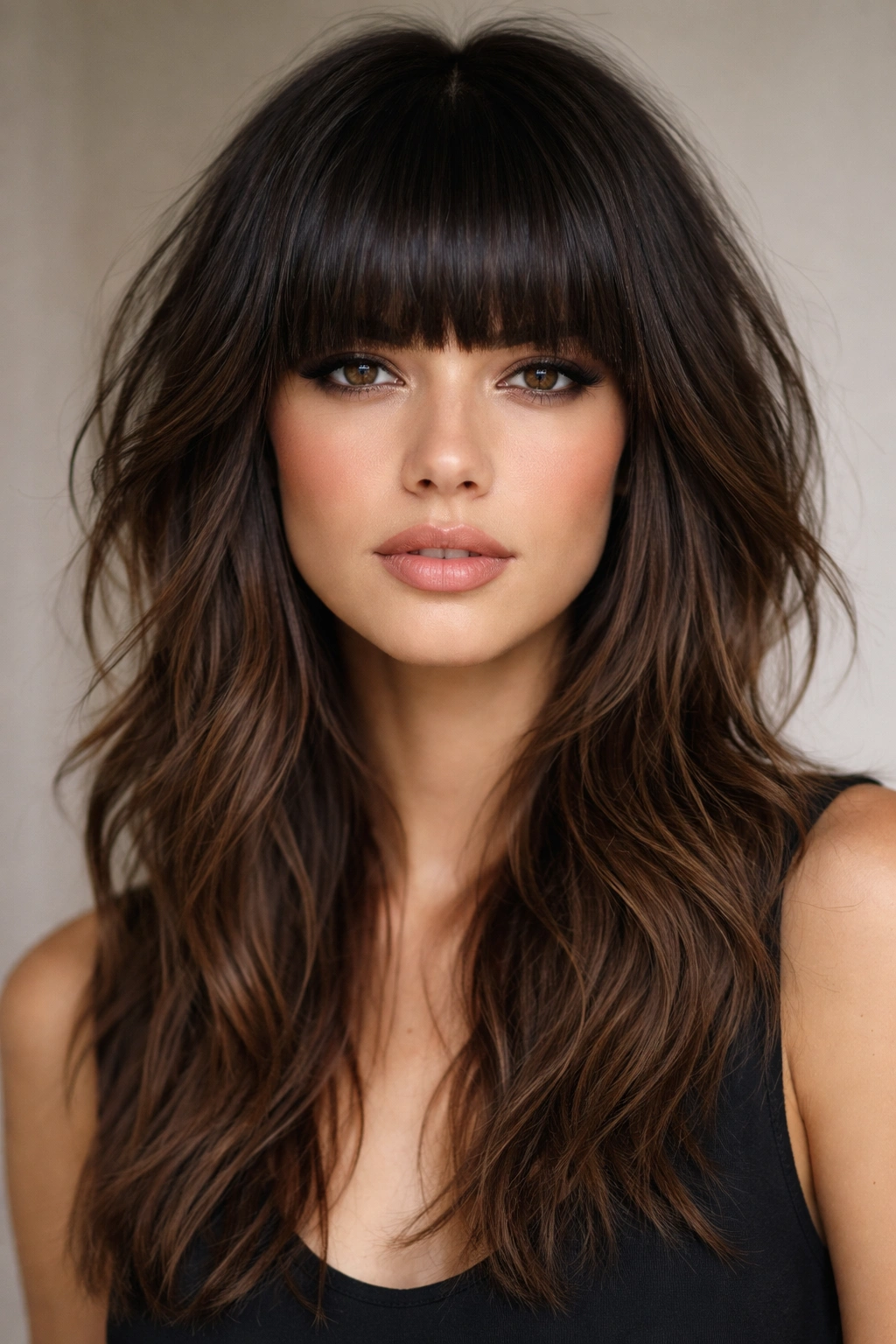
This striking style pairs dramatic, blunt-cut bangs with a choppy shag underneath, creating a bold contrast between the precision of the bangs and the textured movement of the layers. The bangs are cut straight across at roughly eye level or slightly above, while the rest of the hair features choppy, textured layers that move and shift. The result is a modern, fashion-forward look that feels both structured and free.
The Impact of Blunt Bangs
Blunt bangs make an immediate style statement—they’re bold, intentional, and undeniably fashionable. They create a strong horizontal line that frames the face and draw focus to your eyes, making them feel larger and more expressive. Paired with a choppy shag, the blunt bangs ground the look, preventing the overall cut from feeling too chaotic or unfocused.
Who Can Wear This and Styling Approach
- Best suited for oval, heart-shaped, and square face shapes
- Works beautifully on straight to wavy hair; very curly hair can be challenging because bangs tend to curl up
- Blunt bangs require precision maintenance every 2-3 weeks—grow-out period is awkward
- Pair with bold eye makeup and fashion-forward styling for maximum impact
- Style with texturizing products and loose waves in the layers for contrast with the blunt bangs
- Consider your maintenance willingness before committing—this cut demands regular trims
Real consideration: Blunt bangs photograph beautifully but require commitment. The grow-out phase is noticeable and somewhat unflattering, so factor in regular salon visits.
10. The Shaggy Bob with Movement
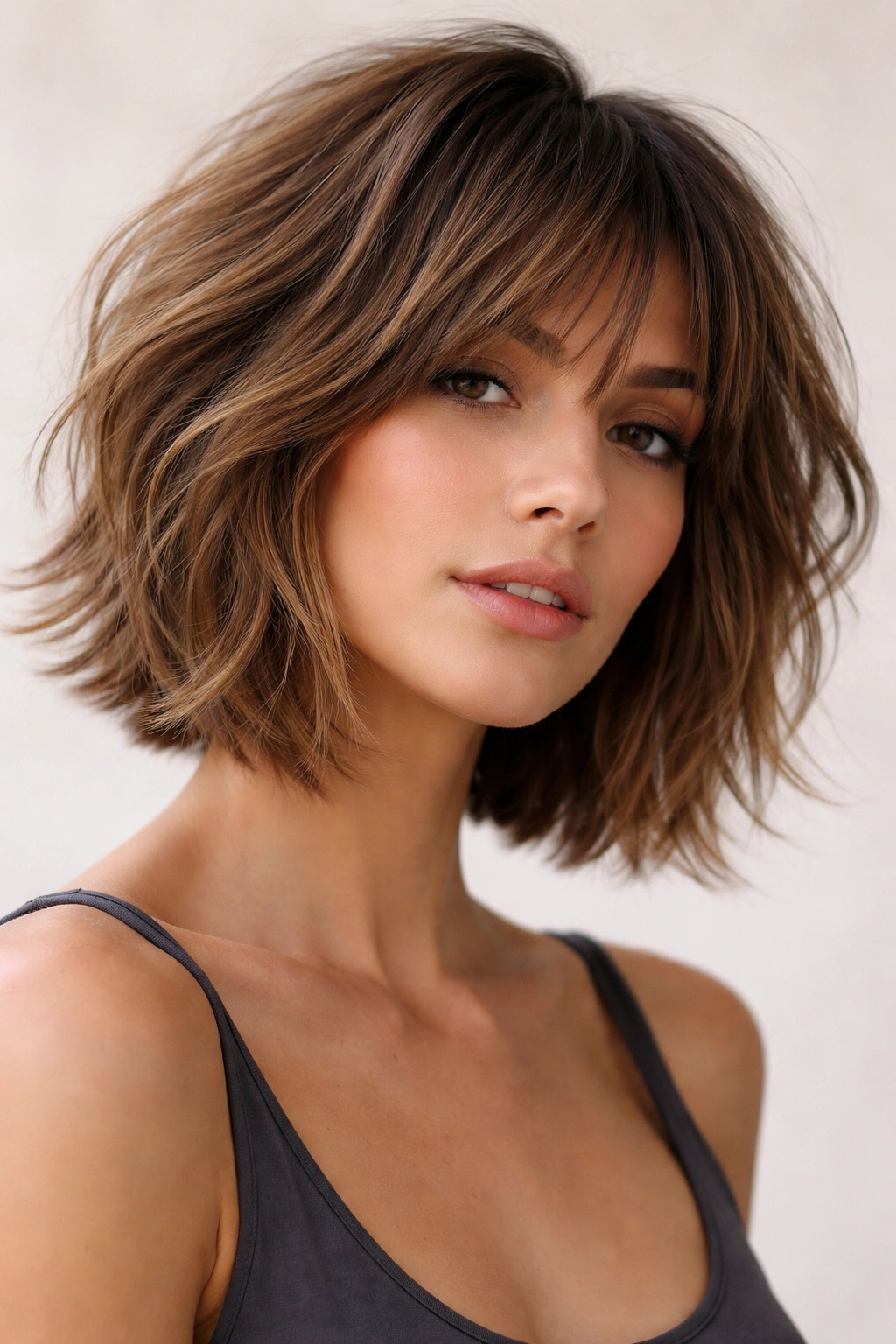
A shorter interpretation of the shag, the shaggy bob hits around chin length or slightly shorter while featuring the choppy, textured layers characteristic of shags. It’s shorter than a traditional shag, making it more manageable while still delivering serious movement and texture. The length works beautifully for people who want the shag aesthetic without the styling demands of longer lengths, or for those who prefer shorter hair but don’t want a blunt bob.
The Perfect Compromise
The shaggy bob gives you the movement and dimension of a full shag in a more low-maintenance package. The shorter length means faster blow-dry time, less tangles, and easier styling overall. Despite being shorter, the choppy layers create just as much movement and texture as longer shags, sometimes even more dramatically because the movement isn’t weighed down by length.
Best Styling and Face Shape Fit
- Stunning on oval and square face shapes
- The choppy layers can work on round faces if longer pieces are kept around the jawline to lengthen
- Blow-dry with a round brush to smooth and add shape, or scrunch with texture products for a softer look
- Requires trims every 4-6 weeks to maintain the choppy definition as hair grows
- Less styling demand than longer shags, but still benefits from texturizing products
- Works beautifully on most hair types, though finer hair might need texture products to create visible movement
Practical note: If you love the shag aesthetic but worry about styling demands or managing longer hair, the shaggy bob delivers nearly everything you want with significantly less upkeep.
11. The Shag with Face-Framing Highlights
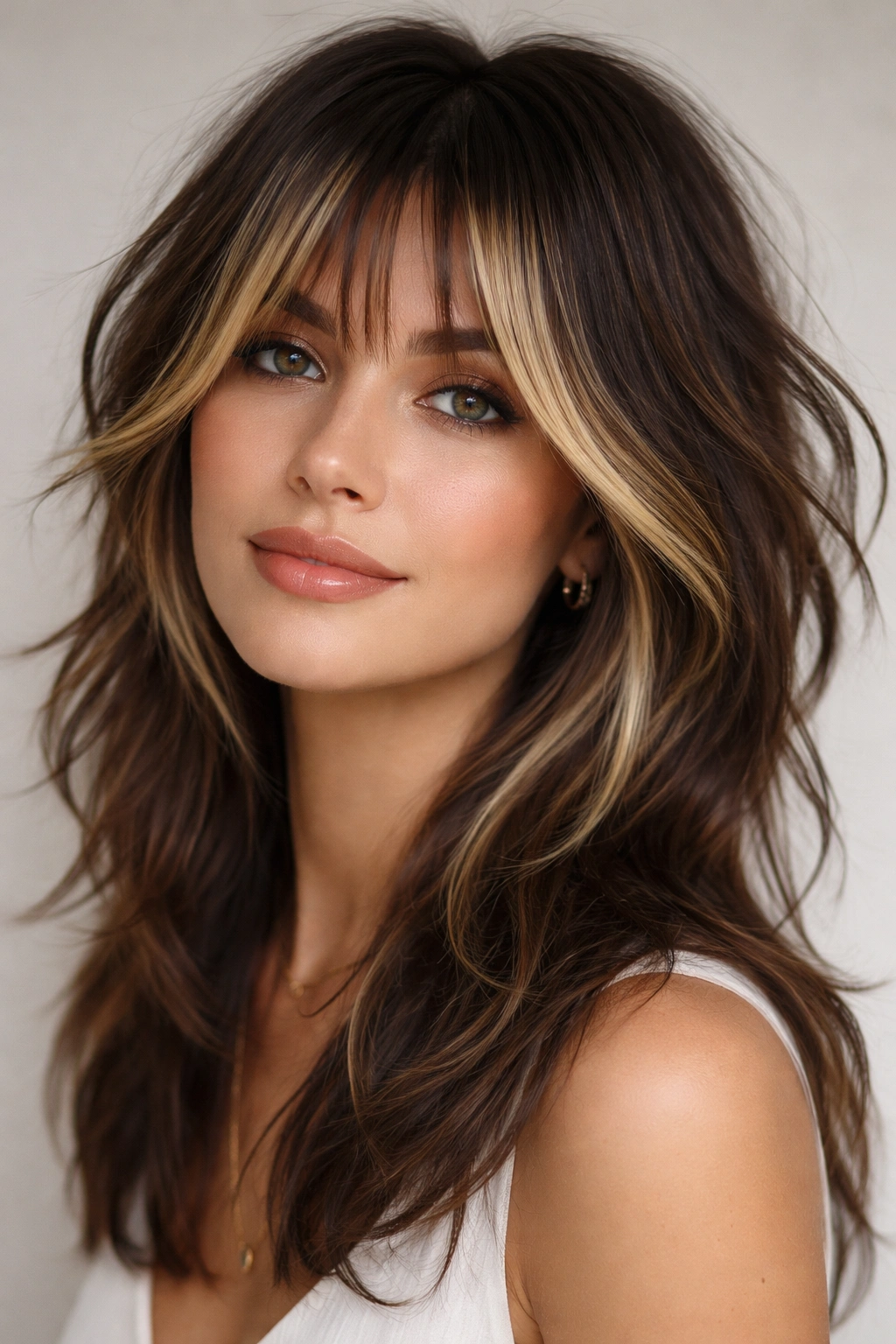
This style focuses on strategic highlighting concentrated around the face—shorter layers near the face are deliberately highlighted with blonde or lighter tones, while the longer back layers might be darker or solid. This creates a focal point of brightness and movement right where it draws attention, amplifying the effect of the choppy face-framing layers. The color work makes even a simple shag look more dimensional and high-fashion.
Strategic Color Placement
By concentrating highlights where the shortest, choppiest layers live, you’re multiplying the visual impact of movement. The lighter pieces catch light independently, creating the illusion of more texture and more sophisticated styling. This approach also tends to be lower-maintenance than full balayage because the focus is on the face-framing area, meaning you can go longer between touch-ups in the back.
Maintenance and Budget Considerations
- Requires color touch-ups every 6-8 weeks on the face-framing pieces
- Can be more budget-friendly than full balayage since color focus is limited
- The back layers can be darker or natural, reducing maintenance elsewhere
- Works beautifully on all skin tones with proper shade selection
- Pairs perfectly with a matte or texture-paste styling product to emphasize individual highlighted pieces
- The highlights make the cut read as more intentional and high-fashion than solid color alone
Stylist tip: Work with your colorist to place highlights in strategic places—upper layers around the crown and along the face-framing sections yield the most visual impact for the effort.
12. The Modern Mullet Shag
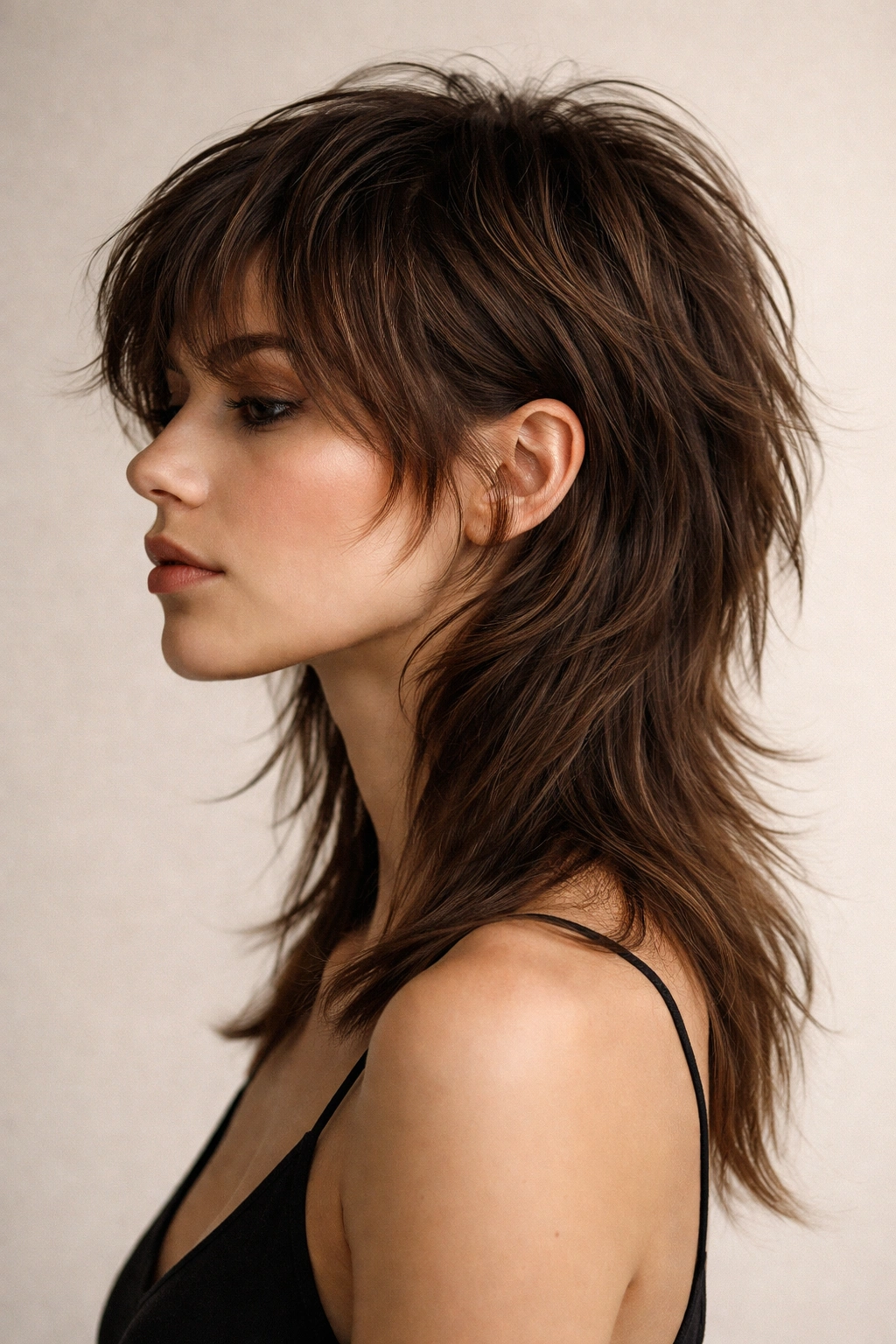
A softer, more fashion-forward interpretation of the shaggy mullet, this version maintains the shorter, textured top and voluminous crown with a gradually longer back, but executed with such finesse that it reads as contemporary and intentional rather than retro. The transition between lengths is less dramatic than a traditional mullet but still visibly distinct—think shorter by 2-3 inches on top compared to the back, rather than drastically different lengths.
The Subtlety That Makes It Modern
The modern mullet shag succeeds because the contrast is obvious without being extreme or costume-like. The top features choppy, layered texture that creates height and movement, while the back flows longer with softer movement. The entire cut works together as a cohesive design rather than two separate ideas, which is why it reads as intentional rather than accidental.
Styling and Personality Requirements
- Requires blow-drying the top for maximum volume and movement
- Works best on people with strong personal style and fashion confidence
- Can be softened by wearing the back down and relaxed, or emphasized by styling it sleekly
- The top section can be worn tousled and textured or smoother depending on the occasion
- Requires precision cutting every 5-6 weeks to maintain the distinct top-to-back transition
- Photographs beautifully and works wonderfully for people who love experimenting with style
Be honest with yourself: This is a statement cut that invites attention and conversation. Commit fully to the style or choose something more understated.
13. The Shag for Thick, Coarse Hair
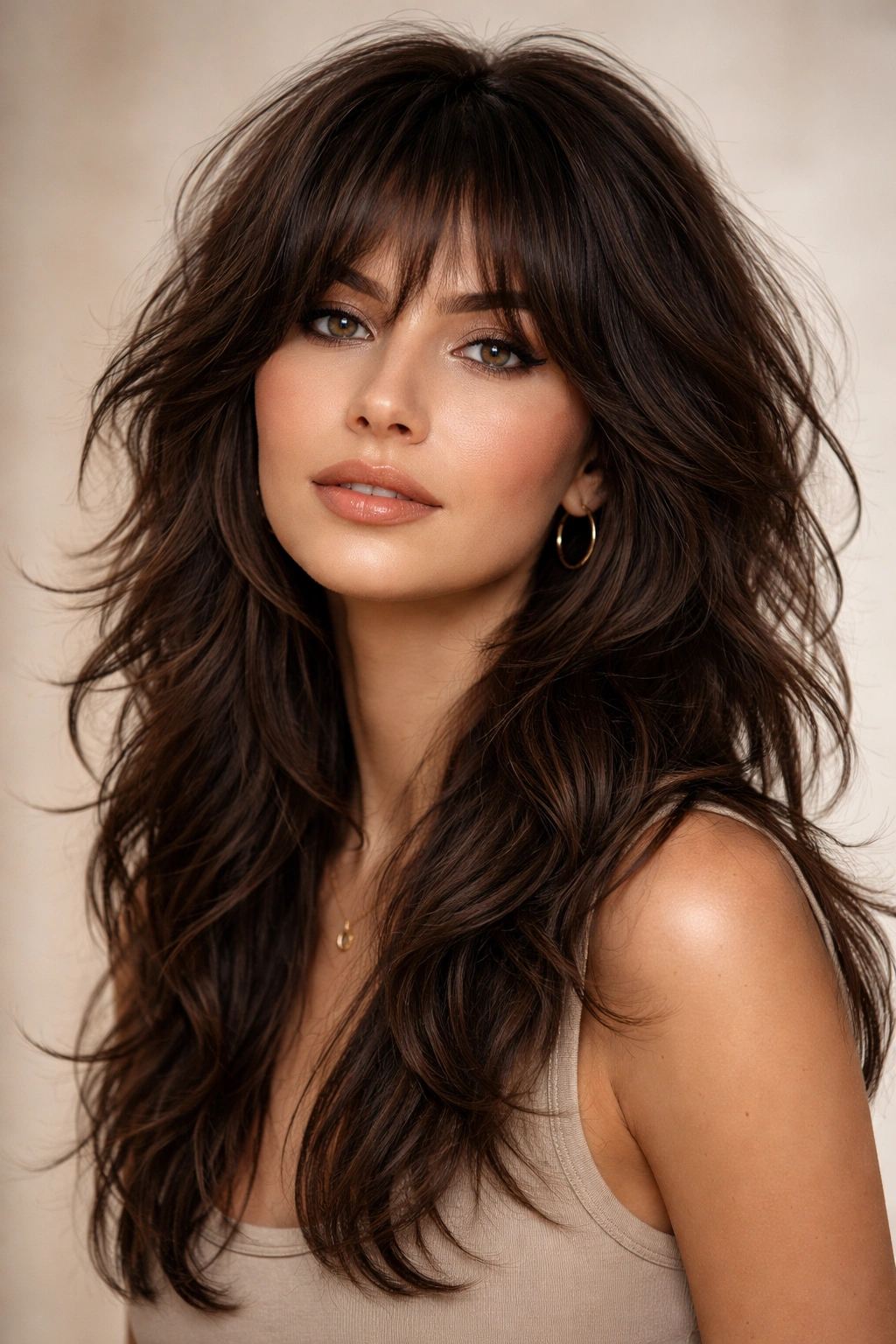
Specifically designed for people with substantial hair density, this shag features strategically placed layers throughout to remove bulk while maintaining movement and dimension. The cut uses choppy, deliberate layers to work with thick hair’s natural volume rather than against it. Layers are cut deeper and more frequently than they might be on finer hair, creating separation and preventing the overall appearance from becoming blocky or heavy.
Working With Natural Density
Thick hair has different needs than fine hair—it can handle deeper layers without becoming wispy, and it often benefits from intentional texture work to create separation and movement rather than smoothness. A well-executed shag on thick hair looks effortlessly voluminous because the layers are doing the work of creating movement and texture naturally. This cut allows you to embrace your hair’s density as an asset rather than fighting against it.
Cut and Styling Approach
- Requires a stylist experienced with thick, coarse hair who understands how to layer appropriately
- Layers should be cut into the hair rather than simply thinned out, creating distinct separation
- The cut benefits from texturizing products that encourage individual pieces rather than smoothing
- Blow-drying with a diffuser preserves texture and creates movement throughout
- Air-drying can work beautifully depending on your natural texture
- Trims every 5-6 weeks prevent layers from blending back together
- This hair type often requires less frequent washing without looking flat
Key insight: Thick hair is actually ideal for shags because the layers create movement rather than appearing limp or thin. This cut gives you a way to manage density while looking intentionally styled.
14. The Lived-In Shag
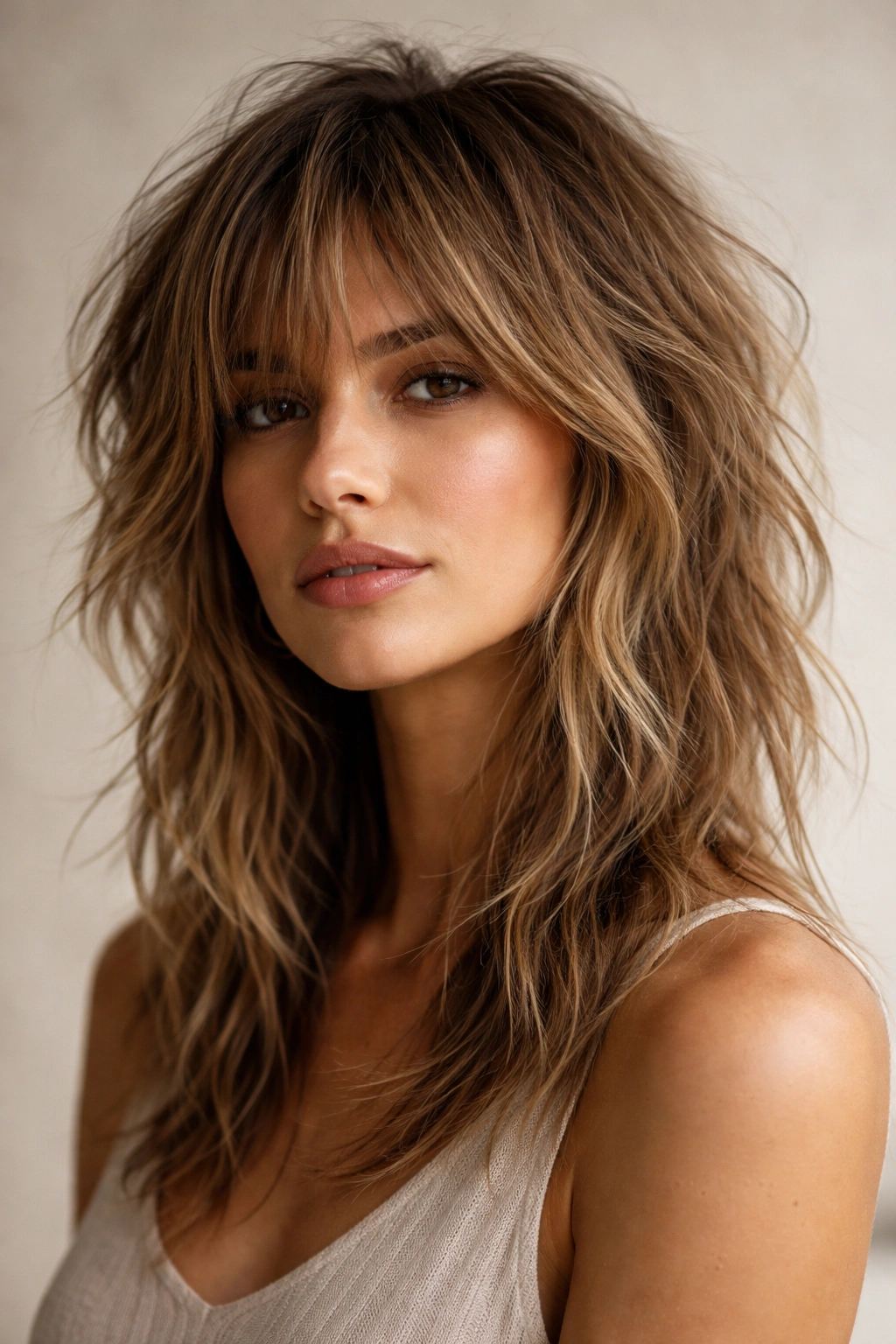
This style prioritizes an effortlessly undone aesthetic—think “I rolled out of bed and my hair looks this good,” which actually requires careful cutting and strategic styling. The cut features choppy, textured layers throughout with slightly longer lengths on top to avoid looking too short or extreme. The emphasis is on movement and texture that appears completely natural rather than deliberately styled, achieved through a relaxed approach to blow-drying and textural products applied without obvious definition.
The Paradox of “Effortless”
Creating an effortlessly undone appearance requires more precision and skill than creating a perfectly polished look. The cut must be executed with perfect layer placement to create movement that looks natural, and the styling must enhance that movement without making it appear intentionally enhanced. This is where product choice and technique matter tremendously.
Styling for the Lived-In Look
- Use a lightweight sea salt spray or texture paste rather than heavy, shiny products
- Apply product to damp hair and scrunch through with fingers; avoid creating defined waves
- Air-dry or blow-dry on low heat without a brush for a softer, more natural result
- Refresh between washes with dry texture spray applied sparingly
- Let a few pieces fall messily; perfect smoothness defeats the purpose
- This look works on all hair types but reads most authentically on hair with natural texture
- Style commitment is 5-10 minutes maximum—if you’re spending more time styling, it’s reading as intentional rather than effortless
Honest truth: The lived-in aesthetic is harder to achieve than it appears. The cut and product choice matter tremendously, and you need to resist the urge to make it too polished.
15. The Shag with Curtain Layers
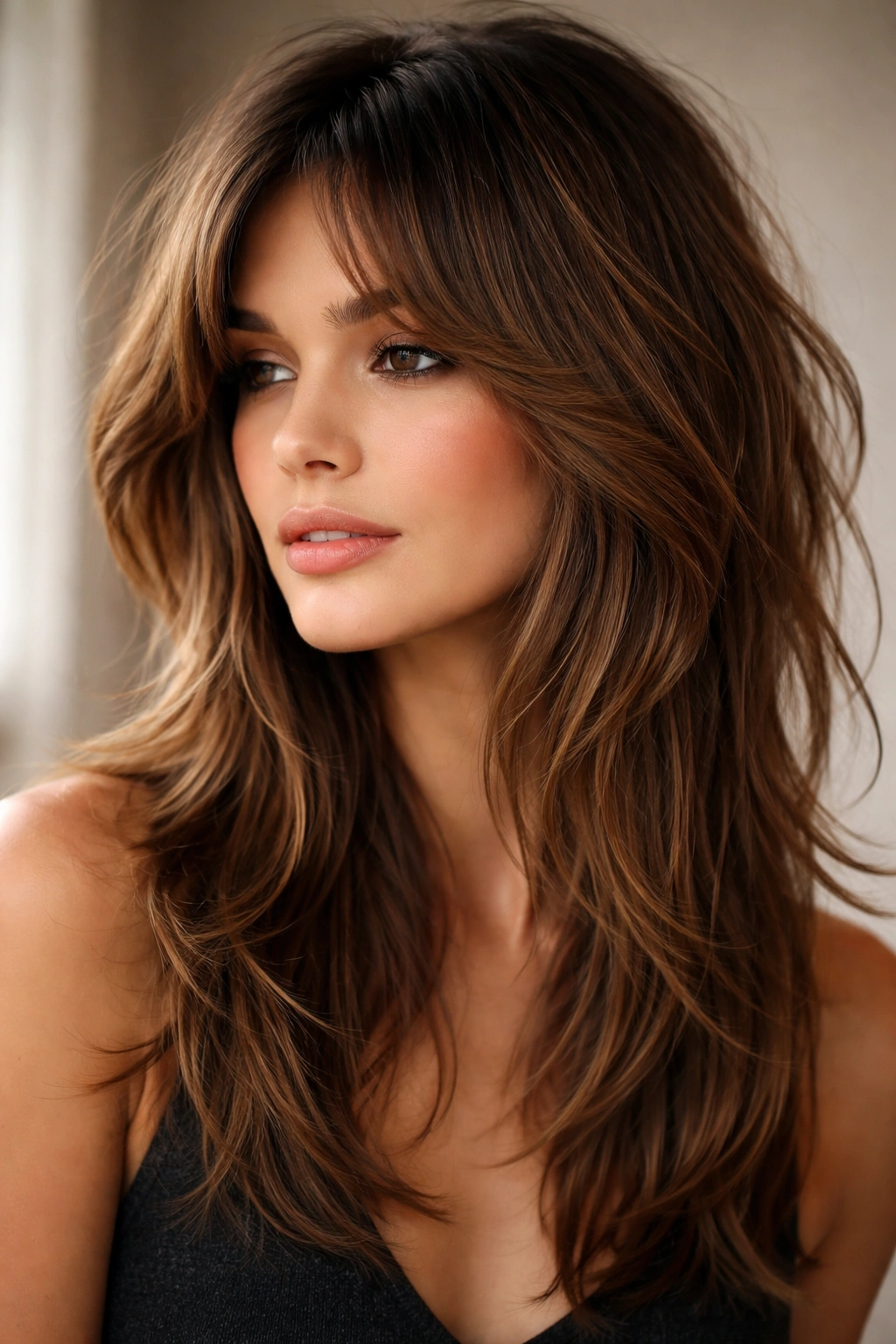
This style features longer, face-framing pieces that sweep away from the center of the face (mimicking the classic ’70s curtain effect) combined with choppy, textured shag layers throughout the rest of the hair. The curtain pieces are noticeably longer than the shorter, choppier layers at the crown, creating visual interest through both length variation and texture variation. The style works beautifully when the longer pieces frame the face while the shorter pieces on top create height and movement.
The Curtain Effect
Curtain layers create a natural frame around the face, drawing attention inward and making cheekbones more prominent. The pieces naturally separate when you move, creating constant, dynamic movement. Unlike blunt bangs or extreme face-framing, curtain pieces feel softer and more romantic, working beautifully with the choppy texture of the shag layers.
Styling and Face Shape Compatibility
- Works beautifully on most face shapes; particularly flattering on long and square faces
- The longer curtain pieces should fall at or slightly below the chin for best proportioning
- Blow-dry the longer pieces away from the face on a round brush to encourage the curtain effect
- The shorter top layers can be styled with texture products for contrast
- Requires trims every 5-6 weeks to maintain the length differential between curtain pieces and top layers
- Works wonderfully on wavy or curly hair where the curtain pieces naturally separate
- On straight hair, you may need to blow-dry for the curtain effect to be visible
Styling secret: The curtain pieces work best when they’re slightly textured or wavy rather than perfectly straight—this encourages natural separation and creates the movement that makes the style work.
Final Thoughts
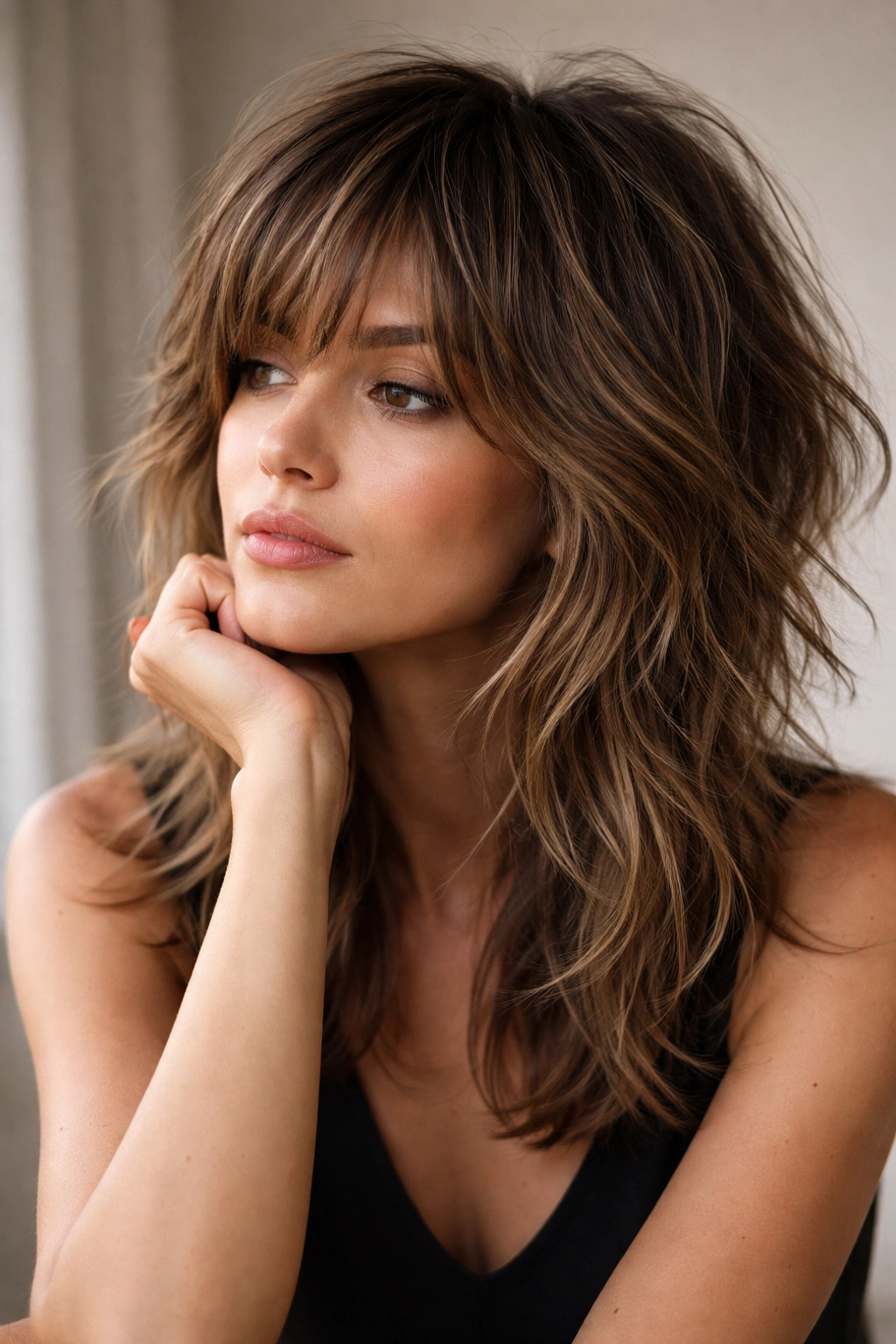
Shaggy haircuts offer something that few other styles can deliver—movement, personality, and the ability to look both polished and undone simultaneously. Whether you’re drawn to a dramatic mullet-shag hybrid, a soft lived-in interpretation, or a textured cut that celebrates your natural curl pattern, there’s a shag variation that will work for your hair type, face shape, and lifestyle. The most important step is finding a stylist experienced with shag cuts who understands your hair’s unique qualities and has a strong portfolio of work you admire.
The beauty of choosing a shag is that you’re investing in a cut that actually makes styling easier, not harder. Yes, you’ll need to commit to regular trims—every 4-6 weeks is ideal to maintain layer definition—but your daily styling effort actually decreases because the cut does much of the work for you. Texture products become your friends rather than necessities, and your hair looks intentional and current even on days when you don’t blow-dry.
Take time with your stylist consultation to discuss your lifestyle, styling preferences, and hair goals honestly. Bring references of styles you love, and ask your stylist questions about maintenance, styling approach, and whether the cut you’re considering will work with your daily routine. A shag is too important a cut to leave to chance, and the right consultation can mean the difference between a cut you love and one you regret. With the right shag and the right care, you’ll have a haircut that works with you, not against you.
