



Bored with safe, predictable short haircuts? If you’ve got the confidence to rock something bold and unconventional, a funky short haircut can become your signature statement. Short hair with attitude isn’t just about length—it’s about angles, texture, disconnected layers, shaved sections, and color placement that makes people turn their heads. The best part? Once you’ve committed to the chop, styling takes minutes, and you’ll have a look that works as hard as you do.
The short hair movement has evolved far beyond the basic pixie and bob. Modern funky cuts blend precision with texture, often combining seemingly opposite elements—smooth undercuts against choppy layers, blunt geometric lines softened by feathering, or asymmetrical sides that create visual tension. What ties them all together is edge: an unmistakable sense that you’re not following the crowd, you’re leading it.
Whether you’re drawn to androgynous minimalism, textured chaos, or architectural precision, there’s a funky short cut that matches your personality and lifestyle. The catches are real though—these haircuts demand a stylist who understands the vision, regular trims every 4-6 weeks to keep the shape sharp, and enough personal styling confidence to own the look. But if you’re ready for that level of commitment, read on. These 10 cuts will inspire your next salon appointment and transform how you think about your hair.
1. Pixie Undercut with Shaved Sides
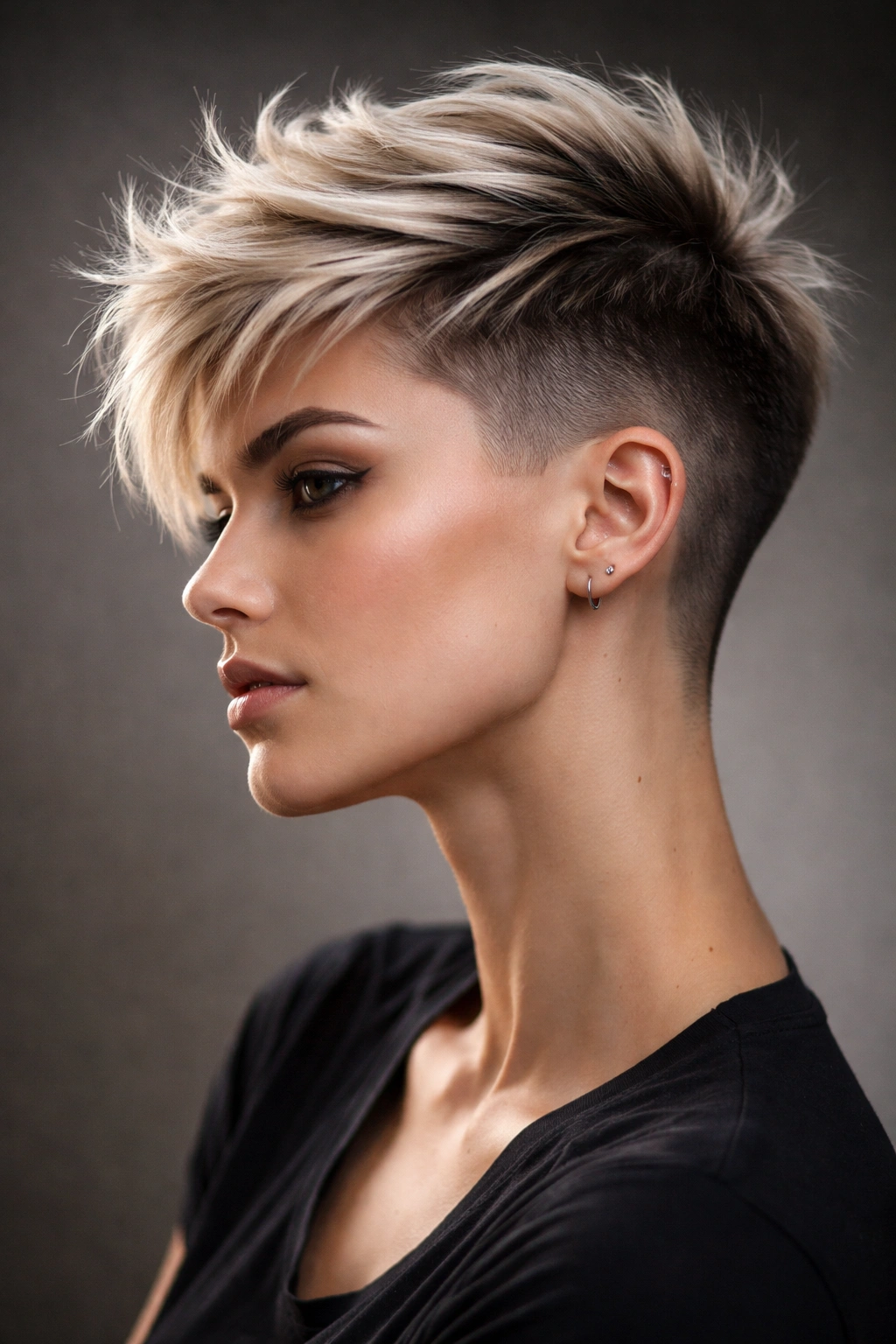
A classic pixie gets an instant edge injection when you add shaved or closely faded sides, creating stark contrast between the textured crown and the near-bare skin of the temples and back. This cut is permission to be bold without committing to an avant-garde salon visit—it’s become mainstream enough that most stylists understand the ask immediately.
Why It’s Such a Powerful Statement
The undercut works because it’s visually uncompromising. By exposing your head shape, jawline, and neck, you’re drawing attention exactly where conventional beauty tells us not to. The result is a cut that screams confidence and looks striking on nearly every face shape. The shaved sections create an almost sculptural quality, especially when you have interesting bone structure or cheekbones you want to emphasize.
How to Style and Maintain It
- Keep the crown textured through styling products—a matte clay or dry shampoo adds dimension without shine
- Let the pixie grow slightly longer on top for a softer silhouette, or keep it short and spiky for maximum attitude
- Plan for touchups every 3-4 weeks to keep the undercut clean and well-defined
- Your undercut will need reblending with electric clippers or a razor every 2-3 weeks; many stylists include this in a maintenance cut package
- Sleeping on this cut doesn’t disturb the style much, which is one of its greatest practical advantages
Pro tip: The severity of your undercut should match your willingness to maintain it. Opt for a 1/4-inch fade if you hate frequent trims; go with a full shave if you’re committed to touching it up every three weeks.
2. Mullet-Inspired Modern Bob
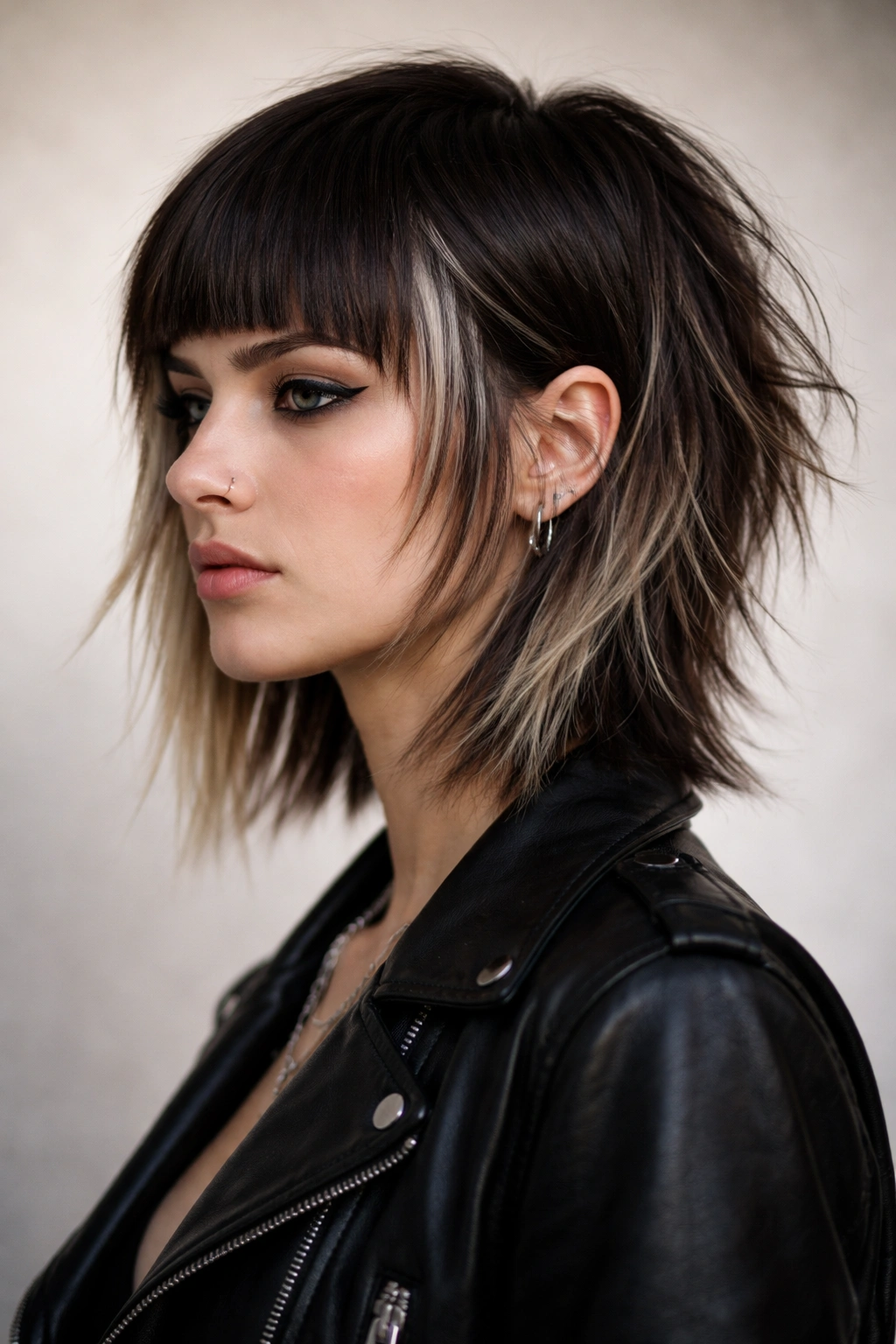
Yes, mullets are back—but not in the way your uncle wore one in 1987. The modern take is subtle: business in the front (a blunt, shoulder-grazing bob), party in the back (slightly longer, choppy layers that suggest movement and volume). It’s retro irony that somehow works as a genuinely wearable, edgy cut.
What Makes This Different From a Regular Bob
The mullet bob plays with proportions and breaks the rules of traditional balance. A regular bob is uniformly structured; this cut intentionally disrupts that symmetry. The front stays polished and geometric while the back gets texture and surprise. It reads as deliberately unconventional—you’re not accidentally wearing a mullet; you’re choosing it as artistic statement.
Styling Tricks for Impact
- The front sections benefit from a straightener to maintain the blunt line and sharp edges
- The back layers look best when piece-separated and slightly tousled, achieved with a texturizing spray or sea salt spray
- Side-parting this cut exaggerates the asymmetry and adds visual interest
- Styling the front smooth while the back goes messy creates intentional tension that defines the whole vibe
- This cut actually photographs better than it looks in everyday life—the camera loves the structural contrast
Real talk: This cut works best on people with naturally textured or wavy hair in the back. Stick-straight hair requires more styling effort to create that back-section dynamism.
3. Choppy Textured Pixie Crop
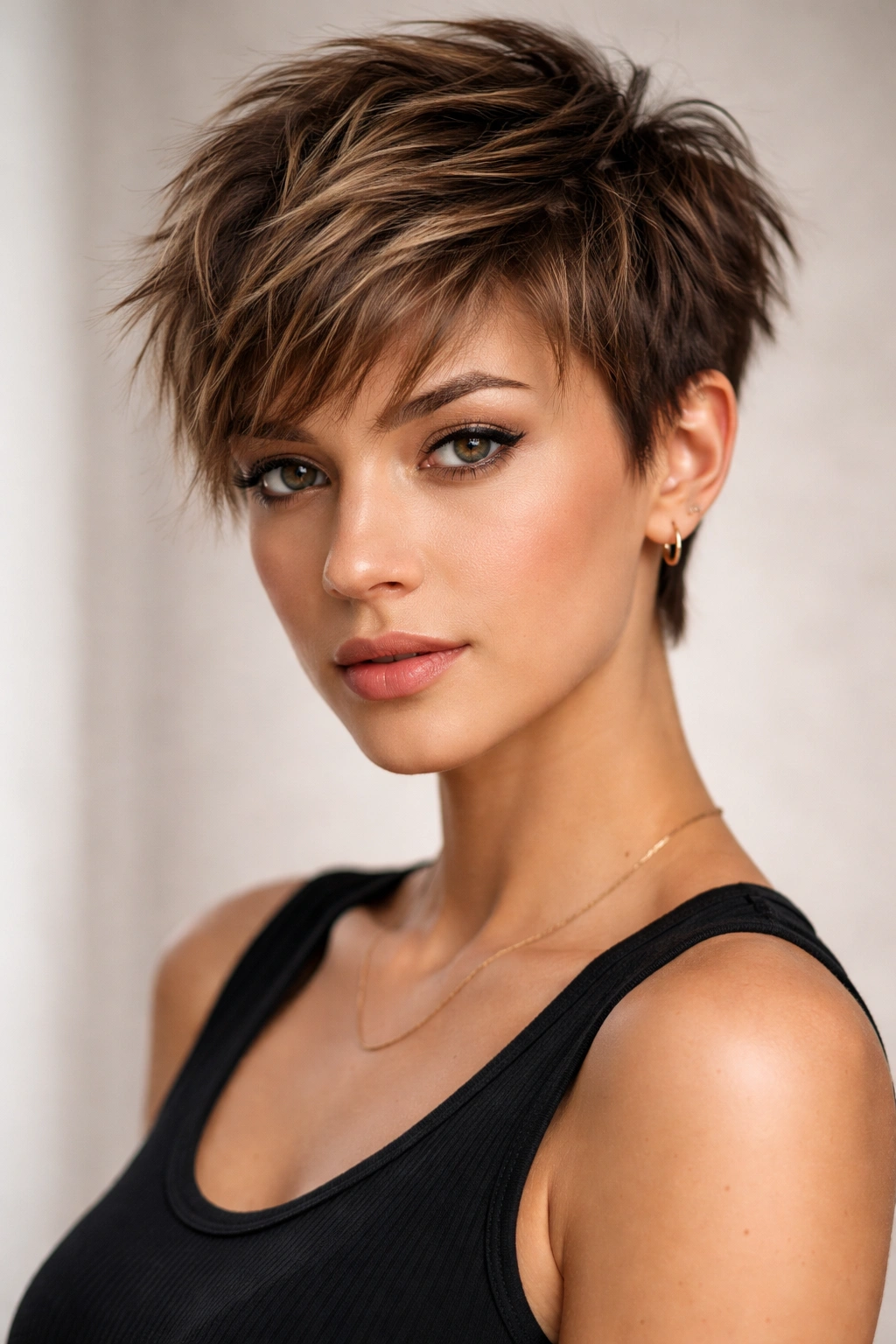
Instead of a sleek, blended pixie, imagine one where every layer is deliberately visible, with choppy points throughout and slightly longer sections that stick up and catch light differently. This is controlled chaos—nothing is perfectly smooth, but every piece is intentional.
The Personality Behind the Chop
Choppy pixies signal that you’re unbothered by perfection. They’re impeccably executed because they look effortlessly unmade. This cut works particularly well if you’ve got naturally curly, wavy, or textured hair that resists being smoothed into neat lines. Instead of fighting your hair’s natural tendencies, this cut celebrates them.
Making It Easy to Wear Every Day
- Use a pomade, clay, or light paste to enhance the choppy texture and define individual pieces
- The cut can be worn either tousled and textured, or worked into smoother shapes depending on your mood
- Sleeping on wet hair will create natural texture you can style into the cut
- Touchups every 4-5 weeks keep the choppy layers from growing into a blob
- This style gets easier to manage as your hair adjusts to being short; the first few weeks require more styling attention
Worth knowing: Ask your stylist to point-cut the layers instead of slide-cutting them. Point-cutting creates sharper, choppier edges; slide-cutting creates a softer blend.
4. Asymmetrical Sharp Bob
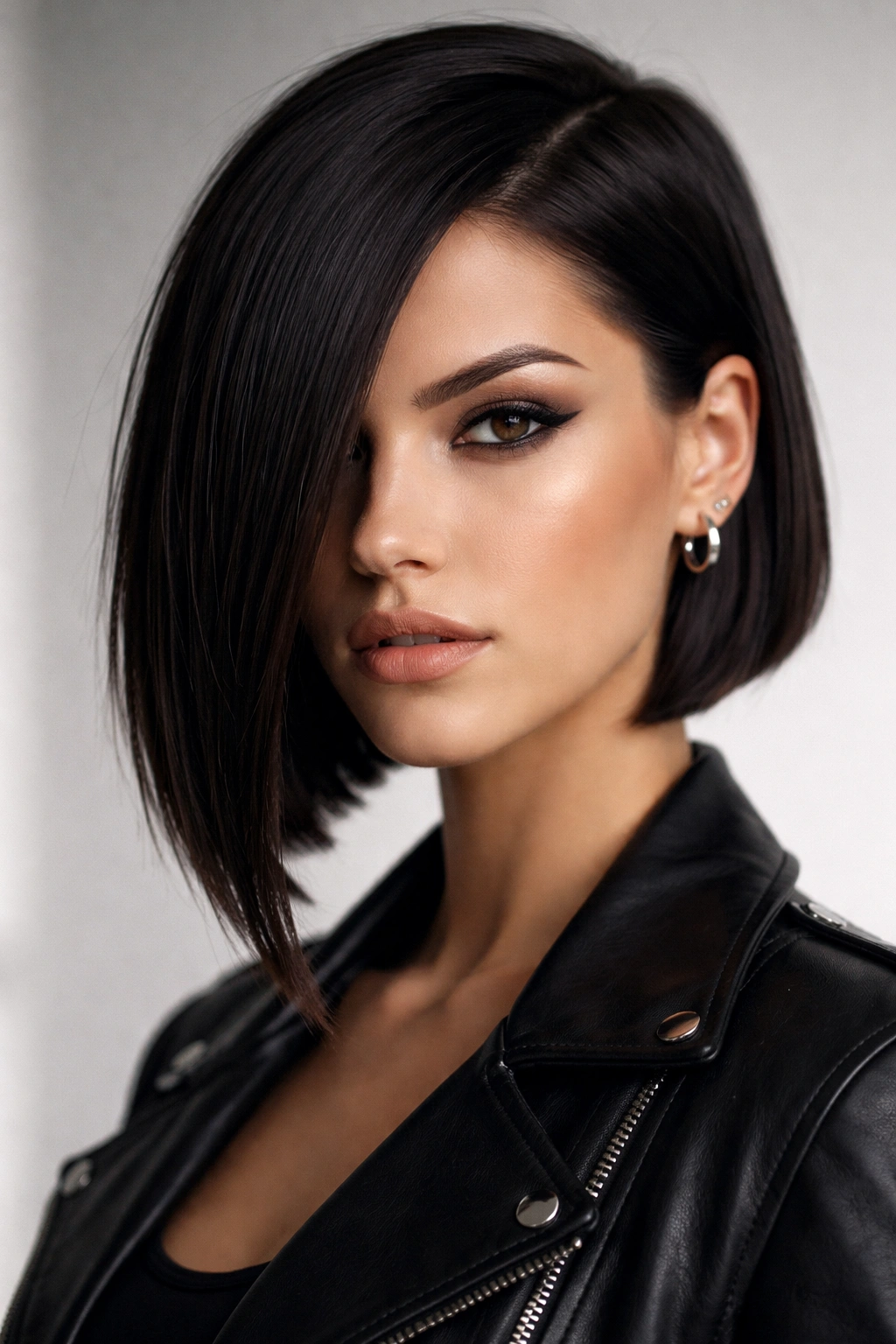
An asymmetrical bob takes the already-bold statement of a blunt bob and tilts it—one side is noticeably shorter or angles differently than the other. Think less “I didn’t notice I was uneven” and more “I paid someone a lot of money to make me look slightly off-kilter on purpose.”
Why Asymmetry Commands Attention
Symmetry is what our brains expect. When you break it deliberately, you create visual tension that’s impossible to ignore. An asymmetrical bob draws the eye across your face and creates the illusion of movement even when you’re standing still. It’s a cut that says you’re comfortable with unconventional beauty and confident enough to pull it off.
Getting the Line Right
- The severity of the asymmetry matters—a subtle 1-2 inch difference is wearable for most settings; a dramatic 4+ inch difference is a true statement piece
- Blunt lines look sharpest with regular blowouts; if you prefer to air-dry, ask your stylist for a textured or choppy version of the asymmetrical cut
- Styling one side differently than the other amplifies the cut—smooth on one side, textured on the other
- This cut requires precision trims every 4-6 weeks to maintain the intentional unevenness without looking sloppy
- An asymmetrical bob can be parted on either side; switching your part changes how dramatic the cut reads
Insider note: Asymmetrical bobs look incredible with undercuts or faded sides that emphasize the angle.
5. Shaggy Wolf Cut
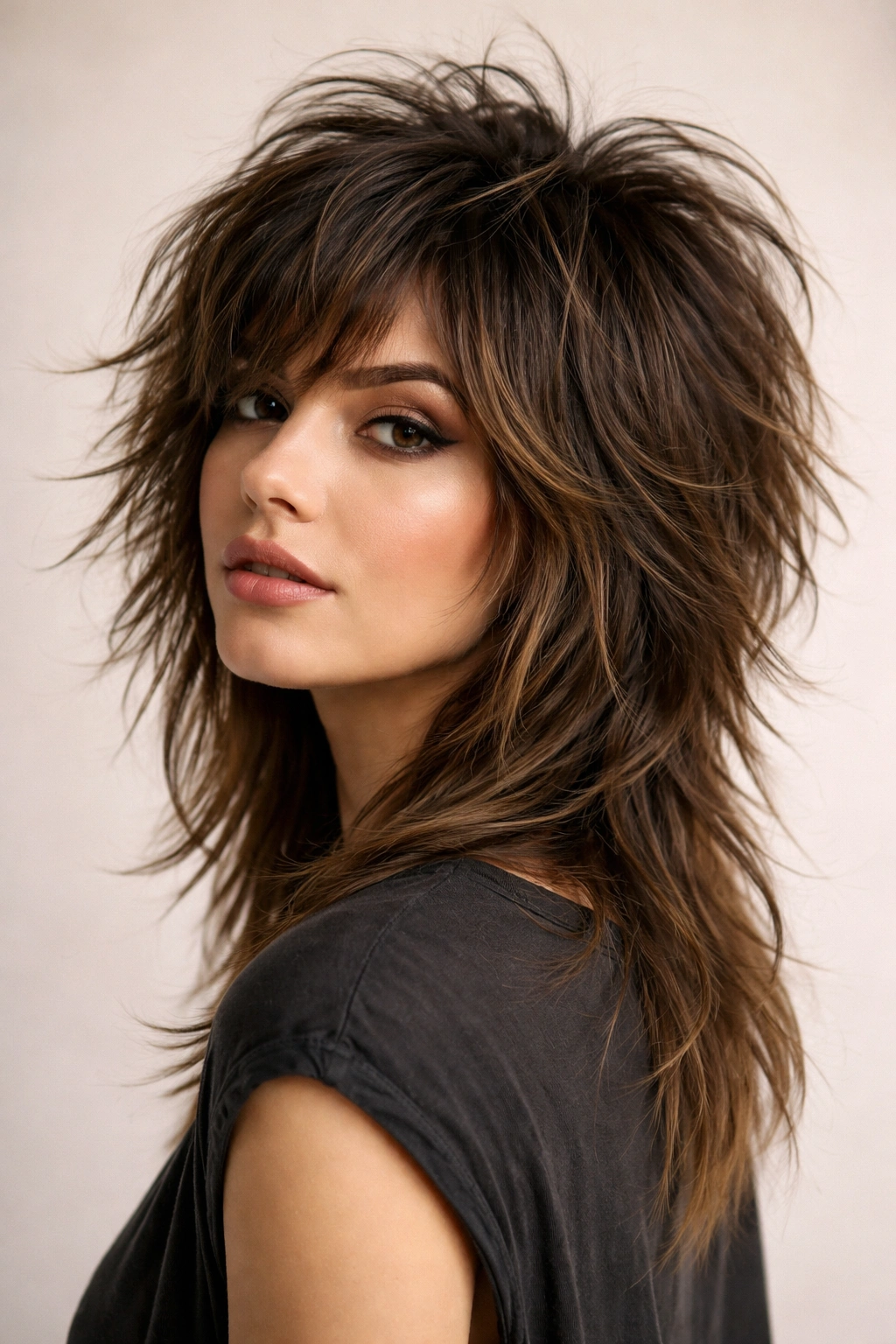
The wolf cut is basically a mullet’s cooler sibling—it’s short and textured throughout with longer pieces in strategic spots, creating a layered, feathered silhouette that genuinely looks wild. It’s called a “wolf cut” because the layers create a shaggy, almost maned quality.
Why Texture Rules This Style
Where a pixie is neat and a mullet is front-to-back contrast, a wolf cut is all-over dimension. Longer pieces at the crown and around the face create volume and movement; shorter layers underneath provide structure. It’s messier than a traditional pixie but more cohesive than a choppy bob.
Styling for Maximum Wolf Energy
- The wolf cut looks best with natural texture or waves—if your hair is straight, this cut requires more styling effort
- Use a texturizing spray or sea salt spray to separate the layers and enhance the shaggy quality
- Blow-dry with a round brush to smooth some layers while leaving others piece-separated for contrast
- This cut can be worn tousled and wild or slightly more controlled depending on the occasion
- Longer pieces need more frequent trims (every 4-5 weeks) to prevent the cut from looking overgrown
Pro tip: This cut pairs beautifully with cool-toned hair color or dimensional highlights that make the layers visually pop.
6. Geometric Blunt Bob
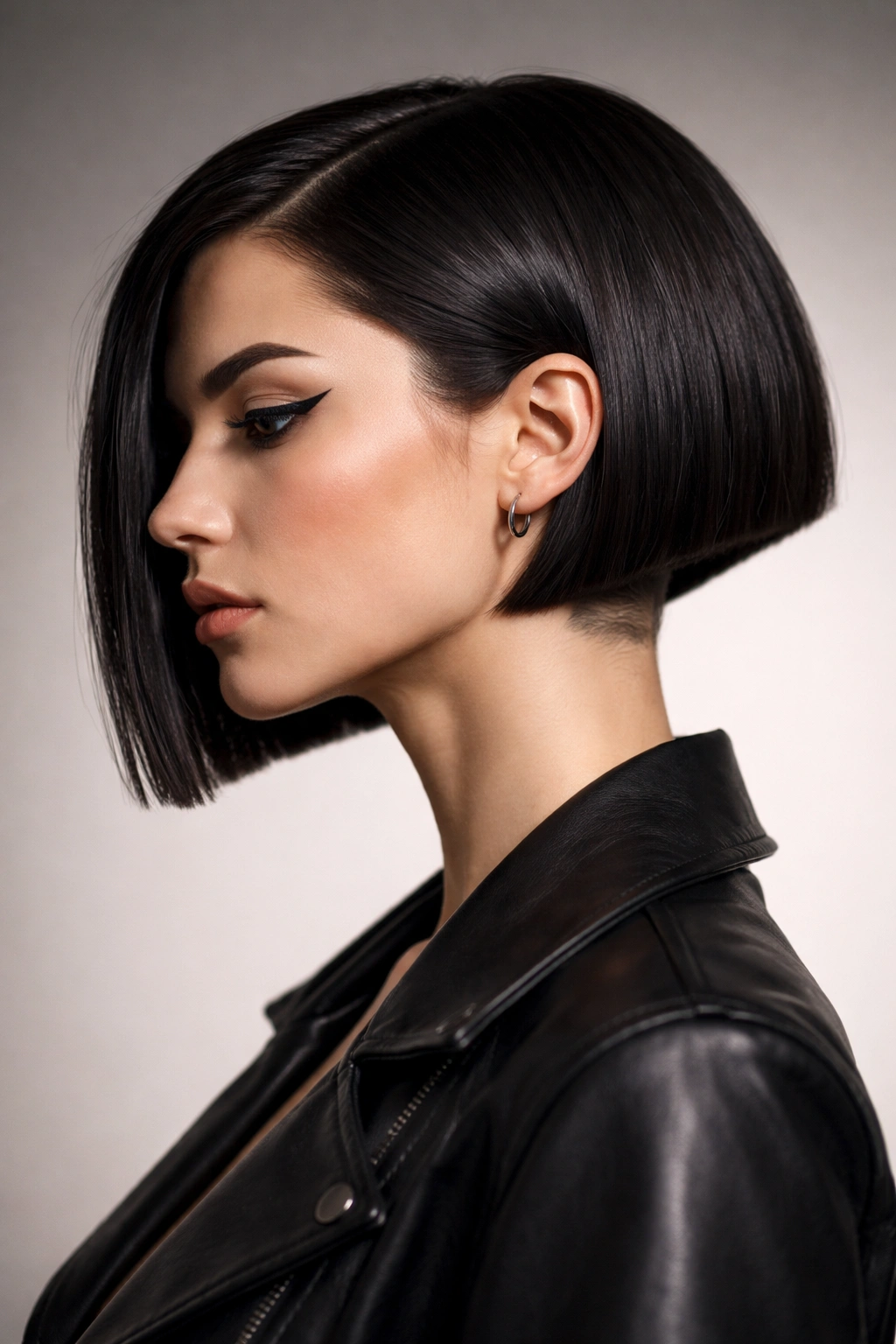
A geometric bob takes the simplicity of a blunt, straight-line bob and adds sharp angles, often incorporating an undercut or shaved nape area that creates architectural precision. Think less “classic bob” and more “sharp geometric sculpture.”
The Architecture of Modern Precision
This cut is for people who appreciate clean lines and intentional structure. Every angle serves a purpose; nothing is accidental. The bluntness of the front contrasts with the precise tapering or undercutting at the nape. It’s a cut that photographs beautifully and reads as contemporary and polished.
Maintaining Architectural Perfection
- The blunt line requires regular trims every 4-6 weeks to keep edges sharp and prevent the characteristic “flippy” ends that come with regrowth
- This cut benefits from professional blowouts if you want to maintain the sleek aesthetic; air-drying often creates unwanted movement
- An undercut section will need refreshing every 3-4 weeks with clippers
- Styling is straightforward: blow-dry straight or use a flat iron to maintain the geometric lines
- This cut works beautifully on straight hair; if you have natural wave or curl, you’ll need to straighten it to show off the architecture
Real talk: This is a commitment cut. If you’re not willing to get regular trims and maintain the blunt line, it will look neglected faster than softer styles.
7. Tapered Fade with Textured Crown
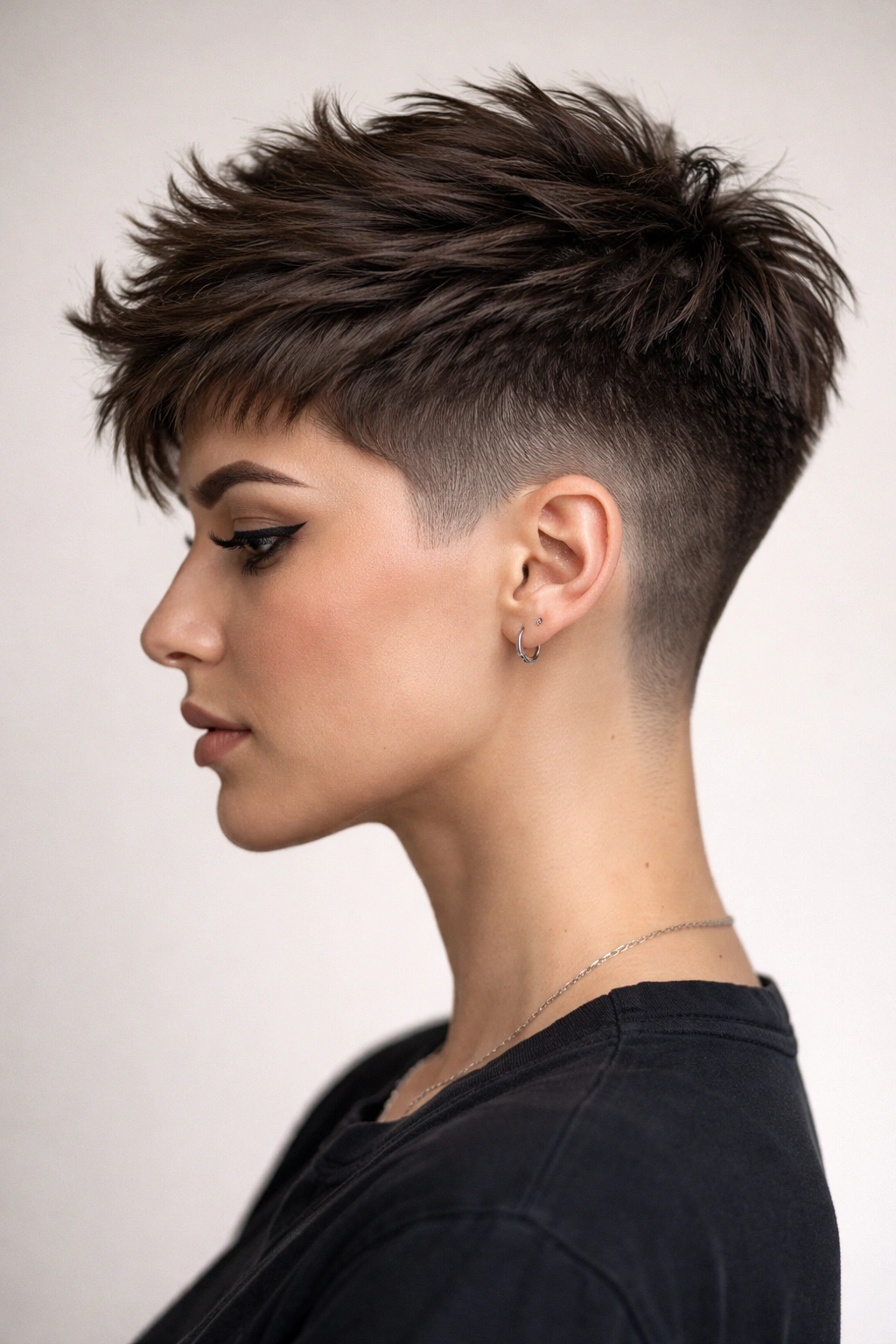
Instead of an all-over pixie, imagine the sides and back fading gradually from short (about 1/4 inch) to even shorter toward the nape, while the crown grows significantly longer with choppy, textured layers. It’s a fade with personality on top.
Balancing Contrast and Wearability
This cut works because it has visual interest without being extreme. The fade keeps it looking polished and precise, while the textured crown prevents it from feeling too military or severe. It’s a cut that reads as edgy in casual settings but can look refined in professional ones, depending on how you style the crown.
Styling the Textured Top
- The crown needs product to look its best—a matte pomade, clay, or paste works beautifully
- You can style it slicked back for a sleek look, or mess it up for a more tousled vibe
- The fade requires touchups every 2-3 weeks if you want it looking crisp
- This cut works on all hair types but looks particularly striking on curly or wavy hair where texture naturally exists
- Sleeping on this cut might flatten the top slightly; a quick styling session with product revives it
Worth knowing: Ask your stylist for a “drop fade” (where the fade starts higher on the head) rather than a traditional fade (which starts above the ears). It gives more options for styling the crown.
8. Spiky Pixie with Color Blocks
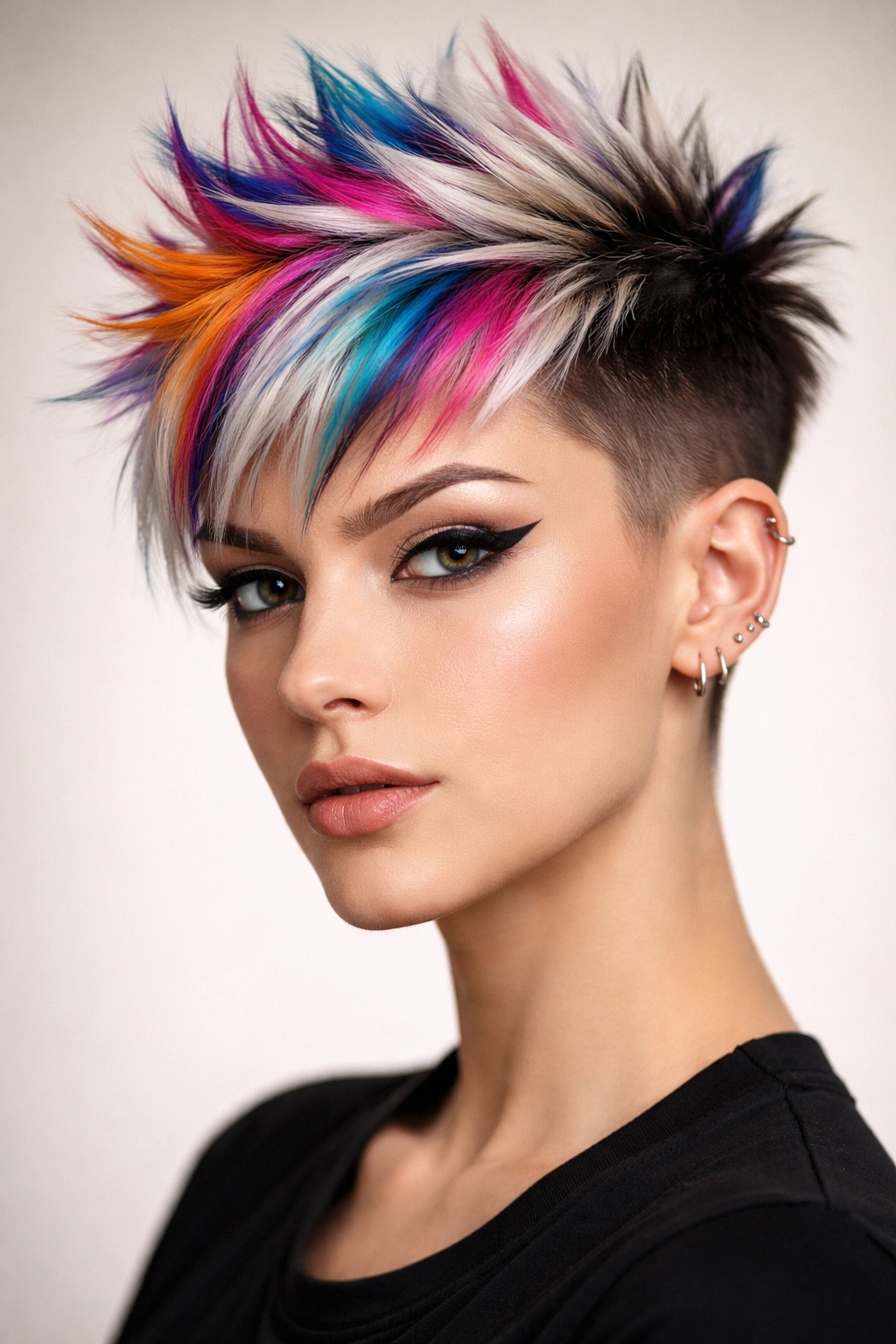
Take a textured pixie crop and add color blocking—strategic placement of contrasting colors that make certain sections pop while others recede. Color transforms a cut from edgy to absolutely arresting.
How Color Amplifies the Cut
Color blocking isn’t random; it’s strategic. You might have a darker base with neon or pastel blocks on the sides, or a light base with rich shadows creating dimension. The color literally draws the eye to certain sections of the cut, amplifying its architectural qualities and adding an extra layer of visual interest.
Color Maintenance Reality
- Semi-permanent color (which fades gradually) is more forgiving than permanent color and requires less commitment
- Different colored sections fade at different rates, which means color maintenance can become complex
- Plan for root touchups every 3-4 weeks for permanent color, or refresher applications every 4-6 weeks for semi-permanent
- This style demands confidence—you’re not going subtle when you add color blocking to an already bold cut
- Certain colors (pastels, bright hues, jewel tones) require pre-lightening, which can damage hair, so use a quality colorist
Insider note: Color-blocked pixies photograph beautifully but might not work in conservative professional environments. Consider your lifestyle before committing to this level of boldness.
9. Undercut Bixie (Hybrid Bob-Pixie)
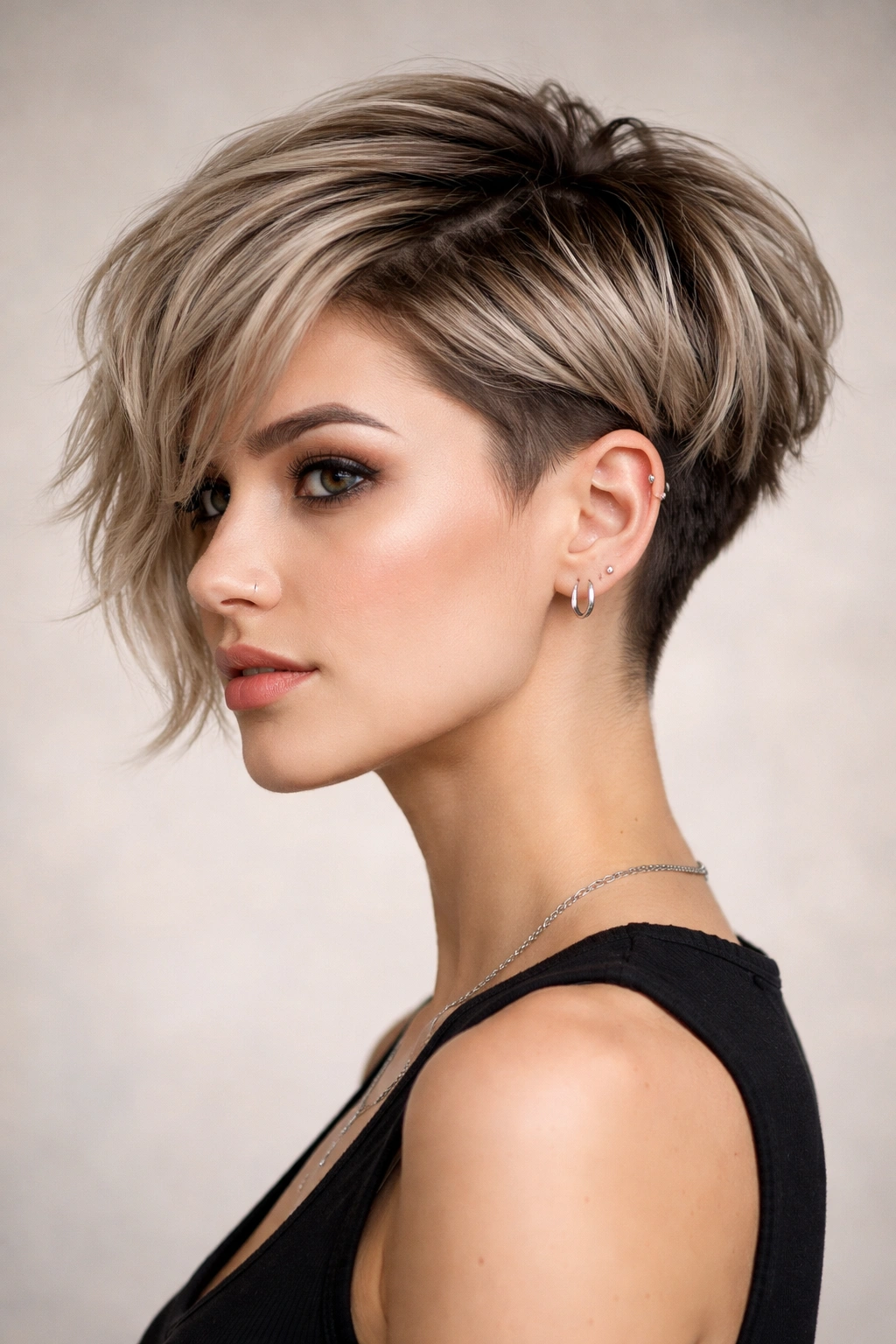
A bixie is basically what it sounds like: a hybrid between a pixie and a bob. The front is longer (chin-length or slightly shorter), while the back is pixie-short with an undercut that creates disconnection between the longer front and shorter back sections.
Why Hybrids Are Having a Moment
The bixie gives you the versatility of longer front pieces (you can tuck them behind your ears or let them frame your face) combined with the low-maintenance practicality of a pixie in the back. It’s particularly flattering for people with longer face shapes who want short hair without losing all their length options.
Styling Flexibility
- You can wear the front pieces down for a softer, more feminine vibe, or tuck them back for maximum edge
- The undercut in the back creates visual contrast and makes the longer front pieces seem longer
- Styling options range from polished (everything smooth) to messy (front pieces tousled, back textured)
- Maintenance trims every 4-5 weeks keep the disconnect intentional rather than accidental
- The undercut section needs refreshing every 3-4 weeks
Pro tip: The bixie works beautifully with an undercut fade on the sides while keeping more length in the back layers, creating even more dimension.
10. Faded Disconnected Sides with Top Volume
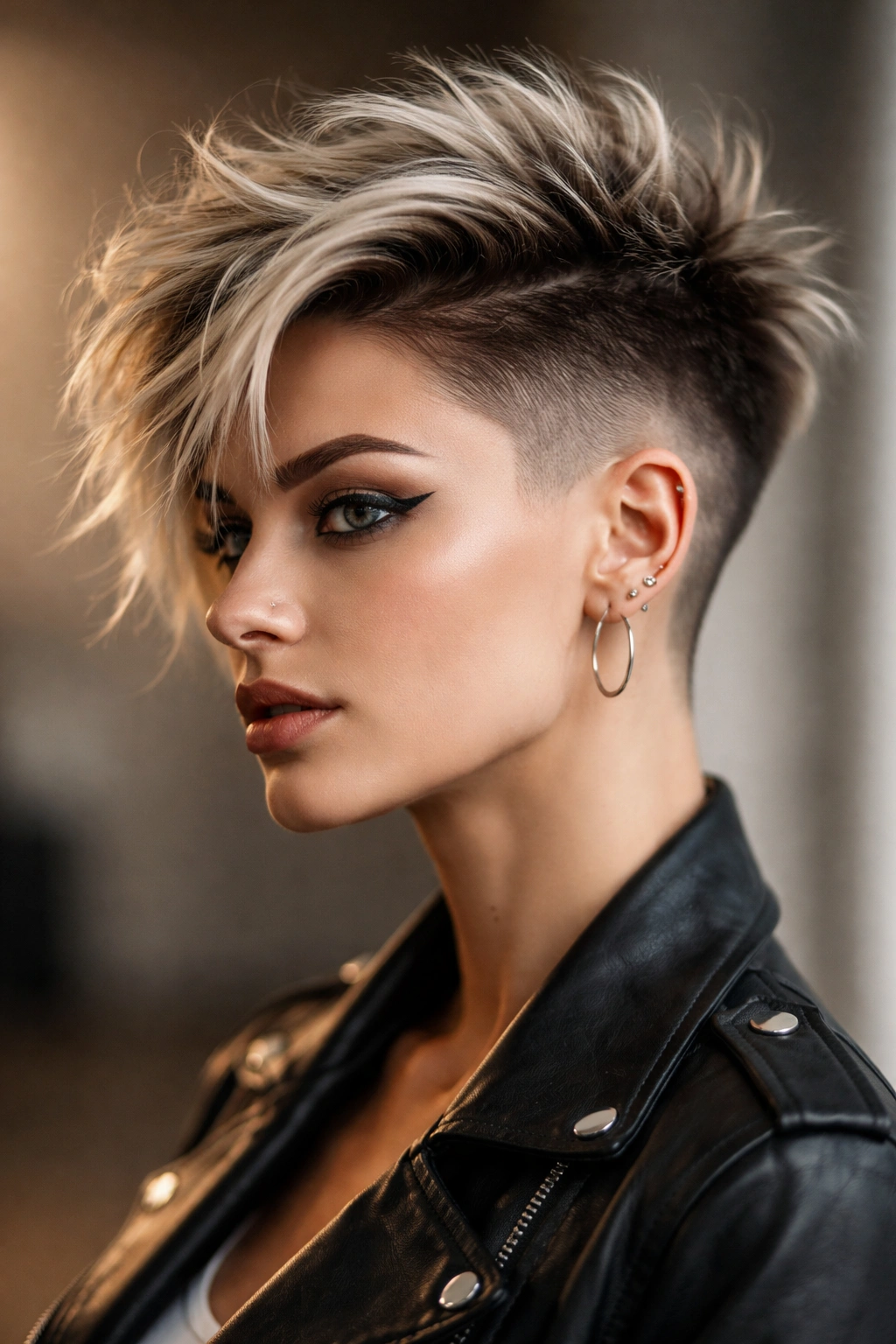
Picture sides faded down to nearly bare skin, disconnected (meaning there’s a clear line between the short sides and longer top rather than a blended transition), while the crown and top grow longer with choppy layers and considerable volume. It’s the most dramatic androgynous option on this list.
Maximum Impact Through Disconnection
A disconnected undercut is bolder than a blended fade because there’s no compromise zone—you’re all-in on the contrast. The sharp line between the short sides and voluminous top creates a sculptural, architectural quality that reads as confidently avant-garde. This is a cut that transforms your entire presence.
Owning the Look
- The sides will need touchups every 2-3 weeks to maintain the clean, faded look
- The top can be styled sleek and polished, or textured and wild—both options work beautifully with this cut
- Your head shape matters more with this cut than with others; a stylist should assess your proportions before you commit
- This is genuinely a confidence cut—it’s noticeable, and you need to be comfortable with that visibility
- Styling is flexible: blow-dry for volume, use product to enhance texture, or flatten sections for contrast
Real talk: This cut isn’t a “try it and see if you like it” option. You need to be genuinely ready for bold short hair before you ask for this one. If you’re uncertain, start with a more conservative cut and work your way up to this level of edge.
Choosing the Right Funky Cut for You
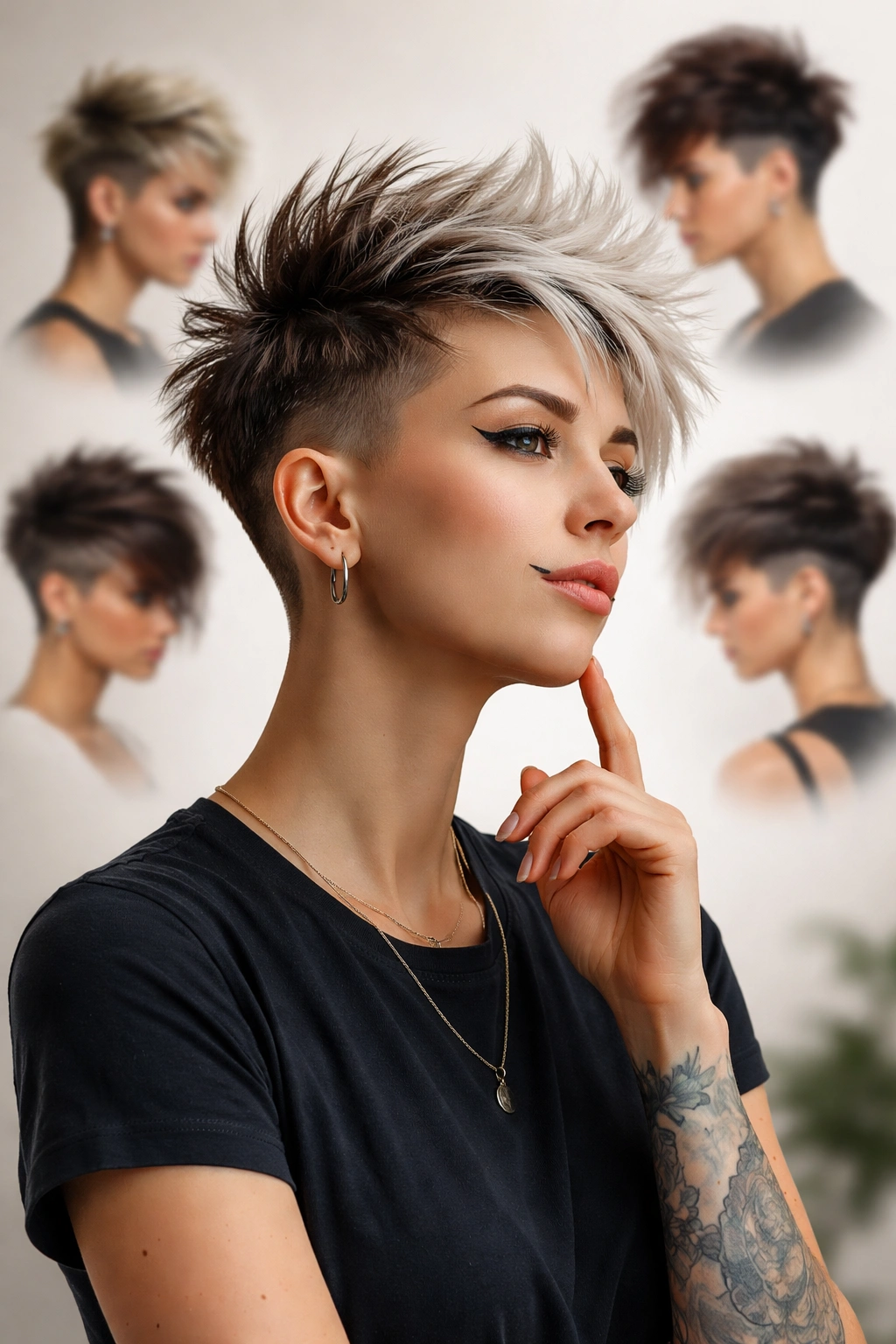
Before you show a picture to your stylist, consider a few practical factors beyond just loving how the cut looks. Your hair texture matters tremendously—choppy and textured cuts work beautifully with naturally wavy or curly hair, while geometric, blunt cuts show off their precision better on straight hair. Your face shape and bone structure influence which cuts will be most flattering; asymmetrical cuts and disconnected undercuts benefit from interesting facial proportions.
Time commitment is real. Edgy short cuts require trims every 4-6 weeks without exception. Undercuts and fades need even more frequent maintenance (every 2-3 weeks) to stay sharp. If you’re someone who goes eight months between haircuts, you’ll be frustrated with any of these styles. Styling daily takes 5-15 minutes depending on the cut and your hair type; none of these are truly wash-and-go styles, even though short hair is technically easier than long hair.
Consider your lifestyle and professional environment too. Some of these cuts work beautifully in creative industries or casual settings but might feel too bold in conservative corporate environments. That doesn’t mean you can’t get one—just go in with eyes open about what you’re choosing.
Finding a Stylist Who Gets It
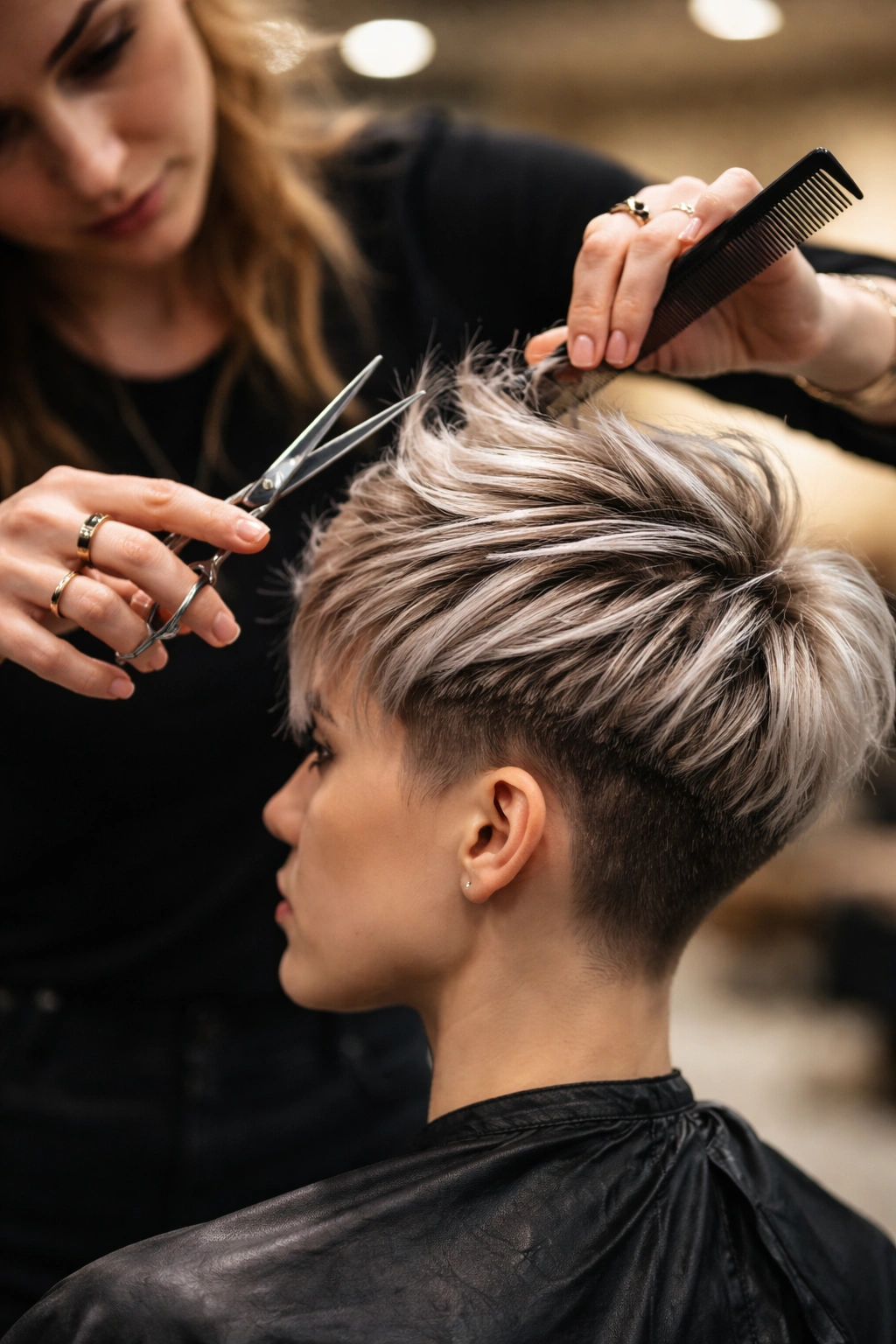
The difference between a mediocre funky haircut and a genuinely show-stopping one is entirely dependent on your stylist’s skill, vision, and understanding of what you actually want. Don’t just find someone who can cut hair; find someone who specializes in short, edgy cuts and has a portfolio that shows they understand texture, precision, undercuts, and asymmetry.
Look for stylists whose work on social media inspires you. Read reviews that specifically mention short hair or edgy cuts. Book a consultation before committing; bring multiple reference photos of cuts you love and ask the stylist to explain how they’d adapt them to your specific hair type and face shape.
Talk through maintenance honestly. A good stylist will tell you exactly how often you need trims, what your styling routine will need to look like, and whether this particular cut is genuinely practical for your lifestyle. Cheap cuts look cheap quickly; invest in quality work from someone who understands the vision.
Final Thoughts
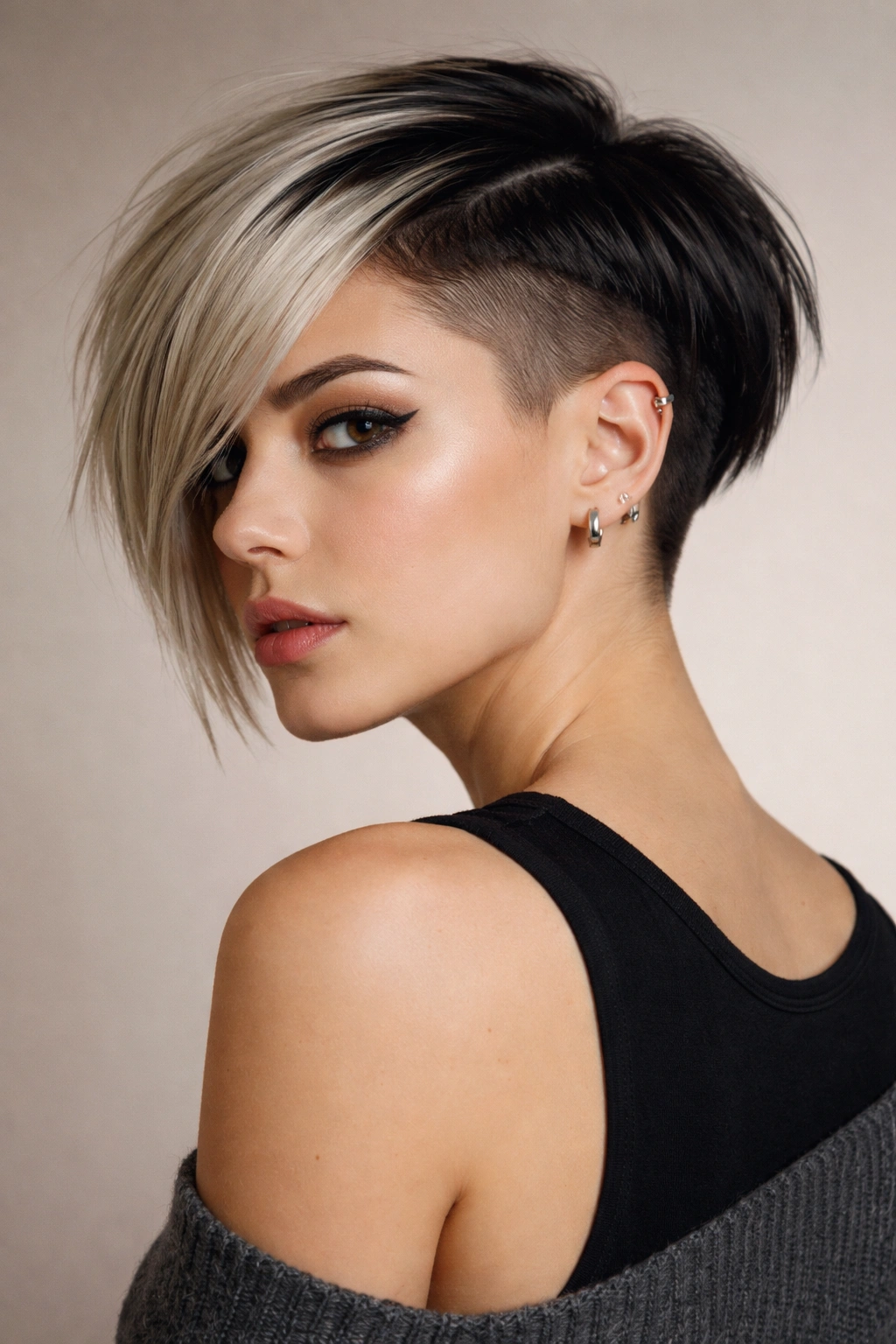
Funky short haircuts are permission to take up space visually and signal that you’re not interested in blending in. They’re confidence made visible, texture made intentional, and bold choice made wearable. Whether you’re drawn to the precision of a geometric bob, the wildness of a wolf cut, or the stark contrast of a faded undercut, the right short cut can transform how you feel about yourself.
The catches are real: you need the right stylist, you need to commit to regular maintenance, and you need to be genuinely ready for the visibility that comes with bold style. But if you are? A funky short haircut becomes more than just a hairstyle—it becomes a statement, a ritual, and a daily reminder that you’ve chosen to live on your own terms.
Book that consultation. Show up with clear pictures. Trust the process. And then own the hell out of your new cut.
